

#crudeoil
crudeoil
452,715 views
3,184 Discussing
Hot
Latest

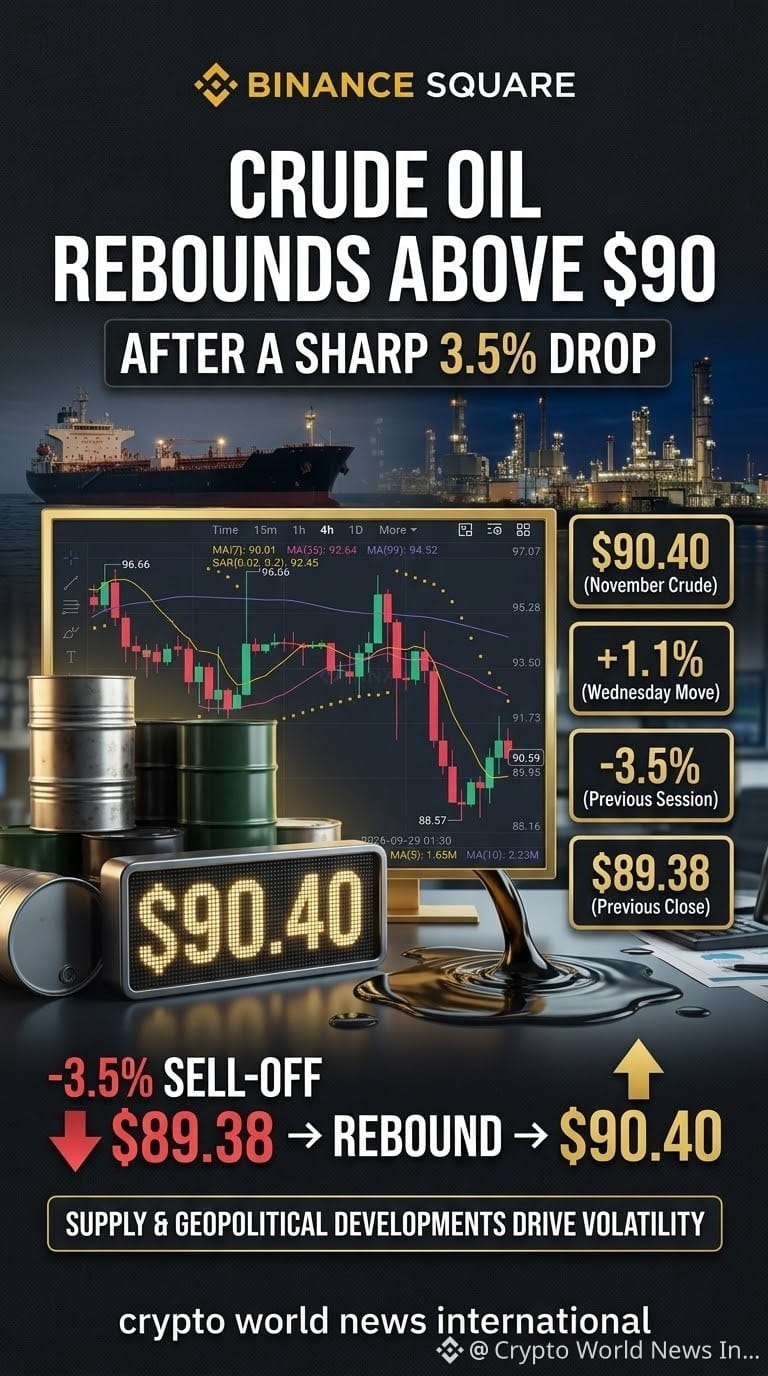
🚨 CRUDE OIL REBOUNDS AFTER SHARP 3.5% DROP
Crude oil prices are recovering on Wednesday after a significant sell-off in the previous session, with November crude moving back above $90 a barrel.
🔑 Key Points:
• November crude: $90.40
• Wednesday move: +1.1%
• Previous session: -$3.22 or 3.5%
• Previous close: $89.38
• Saudi Red Sea crude exports showed signs of recovery after a pipeline attack
📊 Market Insight:
Oil is showing a sharp rebound after Tuesday’s decline, highlighting how quickly supply and geopolitical developments can affect crude prices.
🛢️ Asset to Watch: Crude Oil
#crudeoil #OilPrices #BrentCrude #energy #Markets $CL $BZ
{future}(BZUSDT)
{future}(CLUSDT)
🚨 CRUDE OIL REBOUNDS AFTER SHARP 3.5% DROP
Crude oil prices are recovering on Wednesday after a significant sell-off in the previous session, with November crude moving back above $90 a barrel.
🔑 Key Points:
• November crude: $90.40
• Wednesday move: +1.1%
• Previous session: -$3.22 or 3.5%
• Previous close: $89.38
• Saudi Red Sea crude exports showed signs of recovery after a pipeline attack
📊 Market Insight:
Oil is showing a sharp rebound after Tuesday’s decline, highlighting how quickly supply and geopolitical developments can affect crude prices.
🛢️ Asset to Watch: Crude Oil
#crudeoil #OilPrices #BrentCrude #energy #Markets $CL $BZ
Crude oil prices are recovering on Wednesday after a significant sell-off in the previous session, with November crude moving back above $90 a barrel.
🔑 Key Points:
• November crude: $90.40
• Wednesday move: +1.1%
• Previous session: -$3.22 or 3.5%
• Previous close: $89.38
• Saudi Red Sea crude exports showed signs of recovery after a pipeline attack
📊 Market Insight:
Oil is showing a sharp rebound after Tuesday’s decline, highlighting how quickly supply and geopolitical developments can affect crude prices.
🛢️ Asset to Watch: Crude Oil
#crudeoil #OilPrices #BrentCrude #energy #Markets $CL $BZ
108

🚨 ⛽ GULF OIL FLOWS — RECOVERY WATCH
Gulf oil exports have rebounded sharply, reaching around 23.3M barrels/day over the past week, according to Goldman Sachs estimates.
🛢️ Crude: 19M bpd — 108% of 2025 average
⚠️ Diesel • Gasoline • Jet Fuel: ~50% of 2025 average
📊 Global market: Roughly balanced
🎯 Goldman Brent EOY: $85
Refined-product flows remain constrained by refinery outages and higher shipping risks, meaning stronger crude flows don't necessarily mean the energy market has fully normalized.
👀 Watch: $CL • $BZ • Diesel • Jet Fuel
DYOR • Manage risk • NFA
#CL #BZ #WTI #Brent #Oil #CrudeOil #Energy #Trading
🚨 ⛽ GULF OIL FLOWS — RECOVERY WATCH
Gulf oil exports have rebounded sharply, reaching around 23.3M barrels/day over the past week, according to Goldman Sachs estimates.
🛢️ Crude: 19M bpd — 108% of 2025 average
⚠️ Diesel • Gasoline • Jet Fuel: ~50% of 2025 average
📊 Global market: Roughly balanced
🎯 Goldman Brent EOY: $85
Refined-product flows remain constrained by refinery outages and higher shipping risks, meaning stronger crude flows don't necessarily mean the energy market has fully normalized.
👀 Watch: $CL • $BZ • Diesel • Jet Fuel
DYOR • Manage risk • NFA
#CL #BZ #WTI #Brent #Oil #CrudeOil #Energy #Trading
Gulf oil exports have rebounded sharply, reaching around 23.3M barrels/day over the past week, according to Goldman Sachs estimates.
🛢️ Crude: 19M bpd — 108% of 2025 average
⚠️ Diesel • Gasoline • Jet Fuel: ~50% of 2025 average
📊 Global market: Roughly balanced
🎯 Goldman Brent EOY: $85
Refined-product flows remain constrained by refinery outages and higher shipping risks, meaning stronger crude flows don't necessarily mean the energy market has fully normalized.
👀 Watch: $CL • $BZ • Diesel • Jet Fuel
DYOR • Manage risk • NFA
#CL #BZ #WTI #Brent #Oil #CrudeOil #Energy #Trading

160

Verified
🛢️🚨JUST IN: A tanker has reportedly been struck in the Strait of Hormuz, one of the world’s most important oil-shipping routes.
⚠️ Geopolitical tensions rising
🛢️ Oil supply routes under pressure
📈 Traders watching crude prices closely
🌍 Global markets could react
The BIG question now:
WHAT’S NEXT FOR OIL? 👀
🟢 🚀 Oil pumps higher
🟡 📊 More volatility
🔴 📉 Quick spike, then correction
🔥 💥 Major breakout
👇 VOTE YOUR OIL TARGET!
#oil #CrudeOil #markets
🛢️🚨JUST IN: A tanker has reportedly been struck in the Strait of Hormuz, one of the world’s most important oil-shipping routes.
⚠️ Geopolitical tensions rising
🛢️ Oil supply routes under pressure
📈 Traders watching crude prices closely
🌍 Global markets could react
The BIG question now:
WHAT’S NEXT FOR OIL? 👀
🟢 🚀 Oil pumps higher
🟡 📊 More volatility
🔴 📉 Quick spike, then correction
🔥 💥 Major breakout
👇 VOTE YOUR OIL TARGET!
#oil #CrudeOil #markets
⚠️ Geopolitical tensions rising
🛢️ Oil supply routes under pressure
📈 Traders watching crude prices closely
🌍 Global markets could react
The BIG question now:
WHAT’S NEXT FOR OIL? 👀
🟢 🚀 Oil pumps higher
🟡 📊 More volatility
🔴 📉 Quick spike, then correction
🔥 💥 Major breakout
👇 VOTE YOUR OIL TARGET!
#oil #CrudeOil #markets
$100
Above $100
Next $80
8 hr(s) left
1
2k
·
--
Bearish
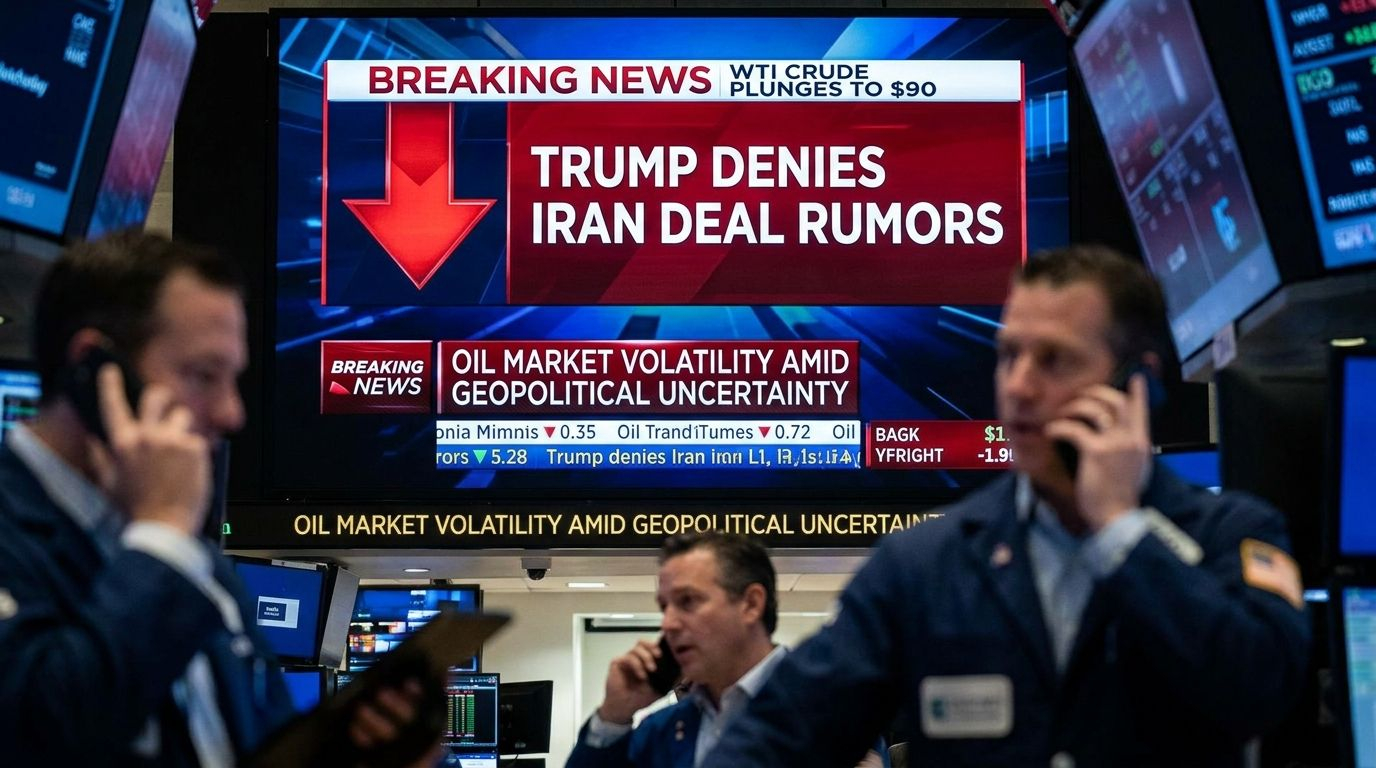
🚨 WTI CRUDE OIL CRASHES TO $90! 🛢️📉
WTI crude has dropped sharply toward $90, despite President Trump denying that any deal has been reached to provide Iran with sanctions relief.
Markets appear to be reacting to changing expectations around future oil supply and geopolitical risk. 👀
🛢️ WTI: ~$90
🇺🇸 Trump denies sanctions-relief deal
🇮🇷 Iran remains at the center of the supply story
📉 Oil traders are repricing the risk
The big question now:
IS THIS THE START OF A DEEPER OIL DROP — OR JUST A TEMPORARY SHAKEOUT? 👀
#oil #WTI #crudeoil
🚨 WTI CRUDE OIL CRASHES TO $90! 🛢️📉
WTI crude has dropped sharply toward $90, despite President Trump denying that any deal has been reached to provide Iran with sanctions relief.
Markets appear to be reacting to changing expectations around future oil supply and geopolitical risk. 👀
🛢️ WTI: ~$90
🇺🇸 Trump denies sanctions-relief deal
🇮🇷 Iran remains at the center of the supply story
📉 Oil traders are repricing the risk
The big question now:
IS THIS THE START OF A DEEPER OIL DROP — OR JUST A TEMPORARY SHAKEOUT? 👀
#oil #WTI #crudeoil
WTI crude has dropped sharply toward $90, despite President Trump denying that any deal has been reached to provide Iran with sanctions relief.
Markets appear to be reacting to changing expectations around future oil supply and geopolitical risk. 👀
🛢️ WTI: ~$90
🇺🇸 Trump denies sanctions-relief deal
🇮🇷 Iran remains at the center of the supply story
📉 Oil traders are repricing the risk
The big question now:
IS THIS THE START OF A DEEPER OIL DROP — OR JUST A TEMPORARY SHAKEOUT? 👀
#oil #WTI #crudeoil
1
448
·
--
Bullish
🚨 OIL MARKET ALERT: WHAT HAPPENS NEXT? 🛢️👀
Saudi Arabia has reportedly resumed crude flows through its damaged East-West Pipeline, while oil movement through the Strait of Hormuz remains heavily disrupted.
Reports also suggest Iran’s stored crude could face pressure by mid-October if exports remain constrained.
That creates a BIG question for the oil market:
🟢 $120+ — Supply shock sends oil higher
🟡 $100–120 — Volatility stays elevated
🔴 Below $100 — Supply concerns fade
WHERE DO YOU THINK OIL GOES FIRST? 👇
Vote your target! 🗳️
#oil #crudeoil #WTI
🚨 OIL MARKET ALERT: WHAT HAPPENS NEXT? 🛢️👀
Saudi Arabia has reportedly resumed crude flows through its damaged East-West Pipeline, while oil movement through the Strait of Hormuz remains heavily disrupted.
Reports also suggest Iran’s stored crude could face pressure by mid-October if exports remain constrained.
That creates a BIG question for the oil market:
🟢 $120+ — Supply shock sends oil higher
🟡 $100–120 — Volatility stays elevated
🔴 Below $100 — Supply concerns fade
WHERE DO YOU THINK OIL GOES FIRST? 👇
Vote your target! 🗳️
#oil #crudeoil #WTI
Saudi Arabia has reportedly resumed crude flows through its damaged East-West Pipeline, while oil movement through the Strait of Hormuz remains heavily disrupted.
Reports also suggest Iran’s stored crude could face pressure by mid-October if exports remain constrained.
That creates a BIG question for the oil market:
🟢 $120+ — Supply shock sends oil higher
🟡 $100–120 — Volatility stays elevated
🔴 Below $100 — Supply concerns fade
WHERE DO YOU THINK OIL GOES FIRST? 👇
Vote your target! 🗳️
#oil #crudeoil #WTI
197

Saudi Arabia has officially restored crude oil exports through its East-West pipeline today, quickly easing regional distribution concerns. Following the operational resumption, global benchmark prices retreated as WTI and Brent dropped nearly $0.80 to trade at $94.21 and $100.34 per barrel respectively.
This infrastructure recovery comes at a time when markets were pricing in potential supply bottlenecks across key Middle Eastern transit routes. The swift restoration of pipeline flows removes immediate supply risk premiums, bringing physical crude availability back in line with baseline expectations.
For broader financial markets, cooling energy prices provide critical relief against persistent headline inflation pressures. Softer crude costs help temper sovereign bond yields and reduce the perceived necessity for extended restrictive monetary policies across major central banks.
For crypto assets, stabilizing energy inputs removes a substantial macroeconomic drag on global liquidity. As systemic inflation anxiety recedes, $BTC and digital assets often benefit from a revitalized risk-on appetite among institutional investors.
#CrudeOil #EnergyMarkets #MacroEconomy
Saudi Arabia has officially restored crude oil exports through its East-West pipeline today, quickly easing regional distribution concerns. Following the operational resumption, global benchmark prices retreated as WTI and Brent dropped nearly $0.80 to trade at $94.21 and $100.34 per barrel respectively.
This infrastructure recovery comes at a time when markets were pricing in potential supply bottlenecks across key Middle Eastern transit routes. The swift restoration of pipeline flows removes immediate supply risk premiums, bringing physical crude availability back in line with baseline expectations.
For broader financial markets, cooling energy prices provide critical relief against persistent headline inflation pressures. Softer crude costs help temper sovereign bond yields and reduce the perceived necessity for extended restrictive monetary policies across major central banks.
For crypto assets, stabilizing energy inputs removes a substantial macroeconomic drag on global liquidity. As systemic inflation anxiety recedes, $BTC and digital assets often benefit from a revitalized risk-on appetite among institutional investors.
#CrudeOil #EnergyMarkets #MacroEconomy
This infrastructure recovery comes at a time when markets were pricing in potential supply bottlenecks across key Middle Eastern transit routes. The swift restoration of pipeline flows removes immediate supply risk premiums, bringing physical crude availability back in line with baseline expectations.
For broader financial markets, cooling energy prices provide critical relief against persistent headline inflation pressures. Softer crude costs help temper sovereign bond yields and reduce the perceived necessity for extended restrictive monetary policies across major central banks.
For crypto assets, stabilizing energy inputs removes a substantial macroeconomic drag on global liquidity. As systemic inflation anxiety recedes, $BTC and digital assets often benefit from a revitalized risk-on appetite among institutional investors.
#CrudeOil #EnergyMarkets #MacroEconomy
137

🚨 CRUDE SURGES PAST $106 AS GEOPOLITICAL RISK SPIKES MACRO VOLATILITY FOR $BZ ! 💥
Brent futures advanced 2.5% to $106.92 while WTI pushed 2.3% to $94.49 following the rejection of peace terms and fresh Gulf infrastructure strikes. 📊 Institutional order flow is rapidly repricing a sustained geopolitical risk premium back into energy markets, expanding volatility across macro corridors.
With $CL holding firmly above the $100 psychological threshold, secondary inflationary pressure threatens to delay rate cuts and drain broader risk asset liquidity. ⚡ Smart capital is closely tracking whether this macro supply shock triggers a capital rotation out of risk assets into traditional safe havens like $XAU .
💬 How are you adjusting your portfolio risk as crude surges above $100 and macro liquidity tightens? 👇
⚠️ Not financial advice. Always manage your risk. 🛡️
🏷️ #BZ #CrudeOil #Macro #RiskAssets #Trading
⚡ 📊
🚨 CRUDE SURGES PAST $106 AS GEOPOLITICAL RISK SPIKES MACRO VOLATILITY FOR $BZ ! 💥
Brent futures advanced 2.5% to $106.92 while WTI pushed 2.3% to $94.49 following the rejection of peace terms and fresh Gulf infrastructure strikes. 📊 Institutional order flow is rapidly repricing a sustained geopolitical risk premium back into energy markets, expanding volatility across macro corridors.
With $CL holding firmly above the $100 psychological threshold, secondary inflationary pressure threatens to delay rate cuts and drain broader risk asset liquidity. ⚡ Smart capital is closely tracking whether this macro supply shock triggers a capital rotation out of risk assets into traditional safe havens like $XAU .
💬 How are you adjusting your portfolio risk as crude surges above $100 and macro liquidity tightens? 👇
⚠️ Not financial advice. Always manage your risk. 🛡️
🏷️ #BZ #CrudeOil #Macro #RiskAssets #Trading
⚡ 📊
Brent futures advanced 2.5% to $106.92 while WTI pushed 2.3% to $94.49 following the rejection of peace terms and fresh Gulf infrastructure strikes. 📊 Institutional order flow is rapidly repricing a sustained geopolitical risk premium back into energy markets, expanding volatility across macro corridors.
With $CL holding firmly above the $100 psychological threshold, secondary inflationary pressure threatens to delay rate cuts and drain broader risk asset liquidity. ⚡ Smart capital is closely tracking whether this macro supply shock triggers a capital rotation out of risk assets into traditional safe havens like $XAU .
💬 How are you adjusting your portfolio risk as crude surges above $100 and macro liquidity tightens? 👇
⚠️ Not financial advice. Always manage your risk. 🛡️
🏷️ #BZ #CrudeOil #Macro #RiskAssets #Trading
⚡ 📊
351

🚨 CL | BZ — OIL MARKET ALERT 🛢️🔥
⚠️ $CL — WTI Crude Slides Hard
$BTW
WTI crude suffered another sharp move lower as Iran signaled it was willing to reopen the Strait of Hormuz and return to diplomatic discussions with Washington, conditional on U.S. acceptance of its terms. WTI settled at $92.41, down 2.33% on Friday. The contract also dropped sharply during the week, highlighting just how sensitive oil remains to geopolitical headlines.
🌍 $BZ — Brent Holds a Different Picture
Brent finished Friday at around $104.32, down 2.14% on the day. Despite Friday’s sell-off, Brent remained slightly higher for the week, showing that the global benchmark is still carrying a significant geopolitical risk premium.
🚨 Why Traders Are Watching
CL → Iran talks + Hormuz reopening expectations
BZ → Geopolitical risk premium + global supply concerns
Oil → Headlines can trigger extreme intraday volatility
📊 MASTER MARKET WATCH
A sustained reopening of the Strait of Hormuz could reduce the supply-risk premium, while any breakdown in negotiations could quickly bring that premium back. Oil’s next major move may therefore depend heavily on geopolitical headlines rather than price action alone.
🔥 Oil is moving on headlines — and volatility is the real story.
⚠️ This is market information, not financial advice.
#CL
{future}(BZUSDT)
#BZ #CrudeOil #Oil
🚨 CL | BZ — OIL MARKET ALERT 🛢️🔥
⚠️ $CL — WTI Crude Slides Hard
$BTW
WTI crude suffered another sharp move lower as Iran signaled it was willing to reopen the Strait of Hormuz and return to diplomatic discussions with Washington, conditional on U.S. acceptance of its terms. WTI settled at $92.41, down 2.33% on Friday. The contract also dropped sharply during the week, highlighting just how sensitive oil remains to geopolitical headlines.
🌍 $BZ — Brent Holds a Different Picture
Brent finished Friday at around $104.32, down 2.14% on the day. Despite Friday’s sell-off, Brent remained slightly higher for the week, showing that the global benchmark is still carrying a significant geopolitical risk premium.
🚨 Why Traders Are Watching
CL → Iran talks + Hormuz reopening expectations
BZ → Geopolitical risk premium + global supply concerns
Oil → Headlines can trigger extreme intraday volatility
📊 MASTER MARKET WATCH
A sustained reopening of the Strait of Hormuz could reduce the supply-risk premium, while any breakdown in negotiations could quickly bring that premium back. Oil’s next major move may therefore depend heavily on geopolitical headlines rather than price action alone.
🔥 Oil is moving on headlines — and volatility is the real story.
⚠️ This is market information, not financial advice.
#CL
#BZ #CrudeOil #Oil
⚠️ $CL — WTI Crude Slides Hard
$BTW
WTI crude suffered another sharp move lower as Iran signaled it was willing to reopen the Strait of Hormuz and return to diplomatic discussions with Washington, conditional on U.S. acceptance of its terms. WTI settled at $92.41, down 2.33% on Friday. The contract also dropped sharply during the week, highlighting just how sensitive oil remains to geopolitical headlines.
🌍 $BZ — Brent Holds a Different Picture
Brent finished Friday at around $104.32, down 2.14% on the day. Despite Friday’s sell-off, Brent remained slightly higher for the week, showing that the global benchmark is still carrying a significant geopolitical risk premium.
🚨 Why Traders Are Watching
CL → Iran talks + Hormuz reopening expectations
BZ → Geopolitical risk premium + global supply concerns
Oil → Headlines can trigger extreme intraday volatility
📊 MASTER MARKET WATCH
A sustained reopening of the Strait of Hormuz could reduce the supply-risk premium, while any breakdown in negotiations could quickly bring that premium back. Oil’s next major move may therefore depend heavily on geopolitical headlines rather than price action alone.
🔥 Oil is moving on headlines — and volatility is the real story.
⚠️ This is market information, not financial advice.
#CL
#BZ #CrudeOil #Oil

88

·
--
On September 30, U.S. President Trump made back-to-back statements on social media. Not only did he officially announce that all U.S. troops had been fully withdrawn from Iraq, but he also launched a fierce attack on the Federal Reserve Washington headquarters building renovation cost overrun. He called on the Attorney General to investigate former Chairman Powell and urged him to immediately resign from his remaining positions. Meanwhile, on September 30 at the close, international oil prices rose by more than 1%, returning to a high-range area.
This series of major moves once again thrust Washington’s political power struggle and the situation in the Middle East to the forefront. Trump’s continued pressure on the Federal Reserve’s management has sparked intense debate in the market over the central bank’s future independence, while shifts in geopolitical policy have also injected uncertainty into expectations on the energy supply side.
In traditional financial markets, strength in crude oil directly lifted inflation expectations, making the Federal Reserve’s subsequent interest-rate path harder to predict. Under a barrage of multiple pieces of news, U.S. Treasury yields and the U.S. dollar index remained range-bound. The battle between safe-haven assets and risk assets has entered a scorching phase.
For the crypto market, uncertainty in macro policy has led most funds to wait and see among major assets such as $BTC . The interplay of a cooling geopolitical situation and renewed expectations for a rebound in inflation has left the market with no clear one-sided direction in the near term, and investors are closely watching changes in liquidity. ⚖️
#Fed #Trump #CrudeOil
On September 30, U.S. President Trump made back-to-back statements on social media. Not only did he officially announce that all U.S. troops had been fully withdrawn from Iraq, but he also launched a fierce attack on the Federal Reserve Washington headquarters building renovation cost overrun. He called on the Attorney General to investigate former Chairman Powell and urged him to immediately resign from his remaining positions. Meanwhile, on September 30 at the close, international oil prices rose by more than 1%, returning to a high-range area.
This series of major moves once again thrust Washington’s political power struggle and the situation in the Middle East to the forefront. Trump’s continued pressure on the Federal Reserve’s management has sparked intense debate in the market over the central bank’s future independence, while shifts in geopolitical policy have also injected uncertainty into expectations on the energy supply side.
In traditional financial markets, strength in crude oil directly lifted inflation expectations, making the Federal Reserve’s subsequent interest-rate path harder to predict. Under a barrage of multiple pieces of news, U.S. Treasury yields and the U.S. dollar index remained range-bound. The battle between safe-haven assets and risk assets has entered a scorching phase.
For the crypto market, uncertainty in macro policy has led most funds to wait and see among major assets such as $BTC . The interplay of a cooling geopolitical situation and renewed expectations for a rebound in inflation has left the market with no clear one-sided direction in the near term, and investors are closely watching changes in liquidity. ⚖️
#Fed #Trump #CrudeOil
This series of major moves once again thrust Washington’s political power struggle and the situation in the Middle East to the forefront. Trump’s continued pressure on the Federal Reserve’s management has sparked intense debate in the market over the central bank’s future independence, while shifts in geopolitical policy have also injected uncertainty into expectations on the energy supply side.
In traditional financial markets, strength in crude oil directly lifted inflation expectations, making the Federal Reserve’s subsequent interest-rate path harder to predict. Under a barrage of multiple pieces of news, U.S. Treasury yields and the U.S. dollar index remained range-bound. The battle between safe-haven assets and risk assets has entered a scorching phase.
For the crypto market, uncertainty in macro policy has led most funds to wait and see among major assets such as $BTC . The interplay of a cooling geopolitical situation and renewed expectations for a rebound in inflation has left the market with no clear one-sided direction in the near term, and investors are closely watching changes in liquidity. ⚖️
#Fed #Trump #CrudeOil
1
271

On September 30, 2026, the U.S. President Trump announced through an official statement that all U.S. forces and coalition troops stationed in Iraq had completely withdrawn from the Erbil air base, officially bringing to an end the long-term military operations that began in 2003. Meanwhile, the international commodity markets reacted sharply: New York Mercantile Exchange crude oil futures rose by $1.04 to close at $90.42 per barrel, with a one-day gain of 1.16%; London crude oil futures also increased by $0.94 to $103.53 per barrel, up 0.92%.
The complete withdrawal of U.S. forces signals that the Middle East’s geopolitical security framework is entering a new vacuum period; the potential fragility of regional supply chains has risen significantly, directly pushing up the geopolitical risk premium in energy markets. With current crude oil prices again climbing above a key threshold, it not only breaks the market’s prevailing expectations that inflation would steadily ease, but also presents a serious challenge to the global anti-inflation effort, which may be hindered once again.
From a broader financial market perspective, the rebound in energy costs will inevitably raise inflation expectations, which in turn will severely limit central banks’ operational room to implement future easing policies. If a high-interest-rate environment is forced to be maintained for a long time, U.S. Treasury yields and the U.S. dollar index are likely to remain in a strong, volatile posture, global capital market liquidity will be materially tightened, and valuations of overall risk assets will continue to face downward pressure.
In the cryptocurrency sector, anti-inflation narratives often struggle to offset the valuation pressure effects caused by macro liquidity tightening. Under the dual squeeze of rising risk-aversion sentiment and persistently high risk-free yields, risk assets represented by $BTC are highly likely to face shocks from insufficient incremental capital and episodic deleveraging, and in the near term, market performance is hard to characterize as optimistic.
#CrudeOil #Geopolitics #MacroEconomy
On September 30, 2026, the U.S. President Trump announced through an official statement that all U.S. forces and coalition troops stationed in Iraq had completely withdrawn from the Erbil air base, officially bringing to an end the long-term military operations that began in 2003. Meanwhile, the international commodity markets reacted sharply: New York Mercantile Exchange crude oil futures rose by $1.04 to close at $90.42 per barrel, with a one-day gain of 1.16%; London crude oil futures also increased by $0.94 to $103.53 per barrel, up 0.92%.
The complete withdrawal of U.S. forces signals that the Middle East’s geopolitical security framework is entering a new vacuum period; the potential fragility of regional supply chains has risen significantly, directly pushing up the geopolitical risk premium in energy markets. With current crude oil prices again climbing above a key threshold, it not only breaks the market’s prevailing expectations that inflation would steadily ease, but also presents a serious challenge to the global anti-inflation effort, which may be hindered once again.
From a broader financial market perspective, the rebound in energy costs will inevitably raise inflation expectations, which in turn will severely limit central banks’ operational room to implement future easing policies. If a high-interest-rate environment is forced to be maintained for a long time, U.S. Treasury yields and the U.S. dollar index are likely to remain in a strong, volatile posture, global capital market liquidity will be materially tightened, and valuations of overall risk assets will continue to face downward pressure.
In the cryptocurrency sector, anti-inflation narratives often struggle to offset the valuation pressure effects caused by macro liquidity tightening. Under the dual squeeze of rising risk-aversion sentiment and persistently high risk-free yields, risk assets represented by $BTC are highly likely to face shocks from insufficient incremental capital and episodic deleveraging, and in the near term, market performance is hard to characterize as optimistic.
#CrudeOil #Geopolitics #MacroEconomy
The complete withdrawal of U.S. forces signals that the Middle East’s geopolitical security framework is entering a new vacuum period; the potential fragility of regional supply chains has risen significantly, directly pushing up the geopolitical risk premium in energy markets. With current crude oil prices again climbing above a key threshold, it not only breaks the market’s prevailing expectations that inflation would steadily ease, but also presents a serious challenge to the global anti-inflation effort, which may be hindered once again.
From a broader financial market perspective, the rebound in energy costs will inevitably raise inflation expectations, which in turn will severely limit central banks’ operational room to implement future easing policies. If a high-interest-rate environment is forced to be maintained for a long time, U.S. Treasury yields and the U.S. dollar index are likely to remain in a strong, volatile posture, global capital market liquidity will be materially tightened, and valuations of overall risk assets will continue to face downward pressure.
In the cryptocurrency sector, anti-inflation narratives often struggle to offset the valuation pressure effects caused by macro liquidity tightening. Under the dual squeeze of rising risk-aversion sentiment and persistently high risk-free yields, risk assets represented by $BTC are highly likely to face shocks from insufficient incremental capital and episodic deleveraging, and in the near term, market performance is hard to characterize as optimistic.
#CrudeOil #Geopolitics #MacroEconomy
215
According to a report by Al Jazeera, U.S. officials have recently disclosed that the U.S. side is actively negotiating with Iran through intermediaries. Former President Trump even said he would be willing to exchange the relaxation of sanctions and the unfreezing of assets for tangible progress on the nuclear issue. Meanwhile, amid expectations of easing geopolitical tensions, the crude oil market came under pressure. WTI and Brent crude both fell by about $2 during the day, dropping to $92.02 per barrel and $105.65 per barrel, respectively.
On the surface, reopening diplomatic channels could help cool the geopolitical crisis in the Middle East. However, in reality, negotiations are often fraught with extremely high uncertainty. The U.S. policy toward Iran has long oscillated between maximum-pressure tactics and trade-offs. Reconstructing the framework of a nuclear deal is certainly not something that can be achieved in the short term. The current market’s optimism cannot hide the complicated backdrop of structural games at play.
For traditional financial markets, a short-term retreat in oil prices may help slightly ease concerns about long-term inflation. But the fragility of energy supply has not been fundamentally removed. If geopolitical talks again fall into a stalemate, the risk of a second wave of inflation driven by an oil price rebound could quickly backfire on U.S. Treasury yields and the dollar’s trajectory, leaving the macro liquidity environment still fragile.
In the crypto market, the reduction of short-term risk premium has not triggered a stampede, but it also is unlikely to provide sustained momentum for starting a new leg of one-way upside from $BTC . Investors should be alert to the severe swings in market sentiment caused by the repeated play of geopolitical games. Chasing risk assets blindly still faces substantial macro uncertainties.
#Geopolitics #CrudeOil #MacroEconomy
According to a report by Al Jazeera, U.S. officials have recently disclosed that the U.S. side is actively negotiating with Iran through intermediaries. Former President Trump even said he would be willing to exchange the relaxation of sanctions and the unfreezing of assets for tangible progress on the nuclear issue. Meanwhile, amid expectations of easing geopolitical tensions, the crude oil market came under pressure. WTI and Brent crude both fell by about $2 during the day, dropping to $92.02 per barrel and $105.65 per barrel, respectively.
On the surface, reopening diplomatic channels could help cool the geopolitical crisis in the Middle East. However, in reality, negotiations are often fraught with extremely high uncertainty. The U.S. policy toward Iran has long oscillated between maximum-pressure tactics and trade-offs. Reconstructing the framework of a nuclear deal is certainly not something that can be achieved in the short term. The current market’s optimism cannot hide the complicated backdrop of structural games at play.
For traditional financial markets, a short-term retreat in oil prices may help slightly ease concerns about long-term inflation. But the fragility of energy supply has not been fundamentally removed. If geopolitical talks again fall into a stalemate, the risk of a second wave of inflation driven by an oil price rebound could quickly backfire on U.S. Treasury yields and the dollar’s trajectory, leaving the macro liquidity environment still fragile.
In the crypto market, the reduction of short-term risk premium has not triggered a stampede, but it also is unlikely to provide sustained momentum for starting a new leg of one-way upside from $BTC . Investors should be alert to the severe swings in market sentiment caused by the repeated play of geopolitical games. Chasing risk assets blindly still faces substantial macro uncertainties.
#Geopolitics #CrudeOil #MacroEconomy
On the surface, reopening diplomatic channels could help cool the geopolitical crisis in the Middle East. However, in reality, negotiations are often fraught with extremely high uncertainty. The U.S. policy toward Iran has long oscillated between maximum-pressure tactics and trade-offs. Reconstructing the framework of a nuclear deal is certainly not something that can be achieved in the short term. The current market’s optimism cannot hide the complicated backdrop of structural games at play.
For traditional financial markets, a short-term retreat in oil prices may help slightly ease concerns about long-term inflation. But the fragility of energy supply has not been fundamentally removed. If geopolitical talks again fall into a stalemate, the risk of a second wave of inflation driven by an oil price rebound could quickly backfire on U.S. Treasury yields and the dollar’s trajectory, leaving the macro liquidity environment still fragile.
In the crypto market, the reduction of short-term risk premium has not triggered a stampede, but it also is unlikely to provide sustained momentum for starting a new leg of one-way upside from $BTC . Investors should be alert to the severe swings in market sentiment caused by the repeated play of geopolitical games. Chasing risk assets blindly still faces substantial macro uncertainties.
#Geopolitics #CrudeOil #MacroEconomy
600

In the latest global energy trading session, international oil prices saw a dramatic technical breakthrough. Brent crude rose strongly during the day, gaining 3.00% and breaking decisively above the key psychological level of $100.31 per barrel; WTI crude also climbed in sync, up 2.90%, successfully breaking through the $94 per barrel resistance zone.
From a technical perspective, after Brent effectively held above the 100-dollar mark, it has fully broken the prior sideways downward channel. This round of high-volume advance not only confirms the strong resilience of key support levels, but also shows a concentrated surge of commodity-market capital amid supply concerns and restocking demand.
The pulse-like surge in commodity prices directly lifts short-term second-round inflation expectations, driving U.S. Treasury yields and the U.S. Dollar Index to trade in a tight range. However, from a risk-appetite standpoint, when oil leads the way, it often confirms that global end-demand is stabilizing and repairing, providing relatively strong support to overall macro liquidity.
For the crypto market, the high-inflation narrative has again activated digital assets’ inflation-hedging and decentralized safe-haven attributes. As liquidity spills over from the commodities market, structural funds are expected to flow back into high-beta assets; $BTC , after absorbing short-term volatility, has demonstrated very strong bottoming-and-recovery momentum.📊
#CrudeOil #MacroEconomics #CryptoMarket
In the latest global energy trading session, international oil prices saw a dramatic technical breakthrough. Brent crude rose strongly during the day, gaining 3.00% and breaking decisively above the key psychological level of $100.31 per barrel; WTI crude also climbed in sync, up 2.90%, successfully breaking through the $94 per barrel resistance zone.
From a technical perspective, after Brent effectively held above the 100-dollar mark, it has fully broken the prior sideways downward channel. This round of high-volume advance not only confirms the strong resilience of key support levels, but also shows a concentrated surge of commodity-market capital amid supply concerns and restocking demand.
The pulse-like surge in commodity prices directly lifts short-term second-round inflation expectations, driving U.S. Treasury yields and the U.S. Dollar Index to trade in a tight range. However, from a risk-appetite standpoint, when oil leads the way, it often confirms that global end-demand is stabilizing and repairing, providing relatively strong support to overall macro liquidity.
For the crypto market, the high-inflation narrative has again activated digital assets’ inflation-hedging and decentralized safe-haven attributes. As liquidity spills over from the commodities market, structural funds are expected to flow back into high-beta assets; $BTC , after absorbing short-term volatility, has demonstrated very strong bottoming-and-recovery momentum.📊
#CrudeOil #MacroEconomics #CryptoMarket
From a technical perspective, after Brent effectively held above the 100-dollar mark, it has fully broken the prior sideways downward channel. This round of high-volume advance not only confirms the strong resilience of key support levels, but also shows a concentrated surge of commodity-market capital amid supply concerns and restocking demand.
The pulse-like surge in commodity prices directly lifts short-term second-round inflation expectations, driving U.S. Treasury yields and the U.S. Dollar Index to trade in a tight range. However, from a risk-appetite standpoint, when oil leads the way, it often confirms that global end-demand is stabilizing and repairing, providing relatively strong support to overall macro liquidity.
For the crypto market, the high-inflation narrative has again activated digital assets’ inflation-hedging and decentralized safe-haven attributes. As liquidity spills over from the commodities market, structural funds are expected to flow back into high-beta assets; $BTC , after absorbing short-term volatility, has demonstrated very strong bottoming-and-recovery momentum.📊
#CrudeOil #MacroEconomics #CryptoMarket
279
On Monday during the Asian trading session, U.S. President Trump officially rejected Iran’s proposal to reopen the Strait of Hormuz. The renewed escalation of geopolitical confrontation rapidly pushed up international oil prices, triggering yet another sell-off wave in the global bond market.
As the Strait of Hormuz is a key global energy passage, any disruption to shipping directly heightens the risk of oil supply interruptions. With crude oil prices continuing to stay at elevated levels, they not only shattered expectations of a quick easing in the supply chain, but also significantly increased the tail risk of global secondary inflation.
Macro assets reacted extremely sharply: U.S. Treasury yields surged again. The 2-year Treasury yield rose by 5 basis points to 4.90%, while the 10-year yield increased by 4 basis points to 5.20%. Government bonds in Japan, Australia, and other countries also weakened in parallel. Coupled with the Federal Reserve’s recent hawkish tone, expectations that the high-interest-rate environment will persist for longer are reshaping safe-haven logic and the pricing of dollar liquidity.
For the crypto market, energy inflation pressure and rising yields on long-dated U.S. Treasuries create a severe double drag. Risk appetite continues to cool amid concerns about macro tightening. Risk assets such as $BTC may face downward pressure in the short term as liquidity flows back into the dollar system. Market valuations therefore require heightened vigilance for further adjustments.
#Geopolitics #CrudeOil #BondMarket
On Monday during the Asian trading session, U.S. President Trump officially rejected Iran’s proposal to reopen the Strait of Hormuz. The renewed escalation of geopolitical confrontation rapidly pushed up international oil prices, triggering yet another sell-off wave in the global bond market.
As the Strait of Hormuz is a key global energy passage, any disruption to shipping directly heightens the risk of oil supply interruptions. With crude oil prices continuing to stay at elevated levels, they not only shattered expectations of a quick easing in the supply chain, but also significantly increased the tail risk of global secondary inflation.
Macro assets reacted extremely sharply: U.S. Treasury yields surged again. The 2-year Treasury yield rose by 5 basis points to 4.90%, while the 10-year yield increased by 4 basis points to 5.20%. Government bonds in Japan, Australia, and other countries also weakened in parallel. Coupled with the Federal Reserve’s recent hawkish tone, expectations that the high-interest-rate environment will persist for longer are reshaping safe-haven logic and the pricing of dollar liquidity.
For the crypto market, energy inflation pressure and rising yields on long-dated U.S. Treasuries create a severe double drag. Risk appetite continues to cool amid concerns about macro tightening. Risk assets such as $BTC may face downward pressure in the short term as liquidity flows back into the dollar system. Market valuations therefore require heightened vigilance for further adjustments.
#Geopolitics #CrudeOil #BondMarket
As the Strait of Hormuz is a key global energy passage, any disruption to shipping directly heightens the risk of oil supply interruptions. With crude oil prices continuing to stay at elevated levels, they not only shattered expectations of a quick easing in the supply chain, but also significantly increased the tail risk of global secondary inflation.
Macro assets reacted extremely sharply: U.S. Treasury yields surged again. The 2-year Treasury yield rose by 5 basis points to 4.90%, while the 10-year yield increased by 4 basis points to 5.20%. Government bonds in Japan, Australia, and other countries also weakened in parallel. Coupled with the Federal Reserve’s recent hawkish tone, expectations that the high-interest-rate environment will persist for longer are reshaping safe-haven logic and the pricing of dollar liquidity.
For the crypto market, energy inflation pressure and rising yields on long-dated U.S. Treasuries create a severe double drag. Risk appetite continues to cool amid concerns about macro tightening. Risk assets such as $BTC may face downward pressure in the short term as liquidity flows back into the dollar system. Market valuations therefore require heightened vigilance for further adjustments.
#Geopolitics #CrudeOil #BondMarket
173

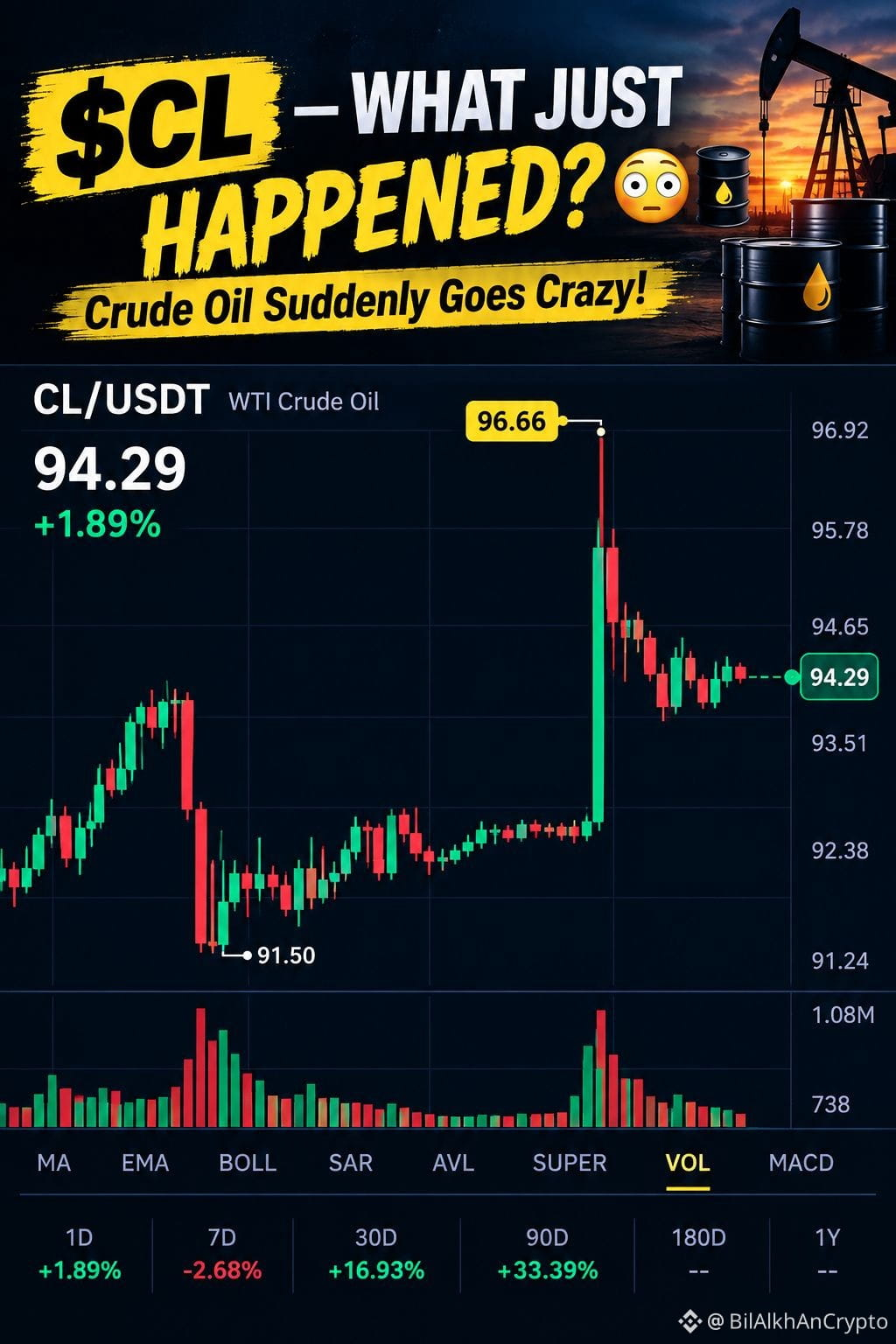
$CL WHAT JUST HAPPENED? 😳🛢️
Why did crude oil suddenly go absolutely crazy?! 🤧📈
That move came out of nowhere. Something clearly shook the oil market—now I’m watching closely to see what happens next. 👀🔥
#CrudeOil #oil #CL #commodities #trading
{future}(CLUSDT)
$CL WHAT JUST HAPPENED? 😳🛢️
Why did crude oil suddenly go absolutely crazy?! 🤧📈
That move came out of nowhere. Something clearly shook the oil market—now I’m watching closely to see what happens next. 👀🔥
#CrudeOil #oil #CL #commodities #trading
Why did crude oil suddenly go absolutely crazy?! 🤧📈
That move came out of nowhere. Something clearly shook the oil market—now I’m watching closely to see what happens next. 👀🔥
#CrudeOil #oil #CL #commodities #trading
60

Article
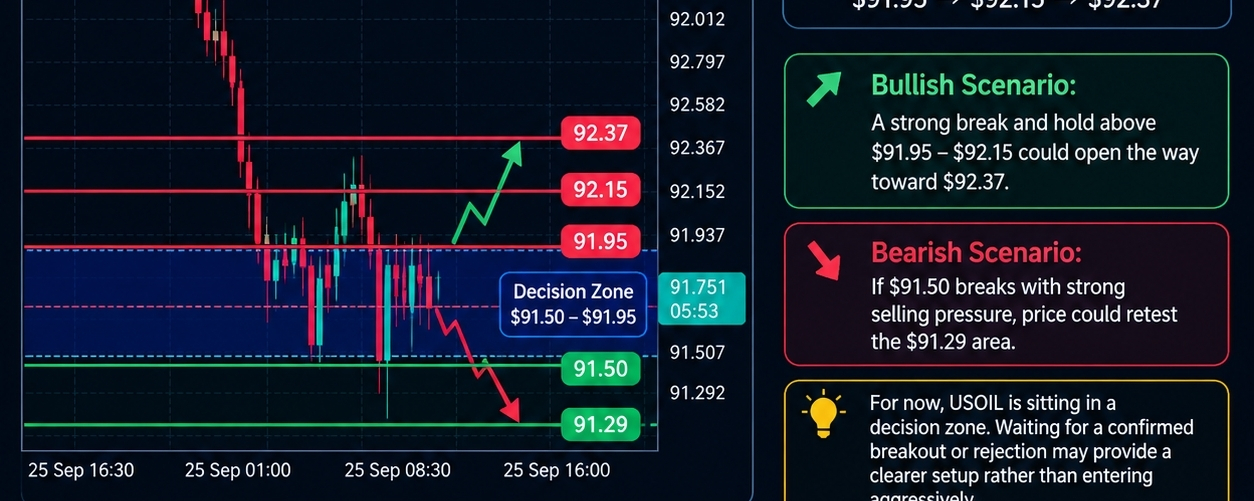
🛢️ USOIL M15: Key Zone After a Strong Downtrend$USDS OIL is currently trading around $91.75. On the M15 chart, price has experienced a strong bearish move and is now consolidating around the $91.50–$91.95 zone.
📌 Key Support: $91.50 → $91.29
📌 Key Resistance: $91.95 → $92.15 → $92.37
Bullish Scenario:
A strong break and hold above $91.95–$92.15 could open the way toward $92.37.
Bearish Scenario:
If $91.50 breaks with strong selling pressure, price could retest the $91.29 area.
For now, USOIL is sitting in a decision zone. Waiting for a confirmed breakout or rejection may provide a clearer setup rather than entering aggressively.
⚠️ Educational analysis only. Not financial advice.
#BitcoinSpotETFsNetInflow$191M #CrudeOil #OilTradin #TechnicalAnalysis #BinanceSquare #Trading
🛢️ USOIL M15: Key Zone After a Strong Downtrend
$USDS OIL is currently trading around $91.75. On the M15 chart, price has experienced a strong bearish move and is now consolidating around the $91.50–$91.95 zone.
📌 Key Support: $91.50 → $91.29
📌 Key Resistance: $91.95 → $92.15 → $92.37
Bullish Scenario:
A strong break and hold above $91.95–$92.15 could open the way toward $92.37.
Bearish Scenario:
If $91.50 breaks with strong selling pressure, price could retest the $91.29 area.
For now, USOIL is sitting in a decision zone. Waiting for a confirmed breakout or rejection may provide a clearer setup rather than entering aggressively.
⚠️ Educational analysis only. Not financial advice.
#BitcoinSpotETFsNetInflow$191M #CrudeOil #OilTradin #TechnicalAnalysis #BinanceSquare #Trading
📌 Key Support: $91.50 → $91.29
📌 Key Resistance: $91.95 → $92.15 → $92.37
Bullish Scenario:
A strong break and hold above $91.95–$92.15 could open the way toward $92.37.
Bearish Scenario:
If $91.50 breaks with strong selling pressure, price could retest the $91.29 area.
For now, USOIL is sitting in a decision zone. Waiting for a confirmed breakout or rejection may provide a clearer setup rather than entering aggressively.
⚠️ Educational analysis only. Not financial advice.
#BitcoinSpotETFsNetInflow$191M #CrudeOil #OilTradin #TechnicalAnalysis #BinanceSquare #Trading
2
232


·
--
$CL (WTI Crude Oil) Long Setup
Middle East supply concerns and geopolitical friction continue to drive bullish momentum.
Entry Zone: $93 – $95
Take Profit (TP): $96 | $98 | $100 | $105
Stop Loss (SL): $90
$CL Focus: Escalating geopolitical risks support higher price targets.
#CrudeOil #Trading $CL #USWeighsPromotingDollarStablecoinsAbroad
{future}(CLUSDT)
$CL (WTI Crude Oil) Long Setup
Middle East supply concerns and geopolitical friction continue to drive bullish momentum.
Entry Zone: $93 – $95
Take Profit (TP): $96 | $98 | $100 | $105
Stop Loss (SL): $90
$CL Focus: Escalating geopolitical risks support higher price targets.
#CrudeOil #Trading $CL #USWeighsPromotingDollarStablecoinsAbroad
Middle East supply concerns and geopolitical friction continue to drive bullish momentum.
Entry Zone: $93 – $95
Take Profit (TP): $96 | $98 | $100 | $105
Stop Loss (SL): $90
$CL Focus: Escalating geopolitical risks support higher price targets.
#CrudeOil #Trading $CL #USWeighsPromotingDollarStablecoinsAbroad
177
·
--
Latest Friday updates show that Russia’s seventh-largest refinery, the Perm refinery, located about 1,460 kilometers northeast of Moscow, has suspended operations after being hit by a Ukrainian drone attack. According to industry insiders, the attack triggered a fire and damaged pipelines, storage facilities, and key processing equipment. As an important node in Russia’s energy infrastructure, the plant had originally planned to process about 12.6 million tonnes of crude oil in 2024 (equivalent to an average of 252,000 barrels per day), producing 2.0 million tonnes of gasoline and 0.53 million tonnes of diesel annually.
This incident is noteworthy because Ukraine’s strikes deep into Russian energy infrastructure are continuing to disrupt refined-products supply chains. Although the market had occasionally expected easing in the situation beforehand, physical damage to the core supply side means the already fragile energy balance faces a direct shock. Reduced processing capacity not only affects regional fuel availability, but could also indirectly disrupt the structure of crude oil exports.
In macro financial markets, energy supply interruptions caused by geopolitical conflicts typically directly push up international crude oil risk premiums, which in turn intensifies concerns about the stickiness of imported inflation. Rising inflation expectations often leads to temporary fluctuations in U.S. Treasury yields and the U.S. dollar index. At the same time, risk-off sentiment in commodities strengthens, and asset prices exhibit higher intraday volatility as bulls and bears contend.
For the crypto market, macro funds usually move first into a wait-and-see stance when an energy crisis or geopolitical situation escalates. If expectations for inflation rebound end up suppressing the global pace of rate cuts, liquidity for risk assets—represented in part by $BTC —may come under short-term pressure. However, some funds also view it as a decentralized inflation-hedging tool. The overall outlook still depends on the combined interplay between how quickly the energy supply side can be repaired and the global liquidity environment. ⛽️
#CrudeOil #Geopolitics #EnergyCrisis
Latest Friday updates show that Russia’s seventh-largest refinery, the Perm refinery, located about 1,460 kilometers northeast of Moscow, has suspended operations after being hit by a Ukrainian drone attack. According to industry insiders, the attack triggered a fire and damaged pipelines, storage facilities, and key processing equipment. As an important node in Russia’s energy infrastructure, the plant had originally planned to process about 12.6 million tonnes of crude oil in 2024 (equivalent to an average of 252,000 barrels per day), producing 2.0 million tonnes of gasoline and 0.53 million tonnes of diesel annually.
This incident is noteworthy because Ukraine’s strikes deep into Russian energy infrastructure are continuing to disrupt refined-products supply chains. Although the market had occasionally expected easing in the situation beforehand, physical damage to the core supply side means the already fragile energy balance faces a direct shock. Reduced processing capacity not only affects regional fuel availability, but could also indirectly disrupt the structure of crude oil exports.
In macro financial markets, energy supply interruptions caused by geopolitical conflicts typically directly push up international crude oil risk premiums, which in turn intensifies concerns about the stickiness of imported inflation. Rising inflation expectations often leads to temporary fluctuations in U.S. Treasury yields and the U.S. dollar index. At the same time, risk-off sentiment in commodities strengthens, and asset prices exhibit higher intraday volatility as bulls and bears contend.
For the crypto market, macro funds usually move first into a wait-and-see stance when an energy crisis or geopolitical situation escalates. If expectations for inflation rebound end up suppressing the global pace of rate cuts, liquidity for risk assets—represented in part by $BTC —may come under short-term pressure. However, some funds also view it as a decentralized inflation-hedging tool. The overall outlook still depends on the combined interplay between how quickly the energy supply side can be repaired and the global liquidity environment. ⛽️
#CrudeOil #Geopolitics #EnergyCrisis
This incident is noteworthy because Ukraine’s strikes deep into Russian energy infrastructure are continuing to disrupt refined-products supply chains. Although the market had occasionally expected easing in the situation beforehand, physical damage to the core supply side means the already fragile energy balance faces a direct shock. Reduced processing capacity not only affects regional fuel availability, but could also indirectly disrupt the structure of crude oil exports.
In macro financial markets, energy supply interruptions caused by geopolitical conflicts typically directly push up international crude oil risk premiums, which in turn intensifies concerns about the stickiness of imported inflation. Rising inflation expectations often leads to temporary fluctuations in U.S. Treasury yields and the U.S. dollar index. At the same time, risk-off sentiment in commodities strengthens, and asset prices exhibit higher intraday volatility as bulls and bears contend.
For the crypto market, macro funds usually move first into a wait-and-see stance when an energy crisis or geopolitical situation escalates. If expectations for inflation rebound end up suppressing the global pace of rate cuts, liquidity for risk assets—represented in part by $BTC —may come under short-term pressure. However, some funds also view it as a decentralized inflation-hedging tool. The overall outlook still depends on the combined interplay between how quickly the energy supply side can be repaired and the global liquidity environment. ⛽️
#CrudeOil #Geopolitics #EnergyCrisis
4
Brent crude oil futures closed with a sharp surge today, settling at $106.60 per barrel after jumping $3.52, or 3.41%. This aggressive daily rally marks another volatile chapter for energy markets as tightening physical supplies and heightened geopolitical uncertainty continue to dictate trading dynamics across global commodity desks.
A single-day spike of over 3% in crude is critical because energy costs remain the primary driver of headline inflation metrics. Sustained oil prices above $100 per barrel directly threaten central bank easing timelines, reigniting concerns that disinflation trends may stall or reverse faster than consensus models anticipated.
Across traditional finance, higher oil prices immediately trigger a risk-off rotation. Surging energy input costs push sovereign bond yields higher while supporting the US Dollar, simultaneously squeezing corporate profit margins and dampening risk appetite across global equities.
For crypto markets, this macro setup brings renewed headwinds. Elevated energy-driven inflation reduces the probability of rapid interest rate cuts, restricting global dollar liquidity. In the short term, $BTC and broader digital assets may face tight consolidation as traders price in persistent macro pressure.
#CrudeOil #MacroEconomy #Inflation
Brent crude oil futures closed with a sharp surge today, settling at $106.60 per barrel after jumping $3.52, or 3.41%. This aggressive daily rally marks another volatile chapter for energy markets as tightening physical supplies and heightened geopolitical uncertainty continue to dictate trading dynamics across global commodity desks.
A single-day spike of over 3% in crude is critical because energy costs remain the primary driver of headline inflation metrics. Sustained oil prices above $100 per barrel directly threaten central bank easing timelines, reigniting concerns that disinflation trends may stall or reverse faster than consensus models anticipated.
Across traditional finance, higher oil prices immediately trigger a risk-off rotation. Surging energy input costs push sovereign bond yields higher while supporting the US Dollar, simultaneously squeezing corporate profit margins and dampening risk appetite across global equities.
For crypto markets, this macro setup brings renewed headwinds. Elevated energy-driven inflation reduces the probability of rapid interest rate cuts, restricting global dollar liquidity. In the short term, $BTC and broader digital assets may face tight consolidation as traders price in persistent macro pressure.
#CrudeOil #MacroEconomy #Inflation
A single-day spike of over 3% in crude is critical because energy costs remain the primary driver of headline inflation metrics. Sustained oil prices above $100 per barrel directly threaten central bank easing timelines, reigniting concerns that disinflation trends may stall or reverse faster than consensus models anticipated.
Across traditional finance, higher oil prices immediately trigger a risk-off rotation. Surging energy input costs push sovereign bond yields higher while supporting the US Dollar, simultaneously squeezing corporate profit margins and dampening risk appetite across global equities.
For crypto markets, this macro setup brings renewed headwinds. Elevated energy-driven inflation reduces the probability of rapid interest rate cuts, restricting global dollar liquidity. In the short term, $BTC and broader digital assets may face tight consolidation as traders price in persistent macro pressure.
#CrudeOil #MacroEconomy #Inflation
175
At the close of the latest trading day, Brent crude oil futures’ main contract saw a strong surge, closing at $106.60 per barrel, up $3.52 on the day, a gain of 3.41%. Judging from the technical chart, this strong bullish long candle directly broke the recent narrow consolidation range. Trading volume expanded in sync, indicating strong downside support and rebound momentum from long positions at key support levels.
This over-3% single-day jump in oil prices mainly reflects the market’s concentrated repricing of short-term supply-side tightness. From a macro fundamental perspective, large rebounds in commodities often increase the activity of anti-inflation trades; but from a technical-structure standpoint, after breaking above the prior resistance level, oil prices are now forming a higher-lows pattern, suggesting that global demand for real assets is gradually recovering.
In traditional financial markets, the strength in oil has, in the short term, boosted the energy sector and related commodities indices. Meanwhile, U.S. Treasury yields and the U.S. Dollar Index found some support at key technical levels. However, as energy prices revert toward a reasonable fundamental valuation, the market’s technical pricing of extreme recession risk is weakening. Overall risk appetite has not been suppressed; instead, there are signs of a shift from defense to more proactive positioning.
For the crypto market, this often means confirmation of the macro liquidity bottom. As risk-off sentiment transitions into a repricing of high-beta assets, capital may return to risk assets under the anti-inflation narrative. In terms of technical structure, $BTC is forming a solid accumulation platform in the key support zone together with mainstream assets. The shakeouts caused by macro volatility are, in fact, building sufficient momentum for the next stage of breakout.📈
#CrudeOil #EnergyMarket #MacroEconomy
At the close of the latest trading day, Brent crude oil futures’ main contract saw a strong surge, closing at $106.60 per barrel, up $3.52 on the day, a gain of 3.41%. Judging from the technical chart, this strong bullish long candle directly broke the recent narrow consolidation range. Trading volume expanded in sync, indicating strong downside support and rebound momentum from long positions at key support levels.
This over-3% single-day jump in oil prices mainly reflects the market’s concentrated repricing of short-term supply-side tightness. From a macro fundamental perspective, large rebounds in commodities often increase the activity of anti-inflation trades; but from a technical-structure standpoint, after breaking above the prior resistance level, oil prices are now forming a higher-lows pattern, suggesting that global demand for real assets is gradually recovering.
In traditional financial markets, the strength in oil has, in the short term, boosted the energy sector and related commodities indices. Meanwhile, U.S. Treasury yields and the U.S. Dollar Index found some support at key technical levels. However, as energy prices revert toward a reasonable fundamental valuation, the market’s technical pricing of extreme recession risk is weakening. Overall risk appetite has not been suppressed; instead, there are signs of a shift from defense to more proactive positioning.
For the crypto market, this often means confirmation of the macro liquidity bottom. As risk-off sentiment transitions into a repricing of high-beta assets, capital may return to risk assets under the anti-inflation narrative. In terms of technical structure, $BTC is forming a solid accumulation platform in the key support zone together with mainstream assets. The shakeouts caused by macro volatility are, in fact, building sufficient momentum for the next stage of breakout.📈
#CrudeOil #EnergyMarket #MacroEconomy
This over-3% single-day jump in oil prices mainly reflects the market’s concentrated repricing of short-term supply-side tightness. From a macro fundamental perspective, large rebounds in commodities often increase the activity of anti-inflation trades; but from a technical-structure standpoint, after breaking above the prior resistance level, oil prices are now forming a higher-lows pattern, suggesting that global demand for real assets is gradually recovering.
In traditional financial markets, the strength in oil has, in the short term, boosted the energy sector and related commodities indices. Meanwhile, U.S. Treasury yields and the U.S. Dollar Index found some support at key technical levels. However, as energy prices revert toward a reasonable fundamental valuation, the market’s technical pricing of extreme recession risk is weakening. Overall risk appetite has not been suppressed; instead, there are signs of a shift from defense to more proactive positioning.
For the crypto market, this often means confirmation of the macro liquidity bottom. As risk-off sentiment transitions into a repricing of high-beta assets, capital may return to risk assets under the anti-inflation narrative. In terms of technical structure, $BTC is forming a solid accumulation platform in the key support zone together with mainstream assets. The shakeouts caused by macro volatility are, in fact, building sufficient momentum for the next stage of breakout.📈
#CrudeOil #EnergyMarket #MacroEconomy
233
According to the latest information from multiple sources, the United States and Iran are currently in discussions over a phased agreement aimed at reopening the Strait of Hormuz and gradually lifting U.S. sanctions. This sudden diplomatic development has directly reversed the upward momentum in oil prices, causing a noticeable spike-and-fall in U.S. crude oil and heating oil prices.
As the world’s most important energy transportation chokepoint, any risk of disruption to passage through the Strait of Hormuz has long been a key driver of elevated geopolitical risk premia and inflation expectations. If the two sides can reach a phased understanding, it would certainly help ease market fears of global supply chain disruptions in the short term. However, given the deep deficit in strategic mutual trust between them, the implementation difficulty and the likelihood of repeated reversals in such informal talks are extremely high. Market optimism that prices in easing too early may therefore carry risks.
Judging from traditional financial market performance, oil and energy derivatives fell on the news, easing input-driven inflation pressure at the macro level. U.S. Treasury yields and the U.S. dollar index, meanwhile, saw fluctuations after demand for geopolitical hedging weakened in the short term. Still, true turning points in the Middle East are often fraught with uncertainty. If negotiations run into setbacks, repeated volatility in energy supply expectations will continue to interfere with global central banks’ expectations for monetary policy.
For risk assets such as cryptocurrencies, a decline in the intensity of geopolitical conflict is often seen as a signal of improved short-term liquidity. But rapid shifts in the macro narrative triggered by oil volatility may intensify market swings. In the current environment where the aftereffects of global tightening are not yet fully gone, key digital assets such as $BTC still face constraints from tight macro liquidity. Investors should remain cautious about chasing price gains in the short term and be alert to the risk of a second pullback caused by sudden geopolitical developments.
#Geopolitics #CrudeOil #MacroEconomy
According to the latest information from multiple sources, the United States and Iran are currently in discussions over a phased agreement aimed at reopening the Strait of Hormuz and gradually lifting U.S. sanctions. This sudden diplomatic development has directly reversed the upward momentum in oil prices, causing a noticeable spike-and-fall in U.S. crude oil and heating oil prices.
As the world’s most important energy transportation chokepoint, any risk of disruption to passage through the Strait of Hormuz has long been a key driver of elevated geopolitical risk premia and inflation expectations. If the two sides can reach a phased understanding, it would certainly help ease market fears of global supply chain disruptions in the short term. However, given the deep deficit in strategic mutual trust between them, the implementation difficulty and the likelihood of repeated reversals in such informal talks are extremely high. Market optimism that prices in easing too early may therefore carry risks.
Judging from traditional financial market performance, oil and energy derivatives fell on the news, easing input-driven inflation pressure at the macro level. U.S. Treasury yields and the U.S. dollar index, meanwhile, saw fluctuations after demand for geopolitical hedging weakened in the short term. Still, true turning points in the Middle East are often fraught with uncertainty. If negotiations run into setbacks, repeated volatility in energy supply expectations will continue to interfere with global central banks’ expectations for monetary policy.
For risk assets such as cryptocurrencies, a decline in the intensity of geopolitical conflict is often seen as a signal of improved short-term liquidity. But rapid shifts in the macro narrative triggered by oil volatility may intensify market swings. In the current environment where the aftereffects of global tightening are not yet fully gone, key digital assets such as $BTC still face constraints from tight macro liquidity. Investors should remain cautious about chasing price gains in the short term and be alert to the risk of a second pullback caused by sudden geopolitical developments.
#Geopolitics #CrudeOil #MacroEconomy
As the world’s most important energy transportation chokepoint, any risk of disruption to passage through the Strait of Hormuz has long been a key driver of elevated geopolitical risk premia and inflation expectations. If the two sides can reach a phased understanding, it would certainly help ease market fears of global supply chain disruptions in the short term. However, given the deep deficit in strategic mutual trust between them, the implementation difficulty and the likelihood of repeated reversals in such informal talks are extremely high. Market optimism that prices in easing too early may therefore carry risks.
Judging from traditional financial market performance, oil and energy derivatives fell on the news, easing input-driven inflation pressure at the macro level. U.S. Treasury yields and the U.S. dollar index, meanwhile, saw fluctuations after demand for geopolitical hedging weakened in the short term. Still, true turning points in the Middle East are often fraught with uncertainty. If negotiations run into setbacks, repeated volatility in energy supply expectations will continue to interfere with global central banks’ expectations for monetary policy.
For risk assets such as cryptocurrencies, a decline in the intensity of geopolitical conflict is often seen as a signal of improved short-term liquidity. But rapid shifts in the macro narrative triggered by oil volatility may intensify market swings. In the current environment where the aftereffects of global tightening are not yet fully gone, key digital assets such as $BTC still face constraints from tight macro liquidity. Investors should remain cautious about chasing price gains in the short term and be alert to the risk of a second pullback caused by sudden geopolitical developments.
#Geopolitics #CrudeOil #MacroEconomy
12
Log in to explore more content
Join global crypto users on Binance Square
⚡️ Get latest and useful information about crypto.
💬 Trusted by the world’s largest crypto exchange.
👍 Discover real insights from verified creators.
Email / Phone number
Trending Topics
1
#BitcoinClears$85200
18,599 views
247 Discussing
2
#AltcoinSeasonIndexHoldsAbove60For5Days
94,191 views
1,376 Discussing
3
#USADPAdds90000JobsInSeptember
41,472 views
751 Discussing
4
#USCorePCEEasesTo3%InAugust
30,518 views
559 Discussing
5
#KospiPostsWorstQuarterSince2020
18,936 views
523 Discussing
6
#SECToClarifyOnChainFundraisingRules
48,864 views
708 Discussing
7
#UKFCAOpensCryptoFirmAuthorization
46,712 views
591 Discussing
8
#JapanMOFStudyGroupOnTokenizedGovtBonds
24,486 views
438 Discussing
9
#QNTRises287%
120,248 views
950 Discussing
10
#TrumpRejectsAIRulesForVoluntaryAudits
68,387 views
815 Discussing