

#macroeconomy
macroeconomy
386,217 views
2,423 Discussing
Hot
Latest

U.S. labor market data released today signaled a clear cooling trend, significantly dampening hawkish policy expectations. Following the soft employment figures, CME's FedWatch Tool showed the probability of the Fed holding interest rates steady at its October meeting surged to 83%, up from 72% prior to the release, while the odds of a rate hike shrank to just 17%.
This labor market deceleration provides critical breathing room for monetary policymakers after the rate hike earlier this autumn. Fed funds futures are now pricing in a cumulative tightening of just 22.2 bps through late 2026, down from 25.5 bps previously, signaling growing consensus that peak policy rates may be near.
Traditional financial markets responded with relief as Treasury yields retreated and the dollar softened against major peers. Easing tightening pressures also reduced borrowing cost anxieties across equities, stabilizing broader risk sentiment heading into the next central bank policy cycle.
For crypto markets, cooling labor metrics and fading rate hike odds present a constructive macroeconomic backdrop. With downside liquidity risks diminishing, capital flows are likely to stabilize across major digital assets like $BTC, boosting broader investor appetite for risk on assets.
#Fed #InterestRates #MacroEconomy
U.S. labor market data released today signaled a clear cooling trend, significantly dampening hawkish policy expectations. Following the soft employment figures, CME's FedWatch Tool showed the probability of the Fed holding interest rates steady at its October meeting surged to 83%, up from 72% prior to the release, while the odds of a rate hike shrank to just 17%.
This labor market deceleration provides critical breathing room for monetary policymakers after the rate hike earlier this autumn. Fed funds futures are now pricing in a cumulative tightening of just 22.2 bps through late 2026, down from 25.5 bps previously, signaling growing consensus that peak policy rates may be near.
Traditional financial markets responded with relief as Treasury yields retreated and the dollar softened against major peers. Easing tightening pressures also reduced borrowing cost anxieties across equities, stabilizing broader risk sentiment heading into the next central bank policy cycle.
For crypto markets, cooling labor metrics and fading rate hike odds present a constructive macroeconomic backdrop. With downside liquidity risks diminishing, capital flows are likely to stabilize across major digital assets like $BTC , boosting broader investor appetite for risk on assets.
#Fed #InterestRates #MacroEconomy
This labor market deceleration provides critical breathing room for monetary policymakers after the rate hike earlier this autumn. Fed funds futures are now pricing in a cumulative tightening of just 22.2 bps through late 2026, down from 25.5 bps previously, signaling growing consensus that peak policy rates may be near.
Traditional financial markets responded with relief as Treasury yields retreated and the dollar softened against major peers. Easing tightening pressures also reduced borrowing cost anxieties across equities, stabilizing broader risk sentiment heading into the next central bank policy cycle.
For crypto markets, cooling labor metrics and fading rate hike odds present a constructive macroeconomic backdrop. With downside liquidity risks diminishing, capital flows are likely to stabilize across major digital assets like $BTC , boosting broader investor appetite for risk on assets.
#Fed #InterestRates #MacroEconomy
3
The US Dollar Index (DXY) climbed to 101.66 during recent trading sessions, breaking past its July peak to mark its highest level since late June. Meanwhile, across the Atlantic, the UK housing market showed renewed signs of distress as Nationwide reported average home prices slipped 0.2% to £274,251, missing flat expectations.
This broad dollar rally highlights persistent macroeconomic resilience in the US compared to tightening consumer pressures abroad. With UK mortgage rates hovering near 6% and rising energy bills pinching household budgets, regional divergences are becoming starkly visible across global markets.
A resurgent greenback exerts immediate pressure across traditional assets, tightening global financial conditions while dampening momentum for gold and sovereign bonds. Investors are increasingly reassessing currency strength as elevated interest rates continue to punish interest-sensitive sectors like real estate.
For digital assets, sustained dollar strength typically creates short-term liquidity headwinds and caps aggressive upside momentum. If the DXY maintains its upward trajectory, risk assets including $BTC may face consolidation before broader market liquidity conditions improve. #USDollar #DXY #MacroEconomy
The US Dollar Index (DXY) climbed to 101.66 during recent trading sessions, breaking past its July peak to mark its highest level since late June. Meanwhile, across the Atlantic, the UK housing market showed renewed signs of distress as Nationwide reported average home prices slipped 0.2% to £274,251, missing flat expectations.
This broad dollar rally highlights persistent macroeconomic resilience in the US compared to tightening consumer pressures abroad. With UK mortgage rates hovering near 6% and rising energy bills pinching household budgets, regional divergences are becoming starkly visible across global markets.
A resurgent greenback exerts immediate pressure across traditional assets, tightening global financial conditions while dampening momentum for gold and sovereign bonds. Investors are increasingly reassessing currency strength as elevated interest rates continue to punish interest-sensitive sectors like real estate.
For digital assets, sustained dollar strength typically creates short-term liquidity headwinds and caps aggressive upside momentum. If the DXY maintains its upward trajectory, risk assets including $BTC may face consolidation before broader market liquidity conditions improve. #USDollar #DXY #MacroEconomy
This broad dollar rally highlights persistent macroeconomic resilience in the US compared to tightening consumer pressures abroad. With UK mortgage rates hovering near 6% and rising energy bills pinching household budgets, regional divergences are becoming starkly visible across global markets.
A resurgent greenback exerts immediate pressure across traditional assets, tightening global financial conditions while dampening momentum for gold and sovereign bonds. Investors are increasingly reassessing currency strength as elevated interest rates continue to punish interest-sensitive sectors like real estate.
For digital assets, sustained dollar strength typically creates short-term liquidity headwinds and caps aggressive upside momentum. If the DXY maintains its upward trajectory, risk assets including $BTC may face consolidation before broader market liquidity conditions improve. #USDollar #DXY #MacroEconomy
7
According to the latest CME FedWatch data, markets are pricing in a 61.8% probability that the Federal Reserve will hold interest rates steady through October, while the odds of a cumulative 25 bps hike stand at 38.2%. Looking ahead to December, the likelihood of rates remaining unchanged drops sharply to 13.3%, with a 56.7% chance of a 25 bps hike and a 30% probability of a 50 bps increase.
This aggressive shift in rate expectations reflects growing market conviction that inflationary pressures remain persistent. Following the Fed's resumption of rate hikes in September, traders are increasingly preparing for a higher-for-longer policy trajectory through year-end.
Across broader financial markets, these expectations will likely support US Treasury yields and maintain upward pressure on the US dollar. As the probability of cumulative tightening increases, equities and yield-sensitive assets may face ongoing headwinds.
For crypto markets, prolonged monetary tightening usually constraints speculative liquidity and creates short-term volatility for $BTC. Investors should closely monitor upcoming macro data releases to gauge whether additional rate hikes will materialize before 2027.
#Fed #InterestRates #MacroEconomy
According to the latest CME FedWatch data, markets are pricing in a 61.8% probability that the Federal Reserve will hold interest rates steady through October, while the odds of a cumulative 25 bps hike stand at 38.2%. Looking ahead to December, the likelihood of rates remaining unchanged drops sharply to 13.3%, with a 56.7% chance of a 25 bps hike and a 30% probability of a 50 bps increase.
This aggressive shift in rate expectations reflects growing market conviction that inflationary pressures remain persistent. Following the Fed's resumption of rate hikes in September, traders are increasingly preparing for a higher-for-longer policy trajectory through year-end.
Across broader financial markets, these expectations will likely support US Treasury yields and maintain upward pressure on the US dollar. As the probability of cumulative tightening increases, equities and yield-sensitive assets may face ongoing headwinds.
For crypto markets, prolonged monetary tightening usually constraints speculative liquidity and creates short-term volatility for $BTC . Investors should closely monitor upcoming macro data releases to gauge whether additional rate hikes will materialize before 2027.
#Fed #InterestRates #MacroEconomy
This aggressive shift in rate expectations reflects growing market conviction that inflationary pressures remain persistent. Following the Fed's resumption of rate hikes in September, traders are increasingly preparing for a higher-for-longer policy trajectory through year-end.
Across broader financial markets, these expectations will likely support US Treasury yields and maintain upward pressure on the US dollar. As the probability of cumulative tightening increases, equities and yield-sensitive assets may face ongoing headwinds.
For crypto markets, prolonged monetary tightening usually constraints speculative liquidity and creates short-term volatility for $BTC . Investors should closely monitor upcoming macro data releases to gauge whether additional rate hikes will materialize before 2027.
#Fed #InterestRates #MacroEconomy
24

·
--
Bullish
🤑🤑🤑📊 BIG MACRO UPDATE: INFLATION IS COOLING DOWN!
The latest US PCE Inflation data just dropped, showing a clear slowdown to 3.4% YoY (down from 3.7%)! 📉
What does this mean for Crypto & Financial Markets?🤑🤑🤑🤑
1️⃣ Fed Rate Hike Pause? With inflation easing, the Federal Reserve has a stronger case to hold interest rates steady or even pivot toward cuts.
2️⃣ Bullish Trigger for Crypto? Lower interest rates traditionally boost risk-on assets like #Bitcoin and Altcoins as liquidity enters the market.🤑🤑🤑🤑
3️⃣ Market Sentiment Shift: Investor confidence is stabilizing as macro pressures show signs of weakening.
Keep an eye on BTC andETH price action—macro factors like PCE often act as the spark for the next big move! 🚀
What’s your next move: Bullish 🐂 or Cautious 🐻? Let’s discuss below! 👇🤑🤑🤑🤑
{spot}(BTCUSDT)
#Binance #CryptoNews #Fed #PCEParty #bitcoin.” in #macroeconomy
🤑🤑🤑📊 BIG MACRO UPDATE: INFLATION IS COOLING DOWN!
The latest US PCE Inflation data just dropped, showing a clear slowdown to 3.4% YoY (down from 3.7%)! 📉
What does this mean for Crypto & Financial Markets?🤑🤑🤑🤑
1️⃣ Fed Rate Hike Pause? With inflation easing, the Federal Reserve has a stronger case to hold interest rates steady or even pivot toward cuts.
2️⃣ Bullish Trigger for Crypto? Lower interest rates traditionally boost risk-on assets like #Bitcoin and Altcoins as liquidity enters the market.🤑🤑🤑🤑
3️⃣ Market Sentiment Shift: Investor confidence is stabilizing as macro pressures show signs of weakening.
Keep an eye on BTC andETH price action—macro factors like PCE often act as the spark for the next big move! 🚀
What’s your next move: Bullish 🐂 or Cautious 🐻? Let’s discuss below! 👇🤑🤑🤑🤑
#Binance #CryptoNews #Fed #PCEParty #bitcoin.” in #macroeconomy
The latest US PCE Inflation data just dropped, showing a clear slowdown to 3.4% YoY (down from 3.7%)! 📉
What does this mean for Crypto & Financial Markets?🤑🤑🤑🤑
1️⃣ Fed Rate Hike Pause? With inflation easing, the Federal Reserve has a stronger case to hold interest rates steady or even pivot toward cuts.
2️⃣ Bullish Trigger for Crypto? Lower interest rates traditionally boost risk-on assets like #Bitcoin and Altcoins as liquidity enters the market.🤑🤑🤑🤑
3️⃣ Market Sentiment Shift: Investor confidence is stabilizing as macro pressures show signs of weakening.
Keep an eye on BTC andETH price action—macro factors like PCE often act as the spark for the next big move! 🚀
What’s your next move: Bullish 🐂 or Cautious 🐻? Let’s discuss below! 👇🤑🤑🤑🤑
#Binance #CryptoNews #Fed #PCEParty #bitcoin.” in #macroeconomy
76

·
--
Article
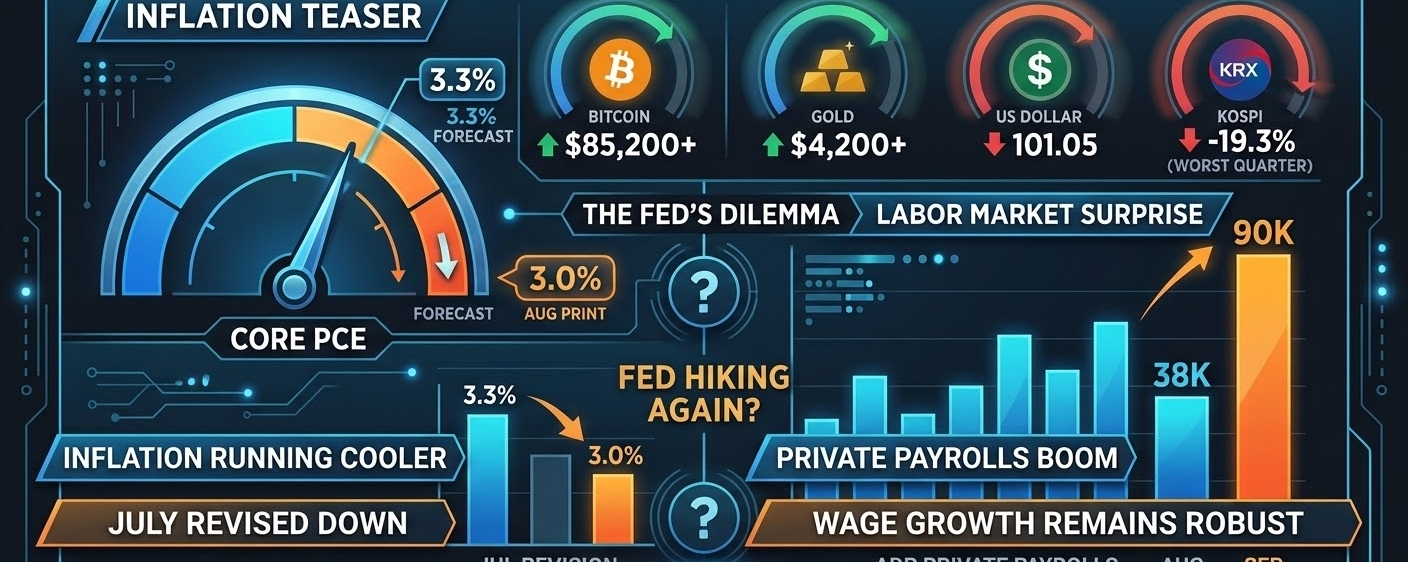
Core PCE Cools to 3% as Bitcoin Hits $85.2K & Gold Breaks $4,200: Fed's Hardest Dilemma YetThe macroeconomic landscape took a dramatic turn this week. A surprise downward revision in inflation paired with unexpected labor market strength has created a classic "good news is bad news" puzzle for the Federal Reserve — pushing financial markets into high gear.
Here is a full breakdown of the macro data, key market breakouts, and what it means for crypto.
1. Macro Breakdown: Cooling Inflation Meets Labor Resilience 📊
Core PCE Misses Expectations: August Core PCE rose 3.0% YoY, coming in below the 3.3% consensus to mark a six-month low.
The Crucial July Revision: July's print was revised down from 3.3% to 3.0%. This revision is key: inflation was cooling faster than the Fed recognized when it delivered its rate hike on September 16.
ADP Payrolls Beat: Private employers added 90,000 jobs in September, easily topping the 70,000 forecast and more than doubling August's revised 38,000 print.
Wage Growth Holds Firm: According to ADP Chief Economist Nela Richardson, wage growth remained robust after three months of slowdown.
💡 The Fed's Dilemma: Firm hiring and resilient wages alongside cooling inflation create the exact scenario that complicates central bank easing. October rate hike odds collapsed to a 50/50 coin flip.
2. Market Reactions & Key Breakouts 🚀
🪙 Bitcoin ($BTC) Clears $85,200
Bitcoin surged past $85,200, rallying alongside traditional safe havens. The co-movement with Gold breaks a month-long trend where the two assets repeatedly diverged.
🟡 Gold Crosses $4,205
Gold pushed through $4,205, decisively clearing the key $4,200 resistance level (where uptrend buyers historically clash with pullback sellers). Daily closes above this level signal a potential new leg higher for precious metals.
💵 US Dollar Index (DXY) Drops
The US Dollar slipped 15 bps to 101.05, unwinding momentum accumulated from the 98–99 range through mid-September.
📉 Global Equities & Tech Catalyst
KOSPI: South Korea’s benchmark index closed out its worst quarter since Q1 2020, down 19.3%.
Micron Earnings: All eyes turn to Micron reporting after the US close as the next key catalyst for AI memory demand and broader tech sentiment.
3. Key Takeaway for Crypto Traders 🧠
While Gold carries higher yield sensitivity (-0.41 vs $BTC's -0.17), a macro environment where the rate channel favors both assets creates strong tailwinds across risk and hedge assets.
Attention now shifts to Friday’s official Non-Farm Payrolls (NFP) and the 30-year US Treasury yield. If the long end holds near 5.6% on growth data rather than fiscal concerns, expect further repricing across risk assets.
💬 What’s Your Move?
Do you think $BTC pushes toward new all-time highs before the October Fed meeting?
How are you hedging your portfolio between Crypto and Gold right now?
Drop your thoughts and predictions in the comments below! 👇$BNB $BTC
#Bitcoin #CryptoNews #MacroEconomy #GOLD #Fed #BinanceSquare
Core PCE Cools to 3% as Bitcoin Hits $85.2K & Gold Breaks $4,200: Fed's Hardest Dilemma Yet
The macroeconomic landscape took a dramatic turn this week. A surprise downward revision in inflation paired with unexpected labor market strength has created a classic "good news is bad news" puzzle for the Federal Reserve — pushing financial markets into high gear.
Here is a full breakdown of the macro data, key market breakouts, and what it means for crypto.
1. Macro Breakdown: Cooling Inflation Meets Labor Resilience 📊
Core PCE Misses Expectations: August Core PCE rose 3.0% YoY, coming in below the 3.3% consensus to mark a six-month low.
The Crucial July Revision: July's print was revised down from 3.3% to 3.0%. This revision is key: inflation was cooling faster than the Fed recognized when it delivered its rate hike on September 16.
ADP Payrolls Beat: Private employers added 90,000 jobs in September, easily topping the 70,000 forecast and more than doubling August's revised 38,000 print.
Wage Growth Holds Firm: According to ADP Chief Economist Nela Richardson, wage growth remained robust after three months of slowdown.
💡 The Fed's Dilemma: Firm hiring and resilient wages alongside cooling inflation create the exact scenario that complicates central bank easing. October rate hike odds collapsed to a 50/50 coin flip.
2. Market Reactions & Key Breakouts 🚀
🪙 Bitcoin ($BTC ) Clears $85,200
Bitcoin surged past $85,200, rallying alongside traditional safe havens. The co-movement with Gold breaks a month-long trend where the two assets repeatedly diverged.
🟡 Gold Crosses $4,205
Gold pushed through $4,205, decisively clearing the key $4,200 resistance level (where uptrend buyers historically clash with pullback sellers). Daily closes above this level signal a potential new leg higher for precious metals.
💵 US Dollar Index (DXY) Drops
The US Dollar slipped 15 bps to 101.05, unwinding momentum accumulated from the 98–99 range through mid-September.
📉 Global Equities & Tech Catalyst
KOSPI: South Korea’s benchmark index closed out its worst quarter since Q1 2020, down 19.3%.
Micron Earnings: All eyes turn to Micron reporting after the US close as the next key catalyst for AI memory demand and broader tech sentiment.
3. Key Takeaway for Crypto Traders 🧠
While Gold carries higher yield sensitivity (-0.41 vs $BTC 's -0.17), a macro environment where the rate channel favors both assets creates strong tailwinds across risk and hedge assets.
Attention now shifts to Friday’s official Non-Farm Payrolls (NFP) and the 30-year US Treasury yield. If the long end holds near 5.6% on growth data rather than fiscal concerns, expect further repricing across risk assets.
💬 What’s Your Move?
Do you think $BTC pushes toward new all-time highs before the October Fed meeting?
How are you hedging your portfolio between Crypto and Gold right now?
Drop your thoughts and predictions in the comments below! 👇$BNB $BTC
#Bitcoin #CryptoNews #MacroEconomy #GOLD #Fed #BinanceSquare
Here is a full breakdown of the macro data, key market breakouts, and what it means for crypto.
1. Macro Breakdown: Cooling Inflation Meets Labor Resilience 📊
Core PCE Misses Expectations: August Core PCE rose 3.0% YoY, coming in below the 3.3% consensus to mark a six-month low.
The Crucial July Revision: July's print was revised down from 3.3% to 3.0%. This revision is key: inflation was cooling faster than the Fed recognized when it delivered its rate hike on September 16.
ADP Payrolls Beat: Private employers added 90,000 jobs in September, easily topping the 70,000 forecast and more than doubling August's revised 38,000 print.
Wage Growth Holds Firm: According to ADP Chief Economist Nela Richardson, wage growth remained robust after three months of slowdown.
💡 The Fed's Dilemma: Firm hiring and resilient wages alongside cooling inflation create the exact scenario that complicates central bank easing. October rate hike odds collapsed to a 50/50 coin flip.
2. Market Reactions & Key Breakouts 🚀
🪙 Bitcoin ($BTC ) Clears $85,200
Bitcoin surged past $85,200, rallying alongside traditional safe havens. The co-movement with Gold breaks a month-long trend where the two assets repeatedly diverged.
🟡 Gold Crosses $4,205
Gold pushed through $4,205, decisively clearing the key $4,200 resistance level (where uptrend buyers historically clash with pullback sellers). Daily closes above this level signal a potential new leg higher for precious metals.
💵 US Dollar Index (DXY) Drops
The US Dollar slipped 15 bps to 101.05, unwinding momentum accumulated from the 98–99 range through mid-September.
📉 Global Equities & Tech Catalyst
KOSPI: South Korea’s benchmark index closed out its worst quarter since Q1 2020, down 19.3%.
Micron Earnings: All eyes turn to Micron reporting after the US close as the next key catalyst for AI memory demand and broader tech sentiment.
3. Key Takeaway for Crypto Traders 🧠
While Gold carries higher yield sensitivity (-0.41 vs $BTC 's -0.17), a macro environment where the rate channel favors both assets creates strong tailwinds across risk and hedge assets.
Attention now shifts to Friday’s official Non-Farm Payrolls (NFP) and the 30-year US Treasury yield. If the long end holds near 5.6% on growth data rather than fiscal concerns, expect further repricing across risk assets.
💬 What’s Your Move?
Do you think $BTC pushes toward new all-time highs before the October Fed meeting?
How are you hedging your portfolio between Crypto and Gold right now?
Drop your thoughts and predictions in the comments below! 👇$BNB $BTC
#Bitcoin #CryptoNews #MacroEconomy #GOLD #Fed #BinanceSquare
246

·
--
Verified
🚨 CHINA'S CONSUMER DEBT CRISIS: UNSECURED NPL SELL-OFFS & COLLECTION BOTTLENECK 🇨🇳📉⚠️
🔥 The escalating non-performing loan (NPL) crisis across China's consumer finance sector marks a structural shift from the real-estate-heavy corporate debt cycles of the past. With an estimated 100 million borrowers behind on 2.2+ trillion yuan ($327B USD) in personal debt and major lenders like ICBC seeing credit-card NPL ratios jump past 5.37%, Chinese financial institutions are resorting to distressed asset dumping at steep discounts.
However, the absence of a nationwide personal bankruptcy framework combined with regulatory enforcement against aggressive debt collection firms has created a severe recovery bottleneck.
🪙 Crypto Market Benchmark Context :
$QNT (Quant Network): Enterprise interoperability layer; functions as a macro gauge for central bank digital currency (CBDC) pilots, tokenized deposit frameworks, and institutional financial settlement.
$AVAX (Avalanche): High-throughput Smart Contract L1; sensitive to institutional subnets, real-world asset (RWA) tokenization platforms, and cross-border DeFi liquidity flows.
$BOME (BOOK OF MEME): High-beta Sol-ecosystem meme asset; reflects retail speculative liquidity cycles, leverage exposure, and broader altcoin market sentiment.
⚠️ Trader & Risk Warning:
Macroeconomic debt instability, sovereign credit risks, and regional financial stress generate sharp volatility across equity and crypto markets! Always enforce hard Stop-Loss (SL) parameters, manage position sizing conservatively, and keep perpetual leverage low (2x–5x max)! 🛡️⚡
💬 Will China eventually be forced to establish a national personal bankruptcy framework to clear this debt overhang, or will banks absorb permanent write-offs? Share your thoughts below! 👇
📌 Follow & Like for daily macro signal audits, geopolitical financial analysis, and disciplined crypto risk management setups! 🔥
#Binance #MacroEconomy #CryptoTrading #RiskManagement
🚨 CHINA'S CONSUMER DEBT CRISIS: UNSECURED NPL SELL-OFFS & COLLECTION BOTTLENECK 🇨🇳📉⚠️
🔥 The escalating non-performing loan (NPL) crisis across China's consumer finance sector marks a structural shift from the real-estate-heavy corporate debt cycles of the past. With an estimated 100 million borrowers behind on 2.2+ trillion yuan ($327B USD) in personal debt and major lenders like ICBC seeing credit-card NPL ratios jump past 5.37%, Chinese financial institutions are resorting to distressed asset dumping at steep discounts.
However, the absence of a nationwide personal bankruptcy framework combined with regulatory enforcement against aggressive debt collection firms has created a severe recovery bottleneck.
🪙 Crypto Market Benchmark Context :
$QNT (Quant Network): Enterprise interoperability layer; functions as a macro gauge for central bank digital currency (CBDC) pilots, tokenized deposit frameworks, and institutional financial settlement.
$AVAX (Avalanche): High-throughput Smart Contract L1; sensitive to institutional subnets, real-world asset (RWA) tokenization platforms, and cross-border DeFi liquidity flows.
$BOME (BOOK OF MEME): High-beta Sol-ecosystem meme asset; reflects retail speculative liquidity cycles, leverage exposure, and broader altcoin market sentiment.
⚠️ Trader & Risk Warning:
Macroeconomic debt instability, sovereign credit risks, and regional financial stress generate sharp volatility across equity and crypto markets! Always enforce hard Stop-Loss (SL) parameters, manage position sizing conservatively, and keep perpetual leverage low (2x–5x max)! 🛡️⚡
💬 Will China eventually be forced to establish a national personal bankruptcy framework to clear this debt overhang, or will banks absorb permanent write-offs? Share your thoughts below! 👇
📌 Follow & Like for daily macro signal audits, geopolitical financial analysis, and disciplined crypto risk management setups! 🔥
#Binance #MacroEconomy #CryptoTrading #RiskManagement
🔥 The escalating non-performing loan (NPL) crisis across China's consumer finance sector marks a structural shift from the real-estate-heavy corporate debt cycles of the past. With an estimated 100 million borrowers behind on 2.2+ trillion yuan ($327B USD) in personal debt and major lenders like ICBC seeing credit-card NPL ratios jump past 5.37%, Chinese financial institutions are resorting to distressed asset dumping at steep discounts.
However, the absence of a nationwide personal bankruptcy framework combined with regulatory enforcement against aggressive debt collection firms has created a severe recovery bottleneck.
🪙 Crypto Market Benchmark Context :
$QNT (Quant Network): Enterprise interoperability layer; functions as a macro gauge for central bank digital currency (CBDC) pilots, tokenized deposit frameworks, and institutional financial settlement.
$AVAX (Avalanche): High-throughput Smart Contract L1; sensitive to institutional subnets, real-world asset (RWA) tokenization platforms, and cross-border DeFi liquidity flows.
$BOME (BOOK OF MEME): High-beta Sol-ecosystem meme asset; reflects retail speculative liquidity cycles, leverage exposure, and broader altcoin market sentiment.
⚠️ Trader & Risk Warning:
Macroeconomic debt instability, sovereign credit risks, and regional financial stress generate sharp volatility across equity and crypto markets! Always enforce hard Stop-Loss (SL) parameters, manage position sizing conservatively, and keep perpetual leverage low (2x–5x max)! 🛡️⚡
💬 Will China eventually be forced to establish a national personal bankruptcy framework to clear this debt overhang, or will banks absorb permanent write-offs? Share your thoughts below! 👇
📌 Follow & Like for daily macro signal audits, geopolitical financial analysis, and disciplined crypto risk management setups! 🔥
#Binance #MacroEconomy #CryptoTrading #RiskManagement

1
583


·
--
Mixed US economic signals are keeping Bitcoin stuck below key resistance levels as macro uncertainty lingers 📈📉
Fresh data shows US job openings cooled to 7.1 million in August (down from a revised 7.3 million in July), signaling a slowing labor market that typically supports lower interest rates. However, consumer anxiety is rising. The Conference Board’s Consumer Confidence Index dropped to 81.9 in September, while average 12-month inflation expectations climbed to 6.1%, and 68.4% of respondents now expect higher rates ahead.
For Bitcoin, this creates a split narrative. A softening labor market usually bolsters the case for Fed rate cuts and cheaper liquidity. Yet persistent inflation fears and rising yield expectations limit immediate upside, leaving BTC struggling to reclaim the $84,000 support zone after touching a recent low near $82,775.
Without clear directional momentum from macroeconomic data, crypto markets remain caught between rate-cut hopes and inflation headwinds.
Do you think macro conditions will push BTC higher, or is more sideways price action ahead?
#bitcoin #Crypto #FedRateWatch #macroeconomy
Mixed US economic signals are keeping Bitcoin stuck below key resistance levels as macro uncertainty lingers 📈📉
Fresh data shows US job openings cooled to 7.1 million in August (down from a revised 7.3 million in July), signaling a slowing labor market that typically supports lower interest rates. However, consumer anxiety is rising. The Conference Board’s Consumer Confidence Index dropped to 81.9 in September, while average 12-month inflation expectations climbed to 6.1%, and 68.4% of respondents now expect higher rates ahead.
For Bitcoin, this creates a split narrative. A softening labor market usually bolsters the case for Fed rate cuts and cheaper liquidity. Yet persistent inflation fears and rising yield expectations limit immediate upside, leaving BTC struggling to reclaim the $84,000 support zone after touching a recent low near $82,775.
Without clear directional momentum from macroeconomic data, crypto markets remain caught between rate-cut hopes and inflation headwinds.
Do you think macro conditions will push BTC higher, or is more sideways price action ahead?
#bitcoin #Crypto #FedRateWatch #macroeconomy
Fresh data shows US job openings cooled to 7.1 million in August (down from a revised 7.3 million in July), signaling a slowing labor market that typically supports lower interest rates. However, consumer anxiety is rising. The Conference Board’s Consumer Confidence Index dropped to 81.9 in September, while average 12-month inflation expectations climbed to 6.1%, and 68.4% of respondents now expect higher rates ahead.
For Bitcoin, this creates a split narrative. A softening labor market usually bolsters the case for Fed rate cuts and cheaper liquidity. Yet persistent inflation fears and rising yield expectations limit immediate upside, leaving BTC struggling to reclaim the $84,000 support zone after touching a recent low near $82,775.
Without clear directional momentum from macroeconomic data, crypto markets remain caught between rate-cut hopes and inflation headwinds.
Do you think macro conditions will push BTC higher, or is more sideways price action ahead?
#bitcoin #Crypto #FedRateWatch #macroeconomy
1
378

BTC : the market has just received a major piece of US data.
The September jobs report has been released.
Key figures:
• NFP: +29K
• Forecast: +90K
• Unemployment: 4.2%
• August revised: +133K
The slowdown in employment is therefore much more pronounced than expected.
BTC is trading around 86K–87K $ while traders digest this macro news.
To watch now: US yields, the dollar, and how the markets react to the next expectations for monetary policy.
Source: U.S. Bureau of Labor Statistics
#BTC #macroeconomy
{spot}(BTCUSDT)
BTC : the market has just received a major piece of US data.
The September jobs report has been released.
Key figures:
• NFP: +29K
• Forecast: +90K
• Unemployment: 4.2%
• August revised: +133K
The slowdown in employment is therefore much more pronounced than expected.
BTC is trading around 86K–87K $ while traders digest this macro news.
To watch now: US yields, the dollar, and how the markets react to the next expectations for monetary policy.
Source: U.S. Bureau of Labor Statistics
#BTC #macroeconomy
The September jobs report has been released.
Key figures:
• NFP: +29K
• Forecast: +90K
• Unemployment: 4.2%
• August revised: +133K
The slowdown in employment is therefore much more pronounced than expected.
BTC is trading around 86K–87K $ while traders digest this macro news.
To watch now: US yields, the dollar, and how the markets react to the next expectations for monetary policy.
Source: U.S. Bureau of Labor Statistics
#BTC #macroeconomy
5

·
--
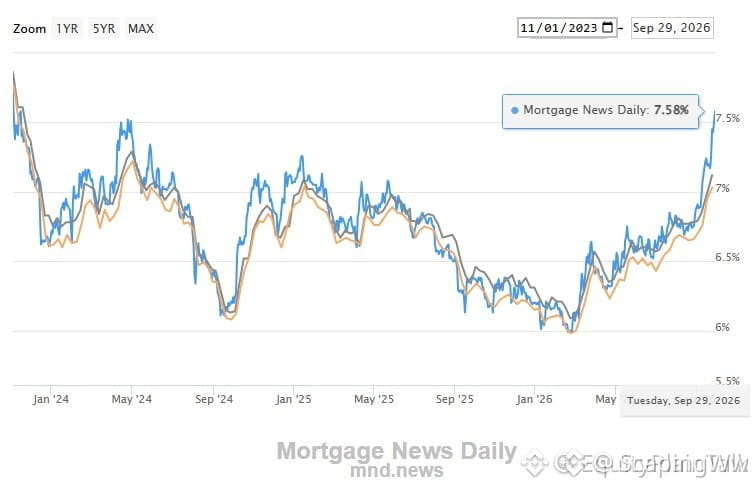
🚨 30-YEAR MORTGAGE RATES HIT 7.58% SPIKING MACRO PRESSURE ON $BTC 📉
Borrowing costs just ripped to November 2023 highs at 7.58%, effectively locking capital inside existing real estate while crushing fresh consumer discretionary flow. 📊 When mortgage payments consume household budgets, speculative liquidity dries up, squeezing high-beta assets across the board.
Existing housing inventory stays frozen as legacy owners refuse to forfeit lower fixed rates, leaving traditional markets suffocating in a structural supply pinch. 💡 Macro headwinds of this scale force institutional capital to tighten risk parameters before fresh expansion legs can ignite.
💬 Do you see tight housing liquidity eventually driving capital toward alternative digital assets, or are we heading for a broader consumer crunch? 👇
⚠️ Not financial advice. Always manage your risk. 🛡️
🏷️ #BTC #MacroEconomy #HousingMarket #Liquidity #Crypto
🔥 🛡️
🚨 30-YEAR MORTGAGE RATES HIT 7.58% SPIKING MACRO PRESSURE ON $BTC 📉
Borrowing costs just ripped to November 2023 highs at 7.58%, effectively locking capital inside existing real estate while crushing fresh consumer discretionary flow. 📊 When mortgage payments consume household budgets, speculative liquidity dries up, squeezing high-beta assets across the board.
Existing housing inventory stays frozen as legacy owners refuse to forfeit lower fixed rates, leaving traditional markets suffocating in a structural supply pinch. 💡 Macro headwinds of this scale force institutional capital to tighten risk parameters before fresh expansion legs can ignite.
💬 Do you see tight housing liquidity eventually driving capital toward alternative digital assets, or are we heading for a broader consumer crunch? 👇
⚠️ Not financial advice. Always manage your risk. 🛡️
🏷️ #BTC #MacroEconomy #HousingMarket #Liquidity #Crypto
🔥 🛡️
Borrowing costs just ripped to November 2023 highs at 7.58%, effectively locking capital inside existing real estate while crushing fresh consumer discretionary flow. 📊 When mortgage payments consume household budgets, speculative liquidity dries up, squeezing high-beta assets across the board.
Existing housing inventory stays frozen as legacy owners refuse to forfeit lower fixed rates, leaving traditional markets suffocating in a structural supply pinch. 💡 Macro headwinds of this scale force institutional capital to tighten risk parameters before fresh expansion legs can ignite.
💬 Do you see tight housing liquidity eventually driving capital toward alternative digital assets, or are we heading for a broader consumer crunch? 👇
⚠️ Not financial advice. Always manage your risk. 🛡️
🏷️ #BTC #MacroEconomy #HousingMarket #Liquidity #Crypto
🔥 🛡️
31
The White House has officially urged the European Union to release emergency diesel reserves to counter rising global fuel prices ahead of the US midterm elections. President Donald Trump and his administration are weighing several aggressive options, including export restrictions and refinery incentives, to ease domestic cost-of-living pressures.
Diesel is a vital backbone for global freight, agriculture, and industrial manufacturing. Sustained supply tightness risks reigniting broad inflationary pressures, directly complicating central bank roadmaps toward monetary easing and policy rate cuts.
Across traditional financial markets, elevated fuel costs support higher bond yields and strengthen the US dollar by lifting near-term inflation expectations. Persistent energy bottlenecks could compress corporate margins and trigger volatility across major equities.
For digital assets, stubborn energy-driven inflation delays broader monetary loosening and curbs institutional liquidity inflows. A tighter macro backdrop may keep speculative risk appetite restrained, leaving assets like $BTC in a consolidation phase until energy markets stabilize.
#EnergyCrisis #MacroEconomy #Inflation
The White House has officially urged the European Union to release emergency diesel reserves to counter rising global fuel prices ahead of the US midterm elections. President Donald Trump and his administration are weighing several aggressive options, including export restrictions and refinery incentives, to ease domestic cost-of-living pressures.
Diesel is a vital backbone for global freight, agriculture, and industrial manufacturing. Sustained supply tightness risks reigniting broad inflationary pressures, directly complicating central bank roadmaps toward monetary easing and policy rate cuts.
Across traditional financial markets, elevated fuel costs support higher bond yields and strengthen the US dollar by lifting near-term inflation expectations. Persistent energy bottlenecks could compress corporate margins and trigger volatility across major equities.
For digital assets, stubborn energy-driven inflation delays broader monetary loosening and curbs institutional liquidity inflows. A tighter macro backdrop may keep speculative risk appetite restrained, leaving assets like $BTC in a consolidation phase until energy markets stabilize.
#EnergyCrisis #MacroEconomy #Inflation
Diesel is a vital backbone for global freight, agriculture, and industrial manufacturing. Sustained supply tightness risks reigniting broad inflationary pressures, directly complicating central bank roadmaps toward monetary easing and policy rate cuts.
Across traditional financial markets, elevated fuel costs support higher bond yields and strengthen the US dollar by lifting near-term inflation expectations. Persistent energy bottlenecks could compress corporate margins and trigger volatility across major equities.
For digital assets, stubborn energy-driven inflation delays broader monetary loosening and curbs institutional liquidity inflows. A tighter macro backdrop may keep speculative risk appetite restrained, leaving assets like $BTC in a consolidation phase until energy markets stabilize.
#EnergyCrisis #MacroEconomy #Inflation
15

According to the latest interest rate swap data from CME FedWatch, the probability that the Federal Reserve will keep interest rates unchanged in October has risen to 75.1%, while the probability of a 25-basis-point hike is 24.9%. At the December meeting, the market is already pricing in a 25-basis-point hike with a probability of 61.3%, a 50-basis-point hike with a probability of 18.1%, and the probability of holding rates steady is only 20.6%.
This data indicates that market expectations of a policy shift toward easing have been thoroughly dashed. After earlier rate adjustments, sticky inflation and economic resilience have forced policymakers to maintain a hawkish stance, delaying any meaningful move toward liquidity easing.
From a macro perspective, keeping interest rates at high levels for “Higher for Longer” will continue to push up U.S. Treasury yields and the U.S. dollar index, suppressing risk appetite in traditional capital markets. Global liquidity remains constrained, and the valuation center of gravity faces further downward pressure.
For the crypto market, a high-rate environment limits the pace at which incremental fiat funds can enter. If another rate hike occurs as expected by year-end, the de-leveraging trend will continue; key risk assets such as $BTC may face the risk of episodic liquidity tightening and deeper pullbacks. Investors should be mindful of volatility caused by valuation repricing.📉
#Fed #InterestRates #MacroEconomy
According to the latest interest rate swap data from CME FedWatch, the probability that the Federal Reserve will keep interest rates unchanged in October has risen to 75.1%, while the probability of a 25-basis-point hike is 24.9%. At the December meeting, the market is already pricing in a 25-basis-point hike with a probability of 61.3%, a 50-basis-point hike with a probability of 18.1%, and the probability of holding rates steady is only 20.6%.
This data indicates that market expectations of a policy shift toward easing have been thoroughly dashed. After earlier rate adjustments, sticky inflation and economic resilience have forced policymakers to maintain a hawkish stance, delaying any meaningful move toward liquidity easing.
From a macro perspective, keeping interest rates at high levels for “Higher for Longer” will continue to push up U.S. Treasury yields and the U.S. dollar index, suppressing risk appetite in traditional capital markets. Global liquidity remains constrained, and the valuation center of gravity faces further downward pressure.
For the crypto market, a high-rate environment limits the pace at which incremental fiat funds can enter. If another rate hike occurs as expected by year-end, the de-leveraging trend will continue; key risk assets such as $BTC may face the risk of episodic liquidity tightening and deeper pullbacks. Investors should be mindful of volatility caused by valuation repricing.📉
#Fed #InterestRates #MacroEconomy
This data indicates that market expectations of a policy shift toward easing have been thoroughly dashed. After earlier rate adjustments, sticky inflation and economic resilience have forced policymakers to maintain a hawkish stance, delaying any meaningful move toward liquidity easing.
From a macro perspective, keeping interest rates at high levels for “Higher for Longer” will continue to push up U.S. Treasury yields and the U.S. dollar index, suppressing risk appetite in traditional capital markets. Global liquidity remains constrained, and the valuation center of gravity faces further downward pressure.
For the crypto market, a high-rate environment limits the pace at which incremental fiat funds can enter. If another rate hike occurs as expected by year-end, the de-leveraging trend will continue; key risk assets such as $BTC may face the risk of episodic liquidity tightening and deeper pullbacks. Investors should be mindful of volatility caused by valuation repricing.📉
#Fed #InterestRates #MacroEconomy
2

·
--
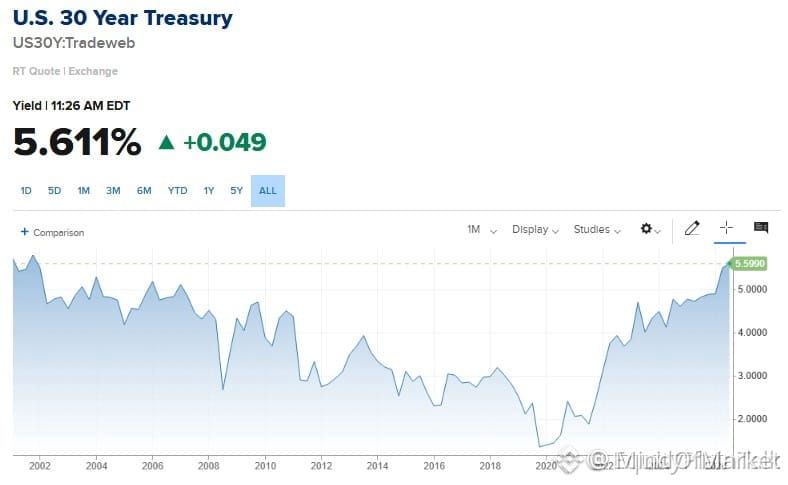
🚨 30-YEAR TREASURY YIELDS BREAK 22-YEAR HIGHS AT 5.61% AS $BTC TESTS LIQUIDITY! ⚠️
Institutional macro liquidity is shifting as the 30-year Treasury yield breaks a 22-year structural high at 5.61%. 📊 Elevated borrowing costs are squeezing long-duration debt, capping capital expansion, and applying severe friction to risk assets.
Smart money is watching structural stress points in regional banks, debt roll-overs, and commercial real estate balance sheets. 🔍 As fixed-income yields absorb global liquidity, risk-off rebalancing could force sharp volatility sweeps across broad markets including $BTC .
💬 Which sector breaks under this high-yield pressure first: traditional real estate or regional banking balance sheets? 👇
⚠️ Not financial advice. Always manage your risk. 🛡️
🏷️ #BTC #MacroEconomy #Liquidity #RiskManagement #Crypto
🎯 🦈
🚨 30-YEAR TREASURY YIELDS BREAK 22-YEAR HIGHS AT 5.61% AS $BTC TESTS LIQUIDITY! ⚠️
Institutional macro liquidity is shifting as the 30-year Treasury yield breaks a 22-year structural high at 5.61%. 📊 Elevated borrowing costs are squeezing long-duration debt, capping capital expansion, and applying severe friction to risk assets.
Smart money is watching structural stress points in regional banks, debt roll-overs, and commercial real estate balance sheets. 🔍 As fixed-income yields absorb global liquidity, risk-off rebalancing could force sharp volatility sweeps across broad markets including $BTC .
💬 Which sector breaks under this high-yield pressure first: traditional real estate or regional banking balance sheets? 👇
⚠️ Not financial advice. Always manage your risk. 🛡️
🏷️ #BTC #MacroEconomy #Liquidity #RiskManagement #Crypto
🎯 🦈
Institutional macro liquidity is shifting as the 30-year Treasury yield breaks a 22-year structural high at 5.61%. 📊 Elevated borrowing costs are squeezing long-duration debt, capping capital expansion, and applying severe friction to risk assets.
Smart money is watching structural stress points in regional banks, debt roll-overs, and commercial real estate balance sheets. 🔍 As fixed-income yields absorb global liquidity, risk-off rebalancing could force sharp volatility sweeps across broad markets including $BTC .
💬 Which sector breaks under this high-yield pressure first: traditional real estate or regional banking balance sheets? 👇
⚠️ Not financial advice. Always manage your risk. 🛡️
🏷️ #BTC #MacroEconomy #Liquidity #RiskManagement #Crypto
🎯 🦈
BTC-0.16%
TLTETF-0.26%
20

·
--
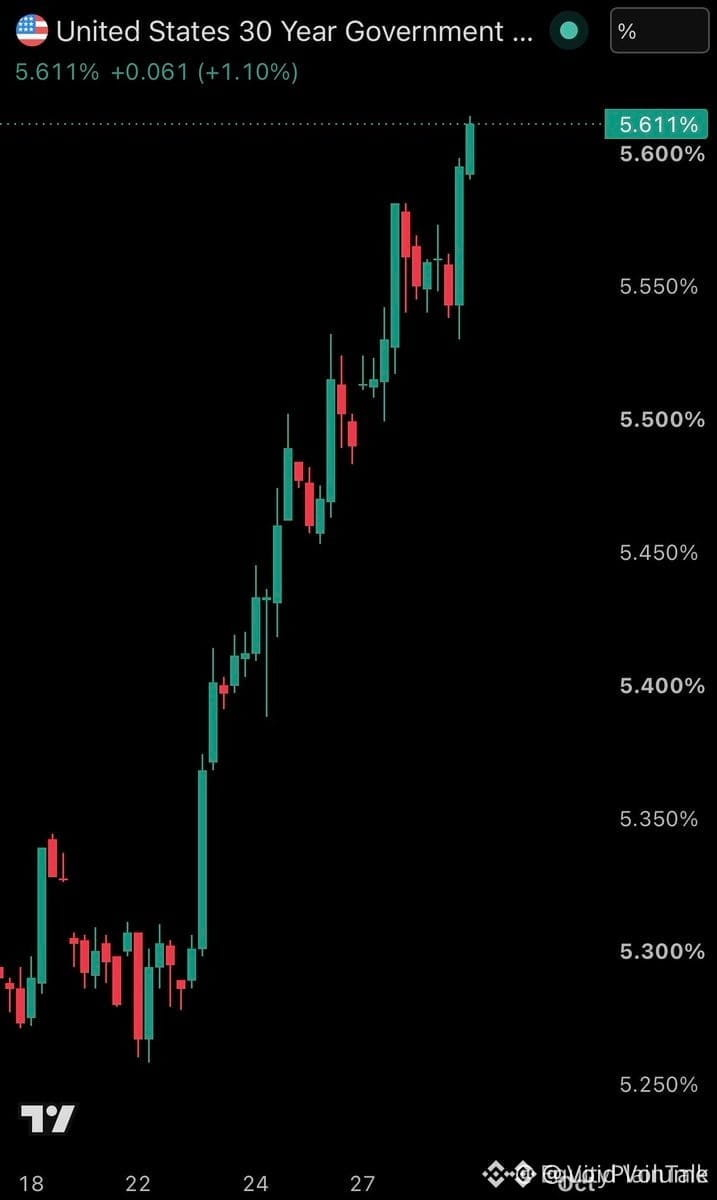
US YIELDS HIT 5.60% TWO-DECADE HIGH AS MACRO LIQUIDITY SQUEEZES RISK ASSETS $BTC 🚨 📊
The 30-year Treasury yield breaching 5.60% marks a structural multi-decade high, spiking 36 basis points in just thirty days. 📊 This rapid tightening of discount rates compresses institutional risk appetite, dragging borrowing costs to levels unseen since 2002 and signaling a severe headwind for legacy collateral markets.
With mortgage rates tracking toward 8%, capital is actively re-pricing risk across all asset classes as debt servicing burdens accelerate. 🚨 Smart money is monitoring how this fiat liquidity contraction forces order flow reshuffling out of illiquid assets into capital preservation setups.
💬 How are you positioning your portfolio as macro bond yields aggressively drain global market liquidity? 👇
⚠️ Not financial advice. Always manage your risk. 🛡️
🏷️ #BTC #MacroEconomy #USDT #Liquidity #RiskOff
📊 👁️
US YIELDS HIT 5.60% TWO-DECADE HIGH AS MACRO LIQUIDITY SQUEEZES RISK ASSETS $BTC 🚨 📊
The 30-year Treasury yield breaching 5.60% marks a structural multi-decade high, spiking 36 basis points in just thirty days. 📊 This rapid tightening of discount rates compresses institutional risk appetite, dragging borrowing costs to levels unseen since 2002 and signaling a severe headwind for legacy collateral markets.
With mortgage rates tracking toward 8%, capital is actively re-pricing risk across all asset classes as debt servicing burdens accelerate. 🚨 Smart money is monitoring how this fiat liquidity contraction forces order flow reshuffling out of illiquid assets into capital preservation setups.
💬 How are you positioning your portfolio as macro bond yields aggressively drain global market liquidity? 👇
⚠️ Not financial advice. Always manage your risk. 🛡️
🏷️ #BTC #MacroEconomy #USDT #Liquidity #RiskOff
📊 👁️
The 30-year Treasury yield breaching 5.60% marks a structural multi-decade high, spiking 36 basis points in just thirty days. 📊 This rapid tightening of discount rates compresses institutional risk appetite, dragging borrowing costs to levels unseen since 2002 and signaling a severe headwind for legacy collateral markets.
With mortgage rates tracking toward 8%, capital is actively re-pricing risk across all asset classes as debt servicing burdens accelerate. 🚨 Smart money is monitoring how this fiat liquidity contraction forces order flow reshuffling out of illiquid assets into capital preservation setups.
💬 How are you positioning your portfolio as macro bond yields aggressively drain global market liquidity? 👇
⚠️ Not financial advice. Always manage your risk. 🛡️
🏷️ #BTC #MacroEconomy #USDT #Liquidity #RiskOff
📊 👁️
BTC-0.16%
TLTETF-0.26%
19
The U.S. Treasury market once again faces selling pressure today, with the benchmark 10-year U.S. Treasury yield rising by 4.72 basis points intraday and now reaching a high of 5.34%. The continued climb of this key lending benchmark clearly reflects that global funding costs are being pushed higher still.
The jump in the 10-year U.S. Treasury yield to 5.34% carries very important macroeconomic implications. This indicates that the market is readjusting its pricing for prolonged high interest rates and even the continuation of tightening policy. Earlier overly optimistic expectations of easing have been thoroughly shattered, and the normalization of high funding costs is becoming the baseline assumption.
For traditional financial markets, elevated risk-free rates create significant revaluation pressure. Equity asset valuations face ongoing compression, and rising borrowing costs may further exacerbate credit vulnerability. Meanwhile, continued upward pressure on U.S. Treasury yields will likely keep supporting the return of dollar liquidity, producing a tightening effect on global FX and liquidity conditions.
In the crypto space, a risk-free yield as high as 5.34% is clearly suppressing the ability of the likes of $BTC to attract funding. With liquidity tightening and funding costs remaining high, the market faces deleveraging and downside risks. Investors should be alert to pullback pressures driven by a risk-off sentiment.#BondYields #TreasuryYields #MacroEconomy
The U.S. Treasury market once again faces selling pressure today, with the benchmark 10-year U.S. Treasury yield rising by 4.72 basis points intraday and now reaching a high of 5.34%. The continued climb of this key lending benchmark clearly reflects that global funding costs are being pushed higher still.
The jump in the 10-year U.S. Treasury yield to 5.34% carries very important macroeconomic implications. This indicates that the market is readjusting its pricing for prolonged high interest rates and even the continuation of tightening policy. Earlier overly optimistic expectations of easing have been thoroughly shattered, and the normalization of high funding costs is becoming the baseline assumption.
For traditional financial markets, elevated risk-free rates create significant revaluation pressure. Equity asset valuations face ongoing compression, and rising borrowing costs may further exacerbate credit vulnerability. Meanwhile, continued upward pressure on U.S. Treasury yields will likely keep supporting the return of dollar liquidity, producing a tightening effect on global FX and liquidity conditions.
In the crypto space, a risk-free yield as high as 5.34% is clearly suppressing the ability of the likes of $BTC to attract funding. With liquidity tightening and funding costs remaining high, the market faces deleveraging and downside risks. Investors should be alert to pullback pressures driven by a risk-off sentiment.#BondYields #TreasuryYields #MacroEconomy
The jump in the 10-year U.S. Treasury yield to 5.34% carries very important macroeconomic implications. This indicates that the market is readjusting its pricing for prolonged high interest rates and even the continuation of tightening policy. Earlier overly optimistic expectations of easing have been thoroughly shattered, and the normalization of high funding costs is becoming the baseline assumption.
For traditional financial markets, elevated risk-free rates create significant revaluation pressure. Equity asset valuations face ongoing compression, and rising borrowing costs may further exacerbate credit vulnerability. Meanwhile, continued upward pressure on U.S. Treasury yields will likely keep supporting the return of dollar liquidity, producing a tightening effect on global FX and liquidity conditions.
In the crypto space, a risk-free yield as high as 5.34% is clearly suppressing the ability of the likes of $BTC to attract funding. With liquidity tightening and funding costs remaining high, the market faces deleveraging and downside risks. Investors should be alert to pullback pressures driven by a risk-off sentiment.#BondYields #TreasuryYields #MacroEconomy
IEFETF-0.27%

·
--
U.S. government bond yields for the 10-year maturity continued to climb during today’s trading session, rising another 4.72 basis points to reach 5.34%. This upward momentum reflects ongoing selloff pressure in the public debt market, with no sign of abating.
With yields staying above 5.3%, the market appears to be repricing expectations for prolonged monetary policy tightening. Persistent inflation and the large scale of debt issuance by the U.S. government continue to exert upward pressure on borrowing costs beyond what had been anticipated.
The rise in benchmark bond yields has helped keep the U.S. dollar strong, while also clearly weighing on the stock market and gold. Higher and more expensive debt servicing costs directly reduce risk appetite across the entire global financial system.
For the crypto market, the risk-free yield above 5.3% is directly competing with speculative capital flows into $BTC and digital assets. Liquidity pressure may cause the crypto market to remain choppy, locked in a tug-of-war, and cautious in the near term. 📊
#BondYields #MacroEconomy #InterestRates
U.S. government bond yields for the 10-year maturity continued to climb during today’s trading session, rising another 4.72 basis points to reach 5.34%. This upward momentum reflects ongoing selloff pressure in the public debt market, with no sign of abating.
With yields staying above 5.3%, the market appears to be repricing expectations for prolonged monetary policy tightening. Persistent inflation and the large scale of debt issuance by the U.S. government continue to exert upward pressure on borrowing costs beyond what had been anticipated.
The rise in benchmark bond yields has helped keep the U.S. dollar strong, while also clearly weighing on the stock market and gold. Higher and more expensive debt servicing costs directly reduce risk appetite across the entire global financial system.
For the crypto market, the risk-free yield above 5.3% is directly competing with speculative capital flows into $BTC and digital assets. Liquidity pressure may cause the crypto market to remain choppy, locked in a tug-of-war, and cautious in the near term. 📊
#BondYields #MacroEconomy #InterestRates
With yields staying above 5.3%, the market appears to be repricing expectations for prolonged monetary policy tightening. Persistent inflation and the large scale of debt issuance by the U.S. government continue to exert upward pressure on borrowing costs beyond what had been anticipated.
The rise in benchmark bond yields has helped keep the U.S. dollar strong, while also clearly weighing on the stock market and gold. Higher and more expensive debt servicing costs directly reduce risk appetite across the entire global financial system.
For the crypto market, the risk-free yield above 5.3% is directly competing with speculative capital flows into $BTC and digital assets. Liquidity pressure may cause the crypto market to remain choppy, locked in a tug-of-war, and cautious in the near term. 📊
#BondYields #MacroEconomy #InterestRates
BTC-0.16%
IEFETF-0.27%
192
The latest data released by the U.S. Department of Labor for the week of September 26 shows that initial jobless claims came in at 197,000, significantly below the market expectation of 200,000. Meanwhile, continuing claims for the week of September 19 also fell to 1.701 million. The four-week moving average for continuing claims dropped back to 200,000, and overall labor market indicators demonstrate strong resilience.
This set of data highlights that the pace at which the U.S. job market is cooling is far slower than the market’s optimistic expectations. Against the backdrop of the Federal Reserve restarting its rate-hike cycle in mid-September, a tightening labor supply not only limits the space for policy adjustment, but may also further strengthen the resolve of Federal Reserve Chair Kevin Warsh to maintain a hawkish stance. The risk of a rebound in wage inflation cannot be ignored.
Strong employment performance has imposed a significant liquidity drag on macro financial markets. U.S. Treasury yields and the U.S. dollar index received strong support after the data release. Market bets on rate cuts later this year continued to fade, and high-valued risk assets and non-yielding assets such as gold generally faced downward repricing pressures.
For the crypto market, the tightening of the macro liquidity environment directly suppresses off-exchange capital’s willingness to enter the market. If the high-rate environment persists longer than expected, risk assets headed by $BTC may face adjustment risks involving a downward shift in the valuation center of gravity. At the current stage, investors need to be alert to the fragility of leveraged positions.
#JoblessClaims #Fed #MacroEconomy
The latest data released by the U.S. Department of Labor for the week of September 26 shows that initial jobless claims came in at 197,000, significantly below the market expectation of 200,000. Meanwhile, continuing claims for the week of September 19 also fell to 1.701 million. The four-week moving average for continuing claims dropped back to 200,000, and overall labor market indicators demonstrate strong resilience.
This set of data highlights that the pace at which the U.S. job market is cooling is far slower than the market’s optimistic expectations. Against the backdrop of the Federal Reserve restarting its rate-hike cycle in mid-September, a tightening labor supply not only limits the space for policy adjustment, but may also further strengthen the resolve of Federal Reserve Chair Kevin Warsh to maintain a hawkish stance. The risk of a rebound in wage inflation cannot be ignored.
Strong employment performance has imposed a significant liquidity drag on macro financial markets. U.S. Treasury yields and the U.S. dollar index received strong support after the data release. Market bets on rate cuts later this year continued to fade, and high-valued risk assets and non-yielding assets such as gold generally faced downward repricing pressures.
For the crypto market, the tightening of the macro liquidity environment directly suppresses off-exchange capital’s willingness to enter the market. If the high-rate environment persists longer than expected, risk assets headed by $BTC may face adjustment risks involving a downward shift in the valuation center of gravity. At the current stage, investors need to be alert to the fragility of leveraged positions.
#JoblessClaims #Fed #MacroEconomy
This set of data highlights that the pace at which the U.S. job market is cooling is far slower than the market’s optimistic expectations. Against the backdrop of the Federal Reserve restarting its rate-hike cycle in mid-September, a tightening labor supply not only limits the space for policy adjustment, but may also further strengthen the resolve of Federal Reserve Chair Kevin Warsh to maintain a hawkish stance. The risk of a rebound in wage inflation cannot be ignored.
Strong employment performance has imposed a significant liquidity drag on macro financial markets. U.S. Treasury yields and the U.S. dollar index received strong support after the data release. Market bets on rate cuts later this year continued to fade, and high-valued risk assets and non-yielding assets such as gold generally faced downward repricing pressures.
For the crypto market, the tightening of the macro liquidity environment directly suppresses off-exchange capital’s willingness to enter the market. If the high-rate environment persists longer than expected, risk assets headed by $BTC may face adjustment risks involving a downward shift in the valuation center of gravity. At the current stage, investors need to be alert to the fragility of leveraged positions.
#JoblessClaims #Fed #MacroEconomy
3

·
--
The U.S. Dollar Index (DXY) has recently shown strong rebound momentum, surging to as high as 101.66 during the day. It not only broke through the July high, but also set a new three-month high since late June. Meanwhile, other major global economies are showing signs of fatigue. Data released by the UK’s well-known mortgage lender Nationwide shows that the local average house price fell 0.2% month-on-month to 274,251 pounds, marking the largest drop since May—indicating that high borrowing costs are putting real pressure on overseas asset markets.
Behind this bout of dollar strength is a subtle shift in market macro expectations. Although investors had largely been pricing in that major global central banks would enter a rate-cut cycle, the resilience of U.S. economic data stands in sharp contrast to the growth challenges faced by external economies. Europe and the UK not only have to deal with mortgage rates near 6% but also consumer pressure as energy bills rise again. This fundamental divergence further increases the demand for funds to flow back into U.S. dollar assets.
From the perspective of traditional financial markets, a stronger dollar and persistently high borrowing costs often weigh on commodities and risk assets. Non-U.S. currency exchange rates have remained under pressure, which not only limits the room for global liquidity to loosen but also creates some near-term pricing headwinds for dollar-denominated assets such as gold and crude oil. With capital continually weighing safety against higher yields, market sentiment has turned more cautious.
For the crypto market, $BTC and the entire digital asset sector are also in a liquidity watch period. A stronger dollar typically means global risk-free yields remain attractive, and the pace of inflows from off-exchange capital may stay relatively rational. However, it also encourages liquidity/positions to consolidate around key support levels, so the outlook still needs close monitoring of macro liquidity indicators and whether the Dollar Index can stabilize at current elevated levels.🔍
#DXY #MacroEconomy #USD
The U.S. Dollar Index (DXY) has recently shown strong rebound momentum, surging to as high as 101.66 during the day. It not only broke through the July high, but also set a new three-month high since late June. Meanwhile, other major global economies are showing signs of fatigue. Data released by the UK’s well-known mortgage lender Nationwide shows that the local average house price fell 0.2% month-on-month to 274,251 pounds, marking the largest drop since May—indicating that high borrowing costs are putting real pressure on overseas asset markets.
Behind this bout of dollar strength is a subtle shift in market macro expectations. Although investors had largely been pricing in that major global central banks would enter a rate-cut cycle, the resilience of U.S. economic data stands in sharp contrast to the growth challenges faced by external economies. Europe and the UK not only have to deal with mortgage rates near 6% but also consumer pressure as energy bills rise again. This fundamental divergence further increases the demand for funds to flow back into U.S. dollar assets.
From the perspective of traditional financial markets, a stronger dollar and persistently high borrowing costs often weigh on commodities and risk assets. Non-U.S. currency exchange rates have remained under pressure, which not only limits the room for global liquidity to loosen but also creates some near-term pricing headwinds for dollar-denominated assets such as gold and crude oil. With capital continually weighing safety against higher yields, market sentiment has turned more cautious.
For the crypto market, $BTC and the entire digital asset sector are also in a liquidity watch period. A stronger dollar typically means global risk-free yields remain attractive, and the pace of inflows from off-exchange capital may stay relatively rational. However, it also encourages liquidity/positions to consolidate around key support levels, so the outlook still needs close monitoring of macro liquidity indicators and whether the Dollar Index can stabilize at current elevated levels.🔍
#DXY #MacroEconomy #USD
Behind this bout of dollar strength is a subtle shift in market macro expectations. Although investors had largely been pricing in that major global central banks would enter a rate-cut cycle, the resilience of U.S. economic data stands in sharp contrast to the growth challenges faced by external economies. Europe and the UK not only have to deal with mortgage rates near 6% but also consumer pressure as energy bills rise again. This fundamental divergence further increases the demand for funds to flow back into U.S. dollar assets.
From the perspective of traditional financial markets, a stronger dollar and persistently high borrowing costs often weigh on commodities and risk assets. Non-U.S. currency exchange rates have remained under pressure, which not only limits the room for global liquidity to loosen but also creates some near-term pricing headwinds for dollar-denominated assets such as gold and crude oil. With capital continually weighing safety against higher yields, market sentiment has turned more cautious.
For the crypto market, $BTC and the entire digital asset sector are also in a liquidity watch period. A stronger dollar typically means global risk-free yields remain attractive, and the pace of inflows from off-exchange capital may stay relatively rational. However, it also encourages liquidity/positions to consolidate around key support levels, so the outlook still needs close monitoring of macro liquidity indicators and whether the Dollar Index can stabilize at current elevated levels.🔍
#DXY #MacroEconomy #USD
378
·
--
The U.S. Dollar Index (DXY) continues to strengthen throughout today’s trading session, once rising as high as 101.62 and setting a new peak in nearly two months.
This run has attracted widespread attention from the market. Previously, traders were generally weighing the rate-cut path against economic resilience. The fact that the dollar can break above the two-month high in a strong move suggests that demand for global funds to flow back into U.S. dollar-denominated assets is heating up again.
Judging by the performance of traditional financial markets, a strong dollar often has a liquidity-withdrawal effect on other risk assets to some extent. Whether it’s commodities or non-U.S. currencies, when the DXY trends higher, they typically face periods of consolidation pressure.
For the crypto market, this does not necessarily mean the trend will move downward in only one direction. However, tighter expectations in macro liquidity could increase short-term volatility. When BTC and major coins face a strengthening dollar index, the battle between bulls and bears often becomes more intense—so it’s advisable to closely watch changes in order-book liquidity. 📊
#DXY #USD #MacroEconomy #Crypto
The U.S. Dollar Index (DXY) continues to strengthen throughout today’s trading session, once rising as high as 101.62 and setting a new peak in nearly two months.
This run has attracted widespread attention from the market. Previously, traders were generally weighing the rate-cut path against economic resilience. The fact that the dollar can break above the two-month high in a strong move suggests that demand for global funds to flow back into U.S. dollar-denominated assets is heating up again.
Judging by the performance of traditional financial markets, a strong dollar often has a liquidity-withdrawal effect on other risk assets to some extent. Whether it’s commodities or non-U.S. currencies, when the DXY trends higher, they typically face periods of consolidation pressure.
For the crypto market, this does not necessarily mean the trend will move downward in only one direction. However, tighter expectations in macro liquidity could increase short-term volatility. When BTC and major coins face a strengthening dollar index, the battle between bulls and bears often becomes more intense—so it’s advisable to closely watch changes in order-book liquidity. 📊
#DXY #USD #MacroEconomy #Crypto
This run has attracted widespread attention from the market. Previously, traders were generally weighing the rate-cut path against economic resilience. The fact that the dollar can break above the two-month high in a strong move suggests that demand for global funds to flow back into U.S. dollar-denominated assets is heating up again.
Judging by the performance of traditional financial markets, a strong dollar often has a liquidity-withdrawal effect on other risk assets to some extent. Whether it’s commodities or non-U.S. currencies, when the DXY trends higher, they typically face periods of consolidation pressure.
For the crypto market, this does not necessarily mean the trend will move downward in only one direction. However, tighter expectations in macro liquidity could increase short-term volatility. When BTC and major coins face a strengthening dollar index, the battle between bulls and bears often becomes more intense—so it’s advisable to closely watch changes in order-book liquidity. 📊
#DXY #USD #MacroEconomy #Crypto
4
On September 30, 2026, the U.S. President Trump announced through an official statement that all U.S. forces and coalition troops stationed in Iraq had completely withdrawn from the Erbil air base, officially bringing to an end the long-term military operations that began in 2003. Meanwhile, the international commodity markets reacted sharply: New York Mercantile Exchange crude oil futures rose by $1.04 to close at $90.42 per barrel, with a one-day gain of 1.16%; London crude oil futures also increased by $0.94 to $103.53 per barrel, up 0.92%.
The complete withdrawal of U.S. forces signals that the Middle East’s geopolitical security framework is entering a new vacuum period; the potential fragility of regional supply chains has risen significantly, directly pushing up the geopolitical risk premium in energy markets. With current crude oil prices again climbing above a key threshold, it not only breaks the market’s prevailing expectations that inflation would steadily ease, but also presents a serious challenge to the global anti-inflation effort, which may be hindered once again.
From a broader financial market perspective, the rebound in energy costs will inevitably raise inflation expectations, which in turn will severely limit central banks’ operational room to implement future easing policies. If a high-interest-rate environment is forced to be maintained for a long time, U.S. Treasury yields and the U.S. dollar index are likely to remain in a strong, volatile posture, global capital market liquidity will be materially tightened, and valuations of overall risk assets will continue to face downward pressure.
In the cryptocurrency sector, anti-inflation narratives often struggle to offset the valuation pressure effects caused by macro liquidity tightening. Under the dual squeeze of rising risk-aversion sentiment and persistently high risk-free yields, risk assets represented by $BTC are highly likely to face shocks from insufficient incremental capital and episodic deleveraging, and in the near term, market performance is hard to characterize as optimistic.
#CrudeOil #Geopolitics #MacroEconomy
On September 30, 2026, the U.S. President Trump announced through an official statement that all U.S. forces and coalition troops stationed in Iraq had completely withdrawn from the Erbil air base, officially bringing to an end the long-term military operations that began in 2003. Meanwhile, the international commodity markets reacted sharply: New York Mercantile Exchange crude oil futures rose by $1.04 to close at $90.42 per barrel, with a one-day gain of 1.16%; London crude oil futures also increased by $0.94 to $103.53 per barrel, up 0.92%.
The complete withdrawal of U.S. forces signals that the Middle East’s geopolitical security framework is entering a new vacuum period; the potential fragility of regional supply chains has risen significantly, directly pushing up the geopolitical risk premium in energy markets. With current crude oil prices again climbing above a key threshold, it not only breaks the market’s prevailing expectations that inflation would steadily ease, but also presents a serious challenge to the global anti-inflation effort, which may be hindered once again.
From a broader financial market perspective, the rebound in energy costs will inevitably raise inflation expectations, which in turn will severely limit central banks’ operational room to implement future easing policies. If a high-interest-rate environment is forced to be maintained for a long time, U.S. Treasury yields and the U.S. dollar index are likely to remain in a strong, volatile posture, global capital market liquidity will be materially tightened, and valuations of overall risk assets will continue to face downward pressure.
In the cryptocurrency sector, anti-inflation narratives often struggle to offset the valuation pressure effects caused by macro liquidity tightening. Under the dual squeeze of rising risk-aversion sentiment and persistently high risk-free yields, risk assets represented by $BTC are highly likely to face shocks from insufficient incremental capital and episodic deleveraging, and in the near term, market performance is hard to characterize as optimistic.
#CrudeOil #Geopolitics #MacroEconomy
The complete withdrawal of U.S. forces signals that the Middle East’s geopolitical security framework is entering a new vacuum period; the potential fragility of regional supply chains has risen significantly, directly pushing up the geopolitical risk premium in energy markets. With current crude oil prices again climbing above a key threshold, it not only breaks the market’s prevailing expectations that inflation would steadily ease, but also presents a serious challenge to the global anti-inflation effort, which may be hindered once again.
From a broader financial market perspective, the rebound in energy costs will inevitably raise inflation expectations, which in turn will severely limit central banks’ operational room to implement future easing policies. If a high-interest-rate environment is forced to be maintained for a long time, U.S. Treasury yields and the U.S. dollar index are likely to remain in a strong, volatile posture, global capital market liquidity will be materially tightened, and valuations of overall risk assets will continue to face downward pressure.
In the cryptocurrency sector, anti-inflation narratives often struggle to offset the valuation pressure effects caused by macro liquidity tightening. Under the dual squeeze of rising risk-aversion sentiment and persistently high risk-free yields, risk assets represented by $BTC are highly likely to face shocks from insufficient incremental capital and episodic deleveraging, and in the near term, market performance is hard to characterize as optimistic.
#CrudeOil #Geopolitics #MacroEconomy
236
On Wednesday, France’s National Institute of Statistics and Economic Research (INSEE) released the latest data: France’s September inflation rate rose to 3.4%, significantly higher than August’s 2.6%, and above market expectations of 3.2%, reaching a more-than-two-year high. Energy prices surged 21.2% year over year, serving as the main driver. At the same time, services inflation rose to 2.2%, and food inflation also climbed to 1.5%.
The data indicate that inflation persistence is far beyond expectations, not only confined to initial energy shocks but spreading into the services and food sectors. Market optimism that the European Central Bank’s tightening cycle is nearing its end has been severely challenged, forcing policymakers to face greater pressure for further rate hikes.
The rebound in inflation has directly boosted European government bond yields, reinforcing expectations that the central bank will keep interest rates high for longer. The U.S. dollar and yields on major sovereign bonds remain at elevated levels, continuing to weigh on global liquidity; risk-off sentiment across asset classes is gradually building.
For the crypto market, this renewed reinforcement of expectations for tighter macro liquidity is not a good sign. Persistently high funding costs are likely to suppress incremental liquidity flowing into risk assets such as $BTC . In the near term, the market may face valuation adjustments and ongoing downside pressure alongside continued volatility.
#Inflation #ECB #MacroEconomy
On Wednesday, France’s National Institute of Statistics and Economic Research (INSEE) released the latest data: France’s September inflation rate rose to 3.4%, significantly higher than August’s 2.6%, and above market expectations of 3.2%, reaching a more-than-two-year high. Energy prices surged 21.2% year over year, serving as the main driver. At the same time, services inflation rose to 2.2%, and food inflation also climbed to 1.5%.
The data indicate that inflation persistence is far beyond expectations, not only confined to initial energy shocks but spreading into the services and food sectors. Market optimism that the European Central Bank’s tightening cycle is nearing its end has been severely challenged, forcing policymakers to face greater pressure for further rate hikes.
The rebound in inflation has directly boosted European government bond yields, reinforcing expectations that the central bank will keep interest rates high for longer. The U.S. dollar and yields on major sovereign bonds remain at elevated levels, continuing to weigh on global liquidity; risk-off sentiment across asset classes is gradually building.
For the crypto market, this renewed reinforcement of expectations for tighter macro liquidity is not a good sign. Persistently high funding costs are likely to suppress incremental liquidity flowing into risk assets such as $BTC . In the near term, the market may face valuation adjustments and ongoing downside pressure alongside continued volatility.
#Inflation #ECB #MacroEconomy
The data indicate that inflation persistence is far beyond expectations, not only confined to initial energy shocks but spreading into the services and food sectors. Market optimism that the European Central Bank’s tightening cycle is nearing its end has been severely challenged, forcing policymakers to face greater pressure for further rate hikes.
The rebound in inflation has directly boosted European government bond yields, reinforcing expectations that the central bank will keep interest rates high for longer. The U.S. dollar and yields on major sovereign bonds remain at elevated levels, continuing to weigh on global liquidity; risk-off sentiment across asset classes is gradually building.
For the crypto market, this renewed reinforcement of expectations for tighter macro liquidity is not a good sign. Persistently high funding costs are likely to suppress incremental liquidity flowing into risk assets such as $BTC . In the near term, the market may face valuation adjustments and ongoing downside pressure alongside continued volatility.
#Inflation #ECB #MacroEconomy
Log in to explore more content
Join global crypto users on Binance Square
⚡️ Get latest and useful information about crypto.
💬 Trusted by the world’s largest crypto exchange.
👍 Discover real insights from verified creators.
Email / Phone number
Trending Topics
1
#NFPWatch
10.9M views
19,340 Discussing
2
#BitcoinFundingRateTriplesTo10%
180,641 views
1,238 Discussing
3
#BitcoinSurpasses$86KUp2.99%
59,286 views
117 Discussing
4
#ZcashFalls21%FromSeptemberPeak
95,097 views
873 Discussing
5
#USSeptemberPayrollsAdd29KUnemploymentRises4.2%
76,379 views
535 Discussing
6
#XRPPostsFirstThreeGreenMonthsInQ3
66,077 views
735 Discussing
7
#BNBChainTokenizedStocksTop$1BAt30%Share
29,150 views
38 Discussing
8
#BitcoinRisesToward$85K
131,022 views
158 Discussing
9
#AmazonPlansToSell$8BNvidiaChips
8,362 views
92 Discussing
10
#NEARFallsToAround$4.70Down14%
51,039 views
118 Discussing