
#energymarkets
energymarkets
443,921 views
1,506 Discussing
Hot
Latest

Global energy markets are seeing notable downward pressure today, with WTI crude falling 1.00% to $88.58 per barrel while Brent crude declined approximately 0.6% to trade near $94.60 per barrel.
This pullback in benchmark crude prices offers a potential breather for headline inflation metrics, which have remained sensitive to volatile energy components over recent quarters. Market participants are closely monitoring whether this softness reflects easing geopolitical supply risks or growing concerns over broader economic growth.
For traditional finance, lower oil prices generally ease near-term cost-push inflation pressures, helping to stabilize bond yields and reducing the urgency for central banks to keep interest rates elevated for longer. A cooler energy complex also supports consumer spending sentiment and corporate margins across major indices.
For the crypto market, any relief on the macro inflation front is constructive for liquidity conditions. When energy prices stabilize, risk appetite tends to recover, creating a healthier macro backdrop for risk assets like $BTC as monetary policy concerns gradually recede. 📊
#CrudeOil #EnergyMarkets #MacroEconomy
Global energy markets are seeing notable downward pressure today, with WTI crude falling 1.00% to $88.58 per barrel while Brent crude declined approximately 0.6% to trade near $94.60 per barrel.
This pullback in benchmark crude prices offers a potential breather for headline inflation metrics, which have remained sensitive to volatile energy components over recent quarters. Market participants are closely monitoring whether this softness reflects easing geopolitical supply risks or growing concerns over broader economic growth.
For traditional finance, lower oil prices generally ease near-term cost-push inflation pressures, helping to stabilize bond yields and reducing the urgency for central banks to keep interest rates elevated for longer. A cooler energy complex also supports consumer spending sentiment and corporate margins across major indices.
For the crypto market, any relief on the macro inflation front is constructive for liquidity conditions. When energy prices stabilize, risk appetite tends to recover, creating a healthier macro backdrop for risk assets like $BTC as monetary policy concerns gradually recede. 📊
#CrudeOil #EnergyMarkets #MacroEconomy
This pullback in benchmark crude prices offers a potential breather for headline inflation metrics, which have remained sensitive to volatile energy components over recent quarters. Market participants are closely monitoring whether this softness reflects easing geopolitical supply risks or growing concerns over broader economic growth.
For traditional finance, lower oil prices generally ease near-term cost-push inflation pressures, helping to stabilize bond yields and reducing the urgency for central banks to keep interest rates elevated for longer. A cooler energy complex also supports consumer spending sentiment and corporate margins across major indices.
For the crypto market, any relief on the macro inflation front is constructive for liquidity conditions. When energy prices stabilize, risk appetite tends to recover, creating a healthier macro backdrop for risk assets like $BTC as monetary policy concerns gradually recede. 📊
#CrudeOil #EnergyMarkets #MacroEconomy
108

·
--
Bullish
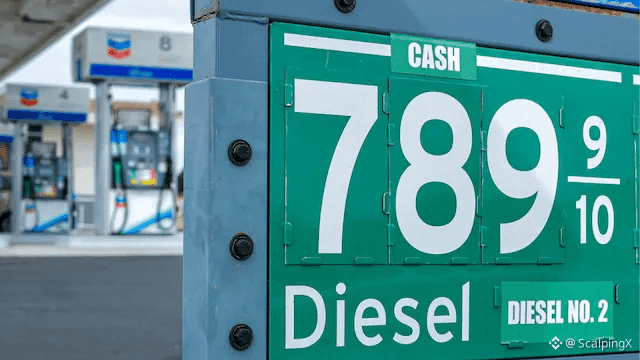
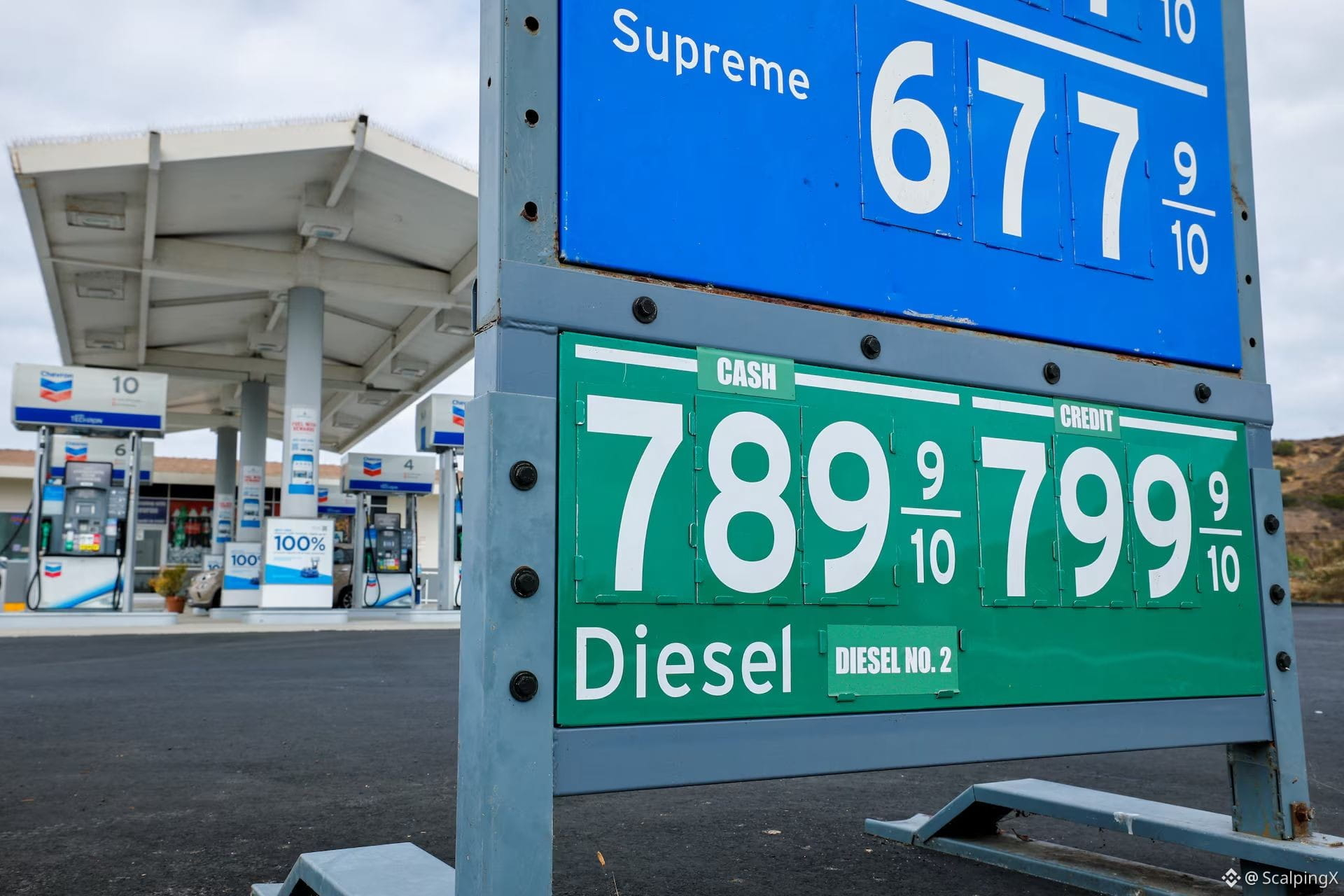
US diesel hits a record $6.529 even as crude oil cools
⛽ The EIA has confirmed that the average US on-highway diesel price reached 6.529 USD/gallon for the week ending September 21, up 0.244 USD in just one week. Prices above 6.50 USD had already emerged over the weekend, but the latest data shows pressure remains elevated.
📉 This contrasts with crude oil, as Brent and WTI have fallen for several sessions. The divergence suggests the bottleneck is increasingly concentrated in refined-product supply, refinery capacity and diesel trade flows rather than crude prices alone.
🏭 Lower diesel supply from Russia and the Middle East, combined with relatively firm transport, agricultural and industrial demand, is keeping retail prices sticky even as crude futures ease.
⚠️ Potential US restrictions on diesel exports are now another key variable. If prices remain elevated, logistics costs and broader goods inflation could stay under pressure.
#EnergyMarkets $CL $NATGAS
US diesel hits a record $6.529 even as crude oil cools
⛽ The EIA has confirmed that the average US on-highway diesel price reached 6.529 USD/gallon for the week ending September 21, up 0.244 USD in just one week. Prices above 6.50 USD had already emerged over the weekend, but the latest data shows pressure remains elevated.
📉 This contrasts with crude oil, as Brent and WTI have fallen for several sessions. The divergence suggests the bottleneck is increasingly concentrated in refined-product supply, refinery capacity and diesel trade flows rather than crude prices alone.
🏭 Lower diesel supply from Russia and the Middle East, combined with relatively firm transport, agricultural and industrial demand, is keeping retail prices sticky even as crude futures ease.
⚠️ Potential US restrictions on diesel exports are now another key variable. If prices remain elevated, logistics costs and broader goods inflation could stay under pressure.
#EnergyMarkets $CL $NATGAS
⛽ The EIA has confirmed that the average US on-highway diesel price reached 6.529 USD/gallon for the week ending September 21, up 0.244 USD in just one week. Prices above 6.50 USD had already emerged over the weekend, but the latest data shows pressure remains elevated.
📉 This contrasts with crude oil, as Brent and WTI have fallen for several sessions. The divergence suggests the bottleneck is increasingly concentrated in refined-product supply, refinery capacity and diesel trade flows rather than crude prices alone.
🏭 Lower diesel supply from Russia and the Middle East, combined with relatively firm transport, agricultural and industrial demand, is keeping retail prices sticky even as crude futures ease.
⚠️ Potential US restrictions on diesel exports are now another key variable. If prices remain elevated, logistics costs and broader goods inflation could stay under pressure.
#EnergyMarkets $CL $NATGAS
211
·
--
Bullish
Trump and Zelensky Prepare to Discuss an Energy Truce in New York
🤝 Donald Trump and Volodymyr Zelensky are set to meet in New York on the sidelines of the UN General Assembly, with Ukraine expected to push for a reciprocal halt to attacks on energy infrastructure.
⚡ Kyiv wants to reduce the risk of further Russian strikes on its power grid and heating systems ahead of winter, while also seeking additional Patriot air-defense support. Washington, meanwhile, is pressing Ukraine to limit attacks on Russian refineries.
🛢️ The issue is particularly relevant for diesel markets as global supply remains tight and prices are elevated. However, crude oil is still being driven heavily by Iran, Hormuz and broader Middle East supply risks, meaning the meeting is unlikely to be the only factor shaping energy prices.
#EnergyMarkets $CL $NATGAS
Trump and Zelensky Prepare to Discuss an Energy Truce in New York
🤝 Donald Trump and Volodymyr Zelensky are set to meet in New York on the sidelines of the UN General Assembly, with Ukraine expected to push for a reciprocal halt to attacks on energy infrastructure.
⚡ Kyiv wants to reduce the risk of further Russian strikes on its power grid and heating systems ahead of winter, while also seeking additional Patriot air-defense support. Washington, meanwhile, is pressing Ukraine to limit attacks on Russian refineries.
🛢️ The issue is particularly relevant for diesel markets as global supply remains tight and prices are elevated. However, crude oil is still being driven heavily by Iran, Hormuz and broader Middle East supply risks, meaning the meeting is unlikely to be the only factor shaping energy prices.
#EnergyMarkets $CL $NATGAS
🤝 Donald Trump and Volodymyr Zelensky are set to meet in New York on the sidelines of the UN General Assembly, with Ukraine expected to push for a reciprocal halt to attacks on energy infrastructure.
⚡ Kyiv wants to reduce the risk of further Russian strikes on its power grid and heating systems ahead of winter, while also seeking additional Patriot air-defense support. Washington, meanwhile, is pressing Ukraine to limit attacks on Russian refineries.
🛢️ The issue is particularly relevant for diesel markets as global supply remains tight and prices are elevated. However, crude oil is still being driven heavily by Iran, Hormuz and broader Middle East supply risks, meaning the meeting is unlikely to be the only factor shaping energy prices.
#EnergyMarkets $CL $NATGAS

221
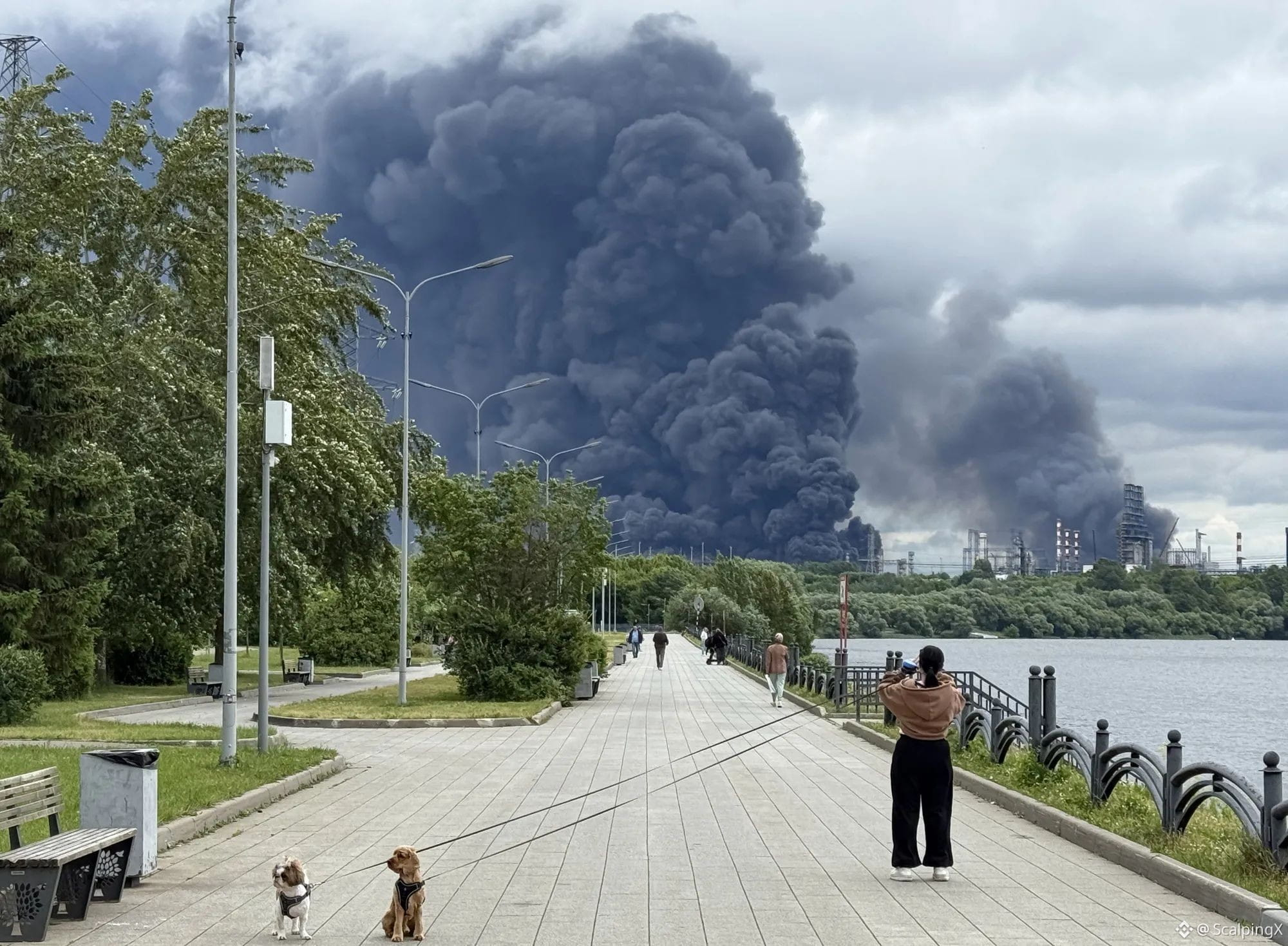
The Russian Ministry of Defense confirmed today that its forces targeted a cargo vessel in the Black Sea along with the Kremenchuk oil refinery in central Ukraine.
This direct targeting of critical energy infrastructure and commercial maritime assets marks a notable escalation in the ongoing conflict. Disruptions to refining capacity and heightened threats along Black Sea shipping lanes directly challenge regional fuel supplies and elevate supply chain risk across broader energy markets.
Across traditional financial markets, fresh threats to European energy security typically inject a geopolitical risk premium into crude prices while driving immediate defensive flows into safe-haven assets like gold and the US Dollar. Persistent volatility in commodity prices also threatens to complicate global disinflation trajectories.
For crypto assets, sudden geopolitical shocks tend to spark short-term risk-off sentiment, triggering rapid liquidations in over-leveraged positions. While $BTC is increasingly viewed as an alternative macro hedge, sharp escalations historically test liquidity before broader market stabilization resumes.
#Geopolitics #EnergyMarkets #MacroEconomics
The Russian Ministry of Defense confirmed today that its forces targeted a cargo vessel in the Black Sea along with the Kremenchuk oil refinery in central Ukraine.
This direct targeting of critical energy infrastructure and commercial maritime assets marks a notable escalation in the ongoing conflict. Disruptions to refining capacity and heightened threats along Black Sea shipping lanes directly challenge regional fuel supplies and elevate supply chain risk across broader energy markets.
Across traditional financial markets, fresh threats to European energy security typically inject a geopolitical risk premium into crude prices while driving immediate defensive flows into safe-haven assets like gold and the US Dollar. Persistent volatility in commodity prices also threatens to complicate global disinflation trajectories.
For crypto assets, sudden geopolitical shocks tend to spark short-term risk-off sentiment, triggering rapid liquidations in over-leveraged positions. While $BTC is increasingly viewed as an alternative macro hedge, sharp escalations historically test liquidity before broader market stabilization resumes.
#Geopolitics #EnergyMarkets #MacroEconomics
This direct targeting of critical energy infrastructure and commercial maritime assets marks a notable escalation in the ongoing conflict. Disruptions to refining capacity and heightened threats along Black Sea shipping lanes directly challenge regional fuel supplies and elevate supply chain risk across broader energy markets.
Across traditional financial markets, fresh threats to European energy security typically inject a geopolitical risk premium into crude prices while driving immediate defensive flows into safe-haven assets like gold and the US Dollar. Persistent volatility in commodity prices also threatens to complicate global disinflation trajectories.
For crypto assets, sudden geopolitical shocks tend to spark short-term risk-off sentiment, triggering rapid liquidations in over-leveraged positions. While $BTC is increasingly viewed as an alternative macro hedge, sharp escalations historically test liquidity before broader market stabilization resumes.
#Geopolitics #EnergyMarkets #MacroEconomics
28
US President Donald Trump has recently expressed serious concerns over surging diesel prices, actively seeking ways to ensure Russian diesel supplies can access global markets to alleviate ongoing price pressures, according to a report by the Financial Times.
This strategic stance marks a notable shift in US energy diplomacy. Diesel serves as the lifeblood of global industrial logistics and agriculture, meaning persistently high refined product costs directly threaten broader disinflation efforts. Reintroducing or easing friction around Russian energy flows represents a pragmatic, supply-side attempt to cool headline energy inflation before it embeds itself deeply into consumer price indices.
For traditional financial markets, downward pressure on diesel prices helps ease near-term inflation expectations, potentially preventing bond yields from spiking further. However, the geopolitical undertone introduces complex dynamics for the US Dollar and commodities, as balancing sanctions policy against domestic economic relief creates uncertainty across energy trading desks.
For crypto markets, cooling energy prices reduce the risk of stagflationary headwinds and aggressive monetary tightening. A more manageable inflation environment stabilizes risk appetite, supporting liquidity rotation back into major digital assets like $BTC as macroeconomic pressure temporarily subsides.
#EnergyMarkets #Inflation #Geopolitics
US President Donald Trump has recently expressed serious concerns over surging diesel prices, actively seeking ways to ensure Russian diesel supplies can access global markets to alleviate ongoing price pressures, according to a report by the Financial Times.
This strategic stance marks a notable shift in US energy diplomacy. Diesel serves as the lifeblood of global industrial logistics and agriculture, meaning persistently high refined product costs directly threaten broader disinflation efforts. Reintroducing or easing friction around Russian energy flows represents a pragmatic, supply-side attempt to cool headline energy inflation before it embeds itself deeply into consumer price indices.
For traditional financial markets, downward pressure on diesel prices helps ease near-term inflation expectations, potentially preventing bond yields from spiking further. However, the geopolitical undertone introduces complex dynamics for the US Dollar and commodities, as balancing sanctions policy against domestic economic relief creates uncertainty across energy trading desks.
For crypto markets, cooling energy prices reduce the risk of stagflationary headwinds and aggressive monetary tightening. A more manageable inflation environment stabilizes risk appetite, supporting liquidity rotation back into major digital assets like $BTC as macroeconomic pressure temporarily subsides.
#EnergyMarkets #Inflation #Geopolitics
This strategic stance marks a notable shift in US energy diplomacy. Diesel serves as the lifeblood of global industrial logistics and agriculture, meaning persistently high refined product costs directly threaten broader disinflation efforts. Reintroducing or easing friction around Russian energy flows represents a pragmatic, supply-side attempt to cool headline energy inflation before it embeds itself deeply into consumer price indices.
For traditional financial markets, downward pressure on diesel prices helps ease near-term inflation expectations, potentially preventing bond yields from spiking further. However, the geopolitical undertone introduces complex dynamics for the US Dollar and commodities, as balancing sanctions policy against domestic economic relief creates uncertainty across energy trading desks.
For crypto markets, cooling energy prices reduce the risk of stagflationary headwinds and aggressive monetary tightening. A more manageable inflation environment stabilizes risk appetite, supporting liquidity rotation back into major digital assets like $BTC as macroeconomic pressure temporarily subsides.
#EnergyMarkets #Inflation #Geopolitics
12

·
--
Iran's South Pars gas field recovers half of its capacity! Energy landscape shifts, and global markets are shaken! The power struggle between the traditional and the digital world is just getting started! #能源市场 #地缘政治 $ETH $BTC
Iran's South Pars gas field 50% back online! Energy landscape shifting, global markets feeling it! Traditional vs digital energy battle - just getting started! #EnergyMarkets #Geopolitics $ETH $BTC
Iran's South Pars gas field recovers half of its capacity! Energy landscape shifts, and global markets are shaken! The power struggle between the traditional and the digital world is just getting started! #能源市场 #地缘政治 $ETH $BTC
Iran's South Pars gas field 50% back online! Energy landscape shifting, global markets feeling it! Traditional vs digital energy battle - just getting started! #EnergyMarkets #Geopolitics $ETH $BTC
Iran's South Pars gas field 50% back online! Energy landscape shifting, global markets feeling it! Traditional vs digital energy battle - just getting started! #EnergyMarkets #Geopolitics $ETH $BTC
174

·
--
According to a report by the Financial Times, US President Donald Trump has recently expressed concern over the continued rise in diesel prices, and publicly called for ensuring that Russia’s diesel supply can enter global markets, in order to ease the supply-side pressure caused by the current surge in oil prices.
This statement has attracted close attention from the market largely because of the game between geopolitical factors and real economic demands. Previously, the West imposed strict restrictions on Russian energy, while inflationary pressure still persists. As diesel is the lifeblood of industry and logistics, its costs directly affect downstream prices. If the United States sends a policy-level signal of loosening for the flow of Russian energy, it would directly disrupt the previously tight global energy supply outlook.
For traditional macro markets, this may put downward pressure on crude oil and refined product prices, helping cool expectations for energy costs. Falling energy-cost expectations typically helps alleviate concerns about re-accelerating inflation, which in turn may influence US Treasury yields and the US dollar. However, there remains uncertainty over whether policy will truly be implemented, given the geopolitical chess match. Commodity markets may therefore continue to see two-way volatility, while investors reassess the pace of macro inflation.
Turning back to the crypto space: if oil prices can cool, expectations of a tightening macro liquidity environment may ease somewhat, which is a marginally positive factor for risk assets such as $BTC by removing a potential downside risk. But in the short term, the geopolitical situation and the policy contest are intricately intertwined; market sentiment remains cautious, and where capital flows next will depend on how subsequent policies are actually carried out. 🤔
#CrudeOil #Trump #EnergyMarkets
According to a report by the Financial Times, US President Donald Trump has recently expressed concern over the continued rise in diesel prices, and publicly called for ensuring that Russia’s diesel supply can enter global markets, in order to ease the supply-side pressure caused by the current surge in oil prices.
This statement has attracted close attention from the market largely because of the game between geopolitical factors and real economic demands. Previously, the West imposed strict restrictions on Russian energy, while inflationary pressure still persists. As diesel is the lifeblood of industry and logistics, its costs directly affect downstream prices. If the United States sends a policy-level signal of loosening for the flow of Russian energy, it would directly disrupt the previously tight global energy supply outlook.
For traditional macro markets, this may put downward pressure on crude oil and refined product prices, helping cool expectations for energy costs. Falling energy-cost expectations typically helps alleviate concerns about re-accelerating inflation, which in turn may influence US Treasury yields and the US dollar. However, there remains uncertainty over whether policy will truly be implemented, given the geopolitical chess match. Commodity markets may therefore continue to see two-way volatility, while investors reassess the pace of macro inflation.
Turning back to the crypto space: if oil prices can cool, expectations of a tightening macro liquidity environment may ease somewhat, which is a marginally positive factor for risk assets such as $BTC by removing a potential downside risk. But in the short term, the geopolitical situation and the policy contest are intricately intertwined; market sentiment remains cautious, and where capital flows next will depend on how subsequent policies are actually carried out. 🤔
#CrudeOil #Trump #EnergyMarkets
This statement has attracted close attention from the market largely because of the game between geopolitical factors and real economic demands. Previously, the West imposed strict restrictions on Russian energy, while inflationary pressure still persists. As diesel is the lifeblood of industry and logistics, its costs directly affect downstream prices. If the United States sends a policy-level signal of loosening for the flow of Russian energy, it would directly disrupt the previously tight global energy supply outlook.
For traditional macro markets, this may put downward pressure on crude oil and refined product prices, helping cool expectations for energy costs. Falling energy-cost expectations typically helps alleviate concerns about re-accelerating inflation, which in turn may influence US Treasury yields and the US dollar. However, there remains uncertainty over whether policy will truly be implemented, given the geopolitical chess match. Commodity markets may therefore continue to see two-way volatility, while investors reassess the pace of macro inflation.
Turning back to the crypto space: if oil prices can cool, expectations of a tightening macro liquidity environment may ease somewhat, which is a marginally positive factor for risk assets such as $BTC by removing a potential downside risk. But in the short term, the geopolitical situation and the policy contest are intricately intertwined; market sentiment remains cautious, and where capital flows next will depend on how subsequent policies are actually carried out. 🤔
#CrudeOil #Trump #EnergyMarkets
320

·
--
In the first trading session of Monday, global energy markets saw a sharp rebound as WTI crude oil rose by 1.24% to 96.5 USD per barrel, while Brent also increased by more than 1%, officially surpassing the psychological level of 100.94 USD per barrel.
Brent’s price recovering and staying above the 100 USD per barrel level carries extremely important implications for the macroeconomic picture. Rising energy costs directly threaten efforts to cool global inflation, while casting a shadow over expectations of an early easing of monetary policy by major central banks.
For traditional financial markets, this uptrend immediately triggers a wave of concerns that inflation may return. Government bond yields tend to edge higher, the US dollar strengthens as a safe-haven, and the stock market faces adjustment pressure due to fears that corporate profit margins will be eroded by rising input costs.
For the crypto market, this development creates short-term headwinds for risk assets such as $BTC. As inflation concerns grow and macro liquidity tightens, speculative capital often turns defensive or stays on the sidelines, leaving the digital asset market at risk of accumulating pullbacks before a clearer trend is determined. 📊
#CrudeOil #MacroEconomics #EnergyMarkets
In the first trading session of Monday, global energy markets saw a sharp rebound as WTI crude oil rose by 1.24% to 96.5 USD per barrel, while Brent also increased by more than 1%, officially surpassing the psychological level of 100.94 USD per barrel.
Brent’s price recovering and staying above the 100 USD per barrel level carries extremely important implications for the macroeconomic picture. Rising energy costs directly threaten efforts to cool global inflation, while casting a shadow over expectations of an early easing of monetary policy by major central banks.
For traditional financial markets, this uptrend immediately triggers a wave of concerns that inflation may return. Government bond yields tend to edge higher, the US dollar strengthens as a safe-haven, and the stock market faces adjustment pressure due to fears that corporate profit margins will be eroded by rising input costs.
For the crypto market, this development creates short-term headwinds for risk assets such as $BTC . As inflation concerns grow and macro liquidity tightens, speculative capital often turns defensive or stays on the sidelines, leaving the digital asset market at risk of accumulating pullbacks before a clearer trend is determined. 📊
#CrudeOil #MacroEconomics #EnergyMarkets
Brent’s price recovering and staying above the 100 USD per barrel level carries extremely important implications for the macroeconomic picture. Rising energy costs directly threaten efforts to cool global inflation, while casting a shadow over expectations of an early easing of monetary policy by major central banks.
For traditional financial markets, this uptrend immediately triggers a wave of concerns that inflation may return. Government bond yields tend to edge higher, the US dollar strengthens as a safe-haven, and the stock market faces adjustment pressure due to fears that corporate profit margins will be eroded by rising input costs.
For the crypto market, this development creates short-term headwinds for risk assets such as $BTC . As inflation concerns grow and macro liquidity tightens, speculative capital often turns defensive or stays on the sidelines, leaving the digital asset market at risk of accumulating pullbacks before a clearer trend is determined. 📊
#CrudeOil #MacroEconomics #EnergyMarkets
412
·
--
Bullish
Crude Oil Cools, but Diesel, LNG and Logistics Stay Tight
🛢 Brent ended the September 14–18 week lower for the first time in three weeks after briefly approaching $110 per barrel. WTI remained above $100 and posted a modest weekly gain, with price action driven mainly by shifting Middle East logistics risks.
🚢 Early in the week, disruptions to the East–West pipeline and Yanbu loadings pushed crude higher. By Friday, Saudi Arabia had increased transfers through Oman and moved toward restoring around 50% of pipeline capacity, easing part of the crude risk premium.
⛽ Refined products remain much tighter. Diesel cracks across several regions are still near $80–100 per barrel, while U.S. distillate inventories remain roughly 13% below the five-year average. Supply pressure is therefore more visible in diesel and middle distillates than in crude itself.
🌍 Regional conditions are also diverging. Aramco continues redirecting significant volumes through Ras Tanura and Sohar toward Asian buyers, while some European term customers received no Saudi crude allocation for October. Paper crude can weaken even as physical European premiums stay elevated.
🚛 Shipping costs remain extreme, with VLCC rates on the Oman–China route near $0.9 million per day and some Gulf-to-Asia routes above 1 million. Delivered import costs therefore remain high despite softer Brent prices.
🔥 Gas markets show a similar split. Henry Hub stays near $2.90/MMBtu, while JKM and TTF remain around $26 as Qatari LNG supply and Hormuz flows have not fully normalized.
📌 Next week, the focus remains on the East–West pipeline, Hormuz and whether diesel can sustain its premium. Crude stress has eased, but the broader energy market remains tight.
#EnergyMarkets $CL $NATGAS
Crude Oil Cools, but Diesel, LNG and Logistics Stay Tight
🛢 Brent ended the September 14–18 week lower for the first time in three weeks after briefly approaching $110 per barrel. WTI remained above $100 and posted a modest weekly gain, with price action driven mainly by shifting Middle East logistics risks.
🚢 Early in the week, disruptions to the East–West pipeline and Yanbu loadings pushed crude higher. By Friday, Saudi Arabia had increased transfers through Oman and moved toward restoring around 50% of pipeline capacity, easing part of the crude risk premium.
⛽ Refined products remain much tighter. Diesel cracks across several regions are still near $80–100 per barrel, while U.S. distillate inventories remain roughly 13% below the five-year average. Supply pressure is therefore more visible in diesel and middle distillates than in crude itself.
🌍 Regional conditions are also diverging. Aramco continues redirecting significant volumes through Ras Tanura and Sohar toward Asian buyers, while some European term customers received no Saudi crude allocation for October. Paper crude can weaken even as physical European premiums stay elevated.
🚛 Shipping costs remain extreme, with VLCC rates on the Oman–China route near $0.9 million per day and some Gulf-to-Asia routes above 1 million. Delivered import costs therefore remain high despite softer Brent prices.
🔥 Gas markets show a similar split. Henry Hub stays near $2.90/MMBtu, while JKM and TTF remain around $26 as Qatari LNG supply and Hormuz flows have not fully normalized.
📌 Next week, the focus remains on the East–West pipeline, Hormuz and whether diesel can sustain its premium. Crude stress has eased, but the broader energy market remains tight.
#EnergyMarkets $CL $NATGAS
🛢 Brent ended the September 14–18 week lower for the first time in three weeks after briefly approaching $110 per barrel. WTI remained above $100 and posted a modest weekly gain, with price action driven mainly by shifting Middle East logistics risks.
🚢 Early in the week, disruptions to the East–West pipeline and Yanbu loadings pushed crude higher. By Friday, Saudi Arabia had increased transfers through Oman and moved toward restoring around 50% of pipeline capacity, easing part of the crude risk premium.
⛽ Refined products remain much tighter. Diesel cracks across several regions are still near $80–100 per barrel, while U.S. distillate inventories remain roughly 13% below the five-year average. Supply pressure is therefore more visible in diesel and middle distillates than in crude itself.
🌍 Regional conditions are also diverging. Aramco continues redirecting significant volumes through Ras Tanura and Sohar toward Asian buyers, while some European term customers received no Saudi crude allocation for October. Paper crude can weaken even as physical European premiums stay elevated.
🚛 Shipping costs remain extreme, with VLCC rates on the Oman–China route near $0.9 million per day and some Gulf-to-Asia routes above 1 million. Delivered import costs therefore remain high despite softer Brent prices.
🔥 Gas markets show a similar split. Henry Hub stays near $2.90/MMBtu, while JKM and TTF remain around $26 as Qatari LNG supply and Hormuz flows have not fully normalized.
📌 Next week, the focus remains on the East–West pipeline, Hormuz and whether diesel can sustain its premium. Crude stress has eased, but the broader energy market remains tight.
#EnergyMarkets $CL $NATGAS
1
245
The Indian Ministry of External Affairs has officially warned that a U.S. congressional bill targeting buyers of Russian oil risks damaging bilateral relations and destabilizing global energy markets. Passed by both the House and Senate, the legislation grants President Donald Trump authority to impose new tariffs on major Russian petroleum importers and is expected to be signed into law within days.
This represents a major escalation in secondary sanctions. By threatening tariffs against vital economic partners like India—the top seaborne buyer of Russian crude—and NATO ally Turkey, Washington is testing key diplomatic alliances in an effort to restrict Russian export revenues.
For broader markets, renewed supply chain friction and potential tariffs pose upside risks to crude oil prices and global inflation. A resurging energy cost backdrop could slow down anticipated central bank rate cuts, keeping bond yields elevated and providing temporary support to the U.S. dollar.
For crypto, increased geopolitical uncertainty and inflation concerns could constrain risk appetite and sideline speculative capital across $BTC in the near term. Conversely, escalating trade and currency friction continues to reinforce the long-term thesis for decentralized, sovereign-neutral financial networks.
#EnergyMarkets #Geopolitics #OilTrade
The Indian Ministry of External Affairs has officially warned that a U.S. congressional bill targeting buyers of Russian oil risks damaging bilateral relations and destabilizing global energy markets. Passed by both the House and Senate, the legislation grants President Donald Trump authority to impose new tariffs on major Russian petroleum importers and is expected to be signed into law within days.
This represents a major escalation in secondary sanctions. By threatening tariffs against vital economic partners like India—the top seaborne buyer of Russian crude—and NATO ally Turkey, Washington is testing key diplomatic alliances in an effort to restrict Russian export revenues.
For broader markets, renewed supply chain friction and potential tariffs pose upside risks to crude oil prices and global inflation. A resurging energy cost backdrop could slow down anticipated central bank rate cuts, keeping bond yields elevated and providing temporary support to the U.S. dollar.
For crypto, increased geopolitical uncertainty and inflation concerns could constrain risk appetite and sideline speculative capital across $BTC in the near term. Conversely, escalating trade and currency friction continues to reinforce the long-term thesis for decentralized, sovereign-neutral financial networks.
#EnergyMarkets #Geopolitics #OilTrade
This represents a major escalation in secondary sanctions. By threatening tariffs against vital economic partners like India—the top seaborne buyer of Russian crude—and NATO ally Turkey, Washington is testing key diplomatic alliances in an effort to restrict Russian export revenues.
For broader markets, renewed supply chain friction and potential tariffs pose upside risks to crude oil prices and global inflation. A resurging energy cost backdrop could slow down anticipated central bank rate cuts, keeping bond yields elevated and providing temporary support to the U.S. dollar.
For crypto, increased geopolitical uncertainty and inflation concerns could constrain risk appetite and sideline speculative capital across $BTC in the near term. Conversely, escalating trade and currency friction continues to reinforce the long-term thesis for decentralized, sovereign-neutral financial networks.
#EnergyMarkets #Geopolitics #OilTrade
9
According to data reported by Reuters on Tuesday, Russian Urals crude oil has surged above $110 per barrel, propelled by resilient international demand and firm benchmark Brent prices. This notable climb reflects persistent physical tightness in global energy markets despite ongoing geopolitical friction.
This move is critical because Urals trading comfortably above $110 highlights the structural resilience of crude demand across key import hubs and illustrates the diminishing bite of Western price-cap mechanisms. Sustained energy strength threatens to reignite cost-push inflation, complicating monetary policy pathways globally.
For traditional financial markets, elevated oil prices inject fresh uncertainty into headline inflation prints. Higher fuel costs typically drive government bond yields upward as central banks are forced to maintain restrictive policy settings longer, creating a firmer US Dollar and pressuring broader risk assets.
In the crypto sector, persistent macro inflation headwinds restrict speculative liquidity expansion. As long as energy-driven rate cut delays linger, broader digital assets like $BTC may experience consolidation before sustainable liquidity inflows return.
#CrudeOil #MacroEconomics #EnergyMarkets
According to data reported by Reuters on Tuesday, Russian Urals crude oil has surged above $110 per barrel, propelled by resilient international demand and firm benchmark Brent prices. This notable climb reflects persistent physical tightness in global energy markets despite ongoing geopolitical friction.
This move is critical because Urals trading comfortably above $110 highlights the structural resilience of crude demand across key import hubs and illustrates the diminishing bite of Western price-cap mechanisms. Sustained energy strength threatens to reignite cost-push inflation, complicating monetary policy pathways globally.
For traditional financial markets, elevated oil prices inject fresh uncertainty into headline inflation prints. Higher fuel costs typically drive government bond yields upward as central banks are forced to maintain restrictive policy settings longer, creating a firmer US Dollar and pressuring broader risk assets.
In the crypto sector, persistent macro inflation headwinds restrict speculative liquidity expansion. As long as energy-driven rate cut delays linger, broader digital assets like $BTC may experience consolidation before sustainable liquidity inflows return.
#CrudeOil #MacroEconomics #EnergyMarkets
This move is critical because Urals trading comfortably above $110 highlights the structural resilience of crude demand across key import hubs and illustrates the diminishing bite of Western price-cap mechanisms. Sustained energy strength threatens to reignite cost-push inflation, complicating monetary policy pathways globally.
For traditional financial markets, elevated oil prices inject fresh uncertainty into headline inflation prints. Higher fuel costs typically drive government bond yields upward as central banks are forced to maintain restrictive policy settings longer, creating a firmer US Dollar and pressuring broader risk assets.
In the crypto sector, persistent macro inflation headwinds restrict speculative liquidity expansion. As long as energy-driven rate cut delays linger, broader digital assets like $BTC may experience consolidation before sustainable liquidity inflows return.
#CrudeOil #MacroEconomics #EnergyMarkets
180
·
--
英文:
Breaking: US energy security just got a major upgrade! Not just crude anymore - refined products getting protection too. 🚀 This could be game-changing for global energy markets & inflation outlook. Less uncertainty = more crypto upside potential? $OIL is definitely one to watch as markets digest this shift. Energy sector could see some serious momentum!
#EnergyMarkets $OIL
中文:
突发!美国能源安全重大升级!不止原油,连精炼产品也纳入保护范围了!🚀 这可能改变全球能源市场格局和通胀前景。不确定性减少=加密上行空间增加?$OIL绝对是关注焦点,市场正在消化这一转变。能源板块可能迎来强劲势头!
#能源市场 $OIL
英文:
Breaking: US energy security just got a major upgrade! Not just crude anymore - refined products getting protection too. 🚀 This could be game-changing for global energy markets & inflation outlook. Less uncertainty = more crypto upside potential? $OIL is definitely one to watch as markets digest this shift. Energy sector could see some serious momentum!
#EnergyMarkets $OIL
中文:
突发!美国能源安全重大升级!不止原油,连精炼产品也纳入保护范围了!🚀 这可能改变全球能源市场格局和通胀前景。不确定性减少=加密上行空间增加?$OIL绝对是关注焦点,市场正在消化这一转变。能源板块可能迎来强劲势头!
#能源市场 $OIL
Breaking: US energy security just got a major upgrade! Not just crude anymore - refined products getting protection too. 🚀 This could be game-changing for global energy markets & inflation outlook. Less uncertainty = more crypto upside potential? $OIL is definitely one to watch as markets digest this shift. Energy sector could see some serious momentum!
#EnergyMarkets $OIL
中文:
突发!美国能源安全重大升级!不止原油,连精炼产品也纳入保护范围了!🚀 这可能改变全球能源市场格局和通胀前景。不确定性减少=加密上行空间增加?$OIL绝对是关注焦点,市场正在消化这一转变。能源板块可能迎来强劲势头!
#能源市场 $OIL
3

·
--
Bullish
Verified
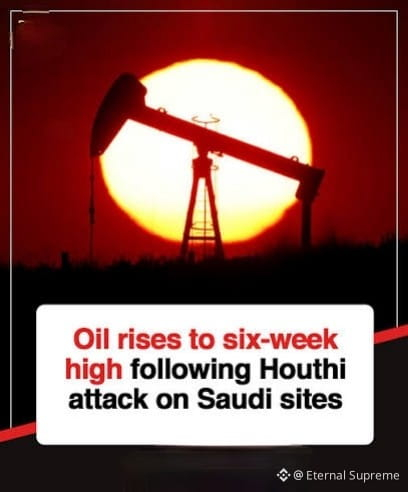
🚨 SAUDI OIL SUPPLY AT RISK 🛢️🌍
Houthi-Saudi fighting is escalating as attacks reportedly disrupt Saudi Arabia’s East-West oil pipeline, raising fears of major supply losses and higher oil prices. ⚠️
⚔️ Meanwhile, tensions around Yemen’s Red Sea & Bab al-Mandab routes are intensifying, adding further pressure to global energy markets amid the wider Iran war. 📈⛽
#Geopolitics #SaudiArabia #Oil #Iran #Yemen #Houthi #EnergyMarkets $CL
{future}(CLUSDT)
$NVDAB
{spot}(NVDABUSDT)
$BTC
{future}(BTCUSDT)
🚨 SAUDI OIL SUPPLY AT RISK 🛢️🌍
Houthi-Saudi fighting is escalating as attacks reportedly disrupt Saudi Arabia’s East-West oil pipeline, raising fears of major supply losses and higher oil prices. ⚠️
⚔️ Meanwhile, tensions around Yemen’s Red Sea & Bab al-Mandab routes are intensifying, adding further pressure to global energy markets amid the wider Iran war. 📈⛽
#Geopolitics #SaudiArabia #Oil #Iran #Yemen #Houthi #EnergyMarkets $CL
$NVDAB
$BTC
Houthi-Saudi fighting is escalating as attacks reportedly disrupt Saudi Arabia’s East-West oil pipeline, raising fears of major supply losses and higher oil prices. ⚠️
⚔️ Meanwhile, tensions around Yemen’s Red Sea & Bab al-Mandab routes are intensifying, adding further pressure to global energy markets amid the wider Iran war. 📈⛽
#Geopolitics #SaudiArabia #Oil #Iran #Yemen #Houthi #EnergyMarkets $CL
$NVDAB
$BTC
Heavenly Immortal :
💥💥💥💥😤😤😤😤
3
3
1.9k

After Saudi Aramco was hit by a drone attack that damaged a key crude oil pipeline leading to the Red Sea, it quickly launched contingency measures. It carried out ship-to-ship transshipment using offshore facilities at the port of Sohar in Oman, increasing crude supplies to refineries in Asia. Satellite monitoring data from the energy consultancy Energy Aspects shows that, over the past week, the daily loading volumes at the Saudi ports of Ras Tanura and Ju'aymah doubled to 4 million barrels (equivalent to the capacity of two VLCC supertankers). Meanwhile, according to Kpler’s tracking reports, on Wednesday alone, four VLCCs had already loaded at Ras Tanura, involving total capacity of 8 million barrels.
From the perspective of the supply chain and technology, although the geopolitical event caused localized disruptions in the short term, Saudi Arabia demonstrated exceptionally strong backup logistics and coordination capabilities, swiftly calming fears of supply outages. Saudi Aramco has repeatedly proactively offered Asian customers key crude grades, including Arab Light, Arab Medium, and Arab Heavy. By shifting loading points to beyond the Strait of Hormuz, it effectively hedged the risk of transport bottlenecks in the geopolitically sensitive area, and there was no irreversible contraction on the actual supply side.
For traditional financial markets, the resilience of crude supply allayed concerns that oil prices would surge one-sided and trigger a renewed rebound in inflation. After the initial safe-haven spike, US Treasury yields and the US dollar index remained within their technical trading range, with no signs of a harmful inflation trade. With expectations that supply-side conditions would be repaired quickly, the macro liquidity environment stayed stable, providing a solid support platform for risk assets.
In the crypto asset market, the rapid absorption of a crude oil premium suggests that inflation risk is under control, and market focus has shifted back to expectations of abundant liquidity. $BTC has shown strong technical buy-side support after digesting sudden geopolitical news. If, in the near term, crude oil prices keep consolidating within a range and safe-haven sentiment fades, more incremental funds are likely to return to risk assets, and the long-side structure remains intact. 📊
#CrudeOil #Geopolitics #EnergyMarkets
After Saudi Aramco was hit by a drone attack that damaged a key crude oil pipeline leading to the Red Sea, it quickly launched contingency measures. It carried out ship-to-ship transshipment using offshore facilities at the port of Sohar in Oman, increasing crude supplies to refineries in Asia. Satellite monitoring data from the energy consultancy Energy Aspects shows that, over the past week, the daily loading volumes at the Saudi ports of Ras Tanura and Ju'aymah doubled to 4 million barrels (equivalent to the capacity of two VLCC supertankers). Meanwhile, according to Kpler’s tracking reports, on Wednesday alone, four VLCCs had already loaded at Ras Tanura, involving total capacity of 8 million barrels.
From the perspective of the supply chain and technology, although the geopolitical event caused localized disruptions in the short term, Saudi Arabia demonstrated exceptionally strong backup logistics and coordination capabilities, swiftly calming fears of supply outages. Saudi Aramco has repeatedly proactively offered Asian customers key crude grades, including Arab Light, Arab Medium, and Arab Heavy. By shifting loading points to beyond the Strait of Hormuz, it effectively hedged the risk of transport bottlenecks in the geopolitically sensitive area, and there was no irreversible contraction on the actual supply side.
For traditional financial markets, the resilience of crude supply allayed concerns that oil prices would surge one-sided and trigger a renewed rebound in inflation. After the initial safe-haven spike, US Treasury yields and the US dollar index remained within their technical trading range, with no signs of a harmful inflation trade. With expectations that supply-side conditions would be repaired quickly, the macro liquidity environment stayed stable, providing a solid support platform for risk assets.
In the crypto asset market, the rapid absorption of a crude oil premium suggests that inflation risk is under control, and market focus has shifted back to expectations of abundant liquidity. $BTC has shown strong technical buy-side support after digesting sudden geopolitical news. If, in the near term, crude oil prices keep consolidating within a range and safe-haven sentiment fades, more incremental funds are likely to return to risk assets, and the long-side structure remains intact. 📊
#CrudeOil #Geopolitics #EnergyMarkets
From the perspective of the supply chain and technology, although the geopolitical event caused localized disruptions in the short term, Saudi Arabia demonstrated exceptionally strong backup logistics and coordination capabilities, swiftly calming fears of supply outages. Saudi Aramco has repeatedly proactively offered Asian customers key crude grades, including Arab Light, Arab Medium, and Arab Heavy. By shifting loading points to beyond the Strait of Hormuz, it effectively hedged the risk of transport bottlenecks in the geopolitically sensitive area, and there was no irreversible contraction on the actual supply side.
For traditional financial markets, the resilience of crude supply allayed concerns that oil prices would surge one-sided and trigger a renewed rebound in inflation. After the initial safe-haven spike, US Treasury yields and the US dollar index remained within their technical trading range, with no signs of a harmful inflation trade. With expectations that supply-side conditions would be repaired quickly, the macro liquidity environment stayed stable, providing a solid support platform for risk assets.
In the crypto asset market, the rapid absorption of a crude oil premium suggests that inflation risk is under control, and market focus has shifted back to expectations of abundant liquidity. $BTC has shown strong technical buy-side support after digesting sudden geopolitical news. If, in the near term, crude oil prices keep consolidating within a range and safe-haven sentiment fades, more incremental funds are likely to return to risk assets, and the long-side structure remains intact. 📊
#CrudeOil #Geopolitics #EnergyMarkets
Crude oil benchmarks witnessed downward pressure today as both WTI and Brent crude futures slipped by nearly $1 per barrel, trading at $97.63 and $102.11 respectively. This pullback comes amidst shifting dynamics in global supply and demand expectations.
The decline in crude prices is a pivotal development for macroeconomic sentiment, especially as markets closely monitor energy costs for their direct impact on headline inflation metrics. Lower oil prices offer crucial relief against persistent inflationary pressures, easing concerns over sustained monetary tightening.
For traditional financial markets, falling oil prices typically translate into lower production costs and reduced headline inflation risks. This dynamic can help stabilize Treasury yields and ease pressure on the US Dollar, creating a more favorable environment for equities and risk assets across the board.
For the crypto sector, declining energy costs reduce broader macroeconomic headwind risks and alleviate fears of aggressive central bank policy. A sustained downtrend in oil prices could enhance market liquidity and bolster risk appetite, providing positive momentum for major assets like $BTC.
#CrudeOil #MacroEconomics #EnergyMarkets
Crude oil benchmarks witnessed downward pressure today as both WTI and Brent crude futures slipped by nearly $1 per barrel, trading at $97.63 and $102.11 respectively. This pullback comes amidst shifting dynamics in global supply and demand expectations.
The decline in crude prices is a pivotal development for macroeconomic sentiment, especially as markets closely monitor energy costs for their direct impact on headline inflation metrics. Lower oil prices offer crucial relief against persistent inflationary pressures, easing concerns over sustained monetary tightening.
For traditional financial markets, falling oil prices typically translate into lower production costs and reduced headline inflation risks. This dynamic can help stabilize Treasury yields and ease pressure on the US Dollar, creating a more favorable environment for equities and risk assets across the board.
For the crypto sector, declining energy costs reduce broader macroeconomic headwind risks and alleviate fears of aggressive central bank policy. A sustained downtrend in oil prices could enhance market liquidity and bolster risk appetite, providing positive momentum for major assets like $BTC .
#CrudeOil #MacroEconomics #EnergyMarkets
The decline in crude prices is a pivotal development for macroeconomic sentiment, especially as markets closely monitor energy costs for their direct impact on headline inflation metrics. Lower oil prices offer crucial relief against persistent inflationary pressures, easing concerns over sustained monetary tightening.
For traditional financial markets, falling oil prices typically translate into lower production costs and reduced headline inflation risks. This dynamic can help stabilize Treasury yields and ease pressure on the US Dollar, creating a more favorable environment for equities and risk assets across the board.
For the crypto sector, declining energy costs reduce broader macroeconomic headwind risks and alleviate fears of aggressive central bank policy. A sustained downtrend in oil prices could enhance market liquidity and bolster risk appetite, providing positive momentum for major assets like $BTC .
#CrudeOil #MacroEconomics #EnergyMarkets
342
·
--
Bullish
Trump says Russia and Ukraine agreed to halt strikes on energy targets, but neither side has confirmed the same deal
📌 Nearly 15 hours after Donald Trump’s post, there is still no clear evidence that a fully agreed bilateral energy ceasefire has been finalized.
🇺🇦 Zelensky said the idea is a U.S.-backed proposal and that Ukraine would only halt strikes if there are guarantees Russia also stops attacks on power, energy and other critical infrastructure.
🇷🇺 The Kremlin welcomed calls for Ukraine to stop targeting Russian energy facilities, but has not publicly committed to equivalent restraint by Russia.
⛽ The statement came as U.S. retail diesel prices reached about $6.23 per gallon. Energy markets reacted only modestly, suggesting investors are still waiting for clearer confirmation from both Kyiv and Moscow.
#EnergyMarkets $CL $NATGAS
Trump says Russia and Ukraine agreed to halt strikes on energy targets, but neither side has confirmed the same deal
📌 Nearly 15 hours after Donald Trump’s post, there is still no clear evidence that a fully agreed bilateral energy ceasefire has been finalized.
🇺🇦 Zelensky said the idea is a U.S.-backed proposal and that Ukraine would only halt strikes if there are guarantees Russia also stops attacks on power, energy and other critical infrastructure.
🇷🇺 The Kremlin welcomed calls for Ukraine to stop targeting Russian energy facilities, but has not publicly committed to equivalent restraint by Russia.
⛽ The statement came as U.S. retail diesel prices reached about $6.23 per gallon. Energy markets reacted only modestly, suggesting investors are still waiting for clearer confirmation from both Kyiv and Moscow.
#EnergyMarkets $CL $NATGAS
📌 Nearly 15 hours after Donald Trump’s post, there is still no clear evidence that a fully agreed bilateral energy ceasefire has been finalized.
🇺🇦 Zelensky said the idea is a U.S.-backed proposal and that Ukraine would only halt strikes if there are guarantees Russia also stops attacks on power, energy and other critical infrastructure.
🇷🇺 The Kremlin welcomed calls for Ukraine to stop targeting Russian energy facilities, but has not publicly committed to equivalent restraint by Russia.
⛽ The statement came as U.S. retail diesel prices reached about $6.23 per gallon. Energy markets reacted only modestly, suggesting investors are still waiting for clearer confirmation from both Kyiv and Moscow.
#EnergyMarkets $CL $NATGAS
205
Global energy markets saw renewed upward momentum today as both major crude benchmarks climbed over 1%, with WTI rising to $99.25 per barrel and Brent crossing back above triple digits to reach $104.17 per barrel.
This sustained advance in oil prices highlights persistent tight physical supply balances and heightened geopolitical risk premiums across the broader commodity complex. With energy inputs remaining structurally elevated, headline inflation concerns are once again resurfacing, challenging market assumptions around the speed of disinflation.
For traditional financial assets, climbing energy costs tend to push bond yields higher and bolster the US dollar while exerting downward pressure on equity valuations. The threat of lingering price pressures complicates central bank trajectories, reducing the likelihood of swift policy easing in the near term.
For the crypto sector, higher oil prices signal tighter global liquidity conditions as persistent inflation dampens risk appetite. While $BTC continues to show resilience during broader macro uncertainty, prolonged energy cost pressure could cap speculative momentum across digital assets until liquidity conditions become more favorable. #CrudeOil #EnergyMarkets #MacroEconomy
Global energy markets saw renewed upward momentum today as both major crude benchmarks climbed over 1%, with WTI rising to $99.25 per barrel and Brent crossing back above triple digits to reach $104.17 per barrel.
This sustained advance in oil prices highlights persistent tight physical supply balances and heightened geopolitical risk premiums across the broader commodity complex. With energy inputs remaining structurally elevated, headline inflation concerns are once again resurfacing, challenging market assumptions around the speed of disinflation.
For traditional financial assets, climbing energy costs tend to push bond yields higher and bolster the US dollar while exerting downward pressure on equity valuations. The threat of lingering price pressures complicates central bank trajectories, reducing the likelihood of swift policy easing in the near term.
For the crypto sector, higher oil prices signal tighter global liquidity conditions as persistent inflation dampens risk appetite. While $BTC continues to show resilience during broader macro uncertainty, prolonged energy cost pressure could cap speculative momentum across digital assets until liquidity conditions become more favorable. #CrudeOil #EnergyMarkets #MacroEconomy
This sustained advance in oil prices highlights persistent tight physical supply balances and heightened geopolitical risk premiums across the broader commodity complex. With energy inputs remaining structurally elevated, headline inflation concerns are once again resurfacing, challenging market assumptions around the speed of disinflation.
For traditional financial assets, climbing energy costs tend to push bond yields higher and bolster the US dollar while exerting downward pressure on equity valuations. The threat of lingering price pressures complicates central bank trajectories, reducing the likelihood of swift policy easing in the near term.
For the crypto sector, higher oil prices signal tighter global liquidity conditions as persistent inflation dampens risk appetite. While $BTC continues to show resilience during broader macro uncertainty, prolonged energy cost pressure could cap speculative momentum across digital assets until liquidity conditions become more favorable. #CrudeOil #EnergyMarkets #MacroEconomy
272
Former U.S. President Donald Trump posted on Truth Social stating that Ukraine and Russia have agreed to refrain from striking each other's energy infrastructure. In his statement, Trump also argued that the recent surge in global diesel prices has been primarily driven by the Russia-Ukraine conflict rather than tensions surrounding Iran.
This development is significant as mutual attacks on oil refineries and power grids have severely disrupted regional fuel supplies and added a heavy risk premium to global refined products. A potential truce on energy facilities directly addresses one of the major supply-side bottlenecks that has kept energy costs elevated over recent months.
For broader financial markets, an easing of energy infrastructure attacks could cool off diesel and crude prices, alleviating sticky inflationary pressures. Lower energy costs would provide central banks with more breathing room regarding interest rate trajectories, dampening safe-haven demand for crude while supporting broader market sentiment.
For crypto markets, stabilizing energy prices helps diminish the macro threat of a secondary inflation wave, which has previously constrained risk assets. An improved risk-on appetite typically encourages capital flows back into $BTC and high-beta digital assets as macro uncertainties soften. ⚡
#Geopolitics #EnergyMarkets #MacroEconomy
Former U.S. President Donald Trump posted on Truth Social stating that Ukraine and Russia have agreed to refrain from striking each other's energy infrastructure. In his statement, Trump also argued that the recent surge in global diesel prices has been primarily driven by the Russia-Ukraine conflict rather than tensions surrounding Iran.
This development is significant as mutual attacks on oil refineries and power grids have severely disrupted regional fuel supplies and added a heavy risk premium to global refined products. A potential truce on energy facilities directly addresses one of the major supply-side bottlenecks that has kept energy costs elevated over recent months.
For broader financial markets, an easing of energy infrastructure attacks could cool off diesel and crude prices, alleviating sticky inflationary pressures. Lower energy costs would provide central banks with more breathing room regarding interest rate trajectories, dampening safe-haven demand for crude while supporting broader market sentiment.
For crypto markets, stabilizing energy prices helps diminish the macro threat of a secondary inflation wave, which has previously constrained risk assets. An improved risk-on appetite typically encourages capital flows back into $BTC and high-beta digital assets as macro uncertainties soften. ⚡
#Geopolitics #EnergyMarkets #MacroEconomy
This development is significant as mutual attacks on oil refineries and power grids have severely disrupted regional fuel supplies and added a heavy risk premium to global refined products. A potential truce on energy facilities directly addresses one of the major supply-side bottlenecks that has kept energy costs elevated over recent months.
For broader financial markets, an easing of energy infrastructure attacks could cool off diesel and crude prices, alleviating sticky inflationary pressures. Lower energy costs would provide central banks with more breathing room regarding interest rate trajectories, dampening safe-haven demand for crude while supporting broader market sentiment.
For crypto markets, stabilizing energy prices helps diminish the macro threat of a secondary inflation wave, which has previously constrained risk assets. An improved risk-on appetite typically encourages capital flows back into $BTC and high-beta digital assets as macro uncertainties soften. ⚡
#Geopolitics #EnergyMarkets #MacroEconomy
11
Crude oil benchmarks witnessed an immediate pullback today, with WTI and Brent both dropping around $1.40 to trade at $98.749 and $104.29 per barrel, respectively. The sharp decline followed statements from Donald Trump claiming that Russia and Ukraine have agreed to halt strikes on each other's energy infrastructure.
This development is significant because energy supply risks have been a primary driver of the geopolitical risk premium baked into oil prices over recent months. A mutual de-escalation targeting vital refineries and transit hubs relieves critical bottlenecks, easing immediate supply crunch fears that markets had heavily priced in.
For broader financial markets, falling crude prices provide a welcomed disinflationary impulse. Lower energy costs directly alleviate headline inflation pressures, potentially softening bond yields and giving central banks more breathing room regarding restrictive monetary policy.
In the crypto sector, cooling energy prices and the resulting macroeconomic relief are net positives for risk assets like $BTC. Reduced geopolitical anxiety often encourages capital rotation back into high-beta markets, improving overall liquidity conditions across digital assets.
#CrudeOil #Geopolitics #EnergyMarkets
Crude oil benchmarks witnessed an immediate pullback today, with WTI and Brent both dropping around $1.40 to trade at $98.749 and $104.29 per barrel, respectively. The sharp decline followed statements from Donald Trump claiming that Russia and Ukraine have agreed to halt strikes on each other's energy infrastructure.
This development is significant because energy supply risks have been a primary driver of the geopolitical risk premium baked into oil prices over recent months. A mutual de-escalation targeting vital refineries and transit hubs relieves critical bottlenecks, easing immediate supply crunch fears that markets had heavily priced in.
For broader financial markets, falling crude prices provide a welcomed disinflationary impulse. Lower energy costs directly alleviate headline inflation pressures, potentially softening bond yields and giving central banks more breathing room regarding restrictive monetary policy.
In the crypto sector, cooling energy prices and the resulting macroeconomic relief are net positives for risk assets like $BTC . Reduced geopolitical anxiety often encourages capital rotation back into high-beta markets, improving overall liquidity conditions across digital assets.
#CrudeOil #Geopolitics #EnergyMarkets
This development is significant because energy supply risks have been a primary driver of the geopolitical risk premium baked into oil prices over recent months. A mutual de-escalation targeting vital refineries and transit hubs relieves critical bottlenecks, easing immediate supply crunch fears that markets had heavily priced in.
For broader financial markets, falling crude prices provide a welcomed disinflationary impulse. Lower energy costs directly alleviate headline inflation pressures, potentially softening bond yields and giving central banks more breathing room regarding restrictive monetary policy.
In the crypto sector, cooling energy prices and the resulting macroeconomic relief are net positives for risk assets like $BTC . Reduced geopolitical anxiety often encourages capital rotation back into high-beta markets, improving overall liquidity conditions across digital assets.
#CrudeOil #Geopolitics #EnergyMarkets
313

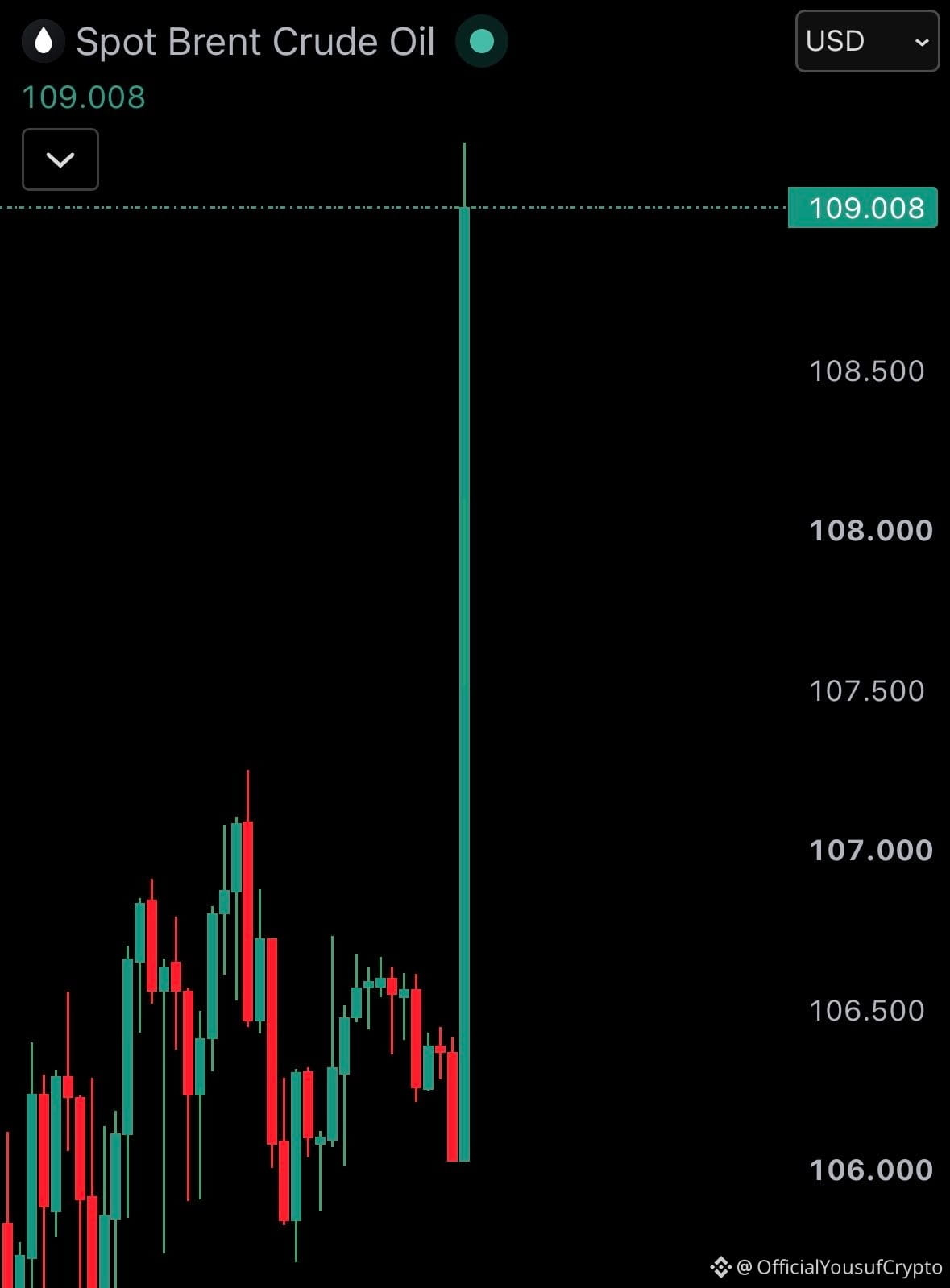
🚨 **BREAKING: Oil Prices Surge as Saudi Pipeline Shut Down**
Brent crude jumped over 3%, trading near $108/barrel after Saudi Arabia shut down its critical East-West pipeline following a drone attack.
📍 Key details:
- Pipeline carries crude from Abqaiq to Yanbu (Red Sea) — Saudi Arabia's only export route that bypasses the Strait of Hormuz
- Attack comes amid the ongoing Iran conflict, which has already disrupted regional oil supply
- WTI crude also up ~2.8%, trading near $103/barrel
- Pipeline has capacity of 7 million barrels/day — a major buffer for global supply
⚠️ Analysts warn this removes a key "safety valve" that's been stabilizing oil markets since the Hormuz tensions began.
#OilPrices #BrentCrude #SaudiArabia #EnergyMarkets #BreakingNews
$ALLO
{future}(ALLOUSDT)
$LSK
{future}(LSKUSDT)
$WLD
{future}(WLDUSDT)
🚨 **BREAKING: Oil Prices Surge as Saudi Pipeline Shut Down**
Brent crude jumped over 3%, trading near $108/barrel after Saudi Arabia shut down its critical East-West pipeline following a drone attack.
📍 Key details:
- Pipeline carries crude from Abqaiq to Yanbu (Red Sea) — Saudi Arabia's only export route that bypasses the Strait of Hormuz
- Attack comes amid the ongoing Iran conflict, which has already disrupted regional oil supply
- WTI crude also up ~2.8%, trading near $103/barrel
- Pipeline has capacity of 7 million barrels/day — a major buffer for global supply
⚠️ Analysts warn this removes a key "safety valve" that's been stabilizing oil markets since the Hormuz tensions began.
#OilPrices #BrentCrude #SaudiArabia #EnergyMarkets #BreakingNews
$ALLO
$LSK
$WLD
Brent crude jumped over 3%, trading near $108/barrel after Saudi Arabia shut down its critical East-West pipeline following a drone attack.
📍 Key details:
- Pipeline carries crude from Abqaiq to Yanbu (Red Sea) — Saudi Arabia's only export route that bypasses the Strait of Hormuz
- Attack comes amid the ongoing Iran conflict, which has already disrupted regional oil supply
- WTI crude also up ~2.8%, trading near $103/barrel
- Pipeline has capacity of 7 million barrels/day — a major buffer for global supply
⚠️ Analysts warn this removes a key "safety valve" that's been stabilizing oil markets since the Hormuz tensions began.
#OilPrices #BrentCrude #SaudiArabia #EnergyMarkets #BreakingNews
$ALLO
$LSK
$WLD
519
Log in to explore more content
Join global crypto users on Binance Square
⚡️ Get latest and useful information about crypto.
💬 Trusted by the world’s largest crypto exchange.
👍 Discover real insights from verified creators.
Email / Phone number
Trending Topics
1
#AIStocksWhatNext
1.1M views
7,177 Discussing
2
#SpotBitcoinETFsInflow$2.31BInFourDays
0 views
0 Discussing
3
#BitcoinRejectedAt$87,300Twice
0 views
0 Discussing
4
#BCHJumps28%OnCMEFuturesListing
30,637 views
737 Discussing
5
#WallStreetEarningsRevisionsTurnBearish
21,939 views
539 Discussing
6
#DollarIndexReclaims101
18,491 views
473 Discussing
7
#21SharesLaunchesEuropesFirstZcashETP
60,315 views
1,247 Discussing
8
#CardanoJoinsX402PaymentStandard
36,722 views
881 Discussing
9
#BitcoinTops$87KAtEightMonthHigh
15,225 views
136 Discussing
10
#ZECBreaksAbove$1600AtRecordHigh
10,743 views
111 Discussing