
Insight Lab CH
747 Posts

Insight Lab CH
Report
Block User
2 Following
28 Followers
53 Liked
Posts
In international bulk commodity markets, crude oil prices have shown a notable upswing again today. Both WTI and Brent crude have risen by 1.00% over the course of the day, with spot and futures quotations climbing to $92.57 and $97.71 per barrel, respectively. Brent crude is now coming extremely close to the key psychological level of $100, indicating that the logic of tight global energy supply-demand and the geopolitical risk premium is being further reinforced.
As crude oil is a core production input for the modern economy, its price surge at current elevated levels continues to climb, posing a substantive threat to the global anti-inflation process. Against the backdrop that core inflation in major economies has been unable to continue easing, increases in energy costs will quickly transmit into transportation, petrochemical, and end-consumption sectors, making it easy to trigger a risk of secondary inflation. This not only shatters the market’s overly optimistic expectations for a loose cycle, but also forces major central banks such as the Federal Reserve to maintain high interest rates for a longer period.
In traditional financial markets, rising oil prices directly push up long-term Treasury yields and inflation expectations in tandem, helping keep the U.S. dollar index strong. Elevated risk-free rates are clearly suppressing valuation headroom for global risk assets such as equities. Meanwhile, the shadow of imported inflation in commodities is dampening market risk appetite, and capital flows are becoming more defensive.
For cryptocurrency markets, the continuation of macro liquidity tightening is the downside risk that warrants the greatest vigilance. In an environment where risk-free returns remain high, digital assets—including $BTC —are unlikely to attract sufficient incremental liquidity inflows. If oil prices further break through the $100 mark and prompt macro policies to shift toward a stricter hawkish stance, risk assets overall may face a new round of valuation reset and liquidity withdrawal. In the near term, extreme prudence is advised.⚠️
#CrudeOil #Inflation #MacroEconomics
In international bulk commodity markets, crude oil prices have shown a notable upswing again today. Both WTI and Brent crude have risen by 1.00% over the course of the day, with spot and futures quotations climbing to $92.57 and $97.71 per barrel, respectively. Brent crude is now coming extremely close to the key psychological level of $100, indicating that the logic of tight global energy supply-demand and the geopolitical risk premium is being further reinforced.
As crude oil is a core production input for the modern economy, its price surge at current elevated levels continues to climb, posing a substantive threat to the global anti-inflation process. Against the backdrop that core inflation in major economies has been unable to continue easing, increases in energy costs will quickly transmit into transportation, petrochemical, and end-consumption sectors, making it easy to trigger a risk of secondary inflation. This not only shatters the market’s overly optimistic expectations for a loose cycle, but also forces major central banks such as the Federal Reserve to maintain high interest rates for a longer period.
In traditional financial markets, rising oil prices directly push up long-term Treasury yields and inflation expectations in tandem, helping keep the U.S. dollar index strong. Elevated risk-free rates are clearly suppressing valuation headroom for global risk assets such as equities. Meanwhile, the shadow of imported inflation in commodities is dampening market risk appetite, and capital flows are becoming more defensive.
For cryptocurrency markets, the continuation of macro liquidity tightening is the downside risk that warrants the greatest vigilance. In an environment where risk-free returns remain high, digital assets—including $BTC —are unlikely to attract sufficient incremental liquidity inflows. If oil prices further break through the $100 mark and prompt macro policies to shift toward a stricter hawkish stance, risk assets overall may face a new round of valuation reset and liquidity withdrawal. In the near term, extreme prudence is advised.⚠️
#CrudeOil #Inflation #MacroEconomics
As crude oil is a core production input for the modern economy, its price surge at current elevated levels continues to climb, posing a substantive threat to the global anti-inflation process. Against the backdrop that core inflation in major economies has been unable to continue easing, increases in energy costs will quickly transmit into transportation, petrochemical, and end-consumption sectors, making it easy to trigger a risk of secondary inflation. This not only shatters the market’s overly optimistic expectations for a loose cycle, but also forces major central banks such as the Federal Reserve to maintain high interest rates for a longer period.
In traditional financial markets, rising oil prices directly push up long-term Treasury yields and inflation expectations in tandem, helping keep the U.S. dollar index strong. Elevated risk-free rates are clearly suppressing valuation headroom for global risk assets such as equities. Meanwhile, the shadow of imported inflation in commodities is dampening market risk appetite, and capital flows are becoming more defensive.
For cryptocurrency markets, the continuation of macro liquidity tightening is the downside risk that warrants the greatest vigilance. In an environment where risk-free returns remain high, digital assets—including $BTC —are unlikely to attract sufficient incremental liquidity inflows. If oil prices further break through the $100 mark and prompt macro policies to shift toward a stricter hawkish stance, risk assets overall may face a new round of valuation reset and liquidity withdrawal. In the near term, extreme prudence is advised.⚠️
#CrudeOil #Inflation #MacroEconomics
49
The leaders and foreign ministers of the Group of Seven (G7) have recently issued a joint statement, clearly pointing out that the situation in Yemen poses a serious threat to stability in the Middle East and to global energy security. The G7 strongly condemns the Houthi armed group for its continued attacks targeting within Yemen, Saudi Arabia, and civilian sea lanes, and calls on it to immediately stop all military hostilities. This collective stance marks the further internationalization of the geopolitical confrontation over the Red Sea and Middle East energy routes.
From a macro perspective, the G7’s formal involvement highlights that disruptions to Red Sea shipping are not merely short-term local disturbances, but have evolved into long-term systemic risks to global supply chains and energy supply. The threat posed by the Houthis to key shipping lanes directly raises the risk premium and insurance costs for international crude oil transport. For the European and U.S. economies currently in a critical phase of fighting inflation, this undoubtedly translates into substantial new supply-side re-inflation pressure.
In traditional financial markets, an escalation in geopolitical risk typically triggers strong demand for safe-haven assets. If the supply of Middle East crude oil and shipping disruptions worsen further, any rebound in oil prices may force major central banks to maintain high interest rate policies for a longer period, thereby pushing up the U.S. dollar index and U.S. Treasury yields. This macro environment of relatively tight liquidity will continue to weigh on the valuations of global risk assets, while traditional safe-haven assets such as gold may see short-term support.
For the cryptocurrency market, investors still need to remain highly cautious. Under the dual shadows of geopolitical conflict and energy-inflation risk, market risk appetite has been clearly suppressed. Assets such as $BTC are more likely to face downward pressure amid expectations of tighter liquidity, rather than serving as safe-haven vehicles. If the energy crisis leads to further delays in global rate-cut expectations, the liquidity discount applied to crypto assets and the accompanying adjustment cycle of volatility may be prolonged further.
#Geopolitics #EnergySecurity #MacroEconomics
The leaders and foreign ministers of the Group of Seven (G7) have recently issued a joint statement, clearly pointing out that the situation in Yemen poses a serious threat to stability in the Middle East and to global energy security. The G7 strongly condemns the Houthi armed group for its continued attacks targeting within Yemen, Saudi Arabia, and civilian sea lanes, and calls on it to immediately stop all military hostilities. This collective stance marks the further internationalization of the geopolitical confrontation over the Red Sea and Middle East energy routes.
From a macro perspective, the G7’s formal involvement highlights that disruptions to Red Sea shipping are not merely short-term local disturbances, but have evolved into long-term systemic risks to global supply chains and energy supply. The threat posed by the Houthis to key shipping lanes directly raises the risk premium and insurance costs for international crude oil transport. For the European and U.S. economies currently in a critical phase of fighting inflation, this undoubtedly translates into substantial new supply-side re-inflation pressure.
In traditional financial markets, an escalation in geopolitical risk typically triggers strong demand for safe-haven assets. If the supply of Middle East crude oil and shipping disruptions worsen further, any rebound in oil prices may force major central banks to maintain high interest rate policies for a longer period, thereby pushing up the U.S. dollar index and U.S. Treasury yields. This macro environment of relatively tight liquidity will continue to weigh on the valuations of global risk assets, while traditional safe-haven assets such as gold may see short-term support.
For the cryptocurrency market, investors still need to remain highly cautious. Under the dual shadows of geopolitical conflict and energy-inflation risk, market risk appetite has been clearly suppressed. Assets such as $BTC are more likely to face downward pressure amid expectations of tighter liquidity, rather than serving as safe-haven vehicles. If the energy crisis leads to further delays in global rate-cut expectations, the liquidity discount applied to crypto assets and the accompanying adjustment cycle of volatility may be prolonged further.
#Geopolitics #EnergySecurity #MacroEconomics
From a macro perspective, the G7’s formal involvement highlights that disruptions to Red Sea shipping are not merely short-term local disturbances, but have evolved into long-term systemic risks to global supply chains and energy supply. The threat posed by the Houthis to key shipping lanes directly raises the risk premium and insurance costs for international crude oil transport. For the European and U.S. economies currently in a critical phase of fighting inflation, this undoubtedly translates into substantial new supply-side re-inflation pressure.
In traditional financial markets, an escalation in geopolitical risk typically triggers strong demand for safe-haven assets. If the supply of Middle East crude oil and shipping disruptions worsen further, any rebound in oil prices may force major central banks to maintain high interest rate policies for a longer period, thereby pushing up the U.S. dollar index and U.S. Treasury yields. This macro environment of relatively tight liquidity will continue to weigh on the valuations of global risk assets, while traditional safe-haven assets such as gold may see short-term support.
For the cryptocurrency market, investors still need to remain highly cautious. Under the dual shadows of geopolitical conflict and energy-inflation risk, market risk appetite has been clearly suppressed. Assets such as $BTC are more likely to face downward pressure amid expectations of tighter liquidity, rather than serving as safe-haven vehicles. If the energy crisis leads to further delays in global rate-cut expectations, the liquidity discount applied to crypto assets and the accompanying adjustment cycle of volatility may be prolonged further.
#Geopolitics #EnergySecurity #MacroEconomics
64
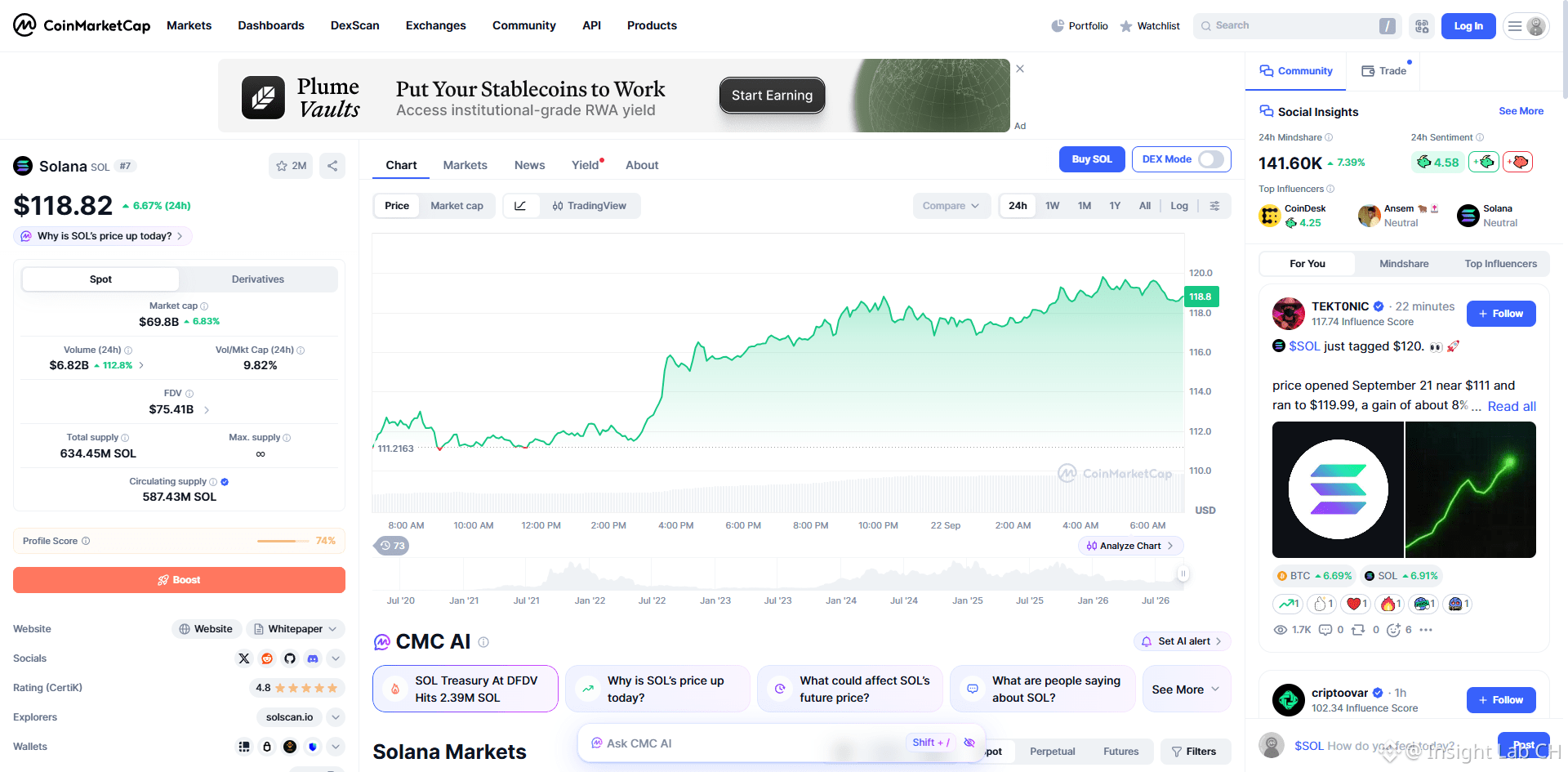
Current data shows $SOL is currently ranked #6 on the CoinMarketCap trend chart. Under tightening macro liquidity and high interest rates, the rise in short-term enthusiasm for mainstream risk assets looks more like a game among existing capital. Investors should be wary of the risk of pullbacks after sentiment cools down.📉 #Solana #Layer1
Current data shows $SOL is currently ranked #6 on the CoinMarketCap trend chart. Under tightening macro liquidity and high interest rates, the rise in short-term enthusiasm for mainstream risk assets looks more like a game among existing capital. Investors should be wary of the risk of pullbacks after sentiment cools down.📉 #Solana #Layer1
75
In the latest policy remarks, Jerome Powell, Chairman of the Federal Reserve, released clear hawkish signals. He noted that, given the ongoing inflation pressures on both the supply and demand sides, the benchmark interest rate may still need to be raised further. Powell also emphasized that, in choosing the path to tighten monetary policy, the Fed favors an “early and gradual” rate-hike strategy to avoid a passive situation in the future of “acting late and with excessive magnitude.” This statement has directly dispelled the market’s overly optimistic expectations for a policy shift.
From a macroeconomic fundamentals perspective, Powell’s comments reflect the Fed’s deep concern about inflation persistence. Simply relying on supply-chain repairs is no longer enough to bring inflation back to the target range; the resilience on the demand side forces the central bank to maintain a relatively tight financial environment. Compared with the rate-cut pace previously priced by the market, the Fed is more concerned that relaxing policy too early could trigger a second round of inflation. This forward guidance—“better to be early than late”—suggests that the duration of the high-interest-rate environment (“Higher for Longer”) is very likely to exceed the expectations of most investors.
This policy stance exerts significant downward pressure on traditional financial markets. As expectations for further rate hikes intensify, the U.S. Treasury yield curve faces upward repricing pressure, the U.S. dollar index gains solid fundamental support, and valuation discounting models for risk assets such as U.S. equities will come under renewed strain. Under the dual squeeze of continued liquidity tightening and elevated funding costs, corporate earnings expectations and vulnerabilities in the credit market may become further exposed, and global capital markets overall may enter a defensive and deleveraging cycle.
For the cryptocurrency market, tighter expectations for macro liquidity are tantamount to a persistent headwind for valuations. With the U.S. dollar strengthening and risk-free yields staying elevated, incremental capital inflows into cryptocurrencies such as $BTC will be severely constrained. If subsequent inflation data continues to deviate from expectations and forces the Fed to implement additional rate hikes, the market may experience a deeper liquidity scramble alongside amplified volatility, and investors in the short term need to remain highly cautious about downside risks.
#Fed #InterestRates #MacroEconomy
In the latest policy remarks, Jerome Powell, Chairman of the Federal Reserve, released clear hawkish signals. He noted that, given the ongoing inflation pressures on both the supply and demand sides, the benchmark interest rate may still need to be raised further. Powell also emphasized that, in choosing the path to tighten monetary policy, the Fed favors an “early and gradual” rate-hike strategy to avoid a passive situation in the future of “acting late and with excessive magnitude.” This statement has directly dispelled the market’s overly optimistic expectations for a policy shift.
From a macroeconomic fundamentals perspective, Powell’s comments reflect the Fed’s deep concern about inflation persistence. Simply relying on supply-chain repairs is no longer enough to bring inflation back to the target range; the resilience on the demand side forces the central bank to maintain a relatively tight financial environment. Compared with the rate-cut pace previously priced by the market, the Fed is more concerned that relaxing policy too early could trigger a second round of inflation. This forward guidance—“better to be early than late”—suggests that the duration of the high-interest-rate environment (“Higher for Longer”) is very likely to exceed the expectations of most investors.
This policy stance exerts significant downward pressure on traditional financial markets. As expectations for further rate hikes intensify, the U.S. Treasury yield curve faces upward repricing pressure, the U.S. dollar index gains solid fundamental support, and valuation discounting models for risk assets such as U.S. equities will come under renewed strain. Under the dual squeeze of continued liquidity tightening and elevated funding costs, corporate earnings expectations and vulnerabilities in the credit market may become further exposed, and global capital markets overall may enter a defensive and deleveraging cycle.
For the cryptocurrency market, tighter expectations for macro liquidity are tantamount to a persistent headwind for valuations. With the U.S. dollar strengthening and risk-free yields staying elevated, incremental capital inflows into cryptocurrencies such as $BTC will be severely constrained. If subsequent inflation data continues to deviate from expectations and forces the Fed to implement additional rate hikes, the market may experience a deeper liquidity scramble alongside amplified volatility, and investors in the short term need to remain highly cautious about downside risks.
#Fed #InterestRates #MacroEconomy
From a macroeconomic fundamentals perspective, Powell’s comments reflect the Fed’s deep concern about inflation persistence. Simply relying on supply-chain repairs is no longer enough to bring inflation back to the target range; the resilience on the demand side forces the central bank to maintain a relatively tight financial environment. Compared with the rate-cut pace previously priced by the market, the Fed is more concerned that relaxing policy too early could trigger a second round of inflation. This forward guidance—“better to be early than late”—suggests that the duration of the high-interest-rate environment (“Higher for Longer”) is very likely to exceed the expectations of most investors.
This policy stance exerts significant downward pressure on traditional financial markets. As expectations for further rate hikes intensify, the U.S. Treasury yield curve faces upward repricing pressure, the U.S. dollar index gains solid fundamental support, and valuation discounting models for risk assets such as U.S. equities will come under renewed strain. Under the dual squeeze of continued liquidity tightening and elevated funding costs, corporate earnings expectations and vulnerabilities in the credit market may become further exposed, and global capital markets overall may enter a defensive and deleveraging cycle.
For the cryptocurrency market, tighter expectations for macro liquidity are tantamount to a persistent headwind for valuations. With the U.S. dollar strengthening and risk-free yields staying elevated, incremental capital inflows into cryptocurrencies such as $BTC will be severely constrained. If subsequent inflation data continues to deviate from expectations and forces the Fed to implement additional rate hikes, the market may experience a deeper liquidity scramble alongside amplified volatility, and investors in the short term need to remain highly cautious about downside risks.
#Fed #InterestRates #MacroEconomy
6
On September 21, EU member states reached a key agreement and formally decided to extend their sanctions against Russia by 3 years. Under this deal, the sanction terms targeting more than 3,000 Russian individuals and entities will be extended by 36 months, while only two Russian businessmen will be removed from the list. Notably, the EU had previously typically extended sanctions in cycles of only 6 to 12 months; extending them directly for 3 years is highly unusual. Its core aim is to lock in the EU’s position in advance and avoid potential diplomatic deadlocks later caused by differences of opinion within member states.
In terms of geopolitical economic structure, this move marks a new stage in which Europe’s decoupling from Russia’s economy becomes long-term and institutionalized. Expectations in the market for short-term diplomatic mediation or partial easing of sanctions have been completely dashed. A three-year exceptional lock-in period means the costs of supply-chain reconfiguration will be further entrenched. This not only exacerbates the irreversibility of geopolitical bloc confrontation, but also makes it difficult for Europe’s own structural energy transition and industrial inflation pressures to be meaningfully alleviated in the short term.
In traditional financial markets, the decision will strengthen investors’ risk-avoidance preference and expectations of sticky inflation. Long-term disruption to energy supply chains may raise the floor for commodity price benchmarks, limiting the room for major central banks to further ease monetary policy. The U.S. dollar index and traditional sovereign safe-haven assets may receive interim support, while Europe’s domestic economic growth expectations and the performance of risk assets face deeper discounting pressure. Overall, market risk appetite is likely to tilt toward defense.
For the crypto-asset market, the long-termization of geopolitical games is a double-edged sword. Although macro uncertainty may, at the narrative level, highlight the censorship-resistance and value-hedging attributes of decentralized assets such as $BTC , given that global liquidity conditions are dealing with recurring inflation and constraints from high interest rates, funding conditions overall remain under pressure. Investors need to stay alert: in the absence of incremental liquidity injections, geopolitical risk is more likely to be converted into a downward catalyst that suppresses overall market risk appetite.
#Geopolitics #Sanctions #MacroEconomy
On September 21, EU member states reached a key agreement and formally decided to extend their sanctions against Russia by 3 years. Under this deal, the sanction terms targeting more than 3,000 Russian individuals and entities will be extended by 36 months, while only two Russian businessmen will be removed from the list. Notably, the EU had previously typically extended sanctions in cycles of only 6 to 12 months; extending them directly for 3 years is highly unusual. Its core aim is to lock in the EU’s position in advance and avoid potential diplomatic deadlocks later caused by differences of opinion within member states.
In terms of geopolitical economic structure, this move marks a new stage in which Europe’s decoupling from Russia’s economy becomes long-term and institutionalized. Expectations in the market for short-term diplomatic mediation or partial easing of sanctions have been completely dashed. A three-year exceptional lock-in period means the costs of supply-chain reconfiguration will be further entrenched. This not only exacerbates the irreversibility of geopolitical bloc confrontation, but also makes it difficult for Europe’s own structural energy transition and industrial inflation pressures to be meaningfully alleviated in the short term.
In traditional financial markets, the decision will strengthen investors’ risk-avoidance preference and expectations of sticky inflation. Long-term disruption to energy supply chains may raise the floor for commodity price benchmarks, limiting the room for major central banks to further ease monetary policy. The U.S. dollar index and traditional sovereign safe-haven assets may receive interim support, while Europe’s domestic economic growth expectations and the performance of risk assets face deeper discounting pressure. Overall, market risk appetite is likely to tilt toward defense.
For the crypto-asset market, the long-termization of geopolitical games is a double-edged sword. Although macro uncertainty may, at the narrative level, highlight the censorship-resistance and value-hedging attributes of decentralized assets such as $BTC , given that global liquidity conditions are dealing with recurring inflation and constraints from high interest rates, funding conditions overall remain under pressure. Investors need to stay alert: in the absence of incremental liquidity injections, geopolitical risk is more likely to be converted into a downward catalyst that suppresses overall market risk appetite.
#Geopolitics #Sanctions #MacroEconomy
In terms of geopolitical economic structure, this move marks a new stage in which Europe’s decoupling from Russia’s economy becomes long-term and institutionalized. Expectations in the market for short-term diplomatic mediation or partial easing of sanctions have been completely dashed. A three-year exceptional lock-in period means the costs of supply-chain reconfiguration will be further entrenched. This not only exacerbates the irreversibility of geopolitical bloc confrontation, but also makes it difficult for Europe’s own structural energy transition and industrial inflation pressures to be meaningfully alleviated in the short term.
In traditional financial markets, the decision will strengthen investors’ risk-avoidance preference and expectations of sticky inflation. Long-term disruption to energy supply chains may raise the floor for commodity price benchmarks, limiting the room for major central banks to further ease monetary policy. The U.S. dollar index and traditional sovereign safe-haven assets may receive interim support, while Europe’s domestic economic growth expectations and the performance of risk assets face deeper discounting pressure. Overall, market risk appetite is likely to tilt toward defense.
For the crypto-asset market, the long-termization of geopolitical games is a double-edged sword. Although macro uncertainty may, at the narrative level, highlight the censorship-resistance and value-hedging attributes of decentralized assets such as $BTC , given that global liquidity conditions are dealing with recurring inflation and constraints from high interest rates, funding conditions overall remain under pressure. Investors need to stay alert: in the absence of incremental liquidity injections, geopolitical risk is more likely to be converted into a downward catalyst that suppresses overall market risk appetite.
#Geopolitics #Sanctions #MacroEconomy
114
Former U.S. President Donald Trump recently posted on his social platform, Truth Social, urging Republican senators to completely scrap the “filibuster” rule. He warned that if Republicans do not proactively abolish the rule, once Democrats gain power they will surely repeal it and quickly push for statehood for Puerto Rico and Washington, D.C., thereby adding four Senate seats and eight House seats for Democrats. Trump said bluntly that this would allow Democrats to maintain long-term control over the electoral mechanisms and system, and could even lead to him becoming the “last Republican president.”
The statement highlights how the polarization risks of U.S. two-party political games are intensifying. The filibuster mechanism has long been a core institutional safeguard in the U.S. Senate, protecting minority parties’ ability to check power. Abolishing the rule would mean that in the future, the governing party could force major legislation through with a simple majority alone. These radical demands at the institutional level not only reveal deep anxieties within Washington’s political power, but also signal that the stability of the U.S. system and policy continuity are facing more severe institutional tests.
From the perspective of macro financial markets, uncertainty in the political system and a tendency toward legislative extremism often raise the sovereign credit risk premium and the policy risk premium. If future legislative thresholds are significantly weakened, extreme fiscal expansion or structural tax reform bills would be more likely to be enacted without cross-party consensus, worsening the cyclical volatility of U.S. government debt burdens and inflation expectations—thereby exerting structural pressure on long-term U.S. Treasury yields and the dollar credit system.
For the crypto market, political polarization and sharp swings in regulatory policy are a double-edged sword. While doubts about fiat-asset credit arising from the two-party struggle may, in theory, benefit decentralized assets such as Bitcoin, rising policy uncertainty often first suppresses institutional investors’ risk appetite. Against the backdrop of a potential restructuring of legislative rules, regulatory bills targeting the crypto industry may face more variables, and risky assets in the short term—such as $BTC —may see even more passive volatility driven by macro political noise.
#USPolitics #Filibuster #MacroEconomy
Former U.S. President Donald Trump recently posted on his social platform, Truth Social, urging Republican senators to completely scrap the “filibuster” rule. He warned that if Republicans do not proactively abolish the rule, once Democrats gain power they will surely repeal it and quickly push for statehood for Puerto Rico and Washington, D.C., thereby adding four Senate seats and eight House seats for Democrats. Trump said bluntly that this would allow Democrats to maintain long-term control over the electoral mechanisms and system, and could even lead to him becoming the “last Republican president.”
The statement highlights how the polarization risks of U.S. two-party political games are intensifying. The filibuster mechanism has long been a core institutional safeguard in the U.S. Senate, protecting minority parties’ ability to check power. Abolishing the rule would mean that in the future, the governing party could force major legislation through with a simple majority alone. These radical demands at the institutional level not only reveal deep anxieties within Washington’s political power, but also signal that the stability of the U.S. system and policy continuity are facing more severe institutional tests.
From the perspective of macro financial markets, uncertainty in the political system and a tendency toward legislative extremism often raise the sovereign credit risk premium and the policy risk premium. If future legislative thresholds are significantly weakened, extreme fiscal expansion or structural tax reform bills would be more likely to be enacted without cross-party consensus, worsening the cyclical volatility of U.S. government debt burdens and inflation expectations—thereby exerting structural pressure on long-term U.S. Treasury yields and the dollar credit system.
For the crypto market, political polarization and sharp swings in regulatory policy are a double-edged sword. While doubts about fiat-asset credit arising from the two-party struggle may, in theory, benefit decentralized assets such as Bitcoin, rising policy uncertainty often first suppresses institutional investors’ risk appetite. Against the backdrop of a potential restructuring of legislative rules, regulatory bills targeting the crypto industry may face more variables, and risky assets in the short term—such as $BTC —may see even more passive volatility driven by macro political noise.
#USPolitics #Filibuster #MacroEconomy
The statement highlights how the polarization risks of U.S. two-party political games are intensifying. The filibuster mechanism has long been a core institutional safeguard in the U.S. Senate, protecting minority parties’ ability to check power. Abolishing the rule would mean that in the future, the governing party could force major legislation through with a simple majority alone. These radical demands at the institutional level not only reveal deep anxieties within Washington’s political power, but also signal that the stability of the U.S. system and policy continuity are facing more severe institutional tests.
From the perspective of macro financial markets, uncertainty in the political system and a tendency toward legislative extremism often raise the sovereign credit risk premium and the policy risk premium. If future legislative thresholds are significantly weakened, extreme fiscal expansion or structural tax reform bills would be more likely to be enacted without cross-party consensus, worsening the cyclical volatility of U.S. government debt burdens and inflation expectations—thereby exerting structural pressure on long-term U.S. Treasury yields and the dollar credit system.
For the crypto market, political polarization and sharp swings in regulatory policy are a double-edged sword. While doubts about fiat-asset credit arising from the two-party struggle may, in theory, benefit decentralized assets such as Bitcoin, rising policy uncertainty often first suppresses institutional investors’ risk appetite. Against the backdrop of a potential restructuring of legislative rules, regulatory bills targeting the crypto industry may face more variables, and risky assets in the short term—such as $BTC —may see even more passive volatility driven by macro political noise.
#USPolitics #Filibuster #MacroEconomy
128
During today’s trading in the commodities market, the price of November-delivery WTI crude oil futures suffered a sharp sell-off. In intraday trading, it plunged unidirectionally by 5.00%, quickly breaking below multiple key technical support levels, and is currently trading near $91.27 per barrel. As a pricing anchor for global commodities, such a large one-day drop in crude oil indicates that the market’s trading logic is undergoing a significant shift.
From a macro fundamentals perspective, the oil price’s sudden pullback from elevated levels appears, on the surface, to ease concerns about inflation expectations re-accelerating. However, the deeper driver is often the market’s early pricing of a global economic recession and weakening demand. Earlier, crude oil remained elevated on geopolitical risks and expectations of production cuts, but the reality of slowing global manufacturing under a high-interest-rate environment and pressure on the demand side is now delivering a tangible backlash against sustained rises in energy prices.
For traditional financial markets, the commodity rout can, in the short term, lower inflation expectations and U.S. Treasury yields. Yet, a more than 5% one-day drop in crude oil often serves as a leading signal of tightening liquidity for risk assets or worsening macro demand. With overvalued sectors in U.S. equities and cyclical assets facing this recession-like cooling, the risk of valuation resets may actually increase rather than decrease. In such conditions, risk-off sentiment may spread further amid the volatility.
When mapped to the crypto market, this kind of macro volatility does not necessarily mean one can directly infer a bull-market logic driven by liquidity easing. Although the theory that energy prices falling could help central banks slow tightening, under conditions where global demand contraction and macro risk aversion dominate, $BTC and mainstream crypto assets—both high-beta risk assets—will still face clear liquidity constraints. Until the macro trend becomes fully clear, investors should be alert to liquidity traps hidden behind what may look like a rebound, and remain highly cautious about downside risks.
#CrudeOil #MacroEconomy #Inflation
During today’s trading in the commodities market, the price of November-delivery WTI crude oil futures suffered a sharp sell-off. In intraday trading, it plunged unidirectionally by 5.00%, quickly breaking below multiple key technical support levels, and is currently trading near $91.27 per barrel. As a pricing anchor for global commodities, such a large one-day drop in crude oil indicates that the market’s trading logic is undergoing a significant shift.
From a macro fundamentals perspective, the oil price’s sudden pullback from elevated levels appears, on the surface, to ease concerns about inflation expectations re-accelerating. However, the deeper driver is often the market’s early pricing of a global economic recession and weakening demand. Earlier, crude oil remained elevated on geopolitical risks and expectations of production cuts, but the reality of slowing global manufacturing under a high-interest-rate environment and pressure on the demand side is now delivering a tangible backlash against sustained rises in energy prices.
For traditional financial markets, the commodity rout can, in the short term, lower inflation expectations and U.S. Treasury yields. Yet, a more than 5% one-day drop in crude oil often serves as a leading signal of tightening liquidity for risk assets or worsening macro demand. With overvalued sectors in U.S. equities and cyclical assets facing this recession-like cooling, the risk of valuation resets may actually increase rather than decrease. In such conditions, risk-off sentiment may spread further amid the volatility.
When mapped to the crypto market, this kind of macro volatility does not necessarily mean one can directly infer a bull-market logic driven by liquidity easing. Although the theory that energy prices falling could help central banks slow tightening, under conditions where global demand contraction and macro risk aversion dominate, $BTC and mainstream crypto assets—both high-beta risk assets—will still face clear liquidity constraints. Until the macro trend becomes fully clear, investors should be alert to liquidity traps hidden behind what may look like a rebound, and remain highly cautious about downside risks.
#CrudeOil #MacroEconomy #Inflation
From a macro fundamentals perspective, the oil price’s sudden pullback from elevated levels appears, on the surface, to ease concerns about inflation expectations re-accelerating. However, the deeper driver is often the market’s early pricing of a global economic recession and weakening demand. Earlier, crude oil remained elevated on geopolitical risks and expectations of production cuts, but the reality of slowing global manufacturing under a high-interest-rate environment and pressure on the demand side is now delivering a tangible backlash against sustained rises in energy prices.
For traditional financial markets, the commodity rout can, in the short term, lower inflation expectations and U.S. Treasury yields. Yet, a more than 5% one-day drop in crude oil often serves as a leading signal of tightening liquidity for risk assets or worsening macro demand. With overvalued sectors in U.S. equities and cyclical assets facing this recession-like cooling, the risk of valuation resets may actually increase rather than decrease. In such conditions, risk-off sentiment may spread further amid the volatility.
When mapped to the crypto market, this kind of macro volatility does not necessarily mean one can directly infer a bull-market logic driven by liquidity easing. Although the theory that energy prices falling could help central banks slow tightening, under conditions where global demand contraction and macro risk aversion dominate, $BTC and mainstream crypto assets—both high-beta risk assets—will still face clear liquidity constraints. Until the macro trend becomes fully clear, investors should be alert to liquidity traps hidden behind what may look like a rebound, and remain highly cautious about downside risks.
#CrudeOil #MacroEconomy #Inflation
10
During the latest trading session in the US stock market, the Nasdaq 100 index—dominated by technology stocks—saw a strong intraday rebound, with a daily gain of 2%. This notable surge stands out even more against the recent macro backdrop of consolidation and bottoming, and it has driven a temporary recovery in market risk appetite.
As a key gauge of global growth-oriented assets, a 2% swing in the Nasdaq 100 in a single day typically reflects important marginal changes in liquidity expectations or the fundamentals of major tech companies. However, from a macro perspective, in an environment where interest rates remain elevated and the pace of potential rate cuts still has uncertainties, this kind of one-day, pulse-like rebound is more likely driven by short covering or excessive short-term sentiment, rather than a clear and comprehensive shift in fundamentals.
For traditional financial markets, the tech sector’s surge may suppress the performance of safe-haven assets in the short term. But without sustained and effective support from macro liquidity turning more accommodative, the durability of any valuation expansion remains questionable. The subsequent direction of Treasury yields and the US Dollar Index will directly test whether this rebound is the start of a new trend-driven rally or a technical “bull trap” driven by liquidity pressure.
Looking at how this carries over into the cryptocurrency market, the renewed linkage between $BTC and mainstream risk assets is again evident. While a stronger stock market can boost bullish sentiment in the short term and bring spillover capital, investors still need to stay highly cautious. If the macro tightening thesis does not see a substantive reversal, chasing crypto assets blindly could face pullback risk as liquidity conditions cool off.
#Nasdaq #MacroEconomy #CryptoMarket
During the latest trading session in the US stock market, the Nasdaq 100 index—dominated by technology stocks—saw a strong intraday rebound, with a daily gain of 2%. This notable surge stands out even more against the recent macro backdrop of consolidation and bottoming, and it has driven a temporary recovery in market risk appetite.
As a key gauge of global growth-oriented assets, a 2% swing in the Nasdaq 100 in a single day typically reflects important marginal changes in liquidity expectations or the fundamentals of major tech companies. However, from a macro perspective, in an environment where interest rates remain elevated and the pace of potential rate cuts still has uncertainties, this kind of one-day, pulse-like rebound is more likely driven by short covering or excessive short-term sentiment, rather than a clear and comprehensive shift in fundamentals.
For traditional financial markets, the tech sector’s surge may suppress the performance of safe-haven assets in the short term. But without sustained and effective support from macro liquidity turning more accommodative, the durability of any valuation expansion remains questionable. The subsequent direction of Treasury yields and the US Dollar Index will directly test whether this rebound is the start of a new trend-driven rally or a technical “bull trap” driven by liquidity pressure.
Looking at how this carries over into the cryptocurrency market, the renewed linkage between $BTC and mainstream risk assets is again evident. While a stronger stock market can boost bullish sentiment in the short term and bring spillover capital, investors still need to stay highly cautious. If the macro tightening thesis does not see a substantive reversal, chasing crypto assets blindly could face pullback risk as liquidity conditions cool off.
#Nasdaq #MacroEconomy #CryptoMarket
As a key gauge of global growth-oriented assets, a 2% swing in the Nasdaq 100 in a single day typically reflects important marginal changes in liquidity expectations or the fundamentals of major tech companies. However, from a macro perspective, in an environment where interest rates remain elevated and the pace of potential rate cuts still has uncertainties, this kind of one-day, pulse-like rebound is more likely driven by short covering or excessive short-term sentiment, rather than a clear and comprehensive shift in fundamentals.
For traditional financial markets, the tech sector’s surge may suppress the performance of safe-haven assets in the short term. But without sustained and effective support from macro liquidity turning more accommodative, the durability of any valuation expansion remains questionable. The subsequent direction of Treasury yields and the US Dollar Index will directly test whether this rebound is the start of a new trend-driven rally or a technical “bull trap” driven by liquidity pressure.
Looking at how this carries over into the cryptocurrency market, the renewed linkage between $BTC and mainstream risk assets is again evident. While a stronger stock market can boost bullish sentiment in the short term and bring spillover capital, investors still need to stay highly cautious. If the macro tightening thesis does not see a substantive reversal, chasing crypto assets blindly could face pullback risk as liquidity conditions cool off.
#Nasdaq #MacroEconomy #CryptoMarket
According to market information, due to the ongoing attacks by Ukraine on domestic refineries, which have reduced Russia’s refining capacity to a multi-year low, Russia is planning to extend its diesel export ban to beyond September, considering extending it by another month or longer. The ban was initially implemented in July. It was originally expected to last only a few weeks, but as damage to infrastructure worsened, Moscow has been assessing last week whether further delays are necessary.
From a macro supply-and-demand perspective, Russian seaborne diesel previously accounted for nearly 10% of global supply. The continued absence of this key energy supply, together with existing geopolitical frictions in Middle East supply chains, is rapidly intensifying structural shortages in the global refined products market. Markets previously widely expected the ban to be a short-term emergency measure; it is now shifting toward becoming long-term. This means the tightening pressure on the energy supply side will exceed expectations.
For traditional financial markets, as diesel is a core driver for industrial transport and manufacturing, soaring costs will directly feed through to the real economy, increasing risks of secondary inflation. This would not only significantly limit the policy space for major central banks in the US and Europe to cut rates further, but may also push up benchmark government bond yields and the US dollar index, substantially suppressing global expectations for liquidity easing.
Against the backdrop of tightening macro liquidity and rising risk-off sentiment, high-risk investment products such as crypto assets are facing clear pressure. Persistent inflation and high interest rates will deter incremental capital inflows. If geopolitical conflict and the energy crisis further escalate, $BTC and the broader market may face a deep pullback risk due to a liquidity repricing in the near term.
#CrudeOil #Geopolitics #EnergyCrisis
According to market information, due to the ongoing attacks by Ukraine on domestic refineries, which have reduced Russia’s refining capacity to a multi-year low, Russia is planning to extend its diesel export ban to beyond September, considering extending it by another month or longer. The ban was initially implemented in July. It was originally expected to last only a few weeks, but as damage to infrastructure worsened, Moscow has been assessing last week whether further delays are necessary.
From a macro supply-and-demand perspective, Russian seaborne diesel previously accounted for nearly 10% of global supply. The continued absence of this key energy supply, together with existing geopolitical frictions in Middle East supply chains, is rapidly intensifying structural shortages in the global refined products market. Markets previously widely expected the ban to be a short-term emergency measure; it is now shifting toward becoming long-term. This means the tightening pressure on the energy supply side will exceed expectations.
For traditional financial markets, as diesel is a core driver for industrial transport and manufacturing, soaring costs will directly feed through to the real economy, increasing risks of secondary inflation. This would not only significantly limit the policy space for major central banks in the US and Europe to cut rates further, but may also push up benchmark government bond yields and the US dollar index, substantially suppressing global expectations for liquidity easing.
Against the backdrop of tightening macro liquidity and rising risk-off sentiment, high-risk investment products such as crypto assets are facing clear pressure. Persistent inflation and high interest rates will deter incremental capital inflows. If geopolitical conflict and the energy crisis further escalate, $BTC and the broader market may face a deep pullback risk due to a liquidity repricing in the near term.
#CrudeOil #Geopolitics #EnergyCrisis
From a macro supply-and-demand perspective, Russian seaborne diesel previously accounted for nearly 10% of global supply. The continued absence of this key energy supply, together with existing geopolitical frictions in Middle East supply chains, is rapidly intensifying structural shortages in the global refined products market. Markets previously widely expected the ban to be a short-term emergency measure; it is now shifting toward becoming long-term. This means the tightening pressure on the energy supply side will exceed expectations.
For traditional financial markets, as diesel is a core driver for industrial transport and manufacturing, soaring costs will directly feed through to the real economy, increasing risks of secondary inflation. This would not only significantly limit the policy space for major central banks in the US and Europe to cut rates further, but may also push up benchmark government bond yields and the US dollar index, substantially suppressing global expectations for liquidity easing.
Against the backdrop of tightening macro liquidity and rising risk-off sentiment, high-risk investment products such as crypto assets are facing clear pressure. Persistent inflation and high interest rates will deter incremental capital inflows. If geopolitical conflict and the energy crisis further escalate, $BTC and the broader market may face a deep pullback risk due to a liquidity repricing in the near term.
#CrudeOil #Geopolitics #EnergyCrisis
153
In his latest public remarks, Federal Reserve Chair Jerome Powell clearly emphasized that he will only not oppose rate cuts if there is clear evidence that inflation is moving sustainably downward toward the 2% target. Chicago Fed President Austan Goolsbee also echoed this view, saying that policymakers must see solid data showing inflation is steadily falling.
At first glance, these comments seem to open the door to easier policy, but in terms of the underlying dynamics of macroeconomic competition, they effectively raise the bar for rate cuts significantly. By using statements with stringent upfront conditions, Powell and the Fed’s core decision makers are managing expectations and directly curbing the market’s previously overly aggressive bets on monetary easing. With inflation persistence still stubborn, the very notion of “clear evidence” is a highly elastic and lagging indicator, making the path for rate cuts far more winding than bullish expectations anticipate.
In macro financial markets, this more hawkish, cautious tone is likely to keep U.S. Treasury yields at relatively elevated levels, and the U.S. dollar index will find firm support in the near term. When the Fed repeatedly stresses a “data-driven” approach rather than committing to a particular easing pace, the valuation recovery potential for global risk assets will be severely compressed, forcing liquidity-sensitive markets to recalibrate their premium models.
As for crypto assets, the delay in the release of macro liquidity means a lack of strong external incremental capital in the short term. When $BTC tries to break upward through a key resistance level, the Fed’s conservative stance could trigger deleveraging and a stampede in derivatives markets. Investors should be alert to the risk of market pullbacks repeatedly prompted by inflation data, and must not blindly price in overly optimistic expectations of early rate cuts.🔍
#Fed #InterestRates #MacroEconomics
In his latest public remarks, Federal Reserve Chair Jerome Powell clearly emphasized that he will only not oppose rate cuts if there is clear evidence that inflation is moving sustainably downward toward the 2% target. Chicago Fed President Austan Goolsbee also echoed this view, saying that policymakers must see solid data showing inflation is steadily falling.
At first glance, these comments seem to open the door to easier policy, but in terms of the underlying dynamics of macroeconomic competition, they effectively raise the bar for rate cuts significantly. By using statements with stringent upfront conditions, Powell and the Fed’s core decision makers are managing expectations and directly curbing the market’s previously overly aggressive bets on monetary easing. With inflation persistence still stubborn, the very notion of “clear evidence” is a highly elastic and lagging indicator, making the path for rate cuts far more winding than bullish expectations anticipate.
In macro financial markets, this more hawkish, cautious tone is likely to keep U.S. Treasury yields at relatively elevated levels, and the U.S. dollar index will find firm support in the near term. When the Fed repeatedly stresses a “data-driven” approach rather than committing to a particular easing pace, the valuation recovery potential for global risk assets will be severely compressed, forcing liquidity-sensitive markets to recalibrate their premium models.
As for crypto assets, the delay in the release of macro liquidity means a lack of strong external incremental capital in the short term. When $BTC tries to break upward through a key resistance level, the Fed’s conservative stance could trigger deleveraging and a stampede in derivatives markets. Investors should be alert to the risk of market pullbacks repeatedly prompted by inflation data, and must not blindly price in overly optimistic expectations of early rate cuts.🔍
#Fed #InterestRates #MacroEconomics
At first glance, these comments seem to open the door to easier policy, but in terms of the underlying dynamics of macroeconomic competition, they effectively raise the bar for rate cuts significantly. By using statements with stringent upfront conditions, Powell and the Fed’s core decision makers are managing expectations and directly curbing the market’s previously overly aggressive bets on monetary easing. With inflation persistence still stubborn, the very notion of “clear evidence” is a highly elastic and lagging indicator, making the path for rate cuts far more winding than bullish expectations anticipate.
In macro financial markets, this more hawkish, cautious tone is likely to keep U.S. Treasury yields at relatively elevated levels, and the U.S. dollar index will find firm support in the near term. When the Fed repeatedly stresses a “data-driven” approach rather than committing to a particular easing pace, the valuation recovery potential for global risk assets will be severely compressed, forcing liquidity-sensitive markets to recalibrate their premium models.
As for crypto assets, the delay in the release of macro liquidity means a lack of strong external incremental capital in the short term. When $BTC tries to break upward through a key resistance level, the Fed’s conservative stance could trigger deleveraging and a stampede in derivatives markets. Investors should be alert to the risk of market pullbacks repeatedly prompted by inflation data, and must not blindly price in overly optimistic expectations of early rate cuts.🔍
#Fed #InterestRates #MacroEconomics
2
Qatar’s Minister of State for Energy Affairs, Saad Sherida Al-Kaabi, has recently said that after the Strait of Hormuz reopened, some of Qatar’s liquefied natural gas (LNG) facilities could resume normal operations within weeks. However, due to severe damage caused by a previous Iranian attack, Ras Laffan—the world’s largest LNG export hub—has been forced to shut down about 17% of its capacity. The damaged facilities are not expected to be fully repaired until the first quarter of 2027, and bringing two severely damaged LNG production lines back to full operation is even more likely to take up to three years.
As one of the world’s top three LNG exporters—alongside the United States and Australia—Qatar’s long-standing supply disruptions have shattered market optimism that supply chains would quickly rebound after a geopolitical crisis. The blockade of the Strait of Hormuz, together with structural damage to key infrastructure, means the global energy supply system will face a structural shortfall lasting for years, far beyond what can be explained by short-term geopolitical friction.
From a macro-financial perspective, long-term constraints on energy supply will lift the global inflation baseline and make it harder for central banks in major economies to fight inflation. Elevated energy costs may delay easing measures by central banks such as the U.S. Federal Reserve, keeping long-dated U.S. Treasury yields and the U.S. dollar resilient, which in turn will continue to weigh on global risk-asset valuations.
For the cryptocurrency market, risk assets such as $BTC are currently being squeezed from both sides: tighter liquidity and the risk of stagflation. If geopolitical risk premia continue to drive up energy costs, safe-haven capital is likely to flow more toward traditional hard assets rather than highly volatile digital assets. In the near term, the risks of deleveraging and tighter liquidity cannot be ignored.
#EnergyCrisis #Geopolitics #LNG
Qatar’s Minister of State for Energy Affairs, Saad Sherida Al-Kaabi, has recently said that after the Strait of Hormuz reopened, some of Qatar’s liquefied natural gas (LNG) facilities could resume normal operations within weeks. However, due to severe damage caused by a previous Iranian attack, Ras Laffan—the world’s largest LNG export hub—has been forced to shut down about 17% of its capacity. The damaged facilities are not expected to be fully repaired until the first quarter of 2027, and bringing two severely damaged LNG production lines back to full operation is even more likely to take up to three years.
As one of the world’s top three LNG exporters—alongside the United States and Australia—Qatar’s long-standing supply disruptions have shattered market optimism that supply chains would quickly rebound after a geopolitical crisis. The blockade of the Strait of Hormuz, together with structural damage to key infrastructure, means the global energy supply system will face a structural shortfall lasting for years, far beyond what can be explained by short-term geopolitical friction.
From a macro-financial perspective, long-term constraints on energy supply will lift the global inflation baseline and make it harder for central banks in major economies to fight inflation. Elevated energy costs may delay easing measures by central banks such as the U.S. Federal Reserve, keeping long-dated U.S. Treasury yields and the U.S. dollar resilient, which in turn will continue to weigh on global risk-asset valuations.
For the cryptocurrency market, risk assets such as $BTC are currently being squeezed from both sides: tighter liquidity and the risk of stagflation. If geopolitical risk premia continue to drive up energy costs, safe-haven capital is likely to flow more toward traditional hard assets rather than highly volatile digital assets. In the near term, the risks of deleveraging and tighter liquidity cannot be ignored.
#EnergyCrisis #Geopolitics #LNG
As one of the world’s top three LNG exporters—alongside the United States and Australia—Qatar’s long-standing supply disruptions have shattered market optimism that supply chains would quickly rebound after a geopolitical crisis. The blockade of the Strait of Hormuz, together with structural damage to key infrastructure, means the global energy supply system will face a structural shortfall lasting for years, far beyond what can be explained by short-term geopolitical friction.
From a macro-financial perspective, long-term constraints on energy supply will lift the global inflation baseline and make it harder for central banks in major economies to fight inflation. Elevated energy costs may delay easing measures by central banks such as the U.S. Federal Reserve, keeping long-dated U.S. Treasury yields and the U.S. dollar resilient, which in turn will continue to weigh on global risk-asset valuations.
For the cryptocurrency market, risk assets such as $BTC are currently being squeezed from both sides: tighter liquidity and the risk of stagflation. If geopolitical risk premia continue to drive up energy costs, safe-haven capital is likely to flow more toward traditional hard assets rather than highly volatile digital assets. In the near term, the risks of deleveraging and tighter liquidity cannot be ignored.
#EnergyCrisis #Geopolitics #LNG
90
In his latest remarks, Federal Reserve Chair Jerome Powell publicly warned that the path back to the 2% inflation target is anything but smooth. He made it clear that supply-side shocks are becoming more frequent, more intense, and more persistent, and that the central bank can no longer continue to selectively “ignore” these structural problems the way it did in the past. The Fed may have to adopt tightening measures that will inflict real pain on the economy, and he stated plainly that in the difficult trade-off between employment and inflation, an agonizing adjustment path is unavoidable.
This statement sends an unmistakably hawkish signal and directly shatters the market’s prior optimistic narrative that inflation would ease steadily and that rate cuts were a foregone conclusion. When supply shocks evolve into long-lasting sticky inflation, the cost of controlling inflation simply by suppressing demand will be extremely high. This means policymakers would rather sacrifice some economic growth and employment resilience than loosen monetary restraints too early; the tail risk of keeping interest rates high for longer—or even tightening further—has been rising significantly.
Macroeconomic and financial markets face pressure to reprice. With expectations for a policy shift being pushed back substantially, benchmark government bond yields are likely to receive sustained support. The U.S. dollar index may remain range-bound at elevated levels, while U.S. equities growth sectors and commodities—both sensitive to interest rates—face valuation pressure. Extending the period of tighter liquidity will severely limit the upside rebound space for risk assets.
For the crypto market, the continued tightening of the macro liquidity faucet is undoubtedly a heavy headwind. Against a backdrop of cooling risk appetite and elevated borrowing costs, the willingness of incremental off-exchange capital to enter the market will be severely suppressed. The market is more likely to fall into battles among existing positions, or even to see downward choppy trading. Investors need to be highly alert to the risk of asset valuation pullbacks triggered by liquidity retreat, and blindly betting on a comprehensive easing cycle may come with a painful price.#Fed #Inflation #MacroEconomy
In his latest remarks, Federal Reserve Chair Jerome Powell publicly warned that the path back to the 2% inflation target is anything but smooth. He made it clear that supply-side shocks are becoming more frequent, more intense, and more persistent, and that the central bank can no longer continue to selectively “ignore” these structural problems the way it did in the past. The Fed may have to adopt tightening measures that will inflict real pain on the economy, and he stated plainly that in the difficult trade-off between employment and inflation, an agonizing adjustment path is unavoidable.
This statement sends an unmistakably hawkish signal and directly shatters the market’s prior optimistic narrative that inflation would ease steadily and that rate cuts were a foregone conclusion. When supply shocks evolve into long-lasting sticky inflation, the cost of controlling inflation simply by suppressing demand will be extremely high. This means policymakers would rather sacrifice some economic growth and employment resilience than loosen monetary restraints too early; the tail risk of keeping interest rates high for longer—or even tightening further—has been rising significantly.
Macroeconomic and financial markets face pressure to reprice. With expectations for a policy shift being pushed back substantially, benchmark government bond yields are likely to receive sustained support. The U.S. dollar index may remain range-bound at elevated levels, while U.S. equities growth sectors and commodities—both sensitive to interest rates—face valuation pressure. Extending the period of tighter liquidity will severely limit the upside rebound space for risk assets.
For the crypto market, the continued tightening of the macro liquidity faucet is undoubtedly a heavy headwind. Against a backdrop of cooling risk appetite and elevated borrowing costs, the willingness of incremental off-exchange capital to enter the market will be severely suppressed. The market is more likely to fall into battles among existing positions, or even to see downward choppy trading. Investors need to be highly alert to the risk of asset valuation pullbacks triggered by liquidity retreat, and blindly betting on a comprehensive easing cycle may come with a painful price.#Fed #Inflation #MacroEconomy
This statement sends an unmistakably hawkish signal and directly shatters the market’s prior optimistic narrative that inflation would ease steadily and that rate cuts were a foregone conclusion. When supply shocks evolve into long-lasting sticky inflation, the cost of controlling inflation simply by suppressing demand will be extremely high. This means policymakers would rather sacrifice some economic growth and employment resilience than loosen monetary restraints too early; the tail risk of keeping interest rates high for longer—or even tightening further—has been rising significantly.
Macroeconomic and financial markets face pressure to reprice. With expectations for a policy shift being pushed back substantially, benchmark government bond yields are likely to receive sustained support. The U.S. dollar index may remain range-bound at elevated levels, while U.S. equities growth sectors and commodities—both sensitive to interest rates—face valuation pressure. Extending the period of tighter liquidity will severely limit the upside rebound space for risk assets.
For the crypto market, the continued tightening of the macro liquidity faucet is undoubtedly a heavy headwind. Against a backdrop of cooling risk appetite and elevated borrowing costs, the willingness of incremental off-exchange capital to enter the market will be severely suppressed. The market is more likely to fall into battles among existing positions, or even to see downward choppy trading. Investors need to be highly alert to the risk of asset valuation pullbacks triggered by liquidity retreat, and blindly betting on a comprehensive easing cycle may come with a painful price.#Fed #Inflation #MacroEconomy
13
In today’s trading across the global commodities market, crude oil prices saw a sharp sell-off. WTI crude fell 3.00% intraday, dropping to $92.40 per barrel; meanwhile, Brent crude also broke below a key support level, sliding 2.70% intraday to below $97 per barrel. As a bellwether for global commodities, such a pronounced one-day pullback in oil prices within a short period has drawn widespread attention at the macro level.
From a macro perspective, a rapid drop in energy prices may help ease upward pressure on near-term inflation readings on the surface, but it does not necessarily equate to a favorable shift in policy. On the contrary, a sharp decline in crude oil often appears ahead of signals of deterioration in economic fundamentals, suggesting that global manufacturing activity may be slowing and that end-market actual demand could be weaker than expected. If the market interprets falling oil prices as a sign of sluggish global growth rather than benign disinflation, the rise in risk-aversion sentiment will quickly disrupt the previously optimistic balance.
In traditional financial markets, the downward movement in commodity prices is intensifying a defensive reallocation of capital. Although U.S. Treasury yields may retrace somewhat in the short term due to easing anti-inflation expectations, the U.S. dollar index still has resilience under a risk-off logic. If weakness in crude oil confirms that the global economic downturn cycle is accelerating, global equities and high-risk assets will inevitably face a new round of dual challenges: downward revisions to earnings expectations and valuation compression.
For crypto assets, a high degree of vigilance is required in the current environment. Although some views suggest that cooling inflation could open up room for easier liquidity, as long as the liquidity-tightening cycle has not been fully reversed, the spread of macro recession risk will directly pull marginal funds away from risk assets. $BTC and mainstream tokens are unlikely to escape unscathed; investors should carefully guard against secondary volatility risks caused by tighter liquidity preferences.
#CrudeOil #MacroEconomy #CryptoMarket
In today’s trading across the global commodities market, crude oil prices saw a sharp sell-off. WTI crude fell 3.00% intraday, dropping to $92.40 per barrel; meanwhile, Brent crude also broke below a key support level, sliding 2.70% intraday to below $97 per barrel. As a bellwether for global commodities, such a pronounced one-day pullback in oil prices within a short period has drawn widespread attention at the macro level.
From a macro perspective, a rapid drop in energy prices may help ease upward pressure on near-term inflation readings on the surface, but it does not necessarily equate to a favorable shift in policy. On the contrary, a sharp decline in crude oil often appears ahead of signals of deterioration in economic fundamentals, suggesting that global manufacturing activity may be slowing and that end-market actual demand could be weaker than expected. If the market interprets falling oil prices as a sign of sluggish global growth rather than benign disinflation, the rise in risk-aversion sentiment will quickly disrupt the previously optimistic balance.
In traditional financial markets, the downward movement in commodity prices is intensifying a defensive reallocation of capital. Although U.S. Treasury yields may retrace somewhat in the short term due to easing anti-inflation expectations, the U.S. dollar index still has resilience under a risk-off logic. If weakness in crude oil confirms that the global economic downturn cycle is accelerating, global equities and high-risk assets will inevitably face a new round of dual challenges: downward revisions to earnings expectations and valuation compression.
For crypto assets, a high degree of vigilance is required in the current environment. Although some views suggest that cooling inflation could open up room for easier liquidity, as long as the liquidity-tightening cycle has not been fully reversed, the spread of macro recession risk will directly pull marginal funds away from risk assets. $BTC and mainstream tokens are unlikely to escape unscathed; investors should carefully guard against secondary volatility risks caused by tighter liquidity preferences.
#CrudeOil #MacroEconomy #CryptoMarket
From a macro perspective, a rapid drop in energy prices may help ease upward pressure on near-term inflation readings on the surface, but it does not necessarily equate to a favorable shift in policy. On the contrary, a sharp decline in crude oil often appears ahead of signals of deterioration in economic fundamentals, suggesting that global manufacturing activity may be slowing and that end-market actual demand could be weaker than expected. If the market interprets falling oil prices as a sign of sluggish global growth rather than benign disinflation, the rise in risk-aversion sentiment will quickly disrupt the previously optimistic balance.
In traditional financial markets, the downward movement in commodity prices is intensifying a defensive reallocation of capital. Although U.S. Treasury yields may retrace somewhat in the short term due to easing anti-inflation expectations, the U.S. dollar index still has resilience under a risk-off logic. If weakness in crude oil confirms that the global economic downturn cycle is accelerating, global equities and high-risk assets will inevitably face a new round of dual challenges: downward revisions to earnings expectations and valuation compression.
For crypto assets, a high degree of vigilance is required in the current environment. Although some views suggest that cooling inflation could open up room for easier liquidity, as long as the liquidity-tightening cycle has not been fully reversed, the spread of macro recession risk will directly pull marginal funds away from risk assets. $BTC and mainstream tokens are unlikely to escape unscathed; investors should carefully guard against secondary volatility risks caused by tighter liquidity preferences.
#CrudeOil #MacroEconomy #CryptoMarket
According to a report by The Financial Times, U.S. President Donald Trump has recently expressed strong concern over the continued surge in diesel prices. He also proposed ensuring that Russian diesel supplies can enter the global market smoothly, in an effort to ease inflationary pressure caused by upward energy prices. This statement about potentially loosening energy sanctions quickly set off a chain reaction in traditional financial and commodity markets.
As the lifeblood of modern industrial logistics and manufacturing, diesel price volatility is often a leading indicator of a second rebound in inflation. From a macro bargaining perspective, the White House’s attempt to use Russian oil supply to stabilize oil prices reflects how extremely constrained the current policy space is for the United States to control core inflation. However, this political intention sharply conflicts with the existing geopolitical sanctions framework. Not only is it extremely difficult to implement, but it may also transmit more confusing policy expectations and geopolitical uncertainty to the market.
In traditional capital markets, while the news temporarily dampened speculation in oil prices, U.S. Treasury yields and the U.S. dollar index have still remained elevated. The market widely doubts any real improvement in energy supply. Structural imbalances in the energy chain, along with spillover risks from geopolitical developments in the Middle East, make the anti-inflation path increasingly difficult. If the supply side of energy cannot achieve a substantive breakthrough, the shadow of stagflation could continue to weigh on the performance of overvalued assets.
For crypto assets represented by $BTC , the current environment calls for heightened vigilance. Expectations for macro liquidity have not materially improved due to isolated policy comments; instead, sticky energy-driven inflation could pressure the Federal Reserve to maintain a more hawkish stance. In the absence of new capital entering the market, risk assets are more likely to be constrained by tighter macro liquidity. In the short term, the market may face a longer cycle of volatility and tests of liquidity repricing.
#CrudeOil #Geopolitics #MacroEconomics
According to a report by The Financial Times, U.S. President Donald Trump has recently expressed strong concern over the continued surge in diesel prices. He also proposed ensuring that Russian diesel supplies can enter the global market smoothly, in an effort to ease inflationary pressure caused by upward energy prices. This statement about potentially loosening energy sanctions quickly set off a chain reaction in traditional financial and commodity markets.
As the lifeblood of modern industrial logistics and manufacturing, diesel price volatility is often a leading indicator of a second rebound in inflation. From a macro bargaining perspective, the White House’s attempt to use Russian oil supply to stabilize oil prices reflects how extremely constrained the current policy space is for the United States to control core inflation. However, this political intention sharply conflicts with the existing geopolitical sanctions framework. Not only is it extremely difficult to implement, but it may also transmit more confusing policy expectations and geopolitical uncertainty to the market.
In traditional capital markets, while the news temporarily dampened speculation in oil prices, U.S. Treasury yields and the U.S. dollar index have still remained elevated. The market widely doubts any real improvement in energy supply. Structural imbalances in the energy chain, along with spillover risks from geopolitical developments in the Middle East, make the anti-inflation path increasingly difficult. If the supply side of energy cannot achieve a substantive breakthrough, the shadow of stagflation could continue to weigh on the performance of overvalued assets.
For crypto assets represented by $BTC , the current environment calls for heightened vigilance. Expectations for macro liquidity have not materially improved due to isolated policy comments; instead, sticky energy-driven inflation could pressure the Federal Reserve to maintain a more hawkish stance. In the absence of new capital entering the market, risk assets are more likely to be constrained by tighter macro liquidity. In the short term, the market may face a longer cycle of volatility and tests of liquidity repricing.
#CrudeOil #Geopolitics #MacroEconomics
As the lifeblood of modern industrial logistics and manufacturing, diesel price volatility is often a leading indicator of a second rebound in inflation. From a macro bargaining perspective, the White House’s attempt to use Russian oil supply to stabilize oil prices reflects how extremely constrained the current policy space is for the United States to control core inflation. However, this political intention sharply conflicts with the existing geopolitical sanctions framework. Not only is it extremely difficult to implement, but it may also transmit more confusing policy expectations and geopolitical uncertainty to the market.
In traditional capital markets, while the news temporarily dampened speculation in oil prices, U.S. Treasury yields and the U.S. dollar index have still remained elevated. The market widely doubts any real improvement in energy supply. Structural imbalances in the energy chain, along with spillover risks from geopolitical developments in the Middle East, make the anti-inflation path increasingly difficult. If the supply side of energy cannot achieve a substantive breakthrough, the shadow of stagflation could continue to weigh on the performance of overvalued assets.
For crypto assets represented by $BTC , the current environment calls for heightened vigilance. Expectations for macro liquidity have not materially improved due to isolated policy comments; instead, sticky energy-driven inflation could pressure the Federal Reserve to maintain a more hawkish stance. In the absence of new capital entering the market, risk assets are more likely to be constrained by tighter macro liquidity. In the short term, the market may face a longer cycle of volatility and tests of liquidity repricing.
#CrudeOil #Geopolitics #MacroEconomics
15
The European Central Bank (ECB) said in a report published by the Financial Times this Monday that it has officially launched “Pontes,” an interbank tokenised settlement system, marking the first deployment of a wholesale digital euro in the institutional wholesale financial market. The platform is operated directly by the ECB and allows commercial banks to record transactions on private distributed ledgers using central bank digital currency settlement records, thereby serving as an official settlement infrastructure alternative to stablecoins in the private sector.
The strategic intent behind this move is clear. ECB economists have explicitly warned that if dollar-denominated stablecoins become overly embedded in Europe’s digital settlement space, the euro area faces serious risks of losing monetary policy autonomy. Therefore, whether it is advancing a wholesale or retail digital euro, the core objective is to build a defensive barrier—protecting European monetary sovereignty and countering dollar-led digital dominance.
From a traditional finance macro perspective, although central-bank-led tokenised clearing can improve the efficiency of cross-border and interbank capital flows, it also means that regulators’ ability to monitor and intervene in capital movements will be further strengthened. For the traditional banking system, connecting to a central-bank-controlled network will squeeze profit margins for private fintech and conventional payment channels, and in the short term is unlikely to change the larger picture of weak European economic growth and the dominance of the appeal of dollar assets.
For the crypto ecosystem—especially the stablecoin segment—this undoubtedly sends a strong compliance and squeeze signal. As major central banks accelerate the construction of closed, controlled wholesale networks, the room for private stablecoins to penetrate institution-to-institution settlement will be significantly reduced. From a prudential standpoint, strong regulatory involvement in the clearing of tokenised assets may channel more compliant capital into central-bank-backed systems, thereby weakening the liquidity premium of public-chain ecosystems and decentralised assets such as $BTC . The risk that liquidity will be diverted away by official architectures is worth ongoing vigilance.
#ECB #DigitalEuro #Stablecoins
The European Central Bank (ECB) said in a report published by the Financial Times this Monday that it has officially launched “Pontes,” an interbank tokenised settlement system, marking the first deployment of a wholesale digital euro in the institutional wholesale financial market. The platform is operated directly by the ECB and allows commercial banks to record transactions on private distributed ledgers using central bank digital currency settlement records, thereby serving as an official settlement infrastructure alternative to stablecoins in the private sector.
The strategic intent behind this move is clear. ECB economists have explicitly warned that if dollar-denominated stablecoins become overly embedded in Europe’s digital settlement space, the euro area faces serious risks of losing monetary policy autonomy. Therefore, whether it is advancing a wholesale or retail digital euro, the core objective is to build a defensive barrier—protecting European monetary sovereignty and countering dollar-led digital dominance.
From a traditional finance macro perspective, although central-bank-led tokenised clearing can improve the efficiency of cross-border and interbank capital flows, it also means that regulators’ ability to monitor and intervene in capital movements will be further strengthened. For the traditional banking system, connecting to a central-bank-controlled network will squeeze profit margins for private fintech and conventional payment channels, and in the short term is unlikely to change the larger picture of weak European economic growth and the dominance of the appeal of dollar assets.
For the crypto ecosystem—especially the stablecoin segment—this undoubtedly sends a strong compliance and squeeze signal. As major central banks accelerate the construction of closed, controlled wholesale networks, the room for private stablecoins to penetrate institution-to-institution settlement will be significantly reduced. From a prudential standpoint, strong regulatory involvement in the clearing of tokenised assets may channel more compliant capital into central-bank-backed systems, thereby weakening the liquidity premium of public-chain ecosystems and decentralised assets such as $BTC . The risk that liquidity will be diverted away by official architectures is worth ongoing vigilance.
#ECB #DigitalEuro #Stablecoins
The strategic intent behind this move is clear. ECB economists have explicitly warned that if dollar-denominated stablecoins become overly embedded in Europe’s digital settlement space, the euro area faces serious risks of losing monetary policy autonomy. Therefore, whether it is advancing a wholesale or retail digital euro, the core objective is to build a defensive barrier—protecting European monetary sovereignty and countering dollar-led digital dominance.
From a traditional finance macro perspective, although central-bank-led tokenised clearing can improve the efficiency of cross-border and interbank capital flows, it also means that regulators’ ability to monitor and intervene in capital movements will be further strengthened. For the traditional banking system, connecting to a central-bank-controlled network will squeeze profit margins for private fintech and conventional payment channels, and in the short term is unlikely to change the larger picture of weak European economic growth and the dominance of the appeal of dollar assets.
For the crypto ecosystem—especially the stablecoin segment—this undoubtedly sends a strong compliance and squeeze signal. As major central banks accelerate the construction of closed, controlled wholesale networks, the room for private stablecoins to penetrate institution-to-institution settlement will be significantly reduced. From a prudential standpoint, strong regulatory involvement in the clearing of tokenised assets may channel more compliant capital into central-bank-backed systems, thereby weakening the liquidity premium of public-chain ecosystems and decentralised assets such as $BTC . The risk that liquidity will be diverted away by official architectures is worth ongoing vigilance.
#ECB #DigitalEuro #Stablecoins
2
According to the latest notification from the UK Maritime Trade Operations (UKMTO), the armed forces have confirmed that a tanker currently entering the Strait of Hormuz was hit by a missile strike. As one of the world’s most important energy transportation chokepoints, this region has again seen direct military attacks targeting merchant vessels, marking a substantial escalation of the geopolitical crisis in the Middle East and posing a fresh threat to global energy supply chains facing another round of possible supply disruption.
This incident is particularly critical because the Strait of Hormuz handles about one-fifth of the world’s seaborne crude oil flows. The market had generally expected that geopolitical tensions were in a controllable stalemate, but the actual attack has directly broken this fragile balance. The risk premium for crude oil transportation is likely to surge rapidly, shipping insurance rates may be raised by multiples, and tanker detours or stoppages could even trigger, thereby exerting strong secondary upward pressure on global inflation—especially after signs of easing had begun to emerge.
From the perspective of macro financial markets, the deterioration in the situation will directly push up international benchmark oil prices and reinforce expectations for inflation persistence, thereby constraining central banks’ room to cut interest rates. As safe-haven sentiment spikes sharply, the U.S. dollar index and gold are likely to receive strong support, while U.S. Treasury yields may experience volatile swings amid competition between inflation expectations and safe-haven buying. For global risk assets and stock markets, repricing of valuations under the shadow of stagflation will bring significant downside correction pressure.
For the cryptocurrency market, this is absolutely not a time for blind optimism. In extreme conditions dominated by liquidity dynamics and safe-haven logic, risk assets such as $BTC often first face the pain of deleveraging and capital outflows. In the short term, safe-haven funds are more likely to flow into traditional hard currencies. If geopolitical conflict further spreads and leads to tighter global liquidity, the crypto market may encounter a phase of liquidity compression, and investors should remain highly alert to downside risks stemming from macro black swan events.⚠️
#Geopolitics #OilPrices #MacroEconomy
According to the latest notification from the UK Maritime Trade Operations (UKMTO), the armed forces have confirmed that a tanker currently entering the Strait of Hormuz was hit by a missile strike. As one of the world’s most important energy transportation chokepoints, this region has again seen direct military attacks targeting merchant vessels, marking a substantial escalation of the geopolitical crisis in the Middle East and posing a fresh threat to global energy supply chains facing another round of possible supply disruption.
This incident is particularly critical because the Strait of Hormuz handles about one-fifth of the world’s seaborne crude oil flows. The market had generally expected that geopolitical tensions were in a controllable stalemate, but the actual attack has directly broken this fragile balance. The risk premium for crude oil transportation is likely to surge rapidly, shipping insurance rates may be raised by multiples, and tanker detours or stoppages could even trigger, thereby exerting strong secondary upward pressure on global inflation—especially after signs of easing had begun to emerge.
From the perspective of macro financial markets, the deterioration in the situation will directly push up international benchmark oil prices and reinforce expectations for inflation persistence, thereby constraining central banks’ room to cut interest rates. As safe-haven sentiment spikes sharply, the U.S. dollar index and gold are likely to receive strong support, while U.S. Treasury yields may experience volatile swings amid competition between inflation expectations and safe-haven buying. For global risk assets and stock markets, repricing of valuations under the shadow of stagflation will bring significant downside correction pressure.
For the cryptocurrency market, this is absolutely not a time for blind optimism. In extreme conditions dominated by liquidity dynamics and safe-haven logic, risk assets such as $BTC often first face the pain of deleveraging and capital outflows. In the short term, safe-haven funds are more likely to flow into traditional hard currencies. If geopolitical conflict further spreads and leads to tighter global liquidity, the crypto market may encounter a phase of liquidity compression, and investors should remain highly alert to downside risks stemming from macro black swan events.⚠️
#Geopolitics #OilPrices #MacroEconomy
This incident is particularly critical because the Strait of Hormuz handles about one-fifth of the world’s seaborne crude oil flows. The market had generally expected that geopolitical tensions were in a controllable stalemate, but the actual attack has directly broken this fragile balance. The risk premium for crude oil transportation is likely to surge rapidly, shipping insurance rates may be raised by multiples, and tanker detours or stoppages could even trigger, thereby exerting strong secondary upward pressure on global inflation—especially after signs of easing had begun to emerge.
From the perspective of macro financial markets, the deterioration in the situation will directly push up international benchmark oil prices and reinforce expectations for inflation persistence, thereby constraining central banks’ room to cut interest rates. As safe-haven sentiment spikes sharply, the U.S. dollar index and gold are likely to receive strong support, while U.S. Treasury yields may experience volatile swings amid competition between inflation expectations and safe-haven buying. For global risk assets and stock markets, repricing of valuations under the shadow of stagflation will bring significant downside correction pressure.
For the cryptocurrency market, this is absolutely not a time for blind optimism. In extreme conditions dominated by liquidity dynamics and safe-haven logic, risk assets such as $BTC often first face the pain of deleveraging and capital outflows. In the short term, safe-haven funds are more likely to flow into traditional hard currencies. If geopolitical conflict further spreads and leads to tighter global liquidity, the crypto market may encounter a phase of liquidity compression, and investors should remain highly alert to downside risks stemming from macro black swan events.⚠️
#Geopolitics #OilPrices #MacroEconomy
371
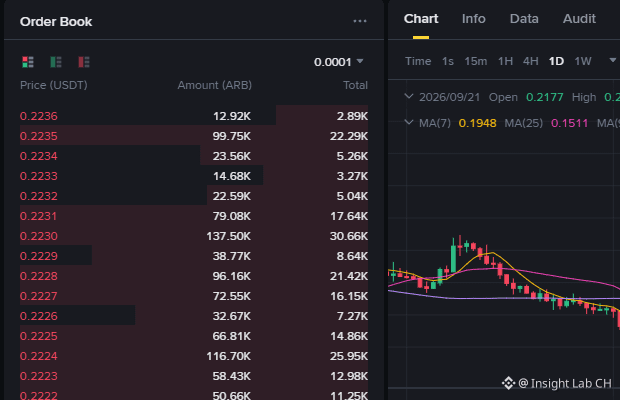
Binance has now expanded the eligibility of bStocks as collateral for pledge to portfolio margin leverage and unified accounts. Due to liquidity and risk-control constraints, investors must be highly alert to the potential liquidation risk of leveraged positions.⚠️ #Binance #MarginTrading
Binance has now expanded the eligibility of bStocks as collateral for pledge to portfolio margin leverage and unified accounts. Due to liquidity and risk-control constraints, investors must be highly alert to the potential liquidation risk of leveraged positions.⚠️ #Binance #MarginTrading
32
Binance announced it will support the Terra ($LUNA) network upgrade. Before on-chain fundamentals become clear, upgrades may be difficult to reverse the downward pressure, and investors should watch out for liquidity risks during the technical adjustment period.⚠️ #Binance #LUNA
Binance announced it will support the Terra ($LUNA ) network upgrade. Before on-chain fundamentals become clear, upgrades may be difficult to reverse the downward pressure, and investors should watch out for liquidity risks during the technical adjustment period.⚠️ #Binance #LUNA
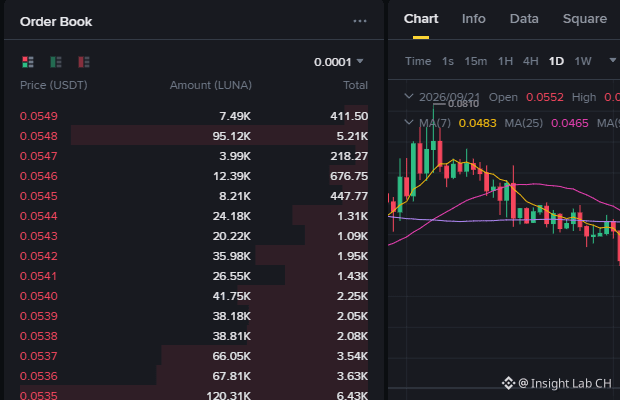
95
📅 This Week’s Key Macro Economic Calendar Overview:
🇺🇸 09/24 20:30 (UTC+8) - Unemployment Claims (Forecast: 201K, Previous: 196K)
🇺🇸 09/25 22:00 (UTC+8) - Revised UoM Consumer Sentiment (Forecast: 47.5, Previous: 47.8)
🇺🇸 09/25 22:00 (UTC+8) - Revised UoM Inflation Expectations (Forecast: N/A, Previous: 4.6%)
Based on data expectations, initial jobless claims are expected to tick up slightly, while the consumer confidence index may face further downward pressure. The overall macro environment continues to face dual pressures of economic slowdown and inflation stickiness. In the near term, liquidity support for risk assets should not be overly optimistic, and the market should be alert to the downside risk of a sentiment pullback.
#MacroEconomics #Fed #Inflation
📅 This Week’s Key Macro Economic Calendar Overview:
🇺🇸 09/24 20:30 (UTC+8) - Unemployment Claims (Forecast: 201K, Previous: 196K)
🇺🇸 09/25 22:00 (UTC+8) - Revised UoM Consumer Sentiment (Forecast: 47.5, Previous: 47.8)
🇺🇸 09/25 22:00 (UTC+8) - Revised UoM Inflation Expectations (Forecast: N/A, Previous: 4.6%)
Based on data expectations, initial jobless claims are expected to tick up slightly, while the consumer confidence index may face further downward pressure. The overall macro environment continues to face dual pressures of economic slowdown and inflation stickiness. In the near term, liquidity support for risk assets should not be overly optimistic, and the market should be alert to the downside risk of a sentiment pullback.
#MacroEconomics #Fed #Inflation
🇺🇸 09/24 20:30 (UTC+8) - Unemployment Claims (Forecast: 201K, Previous: 196K)
🇺🇸 09/25 22:00 (UTC+8) - Revised UoM Consumer Sentiment (Forecast: 47.5, Previous: 47.8)
🇺🇸 09/25 22:00 (UTC+8) - Revised UoM Inflation Expectations (Forecast: N/A, Previous: 4.6%)
Based on data expectations, initial jobless claims are expected to tick up slightly, while the consumer confidence index may face further downward pressure. The overall macro environment continues to face dual pressures of economic slowdown and inflation stickiness. In the near term, liquidity support for risk assets should not be overly optimistic, and the market should be alert to the downside risk of a sentiment pullback.
#MacroEconomics #Fed #Inflation
48
Log in to explore more content
Join global crypto users on Binance Square
⚡️ Get latest and useful information about crypto.
💬 Trusted by the world’s largest crypto exchange.
👍 Discover real insights from verified creators.
Email / Phone number