

#oil
oil
5M views
14,178 Discussing
Hot
Latest

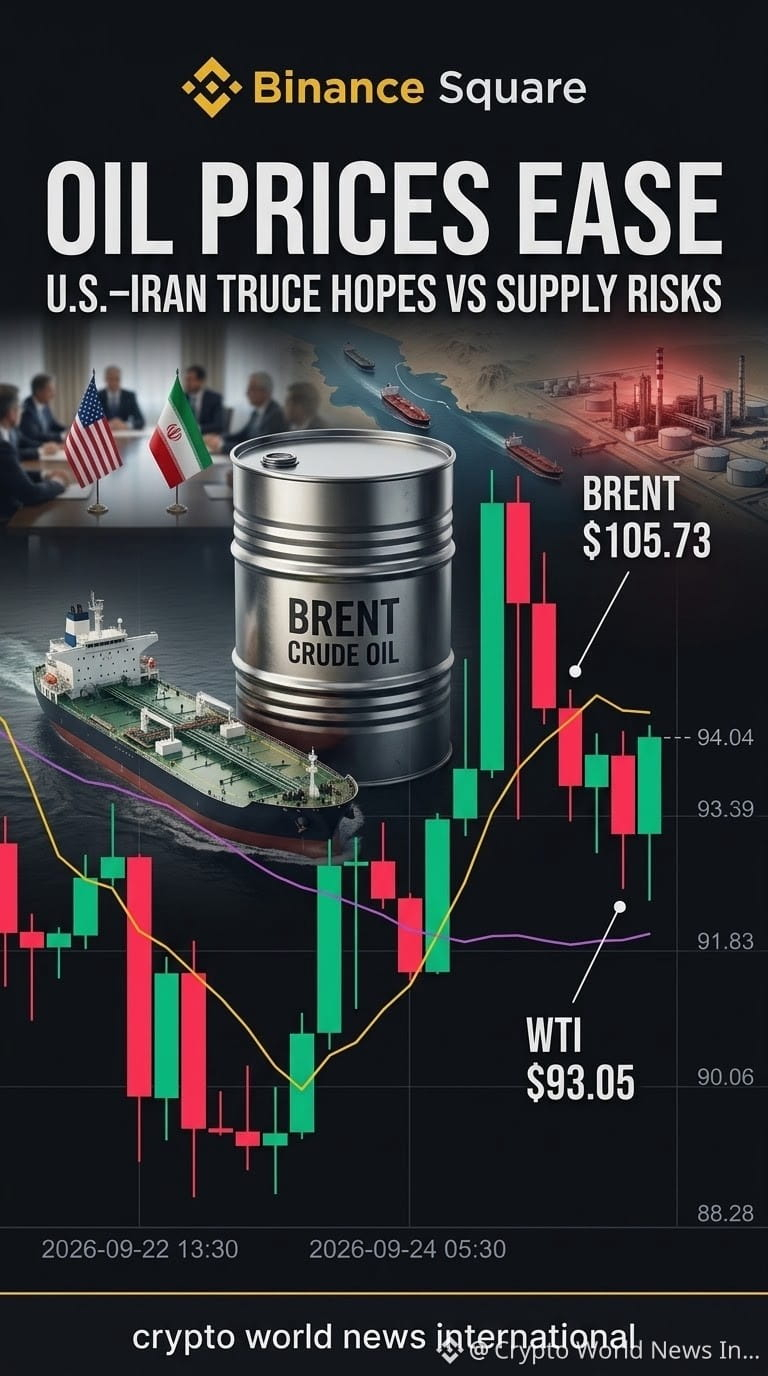
🚨 OIL PRICES EASE AS U.S.–IRAN TRUCE HOPES OFFSET SUPPLY RISKS
Oil prices slipped Friday as markets weighed possible U.S.–Iran truce talks against continued attacks on Saudi oil infrastructure.
🔑 Key Points:
• Brent: $105.73, down 0.82%
• WTI: $93.05, down 1.65%
• U.S.–Iran negotiators are exploring a phased path toward ending the conflict
• A possible reopening of the Strait of Hormuz could ease supply pressure
• Houthi attacks on Saudi infrastructure continue to create supply risks
📊 Market Insight:
Oil remains highly sensitive to geopolitical developments. Progress toward a U.S.–Iran agreement could reduce the supply-risk premium, while further attacks on Saudi energy infrastructure could quickly revive upward pressure.
👀 Markets to Watch:
🛢️ Brent • WTI • Diesel • Natural Gas • Energy Stocks
#Oil #brent #WTI #iran #SaudiArabia $BZ $CL $NATGAS
{future}(NATGASUSDT)
{future}(CLUSDT)
{future}(BZUSDT)
🚨 OIL PRICES EASE AS U.S.–IRAN TRUCE HOPES OFFSET SUPPLY RISKS
Oil prices slipped Friday as markets weighed possible U.S.–Iran truce talks against continued attacks on Saudi oil infrastructure.
🔑 Key Points:
• Brent: $105.73, down 0.82%
• WTI: $93.05, down 1.65%
• U.S.–Iran negotiators are exploring a phased path toward ending the conflict
• A possible reopening of the Strait of Hormuz could ease supply pressure
• Houthi attacks on Saudi infrastructure continue to create supply risks
📊 Market Insight:
Oil remains highly sensitive to geopolitical developments. Progress toward a U.S.–Iran agreement could reduce the supply-risk premium, while further attacks on Saudi energy infrastructure could quickly revive upward pressure.
👀 Markets to Watch:
🛢️ Brent • WTI • Diesel • Natural Gas • Energy Stocks
#Oil #brent #WTI #iran #SaudiArabia $BZ $CL $NATGAS
Oil prices slipped Friday as markets weighed possible U.S.–Iran truce talks against continued attacks on Saudi oil infrastructure.
🔑 Key Points:
• Brent: $105.73, down 0.82%
• WTI: $93.05, down 1.65%
• U.S.–Iran negotiators are exploring a phased path toward ending the conflict
• A possible reopening of the Strait of Hormuz could ease supply pressure
• Houthi attacks on Saudi infrastructure continue to create supply risks
📊 Market Insight:
Oil remains highly sensitive to geopolitical developments. Progress toward a U.S.–Iran agreement could reduce the supply-risk premium, while further attacks on Saudi energy infrastructure could quickly revive upward pressure.
👀 Markets to Watch:
🛢️ Brent • WTI • Diesel • Natural Gas • Energy Stocks
#Oil #brent #WTI #iran #SaudiArabia $BZ $CL $NATGAS
354

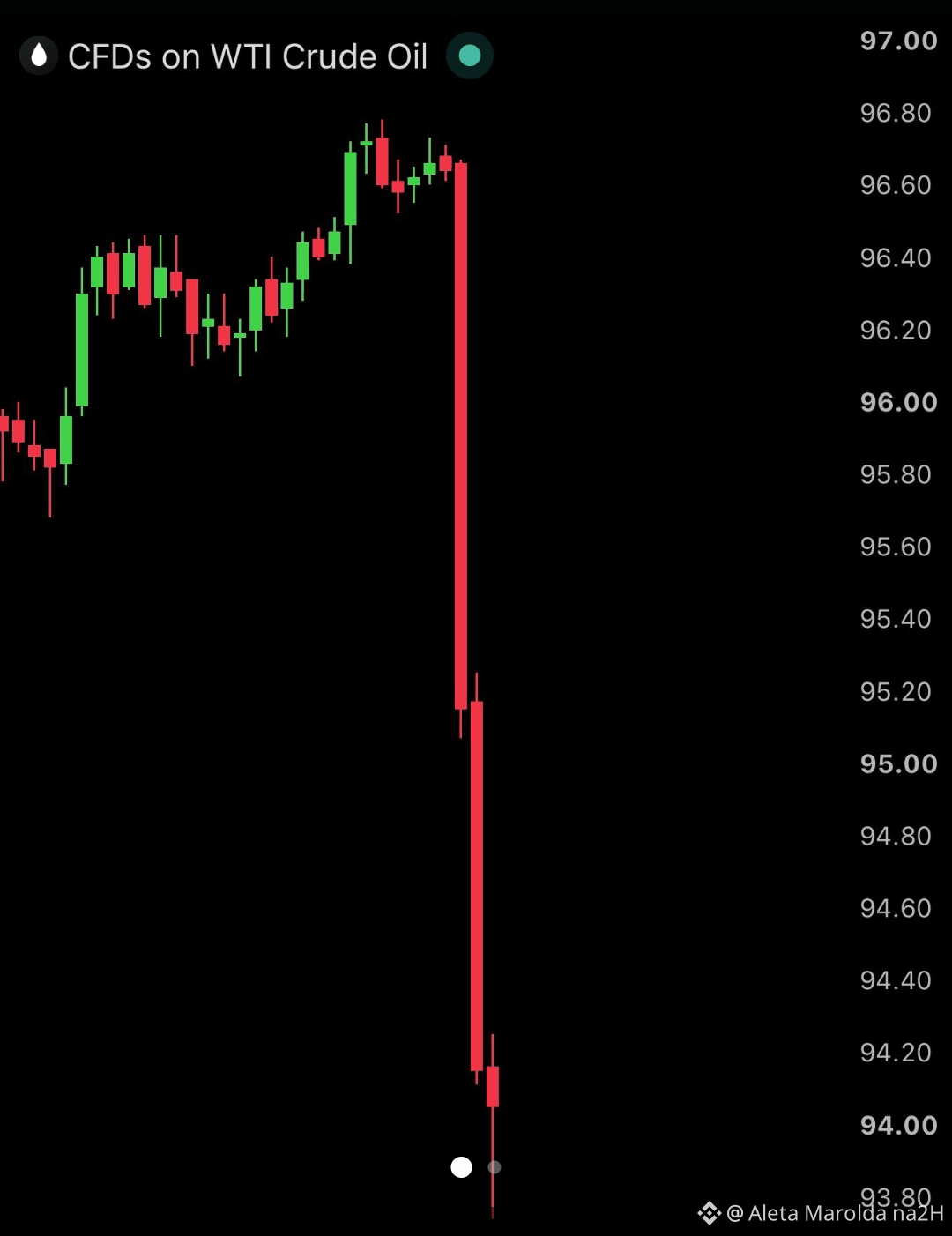
🚨 $OIL PLUMMETS 4% AS GEOPOLITICAL RISK PREMIUM DISSOLVES NEAR $96! 📉
Brent crude oil $OIL dropped 4.00% intraday to $96.71 as institutional desks reprice energy markets following news that US-Iran negotiations have reached the technical stage. 📉 The headline-driven movement has rapidly swept market liquidity, unwinding weeks of built-in geopolitical risk premium.
From an order flow perspective, smart money is letting the premium bleed into key macro demand zones rather than bidding blindly into headline volatility. 📊 As supply constraint expectations soften on diplomatic traction, structural market participants are waiting for low-timeframe stabilization before committing fresh position capital. 💬 Do you expect oil to retest lower demand blocks, or will diplomatic friction spark a fast reclaim? 👇
⚠️ Not financial advice. Always manage your risk. 🛡️
🏷️ #OIL #Brent #Macro #Trading #Commodities
📉 🛡️
🚨 $OIL PLUMMETS 4% AS GEOPOLITICAL RISK PREMIUM DISSOLVES NEAR $96! 📉
Brent crude oil $OIL dropped 4.00% intraday to $96.71 as institutional desks reprice energy markets following news that US-Iran negotiations have reached the technical stage. 📉 The headline-driven movement has rapidly swept market liquidity, unwinding weeks of built-in geopolitical risk premium.
From an order flow perspective, smart money is letting the premium bleed into key macro demand zones rather than bidding blindly into headline volatility. 📊 As supply constraint expectations soften on diplomatic traction, structural market participants are waiting for low-timeframe stabilization before committing fresh position capital. 💬 Do you expect oil to retest lower demand blocks, or will diplomatic friction spark a fast reclaim? 👇
⚠️ Not financial advice. Always manage your risk. 🛡️
🏷️ #OIL #Brent #Macro #Trading #Commodities
📉 🛡️
Brent crude oil $OIL dropped 4.00% intraday to $96.71 as institutional desks reprice energy markets following news that US-Iran negotiations have reached the technical stage. 📉 The headline-driven movement has rapidly swept market liquidity, unwinding weeks of built-in geopolitical risk premium.
From an order flow perspective, smart money is letting the premium bleed into key macro demand zones rather than bidding blindly into headline volatility. 📊 As supply constraint expectations soften on diplomatic traction, structural market participants are waiting for low-timeframe stabilization before committing fresh position capital. 💬 Do you expect oil to retest lower demand blocks, or will diplomatic friction spark a fast reclaim? 👇
⚠️ Not financial advice. Always manage your risk. 🛡️
🏷️ #OIL #Brent #Macro #Trading #Commodities
📉 🛡️
1
326

·
--
Bullish
#OIL
Commodities
Crude oil falls on reports of potential phased US-Iran deal that would reopen the Strait of Hormuz
Oil fell on reports of US-Iran talks over a phased deal to reopen the Strait of Hormuz. A breakthrough could trigger a sharp drop in crude, while a prolonged stalemate or renewed escalation would keep prices supported into new highs. The key focus remains on the timing and outcome of negotiations.
FUNDAMENTAL OVERVIEW
Crude oil fell yesterday after reports of US and Iran discussing a phased deal to reopen the Strait of Hormuz and end the US blockade. Iran has put an offer on the table, promising to reopen the Strait of Hormuz within seven days if the US meets its terms. Iran's Foreign Minister Araghchi is staying in New York over the weekend to await a US response.
#OIL
Commodities
Crude oil falls on reports of potential phased US-Iran deal that would reopen the Strait of Hormuz
Oil fell on reports of US-Iran talks over a phased deal to reopen the Strait of Hormuz. A breakthrough could trigger a sharp drop in crude, while a prolonged stalemate or renewed escalation would keep prices supported into new highs. The key focus remains on the timing and outcome of negotiations.
FUNDAMENTAL OVERVIEW
Crude oil fell yesterday after reports of US and Iran discussing a phased deal to reopen the Strait of Hormuz and end the US blockade. Iran has put an offer on the table, promising to reopen the Strait of Hormuz within seven days if the US meets its terms. Iran's Foreign Minister Araghchi is staying in New York over the weekend to await a US response.
Commodities
Crude oil falls on reports of potential phased US-Iran deal that would reopen the Strait of Hormuz
Oil fell on reports of US-Iran talks over a phased deal to reopen the Strait of Hormuz. A breakthrough could trigger a sharp drop in crude, while a prolonged stalemate or renewed escalation would keep prices supported into new highs. The key focus remains on the timing and outcome of negotiations.
FUNDAMENTAL OVERVIEW
Crude oil fell yesterday after reports of US and Iran discussing a phased deal to reopen the Strait of Hormuz and end the US blockade. Iran has put an offer on the table, promising to reopen the Strait of Hormuz within seven days if the US meets its terms. Iran's Foreign Minister Araghchi is staying in New York over the weekend to await a US response.
197
🚨 $OIL SURGES TO $105 AS MIDDLE EAST SUPPLY RISKS FUEL MACRO INFLATION PRESSURE 💥
📌 Brent crude expanding to $105 per barrel off Middle East supply disruptions and Strait of Hormuz risk is triggering broad macroeconomic friction. 🔍 Monster survey data reveals 65% of job seekers are altering priorities due to surging retail fuel costs, with diesel exceeding $6.50 per gallon.
💡 Institutional order flow in energy markets continues absorbing overhead supply while rising commute costs force wage expansion expectations across the labor market. 📊 As energy costs anchor structural inflation higher, capital allocation across risk assets will demand tighter execution and risk management. 💬 How are you positioning your portfolio to hedge against this macro energy squeeze? 👇
⚠️ Not financial advice. Always manage your risk. 🛡️
🏷️ #OIL #Macro #Inflation #Commodities #Energy
📊 🔍
🚨 $OIL SURGES TO $105 AS MIDDLE EAST SUPPLY RISKS FUEL MACRO INFLATION PRESSURE 💥
📌 Brent crude expanding to $105 per barrel off Middle East supply disruptions and Strait of Hormuz risk is triggering broad macroeconomic friction. 🔍 Monster survey data reveals 65% of job seekers are altering priorities due to surging retail fuel costs, with diesel exceeding $6.50 per gallon.
💡 Institutional order flow in energy markets continues absorbing overhead supply while rising commute costs force wage expansion expectations across the labor market. 📊 As energy costs anchor structural inflation higher, capital allocation across risk assets will demand tighter execution and risk management. 💬 How are you positioning your portfolio to hedge against this macro energy squeeze? 👇
⚠️ Not financial advice. Always manage your risk. 🛡️
🏷️ #OIL #Macro #Inflation #Commodities #Energy
📊 🔍
📌 Brent crude expanding to $105 per barrel off Middle East supply disruptions and Strait of Hormuz risk is triggering broad macroeconomic friction. 🔍 Monster survey data reveals 65% of job seekers are altering priorities due to surging retail fuel costs, with diesel exceeding $6.50 per gallon.
💡 Institutional order flow in energy markets continues absorbing overhead supply while rising commute costs force wage expansion expectations across the labor market. 📊 As energy costs anchor structural inflation higher, capital allocation across risk assets will demand tighter execution and risk management. 💬 How are you positioning your portfolio to hedge against this macro energy squeeze? 👇
⚠️ Not financial advice. Always manage your risk. 🛡️
🏷️ #OIL #Macro #Inflation #Commodities #Energy
📊 🔍
85
·
--
Bullish
#OIL
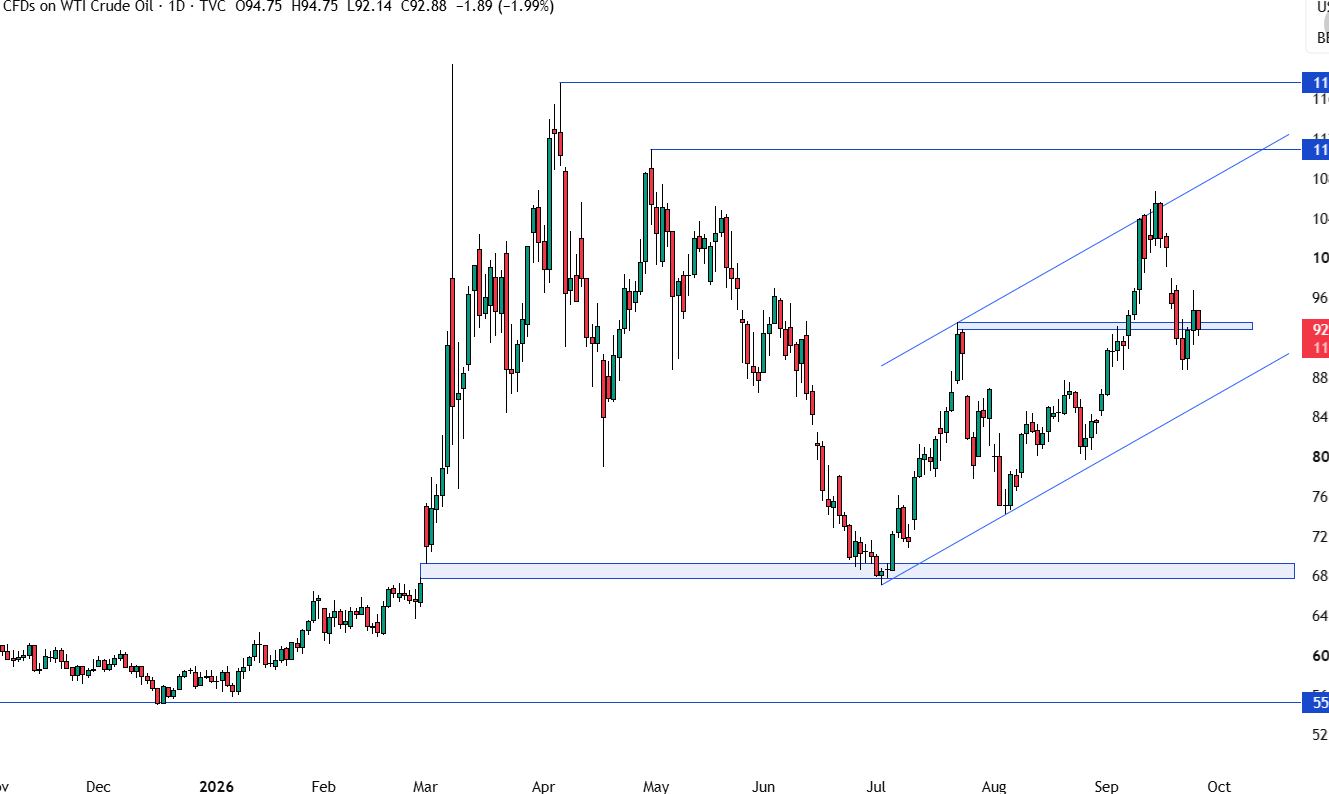
As of Sept. 25, Brent was around $105–106, while WTI was around $93–94. Oil has been moving sharply because traders are balancing possible US–Iran diplomacy/Hormuz reopening against continued attacks and Middle East supply risks.
Next Week Scenarios
Bullish scenario
If attacks on Saudi/Gulf infrastructure continue If Strait of Hormuz reopening negotiations fail Brent could retest $106–110 A confirmed major supply disruption could push it above $110
Bearish scenario
If US–Iran negotiations make real progress If Hormuz traffic improves and Saudi exports recover Brent could fall toward $100, with a possible move below $100 if supply conditions improve significantly. Saudi Arabia has already restarted its East-West pipeline, which is helping supply expectations.
KEY Levels I would watch
BrentMeaning$110+Strong bullish breakout zone$106–108Major resistance/supply-risk zone$100–105Key decision area$100Major psychological supportBelow $100Further downside risk if geopolitical premium unwinds
Bottom line: Next week, don't treat oil as a normal technical market. US–Iran/Hormuz headlines can override technical levels very quickly.
#OIL
As of Sept. 25, Brent was around $105–106, while WTI was around $93–94. Oil has been moving sharply because traders are balancing possible US–Iran diplomacy/Hormuz reopening against continued attacks and Middle East supply risks.
Next Week Scenarios
Bullish scenario
If attacks on Saudi/Gulf infrastructure continue If Strait of Hormuz reopening negotiations fail Brent could retest $106–110 A confirmed major supply disruption could push it above $110
Bearish scenario
If US–Iran negotiations make real progress If Hormuz traffic improves and Saudi exports recover Brent could fall toward $100, with a possible move below $100 if supply conditions improve significantly. Saudi Arabia has already restarted its East-West pipeline, which is helping supply expectations.
KEY Levels I would watch
BrentMeaning$110+Strong bullish breakout zone$106–108Major resistance/supply-risk zone$100–105Key decision area$100Major psychological supportBelow $100Further downside risk if geopolitical premium unwinds
Bottom line: Next week, don't treat oil as a normal technical market. US–Iran/Hormuz headlines can override technical levels very quickly.
As of Sept. 25, Brent was around $105–106, while WTI was around $93–94. Oil has been moving sharply because traders are balancing possible US–Iran diplomacy/Hormuz reopening against continued attacks and Middle East supply risks.
Next Week Scenarios
Bullish scenario
If attacks on Saudi/Gulf infrastructure continue If Strait of Hormuz reopening negotiations fail Brent could retest $106–110 A confirmed major supply disruption could push it above $110
Bearish scenario
If US–Iran negotiations make real progress If Hormuz traffic improves and Saudi exports recover Brent could fall toward $100, with a possible move below $100 if supply conditions improve significantly. Saudi Arabia has already restarted its East-West pipeline, which is helping supply expectations.
KEY Levels I would watch
BrentMeaning$110+Strong bullish breakout zone$106–108Major resistance/supply-risk zone$100–105Key decision area$100Major psychological supportBelow $100Further downside risk if geopolitical premium unwinds
Bottom line: Next week, don't treat oil as a normal technical market. US–Iran/Hormuz headlines can override technical levels very quickly.
244
🚨 $OIL GEOPOLITICAL PREMIUM FADES AS DIPLOMATIC TALKS CLASH WITH PHYSICAL SUPPLY BOTTLENECK 🔍
Diplomatic headlines are driving short-term paper liquidations in $OIL , but physical order flow tells a far more constrained narrative. 📊 While market sentiment reacts to U.S.-Iran negotiation rumors, shipping volume through the Strait of Hormuz remains severely depressed at just 10 vessels daily compared to the 17-vessel structural average.
Smart capital looks past headlines to monitor physical inventory delivery and systemic supply friction. 💡 Geopolitical risk pricing may compress temporarily, yet the persistent imbalance between geopolitical narrative and physical transit keeps long-term liquidity dynamics tightly squeezed. 💬 Will headline volatility flush out paper positions before physical supply bottlenecks force a structural repricing? 👇
⚠️ Not financial advice. Always manage your risk. 🛡️
🏷️ #OIL #MarketStructure #Geopolitics #Commodities #Macro
🎯 🦈
🚨 $OIL GEOPOLITICAL PREMIUM FADES AS DIPLOMATIC TALKS CLASH WITH PHYSICAL SUPPLY BOTTLENECK 🔍
Diplomatic headlines are driving short-term paper liquidations in $OIL , but physical order flow tells a far more constrained narrative. 📊 While market sentiment reacts to U.S.-Iran negotiation rumors, shipping volume through the Strait of Hormuz remains severely depressed at just 10 vessels daily compared to the 17-vessel structural average.
Smart capital looks past headlines to monitor physical inventory delivery and systemic supply friction. 💡 Geopolitical risk pricing may compress temporarily, yet the persistent imbalance between geopolitical narrative and physical transit keeps long-term liquidity dynamics tightly squeezed. 💬 Will headline volatility flush out paper positions before physical supply bottlenecks force a structural repricing? 👇
⚠️ Not financial advice. Always manage your risk. 🛡️
🏷️ #OIL #MarketStructure #Geopolitics #Commodities #Macro
🎯 🦈
Diplomatic headlines are driving short-term paper liquidations in $OIL , but physical order flow tells a far more constrained narrative. 📊 While market sentiment reacts to U.S.-Iran negotiation rumors, shipping volume through the Strait of Hormuz remains severely depressed at just 10 vessels daily compared to the 17-vessel structural average.
Smart capital looks past headlines to monitor physical inventory delivery and systemic supply friction. 💡 Geopolitical risk pricing may compress temporarily, yet the persistent imbalance between geopolitical narrative and physical transit keeps long-term liquidity dynamics tightly squeezed. 💬 Will headline volatility flush out paper positions before physical supply bottlenecks force a structural repricing? 👇
⚠️ Not financial advice. Always manage your risk. 🛡️
🏷️ #OIL #MarketStructure #Geopolitics #Commodities #Macro
🎯 🦈
126

·
--
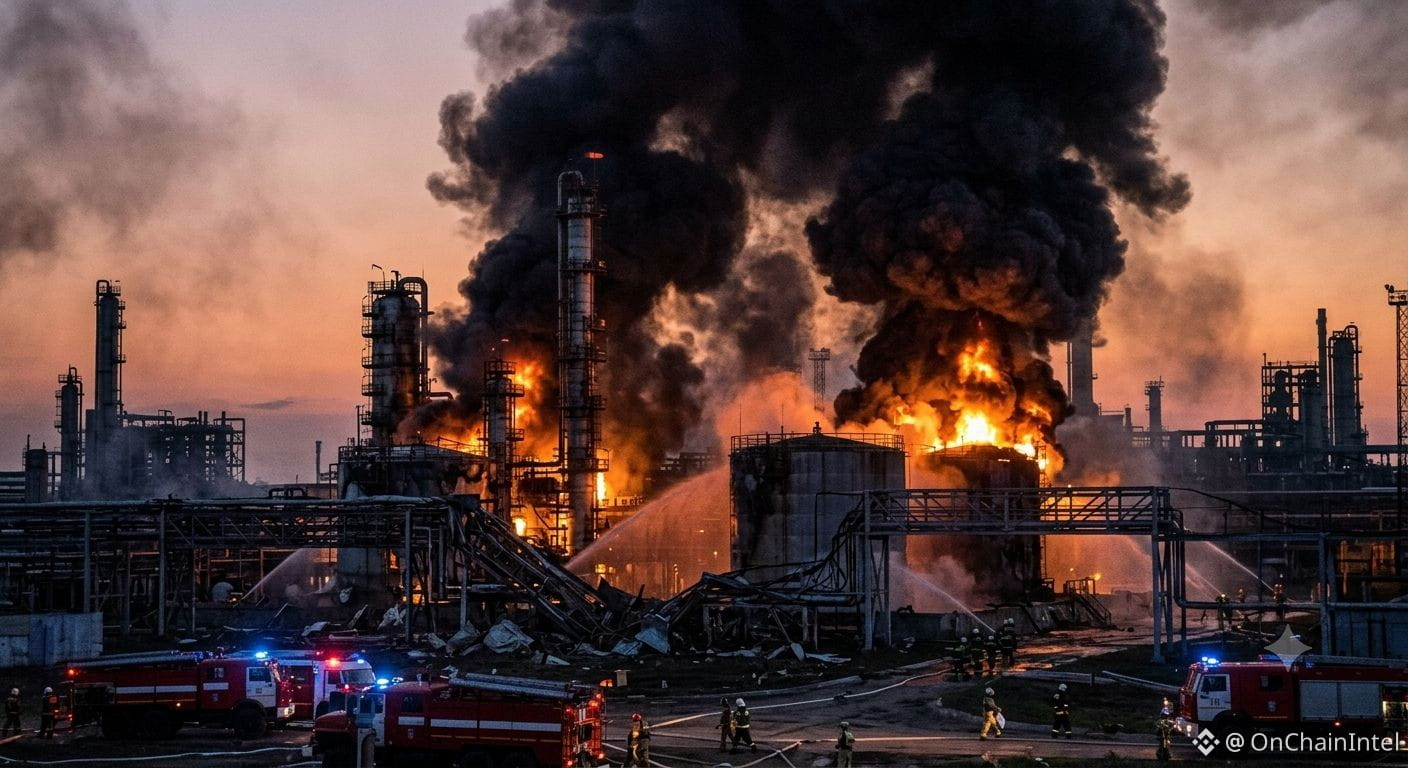
🚨 BREAKING: Ukrainian drones reportedly struck Russia’s Perm oil refinery, triggering a fire at one of the country’s major fuel facilities.
The refinery produces around 5.3 million tonnes of diesel annually and is among Russia’s six largest diesel-producing refineries.
The incident follows last week’s reported drone attack on Moscow’s largest oil refinery, which disrupted crude processing.
The strikes come days after President Trump said Russia and Ukraine had agreed to stop targeting each other’s energy infrastructure.
#Russia #Ukraine #Oil
🚨 BREAKING: Ukrainian drones reportedly struck Russia’s Perm oil refinery, triggering a fire at one of the country’s major fuel facilities.
The refinery produces around 5.3 million tonnes of diesel annually and is among Russia’s six largest diesel-producing refineries.
The incident follows last week’s reported drone attack on Moscow’s largest oil refinery, which disrupted crude processing.
The strikes come days after President Trump said Russia and Ukraine had agreed to stop targeting each other’s energy infrastructure.
#Russia #Ukraine #Oil
The refinery produces around 5.3 million tonnes of diesel annually and is among Russia’s six largest diesel-producing refineries.
The incident follows last week’s reported drone attack on Moscow’s largest oil refinery, which disrupted crude processing.
The strikes come days after President Trump said Russia and Ukraine had agreed to stop targeting each other’s energy infrastructure.
#Russia #Ukraine #Oil
197

67
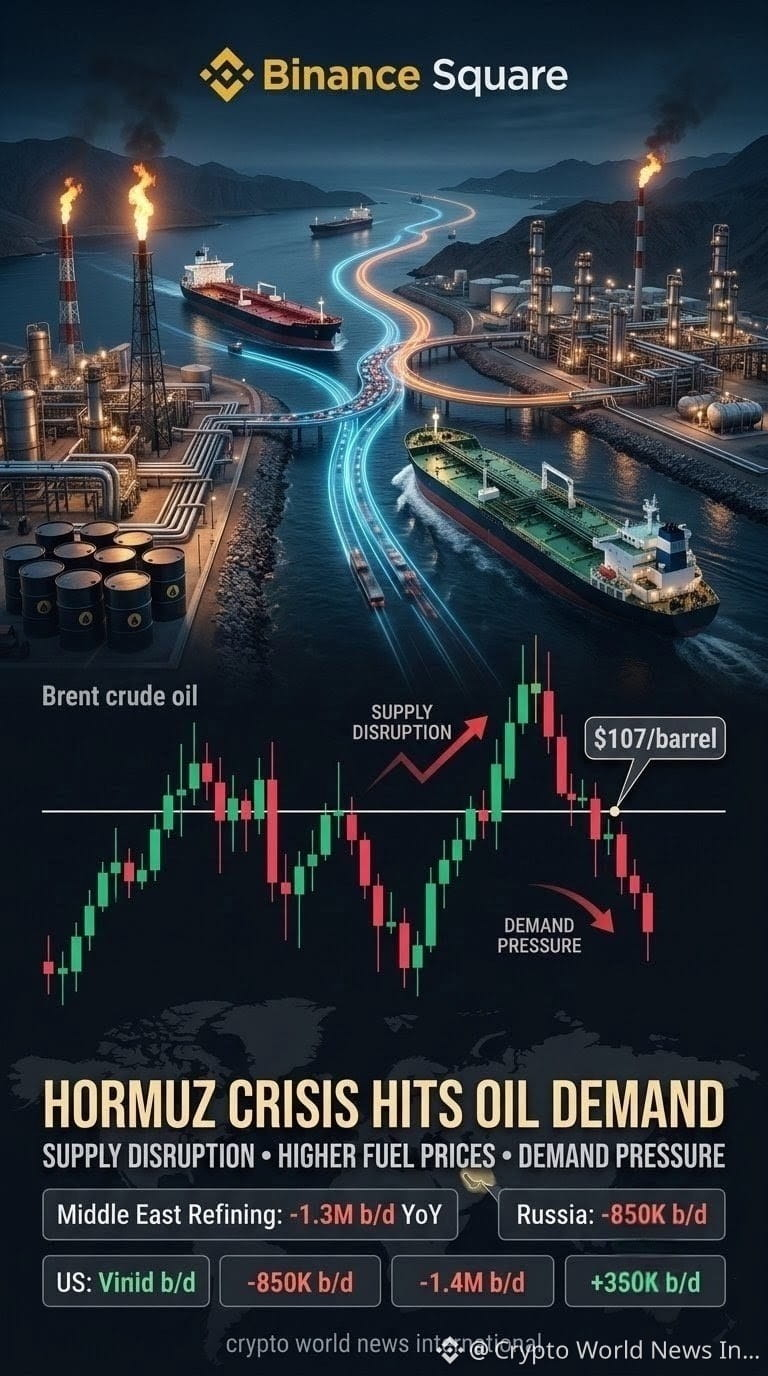
🚨 HORMUZ CRISIS: OIL DEMAND OUTLOOK CUT
Summary:
The Strait of Hormuz supply disruption is now affecting not only oil supply, but also global demand for refined products. Energy Intelligence has reduced its 2026 global product-consumption outlook as tighter fuel availability pushes prices higher.
Key Points:
• Middle East refinery runs are down ~1.3M barrels/day YoY
• Russian refinery runs are down ~850K b/d
• Chinese refinery runs are down ~1.4M b/d
• U.S. refiners are producing ~350K b/d more YoY
• Hormuz was handling ~15M b/d of crude and ~5M b/d of refined products/LPG when the conflict began
Market Insight:
A prolonged Hormuz disruption could create a double-sided oil shock: tighter supply alongside weaker fuel demand as high prices encourage consumers and industries to seek alternatives.
#oil #brent #Energy #Hormuz #CryptoNews $BZ $CL
{future}(CLUSDT)
{future}(BZUSDT)
🚨 HORMUZ CRISIS: OIL DEMAND OUTLOOK CUT
Summary:
The Strait of Hormuz supply disruption is now affecting not only oil supply, but also global demand for refined products. Energy Intelligence has reduced its 2026 global product-consumption outlook as tighter fuel availability pushes prices higher.
Key Points:
• Middle East refinery runs are down ~1.3M barrels/day YoY
• Russian refinery runs are down ~850K b/d
• Chinese refinery runs are down ~1.4M b/d
• U.S. refiners are producing ~350K b/d more YoY
• Hormuz was handling ~15M b/d of crude and ~5M b/d of refined products/LPG when the conflict began
Market Insight:
A prolonged Hormuz disruption could create a double-sided oil shock: tighter supply alongside weaker fuel demand as high prices encourage consumers and industries to seek alternatives.
#oil #brent #Energy #Hormuz #CryptoNews $BZ $CL
Summary:
The Strait of Hormuz supply disruption is now affecting not only oil supply, but also global demand for refined products. Energy Intelligence has reduced its 2026 global product-consumption outlook as tighter fuel availability pushes prices higher.
Key Points:
• Middle East refinery runs are down ~1.3M barrels/day YoY
• Russian refinery runs are down ~850K b/d
• Chinese refinery runs are down ~1.4M b/d
• U.S. refiners are producing ~350K b/d more YoY
• Hormuz was handling ~15M b/d of crude and ~5M b/d of refined products/LPG when the conflict began
Market Insight:
A prolonged Hormuz disruption could create a double-sided oil shock: tighter supply alongside weaker fuel demand as high prices encourage consumers and industries to seek alternatives.
#oil #brent #Energy #Hormuz #CryptoNews $BZ $CL
174

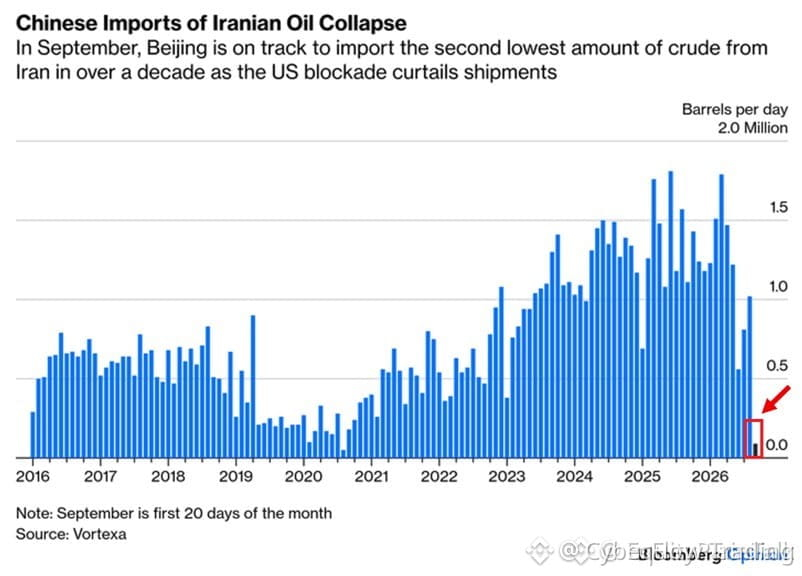
GLOBAL CRUDE FLOWS REROUTE AS SEABORNE OIL IMPORTS COLLAPSE TO 10-YEAR LOWS! 🌊 $OIL
Seaborne crude imports just hit roughly 6.9M barrels per day, dragging monthly volumes down toward decade lows while Iranian flows plummeted 92-95% to a mere 80K barrels daily. 📊 That massive 600-million-barrel shortfall this year is forcing a violent macro realignment toward replacement supplies from Iraq, UAE, Brazil, and Canada.
With primary supply lines quietly disappearing, energy security dynamics are rewiring the entire global liquidity matrix for raw commodities. 💡 When physical supply chains re-map on this scale, capital rotates fast across global markets. 💬 How do you see this massive supply rotation impacting broader macro risk assets into Q4? 👇
⚠️ Not financial advice. Always manage your risk. 🛡️
🏷️ #OIL #Macro #Commodities #Energy #SupplyChain
⚡ 📊
GLOBAL CRUDE FLOWS REROUTE AS SEABORNE OIL IMPORTS COLLAPSE TO 10-YEAR LOWS! 🌊 $OIL
Seaborne crude imports just hit roughly 6.9M barrels per day, dragging monthly volumes down toward decade lows while Iranian flows plummeted 92-95% to a mere 80K barrels daily. 📊 That massive 600-million-barrel shortfall this year is forcing a violent macro realignment toward replacement supplies from Iraq, UAE, Brazil, and Canada.
With primary supply lines quietly disappearing, energy security dynamics are rewiring the entire global liquidity matrix for raw commodities. 💡 When physical supply chains re-map on this scale, capital rotates fast across global markets. 💬 How do you see this massive supply rotation impacting broader macro risk assets into Q4? 👇
⚠️ Not financial advice. Always manage your risk. 🛡️
🏷️ #OIL #Macro #Commodities #Energy #SupplyChain
⚡ 📊
Seaborne crude imports just hit roughly 6.9M barrels per day, dragging monthly volumes down toward decade lows while Iranian flows plummeted 92-95% to a mere 80K barrels daily. 📊 That massive 600-million-barrel shortfall this year is forcing a violent macro realignment toward replacement supplies from Iraq, UAE, Brazil, and Canada.
With primary supply lines quietly disappearing, energy security dynamics are rewiring the entire global liquidity matrix for raw commodities. 💡 When physical supply chains re-map on this scale, capital rotates fast across global markets. 💬 How do you see this massive supply rotation impacting broader macro risk assets into Q4? 👇
⚠️ Not financial advice. Always manage your risk. 🛡️
🏷️ #OIL #Macro #Commodities #Energy #SupplyChain
⚡ 📊
283

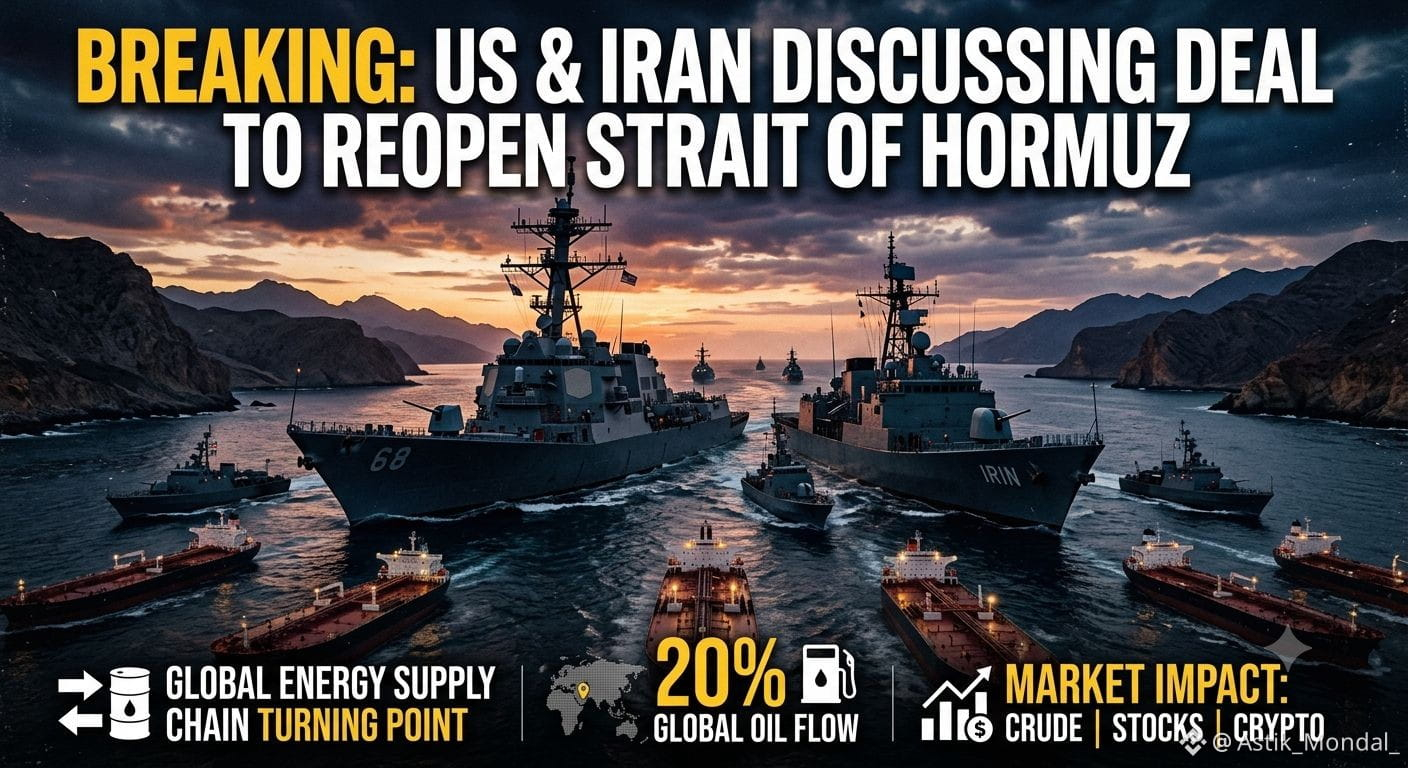
🚨 BREAKING: The global energy supply chain just hit a massive geopolitical turning point.
The U.S. and Iran are quietly negotiating a landmark deal to reopen the Strait of Hormuz and the global economic stakes couldn’t be higher.
Nearly 20% of the world’s daily petroleum flows through this narrow 21-mile choke point. A total closure or escalation meant one thing: an immediate spike in crude oil prices, skyrocketing shipping freight costs, and a sharp global inflationary wave.
Now, behind-the-scenes backchannels are in motion.
If a diplomatic resolution lands and tankers begin moving freely again, expect immediate shockwaves across the global economy:
• Oil & Gas: Energy markets could see a sudden recalibration as risk premiums evaporate.
• Stock Markets: Risk-on assets and broad equity indices could rally hard on easing war fears.
• Crypto & Macro: Volatility will spike across global liquidity markets as macro sentiment shifts overnight.
Whether this marks a temporary operational truce or a true geopolitical pivot, big money is already reallocating positions ahead of the headline.
Watch the order books closely the ripple effect touches every asset class on Earth.
#US #Iran #Geopolitics #Oil #MacroEconomy $CL $BZ
🚨 BREAKING: The global energy supply chain just hit a massive geopolitical turning point.
The U.S. and Iran are quietly negotiating a landmark deal to reopen the Strait of Hormuz and the global economic stakes couldn’t be higher.
Nearly 20% of the world’s daily petroleum flows through this narrow 21-mile choke point. A total closure or escalation meant one thing: an immediate spike in crude oil prices, skyrocketing shipping freight costs, and a sharp global inflationary wave.
Now, behind-the-scenes backchannels are in motion.
If a diplomatic resolution lands and tankers begin moving freely again, expect immediate shockwaves across the global economy:
• Oil & Gas: Energy markets could see a sudden recalibration as risk premiums evaporate.
• Stock Markets: Risk-on assets and broad equity indices could rally hard on easing war fears.
• Crypto & Macro: Volatility will spike across global liquidity markets as macro sentiment shifts overnight.
Whether this marks a temporary operational truce or a true geopolitical pivot, big money is already reallocating positions ahead of the headline.
Watch the order books closely the ripple effect touches every asset class on Earth.
#US #Iran #Geopolitics #Oil #MacroEconomy $CL $BZ
The U.S. and Iran are quietly negotiating a landmark deal to reopen the Strait of Hormuz and the global economic stakes couldn’t be higher.
Nearly 20% of the world’s daily petroleum flows through this narrow 21-mile choke point. A total closure or escalation meant one thing: an immediate spike in crude oil prices, skyrocketing shipping freight costs, and a sharp global inflationary wave.
Now, behind-the-scenes backchannels are in motion.
If a diplomatic resolution lands and tankers begin moving freely again, expect immediate shockwaves across the global economy:
• Oil & Gas: Energy markets could see a sudden recalibration as risk premiums evaporate.
• Stock Markets: Risk-on assets and broad equity indices could rally hard on easing war fears.
• Crypto & Macro: Volatility will spike across global liquidity markets as macro sentiment shifts overnight.
Whether this marks a temporary operational truce or a true geopolitical pivot, big money is already reallocating positions ahead of the headline.
Watch the order books closely the ripple effect touches every asset class on Earth.
#US #Iran #Geopolitics #Oil #MacroEconomy $CL $BZ
2
471

·
--
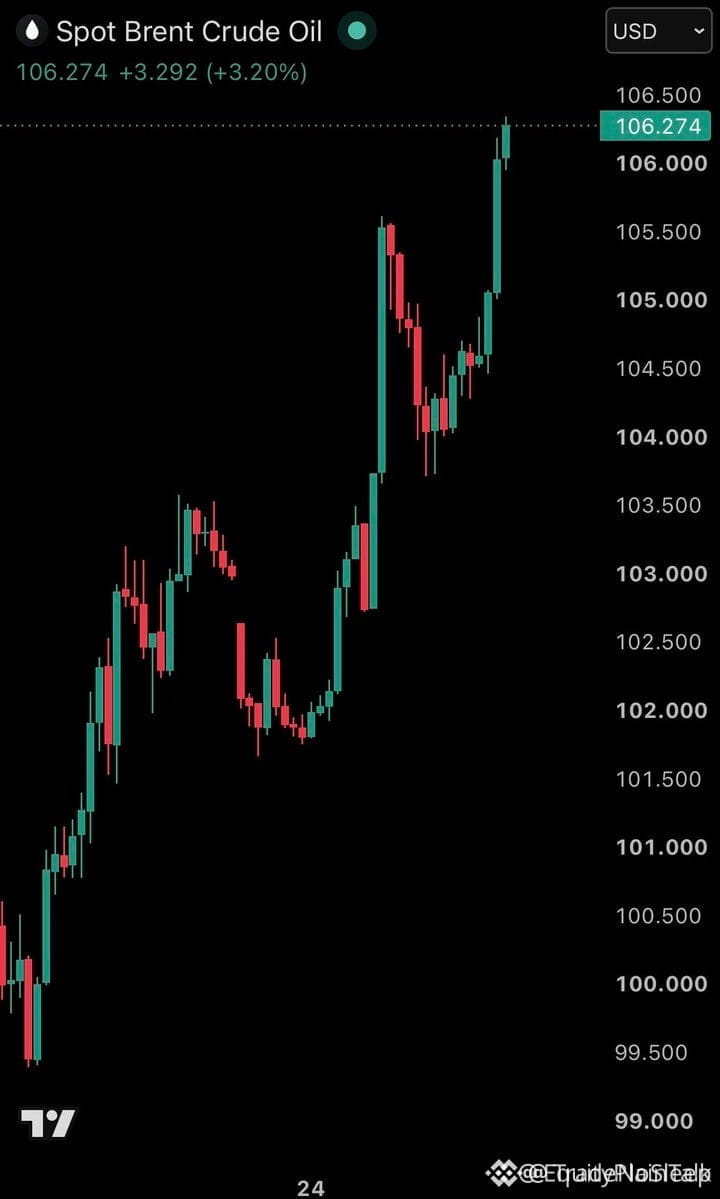
🚨 $OIL SPIKES PAST $107 AS GEOPOLITICAL RISK PREMIUM EXPANDS! ⚡
Brent crude breached $107 per barrel while $WTI reclaimed $95 following military disruption in Saudi Arabia. 📊 Institutional participants are rapidly repricing the geopolitical risk premium, driving capital into energy assets as supply disruption fears take hold.
Higher energy valuations feed directly into elevated input costs, compounding systemic pressure on global inflation expectations and risk-asset liquidity. 💡 Smart money is closely tracking whether this structural momentum spills over into crypto and broader financial markets. 💬 How are you hedging against this potential macro inflation shock? 👇
⚠️ Not financial advice. Always manage your risk. 🛡️
🏷️ #OIL #WTI #Macro #Inflation #Trading
🔥 ⚡
🚨 $OIL SPIKES PAST $107 AS GEOPOLITICAL RISK PREMIUM EXPANDS! ⚡
Brent crude breached $107 per barrel while $WTI reclaimed $95 following military disruption in Saudi Arabia. 📊 Institutional participants are rapidly repricing the geopolitical risk premium, driving capital into energy assets as supply disruption fears take hold.
Higher energy valuations feed directly into elevated input costs, compounding systemic pressure on global inflation expectations and risk-asset liquidity. 💡 Smart money is closely tracking whether this structural momentum spills over into crypto and broader financial markets. 💬 How are you hedging against this potential macro inflation shock? 👇
⚠️ Not financial advice. Always manage your risk. 🛡️
🏷️ #OIL #WTI #Macro #Inflation #Trading
🔥 ⚡
Brent crude breached $107 per barrel while $WTI reclaimed $95 following military disruption in Saudi Arabia. 📊 Institutional participants are rapidly repricing the geopolitical risk premium, driving capital into energy assets as supply disruption fears take hold.
Higher energy valuations feed directly into elevated input costs, compounding systemic pressure on global inflation expectations and risk-asset liquidity. 💡 Smart money is closely tracking whether this structural momentum spills over into crypto and broader financial markets. 💬 How are you hedging against this potential macro inflation shock? 👇
⚠️ Not financial advice. Always manage your risk. 🛡️
🏷️ #OIL #WTI #Macro #Inflation #Trading
🔥 ⚡
324

·
--
🚨 ENERGY SPIKE ALERT: $OIL EXPLODES 3% INTRADAY AS BRENT CROSSES THREE FIGURES! 💥
US crude surging past $94.88 while Brent rips through $101.78 with over 3% intraday momentum. ⚡ Capital flows are aggressively pricing in energy tightness, creating immediate volatility across global order books.
📊 When crude crosses triple digits, macro liquidity shifts dramatically as traders re-hedge risk exposure across all derivative markets. 💡 Watching how risk assets absorb this supply shock will be crucial for the next leg of market direction.
💬 Is this energy momentum pushing macro markets toward a fresh breakout or triggering a broader risk-off rotation? 👇
⚠️ Not financial advice. Always manage your risk. 🛡️
🏷️ #OIL #Macro #Breakout #Commodities #Trading
🔥 💎
🚨 ENERGY SPIKE ALERT: $OIL EXPLODES 3% INTRADAY AS BRENT CROSSES THREE FIGURES! 💥
US crude surging past $94.88 while Brent rips through $101.78 with over 3% intraday momentum. ⚡ Capital flows are aggressively pricing in energy tightness, creating immediate volatility across global order books.
📊 When crude crosses triple digits, macro liquidity shifts dramatically as traders re-hedge risk exposure across all derivative markets. 💡 Watching how risk assets absorb this supply shock will be crucial for the next leg of market direction.
💬 Is this energy momentum pushing macro markets toward a fresh breakout or triggering a broader risk-off rotation? 👇
⚠️ Not financial advice. Always manage your risk. 🛡️
🏷️ #OIL #Macro #Breakout #Commodities #Trading
🔥 💎
US crude surging past $94.88 while Brent rips through $101.78 with over 3% intraday momentum. ⚡ Capital flows are aggressively pricing in energy tightness, creating immediate volatility across global order books.
📊 When crude crosses triple digits, macro liquidity shifts dramatically as traders re-hedge risk exposure across all derivative markets. 💡 Watching how risk assets absorb this supply shock will be crucial for the next leg of market direction.
💬 Is this energy momentum pushing macro markets toward a fresh breakout or triggering a broader risk-off rotation? 👇
⚠️ Not financial advice. Always manage your risk. 🛡️
🏷️ #OIL #Macro #Breakout #Commodities #Trading
🔥 💎
422
·
--
🚨 $OIL SPIKES PAST KEY RESISTANCE AS BRENT CROSSES $100 IN INSTITUTIONAL EXPANSION 🚀
Energy markets are showing aggressive structural re-expansion with US crude surging past $94.88 and Brent breaking through $101.78 per barrel. 📊 Intraday momentum surged over 3%, signaling deep macro liquidity shifting back into commodities as institutional buyers clear overhead order blocks.
This aggressive velocity confirms ongoing supply side inefficiency fills across global order flow. 💡 As broad capital re-allocates into hard commodities, risk assets across the board must recalibrate for sustained inflationary pressures. 💬 How is your portfolio positioning as energy liquidity continues to sweep multi-month highs? 👇
⚠️ Not financial advice. Always manage your risk. 🛡️
🏷️ #OIL #Commodities #Macro #MarketStructure #Trading
⚡ 📊
🚨 $OIL SPIKES PAST KEY RESISTANCE AS BRENT CROSSES $100 IN INSTITUTIONAL EXPANSION 🚀
Energy markets are showing aggressive structural re-expansion with US crude surging past $94.88 and Brent breaking through $101.78 per barrel. 📊 Intraday momentum surged over 3%, signaling deep macro liquidity shifting back into commodities as institutional buyers clear overhead order blocks.
This aggressive velocity confirms ongoing supply side inefficiency fills across global order flow. 💡 As broad capital re-allocates into hard commodities, risk assets across the board must recalibrate for sustained inflationary pressures. 💬 How is your portfolio positioning as energy liquidity continues to sweep multi-month highs? 👇
⚠️ Not financial advice. Always manage your risk. 🛡️
🏷️ #OIL #Commodities #Macro #MarketStructure #Trading
⚡ 📊
Energy markets are showing aggressive structural re-expansion with US crude surging past $94.88 and Brent breaking through $101.78 per barrel. 📊 Intraday momentum surged over 3%, signaling deep macro liquidity shifting back into commodities as institutional buyers clear overhead order blocks.
This aggressive velocity confirms ongoing supply side inefficiency fills across global order flow. 💡 As broad capital re-allocates into hard commodities, risk assets across the board must recalibrate for sustained inflationary pressures. 💬 How is your portfolio positioning as energy liquidity continues to sweep multi-month highs? 👇
⚠️ Not financial advice. Always manage your risk. 🛡️
🏷️ #OIL #Commodities #Macro #MarketStructure #Trading
⚡ 📊
240

·
--
Verified
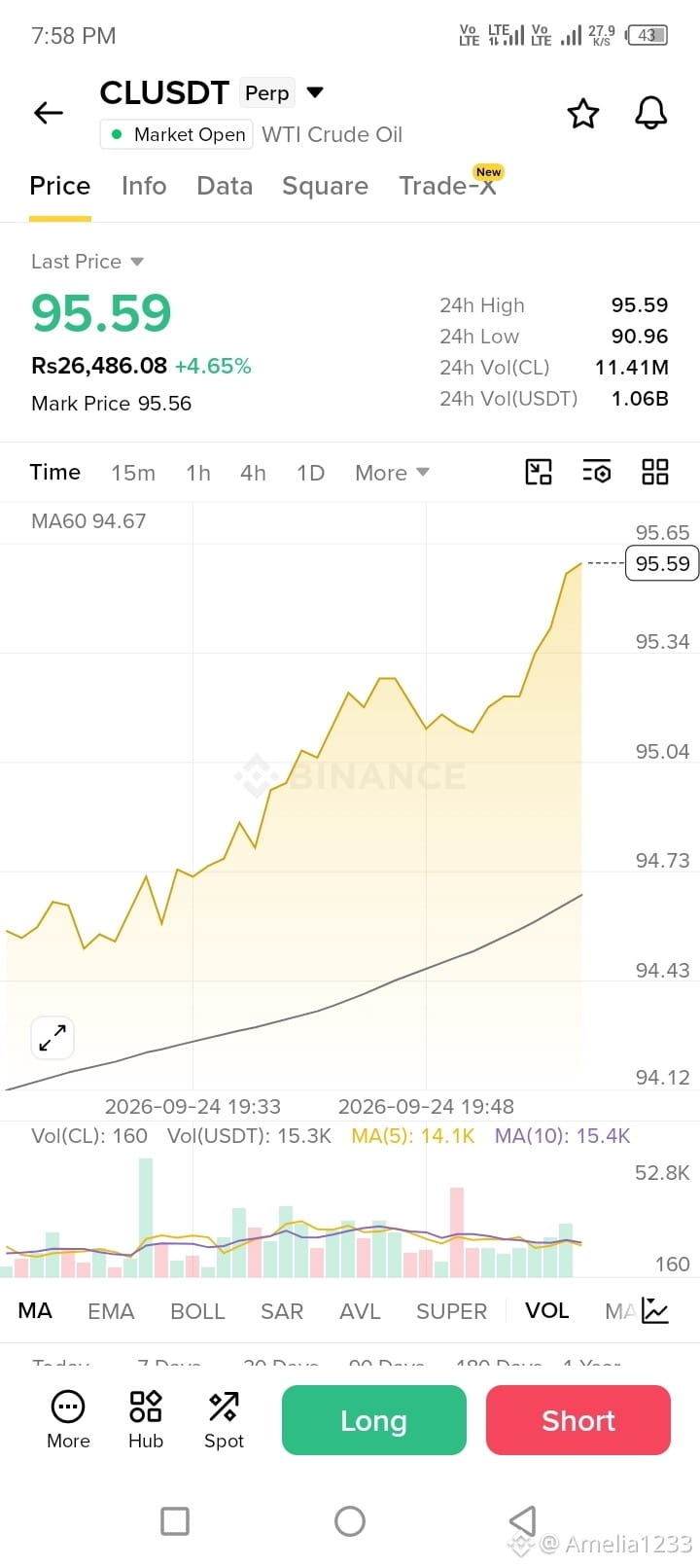
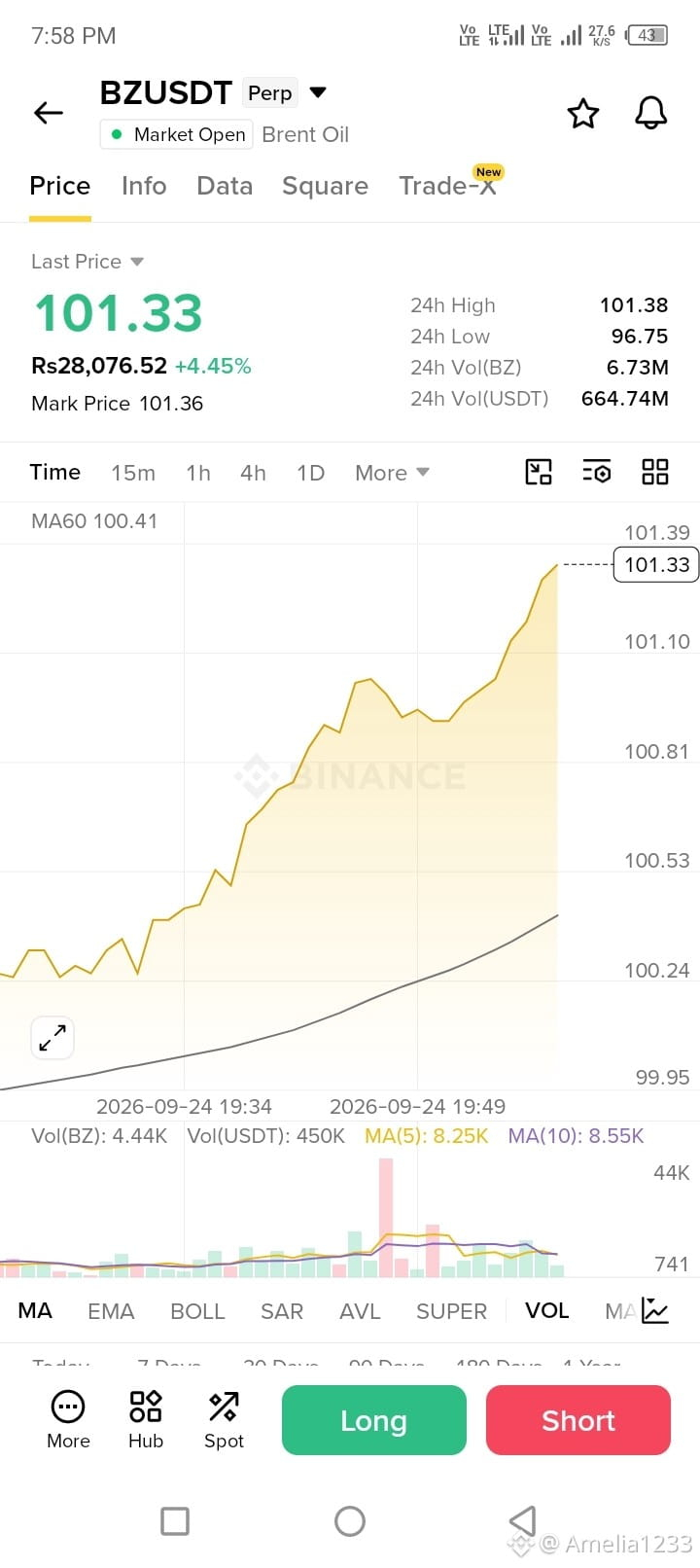
🚨 STRAIT OF HORMUZ UPDATE
$BZ $CL
Commercial traffic through the Strait of Hormuz has dropped sharply, with preliminary data showing just 2 commodity vessels crossing on Monday — compared with around 125 large commercial vessels per day before the conflict. Two separate vessel attacks were also reported.
⚠️ But there is also a potential diplomatic signal.
Iran has indicated it could reopen the Strait within 7 days if the U.S. eases military pressure and lifts its blockade of Iranian ports. Meanwhile, U.S. President Donald Trump said talks with Iran are continuing and that he believes a settlement can eventually be reached.
🌍 Markets are watching closely as any easing of tensions could affect oil, shipping, and global risk sentiment.
#Hormuz #Iran #USA #Oil #Bitcoin
🚨 STRAIT OF HORMUZ UPDATE
$BZ $CL
Commercial traffic through the Strait of Hormuz has dropped sharply, with preliminary data showing just 2 commodity vessels crossing on Monday — compared with around 125 large commercial vessels per day before the conflict. Two separate vessel attacks were also reported.
⚠️ But there is also a potential diplomatic signal.
Iran has indicated it could reopen the Strait within 7 days if the U.S. eases military pressure and lifts its blockade of Iranian ports. Meanwhile, U.S. President Donald Trump said talks with Iran are continuing and that he believes a settlement can eventually be reached.
🌍 Markets are watching closely as any easing of tensions could affect oil, shipping, and global risk sentiment.
#Hormuz #Iran #USA #Oil #Bitcoin
$BZ $CL
Commercial traffic through the Strait of Hormuz has dropped sharply, with preliminary data showing just 2 commodity vessels crossing on Monday — compared with around 125 large commercial vessels per day before the conflict. Two separate vessel attacks were also reported.
⚠️ But there is also a potential diplomatic signal.
Iran has indicated it could reopen the Strait within 7 days if the U.S. eases military pressure and lifts its blockade of Iranian ports. Meanwhile, U.S. President Donald Trump said talks with Iran are continuing and that he believes a settlement can eventually be reached.
🌍 Markets are watching closely as any easing of tensions could affect oil, shipping, and global risk sentiment.
#Hormuz #Iran #USA #Oil #Bitcoin
477
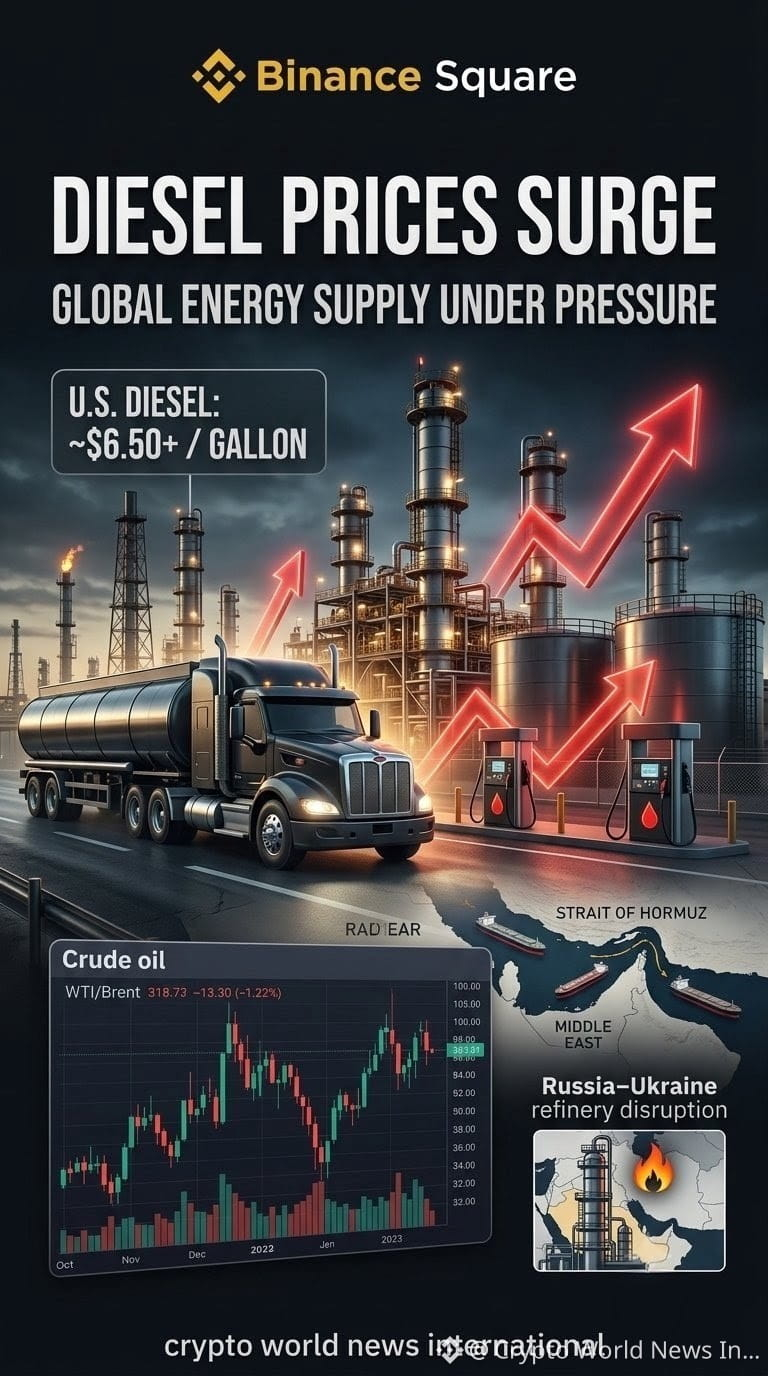
⛽ DIESEL PRICES SURGE — U.S. FUEL MARKET UNDER PRESSURE
Record-high diesel prices are putting increasing pressure on the U.S. fuel market as supply disruptions linked to conflicts in the Middle East and Europe tighten global energy flows.
🔑 Key Points:
• U.S. diesel prices reached around $6.50+ per gallon
• Calls for a temporary U.S. diesel export ban are increasing
• Middle East conflict is disrupting fuel flows through the Strait of Hormuz
• Russia has restricted diesel exports
• Ukraine’s attacks on Russian refineries are adding supply pressure
📊 Market Insight:
Diesel supply disruptions could keep energy-market volatility elevated. A U.S. export restriction could provide temporary relief in some domestic markets, while energy analysts cited by the Washington Examiner warn that reduced global supply could create higher prices elsewhere and affect refinery production.
👀 Markets to Watch:
🛢️ WTI Crude
🛢️ Brent Oil
⛽ Diesel
💵 USD
🌍 Energy Markets
#Oil #crudeoil #Diesel #Brent #MarketNews $BZ $CL $NATGAS
{future}(NATGASUSDT)
{future}(CLUSDT)
{future}(BZUSDT)
⛽ DIESEL PRICES SURGE — U.S. FUEL MARKET UNDER PRESSURE
Record-high diesel prices are putting increasing pressure on the U.S. fuel market as supply disruptions linked to conflicts in the Middle East and Europe tighten global energy flows.
🔑 Key Points:
• U.S. diesel prices reached around $6.50+ per gallon
• Calls for a temporary U.S. diesel export ban are increasing
• Middle East conflict is disrupting fuel flows through the Strait of Hormuz
• Russia has restricted diesel exports
• Ukraine’s attacks on Russian refineries are adding supply pressure
📊 Market Insight:
Diesel supply disruptions could keep energy-market volatility elevated. A U.S. export restriction could provide temporary relief in some domestic markets, while energy analysts cited by the Washington Examiner warn that reduced global supply could create higher prices elsewhere and affect refinery production.
👀 Markets to Watch:
🛢️ WTI Crude
🛢️ Brent Oil
⛽ Diesel
💵 USD
🌍 Energy Markets
#Oil #crudeoil #Diesel #Brent #MarketNews $BZ $CL $NATGAS
Record-high diesel prices are putting increasing pressure on the U.S. fuel market as supply disruptions linked to conflicts in the Middle East and Europe tighten global energy flows.
🔑 Key Points:
• U.S. diesel prices reached around $6.50+ per gallon
• Calls for a temporary U.S. diesel export ban are increasing
• Middle East conflict is disrupting fuel flows through the Strait of Hormuz
• Russia has restricted diesel exports
• Ukraine’s attacks on Russian refineries are adding supply pressure
📊 Market Insight:
Diesel supply disruptions could keep energy-market volatility elevated. A U.S. export restriction could provide temporary relief in some domestic markets, while energy analysts cited by the Washington Examiner warn that reduced global supply could create higher prices elsewhere and affect refinery production.
👀 Markets to Watch:
🛢️ WTI Crude
🛢️ Brent Oil
⛽ Diesel
💵 USD
🌍 Energy Markets
#Oil #crudeoil #Diesel #Brent #MarketNews $BZ $CL $NATGAS
339
🚨 SAUDI ARABIA ABSORBS RISK AS $OIL SHIPPING COSTS SKYROCKET 3000% IN MIDDLE EAST! 💥
Saudi Aramco just stepped up to front-run logistics bottlenecks, absorbing massive insurance and shipping risks to move nearly 100M barrels directly to Asian buyers. 📊 Spot charter rates for supertankers exploded from $30,000 to an unprecedented $1,000,000 per day as tension surrounding the Strait of Hormuz tightens supply routes.
With global energy friction heating up and bypass pipelines running under capacity, physical crude bids are absorbing these record freight premiums across major Asian refiners. 🔍 Macro volatility is spilling over fast into broader markets as supply chains scramble to navigate high-risk waters. 💬 Do you expect this energy supply crunch to trigger a broader market reaction this quarter? 👇
⚠️ Not financial advice. Always manage your risk. 🛡️
🏷️ #OIL #Macro #Markets #Trading
⚡ 🌊
🚨 SAUDI ARABIA ABSORBS RISK AS $OIL SHIPPING COSTS SKYROCKET 3000% IN MIDDLE EAST! 💥
Saudi Aramco just stepped up to front-run logistics bottlenecks, absorbing massive insurance and shipping risks to move nearly 100M barrels directly to Asian buyers. 📊 Spot charter rates for supertankers exploded from $30,000 to an unprecedented $1,000,000 per day as tension surrounding the Strait of Hormuz tightens supply routes.
With global energy friction heating up and bypass pipelines running under capacity, physical crude bids are absorbing these record freight premiums across major Asian refiners. 🔍 Macro volatility is spilling over fast into broader markets as supply chains scramble to navigate high-risk waters. 💬 Do you expect this energy supply crunch to trigger a broader market reaction this quarter? 👇
⚠️ Not financial advice. Always manage your risk. 🛡️
🏷️ #OIL #Macro #Markets #Trading
⚡ 🌊
Saudi Aramco just stepped up to front-run logistics bottlenecks, absorbing massive insurance and shipping risks to move nearly 100M barrels directly to Asian buyers. 📊 Spot charter rates for supertankers exploded from $30,000 to an unprecedented $1,000,000 per day as tension surrounding the Strait of Hormuz tightens supply routes.
With global energy friction heating up and bypass pipelines running under capacity, physical crude bids are absorbing these record freight premiums across major Asian refiners. 🔍 Macro volatility is spilling over fast into broader markets as supply chains scramble to navigate high-risk waters. 💬 Do you expect this energy supply crunch to trigger a broader market reaction this quarter? 👇
⚠️ Not financial advice. Always manage your risk. 🛡️
🏷️ #OIL #Macro #Markets #Trading
⚡ 🌊
196

·
--
🚨 SAUDI ARAMCO ABSORBS LOGISTICS RISK AS $OIL FREIGHT RATES SURGE TO RECORD HIGHS! ⚡
Saudi Arabia just allocated 100 million barrels of crude to Asian buyers, with Aramco directly absorbing navigation and insurance risks amid Hormuz tensions. 🌊 Spot charter rates spiked to a staggering $1 million daily, exposing massive structural friction in global energy shipping lanes.
While the East-West pipeline slowly restarts, institutional smart money is tracking landed cost inflation as physical supply rerouting bottlenecks the market. 📊 This massive logistics transfer highlights how physical supply constraints can trigger systemic volatility across broader risk assets. 💡
💬 Do you see this energy shipping squeeze triggering the next macro volatility spike across financial markets? 👇
⚠️ Not financial advice. Always manage your risk. 🛡️
🏷️ #OIL #Macro #Energy #SupplyChain #GlobalMarkets
🦈 ⚡
🚨 SAUDI ARAMCO ABSORBS LOGISTICS RISK AS $OIL FREIGHT RATES SURGE TO RECORD HIGHS! ⚡
Saudi Arabia just allocated 100 million barrels of crude to Asian buyers, with Aramco directly absorbing navigation and insurance risks amid Hormuz tensions. 🌊 Spot charter rates spiked to a staggering $1 million daily, exposing massive structural friction in global energy shipping lanes.
While the East-West pipeline slowly restarts, institutional smart money is tracking landed cost inflation as physical supply rerouting bottlenecks the market. 📊 This massive logistics transfer highlights how physical supply constraints can trigger systemic volatility across broader risk assets. 💡
💬 Do you see this energy shipping squeeze triggering the next macro volatility spike across financial markets? 👇
⚠️ Not financial advice. Always manage your risk. 🛡️
🏷️ #OIL #Macro #Energy #SupplyChain #GlobalMarkets
🦈 ⚡
Saudi Arabia just allocated 100 million barrels of crude to Asian buyers, with Aramco directly absorbing navigation and insurance risks amid Hormuz tensions. 🌊 Spot charter rates spiked to a staggering $1 million daily, exposing massive structural friction in global energy shipping lanes.
While the East-West pipeline slowly restarts, institutional smart money is tracking landed cost inflation as physical supply rerouting bottlenecks the market. 📊 This massive logistics transfer highlights how physical supply constraints can trigger systemic volatility across broader risk assets. 💡
💬 Do you see this energy shipping squeeze triggering the next macro volatility spike across financial markets? 👇
⚠️ Not financial advice. Always manage your risk. 🛡️
🏷️ #OIL #Macro #Energy #SupplyChain #GlobalMarkets
🦈 ⚡
165

·
--
Bullish
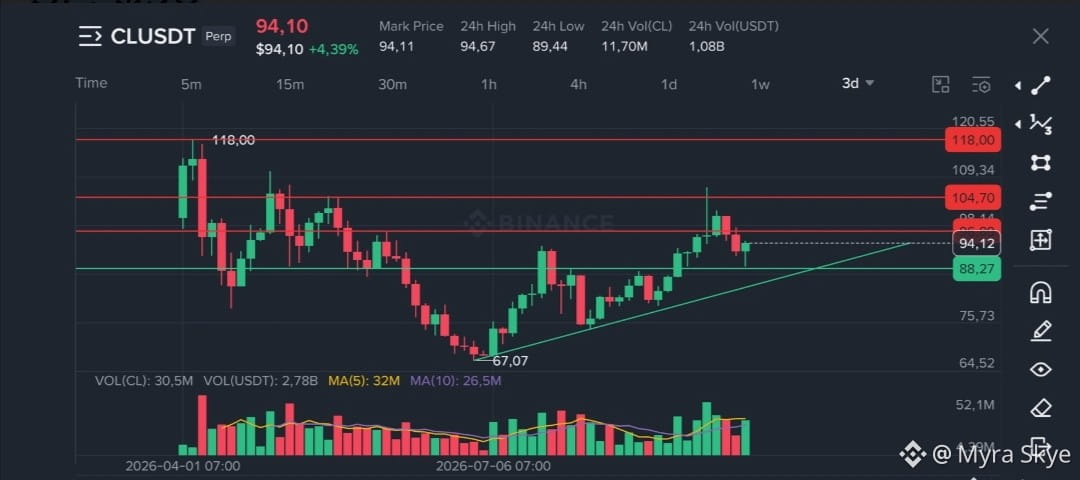
🚨 $CL IS MOVING UP FAST! Middle East tensions are rising again, increasing fears of oil supply disruption. That’s giving crude oil strong bullish momentum! 📈
LONG $CL | Entry: 93–95 | TP1: 96 | TP2: 98 | TP3: 100–105 | SL: 90
If tensions keep rising, oil could push even higher. Stay sharp and manage risk! 🚀
click here to trade 👇$CL
{future}(CLUSDT)
#oil
#CLUSDT
#DollarIndexReclaims101
🚨 $CL IS MOVING UP FAST! Middle East tensions are rising again, increasing fears of oil supply disruption. That’s giving crude oil strong bullish momentum! 📈
LONG $CL | Entry: 93–95 | TP1: 96 | TP2: 98 | TP3: 100–105 | SL: 90
If tensions keep rising, oil could push even higher. Stay sharp and manage risk! 🚀
click here to trade 👇$CL
#oil
#CLUSDT
#DollarIndexReclaims101
LONG $CL | Entry: 93–95 | TP1: 96 | TP2: 98 | TP3: 100–105 | SL: 90
If tensions keep rising, oil could push even higher. Stay sharp and manage risk! 🚀
click here to trade 👇$CL
#oil
#CLUSDT
#DollarIndexReclaims101
80
·
--
Bullish
#oil
Commodities
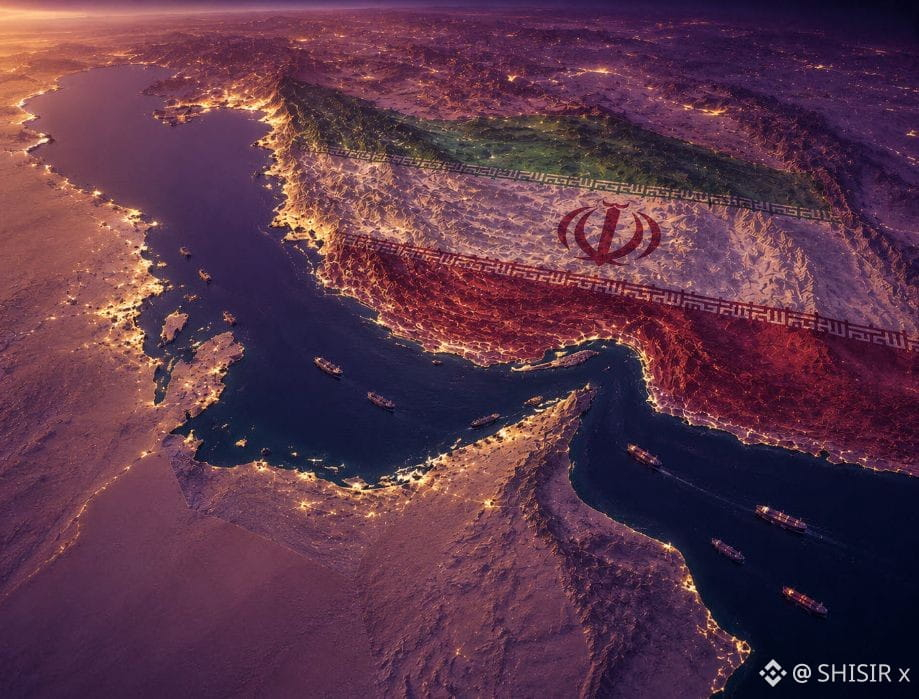
Thin Strait of Hormuz traffic shows why oil’s risk premium is proving sticky
Diplomacy hopes may be improving sentiment, but shipping flows show that the physical oil market is still under strain
The latest shipping numbers out of the Strait of Hormuz are offering a timely reminder that the oil market is still a long way from getting an all-clear signal.
The preliminary shipping data from Reuters indicated that only ten commodity vessels transited the strait on Wednesday, up from seven a day earlier. That still leaves traffic well below the 10-day moving average of around 17 vessels.
#oil
Commodities
Thin Strait of Hormuz traffic shows why oil’s risk premium is proving sticky
Diplomacy hopes may be improving sentiment, but shipping flows show that the physical oil market is still under strain
The latest shipping numbers out of the Strait of Hormuz are offering a timely reminder that the oil market is still a long way from getting an all-clear signal.
The preliminary shipping data from Reuters indicated that only ten commodity vessels transited the strait on Wednesday, up from seven a day earlier. That still leaves traffic well below the 10-day moving average of around 17 vessels.
Commodities
Thin Strait of Hormuz traffic shows why oil’s risk premium is proving sticky
Diplomacy hopes may be improving sentiment, but shipping flows show that the physical oil market is still under strain
The latest shipping numbers out of the Strait of Hormuz are offering a timely reminder that the oil market is still a long way from getting an all-clear signal.
The preliminary shipping data from Reuters indicated that only ten commodity vessels transited the strait on Wednesday, up from seven a day earlier. That still leaves traffic well below the 10-day moving average of around 17 vessels.
344
Log in to explore more content
Join global crypto users on Binance Square
⚡️ Get latest and useful information about crypto.
💬 Trusted by the world’s largest crypto exchange.
👍 Discover real insights from verified creators.
Email / Phone number
Trending Topics
1
#QNTRises39%
25,139 views
962 Discussing
2
#EthereumBreaksAbove$2700
2,425 views
97 Discussing
3
#BitgetBreachForgedRequestsNotStolenKeys
22,062 views
741 Discussing
4
#BitcoinSpotETFsTurnNetPositiveYTD
14,613 views
605 Discussing
5
#GrayscaleZcashETFHits$1BNetAssets
1,593 views
44 Discussing
6
#BitcoinSpotETFsNetInflow$191M
7,600 views
182 Discussing
7
#CFTCUpdatesGuidanceOnTokenizedAssets
54,526 views
1,535 Discussing
8
#BitgetSays$352MAffectedInHack
19,332 views
95 Discussing
9
#NYAndPolymarketSueEachOther
6,570 views
240 Discussing
10
#BinanceWillListHyperliquid(HYPE)
283,460 views
4,105 Discussing