
Jumi - Crypto Insight
774 Posts

Jumi - Crypto Insight
Report
Block User
0 Following
39 Followers
58 Liked
Posts
All
Videos
During the overnight US stock trading session, the Nasdaq 100 index (Nasdaq 100), led primarily by technology stocks, saw a strong intraday rebound. The single-day gain quickly widened to 2.0%. From a price-action perspective, the bulls demonstrated exceptionally strong follow-through in a key support zone; they broke out above the prior narrow consolidation range with increased volume, forming a standard bullish engulfing pattern.
This impulse-like surge is crucial—it directly shattered the recent market’s wait-and-see sentiment under the pressure of macro liquidity constraints. After short-term indicators turned oversold, capital quickly returned to high-beta growth stocks, confirming the resilience of buying demand at technical lows and significantly improving the momentum structure of the broader US stock market, laying a pattern foundation for the continuation of the rebound in risk assets.
Looking at cross-asset linkages, the Nasdaq’s surge of 2% drove a full return of overall risk-on sentiment. The upward slope of US Treasury yields eased, and the volatility index VIX dropped rapidly, reflecting that panic sentiment is being digested by healthy market liquidity. Safe-haven capital began to tilt back toward the equities market.
For the crypto market, the tech sector’s strength has always been a leading indicator of liquidity for digital assets. As the Nasdaq prints strong bullish candles, market confidence in high-risk assets rises sharply, and the spillover effect will directly benefit $BTC and major tokens. If the Nasdaq can hold steady above the breakout level, the crypto market may be poised to see a new round of catch-up rally driven by sentiment resonance.🚀
#Nasdaq100 #RiskOn #MarketRally
During the overnight US stock trading session, the Nasdaq 100 index (Nasdaq 100), led primarily by technology stocks, saw a strong intraday rebound. The single-day gain quickly widened to 2.0%. From a price-action perspective, the bulls demonstrated exceptionally strong follow-through in a key support zone; they broke out above the prior narrow consolidation range with increased volume, forming a standard bullish engulfing pattern.
This impulse-like surge is crucial—it directly shattered the recent market’s wait-and-see sentiment under the pressure of macro liquidity constraints. After short-term indicators turned oversold, capital quickly returned to high-beta growth stocks, confirming the resilience of buying demand at technical lows and significantly improving the momentum structure of the broader US stock market, laying a pattern foundation for the continuation of the rebound in risk assets.
Looking at cross-asset linkages, the Nasdaq’s surge of 2% drove a full return of overall risk-on sentiment. The upward slope of US Treasury yields eased, and the volatility index VIX dropped rapidly, reflecting that panic sentiment is being digested by healthy market liquidity. Safe-haven capital began to tilt back toward the equities market.
For the crypto market, the tech sector’s strength has always been a leading indicator of liquidity for digital assets. As the Nasdaq prints strong bullish candles, market confidence in high-risk assets rises sharply, and the spillover effect will directly benefit $BTC and major tokens. If the Nasdaq can hold steady above the breakout level, the crypto market may be poised to see a new round of catch-up rally driven by sentiment resonance.🚀
#Nasdaq100 #RiskOn #MarketRally
This impulse-like surge is crucial—it directly shattered the recent market’s wait-and-see sentiment under the pressure of macro liquidity constraints. After short-term indicators turned oversold, capital quickly returned to high-beta growth stocks, confirming the resilience of buying demand at technical lows and significantly improving the momentum structure of the broader US stock market, laying a pattern foundation for the continuation of the rebound in risk assets.
Looking at cross-asset linkages, the Nasdaq’s surge of 2% drove a full return of overall risk-on sentiment. The upward slope of US Treasury yields eased, and the volatility index VIX dropped rapidly, reflecting that panic sentiment is being digested by healthy market liquidity. Safe-haven capital began to tilt back toward the equities market.
For the crypto market, the tech sector’s strength has always been a leading indicator of liquidity for digital assets. As the Nasdaq prints strong bullish candles, market confidence in high-risk assets rises sharply, and the spillover effect will directly benefit $BTC and major tokens. If the Nasdaq can hold steady above the breakout level, the crypto market may be poised to see a new round of catch-up rally driven by sentiment resonance.🚀
#Nasdaq100 #RiskOn #MarketRally
157
In the latest policy remarks, Jerome Powell, the Chairman of the Federal Reserve, released a key signal, clearly stating that as long as there is clear evidence that inflation is steadily declining toward the 2% target, he will not oppose rate cuts. In line with this, Austan Goolsbee, the President of the Federal Reserve Bank of Chicago, also tends to believe that inflation persistence will not last in the long run, and similarly emphasized that policy paths can be adjusted as long as data showing inflation easing supports it. As decision-makers shift their tone at the current macro turning point, they are opening new upside room for market expectations.
For markets, this statement is a major boost. Previously, due to some economic data being repeatedly mixed, markets remained under pressure from hawkish expectations that rates would stay high for longer. However, the Fed’s top leadership this time has set clear, operational rate-cut triggers, which effectively reduces the tail risk of subsequent monetary policy. If the next CPI or PCE core indicators show marginal improvement, the Fed’s policy balance will quickly tilt toward easing. The reshaping of this baseline expectation greatly strengthens the willingness of long positions to step in and build.
From the technical structure of major asset classes, the U.S. Dollar Index (DXY) and benchmark Treasury yields are range-bound under pressure near key resistance levels, and the rebound momentum shows signs of fatigue. Meanwhile, the S&P 500 and Nasdaq have stabilized and rebounded at key moving-average supports, with market liquidity expectations improving markedly. As long as the rate side does not bring unexpected tightening pressure, a valuation-discount-repair rally in global risk assets is likely to unfold.
For crypto assets, the widening of marginal liquidity is the biggest catalyst driving the行情. $BTC has demonstrated very strong buy-side absorption in a key support range; on-chain holdings are healthy, and the technical consolidation at the daily level is close to ending. As rate-cut expectations are further priced in and the bottoming of macro liquidity is confirmed, incremental off-exchange funds are expected to accelerate their return, and the crypto market may break out of its consolidation pattern and begin a new round of strong upside momentum.
#Fed #InterestRates #MacroEconomics
In the latest policy remarks, Jerome Powell, the Chairman of the Federal Reserve, released a key signal, clearly stating that as long as there is clear evidence that inflation is steadily declining toward the 2% target, he will not oppose rate cuts. In line with this, Austan Goolsbee, the President of the Federal Reserve Bank of Chicago, also tends to believe that inflation persistence will not last in the long run, and similarly emphasized that policy paths can be adjusted as long as data showing inflation easing supports it. As decision-makers shift their tone at the current macro turning point, they are opening new upside room for market expectations.
For markets, this statement is a major boost. Previously, due to some economic data being repeatedly mixed, markets remained under pressure from hawkish expectations that rates would stay high for longer. However, the Fed’s top leadership this time has set clear, operational rate-cut triggers, which effectively reduces the tail risk of subsequent monetary policy. If the next CPI or PCE core indicators show marginal improvement, the Fed’s policy balance will quickly tilt toward easing. The reshaping of this baseline expectation greatly strengthens the willingness of long positions to step in and build.
From the technical structure of major asset classes, the U.S. Dollar Index (DXY) and benchmark Treasury yields are range-bound under pressure near key resistance levels, and the rebound momentum shows signs of fatigue. Meanwhile, the S&P 500 and Nasdaq have stabilized and rebounded at key moving-average supports, with market liquidity expectations improving markedly. As long as the rate side does not bring unexpected tightening pressure, a valuation-discount-repair rally in global risk assets is likely to unfold.
For crypto assets, the widening of marginal liquidity is the biggest catalyst driving the行情. $BTC has demonstrated very strong buy-side absorption in a key support range; on-chain holdings are healthy, and the technical consolidation at the daily level is close to ending. As rate-cut expectations are further priced in and the bottoming of macro liquidity is confirmed, incremental off-exchange funds are expected to accelerate their return, and the crypto market may break out of its consolidation pattern and begin a new round of strong upside momentum.
#Fed #InterestRates #MacroEconomics
For markets, this statement is a major boost. Previously, due to some economic data being repeatedly mixed, markets remained under pressure from hawkish expectations that rates would stay high for longer. However, the Fed’s top leadership this time has set clear, operational rate-cut triggers, which effectively reduces the tail risk of subsequent monetary policy. If the next CPI or PCE core indicators show marginal improvement, the Fed’s policy balance will quickly tilt toward easing. The reshaping of this baseline expectation greatly strengthens the willingness of long positions to step in and build.
From the technical structure of major asset classes, the U.S. Dollar Index (DXY) and benchmark Treasury yields are range-bound under pressure near key resistance levels, and the rebound momentum shows signs of fatigue. Meanwhile, the S&P 500 and Nasdaq have stabilized and rebounded at key moving-average supports, with market liquidity expectations improving markedly. As long as the rate side does not bring unexpected tightening pressure, a valuation-discount-repair rally in global risk assets is likely to unfold.
For crypto assets, the widening of marginal liquidity is the biggest catalyst driving the行情. $BTC has demonstrated very strong buy-side absorption in a key support range; on-chain holdings are healthy, and the technical consolidation at the daily level is close to ending. As rate-cut expectations are further priced in and the bottoming of macro liquidity is confirmed, incremental off-exchange funds are expected to accelerate their return, and the crypto market may break out of its consolidation pattern and begin a new round of strong upside momentum.
#Fed #InterestRates #MacroEconomics
168
Qatar's Minister of State for Energy Affairs Saad Sherida Al-Kaabi (Saad Sherida Al-Kaabi) has most recently stated that once the Strait of Hormuz reopens, some of Qatar's liquefied natural gas (LNG) facilities could resume operations within weeks. Despite the prior disruption to about 17% of capacity at the Ras Laffan export hub caused by Iranian attacks, and the expectation that full repairs to the two damaged production lines will take until the first quarter of 2027, signals that short-term supply routes are being reactivated are now coming through.
From a macro fundamentals perspective, with the Strait of Hormuz—one of the world's main energy chokepoints—showing marginal improvement, the market has already fully priced in the most pessimistic scenario for extreme supply shocks. Signs that energy supply bottlenecks previously suppressed by conflict are starting to loosen may help ease global stagflation concerns and reduce the rationale for second-round inflation trades, thereby opening a breathing space for overall risk assets.
In traditional financial markets, the unblocking expectations on the energy supply side are driving a rapid fall in risk premiums for oil and natural gas. Consequently, upward pressure on U.S. Treasury yields and the U.S. dollar index also weakens. This marginal easing in the liquidity environment directly improves global risk appetite, with capital gradually shifting from pure safe-haven assets toward instruments whose valuations have room to re-rate.
For the crypto market, the fading of macro uncertainty provides an excellent opportunity for technical base-building for $BTC and mainstream assets. Once liquidity pressure is relieved, price action has shown stronger downside resilience and rebound momentum. Looking ahead, if prices hold in the key resistance range, a recovery in risk appetite could help drive a new round of liquidity returning to the market.
#EnergyCrisis #Geopolitics #LNG
Qatar's Minister of State for Energy Affairs Saad Sherida Al-Kaabi (Saad Sherida Al-Kaabi) has most recently stated that once the Strait of Hormuz reopens, some of Qatar's liquefied natural gas (LNG) facilities could resume operations within weeks. Despite the prior disruption to about 17% of capacity at the Ras Laffan export hub caused by Iranian attacks, and the expectation that full repairs to the two damaged production lines will take until the first quarter of 2027, signals that short-term supply routes are being reactivated are now coming through.
From a macro fundamentals perspective, with the Strait of Hormuz—one of the world's main energy chokepoints—showing marginal improvement, the market has already fully priced in the most pessimistic scenario for extreme supply shocks. Signs that energy supply bottlenecks previously suppressed by conflict are starting to loosen may help ease global stagflation concerns and reduce the rationale for second-round inflation trades, thereby opening a breathing space for overall risk assets.
In traditional financial markets, the unblocking expectations on the energy supply side are driving a rapid fall in risk premiums for oil and natural gas. Consequently, upward pressure on U.S. Treasury yields and the U.S. dollar index also weakens. This marginal easing in the liquidity environment directly improves global risk appetite, with capital gradually shifting from pure safe-haven assets toward instruments whose valuations have room to re-rate.
For the crypto market, the fading of macro uncertainty provides an excellent opportunity for technical base-building for $BTC and mainstream assets. Once liquidity pressure is relieved, price action has shown stronger downside resilience and rebound momentum. Looking ahead, if prices hold in the key resistance range, a recovery in risk appetite could help drive a new round of liquidity returning to the market.
#EnergyCrisis #Geopolitics #LNG
From a macro fundamentals perspective, with the Strait of Hormuz—one of the world's main energy chokepoints—showing marginal improvement, the market has already fully priced in the most pessimistic scenario for extreme supply shocks. Signs that energy supply bottlenecks previously suppressed by conflict are starting to loosen may help ease global stagflation concerns and reduce the rationale for second-round inflation trades, thereby opening a breathing space for overall risk assets.
In traditional financial markets, the unblocking expectations on the energy supply side are driving a rapid fall in risk premiums for oil and natural gas. Consequently, upward pressure on U.S. Treasury yields and the U.S. dollar index also weakens. This marginal easing in the liquidity environment directly improves global risk appetite, with capital gradually shifting from pure safe-haven assets toward instruments whose valuations have room to re-rate.
For the crypto market, the fading of macro uncertainty provides an excellent opportunity for technical base-building for $BTC and mainstream assets. Once liquidity pressure is relieved, price action has shown stronger downside resilience and rebound momentum. Looking ahead, if prices hold in the key resistance range, a recovery in risk appetite could help drive a new round of liquidity returning to the market.
#EnergyCrisis #Geopolitics #LNG
90
In the latest public remarks, Federal Reserve Chair Jerome Powell clearly pointed out that bringing the inflation rate back to the 2% target level is not an easy process. He emphasized that recurring supply-side shocks have become more frequent and persistent, and the Fed cannot simply ignore them; it must adopt policy responses that may cause some pain to the economy. Powell acknowledged that when central banks are dealing with stubborn inflation caused by supply shocks, they are faced with the painful trade-off between employment and fighting inflation.
From a technical and macro-pricing logic perspective, Powell’s comments do not signal a more extreme rate-hike stance. Instead, they serve as a “soft-landing”-style stress test of market expectations for the inflation’s decline path. The market had previously held overly optimistic expectations for a rapid fall in inflation. Although supply-side disturbances have extended the observation period during which policy rates remain high (“Higher for longer”), the Fed also made it clear that its response measures do not need to be as aggressive as those used to suppress overheated demand. This implies that the absolute peak of the rate-hike cycle is already basically clear.
In traditional financial markets, this hawkish risk warning may keep U.S. Treasury yields hovering near resistance in the near term. The U.S. Dollar Index (DXY) may temporarily pull back toward below moving-average support and begin to form a base for a rebound. But as long as there is no additional repricing of rate hikes beyond expectations, the valuation floor for traditional equities and commodities remains solid. The market is still digesting the structural adjustments of the medium-term high-rate environment.
As for crypto assets, the realization of expectations around macro uncertainty actually provides a clear pricing range for the bottom structure. After multiple waves of macro data scrutiny, BTC’s on-chain long-term holders’ supply is extremely stable, and the price has shown remarkable resilience at key support levels. Once the market fully absorbs the “gray” space in the interest-rate path, ample off-exchange liquidity and the effects of the halving cycle will dominate the breakout in the next phase. The technical formations for medium- to long-term bulls remain intact.
#Fed #Inflation #Powell
In the latest public remarks, Federal Reserve Chair Jerome Powell clearly pointed out that bringing the inflation rate back to the 2% target level is not an easy process. He emphasized that recurring supply-side shocks have become more frequent and persistent, and the Fed cannot simply ignore them; it must adopt policy responses that may cause some pain to the economy. Powell acknowledged that when central banks are dealing with stubborn inflation caused by supply shocks, they are faced with the painful trade-off between employment and fighting inflation.
From a technical and macro-pricing logic perspective, Powell’s comments do not signal a more extreme rate-hike stance. Instead, they serve as a “soft-landing”-style stress test of market expectations for the inflation’s decline path. The market had previously held overly optimistic expectations for a rapid fall in inflation. Although supply-side disturbances have extended the observation period during which policy rates remain high (“Higher for longer”), the Fed also made it clear that its response measures do not need to be as aggressive as those used to suppress overheated demand. This implies that the absolute peak of the rate-hike cycle is already basically clear.
In traditional financial markets, this hawkish risk warning may keep U.S. Treasury yields hovering near resistance in the near term. The U.S. Dollar Index (DXY) may temporarily pull back toward below moving-average support and begin to form a base for a rebound. But as long as there is no additional repricing of rate hikes beyond expectations, the valuation floor for traditional equities and commodities remains solid. The market is still digesting the structural adjustments of the medium-term high-rate environment.
As for crypto assets, the realization of expectations around macro uncertainty actually provides a clear pricing range for the bottom structure. After multiple waves of macro data scrutiny, BTC’s on-chain long-term holders’ supply is extremely stable, and the price has shown remarkable resilience at key support levels. Once the market fully absorbs the “gray” space in the interest-rate path, ample off-exchange liquidity and the effects of the halving cycle will dominate the breakout in the next phase. The technical formations for medium- to long-term bulls remain intact.
#Fed #Inflation #Powell
From a technical and macro-pricing logic perspective, Powell’s comments do not signal a more extreme rate-hike stance. Instead, they serve as a “soft-landing”-style stress test of market expectations for the inflation’s decline path. The market had previously held overly optimistic expectations for a rapid fall in inflation. Although supply-side disturbances have extended the observation period during which policy rates remain high (“Higher for longer”), the Fed also made it clear that its response measures do not need to be as aggressive as those used to suppress overheated demand. This implies that the absolute peak of the rate-hike cycle is already basically clear.
In traditional financial markets, this hawkish risk warning may keep U.S. Treasury yields hovering near resistance in the near term. The U.S. Dollar Index (DXY) may temporarily pull back toward below moving-average support and begin to form a base for a rebound. But as long as there is no additional repricing of rate hikes beyond expectations, the valuation floor for traditional equities and commodities remains solid. The market is still digesting the structural adjustments of the medium-term high-rate environment.
As for crypto assets, the realization of expectations around macro uncertainty actually provides a clear pricing range for the bottom structure. After multiple waves of macro data scrutiny, BTC’s on-chain long-term holders’ supply is extremely stable, and the price has shown remarkable resilience at key support levels. Once the market fully absorbs the “gray” space in the interest-rate path, ample off-exchange liquidity and the effects of the halving cycle will dominate the breakout in the next phase. The technical formations for medium- to long-term bulls remain intact.
#Fed #Inflation #Powell
144
Today, international bulk commodity markets saw a notable pullback. WTI crude oil plunged 3.00% intraday, quickly dropping to around $92.40 per barrel. Meanwhile, Brent crude also fell below an important level, with an intraday decline of 2.70%, breaking below $97 per barrel. Judging from price action on the chart, oil prices faced strong selling pressure at key resistance levels in the short term, forming a clear breakdown and downward trajectory.
This round of sharp retracement in crude oil carries extremely positive macro signals. Earlier, concerns that energy-driven inflation might resurface had pushed up expectations for bond yields. However, the rapid cooling of crude oil—an essential bellwether for commodity inflation—directly weakened overall imported inflation pressures, greatly easing market worries that central banks may maintain an aggressive tightening stance for a long time, and providing breathing room for the macro liquidity environment.
From a cross-asset technical perspective, a decline in energy costs typically comes first to trigger downward revisions to inflation expectations, which then suppresses the upward momentum of the U.S. dollar index (DXY) and U.S. Treasury yields. As the risk premium gradually narrows, global capital preference is rapidly returning to risk assets. Major risk markets such as U.S. stocks are likely to use this opportunity to complete a technical bottoming process and initiate a new round of rebound momentum.
For the crypto market, this is undoubtedly an especially attractive long setup catalyst. When inflation alarms are lifted and liquidity expectations improve, it often brings abundant incremental off-exchange capital into $BTC and other mainstream altcoins. With crypto assets currently supported by a solid base structure, if they can align with a technical convergence driven by improving macro risk appetite, the probability of breaking upward through the key upper zone with dense positioning and starting an uptrend will increase significantly.📈
#CrudeOil #MacroEconomy #CryptoTrading
Today, international bulk commodity markets saw a notable pullback. WTI crude oil plunged 3.00% intraday, quickly dropping to around $92.40 per barrel. Meanwhile, Brent crude also fell below an important level, with an intraday decline of 2.70%, breaking below $97 per barrel. Judging from price action on the chart, oil prices faced strong selling pressure at key resistance levels in the short term, forming a clear breakdown and downward trajectory.
This round of sharp retracement in crude oil carries extremely positive macro signals. Earlier, concerns that energy-driven inflation might resurface had pushed up expectations for bond yields. However, the rapid cooling of crude oil—an essential bellwether for commodity inflation—directly weakened overall imported inflation pressures, greatly easing market worries that central banks may maintain an aggressive tightening stance for a long time, and providing breathing room for the macro liquidity environment.
From a cross-asset technical perspective, a decline in energy costs typically comes first to trigger downward revisions to inflation expectations, which then suppresses the upward momentum of the U.S. dollar index (DXY) and U.S. Treasury yields. As the risk premium gradually narrows, global capital preference is rapidly returning to risk assets. Major risk markets such as U.S. stocks are likely to use this opportunity to complete a technical bottoming process and initiate a new round of rebound momentum.
For the crypto market, this is undoubtedly an especially attractive long setup catalyst. When inflation alarms are lifted and liquidity expectations improve, it often brings abundant incremental off-exchange capital into $BTC and other mainstream altcoins. With crypto assets currently supported by a solid base structure, if they can align with a technical convergence driven by improving macro risk appetite, the probability of breaking upward through the key upper zone with dense positioning and starting an uptrend will increase significantly.📈
#CrudeOil #MacroEconomy #CryptoTrading
This round of sharp retracement in crude oil carries extremely positive macro signals. Earlier, concerns that energy-driven inflation might resurface had pushed up expectations for bond yields. However, the rapid cooling of crude oil—an essential bellwether for commodity inflation—directly weakened overall imported inflation pressures, greatly easing market worries that central banks may maintain an aggressive tightening stance for a long time, and providing breathing room for the macro liquidity environment.
From a cross-asset technical perspective, a decline in energy costs typically comes first to trigger downward revisions to inflation expectations, which then suppresses the upward momentum of the U.S. dollar index (DXY) and U.S. Treasury yields. As the risk premium gradually narrows, global capital preference is rapidly returning to risk assets. Major risk markets such as U.S. stocks are likely to use this opportunity to complete a technical bottoming process and initiate a new round of rebound momentum.
For the crypto market, this is undoubtedly an especially attractive long setup catalyst. When inflation alarms are lifted and liquidity expectations improve, it often brings abundant incremental off-exchange capital into $BTC and other mainstream altcoins. With crypto assets currently supported by a solid base structure, if they can align with a technical convergence driven by improving macro risk appetite, the probability of breaking upward through the key upper zone with dense positioning and starting an uptrend will increase significantly.📈
#CrudeOil #MacroEconomy #CryptoTrading
412
According to the latest report by the Financial Times, U.S. President Donald Trump has expressed deep concern over the recent rapid surge in diesel prices and said he hopes to ensure that Russian diesel can enter global markets smoothly, in order to effectively ease supply pressure in the international crude oil and refined products markets. Against the backdrop of intertwined geopolitical games and sticky inflation, the White House’s release of a pragmatic signal indicating willingness to loosen key energy supply chains has directly struck a nerve in global commodities markets.
From a macro fundamentals perspective, energy costs have long been a core variable driving the U.S. overall CPI and secondary inflation expectations. Previously, industrial fuel prices such as diesel rose sharply, triggering market concerns about a rebound in inflation and the Federal Reserve maintaining a hawkish stance. Trump’s remarks are intended to directly break the energy premium from the supply side. If Russian diesel supplies return to international circulation channels, it will significantly lower global refining crack spreads and transportation costs, clearing the biggest obstacle for downside movement in macro inflation indicators.
For traditional financial markets, improvements in crude oil supply expectations quickly helped to curb the energy risk premium. As inflation pressure on the commodities end eased, upward pressure on U.S. 10-year Treasury yields and the U.S. dollar index (DXY) noticeably increased. Implied inflation expectations in the bond market have gradually moved lower. This not only provides the Federal Reserve with greater room to maneuver for subsequent rate cuts, but also substantially improves liquidity conditions across asset classes.
In terms of risk assets and the crypto market, the cooling of inflation expectations forms a very clear long-term rationale for going long. When energy inflation risks are suppressed by the policy side, global macro liquidity is likely to flow back toward high-beta assets. Judging from on-chain token distribution and price structure, $BTC has demonstrated extremely strong resilience and downside tolerance at key support levels. With improving macro liquidity expectations, capital may return to an accelerated net inflow trajectory, helping the crypto market kick off a new round of breakout行情.🚀
#OilPrices #DonaldTrump #Inflation #CryptoMarket
According to the latest report by the Financial Times, U.S. President Donald Trump has expressed deep concern over the recent rapid surge in diesel prices and said he hopes to ensure that Russian diesel can enter global markets smoothly, in order to effectively ease supply pressure in the international crude oil and refined products markets. Against the backdrop of intertwined geopolitical games and sticky inflation, the White House’s release of a pragmatic signal indicating willingness to loosen key energy supply chains has directly struck a nerve in global commodities markets.
From a macro fundamentals perspective, energy costs have long been a core variable driving the U.S. overall CPI and secondary inflation expectations. Previously, industrial fuel prices such as diesel rose sharply, triggering market concerns about a rebound in inflation and the Federal Reserve maintaining a hawkish stance. Trump’s remarks are intended to directly break the energy premium from the supply side. If Russian diesel supplies return to international circulation channels, it will significantly lower global refining crack spreads and transportation costs, clearing the biggest obstacle for downside movement in macro inflation indicators.
For traditional financial markets, improvements in crude oil supply expectations quickly helped to curb the energy risk premium. As inflation pressure on the commodities end eased, upward pressure on U.S. 10-year Treasury yields and the U.S. dollar index (DXY) noticeably increased. Implied inflation expectations in the bond market have gradually moved lower. This not only provides the Federal Reserve with greater room to maneuver for subsequent rate cuts, but also substantially improves liquidity conditions across asset classes.
In terms of risk assets and the crypto market, the cooling of inflation expectations forms a very clear long-term rationale for going long. When energy inflation risks are suppressed by the policy side, global macro liquidity is likely to flow back toward high-beta assets. Judging from on-chain token distribution and price structure, $BTC has demonstrated extremely strong resilience and downside tolerance at key support levels. With improving macro liquidity expectations, capital may return to an accelerated net inflow trajectory, helping the crypto market kick off a new round of breakout行情.🚀
#OilPrices #DonaldTrump #Inflation #CryptoMarket
From a macro fundamentals perspective, energy costs have long been a core variable driving the U.S. overall CPI and secondary inflation expectations. Previously, industrial fuel prices such as diesel rose sharply, triggering market concerns about a rebound in inflation and the Federal Reserve maintaining a hawkish stance. Trump’s remarks are intended to directly break the energy premium from the supply side. If Russian diesel supplies return to international circulation channels, it will significantly lower global refining crack spreads and transportation costs, clearing the biggest obstacle for downside movement in macro inflation indicators.
For traditional financial markets, improvements in crude oil supply expectations quickly helped to curb the energy risk premium. As inflation pressure on the commodities end eased, upward pressure on U.S. 10-year Treasury yields and the U.S. dollar index (DXY) noticeably increased. Implied inflation expectations in the bond market have gradually moved lower. This not only provides the Federal Reserve with greater room to maneuver for subsequent rate cuts, but also substantially improves liquidity conditions across asset classes.
In terms of risk assets and the crypto market, the cooling of inflation expectations forms a very clear long-term rationale for going long. When energy inflation risks are suppressed by the policy side, global macro liquidity is likely to flow back toward high-beta assets. Judging from on-chain token distribution and price structure, $BTC has demonstrated extremely strong resilience and downside tolerance at key support levels. With improving macro liquidity expectations, capital may return to an accelerated net inflow trajectory, helping the crypto market kick off a new round of breakout行情.🚀
#OilPrices #DonaldTrump #Inflation #CryptoMarket
4
On Monday, the European Central Bank (ECB) officially launched “Pontes,” an interbank tokenized settlement system, marking the first formal connection of the wholesale digital euro to institutional financial markets. The platform is directly led and operated by the ECB, enabling licensed banks to use central bank money to conduct final settlement of tokenized assets traded on a private distributed ledger technology (DLT). Meanwhile, the retail digital euro for individuals and merchants is also being accelerated.
The ECB’s core intent is clear: to establish the status of an official settlement asset amid the wave of tokenized finance, to hedge against the risks of dollar stablecoins’ penetration into Europe’s digital economy, and to defend monetary sovereignty in the euro area.
From the perspective of the evolution of institutional infrastructure, the significance of this rollout is extraordinary. Traditional financial settlement relies on multiple layers of intermediaries, with long clearing cycles and high friction costs, whereas the launch of the “Pontes” platform directly removes the barriers between central bank legal liquidity and on-chain ledgers. ECB economists have emphasized that if dollar-denominated private stablecoins are allowed to dominate on-chain clearing, the ECB would face the risk of monetary-policy transmission failing. By stepping in to build the underlying tokenized settlement network itself, the world’s leading central banks have moved from early theoretical research on “blockchain/tokenization technology” to architecture-level deployment on a mainnet.
At the macro-financial level, the launch of the wholesale digital euro will greatly enhance the tokenized issuance and instant settlement efficiency of European bond markets and large-scale assets. As tokenization of assets in traditional capital markets (RWA) enters a substantive execution phase, European capital that had previously been stuck in traditional liquidity pools will gain faster on-chain circulation channels. This not only reinforces the settlement role of the euro, but also sets a clear paradigm for the coexistence and competition of global sovereign-credit money within on-chain ecosystems, which in the long run can help reduce systemic frictions across different currencies’ settlement.
For the broader crypto market, this is undoubtedly a major long-term structural positive. The routine operation of central-bank-level tokenization infrastructure is, in essence, the highest-tier endorsement of the security of distributed ledger technology, completely eliminating regulatory and technical concerns for large traditional institutions moving into the Web3 ecosystem. With institutional-grade on-chain liquidity pathways fully opened, $BTC , along with major crypto assets as the most liquid on-chain native assets, is expected to capture broader incremental institutional allocations within a more mature tokenized-finance framework, and the valuation center of risk assets as a whole may be poised to rise further.📊
#ECB #DigitalEuro #CBDC
On Monday, the European Central Bank (ECB) officially launched “Pontes,” an interbank tokenized settlement system, marking the first formal connection of the wholesale digital euro to institutional financial markets. The platform is directly led and operated by the ECB, enabling licensed banks to use central bank money to conduct final settlement of tokenized assets traded on a private distributed ledger technology (DLT). Meanwhile, the retail digital euro for individuals and merchants is also being accelerated.
The ECB’s core intent is clear: to establish the status of an official settlement asset amid the wave of tokenized finance, to hedge against the risks of dollar stablecoins’ penetration into Europe’s digital economy, and to defend monetary sovereignty in the euro area.
From the perspective of the evolution of institutional infrastructure, the significance of this rollout is extraordinary. Traditional financial settlement relies on multiple layers of intermediaries, with long clearing cycles and high friction costs, whereas the launch of the “Pontes” platform directly removes the barriers between central bank legal liquidity and on-chain ledgers. ECB economists have emphasized that if dollar-denominated private stablecoins are allowed to dominate on-chain clearing, the ECB would face the risk of monetary-policy transmission failing. By stepping in to build the underlying tokenized settlement network itself, the world’s leading central banks have moved from early theoretical research on “blockchain/tokenization technology” to architecture-level deployment on a mainnet.
At the macro-financial level, the launch of the wholesale digital euro will greatly enhance the tokenized issuance and instant settlement efficiency of European bond markets and large-scale assets. As tokenization of assets in traditional capital markets (RWA) enters a substantive execution phase, European capital that had previously been stuck in traditional liquidity pools will gain faster on-chain circulation channels. This not only reinforces the settlement role of the euro, but also sets a clear paradigm for the coexistence and competition of global sovereign-credit money within on-chain ecosystems, which in the long run can help reduce systemic frictions across different currencies’ settlement.
For the broader crypto market, this is undoubtedly a major long-term structural positive. The routine operation of central-bank-level tokenization infrastructure is, in essence, the highest-tier endorsement of the security of distributed ledger technology, completely eliminating regulatory and technical concerns for large traditional institutions moving into the Web3 ecosystem. With institutional-grade on-chain liquidity pathways fully opened, $BTC , along with major crypto assets as the most liquid on-chain native assets, is expected to capture broader incremental institutional allocations within a more mature tokenized-finance framework, and the valuation center of risk assets as a whole may be poised to rise further.📊
#ECB #DigitalEuro #CBDC
The ECB’s core intent is clear: to establish the status of an official settlement asset amid the wave of tokenized finance, to hedge against the risks of dollar stablecoins’ penetration into Europe’s digital economy, and to defend monetary sovereignty in the euro area.
From the perspective of the evolution of institutional infrastructure, the significance of this rollout is extraordinary. Traditional financial settlement relies on multiple layers of intermediaries, with long clearing cycles and high friction costs, whereas the launch of the “Pontes” platform directly removes the barriers between central bank legal liquidity and on-chain ledgers. ECB economists have emphasized that if dollar-denominated private stablecoins are allowed to dominate on-chain clearing, the ECB would face the risk of monetary-policy transmission failing. By stepping in to build the underlying tokenized settlement network itself, the world’s leading central banks have moved from early theoretical research on “blockchain/tokenization technology” to architecture-level deployment on a mainnet.
At the macro-financial level, the launch of the wholesale digital euro will greatly enhance the tokenized issuance and instant settlement efficiency of European bond markets and large-scale assets. As tokenization of assets in traditional capital markets (RWA) enters a substantive execution phase, European capital that had previously been stuck in traditional liquidity pools will gain faster on-chain circulation channels. This not only reinforces the settlement role of the euro, but also sets a clear paradigm for the coexistence and competition of global sovereign-credit money within on-chain ecosystems, which in the long run can help reduce systemic frictions across different currencies’ settlement.
For the broader crypto market, this is undoubtedly a major long-term structural positive. The routine operation of central-bank-level tokenization infrastructure is, in essence, the highest-tier endorsement of the security of distributed ledger technology, completely eliminating regulatory and technical concerns for large traditional institutions moving into the Web3 ecosystem. With institutional-grade on-chain liquidity pathways fully opened, $BTC , along with major crypto assets as the most liquid on-chain native assets, is expected to capture broader incremental institutional allocations within a more mature tokenized-finance framework, and the valuation center of risk assets as a whole may be poised to rise further.📊
#ECB #DigitalEuro #CBDC
15
The latest notice from the UK Maritime Trade Operations (UKMTO) confirms that the military has received reports of a missile attack on an oil tanker that was sailing into the Strait of Hormuz. This sudden incident has immediately escalated the geopolitical contest in the Middle East, pushing it into the world’s most crucial energy chokepoint.
From a macro and supply-chain perspective, the Strait of Hormuz carries nearly one-fifth of global seaborne crude oil flows. The market had previously priced in a certain level of risk for Middle East shipping, but a direct strike on a tanker will nonetheless rapidly drive up energy transportation costs and maritime insurance premiums in the short term. However, based on the trajectory of past geopolitical conflicts, such localized events often return to rational strategic competition soon after panic subsides. The probability that the strait becomes fully blocked remains controllable.
In financial markets, traditional safe-haven assets such as crude oil and gold saw a rapid, pulse-like rise after the news was released, and the U.S. dollar index also received some support. But when observing overall risk appetite, the magnitude of fluctuations in European and U.S. stock index futures and major government bond yields has been relatively limited. This suggests that macro funds are more inclined to view the event as a short-lived geopolitical friction shock rather than a systemic “black swan” that would tighten global liquidity.
For the crypto market, $BTC and mainstream assets demonstrated strong resilience after experiencing a brief, sentiment-driven disturbance. From a technical perspective, buy orders absorbing at key support levels remain solid, and there has been no panic-driven sell-off or stampede in the positioning. While geopolitical turmoil suppresses short-term risk appetite, it also further strengthens the safe-haven and censorship-resistant properties of decentralized assets. If the oil-price shock does not evolve into a sustained source of inflation pressure, the market is likely to quickly rebound and see a restorative rally after absorbing this negative news.⚡
#Geopolitics #OilMarket #CryptoAnalysis
The latest notice from the UK Maritime Trade Operations (UKMTO) confirms that the military has received reports of a missile attack on an oil tanker that was sailing into the Strait of Hormuz. This sudden incident has immediately escalated the geopolitical contest in the Middle East, pushing it into the world’s most crucial energy chokepoint.
From a macro and supply-chain perspective, the Strait of Hormuz carries nearly one-fifth of global seaborne crude oil flows. The market had previously priced in a certain level of risk for Middle East shipping, but a direct strike on a tanker will nonetheless rapidly drive up energy transportation costs and maritime insurance premiums in the short term. However, based on the trajectory of past geopolitical conflicts, such localized events often return to rational strategic competition soon after panic subsides. The probability that the strait becomes fully blocked remains controllable.
In financial markets, traditional safe-haven assets such as crude oil and gold saw a rapid, pulse-like rise after the news was released, and the U.S. dollar index also received some support. But when observing overall risk appetite, the magnitude of fluctuations in European and U.S. stock index futures and major government bond yields has been relatively limited. This suggests that macro funds are more inclined to view the event as a short-lived geopolitical friction shock rather than a systemic “black swan” that would tighten global liquidity.
For the crypto market, $BTC and mainstream assets demonstrated strong resilience after experiencing a brief, sentiment-driven disturbance. From a technical perspective, buy orders absorbing at key support levels remain solid, and there has been no panic-driven sell-off or stampede in the positioning. While geopolitical turmoil suppresses short-term risk appetite, it also further strengthens the safe-haven and censorship-resistant properties of decentralized assets. If the oil-price shock does not evolve into a sustained source of inflation pressure, the market is likely to quickly rebound and see a restorative rally after absorbing this negative news.⚡
#Geopolitics #OilMarket #CryptoAnalysis
From a macro and supply-chain perspective, the Strait of Hormuz carries nearly one-fifth of global seaborne crude oil flows. The market had previously priced in a certain level of risk for Middle East shipping, but a direct strike on a tanker will nonetheless rapidly drive up energy transportation costs and maritime insurance premiums in the short term. However, based on the trajectory of past geopolitical conflicts, such localized events often return to rational strategic competition soon after panic subsides. The probability that the strait becomes fully blocked remains controllable.
In financial markets, traditional safe-haven assets such as crude oil and gold saw a rapid, pulse-like rise after the news was released, and the U.S. dollar index also received some support. But when observing overall risk appetite, the magnitude of fluctuations in European and U.S. stock index futures and major government bond yields has been relatively limited. This suggests that macro funds are more inclined to view the event as a short-lived geopolitical friction shock rather than a systemic “black swan” that would tighten global liquidity.
For the crypto market, $BTC and mainstream assets demonstrated strong resilience after experiencing a brief, sentiment-driven disturbance. From a technical perspective, buy orders absorbing at key support levels remain solid, and there has been no panic-driven sell-off or stampede in the positioning. While geopolitical turmoil suppresses short-term risk appetite, it also further strengthens the safe-haven and censorship-resistant properties of decentralized assets. If the oil-price shock does not evolve into a sustained source of inflation pressure, the market is likely to quickly rebound and see a restorative rally after absorbing this negative news.⚡
#Geopolitics #OilMarket #CryptoAnalysis
245
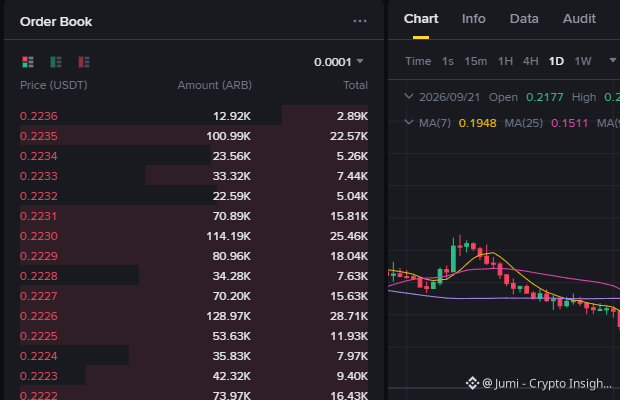
Binance Stocks will list $AADX, $ADIG, $ALIT, and several other stocks on 2026-09-21 13:30 (UTC). Liquidity will further improve, and risk appetite will continue to recover.🚀 #Binance #StockTrading
Binance Stocks will list $AADX, $ADIG, $ALIT, and several other stocks on 2026-09-21 13:30 (UTC). Liquidity will further improve, and risk appetite will continue to recover.🚀 #Binance #StockTrading
4
In its latest research assessment, Barclays said that at last week’s press conference, Japan’s central bank governor Kazuo Ueda sent signals that were both hawkish and dovish. Barclays noted that there is still no clear consensus among policymakers on the specific timing for the next rate hike. It expects policymakers to raise rates in January and July next year, with the eventual target rate likely set at 1.75%. In addition, as the terms of the two hawkish board members end in July 2027, the policy committee could welcome more dovish successors.
This slower policy pace significantly alleviates the panic over the unwinding of Japan’s yen carry trade (Carry Trade), which had previously troubled global liquidity. Compared with the aggressive tightening the market had feared, the flexibility shown by the Bank of Japan implies that the rate-hike path will be stretched out considerably, and the slope of liquidity contraction will be much gentler than expected—providing a highly valuable breathing space for risk assets.
From a macro trading perspective, the pressure on an extreme yen appreciation is, for now, cleared. The U.S. Dollar Index and the interest-rate spread between the U.S. and Japan are likely to remain within a relatively controllable volatility range. This kind of policy uncertainty effectively suppresses the over-escalation of risk-off sentiment. Global bond yield curves have gradually stabilized, and cross-market arbitrage capital can continue to stay allocated to equities and high-beta assets. Overall, the financial environment remains in a broadly accommodative state that favors long positions.
For the crypto market, the postponement of carry-trade liquidation risk is a material positive. As macro liquidity shocks ease, $BTC faces far less selling pressure in the key support zone. On-chain funding rates and leverage structures have returned to healthier levels. On the technical side, the fading of panic sentiment is laying the groundwork for the bottoming of a new round of structural rebound, with capital likely to return and drive mainstream assets to break above nearby resistance levels.
#BankOfJapan #InterestRates #CryptoLiquidity
In its latest research assessment, Barclays said that at last week’s press conference, Japan’s central bank governor Kazuo Ueda sent signals that were both hawkish and dovish. Barclays noted that there is still no clear consensus among policymakers on the specific timing for the next rate hike. It expects policymakers to raise rates in January and July next year, with the eventual target rate likely set at 1.75%. In addition, as the terms of the two hawkish board members end in July 2027, the policy committee could welcome more dovish successors.
This slower policy pace significantly alleviates the panic over the unwinding of Japan’s yen carry trade (Carry Trade), which had previously troubled global liquidity. Compared with the aggressive tightening the market had feared, the flexibility shown by the Bank of Japan implies that the rate-hike path will be stretched out considerably, and the slope of liquidity contraction will be much gentler than expected—providing a highly valuable breathing space for risk assets.
From a macro trading perspective, the pressure on an extreme yen appreciation is, for now, cleared. The U.S. Dollar Index and the interest-rate spread between the U.S. and Japan are likely to remain within a relatively controllable volatility range. This kind of policy uncertainty effectively suppresses the over-escalation of risk-off sentiment. Global bond yield curves have gradually stabilized, and cross-market arbitrage capital can continue to stay allocated to equities and high-beta assets. Overall, the financial environment remains in a broadly accommodative state that favors long positions.
For the crypto market, the postponement of carry-trade liquidation risk is a material positive. As macro liquidity shocks ease, $BTC faces far less selling pressure in the key support zone. On-chain funding rates and leverage structures have returned to healthier levels. On the technical side, the fading of panic sentiment is laying the groundwork for the bottoming of a new round of structural rebound, with capital likely to return and drive mainstream assets to break above nearby resistance levels.
#BankOfJapan #InterestRates #CryptoLiquidity
This slower policy pace significantly alleviates the panic over the unwinding of Japan’s yen carry trade (Carry Trade), which had previously troubled global liquidity. Compared with the aggressive tightening the market had feared, the flexibility shown by the Bank of Japan implies that the rate-hike path will be stretched out considerably, and the slope of liquidity contraction will be much gentler than expected—providing a highly valuable breathing space for risk assets.
From a macro trading perspective, the pressure on an extreme yen appreciation is, for now, cleared. The U.S. Dollar Index and the interest-rate spread between the U.S. and Japan are likely to remain within a relatively controllable volatility range. This kind of policy uncertainty effectively suppresses the over-escalation of risk-off sentiment. Global bond yield curves have gradually stabilized, and cross-market arbitrage capital can continue to stay allocated to equities and high-beta assets. Overall, the financial environment remains in a broadly accommodative state that favors long positions.
For the crypto market, the postponement of carry-trade liquidation risk is a material positive. As macro liquidity shocks ease, $BTC faces far less selling pressure in the key support zone. On-chain funding rates and leverage structures have returned to healthier levels. On the technical side, the fading of panic sentiment is laying the groundwork for the bottoming of a new round of structural rebound, with capital likely to return and drive mainstream assets to break above nearby resistance levels.
#BankOfJapan #InterestRates #CryptoLiquidity
73
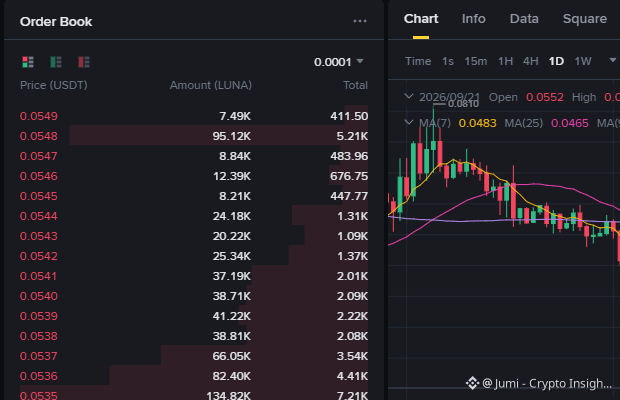
📅 This week’s key financial calendar reminders:
🇺🇸 24/09 20:30 (UTC+8) - Unemployment Claims (Forecast: 201K, Previous: 196K)
🇺🇸 25/09 22:00 (UTC+8) - Revised UoM Consumer Sentiment (Forecast: 47.5, Previous: 47.8)
🇺🇸 25/09 22:00 (UTC+8) - Revised UoM Inflation Expectations (Forecast: N/A, Previous: 4.6%)
Judging from technical and macro data expectations, initial jobless claims are expected to edge up slightly to 201K, indicating a mild cooling in the labor market while remaining steady—this provides solid fundamentals for risk assets. If the data meets expectations, market sentiment may further improve and help push through key resistance levels.
#MacroEconomics #UnemploymentClaims
📅 This week’s key financial calendar reminders:
🇺🇸 24/09 20:30 (UTC+8) - Unemployment Claims (Forecast: 201K, Previous: 196K)
🇺🇸 25/09 22:00 (UTC+8) - Revised UoM Consumer Sentiment (Forecast: 47.5, Previous: 47.8)
🇺🇸 25/09 22:00 (UTC+8) - Revised UoM Inflation Expectations (Forecast: N/A, Previous: 4.6%)
Judging from technical and macro data expectations, initial jobless claims are expected to edge up slightly to 201K, indicating a mild cooling in the labor market while remaining steady—this provides solid fundamentals for risk assets. If the data meets expectations, market sentiment may further improve and help push through key resistance levels.
#MacroEconomics #UnemploymentClaims
🇺🇸 24/09 20:30 (UTC+8) - Unemployment Claims (Forecast: 201K, Previous: 196K)
🇺🇸 25/09 22:00 (UTC+8) - Revised UoM Consumer Sentiment (Forecast: 47.5, Previous: 47.8)
🇺🇸 25/09 22:00 (UTC+8) - Revised UoM Inflation Expectations (Forecast: N/A, Previous: 4.6%)
Judging from technical and macro data expectations, initial jobless claims are expected to edge up slightly to 201K, indicating a mild cooling in the labor market while remaining steady—this provides solid fundamentals for risk assets. If the data meets expectations, market sentiment may further improve and help push through key resistance levels.
#MacroEconomics #UnemploymentClaims
36
According to the latest official data released by the American Automobile Association (AAA) as of last Saturday, the U.S. average diesel price has surpassed $6.505 per gallon, setting a new all-time high. It has been less than 10 days since diesel prices first broke above the $6 mark, and since September, the cumulative month-over-month increase has already exceeded 87 cents. Fueled by heightened geopolitical risk, the market has shown a strong breakout trend characterized by nearly daily, continuous upward momentum.
From a technical and price-action perspective, this time diesel prices have directly refreshed the 2022 cycle peak, reflecting the harsh reality of extreme tightness in the energy supply chain. This sharply accelerated, pulse-like surge not only far exceeds the market’s previous, more moderate expectations, but also pushes the macro variable of energy-driven inflation once again to the forefront—prompting widespread reassessment of short-term, input-driven inflation pressures.
In traditional financial markets, an unexpected surge in energy assets may, in the short term, support a technical rebound in U.S. Treasury yields and the U.S. Dollar Index. But from a deeper liquidity logic, if commodity prices here form a parabolic acceleration into a blow-off top, it often signals waning momentum and the approach of major near-term resistance levels. Paradoxically, this may lead markets to front-load inflation expectations earlier, giving subsequent trading a window of “boots on the ground” breathing room.
As for the crypto asset $BTC , despite short-term challenges in terms of liquidity defense, as energy costs approach their limits, the narrative of the asset as a hard, inflation-hedging instrument is likely to regain technical consensus. If macro pressures ease at the margin afterward, market liquidity could quickly flow back into risk assets, paving the way for a strong bullish repair trend out of the breakout consolidation range.
#EnergyCrisis #OilPrices #MacroEconomics
According to the latest official data released by the American Automobile Association (AAA) as of last Saturday, the U.S. average diesel price has surpassed $6.505 per gallon, setting a new all-time high. It has been less than 10 days since diesel prices first broke above the $6 mark, and since September, the cumulative month-over-month increase has already exceeded 87 cents. Fueled by heightened geopolitical risk, the market has shown a strong breakout trend characterized by nearly daily, continuous upward momentum.
From a technical and price-action perspective, this time diesel prices have directly refreshed the 2022 cycle peak, reflecting the harsh reality of extreme tightness in the energy supply chain. This sharply accelerated, pulse-like surge not only far exceeds the market’s previous, more moderate expectations, but also pushes the macro variable of energy-driven inflation once again to the forefront—prompting widespread reassessment of short-term, input-driven inflation pressures.
In traditional financial markets, an unexpected surge in energy assets may, in the short term, support a technical rebound in U.S. Treasury yields and the U.S. Dollar Index. But from a deeper liquidity logic, if commodity prices here form a parabolic acceleration into a blow-off top, it often signals waning momentum and the approach of major near-term resistance levels. Paradoxically, this may lead markets to front-load inflation expectations earlier, giving subsequent trading a window of “boots on the ground” breathing room.
As for the crypto asset $BTC , despite short-term challenges in terms of liquidity defense, as energy costs approach their limits, the narrative of the asset as a hard, inflation-hedging instrument is likely to regain technical consensus. If macro pressures ease at the margin afterward, market liquidity could quickly flow back into risk assets, paving the way for a strong bullish repair trend out of the breakout consolidation range.
#EnergyCrisis #OilPrices #MacroEconomics
From a technical and price-action perspective, this time diesel prices have directly refreshed the 2022 cycle peak, reflecting the harsh reality of extreme tightness in the energy supply chain. This sharply accelerated, pulse-like surge not only far exceeds the market’s previous, more moderate expectations, but also pushes the macro variable of energy-driven inflation once again to the forefront—prompting widespread reassessment of short-term, input-driven inflation pressures.
In traditional financial markets, an unexpected surge in energy assets may, in the short term, support a technical rebound in U.S. Treasury yields and the U.S. Dollar Index. But from a deeper liquidity logic, if commodity prices here form a parabolic acceleration into a blow-off top, it often signals waning momentum and the approach of major near-term resistance levels. Paradoxically, this may lead markets to front-load inflation expectations earlier, giving subsequent trading a window of “boots on the ground” breathing room.
As for the crypto asset $BTC , despite short-term challenges in terms of liquidity defense, as energy costs approach their limits, the narrative of the asset as a hard, inflation-hedging instrument is likely to regain technical consensus. If macro pressures ease at the margin afterward, market liquidity could quickly flow back into risk assets, paving the way for a strong bullish repair trend out of the breakout consolidation range.
#EnergyCrisis #OilPrices #MacroEconomics
42
South Korea’s Customs Tariff Office released the latest trade data: in the first 20 days prior to September, South Korea’s total exports reached USD 71.4 billion, up 78.3% year-on-year, marking a record high. Among them, semiconductor exports surged 259.4% year-on-year; when calculated by working days, the export growth rate was even higher at 89.8%. Overall, the trade surplus came in at USD 22.97 billion.
As a key barometer of the global macro technology cycle, South Korea’s chip exports—jumping nearly 260%—have completely dispelled market doubts about a slowdown in AI hardware demand. This extreme surge in hard-core data confirms that the global technology supply chain and the construction of compute infrastructure are still in a strong upward “supercycle,” with very solid fundamental support.
From the perspective of macro risk assets, strong trade momentum effectively boosted confidence in the Asia-Pacific market and increased investors’ willingness to chase high-Beta growth assets. The robust business conditions across the global semiconductor supply chain provided an exceptionally strong bottom support for technology benchmark indexes such as the Nasdaq, further reigniting global risk appetite (Risk-on).
For the crypto market, the comprehensive boom in AI and compute-power hardware will directly flow through to AI-themed tokens and decentralized physical infrastructure (DePIN) tracks. On-chain liquidity and risk appetite are set to move in tandem, lifting BTC’s ability to hold firm around key technical support levels. In the next phase, BTC could follow technology assets into a new round of breakout breakout on increased volume. 🚀
#Semiconductor #GlobalTrade #CryptoMarket
South Korea’s Customs Tariff Office released the latest trade data: in the first 20 days prior to September, South Korea’s total exports reached USD 71.4 billion, up 78.3% year-on-year, marking a record high. Among them, semiconductor exports surged 259.4% year-on-year; when calculated by working days, the export growth rate was even higher at 89.8%. Overall, the trade surplus came in at USD 22.97 billion.
As a key barometer of the global macro technology cycle, South Korea’s chip exports—jumping nearly 260%—have completely dispelled market doubts about a slowdown in AI hardware demand. This extreme surge in hard-core data confirms that the global technology supply chain and the construction of compute infrastructure are still in a strong upward “supercycle,” with very solid fundamental support.
From the perspective of macro risk assets, strong trade momentum effectively boosted confidence in the Asia-Pacific market and increased investors’ willingness to chase high-Beta growth assets. The robust business conditions across the global semiconductor supply chain provided an exceptionally strong bottom support for technology benchmark indexes such as the Nasdaq, further reigniting global risk appetite (Risk-on).
For the crypto market, the comprehensive boom in AI and compute-power hardware will directly flow through to AI-themed tokens and decentralized physical infrastructure (DePIN) tracks. On-chain liquidity and risk appetite are set to move in tandem, lifting BTC’s ability to hold firm around key technical support levels. In the next phase, BTC could follow technology assets into a new round of breakout breakout on increased volume. 🚀
#Semiconductor #GlobalTrade #CryptoMarket
As a key barometer of the global macro technology cycle, South Korea’s chip exports—jumping nearly 260%—have completely dispelled market doubts about a slowdown in AI hardware demand. This extreme surge in hard-core data confirms that the global technology supply chain and the construction of compute infrastructure are still in a strong upward “supercycle,” with very solid fundamental support.
From the perspective of macro risk assets, strong trade momentum effectively boosted confidence in the Asia-Pacific market and increased investors’ willingness to chase high-Beta growth assets. The robust business conditions across the global semiconductor supply chain provided an exceptionally strong bottom support for technology benchmark indexes such as the Nasdaq, further reigniting global risk appetite (Risk-on).
For the crypto market, the comprehensive boom in AI and compute-power hardware will directly flow through to AI-themed tokens and decentralized physical infrastructure (DePIN) tracks. On-chain liquidity and risk appetite are set to move in tandem, lifting BTC’s ability to hold firm around key technical support levels. In the next phase, BTC could follow technology assets into a new round of breakout breakout on increased volume. 🚀
#Semiconductor #GlobalTrade #CryptoMarket
242
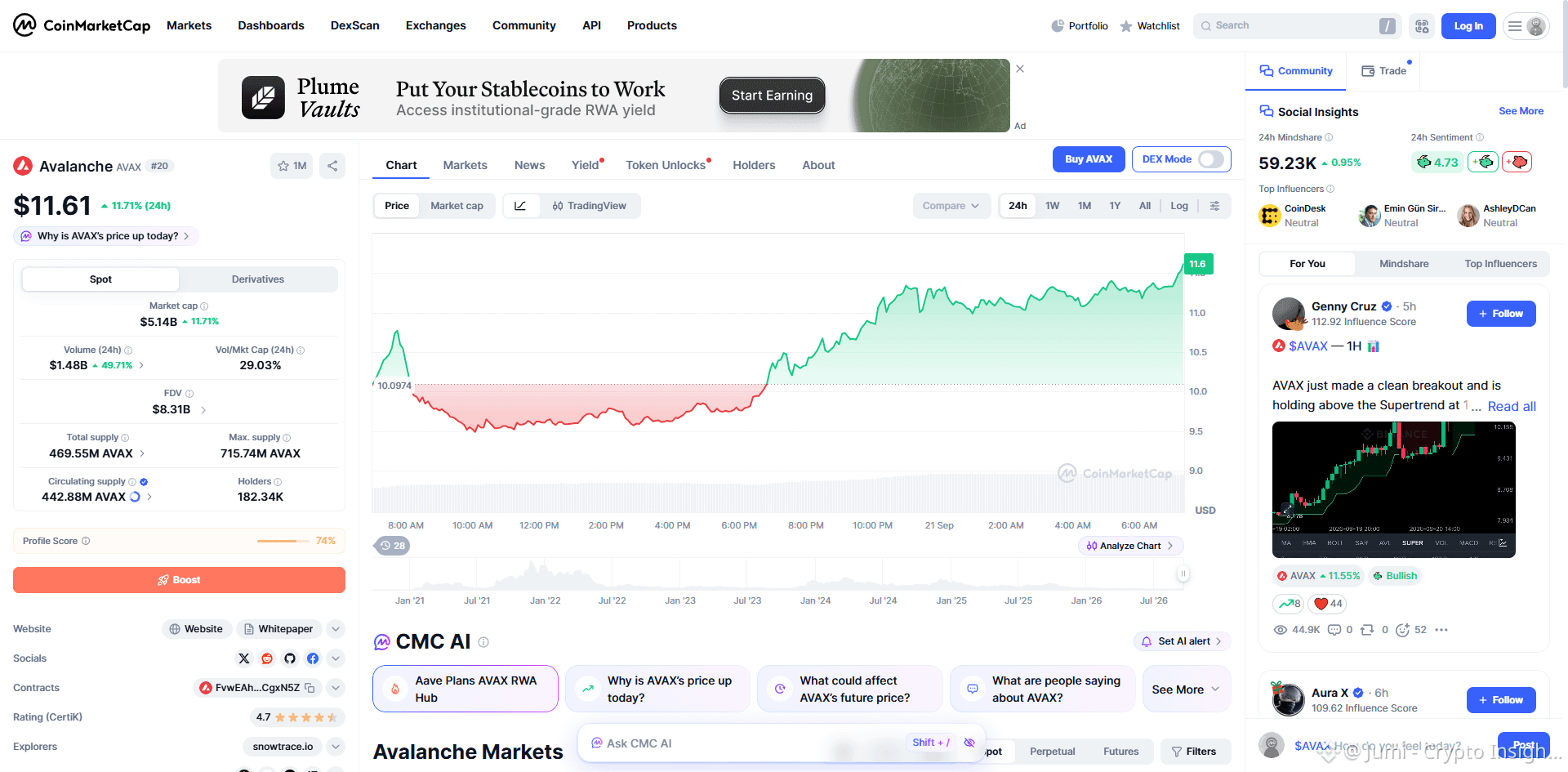
Noticed $AVAX powerfully surge into the CoinMarketCap trend leaderboard at #5. From the technical chart, after the price stabilizes at a key support level, buying volume expands along with it, and the long (bullish) structure remains healthy. If it can effectively break through the resistance above, this burst of momentum could drive a new upward trend.📈
#AVAX #Layer1
Noticed $AVAX powerfully surge into the CoinMarketCap trend leaderboard at #5. From the technical chart, after the price stabilizes at a key support level, buying volume expands along with it, and the long (bullish) structure remains healthy. If it can effectively break through the resistance above, this burst of momentum could drive a new upward trend.📈
#AVAX #Layer1
#AVAX #Layer1
259
On Monday’s early-session futures market, commodities saw a notable surge, with international crude oil prices rising collectively. Data show that WTI crude oil’s intraday gain reached 1.24%, with prices moving up toward around $96.5 per barrel. Meanwhile, Brent crude also logged a gain of over 1%, reclaiming the key psychological level of $100.94 per barrel. From the order-flow structure, long positions moved in rapidly at the start of the week, pushing prices to break through near-term resistance levels forcefully.
Technically and in terms of the macro backdrop, after a period of consolidation and buildup, oil prices expanded upward again on increased volume. Brent has returned above the $100 mark, indicating that bullish momentum in both the spot and futures commodity markets remains strong. Although an energy price rebound may introduce some distortion to short-term inflation readings, crude oil—an important barometer of global economic vitality—has held firm and stabilized. It often reflects that overall macro demand and underlying fundamentals in the industrial sector have strong resilience, helping avoid the deep-recession risk that the market had previously been concerned about.
In cross-asset performance, oil’s steady rebound directly boosted sentiment in the energy sector and in assets related to commodities. Even if, in the short term, U.S. Treasury yields and the U.S. dollar index may show narrow fluctuations due to minor adjustments in inflation expectations, overall risk appetite has not been materially pressured. Instead, there has been a constructive pattern in which capital gradually repairs the pricing of risk assets, and the global liquidity environment—after absorbing inflation persistence—has begun to show a healthier, more resilient profile.
For the cryptocurrency market, the strength in commodities and the rise in overall risk appetite have created a positive feedback effect. As long as macro liquidity does not tighten abruptly, $BTC and most mainstream altcoins are likely to benefit from spillover capital associated with risk appetite recovering. With bottoming technical formations continually being consolidated, the crypto market is expected to deliver a more resilient and independent rebound, driven by the dual logic of an anti-inflation narrative and a catch-up rally in risk assets.📊
#CrudeOil #MacroEconomy #CryptoTrading
On Monday’s early-session futures market, commodities saw a notable surge, with international crude oil prices rising collectively. Data show that WTI crude oil’s intraday gain reached 1.24%, with prices moving up toward around $96.5 per barrel. Meanwhile, Brent crude also logged a gain of over 1%, reclaiming the key psychological level of $100.94 per barrel. From the order-flow structure, long positions moved in rapidly at the start of the week, pushing prices to break through near-term resistance levels forcefully.
Technically and in terms of the macro backdrop, after a period of consolidation and buildup, oil prices expanded upward again on increased volume. Brent has returned above the $100 mark, indicating that bullish momentum in both the spot and futures commodity markets remains strong. Although an energy price rebound may introduce some distortion to short-term inflation readings, crude oil—an important barometer of global economic vitality—has held firm and stabilized. It often reflects that overall macro demand and underlying fundamentals in the industrial sector have strong resilience, helping avoid the deep-recession risk that the market had previously been concerned about.
In cross-asset performance, oil’s steady rebound directly boosted sentiment in the energy sector and in assets related to commodities. Even if, in the short term, U.S. Treasury yields and the U.S. dollar index may show narrow fluctuations due to minor adjustments in inflation expectations, overall risk appetite has not been materially pressured. Instead, there has been a constructive pattern in which capital gradually repairs the pricing of risk assets, and the global liquidity environment—after absorbing inflation persistence—has begun to show a healthier, more resilient profile.
For the cryptocurrency market, the strength in commodities and the rise in overall risk appetite have created a positive feedback effect. As long as macro liquidity does not tighten abruptly, $BTC and most mainstream altcoins are likely to benefit from spillover capital associated with risk appetite recovering. With bottoming technical formations continually being consolidated, the crypto market is expected to deliver a more resilient and independent rebound, driven by the dual logic of an anti-inflation narrative and a catch-up rally in risk assets.📊
#CrudeOil #MacroEconomy #CryptoTrading
Technically and in terms of the macro backdrop, after a period of consolidation and buildup, oil prices expanded upward again on increased volume. Brent has returned above the $100 mark, indicating that bullish momentum in both the spot and futures commodity markets remains strong. Although an energy price rebound may introduce some distortion to short-term inflation readings, crude oil—an important barometer of global economic vitality—has held firm and stabilized. It often reflects that overall macro demand and underlying fundamentals in the industrial sector have strong resilience, helping avoid the deep-recession risk that the market had previously been concerned about.
In cross-asset performance, oil’s steady rebound directly boosted sentiment in the energy sector and in assets related to commodities. Even if, in the short term, U.S. Treasury yields and the U.S. dollar index may show narrow fluctuations due to minor adjustments in inflation expectations, overall risk appetite has not been materially pressured. Instead, there has been a constructive pattern in which capital gradually repairs the pricing of risk assets, and the global liquidity environment—after absorbing inflation persistence—has begun to show a healthier, more resilient profile.
For the cryptocurrency market, the strength in commodities and the rise in overall risk appetite have created a positive feedback effect. As long as macro liquidity does not tighten abruptly, $BTC and most mainstream altcoins are likely to benefit from spillover capital associated with risk appetite recovering. With bottoming technical formations continually being consolidated, the crypto market is expected to deliver a more resilient and independent rebound, driven by the dual logic of an anti-inflation narrative and a catch-up rally in risk assets.📊
#CrudeOil #MacroEconomy #CryptoTrading
448
In response to remarks made earlier by U.S. Treasury Secretary Bessent, who said that the Strait of Hormuz would “lose value” within two years due to replacement pipeline construction, Qatar’s State Minister for Energy Affairs, Saad Al-Qaabi, has publicly rebutted the claim. He clearly pointed out that the strait is not only a core hub for oil and gas, but also an irreplaceable global trade thoroughfare. Qatar currently has no plans whatsoever to build new pipelines around it. Commercial and technological logic dictates that shipping through the strait will remain prosperous in the long term.
From a macro perspective, the debate over the importance of key energy corridors essentially reflects a readjustment of global energy supply-chain resilience and geopolitical premia. The steadfast support by major oil producers such as Qatar for traditional shipping routes effectively dispels excessive market fears that the energy supply pathways will undergo a drastic near-term reconfiguration, helping to ease irrational geopolitical panic premia on the oil supply side.
In financial markets, energy supply-chain expectations returning to a more practical and rational footing directly drives the convergence of volatility in international crude oil prices. Reduced cost pressure in the commodities dimension will effectively suppress any rebound in long-term inflation expectations, which in turn helps keep the yield curve on U.S. Treasuries steady at elevated levels. At the same time, upward resistance on the U.S. dollar index becomes more apparent, creating a more moderate macro-liquidity environment for overall risk assets.
For the crypto market, the cooling of global energy geopolitical risk expectations has significantly boosted risk appetite. $BTC has demonstrated solid follow-through at a key support level. As macro-level inflation shocks are gradually absorbed, capital is accelerating back into high-beta assets. If Bitcoin can seize momentum and hold above the resistance zone, the market may be able to enter a new round of liquidity-driven breakout momentum.🚀
#HormuzStrait #EnergyMarkets #MacroEconomy
In response to remarks made earlier by U.S. Treasury Secretary Bessent, who said that the Strait of Hormuz would “lose value” within two years due to replacement pipeline construction, Qatar’s State Minister for Energy Affairs, Saad Al-Qaabi, has publicly rebutted the claim. He clearly pointed out that the strait is not only a core hub for oil and gas, but also an irreplaceable global trade thoroughfare. Qatar currently has no plans whatsoever to build new pipelines around it. Commercial and technological logic dictates that shipping through the strait will remain prosperous in the long term.
From a macro perspective, the debate over the importance of key energy corridors essentially reflects a readjustment of global energy supply-chain resilience and geopolitical premia. The steadfast support by major oil producers such as Qatar for traditional shipping routes effectively dispels excessive market fears that the energy supply pathways will undergo a drastic near-term reconfiguration, helping to ease irrational geopolitical panic premia on the oil supply side.
In financial markets, energy supply-chain expectations returning to a more practical and rational footing directly drives the convergence of volatility in international crude oil prices. Reduced cost pressure in the commodities dimension will effectively suppress any rebound in long-term inflation expectations, which in turn helps keep the yield curve on U.S. Treasuries steady at elevated levels. At the same time, upward resistance on the U.S. dollar index becomes more apparent, creating a more moderate macro-liquidity environment for overall risk assets.
For the crypto market, the cooling of global energy geopolitical risk expectations has significantly boosted risk appetite. $BTC has demonstrated solid follow-through at a key support level. As macro-level inflation shocks are gradually absorbed, capital is accelerating back into high-beta assets. If Bitcoin can seize momentum and hold above the resistance zone, the market may be able to enter a new round of liquidity-driven breakout momentum.🚀
#HormuzStrait #EnergyMarkets #MacroEconomy
From a macro perspective, the debate over the importance of key energy corridors essentially reflects a readjustment of global energy supply-chain resilience and geopolitical premia. The steadfast support by major oil producers such as Qatar for traditional shipping routes effectively dispels excessive market fears that the energy supply pathways will undergo a drastic near-term reconfiguration, helping to ease irrational geopolitical panic premia on the oil supply side.
In financial markets, energy supply-chain expectations returning to a more practical and rational footing directly drives the convergence of volatility in international crude oil prices. Reduced cost pressure in the commodities dimension will effectively suppress any rebound in long-term inflation expectations, which in turn helps keep the yield curve on U.S. Treasuries steady at elevated levels. At the same time, upward resistance on the U.S. dollar index becomes more apparent, creating a more moderate macro-liquidity environment for overall risk assets.
For the crypto market, the cooling of global energy geopolitical risk expectations has significantly boosted risk appetite. $BTC has demonstrated solid follow-through at a key support level. As macro-level inflation shocks are gradually absorbed, capital is accelerating back into high-beta assets. If Bitcoin can seize momentum and hold above the resistance zone, the market may be able to enter a new round of liquidity-driven breakout momentum.🚀
#HormuzStrait #EnergyMarkets #MacroEconomy
77
According to the latest data released by the People’s Bank of China, as of September 21, the one-year Loan Prime Rate (LPR) in China remained at 3.00%, fully in line with market expectations and unchanged from the previous level. By choosing to hold steady at key time points, the central bank demonstrates a precise balance between steady growth and risk prevention, with a very strong degree of resolve and policy continuity.
From a macro fundamentals perspective, the one-year LPR holding at 3.00% did not bring any unexpected fluctuations. With the benchmark interest rate remaining within a historically low range, it continues to provide a low-cost liquidity environment for the real economy. With expectations fully met, the market has eliminated short-term uncertainty about a policy shift, laying a solid macro liquidity foundation for building momentum at the bottom of risk assets.
From a technical and cross-asset macro perspective, stabilizing rates has effectively eased volatility pressure on the FX side. The RMB has been trading in a range above key technical support levels, which helps fortify the risk buffer for equity assets across the entire Asia-Pacific market. As the global liquidity easing cycle gradually unfolds, China’s low-interest-rate environment supports the retention and rotation of funds into risk assets, restraining bond yields from surging too sharply.
For the crypto market, confirming the bottoming of macro liquidity is an extremely positive technical signal. With fiat borrowing costs staying stable at low levels, $BTC and the broader mainstream market assets are in a phase of chip accumulation within key support zones. Under the resonance of external liquidity spillover and global expectations for easing, a rebound in risk appetite could help crypto assets break out of their current structure and kick off a new upward cycle.📈
#ChinaEconomy #LPR #MacroEconomics
According to the latest data released by the People’s Bank of China, as of September 21, the one-year Loan Prime Rate (LPR) in China remained at 3.00%, fully in line with market expectations and unchanged from the previous level. By choosing to hold steady at key time points, the central bank demonstrates a precise balance between steady growth and risk prevention, with a very strong degree of resolve and policy continuity.
From a macro fundamentals perspective, the one-year LPR holding at 3.00% did not bring any unexpected fluctuations. With the benchmark interest rate remaining within a historically low range, it continues to provide a low-cost liquidity environment for the real economy. With expectations fully met, the market has eliminated short-term uncertainty about a policy shift, laying a solid macro liquidity foundation for building momentum at the bottom of risk assets.
From a technical and cross-asset macro perspective, stabilizing rates has effectively eased volatility pressure on the FX side. The RMB has been trading in a range above key technical support levels, which helps fortify the risk buffer for equity assets across the entire Asia-Pacific market. As the global liquidity easing cycle gradually unfolds, China’s low-interest-rate environment supports the retention and rotation of funds into risk assets, restraining bond yields from surging too sharply.
For the crypto market, confirming the bottoming of macro liquidity is an extremely positive technical signal. With fiat borrowing costs staying stable at low levels, $BTC and the broader mainstream market assets are in a phase of chip accumulation within key support zones. Under the resonance of external liquidity spillover and global expectations for easing, a rebound in risk appetite could help crypto assets break out of their current structure and kick off a new upward cycle.📈
#ChinaEconomy #LPR #MacroEconomics
From a macro fundamentals perspective, the one-year LPR holding at 3.00% did not bring any unexpected fluctuations. With the benchmark interest rate remaining within a historically low range, it continues to provide a low-cost liquidity environment for the real economy. With expectations fully met, the market has eliminated short-term uncertainty about a policy shift, laying a solid macro liquidity foundation for building momentum at the bottom of risk assets.
From a technical and cross-asset macro perspective, stabilizing rates has effectively eased volatility pressure on the FX side. The RMB has been trading in a range above key technical support levels, which helps fortify the risk buffer for equity assets across the entire Asia-Pacific market. As the global liquidity easing cycle gradually unfolds, China’s low-interest-rate environment supports the retention and rotation of funds into risk assets, restraining bond yields from surging too sharply.
For the crypto market, confirming the bottoming of macro liquidity is an extremely positive technical signal. With fiat borrowing costs staying stable at low levels, $BTC and the broader mainstream market assets are in a phase of chip accumulation within key support zones. Under the resonance of external liquidity spillover and global expectations for easing, a rebound in risk appetite could help crypto assets break out of their current structure and kick off a new upward cycle.📈
#ChinaEconomy #LPR #MacroEconomics
138
Log in to explore more content
Join global crypto users on Binance Square
⚡️ Get latest and useful information about crypto.
💬 Trusted by the world’s largest crypto exchange.
👍 Discover real insights from verified creators.
Email / Phone number
Trending Topics
NEARRisesNearly80%InAWeek
1 views
22 Discussing
#nearrisesnearly80%inaweek
NEAR Protocol is on absolute fire this week — here’s what’s driving the surge 🔥
What a week for NEAR! 🚀 Scoring an almost 80% gain in just 7 days isn't just luck; it highlights massive momentum building around NEAR's chain abstraction vision and AI integration. When tech efficiency meets retail hype, this is the exact kind of price action we get.
Are you holding NEAR for the long run, or taking profits at these levels? Drop your strategy below! 👇
$NEAR
#BitcoinHits$85K #Near #crypto
Lily星星
·0 Likes
·84 views
MultiversXPlansHardForkRecovery
499 views
94 Discussing
CircleLaunchesInstitutionalBTCBackedBorrowing
2,275 views
260 Discussing