

#energymarket
energymarket
62,469 views
235 Discussing
Hot
Latest

·
--
Bullish
White House Rejects 90-Day Diesel Export Ban, but Domestic Supply Measures Remain in Focus
🛢️ The White House has denied reports that the U.S. is preparing a 90-day ban on diesel exports. Energy Secretary Chris Wright also said a blanket export ban is not currently under consideration.
📉 However, the administration is still discussing voluntary measures with refiners to keep more diesel in the domestic market. October ULSD futures fell about 4% after the initial report of possible export restrictions, highlighting how sensitive the market remains to changes in supply flows.
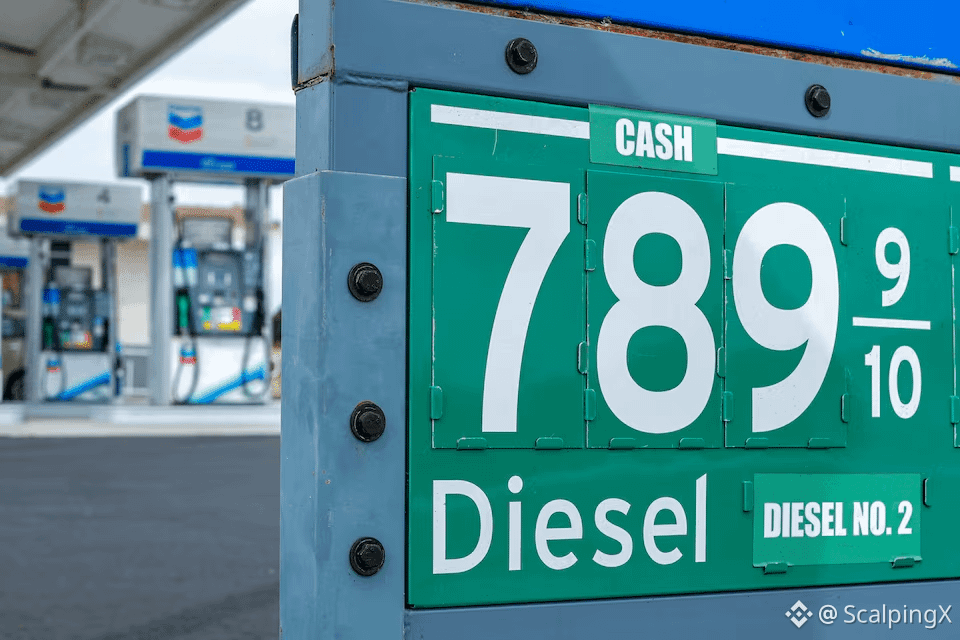
⛽ U.S. diesel inventories are below 97 million barrels, around 13% under the five-year average, while retail prices remain near $6.52 per gallon. Supply pressure therefore remains elevated even as the hard-ban scenario has been rejected.
#EnergyMarket $CL
White House Rejects 90-Day Diesel Export Ban, but Domestic Supply Measures Remain in Focus
🛢️ The White House has denied reports that the U.S. is preparing a 90-day ban on diesel exports. Energy Secretary Chris Wright also said a blanket export ban is not currently under consideration.
📉 However, the administration is still discussing voluntary measures with refiners to keep more diesel in the domestic market. October ULSD futures fell about 4% after the initial report of possible export restrictions, highlighting how sensitive the market remains to changes in supply flows.
⛽ U.S. diesel inventories are below 97 million barrels, around 13% under the five-year average, while retail prices remain near $6.52 per gallon. Supply pressure therefore remains elevated even as the hard-ban scenario has been rejected.
#EnergyMarket $CL
🛢️ The White House has denied reports that the U.S. is preparing a 90-day ban on diesel exports. Energy Secretary Chris Wright also said a blanket export ban is not currently under consideration.
📉 However, the administration is still discussing voluntary measures with refiners to keep more diesel in the domestic market. October ULSD futures fell about 4% after the initial report of possible export restrictions, highlighting how sensitive the market remains to changes in supply flows.
⛽ U.S. diesel inventories are below 97 million barrels, around 13% under the five-year average, while retail prices remain near $6.52 per gallon. Supply pressure therefore remains elevated even as the hard-ban scenario has been rejected.
#EnergyMarket $CL
111

At the close of the latest trading day, Brent crude oil futures’ main contract saw a strong surge, closing at $106.60 per barrel, up $3.52 on the day, a gain of 3.41%. Judging from the technical chart, this strong bullish long candle directly broke the recent narrow consolidation range. Trading volume expanded in sync, indicating strong downside support and rebound momentum from long positions at key support levels.
This over-3% single-day jump in oil prices mainly reflects the market’s concentrated repricing of short-term supply-side tightness. From a macro fundamental perspective, large rebounds in commodities often increase the activity of anti-inflation trades; but from a technical-structure standpoint, after breaking above the prior resistance level, oil prices are now forming a higher-lows pattern, suggesting that global demand for real assets is gradually recovering.
In traditional financial markets, the strength in oil has, in the short term, boosted the energy sector and related commodities indices. Meanwhile, U.S. Treasury yields and the U.S. Dollar Index found some support at key technical levels. However, as energy prices revert toward a reasonable fundamental valuation, the market’s technical pricing of extreme recession risk is weakening. Overall risk appetite has not been suppressed; instead, there are signs of a shift from defense to more proactive positioning.
For the crypto market, this often means confirmation of the macro liquidity bottom. As risk-off sentiment transitions into a repricing of high-beta assets, capital may return to risk assets under the anti-inflation narrative. In terms of technical structure, $BTC is forming a solid accumulation platform in the key support zone together with mainstream assets. The shakeouts caused by macro volatility are, in fact, building sufficient momentum for the next stage of breakout.📈
#CrudeOil #EnergyMarket #MacroEconomy
At the close of the latest trading day, Brent crude oil futures’ main contract saw a strong surge, closing at $106.60 per barrel, up $3.52 on the day, a gain of 3.41%. Judging from the technical chart, this strong bullish long candle directly broke the recent narrow consolidation range. Trading volume expanded in sync, indicating strong downside support and rebound momentum from long positions at key support levels.
This over-3% single-day jump in oil prices mainly reflects the market’s concentrated repricing of short-term supply-side tightness. From a macro fundamental perspective, large rebounds in commodities often increase the activity of anti-inflation trades; but from a technical-structure standpoint, after breaking above the prior resistance level, oil prices are now forming a higher-lows pattern, suggesting that global demand for real assets is gradually recovering.
In traditional financial markets, the strength in oil has, in the short term, boosted the energy sector and related commodities indices. Meanwhile, U.S. Treasury yields and the U.S. Dollar Index found some support at key technical levels. However, as energy prices revert toward a reasonable fundamental valuation, the market’s technical pricing of extreme recession risk is weakening. Overall risk appetite has not been suppressed; instead, there are signs of a shift from defense to more proactive positioning.
For the crypto market, this often means confirmation of the macro liquidity bottom. As risk-off sentiment transitions into a repricing of high-beta assets, capital may return to risk assets under the anti-inflation narrative. In terms of technical structure, $BTC is forming a solid accumulation platform in the key support zone together with mainstream assets. The shakeouts caused by macro volatility are, in fact, building sufficient momentum for the next stage of breakout.📈
#CrudeOil #EnergyMarket #MacroEconomy
This over-3% single-day jump in oil prices mainly reflects the market’s concentrated repricing of short-term supply-side tightness. From a macro fundamental perspective, large rebounds in commodities often increase the activity of anti-inflation trades; but from a technical-structure standpoint, after breaking above the prior resistance level, oil prices are now forming a higher-lows pattern, suggesting that global demand for real assets is gradually recovering.
In traditional financial markets, the strength in oil has, in the short term, boosted the energy sector and related commodities indices. Meanwhile, U.S. Treasury yields and the U.S. Dollar Index found some support at key technical levels. However, as energy prices revert toward a reasonable fundamental valuation, the market’s technical pricing of extreme recession risk is weakening. Overall risk appetite has not been suppressed; instead, there are signs of a shift from defense to more proactive positioning.
For the crypto market, this often means confirmation of the macro liquidity bottom. As risk-off sentiment transitions into a repricing of high-beta assets, capital may return to risk assets under the anti-inflation narrative. In terms of technical structure, $BTC is forming a solid accumulation platform in the key support zone together with mainstream assets. The shakeouts caused by macro volatility are, in fact, building sufficient momentum for the next stage of breakout.📈
#CrudeOil #EnergyMarket #MacroEconomy
224
After the Houthi armed group in Yemen announced attacks on Saudi Arabia’s military bases in Hail, geopolitical tensions in the Middle East surged sharply, triggering a strong burst of buying momentum in the international crude oil market. Market data shows that intraday gains for both WTI and Brent crude exceeded 3%, surging to high levels of $94.88 per barrel and $101.78 per barrel, respectively. Judging by the candlestick patterns, both major benchmark oil prices broke out from the previous consolidation range with expanded volume on large bullish candles, and the alignment of the bulls is unmistakable.
The key to this sudden burst of volatility lies in the rapid repricing of geopolitical risk premium and the concentrated flare-up of supply-side concerns. Earlier, the market had expectations that tensions in the Middle East might cool, but the direct strike on critical military infrastructure immediately shattered the previous oscillating balance. Brent crude has strongly held above the $100 psychological level. Not only did this technically confirm a bottom reversal and the continuation of an upward trend, it also forced previously established short positions to passively unwind, further boosting short-term momentum indicators’ bullish readings.
Looking at broader macro financial markets, although the sharp short-term jump in oil prices has, to a certain extent, prompted renewed scrutiny of imported inflation pressures and helped lift the U.S. dollar index and some commodities in parallel, the overall liquidity environment remains highly active. U.S. Treasury yields have behaved relatively rationally after a brief spike, without disorderly selloffs. This suggests that global capital has a strong capacity to absorb geopolitical shocks, and overall risk appetite across capital markets is demonstrating very strong resilience.
For the crypto market, however, these unusual moves in large-scale commodities provide an important window to verify asset “hardness” and how liquidity is allocated. $BTC , as a core asset with anti-inflation attributes and independent settlement characteristics, often sees selling pressure during the initial phase of geopolitical disruptions quickly taken up by long positions. As oil prices rally further and then enter a high-level consolidation phase, market focus is likely to shift back to the liquidity overflow effect. The crypto market may see healthier buying momentum and right-side breakout opportunities, and the broader macro upward narrative remains firmly intact.📈
#CrudeOil #Geopolitics #EnergyMarket
After the Houthi armed group in Yemen announced attacks on Saudi Arabia’s military bases in Hail, geopolitical tensions in the Middle East surged sharply, triggering a strong burst of buying momentum in the international crude oil market. Market data shows that intraday gains for both WTI and Brent crude exceeded 3%, surging to high levels of $94.88 per barrel and $101.78 per barrel, respectively. Judging by the candlestick patterns, both major benchmark oil prices broke out from the previous consolidation range with expanded volume on large bullish candles, and the alignment of the bulls is unmistakable.
The key to this sudden burst of volatility lies in the rapid repricing of geopolitical risk premium and the concentrated flare-up of supply-side concerns. Earlier, the market had expectations that tensions in the Middle East might cool, but the direct strike on critical military infrastructure immediately shattered the previous oscillating balance. Brent crude has strongly held above the $100 psychological level. Not only did this technically confirm a bottom reversal and the continuation of an upward trend, it also forced previously established short positions to passively unwind, further boosting short-term momentum indicators’ bullish readings.
Looking at broader macro financial markets, although the sharp short-term jump in oil prices has, to a certain extent, prompted renewed scrutiny of imported inflation pressures and helped lift the U.S. dollar index and some commodities in parallel, the overall liquidity environment remains highly active. U.S. Treasury yields have behaved relatively rationally after a brief spike, without disorderly selloffs. This suggests that global capital has a strong capacity to absorb geopolitical shocks, and overall risk appetite across capital markets is demonstrating very strong resilience.
For the crypto market, however, these unusual moves in large-scale commodities provide an important window to verify asset “hardness” and how liquidity is allocated. $BTC , as a core asset with anti-inflation attributes and independent settlement characteristics, often sees selling pressure during the initial phase of geopolitical disruptions quickly taken up by long positions. As oil prices rally further and then enter a high-level consolidation phase, market focus is likely to shift back to the liquidity overflow effect. The crypto market may see healthier buying momentum and right-side breakout opportunities, and the broader macro upward narrative remains firmly intact.📈
#CrudeOil #Geopolitics #EnergyMarket
The key to this sudden burst of volatility lies in the rapid repricing of geopolitical risk premium and the concentrated flare-up of supply-side concerns. Earlier, the market had expectations that tensions in the Middle East might cool, but the direct strike on critical military infrastructure immediately shattered the previous oscillating balance. Brent crude has strongly held above the $100 psychological level. Not only did this technically confirm a bottom reversal and the continuation of an upward trend, it also forced previously established short positions to passively unwind, further boosting short-term momentum indicators’ bullish readings.
Looking at broader macro financial markets, although the sharp short-term jump in oil prices has, to a certain extent, prompted renewed scrutiny of imported inflation pressures and helped lift the U.S. dollar index and some commodities in parallel, the overall liquidity environment remains highly active. U.S. Treasury yields have behaved relatively rationally after a brief spike, without disorderly selloffs. This suggests that global capital has a strong capacity to absorb geopolitical shocks, and overall risk appetite across capital markets is demonstrating very strong resilience.
For the crypto market, however, these unusual moves in large-scale commodities provide an important window to verify asset “hardness” and how liquidity is allocated. $BTC , as a core asset with anti-inflation attributes and independent settlement characteristics, often sees selling pressure during the initial phase of geopolitical disruptions quickly taken up by long positions. As oil prices rally further and then enter a high-level consolidation phase, market focus is likely to shift back to the liquidity overflow effect. The crypto market may see healthier buying momentum and right-side breakout opportunities, and the broader macro upward narrative remains firmly intact.📈
#CrudeOil #Geopolitics #EnergyMarket
270
Based on the latest data on bulk commodity trading, international benchmark crude oil prices have continued to strengthen. WTI and Brent both rose by $0.5 during the day, reaching intraday highs of $91.3 per barrel and $98.3 per barrel, respectively. Meanwhile, the latest July foreign trade data released by the Saudi Arabian government shows that in July, the country’s merchandise exports year-on-year fell sharply by 17.2%. Of this, core oil exports declined by 12.8% year-on-year. The structural features of a proactive tightening of the supply side are being clearly reflected in the market.
From a technical perspective and supply-demand logic, the export-contraction effect brought about by Saudi production cuts is continuing to build up momentum in both the spot and futures markets. Oil prices have been steadily pushed higher while holding near key technical resistance levels, indicating that supply-driven bullish momentum remains strong. Although this has sparked some market concerns about a resurgence of secondary inflation in the short term, deeper signals suggest that the global macro demand fundamentals remain resilient, and there has not been a sudden, steep downturn.
In macro financial markets, crude oil’s strong performance as a leading bulk commodity—while providing some technical support to U.S. Treasury yields and the U.S. dollar index—overall liquidity pricing is gradually absorbing an energy risk premium. For risk assets, a steady rebound in bulk commodities is often a leading indicator of a soft landing for the economy and stabilization in industrial demand. The market appears to be shifting from panic-based inflation trading toward healthier fundamental-based pricing.
For crypto assets, especially $BTC , the anti-inflation narrative sparked by strength in bulk commodities may reactivate capital demand for hard-asset allocation. As macro uncertainty gradually materializes, improving risk appetite is expected to drive over-the-counter liquidity back into the crypto market. In the short term, continued consolidation may be more favorable for reinforcing a base-support structure.
#CrudeOil #MacroEconomy #EnergyMarket
Based on the latest data on bulk commodity trading, international benchmark crude oil prices have continued to strengthen. WTI and Brent both rose by $0.5 during the day, reaching intraday highs of $91.3 per barrel and $98.3 per barrel, respectively. Meanwhile, the latest July foreign trade data released by the Saudi Arabian government shows that in July, the country’s merchandise exports year-on-year fell sharply by 17.2%. Of this, core oil exports declined by 12.8% year-on-year. The structural features of a proactive tightening of the supply side are being clearly reflected in the market.
From a technical perspective and supply-demand logic, the export-contraction effect brought about by Saudi production cuts is continuing to build up momentum in both the spot and futures markets. Oil prices have been steadily pushed higher while holding near key technical resistance levels, indicating that supply-driven bullish momentum remains strong. Although this has sparked some market concerns about a resurgence of secondary inflation in the short term, deeper signals suggest that the global macro demand fundamentals remain resilient, and there has not been a sudden, steep downturn.
In macro financial markets, crude oil’s strong performance as a leading bulk commodity—while providing some technical support to U.S. Treasury yields and the U.S. dollar index—overall liquidity pricing is gradually absorbing an energy risk premium. For risk assets, a steady rebound in bulk commodities is often a leading indicator of a soft landing for the economy and stabilization in industrial demand. The market appears to be shifting from panic-based inflation trading toward healthier fundamental-based pricing.
For crypto assets, especially $BTC , the anti-inflation narrative sparked by strength in bulk commodities may reactivate capital demand for hard-asset allocation. As macro uncertainty gradually materializes, improving risk appetite is expected to drive over-the-counter liquidity back into the crypto market. In the short term, continued consolidation may be more favorable for reinforcing a base-support structure.
#CrudeOil #MacroEconomy #EnergyMarket
From a technical perspective and supply-demand logic, the export-contraction effect brought about by Saudi production cuts is continuing to build up momentum in both the spot and futures markets. Oil prices have been steadily pushed higher while holding near key technical resistance levels, indicating that supply-driven bullish momentum remains strong. Although this has sparked some market concerns about a resurgence of secondary inflation in the short term, deeper signals suggest that the global macro demand fundamentals remain resilient, and there has not been a sudden, steep downturn.
In macro financial markets, crude oil’s strong performance as a leading bulk commodity—while providing some technical support to U.S. Treasury yields and the U.S. dollar index—overall liquidity pricing is gradually absorbing an energy risk premium. For risk assets, a steady rebound in bulk commodities is often a leading indicator of a soft landing for the economy and stabilization in industrial demand. The market appears to be shifting from panic-based inflation trading toward healthier fundamental-based pricing.
For crypto assets, especially $BTC , the anti-inflation narrative sparked by strength in bulk commodities may reactivate capital demand for hard-asset allocation. As macro uncertainty gradually materializes, improving risk appetite is expected to drive over-the-counter liquidity back into the crypto market. In the short term, continued consolidation may be more favorable for reinforcing a base-support structure.
#CrudeOil #MacroEconomy #EnergyMarket
243

·
--
Bullish
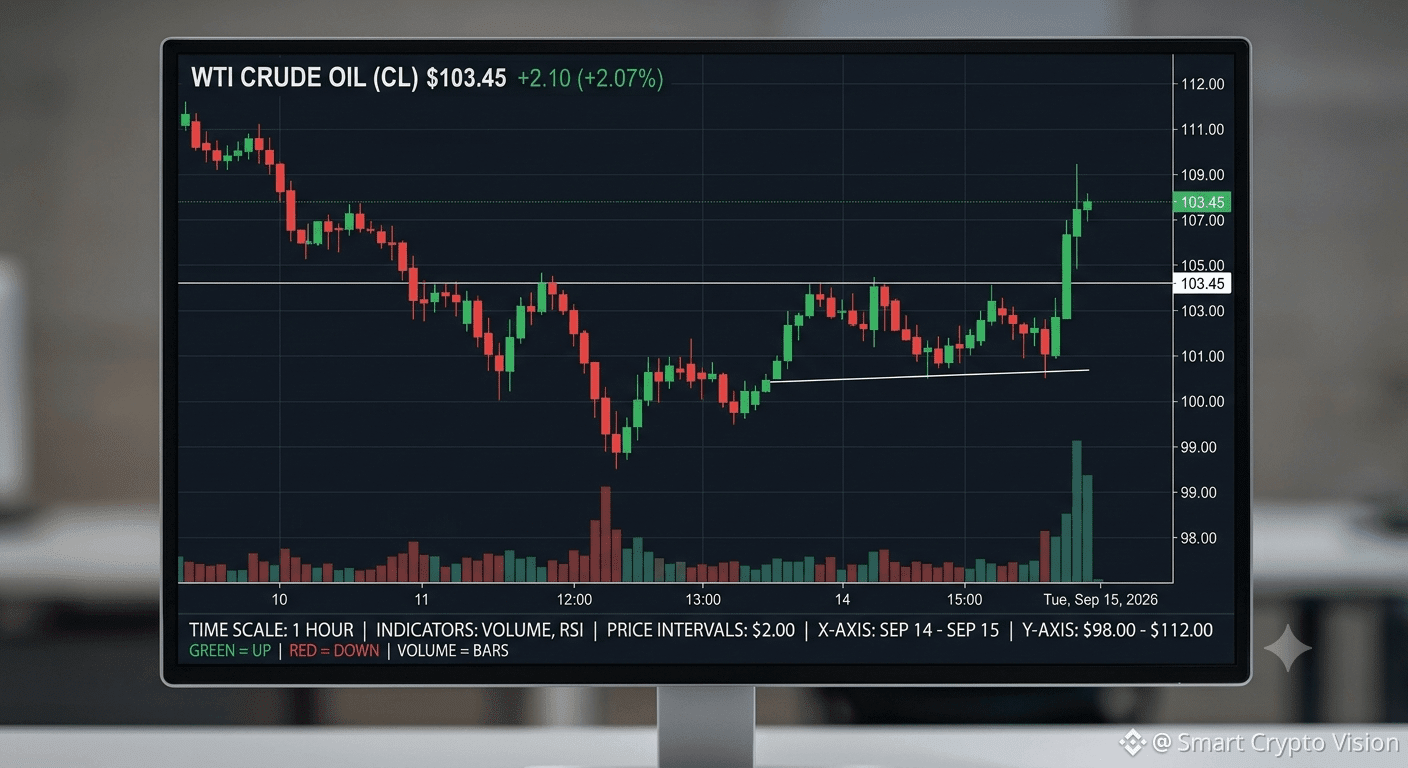
Middle East negotiations remain at a standstill, and mounting supply-side friction is pushing market volatility back into focus. With WTI crude breaking above $103, momentum remains heavily skewed to the upside.
🚨 $CL Trade Setup | Strong Bullish Bias 🚨
Entry Zone: $102.50 – $103.50 (Wait for pullbacks to retest support)
Target 1: $104.50
Target 2: $107.00
Target 3: $110.00
Extended Target: $120.00
Stop Loss: $99.50 (Tightened to guard against sudden volatility)
#CrudeOil #WTI TradingSignals #OilMarket #EnergyMarket
{future}(CLUSDT)
Middle East negotiations remain at a standstill, and mounting supply-side friction is pushing market volatility back into focus. With WTI crude breaking above $103, momentum remains heavily skewed to the upside.
🚨 $CL Trade Setup | Strong Bullish Bias 🚨
Entry Zone: $102.50 – $103.50 (Wait for pullbacks to retest support)
Target 1: $104.50
Target 2: $107.00
Target 3: $110.00
Extended Target: $120.00
Stop Loss: $99.50 (Tightened to guard against sudden volatility)
#CrudeOil #WTI TradingSignals #OilMarket #EnergyMarket
🚨 $CL Trade Setup | Strong Bullish Bias 🚨
Entry Zone: $102.50 – $103.50 (Wait for pullbacks to retest support)
Target 1: $104.50
Target 2: $107.00
Target 3: $110.00
Extended Target: $120.00
Stop Loss: $99.50 (Tightened to guard against sudden volatility)
#CrudeOil #WTI TradingSignals #OilMarket #EnergyMarket
140

During the latest commodities trading session, international crude oil prices saw a clear downward pullback under pressure. Both WTI and Brent crude fell by nearly US$1; they are currently quoted at US$97.63 per barrel and US$102.11 per barrel, respectively. This leg of weakness in the energy market reflects traders’ cautious stance as they weigh slower macroeconomic growth against the ongoing supply tussle at elevated levels.
On the surface, the drop in oil prices eases market concerns about worsening imported inflation. However, it’s important to stay clear-eyed: Brent crude is still holding above the key psychological level of US$100. The current modest pullback is not enough to reverse the overall stickiness of inflation. The lingering stagflation concerns driven by persistently high energy costs continue to weigh on major global economies, and central banks still lack sufficient grounds to pivot to easier policy in the near term.
From a cross-asset allocation perspective, the commodity pullback has not yet translated into a tangible positive catalyst for risk assets. While U.S. Treasury yields and the U.S. dollar index may experience brief technical breathing room when oil prices fall, market sentiment regarding economic downside risk and pressure on corporate earnings is intensifying. Traditional equities and defensive capital remain highly risk-off.
For the cryptocurrency market, volatility in the energy sector has further heightened uncertainty in macro liquidity. With the threat of stagflation still not eliminated and the possibility that the high-rate environment may last longer, there remains insufficient appetite for new capital inflows into high-risk assets such as $BTC . In the near term, if macro headwinds persist, crypto markets should remain alert to downside risks stemming from tighter liquidity.
#CrudeOil #MacroEconomy #EnergyMarket
During the latest commodities trading session, international crude oil prices saw a clear downward pullback under pressure. Both WTI and Brent crude fell by nearly US$1; they are currently quoted at US$97.63 per barrel and US$102.11 per barrel, respectively. This leg of weakness in the energy market reflects traders’ cautious stance as they weigh slower macroeconomic growth against the ongoing supply tussle at elevated levels.
On the surface, the drop in oil prices eases market concerns about worsening imported inflation. However, it’s important to stay clear-eyed: Brent crude is still holding above the key psychological level of US$100. The current modest pullback is not enough to reverse the overall stickiness of inflation. The lingering stagflation concerns driven by persistently high energy costs continue to weigh on major global economies, and central banks still lack sufficient grounds to pivot to easier policy in the near term.
From a cross-asset allocation perspective, the commodity pullback has not yet translated into a tangible positive catalyst for risk assets. While U.S. Treasury yields and the U.S. dollar index may experience brief technical breathing room when oil prices fall, market sentiment regarding economic downside risk and pressure on corporate earnings is intensifying. Traditional equities and defensive capital remain highly risk-off.
For the cryptocurrency market, volatility in the energy sector has further heightened uncertainty in macro liquidity. With the threat of stagflation still not eliminated and the possibility that the high-rate environment may last longer, there remains insufficient appetite for new capital inflows into high-risk assets such as $BTC . In the near term, if macro headwinds persist, crypto markets should remain alert to downside risks stemming from tighter liquidity.
#CrudeOil #MacroEconomy #EnergyMarket
On the surface, the drop in oil prices eases market concerns about worsening imported inflation. However, it’s important to stay clear-eyed: Brent crude is still holding above the key psychological level of US$100. The current modest pullback is not enough to reverse the overall stickiness of inflation. The lingering stagflation concerns driven by persistently high energy costs continue to weigh on major global economies, and central banks still lack sufficient grounds to pivot to easier policy in the near term.
From a cross-asset allocation perspective, the commodity pullback has not yet translated into a tangible positive catalyst for risk assets. While U.S. Treasury yields and the U.S. dollar index may experience brief technical breathing room when oil prices fall, market sentiment regarding economic downside risk and pressure on corporate earnings is intensifying. Traditional equities and defensive capital remain highly risk-off.
For the cryptocurrency market, volatility in the energy sector has further heightened uncertainty in macro liquidity. With the threat of stagflation still not eliminated and the possibility that the high-rate environment may last longer, there remains insufficient appetite for new capital inflows into high-risk assets such as $BTC . In the near term, if macro headwinds persist, crypto markets should remain alert to downside risks stemming from tighter liquidity.
#CrudeOil #MacroEconomy #EnergyMarket
4

Global energy markets saw notable upside on September 14, with major crude benchmarks rallying solidly across both sides of the Atlantic. By the close, October light crude futures on the New York Mercantile Exchange gained $1.34 (1.34%) to settle at $101.39 per barrel, while November Brent crude futures on the London ICE rose $1.07 (1.02%) to finish at $105.68 per barrel.
This sustained push above key psychological thresholds reflects persistent supply tightness and rising geopolitical risk premiums. Energy prices staying firmly above $100 per barrel present a renewed headache for global central banks, as headline inflation pressures threaten to rebound just as policymakers attempt to engineer a soft landing.
For broader financial markets, elevated crude prices drive up US Treasury yields and support the US Dollar Index, while dampening sentiment in interest-rate-sensitive equities. Higher transportation and production costs inevitably compress corporate earnings margins, maintaining defensive positioning across traditional asset classes.
From a crypto perspective, persistent energy-driven inflation reduces the likelihood of near-term monetary easing from the Federal Reserve, keeping liquidity tight. However, sustained macroeconomic turbulence and fiat purchasing power erosion continue to reinforce the long-term hedge narrative for $BTC among institutional allocators. #CrudeOil #EnergyMarket #MacroEconomy
Global energy markets saw notable upside on September 14, with major crude benchmarks rallying solidly across both sides of the Atlantic. By the close, October light crude futures on the New York Mercantile Exchange gained $1.34 (1.34%) to settle at $101.39 per barrel, while November Brent crude futures on the London ICE rose $1.07 (1.02%) to finish at $105.68 per barrel.
This sustained push above key psychological thresholds reflects persistent supply tightness and rising geopolitical risk premiums. Energy prices staying firmly above $100 per barrel present a renewed headache for global central banks, as headline inflation pressures threaten to rebound just as policymakers attempt to engineer a soft landing.
For broader financial markets, elevated crude prices drive up US Treasury yields and support the US Dollar Index, while dampening sentiment in interest-rate-sensitive equities. Higher transportation and production costs inevitably compress corporate earnings margins, maintaining defensive positioning across traditional asset classes.
From a crypto perspective, persistent energy-driven inflation reduces the likelihood of near-term monetary easing from the Federal Reserve, keeping liquidity tight. However, sustained macroeconomic turbulence and fiat purchasing power erosion continue to reinforce the long-term hedge narrative for $BTC among institutional allocators. #CrudeOil #EnergyMarket #MacroEconomy
This sustained push above key psychological thresholds reflects persistent supply tightness and rising geopolitical risk premiums. Energy prices staying firmly above $100 per barrel present a renewed headache for global central banks, as headline inflation pressures threaten to rebound just as policymakers attempt to engineer a soft landing.
For broader financial markets, elevated crude prices drive up US Treasury yields and support the US Dollar Index, while dampening sentiment in interest-rate-sensitive equities. Higher transportation and production costs inevitably compress corporate earnings margins, maintaining defensive positioning across traditional asset classes.
From a crypto perspective, persistent energy-driven inflation reduces the likelihood of near-term monetary easing from the Federal Reserve, keeping liquidity tight. However, sustained macroeconomic turbulence and fiat purchasing power erosion continue to reinforce the long-term hedge narrative for $BTC among institutional allocators. #CrudeOil #EnergyMarket #MacroEconomy
128

·
--
QatarEnergy has recently launched a crude oil spot tender, planning to sell Al-Shaheen, Qatar Marine Oil and Qatar Land Oil from Qatar’s ports on a free-on-board (FOB) basis. The shipment window is set for October and November. Trade sources say that around 500,000 barrels are already known to be included in the sales plan, but the tender’s overall supply scope has not yet been fully disclosed. Final bids are due next Tuesday. The shipment ports for this batch are located on the inner side of the Strait of Hormuz, a strategically crucial location.
Against the backdrop of ongoing geopolitical tensions in the Middle East that continue to raise concerns about energy corridors, every move along the Strait of Hormuz draws close attention from crude oil traders. Qatar’s timely progression of its routine fourth-quarter crude spot tender, as scheduled, to a certain extent reflects that the loading and export rhythm among major Middle East oil-producing countries remains stable for now. Market participants are closely watching the final level of premiums/discounts in this round of tender to gauge the true strength of Asian buyers’ demand for fourth-quarter spot crude.
From a broader macro perspective, expectations for crude oil supply and demand and the geopolitical risk premium are directly linked to global inflation expectations. If Middle East crude logistics and spot supply stay steady, oil price fluctuations are likely to remain within a relatively manageable range, thereby reducing pressure for a secondary rebound in inflation; otherwise, if supply chains are disrupted, energy price volatility could again throw global central banks’ rate-cut paths off track, which would in turn affect the U.S. dollar index and U.S. Treasury yields.
For the crypto market, the steady flow of Middle East energy helps maintain macroeconomic certainty. When commodity markets do not experience sharp swings, risk assets such as $BTC are more likely to move in line with their own liquidity rhythms. Investors are currently neutral and watching from the sidelines, waiting for next week’s spot tender results to see whether the energy market will bring any new marginal impact on overall risk-asset sentiment. #CrudeOil #QatarEnergy #EnergyMarket
QatarEnergy has recently launched a crude oil spot tender, planning to sell Al-Shaheen, Qatar Marine Oil and Qatar Land Oil from Qatar’s ports on a free-on-board (FOB) basis. The shipment window is set for October and November. Trade sources say that around 500,000 barrels are already known to be included in the sales plan, but the tender’s overall supply scope has not yet been fully disclosed. Final bids are due next Tuesday. The shipment ports for this batch are located on the inner side of the Strait of Hormuz, a strategically crucial location.
Against the backdrop of ongoing geopolitical tensions in the Middle East that continue to raise concerns about energy corridors, every move along the Strait of Hormuz draws close attention from crude oil traders. Qatar’s timely progression of its routine fourth-quarter crude spot tender, as scheduled, to a certain extent reflects that the loading and export rhythm among major Middle East oil-producing countries remains stable for now. Market participants are closely watching the final level of premiums/discounts in this round of tender to gauge the true strength of Asian buyers’ demand for fourth-quarter spot crude.
From a broader macro perspective, expectations for crude oil supply and demand and the geopolitical risk premium are directly linked to global inflation expectations. If Middle East crude logistics and spot supply stay steady, oil price fluctuations are likely to remain within a relatively manageable range, thereby reducing pressure for a secondary rebound in inflation; otherwise, if supply chains are disrupted, energy price volatility could again throw global central banks’ rate-cut paths off track, which would in turn affect the U.S. dollar index and U.S. Treasury yields.
For the crypto market, the steady flow of Middle East energy helps maintain macroeconomic certainty. When commodity markets do not experience sharp swings, risk assets such as $BTC are more likely to move in line with their own liquidity rhythms. Investors are currently neutral and watching from the sidelines, waiting for next week’s spot tender results to see whether the energy market will bring any new marginal impact on overall risk-asset sentiment. #CrudeOil #QatarEnergy #EnergyMarket
Against the backdrop of ongoing geopolitical tensions in the Middle East that continue to raise concerns about energy corridors, every move along the Strait of Hormuz draws close attention from crude oil traders. Qatar’s timely progression of its routine fourth-quarter crude spot tender, as scheduled, to a certain extent reflects that the loading and export rhythm among major Middle East oil-producing countries remains stable for now. Market participants are closely watching the final level of premiums/discounts in this round of tender to gauge the true strength of Asian buyers’ demand for fourth-quarter spot crude.
From a broader macro perspective, expectations for crude oil supply and demand and the geopolitical risk premium are directly linked to global inflation expectations. If Middle East crude logistics and spot supply stay steady, oil price fluctuations are likely to remain within a relatively manageable range, thereby reducing pressure for a secondary rebound in inflation; otherwise, if supply chains are disrupted, energy price volatility could again throw global central banks’ rate-cut paths off track, which would in turn affect the U.S. dollar index and U.S. Treasury yields.
For the crypto market, the steady flow of Middle East energy helps maintain macroeconomic certainty. When commodity markets do not experience sharp swings, risk assets such as $BTC are more likely to move in line with their own liquidity rhythms. Investors are currently neutral and watching from the sidelines, waiting for next week’s spot tender results to see whether the energy market will bring any new marginal impact on overall risk-asset sentiment. #CrudeOil #QatarEnergy #EnergyMarket
7
US Energy Secretary Jennifer Granholm recently said that the 7-day average crude oil shipping volume through the Strait of Hormuz is trending upward, and she expects this trend to continue. As a global energy chokepoint, the strait carries roughly one-fifth of the world’s oil consumption, and any disruption in traffic immediately affects the nerves of geopolitics and the macroeconomy.
From a macro perspective, the increase in shipping volume may appear to ease concerns about supply shortages, but at a deeper level it reflects the underlying strategic game surrounding the situation in the Middle East. Against the backdrop of ongoing friction in the region, a rebound in shipping intensity may prompt countries to accelerate the building of safety stock to guard against supply interruptions. This passive replenishment driven by risk aversion does not fundamentally eliminate the structural supply premium in the crude oil market.
For traditional financial markets, if oil prices remain sticky at high levels, they will directly lift inflation expectations and delay the pace of central bank rate cuts. Persistent pressure from energy costs could cause US Treasury yields to rebound again, supporting the US dollar index, which in turn would significantly weigh on valuations of US stocks and commodities. Concerns about stagflation may well return.
In the cryptocurrency market, risk assets such as $BTC are extremely sensitive to the tightening of global liquidity. Continued volatility in energy markets and sticky inflation expectations will further delay the arrival of a liquidity easing turning point. Investors should remain cautious; in a period marked by high macro uncertainty, they need to be alert to the risk of a second leg down in risk assets.
#CrudeOil #Geopolitics #EnergyMarket
US Energy Secretary Jennifer Granholm recently said that the 7-day average crude oil shipping volume through the Strait of Hormuz is trending upward, and she expects this trend to continue. As a global energy chokepoint, the strait carries roughly one-fifth of the world’s oil consumption, and any disruption in traffic immediately affects the nerves of geopolitics and the macroeconomy.
From a macro perspective, the increase in shipping volume may appear to ease concerns about supply shortages, but at a deeper level it reflects the underlying strategic game surrounding the situation in the Middle East. Against the backdrop of ongoing friction in the region, a rebound in shipping intensity may prompt countries to accelerate the building of safety stock to guard against supply interruptions. This passive replenishment driven by risk aversion does not fundamentally eliminate the structural supply premium in the crude oil market.
For traditional financial markets, if oil prices remain sticky at high levels, they will directly lift inflation expectations and delay the pace of central bank rate cuts. Persistent pressure from energy costs could cause US Treasury yields to rebound again, supporting the US dollar index, which in turn would significantly weigh on valuations of US stocks and commodities. Concerns about stagflation may well return.
In the cryptocurrency market, risk assets such as $BTC are extremely sensitive to the tightening of global liquidity. Continued volatility in energy markets and sticky inflation expectations will further delay the arrival of a liquidity easing turning point. Investors should remain cautious; in a period marked by high macro uncertainty, they need to be alert to the risk of a second leg down in risk assets.
#CrudeOil #Geopolitics #EnergyMarket
From a macro perspective, the increase in shipping volume may appear to ease concerns about supply shortages, but at a deeper level it reflects the underlying strategic game surrounding the situation in the Middle East. Against the backdrop of ongoing friction in the region, a rebound in shipping intensity may prompt countries to accelerate the building of safety stock to guard against supply interruptions. This passive replenishment driven by risk aversion does not fundamentally eliminate the structural supply premium in the crude oil market.
For traditional financial markets, if oil prices remain sticky at high levels, they will directly lift inflation expectations and delay the pace of central bank rate cuts. Persistent pressure from energy costs could cause US Treasury yields to rebound again, supporting the US dollar index, which in turn would significantly weigh on valuations of US stocks and commodities. Concerns about stagflation may well return.
In the cryptocurrency market, risk assets such as $BTC are extremely sensitive to the tightening of global liquidity. Continued volatility in energy markets and sticky inflation expectations will further delay the arrival of a liquidity easing turning point. Investors should remain cautious; in a period marked by high macro uncertainty, they need to be alert to the risk of a second leg down in risk assets.
#CrudeOil #Geopolitics #EnergyMarket
99

STRAIT OF HORMUZ TENSION SPIKES ENERGY MARKET VOLATILITY AS $ONG FLASHES CATALYST MOVES 🚨 💥
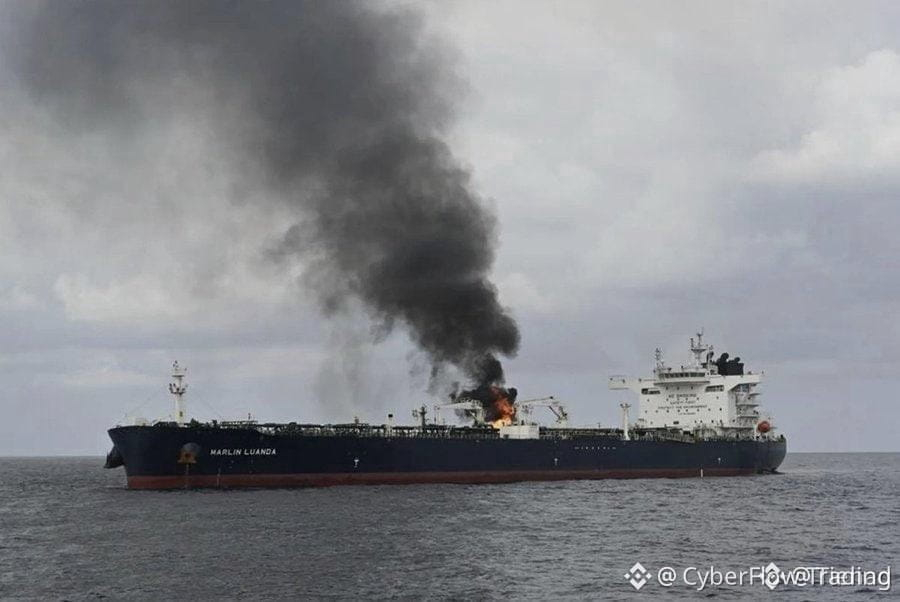
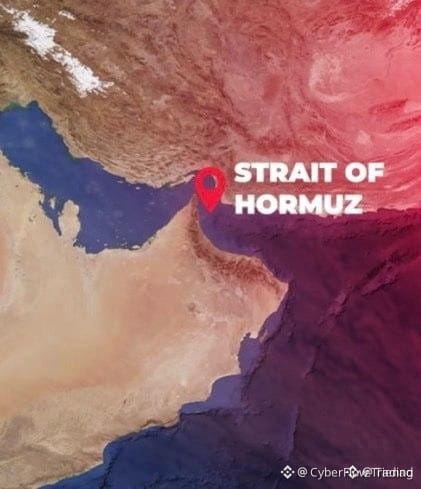
Projectiles hitting two supertankers near the Strait of Hormuz just sent geopolitical risk premiums through the ceiling. ⚡ When critical global chokepoints take a hit, macro capital historically rotates fast into high-beta hedges and energy-correlated plays. 📊
While legacy crude traders debate whether strategic reserves can cushion the supply shock, smart money is already positioning for volatility ripples across commodities and utility-linked tokens like $SC . 🔍 Order flow is tightening as market participants front-run potential freight rerouting bottlenecks. 💡
This tension creates a classic battle between macro escalation panic and reserve-backed supply absorption. 💬 Will oil market supply crunches trigger a broader speculative rally across alt-energy narratives, or will regional reserves cap the upside momentum? 👇
⚠️ Not financial advice. Always manage your risk. 🛡️
🏷️ #ONG #EnergyMarket #Macro #Geopolitics #Volatility
🔥 ⚡
STRAIT OF HORMUZ TENSION SPIKES ENERGY MARKET VOLATILITY AS $ONG FLASHES CATALYST MOVES 🚨 💥
Projectiles hitting two supertankers near the Strait of Hormuz just sent geopolitical risk premiums through the ceiling. ⚡ When critical global chokepoints take a hit, macro capital historically rotates fast into high-beta hedges and energy-correlated plays. 📊
While legacy crude traders debate whether strategic reserves can cushion the supply shock, smart money is already positioning for volatility ripples across commodities and utility-linked tokens like $SC . 🔍 Order flow is tightening as market participants front-run potential freight rerouting bottlenecks. 💡
This tension creates a classic battle between macro escalation panic and reserve-backed supply absorption. 💬 Will oil market supply crunches trigger a broader speculative rally across alt-energy narratives, or will regional reserves cap the upside momentum? 👇
⚠️ Not financial advice. Always manage your risk. 🛡️
🏷️ #ONG #EnergyMarket #Macro #Geopolitics #Volatility
🔥 ⚡
Projectiles hitting two supertankers near the Strait of Hormuz just sent geopolitical risk premiums through the ceiling. ⚡ When critical global chokepoints take a hit, macro capital historically rotates fast into high-beta hedges and energy-correlated plays. 📊
While legacy crude traders debate whether strategic reserves can cushion the supply shock, smart money is already positioning for volatility ripples across commodities and utility-linked tokens like $SC . 🔍 Order flow is tightening as market participants front-run potential freight rerouting bottlenecks. 💡
This tension creates a classic battle between macro escalation panic and reserve-backed supply absorption. 💬 Will oil market supply crunches trigger a broader speculative rally across alt-energy narratives, or will regional reserves cap the upside momentum? 👇
⚠️ Not financial advice. Always manage your risk. 🛡️
🏷️ #ONG #EnergyMarket #Macro #Geopolitics #Volatility
🔥 ⚡

118
3.5M TON CUT ON $CL AND $BZ : GENUINE SUPPLY SHOCK OR A NARRATIVE PLAY? 🤔
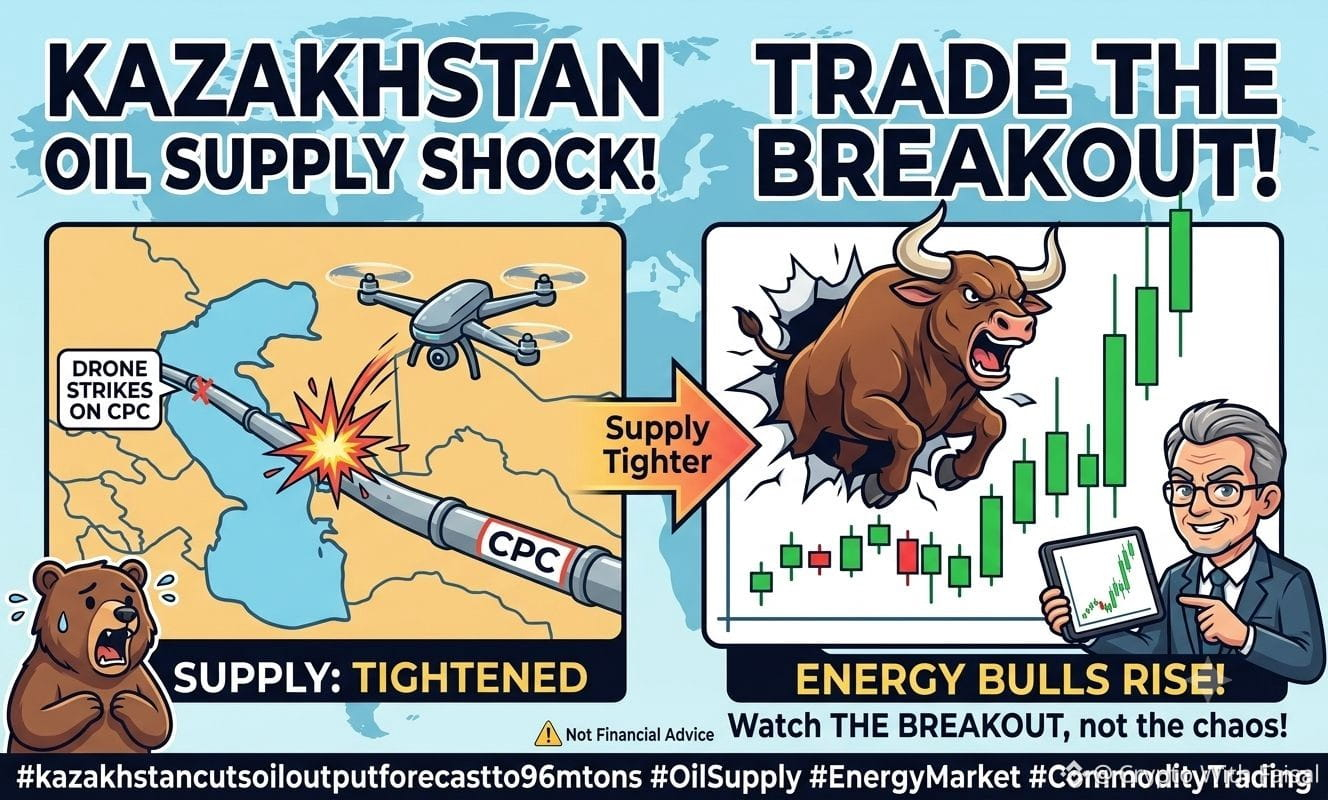
Drone strikes on the Caspian Pipeline Consortium just erased 3.5 million tons of oil output from Kazakhstan, dropping their forecast down to 96 million tons. The consensus view is that squeezed physical supply will force upside liquidity sweeps. But ask yourself: is this a structural shift, or is the crowd usually late to these macro headlines?
While bulls claim smart capital is front-running energy pairs, jumping in right as the headline drops is a classic way to become someone's exit liquidity. Geopolitical catalysts can certainly trigger violent trend expansions, but chasing the initial spike without looking at the bear flip side is a dangerous game.
Are you blindly buying this supply squeeze, or waiting for a pullback to see if actual buyers step in? 🤨
Not financial advice. Always manage your risk.
#CL #BZ #EnergyMarket #CommodityTrading #Breakout
When everyone agrees, I double-check.
3.5M TON CUT ON $CL AND $BZ : GENUINE SUPPLY SHOCK OR A NARRATIVE PLAY? 🤔
Drone strikes on the Caspian Pipeline Consortium just erased 3.5 million tons of oil output from Kazakhstan, dropping their forecast down to 96 million tons. The consensus view is that squeezed physical supply will force upside liquidity sweeps. But ask yourself: is this a structural shift, or is the crowd usually late to these macro headlines?
While bulls claim smart capital is front-running energy pairs, jumping in right as the headline drops is a classic way to become someone's exit liquidity. Geopolitical catalysts can certainly trigger violent trend expansions, but chasing the initial spike without looking at the bear flip side is a dangerous game.
Are you blindly buying this supply squeeze, or waiting for a pullback to see if actual buyers step in? 🤨
Not financial advice. Always manage your risk.
#CL #BZ #EnergyMarket #CommodityTrading #Breakout
When everyone agrees, I double-check.
Drone strikes on the Caspian Pipeline Consortium just erased 3.5 million tons of oil output from Kazakhstan, dropping their forecast down to 96 million tons. The consensus view is that squeezed physical supply will force upside liquidity sweeps. But ask yourself: is this a structural shift, or is the crowd usually late to these macro headlines?
While bulls claim smart capital is front-running energy pairs, jumping in right as the headline drops is a classic way to become someone's exit liquidity. Geopolitical catalysts can certainly trigger violent trend expansions, but chasing the initial spike without looking at the bear flip side is a dangerous game.
Are you blindly buying this supply squeeze, or waiting for a pullback to see if actual buyers step in? 🤨
Not financial advice. Always manage your risk.
#CL #BZ #EnergyMarket #CommodityTrading #Breakout
When everyone agrees, I double-check.
183

Verified
#kazakhstancutsoiloutputforecastto96mtons
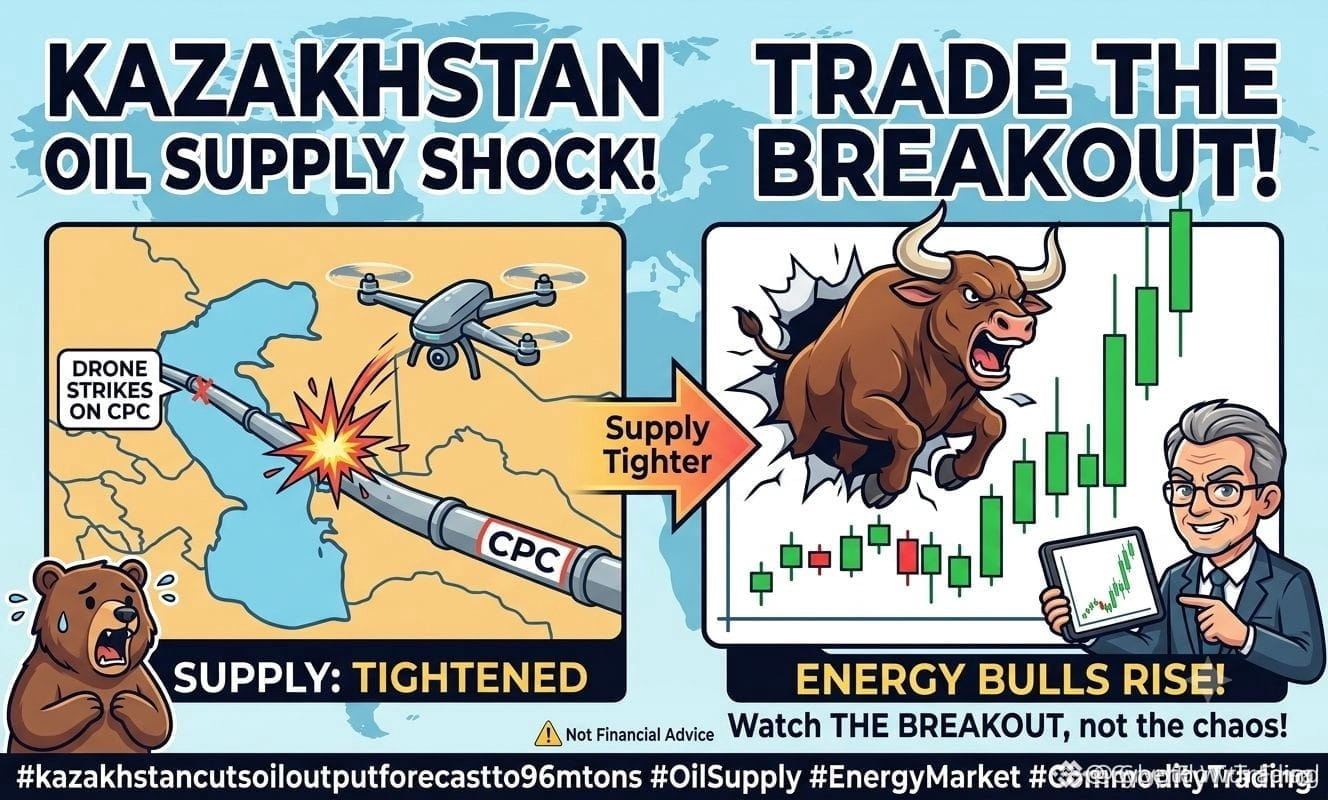
🚨 Supply Shock: Kazakhstan Slashes Oil Output! 🇰🇿
Recent drone strikes on Caspian Pipeline Consortium (CPC) infrastructure have forced Kazakhstan to slash its production forecast by a massive 3.5M tons, bringing the new target down to 96 million tons. 🛢️
What this means for the market:
🔥 Tighter supply is a massive catalyst for energy bulls. Less oil flowing typically means upward pressure on prices.
Trader Takeaway:
Don't get distracted by market noise today. Shift your focus to energy commodities! Geopolitical tension is driving the narrative, so watch the charts closely and trade the confirmed breakouts—not the panic. 📈
⚠️ Disclaimer: This is for informational purposes only, not financial advice.
#OilSupply #EnergyMarket #CommodityTrading
$CL $BZ $ZEC
{future}(ZECUSDT)
{future}(CLUSDT)
{future}(BZUSDT)
#kazakhstancutsoiloutputforecastto96mtons
🚨 Supply Shock: Kazakhstan Slashes Oil Output! 🇰🇿
Recent drone strikes on Caspian Pipeline Consortium (CPC) infrastructure have forced Kazakhstan to slash its production forecast by a massive 3.5M tons, bringing the new target down to 96 million tons. 🛢️
What this means for the market:
🔥 Tighter supply is a massive catalyst for energy bulls. Less oil flowing typically means upward pressure on prices.
Trader Takeaway:
Don't get distracted by market noise today. Shift your focus to energy commodities! Geopolitical tension is driving the narrative, so watch the charts closely and trade the confirmed breakouts—not the panic. 📈
⚠️ Disclaimer: This is for informational purposes only, not financial advice.
#OilSupply #EnergyMarket #CommodityTrading
$CL $BZ $ZEC
🚨 Supply Shock: Kazakhstan Slashes Oil Output! 🇰🇿
Recent drone strikes on Caspian Pipeline Consortium (CPC) infrastructure have forced Kazakhstan to slash its production forecast by a massive 3.5M tons, bringing the new target down to 96 million tons. 🛢️
What this means for the market:
🔥 Tighter supply is a massive catalyst for energy bulls. Less oil flowing typically means upward pressure on prices.
Trader Takeaway:
Don't get distracted by market noise today. Shift your focus to energy commodities! Geopolitical tension is driving the narrative, so watch the charts closely and trade the confirmed breakouts—not the panic. 📈
⚠️ Disclaimer: This is for informational purposes only, not financial advice.
#OilSupply #EnergyMarket #CommodityTrading
$CL $BZ $ZEC
2
1.9k
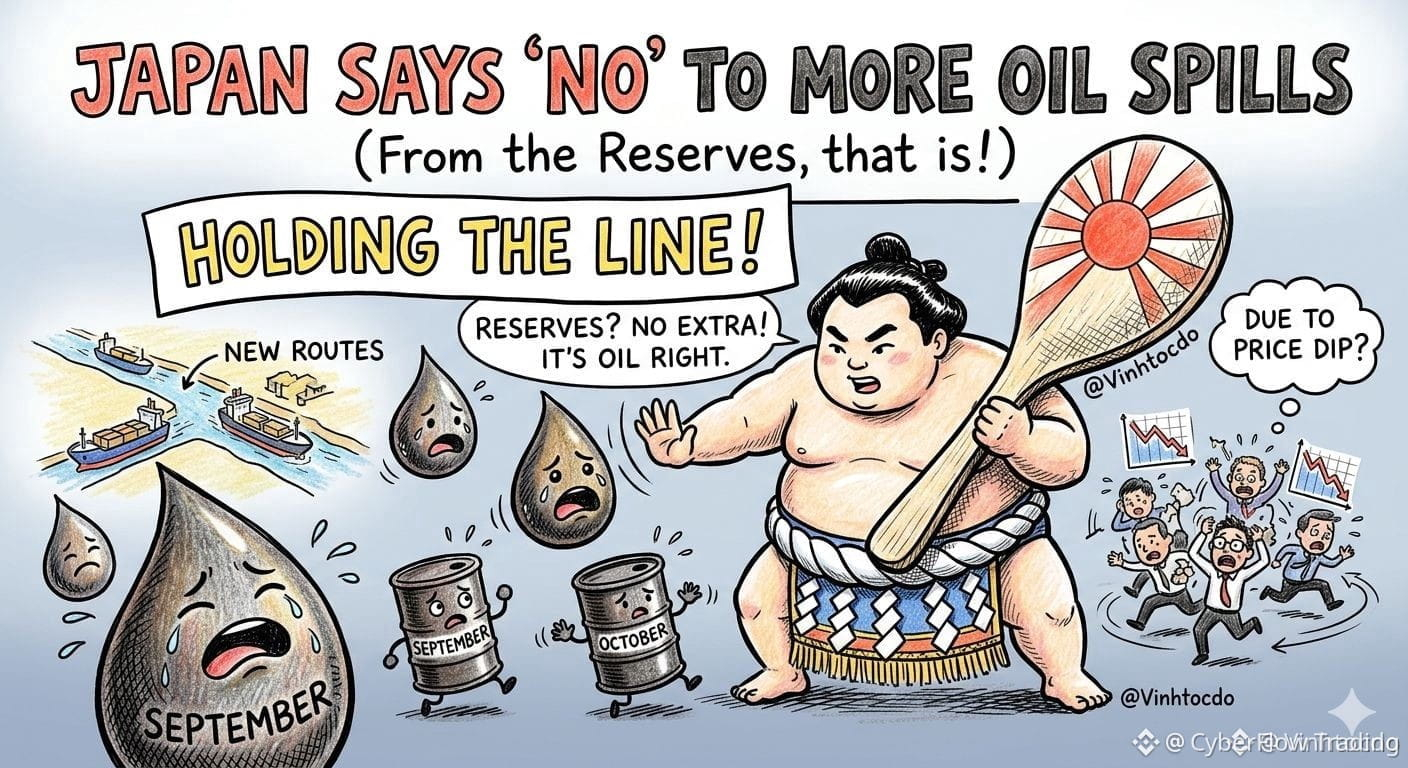
Japan holds oil reserves through October while $CL supply tightens—bullish signal or classic narrative play? 🤔
Japan opting against further SPR releases through October has the crowd claiming tactical confidence in macro supply absorption despite temporary Suez transit bottlenecks. But take a closer look at institutional market structure across $CL and $BZ : order flow is simply stabilizing near key structural demand zones, not pricing in massive panic.
Before falling for another fomo trap or panic-shorting energy benchmarks, remember that the crowd is usually late. Watch for actual high-volume absorption candles at higher-timeframe support to confirm real institutional accumulation—don't be someone's exit liquidity.
Are you waiting for a structural range reclaim before taking positions on $CL , or expecting macro headwinds to force lower price discovery? 🤔
Not financial advice. Do your own digging and manage your risk.
#CL #CrudeOil #EnergyMarket #MarketStructure
When everyone agrees, I double-check.
Japan holds oil reserves through October while $CL supply tightens—bullish signal or classic narrative play? 🤔
Japan opting against further SPR releases through October has the crowd claiming tactical confidence in macro supply absorption despite temporary Suez transit bottlenecks. But take a closer look at institutional market structure across $CL and $BZ : order flow is simply stabilizing near key structural demand zones, not pricing in massive panic.
Before falling for another fomo trap or panic-shorting energy benchmarks, remember that the crowd is usually late. Watch for actual high-volume absorption candles at higher-timeframe support to confirm real institutional accumulation—don't be someone's exit liquidity.
Are you waiting for a structural range reclaim before taking positions on $CL , or expecting macro headwinds to force lower price discovery? 🤔
Not financial advice. Do your own digging and manage your risk.
#CL #CrudeOil #EnergyMarket #MarketStructure
When everyone agrees, I double-check.
Japan opting against further SPR releases through October has the crowd claiming tactical confidence in macro supply absorption despite temporary Suez transit bottlenecks. But take a closer look at institutional market structure across $CL and $BZ : order flow is simply stabilizing near key structural demand zones, not pricing in massive panic.
Before falling for another fomo trap or panic-shorting energy benchmarks, remember that the crowd is usually late. Watch for actual high-volume absorption candles at higher-timeframe support to confirm real institutional accumulation—don't be someone's exit liquidity.
Are you waiting for a structural range reclaim before taking positions on $CL , or expecting macro headwinds to force lower price discovery? 🤔
Not financial advice. Do your own digging and manage your risk.
#CL #CrudeOil #EnergyMarket #MarketStructure
When everyone agrees, I double-check.
108

#kazakhstancutsoiloutputforecastto96mtons
🚨 Shock in supplies: Kazakhstan cuts oil production! 🇰🇿
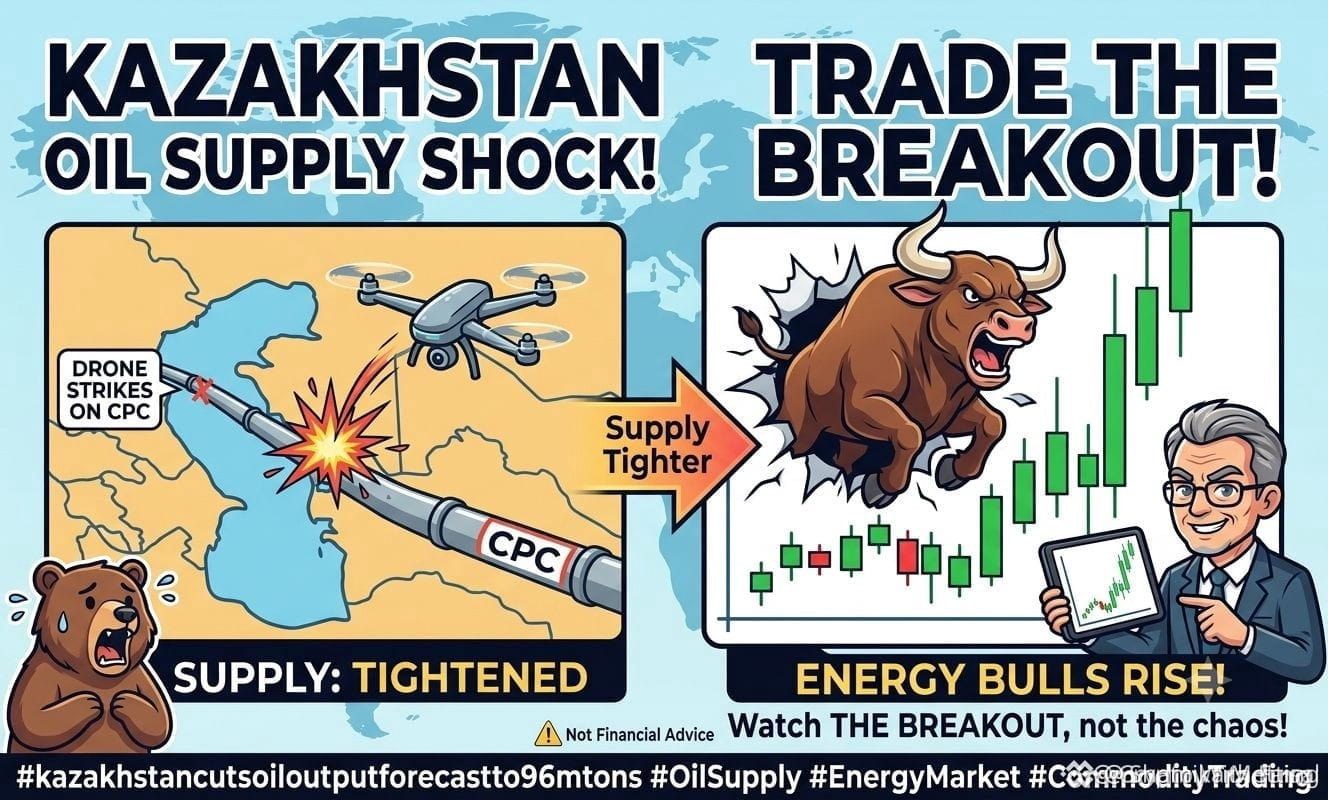
Drone attacks on the infrastructure of Kazakhstan’s Caspian Pipeline Consortium (CPC) have pushed the country to significantly lower its oil production outlook by 3.5 million tons, bringing the new target to 96 million tons. 🛢️
What it means for the market:
🔥 Tight supplies are a major catalyst for energy buyers. Typically, reduced oil flow puts upward pressure on prices.
Trader’s takeaway:
Don’t get distracted by today’s market noise. Focus on energy commodities! Geopolitical tensions are driving the narrative, so watch the charts closely and trade only confirmed breakout moves—not panic. 📈
⚠️ Warning: This content is for informational purposes only and is not financial advice.
Please follow up
#OilSupply #EnergyMarket #CommodityTrading
$CL $BZ $ZEC
{future}(ZECUSDT)
#kazakhstancutsoiloutputforecastto96mtons
🚨 Shock in supplies: Kazakhstan cuts oil production! 🇰🇿
Drone attacks on the infrastructure of Kazakhstan’s Caspian Pipeline Consortium (CPC) have pushed the country to significantly lower its oil production outlook by 3.5 million tons, bringing the new target to 96 million tons. 🛢️
What it means for the market:
🔥 Tight supplies are a major catalyst for energy buyers. Typically, reduced oil flow puts upward pressure on prices.
Trader’s takeaway:
Don’t get distracted by today’s market noise. Focus on energy commodities! Geopolitical tensions are driving the narrative, so watch the charts closely and trade only confirmed breakout moves—not panic. 📈
⚠️ Warning: This content is for informational purposes only and is not financial advice.
Please follow up
#OilSupply #EnergyMarket #CommodityTrading
$CL $BZ $ZEC
🚨 Shock in supplies: Kazakhstan cuts oil production! 🇰🇿
Drone attacks on the infrastructure of Kazakhstan’s Caspian Pipeline Consortium (CPC) have pushed the country to significantly lower its oil production outlook by 3.5 million tons, bringing the new target to 96 million tons. 🛢️
What it means for the market:
🔥 Tight supplies are a major catalyst for energy buyers. Typically, reduced oil flow puts upward pressure on prices.
Trader’s takeaway:
Don’t get distracted by today’s market noise. Focus on energy commodities! Geopolitical tensions are driving the narrative, so watch the charts closely and trade only confirmed breakout moves—not panic. 📈
⚠️ Warning: This content is for informational purposes only and is not financial advice.
Please follow up
#OilSupply #EnergyMarket #CommodityTrading
$CL $BZ $ZEC
1
584
Verified
#kazakhstancutsoiloutputforecastto96mtons
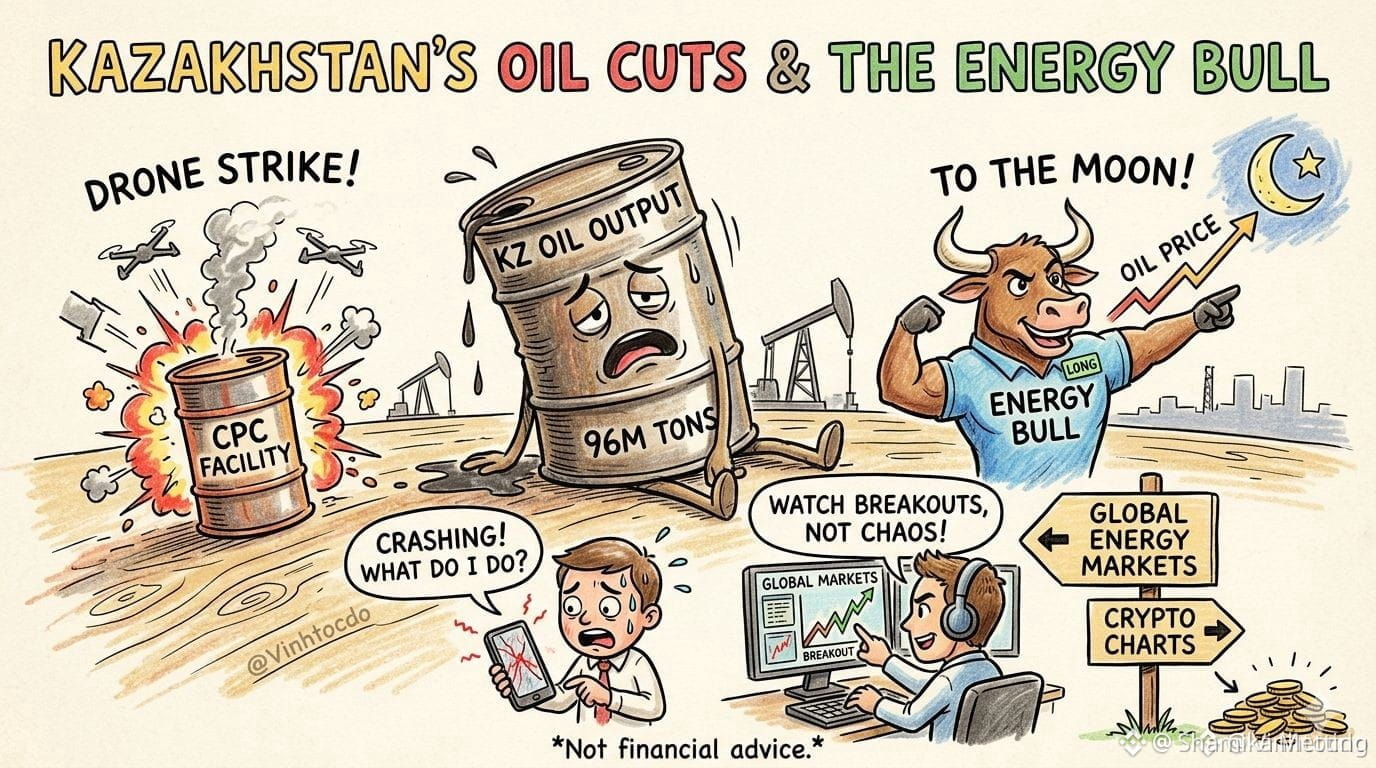
🛢️ Kazakhstan has cut its oil production forecast to 96 million tons! 🇰🇿
A decrease of 3.5 million tons after attacks with drone strikes hit the Caspian Pipeline Consortium (CPC) facilities. Will this send oil prices to the moon? 🚀 Usually, lower supply means higher prices, so energy fans are definitely waking up! 🐂
What should traders do?
Don’t just stare at today’s crypto charts! Keep a close eye on global energy markets as geopolitics adds flavor to events. Stay alert and trade the breakout—not the chaos! 📈
⚠️ This is not financial advice.
Want to trade with market volatility? Join Binance!
Please follow up
#OilSupply #EnergyMarket #CommodityTrading
$CL
{future}(CLUSDT)
#kazakhstancutsoiloutputforecastto96mtons
🛢️ Kazakhstan has cut its oil production forecast to 96 million tons! 🇰🇿
A decrease of 3.5 million tons after attacks with drone strikes hit the Caspian Pipeline Consortium (CPC) facilities. Will this send oil prices to the moon? 🚀 Usually, lower supply means higher prices, so energy fans are definitely waking up! 🐂
What should traders do?
Don’t just stare at today’s crypto charts! Keep a close eye on global energy markets as geopolitics adds flavor to events. Stay alert and trade the breakout—not the chaos! 📈
⚠️ This is not financial advice.
Want to trade with market volatility? Join Binance!
Please follow up
#OilSupply #EnergyMarket #CommodityTrading
$CL
🛢️ Kazakhstan has cut its oil production forecast to 96 million tons! 🇰🇿
A decrease of 3.5 million tons after attacks with drone strikes hit the Caspian Pipeline Consortium (CPC) facilities. Will this send oil prices to the moon? 🚀 Usually, lower supply means higher prices, so energy fans are definitely waking up! 🐂
What should traders do?
Don’t just stare at today’s crypto charts! Keep a close eye on global energy markets as geopolitics adds flavor to events. Stay alert and trade the breakout—not the chaos! 📈
⚠️ This is not financial advice.
Want to trade with market volatility? Join Binance!
Please follow up
#OilSupply #EnergyMarket #CommodityTrading
$CL
1
965

#OilEdgesHigher
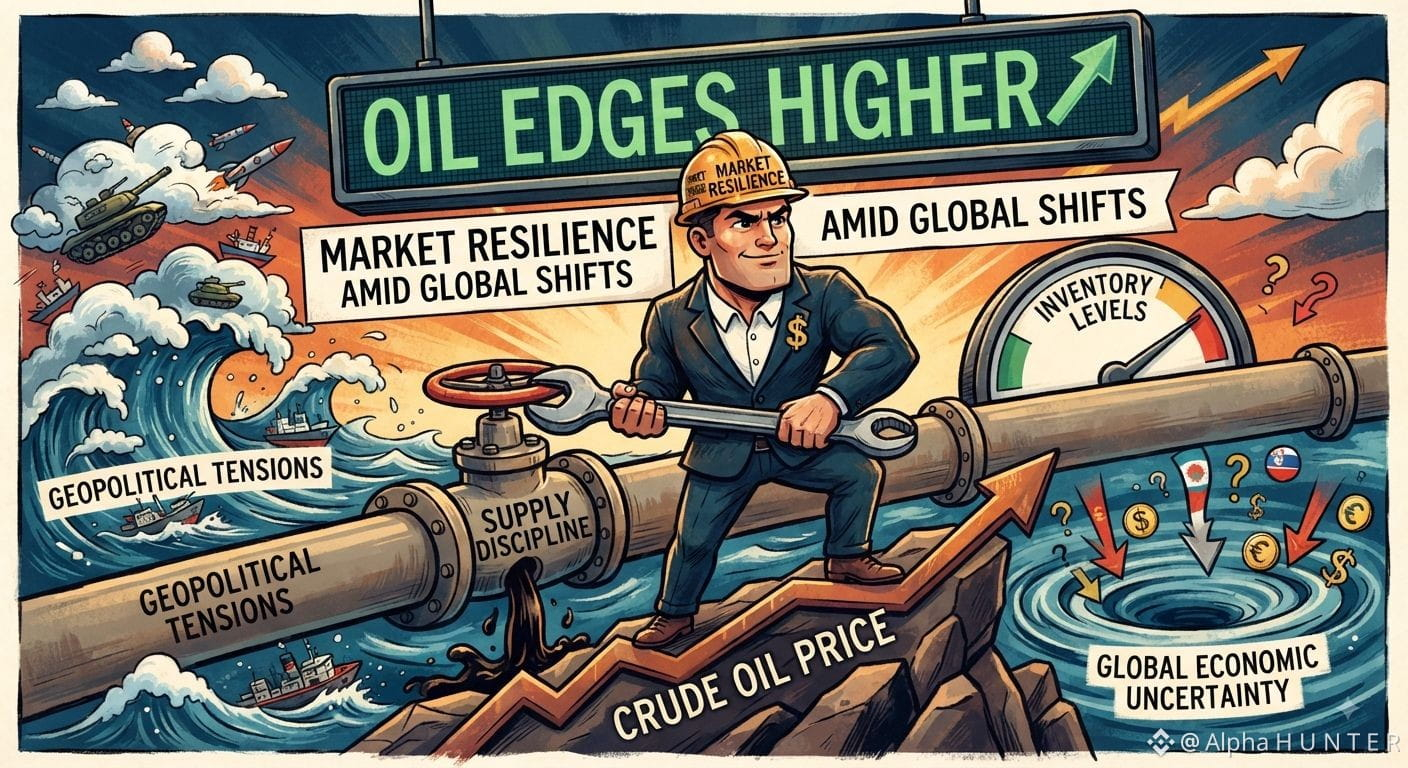
Oil Edges Higher: Market Resilience Amid Global Shifts
Crude oil prices are edging higher as supply tightening concerns and steady macroeconomic data provide renewed support to energy markets. Despite persistent global economic crosscurrents, supply-side discipline from major producers continues to cushion prices against sharp downside moves.
Traders are closely monitoring inventory levels, geopolitical developments, and upcoming economic indicators to gauge the next major directional breakout. As energy demand remains resilient, crude continues to prove its status as a critical asset class for astute market participants looking to capitalize on shifting market dynamics.
Stay vigilant, manage your risk, and keep a close eye on key resistance levels as the market evolves.
#CrudeOil #Commodities #EnergyMarket
$CL
{future}(CLUSDT)
$BZ
{future}(BZUSDT)
$XAU
{future}(XAUUSDT)
#OilEdgesHigher
Oil Edges Higher: Market Resilience Amid Global Shifts
Crude oil prices are edging higher as supply tightening concerns and steady macroeconomic data provide renewed support to energy markets. Despite persistent global economic crosscurrents, supply-side discipline from major producers continues to cushion prices against sharp downside moves.
Traders are closely monitoring inventory levels, geopolitical developments, and upcoming economic indicators to gauge the next major directional breakout. As energy demand remains resilient, crude continues to prove its status as a critical asset class for astute market participants looking to capitalize on shifting market dynamics.
Stay vigilant, manage your risk, and keep a close eye on key resistance levels as the market evolves.
#CrudeOil #Commodities #EnergyMarket
$CL
$BZ
$XAU
Oil Edges Higher: Market Resilience Amid Global Shifts
Crude oil prices are edging higher as supply tightening concerns and steady macroeconomic data provide renewed support to energy markets. Despite persistent global economic crosscurrents, supply-side discipline from major producers continues to cushion prices against sharp downside moves.
Traders are closely monitoring inventory levels, geopolitical developments, and upcoming economic indicators to gauge the next major directional breakout. As energy demand remains resilient, crude continues to prove its status as a critical asset class for astute market participants looking to capitalize on shifting market dynamics.
Stay vigilant, manage your risk, and keep a close eye on key resistance levels as the market evolves.
#CrudeOil #Commodities #EnergyMarket
$CL
$BZ
$XAU
1
92
·
--
Bullish
Verified
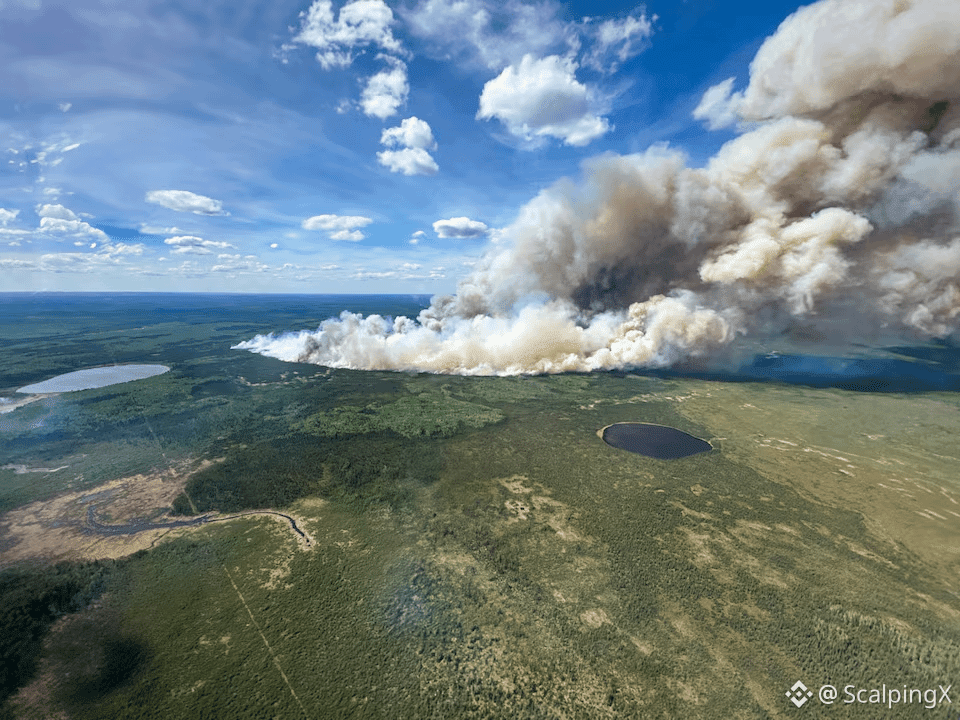
Alberta wildfires return near Canada’s oil sands, adding a short-term risk factor for the energy market.
🔥 Wildfires in Alberta are flaring up again around Fort McMurray and Lac La Biche, two areas close to Canada’s key oil sands operations. Several fires are not far from major oil facilities, drawing market attention back to potential supply disruption risks during the summer season.
🌧️ The positive point is that no major production shutdown has been reported so far. The evacuation alert in Conklin has been lifted after heavy rain helped firefighting efforts, easing short-term pressure compared with a worse-case scenario.
🛢️ For the oil market, this is more of a mild supportive factor than an actual supply shock for now. Canada remains one of the key stable oil suppliers, so if fires spread closer to production or transport infrastructure, the risk premium could rise quickly.
📌 Still, the current price reaction remains limited because output has not been affected. Investors are likely to keep watching weather conditions, fire containment progress, and updates from oil sands operators before pricing in stronger disruption risk.
⚠️ Previous wildfire seasons show that Alberta remains a sensitive point in Canada’s oil supply chain. In the short term, rain helps reduce escalation risk, but if dry and hot weather returns from June to August, production disruption risks could reappear.
#EnergyMarket $BNB $CL $NATGAS
Alberta wildfires return near Canada’s oil sands, adding a short-term risk factor for the energy market.
🔥 Wildfires in Alberta are flaring up again around Fort McMurray and Lac La Biche, two areas close to Canada’s key oil sands operations. Several fires are not far from major oil facilities, drawing market attention back to potential supply disruption risks during the summer season.
🌧️ The positive point is that no major production shutdown has been reported so far. The evacuation alert in Conklin has been lifted after heavy rain helped firefighting efforts, easing short-term pressure compared with a worse-case scenario.
🛢️ For the oil market, this is more of a mild supportive factor than an actual supply shock for now. Canada remains one of the key stable oil suppliers, so if fires spread closer to production or transport infrastructure, the risk premium could rise quickly.
📌 Still, the current price reaction remains limited because output has not been affected. Investors are likely to keep watching weather conditions, fire containment progress, and updates from oil sands operators before pricing in stronger disruption risk.
⚠️ Previous wildfire seasons show that Alberta remains a sensitive point in Canada’s oil supply chain. In the short term, rain helps reduce escalation risk, but if dry and hot weather returns from June to August, production disruption risks could reappear.
#EnergyMarket $BNB $CL $NATGAS
🔥 Wildfires in Alberta are flaring up again around Fort McMurray and Lac La Biche, two areas close to Canada’s key oil sands operations. Several fires are not far from major oil facilities, drawing market attention back to potential supply disruption risks during the summer season.
🌧️ The positive point is that no major production shutdown has been reported so far. The evacuation alert in Conklin has been lifted after heavy rain helped firefighting efforts, easing short-term pressure compared with a worse-case scenario.
🛢️ For the oil market, this is more of a mild supportive factor than an actual supply shock for now. Canada remains one of the key stable oil suppliers, so if fires spread closer to production or transport infrastructure, the risk premium could rise quickly.
📌 Still, the current price reaction remains limited because output has not been affected. Investors are likely to keep watching weather conditions, fire containment progress, and updates from oil sands operators before pricing in stronger disruption risk.
⚠️ Previous wildfire seasons show that Alberta remains a sensitive point in Canada’s oil supply chain. In the short term, rain helps reduce escalation risk, but if dry and hot weather returns from June to August, production disruption risks could reappear.
#EnergyMarket $BNB $CL $NATGAS
534

·
--
Oil Shock Ahead 🚨
Analysts predict that the supply disruption caused by the closure of the Strait of Hormuz will last until the end of the year, even if the waterway reopens soon. This forecast has significant implications for the global oil market, potentially leading to higher prices and increased volatility. The closure of this critical shipping lane has already caused ripples in the energy sector, and a prolonged disruption could have far-reaching consequences for the economy. As the situation continues to unfold, investors are advised to keep a close eye on the developments and adjust their portfolios accordingly. #OilPrices #EnergyMarket #Commodities #GlobalEconomy
Oil Shock Ahead 🚨
Analysts predict that the supply disruption caused by the closure of the Strait of Hormuz will last until the end of the year, even if the waterway reopens soon. This forecast has significant implications for the global oil market, potentially leading to higher prices and increased volatility. The closure of this critical shipping lane has already caused ripples in the energy sector, and a prolonged disruption could have far-reaching consequences for the economy. As the situation continues to unfold, investors are advised to keep a close eye on the developments and adjust their portfolios accordingly. #OilPrices #EnergyMarket #Commodities #GlobalEconomy
Analysts predict that the supply disruption caused by the closure of the Strait of Hormuz will last until the end of the year, even if the waterway reopens soon. This forecast has significant implications for the global oil market, potentially leading to higher prices and increased volatility. The closure of this critical shipping lane has already caused ripples in the energy sector, and a prolonged disruption could have far-reaching consequences for the economy. As the situation continues to unfold, investors are advised to keep a close eye on the developments and adjust their portfolios accordingly. #OilPrices #EnergyMarket #Commodities #GlobalEconomy
94
·
--
Bullish
Verified
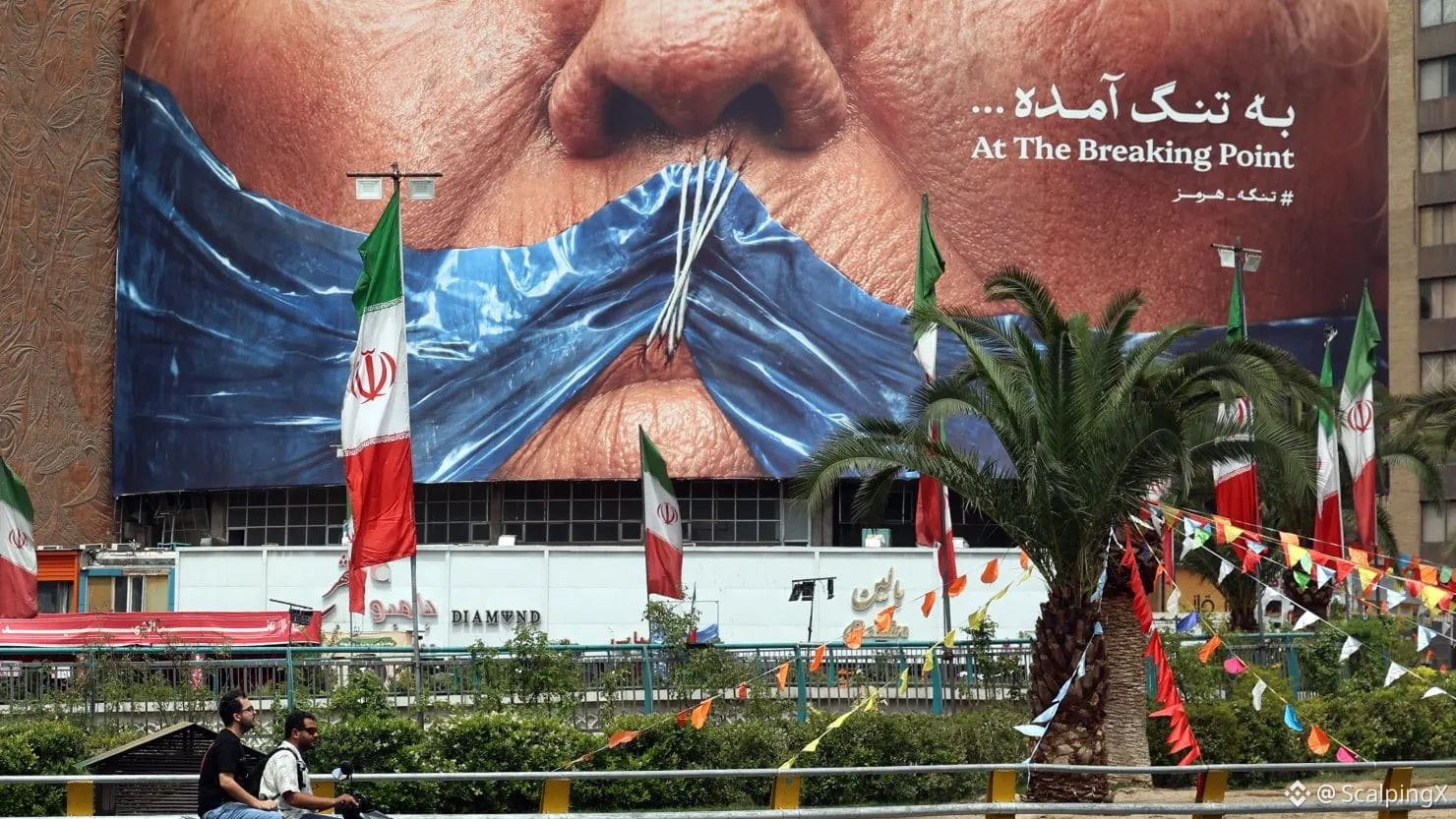
Iran halts communication channel with the US, Hormuz risk puts oil market on high alert
📌 Iran said it has stopped indirect message exchanges with the US after accusing Israel of continuing to escalate in Lebanon and Gaza. The move brings a fragile ceasefire back to the center of energy-market risk.
⚠️ The most sensitive point is Tehran’s threat to block the Strait of Hormuz, a key route for global oil flows. If this risk moves from rhetoric to actual action, the market may have to reprice potential supply disruption very quickly.
📈 Oil prices reacted strongly after the news, showing that investors are not treating this as a routine warning. However, the move still needs to be viewed carefully, as there has been no confirmation that Iran has launched military action or imposed a full blockade.
🔎 In essence, Iran is using energy pressure to force the US and Israel to reconsider their approach across connected fronts. Bab el-Mandeb may also be mentioned as a wider shipping risk, but Hormuz remains the main focus because of its direct impact on oil, inflation, and risk-asset sentiment.
⏱️ Over the next 24–72 hours, markets will likely stay highly sensitive to statements from Washington, Tehran, and Tel Aviv. Oil, energy stocks, and gold may find support, while equities and crypto could face sharper volatility if tensions keep rising.
✅ Still, the situation should be viewed with balance, as the US has not confirmed that communication channels are fully closed. If backchannel diplomacy remains active, the risk may be temporarily contained, but markets are unlikely to return to normal as long as Hormuz remains part of the threat.
#EnergyMarket $CL $NATGAS $TON
Iran halts communication channel with the US, Hormuz risk puts oil market on high alert
📌 Iran said it has stopped indirect message exchanges with the US after accusing Israel of continuing to escalate in Lebanon and Gaza. The move brings a fragile ceasefire back to the center of energy-market risk.
⚠️ The most sensitive point is Tehran’s threat to block the Strait of Hormuz, a key route for global oil flows. If this risk moves from rhetoric to actual action, the market may have to reprice potential supply disruption very quickly.
📈 Oil prices reacted strongly after the news, showing that investors are not treating this as a routine warning. However, the move still needs to be viewed carefully, as there has been no confirmation that Iran has launched military action or imposed a full blockade.
🔎 In essence, Iran is using energy pressure to force the US and Israel to reconsider their approach across connected fronts. Bab el-Mandeb may also be mentioned as a wider shipping risk, but Hormuz remains the main focus because of its direct impact on oil, inflation, and risk-asset sentiment.
⏱️ Over the next 24–72 hours, markets will likely stay highly sensitive to statements from Washington, Tehran, and Tel Aviv. Oil, energy stocks, and gold may find support, while equities and crypto could face sharper volatility if tensions keep rising.
✅ Still, the situation should be viewed with balance, as the US has not confirmed that communication channels are fully closed. If backchannel diplomacy remains active, the risk may be temporarily contained, but markets are unlikely to return to normal as long as Hormuz remains part of the threat.
#EnergyMarket $CL $NATGAS $TON
📌 Iran said it has stopped indirect message exchanges with the US after accusing Israel of continuing to escalate in Lebanon and Gaza. The move brings a fragile ceasefire back to the center of energy-market risk.
⚠️ The most sensitive point is Tehran’s threat to block the Strait of Hormuz, a key route for global oil flows. If this risk moves from rhetoric to actual action, the market may have to reprice potential supply disruption very quickly.
📈 Oil prices reacted strongly after the news, showing that investors are not treating this as a routine warning. However, the move still needs to be viewed carefully, as there has been no confirmation that Iran has launched military action or imposed a full blockade.
🔎 In essence, Iran is using energy pressure to force the US and Israel to reconsider their approach across connected fronts. Bab el-Mandeb may also be mentioned as a wider shipping risk, but Hormuz remains the main focus because of its direct impact on oil, inflation, and risk-asset sentiment.
⏱️ Over the next 24–72 hours, markets will likely stay highly sensitive to statements from Washington, Tehran, and Tel Aviv. Oil, energy stocks, and gold may find support, while equities and crypto could face sharper volatility if tensions keep rising.
✅ Still, the situation should be viewed with balance, as the US has not confirmed that communication channels are fully closed. If backchannel diplomacy remains active, the risk may be temporarily contained, but markets are unlikely to return to normal as long as Hormuz remains part of the threat.
#EnergyMarket $CL $NATGAS $TON
1
1
1.4k


·
--
Bullish
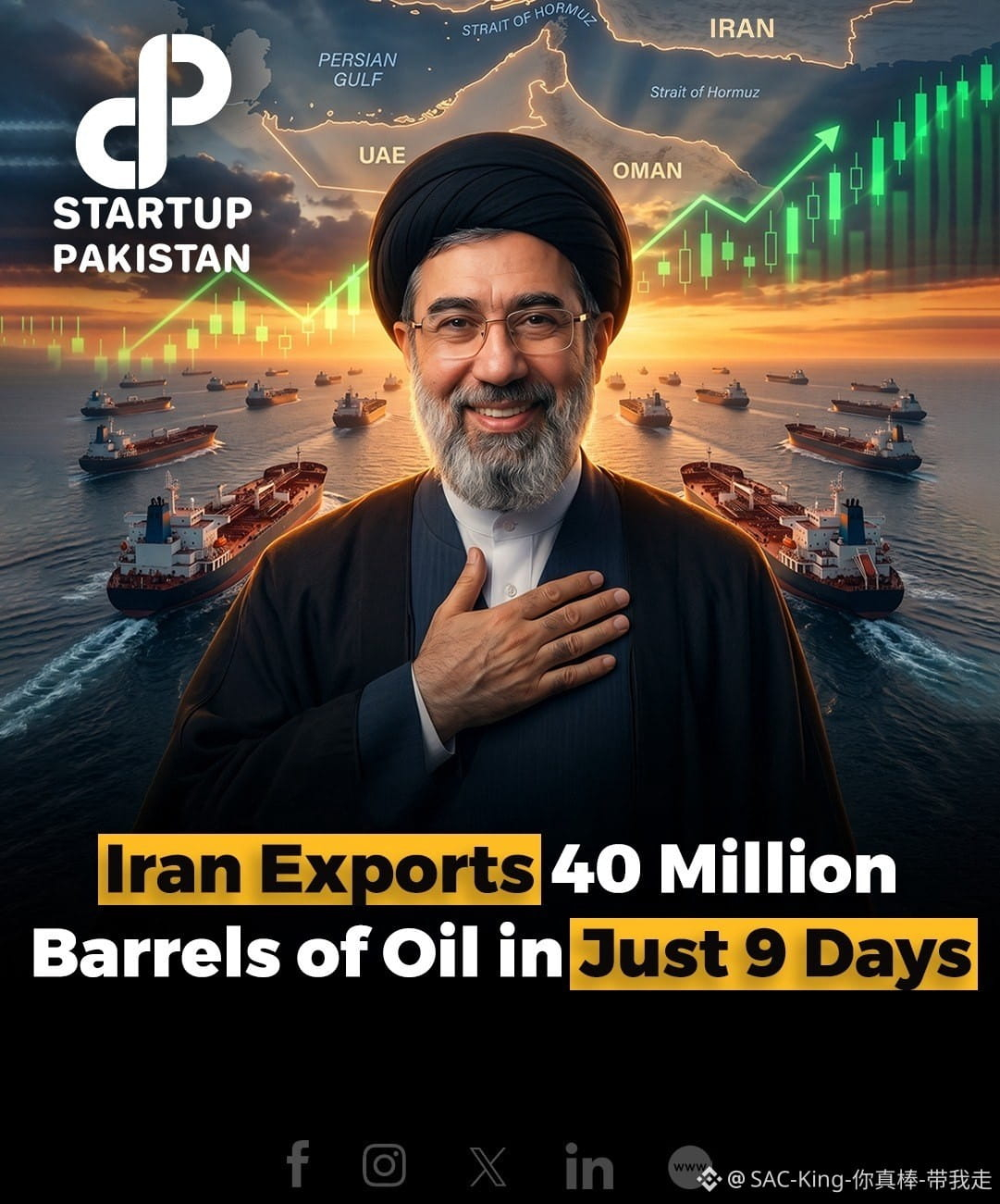
Iran has reportedly exported around 40 million barrels of oil in just nine days, marking a significant boost in its energy trade activities.
The rapid export surge highlights the country’s continued reliance on oil revenue despite international sanctions and market restrictions.
Analysts suggest that increased shipments may be driven by strong demand in Asian markets and strategic pricing adjustments.
The development reflects Tehran’s efforts to stabilize its economy through energy exports while navigating geopolitical pressures.
Energy experts are closely watching how this trend may impact global oil prices and regional trade dynamics in the coming weeks today.
Disclaimer: This post is for informational purposes only and is based on publicly available reports. The image is AI generated and is just for reference.
#MiddleEast2026 #OilExports #GrowWithSAC #iran #EnergyMarket #Economy #MiddleEast
Iran has reportedly exported around 40 million barrels of oil in just nine days, marking a significant boost in its energy trade activities.
The rapid export surge highlights the country’s continued reliance on oil revenue despite international sanctions and market restrictions.
Analysts suggest that increased shipments may be driven by strong demand in Asian markets and strategic pricing adjustments.
The development reflects Tehran’s efforts to stabilize its economy through energy exports while navigating geopolitical pressures.
Energy experts are closely watching how this trend may impact global oil prices and regional trade dynamics in the coming weeks today.
Disclaimer: This post is for informational purposes only and is based on publicly available reports. The image is AI generated and is just for reference.
#MiddleEast2026 #OilExports #GrowWithSAC #iran #EnergyMarket #Economy #MiddleEast
The rapid export surge highlights the country’s continued reliance on oil revenue despite international sanctions and market restrictions.
Analysts suggest that increased shipments may be driven by strong demand in Asian markets and strategic pricing adjustments.
The development reflects Tehran’s efforts to stabilize its economy through energy exports while navigating geopolitical pressures.
Energy experts are closely watching how this trend may impact global oil prices and regional trade dynamics in the coming weeks today.
Disclaimer: This post is for informational purposes only and is based on publicly available reports. The image is AI generated and is just for reference.
#MiddleEast2026 #OilExports #GrowWithSAC #iran #EnergyMarket #Economy #MiddleEast
CLUS+1.02%
BZUS-0.63%
1
297
Log in to explore more content
Join global crypto users on Binance Square
⚡️ Get latest and useful information about crypto.
💬 Trusted by the world’s largest crypto exchange.
👍 Discover real insights from verified creators.
Email / Phone number
Trending Topics
1
#CircleMints500MUSDCOnSolana
12,913 views
544 Discussing
2
#PolymarketBankFailureBetsDrawFDICConcern
28,410 views
737 Discussing
3
#BlackRockBuildsTokenizedPortfoliosForOndo
22,479 views
504 Discussing
4
#BitwiseFilesToListNEARETFOnNYSEArca
22,923 views
471 Discussing
5
#SECCommissionerPeirceToLeaveOct2
23,521 views
389 Discussing
6
#SECSaysBuybacksUpgradesDontMakeTokenSecurity
23,406 views
337 Discussing
7
#StrategyProposesDailyDividendsForPreferreds
3,217 views
104 Discussing
8
#CircleTetherFreezeBitgetHackerWallet
2,525 views
62 Discussing
9
#CoinMarketCapCompletesCoinglassAcquisition
5,867 views
85 Discussing
10
#QNTRises39%
85,607 views
1,432 Discussing