

#crudeoil
crudeoil
443,956 views
3,101 Discussing
Hot
Latest

Article
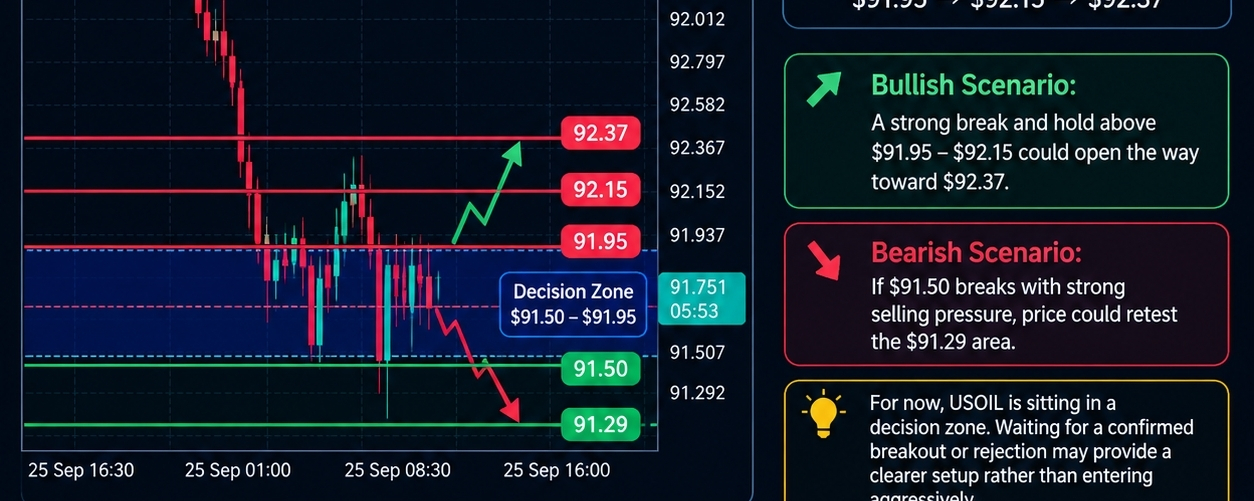
🛢️ USOIL M15: Key Zone After a Strong Downtrend$USDS OIL is currently trading around $91.75. On the M15 chart, price has experienced a strong bearish move and is now consolidating around the $91.50–$91.95 zone.
📌 Key Support: $91.50 → $91.29
📌 Key Resistance: $91.95 → $92.15 → $92.37
Bullish Scenario:
A strong break and hold above $91.95–$92.15 could open the way toward $92.37.
Bearish Scenario:
If $91.50 breaks with strong selling pressure, price could retest the $91.29 area.
For now, USOIL is sitting in a decision zone. Waiting for a confirmed breakout or rejection may provide a clearer setup rather than entering aggressively.
⚠️ Educational analysis only. Not financial advice.
#BitcoinSpotETFsNetInflow$191M #CrudeOil #OilTradin #TechnicalAnalysis #BinanceSquare #Trading
🛢️ USOIL M15: Key Zone After a Strong Downtrend
$USDS OIL is currently trading around $91.75. On the M15 chart, price has experienced a strong bearish move and is now consolidating around the $91.50–$91.95 zone.
📌 Key Support: $91.50 → $91.29
📌 Key Resistance: $91.95 → $92.15 → $92.37
Bullish Scenario:
A strong break and hold above $91.95–$92.15 could open the way toward $92.37.
Bearish Scenario:
If $91.50 breaks with strong selling pressure, price could retest the $91.29 area.
For now, USOIL is sitting in a decision zone. Waiting for a confirmed breakout or rejection may provide a clearer setup rather than entering aggressively.
⚠️ Educational analysis only. Not financial advice.
#BitcoinSpotETFsNetInflow$191M #CrudeOil #OilTradin #TechnicalAnalysis #BinanceSquare #Trading
📌 Key Support: $91.50 → $91.29
📌 Key Resistance: $91.95 → $92.15 → $92.37
Bullish Scenario:
A strong break and hold above $91.95–$92.15 could open the way toward $92.37.
Bearish Scenario:
If $91.50 breaks with strong selling pressure, price could retest the $91.29 area.
For now, USOIL is sitting in a decision zone. Waiting for a confirmed breakout or rejection may provide a clearer setup rather than entering aggressively.
⚠️ Educational analysis only. Not financial advice.
#BitcoinSpotETFsNetInflow$191M #CrudeOil #OilTradin #TechnicalAnalysis #BinanceSquare #Trading
1
139


·
--
$CL (WTI Crude Oil) Long Setup
Middle East supply concerns and geopolitical friction continue to drive bullish momentum.
Entry Zone: $93 – $95
Take Profit (TP): $96 | $98 | $100 | $105
Stop Loss (SL): $90
$CL Focus: Escalating geopolitical risks support higher price targets.
#CrudeOil #Trading $CL #USWeighsPromotingDollarStablecoinsAbroad
{future}(CLUSDT)
$CL (WTI Crude Oil) Long Setup
Middle East supply concerns and geopolitical friction continue to drive bullish momentum.
Entry Zone: $93 – $95
Take Profit (TP): $96 | $98 | $100 | $105
Stop Loss (SL): $90
$CL Focus: Escalating geopolitical risks support higher price targets.
#CrudeOil #Trading $CL #USWeighsPromotingDollarStablecoinsAbroad
Middle East supply concerns and geopolitical friction continue to drive bullish momentum.
Entry Zone: $93 – $95
Take Profit (TP): $96 | $98 | $100 | $105
Stop Loss (SL): $90
$CL Focus: Escalating geopolitical risks support higher price targets.
#CrudeOil #Trading $CL #USWeighsPromotingDollarStablecoinsAbroad
170

Brent crude oil futures closed with a sharp surge today, settling at $106.60 per barrel after jumping $3.52, or 3.41%. This aggressive daily rally marks another volatile chapter for energy markets as tightening physical supplies and heightened geopolitical uncertainty continue to dictate trading dynamics across global commodity desks.
A single-day spike of over 3% in crude is critical because energy costs remain the primary driver of headline inflation metrics. Sustained oil prices above $100 per barrel directly threaten central bank easing timelines, reigniting concerns that disinflation trends may stall or reverse faster than consensus models anticipated.
Across traditional finance, higher oil prices immediately trigger a risk-off rotation. Surging energy input costs push sovereign bond yields higher while supporting the US Dollar, simultaneously squeezing corporate profit margins and dampening risk appetite across global equities.
For crypto markets, this macro setup brings renewed headwinds. Elevated energy-driven inflation reduces the probability of rapid interest rate cuts, restricting global dollar liquidity. In the short term, $BTC and broader digital assets may face tight consolidation as traders price in persistent macro pressure.
#CrudeOil #MacroEconomy #Inflation
Brent crude oil futures closed with a sharp surge today, settling at $106.60 per barrel after jumping $3.52, or 3.41%. This aggressive daily rally marks another volatile chapter for energy markets as tightening physical supplies and heightened geopolitical uncertainty continue to dictate trading dynamics across global commodity desks.
A single-day spike of over 3% in crude is critical because energy costs remain the primary driver of headline inflation metrics. Sustained oil prices above $100 per barrel directly threaten central bank easing timelines, reigniting concerns that disinflation trends may stall or reverse faster than consensus models anticipated.
Across traditional finance, higher oil prices immediately trigger a risk-off rotation. Surging energy input costs push sovereign bond yields higher while supporting the US Dollar, simultaneously squeezing corporate profit margins and dampening risk appetite across global equities.
For crypto markets, this macro setup brings renewed headwinds. Elevated energy-driven inflation reduces the probability of rapid interest rate cuts, restricting global dollar liquidity. In the short term, $BTC and broader digital assets may face tight consolidation as traders price in persistent macro pressure.
#CrudeOil #MacroEconomy #Inflation
A single-day spike of over 3% in crude is critical because energy costs remain the primary driver of headline inflation metrics. Sustained oil prices above $100 per barrel directly threaten central bank easing timelines, reigniting concerns that disinflation trends may stall or reverse faster than consensus models anticipated.
Across traditional finance, higher oil prices immediately trigger a risk-off rotation. Surging energy input costs push sovereign bond yields higher while supporting the US Dollar, simultaneously squeezing corporate profit margins and dampening risk appetite across global equities.
For crypto markets, this macro setup brings renewed headwinds. Elevated energy-driven inflation reduces the probability of rapid interest rate cuts, restricting global dollar liquidity. In the short term, $BTC and broader digital assets may face tight consolidation as traders price in persistent macro pressure.
#CrudeOil #MacroEconomy #Inflation
163

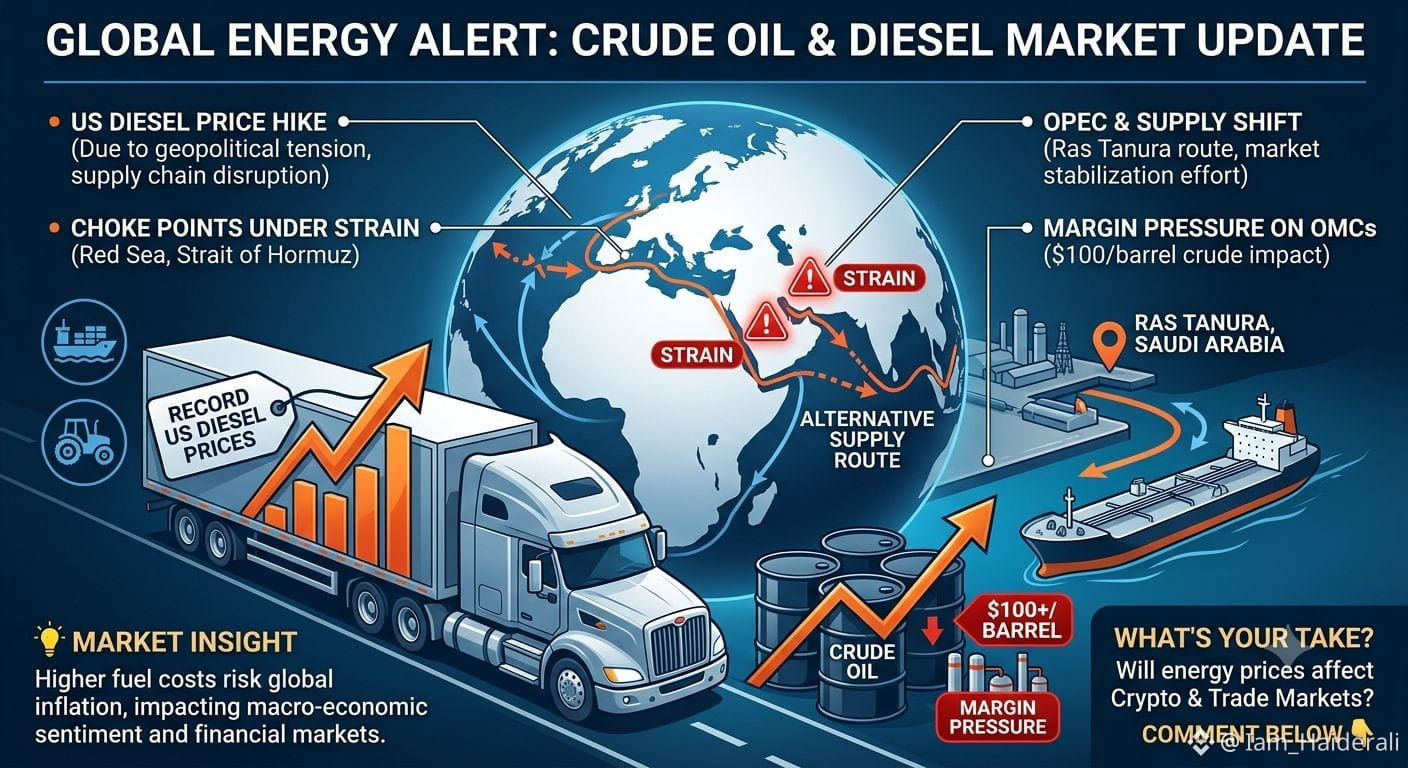
🚨 Global Energy Alert: Crude Oil & Diesel Market Update ⛽📉
Major updates are emerging regarding global crude oil and diesel supplies, directly impacting logistics and the broader global economy:
🔹 US Diesel Price Hike: Escalating tensions in the Middle East and supply chain disruptions have pushed US diesel prices toward record highs, putting severe pressure on the trucking, freight, and farming sectors.
🔹 Choke Points Under Strain: Geopolitical friction along vital maritime routes like the Red Sea and the Strait of Hormuz is severely disrupting the flow of refined petroleum products.
🔹 OPEC & Supply Shift: To mitigate Red Sea route blockages, Saudi Arabia is working to balance the market by increasing alternative exports through its eastern ports (e.g., Ras Tanura).
🔹 Margin Pressure on OMCs: Volatility in crude oil and the pressure around the $100/barrel mark are squeezing profit margins for Oil Marketing Companies (OMCs).
💡 Market Insight: Rising diesel and fuel costs threaten to drive up transportation expenses, potentially fueling global inflation. This could significantly impact macroeconomic sentiment and broader financial markets.
📌 What's your take? Will this surge in energy prices impact the crypto and broader trading markets? Share your thoughts in the comments below! 👇
Market is unpredictable; this info is for reference only—don't stress."
"Markets carry risk—use this for awareness, not stress."
#CrudeOil #Diesel #EnergyMarket #MacroEconomy #BinanceSquare #GlobalNews #CryptoMarket
🚨 Global Energy Alert: Crude Oil & Diesel Market Update ⛽📉
Major updates are emerging regarding global crude oil and diesel supplies, directly impacting logistics and the broader global economy:
🔹 US Diesel Price Hike: Escalating tensions in the Middle East and supply chain disruptions have pushed US diesel prices toward record highs, putting severe pressure on the trucking, freight, and farming sectors.
🔹 Choke Points Under Strain: Geopolitical friction along vital maritime routes like the Red Sea and the Strait of Hormuz is severely disrupting the flow of refined petroleum products.
🔹 OPEC & Supply Shift: To mitigate Red Sea route blockages, Saudi Arabia is working to balance the market by increasing alternative exports through its eastern ports (e.g., Ras Tanura).
🔹 Margin Pressure on OMCs: Volatility in crude oil and the pressure around the $100/barrel mark are squeezing profit margins for Oil Marketing Companies (OMCs).
💡 Market Insight: Rising diesel and fuel costs threaten to drive up transportation expenses, potentially fueling global inflation. This could significantly impact macroeconomic sentiment and broader financial markets.
📌 What's your take? Will this surge in energy prices impact the crypto and broader trading markets? Share your thoughts in the comments below! 👇
Market is unpredictable; this info is for reference only—don't stress."
"Markets carry risk—use this for awareness, not stress."
#CrudeOil #Diesel #EnergyMarket #MacroEconomy #BinanceSquare #GlobalNews #CryptoMarket
Major updates are emerging regarding global crude oil and diesel supplies, directly impacting logistics and the broader global economy:
🔹 US Diesel Price Hike: Escalating tensions in the Middle East and supply chain disruptions have pushed US diesel prices toward record highs, putting severe pressure on the trucking, freight, and farming sectors.
🔹 Choke Points Under Strain: Geopolitical friction along vital maritime routes like the Red Sea and the Strait of Hormuz is severely disrupting the flow of refined petroleum products.
🔹 OPEC & Supply Shift: To mitigate Red Sea route blockages, Saudi Arabia is working to balance the market by increasing alternative exports through its eastern ports (e.g., Ras Tanura).
🔹 Margin Pressure on OMCs: Volatility in crude oil and the pressure around the $100/barrel mark are squeezing profit margins for Oil Marketing Companies (OMCs).
💡 Market Insight: Rising diesel and fuel costs threaten to drive up transportation expenses, potentially fueling global inflation. This could significantly impact macroeconomic sentiment and broader financial markets.
📌 What's your take? Will this surge in energy prices impact the crypto and broader trading markets? Share your thoughts in the comments below! 👇
Market is unpredictable; this info is for reference only—don't stress."
"Markets carry risk—use this for awareness, not stress."
#CrudeOil #Diesel #EnergyMarket #MacroEconomy #BinanceSquare #GlobalNews #CryptoMarket
1
208
Global energy markets are seeing notable downward pressure today, with WTI crude falling 1.00% to $88.58 per barrel while Brent crude declined approximately 0.6% to trade near $94.60 per barrel.
This pullback in benchmark crude prices offers a potential breather for headline inflation metrics, which have remained sensitive to volatile energy components over recent quarters. Market participants are closely monitoring whether this softness reflects easing geopolitical supply risks or growing concerns over broader economic growth.
For traditional finance, lower oil prices generally ease near-term cost-push inflation pressures, helping to stabilize bond yields and reducing the urgency for central banks to keep interest rates elevated for longer. A cooler energy complex also supports consumer spending sentiment and corporate margins across major indices.
For the crypto market, any relief on the macro inflation front is constructive for liquidity conditions. When energy prices stabilize, risk appetite tends to recover, creating a healthier macro backdrop for risk assets like $BTC as monetary policy concerns gradually recede. 📊
#CrudeOil #EnergyMarkets #MacroEconomy
Global energy markets are seeing notable downward pressure today, with WTI crude falling 1.00% to $88.58 per barrel while Brent crude declined approximately 0.6% to trade near $94.60 per barrel.
This pullback in benchmark crude prices offers a potential breather for headline inflation metrics, which have remained sensitive to volatile energy components over recent quarters. Market participants are closely monitoring whether this softness reflects easing geopolitical supply risks or growing concerns over broader economic growth.
For traditional finance, lower oil prices generally ease near-term cost-push inflation pressures, helping to stabilize bond yields and reducing the urgency for central banks to keep interest rates elevated for longer. A cooler energy complex also supports consumer spending sentiment and corporate margins across major indices.
For the crypto market, any relief on the macro inflation front is constructive for liquidity conditions. When energy prices stabilize, risk appetite tends to recover, creating a healthier macro backdrop for risk assets like $BTC as monetary policy concerns gradually recede. 📊
#CrudeOil #EnergyMarkets #MacroEconomy
This pullback in benchmark crude prices offers a potential breather for headline inflation metrics, which have remained sensitive to volatile energy components over recent quarters. Market participants are closely monitoring whether this softness reflects easing geopolitical supply risks or growing concerns over broader economic growth.
For traditional finance, lower oil prices generally ease near-term cost-push inflation pressures, helping to stabilize bond yields and reducing the urgency for central banks to keep interest rates elevated for longer. A cooler energy complex also supports consumer spending sentiment and corporate margins across major indices.
For the crypto market, any relief on the macro inflation front is constructive for liquidity conditions. When energy prices stabilize, risk appetite tends to recover, creating a healthier macro backdrop for risk assets like $BTC as monetary policy concerns gradually recede. 📊
#CrudeOil #EnergyMarkets #MacroEconomy
108

Verified
🚨 OIL MARKET ALERT: SAUDI ARABIA RESTARTS EAST-WEST PIPELINE! 🛢️
Saudi Arabia has restarted its East-West oil pipeline, a key route that can move crude toward the Red Sea and reduce reliance on the Strait of Hormuz.
Now the big question for $OIL traders 👀
📈 Bullish: Supply disruptions continue → oil could push higher
📉 Bearish: Pipeline restart eases supply pressure → oil could cool down
⚡ Volatility: Geopolitical headlines could keep prices moving fast
🔥 WHAT DO YOU THINK HAPPENS NEXT?
VOTE BELOW 👇
#oil #crudeoil #energy
🚨 OIL MARKET ALERT: SAUDI ARABIA RESTARTS EAST-WEST PIPELINE! 🛢️
Saudi Arabia has restarted its East-West oil pipeline, a key route that can move crude toward the Red Sea and reduce reliance on the Strait of Hormuz.
Now the big question for $OIL traders 👀
📈 Bullish: Supply disruptions continue → oil could push higher
📉 Bearish: Pipeline restart eases supply pressure → oil could cool down
⚡ Volatility: Geopolitical headlines could keep prices moving fast
🔥 WHAT DO YOU THINK HAPPENS NEXT?
VOTE BELOW 👇
#oil #crudeoil #energy
Saudi Arabia has restarted its East-West oil pipeline, a key route that can move crude toward the Red Sea and reduce reliance on the Strait of Hormuz.
Now the big question for $OIL traders 👀
📈 Bullish: Supply disruptions continue → oil could push higher
📉 Bearish: Pipeline restart eases supply pressure → oil could cool down
⚡ Volatility: Geopolitical headlines could keep prices moving fast
🔥 WHAT DO YOU THINK HAPPENS NEXT?
VOTE BELOW 👇
#oil #crudeoil #energy
🟢 $110
31%
🟡 $100
14%
🔴 Below $100
55%
134 votes • Voting closed
3.7k

At the close of the latest trading day, Brent crude oil futures’ main contract saw a strong surge, closing at $106.60 per barrel, up $3.52 on the day, a gain of 3.41%. Judging from the technical chart, this strong bullish long candle directly broke the recent narrow consolidation range. Trading volume expanded in sync, indicating strong downside support and rebound momentum from long positions at key support levels.
This over-3% single-day jump in oil prices mainly reflects the market’s concentrated repricing of short-term supply-side tightness. From a macro fundamental perspective, large rebounds in commodities often increase the activity of anti-inflation trades; but from a technical-structure standpoint, after breaking above the prior resistance level, oil prices are now forming a higher-lows pattern, suggesting that global demand for real assets is gradually recovering.
In traditional financial markets, the strength in oil has, in the short term, boosted the energy sector and related commodities indices. Meanwhile, U.S. Treasury yields and the U.S. Dollar Index found some support at key technical levels. However, as energy prices revert toward a reasonable fundamental valuation, the market’s technical pricing of extreme recession risk is weakening. Overall risk appetite has not been suppressed; instead, there are signs of a shift from defense to more proactive positioning.
For the crypto market, this often means confirmation of the macro liquidity bottom. As risk-off sentiment transitions into a repricing of high-beta assets, capital may return to risk assets under the anti-inflation narrative. In terms of technical structure, $BTC is forming a solid accumulation platform in the key support zone together with mainstream assets. The shakeouts caused by macro volatility are, in fact, building sufficient momentum for the next stage of breakout.📈
#CrudeOil #EnergyMarket #MacroEconomy
At the close of the latest trading day, Brent crude oil futures’ main contract saw a strong surge, closing at $106.60 per barrel, up $3.52 on the day, a gain of 3.41%. Judging from the technical chart, this strong bullish long candle directly broke the recent narrow consolidation range. Trading volume expanded in sync, indicating strong downside support and rebound momentum from long positions at key support levels.
This over-3% single-day jump in oil prices mainly reflects the market’s concentrated repricing of short-term supply-side tightness. From a macro fundamental perspective, large rebounds in commodities often increase the activity of anti-inflation trades; but from a technical-structure standpoint, after breaking above the prior resistance level, oil prices are now forming a higher-lows pattern, suggesting that global demand for real assets is gradually recovering.
In traditional financial markets, the strength in oil has, in the short term, boosted the energy sector and related commodities indices. Meanwhile, U.S. Treasury yields and the U.S. Dollar Index found some support at key technical levels. However, as energy prices revert toward a reasonable fundamental valuation, the market’s technical pricing of extreme recession risk is weakening. Overall risk appetite has not been suppressed; instead, there are signs of a shift from defense to more proactive positioning.
For the crypto market, this often means confirmation of the macro liquidity bottom. As risk-off sentiment transitions into a repricing of high-beta assets, capital may return to risk assets under the anti-inflation narrative. In terms of technical structure, $BTC is forming a solid accumulation platform in the key support zone together with mainstream assets. The shakeouts caused by macro volatility are, in fact, building sufficient momentum for the next stage of breakout.📈
#CrudeOil #EnergyMarket #MacroEconomy
This over-3% single-day jump in oil prices mainly reflects the market’s concentrated repricing of short-term supply-side tightness. From a macro fundamental perspective, large rebounds in commodities often increase the activity of anti-inflation trades; but from a technical-structure standpoint, after breaking above the prior resistance level, oil prices are now forming a higher-lows pattern, suggesting that global demand for real assets is gradually recovering.
In traditional financial markets, the strength in oil has, in the short term, boosted the energy sector and related commodities indices. Meanwhile, U.S. Treasury yields and the U.S. Dollar Index found some support at key technical levels. However, as energy prices revert toward a reasonable fundamental valuation, the market’s technical pricing of extreme recession risk is weakening. Overall risk appetite has not been suppressed; instead, there are signs of a shift from defense to more proactive positioning.
For the crypto market, this often means confirmation of the macro liquidity bottom. As risk-off sentiment transitions into a repricing of high-beta assets, capital may return to risk assets under the anti-inflation narrative. In terms of technical structure, $BTC is forming a solid accumulation platform in the key support zone together with mainstream assets. The shakeouts caused by macro volatility are, in fact, building sufficient momentum for the next stage of breakout.📈
#CrudeOil #EnergyMarket #MacroEconomy
224

According to the latest information from multiple sources, the United States and Iran are currently in discussions over a phased agreement aimed at reopening the Strait of Hormuz and gradually lifting U.S. sanctions. This sudden diplomatic development has directly reversed the upward momentum in oil prices, causing a noticeable spike-and-fall in U.S. crude oil and heating oil prices.
As the world’s most important energy transportation chokepoint, any risk of disruption to passage through the Strait of Hormuz has long been a key driver of elevated geopolitical risk premia and inflation expectations. If the two sides can reach a phased understanding, it would certainly help ease market fears of global supply chain disruptions in the short term. However, given the deep deficit in strategic mutual trust between them, the implementation difficulty and the likelihood of repeated reversals in such informal talks are extremely high. Market optimism that prices in easing too early may therefore carry risks.
Judging from traditional financial market performance, oil and energy derivatives fell on the news, easing input-driven inflation pressure at the macro level. U.S. Treasury yields and the U.S. dollar index, meanwhile, saw fluctuations after demand for geopolitical hedging weakened in the short term. Still, true turning points in the Middle East are often fraught with uncertainty. If negotiations run into setbacks, repeated volatility in energy supply expectations will continue to interfere with global central banks’ expectations for monetary policy.
For risk assets such as cryptocurrencies, a decline in the intensity of geopolitical conflict is often seen as a signal of improved short-term liquidity. But rapid shifts in the macro narrative triggered by oil volatility may intensify market swings. In the current environment where the aftereffects of global tightening are not yet fully gone, key digital assets such as $BTC still face constraints from tight macro liquidity. Investors should remain cautious about chasing price gains in the short term and be alert to the risk of a second pullback caused by sudden geopolitical developments.
#Geopolitics #CrudeOil #MacroEconomy
According to the latest information from multiple sources, the United States and Iran are currently in discussions over a phased agreement aimed at reopening the Strait of Hormuz and gradually lifting U.S. sanctions. This sudden diplomatic development has directly reversed the upward momentum in oil prices, causing a noticeable spike-and-fall in U.S. crude oil and heating oil prices.
As the world’s most important energy transportation chokepoint, any risk of disruption to passage through the Strait of Hormuz has long been a key driver of elevated geopolitical risk premia and inflation expectations. If the two sides can reach a phased understanding, it would certainly help ease market fears of global supply chain disruptions in the short term. However, given the deep deficit in strategic mutual trust between them, the implementation difficulty and the likelihood of repeated reversals in such informal talks are extremely high. Market optimism that prices in easing too early may therefore carry risks.
Judging from traditional financial market performance, oil and energy derivatives fell on the news, easing input-driven inflation pressure at the macro level. U.S. Treasury yields and the U.S. dollar index, meanwhile, saw fluctuations after demand for geopolitical hedging weakened in the short term. Still, true turning points in the Middle East are often fraught with uncertainty. If negotiations run into setbacks, repeated volatility in energy supply expectations will continue to interfere with global central banks’ expectations for monetary policy.
For risk assets such as cryptocurrencies, a decline in the intensity of geopolitical conflict is often seen as a signal of improved short-term liquidity. But rapid shifts in the macro narrative triggered by oil volatility may intensify market swings. In the current environment where the aftereffects of global tightening are not yet fully gone, key digital assets such as $BTC still face constraints from tight macro liquidity. Investors should remain cautious about chasing price gains in the short term and be alert to the risk of a second pullback caused by sudden geopolitical developments.
#Geopolitics #CrudeOil #MacroEconomy
As the world’s most important energy transportation chokepoint, any risk of disruption to passage through the Strait of Hormuz has long been a key driver of elevated geopolitical risk premia and inflation expectations. If the two sides can reach a phased understanding, it would certainly help ease market fears of global supply chain disruptions in the short term. However, given the deep deficit in strategic mutual trust between them, the implementation difficulty and the likelihood of repeated reversals in such informal talks are extremely high. Market optimism that prices in easing too early may therefore carry risks.
Judging from traditional financial market performance, oil and energy derivatives fell on the news, easing input-driven inflation pressure at the macro level. U.S. Treasury yields and the U.S. dollar index, meanwhile, saw fluctuations after demand for geopolitical hedging weakened in the short term. Still, true turning points in the Middle East are often fraught with uncertainty. If negotiations run into setbacks, repeated volatility in energy supply expectations will continue to interfere with global central banks’ expectations for monetary policy.
For risk assets such as cryptocurrencies, a decline in the intensity of geopolitical conflict is often seen as a signal of improved short-term liquidity. But rapid shifts in the macro narrative triggered by oil volatility may intensify market swings. In the current environment where the aftereffects of global tightening are not yet fully gone, key digital assets such as $BTC still face constraints from tight macro liquidity. Investors should remain cautious about chasing price gains in the short term and be alert to the risk of a second pullback caused by sudden geopolitical developments.
#Geopolitics #CrudeOil #MacroEconomy
9
Against the backdrop of a sudden escalation in the geopolitical situation in the Middle East, Yemeni Houthi forces announced an attack on a military base in Hail, Saudi Arabia. This escalation directly ignited safe-haven demand and supply concerns in the international energy market, pushing WTI and Brent crude to both surge more than 3% intraday, reaching highs of $94.88 per barrel and $101.78 per barrel, respectively.
As the “mother of all commodities,” crude oil’s price breaking through the $100 mark again in a short period carries tremendous macroeconomic disruption. With the global inflation downtrend already fragile, the real threats posed by geopolitical conflicts to key energy infrastructure in the Middle East not only shatter market expectations of stable oil supplies, but may also trigger a fresh wave of secondary-inflation panic, completely derailing the monetary easing paths of major central banks.
From the perspective of traditional financial markets, a spike in oil prices will directly raise inflation expectations and long-end government bond yields, while weighing on the valuations of risk assets. Elevated energy costs will further squeeze corporate profits and weaken consumers’ purchasing power. The market may once again reprice the risk that central banks such as the Fed maintain high interest rates for longer (“Higher for Longer”) and even consider restarting extreme tightening measures. In the near term, the U.S. dollar index and gold are likely to receive strong safe-haven support.
For crypto assets, this undoubtedly creates a severe liquidity test. Under the shadow of macro stagflation and the dominance of risk-off sentiment, $BTC and the broader crypto market are unlikely to remain unaffected; short-term speculative liquidity is very likely to flow back into traditional safe-haven assets such as the U.S. dollar. Investors need to be highly alert to the dual deleveraging risks brought by tightening macro liquidity and a sharp drop in risk appetite, and should under no circumstances chase prices blindly.⚡
#CrudeOil #Geopolitics #Inflation
Against the backdrop of a sudden escalation in the geopolitical situation in the Middle East, Yemeni Houthi forces announced an attack on a military base in Hail, Saudi Arabia. This escalation directly ignited safe-haven demand and supply concerns in the international energy market, pushing WTI and Brent crude to both surge more than 3% intraday, reaching highs of $94.88 per barrel and $101.78 per barrel, respectively.
As the “mother of all commodities,” crude oil’s price breaking through the $100 mark again in a short period carries tremendous macroeconomic disruption. With the global inflation downtrend already fragile, the real threats posed by geopolitical conflicts to key energy infrastructure in the Middle East not only shatter market expectations of stable oil supplies, but may also trigger a fresh wave of secondary-inflation panic, completely derailing the monetary easing paths of major central banks.
From the perspective of traditional financial markets, a spike in oil prices will directly raise inflation expectations and long-end government bond yields, while weighing on the valuations of risk assets. Elevated energy costs will further squeeze corporate profits and weaken consumers’ purchasing power. The market may once again reprice the risk that central banks such as the Fed maintain high interest rates for longer (“Higher for Longer”) and even consider restarting extreme tightening measures. In the near term, the U.S. dollar index and gold are likely to receive strong safe-haven support.
For crypto assets, this undoubtedly creates a severe liquidity test. Under the shadow of macro stagflation and the dominance of risk-off sentiment, $BTC and the broader crypto market are unlikely to remain unaffected; short-term speculative liquidity is very likely to flow back into traditional safe-haven assets such as the U.S. dollar. Investors need to be highly alert to the dual deleveraging risks brought by tightening macro liquidity and a sharp drop in risk appetite, and should under no circumstances chase prices blindly.⚡
#CrudeOil #Geopolitics #Inflation
As the “mother of all commodities,” crude oil’s price breaking through the $100 mark again in a short period carries tremendous macroeconomic disruption. With the global inflation downtrend already fragile, the real threats posed by geopolitical conflicts to key energy infrastructure in the Middle East not only shatter market expectations of stable oil supplies, but may also trigger a fresh wave of secondary-inflation panic, completely derailing the monetary easing paths of major central banks.
From the perspective of traditional financial markets, a spike in oil prices will directly raise inflation expectations and long-end government bond yields, while weighing on the valuations of risk assets. Elevated energy costs will further squeeze corporate profits and weaken consumers’ purchasing power. The market may once again reprice the risk that central banks such as the Fed maintain high interest rates for longer (“Higher for Longer”) and even consider restarting extreme tightening measures. In the near term, the U.S. dollar index and gold are likely to receive strong safe-haven support.
For crypto assets, this undoubtedly creates a severe liquidity test. Under the shadow of macro stagflation and the dominance of risk-off sentiment, $BTC and the broader crypto market are unlikely to remain unaffected; short-term speculative liquidity is very likely to flow back into traditional safe-haven assets such as the U.S. dollar. Investors need to be highly alert to the dual deleveraging risks brought by tightening macro liquidity and a sharp drop in risk appetite, and should under no circumstances chase prices blindly.⚡
#CrudeOil #Geopolitics #Inflation
293
After the Houthi armed group in Yemen announced attacks on Saudi Arabia’s military bases in Hail, geopolitical tensions in the Middle East surged sharply, triggering a strong burst of buying momentum in the international crude oil market. Market data shows that intraday gains for both WTI and Brent crude exceeded 3%, surging to high levels of $94.88 per barrel and $101.78 per barrel, respectively. Judging by the candlestick patterns, both major benchmark oil prices broke out from the previous consolidation range with expanded volume on large bullish candles, and the alignment of the bulls is unmistakable.
The key to this sudden burst of volatility lies in the rapid repricing of geopolitical risk premium and the concentrated flare-up of supply-side concerns. Earlier, the market had expectations that tensions in the Middle East might cool, but the direct strike on critical military infrastructure immediately shattered the previous oscillating balance. Brent crude has strongly held above the $100 psychological level. Not only did this technically confirm a bottom reversal and the continuation of an upward trend, it also forced previously established short positions to passively unwind, further boosting short-term momentum indicators’ bullish readings.
Looking at broader macro financial markets, although the sharp short-term jump in oil prices has, to a certain extent, prompted renewed scrutiny of imported inflation pressures and helped lift the U.S. dollar index and some commodities in parallel, the overall liquidity environment remains highly active. U.S. Treasury yields have behaved relatively rationally after a brief spike, without disorderly selloffs. This suggests that global capital has a strong capacity to absorb geopolitical shocks, and overall risk appetite across capital markets is demonstrating very strong resilience.
For the crypto market, however, these unusual moves in large-scale commodities provide an important window to verify asset “hardness” and how liquidity is allocated. $BTC , as a core asset with anti-inflation attributes and independent settlement characteristics, often sees selling pressure during the initial phase of geopolitical disruptions quickly taken up by long positions. As oil prices rally further and then enter a high-level consolidation phase, market focus is likely to shift back to the liquidity overflow effect. The crypto market may see healthier buying momentum and right-side breakout opportunities, and the broader macro upward narrative remains firmly intact.📈
#CrudeOil #Geopolitics #EnergyMarket
After the Houthi armed group in Yemen announced attacks on Saudi Arabia’s military bases in Hail, geopolitical tensions in the Middle East surged sharply, triggering a strong burst of buying momentum in the international crude oil market. Market data shows that intraday gains for both WTI and Brent crude exceeded 3%, surging to high levels of $94.88 per barrel and $101.78 per barrel, respectively. Judging by the candlestick patterns, both major benchmark oil prices broke out from the previous consolidation range with expanded volume on large bullish candles, and the alignment of the bulls is unmistakable.
The key to this sudden burst of volatility lies in the rapid repricing of geopolitical risk premium and the concentrated flare-up of supply-side concerns. Earlier, the market had expectations that tensions in the Middle East might cool, but the direct strike on critical military infrastructure immediately shattered the previous oscillating balance. Brent crude has strongly held above the $100 psychological level. Not only did this technically confirm a bottom reversal and the continuation of an upward trend, it also forced previously established short positions to passively unwind, further boosting short-term momentum indicators’ bullish readings.
Looking at broader macro financial markets, although the sharp short-term jump in oil prices has, to a certain extent, prompted renewed scrutiny of imported inflation pressures and helped lift the U.S. dollar index and some commodities in parallel, the overall liquidity environment remains highly active. U.S. Treasury yields have behaved relatively rationally after a brief spike, without disorderly selloffs. This suggests that global capital has a strong capacity to absorb geopolitical shocks, and overall risk appetite across capital markets is demonstrating very strong resilience.
For the crypto market, however, these unusual moves in large-scale commodities provide an important window to verify asset “hardness” and how liquidity is allocated. $BTC , as a core asset with anti-inflation attributes and independent settlement characteristics, often sees selling pressure during the initial phase of geopolitical disruptions quickly taken up by long positions. As oil prices rally further and then enter a high-level consolidation phase, market focus is likely to shift back to the liquidity overflow effect. The crypto market may see healthier buying momentum and right-side breakout opportunities, and the broader macro upward narrative remains firmly intact.📈
#CrudeOil #Geopolitics #EnergyMarket
The key to this sudden burst of volatility lies in the rapid repricing of geopolitical risk premium and the concentrated flare-up of supply-side concerns. Earlier, the market had expectations that tensions in the Middle East might cool, but the direct strike on critical military infrastructure immediately shattered the previous oscillating balance. Brent crude has strongly held above the $100 psychological level. Not only did this technically confirm a bottom reversal and the continuation of an upward trend, it also forced previously established short positions to passively unwind, further boosting short-term momentum indicators’ bullish readings.
Looking at broader macro financial markets, although the sharp short-term jump in oil prices has, to a certain extent, prompted renewed scrutiny of imported inflation pressures and helped lift the U.S. dollar index and some commodities in parallel, the overall liquidity environment remains highly active. U.S. Treasury yields have behaved relatively rationally after a brief spike, without disorderly selloffs. This suggests that global capital has a strong capacity to absorb geopolitical shocks, and overall risk appetite across capital markets is demonstrating very strong resilience.
For the crypto market, however, these unusual moves in large-scale commodities provide an important window to verify asset “hardness” and how liquidity is allocated. $BTC , as a core asset with anti-inflation attributes and independent settlement characteristics, often sees selling pressure during the initial phase of geopolitical disruptions quickly taken up by long positions. As oil prices rally further and then enter a high-level consolidation phase, market focus is likely to shift back to the liquidity overflow effect. The crypto market may see healthier buying momentum and right-side breakout opportunities, and the broader macro upward narrative remains firmly intact.📈
#CrudeOil #Geopolitics #EnergyMarket
270
Based on the latest data on bulk commodity trading, international benchmark crude oil prices have continued to strengthen. WTI and Brent both rose by $0.5 during the day, reaching intraday highs of $91.3 per barrel and $98.3 per barrel, respectively. Meanwhile, the latest July foreign trade data released by the Saudi Arabian government shows that in July, the country’s merchandise exports year-on-year fell sharply by 17.2%. Of this, core oil exports declined by 12.8% year-on-year. The structural features of a proactive tightening of the supply side are being clearly reflected in the market.
From a technical perspective and supply-demand logic, the export-contraction effect brought about by Saudi production cuts is continuing to build up momentum in both the spot and futures markets. Oil prices have been steadily pushed higher while holding near key technical resistance levels, indicating that supply-driven bullish momentum remains strong. Although this has sparked some market concerns about a resurgence of secondary inflation in the short term, deeper signals suggest that the global macro demand fundamentals remain resilient, and there has not been a sudden, steep downturn.
In macro financial markets, crude oil’s strong performance as a leading bulk commodity—while providing some technical support to U.S. Treasury yields and the U.S. dollar index—overall liquidity pricing is gradually absorbing an energy risk premium. For risk assets, a steady rebound in bulk commodities is often a leading indicator of a soft landing for the economy and stabilization in industrial demand. The market appears to be shifting from panic-based inflation trading toward healthier fundamental-based pricing.
For crypto assets, especially $BTC , the anti-inflation narrative sparked by strength in bulk commodities may reactivate capital demand for hard-asset allocation. As macro uncertainty gradually materializes, improving risk appetite is expected to drive over-the-counter liquidity back into the crypto market. In the short term, continued consolidation may be more favorable for reinforcing a base-support structure.
#CrudeOil #MacroEconomy #EnergyMarket
Based on the latest data on bulk commodity trading, international benchmark crude oil prices have continued to strengthen. WTI and Brent both rose by $0.5 during the day, reaching intraday highs of $91.3 per barrel and $98.3 per barrel, respectively. Meanwhile, the latest July foreign trade data released by the Saudi Arabian government shows that in July, the country’s merchandise exports year-on-year fell sharply by 17.2%. Of this, core oil exports declined by 12.8% year-on-year. The structural features of a proactive tightening of the supply side are being clearly reflected in the market.
From a technical perspective and supply-demand logic, the export-contraction effect brought about by Saudi production cuts is continuing to build up momentum in both the spot and futures markets. Oil prices have been steadily pushed higher while holding near key technical resistance levels, indicating that supply-driven bullish momentum remains strong. Although this has sparked some market concerns about a resurgence of secondary inflation in the short term, deeper signals suggest that the global macro demand fundamentals remain resilient, and there has not been a sudden, steep downturn.
In macro financial markets, crude oil’s strong performance as a leading bulk commodity—while providing some technical support to U.S. Treasury yields and the U.S. dollar index—overall liquidity pricing is gradually absorbing an energy risk premium. For risk assets, a steady rebound in bulk commodities is often a leading indicator of a soft landing for the economy and stabilization in industrial demand. The market appears to be shifting from panic-based inflation trading toward healthier fundamental-based pricing.
For crypto assets, especially $BTC , the anti-inflation narrative sparked by strength in bulk commodities may reactivate capital demand for hard-asset allocation. As macro uncertainty gradually materializes, improving risk appetite is expected to drive over-the-counter liquidity back into the crypto market. In the short term, continued consolidation may be more favorable for reinforcing a base-support structure.
#CrudeOil #MacroEconomy #EnergyMarket
From a technical perspective and supply-demand logic, the export-contraction effect brought about by Saudi production cuts is continuing to build up momentum in both the spot and futures markets. Oil prices have been steadily pushed higher while holding near key technical resistance levels, indicating that supply-driven bullish momentum remains strong. Although this has sparked some market concerns about a resurgence of secondary inflation in the short term, deeper signals suggest that the global macro demand fundamentals remain resilient, and there has not been a sudden, steep downturn.
In macro financial markets, crude oil’s strong performance as a leading bulk commodity—while providing some technical support to U.S. Treasury yields and the U.S. dollar index—overall liquidity pricing is gradually absorbing an energy risk premium. For risk assets, a steady rebound in bulk commodities is often a leading indicator of a soft landing for the economy and stabilization in industrial demand. The market appears to be shifting from panic-based inflation trading toward healthier fundamental-based pricing.
For crypto assets, especially $BTC , the anti-inflation narrative sparked by strength in bulk commodities may reactivate capital demand for hard-asset allocation. As macro uncertainty gradually materializes, improving risk appetite is expected to drive over-the-counter liquidity back into the crypto market. In the short term, continued consolidation may be more favorable for reinforcing a base-support structure.
#CrudeOil #MacroEconomy #EnergyMarket
241
The international crude oil market saw strong intraday fluctuations today, with Brent Crude surging sharply by 3.00% during the day. The price has not only broken through but also climbed above $98.08 per barrel, rapidly approaching the key psychological integer level of $100.
From a technical standpoint, crude oil prices have broken out with increased volume at a crucial support level, disrupting the recent consolidation range. This round of rapid gains has exceeded earlier market expectations of mild, sideways trading. It is mainly driven by tight conditions on the supply side and short-term geopolitical risk premiums. For macro traders, crude prices retesting recent highs is undoubtedly adding pressure to the rebound in inflation expectations. However, structurally, this appears more like a pulse-driven supply-and-demand contest. Near the $100 mark, momentum indicators have already begun to show some overbought signals.
In traditional financial markets, rising energy prices in the short term lift volatility in the U.S. Treasury yield curve and the U.S. Dollar Index, providing support to commodities and inflation-hedging assets. That said, the market has largely priced in the Federal Reserve’s aggressive rate-hike cycle. Short-term disturbances around the inflation center have not fundamentally changed the broader trend of liquidity shifting direction over the long run. After any localized easing of risk aversion, capital may instead seek higher-yield asset targets.
For the cryptocurrency market, pulse-like rallies in commodities often trigger a chain reaction of deleveraging in risk assets in the short term. But when analyzing the flows of funds structurally, high-level consolidation is also frequently an opportunity for liquidity to be redistributed. If $BTC can build a solid bottom of accumulated positions at the lower support level, then once energy prices meet resistance and pull back from the pressure zone, market risk appetite is likely to rebound and repair quickly, providing fuel for the next trend-following move.📈
#CrudeOil #MacroEconomy #CryptoTrading
The international crude oil market saw strong intraday fluctuations today, with Brent Crude surging sharply by 3.00% during the day. The price has not only broken through but also climbed above $98.08 per barrel, rapidly approaching the key psychological integer level of $100.
From a technical standpoint, crude oil prices have broken out with increased volume at a crucial support level, disrupting the recent consolidation range. This round of rapid gains has exceeded earlier market expectations of mild, sideways trading. It is mainly driven by tight conditions on the supply side and short-term geopolitical risk premiums. For macro traders, crude prices retesting recent highs is undoubtedly adding pressure to the rebound in inflation expectations. However, structurally, this appears more like a pulse-driven supply-and-demand contest. Near the $100 mark, momentum indicators have already begun to show some overbought signals.
In traditional financial markets, rising energy prices in the short term lift volatility in the U.S. Treasury yield curve and the U.S. Dollar Index, providing support to commodities and inflation-hedging assets. That said, the market has largely priced in the Federal Reserve’s aggressive rate-hike cycle. Short-term disturbances around the inflation center have not fundamentally changed the broader trend of liquidity shifting direction over the long run. After any localized easing of risk aversion, capital may instead seek higher-yield asset targets.
For the cryptocurrency market, pulse-like rallies in commodities often trigger a chain reaction of deleveraging in risk assets in the short term. But when analyzing the flows of funds structurally, high-level consolidation is also frequently an opportunity for liquidity to be redistributed. If $BTC can build a solid bottom of accumulated positions at the lower support level, then once energy prices meet resistance and pull back from the pressure zone, market risk appetite is likely to rebound and repair quickly, providing fuel for the next trend-following move.📈
#CrudeOil #MacroEconomy #CryptoTrading
From a technical standpoint, crude oil prices have broken out with increased volume at a crucial support level, disrupting the recent consolidation range. This round of rapid gains has exceeded earlier market expectations of mild, sideways trading. It is mainly driven by tight conditions on the supply side and short-term geopolitical risk premiums. For macro traders, crude prices retesting recent highs is undoubtedly adding pressure to the rebound in inflation expectations. However, structurally, this appears more like a pulse-driven supply-and-demand contest. Near the $100 mark, momentum indicators have already begun to show some overbought signals.
In traditional financial markets, rising energy prices in the short term lift volatility in the U.S. Treasury yield curve and the U.S. Dollar Index, providing support to commodities and inflation-hedging assets. That said, the market has largely priced in the Federal Reserve’s aggressive rate-hike cycle. Short-term disturbances around the inflation center have not fundamentally changed the broader trend of liquidity shifting direction over the long run. After any localized easing of risk aversion, capital may instead seek higher-yield asset targets.
For the cryptocurrency market, pulse-like rallies in commodities often trigger a chain reaction of deleveraging in risk assets in the short term. But when analyzing the flows of funds structurally, high-level consolidation is also frequently an opportunity for liquidity to be redistributed. If $BTC can build a solid bottom of accumulated positions at the lower support level, then once energy prices meet resistance and pull back from the pressure zone, market risk appetite is likely to rebound and repair quickly, providing fuel for the next trend-following move.📈
#CrudeOil #MacroEconomy #CryptoTrading

·
--
The global energy market has just witnessed sharp fluctuations in today’s trading session as Brent crude oil prices surged by 3.00%, officially reaching 98.08 USD per barrel and moving close to the sensitive 100 USD mark.
This sudden jump carries key implications for the macroeconomic picture. Higher energy costs will directly affect the supply chain, fueling concerns that a second wave of inflation could return and derail the disinflation path that central banks are working to sustain.
For traditional financial markets, the risk of energy-driven inflation often triggers fears that the Fed will keep interest rates at elevated levels for longer. This can easily push the USD Index and bond yields back up, putting pressure on equity markets.
For the crypto market, a tighter liquidity environment and risk-averse sentiment may cause institutional capital flows to be temporarily more cautious, posing challenges to the breakout momentum of $BTC in the short term. 🛢️
#CrudeOil #Inflation #MacroEconomics
The global energy market has just witnessed sharp fluctuations in today’s trading session as Brent crude oil prices surged by 3.00%, officially reaching 98.08 USD per barrel and moving close to the sensitive 100 USD mark.
This sudden jump carries key implications for the macroeconomic picture. Higher energy costs will directly affect the supply chain, fueling concerns that a second wave of inflation could return and derail the disinflation path that central banks are working to sustain.
For traditional financial markets, the risk of energy-driven inflation often triggers fears that the Fed will keep interest rates at elevated levels for longer. This can easily push the USD Index and bond yields back up, putting pressure on equity markets.
For the crypto market, a tighter liquidity environment and risk-averse sentiment may cause institutional capital flows to be temporarily more cautious, posing challenges to the breakout momentum of $BTC in the short term. 🛢️
#CrudeOil #Inflation #MacroEconomics
This sudden jump carries key implications for the macroeconomic picture. Higher energy costs will directly affect the supply chain, fueling concerns that a second wave of inflation could return and derail the disinflation path that central banks are working to sustain.
For traditional financial markets, the risk of energy-driven inflation often triggers fears that the Fed will keep interest rates at elevated levels for longer. This can easily push the USD Index and bond yields back up, putting pressure on equity markets.
For the crypto market, a tighter liquidity environment and risk-averse sentiment may cause institutional capital flows to be temporarily more cautious, posing challenges to the breakout momentum of $BTC in the short term. 🛢️
#CrudeOil #Inflation #MacroEconomics
9

·
--
Iranian President Ebrahim Raisi recently said that under Iran’s continued sanctions, it will never allow the Strait of Hormuz to be used freely by all parties. This tough statement—directed squarely at one of the world’s key choke points for crude oil transportation—immediately raised tensions in the geopolitical landscape again. Meanwhile, the U.S. Energy Information Administration (EIA) just released the latest inventory data for the week ending September 18. Total commercial crude oil inventories across the United States unexpectedly increased by 2.969 million barrels, while the market had broadly expected a decline of 0.641 million barrels. Strategic delivery point crude oil inventories in Cushing, Oklahoma also rose sharply by 2.266 million barrels, compared with a previous figure of a decline of 0.342 million barrels.
Together, this “one-two punch” has made the energy market extremely delicate right now. On the one hand, the risk of supply disruption from geopolitics hangs over the market like the sword of Damocles—if the Strait of Hormuz faces a real and substantive blockade or friction, global energy supply chains would be hit hard. On the other hand, the U.S. inventory data released lastest comes in far above market expectations. In the short term, the upward stockpiling pressure becomes prominent, directly dampening some of the chasing-buy sentiment driven by panic. As a result, bulls and bears are locked in a fierce game between fundamentals and sentiment.
In traditional financial markets, crude oil—an important driver of inflation—has price swings that directly tug at the sensitive nerves of macroeconomic policy. Heightened geopolitical tension may push oil-price expectations higher, potentially delaying the central bank’s interest-rate cut timeline, strengthening the U.S. dollar index, and lifting U.S. Treasury yields. But the inventories rising beyond expectations also limits the room for a one-direction surge in oil prices in the near term, leaving commodities and traditional FX markets stuck in a wide-range tug-of-war and rebalancing state.
For the crypto market, macro uncertainty once again brings bidirectional effects. If geopolitical developments further spiral out of control and inflation expectations flare back up, delayed expectations for the Federal Reserve’s shift toward greater liquidity could suppress inflows into risk assets. However, if the traditional financial system suffers a trust crisis due to geopolitical conflicts, $BTC as a narrative of a decentralized, censorship-resistant asset may also attract some funds seeking safety. With mixed signals from both bulls and bears, the market will likely continue with a pattern of rangebound observation.🌐
#CrudeOil #Geopolitics #MacroEconomy
Iranian President Ebrahim Raisi recently said that under Iran’s continued sanctions, it will never allow the Strait of Hormuz to be used freely by all parties. This tough statement—directed squarely at one of the world’s key choke points for crude oil transportation—immediately raised tensions in the geopolitical landscape again. Meanwhile, the U.S. Energy Information Administration (EIA) just released the latest inventory data for the week ending September 18. Total commercial crude oil inventories across the United States unexpectedly increased by 2.969 million barrels, while the market had broadly expected a decline of 0.641 million barrels. Strategic delivery point crude oil inventories in Cushing, Oklahoma also rose sharply by 2.266 million barrels, compared with a previous figure of a decline of 0.342 million barrels.
Together, this “one-two punch” has made the energy market extremely delicate right now. On the one hand, the risk of supply disruption from geopolitics hangs over the market like the sword of Damocles—if the Strait of Hormuz faces a real and substantive blockade or friction, global energy supply chains would be hit hard. On the other hand, the U.S. inventory data released lastest comes in far above market expectations. In the short term, the upward stockpiling pressure becomes prominent, directly dampening some of the chasing-buy sentiment driven by panic. As a result, bulls and bears are locked in a fierce game between fundamentals and sentiment.
In traditional financial markets, crude oil—an important driver of inflation—has price swings that directly tug at the sensitive nerves of macroeconomic policy. Heightened geopolitical tension may push oil-price expectations higher, potentially delaying the central bank’s interest-rate cut timeline, strengthening the U.S. dollar index, and lifting U.S. Treasury yields. But the inventories rising beyond expectations also limits the room for a one-direction surge in oil prices in the near term, leaving commodities and traditional FX markets stuck in a wide-range tug-of-war and rebalancing state.
For the crypto market, macro uncertainty once again brings bidirectional effects. If geopolitical developments further spiral out of control and inflation expectations flare back up, delayed expectations for the Federal Reserve’s shift toward greater liquidity could suppress inflows into risk assets. However, if the traditional financial system suffers a trust crisis due to geopolitical conflicts, $BTC as a narrative of a decentralized, censorship-resistant asset may also attract some funds seeking safety. With mixed signals from both bulls and bears, the market will likely continue with a pattern of rangebound observation.🌐
#CrudeOil #Geopolitics #MacroEconomy
Together, this “one-two punch” has made the energy market extremely delicate right now. On the one hand, the risk of supply disruption from geopolitics hangs over the market like the sword of Damocles—if the Strait of Hormuz faces a real and substantive blockade or friction, global energy supply chains would be hit hard. On the other hand, the U.S. inventory data released lastest comes in far above market expectations. In the short term, the upward stockpiling pressure becomes prominent, directly dampening some of the chasing-buy sentiment driven by panic. As a result, bulls and bears are locked in a fierce game between fundamentals and sentiment.
In traditional financial markets, crude oil—an important driver of inflation—has price swings that directly tug at the sensitive nerves of macroeconomic policy. Heightened geopolitical tension may push oil-price expectations higher, potentially delaying the central bank’s interest-rate cut timeline, strengthening the U.S. dollar index, and lifting U.S. Treasury yields. But the inventories rising beyond expectations also limits the room for a one-direction surge in oil prices in the near term, leaving commodities and traditional FX markets stuck in a wide-range tug-of-war and rebalancing state.
For the crypto market, macro uncertainty once again brings bidirectional effects. If geopolitical developments further spiral out of control and inflation expectations flare back up, delayed expectations for the Federal Reserve’s shift toward greater liquidity could suppress inflows into risk assets. However, if the traditional financial system suffers a trust crisis due to geopolitical conflicts, $BTC as a narrative of a decentralized, censorship-resistant asset may also attract some funds seeking safety. With mixed signals from both bulls and bears, the market will likely continue with a pattern of rangebound observation.🌐
#CrudeOil #Geopolitics #MacroEconomy
910
·
--
The situation in the Middle East has escalated again. The Secretary of Iran’s Supreme National Security Council has issued a firm statement, clearly saying that the Strait of Hormuz will never be reopened until Iran’s stated conditions are met, and that there is currently no room for negotiations. At the same time, he warned neighboring countries that if they cooperate with the United States to restrict Iranian flights, their airports would also face a risk of paralysis.
As a vital choke point for global crude oil transportation, a blockade of the Strait of Hormuz directly ignites the risk-aversion nerves in energy markets. With geopolitical games instantly shifting from a battle of narratives to a more tangible threat of supply-chain disruption, concerns about potential supply gaps have surged sharply, shattering the previously fragile expectations of relative balance.
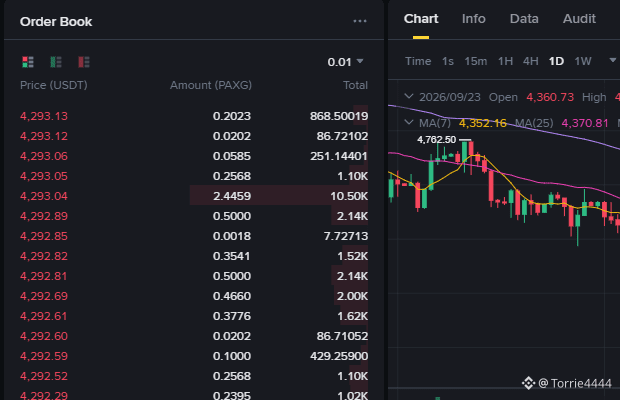
Major commodities and traditional capital markets then quickly diverged dramatically. Brent crude rose 2.00% during the day, climbing to $97.12 per barrel. Meanwhile, precious metals did not rally as in the usual script: spot gold dropped sharply by nearly $30 to below $4,290 per ounce; spot silver fell to $64.68 per ounce. U.S.-listed gold stocks such as Westgold and Angola Gold also broadly declined by between 3% and 6%, indicating a complicated struggle between funds’ inflation expectations and liquidity realization.
For the crypto market, a surge in oil prices could delay the Federal Reserve’s rate-cut timeline, bringing pressure from tighter macro liquidity. But extreme geopolitical events can also lead some funds to seek de-centralized assets as a safe haven. Currently $BTC and mainstream tokens are in a window where long and short forces are re-pricing; overall market sentiment remains cautious and watchful.
#Geopolitics #CrudeOil #Gold #Inflation
The situation in the Middle East has escalated again. The Secretary of Iran’s Supreme National Security Council has issued a firm statement, clearly saying that the Strait of Hormuz will never be reopened until Iran’s stated conditions are met, and that there is currently no room for negotiations. At the same time, he warned neighboring countries that if they cooperate with the United States to restrict Iranian flights, their airports would also face a risk of paralysis.
As a vital choke point for global crude oil transportation, a blockade of the Strait of Hormuz directly ignites the risk-aversion nerves in energy markets. With geopolitical games instantly shifting from a battle of narratives to a more tangible threat of supply-chain disruption, concerns about potential supply gaps have surged sharply, shattering the previously fragile expectations of relative balance.
Major commodities and traditional capital markets then quickly diverged dramatically. Brent crude rose 2.00% during the day, climbing to $97.12 per barrel. Meanwhile, precious metals did not rally as in the usual script: spot gold dropped sharply by nearly $30 to below $4,290 per ounce; spot silver fell to $64.68 per ounce. U.S.-listed gold stocks such as Westgold and Angola Gold also broadly declined by between 3% and 6%, indicating a complicated struggle between funds’ inflation expectations and liquidity realization.
For the crypto market, a surge in oil prices could delay the Federal Reserve’s rate-cut timeline, bringing pressure from tighter macro liquidity. But extreme geopolitical events can also lead some funds to seek de-centralized assets as a safe haven. Currently $BTC and mainstream tokens are in a window where long and short forces are re-pricing; overall market sentiment remains cautious and watchful.
#Geopolitics #CrudeOil #Gold #Inflation
As a vital choke point for global crude oil transportation, a blockade of the Strait of Hormuz directly ignites the risk-aversion nerves in energy markets. With geopolitical games instantly shifting from a battle of narratives to a more tangible threat of supply-chain disruption, concerns about potential supply gaps have surged sharply, shattering the previously fragile expectations of relative balance.
Major commodities and traditional capital markets then quickly diverged dramatically. Brent crude rose 2.00% during the day, climbing to $97.12 per barrel. Meanwhile, precious metals did not rally as in the usual script: spot gold dropped sharply by nearly $30 to below $4,290 per ounce; spot silver fell to $64.68 per ounce. U.S.-listed gold stocks such as Westgold and Angola Gold also broadly declined by between 3% and 6%, indicating a complicated struggle between funds’ inflation expectations and liquidity realization.
For the crypto market, a surge in oil prices could delay the Federal Reserve’s rate-cut timeline, bringing pressure from tighter macro liquidity. But extreme geopolitical events can also lead some funds to seek de-centralized assets as a safe haven. Currently $BTC and mainstream tokens are in a window where long and short forces are re-pricing; overall market sentiment remains cautious and watchful.
#Geopolitics #CrudeOil #Gold #Inflation
315
The Secretary of Iran’s Supreme National Security Council recently issued a tough statement, clearly saying that the Strait of Hormuz will never be reopened until Iran’s stated conditions are met, and rejecting all negotiations. It also warned neighboring countries that if they cooperate with the United States to disrupt Iranian flights, Iran’s own airports would also be unable to operate normally. This harsh stance signals that the geopolitical contest in the Middle East has escalated again, and the tangible risk of disruption to the crucial oil chokepoint has sharply increased.
Driven by the rapid deterioration of this geopolitical situation, Brent crude’s intraday gain quickly expanded to 2.00%, reaching $97.12 per barrel. From a macroeconomic perspective, higher oil prices will feed directly into end-user inflation, severely hindering major central banks’ rate-cutting progress. It may even trigger market concerns about the risks of a second round of inflation and stagflation, shattering earlier optimistic expectations that inflation would steadily ease.
However, performance across financial markets has been highly divergent. Spot gold has dropped sharply in the short term, falling nearly $30 to below $4,290 per ounce. Silver and U.S. stock gold-mining shares have also slumped across the board. This suggests that amid system-wide liquidity concerns triggered by the geopolitical crisis, safe-haven assets have not simply been rewarded with a premium; instead, they have faced downward pressure from liquidity drawdowns and profit-taking. A potential rebound in the U.S. dollar and U.S. Treasury yields is reshaping the full set of market pricing.
As for crypto assets, the current environment is extremely harsh. The risk of re-inflation stemming from soaring energy prices will directly delay the window for easier liquidity. Risk assets such as $BTC lack incremental funding support in the near term. Against the backdrop of macro stagflation fears intertwined with geopolitical black swans, risk-averse sentiment is strong, and the crypto market will very likely face downward tests with valuation pressure and heightened volatility.
#Geopolitics #CrudeOil #MacroEconomy
The Secretary of Iran’s Supreme National Security Council recently issued a tough statement, clearly saying that the Strait of Hormuz will never be reopened until Iran’s stated conditions are met, and rejecting all negotiations. It also warned neighboring countries that if they cooperate with the United States to disrupt Iranian flights, Iran’s own airports would also be unable to operate normally. This harsh stance signals that the geopolitical contest in the Middle East has escalated again, and the tangible risk of disruption to the crucial oil chokepoint has sharply increased.
Driven by the rapid deterioration of this geopolitical situation, Brent crude’s intraday gain quickly expanded to 2.00%, reaching $97.12 per barrel. From a macroeconomic perspective, higher oil prices will feed directly into end-user inflation, severely hindering major central banks’ rate-cutting progress. It may even trigger market concerns about the risks of a second round of inflation and stagflation, shattering earlier optimistic expectations that inflation would steadily ease.
However, performance across financial markets has been highly divergent. Spot gold has dropped sharply in the short term, falling nearly $30 to below $4,290 per ounce. Silver and U.S. stock gold-mining shares have also slumped across the board. This suggests that amid system-wide liquidity concerns triggered by the geopolitical crisis, safe-haven assets have not simply been rewarded with a premium; instead, they have faced downward pressure from liquidity drawdowns and profit-taking. A potential rebound in the U.S. dollar and U.S. Treasury yields is reshaping the full set of market pricing.
As for crypto assets, the current environment is extremely harsh. The risk of re-inflation stemming from soaring energy prices will directly delay the window for easier liquidity. Risk assets such as $BTC lack incremental funding support in the near term. Against the backdrop of macro stagflation fears intertwined with geopolitical black swans, risk-averse sentiment is strong, and the crypto market will very likely face downward tests with valuation pressure and heightened volatility.
#Geopolitics #CrudeOil #MacroEconomy
Driven by the rapid deterioration of this geopolitical situation, Brent crude’s intraday gain quickly expanded to 2.00%, reaching $97.12 per barrel. From a macroeconomic perspective, higher oil prices will feed directly into end-user inflation, severely hindering major central banks’ rate-cutting progress. It may even trigger market concerns about the risks of a second round of inflation and stagflation, shattering earlier optimistic expectations that inflation would steadily ease.
However, performance across financial markets has been highly divergent. Spot gold has dropped sharply in the short term, falling nearly $30 to below $4,290 per ounce. Silver and U.S. stock gold-mining shares have also slumped across the board. This suggests that amid system-wide liquidity concerns triggered by the geopolitical crisis, safe-haven assets have not simply been rewarded with a premium; instead, they have faced downward pressure from liquidity drawdowns and profit-taking. A potential rebound in the U.S. dollar and U.S. Treasury yields is reshaping the full set of market pricing.
As for crypto assets, the current environment is extremely harsh. The risk of re-inflation stemming from soaring energy prices will directly delay the window for easier liquidity. Risk assets such as $BTC lack incremental funding support in the near term. Against the backdrop of macro stagflation fears intertwined with geopolitical black swans, risk-averse sentiment is strong, and the crypto market will very likely face downward tests with valuation pressure and heightened volatility.
#Geopolitics #CrudeOil #MacroEconomy
鑫满堂:
伊朗真特么揍得轻了我看,草特么支持美国把它夷为平地
1
399

·
--
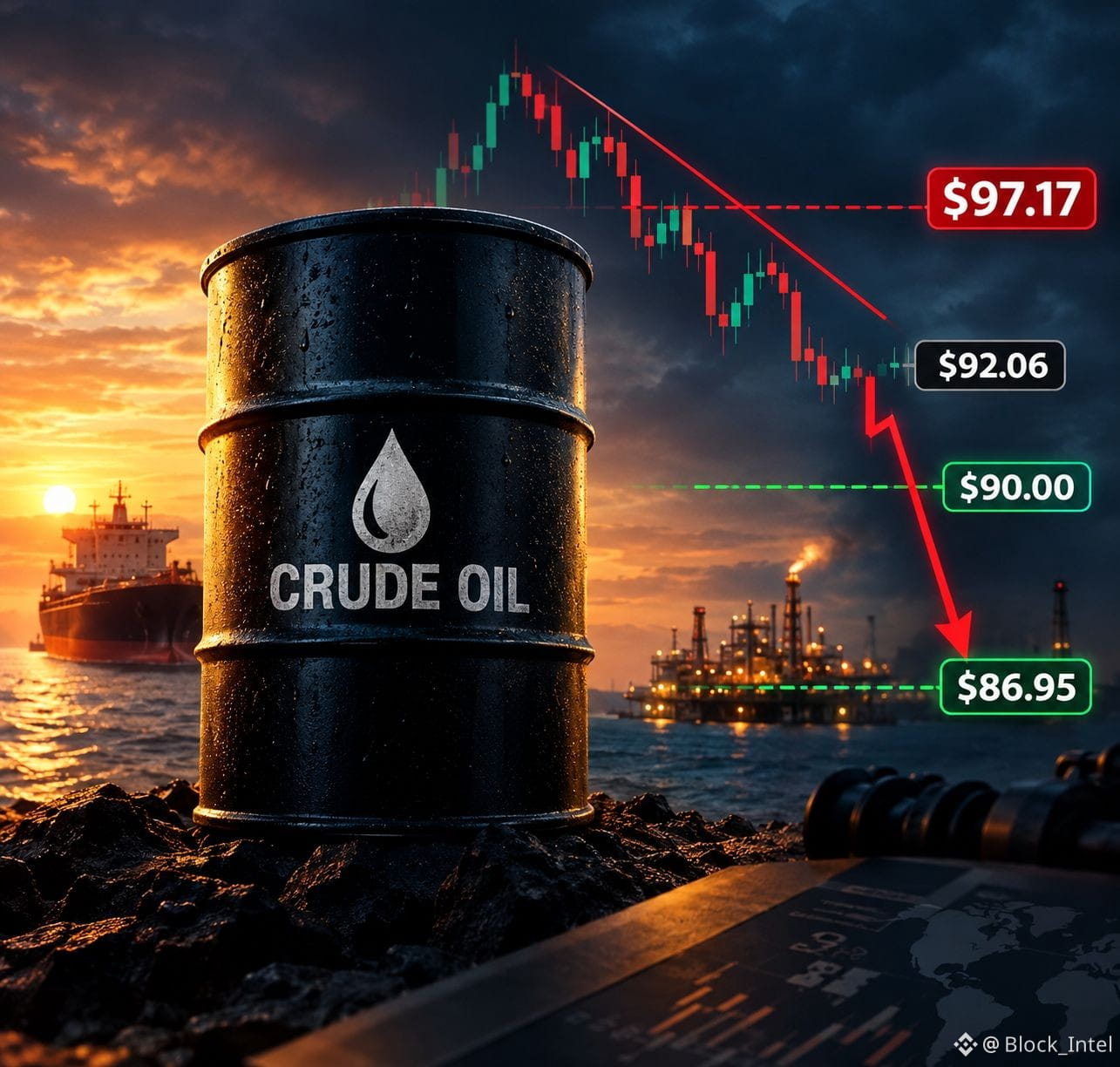
CRUDE OIL — NEXT MOVE
At $92.06, structure remains bearish despite supply-shock support.
📉 Bias: Bearish below $97.17
🎯 Next move: $90 → $86.95
⚠️ Invalidation: Daily close above $97.17
A break below $86.95 would confirm further downside.
#oil
#crudeoil
#trading
#BinanceSquareTalks
#OilMarket
$CL
{future}(CLUSDT)
@Binance_Square_Official
@bullish_banter
@Beit_Rase
@Parisa_Amani
@momomomo7171
CRUDE OIL — NEXT MOVE
At $92.06, structure remains bearish despite supply-shock support.
📉 Bias: Bearish below $97.17
🎯 Next move: $90 → $86.95
⚠️ Invalidation: Daily close above $97.17
A break below $86.95 would confirm further downside.
#oil
#crudeoil
#trading
#BinanceSquareTalks
#OilMarket
$CL
@Binance Square Official
@BullishBanter
@Bit_Rase
@PARISA AMANI
@محترف عملات رقميه
At $92.06, structure remains bearish despite supply-shock support.
📉 Bias: Bearish below $97.17
🎯 Next move: $90 → $86.95
⚠️ Invalidation: Daily close above $97.17
A break below $86.95 would confirm further downside.
#oil
#crudeoil
#trading
#BinanceSquareTalks
#OilMarket
$CL
@Binance Square Official
@BullishBanter
@Bit_Rase
@PARISA AMANI
@محترف عملات رقميه
Laurinda Miracle F0IU:
there's no supply-shock.
there's plenty of oil and the war can be over soon.
1
259

·
--
Bearish
🛢️ Oil continues to decline as the risk premium eases
Brent crude fell to around $94 per barrel, continuing its drop from levels near $99, with improved expectations for a return of oil flows from the region.
The market is now waiting for the most important development: will hints about reopening the Strait of Hormuz turn into a concrete step?
If supply flows return to normal, the geopolitical risk premium could fall further, keeping pressure on oil prices.
🔎 Key driver: developments in the Strait of Hormuz and global supplies
{future}(BZUSDT)
{future}(CLUSDT)
#Oil #Brent #CrudeOil #energy
🛢️ Oil continues to decline as the risk premium eases
Brent crude fell to around $94 per barrel, continuing its drop from levels near $99, with improved expectations for a return of oil flows from the region.
The market is now waiting for the most important development: will hints about reopening the Strait of Hormuz turn into a concrete step?
If supply flows return to normal, the geopolitical risk premium could fall further, keeping pressure on oil prices.
🔎 Key driver: developments in the Strait of Hormuz and global supplies
#Oil #Brent #CrudeOil #energy
Brent crude fell to around $94 per barrel, continuing its drop from levels near $99, with improved expectations for a return of oil flows from the region.
The market is now waiting for the most important development: will hints about reopening the Strait of Hormuz turn into a concrete step?
If supply flows return to normal, the geopolitical risk premium could fall further, keeping pressure on oil prices.
🔎 Key driver: developments in the Strait of Hormuz and global supplies
#Oil #Brent #CrudeOil #energy

2
271
U.S. President Donald Trump recently said publicly that U.S. officials held a three-hour meeting with an Iranian delegation, discussing smooth progress and that it was productive, and that another round of talks would be arranged soon. Special Envoy for Middle East Issues Brian Hook also had similarly positive feedback on this dialogue. Driven by these signals of easing geopolitics in the region, the crude oil market fell accordingly. Both WTI and Brent crude dropped by $1 during the day, trading around $89.60 per barrel and $95.33 per barrel, respectively.
On the surface, this closed-door negotiation provides an opportunity to cool tensions in the Middle East. However, from the perspective of real strategic play, the structural contradictions in geopolitics are certainly not something that can be resolved through a single long conversation. Without a clear agreement framework and substantive concessions, market optimism about the outcome of the talks may be overly premature. The brief decline in the energy premium looks more like emotionally driven position adjustment than a fundamental reversal in underlying fundamentals.
If crude oil prices continue to face pressure due to short-term diplomatic easing, it could indeed marginally alleviate concerns about global stagflation and inflation pressures returning. Still, investors should be wary of the sharp volatility that could follow if talks later show signs of backtracking. For macro assets, the trajectories of the U.S. dollar and U.S. Treasury yields will remain constrained by the stickiness of energy-driven inflation. Until key geopolitical risks are fully resolved, the willingness of capital to shift toward full-scale defense remains strong.
As for the cryptocurrency market, the brief easing of the geopolitical situation may help improve short-term liquidity expectations, but investors should not overlook potential volatility risks. Against the backdrop of an unclear macro environment, major risk assets such as $BTC , if they lack genuine spot incremental inflows, will likely struggle to break the range-bound pattern relying only on sentiment-driven rebounds. If geopolitical developments give rise to further disruptions, risk premia will quickly be restored, bringing renewed downward pressure on the crypto market. Staying cautious remains the overarching tone for now.📉
#CrudeOil #Geopolitics #Trump #MacroEconomy
U.S. President Donald Trump recently said publicly that U.S. officials held a three-hour meeting with an Iranian delegation, discussing smooth progress and that it was productive, and that another round of talks would be arranged soon. Special Envoy for Middle East Issues Brian Hook also had similarly positive feedback on this dialogue. Driven by these signals of easing geopolitics in the region, the crude oil market fell accordingly. Both WTI and Brent crude dropped by $1 during the day, trading around $89.60 per barrel and $95.33 per barrel, respectively.
On the surface, this closed-door negotiation provides an opportunity to cool tensions in the Middle East. However, from the perspective of real strategic play, the structural contradictions in geopolitics are certainly not something that can be resolved through a single long conversation. Without a clear agreement framework and substantive concessions, market optimism about the outcome of the talks may be overly premature. The brief decline in the energy premium looks more like emotionally driven position adjustment than a fundamental reversal in underlying fundamentals.
If crude oil prices continue to face pressure due to short-term diplomatic easing, it could indeed marginally alleviate concerns about global stagflation and inflation pressures returning. Still, investors should be wary of the sharp volatility that could follow if talks later show signs of backtracking. For macro assets, the trajectories of the U.S. dollar and U.S. Treasury yields will remain constrained by the stickiness of energy-driven inflation. Until key geopolitical risks are fully resolved, the willingness of capital to shift toward full-scale defense remains strong.
As for the cryptocurrency market, the brief easing of the geopolitical situation may help improve short-term liquidity expectations, but investors should not overlook potential volatility risks. Against the backdrop of an unclear macro environment, major risk assets such as $BTC , if they lack genuine spot incremental inflows, will likely struggle to break the range-bound pattern relying only on sentiment-driven rebounds. If geopolitical developments give rise to further disruptions, risk premia will quickly be restored, bringing renewed downward pressure on the crypto market. Staying cautious remains the overarching tone for now.📉
#CrudeOil #Geopolitics #Trump #MacroEconomy
On the surface, this closed-door negotiation provides an opportunity to cool tensions in the Middle East. However, from the perspective of real strategic play, the structural contradictions in geopolitics are certainly not something that can be resolved through a single long conversation. Without a clear agreement framework and substantive concessions, market optimism about the outcome of the talks may be overly premature. The brief decline in the energy premium looks more like emotionally driven position adjustment than a fundamental reversal in underlying fundamentals.
If crude oil prices continue to face pressure due to short-term diplomatic easing, it could indeed marginally alleviate concerns about global stagflation and inflation pressures returning. Still, investors should be wary of the sharp volatility that could follow if talks later show signs of backtracking. For macro assets, the trajectories of the U.S. dollar and U.S. Treasury yields will remain constrained by the stickiness of energy-driven inflation. Until key geopolitical risks are fully resolved, the willingness of capital to shift toward full-scale defense remains strong.
As for the cryptocurrency market, the brief easing of the geopolitical situation may help improve short-term liquidity expectations, but investors should not overlook potential volatility risks. Against the backdrop of an unclear macro environment, major risk assets such as $BTC , if they lack genuine spot incremental inflows, will likely struggle to break the range-bound pattern relying only on sentiment-driven rebounds. If geopolitical developments give rise to further disruptions, risk premia will quickly be restored, bringing renewed downward pressure on the crypto market. Staying cautious remains the overarching tone for now.📉
#CrudeOil #Geopolitics #Trump #MacroEconomy
9

·
--
Bearish
📉 $CL
{future}(CLUSDT)
— BEARISH SETUP
Crude oil is showing downside pressure as renewed hopes for U.S.–Iran diplomacy ease some supply-risk premiums. Recent oil declines have also reflected improving expectations around potential negotiations.
$CL is around $94.60 (-2.29%).
🔻 Bias: Bearish
📌 Watch: Lower highs + support breakdown for confirmation
If the downtrend holds, further downside could develop. Avoid chasing and manage leverage carefully.
#CL #WTI #CrudeOil #OilPrices
📉 $CL
— BEARISH SETUP
Crude oil is showing downside pressure as renewed hopes for U.S.–Iran diplomacy ease some supply-risk premiums. Recent oil declines have also reflected improving expectations around potential negotiations.
$CL is around $94.60 (-2.29%).
🔻 Bias: Bearish
📌 Watch: Lower highs + support breakdown for confirmation
If the downtrend holds, further downside could develop. Avoid chasing and manage leverage carefully.
#CL #WTI #CrudeOil #OilPrices
— BEARISH SETUP
Crude oil is showing downside pressure as renewed hopes for U.S.–Iran diplomacy ease some supply-risk premiums. Recent oil declines have also reflected improving expectations around potential negotiations.
$CL is around $94.60 (-2.29%).
🔻 Bias: Bearish
📌 Watch: Lower highs + support breakdown for confirmation
If the downtrend holds, further downside could develop. Avoid chasing and manage leverage carefully.
#CL #WTI #CrudeOil #OilPrices
74
Log in to explore more content
Join global crypto users on Binance Square
⚡️ Get latest and useful information about crypto.
💬 Trusted by the world’s largest crypto exchange.
👍 Discover real insights from verified creators.
Email / Phone number
Trending Topics
1
#EthereumBreaksAbove$2700
0 views
20 Discussing
2
#GrayscaleZcashETFHits$1BNetAssets
240 views
22 Discussing
3
#BitcoinSpotETFsNetInflow$191M
3,539 views
139 Discussing
4
#CFTCUpdatesGuidanceOnTokenizedAssets
23,980 views
930 Discussing
5
#BitgetSays$352MAffectedInHack
8,170 views
82 Discussing
6
#NYAndPolymarketSueEachOther
1,887 views
84 Discussing
7
#BinanceWillListHyperliquid(HYPE)
221,470 views
3,471 Discussing
8
#BrazilOrdersReportingOf$10KSelfCustodyTransfers
3,538 views
50 Discussing
9
#FedProposesRulesForBankIssuedStablecoins
21,516 views
575 Discussing
10
#OndoFinanceSoughtSaleAfterFoundersDeath
13,214 views
375 Discussing