
#globaltrade
globaltrade
797,277 views
1,381 Discussing
Hot
Latest

The World Trade Organization (WTO), in its latest thematic outlook report, states that by 2040, artificial intelligence (AI) is expected to drive a cumulative increase of 13.2% in global real GDP, while expanding global trade totals by nearly 40%. Within this, the digital delivery services sector will become the strongest core growth engine. This quantitative projection provides a clear long-term macro benchmark for the global technology productivity revolution.
Judging from macro fundamentals and productivity curves, this incremental gain is far greater than the initial estimates from the past several rounds of technological innovation cycles. Productivity improvements directly affect global total factor productivity (TFP), effectively mitigating medium- to long-term structural inflation pressures. For technology-cycle assets, the fundamentals model is establishing a higher ceiling for long-term discounted cash flows, strengthening the underlying logic of tech asset valuation.
In terms of traditional finance and liquidity dimensions, expectations of a productivity dividend are expected to accelerate capital flows toward AI infrastructure, compute power centers, and high-end semiconductor industry chains. As the central tendency of potential economic growth rises, the risk premium for risk assets—equity risk premium (Equity Risk Premium)—is likely to narrow, prompting global capital to actively allocate to high-Beta growth assets at pullback points. This will provide long-term support for the U.S. stock market’s technology sector and overall risk appetite.
For the crypto asset market, the integration of AI with Web3 decentralized compute, data ownership, and smart-contract agents (AI Agents) is now entering a period of clear narrative resonance. As macro productivity dividends are gradually realized, decentralized hard assets such as $BTC and leading AI concept tokens’ on-chain liquidity will see a continued influx of incremental capital. The current consolidation structure is more conducive to building a solid medium- to long-term upward bottom formation.#ArtificialIntelligence #GlobalTrade #CryptoMacro
The World Trade Organization (WTO), in its latest thematic outlook report, states that by 2040, artificial intelligence (AI) is expected to drive a cumulative increase of 13.2% in global real GDP, while expanding global trade totals by nearly 40%. Within this, the digital delivery services sector will become the strongest core growth engine. This quantitative projection provides a clear long-term macro benchmark for the global technology productivity revolution.
Judging from macro fundamentals and productivity curves, this incremental gain is far greater than the initial estimates from the past several rounds of technological innovation cycles. Productivity improvements directly affect global total factor productivity (TFP), effectively mitigating medium- to long-term structural inflation pressures. For technology-cycle assets, the fundamentals model is establishing a higher ceiling for long-term discounted cash flows, strengthening the underlying logic of tech asset valuation.
In terms of traditional finance and liquidity dimensions, expectations of a productivity dividend are expected to accelerate capital flows toward AI infrastructure, compute power centers, and high-end semiconductor industry chains. As the central tendency of potential economic growth rises, the risk premium for risk assets—equity risk premium (Equity Risk Premium)—is likely to narrow, prompting global capital to actively allocate to high-Beta growth assets at pullback points. This will provide long-term support for the U.S. stock market’s technology sector and overall risk appetite.
For the crypto asset market, the integration of AI with Web3 decentralized compute, data ownership, and smart-contract agents (AI Agents) is now entering a period of clear narrative resonance. As macro productivity dividends are gradually realized, decentralized hard assets such as $BTC and leading AI concept tokens’ on-chain liquidity will see a continued influx of incremental capital. The current consolidation structure is more conducive to building a solid medium- to long-term upward bottom formation.#ArtificialIntelligence #GlobalTrade #CryptoMacro
Judging from macro fundamentals and productivity curves, this incremental gain is far greater than the initial estimates from the past several rounds of technological innovation cycles. Productivity improvements directly affect global total factor productivity (TFP), effectively mitigating medium- to long-term structural inflation pressures. For technology-cycle assets, the fundamentals model is establishing a higher ceiling for long-term discounted cash flows, strengthening the underlying logic of tech asset valuation.
In terms of traditional finance and liquidity dimensions, expectations of a productivity dividend are expected to accelerate capital flows toward AI infrastructure, compute power centers, and high-end semiconductor industry chains. As the central tendency of potential economic growth rises, the risk premium for risk assets—equity risk premium (Equity Risk Premium)—is likely to narrow, prompting global capital to actively allocate to high-Beta growth assets at pullback points. This will provide long-term support for the U.S. stock market’s technology sector and overall risk appetite.
For the crypto asset market, the integration of AI with Web3 decentralized compute, data ownership, and smart-contract agents (AI Agents) is now entering a period of clear narrative resonance. As macro productivity dividends are gradually realized, decentralized hard assets such as $BTC and leading AI concept tokens’ on-chain liquidity will see a continued influx of incremental capital. The current consolidation structure is more conducive to building a solid medium- to long-term upward bottom formation.#ArtificialIntelligence #GlobalTrade #CryptoMacro

·
--
The World Trade Organization (WTO) has just released its latest forecast report, stating that artificial intelligence (AI) will be a core growth driver helping to boost global GDP by an additional 13.2% by 2040. At the same time, the WTO estimates that AI could increase up to 40% of the value of international trade, with the digital technology transfer services segment expected to record the strongest expansion rate.
This long-term outlook reflects a profound shift in the structure of the global economy from traditional models toward a data-driven and automated economy. By optimizing labor productivity at scale, AI not only helps address the challenge of population aging in developed economies, but also reshapes cross-border digital trade supply chains with significantly lower operating costs.
For traditional financial markets, this outlook continues to reinforce the leading position of technology stock and semiconductor infrastructure groups. Long-term investment flows from major institutions will maintain the trend of pouring into data-center infrastructure, computing hardware, and clean energy to meet the demand for genuine economic growth in the future.
Specifically for the crypto sector, the AI boom creates a very large development space for DePIN and Decentralized AI. Projects offering distributed GPU resources and decentralized data layers such as $NEAR or $FET stand to benefit directly as global computing demand rises, creating momentum to attract capital inflows shifting from Web2 to Web3. 📊
#GlobalTrade #ArtificialIntelligence #GDPGrowth
The World Trade Organization (WTO) has just released its latest forecast report, stating that artificial intelligence (AI) will be a core growth driver helping to boost global GDP by an additional 13.2% by 2040. At the same time, the WTO estimates that AI could increase up to 40% of the value of international trade, with the digital technology transfer services segment expected to record the strongest expansion rate.
This long-term outlook reflects a profound shift in the structure of the global economy from traditional models toward a data-driven and automated economy. By optimizing labor productivity at scale, AI not only helps address the challenge of population aging in developed economies, but also reshapes cross-border digital trade supply chains with significantly lower operating costs.
For traditional financial markets, this outlook continues to reinforce the leading position of technology stock and semiconductor infrastructure groups. Long-term investment flows from major institutions will maintain the trend of pouring into data-center infrastructure, computing hardware, and clean energy to meet the demand for genuine economic growth in the future.
Specifically for the crypto sector, the AI boom creates a very large development space for DePIN and Decentralized AI. Projects offering distributed GPU resources and decentralized data layers such as $NEAR or $FET stand to benefit directly as global computing demand rises, creating momentum to attract capital inflows shifting from Web2 to Web3. 📊
#GlobalTrade #ArtificialIntelligence #GDPGrowth
This long-term outlook reflects a profound shift in the structure of the global economy from traditional models toward a data-driven and automated economy. By optimizing labor productivity at scale, AI not only helps address the challenge of population aging in developed economies, but also reshapes cross-border digital trade supply chains with significantly lower operating costs.
For traditional financial markets, this outlook continues to reinforce the leading position of technology stock and semiconductor infrastructure groups. Long-term investment flows from major institutions will maintain the trend of pouring into data-center infrastructure, computing hardware, and clean energy to meet the demand for genuine economic growth in the future.
Specifically for the crypto sector, the AI boom creates a very large development space for DePIN and Decentralized AI. Projects offering distributed GPU resources and decentralized data layers such as $NEAR or $FET stand to benefit directly as global computing demand rises, creating momentum to attract capital inflows shifting from Web2 to Web3. 📊
#GlobalTrade #ArtificialIntelligence #GDPGrowth
1
437

·
--
The World Trade Organization (WTO) on Tuesday issued a formal call to all member countries in its annual report, stating plainly that the global trading system is at a critical crossroads. It said existing rules must be reformed as soon as possible to address intensifying geopolitical tensions, the proliferation of industrial policies, and the rapid evolution of digital trade.
The report has drawn widespread attention because WTO economists sounded the alarm with specific, long-term simulation data. If global trade slides into a fragmented pattern of geopolitical bloc confrontation, by 2050 global GDP is expected to be 5.1% below normal levels and exports will fall by 18.6%. If multilateral cooperation breaks down completely, global GDP would shrink further by 6.9% and exports would plunge by nearly 27%. But if multilateral cooperation is strengthened, global GDP could be boosted by 2.9%, with the least developed countries feeling the impact most sharply.
For traditional financial markets, the rise of trade fragmentation and protectionism typically means higher global supply-chain costs and stronger stickiness in input-driven inflation. This could then force major central banks to keep monetary conditions relatively tight for the long term, dampening global economic potential growth, while increasing volatility in commodities and the risk premium on sovereign bonds.
In the crypto market, macro trade frictions and geopolitical divides are often a double-edged sword. On one hand, pressure on global economic growth may dampen overall risk-asset liquidity preferences. On the other hand, decentralized networks and non-sovereign settlement assets (such as $BTC ) may also attract more narratives and attention as neutral liquidity vehicles when handling cross-border frictions and financial bloc formation.
#GlobalTrade #WTO #MacroEconomy
The World Trade Organization (WTO) on Tuesday issued a formal call to all member countries in its annual report, stating plainly that the global trading system is at a critical crossroads. It said existing rules must be reformed as soon as possible to address intensifying geopolitical tensions, the proliferation of industrial policies, and the rapid evolution of digital trade.
The report has drawn widespread attention because WTO economists sounded the alarm with specific, long-term simulation data. If global trade slides into a fragmented pattern of geopolitical bloc confrontation, by 2050 global GDP is expected to be 5.1% below normal levels and exports will fall by 18.6%. If multilateral cooperation breaks down completely, global GDP would shrink further by 6.9% and exports would plunge by nearly 27%. But if multilateral cooperation is strengthened, global GDP could be boosted by 2.9%, with the least developed countries feeling the impact most sharply.
For traditional financial markets, the rise of trade fragmentation and protectionism typically means higher global supply-chain costs and stronger stickiness in input-driven inflation. This could then force major central banks to keep monetary conditions relatively tight for the long term, dampening global economic potential growth, while increasing volatility in commodities and the risk premium on sovereign bonds.
In the crypto market, macro trade frictions and geopolitical divides are often a double-edged sword. On one hand, pressure on global economic growth may dampen overall risk-asset liquidity preferences. On the other hand, decentralized networks and non-sovereign settlement assets (such as $BTC ) may also attract more narratives and attention as neutral liquidity vehicles when handling cross-border frictions and financial bloc formation.
#GlobalTrade #WTO #MacroEconomy
The report has drawn widespread attention because WTO economists sounded the alarm with specific, long-term simulation data. If global trade slides into a fragmented pattern of geopolitical bloc confrontation, by 2050 global GDP is expected to be 5.1% below normal levels and exports will fall by 18.6%. If multilateral cooperation breaks down completely, global GDP would shrink further by 6.9% and exports would plunge by nearly 27%. But if multilateral cooperation is strengthened, global GDP could be boosted by 2.9%, with the least developed countries feeling the impact most sharply.
For traditional financial markets, the rise of trade fragmentation and protectionism typically means higher global supply-chain costs and stronger stickiness in input-driven inflation. This could then force major central banks to keep monetary conditions relatively tight for the long term, dampening global economic potential growth, while increasing volatility in commodities and the risk premium on sovereign bonds.
In the crypto market, macro trade frictions and geopolitical divides are often a double-edged sword. On one hand, pressure on global economic growth may dampen overall risk-asset liquidity preferences. On the other hand, decentralized networks and non-sovereign settlement assets (such as $BTC ) may also attract more narratives and attention as neutral liquidity vehicles when handling cross-border frictions and financial bloc formation.
#GlobalTrade #WTO #MacroEconomy
65

In its annual report released on Tuesday, the World Trade Organization (WTO) formally issued a warning, urging member states to carry out a thorough reform of existing global trade rules; otherwise, the global economy will face a severe fragmentation crisis. The WTO said that current rules have clearly fallen behind the realities of the surge in industrial policies, the expansion of digital trade, and great-power geopolitical games. Its economic model estimates that if the world splits into competing geopolitical blocs, by 2050 global GDP would be 5.1% lower than the baseline, while exports would drop by 18.6%. Under the most pessimistic assumption of the complete unraveling of multilateral mechanisms, global GDP losses would widen further to 6.9%, and exports would shrink by nearly 27%.
This assessment highlights the systemic costs brought about by the reversal of globalization, confirming long-standing market concerns that deglobalization will intensify. The multilateral trade system established after World War II is being eroded by unprecedented unilateralism and tariff barriers. The forced reconfiguration of supply chains and the decoupling-and-breakage of supply links are no longer just political slogans; they are turning into a long-term drag on productivity, leaving less developed economies facing serious shocks first.
From the perspective of macro-financial markets, trade fragmentation implies an irreversible decline in global supply-chain efficiency and a structural increase in production costs. This would keep the inflation center of gravity at elevated levels for the long term, limiting room for major central banks to implement easing monetary policy. Long-term U.S. Treasury yields and the valuations of safe-haven assets may face repricing pressure, while traditional fiat liquidity that relies on cross-border trade settlement may also encounter structural frictions due to trade barriers.
For crypto assets, while deglobalization and geopolitical separation—at the narrative level—may reinforce the long-term hedging value of decentralized, anti-censorship assets such as $BTC , under macro conditions of liquidity tightening and sticky high inflation that suppress risk appetite overall, risk-asset valuations as a whole are unlikely to sustain momentum. Investors need to stay vigilant: as cracks in the global trade system deepen, they may continue to weigh on risk preferences over the coming years, and long-term volatility in capital markets will rise significantly.
#GlobalTrade #MacroEconomics #Inflation
In its annual report released on Tuesday, the World Trade Organization (WTO) formally issued a warning, urging member states to carry out a thorough reform of existing global trade rules; otherwise, the global economy will face a severe fragmentation crisis. The WTO said that current rules have clearly fallen behind the realities of the surge in industrial policies, the expansion of digital trade, and great-power geopolitical games. Its economic model estimates that if the world splits into competing geopolitical blocs, by 2050 global GDP would be 5.1% lower than the baseline, while exports would drop by 18.6%. Under the most pessimistic assumption of the complete unraveling of multilateral mechanisms, global GDP losses would widen further to 6.9%, and exports would shrink by nearly 27%.
This assessment highlights the systemic costs brought about by the reversal of globalization, confirming long-standing market concerns that deglobalization will intensify. The multilateral trade system established after World War II is being eroded by unprecedented unilateralism and tariff barriers. The forced reconfiguration of supply chains and the decoupling-and-breakage of supply links are no longer just political slogans; they are turning into a long-term drag on productivity, leaving less developed economies facing serious shocks first.
From the perspective of macro-financial markets, trade fragmentation implies an irreversible decline in global supply-chain efficiency and a structural increase in production costs. This would keep the inflation center of gravity at elevated levels for the long term, limiting room for major central banks to implement easing monetary policy. Long-term U.S. Treasury yields and the valuations of safe-haven assets may face repricing pressure, while traditional fiat liquidity that relies on cross-border trade settlement may also encounter structural frictions due to trade barriers.
For crypto assets, while deglobalization and geopolitical separation—at the narrative level—may reinforce the long-term hedging value of decentralized, anti-censorship assets such as $BTC , under macro conditions of liquidity tightening and sticky high inflation that suppress risk appetite overall, risk-asset valuations as a whole are unlikely to sustain momentum. Investors need to stay vigilant: as cracks in the global trade system deepen, they may continue to weigh on risk preferences over the coming years, and long-term volatility in capital markets will rise significantly.
#GlobalTrade #MacroEconomics #Inflation
This assessment highlights the systemic costs brought about by the reversal of globalization, confirming long-standing market concerns that deglobalization will intensify. The multilateral trade system established after World War II is being eroded by unprecedented unilateralism and tariff barriers. The forced reconfiguration of supply chains and the decoupling-and-breakage of supply links are no longer just political slogans; they are turning into a long-term drag on productivity, leaving less developed economies facing serious shocks first.
From the perspective of macro-financial markets, trade fragmentation implies an irreversible decline in global supply-chain efficiency and a structural increase in production costs. This would keep the inflation center of gravity at elevated levels for the long term, limiting room for major central banks to implement easing monetary policy. Long-term U.S. Treasury yields and the valuations of safe-haven assets may face repricing pressure, while traditional fiat liquidity that relies on cross-border trade settlement may also encounter structural frictions due to trade barriers.
For crypto assets, while deglobalization and geopolitical separation—at the narrative level—may reinforce the long-term hedging value of decentralized, anti-censorship assets such as $BTC , under macro conditions of liquidity tightening and sticky high inflation that suppress risk appetite overall, risk-asset valuations as a whole are unlikely to sustain momentum. Investors need to stay vigilant: as cracks in the global trade system deepen, they may continue to weigh on risk preferences over the coming years, and long-term volatility in capital markets will rise significantly.
#GlobalTrade #MacroEconomics #Inflation
1
The World Trade Organization (WTO) on Tuesday issued a formal warning in its annual report, urging member countries to conduct in-depth reforms of global trade rules. The WTO said that existing rules can no longer cope with rising geopolitical tensions, the surge in industrial policies, and the rapid emergence of digital trade. Based on its economists’ quantitative model, if the world falls into trade fragmentation driven by geopolitical competition, by 2050 global GDP would be 5.1% lower than under normal conditions, while exports would shrink by 18.6%. If multilateral cooperation were to completely collapse, global GDP would fall even further—by 6.9%—and exports would plunge by nearly 27%. By contrast, deepening multilateral cooperation could boost global GDP by 2.9% and increase exports by nearly 18%.
From a macro game-theory perspective, the report clearly lays out the hard economic costs of the anti-globalization wave. Markets had already expected some reshaping of supply chains, but the WTO—through a rigorous data model—quantified the potential losses from “trade fragmentation,” effectively forcing major economies to re-evaluate the marginal costs of full-scale confrontation. This creates important room for long-term multilateral negotiations and structural compromises.
In traditional financial markets, the quantified risk expectations related to trade barriers and geopolitical frictions have prompted global capital to accelerate the repricing of asset allocations. US dollar liquidity remains resilient, while capital is gradually moving toward alternative assets with higher liquidity and cross-border settlement advantages. Against the backdrop of long-term shifts in the supply landscape, commodities and safe-haven instruments continue to receive solid support.
For the crypto market, the reconfiguration of global trade rules and the surge in demand for decentralized settlement are a major long-term positive. As cross-border trade frictions and payment barriers rise, the strategic value of assets like $BTC —those with borderless settlement characteristics—becomes even more prominent. Judging from technical trends and on-chain data, long-term capital is increasingly viewing crypto assets as a core exposure for hedging sovereign standoffs and fragmentation in fiat settlement, injecting persistent structural liquidity into the risk-asset market.
#GlobalTrade #WTO #MacroEconomy
The World Trade Organization (WTO) on Tuesday issued a formal warning in its annual report, urging member countries to conduct in-depth reforms of global trade rules. The WTO said that existing rules can no longer cope with rising geopolitical tensions, the surge in industrial policies, and the rapid emergence of digital trade. Based on its economists’ quantitative model, if the world falls into trade fragmentation driven by geopolitical competition, by 2050 global GDP would be 5.1% lower than under normal conditions, while exports would shrink by 18.6%. If multilateral cooperation were to completely collapse, global GDP would fall even further—by 6.9%—and exports would plunge by nearly 27%. By contrast, deepening multilateral cooperation could boost global GDP by 2.9% and increase exports by nearly 18%.
From a macro game-theory perspective, the report clearly lays out the hard economic costs of the anti-globalization wave. Markets had already expected some reshaping of supply chains, but the WTO—through a rigorous data model—quantified the potential losses from “trade fragmentation,” effectively forcing major economies to re-evaluate the marginal costs of full-scale confrontation. This creates important room for long-term multilateral negotiations and structural compromises.
In traditional financial markets, the quantified risk expectations related to trade barriers and geopolitical frictions have prompted global capital to accelerate the repricing of asset allocations. US dollar liquidity remains resilient, while capital is gradually moving toward alternative assets with higher liquidity and cross-border settlement advantages. Against the backdrop of long-term shifts in the supply landscape, commodities and safe-haven instruments continue to receive solid support.
For the crypto market, the reconfiguration of global trade rules and the surge in demand for decentralized settlement are a major long-term positive. As cross-border trade frictions and payment barriers rise, the strategic value of assets like $BTC —those with borderless settlement characteristics—becomes even more prominent. Judging from technical trends and on-chain data, long-term capital is increasingly viewing crypto assets as a core exposure for hedging sovereign standoffs and fragmentation in fiat settlement, injecting persistent structural liquidity into the risk-asset market.
#GlobalTrade #WTO #MacroEconomy
From a macro game-theory perspective, the report clearly lays out the hard economic costs of the anti-globalization wave. Markets had already expected some reshaping of supply chains, but the WTO—through a rigorous data model—quantified the potential losses from “trade fragmentation,” effectively forcing major economies to re-evaluate the marginal costs of full-scale confrontation. This creates important room for long-term multilateral negotiations and structural compromises.
In traditional financial markets, the quantified risk expectations related to trade barriers and geopolitical frictions have prompted global capital to accelerate the repricing of asset allocations. US dollar liquidity remains resilient, while capital is gradually moving toward alternative assets with higher liquidity and cross-border settlement advantages. Against the backdrop of long-term shifts in the supply landscape, commodities and safe-haven instruments continue to receive solid support.
For the crypto market, the reconfiguration of global trade rules and the surge in demand for decentralized settlement are a major long-term positive. As cross-border trade frictions and payment barriers rise, the strategic value of assets like $BTC —those with borderless settlement characteristics—becomes even more prominent. Judging from technical trends and on-chain data, long-term capital is increasingly viewing crypto assets as a core exposure for hedging sovereign standoffs and fragmentation in fiat settlement, injecting persistent structural liquidity into the risk-asset market.
#GlobalTrade #WTO #MacroEconomy
42
·
--
In its latest analysis report, the World Trade Organization (WTO) has issued a serious warning about the global trade landscape. The WTO said that if the global trading system becomes fragmented and splits into multiple geopolitical blocs, global GDP could suffer a blow of 5.1% and potentially as much as 6.9%; by contrast, if trade-system reform can be promoted and openness expanded, global economic output could rise by 2.9%. Meanwhile, Russian Foreign Minister Lavrov and U.S. Secretary of State Rubio are set to hold talks in New York during the United Nations General Assembly period, making bilateral engagement a key barometer for geopolitical maneuvering.
This series of developments deserves close attention because it directly touches the underlying logic of global economic growth. As great-power competition intensifies, tariff barriers and bloc-based divisions are continually raising the costs of cross-border trade. The WTO’s quantitative model shows that geopolitical confrontation and anti-globalization are not merely political slogans; they impose real, hidden costs that can consume economic growth and put even more pressure on the already fragile global recovery.
From the perspective of macro financial markets, trade fragmentation typically means supply-chain reconfiguration, increased inflation stickiness, and a narrowing of central banks’ policy space. If geopolitical tensions cannot be eased, global capital often strengthens its risk-avoidance tendency. Key assets such as the U.S. dollar index, Treasury yields, and gold may face another round of price recalibration, and risk assets such as equities will also need to reassess long-term earnings expectations.
For the crypto market, changes in macro liquidity and the geopolitical environment can also have bidirectional effects. On the one hand, macroeconomic pressure may suppress overall risk appetite, making incremental inflows more cautious. On the other hand, the fragmentation of traditional trade and the financial system may lead some market participants to continue focusing on the potential value of decentralized assets such as $BTC as an additional source of liquidity. In the short term, the market still needs to closely monitor the diplomatic signals brought by the great-power meeting.
#MacroEconomics #Geopolitics #GlobalTrade
In its latest analysis report, the World Trade Organization (WTO) has issued a serious warning about the global trade landscape. The WTO said that if the global trading system becomes fragmented and splits into multiple geopolitical blocs, global GDP could suffer a blow of 5.1% and potentially as much as 6.9%; by contrast, if trade-system reform can be promoted and openness expanded, global economic output could rise by 2.9%. Meanwhile, Russian Foreign Minister Lavrov and U.S. Secretary of State Rubio are set to hold talks in New York during the United Nations General Assembly period, making bilateral engagement a key barometer for geopolitical maneuvering.
This series of developments deserves close attention because it directly touches the underlying logic of global economic growth. As great-power competition intensifies, tariff barriers and bloc-based divisions are continually raising the costs of cross-border trade. The WTO’s quantitative model shows that geopolitical confrontation and anti-globalization are not merely political slogans; they impose real, hidden costs that can consume economic growth and put even more pressure on the already fragile global recovery.
From the perspective of macro financial markets, trade fragmentation typically means supply-chain reconfiguration, increased inflation stickiness, and a narrowing of central banks’ policy space. If geopolitical tensions cannot be eased, global capital often strengthens its risk-avoidance tendency. Key assets such as the U.S. dollar index, Treasury yields, and gold may face another round of price recalibration, and risk assets such as equities will also need to reassess long-term earnings expectations.
For the crypto market, changes in macro liquidity and the geopolitical environment can also have bidirectional effects. On the one hand, macroeconomic pressure may suppress overall risk appetite, making incremental inflows more cautious. On the other hand, the fragmentation of traditional trade and the financial system may lead some market participants to continue focusing on the potential value of decentralized assets such as $BTC as an additional source of liquidity. In the short term, the market still needs to closely monitor the diplomatic signals brought by the great-power meeting.
#MacroEconomics #Geopolitics #GlobalTrade
This series of developments deserves close attention because it directly touches the underlying logic of global economic growth. As great-power competition intensifies, tariff barriers and bloc-based divisions are continually raising the costs of cross-border trade. The WTO’s quantitative model shows that geopolitical confrontation and anti-globalization are not merely political slogans; they impose real, hidden costs that can consume economic growth and put even more pressure on the already fragile global recovery.
From the perspective of macro financial markets, trade fragmentation typically means supply-chain reconfiguration, increased inflation stickiness, and a narrowing of central banks’ policy space. If geopolitical tensions cannot be eased, global capital often strengthens its risk-avoidance tendency. Key assets such as the U.S. dollar index, Treasury yields, and gold may face another round of price recalibration, and risk assets such as equities will also need to reassess long-term earnings expectations.
For the crypto market, changes in macro liquidity and the geopolitical environment can also have bidirectional effects. On the one hand, macroeconomic pressure may suppress overall risk appetite, making incremental inflows more cautious. On the other hand, the fragmentation of traditional trade and the financial system may lead some market participants to continue focusing on the potential value of decentralized assets such as $BTC as an additional source of liquidity. In the short term, the market still needs to closely monitor the diplomatic signals brought by the great-power meeting.
#MacroEconomics #Geopolitics #GlobalTrade
1
The World Trade Organization (WTO) recently released an updated risk assessment, warning that the fragmentation of the global trade system will deal a profound blow to the world economy. The WTO cautions that if the global trade landscape splits into multiple geopolitical blocs, global GDP could face a significant decline of 5.1% to 6.9%. Only by deepening reforms and expanding cooperation can the global economy potentially achieve a gain of 2.9%. This warning comes against a backdrop of intensifying international economic and trade frictions, as Russian Foreign Minister Sergey Lavrov and U.S. Secretary of State Marco Rubio are scheduled to hold a face-to-face meeting during the United Nations General Assembly in New York, and uncertainty in geopolitical maneuvering has risen again.
From a macro perspective, these figures are by no means alarmist; they provide a quantitative warning of the long-term trend toward deglobalization. The market previously underestimated the friction costs caused by supply chain restructuring and tariff barriers. If the trade system ultimately moves toward bloc-based division, global value-chain efficiency will be irreversibly reduced, triggering persistent structural stagflation pressures. This means that when major central banks balance economic growth with price stability, they will face a narrower policy space than before.
For traditional financial markets, the intensification of geopolitical division will directly lift the long-term risk-free interest rate benchmark and suppress multinational firms’ earnings expectations. The distribution of U.S. dollar liquidity may become structurally differentiated as trade blocs are reshaped. Meanwhile, the safe-haven and reserve attributes of hard-currency assets such as gold will become even more prominent, while overvalued global risk assets must withstand stricter discount-rate tests.
For cryptocurrency markets, macro fragmentation is a double-edged sword. In the short term, pressure on global economic growth and expectations of tighter liquidity may continue to weigh on institutional investors’ risk appetite, leading to higher overall volatility in crypto markets. Investors need to remain highly cautious—during the painful period of deglobalization, guarding against downside risks should remain the top priority. $BTC
#GlobalTrade #MacroEconomy #Geopolitics
The World Trade Organization (WTO) recently released an updated risk assessment, warning that the fragmentation of the global trade system will deal a profound blow to the world economy. The WTO cautions that if the global trade landscape splits into multiple geopolitical blocs, global GDP could face a significant decline of 5.1% to 6.9%. Only by deepening reforms and expanding cooperation can the global economy potentially achieve a gain of 2.9%. This warning comes against a backdrop of intensifying international economic and trade frictions, as Russian Foreign Minister Sergey Lavrov and U.S. Secretary of State Marco Rubio are scheduled to hold a face-to-face meeting during the United Nations General Assembly in New York, and uncertainty in geopolitical maneuvering has risen again.
From a macro perspective, these figures are by no means alarmist; they provide a quantitative warning of the long-term trend toward deglobalization. The market previously underestimated the friction costs caused by supply chain restructuring and tariff barriers. If the trade system ultimately moves toward bloc-based division, global value-chain efficiency will be irreversibly reduced, triggering persistent structural stagflation pressures. This means that when major central banks balance economic growth with price stability, they will face a narrower policy space than before.
For traditional financial markets, the intensification of geopolitical division will directly lift the long-term risk-free interest rate benchmark and suppress multinational firms’ earnings expectations. The distribution of U.S. dollar liquidity may become structurally differentiated as trade blocs are reshaped. Meanwhile, the safe-haven and reserve attributes of hard-currency assets such as gold will become even more prominent, while overvalued global risk assets must withstand stricter discount-rate tests.
For cryptocurrency markets, macro fragmentation is a double-edged sword. In the short term, pressure on global economic growth and expectations of tighter liquidity may continue to weigh on institutional investors’ risk appetite, leading to higher overall volatility in crypto markets. Investors need to remain highly cautious—during the painful period of deglobalization, guarding against downside risks should remain the top priority. $BTC
#GlobalTrade #MacroEconomy #Geopolitics
From a macro perspective, these figures are by no means alarmist; they provide a quantitative warning of the long-term trend toward deglobalization. The market previously underestimated the friction costs caused by supply chain restructuring and tariff barriers. If the trade system ultimately moves toward bloc-based division, global value-chain efficiency will be irreversibly reduced, triggering persistent structural stagflation pressures. This means that when major central banks balance economic growth with price stability, they will face a narrower policy space than before.
For traditional financial markets, the intensification of geopolitical division will directly lift the long-term risk-free interest rate benchmark and suppress multinational firms’ earnings expectations. The distribution of U.S. dollar liquidity may become structurally differentiated as trade blocs are reshaped. Meanwhile, the safe-haven and reserve attributes of hard-currency assets such as gold will become even more prominent, while overvalued global risk assets must withstand stricter discount-rate tests.
For cryptocurrency markets, macro fragmentation is a double-edged sword. In the short term, pressure on global economic growth and expectations of tighter liquidity may continue to weigh on institutional investors’ risk appetite, leading to higher overall volatility in crypto markets. Investors need to remain highly cautious—during the painful period of deglobalization, guarding against downside risks should remain the top priority. $BTC
#GlobalTrade #MacroEconomy #Geopolitics
1
·
--
The World Trade Organization (WTO) has just issued serious economic warnings, estimating that global GDP could fall by between 5.1% and 6.9% if world trade is fragmented and split into separate geopolitical blocs. Conversely, if the system is reformed and effectively expanded, the global economy could grow by an additional 2.9%. At the same time, a notable diplomatic signal has emerged as Russian Foreign Minister Lavrov is expected to meet with U.S. Foreign Minister Rubio on the sidelines of the United Nations General Assembly session in New York.
The WTO report reflects the deep concerns of observers about the growing trend of deglobalization and rising protectionism. Amid the still complex tensions between the U.S. and Russia and various power blocs, supply chains being disrupted is no longer a theoretical risk but an existing one that threatens long-term growth.
For traditional financial markets, a fragmented trade outlook often brings pressure from cost-push inflation and high interest rates that remain anchored. Risk-avoidance sentiment could drive capital toward safe-haven channels such as gold or the U.S. dollar, while placing significant strain on global stock markets.
For crypto, a slowdown in macroeconomic growth may curb liquidity in the short term. However, in the long run, the polarization of the global trade and monetary system will continue to drive demand for decentralized, neutral assets such as $BTC , which plays the role of a defensive barrier against systemic risk.
#GlobalTrade #MacroEconomics #Geopolitics
The World Trade Organization (WTO) has just issued serious economic warnings, estimating that global GDP could fall by between 5.1% and 6.9% if world trade is fragmented and split into separate geopolitical blocs. Conversely, if the system is reformed and effectively expanded, the global economy could grow by an additional 2.9%. At the same time, a notable diplomatic signal has emerged as Russian Foreign Minister Lavrov is expected to meet with U.S. Foreign Minister Rubio on the sidelines of the United Nations General Assembly session in New York.
The WTO report reflects the deep concerns of observers about the growing trend of deglobalization and rising protectionism. Amid the still complex tensions between the U.S. and Russia and various power blocs, supply chains being disrupted is no longer a theoretical risk but an existing one that threatens long-term growth.
For traditional financial markets, a fragmented trade outlook often brings pressure from cost-push inflation and high interest rates that remain anchored. Risk-avoidance sentiment could drive capital toward safe-haven channels such as gold or the U.S. dollar, while placing significant strain on global stock markets.
For crypto, a slowdown in macroeconomic growth may curb liquidity in the short term. However, in the long run, the polarization of the global trade and monetary system will continue to drive demand for decentralized, neutral assets such as $BTC , which plays the role of a defensive barrier against systemic risk.
#GlobalTrade #MacroEconomics #Geopolitics
The WTO report reflects the deep concerns of observers about the growing trend of deglobalization and rising protectionism. Amid the still complex tensions between the U.S. and Russia and various power blocs, supply chains being disrupted is no longer a theoretical risk but an existing one that threatens long-term growth.
For traditional financial markets, a fragmented trade outlook often brings pressure from cost-push inflation and high interest rates that remain anchored. Risk-avoidance sentiment could drive capital toward safe-haven channels such as gold or the U.S. dollar, while placing significant strain on global stock markets.
For crypto, a slowdown in macroeconomic growth may curb liquidity in the short term. However, in the long run, the polarization of the global trade and monetary system will continue to drive demand for decentralized, neutral assets such as $BTC , which plays the role of a defensive barrier against systemic risk.
#GlobalTrade #MacroEconomics #Geopolitics
71


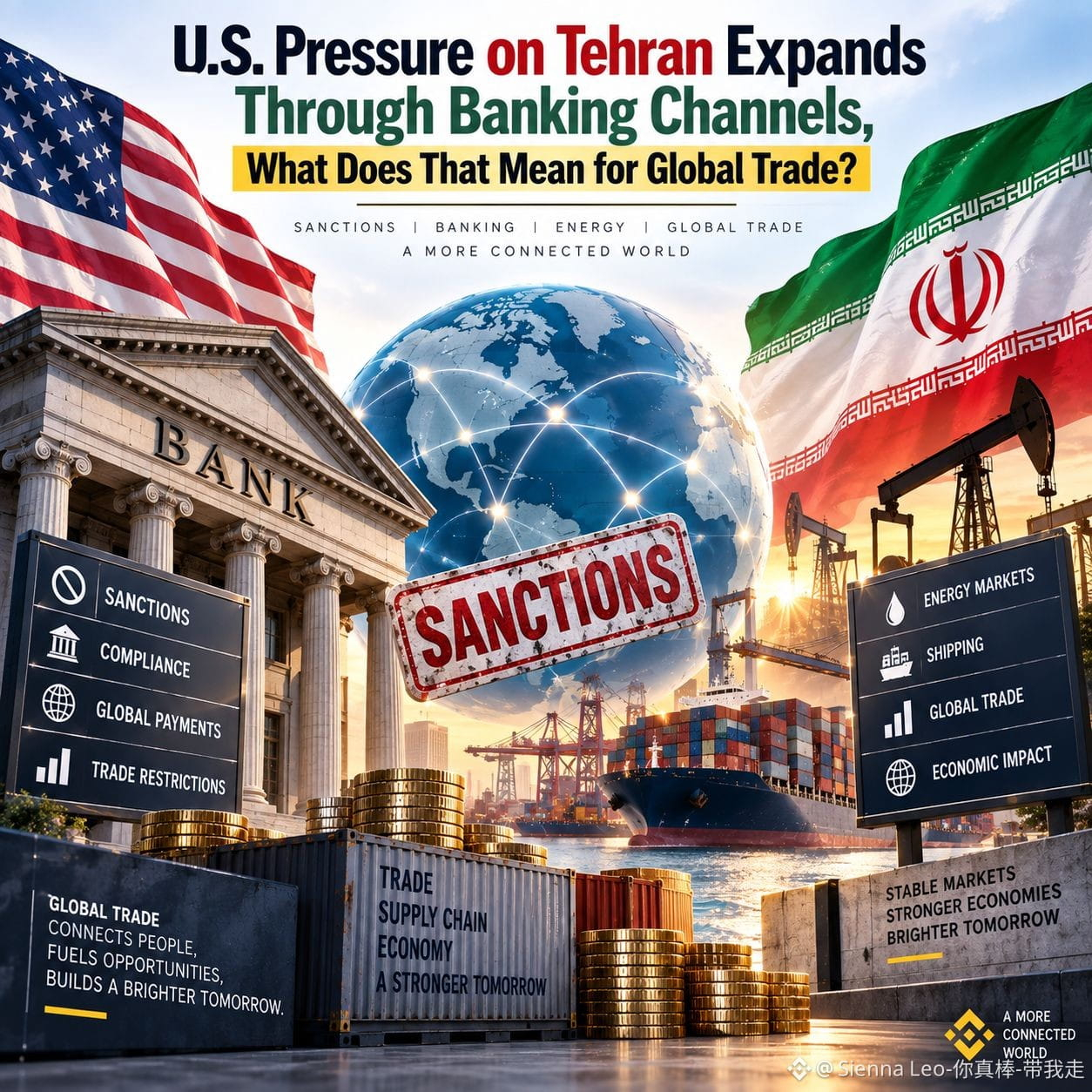
🌍 U.S. Pressure on Tehran Expands Through Banking Channels | What Does That Mean for Global Trade? 🌍
A trader checks an ordinary payment instruction. Nothing looks unusual until one bank disappears from the transaction chain. Suddenly, a deal involving oil, shipping, and goods thousands of miles away becomes harder to complete.
That is the financial pressure Washington is now applying to Iran. On September 4, the U.S. Treasury sanctioned Türkiye-based Golden Global Bank and subsidiaries, accusing them of facilitating transactions connected to Iran and providing correspondent banking access.
Why does this matter beyond Tehran? Because correspondent banking is part of the plumbing that allows international trade to function. Restricting access can make cross-border payments slower, more expensive, or harder to arrange.
Energy adds another layer. Iran's oil exports have already faced severe disruption, while tensions around the Strait of Hormuz have pushed energy markets into sharper focus.
The impact can therefore travel through a chain: banking restrictions → trade friction → energy costs → inflation pressure → changing investor risk appetite.
But this does not automatically mean global trade will freeze. Businesses can seek alternative banks, routes, currencies, and intermediaries, although those alternatives may carry higher costs and greater complexity.
For investors, the key signal is not simply another sanctions headline. Watch whether financial restrictions begin changing real-world trade flows and liquidity.
When payment channels become geopolitical tools, global trade feels the pressure long before the headline reaches every market screen.
❓Could prolonged banking restrictions accelerate the global search for alternative payment and settlement networks?
Disclaimer: Educational content only, not financial advice. Markets involve significant risk.
#Iran #GlobalTrade #GrowWithSAC $DCR $NOM $COTI
🌍 U.S. Pressure on Tehran Expands Through Banking Channels | What Does That Mean for Global Trade? 🌍
A trader checks an ordinary payment instruction. Nothing looks unusual until one bank disappears from the transaction chain. Suddenly, a deal involving oil, shipping, and goods thousands of miles away becomes harder to complete.
That is the financial pressure Washington is now applying to Iran. On September 4, the U.S. Treasury sanctioned Türkiye-based Golden Global Bank and subsidiaries, accusing them of facilitating transactions connected to Iran and providing correspondent banking access.
Why does this matter beyond Tehran? Because correspondent banking is part of the plumbing that allows international trade to function. Restricting access can make cross-border payments slower, more expensive, or harder to arrange.
Energy adds another layer. Iran's oil exports have already faced severe disruption, while tensions around the Strait of Hormuz have pushed energy markets into sharper focus.
The impact can therefore travel through a chain: banking restrictions → trade friction → energy costs → inflation pressure → changing investor risk appetite.
But this does not automatically mean global trade will freeze. Businesses can seek alternative banks, routes, currencies, and intermediaries, although those alternatives may carry higher costs and greater complexity.
For investors, the key signal is not simply another sanctions headline. Watch whether financial restrictions begin changing real-world trade flows and liquidity.
When payment channels become geopolitical tools, global trade feels the pressure long before the headline reaches every market screen.
❓Could prolonged banking restrictions accelerate the global search for alternative payment and settlement networks?
Disclaimer: Educational content only, not financial advice. Markets involve significant risk.
#Iran #GlobalTrade #GrowWithSAC $DCR $NOM $COTI
A trader checks an ordinary payment instruction. Nothing looks unusual until one bank disappears from the transaction chain. Suddenly, a deal involving oil, shipping, and goods thousands of miles away becomes harder to complete.
That is the financial pressure Washington is now applying to Iran. On September 4, the U.S. Treasury sanctioned Türkiye-based Golden Global Bank and subsidiaries, accusing them of facilitating transactions connected to Iran and providing correspondent banking access.
Why does this matter beyond Tehran? Because correspondent banking is part of the plumbing that allows international trade to function. Restricting access can make cross-border payments slower, more expensive, or harder to arrange.
Energy adds another layer. Iran's oil exports have already faced severe disruption, while tensions around the Strait of Hormuz have pushed energy markets into sharper focus.
The impact can therefore travel through a chain: banking restrictions → trade friction → energy costs → inflation pressure → changing investor risk appetite.
But this does not automatically mean global trade will freeze. Businesses can seek alternative banks, routes, currencies, and intermediaries, although those alternatives may carry higher costs and greater complexity.
For investors, the key signal is not simply another sanctions headline. Watch whether financial restrictions begin changing real-world trade flows and liquidity.
When payment channels become geopolitical tools, global trade feels the pressure long before the headline reaches every market screen.
❓Could prolonged banking restrictions accelerate the global search for alternative payment and settlement networks?
Disclaimer: Educational content only, not financial advice. Markets involve significant risk.
#Iran #GlobalTrade #GrowWithSAC $DCR $NOM $COTI
446

·
--
Global Trade Alert: US Threatens Sanctions 🚨
The US has warned Oman of potential sanctions if it participates in a proposed toll system for ships passing through the Strait of Hormuz. This move could significantly impact global trade and oil prices, as the strait is a critical waterway for international shipping. The threat of sanctions may deter Oman from joining the initiative, but it also raises concerns about the potential for increased tensions in the region. The global economy could feel the effects of this development, particularly if oil prices rise as a result.
#Crypto #Markets #OilPrices #GlobalTrade #Sanctions
Global Trade Alert: US Threatens Sanctions 🚨
The US has warned Oman of potential sanctions if it participates in a proposed toll system for ships passing through the Strait of Hormuz. This move could significantly impact global trade and oil prices, as the strait is a critical waterway for international shipping. The threat of sanctions may deter Oman from joining the initiative, but it also raises concerns about the potential for increased tensions in the region. The global economy could feel the effects of this development, particularly if oil prices rise as a result.
#Crypto #Markets #OilPrices #GlobalTrade #Sanctions
The US has warned Oman of potential sanctions if it participates in a proposed toll system for ships passing through the Strait of Hormuz. This move could significantly impact global trade and oil prices, as the strait is a critical waterway for international shipping. The threat of sanctions may deter Oman from joining the initiative, but it also raises concerns about the potential for increased tensions in the region. The global economy could feel the effects of this development, particularly if oil prices rise as a result.
#Crypto #Markets #OilPrices #GlobalTrade #Sanctions
293

🚨 BIG NEWS
🇮🇷 Iran Set for Expanded Oil Exports
🛢️ Oil & Fuel Sales 🏦 Banking Access 🚢 Transportation Support 🛡️ Insurance Services
Reports suggest that once the agreement is finalized, Iran could gain immediate access to global oil and fuel markets, with banking, transportation, and insurance services helping facilitate international trade.
Global energy markets are watching closely, as any increase in oil supply could have a significant impact on energy prices and market sentiment worldwide. 🌍📈
Will this reshape the global energy landscape?
#Iran #OilMarket #Energy #GlobalTrade
🚨 BIG NEWS
🇮🇷 Iran Set for Expanded Oil Exports
🛢️ Oil & Fuel Sales 🏦 Banking Access 🚢 Transportation Support 🛡️ Insurance Services
Reports suggest that once the agreement is finalized, Iran could gain immediate access to global oil and fuel markets, with banking, transportation, and insurance services helping facilitate international trade.
Global energy markets are watching closely, as any increase in oil supply could have a significant impact on energy prices and market sentiment worldwide. 🌍📈
Will this reshape the global energy landscape?
#Iran #OilMarket #Energy #GlobalTrade
🇮🇷 Iran Set for Expanded Oil Exports
🛢️ Oil & Fuel Sales 🏦 Banking Access 🚢 Transportation Support 🛡️ Insurance Services
Reports suggest that once the agreement is finalized, Iran could gain immediate access to global oil and fuel markets, with banking, transportation, and insurance services helping facilitate international trade.
Global energy markets are watching closely, as any increase in oil supply could have a significant impact on energy prices and market sentiment worldwide. 🌍📈
Will this reshape the global energy landscape?
#Iran #OilMarket #Energy #GlobalTrade
167

·
--
🚢 BIG SHIFT IN GLOBAL TRADE! 🌍✨
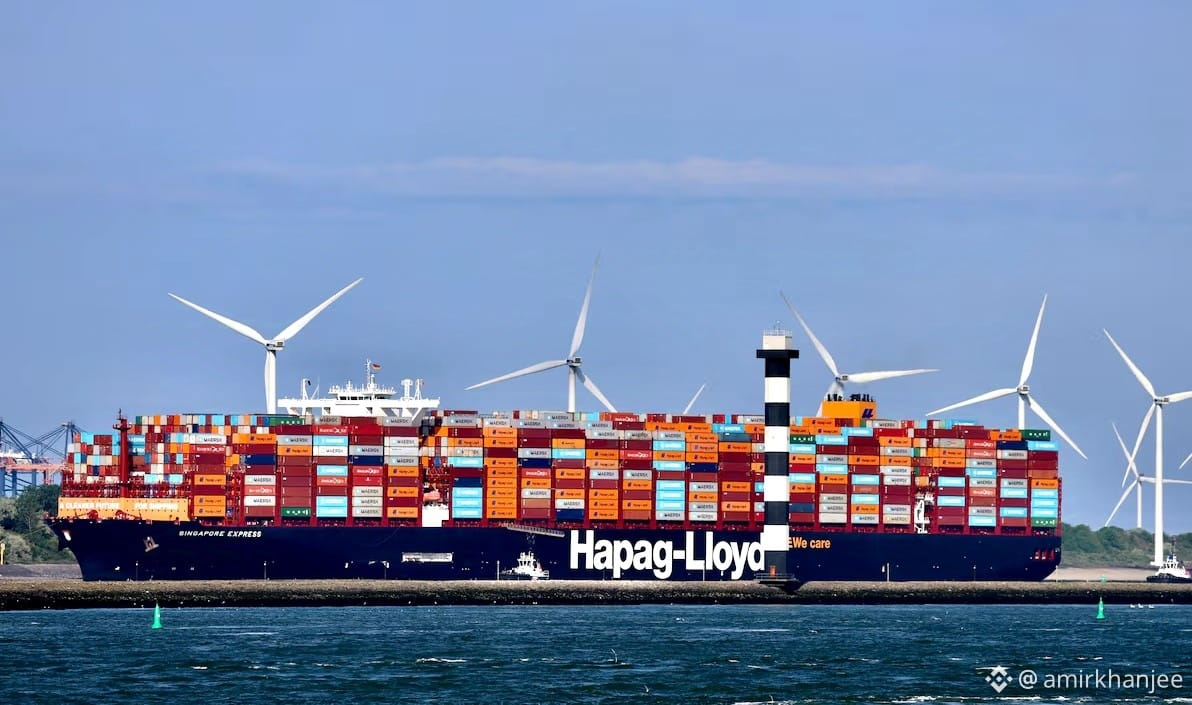
🔵 Maersk and Hapag-Lloyd are reportedly returning to the Suez Canal route! 🛳️🟡
🟢 This could mean lower shipping costs, faster deliveries, and a positive signal for global markets. 📦📈
🟠 Will smoother trade routes boost market sentiment next? 👀💰
#GlobalTrade #BinanceSquare
👀 $BEL $VANRY $TLM
🚢 BIG SHIFT IN GLOBAL TRADE! 🌍✨
🔵 Maersk and Hapag-Lloyd are reportedly returning to the Suez Canal route! 🛳️🟡
🟢 This could mean lower shipping costs, faster deliveries, and a positive signal for global markets. 📦📈
🟠 Will smoother trade routes boost market sentiment next? 👀💰
#GlobalTrade #BinanceSquare
👀 $BEL $VANRY $TLM
🔵 Maersk and Hapag-Lloyd are reportedly returning to the Suez Canal route! 🛳️🟡
🟢 This could mean lower shipping costs, faster deliveries, and a positive signal for global markets. 📦📈
🟠 Will smoother trade routes boost market sentiment next? 👀💰
#GlobalTrade #BinanceSquare
👀 $BEL $VANRY $TLM
1
377

BREAKING: 🚨
Reports that former President Donald $TRUMP is calling for a 20% fee on cargo passing through the Strait of Hormuz have sparked fresh debate over global trade and energy security.
{spot}(TRUMPUSDT)
Any policy affecting one of the world's most important shipping routes could influence oil prices, inflation, and international supply chains. Markets will be watching closely for official developments and their potential impact on global commerce.
#Hormuz #GlobalTrade #Energy #Markets
BREAKING: 🚨
Reports that former President Donald $TRUMP is calling for a 20% fee on cargo passing through the Strait of Hormuz have sparked fresh debate over global trade and energy security.
Any policy affecting one of the world's most important shipping routes could influence oil prices, inflation, and international supply chains. Markets will be watching closely for official developments and their potential impact on global commerce.
#Hormuz #GlobalTrade #Energy #Markets
Reports that former President Donald $TRUMP is calling for a 20% fee on cargo passing through the Strait of Hormuz have sparked fresh debate over global trade and energy security.
Any policy affecting one of the world's most important shipping routes could influence oil prices, inflation, and international supply chains. Markets will be watching closely for official developments and their potential impact on global commerce.
#Hormuz #GlobalTrade #Energy #Markets
2
215

·
--
$ASTER $USD1 $TRX
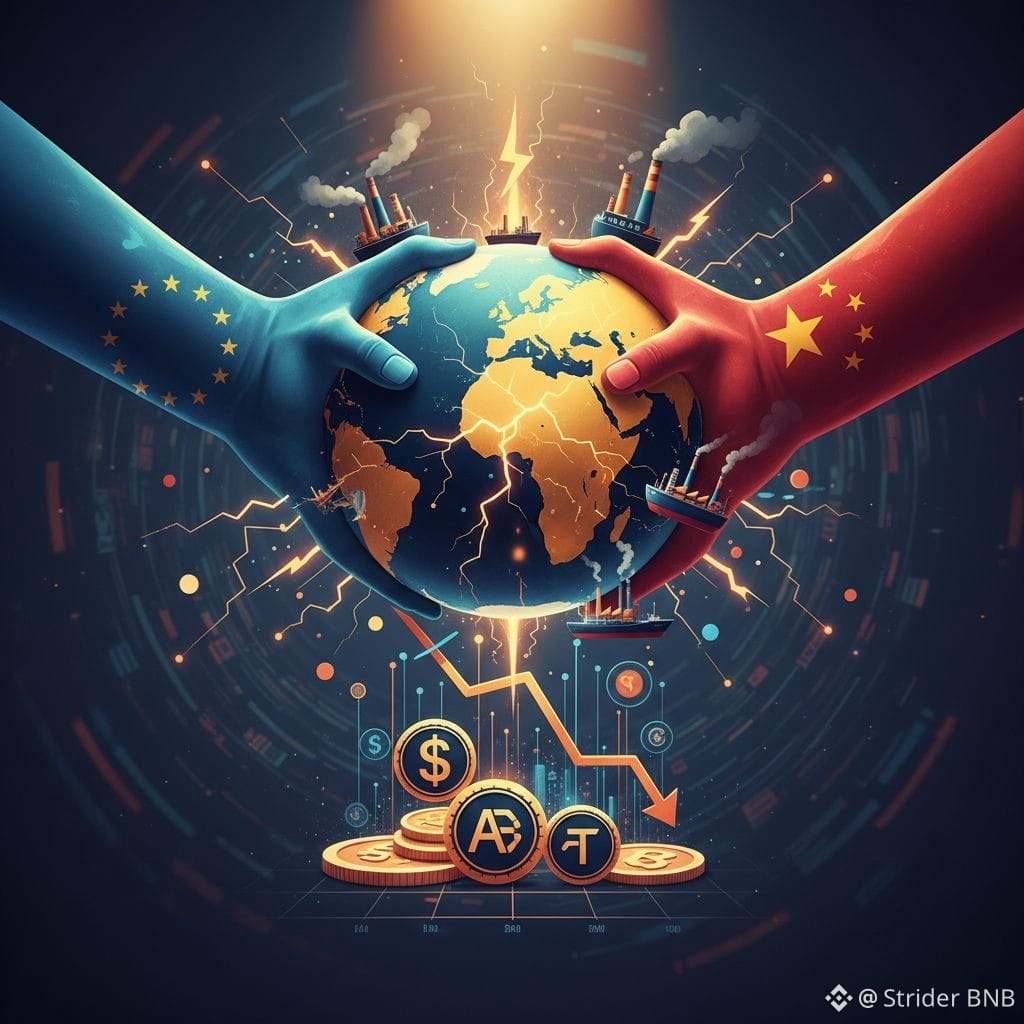
BREAKING NEWS: Global trade tensions escalate! 🌍 The EU is reportedly preparing new tariffs on Chinese electric vehicles, heating up geopolitical friction.
This could trigger retaliatory measures, impacting supply chains and potentially influencing crypto market sentiment amid broader economic uncertainty. 📉 #GlobalTrade #Tariffs #Geopolitics
$ASTER $USD1 $TRX
BREAKING NEWS: Global trade tensions escalate! 🌍 The EU is reportedly preparing new tariffs on Chinese electric vehicles, heating up geopolitical friction.
This could trigger retaliatory measures, impacting supply chains and potentially influencing crypto market sentiment amid broader economic uncertainty. 📉 #GlobalTrade #Tariffs #Geopolitics
BREAKING NEWS: Global trade tensions escalate! 🌍 The EU is reportedly preparing new tariffs on Chinese electric vehicles, heating up geopolitical friction.
This could trigger retaliatory measures, impacting supply chains and potentially influencing crypto market sentiment amid broader economic uncertainty. 📉 #GlobalTrade #Tariffs #Geopolitics
201

·
--
#HormuzTrafficRises
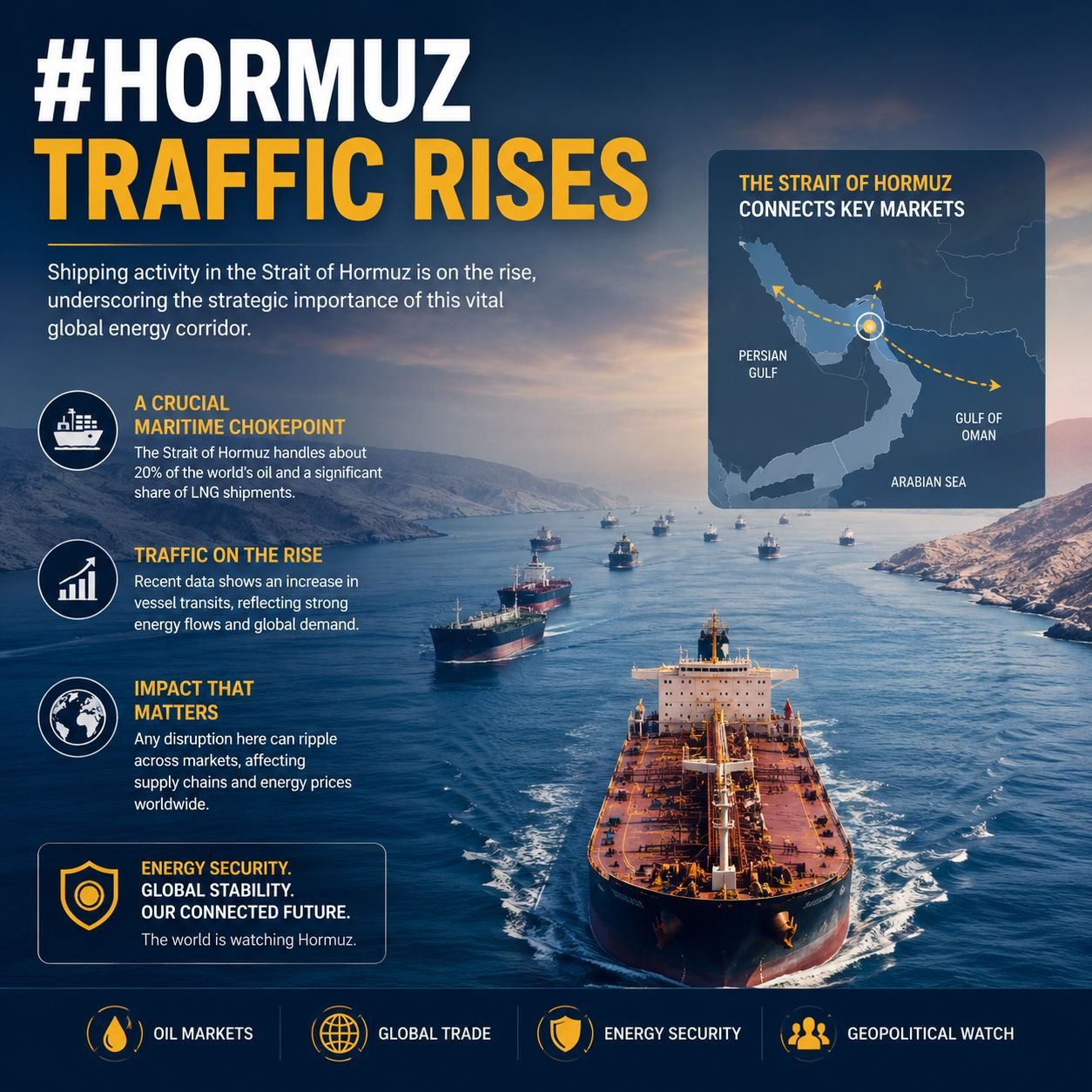
🚢 #HormuzTrafficRises — A key global energy route is seeing increased attention as shipping activity through the Strait of Hormuz changes.
The Strait remains one of the world’s most important maritime chokepoints, connecting major oil and gas producers with global markets. Rising traffic highlights the importance of energy security, supply chains, and geopolitical stability.
🌍 Markets are watching closely as every movement in this region can impact global trade and energy prices.
#Energy #OilMarkets #GlobalTrade
#HormuzTrafficRises
🚢 #HormuzTrafficRises — A key global energy route is seeing increased attention as shipping activity through the Strait of Hormuz changes.
The Strait remains one of the world’s most important maritime chokepoints, connecting major oil and gas producers with global markets. Rising traffic highlights the importance of energy security, supply chains, and geopolitical stability.
🌍 Markets are watching closely as every movement in this region can impact global trade and energy prices.
#Energy #OilMarkets #GlobalTrade
🚢 #HormuzTrafficRises — A key global energy route is seeing increased attention as shipping activity through the Strait of Hormuz changes.
The Strait remains one of the world’s most important maritime chokepoints, connecting major oil and gas producers with global markets. Rising traffic highlights the importance of energy security, supply chains, and geopolitical stability.
🌍 Markets are watching closely as every movement in this region can impact global trade and energy prices.
#Energy #OilMarkets #GlobalTrade
132

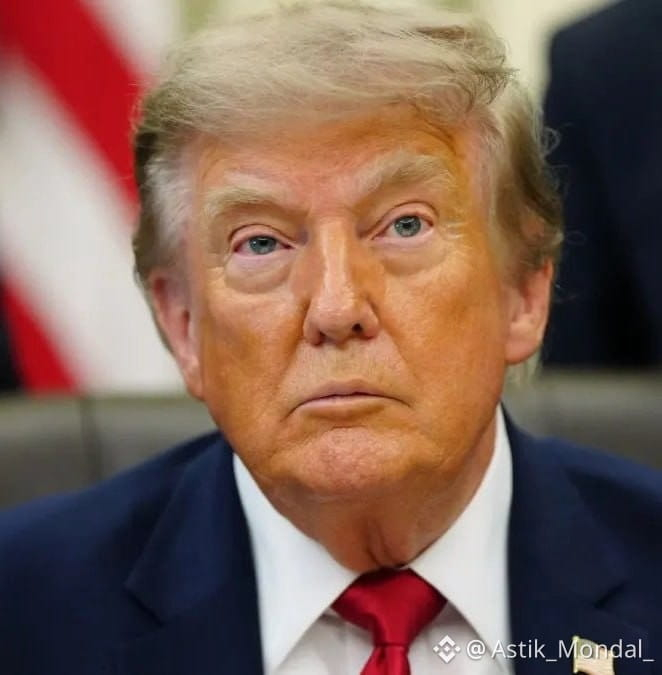
Trump just moved to slap 25% tariffs on most Brazilian imports. The world's largest agricultural exporter just became the latest target in America's expanding trade war.
This is not a small economy getting squeezed.
Brazil is the world's largest exporter of soybeans, beef, coffee, sugar, and orange juice. The agricultural backbone of global food supply chains runs through Brazilian farms.
A 25% tariff on most Brazilian imports is not just a trade dispute.
It is a food price shock in slow motion.
Americans already dealing with inflation heading back toward 5% are about to see grocery prices take another hit. Soybeans feed livestock across the US. Brazilian beef competes directly with American ranchers but also supplies global markets that affect overall pricing. Coffee and orange juice are breakfast staples for hundreds of millions of people.
Every tariff on every Brazilian agricultural product is a tax on American consumers at the checkout line.
And the timing could not be more complicated.
The Strait of Hormuz just reopened. Shipping costs were starting to reverse after surging 109% since the Iran War. PPI just came in below expectations for the first time in months. The first signs of inflation easing were appearing in the data.
Now a 25% tariff on Brazil reintroduces supply-side price pressure through a completely different channel.
The Iran war raised energy prices. The Brazil tariff raises food prices. Two separate inflation inputs hitting simultaneously from two separate directions.
The Fed just got handed another reason to stay hawkish.
Rate cuts got further away this morning.
#Brazil #Tariffs #TradeWar #Inflation #GlobalTrade
Trump just moved to slap 25% tariffs on most Brazilian imports. The world's largest agricultural exporter just became the latest target in America's expanding trade war.
This is not a small economy getting squeezed.
Brazil is the world's largest exporter of soybeans, beef, coffee, sugar, and orange juice. The agricultural backbone of global food supply chains runs through Brazilian farms.
A 25% tariff on most Brazilian imports is not just a trade dispute.
It is a food price shock in slow motion.
Americans already dealing with inflation heading back toward 5% are about to see grocery prices take another hit. Soybeans feed livestock across the US. Brazilian beef competes directly with American ranchers but also supplies global markets that affect overall pricing. Coffee and orange juice are breakfast staples for hundreds of millions of people.
Every tariff on every Brazilian agricultural product is a tax on American consumers at the checkout line.
And the timing could not be more complicated.
The Strait of Hormuz just reopened. Shipping costs were starting to reverse after surging 109% since the Iran War. PPI just came in below expectations for the first time in months. The first signs of inflation easing were appearing in the data.
Now a 25% tariff on Brazil reintroduces supply-side price pressure through a completely different channel.
The Iran war raised energy prices. The Brazil tariff raises food prices. Two separate inflation inputs hitting simultaneously from two separate directions.
The Fed just got handed another reason to stay hawkish.
Rate cuts got further away this morning.
#Brazil #Tariffs #TradeWar #Inflation #GlobalTrade
This is not a small economy getting squeezed.
Brazil is the world's largest exporter of soybeans, beef, coffee, sugar, and orange juice. The agricultural backbone of global food supply chains runs through Brazilian farms.
A 25% tariff on most Brazilian imports is not just a trade dispute.
It is a food price shock in slow motion.
Americans already dealing with inflation heading back toward 5% are about to see grocery prices take another hit. Soybeans feed livestock across the US. Brazilian beef competes directly with American ranchers but also supplies global markets that affect overall pricing. Coffee and orange juice are breakfast staples for hundreds of millions of people.
Every tariff on every Brazilian agricultural product is a tax on American consumers at the checkout line.
And the timing could not be more complicated.
The Strait of Hormuz just reopened. Shipping costs were starting to reverse after surging 109% since the Iran War. PPI just came in below expectations for the first time in months. The first signs of inflation easing were appearing in the data.
Now a 25% tariff on Brazil reintroduces supply-side price pressure through a completely different channel.
The Iran war raised energy prices. The Brazil tariff raises food prices. Two separate inflation inputs hitting simultaneously from two separate directions.
The Fed just got handed another reason to stay hawkish.
Rate cuts got further away this morning.
#Brazil #Tariffs #TradeWar #Inflation #GlobalTrade

1
30

Maritime tracking data revealed that only three cargo vessels navigated through the strategic Strait of Hormuz on Tuesday, marking a steep plunge from the 10-day moving average of approximately 15 ships.
This dramatic drop in transit volume highlights severe disruptions across one of the world's most critical energy chokepoints. With roughly one-fifth of global petroleum passing through these narrow waters, an abrupt slowdown signals escalating geopolitical risks and rising maritime security threats that directly jeopardize international supply lines.
A bottleneck of this magnitude immediately injects upward pressure into crude oil markets and spikes shipping insurance premiums. Persistent disruptions risk reigniting headline inflation just as major central banks attempt to ease monetary policy, potentially keeping global bond yields elevated and dampening broader market sentiment.
For the crypto sector, short-term geopolitical shocks typically trigger a classic risk-off reaction, pulling capital out of speculative assets and putting pressure on $BTC and major altcoins. However, if energy-driven currency debasement and broader stagflation risks resurface, decentralized assets could eventually see renewed hedging demand. ⚓
#Geopolitics #OilMarkets #GlobalTrade
Maritime tracking data revealed that only three cargo vessels navigated through the strategic Strait of Hormuz on Tuesday, marking a steep plunge from the 10-day moving average of approximately 15 ships.
This dramatic drop in transit volume highlights severe disruptions across one of the world's most critical energy chokepoints. With roughly one-fifth of global petroleum passing through these narrow waters, an abrupt slowdown signals escalating geopolitical risks and rising maritime security threats that directly jeopardize international supply lines.
A bottleneck of this magnitude immediately injects upward pressure into crude oil markets and spikes shipping insurance premiums. Persistent disruptions risk reigniting headline inflation just as major central banks attempt to ease monetary policy, potentially keeping global bond yields elevated and dampening broader market sentiment.
For the crypto sector, short-term geopolitical shocks typically trigger a classic risk-off reaction, pulling capital out of speculative assets and putting pressure on $BTC and major altcoins. However, if energy-driven currency debasement and broader stagflation risks resurface, decentralized assets could eventually see renewed hedging demand. ⚓
#Geopolitics #OilMarkets #GlobalTrade
This dramatic drop in transit volume highlights severe disruptions across one of the world's most critical energy chokepoints. With roughly one-fifth of global petroleum passing through these narrow waters, an abrupt slowdown signals escalating geopolitical risks and rising maritime security threats that directly jeopardize international supply lines.
A bottleneck of this magnitude immediately injects upward pressure into crude oil markets and spikes shipping insurance premiums. Persistent disruptions risk reigniting headline inflation just as major central banks attempt to ease monetary policy, potentially keeping global bond yields elevated and dampening broader market sentiment.
For the crypto sector, short-term geopolitical shocks typically trigger a classic risk-off reaction, pulling capital out of speculative assets and putting pressure on $BTC and major altcoins. However, if energy-driven currency debasement and broader stagflation risks resurface, decentralized assets could eventually see renewed hedging demand. ⚓
#Geopolitics #OilMarkets #GlobalTrade
104
South Korea’s Customs Tariff Office released the latest trade data: in the first 20 days prior to September, South Korea’s total exports reached USD 71.4 billion, up 78.3% year-on-year, marking a record high. Among them, semiconductor exports surged 259.4% year-on-year; when calculated by working days, the export growth rate was even higher at 89.8%. Overall, the trade surplus came in at USD 22.97 billion.
As a key barometer of the global macro technology cycle, South Korea’s chip exports—jumping nearly 260%—have completely dispelled market doubts about a slowdown in AI hardware demand. This extreme surge in hard-core data confirms that the global technology supply chain and the construction of compute infrastructure are still in a strong upward “supercycle,” with very solid fundamental support.
From the perspective of macro risk assets, strong trade momentum effectively boosted confidence in the Asia-Pacific market and increased investors’ willingness to chase high-Beta growth assets. The robust business conditions across the global semiconductor supply chain provided an exceptionally strong bottom support for technology benchmark indexes such as the Nasdaq, further reigniting global risk appetite (Risk-on).
For the crypto market, the comprehensive boom in AI and compute-power hardware will directly flow through to AI-themed tokens and decentralized physical infrastructure (DePIN) tracks. On-chain liquidity and risk appetite are set to move in tandem, lifting BTC’s ability to hold firm around key technical support levels. In the next phase, BTC could follow technology assets into a new round of breakout breakout on increased volume. 🚀
#Semiconductor #GlobalTrade #CryptoMarket
South Korea’s Customs Tariff Office released the latest trade data: in the first 20 days prior to September, South Korea’s total exports reached USD 71.4 billion, up 78.3% year-on-year, marking a record high. Among them, semiconductor exports surged 259.4% year-on-year; when calculated by working days, the export growth rate was even higher at 89.8%. Overall, the trade surplus came in at USD 22.97 billion.
As a key barometer of the global macro technology cycle, South Korea’s chip exports—jumping nearly 260%—have completely dispelled market doubts about a slowdown in AI hardware demand. This extreme surge in hard-core data confirms that the global technology supply chain and the construction of compute infrastructure are still in a strong upward “supercycle,” with very solid fundamental support.
From the perspective of macro risk assets, strong trade momentum effectively boosted confidence in the Asia-Pacific market and increased investors’ willingness to chase high-Beta growth assets. The robust business conditions across the global semiconductor supply chain provided an exceptionally strong bottom support for technology benchmark indexes such as the Nasdaq, further reigniting global risk appetite (Risk-on).
For the crypto market, the comprehensive boom in AI and compute-power hardware will directly flow through to AI-themed tokens and decentralized physical infrastructure (DePIN) tracks. On-chain liquidity and risk appetite are set to move in tandem, lifting BTC’s ability to hold firm around key technical support levels. In the next phase, BTC could follow technology assets into a new round of breakout breakout on increased volume. 🚀
#Semiconductor #GlobalTrade #CryptoMarket
As a key barometer of the global macro technology cycle, South Korea’s chip exports—jumping nearly 260%—have completely dispelled market doubts about a slowdown in AI hardware demand. This extreme surge in hard-core data confirms that the global technology supply chain and the construction of compute infrastructure are still in a strong upward “supercycle,” with very solid fundamental support.
From the perspective of macro risk assets, strong trade momentum effectively boosted confidence in the Asia-Pacific market and increased investors’ willingness to chase high-Beta growth assets. The robust business conditions across the global semiconductor supply chain provided an exceptionally strong bottom support for technology benchmark indexes such as the Nasdaq, further reigniting global risk appetite (Risk-on).
For the crypto market, the comprehensive boom in AI and compute-power hardware will directly flow through to AI-themed tokens and decentralized physical infrastructure (DePIN) tracks. On-chain liquidity and risk appetite are set to move in tandem, lifting BTC’s ability to hold firm around key technical support levels. In the next phase, BTC could follow technology assets into a new round of breakout breakout on increased volume. 🚀
#Semiconductor #GlobalTrade #CryptoMarket
242

·
--
US-China talks are coming! Vice Premier He Lifeng will travel to the US from the 19th to the 23rd to hold consultations—this is big news. Trade tensions are easing, and market sentiment is stabilizing. Risk assets like Bitcoin may get some breathing room. History shows that when geopolitical risks decline, cryptocurrencies often perform well. Get ready—this round of talks could inject new vitality into the market! #国际贸易 #地缘政治 $BTC
US-China trade talks are back! VP He Lifeng heading to US Sept 19-23 for discussions. Reduced trade tensions mean better market sentiment. Risk assets like Bitcoin could get a breather. History shows when geopolitical risks ease, crypto tends to perform well. Get ready, this round of talks might inject new vitality into the market! #GlobalTrade #Geopolitics $BTC
US-China talks are coming! Vice Premier He Lifeng will travel to the US from the 19th to the 23rd to hold consultations—this is big news. Trade tensions are easing, and market sentiment is stabilizing. Risk assets like Bitcoin may get some breathing room. History shows that when geopolitical risks decline, cryptocurrencies often perform well. Get ready—this round of talks could inject new vitality into the market! #国际贸易 #地缘政治 $BTC
US-China trade talks are back! VP He Lifeng heading to US Sept 19-23 for discussions. Reduced trade tensions mean better market sentiment. Risk assets like Bitcoin could get a breather. History shows when geopolitical risks ease, crypto tends to perform well. Get ready, this round of talks might inject new vitality into the market! #GlobalTrade #Geopolitics $BTC
US-China trade talks are back! VP He Lifeng heading to US Sept 19-23 for discussions. Reduced trade tensions mean better market sentiment. Risk assets like Bitcoin could get a breather. History shows when geopolitical risks ease, crypto tends to perform well. Get ready, this round of talks might inject new vitality into the market! #GlobalTrade #Geopolitics $BTC
103
·
--
The Indian Ministry of External Affairs has just officially issued a stern warning after the U.S. Congress completed the passage of a sanctions bill targeting countries that buy oil from Russia. The text has now been forwarded to the President’s desk and is expected to be signed into law by President Donald Trump within the next few days.
This move is a dangerous turning point because India is currently the largest buyer of Russia’s seaborne oil. By granting the authority to impose new tariffs on the top five oil purchasers of Moscow—including key allies and partners such as India or Turkey—the U.S. directly threatens the stability of the global energy supply chain and heightens geopolitical tensions.
For traditional financial markets, the risk of disruptions or disturbances to oil flows will immediately put pressure on crude oil prices to surge back upward. This will fan concerns over persistent inflation, hinder central banks’ monetary policy easing path, and strengthen the safe-haven status of the U.S. dollar.
The risk-asset market in general—and crypto in particular—may face short-term selling pressure when risk aversion sentiment prevails. However, if prolonged geopolitical instability erodes the traditional monetary trading system, long-term capital is likely to shift toward decentralized and neutral assets such as $BTC for hedging. 🌐
#Geopolitics #OilMarket #GlobalTrade
The Indian Ministry of External Affairs has just officially issued a stern warning after the U.S. Congress completed the passage of a sanctions bill targeting countries that buy oil from Russia. The text has now been forwarded to the President’s desk and is expected to be signed into law by President Donald Trump within the next few days.
This move is a dangerous turning point because India is currently the largest buyer of Russia’s seaborne oil. By granting the authority to impose new tariffs on the top five oil purchasers of Moscow—including key allies and partners such as India or Turkey—the U.S. directly threatens the stability of the global energy supply chain and heightens geopolitical tensions.
For traditional financial markets, the risk of disruptions or disturbances to oil flows will immediately put pressure on crude oil prices to surge back upward. This will fan concerns over persistent inflation, hinder central banks’ monetary policy easing path, and strengthen the safe-haven status of the U.S. dollar.
The risk-asset market in general—and crypto in particular—may face short-term selling pressure when risk aversion sentiment prevails. However, if prolonged geopolitical instability erodes the traditional monetary trading system, long-term capital is likely to shift toward decentralized and neutral assets such as $BTC for hedging. 🌐
#Geopolitics #OilMarket #GlobalTrade
This move is a dangerous turning point because India is currently the largest buyer of Russia’s seaborne oil. By granting the authority to impose new tariffs on the top five oil purchasers of Moscow—including key allies and partners such as India or Turkey—the U.S. directly threatens the stability of the global energy supply chain and heightens geopolitical tensions.
For traditional financial markets, the risk of disruptions or disturbances to oil flows will immediately put pressure on crude oil prices to surge back upward. This will fan concerns over persistent inflation, hinder central banks’ monetary policy easing path, and strengthen the safe-haven status of the U.S. dollar.
The risk-asset market in general—and crypto in particular—may face short-term selling pressure when risk aversion sentiment prevails. However, if prolonged geopolitical instability erodes the traditional monetary trading system, long-term capital is likely to shift toward decentralized and neutral assets such as $BTC for hedging. 🌐
#Geopolitics #OilMarket #GlobalTrade
99
Log in to explore more content
Join global crypto users on Binance Square
⚡️ Get latest and useful information about crypto.
💬 Trusted by the world’s largest crypto exchange.
👍 Discover real insights from verified creators.
Email / Phone number
Trending Topics
1
#AIStocksWhatNext
962,762 views
6,902 Discussing
2
#BitcoinRejectedAt$87,300Twice
0 views
0 Discussing
3
#BCHJumps28%OnCMEFuturesListing
19,507 views
620 Discussing
4
#WallStreetEarningsRevisionsTurnBearish
14,262 views
464 Discussing
5
#DollarIndexReclaims101
11,783 views
399 Discussing
6
#21SharesLaunchesEuropesFirstZcashETP
50,369 views
1,188 Discussing
7
#CardanoJoinsX402PaymentStandard
30,568 views
834 Discussing
8
#BitcoinTops$87KAtEightMonthHigh
13,785 views
135 Discussing
9
#ZECBreaksAbove$1600AtRecordHigh
9,623 views
108 Discussing
10
#BitwiseNEARStakingETPAssetsTop$100M
48,328 views
111 Discussing