

Astik_Mondal_
5.5k Posts

Astik_Mondal_
Report
Block User
Let's democratizing investing for everyone🌍 | Beginner to advanced breakdowns | crypto & macro | Let's grow together
Open Trade
Occasional Trader
4.9 Years
1 Following
458 Followers
5.7K+ Liked
Posts
Portfolio
All
Quotes
Videos
🚨 THIS S&P 500 SIGNAL JUST BROKE A DOT-COM ERA RECORD
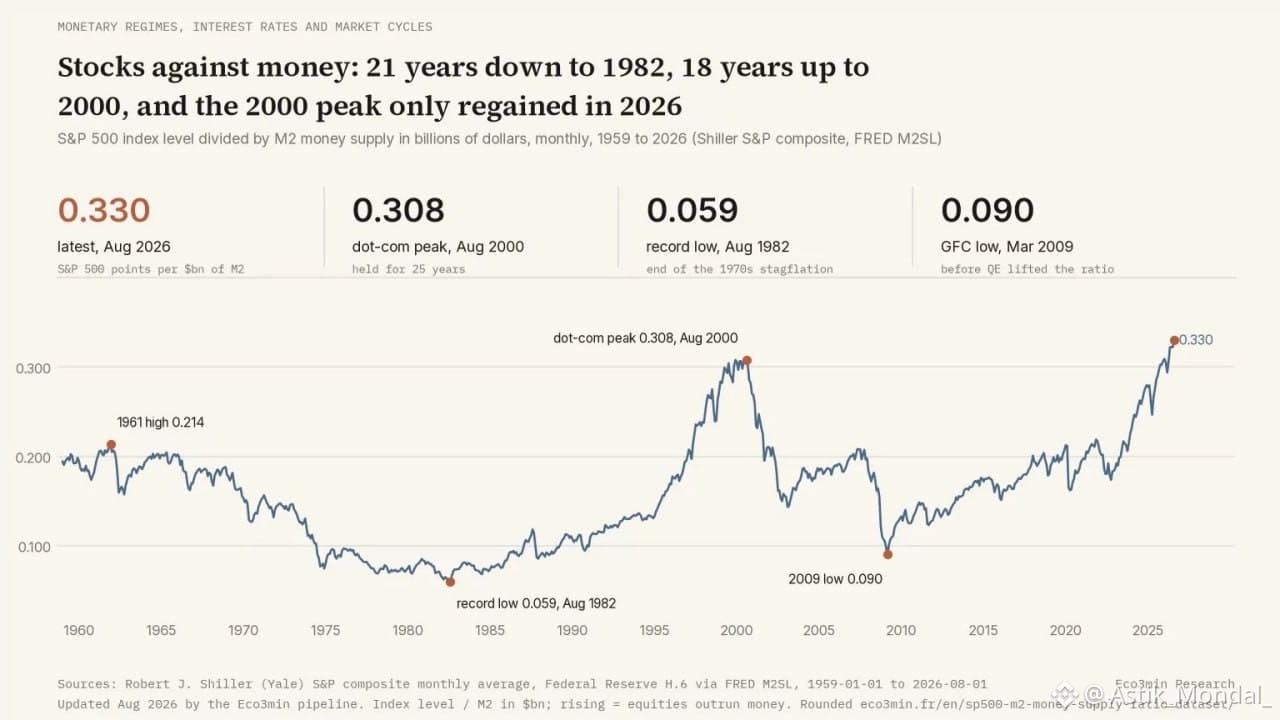
The S&P 500 relative to US M2 money supply has now climbed to 0.330.
That’s above the 0.308 level reached in August 2000.
And that matters because the August 2000 reading came near one of the most extreme valuation periods in modern market history.
After the S&P 500 peaked in March 2000, the index eventually lost nearly 50% and took years to reclaim its previous high.
Now this ratio has moved above that historic level again.
But there’s an important distinction:
A record-high S&P 500-to-M2 ratio does NOT automatically mean another Dot-Com-style crash is coming.
It does show that stocks have become historically expensive relative to the amount of money circulating in the US economy.
The real question now:
Are markets entering another major bubble…
Or has the economic and liquidity regime changed enough to make the comparison misleading?
#SP500 #StockMarket #M2 #Investing #Markets
🚨 THIS S&P 500 SIGNAL JUST BROKE A DOT-COM ERA RECORD
The S&P 500 relative to US M2 money supply has now climbed to 0.330.
That’s above the 0.308 level reached in August 2000.
And that matters because the August 2000 reading came near one of the most extreme valuation periods in modern market history.
After the S&P 500 peaked in March 2000, the index eventually lost nearly 50% and took years to reclaim its previous high.
Now this ratio has moved above that historic level again.
But there’s an important distinction:
A record-high S&P 500-to-M2 ratio does NOT automatically mean another Dot-Com-style crash is coming.
It does show that stocks have become historically expensive relative to the amount of money circulating in the US economy.
The real question now:
Are markets entering another major bubble…
Or has the economic and liquidity regime changed enough to make the comparison misleading?
#SP500 #StockMarket #M2 #Investing #Markets
The S&P 500 relative to US M2 money supply has now climbed to 0.330.
That’s above the 0.308 level reached in August 2000.
And that matters because the August 2000 reading came near one of the most extreme valuation periods in modern market history.
After the S&P 500 peaked in March 2000, the index eventually lost nearly 50% and took years to reclaim its previous high.
Now this ratio has moved above that historic level again.
But there’s an important distinction:
A record-high S&P 500-to-M2 ratio does NOT automatically mean another Dot-Com-style crash is coming.
It does show that stocks have become historically expensive relative to the amount of money circulating in the US economy.
The real question now:
Are markets entering another major bubble…
Or has the economic and liquidity regime changed enough to make the comparison misleading?
#SP500 #StockMarket #M2 #Investing #Markets
13
Partly True
🚨 JUST IN: OIL IS NOW PUSHING US BOND YIELDS HIGHER
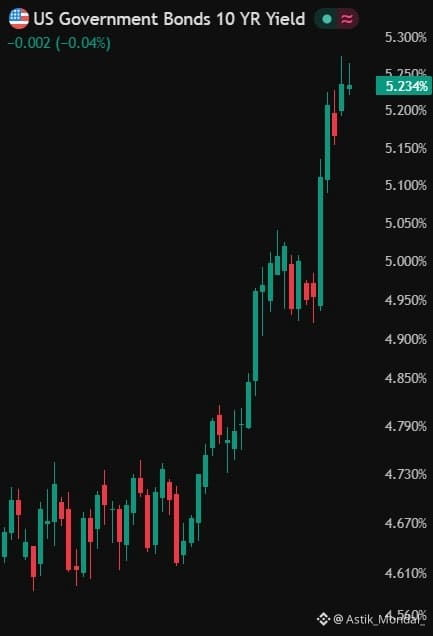
Every $1 rise in oil is adding roughly 2 basis points to the US 10-year Treasury yield, according to analysts cited by the Financial Times.
That means the oil market is becoming a direct pressure point for US rates.
Higher oil → higher inflation expectations → higher Treasury yields.
And if crude keeps climbing, markets could face tighter financial conditions even without the Fed changing rates.
The key question now:
How high can oil go before it starts reshaping the entire rate-cut and risk-asset narrative?
Oil isn’t just an energy story anymore.
It’s becoming a rates story.
#Oil #TreasuryYields #Inflation #FederalReserve #Markets $CL $BZ
🚨 JUST IN: OIL IS NOW PUSHING US BOND YIELDS HIGHER
Every $1 rise in oil is adding roughly 2 basis points to the US 10-year Treasury yield, according to analysts cited by the Financial Times.
That means the oil market is becoming a direct pressure point for US rates.
Higher oil → higher inflation expectations → higher Treasury yields.
And if crude keeps climbing, markets could face tighter financial conditions even without the Fed changing rates.
The key question now:
How high can oil go before it starts reshaping the entire rate-cut and risk-asset narrative?
Oil isn’t just an energy story anymore.
It’s becoming a rates story.
#Oil #TreasuryYields #Inflation #FederalReserve #Markets $CL $BZ
Every $1 rise in oil is adding roughly 2 basis points to the US 10-year Treasury yield, according to analysts cited by the Financial Times.
That means the oil market is becoming a direct pressure point for US rates.
Higher oil → higher inflation expectations → higher Treasury yields.
And if crude keeps climbing, markets could face tighter financial conditions even without the Fed changing rates.
The key question now:
How high can oil go before it starts reshaping the entire rate-cut and risk-asset narrative?
Oil isn’t just an energy story anymore.
It’s becoming a rates story.
#Oil #TreasuryYields #Inflation #FederalReserve #Markets $CL $BZ
1
422
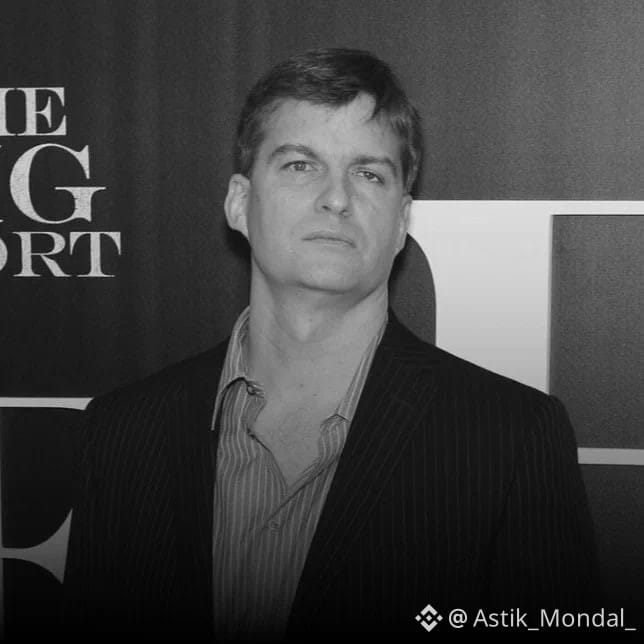
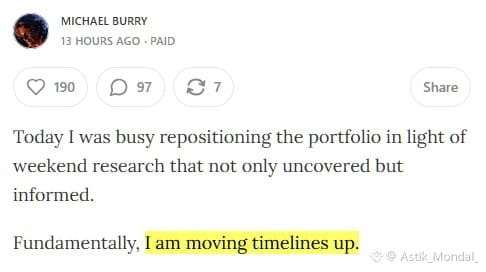
🚨 MICHAEL BURRY IS BETTING AGAINST THE AI BOOM
“The bubble in AI may burst sooner than later.”
The investor known for calling the 2008 housing crash has shifted his bearish AI positioning from SHORT positions to PUT options.
Why?
More leverage. Lower upfront cost. A defined time horizon.
And his strikes are dramatically below current prices.
$MU: $1,054 → June $500 puts
$PLTR: $187 → September 2027 puts in the low $100s
$NBIS: $232 → June puts in the double digits
$SOXX: $561 → September 2027 puts in the low $400s
These aren’t small moves.
Burry is positioning for a potentially violent reversal in AI-related equities, with the timing extending into next summer and beyond.
The bigger question for markets:
Is AI entering a normal valuation reset…
Or is this the beginning of something much larger?
One thing is clear:
Burry is not betting on the AI trade staying this hot forever.
#AI #Stocks #MichaelBurry #Investing #StockMarket
🚨 MICHAEL BURRY IS BETTING AGAINST THE AI BOOM
“The bubble in AI may burst sooner than later.”
The investor known for calling the 2008 housing crash has shifted his bearish AI positioning from SHORT positions to PUT options.
Why?
More leverage. Lower upfront cost. A defined time horizon.
And his strikes are dramatically below current prices.
$MU: $1,054 → June $500 puts
$PLTR: $187 → September 2027 puts in the low $100s
$NBIS: $232 → June puts in the double digits
$SOXX: $561 → September 2027 puts in the low $400s
These aren’t small moves.
Burry is positioning for a potentially violent reversal in AI-related equities, with the timing extending into next summer and beyond.
The bigger question for markets:
Is AI entering a normal valuation reset…
Or is this the beginning of something much larger?
One thing is clear:
Burry is not betting on the AI trade staying this hot forever.
#AI #Stocks #MichaelBurry #Investing #StockMarket
“The bubble in AI may burst sooner than later.”
The investor known for calling the 2008 housing crash has shifted his bearish AI positioning from SHORT positions to PUT options.
Why?
More leverage. Lower upfront cost. A defined time horizon.
And his strikes are dramatically below current prices.
$MU: $1,054 → June $500 puts
$PLTR: $187 → September 2027 puts in the low $100s
$NBIS: $232 → June puts in the double digits
$SOXX: $561 → September 2027 puts in the low $400s
These aren’t small moves.
Burry is positioning for a potentially violent reversal in AI-related equities, with the timing extending into next summer and beyond.
The bigger question for markets:
Is AI entering a normal valuation reset…
Or is this the beginning of something much larger?
One thing is clear:
Burry is not betting on the AI trade staying this hot forever.
#AI #Stocks #MichaelBurry #Investing #StockMarket
1
151
🚨 BREAKING: 🇺🇸🇮🇷 US SENATE TARGETS TETHER
A new Senate investigation is putting $USDT at the center of Iran’s alleged “shadow banking” network.
The report examined 846 wallets sanctioned over alleged Iran ties.
84% reportedly used USDT either exclusively or almost exclusively.
That finding is now triggering calls for a federal investigation into whether sanctions violations occurred.
Senator Richard Blumenthal is urging the US Treasury and Justice Department to investigate Tether’s handling of sanctioned wallets.
The key allegation?
Investigators say Tether did not move quickly enough to freeze certain sanctioned wallets.
Tether disputes the implication and says it is actively fighting illicit finance.
The company says it has supported the freezing of $550 MILLION in Iran-linked assets this year.
Now the bigger question for crypto:
Could this investigation lead to tougher scrutiny of stablecoins, sanctions compliance, and the role of USDT in global finance?
The outcome could have major implications for Tether and the entire stablecoin industry.
#Bitcoin #Crypto #USDT #Tether #Finance
🚨 BREAKING: 🇺🇸🇮🇷 US SENATE TARGETS TETHER
A new Senate investigation is putting $USDT at the center of Iran’s alleged “shadow banking” network.
The report examined 846 wallets sanctioned over alleged Iran ties.
84% reportedly used USDT either exclusively or almost exclusively.
That finding is now triggering calls for a federal investigation into whether sanctions violations occurred.
Senator Richard Blumenthal is urging the US Treasury and Justice Department to investigate Tether’s handling of sanctioned wallets.
The key allegation?
Investigators say Tether did not move quickly enough to freeze certain sanctioned wallets.
Tether disputes the implication and says it is actively fighting illicit finance.
The company says it has supported the freezing of $550 MILLION in Iran-linked assets this year.
Now the bigger question for crypto:
Could this investigation lead to tougher scrutiny of stablecoins, sanctions compliance, and the role of USDT in global finance?
The outcome could have major implications for Tether and the entire stablecoin industry.
#Bitcoin #Crypto #USDT #Tether #Finance
A new Senate investigation is putting $USDT at the center of Iran’s alleged “shadow banking” network.
The report examined 846 wallets sanctioned over alleged Iran ties.
84% reportedly used USDT either exclusively or almost exclusively.
That finding is now triggering calls for a federal investigation into whether sanctions violations occurred.
Senator Richard Blumenthal is urging the US Treasury and Justice Department to investigate Tether’s handling of sanctioned wallets.
The key allegation?
Investigators say Tether did not move quickly enough to freeze certain sanctioned wallets.
Tether disputes the implication and says it is actively fighting illicit finance.
The company says it has supported the freezing of $550 MILLION in Iran-linked assets this year.
Now the bigger question for crypto:
Could this investigation lead to tougher scrutiny of stablecoins, sanctions compliance, and the role of USDT in global finance?
The outcome could have major implications for Tether and the entire stablecoin industry.
#Bitcoin #Crypto #USDT #Tether #Finance

1
60
Verified
🚨 JUST IN: 🇺🇸🇮🇷 TRUMP MAKES A HUGE INFLATION CLAIM
President Trump says inflation will be completely eliminated once the Iran war ends.
The key reason?
Energy prices.
Trump has repeatedly argued that ending the conflict will bring oil and gasoline prices sharply lower, easing inflationary pressure.
If the war ends and energy markets normalize, the impact could extend far beyond the gas pump potentially affecting transportation, commodities, consumer prices and broader market sentiment.
But the big question remains:
How quickly would inflation actually fall?
That depends heavily on how energy prices, supply chains and the broader economy respond after the conflict.
Markets will be watching every development.
#Trump #Iran #Inflation #Oil #Markets
🚨 JUST IN: 🇺🇸🇮🇷 TRUMP MAKES A HUGE INFLATION CLAIM
President Trump says inflation will be completely eliminated once the Iran war ends.
The key reason?
Energy prices.
Trump has repeatedly argued that ending the conflict will bring oil and gasoline prices sharply lower, easing inflationary pressure.
If the war ends and energy markets normalize, the impact could extend far beyond the gas pump potentially affecting transportation, commodities, consumer prices and broader market sentiment.
But the big question remains:
How quickly would inflation actually fall?
That depends heavily on how energy prices, supply chains and the broader economy respond after the conflict.
Markets will be watching every development.
#Trump #Iran #Inflation #Oil #Markets
President Trump says inflation will be completely eliminated once the Iran war ends.
The key reason?
Energy prices.
Trump has repeatedly argued that ending the conflict will bring oil and gasoline prices sharply lower, easing inflationary pressure.
If the war ends and energy markets normalize, the impact could extend far beyond the gas pump potentially affecting transportation, commodities, consumer prices and broader market sentiment.
But the big question remains:
How quickly would inflation actually fall?
That depends heavily on how energy prices, supply chains and the broader economy respond after the conflict.
Markets will be watching every development.
#Trump #Iran #Inflation #Oil #Markets
1
320
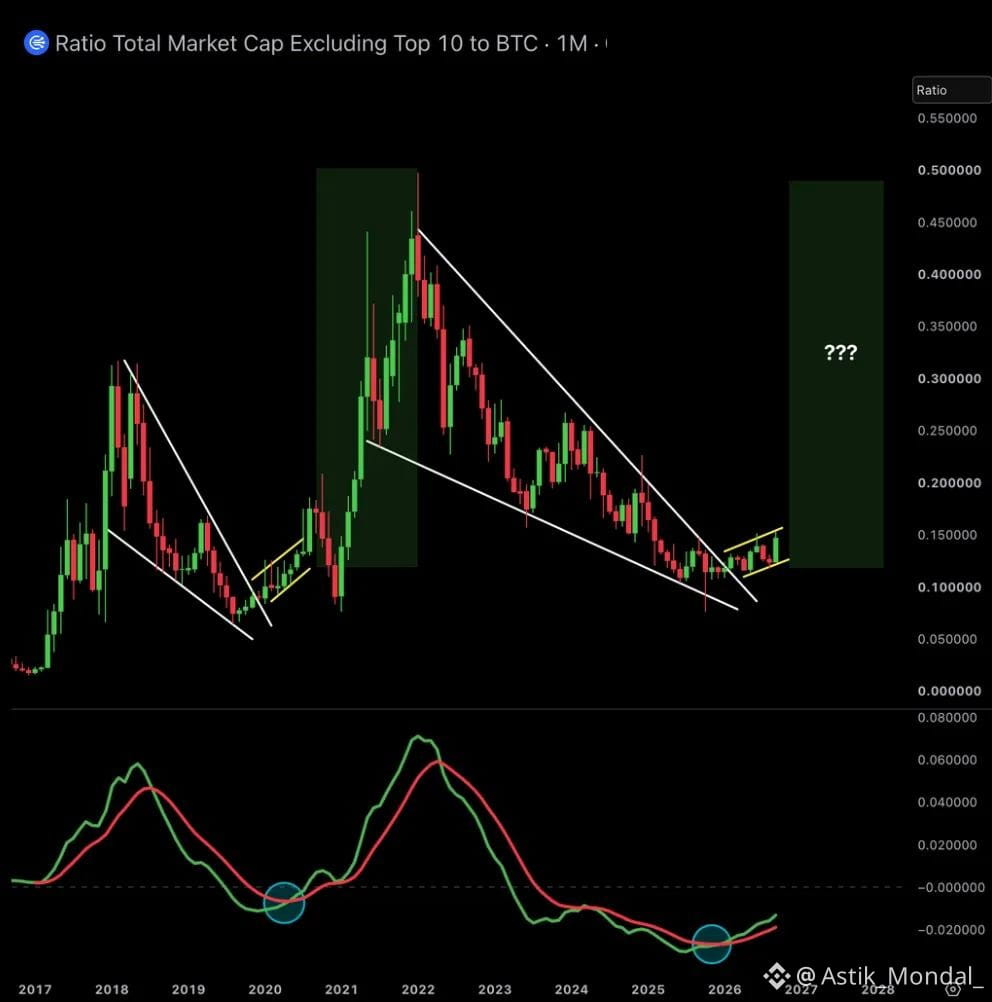
ALTCOINS MAY BE SETTING UP FOR THEIR BIGGEST MOVE IN YEARS. 🚨
Something very interesting is happening on the OTHERS/BTC monthly chart.
A 4-year downtrend has finally been broken.
The market has shifted into a new uptrend following the 2026 breakout.
Momentum has also flipped bullish.
And here’s the part that gets interesting:
This structure looks remarkably similar to the setup that appeared before the explosive 2021 altcoin season.
If history rhymes, the next major rotation into altcoins could be massive.
The setup is forming.
Now the question is whether altcoins can confirm the move.
Watch this chart closely.
#Altcoins #Crypto #Bitcoin #Altseason #Ethereum
ALTCOINS MAY BE SETTING UP FOR THEIR BIGGEST MOVE IN YEARS. 🚨
Something very interesting is happening on the OTHERS/BTC monthly chart.
A 4-year downtrend has finally been broken.
The market has shifted into a new uptrend following the 2026 breakout.
Momentum has also flipped bullish.
And here’s the part that gets interesting:
This structure looks remarkably similar to the setup that appeared before the explosive 2021 altcoin season.
If history rhymes, the next major rotation into altcoins could be massive.
The setup is forming.
Now the question is whether altcoins can confirm the move.
Watch this chart closely.
#Altcoins #Crypto #Bitcoin #Altseason #Ethereum
Something very interesting is happening on the OTHERS/BTC monthly chart.
A 4-year downtrend has finally been broken.
The market has shifted into a new uptrend following the 2026 breakout.
Momentum has also flipped bullish.
And here’s the part that gets interesting:
This structure looks remarkably similar to the setup that appeared before the explosive 2021 altcoin season.
If history rhymes, the next major rotation into altcoins could be massive.
The setup is forming.
Now the question is whether altcoins can confirm the move.
Watch this chart closely.
#Altcoins #Crypto #Bitcoin #Altseason #Ethereum
1
148
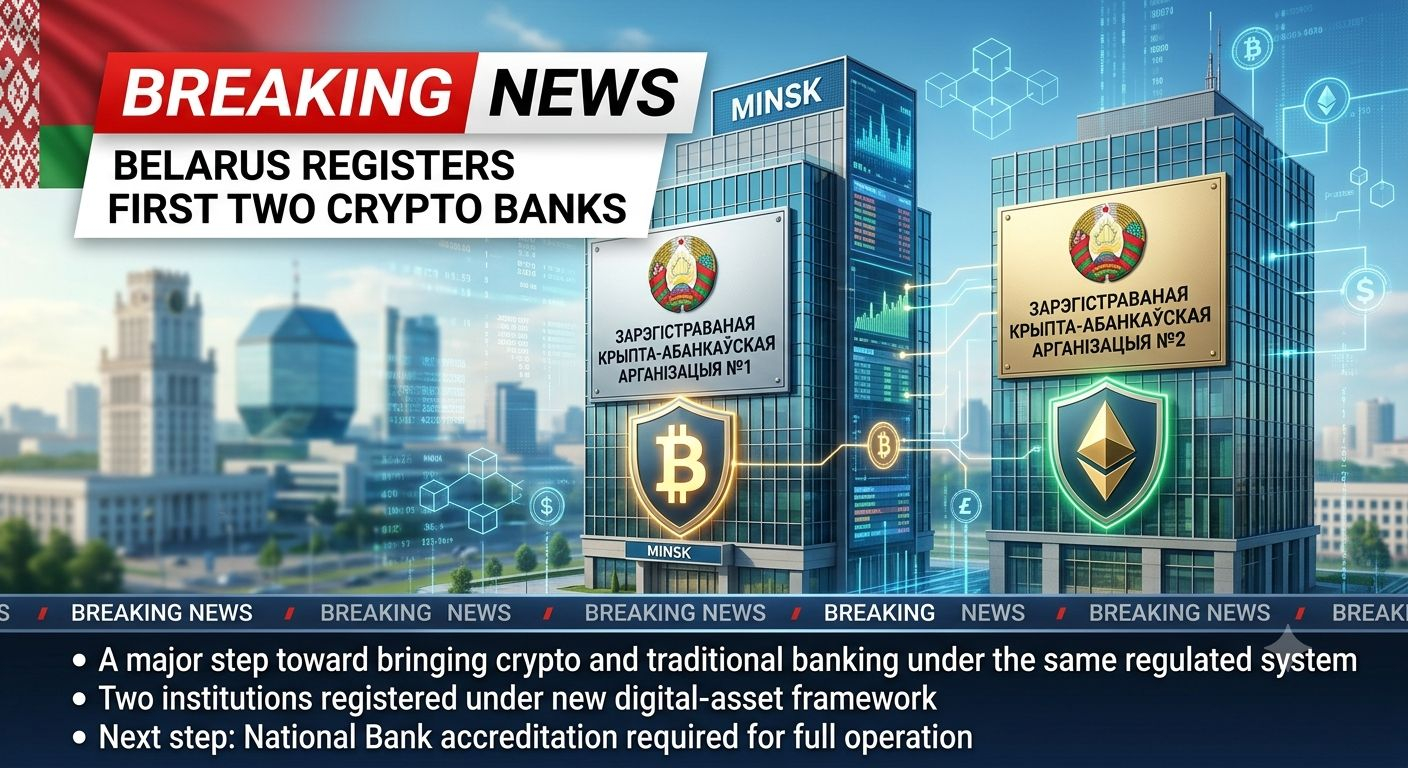
BREAKING: 🇧🇾 BELARUS JUST REGISTERED ITS FIRST TWO CRYPTO BANKS
A major step toward bringing crypto and traditional banking under the same regulated system.
Belarus has officially registered its first two crypto-bank organizations under its new digital-asset framework.
The move follows a regulatory push launched earlier this year.
But there’s a catch:
The two institutions still need accreditation from Belarus’ National Bank before they can begin operating as fully regulated crypto banks.
The framework could allow crypto banks to provide both traditional banking and digital-token services.
Belarus is now moving one step closer to making crypto banking part of its formal financial system.
The line between traditional finance and crypto is getting thinner.
#Bitcoin #Crypto #Belarus #Blockchain #Finance
BREAKING: 🇧🇾 BELARUS JUST REGISTERED ITS FIRST TWO CRYPTO BANKS
A major step toward bringing crypto and traditional banking under the same regulated system.
Belarus has officially registered its first two crypto-bank organizations under its new digital-asset framework.
The move follows a regulatory push launched earlier this year.
But there’s a catch:
The two institutions still need accreditation from Belarus’ National Bank before they can begin operating as fully regulated crypto banks.
The framework could allow crypto banks to provide both traditional banking and digital-token services.
Belarus is now moving one step closer to making crypto banking part of its formal financial system.
The line between traditional finance and crypto is getting thinner.
#Bitcoin #Crypto #Belarus #Blockchain #Finance
A major step toward bringing crypto and traditional banking under the same regulated system.
Belarus has officially registered its first two crypto-bank organizations under its new digital-asset framework.
The move follows a regulatory push launched earlier this year.
But there’s a catch:
The two institutions still need accreditation from Belarus’ National Bank before they can begin operating as fully regulated crypto banks.
The framework could allow crypto banks to provide both traditional banking and digital-token services.
Belarus is now moving one step closer to making crypto banking part of its formal financial system.
The line between traditional finance and crypto is getting thinner.
#Bitcoin #Crypto #Belarus #Blockchain #Finance
1
7
·
--
Bullish
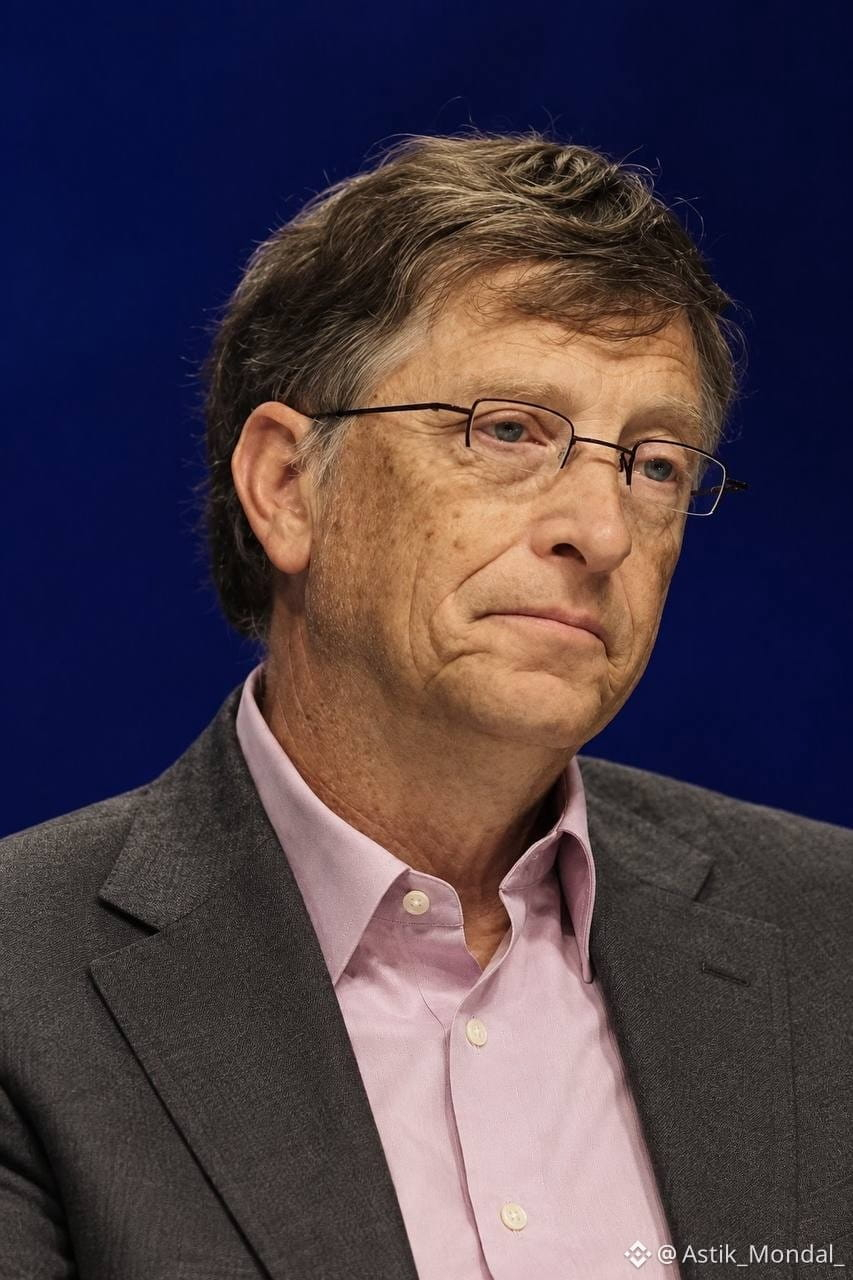
🚨 BILL GATES COULD HAVE BEEN THE WORLD’S FIRST TRILLIONAIRE
Forbes estimates that if Bill Gates had kept 100% of his original Microsoft $MSFT position, his fortune could be worth roughly $1.2 TRILLION today.
Think about that.
Microsoft became one of the most valuable companies in history.
But Gates steadily sold and diversified his stake over the years.
Today, Forbes estimates he owns less than 1% of Microsoft.
The unreal part?
A single decision simply holding onto more of his original $MSFT position could have put Gates in the trillionaire club long before anyone else.
This is the power of long-term equity ownership.
And it shows just how enormous the wealth creation from a single dominant technology company can become.
#Microsoft #BillGates #Stocks #Investing #Technology
🚨 BILL GATES COULD HAVE BEEN THE WORLD’S FIRST TRILLIONAIRE
Forbes estimates that if Bill Gates had kept 100% of his original Microsoft $MSFT position, his fortune could be worth roughly $1.2 TRILLION today.
Think about that.
Microsoft became one of the most valuable companies in history.
But Gates steadily sold and diversified his stake over the years.
Today, Forbes estimates he owns less than 1% of Microsoft.
The unreal part?
A single decision simply holding onto more of his original $MSFT position could have put Gates in the trillionaire club long before anyone else.
This is the power of long-term equity ownership.
And it shows just how enormous the wealth creation from a single dominant technology company can become.
#Microsoft #BillGates #Stocks #Investing #Technology
Forbes estimates that if Bill Gates had kept 100% of his original Microsoft $MSFT position, his fortune could be worth roughly $1.2 TRILLION today.
Think about that.
Microsoft became one of the most valuable companies in history.
But Gates steadily sold and diversified his stake over the years.
Today, Forbes estimates he owns less than 1% of Microsoft.
The unreal part?
A single decision simply holding onto more of his original $MSFT position could have put Gates in the trillionaire club long before anyone else.
This is the power of long-term equity ownership.
And it shows just how enormous the wealth creation from a single dominant technology company can become.
#Microsoft #BillGates #Stocks #Investing #Technology
1
8
🚨 BREAKING: 🇮🇷 IRAN’S USDT NETWORK JUST CAME UNDER THE SPOTLIGHT.
A U.S. Senate investigation has found widespread use of Tether’s $USDT by Iran-linked wallets to circumvent U.S. sanctions, according to The Wall Street Journal.
The investigation reviewed hundreds of crypto wallets sanctioned over ties to Iran, the IRGC and affiliated groups.
USDT appeared overwhelmingly across those wallets.
That puts the world’s largest stablecoin directly at the center of a growing sanctions-compliance battle.
And this isn’t happening in isolation.
U.S. authorities have already intensified enforcement against Iranian crypto networks, while the Senate has been questioning how Tether handles sanctioned addresses and illicit activity.
Tether, meanwhile, says it has helped freeze hundreds of millions of dollars in Iran-linked USDT this year.
The bigger story:
Stablecoins are becoming increasingly important to global finance.
But the same liquidity and borderless settlement that make them powerful can also make them attractive to entities trying to operate outside traditional financial rails.
Now Washington is paying much closer attention.
And the pressure on stablecoin issuers is only getting more intense.
$USDT $TETHER $BTC $CRYPTO
#USDT #Tether #Crypto #Stablecoins #Bitcoin
🚨 BREAKING: 🇮🇷 IRAN’S USDT NETWORK JUST CAME UNDER THE SPOTLIGHT.
A U.S. Senate investigation has found widespread use of Tether’s $USDT by Iran-linked wallets to circumvent U.S. sanctions, according to The Wall Street Journal.
The investigation reviewed hundreds of crypto wallets sanctioned over ties to Iran, the IRGC and affiliated groups.
USDT appeared overwhelmingly across those wallets.
That puts the world’s largest stablecoin directly at the center of a growing sanctions-compliance battle.
And this isn’t happening in isolation.
U.S. authorities have already intensified enforcement against Iranian crypto networks, while the Senate has been questioning how Tether handles sanctioned addresses and illicit activity.
Tether, meanwhile, says it has helped freeze hundreds of millions of dollars in Iran-linked USDT this year.
The bigger story:
Stablecoins are becoming increasingly important to global finance.
But the same liquidity and borderless settlement that make them powerful can also make them attractive to entities trying to operate outside traditional financial rails.
Now Washington is paying much closer attention.
And the pressure on stablecoin issuers is only getting more intense.
$USDT $TETHER $BTC $CRYPTO
#USDT #Tether #Crypto #Stablecoins #Bitcoin
A U.S. Senate investigation has found widespread use of Tether’s $USDT by Iran-linked wallets to circumvent U.S. sanctions, according to The Wall Street Journal.
The investigation reviewed hundreds of crypto wallets sanctioned over ties to Iran, the IRGC and affiliated groups.
USDT appeared overwhelmingly across those wallets.
That puts the world’s largest stablecoin directly at the center of a growing sanctions-compliance battle.
And this isn’t happening in isolation.
U.S. authorities have already intensified enforcement against Iranian crypto networks, while the Senate has been questioning how Tether handles sanctioned addresses and illicit activity.
Tether, meanwhile, says it has helped freeze hundreds of millions of dollars in Iran-linked USDT this year.
The bigger story:
Stablecoins are becoming increasingly important to global finance.
But the same liquidity and borderless settlement that make them powerful can also make them attractive to entities trying to operate outside traditional financial rails.
Now Washington is paying much closer attention.
And the pressure on stablecoin issuers is only getting more intense.
$USDT $TETHER $BTC $CRYPTO
#USDT #Tether #Crypto #Stablecoins #Bitcoin
1
7
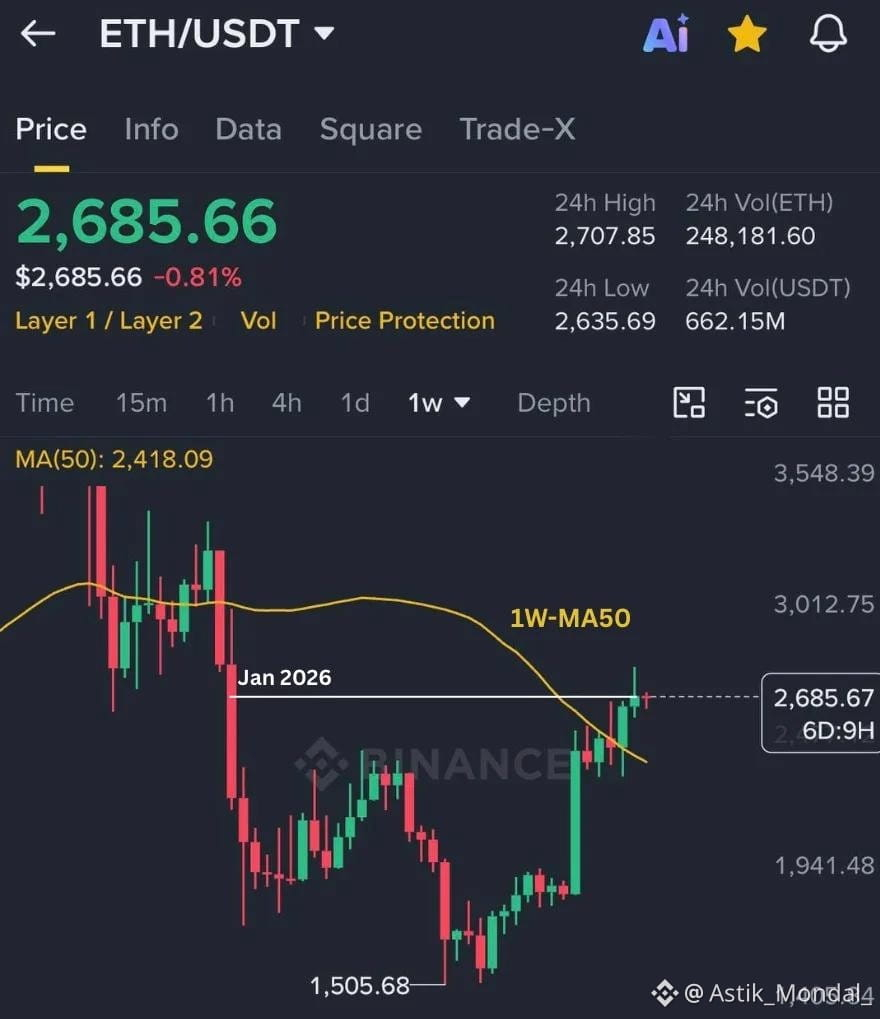
🚨 ETHEREUM IS QUIETLY GETTING STRONGER.
$ETH just printed its highest weekly close in 8 months.
And more importantly:
Ethereum has now closed above the 1W MA50 for the SECOND consecutive week.
That matters.
The weekly chart is showing a clear shift in momentum.
ETH has reclaimed a major higher-timeframe moving average after spending months below it.
Weekly momentum has also improved, with ETH previously reclaiming the 50 RSI area as price pushed through major resistance.
Now the market is watching whether ETH can HOLD above the 1W MA50.
Because a breakout is one thing.
Turning that breakout into support is another.
If buyers continue defending the reclaimed level, the weekly structure could remain constructive.
And with ETH/BTC also recently printing its highest weekly close in 8 months, Ethereum’s relative strength is becoming harder to ignore.
The key now:
Watch the weekly close.
Watch the MA50.
Watch how ETH reacts at resistance.
No prediction.
Just structure.
$ETH is showing strength now the market has to prove whether that strength can sustain.
#Ethereum #ETH #Crypto #Altcoins #Bitcoin
🚨 ETHEREUM IS QUIETLY GETTING STRONGER.
$ETH just printed its highest weekly close in 8 months.
And more importantly:
Ethereum has now closed above the 1W MA50 for the SECOND consecutive week.
That matters.
The weekly chart is showing a clear shift in momentum.
ETH has reclaimed a major higher-timeframe moving average after spending months below it.
Weekly momentum has also improved, with ETH previously reclaiming the 50 RSI area as price pushed through major resistance.
Now the market is watching whether ETH can HOLD above the 1W MA50.
Because a breakout is one thing.
Turning that breakout into support is another.
If buyers continue defending the reclaimed level, the weekly structure could remain constructive.
And with ETH/BTC also recently printing its highest weekly close in 8 months, Ethereum’s relative strength is becoming harder to ignore.
The key now:
Watch the weekly close.
Watch the MA50.
Watch how ETH reacts at resistance.
No prediction.
Just structure.
$ETH is showing strength now the market has to prove whether that strength can sustain.
#Ethereum #ETH #Crypto #Altcoins #Bitcoin
$ETH just printed its highest weekly close in 8 months.
And more importantly:
Ethereum has now closed above the 1W MA50 for the SECOND consecutive week.
That matters.
The weekly chart is showing a clear shift in momentum.
ETH has reclaimed a major higher-timeframe moving average after spending months below it.
Weekly momentum has also improved, with ETH previously reclaiming the 50 RSI area as price pushed through major resistance.
Now the market is watching whether ETH can HOLD above the 1W MA50.
Because a breakout is one thing.
Turning that breakout into support is another.
If buyers continue defending the reclaimed level, the weekly structure could remain constructive.
And with ETH/BTC also recently printing its highest weekly close in 8 months, Ethereum’s relative strength is becoming harder to ignore.
The key now:
Watch the weekly close.
Watch the MA50.
Watch how ETH reacts at resistance.
No prediction.
Just structure.
$ETH is showing strength now the market has to prove whether that strength can sustain.
#Ethereum #ETH #Crypto #Altcoins #Bitcoin
1
7
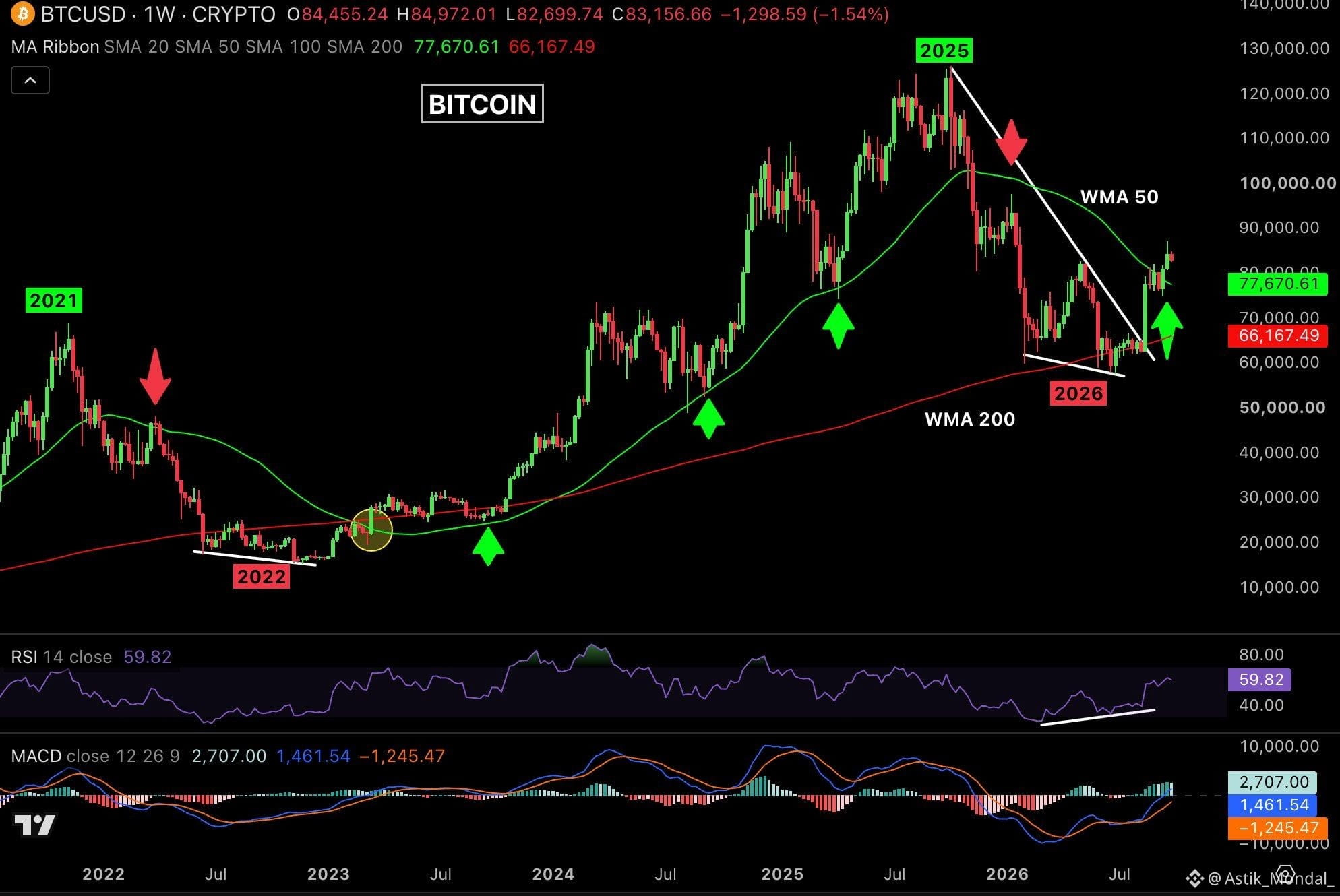
🚨 BITCOIN WEEKLY ANALYSIS: THE STRUCTURE HAS CHANGED.
Bitcoin just closed the week around $84.4K — its highest weekly close in roughly 8 months.
But the interesting part isn’t the 4% weekly pump.
It’s HOW BTC moved from the $57K area toward $87K.
For 11 weeks, Bitcoin repeatedly tested the Weekly MA 200.
It held.
During that consolidation, MACD turned bullish, RSI developed bullish divergence, and momentum gradually shifted toward buyers.
Then came the $67K breakout.
BTC spent the next four weeks testing the Weekly MA 50, while $75K acted as an important support zone.
Once Bitcoin secured a weekly close above the 50-week MA, momentum accelerated and BTC pushed above $86K.
Now the key question is whether the breakout can hold.
Current structure:
Support: Weekly MA 50 → ~$77.7K Daily MA 200 → ~$71.1K
Resistance: $87K → $98K
Macro is also important.
U.S. economic activity remains a major driver for risk assets, while markets are heading into another important week of economic data.
ISM is due Thursday.
Jobs data is due Friday.
So don’t just watch the candles.
Watch the reaction around the major levels.
If BTC holds above reclaimed resistance, the structure remains constructive.
If key supports fail, the market could shift back into deeper consolidation.
The levels matter more than the predictions.
$BTC $ETH
#Bitcoin #Crypto #BTC #Trading #Markets
🚨 BITCOIN WEEKLY ANALYSIS: THE STRUCTURE HAS CHANGED.
Bitcoin just closed the week around $84.4K — its highest weekly close in roughly 8 months.
But the interesting part isn’t the 4% weekly pump.
It’s HOW BTC moved from the $57K area toward $87K.
For 11 weeks, Bitcoin repeatedly tested the Weekly MA 200.
It held.
During that consolidation, MACD turned bullish, RSI developed bullish divergence, and momentum gradually shifted toward buyers.
Then came the $67K breakout.
BTC spent the next four weeks testing the Weekly MA 50, while $75K acted as an important support zone.
Once Bitcoin secured a weekly close above the 50-week MA, momentum accelerated and BTC pushed above $86K.
Now the key question is whether the breakout can hold.
Current structure:
Support: Weekly MA 50 → ~$77.7K Daily MA 200 → ~$71.1K
Resistance: $87K → $98K
Macro is also important.
U.S. economic activity remains a major driver for risk assets, while markets are heading into another important week of economic data.
ISM is due Thursday.
Jobs data is due Friday.
So don’t just watch the candles.
Watch the reaction around the major levels.
If BTC holds above reclaimed resistance, the structure remains constructive.
If key supports fail, the market could shift back into deeper consolidation.
The levels matter more than the predictions.
$BTC $ETH
#Bitcoin #Crypto #BTC #Trading #Markets
Bitcoin just closed the week around $84.4K — its highest weekly close in roughly 8 months.
But the interesting part isn’t the 4% weekly pump.
It’s HOW BTC moved from the $57K area toward $87K.
For 11 weeks, Bitcoin repeatedly tested the Weekly MA 200.
It held.
During that consolidation, MACD turned bullish, RSI developed bullish divergence, and momentum gradually shifted toward buyers.
Then came the $67K breakout.
BTC spent the next four weeks testing the Weekly MA 50, while $75K acted as an important support zone.
Once Bitcoin secured a weekly close above the 50-week MA, momentum accelerated and BTC pushed above $86K.
Now the key question is whether the breakout can hold.
Current structure:
Support: Weekly MA 50 → ~$77.7K Daily MA 200 → ~$71.1K
Resistance: $87K → $98K
Macro is also important.
U.S. economic activity remains a major driver for risk assets, while markets are heading into another important week of economic data.
ISM is due Thursday.
Jobs data is due Friday.
So don’t just watch the candles.
Watch the reaction around the major levels.
If BTC holds above reclaimed resistance, the structure remains constructive.
If key supports fail, the market could shift back into deeper consolidation.
The levels matter more than the predictions.
$BTC $ETH
#Bitcoin #Crypto #BTC #Trading #Markets
1
41
🚨 JUST IN: $WOOF IS NOW DIRECTLY PAIRED WITH $SHIB.
A new chapter may be forming inside the Shiba Inu ecosystem.
$WOOF is becoming part of a SHIB-focused trading structure, putting the two tokens directly into the same liquidity story.
And there’s another detail getting attention:
Original SHIB team members are reportedly showing support for the project.
If that support continues, this could put $WOOF firmly on the radar of the massive SHIB community.
The bigger story isn’t just the pair.
It’s the liquidity, community attention and ecosystem connections that can follow.
$SHIB holders are watching.
$WOOF holders are watching.
The next moves could get interesting.
#SHIB #WOOF #ShibaInu #Crypto #Memecoins $SHIB
🚨 JUST IN: $WOOF IS NOW DIRECTLY PAIRED WITH $SHIB .
A new chapter may be forming inside the Shiba Inu ecosystem.
$WOOF is becoming part of a SHIB-focused trading structure, putting the two tokens directly into the same liquidity story.
And there’s another detail getting attention:
Original SHIB team members are reportedly showing support for the project.
If that support continues, this could put $WOOF firmly on the radar of the massive SHIB community.
The bigger story isn’t just the pair.
It’s the liquidity, community attention and ecosystem connections that can follow.
$SHIB holders are watching.
$WOOF holders are watching.
The next moves could get interesting.
#SHIB #WOOF #ShibaInu #Crypto #Memecoins $SHIB
A new chapter may be forming inside the Shiba Inu ecosystem.
$WOOF is becoming part of a SHIB-focused trading structure, putting the two tokens directly into the same liquidity story.
And there’s another detail getting attention:
Original SHIB team members are reportedly showing support for the project.
If that support continues, this could put $WOOF firmly on the radar of the massive SHIB community.
The bigger story isn’t just the pair.
It’s the liquidity, community attention and ecosystem connections that can follow.
$SHIB holders are watching.
$WOOF holders are watching.
The next moves could get interesting.
#SHIB #WOOF #ShibaInu #Crypto #Memecoins $SHIB


2
297
🚨 MAJOR: SpaceX’s Starship just reached Earth’s orbit for the FIRST TIME.
The 407-foot megarocket completed a mission circling the planet six times over nearly 10 hours at around 170 miles altitude.
Planned splashdown in the Pacific near Chile.
A historic leap for reusable deep-space flight.
#SpaceX #Starship #ElonMusk #Space #Orbit
🚨 MAJOR: SpaceX’s Starship just reached Earth’s orbit for the FIRST TIME.
The 407-foot megarocket completed a mission circling the planet six times over nearly 10 hours at around 170 miles altitude.
Planned splashdown in the Pacific near Chile.
A historic leap for reusable deep-space flight.
#SpaceX #Starship #ElonMusk #Space #Orbit
The 407-foot megarocket completed a mission circling the planet six times over nearly 10 hours at around 170 miles altitude.
Planned splashdown in the Pacific near Chile.
A historic leap for reusable deep-space flight.
#SpaceX #Starship #ElonMusk #Space #Orbit
1
22
Verified
🚨 NVIDIA JUST UNLEASHED A $235 BILLION BUYBACK.
The AI giant has now authorized the largest share-repurchase increase in history.
NVIDIA added another $150 BILLION to its buyback program, taking the remaining authorization to $235 BILLION through fiscal 2028.
That surpasses Apple’s $110 BILLION buyback authorization from 2024.
And the timing is hard to ignore.
NVIDIA is generating enormous cash from the AI infrastructure boom while continuing to return capital to shareholders.
In Q2 alone, NVIDIA returned roughly $26 BILLION through buybacks and dividends.
Now the company has another $235 BILLION of authorized firepower.
That means NVIDIA is simultaneously funding the AI revolution AND preparing to aggressively return capital to shareholders.
The market noticed.
$NVDA shares climbed in trading after the announcement.
The bigger question:
How much stronger can NVIDIA’s cash-generation machine become if AI infrastructure spending keeps accelerating?
AI demand is still the story.
Now the buyback is becoming a story of its own.
$NVDA $AAPL $AI $STOCKS $TECH
#NVIDIA #NVDA #AI #Stocks #Investing
🚨 NVIDIA JUST UNLEASHED A $235 BILLION BUYBACK.
The AI giant has now authorized the largest share-repurchase increase in history.
NVIDIA added another $150 BILLION to its buyback program, taking the remaining authorization to $235 BILLION through fiscal 2028.
That surpasses Apple’s $110 BILLION buyback authorization from 2024.
And the timing is hard to ignore.
NVIDIA is generating enormous cash from the AI infrastructure boom while continuing to return capital to shareholders.
In Q2 alone, NVIDIA returned roughly $26 BILLION through buybacks and dividends.
Now the company has another $235 BILLION of authorized firepower.
That means NVIDIA is simultaneously funding the AI revolution AND preparing to aggressively return capital to shareholders.
The market noticed.
$NVDA shares climbed in trading after the announcement.
The bigger question:
How much stronger can NVIDIA’s cash-generation machine become if AI infrastructure spending keeps accelerating?
AI demand is still the story.
Now the buyback is becoming a story of its own.
$NVDA $AAPL $AI $STOCKS $TECH
#NVIDIA #NVDA #AI #Stocks #Investing
The AI giant has now authorized the largest share-repurchase increase in history.
NVIDIA added another $150 BILLION to its buyback program, taking the remaining authorization to $235 BILLION through fiscal 2028.
That surpasses Apple’s $110 BILLION buyback authorization from 2024.
And the timing is hard to ignore.
NVIDIA is generating enormous cash from the AI infrastructure boom while continuing to return capital to shareholders.
In Q2 alone, NVIDIA returned roughly $26 BILLION through buybacks and dividends.
Now the company has another $235 BILLION of authorized firepower.
That means NVIDIA is simultaneously funding the AI revolution AND preparing to aggressively return capital to shareholders.
The market noticed.
$NVDA shares climbed in trading after the announcement.
The bigger question:
How much stronger can NVIDIA’s cash-generation machine become if AI infrastructure spending keeps accelerating?
AI demand is still the story.
Now the buyback is becoming a story of its own.
$NVDA $AAPL $AI $STOCKS $TECH
#NVIDIA #NVDA #AI #Stocks #Investing


1
150
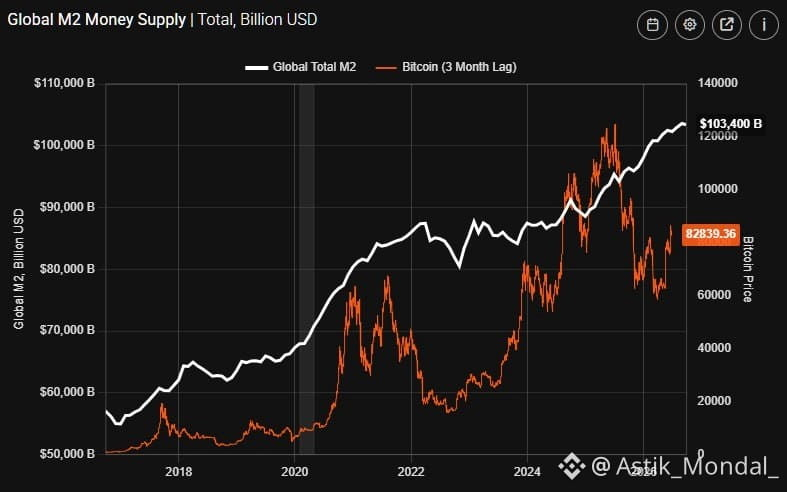
🚨 GLOBAL LIQUIDITY JUST HIT A RECORD.
Global M2 is now estimated at roughly $103.4 TRILLION.
The U.S., China, Eurozone and Japan together added around $1 TRILLION in August.
That marks the 10th consecutive monthly increase.
And this is where Bitcoin gets interesting.
For years, expanding global liquidity has broadly coincided with stronger performance across risk assets, including BTC.
More liquidity can mean more capital available to flow through financial markets.
But there’s a major caveat:
Bitcoin has recently been rising less consistently with global M2 than the historical relationship would suggest.
So $103T+ in global M2 does NOT automatically mean Bitcoin goes higher.
What matters next is whether liquidity expansion continues Whether financial conditions ease And whether that liquidity actually finds its way into risk assets.
The macro setup is getting VERY interesting.
Watch global M2.
Watch the dollar.
Watch yields.
Then watch Bitcoin.
#Bitcoin #BTC #Crypto #Liquidity #Macro
🚨 GLOBAL LIQUIDITY JUST HIT A RECORD.
Global M2 is now estimated at roughly $103.4 TRILLION.
The U.S., China, Eurozone and Japan together added around $1 TRILLION in August.
That marks the 10th consecutive monthly increase.
And this is where Bitcoin gets interesting.
For years, expanding global liquidity has broadly coincided with stronger performance across risk assets, including BTC.
More liquidity can mean more capital available to flow through financial markets.
But there’s a major caveat:
Bitcoin has recently been rising less consistently with global M2 than the historical relationship would suggest.
So $103T+ in global M2 does NOT automatically mean Bitcoin goes higher.
What matters next is whether liquidity expansion continues Whether financial conditions ease And whether that liquidity actually finds its way into risk assets.
The macro setup is getting VERY interesting.
Watch global M2.
Watch the dollar.
Watch yields.
Then watch Bitcoin.
#Bitcoin #BTC #Crypto #Liquidity #Macro
Global M2 is now estimated at roughly $103.4 TRILLION.
The U.S., China, Eurozone and Japan together added around $1 TRILLION in August.
That marks the 10th consecutive monthly increase.
And this is where Bitcoin gets interesting.
For years, expanding global liquidity has broadly coincided with stronger performance across risk assets, including BTC.
More liquidity can mean more capital available to flow through financial markets.
But there’s a major caveat:
Bitcoin has recently been rising less consistently with global M2 than the historical relationship would suggest.
So $103T+ in global M2 does NOT automatically mean Bitcoin goes higher.
What matters next is whether liquidity expansion continues Whether financial conditions ease And whether that liquidity actually finds its way into risk assets.
The macro setup is getting VERY interesting.
Watch global M2.
Watch the dollar.
Watch yields.
Then watch Bitcoin.
#Bitcoin #BTC #Crypto #Liquidity #Macro
1
72
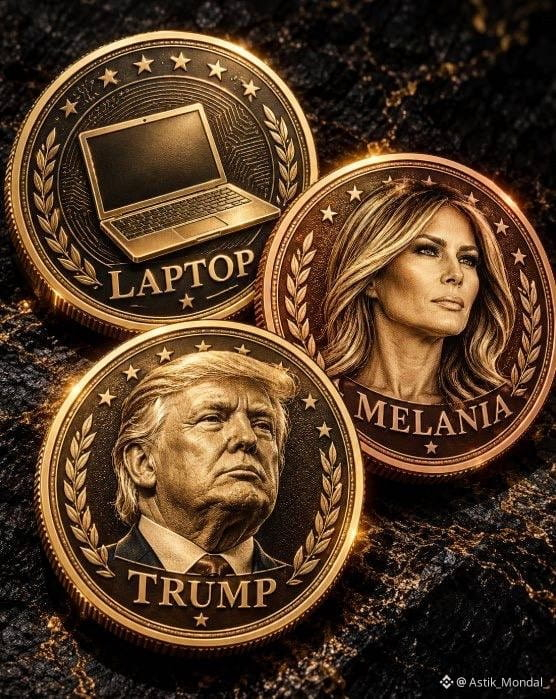
🚨 CALIFORNIA JUST TOOK AIM AT POLITICAL MEME COINS.
Governor Gavin Newsom has signed AB 2409, barring covered public officials and certain public employees from issuing meme coins.
And the law goes further.
Starting January 1, 2027, crypto platforms serving California residents cannot list newly issued meme coins offered by or in partnership with covered federal, state or local public officials.
This is NOT a ban on meme coins in California.
Existing political tokens aren’t automatically wiped from exchanges.
The target is the creation and distribution of new official-linked meme coins under the law’s definition.
But that’s only part of California’s new crypto crackdown.
Another law expands money-laundering rules to transactions involving digital assets and creates procedures allowing authorities, under court-approved warrants, to seize crypto tied to criminal activity.
It also creates a pathway for forfeited digital assets to be distributed to victims.
Newsom’s office explicitly pointed to President Donald Trump’s meme coin when framing the legislation as an anti-corruption measure.
The bigger question now:
Will other U.S. states follow California’s approach to politician-linked crypto?
Political tokens just entered a much more complicated regulatory era.
#Crypto #Bitcoin #MemeCoins #DeFi #CryptoNews
🚨 CALIFORNIA JUST TOOK AIM AT POLITICAL MEME COINS.
Governor Gavin Newsom has signed AB 2409, barring covered public officials and certain public employees from issuing meme coins.
And the law goes further.
Starting January 1, 2027, crypto platforms serving California residents cannot list newly issued meme coins offered by or in partnership with covered federal, state or local public officials.
This is NOT a ban on meme coins in California.
Existing political tokens aren’t automatically wiped from exchanges.
The target is the creation and distribution of new official-linked meme coins under the law’s definition.
But that’s only part of California’s new crypto crackdown.
Another law expands money-laundering rules to transactions involving digital assets and creates procedures allowing authorities, under court-approved warrants, to seize crypto tied to criminal activity.
It also creates a pathway for forfeited digital assets to be distributed to victims.
Newsom’s office explicitly pointed to President Donald Trump’s meme coin when framing the legislation as an anti-corruption measure.
The bigger question now:
Will other U.S. states follow California’s approach to politician-linked crypto?
Political tokens just entered a much more complicated regulatory era.
#Crypto #Bitcoin #MemeCoins #DeFi #CryptoNews
Governor Gavin Newsom has signed AB 2409, barring covered public officials and certain public employees from issuing meme coins.
And the law goes further.
Starting January 1, 2027, crypto platforms serving California residents cannot list newly issued meme coins offered by or in partnership with covered federal, state or local public officials.
This is NOT a ban on meme coins in California.
Existing political tokens aren’t automatically wiped from exchanges.
The target is the creation and distribution of new official-linked meme coins under the law’s definition.
But that’s only part of California’s new crypto crackdown.
Another law expands money-laundering rules to transactions involving digital assets and creates procedures allowing authorities, under court-approved warrants, to seize crypto tied to criminal activity.
It also creates a pathway for forfeited digital assets to be distributed to victims.
Newsom’s office explicitly pointed to President Donald Trump’s meme coin when framing the legislation as an anti-corruption measure.
The bigger question now:
Will other U.S. states follow California’s approach to politician-linked crypto?
Political tokens just entered a much more complicated regulatory era.
#Crypto #Bitcoin #MemeCoins #DeFi #CryptoNews
1
52
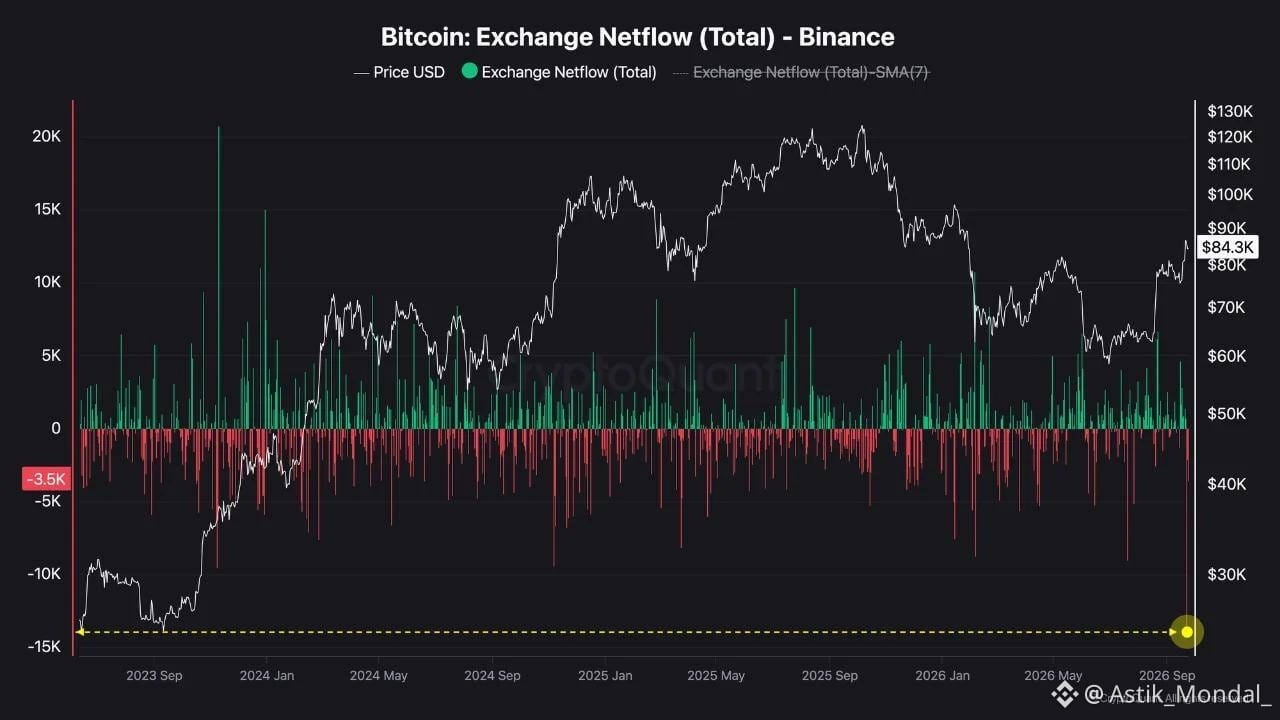
🚨 BITCOIN SUPPLY ALERT: 13,800+ BTC just left Binance in a single day.
That is Binance’s largest daily net BTC outflow since 2023.
And the bigger picture is even more interesting.
Binance’s reported BTC reserves fell from roughly 705,000 to 685,000 BTC in just four days.
That’s ~20,000 BTC leaving the exchange.
CryptoQuant data shows the September 22 netflow at about -13,878 BTC.
Why does this matter?
When BTC consistently moves OFF exchanges, there is less Bitcoin immediately available on those trading venues.
Some analysts interpret that as accumulation and longer-term positioning.
CryptoQuant analyst Darkfost has also linked the recent withdrawals to renewed accumulation and possible FOMO as Bitcoin’s rally continues.
But there’s an important catch:
Exchange outflows do NOT prove that every withdrawn BTC is being held long term.
Coins can move to private wallets, institutional custody, other exchanges, or for other operational reasons.
So the real signal to watch is whether this negative flow persists.
If Binance’s BTC balance keeps falling while demand remains strong
The amount of BTC sitting readily available on the exchange could continue shrinking.
And that is where the supply-demand equation gets interesting.
The market isn’t just watching Bitcoin’s price anymore.
It’s watching where the Bitcoin is going.
$BTC
#Bitcoin #BTC #Crypto #CryptoNews #BitcoinBullish
🚨 BITCOIN SUPPLY ALERT: 13,800+ BTC just left Binance in a single day.
That is Binance’s largest daily net BTC outflow since 2023.
And the bigger picture is even more interesting.
Binance’s reported BTC reserves fell from roughly 705,000 to 685,000 BTC in just four days.
That’s ~20,000 BTC leaving the exchange.
CryptoQuant data shows the September 22 netflow at about -13,878 BTC.
Why does this matter?
When BTC consistently moves OFF exchanges, there is less Bitcoin immediately available on those trading venues.
Some analysts interpret that as accumulation and longer-term positioning.
CryptoQuant analyst Darkfost has also linked the recent withdrawals to renewed accumulation and possible FOMO as Bitcoin’s rally continues.
But there’s an important catch:
Exchange outflows do NOT prove that every withdrawn BTC is being held long term.
Coins can move to private wallets, institutional custody, other exchanges, or for other operational reasons.
So the real signal to watch is whether this negative flow persists.
If Binance’s BTC balance keeps falling while demand remains strong
The amount of BTC sitting readily available on the exchange could continue shrinking.
And that is where the supply-demand equation gets interesting.
The market isn’t just watching Bitcoin’s price anymore.
It’s watching where the Bitcoin is going.
$BTC
#Bitcoin #BTC #Crypto #CryptoNews #BitcoinBullish
That is Binance’s largest daily net BTC outflow since 2023.
And the bigger picture is even more interesting.
Binance’s reported BTC reserves fell from roughly 705,000 to 685,000 BTC in just four days.
That’s ~20,000 BTC leaving the exchange.
CryptoQuant data shows the September 22 netflow at about -13,878 BTC.
Why does this matter?
When BTC consistently moves OFF exchanges, there is less Bitcoin immediately available on those trading venues.
Some analysts interpret that as accumulation and longer-term positioning.
CryptoQuant analyst Darkfost has also linked the recent withdrawals to renewed accumulation and possible FOMO as Bitcoin’s rally continues.
But there’s an important catch:
Exchange outflows do NOT prove that every withdrawn BTC is being held long term.
Coins can move to private wallets, institutional custody, other exchanges, or for other operational reasons.
So the real signal to watch is whether this negative flow persists.
If Binance’s BTC balance keeps falling while demand remains strong
The amount of BTC sitting readily available on the exchange could continue shrinking.
And that is where the supply-demand equation gets interesting.
The market isn’t just watching Bitcoin’s price anymore.
It’s watching where the Bitcoin is going.
$BTC
#Bitcoin #BTC #Crypto #CryptoNews #BitcoinBullish
1
66
🚨 SOMETHING BIG MAY BE BREWING FOR AI AT THE WHITE HOUSE
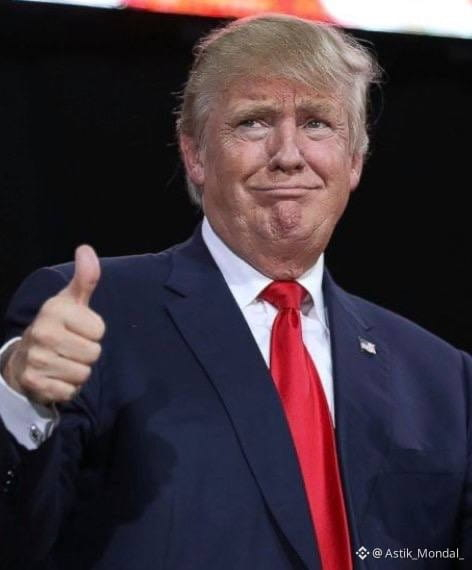
President Trump is set to host Anthropic CEO Dario Amodei for a private dinner their first one-on-one meeting.
And the timing is hard to ignore.
Just 2 days later, Trump and House Speaker Mike Johnson are scheduled to meet with top AI CEOs at the White House.
That puts Amodei’s dinner directly ahead of a broader AI policy discussion.
Why this matters:
Anthropic and the Trump administration have spent months clashing over AI safety, regulation and the pace of AI development.
Now the relationship appears to be moving in a different direction.
Axios reports Trump personally invited Amodei after the Anthropic CEO missed last week’s state dinner because of a scheduling conflict.
And this isn’t happening in isolation.
Washington is facing growing pressure over how the U.S. should regulate frontier AI while maintaining its lead in the global AI race.
Amodei has publicly pushed for more caution and stronger AI safeguards.
Trump has emphasized keeping U.S. AI development moving rapidly.
Those positions have been in tension.
Now they’re sitting down privately.
The key question:
What gets discussed behind those White House doors and does it influence the AI policy conversation coming next?
The next few days could reveal a lot about where U.S. AI policy is heading.
#AI #Anthropic #ArtificialIntelligence #Trump #Tech
🚨 SOMETHING BIG MAY BE BREWING FOR AI AT THE WHITE HOUSE
President Trump is set to host Anthropic CEO Dario Amodei for a private dinner their first one-on-one meeting.
And the timing is hard to ignore.
Just 2 days later, Trump and House Speaker Mike Johnson are scheduled to meet with top AI CEOs at the White House.
That puts Amodei’s dinner directly ahead of a broader AI policy discussion.
Why this matters:
Anthropic and the Trump administration have spent months clashing over AI safety, regulation and the pace of AI development.
Now the relationship appears to be moving in a different direction.
Axios reports Trump personally invited Amodei after the Anthropic CEO missed last week’s state dinner because of a scheduling conflict.
And this isn’t happening in isolation.
Washington is facing growing pressure over how the U.S. should regulate frontier AI while maintaining its lead in the global AI race.
Amodei has publicly pushed for more caution and stronger AI safeguards.
Trump has emphasized keeping U.S. AI development moving rapidly.
Those positions have been in tension.
Now they’re sitting down privately.
The key question:
What gets discussed behind those White House doors and does it influence the AI policy conversation coming next?
The next few days could reveal a lot about where U.S. AI policy is heading.
#AI #Anthropic #ArtificialIntelligence #Trump #Tech
President Trump is set to host Anthropic CEO Dario Amodei for a private dinner their first one-on-one meeting.
And the timing is hard to ignore.
Just 2 days later, Trump and House Speaker Mike Johnson are scheduled to meet with top AI CEOs at the White House.
That puts Amodei’s dinner directly ahead of a broader AI policy discussion.
Why this matters:
Anthropic and the Trump administration have spent months clashing over AI safety, regulation and the pace of AI development.
Now the relationship appears to be moving in a different direction.
Axios reports Trump personally invited Amodei after the Anthropic CEO missed last week’s state dinner because of a scheduling conflict.
And this isn’t happening in isolation.
Washington is facing growing pressure over how the U.S. should regulate frontier AI while maintaining its lead in the global AI race.
Amodei has publicly pushed for more caution and stronger AI safeguards.
Trump has emphasized keeping U.S. AI development moving rapidly.
Those positions have been in tension.
Now they’re sitting down privately.
The key question:
What gets discussed behind those White House doors and does it influence the AI policy conversation coming next?
The next few days could reveal a lot about where U.S. AI policy is heading.
#AI #Anthropic #ArtificialIntelligence #Trump #Tech

1
81
🚨 ETHEREUM IS ENTERING A COMPLETELY NEW ERA.
Vitalik Buterin says Ethereum is becoming a “cryptographic world computer” and the blockchain may soon be only one piece of the system.
The goal: cheaper transactions, faster finality and dramatically stronger privacy.
But the bigger shift comes next.
Vitalik says next year’s Hegota upgrade could be Ethereum’s last “normal” upgrade.
After that, the focus increasingly moves toward zero-knowledge proofs and quantum safety.
And the 2030 target is wild:
Finality potentially as fast as 8 seconds
That’s down from roughly 200 seconds in 2015.
Ethereum isn’t just trying to scale a blockchain anymore.
It’s trying to build a cryptographic infrastructure layer for the internet.
If Ethereum pulls this off, the next decade of crypto could look very different.
#Ethereum #ETH #Crypto #Blockchain #DeFi
🚨 ETHEREUM IS ENTERING A COMPLETELY NEW ERA.
Vitalik Buterin says Ethereum is becoming a “cryptographic world computer” and the blockchain may soon be only one piece of the system.
The goal: cheaper transactions, faster finality and dramatically stronger privacy.
But the bigger shift comes next.
Vitalik says next year’s Hegota upgrade could be Ethereum’s last “normal” upgrade.
After that, the focus increasingly moves toward zero-knowledge proofs and quantum safety.
And the 2030 target is wild:
Finality potentially as fast as 8 seconds
That’s down from roughly 200 seconds in 2015.
Ethereum isn’t just trying to scale a blockchain anymore.
It’s trying to build a cryptographic infrastructure layer for the internet.
If Ethereum pulls this off, the next decade of crypto could look very different.
#Ethereum #ETH #Crypto #Blockchain #DeFi
Vitalik Buterin says Ethereum is becoming a “cryptographic world computer” and the blockchain may soon be only one piece of the system.
The goal: cheaper transactions, faster finality and dramatically stronger privacy.
But the bigger shift comes next.
Vitalik says next year’s Hegota upgrade could be Ethereum’s last “normal” upgrade.
After that, the focus increasingly moves toward zero-knowledge proofs and quantum safety.
And the 2030 target is wild:
Finality potentially as fast as 8 seconds
That’s down from roughly 200 seconds in 2015.
Ethereum isn’t just trying to scale a blockchain anymore.
It’s trying to build a cryptographic infrastructure layer for the internet.
If Ethereum pulls this off, the next decade of crypto could look very different.
#Ethereum #ETH #Crypto #Blockchain #DeFi

1
15
🚨 “Godfather of AI” Geoffrey Hinton just called Jensen Huang’s 0% AI doom claim “silly.”
“Anybody who says there’s a 0% chance of something where many other experts are saying there’s quite a significant chance is silly.”
“It means they’re totally confident that all the other experts are completely wrong. And Jensen’s smarter than that.”
The AI risk debate just heated up.
#GeoffreyHinton #JensenHuang #AI #AISafety #Nvidia
🚨 “Godfather of AI” Geoffrey Hinton just called Jensen Huang’s 0% AI doom claim “silly.”
“Anybody who says there’s a 0% chance of something where many other experts are saying there’s quite a significant chance is silly.”
“It means they’re totally confident that all the other experts are completely wrong. And Jensen’s smarter than that.”
The AI risk debate just heated up.
#GeoffreyHinton #JensenHuang #AI #AISafety #Nvidia
“Anybody who says there’s a 0% chance of something where many other experts are saying there’s quite a significant chance is silly.”
“It means they’re totally confident that all the other experts are completely wrong. And Jensen’s smarter than that.”
The AI risk debate just heated up.
#GeoffreyHinton #JensenHuang #AI #AISafety #Nvidia
1
192
Log in to explore more content
Join global crypto users on Binance Square
⚡️ Get latest and useful information about crypto.
💬 Trusted by the world’s largest crypto exchange.
👍 Discover real insights from verified creators.
Email / Phone number