
#growwithsac
growwithsac
1.7M views
3,989 Discussing
Hot
Latest


🏆 Did SAC-KING Just Make History? 👑📈
+58.57% in just 30 days, a remarkable achievement! 🚀🔥
Congratulations, SAC-KING! 🎉👑
Surpassing 91.45% of users, this is more than a result — it’s a milestone worth remembering. 🏆✨
#GrowWithSAC #CPIWatch $BNB
🏆 Did SAC-KING Just Make History? 👑📈
+58.57% in just 30 days, a remarkable achievement! 🚀🔥
Congratulations, SAC-KING! 🎉👑
Surpassing 91.45% of users, this is more than a result — it’s a milestone worth remembering. 🏆✨
#GrowWithSAC #CPIWatch $BNB
+58.57% in just 30 days, a remarkable achievement! 🚀🔥
Congratulations, SAC-KING! 🎉👑
Surpassing 91.45% of users, this is more than a result — it’s a milestone worth remembering. 🏆✨
#GrowWithSAC #CPIWatch $BNB

145
#usoctobernfp-areratecutsstillpossible
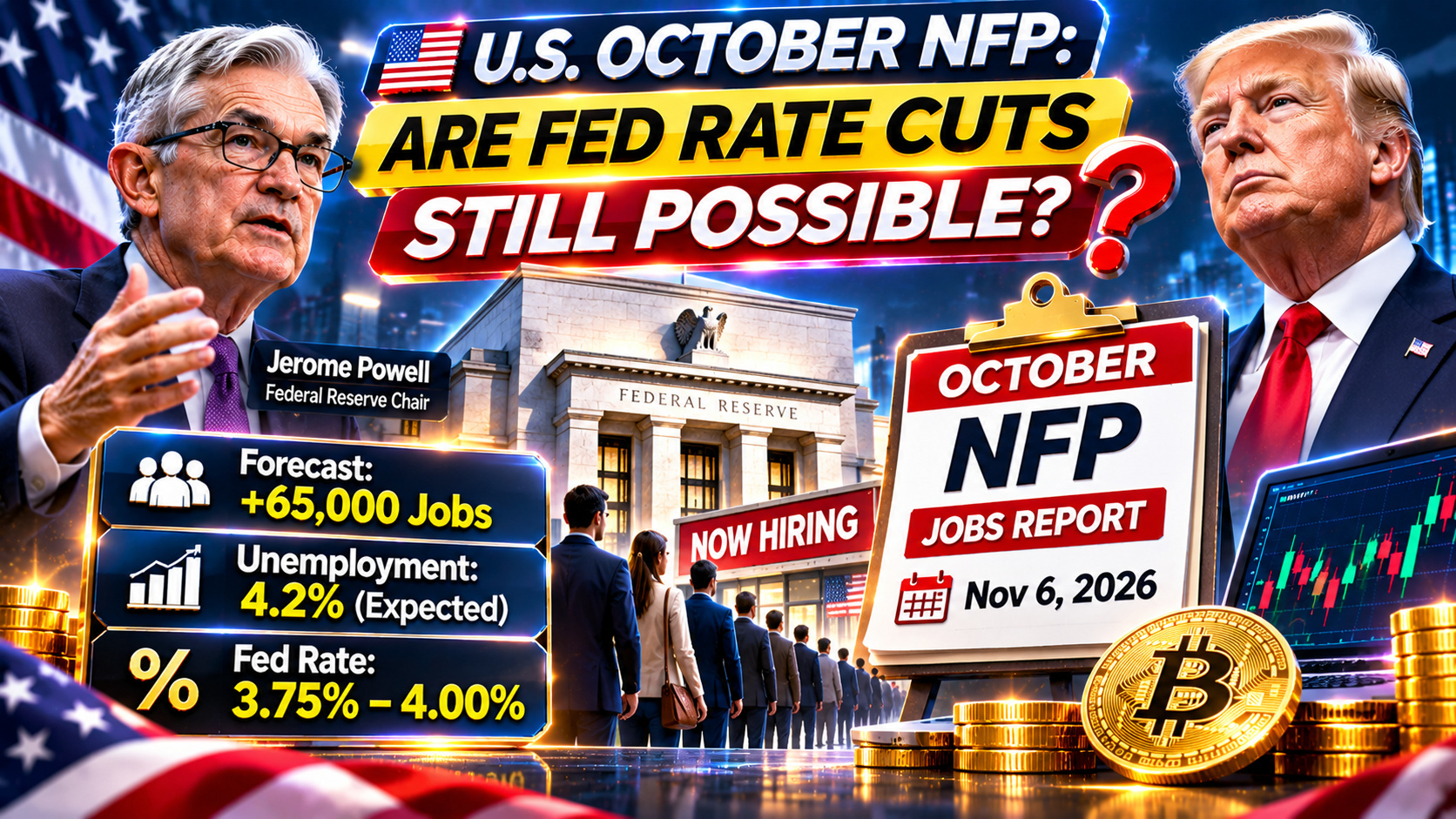
🚨 🇺🇸 US OCTOBER NFP: RATE CUTS STILL POSSIBLE, OR IS THE FED TURNING HAWKISH? 📉 🚨
One jobs report can change the direction of the entire market. This Friday, investors are watching every number.
The US October Nonfarm Payrolls report is scheduled for November 6 at 8:30 AM ET. Markets are looking for clues about employment strength, wage inflation, and the Federal Reserve's next move.
The latest September report showed just 29,000 jobs added, while unemployment remained at 4.2%. Average hourly earnings increased 3% year over year.
But there is another side to the story. September job openings reached 7.5 million, while layoffs remained relatively low, suggesting the labour market has not collapsed.
Meanwhile, interest-rate markets are pricing a much more hawkish outlook for December, making an immediate rate cut increasingly difficult to justify.
My Take: A weak NFP could revive hopes of monetary easing, potentially supporting risk assets like Bitcoin. However, stronger employment and wage growth could reinforce higher-for-longer interest rates.
The key isn't simply whether jobs increase or decrease. It's whether employment weakness becomes strong enough to change the Fed's inflation priorities.
Friday's numbers could reshape expectations, but one report rarely tells the whole story.
Will October NFP bring back rate-cut optimism, or strengthen the Fed's hawkish position?
Disclaimer: Educational content only. Not financial advice.
#NFP #FederalReserve #GrowWithSAC $POL $PEPE $INJ
#USOctoberNFP-AreRateCutsStillPossible
1
1
1.5k
Verified
#37thquarterlybnbburnremoves1.64millionbnb
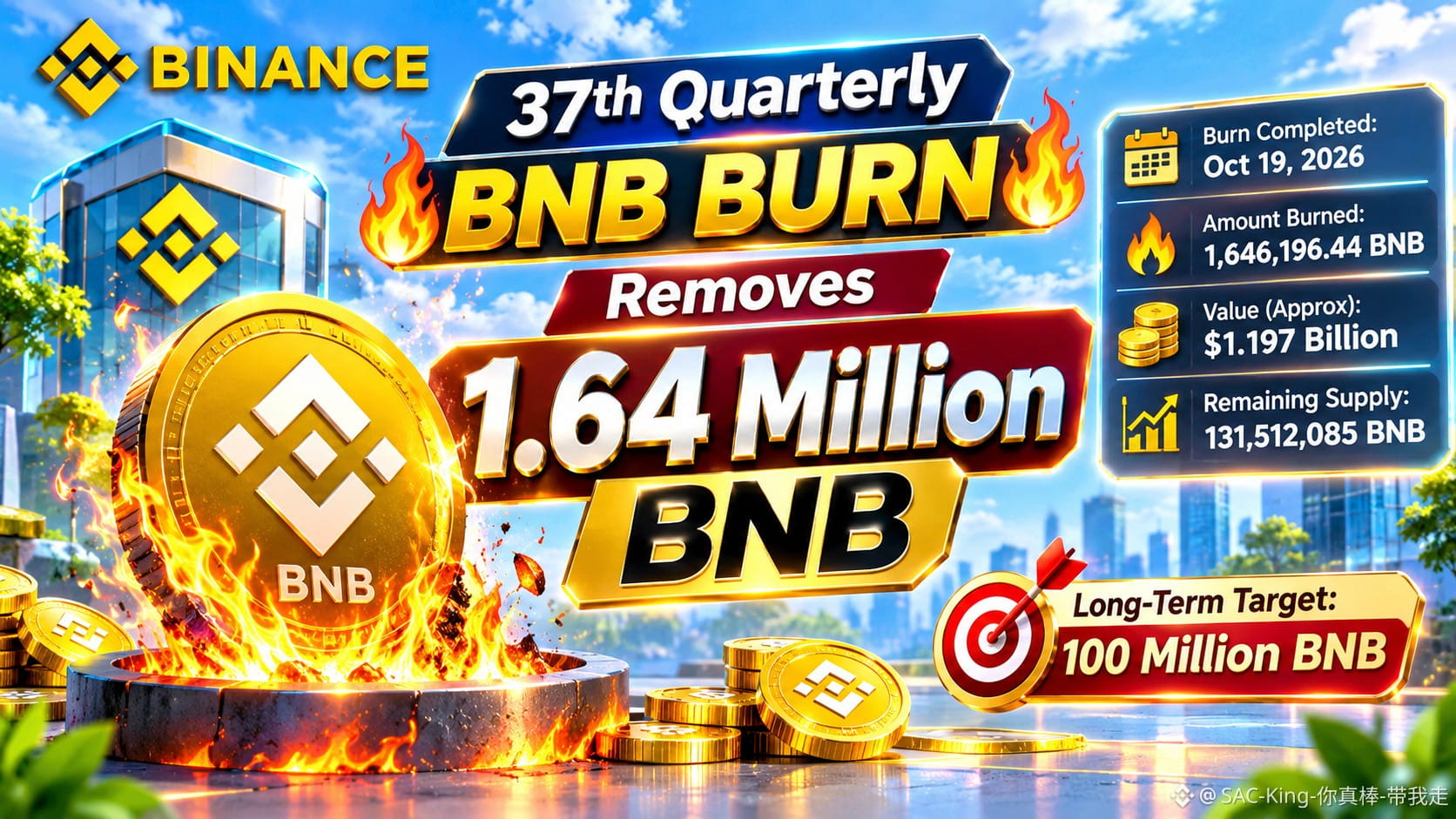
🔥 1.64 MILLION $BNB GONE! Binance Completes Its 37th Quarterly Burn Worth $1.19 BILLION 🔥
Every burn removes a piece of supply. But the real question is what happens when demand meets what's left.
On October 19, 2026, the BNB Foundation completed its 37th quarterly BNB token burn, permanently removing 1,646,196.44 BNB, valued at approximately $1.197 billion at the time.
Following this massive burn, BNB's remaining total supply stood at 131,512,085 BNB.
This is part of BNB's Auto-Burn mechanism, designed to progressively reduce total supply toward its long-term target of 100 million BNB.
My Take: The biggest story isn't just the $1.19 billion figure. It's the long-term supply strategy.
Every completed burn makes the remaining supply smaller. However, reduced supply alone cannot guarantee higher prices.
The real bullish combination would be sustained BNB ecosystem demand, stronger network activity, and continued supply reduction.
Investors should remember that market sentiment, trading volume, and broader crypto conditions still influence BNB's price.
A shrinking supply creates a different equation, but demand ultimately decides its market value.
Do you believe BNB's journey toward 100 million tokens could strengthen its long-term value?
Disclaimer: This content is for educational purposes only, not financial advice.
#BNBBurn #BNBChain #GrowWithSAC $BMT $HOT
#37thQuarterlyBNBBurnRemoves1.64MillionBNB
2
1.9k
Verified
#circleq3revenue865m
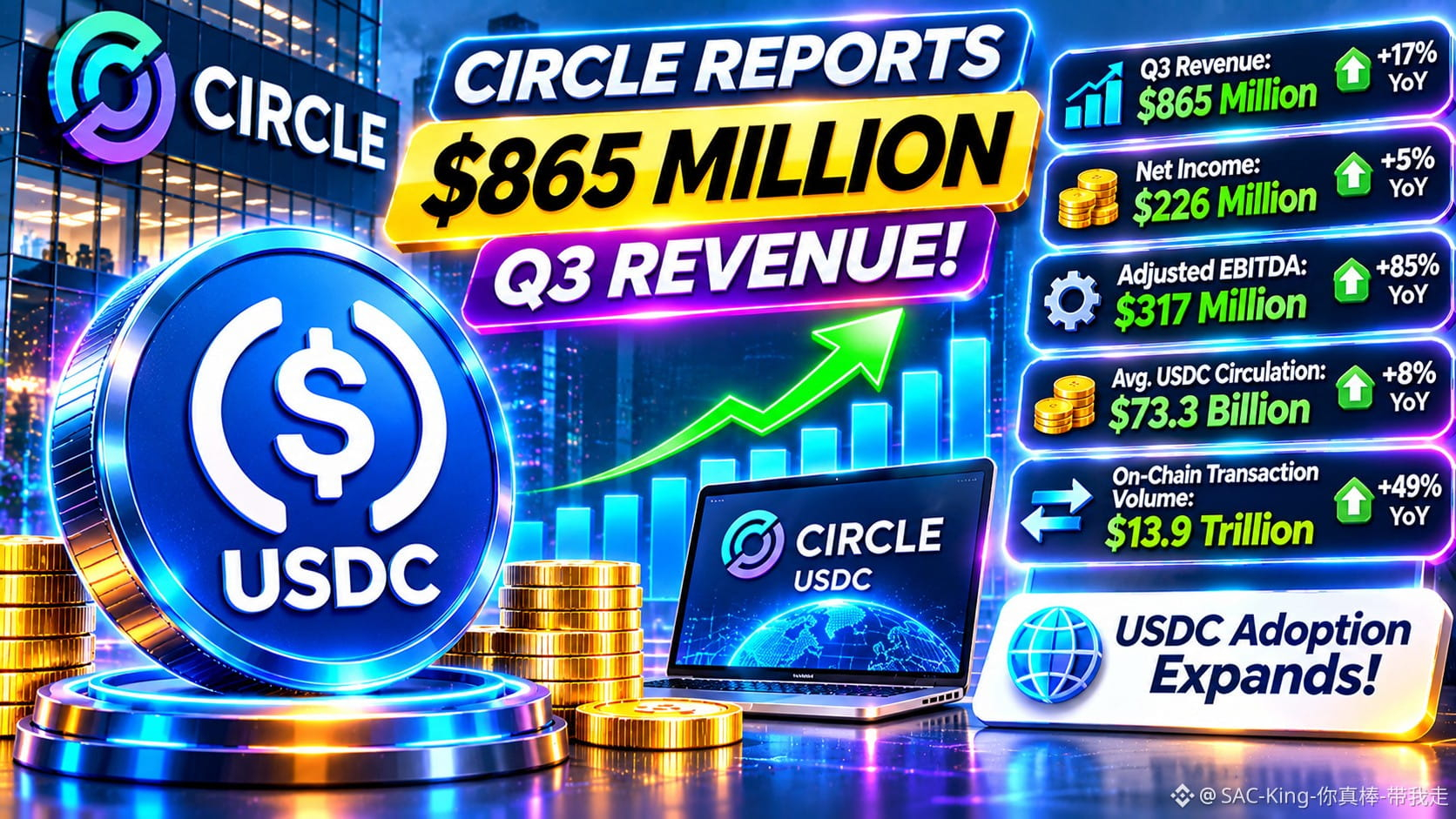
🚨 💰 CIRCLE REPORTS $865 MILLION Q3 REVENUE! USDC'S GROWING REACH SIGNALS A BIGGER OPPORTUNITY! 🔥
Behind every digital dollar is a bigger battle for financial infrastructure. And Circle wants to become one of its leading players.
Circle Internet Group reported $865 million in Q3 2026 revenue and reserve income, representing 17% year-over-year growth.
Net income reached $226 million, up 5%, while adjusted EBITDA climbed an impressive 85% to $317 million.
One number deserves special attention: average USDC circulation reached $73.3 billion, up 8% year over year.
Even more striking, USDC on-chain transaction volume surged 49% to $13.9 trillion during the quarter.
However, the picture isn't entirely straightforward. Reserve income declined 8% to $658 million as reserve returns fell. Other revenue reached $207 million, including $182 million from ARC token sales.
My Take: Circle's biggest opportunity may not be simply earning more from reserves. It's building financial infrastructure around stablecoin payments, settlement, and on-chain transactions.
The rising transaction volume suggests expanding utility, but sustainable growth will depend on revenue diversification and stablecoin adoption.
The real competition is no longer just about issuing digital dollars. It's about becoming the infrastructure that moves them.
Can USDC become one of the dominant currencies powering the global digital economy?
Disclaimer: Educational content only. Not financial advice.
#USDC #Stablecoins #GrowWithSAC $USDC $CAKE $ONDO
#CircleQ3Revenue865M
1
769
#binanceincidentreport
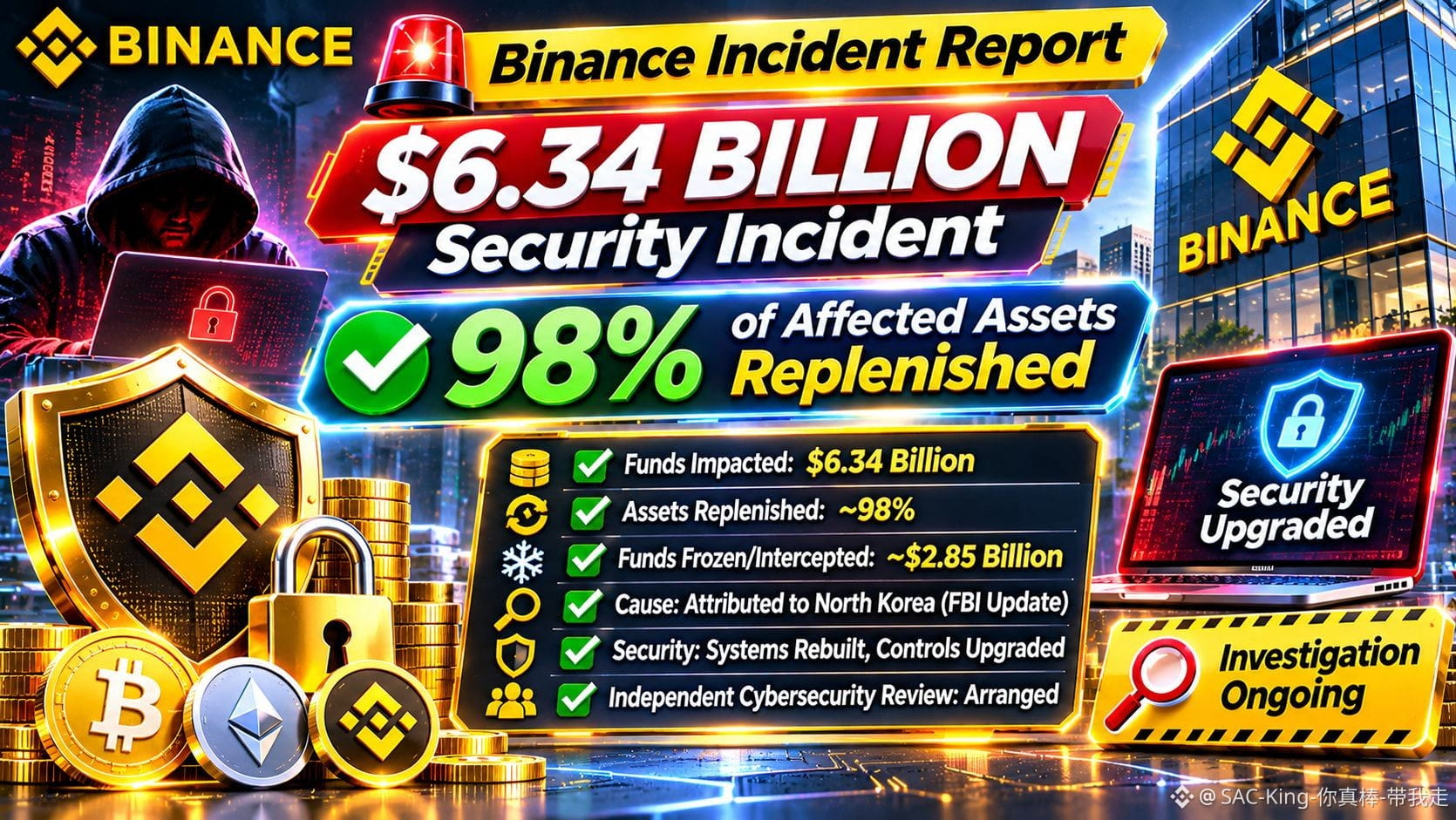
🚨 🔥 BINANCE BREAKS SILENCE! $6.34 BILLION SECURITY INCIDENT: 98% OF AFFECTED ASSETS REPLENISHED 🔥 🚨
One security breach can shake an entire industry. But what happens when the response becomes just as important as the attack?
Binance has released its initial findings on the October 29, 2026 security incident, revealing that approximately $6.34 billion in digital assets were impacted.
The exchange says it has set aside more than 100% of the funds required to cover the losses. As of October 31, approximately 98% of affected token assets had been replenished and were verifiable through Proof of Reserves.
Binance also reported that approximately $2.85 billion had been frozen or intercepted. Its November 3 report says the FBI's latest information attributes the incident to North Korea.
Binance has rebuilt affected systems, replaced compromised devices, strengthened wallet controls, and increased AI-based threat detection.
An independent cybersecurity review is also being arranged. The investigation remains ongoing.
My Take: The biggest test for Binance isn't simply replacing lost assets. It's proving that the security weaknesses behind the incident have been addressed.
Financial recovery can restore balances, but lasting confidence requires stronger infrastructure, independent verification, and transparency.
In crypto, protecting trust is just as important as protecting capital.
Will Binance's recovery efforts be enough to restore user confidence?
Disclaimer: For educational purposes only. Not financial advice.
#Binance #CryptoSecurity #GrowWithSAC $BMT $HOT $ZEC
#BinanceIncidentReport
Abu Fahadأ:
💛
1
5
4.7k

#binanceincidentreport
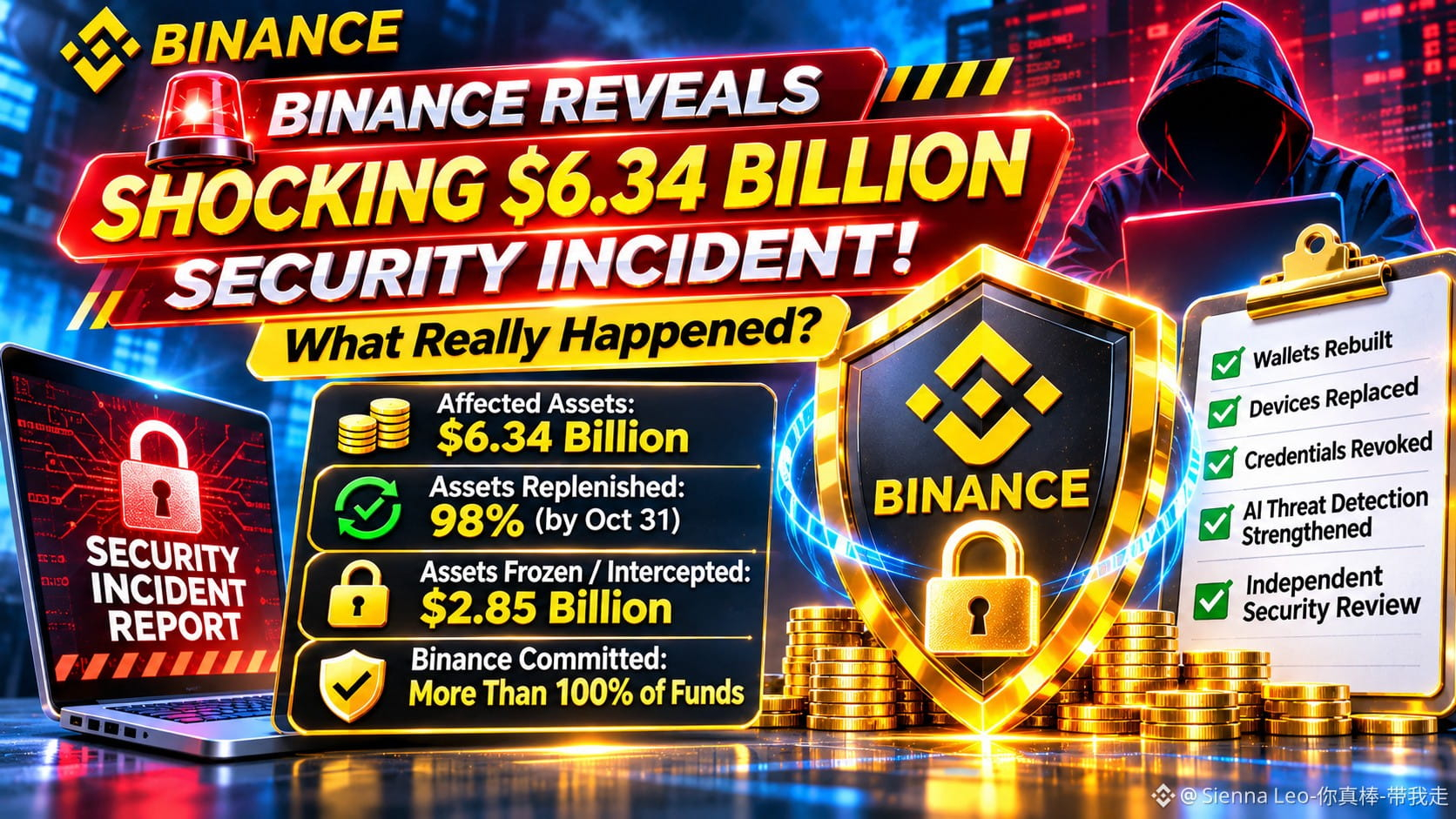
🚨 BINANCE REVEALS SHOCKING $6.34 BILLION SECURITY INCIDENT! What Really Happened? 🔥
Trust can take years to build.
One security breach can put it to the ultimate test.
Binance has released preliminary findings into its October 29, 2026 security incident, revealing an estimated $6.34 billion in affected digital assets.
The exchange says its initial investigation pointed toward a potentially compromised engineer's device, while further investigation uncovered additional breach points.
Importantly, Binance reported no evidence that wallet private keys were leaked.
The recovery effort has made significant progress:
98% of affected token assets had been replenished as of October 31.
Approximately $2.85 billion in assets had been frozen or intercepted.
Binance committed more than 100% of the required funds to cover the losses.
Binance has also rebuilt affected wallet infrastructure, replaced devices, revoked compromised credentials, strengthened AI-based threat detection, and engaged independent cybersecurity experts.
My Take:
The biggest lesson isn't the financial size of this incident. It's how quickly infrastructure security can become a major risk for even established crypto platforms.
Replenishing assets is essential, but long-term confidence depends on stronger security controls, independent verification, and transparent reporting.
The investigation is still developing, and the complete technical post-mortem remains pending.
In crypto, protecting assets matters. Proving that protection matters even more.
Has Binance done enough to rebuild user confidence?
Disclaimer: Educational content only. Not financial advice.
#Binance #CryptoSecurity #GrowWithSAC $HAEDAL $LSK $HUMA
#BinanceIncidentReport
4.1k
#usmidterms-whataremarketsexpecting?
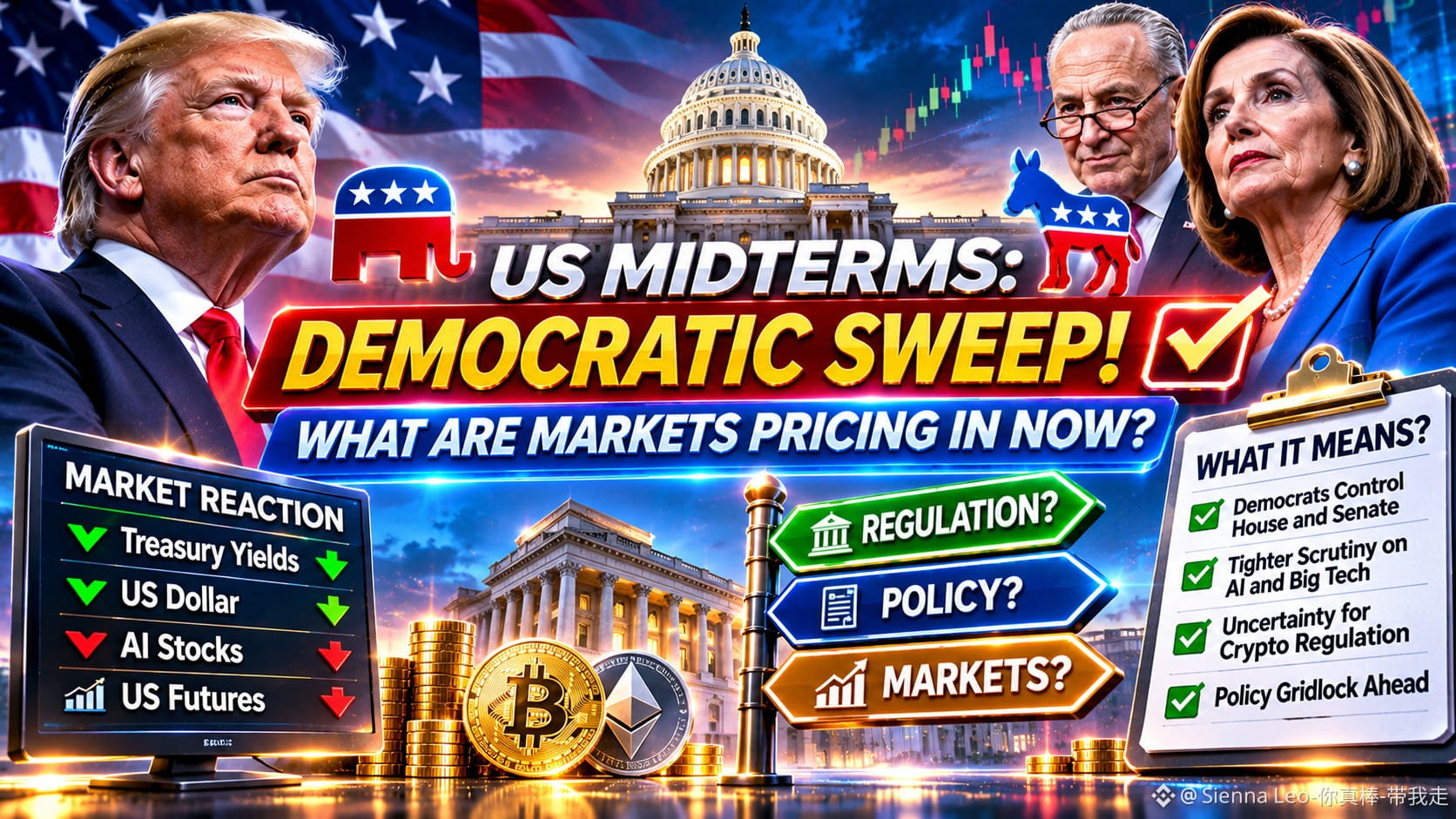
🇺🇸 ⚡ US MIDTERMS: DEMOCRATIC SWEEP! WHAT ARE MARKETS PRICING IN NOW? 📉
One election can change the political balance.
But the real market story begins when investors start calculating what comes next.
The November 3 midterms delivered a major surprise: Democrats secured control of both the House and Senate, a stronger result than many pre-election forecasts anticipated.
The first reaction was telling. Treasury yields dipped, the dollar weakened, and AI-related shares came under pressure across Asian markets. US stock futures initially fell before recovering part of their losses.
Why does AI matter? Investors are watching for tougher congressional scrutiny of data centers, technology companies, and AI regulation. Crypto faces its own uncertainty, as political investigations and slower progress on digital-asset legislation could create regulatory headwinds.
Another major factor is policy gridlock. A Democratic-controlled Congress facing a Republican president could make major spending and legislative changes harder, while debt-ceiling negotiations in 2027 remain a potential source of tension.
My Take:
This is not automatically bearish for every asset. Gridlock could limit new deficit spending, while lower Treasury yields may support valuations. The bigger risk is uncertainty around regulation, AI investment, and fiscal negotiations.
Markets are not simply choosing a political winner. They are repricing the rules that may follow.
Will political gridlock become a market risk, or could it actually create stability?
Disclaimer: For educational purposes only. Not financial advice.
#USMidterms #MarketOutlook #GrowWithSAC $BEB $CHIP $KSTRB
#USMidterms-WhatAreMarketsExpecting?
333
#binance98percentreplenished
🚨 BINANCE 98% REPLENISHED! BILLIONS RECOVERED, BUT ONE CRITICAL QUESTION REMAINS 🔐
Trust can take years to build, yet a single security incident can put it under pressure overnight.
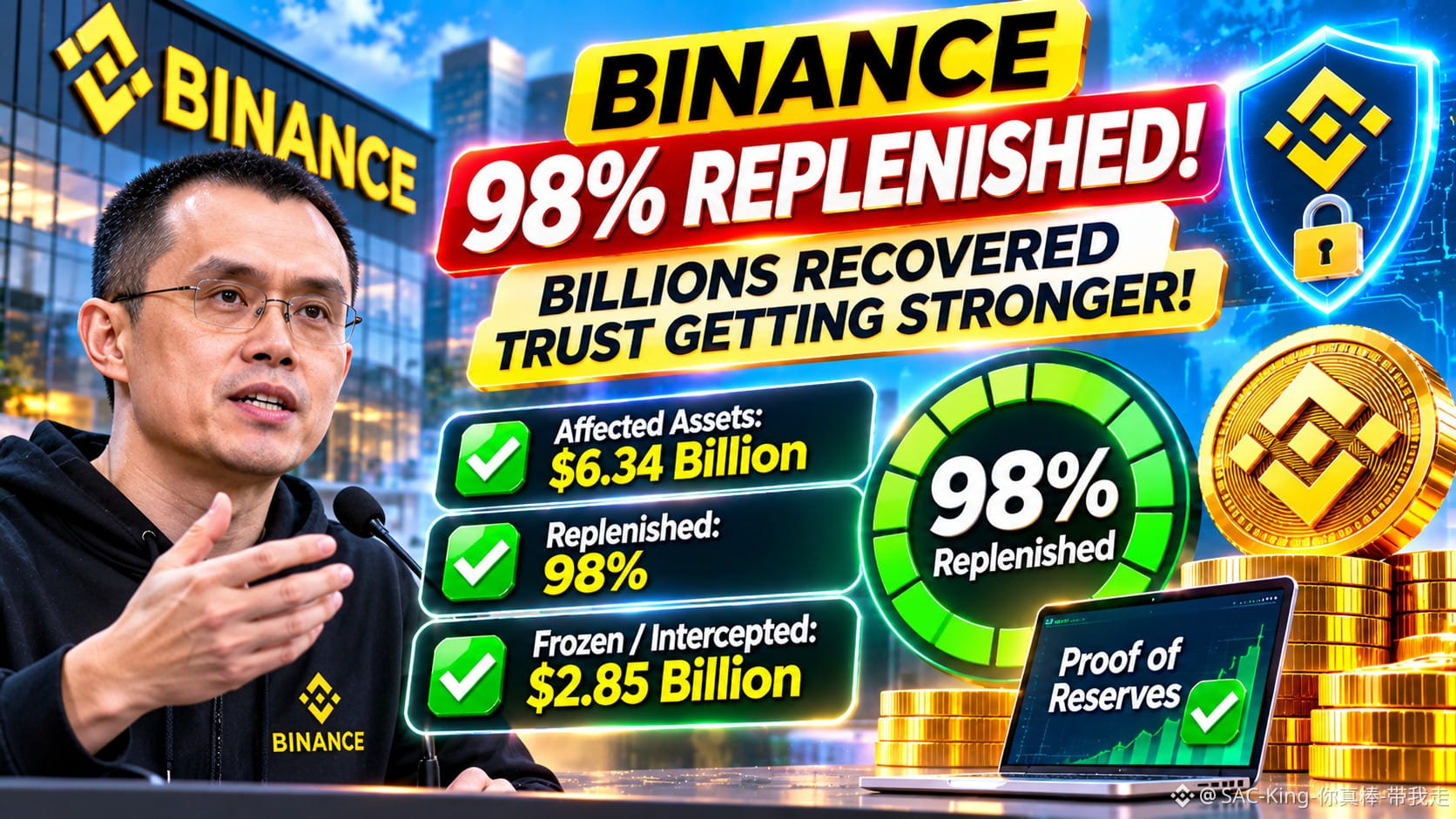
Binance says it has replenished 98% of the affected token assets, according to its November 3 incident report, using data dated October 31. The exchange says it has reserved more than 100% of the funds needed to cover the loss, with users not expected to bear the financial impact.
The incident impacted approximately $6.34 billion in digital assets. Binance also reported around $2.85 billion in assets frozen or intercepted, subject to reconciliation and market-price changes.
The remaining assets are harder to source because they are less liquid. That matters: buying large quantities of thinly traded tokens can take time and may create additional market pressure.
Binance says users can verify the replenished balances through its Proof of Reserves system. But reserve verification and security assurance are two different questions. Both matter.
My Take: The 98% figure is a major recovery milestone, but the real test is completing the final 2%, maintaining transparent updates, and demonstrating that the security weaknesses have been addressed.
Recovery is important. Verifiable trust is the bigger achievement.
Is Binance’s recovery progress enough to restore your confidence, or does security require more proof?
Disclaimer: Educational content only. Not financial advice.
#Binance #CryptoSecurity #GrowWithSAC $BTC $ETH $BNB
#Binance98PercentReplenished
3
1.8k
#circleq3revenue865m
🚀 CIRCLE REPORTS $865 MILLION IN Q3! USDC ADOPTION HITS NEW MILESTONE! 💰
The future of money isn't being built only on price charts.
It's being measured in billions of dollars moving across blockchain networks.
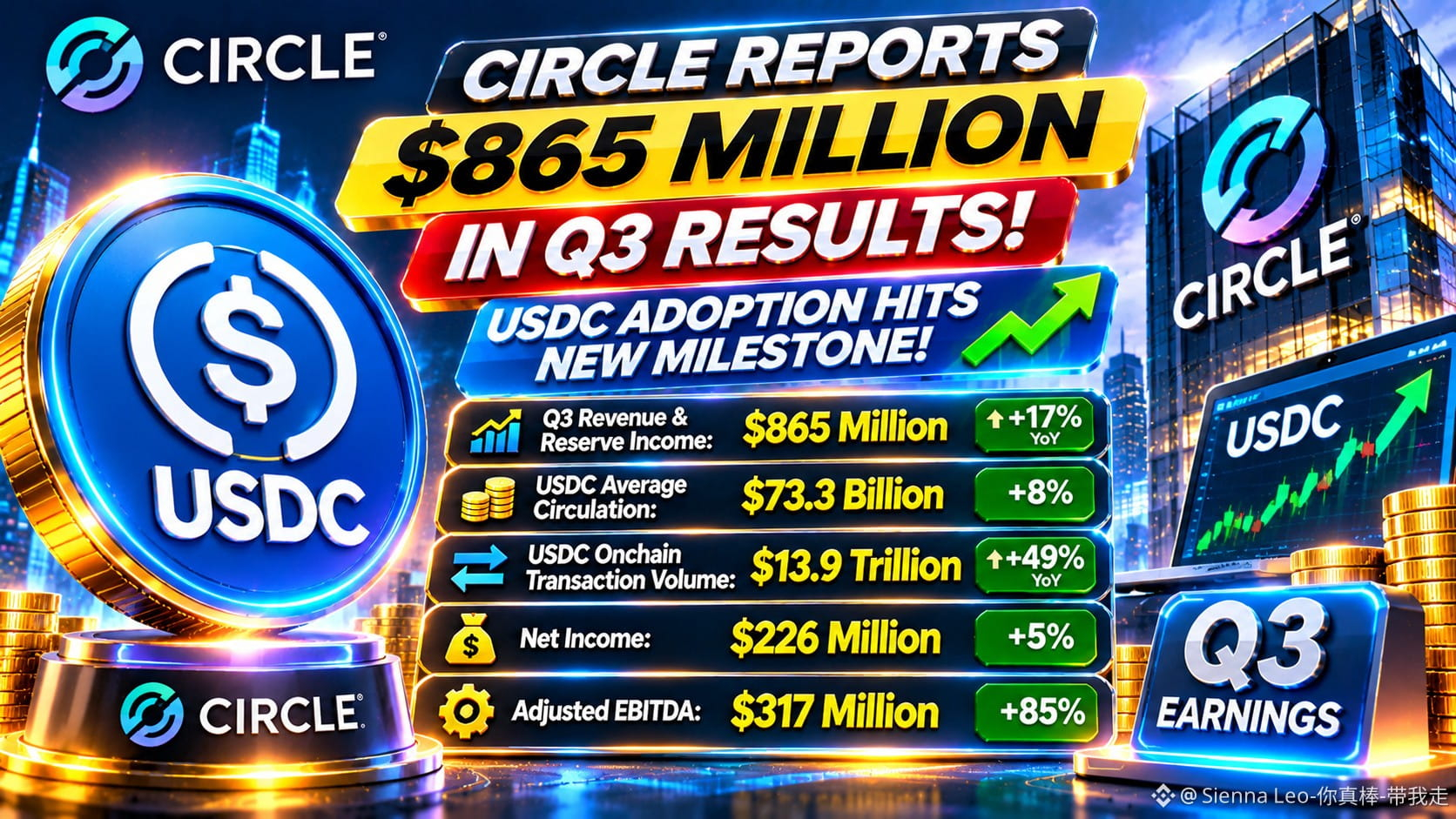
Circle Internet Group has reported $865 million in Q3 2026 revenue and reserve income, marking a 17% increase year over year.
But the numbers behind this headline are even more interesting:
USDC average circulation: $73.3 billion, up 8%.
USDC onchain transaction volume: $13.9 trillion, surging 49% year over year.
Net income: $226 million, up 5%.
Adjusted EBITDA: $317 million, rising 85%.
However, there is another side to the results. Reserve income declined 8% to $658 million, while other revenue reached $207 million, including $182 million from the ARC token presale.
My Take:
Circle's strongest signal isn't simply its $865 million headline. It's the growing economic activity surrounding USDC.
Higher transaction volume suggests expanding stablecoin utility, while stronger EBITDA indicates improving operating performance.
But investors should watch reserve yields and recurring revenue carefully. Token-sale income and reserve returns are not equally sustainable.
🔥 The real stablecoin race is no longer just about circulation. It's about building financial infrastructure people actually use.
Can USDC become the backbone of global digital payments?
Disclaimer: Educational content only. Not financial advice.
#USDC #Stablecoins #GrowWithSAC $USDC $MEGA $BEAMX
#CircleQ3Revenue865M
1
434
Verified
#amdbeatsexpectations-ainarrativecontinues
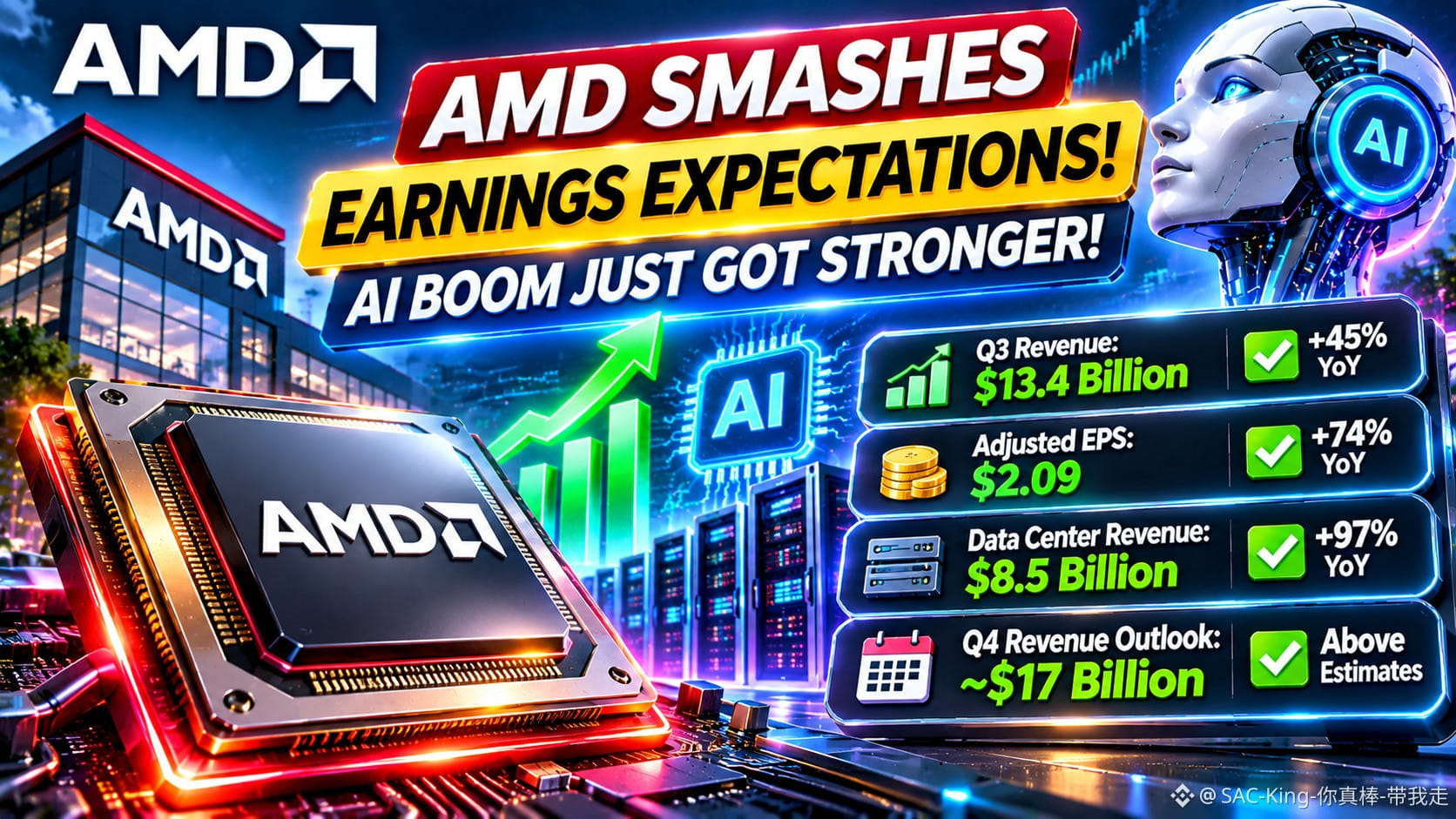
🚀 🤖 $AMD SMASHES EARNINGS EXPECTATIONS! AI BOOM JUST GOT STRONGER! 🔥
The AI race isn't slowing down. It's becoming a battle for computing power, and AMD is proving it wants a bigger share.
Advanced Micro Devices reported $13.4 billion in Q3 2026 revenue, up 45% year over year, beating Wall Street's $13.1 billion estimate.
Adjusted earnings reached $2.09 per share, above the $1.95 analyst forecast, representing 74% annual growth.
The real headline? Data Center revenue surged 97% to $8.5 billion, driven by strong demand for AMD Instinct GPUs and EPYC server processors.
AMD also delivered an ambitious Q4 outlook, projecting approximately $17 billion in revenue, above market expectations of around $16.3 billion.
This matters because AI infrastructure spending is no longer just a future possibility. It is translating into substantial hardware revenue.
My Take: AMD's results strengthen the argument that the AI opportunity extends beyond a single chipmaker.
As demand for computing infrastructure expands, competition between semiconductor companies could create opportunities across the broader technology ecosystem.
However, expectations are already high. Sustaining growth and converting massive AI demand into long-term profitability remain the real challenges.
The AI revolution is building its infrastructure, and AMD wants to power a significant part of it.
Can AMD seriously challenge NVIDIA's dominance in the AI chip market?
Disclaimer: Educational content only. Not financial advice.
#AMD #ArtificialIntelligence #GrowWithSAC $LSK $HUMA
#AMDBeatsExpectations-AINarrativeContinues
Abu Fahadأ:
💛
1
4
587
#AnthropicIPOPricedDownasInvestorsEye$1.5T
🚨 🤖 ANTHROPIC IPO VALUATION SLASHED! Investors Now Eye $1.5 TRILLION 🤯 🚨
The AI revolution is moving at incredible speed, but investor confidence is facing a tougher test.
Anthropic's anticipated IPO is facing a valuation reset, with investors reportedly discussing $1.5 trillion to $1.6 trillion, down from the roughly $2 trillion expectations circulating previously.
The company continues to demonstrate remarkable growth. Its latest reported quarterly revenue reached approximately $17 billion, compared with $11.6 billion in the previous quarter.
So why the caution?
Investors are increasingly questioning the enormous cost of AI infrastructure, long-term computing commitments, profitability, and whether today's growth expectations can justify extraordinary valuations.
Anthropic's potential November IPO is becoming an important test for the entire AI investment market. Its reception could influence how investors evaluate other major AI companies preparing to go public.
My Take: This isn't necessarily a sign that AI is losing momentum. It's a sign that investors are becoming more selective about the price they are willing to pay for AI growth.
The next phase of the AI race may reward sustainable revenue and real profitability more than ambitious valuation targets.
AI can transform the future, but even revolutionary technology has to justify its price.
Would you consider a $1.5 trillion valuation reasonable for Anthropic, or is the AI market still pricing in too much optimism?
Disclaimer: Educational content only, not financial advice.
#AI #IPO #GrowWithSAC $ZEC $LSK $BONK

196
#usmidterms-whataremarketsexpecting?
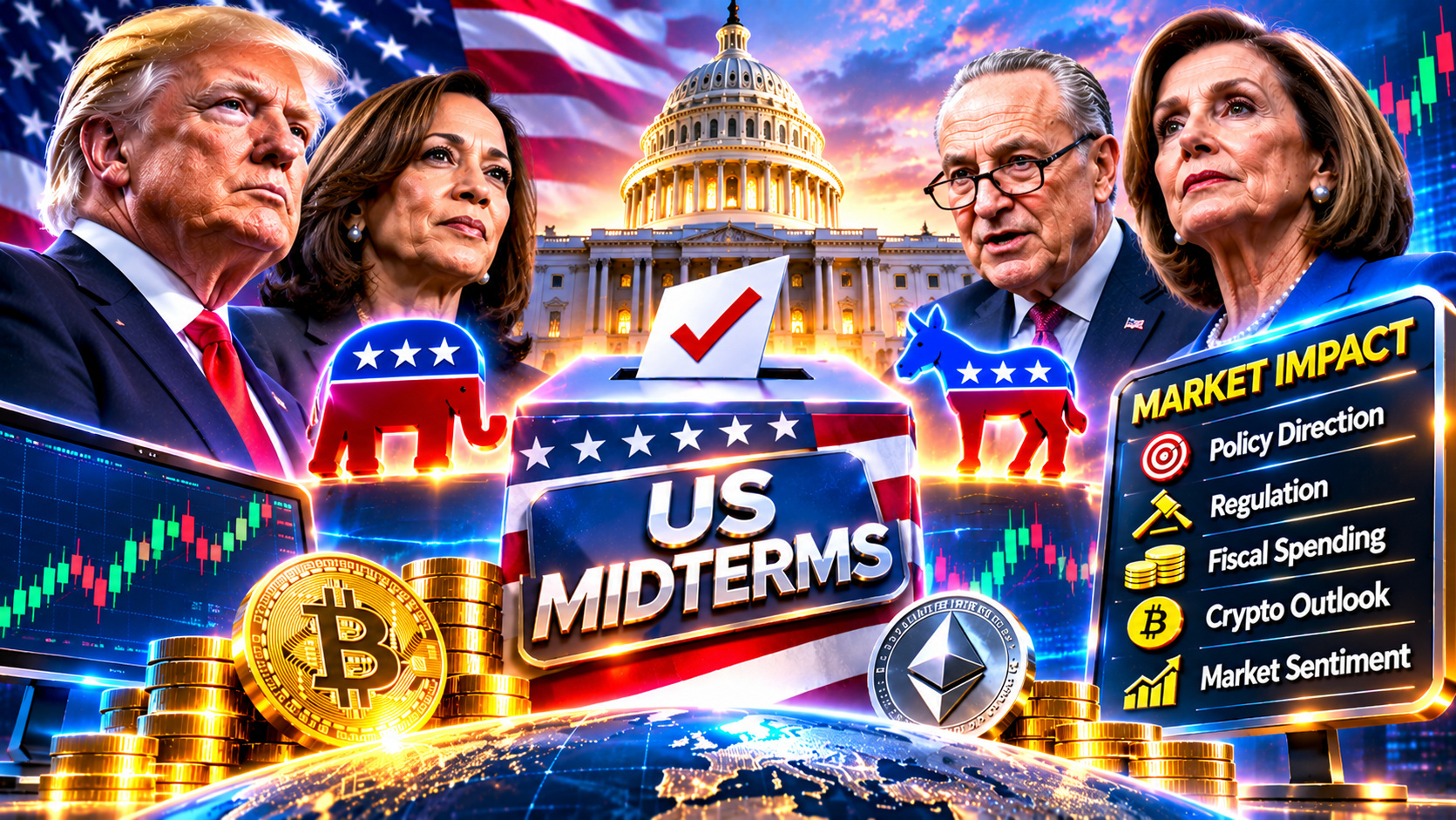
🚨 🇺🇸 US MIDTERMS SHOCK MARKETS! DEMOCRATS TAKE BOTH CHAMBERS: WHAT HAPPENS NEXT? 📊 🚨
Elections change political power. Markets care about something deeper: what that power means for money, regulation, and economic policy.
The November 3, 2026 US midterm elections delivered a major surprise. Democrats won control of both the House and Senate, creating a new political balance for President Donald Trump's remaining two years.
Markets initially reacted with uncertainty. US stocks later rallied, with the Dow jumping 1,178 points, while the S&P 500 gained 1.2% and Nasdaq advanced 1.1% early Wednesday.
Investors are now watching three major areas:
Fiscal spending and government debt.
Potentially tougher AI and technology regulation.
Future cryptocurrency policy and regulatory oversight.
Treasury yields also eased as investors assessed the possibility of stronger congressional checks on government spending.
My Take: The biggest market story isn't simply which party won. It's the possibility of legislative gridlock.
A divided political landscape could limit major policy changes, but increased oversight may create uncertainty for AI, crypto, and technology companies.
For crypto investors, regulatory clarity could become just as important as interest rates and liquidity.
Political power changes overnight. Market consequences can take months to unfold.
Will this political shift create a more favorable environment for crypto, or introduce another layer of regulatory uncertainty?
Disclaimer: Educational content only. Not financial advice.
#USMidterms #CryptoMarket #GrowWithSAC $CAKE $JUP $ALGO
#USMidterms-WhatAreMarketsExpecting?
426
#HongKongPassesCryptoAssetReportingFrameworkAmendment
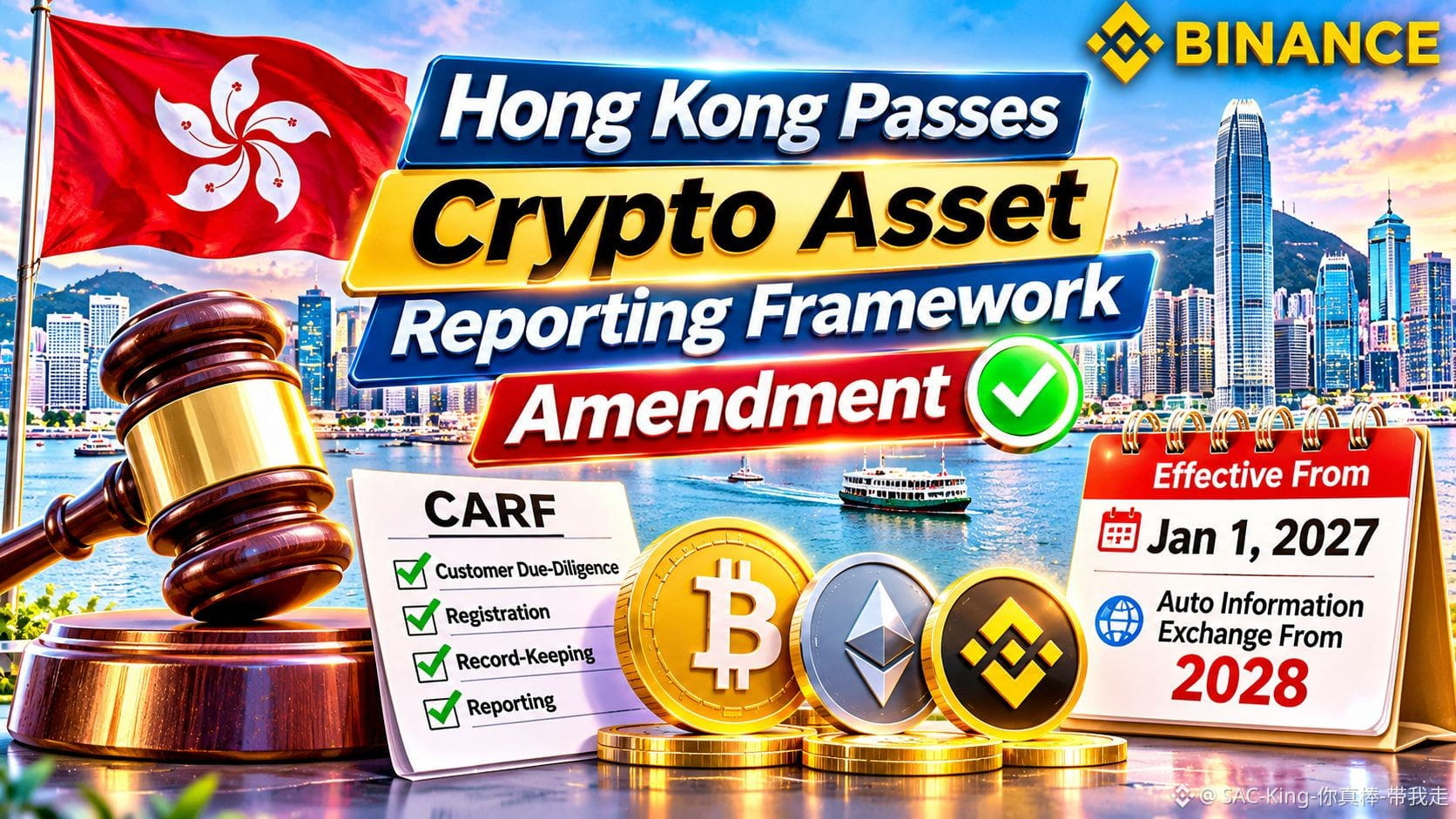
🚨 🇭🇰 HONG KONG PASSES CRYPTO REPORTING LAW! Is Crypto Transparency Entering a New Era? 🇭🇰 🚨
The crypto world was built on financial freedom. But the next chapter may be defined by something equally powerful: transparency.
On November 4, 2026, Hong Kong's Legislative Council passed the Inland Revenue Amendment Bill implementing the OECD's Crypto-Asset Reporting Framework (CARF) and updated Common Reporting Standard (CRS).
Starting January 1, 2027, covered crypto-asset service providers with a Hong Kong reporting connection will face customer due-diligence, registration, record-keeping, and reporting obligations.
The bigger change comes in 2028, when Hong Kong plans to begin automatically exchanging crypto-transaction tax information with eligible international partners.
Importantly, this legislation does NOT introduce a new crypto tax. It establishes a framework for collecting and sharing financial information with relevant tax authorities.
My Take: This is bigger than another regulatory announcement.
Hong Kong is positioning itself as a crypto-friendly financial hub while aligning with global tax transparency standards.
For exchanges, compliance becomes more important. For investors, understanding tax residency and reporting obligations becomes essential.
Crypto's future may not be less freedom, but greater accountability.
Will stronger transparency attract institutional capital, or push privacy-focused crypto users elsewhere?
Disclaimer: Educational content only. Not financial or tax advice.
#CryptoRegulation #HongKong #GrowWithSAC $BMT $HOT $RUNE
610
Verified
#boundlesstolaunchtokenizedaiinferenceplan
🚨 🤖 BOUNDLESS MAKES A BIG AI MOVE! ZKC Stakers Could Earn AI Model Credits Starting January 2027 🤖 🚨
What if holding a crypto token could unlock something more useful than traditional staking rewards?
The Boundless Foundation has announced a major shift for its ZKC token, introducing a Tokenized AI Inference Program scheduled to launch on January 2, 2027.
Under the new model, eligible ZKC stakers will receive recurring AI usage credits proportional to their share of total network staking.
These credits will provide access to AI models on Boundless AI, including DeepSeek and GLM. The initial credit pool is approximately $1,000, distributed every two days.
Another important change: staked ZKC will not be consumed, while new token issuance is scheduled to stop after the final staking reward cycle on January 1, 2027.
There is a major transition ahead. Boundless plans to suspend its ZK proving operations indefinitely from November 5, while its Explorer interface is scheduled to close on November 30.
My Take: The real story is the changing utility of ZKC.
Boundless is moving away from traditional proof-based rewards toward AI service access. This connects token ownership with actual computing demand.
However, the initial credit pool is modest. Long-term success will depend on adoption, sustainable AI usage, and the final program economics.
The next competition may not be about owning AI tokens, but what those tokens actually unlock.
Can AI usage credits become a stronger token utility model than traditional staking rewards?
Disclaimer: Educational content only, not financial advice.
#AI #DePIN #GrowWithSAC $ZKC $BMT $HOT
#BoundlessToLaunchTokenizedAIInferencePlan

232
#AnthropicIPOPricedDownasInvestorsEye$1.5T
🚨 ANTHROPIC IPO VALUATION SHOCK! Investors Now Eye $1.5 TRILLION Instead of $2T! 🤯
The AI revolution is moving at incredible speed.
But even the biggest AI ambitions eventually face one question: What's the real cost of growth?
Anthropic is facing a valuation reset ahead of its highly anticipated IPO. Some investors are now discussing a valuation around $1.5 trillion, down from approximately $2 trillion previously expected.
Its latest financial disclosures reveal a complicated picture:
Q3 revenue reached $16.96 billion, rising 47% quarter over quarter. However, growth slowed sharply from 144% in Q2.
Net loss narrowed to $23.29 billion, while operating results showed a $567 million loss.
Even more striking, Anthropic disclosed approximately $895.4 billion in future AI infrastructure spending commitments, with around $69.8 billion due over the next 12 months.
My Take:
This isn't necessarily a loss of faith in AI. It's a shift in how investors value the AI business.
Revenue growth attracts attention, but infrastructure costs, financing risks, and sustainable profitability determine whether enormous valuations can hold.
One important distinction: $1.5 trillion is an investor valuation discussion, not Anthropic's officially finalized IPO price.
The AI race is no longer just about who builds the smartest models. It's about who can afford to scale them profitably.
Would you invest in Anthropic at a $1.5 trillion valuation?
Disclaimer: For educational purposes only. Not financial advice.
#AnthropicIPO #ArtificialIntelligence #GrowWithSAC $BONK $POL $PEPE

1
1k
Verified
#binancereopenswithdrawalsformoreassets
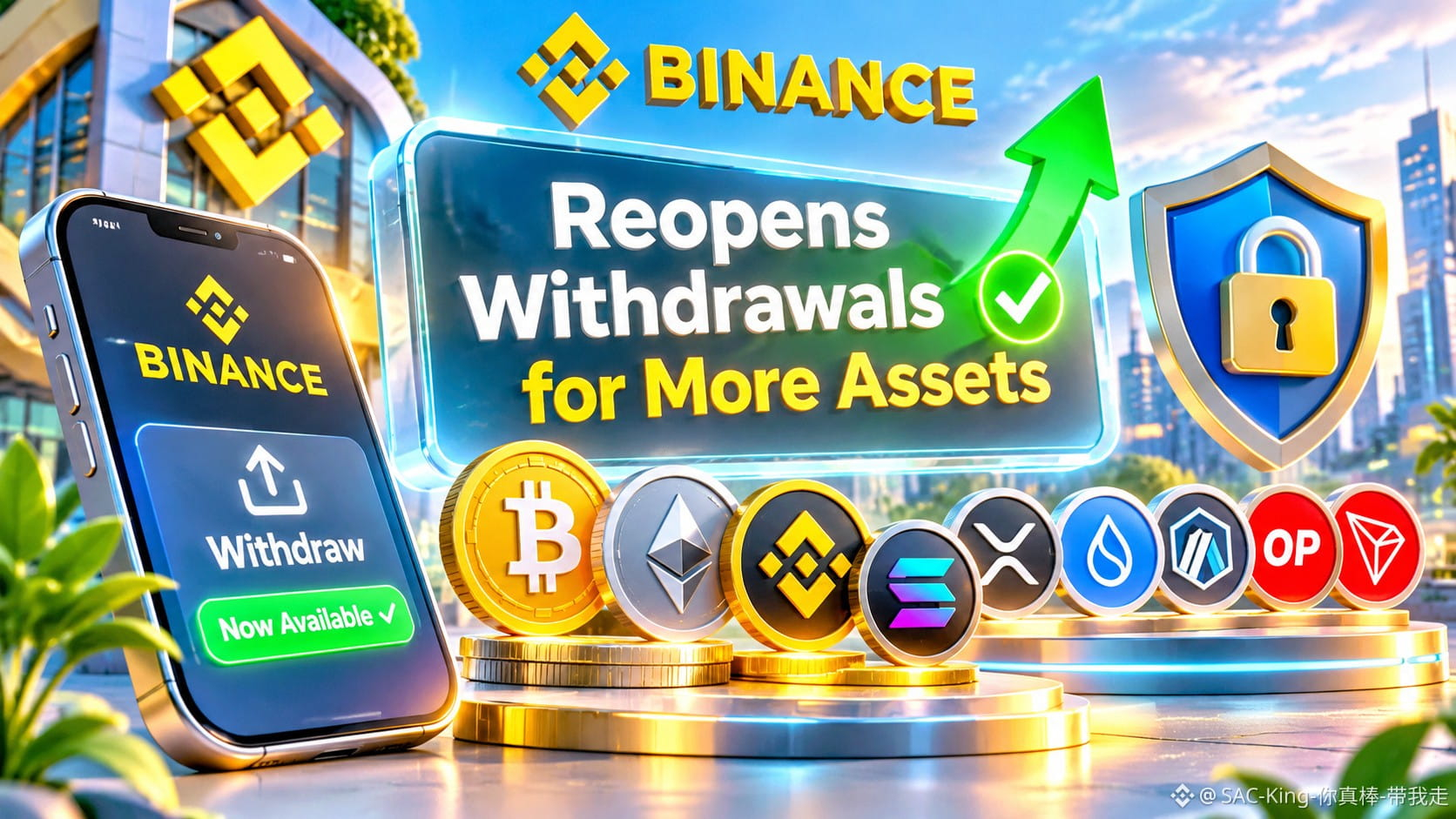
🚨 🔓 Binance Reopens Withdrawals for More Assets: Is the Recovery Finally Gaining Momentum? 🔓 🚨
When access disappears, uncertainty takes over. When withdrawals return, confidence gets its first opportunity to rebuild.
Binance has announced another major step in its security incident recovery, reopening withdrawals for additional assets across multiple blockchain networks starting November 3, 2026.
The expansion covers BSC, Ethereum, Solana, XRP, Sui, Arbitrum, Optimism, TRON, and Base. However, withdrawals are being restored progressively, not simultaneously.
Binance says each network and asset combination must pass security and readiness checks before withdrawals become available. Deposits remain operational.
Users may still experience temporary delays or longer processing times during the rollout. Checking the withdrawal page and selecting the correct network remains essential.
My Take: The biggest development isn't simply that more withdrawals are returning. It's that Binance is moving from emergency restrictions toward controlled operational recovery.
But let's be clear: reopening withdrawals is a recovery milestone, not proof that every security concern has disappeared.
Trust isn't restored through promises alone. It is rebuilt through consistent execution, transparency, and access to funds.
Do you think this gradual reopening will accelerate confidence in Binance, or will users need more proof before fully trusting the platform again?
Disclaimer: This post is for informational and educational purposes only, not financial advice.
#Binance #CryptoNews #GrowWithSAC $BMT $HOT $RUNE
#BinanceReopensWithdrawalsForMoreAssets
765
Verified
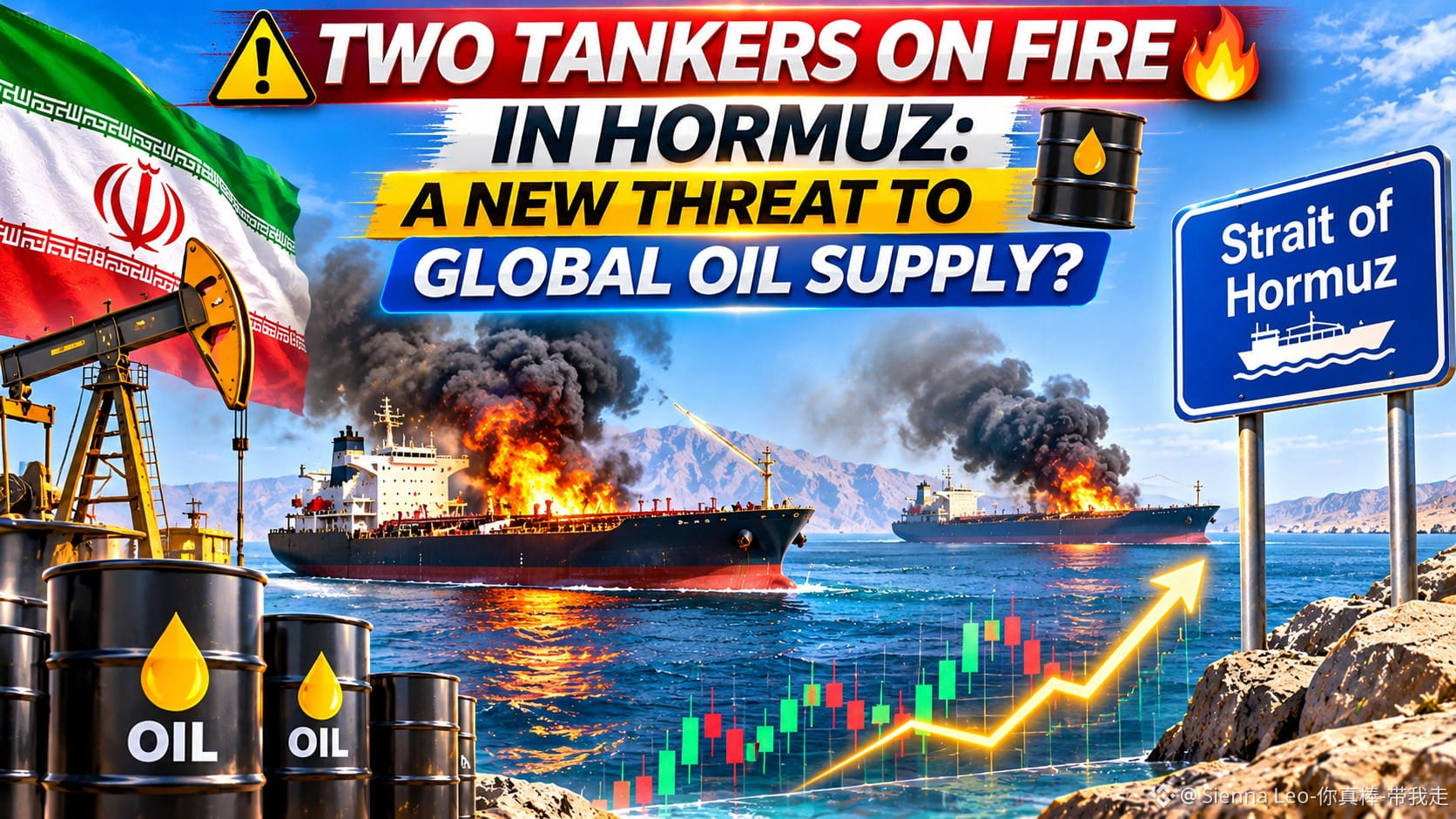
🚨🌊 TWO TANKERS ON FIRE IN HORMUZ: Is Global Oil Supply Facing a New Shock? 🛢️🔥
When flames appear on the world's most sensitive shipping route, the consequences can travel far beyond the coastline.
Iran's Islamic Revolutionary Guard Corps (IRGC) Navy claims that two oil tankers exploded after striking mines while travelling through what Tehran described as an unauthorized route in the Strait of Hormuz.
The report, carried by Iranian state media and reported by Reuters on November 1, has not yet established independent confirmation of the exact circumstances.
Why does this matter? Hormuz is a critical passage for international oil and LNG shipments. Any disruption can threaten tanker movements, raise shipping insurance costs and create uncertainty around energy deliveries.
The biggest market risk isn't necessarily an immediate shortage. It is the possibility that shipping companies become reluctant to operate in the area, slowing deliveries even before physical supply is lost.
MY TAKE: Watch the difference between actual supply disruption and geopolitical fear.
A temporary security incident can create a risk premium in oil prices. But sustained disruption, restricted vessel traffic and repeated attacks would present a much more serious challenge for global energy markets.
Oil doesn't need to disappear for the world to feel its absence.
Will this incident trigger another oil price shock, or can diplomacy prevent a wider shipping crisis?
Disclaimer: For educational purposes only. Not financial advice.
#OilMarket #StraitOfHormuz #GrowWithSAC $HAEDAL $GPS $1000SATS
3
1.2k
Verified
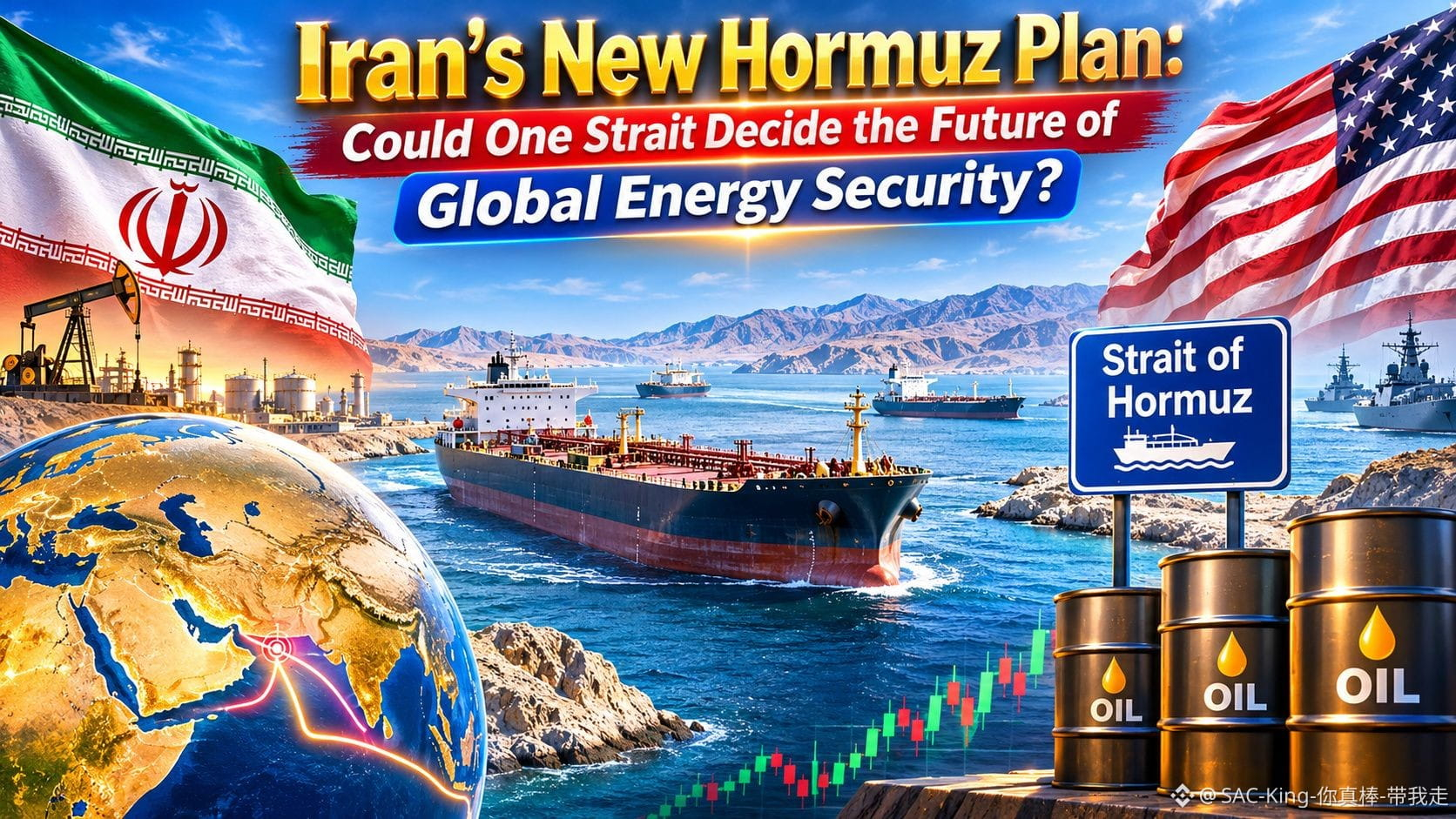
🌍🚨 IRAN’S NEW HORMUZ PLAN: Could One Strait Decide the Future of Global Energy Security? 🇮🇷⚡
The world doesn't need another battlefield to feel the consequences of war. Sometimes, one narrow waterway is enough.
Iran has revised its seven-step proposal for reopening the Strait of Hormuz, reportedly shortening the implementation timeline to just two days following consultations involving Qatar and Pakistan.
Tehran's proposal includes ending the US naval blockade on Iranian ports, reopening Hormuz, easing restrictions on Iranian oil sales, and cancelling new sanctions before addressing other issues.
But there's a major obstacle: Iran wants its conditions verified before returning to nuclear negotiations. Washington's position on Iran's nuclear programme remains a critical point of disagreement.
The stakes extend far beyond the Middle East. Hormuz is a crucial route for global oil and LNG shipments. Meanwhile, a recent strike involving a Qatari LNG tanker has added another layer of concern.
Oil prices fell nearly 4% on Monday as diplomatic hopes improved. Yet the possibility of renewed military action keeps the energy outlook fragile.
MY TAKE: The real leverage here isn't simply military power. It's control over access to global energy markets.
A diplomatic breakthrough could ease supply fears and reduce geopolitical risk premiums. Failure could bring renewed volatility to oil, shipping, inflation and financial markets.
The future of energy security may depend on what happens inside one narrow strait.
Can Iran and Washington turn this proposal into a lasting agreement, or will energy security remain hostage to geopolitics?
Disclaimer: For educational purposes only. Not financial advice.
#StraitOfHormuz #EnergySecurity #GrowWithSAC $SOPH $MITO $HOT
2
1.6k
🌍⚠️ Iran’s Doha Talks Collapse Without a Deal: Is Washington Running Out of Diplomatic Options? 🇮🇷🔥
The negotiating table is silent, but the geopolitical storm is far from over.
Iran’s latest talks with Qatari mediators have ended without a breakthrough, raising fresh questions about Washington’s ability to secure a diplomatic solution.
Tehran is pushing a seven-step proposal focused on ending the US naval blockade, reopening the Strait of Hormuz, and easing restrictions. However, major disagreements remain, particularly over sanctions and Iran’s nuclear stockpile.
Washington has not abandoned diplomacy. President Donald Trump has described the negotiations as productive, while ruling out fresh US attacks before Tuesday’s midterm elections. But what happens afterward remains uncertain.
Markets are already reacting. Oil prices dropped sharply on renewed hopes for diplomacy, but that optimism comes with a serious warning: the conflict has disrupted energy and shipping routes, leaving global supply chains vulnerable.
My Take: The real problem isn't simply the absence of an agreement. It's the gap between what both sides consider acceptable.
Iran wants the blockade addressed before a broader settlement, while Washington still faces unresolved security and nuclear concerns.
Neither side appears ready to surrender its leverage. That makes another diplomatic attempt possible, but a lasting agreement far from guaranteed.
Sometimes, the most dangerous moment in diplomacy is when talking stops but the conflict hasn't ended.
Do you believe Washington can secure a deal with Tehran, or is another escalation becoming increasingly likely?
Disclaimer: This post is for informational and educational purposes only, not financial or investment advice.
#IranUS #Geopolitics #GrowWithSAC $MITO $SOPH $HOT

1.4k
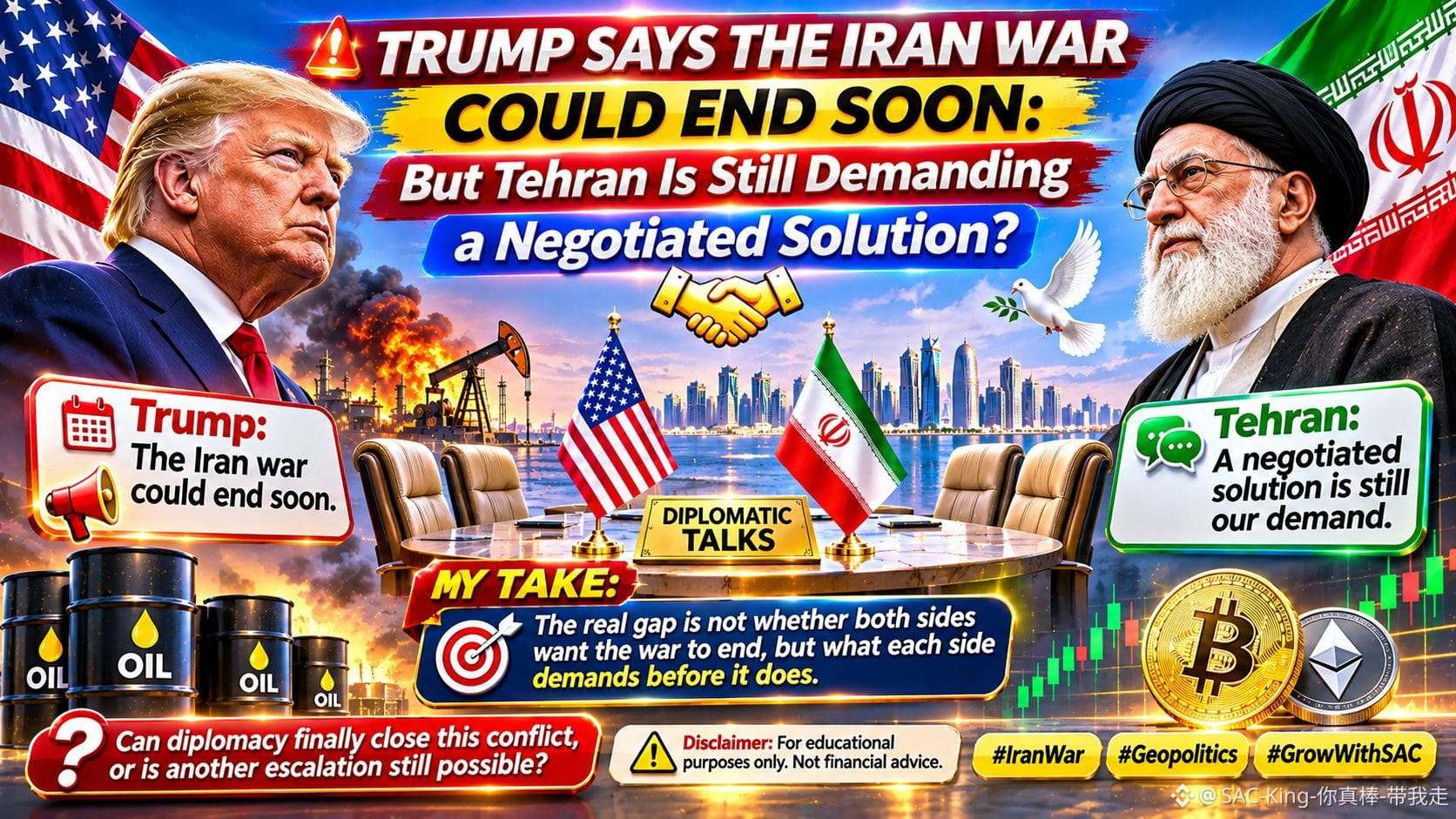
🌍🔥 TRUMP SAYS THE IRAN WAR COULD END SOON: But Is Tehran Ready to Accept Anything Less Than a Deal? 🇺🇸🇮🇷
A war can sound close to ending in a speech, yet remain far from over at the negotiating table.
Trump said on October 30 that he believes the conflict could be wrapped up soon, while insisting that Washington needs guarantees Iran will never obtain a nuclear weapon.
Tehran is still pushing for a negotiated solution. After talks with Qatari mediators ended without a breakthrough, Iran said indirect messages with Washington were continuing.
Its revised proposal reportedly links reopening the Strait of Hormuz to an end to the US naval blockade and other conditions.
Markets are already reacting to the possibility of diplomacy. Oil prices fell sharply on Monday as hopes for a deal grew, but that move does not prove the conflict is nearing a settlement.
MY TAKE: The real gap is not whether both sides want the war to end. It is what each side demands before it does. Washington prioritises nuclear guarantees; Tehran wants its immediate conditions addressed. Until those priorities meet, optimistic headlines remain fragile.
For crypto traders, geopolitical headlines can shift risk appetite quickly. Watch actual diplomatic progress, not just confident statements.
Peace needs more than a prediction. It needs an agreement both sides can accept.
Do you believe diplomacy can close this conflict, or is another escalation still possible?
Disclaimer: For educational purposes only. Not financial advice.
#IranWar #Geopolitics #GrowWithSAC $CAT $KORUB $RED
Feed-Creator-2d06e9451:
bhi 100 dalr send kar day
1
3
1.6k
Log in to explore more content
Join global crypto users on Binance Square
⚡️ Get latest and useful information about crypto.
💬 Trusted by the world’s largest crypto exchange.
👍 Discover real insights from verified creators.
Email / Phone number
Trending Topics
1
#BinanceReopensWithdrawalsForMoreAssets
686,753 views
3,442 Discussing
2
#BTCRebounds80K
183,543 views
1,681 Discussing
3
#Binance98PercentReplenished
96,135 views
1,132 Discussing
4
#KazakhstanReportedlyInvests$100MInCryptoFunds
0 views
0 Discussing
5
#StrategySTRCResumesIssuanceAfterOver170Days
868 views
50 Discussing
6
#ADPUSPrivateEmployersAdd86000JobsInOctober
14,096 views
257 Discussing
7
#SouthKoreaSeeksCryptoTaxDelayUntil2029
4,809 views
62 Discussing
8
#USMidterms-WhatAreMarketsExpecting?
500,754 views
2,554 Discussing
9
#US10YearTreasuryYieldFallsTo4.845%
4,655 views
70 Discussing
10
#ZcashExpectsNU7ToMake$16MSproutZECInaccessible
619 views
14 Discussing