
#chainalysis
chainalysis
88,472 views
367 Discussing
Hot
Latest

#ChainalysisBreachExposedPasswordHashesAndLiveTokens
🚨 CRYPTO'S BIGGEST DATA WARNING? Chainalysis Hack Exposes Password Hashes and LIVE TOKENS!
A major cybersecurity warning has hit the crypto industry.
Blockchain analytics giant Chainalysis has revealed that attackers exposed sensitive user information, including names, usernames, password hashes and live tokens.
But the situation is even more concerning: the company initially said there was no evidence that authentication credentials or session tokens had been compromised. Its investigation later uncovered a much wider exposure.
Here's what happened:
Sensitive Data Exposed: Password hashes and live tokens associated with Chainalysis users were exposed to a malicious actor.
Passwords at Risk: An additional on-path attack exposed some customer passwords.
Services Taken Offline: Chainalysis suspended several products, including Reactor, Data Solutions and parts of its KYT services.
Unauthorized Access Concerns: Some customer KYT accounts appeared to have been accessed without authorization.
Security Response: The company is requiring password resets and API key rotation where appropriate.
Why does this matter for crypto?
Chainalysis provides blockchain investigation and transaction-monitoring tools used by exchanges, financial institutions and law enforcement agencies.
A breach involving a company this important raises serious questions about security across the crypto ecosystem.
Chainalysis says it has found no evidence that investigation data was accessed or blockchain attribution data was manipulated.
The biggest lesson? Even companies monitoring blockchain security are not immune to cyberattacks.
#Chainalysis #CryptoSecurity #CryptoNewss
#ChainalysisBreachExposedPasswordHashesAndLiveTokens
🚨 CRYPTO'S BIGGEST DATA WARNING? Chainalysis Hack Exposes Password Hashes and LIVE TOKENS!
A major cybersecurity warning has hit the crypto industry.
Blockchain analytics giant Chainalysis has revealed that attackers exposed sensitive user information, including names, usernames, password hashes and live tokens.
But the situation is even more concerning: the company initially said there was no evidence that authentication credentials or session tokens had been compromised. Its investigation later uncovered a much wider exposure.
Here's what happened:
Sensitive Data Exposed: Password hashes and live tokens associated with Chainalysis users were exposed to a malicious actor.
Passwords at Risk: An additional on-path attack exposed some customer passwords.
Services Taken Offline: Chainalysis suspended several products, including Reactor, Data Solutions and parts of its KYT services.
Unauthorized Access Concerns: Some customer KYT accounts appeared to have been accessed without authorization.
Security Response: The company is requiring password resets and API key rotation where appropriate.
Why does this matter for crypto?
Chainalysis provides blockchain investigation and transaction-monitoring tools used by exchanges, financial institutions and law enforcement agencies.
A breach involving a company this important raises serious questions about security across the crypto ecosystem.
Chainalysis says it has found no evidence that investigation data was accessed or blockchain attribution data was manipulated.
The biggest lesson? Even companies monitoring blockchain security are not immune to cyberattacks.
#Chainalysis #CryptoSecurity #CryptoNewss
🚨 CRYPTO'S BIGGEST DATA WARNING? Chainalysis Hack Exposes Password Hashes and LIVE TOKENS!
A major cybersecurity warning has hit the crypto industry.
Blockchain analytics giant Chainalysis has revealed that attackers exposed sensitive user information, including names, usernames, password hashes and live tokens.
But the situation is even more concerning: the company initially said there was no evidence that authentication credentials or session tokens had been compromised. Its investigation later uncovered a much wider exposure.
Here's what happened:
Sensitive Data Exposed: Password hashes and live tokens associated with Chainalysis users were exposed to a malicious actor.
Passwords at Risk: An additional on-path attack exposed some customer passwords.
Services Taken Offline: Chainalysis suspended several products, including Reactor, Data Solutions and parts of its KYT services.
Unauthorized Access Concerns: Some customer KYT accounts appeared to have been accessed without authorization.
Security Response: The company is requiring password resets and API key rotation where appropriate.
Why does this matter for crypto?
Chainalysis provides blockchain investigation and transaction-monitoring tools used by exchanges, financial institutions and law enforcement agencies.
A breach involving a company this important raises serious questions about security across the crypto ecosystem.
Chainalysis says it has found no evidence that investigation data was accessed or blockchain attribution data was manipulated.
The biggest lesson? Even companies monitoring blockchain security are not immune to cyberattacks.
#Chainalysis #CryptoSecurity #CryptoNewss
20


·
--
🔐 CHAINALYSIS BREACH ESCALATES — ALL USERS EXPOSED
The firm that tracks crypto hackers just got hacked — and the damage is far worse than first admitted.
Chainalysis confirmed on Nov 4 that names, usernames, password hashes and LIVE session tokens for ALL users were exposed to a malicious actor. An "on-path attack" also exposed a subset of customer passwords. After detecting abnormal activity, the firm took its KYT screening tools, address screening products and login page offline.
This is bigger than one company. Chainalysis is the compliance backbone for exchanges, banks and law enforcement worldwide. With live tokens exposed and screening tools down, the industry's front line against dirty money is blind while service is restored.
The firm says no investigation data was accessed and no attribution data was manipulated — but that assurance now sits next to an Oct 30 statement that said no credentials were touched at all. Chainalysis stresses the incident is unrelated to the Binance theft.
⚠️ If you hold a Chainalysis account, reset your password and rotate API keys now. Exposed tokens plus offline screening is exactly the window launderers exploit.
📌 Sharing personal opinions only, not financial advice or a recommendation to buy/sell. Crypto is highly risky; DYOR and you are solely responsible. No coin promotion.
#Chainalysis #CryptoSecurity #Hack #Binance #Crypto
🔐 CHAINALYSIS BREACH ESCALATES — ALL USERS EXPOSED
The firm that tracks crypto hackers just got hacked — and the damage is far worse than first admitted.
Chainalysis confirmed on Nov 4 that names, usernames, password hashes and LIVE session tokens for ALL users were exposed to a malicious actor. An "on-path attack" also exposed a subset of customer passwords. After detecting abnormal activity, the firm took its KYT screening tools, address screening products and login page offline.
This is bigger than one company. Chainalysis is the compliance backbone for exchanges, banks and law enforcement worldwide. With live tokens exposed and screening tools down, the industry's front line against dirty money is blind while service is restored.
The firm says no investigation data was accessed and no attribution data was manipulated — but that assurance now sits next to an Oct 30 statement that said no credentials were touched at all. Chainalysis stresses the incident is unrelated to the Binance theft.
⚠️ If you hold a Chainalysis account, reset your password and rotate API keys now. Exposed tokens plus offline screening is exactly the window launderers exploit.
📌 Sharing personal opinions only, not financial advice or a recommendation to buy/sell. Crypto is highly risky; DYOR and you are solely responsible. No coin promotion.
#Chainalysis #CryptoSecurity #Hack #Binance #Crypto
The firm that tracks crypto hackers just got hacked — and the damage is far worse than first admitted.
Chainalysis confirmed on Nov 4 that names, usernames, password hashes and LIVE session tokens for ALL users were exposed to a malicious actor. An "on-path attack" also exposed a subset of customer passwords. After detecting abnormal activity, the firm took its KYT screening tools, address screening products and login page offline.
This is bigger than one company. Chainalysis is the compliance backbone for exchanges, banks and law enforcement worldwide. With live tokens exposed and screening tools down, the industry's front line against dirty money is blind while service is restored.
The firm says no investigation data was accessed and no attribution data was manipulated — but that assurance now sits next to an Oct 30 statement that said no credentials were touched at all. Chainalysis stresses the incident is unrelated to the Binance theft.
⚠️ If you hold a Chainalysis account, reset your password and rotate API keys now. Exposed tokens plus offline screening is exactly the window launderers exploit.
📌 Sharing personal opinions only, not financial advice or a recommendation to buy/sell. Crypto is highly risky; DYOR and you are solely responsible. No coin promotion.
#Chainalysis #CryptoSecurity #Hack #Binance #Crypto
2
1.6k

·
--
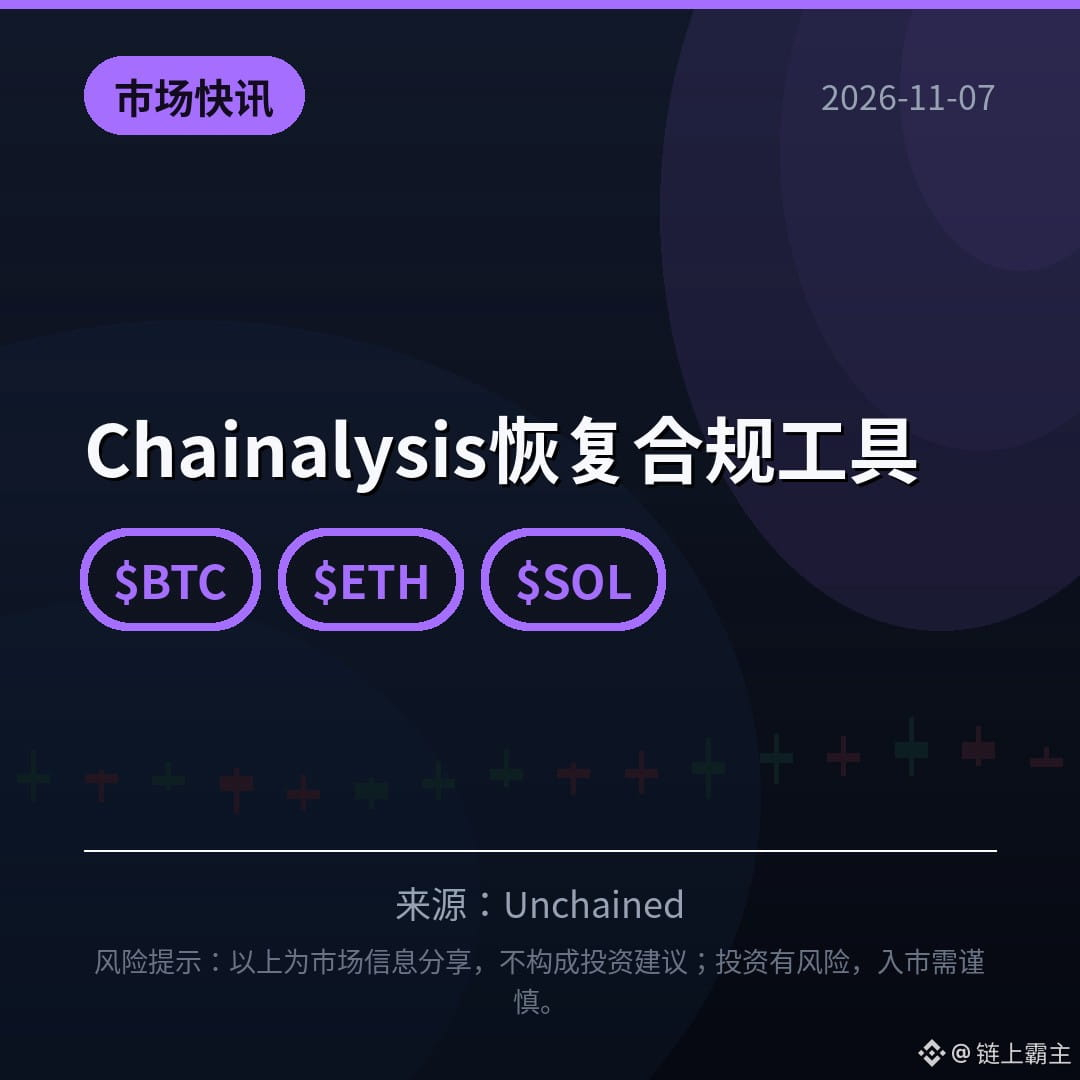
【Market Update】Chainalysis Restores Compliance Tools
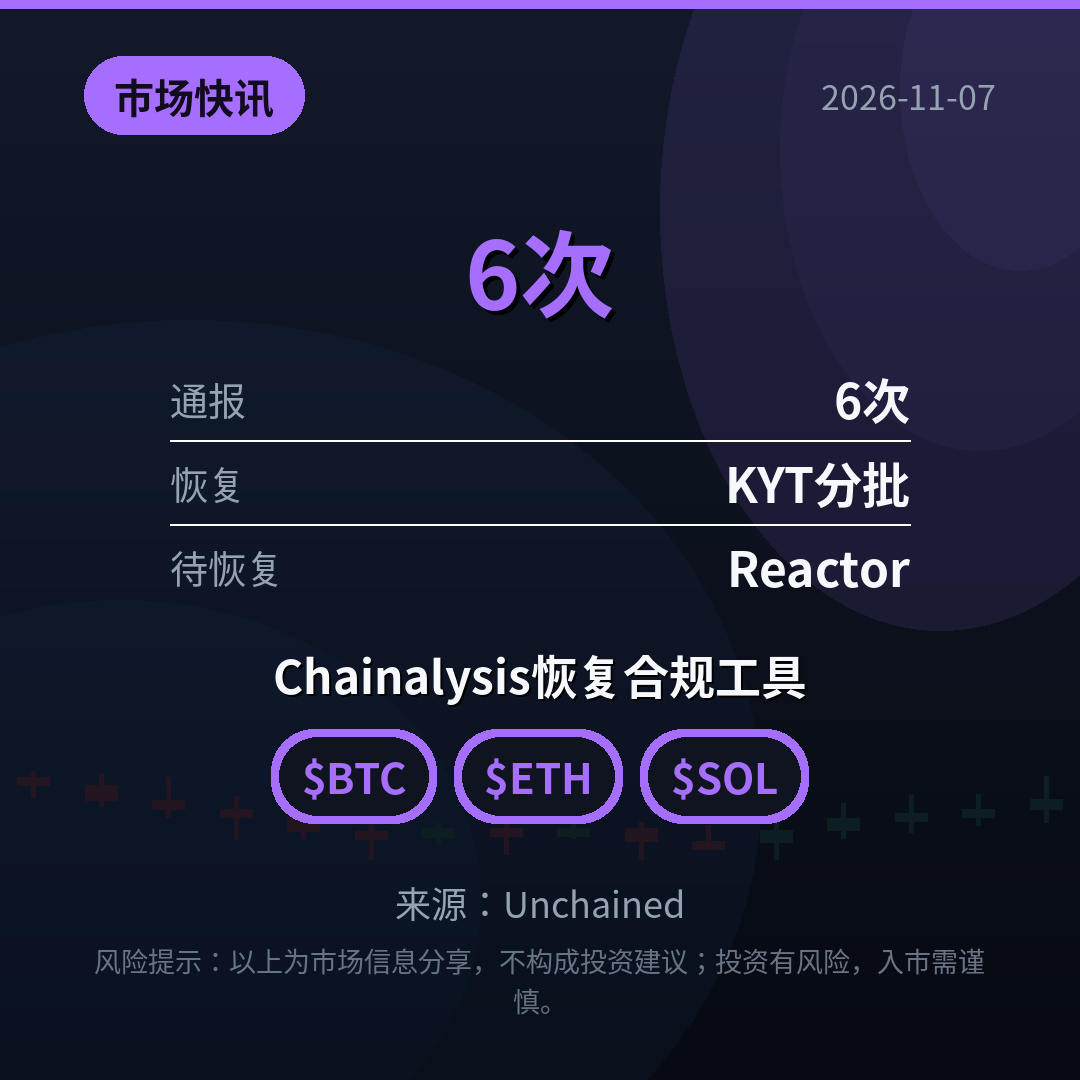
Chainalysis began gradually restoring its KYT and address screening tools on Friday. The company had previously disclosed that all user password hashes and login tokens were exposed. Users must first register trusted IP addresses, then reset their passwords and rotate their API keys after approval before they can trade again. The Reactor investigation tool and data products remain offline, with no confirmed restoration date. Have you rotated your API keys?
$BTC $ETH $SOL
#币安广场 #Chainalysis #Cybersecurity
(Source: Unchained)
⚠️Risk Disclaimer: The above is shared for informational purposes only and does not constitute investment advice. Investing involves risk; please exercise caution.
【Market Update】Chainalysis Restores Compliance Tools
Chainalysis began gradually restoring its KYT and address screening tools on Friday. The company had previously disclosed that all user password hashes and login tokens were exposed. Users must first register trusted IP addresses, then reset their passwords and rotate their API keys after approval before they can trade again. The Reactor investigation tool and data products remain offline, with no confirmed restoration date. Have you rotated your API keys?
$BTC $ETH $SOL
#币安广场 #Chainalysis #Cybersecurity
(Source: Unchained)
⚠️Risk Disclaimer: The above is shared for informational purposes only and does not constitute investment advice. Investing involves risk; please exercise caution.
Chainalysis began gradually restoring its KYT and address screening tools on Friday. The company had previously disclosed that all user password hashes and login tokens were exposed. Users must first register trusted IP addresses, then reset their passwords and rotate their API keys after approval before they can trade again. The Reactor investigation tool and data products remain offline, with no confirmed restoration date. Have you rotated your API keys?
$BTC $ETH $SOL
#币安广场 #Chainalysis #Cybersecurity
(Source: Unchained)
⚠️Risk Disclaimer: The above is shared for informational purposes only and does not constitute investment advice. Investing involves risk; please exercise caution.
6

·
--
【Even a bank with 120 million customers can't withdraw crypto! Brazil's Nubank and Mercado Pago suddenly halt crypto deposits and withdrawals】
Brazilian digital bank Nubank suspended crypto deposits and withdrawals on November 6, while Mercado Pago blocked some transfers to external wallets. Both said an issue with an external risk-control provider was to blame, that assets were safe, and that buying and selling within the apps remained unaffected. Nubank uses Chainalysis to screen addresses for on-chain transfers. After the latter was hacked, services began to be restored in phases, but neither company named it.
#Nubank #Chainalysis #Brazil
【Even a bank with 120 million customers can't withdraw crypto! Brazil's Nubank and Mercado Pago suddenly halt crypto deposits and withdrawals】
Brazilian digital bank Nubank suspended crypto deposits and withdrawals on November 6, while Mercado Pago blocked some transfers to external wallets. Both said an issue with an external risk-control provider was to blame, that assets were safe, and that buying and selling within the apps remained unaffected. Nubank uses Chainalysis to screen addresses for on-chain transfers. After the latter was hacked, services began to be restored in phases, but neither company named it.
#Nubank #Chainalysis #Brazil
Brazilian digital bank Nubank suspended crypto deposits and withdrawals on November 6, while Mercado Pago blocked some transfers to external wallets. Both said an issue with an external risk-control provider was to blame, that assets were safe, and that buying and selling within the apps remained unaffected. Nubank uses Chainalysis to screen addresses for on-chain transfers. After the latter was hacked, services began to be restored in phases, but neither company named it.
#Nubank #Chainalysis #Brazil
81
·
--
【The company that catches hackers got hacked itself! Everyone’s passwords and login tokens leaked】
Chainalysis, which helps exchanges screen illicit funds and track hackers, confirmed that all users’ names, usernames, password hashes, and valid login tokens were leaked. Tools such as Reactor and KYT were temporarily shut down; Japan’s Coincheck and ICONOMI, which rely on the company, subsequently suspended withdrawals. The company said there is currently no evidence that investigation data was accessed.
#Chainalysis #数据泄露 #Coincheck
【The company that catches hackers got hacked itself! Everyone’s passwords and login tokens leaked】
Chainalysis, which helps exchanges screen illicit funds and track hackers, confirmed that all users’ names, usernames, password hashes, and valid login tokens were leaked. Tools such as Reactor and KYT were temporarily shut down; Japan’s Coincheck and ICONOMI, which rely on the company, subsequently suspended withdrawals. The company said there is currently no evidence that investigation data was accessed.
#Chainalysis #数据泄露 #Coincheck
Chainalysis, which helps exchanges screen illicit funds and track hackers, confirmed that all users’ names, usernames, password hashes, and valid login tokens were leaked. Tools such as Reactor and KYT were temporarily shut down; Japan’s Coincheck and ICONOMI, which rely on the company, subsequently suspended withdrawals. The company said there is currently no evidence that investigation data was accessed.
#Chainalysis #数据泄露 #Coincheck
46

·
--
Chainalysis restores KYT in phases after expanding the scope of the incident
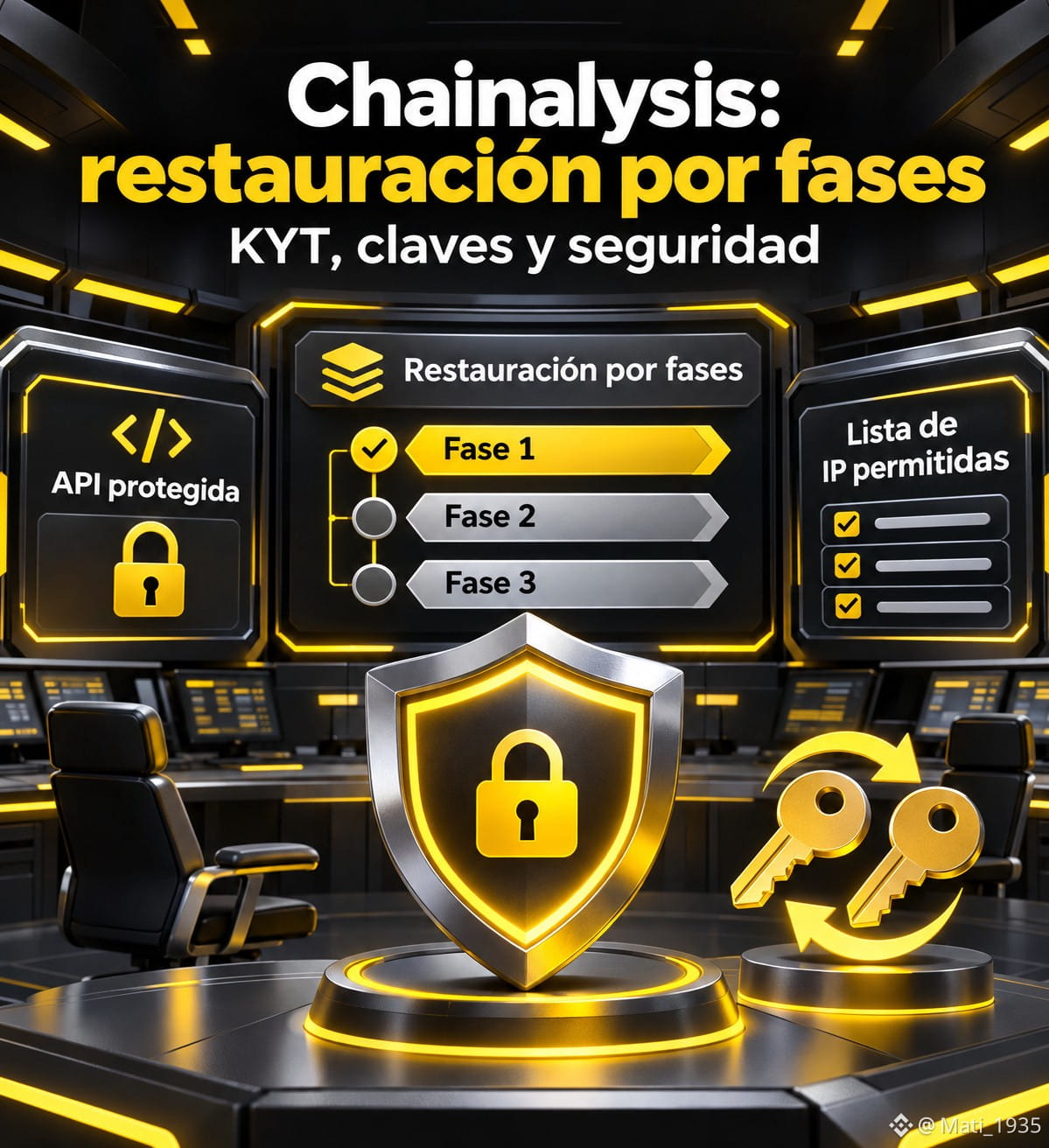
Confirmed fact: Chainalysis’s official update on November 6, 2026, published at 03:30 EST (08:30 UTC), reports that phased restoration of KYT and Address Screening has begun. Customers must submit trusted IPs, reset passwords, and rotate API keys. Reactor and Data Solutions are still being restored.
The timeline matters. The October 30 notice said there was no evidence of access to credentials or session tokens. In the November 4 update at 23:00 EST, Chainalysis disclosed that the names, usernames, password hashes, and active tokens of all its users had been exposed. The company added that it had no evidence of access to investigation data or tampering with its attribution information.
The incident led to the KYT interface and API, other screening products, and login being taken offline after anomalous activity was detected. Some KYT accounts appeared to have been accessed without authorization. The investigation is ongoing: a hash is not the same as a plaintext password, and an exposed token does not prove misuse.
On Binance Square, the hashtag about the breach is among the current trending topics. That measures social attention; it does not confirm every rumor. The useful takeaway for exchanges and compliance teams is operational: access the service through the official website, beware of password recovery emails, enable 2FA, do not reuse passwords, and review logs and keys after restoration.
Market snapshot, no signal: at 08:56 UTC, BTC was trading near 75,701.66 USDT (-5.939% in 24 hours), ETH at 2,227.29 (-7.916%), and BNB at 692.01 (-3.200%). This is context, not a reaction attributable to the incident.
$BTC $ETH $BNB
Educational Content. Not financial advice.
#Chainalysis #Ciberseguridad #KYT #Blockchain #FinancialEducation
Chainalysis restores KYT in phases after expanding the scope of the incident
Confirmed fact: Chainalysis’s official update on November 6, 2026, published at 03:30 EST (08:30 UTC), reports that phased restoration of KYT and Address Screening has begun. Customers must submit trusted IPs, reset passwords, and rotate API keys. Reactor and Data Solutions are still being restored.
The timeline matters. The October 30 notice said there was no evidence of access to credentials or session tokens. In the November 4 update at 23:00 EST, Chainalysis disclosed that the names, usernames, password hashes, and active tokens of all its users had been exposed. The company added that it had no evidence of access to investigation data or tampering with its attribution information.
The incident led to the KYT interface and API, other screening products, and login being taken offline after anomalous activity was detected. Some KYT accounts appeared to have been accessed without authorization. The investigation is ongoing: a hash is not the same as a plaintext password, and an exposed token does not prove misuse.
On Binance Square, the hashtag about the breach is among the current trending topics. That measures social attention; it does not confirm every rumor. The useful takeaway for exchanges and compliance teams is operational: access the service through the official website, beware of password recovery emails, enable 2FA, do not reuse passwords, and review logs and keys after restoration.
Market snapshot, no signal: at 08:56 UTC, BTC was trading near 75,701.66 USDT (-5.939% in 24 hours), ETH at 2,227.29 (-7.916%), and BNB at 692.01 (-3.200%). This is context, not a reaction attributable to the incident.
$BTC $ETH $BNB
Educational Content. Not financial advice.
#Chainalysis #Ciberseguridad #KYT #Blockchain #FinancialEducation
Confirmed fact: Chainalysis’s official update on November 6, 2026, published at 03:30 EST (08:30 UTC), reports that phased restoration of KYT and Address Screening has begun. Customers must submit trusted IPs, reset passwords, and rotate API keys. Reactor and Data Solutions are still being restored.
The timeline matters. The October 30 notice said there was no evidence of access to credentials or session tokens. In the November 4 update at 23:00 EST, Chainalysis disclosed that the names, usernames, password hashes, and active tokens of all its users had been exposed. The company added that it had no evidence of access to investigation data or tampering with its attribution information.
The incident led to the KYT interface and API, other screening products, and login being taken offline after anomalous activity was detected. Some KYT accounts appeared to have been accessed without authorization. The investigation is ongoing: a hash is not the same as a plaintext password, and an exposed token does not prove misuse.
On Binance Square, the hashtag about the breach is among the current trending topics. That measures social attention; it does not confirm every rumor. The useful takeaway for exchanges and compliance teams is operational: access the service through the official website, beware of password recovery emails, enable 2FA, do not reuse passwords, and review logs and keys after restoration.
Market snapshot, no signal: at 08:56 UTC, BTC was trading near 75,701.66 USDT (-5.939% in 24 hours), ETH at 2,227.29 (-7.916%), and BNB at 692.01 (-3.200%). This is context, not a reaction attributable to the incident.
$BTC $ETH $BNB
Educational Content. Not financial advice.
#Chainalysis #Ciberseguridad #KYT #Blockchain #FinancialEducation
66

Chainalysis confirms password and live token leak
* **Serious security incident:** Chainalysis disclosed a breach that exposed customers’ hashed passwords and live tokens.
* **Report update:** The company initially stated that only non-sensitive customer data had been accessed, but later updated its disclosure to include exposed passwords and tokens.
* **Community warning:** Users should change their passwords immediately and closely monitor their crypto assets to avoid security risks.
#BinanceSquare #CryptoNews #Chainalysis #Security #Web3
$btc $eth
vlikevn Titanbot
Source: CoinTelegraph
Chainalysis confirms password and live token leak
* **Serious security incident:** Chainalysis disclosed a breach that exposed customers’ hashed passwords and live tokens.
* **Report update:** The company initially stated that only non-sensitive customer data had been accessed, but later updated its disclosure to include exposed passwords and tokens.
* **Community warning:** Users should change their passwords immediately and closely monitor their crypto assets to avoid security risks.
#BinanceSquare #CryptoNews #Chainalysis #Security #Web3
$btc $eth
vlikevn Titanbot
Source: CoinTelegraph
* **Serious security incident:** Chainalysis disclosed a breach that exposed customers’ hashed passwords and live tokens.
* **Report update:** The company initially stated that only non-sensitive customer data had been accessed, but later updated its disclosure to include exposed passwords and tokens.
* **Community warning:** Users should change their passwords immediately and closely monitor their crypto assets to avoid security risks.
#BinanceSquare #CryptoNews #Chainalysis #Security #Web3
$btc $eth
vlikevn Titanbot
Source: CoinTelegraph
111
Chainalysis admits breach exposed password hashes and live tokens
• Chainalysis admitted that password hashes and live tokens were exposed in a breach.
• The disclosure came after the company initially said that only non-sensitive customer data had been accessed.
• The incident has raised cybersecurity concerns at the cryptocurrency analytics firm.
#BinanceSquare #CryptoNews #Chainalysis
$btc $eth
#vlikevn #Titanbot
Source: CoinTelegraph
Chainalysis admits breach exposed password hashes and live tokens
• Chainalysis admitted that password hashes and live tokens were exposed in a breach.
• The disclosure came after the company initially said that only non-sensitive customer data had been accessed.
• The incident has raised cybersecurity concerns at the cryptocurrency analytics firm.
#BinanceSquare #CryptoNews #Chainalysis
$btc $eth
#vlikevn #Titanbot
Source: CoinTelegraph
• Chainalysis admitted that password hashes and live tokens were exposed in a breach.
• The disclosure came after the company initially said that only non-sensitive customer data had been accessed.
• The incident has raised cybersecurity concerns at the cryptocurrency analytics firm.
#BinanceSquare #CryptoNews #Chainalysis
$btc $eth
#vlikevn #Titanbot
Source: CoinTelegraph
231

·
--
Chainalysis Data Breach Escalates: Plaintext Password Hashes and Live Tokens Stolen
Trust in blockchain analytics infrastructure is being undermined by a case of “downplayed disclosure.”
According to Cointelegraph, Chainalysis disclosed that its systems had been breached, resulting in the exposure of password hashes and live tokens. Notably, the company initially said that only “non-sensitive customer data” had been exposed, and only later acknowledged that the breach was more extensive. This shift in its account—from “non-sensitive” data to data “including active credentials”—is the most alarming aspect of the incident.
Why does this matter? Chainalysis is neither an exchange nor a custodian; it provides the industry with analytics infrastructure for on-chain tracking and compliance reviews. Many exchanges, DeFi protocols, and regulators rely on trust in data service providers like this when conducting due diligence. If a provider’s own credential store is compromised, attackers may gain access to live tokens used to access downstream systems. That is the dividing line between an “information leak” and a “practical launchpad for attacks.”
From a technical perspective, password hashes can potentially be cracked offline even when stored in encrypted form, while live tokens can be reused directly if they have not been rotated adequately or have overly broad permissions. Together, the two significantly increase both the exposure window and the potential harm compared with a typical data leak. This is why the incident has been classified as “risk analysis” rather than an ordinary security notice.
How might the market react? Two things need to be distinguished. For Chainalysis itself, as a privately held data provider, the direct impact on token prices is limited. But the incident puts the broader “security and trust” narrative to the test. If similar infrastructure providers suffer successive incidents, it could deepen market skepticism about the reliability of the analytics layer. However, there is currently no evidence that the leaked data has been used to target specific on-chain assets.
A mitigating factor is that Chainalysis, as a third-party data provider, does not hold users’ private keys or custody funds, so the scope of risk is relatively clear. The incident is also still at an early stage, and its full impact will depend on complete official disclosures.
What should we watch next? First, whether the company provides details on the scope of the leak, affected systems, and progress on token rotation. Second, whether any on-chain activity involving the stolen tokens emerges. From a trading perspective, if you are watching related security sectors, it would be more prudent to wait and see whether the market confirms an “infrastructure trust premium” rather than overreacting to a single incident.
#Chainalysis #CryptoSecurity
The above is a summary of information and personal analysis, and does not constitute investment advice.
I will continue to monitor and share updates if there are any important developments.
Chainalysis Data Breach Escalates: Plaintext Password Hashes and Live Tokens Stolen
Trust in blockchain analytics infrastructure is being undermined by a case of “downplayed disclosure.”
According to Cointelegraph, Chainalysis disclosed that its systems had been breached, resulting in the exposure of password hashes and live tokens. Notably, the company initially said that only “non-sensitive customer data” had been exposed, and only later acknowledged that the breach was more extensive. This shift in its account—from “non-sensitive” data to data “including active credentials”—is the most alarming aspect of the incident.
Why does this matter? Chainalysis is neither an exchange nor a custodian; it provides the industry with analytics infrastructure for on-chain tracking and compliance reviews. Many exchanges, DeFi protocols, and regulators rely on trust in data service providers like this when conducting due diligence. If a provider’s own credential store is compromised, attackers may gain access to live tokens used to access downstream systems. That is the dividing line between an “information leak” and a “practical launchpad for attacks.”
From a technical perspective, password hashes can potentially be cracked offline even when stored in encrypted form, while live tokens can be reused directly if they have not been rotated adequately or have overly broad permissions. Together, the two significantly increase both the exposure window and the potential harm compared with a typical data leak. This is why the incident has been classified as “risk analysis” rather than an ordinary security notice.
How might the market react? Two things need to be distinguished. For Chainalysis itself, as a privately held data provider, the direct impact on token prices is limited. But the incident puts the broader “security and trust” narrative to the test. If similar infrastructure providers suffer successive incidents, it could deepen market skepticism about the reliability of the analytics layer. However, there is currently no evidence that the leaked data has been used to target specific on-chain assets.
A mitigating factor is that Chainalysis, as a third-party data provider, does not hold users’ private keys or custody funds, so the scope of risk is relatively clear. The incident is also still at an early stage, and its full impact will depend on complete official disclosures.
What should we watch next? First, whether the company provides details on the scope of the leak, affected systems, and progress on token rotation. Second, whether any on-chain activity involving the stolen tokens emerges. From a trading perspective, if you are watching related security sectors, it would be more prudent to wait and see whether the market confirms an “infrastructure trust premium” rather than overreacting to a single incident.
#Chainalysis #CryptoSecurity
The above is a summary of information and personal analysis, and does not constitute investment advice.
I will continue to monitor and share updates if there are any important developments.
Trust in blockchain analytics infrastructure is being undermined by a case of “downplayed disclosure.”
According to Cointelegraph, Chainalysis disclosed that its systems had been breached, resulting in the exposure of password hashes and live tokens. Notably, the company initially said that only “non-sensitive customer data” had been exposed, and only later acknowledged that the breach was more extensive. This shift in its account—from “non-sensitive” data to data “including active credentials”—is the most alarming aspect of the incident.
Why does this matter? Chainalysis is neither an exchange nor a custodian; it provides the industry with analytics infrastructure for on-chain tracking and compliance reviews. Many exchanges, DeFi protocols, and regulators rely on trust in data service providers like this when conducting due diligence. If a provider’s own credential store is compromised, attackers may gain access to live tokens used to access downstream systems. That is the dividing line between an “information leak” and a “practical launchpad for attacks.”
From a technical perspective, password hashes can potentially be cracked offline even when stored in encrypted form, while live tokens can be reused directly if they have not been rotated adequately or have overly broad permissions. Together, the two significantly increase both the exposure window and the potential harm compared with a typical data leak. This is why the incident has been classified as “risk analysis” rather than an ordinary security notice.
How might the market react? Two things need to be distinguished. For Chainalysis itself, as a privately held data provider, the direct impact on token prices is limited. But the incident puts the broader “security and trust” narrative to the test. If similar infrastructure providers suffer successive incidents, it could deepen market skepticism about the reliability of the analytics layer. However, there is currently no evidence that the leaked data has been used to target specific on-chain assets.
A mitigating factor is that Chainalysis, as a third-party data provider, does not hold users’ private keys or custody funds, so the scope of risk is relatively clear. The incident is also still at an early stage, and its full impact will depend on complete official disclosures.
What should we watch next? First, whether the company provides details on the scope of the leak, affected systems, and progress on token rotation. Second, whether any on-chain activity involving the stolen tokens emerges. From a trading perspective, if you are watching related security sectors, it would be more prudent to wait and see whether the market confirms an “infrastructure trust premium” rather than overreacting to a single incident.
#Chainalysis #CryptoSecurity
The above is a summary of information and personal analysis, and does not constitute investment advice.
I will continue to monitor and share updates if there are any important developments.
27
Chainalysis confirms vulnerability exposed password hashes and live tokens
- Chainalysis confirms a vulnerability exposed password hashes and live tokens.
- Initially, it believed only non-sensitive customer data had been accessed.
- RSS has not provided further details.
#BinanceSquare #CryptoNews #Chainalysis #Security
$btc $eth
#vlikevn Titanbot
Source: CoinTelegraph
Chainalysis confirms vulnerability exposed password hashes and live tokens
- Chainalysis confirms a vulnerability exposed password hashes and live tokens.
- Initially, it believed only non-sensitive customer data had been accessed.
- RSS has not provided further details.
#BinanceSquare #CryptoNews #Chainalysis #Security
$btc $eth
#vlikevn Titanbot
Source: CoinTelegraph
- Chainalysis confirms a vulnerability exposed password hashes and live tokens.
- Initially, it believed only non-sensitive customer data had been accessed.
- RSS has not provided further details.
#BinanceSquare #CryptoNews #Chainalysis #Security
$btc $eth
#vlikevn Titanbot
Source: CoinTelegraph
258
Chainalysis leaks live tokens and user passwords after hacking incident!
* **Sensitive data exposed:** Chainalysis disclosed that password hashes and live tokens were leaked after initially reporting only non-sensitive data.
* **Market security concerns:** The incident has heightened concerns about asset safety in the blockchain ecosystem, affecting trust in data analytics services.
* **User recommendations:** Users should change their passwords immediately and review their token transactions.
#BinanceSquare #CryptoNews #Chainalysis #Security #Web3
$btc $eth
vlikevn Titanbot
Source: CoinTelegraph
Chainalysis leaks live tokens and user passwords after hacking incident!
* **Sensitive data exposed:** Chainalysis disclosed that password hashes and live tokens were leaked after initially reporting only non-sensitive data.
* **Market security concerns:** The incident has heightened concerns about asset safety in the blockchain ecosystem, affecting trust in data analytics services.
* **User recommendations:** Users should change their passwords immediately and review their token transactions.
#BinanceSquare #CryptoNews #Chainalysis #Security #Web3
$btc $eth
vlikevn Titanbot
Source: CoinTelegraph
* **Sensitive data exposed:** Chainalysis disclosed that password hashes and live tokens were leaked after initially reporting only non-sensitive data.
* **Market security concerns:** The incident has heightened concerns about asset safety in the blockchain ecosystem, affecting trust in data analytics services.
* **User recommendations:** Users should change their passwords immediately and review their token transactions.
#BinanceSquare #CryptoNews #Chainalysis #Security #Web3
$btc $eth
vlikevn Titanbot
Source: CoinTelegraph
240

·
--
Chainalysis, which helps the entire industry track down hackers, got hacked itself—and the more they investigated, the worse it got.
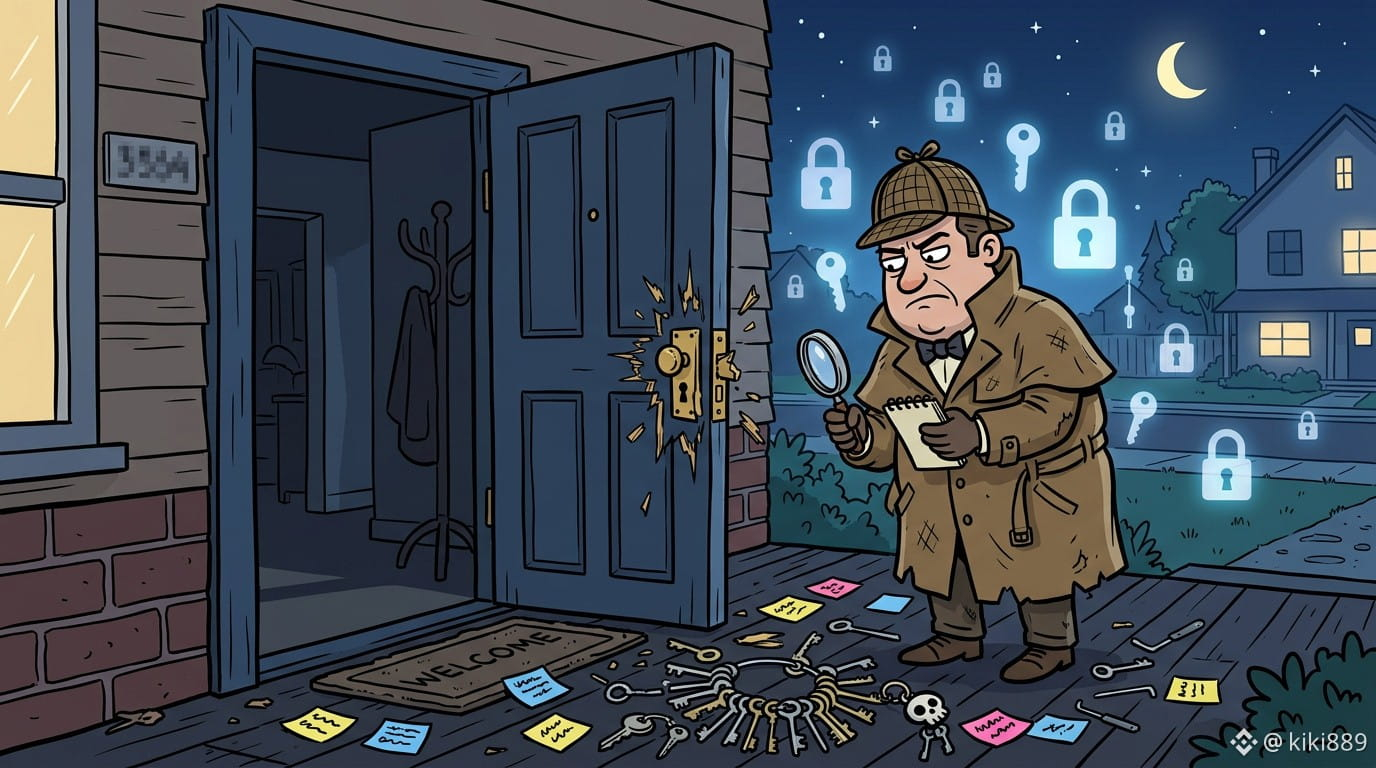
On October 30, it said it had “found no evidence that credentials had been accessed.” On November 4, it changed its story: every user’s name, username, password hash, and valid token had been leaked. Some passwords were also intercepted in a man-in-the-middle attack, and KYT and Reactor were taken completely offline for a time. The company says this was unrelated to the Binance incident, and that it found no evidence that investigation data had been tampered with.
Honestly, reading this sent a chill down my spine. Exchanges and law enforcement agencies rely on it for on-chain risk management, yet it couldn’t even secure its own account system. Can we still believe the usual “big companies must be secure” line?
My approach is pretty basic: I keep most of my crypto in self-custody, don’t reuse passwords, and enable 2FA. DYOR—not financial advice.
How much of your crypto do you still keep on exchanges?
#比特币 #Chainalysis #SelfCustody
Chainalysis, which helps the entire industry track down hackers, got hacked itself—and the more they investigated, the worse it got.
On October 30, it said it had “found no evidence that credentials had been accessed.” On November 4, it changed its story: every user’s name, username, password hash, and valid token had been leaked. Some passwords were also intercepted in a man-in-the-middle attack, and KYT and Reactor were taken completely offline for a time. The company says this was unrelated to the Binance incident, and that it found no evidence that investigation data had been tampered with.
Honestly, reading this sent a chill down my spine. Exchanges and law enforcement agencies rely on it for on-chain risk management, yet it couldn’t even secure its own account system. Can we still believe the usual “big companies must be secure” line?
My approach is pretty basic: I keep most of my crypto in self-custody, don’t reuse passwords, and enable 2FA. DYOR—not financial advice.
How much of your crypto do you still keep on exchanges?
#比特币 #Chainalysis #SelfCustody
On October 30, it said it had “found no evidence that credentials had been accessed.” On November 4, it changed its story: every user’s name, username, password hash, and valid token had been leaked. Some passwords were also intercepted in a man-in-the-middle attack, and KYT and Reactor were taken completely offline for a time. The company says this was unrelated to the Binance incident, and that it found no evidence that investigation data had been tampered with.
Honestly, reading this sent a chill down my spine. Exchanges and law enforcement agencies rely on it for on-chain risk management, yet it couldn’t even secure its own account system. Can we still believe the usual “big companies must be secure” line?
My approach is pretty basic: I keep most of my crypto in self-custody, don’t reuse passwords, and enable 2FA. DYOR—not financial advice.
How much of your crypto do you still keep on exchanges?
#比特币 #Chainalysis #SelfCustody
161

·
--
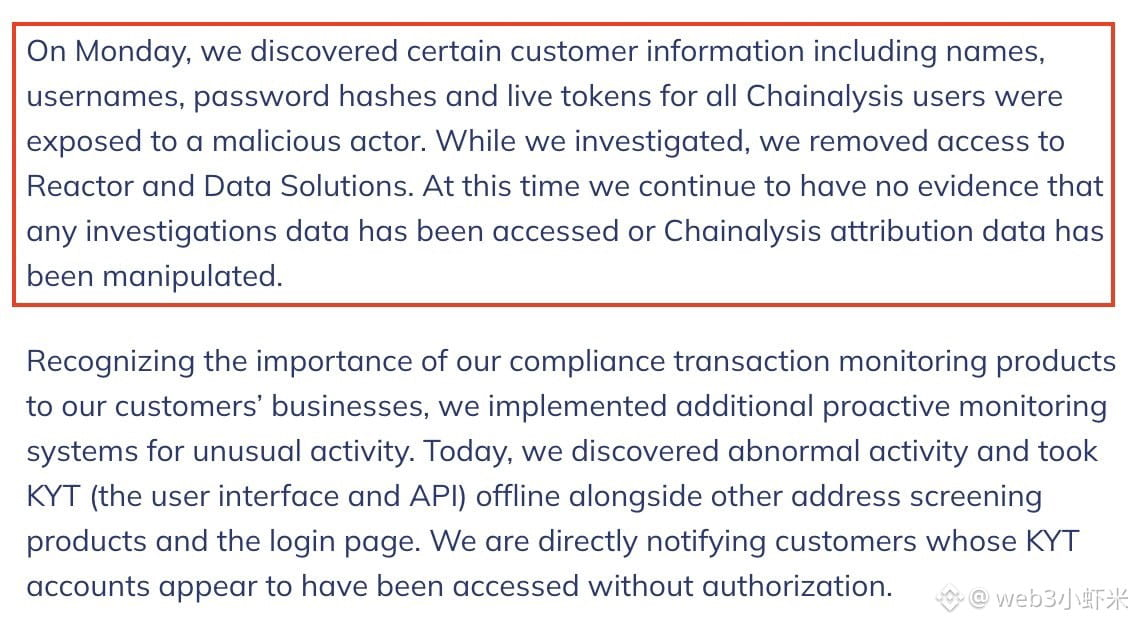
Chainalysis has posted another update: this time, its account is much more serious than the one from earlier this month.
The company says it discovered on Monday that attackers had accessed every user's name, username, password hash, and valid login token. Some customers' plaintext passwords were also exposed through a separate “on-path” attack. After the incident, they first took Reactor and Data Solutions offline. Later, due to suspicious activity, they also shut down KYT, address screening, and the login page, and began notifying KYT accounts that may have been accessed without authorization.
The company still says it has seen no evidence that investigation data was accessed, and no evidence that data was altered. But “password hashes for everyone + active tokens” is a significant escalation from the initial claim that only “non-sensitive identity information” was involved.
If you've used their products, change your password and rotate your API key as instructed by the company. Don't click password reset links in emails; go directly to the official login page. #安全 #Chainalysis
Chainalysis has posted another update: this time, its account is much more serious than the one from earlier this month.
The company says it discovered on Monday that attackers had accessed every user's name, username, password hash, and valid login token. Some customers' plaintext passwords were also exposed through a separate “on-path” attack. After the incident, they first took Reactor and Data Solutions offline. Later, due to suspicious activity, they also shut down KYT, address screening, and the login page, and began notifying KYT accounts that may have been accessed without authorization.
The company still says it has seen no evidence that investigation data was accessed, and no evidence that data was altered. But “password hashes for everyone + active tokens” is a significant escalation from the initial claim that only “non-sensitive identity information” was involved.
If you've used their products, change your password and rotate your API key as instructed by the company. Don't click password reset links in emails; go directly to the official login page. #安全 #Chainalysis
The company says it discovered on Monday that attackers had accessed every user's name, username, password hash, and valid login token. Some customers' plaintext passwords were also exposed through a separate “on-path” attack. After the incident, they first took Reactor and Data Solutions offline. Later, due to suspicious activity, they also shut down KYT, address screening, and the login page, and began notifying KYT accounts that may have been accessed without authorization.
The company still says it has seen no evidence that investigation data was accessed, and no evidence that data was altered. But “password hashes for everyone + active tokens” is a significant escalation from the initial claim that only “non-sensitive identity information” was involved.
If you've used their products, change your password and rotate your API key as instructed by the company. Don't click password reset links in emails; go directly to the official login page. #安全 #Chainalysis
6

·
--
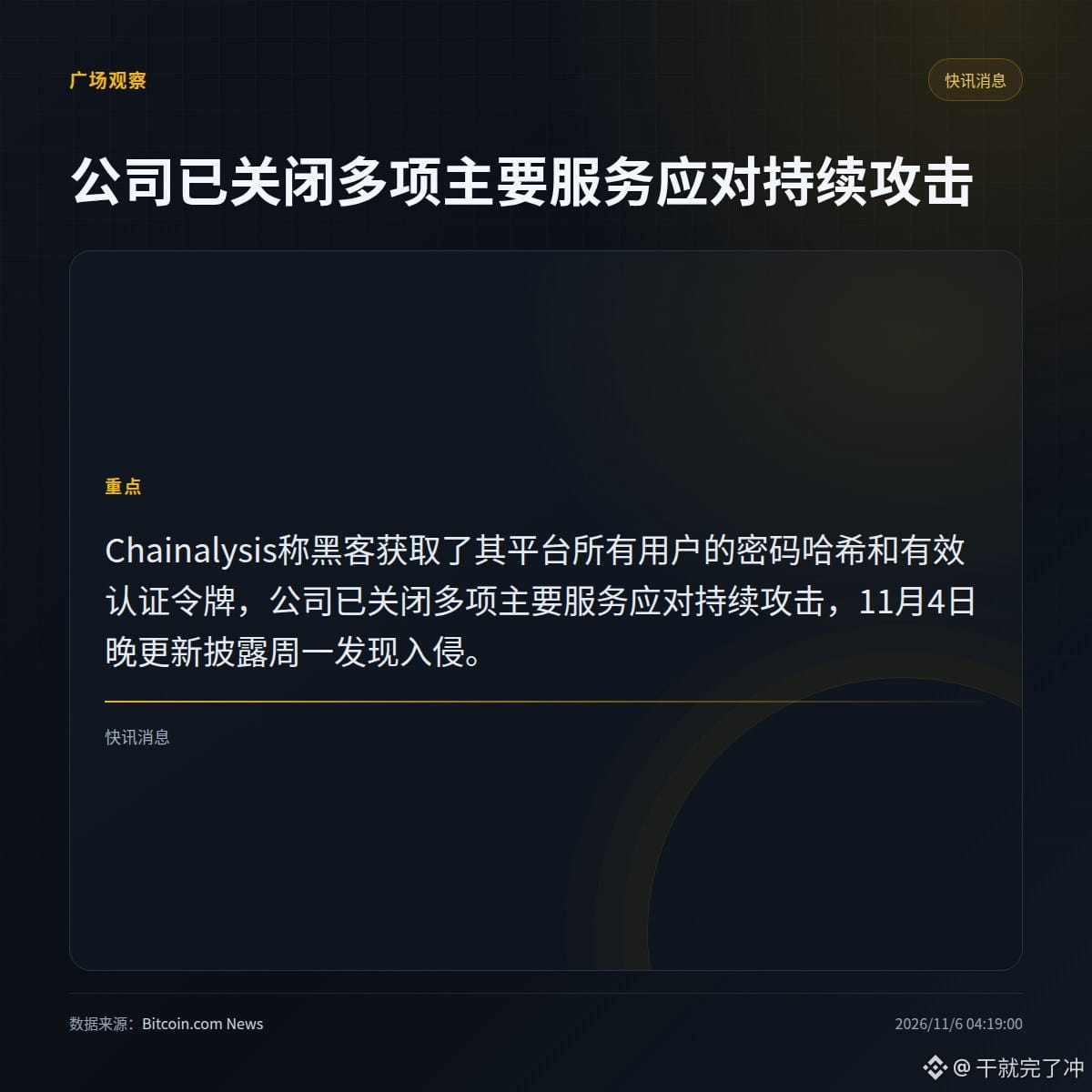
Chainalysis acknowledged that hackers obtained the password hashes and valid authentication tokens of all users on its platform.
In an update at 11 p.m. ET on November 4, the company said the breach was discovered during the week, after which it shut down several major services in response to an attack that was still ongoing. The leaked data included both password hashes and “valid authentication tokens,” meaning the exposure went beyond historical password data.
· The impact covers “all users,” not just some accounts. This is the key point to note.
· The company says the attack is still ongoing, and it has not yet given a timeline for restoring services.
Would you rather first confirm whether all tokens have been revoked, or how the password hashes were encrypted?
#Chainalysis
Chainalysis acknowledged that hackers obtained the password hashes and valid authentication tokens of all users on its platform.
In an update at 11 p.m. ET on November 4, the company said the breach was discovered during the week, after which it shut down several major services in response to an attack that was still ongoing. The leaked data included both password hashes and “valid authentication tokens,” meaning the exposure went beyond historical password data.
· The impact covers “all users,” not just some accounts. This is the key point to note.
· The company says the attack is still ongoing, and it has not yet given a timeline for restoring services.
Would you rather first confirm whether all tokens have been revoked, or how the password hashes were encrypted?
#Chainalysis
In an update at 11 p.m. ET on November 4, the company said the breach was discovered during the week, after which it shut down several major services in response to an attack that was still ongoing. The leaked data included both password hashes and “valid authentication tokens,” meaning the exposure went beyond historical password data.
· The impact covers “all users,” not just some accounts. This is the key point to note.
· The company says the attack is still ongoing, and it has not yet given a timeline for restoring services.
Would you rather first confirm whether all tokens have been revoked, or how the password hashes were encrypted?
#Chainalysis
10

·
--
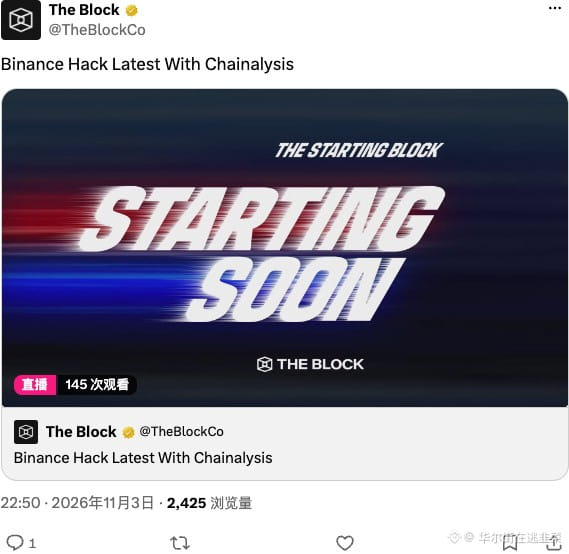
Chainalysis just released a new report on the Binance hack.
These hackers are real on-chain magicians—they make every investigation feel like a convoluted detective case. Exchanges can forget about letting their security teams put their feet up; on-chain data is the real deal.
#Binance #Chainalysis #CryptoSecurity
Chainalysis just released a new report on the Binance hack.
These hackers are real on-chain magicians—they make every investigation feel like a convoluted detective case. Exchanges can forget about letting their security teams put their feet up; on-chain data is the real deal.
#Binance #Chainalysis #CryptoSecurity
These hackers are real on-chain magicians—they make every investigation feel like a convoluted detective case. Exchanges can forget about letting their security teams put their feet up; on-chain data is the real deal.
#Binance #Chainalysis #CryptoSecurity
5

·
--
89% of crypto hack losses in 2026 trace back to one source.
Chainalysis says North Korea-linked actors account for 89% of this year's stolen crypto (crypto.news). That's after a week when the record $6.3B Binance hack dominated headlines.
Takeaway: the biggest threat to your coins is increasingly state-level, and the weak link is usually keys and social engineering, not the chains themselves. $BTC $ETH
What's your one security habit that you'd tell every new user to adopt first: hardware wallet, passkeys, or address whitelisting?
#CryptoSecurity #Chainalysis #Binance
89% of crypto hack losses in 2026 trace back to one source.
Chainalysis says North Korea-linked actors account for 89% of this year's stolen crypto (crypto.news). That's after a week when the record $6.3B Binance hack dominated headlines.
Takeaway: the biggest threat to your coins is increasingly state-level, and the weak link is usually keys and social engineering, not the chains themselves. $BTC $ETH
What's your one security habit that you'd tell every new user to adopt first: hardware wallet, passkeys, or address whitelisting?
#CryptoSecurity #Chainalysis #Binance
Chainalysis says North Korea-linked actors account for 89% of this year's stolen crypto (crypto.news). That's after a week when the record $6.3B Binance hack dominated headlines.
Takeaway: the biggest threat to your coins is increasingly state-level, and the weak link is usually keys and social engineering, not the chains themselves. $BTC $ETH
What's your one security habit that you'd tell every new user to adopt first: hardware wallet, passkeys, or address whitelisting?
#CryptoSecurity #Chainalysis #Binance
4

Chainalysis got hit by hackers using agentic techniques to steal user data. Even worse attackers are using Tron to evade stablecoin freezes. Security standards need to level up immediately.
#Chainalysis #Security
Chainalysis got hit by hackers using agentic techniques to steal user data. Even worse attackers are using Tron to evade stablecoin freezes. Security standards need to level up immediately.
#Chainalysis #Security
#Chainalysis #Security
50

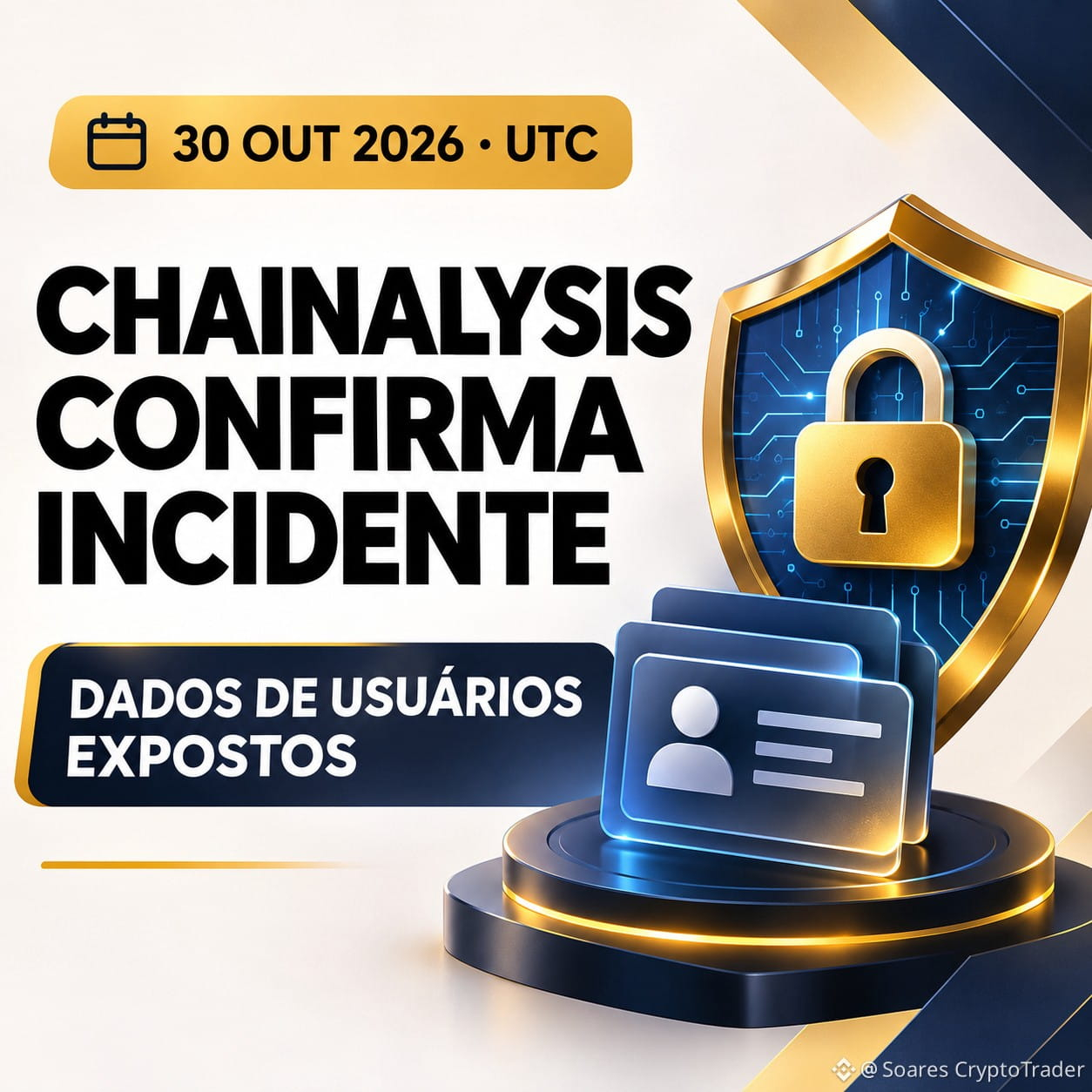
🚨 CHAINALYSIS CONFIRMS SECURITY INCIDENT AND DATA EXPOSURE
Chainalysis, a company specializing in blockchain intelligence, confirmed in a statement dated 30/10/2026 (UTC) that it had identified unauthorized access to its internal systems and tools.
According to the company, certain user data was accessed, including names, email addresses, identifiers, and organizational roles.
The company says that, so far, it has found no evidence of unauthorized access to investigation content, search results, plaintext passwords, multifactor authentication secrets, or session tokens.
🔎 The investigation is ongoing. Chainalysis also clarified that the incident is unrelated to the attack on Binance.
⚠️ A recommendation for affected users is to strengthen two-step authentication and remain alert to unexpected access requests.
$BTC $BNB $ETH #Chainalysis #Blockchain #Ciberseguranca #Criptomoedas #BinanceSquare
🚨 CHAINALYSIS CONFIRMS SECURITY INCIDENT AND DATA EXPOSURE
Chainalysis, a company specializing in blockchain intelligence, confirmed in a statement dated 30/10/2026 (UTC) that it had identified unauthorized access to its internal systems and tools.
According to the company, certain user data was accessed, including names, email addresses, identifiers, and organizational roles.
The company says that, so far, it has found no evidence of unauthorized access to investigation content, search results, plaintext passwords, multifactor authentication secrets, or session tokens.
🔎 The investigation is ongoing. Chainalysis also clarified that the incident is unrelated to the attack on Binance.
⚠️ A recommendation for affected users is to strengthen two-step authentication and remain alert to unexpected access requests.
$BTC $BNB $ETH #Chainalysis #Blockchain #Ciberseguranca #Criptomoedas #BinanceSquare
Chainalysis, a company specializing in blockchain intelligence, confirmed in a statement dated 30/10/2026 (UTC) that it had identified unauthorized access to its internal systems and tools.
According to the company, certain user data was accessed, including names, email addresses, identifiers, and organizational roles.
The company says that, so far, it has found no evidence of unauthorized access to investigation content, search results, plaintext passwords, multifactor authentication secrets, or session tokens.
🔎 The investigation is ongoing. Chainalysis also clarified that the incident is unrelated to the attack on Binance.
⚠️ A recommendation for affected users is to strengthen two-step authentication and remain alert to unexpected access requests.
$BTC $BNB $ETH #Chainalysis #Blockchain #Ciberseguranca #Criptomoedas #BinanceSquare
82
·
--
89% of 2026's stolen crypto traces back to one actor.
Chainalysis (published Oct. 30) says North Korea is linked to 89% of 2026 crypto hack losses, and the FBI has now confirmed its role in the roughly $6B Binance incident, asking DeFi teams to block flagged BTC, ETH and SOL addresses.
My take: the weak link keeps being keys and custody, not the chains themselves. Faster address blocking helps, but it only works if protocols actually respond quickly.
Which matters more for your own safety: self-custody habits or exchange transparency? $BTC $ETH $SOL
#CryptoSecurity #Chainalysis #Bitcoin
89% of 2026's stolen crypto traces back to one actor.
Chainalysis (published Oct. 30) says North Korea is linked to 89% of 2026 crypto hack losses, and the FBI has now confirmed its role in the roughly $6B Binance incident, asking DeFi teams to block flagged BTC, ETH and SOL addresses.
My take: the weak link keeps being keys and custody, not the chains themselves. Faster address blocking helps, but it only works if protocols actually respond quickly.
Which matters more for your own safety: self-custody habits or exchange transparency? $BTC $ETH $SOL
#CryptoSecurity #Chainalysis #Bitcoin
Chainalysis (published Oct. 30) says North Korea is linked to 89% of 2026 crypto hack losses, and the FBI has now confirmed its role in the roughly $6B Binance incident, asking DeFi teams to block flagged BTC, ETH and SOL addresses.
My take: the weak link keeps being keys and custody, not the chains themselves. Faster address blocking helps, but it only works if protocols actually respond quickly.
Which matters more for your own safety: self-custody habits or exchange transparency? $BTC $ETH $SOL
#CryptoSecurity #Chainalysis #Bitcoin
·
--
89% of 2026 crypto hack losses trace to one actor.
Chainalysis says North Korea-linked groups account for 89% of this year's stolen crypto, per its Oct. 30 report. Separately, the FBI has asked the DeFi community to block addresses holding stolen BTC, ETH and SOL.
My take: the weak link keeps being key management and custody, not the chains themselves. $BTC $ETH $SOL
Where do you keep most of your holdings: self-custody, an exchange, or split? And what would make you change that?
#CryptoSecurity #Chainalysis #Bitcoin
89% of 2026 crypto hack losses trace to one actor.
Chainalysis says North Korea-linked groups account for 89% of this year's stolen crypto, per its Oct. 30 report. Separately, the FBI has asked the DeFi community to block addresses holding stolen BTC, ETH and SOL.
My take: the weak link keeps being key management and custody, not the chains themselves. $BTC $ETH $SOL
Where do you keep most of your holdings: self-custody, an exchange, or split? And what would make you change that?
#CryptoSecurity #Chainalysis #Bitcoin
Chainalysis says North Korea-linked groups account for 89% of this year's stolen crypto, per its Oct. 30 report. Separately, the FBI has asked the DeFi community to block addresses holding stolen BTC, ETH and SOL.
My take: the weak link keeps being key management and custody, not the chains themselves. $BTC $ETH $SOL
Where do you keep most of your holdings: self-custody, an exchange, or split? And what would make you change that?
#CryptoSecurity #Chainalysis #Bitcoin
29
Log in to explore more content
Join global crypto users on Binance Square
⚡️ Get latest and useful information about crypto.
💬 Trusted by the world’s largest crypto exchange.
👍 Discover real insights from verified creators.
Email / Phone number
Trending Topics
1
#JobsReportRaisesHikeOdds
193,056 views
1,602 Discussing
2
#CPITestsDecemberRateOutlook
2,840 views
70 Discussing
3
#BitcoinRebounds$75KAsChipsLead
17,855 views
190 Discussing
4
#US Data Center Rules May Constrain AI Expansion
31,865 views
140 Discussing
5
#WillAnthropicListOnTime
45,061 views
601 Discussing
6
#WillUS-IranTensionsBoostSafe-HavenDemand?
547 views
8 Discussing
7
#BitcoinETFsSee$412MNetOutflows
1,057 views
35 Discussing
8
#HKSFCPlansToRestrictCryptoAndExchangeTerms
6,418 views
148 Discussing
9
#FinCENAndFedWithdraw$250CryptoTransferProposal
5,893 views
14 Discussing
10
#TradFiForBeginners
30,642 views
496 Discussing