

Mati_1935
396 Posts

Mati_1935
Report
Block User
En mi perfil encontraras posts informativos sobre diversos temas. También puedes encontrar análisis de mercado los cuales se realizan mediante mi bot analítico.
Open Trade
Frequent Trader
1.1 Years
14 Following
55 Followers
79 Liked
Posts
Portfolio
·
--
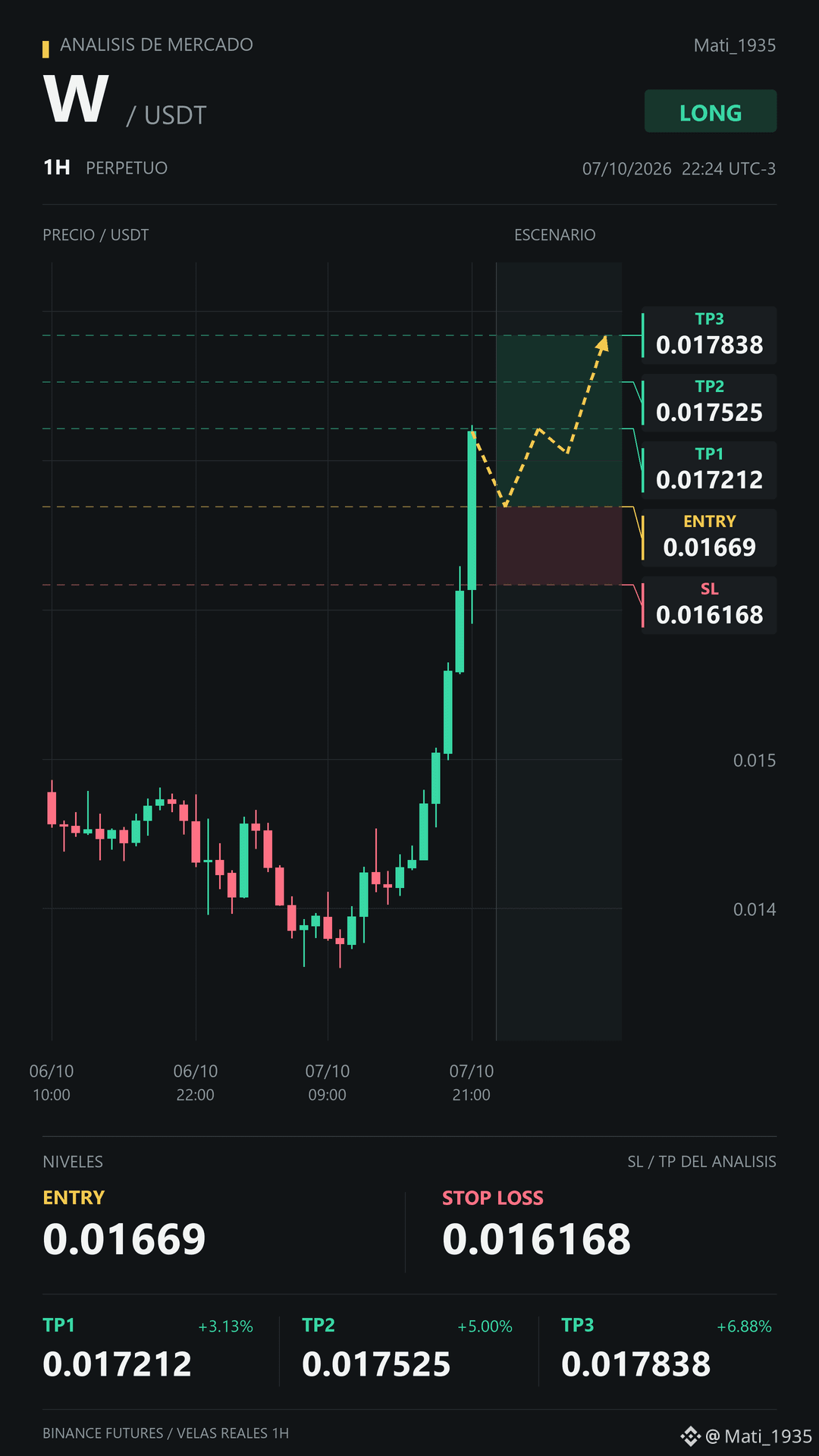
$W Long
🟢Entry: 0.0166900
🎯TP1: 0.0172120
🎯TP2: 0.0175250
🎯TP3: 0.0178380
🔴SL: 0.0161680
$W Long
🟢Entry: 0.0166900
🎯TP1: 0.0172120
🎯TP2: 0.0175250
🎯TP3: 0.0178380
🔴SL: 0.0161680
🟢Entry: 0.0166900
🎯TP1: 0.0172120
🎯TP2: 0.0175250
🎯TP3: 0.0178380
🔴SL: 0.0161680
218
·
--
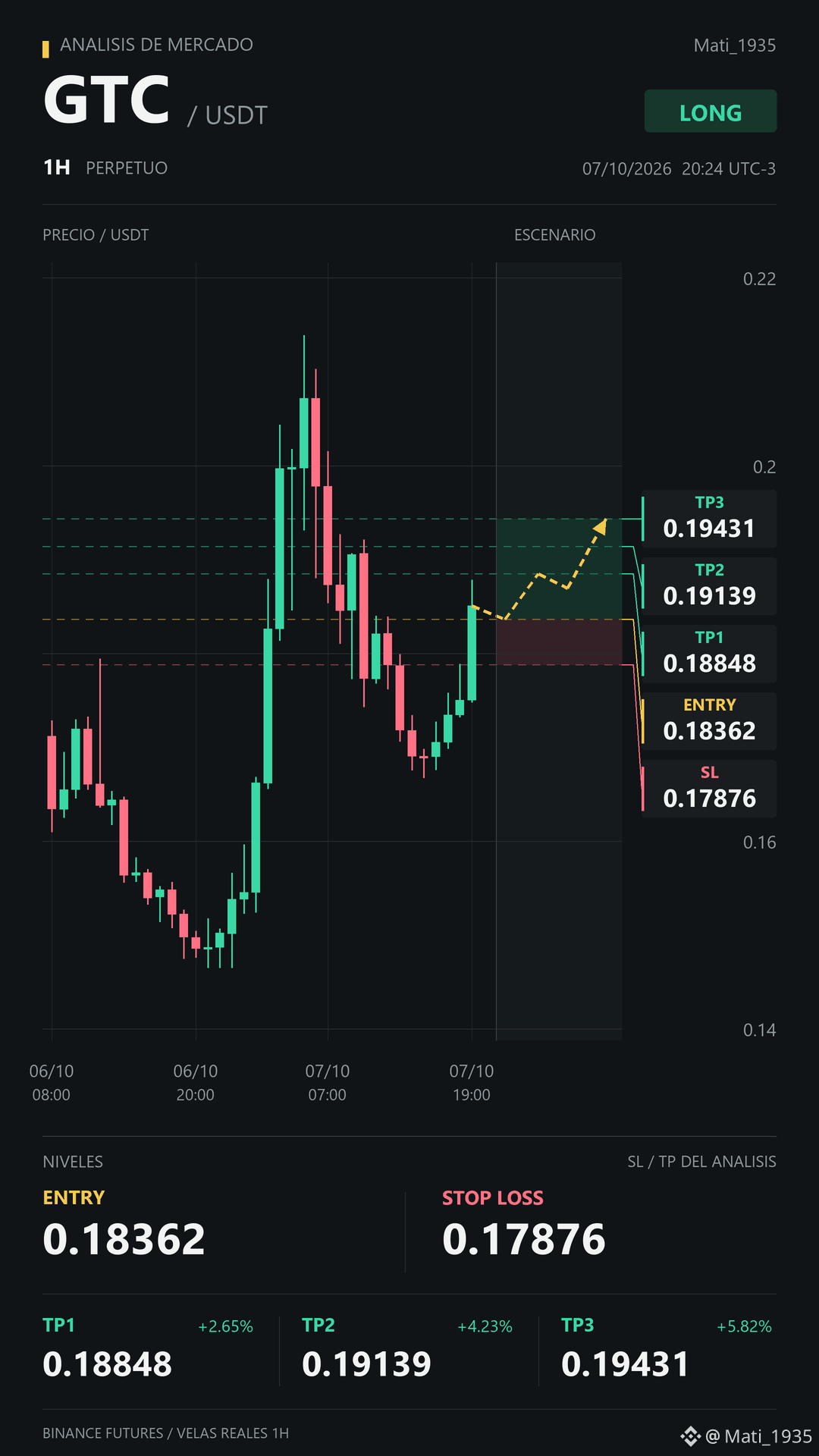
$GTC Long
🟢Entry: 0.183620
🎯TP1: 0.188480
🎯TP2: 0.191390
🎯TP3: 0.194310
🔴SL: 0.178760
$GTC Long
🟢Entry: 0.183620
🎯TP1: 0.188480
🎯TP2: 0.191390
🎯TP3: 0.194310
🔴SL: 0.178760
🟢Entry: 0.183620
🎯TP1: 0.188480
🎯TP2: 0.191390
🎯TP3: 0.194310
🔴SL: 0.178760
44
·
--
Europol urges preparation of wallets for quantum risk
On October 7, Europol published two reports on quantum computing and digital security. Its statement that day calls for preparation for future capabilities whose timeline remains uncertain.
In cryptocurrencies, the focus is on the keys that authorize transactions. A sufficiently powerful quantum computer could derive a private key from an exposed public key and enable transfers without the holder’s permission.
That does not mean every blockchain is equally vulnerable: Europol considers hashes comparatively resistant. Nor does it announce a quantum theft happening today or present the collapse of cryptocurrencies as inevitable.
The recommendation is a gradual transition to post-quantum cryptography, with improvements to wallets and key management. Coordinating changes among developers, providers, and users takes time and requires compatibility.
The second report examines another risk: storing encrypted data now in an attempt to decrypt it in the future. This should not be confused with evidence of current theft of funds.
Market snapshot: Binance, October 7 at 22:37 UTC: BTC 83,290 USDT (−2.62% in 24h); ETH −4.66%; SOL −4.18%. My take: it is worth evaluating verifiable adaptation plans. These fluctuations do not prove a reaction to the report or predict its economic impact.
$BTC $ETH $SOL
Educational content. Not financial advice.
#Criptografia #SeguridadCripto #ComputacionCuantica #Bitcoin #BinanceSquare
Europol urges preparation of wallets for quantum risk
On October 7, Europol published two reports on quantum computing and digital security. Its statement that day calls for preparation for future capabilities whose timeline remains uncertain.
In cryptocurrencies, the focus is on the keys that authorize transactions. A sufficiently powerful quantum computer could derive a private key from an exposed public key and enable transfers without the holder’s permission.
That does not mean every blockchain is equally vulnerable: Europol considers hashes comparatively resistant. Nor does it announce a quantum theft happening today or present the collapse of cryptocurrencies as inevitable.
The recommendation is a gradual transition to post-quantum cryptography, with improvements to wallets and key management. Coordinating changes among developers, providers, and users takes time and requires compatibility.
The second report examines another risk: storing encrypted data now in an attempt to decrypt it in the future. This should not be confused with evidence of current theft of funds.
Market snapshot: Binance, October 7 at 22:37 UTC: BTC 83,290 USDT (−2.62% in 24h); ETH −4.66%; SOL −4.18%. My take: it is worth evaluating verifiable adaptation plans. These fluctuations do not prove a reaction to the report or predict its economic impact.
$BTC $ETH $SOL
Educational content. Not financial advice.
#Criptografia #SeguridadCripto #ComputacionCuantica #Bitcoin #BinanceSquare
On October 7, Europol published two reports on quantum computing and digital security. Its statement that day calls for preparation for future capabilities whose timeline remains uncertain.
In cryptocurrencies, the focus is on the keys that authorize transactions. A sufficiently powerful quantum computer could derive a private key from an exposed public key and enable transfers without the holder’s permission.
That does not mean every blockchain is equally vulnerable: Europol considers hashes comparatively resistant. Nor does it announce a quantum theft happening today or present the collapse of cryptocurrencies as inevitable.
The recommendation is a gradual transition to post-quantum cryptography, with improvements to wallets and key management. Coordinating changes among developers, providers, and users takes time and requires compatibility.
The second report examines another risk: storing encrypted data now in an attempt to decrypt it in the future. This should not be confused with evidence of current theft of funds.
Market snapshot: Binance, October 7 at 22:37 UTC: BTC 83,290 USDT (−2.62% in 24h); ETH −4.66%; SOL −4.18%. My take: it is worth evaluating verifiable adaptation plans. These fluctuations do not prove a reaction to the report or predict its economic impact.
$BTC $ETH $SOL
Educational content. Not financial advice.
#Criptografia #SeguridadCripto #ComputacionCuantica #Bitcoin #BinanceSquare

45
·
--
Cardano: transfer rules for programmable tokens
On October 7, the Cardano Foundation announced at TOKEN2049 that CIP-0113 is now available on the mainnet. The announcement was published that same day; the proposal had been added to the CIPs repository on September 29.
The standard allows issuers of stablecoins, funds, or tokenized bonds to define rules: customer identification, allowlists of addresses, transfer restrictions, and freezing or seizure functions.
These powers depend on each token’s modules. They are not a general power to freeze ADA or all Cardano assets. The implementation uses existing mechanisms and did not require a hard fork.
For users, what matters is who can block or move their tokens without authorization, and under what conditions. The ability to incorporate controls facilitates certain issuance requirements, but increases dependence on the rules and authorities selected.
The Foundation reports several independent audits. This does not guarantee the absence of errors, issuer solvency, liquidity, or automatic legal compliance.
Market snapshot: Binance, October 7 at 18:37 UTC: ADA 0.2565 USDT (−5.46% in 24h); BTC −2.61%; ETH −5.09%. The infrastructure broadens issuance possibilities, but its adoption will need to be demonstrated through real-world use. I do not attribute these fluctuations to the announcement.
$ADA $BTC $ETH
Educational content. Not financial advice.
#Cardano #CIP113 #Tokenizacion #ActivosDigitales #BinanceSquare
Cardano: transfer rules for programmable tokens
On October 7, the Cardano Foundation announced at TOKEN2049 that CIP-0113 is now available on the mainnet. The announcement was published that same day; the proposal had been added to the CIPs repository on September 29.
The standard allows issuers of stablecoins, funds, or tokenized bonds to define rules: customer identification, allowlists of addresses, transfer restrictions, and freezing or seizure functions.
These powers depend on each token’s modules. They are not a general power to freeze ADA or all Cardano assets. The implementation uses existing mechanisms and did not require a hard fork.
For users, what matters is who can block or move their tokens without authorization, and under what conditions. The ability to incorporate controls facilitates certain issuance requirements, but increases dependence on the rules and authorities selected.
The Foundation reports several independent audits. This does not guarantee the absence of errors, issuer solvency, liquidity, or automatic legal compliance.
Market snapshot: Binance, October 7 at 18:37 UTC: ADA 0.2565 USDT (−5.46% in 24h); BTC −2.61%; ETH −5.09%. The infrastructure broadens issuance possibilities, but its adoption will need to be demonstrated through real-world use. I do not attribute these fluctuations to the announcement.
$ADA $BTC $ETH
Educational content. Not financial advice.
#Cardano #CIP113 #Tokenizacion #ActivosDigitales #BinanceSquare
On October 7, the Cardano Foundation announced at TOKEN2049 that CIP-0113 is now available on the mainnet. The announcement was published that same day; the proposal had been added to the CIPs repository on September 29.
The standard allows issuers of stablecoins, funds, or tokenized bonds to define rules: customer identification, allowlists of addresses, transfer restrictions, and freezing or seizure functions.
These powers depend on each token’s modules. They are not a general power to freeze ADA or all Cardano assets. The implementation uses existing mechanisms and did not require a hard fork.
For users, what matters is who can block or move their tokens without authorization, and under what conditions. The ability to incorporate controls facilitates certain issuance requirements, but increases dependence on the rules and authorities selected.
The Foundation reports several independent audits. This does not guarantee the absence of errors, issuer solvency, liquidity, or automatic legal compliance.
Market snapshot: Binance, October 7 at 18:37 UTC: ADA 0.2565 USDT (−5.46% in 24h); BTC −2.61%; ETH −5.09%. The infrastructure broadens issuance possibilities, but its adoption will need to be demonstrated through real-world use. I do not attribute these fluctuations to the announcement.
$ADA $BTC $ETH
Educational content. Not financial advice.
#Cardano #CIP113 #Tokenizacion #ActivosDigitales #BinanceSquare

60
·
--
Solana DvP: asset and payment in a single settlement
On October 6, the Solana Foundation announced Solana DvP, an open program that enables institutions to exchange tokenized assets through delivery versus payment. The announcement was published that same day.
The idea: both token transfers on Solana are executed together in one transaction, or neither is. This reduces the risk of delivering the asset without receiving payment in return; it does not automatically incorporate an external bank payment.
The code is licensed under the MIT License. J.P. Morgan contributed expertise on settlement practices; this does not mean the bank operates, endorses, or guarantees the program.
The Foundation reported external audits, though it also invited participants before the production version. The announcement does not demonstrate widespread bank adoption.
Code, liquidity, and issuer risks remain. The authority to freeze or pause certain tokens may prevent settlements or redemptions. Atomicity also does not guarantee the asset's value or that it can be redeemed.
Market snapshot: Binance (October 7, 14:37–14:38 UTC) showed SOL at 115.87 USDT (−4.38% over 24h), BTC −3.59%, and ETH −5.52%. Utility will depend on actual use; the announcement alone does not explain these declines or guarantee a rise.
$SOL $BTC $ETH
Educational Content. Not financial advice.
#Solana #DvP #Tokenizacion #Liquidacion #BinanceSquare
Solana DvP: asset and payment in a single settlement
On October 6, the Solana Foundation announced Solana DvP, an open program that enables institutions to exchange tokenized assets through delivery versus payment. The announcement was published that same day.
The idea: both token transfers on Solana are executed together in one transaction, or neither is. This reduces the risk of delivering the asset without receiving payment in return; it does not automatically incorporate an external bank payment.
The code is licensed under the MIT License. J.P. Morgan contributed expertise on settlement practices; this does not mean the bank operates, endorses, or guarantees the program.
The Foundation reported external audits, though it also invited participants before the production version. The announcement does not demonstrate widespread bank adoption.
Code, liquidity, and issuer risks remain. The authority to freeze or pause certain tokens may prevent settlements or redemptions. Atomicity also does not guarantee the asset's value or that it can be redeemed.
Market snapshot: Binance (October 7, 14:37–14:38 UTC) showed SOL at 115.87 USDT (−4.38% over 24h), BTC −3.59%, and ETH −5.52%. Utility will depend on actual use; the announcement alone does not explain these declines or guarantee a rise.
$SOL $BTC $ETH
Educational Content. Not financial advice.
#Solana #DvP #Tokenizacion #Liquidacion #BinanceSquare
On October 6, the Solana Foundation announced Solana DvP, an open program that enables institutions to exchange tokenized assets through delivery versus payment. The announcement was published that same day.
The idea: both token transfers on Solana are executed together in one transaction, or neither is. This reduces the risk of delivering the asset without receiving payment in return; it does not automatically incorporate an external bank payment.
The code is licensed under the MIT License. J.P. Morgan contributed expertise on settlement practices; this does not mean the bank operates, endorses, or guarantees the program.
The Foundation reported external audits, though it also invited participants before the production version. The announcement does not demonstrate widespread bank adoption.
Code, liquidity, and issuer risks remain. The authority to freeze or pause certain tokens may prevent settlements or redemptions. Atomicity also does not guarantee the asset's value or that it can be redeemed.
Market snapshot: Binance (October 7, 14:37–14:38 UTC) showed SOL at 115.87 USDT (−4.38% over 24h), BTC −3.59%, and ETH −5.52%. Utility will depend on actual use; the announcement alone does not explain these declines or guarantee a rise.
$SOL $BTC $ETH
Educational Content. Not financial advice.
#Solana #DvP #Tokenizacion #Liquidacion #BinanceSquare

65
·
--
Dubai clarifies what a crypto reserve audit must verify
On October 6, 2026, VARA issued a circular after reviewing the reserve reports it received in 2025. The topic is among the trends on Binance Square.
100% coverage is not a new requirement: its rules already require reserves equivalent to customer liabilities, in the same asset on a one-to-one basis, daily reconciliation, and an independent audit at least every six months.
Example: a liability of 1 BTC requires 1 BTC; it cannot be replaced with another token of equivalent value.
The circular clarifies the scope of the audit: verify coverage throughout the entire period under review, include all wallets and external custodians, verify control and separation of proprietary and customer assets, and detail loans or asset reuse, where applicable.
The report must explain the procedures performed, the evidence, the sampling, and any limitations. It must also distinguish exceptions and matters that could not be verified. If independent evidence is available, management statements alone are not sufficient.
This sets verification expectations; it does not certify the solvency of every platform or guarantee withdrawals.
Market snapshot: Binance spot, on 7/10 at 10:38 UTC, showed BTC at 83,684.02 USDT (−2.72% in 24 hours), ETH at −5.03%, and BNB at −2.15%. The news concerns custody controls; these declines do not demonstrate its impact. The relevant evidence will be the reports and their exceptions.
Sources: VARA circular dated 6/10/2026 and rule VI.E on reserves.
$BTC $ETH $BNB
Educational content. Not financial advice.
#VARA #Dubai #ReservasCripto #Custodia #BinanceSquare
Dubai clarifies what a crypto reserve audit must verify
On October 6, 2026, VARA issued a circular after reviewing the reserve reports it received in 2025. The topic is among the trends on Binance Square.
100% coverage is not a new requirement: its rules already require reserves equivalent to customer liabilities, in the same asset on a one-to-one basis, daily reconciliation, and an independent audit at least every six months.
Example: a liability of 1 BTC requires 1 BTC; it cannot be replaced with another token of equivalent value.
The circular clarifies the scope of the audit: verify coverage throughout the entire period under review, include all wallets and external custodians, verify control and separation of proprietary and customer assets, and detail loans or asset reuse, where applicable.
The report must explain the procedures performed, the evidence, the sampling, and any limitations. It must also distinguish exceptions and matters that could not be verified. If independent evidence is available, management statements alone are not sufficient.
This sets verification expectations; it does not certify the solvency of every platform or guarantee withdrawals.
Market snapshot: Binance spot, on 7/10 at 10:38 UTC, showed BTC at 83,684.02 USDT (−2.72% in 24 hours), ETH at −5.03%, and BNB at −2.15%. The news concerns custody controls; these declines do not demonstrate its impact. The relevant evidence will be the reports and their exceptions.
Sources: VARA circular dated 6/10/2026 and rule VI.E on reserves.
$BTC $ETH $BNB
Educational content. Not financial advice.
#VARA #Dubai #ReservasCripto #Custodia #BinanceSquare
On October 6, 2026, VARA issued a circular after reviewing the reserve reports it received in 2025. The topic is among the trends on Binance Square.
100% coverage is not a new requirement: its rules already require reserves equivalent to customer liabilities, in the same asset on a one-to-one basis, daily reconciliation, and an independent audit at least every six months.
Example: a liability of 1 BTC requires 1 BTC; it cannot be replaced with another token of equivalent value.
The circular clarifies the scope of the audit: verify coverage throughout the entire period under review, include all wallets and external custodians, verify control and separation of proprietary and customer assets, and detail loans or asset reuse, where applicable.
The report must explain the procedures performed, the evidence, the sampling, and any limitations. It must also distinguish exceptions and matters that could not be verified. If independent evidence is available, management statements alone are not sufficient.
This sets verification expectations; it does not certify the solvency of every platform or guarantee withdrawals.
Market snapshot: Binance spot, on 7/10 at 10:38 UTC, showed BTC at 83,684.02 USDT (−2.72% in 24 hours), ETH at −5.03%, and BNB at −2.15%. The news concerns custody controls; these declines do not demonstrate its impact. The relevant evidence will be the reports and their exceptions.
Sources: VARA circular dated 6/10/2026 and rule VI.E on reserves.
$BTC $ETH $BNB
Educational content. Not financial advice.
#VARA #Dubai #ReservasCripto #Custodia #BinanceSquare

120
·
--
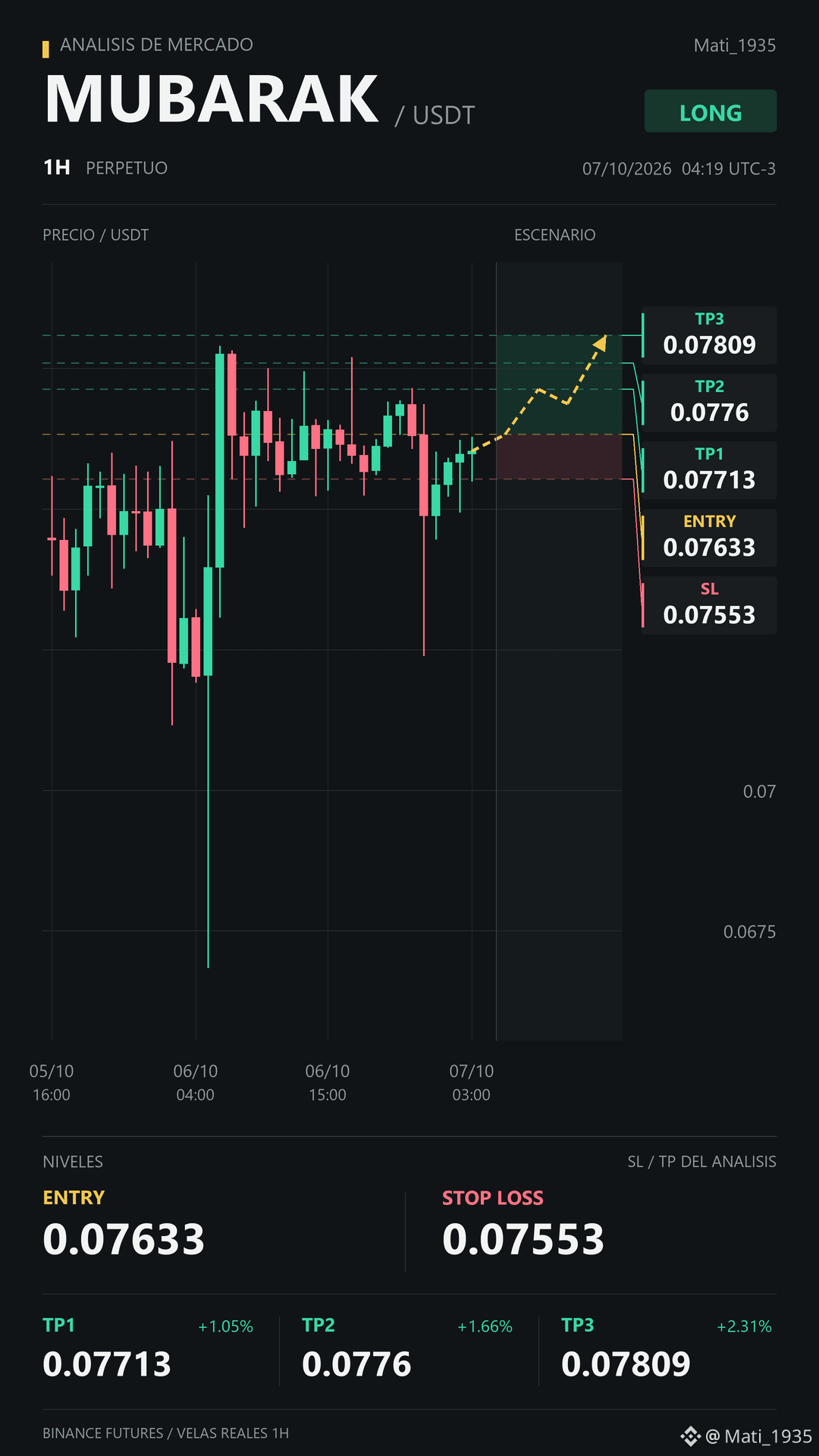
$MUBARAK Long
🟢Entry: 0.0763300
🎯TP1: 0.0771300
🎯TP2: 0.0776000
🎯TP3: 0.0780900
🔴SL: 0.0755300
$MUBARAK Long
🟢Entry: 0.0763300
🎯TP1: 0.0771300
🎯TP2: 0.0776000
🎯TP3: 0.0780900
🔴SL: 0.0755300
🟢Entry: 0.0763300
🎯TP1: 0.0771300
🎯TP2: 0.0776000
🎯TP3: 0.0780900
🔴SL: 0.0755300
222
·
--
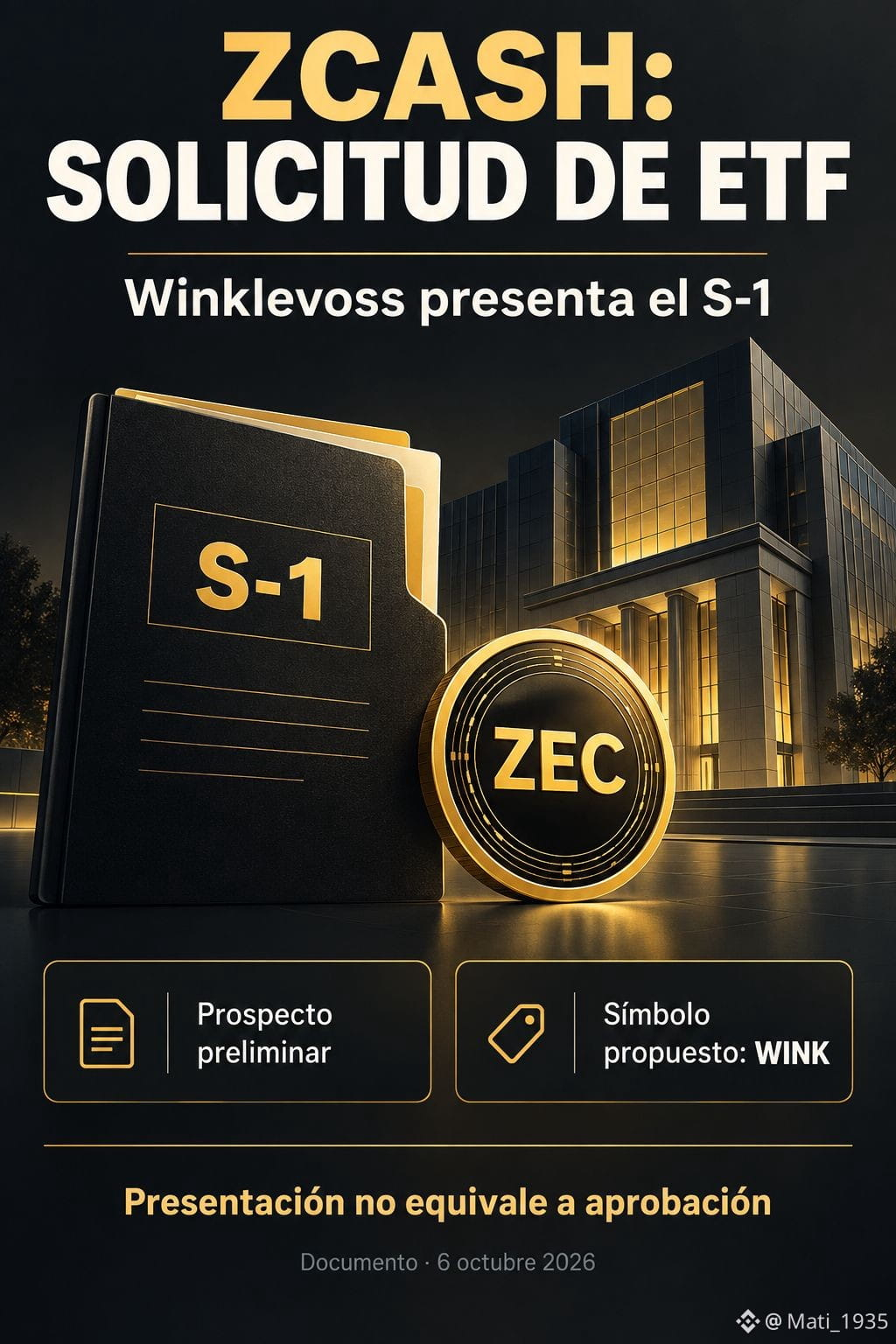
Winklevoss proposes a Zcash ETF: what the S-1 says
The filing is appearing among the trending topics on Binance Square. The document filed with the SEC is dated October 6, 2026; it is a preliminary prospectus and is subject to change.
The Winklevoss Zcash ETF would seek to hold ZEC directly and provide exposure to its price, less expenses. It proposes listing on Nasdaq under the ticker WINK, names Gemini as custodian, and sets an annual sponsor fee of 0.25%.
The key point: filing the S-1 does not mean the ETF has been approved or that trading is about to begin. The prospectus itself states that shares cannot be sold until the registration statement becomes effective.
It also mentions interest from Winklevoss Capital Fund, through affiliates, in purchasing up to $100 million worth of shares. This is a non-binding indication: they could buy more, less, or nothing. These are not confirmed capital inflows.
Risks include ZEC volatility, custody, liquidity, and potential differences between the market price and the value of the fund’s assets. The financial wrapper does not eliminate these risks.
Market snapshot: Binance spot showed ZEC at 1,325.50 USDT (+0.045% over 24 hours) on October 7 at 06:37 UTC, versus BTC at −1.15% and ETH at −2.78%. The relative strength during that period does not prove buying by the future ETF or allow its approval to be predicted.
Primary source: Winklevoss Zcash ETF S-1, SEC, October 6, 2026.
$ZEC $BTC $ETH
Educational Content. Not financial advice.
#Zcash #ETF #Winklevoss #MercadoCripto #BinanceSquare
Winklevoss proposes a Zcash ETF: what the S-1 says
The filing is appearing among the trending topics on Binance Square. The document filed with the SEC is dated October 6, 2026; it is a preliminary prospectus and is subject to change.
The Winklevoss Zcash ETF would seek to hold ZEC directly and provide exposure to its price, less expenses. It proposes listing on Nasdaq under the ticker WINK, names Gemini as custodian, and sets an annual sponsor fee of 0.25%.
The key point: filing the S-1 does not mean the ETF has been approved or that trading is about to begin. The prospectus itself states that shares cannot be sold until the registration statement becomes effective.
It also mentions interest from Winklevoss Capital Fund, through affiliates, in purchasing up to $100 million worth of shares. This is a non-binding indication: they could buy more, less, or nothing. These are not confirmed capital inflows.
Risks include ZEC volatility, custody, liquidity, and potential differences between the market price and the value of the fund’s assets. The financial wrapper does not eliminate these risks.
Market snapshot: Binance spot showed ZEC at 1,325.50 USDT (+0.045% over 24 hours) on October 7 at 06:37 UTC, versus BTC at −1.15% and ETH at −2.78%. The relative strength during that period does not prove buying by the future ETF or allow its approval to be predicted.
Primary source: Winklevoss Zcash ETF S-1, SEC, October 6, 2026.
$ZEC $BTC $ETH
Educational Content. Not financial advice.
#Zcash #ETF #Winklevoss #MercadoCripto #BinanceSquare
The filing is appearing among the trending topics on Binance Square. The document filed with the SEC is dated October 6, 2026; it is a preliminary prospectus and is subject to change.
The Winklevoss Zcash ETF would seek to hold ZEC directly and provide exposure to its price, less expenses. It proposes listing on Nasdaq under the ticker WINK, names Gemini as custodian, and sets an annual sponsor fee of 0.25%.
The key point: filing the S-1 does not mean the ETF has been approved or that trading is about to begin. The prospectus itself states that shares cannot be sold until the registration statement becomes effective.
It also mentions interest from Winklevoss Capital Fund, through affiliates, in purchasing up to $100 million worth of shares. This is a non-binding indication: they could buy more, less, or nothing. These are not confirmed capital inflows.
Risks include ZEC volatility, custody, liquidity, and potential differences between the market price and the value of the fund’s assets. The financial wrapper does not eliminate these risks.
Market snapshot: Binance spot showed ZEC at 1,325.50 USDT (+0.045% over 24 hours) on October 7 at 06:37 UTC, versus BTC at −1.15% and ETH at −2.78%. The relative strength during that period does not prove buying by the future ETF or allow its approval to be predicted.
Primary source: Winklevoss Zcash ETF S-1, SEC, October 6, 2026.
$ZEC $BTC $ETH
Educational Content. Not financial advice.
#Zcash #ETF #Winklevoss #MercadoCripto #BinanceSquare
138
·
--
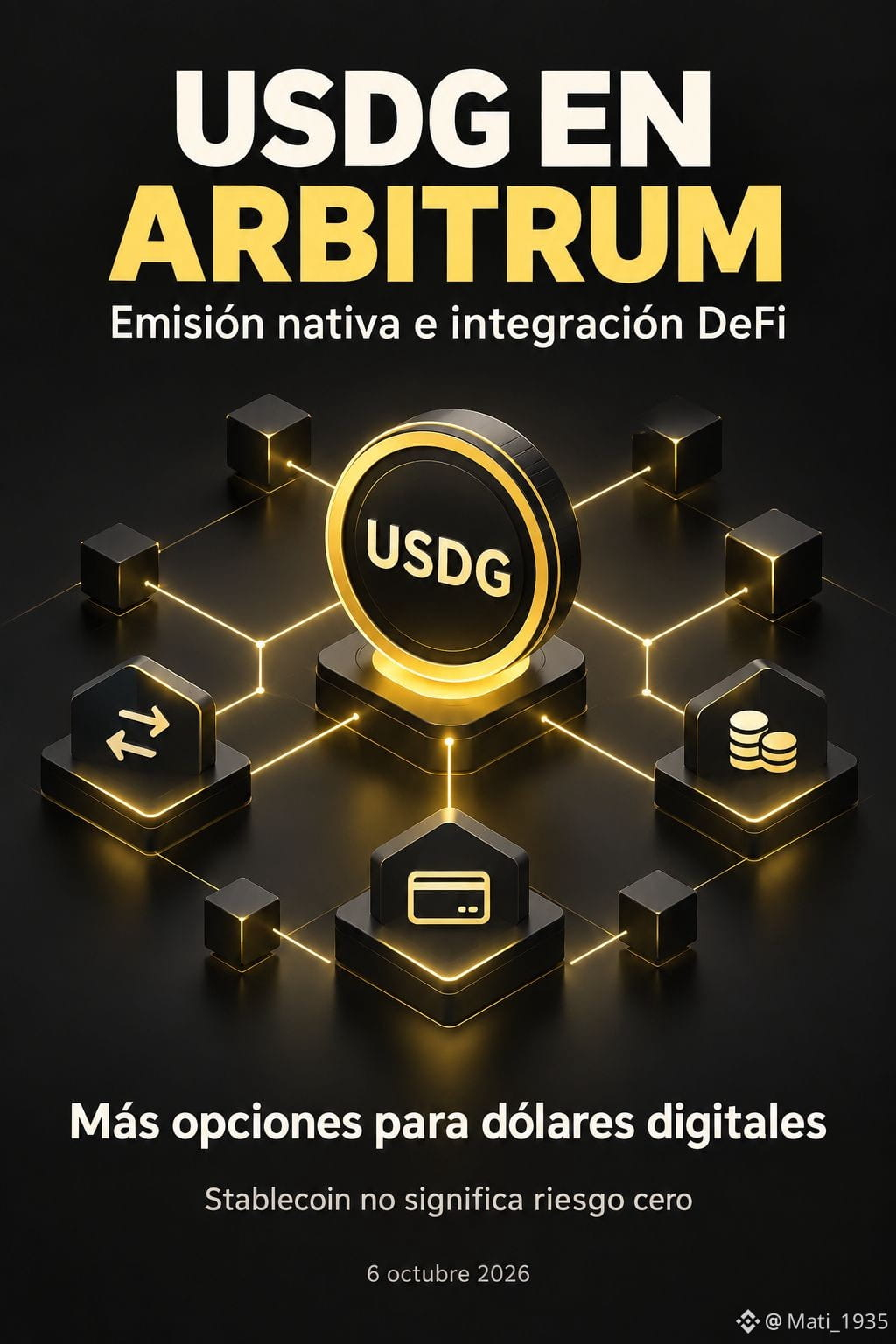
USDG arrives on Arbitrum: more options for digital dollars
On October 6, 2026, Arbitrum announced the launch of USDG on its network. Global Dollar Network had announced the addition of Arbitrum the day before.
USDG, issued by Paxos, is now available natively on Arbitrum One. The announcement includes integrations with Fluid, Morpho, GMX, Maple, Uniswap, and Kraken for trading, lending, and other financial uses.
The figure needs context: the more than $3 billion in USDG cited by the project refers to its circulation across all networks. It does not represent an inflow of that amount into Arbitrum.
Global Dollar Network’s model shares revenue with participants who drive the use of USDG. That does not mean every holder automatically earns interest: terms depend on each product.
USDG aims to maintain its peg to the dollar through cash reserves and cash equivalents. This backing does not eliminate liquidity, issuer, or smart contract risks; depositing it in applications adds the risks of the service used.
Market snapshot: Binance spot, at 22:35 UTC on 10/6, showed ARB at 0.2002 USDT (−4.21% in 24 h) and ETH at 2,696.32 USDT (−0.76%). The integration expands infrastructure, but does not demonstrate sustained demand or guarantee an increase in ARB’s price. Adoption will need to be reflected in actual usage and liquidity.
Sources: Arbitrum, Global Dollar Network, and Paxos documentation.
$USDG $ARB $ETH
Educational content. Not financial advice.
#USDG #Arbitrum #Stablecoins #DeFi #BinanceSquare
USDG arrives on Arbitrum: more options for digital dollars
On October 6, 2026, Arbitrum announced the launch of USDG on its network. Global Dollar Network had announced the addition of Arbitrum the day before.
USDG, issued by Paxos, is now available natively on Arbitrum One. The announcement includes integrations with Fluid, Morpho, GMX, Maple, Uniswap, and Kraken for trading, lending, and other financial uses.
The figure needs context: the more than $3 billion in USDG cited by the project refers to its circulation across all networks. It does not represent an inflow of that amount into Arbitrum.
Global Dollar Network’s model shares revenue with participants who drive the use of USDG. That does not mean every holder automatically earns interest: terms depend on each product.
USDG aims to maintain its peg to the dollar through cash reserves and cash equivalents. This backing does not eliminate liquidity, issuer, or smart contract risks; depositing it in applications adds the risks of the service used.
Market snapshot: Binance spot, at 22:35 UTC on 10/6, showed ARB at 0.2002 USDT (−4.21% in 24 h) and ETH at 2,696.32 USDT (−0.76%). The integration expands infrastructure, but does not demonstrate sustained demand or guarantee an increase in ARB’s price. Adoption will need to be reflected in actual usage and liquidity.
Sources: Arbitrum, Global Dollar Network, and Paxos documentation.
$USDG $ARB $ETH
Educational content. Not financial advice.
#USDG #Arbitrum #Stablecoins #DeFi #BinanceSquare
On October 6, 2026, Arbitrum announced the launch of USDG on its network. Global Dollar Network had announced the addition of Arbitrum the day before.
USDG, issued by Paxos, is now available natively on Arbitrum One. The announcement includes integrations with Fluid, Morpho, GMX, Maple, Uniswap, and Kraken for trading, lending, and other financial uses.
The figure needs context: the more than $3 billion in USDG cited by the project refers to its circulation across all networks. It does not represent an inflow of that amount into Arbitrum.
Global Dollar Network’s model shares revenue with participants who drive the use of USDG. That does not mean every holder automatically earns interest: terms depend on each product.
USDG aims to maintain its peg to the dollar through cash reserves and cash equivalents. This backing does not eliminate liquidity, issuer, or smart contract risks; depositing it in applications adds the risks of the service used.
Market snapshot: Binance spot, at 22:35 UTC on 10/6, showed ARB at 0.2002 USDT (−4.21% in 24 h) and ETH at 2,696.32 USDT (−0.76%). The integration expands infrastructure, but does not demonstrate sustained demand or guarantee an increase in ARB’s price. Adoption will need to be reflected in actual usage and liquidity.
Sources: Arbitrum, Global Dollar Network, and Paxos documentation.
$USDG $ARB $ETH
Educational content. Not financial advice.
#USDG #Arbitrum #Stablecoins #DeFi #BinanceSquare
87
·
--
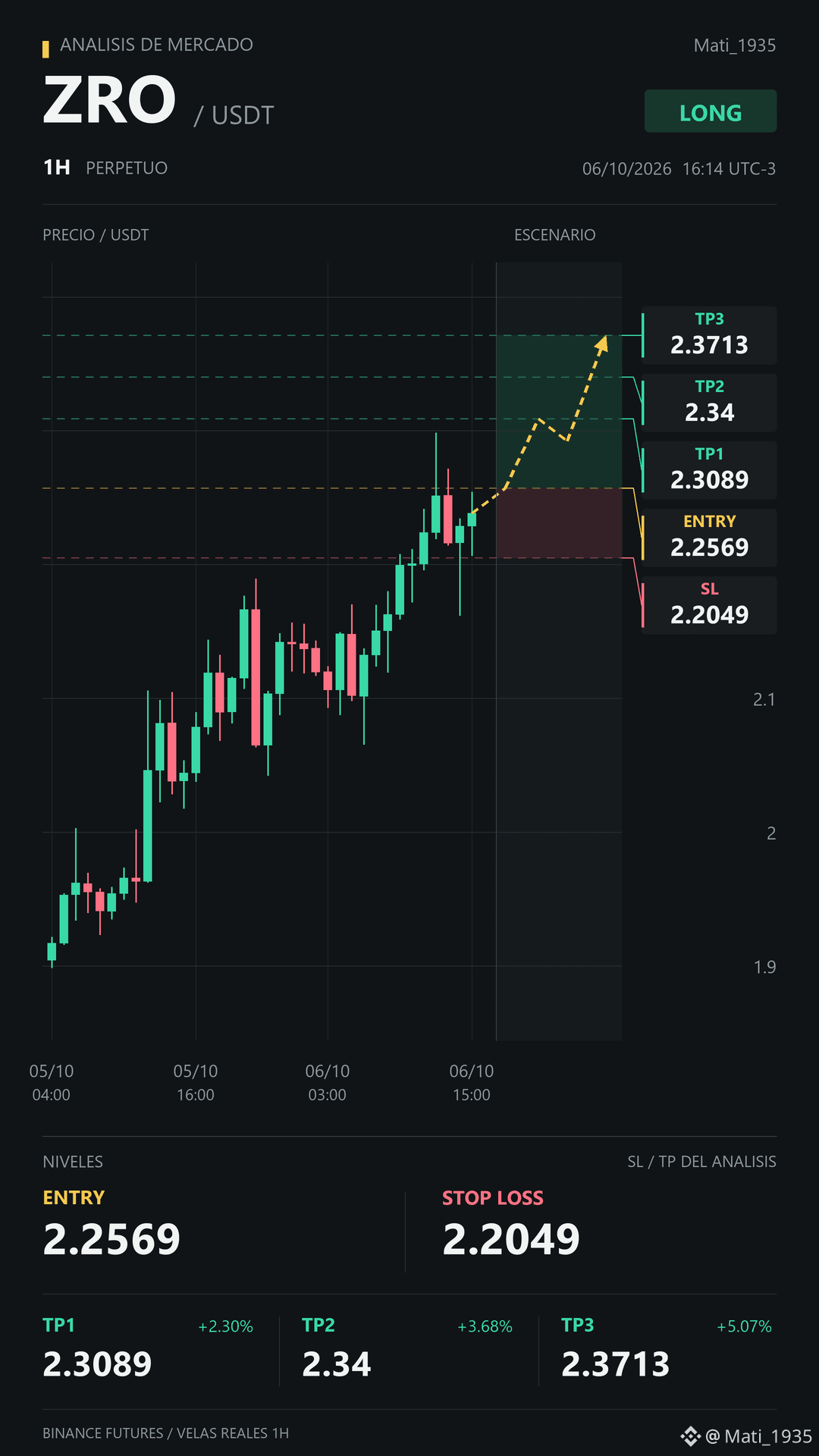
$ZRO Long
🟢Entry: 2.2569000
🎯TP1: 2.3089000
🎯TP2: 2.3400000
🎯TP3: 2.3713000
🔴SL: 2.2049000
$ZRO Long
🟢Entry: 2.2569000
🎯TP1: 2.3089000
🎯TP2: 2.3400000
🎯TP3: 2.3713000
🔴SL: 2.2049000
🟢Entry: 2.2569000
🎯TP1: 2.3089000
🎯TP2: 2.3400000
🎯TP3: 2.3713000
🔴SL: 2.2049000
203
·
--
Evernorth and XRP: Approval secured, closing still expected
The deal is trending on Binance Square, but it is worth distinguishing between its stages.
Confirmed: Armada II shareholders approved the combination with Evernorth on September 30. The company announced this on October 1, 2026.
Announced timeline: closing is expected on October 7, with the combined company to begin trading on Nasdaq under XRPN on October 8. The announcement lists outstanding conditions; primary sources reviewed as of October 6 do not confirm that the deal has closed.
The figures also need context: Evernorth expects to hold approximately 473 million XRP when the deal is completed and receive around $300 million in gross cash proceeds, before expenses. Some XRP contributions are in kind: transferring existing tokens is not the same as buying them on the market.
XRPN represents shares; XRP is the token. Exposure through a company involves corporate costs and risks, in addition to the asset’s volatility. The timeline may change.
Market snapshot: Binance spot data at 18:35 UTC on 6/10 showed XRP at 1.5044 USDT (+0.28% over 24 hours), compared with BTC at −0.05%. This change does not prove that the announcement triggered buying or predict the market’s reaction when the deal closes.
Primary source: Evernorth announcement dated 1/10/2026.
$XRP $XRPN $BTC
Educational Content. Not financial advice.
#XRP #Evernorth #Nasdaq #TesoreriaCripto #BinanceSquare
Evernorth and XRP: Approval secured, closing still expected
The deal is trending on Binance Square, but it is worth distinguishing between its stages.
Confirmed: Armada II shareholders approved the combination with Evernorth on September 30. The company announced this on October 1, 2026.
Announced timeline: closing is expected on October 7, with the combined company to begin trading on Nasdaq under XRPN on October 8. The announcement lists outstanding conditions; primary sources reviewed as of October 6 do not confirm that the deal has closed.
The figures also need context: Evernorth expects to hold approximately 473 million XRP when the deal is completed and receive around $300 million in gross cash proceeds, before expenses. Some XRP contributions are in kind: transferring existing tokens is not the same as buying them on the market.
XRPN represents shares; XRP is the token. Exposure through a company involves corporate costs and risks, in addition to the asset’s volatility. The timeline may change.
Market snapshot: Binance spot data at 18:35 UTC on 6/10 showed XRP at 1.5044 USDT (+0.28% over 24 hours), compared with BTC at −0.05%. This change does not prove that the announcement triggered buying or predict the market’s reaction when the deal closes.
Primary source: Evernorth announcement dated 1/10/2026.
$XRP $XRPN $BTC
Educational Content. Not financial advice.
#XRP #Evernorth #Nasdaq #TesoreriaCripto #BinanceSquare
The deal is trending on Binance Square, but it is worth distinguishing between its stages.
Confirmed: Armada II shareholders approved the combination with Evernorth on September 30. The company announced this on October 1, 2026.
Announced timeline: closing is expected on October 7, with the combined company to begin trading on Nasdaq under XRPN on October 8. The announcement lists outstanding conditions; primary sources reviewed as of October 6 do not confirm that the deal has closed.
The figures also need context: Evernorth expects to hold approximately 473 million XRP when the deal is completed and receive around $300 million in gross cash proceeds, before expenses. Some XRP contributions are in kind: transferring existing tokens is not the same as buying them on the market.
XRPN represents shares; XRP is the token. Exposure through a company involves corporate costs and risks, in addition to the asset’s volatility. The timeline may change.
Market snapshot: Binance spot data at 18:35 UTC on 6/10 showed XRP at 1.5044 USDT (+0.28% over 24 hours), compared with BTC at −0.05%. This change does not prove that the announcement triggered buying or predict the market’s reaction when the deal closes.
Primary source: Evernorth announcement dated 1/10/2026.
$XRP $XRPN $BTC
Educational Content. Not financial advice.
#XRP #Evernorth #Nasdaq #TesoreriaCripto #BinanceSquare

73
·
--
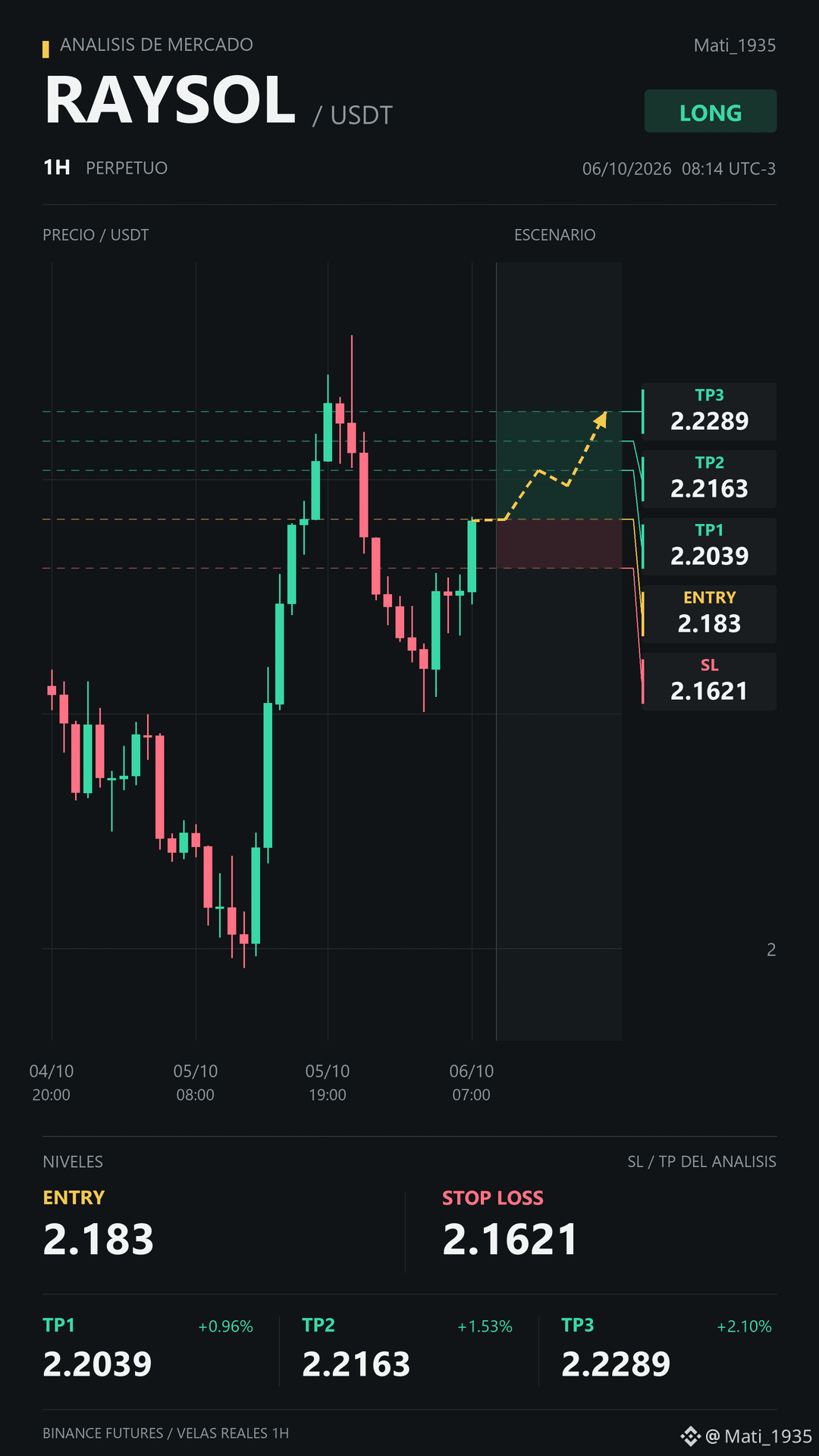
$RAYSOL Long
🟢Entry: 2.1830000
🎯TP1: 2.2039000
🎯TP2: 2.2163000
🎯TP3: 2.2289000
🔴SL: 2.1621000
$RAYSOL Long
🟢Entry: 2.1830000
🎯TP1: 2.2039000
🎯TP2: 2.2163000
🎯TP3: 2.2289000
🔴SL: 2.1621000
🟢Entry: 2.1830000
🎯TP1: 2.2039000
🎯TP2: 2.2163000
🎯TP3: 2.2289000
🔴SL: 2.1621000
10
·
--
Binance Intelligence: Three Tools and a Gradual Rollout
Binance introduced its AI product family on October 5, 2026. Today, October 6, the topic is among Square’s trending topics. The official announcement distinguishes three use cases and different availability stages.
Binance AI is the free assistant: it brings together market summaries, alerts, and product explanations. The October 5 announcement said it was launching for eligible users in New Zealand, with a gradual global expansion over the following days.
Binance AI Pro is designed to create automated workflows using natural language and test them with simulated trades. According to the announcement, it will arrive in the coming weeks. Before activating a workflow, users must review and approve it; execution is limited to authorized permissions and funds.
Agent OS, the developer platform, had already launched on August 20. It connects AI applications to Binance features under permissions controlled by the user.
Risk remains: an AI response may contain errors, biases, or outdated information. Automation does not guarantee better decisions or eliminate potential losses.
Market update: at 10:34 UTC on October 6, Binance Spot showed BNB at 783.90 USDT (-0.56% over 24 hours), BTC at -0.09%, and ETH at -0.10%. These changes do not prove an effect from the announcement. Adoption and usefulness will need to be assessed using usage data.
Sources: Binance official blog (October 5), Agent OS announcement (August 20), and Binance Spot.
$BNB $BTC $ETH
Educational Content. Not financial advice.
#BinanceIntelligence #InteligenciaArtificial #BNB #Cripto #BinanceSquare
Binance Intelligence: Three Tools and a Gradual Rollout
Binance introduced its AI product family on October 5, 2026. Today, October 6, the topic is among Square’s trending topics. The official announcement distinguishes three use cases and different availability stages.
Binance AI is the free assistant: it brings together market summaries, alerts, and product explanations. The October 5 announcement said it was launching for eligible users in New Zealand, with a gradual global expansion over the following days.
Binance AI Pro is designed to create automated workflows using natural language and test them with simulated trades. According to the announcement, it will arrive in the coming weeks. Before activating a workflow, users must review and approve it; execution is limited to authorized permissions and funds.
Agent OS, the developer platform, had already launched on August 20. It connects AI applications to Binance features under permissions controlled by the user.
Risk remains: an AI response may contain errors, biases, or outdated information. Automation does not guarantee better decisions or eliminate potential losses.
Market update: at 10:34 UTC on October 6, Binance Spot showed BNB at 783.90 USDT (-0.56% over 24 hours), BTC at -0.09%, and ETH at -0.10%. These changes do not prove an effect from the announcement. Adoption and usefulness will need to be assessed using usage data.
Sources: Binance official blog (October 5), Agent OS announcement (August 20), and Binance Spot.
$BNB $BTC $ETH
Educational Content. Not financial advice.
#BinanceIntelligence #InteligenciaArtificial #BNB #Cripto #BinanceSquare
Binance introduced its AI product family on October 5, 2026. Today, October 6, the topic is among Square’s trending topics. The official announcement distinguishes three use cases and different availability stages.
Binance AI is the free assistant: it brings together market summaries, alerts, and product explanations. The October 5 announcement said it was launching for eligible users in New Zealand, with a gradual global expansion over the following days.
Binance AI Pro is designed to create automated workflows using natural language and test them with simulated trades. According to the announcement, it will arrive in the coming weeks. Before activating a workflow, users must review and approve it; execution is limited to authorized permissions and funds.
Agent OS, the developer platform, had already launched on August 20. It connects AI applications to Binance features under permissions controlled by the user.
Risk remains: an AI response may contain errors, biases, or outdated information. Automation does not guarantee better decisions or eliminate potential losses.
Market update: at 10:34 UTC on October 6, Binance Spot showed BNB at 783.90 USDT (-0.56% over 24 hours), BTC at -0.09%, and ETH at -0.10%. These changes do not prove an effect from the announcement. Adoption and usefulness will need to be assessed using usage data.
Sources: Binance official blog (October 5), Agent OS announcement (August 20), and Binance Spot.
$BNB $BTC $ETH
Educational Content. Not financial advice.
#BinanceIntelligence #InteligenciaArtificial #BNB #Cripto #BinanceSquare

55
·
--
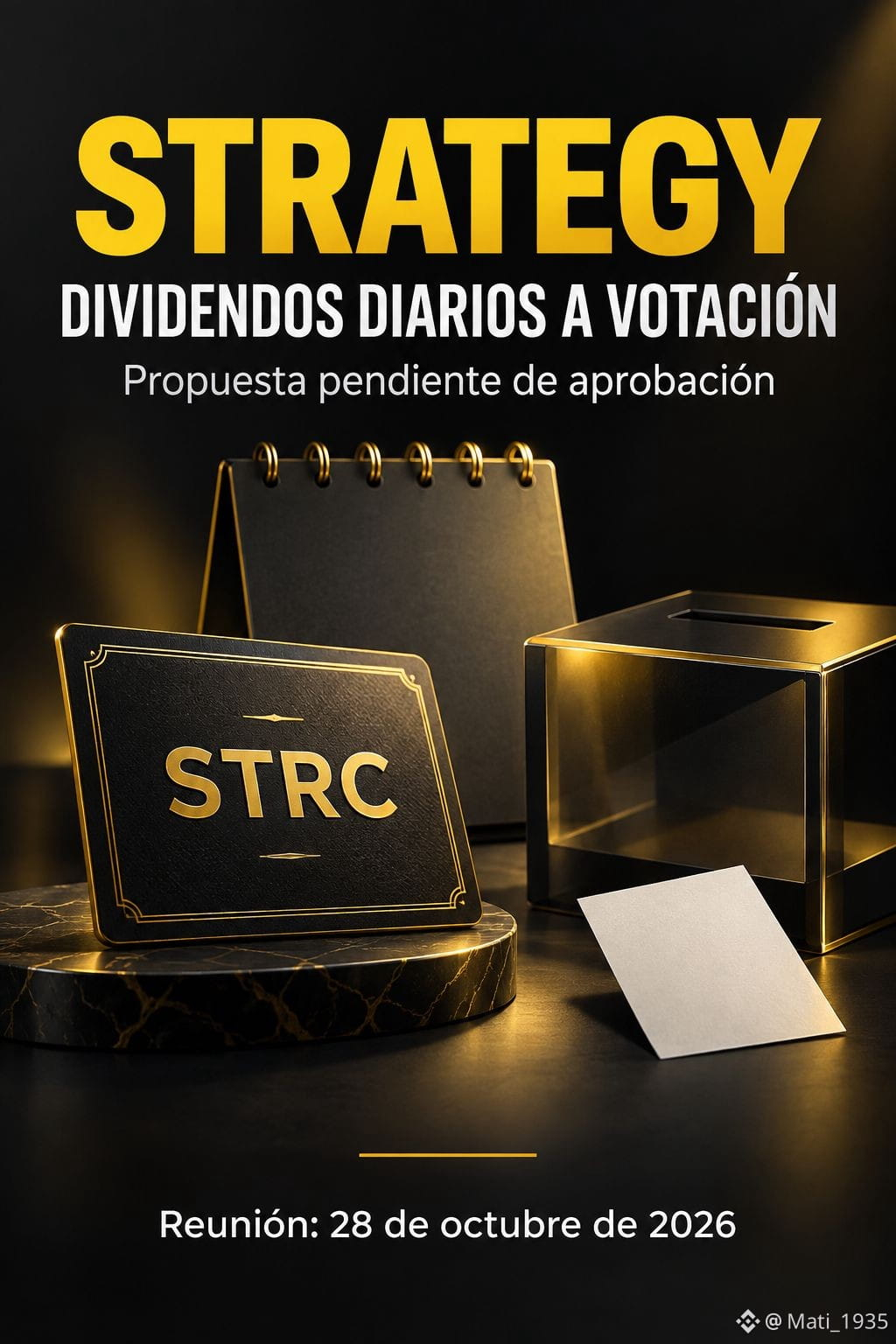
Strategy: STRC buybacks and daily dividends put to a vote
On October 5, 2026, Strategy reported to the SEC that it had repurchased $176.3 million worth of STRC between September 28 and October 4. STRC is a preferred stock; MSTR is the company's common stock. They are not tokens.
It also reported purchases of 334 BTC for $28.7 million, made between October 1 and 4. These amounts relate to transactions already completed, not new orders announced for today.
Separately, voting on a proposal to change the dividends on its U.S. preferred stocks opened on October 5. MSTR shareholders will decide at a meeting scheduled for October 28.
The proposal provides for accrual on each calendar day, including weekends, with payment on the next business day. The amendment does not change the annualized rate: it distributes the dividend in smaller, more frequent payments.
If approved, STRC's first record date under the new arrangement would be November 1, with the first payment on November 2. The proposal is still pending; the preferred stocks retain issuer, liquidity, and price fluctuation risks.
Market perspective: allocating more money to buybacks during that period does not show that Strategy is abandoning Bitcoin. At 06:33 UTC on 6/10, BTC was trading at 85,287.84 USDT on Binance Spot, down 0.71% over 24 hours. That change does not allow any effect to be attributed to the proposal.
Sources: SEC, Strategy, and Binance.
$BTC $MSTR $STRC
Educational Content. Not financial advice.
#Bitcoin #Strategy #STRC #Dividendos #BinanceSquare
Strategy: STRC buybacks and daily dividends put to a vote
On October 5, 2026, Strategy reported to the SEC that it had repurchased $176.3 million worth of STRC between September 28 and October 4. STRC is a preferred stock; MSTR is the company's common stock. They are not tokens.
It also reported purchases of 334 BTC for $28.7 million, made between October 1 and 4. These amounts relate to transactions already completed, not new orders announced for today.
Separately, voting on a proposal to change the dividends on its U.S. preferred stocks opened on October 5. MSTR shareholders will decide at a meeting scheduled for October 28.
The proposal provides for accrual on each calendar day, including weekends, with payment on the next business day. The amendment does not change the annualized rate: it distributes the dividend in smaller, more frequent payments.
If approved, STRC's first record date under the new arrangement would be November 1, with the first payment on November 2. The proposal is still pending; the preferred stocks retain issuer, liquidity, and price fluctuation risks.
Market perspective: allocating more money to buybacks during that period does not show that Strategy is abandoning Bitcoin. At 06:33 UTC on 6/10, BTC was trading at 85,287.84 USDT on Binance Spot, down 0.71% over 24 hours. That change does not allow any effect to be attributed to the proposal.
Sources: SEC, Strategy, and Binance.
$BTC $MSTR $STRC
Educational Content. Not financial advice.
#Bitcoin #Strategy #STRC #Dividendos #BinanceSquare
On October 5, 2026, Strategy reported to the SEC that it had repurchased $176.3 million worth of STRC between September 28 and October 4. STRC is a preferred stock; MSTR is the company's common stock. They are not tokens.
It also reported purchases of 334 BTC for $28.7 million, made between October 1 and 4. These amounts relate to transactions already completed, not new orders announced for today.
Separately, voting on a proposal to change the dividends on its U.S. preferred stocks opened on October 5. MSTR shareholders will decide at a meeting scheduled for October 28.
The proposal provides for accrual on each calendar day, including weekends, with payment on the next business day. The amendment does not change the annualized rate: it distributes the dividend in smaller, more frequent payments.
If approved, STRC's first record date under the new arrangement would be November 1, with the first payment on November 2. The proposal is still pending; the preferred stocks retain issuer, liquidity, and price fluctuation risks.
Market perspective: allocating more money to buybacks during that period does not show that Strategy is abandoning Bitcoin. At 06:33 UTC on 6/10, BTC was trading at 85,287.84 USDT on Binance Spot, down 0.71% over 24 hours. That change does not allow any effect to be attributed to the proposal.
Sources: SEC, Strategy, and Binance.
$BTC $MSTR $STRC
Educational Content. Not financial advice.
#Bitcoin #Strategy #STRC #Dividendos #BinanceSquare
79
·
--
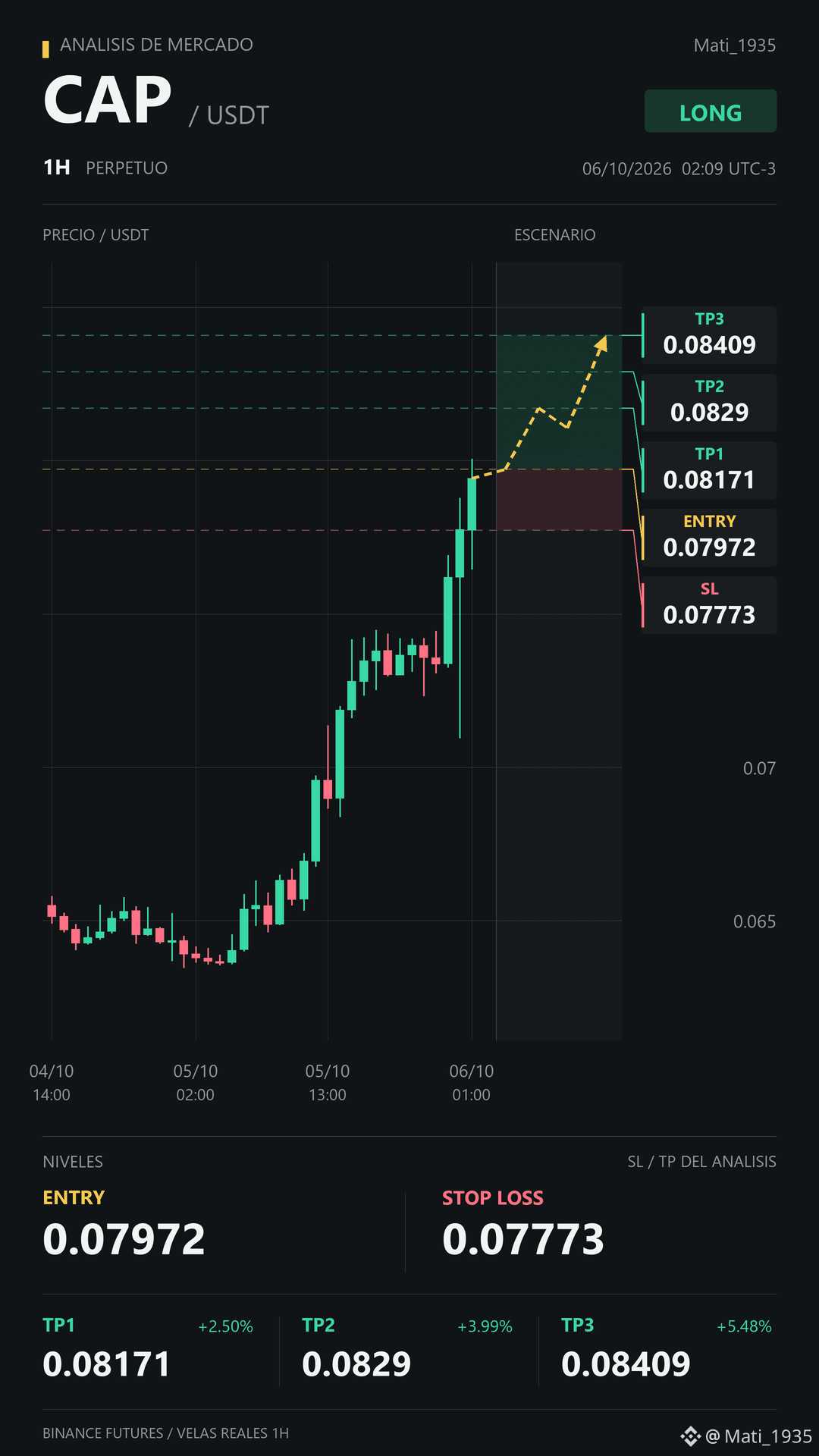
$CAP Long
🟢Entry: 0.0797200
🎯TP1: 0.0817100
🎯TP2: 0.0829000
🎯TP3: 0.0840900
🔴SL: 0.0777300
$CAP Long
🟢Entry: 0.0797200
🎯TP1: 0.0817100
🎯TP2: 0.0829000
🎯TP3: 0.0840900
🔴SL: 0.0777300
🟢Entry: 0.0797200
🎯TP1: 0.0817100
🎯TP2: 0.0829000
🎯TP3: 0.0840900
🔴SL: 0.0777300
173
·
--
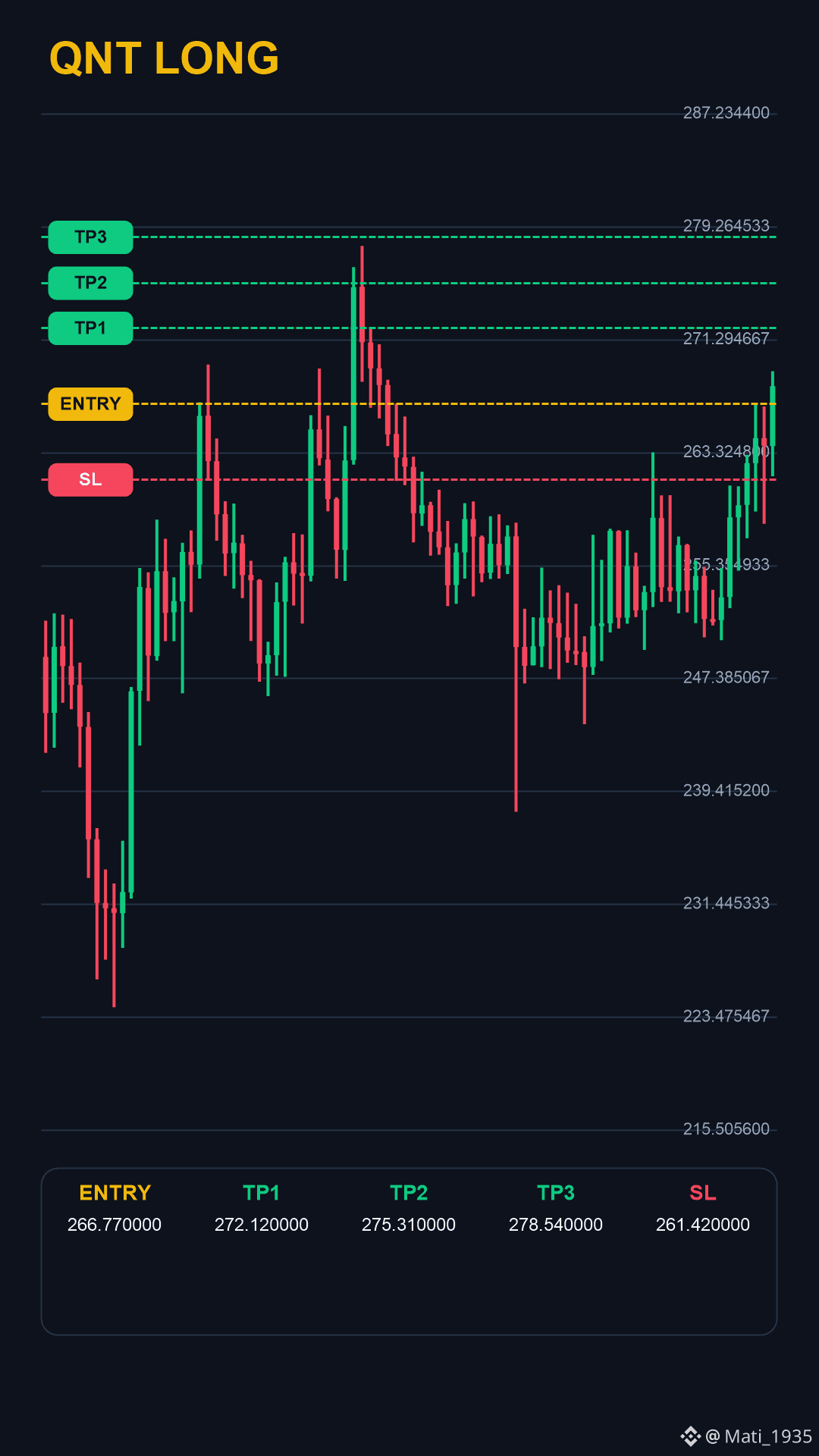
$QNT Long
🟢Entry: 266.770000
🎯TP1: 272.120000
🎯TP2: 275.310000
🎯TP3: 278.540000
🔴SL: 261.420000
$QNT Long
🟢Entry: 266.770000
🎯TP1: 272.120000
🎯TP2: 275.310000
🎯TP3: 278.540000
🔴SL: 261.420000
🟢Entry: 266.770000
🎯TP1: 272.120000
🎯TP2: 275.310000
🎯TP3: 278.540000
🔴SL: 261.420000
3
690
·
--
Cardano and Leios: what’s being tested and what remains
ADA is among the trending topics on Binance Square. Interest in its price invites a closer look at Leios, a proposal to expand Cardano’s capacity; it does not prove that a new upgrade has just been activated.
When checking official sources on October 6, 2026, CIP-164 was still a proposal. Its latest update is dated September 15. Linear Leios proposes additional blocks and committee-based validation to process more transactions alongside the Praos chain.
Musashi Dojo is the public test network. Its Water phase adjusts parameters and components to evaluate performance. Test results do not equate to capacity available on the mainnet or to user demand.
The first phase of Dijkstra aims to complete the code by the end of 2026. Activation depends on governance, ecosystem readiness, and enough BLS keys registered by operators. This is a technical goal, not a guaranteed launch date.
Risks: delays, implementation errors, and expectations getting ahead of the network’s actual use.
Market snapshot: at 02:33 UTC on October 6, Binance Spot listed ADA at 0.2674 USDT (+0.26% over 24 hours), versus BTC at -0.97% and ETH at -0.86%. The updated figure already differs from the trending headline about a 10% rise. It does not prove that Leios caused the move.
Sources: CIP-164, Musashi Dojo, Cardano.org, and Binance.
$ADA $BTC $ETH
Educational content. Not financial advice.
#Cardano #Leios #ADA #Blockchain #BinanceSquare
Cardano and Leios: what’s being tested and what remains
ADA is among the trending topics on Binance Square. Interest in its price invites a closer look at Leios, a proposal to expand Cardano’s capacity; it does not prove that a new upgrade has just been activated.
When checking official sources on October 6, 2026, CIP-164 was still a proposal. Its latest update is dated September 15. Linear Leios proposes additional blocks and committee-based validation to process more transactions alongside the Praos chain.
Musashi Dojo is the public test network. Its Water phase adjusts parameters and components to evaluate performance. Test results do not equate to capacity available on the mainnet or to user demand.
The first phase of Dijkstra aims to complete the code by the end of 2026. Activation depends on governance, ecosystem readiness, and enough BLS keys registered by operators. This is a technical goal, not a guaranteed launch date.
Risks: delays, implementation errors, and expectations getting ahead of the network’s actual use.
Market snapshot: at 02:33 UTC on October 6, Binance Spot listed ADA at 0.2674 USDT (+0.26% over 24 hours), versus BTC at -0.97% and ETH at -0.86%. The updated figure already differs from the trending headline about a 10% rise. It does not prove that Leios caused the move.
Sources: CIP-164, Musashi Dojo, Cardano.org, and Binance.
$ADA $BTC $ETH
Educational content. Not financial advice.
#Cardano #Leios #ADA #Blockchain #BinanceSquare
ADA is among the trending topics on Binance Square. Interest in its price invites a closer look at Leios, a proposal to expand Cardano’s capacity; it does not prove that a new upgrade has just been activated.
When checking official sources on October 6, 2026, CIP-164 was still a proposal. Its latest update is dated September 15. Linear Leios proposes additional blocks and committee-based validation to process more transactions alongside the Praos chain.
Musashi Dojo is the public test network. Its Water phase adjusts parameters and components to evaluate performance. Test results do not equate to capacity available on the mainnet or to user demand.
The first phase of Dijkstra aims to complete the code by the end of 2026. Activation depends on governance, ecosystem readiness, and enough BLS keys registered by operators. This is a technical goal, not a guaranteed launch date.
Risks: delays, implementation errors, and expectations getting ahead of the network’s actual use.
Market snapshot: at 02:33 UTC on October 6, Binance Spot listed ADA at 0.2674 USDT (+0.26% over 24 hours), versus BTC at -0.97% and ETH at -0.86%. The updated figure already differs from the trending headline about a 10% rise. It does not prove that Leios caused the move.
Sources: CIP-164, Musashi Dojo, Cardano.org, and Binance.
$ADA $BTC $ETH
Educational content. Not financial advice.
#Cardano #Leios #ADA #Blockchain #BinanceSquare

192
·
--
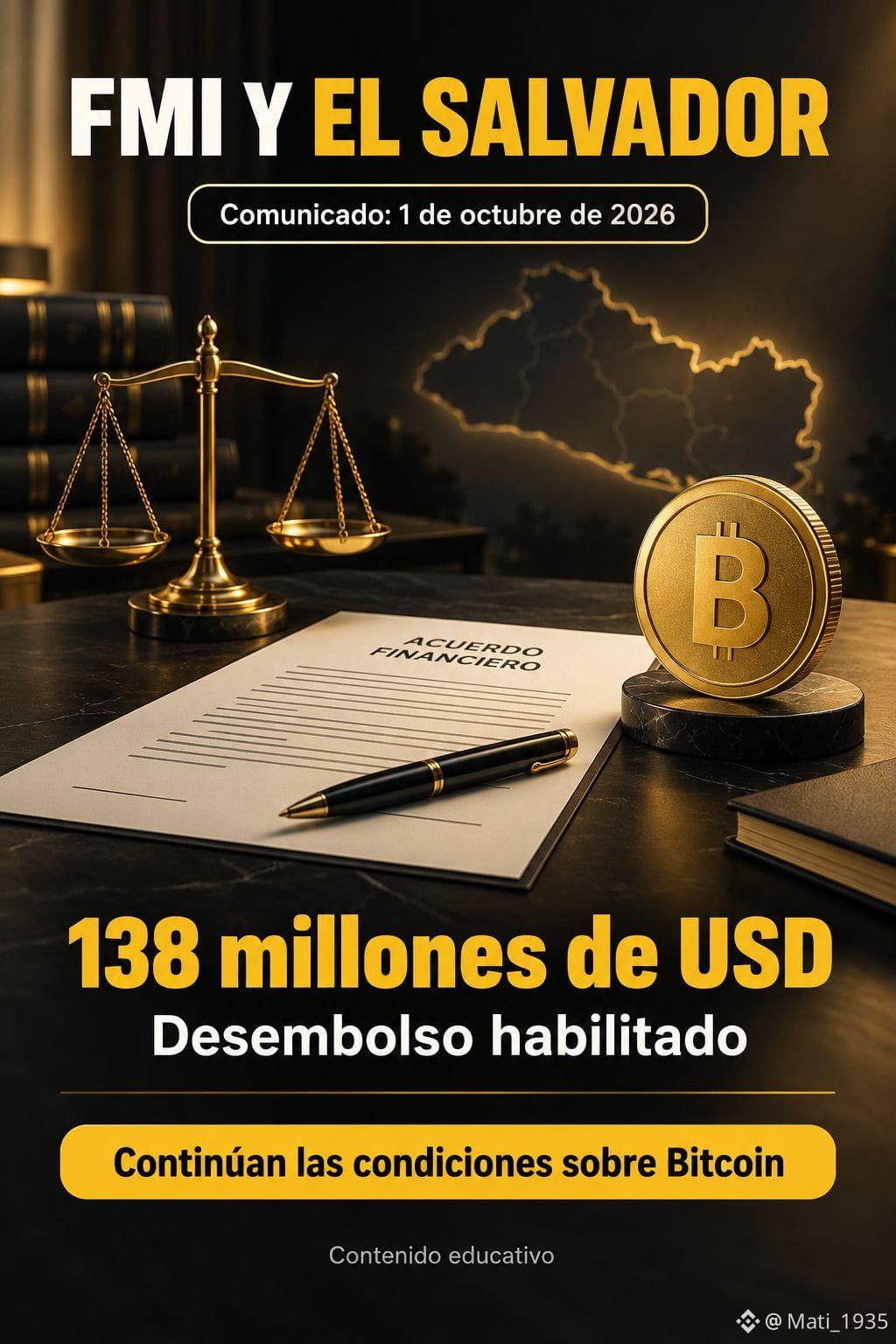
IMF and El Salvador: $138 million and conditions on Bitcoin
On October 1, 2026, the IMF announced that it had completed the second and third reviews of its program with El Salvador, making about $138 million available. The statement does not confirm that the funds have actually been received.
The agreement, approved in February 2025, provides for about $1.4 billion over 40 months, with fiscal and financial targets.
The waivers address unmet criteria, including BTC accumulation, and are based on corrective measures and renewed commitments. They allow the program to continue; they do not authorize unrestricted Bitcoin purchases.
The IMF maintains that no further accumulation is planned apart from documented donations. It also reports the transfer of majority ownership and control of Chivo to a private operator and calls for the state’s remaining exposure to be reduced.
Implementation continues to pose challenges. The Fund calls for transparency regarding public crypto-asset holdings; future compliance remains necessary.
Market snapshot: at 18:33 UTC, Binance Spot listed BTC at 85.552 USDT (+0.24% over 24 hours); as a broader reference, ETH was up 0.23% and BNB was down 0.26%. These are contextual data, not evidence of a market reaction to the announcement.
Sources: IMF statement dated October 1 and public Binance data.
$BTC $ETH $BNB
Educational content. Not financial advice.
#ElSalvador #Bitcoin #FMI #RegulacionCripto #BinanceSquare
IMF and El Salvador: $138 million and conditions on Bitcoin
On October 1, 2026, the IMF announced that it had completed the second and third reviews of its program with El Salvador, making about $138 million available. The statement does not confirm that the funds have actually been received.
The agreement, approved in February 2025, provides for about $1.4 billion over 40 months, with fiscal and financial targets.
The waivers address unmet criteria, including BTC accumulation, and are based on corrective measures and renewed commitments. They allow the program to continue; they do not authorize unrestricted Bitcoin purchases.
The IMF maintains that no further accumulation is planned apart from documented donations. It also reports the transfer of majority ownership and control of Chivo to a private operator and calls for the state’s remaining exposure to be reduced.
Implementation continues to pose challenges. The Fund calls for transparency regarding public crypto-asset holdings; future compliance remains necessary.
Market snapshot: at 18:33 UTC, Binance Spot listed BTC at 85.552 USDT (+0.24% over 24 hours); as a broader reference, ETH was up 0.23% and BNB was down 0.26%. These are contextual data, not evidence of a market reaction to the announcement.
Sources: IMF statement dated October 1 and public Binance data.
$BTC $ETH $BNB
Educational content. Not financial advice.
#ElSalvador #Bitcoin #FMI #RegulacionCripto #BinanceSquare
On October 1, 2026, the IMF announced that it had completed the second and third reviews of its program with El Salvador, making about $138 million available. The statement does not confirm that the funds have actually been received.
The agreement, approved in February 2025, provides for about $1.4 billion over 40 months, with fiscal and financial targets.
The waivers address unmet criteria, including BTC accumulation, and are based on corrective measures and renewed commitments. They allow the program to continue; they do not authorize unrestricted Bitcoin purchases.
The IMF maintains that no further accumulation is planned apart from documented donations. It also reports the transfer of majority ownership and control of Chivo to a private operator and calls for the state’s remaining exposure to be reduced.
Implementation continues to pose challenges. The Fund calls for transparency regarding public crypto-asset holdings; future compliance remains necessary.
Market snapshot: at 18:33 UTC, Binance Spot listed BTC at 85.552 USDT (+0.24% over 24 hours); as a broader reference, ETH was up 0.23% and BNB was down 0.26%. These are contextual data, not evidence of a market reaction to the announcement.
Sources: IMF statement dated October 1 and public Binance data.
$BTC $ETH $BNB
Educational content. Not financial advice.
#ElSalvador #Bitcoin #FMI #RegulacionCripto #BinanceSquare
345
·
--
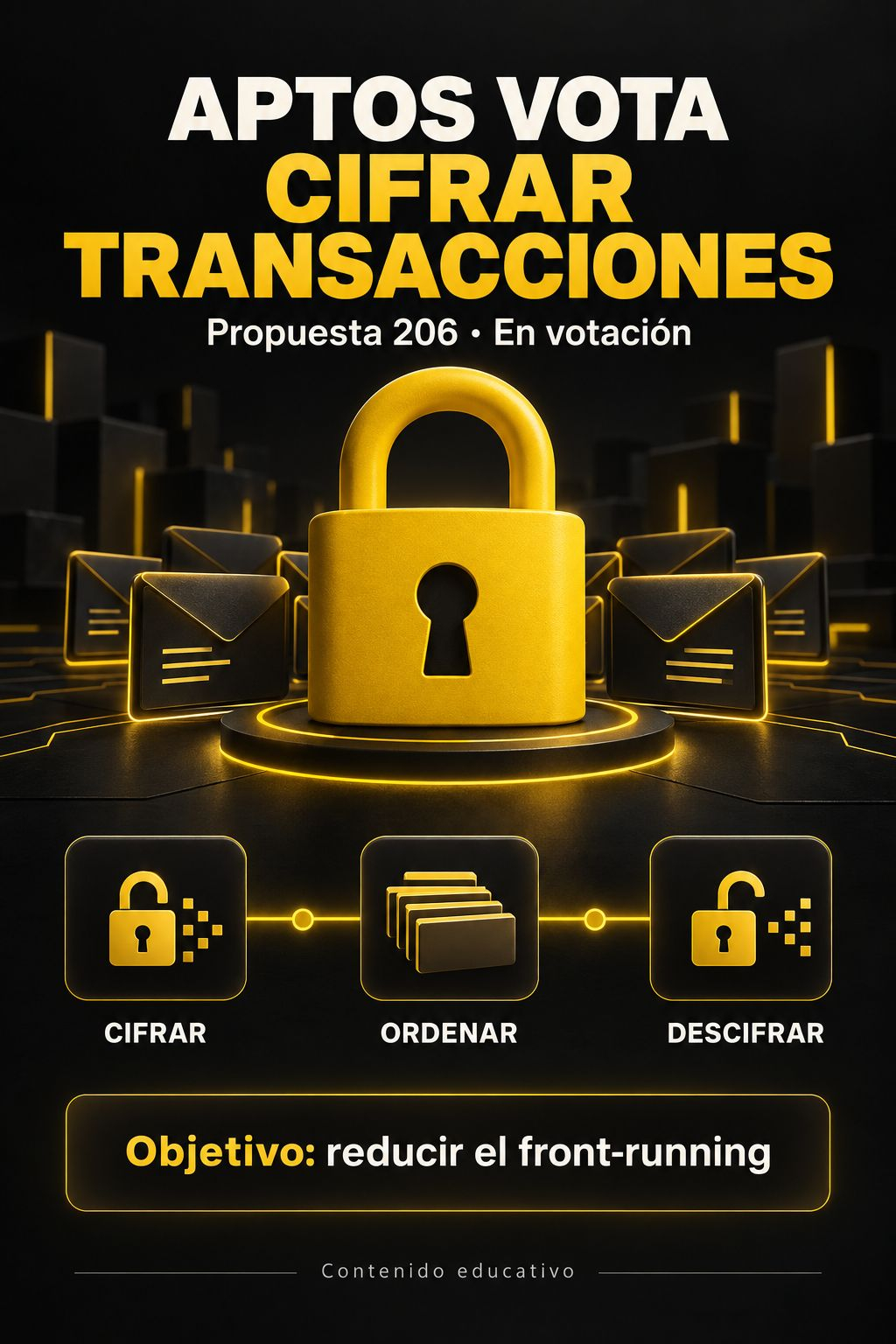
Aptos votes on encrypting transactions: what changes for MEV
Aptos has kept proposal 206 open to activate ChunkyDKG V1 and encrypted transactions. It was created on October 3, 2026, and voting ends on October 6 at 15:43 UTC. When the official governance page was checked on October 5, the proposal was still active: this vote has not confirmed that the feature will be activated.
The idea behind AIP-144 is to protect the contents of a transaction while it waits its turn. Users could submit it encrypted; validators would first agree on the order, then decrypt it before execution.
Why does this matter? Seeing a pending transaction can allow another actor to jump ahead and gain an advantage. The design aims to reduce front-running and sandwich attacks, harmful forms of MEV: value extracted by taking advantage of transaction ordering.
At 10:31 UTC, the proposal had approximately 32.63 million APT in favor, compared with a minimum threshold of 300 million. Near-unanimous support among those who voted does not mean the threshold has been met.
Limitations: encryption would be optional and would require support from user tools. The first version protects transaction contents, but is not intended to hide the sender or all metadata. It also does not replace the security of contracts or wallets. Approval, execution, and actual adoption must still be distinguished.
Market perspective: on Binance Spot, at 10:31 UTC, APT was trading at 0.8139 USDT (+2.79% in 24 hours), compared with ETH (+0.44%) and SOL (-0.54%), other smart contract networks. This difference does not prove that the proposal caused the rise. The relevant test will be its implementation and use; a technical improvement does not guarantee demand for the token or profitability.
Sources: Aptos official governance, AIP-144, and public Binance data.
$APT $ETH $SOL
Educational content. Not financial advice.
#Aptos #MEV #Gobernanza #Blockchain #BinanceSquare
Aptos votes on encrypting transactions: what changes for MEV
Aptos has kept proposal 206 open to activate ChunkyDKG V1 and encrypted transactions. It was created on October 3, 2026, and voting ends on October 6 at 15:43 UTC. When the official governance page was checked on October 5, the proposal was still active: this vote has not confirmed that the feature will be activated.
The idea behind AIP-144 is to protect the contents of a transaction while it waits its turn. Users could submit it encrypted; validators would first agree on the order, then decrypt it before execution.
Why does this matter? Seeing a pending transaction can allow another actor to jump ahead and gain an advantage. The design aims to reduce front-running and sandwich attacks, harmful forms of MEV: value extracted by taking advantage of transaction ordering.
At 10:31 UTC, the proposal had approximately 32.63 million APT in favor, compared with a minimum threshold of 300 million. Near-unanimous support among those who voted does not mean the threshold has been met.
Limitations: encryption would be optional and would require support from user tools. The first version protects transaction contents, but is not intended to hide the sender or all metadata. It also does not replace the security of contracts or wallets. Approval, execution, and actual adoption must still be distinguished.
Market perspective: on Binance Spot, at 10:31 UTC, APT was trading at 0.8139 USDT (+2.79% in 24 hours), compared with ETH (+0.44%) and SOL (-0.54%), other smart contract networks. This difference does not prove that the proposal caused the rise. The relevant test will be its implementation and use; a technical improvement does not guarantee demand for the token or profitability.
Sources: Aptos official governance, AIP-144, and public Binance data.
$APT $ETH $SOL
Educational content. Not financial advice.
#Aptos #MEV #Gobernanza #Blockchain #BinanceSquare
Aptos has kept proposal 206 open to activate ChunkyDKG V1 and encrypted transactions. It was created on October 3, 2026, and voting ends on October 6 at 15:43 UTC. When the official governance page was checked on October 5, the proposal was still active: this vote has not confirmed that the feature will be activated.
The idea behind AIP-144 is to protect the contents of a transaction while it waits its turn. Users could submit it encrypted; validators would first agree on the order, then decrypt it before execution.
Why does this matter? Seeing a pending transaction can allow another actor to jump ahead and gain an advantage. The design aims to reduce front-running and sandwich attacks, harmful forms of MEV: value extracted by taking advantage of transaction ordering.
At 10:31 UTC, the proposal had approximately 32.63 million APT in favor, compared with a minimum threshold of 300 million. Near-unanimous support among those who voted does not mean the threshold has been met.
Limitations: encryption would be optional and would require support from user tools. The first version protects transaction contents, but is not intended to hide the sender or all metadata. It also does not replace the security of contracts or wallets. Approval, execution, and actual adoption must still be distinguished.
Market perspective: on Binance Spot, at 10:31 UTC, APT was trading at 0.8139 USDT (+2.79% in 24 hours), compared with ETH (+0.44%) and SOL (-0.54%), other smart contract networks. This difference does not prove that the proposal caused the rise. The relevant test will be its implementation and use; a technical improvement does not guarantee demand for the token or profitability.
Sources: Aptos official governance, AIP-144, and public Binance data.
$APT $ETH $SOL
Educational content. Not financial advice.
#Aptos #MEV #Gobernanza #Blockchain #BinanceSquare
199
·
--
On Binance Square, a specific question is once again taking center stage this Thursday, August 6, 2026: is Bitcoin’s recovery toward 64,100 the start of a more stable leg, or just a technical rebound inside a sensitive market. The key isn’t the round number, but what it reveals about demand. After sweeping liquidity lower, the price managed to rebuild without a chaotic expansion, and that usually suggests there are still buyers defending relevant zones.
From an educational standpoint, this recovery helps separate narrative from structure. When Bitcoin returns to an area visible to everyone, two extreme readings appear: immediate confirmation of the trend, or a simple trap for followers. The reality is usually in the middle. A rebound gains value if it holds support, if volume doesn’t dry up, and if momentum doesn’t rely only on quick liquidations. That’s why 63k still matters: today it works as a barometer of conviction for the market.
In current public data, BTC is around 64,650 with a daily gain of 0.98%, a high of 65,025, and a low of 63,880. ETH is keeping pace with stronger relative momentum, up to 1,910 and rising 2.44% in 24h, while BNB trades near 595.8 with a daily change of -0.15%. In the latest 1H candles of BTC, there are sustained closes above 64.6k following the prior impulse, and in the 4H sequence the recent pattern shows a rebound from the lower end of the range but still without a broad breakout. The read remains tactical relief with a pending test: if BTC consolidates above 64k, it improves the tone for major assets; if it loses 63k again, the move will once more be seen as a range rebound rather than a structural change.
$BTC $ETH $BNB
Educational Content. Not financial advice.
#Bitcoin #LiquidezCripto #MercadoCripto #Ethereum #BinanceSquare
On Binance Square, a specific question is once again taking center stage this Thursday, August 6, 2026: is Bitcoin’s recovery toward 64,100 the start of a more stable leg, or just a technical rebound inside a sensitive market. The key isn’t the round number, but what it reveals about demand. After sweeping liquidity lower, the price managed to rebuild without a chaotic expansion, and that usually suggests there are still buyers defending relevant zones.
From an educational standpoint, this recovery helps separate narrative from structure. When Bitcoin returns to an area visible to everyone, two extreme readings appear: immediate confirmation of the trend, or a simple trap for followers. The reality is usually in the middle. A rebound gains value if it holds support, if volume doesn’t dry up, and if momentum doesn’t rely only on quick liquidations. That’s why 63k still matters: today it works as a barometer of conviction for the market.
In current public data, BTC is around 64,650 with a daily gain of 0.98%, a high of 65,025, and a low of 63,880. ETH is keeping pace with stronger relative momentum, up to 1,910 and rising 2.44% in 24h, while BNB trades near 595.8 with a daily change of -0.15%. In the latest 1H candles of BTC, there are sustained closes above 64.6k following the prior impulse, and in the 4H sequence the recent pattern shows a rebound from the lower end of the range but still without a broad breakout. The read remains tactical relief with a pending test: if BTC consolidates above 64k, it improves the tone for major assets; if it loses 63k again, the move will once more be seen as a range rebound rather than a structural change.
$BTC $ETH $BNB
Educational Content. Not financial advice.
#Bitcoin #LiquidezCripto #MercadoCripto #Ethereum #BinanceSquare
From an educational standpoint, this recovery helps separate narrative from structure. When Bitcoin returns to an area visible to everyone, two extreme readings appear: immediate confirmation of the trend, or a simple trap for followers. The reality is usually in the middle. A rebound gains value if it holds support, if volume doesn’t dry up, and if momentum doesn’t rely only on quick liquidations. That’s why 63k still matters: today it works as a barometer of conviction for the market.
In current public data, BTC is around 64,650 with a daily gain of 0.98%, a high of 65,025, and a low of 63,880. ETH is keeping pace with stronger relative momentum, up to 1,910 and rising 2.44% in 24h, while BNB trades near 595.8 with a daily change of -0.15%. In the latest 1H candles of BTC, there are sustained closes above 64.6k following the prior impulse, and in the 4H sequence the recent pattern shows a rebound from the lower end of the range but still without a broad breakout. The read remains tactical relief with a pending test: if BTC consolidates above 64k, it improves the tone for major assets; if it loses 63k again, the move will once more be seen as a range rebound rather than a structural change.
$BTC $ETH $BNB
Educational Content. Not financial advice.
#Bitcoin #LiquidezCripto #MercadoCripto #Ethereum #BinanceSquare
82
Log in to explore more content
Join global crypto users on Binance Square
⚡️ Get latest and useful information about crypto.
💬 Trusted by the world’s largest crypto exchange.
👍 Discover real insights from verified creators.
Email / Phone number
Trending Topics
FedMinutesFocusOnOctoberPause
244,061 views
1,576 Discussing
🚨 HIGH ALERT ‼️ PLEASE DON’T TRADE BLINDLY FOR THE NEXT HOUR 🚨
Guys, we have FOMC Minutes coming in less than 1 hour.
And after the kind of volatility we already saw today, I really don’t want anyone opening random high-leverage positions just before this release.
The biggest reaction I’m watching will be in Gold (XAU), Silver (XAG), BTC and ETH. Then coins like SOL and other highly leveraged mid/low-cap alts can exaggerate whatever move BTC makes.
Gold and Silver are especially sensitive tonight because the market is already reacting to the US dollar + Treasury yields, and both metals have been under heavy pressure ahead of the Fed minutes.
Briefly speaking
📉Hawkish Fed Minutes → Dollar/yields can push higher → pressure on BTC, crypto, Gold & silver
📈Dovish Fed Minutes → Dollar/yields can cool → BTC, Gold, Silver and risk assets can bounce hard.
And please remember the first candle can be a trap. We can get a pump, immediate dump, liquidations on both sides, and then the real direction.
So for now, protect your positions, reduce unnecessary leverage and don’t FOMO into the first move.
Tonight I’m watching $XAU , $XAG and $BTC first. These will tell us very quickly how the market is reading the Fed.
I will Update you guys on time
Follow @Panda Traders and Turn on Your notifications right now
#FedMinutesFocusOnOctoberPause
Panda Traders
·20 Likes
·4.5k views
BinanceLaunchesBinanceIntelligence
1.2M views
6,736 Discussing
EvernorthDelaysNasdaqDebutToOct12
30,122 views
393 Discussing