
#cryptosecurity
cryptosecurity
8.4M views
11,006 Discussing
Hot
Latest

Picture this: $BTC surges back toward $86K, and while everyone celebrates the chart pattern, almost nobody notices how much privacy we gave up along the way.
Most traders get so blinded by green candles that they ignore how easily centralized gatekeepers can track, leak, or restrict access to their funds. It is a massive structural risk that usually hits hardest right when the market feels safest.
When $BTC pushed past major resistance recently, retail momentum focused purely on price action. But looking deeper into this case study reveals a quieter problem. The word decentralized has become a corporate buzzword, while the majority of everyday crypto traffic relies on centralized servers that harvest personal data. If users cannot transact or communicate freely without permission, the core security model breaks down.
Projects attempting to fix this gap, including privacy-focused protocols like Liberdus and privacy layers on $ETH, are quietly tackling the actual risk vectors that could crash the ecosystem long-term. Without real permissionless privacy, we are just rebuilding the traditional financial traps under a different name.
Do you think the market is ignoring infrastructure risks in favor of short-term price targets?
#CryptoSecurity #Bitcoin #Decentralization
Picture this: $BTC surges back toward $86K, and while everyone celebrates the chart pattern, almost nobody notices how much privacy we gave up along the way.
Most traders get so blinded by green candles that they ignore how easily centralized gatekeepers can track, leak, or restrict access to their funds. It is a massive structural risk that usually hits hardest right when the market feels safest.
When $BTC pushed past major resistance recently, retail momentum focused purely on price action. But looking deeper into this case study reveals a quieter problem. The word decentralized has become a corporate buzzword, while the majority of everyday crypto traffic relies on centralized servers that harvest personal data. If users cannot transact or communicate freely without permission, the core security model breaks down.
Projects attempting to fix this gap, including privacy-focused protocols like Liberdus and privacy layers on $ETH , are quietly tackling the actual risk vectors that could crash the ecosystem long-term. Without real permissionless privacy, we are just rebuilding the traditional financial traps under a different name.
Do you think the market is ignoring infrastructure risks in favor of short-term price targets?
#CryptoSecurity #Bitcoin #Decentralization
Most traders get so blinded by green candles that they ignore how easily centralized gatekeepers can track, leak, or restrict access to their funds. It is a massive structural risk that usually hits hardest right when the market feels safest.
When $BTC pushed past major resistance recently, retail momentum focused purely on price action. But looking deeper into this case study reveals a quieter problem. The word decentralized has become a corporate buzzword, while the majority of everyday crypto traffic relies on centralized servers that harvest personal data. If users cannot transact or communicate freely without permission, the core security model breaks down.
Projects attempting to fix this gap, including privacy-focused protocols like Liberdus and privacy layers on $ETH , are quietly tackling the actual risk vectors that could crash the ecosystem long-term. Without real permissionless privacy, we are just rebuilding the traditional financial traps under a different name.
Do you think the market is ignoring infrastructure risks in favor of short-term price targets?
#CryptoSecurity #Bitcoin #Decentralization

15

Over 90% of so-called decentralized crypto protocols still leak your private metadata directly to centralized RPC nodes every time you sign a transaction.
Most traders buy into privacy narratives thinking their funds are safe, only to get targeted by MEV bots or stripped of their anonymity through simple IP logging. It is a painful way to lose money when you assume a project is secure just because it claims to be permissionless.
When assets like $BTC push toward major resistance levels, the market hype makes people forget what true decentralization actually means. The reality is that decentralization has become a cozy marketing term for protocols that still rely on centralized gatekeepers. If a network requires you to hand over personal identifiers or routes your traffic through single-point sequencers, you are walking straight into a honeypot of counterparty risk.
Real network privacy means participating without giving up control of your data footprint. While base layers like $ETH and high-throughput chains like $SOL struggle with transaction metadata on-chain, newer architecture models are trying to remove middleman control entirely. But if traders don't start auditing these privacy leaks, fake decentralization will keep costing people their edge and their assets.
Are you actually checking protocol architecture for data leaks before jumping into a trade, or just taking their word for it?
#CryptoSecurity #Decentralization #Web3
Over 90% of so-called decentralized crypto protocols still leak your private metadata directly to centralized RPC nodes every time you sign a transaction.
Most traders buy into privacy narratives thinking their funds are safe, only to get targeted by MEV bots or stripped of their anonymity through simple IP logging. It is a painful way to lose money when you assume a project is secure just because it claims to be permissionless.
When assets like $BTC push toward major resistance levels, the market hype makes people forget what true decentralization actually means. The reality is that decentralization has become a cozy marketing term for protocols that still rely on centralized gatekeepers. If a network requires you to hand over personal identifiers or routes your traffic through single-point sequencers, you are walking straight into a honeypot of counterparty risk.
Real network privacy means participating without giving up control of your data footprint. While base layers like $ETH and high-throughput chains like $SOL struggle with transaction metadata on-chain, newer architecture models are trying to remove middleman control entirely. But if traders don't start auditing these privacy leaks, fake decentralization will keep costing people their edge and their assets.
Are you actually checking protocol architecture for data leaks before jumping into a trade, or just taking their word for it?
#CryptoSecurity #Decentralization #Web3
Most traders buy into privacy narratives thinking their funds are safe, only to get targeted by MEV bots or stripped of their anonymity through simple IP logging. It is a painful way to lose money when you assume a project is secure just because it claims to be permissionless.
When assets like $BTC push toward major resistance levels, the market hype makes people forget what true decentralization actually means. The reality is that decentralization has become a cozy marketing term for protocols that still rely on centralized gatekeepers. If a network requires you to hand over personal identifiers or routes your traffic through single-point sequencers, you are walking straight into a honeypot of counterparty risk.
Real network privacy means participating without giving up control of your data footprint. While base layers like $ETH and high-throughput chains like $SOL struggle with transaction metadata on-chain, newer architecture models are trying to remove middleman control entirely. But if traders don't start auditing these privacy leaks, fake decentralization will keep costing people their edge and their assets.
Are you actually checking protocol architecture for data leaks before jumping into a trade, or just taking their word for it?
#CryptoSecurity #Decentralization #Web3
23

·
--
A new wallet-draining threat just landed on the radar... and this one should make every crypto user pay attention.
SlowMist says the Darksword iOS exploit has evolved to the point where attackers can steal crypto wallet private keys and other sensitive data. That’s not a small bug report — that’s the kind of issue that can turn a phone into a direct path to someone’s funds.
Why it matters: crypto security is only as strong as the device holding your keys. If an exploit can reach wallet credentials, the risk isn’t just to one app or one chain — it hits the whole self-custody model. And the article’s warning is clear: users should update their phones to the latest software version right away.
The key thing to watch next is whether more wallet-related security teams confirm similar behavior or issue additional protection guidance. In the meantime, this is a reminder that in crypto, security hygiene is not optional.
If your phone is part of your wallet setup, are you treating it like a vault — or just another app device?
#CryptoSecurity #SelfCustody #BitcoinNews
A new wallet-draining threat just landed on the radar... and this one should make every crypto user pay attention.
SlowMist says the Darksword iOS exploit has evolved to the point where attackers can steal crypto wallet private keys and other sensitive data. That’s not a small bug report — that’s the kind of issue that can turn a phone into a direct path to someone’s funds.
Why it matters: crypto security is only as strong as the device holding your keys. If an exploit can reach wallet credentials, the risk isn’t just to one app or one chain — it hits the whole self-custody model. And the article’s warning is clear: users should update their phones to the latest software version right away.
The key thing to watch next is whether more wallet-related security teams confirm similar behavior or issue additional protection guidance. In the meantime, this is a reminder that in crypto, security hygiene is not optional.
If your phone is part of your wallet setup, are you treating it like a vault — or just another app device?
#CryptoSecurity #SelfCustody #BitcoinNews
SlowMist says the Darksword iOS exploit has evolved to the point where attackers can steal crypto wallet private keys and other sensitive data. That’s not a small bug report — that’s the kind of issue that can turn a phone into a direct path to someone’s funds.
Why it matters: crypto security is only as strong as the device holding your keys. If an exploit can reach wallet credentials, the risk isn’t just to one app or one chain — it hits the whole self-custody model. And the article’s warning is clear: users should update their phones to the latest software version right away.
The key thing to watch next is whether more wallet-related security teams confirm similar behavior or issue additional protection guidance. In the meantime, this is a reminder that in crypto, security hygiene is not optional.
If your phone is part of your wallet setup, are you treating it like a vault — or just another app device?
#CryptoSecurity #SelfCustody #BitcoinNews
23

·
--
52.37 BTC Recovered From a $100M+ Hardware-Wallet ExploitA RARE POSITIVE DEVELOPMENT JUST EMERGED FROM ONE OF THIS YEAR’S BIG BITCOIN WALLET EXPLOITS: WHITE-HAT HACKERS HAVE MOVED 52.37 BTC INTO A RECOVERY TRUST.
FACTS: A report published minutes ago on Sept. 22 says ethical hackers transferred 52.37 $BTC associated with the July Coldcard exploit to an address linked to a newly established recovery trust.
The original exploit produced estimated losses exceeding $100M and affected wallet seeds generated using weaker software-based randomness.
The 52.37 $BTC represents roughly 2.8% of the total tracked exploit funds. Around 40% of the exploit’s Wave 2 activity has now been identified as white-hat activity, according to Galaxy Digital research cited in the report.
Coldcard’s maker has patched the firmware, but previously exposed seeds remain a risk.
WHY IT MATTERS: Hardware wallets reduce custody risk only when their key-generation process is secure.
INTERPRETATION: 🟢 Recoveries reduce some victim losses. 🔴 Most tracked funds have not suddenly been recovered, so this should not be described as the exploit being resolved.
#bitcoin #CryptoSecurity
$BTC
{spot}(BTCUSDT)
52.37 BTC Recovered From a $100M+ Hardware-Wallet Exploit
A RARE POSITIVE DEVELOPMENT JUST EMERGED FROM ONE OF THIS YEAR’S BIG BITCOIN WALLET EXPLOITS: WHITE-HAT HACKERS HAVE MOVED 52.37 BTC INTO A RECOVERY TRUST.
FACTS: A report published minutes ago on Sept. 22 says ethical hackers transferred 52.37 $BTC associated with the July Coldcard exploit to an address linked to a newly established recovery trust.
The original exploit produced estimated losses exceeding $100M and affected wallet seeds generated using weaker software-based randomness.
The 52.37 $BTC represents roughly 2.8% of the total tracked exploit funds. Around 40% of the exploit’s Wave 2 activity has now been identified as white-hat activity, according to Galaxy Digital research cited in the report.
Coldcard’s maker has patched the firmware, but previously exposed seeds remain a risk.
WHY IT MATTERS: Hardware wallets reduce custody risk only when their key-generation process is secure.
INTERPRETATION: 🟢 Recoveries reduce some victim losses. 🔴 Most tracked funds have not suddenly been recovered, so this should not be described as the exploit being resolved.
#bitcoin #CryptoSecurity
$BTC
FACTS: A report published minutes ago on Sept. 22 says ethical hackers transferred 52.37 $BTC associated with the July Coldcard exploit to an address linked to a newly established recovery trust.
The original exploit produced estimated losses exceeding $100M and affected wallet seeds generated using weaker software-based randomness.
The 52.37 $BTC represents roughly 2.8% of the total tracked exploit funds. Around 40% of the exploit’s Wave 2 activity has now been identified as white-hat activity, according to Galaxy Digital research cited in the report.
Coldcard’s maker has patched the firmware, but previously exposed seeds remain a risk.
WHY IT MATTERS: Hardware wallets reduce custody risk only when their key-generation process is secure.
INTERPRETATION: 🟢 Recoveries reduce some victim losses. 🔴 Most tracked funds have not suddenly been recovered, so this should not be described as the exploit being resolved.
#bitcoin #CryptoSecurity
$BTC
55

·
--
Most crypto projects do not die from bear markets, they bleed out from repeated security flaws until the cost of survival is simply too high.
Nothing hurts worse than watching years of patience get wiped out overnight because a protocol failed to protect its own supply. You think you are buying a long-term dip, only to realize the foundation beneath you was already crumbling.
I have seen this tragic pattern repeat across multiple market cycles, and the journey of $ONE Harmony is one of the hardest lessons we have ever received. It began with the 2022 Horizon bridge exploit that drained $100M tied to the Lazarus Group, followed by a severe minting bug in 2023. The breaking point arrived in August 2026, when attackers minted roughly 2.4 trillion unauthorized tokens out of thin air.
When defending a network becomes financially unsustainable, even dedicated teams are forced to surrender. The developers decided to shut down the entire chain and migrate remaining holders over to $ETH through a snapshot airdrop. It is a sobering reminder that supply integrity is the single most critical pillar of any ecosystem.
How do you evaluate smart contract and supply security before deciding to hold an altcoin long term?
#CryptoSecurity #Altcoins #RiskManagement
Most crypto projects do not die from bear markets, they bleed out from repeated security flaws until the cost of survival is simply too high.
Nothing hurts worse than watching years of patience get wiped out overnight because a protocol failed to protect its own supply. You think you are buying a long-term dip, only to realize the foundation beneath you was already crumbling.
I have seen this tragic pattern repeat across multiple market cycles, and the journey of $ONE Harmony is one of the hardest lessons we have ever received. It began with the 2022 Horizon bridge exploit that drained $100M tied to the Lazarus Group, followed by a severe minting bug in 2023. The breaking point arrived in August 2026, when attackers minted roughly 2.4 trillion unauthorized tokens out of thin air.
When defending a network becomes financially unsustainable, even dedicated teams are forced to surrender. The developers decided to shut down the entire chain and migrate remaining holders over to $ETH through a snapshot airdrop. It is a sobering reminder that supply integrity is the single most critical pillar of any ecosystem.
How do you evaluate smart contract and supply security before deciding to hold an altcoin long term?
#CryptoSecurity #Altcoins #RiskManagement
Nothing hurts worse than watching years of patience get wiped out overnight because a protocol failed to protect its own supply. You think you are buying a long-term dip, only to realize the foundation beneath you was already crumbling.
I have seen this tragic pattern repeat across multiple market cycles, and the journey of $ONE Harmony is one of the hardest lessons we have ever received. It began with the 2022 Horizon bridge exploit that drained $100M tied to the Lazarus Group, followed by a severe minting bug in 2023. The breaking point arrived in August 2026, when attackers minted roughly 2.4 trillion unauthorized tokens out of thin air.
When defending a network becomes financially unsustainable, even dedicated teams are forced to surrender. The developers decided to shut down the entire chain and migrate remaining holders over to $ETH through a snapshot airdrop. It is a sobering reminder that supply integrity is the single most critical pillar of any ecosystem.
How do you evaluate smart contract and supply security before deciding to hold an altcoin long term?
#CryptoSecurity #Altcoins #RiskManagement
293

·
--
Why is nobody talking about what happens when a major Layer 1 simply gives up on defending its own blockchain?
Most investors worry about standard market drawdowns, but the real nightmare is waking up to an irreversible exploit that completely destroys the tokenomics of a project you believed in.
Harmony is a sobering case study in cumulative security failure. Between the 100 million dollar Horizon bridge hack in 2022, a minting glitch in 2023, and the catastrophic August 2026 exploit where attackers minted 2.4 trillion unauthorized $ONE tokens, the network infrastructure reached a breaking point. The team finally conceded that the ongoing cost of defending the chain was no longer sustainable.
Instead of fighting an endless battle on compromised ground, the decision was made to shut down the chain entirely and migrate surviving holders to $ETH through a snapshot airdrop. It is a stark reminder that compounding technical vulnerabilities do not just damage price charts, they can wipe out an entire ecosystem for good.
Where do you think this leaves other legacy alt-L1s struggling with structural vulnerabilities?
#CryptoSecurity #Altcoins #Web3
Why is nobody talking about what happens when a major Layer 1 simply gives up on defending its own blockchain?
Most investors worry about standard market drawdowns, but the real nightmare is waking up to an irreversible exploit that completely destroys the tokenomics of a project you believed in.
Harmony is a sobering case study in cumulative security failure. Between the 100 million dollar Horizon bridge hack in 2022, a minting glitch in 2023, and the catastrophic August 2026 exploit where attackers minted 2.4 trillion unauthorized $ONE tokens, the network infrastructure reached a breaking point. The team finally conceded that the ongoing cost of defending the chain was no longer sustainable.
Instead of fighting an endless battle on compromised ground, the decision was made to shut down the chain entirely and migrate surviving holders to $ETH through a snapshot airdrop. It is a stark reminder that compounding technical vulnerabilities do not just damage price charts, they can wipe out an entire ecosystem for good.
Where do you think this leaves other legacy alt-L1s struggling with structural vulnerabilities?
#CryptoSecurity #Altcoins #Web3
Most investors worry about standard market drawdowns, but the real nightmare is waking up to an irreversible exploit that completely destroys the tokenomics of a project you believed in.
Harmony is a sobering case study in cumulative security failure. Between the 100 million dollar Horizon bridge hack in 2022, a minting glitch in 2023, and the catastrophic August 2026 exploit where attackers minted 2.4 trillion unauthorized $ONE tokens, the network infrastructure reached a breaking point. The team finally conceded that the ongoing cost of defending the chain was no longer sustainable.
Instead of fighting an endless battle on compromised ground, the decision was made to shut down the chain entirely and migrate surviving holders to $ETH through a snapshot airdrop. It is a stark reminder that compounding technical vulnerabilities do not just damage price charts, they can wipe out an entire ecosystem for good.
Where do you think this leaves other legacy alt-L1s struggling with structural vulnerabilities?
#CryptoSecurity #Altcoins #Web3
234
everyone thinks an l1 can just survive infinite exploits if the community stays loyal, but actually there is a hard ceiling where defending a broken network just isn't worth the burn anymore. most people hold through exploit after exploit hoping for a magical recovery, only to wake up one morning holding dead bags after the devs literally throw in the towel.
take a look at the $ONE saga ser. first they got hit by the lazarus group for $100m on the horizon bridge back in 2022, followed by a minting bug in 2023. the final nail in the coffin was an exploit where attackers minted roughly 2.4 trillion unauthorized tokens out of thin air.
now the team is shutting down the chain completely because defending it isn't sustainable, moving remaining holders over to $ETH via a snapshot airdrop. ngl, seeing an entire chain capitulate after years of security holes is a brutal reminder that tokenomics mean nothing if your base layer is compromised.
where do you think projects should draw the line between fixing exploits and just pulling the plug?
#CryptoSecurity #Harmony #Altcoins
everyone thinks an l1 can just survive infinite exploits if the community stays loyal, but actually there is a hard ceiling where defending a broken network just isn't worth the burn anymore. most people hold through exploit after exploit hoping for a magical recovery, only to wake up one morning holding dead bags after the devs literally throw in the towel.
take a look at the $ONE saga ser. first they got hit by the lazarus group for $100m on the horizon bridge back in 2022, followed by a minting bug in 2023. the final nail in the coffin was an exploit where attackers minted roughly 2.4 trillion unauthorized tokens out of thin air.
now the team is shutting down the chain completely because defending it isn't sustainable, moving remaining holders over to $ETH via a snapshot airdrop. ngl, seeing an entire chain capitulate after years of security holes is a brutal reminder that tokenomics mean nothing if your base layer is compromised.
where do you think projects should draw the line between fixing exploits and just pulling the plug?
#CryptoSecurity #Harmony #Altcoins
take a look at the $ONE saga ser. first they got hit by the lazarus group for $100m on the horizon bridge back in 2022, followed by a minting bug in 2023. the final nail in the coffin was an exploit where attackers minted roughly 2.4 trillion unauthorized tokens out of thin air.
now the team is shutting down the chain completely because defending it isn't sustainable, moving remaining holders over to $ETH via a snapshot airdrop. ngl, seeing an entire chain capitulate after years of security holes is a brutal reminder that tokenomics mean nothing if your base layer is compromised.
where do you think projects should draw the line between fixing exploits and just pulling the plug?
#CryptoSecurity #Harmony #Altcoins
239

🚨 TRADERTRAITOR TARGETS DEV CLOUD KEYS IN PHISHING CAMPAIGN RECALLING $ZRO BACKDOORS! 🔍
Sophisticated state-sponsored actors are shifting vectors from direct smart contract exploits to underlying cloud infrastructure. 🔍 Recent forensics reveal TraderTraitor executing malicious Terraform Provider downloads, deploying macOS backdoors identical to those identified during the historical $ZRO infrastructure breach.
Smart money understands that protocol liquidity is only as secure as the developer API keys backing the ecosystem. 🛡️ With AWS and GCP credentials targeted across DevOps teams, monitoring operational risk is now just as critical as analyzing market structure.
💬 How are you adjusting your operational security protocols to protect your capital against infrastructure-level threats? 👇
⚠️ Not financial advice. Always manage your risk. 🛡️
🏷️ #ZRO #CryptoSecurity #DevOps #SmartMoney #LayerZero
🛡️ 👁️
🚨 TRADERTRAITOR TARGETS DEV CLOUD KEYS IN PHISHING CAMPAIGN RECALLING $ZRO BACKDOORS! 🔍
Sophisticated state-sponsored actors are shifting vectors from direct smart contract exploits to underlying cloud infrastructure. 🔍 Recent forensics reveal TraderTraitor executing malicious Terraform Provider downloads, deploying macOS backdoors identical to those identified during the historical $ZRO infrastructure breach.
Smart money understands that protocol liquidity is only as secure as the developer API keys backing the ecosystem. 🛡️ With AWS and GCP credentials targeted across DevOps teams, monitoring operational risk is now just as critical as analyzing market structure.
💬 How are you adjusting your operational security protocols to protect your capital against infrastructure-level threats? 👇
⚠️ Not financial advice. Always manage your risk. 🛡️
🏷️ #ZRO #CryptoSecurity #DevOps #SmartMoney #LayerZero
🛡️ 👁️
Sophisticated state-sponsored actors are shifting vectors from direct smart contract exploits to underlying cloud infrastructure. 🔍 Recent forensics reveal TraderTraitor executing malicious Terraform Provider downloads, deploying macOS backdoors identical to those identified during the historical $ZRO infrastructure breach.
Smart money understands that protocol liquidity is only as secure as the developer API keys backing the ecosystem. 🛡️ With AWS and GCP credentials targeted across DevOps teams, monitoring operational risk is now just as critical as analyzing market structure.
💬 How are you adjusting your operational security protocols to protect your capital against infrastructure-level threats? 👇
⚠️ Not financial advice. Always manage your risk. 🛡️
🏷️ #ZRO #CryptoSecurity #DevOps #SmartMoney #LayerZero
🛡️ 👁️
54

A single wallet has connected a $1.55 million exploit directly to an anomalous mint of 408.5 million NTX tokens. While Fetch.ai insists its core contracts remain secure, the incident highlights a troubling vulnerability in shared cross-chain bridge routes. This massive influx of unauthorized supply raises serious questions about decentralized security protocols. As cross-chain interoperability expands, projects must tighten perimeter defenses to protect tokenomics from systemic exploitation. $FET $NTX #CryptoSecurity #DeFi #BlockchainNews
A single wallet has connected a $1.55 million exploit directly to an anomalous mint of 408.5 million NTX tokens. While Fetch.ai insists its core contracts remain secure, the incident highlights a troubling vulnerability in shared cross-chain bridge routes. This massive influx of unauthorized supply raises serious questions about decentralized security protocols. As cross-chain interoperability expands, projects must tighten perimeter defenses to protect tokenomics from systemic exploitation. $FET $NTX #CryptoSecurity #DeFi #BlockchainNews
105

·
--

Article
BREAKING: Darksword Targets iOS 26.5 Wallets – Crypto World on EdgeThe flood has started. SlowMist’s latest alert shows attackers have hijacked the Darksword exploit chain to slash into iOS 26.5 devices, siphoning private keys from self‑custody wallets. In a chilling statement, Chief Information Security Officer 23pds warned that the attack vector bypasses Apple’s latest security patch, leaving millions of users exposed.
This isn’t a rumor; it’s a hard‑fact that the Darksword chain, once dormant, has been re‑engineered to exploit the newest iOS update. The implications? Every iOS user with a crypto wallet is now a potential target, and the market could see a sudden dip as confidence erodes. #iOS #Darksword #CryptoSecurity
If you’re holding crypto on an iOS device, the stakes are sky‑high. A single exploit could drain your entire portfolio in seconds, and the ripple effect could trigger a broader sell‑off across the ecosystem. The market’s reaction could be swift, and liquidity might dry up faster than you can say “panic.”
Don’t wait for the next headline. Secure your wallet, update your device, and stay ahead of the curve. Are you ready to protect your assets before the next wave hits?
BREAKING: Darksword Targets iOS 26.5 Wallets – Crypto World on Edge
The flood has started. SlowMist’s latest alert shows attackers have hijacked the Darksword exploit chain to slash into iOS 26.5 devices, siphoning private keys from self‑custody wallets. In a chilling statement, Chief Information Security Officer 23pds warned that the attack vector bypasses Apple’s latest security patch, leaving millions of users exposed.
This isn’t a rumor; it’s a hard‑fact that the Darksword chain, once dormant, has been re‑engineered to exploit the newest iOS update. The implications? Every iOS user with a crypto wallet is now a potential target, and the market could see a sudden dip as confidence erodes. #iOS #Darksword #CryptoSecurity
If you’re holding crypto on an iOS device, the stakes are sky‑high. A single exploit could drain your entire portfolio in seconds, and the ripple effect could trigger a broader sell‑off across the ecosystem. The market’s reaction could be swift, and liquidity might dry up faster than you can say “panic.”
Don’t wait for the next headline. Secure your wallet, update your device, and stay ahead of the curve. Are you ready to protect your assets before the next wave hits?
This isn’t a rumor; it’s a hard‑fact that the Darksword chain, once dormant, has been re‑engineered to exploit the newest iOS update. The implications? Every iOS user with a crypto wallet is now a potential target, and the market could see a sudden dip as confidence erodes. #iOS #Darksword #CryptoSecurity
If you’re holding crypto on an iOS device, the stakes are sky‑high. A single exploit could drain your entire portfolio in seconds, and the ripple effect could trigger a broader sell‑off across the ecosystem. The market’s reaction could be swift, and liquidity might dry up faster than you can say “panic.”
Don’t wait for the next headline. Secure your wallet, update your device, and stay ahead of the curve. Are you ready to protect your assets before the next wave hits?
1

·
--
The user wants a safety awareness post about identifying Ponzi schemes in DeFi, written as a Binance Square content creator. Requirements:
- No markdown (so plain text, no formatting like ** or # for headers, but hashtags at end are allowed as they are part of the final line)
- 150-200 words
- Warning-style tone: serious but not panic-inducing
- Give 3 clear actionable steps
- End with: "Share this with someone new to crypto — it could save them!"
- Final line: #CryptoCommunity #Web3Gaming #CryptoSecurity #StaySafe
We must output only the final post text, no extra commentary. Must be within 150-200 words. Let's craft.
We need to count words roughly. Let's aim for ~170 words.
Write in plain text, no markdown. Use warning tone. Provide 3 actionable steps (maybe bullet points but no markdown? Could use plain lines with numbers). But no markdown, so we can just write "1. ..." etc.
End with the required sentence and then the hashtags line.
Make sure the final line is exactly the hashtags line.
Check word count.
Let's draft:
"Warning: DeFi Ponzi schemes hide behind flashy yields and complex jargon. If a project promises guaranteed returns with little risk, treat it as a red flag. Legitimate protocols generate value through real usage, not endless recruitment.
Follow these three steps to protect yourself:
1. Verify the revenue source. Ask how the protocol makes money — trading fees, lending interest, or genuine service fees. If the answer is vague or relies on new investor deposits, walk away.
2. Audit the smart contracts. Look for public audits from reputable firms. Unaudited or closed‑source code often hides malicious logic that drains funds.
3. Check tokenomics and governance. A healthy project
The user wants a safety awareness post about identifying Ponzi schemes in DeFi, written as a Binance Square content creator. Requirements:
- No markdown (so plain text, no formatting like ** or # for headers, but hashtags at end are allowed as they are part of the final line)
- 150-200 words
- Warning-style tone: serious but not panic-inducing
- Give 3 clear actionable steps
- End with: "Share this with someone new to crypto — it could save them!"
- Final line: #CryptoCommunity #Web3Gaming #CryptoSecurity #StaySafe
We must output only the final post text, no extra commentary. Must be within 150-200 words. Let's craft.
We need to count words roughly. Let's aim for ~170 words.
Write in plain text, no markdown. Use warning tone. Provide 3 actionable steps (maybe bullet points but no markdown? Could use plain lines with numbers). But no markdown, so we can just write "1. ..." etc.
End with the required sentence and then the hashtags line.
Make sure the final line is exactly the hashtags line.
Check word count.
Let's draft:
"Warning: DeFi Ponzi schemes hide behind flashy yields and complex jargon. If a project promises guaranteed returns with little risk, treat it as a red flag. Legitimate protocols generate value through real usage, not endless recruitment.
Follow these three steps to protect yourself:
1. Verify the revenue source. Ask how the protocol makes money — trading fees, lending interest, or genuine service fees. If the answer is vague or relies on new investor deposits, walk away.
2. Audit the smart contracts. Look for public audits from reputable firms. Unaudited or closed‑source code often hides malicious logic that drains funds.
3. Check tokenomics and governance. A healthy project
- No markdown (so plain text, no formatting like ** or # for headers, but hashtags at end are allowed as they are part of the final line)
- 150-200 words
- Warning-style tone: serious but not panic-inducing
- Give 3 clear actionable steps
- End with: "Share this with someone new to crypto — it could save them!"
- Final line: #CryptoCommunity #Web3Gaming #CryptoSecurity #StaySafe
We must output only the final post text, no extra commentary. Must be within 150-200 words. Let's craft.
We need to count words roughly. Let's aim for ~170 words.
Write in plain text, no markdown. Use warning tone. Provide 3 actionable steps (maybe bullet points but no markdown? Could use plain lines with numbers). But no markdown, so we can just write "1. ..." etc.
End with the required sentence and then the hashtags line.
Make sure the final line is exactly the hashtags line.
Check word count.
Let's draft:
"Warning: DeFi Ponzi schemes hide behind flashy yields and complex jargon. If a project promises guaranteed returns with little risk, treat it as a red flag. Legitimate protocols generate value through real usage, not endless recruitment.
Follow these three steps to protect yourself:
1. Verify the revenue source. Ask how the protocol makes money — trading fees, lending interest, or genuine service fees. If the answer is vague or relies on new investor deposits, walk away.
2. Audit the smart contracts. Look for public audits from reputable firms. Unaudited or closed‑source code often hides malicious logic that drains funds.
3. Check tokenomics and governance. A healthy project

Web3 Security & Asset Protection
Title: 🚨 STAY SAFE IN WEB3: 3 QUICK RULES
Phishing scams and malicious smart contract approvals target active traders daily. Keep your assets 100% safe:
✅ Never share your Seed Phrase or Private Keys.
✅ Revoke unused smart contract approvals regularly.
✅ Use dedicated hardware wallets for long-term holdings.
Stay vigilant and keep your wallet secured! 🔐
#CryptoSecurity #Write2Earn
Web3 Security & Asset Protection
Title: 🚨 STAY SAFE IN WEB3: 3 QUICK RULES
Phishing scams and malicious smart contract approvals target active traders daily. Keep your assets 100% safe:
✅ Never share your Seed Phrase or Private Keys.
✅ Revoke unused smart contract approvals regularly.
✅ Use dedicated hardware wallets for long-term holdings.
Stay vigilant and keep your wallet secured! 🔐
#CryptoSecurity #Write2Earn
Title: 🚨 STAY SAFE IN WEB3: 3 QUICK RULES
Phishing scams and malicious smart contract approvals target active traders daily. Keep your assets 100% safe:
✅ Never share your Seed Phrase or Private Keys.
✅ Revoke unused smart contract approvals regularly.
✅ Use dedicated hardware wallets for long-term holdings.
Stay vigilant and keep your wallet secured! 🔐
#CryptoSecurity #Write2Earn
2
2
A newly discovered vulnerability in the Bitcoin Lightning Network highlights the ongoing security challenges facing layer-2 scaling solutions. According to ACINQ, this flaw could theoretically redirect a node's full balance directly to miners. Fortunately, operators can apply critical patches immediately without disrupting or closing their active channels. This swift remediation prevents widespread disruption, but it serves as a strong reminder that early-stage tech requires constant vigilance. $BTC #Bitcoin #LightningNetwork #CryptoSecurity
A newly discovered vulnerability in the Bitcoin Lightning Network highlights the ongoing security challenges facing layer-2 scaling solutions. According to ACINQ, this flaw could theoretically redirect a node's full balance directly to miners. Fortunately, operators can apply critical patches immediately without disrupting or closing their active channels. This swift remediation prevents widespread disruption, but it serves as a strong reminder that early-stage tech requires constant vigilance. $BTC #Bitcoin #LightningNetwork #CryptoSecurity
19


Not gonna lie, this security breach situation involving $XMR is getting wild. Hackers apparently targeted people by scanning the blockchain for massive Revolut balances and now they want a 3 million dollar ransom or else they drop the customer data. Definitely a reminder to watch our on-chain footprints closely these days. Stay safe out there everyone and keep your assets secure. #CryptoSecurity #Privacy #Write2Earn
Not gonna lie, this security breach situation involving $XMR is getting wild. Hackers apparently targeted people by scanning the blockchain for massive Revolut balances and now they want a 3 million dollar ransom or else they drop the customer data. Definitely a reminder to watch our on-chain footprints closely these days. Stay safe out there everyone and keep your assets secure. #CryptoSecurity #Privacy #Write2Earn
2.4k

🚨 iPhone users holding crypto: deleting a suspicious app may NOT be enough.
Binance Wallet has issued a security warning about FomoPeek v1.1–1.2, after malicious code was found capable of attacking the device itself.
That distinction matters.
This isn’t simply a fake wallet asking for your seed phrase.
Researchers found code capable of:
• Exploiting iOS vulnerabilities
• Escaping normal app sandbox protections
• Accessing Keychain information
• Potentially exposing private keys and seed phrases
• Stealing login credentials and sensitive files
And the concern may be broader: Binance News reports that security researchers have now identified another app, ComeCome, using attack methods similar to the FomoPeek incident.
⚠️ If you previously installed FomoPeek 1.1–1.2, Binance recommends:
1. Delete it and don’t reinstall it.
2. Update iOS to the latest available version.
3. If you use self-custody, create a completely new wallet on a clean device that never had FomoPeek installed.
4. Move your assets to the new wallet.
5. Check for unusual transactions.
Why a new wallet?
Because if a private key or seed phrase was already exposed, deleting the malicious app doesn’t make that key secret again.
🕌 Muslim-investor reminder: protecting wealth is part of responsible financial behavior. Chasing trading tools, “whale trackers” or profit opportunities isn’t worth compromising custody security.
📌 Save this and send it to someone who keeps crypto on an iPhone.
Would you like a 10-point phone security checklist for crypto holders next?
#CryptoSecurity #BinanceWallet #HalalCryptoGuide
Educational security information — not financial advice.
🚨 iPhone users holding crypto: deleting a suspicious app may NOT be enough.
Binance Wallet has issued a security warning about FomoPeek v1.1–1.2, after malicious code was found capable of attacking the device itself.
That distinction matters.
This isn’t simply a fake wallet asking for your seed phrase.
Researchers found code capable of:
• Exploiting iOS vulnerabilities
• Escaping normal app sandbox protections
• Accessing Keychain information
• Potentially exposing private keys and seed phrases
• Stealing login credentials and sensitive files
And the concern may be broader: Binance News reports that security researchers have now identified another app, ComeCome, using attack methods similar to the FomoPeek incident.
⚠️ If you previously installed FomoPeek 1.1–1.2, Binance recommends:
1. Delete it and don’t reinstall it.
2. Update iOS to the latest available version.
3. If you use self-custody, create a completely new wallet on a clean device that never had FomoPeek installed.
4. Move your assets to the new wallet.
5. Check for unusual transactions.
Why a new wallet?
Because if a private key or seed phrase was already exposed, deleting the malicious app doesn’t make that key secret again.
🕌 Muslim-investor reminder: protecting wealth is part of responsible financial behavior. Chasing trading tools, “whale trackers” or profit opportunities isn’t worth compromising custody security.
📌 Save this and send it to someone who keeps crypto on an iPhone.
Would you like a 10-point phone security checklist for crypto holders next?
#CryptoSecurity #BinanceWallet #HalalCryptoGuide
Educational security information — not financial advice.
Binance Wallet has issued a security warning about FomoPeek v1.1–1.2, after malicious code was found capable of attacking the device itself.
That distinction matters.
This isn’t simply a fake wallet asking for your seed phrase.
Researchers found code capable of:
• Exploiting iOS vulnerabilities
• Escaping normal app sandbox protections
• Accessing Keychain information
• Potentially exposing private keys and seed phrases
• Stealing login credentials and sensitive files
And the concern may be broader: Binance News reports that security researchers have now identified another app, ComeCome, using attack methods similar to the FomoPeek incident.
⚠️ If you previously installed FomoPeek 1.1–1.2, Binance recommends:
1. Delete it and don’t reinstall it.
2. Update iOS to the latest available version.
3. If you use self-custody, create a completely new wallet on a clean device that never had FomoPeek installed.
4. Move your assets to the new wallet.
5. Check for unusual transactions.
Why a new wallet?
Because if a private key or seed phrase was already exposed, deleting the malicious app doesn’t make that key secret again.
🕌 Muslim-investor reminder: protecting wealth is part of responsible financial behavior. Chasing trading tools, “whale trackers” or profit opportunities isn’t worth compromising custody security.
📌 Save this and send it to someone who keeps crypto on an iPhone.
Would you like a 10-point phone security checklist for crypto holders next?
#CryptoSecurity #BinanceWallet #HalalCryptoGuide
Educational security information — not financial advice.
63

·
--
$TIM returned a 24/100 Critical posture in TokenToolHub’s latest Solana scan.
Mint:
HQoSKVEQea65DoNfFnzucvjjmhvfEi6Agyd3RmaUpSJ2
Key findings:
• Mint authority: Disabled
• Freeze authority: Disabled
• Largest resolved owner: 76.35%
• Top 10 resolved owners: 89.93%
• Best detected liquidity: ~$3.51K
• 24h volume: ~$216.35K
• Reported liquidity lock: 0%
The authority state currently looks cleaner than the market structure.
One resolved owner controls 76.35% of supply, while the top 10 control 89.93%.
That largest address still needs classification. It could be a pool, treasury, vesting account or externally controlled wallet.
Liquidity is also extremely thin.
About $216K in 24h volume is moving against only ~$3.5K in the best indexed liquidity pool, more than 60x visible liquidity.
TokenToolHub also detected a recent authority-change instruction, so the transaction that produced the current disabled authority state deserves direct verification.
Priority findings:
• Critical: Extreme single-owner concentration
• High: Very low liquidity
• High: Recent authority change
• Medium: Heavy dependence on one pool
• Medium: Unusually high volume relative to liquidity
Full $TIM scan:
https://tokentoolhub.com/solana-token-scanner/?mint=HQoSKVEQea65DoNfFnzucvjjmhvfEi6Agyd3RmaUpSJ2
#solana #crypto #web3兼职 #blockchain #CryptoSecurity
$TIM returned a 24/100 Critical posture in TokenToolHub’s latest Solana scan.
Mint:
HQoSKVEQea65DoNfFnzucvjjmhvfEi6Agyd3RmaUpSJ2
Key findings:
• Mint authority: Disabled
• Freeze authority: Disabled
• Largest resolved owner: 76.35%
• Top 10 resolved owners: 89.93%
• Best detected liquidity: ~$3.51K
• 24h volume: ~$216.35K
• Reported liquidity lock: 0%
The authority state currently looks cleaner than the market structure.
One resolved owner controls 76.35% of supply, while the top 10 control 89.93%.
That largest address still needs classification. It could be a pool, treasury, vesting account or externally controlled wallet.
Liquidity is also extremely thin.
About $216K in 24h volume is moving against only ~$3.5K in the best indexed liquidity pool, more than 60x visible liquidity.
TokenToolHub also detected a recent authority-change instruction, so the transaction that produced the current disabled authority state deserves direct verification.
Priority findings:
• Critical: Extreme single-owner concentration
• High: Very low liquidity
• High: Recent authority change
• Medium: Heavy dependence on one pool
• Medium: Unusually high volume relative to liquidity
Full $TIM scan:
https://tokentoolhub.com/solana-token-scanner/?mint=HQoSKVEQea65DoNfFnzucvjjmhvfEi6Agyd3RmaUpSJ2
#solana #crypto #web3兼职 #blockchain #CryptoSecurity
Mint:
HQoSKVEQea65DoNfFnzucvjjmhvfEi6Agyd3RmaUpSJ2
Key findings:
• Mint authority: Disabled
• Freeze authority: Disabled
• Largest resolved owner: 76.35%
• Top 10 resolved owners: 89.93%
• Best detected liquidity: ~$3.51K
• 24h volume: ~$216.35K
• Reported liquidity lock: 0%
The authority state currently looks cleaner than the market structure.
One resolved owner controls 76.35% of supply, while the top 10 control 89.93%.
That largest address still needs classification. It could be a pool, treasury, vesting account or externally controlled wallet.
Liquidity is also extremely thin.
About $216K in 24h volume is moving against only ~$3.5K in the best indexed liquidity pool, more than 60x visible liquidity.
TokenToolHub also detected a recent authority-change instruction, so the transaction that produced the current disabled authority state deserves direct verification.
Priority findings:
• Critical: Extreme single-owner concentration
• High: Very low liquidity
• High: Recent authority change
• Medium: Heavy dependence on one pool
• Medium: Unusually high volume relative to liquidity
Full $TIM scan:
https://tokentoolhub.com/solana-token-scanner/?mint=HQoSKVEQea65DoNfFnzucvjjmhvfEi6Agyd3RmaUpSJ2
#solana #crypto #web3兼职 #blockchain #CryptoSecurity
56

·
--
Article
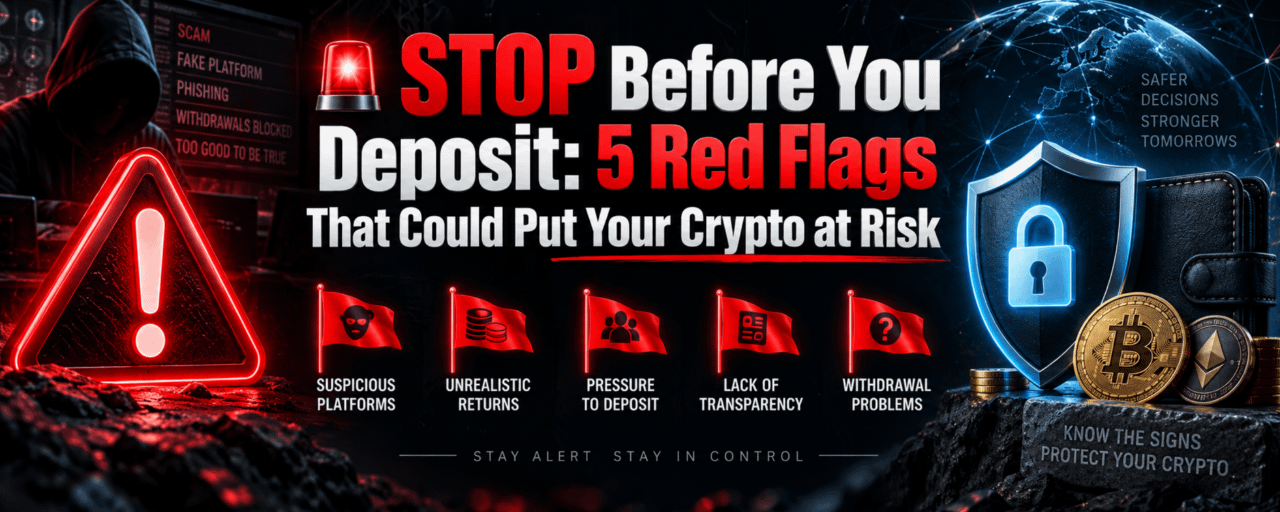
STOP Before You Deposit: 5 Red Flags That Could Put Your Crypto at Risk🚨 STOP Before You Deposit: 5 Red Flags That Could Put Your Crypto at Risk
Not every crypto or financial platform is built the same.
Before you deposit your money, ask yourself one question:
“If something goes wrong tomorrow, how protected am I?”
Here are 5 major red flags you should never ignore. 👇
🚩 1. Unclear Licensing or Regulatory Status
If you cannot clearly understand who operates the platform, where it operates, or what regulatory framework applies — investigate before depositing.
🚩 2. Customer Funds Are Mixed With Company Funds
Your assets should not simply become part of a company’s operating money. Clear asset segregation is an important protection to look for.
🚩 3. No Proof of Reserves
A platform asking you to trust it without providing meaningful transparency about customer assets should raise questions.
Binance provides Proof of Reserves (PoR) with Merkle Tree-based verification so users can independently check whether their assets are included.
🚩 4. No Emergency Protection Fund
Ask what happens if a major security incident occurs.
Binance maintains SAFU (Secure Asset Fund for Users) as an emergency protection fund designed to provide an additional layer of protection for users.
🚩 5. Weak Account Security
A password alone is no longer enough.
Look for security tools such as:
🔐 Passkeys
🔐 Two-Factor Authentication (2FA)
🔐 Anti-Phishing Codes
🔐 Withdrawal Address Allowlisting
⚠️ The Biggest Mistake?
Choosing a platform because it looks convenient — without checking what is protecting your money behind the scenes.
Before asking:
“What can I earn?”
Ask first:
“How is my money protected?”
In crypto, security shouldn't be an afterthought.
It should be part of your decision from Day 1.
#Binance #CryptoSecurity #SAFU #ProofOfReserves #StaySAFU
STOP Before You Deposit: 5 Red Flags That Could Put Your Crypto at Risk
🚨 STOP Before You Deposit: 5 Red Flags That Could Put Your Crypto at Risk
Not every crypto or financial platform is built the same.
Before you deposit your money, ask yourself one question:
“If something goes wrong tomorrow, how protected am I?”
Here are 5 major red flags you should never ignore. 👇
🚩 1. Unclear Licensing or Regulatory Status
If you cannot clearly understand who operates the platform, where it operates, or what regulatory framework applies — investigate before depositing.
🚩 2. Customer Funds Are Mixed With Company Funds
Your assets should not simply become part of a company’s operating money. Clear asset segregation is an important protection to look for.
🚩 3. No Proof of Reserves
A platform asking you to trust it without providing meaningful transparency about customer assets should raise questions.
Binance provides Proof of Reserves (PoR) with Merkle Tree-based verification so users can independently check whether their assets are included.
🚩 4. No Emergency Protection Fund
Ask what happens if a major security incident occurs.
Binance maintains SAFU (Secure Asset Fund for Users) as an emergency protection fund designed to provide an additional layer of protection for users.
🚩 5. Weak Account Security
A password alone is no longer enough.
Look for security tools such as:
🔐 Passkeys
🔐 Two-Factor Authentication (2FA)
🔐 Anti-Phishing Codes
🔐 Withdrawal Address Allowlisting
⚠️ The Biggest Mistake?
Choosing a platform because it looks convenient — without checking what is protecting your money behind the scenes.
Before asking:
“What can I earn?”
Ask first:
“How is my money protected?”
In crypto, security shouldn't be an afterthought.
It should be part of your decision from Day 1.
#Binance #CryptoSecurity #SAFU #ProofOfReserves #StaySAFU
Not every crypto or financial platform is built the same.
Before you deposit your money, ask yourself one question:
“If something goes wrong tomorrow, how protected am I?”
Here are 5 major red flags you should never ignore. 👇
🚩 1. Unclear Licensing or Regulatory Status
If you cannot clearly understand who operates the platform, where it operates, or what regulatory framework applies — investigate before depositing.
🚩 2. Customer Funds Are Mixed With Company Funds
Your assets should not simply become part of a company’s operating money. Clear asset segregation is an important protection to look for.
🚩 3. No Proof of Reserves
A platform asking you to trust it without providing meaningful transparency about customer assets should raise questions.
Binance provides Proof of Reserves (PoR) with Merkle Tree-based verification so users can independently check whether their assets are included.
🚩 4. No Emergency Protection Fund
Ask what happens if a major security incident occurs.
Binance maintains SAFU (Secure Asset Fund for Users) as an emergency protection fund designed to provide an additional layer of protection for users.
🚩 5. Weak Account Security
A password alone is no longer enough.
Look for security tools such as:
🔐 Passkeys
🔐 Two-Factor Authentication (2FA)
🔐 Anti-Phishing Codes
🔐 Withdrawal Address Allowlisting
⚠️ The Biggest Mistake?
Choosing a platform because it looks convenient — without checking what is protecting your money behind the scenes.
Before asking:
“What can I earn?”
Ask first:
“How is my money protected?”
In crypto, security shouldn't be an afterthought.
It should be part of your decision from Day 1.
#Binance #CryptoSecurity #SAFU #ProofOfReserves #StaySAFU
80

🚨 CRITICAL IOS EXPLOIT TARGETS MOBILE CRYPTO WALLETS THREATENING YOUR $ETH SEED PHRASES! ⚠️
Cybercriminals are actively leveraging the DarkSword iOS exploit to target mobile web browsers. Opening a compromised Safari link allows attackers to breach the browser sandbox, escalate system privileges, and read your device keychain directly. 👁️
This vector exposes stored mnemonic phrases and private keys without requiring any transaction signatures. 🛡️ Security researchers at SlowMist have flagged active exploitation across legacy iOS builds, making immediate system updates non-negotiable for anyone holding assets on mobile. 💡
💬 Have you updated your mobile devices today or are you moving high-value cold storage off your primary browser phone? 👇
⚠️ Not financial advice. Always manage your risk. 🛡️
🏷️ #ETH #Security #CryptoSecurity #Web3
🛡️ 👁️
🚨 CRITICAL IOS EXPLOIT TARGETS MOBILE CRYPTO WALLETS THREATENING YOUR $ETH SEED PHRASES! ⚠️
Cybercriminals are actively leveraging the DarkSword iOS exploit to target mobile web browsers. Opening a compromised Safari link allows attackers to breach the browser sandbox, escalate system privileges, and read your device keychain directly. 👁️
This vector exposes stored mnemonic phrases and private keys without requiring any transaction signatures. 🛡️ Security researchers at SlowMist have flagged active exploitation across legacy iOS builds, making immediate system updates non-negotiable for anyone holding assets on mobile. 💡
💬 Have you updated your mobile devices today or are you moving high-value cold storage off your primary browser phone? 👇
⚠️ Not financial advice. Always manage your risk. 🛡️
🏷️ #ETH #Security #CryptoSecurity #Web3
🛡️ 👁️
Cybercriminals are actively leveraging the DarkSword iOS exploit to target mobile web browsers. Opening a compromised Safari link allows attackers to breach the browser sandbox, escalate system privileges, and read your device keychain directly. 👁️
This vector exposes stored mnemonic phrases and private keys without requiring any transaction signatures. 🛡️ Security researchers at SlowMist have flagged active exploitation across legacy iOS builds, making immediate system updates non-negotiable for anyone holding assets on mobile. 💡
💬 Have you updated your mobile devices today or are you moving high-value cold storage off your primary browser phone? 👇
⚠️ Not financial advice. Always manage your risk. 🛡️
🏷️ #ETH #Security #CryptoSecurity #Web3
🛡️ 👁️
10

🚨 SECURITY ALERT: $AGIX & $WMTX EXPLOIT ⚠️
According to reports from PeckShield and ChainCatcher, an attacker exploited a vulnerability in a SingularityNET bridge contract and illegally minted approximately:
🔴 260M AGIX on Ethereum
🟠 53.838M WMTx on Ethereum
💰 Reported attacker holdings: ~$16.77M
• 198.3M AGIX
• 649 ETH
• 33.538M $WMT
{future}(WMTUSDT)
📊 WHY IT MATTERS:
A large unauthorized token supply can create significant market and liquidity risks, especially if the attacker moves or sells the assets.
⚠️ This is a security/news update, not a buy or sell call. Always verify contract addresses and official project announcements before taking action.
#CryptoSecurity #AGIX #WMTx
🚨 SECURITY ALERT: $AGIX & $WMTX EXPLOIT ⚠️
According to reports from PeckShield and ChainCatcher, an attacker exploited a vulnerability in a SingularityNET bridge contract and illegally minted approximately:
🔴 260M AGIX on Ethereum
🟠 53.838M WMTx on Ethereum
💰 Reported attacker holdings: ~$16.77M
• 198.3M AGIX
• 649 ETH
• 33.538M $WMT
📊 WHY IT MATTERS:
A large unauthorized token supply can create significant market and liquidity risks, especially if the attacker moves or sells the assets.
⚠️ This is a security/news update, not a buy or sell call. Always verify contract addresses and official project announcements before taking action.
#CryptoSecurity #AGIX #WMTx
According to reports from PeckShield and ChainCatcher, an attacker exploited a vulnerability in a SingularityNET bridge contract and illegally minted approximately:
🔴 260M AGIX on Ethereum
🟠 53.838M WMTx on Ethereum
💰 Reported attacker holdings: ~$16.77M
• 198.3M AGIX
• 649 ETH
• 33.538M $WMT
📊 WHY IT MATTERS:
A large unauthorized token supply can create significant market and liquidity risks, especially if the attacker moves or sells the assets.
⚠️ This is a security/news update, not a buy or sell call. Always verify contract addresses and official project announcements before taking action.
#CryptoSecurity #AGIX #WMTx

7
Picture this: a wallet gets drained for $235k in under 48 hours, and before the victim can even process the loss, the second wave of damage begins.
Getting exploited is every investor's worst nightmare, but the panic that follows often triggers even greater financial damage. The desperate urge to salvage lost funds leaves people blind to secondary traps engineered specifically for that moment of vulnerability.
In this incident, roughly 235,000 $USDC was siphoned into a single wallet over two days. While the stolen funds sat visible on the ledger, fraudulent recovery teams immediately flooded the perimeter, offering fake help and malicious links.
Desperation makes even experienced traders approve malicious contracts they would normally ignore, risking their remaining $ETH balances in the process. Fake recovery links do not recover stolen assets; they exist entirely to drain whatever allowances remain active on your wallet.
Real asset tracing requires patience and verified forensic data. When funds leave an address unexpectedly, the only safe response is revoking active allowances, isolating the wallet, and waiting for a verified on-chain post-mortem.
How do you handle security containment when you detect unauthorized movement on-chain?
#CryptoSecurity #OnChainAnalysis #Web3Safety
Picture this: a wallet gets drained for $235k in under 48 hours, and before the victim can even process the loss, the second wave of damage begins.
Getting exploited is every investor's worst nightmare, but the panic that follows often triggers even greater financial damage. The desperate urge to salvage lost funds leaves people blind to secondary traps engineered specifically for that moment of vulnerability.
In this incident, roughly 235,000 $USDC was siphoned into a single wallet over two days. While the stolen funds sat visible on the ledger, fraudulent recovery teams immediately flooded the perimeter, offering fake help and malicious links.
Desperation makes even experienced traders approve malicious contracts they would normally ignore, risking their remaining $ETH balances in the process. Fake recovery links do not recover stolen assets; they exist entirely to drain whatever allowances remain active on your wallet.
Real asset tracing requires patience and verified forensic data. When funds leave an address unexpectedly, the only safe response is revoking active allowances, isolating the wallet, and waiting for a verified on-chain post-mortem.
How do you handle security containment when you detect unauthorized movement on-chain?
#CryptoSecurity #OnChainAnalysis #Web3Safety
Getting exploited is every investor's worst nightmare, but the panic that follows often triggers even greater financial damage. The desperate urge to salvage lost funds leaves people blind to secondary traps engineered specifically for that moment of vulnerability.
In this incident, roughly 235,000 $USDC was siphoned into a single wallet over two days. While the stolen funds sat visible on the ledger, fraudulent recovery teams immediately flooded the perimeter, offering fake help and malicious links.
Desperation makes even experienced traders approve malicious contracts they would normally ignore, risking their remaining $ETH balances in the process. Fake recovery links do not recover stolen assets; they exist entirely to drain whatever allowances remain active on your wallet.
Real asset tracing requires patience and verified forensic data. When funds leave an address unexpectedly, the only safe response is revoking active allowances, isolating the wallet, and waiting for a verified on-chain post-mortem.
How do you handle security containment when you detect unauthorized movement on-chain?
#CryptoSecurity #OnChainAnalysis #Web3Safety
22
Log in to explore more content
Join global crypto users on Binance Square
⚡️ Get latest and useful information about crypto.
💬 Trusted by the world’s largest crypto exchange.
👍 Discover real insights from verified creators.
Email / Phone number
Trending Topics
1
#AIStocksWhatNext
243,645 views
2,517 Discussing
2
#BitcoinBreaksAboveMayHighNears$86K
8,852 views
152 Discussing
3
#DogecoinRises15%
23,041 views
794 Discussing
4
#$14BBitcoinOptionsExpireFriday
1,638 views
69 Discussing
5
#BNBMarketCapPassesBNYMellon
16,340 views
591 Discussing
6
#CryptoMarketCapReclaims$3Trillion
2,136 views
60 Discussing
7
#MuseOvertakesChatGPTAsTopFreeIOSApp
10,706 views
459 Discussing
8
#TokenizedStockPlatformsCouldLaunchNextQuarter
16,835 views
520 Discussing
9
#StrategyAdds950Bitcoin
22,248 views
583 Discussing
10
#CardanoAddedToX402KitForADAPayments
22,681 views
608 Discussing