
#bonds
bonds
146,955 views
491 Discussing
Hot
Latest

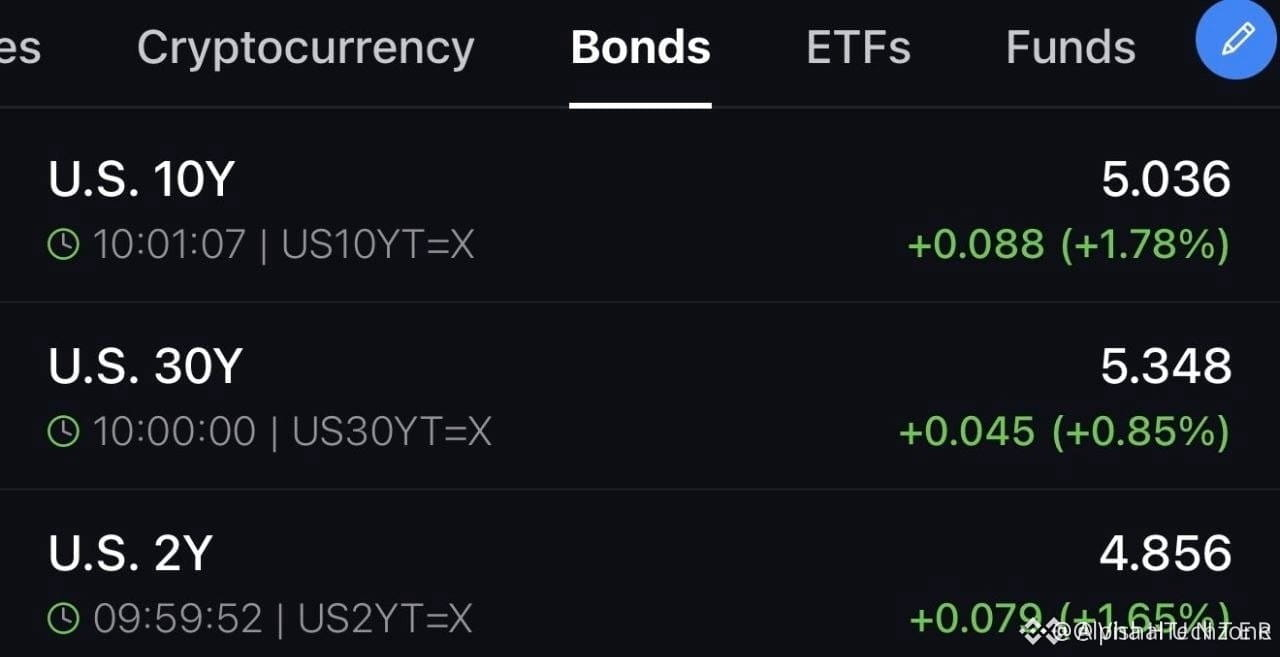
🚨 U.S. BOND YIELDS ACCELERATE
🇺🇸 The 10-year Treasury yield is back near its highest levels since 2023, while the 30-year yield reaches 5.035%, matching the levels seen in 2007.
Rising deficits, inflation, and the global energy crisis are keeping pressure on yields.
The era of ultra-low rates could be farther off than expected.
#US #Treasury #Bonds
$XAU
{future}(XAUUSDT)
$BTC
{future}(BTCUSDT)
🚨 U.S. BOND YIELDS ACCELERATE
🇺🇸 The 10-year Treasury yield is back near its highest levels since 2023, while the 30-year yield reaches 5.035%, matching the levels seen in 2007.
Rising deficits, inflation, and the global energy crisis are keeping pressure on yields.
The era of ultra-low rates could be farther off than expected.
#US #Treasury #Bonds
$XAU
$BTC
🇺🇸 The 10-year Treasury yield is back near its highest levels since 2023, while the 30-year yield reaches 5.035%, matching the levels seen in 2007.
Rising deficits, inflation, and the global energy crisis are keeping pressure on yields.
The era of ultra-low rates could be farther off than expected.
#US #Treasury #Bonds
$XAU
$BTC
56

Verified
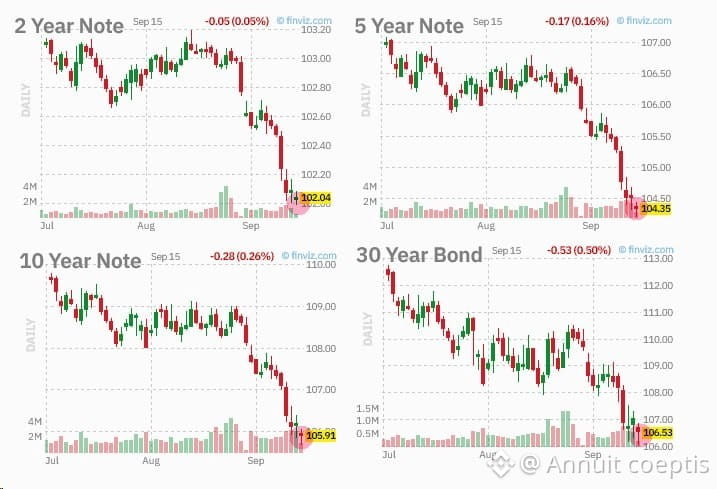
⚠️🇺🇸#bonds #usa #yields US Treasury bonds are falling again, yields are rising
Bessent just said that rising oil prices are to blame for the rise in yields
After Bessent's words, even the dumbest traders will now sell US bonds when they see rising oil prices, analysts say
Iran is making all this clear
⚠️🇺🇸#bonds #usa #yields US Treasury bonds are falling again, yields are rising
Bessent just said that rising oil prices are to blame for the rise in yields
After Bessent's words, even the dumbest traders will now sell US bonds when they see rising oil prices, analysts say
Iran is making all this clear
Bessent just said that rising oil prices are to blame for the rise in yields
After Bessent's words, even the dumbest traders will now sell US bonds when they see rising oil prices, analysts say
Iran is making all this clear
713

·
--
The Bank of England is reported to be preparing to pause the sale of long-dated government bonds before UK Chancellor of the Exchequer Jeremy Hunt releases his first Budget on October 28. According to The Daily Telegraph, the central bank plans to stop offloading the 20- and 30-year gilts it accumulated during the previous financial crisis, in order to ease the pressure on the Treasury caused by rising borrowing costs.
The key behind this is the scale of fiscal losses. Economists estimate that since the sale of these long-term debts began in 2022, it has already cost UK taxpayers around £22 billion. Against the backdrop of global bond sell-offs, halting this discount-driven selling could save the Treasury about £2.5 billion per year, giving the newly appointed chancellor some policy room to manoeuvre, even though it also makes the budget rules for balancing day-to-day spending more complicated.
From a traditional macro market perspective, adjustments to the pace of central bank balance-sheet shrinkage directly affect the supply-and-demand dynamics in the bond market. Pausing the sale of long-dated gilts can help temporarily relieve upward pressure on long-end yields and, to some extent, stabilize market sentiment toward the UK’s sovereign credit. It may also lead to minor tweaks in the liquidity tug-of-war between the US dollar and the pound.
For the crypto market, this reflects the real trade-offs major central banks face between tightening liquidity and their ability to bear fiscal strain. While this does not mean a full pivot to easing, reduced pressure from long-end selling may slightly ease the overall liquidity environment. Crypto investors can continue to monitor how sovereign bond markets in major economies react, and to view structural changes in liquidity conditions rationally. $BTC
#BankOfEngland #Bonds #MacroEconomy
The Bank of England is reported to be preparing to pause the sale of long-dated government bonds before UK Chancellor of the Exchequer Jeremy Hunt releases his first Budget on October 28. According to The Daily Telegraph, the central bank plans to stop offloading the 20- and 30-year gilts it accumulated during the previous financial crisis, in order to ease the pressure on the Treasury caused by rising borrowing costs.
The key behind this is the scale of fiscal losses. Economists estimate that since the sale of these long-term debts began in 2022, it has already cost UK taxpayers around £22 billion. Against the backdrop of global bond sell-offs, halting this discount-driven selling could save the Treasury about £2.5 billion per year, giving the newly appointed chancellor some policy room to manoeuvre, even though it also makes the budget rules for balancing day-to-day spending more complicated.
From a traditional macro market perspective, adjustments to the pace of central bank balance-sheet shrinkage directly affect the supply-and-demand dynamics in the bond market. Pausing the sale of long-dated gilts can help temporarily relieve upward pressure on long-end yields and, to some extent, stabilize market sentiment toward the UK’s sovereign credit. It may also lead to minor tweaks in the liquidity tug-of-war between the US dollar and the pound.
For the crypto market, this reflects the real trade-offs major central banks face between tightening liquidity and their ability to bear fiscal strain. While this does not mean a full pivot to easing, reduced pressure from long-end selling may slightly ease the overall liquidity environment. Crypto investors can continue to monitor how sovereign bond markets in major economies react, and to view structural changes in liquidity conditions rationally. $BTC
#BankOfEngland #Bonds #MacroEconomy
The key behind this is the scale of fiscal losses. Economists estimate that since the sale of these long-term debts began in 2022, it has already cost UK taxpayers around £22 billion. Against the backdrop of global bond sell-offs, halting this discount-driven selling could save the Treasury about £2.5 billion per year, giving the newly appointed chancellor some policy room to manoeuvre, even though it also makes the budget rules for balancing day-to-day spending more complicated.
From a traditional macro market perspective, adjustments to the pace of central bank balance-sheet shrinkage directly affect the supply-and-demand dynamics in the bond market. Pausing the sale of long-dated gilts can help temporarily relieve upward pressure on long-end yields and, to some extent, stabilize market sentiment toward the UK’s sovereign credit. It may also lead to minor tweaks in the liquidity tug-of-war between the US dollar and the pound.
For the crypto market, this reflects the real trade-offs major central banks face between tightening liquidity and their ability to bear fiscal strain. While this does not mean a full pivot to easing, reduced pressure from long-end selling may slightly ease the overall liquidity environment. Crypto investors can continue to monitor how sovereign bond markets in major economies react, and to view structural changes in liquidity conditions rationally. $BTC
#BankOfEngland #Bonds #MacroEconomy
48

According to the latest report by the British newspaper The Daily Telegraph, ahead of the presentation of Chancellor Jeremy Hunt’s first budget on October 28, the Bank of England (BoE) is preparing to stop selling long-dated gilts with maturities of 20 and 30 years. The policy adjustment is intended to ease the immense pressure on the Treasury from a surge in borrowing costs. These long-term debts accumulated during the financial crisis have, since being sold in 2022, already caused losses of around £22 billion to taxpayers.
From a deep macroeconomic perspective, against the backdrop of a global sell-off in bonds, the Bank of England’s reluctant stepping on the brakes of quantitative tightening (QT) essentially reflects the sharp conflict between sovereign debt sustainability and a contractionary monetary policy. While halting the loss-making sale of long-dated gilts could save around £2.5 billion per year in accounting losses, this compromise cannot disguise the UK’s underlying fiscal fragility and may even make it more complicated—and more passive—for the Chancellor to achieve the rule of balancing the day-to-day spending budget.
For traditional financial markets, the pause in the sell-off of long-dated gilts may, in the short term, curb the spike in yields on long-end UK government bonds and temporarily relieve liquidity pressures. However, this forced policy adjustment sends a warning signal to the market: the asset-liability normalization process of major central banks is running into a hard ceiling imposed by sovereign debt costs. If pressure from continued budget deficits keeps forcing central banks to slow balance-sheet reduction, the risks of fiat-credit expansion and a resurgence of inflation would further build up.
For the cryptocurrency market, this policy wavering triggered by a debt crisis is not entirely positive. Although easing expectations of tighter liquidity may provide a brief breathing space for risk assets such as $BTC , the fragility of the sovereign credit system and macro uncertainty reflected behind it may, in the short term, intensify risk-off-driven asset volatility. Investors should remain alert to downside risks arising from liquidity divergence.
#BankOfEngland #Bonds #MacroEconomy
According to the latest report by the British newspaper The Daily Telegraph, ahead of the presentation of Chancellor Jeremy Hunt’s first budget on October 28, the Bank of England (BoE) is preparing to stop selling long-dated gilts with maturities of 20 and 30 years. The policy adjustment is intended to ease the immense pressure on the Treasury from a surge in borrowing costs. These long-term debts accumulated during the financial crisis have, since being sold in 2022, already caused losses of around £22 billion to taxpayers.
From a deep macroeconomic perspective, against the backdrop of a global sell-off in bonds, the Bank of England’s reluctant stepping on the brakes of quantitative tightening (QT) essentially reflects the sharp conflict between sovereign debt sustainability and a contractionary monetary policy. While halting the loss-making sale of long-dated gilts could save around £2.5 billion per year in accounting losses, this compromise cannot disguise the UK’s underlying fiscal fragility and may even make it more complicated—and more passive—for the Chancellor to achieve the rule of balancing the day-to-day spending budget.
For traditional financial markets, the pause in the sell-off of long-dated gilts may, in the short term, curb the spike in yields on long-end UK government bonds and temporarily relieve liquidity pressures. However, this forced policy adjustment sends a warning signal to the market: the asset-liability normalization process of major central banks is running into a hard ceiling imposed by sovereign debt costs. If pressure from continued budget deficits keeps forcing central banks to slow balance-sheet reduction, the risks of fiat-credit expansion and a resurgence of inflation would further build up.
For the cryptocurrency market, this policy wavering triggered by a debt crisis is not entirely positive. Although easing expectations of tighter liquidity may provide a brief breathing space for risk assets such as $BTC , the fragility of the sovereign credit system and macro uncertainty reflected behind it may, in the short term, intensify risk-off-driven asset volatility. Investors should remain alert to downside risks arising from liquidity divergence.
#BankOfEngland #Bonds #MacroEconomy
From a deep macroeconomic perspective, against the backdrop of a global sell-off in bonds, the Bank of England’s reluctant stepping on the brakes of quantitative tightening (QT) essentially reflects the sharp conflict between sovereign debt sustainability and a contractionary monetary policy. While halting the loss-making sale of long-dated gilts could save around £2.5 billion per year in accounting losses, this compromise cannot disguise the UK’s underlying fiscal fragility and may even make it more complicated—and more passive—for the Chancellor to achieve the rule of balancing the day-to-day spending budget.
For traditional financial markets, the pause in the sell-off of long-dated gilts may, in the short term, curb the spike in yields on long-end UK government bonds and temporarily relieve liquidity pressures. However, this forced policy adjustment sends a warning signal to the market: the asset-liability normalization process of major central banks is running into a hard ceiling imposed by sovereign debt costs. If pressure from continued budget deficits keeps forcing central banks to slow balance-sheet reduction, the risks of fiat-credit expansion and a resurgence of inflation would further build up.
For the cryptocurrency market, this policy wavering triggered by a debt crisis is not entirely positive. Although easing expectations of tighter liquidity may provide a brief breathing space for risk assets such as $BTC , the fragility of the sovereign credit system and macro uncertainty reflected behind it may, in the short term, intensify risk-off-driven asset volatility. Investors should remain alert to downside risks arising from liquidity divergence.
#BankOfEngland #Bonds #MacroEconomy
6
U.S. Treasury yields adjust across the board on the eve of key decision points. With the Federal Reserve’s latest policy decision approaching, most U.S. Treasury yields fell: the 2-year yield dropped 3.3 basis points to 4.610%, the 10-year benchmark yield inched down 1 basis point to 4.964%, and only the 30-year long end moved against the trend, rising slightly by 0.8 basis points to 5.362%. Meanwhile, analysts at TD Securities issued a warning, expecting the Fed not only to kick off a new tightening cycle with a 25-basis-point hike in September, but also to accumulate 75 basis points of rate hikes by the first quarter of 2027, and to maintain a hawkish stance in subsequent months.
This assessment is sharply at odds with the market’s prevailing expectations of a shift toward easier policy. The stickiness of current macroeconomic data, along with institutions’ expectations of a prolonged tightening cycle, suggests that inflation pressures may prove far more resilient than many investors’ optimistic assumptions. If the Fed chooses to keep a higher-for-longer rate path—or even restart a rate-hike channel—the asset-pricing logic built over the past six months on hopes of rate cuts would be completely overturned.
From the perspective of traditional financial markets, the subtle movements in the yield curve reflect dual concerns among investors: tighter liquidity in the near to mid term and a possible potential economic downturn in the long run. A high-rate environment provides strong support for the U.S. dollar, but it directly squeezes valuation for equity markets and other risk assets trading at elevated valuations, with defensive sentiment increasingly on the rise.
For crypto assets, this long-term expectation of liquidity tightening is an especially severe potential negative. With real rates staying at high levels, incremental inflows of institutional funds will likely be severely constrained, and the liquidity premium of $BTC and mainstream crypto assets may face compression. Investors should remain highly cautious and watch for the risk of deleveraging if tighter expectations fail to materialize.
#Fed #InterestRates #Bonds #CryptoMacro
U.S. Treasury yields adjust across the board on the eve of key decision points. With the Federal Reserve’s latest policy decision approaching, most U.S. Treasury yields fell: the 2-year yield dropped 3.3 basis points to 4.610%, the 10-year benchmark yield inched down 1 basis point to 4.964%, and only the 30-year long end moved against the trend, rising slightly by 0.8 basis points to 5.362%. Meanwhile, analysts at TD Securities issued a warning, expecting the Fed not only to kick off a new tightening cycle with a 25-basis-point hike in September, but also to accumulate 75 basis points of rate hikes by the first quarter of 2027, and to maintain a hawkish stance in subsequent months.
This assessment is sharply at odds with the market’s prevailing expectations of a shift toward easier policy. The stickiness of current macroeconomic data, along with institutions’ expectations of a prolonged tightening cycle, suggests that inflation pressures may prove far more resilient than many investors’ optimistic assumptions. If the Fed chooses to keep a higher-for-longer rate path—or even restart a rate-hike channel—the asset-pricing logic built over the past six months on hopes of rate cuts would be completely overturned.
From the perspective of traditional financial markets, the subtle movements in the yield curve reflect dual concerns among investors: tighter liquidity in the near to mid term and a possible potential economic downturn in the long run. A high-rate environment provides strong support for the U.S. dollar, but it directly squeezes valuation for equity markets and other risk assets trading at elevated valuations, with defensive sentiment increasingly on the rise.
For crypto assets, this long-term expectation of liquidity tightening is an especially severe potential negative. With real rates staying at high levels, incremental inflows of institutional funds will likely be severely constrained, and the liquidity premium of $BTC and mainstream crypto assets may face compression. Investors should remain highly cautious and watch for the risk of deleveraging if tighter expectations fail to materialize.
#Fed #InterestRates #Bonds #CryptoMacro
This assessment is sharply at odds with the market’s prevailing expectations of a shift toward easier policy. The stickiness of current macroeconomic data, along with institutions’ expectations of a prolonged tightening cycle, suggests that inflation pressures may prove far more resilient than many investors’ optimistic assumptions. If the Fed chooses to keep a higher-for-longer rate path—or even restart a rate-hike channel—the asset-pricing logic built over the past six months on hopes of rate cuts would be completely overturned.
From the perspective of traditional financial markets, the subtle movements in the yield curve reflect dual concerns among investors: tighter liquidity in the near to mid term and a possible potential economic downturn in the long run. A high-rate environment provides strong support for the U.S. dollar, but it directly squeezes valuation for equity markets and other risk assets trading at elevated valuations, with defensive sentiment increasingly on the rise.
For crypto assets, this long-term expectation of liquidity tightening is an especially severe potential negative. With real rates staying at high levels, incremental inflows of institutional funds will likely be severely constrained, and the liquidity premium of $BTC and mainstream crypto assets may face compression. Investors should remain highly cautious and watch for the risk of deleveraging if tighter expectations fail to materialize.
#Fed #InterestRates #Bonds #CryptoMacro
34
·
--
Today, the Japanese bond market saw new developments. Driven by market expectations of a rate hike by the Bank of Japan, Japan’s long-term government bond yields rose. The benchmark 10-year Japanese government bond yield increased by 0.5 basis points, closing at 2.990%. In addition to warming expectations for domestic policy, stronger-than-expected US consumer inflation data also lifted US Treasury yields, creating a linkage effect on Japan’s domestic bond market.
At the heart of this trend is that later this week both the Federal Reserve and the Bank of Japan will hold key monetary policy meetings. The market is not only watching the policy decisions of these two central banks closely, but also keeping a close eye on developments in Iran’s situation and potential fluctuations in energy prices. With multiple macro uncertainties intertwined, investors’ expectation-driven positioning has become even more intense.
From a broader perspective of financial markets, Japanese bond yields are approaching key levels, reflecting pressure for a reassessment of global borrowing costs. As changes in the US-Japan interest rate differential and geopolitical developments disrupt commodities, the volatility in the foreign exchange market and the direction of global liquidity flows may trigger further knock-on effects.
For the cryptocurrency market, the interest-rate paths of major global central banks serve as a gauge for liquidity flows. A rise in Japanese bond yields is often accompanied by the potential unwinding or reshuffling of JPY carry trades. In the short term, macro headlines remain dense, and risk assets overall—including $BTC —are in a phase of waiting and digesting information. Future performance still depends on clearer developments in macro liquidity conditions.
#BOJ #InterestRates #Bonds #MacroEconomics
Today, the Japanese bond market saw new developments. Driven by market expectations of a rate hike by the Bank of Japan, Japan’s long-term government bond yields rose. The benchmark 10-year Japanese government bond yield increased by 0.5 basis points, closing at 2.990%. In addition to warming expectations for domestic policy, stronger-than-expected US consumer inflation data also lifted US Treasury yields, creating a linkage effect on Japan’s domestic bond market.
At the heart of this trend is that later this week both the Federal Reserve and the Bank of Japan will hold key monetary policy meetings. The market is not only watching the policy decisions of these two central banks closely, but also keeping a close eye on developments in Iran’s situation and potential fluctuations in energy prices. With multiple macro uncertainties intertwined, investors’ expectation-driven positioning has become even more intense.
From a broader perspective of financial markets, Japanese bond yields are approaching key levels, reflecting pressure for a reassessment of global borrowing costs. As changes in the US-Japan interest rate differential and geopolitical developments disrupt commodities, the volatility in the foreign exchange market and the direction of global liquidity flows may trigger further knock-on effects.
For the cryptocurrency market, the interest-rate paths of major global central banks serve as a gauge for liquidity flows. A rise in Japanese bond yields is often accompanied by the potential unwinding or reshuffling of JPY carry trades. In the short term, macro headlines remain dense, and risk assets overall—including $BTC —are in a phase of waiting and digesting information. Future performance still depends on clearer developments in macro liquidity conditions.
#BOJ #InterestRates #Bonds #MacroEconomics
At the heart of this trend is that later this week both the Federal Reserve and the Bank of Japan will hold key monetary policy meetings. The market is not only watching the policy decisions of these two central banks closely, but also keeping a close eye on developments in Iran’s situation and potential fluctuations in energy prices. With multiple macro uncertainties intertwined, investors’ expectation-driven positioning has become even more intense.
From a broader perspective of financial markets, Japanese bond yields are approaching key levels, reflecting pressure for a reassessment of global borrowing costs. As changes in the US-Japan interest rate differential and geopolitical developments disrupt commodities, the volatility in the foreign exchange market and the direction of global liquidity flows may trigger further knock-on effects.
For the cryptocurrency market, the interest-rate paths of major global central banks serve as a gauge for liquidity flows. A rise in Japanese bond yields is often accompanied by the potential unwinding or reshuffling of JPY carry trades. In the short term, macro headlines remain dense, and risk assets overall—including $BTC —are in a phase of waiting and digesting information. Future performance still depends on clearer developments in macro liquidity conditions.
#BOJ #InterestRates #Bonds #MacroEconomics
42

Australian government bond yields surged to their highest levels since May 2011 during recent trading sessions, driven by a sharp overnight sell-off in US Treasuries. The benchmark 3-year Australian yield jumped 18 basis points to 5.03%, while the 10-year yield climbed 13 basis points to 5.38%, reflecting intense global selling pressure across sovereign debt markets.
This aggressive spike in global yields is primarily fueled by escalating geopolitical tensions in the Middle East, which have driven oil prices sharply higher. Rising energy costs are reigniting inflation fears across major economies, forcing traders to rapidly unwind rate-cut expectations and brace for a prolonged higher-for-longer policy stance from global central banks.
The broader financial landscape is feeling the immediate chill of tightening conditions. Higher sovereign yields strengthen sovereign debt returns relative to risk assets, putting severe downward pressure on global equities and commodities while lifting fiat yields and driving capital into conservative safe havens like cash and the US dollar.
For the crypto sector, surging sovereign yields typically drain liquidity from speculative assets. With traditional risk-free returns exceeding 5%, institutional appetite for high-beta plays like $BTC diminishes in the near term, making broad digital asset markets vulnerable to consolidation until energy prices stabilize and geopolitical tensions cool down.
#bonds #macro #oil
Australian government bond yields surged to their highest levels since May 2011 during recent trading sessions, driven by a sharp overnight sell-off in US Treasuries. The benchmark 3-year Australian yield jumped 18 basis points to 5.03%, while the 10-year yield climbed 13 basis points to 5.38%, reflecting intense global selling pressure across sovereign debt markets.
This aggressive spike in global yields is primarily fueled by escalating geopolitical tensions in the Middle East, which have driven oil prices sharply higher. Rising energy costs are reigniting inflation fears across major economies, forcing traders to rapidly unwind rate-cut expectations and brace for a prolonged higher-for-longer policy stance from global central banks.
The broader financial landscape is feeling the immediate chill of tightening conditions. Higher sovereign yields strengthen sovereign debt returns relative to risk assets, putting severe downward pressure on global equities and commodities while lifting fiat yields and driving capital into conservative safe havens like cash and the US dollar.
For the crypto sector, surging sovereign yields typically drain liquidity from speculative assets. With traditional risk-free returns exceeding 5%, institutional appetite for high-beta plays like $BTC diminishes in the near term, making broad digital asset markets vulnerable to consolidation until energy prices stabilize and geopolitical tensions cool down.
#bonds #macro #oil
This aggressive spike in global yields is primarily fueled by escalating geopolitical tensions in the Middle East, which have driven oil prices sharply higher. Rising energy costs are reigniting inflation fears across major economies, forcing traders to rapidly unwind rate-cut expectations and brace for a prolonged higher-for-longer policy stance from global central banks.
The broader financial landscape is feeling the immediate chill of tightening conditions. Higher sovereign yields strengthen sovereign debt returns relative to risk assets, putting severe downward pressure on global equities and commodities while lifting fiat yields and driving capital into conservative safe havens like cash and the US dollar.
For the crypto sector, surging sovereign yields typically drain liquidity from speculative assets. With traditional risk-free returns exceeding 5%, institutional appetite for high-beta plays like $BTC diminishes in the near term, making broad digital asset markets vulnerable to consolidation until energy prices stabilize and geopolitical tensions cool down.
#bonds #macro #oil
11
US macroeconomic data released today showed US existing home sales for August hitting 3.98 million units, matching expectations but retreating from the previous month's 4.06 million level. Concurrently, US wholesale sales for July rebounded sharply by 0.8% after an upwardly revised -2.9% drop, while US 3-year and 5-year Treasury yields jumped by 10 basis points on the day.
This mixed economic picture underscores a resilient broader economy despite persistent tightness in interest rate-sensitive segments. While the housing market reflects the cooling impact of elevated mortgage rates, the strong rebound in wholesale activity highlights lingering domestic demand and persistent underlying economic momentum.
The swift 10 bps spike across intermediate Treasury yields indicates that bond markets are repricing rate-cut expectations, exerting fresh upward pressure on borrowing costs and offering short-term support to the US dollar. As yields push higher, traditional safe-haven appetite adjusts to tighter monetary conditions for longer.
For crypto markets, elevated bond yields typically tighten risk-asset liquidity and limit aggressive upside momentum for $BTC in the near term. Investors should expect range-bound consolidation across major digital assets until clearer signals on liquidity and future Fed easing trajectories emerge.
#macro #bonds #crypto
US macroeconomic data released today showed US existing home sales for August hitting 3.98 million units, matching expectations but retreating from the previous month's 4.06 million level. Concurrently, US wholesale sales for July rebounded sharply by 0.8% after an upwardly revised -2.9% drop, while US 3-year and 5-year Treasury yields jumped by 10 basis points on the day.
This mixed economic picture underscores a resilient broader economy despite persistent tightness in interest rate-sensitive segments. While the housing market reflects the cooling impact of elevated mortgage rates, the strong rebound in wholesale activity highlights lingering domestic demand and persistent underlying economic momentum.
The swift 10 bps spike across intermediate Treasury yields indicates that bond markets are repricing rate-cut expectations, exerting fresh upward pressure on borrowing costs and offering short-term support to the US dollar. As yields push higher, traditional safe-haven appetite adjusts to tighter monetary conditions for longer.
For crypto markets, elevated bond yields typically tighten risk-asset liquidity and limit aggressive upside momentum for $BTC in the near term. Investors should expect range-bound consolidation across major digital assets until clearer signals on liquidity and future Fed easing trajectories emerge.
#macro #bonds #crypto
This mixed economic picture underscores a resilient broader economy despite persistent tightness in interest rate-sensitive segments. While the housing market reflects the cooling impact of elevated mortgage rates, the strong rebound in wholesale activity highlights lingering domestic demand and persistent underlying economic momentum.
The swift 10 bps spike across intermediate Treasury yields indicates that bond markets are repricing rate-cut expectations, exerting fresh upward pressure on borrowing costs and offering short-term support to the US dollar. As yields push higher, traditional safe-haven appetite adjusts to tighter monetary conditions for longer.
For crypto markets, elevated bond yields typically tighten risk-asset liquidity and limit aggressive upside momentum for $BTC in the near term. Investors should expect range-bound consolidation across major digital assets until clearer signals on liquidity and future Fed easing trajectories emerge.
#macro #bonds #crypto
23
UK government bond yields extended their sharp selloff on Thursday, hitting 19-year highs after crude oil surged past $100 per barrel for the first time in six weeks. The UK Debt Management Office completed a £5 billion auction of 2030 gilts with an average yield of 4.786%—the highest since October 2023—following a 30-year bond sale earlier in the week that reached levels not seen since 1998.
This aggressive repricing of sovereign debt highlights growing market anxiety over sticky inflation reignited by spiking energy prices. As Wealth Club’s Susannah Streeter observed, soaring oil is serving as a key catalyst, compounding structural shifts where institutional capital is increasingly rotating away from traditional sovereign debt in search of higher yield.
Surging global yields inevitably tighten broader financial conditions, raising borrowing costs across the board and exerting downward pressure on risk assets, equities, and high-duration growth sectors.
For crypto markets, higher risk-free benchmark yields mean tighter global liquidity and a cautious risk-off environment. Until sovereign bond markets stabilize and energy-driven inflation fears cool, $BTC and digital assets may continue navigating near-term macroeconomic headwinds.
#bonds #macro #inflation
UK government bond yields extended their sharp selloff on Thursday, hitting 19-year highs after crude oil surged past $100 per barrel for the first time in six weeks. The UK Debt Management Office completed a £5 billion auction of 2030 gilts with an average yield of 4.786%—the highest since October 2023—following a 30-year bond sale earlier in the week that reached levels not seen since 1998.
This aggressive repricing of sovereign debt highlights growing market anxiety over sticky inflation reignited by spiking energy prices. As Wealth Club’s Susannah Streeter observed, soaring oil is serving as a key catalyst, compounding structural shifts where institutional capital is increasingly rotating away from traditional sovereign debt in search of higher yield.
Surging global yields inevitably tighten broader financial conditions, raising borrowing costs across the board and exerting downward pressure on risk assets, equities, and high-duration growth sectors.
For crypto markets, higher risk-free benchmark yields mean tighter global liquidity and a cautious risk-off environment. Until sovereign bond markets stabilize and energy-driven inflation fears cool, $BTC and digital assets may continue navigating near-term macroeconomic headwinds.
#bonds #macro #inflation
This aggressive repricing of sovereign debt highlights growing market anxiety over sticky inflation reignited by spiking energy prices. As Wealth Club’s Susannah Streeter observed, soaring oil is serving as a key catalyst, compounding structural shifts where institutional capital is increasingly rotating away from traditional sovereign debt in search of higher yield.
Surging global yields inevitably tighten broader financial conditions, raising borrowing costs across the board and exerting downward pressure on risk assets, equities, and high-duration growth sectors.
For crypto markets, higher risk-free benchmark yields mean tighter global liquidity and a cautious risk-off environment. Until sovereign bond markets stabilize and energy-driven inflation fears cool, $BTC and digital assets may continue navigating near-term macroeconomic headwinds.
#bonds #macro #inflation
11

·
--
Bearish
🚨 BOND MARKET ALERT 🇺🇸🇨🇳
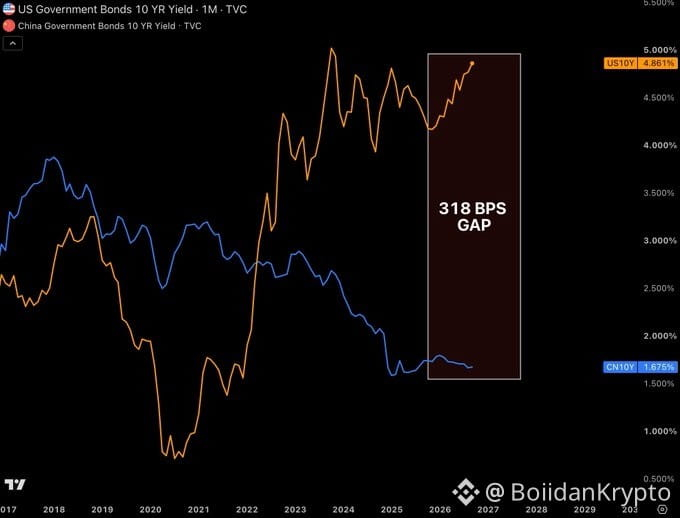
The US–China 10-year yield gap is blowing out to levels rarely seen in over a decade — and almost nobody's talking about what it means for your portfolio.
📈 US yields keep climbing — the Fed is white-knuckling its inflation fight, even as the Treasury quietly tries to talk yields back down.
📉 China's yields are pinned near record lows — weak growth data has the PBOC leaning harder toward stimulus.
Two of the world's biggest economies, moving in completely opposite directions. 🌍⚡
Question for the comments 👇
Is this the biggest macro divergence of the decade — or a bond trap in the making? Where does the spread go from here?
Drop your take below. Bulls vs. bears — let's hear it. 🔥
#Bonds #Macro #FederalReserve
$NVDA
{future}(NVDAUSDT)
$SPCX
{future}(SPCXUSDT)
$BTC
{future}(BTCUSDT)
🚨 BOND MARKET ALERT 🇺🇸🇨🇳
The US–China 10-year yield gap is blowing out to levels rarely seen in over a decade — and almost nobody's talking about what it means for your portfolio.
📈 US yields keep climbing — the Fed is white-knuckling its inflation fight, even as the Treasury quietly tries to talk yields back down.
📉 China's yields are pinned near record lows — weak growth data has the PBOC leaning harder toward stimulus.
Two of the world's biggest economies, moving in completely opposite directions. 🌍⚡
Question for the comments 👇
Is this the biggest macro divergence of the decade — or a bond trap in the making? Where does the spread go from here?
Drop your take below. Bulls vs. bears — let's hear it. 🔥
#Bonds #Macro #FederalReserve
$NVDA
$SPCX
$BTC
The US–China 10-year yield gap is blowing out to levels rarely seen in over a decade — and almost nobody's talking about what it means for your portfolio.
📈 US yields keep climbing — the Fed is white-knuckling its inflation fight, even as the Treasury quietly tries to talk yields back down.
📉 China's yields are pinned near record lows — weak growth data has the PBOC leaning harder toward stimulus.
Two of the world's biggest economies, moving in completely opposite directions. 🌍⚡
Question for the comments 👇
Is this the biggest macro divergence of the decade — or a bond trap in the making? Where does the spread go from here?
Drop your take below. Bulls vs. bears — let's hear it. 🔥
#Bonds #Macro #FederalReserve
$NVDA
$SPCX
$BTC
191

THE U.S. TREASURY IS ABOUT TO ENTER THE BOND MARKET WITH BILLIONS.
The Treasury is set to buy back up to $6 BILLION of longer-term U.S. debt tomorrow.
This is bigger than a routine transaction.
Treasury buybacks can help improve liquidity and put support under longer-dated bonds at a time when yields are elevated. The move comes as the 10-year yield is hovering around 4.8%, near its highest levels in years.
But here's the part markets should be watching:
The government is simultaneously running enormous deficits and actively managing the functioning of the Treasury market.
That means the bond market is becoming one of the most important pressure points for global markets.
If buybacks help push long-term yields lower, financial conditions could loosen.
That can ripple into stocks, gold, the dollar and Bitcoin.
But if investors continue demanding higher yields despite Treasury intervention, the message becomes much more uncomfortable:
The market wants more compensation to hold U.S. debt.
And that is a problem no buyback program can permanently solve.
The real battle isn't just about $6 billion.
It's about whether the world's largest bond market can absorb America's enormous borrowing needs without continuously demanding higher yields.
Tomorrow's buyback could be small.
The signal it sends could be enormous.
#Treasury #Bonds #Bitcoin #Gold #Markets
THE U.S. TREASURY IS ABOUT TO ENTER THE BOND MARKET WITH BILLIONS.
The Treasury is set to buy back up to $6 BILLION of longer-term U.S. debt tomorrow.
This is bigger than a routine transaction.
Treasury buybacks can help improve liquidity and put support under longer-dated bonds at a time when yields are elevated. The move comes as the 10-year yield is hovering around 4.8%, near its highest levels in years.
But here's the part markets should be watching:
The government is simultaneously running enormous deficits and actively managing the functioning of the Treasury market.
That means the bond market is becoming one of the most important pressure points for global markets.
If buybacks help push long-term yields lower, financial conditions could loosen.
That can ripple into stocks, gold, the dollar and Bitcoin.
But if investors continue demanding higher yields despite Treasury intervention, the message becomes much more uncomfortable:
The market wants more compensation to hold U.S. debt.
And that is a problem no buyback program can permanently solve.
The real battle isn't just about $6 billion.
It's about whether the world's largest bond market can absorb America's enormous borrowing needs without continuously demanding higher yields.
Tomorrow's buyback could be small.
The signal it sends could be enormous.
#Treasury #Bonds #Bitcoin #Gold #Markets
The Treasury is set to buy back up to $6 BILLION of longer-term U.S. debt tomorrow.
This is bigger than a routine transaction.
Treasury buybacks can help improve liquidity and put support under longer-dated bonds at a time when yields are elevated. The move comes as the 10-year yield is hovering around 4.8%, near its highest levels in years.
But here's the part markets should be watching:
The government is simultaneously running enormous deficits and actively managing the functioning of the Treasury market.
That means the bond market is becoming one of the most important pressure points for global markets.
If buybacks help push long-term yields lower, financial conditions could loosen.
That can ripple into stocks, gold, the dollar and Bitcoin.
But if investors continue demanding higher yields despite Treasury intervention, the message becomes much more uncomfortable:
The market wants more compensation to hold U.S. debt.
And that is a problem no buyback program can permanently solve.
The real battle isn't just about $6 billion.
It's about whether the world's largest bond market can absorb America's enormous borrowing needs without continuously demanding higher yields.
Tomorrow's buyback could be small.
The signal it sends could be enormous.
#Treasury #Bonds #Bitcoin #Gold #Markets

1
167
The UK Debt Management Office is preparing to price a syndicated gilt offering due January 2056 on Tuesday evening, with borrowing costs surging to levels unseen since 1998. Driven by an intense global bond sell-off that hit British debt harder than other developed markets, the UK's 30-year yield spiked to 5.83%, while the new issuance is priced 0.75 to 1 basis point above the 2055 notes.
This benchmark expansion—potentially raising up to £5 billion as a tap on an existing £59 billion line—highlights severe fiscal strain. Borrowing at the highest cost since the debt office was established over 25 years ago reflects deeply entrenched inflation expectations and growing market skepticism toward long-term sovereign debt sustainability.
Broadly, soaring gilt yields ripple across global fixed-income markets, pushing term premiums higher, tightening financial conditions, and reinforcing the 'higher-for-longer' rate backdrop across major economies. This dynamic continues to pressure both equity multiples and credit spreads worldwide.
For crypto, persistent surges in risk-free sovereign yields directly drain liquidity from risk-on assets. As capital retreats into defensive yields, $BTC and the broader market face headwinds, requiring sustained macroeconomic stabilization before high-beta momentum can genuinely reignite. 📉
#bonds #macroeconomics #liquidity
The UK Debt Management Office is preparing to price a syndicated gilt offering due January 2056 on Tuesday evening, with borrowing costs surging to levels unseen since 1998. Driven by an intense global bond sell-off that hit British debt harder than other developed markets, the UK's 30-year yield spiked to 5.83%, while the new issuance is priced 0.75 to 1 basis point above the 2055 notes.
This benchmark expansion—potentially raising up to £5 billion as a tap on an existing £59 billion line—highlights severe fiscal strain. Borrowing at the highest cost since the debt office was established over 25 years ago reflects deeply entrenched inflation expectations and growing market skepticism toward long-term sovereign debt sustainability.
Broadly, soaring gilt yields ripple across global fixed-income markets, pushing term premiums higher, tightening financial conditions, and reinforcing the 'higher-for-longer' rate backdrop across major economies. This dynamic continues to pressure both equity multiples and credit spreads worldwide.
For crypto, persistent surges in risk-free sovereign yields directly drain liquidity from risk-on assets. As capital retreats into defensive yields, $BTC and the broader market face headwinds, requiring sustained macroeconomic stabilization before high-beta momentum can genuinely reignite. 📉
#bonds #macroeconomics #liquidity
This benchmark expansion—potentially raising up to £5 billion as a tap on an existing £59 billion line—highlights severe fiscal strain. Borrowing at the highest cost since the debt office was established over 25 years ago reflects deeply entrenched inflation expectations and growing market skepticism toward long-term sovereign debt sustainability.
Broadly, soaring gilt yields ripple across global fixed-income markets, pushing term premiums higher, tightening financial conditions, and reinforcing the 'higher-for-longer' rate backdrop across major economies. This dynamic continues to pressure both equity multiples and credit spreads worldwide.
For crypto, persistent surges in risk-free sovereign yields directly drain liquidity from risk-on assets. As capital retreats into defensive yields, $BTC and the broader market face headwinds, requiring sustained macroeconomic stabilization before high-beta momentum can genuinely reignite. 📉
#bonds #macroeconomics #liquidity
12
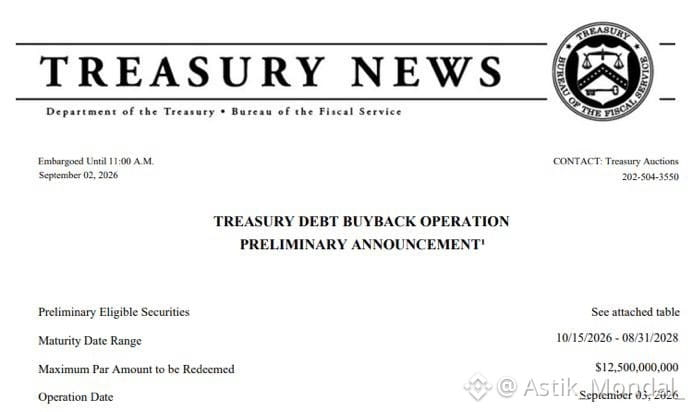
🚨 THE U.S. TREASURY IS ABOUT TO BUY BACK ITS OWN DEBT.
And the timing is WILD. 🇺🇸💵
The U.S. government is now spending more than $1 TRILLION a year just on interest.
Now Treasury is preparing to repurchase $12.5 BILLION of its own bonds as yields sit near their highest levels in almost TWO DECADES.
Why does this matter?
Because the bond market is becoming one of the biggest pressure points in the U.S. economy.
Higher yields = higher borrowing costs.
Higher borrowing costs = even more interest expense.
And now the Treasury is stepping into the market.
Just days ago at the G20, Treasury Secretary Scott Bessent said:
“I have not bought anything yet.”
But the bigger warning came from legendary investor Stanley Druckenmiller.
Bessent’s former mentor publicly argued that the government should NOT be intervening in the bond market.
That sets up a fascinating clash:
🇺🇸 Treasury wants to manage its debt burden.
📈 Bond investors want market forces to determine yields.
💰 Taxpayers are already facing a massive interest bill.
And if Treasury buybacks become larger or more frequent The bond market could become one of the biggest macro stories of the cycle.
Watch U.S. Treasuries closely.
Something BIG is changing underneath the surface.
#Bitcoin #Economy #Bonds #Markets #Finance
🚨 THE U.S. TREASURY IS ABOUT TO BUY BACK ITS OWN DEBT.
And the timing is WILD. 🇺🇸💵
The U.S. government is now spending more than $1 TRILLION a year just on interest.
Now Treasury is preparing to repurchase $12.5 BILLION of its own bonds as yields sit near their highest levels in almost TWO DECADES.
Why does this matter?
Because the bond market is becoming one of the biggest pressure points in the U.S. economy.
Higher yields = higher borrowing costs.
Higher borrowing costs = even more interest expense.
And now the Treasury is stepping into the market.
Just days ago at the G20, Treasury Secretary Scott Bessent said:
“I have not bought anything yet.”
But the bigger warning came from legendary investor Stanley Druckenmiller.
Bessent’s former mentor publicly argued that the government should NOT be intervening in the bond market.
That sets up a fascinating clash:
🇺🇸 Treasury wants to manage its debt burden.
📈 Bond investors want market forces to determine yields.
💰 Taxpayers are already facing a massive interest bill.
And if Treasury buybacks become larger or more frequent The bond market could become one of the biggest macro stories of the cycle.
Watch U.S. Treasuries closely.
Something BIG is changing underneath the surface.
#Bitcoin #Economy #Bonds #Markets #Finance
And the timing is WILD. 🇺🇸💵
The U.S. government is now spending more than $1 TRILLION a year just on interest.
Now Treasury is preparing to repurchase $12.5 BILLION of its own bonds as yields sit near their highest levels in almost TWO DECADES.
Why does this matter?
Because the bond market is becoming one of the biggest pressure points in the U.S. economy.
Higher yields = higher borrowing costs.
Higher borrowing costs = even more interest expense.
And now the Treasury is stepping into the market.
Just days ago at the G20, Treasury Secretary Scott Bessent said:
“I have not bought anything yet.”
But the bigger warning came from legendary investor Stanley Druckenmiller.
Bessent’s former mentor publicly argued that the government should NOT be intervening in the bond market.
That sets up a fascinating clash:
🇺🇸 Treasury wants to manage its debt burden.
📈 Bond investors want market forces to determine yields.
💰 Taxpayers are already facing a massive interest bill.
And if Treasury buybacks become larger or more frequent The bond market could become one of the biggest macro stories of the cycle.
Watch U.S. Treasuries closely.
Something BIG is changing underneath the surface.
#Bitcoin #Economy #Bonds #Markets #Finance

1
41

Article
Bond markets face selling pressure as inflation risks returnGlobal bond markets came under renewed pressure on Monday as a sharp rise in oil prices intensified concerns that inflation could remain stubborn and force central banks to keep interest rates higher. Short-term borrowing costs in Europe and Japan climbed to multiyear highs.
The selloff accelerated after Brent crude rose above $90 a barrel amid renewed military action between the United States and Iran. The oil move added another inflation risk just as investors were reassessing the outlook for monetary policy following Federal Reserve Chair Kevin Warsh’s Jackson Hole speech, Reuters reported.
Bond yields climb across major markets
Japan’s two-year government bond yield reached its highest level in 31 years, reflecting expectations that inflationary pressure could keep the Bank of Japan on a tighter policy path. In Europe, two-year German and French yields climbed to their highest levels since 2024.
Pressure extended further along the European yield curve. Longer-dated euro-area yields reached their highest levels in more than 15 years, continuing a broader rise in borrowing costs that has gathered momentum in recent weeks.
The latest oil shock gives bond investors another reason to demand higher yields. More expensive energy can feed into transportation, manufacturing, and consumer costs, complicating efforts by central banks to bring inflation sustainably under control.
The European Central Bank is widely expected to raise rates at its September 9-10 meeting, adding to the pressure on government debt.
Fed expectations add to selling pressure
The repricing has also reached U.S. monetary policy. Markets now assign roughly a 60% probability to a Federal Reserve rate increase in September, up from less than 50% last week.
Warsh’s Jackson Hole remarks reinforced expectations that the Fed could respond more aggressively if inflation remains elevated. Barclays now expects quarter-point increases in both September and December, while some economists continue to see December as the more likely starting point.
Stocks reflected the same caution without matching the scale of the bond move. Europe’s STOXX 600 slipped about 0.2%, while U.S. equity futures edged lower. Gold, meanwhile, was heading toward its strongest monthly performance since January.
Higher yields raise the stakes for markets
The combination of rising energy prices and hawkish central-bank expectations leaves bonds exposed to further selling if inflation risks intensify. Brent above $90 has become particularly important because another sustained energy shock could undermine assumptions that price pressures will continue easing.
For investors, the next question is whether higher yields represent another temporary geopolitical shock or the beginning of a more durable repricing of global interest rates.
We have previously highlighted that U.S. Treasury Secretary Bessent urges the G20 to increase pressure on China.
#world #bonds
Bond markets face selling pressure as inflation risks return
Global bond markets came under renewed pressure on Monday as a sharp rise in oil prices intensified concerns that inflation could remain stubborn and force central banks to keep interest rates higher. Short-term borrowing costs in Europe and Japan climbed to multiyear highs.
The selloff accelerated after Brent crude rose above $90 a barrel amid renewed military action between the United States and Iran. The oil move added another inflation risk just as investors were reassessing the outlook for monetary policy following Federal Reserve Chair Kevin Warsh’s Jackson Hole speech, Reuters reported.
Bond yields climb across major markets
Japan’s two-year government bond yield reached its highest level in 31 years, reflecting expectations that inflationary pressure could keep the Bank of Japan on a tighter policy path. In Europe, two-year German and French yields climbed to their highest levels since 2024.
Pressure extended further along the European yield curve. Longer-dated euro-area yields reached their highest levels in more than 15 years, continuing a broader rise in borrowing costs that has gathered momentum in recent weeks.
The latest oil shock gives bond investors another reason to demand higher yields. More expensive energy can feed into transportation, manufacturing, and consumer costs, complicating efforts by central banks to bring inflation sustainably under control.
The European Central Bank is widely expected to raise rates at its September 9-10 meeting, adding to the pressure on government debt.
Fed expectations add to selling pressure
The repricing has also reached U.S. monetary policy. Markets now assign roughly a 60% probability to a Federal Reserve rate increase in September, up from less than 50% last week.
Warsh’s Jackson Hole remarks reinforced expectations that the Fed could respond more aggressively if inflation remains elevated. Barclays now expects quarter-point increases in both September and December, while some economists continue to see December as the more likely starting point.
Stocks reflected the same caution without matching the scale of the bond move. Europe’s STOXX 600 slipped about 0.2%, while U.S. equity futures edged lower. Gold, meanwhile, was heading toward its strongest monthly performance since January.
Higher yields raise the stakes for markets
The combination of rising energy prices and hawkish central-bank expectations leaves bonds exposed to further selling if inflation risks intensify. Brent above $90 has become particularly important because another sustained energy shock could undermine assumptions that price pressures will continue easing.
For investors, the next question is whether higher yields represent another temporary geopolitical shock or the beginning of a more durable repricing of global interest rates.
We have previously highlighted that U.S. Treasury Secretary Bessent urges the G20 to increase pressure on China.
#world #bonds
The selloff accelerated after Brent crude rose above $90 a barrel amid renewed military action between the United States and Iran. The oil move added another inflation risk just as investors were reassessing the outlook for monetary policy following Federal Reserve Chair Kevin Warsh’s Jackson Hole speech, Reuters reported.
Bond yields climb across major markets
Japan’s two-year government bond yield reached its highest level in 31 years, reflecting expectations that inflationary pressure could keep the Bank of Japan on a tighter policy path. In Europe, two-year German and French yields climbed to their highest levels since 2024.
Pressure extended further along the European yield curve. Longer-dated euro-area yields reached their highest levels in more than 15 years, continuing a broader rise in borrowing costs that has gathered momentum in recent weeks.
The latest oil shock gives bond investors another reason to demand higher yields. More expensive energy can feed into transportation, manufacturing, and consumer costs, complicating efforts by central banks to bring inflation sustainably under control.
The European Central Bank is widely expected to raise rates at its September 9-10 meeting, adding to the pressure on government debt.
Fed expectations add to selling pressure
The repricing has also reached U.S. monetary policy. Markets now assign roughly a 60% probability to a Federal Reserve rate increase in September, up from less than 50% last week.
Warsh’s Jackson Hole remarks reinforced expectations that the Fed could respond more aggressively if inflation remains elevated. Barclays now expects quarter-point increases in both September and December, while some economists continue to see December as the more likely starting point.
Stocks reflected the same caution without matching the scale of the bond move. Europe’s STOXX 600 slipped about 0.2%, while U.S. equity futures edged lower. Gold, meanwhile, was heading toward its strongest monthly performance since January.
Higher yields raise the stakes for markets
The combination of rising energy prices and hawkish central-bank expectations leaves bonds exposed to further selling if inflation risks intensify. Brent above $90 has become particularly important because another sustained energy shock could undermine assumptions that price pressures will continue easing.
For investors, the next question is whether higher yields represent another temporary geopolitical shock or the beginning of a more durable repricing of global interest rates.
We have previously highlighted that U.S. Treasury Secretary Bessent urges the G20 to increase pressure on China.
#world #bonds
1
188
U.S. Treasury Secretary Janet Yellen recently addressed mounting concerns regarding stress in the sovereign debt market, firmly dismissing claims of dysfunction. Speaking on current economic conditions, Yellen emphasized that she does not see turmoil in the U.S. Treasury market, asserting it continues to outperform peers despite a massive fiscal deficit.
Her remarks aim to anchor market sentiment at a time when sticky energy prices and escalating Middle East tensions involving Iran have exerted upward pressure on long-term yields. By defending Treasury buybacks as non-disruptive, Yellen is actively pushing back against central banker critiques to preserve predictable debt management.
For traditional finance, this reassurance helps stabilize the bond market, preventing a sharp spike in yields that could otherwise strengthen the DXY and rattle equities. If energy-driven inflation softens as projected, rate volatility should subside, providing breathing room for risk assets.
For the crypto ecosystem, stable debt markets reduce the threat of aggressive liquidity drainage, keeping capital rotation into $BTC and digital assets viable as macro panic eases.
#treasury #economy #bonds
U.S. Treasury Secretary Janet Yellen recently addressed mounting concerns regarding stress in the sovereign debt market, firmly dismissing claims of dysfunction. Speaking on current economic conditions, Yellen emphasized that she does not see turmoil in the U.S. Treasury market, asserting it continues to outperform peers despite a massive fiscal deficit.
Her remarks aim to anchor market sentiment at a time when sticky energy prices and escalating Middle East tensions involving Iran have exerted upward pressure on long-term yields. By defending Treasury buybacks as non-disruptive, Yellen is actively pushing back against central banker critiques to preserve predictable debt management.
For traditional finance, this reassurance helps stabilize the bond market, preventing a sharp spike in yields that could otherwise strengthen the DXY and rattle equities. If energy-driven inflation softens as projected, rate volatility should subside, providing breathing room for risk assets.
For the crypto ecosystem, stable debt markets reduce the threat of aggressive liquidity drainage, keeping capital rotation into $BTC and digital assets viable as macro panic eases.
#treasury #economy #bonds
Her remarks aim to anchor market sentiment at a time when sticky energy prices and escalating Middle East tensions involving Iran have exerted upward pressure on long-term yields. By defending Treasury buybacks as non-disruptive, Yellen is actively pushing back against central banker critiques to preserve predictable debt management.
For traditional finance, this reassurance helps stabilize the bond market, preventing a sharp spike in yields that could otherwise strengthen the DXY and rattle equities. If energy-driven inflation softens as projected, rate volatility should subside, providing breathing room for risk assets.
For the crypto ecosystem, stable debt markets reduce the threat of aggressive liquidity drainage, keeping capital rotation into $BTC and digital assets viable as macro panic eases.
#treasury #economy #bonds
76
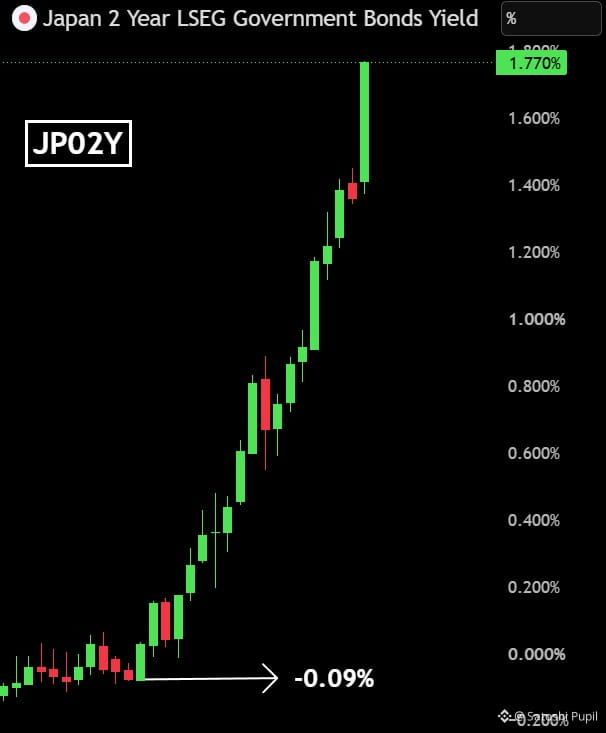
Japan's 2-year bond yield surges to 1.77% today, hitting another 31-year high.
The yield was negative just 3 years ago.
#bonds
Japan's 2-year bond yield surges to 1.77% today, hitting another 31-year high.
The yield was negative just 3 years ago.
#bonds
The yield was negative just 3 years ago.
#bonds
1
107


🟠 Bond Yields Become the Market’s Warning Signal as Fiscal Pressure Builds ⚠️
The trading screen looked calm until one number began climbing. No dramatic headline appeared, yet investors started paying closer attention because bond yields were quietly telling a different story.
That is why bond markets matter beyond fixed income. Yields can reflect expectations about inflation, interest rates, government borrowing, and the compensation investors demand for holding longer-term debt.
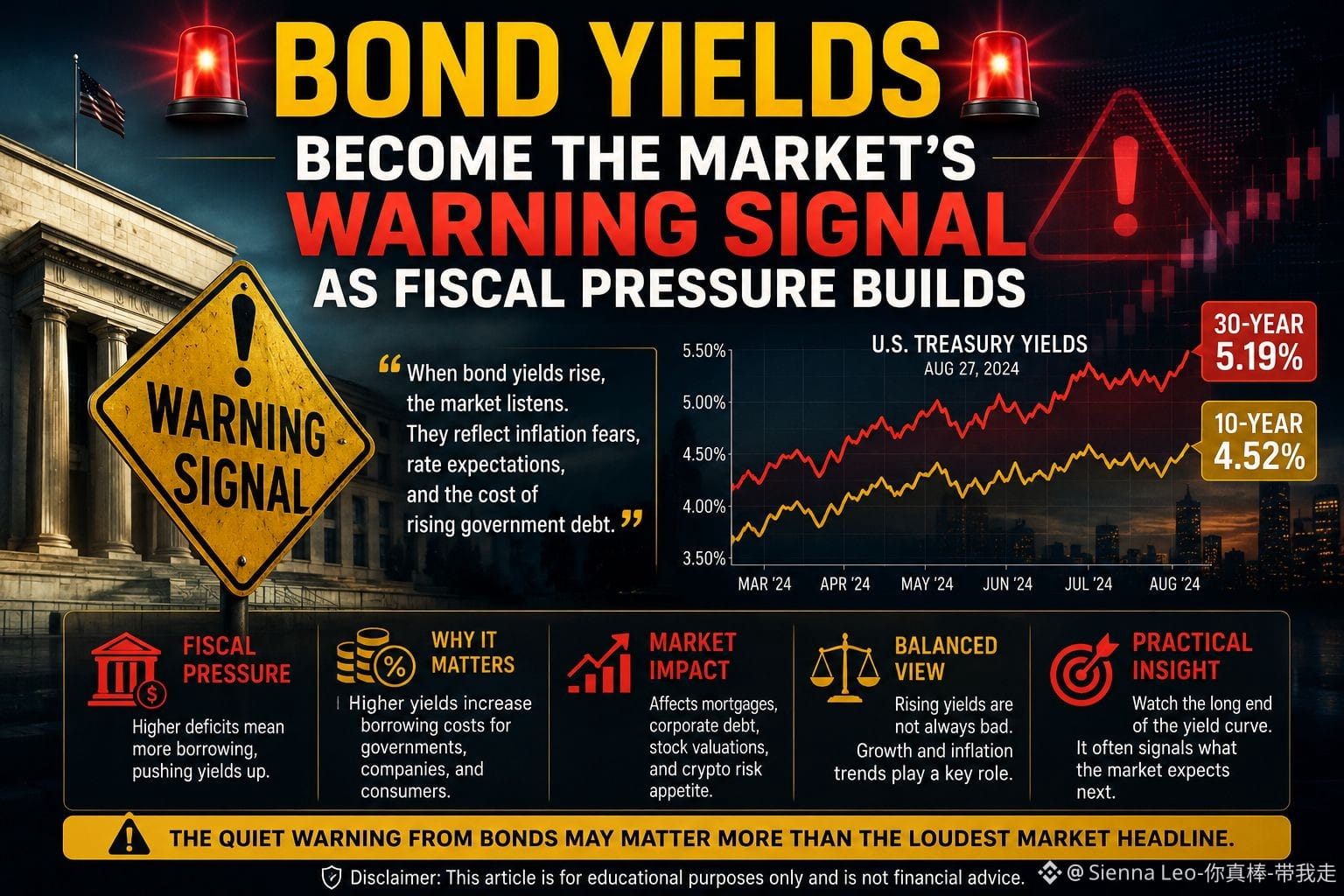
Recent U.S. Treasury data shows the pressure clearly: on August 27, the 10-year yield was around 4.52%, while the 30-year stood near 5.19%.
The interesting part is what happens underneath those numbers. When governments need to finance large deficits, investors may demand higher yields, especially if they believe inflation or future borrowing could remain elevated.
Higher long-term yields can then ripple across the entire market. Mortgage costs, corporate borrowing, equity valuations, and even crypto risk appetite can feel the effect because the global cost of capital is changing.
But rising yields are not automatically a crisis signal. Strong economic growth can also push yields higher, while weaker growth or falling inflation can eventually pull them lower.
My approach is simple: watch the long end of the yield curve, not just central-bank decisions. If long-term yields remain elevated, markets may be pricing fiscal risk that deserves attention.
The quiet warning from bonds may matter more than the loudest market headline.
❓Do you think rising long-term yields are mainly signaling fiscal risk, inflation risk, or stronger economic expectations?
Disclaimer: This article is for educational purposes only and is not financial advice.
#Bonds #TreasuryYields #GlobalMarkets #Write2Earn #GrowWithSAC
🟠 Bond Yields Become the Market’s Warning Signal as Fiscal Pressure Builds ⚠️
The trading screen looked calm until one number began climbing. No dramatic headline appeared, yet investors started paying closer attention because bond yields were quietly telling a different story.
That is why bond markets matter beyond fixed income. Yields can reflect expectations about inflation, interest rates, government borrowing, and the compensation investors demand for holding longer-term debt.
Recent U.S. Treasury data shows the pressure clearly: on August 27, the 10-year yield was around 4.52%, while the 30-year stood near 5.19%.
The interesting part is what happens underneath those numbers. When governments need to finance large deficits, investors may demand higher yields, especially if they believe inflation or future borrowing could remain elevated.
Higher long-term yields can then ripple across the entire market. Mortgage costs, corporate borrowing, equity valuations, and even crypto risk appetite can feel the effect because the global cost of capital is changing.
But rising yields are not automatically a crisis signal. Strong economic growth can also push yields higher, while weaker growth or falling inflation can eventually pull them lower.
My approach is simple: watch the long end of the yield curve, not just central-bank decisions. If long-term yields remain elevated, markets may be pricing fiscal risk that deserves attention.
The quiet warning from bonds may matter more than the loudest market headline.
❓Do you think rising long-term yields are mainly signaling fiscal risk, inflation risk, or stronger economic expectations?
Disclaimer: This article is for educational purposes only and is not financial advice.
#Bonds #TreasuryYields #GlobalMarkets #Write2Earn #GrowWithSAC
The trading screen looked calm until one number began climbing. No dramatic headline appeared, yet investors started paying closer attention because bond yields were quietly telling a different story.
That is why bond markets matter beyond fixed income. Yields can reflect expectations about inflation, interest rates, government borrowing, and the compensation investors demand for holding longer-term debt.
Recent U.S. Treasury data shows the pressure clearly: on August 27, the 10-year yield was around 4.52%, while the 30-year stood near 5.19%.
The interesting part is what happens underneath those numbers. When governments need to finance large deficits, investors may demand higher yields, especially if they believe inflation or future borrowing could remain elevated.
Higher long-term yields can then ripple across the entire market. Mortgage costs, corporate borrowing, equity valuations, and even crypto risk appetite can feel the effect because the global cost of capital is changing.
But rising yields are not automatically a crisis signal. Strong economic growth can also push yields higher, while weaker growth or falling inflation can eventually pull them lower.
My approach is simple: watch the long end of the yield curve, not just central-bank decisions. If long-term yields remain elevated, markets may be pricing fiscal risk that deserves attention.
The quiet warning from bonds may matter more than the loudest market headline.
❓Do you think rising long-term yields are mainly signaling fiscal risk, inflation risk, or stronger economic expectations?
Disclaimer: This article is for educational purposes only and is not financial advice.
#Bonds #TreasuryYields #GlobalMarkets #Write2Earn #GrowWithSAC
355
THE US TREASURY MAY HAVE A $1 TRILLION BAZOOKA.
And if Bessent actually deploys it, the impact could reach far beyond bonds.
The Treasury could potentially tap its nearly $1T Treasury General Account to expand long-term bond buybacks.
The objective?
Push bond prices higher.
Drive long-term yields lower.
Support the Treasury market.
And do it without requiring the Federal Reserve to step in directly.
The scale is what makes this extraordinary.
The Treasury just doubled its buyback size from $2B to at least $4B per operation.
But the relief faded quickly.
The 30Y Treasury yield returned toward 5.25%.
That tells you something important:
$4B may be nowhere near enough.
A much larger program could change the liquidity picture dramatically.
And there is another angle the market may be underestimating.
If Treasury cash is drawn down and liquidity flows back into the financial system, the effects may not stop at bonds.
Stocks could benefit.
Crypto could benefit.
Risk assets could benefit.
But there is a critical distinction:
The full $1T has NOT been committed.
This is potential firepower, not a $1T stimulus check.
Still, the message is powerful.
The US Treasury may have a tool capable of supporting the bond market without waiting for the Fed.
If the bond market breaks, the response may be far bigger than $4B.
The bazooka exists.
Now the market is watching to see whether Bessent pulls the trigger.
#Bitcoin #Crypto #Treasury #Bonds #FederalReserve
THE US TREASURY MAY HAVE A $1 TRILLION BAZOOKA.
And if Bessent actually deploys it, the impact could reach far beyond bonds.
The Treasury could potentially tap its nearly $1T Treasury General Account to expand long-term bond buybacks.
The objective?
Push bond prices higher.
Drive long-term yields lower.
Support the Treasury market.
And do it without requiring the Federal Reserve to step in directly.
The scale is what makes this extraordinary.
The Treasury just doubled its buyback size from $2B to at least $4B per operation.
But the relief faded quickly.
The 30Y Treasury yield returned toward 5.25%.
That tells you something important:
$4B may be nowhere near enough.
A much larger program could change the liquidity picture dramatically.
And there is another angle the market may be underestimating.
If Treasury cash is drawn down and liquidity flows back into the financial system, the effects may not stop at bonds.
Stocks could benefit.
Crypto could benefit.
Risk assets could benefit.
But there is a critical distinction:
The full $1T has NOT been committed.
This is potential firepower, not a $1T stimulus check.
Still, the message is powerful.
The US Treasury may have a tool capable of supporting the bond market without waiting for the Fed.
If the bond market breaks, the response may be far bigger than $4B.
The bazooka exists.
Now the market is watching to see whether Bessent pulls the trigger.
#Bitcoin #Crypto #Treasury #Bonds #FederalReserve
And if Bessent actually deploys it, the impact could reach far beyond bonds.
The Treasury could potentially tap its nearly $1T Treasury General Account to expand long-term bond buybacks.
The objective?
Push bond prices higher.
Drive long-term yields lower.
Support the Treasury market.
And do it without requiring the Federal Reserve to step in directly.
The scale is what makes this extraordinary.
The Treasury just doubled its buyback size from $2B to at least $4B per operation.
But the relief faded quickly.
The 30Y Treasury yield returned toward 5.25%.
That tells you something important:
$4B may be nowhere near enough.
A much larger program could change the liquidity picture dramatically.
And there is another angle the market may be underestimating.
If Treasury cash is drawn down and liquidity flows back into the financial system, the effects may not stop at bonds.
Stocks could benefit.
Crypto could benefit.
Risk assets could benefit.
But there is a critical distinction:
The full $1T has NOT been committed.
This is potential firepower, not a $1T stimulus check.
Still, the message is powerful.
The US Treasury may have a tool capable of supporting the bond market without waiting for the Fed.
If the bond market breaks, the response may be far bigger than $4B.
The bazooka exists.
Now the market is watching to see whether Bessent pulls the trigger.
#Bitcoin #Crypto #Treasury #Bonds #FederalReserve

1
46

·
--
🚨 MARKET SELL-OFF: 🇯🇵 Japanese equities came under renewed pressure today as the global bond market rout continued weighing on risk assets worldwide. 📉👀
Rising bond yields are tightening financial conditions and increasing fears around: ⚠️ Higher borrowing costs
⚠️ Slower economic growth
⚠️ Persistent inflation pressures
⚠️ Valuation stress in equities and tech stocks
Analysts estimate that trillions of yen in market value were erased during the latest market decline as investors reduced exposure to risk-sensitive assets.
The bond market remains the key macro driver influencing stocks, Bitcoin, crypto, and global financial sentiment. 🔥
📌 Follow for the latest updates on bonds, stocks, Bitcoin, crypto, and global financial markets.
#bitcoin #Crypto #Japan #Bonds #BinanceSquare
🚨 MARKET SELL-OFF: 🇯🇵 Japanese equities came under renewed pressure today as the global bond market rout continued weighing on risk assets worldwide. 📉👀
Rising bond yields are tightening financial conditions and increasing fears around: ⚠️ Higher borrowing costs
⚠️ Slower economic growth
⚠️ Persistent inflation pressures
⚠️ Valuation stress in equities and tech stocks
Analysts estimate that trillions of yen in market value were erased during the latest market decline as investors reduced exposure to risk-sensitive assets.
The bond market remains the key macro driver influencing stocks, Bitcoin, crypto, and global financial sentiment. 🔥
📌 Follow for the latest updates on bonds, stocks, Bitcoin, crypto, and global financial markets.
#bitcoin #Crypto #Japan #Bonds #BinanceSquare
Rising bond yields are tightening financial conditions and increasing fears around: ⚠️ Higher borrowing costs
⚠️ Slower economic growth
⚠️ Persistent inflation pressures
⚠️ Valuation stress in equities and tech stocks
Analysts estimate that trillions of yen in market value were erased during the latest market decline as investors reduced exposure to risk-sensitive assets.
The bond market remains the key macro driver influencing stocks, Bitcoin, crypto, and global financial sentiment. 🔥
📌 Follow for the latest updates on bonds, stocks, Bitcoin, crypto, and global financial markets.
#bitcoin #Crypto #Japan #Bonds #BinanceSquare

12

·
--
🚨SPACEX PLANS TO RAISE $25B IN BONDS — WHAT DOES THIS MEAN FOR OUR MARKET?
SpaceX, Elon Musk's aerospace company, is reportedly preparing a high-grade bond issuance worth $25 billion. This isn't a minor move — it's potentially one of the largest fundraising efforts in private tech company history.
Notably, SpaceX is choosing bonds over an IPO or new equity. This signals they want major liquidity without diluting ownership. Funds will likely go toward Starship development, Starlink satellite expansion, and long-term Mars mission infrastructure.
Market impact? When a company the size of SpaceX pulls $25 billion from the bond market, it draws liquidity away from other instruments. Institutional investors who typically allocate to risk assets — including crypto — may temporarily rotate into SpaceX bonds offering competitive yields backed by a powerhouse name.
Watch BTC and ETH price action over the next 2–3 weeks. When global liquidity shifts, crypto always feels it first.
Not financial advice. Always DYOR.
Follow @CoinbroNews for the next update. 🚀
#SpaceX #Elon #Bonds #Crypto #SpaceXLosesOver600BInThreeDays $SPCXB $BTC
🚨SPACEX PLANS TO RAISE $25B IN BONDS — WHAT DOES THIS MEAN FOR OUR MARKET?
SpaceX, Elon Musk's aerospace company, is reportedly preparing a high-grade bond issuance worth $25 billion. This isn't a minor move — it's potentially one of the largest fundraising efforts in private tech company history.
Notably, SpaceX is choosing bonds over an IPO or new equity. This signals they want major liquidity without diluting ownership. Funds will likely go toward Starship development, Starlink satellite expansion, and long-term Mars mission infrastructure.
Market impact? When a company the size of SpaceX pulls $25 billion from the bond market, it draws liquidity away from other instruments. Institutional investors who typically allocate to risk assets — including crypto — may temporarily rotate into SpaceX bonds offering competitive yields backed by a powerhouse name.
Watch BTC and ETH price action over the next 2–3 weeks. When global liquidity shifts, crypto always feels it first.
Not financial advice. Always DYOR.
Follow @CoinbroNews for the next update. 🚀
#SpaceX #Elon #Bonds #Crypto #SpaceXLosesOver600BInThreeDays $SPCXB $BTC
SpaceX, Elon Musk's aerospace company, is reportedly preparing a high-grade bond issuance worth $25 billion. This isn't a minor move — it's potentially one of the largest fundraising efforts in private tech company history.
Notably, SpaceX is choosing bonds over an IPO or new equity. This signals they want major liquidity without diluting ownership. Funds will likely go toward Starship development, Starlink satellite expansion, and long-term Mars mission infrastructure.
Market impact? When a company the size of SpaceX pulls $25 billion from the bond market, it draws liquidity away from other instruments. Institutional investors who typically allocate to risk assets — including crypto — may temporarily rotate into SpaceX bonds offering competitive yields backed by a powerhouse name.
Watch BTC and ETH price action over the next 2–3 weeks. When global liquidity shifts, crypto always feels it first.
Not financial advice. Always DYOR.
Follow @CoinbroNews for the next update. 🚀
#SpaceX #Elon #Bonds #Crypto #SpaceXLosesOver600BInThreeDays $SPCXB $BTC


118
Log in to explore more content
Join global crypto users on Binance Square
⚡️ Get latest and useful information about crypto.
💬 Trusted by the world’s largest crypto exchange.
👍 Discover real insights from verified creators.
Email / Phone number
Trending Topics
1
#AIStocksWhatNext
892,703 views
6,682 Discussing
2
#BitcoinRejectedAt$87,300Twice
0 views
0 Discussing
3
#BCHJumps28%OnCMEFuturesListing
12,031 views
543 Discussing
4
#WallStreetEarningsRevisionsTurnBearish
8,759 views
400 Discussing
5
#DollarIndexReclaims101
7,086 views
341 Discussing
6
#21SharesLaunchesEuropesFirstZcashETP
42,550 views
1,128 Discussing
7
#CardanoJoinsX402PaymentStandard
26,679 views
796 Discussing
8
#BitcoinTops$87KAtEightMonthHigh
12,684 views
134 Discussing
9
#ZECBreaksAbove$1600AtRecordHigh
8,929 views
108 Discussing
10
#BitwiseNEARStakingETPAssetsTop$100M
42,405 views
108 Discussing