
Satoshi Pupil
717 Posts

Satoshi Pupil
Report
Block User
#binance
Frequent Trader
4.1 Years
26 Following
66 Followers
826 Liked
Posts
All
Quotes
Videos
See translation
НБУ відмовився підтримати законопроєкт про легалізацію криптовалют в Україні
Нацбанк не погодив чинну редакцію законопроєкту №10225-д, який передбачає регулювання криптобірж та оподаткування криптоактивів.
Регулятор вимагає доопрацювання документа. Це може затримати ухвалення закону та запуск повноцінного регулювання крипторинку в Україні.
#УкраїнаКрипто
Нацбанк не погодив чинну редакцію законопроєкту №10225-д, який передбачає регулювання криптобірж та оподаткування криптоактивів.
Регулятор вимагає доопрацювання документа. Це може затримати ухвалення закону та запуск повноцінного регулювання крипторинку в Україні.
#УкраїнаКрипто
11
Oil prices remain volatile due to threats to supplies through the Strait of Hormuz.
On November 6, oil prices rose slightly amid expectations that tensions regarding a potential conflict with Iran might ease following the defeat of U.S. President Donald Trump’s party in the elections.
At the same time, risks to oil supplies from the Middle East, stemming from the ongoing conflict, continue to weigh on the market.
On Friday, Brent crude futures for January delivery rose by $1.29, or 1.31%, to $99.58 per barrel as of 05:04 GMT.
U.S. West Texas Intermediate (WTI) crude increased by 86 cents, or 0.95%, to $91.38 per barrel. During morning trading, Brent prices briefly surpassed the $100-per-barrel mark.
Tim Waterer, chief analyst at KCM, described Friday’s gains as a "technical rebound" following a sharp sell-off triggered by the U.S. election results.
208
The French bank Crédit Mutuel Arkéa has fallen victim to a massive cyberattack, during which approximately €100 million was stolen from its accounts, reports *Rapporteur*.
The perpetrators gained access to an account used by the financial institution for transferring funds to other banks and managed to withdraw a significant sum.
According to the report, the hackers subsequently converted the stolen funds into cryptocurrency via specialized platforms. Meanwhile, the bank stated that it had managed to block a portion of the funds. The institution is currently taking further steps to recover the remaining money.
Crédit Mutuel Arkéa has ruled out human error as the cause of the incident, asserting instead that it was a "sophisticated attack carried out from the outside." The Paris Public Prosecutor's Office has launched an official investigation into the cybercrime, focusing on an "attack on an automated data processing system committed by an organized group."
The exact extent of the losses is still being determined. While the bank did not confirm a report by the newspaper *Le Télégramme* suggesting losses could reach €118 million, it acknowledged that the amount stolen is substantial.
Despite the scale of the incident, the financial institution has assured that its stability remains secure. "The amount affected by the attack is not such that it would undermine the financial health or stability of the group," Arkéa emphasized.
62
Oracle shares fall 4% after Microsoft reportedly scales back a cloud AI capacity deal.Oracle shares fell 4% on Friday after Bloomberg reported that Microsoft is ending an agreement to lease artificial intelligence computing capacity from the company, fueling investor concerns regarding the sustainability of AI infrastructure spending following a sharp sell-off in AI-related stocks on Thursday.
According to sources, the leased capacity became less useful over time as it no longer met Microsoft’s specifications. The Oracle hardware relied on older-generation Nvidia chips, which may have limited its suitability for Microsoft’s evolving artificial intelligence workloads.
Microsoft declined to comment. An Oracle spokesperson stated that demand for its AI infrastructure remains high, including for previous-generation graphics processing units (GPUs).
The deal, announced in 2023, was part of Microsoft’s efforts to secure additional computing power for a new, AI-powered version of its Bing search engine. The total value of the agreement cannot be determined, Bloomberg reports.
This deal was notable because it involved Microsoft leasing servers from a major competitor at a time when demand for AI computing power was outstripping available supply. It served as an early illustration of the scramble among tech companies to secure the infrastructure needed to develop and deploy increasingly powerful AI models.
Oracle sought to dispel concerns regarding the departure by pointing to sustained demand for older-generation GPUs. In September, the company stated that it was renewing four-year GPU contracts at a 20% premium over their original prices.
This distinction could be significant for investors trying to determine whether Microsoft’s decision signals weakening demand for Oracle’s infrastructure, or simply reflects the rapid pace of technological change in the field of artificial intelligence.
The timing of this report is particularly unfavorable for Oracle. Investors are already on edge following a broad sell-off in tech stocks on Thursday, which saw the Nasdaq Composite drop 5.5% and the Philadelphia Semiconductor Index fall 12%—the sharpest decline since March 2020. This downturn reflects growing concerns regarding spending on AI infrastructure, the expansion of data centers, and the valuations of companies benefiting from this investment boom.
Against this backdrop, news that a major client is winding down an AI computing agreement is likely to attract heightened scrutiny—even if the decision relates more to hardware specifications than to a broader decline in demand.
Oracle shares fall 4% after Microsoft reportedly scales back a cloud AI capacity deal.
Oracle shares fell 4% on Friday after Bloomberg reported that Microsoft is ending an agreement to lease artificial intelligence computing capacity from the company, fueling investor concerns regarding the sustainability of AI infrastructure spending following a sharp sell-off in AI-related stocks on Thursday.
According to sources, the leased capacity became less useful over time as it no longer met Microsoft’s specifications. The Oracle hardware relied on older-generation Nvidia chips, which may have limited its suitability for Microsoft’s evolving artificial intelligence workloads.
Microsoft declined to comment. An Oracle spokesperson stated that demand for its AI infrastructure remains high, including for previous-generation graphics processing units (GPUs).
The deal, announced in 2023, was part of Microsoft’s efforts to secure additional computing power for a new, AI-powered version of its Bing search engine. The total value of the agreement cannot be determined, Bloomberg reports.
This deal was notable because it involved Microsoft leasing servers from a major competitor at a time when demand for AI computing power was outstripping available supply. It served as an early illustration of the scramble among tech companies to secure the infrastructure needed to develop and deploy increasingly powerful AI models.
Oracle sought to dispel concerns regarding the departure by pointing to sustained demand for older-generation GPUs. In September, the company stated that it was renewing four-year GPU contracts at a 20% premium over their original prices.
This distinction could be significant for investors trying to determine whether Microsoft’s decision signals weakening demand for Oracle’s infrastructure, or simply reflects the rapid pace of technological change in the field of artificial intelligence.
The timing of this report is particularly unfavorable for Oracle. Investors are already on edge following a broad sell-off in tech stocks on Thursday, which saw the Nasdaq Composite drop 5.5% and the Philadelphia Semiconductor Index fall 12%—the sharpest decline since March 2020. This downturn reflects growing concerns regarding spending on AI infrastructure, the expansion of data centers, and the valuations of companies benefiting from this investment boom.
Against this backdrop, news that a major client is winding down an AI computing agreement is likely to attract heightened scrutiny—even if the decision relates more to hardware specifications than to a broader decline in demand.
62
At least 42 countries worldwide have stock markets in BEAR MARKET territory.
🇵🇹 Portugal, PSI: −37.9%
🇸🇰Slovakia, SAX: −37.3%
🇹🇭 Thailand, SET: −20.9%
🇺🇦 Ukraine, PFTS: −64.5%
🇷🇺 Russia, MOEX: −42.6%
🇻🇳 Vietnam, HNX: −48.0%
🇹🇼 Taiwan, TAIEX: −20.5%
🇰🇪 Kenya, NSE 20: −33.3%
🇴🇲Oman, MSX 30: −40.2%
🇱🇧 Lebanon, BLOM: −40.6%
🇧🇷 Brazil, Ibovespa: −20.8%
🇱🇻 Latvia, OMX Riga: −31.5%
🇰🇭 Cambodia, CSX: −30.2%
🇷🇸 Serbia, BELEX15: −58.0%
🇯🇵 Japan, Nikkei 225: −21.1%
🇹🇷 Turkey, BIST 100: −25.6%
🇵🇭 Philippines, PSEi: −36.5%
🇧🇭 Bahrain, All Share: −37.5%
🇸🇦 Saudi Arabia, TASI: −51.9%
🇯🇲 Jamaica, JSE Main: −27.3%
🇶🇦 Qatar, QE General: −32.6%
🇱🇺 Luxembourg, LuxX: −30.0%
🇧🇩 Bangladesh, DSEX: −26.5%
🇵🇸 Palestine, Al-Quds: −48.5%
🇰🇷 South Korea, KOSPI: −46.1%
🇯🇴 Jordan, ASE General: −23.6%
🇨🇾 Cyprus, CSE General: −94.4%
🇲🇲 Myanmar, MYANPIX: −34.8%
🇲🇪 Montenegro, MONEX: −60.1%
🇭🇰 Hong Kong, Hang Seng: −26.9%
🇦🇷 Argentina, MSCI Merval: −28.7%
🇻🇪 Venezuela, Caracas IBC: −20.5%
🇬🇷 Greece, Athens General: −60.4%
🇲🇹 Malta, MSE Equity Price: −35.3%
🇨🇳 China, Shanghai Composite: −40.4%
🇮🇩 Indonesia, Jakarta Composite: −45.2%
🇮🇸 Iceland, OMX Iceland All-Share: −76.3%
🇫🇮 Finland, OMX Helsinki All-Share: −29.8%
🇩🇰 Denmark, OMX Copenhagen 20: −44.7%
🇧🇦 Bosnia and Herzegovina, SASX-10: −75.2%
🇧🇧 Barbados, BSE Composite: at least −34.5%
🇦🇪 UAE, Dubai Financial Market General: −28.8%
🇹🇹 Trinidad and Tobago, TTSE Composite: −34.5%
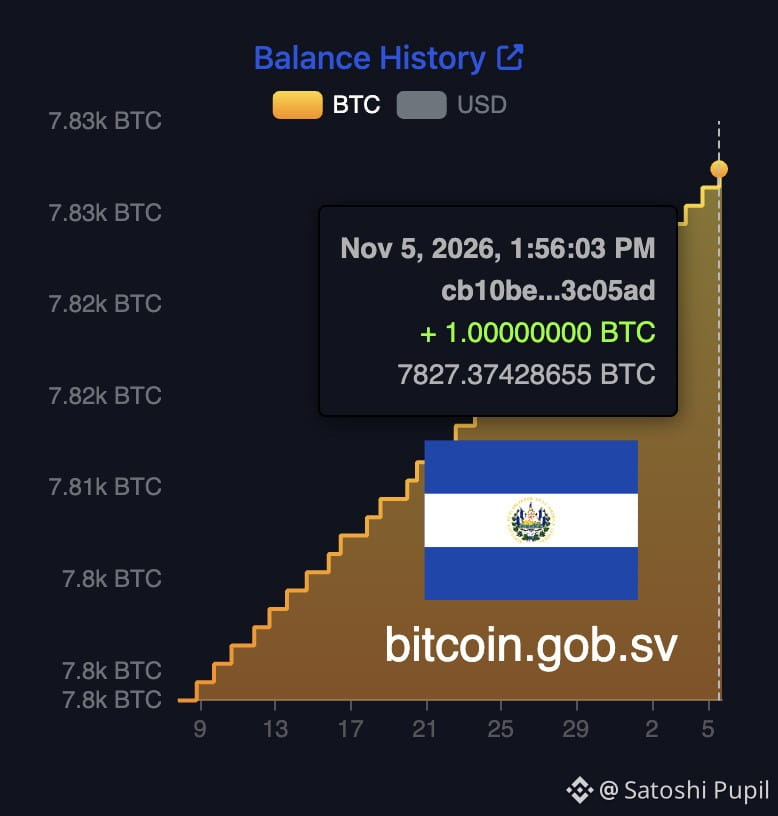
El Salvador purchased another BTC today for its Strategic Bitcoin Reserve.
They now hold 7,827 BTC, worth $593.4 million.
El Salvador purchased another BTC today for its Strategic Bitcoin Reserve.
They now hold 7,827 BTC, worth $593.4 million.
They now hold 7,827 BTC, worth $593.4 million.
27
Drop in the price of BTCA sharp drop in the price of Bitcoin below the $76,000 mark—reaching a local low in the $75,568–$75,600 range—was a direct consequence of a massive sell-off on Wall Street. Concerns regarding an "artificial intelligence (AI) bubble" triggered a $2.5 trillion loss in market capitalization within the technology sector.
The crypto market reacted with an immediate wave of liquidations of traders' margin positions, totaling over $1 billion within 24 hours. Approximately 89% of these losses were borne by "bulls" who had anticipated a continuation of the post-election rally.
Key Factors and the Interconnection Between IT and Crypto
A slowdown in the construction of data centers, coupled with concerns regarding the actual return on investment for the trillions poured into AI infrastructure, led to a decline in the Nasdaq index. Given that Bitcoin has shown a high correlation with traditional capital markets in recent years, institutional investors began exiting risk assets en masse.
A blow to crypto miners: Mining companies that had actively diversified their operations by leasing out computing power for AI-related tasks suffered the heaviest losses, with some seeing their stock prices fall by 15–20%. Furthermore, political uncertainty following the U.S. midterm elections fueled fears regarding potential new regulatory restrictions on energy-intensive data centers. Decline in Related Stocks: The wave of panic has also affected major players in the crypto industry. Shares of Coinbase (COIN) and the corporate treasury giant MicroStrategy (MSTR) lost approximately 10% of their value in a single trading session.
Bitcoin is currently holding a critical support zone in the $75,000–$76,000 range, which represents the average entry price for short-term holders. Analysts outline two potential scenarios:
1. Optimistic: If the AI market stabilizes and spot Bitcoin ETFs see a resumption of capital inflows, BTC could return to the $82,000 resistance zone and subsequently test the $86,000 level by the end of November.
2. Pessimistic: Should the AI bubble continue to deflate and liquidity continue to flow out of the U.S. tech sector, the price of Bitcoin risks breaking through support and falling to the $71,000–$73,000 range—or even down to $60,000 in the event of a prolonged correction.
Drop in the price of BTC
A sharp drop in the price of Bitcoin below the $76,000 mark—reaching a local low in the $75,568–$75,600 range—was a direct consequence of a massive sell-off on Wall Street. Concerns regarding an "artificial intelligence (AI) bubble" triggered a $2.5 trillion loss in market capitalization within the technology sector.
The crypto market reacted with an immediate wave of liquidations of traders' margin positions, totaling over $1 billion within 24 hours. Approximately 89% of these losses were borne by "bulls" who had anticipated a continuation of the post-election rally.
Key Factors and the Interconnection Between IT and Crypto
A slowdown in the construction of data centers, coupled with concerns regarding the actual return on investment for the trillions poured into AI infrastructure, led to a decline in the Nasdaq index. Given that Bitcoin has shown a high correlation with traditional capital markets in recent years, institutional investors began exiting risk assets en masse.
A blow to crypto miners: Mining companies that had actively diversified their operations by leasing out computing power for AI-related tasks suffered the heaviest losses, with some seeing their stock prices fall by 15–20%. Furthermore, political uncertainty following the U.S. midterm elections fueled fears regarding potential new regulatory restrictions on energy-intensive data centers. Decline in Related Stocks: The wave of panic has also affected major players in the crypto industry. Shares of Coinbase (COIN) and the corporate treasury giant MicroStrategy (MSTR) lost approximately 10% of their value in a single trading session.
Bitcoin is currently holding a critical support zone in the $75,000–$76,000 range, which represents the average entry price for short-term holders. Analysts outline two potential scenarios:
1. Optimistic: If the AI market stabilizes and spot Bitcoin ETFs see a resumption of capital inflows, BTC could return to the $82,000 resistance zone and subsequently test the $86,000 level by the end of November.
2. Pessimistic: Should the AI bubble continue to deflate and liquidity continue to flow out of the U.S. tech sector, the price of Bitcoin risks breaking through support and falling to the $71,000–$73,000 range—or even down to $60,000 in the event of a prolonged correction.
2
110
Ethereum plans to transition to quantum-resistant security by the end of 2028
The Ethereum Foundation is preparing to transition to post-quantum cryptography to protect the network and users’ crypto assets from future quantum attacks
Ethereum plans to transition to quantum-resistant security by the end of 2028
The Ethereum Foundation is preparing to transition to post-quantum cryptography to protect the network and users’ crypto assets from future quantum attacks
The Ethereum Foundation is preparing to transition to post-quantum cryptography to protect the network and users’ crypto assets from future quantum attacks
1
3
186
Russia’s Import Substitution Fails: Companies Spend Billions on Foreign Technology
Russia’s attempts to implement its own "import substitution" policy have failed once again. Due to the war launched against Ukraine and severe international isolation, Russian businesses are facing a growing technological lag: the country possesses neither modern, domestically produced equipment nor viable alternatives to Western software.
According to the Foreign Intelligence Service of Ukraine, Russian companies are forced to spend vast sums on IT services from abroad to keep their systems running. In the second quarter of 2026 alone, such expenditures surged by nearly a third, reaching 75 billion rubles.
A primary driver of these technological challenges is an acute shortage of hardware, resulting from disruptions to "parallel import" channels.
While Russia previously managed to procure servers and high-performance graphics accelerators through unofficial channels, such supplies have now all but ceased.
The situation is further exacerbated by the inability of the Russian software market to offer adequate replacements for Western-developed products.

1
5
1.7k
Jeff Bezos led 1892 Holdings may eventually own 69%... or even complete a 100% takeover of Liverpool FC.
The arrangement with current majority owners, FSG, reportedly suggests a “takeover in stages” will occur, allowing the group to slowly familiarize itself with running Liverpool.
Jeff Bezos led 1892 Holdings may eventually own 69%... or even complete a 100% takeover of Liverpool FC.
The arrangement with current majority owners, FSG, reportedly suggests a “takeover in stages” will occur, allowing the group to slowly familiarize itself with running Liverpool.
The arrangement with current majority owners, FSG, reportedly suggests a “takeover in stages” will occur, allowing the group to slowly familiarize itself with running Liverpool.


1
226
PEPE Did Not Care About Market Bleading 🧐
Pepe just hit 600,000 holders and was one of the best-performing cryptocurrencies during a stormy market week.
Meanwhile, Justin Sun quietly accumulated $51.25 million worth of tokens.
The price is now challenging the upper border of the ascending triangle on the daily timeframe, and breakout conditions are in place.
Target levels:
🎯 $0.00000570
🎯 $0.00000660
🎯 $0.00000725
🎯 $0.00000900
1
27
In just 60 minutes, $2.5 TRILLION has been wiped from US stocks, while another $150 BILLION has been erased from crypto.
In just 60 minutes, $2.5 TRILLION has been wiped from US stocks, while another $150 BILLION has been erased from crypto.

2
366
In the last week of October, Samsung Electronics America will launch support for the USDC stablecoin directly within Samsung Wallet for users of compatible Galaxy devices in the United States. USDC will be the first stablecoin to be supported. Users will be able to send USDC to compatible crypto wallets, as well as transfer funds to bank accounts in over 60 countries, where recipients can receive payouts in their local currency. Samsung is developing the service's infrastructure in collaboration with Coinbase and Bastion.
Coinbase will facilitate the operation of USDC as the primary dollar-backed stablecoin within Samsung Wallet, with asset custody managed through Coinbase Prime Vault. Blockchain projects Solana and Sui are also listed as technology partners.
According to Coinbase, the potential user base for this integration exceeds 82 million Galaxy users in the U.S. Samsung views this launch as the first phase of a broader stablecoin integration strategy. Looking ahead, the company envisions the potential for using stablecoins to pay for goods and services—both online and in-store via smartphones—as well as expanding the service to other markets. For the crypto industry, this launch is significant primarily as an example of stablecoins moving beyond specialized crypto applications.
Essentially, Samsung is embedding cross-border transfer tools into a standard mobile wallet, intensifying competition between blockchain-based payments, traditional banks, and conventional money transfer services.
$SAMSUNG
$USDC $SOL
{future}(SOLUSDT)
{future}(USDCUSDT)
In the last week of October, Samsung Electronics America will launch support for the USDC stablecoin directly within Samsung Wallet for users of compatible Galaxy devices in the United States. USDC will be the first stablecoin to be supported. Users will be able to send USDC to compatible crypto wallets, as well as transfer funds to bank accounts in over 60 countries, where recipients can receive payouts in their local currency. Samsung is developing the service's infrastructure in collaboration with Coinbase and Bastion.
Coinbase will facilitate the operation of USDC as the primary dollar-backed stablecoin within Samsung Wallet, with asset custody managed through Coinbase Prime Vault. Blockchain projects Solana and Sui are also listed as technology partners.
According to Coinbase, the potential user base for this integration exceeds 82 million Galaxy users in the U.S. Samsung views this launch as the first phase of a broader stablecoin integration strategy. Looking ahead, the company envisions the potential for using stablecoins to pay for goods and services—both online and in-store via smartphones—as well as expanding the service to other markets. For the crypto industry, this launch is significant primarily as an example of stablecoins moving beyond specialized crypto applications.
Essentially, Samsung is embedding cross-border transfer tools into a standard mobile wallet, intensifying competition between blockchain-based payments, traditional banks, and conventional money transfer services.
$SAMSUNG
$USDC $SOL

1
2
482
Verified
Income from abroad: when you need to pay taxes and file a tax return
Income that Ukrainian citizens receive from sources abroad must be declared and taxed in Ukraine. An exception is income exempt from taxation under the Tax Code of Ukraine or international treaties.
Individuals who, after filing a tax return on their property and income, have determined the amount of their tax liabilities must pay them by 1 August of the year following the reporting year.
If the last day for paying taxes falls on a weekend or public holiday, the deadline is the first business day thereafter.
The Tax Code provides a separate option for citizens who received income abroad.
If, when filing a tax return, a taxpayer does not have documents confirming the amount of income received and taxes paid outside Ukraine, they may submit an application to extend the filing deadline until 31 December of the year following the reporting year.
What do you think about this?
1
4
2.1k
Yesterday, Donald sold $343 million worth of Bitcoin—just one day after Democrats announced plans to investigate the US President’s crypto business.
What could this lead to?
It is possible that negative sentiment will emerge, which could spell trouble for tokens closely linked to Trump—such as MELANIA, TRUMP, and WLFI.
Also, it’s better to play it safe and avoid holding funds in USD-pegged stablecoins, even though they are backed by the US dollar.
2
466
Article
Wall Street’s Reaction to the ElectionMarket Rally: Wall Street Adds $900 Billion Following U.S. Midterm Elections
The U.S. stock market responded to the midterm election results with a powerful surge. During the very first trading session following the vote count, the total market capitalization of the U.S. market increased by approximately $900 billion, completely erasing earlier losses seen in overnight futures trading.
Key session indicators:
Dow Jones Industrial Average: +1.93% (+997.76 points)
S&P 500: +1.14% (+86.51 points)
Nasdaq Composite: +1.07% (+271.36 points)
Political Context and Divided Government
The primary driver of the rally was the resolution of political uncertainty. Based on the election results, the Democratic Party secured control of both the House of Representatives and the Senate. This establishes a "divided government" scenario for the remainder of Donald Trump’s presidential term.
For investors, a divided Washington represents a classic, favorable scenario. It effectively blocks the possibility of passing radical legislative initiatives, implementing large-scale tax changes, or significantly increasing government spending by either party. Such predictability is traditionally viewed positively by investors, as it reduces the risk of fiscal shocks.
Challenges for the Tech Sector and AI
Despite the general optimism, the technology sector faces new risks. Democratic victories in key states and regions—home to major data center hubs—have sparked concerns regarding potential stricter environmental and regulatory constraints on the construction of infrastructure for artificial intelligence.
Nevertheless, even these concerns failed to dampen the rise of the Nasdaq technology index, as investors prioritized the broader easing of systemic risks.
Historical Analogy
Historically, U.S. midterm elections almost invariably serve as a catalyst for the stock market. The dissipation of pre-election tension, combined with a clear picture of the balance of power in Congress, allows Wall Street to shift its focus toward fundamental economic indicators and corporate earnings reports.
Wall Street’s Reaction to the Election
Market Rally: Wall Street Adds $900 Billion Following U.S. Midterm Elections
The U.S. stock market responded to the midterm election results with a powerful surge. During the very first trading session following the vote count, the total market capitalization of the U.S. market increased by approximately $900 billion, completely erasing earlier losses seen in overnight futures trading.
Key session indicators:
Dow Jones Industrial Average: +1.93% (+997.76 points)
S&P 500: +1.14% (+86.51 points)
Nasdaq Composite: +1.07% (+271.36 points)
Political Context and Divided Government
The primary driver of the rally was the resolution of political uncertainty. Based on the election results, the Democratic Party secured control of both the House of Representatives and the Senate. This establishes a "divided government" scenario for the remainder of Donald Trump’s presidential term.
For investors, a divided Washington represents a classic, favorable scenario. It effectively blocks the possibility of passing radical legislative initiatives, implementing large-scale tax changes, or significantly increasing government spending by either party. Such predictability is traditionally viewed positively by investors, as it reduces the risk of fiscal shocks.
Challenges for the Tech Sector and AI
Despite the general optimism, the technology sector faces new risks. Democratic victories in key states and regions—home to major data center hubs—have sparked concerns regarding potential stricter environmental and regulatory constraints on the construction of infrastructure for artificial intelligence.
Nevertheless, even these concerns failed to dampen the rise of the Nasdaq technology index, as investors prioritized the broader easing of systemic risks.
Historical Analogy
Historically, U.S. midterm elections almost invariably serve as a catalyst for the stock market. The dissipation of pre-election tension, combined with a clear picture of the balance of power in Congress, allows Wall Street to shift its focus toward fundamental economic indicators and corporate earnings reports.
1
52
2026 U.S. Congressional ElectionsAccording to the results of the US midterm elections held on November 3, 2026, the Democratic Party won a decisive majority in the US Senate, regaining control of the upper chamber. This victory marked a significant political shift, as Democrats managed to win races in traditionally "red" states where they had not won in decades.
📊 Key Results and Balance of Power
New Majority: According to projections by Associated Press (AP), Democrats secured at least 54 out of 100 seats in the Senate (they needed to flip 4 seats to reach the minimum majority of 51).Total Scale: A total of 35 Senate seats were up for reelection (33 Class 2 seats and 2 special elections in Florida and Ohio).Control of Congress: In addition to the Senate, the Democratic Party is also projected to win the House of Representatives, gaining full control over the legislative branch of the US government.
🗳️ Key and Historic Races
Democrats managed to flip six strategically important seats from the Republicans:
Texas: James Talarico defeated the state's Republican Attorney General, Ken Paxton. This is the first Democratic Senate win in Texas since 1988, despite Elon Musk spending over $212 million on Paxton's campaign.Kansas: Pastor Adam Hamilton won against incumbent Republican Senator Roger Marshall, marking the first Democratic Senate victory in the state since 1932.South Carolina: Annie Andrews won her race and will become the state's first female Senator (Democrats had not won here since 1998). She will replace Darlene Graham, who temporarily held the seat following the death of her brother, Lindsey Graham.North Carolina: Former Governor Roy Cooper defeated Trump-backed Republican National Committee Chairman Michael Whatley.Ohio: Former Democratic Senator Sherrod Brown regained his seat, defeating Republican Jon Husted.Iowa: Democrat Josh Turek won a highly competitive race against Republican Ashley Hinson.
Meanwhile, Republicans held their ground in Florida (where Ashley Moody, previously appointed to replace Marco Rubio, won) and West Virginia (where Shelley Moore Capito was reelected).
🏛️ Political Aftermath and Reaction
Donald Trump's Stance: Incumbent US President Donald Trump stated in an interview with The New York Times that he is ready to "accept the election results" and work with Democrats. However, on his social media platform Truth Social, he noted that Republicans lost because "he wasn't on the ballot." He also warned that he would veto Democratic legislation he deems unacceptable.Impact on Ukraine: Senate Democratic Leader Chuck Schumer stated that "help is on the way." The shift in congressional control theoretically allows Democrats to pass military and financial aid packages much faster. However, Ukrainian diplomats and experts note that foreign policy is primarily shaped by the White House, so a drastic pivot in the administration's course is not expected, and Ukraine faces a complex two years ahead.
The newly elected senators will officially assume office on January 3, 2027.
What do you think of the election results? In your opinion, will these elections affect Trump’s future as President of the United States?
What are your thoughts on the potential future development of the cryptocurrency market?
2026 U.S. Congressional Elections
According to the results of the US midterm elections held on November 3, 2026, the Democratic Party won a decisive majority in the US Senate, regaining control of the upper chamber. This victory marked a significant political shift, as Democrats managed to win races in traditionally "red" states where they had not won in decades.
📊 Key Results and Balance of Power
New Majority: According to projections by Associated Press (AP), Democrats secured at least 54 out of 100 seats in the Senate (they needed to flip 4 seats to reach the minimum majority of 51).Total Scale: A total of 35 Senate seats were up for reelection (33 Class 2 seats and 2 special elections in Florida and Ohio).Control of Congress: In addition to the Senate, the Democratic Party is also projected to win the House of Representatives, gaining full control over the legislative branch of the US government.
🗳️ Key and Historic Races
Democrats managed to flip six strategically important seats from the Republicans:
Texas: James Talarico defeated the state's Republican Attorney General, Ken Paxton. This is the first Democratic Senate win in Texas since 1988, despite Elon Musk spending over $212 million on Paxton's campaign.Kansas: Pastor Adam Hamilton won against incumbent Republican Senator Roger Marshall, marking the first Democratic Senate victory in the state since 1932.South Carolina: Annie Andrews won her race and will become the state's first female Senator (Democrats had not won here since 1998). She will replace Darlene Graham, who temporarily held the seat following the death of her brother, Lindsey Graham.North Carolina: Former Governor Roy Cooper defeated Trump-backed Republican National Committee Chairman Michael Whatley.Ohio: Former Democratic Senator Sherrod Brown regained his seat, defeating Republican Jon Husted.Iowa: Democrat Josh Turek won a highly competitive race against Republican Ashley Hinson.
Meanwhile, Republicans held their ground in Florida (where Ashley Moody, previously appointed to replace Marco Rubio, won) and West Virginia (where Shelley Moore Capito was reelected).
🏛️ Political Aftermath and Reaction
Donald Trump's Stance: Incumbent US President Donald Trump stated in an interview with The New York Times that he is ready to "accept the election results" and work with Democrats. However, on his social media platform Truth Social, he noted that Republicans lost because "he wasn't on the ballot." He also warned that he would veto Democratic legislation he deems unacceptable.Impact on Ukraine: Senate Democratic Leader Chuck Schumer stated that "help is on the way." The shift in congressional control theoretically allows Democrats to pass military and financial aid packages much faster. However, Ukrainian diplomats and experts note that foreign policy is primarily shaped by the White House, so a drastic pivot in the administration's course is not expected, and Ukraine faces a complex two years ahead.
The newly elected senators will officially assume office on January 3, 2027.
What do you think of the election results? In your opinion, will these elections affect Trump’s future as President of the United States?
What are your thoughts on the potential future development of the cryptocurrency market?
1
127
Bad news for all of us cryptocurrency holders
Ukraine is preparing new crypto taxes
The Verkhovna Rada is preparing to consider draft law No. 10225-д, which is intended to regulate crypto.
The tax would apply only to profits made.
For example: you bought BTC for $10k and sold it for $15k — tax would be charged on the $5,000 profit.
What else is being proposed:
▪️ Exchanging one cryptocurrency for another — tax-free.
▪️ A transitional 5% personal income tax rate for certain transactions involving assets acquired earlier.
▪️ Exemption from tax for small annual incomes (up to the minimum wage in Ukraine).
▪️ Mandatory authorization for crypto exchanges and stricter checks on the source of funds.
At this stage, the bill is expected to be passed in November, with the new rules coming into effect in 2027.
But until the law is finally passed, nothing changes — the old rules remain in effect.
8
2.9k
Log in to explore more content
Join global crypto users on Binance Square
⚡️ Get latest and useful information about crypto.
💬 Trusted by the world’s largest crypto exchange.
👍 Discover real insights from verified creators.
Email / Phone number
Trending Topics
BitcoinRebounds$75KAsChipsLead
3,981 views
91 Discussing
Market Watch | Bitcoin Rebounds to $75,600 After Dip Below $75,000 as Chip Stocks Lead Rally on Jobs Beat
Binance News
·9 Likes
·3.9k views
JobsReportRaisesHikeOdds
73,956 views
819 Discussing
US Data Center Rules May Constrain AI Expansion
8,711 views
91 Discussing