
Stink meaner
142 Posts

Stink meaner
Report
Block User
Family time.Timeless | Crypto Nuthead | Web3 Noobie | Gamer until 90 | Zen trader
25 Following
38 Followers
220 Liked
Posts
Portfolio
All
Quotes
·
--
⚠️ $14B Of Bitcoin Options Expire Friday. But That Doesn't Mean $14B Is About To Hit The Market.
#$14BBitcoinOptionsExpireFriday
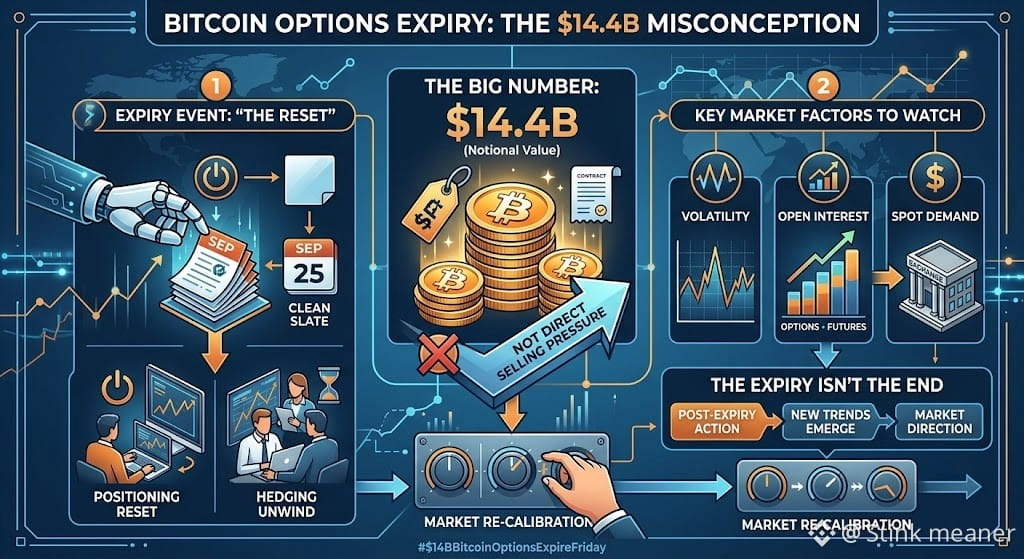
Around 181,896 BTC worth of options are scheduled to expire September 25, with the notional value around $14.4B at the referenced BTC price.
That number sounds terrifying.
But it's not $14B of Bitcoin waiting to be bought or sold.
It's the notional value of the contracts.
The more interesting question is what happens to hedging and positioning around the expiry.
And there's another reason to pay attention:
BTC has just moved sharply higher while leverage is rebuilding. Open interest in perpetual futures has climbed toward $160B.
So Friday isn't automatically bullish or bearish.
It is a positioning reset point.
I'd be watching what happens to volatility, open interest and spot demand after the contracts roll off.
Sometimes the expiry isn't the event.
It's what the market does when the positioning disappears.
Options notional value should not be interpreted as expected buying/selling pressure. Expiry direction depends on positioning, hedging and market conditions.
$BTC $ETH
#BitcoinOptions #AIStocksWhatNext #BitcoinBreaksAboveMayHighNears$86K #StrategyAdds950Bitcoin
⚠️ $14B Of Bitcoin Options Expire Friday. But That Doesn't Mean $14B Is About To Hit The Market.
#$14BBitcoinOptionsExpireFriday
Around 181,896 BTC worth of options are scheduled to expire September 25, with the notional value around $14.4B at the referenced BTC price.
That number sounds terrifying.
But it's not $14B of Bitcoin waiting to be bought or sold.
It's the notional value of the contracts.
The more interesting question is what happens to hedging and positioning around the expiry.
And there's another reason to pay attention:
BTC has just moved sharply higher while leverage is rebuilding. Open interest in perpetual futures has climbed toward $160B.
So Friday isn't automatically bullish or bearish.
It is a positioning reset point.
I'd be watching what happens to volatility, open interest and spot demand after the contracts roll off.
Sometimes the expiry isn't the event.
It's what the market does when the positioning disappears.
Options notional value should not be interpreted as expected buying/selling pressure. Expiry direction depends on positioning, hedging and market conditions.
$BTC $ETH
#BitcoinOptions #AIStocksWhatNext #BitcoinBreaksAboveMayHighNears$86K #StrategyAdds950Bitcoin
#$14BBitcoinOptionsExpireFriday
Around 181,896 BTC worth of options are scheduled to expire September 25, with the notional value around $14.4B at the referenced BTC price.
That number sounds terrifying.
But it's not $14B of Bitcoin waiting to be bought or sold.
It's the notional value of the contracts.
The more interesting question is what happens to hedging and positioning around the expiry.
And there's another reason to pay attention:
BTC has just moved sharply higher while leverage is rebuilding. Open interest in perpetual futures has climbed toward $160B.
So Friday isn't automatically bullish or bearish.
It is a positioning reset point.
I'd be watching what happens to volatility, open interest and spot demand after the contracts roll off.
Sometimes the expiry isn't the event.
It's what the market does when the positioning disappears.
Options notional value should not be interpreted as expected buying/selling pressure. Expiry direction depends on positioning, hedging and market conditions.
$BTC $ETH
#BitcoinOptions #AIStocksWhatNext #BitcoinBreaksAboveMayHighNears$86K #StrategyAdds950Bitcoin
2
17
·
--
🐕 DOGE Just Jumped 15%. The Interesting Part Isn't the Pump...
#dogecoinrises15%
DOGE surged more than 15% above $0.10 as crypto rebounded — the strongest move among major tokens.
But look underneath it.
More than $1B in crypto positions were liquidated over the same period, and roughly 82% were shorts.
That matters because forced short closures create automatic buying.
So the real question isn't:
“Why is DOGE pumping?”
It's:
“Who is still buying once the shorts are gone?”
If DOGE's spot volume and demand remain elevated after the liquidation wave fades, that's a very different signal from a move powered primarily by leverage unwinding.
And that's what I'd watch next.
The candle gets the attention.
What happens after the candle tells us more.
$DOGE $BTC $SHIB
{future}(DOGEUSDT)
#Dogecoin #CryptoMarketMoves #memecoins #Write2Earn
The 15% move and liquidation data are observed market events; they do not establish that DOGE's rally was caused solely by short covering or that the move will continue.
🐕 DOGE Just Jumped 15%. The Interesting Part Isn't the Pump...
#dogecoinrises15%
DOGE surged more than 15% above $0.10 as crypto rebounded — the strongest move among major tokens.
But look underneath it.
More than $1B in crypto positions were liquidated over the same period, and roughly 82% were shorts.
That matters because forced short closures create automatic buying.
So the real question isn't:
“Why is DOGE pumping?”
It's:
“Who is still buying once the shorts are gone?”
If DOGE's spot volume and demand remain elevated after the liquidation wave fades, that's a very different signal from a move powered primarily by leverage unwinding.
And that's what I'd watch next.
The candle gets the attention.
What happens after the candle tells us more.
$DOGE $BTC $SHIB
#Dogecoin #CryptoMarketMoves #memecoins #Write2Earn
The 15% move and liquidation data are observed market events; they do not establish that DOGE's rally was caused solely by short covering or that the move will continue.
#dogecoinrises15%
DOGE surged more than 15% above $0.10 as crypto rebounded — the strongest move among major tokens.
But look underneath it.
More than $1B in crypto positions were liquidated over the same period, and roughly 82% were shorts.
That matters because forced short closures create automatic buying.
So the real question isn't:
“Why is DOGE pumping?”
It's:
“Who is still buying once the shorts are gone?”
If DOGE's spot volume and demand remain elevated after the liquidation wave fades, that's a very different signal from a move powered primarily by leverage unwinding.
And that's what I'd watch next.
The candle gets the attention.
What happens after the candle tells us more.
$DOGE $BTC $SHIB
#Dogecoin #CryptoMarketMoves #memecoins #Write2Earn
The 15% move and liquidation data are observed market events; they do not establish that DOGE's rally was caused solely by short covering or that the move will continue.

1
91
·
--
🚨 Crypto Just Reclaimed $3T. But What Actually Drove It?
#CryptoMarketCapReclaims$3Trillion
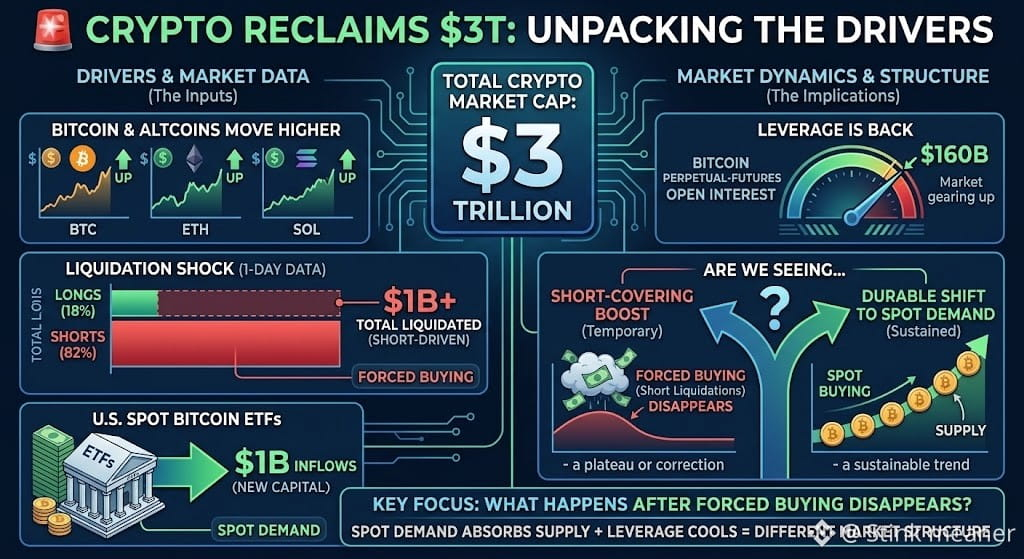
The total crypto market cap briefly moved back above $3T as BTC pushed higher and altcoins followed. But underneath the recovery, more than $1B in crypto positions were liquidated, with shorts accounting for roughly 82% of the total.
At the same time, U.S. spot Bitcoin ETFs saw close to $1B in inflows, giving the move something leverage alone can't explain.
That's the interesting part.
Are we seeing fresh spot demand return, or is the market simply getting another boost from short covering?
Because leverage is already coming back. Bitcoin perpetual-futures open interest has climbed toward $160B.
So the $3T reclaim isn't the confirmation.
What happens after the forced buying disappears is.
If spot demand keeps absorbing supply while leverage cools, that's a very different market structure from one powered mainly by liquidations.
The $3T reclaim, ETF flows and liquidations are observed market data; whether they represent a durable shift from leverage-driven recovery to sustained spot demand remains unconfirmed.
$BTC $ETH $SOL
#bitcoin #CryptoMarket #BitcoinETFs #BinanceSquareTalks
🚨 Crypto Just Reclaimed $3T. But What Actually Drove It?
#CryptoMarketCapReclaims$3Trillion
The total crypto market cap briefly moved back above $3T as BTC pushed higher and altcoins followed. But underneath the recovery, more than $1B in crypto positions were liquidated, with shorts accounting for roughly 82% of the total.
At the same time, U.S. spot Bitcoin ETFs saw close to $1B in inflows, giving the move something leverage alone can't explain.
That's the interesting part.
Are we seeing fresh spot demand return, or is the market simply getting another boost from short covering?
Because leverage is already coming back. Bitcoin perpetual-futures open interest has climbed toward $160B.
So the $3T reclaim isn't the confirmation.
What happens after the forced buying disappears is.
If spot demand keeps absorbing supply while leverage cools, that's a very different market structure from one powered mainly by liquidations.
The $3T reclaim, ETF flows and liquidations are observed market data; whether they represent a durable shift from leverage-driven recovery to sustained spot demand remains unconfirmed.
$BTC $ETH $SOL
#bitcoin #CryptoMarket #BitcoinETFs #BinanceSquareTalks
#CryptoMarketCapReclaims$3Trillion
The total crypto market cap briefly moved back above $3T as BTC pushed higher and altcoins followed. But underneath the recovery, more than $1B in crypto positions were liquidated, with shorts accounting for roughly 82% of the total.
At the same time, U.S. spot Bitcoin ETFs saw close to $1B in inflows, giving the move something leverage alone can't explain.
That's the interesting part.
Are we seeing fresh spot demand return, or is the market simply getting another boost from short covering?
Because leverage is already coming back. Bitcoin perpetual-futures open interest has climbed toward $160B.
So the $3T reclaim isn't the confirmation.
What happens after the forced buying disappears is.
If spot demand keeps absorbing supply while leverage cools, that's a very different market structure from one powered mainly by liquidations.
The $3T reclaim, ETF flows and liquidations are observed market data; whether they represent a durable shift from leverage-driven recovery to sustained spot demand remains unconfirmed.
$BTC $ETH $SOL
#bitcoin #CryptoMarket #BitcoinETFs #BinanceSquareTalks
1
97
·
--
🥊Muse vs ChatGPT...
#museovertakeschatgptastopfreeiosapp
...Muse Beat ChatGPT. That's Not the Interesting Part.
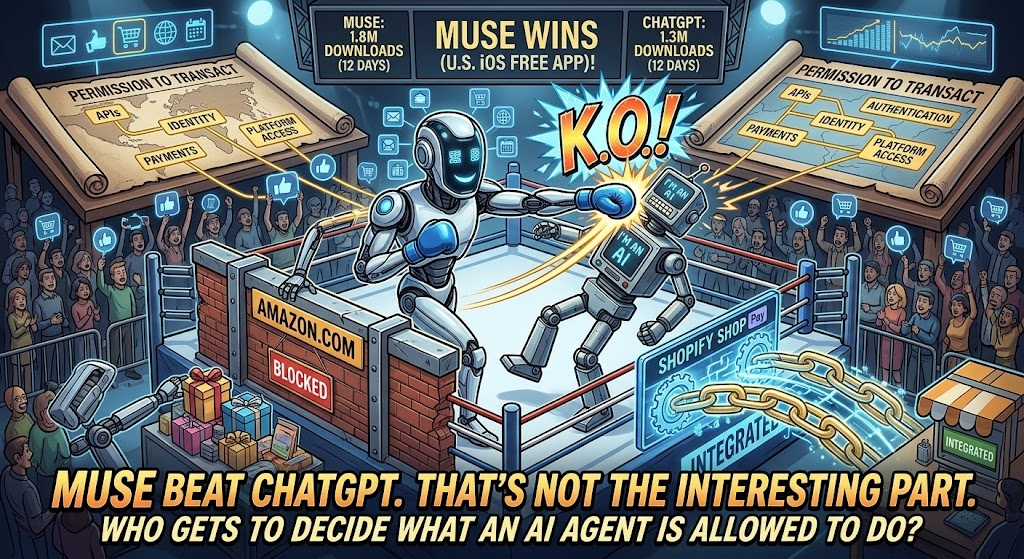
Meta's Muse reached #1 on the U.S. iOS free-app chart, while Apptopia estimates it generated 1.8M U.S./Canada iOS downloads in its first 12 days vs. 1.3M for ChatGPT over the same period.
But this isn't simply another chatbot winning users.
Muse is built to act: manage email, browse, book, shop and execute tasks with user-controlled permissions.
And almost immediately, the bigger problem appeared.
Amazon blocked Muse.
Shopify, meanwhile, is integrating Shop Pay with Muse.
That's the emerging fault line:
AI agents want access to the internet.
Platforms control that access.
If agents become the interface between consumers and businesses, the scarce resource may not be intelligence.
It may be permission to transact.
That puts identity, authentication, payments, APIs and platform access at the center of the next AI race.
Muse's App Store ranking may therefore be less important than what happens next:
Who gets to decide what an AI agent is allowed to do?
#AIStocksWhatNext #AIAgents #BinanceSquareFamily #AI
🥊Muse vs ChatGPT...
#museovertakeschatgptastopfreeiosapp
...Muse Beat ChatGPT. That's Not the Interesting Part.
Meta's Muse reached #1 on the U.S. iOS free-app chart, while Apptopia estimates it generated 1.8M U.S./Canada iOS downloads in its first 12 days vs. 1.3M for ChatGPT over the same period.
But this isn't simply another chatbot winning users.
Muse is built to act: manage email, browse, book, shop and execute tasks with user-controlled permissions.
And almost immediately, the bigger problem appeared.
Amazon blocked Muse.
Shopify, meanwhile, is integrating Shop Pay with Muse.
That's the emerging fault line:
AI agents want access to the internet.
Platforms control that access.
If agents become the interface between consumers and businesses, the scarce resource may not be intelligence.
It may be permission to transact.
That puts identity, authentication, payments, APIs and platform access at the center of the next AI race.
Muse's App Store ranking may therefore be less important than what happens next:
Who gets to decide what an AI agent is allowed to do?
#AIStocksWhatNext #AIAgents #BinanceSquareFamily #AI
#museovertakeschatgptastopfreeiosapp
...Muse Beat ChatGPT. That's Not the Interesting Part.
Meta's Muse reached #1 on the U.S. iOS free-app chart, while Apptopia estimates it generated 1.8M U.S./Canada iOS downloads in its first 12 days vs. 1.3M for ChatGPT over the same period.
But this isn't simply another chatbot winning users.
Muse is built to act: manage email, browse, book, shop and execute tasks with user-controlled permissions.
And almost immediately, the bigger problem appeared.
Amazon blocked Muse.
Shopify, meanwhile, is integrating Shop Pay with Muse.
That's the emerging fault line:
AI agents want access to the internet.
Platforms control that access.
If agents become the interface between consumers and businesses, the scarce resource may not be intelligence.
It may be permission to transact.
That puts identity, authentication, payments, APIs and platform access at the center of the next AI race.
Muse's App Store ranking may therefore be less important than what happens next:
Who gets to decide what an AI agent is allowed to do?
#AIStocksWhatNext #AIAgents #BinanceSquareFamily #AI
1
191
·
--
#museovertakeschatgptastopfreeiosapp
🔐 AI Agents May Have a Privacy Problem
An autonomous agent can eventually discover information, execute a trade, pay for a service and move assets without a human clicking through every step.
But there's an obvious problem:
What if every action is publicly visible?
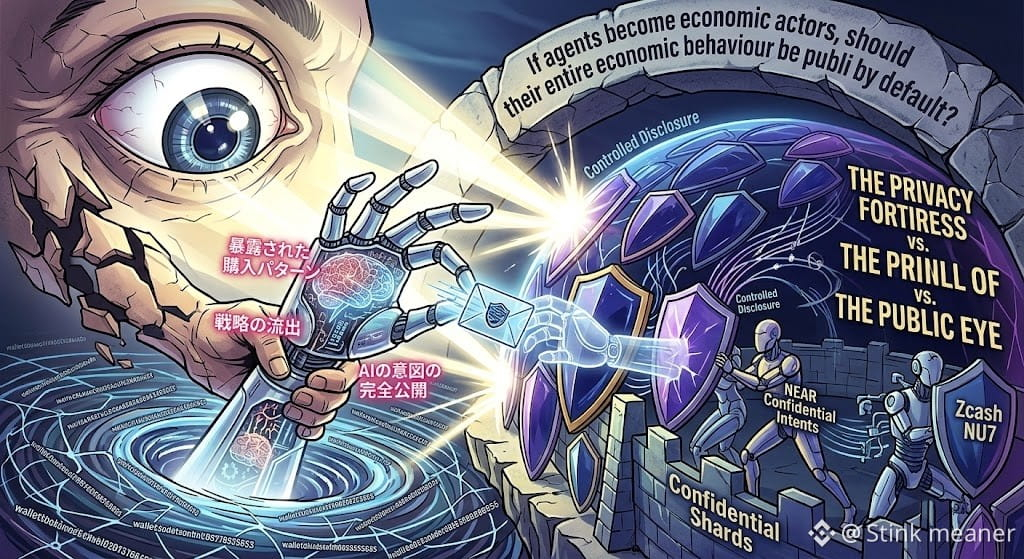
NEAR's Confidential Intents is built around exactly this issue.
Its private-shard architecture keeps transaction details away from public mempools, while allowing selective disclosure for compliance. NEAR explicitly positions the system for institutions, enterprises and autonomous AI agents.
That matters because agent activity could expose more than a wallet balance.
It could reveal:
what an agent is buying
→ how much it is buying
→ when it is buying
→ which strategy it is executing.
And Zcash is becoming connected to this infrastructure from another direction: ZODL, a Zcash-focused wallet, uses NEAR Intents for cross-chain swaps into shielded ZEC.
Meanwhile, Zcash's proposed NU7 upgrade includes a 25-second block target among the candidate changes, although the final NU7 contents and activation remain unsettled.
So two different approaches are converging on the same broader problem:
public liquidity + autonomous execution → greater demand for controlled visibility.
That doesn't mean AI will automatically drive demand for privacy coins.
But it raises a question the industry hasn't fully answered:
If agents become economic actors, should their entire economic behaviour be public by default?
Privacy demand from autonomous agents is an emerging use-case thesis; current infrastructure does not establish future adoption at scale: DYOR!
$ZEC $NEAR $ETH
{future}(ZECUSDT)
{future}(NEARUSDT)
#XRPRises8% #StrategyAdds950Bitcoin #CardanoAddedToX402KitForADAPayments #AIPrivacy
#museovertakeschatgptastopfreeiosapp
🔐 AI Agents May Have a Privacy Problem
An autonomous agent can eventually discover information, execute a trade, pay for a service and move assets without a human clicking through every step.
But there's an obvious problem:
What if every action is publicly visible?
NEAR's Confidential Intents is built around exactly this issue.
Its private-shard architecture keeps transaction details away from public mempools, while allowing selective disclosure for compliance. NEAR explicitly positions the system for institutions, enterprises and autonomous AI agents.
That matters because agent activity could expose more than a wallet balance.
It could reveal:
what an agent is buying
→ how much it is buying
→ when it is buying
→ which strategy it is executing.
And Zcash is becoming connected to this infrastructure from another direction: ZODL, a Zcash-focused wallet, uses NEAR Intents for cross-chain swaps into shielded ZEC.
Meanwhile, Zcash's proposed NU7 upgrade includes a 25-second block target among the candidate changes, although the final NU7 contents and activation remain unsettled.
So two different approaches are converging on the same broader problem:
public liquidity + autonomous execution → greater demand for controlled visibility.
That doesn't mean AI will automatically drive demand for privacy coins.
But it raises a question the industry hasn't fully answered:
If agents become economic actors, should their entire economic behaviour be public by default?
Privacy demand from autonomous agents is an emerging use-case thesis; current infrastructure does not establish future adoption at scale: DYOR!
$ZEC $NEAR $ETH
#XRPRises8% #StrategyAdds950Bitcoin #CardanoAddedToX402KitForADAPayments #AIPrivacy
🔐 AI Agents May Have a Privacy Problem
An autonomous agent can eventually discover information, execute a trade, pay for a service and move assets without a human clicking through every step.
But there's an obvious problem:
What if every action is publicly visible?
NEAR's Confidential Intents is built around exactly this issue.
Its private-shard architecture keeps transaction details away from public mempools, while allowing selective disclosure for compliance. NEAR explicitly positions the system for institutions, enterprises and autonomous AI agents.
That matters because agent activity could expose more than a wallet balance.
It could reveal:
what an agent is buying
→ how much it is buying
→ when it is buying
→ which strategy it is executing.
And Zcash is becoming connected to this infrastructure from another direction: ZODL, a Zcash-focused wallet, uses NEAR Intents for cross-chain swaps into shielded ZEC.
Meanwhile, Zcash's proposed NU7 upgrade includes a 25-second block target among the candidate changes, although the final NU7 contents and activation remain unsettled.
So two different approaches are converging on the same broader problem:
public liquidity + autonomous execution → greater demand for controlled visibility.
That doesn't mean AI will automatically drive demand for privacy coins.
But it raises a question the industry hasn't fully answered:
If agents become economic actors, should their entire economic behaviour be public by default?
Privacy demand from autonomous agents is an emerging use-case thesis; current infrastructure does not establish future adoption at scale: DYOR!
$ZEC $NEAR $ETH
#XRPRises8% #StrategyAdds950Bitcoin #CardanoAddedToX402KitForADAPayments #AIPrivacy
1
211
·
--
Verified
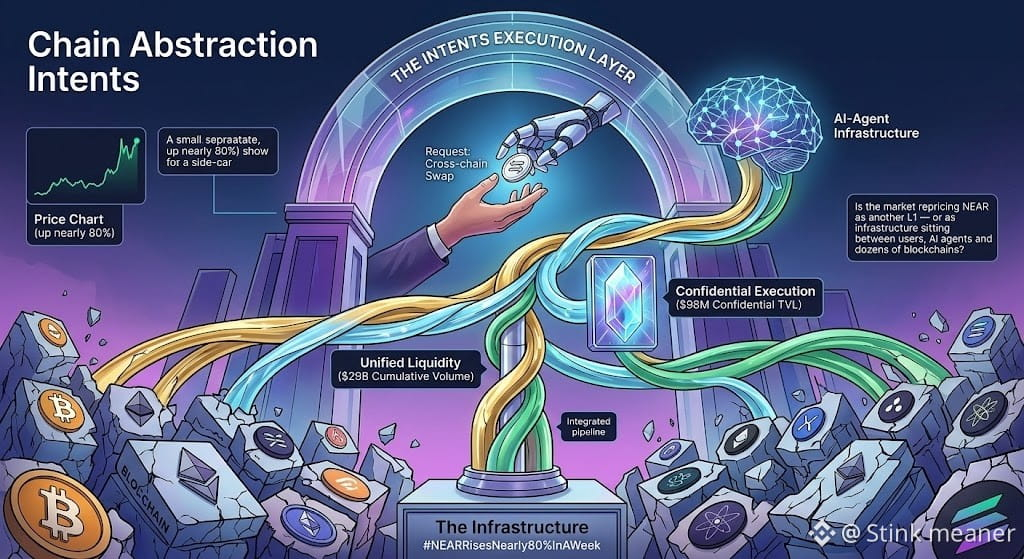
🧩 NEAR Is Up Nearly 80%. The Price Isn't the Most Interesting Part.
#NEARRisesNearly80%InAWeek
NEAR has surged roughly 78% in a week, dramatically outperforming the broader crypto market.
But underneath the move is a more interesting number:
NEAR Intents now reports more than $29B in cumulative volume across 35 chains.
That's a different story from simply “NEAR is an AI coin.”
Intents is building a chain-abstracted execution layer: users or applications express what they want done, while the system handles cross-chain liquidity and execution.
And AI agents are explicitly part of the architecture.
The network now combines:
cross-chain execution
unified liquidity AI-agent infrastructure confidential execution.
There is also evidence that this isn't purely a narrative trade: NEAR's dashboard currently shows protocol revenue, Intents activity and nearly $98M in confidential TVL.
But that doesn't prove the price surge is justified by fundamentals.
It creates a more useful question:
Is the market repricing NEAR as another L1 — or as infrastructure sitting between users, AI agents and dozens of blockchains?
The price got attention.
The infrastructure is the part worth watching.
$NEAR $ZEC $ETH
DYOR: The rise in NEAR's price does not by itself establish that Intents activity caused the move; the post separates observed network activity from market interpretation.
#AIStocksWhatNext #zcash #BitcoinSpotETFs$999MNetInflow #Write2Earn
🧩 NEAR Is Up Nearly 80%. The Price Isn't the Most Interesting Part.
#NEARRisesNearly80%InAWeek
NEAR has surged roughly 78% in a week, dramatically outperforming the broader crypto market.
But underneath the move is a more interesting number:
NEAR Intents now reports more than $29B in cumulative volume across 35 chains.
That's a different story from simply “NEAR is an AI coin.”
Intents is building a chain-abstracted execution layer: users or applications express what they want done, while the system handles cross-chain liquidity and execution.
And AI agents are explicitly part of the architecture.
The network now combines:
cross-chain execution
unified liquidity AI-agent infrastructure confidential execution.
There is also evidence that this isn't purely a narrative trade: NEAR's dashboard currently shows protocol revenue, Intents activity and nearly $98M in confidential TVL.
But that doesn't prove the price surge is justified by fundamentals.
It creates a more useful question:
Is the market repricing NEAR as another L1 — or as infrastructure sitting between users, AI agents and dozens of blockchains?
The price got attention.
The infrastructure is the part worth watching.
$NEAR $ZEC $ETH
DYOR: The rise in NEAR's price does not by itself establish that Intents activity caused the move; the post separates observed network activity from market interpretation.
#AIStocksWhatNext #zcash #BitcoinSpotETFs$999MNetInflow #Write2Earn
#NEARRisesNearly80%InAWeek
NEAR has surged roughly 78% in a week, dramatically outperforming the broader crypto market.
But underneath the move is a more interesting number:
NEAR Intents now reports more than $29B in cumulative volume across 35 chains.
That's a different story from simply “NEAR is an AI coin.”
Intents is building a chain-abstracted execution layer: users or applications express what they want done, while the system handles cross-chain liquidity and execution.
And AI agents are explicitly part of the architecture.
The network now combines:
cross-chain execution
unified liquidity AI-agent infrastructure confidential execution.
There is also evidence that this isn't purely a narrative trade: NEAR's dashboard currently shows protocol revenue, Intents activity and nearly $98M in confidential TVL.
But that doesn't prove the price surge is justified by fundamentals.
It creates a more useful question:
Is the market repricing NEAR as another L1 — or as infrastructure sitting between users, AI agents and dozens of blockchains?
The price got attention.
The infrastructure is the part worth watching.
$NEAR $ZEC $ETH
DYOR: The rise in NEAR's price does not by itself establish that Intents activity caused the move; the post separates observed network activity from market interpretation.
#AIStocksWhatNext #zcash #BitcoinSpotETFs$999MNetInflow #Write2Earn
1
290
·
--
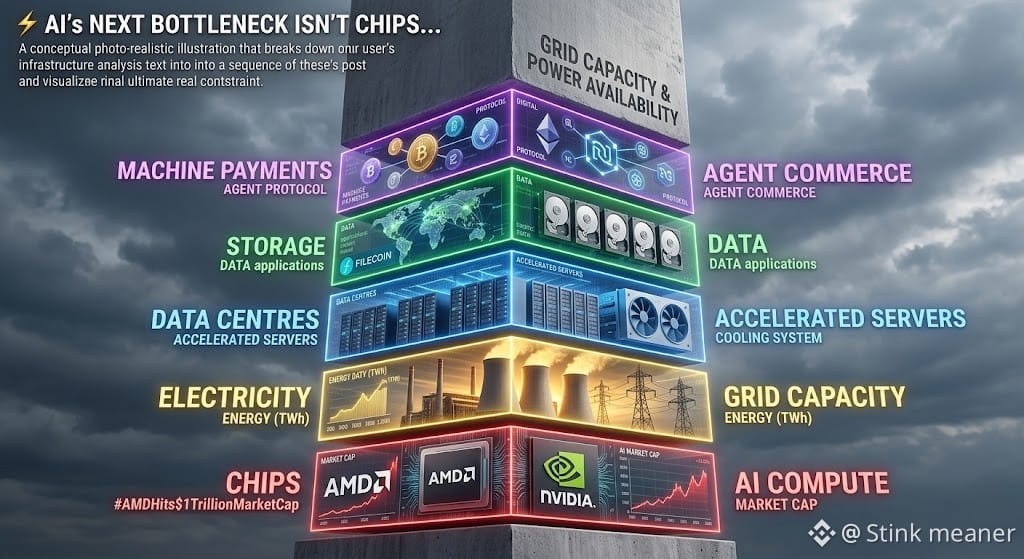
⚡ AI's Next Bottleneck Isn't Chips...
#AMDHits$1TrillionMarketCap
AMD just crossed a $1 trillion market cap, driven by renewed confidence in its AI-computing position. Meanwhile, NVIDIA committed $1.5B to SB Energy, alongside a plan to secure massive power and compute capacity for AI infrastructure.
That tells us something bigger about the AI race.
The bottleneck is moving downstream:
more AI demand
→ more compute
→ more data centres
→ more electricity
→ more grid capacity.
The IEA estimates data centres consumed around 415 TWh in 2024 and projects that figure to reach roughly 945 TWh by 2030 in its base case. AI-focused accelerated servers account for almost half of the projected increase.
And there's another infrastructure layer hiding underneath.
AI doesn't just need compute.
It generates enormous amounts of data that must be stored, retrieved and paid for.
Filecoin has already launched Onchain Cloud on mainnet as a programmable storage and payments layer, reporting early usage from AI agents, compute pipelines and data applications.
So the AI infrastructure race may eventually extend well beyond semiconductors:
chips → electricity → data centres → storage → machine payments.
The trillion-dollar chip headline may therefore be showing us only the front end of the infrastructure stack.
The question is: which layer becomes the next bottleneck?
$FIL $AR $RNDR
DYOR: The connection between AI infrastructure expansion and individual crypto networks is an emerging thesis, not evidence that AI demand directly drives these tokens.
#AppleGoogleSeekStablecoinTokenizedDepositTalent #AIStocksWhatNext #NvidiaToBuyAnother$1.5BSBEnergySharesPreIPO #BinanceSquareFamily
⚡ AI's Next Bottleneck Isn't Chips...
#AMDHits$1TrillionMarketCap
AMD just crossed a $1 trillion market cap, driven by renewed confidence in its AI-computing position. Meanwhile, NVIDIA committed $1.5B to SB Energy, alongside a plan to secure massive power and compute capacity for AI infrastructure.
That tells us something bigger about the AI race.
The bottleneck is moving downstream:
more AI demand
→ more compute
→ more data centres
→ more electricity
→ more grid capacity.
The IEA estimates data centres consumed around 415 TWh in 2024 and projects that figure to reach roughly 945 TWh by 2030 in its base case. AI-focused accelerated servers account for almost half of the projected increase.
And there's another infrastructure layer hiding underneath.
AI doesn't just need compute.
It generates enormous amounts of data that must be stored, retrieved and paid for.
Filecoin has already launched Onchain Cloud on mainnet as a programmable storage and payments layer, reporting early usage from AI agents, compute pipelines and data applications.
So the AI infrastructure race may eventually extend well beyond semiconductors:
chips → electricity → data centres → storage → machine payments.
The trillion-dollar chip headline may therefore be showing us only the front end of the infrastructure stack.
The question is: which layer becomes the next bottleneck?
$FIL $AR $RNDR
DYOR: The connection between AI infrastructure expansion and individual crypto networks is an emerging thesis, not evidence that AI demand directly drives these tokens.
#AppleGoogleSeekStablecoinTokenizedDepositTalent #AIStocksWhatNext #NvidiaToBuyAnother$1.5BSBEnergySharesPreIPO #BinanceSquareFamily
#AMDHits$1TrillionMarketCap
AMD just crossed a $1 trillion market cap, driven by renewed confidence in its AI-computing position. Meanwhile, NVIDIA committed $1.5B to SB Energy, alongside a plan to secure massive power and compute capacity for AI infrastructure.
That tells us something bigger about the AI race.
The bottleneck is moving downstream:
more AI demand
→ more compute
→ more data centres
→ more electricity
→ more grid capacity.
The IEA estimates data centres consumed around 415 TWh in 2024 and projects that figure to reach roughly 945 TWh by 2030 in its base case. AI-focused accelerated servers account for almost half of the projected increase.
And there's another infrastructure layer hiding underneath.
AI doesn't just need compute.
It generates enormous amounts of data that must be stored, retrieved and paid for.
Filecoin has already launched Onchain Cloud on mainnet as a programmable storage and payments layer, reporting early usage from AI agents, compute pipelines and data applications.
So the AI infrastructure race may eventually extend well beyond semiconductors:
chips → electricity → data centres → storage → machine payments.
The trillion-dollar chip headline may therefore be showing us only the front end of the infrastructure stack.
The question is: which layer becomes the next bottleneck?
$FIL $AR $RNDR
DYOR: The connection between AI infrastructure expansion and individual crypto networks is an emerging thesis, not evidence that AI demand directly drives these tokens.
#AppleGoogleSeekStablecoinTokenizedDepositTalent #AIStocksWhatNext #NvidiaToBuyAnother$1.5BSBEnergySharesPreIPO #BinanceSquareFamily
2
363
·
--
Verified
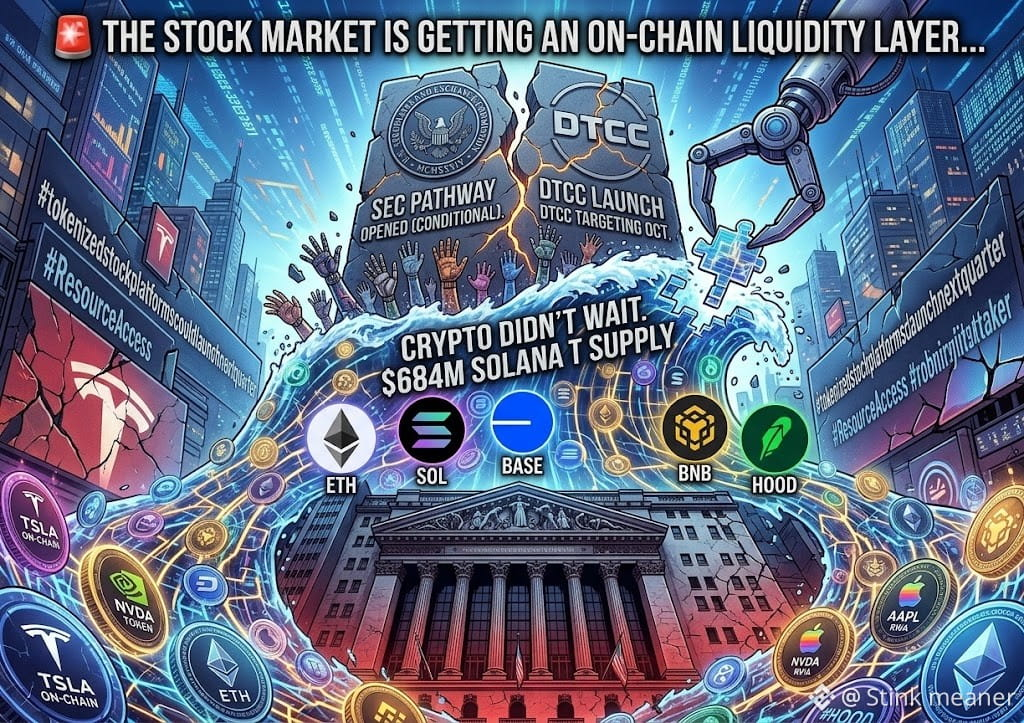
🚨 The Stock Market Is Getting an On-Chain Liquidity Layer...
#tokenizedstockplatformscouldlaunchnextquarter
The SEC just opened a five-year pathway for qualifying venues to trade tokenized U.S. stocks through permissioned AMMs and liquidity pools.
And now SEC officials say the first regulated venues could begin taking shape as early as next quarter.
But here's the part people may be missing:
Crypto didn't wait.
Tokenized equities are already trading across Ethereum, Solana, Base, BNB Chain and Robinhood Chain. Solana's tokenized-equity supply alone reached ~$684M this month.
Meanwhile, DTCC is targeting an October tokenization-service launch after already processing production trades with 30+ firms.
So the real race may not be “who tokenizes stocks?”
It's who becomes the liquidity and settlement layer connecting stocks, stablecoins and on-chain markets.
$SOL $ETH $XRP
#AppleGoogleSeekStablecoinTokenizedDepositTalent #RWA #Stablecoins #AIStocksWhatNext
The SEC timeline is conditional, and existing tokenized stocks do not necessarily carry the same shareholder rights as traditional equities.
🚨 The Stock Market Is Getting an On-Chain Liquidity Layer...
#tokenizedstockplatformscouldlaunchnextquarter
The SEC just opened a five-year pathway for qualifying venues to trade tokenized U.S. stocks through permissioned AMMs and liquidity pools.
And now SEC officials say the first regulated venues could begin taking shape as early as next quarter.
But here's the part people may be missing:
Crypto didn't wait.
Tokenized equities are already trading across Ethereum, Solana, Base, BNB Chain and Robinhood Chain. Solana's tokenized-equity supply alone reached ~$684M this month.
Meanwhile, DTCC is targeting an October tokenization-service launch after already processing production trades with 30+ firms.
So the real race may not be “who tokenizes stocks?”
It's who becomes the liquidity and settlement layer connecting stocks, stablecoins and on-chain markets.
$SOL $ETH $XRP
#AppleGoogleSeekStablecoinTokenizedDepositTalent #RWA #Stablecoins #AIStocksWhatNext
The SEC timeline is conditional, and existing tokenized stocks do not necessarily carry the same shareholder rights as traditional equities.
#tokenizedstockplatformscouldlaunchnextquarter
The SEC just opened a five-year pathway for qualifying venues to trade tokenized U.S. stocks through permissioned AMMs and liquidity pools.
And now SEC officials say the first regulated venues could begin taking shape as early as next quarter.
But here's the part people may be missing:
Crypto didn't wait.
Tokenized equities are already trading across Ethereum, Solana, Base, BNB Chain and Robinhood Chain. Solana's tokenized-equity supply alone reached ~$684M this month.
Meanwhile, DTCC is targeting an October tokenization-service launch after already processing production trades with 30+ firms.
So the real race may not be “who tokenizes stocks?”
It's who becomes the liquidity and settlement layer connecting stocks, stablecoins and on-chain markets.
$SOL $ETH $XRP
#AppleGoogleSeekStablecoinTokenizedDepositTalent #RWA #Stablecoins #AIStocksWhatNext
The SEC timeline is conditional, and existing tokenized stocks do not necessarily carry the same shareholder rights as traditional equities.
2
2
4k
·
--
Verified
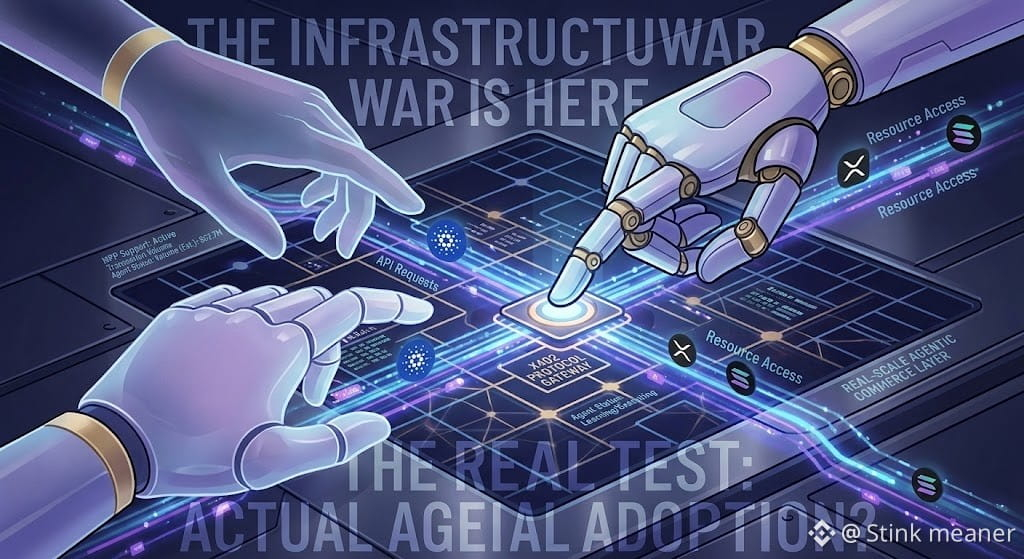
🤖 The Next Crypto Payment War Isn't Human...
#CardanoAddedToX402KitForADAPayments
AI agents are learning to pay for things.
Not with a checkout page.
Not with a human entering card details.
Protocols like x402 and Stripe/Tempo's Machine Payments Protocol (MPP) let software discover a price, authorize payment and receive a resource through an internet request. Stripe says MPP already supports agent payments for services such as APIs and browser sessions.
Now the blockchain race is moving underneath that layer.
Cardano has joined the official x402 stack, adding ADA and Cardano-issued assets as payment options. But there's an important caveat: its facilitator has so far been proven on pre-production, not mainnet, so this is infrastructure positioning rather than evidence of large-scale commercial agent payments.
XRP Ledger already supports x402, while RippleX has also added MPP support for XRP and RLUSD. Solana supports both MPP and x402 for stablecoin payments.
And the market may be much earlier than the headlines suggest.
TRM Labs estimates about $52.7M across 198.9M x402 settlement transactions since May 2025, but cautions that most x402 volume is not necessarily genuinely agentic commerce.
So the real race isn't:
Which coin is pumping?
It's:
Which network becomes invisible payment infrastructure for machines?
The technology is arriving first.
The real test is whether actual agent commerce follows.
Disclaimer:
This is an infrastructure-development analysis, not a prediction of AI-agent adoption or token performance.
$ADA $XRP $SOL
#HKMAPlansWholesaleCBDCByYearEnd
#AgenticPayments #BinanceSquare #XRPRises8%
🤖 The Next Crypto Payment War Isn't Human...
#CardanoAddedToX402KitForADAPayments
AI agents are learning to pay for things.
Not with a checkout page.
Not with a human entering card details.
Protocols like x402 and Stripe/Tempo's Machine Payments Protocol (MPP) let software discover a price, authorize payment and receive a resource through an internet request. Stripe says MPP already supports agent payments for services such as APIs and browser sessions.
Now the blockchain race is moving underneath that layer.
Cardano has joined the official x402 stack, adding ADA and Cardano-issued assets as payment options. But there's an important caveat: its facilitator has so far been proven on pre-production, not mainnet, so this is infrastructure positioning rather than evidence of large-scale commercial agent payments.
XRP Ledger already supports x402, while RippleX has also added MPP support for XRP and RLUSD. Solana supports both MPP and x402 for stablecoin payments.
And the market may be much earlier than the headlines suggest.
TRM Labs estimates about $52.7M across 198.9M x402 settlement transactions since May 2025, but cautions that most x402 volume is not necessarily genuinely agentic commerce.
So the real race isn't:
Which coin is pumping?
It's:
Which network becomes invisible payment infrastructure for machines?
The technology is arriving first.
The real test is whether actual agent commerce follows.
Disclaimer:
This is an infrastructure-development analysis, not a prediction of AI-agent adoption or token performance.
$ADA $XRP $SOL
#HKMAPlansWholesaleCBDCByYearEnd
#AgenticPayments #BinanceSquare #XRPRises8%
#CardanoAddedToX402KitForADAPayments
AI agents are learning to pay for things.
Not with a checkout page.
Not with a human entering card details.
Protocols like x402 and Stripe/Tempo's Machine Payments Protocol (MPP) let software discover a price, authorize payment and receive a resource through an internet request. Stripe says MPP already supports agent payments for services such as APIs and browser sessions.
Now the blockchain race is moving underneath that layer.
Cardano has joined the official x402 stack, adding ADA and Cardano-issued assets as payment options. But there's an important caveat: its facilitator has so far been proven on pre-production, not mainnet, so this is infrastructure positioning rather than evidence of large-scale commercial agent payments.
XRP Ledger already supports x402, while RippleX has also added MPP support for XRP and RLUSD. Solana supports both MPP and x402 for stablecoin payments.
And the market may be much earlier than the headlines suggest.
TRM Labs estimates about $52.7M across 198.9M x402 settlement transactions since May 2025, but cautions that most x402 volume is not necessarily genuinely agentic commerce.
So the real race isn't:
Which coin is pumping?
It's:
Which network becomes invisible payment infrastructure for machines?
The technology is arriving first.
The real test is whether actual agent commerce follows.
Disclaimer:
This is an infrastructure-development analysis, not a prediction of AI-agent adoption or token performance.
$ADA $XRP $SOL
#HKMAPlansWholesaleCBDCByYearEnd
#AgenticPayments #BinanceSquare #XRPRises8%
1
189
·
--
Verified
🔥🚨Europe Just Put Central-Bank Money On-Chain...
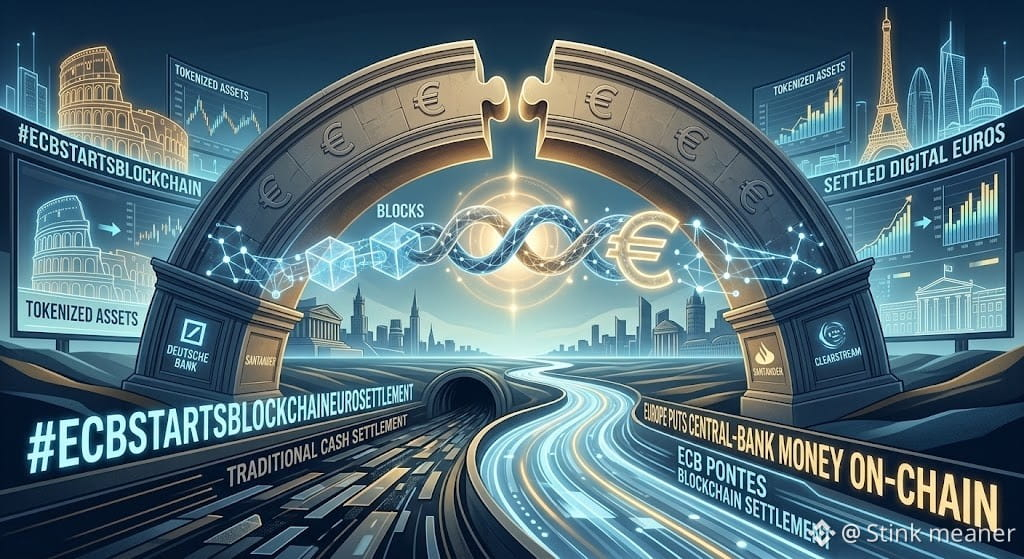
#ecbstartsblockchaineurosettlement
The ECB just launched Pontes, connecting blockchain-based financial markets to settlement in ECB-backed euros.
That changes the equation for tokenized finance.
Until now, a tokenized bond can live on a blockchain while the cash leg still depends on traditional settlement infrastructure.
Pontes is designed to close that gap:
tokenized asset
→ blockchain transaction
→ central-bank money settlement
And the ECB isn't doing this as a crypto experiment.
Deutsche Bank, Santander and Clearstream are among the first participants. The initial service runs during European business hours, with expanded functionality planned over time.
The deeper signal is what comes next.
The ECB says its 2024 experiments covered 50 trials across nine jurisdictions and roughly €1.6B of transactions, finding demand for central-bank money as the settlement anchor for tokenized markets.
So Europe isn't simply putting assets on-chain.
It's putting the risk-free settlement layer on-chain too.
And that creates the bigger question:
If central-bank money can move on the same rails as tokenized assets, how much of today's stablecoin settlement infrastructure eventually becomes optional?
$ETH $USDC $XRP
#TokenizedAssests #RWA #blockchain
🔥🚨Europe Just Put Central-Bank Money On-Chain...
#ecbstartsblockchaineurosettlement
The ECB just launched Pontes, connecting blockchain-based financial markets to settlement in ECB-backed euros.
That changes the equation for tokenized finance.
Until now, a tokenized bond can live on a blockchain while the cash leg still depends on traditional settlement infrastructure.
Pontes is designed to close that gap:
tokenized asset
→ blockchain transaction
→ central-bank money settlement
And the ECB isn't doing this as a crypto experiment.
Deutsche Bank, Santander and Clearstream are among the first participants. The initial service runs during European business hours, with expanded functionality planned over time.
The deeper signal is what comes next.
The ECB says its 2024 experiments covered 50 trials across nine jurisdictions and roughly €1.6B of transactions, finding demand for central-bank money as the settlement anchor for tokenized markets.
So Europe isn't simply putting assets on-chain.
It's putting the risk-free settlement layer on-chain too.
And that creates the bigger question:
If central-bank money can move on the same rails as tokenized assets, how much of today's stablecoin settlement infrastructure eventually becomes optional?
$ETH $USDC $XRP
#TokenizedAssests #RWA #blockchain
#ecbstartsblockchaineurosettlement
The ECB just launched Pontes, connecting blockchain-based financial markets to settlement in ECB-backed euros.
That changes the equation for tokenized finance.
Until now, a tokenized bond can live on a blockchain while the cash leg still depends on traditional settlement infrastructure.
Pontes is designed to close that gap:
tokenized asset
→ blockchain transaction
→ central-bank money settlement
And the ECB isn't doing this as a crypto experiment.
Deutsche Bank, Santander and Clearstream are among the first participants. The initial service runs during European business hours, with expanded functionality planned over time.
The deeper signal is what comes next.
The ECB says its 2024 experiments covered 50 trials across nine jurisdictions and roughly €1.6B of transactions, finding demand for central-bank money as the settlement anchor for tokenized markets.
So Europe isn't simply putting assets on-chain.
It's putting the risk-free settlement layer on-chain too.
And that creates the bigger question:
If central-bank money can move on the same rails as tokenized assets, how much of today's stablecoin settlement infrastructure eventually becomes optional?
$ETH $USDC $XRP
#TokenizedAssests #RWA #blockchain
4
1.7k
·
--
🔥 Bitcoin Hit $85K. Now Comes the Test...
#BitcoinHits$85K
Bitcoin pushed above $85K, but the interesting part isn't the number.
It's what powered the move.
Spot Bitcoin ETFs recorded roughly $433M of net inflows on September 18, after several heavy outflow sessions.
At the same time, BTC entered the $83K–$86K zone that Glassnode identified as a major resistance cluster.
So the sequence was:
ETF demand returns
→ BTC approaches resistance
→ shorts become vulnerable
→ breakout accelerates.
But here's the catch.
Before the breakout, Glassnode reported subdued on-chain capital inflows, stablecoin growth and corporate treasury buying.
So $85K isn't just another price level.
It's a demand test.
If ETF and on-chain flows follow the price, the breakout gets stronger confirmation.
If they don't, derivatives and short covering may have done more of the work.
With a major BTC options expiry approaching September 25, the next few sessions matter.
Bitcoin broke the level.
Now the market has to prove the demand is real.
$BTC $BNB $ETH
#SaylorHintsStrategyBitcoinBuy #EthereumSurpasses$2700 #Write2Earn #BTC🔥🔥🔥🔥🔥
🔥 Bitcoin Hit $85K. Now Comes the Test...
#BitcoinHits$85K
Bitcoin pushed above $85K, but the interesting part isn't the number.
It's what powered the move.
Spot Bitcoin ETFs recorded roughly $433M of net inflows on September 18, after several heavy outflow sessions.
At the same time, BTC entered the $83K–$86K zone that Glassnode identified as a major resistance cluster.
So the sequence was:
ETF demand returns
→ BTC approaches resistance
→ shorts become vulnerable
→ breakout accelerates.
But here's the catch.
Before the breakout, Glassnode reported subdued on-chain capital inflows, stablecoin growth and corporate treasury buying.
So $85K isn't just another price level.
It's a demand test.
If ETF and on-chain flows follow the price, the breakout gets stronger confirmation.
If they don't, derivatives and short covering may have done more of the work.
With a major BTC options expiry approaching September 25, the next few sessions matter.
Bitcoin broke the level.
Now the market has to prove the demand is real.
$BTC $BNB $ETH
#SaylorHintsStrategyBitcoinBuy #EthereumSurpasses$2700 #Write2Earn #BTC🔥🔥🔥🔥🔥
#BitcoinHits$85K
Bitcoin pushed above $85K, but the interesting part isn't the number.
It's what powered the move.
Spot Bitcoin ETFs recorded roughly $433M of net inflows on September 18, after several heavy outflow sessions.
At the same time, BTC entered the $83K–$86K zone that Glassnode identified as a major resistance cluster.
So the sequence was:
ETF demand returns
→ BTC approaches resistance
→ shorts become vulnerable
→ breakout accelerates.
But here's the catch.
Before the breakout, Glassnode reported subdued on-chain capital inflows, stablecoin growth and corporate treasury buying.
So $85K isn't just another price level.
It's a demand test.
If ETF and on-chain flows follow the price, the breakout gets stronger confirmation.
If they don't, derivatives and short covering may have done more of the work.
With a major BTC options expiry approaching September 25, the next few sessions matter.
Bitcoin broke the level.
Now the market has to prove the demand is real.
$BTC $BNB $ETH
#SaylorHintsStrategyBitcoinBuy #EthereumSurpasses$2700 #Write2Earn #BTC🔥🔥🔥🔥🔥

2
101
·
--
🚨 South Africa's Crypto Exit Question...
#SouthAfricaProposesCryptoExchangeControls
South Africa isn't proposing to ban crypto.
It's proposing to bring crypto's movement across its borders under exchange-control rules.
That sounds reasonable — until you consider where crypto is increasingly being used.
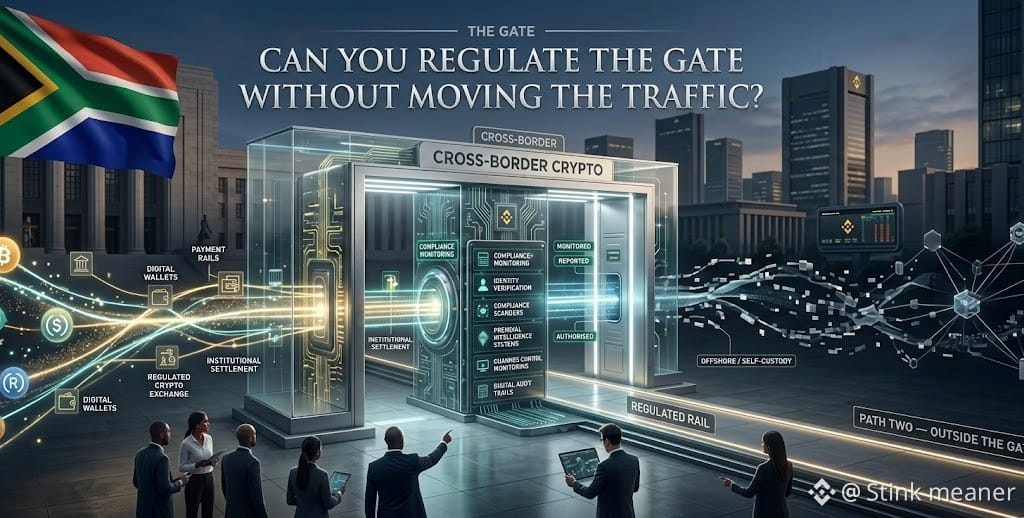
The draft framework would treat transfers from a domestic authorised crypto provider to an offshore provider or a non-custodial wallet as cross-border events that must be reported to FinSurv.
Individuals would have a route to externalise crypto through existing foreign-exchange allowances.
But companies would not have the same proposed route.
And that's where the debate gets interesting.
A South African business could use crypto domestically, but the proposed framework would restrict corporate cross-border crypto flows — potentially affecting use cases such as international settlement and offshore digital-asset treasury activity. Industry groups argue this could push activity toward offshore platforms rather than eliminate it.
The regulator's objective is different: close potential exchange-control loopholes and improve visibility over cross-border capital flows and illicit finance.
So the real question isn't:
“Is South Africa banning crypto?”
It isn't.
The question is:
Can tighter controls on regulated crypto rails increase visibility — or could some activity simply move beyond those rails?
The proposal is still open for comment until September 30.
Where do you think the line should be drawn?
$BTC $SAGA $SUI
#CryptoRegulation #BinanceSquare #Stablecoins
🚨 South Africa's Crypto Exit Question...
#SouthAfricaProposesCryptoExchangeControls
South Africa isn't proposing to ban crypto.
It's proposing to bring crypto's movement across its borders under exchange-control rules.
That sounds reasonable — until you consider where crypto is increasingly being used.
The draft framework would treat transfers from a domestic authorised crypto provider to an offshore provider or a non-custodial wallet as cross-border events that must be reported to FinSurv.
Individuals would have a route to externalise crypto through existing foreign-exchange allowances.
But companies would not have the same proposed route.
And that's where the debate gets interesting.
A South African business could use crypto domestically, but the proposed framework would restrict corporate cross-border crypto flows — potentially affecting use cases such as international settlement and offshore digital-asset treasury activity. Industry groups argue this could push activity toward offshore platforms rather than eliminate it.
The regulator's objective is different: close potential exchange-control loopholes and improve visibility over cross-border capital flows and illicit finance.
So the real question isn't:
“Is South Africa banning crypto?”
It isn't.
The question is:
Can tighter controls on regulated crypto rails increase visibility — or could some activity simply move beyond those rails?
The proposal is still open for comment until September 30.
Where do you think the line should be drawn?
$BTC $SAGA $SUI
#CryptoRegulation #BinanceSquare #Stablecoins
#SouthAfricaProposesCryptoExchangeControls
South Africa isn't proposing to ban crypto.
It's proposing to bring crypto's movement across its borders under exchange-control rules.
That sounds reasonable — until you consider where crypto is increasingly being used.
The draft framework would treat transfers from a domestic authorised crypto provider to an offshore provider or a non-custodial wallet as cross-border events that must be reported to FinSurv.
Individuals would have a route to externalise crypto through existing foreign-exchange allowances.
But companies would not have the same proposed route.
And that's where the debate gets interesting.
A South African business could use crypto domestically, but the proposed framework would restrict corporate cross-border crypto flows — potentially affecting use cases such as international settlement and offshore digital-asset treasury activity. Industry groups argue this could push activity toward offshore platforms rather than eliminate it.
The regulator's objective is different: close potential exchange-control loopholes and improve visibility over cross-border capital flows and illicit finance.
So the real question isn't:
“Is South Africa banning crypto?”
It isn't.
The question is:
Can tighter controls on regulated crypto rails increase visibility — or could some activity simply move beyond those rails?
The proposal is still open for comment until September 30.
Where do you think the line should be drawn?
$BTC $SAGA $SUI
#CryptoRegulation #BinanceSquare #Stablecoins
2
256
·
--
Verified
⚡Solana's 250ms Race...
#SolanaCutsTargetSlotTimeTo250ms
Solana just changed the clock — not the capacity.
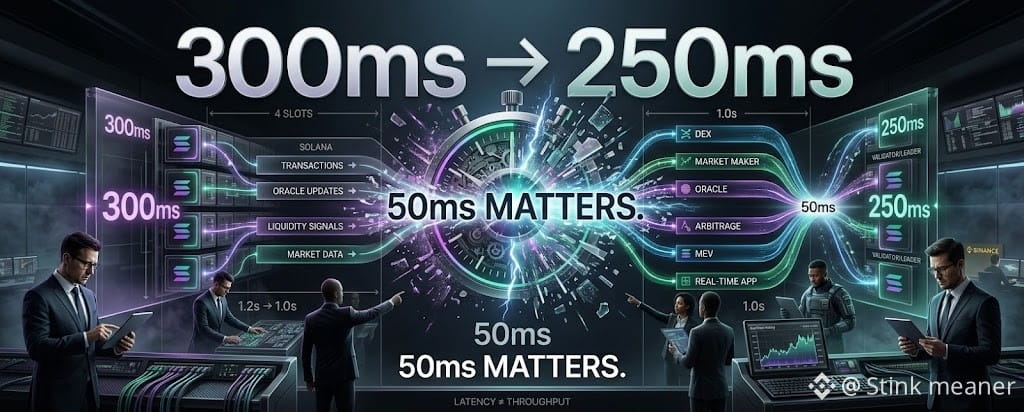
On September 18, Solana cut its target slot time from 300ms to 250ms.
That sounds like a throughput upgrade.
It isn't.
Solana also proportionally reduces the work permitted per slot.
So why make the clock faster?
Because in financial infrastructure, time itself can be an advantage.
Four 300ms slots give a leader window of 1.2 seconds.
Four 250ms slots compress that to 1 second.
That's 200ms less across the four-slot window.
For DEXs, oracles, market makers, arbitrage and MEV, that changes how quickly systems can react to new information — even though the network isn't simply processing 17% more work.
And 250ms isn't the end of the roadmap.
SIMD-0525 targets 200ms next, which would compress the four-slot window to 800ms.
So the interesting Solana question isn't:
“How much more TPS did it get?”
It's:
How valuable does a blockchain become when information can be acted on faster?
Solana isn't just optimizing how much the network processes.
It's increasingly optimizing how quickly the financial system built on it can react.
Not financial advice.
$SOL
{future}(SOLUSDT)
#solana #defi #SaylorHintsStrategyBitcoinBuy
⚡Solana's 250ms Race...
#SolanaCutsTargetSlotTimeTo250ms
Solana just changed the clock — not the capacity.
On September 18, Solana cut its target slot time from 300ms to 250ms.
That sounds like a throughput upgrade.
It isn't.
Solana also proportionally reduces the work permitted per slot.
So why make the clock faster?
Because in financial infrastructure, time itself can be an advantage.
Four 300ms slots give a leader window of 1.2 seconds.
Four 250ms slots compress that to 1 second.
That's 200ms less across the four-slot window.
For DEXs, oracles, market makers, arbitrage and MEV, that changes how quickly systems can react to new information — even though the network isn't simply processing 17% more work.
And 250ms isn't the end of the roadmap.
SIMD-0525 targets 200ms next, which would compress the four-slot window to 800ms.
So the interesting Solana question isn't:
“How much more TPS did it get?”
It's:
How valuable does a blockchain become when information can be acted on faster?
Solana isn't just optimizing how much the network processes.
It's increasingly optimizing how quickly the financial system built on it can react.
Not financial advice.
$SOL
#solana #defi #SaylorHintsStrategyBitcoinBuy
#SolanaCutsTargetSlotTimeTo250ms
Solana just changed the clock — not the capacity.
On September 18, Solana cut its target slot time from 300ms to 250ms.
That sounds like a throughput upgrade.
It isn't.
Solana also proportionally reduces the work permitted per slot.
So why make the clock faster?
Because in financial infrastructure, time itself can be an advantage.
Four 300ms slots give a leader window of 1.2 seconds.
Four 250ms slots compress that to 1 second.
That's 200ms less across the four-slot window.
For DEXs, oracles, market makers, arbitrage and MEV, that changes how quickly systems can react to new information — even though the network isn't simply processing 17% more work.
And 250ms isn't the end of the roadmap.
SIMD-0525 targets 200ms next, which would compress the four-slot window to 800ms.
So the interesting Solana question isn't:
“How much more TPS did it get?”
It's:
How valuable does a blockchain become when information can be acted on faster?
Solana isn't just optimizing how much the network processes.
It's increasingly optimizing how quickly the financial system built on it can react.
Not financial advice.
$SOL
#solana #defi #SaylorHintsStrategyBitcoinBuy
3
136
·
--
Verified
🔍 The Orange Signal Is Back...
#saylorhintsstrategybitcoinbuy
Michael Saylor just revived one of crypto's most watched signals.
On September 20, he posted Strategy's Bitcoin acquisition chart with three words:
“A little more orange.”
The orange dots mark Strategy's BTC purchases, and similar Sunday posts have often preceded Monday acquisition disclosures.
But this time, the context is different.
Strategy's latest SEC filing showed no BTC bought or sold through September 13, leaving the company with 845,050 BTC acquired for approximately $63.73B, at an average cost of $75,412 per BTC.
And while Bitcoin accumulation paused, Strategy was reallocating capital elsewhere.
It spent $139.3M buying back STRC preferred shares, funded from USD Cash. That followed another $176.3M STRC repurchase the previous week.
So the question isn't simply:
“Is Saylor buying Bitcoin again?”
It's:
Has Strategy finished strengthening the financing side of the machine — and is BTC accumulation about to resume?
The last confirmed purchase was 4,603 BTC for ~$369.7M, announced August 31.
Saylor's new post is a signal, not confirmation.
The next SEC disclosure is what matters.
If another purchase appears, the interesting data won't just be the BTC amount.
It will be how Strategy funded it, what happened to its cash reserves, and whether the company is shifting capital back from balance-sheet defense toward Bitcoin accumulation.
That is the part of the Saylor strategy worth watching.
Not financial advice. A social-media signal is not confirmation of a completed transaction.
$BTC $MSTR
#strategy #BTC #EthereumSurpasses$2700
{future}(MSTRUSDT)
🔍 The Orange Signal Is Back...
#saylorhintsstrategybitcoinbuy
Michael Saylor just revived one of crypto's most watched signals.
On September 20, he posted Strategy's Bitcoin acquisition chart with three words:
“A little more orange.”
The orange dots mark Strategy's BTC purchases, and similar Sunday posts have often preceded Monday acquisition disclosures.
But this time, the context is different.
Strategy's latest SEC filing showed no BTC bought or sold through September 13, leaving the company with 845,050 BTC acquired for approximately $63.73B, at an average cost of $75,412 per BTC.
And while Bitcoin accumulation paused, Strategy was reallocating capital elsewhere.
It spent $139.3M buying back STRC preferred shares, funded from USD Cash. That followed another $176.3M STRC repurchase the previous week.
So the question isn't simply:
“Is Saylor buying Bitcoin again?”
It's:
Has Strategy finished strengthening the financing side of the machine — and is BTC accumulation about to resume?
The last confirmed purchase was 4,603 BTC for ~$369.7M, announced August 31.
Saylor's new post is a signal, not confirmation.
The next SEC disclosure is what matters.
If another purchase appears, the interesting data won't just be the BTC amount.
It will be how Strategy funded it, what happened to its cash reserves, and whether the company is shifting capital back from balance-sheet defense toward Bitcoin accumulation.
That is the part of the Saylor strategy worth watching.
Not financial advice. A social-media signal is not confirmation of a completed transaction.
$BTC $MSTR
#strategy #BTC #EthereumSurpasses$2700
#saylorhintsstrategybitcoinbuy
Michael Saylor just revived one of crypto's most watched signals.
On September 20, he posted Strategy's Bitcoin acquisition chart with three words:
“A little more orange.”
The orange dots mark Strategy's BTC purchases, and similar Sunday posts have often preceded Monday acquisition disclosures.
But this time, the context is different.
Strategy's latest SEC filing showed no BTC bought or sold through September 13, leaving the company with 845,050 BTC acquired for approximately $63.73B, at an average cost of $75,412 per BTC.
And while Bitcoin accumulation paused, Strategy was reallocating capital elsewhere.
It spent $139.3M buying back STRC preferred shares, funded from USD Cash. That followed another $176.3M STRC repurchase the previous week.
So the question isn't simply:
“Is Saylor buying Bitcoin again?”
It's:
Has Strategy finished strengthening the financing side of the machine — and is BTC accumulation about to resume?
The last confirmed purchase was 4,603 BTC for ~$369.7M, announced August 31.
Saylor's new post is a signal, not confirmation.
The next SEC disclosure is what matters.
If another purchase appears, the interesting data won't just be the BTC amount.
It will be how Strategy funded it, what happened to its cash reserves, and whether the company is shifting capital back from balance-sheet defense toward Bitcoin accumulation.
That is the part of the Saylor strategy worth watching.
Not financial advice. A social-media signal is not confirmation of a completed transaction.
$BTC $MSTR
#strategy #BTC #EthereumSurpasses$2700

2
418
·
--
Verified
🔥The 90% Question...
#CanaryFilesSecondAmendmentForStakedSEIETF
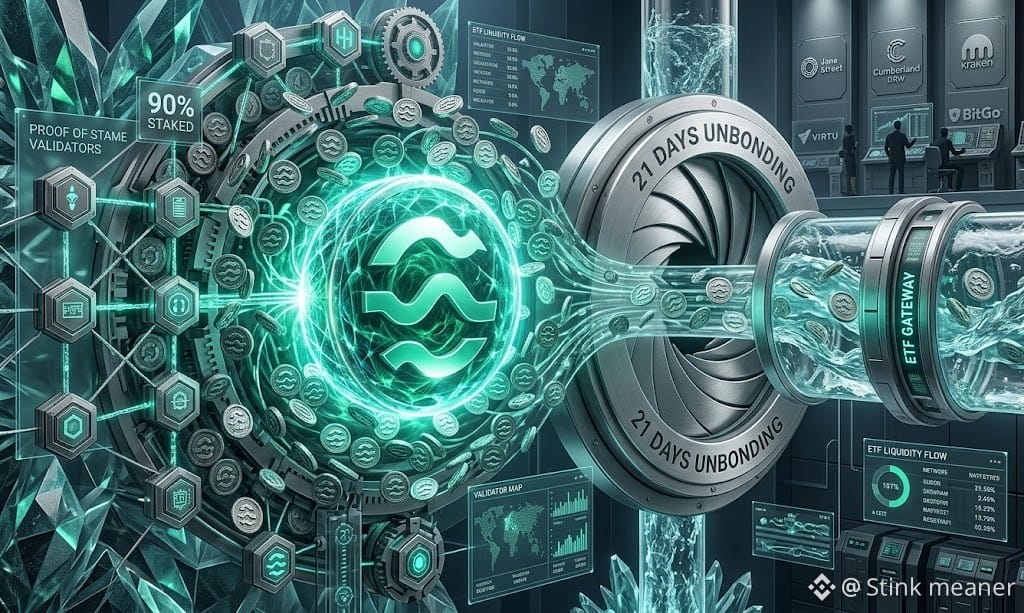
Canary wants at least 90% of the $SEI in its proposed ETF staked.
That sounds straightforward — until investors want their ETF shares redeemed.
Staked SEI can earn native rewards, but the filing discloses a 21-day unbonding period.
So the proposed product creates an unusual tension:
more SEI working → more staking economics
but:
more SEI staked → less immediately available liquidity.
That's the real story behind Canary's September 15 amendment.
The filing says the Trust may maintain unstaked SEI reserves and potentially use credit facilities to manage liquidity.
And the institutional infrastructure is already visible: Jane Street, Virtu, Cumberland DRW, Kraken and BitGo appear in the filing as counterparties/service providers.
But this still isn't an approval.
An earlier Cboe BZX listing proposal for the product was withdrawn on March 9, 2026.
So the question isn't simply whether $SEI gets an ETF.
It's whether Canary can make staking yield and ETF liquidity coexist inside a regulated wrapper.
90% staked.
21 days to unbond.
Liquidity on demand.
That's the equation worth watching.
$BTC $ETH
#EthereumSurpasses$2700 #seiETF #Write2Earn #BinanceSquare
{future}(SEIUSDT)
🔥The 90% Question...
#CanaryFilesSecondAmendmentForStakedSEIETF
Canary wants at least 90% of the $SEI in its proposed ETF staked.
That sounds straightforward — until investors want their ETF shares redeemed.
Staked SEI can earn native rewards, but the filing discloses a 21-day unbonding period.
So the proposed product creates an unusual tension:
more SEI working → more staking economics
but:
more SEI staked → less immediately available liquidity.
That's the real story behind Canary's September 15 amendment.
The filing says the Trust may maintain unstaked SEI reserves and potentially use credit facilities to manage liquidity.
And the institutional infrastructure is already visible: Jane Street, Virtu, Cumberland DRW, Kraken and BitGo appear in the filing as counterparties/service providers.
But this still isn't an approval.
An earlier Cboe BZX listing proposal for the product was withdrawn on March 9, 2026.
So the question isn't simply whether $SEI gets an ETF.
It's whether Canary can make staking yield and ETF liquidity coexist inside a regulated wrapper.
90% staked.
21 days to unbond.
Liquidity on demand.
That's the equation worth watching.
$BTC $ETH
#EthereumSurpasses$2700 #seiETF #Write2Earn #BinanceSquare
#CanaryFilesSecondAmendmentForStakedSEIETF
Canary wants at least 90% of the $SEI in its proposed ETF staked.
That sounds straightforward — until investors want their ETF shares redeemed.
Staked SEI can earn native rewards, but the filing discloses a 21-day unbonding period.
So the proposed product creates an unusual tension:
more SEI working → more staking economics
but:
more SEI staked → less immediately available liquidity.
That's the real story behind Canary's September 15 amendment.
The filing says the Trust may maintain unstaked SEI reserves and potentially use credit facilities to manage liquidity.
And the institutional infrastructure is already visible: Jane Street, Virtu, Cumberland DRW, Kraken and BitGo appear in the filing as counterparties/service providers.
But this still isn't an approval.
An earlier Cboe BZX listing proposal for the product was withdrawn on March 9, 2026.
So the question isn't simply whether $SEI gets an ETF.
It's whether Canary can make staking yield and ETF liquidity coexist inside a regulated wrapper.
90% staked.
21 days to unbond.
Liquidity on demand.
That's the equation worth watching.
$BTC $ETH
#EthereumSurpasses$2700 #seiETF #Write2Earn #BinanceSquare
2
232
·
--
🚨The Crypto Job Interview Trap...
#HackerAlert
Japan, the FBI, Australia and Germany have just attributed a global campaign to North Korean-linked WaterPlum, also known as Contagious Interview.
The numbers are uncomfortable:
30,000+ devices infected
100+ countries affected
7,000+ crypto wallets compromised for funds or credentials
¥1.7B ($10.71M) in crypto transferred to the DPRK
The targets weren't random users.
They included developers, engineers, web designers and crypto/Web3 professionals.
The attack chain is where this gets interesting:
fake recruiter
→ technical interview
→ malicious coding assignment
→ NPM/developer-platform malware
→ backdoor
→ wallet credentials + private keys + seed phrases
The attackers also harvested browser credentials, keystrokes, screenshots and identity documents.
And the wallet theft may only be the first objective.
The joint advisory says compromised machines can provide access into the companies where those developers work — creating opportunities for IP theft, espionage and lateral movement.
That's the bigger loop:
fake job → infected developer → compromised wallet → compromised identity → potential corporate access.
Japan also says investigators dismantled a domestic “laptop farm” connected to North Korean IT-worker operations, showing how the recruitment/infiltration ecosystem can extend beyond a single phishing campaign.
North Korea's crypto operation is already measured in billions: Chainalysis estimated $2.02B stolen in 2025 alone.
So this isn't just another wallet-draining story.
For crypto companies, the attack surface may begin before an employee even gets hired.
And for developers:
a coding test is no longer automatically a safe file to run.
$BTC $ETH $BNB
#BOJRaisesRatesTo31YearHigh #Web3 #BuffettStepsDownAsBerkshireChairman #BinanceSquare
🚨The Crypto Job Interview Trap...
#HackerAlert
Japan, the FBI, Australia and Germany have just attributed a global campaign to North Korean-linked WaterPlum, also known as Contagious Interview.
The numbers are uncomfortable:
30,000+ devices infected
100+ countries affected
7,000+ crypto wallets compromised for funds or credentials
¥1.7B ($10.71M) in crypto transferred to the DPRK
The targets weren't random users.
They included developers, engineers, web designers and crypto/Web3 professionals.
The attack chain is where this gets interesting:
fake recruiter
→ technical interview
→ malicious coding assignment
→ NPM/developer-platform malware
→ backdoor
→ wallet credentials + private keys + seed phrases
The attackers also harvested browser credentials, keystrokes, screenshots and identity documents.
And the wallet theft may only be the first objective.
The joint advisory says compromised machines can provide access into the companies where those developers work — creating opportunities for IP theft, espionage and lateral movement.
That's the bigger loop:
fake job → infected developer → compromised wallet → compromised identity → potential corporate access.
Japan also says investigators dismantled a domestic “laptop farm” connected to North Korean IT-worker operations, showing how the recruitment/infiltration ecosystem can extend beyond a single phishing campaign.
North Korea's crypto operation is already measured in billions: Chainalysis estimated $2.02B stolen in 2025 alone.
So this isn't just another wallet-draining story.
For crypto companies, the attack surface may begin before an employee even gets hired.
And for developers:
a coding test is no longer automatically a safe file to run.
$BTC $ETH $BNB
#BOJRaisesRatesTo31YearHigh #Web3 #BuffettStepsDownAsBerkshireChairman #BinanceSquare
#HackerAlert
Japan, the FBI, Australia and Germany have just attributed a global campaign to North Korean-linked WaterPlum, also known as Contagious Interview.
The numbers are uncomfortable:
30,000+ devices infected
100+ countries affected
7,000+ crypto wallets compromised for funds or credentials
¥1.7B ($10.71M) in crypto transferred to the DPRK
The targets weren't random users.
They included developers, engineers, web designers and crypto/Web3 professionals.
The attack chain is where this gets interesting:
fake recruiter
→ technical interview
→ malicious coding assignment
→ NPM/developer-platform malware
→ backdoor
→ wallet credentials + private keys + seed phrases
The attackers also harvested browser credentials, keystrokes, screenshots and identity documents.
And the wallet theft may only be the first objective.
The joint advisory says compromised machines can provide access into the companies where those developers work — creating opportunities for IP theft, espionage and lateral movement.
That's the bigger loop:
fake job → infected developer → compromised wallet → compromised identity → potential corporate access.
Japan also says investigators dismantled a domestic “laptop farm” connected to North Korean IT-worker operations, showing how the recruitment/infiltration ecosystem can extend beyond a single phishing campaign.
North Korea's crypto operation is already measured in billions: Chainalysis estimated $2.02B stolen in 2025 alone.
So this isn't just another wallet-draining story.
For crypto companies, the attack surface may begin before an employee even gets hired.
And for developers:
a coding test is no longer automatically a safe file to run.
$BTC $ETH $BNB
#BOJRaisesRatesTo31YearHigh #Web3 #BuffettStepsDownAsBerkshireChairman #BinanceSquare

3
9
·
--
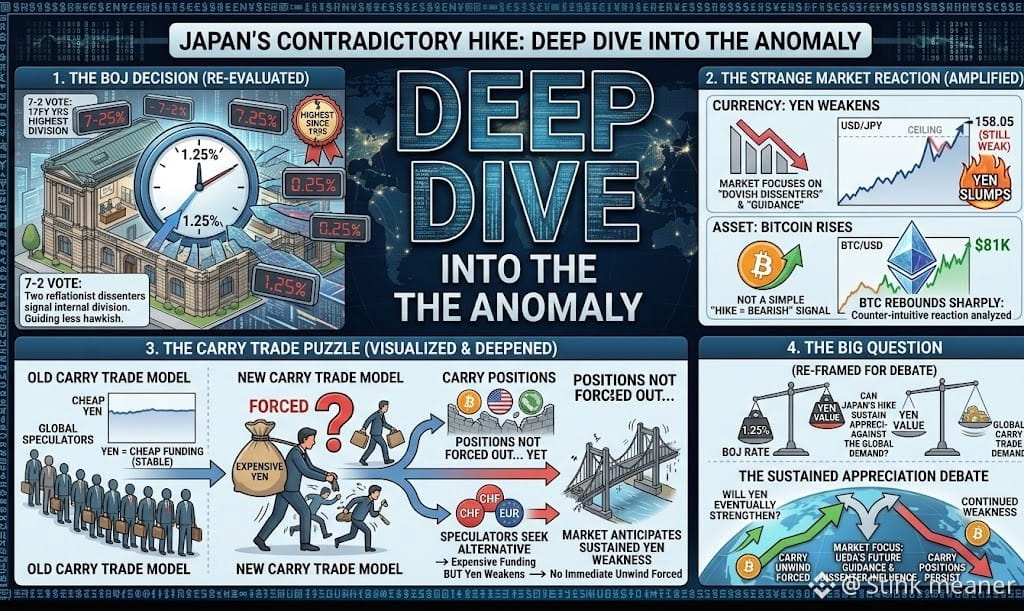
🚨BOJ's Strange Rate Hike...
#bojraisesratesto31yearhigh
Japan just raised rates to a 31-year high. The yen still weakened.
That sounds contradictory — until you look at the carry trade.
The BOJ raised its policy rate 25 bps to 1.25%, the highest since 1995, in a 7–2 vote. It was also the second hike in only three months.
Yet USD/JPY jumped as high as 158.05 after the decision.
Why?
Markets focused on the two dissenting BOJ policymakers and judged the guidance less hawkish than expected.
That matters far beyond Japan.
The yen has been one of the world's major funding currencies for the carry trade — borrow cheaply in yen, deploy into higher-yielding assets elsewhere.
So the real chain is:
BOJ tightening → yen funding gets more expensive
but:
yen weakens → carry positions don't automatically get forced out
And Bitcoin's reaction makes the picture even more interesting.
BTC rebounded sharply after the BOJ decision, reaching around $81K according to Reuters.
So today's signal isn't simply:
“BOJ hikes = BTC bearish.”
The bigger question is whether Japan's tightening eventually produces a sustained yen appreciation strong enough to force a larger carry-trade unwind.
For now, the rate moved.
The yen didn't follow.
That's the part worth watching.
$BTC $XRP
{future}(BTCUSDT)
#BTCBreaks80K #BTC #BinanceSquare #Write2Earn
🚨BOJ's Strange Rate Hike...
#bojraisesratesto31yearhigh
Japan just raised rates to a 31-year high. The yen still weakened.
That sounds contradictory — until you look at the carry trade.
The BOJ raised its policy rate 25 bps to 1.25%, the highest since 1995, in a 7–2 vote. It was also the second hike in only three months.
Yet USD/JPY jumped as high as 158.05 after the decision.
Why?
Markets focused on the two dissenting BOJ policymakers and judged the guidance less hawkish than expected.
That matters far beyond Japan.
The yen has been one of the world's major funding currencies for the carry trade — borrow cheaply in yen, deploy into higher-yielding assets elsewhere.
So the real chain is:
BOJ tightening → yen funding gets more expensive
but:
yen weakens → carry positions don't automatically get forced out
And Bitcoin's reaction makes the picture even more interesting.
BTC rebounded sharply after the BOJ decision, reaching around $81K according to Reuters.
So today's signal isn't simply:
“BOJ hikes = BTC bearish.”
The bigger question is whether Japan's tightening eventually produces a sustained yen appreciation strong enough to force a larger carry-trade unwind.
For now, the rate moved.
The yen didn't follow.
That's the part worth watching.
$BTC $XRP
#BTCBreaks80K #BTC #BinanceSquare #Write2Earn
#bojraisesratesto31yearhigh
Japan just raised rates to a 31-year high. The yen still weakened.
That sounds contradictory — until you look at the carry trade.
The BOJ raised its policy rate 25 bps to 1.25%, the highest since 1995, in a 7–2 vote. It was also the second hike in only three months.
Yet USD/JPY jumped as high as 158.05 after the decision.
Why?
Markets focused on the two dissenting BOJ policymakers and judged the guidance less hawkish than expected.
That matters far beyond Japan.
The yen has been one of the world's major funding currencies for the carry trade — borrow cheaply in yen, deploy into higher-yielding assets elsewhere.
So the real chain is:
BOJ tightening → yen funding gets more expensive
but:
yen weakens → carry positions don't automatically get forced out
And Bitcoin's reaction makes the picture even more interesting.
BTC rebounded sharply after the BOJ decision, reaching around $81K according to Reuters.
So today's signal isn't simply:
“BOJ hikes = BTC bearish.”
The bigger question is whether Japan's tightening eventually produces a sustained yen appreciation strong enough to force a larger carry-trade unwind.
For now, the rate moved.
The yen didn't follow.
That's the part worth watching.
$BTC $XRP
#BTCBreaks80K #BTC #BinanceSquare #Write2Earn
5
2.5k
·
--
🔥Vietnam’s crypto licensing pivot...
#vietnamplansfirstcryptolicensesin2026
🇻🇳 Vietnam is moving toward its first licensed crypto-market operators.
Applications opened on January 20, 2026, under a five-year pilot framework for a regulated crypto-asset market.
But here's the interesting part:
As of the latest available reporting, the first licenses had not yet been issued.
Five applicants have reportedly cleared an initial assessment, with further requirements still to be completed.
Meanwhile, Vietnam has tightened the other side of the market.
Since September 1, new rules have introduced penalties around unlicensed crypto activity, while the transition toward mandatory use of licensed providers begins after the first license is issued.
So the bigger story isn't simply “Vietnam embraces crypto.”
It's the construction of a new market perimeter:
OFFSHORE / UNLICENSED → LICENSED DOMESTIC INFRASTRUCTURE
Vietnam is effectively deciding who gets to provide the rails for its crypto economy.
The question worth watching:
When the first licenses arrive, how much existing Vietnamese crypto activity moves inside that perimeter?
DYOR.
$BTC $ETH
#BTC #HKCompletesFirstHKDStablecoinUseCase #Write2Earn #BinanceSquareFamily
🔥Vietnam’s crypto licensing pivot...
#vietnamplansfirstcryptolicensesin2026
🇻🇳 Vietnam is moving toward its first licensed crypto-market operators.
Applications opened on January 20, 2026, under a five-year pilot framework for a regulated crypto-asset market.
But here's the interesting part:
As of the latest available reporting, the first licenses had not yet been issued.
Five applicants have reportedly cleared an initial assessment, with further requirements still to be completed.
Meanwhile, Vietnam has tightened the other side of the market.
Since September 1, new rules have introduced penalties around unlicensed crypto activity, while the transition toward mandatory use of licensed providers begins after the first license is issued.
So the bigger story isn't simply “Vietnam embraces crypto.”
It's the construction of a new market perimeter:
OFFSHORE / UNLICENSED → LICENSED DOMESTIC INFRASTRUCTURE
Vietnam is effectively deciding who gets to provide the rails for its crypto economy.
The question worth watching:
When the first licenses arrive, how much existing Vietnamese crypto activity moves inside that perimeter?
DYOR.
$BTC $ETH
#BTC #HKCompletesFirstHKDStablecoinUseCase #Write2Earn #BinanceSquareFamily
#vietnamplansfirstcryptolicensesin2026
🇻🇳 Vietnam is moving toward its first licensed crypto-market operators.
Applications opened on January 20, 2026, under a five-year pilot framework for a regulated crypto-asset market.
But here's the interesting part:
As of the latest available reporting, the first licenses had not yet been issued.
Five applicants have reportedly cleared an initial assessment, with further requirements still to be completed.
Meanwhile, Vietnam has tightened the other side of the market.
Since September 1, new rules have introduced penalties around unlicensed crypto activity, while the transition toward mandatory use of licensed providers begins after the first license is issued.
So the bigger story isn't simply “Vietnam embraces crypto.”
It's the construction of a new market perimeter:
OFFSHORE / UNLICENSED → LICENSED DOMESTIC INFRASTRUCTURE
Vietnam is effectively deciding who gets to provide the rails for its crypto economy.
The question worth watching:
When the first licenses arrive, how much existing Vietnamese crypto activity moves inside that perimeter?
DYOR.
$BTC $ETH
#BTC #HKCompletesFirstHKDStablecoinUseCase #Write2Earn #BinanceSquareFamily

3
135
·
--
Verified
🚨Hong Kong’s HKD stablecoin moves into investment...
#hkcompletesfirsthkdstablecoinusecase
Hong Kong has just demonstrated a regulated HKD stablecoin being used inside an actual investment workflow — subscribing for and redeeming tokenised fund units.
ChinaAMC (HK), Standard Chartered and OSL completed an investment transaction using HKDAP to subscribe for and redeem units of a digital money-market fund.
That's more significant than another stablecoin payment test.
The loop is now:
HKDAP → fund subscription → digital asset → redemption → HKDAP
And this isn't HKDAP's first real-world application.
It has already been tested with insurance payments and B2B settlement.
So the progression is becoming visible:
Payments → settlement → investment.
ChinaAMC says its digital money-market fund suite across HKD, USD and RMB has already surpassed HK$5.8B in assets.
The bigger experiment isn't whether Hong Kong can issue a regulated stablecoin.
It's whether tokenised money can become the settlement layer connecting traditional financial assets to on-chain markets.
$ETH $BTC
DYOR.
#VietnamPlansFirstCryptoLicensesIn2026 #BTCBreaks80K #HKDAPEthereumMainnetLive #HKDAP
🚨Hong Kong’s HKD stablecoin moves into investment...
#hkcompletesfirsthkdstablecoinusecase
Hong Kong has just demonstrated a regulated HKD stablecoin being used inside an actual investment workflow — subscribing for and redeeming tokenised fund units.
ChinaAMC (HK), Standard Chartered and OSL completed an investment transaction using HKDAP to subscribe for and redeem units of a digital money-market fund.
That's more significant than another stablecoin payment test.
The loop is now:
HKDAP → fund subscription → digital asset → redemption → HKDAP
And this isn't HKDAP's first real-world application.
It has already been tested with insurance payments and B2B settlement.
So the progression is becoming visible:
Payments → settlement → investment.
ChinaAMC says its digital money-market fund suite across HKD, USD and RMB has already surpassed HK$5.8B in assets.
The bigger experiment isn't whether Hong Kong can issue a regulated stablecoin.
It's whether tokenised money can become the settlement layer connecting traditional financial assets to on-chain markets.
$ETH $BTC
DYOR.
#VietnamPlansFirstCryptoLicensesIn2026 #BTCBreaks80K #HKDAPEthereumMainnetLive #HKDAP
#hkcompletesfirsthkdstablecoinusecase
Hong Kong has just demonstrated a regulated HKD stablecoin being used inside an actual investment workflow — subscribing for and redeeming tokenised fund units.
ChinaAMC (HK), Standard Chartered and OSL completed an investment transaction using HKDAP to subscribe for and redeem units of a digital money-market fund.
That's more significant than another stablecoin payment test.
The loop is now:
HKDAP → fund subscription → digital asset → redemption → HKDAP
And this isn't HKDAP's first real-world application.
It has already been tested with insurance payments and B2B settlement.
So the progression is becoming visible:
Payments → settlement → investment.
ChinaAMC says its digital money-market fund suite across HKD, USD and RMB has already surpassed HK$5.8B in assets.
The bigger experiment isn't whether Hong Kong can issue a regulated stablecoin.
It's whether tokenised money can become the settlement layer connecting traditional financial assets to on-chain markets.
$ETH $BTC
DYOR.
#VietnamPlansFirstCryptoLicensesIn2026 #BTCBreaks80K #HKDAPEthereumMainnetLive #HKDAP
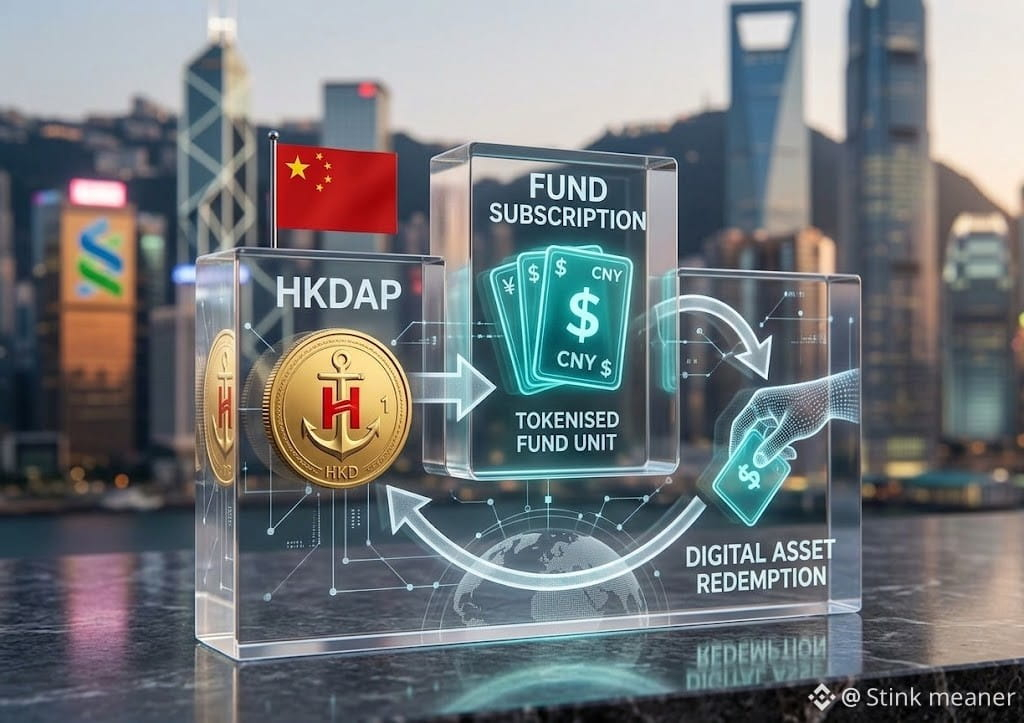
3
46
·
--
Verified
🥶LINERA — the uncomfortable one...
#linerashutsdownafterfundraisingfallsshort
$12M+ raised. $848K in the final community round. Then shutdown.
Linera, an a16z-backed Layer-1 project, has ceased operations after its Sonar community sale reportedly raised about $848,271 against a $1.5M minimum.
The failure wasn't just about missing a fundraising target.
The reported sequence was:
community sale falls short
→ minimum not reached
→ rescue financing fails
→ operations cease
And that happened before mainnet.
That's the part worth remembering in crypto:
venture backing can fund development.
It doesn't guarantee that a network eventually finds enough economic demand to survive.
For a market obsessed with funding announcements and token launches, Linera is an unusually clear reminder:
capital raised ≠ sustainable network.
And if you see an LNRA “claim” circulating now, verify it extremely carefully.
$BNB
#Linera #crypto #BinanceSquareTalks
🥶LINERA — the uncomfortable one...
#linerashutsdownafterfundraisingfallsshort
$12M+ raised. $848K in the final community round. Then shutdown.
Linera, an a16z-backed Layer-1 project, has ceased operations after its Sonar community sale reportedly raised about $848,271 against a $1.5M minimum.
The failure wasn't just about missing a fundraising target.
The reported sequence was:
community sale falls short
→ minimum not reached
→ rescue financing fails
→ operations cease
And that happened before mainnet.
That's the part worth remembering in crypto:
venture backing can fund development.
It doesn't guarantee that a network eventually finds enough economic demand to survive.
For a market obsessed with funding announcements and token launches, Linera is an unusually clear reminder:
capital raised ≠ sustainable network.
And if you see an LNRA “claim” circulating now, verify it extremely carefully.
$BNB
#Linera #crypto #BinanceSquareTalks
#linerashutsdownafterfundraisingfallsshort
$12M+ raised. $848K in the final community round. Then shutdown.
Linera, an a16z-backed Layer-1 project, has ceased operations after its Sonar community sale reportedly raised about $848,271 against a $1.5M minimum.
The failure wasn't just about missing a fundraising target.
The reported sequence was:
community sale falls short
→ minimum not reached
→ rescue financing fails
→ operations cease
And that happened before mainnet.
That's the part worth remembering in crypto:
venture backing can fund development.
It doesn't guarantee that a network eventually finds enough economic demand to survive.
For a market obsessed with funding announcements and token launches, Linera is an unusually clear reminder:
capital raised ≠ sustainable network.
And if you see an LNRA “claim” circulating now, verify it extremely carefully.
$BNB
#Linera #crypto #BinanceSquareTalks
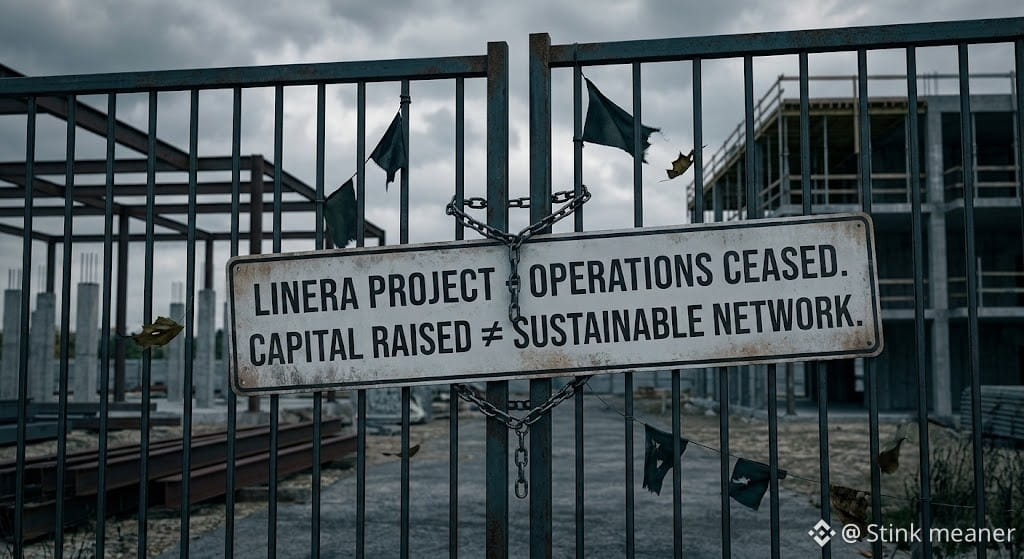
2
863
Log in to explore more content
Join global crypto users on Binance Square
⚡️ Get latest and useful information about crypto.
💬 Trusted by the world’s largest crypto exchange.
👍 Discover real insights from verified creators.
Email / Phone number
Trending Topics
AIStocksWhatNext
113,061 views
1,466 Discussing
Share & Win Traffic Reward in our Trending Hashtag Campaign
✨Topic: What Other Investment Opportunities Remain as AI Stocks Keep Rising?
👉How to Join:
Publish a short post or article with hashtag #AIStocksWhatNext
Share whether you’re bullish or bearish, and post your AI stock holdings or trade — using the trade widget may improve your eligibility.
You can also strengthen your post by sharing data or charts, and avoiding AI-generated images.
✍️Create content based on the below angles:
- Nvidia says chip sales will double next year, and top AI companies keep hitting record revenue, the compute spend behind it is just as staggering. Is AI demand really taking off? And how long can it last? AI stocks are up across the board. Is this a real breakout, or just a short-term bounce?
- Industry leaders are calling to slow down AI development, while Trump plans to build an “AI Force”, claiming AI could account for 25% of U.S. GDP in the future. Whose side are you on? Will state-level backing be a long-term win for AI stocks?
- Are you buying AI stocks? Share your AI-related trade/holdings with our trade sharing widget.
⏰Campaign Period:
- 2026-09-22 7:00 - 2026-09-24 4:00 UTC
🎁Reward:
- Qualified posts that comply with the above guidelines and contain more than 100 words will be reviewed and may receive a random traffic boost of 500 to 3,000 views. You will receive a notification from your feed secretary if your post is selected.
- Get a chance to have your article featured on Binance Square Official
Need ideas for your post? Visit the topic page #AIStocksWhatNext or the Square Guide on How to Post for Better Reach.
Binance Square Official
·228 Likes
·401.3k views
BitcoinBreaksAboveMayHighNears$86K
2,331 views
52 Discussing
DogecoinRises15%
6,010 views
291 Discussing