
#defi
defi
56.5M views
295,015 Discussing
Hot
Latest


Yo, did you guys see the latest SEC move? This is actually huge 🤯 They are launching a five year experiment that basically opens the door for tokenized U.S. stock trading. We are talking about DeFi style trading venues, tokenization projects, and liquidity providers getting a legit pathway in the U.S. now. Naturally, synthetic stock tokens are left out of this, but still, this is a massive win for the whole Real World Asset RWA narrative.
Honestly, this could bring so much institutional volume onto chains like $ETH and $SOL in the coming years. Real world assets are finally getting some regulatory green lights. What do you think, is this going to kickstart the next major DeFi summer? Let me know your thoughts on this one 🚀
#Write2Earn #RWA #DeFi #CryptoNews
Yo, did you guys see the latest SEC move? This is actually huge 🤯 They are launching a five year experiment that basically opens the door for tokenized U.S. stock trading. We are talking about DeFi style trading venues, tokenization projects, and liquidity providers getting a legit pathway in the U.S. now. Naturally, synthetic stock tokens are left out of this, but still, this is a massive win for the whole Real World Asset RWA narrative.
Honestly, this could bring so much institutional volume onto chains like $ETH and $SOL in the coming years. Real world assets are finally getting some regulatory green lights. What do you think, is this going to kickstart the next major DeFi summer? Let me know your thoughts on this one 🚀
#Write2Earn #RWA #DeFi #CryptoNews
Honestly, this could bring so much institutional volume onto chains like $ETH and $SOL in the coming years. Real world assets are finally getting some regulatory green lights. What do you think, is this going to kickstart the next major DeFi summer? Let me know your thoughts on this one 🚀
#Write2Earn #RWA #DeFi #CryptoNews

888

·
--
🚨 Solana DEXs hit 208M weekly spot trades, topping NYSE’s ~190M for the first time. Onchain activity is scaling fast—signal of growing retail and institutional interest in Solana’s ecosystem. While not yet matching Wall Street’s value, momentum is shifting. Could this trend redefine where trading volume concentrates?
#DeFi
$SOL #TradingSignal #CryptoAnalysis
🚨 Solana DEXs hit 208M weekly spot trades, topping NYSE’s ~190M for the first time. Onchain activity is scaling fast—signal of growing retail and institutional interest in Solana’s ecosystem. While not yet matching Wall Street’s value, momentum is shifting. Could this trend redefine where trading volume concentrates?
#DeFi
$SOL #TradingSignal #CryptoAnalysis
#DeFi
$SOL #TradingSignal #CryptoAnalysis

7
Strong momentum surges across Syrup Finance (SYRUP), Cetus (CETUS), and Flow (FLOW). Order blocks show bullish pressure, while liquidity pools expand, fueling higher trading volume. Ecosystem growth in DeFi and NFT layers boosts investor sentiment, positioning these tokens for a decisive uptrend. 🚀📈 #DeFi #CryptoTrading #SyrupFinance #Cetus #Flow
Strong momentum surges across Syrup Finance (SYRUP), Cetus (CETUS), and Flow (FLOW). Order blocks show bullish pressure, while liquidity pools expand, fueling higher trading volume. Ecosystem growth in DeFi and NFT layers boosts investor sentiment, positioning these tokens for a decisive uptrend. 🚀📈 #DeFi #CryptoTrading #SyrupFinance #Cetus #Flow
62

·
--
Bullish
{spot}(ETHUSDT)
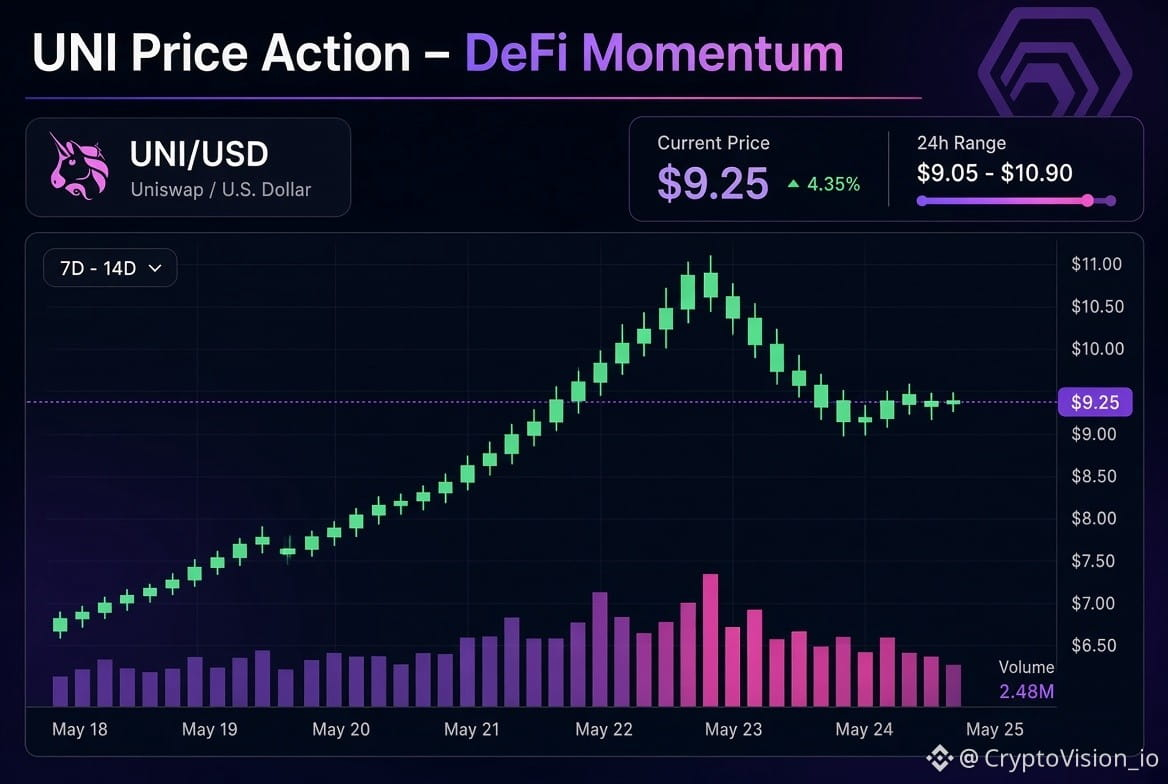
$UNI is showing real DeFi strength.
After a sharp rally from the mid-$6s into the $10+ zone, Uniswap is now consolidating around $9.20–$9.50. Volume stayed elevated and the token clearly led the recent DeFi sector bounce.
Key points:
Strong weekly performance
Benefiting from higher on-chain activity and tokenized asset interest
Still one of the purest plays on DEX volume growth
Watching if it can hold above $9 and push for a clean retest of the recent highs.
Not financial advice. DYOR.
$UNI $ETH H #DeFi #BinanceSquare #WriteToEarn
$UNI is showing real DeFi strength.
After a sharp rally from the mid-$6s into the $10+ zone, Uniswap is now consolidating around $9.20–$9.50. Volume stayed elevated and the token clearly led the recent DeFi sector bounce.
Key points:
Strong weekly performance
Benefiting from higher on-chain activity and tokenized asset interest
Still one of the purest plays on DEX volume growth
Watching if it can hold above $9 and push for a clean retest of the recent highs.
Not financial advice. DYOR.
$UNI $ETH H #DeFi #BinanceSquare #WriteToEarn
After a sharp rally from the mid-$6s into the $10+ zone, Uniswap is now consolidating around $9.20–$9.50. Volume stayed elevated and the token clearly led the recent DeFi sector bounce.
Key points:
Strong weekly performance
Benefiting from higher on-chain activity and tokenized asset interest
Still one of the purest plays on DEX volume growth
Watching if it can hold above $9 and push for a clean retest of the recent highs.
Not financial advice. DYOR.
$UNI $ETH H #DeFi #BinanceSquare #WriteToEarn
1
155

Market Leaders at Prime Levels — Position Before Acceleration
$ENA | $PENDLE | $AAVE
ENA, PENDLE, and AAVE remain important DeFi names as liquidity and yield narratives continue evolving. Holding key technical levels can provide a stronger base for future market expansion.
This is a zone where structure deserves more attention than noise.
Key Takeaway: DeFi momentum can accelerate when liquidity and technical structure align.
#ENA #PENDLE #AAVE #DeFi #StrategicEntry
{future}(ENAUSDT)
{future}(PENDLEUSDT)
{future}(AAVEUSDT)
Market Leaders at Prime Levels — Position Before Acceleration
$ENA | $PENDLE | $AAVE
ENA, PENDLE, and AAVE remain important DeFi names as liquidity and yield narratives continue evolving. Holding key technical levels can provide a stronger base for future market expansion.
This is a zone where structure deserves more attention than noise.
Key Takeaway: DeFi momentum can accelerate when liquidity and technical structure align.
#ENA #PENDLE #AAVE #DeFi #StrategicEntry
$ENA | $PENDLE | $AAVE
ENA, PENDLE, and AAVE remain important DeFi names as liquidity and yield narratives continue evolving. Holding key technical levels can provide a stronger base for future market expansion.
This is a zone where structure deserves more attention than noise.
Key Takeaway: DeFi momentum can accelerate when liquidity and technical structure align.
#ENA #PENDLE #AAVE #DeFi #StrategicEntry
1
5
Market Leaders at Prime Levels — Position Before Acceleration
$LINK | $UNI | $CRV
LINK, UNI, and CRV remain established names across infrastructure and decentralized finance. Their ability to maintain support while volatility contracts can provide useful signals for the broader DeFi market.
Patience remains the edge during compression.
Key Takeaway: Established assets holding structure can become early indicators of renewed market activity.
#LINK #UNI #CRV #DeFi #HighConviction
{future}(LINKUSDT)
{future}(UNIUSDT)
{future}(CRVUSDT)
Market Leaders at Prime Levels — Position Before Acceleration
$LINK | $UNI | $CRV
LINK, UNI, and CRV remain established names across infrastructure and decentralized finance. Their ability to maintain support while volatility contracts can provide useful signals for the broader DeFi market.
Patience remains the edge during compression.
Key Takeaway: Established assets holding structure can become early indicators of renewed market activity.
#LINK #UNI #CRV #DeFi #HighConviction
$LINK | $UNI | $CRV
LINK, UNI, and CRV remain established names across infrastructure and decentralized finance. Their ability to maintain support while volatility contracts can provide useful signals for the broader DeFi market.
Patience remains the edge during compression.
Key Takeaway: Established assets holding structure can become early indicators of renewed market activity.
#LINK #UNI #CRV #DeFi #HighConviction
1
89
Market Leaders at Prime Levels — Position Before Acceleration
$AAVE | $UNI | $PENDLE
AAVE, UNI, and PENDLE remain prominent DeFi assets across lending, decentralized exchange, and yield markets. Their ability to defend important levels keeps the sector on the radar.
The next move needs liquidity behind it.
Key Takeaway: DeFi structure becomes more compelling when volume expands from established support.
#AAVE #UNI #PENDLE #DeFi #StrategicEntry
{future}(AAVEUSDT)
{future}(UNIUSDT)
{future}(PENDLEUSDT)
Market Leaders at Prime Levels — Position Before Acceleration
$AAVE | $UNI | $PENDLE
AAVE, UNI, and PENDLE remain prominent DeFi assets across lending, decentralized exchange, and yield markets. Their ability to defend important levels keeps the sector on the radar.
The next move needs liquidity behind it.
Key Takeaway: DeFi structure becomes more compelling when volume expands from established support.
#AAVE #UNI #PENDLE #DeFi #StrategicEntry
$AAVE | $UNI | $PENDLE
AAVE, UNI, and PENDLE remain prominent DeFi assets across lending, decentralized exchange, and yield markets. Their ability to defend important levels keeps the sector on the radar.
The next move needs liquidity behind it.
Key Takeaway: DeFi structure becomes more compelling when volume expands from established support.
#AAVE #UNI #PENDLE #DeFi #StrategicEntry
1
83
Market Leaders at Prime Levels — Position Before Acceleration
$ENA | $CRV | $RUNE
ENA, CRV, and RUNE remain active within DeFi and liquidity-focused narratives. Their price structures are worth monitoring as the market moves through another period of compression.
The next expansion could bring renewed attention to decentralized liquidity protocols.
Key Takeaway: Liquidity narratives strengthen when price structure and volume move together.
#ENA #CRV #RUNE #DeFi #HighConviction
{future}(ENAUSDT)
{future}(CRVUSDT)
{future}(RUNEUSDT)
Market Leaders at Prime Levels — Position Before Acceleration
$ENA | $CRV | $RUNE
ENA, CRV, and RUNE remain active within DeFi and liquidity-focused narratives. Their price structures are worth monitoring as the market moves through another period of compression.
The next expansion could bring renewed attention to decentralized liquidity protocols.
Key Takeaway: Liquidity narratives strengthen when price structure and volume move together.
#ENA #CRV #RUNE #DeFi #HighConviction
$ENA | $CRV | $RUNE
ENA, CRV, and RUNE remain active within DeFi and liquidity-focused narratives. Their price structures are worth monitoring as the market moves through another period of compression.
The next expansion could bring renewed attention to decentralized liquidity protocols.
Key Takeaway: Liquidity narratives strengthen when price structure and volume move together.
#ENA #CRV #RUNE #DeFi #HighConviction
1
294

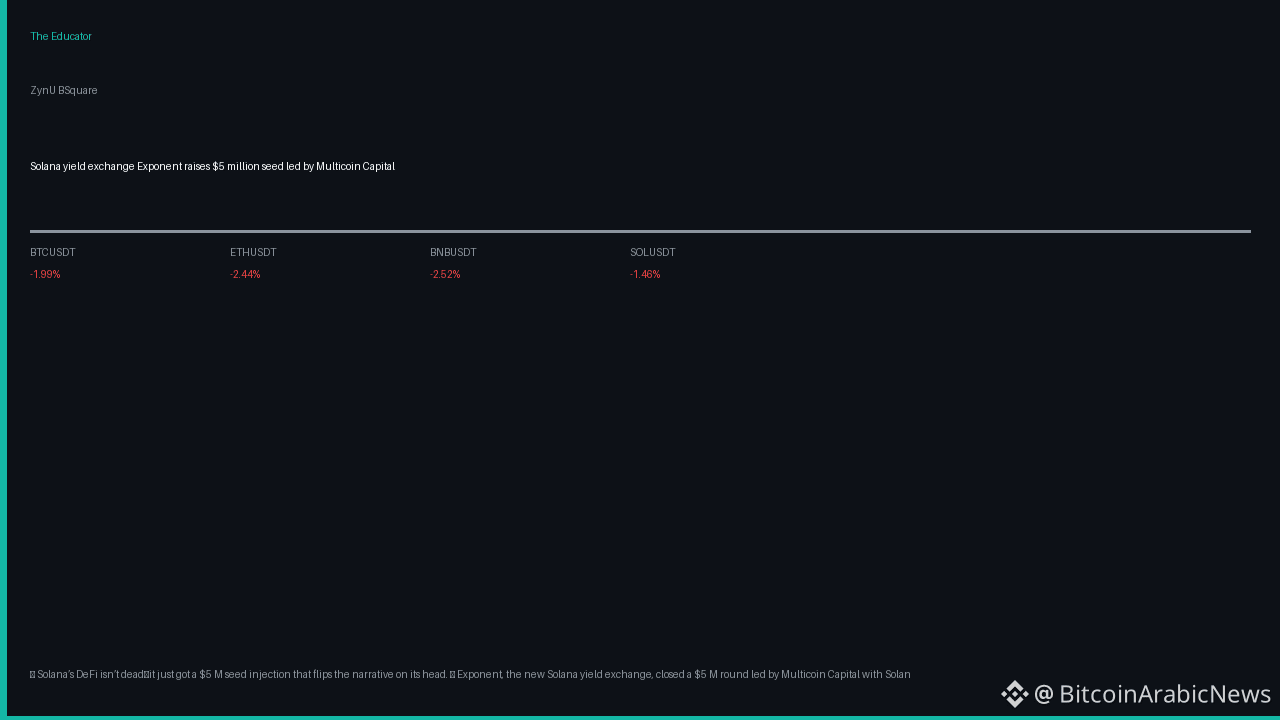
🔥 Solana’s DeFi isn’t dead—it just got a $5 M seed injection that flips the narrative on its head.
📊 Exponent, the new Solana yield exchange, closed a $5 M round led by Multicoin Capital with Solana Ventures, Anatoly Yakovenko and Nick Ducoff on board; the market’s current #Greed sentiment sits at 71/100, BTC trades at $84,516 (‑1.99%) and Solana is $115 (‑1.46%) with a neutral RSI of 54, while smart‑money wallets (BLEE, OTC, PAID) are already net‑buying SOL on‑chain. #Solana #DeFi
💡 In a macro cycle where capital flows to the next yield frontier, this seed round signals institutional confidence that Solana’s low‑fee, high‑throughput engine will host the next wave of on‑chain interest‑bearing products, echoing past “mid‑cycle” infusions that sparked multi‑digit rallies across the crypto market. #YieldFarming
🚀 Practical move: allocate a modest, risk‑adjusted slice of your portfolio to SOL and keep an eye on Exponent’s token listings—early liquidity provision could capture the upside before broader retail inflows catch up.
❓ How are you positioning yourself for the upcoming Solana yield boom—waiting for price stability, diving in now, or staying on the sidelines?
🔥 Solana’s DeFi isn’t dead—it just got a $5 M seed injection that flips the narrative on its head.
📊 Exponent, the new Solana yield exchange, closed a $5 M round led by Multicoin Capital with Solana Ventures, Anatoly Yakovenko and Nick Ducoff on board; the market’s current #Greed sentiment sits at 71/100, BTC trades at $84,516 (‑1.99%) and Solana is $115 (‑1.46%) with a neutral RSI of 54, while smart‑money wallets (BLEE, OTC, PAID) are already net‑buying SOL on‑chain. #Solana #DeFi
💡 In a macro cycle where capital flows to the next yield frontier, this seed round signals institutional confidence that Solana’s low‑fee, high‑throughput engine will host the next wave of on‑chain interest‑bearing products, echoing past “mid‑cycle” infusions that sparked multi‑digit rallies across the crypto market. #YieldFarming
🚀 Practical move: allocate a modest, risk‑adjusted slice of your portfolio to SOL and keep an eye on Exponent’s token listings—early liquidity provision could capture the upside before broader retail inflows catch up.
❓ How are you positioning yourself for the upcoming Solana yield boom—waiting for price stability, diving in now, or staying on the sidelines?
📊 Exponent, the new Solana yield exchange, closed a $5 M round led by Multicoin Capital with Solana Ventures, Anatoly Yakovenko and Nick Ducoff on board; the market’s current #Greed sentiment sits at 71/100, BTC trades at $84,516 (‑1.99%) and Solana is $115 (‑1.46%) with a neutral RSI of 54, while smart‑money wallets (BLEE, OTC, PAID) are already net‑buying SOL on‑chain. #Solana #DeFi
💡 In a macro cycle where capital flows to the next yield frontier, this seed round signals institutional confidence that Solana’s low‑fee, high‑throughput engine will host the next wave of on‑chain interest‑bearing products, echoing past “mid‑cycle” infusions that sparked multi‑digit rallies across the crypto market. #YieldFarming
🚀 Practical move: allocate a modest, risk‑adjusted slice of your portfolio to SOL and keep an eye on Exponent’s token listings—early liquidity provision could capture the upside before broader retail inflows catch up.
❓ How are you positioning yourself for the upcoming Solana yield boom—waiting for price stability, diving in now, or staying on the sidelines?
25

🚨 $7 Billion just moved through DeFi — while stock markets were closed. 📊
Here's the interesting part: traditional markets shut down on weekends. Crypto doesn't.
$7B in RWA (Real World Assets) volume was routed through 1inch — showing that tokenized real-world assets are actually being used, not just talked about. 🌍⚙️
📌 TradFi: closes on weekends
📌 DeFi: runs 24/7, no breaks
This could be an early sign that "RWA summer" isn't just a narrative — it's actually happening. 👀
What's your take — is RWA the next big trend? 👇 Let me know in the comments.
Follow ✅ for more DeFi breakdowns like this.
#DeFi #Binance #crypto #BinanceSquare
🚨 $7 Billion just moved through DeFi — while stock markets were closed. 📊
Here's the interesting part: traditional markets shut down on weekends. Crypto doesn't.
$7B in RWA (Real World Assets) volume was routed through 1inch — showing that tokenized real-world assets are actually being used, not just talked about. 🌍⚙️
📌 TradFi: closes on weekends
📌 DeFi: runs 24/7, no breaks
This could be an early sign that "RWA summer" isn't just a narrative — it's actually happening. 👀
What's your take — is RWA the next big trend? 👇 Let me know in the comments.
Follow ✅ for more DeFi breakdowns like this.
#DeFi #Binance #crypto #BinanceSquare
Here's the interesting part: traditional markets shut down on weekends. Crypto doesn't.
$7B in RWA (Real World Assets) volume was routed through 1inch — showing that tokenized real-world assets are actually being used, not just talked about. 🌍⚙️
📌 TradFi: closes on weekends
📌 DeFi: runs 24/7, no breaks
This could be an early sign that "RWA summer" isn't just a narrative — it's actually happening. 👀
What's your take — is RWA the next big trend? 👇 Let me know in the comments.
Follow ✅ for more DeFi breakdowns like this.
#DeFi #Binance #crypto #BinanceSquare
91

🚨 $KMNO is moving — but the real question is whether momentum can hold.
$KMNO is trading around $0.0362, up roughly 11% in 24H.
The catalyst? Kamino launched a Fixed-Rate Multiply vault on Solana, offering a 5.3% locked annual borrow rate on the AUTO/wYLDS strategy for rolling 30-day terms.
📊 Quick trade setup — Spot
• Watch: $0.0360–$0.0370
• Break above $0.0371 → momentum could strengthen
• Lose $0.0350 → watch for a pullback
• Don’t chase a sharp candle; wait for confirmation.
⚠️ Momentum is strong, but several technical indicators are already showing overbought conditions. This is a setup to watch, not a guaranteed trade.
Question: 👀
If $KMNO breaks $0.0371, do you think this move is just beginning — or is the market already overheated?
$KMNO
#KMNO #Kamino o #solana #defi #Crypto
{future}(KMNOUSDT)
🚨 $KMNO is moving — but the real question is whether momentum can hold.
$KMNO is trading around $0.0362, up roughly 11% in 24H.
The catalyst? Kamino launched a Fixed-Rate Multiply vault on Solana, offering a 5.3% locked annual borrow rate on the AUTO/wYLDS strategy for rolling 30-day terms.
📊 Quick trade setup — Spot
• Watch: $0.0360–$0.0370
• Break above $0.0371 → momentum could strengthen
• Lose $0.0350 → watch for a pullback
• Don’t chase a sharp candle; wait for confirmation.
⚠️ Momentum is strong, but several technical indicators are already showing overbought conditions. This is a setup to watch, not a guaranteed trade.
Question: 👀
If $KMNO breaks $0.0371, do you think this move is just beginning — or is the market already overheated?
$KMNO
#KMNO #Kamino o #solana #defi #Crypto
$KMNO is trading around $0.0362, up roughly 11% in 24H.
The catalyst? Kamino launched a Fixed-Rate Multiply vault on Solana, offering a 5.3% locked annual borrow rate on the AUTO/wYLDS strategy for rolling 30-day terms.
📊 Quick trade setup — Spot
• Watch: $0.0360–$0.0370
• Break above $0.0371 → momentum could strengthen
• Lose $0.0350 → watch for a pullback
• Don’t chase a sharp candle; wait for confirmation.
⚠️ Momentum is strong, but several technical indicators are already showing overbought conditions. This is a setup to watch, not a guaranteed trade.
Question: 👀
If $KMNO breaks $0.0371, do you think this move is just beginning — or is the market already overheated?
$KMNO
#KMNO #Kamino o #solana #defi #Crypto
15

EigenLayer (EIGEN) is scaling Ethereum through restaking, Arweave (AR) continues to solidify its permanent data storage market, Curve DAO Token (CRV) keeps driving stablecoin swaps. Recent order blocks show strong buying pressure for all three, suggesting momentum in the DeFi space. Volume spikes across liquidity pools indicate growing investor confidence. Ecosystem growth, innovation, and adoption remain key drivers for sustained trading activity. 🚀📈 #Crypto #DeFi
EigenLayer (EIGEN) is scaling Ethereum through restaking, Arweave (AR) continues to solidify its permanent data storage market, Curve DAO Token (CRV) keeps driving stablecoin swaps. Recent order blocks show strong buying pressure for all three, suggesting momentum in the DeFi space. Volume spikes across liquidity pools indicate growing investor confidence. Ecosystem growth, innovation, and adoption remain key drivers for sustained trading activity. 🚀📈 #Crypto #DeFi
5

·
--
We need to count words roughly. Let's draft ~220 words.
Count words manually.
Draft:
"Compound Finance lets users lend and borrow crypto without a bank. You deposit assets into a pool, and the protocol automatically matches lenders with borrowers. Interest rates are set algorithmically: when more people want to borrow a token, the utilization rate rises and the rate climbs; when supply exceeds demand, the rate falls. This supply‑demand curve runs on‑chain, so rates update every block.
Key metrics: total value locked (TVL) sits around $5 billion, the COMP governance token trades near $45, and the average supply APY for USDC hovers near 3 %. Borrowers pay a variable rate that can spike during high demand.
One risk to watch is liquidation risk. If the value of your collateral drops below the protocol’s collateral factor, your position can be partially or fully liquidated to repay the loan. Sharp market moves can trigger cascading liquidations, especially for volatile assets.
What do you think about algorithmic rates versus fixed‑rate lending models?
#Ethereum #ETH #DeFi #DeFiProtocol"
Now count words. Let's count roughly.
Count each word:
"Compound(1) Finance2 lets3 users4 lend5 and6 borrow7 crypto8 without9 a10 bank.11 You12 deposit13 assets14 into15 a16 pool,17 and18 the19 protocol20 automatically21 matches22 lenders23 with24 borrowers.25 Interest26 rates27 are28 set29 algorithmically:30 when31 more32 people33 want34 to35 borrow36 a37 token,38 the39 utilization40 rate41 rises42 and43 the44 rate
We need to count words roughly. Let's draft ~220 words.
Count words manually.
Draft:
"Compound Finance lets users lend and borrow crypto without a bank. You deposit assets into a pool, and the protocol automatically matches lenders with borrowers. Interest rates are set algorithmically: when more people want to borrow a token, the utilization rate rises and the rate climbs; when supply exceeds demand, the rate falls. This supply‑demand curve runs on‑chain, so rates update every block.
Key metrics: total value locked (TVL) sits around $5 billion, the COMP governance token trades near $45, and the average supply APY for USDC hovers near 3 %. Borrowers pay a variable rate that can spike during high demand.
One risk to watch is liquidation risk. If the value of your collateral drops below the protocol’s collateral factor, your position can be partially or fully liquidated to repay the loan. Sharp market moves can trigger cascading liquidations, especially for volatile assets.
What do you think about algorithmic rates versus fixed‑rate lending models?
#Ethereum #ETH #DeFi #DeFiProtocol"
Now count words. Let's count roughly.
Count each word:
"Compound(1) Finance2 lets3 users4 lend5 and6 borrow7 crypto8 without9 a10 bank.11 You12 deposit13 assets14 into15 a16 pool,17 and18 the19 protocol20 automatically21 matches22 lenders23 with24 borrowers.25 Interest26 rates27 are28 set29 algorithmically:30 when31 more32 people33 want34 to35 borrow36 a37 token,38 the39 utilization40 rate41 rises42 and43 the44 rate
Count words manually.
Draft:
"Compound Finance lets users lend and borrow crypto without a bank. You deposit assets into a pool, and the protocol automatically matches lenders with borrowers. Interest rates are set algorithmically: when more people want to borrow a token, the utilization rate rises and the rate climbs; when supply exceeds demand, the rate falls. This supply‑demand curve runs on‑chain, so rates update every block.
Key metrics: total value locked (TVL) sits around $5 billion, the COMP governance token trades near $45, and the average supply APY for USDC hovers near 3 %. Borrowers pay a variable rate that can spike during high demand.
One risk to watch is liquidation risk. If the value of your collateral drops below the protocol’s collateral factor, your position can be partially or fully liquidated to repay the loan. Sharp market moves can trigger cascading liquidations, especially for volatile assets.
What do you think about algorithmic rates versus fixed‑rate lending models?
#Ethereum #ETH #DeFi #DeFiProtocol"
Now count words. Let's count roughly.
Count each word:
"Compound(1) Finance2 lets3 users4 lend5 and6 borrow7 crypto8 without9 a10 bank.11 You12 deposit13 assets14 into15 a16 pool,17 and18 the19 protocol20 automatically21 matches22 lenders23 with24 borrowers.25 Interest26 rates27 are28 set29 algorithmically:30 when31 more32 people33 want34 to35 borrow36 a37 token,38 the39 utilization40 rate41 rises42 and43 the44 rate
83

·
--
$SOL: Raydium solidified its near-monopoly on Solana's tokenized commodity trading this week $SOL at 117.1, -0.44% on the day · day range 116.1-119.7 · 4.50B 24h vol
Raydium solidified its near-monopoly on Solana's tokenized commodity trading this week, capturing the bulk of a reported 87 million in weekly volume as of September 23, 2026.
Raydium solidified its near-monopoly on Solana's tokenized commodity trading this week, capturing the bulk of a reported 87 million in weekly volume as of September 23,…
Raydium solidified its near-monopoly on Solana's tokenized commodity trading this week, capturing the bulk of a reported 87 million in weekly volume as of September 23, 2026.
The concentration of trading activity on a single platform warrants close observation from traders assessing market structure and potential vulnerabilities.
$SOL #SOL #DeFi #CryptoNews
$SOL : Raydium solidified its near-monopoly on Solana's tokenized commodity trading this week $SOL at 117.1, -0.44% on the day · day range 116.1-119.7 · 4.50B 24h vol
Raydium solidified its near-monopoly on Solana's tokenized commodity trading this week, capturing the bulk of a reported 87 million in weekly volume as of September 23, 2026.
Raydium solidified its near-monopoly on Solana's tokenized commodity trading this week, capturing the bulk of a reported 87 million in weekly volume as of September 23,…
Raydium solidified its near-monopoly on Solana's tokenized commodity trading this week, capturing the bulk of a reported 87 million in weekly volume as of September 23, 2026.
The concentration of trading activity on a single platform warrants close observation from traders assessing market structure and potential vulnerabilities.
$SOL #SOL #DeFi #CryptoNews
Raydium solidified its near-monopoly on Solana's tokenized commodity trading this week, capturing the bulk of a reported 87 million in weekly volume as of September 23, 2026.
Raydium solidified its near-monopoly on Solana's tokenized commodity trading this week, capturing the bulk of a reported 87 million in weekly volume as of September 23,…
Raydium solidified its near-monopoly on Solana's tokenized commodity trading this week, capturing the bulk of a reported 87 million in weekly volume as of September 23, 2026.
The concentration of trading activity on a single platform warrants close observation from traders assessing market structure and potential vulnerabilities.
$SOL #SOL #DeFi #CryptoNews
72

Mohsin 7777:
How are you😊I like and share all of your posts. So please like and share my posts too. 😉🥰 Shar please 🫡🫡
1
1
75

·
--
Bullish
🚨 REAL YIELD DEFI: THE CASH-FLOW POWERHOUSES! 💸⚡
While speculative hype cycles come and go, protocols generating sustainable real yield continue capturing institutional liquidity. Smart Money is heavily accumulating real-yield primitives PENDLE andENA! 📈
📊 REAL YIELD ALLOCATION (TEXT CHART):
55% ⏳⏳⏳⏳⏳🟩 | Yield Tokenization ($PENDLE)
40% 💵💵💵💵🟦 | Synthetic Dollar Yield ($ENA)
5% ⚡ | Niche Yield Pools
🔹 $PENDLE: Tokenizes future yield into Principal (PT) and Yield Tokens (YT), creating TradFi-grade fixed income and yield speculation in DeFi.
🔹 $ENA (Ethena): Powering USDe via delta-neutral cash-and-carry arbitrage, generating organic yield at scale.
💡 WHALE LESSON: Price fluctuates, but real protocol yield compounds. Bet on protocols that turn market volatility into direct cash flow! 🎒
📊 COMMUNITY POLL: Which yield machine are you stacking?
1️⃣ Pendle ($PENDLE) ⏳
2️⃣ Ethena ($ENA) 💵
3️⃣ Stacking Both ($PENDLE +$ENA) 🚀
4️⃣ Pure $BTC Cash Hold 🛡️
💬 Vote above & drop your APY strategy below! 👇
#DeFi #Pendle #Ethena #PENDLE #ENA #BinanceSquare #SmartMoney
🚨 REAL YIELD DEFI: THE CASH-FLOW POWERHOUSES! 💸⚡
While speculative hype cycles come and go, protocols generating sustainable real yield continue capturing institutional liquidity. Smart Money is heavily accumulating real-yield primitives PENDLE andENA! 📈
📊 REAL YIELD ALLOCATION (TEXT CHART):
55% ⏳⏳⏳⏳⏳🟩 | Yield Tokenization ($PENDLE)
40% 💵💵💵💵🟦 | Synthetic Dollar Yield ($ENA)
5% ⚡ | Niche Yield Pools
🔹 $PENDLE: Tokenizes future yield into Principal (PT) and Yield Tokens (YT), creating TradFi-grade fixed income and yield speculation in DeFi.
🔹 $ENA (Ethena): Powering USDe via delta-neutral cash-and-carry arbitrage, generating organic yield at scale.
💡 WHALE LESSON: Price fluctuates, but real protocol yield compounds. Bet on protocols that turn market volatility into direct cash flow! 🎒
📊 COMMUNITY POLL: Which yield machine are you stacking?
1️⃣ Pendle ($PENDLE) ⏳
2️⃣ Ethena ($ENA) 💵
3️⃣ Stacking Both ($PENDLE +$ENA) 🚀
4️⃣ Pure $BTC Cash Hold 🛡️
💬 Vote above & drop your APY strategy below! 👇
#DeFi #Pendle #Ethena #PENDLE #ENA #BinanceSquare #SmartMoney
While speculative hype cycles come and go, protocols generating sustainable real yield continue capturing institutional liquidity. Smart Money is heavily accumulating real-yield primitives PENDLE andENA! 📈
📊 REAL YIELD ALLOCATION (TEXT CHART):
55% ⏳⏳⏳⏳⏳🟩 | Yield Tokenization ($PENDLE)
40% 💵💵💵💵🟦 | Synthetic Dollar Yield ($ENA)
5% ⚡ | Niche Yield Pools
🔹 $PENDLE: Tokenizes future yield into Principal (PT) and Yield Tokens (YT), creating TradFi-grade fixed income and yield speculation in DeFi.
🔹 $ENA (Ethena): Powering USDe via delta-neutral cash-and-carry arbitrage, generating organic yield at scale.
💡 WHALE LESSON: Price fluctuates, but real protocol yield compounds. Bet on protocols that turn market volatility into direct cash flow! 🎒
📊 COMMUNITY POLL: Which yield machine are you stacking?
1️⃣ Pendle ($PENDLE) ⏳
2️⃣ Ethena ($ENA) 💵
3️⃣ Stacking Both ($PENDLE +$ENA) 🚀
4️⃣ Pure $BTC Cash Hold 🛡️
💬 Vote above & drop your APY strategy below! 👇
#DeFi #Pendle #Ethena #PENDLE #ENA #BinanceSquare #SmartMoney
1
247
·
--
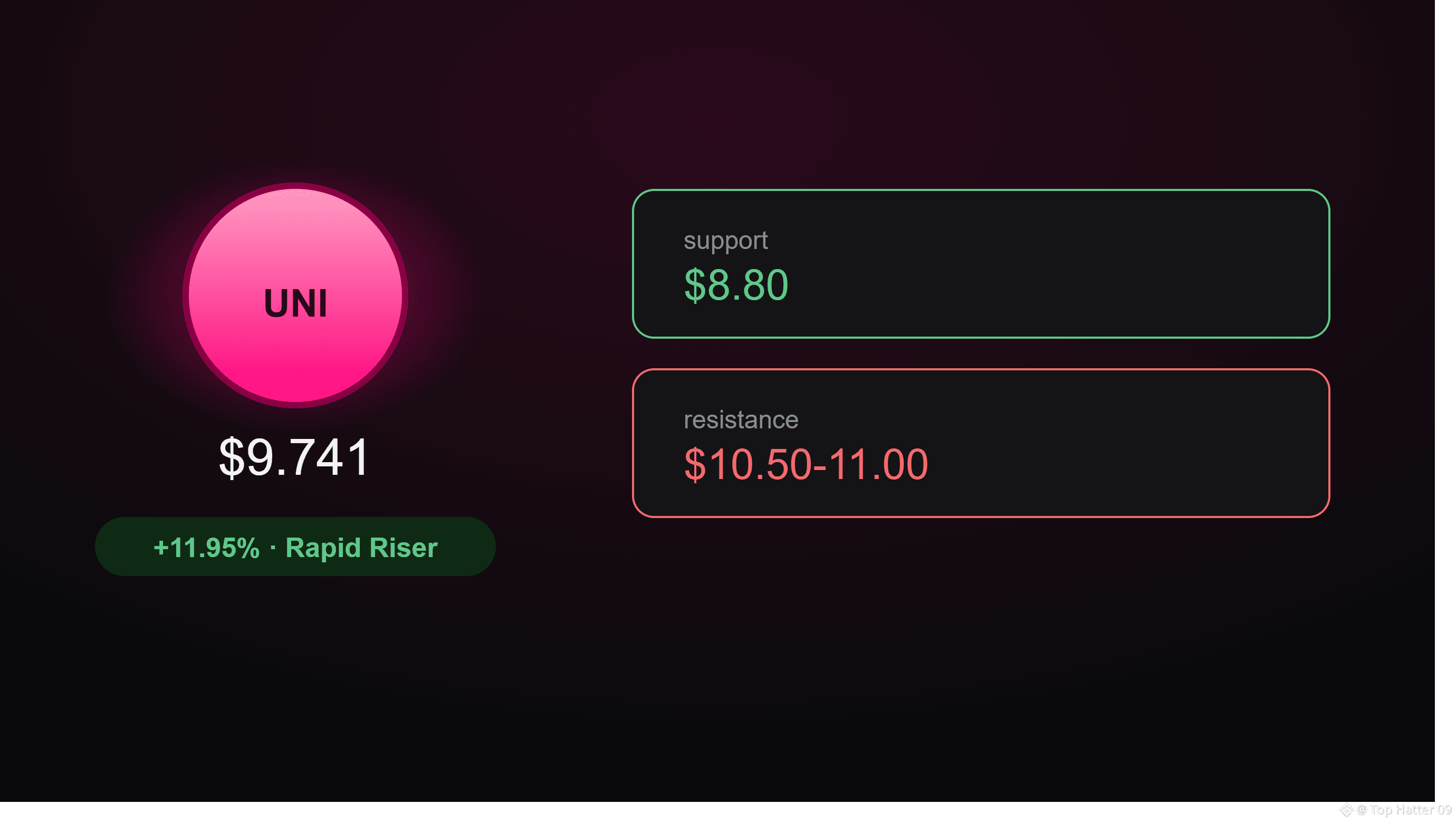
Uniswap’s UNI token just surged over 15% in 24 hours, hitting $10.50 and pushing its market cap above $6.5 billion!
If you are new to crypto, Uniswap is the biggest decentralized exchange (DEX) on Ethereum. It lets you swap tokens directly from your wallet without a middleman. UNI is the governance token, meaning holders get to vote on how the protocol evolves — like deciding fee structures or new features. It originally launched in 2020 with a famous airdrop rewarding early users.
This recent pump comes alongside massive trading volume near $2.3 billion, showing renewed interest in DeFi blue chips. While price action is exciting, remember that governance tokens derive value from the protocol's actual usage and revenue potential.
Always do your own research before buying the hype.
#UNI #DeFi
What feature would you vote for if you held UNI governance power?
Uniswap’s UNI token just surged over 15% in 24 hours, hitting $10.50 and pushing its market cap above $6.5 billion!
If you are new to crypto, Uniswap is the biggest decentralized exchange (DEX) on Ethereum. It lets you swap tokens directly from your wallet without a middleman. UNI is the governance token, meaning holders get to vote on how the protocol evolves — like deciding fee structures or new features. It originally launched in 2020 with a famous airdrop rewarding early users.
This recent pump comes alongside massive trading volume near $2.3 billion, showing renewed interest in DeFi blue chips. While price action is exciting, remember that governance tokens derive value from the protocol's actual usage and revenue potential.
Always do your own research before buying the hype.
#UNI #DeFi
What feature would you vote for if you held UNI governance power?
If you are new to crypto, Uniswap is the biggest decentralized exchange (DEX) on Ethereum. It lets you swap tokens directly from your wallet without a middleman. UNI is the governance token, meaning holders get to vote on how the protocol evolves — like deciding fee structures or new features. It originally launched in 2020 with a famous airdrop rewarding early users.
This recent pump comes alongside massive trading volume near $2.3 billion, showing renewed interest in DeFi blue chips. While price action is exciting, remember that governance tokens derive value from the protocol's actual usage and revenue potential.
Always do your own research before buying the hype.
#UNI #DeFi
What feature would you vote for if you held UNI governance power?
86

$100B+ locked in DeFi. And it's still day one.
🔸 No credit checks. No permission. Just collateral.
→ DEX volume rivaling centralized exchanges
→ Lending, borrowing, trading — 24/7/365
→ DeFi TVL: $100B+ across protocols
The future of finance is programmable. That's DeFi.
Tag someone who needs to see this
#CryptoBasics #LearnCrypto #CryptoMarket #Investing #DeFi
📱 Follow @PoorCryptoMan
$100B+ locked in DeFi. And it's still day one.
🔸 No credit checks. No permission. Just collateral.
→ DEX volume rivaling centralized exchanges
→ Lending, borrowing, trading — 24/7/365
→ DeFi TVL: $100B+ across protocols
The future of finance is programmable. That's DeFi.
Tag someone who needs to see this
#CryptoBasics #LearnCrypto #CryptoMarket #Investing #DeFi
📱 Follow @PoorCryptoMan
🔸 No credit checks. No permission. Just collateral.
→ DEX volume rivaling centralized exchanges
→ Lending, borrowing, trading — 24/7/365
→ DeFi TVL: $100B+ across protocols
The future of finance is programmable. That's DeFi.
Tag someone who needs to see this
#CryptoBasics #LearnCrypto #CryptoMarket #Investing #DeFi
📱 Follow @PoorCryptoMan
4

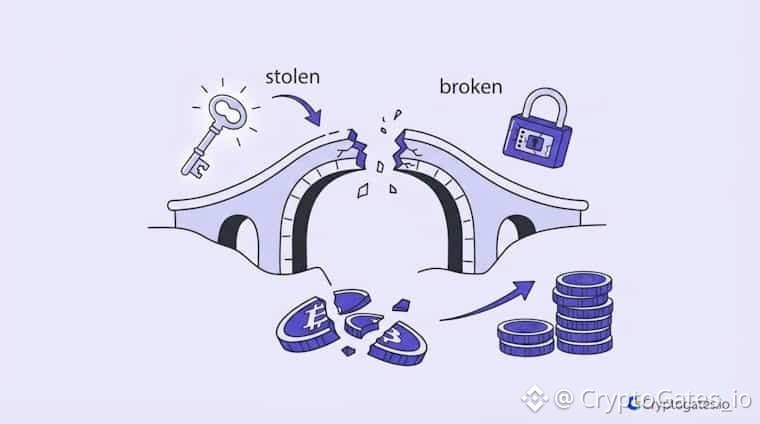
Data point traders are sleeping on: 82.7% of all DeFi losses in H1 2026 traced back to stolen keys — not code exploits. $935.3M lost across 87 incidents (QuillAudits). 🛡️
An audit badge tells you nothing about who controls the keys behind a protocol. A single signer or an unprotected wallet can undo months of clean code.
before you deposit, ask: multisig or single admin key? Clear-signing support?
Has the bridge/RPC infrastructure been reviewed - not just the contract?
Security is a people problem now, as much as a code problem.
#Bitcoin #CryptoTrading #DeFi
Data point traders are sleeping on: 82.7% of all DeFi losses in H1 2026 traced back to stolen keys — not code exploits. $935.3M lost across 87 incidents (QuillAudits). 🛡️
An audit badge tells you nothing about who controls the keys behind a protocol. A single signer or an unprotected wallet can undo months of clean code.
before you deposit, ask: multisig or single admin key? Clear-signing support?
Has the bridge/RPC infrastructure been reviewed - not just the contract?
Security is a people problem now, as much as a code problem.
#Bitcoin #CryptoTrading #DeFi
An audit badge tells you nothing about who controls the keys behind a protocol. A single signer or an unprotected wallet can undo months of clean code.
before you deposit, ask: multisig or single admin key? Clear-signing support?
Has the bridge/RPC infrastructure been reviewed - not just the contract?
Security is a people problem now, as much as a code problem.
#Bitcoin #CryptoTrading #DeFi
45
Bluzelle ( BLZ ) is carving a niche in decentralized storage, while Hifi Finance ( HIFI ) continues to push DeFi innovation with its cross chain yield solutions. Velodrome ( VELODROME ) keeps attracting liquidity thanks to its AMM efficiency. Recent order block activity shows bullish momentum, and investor sentiment remains positive as ecosystem growth fuels trading volume. 🚀📈 #Bluzelle #HifiFinance #Velodrome #DeFi #Crypto
Bluzelle ( BLZ ) is carving a niche in decentralized storage, while Hifi Finance ( HIFI ) continues to push DeFi innovation with its cross chain yield solutions. Velodrome ( VELODROME ) keeps attracting liquidity thanks to its AMM efficiency. Recent order block activity shows bullish momentum, and investor sentiment remains positive as ecosystem growth fuels trading volume. 🚀📈 #Bluzelle #HifiFinance #Velodrome #DeFi #Crypto
25
Log in to explore more content
Join global crypto users on Binance Square
⚡️ Get latest and useful information about crypto.
💬 Trusted by the world’s largest crypto exchange.
👍 Discover real insights from verified creators.
Email / Phone number
Trending Topics
1
#AIStocksWhatNext
956,762 views
6,871 Discussing
2
#BitcoinRejectedAt$87,300Twice
0 views
0 Discussing
3
#BCHJumps28%OnCMEFuturesListing
18,435 views
613 Discussing
4
#WallStreetEarningsRevisionsTurnBearish
13,445 views
451 Discussing
5
#DollarIndexReclaims101
11,066 views
392 Discussing
6
#21SharesLaunchesEuropesFirstZcashETP
49,237 views
1,179 Discussing
7
#CardanoJoinsX402PaymentStandard
30,013 views
823 Discussing
8
#BitcoinTops$87KAtEightMonthHigh
13,612 views
135 Discussing
9
#ZECBreaksAbove$1600AtRecordHigh
9,534 views
108 Discussing
10
#BitwiseNEARStakingETPAssetsTop$100M
47,460 views
111 Discussing