

#southafricaproposescryptoexchangecontrols
southafricaproposescryptoexchangecontrols
122,135 views
1,003 Discussing
Hot
Latest

·
--
Bullish
#SouthAfricaProposesCryptoExchangeControls
South Africa crypto flows par tighter controls propose kar raha hai.
National Treasury + South African Reserve Bank ke draft framework mein cross-border crypto transfers ko exchange-control oversight aur reporting requirements ke under lane ki proposal hai. Public comments ki deadline 30 September hai.
🔥 TRADERS — WATCH THIS:
📊 BTC & major alts volatility
💧 Exchange liquidity + stablecoin flows
⚡ BTC Open Interest + funding
🌍 Emerging-market crypto flows
📈 Regulatory headlines + volume reaction
$BCH $FORM $KITE
{future}(KITEUSDT)
{future}(FORMUSDT)
{future}(BCHUSDT)
#SouthAfricaProposesCryptoExchangeControls
South Africa crypto flows par tighter controls propose kar raha hai.
National Treasury + South African Reserve Bank ke draft framework mein cross-border crypto transfers ko exchange-control oversight aur reporting requirements ke under lane ki proposal hai. Public comments ki deadline 30 September hai.
🔥 TRADERS — WATCH THIS:
📊 BTC & major alts volatility
💧 Exchange liquidity + stablecoin flows
⚡ BTC Open Interest + funding
🌍 Emerging-market crypto flows
📈 Regulatory headlines + volume reaction
$BCH $FORM $KITE
South Africa crypto flows par tighter controls propose kar raha hai.
National Treasury + South African Reserve Bank ke draft framework mein cross-border crypto transfers ko exchange-control oversight aur reporting requirements ke under lane ki proposal hai. Public comments ki deadline 30 September hai.
🔥 TRADERS — WATCH THIS:
📊 BTC & major alts volatility
💧 Exchange liquidity + stablecoin flows
⚡ BTC Open Interest + funding
🌍 Emerging-market crypto flows
📈 Regulatory headlines + volume reaction
$BCH $FORM $KITE

1
371

If you're still assuming every "crypto-friendly" jurisdiction stays friendly, stop now.
The expensive lesson is always the same. Liquidity looks deep until a regulator decides your exit is a capital flight problem, and then you're the one holding the bag in a local queue.
South Africa proposing exchange controls on crypto is not China 2017. It's closer to India 2022 and Nigeria's bank-rail freeze. They keep the industry. They just put a collar on it.
Meanwhile the institutional side of this market is going the other direction. Circle is launching BTC-backed borrowing for the big desks. Two movies, same asset. Retail in Johannesburg gets forms. Institutions get credit lines against $BTC.
Greed is sitting at 80 and nobody wants the boring jurisdiction talk. Everyone is watching $USDT pairs like 2022 never happened. Countries that already ration hard currency do not become Switzerland because you bought the dip. When the paperwork starts, $ZEC search interest usually tells you what the locals actually believe.
Is this Pretoria professionalizing the market, or just the next chapter of on-ramp until it isn't?
#SouthAfricaProposesCryptoExchangeControls #CircleLaunchesInstitutionalBTCBackedBorrowing #BitcoinHits
If you're still assuming every "crypto-friendly" jurisdiction stays friendly, stop now.
The expensive lesson is always the same. Liquidity looks deep until a regulator decides your exit is a capital flight problem, and then you're the one holding the bag in a local queue.
South Africa proposing exchange controls on crypto is not China 2017. It's closer to India 2022 and Nigeria's bank-rail freeze. They keep the industry. They just put a collar on it.
Meanwhile the institutional side of this market is going the other direction. Circle is launching BTC-backed borrowing for the big desks. Two movies, same asset. Retail in Johannesburg gets forms. Institutions get credit lines against $BTC .
Greed is sitting at 80 and nobody wants the boring jurisdiction talk. Everyone is watching $USDT pairs like 2022 never happened. Countries that already ration hard currency do not become Switzerland because you bought the dip. When the paperwork starts, $ZEC search interest usually tells you what the locals actually believe.
Is this Pretoria professionalizing the market, or just the next chapter of on-ramp until it isn't?
#SouthAfricaProposesCryptoExchangeControls #CircleLaunchesInstitutionalBTCBackedBorrowing #BitcoinHits
The expensive lesson is always the same. Liquidity looks deep until a regulator decides your exit is a capital flight problem, and then you're the one holding the bag in a local queue.
South Africa proposing exchange controls on crypto is not China 2017. It's closer to India 2022 and Nigeria's bank-rail freeze. They keep the industry. They just put a collar on it.
Meanwhile the institutional side of this market is going the other direction. Circle is launching BTC-backed borrowing for the big desks. Two movies, same asset. Retail in Johannesburg gets forms. Institutions get credit lines against $BTC .
Greed is sitting at 80 and nobody wants the boring jurisdiction talk. Everyone is watching $USDT pairs like 2022 never happened. Countries that already ration hard currency do not become Switzerland because you bought the dip. When the paperwork starts, $ZEC search interest usually tells you what the locals actually believe.
Is this Pretoria professionalizing the market, or just the next chapter of on-ramp until it isn't?
#SouthAfricaProposesCryptoExchangeControls #CircleLaunchesInstitutionalBTCBackedBorrowing #BitcoinHits

276

·
--
Tightening exchange regulations usually triggers panic selling, yet historically, formal regulatory frameworks have marked the exact bottom before major institutional inflows.
Most traders see headlines about compliance and instantly imagine their portfolios frozen or liquidity draining away overnight. That sinking feeling of watching your funds get caught in cross-border red tape is something every veteran in this space has lived through at least once.
Back in 2017 and again in 2020, every time a regional economy pushed for exchange surveillance, retail panicked into fiat while smart capital quietly built on-ramps. South Africa proposing stricter exchange controls is not an isolated clampdown; it is part of a broader global playbook where sovereign borders try to catch up with borderless liquidity. When rails tighten, capital does not disappear. Instead, it seeks stability in assets like $USDT for settlement or migrates toward deeply integrated layer-one infrastructure like $AVAX and $ARB that can handle high-throughput, compliant transfer volume.
The lesson from past cycles is simple: regulations create short-term friction, but they also clear the path for the kind of liquidity that retail alone could never provide. The pain of adaptation is real, but the structural maturity it brings usually outlasts the panic.
How do you usually adjust your exchange custody when local regulations start tightening?
#SouthAfricaProposesCryptoExchangeControls #ECBStartsBlockchainEuroSettlement
Tightening exchange regulations usually triggers panic selling, yet historically, formal regulatory frameworks have marked the exact bottom before major institutional inflows.
Most traders see headlines about compliance and instantly imagine their portfolios frozen or liquidity draining away overnight. That sinking feeling of watching your funds get caught in cross-border red tape is something every veteran in this space has lived through at least once.
Back in 2017 and again in 2020, every time a regional economy pushed for exchange surveillance, retail panicked into fiat while smart capital quietly built on-ramps. South Africa proposing stricter exchange controls is not an isolated clampdown; it is part of a broader global playbook where sovereign borders try to catch up with borderless liquidity. When rails tighten, capital does not disappear. Instead, it seeks stability in assets like $USDT for settlement or migrates toward deeply integrated layer-one infrastructure like $AVAX and $ARB that can handle high-throughput, compliant transfer volume.
The lesson from past cycles is simple: regulations create short-term friction, but they also clear the path for the kind of liquidity that retail alone could never provide. The pain of adaptation is real, but the structural maturity it brings usually outlasts the panic.
How do you usually adjust your exchange custody when local regulations start tightening?
#SouthAfricaProposesCryptoExchangeControls #ECBStartsBlockchainEuroSettlement
Most traders see headlines about compliance and instantly imagine their portfolios frozen or liquidity draining away overnight. That sinking feeling of watching your funds get caught in cross-border red tape is something every veteran in this space has lived through at least once.
Back in 2017 and again in 2020, every time a regional economy pushed for exchange surveillance, retail panicked into fiat while smart capital quietly built on-ramps. South Africa proposing stricter exchange controls is not an isolated clampdown; it is part of a broader global playbook where sovereign borders try to catch up with borderless liquidity. When rails tighten, capital does not disappear. Instead, it seeks stability in assets like $USDT for settlement or migrates toward deeply integrated layer-one infrastructure like $AVAX and $ARB that can handle high-throughput, compliant transfer volume.
The lesson from past cycles is simple: regulations create short-term friction, but they also clear the path for the kind of liquidity that retail alone could never provide. The pain of adaptation is real, but the structural maturity it brings usually outlasts the panic.
How do you usually adjust your exchange custody when local regulations start tightening?
#SouthAfricaProposesCryptoExchangeControls #ECBStartsBlockchainEuroSettlement
207

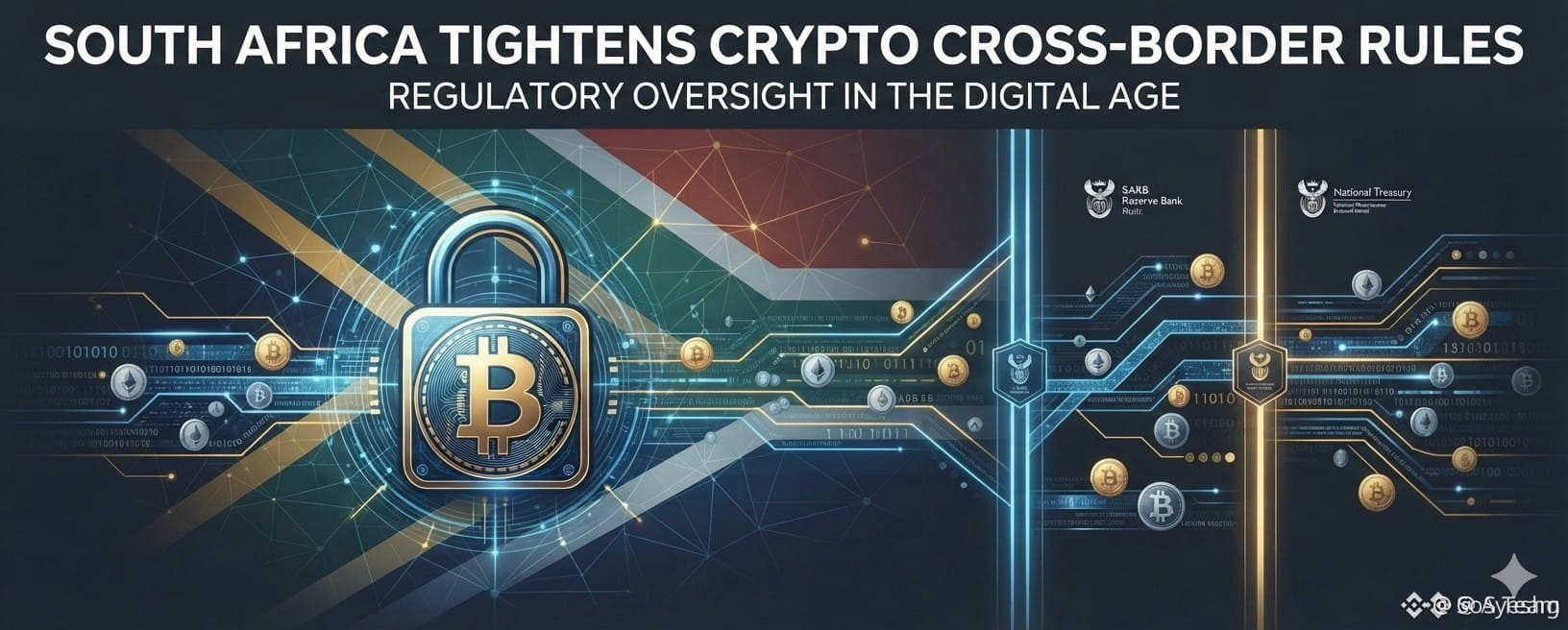
#SouthAfricaProposesCryptoExchangeControls South Africa has proposed new rules for cross-border crypto transactions, including reporting through authorised crypto providers and oversight by the central bank’s Financial Surveillance Department. The draft framework remains open for public comment until Sept. 30.
#Crypto #Bitcoin #SouthAfrica #CryptoRegulation #Blockchain #DigitalAssets #Stablecoins #Web3 #Fintech $BTC
{spot}(BTCUSDT)
#SouthAfricaProposesCryptoExchangeControls South Africa has proposed new rules for cross-border crypto transactions, including reporting through authorised crypto providers and oversight by the central bank’s Financial Surveillance Department. The draft framework remains open for public comment until Sept. 30.
#Crypto #Bitcoin #SouthAfrica #CryptoRegulation #Blockchain #DigitalAssets #Stablecoins #Web3 #Fintech $BTC
#Crypto #Bitcoin #SouthAfrica #CryptoRegulation #Blockchain #DigitalAssets #Stablecoins #Web3 #Fintech $BTC

1
52

·
--
#SouthAfricaProposesCryptoExchangeControls
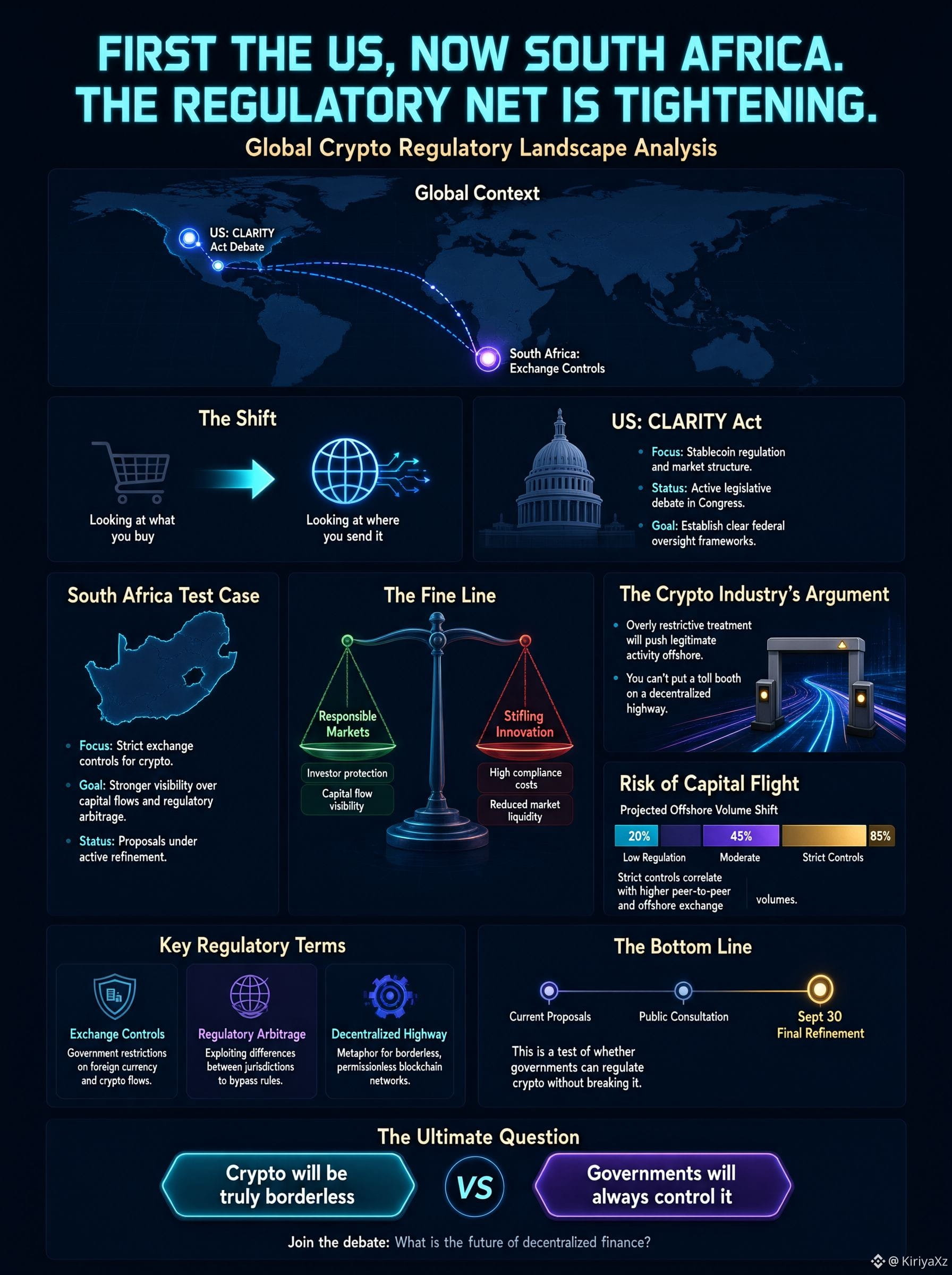
🌍 FIRST THE US, NOW SOUTH AFRICA. THE REGULATORY NET IS TIGHTENING.
We just watched the CLARITY Act debate in the US, and now South Africa is proposing strict exchange controls for crypto.
The Shift:
Regulators are no longer just looking at what you buy. They are looking at where you send it.
The South Africa Test Case:
They want stronger visibility over capital flows and regulatory arbitrage. But there is a fine line between "responsible markets" and "stifling innovation."
The Crypto Industry's Argument:
Overly restrictive treatment will push legitimate activity offshore. You can't put a toll booth on a decentralized highway.
The Bottom Line:
The proposals are still being refined until Sept 30. This is a test of whether governments can regulate crypto without breaking it.
Do you think crypto will ever be truly borderless, or will governments always find a way to control it?
#Macro #CryptoRegulation #GlobalMarkets #BinanceKOL
#SouthAfricaProposesCryptoExchangeControls
🌍 FIRST THE US, NOW SOUTH AFRICA. THE REGULATORY NET IS TIGHTENING.
We just watched the CLARITY Act debate in the US, and now South Africa is proposing strict exchange controls for crypto.
The Shift:
Regulators are no longer just looking at what you buy. They are looking at where you send it.
The South Africa Test Case:
They want stronger visibility over capital flows and regulatory arbitrage. But there is a fine line between "responsible markets" and "stifling innovation."
The Crypto Industry's Argument:
Overly restrictive treatment will push legitimate activity offshore. You can't put a toll booth on a decentralized highway.
The Bottom Line:
The proposals are still being refined until Sept 30. This is a test of whether governments can regulate crypto without breaking it.
Do you think crypto will ever be truly borderless, or will governments always find a way to control it?
#Macro #CryptoRegulation #GlobalMarkets #BinanceKOL
🌍 FIRST THE US, NOW SOUTH AFRICA. THE REGULATORY NET IS TIGHTENING.
We just watched the CLARITY Act debate in the US, and now South Africa is proposing strict exchange controls for crypto.
The Shift:
Regulators are no longer just looking at what you buy. They are looking at where you send it.
The South Africa Test Case:
They want stronger visibility over capital flows and regulatory arbitrage. But there is a fine line between "responsible markets" and "stifling innovation."
The Crypto Industry's Argument:
Overly restrictive treatment will push legitimate activity offshore. You can't put a toll booth on a decentralized highway.
The Bottom Line:
The proposals are still being refined until Sept 30. This is a test of whether governments can regulate crypto without breaking it.
Do you think crypto will ever be truly borderless, or will governments always find a way to control it?
#Macro #CryptoRegulation #GlobalMarkets #BinanceKOL
146

·
--
South Africa cross-border encryption draft still open for public comment: no explicit ban on ZEC—when it drops to 1450, I still won’t bottom-fish
My stance is cautious and observant. Binance Plaza’s #SouthAfricaProposesCryptoExchangeControls is under discussion, but first, separate facts from imagination: South Africa’s National Treasury released a draft capital flow management regulation in April. The central bank and the National Treasury then released a draft cross-border crypto asset manual in August. The public comment period runs until September 30. The central bank stated that proposed reporting triggers include situations where a locally authorized crypto service provider transfers assets to an overseas service provider, or where assets are transferred cross-border, such as from a locally authorized provider to a non-custodial wallet. The specific authorities, conditions, and arrangements for reporting to financial regulators are still subject to revisions based on comments. The official document also explicitly notes that at this stage, the recommendation does not distinguish between different types of crypto assets, and it does not make crypto assets legal tender in South Africa. Therefore, claims like “South Africa has banned ZEC today” or “privacy coins are singled out for a blacklist” are not supported by what this document says.
Why should ZEC holders pay attention? I think it’s a potential variable involving compliance channels and cross-border liquidity, not an immediate supply-demand shock for a single coin. If future final rules require stricter verification and reporting by authorized service providers, the friction for some users’ cross-border transfers could increase, and exchange listing and withdrawal policies might also be influenced by operational decisions. This is scenario planning, not something to be written as if it has already happened. The document does not provide ZEC-specific restrictions, and the project’s privacy features are not the same thing as the service provider’s compliance requirements. Binance News echoed industry concerns, but the claim that exchanges pause trading lacks a standalone, independently verifiable one-page checklist. This piece should not be used as quantitative fact.
The market also shows no single reaction that can be attributed to South Africa’s draft. OKX publicly listed a ZEC perpetual at $1451, with a 24-hour high and low of $1572 and $1443.66. The full 15-minute candle from 10:00 Beijing time fell from 1469.96 to 1460.43, with about 8,024 ZEC traded. At 10:15 it tested 1447 again, with about 15,000 ZEC traded—larger than the previous candle. Then the rebound at 10:30 only reached 1457.04; at 10:45 it closed at 1452.93. Buyers still haven’t reclaimed the old support zone of 1463–1468. Funding rates are roughly around +0.01%, with about 122,400 ZEC open interest and a notional value around $178 million. A positive funding rate isn’t strong bearish proof; but when the move down comes with rising volume, I care more about whether price can reclaim the broken region.
The earlier 08:59 long conditions were: reduced volume holding 1463–1468, two consecutive 15-minute closes back above 1478, and then holding 1472 afterward. Later, even though one candle approached 1478, it fell back below 1463 and pressured toward 1447, with consecutive confirmation not completed. This is a recap of the public conditions and doesn’t mean I actually bought, sold, or profited. If I were trading myself, my current position is 0, and I would only keep a conditional spot long plan: after two consecutive 15-minute candles stop falling between 1444–1452, then after a volume expansion and close back above 1463, the next candle must hold 1458. I would use at most 0.8% of total trading capital for the test trade. First watch 1472–1478, then 1488–1494; the first target is cut in half. After entry, if it falls back to 1452, I cut the position in half. If a 15-minute candle closes below 1442, I exit the entire position. If it first breaks down below 1443 and then fails to reclaim 1455 on the bounce, I cancel the buy order—I won’t “catch the falling knife” just because it’s trending or due to a “privacy narrative.” Only when actual price action and the final official rules are separately verified will I increase the weight of my judgment.
#SouthAfricaProposesCryptoExchangeControls $ZEC
The above is only my personal market observation and does not constitute investment advice.
South Africa cross-border encryption draft still open for public comment: no explicit ban on ZEC—when it drops to 1450, I still won’t bottom-fish
My stance is cautious and observant. Binance Plaza’s #SouthAfricaProposesCryptoExchangeControls is under discussion, but first, separate facts from imagination: South Africa’s National Treasury released a draft capital flow management regulation in April. The central bank and the National Treasury then released a draft cross-border crypto asset manual in August. The public comment period runs until September 30. The central bank stated that proposed reporting triggers include situations where a locally authorized crypto service provider transfers assets to an overseas service provider, or where assets are transferred cross-border, such as from a locally authorized provider to a non-custodial wallet. The specific authorities, conditions, and arrangements for reporting to financial regulators are still subject to revisions based on comments. The official document also explicitly notes that at this stage, the recommendation does not distinguish between different types of crypto assets, and it does not make crypto assets legal tender in South Africa. Therefore, claims like “South Africa has banned ZEC today” or “privacy coins are singled out for a blacklist” are not supported by what this document says.
Why should ZEC holders pay attention? I think it’s a potential variable involving compliance channels and cross-border liquidity, not an immediate supply-demand shock for a single coin. If future final rules require stricter verification and reporting by authorized service providers, the friction for some users’ cross-border transfers could increase, and exchange listing and withdrawal policies might also be influenced by operational decisions. This is scenario planning, not something to be written as if it has already happened. The document does not provide ZEC-specific restrictions, and the project’s privacy features are not the same thing as the service provider’s compliance requirements. Binance News echoed industry concerns, but the claim that exchanges pause trading lacks a standalone, independently verifiable one-page checklist. This piece should not be used as quantitative fact.
The market also shows no single reaction that can be attributed to South Africa’s draft. OKX publicly listed a ZEC perpetual at $1451, with a 24-hour high and low of $1572 and $1443.66. The full 15-minute candle from 10:00 Beijing time fell from 1469.96 to 1460.43, with about 8,024 ZEC traded. At 10:15 it tested 1447 again, with about 15,000 ZEC traded—larger than the previous candle. Then the rebound at 10:30 only reached 1457.04; at 10:45 it closed at 1452.93. Buyers still haven’t reclaimed the old support zone of 1463–1468. Funding rates are roughly around +0.01%, with about 122,400 ZEC open interest and a notional value around $178 million. A positive funding rate isn’t strong bearish proof; but when the move down comes with rising volume, I care more about whether price can reclaim the broken region.
The earlier 08:59 long conditions were: reduced volume holding 1463–1468, two consecutive 15-minute closes back above 1478, and then holding 1472 afterward. Later, even though one candle approached 1478, it fell back below 1463 and pressured toward 1447, with consecutive confirmation not completed. This is a recap of the public conditions and doesn’t mean I actually bought, sold, or profited. If I were trading myself, my current position is 0, and I would only keep a conditional spot long plan: after two consecutive 15-minute candles stop falling between 1444–1452, then after a volume expansion and close back above 1463, the next candle must hold 1458. I would use at most 0.8% of total trading capital for the test trade. First watch 1472–1478, then 1488–1494; the first target is cut in half. After entry, if it falls back to 1452, I cut the position in half. If a 15-minute candle closes below 1442, I exit the entire position. If it first breaks down below 1443 and then fails to reclaim 1455 on the bounce, I cancel the buy order—I won’t “catch the falling knife” just because it’s trending or due to a “privacy narrative.” Only when actual price action and the final official rules are separately verified will I increase the weight of my judgment.
#SouthAfricaProposesCryptoExchangeControls $ZEC
The above is only my personal market observation and does not constitute investment advice.
My stance is cautious and observant. Binance Plaza’s #SouthAfricaProposesCryptoExchangeControls is under discussion, but first, separate facts from imagination: South Africa’s National Treasury released a draft capital flow management regulation in April. The central bank and the National Treasury then released a draft cross-border crypto asset manual in August. The public comment period runs until September 30. The central bank stated that proposed reporting triggers include situations where a locally authorized crypto service provider transfers assets to an overseas service provider, or where assets are transferred cross-border, such as from a locally authorized provider to a non-custodial wallet. The specific authorities, conditions, and arrangements for reporting to financial regulators are still subject to revisions based on comments. The official document also explicitly notes that at this stage, the recommendation does not distinguish between different types of crypto assets, and it does not make crypto assets legal tender in South Africa. Therefore, claims like “South Africa has banned ZEC today” or “privacy coins are singled out for a blacklist” are not supported by what this document says.
Why should ZEC holders pay attention? I think it’s a potential variable involving compliance channels and cross-border liquidity, not an immediate supply-demand shock for a single coin. If future final rules require stricter verification and reporting by authorized service providers, the friction for some users’ cross-border transfers could increase, and exchange listing and withdrawal policies might also be influenced by operational decisions. This is scenario planning, not something to be written as if it has already happened. The document does not provide ZEC-specific restrictions, and the project’s privacy features are not the same thing as the service provider’s compliance requirements. Binance News echoed industry concerns, but the claim that exchanges pause trading lacks a standalone, independently verifiable one-page checklist. This piece should not be used as quantitative fact.
The market also shows no single reaction that can be attributed to South Africa’s draft. OKX publicly listed a ZEC perpetual at $1451, with a 24-hour high and low of $1572 and $1443.66. The full 15-minute candle from 10:00 Beijing time fell from 1469.96 to 1460.43, with about 8,024 ZEC traded. At 10:15 it tested 1447 again, with about 15,000 ZEC traded—larger than the previous candle. Then the rebound at 10:30 only reached 1457.04; at 10:45 it closed at 1452.93. Buyers still haven’t reclaimed the old support zone of 1463–1468. Funding rates are roughly around +0.01%, with about 122,400 ZEC open interest and a notional value around $178 million. A positive funding rate isn’t strong bearish proof; but when the move down comes with rising volume, I care more about whether price can reclaim the broken region.
The earlier 08:59 long conditions were: reduced volume holding 1463–1468, two consecutive 15-minute closes back above 1478, and then holding 1472 afterward. Later, even though one candle approached 1478, it fell back below 1463 and pressured toward 1447, with consecutive confirmation not completed. This is a recap of the public conditions and doesn’t mean I actually bought, sold, or profited. If I were trading myself, my current position is 0, and I would only keep a conditional spot long plan: after two consecutive 15-minute candles stop falling between 1444–1452, then after a volume expansion and close back above 1463, the next candle must hold 1458. I would use at most 0.8% of total trading capital for the test trade. First watch 1472–1478, then 1488–1494; the first target is cut in half. After entry, if it falls back to 1452, I cut the position in half. If a 15-minute candle closes below 1442, I exit the entire position. If it first breaks down below 1443 and then fails to reclaim 1455 on the bounce, I cancel the buy order—I won’t “catch the falling knife” just because it’s trending or due to a “privacy narrative.” Only when actual price action and the final official rules are separately verified will I increase the weight of my judgment.
#SouthAfricaProposesCryptoExchangeControls $ZEC
The above is only my personal market observation and does not constitute investment advice.

193
Here's what happened when South Africa put crypto exchange controls on the table: the same movie a dozen emerging markets have already screened, just with a new title card.
If you trade or hold from a country with capital rules, you already know the feeling. One policy leak and you start wondering whether your coins on an exchange are actually reachable, or just a number on a screen you no longer control.
This is a case study, not a headline. South Africa already polices traditional forex tightly. Extending that logic to crypto is an attempt to plug the last obvious leak in the bucket.
We have seen this movie before. When Nigeria squeezed the ramps, $USDT P2P quietly absorbed the volume. China shut the shops and the trade did not disappear, it just went quieter. Argentina's controls never killed demand. They turned crypto into the backup bank. The pattern is boringly consistent. Controls do not freeze capital. They reroute it.
The comparison that matters is not South Africa versus some DeFi dream. It is South Africa versus every government that tried to close the bucket without asking why the water was leaving. People still need to save, send, and get out of local currency risk, and when the official door narrows they reach for stablecoins first, then cheaper chains. That is usually when $SUI and $NEAR stop being narrative tickers and start looking like rails. Meanwhile the Fear and Greed index is sitting at 76, and greed has a habit of ignoring policy risk until the policy is already in the room.
Does this stay a proposal, or is it the template the next few countries copy?
#SouthAfricaProposesCryptoExchangeControls #ECBStartsBlockchainEuroSettlement #BOJRaisesRatesTo31YearHigh
Here's what happened when South Africa put crypto exchange controls on the table: the same movie a dozen emerging markets have already screened, just with a new title card.
If you trade or hold from a country with capital rules, you already know the feeling. One policy leak and you start wondering whether your coins on an exchange are actually reachable, or just a number on a screen you no longer control.
This is a case study, not a headline. South Africa already polices traditional forex tightly. Extending that logic to crypto is an attempt to plug the last obvious leak in the bucket.
We have seen this movie before. When Nigeria squeezed the ramps, $USDT P2P quietly absorbed the volume. China shut the shops and the trade did not disappear, it just went quieter. Argentina's controls never killed demand. They turned crypto into the backup bank. The pattern is boringly consistent. Controls do not freeze capital. They reroute it.
The comparison that matters is not South Africa versus some DeFi dream. It is South Africa versus every government that tried to close the bucket without asking why the water was leaving. People still need to save, send, and get out of local currency risk, and when the official door narrows they reach for stablecoins first, then cheaper chains. That is usually when $SUI and $NEAR stop being narrative tickers and start looking like rails. Meanwhile the Fear and Greed index is sitting at 76, and greed has a habit of ignoring policy risk until the policy is already in the room.
Does this stay a proposal, or is it the template the next few countries copy?
#SouthAfricaProposesCryptoExchangeControls #ECBStartsBlockchainEuroSettlement #BOJRaisesRatesTo31YearHigh
If you trade or hold from a country with capital rules, you already know the feeling. One policy leak and you start wondering whether your coins on an exchange are actually reachable, or just a number on a screen you no longer control.
This is a case study, not a headline. South Africa already polices traditional forex tightly. Extending that logic to crypto is an attempt to plug the last obvious leak in the bucket.
We have seen this movie before. When Nigeria squeezed the ramps, $USDT P2P quietly absorbed the volume. China shut the shops and the trade did not disappear, it just went quieter. Argentina's controls never killed demand. They turned crypto into the backup bank. The pattern is boringly consistent. Controls do not freeze capital. They reroute it.
The comparison that matters is not South Africa versus some DeFi dream. It is South Africa versus every government that tried to close the bucket without asking why the water was leaving. People still need to save, send, and get out of local currency risk, and when the official door narrows they reach for stablecoins first, then cheaper chains. That is usually when $SUI and $NEAR stop being narrative tickers and start looking like rails. Meanwhile the Fear and Greed index is sitting at 76, and greed has a habit of ignoring policy risk until the policy is already in the room.
Does this stay a proposal, or is it the template the next few countries copy?
#SouthAfricaProposesCryptoExchangeControls #ECBStartsBlockchainEuroSettlement #BOJRaisesRatesTo31YearHigh

1
70

#SouthAfricaProposesCryptoExchangeControls
🚨 South Africa Moves to Control Crypto Exchange Flows: R2.2 Billion in Deals On Hold! 🇿🇦📉
South Africa is officially shaking up its crypto ecosystem! The National Treasury and the South African Reserve Bank (SARB) have proposed strict new exchange control rules targeting cross-border digital asset and stablecoin transactions.
Here’s what you need to know:
• Deals Paused: At least R2.2 billion ($135M) in institutional investments and corporate deals are now frozen due to regulatory uncertainty.
• Exchange Limits: The draft laws treat crypto as foreign capital, enforcing strict annual limits and banning self-hosted wallet transfers from abroad.
• Market Impact: Local web3 firms worry these restrictions could drive liquidity underground or offshore.
Will SARB refine these laws before the September 30 public deadline? 💭
What’s your take on strict exchange controls? 👇
#SouthAfrica #CryptoRegulations2026 #BinanceSquareTalks
#Nadeemgujjar143
@Square-Creator-82298398aad82
@Square-Creator-f3ffb6967ae3
@BugBamboooo
@GTcoke
$BTC
{spot}(BTCUSDT)
$SHIB
{spot}(SHIBUSDT)
$ST
{alpha}(560x70be40667385500c5da7f108a022e21b606045dd)
#SouthAfricaProposesCryptoExchangeControls
🚨 South Africa Moves to Control Crypto Exchange Flows: R2.2 Billion in Deals On Hold! 🇿🇦📉
South Africa is officially shaking up its crypto ecosystem! The National Treasury and the South African Reserve Bank (SARB) have proposed strict new exchange control rules targeting cross-border digital asset and stablecoin transactions.
Here’s what you need to know:
• Deals Paused: At least R2.2 billion ($135M) in institutional investments and corporate deals are now frozen due to regulatory uncertainty.
• Exchange Limits: The draft laws treat crypto as foreign capital, enforcing strict annual limits and banning self-hosted wallet transfers from abroad.
• Market Impact: Local web3 firms worry these restrictions could drive liquidity underground or offshore.
Will SARB refine these laws before the September 30 public deadline? 💭
What’s your take on strict exchange controls? 👇
#SouthAfrica #CryptoRegulations2026 #BinanceSquareTalks
#Nadeemgujjar143
@AYESHA ABID 阿伊莎 阿比德
@aasho
@Bamboo 9
@GT可乐
$BTC
$SHIB
$ST
🚨 South Africa Moves to Control Crypto Exchange Flows: R2.2 Billion in Deals On Hold! 🇿🇦📉
South Africa is officially shaking up its crypto ecosystem! The National Treasury and the South African Reserve Bank (SARB) have proposed strict new exchange control rules targeting cross-border digital asset and stablecoin transactions.
Here’s what you need to know:
• Deals Paused: At least R2.2 billion ($135M) in institutional investments and corporate deals are now frozen due to regulatory uncertainty.
• Exchange Limits: The draft laws treat crypto as foreign capital, enforcing strict annual limits and banning self-hosted wallet transfers from abroad.
• Market Impact: Local web3 firms worry these restrictions could drive liquidity underground or offshore.
Will SARB refine these laws before the September 30 public deadline? 💭
What’s your take on strict exchange controls? 👇
#SouthAfrica #CryptoRegulations2026 #BinanceSquareTalks
#Nadeemgujjar143
@AYESHA ABID 阿伊莎 阿比德
@aasho
@Bamboo 9
@GT可乐
$BTC
$SHIB
$ST

1
2
731

·
--
🚨#🇿🇦 SOUTH AFRICA MOVES TO CONTROL CRYPTO FLOWS! 🔥 BITCOIN & EXCHANGES IN FOCUS
🚨🔥 SOUTH AFRICA’S NEW CRYPTO RULES COULD CHANGE THE GAME! 🇿🇦🪙
South Africa is proposing new rules to bring crypto assets under its exchange-control framework, creating fresh uncertainty for crypto exchanges, investors, and cross-border transactions. 📊
📜 WHAT’S HAPPENING?
The National Treasury and South African Reserve Bank have published draft guidance covering cross-border crypto activities. The proposed framework aims to clarify how digital assets are handled within the country's financial regulations. 🇿🇦
⚠️ WHY SHOULD CRYPTO TRADERS CARE?
🔹 Possible changes to cross-border crypto transfers
🔹 Increased compliance requirements for exchanges
🔹 Potential effects on liquidity and investor sentiment
🔹 Greater focus on regulated digital-asset activity
💡 MARKET WATCH: Regulatory developments can create short-term volatility, but the actual impact on BTC, ETH, and altcoins will depend on the final rules and market response.
🔥 THE BIG QUESTION:
Will stronger regulation support crypto adoption—or create new challenges for the industry? 👀📈
Trade smart. Manage risk. Don’t chase candles. DYOR. 🧠
🔥 MFI CRYPTO
Follow for more crypto market updates & educational content.
#CryptoNews #SouthAfrica #Bitcoin $BTC #CryptoRegulation #Binance #CryptoTrading #MIFICrypto
#southafricaproposescryptoexchangecontrols
{spot}(ETHUSDT)
{spot}(SOLUSDT)
{spot}(BTCUSDT)
🚨#🇿🇦 SOUTH AFRICA MOVES TO CONTROL CRYPTO FLOWS! 🔥 BITCOIN & EXCHANGES IN FOCUS
🚨🔥 SOUTH AFRICA’S NEW CRYPTO RULES COULD CHANGE THE GAME! 🇿🇦🪙
South Africa is proposing new rules to bring crypto assets under its exchange-control framework, creating fresh uncertainty for crypto exchanges, investors, and cross-border transactions. 📊
📜 WHAT’S HAPPENING?
The National Treasury and South African Reserve Bank have published draft guidance covering cross-border crypto activities. The proposed framework aims to clarify how digital assets are handled within the country's financial regulations. 🇿🇦
⚠️ WHY SHOULD CRYPTO TRADERS CARE?
🔹 Possible changes to cross-border crypto transfers
🔹 Increased compliance requirements for exchanges
🔹 Potential effects on liquidity and investor sentiment
🔹 Greater focus on regulated digital-asset activity
💡 MARKET WATCH: Regulatory developments can create short-term volatility, but the actual impact on BTC, ETH, and altcoins will depend on the final rules and market response.
🔥 THE BIG QUESTION:
Will stronger regulation support crypto adoption—or create new challenges for the industry? 👀📈
Trade smart. Manage risk. Don’t chase candles. DYOR. 🧠
🔥 MFI CRYPTO
Follow for more crypto market updates & educational content.
#CryptoNews #SouthAfrica #Bitcoin $BTC #CryptoRegulation #Binance #CryptoTrading #MIFICrypto
#southafricaproposescryptoexchangecontrols
🚨🔥 SOUTH AFRICA’S NEW CRYPTO RULES COULD CHANGE THE GAME! 🇿🇦🪙
South Africa is proposing new rules to bring crypto assets under its exchange-control framework, creating fresh uncertainty for crypto exchanges, investors, and cross-border transactions. 📊
📜 WHAT’S HAPPENING?
The National Treasury and South African Reserve Bank have published draft guidance covering cross-border crypto activities. The proposed framework aims to clarify how digital assets are handled within the country's financial regulations. 🇿🇦
⚠️ WHY SHOULD CRYPTO TRADERS CARE?
🔹 Possible changes to cross-border crypto transfers
🔹 Increased compliance requirements for exchanges
🔹 Potential effects on liquidity and investor sentiment
🔹 Greater focus on regulated digital-asset activity
💡 MARKET WATCH: Regulatory developments can create short-term volatility, but the actual impact on BTC, ETH, and altcoins will depend on the final rules and market response.
🔥 THE BIG QUESTION:
Will stronger regulation support crypto adoption—or create new challenges for the industry? 👀📈
Trade smart. Manage risk. Don’t chase candles. DYOR. 🧠
🔥 MFI CRYPTO
Follow for more crypto market updates & educational content.
#CryptoNews #SouthAfrica #Bitcoin $BTC #CryptoRegulation #Binance #CryptoTrading #MIFICrypto
#southafricaproposescryptoexchangecontrols

4
3k

#southafricaproposescryptoexchangecontrols
🇿🇦 South Africa proposes rules for exchanging digital currencies 🔒
Imagine building a digital-currency business on the promise of unlimited money, only to find that crossing national borders becomes the hardest part.
South Africa has proposed initial rules that would include cross-border digital currency transactions within its exchange controls framework. The initial “Crypto Assets” guide, issued by the South African National Treasury and the Reserve Bank, sets out when transferring digital currencies across borders would become regulated and reportable.
The goal is clear: strengthen oversight of capital flows and reduce regulatory gaps. But the outcomes may depend heavily on how the final rules are designed and implemented.
Industry representatives already have concerns. VALR says that at least 2.2 billion rand in potential investments have been frozen, while investors are waiting for greater clarity.
The biggest point of tension is between “tightening” and “ease of use.” Critics argue that crypto-based restrictions on cross-border payments could push legitimate activity to operate outside the country, while regulators try to prevent capital flight and enhance financial monitoring.
Notice: educational content only, not financial advice.
Please follow up
#CryptoRegulation #SouthAfrica #GrowWithSAC $NEAR $STRK $APT
#SouthAfricaProposesCryptoExchangeControls
#southafricaproposescryptoexchangecontrols
🇿🇦 South Africa proposes rules for exchanging digital currencies 🔒
Imagine building a digital-currency business on the promise of unlimited money, only to find that crossing national borders becomes the hardest part.
South Africa has proposed initial rules that would include cross-border digital currency transactions within its exchange controls framework. The initial “Crypto Assets” guide, issued by the South African National Treasury and the Reserve Bank, sets out when transferring digital currencies across borders would become regulated and reportable.
The goal is clear: strengthen oversight of capital flows and reduce regulatory gaps. But the outcomes may depend heavily on how the final rules are designed and implemented.
Industry representatives already have concerns. VALR says that at least 2.2 billion rand in potential investments have been frozen, while investors are waiting for greater clarity.
The biggest point of tension is between “tightening” and “ease of use.” Critics argue that crypto-based restrictions on cross-border payments could push legitimate activity to operate outside the country, while regulators try to prevent capital flight and enhance financial monitoring.
Notice: educational content only, not financial advice.
Please follow up
#CryptoRegulation #SouthAfrica #GrowWithSAC $NEAR $STRK $APT
#SouthAfricaProposesCryptoExchangeControls
🇿🇦 South Africa proposes rules for exchanging digital currencies 🔒
Imagine building a digital-currency business on the promise of unlimited money, only to find that crossing national borders becomes the hardest part.
South Africa has proposed initial rules that would include cross-border digital currency transactions within its exchange controls framework. The initial “Crypto Assets” guide, issued by the South African National Treasury and the Reserve Bank, sets out when transferring digital currencies across borders would become regulated and reportable.
The goal is clear: strengthen oversight of capital flows and reduce regulatory gaps. But the outcomes may depend heavily on how the final rules are designed and implemented.
Industry representatives already have concerns. VALR says that at least 2.2 billion rand in potential investments have been frozen, while investors are waiting for greater clarity.
The biggest point of tension is between “tightening” and “ease of use.” Critics argue that crypto-based restrictions on cross-border payments could push legitimate activity to operate outside the country, while regulators try to prevent capital flight and enhance financial monitoring.
Notice: educational content only, not financial advice.
Please follow up
#CryptoRegulation #SouthAfrica #GrowWithSAC $NEAR $STRK $APT
#SouthAfricaProposesCryptoExchangeControls

1
159

·
--
Bearish
#SouthAfricaProposesCryptoExchangeControls
🇿🇦🔐 SOUTH AFRICA PROPOSES TIGHTER CRYPTO EXCHANGE CONTROLS
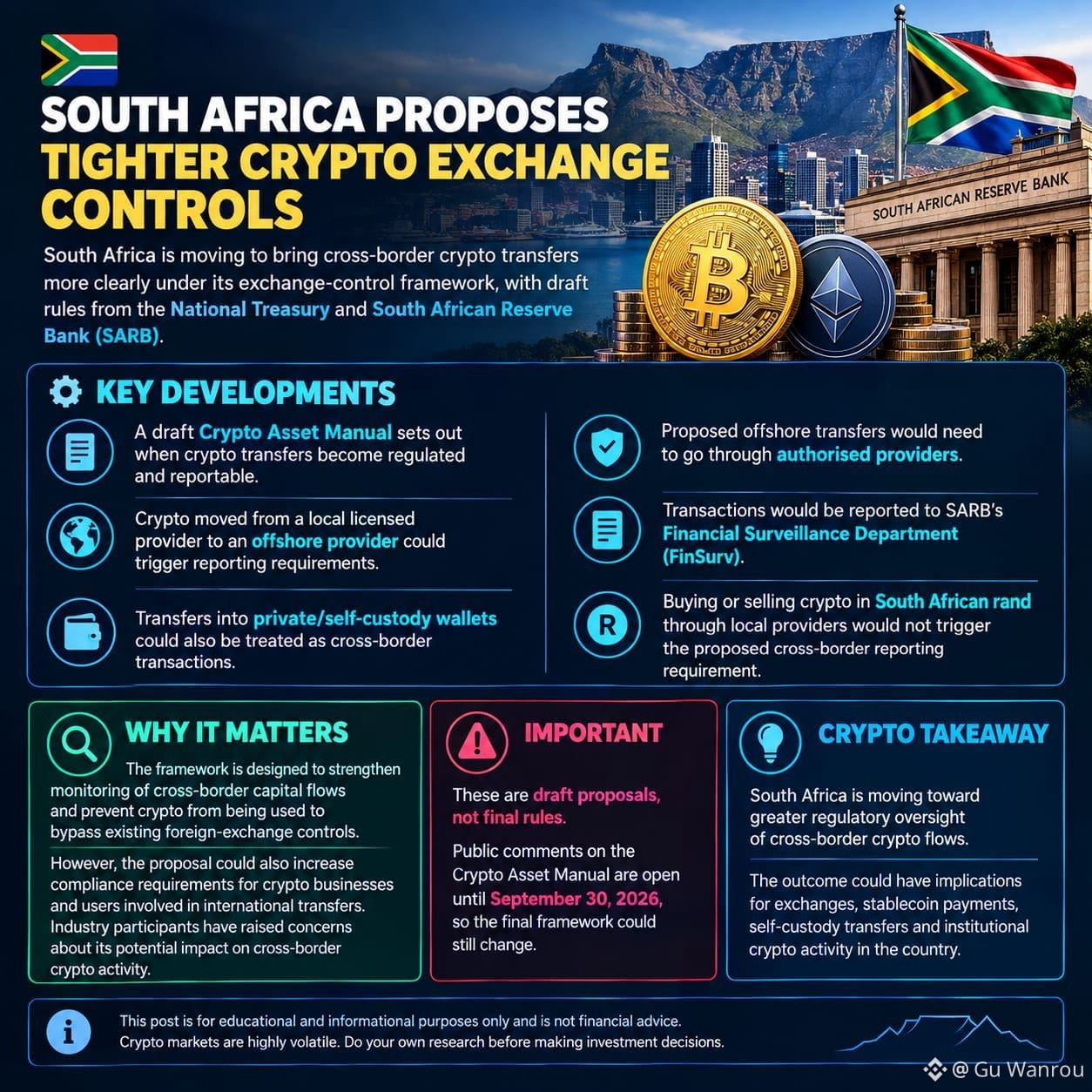
South Africa is moving to bring cross-border crypto transfers more clearly under its exchange-control framework, with draft rules from the National Treasury and South African Reserve Bank (SARB).
📊 KEY DEVELOPMENTS:
• A draft Crypto Asset Manual sets out when crypto transfers become regulated and reportable
• Crypto moved from a local licensed provider to an offshore provider could trigger reporting requirements
• Transfers into private/self-custody wallets could also be treated as cross-border transactions
• Proposed offshore transfers would need to go through authorised providers
• Transactions would be reported to SARB’s Financial Surveillance Department (FinSurv)
• Buying or selling crypto in South African rand through local providers would not trigger the proposed cross-border reporting requirement
🔍 WHY IT MATTERS:
The framework is designed to strengthen monitoring of cross-border capital flows and prevent crypto from being used to bypass existing foreign-exchange controls.
However, the proposal could also increase compliance requirements for crypto businesses and users involved in international transfers. Industry participants have raised concerns about its potential impact on cross-border crypto activity.
⚠️ IMPORTANT:
These are draft proposals, not final rules. Public comments on the Crypto Asset Manual are open until September 30, 2026, so the final framework could still change.
📌 CRYPTO TAKEAWAY:
South Africa is moving toward greater regulatory oversight of cross-border crypto flows. The outcome could have implications for exchanges, stablecoin payments, self-custody transfers and institutional crypto activity in the country.
⚠️ Disclaimer: This post is for educational and informational purposes only and is not financial advice. Crypto markets are highly volatile. Do your own research before making investment decisions.
$SOMI
{future}(SOMIUSDT)
$INJ
{future}(INJUSDT)
$USTC
{future}(USTCUSDT)
#SouthAfricaProposesCryptoExchangeControls
🇿🇦🔐 SOUTH AFRICA PROPOSES TIGHTER CRYPTO EXCHANGE CONTROLS
South Africa is moving to bring cross-border crypto transfers more clearly under its exchange-control framework, with draft rules from the National Treasury and South African Reserve Bank (SARB).
📊 KEY DEVELOPMENTS:
• A draft Crypto Asset Manual sets out when crypto transfers become regulated and reportable
• Crypto moved from a local licensed provider to an offshore provider could trigger reporting requirements
• Transfers into private/self-custody wallets could also be treated as cross-border transactions
• Proposed offshore transfers would need to go through authorised providers
• Transactions would be reported to SARB’s Financial Surveillance Department (FinSurv)
• Buying or selling crypto in South African rand through local providers would not trigger the proposed cross-border reporting requirement
🔍 WHY IT MATTERS:
The framework is designed to strengthen monitoring of cross-border capital flows and prevent crypto from being used to bypass existing foreign-exchange controls.
However, the proposal could also increase compliance requirements for crypto businesses and users involved in international transfers. Industry participants have raised concerns about its potential impact on cross-border crypto activity.
⚠️ IMPORTANT:
These are draft proposals, not final rules. Public comments on the Crypto Asset Manual are open until September 30, 2026, so the final framework could still change.
📌 CRYPTO TAKEAWAY:
South Africa is moving toward greater regulatory oversight of cross-border crypto flows. The outcome could have implications for exchanges, stablecoin payments, self-custody transfers and institutional crypto activity in the country.
⚠️ Disclaimer: This post is for educational and informational purposes only and is not financial advice. Crypto markets are highly volatile. Do your own research before making investment decisions.
$SOMI
$INJ
$USTC
🇿🇦🔐 SOUTH AFRICA PROPOSES TIGHTER CRYPTO EXCHANGE CONTROLS
South Africa is moving to bring cross-border crypto transfers more clearly under its exchange-control framework, with draft rules from the National Treasury and South African Reserve Bank (SARB).
📊 KEY DEVELOPMENTS:
• A draft Crypto Asset Manual sets out when crypto transfers become regulated and reportable
• Crypto moved from a local licensed provider to an offshore provider could trigger reporting requirements
• Transfers into private/self-custody wallets could also be treated as cross-border transactions
• Proposed offshore transfers would need to go through authorised providers
• Transactions would be reported to SARB’s Financial Surveillance Department (FinSurv)
• Buying or selling crypto in South African rand through local providers would not trigger the proposed cross-border reporting requirement
🔍 WHY IT MATTERS:
The framework is designed to strengthen monitoring of cross-border capital flows and prevent crypto from being used to bypass existing foreign-exchange controls.
However, the proposal could also increase compliance requirements for crypto businesses and users involved in international transfers. Industry participants have raised concerns about its potential impact on cross-border crypto activity.
⚠️ IMPORTANT:
These are draft proposals, not final rules. Public comments on the Crypto Asset Manual are open until September 30, 2026, so the final framework could still change.
📌 CRYPTO TAKEAWAY:
South Africa is moving toward greater regulatory oversight of cross-border crypto flows. The outcome could have implications for exchanges, stablecoin payments, self-custody transfers and institutional crypto activity in the country.
⚠️ Disclaimer: This post is for educational and informational purposes only and is not financial advice. Crypto markets are highly volatile. Do your own research before making investment decisions.
$SOMI
$INJ
$USTC
87
#southafricaproposescryptoexchangecontrols 🇿🇦 South Africa proposes stricter controls for cross-border crypto transfers
The regulatory landscape in Africa is evolving rapidly. South Africa’s National Treasury and the Reserve Bank (SARB) have introduced a draft guide for crypto assets that could significantly reshape how digital assets move across borders.
📰 Key updates:
• New licensed crypto asset service providers (CASPs): They must obtain separate approval from the Financial Surveillance Department (FinSurv) to facilitate international transfers, in addition to existing licenses from the FSCA and FIC.
• Proof of self-custody: Transfers from locally regulated platforms to self-hosted private wallets may be classified as capital outflows. Experts warn that this creates a “one-way door,” making it difficult to return assets to the local ecosystem.
• Company limits: While individuals retain an estimated foreign investment allowance (up to 2 million South African rand per year), corporate entities face a strict ban on transferring crypto assets abroad, which heavily affects cross-border payment businesses.
• Sector response: Local alliances argue that these rules could hinder institutional deals, increase compliance costs, and disrupt blockchain-based payment systems using stablecoins.
Stay tuned
$STRK $SQQQB $BNCB
#southafricaproposescryptoexchangecontrols 🇿🇦 South Africa proposes stricter controls for cross-border crypto transfers
The regulatory landscape in Africa is evolving rapidly. South Africa’s National Treasury and the Reserve Bank (SARB) have introduced a draft guide for crypto assets that could significantly reshape how digital assets move across borders.
📰 Key updates:
• New licensed crypto asset service providers (CASPs): They must obtain separate approval from the Financial Surveillance Department (FinSurv) to facilitate international transfers, in addition to existing licenses from the FSCA and FIC.
• Proof of self-custody: Transfers from locally regulated platforms to self-hosted private wallets may be classified as capital outflows. Experts warn that this creates a “one-way door,” making it difficult to return assets to the local ecosystem.
• Company limits: While individuals retain an estimated foreign investment allowance (up to 2 million South African rand per year), corporate entities face a strict ban on transferring crypto assets abroad, which heavily affects cross-border payment businesses.
• Sector response: Local alliances argue that these rules could hinder institutional deals, increase compliance costs, and disrupt blockchain-based payment systems using stablecoins.
Stay tuned
$STRK $SQQQB $BNCB
The regulatory landscape in Africa is evolving rapidly. South Africa’s National Treasury and the Reserve Bank (SARB) have introduced a draft guide for crypto assets that could significantly reshape how digital assets move across borders.
📰 Key updates:
• New licensed crypto asset service providers (CASPs): They must obtain separate approval from the Financial Surveillance Department (FinSurv) to facilitate international transfers, in addition to existing licenses from the FSCA and FIC.
• Proof of self-custody: Transfers from locally regulated platforms to self-hosted private wallets may be classified as capital outflows. Experts warn that this creates a “one-way door,” making it difficult to return assets to the local ecosystem.
• Company limits: While individuals retain an estimated foreign investment allowance (up to 2 million South African rand per year), corporate entities face a strict ban on transferring crypto assets abroad, which heavily affects cross-border payment businesses.
• Sector response: Local alliances argue that these rules could hinder institutional deals, increase compliance costs, and disrupt blockchain-based payment systems using stablecoins.
Stay tuned
$STRK $SQQQB $BNCB

1
1.2k

·
--
#SouthAfricaProposesCryptoExchangeControls
🇿🇦 South Africa Eyes Tighter Crypto Exchange Controls
South Africa is reportedly considering stronger oversight for crypto exchanges.
🔐 Stricter licensing & AML checks
👤 Stronger customer protections
💰 Client-asset custody rules
📊 More reporting & market monitoring
⚠️ Details and regulatory status remain unconfirmed until an official notice is published.
#Crypto #SouthAfrica #Bitcoin #Regulation
#SouthAfricaProposesCryptoExchangeControls
🇿🇦 South Africa Eyes Tighter Crypto Exchange Controls
South Africa is reportedly considering stronger oversight for crypto exchanges.
🔐 Stricter licensing & AML checks
👤 Stronger customer protections
💰 Client-asset custody rules
📊 More reporting & market monitoring
⚠️ Details and regulatory status remain unconfirmed until an official notice is published.
#Crypto #SouthAfrica #Bitcoin #Regulation
🇿🇦 South Africa Eyes Tighter Crypto Exchange Controls
South Africa is reportedly considering stronger oversight for crypto exchanges.
🔐 Stricter licensing & AML checks
👤 Stronger customer protections
💰 Client-asset custody rules
📊 More reporting & market monitoring
⚠️ Details and regulatory status remain unconfirmed until an official notice is published.
#Crypto #SouthAfrica #Bitcoin #Regulation

1
33

·
--
Bearish
#southafricaproposescryptoexchangecontrols 🇿🇦 South Africa Proposes Stricter Cross-Border Crypto Controls
The regulatory landscape in Africa is rapidly evolving. South Africa’s National Treasury and the Reserve Bank (SARB) have introduced a draft Crypto Asset Manual that could significantly reshape how digital assets move across borders.
📰 Core News:
• New Authorization Crypto Asset Service Providers (CASPs) must obtain separate approval from the Financial Surveillance Dept (FinSurv) to facilitate international transfers, adding to existing FSCA and FIC licensing.
• Self-Custody Scrutiny: Transfers from local regulated platforms to private, self-hosted wallets may be classified as capital exports. Experts warn this creates a "one-way door," making it hard to return assets to the domestic ecosystem.
• Corporate Limits: While individuals retain a discretionary foreign capital allowance (up to ZAR 2M yearly), corporate entities face strict prohibitions on externalizing crypto assets, heavily impacting cross-border payment businesses.
• Industry Pushback: Local coalitions argue these rules could stall institutional deals, spike compliance costs, and hinder efficient blockchain-based stablecoin payment systems.
📊 Market Impact:
• Local Ecosystem: Heavier reporting obligations for SA exchanges may lead to operational consolidation, higher user fees, or paused foreign investments.
• Stablecoin Utility: The framework does not distinguish between volatile tokens and stablecoins, potentially slowing regional adoption of crypto for fast, low-cost trade settlements.
• Global Precedent: This highlights a growing global tension: authorities want to monitor capital flows and prevent illicit activity without stifling blockchain innovation.
Join the Discussion:
How can regulators effectively monitor cross-border capital flows without stifling blockchain innovation and payment efficiency? Share your thoughts below! 👇
#CryptoRegulation #SouthAfrica #CryptoNews #Blockchain
$STRK $SQQQB $BNCB
{spot}(BNCBUSDT)
{spot}(SQQQBUSDT)
{future}(STRKUSDT)
#southafricaproposescryptoexchangecontrols 🇿🇦 South Africa Proposes Stricter Cross-Border Crypto Controls
The regulatory landscape in Africa is rapidly evolving. South Africa’s National Treasury and the Reserve Bank (SARB) have introduced a draft Crypto Asset Manual that could significantly reshape how digital assets move across borders.
📰 Core News:
• New Authorization Crypto Asset Service Providers (CASPs) must obtain separate approval from the Financial Surveillance Dept (FinSurv) to facilitate international transfers, adding to existing FSCA and FIC licensing.
• Self-Custody Scrutiny: Transfers from local regulated platforms to private, self-hosted wallets may be classified as capital exports. Experts warn this creates a "one-way door," making it hard to return assets to the domestic ecosystem.
• Corporate Limits: While individuals retain a discretionary foreign capital allowance (up to ZAR 2M yearly), corporate entities face strict prohibitions on externalizing crypto assets, heavily impacting cross-border payment businesses.
• Industry Pushback: Local coalitions argue these rules could stall institutional deals, spike compliance costs, and hinder efficient blockchain-based stablecoin payment systems.
📊 Market Impact:
• Local Ecosystem: Heavier reporting obligations for SA exchanges may lead to operational consolidation, higher user fees, or paused foreign investments.
• Stablecoin Utility: The framework does not distinguish between volatile tokens and stablecoins, potentially slowing regional adoption of crypto for fast, low-cost trade settlements.
• Global Precedent: This highlights a growing global tension: authorities want to monitor capital flows and prevent illicit activity without stifling blockchain innovation.
Join the Discussion:
How can regulators effectively monitor cross-border capital flows without stifling blockchain innovation and payment efficiency? Share your thoughts below! 👇
#CryptoRegulation #SouthAfrica #CryptoNews #Blockchain
$STRK $SQQQB $BNCB
The regulatory landscape in Africa is rapidly evolving. South Africa’s National Treasury and the Reserve Bank (SARB) have introduced a draft Crypto Asset Manual that could significantly reshape how digital assets move across borders.
📰 Core News:
• New Authorization Crypto Asset Service Providers (CASPs) must obtain separate approval from the Financial Surveillance Dept (FinSurv) to facilitate international transfers, adding to existing FSCA and FIC licensing.
• Self-Custody Scrutiny: Transfers from local regulated platforms to private, self-hosted wallets may be classified as capital exports. Experts warn this creates a "one-way door," making it hard to return assets to the domestic ecosystem.
• Corporate Limits: While individuals retain a discretionary foreign capital allowance (up to ZAR 2M yearly), corporate entities face strict prohibitions on externalizing crypto assets, heavily impacting cross-border payment businesses.
• Industry Pushback: Local coalitions argue these rules could stall institutional deals, spike compliance costs, and hinder efficient blockchain-based stablecoin payment systems.
📊 Market Impact:
• Local Ecosystem: Heavier reporting obligations for SA exchanges may lead to operational consolidation, higher user fees, or paused foreign investments.
• Stablecoin Utility: The framework does not distinguish between volatile tokens and stablecoins, potentially slowing regional adoption of crypto for fast, low-cost trade settlements.
• Global Precedent: This highlights a growing global tension: authorities want to monitor capital flows and prevent illicit activity without stifling blockchain innovation.
Join the Discussion:
How can regulators effectively monitor cross-border capital flows without stifling blockchain innovation and payment efficiency? Share your thoughts below! 👇
#CryptoRegulation #SouthAfrica #CryptoNews #Blockchain
$STRK $SQQQB $BNCB

1.5k

·
--
Bullish
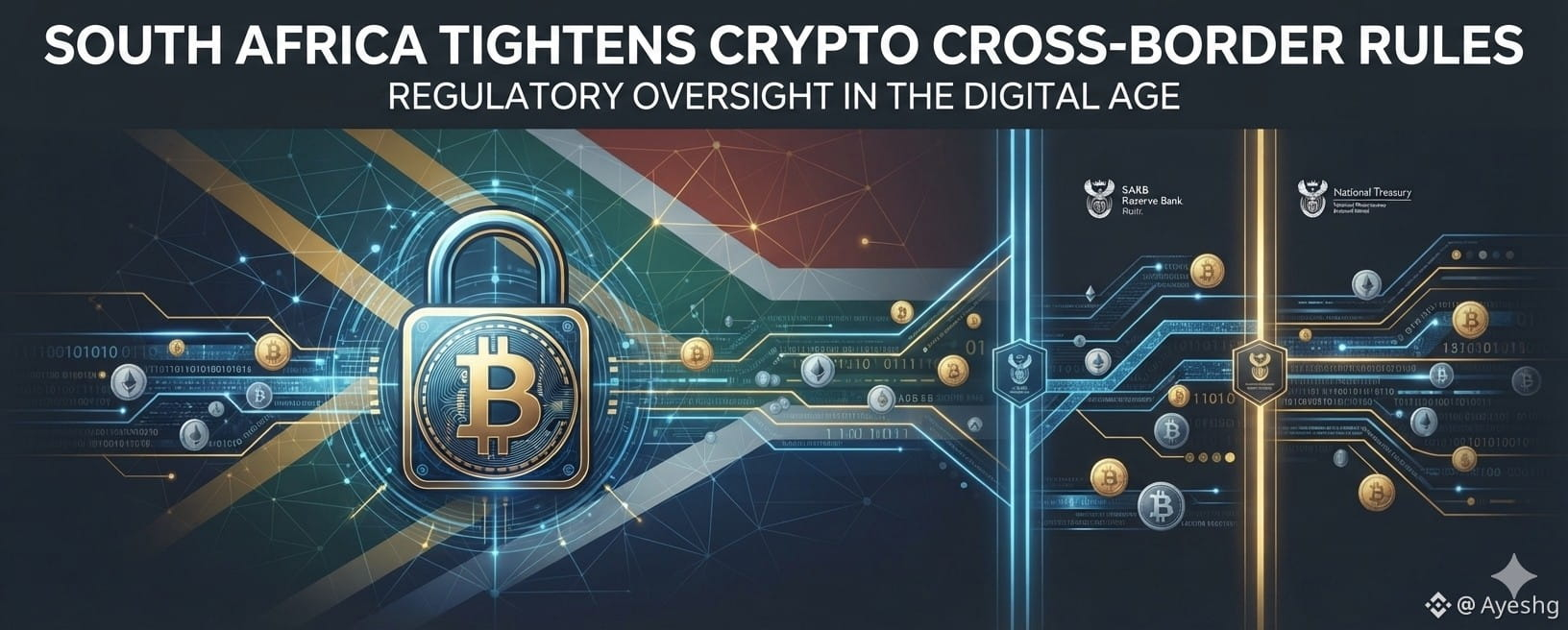
#southafricaproposescryptoexchangecontrols 🚨🇿🇦 South Africa Moves to Tighten Crypto Cross-Border Rules 🔒
South Africa’s National Treasury and South African Reserve Bank have proposed new rules that would bring cross-border crypto transactions under the country’s capital-flow management framework.
The proposal aims to improve reporting, monitoring and oversight of crypto moving across borders.
⚠️ Important: These are still draft rules — they are not final law yet, with public comments open until September 30, 2026.
Industry participants, including VALR, have raised concerns that some proposed restrictions could make cross-border crypto payments and self-custody more difficult.
🌍 The bigger question: Can regulators improve capital-flow oversight without making crypto less usable for legitimate users?
🇺🇸 US Crypto Stock to Watch: $COIN (Coinbase)$BTC
#CryptoRegulation #SouthAfrica #Bitcoin #Crypto #Coinbase #COIN
#southafricaproposescryptoexchangecontrols 🚨🇿🇦 South Africa Moves to Tighten Crypto Cross-Border Rules 🔒
South Africa’s National Treasury and South African Reserve Bank have proposed new rules that would bring cross-border crypto transactions under the country’s capital-flow management framework.
The proposal aims to improve reporting, monitoring and oversight of crypto moving across borders.
⚠️ Important: These are still draft rules — they are not final law yet, with public comments open until September 30, 2026.
Industry participants, including VALR, have raised concerns that some proposed restrictions could make cross-border crypto payments and self-custody more difficult.
🌍 The bigger question: Can regulators improve capital-flow oversight without making crypto less usable for legitimate users?
🇺🇸 US Crypto Stock to Watch: $COIN (Coinbase)$BTC
#CryptoRegulation #SouthAfrica #Bitcoin #Crypto #Coinbase #COIN
South Africa’s National Treasury and South African Reserve Bank have proposed new rules that would bring cross-border crypto transactions under the country’s capital-flow management framework.
The proposal aims to improve reporting, monitoring and oversight of crypto moving across borders.
⚠️ Important: These are still draft rules — they are not final law yet, with public comments open until September 30, 2026.
Industry participants, including VALR, have raised concerns that some proposed restrictions could make cross-border crypto payments and self-custody more difficult.
🌍 The bigger question: Can regulators improve capital-flow oversight without making crypto less usable for legitimate users?
🇺🇸 US Crypto Stock to Watch: $COIN (Coinbase)$BTC
#CryptoRegulation #SouthAfrica #Bitcoin #Crypto #Coinbase #COIN
555


#southafricaproposescryptoexchangecontrols
🇿🇦 SOUTH AFRICA JUST PUT CRYPTO UNDER A NEW BORDER CONTROL TEST ⚠️
Borders were built for money to stop and start.
Crypto was built to move differently.
South Africa is proposing rules that would bring crypto assets into its exchange-control framework, creating tighter oversight for certain cross-border crypto transactions. Draft guidance published in August spells out when moving crypto across borders could become regulated and reportable.
The reaction is already tangible. At least R2.2 billion in crypto-related deals have reportedly been placed on hold while businesses wait for greater clarity around the proposed rules.
The underlying issue is bigger than Bitcoin transfers. South Africa wants stronger visibility over capital flows, regulatory arbitrage and illicit financial activity, while crypto companies argue that overly restrictive treatment could push legitimate activity offshore.
My Take: This is a test of whether governments can regulate crypto's cross-border risks without weakening the efficiency that makes blockchain rails attractive in the first place.
The proposals are still being refined, with public submissions open until September 30. So the final framework matters more than today's headline.
Crypto may cross borders in seconds, but regulation still has to decide how those crossings work.
❓Should crypto cross-border transfers face the same controls as traditional foreign exchange?
Disclaimer: Informational content only, not financial advice.
#CryptoRegulation #SouthAfrica #GrowWithSAC $G $ONE $AR
#SouthAfricaProposesCryptoExchangeControls
#southafricaproposescryptoexchangecontrols
🇿🇦 SOUTH AFRICA JUST PUT CRYPTO UNDER A NEW BORDER CONTROL TEST ⚠️
Borders were built for money to stop and start.
Crypto was built to move differently.
South Africa is proposing rules that would bring crypto assets into its exchange-control framework, creating tighter oversight for certain cross-border crypto transactions. Draft guidance published in August spells out when moving crypto across borders could become regulated and reportable.
The reaction is already tangible. At least R2.2 billion in crypto-related deals have reportedly been placed on hold while businesses wait for greater clarity around the proposed rules.
The underlying issue is bigger than Bitcoin transfers. South Africa wants stronger visibility over capital flows, regulatory arbitrage and illicit financial activity, while crypto companies argue that overly restrictive treatment could push legitimate activity offshore.
My Take: This is a test of whether governments can regulate crypto's cross-border risks without weakening the efficiency that makes blockchain rails attractive in the first place.
The proposals are still being refined, with public submissions open until September 30. So the final framework matters more than today's headline.
Crypto may cross borders in seconds, but regulation still has to decide how those crossings work.
❓Should crypto cross-border transfers face the same controls as traditional foreign exchange?
Disclaimer: Informational content only, not financial advice.
#CryptoRegulation #SouthAfrica #GrowWithSAC $G $ONE $AR
#SouthAfricaProposesCryptoExchangeControls
🇿🇦 SOUTH AFRICA JUST PUT CRYPTO UNDER A NEW BORDER CONTROL TEST ⚠️
Borders were built for money to stop and start.
Crypto was built to move differently.
South Africa is proposing rules that would bring crypto assets into its exchange-control framework, creating tighter oversight for certain cross-border crypto transactions. Draft guidance published in August spells out when moving crypto across borders could become regulated and reportable.
The reaction is already tangible. At least R2.2 billion in crypto-related deals have reportedly been placed on hold while businesses wait for greater clarity around the proposed rules.
The underlying issue is bigger than Bitcoin transfers. South Africa wants stronger visibility over capital flows, regulatory arbitrage and illicit financial activity, while crypto companies argue that overly restrictive treatment could push legitimate activity offshore.
My Take: This is a test of whether governments can regulate crypto's cross-border risks without weakening the efficiency that makes blockchain rails attractive in the first place.
The proposals are still being refined, with public submissions open until September 30. So the final framework matters more than today's headline.
Crypto may cross borders in seconds, but regulation still has to decide how those crossings work.
❓Should crypto cross-border transfers face the same controls as traditional foreign exchange?
Disclaimer: Informational content only, not financial advice.
#CryptoRegulation #SouthAfrica #GrowWithSAC $G $ONE $AR
#SouthAfricaProposesCryptoExchangeControls

2.8k

#southafricaproposescryptoexchangecontrols
🇿🇦 South Africa Proposes Crypto Exchange Controls 🔒
Imagine building a crypto business around the promise of borderless money, only to discover that crossing a national border could become the hardest part.
South Africa has proposed draft rules that would bring cross-border crypto transactions into its exchange-control framework. The draft Crypto Assets Manual, published by the National Treasury and South African Reserve Bank, sets out when moving crypto across borders would become regulated and reportable.
The objective is clear: strengthen oversight of capital flows and reduce regulatory gaps. But the consequences could depend heavily on how the final rules are designed and applied.
Industry participants are already raising concerns. VALR says at least R2.2 billion in potential investment has been put on hold while investors wait for greater clarity.
The biggest tension is between control and usability. Critics argue that restrictions on crypto-based cross-border payments could push legitimate activity offshore, while regulators are trying to prevent capital flight and strengthen financial surveillance.
My take: this is less about banning crypto and more about deciding whether digital assets should operate under the same capital-flow rules as traditional finance.
The consultation window reportedly runs until September 30, making the coming days important for industry feedback and possible changes to the proposal.
When regulation follows innovation, the real test is whether it creates safer rails without making useful technology unnecessarily difficult to use.
❓Should crypto cross-border payments face the same controls as traditional foreign exchange?
Disclaimer: Educational content only, not financial advice.
#CryptoRegulation #SouthAfrica #GrowWithSAC $NEAR $STRK $APT
#SouthAfricaProposesCryptoExchangeControls
#southafricaproposescryptoexchangecontrols
🇿🇦 South Africa Proposes Crypto Exchange Controls 🔒
Imagine building a crypto business around the promise of borderless money, only to discover that crossing a national border could become the hardest part.
South Africa has proposed draft rules that would bring cross-border crypto transactions into its exchange-control framework. The draft Crypto Assets Manual, published by the National Treasury and South African Reserve Bank, sets out when moving crypto across borders would become regulated and reportable.
The objective is clear: strengthen oversight of capital flows and reduce regulatory gaps. But the consequences could depend heavily on how the final rules are designed and applied.
Industry participants are already raising concerns. VALR says at least R2.2 billion in potential investment has been put on hold while investors wait for greater clarity.
The biggest tension is between control and usability. Critics argue that restrictions on crypto-based cross-border payments could push legitimate activity offshore, while regulators are trying to prevent capital flight and strengthen financial surveillance.
My take: this is less about banning crypto and more about deciding whether digital assets should operate under the same capital-flow rules as traditional finance.
The consultation window reportedly runs until September 30, making the coming days important for industry feedback and possible changes to the proposal.
When regulation follows innovation, the real test is whether it creates safer rails without making useful technology unnecessarily difficult to use.
❓Should crypto cross-border payments face the same controls as traditional foreign exchange?
Disclaimer: Educational content only, not financial advice.
#CryptoRegulation #SouthAfrica #GrowWithSAC $NEAR $STRK $APT
#SouthAfricaProposesCryptoExchangeControls
🇿🇦 South Africa Proposes Crypto Exchange Controls 🔒
Imagine building a crypto business around the promise of borderless money, only to discover that crossing a national border could become the hardest part.
South Africa has proposed draft rules that would bring cross-border crypto transactions into its exchange-control framework. The draft Crypto Assets Manual, published by the National Treasury and South African Reserve Bank, sets out when moving crypto across borders would become regulated and reportable.
The objective is clear: strengthen oversight of capital flows and reduce regulatory gaps. But the consequences could depend heavily on how the final rules are designed and applied.
Industry participants are already raising concerns. VALR says at least R2.2 billion in potential investment has been put on hold while investors wait for greater clarity.
The biggest tension is between control and usability. Critics argue that restrictions on crypto-based cross-border payments could push legitimate activity offshore, while regulators are trying to prevent capital flight and strengthen financial surveillance.
My take: this is less about banning crypto and more about deciding whether digital assets should operate under the same capital-flow rules as traditional finance.
The consultation window reportedly runs until September 30, making the coming days important for industry feedback and possible changes to the proposal.
When regulation follows innovation, the real test is whether it creates safer rails without making useful technology unnecessarily difficult to use.
❓Should crypto cross-border payments face the same controls as traditional foreign exchange?
Disclaimer: Educational content only, not financial advice.
#CryptoRegulation #SouthAfrica #GrowWithSAC $NEAR $STRK $APT
#SouthAfricaProposesCryptoExchangeControls

3
4k

·
--
#SouthAfricaProposesCryptoExchangeControls South Africa is proposing tighter rules for cross-border crypto transactions. The draft framework from the National Treasury and South African Reserve Bank would bring certain crypto transfers under the country’s capital-flow/exchange-control system. �
#SouthAfricaProposesCryptoExchangeControls South Africa is proposing tighter rules for cross-border crypto transactions. The draft framework from the National Treasury and South African Reserve Bank would bring certain crypto transfers under the country’s capital-flow/exchange-control system. �
1
47

·
--
#SouthAfricaProposesCryptoExchangeControls
South Africa Proposes Crypto Exchange Controls
South Africa is moving toward tighter oversight of cross-border cryptocurrency transactions, with the National Treasury and South African Reserve Bank (SARB) proposing rules that would bring crypto assets more directly under the country's exchange-control framework. The proposals remain under consultation and have not yet become final rules.
Under the draft Crypto Assets Manual for cross-border activities, crypto transfers leaving South Africa would generally need to go through an authorised provider and be reported to the SARB's Financial Surveillance Department. The framework is intended to strengthen monitoring of cross-border flows and reduce the possibility of crypto being used to bypass existing exchange controls.
The proposed rules have generated significant concern within South Africa's crypto industry. Industry participants say restrictions on corporate cross-border stablecoin payments could make international transactions more difficult and potentially encourage some activity to move offshore. At least R2.2 billion in deals has reportedly been placed on hold amid uncertainty surrounding the proposals.
The government, meanwhile, says the broader capital-flow reforms are intended to improve authorities' ability to detect, deter and disrupt illicit financial flows while modernising the country's exchange-control system. Treasury has also said that concerns about forced disposal of crypto assets are misplaced except in limited circumstances involving offences.
Public comments on the draft Crypto Assets Manual are open until September 30, 2026. The SARB has emphasized that the proposals can still be refined following consultation with industry and other stakeholders.$GOOGL.US $NVDAB
#SouthAfricaProposesCryptoExchangeControls
South Africa Proposes Crypto Exchange Controls
South Africa is moving toward tighter oversight of cross-border cryptocurrency transactions, with the National Treasury and South African Reserve Bank (SARB) proposing rules that would bring crypto assets more directly under the country's exchange-control framework. The proposals remain under consultation and have not yet become final rules.
Under the draft Crypto Assets Manual for cross-border activities, crypto transfers leaving South Africa would generally need to go through an authorised provider and be reported to the SARB's Financial Surveillance Department. The framework is intended to strengthen monitoring of cross-border flows and reduce the possibility of crypto being used to bypass existing exchange controls.
The proposed rules have generated significant concern within South Africa's crypto industry. Industry participants say restrictions on corporate cross-border stablecoin payments could make international transactions more difficult and potentially encourage some activity to move offshore. At least R2.2 billion in deals has reportedly been placed on hold amid uncertainty surrounding the proposals.
The government, meanwhile, says the broader capital-flow reforms are intended to improve authorities' ability to detect, deter and disrupt illicit financial flows while modernising the country's exchange-control system. Treasury has also said that concerns about forced disposal of crypto assets are misplaced except in limited circumstances involving offences.
Public comments on the draft Crypto Assets Manual are open until September 30, 2026. The SARB has emphasized that the proposals can still be refined following consultation with industry and other stakeholders.$GOOGL.US $NVDAB
South Africa Proposes Crypto Exchange Controls
South Africa is moving toward tighter oversight of cross-border cryptocurrency transactions, with the National Treasury and South African Reserve Bank (SARB) proposing rules that would bring crypto assets more directly under the country's exchange-control framework. The proposals remain under consultation and have not yet become final rules.
Under the draft Crypto Assets Manual for cross-border activities, crypto transfers leaving South Africa would generally need to go through an authorised provider and be reported to the SARB's Financial Surveillance Department. The framework is intended to strengthen monitoring of cross-border flows and reduce the possibility of crypto being used to bypass existing exchange controls.
The proposed rules have generated significant concern within South Africa's crypto industry. Industry participants say restrictions on corporate cross-border stablecoin payments could make international transactions more difficult and potentially encourage some activity to move offshore. At least R2.2 billion in deals has reportedly been placed on hold amid uncertainty surrounding the proposals.
The government, meanwhile, says the broader capital-flow reforms are intended to improve authorities' ability to detect, deter and disrupt illicit financial flows while modernising the country's exchange-control system. Treasury has also said that concerns about forced disposal of crypto assets are misplaced except in limited circumstances involving offences.
Public comments on the draft Crypto Assets Manual are open until September 30, 2026. The SARB has emphasized that the proposals can still be refined following consultation with industry and other stakeholders.$GOOGL.US $NVDAB
NVDAB-1.34%
GOOGLUS+0.09%
9

·
--
#southafricaproposescryptoexchangecontrols
🚨 SOUTH AFRICA MOVES TO TIGHTEN CRYPTO CONTROLS 🇿🇦
South Africa is proposing changes that would bring crypto transactions under its exchange-control framework.
The proposed rules have reportedly already paused deals worth around R2.2B (~$135M), including three transactions involving private-equity investments and stablecoin usage.
⚠️ Why traders should care:
💰 Cross-border crypto flows could face more restrictions
🏦 Stablecoin transactions may face additional scrutiny
🌍 Institutional crypto activity could become more complicated
This isn't a ban on crypto, but tighter controls could affect how capital moves in and out of the country.
The bigger question:
Will tighter regulation slow adoption, or push the market toward more compliant infrastructure? 👀
$FIL $EPIC $BTW
#crypto #SouthAfrica #Stablecoins #bitcoin #Regulation #DeFi
#southafricaproposescryptoexchangecontrols
🚨 SOUTH AFRICA MOVES TO TIGHTEN CRYPTO CONTROLS 🇿🇦
South Africa is proposing changes that would bring crypto transactions under its exchange-control framework.
The proposed rules have reportedly already paused deals worth around R2.2B (~$135M), including three transactions involving private-equity investments and stablecoin usage.
⚠️ Why traders should care:
💰 Cross-border crypto flows could face more restrictions
🏦 Stablecoin transactions may face additional scrutiny
🌍 Institutional crypto activity could become more complicated
This isn't a ban on crypto, but tighter controls could affect how capital moves in and out of the country.
The bigger question:
Will tighter regulation slow adoption, or push the market toward more compliant infrastructure? 👀
$FIL $EPIC $BTW
#crypto #SouthAfrica #Stablecoins #bitcoin #Regulation #DeFi
🚨 SOUTH AFRICA MOVES TO TIGHTEN CRYPTO CONTROLS 🇿🇦
South Africa is proposing changes that would bring crypto transactions under its exchange-control framework.
The proposed rules have reportedly already paused deals worth around R2.2B (~$135M), including three transactions involving private-equity investments and stablecoin usage.
⚠️ Why traders should care:
💰 Cross-border crypto flows could face more restrictions
🏦 Stablecoin transactions may face additional scrutiny
🌍 Institutional crypto activity could become more complicated
This isn't a ban on crypto, but tighter controls could affect how capital moves in and out of the country.
The bigger question:
Will tighter regulation slow adoption, or push the market toward more compliant infrastructure? 👀
$FIL $EPIC $BTW
#crypto #SouthAfrica #Stablecoins #bitcoin #Regulation #DeFi

1.3k
Log in to explore more content
Join global crypto users on Binance Square
⚡️ Get latest and useful information about crypto.
💬 Trusted by the world’s largest crypto exchange.
👍 Discover real insights from verified creators.
Email / Phone number
Trending Topics
1
#FedMinutesFocusOnOctoberPause
77,751 views
906 Discussing
2
#BinanceLaunchesBinanceIntelligence
1M views
6,169 Discussing
3
#EvernorthDelaysNasdaqDebutToOct12
4,220 views
170 Discussing
4
#RobinhoodAdds$25MInBitcoinToBalanceSheet
2,145 views
56 Discussing
5
#SP500AndNasdaqHitRecordHighs
12,189 views
361 Discussing
6
#USMortgageRatesRiseTo7.49%
14,443 views
311 Discussing
7
#BTCFallsBelow$84K
97,746 views
217 Discussing
8
#DubaiVARAIssuesReserveAssetAuditCircular
38,691 views
891 Discussing
9
#SECApproves3XBitcoinETF
36,346 views
728 Discussing
10
#WinklevossFilesSpotZcashETFApplication
44,417 views
833 Discussing