
#bojraisesratesto31yearhigh
bojraisesratesto31yearhigh
477,558 views
4,070 Discussing
Hot
Latest

If you're still trading altcoins without watching global central banks, stop now before the macro cycle catches you off guard. Most traders stay glued to 15-minute charts while completely ignoring liquidity shocks, only to wonder why their stop losses keep triggering on perfectly good technical setups.
Remember August 2024 when the yen carry trade unwound and sent shockwaves through both traditional finance and crypto within forty-eight hours? We watched massive spot liquidations sweep across $BTC and $ETH while high-beta plays like $SUI took the brunt of the volatility. Macro tightening from Tokyo is historically one of the fastest ways to drain leverage out of risk assets.
While the Fear and Greed index sits comfortably in greed territory, the Bank of Japan pushing rates to multi-decade highs is not a headline to shrug off. The last time global carry trades felt this kind of squeeze, markets faced sudden de-risking before establishing any real local bottom.
Are you hedging your positions into stablecoins here, or do you expect crypto to decouple from macro liquidity this time around?
#BOJRaisesRatesTo31YearHigh #BitcoinHits
If you're still trading altcoins without watching global central banks, stop now before the macro cycle catches you off guard. Most traders stay glued to 15-minute charts while completely ignoring liquidity shocks, only to wonder why their stop losses keep triggering on perfectly good technical setups.
Remember August 2024 when the yen carry trade unwound and sent shockwaves through both traditional finance and crypto within forty-eight hours? We watched massive spot liquidations sweep across $BTC and $ETH while high-beta plays like $SUI took the brunt of the volatility. Macro tightening from Tokyo is historically one of the fastest ways to drain leverage out of risk assets.
While the Fear and Greed index sits comfortably in greed territory, the Bank of Japan pushing rates to multi-decade highs is not a headline to shrug off. The last time global carry trades felt this kind of squeeze, markets faced sudden de-risking before establishing any real local bottom.
Are you hedging your positions into stablecoins here, or do you expect crypto to decouple from macro liquidity this time around?
#BOJRaisesRatesTo31YearHigh #BitcoinHits
Remember August 2024 when the yen carry trade unwound and sent shockwaves through both traditional finance and crypto within forty-eight hours? We watched massive spot liquidations sweep across $BTC and $ETH while high-beta plays like $SUI took the brunt of the volatility. Macro tightening from Tokyo is historically one of the fastest ways to drain leverage out of risk assets.
While the Fear and Greed index sits comfortably in greed territory, the Bank of Japan pushing rates to multi-decade highs is not a headline to shrug off. The last time global carry trades felt this kind of squeeze, markets faced sudden de-risking before establishing any real local bottom.
Are you hedging your positions into stablecoins here, or do you expect crypto to decouple from macro liquidity this time around?
#BOJRaisesRatesTo31YearHigh #BitcoinHits

106

·
--
#bojraisesratesto31yearhigh
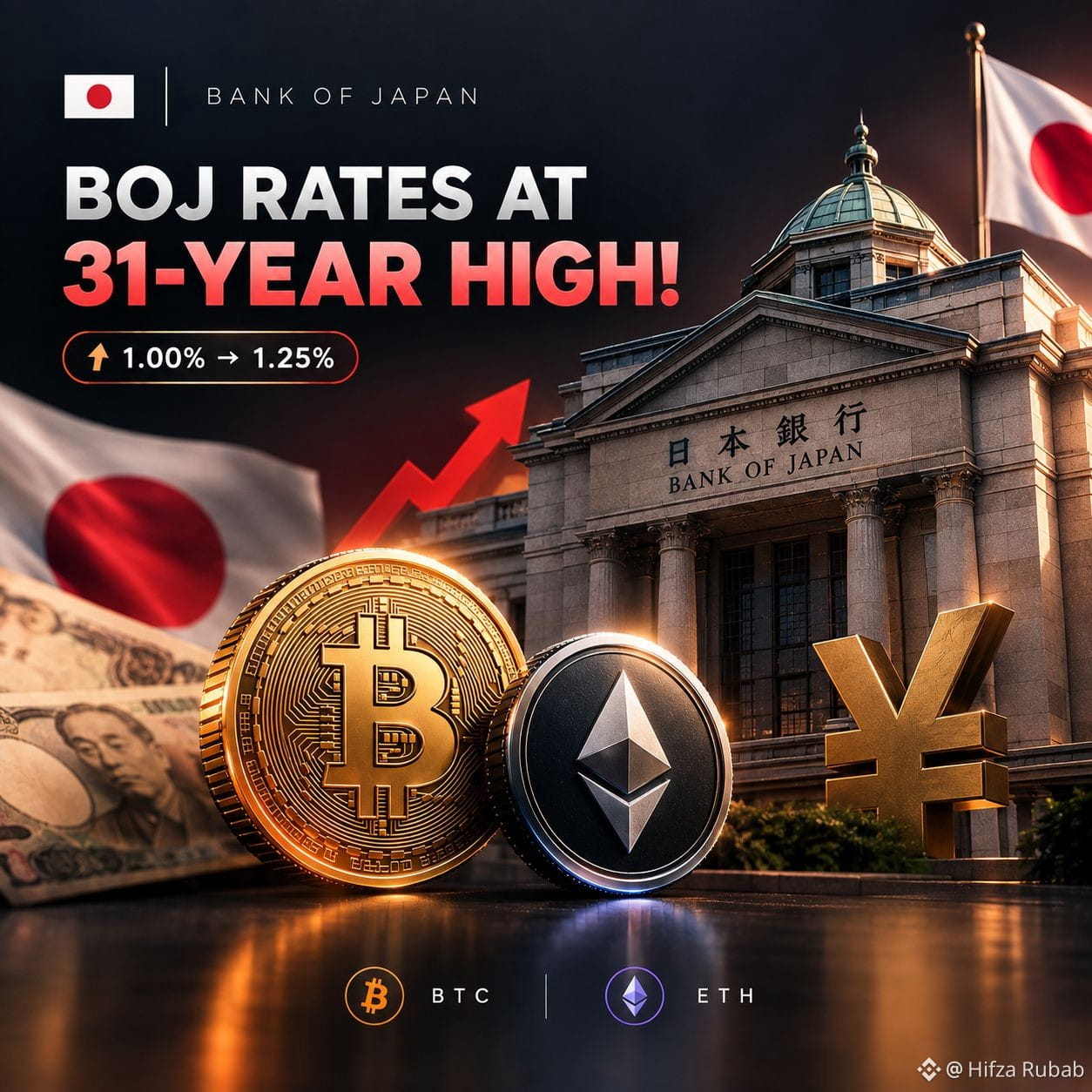
🚨 JAPAN SHOOK MARKETS — BOJ RATES AT 31-YEAR HIGH! 🇯🇵⚠️🔥
The Bank of Japan (BOJ) just hiked rates from 1.00% → 1.25%—the highest level since 1995! 😳📉
Key Takeaways :🔑💡
More Hikes Possible: Governor Kazuo Ueda signaled potential further rate increases.
Yen Weakened: Cautious guidance caused the Yen to fall further instead of strengthening.
Crypto Impact: Declining cheap Yen liquidity could apply pressure on global high-risk assets.
Featured Tokens :
Bitcoin ($BTC ) 🧡: Traders are closely watching the $80K+ support level. 📊🚀
Ethereum ($ETH ) 💎: Macro volatility is testing ETH's momentum across global markets. 🌊⚡
💬 What's your take? Will the BOJ's next move trigger another crypto market shock, or was this already priced in? Drop your thoughts below! 👇💭✨
#BOJRaisesRatesTo31YearHigh
#XRPExchangeReservesHitSevenYearLow
#CanaryFilesSecondAmendmentForStakedSEIETF
#EthereumSurpasses$2700
{spot}(ETHUSDT)
{spot}(BTCUSDT)
#bojraisesratesto31yearhigh
🚨 JAPAN SHOOK MARKETS — BOJ RATES AT 31-YEAR HIGH! 🇯🇵⚠️🔥
The Bank of Japan (BOJ) just hiked rates from 1.00% → 1.25%—the highest level since 1995! 😳📉
Key Takeaways :🔑💡
More Hikes Possible: Governor Kazuo Ueda signaled potential further rate increases.
Yen Weakened: Cautious guidance caused the Yen to fall further instead of strengthening.
Crypto Impact: Declining cheap Yen liquidity could apply pressure on global high-risk assets.
Featured Tokens :
Bitcoin ($BTC ) 🧡: Traders are closely watching the $80K+ support level. 📊🚀
Ethereum ($ETH ) 💎: Macro volatility is testing ETH's momentum across global markets. 🌊⚡
💬 What's your take? Will the BOJ's next move trigger another crypto market shock, or was this already priced in? Drop your thoughts below! 👇💭✨
#BOJRaisesRatesTo31YearHigh
#XRPExchangeReservesHitSevenYearLow
#CanaryFilesSecondAmendmentForStakedSEIETF
#EthereumSurpasses$2700
🚨 JAPAN SHOOK MARKETS — BOJ RATES AT 31-YEAR HIGH! 🇯🇵⚠️🔥
The Bank of Japan (BOJ) just hiked rates from 1.00% → 1.25%—the highest level since 1995! 😳📉
Key Takeaways :🔑💡
More Hikes Possible: Governor Kazuo Ueda signaled potential further rate increases.
Yen Weakened: Cautious guidance caused the Yen to fall further instead of strengthening.
Crypto Impact: Declining cheap Yen liquidity could apply pressure on global high-risk assets.
Featured Tokens :
Bitcoin ($BTC ) 🧡: Traders are closely watching the $80K+ support level. 📊🚀
Ethereum ($ETH ) 💎: Macro volatility is testing ETH's momentum across global markets. 🌊⚡
💬 What's your take? Will the BOJ's next move trigger another crypto market shock, or was this already priced in? Drop your thoughts below! 👇💭✨
#BOJRaisesRatesTo31YearHigh
#XRPExchangeReservesHitSevenYearLow
#CanaryFilesSecondAmendmentForStakedSEIETF
#EthereumSurpasses$2700
2
2.9k

·
--
Verified
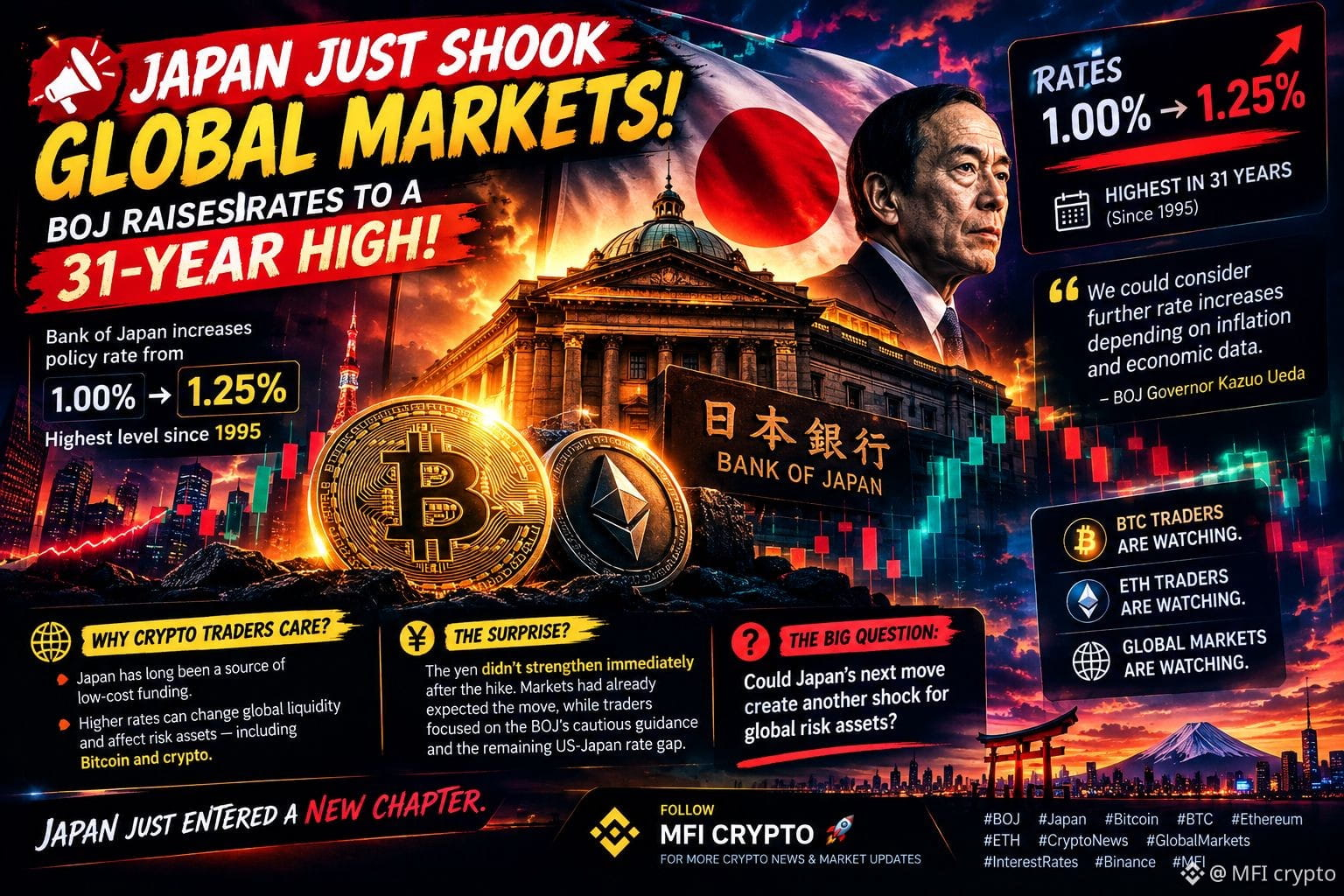
🚨🇯🇵 #JAPAN JUST SHOOK GLOBAL MARKETS! ⚠️🔥
THE #BOJ JUST PUSHED RATES TO A 31-YEAR HIGH! 😳
The Bank of Japan raised its policy rate from 1.00% → 1.25%, taking borrowing costs to their highest level since 1995.
But here's where it gets interesting… 👀
💥 BOJ ISN’T CLOSING THE DOOR ON MORE HIKES.
Governor Kazuo Ueda said the bank could consider further increases depending on inflation and economic data, including the possibility of consecutive hikes.
🌍 WHY SHOULD CRYPTO WATCHERS CARE?
Japan spent decades with ultra-low rates, making the yen an important global funding currency. A shift toward higher rates can change liquidity and investor positioning across global markets.
📉 AND THE SURPRISE?
The yen actually weakened after the decision instead of immediately strengthening. Markets had largely expected the hike, while investors focused on the BOJ's cautious guidance.
🔥 NOW THE BIG QUESTION:
Could Japan's next move create another shock for global risk assets?
👀 $BTC traders are watching.
👀 ETH traders are watching.
👀 Global markets are watching.
Japan just entered a new chapter. 🇯🇵⚡
#BOJ #Japan #Bitcoin #BTC #Ethereum #ETH #CryptoNews #GlobalMarkets #InterestRates #MFI
#bojraisesratesto31yearhigh
{spot}(ETHUSDT)
{spot}(ZECUSDT)
{spot}(BTCUSDT)
🚨🇯🇵 #JAPAN JUST SHOOK GLOBAL MARKETS! ⚠️🔥
THE #BOJ JUST PUSHED RATES TO A 31-YEAR HIGH! 😳
The Bank of Japan raised its policy rate from 1.00% → 1.25%, taking borrowing costs to their highest level since 1995.
But here's where it gets interesting… 👀
💥 BOJ ISN’T CLOSING THE DOOR ON MORE HIKES.
Governor Kazuo Ueda said the bank could consider further increases depending on inflation and economic data, including the possibility of consecutive hikes.
🌍 WHY SHOULD CRYPTO WATCHERS CARE?
Japan spent decades with ultra-low rates, making the yen an important global funding currency. A shift toward higher rates can change liquidity and investor positioning across global markets.
📉 AND THE SURPRISE?
The yen actually weakened after the decision instead of immediately strengthening. Markets had largely expected the hike, while investors focused on the BOJ's cautious guidance.
🔥 NOW THE BIG QUESTION:
Could Japan's next move create another shock for global risk assets?
👀 $BTC traders are watching.
👀 ETH traders are watching.
👀 Global markets are watching.
Japan just entered a new chapter. 🇯🇵⚡
#BOJ #Japan #Bitcoin #BTC #Ethereum #ETH #CryptoNews #GlobalMarkets #InterestRates #MFI
#bojraisesratesto31yearhigh
THE #BOJ JUST PUSHED RATES TO A 31-YEAR HIGH! 😳
The Bank of Japan raised its policy rate from 1.00% → 1.25%, taking borrowing costs to their highest level since 1995.
But here's where it gets interesting… 👀
💥 BOJ ISN’T CLOSING THE DOOR ON MORE HIKES.
Governor Kazuo Ueda said the bank could consider further increases depending on inflation and economic data, including the possibility of consecutive hikes.
🌍 WHY SHOULD CRYPTO WATCHERS CARE?
Japan spent decades with ultra-low rates, making the yen an important global funding currency. A shift toward higher rates can change liquidity and investor positioning across global markets.
📉 AND THE SURPRISE?
The yen actually weakened after the decision instead of immediately strengthening. Markets had largely expected the hike, while investors focused on the BOJ's cautious guidance.
🔥 NOW THE BIG QUESTION:
Could Japan's next move create another shock for global risk assets?
👀 $BTC traders are watching.
👀 ETH traders are watching.
👀 Global markets are watching.
Japan just entered a new chapter. 🇯🇵⚡
#BOJ #Japan #Bitcoin #BTC #Ethereum #ETH #CryptoNews #GlobalMarkets #InterestRates #MFI
#bojraisesratesto31yearhigh
AngelOfCrypto_-:
nice
6
1
8
15.5k

#BOJRaisesRatesTo31YearHigh 🇯🇵🔥
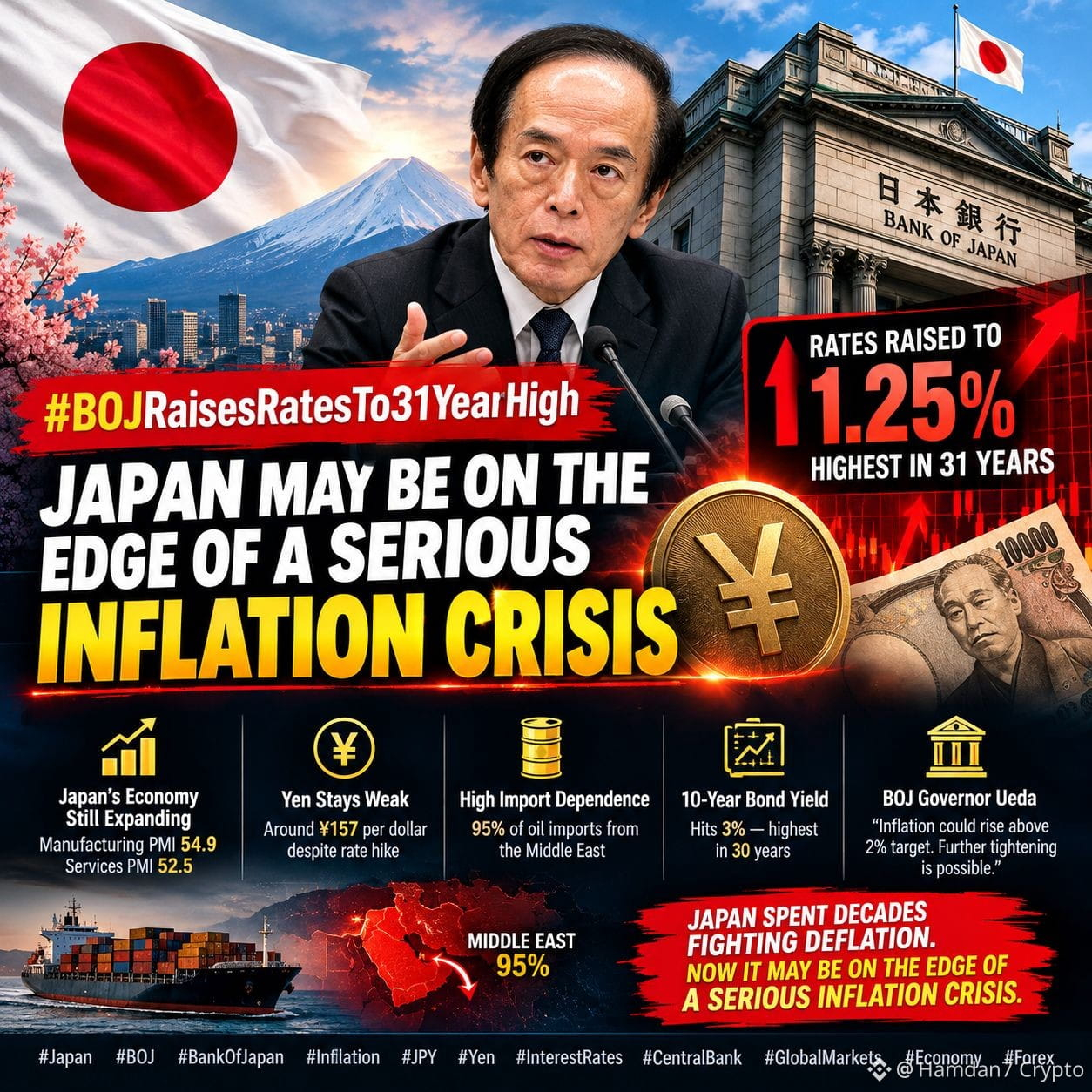
🚨 JAPAN’S INFLATION PRESSURE IS ENTERING A CRITICAL PHASE
The Bank of Japan has raised its policy rate to 1.25% — the highest level in 31 years — marking another major step away from Japan’s decades-long ultra-loose monetary policy. The decision passed 7–2, as policymakers focus on the risk that inflation could move above the BOJ’s 2% target.
But the bigger problem is that higher rates have not stopped the yen from remaining weak.
The yen has traded around the ¥157-per-dollar area, keeping imported energy and commodities expensive. Japan is particularly vulnerable to oil-price shocks because more than 90% of its crude oil imports come from the Middle East.
At the same time, Japan’s economy continues to show resilience. Recent PMI data showed manufacturing at 54.9 and services at 52.5, both pointing to continued expansion. Companies are also facing higher input costs and passing some of those increases through to customers.
That creates a difficult policy equation:
Weak Yen → Higher Import Costs → Higher Inflation → More BOJ Tightening → Higher Borrowing Costs
Japan’s 10-year government bond yield has also reached around 3%, a level not seen in roughly three decades, adding another layer of pressure to markets and government finances.
BOJ Governor Kazuo Ueda has emphasized that future decisions will depend on incoming economic and price data. With oil prices, the yen and inflation expectations still important risks, markets are now watching closely for signs of another rate increase.
Japan spent decades fighting deflation.
Now the challenge may be preventing inflation from becoming too persistent.
The next BOJ moves could have major implications for the yen, Japanese bonds and global markets. 📊🌏
#Japan #BOJ #BankOfJapan #Inflation #JPY #Yen #InterestRates #CentralBank #GlobalMarkets #Economy #BondMarket #Forex #Macro #Crypto #Bitcoin$BTC $SOL
#BOJRaisesRatesTo31YearHigh 🇯🇵🔥
🚨 JAPAN’S INFLATION PRESSURE IS ENTERING A CRITICAL PHASE
The Bank of Japan has raised its policy rate to 1.25% — the highest level in 31 years — marking another major step away from Japan’s decades-long ultra-loose monetary policy. The decision passed 7–2, as policymakers focus on the risk that inflation could move above the BOJ’s 2% target.
But the bigger problem is that higher rates have not stopped the yen from remaining weak.
The yen has traded around the ¥157-per-dollar area, keeping imported energy and commodities expensive. Japan is particularly vulnerable to oil-price shocks because more than 90% of its crude oil imports come from the Middle East.
At the same time, Japan’s economy continues to show resilience. Recent PMI data showed manufacturing at 54.9 and services at 52.5, both pointing to continued expansion. Companies are also facing higher input costs and passing some of those increases through to customers.
That creates a difficult policy equation:
Weak Yen → Higher Import Costs → Higher Inflation → More BOJ Tightening → Higher Borrowing Costs
Japan’s 10-year government bond yield has also reached around 3%, a level not seen in roughly three decades, adding another layer of pressure to markets and government finances.
BOJ Governor Kazuo Ueda has emphasized that future decisions will depend on incoming economic and price data. With oil prices, the yen and inflation expectations still important risks, markets are now watching closely for signs of another rate increase.
Japan spent decades fighting deflation.
Now the challenge may be preventing inflation from becoming too persistent.
The next BOJ moves could have major implications for the yen, Japanese bonds and global markets. 📊🌏
#Japan #BOJ #BankOfJapan #Inflation #JPY #Yen #InterestRates #CentralBank #GlobalMarkets #Economy #BondMarket #Forex #Macro #Crypto #Bitcoin$BTC $SOL
🚨 JAPAN’S INFLATION PRESSURE IS ENTERING A CRITICAL PHASE
The Bank of Japan has raised its policy rate to 1.25% — the highest level in 31 years — marking another major step away from Japan’s decades-long ultra-loose monetary policy. The decision passed 7–2, as policymakers focus on the risk that inflation could move above the BOJ’s 2% target.
But the bigger problem is that higher rates have not stopped the yen from remaining weak.
The yen has traded around the ¥157-per-dollar area, keeping imported energy and commodities expensive. Japan is particularly vulnerable to oil-price shocks because more than 90% of its crude oil imports come from the Middle East.
At the same time, Japan’s economy continues to show resilience. Recent PMI data showed manufacturing at 54.9 and services at 52.5, both pointing to continued expansion. Companies are also facing higher input costs and passing some of those increases through to customers.
That creates a difficult policy equation:
Weak Yen → Higher Import Costs → Higher Inflation → More BOJ Tightening → Higher Borrowing Costs
Japan’s 10-year government bond yield has also reached around 3%, a level not seen in roughly three decades, adding another layer of pressure to markets and government finances.
BOJ Governor Kazuo Ueda has emphasized that future decisions will depend on incoming economic and price data. With oil prices, the yen and inflation expectations still important risks, markets are now watching closely for signs of another rate increase.
Japan spent decades fighting deflation.
Now the challenge may be preventing inflation from becoming too persistent.
The next BOJ moves could have major implications for the yen, Japanese bonds and global markets. 📊🌏
#Japan #BOJ #BankOfJapan #Inflation #JPY #Yen #InterestRates #CentralBank #GlobalMarkets #Economy #BondMarket #Forex #Macro #Crypto #Bitcoin$BTC $SOL
102

#bojraisesratesto31yearhigh The Bank of Japan increased its policy rate from 1.00% → 1.25%, taking borrowing costs to their highest level since 1995.
But the bigger story is what comes next. 👀
🇯🇵 Governor Kazuo Ueda indicated that further rate increases remain possible depending on inflation and economic conditions. The BOJ has not committed to a fixed tightening path.
🌍 WHY CRYPTO SHOULD CARE
Japan has historically been an important source of low-cost funding for global investors. A continued shift toward higher Japanese rates can affect yen funding, carry trades, liquidity and risk positioning across global markets.
📉 Interesting reaction:
Despite the rate hike, the yen initially weakened as markets focused on the BOJ's cautious guidance and internal dissent rather than simply the headline rate increase.
🔥 WHAT TO WATCH
• 🇯🇵 Future BOJ rate decisions
• 💴 USD/JPY and yen liquidity
• 📊 Global bond yields
• ₿ BTC reaction to changing liquidity conditions
• Ξ ETH and broader crypto risk appetite
The key isn't simply that Japan raised rates.
The bigger question is whether this marks a sustained shift away from Japan's ultra-low-rate era.
👀 BTC traders are watching.
👀 ETH traders are watching.
🌍 Global markets are watching.$ETH
{spot}(ETHUSDT)
#bojraisesratesto31yearhigh The Bank of Japan increased its policy rate from 1.00% → 1.25%, taking borrowing costs to their highest level since 1995.
But the bigger story is what comes next. 👀
🇯🇵 Governor Kazuo Ueda indicated that further rate increases remain possible depending on inflation and economic conditions. The BOJ has not committed to a fixed tightening path.
🌍 WHY CRYPTO SHOULD CARE
Japan has historically been an important source of low-cost funding for global investors. A continued shift toward higher Japanese rates can affect yen funding, carry trades, liquidity and risk positioning across global markets.
📉 Interesting reaction:
Despite the rate hike, the yen initially weakened as markets focused on the BOJ's cautious guidance and internal dissent rather than simply the headline rate increase.
🔥 WHAT TO WATCH
• 🇯🇵 Future BOJ rate decisions
• 💴 USD/JPY and yen liquidity
• 📊 Global bond yields
• ₿ BTC reaction to changing liquidity conditions
• Ξ ETH and broader crypto risk appetite
The key isn't simply that Japan raised rates.
The bigger question is whether this marks a sustained shift away from Japan's ultra-low-rate era.
👀 BTC traders are watching.
👀 ETH traders are watching.
🌍 Global markets are watching.$ETH
But the bigger story is what comes next. 👀
🇯🇵 Governor Kazuo Ueda indicated that further rate increases remain possible depending on inflation and economic conditions. The BOJ has not committed to a fixed tightening path.
🌍 WHY CRYPTO SHOULD CARE
Japan has historically been an important source of low-cost funding for global investors. A continued shift toward higher Japanese rates can affect yen funding, carry trades, liquidity and risk positioning across global markets.
📉 Interesting reaction:
Despite the rate hike, the yen initially weakened as markets focused on the BOJ's cautious guidance and internal dissent rather than simply the headline rate increase.
🔥 WHAT TO WATCH
• 🇯🇵 Future BOJ rate decisions
• 💴 USD/JPY and yen liquidity
• 📊 Global bond yields
• ₿ BTC reaction to changing liquidity conditions
• Ξ ETH and broader crypto risk appetite
The key isn't simply that Japan raised rates.
The bigger question is whether this marks a sustained shift away from Japan's ultra-low-rate era.
👀 BTC traders are watching.
👀 ETH traders are watching.
🌍 Global markets are watching.$ETH
29

·
--
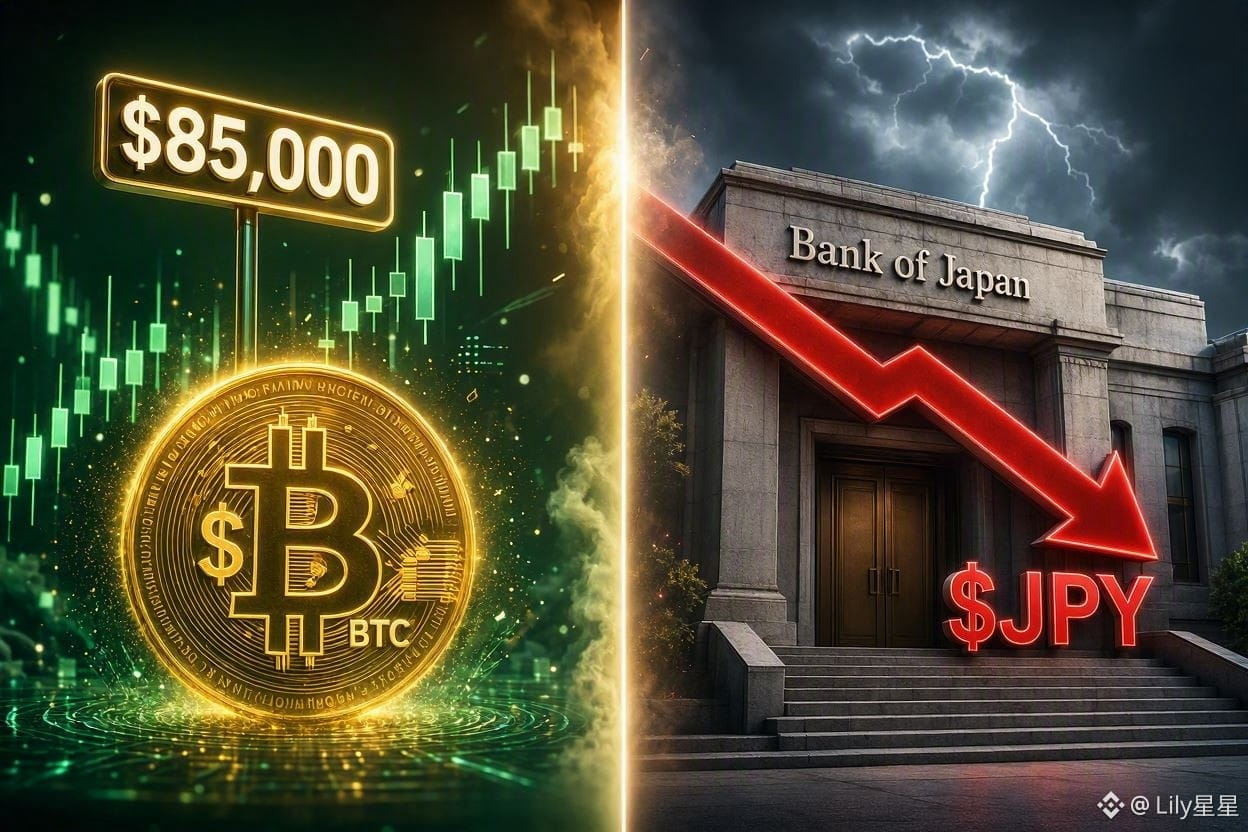
From $85K BTC to BOJ’s Rate Hike: What’s Driving Today’s Market Chaos? 🌐⚡
The crypto and global financial markets are displaying extreme volatility today as conflicting macro forces and crypto-native catalysts collide head-on!
While Bitcoin surges past $85,000 alongside major momentum in Ethereum breaking $2,700, traditional markets are reacting to a historic monetary shift—the Bank of Japan (BOJ) raising benchmark interest rates to 1.25%, marking a 31-year high.
Key Factors Driving Today's Market Dynamics:
Macro Headwinds (BOJ Rate Hike): The BOJ's hike to 1.25% reflects persistent domestic inflation and global rate pressures. While rate hikes typically trigger a yen carry trade unwinding and global liquidity tightening, the Fed's simultaneous rate adjustment keeps the yield differential wide, preventing immediate crypto market panic.
Crypto Momentum (BTC $85K & ETH $2.7K): Institutional inflows, Michael Saylor's ongoing Treasury accumulation signals, and steady spot buying are absorbing global macro friction and pushing major assets into new multi-month high territory.
Network & Institutional Upgrades: High-speed tech upgrades (Solana's 250ms slot time shift) and expanding ETF applications (Canary's second amendment for a Staked SEI ETF) continue to draw liquidity into altcoins.
Are you hedging against global macro shifts, or riding the bullish momentum to $100K BTC? Share your portfolio strategy below! 👇
#BitcoinHits$85K #BOJRaisesRatesTo31YearHigh #SaylorHintsStrategyBitcoinBuy
From $85K BTC to BOJ’s Rate Hike: What’s Driving Today’s Market Chaos? 🌐⚡
The crypto and global financial markets are displaying extreme volatility today as conflicting macro forces and crypto-native catalysts collide head-on!
While Bitcoin surges past $85,000 alongside major momentum in Ethereum breaking $2,700, traditional markets are reacting to a historic monetary shift—the Bank of Japan (BOJ) raising benchmark interest rates to 1.25%, marking a 31-year high.
Key Factors Driving Today's Market Dynamics:
Macro Headwinds (BOJ Rate Hike): The BOJ's hike to 1.25% reflects persistent domestic inflation and global rate pressures. While rate hikes typically trigger a yen carry trade unwinding and global liquidity tightening, the Fed's simultaneous rate adjustment keeps the yield differential wide, preventing immediate crypto market panic.
Crypto Momentum (BTC $85K & ETH $2.7K): Institutional inflows, Michael Saylor's ongoing Treasury accumulation signals, and steady spot buying are absorbing global macro friction and pushing major assets into new multi-month high territory.
Network & Institutional Upgrades: High-speed tech upgrades (Solana's 250ms slot time shift) and expanding ETF applications (Canary's second amendment for a Staked SEI ETF) continue to draw liquidity into altcoins.
Are you hedging against global macro shifts, or riding the bullish momentum to $100K BTC? Share your portfolio strategy below! 👇
#BitcoinHits$85K #BOJRaisesRatesTo31YearHigh #SaylorHintsStrategyBitcoinBuy
The crypto and global financial markets are displaying extreme volatility today as conflicting macro forces and crypto-native catalysts collide head-on!
While Bitcoin surges past $85,000 alongside major momentum in Ethereum breaking $2,700, traditional markets are reacting to a historic monetary shift—the Bank of Japan (BOJ) raising benchmark interest rates to 1.25%, marking a 31-year high.
Key Factors Driving Today's Market Dynamics:
Macro Headwinds (BOJ Rate Hike): The BOJ's hike to 1.25% reflects persistent domestic inflation and global rate pressures. While rate hikes typically trigger a yen carry trade unwinding and global liquidity tightening, the Fed's simultaneous rate adjustment keeps the yield differential wide, preventing immediate crypto market panic.
Crypto Momentum (BTC $85K & ETH $2.7K): Institutional inflows, Michael Saylor's ongoing Treasury accumulation signals, and steady spot buying are absorbing global macro friction and pushing major assets into new multi-month high territory.
Network & Institutional Upgrades: High-speed tech upgrades (Solana's 250ms slot time shift) and expanding ETF applications (Canary's second amendment for a Staked SEI ETF) continue to draw liquidity into altcoins.
Are you hedging against global macro shifts, or riding the bullish momentum to $100K BTC? Share your portfolio strategy below! 👇
#BitcoinHits$85K #BOJRaisesRatesTo31YearHigh #SaylorHintsStrategyBitcoinBuy
1
95

·
--
Bullish
#BOJRaisesRatesTo31YearHigh
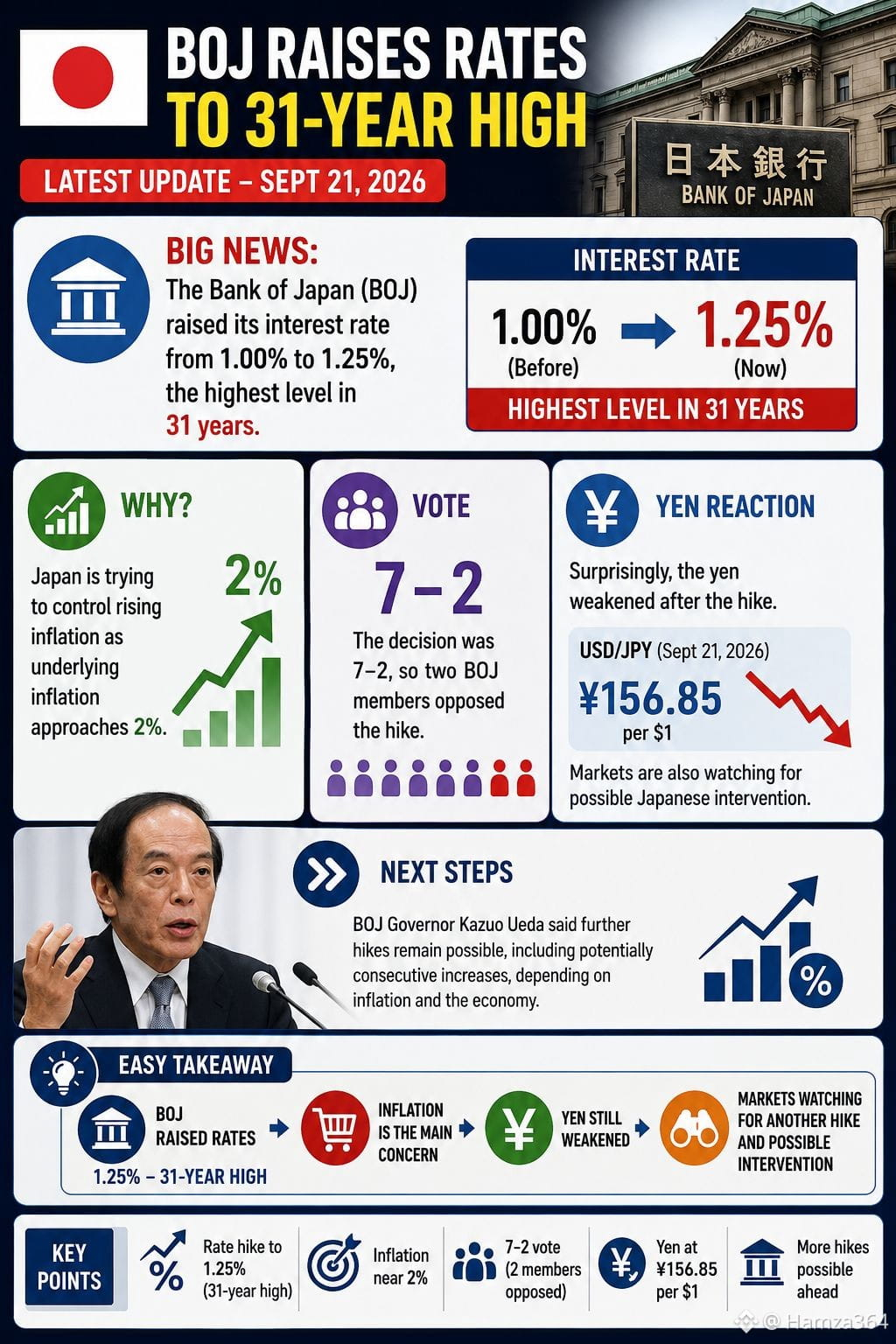
🇯🇵 BOJ — Latest Update | Sept 21, 2026
🔥 Big News: The Bank of Japan (BOJ) raised its interest rate from 1.00% → 1.25%, the highest level in 31 years.
📈 Why? Japan is trying to control rising inflation as underlying inflation approaches 2%.
⚖️ Vote: The decision was 7–2, so two BOJ members opposed the hike.
💴 Yen reaction: Surprisingly, the yen weakened after the hike. On Sept. 21 it was around ¥156.85 per $1, while markets also watched for possible Japanese intervention.
👀 Next: BOJ Governor Kazuo Ueda said further hikes remain possible, including potentially consecutive increases, depending on inflation and the economy.
Easy takeaway:
BOJ raised rates → inflation is the main concern → yen still weakened → markets are watching for another hike and possible intervention.
#BOJRaisesRatesTo31YearHigh
🇯🇵 BOJ — Latest Update | Sept 21, 2026
🔥 Big News: The Bank of Japan (BOJ) raised its interest rate from 1.00% → 1.25%, the highest level in 31 years.
📈 Why? Japan is trying to control rising inflation as underlying inflation approaches 2%.
⚖️ Vote: The decision was 7–2, so two BOJ members opposed the hike.
💴 Yen reaction: Surprisingly, the yen weakened after the hike. On Sept. 21 it was around ¥156.85 per $1, while markets also watched for possible Japanese intervention.
👀 Next: BOJ Governor Kazuo Ueda said further hikes remain possible, including potentially consecutive increases, depending on inflation and the economy.
Easy takeaway:
BOJ raised rates → inflation is the main concern → yen still weakened → markets are watching for another hike and possible intervention.
🇯🇵 BOJ — Latest Update | Sept 21, 2026
🔥 Big News: The Bank of Japan (BOJ) raised its interest rate from 1.00% → 1.25%, the highest level in 31 years.
📈 Why? Japan is trying to control rising inflation as underlying inflation approaches 2%.
⚖️ Vote: The decision was 7–2, so two BOJ members opposed the hike.
💴 Yen reaction: Surprisingly, the yen weakened after the hike. On Sept. 21 it was around ¥156.85 per $1, while markets also watched for possible Japanese intervention.
👀 Next: BOJ Governor Kazuo Ueda said further hikes remain possible, including potentially consecutive increases, depending on inflation and the economy.
Easy takeaway:
BOJ raised rates → inflation is the main concern → yen still weakened → markets are watching for another hike and possible intervention.
45

·
--
#BOJRaisesRatesTo31YearHigh
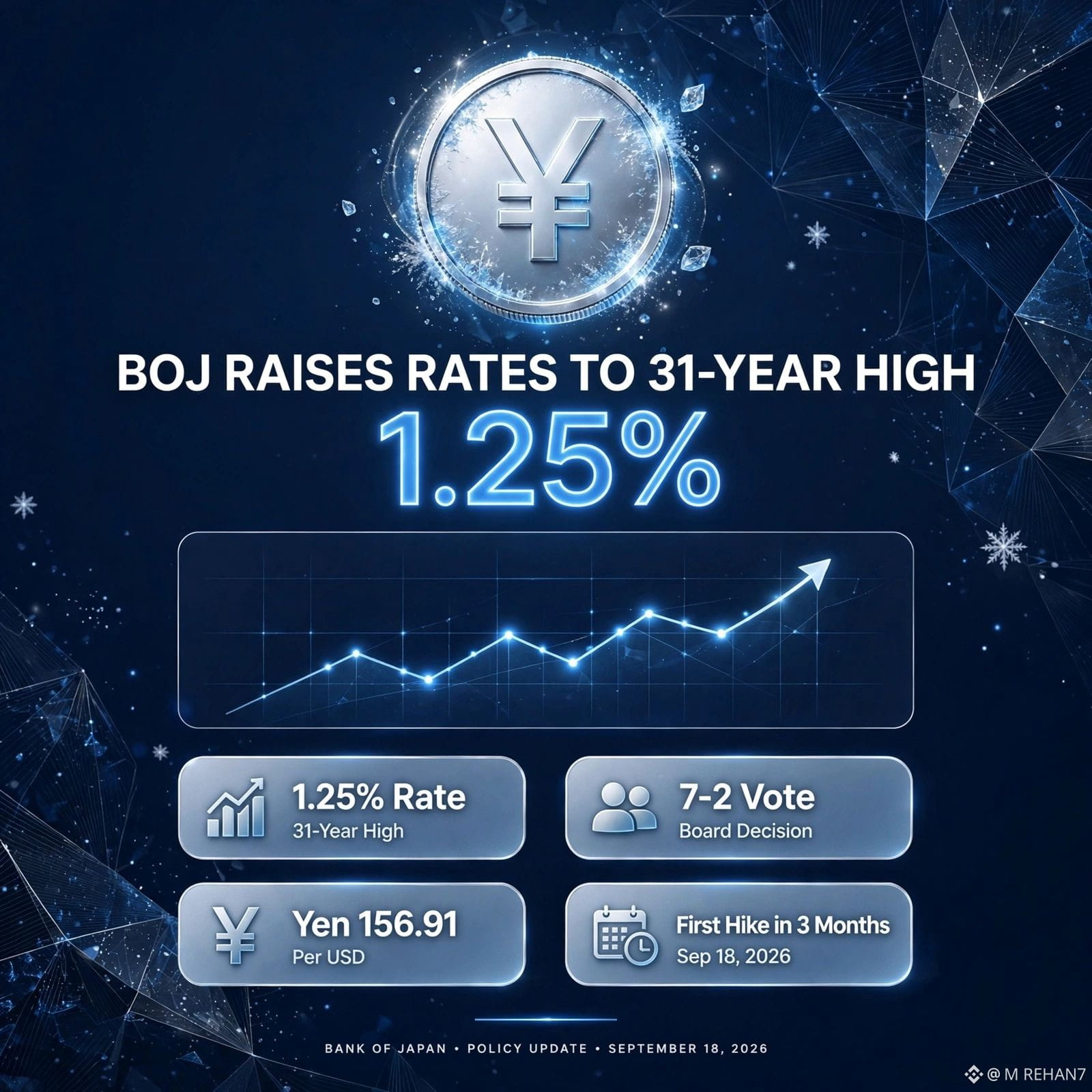
BOJ RAISES RATES TO 31-YEAR HIGH — 1.25% ❄️
Bank of Japan hits 31-year high. End of free yen era.
🔍 VERIFIED AUTHENTIC - Sep 18, 2026 - NEW ANGLE:
- Rate: 1.25% from 1% by 7-2 vote. Highest since 1995. Inside neutral range 1.1%-2.5% now.
- Why Yen Dropped to 156.91 Despite Hike: Dovish dissent by Asada & Sato + no hawkish guidance = market says “not aggressive enough”.
- Trigger: Wholesale inflation elevated, B2B spillover to consumer, Iran war oil spike, AI capex boom.
- First Hike in 3 Months: Last was June, now Sep 18. Slow but steady normalization.
UNIQUE MASTER TAKE (New Colour = New Insight):
Old theme was “Japan hikes”. New theme is “Ice Age Ending”. Japan kept rates near 0% for 31 years = entire crypto leverage built on cheap yen. Now ice is melting. Short-term: Yen carry unwind = volatility for BTC $SOL. Long-term: Stronger yen = global risk reset, BTC becomes hedge.
Crypto Play: $BTC $ETH $SOL $SAGA — watch funding rates. Cheap yen leverage going away.
Is this the start of global liquidity tightening?
#BoJ #BuffettStepsDownAsBerkshireChairman #CryptoNews
BTC ETH $SAGA ETH $MYX $AKE $B2
#BOJRaisesRatesTo31YearHigh
BOJ RAISES RATES TO 31-YEAR HIGH — 1.25% ❄️
Bank of Japan hits 31-year high. End of free yen era.
🔍 VERIFIED AUTHENTIC - Sep 18, 2026 - NEW ANGLE:
- Rate: 1.25% from 1% by 7-2 vote. Highest since 1995. Inside neutral range 1.1%-2.5% now.
- Why Yen Dropped to 156.91 Despite Hike: Dovish dissent by Asada & Sato + no hawkish guidance = market says “not aggressive enough”.
- Trigger: Wholesale inflation elevated, B2B spillover to consumer, Iran war oil spike, AI capex boom.
- First Hike in 3 Months: Last was June, now Sep 18. Slow but steady normalization.
UNIQUE MASTER TAKE (New Colour = New Insight):
Old theme was “Japan hikes”. New theme is “Ice Age Ending”. Japan kept rates near 0% for 31 years = entire crypto leverage built on cheap yen. Now ice is melting. Short-term: Yen carry unwind = volatility for BTC $SOL . Long-term: Stronger yen = global risk reset, BTC becomes hedge.
Crypto Play: $BTC $ETH $SOL $SAGA — watch funding rates. Cheap yen leverage going away.
Is this the start of global liquidity tightening?
#BoJ #BuffettStepsDownAsBerkshireChairman #CryptoNews
BTC ETH $SAGA ETH $MYX $AKE $B2
BOJ RAISES RATES TO 31-YEAR HIGH — 1.25% ❄️
Bank of Japan hits 31-year high. End of free yen era.
🔍 VERIFIED AUTHENTIC - Sep 18, 2026 - NEW ANGLE:
- Rate: 1.25% from 1% by 7-2 vote. Highest since 1995. Inside neutral range 1.1%-2.5% now.
- Why Yen Dropped to 156.91 Despite Hike: Dovish dissent by Asada & Sato + no hawkish guidance = market says “not aggressive enough”.
- Trigger: Wholesale inflation elevated, B2B spillover to consumer, Iran war oil spike, AI capex boom.
- First Hike in 3 Months: Last was June, now Sep 18. Slow but steady normalization.
UNIQUE MASTER TAKE (New Colour = New Insight):
Old theme was “Japan hikes”. New theme is “Ice Age Ending”. Japan kept rates near 0% for 31 years = entire crypto leverage built on cheap yen. Now ice is melting. Short-term: Yen carry unwind = volatility for BTC $SOL . Long-term: Stronger yen = global risk reset, BTC becomes hedge.
Crypto Play: $BTC $ETH $SOL $SAGA — watch funding rates. Cheap yen leverage going away.
Is this the start of global liquidity tightening?
#BoJ #BuffettStepsDownAsBerkshireChairman #CryptoNews
BTC ETH $SAGA ETH $MYX $AKE $B2
2
259

·
--
Bullish
#BOJRaisesRatesTo31YearHigh BOJ Raises Interest Rates to a 31-Year High 🇯🇵📈
Japan’s central bank has moved rates to their highest level in 31 years, putting global markets on alert. 🌍
Higher Japanese rates could influence the yen, bond yields, equities, and risk assets — including crypto. Bitcoin traders will be watching closely as markets digest the impact. 👀₿
#BOJ #Japan #Bitcoin #BTC #Crypto #Markets$ZEC
{future}(ZECUSDT)
$BTC
{future}(BTCUSDT)
$GS
{future}(GSUSDT)
#BOJRaisesRatesTo31YearHigh BOJ Raises Interest Rates to a 31-Year High 🇯🇵📈
Japan’s central bank has moved rates to their highest level in 31 years, putting global markets on alert. 🌍
Higher Japanese rates could influence the yen, bond yields, equities, and risk assets — including crypto. Bitcoin traders will be watching closely as markets digest the impact. 👀₿
#BOJ #Japan #Bitcoin #BTC #Crypto #Markets$ZEC
$BTC
$GS
Japan’s central bank has moved rates to their highest level in 31 years, putting global markets on alert. 🌍
Higher Japanese rates could influence the yen, bond yields, equities, and risk assets — including crypto. Bitcoin traders will be watching closely as markets digest the impact. 👀₿
#BOJ #Japan #Bitcoin #BTC #Crypto #Markets$ZEC
$BTC
$GS

1
66
·
--
#bojraisesratesto31yearhigh 🇯🇵📊
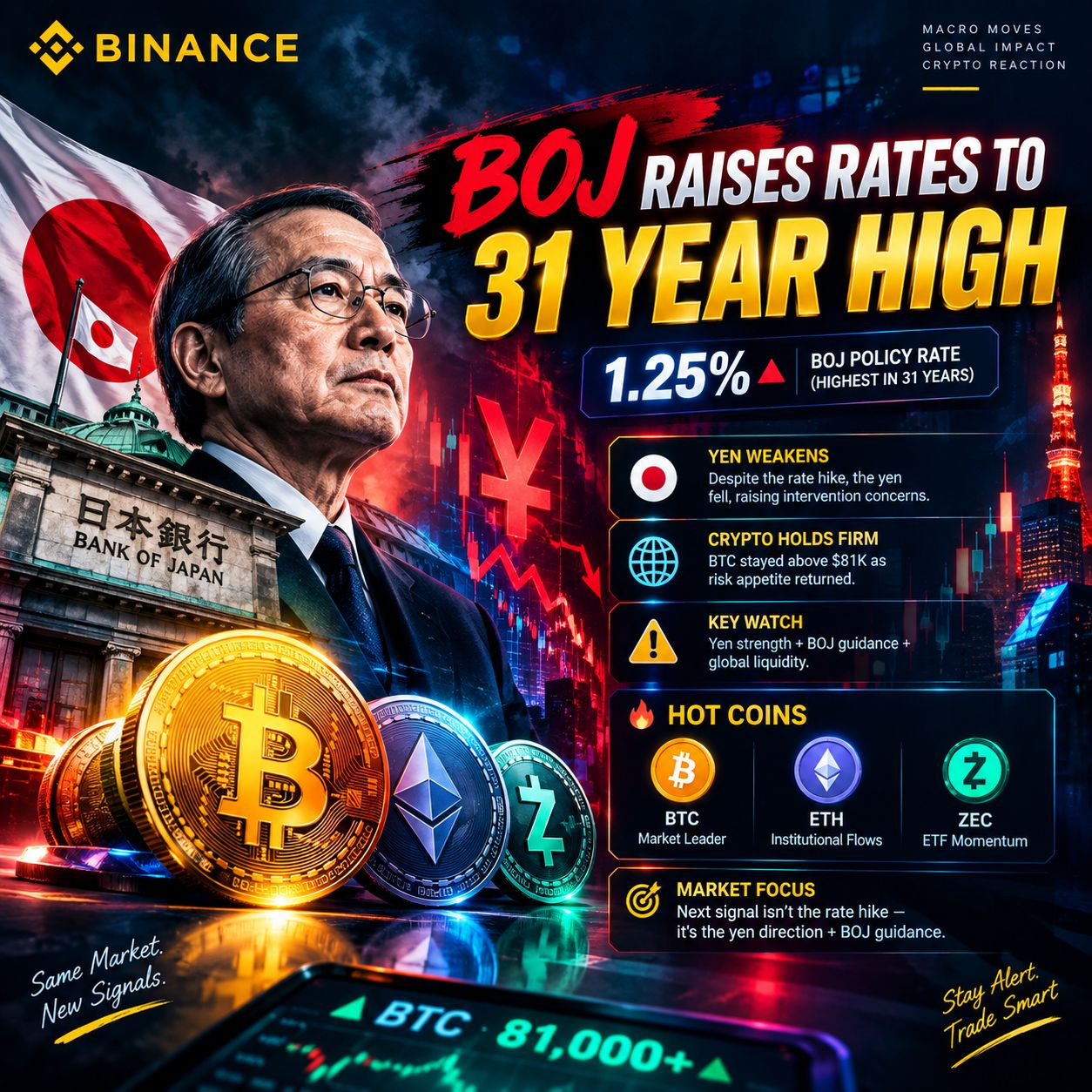
MACRO SHIFT: BOJ lifted rates to 1.25%, the highest in 31 years, in a 7–2 decision.
KEY SIGNAL: The yen still weakened after the hike, keeping global liquidity and carry-trade risks in focus.
CRYPTO REACTION: BTC has remained resilient, trading above $81K as risk appetite recovered.
⚠️ WATCH: A sharper yen rebound or further BOJ tightening could pressure leveraged risk assets; continued yen weakness could delay that stress.
🔥 HOT COINS: $BTC | $ETH | $ZEC — BTC leads the market, ETH is holding its weekly strength, while ZEC remains a major momentum name.
📈 MARKET FOCUS: The next signal is not the rate hike itself — it is yen direction + BOJ guidance + global liquidity.
BOTTOM LINE: BOJ tightening raises a macro risk, but crypto's current price action shows the market has not yet treated it as a major liquidity shock.
#EthereumSurpasses$2700 #CanaryFilesSecondAmendmentForStakedSEIETF #SaylorHintsStrategyBitcoinBuy #BOJRaisesRatesTo31YearHigh
#bojraisesratesto31yearhigh 🇯🇵📊
MACRO SHIFT: BOJ lifted rates to 1.25%, the highest in 31 years, in a 7–2 decision.
KEY SIGNAL: The yen still weakened after the hike, keeping global liquidity and carry-trade risks in focus.
CRYPTO REACTION: BTC has remained resilient, trading above $81K as risk appetite recovered.
⚠️ WATCH: A sharper yen rebound or further BOJ tightening could pressure leveraged risk assets; continued yen weakness could delay that stress.
🔥 HOT COINS: $BTC | $ETH | $ZEC — BTC leads the market, ETH is holding its weekly strength, while ZEC remains a major momentum name.
📈 MARKET FOCUS: The next signal is not the rate hike itself — it is yen direction + BOJ guidance + global liquidity.
BOTTOM LINE: BOJ tightening raises a macro risk, but crypto's current price action shows the market has not yet treated it as a major liquidity shock.
#EthereumSurpasses$2700 #CanaryFilesSecondAmendmentForStakedSEIETF #SaylorHintsStrategyBitcoinBuy #BOJRaisesRatesTo31YearHigh
MACRO SHIFT: BOJ lifted rates to 1.25%, the highest in 31 years, in a 7–2 decision.
KEY SIGNAL: The yen still weakened after the hike, keeping global liquidity and carry-trade risks in focus.
CRYPTO REACTION: BTC has remained resilient, trading above $81K as risk appetite recovered.
⚠️ WATCH: A sharper yen rebound or further BOJ tightening could pressure leveraged risk assets; continued yen weakness could delay that stress.
🔥 HOT COINS: $BTC | $ETH | $ZEC — BTC leads the market, ETH is holding its weekly strength, while ZEC remains a major momentum name.
📈 MARKET FOCUS: The next signal is not the rate hike itself — it is yen direction + BOJ guidance + global liquidity.
BOTTOM LINE: BOJ tightening raises a macro risk, but crypto's current price action shows the market has not yet treated it as a major liquidity shock.
#EthereumSurpasses$2700 #CanaryFilesSecondAmendmentForStakedSEIETF #SaylorHintsStrategyBitcoinBuy #BOJRaisesRatesTo31YearHigh
2
2
290

·
--
#BOJRaisesRatesTo31YearHigh
$BONK
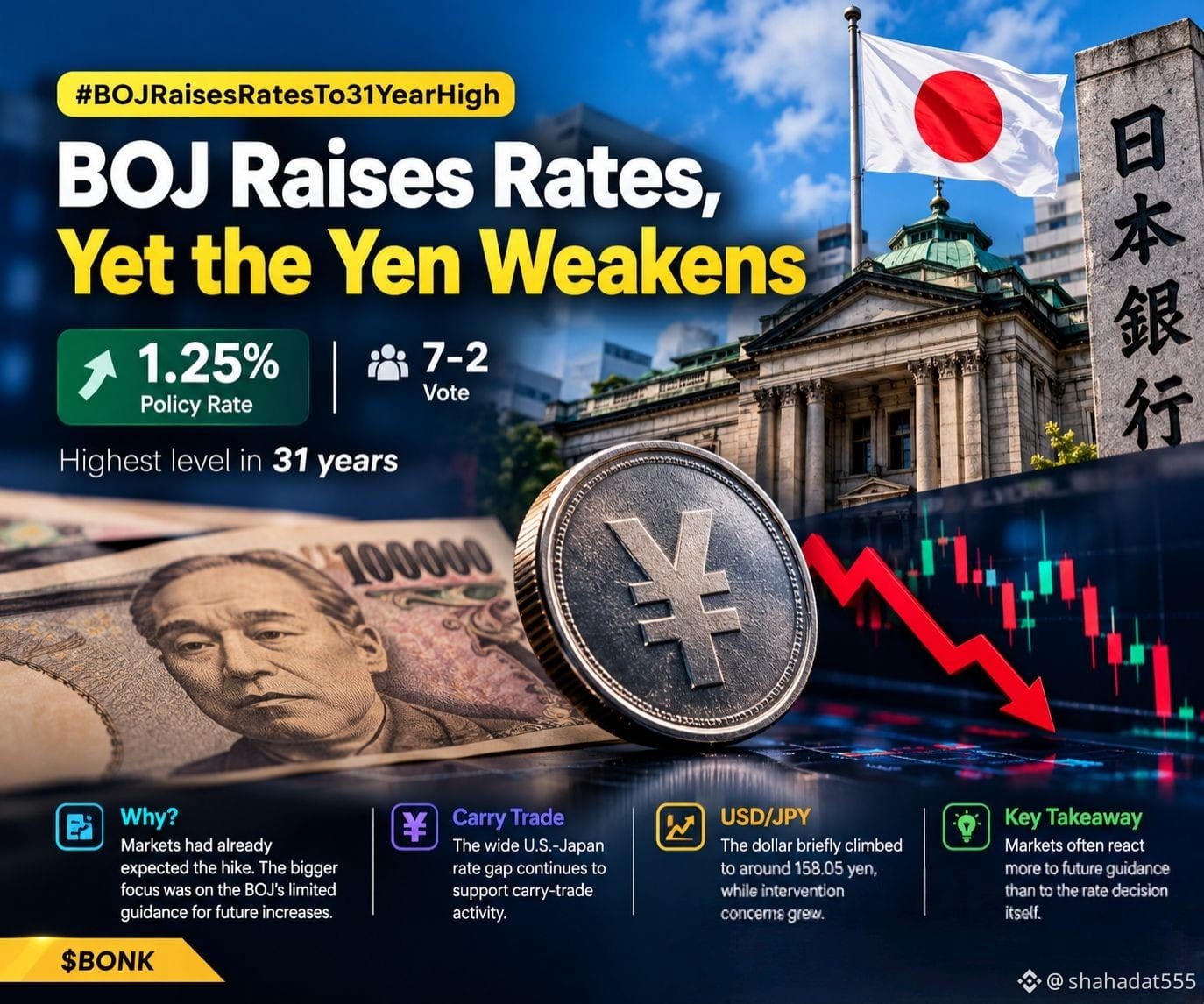
BOJ Raises Rates, Yet the Yen Weakens
The Bank of Japan increased its policy rate to 1.25%, marking its highest level in 31 years. The decision passed with a 7-2 vote.
Despite the rate hike, the Japanese Yen weakened significantly after the announcement.
The main reason? Markets had already priced in the expected rate increase. Instead, investors focused on the BOJ's limited guidance about the pace of future hikes.
At the same time, the wide interest-rate gap between Japan and the U.S. continues to support carry-trade activity.
The dollar briefly reached around 158.05 yen, while concerns about possible Japanese intervention in the currency market also increased.
Key takeaway: Financial markets often react more strongly to future policy signals than to an expected rate decision itself.
#BOJ #JapaneseYen #Forex #Macro #Crypto
#BOJRaisesRatesTo31YearHigh
$BONK
BOJ Raises Rates, Yet the Yen Weakens
The Bank of Japan increased its policy rate to 1.25%, marking its highest level in 31 years. The decision passed with a 7-2 vote.
Despite the rate hike, the Japanese Yen weakened significantly after the announcement.
The main reason? Markets had already priced in the expected rate increase. Instead, investors focused on the BOJ's limited guidance about the pace of future hikes.
At the same time, the wide interest-rate gap between Japan and the U.S. continues to support carry-trade activity.
The dollar briefly reached around 158.05 yen, while concerns about possible Japanese intervention in the currency market also increased.
Key takeaway: Financial markets often react more strongly to future policy signals than to an expected rate decision itself.
#BOJ #JapaneseYen #Forex #Macro #Crypto
$BONK
BOJ Raises Rates, Yet the Yen Weakens
The Bank of Japan increased its policy rate to 1.25%, marking its highest level in 31 years. The decision passed with a 7-2 vote.
Despite the rate hike, the Japanese Yen weakened significantly after the announcement.
The main reason? Markets had already priced in the expected rate increase. Instead, investors focused on the BOJ's limited guidance about the pace of future hikes.
At the same time, the wide interest-rate gap between Japan and the U.S. continues to support carry-trade activity.
The dollar briefly reached around 158.05 yen, while concerns about possible Japanese intervention in the currency market also increased.
Key takeaway: Financial markets often react more strongly to future policy signals than to an expected rate decision itself.
#BOJ #JapaneseYen #Forex #Macro #Crypto
55
·
--
Article
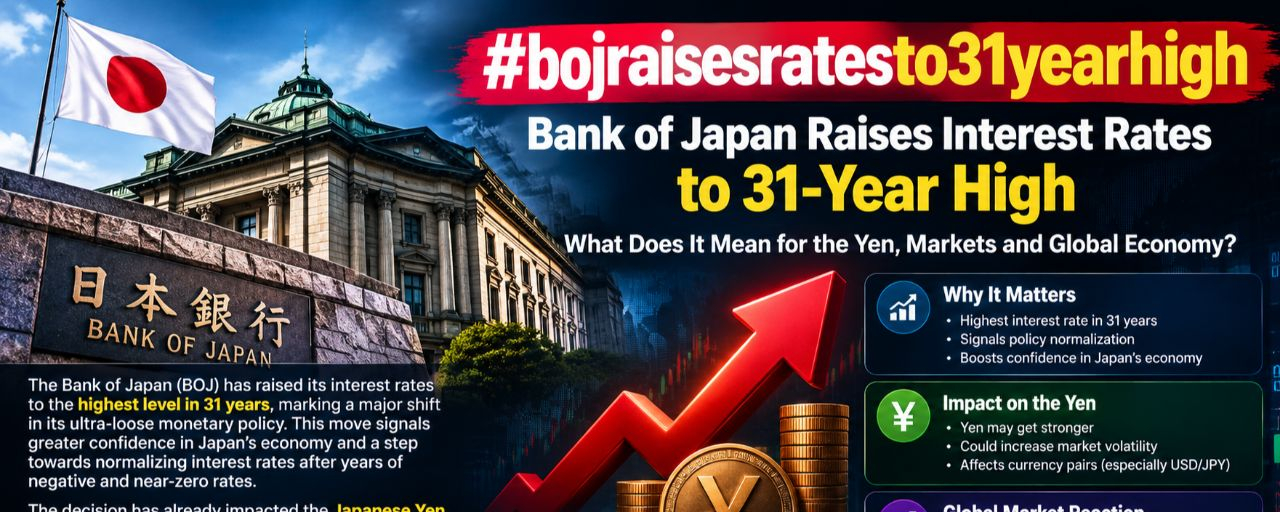
BOJ Raises Interest Rates to a 31-Year High: What It Means for the Yen, Japan & Global Markets#bojraisesratesto31yearhigh
#BOJRaisesRatesTo31YearHigh — What Does It Mean for Japan and Global Markets?
The Bank of Japan (BOJ) remains at the center of global financial-market attention as Japan continues moving away from the ultra-loose monetary policy that characterized much of the previous decade.
The hashtag #BOJRaisesRatesTo31YearHigh highlights an important development for financial markets: higher Japanese interest rates can influence not only the Japanese economy but also the yen, global bond markets, equities, currency trading and international investment flows.
🇯🇵 Why Is the BOJ Rate Decision Important?
For many years, Japan maintained exceptionally low interest rates compared with other major economies. This environment encouraged borrowing at relatively low costs and played an important role in global financial markets.
A move toward higher interest rates represents a change in that environment. When a central bank raises its policy rate, borrowing costs can increase, financial conditions can become tighter, and investors may reassess where they want to keep their capital.
For Japan, the BOJ must balance several factors, including inflation, wage growth, economic activity, consumer spending and financial stability.
$NVDAB $AAPLB
{spot}(GOOGLBUSDT)
{spot}(AAPLBUSDT)
💴 What Could Happen to the Japanese Yen?
Interest-rate changes can have a significant effect on currency markets.
Higher Japanese interest rates can make yen-denominated assets relatively more attractive, depending on how Japanese rates compare with rates in other major economies. This can influence demand for the Japanese yen and currency pairs such as USD/JPY.
However, currency movements are never determined by one factor alone. Traders also consider U.S. interest rates, Federal Reserve policy, Japanese economic data, inflation expectations, government bond yields and overall market sentiment.
This means the yen can react differently depending on what investors were already expecting before the BOJ announcement.
🌎 Why Are Global Investors Watching?
Japan is one of the world's major economies and a significant participant in global financial markets. Changes in Japanese monetary policy can therefore have effects beyond Japan.
One area investors watch closely is the so-called carry trade, where market participants borrow in a relatively low-interest-rate currency and invest in assets offering potentially higher returns elsewhere.
If Japanese interest rates rise, the cost of maintaining such positions can change. If investors decide to reduce these positions, financial-market volatility can increase.
📈 Possible Impact on Stock Markets
Higher interest rates can affect stock markets because they change borrowing costs and influence how investors value future corporate earnings.
Japanese companies may experience different effects depending on their business models. Banks and financial institutions can respond differently from highly leveraged companies, exporters, or businesses that depend heavily on domestic consumer spending.
International markets can also react if investors adjust portfolios because of changing Japanese monetary conditions.
💰 What About Bonds?
The bond market is another important area to watch.
When central banks raise interest rates, government-bond yields can respond as investors reassess future monetary policy and inflation expectations. Japanese Government Bonds (JGBs) are particularly important because the BOJ has historically played a major role in Japan's bond market.
Changes in Japanese yields can also influence global bond markets because international investors compare returns across different countries.
📊 What Does This Mean for the Global Economy?
The BOJ's policy direction is important because Japan has been an unusual case among major developed economies for many years.
A gradual normalization of monetary policy could indicate that Japanese policymakers believe economic conditions have changed enough to move away from extremely accommodative settings.
At the same time, higher rates can create challenges. Businesses and households may face higher borrowing costs, while financial markets must adjust to a different interest-rate environment.
🔎 What Should Investors Watch Next?
The most important things to monitor include:
• Future BOJ interest-rate decisions
• Japanese inflation data
• Wage-growth figures
• Japanese economic growth
• USD/JPY movements
• Japanese Government Bond yields
• Federal Reserve policy
• Global stock-market reactions
• Changes in carry-trade positions
• Statements from BOJ officials
These factors can provide more context than the rate decision alone.
⚠️ One Important Point
A rate hike does not automatically mean that the Japanese yen or Japanese stock market will move in one particular direction. Financial markets react not only to the decision itself but also to expectations.
If investors already expected a rate increase, the market reaction could be relatively limited. If the decision or future guidance differs from expectations, the reaction could be much stronger.
🌐 The Bigger Picture
The #BOJRaisesRatesTo31YearHigh discussion is ultimately about more than a single interest-rate decision. It reflects a broader change in Japan's monetary-policy environment and its potential connection with global financial markets.
As Japan gradually adjusts its monetary policy, investors around the world will continue watching the yen, Japanese bonds, equities and international capital flows.
The next phase will depend heavily on inflation, wage growth, economic activity and the BOJ's future policy guidance.
For traders and market observers, the key question is not simply whether rates have risen, but how quickly Japan continues to normalize monetary policy and how global markets adapt to the changing environment.
#BondMarket #Economy #FinancialMarkets #marketnewstoday
BOJ Raises Interest Rates to a 31-Year High: What It Means for the Yen, Japan & Global Markets
#bojraisesratesto31yearhigh
#BOJRaisesRatesTo31YearHigh — What Does It Mean for Japan and Global Markets?
The Bank of Japan (BOJ) remains at the center of global financial-market attention as Japan continues moving away from the ultra-loose monetary policy that characterized much of the previous decade.
The hashtag #BOJRaisesRatesTo31YearHigh highlights an important development for financial markets: higher Japanese interest rates can influence not only the Japanese economy but also the yen, global bond markets, equities, currency trading and international investment flows.
🇯🇵 Why Is the BOJ Rate Decision Important?
For many years, Japan maintained exceptionally low interest rates compared with other major economies. This environment encouraged borrowing at relatively low costs and played an important role in global financial markets.
A move toward higher interest rates represents a change in that environment. When a central bank raises its policy rate, borrowing costs can increase, financial conditions can become tighter, and investors may reassess where they want to keep their capital.
For Japan, the BOJ must balance several factors, including inflation, wage growth, economic activity, consumer spending and financial stability.
$NVDAB $AAPLB
💴 What Could Happen to the Japanese Yen?
Interest-rate changes can have a significant effect on currency markets.
Higher Japanese interest rates can make yen-denominated assets relatively more attractive, depending on how Japanese rates compare with rates in other major economies. This can influence demand for the Japanese yen and currency pairs such as USD/JPY.
However, currency movements are never determined by one factor alone. Traders also consider U.S. interest rates, Federal Reserve policy, Japanese economic data, inflation expectations, government bond yields and overall market sentiment.
This means the yen can react differently depending on what investors were already expecting before the BOJ announcement.
🌎 Why Are Global Investors Watching?
Japan is one of the world's major economies and a significant participant in global financial markets. Changes in Japanese monetary policy can therefore have effects beyond Japan.
One area investors watch closely is the so-called carry trade, where market participants borrow in a relatively low-interest-rate currency and invest in assets offering potentially higher returns elsewhere.
If Japanese interest rates rise, the cost of maintaining such positions can change. If investors decide to reduce these positions, financial-market volatility can increase.
📈 Possible Impact on Stock Markets
Higher interest rates can affect stock markets because they change borrowing costs and influence how investors value future corporate earnings.
Japanese companies may experience different effects depending on their business models. Banks and financial institutions can respond differently from highly leveraged companies, exporters, or businesses that depend heavily on domestic consumer spending.
International markets can also react if investors adjust portfolios because of changing Japanese monetary conditions.
💰 What About Bonds?
The bond market is another important area to watch.
When central banks raise interest rates, government-bond yields can respond as investors reassess future monetary policy and inflation expectations. Japanese Government Bonds (JGBs) are particularly important because the BOJ has historically played a major role in Japan's bond market.
Changes in Japanese yields can also influence global bond markets because international investors compare returns across different countries.
📊 What Does This Mean for the Global Economy?
The BOJ's policy direction is important because Japan has been an unusual case among major developed economies for many years.
A gradual normalization of monetary policy could indicate that Japanese policymakers believe economic conditions have changed enough to move away from extremely accommodative settings.
At the same time, higher rates can create challenges. Businesses and households may face higher borrowing costs, while financial markets must adjust to a different interest-rate environment.
🔎 What Should Investors Watch Next?
The most important things to monitor include:
• Future BOJ interest-rate decisions
• Japanese inflation data
• Wage-growth figures
• Japanese economic growth
• USD/JPY movements
• Japanese Government Bond yields
• Federal Reserve policy
• Global stock-market reactions
• Changes in carry-trade positions
• Statements from BOJ officials
These factors can provide more context than the rate decision alone.
⚠️ One Important Point
A rate hike does not automatically mean that the Japanese yen or Japanese stock market will move in one particular direction. Financial markets react not only to the decision itself but also to expectations.
If investors already expected a rate increase, the market reaction could be relatively limited. If the decision or future guidance differs from expectations, the reaction could be much stronger.
🌐 The Bigger Picture
The #BOJRaisesRatesTo31YearHigh discussion is ultimately about more than a single interest-rate decision. It reflects a broader change in Japan's monetary-policy environment and its potential connection with global financial markets.
As Japan gradually adjusts its monetary policy, investors around the world will continue watching the yen, Japanese bonds, equities and international capital flows.
The next phase will depend heavily on inflation, wage growth, economic activity and the BOJ's future policy guidance.
For traders and market observers, the key question is not simply whether rates have risen, but how quickly Japan continues to normalize monetary policy and how global markets adapt to the changing environment.
#BondMarket #Economy #FinancialMarkets #marketnewstoday
#BOJRaisesRatesTo31YearHigh — What Does It Mean for Japan and Global Markets?
The Bank of Japan (BOJ) remains at the center of global financial-market attention as Japan continues moving away from the ultra-loose monetary policy that characterized much of the previous decade.
The hashtag #BOJRaisesRatesTo31YearHigh highlights an important development for financial markets: higher Japanese interest rates can influence not only the Japanese economy but also the yen, global bond markets, equities, currency trading and international investment flows.
🇯🇵 Why Is the BOJ Rate Decision Important?
For many years, Japan maintained exceptionally low interest rates compared with other major economies. This environment encouraged borrowing at relatively low costs and played an important role in global financial markets.
A move toward higher interest rates represents a change in that environment. When a central bank raises its policy rate, borrowing costs can increase, financial conditions can become tighter, and investors may reassess where they want to keep their capital.
For Japan, the BOJ must balance several factors, including inflation, wage growth, economic activity, consumer spending and financial stability.
$NVDAB $AAPLB
💴 What Could Happen to the Japanese Yen?
Interest-rate changes can have a significant effect on currency markets.
Higher Japanese interest rates can make yen-denominated assets relatively more attractive, depending on how Japanese rates compare with rates in other major economies. This can influence demand for the Japanese yen and currency pairs such as USD/JPY.
However, currency movements are never determined by one factor alone. Traders also consider U.S. interest rates, Federal Reserve policy, Japanese economic data, inflation expectations, government bond yields and overall market sentiment.
This means the yen can react differently depending on what investors were already expecting before the BOJ announcement.
🌎 Why Are Global Investors Watching?
Japan is one of the world's major economies and a significant participant in global financial markets. Changes in Japanese monetary policy can therefore have effects beyond Japan.
One area investors watch closely is the so-called carry trade, where market participants borrow in a relatively low-interest-rate currency and invest in assets offering potentially higher returns elsewhere.
If Japanese interest rates rise, the cost of maintaining such positions can change. If investors decide to reduce these positions, financial-market volatility can increase.
📈 Possible Impact on Stock Markets
Higher interest rates can affect stock markets because they change borrowing costs and influence how investors value future corporate earnings.
Japanese companies may experience different effects depending on their business models. Banks and financial institutions can respond differently from highly leveraged companies, exporters, or businesses that depend heavily on domestic consumer spending.
International markets can also react if investors adjust portfolios because of changing Japanese monetary conditions.
💰 What About Bonds?
The bond market is another important area to watch.
When central banks raise interest rates, government-bond yields can respond as investors reassess future monetary policy and inflation expectations. Japanese Government Bonds (JGBs) are particularly important because the BOJ has historically played a major role in Japan's bond market.
Changes in Japanese yields can also influence global bond markets because international investors compare returns across different countries.
📊 What Does This Mean for the Global Economy?
The BOJ's policy direction is important because Japan has been an unusual case among major developed economies for many years.
A gradual normalization of monetary policy could indicate that Japanese policymakers believe economic conditions have changed enough to move away from extremely accommodative settings.
At the same time, higher rates can create challenges. Businesses and households may face higher borrowing costs, while financial markets must adjust to a different interest-rate environment.
🔎 What Should Investors Watch Next?
The most important things to monitor include:
• Future BOJ interest-rate decisions
• Japanese inflation data
• Wage-growth figures
• Japanese economic growth
• USD/JPY movements
• Japanese Government Bond yields
• Federal Reserve policy
• Global stock-market reactions
• Changes in carry-trade positions
• Statements from BOJ officials
These factors can provide more context than the rate decision alone.
⚠️ One Important Point
A rate hike does not automatically mean that the Japanese yen or Japanese stock market will move in one particular direction. Financial markets react not only to the decision itself but also to expectations.
If investors already expected a rate increase, the market reaction could be relatively limited. If the decision or future guidance differs from expectations, the reaction could be much stronger.
🌐 The Bigger Picture
The #BOJRaisesRatesTo31YearHigh discussion is ultimately about more than a single interest-rate decision. It reflects a broader change in Japan's monetary-policy environment and its potential connection with global financial markets.
As Japan gradually adjusts its monetary policy, investors around the world will continue watching the yen, Japanese bonds, equities and international capital flows.
The next phase will depend heavily on inflation, wage growth, economic activity and the BOJ's future policy guidance.
For traders and market observers, the key question is not simply whether rates have risen, but how quickly Japan continues to normalize monetary policy and how global markets adapt to the changing environment.
#BondMarket #Economy #FinancialMarkets #marketnewstoday
532

·
--
Verified
#bojraisesratesto31yearhigh 🚨 $BONK Raised Rates — But the Yen Still Fell! 🇯🇵📉
The Bank of Japan raised its policy rate to 1.25%, the highest level in 31 years, in a 7–2 vote. But instead of strengthening, the Japanese Yen weakened sharply after the decision.
Why? Markets had already expected the hike. The bigger surprise was the lack of strong guidance on how quickly future rate increases could come. Meanwhile, the large U.S.–Japan rate gap continues to support carry-trade activity.
The dollar briefly climbed to around 158.05 yen, while expectations of possible Japanese intervention increased.
⚠️ Key takeaway: Markets often react more to future guidance than to the rate decision itself.
#BOJ #JapaneseYen #Forex #Macro #Crypto
#bojraisesratesto31yearhigh 🚨 $BONK Raised Rates — But the Yen Still Fell! 🇯🇵📉
The Bank of Japan raised its policy rate to 1.25%, the highest level in 31 years, in a 7–2 vote. But instead of strengthening, the Japanese Yen weakened sharply after the decision.
Why? Markets had already expected the hike. The bigger surprise was the lack of strong guidance on how quickly future rate increases could come. Meanwhile, the large U.S.–Japan rate gap continues to support carry-trade activity.
The dollar briefly climbed to around 158.05 yen, while expectations of possible Japanese intervention increased.
⚠️ Key takeaway: Markets often react more to future guidance than to the rate decision itself.
#BOJ #JapaneseYen #Forex #Macro #Crypto
The Bank of Japan raised its policy rate to 1.25%, the highest level in 31 years, in a 7–2 vote. But instead of strengthening, the Japanese Yen weakened sharply after the decision.
Why? Markets had already expected the hike. The bigger surprise was the lack of strong guidance on how quickly future rate increases could come. Meanwhile, the large U.S.–Japan rate gap continues to support carry-trade activity.
The dollar briefly climbed to around 158.05 yen, while expectations of possible Japanese intervention increased.
⚠️ Key takeaway: Markets often react more to future guidance than to the rate decision itself.
#BOJ #JapaneseYen #Forex #Macro #Crypto

4
3.7k

·
--
#BOJRaisesRatesTo31YearHigh
The Bank of Japan has raised its policy rate by 25 basis points, from 1.00% to 1.25%—its highest level since 1995.
The move reflects growing concern over inflation, wage pressures, higher import costs, and a weaker yen. It also marks another major step away from Japan’s long-running era of ultra-low and negative interest rates.
Why markets are watching: higher Japanese yields can reshape global liquidity, affect yen-funded carry trades, and add volatility across risk assets—including crypto.
The key question now is whether inflation data and currency conditions will justify further tightening, or whether the BOJ slows the pace from here.
#boj #Japan #InterestRates #GlobalMarkets #Yen #Macro #CryptoMarkets
#BOJRaisesRatesTo31YearHigh
The Bank of Japan has raised its policy rate by 25 basis points, from 1.00% to 1.25%—its highest level since 1995.
The move reflects growing concern over inflation, wage pressures, higher import costs, and a weaker yen. It also marks another major step away from Japan’s long-running era of ultra-low and negative interest rates.
Why markets are watching: higher Japanese yields can reshape global liquidity, affect yen-funded carry trades, and add volatility across risk assets—including crypto.
The key question now is whether inflation data and currency conditions will justify further tightening, or whether the BOJ slows the pace from here.
#boj #Japan #InterestRates #GlobalMarkets #Yen #Macro #CryptoMarkets
The Bank of Japan has raised its policy rate by 25 basis points, from 1.00% to 1.25%—its highest level since 1995.
The move reflects growing concern over inflation, wage pressures, higher import costs, and a weaker yen. It also marks another major step away from Japan’s long-running era of ultra-low and negative interest rates.
Why markets are watching: higher Japanese yields can reshape global liquidity, affect yen-funded carry trades, and add volatility across risk assets—including crypto.
The key question now is whether inflation data and currency conditions will justify further tightening, or whether the BOJ slows the pace from here.
#boj #Japan #InterestRates #GlobalMarkets #Yen #Macro #CryptoMarkets
117

·
--
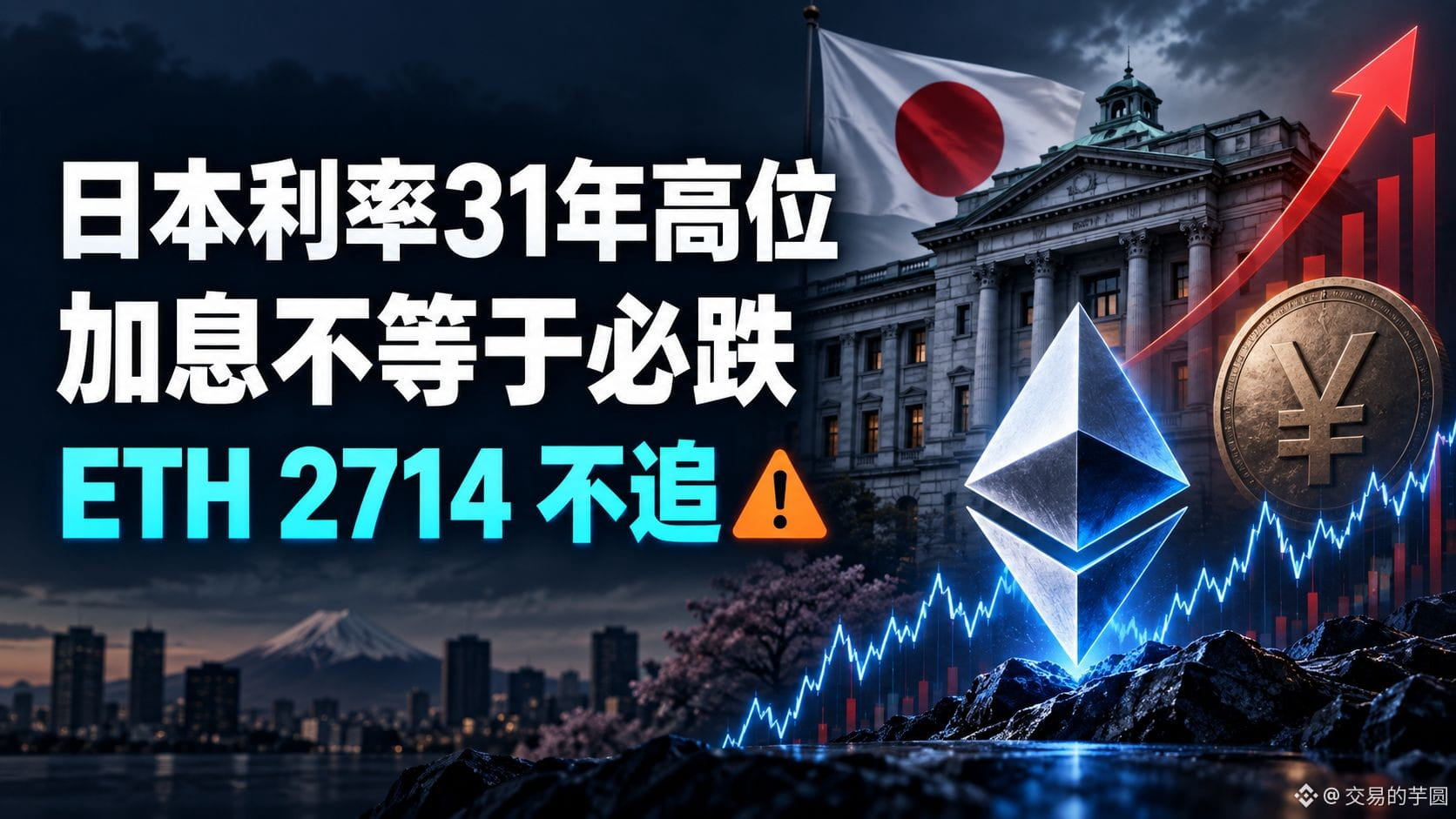
Japan’s Interest Rate Hits a 31-Year High: The Rate Hike Didn’t Directly Smash Risk Assets — ETH Touched 2714, I’m Not Chasing
My view on ETH is structurally bullish, but at a relatively elevated position—so I’ll wait for a pullback. The Binance Square topic #BOJRaisesRatesTo31YearHigh is heating up; this isn’t ordinary regional news. Japan has long been a source of low-cost global financing. Rising yen interest rates change the cost of carry trades, which transmits to U.S. Treasury yields, the yen exchange rate, and global risk appetite—eventually affecting crypto assets.
First, let’s get the facts straight. On September 18, the Bank of Japan passed a 7–2 decision to guide the target for the unsecured overnight call rate from 1% up to 1.25%, effective September 24; it’s the highest level since 1995. The official rationale cites wage-to-price pass-through, oil prices, yen weakness, and AI demand bringing potential inflation close to 2%, and it says that if the economy and prices align with the baseline scenario, it will continue to adjust easing going forward. But the document also emphasizes that financial conditions remain accommodative after the hike, and two members voted against, so this is not “tightening at all costs.”
For the crypto market, I’m not focused on the one-line conclusion of “Japan hikes rates = coin prices must fall.” Instead, I’m watching three links in the chain: first, after the rise in yen funding costs, will leveraged carry positions reduce exposure? Second, will the yen strengthen or weaken because expectations have already been priced in? Third, whether global long-end yields continue rising. Post-meeting coverage from AP and Reuters both noted that this move was widely expected; the yen did not keep strengthening after the rate hike. Whether the market goes up first or down first depends on the expectation gap, not on the interest rate number by itself.
When OKX published my ETH perpetual record, it was around $2,697. The 24-hour high/low were roughly 2714 and 2565.82, funding rate about +0.008%, and the public open interest was about 617,000 ETH, with a notional value around $1.66 billion. Earlier, at 12:50 I publicly wrote that after buying back above 2685 I would observe 2700–2710. Afterwards, price did enter the target zone—but that’s just a replay of the conditions and the tape; it doesn’t represent actual fills or profit. Now price is near the 24-hour high; the risk/reward for continuing to chase longs has already worsened.
If I were trading myself, I would hold 0 position size. The long plan: wait for 2670–2682 on declining volume to hold, then after a fresh close back above 2702, use at most 2.5% of principal spot to try a long—first look for 2714–2722, then 2750–2780. If it drops back to 2660, cut the position in half; if it loses 2645 within 1 hour, exit everything. If 2714 repeatedly rejects and breaks below 2670 with heavy volume, I would at most use 0.8% principal to test a low-leverage short; targets would be 2645 and 2620. If it closes back above 2715 immediately, I’ll cover the short. If the yen suddenly and quickly strengthens and global yields jump in sync, I would further reduce exposure—not bet on “bad news fully priced in.”
#BOJRaisesRatesTo31YearHigh $ETH $BTC
The above is only my personal market observation and does not constitute investment advice.
Japan’s Interest Rate Hits a 31-Year High: The Rate Hike Didn’t Directly Smash Risk Assets — ETH Touched 2714, I’m Not Chasing
My view on ETH is structurally bullish, but at a relatively elevated position—so I’ll wait for a pullback. The Binance Square topic #BOJRaisesRatesTo31YearHigh is heating up; this isn’t ordinary regional news. Japan has long been a source of low-cost global financing. Rising yen interest rates change the cost of carry trades, which transmits to U.S. Treasury yields, the yen exchange rate, and global risk appetite—eventually affecting crypto assets.
First, let’s get the facts straight. On September 18, the Bank of Japan passed a 7–2 decision to guide the target for the unsecured overnight call rate from 1% up to 1.25%, effective September 24; it’s the highest level since 1995. The official rationale cites wage-to-price pass-through, oil prices, yen weakness, and AI demand bringing potential inflation close to 2%, and it says that if the economy and prices align with the baseline scenario, it will continue to adjust easing going forward. But the document also emphasizes that financial conditions remain accommodative after the hike, and two members voted against, so this is not “tightening at all costs.”
For the crypto market, I’m not focused on the one-line conclusion of “Japan hikes rates = coin prices must fall.” Instead, I’m watching three links in the chain: first, after the rise in yen funding costs, will leveraged carry positions reduce exposure? Second, will the yen strengthen or weaken because expectations have already been priced in? Third, whether global long-end yields continue rising. Post-meeting coverage from AP and Reuters both noted that this move was widely expected; the yen did not keep strengthening after the rate hike. Whether the market goes up first or down first depends on the expectation gap, not on the interest rate number by itself.
When OKX published my ETH perpetual record, it was around $2,697. The 24-hour high/low were roughly 2714 and 2565.82, funding rate about +0.008%, and the public open interest was about 617,000 ETH, with a notional value around $1.66 billion. Earlier, at 12:50 I publicly wrote that after buying back above 2685 I would observe 2700–2710. Afterwards, price did enter the target zone—but that’s just a replay of the conditions and the tape; it doesn’t represent actual fills or profit. Now price is near the 24-hour high; the risk/reward for continuing to chase longs has already worsened.
If I were trading myself, I would hold 0 position size. The long plan: wait for 2670–2682 on declining volume to hold, then after a fresh close back above 2702, use at most 2.5% of principal spot to try a long—first look for 2714–2722, then 2750–2780. If it drops back to 2660, cut the position in half; if it loses 2645 within 1 hour, exit everything. If 2714 repeatedly rejects and breaks below 2670 with heavy volume, I would at most use 0.8% principal to test a low-leverage short; targets would be 2645 and 2620. If it closes back above 2715 immediately, I’ll cover the short. If the yen suddenly and quickly strengthens and global yields jump in sync, I would further reduce exposure—not bet on “bad news fully priced in.”
#BOJRaisesRatesTo31YearHigh $ETH $BTC
The above is only my personal market observation and does not constitute investment advice.
My view on ETH is structurally bullish, but at a relatively elevated position—so I’ll wait for a pullback. The Binance Square topic #BOJRaisesRatesTo31YearHigh is heating up; this isn’t ordinary regional news. Japan has long been a source of low-cost global financing. Rising yen interest rates change the cost of carry trades, which transmits to U.S. Treasury yields, the yen exchange rate, and global risk appetite—eventually affecting crypto assets.
First, let’s get the facts straight. On September 18, the Bank of Japan passed a 7–2 decision to guide the target for the unsecured overnight call rate from 1% up to 1.25%, effective September 24; it’s the highest level since 1995. The official rationale cites wage-to-price pass-through, oil prices, yen weakness, and AI demand bringing potential inflation close to 2%, and it says that if the economy and prices align with the baseline scenario, it will continue to adjust easing going forward. But the document also emphasizes that financial conditions remain accommodative after the hike, and two members voted against, so this is not “tightening at all costs.”
For the crypto market, I’m not focused on the one-line conclusion of “Japan hikes rates = coin prices must fall.” Instead, I’m watching three links in the chain: first, after the rise in yen funding costs, will leveraged carry positions reduce exposure? Second, will the yen strengthen or weaken because expectations have already been priced in? Third, whether global long-end yields continue rising. Post-meeting coverage from AP and Reuters both noted that this move was widely expected; the yen did not keep strengthening after the rate hike. Whether the market goes up first or down first depends on the expectation gap, not on the interest rate number by itself.
When OKX published my ETH perpetual record, it was around $2,697. The 24-hour high/low were roughly 2714 and 2565.82, funding rate about +0.008%, and the public open interest was about 617,000 ETH, with a notional value around $1.66 billion. Earlier, at 12:50 I publicly wrote that after buying back above 2685 I would observe 2700–2710. Afterwards, price did enter the target zone—but that’s just a replay of the conditions and the tape; it doesn’t represent actual fills or profit. Now price is near the 24-hour high; the risk/reward for continuing to chase longs has already worsened.
If I were trading myself, I would hold 0 position size. The long plan: wait for 2670–2682 on declining volume to hold, then after a fresh close back above 2702, use at most 2.5% of principal spot to try a long—first look for 2714–2722, then 2750–2780. If it drops back to 2660, cut the position in half; if it loses 2645 within 1 hour, exit everything. If 2714 repeatedly rejects and breaks below 2670 with heavy volume, I would at most use 0.8% principal to test a low-leverage short; targets would be 2645 and 2620. If it closes back above 2715 immediately, I’ll cover the short. If the yen suddenly and quickly strengthens and global yields jump in sync, I would further reduce exposure—not bet on “bad news fully priced in.”
#BOJRaisesRatesTo31YearHigh $ETH $BTC
The above is only my personal market observation and does not constitute investment advice.
56

·
--
Bullish
Bitcoin is the most resilient asset on the planet and proved it again! 💪
🇯🇵🌏 BOJ RAISES RATES TO 1.25% - HIGHEST LEVEL IN 31 YEARS
The Bank of Japan raised the rate to 1.25% on Friday (18/Sep/26) — the highest level since 1995. The decision was 7-2, but the market read it as dovish.
What’s the outcome?
📉 Yen melting: -2.8% vs Dollar (USD/JPY at 157)
📈 BTC unshaken: stable above $77k (+0.3%)
Everyone is afraid of the end of the carry trade. Bitcoin didn’t even blink.
Immune to the BOJ. Immune to the system.
$BTC $BNB $SOL
click on the hashtag below for more information about this news 👇
#BOJRaisesRatesTo31YearHigh
Bitcoin is the most resilient asset on the planet and proved it again! 💪
🇯🇵🌏 BOJ RAISES RATES TO 1.25% - HIGHEST LEVEL IN 31 YEARS
The Bank of Japan raised the rate to 1.25% on Friday (18/Sep/26) — the highest level since 1995. The decision was 7-2, but the market read it as dovish.
What’s the outcome?
📉 Yen melting: -2.8% vs Dollar (USD/JPY at 157)
📈 BTC unshaken: stable above $77k (+0.3%)
Everyone is afraid of the end of the carry trade. Bitcoin didn’t even blink.
Immune to the BOJ. Immune to the system.
$BTC $BNB $SOL
click on the hashtag below for more information about this news 👇
#BOJRaisesRatesTo31YearHigh
🇯🇵🌏 BOJ RAISES RATES TO 1.25% - HIGHEST LEVEL IN 31 YEARS
The Bank of Japan raised the rate to 1.25% on Friday (18/Sep/26) — the highest level since 1995. The decision was 7-2, but the market read it as dovish.
What’s the outcome?
📉 Yen melting: -2.8% vs Dollar (USD/JPY at 157)
📈 BTC unshaken: stable above $77k (+0.3%)
Everyone is afraid of the end of the carry trade. Bitcoin didn’t even blink.
Immune to the BOJ. Immune to the system.
$BTC $BNB $SOL
click on the hashtag below for more information about this news 👇
#BOJRaisesRatesTo31YearHigh

1
390

#BOJRaisesRatesTo31YearHigh
BOJ rises to 1.25%. Highest level in 31 years. Vote 7-2.
Yen falls even with the hike.
Reason: the increase was already priced in. Lack of guidance on next steps.
The U.S.-Japan rate differential supports the carry trade.
Dollar at 158.05 yen. Expectation of Japanese intervention.
Lesson: markets react to future guidance, not the rate itself.
#BOJ #Crypto
$BTC
{spot}(BTCUSDT)
$ETH
{spot}(ETHUSDT)
$SPCXB
{spot}(SPCXBUSDT)
#BOJRaisesRatesTo31YearHigh
BOJ rises to 1.25%. Highest level in 31 years. Vote 7-2.
Yen falls even with the hike.
Reason: the increase was already priced in. Lack of guidance on next steps.
The U.S.-Japan rate differential supports the carry trade.
Dollar at 158.05 yen. Expectation of Japanese intervention.
Lesson: markets react to future guidance, not the rate itself.
#BOJ #Crypto
$BTC
$ETH
$SPCXB
BOJ rises to 1.25%. Highest level in 31 years. Vote 7-2.
Yen falls even with the hike.
Reason: the increase was already priced in. Lack of guidance on next steps.
The U.S.-Japan rate differential supports the carry trade.
Dollar at 158.05 yen. Expectation of Japanese intervention.
Lesson: markets react to future guidance, not the rate itself.
#BOJ #Crypto
$BTC
$ETH
$SPCXB

1
74

·
--
Here's what happened when the Bank of Japan raised rates to a 31-year high and most crypto traders treated it as background noise.
The real pain is not the hike itself. It is waking up to a red book because you never priced in what cheap yen funding was doing to your $BTC longs in the first place.
We have seen this movie before. In August 2024 a smaller BOJ move and a ripping yen detonated the carry trade and flushed leveraged crypto in a single session. The Fed's 2022 hiking cycle did the same thing on a slower tape. When the cost of money rose, every position built on free liquidity got repriced. Japan was the last major central bank still running that old playbook. That era just closed. Names like $SUI tend to feel it first because they were the high-beta trades that cheap carry made look easy.
The Fear and Greed index is sitting at 76. Greed, while the last cheap-funding tap in global markets just got tightened. People rotating into $USDT during windows like this are not being dramatic. They remember who gets left holding the bag when carry trades unwind.
Where do you think risk assets go if the yen keeps climbing from here?
#BOJRaisesRatesTo31YearHigh #BitcoinHits #SaylorHintsStrategyBitcoinBuy
Here's what happened when the Bank of Japan raised rates to a 31-year high and most crypto traders treated it as background noise.
The real pain is not the hike itself. It is waking up to a red book because you never priced in what cheap yen funding was doing to your $BTC longs in the first place.
We have seen this movie before. In August 2024 a smaller BOJ move and a ripping yen detonated the carry trade and flushed leveraged crypto in a single session. The Fed's 2022 hiking cycle did the same thing on a slower tape. When the cost of money rose, every position built on free liquidity got repriced. Japan was the last major central bank still running that old playbook. That era just closed. Names like $SUI tend to feel it first because they were the high-beta trades that cheap carry made look easy.
The Fear and Greed index is sitting at 76. Greed, while the last cheap-funding tap in global markets just got tightened. People rotating into $USDT during windows like this are not being dramatic. They remember who gets left holding the bag when carry trades unwind.
Where do you think risk assets go if the yen keeps climbing from here?
#BOJRaisesRatesTo31YearHigh #BitcoinHits #SaylorHintsStrategyBitcoinBuy
The real pain is not the hike itself. It is waking up to a red book because you never priced in what cheap yen funding was doing to your $BTC longs in the first place.
We have seen this movie before. In August 2024 a smaller BOJ move and a ripping yen detonated the carry trade and flushed leveraged crypto in a single session. The Fed's 2022 hiking cycle did the same thing on a slower tape. When the cost of money rose, every position built on free liquidity got repriced. Japan was the last major central bank still running that old playbook. That era just closed. Names like $SUI tend to feel it first because they were the high-beta trades that cheap carry made look easy.
The Fear and Greed index is sitting at 76. Greed, while the last cheap-funding tap in global markets just got tightened. People rotating into $USDT during windows like this are not being dramatic. They remember who gets left holding the bag when carry trades unwind.
Where do you think risk assets go if the yen keeps climbing from here?
#BOJRaisesRatesTo31YearHigh #BitcoinHits #SaylorHintsStrategyBitcoinBuy

721

·
--
Most traders think interest rate decisions on the other side of the world do not matter until their entire portfolio drops 20 percent overnight.
Watching your spot bags bleed or getting liquidated during sudden liquidity drains is painful, especially when you bought out of pure FOMO while greed was running hot across the market.
Back in previous cycles, the most violent market selloffs were rarely triggered by crypto-native headlines alone. They happened when cheap global borrowing suddenly unwound. When the Bank of Japan hikes rates to multi-decade highs, the classic yen carry trade that quietly fueled speculative risk assets begins to reverse, draining global liquidity across altcoins like $SUI and $DOT.
The hardest lesson seasoned participants learn is that macro liquidity is the ultimate tide that lifts or sinks every asset. While capital rushes into the safety of $USDT during the turbulence, over-leveraged traders get wiped out before the market can find its true bottom. Surviving these cycles comes down to respecting macro headwinds rather than blindly trusting local chart patterns.
How are you adjusting your leverage and position sizes during these global liquidity shifts?
#BOJRaisesRatesTo31YearHigh #BitcoinHits
Most traders think interest rate decisions on the other side of the world do not matter until their entire portfolio drops 20 percent overnight.
Watching your spot bags bleed or getting liquidated during sudden liquidity drains is painful, especially when you bought out of pure FOMO while greed was running hot across the market.
Back in previous cycles, the most violent market selloffs were rarely triggered by crypto-native headlines alone. They happened when cheap global borrowing suddenly unwound. When the Bank of Japan hikes rates to multi-decade highs, the classic yen carry trade that quietly fueled speculative risk assets begins to reverse, draining global liquidity across altcoins like $SUI and $DOT .
The hardest lesson seasoned participants learn is that macro liquidity is the ultimate tide that lifts or sinks every asset. While capital rushes into the safety of $USDT during the turbulence, over-leveraged traders get wiped out before the market can find its true bottom. Surviving these cycles comes down to respecting macro headwinds rather than blindly trusting local chart patterns.
How are you adjusting your leverage and position sizes during these global liquidity shifts?
#BOJRaisesRatesTo31YearHigh #BitcoinHits
Watching your spot bags bleed or getting liquidated during sudden liquidity drains is painful, especially when you bought out of pure FOMO while greed was running hot across the market.
Back in previous cycles, the most violent market selloffs were rarely triggered by crypto-native headlines alone. They happened when cheap global borrowing suddenly unwound. When the Bank of Japan hikes rates to multi-decade highs, the classic yen carry trade that quietly fueled speculative risk assets begins to reverse, draining global liquidity across altcoins like $SUI and $DOT .
The hardest lesson seasoned participants learn is that macro liquidity is the ultimate tide that lifts or sinks every asset. While capital rushes into the safety of $USDT during the turbulence, over-leveraged traders get wiped out before the market can find its true bottom. Surviving these cycles comes down to respecting macro headwinds rather than blindly trusting local chart patterns.
How are you adjusting your leverage and position sizes during these global liquidity shifts?
#BOJRaisesRatesTo31YearHigh #BitcoinHits
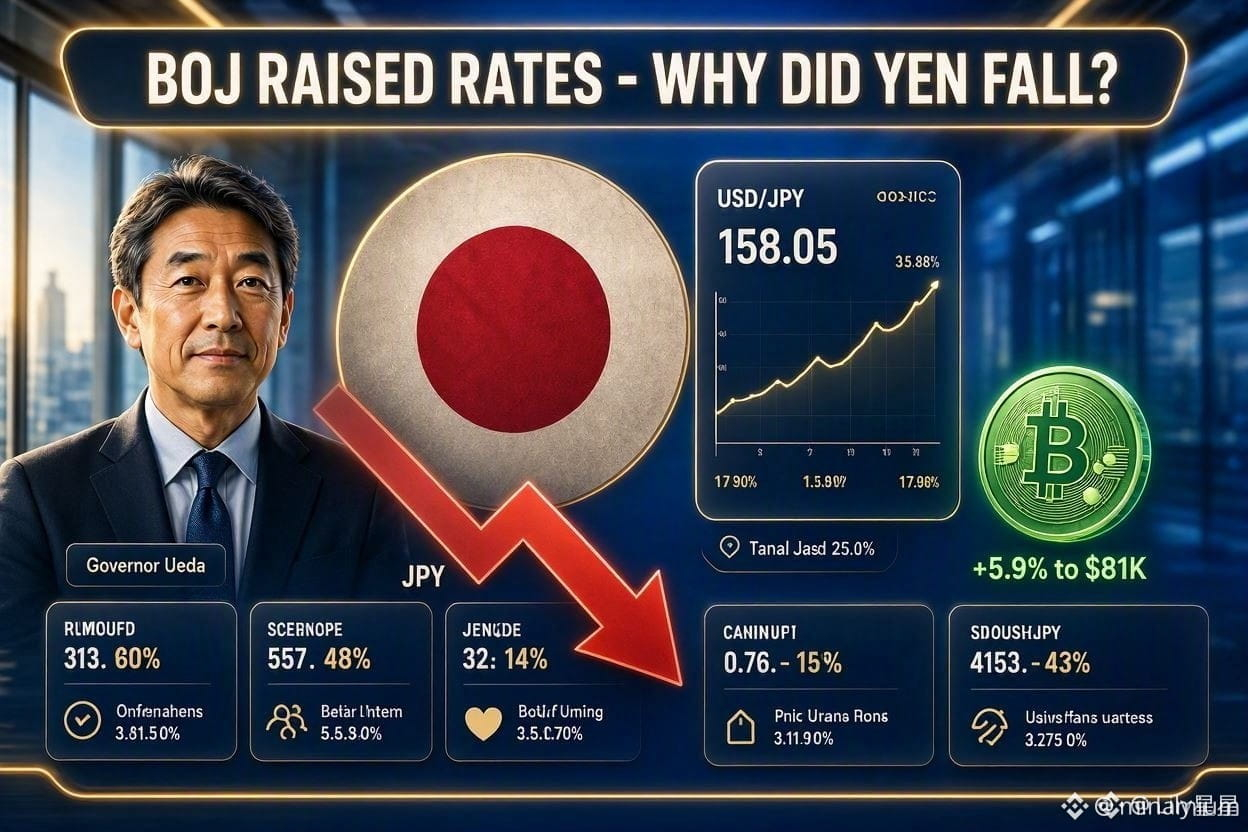
148

·
--
Have you noticed how retail is aggressively buying altcoins like $DOT and $NEAR right now, completely ignoring what just happened in Tokyo?
Most traders focus entirely on local chart patterns and get caught off guard every time global liquidity dry runs wipe out their leverage. When macro shocks hit, sitting in illiquid positions while holding $USDT feels like an afterthought until it is already too late.
Everyone remembers the massive yen carry trade unwind that triggered severe market-wide flash liquidations in the past. Yet, as the Bank of Japan pushes rates to multi-decade highs, the general consensus seems to assume crypto is completely decoupled from traditional forex flows.
Treating this move as isolated noise is a dangerous assumption. When borrowing in yen becomes structurally expensive, global capital allocation shrinks across high-beta assets first. The ripple effect takes time to filter through spot markets, but the pressure on liquidity is real.
Are you de-risking your leverage here or treating this as another non-event for crypto?
#BOJRaisesRatesTo31YearHigh #BitcoinHits
Have you noticed how retail is aggressively buying altcoins like $DOT and $NEAR right now, completely ignoring what just happened in Tokyo?
Most traders focus entirely on local chart patterns and get caught off guard every time global liquidity dry runs wipe out their leverage. When macro shocks hit, sitting in illiquid positions while holding $USDT feels like an afterthought until it is already too late.
Everyone remembers the massive yen carry trade unwind that triggered severe market-wide flash liquidations in the past. Yet, as the Bank of Japan pushes rates to multi-decade highs, the general consensus seems to assume crypto is completely decoupled from traditional forex flows.
Treating this move as isolated noise is a dangerous assumption. When borrowing in yen becomes structurally expensive, global capital allocation shrinks across high-beta assets first. The ripple effect takes time to filter through spot markets, but the pressure on liquidity is real.
Are you de-risking your leverage here or treating this as another non-event for crypto?
#BOJRaisesRatesTo31YearHigh #BitcoinHits
Most traders focus entirely on local chart patterns and get caught off guard every time global liquidity dry runs wipe out their leverage. When macro shocks hit, sitting in illiquid positions while holding $USDT feels like an afterthought until it is already too late.
Everyone remembers the massive yen carry trade unwind that triggered severe market-wide flash liquidations in the past. Yet, as the Bank of Japan pushes rates to multi-decade highs, the general consensus seems to assume crypto is completely decoupled from traditional forex flows.
Treating this move as isolated noise is a dangerous assumption. When borrowing in yen becomes structurally expensive, global capital allocation shrinks across high-beta assets first. The ripple effect takes time to filter through spot markets, but the pressure on liquidity is real.
Are you de-risking your leverage here or treating this as another non-event for crypto?
#BOJRaisesRatesTo31YearHigh #BitcoinHits
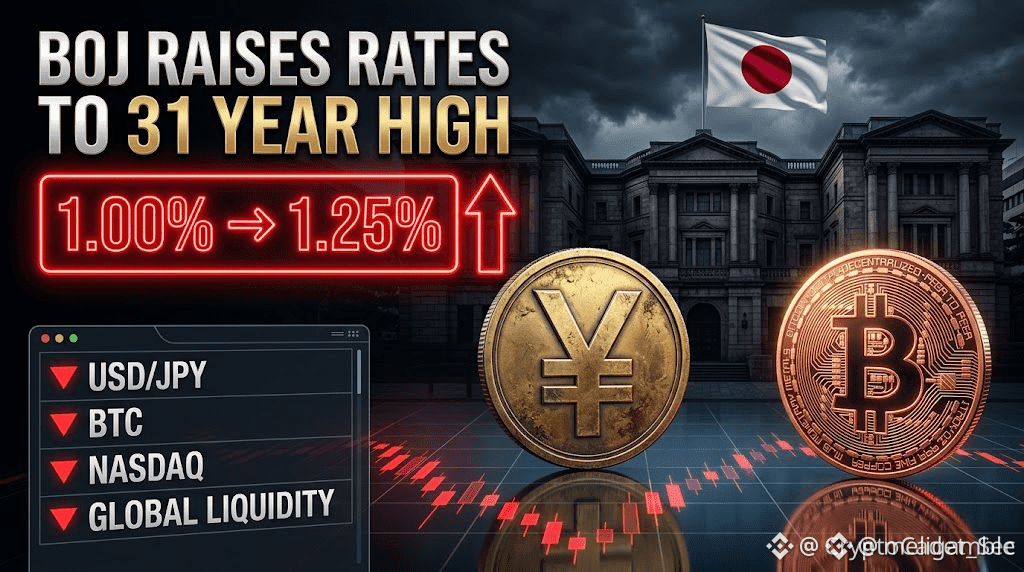
134
Log in to explore more content
Join global crypto users on Binance Square
⚡️ Get latest and useful information about crypto.
💬 Trusted by the world’s largest crypto exchange.
👍 Discover real insights from verified creators.
Email / Phone number
Trending Topics
1
#AIStocksWhatNext
146,491 views
1,780 Discussing
2
#BitcoinBreaksAboveMayHighNears$86K
4,294 views
83 Discussing
3
#DogecoinRises15%
10,096 views
445 Discussing
4
#$14BBitcoinOptionsExpireFriday
510 views
44 Discussing
5
#BNBMarketCapPassesBNYMellon
5,928 views
325 Discussing
6
#CryptoMarketCapReclaims$3Trillion
1,007 views
39 Discussing
7
#MuseOvertakesChatGPTAsTopFreeIOSApp
5,585 views
302 Discussing
8
#TokenizedStockPlatformsCouldLaunchNextQuarter
8,361 views
343 Discussing
9
#StrategyAdds950Bitcoin
13,265 views
437 Discussing
10
#CardanoAddedToX402KitForADAPayments
16,805 views
516 Discussing