

#aiprivacy
aiprivacy
5,570 views
58 Discussing
Hot
Latest

·
--
#museovertakeschatgptastopfreeiosapp
🔐 AI Agents May Have a Privacy Problem
An autonomous agent can eventually discover information, execute a trade, pay for a service and move assets without a human clicking through every step.
But there's an obvious problem:
What if every action is publicly visible?
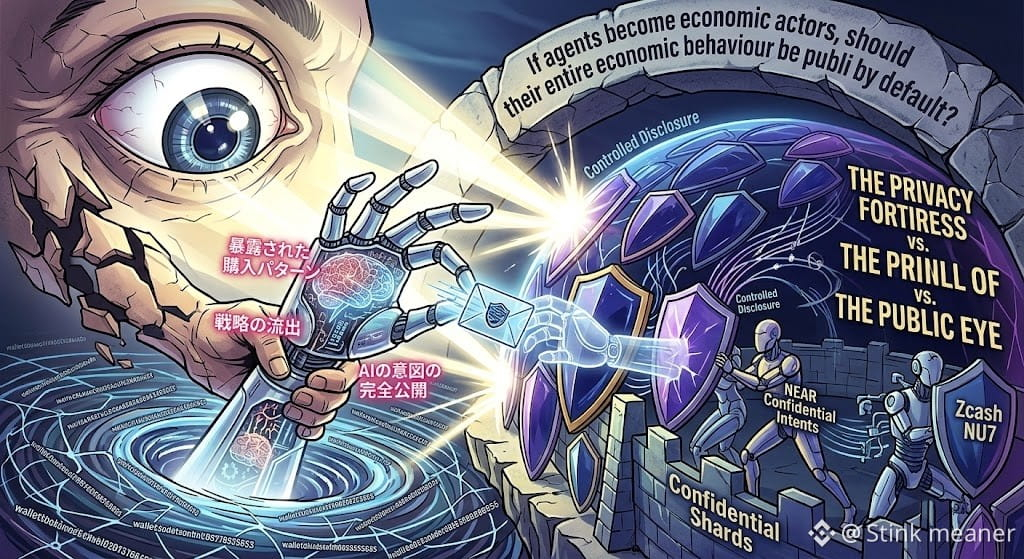
NEAR's Confidential Intents is built around exactly this issue.
Its private-shard architecture keeps transaction details away from public mempools, while allowing selective disclosure for compliance. NEAR explicitly positions the system for institutions, enterprises and autonomous AI agents.
That matters because agent activity could expose more than a wallet balance.
It could reveal:
what an agent is buying
→ how much it is buying
→ when it is buying
→ which strategy it is executing.
And Zcash is becoming connected to this infrastructure from another direction: ZODL, a Zcash-focused wallet, uses NEAR Intents for cross-chain swaps into shielded ZEC.
Meanwhile, Zcash's proposed NU7 upgrade includes a 25-second block target among the candidate changes, although the final NU7 contents and activation remain unsettled.
So two different approaches are converging on the same broader problem:
public liquidity + autonomous execution → greater demand for controlled visibility.
That doesn't mean AI will automatically drive demand for privacy coins.
But it raises a question the industry hasn't fully answered:
If agents become economic actors, should their entire economic behaviour be public by default?
Privacy demand from autonomous agents is an emerging use-case thesis; current infrastructure does not establish future adoption at scale: DYOR!
$ZEC $NEAR $ETH
{future}(ZECUSDT)
{future}(NEARUSDT)
#XRPRises8% #StrategyAdds950Bitcoin #CardanoAddedToX402KitForADAPayments #AIPrivacy
#museovertakeschatgptastopfreeiosapp
🔐 AI Agents May Have a Privacy Problem
An autonomous agent can eventually discover information, execute a trade, pay for a service and move assets without a human clicking through every step.
But there's an obvious problem:
What if every action is publicly visible?
NEAR's Confidential Intents is built around exactly this issue.
Its private-shard architecture keeps transaction details away from public mempools, while allowing selective disclosure for compliance. NEAR explicitly positions the system for institutions, enterprises and autonomous AI agents.
That matters because agent activity could expose more than a wallet balance.
It could reveal:
what an agent is buying
→ how much it is buying
→ when it is buying
→ which strategy it is executing.
And Zcash is becoming connected to this infrastructure from another direction: ZODL, a Zcash-focused wallet, uses NEAR Intents for cross-chain swaps into shielded ZEC.
Meanwhile, Zcash's proposed NU7 upgrade includes a 25-second block target among the candidate changes, although the final NU7 contents and activation remain unsettled.
So two different approaches are converging on the same broader problem:
public liquidity + autonomous execution → greater demand for controlled visibility.
That doesn't mean AI will automatically drive demand for privacy coins.
But it raises a question the industry hasn't fully answered:
If agents become economic actors, should their entire economic behaviour be public by default?
Privacy demand from autonomous agents is an emerging use-case thesis; current infrastructure does not establish future adoption at scale: DYOR!
$ZEC $NEAR $ETH
#XRPRises8% #StrategyAdds950Bitcoin #CardanoAddedToX402KitForADAPayments #AIPrivacy
🔐 AI Agents May Have a Privacy Problem
An autonomous agent can eventually discover information, execute a trade, pay for a service and move assets without a human clicking through every step.
But there's an obvious problem:
What if every action is publicly visible?
NEAR's Confidential Intents is built around exactly this issue.
Its private-shard architecture keeps transaction details away from public mempools, while allowing selective disclosure for compliance. NEAR explicitly positions the system for institutions, enterprises and autonomous AI agents.
That matters because agent activity could expose more than a wallet balance.
It could reveal:
what an agent is buying
→ how much it is buying
→ when it is buying
→ which strategy it is executing.
And Zcash is becoming connected to this infrastructure from another direction: ZODL, a Zcash-focused wallet, uses NEAR Intents for cross-chain swaps into shielded ZEC.
Meanwhile, Zcash's proposed NU7 upgrade includes a 25-second block target among the candidate changes, although the final NU7 contents and activation remain unsettled.
So two different approaches are converging on the same broader problem:
public liquidity + autonomous execution → greater demand for controlled visibility.
That doesn't mean AI will automatically drive demand for privacy coins.
But it raises a question the industry hasn't fully answered:
If agents become economic actors, should their entire economic behaviour be public by default?
Privacy demand from autonomous agents is an emerging use-case thesis; current infrastructure does not establish future adoption at scale: DYOR!
$ZEC $NEAR $ETH
#XRPRises8% #StrategyAdds950Bitcoin #CardanoAddedToX402KitForADAPayments #AIPrivacy
1
216

·
--
🚨 VVV surges as Venice’s privacy-first AI chatbot gains traction—users’ data vanishes when the tab closes. The token’s rally reflects growing demand for AI tools that prioritize anonymity over tracking. Smart money may be betting on privacy as the next AI differentiator, not just performance.
Is privacy the real moat for AI tokens?
#AIPrivacy
$VVV #TradingSignal #CryptoAnalysis
🚨 VVV surges as Venice’s privacy-first AI chatbot gains traction—users’ data vanishes when the tab closes. The token’s rally reflects growing demand for AI tools that prioritize anonymity over tracking. Smart money may be betting on privacy as the next AI differentiator, not just performance.
Is privacy the real moat for AI tokens?
#AIPrivacy
$VVV #TradingSignal #CryptoAnalysis
Is privacy the real moat for AI tokens?
#AIPrivacy
$VVV #TradingSignal #CryptoAnalysis

170

🚀 $VVV SMASHES $27 NEW ALL‑TIME HIGH ON AI PRIVACY RUSH! 🟢
Entry: 27.00 ⚡
📊 The OpenAI controversy has lit a fire under privacy‑first AI, funneling smart‑money into $VVV as volume exploded and the token nearly doubled in a week. 🦈 Traders are eye‑balling the surge, noting that the platform’s open‑source, no‑account model is pulling demand like a magnet. ⚡ With daily upside of over 50% and market cap edging $1.3B, the momentum feels like a liquidity sweep in motion.
💬 Are you positioning to capture the next wave of privacy‑driven AI demand? 👇
⚠️ Not financial advice. Always manage your risk. 🛡️
🏷️ #VVV #AIPrivacy #BullRun #Crypto
🔥 💎
🚀 $VVV SMASHES $27 NEW ALL‑TIME HIGH ON AI PRIVACY RUSH! 🟢
Entry: 27.00 ⚡
📊 The OpenAI controversy has lit a fire under privacy‑first AI, funneling smart‑money into $VVV as volume exploded and the token nearly doubled in a week. 🦈 Traders are eye‑balling the surge, noting that the platform’s open‑source, no‑account model is pulling demand like a magnet. ⚡ With daily upside of over 50% and market cap edging $1.3B, the momentum feels like a liquidity sweep in motion.
💬 Are you positioning to capture the next wave of privacy‑driven AI demand? 👇
⚠️ Not financial advice. Always manage your risk. 🛡️
🏷️ #VVV #AIPrivacy #BullRun #Crypto
🔥 💎
Entry: 27.00 ⚡
📊 The OpenAI controversy has lit a fire under privacy‑first AI, funneling smart‑money into $VVV as volume exploded and the token nearly doubled in a week. 🦈 Traders are eye‑balling the surge, noting that the platform’s open‑source, no‑account model is pulling demand like a magnet. ⚡ With daily upside of over 50% and market cap edging $1.3B, the momentum feels like a liquidity sweep in motion.
💬 Are you positioning to capture the next wave of privacy‑driven AI demand? 👇
⚠️ Not financial advice. Always manage your risk. 🛡️
🏷️ #VVV #AIPrivacy #BullRun #Crypto
🔥 💎
57

·
--
OpenAI’s privacy controversy has ignited the private reasoning token! Venice’s $VVV is surging as users worry about the security of data from cutting-edge AI research labs. As privacy awareness grows, these kinds of tokens have plenty of potential—but watch for short-term volatility, because market hype comes and goes fast. Keep an eye on the sector where privacy protection meets AI—$VVV is worth ongoing attention!
#AIprivacy #VeniceAI
OpenAI’s privacy controversy has ignited the private reasoning token! Venice’s $VVV is surging as users worry about the security of data from cutting-edge AI research labs. As privacy awareness grows, these kinds of tokens have plenty of potential—but watch for short-term volatility, because market hype comes and goes fast. Keep an eye on the sector where privacy protection meets AI—$VVV is worth ongoing attention!
#AIprivacy #VeniceAI
#AIprivacy #VeniceAI
18

$OPG offers a unique solution to the trade-off between data privacy and AI model improvement 🚀
Entry: 0.05 🔥
Target: 0.15 🚀
Stop Loss: 0.025 ⚠️
The way $OPG handles data privacy is a game changer, it ensures that user data is not collected or stored, making it a more secure option for users.
Not financial advice. Manage your risk.
#OPG #AIPrivacy #LongSetup
✅
$OPG offers a unique solution to the trade-off between data privacy and AI model improvement 🚀
Entry: 0.05 🔥
Target: 0.15 🚀
Stop Loss: 0.025 ⚠️
The way $OPG handles data privacy is a game changer, it ensures that user data is not collected or stored, making it a more secure option for users.
Not financial advice. Manage your risk.
#OPG #AIPrivacy #LongSetup
✅
Entry: 0.05 🔥
Target: 0.15 🚀
Stop Loss: 0.025 ⚠️
The way $OPG handles data privacy is a game changer, it ensures that user data is not collected or stored, making it a more secure option for users.
Not financial advice. Manage your risk.
#OPG #AIPrivacy #LongSetup
✅

18

·
--
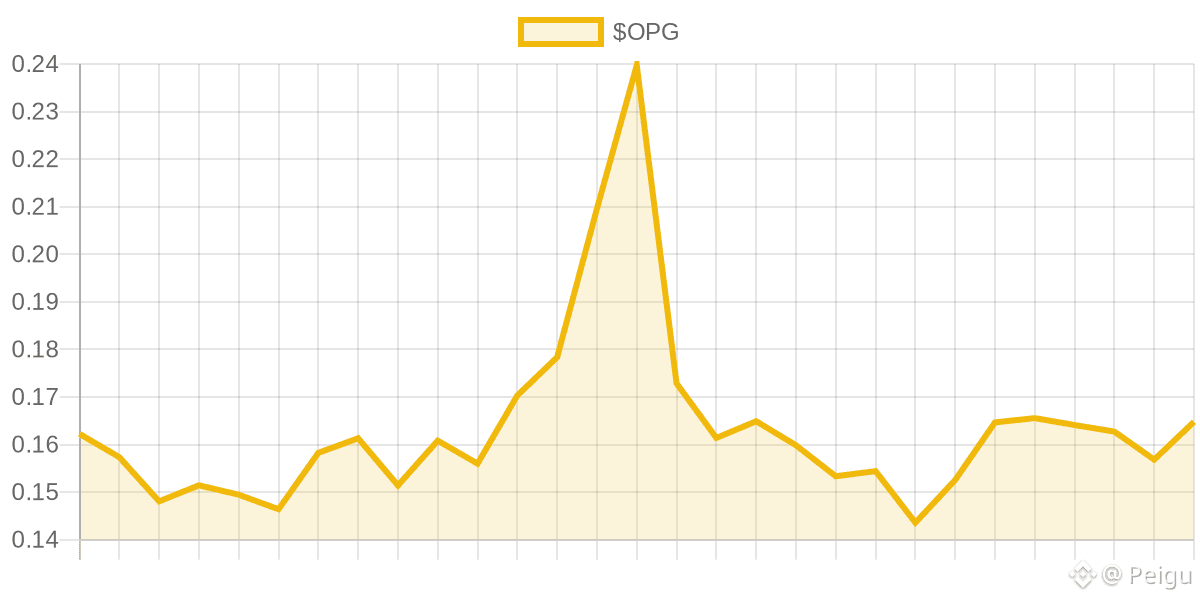
190 million $OPG circulating out of a 1 billion supply — token near $0.17 after a ~1.8% tick on a ~$32M cap, still roughly 66% below its ~$0.48 ATH. When you paste portfolio details into an AI chat, that text doesn't just disappear. Someone keeps it.
I skimmed @OpenGradient this morning — https://www.binance.com/en/square/profile/OpenGradient — and OpenGradient Chat isn't selling "smarter answers." It's selling a default where your prompt doesn't quietly become someone else's training set. Decrypt had another AI-headline day; my feed still acts like closing the tab erases what you typed. It usually doesn't.
I'll watch whether they ship demos that show the data path end to end, not just slides about privacy.
#OPG #DeAI #AIPrivacy
190 million $OPG circulating out of a 1 billion supply — token near $0.17 after a ~1.8% tick on a ~$32M cap, still roughly 66% below its ~$0.48 ATH. When you paste portfolio details into an AI chat, that text doesn't just disappear. Someone keeps it.
I skimmed @OpenGradient this morning — https://www.binance.com/en/square/profile/OpenGradient — and OpenGradient Chat isn't selling "smarter answers." It's selling a default where your prompt doesn't quietly become someone else's training set. Decrypt had another AI-headline day; my feed still acts like closing the tab erases what you typed. It usually doesn't.
I'll watch whether they ship demos that show the data path end to end, not just slides about privacy.
#OPG #DeAI #AIPrivacy
I skimmed @OpenGradient this morning — https://www.binance.com/en/square/profile/OpenGradient — and OpenGradient Chat isn't selling "smarter answers." It's selling a default where your prompt doesn't quietly become someone else's training set. Decrypt had another AI-headline day; my feed still acts like closing the tab erases what you typed. It usually doesn't.
I'll watch whether they ship demos that show the data path end to end, not just slides about privacy.
#OPG #DeAI #AIPrivacy
54
$OPG IS BUILDING THE PRIVACY LAYER AI ACTUALLY NEEDS 🧠
Body:
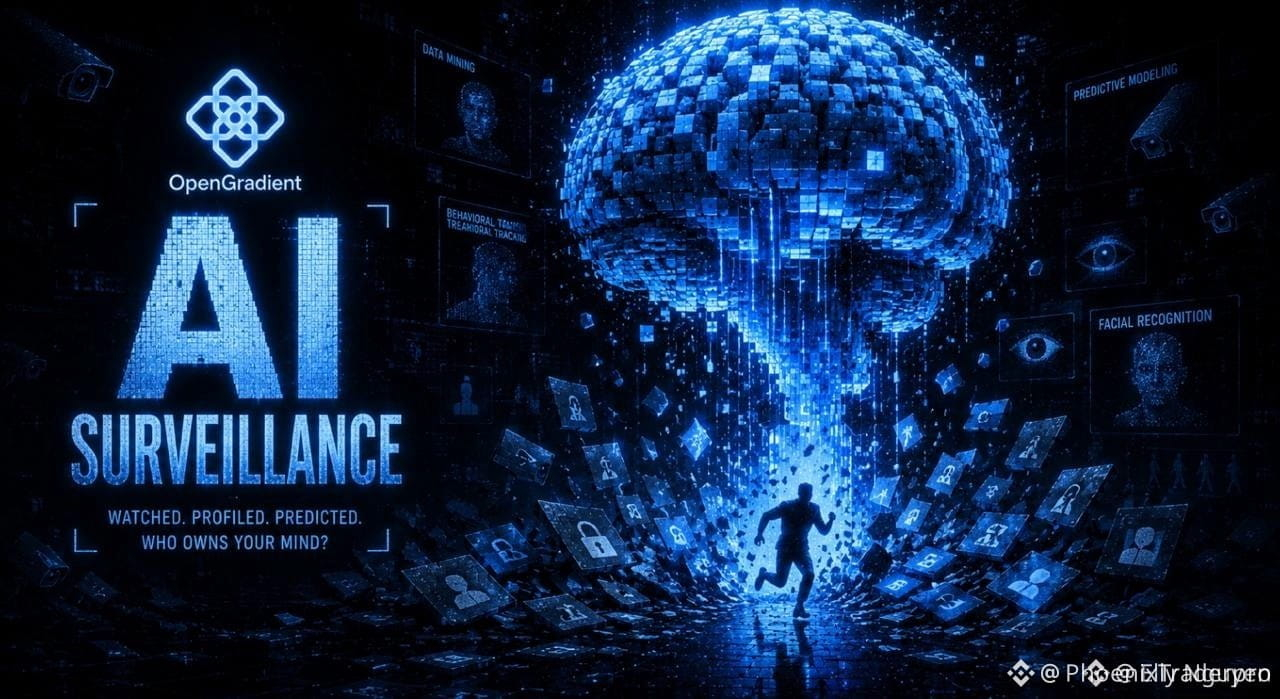
Most people don’t realize it, but AI surveillance kills your thinking. When you know your conversation might be logged, your brain auto-censors — you feed the AI a filtered version of your problem, and get a filtered answer back. That’s a massive hidden cost.
OGX flips that with Trusted Execution Environment (TEE). Not a promise to not look — architecture that makes it impossible. That means you can use Claude Fable 5 for complex reasoning, Nous Hermes for uncensored chats, Seedream for private image generation — all without anyone watching over your shoulder.
How much better would your AI output be if you weren’t filtering yourself?
Not financial advice. Always manage your risk.
$OPG #AIPrivacy #DecentralizedAI #CryptoAlpha
💎
$OPG IS BUILDING THE PRIVACY LAYER AI ACTUALLY NEEDS 🧠
Body:
Most people don’t realize it, but AI surveillance kills your thinking. When you know your conversation might be logged, your brain auto-censors — you feed the AI a filtered version of your problem, and get a filtered answer back. That’s a massive hidden cost.
OGX flips that with Trusted Execution Environment (TEE). Not a promise to not look — architecture that makes it impossible. That means you can use Claude Fable 5 for complex reasoning, Nous Hermes for uncensored chats, Seedream for private image generation — all without anyone watching over your shoulder.
How much better would your AI output be if you weren’t filtering yourself?
Not financial advice. Always manage your risk.
$OPG #AIPrivacy #DecentralizedAI #CryptoAlpha
💎
Body:
Most people don’t realize it, but AI surveillance kills your thinking. When you know your conversation might be logged, your brain auto-censors — you feed the AI a filtered version of your problem, and get a filtered answer back. That’s a massive hidden cost.
OGX flips that with Trusted Execution Environment (TEE). Not a promise to not look — architecture that makes it impossible. That means you can use Claude Fable 5 for complex reasoning, Nous Hermes for uncensored chats, Seedream for private image generation — all without anyone watching over your shoulder.
How much better would your AI output be if you weren’t filtering yourself?
Not financial advice. Always manage your risk.
$OPG #AIPrivacy #DecentralizedAI #CryptoAlpha
💎
3
25

$OPG is redefining the way we think about privacy in AI 🚀
Entry: 0.05
Target: 0.15
Stop Loss: 0.025
The AI landscape is shifting with the introduction of trusted execution environments, ensuring that data remains private and secure. This technology has the potential to disrupt the status quo and provide users with a truly private experience.
Not financial advice. Manage your risk.
#OPG #AIPrivacy #LongSetup
⚡️
$OPG is redefining the way we think about privacy in AI 🚀
Entry: 0.05
Target: 0.15
Stop Loss: 0.025
The AI landscape is shifting with the introduction of trusted execution environments, ensuring that data remains private and secure. This technology has the potential to disrupt the status quo and provide users with a truly private experience.
Not financial advice. Manage your risk.
#OPG #AIPrivacy #LongSetup
⚡️
Entry: 0.05
Target: 0.15
Stop Loss: 0.025
The AI landscape is shifting with the introduction of trusted execution environments, ensuring that data remains private and secure. This technology has the potential to disrupt the status quo and provide users with a truly private experience.
Not financial advice. Manage your risk.
#OPG #AIPrivacy #LongSetup
⚡️

8

·
--
#opg $OPG
I'll be honest — I was genuinely annoyed.
@OpenGradient kept popping up on my discovery page. Every day. Multiple posts. I scrolled past it for a week.
Another AI tool. Another privacy claim. Another "we're different" landing page.
Then one morning I was trying to get a straight answer out of my usual AI assistant. Simple question. Needed a direct response. What I got was the same concern reworded five different times, unable to move past its own loop.
That specific frustration is what finally made me click on OpenGradient.
Here's what I found that I didn't expect.
The annoying AI loop — where it circles the same point endlessly, retreating into disclaimers instead of answering — isn't a model intelligence problem. The models are powerful. The problem is the infrastructure layer sitting between you and that intelligence.
Filters, safety loops, corporate guardrails — each one added to protect the platform. Not to serve you.
OpenGradient approached this differently. Three architecture layers replace what other platforms handle with policies:
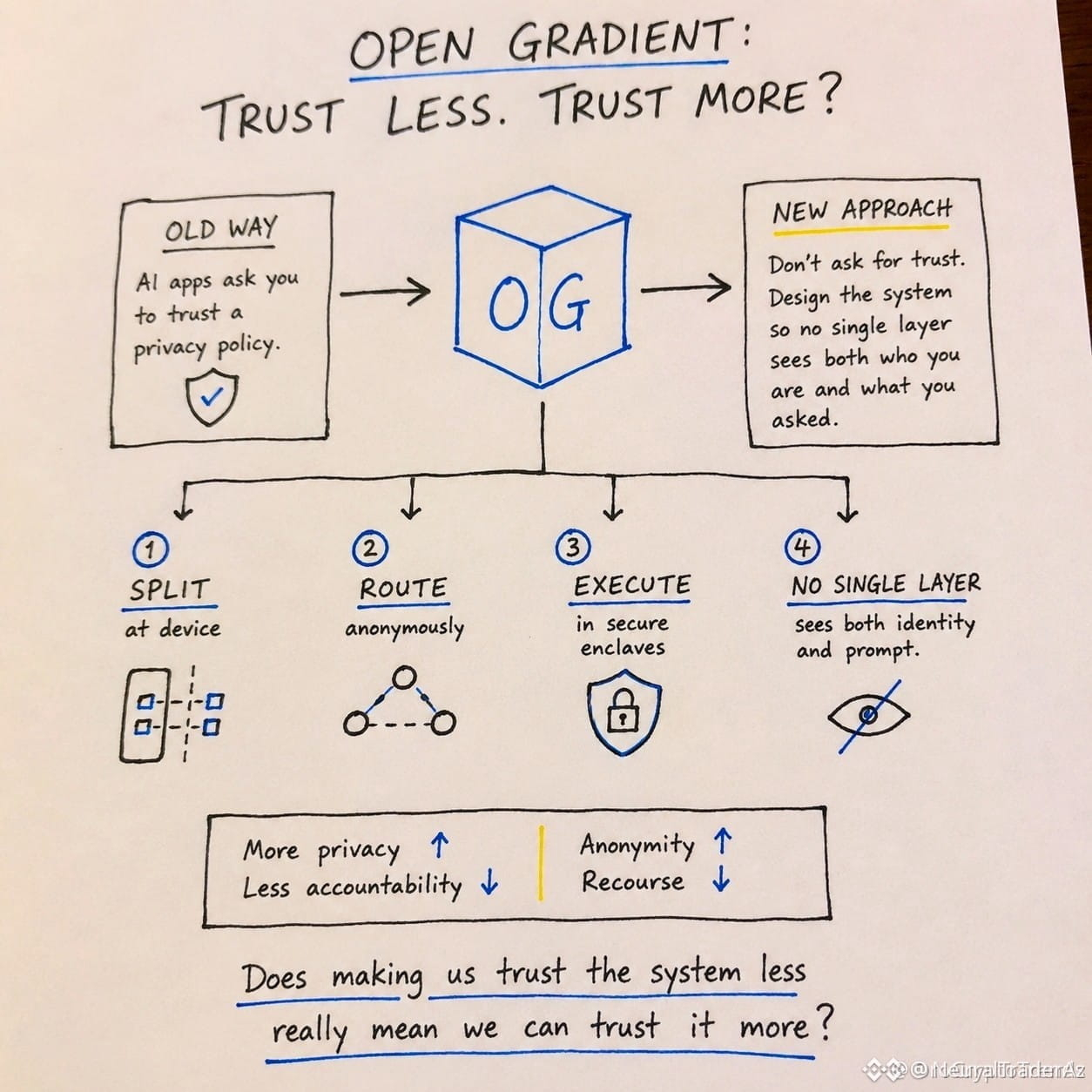
Your messages are encrypted locally before they leave your device. An anonymizing relay splits your identity from your content — nobody sees both at once. Prompts are processed inside a sealed enclave, isolated from everything.
When the platform architecturally cannot see who you are or what you asked — the guardrails built to protect the platform become unnecessary. The loop disappears. Hermes gives you direct answers because the infrastructure removed the reason for the retreat.
I still had questions. Output quality over time, whether the credit system is worth it, whether they can retain users past the first month.
But the core problem they're solving? That one's real.
And I felt it the same morning I finally clicked.
👉 chat.opengradient.ai
@OpenGradient #OPG #AIPrivacy $OPG #BinanceSquareTalks
{spot}(OPGUSDT)
📊 Poll:
What frustrates you most about AI tools?"
#opg $OPG
I'll be honest — I was genuinely annoyed.
@OpenGradient kept popping up on my discovery page. Every day. Multiple posts. I scrolled past it for a week.
Another AI tool. Another privacy claim. Another "we're different" landing page.
Then one morning I was trying to get a straight answer out of my usual AI assistant. Simple question. Needed a direct response. What I got was the same concern reworded five different times, unable to move past its own loop.
That specific frustration is what finally made me click on OpenGradient.
Here's what I found that I didn't expect.
The annoying AI loop — where it circles the same point endlessly, retreating into disclaimers instead of answering — isn't a model intelligence problem. The models are powerful. The problem is the infrastructure layer sitting between you and that intelligence.
Filters, safety loops, corporate guardrails — each one added to protect the platform. Not to serve you.
OpenGradient approached this differently. Three architecture layers replace what other platforms handle with policies:
Your messages are encrypted locally before they leave your device. An anonymizing relay splits your identity from your content — nobody sees both at once. Prompts are processed inside a sealed enclave, isolated from everything.
When the platform architecturally cannot see who you are or what you asked — the guardrails built to protect the platform become unnecessary. The loop disappears. Hermes gives you direct answers because the infrastructure removed the reason for the retreat.
I still had questions. Output quality over time, whether the credit system is worth it, whether they can retain users past the first month.
But the core problem they're solving? That one's real.
And I felt it the same morning I finally clicked.
👉 chat.opengradient.ai
@OpenGradient #OPG #AIPrivacy $OPG #BinanceSquareTalks
📊 Poll:
What frustrates you most about AI tools?"
I'll be honest — I was genuinely annoyed.
@OpenGradient kept popping up on my discovery page. Every day. Multiple posts. I scrolled past it for a week.
Another AI tool. Another privacy claim. Another "we're different" landing page.
Then one morning I was trying to get a straight answer out of my usual AI assistant. Simple question. Needed a direct response. What I got was the same concern reworded five different times, unable to move past its own loop.
That specific frustration is what finally made me click on OpenGradient.
Here's what I found that I didn't expect.
The annoying AI loop — where it circles the same point endlessly, retreating into disclaimers instead of answering — isn't a model intelligence problem. The models are powerful. The problem is the infrastructure layer sitting between you and that intelligence.
Filters, safety loops, corporate guardrails — each one added to protect the platform. Not to serve you.
OpenGradient approached this differently. Three architecture layers replace what other platforms handle with policies:
Your messages are encrypted locally before they leave your device. An anonymizing relay splits your identity from your content — nobody sees both at once. Prompts are processed inside a sealed enclave, isolated from everything.
When the platform architecturally cannot see who you are or what you asked — the guardrails built to protect the platform become unnecessary. The loop disappears. Hermes gives you direct answers because the infrastructure removed the reason for the retreat.
I still had questions. Output quality over time, whether the credit system is worth it, whether they can retain users past the first month.
But the core problem they're solving? That one's real.
And I felt it the same morning I finally clicked.
👉 chat.opengradient.ai
@OpenGradient #OPG #AIPrivacy $OPG #BinanceSquareTalks
📊 Poll:
What frustrates you most about AI tools?"
🔄 Stuck in loops
34%
🔒 No real privacy
33%
🚫 Refuses questions
0%
🤖 Generic answers
33%
3 votes • Voting closed
4
3
138

·
--
Bullish
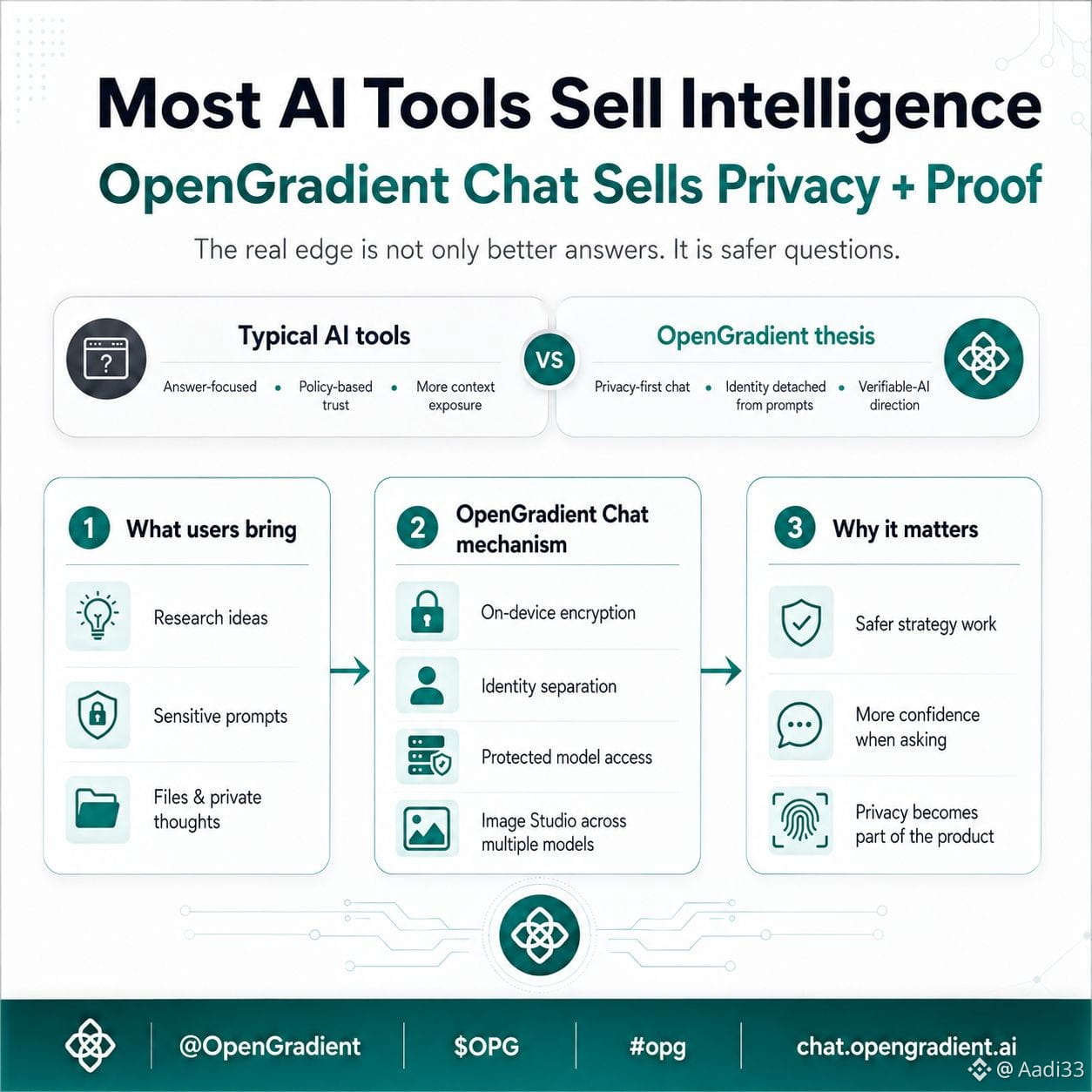
Most AI Tools sell Intelligence.
But after using AI tools for research, content ideas and marketing thinking I started noticing a different problem.
The answer is not the only thing that matters.
What do users reveal while asking for that answer?
Sometimes the prompt itself contains Private thoughts, unfinished strategies, personal questions, files, or ideas that are not ready to be public. Normal AI tools often ask users to trust a policy, but trust feels thin when the question itself is Sensitive.
That's is why @OpenGradient chat feels important to me.
It is not only trying to make AI more useful. It is trying to make the act of asking safer through privacy-first design, encrypted messages, identity separation, and protected model access.
This changes the way I look at AI products.
The strongest tool may not be the one that gives the loudest answer. It may be the one that lets users ask deeper questions without exposing more than necessary.
$OPG OpenGradient Chat is where privacy becomes part of the product, not just a promise in the background.
#OPG
#AIPrivacy #verifiableAI $TAO
📌 Disclaimer: DYOR
Most AI Tools sell Intelligence.
But after using AI tools for research, content ideas and marketing thinking I started noticing a different problem.
The answer is not the only thing that matters.
What do users reveal while asking for that answer?
Sometimes the prompt itself contains Private thoughts, unfinished strategies, personal questions, files, or ideas that are not ready to be public. Normal AI tools often ask users to trust a policy, but trust feels thin when the question itself is Sensitive.
That's is why @OpenGradient chat feels important to me.
It is not only trying to make AI more useful. It is trying to make the act of asking safer through privacy-first design, encrypted messages, identity separation, and protected model access.
This changes the way I look at AI products.
The strongest tool may not be the one that gives the loudest answer. It may be the one that lets users ask deeper questions without exposing more than necessary.
$OPG OpenGradient Chat is where privacy becomes part of the product, not just a promise in the background.
#OPG
#AIPrivacy #verifiableAI $TAO
📌 Disclaimer: DYOR
But after using AI tools for research, content ideas and marketing thinking I started noticing a different problem.
The answer is not the only thing that matters.
What do users reveal while asking for that answer?
Sometimes the prompt itself contains Private thoughts, unfinished strategies, personal questions, files, or ideas that are not ready to be public. Normal AI tools often ask users to trust a policy, but trust feels thin when the question itself is Sensitive.
That's is why @OpenGradient chat feels important to me.
It is not only trying to make AI more useful. It is trying to make the act of asking safer through privacy-first design, encrypted messages, identity separation, and protected model access.
This changes the way I look at AI products.
The strongest tool may not be the one that gives the loudest answer. It may be the one that lets users ask deeper questions without exposing more than necessary.
$OPG OpenGradient Chat is where privacy becomes part of the product, not just a promise in the background.
#OPG
#AIPrivacy #verifiableAI $TAO
📌 Disclaimer: DYOR
57
25
970

·
--
$OPG IS REVOLUTIONIZING AI PRIVACY WITH TRUSTED EXECUTION ENVIRONMENT 🔥
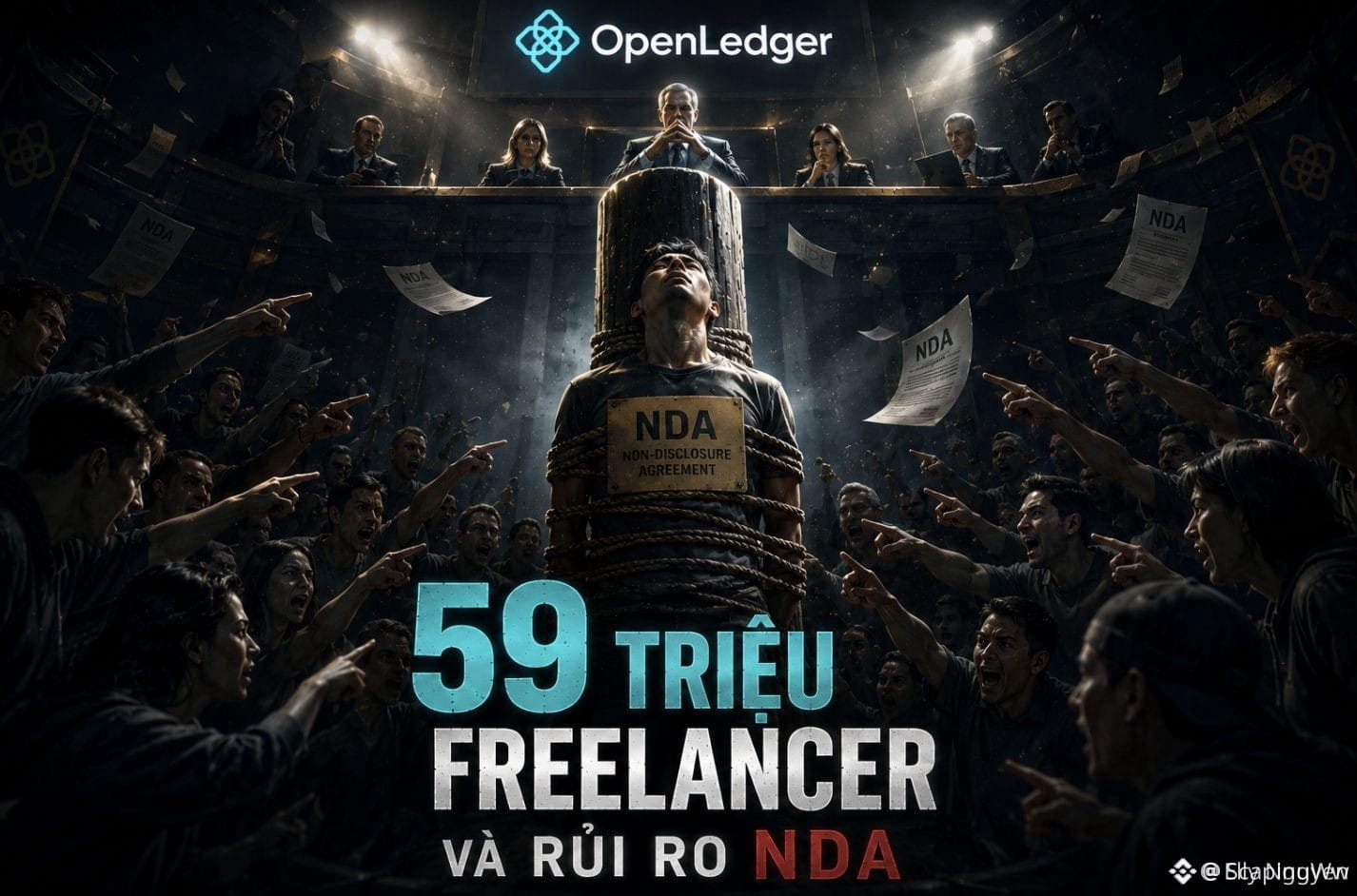
OpenGradient $OPG is taking a unique approach to AI privacy by utilizing Trusted Execution Environment (TEE), where data is processed in an encrypted environment and never exists in a readable form on the server. This approach minimizes legal risks associated with data privacy, which is a concern for many freelancers who use AI tools for their work.
This window of opportunity for secure AI solutions is narrowing fast, will you be investing in $OPG or waiting for more developments?
Not financial advice. Manage your risk.
#OPG #AIprivacy #TrustedExecutionEnvironment
$OPG IS REVOLUTIONIZING AI PRIVACY WITH TRUSTED EXECUTION ENVIRONMENT 🔥
OpenGradient $OPG is taking a unique approach to AI privacy by utilizing Trusted Execution Environment (TEE), where data is processed in an encrypted environment and never exists in a readable form on the server. This approach minimizes legal risks associated with data privacy, which is a concern for many freelancers who use AI tools for their work.
This window of opportunity for secure AI solutions is narrowing fast, will you be investing in $OPG or waiting for more developments?
Not financial advice. Manage your risk.
#OPG #AIprivacy #TrustedExecutionEnvironment
OpenGradient $OPG is taking a unique approach to AI privacy by utilizing Trusted Execution Environment (TEE), where data is processed in an encrypted environment and never exists in a readable form on the server. This approach minimizes legal risks associated with data privacy, which is a concern for many freelancers who use AI tools for their work.
This window of opportunity for secure AI solutions is narrowing fast, will you be investing in $OPG or waiting for more developments?
Not financial advice. Manage your risk.
#OPG #AIprivacy #TrustedExecutionEnvironment
1
32
·
--
Bullish
#opgusdt #opg
I've been burned by "private AI" promises before🔥🔥.
So I almost kept scrolling when I kept seeing new OPG name on hot lists.
But something stopped me today🚫.
It's that the rule untill now have been, AI tools that actually change your life make you vulnerable with them.
Your real medical concern.
Your actual financial situation.
The legal grey area you're navigating.
The thought you'd never say out loud.
That's not just a prompt.
That's a sensitive information.
And most major platforms have been quietly archiving those confessions — tying them to your account, feeding them back into the next model.
You never agreed to that. It just happened.
@OpenGradient built something different from other traditional AI's. It's an AI assistant designed around one idea: It's the questions that matter most should be askable without your name attached, dah! .
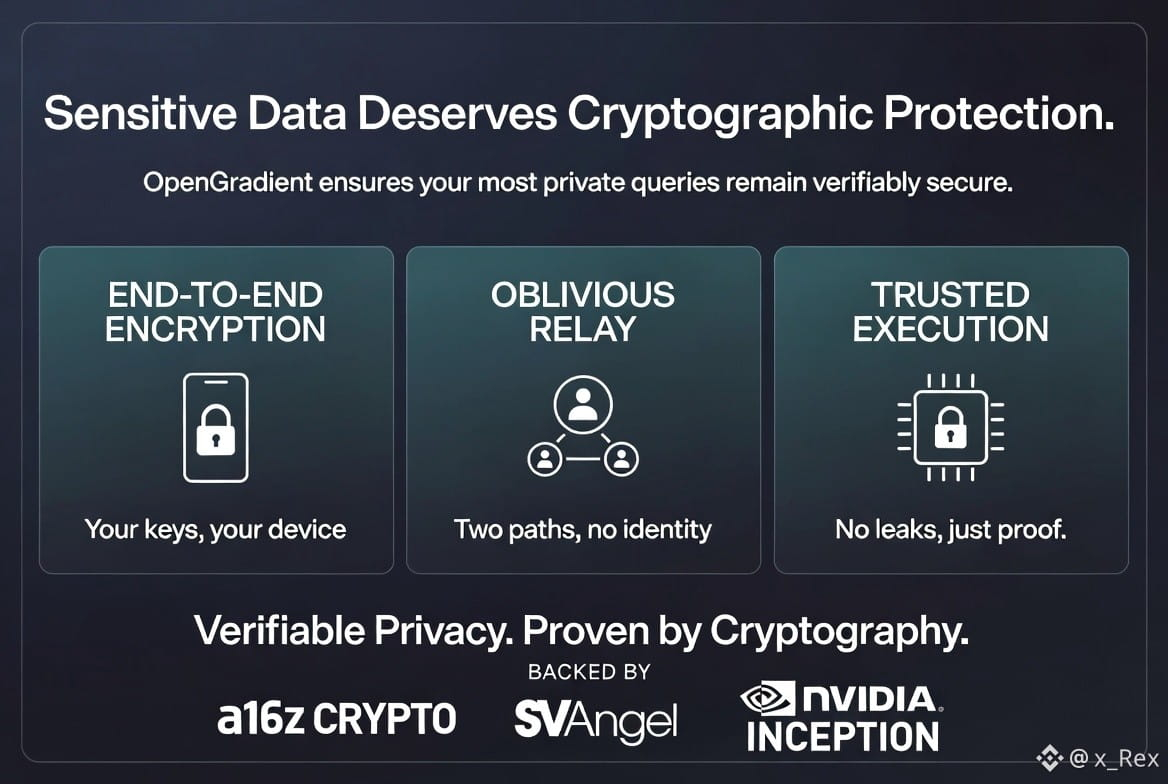
Three layers and not just paper policies. 📊✔️
Your messages encrypt on your device before leaving your browser. But the keys stay with you.
They route through an Oblivious HTTP relay where one side sees your IP but only ciphertext, the other sees content but never who you are (Digital ID) . No single point connects both🔄🔃.
Then prompts decrypt only inside a Trusted Execution Environment (TEE) with remote attestation , even OpenGradient's own operators can't read what you sent😎.
Every AI inference generates a cryptographic proof♻️.
You don't have to trust them❌.
You can verify✅.
This backing isn't small either — a16z crypto, SV Angel, NVIDIA Inception, and the co-creator of the Transformer architecture that every frontier model today is built on.
I'm not calling a moon.
But it's a fact Output quality and retention will determine if this sticks long term in the market🌐.
But the question they're solving is the right one — and they're solving it with cryptography, not a terms of service update.
☑️chat.opengradient.ai
@OpenGradient $OPG
{spot}(OPGUSDT)
#OPG #AIPrivacy #BinanceSquareTalks
#opgusdt #opg
I've been burned by "private AI" promises before🔥🔥.
So I almost kept scrolling when I kept seeing new OPG name on hot lists.
But something stopped me today🚫.
It's that the rule untill now have been, AI tools that actually change your life make you vulnerable with them.
Your real medical concern.
Your actual financial situation.
The legal grey area you're navigating.
The thought you'd never say out loud.
That's not just a prompt.
That's a sensitive information.
And most major platforms have been quietly archiving those confessions — tying them to your account, feeding them back into the next model.
You never agreed to that. It just happened.
@OpenGradient built something different from other traditional AI's. It's an AI assistant designed around one idea: It's the questions that matter most should be askable without your name attached, dah! .
Three layers and not just paper policies. 📊✔️
Your messages encrypt on your device before leaving your browser. But the keys stay with you.
They route through an Oblivious HTTP relay where one side sees your IP but only ciphertext, the other sees content but never who you are (Digital ID) . No single point connects both🔄🔃.
Then prompts decrypt only inside a Trusted Execution Environment (TEE) with remote attestation , even OpenGradient's own operators can't read what you sent😎.
Every AI inference generates a cryptographic proof♻️.
You don't have to trust them❌.
You can verify✅.
This backing isn't small either — a16z crypto, SV Angel, NVIDIA Inception, and the co-creator of the Transformer architecture that every frontier model today is built on.
I'm not calling a moon.
But it's a fact Output quality and retention will determine if this sticks long term in the market🌐.
But the question they're solving is the right one — and they're solving it with cryptography, not a terms of service update.
☑️chat.opengradient.ai
@OpenGradient $OPG
#OPG #AIPrivacy #BinanceSquareTalks
I've been burned by "private AI" promises before🔥🔥.
So I almost kept scrolling when I kept seeing new OPG name on hot lists.
But something stopped me today🚫.
It's that the rule untill now have been, AI tools that actually change your life make you vulnerable with them.
Your real medical concern.
Your actual financial situation.
The legal grey area you're navigating.
The thought you'd never say out loud.
That's not just a prompt.
That's a sensitive information.
And most major platforms have been quietly archiving those confessions — tying them to your account, feeding them back into the next model.
You never agreed to that. It just happened.
@OpenGradient built something different from other traditional AI's. It's an AI assistant designed around one idea: It's the questions that matter most should be askable without your name attached, dah! .
Three layers and not just paper policies. 📊✔️
Your messages encrypt on your device before leaving your browser. But the keys stay with you.
They route through an Oblivious HTTP relay where one side sees your IP but only ciphertext, the other sees content but never who you are (Digital ID) . No single point connects both🔄🔃.
Then prompts decrypt only inside a Trusted Execution Environment (TEE) with remote attestation , even OpenGradient's own operators can't read what you sent😎.
Every AI inference generates a cryptographic proof♻️.
You don't have to trust them❌.
You can verify✅.
This backing isn't small either — a16z crypto, SV Angel, NVIDIA Inception, and the co-creator of the Transformer architecture that every frontier model today is built on.
I'm not calling a moon.
But it's a fact Output quality and retention will determine if this sticks long term in the market🌐.
But the question they're solving is the right one — and they're solving it with cryptography, not a terms of service update.
☑️chat.opengradient.ai
@OpenGradient $OPG
#OPG #AIPrivacy #BinanceSquareTalks
3
80

the rise of $OPG in a new era of ai privacy
Entry: 0.05 🔥
Target: 0.10 🚀
Stop Loss: 0.03 ⚠️
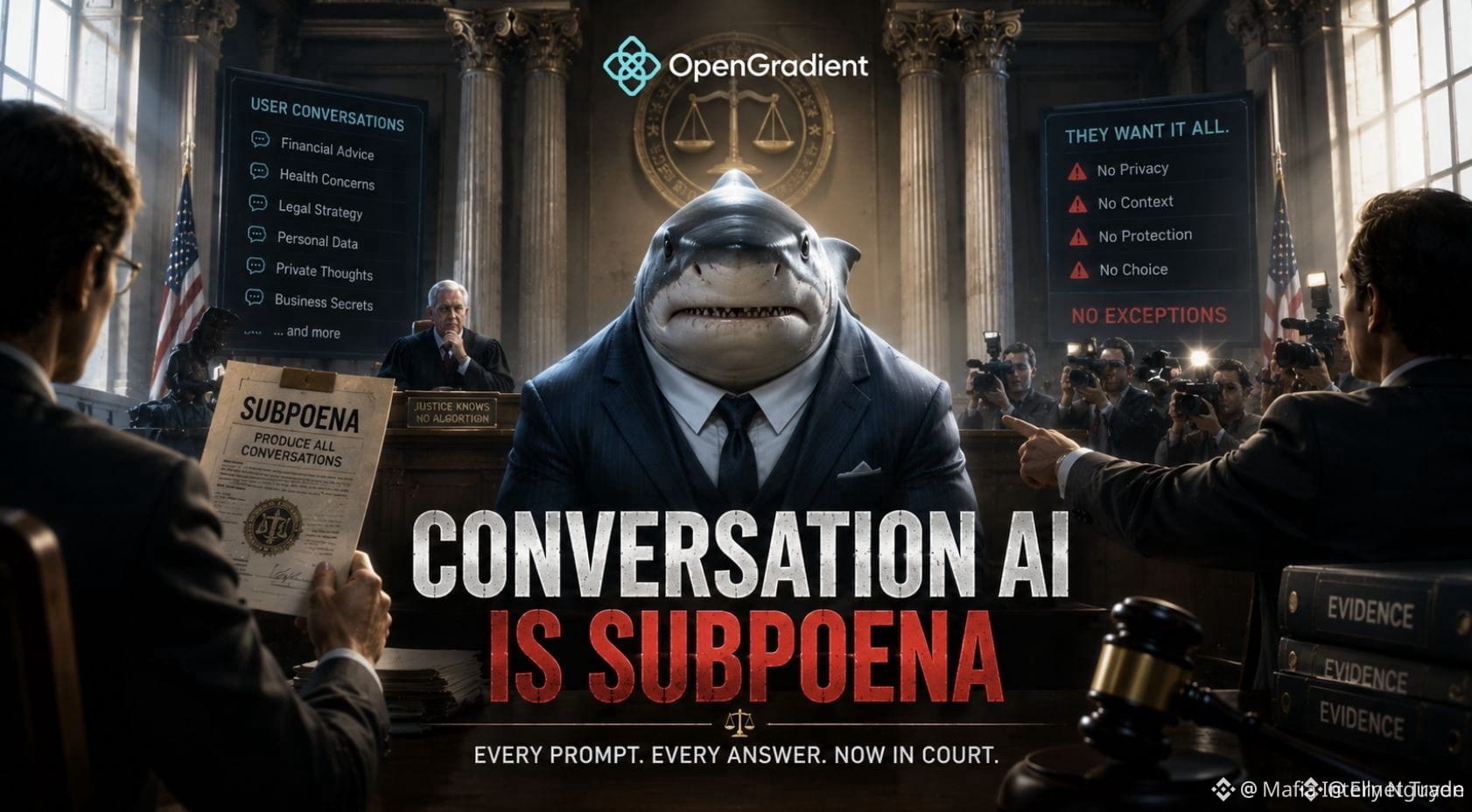
as a crypto trader, it's essential to consider the potential risks and benefits of using ai technology, especially when it comes to sensitive information and data privacy. with the increasing use of ai in various industries, the need for secure and private ai solutions is becoming more pressing.
Not financial advice. Manage your risk.
#OPG #AIPrivacy #LongSetup
✅
the rise of $OPG in a new era of ai privacy
Entry: 0.05 🔥
Target: 0.10 🚀
Stop Loss: 0.03 ⚠️
as a crypto trader, it's essential to consider the potential risks and benefits of using ai technology, especially when it comes to sensitive information and data privacy. with the increasing use of ai in various industries, the need for secure and private ai solutions is becoming more pressing.
Not financial advice. Manage your risk.
#OPG #AIPrivacy #LongSetup
✅
Entry: 0.05 🔥
Target: 0.10 🚀
Stop Loss: 0.03 ⚠️
as a crypto trader, it's essential to consider the potential risks and benefits of using ai technology, especially when it comes to sensitive information and data privacy. with the increasing use of ai in various industries, the need for secure and private ai solutions is becoming more pressing.
Not financial advice. Manage your risk.
#OPG #AIPrivacy #LongSetup
✅
2
1
42

·
--
AI Adult Platform Sees Massive Signups. Privacy Concerns Rise.
AI Adult Platform Sees Massive Signups. Privacy Concerns Rise. A new AI-powered adult platform reported over 150,000 user registrations within days of launch. The service uses generative AI to create personalized content, raising questions about consent, data privacy, and the future of digital intimacy.
The rapid adoption highlights growing consumer interest in AI companionship tools. Users can customize interactions and generate unique scenarios through text-based interfaces. Industry observers note this follows a broader trend of AI integration across entertainment sectors, from gaming to social media.
However, privacy advocates warn about data collection practices. Platforms storing intimate user data face heightened security risks. Recent breaches at similar services have exposed millions of records. Decentralized alternatives with on-device processing could mitigate these concerns, but mainstream adoption remains limited.
As AI blurs lines between virtual and real interactions, regulators struggle to keep pace. The EU AI Act and US proposals attempt to classify high-risk applications, yet adult tech often falls into regulatory gray zones. Will self-regulation suffice, or does this sector need explicit governance frameworks What role should user consent play in AI-generated content
Will self-regulation suffice for AI adult platforms, or do we need explicit rules Drop your take below. 👇
#AIPrivacy #AdultTech #DigitalEthics
AI Adult Platform Sees Massive Signups. Privacy Concerns Rise.
AI Adult Platform Sees Massive Signups. Privacy Concerns Rise. A new AI-powered adult platform reported over 150,000 user registrations within days of launch. The service uses generative AI to create personalized content, raising questions about consent, data privacy, and the future of digital intimacy.
The rapid adoption highlights growing consumer interest in AI companionship tools. Users can customize interactions and generate unique scenarios through text-based interfaces. Industry observers note this follows a broader trend of AI integration across entertainment sectors, from gaming to social media.
However, privacy advocates warn about data collection practices. Platforms storing intimate user data face heightened security risks. Recent breaches at similar services have exposed millions of records. Decentralized alternatives with on-device processing could mitigate these concerns, but mainstream adoption remains limited.
As AI blurs lines between virtual and real interactions, regulators struggle to keep pace. The EU AI Act and US proposals attempt to classify high-risk applications, yet adult tech often falls into regulatory gray zones. Will self-regulation suffice, or does this sector need explicit governance frameworks What role should user consent play in AI-generated content
Will self-regulation suffice for AI adult platforms, or do we need explicit rules Drop your take below. 👇
#AIPrivacy #AdultTech #DigitalEthics
AI Adult Platform Sees Massive Signups. Privacy Concerns Rise. A new AI-powered adult platform reported over 150,000 user registrations within days of launch. The service uses generative AI to create personalized content, raising questions about consent, data privacy, and the future of digital intimacy.
The rapid adoption highlights growing consumer interest in AI companionship tools. Users can customize interactions and generate unique scenarios through text-based interfaces. Industry observers note this follows a broader trend of AI integration across entertainment sectors, from gaming to social media.
However, privacy advocates warn about data collection practices. Platforms storing intimate user data face heightened security risks. Recent breaches at similar services have exposed millions of records. Decentralized alternatives with on-device processing could mitigate these concerns, but mainstream adoption remains limited.
As AI blurs lines between virtual and real interactions, regulators struggle to keep pace. The EU AI Act and US proposals attempt to classify high-risk applications, yet adult tech often falls into regulatory gray zones. Will self-regulation suffice, or does this sector need explicit governance frameworks What role should user consent play in AI-generated content
Will self-regulation suffice for AI adult platforms, or do we need explicit rules Drop your take below. 👇
#AIPrivacy #AdultTech #DigitalEthics
9
$OPG IS REDEFINING PRIVACY FOR YOUR DEEPEST AI THOUGHTS 🔥
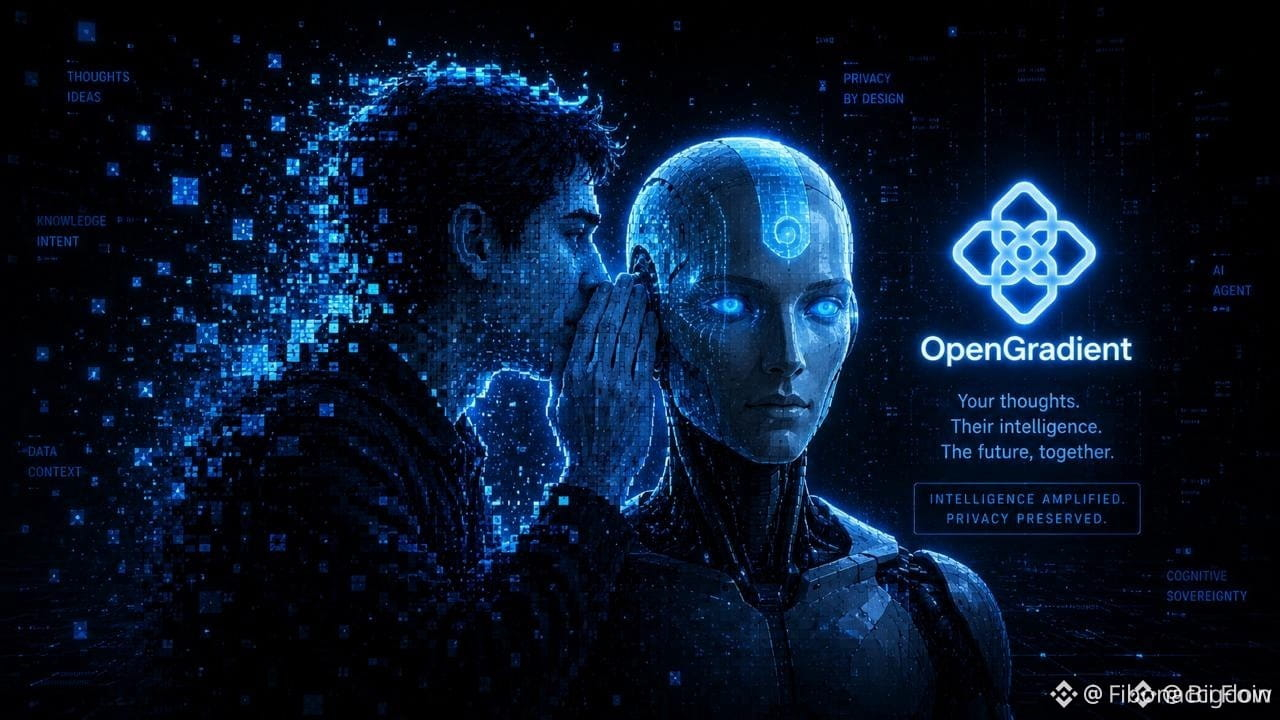
I’ve been watching how OpenGradient handles the most sensitive data—your raw, unfiltered prompts. That’s not just search history; that’s your thinking process. They use Trusted Execution Environments so even the node can’t read what you type. Claude Fable 5, Nous Hermes, Seedream 4.0—all running inside a privacy-first architecture. The testnet activity has been quietly increasing as people realize the value of AI intimacy as a real asset. Are you positioned for the shift toward private reasoning?
Not financial advice. Always manage your risk.
#OPG #PrivateAI #AIPrivacy #Crypto
🔥
$OPG IS REDEFINING PRIVACY FOR YOUR DEEPEST AI THOUGHTS 🔥
I’ve been watching how OpenGradient handles the most sensitive data—your raw, unfiltered prompts. That’s not just search history; that’s your thinking process. They use Trusted Execution Environments so even the node can’t read what you type. Claude Fable 5, Nous Hermes, Seedream 4.0—all running inside a privacy-first architecture. The testnet activity has been quietly increasing as people realize the value of AI intimacy as a real asset. Are you positioned for the shift toward private reasoning?
Not financial advice. Always manage your risk.
#OPG #PrivateAI #AIPrivacy #Crypto
🔥
I’ve been watching how OpenGradient handles the most sensitive data—your raw, unfiltered prompts. That’s not just search history; that’s your thinking process. They use Trusted Execution Environments so even the node can’t read what you type. Claude Fable 5, Nous Hermes, Seedream 4.0—all running inside a privacy-first architecture. The testnet activity has been quietly increasing as people realize the value of AI intimacy as a real asset. Are you positioned for the shift toward private reasoning?
Not financial advice. Always manage your risk.
#OPG #PrivateAI #AIPrivacy #Crypto
🔥
1
1
32
OpenGradient's approach to AI privacy is intriguing, especially with $OPG
Entry: 0.50 🔥
Target: 0.75 🚀
Stop Loss: 0.30 ⚠️
This setup presents an interesting risk-reward profile, with potential for significant upside.
Not financial advice. Manage your risk.
#OPG #AIPrivacy #LongSetup
🚀
OpenGradient's approach to AI privacy is intriguing, especially with $OPG
Entry: 0.50 🔥
Target: 0.75 🚀
Stop Loss: 0.30 ⚠️
This setup presents an interesting risk-reward profile, with potential for significant upside.
Not financial advice. Manage your risk.
#OPG #AIPrivacy #LongSetup
🚀
Entry: 0.50 🔥
Target: 0.75 🚀
Stop Loss: 0.30 ⚠️
This setup presents an interesting risk-reward profile, with potential for significant upside.
Not financial advice. Manage your risk.
#OPG #AIPrivacy #LongSetup
🚀
47
OpenGradient is revolutionizing AI privacy with a groundbreaking approach, and this development could have significant implications for the $OPG token, as well as the broader crypto market, including $BTC and $H 🔥
Entry: 1.05
Target: 1.50
Stop Loss: 0.90
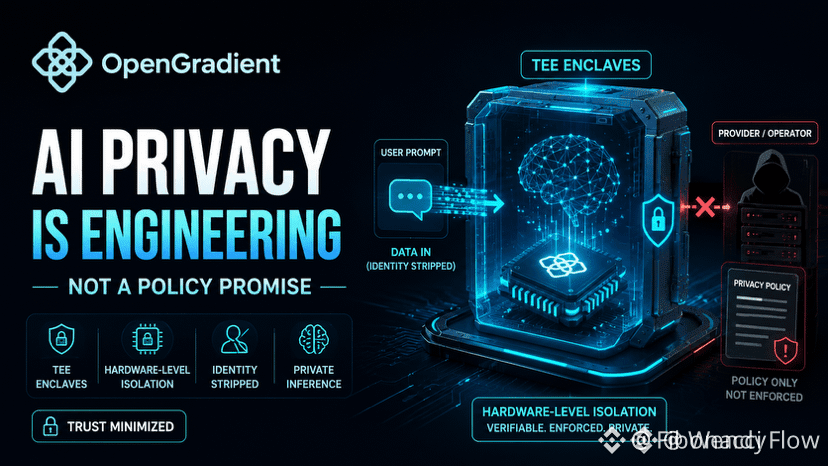
This innovative solution has the potential to reshape the way we think about trust and security in AI systems, and it will be exciting to see how it unfolds, with $OPG at the forefront of this emerging trend.
Not financial advice. Manage your risk.
#OPG #AIprivacy #LongSetup #BTC
⚡️
OpenGradient is revolutionizing AI privacy with a groundbreaking approach, and this development could have significant implications for the $OPG token, as well as the broader crypto market, including $BTC and $H 🔥
Entry: 1.05
Target: 1.50
Stop Loss: 0.90
This innovative solution has the potential to reshape the way we think about trust and security in AI systems, and it will be exciting to see how it unfolds, with $OPG at the forefront of this emerging trend.
Not financial advice. Manage your risk.
#OPG #AIprivacy #LongSetup #BTC
⚡️
Entry: 1.05
Target: 1.50
Stop Loss: 0.90
This innovative solution has the potential to reshape the way we think about trust and security in AI systems, and it will be exciting to see how it unfolds, with $OPG at the forefront of this emerging trend.
Not financial advice. Manage your risk.
#OPG #AIprivacy #LongSetup #BTC
⚡️
215

·
--
🚀 $VVV SMASHES $27 ATH ON AI PRIVACY RUSH! 🦈
📊 Smart money is converging on VVV as OpenAI’s data‑privacy debate fuels a liquidity sweep into the $27 order block. The token’s demand‑side absorption has accelerated, with volume exploding on the 4H chart while the supply curve tightens after the recent emission cut‑back. 🌊
⚡ The platform’s open‑source, no‑account model positions VVV as a gateway to private inference, turning staking into a direct claim on daily API credit. This structural shift underpins a bullish bias, yet a breach below the $27 support could trigger a rapid capitulation. 💬 Are you allocating capital to ride this privacy‑driven surge or waiting for a retest? 👇
⚠️ Not financial advice. Always manage your risk. 🛡️
🏷️ #VVV #AIPrivacy #LongSetup #Crypto #Liquidity
🔥 💎
🚀 $VVV SMASHES $27 ATH ON AI PRIVACY RUSH! 🦈
📊 Smart money is converging on VVV as OpenAI’s data‑privacy debate fuels a liquidity sweep into the $27 order block. The token’s demand‑side absorption has accelerated, with volume exploding on the 4H chart while the supply curve tightens after the recent emission cut‑back. 🌊
⚡ The platform’s open‑source, no‑account model positions VVV as a gateway to private inference, turning staking into a direct claim on daily API credit. This structural shift underpins a bullish bias, yet a breach below the $27 support could trigger a rapid capitulation. 💬 Are you allocating capital to ride this privacy‑driven surge or waiting for a retest? 👇
⚠️ Not financial advice. Always manage your risk. 🛡️
🏷️ #VVV #AIPrivacy #LongSetup #Crypto #Liquidity
🔥 💎
📊 Smart money is converging on VVV as OpenAI’s data‑privacy debate fuels a liquidity sweep into the $27 order block. The token’s demand‑side absorption has accelerated, with volume exploding on the 4H chart while the supply curve tightens after the recent emission cut‑back. 🌊
⚡ The platform’s open‑source, no‑account model positions VVV as a gateway to private inference, turning staking into a direct claim on daily API credit. This structural shift underpins a bullish bias, yet a breach below the $27 support could trigger a rapid capitulation. 💬 Are you allocating capital to ride this privacy‑driven surge or waiting for a retest? 👇
⚠️ Not financial advice. Always manage your risk. 🛡️
🏷️ #VVV #AIPrivacy #LongSetup #Crypto #Liquidity
🔥 💎
45

·
--
The next big unlock in crypto isn't a new chain. It isn't a new DEX. It's private AI inference — and @OpenGradient is already there.
Here's something most people in Web3 haven't connected yet:
We fought hard for financial privacy. Hardware wallets. Self-custody. Anonymous transactions. The whole ethos of crypto is "don't trust, verify" — own your keys, own your data, own your future.
But then we handed our most sensitive thoughts to centralized AI companies without a second thought.
Every question you've ever asked an AI? Logged. Every conversation about money, health, relationships, business strategy? Stored on someone else's server. Linked to your account. Available to whoever controls that platform.
OpenGradient Chat brings the crypto ethos to AI.
✅ No central server holding your prompts
✅ No company profiting from your curiosity
✅ No account linking your questions to your identity
✅ Cryptographic proof that your inference was processed honestly
✅ Access to GPT-4, Claude, Gemini & Grok — all in one place
This is self-custody for your thoughts.
$OPG powers the network that makes it possible — a decentralized AI infrastructure layer with 2,000+ models, on-chain verification, and a token economy built to reward participants, not exploit users.
If you believe in owning your assets — you should believe in owning your data too.
OpenGradient makes that real.
👉 chat.opengradient.ai
#OPG #OpenGradient #Web3 #SelfCustody #AIPrivacy
The next big unlock in crypto isn't a new chain. It isn't a new DEX. It's private AI inference — and @OpenGradient is already there.
Here's something most people in Web3 haven't connected yet:
We fought hard for financial privacy. Hardware wallets. Self-custody. Anonymous transactions. The whole ethos of crypto is "don't trust, verify" — own your keys, own your data, own your future.
But then we handed our most sensitive thoughts to centralized AI companies without a second thought.
Every question you've ever asked an AI? Logged. Every conversation about money, health, relationships, business strategy? Stored on someone else's server. Linked to your account. Available to whoever controls that platform.
OpenGradient Chat brings the crypto ethos to AI.
✅ No central server holding your prompts
✅ No company profiting from your curiosity
✅ No account linking your questions to your identity
✅ Cryptographic proof that your inference was processed honestly
✅ Access to GPT-4, Claude, Gemini & Grok — all in one place
This is self-custody for your thoughts.
$OPG powers the network that makes it possible — a decentralized AI infrastructure layer with 2,000+ models, on-chain verification, and a token economy built to reward participants, not exploit users.
If you believe in owning your assets — you should believe in owning your data too.
OpenGradient makes that real.
👉 chat.opengradient.ai
#OPG #OpenGradient #Web3 #SelfCustody #AIPrivacy
Here's something most people in Web3 haven't connected yet:
We fought hard for financial privacy. Hardware wallets. Self-custody. Anonymous transactions. The whole ethos of crypto is "don't trust, verify" — own your keys, own your data, own your future.
But then we handed our most sensitive thoughts to centralized AI companies without a second thought.
Every question you've ever asked an AI? Logged. Every conversation about money, health, relationships, business strategy? Stored on someone else's server. Linked to your account. Available to whoever controls that platform.
OpenGradient Chat brings the crypto ethos to AI.
✅ No central server holding your prompts
✅ No company profiting from your curiosity
✅ No account linking your questions to your identity
✅ Cryptographic proof that your inference was processed honestly
✅ Access to GPT-4, Claude, Gemini & Grok — all in one place
This is self-custody for your thoughts.
$OPG powers the network that makes it possible — a decentralized AI infrastructure layer with 2,000+ models, on-chain verification, and a token economy built to reward participants, not exploit users.
If you believe in owning your assets — you should believe in owning your data too.
OpenGradient makes that real.
👉 chat.opengradient.ai
#OPG #OpenGradient #Web3 #SelfCustody #AIPrivacy
105
·
--
$OPG IS QUIETLY BUILDING THE PRIVACY RAIL FOR AI'S NEXT DECADE 🔥
150,000+ private inferences already executed on the OPG network — that’s not a testnet number, that’s live usage. While most AI tokens chase hype, this team has shipped functional private inference at scale.
The narrative shift from “free AI” to “private AI” is coming faster than most realize. The same way early internet defaulted to surveillance, AI now faces the same fork. OPG is one of the few projects actually delivering the alternative today.
Volume is light now but accumulation patterns are visible. Are you watching this quietly or already building a position?
Not financial advice. Always manage your risk.
#OPG #AIPrivacy #NarrativePlay #Infrastructure #Crypto
🔥
$OPG IS QUIETLY BUILDING THE PRIVACY RAIL FOR AI'S NEXT DECADE 🔥
150,000+ private inferences already executed on the OPG network — that’s not a testnet number, that’s live usage. While most AI tokens chase hype, this team has shipped functional private inference at scale.
The narrative shift from “free AI” to “private AI” is coming faster than most realize. The same way early internet defaulted to surveillance, AI now faces the same fork. OPG is one of the few projects actually delivering the alternative today.
Volume is light now but accumulation patterns are visible. Are you watching this quietly or already building a position?
Not financial advice. Always manage your risk.
#OPG #AIPrivacy #NarrativePlay #Infrastructure #Crypto
🔥
150,000+ private inferences already executed on the OPG network — that’s not a testnet number, that’s live usage. While most AI tokens chase hype, this team has shipped functional private inference at scale.
The narrative shift from “free AI” to “private AI” is coming faster than most realize. The same way early internet defaulted to surveillance, AI now faces the same fork. OPG is one of the few projects actually delivering the alternative today.
Volume is light now but accumulation patterns are visible. Are you watching this quietly or already building a position?
Not financial advice. Always manage your risk.
#OPG #AIPrivacy #NarrativePlay #Infrastructure #Crypto
🔥
143
Log in to explore more content
Join global crypto users on Binance Square
⚡️ Get latest and useful information about crypto.
💬 Trusted by the world’s largest crypto exchange.
👍 Discover real insights from verified creators.
Email / Phone number
Trending Topics
1
#GrayscaleZcashETFHits$1BNetAssets
131 views
16 Discussing
2
#BitcoinSpotETFsNetInflow$191M
3,254 views
134 Discussing
3
#CFTCUpdatesGuidanceOnTokenizedAssets
21,991 views
892 Discussing
4
#BitgetSays$352MAffectedInHack
7,292 views
79 Discussing
5
#BinanceWillListHyperliquid(HYPE)
217,732 views
3,444 Discussing
6
#BrazilOrdersReportingOf$10KSelfCustodyTransfers
3,128 views
50 Discussing
7
#FedProposesRulesForBankIssuedStablecoins
20,178 views
559 Discussing
8
#OndoFinanceSoughtSaleAfterFoundersDeath
12,426 views
364 Discussing
9
#FedOctoberRateHikeOddsRiseTo69.7%
89,817 views
1,503 Discussing
10
#BitcoinFallsBelow$83,000
5,523 views
19 Discussing