

#swingtrading
swingtrading
230,453 views
2,029 Discussing
Hot
Latest

·
--
$QI — Long Setup | Market Analysis
QI has exploded with over 220% gains in the last 24 hours, alongside an impressive surge in trading volume. This powerful bullish momentum suggests a high probability of continued price discovery as buyers remain firmly in control, making it an attractive candidate for a swing long.
Market Context
- 24h change: 222.71%
- 24h volume: $18,049,918
- Momentum bias: bullish
Trade Plan
Entry: 0.00467600
Stop Loss: 0.00439000
TP1: 0.00520000
TP2: 0.00565000
TP3: 0.00610000
Confirmation trigger: Initiate position at current market price, confirming sustained bullish momentum post breakout.
Risk note: Trading cryptocurrencies involves substantial risk and may not be suitable for all investors. Prices are highly volatile and can fluctuate dramatically. Only allocate capital that you are prepared to lose entirely. This trade setup is for informational purposes only and does not constitute financial advice.
#QI #Crypto #SwingTrading #Long
$QI — Long Setup | Market Analysis
QI has exploded with over 220% gains in the last 24 hours, alongside an impressive surge in trading volume. This powerful bullish momentum suggests a high probability of continued price discovery as buyers remain firmly in control, making it an attractive candidate for a swing long.
Market Context
- 24h change: 222.71%
- 24h volume: $18,049,918
- Momentum bias: bullish
Trade Plan
Entry: 0.00467600
Stop Loss: 0.00439000
TP1: 0.00520000
TP2: 0.00565000
TP3: 0.00610000
Confirmation trigger: Initiate position at current market price, confirming sustained bullish momentum post breakout.
Risk note: Trading cryptocurrencies involves substantial risk and may not be suitable for all investors. Prices are highly volatile and can fluctuate dramatically. Only allocate capital that you are prepared to lose entirely. This trade setup is for informational purposes only and does not constitute financial advice.
#QI #Crypto #SwingTrading #Long
QI has exploded with over 220% gains in the last 24 hours, alongside an impressive surge in trading volume. This powerful bullish momentum suggests a high probability of continued price discovery as buyers remain firmly in control, making it an attractive candidate for a swing long.
Market Context
- 24h change: 222.71%
- 24h volume: $18,049,918
- Momentum bias: bullish
Trade Plan
Entry: 0.00467600
Stop Loss: 0.00439000
TP1: 0.00520000
TP2: 0.00565000
TP3: 0.00610000
Confirmation trigger: Initiate position at current market price, confirming sustained bullish momentum post breakout.
Risk note: Trading cryptocurrencies involves substantial risk and may not be suitable for all investors. Prices are highly volatile and can fluctuate dramatically. Only allocate capital that you are prepared to lose entirely. This trade setup is for informational purposes only and does not constitute financial advice.
#QI #Crypto #SwingTrading #Long
90

·
--
Bullish
$VELVET / USDT Swing Setup: HTF Reversal & Liquidity Sweep Breakdown
We are tracking a textbook Smart Money reversal structure developing on $VELVET. The market structure across multiple timeframes indicates that selling pressure is exhausted, and smart money accumulation is taking place.
Structural & Technical Logic:
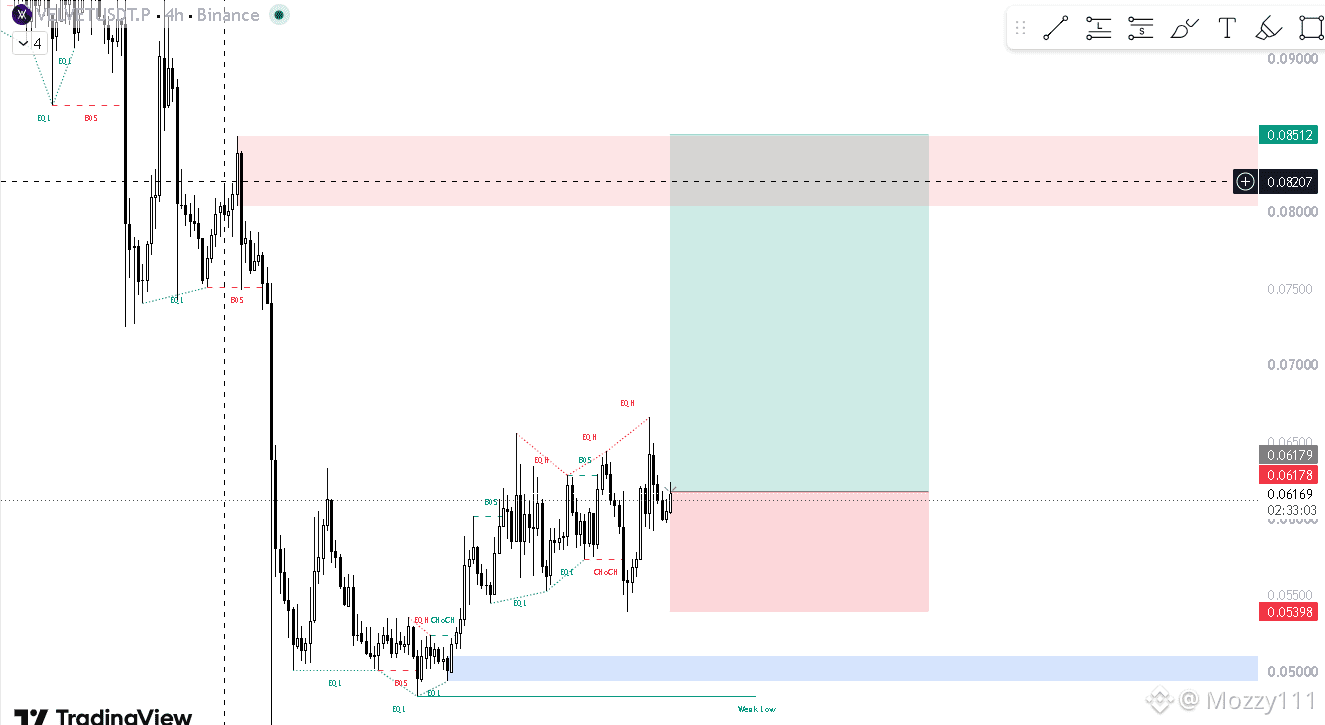
Macro Accumulation & Liquidity Purge (HTF - Daily/4H): After an extended downtrend, the price swept the critical cycle lows ("Weak Low") around the 0.048–0.055 range. This sweep absorbed resting stop-losses and initiated a macro Change of Character (CHoCH), signaling the end of the distribution phase.
Lower Timeframe Confirmation (LTF - 15m): Unlike blind dip-buying, the 15m timeframe printed a clean bullish shift, validating a local "Strong Low." The price is currently respecting this newly formed demand shelf, offering an optimal risk-to-reward entry on the retest.
Target Ingestion (TP): Our target at 0.08512 sits just beneath a major 4H bearish supply block (imbalance). Price tends to act as a magnet toward unfilled liquidity pools above.
📊 Trade Execution Parameters:
Entry Zone: ~0.06178 (Current consolidation retest)
Target (TP): 0.08512 (Upper supply zone / +37.8% net move)
Invalidation (SL): 0.05398 (Protected below structural swing low / -12.6% net move)
Risk / Reward: 1 : 3.0
⚠️ Leverage & Risk Management:
Leverage Range: 5x to 30x (Select strictly based on your individual risk tolerance).
Trade the system, respect your stop-loss, and protect your capital. 🧠
NFA / DYOR.
{future}(VELVETUSDT)
#VELVET #CryptoTrading #SmartMoneyConcepts #SMC #CryptoTrading #BitcoinTechnicalAnalysis #swingtrading #BinanceSquare
$VELVET / USDT Swing Setup: HTF Reversal & Liquidity Sweep Breakdown
We are tracking a textbook Smart Money reversal structure developing on $VELVET . The market structure across multiple timeframes indicates that selling pressure is exhausted, and smart money accumulation is taking place.
Structural & Technical Logic:
Macro Accumulation & Liquidity Purge (HTF - Daily/4H): After an extended downtrend, the price swept the critical cycle lows ("Weak Low") around the 0.048–0.055 range. This sweep absorbed resting stop-losses and initiated a macro Change of Character (CHoCH), signaling the end of the distribution phase.
Lower Timeframe Confirmation (LTF - 15m): Unlike blind dip-buying, the 15m timeframe printed a clean bullish shift, validating a local "Strong Low." The price is currently respecting this newly formed demand shelf, offering an optimal risk-to-reward entry on the retest.
Target Ingestion (TP): Our target at 0.08512 sits just beneath a major 4H bearish supply block (imbalance). Price tends to act as a magnet toward unfilled liquidity pools above.
📊 Trade Execution Parameters:
Entry Zone: ~0.06178 (Current consolidation retest)
Target (TP): 0.08512 (Upper supply zone / +37.8% net move)
Invalidation (SL): 0.05398 (Protected below structural swing low / -12.6% net move)
Risk / Reward: 1 : 3.0
⚠️ Leverage & Risk Management:
Leverage Range: 5x to 30x (Select strictly based on your individual risk tolerance).
Trade the system, respect your stop-loss, and protect your capital. 🧠
NFA / DYOR.
#VELVET #CryptoTrading #SmartMoneyConcepts #SMC #CryptoTrading #BitcoinTechnicalAnalysis #swingtrading #BinanceSquare
We are tracking a textbook Smart Money reversal structure developing on $VELVET . The market structure across multiple timeframes indicates that selling pressure is exhausted, and smart money accumulation is taking place.
Structural & Technical Logic:
Macro Accumulation & Liquidity Purge (HTF - Daily/4H): After an extended downtrend, the price swept the critical cycle lows ("Weak Low") around the 0.048–0.055 range. This sweep absorbed resting stop-losses and initiated a macro Change of Character (CHoCH), signaling the end of the distribution phase.
Lower Timeframe Confirmation (LTF - 15m): Unlike blind dip-buying, the 15m timeframe printed a clean bullish shift, validating a local "Strong Low." The price is currently respecting this newly formed demand shelf, offering an optimal risk-to-reward entry on the retest.
Target Ingestion (TP): Our target at 0.08512 sits just beneath a major 4H bearish supply block (imbalance). Price tends to act as a magnet toward unfilled liquidity pools above.
📊 Trade Execution Parameters:
Entry Zone: ~0.06178 (Current consolidation retest)
Target (TP): 0.08512 (Upper supply zone / +37.8% net move)
Invalidation (SL): 0.05398 (Protected below structural swing low / -12.6% net move)
Risk / Reward: 1 : 3.0
⚠️ Leverage & Risk Management:
Leverage Range: 5x to 30x (Select strictly based on your individual risk tolerance).
Trade the system, respect your stop-loss, and protect your capital. 🧠
NFA / DYOR.
#VELVET #CryptoTrading #SmartMoneyConcepts #SMC #CryptoTrading #BitcoinTechnicalAnalysis #swingtrading #BinanceSquare
1
240
·
--
$RENDER
{spot}(RENDERUSDT)
$RENDER — Long Setup | Market Analysis
RENDER is demonstrating strong bullish momentum, evidenced by a significant 4.873% price increase over the past 24 hours and substantial trading volume. This price action indicates potential for a continued upward trend, positioning it favorably for a long swing trade.
Market Context
- 24h change: 4.87%
- 24h volume: $10,220,392
- Momentum bias: bullish
Trade Plan
Entry: 1.6570
Stop Loss: 1.6050
TP1: 1.7080
TP2: 1.7400
TP3: 1.7750
Confirmation trigger: Market entry upon setup
Risk note: All trading carries significant risk, and it is not appropriate for every investor. Ensure you only commit capital that you are prepared to lose entirely.
#RENDER #Crypto #SwingTrading #Long
$RENDER
$RENDER — Long Setup | Market Analysis
RENDER is demonstrating strong bullish momentum, evidenced by a significant 4.873% price increase over the past 24 hours and substantial trading volume. This price action indicates potential for a continued upward trend, positioning it favorably for a long swing trade.
Market Context
- 24h change: 4.87%
- 24h volume: $10,220,392
- Momentum bias: bullish
Trade Plan
Entry: 1.6570
Stop Loss: 1.6050
TP1: 1.7080
TP2: 1.7400
TP3: 1.7750
Confirmation trigger: Market entry upon setup
Risk note: All trading carries significant risk, and it is not appropriate for every investor. Ensure you only commit capital that you are prepared to lose entirely.
#RENDER #Crypto #SwingTrading #Long
$RENDER — Long Setup | Market Analysis
RENDER is demonstrating strong bullish momentum, evidenced by a significant 4.873% price increase over the past 24 hours and substantial trading volume. This price action indicates potential for a continued upward trend, positioning it favorably for a long swing trade.
Market Context
- 24h change: 4.87%
- 24h volume: $10,220,392
- Momentum bias: bullish
Trade Plan
Entry: 1.6570
Stop Loss: 1.6050
TP1: 1.7080
TP2: 1.7400
TP3: 1.7750
Confirmation trigger: Market entry upon setup
Risk note: All trading carries significant risk, and it is not appropriate for every investor. Ensure you only commit capital that you are prepared to lose entirely.
#RENDER #Crypto #SwingTrading #Long
10

·
--
Bullish
🚀 $ORDI — Swing Setup
I’m watching $ORDI closely for a potential swing opportunity. 👀
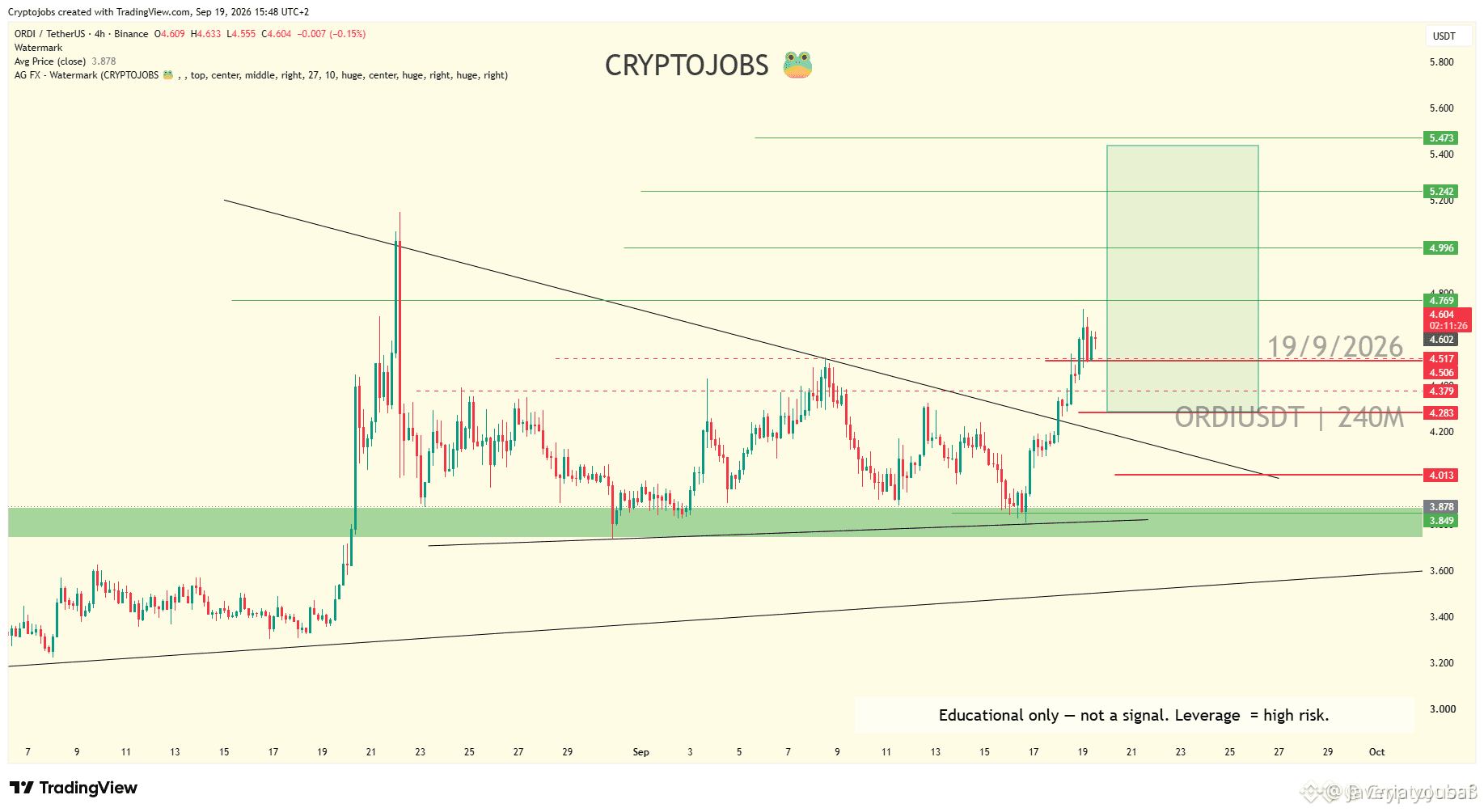
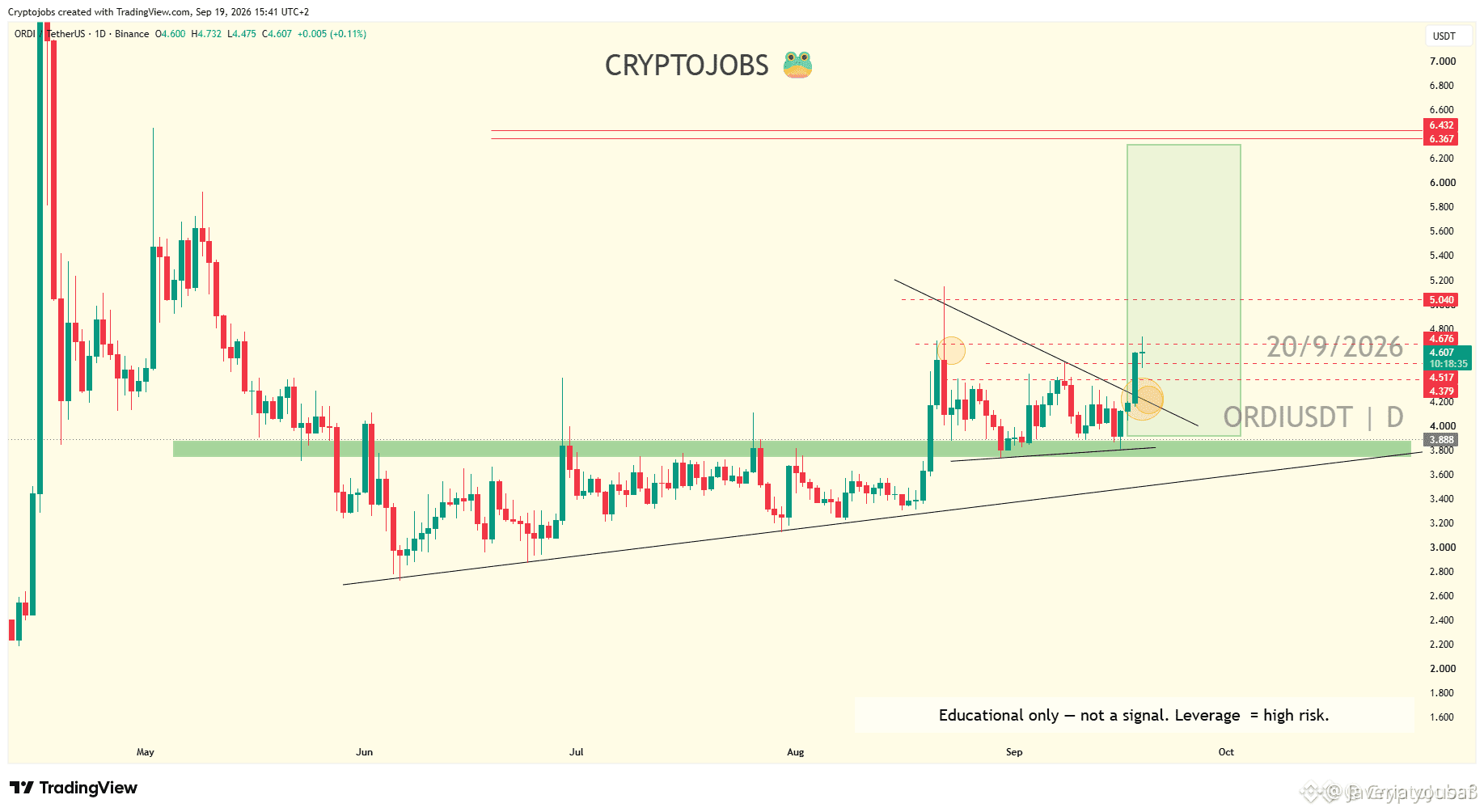
📌 Entry: $4.580 ±
📍 DCA Zone: $4.470 – $4.300
🎯 Take Profit:
• $4.769
• $4.996
• $5.242
• $5.473
🔥 Extended Target: $6.00+
🛑 Stop Loss: $3.975
⚠️ High-Risk Setup: Adjust your position size and leverage according to your own risk management.
📊 Based on my personal chart analysis and key levels.
Educational purposes only. DYOR.
Tap $ORDI to open the pair 👇
ORDIUSDT Perp
#ORDI #CryptoTrading #swingtrading
{spot}(ORDIUSDT)
🚀 $ORDI — Swing Setup
I’m watching $ORDI closely for a potential swing opportunity. 👀
📌 Entry: $4.580 ±
📍 DCA Zone: $4.470 – $4.300
🎯 Take Profit:
• $4.769
• $4.996
• $5.242
• $5.473
🔥 Extended Target: $6.00+
🛑 Stop Loss: $3.975
⚠️ High-Risk Setup: Adjust your position size and leverage according to your own risk management.
📊 Based on my personal chart analysis and key levels.
Educational purposes only. DYOR.
Tap $ORDI to open the pair 👇
ORDIUSDT Perp
#ORDI #CryptoTrading #swingtrading
I’m watching $ORDI closely for a potential swing opportunity. 👀
📌 Entry: $4.580 ±
📍 DCA Zone: $4.470 – $4.300
🎯 Take Profit:
• $4.769
• $4.996
• $5.242
• $5.473
🔥 Extended Target: $6.00+
🛑 Stop Loss: $3.975
⚠️ High-Risk Setup: Adjust your position size and leverage according to your own risk management.
📊 Based on my personal chart analysis and key levels.
Educational purposes only. DYOR.
Tap $ORDI to open the pair 👇
ORDIUSDT Perp
#ORDI #CryptoTrading #swingtrading
17

·
--
A swing trade can be right—and still go against you first. 📉➡️📈
That’s the part many traders struggle to tolerate.
Swing trading aims to capture a move over days or weeks, not every candle. A normal pullback doesn’t automatically mean the trade has failed.
Example: You enter after support confirms in an uptrend. The next day, price dips toward your entry and prints red candles.
Do you exit because it feels uncomfortable?
Not if your original invalidation level is still intact.
Practical rule: define what proves your idea wrong before entering.
For a long swing trade, that may be a meaningful swing low or support zone—not a small intraday dip. Then size your position so the distance to your stop is manageable. 🛡️
The mistake is checking a swing setup every five minutes and reacting to every wick. Lower-timeframe noise can shake you out of a valid higher-timeframe trade.
Patience doesn’t mean ignoring risk. It means giving a planned trade room to behave normally.
Let structure decide—not the color of the next candle. 🎯
Do normal pullbacks shake you out too early? 👇
#SwingTrading #TradingPsychology #RiskManagement #CryptoTrading
A swing trade can be right—and still go against you first. 📉➡️📈
That’s the part many traders struggle to tolerate.
Swing trading aims to capture a move over days or weeks, not every candle. A normal pullback doesn’t automatically mean the trade has failed.
Example: You enter after support confirms in an uptrend. The next day, price dips toward your entry and prints red candles.
Do you exit because it feels uncomfortable?
Not if your original invalidation level is still intact.
Practical rule: define what proves your idea wrong before entering.
For a long swing trade, that may be a meaningful swing low or support zone—not a small intraday dip. Then size your position so the distance to your stop is manageable. 🛡️
The mistake is checking a swing setup every five minutes and reacting to every wick. Lower-timeframe noise can shake you out of a valid higher-timeframe trade.
Patience doesn’t mean ignoring risk. It means giving a planned trade room to behave normally.
Let structure decide—not the color of the next candle. 🎯
Do normal pullbacks shake you out too early? 👇
#SwingTrading #TradingPsychology #RiskManagement #CryptoTrading
That’s the part many traders struggle to tolerate.
Swing trading aims to capture a move over days or weeks, not every candle. A normal pullback doesn’t automatically mean the trade has failed.
Example: You enter after support confirms in an uptrend. The next day, price dips toward your entry and prints red candles.
Do you exit because it feels uncomfortable?
Not if your original invalidation level is still intact.
Practical rule: define what proves your idea wrong before entering.
For a long swing trade, that may be a meaningful swing low or support zone—not a small intraday dip. Then size your position so the distance to your stop is manageable. 🛡️
The mistake is checking a swing setup every five minutes and reacting to every wick. Lower-timeframe noise can shake you out of a valid higher-timeframe trade.
Patience doesn’t mean ignoring risk. It means giving a planned trade room to behave normally.
Let structure decide—not the color of the next candle. 🎯
Do normal pullbacks shake you out too early? 👇
#SwingTrading #TradingPsychology #RiskManagement #CryptoTrading

68
·
--
$APT
{spot}(APTUSDT)
$APT — Long Setup | Market Analysis
APT has shown significant bullish momentum with a strong 24-hour surge of over 25% on substantial volume. This suggests a continuation of the upward trend, making it an attractive long setup for a swing trade.
Market Context
- 24h change: 25.71%
- 24h volume: $10,712,462
- Momentum bias: bullish
Trade Plan
Entry: 0.704
Stop Loss: 0.685
TP1: 0.7285
TP2: 0.7495
TP3: 0.7705
Confirmation trigger: Immediate market entry
Risk note: Trading involves substantial risk and is not suitable for all investors. Only risk capital you can afford to lose. Past performance is not indicative of future results.
#APT #Crypto #SwingTrading #Altcoin
$APT
$APT — Long Setup | Market Analysis
APT has shown significant bullish momentum with a strong 24-hour surge of over 25% on substantial volume. This suggests a continuation of the upward trend, making it an attractive long setup for a swing trade.
Market Context
- 24h change: 25.71%
- 24h volume: $10,712,462
- Momentum bias: bullish
Trade Plan
Entry: 0.704
Stop Loss: 0.685
TP1: 0.7285
TP2: 0.7495
TP3: 0.7705
Confirmation trigger: Immediate market entry
Risk note: Trading involves substantial risk and is not suitable for all investors. Only risk capital you can afford to lose. Past performance is not indicative of future results.
#APT #Crypto #SwingTrading #Altcoin
$APT — Long Setup | Market Analysis
APT has shown significant bullish momentum with a strong 24-hour surge of over 25% on substantial volume. This suggests a continuation of the upward trend, making it an attractive long setup for a swing trade.
Market Context
- 24h change: 25.71%
- 24h volume: $10,712,462
- Momentum bias: bullish
Trade Plan
Entry: 0.704
Stop Loss: 0.685
TP1: 0.7285
TP2: 0.7495
TP3: 0.7705
Confirmation trigger: Immediate market entry
Risk note: Trading involves substantial risk and is not suitable for all investors. Only risk capital you can afford to lose. Past performance is not indicative of future results.
#APT #Crypto #SwingTrading #Altcoin
13

LONG $WLFI mapped it out
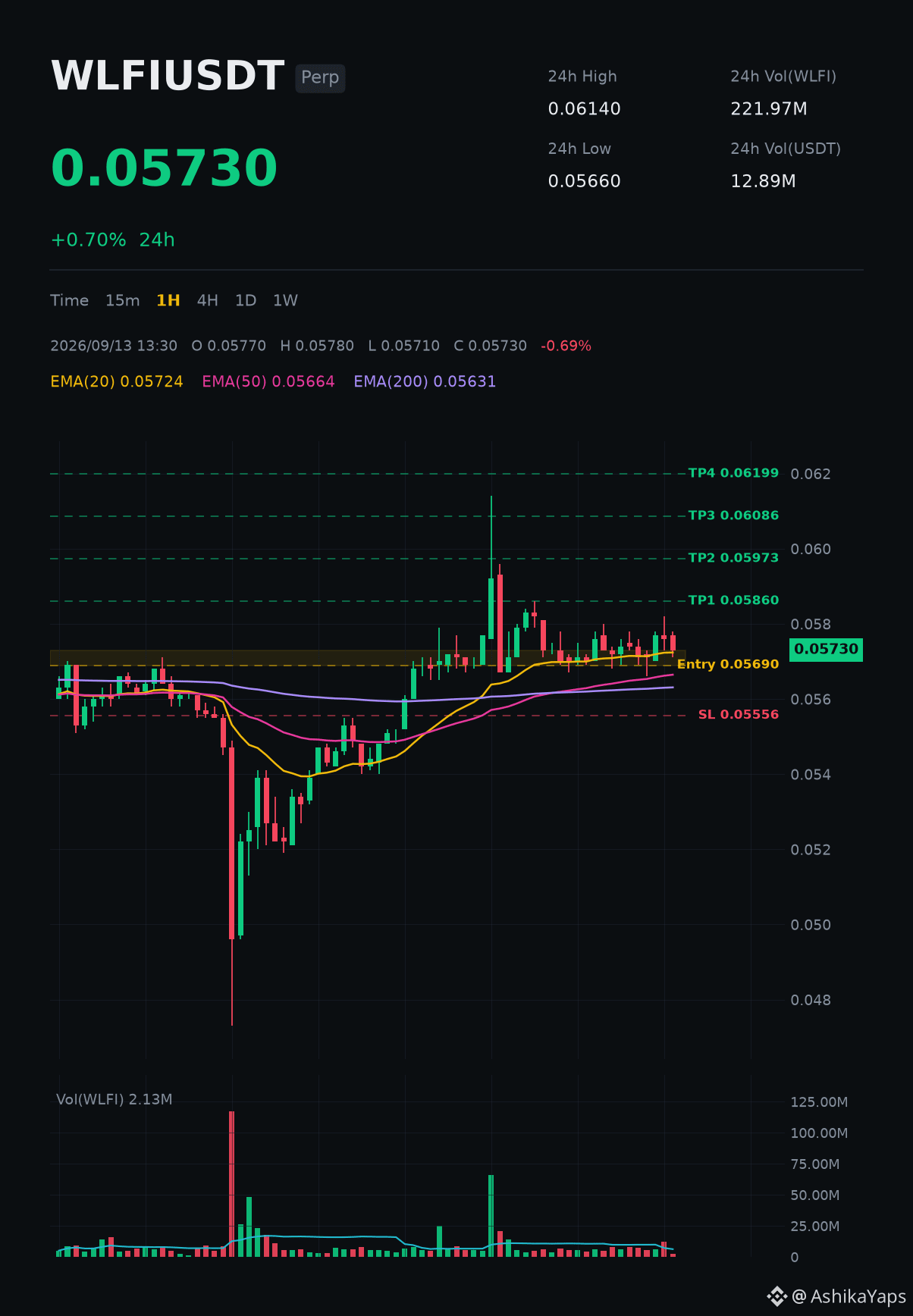
Entry: 0.05690 - 0.05730
TP1: 0.05860
TP2: 0.05973
TP3: 0.06086
TP4: 0.06199
SL: 0.05556
Setup: EMA20 above EMA50, short-term momentum up, RSI 52.
Risk: about 1.7 to 1 at TP2. Through 0.05556 the idea is wrong.
Trade WLFI: spot https://www.binance.com/en/trade/WLFI_USDT | futures https://www.binance.com/en/futures/WLFIUSDT
$WLFI #WLFI #Write2Earn #SwingTrading #PriceAction
Automated technical analysis, not financial advice. I am not responsible for your trades. DYOR.
LONG $WLFI mapped it out
Entry: 0.05690 - 0.05730
TP1: 0.05860
TP2: 0.05973
TP3: 0.06086
TP4: 0.06199
SL: 0.05556
Setup: EMA20 above EMA50, short-term momentum up, RSI 52.
Risk: about 1.7 to 1 at TP2. Through 0.05556 the idea is wrong.
Trade WLFI: spot https://www.binance.com/en/trade/WLFI_USDT | futures https://www.binance.com/en/futures/WLFIUSDT
$WLFI #WLFI #Write2Earn #SwingTrading #PriceAction
Automated technical analysis, not financial advice. I am not responsible for your trades. DYOR.
Entry: 0.05690 - 0.05730
TP1: 0.05860
TP2: 0.05973
TP3: 0.06086
TP4: 0.06199
SL: 0.05556
Setup: EMA20 above EMA50, short-term momentum up, RSI 52.
Risk: about 1.7 to 1 at TP2. Through 0.05556 the idea is wrong.
Trade WLFI: spot https://www.binance.com/en/trade/WLFI_USDT | futures https://www.binance.com/en/futures/WLFIUSDT
$WLFI #WLFI #Write2Earn #SwingTrading #PriceAction
Automated technical analysis, not financial advice. I am not responsible for your trades. DYOR.
3

·
--
$SOL SWING TRADE IDEA 👇
**ENTRY:** $144 - $146
**SL:** $138
**TP1:** $155
**TP2:** $165
**HOLD TIME:** 1-2 weeks
**REASON:** Daily support holding + NFT volume up
[Add Strategy widget here]
What’s your $SOL target? Comment below 👇
Let’s compare targets
Follow for $SOL swing trades
#BinanceSquare #Solana #SwingTrading
$SOL SWING TRADE IDEA 👇
**ENTRY:** $144 - $146
**SL:** $138
**TP1:** $155
**TP2:** $165
**HOLD TIME:** 1-2 weeks
**REASON:** Daily support holding + NFT volume up
[Add Strategy widget here]
What’s your $SOL target? Comment below 👇
Let’s compare targets
Follow for $SOL swing trades
#BinanceSquare #Solana #SwingTrading
**ENTRY:** $144 - $146
**SL:** $138
**TP1:** $155
**TP2:** $165
**HOLD TIME:** 1-2 weeks
**REASON:** Daily support holding + NFT volume up
[Add Strategy widget here]
What’s your $SOL target? Comment below 👇
Let’s compare targets
Follow for $SOL swing trades
#BinanceSquare #Solana #SwingTrading
25

·
--
Bullish
🚨 TIA/USDT — SWING LONG x5
🟢 Entry: 0.36 – 0.37 USDT
🔴 SL: 0.293 USDT
🎯 TP1: 0.52 USDT
🚀 TP2: 2.20 USDT
🔥 TP3: 5.00 USDT
📌 Strategy: Swing / Long
⚡ Leverage: x5
💎 Conviction: Strong bullish setup
DYOR & manage your risk.
#tia $TIA #celestia #Binance #crypto #SwingTrading
🚨 TIA/USDT — SWING LONG x5
🟢 Entry: 0.36 – 0.37 USDT
🔴 SL: 0.293 USDT
🎯 TP1: 0.52 USDT
🚀 TP2: 2.20 USDT
🔥 TP3: 5.00 USDT
📌 Strategy: Swing / Long
⚡ Leverage: x5
💎 Conviction: Strong bullish setup
DYOR & manage your risk.
#tia $TIA #celestia #Binance #crypto #SwingTrading
🟢 Entry: 0.36 – 0.37 USDT
🔴 SL: 0.293 USDT
🎯 TP1: 0.52 USDT
🚀 TP2: 2.20 USDT
🔥 TP3: 5.00 USDT
📌 Strategy: Swing / Long
⚡ Leverage: x5
💎 Conviction: Strong bullish setup
DYOR & manage your risk.
#tia $TIA #celestia #Binance #crypto #SwingTrading
124
·
--
$NIL
{spot}(NILUSDT)
🟢 $NIL | Long Setup
NIL has demonstrated significant bullish momentum, posting over a 26% gain in the last 24 hours. This strong performance, supported by substantial trading volume, suggests continued upward potential for a swing trade.
Trade Plan
• Entry: 0.05810000
• Stop Loss: 0.05460000
• TP1: 0.06270000
• TP2: 0.06510000
• TP3: 0.06740000
Risk Note:
This is not financial advice. Trade at your own risk. Always manage your capital effectively.
#NIL #Crypto #SwingTrading #Long
$NIL
🟢 $NIL | Long Setup
NIL has demonstrated significant bullish momentum, posting over a 26% gain in the last 24 hours. This strong performance, supported by substantial trading volume, suggests continued upward potential for a swing trade.
Trade Plan
• Entry: 0.05810000
• Stop Loss: 0.05460000
• TP1: 0.06270000
• TP2: 0.06510000
• TP3: 0.06740000
Risk Note:
This is not financial advice. Trade at your own risk. Always manage your capital effectively.
#NIL #Crypto #SwingTrading #Long
🟢 $NIL | Long Setup
NIL has demonstrated significant bullish momentum, posting over a 26% gain in the last 24 hours. This strong performance, supported by substantial trading volume, suggests continued upward potential for a swing trade.
Trade Plan
• Entry: 0.05810000
• Stop Loss: 0.05460000
• TP1: 0.06270000
• TP2: 0.06510000
• TP3: 0.06740000
Risk Note:
This is not financial advice. Trade at your own risk. Always manage your capital effectively.
#NIL #Crypto #SwingTrading #Long
53
·
--
{future}(BEAMXUSDT)
🟢 $BEAMX | Long Setup
BEAMX has demonstrated exceptional bullish momentum over the last 24 hours, marked by a substantial price surge and strong accompanying volume. This breakout indicates robust buying pressure and a high probability of further upward movement. We anticipate a continuation of this trend, offering a promising long opportunity for swing traders aiming to ride the established strength.
Trade Plan
• Entry: 0.00196000
• Stop Loss: 0.00185000
• TP1: 0.00210000
• TP2: 0.00225000
• TP3: 0.00240000
Trigger:
Confirm retest of current support or a strong break above 0.00196000 on high volume.
Risk Note:
Trade with caution. Manage your risk effectively. This is not financial advice.
#BEAMX #Crypto #SwingTrading #Long
🟢 $BEAMX | Long Setup
BEAMX has demonstrated exceptional bullish momentum over the last 24 hours, marked by a substantial price surge and strong accompanying volume. This breakout indicates robust buying pressure and a high probability of further upward movement. We anticipate a continuation of this trend, offering a promising long opportunity for swing traders aiming to ride the established strength.
Trade Plan
• Entry: 0.00196000
• Stop Loss: 0.00185000
• TP1: 0.00210000
• TP2: 0.00225000
• TP3: 0.00240000
Trigger:
Confirm retest of current support or a strong break above 0.00196000 on high volume.
Risk Note:
Trade with caution. Manage your risk effectively. This is not financial advice.
#BEAMX #Crypto #SwingTrading #Long
🟢 $BEAMX | Long Setup
BEAMX has demonstrated exceptional bullish momentum over the last 24 hours, marked by a substantial price surge and strong accompanying volume. This breakout indicates robust buying pressure and a high probability of further upward movement. We anticipate a continuation of this trend, offering a promising long opportunity for swing traders aiming to ride the established strength.
Trade Plan
• Entry: 0.00196000
• Stop Loss: 0.00185000
• TP1: 0.00210000
• TP2: 0.00225000
• TP3: 0.00240000
Trigger:
Confirm retest of current support or a strong break above 0.00196000 on high volume.
Risk Note:
Trade with caution. Manage your risk effectively. This is not financial advice.
#BEAMX #Crypto #SwingTrading #Long
13
·
--
{future}(PUMPUSDT)
🔴 $PUMP | Short Setup
PUMP is exhibiting significant bearish momentum, with a notable 4.89% decline over the past 24 hours. The considerable 24-hour quote volume of over 41 million USDT underscores strong selling pressure and active distribution from market participants. This persistent downward movement suggests a high probability of continued depreciation as sellers maintain control, making a short position attractive for a swing trade.
Trade Plan
• Entry: 0.00453000
• Stop Loss: 0.00462500
• TP1: 0.00444000
• TP2: 0.00435000
• TP3: 0.00426000
Trigger:
Entry will be triggered if PUMP price holds below 0.00453000 and shows continued weakness, confirming bearish sentiment.
Risk Note:
Trading cryptocurrencies carries substantial risk and may not be suitable for all investors. This is for informational purposes only and does not constitute financial advice. Always manage your risk effectively.
#PUMP #ShortTrade #Crypto #SwingTrading
🔴 $PUMP | Short Setup
PUMP is exhibiting significant bearish momentum, with a notable 4.89% decline over the past 24 hours. The considerable 24-hour quote volume of over 41 million USDT underscores strong selling pressure and active distribution from market participants. This persistent downward movement suggests a high probability of continued depreciation as sellers maintain control, making a short position attractive for a swing trade.
Trade Plan
• Entry: 0.00453000
• Stop Loss: 0.00462500
• TP1: 0.00444000
• TP2: 0.00435000
• TP3: 0.00426000
Trigger:
Entry will be triggered if PUMP price holds below 0.00453000 and shows continued weakness, confirming bearish sentiment.
Risk Note:
Trading cryptocurrencies carries substantial risk and may not be suitable for all investors. This is for informational purposes only and does not constitute financial advice. Always manage your risk effectively.
#PUMP #ShortTrade #Crypto #SwingTrading
🔴 $PUMP | Short Setup
PUMP is exhibiting significant bearish momentum, with a notable 4.89% decline over the past 24 hours. The considerable 24-hour quote volume of over 41 million USDT underscores strong selling pressure and active distribution from market participants. This persistent downward movement suggests a high probability of continued depreciation as sellers maintain control, making a short position attractive for a swing trade.
Trade Plan
• Entry: 0.00453000
• Stop Loss: 0.00462500
• TP1: 0.00444000
• TP2: 0.00435000
• TP3: 0.00426000
Trigger:
Entry will be triggered if PUMP price holds below 0.00453000 and shows continued weakness, confirming bearish sentiment.
Risk Note:
Trading cryptocurrencies carries substantial risk and may not be suitable for all investors. This is for informational purposes only and does not constitute financial advice. Always manage your risk effectively.
#PUMP #ShortTrade #Crypto #SwingTrading
63

·
--
Bullish
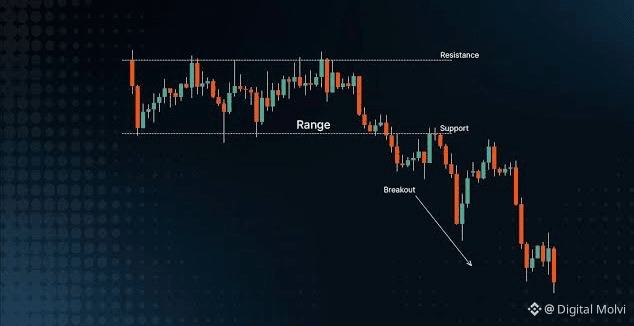
Good swing entries are built on patience, not excitement.
The best setups usually come from pullbacks in trend, breakout retests, or clean support/resistance flips—not from chasing extended candles.
If the entry feels emotional, it’s probably late.
Let price come to your level, define your invalidation, and protect capital first.
#digitalmolvi #swingtrading #cryptotrading #TechnicalAnalysis #BinanceSquare
$DOGE
{spot}(DOGEUSDT)
$PEPE
{spot}(PEPEUSDT)
$TRUMP
{spot}(TRUMPUSDT)
Good swing entries are built on patience, not excitement.
The best setups usually come from pullbacks in trend, breakout retests, or clean support/resistance flips—not from chasing extended candles.
If the entry feels emotional, it’s probably late.
Let price come to your level, define your invalidation, and protect capital first.
#digitalmolvi #swingtrading #cryptotrading #TechnicalAnalysis #BinanceSquare
$DOGE
$PEPE
$TRUMP
The best setups usually come from pullbacks in trend, breakout retests, or clean support/resistance flips—not from chasing extended candles.
If the entry feels emotional, it’s probably late.
Let price come to your level, define your invalidation, and protect capital first.
#digitalmolvi #swingtrading #cryptotrading #TechnicalAnalysis #BinanceSquare
$DOGE
$PEPE
$TRUMP
110

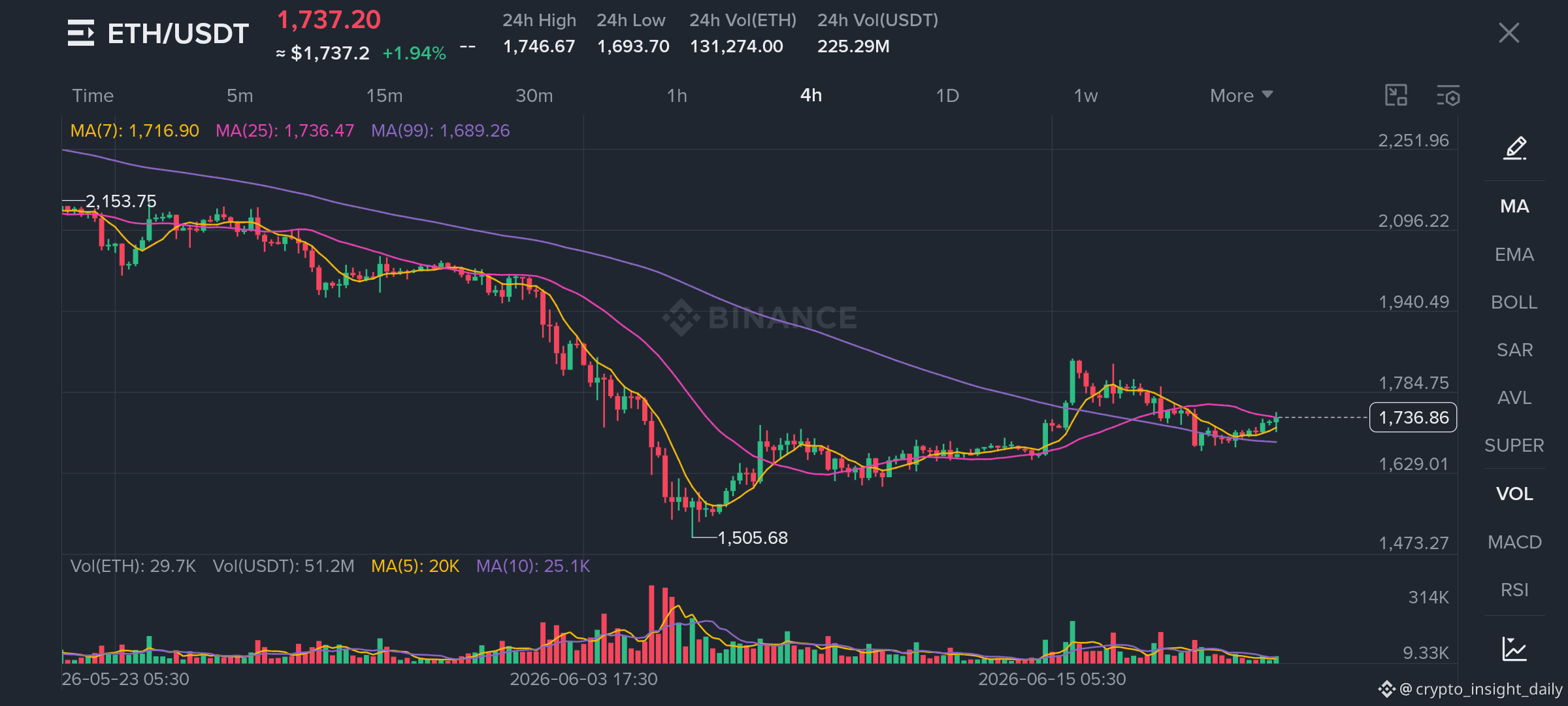
🚀$ETH Trade Setup | Swing Trade (1–5 Days)
🟢 Buy Zone: $1,705–$1,720
🎯 TP1: $1,780
🎯 TP2: $1,850
🎯 TP3: $1,950
🛑 Stop Loss: $1,660
Why this setup could work?
✅ $ETH is holding a major support zone.
✅ Buyers are stepping in after consolidation.
✅ Risk-to-reward is attractive at nearly 1:3.
Trade the plan, not emotions. Patience and risk management win in the long run.
#Ethereum #ETH #CryptoTrading #TechnicalAnalysis #SwingTrading
⚠️ Disclaimer: This is not financial advice. Crypto markets are highly volatile. Always do your own research and manage your risk.
{spot}(ETHUSDT)
🚀$ETH Trade Setup | Swing Trade (1–5 Days)
🟢 Buy Zone: $1,705–$1,720
🎯 TP1: $1,780
🎯 TP2: $1,850
🎯 TP3: $1,950
🛑 Stop Loss: $1,660
Why this setup could work?
✅ $ETH is holding a major support zone.
✅ Buyers are stepping in after consolidation.
✅ Risk-to-reward is attractive at nearly 1:3.
Trade the plan, not emotions. Patience and risk management win in the long run.
#Ethereum #ETH #CryptoTrading #TechnicalAnalysis #SwingTrading
⚠️ Disclaimer: This is not financial advice. Crypto markets are highly volatile. Always do your own research and manage your risk.
🟢 Buy Zone: $1,705–$1,720
🎯 TP1: $1,780
🎯 TP2: $1,850
🎯 TP3: $1,950
🛑 Stop Loss: $1,660
Why this setup could work?
✅ $ETH is holding a major support zone.
✅ Buyers are stepping in after consolidation.
✅ Risk-to-reward is attractive at nearly 1:3.
Trade the plan, not emotions. Patience and risk management win in the long run.
#Ethereum #ETH #CryptoTrading #TechnicalAnalysis #SwingTrading
⚠️ Disclaimer: This is not financial advice. Crypto markets are highly volatile. Always do your own research and manage your risk.
2
154

⏳ $ONE Strategic Swing Short: Capitalizing on Trend Exhaustion.
When analyzing momentum tokens, capturing macro-trend reversals yields the largest percentage moves. The explosive pump on ONE/USDT has hit severe exhaustion on higher timeframes, and the 15m breakdown serves as an early execution trigger. We are strategically building a swing SHORT position within the resistance band to target the primary demand origins.
🎯 SWING SHORT PARAMETERS:
• Execution Band: 0.001283 - 0.001330
• Take Profit 1: 0.001200
• Take Profit 2: 0.001130 (Macro Swing Target)
• Invalidation Point (SL): 0.001400
*Ensure leverage is kept moderate to withstand localized short-term volatility.*
If you want high-conviction strategic market plans, ensure you hit FOLLOW to stay aligned with the smart money! 👇🌐
#swingtrading #CryptoStrategy #BearishTrend #altcoinseason
⏳ $ONE Strategic Swing Short: Capitalizing on Trend Exhaustion.
When analyzing momentum tokens, capturing macro-trend reversals yields the largest percentage moves. The explosive pump on ONE/USDT has hit severe exhaustion on higher timeframes, and the 15m breakdown serves as an early execution trigger. We are strategically building a swing SHORT position within the resistance band to target the primary demand origins.
🎯 SWING SHORT PARAMETERS:
• Execution Band: 0.001283 - 0.001330
• Take Profit 1: 0.001200
• Take Profit 2: 0.001130 (Macro Swing Target)
• Invalidation Point (SL): 0.001400
*Ensure leverage is kept moderate to withstand localized short-term volatility.*
If you want high-conviction strategic market plans, ensure you hit FOLLOW to stay aligned with the smart money! 👇🌐
#swingtrading #CryptoStrategy #BearishTrend #altcoinseason
When analyzing momentum tokens, capturing macro-trend reversals yields the largest percentage moves. The explosive pump on ONE/USDT has hit severe exhaustion on higher timeframes, and the 15m breakdown serves as an early execution trigger. We are strategically building a swing SHORT position within the resistance band to target the primary demand origins.
🎯 SWING SHORT PARAMETERS:
• Execution Band: 0.001283 - 0.001330
• Take Profit 1: 0.001200
• Take Profit 2: 0.001130 (Macro Swing Target)
• Invalidation Point (SL): 0.001400
*Ensure leverage is kept moderate to withstand localized short-term volatility.*
If you want high-conviction strategic market plans, ensure you hit FOLLOW to stay aligned with the smart money! 👇🌐
#swingtrading #CryptoStrategy #BearishTrend #altcoinseason
1
92
·
--
{future}(PENDLEUSDT)
🟢 $PENDLE | Long Setup
PENDLE is showing strong bullish momentum with a significant 24-hour price increase and healthy volume. The current price action suggests a potential continuation of the uptrend, making it a viable candidate for a swing long position.
Trade Plan
• Entry: 1.912
• Stop Loss: 1.835
• TP1: 1.988
• TP2: 2.065
• TP3: 2.141
Risk Note:
This is a high-risk trade. Only risk capital you can afford to lose. Manage your position size carefully.
#PENDLE #Crypto #SwingTrading #Bullish
🟢 $PENDLE | Long Setup
PENDLE is showing strong bullish momentum with a significant 24-hour price increase and healthy volume. The current price action suggests a potential continuation of the uptrend, making it a viable candidate for a swing long position.
Trade Plan
• Entry: 1.912
• Stop Loss: 1.835
• TP1: 1.988
• TP2: 2.065
• TP3: 2.141
Risk Note:
This is a high-risk trade. Only risk capital you can afford to lose. Manage your position size carefully.
#PENDLE #Crypto #SwingTrading #Bullish
🟢 $PENDLE | Long Setup
PENDLE is showing strong bullish momentum with a significant 24-hour price increase and healthy volume. The current price action suggests a potential continuation of the uptrend, making it a viable candidate for a swing long position.
Trade Plan
• Entry: 1.912
• Stop Loss: 1.835
• TP1: 1.988
• TP2: 2.065
• TP3: 2.141
Risk Note:
This is a high-risk trade. Only risk capital you can afford to lose. Manage your position size carefully.
#PENDLE #Crypto #SwingTrading #Bullish
6


·
--
Bullish
$QQQ
📍 Entry Zone: 700 - 708
🛑 Stop Loss: 685
🎯 TP1: 725
🎯 TP2: 745
🎯 TP3: 770
💡 Tech sector pullback may provide a quality swing opportunity.
{future}(QQQUSDT)
#QQQ #NASDAQ #SwingTrading
$QQQ
📍 Entry Zone: 700 - 708
🛑 Stop Loss: 685
🎯 TP1: 725
🎯 TP2: 745
🎯 TP3: 770
💡 Tech sector pullback may provide a quality swing opportunity.
#QQQ #NASDAQ #SwingTrading
📍 Entry Zone: 700 - 708
🛑 Stop Loss: 685
🎯 TP1: 725
🎯 TP2: 745
🎯 TP3: 770
💡 Tech sector pullback may provide a quality swing opportunity.
#QQQ #NASDAQ #SwingTrading
145

Hidden Reversal Cue: $SPCX /USDT Tactical Long Setup 📈✨
While the broader market fixates on standard breakout patterns, $SPCX /USDT has quietly triggered a subtle trend-reversal signal. This setup allows us to execute a classic buy-the-dip strategy within a macro range-bound market, avoiding the trap of buying near local tops.
Here is the structured trade blueprint:
Entry Range: 155.509393 – 156.092283 (Ideal zone: 155.80 – 156.09)
Stop Loss (SL): 147.982830
Take Profit 1 (TP1): 161.664344
Take Profit 2 (TP2): 165.573348
Take Profit 3 (TP3): 171.436855
Core Technical Drivers:
High-Confidence Bias: The 4-hour timeframe is showcasing a highly robust 80% confidence long bias, flashing a strong green light for an upward move.
RSI Room to Run: The 15-minute RSI is currently sitting cool at 42.91. This indicates the asset is technically oversold on the lower timeframes, setting the stage perfectly for an impending short squeeze.
Range-Bound Play: With the daily trend consolidating sideways, buying deep in this entry zone provides an excellent risk-to-reward ratio for a swift ride up to TP1 and beyond.
#CryptoSignals #Altcoins #TechnicalAnalysis #CryptoTrading #SwingTrading
$SPCX
{future}(SPCXUSDT)
Hidden Reversal Cue: $SPCX /USDT Tactical Long Setup 📈✨
While the broader market fixates on standard breakout patterns, $SPCX /USDT has quietly triggered a subtle trend-reversal signal. This setup allows us to execute a classic buy-the-dip strategy within a macro range-bound market, avoiding the trap of buying near local tops.
Here is the structured trade blueprint:
Entry Range: 155.509393 – 156.092283 (Ideal zone: 155.80 – 156.09)
Stop Loss (SL): 147.982830
Take Profit 1 (TP1): 161.664344
Take Profit 2 (TP2): 165.573348
Take Profit 3 (TP3): 171.436855
Core Technical Drivers:
High-Confidence Bias: The 4-hour timeframe is showcasing a highly robust 80% confidence long bias, flashing a strong green light for an upward move.
RSI Room to Run: The 15-minute RSI is currently sitting cool at 42.91. This indicates the asset is technically oversold on the lower timeframes, setting the stage perfectly for an impending short squeeze.
Range-Bound Play: With the daily trend consolidating sideways, buying deep in this entry zone provides an excellent risk-to-reward ratio for a swift ride up to TP1 and beyond.
#CryptoSignals #Altcoins #TechnicalAnalysis #CryptoTrading #SwingTrading
$SPCX
While the broader market fixates on standard breakout patterns, $SPCX /USDT has quietly triggered a subtle trend-reversal signal. This setup allows us to execute a classic buy-the-dip strategy within a macro range-bound market, avoiding the trap of buying near local tops.
Here is the structured trade blueprint:
Entry Range: 155.509393 – 156.092283 (Ideal zone: 155.80 – 156.09)
Stop Loss (SL): 147.982830
Take Profit 1 (TP1): 161.664344
Take Profit 2 (TP2): 165.573348
Take Profit 3 (TP3): 171.436855
Core Technical Drivers:
High-Confidence Bias: The 4-hour timeframe is showcasing a highly robust 80% confidence long bias, flashing a strong green light for an upward move.
RSI Room to Run: The 15-minute RSI is currently sitting cool at 42.91. This indicates the asset is technically oversold on the lower timeframes, setting the stage perfectly for an impending short squeeze.
Range-Bound Play: With the daily trend consolidating sideways, buying deep in this entry zone provides an excellent risk-to-reward ratio for a swift ride up to TP1 and beyond.
#CryptoSignals #Altcoins #TechnicalAnalysis #CryptoTrading #SwingTrading
$SPCX
119

$SOL Consolidating in Tight Range: Preparing for the Next Big Move
Solana ($SOL ) is compressing tightly between key structural boundaries inside a high-volume node. Compression always leads to expansion. We are waiting for a confirmed breakout of this range to capture a high-probability swing trade.
Long Entry (On Breakout): Above $142.00
Short Entry (On Breakdown): Below $134.00
Target 1: $151.00 (Long) / $125.00 (Short)
Stop Loss: 3% from execution trigger
Set your custom alerts using the interactive coin widget below. Drop a Tip if you want our exclusive breakout confirmation update live!
#Solana #SOL #CryptoBreakout #SwingTrading #BinanceSquare
$SOL Consolidating in Tight Range: Preparing for the Next Big Move
Solana ($SOL ) is compressing tightly between key structural boundaries inside a high-volume node. Compression always leads to expansion. We are waiting for a confirmed breakout of this range to capture a high-probability swing trade.
Long Entry (On Breakout): Above $142.00
Short Entry (On Breakdown): Below $134.00
Target 1: $151.00 (Long) / $125.00 (Short)
Stop Loss: 3% from execution trigger
Set your custom alerts using the interactive coin widget below. Drop a Tip if you want our exclusive breakout confirmation update live!
#Solana #SOL #CryptoBreakout #SwingTrading #BinanceSquare
Solana ($SOL ) is compressing tightly between key structural boundaries inside a high-volume node. Compression always leads to expansion. We are waiting for a confirmed breakout of this range to capture a high-probability swing trade.
Long Entry (On Breakout): Above $142.00
Short Entry (On Breakdown): Below $134.00
Target 1: $151.00 (Long) / $125.00 (Short)
Stop Loss: 3% from execution trigger
Set your custom alerts using the interactive coin widget below. Drop a Tip if you want our exclusive breakout confirmation update live!
#Solana #SOL #CryptoBreakout #SwingTrading #BinanceSquare
33

·
--
Bullish
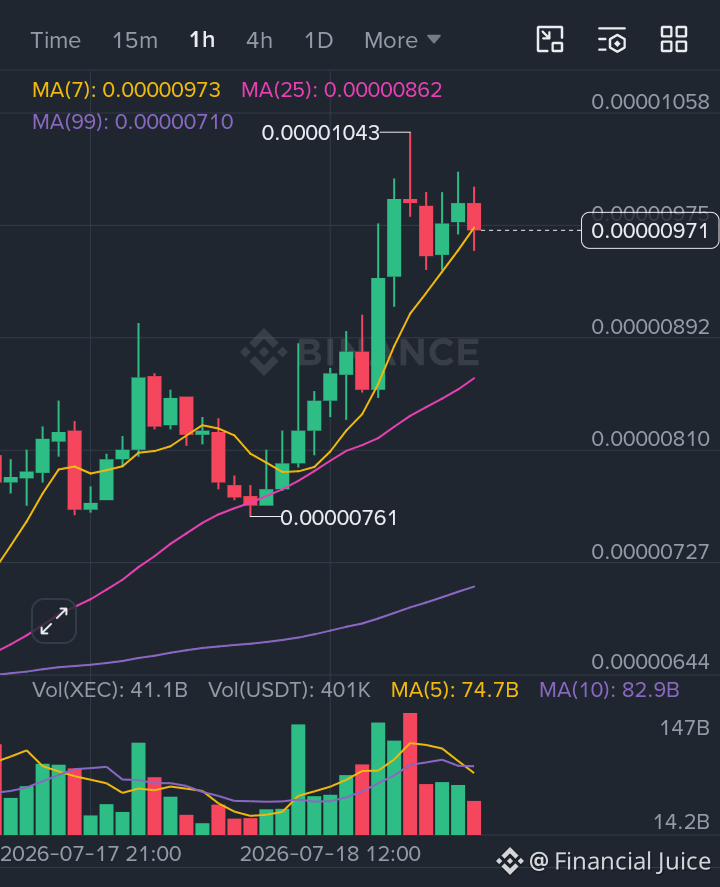
🌟 #7 | Swing Trade on $XEC
Trend remains bullish as long as price stays above MA(25). Swing traders should watch closely.
📍 Entry: 0.00000960
🎯 TP1: 0.00001030
🎯 TP2: 0.00001080
🎯 TP3: 0.00001150
🛑 SL: 0.00000910
Risk small, win big! 💰
#SwingTrading #Crypto #Binance
🌟 #7 | Swing Trade on $XEC
Trend remains bullish as long as price stays above MA(25). Swing traders should watch closely.
📍 Entry: 0.00000960
🎯 TP1: 0.00001030
🎯 TP2: 0.00001080
🎯 TP3: 0.00001150
🛑 SL: 0.00000910
Risk small, win big! 💰
#SwingTrading #Crypto #Binance
Trend remains bullish as long as price stays above MA(25). Swing traders should watch closely.
📍 Entry: 0.00000960
🎯 TP1: 0.00001030
🎯 TP2: 0.00001080
🎯 TP3: 0.00001150
🛑 SL: 0.00000910
Risk small, win big! 💰
#SwingTrading #Crypto #Binance
1
43
Log in to explore more content
Join global crypto users on Binance Square
⚡️ Get latest and useful information about crypto.
💬 Trusted by the world’s largest crypto exchange.
👍 Discover real insights from verified creators.
Email / Phone number
Trending Topics
1
#CircleMints500MUSDCOnSolana
88,955 views
1,966 Discussing
2
#PolymarketBankFailureBetsDrawFDICConcern
90,549 views
1,767 Discussing
3
#BlackRockBuildsTokenizedPortfoliosForOndo
82,591 views
1,259 Discussing
4
#BitwiseFilesToListNEARETFOnNYSEArca
66,592 views
1,020 Discussing
5
#SECCommissionerPeirceToLeaveOct2
66,748 views
825 Discussing
6
#SECSaysBuybacksUpgradesDontMakeTokenSecurity
54,171 views
616 Discussing
7
#StrategyProposesDailyDividendsForPreferreds
12,490 views
226 Discussing
8
#CircleTetherFreezeBitgetHackerWallet
13,625 views
136 Discussing
9
#CoinMarketCapCompletesCoinglassAcquisition
13,710 views
182 Discussing
10
#QNTRises39%
116,251 views
1,692 Discussing