Binance Square

R A Y BNB

Light voice, deep thoughts.I keep evolving, no matter what comes.🥰
75 Following
21.2K+ Followers
9.4K+ Liked
1.2K+ Shared
All Content
--
Walrus and the Hope of Owning Our Digital World Again A Deep Human Story of Technology That Feels$WAL When we talk about technology in the abstract it sometimes feels cold and distant. But what if technology could serve something deeply emotional — like trust, memory, security and permanence? That’s the story that Walrus seems to tell, and it’s one that feels less like a buzzword and more like a quiet answer to a question we’ve all been asking without saying it out loud: What happens to the things we love, the creations we make, the memories and data we generate in a world where control has increasingly slipped away from us? Walrus is a decentralized storage and data availability protocol built on the Sui blockchain that aims to give people back ownership, control and reliability over their digital lives in a way that feels honest and resilient. At its core Walrus is designed to enable secure, cost-efficient, censorship-resistant storage of large unstructured data files — things like videos, images, AI models, PDFs and blockchain histories — in a decentralized network instead of on centralized servers owned by a single company. This isn’t just another alternative to traditional cloud storage. It represents a new way of thinking about how data should be stored, shared and trusted in a world that is increasingly digital and interconnected. What makes Walrus subtly transformative is that it redistributes power over data away from a few centralized entities back into a collective, open system. Instead of files sitting on servers owned by corporations, your data is broken into encrypted fragments and spread across a network of independent storage nodes. These fragments, sometimes called “slivers,” are created using sophisticated erasure coding — a method that ensures even if many of those fragments disappear the original file can still be reconstructed. This means your data isn’t just stored, it’s protected and continually recoverable even if parts of the network fail. The beauty of this approach is deeply human: it doesn’t ask you to hope your files will be safe, it gives you a guarantee through design. This is accomplished through a combination of smart technology and intentional architecture. Walrus employs encoding systems like Red Stuff erasure coding to minimize redundancy while maximizing reliability. Rather than needing full replication of a file on every node, Walrus intelligently distributes fragments so that as long as enough pieces remain, the data can be reassembled — a safety net built into the very fabric of the protocol. What truly breathes life into this system is its native token, WAL. WAL isn’t just a piece of financial speculation — it’s the economic and governance heartbeat of the Walrus ecosystem. People use WAL to pay for storage services, compensating node operators for their contribution to the network. Those same node operators — the guardians of the fragments — stake WAL to demonstrate reliability and commitment. And beyond payment and staking, WAL serves as a governance token, giving the community a say in how the protocol evolves. This alignment of incentives transforms something technical into something communal — a shared infrastructure that grows stronger the more people contribute and trust it. What makes all of this feel meaningful rather than mechanical is that Walrus was born from real needs and real limitations in existing systems. Traditional blockchain networks face enormous challenges when it comes to storing large files. On-chain storage is prohibitively expensive and centralized storage solutions are prone to single points of failure. Walrus confronts these issues head-on with a system that is not only decentralized but also programmable and tightly integrated with the Sui blockchain, which coordinates storage verification, availability proofs, and economic incentives so that nobody has to blindly trust a third party. In building this decentralized backbone, Walrus does something emotional without being loud about it. It gives developers and creators freedom and confidence that their files, their work and their digital identities aren’t at the mercy of sudden policy changes, outages, pricing shifts or centralized whims. That confidence isn’t trivial. It’s the digital equivalent of peace of mind, the thing that makes you rest easier knowing your memories and your innovations won’t just vanish. Walrus also speaks to something bigger — the way technology can evolve from being extractive to being empowering. Instead of erecting barriers or locking data behind corporate vaults, it builds a decentralized lattice of shared responsibility. It distributes data across many participants, rewarding those who contribute to the network’s health and ensuring that ownership remains where it should: with the people who create and care about the data, not with the gatekeepers who once profited from controlling it. This has implications beyond file storage. For NFTs and digital art, it means actual content — not just pointers or links — can be reliably stored and retrieved. For AI applications, vast datasets can live securely without fear of being lost or corrupted. For decentralized apps (dApps), the ability to reference reliable storage becomes a foundation upon which greater complexity and innovation can be built. And for individuals, it becomes a way to own your history without surrendering it to silos you never fully control. The emotional resonance of this project lies in its quiet intent to redefine not just technology but trust. Decentralized storage like Walrus does not promise perfection. No system can. But it offers robustness, fairness, resilience and community control — qualities that feel comforting because they reflect how we would want our own memories and legacies treated if we had to choose how to protect them. As the digital era expands with ever-rising amounts of data and increasing expectations for privacy and control, Walrus stands as a reminder that the future of data doesn’t have to be controlled by a few powerful entities. Instead, it can be shared, resilient and owned by the many — and that feels like a future worth building toward. @WalrusProtocol #Walrus $WAL

Walrus and the Hope of Owning Our Digital World Again A Deep Human Story of Technology That Feels

$WAL When we talk about technology in the abstract it sometimes feels cold and distant. But what if technology could serve something deeply emotional — like trust, memory, security and permanence? That’s the story that Walrus seems to tell, and it’s one that feels less like a buzzword and more like a quiet answer to a question we’ve all been asking without saying it out loud: What happens to the things we love, the creations we make, the memories and data we generate in a world where control has increasingly slipped away from us? Walrus is a decentralized storage and data availability protocol built on the Sui blockchain that aims to give people back ownership, control and reliability over their digital lives in a way that feels honest and resilient.

At its core Walrus is designed to enable secure, cost-efficient, censorship-resistant storage of large unstructured data files — things like videos, images, AI models, PDFs and blockchain histories — in a decentralized network instead of on centralized servers owned by a single company. This isn’t just another alternative to traditional cloud storage. It represents a new way of thinking about how data should be stored, shared and trusted in a world that is increasingly digital and interconnected.

What makes Walrus subtly transformative is that it redistributes power over data away from a few centralized entities back into a collective, open system. Instead of files sitting on servers owned by corporations, your data is broken into encrypted fragments and spread across a network of independent storage nodes. These fragments, sometimes called “slivers,” are created using sophisticated erasure coding — a method that ensures even if many of those fragments disappear the original file can still be reconstructed. This means your data isn’t just stored, it’s protected and continually recoverable even if parts of the network fail.

The beauty of this approach is deeply human: it doesn’t ask you to hope your files will be safe, it gives you a guarantee through design. This is accomplished through a combination of smart technology and intentional architecture. Walrus employs encoding systems like Red Stuff erasure coding to minimize redundancy while maximizing reliability. Rather than needing full replication of a file on every node, Walrus intelligently distributes fragments so that as long as enough pieces remain, the data can be reassembled — a safety net built into the very fabric of the protocol.

What truly breathes life into this system is its native token, WAL. WAL isn’t just a piece of financial speculation — it’s the economic and governance heartbeat of the Walrus ecosystem. People use WAL to pay for storage services, compensating node operators for their contribution to the network. Those same node operators — the guardians of the fragments — stake WAL to demonstrate reliability and commitment. And beyond payment and staking, WAL serves as a governance token, giving the community a say in how the protocol evolves. This alignment of incentives transforms something technical into something communal — a shared infrastructure that grows stronger the more people contribute and trust it.

What makes all of this feel meaningful rather than mechanical is that Walrus was born from real needs and real limitations in existing systems. Traditional blockchain networks face enormous challenges when it comes to storing large files. On-chain storage is prohibitively expensive and centralized storage solutions are prone to single points of failure. Walrus confronts these issues head-on with a system that is not only decentralized but also programmable and tightly integrated with the Sui blockchain, which coordinates storage verification, availability proofs, and economic incentives so that nobody has to blindly trust a third party.

In building this decentralized backbone, Walrus does something emotional without being loud about it. It gives developers and creators freedom and confidence that their files, their work and their digital identities aren’t at the mercy of sudden policy changes, outages, pricing shifts or centralized whims. That confidence isn’t trivial. It’s the digital equivalent of peace of mind, the thing that makes you rest easier knowing your memories and your innovations won’t just vanish.

Walrus also speaks to something bigger — the way technology can evolve from being extractive to being empowering. Instead of erecting barriers or locking data behind corporate vaults, it builds a decentralized lattice of shared responsibility. It distributes data across many participants, rewarding those who contribute to the network’s health and ensuring that ownership remains where it should: with the people who create and care about the data, not with the gatekeepers who once profited from controlling it.

This has implications beyond file storage. For NFTs and digital art, it means actual content — not just pointers or links — can be reliably stored and retrieved. For AI applications, vast datasets can live securely without fear of being lost or corrupted. For decentralized apps (dApps), the ability to reference reliable storage becomes a foundation upon which greater complexity and innovation can be built. And for individuals, it becomes a way to own your history without surrendering it to silos you never fully control.

The emotional resonance of this project lies in its quiet intent to redefine not just technology but trust. Decentralized storage like Walrus does not promise perfection. No system can. But it offers robustness, fairness, resilience and community control — qualities that feel comforting because they reflect how we would want our own memories and legacies treated if we had to choose how to protect them.

As the digital era expands with ever-rising amounts of data and increasing expectations for privacy and control, Walrus stands as a reminder that the future of data doesn’t have to be controlled by a few powerful entities. Instead, it can be shared, resilient and owned by the many — and that feels like a future worth building toward.
@Walrus 🦭/acc #Walrus $WAL
Walrus Protecting Memory in a Decentralized World#Walrus A truly remarkable chapter in the story of the internet is unfolding right now, and it carries a name that might make you smile: Walrus. This isn’t just another crypto experiment chasing price charts or buzz. Walrus is quietly redefining something deeply fundamental — how the digital world remembers what matters most. In an era where data is the very pulse of our lives — our photos, our memories, our digital creations, and the applications we build — Walrus offers a way for that information to live in a space that feels more trusted, more resilient, and more alive in a decentralized world. I’ve found myself genuinely moved by what this project represents because it feels like hope for a better digital future where data doesn’t disappear when someone decides it should. From the very beginning, the people behind Walrus knew that decentralized storage couldn’t just be a copy of what existed before in centralized cloud systems. They wanted something deeper, something that feels right at its core: a storage network that doesn’t just lock files away in silence but preserves them with dignity, offering guarantees of availability, resilience, and freedom from censorship. Walrus was born out of this vision — to empower builders, creators, and everyday users with a storage layer that feels like a companion, not a gatekeeper. At its heart, Walrus is a decentralized storage and data availability protocol built on the Sui blockchain. Instead of depending on a single server or cloud provider to hold a file, Walrus disperses that file across an intricate network of independent storage nodes. But it isn’t merely breaking a file into pieces and hoping for the best. What sets Walrus apart — and what made me excited to learn about it — is its deep technological innovation, especially something called Red Stuff encoding. This is a two-dimensional erasure coding technique designed to fragment data efficiently while still ensuring that the whole piece can be perfectly reconstructed even if many pieces go missing. In simple terms, it’s like turning a beautiful stained glass window into many pieces and then knowing you can always rebuild the picture even if a bunch of fragments fall away. Red Stuff does more than fragment data — it heals it. Traditional decentralized storage systems face harsh realities: nodes disappear, machines go offline, and networks fluctuate. Walrus embraces this uncertainty with grace. It doesn’t assume permanence in every corner of the network. Instead, it expects disruption and weaves redundancy and repair into its fabric. The result is a resilient storage layer that strives to combine the security and decentralization blockchain promises with the performance and dependability users expect from modern systems. That blend is rare and beautifully intentional. One moment that genuinely moved me was realizing how Walrus holds your data with purpose, not negligence. Data is not simply stored — it is encoded, spread, verified, and protected by the collective participation of the network. Each storage node commits to holding responsibility for the fragments assigned to it, and the system continuously verifies that those fragments remain available. If a part of the network begins to fail, the rest doesn’t falter — it adapts. This is decentralization with heart, not hype. And then there’s the WAL token, the lifeblood that animates this protocol. WAL isn’t a gimmick or a speculative play. It is the economic thread that ties all parts of the Walrus network together. When someone needs storage, they pay with WAL. That payment isn’t tossed into the void — it flows through time, sustaining the storage nodes and the stakers who secure the network. WAL holders can participate in governance and stake their tokens to help maintain the health of the system, contributing to decisions about how the protocol evolves. It’s a shared responsibility that feels almost philosophical: we’re not just storing data — we’re stewarding it together. What brings this vision to life are the real-world possibilities Walrus opens up. Imagine NFT creators who never have to fear that their cherished art or media might vanish. Imagine decentralized apps that don’t tremble at the thought of losing user data. Picture AI researchers training powerful models with enormous datasets that remain reliably accessible without central points of failure. Think about decentralized games where player progress lives forever in a network that won’t disappear overnight. This isn’t theoretical — these are practical use cases that developers and teams are already exploring and building with today’s Walrus infrastructure. What really struck me while learning about Walrus is how it is being designed with people in mind. It’s one thing to create clever algorithms and protocols. It’s another to craft them in a way that feels aligned with human values — trust, permanence, freedom, and community participation. Walrus doesn’t pretend to be perfect, but it embraces imperfection by preparing for it, adapting to it, and weaving it into its design. That makes me think about how we protect what matters most. It makes me hopeful that our digital memories, creations, and innovations can live in a world where they’re not subject to centralized whim or accidental loss. In the end, Walrus feels less like a piece of software and more like a promise — a promise that the internet can be more resilient, more democratic, and more human. We’re seeing a new layer of the internet being carefully constructed, not just with smart engineers and ambitious investors, but with deep respect for the people whose data actually matters. If the vision of a decentralized world is going to come true, then projects like Walrus will be remembered not just for their technology, but for their soulful commitment to safeguarding what we care about most. @WalrusProtocol #Walrus $WAL

Walrus Protecting Memory in a Decentralized World

#Walrus A truly remarkable chapter in the story of the internet is unfolding right now, and it carries a name that might make you smile: Walrus. This isn’t just another crypto experiment chasing price charts or buzz. Walrus is quietly redefining something deeply fundamental — how the digital world remembers what matters most. In an era where data is the very pulse of our lives — our photos, our memories, our digital creations, and the applications we build — Walrus offers a way for that information to live in a space that feels more trusted, more resilient, and more alive in a decentralized world. I’ve found myself genuinely moved by what this project represents because it feels like hope for a better digital future where data doesn’t disappear when someone decides it should.

From the very beginning, the people behind Walrus knew that decentralized storage couldn’t just be a copy of what existed before in centralized cloud systems. They wanted something deeper, something that feels right at its core: a storage network that doesn’t just lock files away in silence but preserves them with dignity, offering guarantees of availability, resilience, and freedom from censorship. Walrus was born out of this vision — to empower builders, creators, and everyday users with a storage layer that feels like a companion, not a gatekeeper.

At its heart, Walrus is a decentralized storage and data availability protocol built on the Sui blockchain. Instead of depending on a single server or cloud provider to hold a file, Walrus disperses that file across an intricate network of independent storage nodes. But it isn’t merely breaking a file into pieces and hoping for the best. What sets Walrus apart — and what made me excited to learn about it — is its deep technological innovation, especially something called Red Stuff encoding. This is a two-dimensional erasure coding technique designed to fragment data efficiently while still ensuring that the whole piece can be perfectly reconstructed even if many pieces go missing. In simple terms, it’s like turning a beautiful stained glass window into many pieces and then knowing you can always rebuild the picture even if a bunch of fragments fall away.

Red Stuff does more than fragment data — it heals it. Traditional decentralized storage systems face harsh realities: nodes disappear, machines go offline, and networks fluctuate. Walrus embraces this uncertainty with grace. It doesn’t assume permanence in every corner of the network. Instead, it expects disruption and weaves redundancy and repair into its fabric. The result is a resilient storage layer that strives to combine the security and decentralization blockchain promises with the performance and dependability users expect from modern systems. That blend is rare and beautifully intentional.

One moment that genuinely moved me was realizing how Walrus holds your data with purpose, not negligence. Data is not simply stored — it is encoded, spread, verified, and protected by the collective participation of the network. Each storage node commits to holding responsibility for the fragments assigned to it, and the system continuously verifies that those fragments remain available. If a part of the network begins to fail, the rest doesn’t falter — it adapts. This is decentralization with heart, not hype.

And then there’s the WAL token, the lifeblood that animates this protocol. WAL isn’t a gimmick or a speculative play. It is the economic thread that ties all parts of the Walrus network together. When someone needs storage, they pay with WAL. That payment isn’t tossed into the void — it flows through time, sustaining the storage nodes and the stakers who secure the network. WAL holders can participate in governance and stake their tokens to help maintain the health of the system, contributing to decisions about how the protocol evolves. It’s a shared responsibility that feels almost philosophical: we’re not just storing data — we’re stewarding it together.

What brings this vision to life are the real-world possibilities Walrus opens up. Imagine NFT creators who never have to fear that their cherished art or media might vanish. Imagine decentralized apps that don’t tremble at the thought of losing user data. Picture AI researchers training powerful models with enormous datasets that remain reliably accessible without central points of failure. Think about decentralized games where player progress lives forever in a network that won’t disappear overnight. This isn’t theoretical — these are practical use cases that developers and teams are already exploring and building with today’s Walrus infrastructure.

What really struck me while learning about Walrus is how it is being designed with people in mind. It’s one thing to create clever algorithms and protocols. It’s another to craft them in a way that feels aligned with human values — trust, permanence, freedom, and community participation. Walrus doesn’t pretend to be perfect, but it embraces imperfection by preparing for it, adapting to it, and weaving it into its design. That makes me think about how we protect what matters most. It makes me hopeful that our digital memories, creations, and innovations can live in a world where they’re not subject to centralized whim or accidental loss.

In the end, Walrus feels less like a piece of software and more like a promise — a promise that the internet can be more resilient, more democratic, and more human. We’re seeing a new layer of the internet being carefully constructed, not just with smart engineers and ambitious investors, but with deep respect for the people whose data actually matters. If the vision of a decentralized world is going to come true, then projects like Walrus will be remembered not just for their technology, but for their soulful commitment to safeguarding what we care about most.
@Walrus 🦭/acc #Walrus $WAL
Walrus A Deep and Heartfelt Look at the Future of Data@WalrusProtocol There is a part of all of us that quietly hopes our memories and creations last. We take photos, write documents, make art, and share ideas — and somewhere in the back of our minds we wonder if these digital pieces of ourselves will still be there years from now. Walrus was born from exactly that human concern not from hype or speculation but from a very real emotional truth: data matters and it deserves a home that doesn’t disappear when companies change policies or go offline. Walrus is a decentralized storage and data availability protocol built on the Sui blockchain that aims to fundamentally change how data is stored and preserved on the internet. It doesn’t treat data as something to be hidden in black boxes or controlled by a single entity. Instead it treats data as something alive — something deserving of resilience, dignity, and permanence. At its core, Walrus is designed to handle large unstructured data files — things like videos, images, PDFs, AI model datasets, and even blockchain histories — with a level of security and accessibility that traditional cloud storage systems simply can’t match. It does this through advanced techniques like erasure coding and fragment distribution across a global network of independent storage nodes so that even if many of those nodes fail or go offline the data can still be reassembled and remain accessible. What makes Walrus feel different is that it doesn’t just replicate files blindly. It uses a thoughtful encoding system that transforms a file into many small pieces called slivers or fragments. These are spread across many machines to ensure that no single point of failure can erase a user’s data. This isn’t just technology for technology’s sake — it’s a deeply human effort to make sure what you care about doesn’t vanish quietly into the void. The technology beneath Walrus feels ambitious because it is. At its most innovative level sits RedStuff, a two-dimensional erasure coding protocol that minimizes replication overhead while maximizing data security and recoverability. Instead of requiring full copies of data all over the network, Walrus reconstructs original data even when a large portion of fragments are missing. This is not only efficient but deeply reassuring in a world where systems fail unexpectedly. Building this on the Sui blockchain gives Walrus a powerful coordination layer. Sui doesn’t hold your data but it keeps track of truth — it records who is storing what how proofs of availability are validated and how payments flow. This separation of data and verification is elegant: one system holds the truth about data without carrying the data itself, and the other holds the data across a distributed network. That means your data is safe and the system that guards its integrity is transparent and tamper-resistant. The WAL token is the economic heart of the Walrus ecosystem. It’s not just another cryptocurrency to trade for profit. Instead it plays a deeply functional role in keeping the network healthy and aligned with long-term users. When you store data on Walrus you pay in WAL and that payment is distributed over time to the storage nodes and stakers who make the network strong. This mechanism aims to stabilize storage costs over the long term shielding users from wild price swings and ensuring node operators have a reliable business model. Moreover WAL empowers participants to stake for security and governance. Users who believe in the network’s future can stake their tokens either by running a storage node or by delegating to one. This strengthens the overall network because nodes that perform poorly face penalties and even slashing which discourages bad actors and rewards those who contribute to reliability. WAL’s design intentionally rewards long term participation and discourages short-term speculation that could destabilize the system. This deeply interconnected economic design means that when you hold WAL you aren’t just holding a token — you are part of a living ecosystem that values care reliability and shared success. That emotional layer — of being part of something sturdy and meaningful — is not accidental. It’s woven into how the network works and how it treats its participants. Walrus’s real world use cases extend far beyond theory. Developers building decentralized applications can rely on it for storing media content for NFTs or entire websites without fear that the backend will disappear. AI systems can store massive datasets in a way that remains accessible and verifiable across time. Web3 applications find in Walrus a foundation that doesn’t break when the unexpected happens. All of this adds up to a kind of quiet confidence — the sense that your work will still be there tomorrow. The project has also attracted significant support from major venture capital firms and strategic investors. The Walrus Foundation raised substantial funding, signaling strong belief in its potential to serve as core infrastructure for decentralized data storage. This backing isn’t just financial — it’s a vote of confidence in a future where decentralized storage is essential rather than optional. Of course there are challenges. Decentralized networks must match the performance and ease of use of centralized alternatives. They must handle security threats and scalability pressures without losing their core principles. Walrus is still evolving, and every improvement under the surface makes it feel less like an experiment and more like a foundation. Each technical milestone brings closer a version of the internet where data truly belongs to its owner and not to a corporation’s server room. What makes Walrus so striking isn’t just the technology — it is the emotional resonance of what it enables. When you trust that your memories and creations are preserved without fear your interaction with the digital world becomes more personal and more human. This is not only about storage space — it’s about safeguarding the stories moments and work that matter to you. In a world that changes rapidly where companies can pivot or disappear overnight, Walrus offers a kind of stability that feels both technological and deeply humane. In the end, Walrus is not just a protocol or a token. It is a vision where data survives as memory not as an afterthought but as a lasting expression of who we are and what we create. @WalrusProtocol #Walrus $WAL

Walrus A Deep and Heartfelt Look at the Future of Data

@Walrus 🦭/acc There is a part of all of us that quietly hopes our memories and creations last. We take photos, write documents, make art, and share ideas — and somewhere in the back of our minds we wonder if these digital pieces of ourselves will still be there years from now. Walrus was born from exactly that human concern not from hype or speculation but from a very real emotional truth: data matters and it deserves a home that doesn’t disappear when companies change policies or go offline.

Walrus is a decentralized storage and data availability protocol built on the Sui blockchain that aims to fundamentally change how data is stored and preserved on the internet. It doesn’t treat data as something to be hidden in black boxes or controlled by a single entity. Instead it treats data as something alive — something deserving of resilience, dignity, and permanence.

At its core, Walrus is designed to handle large unstructured data files — things like videos, images, PDFs, AI model datasets, and even blockchain histories — with a level of security and accessibility that traditional cloud storage systems simply can’t match. It does this through advanced techniques like erasure coding and fragment distribution across a global network of independent storage nodes so that even if many of those nodes fail or go offline the data can still be reassembled and remain accessible.

What makes Walrus feel different is that it doesn’t just replicate files blindly. It uses a thoughtful encoding system that transforms a file into many small pieces called slivers or fragments. These are spread across many machines to ensure that no single point of failure can erase a user’s data. This isn’t just technology for technology’s sake — it’s a deeply human effort to make sure what you care about doesn’t vanish quietly into the void.

The technology beneath Walrus feels ambitious because it is. At its most innovative level sits RedStuff, a two-dimensional erasure coding protocol that minimizes replication overhead while maximizing data security and recoverability. Instead of requiring full copies of data all over the network, Walrus reconstructs original data even when a large portion of fragments are missing. This is not only efficient but deeply reassuring in a world where systems fail unexpectedly.

Building this on the Sui blockchain gives Walrus a powerful coordination layer. Sui doesn’t hold your data but it keeps track of truth — it records who is storing what how proofs of availability are validated and how payments flow. This separation of data and verification is elegant: one system holds the truth about data without carrying the data itself, and the other holds the data across a distributed network. That means your data is safe and the system that guards its integrity is transparent and tamper-resistant.

The WAL token is the economic heart of the Walrus ecosystem. It’s not just another cryptocurrency to trade for profit. Instead it plays a deeply functional role in keeping the network healthy and aligned with long-term users. When you store data on Walrus you pay in WAL and that payment is distributed over time to the storage nodes and stakers who make the network strong. This mechanism aims to stabilize storage costs over the long term shielding users from wild price swings and ensuring node operators have a reliable business model.

Moreover WAL empowers participants to stake for security and governance. Users who believe in the network’s future can stake their tokens either by running a storage node or by delegating to one. This strengthens the overall network because nodes that perform poorly face penalties and even slashing which discourages bad actors and rewards those who contribute to reliability. WAL’s design intentionally rewards long term participation and discourages short-term speculation that could destabilize the system.

This deeply interconnected economic design means that when you hold WAL you aren’t just holding a token — you are part of a living ecosystem that values care reliability and shared success. That emotional layer — of being part of something sturdy and meaningful — is not accidental. It’s woven into how the network works and how it treats its participants.

Walrus’s real world use cases extend far beyond theory. Developers building decentralized applications can rely on it for storing media content for NFTs or entire websites without fear that the backend will disappear. AI systems can store massive datasets in a way that remains accessible and verifiable across time. Web3 applications find in Walrus a foundation that doesn’t break when the unexpected happens. All of this adds up to a kind of quiet confidence — the sense that your work will still be there tomorrow.

The project has also attracted significant support from major venture capital firms and strategic investors. The Walrus Foundation raised substantial funding, signaling strong belief in its potential to serve as core infrastructure for decentralized data storage. This backing isn’t just financial — it’s a vote of confidence in a future where decentralized storage is essential rather than optional.

Of course there are challenges. Decentralized networks must match the performance and ease of use of centralized alternatives. They must handle security threats and scalability pressures without losing their core principles. Walrus is still evolving, and every improvement under the surface makes it feel less like an experiment and more like a foundation. Each technical milestone brings closer a version of the internet where data truly belongs to its owner and not to a corporation’s server room.

What makes Walrus so striking isn’t just the technology — it is the emotional resonance of what it enables. When you trust that your memories and creations are preserved without fear your interaction with the digital world becomes more personal and more human. This is not only about storage space — it’s about safeguarding the stories moments and work that matter to you. In a world that changes rapidly where companies can pivot or disappear overnight, Walrus offers a kind of stability that feels both technological and deeply humane.

In the end, Walrus is not just a protocol or a token. It is a vision where data survives as memory not as an afterthought but as a lasting expression of who we are and what we create.
@Walrus 🦭/acc #Walrus $WAL
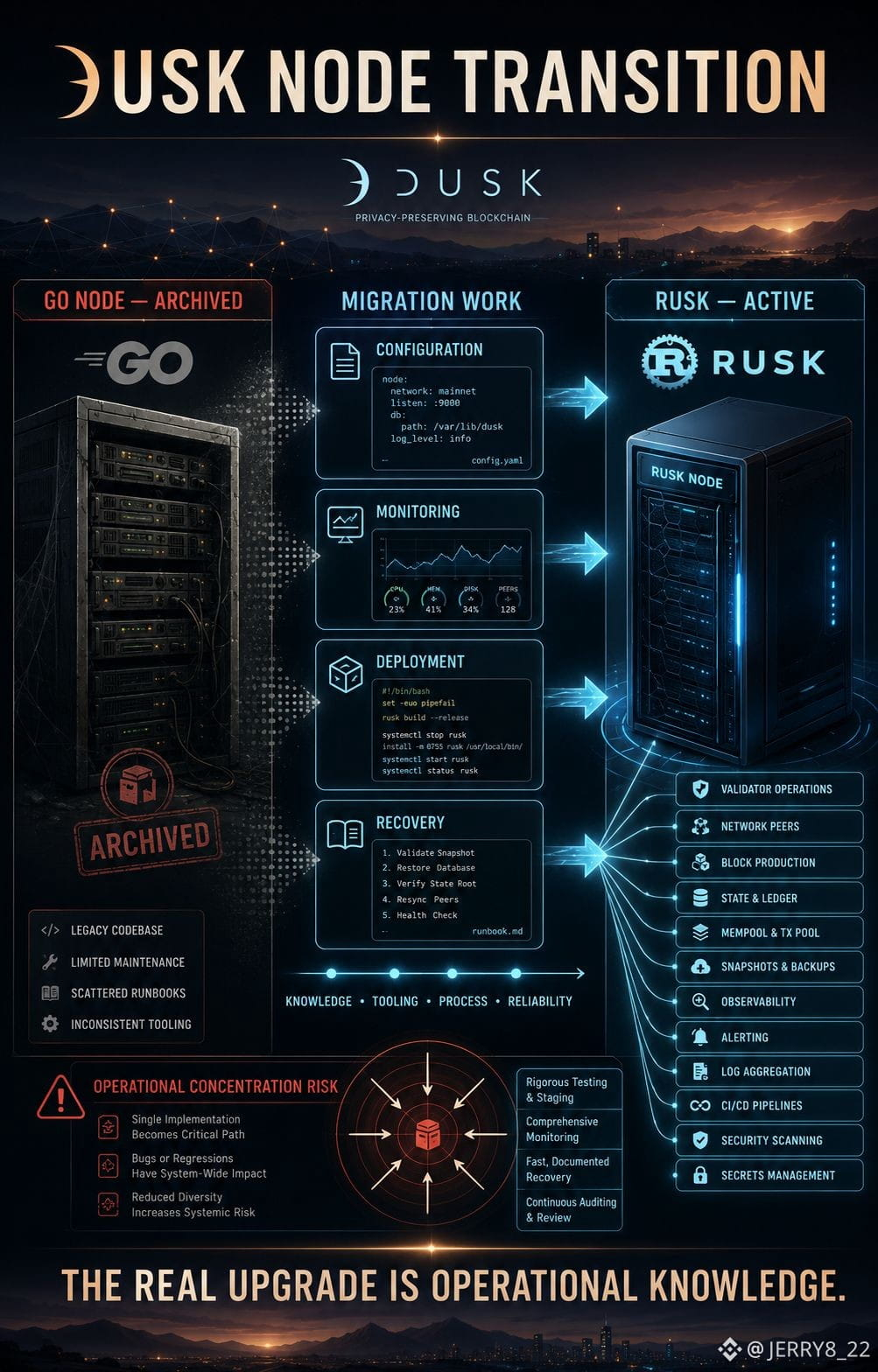
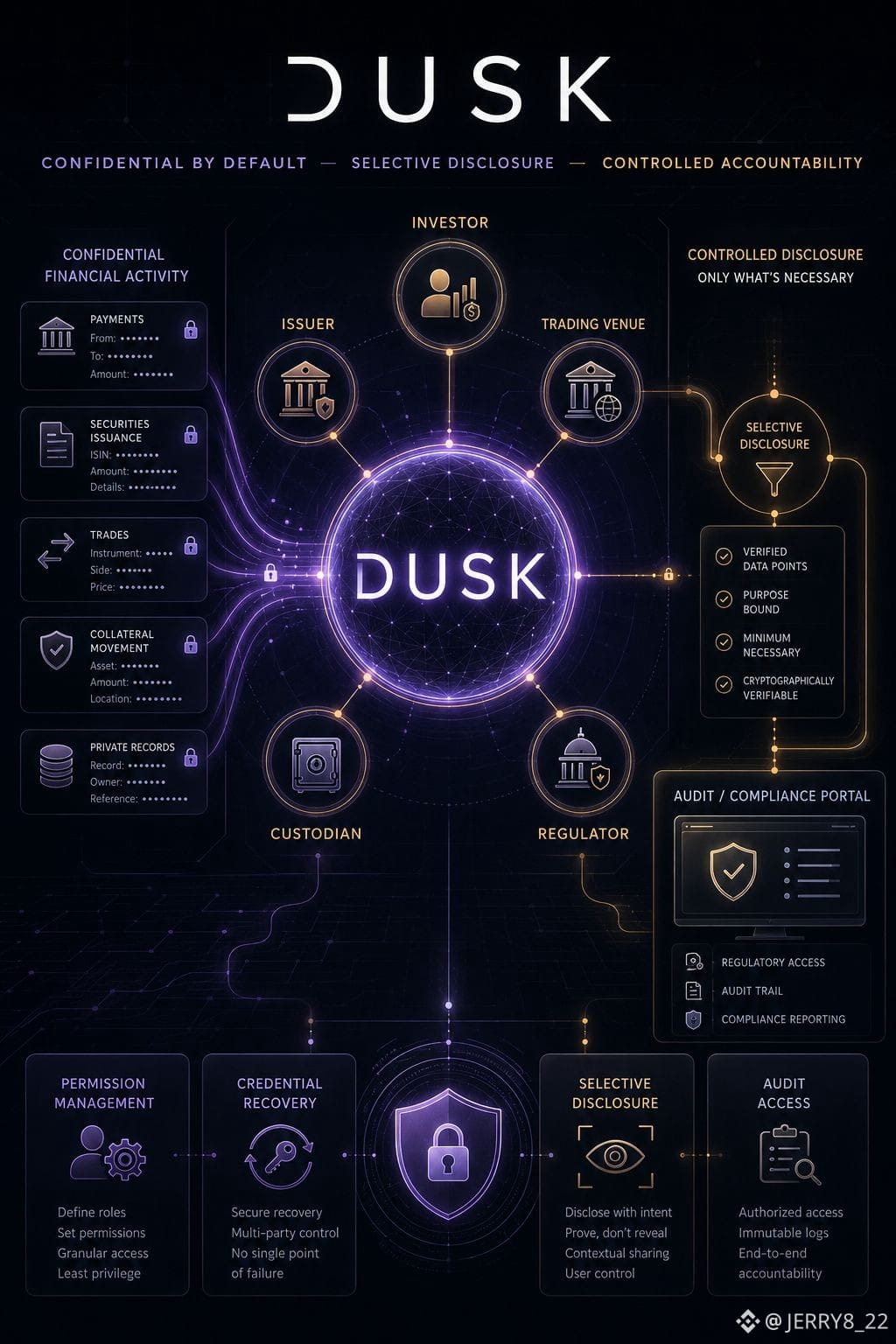
When Finance Finally Respects Privacy and Trust Dusk Foundation$DUSK Dusk Foundation was born in 2018 from a feeling many people quietly shared but rarely voiced. Finance had become powerful yet distant. Blockchain promised freedom yet demanded full exposure. Something about that tradeoff felt wrong. People do not live their lives in public ledgers. Businesses do not operate by revealing every detail to the world. Still most blockchain systems forced exactly that. Dusk began with the belief that technology should adapt to people not the other way around. Dusk is a Layer 1 blockchain created specifically for regulated and privacy focused financial infrastructure. From the start it was built for the real world of finance where laws exist where accountability matters and where trust is earned slowly. Instead of rejecting regulation Dusk embraces it and reshapes it for a decentralized future. This approach allows institutions and individuals to participate without fear of exposure or loss of compliance. At the heart of Dusk is the idea of controlled privacy. Privacy here does not mean secrecy or avoidance. It means choice. Transactions can remain confidential while still being provable. Sensitive data can stay protected while audits remain possible. This balance makes Dusk suitable for environments where transparency is required but discretion is essential. It allows finance to operate with dignity. The architecture of Dusk is modular by design. This makes the network flexible and resilient. As financial regulations evolve and market needs change the system can adapt without breaking. Developers are able to build complex institutional grade applications that feel stable and future ready. This includes compliant decentralized finance platforms that respect identity rules governance standards and reporting requirements. Dusk creates a strong foundation for regulated DeFi. Unlike many systems that ignore real world constraints Dusk acknowledges them. It provides the tools needed for verified participation structured compliance and lawful financial activity. This makes decentralized finance accessible to banks asset managers and regulated entities that previously could not enter the space. One of the most important roles Dusk plays is in the tokenization of real world assets. These assets represent real value and real responsibility. Securities bonds and financial instruments require both privacy and trust. Dusk enables these assets to exist on chain without losing legitimacy. Confidential information stays protected while ownership and compliance can be proven when necessary. This creates a bridge between traditional finance and blockchain technology that feels safe and practical. What truly sets Dusk apart is its mindset. It does not rush. It does not follow trends. It builds carefully because finance affects real lives. Every design choice reflects patience and responsibility. In an industry driven by speed and speculation Dusk chooses stability and trust. Dusk Foundation is not trying to replace existing financial systems overnight. It is building a quiet path forward where decentralization and regulation can coexist. Where innovation does not come at the cost of privacy. Where technology feels respectful instead of invasive. @Dusk_Foundation #Dusk $DUSK

When Finance Finally Respects Privacy and Trust Dusk Foundation

$DUSK Dusk Foundation was born in 2018 from a feeling many people quietly shared but rarely voiced. Finance had become powerful yet distant. Blockchain promised freedom yet demanded full exposure. Something about that tradeoff felt wrong. People do not live their lives in public ledgers. Businesses do not operate by revealing every detail to the world. Still most blockchain systems forced exactly that. Dusk began with the belief that technology should adapt to people not the other way around.

Dusk is a Layer 1 blockchain created specifically for regulated and privacy focused financial infrastructure. From the start it was built for the real world of finance where laws exist where accountability matters and where trust is earned slowly. Instead of rejecting regulation Dusk embraces it and reshapes it for a decentralized future. This approach allows institutions and individuals to participate without fear of exposure or loss of compliance.

At the heart of Dusk is the idea of controlled privacy. Privacy here does not mean secrecy or avoidance. It means choice. Transactions can remain confidential while still being provable. Sensitive data can stay protected while audits remain possible. This balance makes Dusk suitable for environments where transparency is required but discretion is essential. It allows finance to operate with dignity.

The architecture of Dusk is modular by design. This makes the network flexible and resilient. As financial regulations evolve and market needs change the system can adapt without breaking. Developers are able to build complex institutional grade applications that feel stable and future ready. This includes compliant decentralized finance platforms that respect identity rules governance standards and reporting requirements.

Dusk creates a strong foundation for regulated DeFi. Unlike many systems that ignore real world constraints Dusk acknowledges them. It provides the tools needed for verified participation structured compliance and lawful financial activity. This makes decentralized finance accessible to banks asset managers and regulated entities that previously could not enter the space.

One of the most important roles Dusk plays is in the tokenization of real world assets. These assets represent real value and real responsibility. Securities bonds and financial instruments require both privacy and trust. Dusk enables these assets to exist on chain without losing legitimacy. Confidential information stays protected while ownership and compliance can be proven when necessary. This creates a bridge between traditional finance and blockchain technology that feels safe and practical.

What truly sets Dusk apart is its mindset. It does not rush. It does not follow trends. It builds carefully because finance affects real lives. Every design choice reflects patience and responsibility. In an industry driven by speed and speculation Dusk chooses stability and trust.

Dusk Foundation is not trying to replace existing financial systems overnight. It is building a quiet path forward where decentralization and regulation can coexist. Where innovation does not come at the cost of privacy. Where technology feels respectful instead of invasive.
@Dusk #Dusk $DUSK
When Finance Learns to Breathe and Trust Finds Its Way Back Through Technology#Dusk The story of Dusk Foundation begins quietly and that silence matters. Founded in 2018 Dusk did not appear to impress the crowd or chase attention. It appeared because something was missing in blockchain. There was innovation everywhere yet very little understanding of how real finance actually feels. Money is not abstract. It holds fear hope patience and responsibility. It touches families businesses futures and entire societies. Dusk was built from that human truth. From the very beginning the idea was not to fight regulation or ignore institutions. The idea was to accept reality and build technology that could live inside it. I am seeing a project that understands that finance exists to protect people and systems not just to move numbers. If blockchain was ever going to matter beyond speculation it had to grow up. Dusk chose that path early. At its core Dusk is a layer one blockchain designed specifically for regulated financial environments. That single choice shapes everything else. This is not a chain built for chaos. It is built for trust. It is built to support institutions while still protecting individuals. It is built for a future where blockchain is not exciting because it is new but because it is reliable. Privacy inside Dusk feels different. It does not feel secretive. It feels protective. There is no sense of running away from oversight. Instead there is a careful balance between confidentiality and accountability. Under the surface Dusk uses advanced cryptography that allows transactions and smart contracts to remain private while still being verifiable. This means that actions can be proven without being exposed to the entire world. If regulators need clarity the system can provide it. If audits are required they can happen without panic. Nothing collapses under scrutiny. This approach changes the emotional tone of blockchain entirely. Instead of fear there is calm. Instead of hiding there is structure. We are seeing privacy treated as a right that exists alongside responsibility. That combination is rare and deeply needed. The architecture of Dusk reflects the same philosophy. It is modular by design which means different parts of the system can evolve without breaking everything else. This is how real infrastructure is built. Slowly carefully and with room to grow. The network does not chase raw speed or spectacle. It prioritizes stability sustainability and long term reliability. Consensus on Dusk follows proof of stake principles which allow the network to remain secure without wasting enormous resources. Participation feels cooperative rather than competitive. That matters when systems are expected to last for decades rather than cycles. The goal is not to win today but to still be standing tomorrow. Smart contracts on Dusk are designed with confidentiality at their core. Financial agreements often involve sensitive terms and private data. Exposing everything publicly is not transparency it is risk. Dusk allows logic to execute correctly while keeping sensitive information protected. This makes the chain suitable for real financial products rather than experimental ones. Decentralized finance is also treated differently here. Instead of rebellion there is responsibility. Dusk imagines DeFi that can coexist with laws identity and jurisdiction. Financial applications on the network can include compliance rules and access conditions where required. This does not weaken decentralization. It strengthens trust. I am noticing how this opens doors that were previously closed. Institutions cannot operate in systems that ignore regulation. Dusk does not ask them to pretend. It meets them where they are. We are seeing decentralized finance slowly mature into something that resembles real finance while still preserving the benefits of blockchain. Tokenized real world assets are a natural extension of this vision. Dusk does not treat tokenization as a trend. It treats it as translation. Real assets already exist with legal meaning ownership rules and obligations. Dusk gives them a digital form that respects those foundations. Equities bonds and other financial instruments can exist on chain with privacy and compliance built into their behavior. Ownership can be proven without public exposure. Transfers can follow legal frameworks automatically. Audits can happen without turning everything into spectacle. If financial markets move on chain systems like Dusk will feel natural rather than disruptive. Visibility still matters and when it does platforms like Binance provide access and liquidity. But Dusk does not define itself through exchanges or daily price movement. Its value comes from whether it works when it truly matters. This creates an ecosystem that feels patient. Builders are not rushed. Institutions explore carefully. Growth feels deliberate and sustainable. Looking forward the direction of Dusk feels clear. It is not trying to dominate attention. It is trying to become invisible infrastructure. The kind that people rely on without thinking about it. The foundation continues to focus on research cryptography and collaboration with regulatory frameworks. That signals long term thinking. This is not a project built for hype. It is built for time. Some technologies try to change the world by breaking it. Others try to change it by understanding it. Dusk belongs to the second kind. I am feeling care in its design humility in its pace and respect in its intentions. They are not trying to replace finance. They are trying to help it evolve without losing trust. We are not just watching a blockchain being built. We are watching patience being turned into infrastructure and care being turned into code. And in a world that often moves too fast that quiet strength may be the most powerful innovation of all. @Dusk_Foundation #Dusk $DUSK

When Finance Learns to Breathe and Trust Finds Its Way Back Through Technology

#Dusk The story of Dusk Foundation begins quietly and that silence matters. Founded in 2018 Dusk did not appear to impress the crowd or chase attention. It appeared because something was missing in blockchain. There was innovation everywhere yet very little understanding of how real finance actually feels. Money is not abstract. It holds fear hope patience and responsibility. It touches families businesses futures and entire societies. Dusk was built from that human truth.

From the very beginning the idea was not to fight regulation or ignore institutions. The idea was to accept reality and build technology that could live inside it. I am seeing a project that understands that finance exists to protect people and systems not just to move numbers. If blockchain was ever going to matter beyond speculation it had to grow up. Dusk chose that path early.

At its core Dusk is a layer one blockchain designed specifically for regulated financial environments. That single choice shapes everything else. This is not a chain built for chaos. It is built for trust. It is built to support institutions while still protecting individuals. It is built for a future where blockchain is not exciting because it is new but because it is reliable.

Privacy inside Dusk feels different. It does not feel secretive. It feels protective. There is no sense of running away from oversight. Instead there is a careful balance between confidentiality and accountability. Under the surface Dusk uses advanced cryptography that allows transactions and smart contracts to remain private while still being verifiable. This means that actions can be proven without being exposed to the entire world. If regulators need clarity the system can provide it. If audits are required they can happen without panic. Nothing collapses under scrutiny.

This approach changes the emotional tone of blockchain entirely. Instead of fear there is calm. Instead of hiding there is structure. We are seeing privacy treated as a right that exists alongside responsibility. That combination is rare and deeply needed.

The architecture of Dusk reflects the same philosophy. It is modular by design which means different parts of the system can evolve without breaking everything else. This is how real infrastructure is built. Slowly carefully and with room to grow. The network does not chase raw speed or spectacle. It prioritizes stability sustainability and long term reliability.

Consensus on Dusk follows proof of stake principles which allow the network to remain secure without wasting enormous resources. Participation feels cooperative rather than competitive. That matters when systems are expected to last for decades rather than cycles. The goal is not to win today but to still be standing tomorrow.

Smart contracts on Dusk are designed with confidentiality at their core. Financial agreements often involve sensitive terms and private data. Exposing everything publicly is not transparency it is risk. Dusk allows logic to execute correctly while keeping sensitive information protected. This makes the chain suitable for real financial products rather than experimental ones.

Decentralized finance is also treated differently here. Instead of rebellion there is responsibility. Dusk imagines DeFi that can coexist with laws identity and jurisdiction. Financial applications on the network can include compliance rules and access conditions where required. This does not weaken decentralization. It strengthens trust.

I am noticing how this opens doors that were previously closed. Institutions cannot operate in systems that ignore regulation. Dusk does not ask them to pretend. It meets them where they are. We are seeing decentralized finance slowly mature into something that resembles real finance while still preserving the benefits of blockchain.

Tokenized real world assets are a natural extension of this vision. Dusk does not treat tokenization as a trend. It treats it as translation. Real assets already exist with legal meaning ownership rules and obligations. Dusk gives them a digital form that respects those foundations.

Equities bonds and other financial instruments can exist on chain with privacy and compliance built into their behavior. Ownership can be proven without public exposure. Transfers can follow legal frameworks automatically. Audits can happen without turning everything into spectacle. If financial markets move on chain systems like Dusk will feel natural rather than disruptive.

Visibility still matters and when it does platforms like Binance provide access and liquidity. But Dusk does not define itself through exchanges or daily price movement. Its value comes from whether it works when it truly matters. This creates an ecosystem that feels patient. Builders are not rushed. Institutions explore carefully. Growth feels deliberate and sustainable.

Looking forward the direction of Dusk feels clear. It is not trying to dominate attention. It is trying to become invisible infrastructure. The kind that people rely on without thinking about it. The foundation continues to focus on research cryptography and collaboration with regulatory frameworks. That signals long term thinking. This is not a project built for hype. It is built for time.

Some technologies try to change the world by breaking it. Others try to change it by understanding it. Dusk belongs to the second kind. I am feeling care in its design humility in its pace and respect in its intentions.

They are not trying to replace finance. They are trying to help it evolve without losing trust. We are not just watching a blockchain being built. We are watching patience being turned into infrastructure and care being turned into code. And in a world that often moves too fast that quiet strength may be the most powerful innovation of all.
@Dusk #Dusk $DUSK
Dusk Foundation When Brave Technology Meets Real-World Responsibility@Dusk_Foundation is not just another blockchain story. It is a deeply human attempt to bridge two worlds that have long felt distant — the cutting-edge promise of blockchain and the everyday reality of regulated global finance. Born in 2018 with clear purpose and steady intent, Dusk Foundation set out to build something beautiful and meaningful: a blockchain that feels both innovative and trustworthy, a space where people can feel safe moving real value in ways that respect privacy, law, and personal dignity. What you’re about to read is not dry jargon. It’s a journey into how technology, emotion, design, and responsibility come together in a way that feels grounded and inspiring. From the very beginning Dusk understood something most blockchains didn’t — finance is about people, not just numbers. Behind every transaction, contract, and security there is a story of fear and hope, of trust and vulnerability. And so the foundation asked itself a question that many in the industry shy away from: can blockchain be private and compliant at the same time? That may seem simple, but its implications are profound, because it forces a deeper reckoning with what technology should feel like for the people who depend on it. At its heart, Dusk is a layer-1 blockchain designed first for regulated and privacy-focused financial infrastructure. That alone sets it apart. Many blockchains talk about decentralization or speed or scalability, but Dusk started with a mission rooted in trust and human necessity — to create a system where institutions and individuals can operate side by side without fear that privacy must be sacrificed for compliance, or that compliance must crush privacy. This balancing act is not accidental. It is the emotional core of the project. Underneath the surface, Dusk’s architecture reflects this intention in almost every design choice. Instead of a single monolithic blockchain with one responsibility, Dusk built a modular system. This means that different layers each handle specific roles — settlement, execution, privacy, compliance — so that each can evolve and adapt without disrupting the whole. This modular architecture is not just a technical detail. It is a philosophy about life and change. Dusk recognizes that markets, rules, and human needs change over time. A rigid system will eventually break, but a flexible one — like a strong tree in a storm — can bend and grow. One of the most poignant challenges the project addresses is privacy in a digital world where everyone feels watched and exposed. Most public blockchains make every transaction visible forever, which might sound transparent, but in real life it feels like living in a fishbowl. Dusk tackles this with advanced cryptography and zero-knowledge technology that allows proofs of truth without exposing all the intimate details. This is not secrecy for secrecy’s sake. It is privacy for dignity’s sake. People’s balances, identities, and financial behaviors can remain confidential while still being provably valid and compliant with laws like MiFID II and MiCA in Europe. Beyond privacy, Dusk’s network is built to be user-friendly for institutions that operate under strict regulations. This means the blockchain incorporates on-chain compliance primitives — rules encoded in the system that help ensure that token issuances, trades, and settlements adhere to regulatory standards. This allows traditional financial processes to move on-chain without losing their legal moorings. When a bank, exchange, or fund manager looks at Dusk, they see something that respects their responsibilities, not dismisses them. One of the most exciting parts of the Dusk story — and one that feels deeply real because it connects to everyday financial life — is the tokenization of real-world assets (RWAs). These are not abstract digital tokens; they represent actual tangible or intangible assets such as property, bonds, or equity. Bringing them onto the blockchain has the potential to transform how value moves in the world — making ownership more transparent, settlement faster, and access more democratic. But for this transformation to truly feel right, regulation and privacy cannot be afterthoughts — they must be baked in. And that is exactly what Dusk aims to achieve. Imagine being able to own a slice of real estate, a share of a bond, or a portion of an artwork without layers of intermediaries, while still knowing that your identity and personal financial history are respected. That vision is what motivates the technical breakthroughs in Dusk — from its confidential smart contracts to its identity and compliance layers. These innovations are not theoretical. They exist because they were designed to solve the hard, human problems of trust, security, and privacy in financial systems that matter to people’s lives. Yet Dusk doesn’t stop at individual needs. It embraces community and partnership. Through collaborations with licensed institutions and regulated exchanges, as well as integrations that prepare the network for broader institutional use, Dusk is building bridges not walls. This feels important because it acknowledges that the future of finance — and by extension the future of our shared digital world — will not be built by isolated innovators alone. It will be built by communities that choose to work together toward goals that feel honorable and inclusive. And today, as Dusk continues to mature and roll out its mainnet and ecosystem capabilities, something inspiring is happening. We are seeing real momentum toward financial technologies that don’t force a choice between privacy and regulation, between openness and dignity, between innovation and law. Dusk stands as a reminder that technology can evolve not just to be smarter, faster, or more profitable, but more humane, more respectful, and more in tune with the way we actually live. In the world of blockchain, where headlines often celebrate disruption and speculative upside, Dusk feels like a breath of calm air. It reminds us that the deepest value of any system is not how loudly it announces itself, but how quietly and faithfully it improves the lives of the people who rely on it. Dusk invites us to imagine a future where financial systems feel familiar yet better — a future where privacy and trust coexist, where compliance enables participation rather than restricts it, and where technology serves humanity rather than overwhelms it. This isn’t just innovation. It feels like hope. @Dusk_Foundation #Dusk $DUSK

Dusk Foundation When Brave Technology Meets Real-World Responsibility

@Dusk is not just another blockchain story. It is a deeply human attempt to bridge two worlds that have long felt distant — the cutting-edge promise of blockchain and the everyday reality of regulated global finance. Born in 2018 with clear purpose and steady intent, Dusk Foundation set out to build something beautiful and meaningful: a blockchain that feels both innovative and trustworthy, a space where people can feel safe moving real value in ways that respect privacy, law, and personal dignity. What you’re about to read is not dry jargon. It’s a journey into how technology, emotion, design, and responsibility come together in a way that feels grounded and inspiring.

From the very beginning Dusk understood something most blockchains didn’t — finance is about people, not just numbers. Behind every transaction, contract, and security there is a story of fear and hope, of trust and vulnerability. And so the foundation asked itself a question that many in the industry shy away from: can blockchain be private and compliant at the same time? That may seem simple, but its implications are profound, because it forces a deeper reckoning with what technology should feel like for the people who depend on it.

At its heart, Dusk is a layer-1 blockchain designed first for regulated and privacy-focused financial infrastructure. That alone sets it apart. Many blockchains talk about decentralization or speed or scalability, but Dusk started with a mission rooted in trust and human necessity — to create a system where institutions and individuals can operate side by side without fear that privacy must be sacrificed for compliance, or that compliance must crush privacy. This balancing act is not accidental. It is the emotional core of the project.

Underneath the surface, Dusk’s architecture reflects this intention in almost every design choice. Instead of a single monolithic blockchain with one responsibility, Dusk built a modular system. This means that different layers each handle specific roles — settlement, execution, privacy, compliance — so that each can evolve and adapt without disrupting the whole. This modular architecture is not just a technical detail. It is a philosophy about life and change. Dusk recognizes that markets, rules, and human needs change over time. A rigid system will eventually break, but a flexible one — like a strong tree in a storm — can bend and grow.

One of the most poignant challenges the project addresses is privacy in a digital world where everyone feels watched and exposed. Most public blockchains make every transaction visible forever, which might sound transparent, but in real life it feels like living in a fishbowl. Dusk tackles this with advanced cryptography and zero-knowledge technology that allows proofs of truth without exposing all the intimate details. This is not secrecy for secrecy’s sake. It is privacy for dignity’s sake. People’s balances, identities, and financial behaviors can remain confidential while still being provably valid and compliant with laws like MiFID II and MiCA in Europe.

Beyond privacy, Dusk’s network is built to be user-friendly for institutions that operate under strict regulations. This means the blockchain incorporates on-chain compliance primitives — rules encoded in the system that help ensure that token issuances, trades, and settlements adhere to regulatory standards. This allows traditional financial processes to move on-chain without losing their legal moorings. When a bank, exchange, or fund manager looks at Dusk, they see something that respects their responsibilities, not dismisses them.

One of the most exciting parts of the Dusk story — and one that feels deeply real because it connects to everyday financial life — is the tokenization of real-world assets (RWAs). These are not abstract digital tokens; they represent actual tangible or intangible assets such as property, bonds, or equity. Bringing them onto the blockchain has the potential to transform how value moves in the world — making ownership more transparent, settlement faster, and access more democratic. But for this transformation to truly feel right, regulation and privacy cannot be afterthoughts — they must be baked in. And that is exactly what Dusk aims to achieve.

Imagine being able to own a slice of real estate, a share of a bond, or a portion of an artwork without layers of intermediaries, while still knowing that your identity and personal financial history are respected. That vision is what motivates the technical breakthroughs in Dusk — from its confidential smart contracts to its identity and compliance layers. These innovations are not theoretical. They exist because they were designed to solve the hard, human problems of trust, security, and privacy in financial systems that matter to people’s lives.

Yet Dusk doesn’t stop at individual needs. It embraces community and partnership. Through collaborations with licensed institutions and regulated exchanges, as well as integrations that prepare the network for broader institutional use, Dusk is building bridges not walls. This feels important because it acknowledges that the future of finance — and by extension the future of our shared digital world — will not be built by isolated innovators alone. It will be built by communities that choose to work together toward goals that feel honorable and inclusive.

And today, as Dusk continues to mature and roll out its mainnet and ecosystem capabilities, something inspiring is happening. We are seeing real momentum toward financial technologies that don’t force a choice between privacy and regulation, between openness and dignity, between innovation and law. Dusk stands as a reminder that technology can evolve not just to be smarter, faster, or more profitable, but more humane, more respectful, and more in tune with the way we actually live.

In the world of blockchain, where headlines often celebrate disruption and speculative upside, Dusk feels like a breath of calm air. It reminds us that the deepest value of any system is not how loudly it announces itself, but how quietly and faithfully it improves the lives of the people who rely on it. Dusk invites us to imagine a future where financial systems feel familiar yet better — a future where privacy and trust coexist, where compliance enables participation rather than restricts it, and where technology serves humanity rather than overwhelms it. This isn’t just innovation. It feels like hope.
@Dusk #Dusk $DUSK
--
Bullish
I’m paying attention to projects that focus on fundamentals, not hype. @WalrusProtocol ’s approach to decentralized storage makes $WAL worth watching long term. #Walrus
I’m paying attention to projects that focus on fundamentals, not hype. @Walrus 🦭/acc ’s approach to decentralized storage makes $WAL worth watching long term. #Walrus
Assets Allocation
Top holding
USDT
74.52%
--
Bullish
They’re building infrastructure most users never see but always need. @WalrusProtocol and its data-focused design give $WAL real relevance in Web3. #Walrus
They’re building infrastructure most users never see but always need. @Walrus 🦭/acc and its data-focused design give $WAL real relevance in Web3. #Walrus
Assets Allocation
Top holding
USDT
74.52%
--
Bullish
If decentralized apps are going to scale, storage must evolve too. @WalrusProtocol is quietly solving this layer, and $WAL could benefit as adoption grows. #Walrus
If decentralized apps are going to scale, storage must evolve too. @Walrus 🦭/acc is quietly solving this layer, and $WAL could benefit as adoption grows. #Walrus
Assets Allocation
Top holding
USDT
74.59%
--
Bullish
We’re seeing more builders care about efficient onchain data, and that’s where @WalrusProtocol stands out. The utility behind $WAL makes #Walrus more than just another token.
We’re seeing more builders care about efficient onchain data, and that’s where @Walrus 🦭/acc stands out. The utility behind $WAL makes #Walrus more than just another token.
Assets Allocation
Top holding
USDT
74.61%
--
Bullish
I’m watching how @WalrusProtocol is rethinking decentralized storage with performance and scalability in mind. $WAL feels like an early piece of a much bigger data future. #Walrus
I’m watching how @Walrus 🦭/acc is rethinking decentralized storage with performance and scalability in mind. $WAL feels like an early piece of a much bigger data future. #Walrus
Assets Allocation
Top holding
USDT
74.61%
--
Bullish
Builders should pay attention to @Dusk_Foundation . Privacy-preserving smart contracts, secure identity, and scalable tech make $DUSK one of the most promising Web3 projects. #Dusk
Builders should pay attention to @Dusk . Privacy-preserving smart contracts, secure identity, and scalable tech make $DUSK one of the most promising Web3 projects. #Dusk
Assets Allocation
Top holding
USDT
74.59%
--
Bullish
Institutions won’t adopt public blockchains without privacy and compliance. That’s exactly where @Dusk_Foundation shines. Keep an eye on $DUSK as the ecosystem grows. #Dusk
Institutions won’t adopt public blockchains without privacy and compliance. That’s exactly where @Dusk shines. Keep an eye on $DUSK as the ecosystem grows. #Dusk
Assets Allocation
Top holding
USDT
74.60%
--
Bullish
Most blockchains talk about privacy, but few deliver it properly. @Dusk_Foundation combines zero-knowledge tech with regulation-friendly design. That’s powerful long term. $DUSK #Dusk
Most blockchains talk about privacy, but few deliver it properly. @Dusk combines zero-knowledge tech with regulation-friendly design. That’s powerful long term. $DUSK #Dusk
Assets Allocation
Top holding
USDT
74.53%
--
Bullish
What I like about @Dusk_Foundation is the focus on real-world use cases like privacy-preserving DeFi and on-chain compliance. This is how blockchain goes mainstream. $DUSK #Dusk
What I like about @Dusk is the focus on real-world use cases like privacy-preserving DeFi and on-chain compliance. This is how blockchain goes mainstream. $DUSK #Dusk
Assets Allocation
Top holding
USDT
74.53%
--
Bullish
Privacy is becoming a real need, not a luxury. @Dusk_Foundation _foundation is building compliant privacy for Web3 with smart contracts, identity, and finance. $DUSK is seriously underrated. #Dusk
Privacy is becoming a real need, not a luxury. @Dusk _foundation is building compliant privacy for Web3 with smart contracts, identity, and finance. $DUSK is seriously underrated. #Dusk
Assets Allocation
Top holding
USDT
74.53%
--
Bullish
--
Bearish
Assets Allocation
Top holding
USDT
74.50%
--
Bullish
Assets Allocation
Top holding
USDT
74.52%
Login to explore more contents
Explore the latest crypto news
⚡️ Be a part of the latests discussions in crypto
💬 Interact with your favorite creators
👍 Enjoy content that interests you
Email / Phone number

Latest News

--
View More

Trending Articles

MAyan01
View More
Sitemap
Cookie Preferences
Platform T&Cs