

#market
market
6.6M views
17,568 Discussing
Hot
Latest

·
--

Article
Crypto Market Overview: Reading the Current Cycle2026 has been a year of range-bound volatility rather than a clean trend in either direction. Bitcoin spent much of the summer consolidating in the low-to-mid $60,000s before staging a recovery — by early September, BTC was trading around $79,697, up roughly 25% from where it stood a month earlier, though still well below its level from a year prior. That kind of swing — a sharp bounce off a multi-month base — is the defining pattern of this market right now: sentiment shifting fast in both directions, with no shortage of macro noise driving it.
Fortune
What's Driving the Volatility
Macro sensitivity. Rate expectations, ETF flow data, and broader risk-asset sentiment are moving crypto as much as anything "crypto-native." Bitcoin is trading more like a macro asset than it did in prior cycles.
ETF flows as a swing factor. Institutional inflows and outflows through spot BTC and ETH ETFs have become one of the clearest short-term price signals — sharp outflow periods have coincided with local bottoms, and inflow surges with recoveries.
Altcoin dispersion. Rather than moving in lockstep with BTC, altcoins are showing wider performance gaps — some sectors (AI-linked tokens, tokenized real-world assets) have outperformed, while others lag badly. Dominance is shifting sector by sector, not just coin by coin.
What This Means for Traders
A range-bound, macro-driven market rewards different behavior than a trending one:
Levels matter more than narratives. In a choppy market, key support/resistance zones tend to hold more predictive value than headline-driven hype.
Position sizing over conviction. Sharp reversals punish overleveraged directional bets. Smaller size with wider stops tends to outperform all-in conviction trades in this kind of tape.
Watch flows, not just price. ETF inflow/outflow data and on-chain exchange balances are giving cleaner signals than price action alone right now.
This isn't a market defined by a single dominant narrative — it's defined by volatility around a wide range, with institutional flows increasingly setting the tone. Traders who adapt their strategy to range conditions, rather than forcing a trending-market playbook onto a choppy one, are better positioned regardless of which direction the next breakout comes.
Not financial advice — always do your own research.#Btc #market #CoinMarketCapCompletesCoinglassAcquisition $ETH $BTC
Crypto Market Overview: Reading the Current Cycle
2026 has been a year of range-bound volatility rather than a clean trend in either direction. Bitcoin spent much of the summer consolidating in the low-to-mid $60,000s before staging a recovery — by early September, BTC was trading around $79,697, up roughly 25% from where it stood a month earlier, though still well below its level from a year prior. That kind of swing — a sharp bounce off a multi-month base — is the defining pattern of this market right now: sentiment shifting fast in both directions, with no shortage of macro noise driving it.
Fortune
What's Driving the Volatility
Macro sensitivity. Rate expectations, ETF flow data, and broader risk-asset sentiment are moving crypto as much as anything "crypto-native." Bitcoin is trading more like a macro asset than it did in prior cycles.
ETF flows as a swing factor. Institutional inflows and outflows through spot BTC and ETH ETFs have become one of the clearest short-term price signals — sharp outflow periods have coincided with local bottoms, and inflow surges with recoveries.
Altcoin dispersion. Rather than moving in lockstep with BTC, altcoins are showing wider performance gaps — some sectors (AI-linked tokens, tokenized real-world assets) have outperformed, while others lag badly. Dominance is shifting sector by sector, not just coin by coin.
What This Means for Traders
A range-bound, macro-driven market rewards different behavior than a trending one:
Levels matter more than narratives. In a choppy market, key support/resistance zones tend to hold more predictive value than headline-driven hype.
Position sizing over conviction. Sharp reversals punish overleveraged directional bets. Smaller size with wider stops tends to outperform all-in conviction trades in this kind of tape.
Watch flows, not just price. ETF inflow/outflow data and on-chain exchange balances are giving cleaner signals than price action alone right now.
This isn't a market defined by a single dominant narrative — it's defined by volatility around a wide range, with institutional flows increasingly setting the tone. Traders who adapt their strategy to range conditions, rather than forcing a trending-market playbook onto a choppy one, are better positioned regardless of which direction the next breakout comes.
Not financial advice — always do your own research.#Btc #market #CoinMarketCapCompletesCoinglassAcquisition $ETH $BTC
Fortune
What's Driving the Volatility
Macro sensitivity. Rate expectations, ETF flow data, and broader risk-asset sentiment are moving crypto as much as anything "crypto-native." Bitcoin is trading more like a macro asset than it did in prior cycles.
ETF flows as a swing factor. Institutional inflows and outflows through spot BTC and ETH ETFs have become one of the clearest short-term price signals — sharp outflow periods have coincided with local bottoms, and inflow surges with recoveries.
Altcoin dispersion. Rather than moving in lockstep with BTC, altcoins are showing wider performance gaps — some sectors (AI-linked tokens, tokenized real-world assets) have outperformed, while others lag badly. Dominance is shifting sector by sector, not just coin by coin.
What This Means for Traders
A range-bound, macro-driven market rewards different behavior than a trending one:
Levels matter more than narratives. In a choppy market, key support/resistance zones tend to hold more predictive value than headline-driven hype.
Position sizing over conviction. Sharp reversals punish overleveraged directional bets. Smaller size with wider stops tends to outperform all-in conviction trades in this kind of tape.
Watch flows, not just price. ETF inflow/outflow data and on-chain exchange balances are giving cleaner signals than price action alone right now.
This isn't a market defined by a single dominant narrative — it's defined by volatility around a wide range, with institutional flows increasingly setting the tone. Traders who adapt their strategy to range conditions, rather than forcing a trending-market playbook onto a choppy one, are better positioned regardless of which direction the next breakout comes.
Not financial advice — always do your own research.#Btc #market #CoinMarketCapCompletesCoinglassAcquisition $ETH $BTC
88

Article
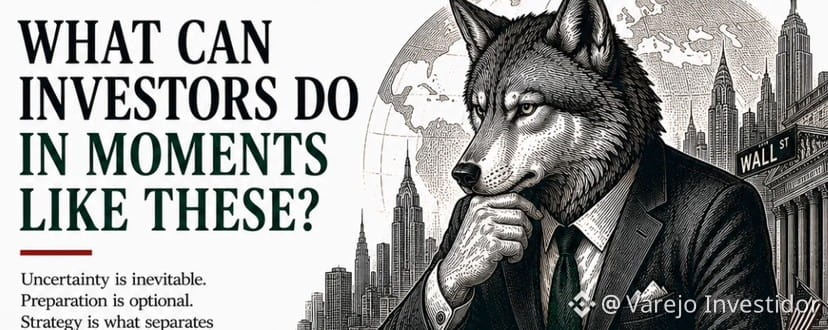
WHY THE DOLLAR SITS AT THE CENTER OF GLOBAL FINANCEThe U.S. dollar’s international role is not based on a single factor. It has developed through decades of trade, financial markets, banking relationships and reserve management.
A major part of the system comes from the fact that international transactions frequently involve dollar-denominated assets and liabilities. Commodities and financial contracts can be priced in dollars, while banks, corporations and governments may hold dollar reserves or borrow in the currency.
This creates a network effect.
GLOBAL TRADE → DOLLAR SETTLEMENT → FINANCIAL MARKETS → RESERVE DEMAND
The more deeply a currency is integrated into international commerce and finance, the more infrastructure exists around it. Banks maintain dollar liquidity, institutions hold dollar assets and companies manage exposures through global currency markets.
That structure also means changes in U.S. monetary conditions can have consequences well beyond the United States. Interest rates, liquidity and the value of the dollar can influence capital flows, emerging markets, commodities and corporate financing conditions.
The important distinction is between the dollar itself and the system built around it.
Reserve currencies are supported not only by economic size, but also by financial infrastructure, market depth, institutional frameworks and international demand.
Understanding that network helps explain why the dollar remains such an important variable in global markets.
#oil #market #finance #economy
$TLTP.ETF
$GLWB
{spot}(GLWBUSDT)
$EEM.ETF
{etf_us}(EEM.ETF)
{stock_us}(UUUU.US)
WHY THE DOLLAR SITS AT THE CENTER OF GLOBAL FINANCE
The U.S. dollar’s international role is not based on a single factor. It has developed through decades of trade, financial markets, banking relationships and reserve management.
A major part of the system comes from the fact that international transactions frequently involve dollar-denominated assets and liabilities. Commodities and financial contracts can be priced in dollars, while banks, corporations and governments may hold dollar reserves or borrow in the currency.
This creates a network effect.
GLOBAL TRADE → DOLLAR SETTLEMENT → FINANCIAL MARKETS → RESERVE DEMAND
The more deeply a currency is integrated into international commerce and finance, the more infrastructure exists around it. Banks maintain dollar liquidity, institutions hold dollar assets and companies manage exposures through global currency markets.
That structure also means changes in U.S. monetary conditions can have consequences well beyond the United States. Interest rates, liquidity and the value of the dollar can influence capital flows, emerging markets, commodities and corporate financing conditions.
The important distinction is between the dollar itself and the system built around it.
Reserve currencies are supported not only by economic size, but also by financial infrastructure, market depth, institutional frameworks and international demand.
Understanding that network helps explain why the dollar remains such an important variable in global markets.
#oil #market #finance #economy
$TLTP.ETF
$GLWB
$EEM.ETF
A major part of the system comes from the fact that international transactions frequently involve dollar-denominated assets and liabilities. Commodities and financial contracts can be priced in dollars, while banks, corporations and governments may hold dollar reserves or borrow in the currency.
This creates a network effect.
GLOBAL TRADE → DOLLAR SETTLEMENT → FINANCIAL MARKETS → RESERVE DEMAND
The more deeply a currency is integrated into international commerce and finance, the more infrastructure exists around it. Banks maintain dollar liquidity, institutions hold dollar assets and companies manage exposures through global currency markets.
That structure also means changes in U.S. monetary conditions can have consequences well beyond the United States. Interest rates, liquidity and the value of the dollar can influence capital flows, emerging markets, commodities and corporate financing conditions.
The important distinction is between the dollar itself and the system built around it.
Reserve currencies are supported not only by economic size, but also by financial infrastructure, market depth, institutional frameworks and international demand.
Understanding that network helps explain why the dollar remains such an important variable in global markets.
#oil #market #finance #economy
$TLTP.ETF
$GLWB
$EEM.ETF
1
23
Article
THE WORLD’S ENERGY TRADE PASSES THROUGH A NARROW GATESome of the most important points on the global map are surprisingly small.
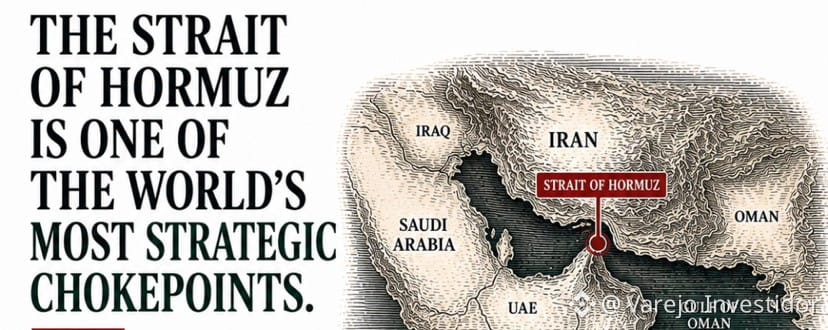
The Strait of Hormuz is a narrow maritime passage between Iran and Oman, connecting the Persian Gulf with the Gulf of Oman. Its geographic position gives it an outsized role in the international energy system.
The image highlights a simple chain:
MIDDLE EAST → HORMUZ → GLOBAL ENERGY FLOWS
Large volumes of petroleum products and other energy cargoes move through this corridor toward international markets. That concentration creates a potential vulnerability: when geopolitical tensions rise around a critical shipping route, the consequences can extend well beyond the countries surrounding it.
The first impact may appear in freight and energy markets. From there, higher transportation or energy costs can influence inflation expectations, corporate margins, consumer prices and economic growth.
This is why geography matters to investors.
A shipping lane does not need to be large to become economically important. What matters is what the world depends on moving through it.
The Strait of Hormuz is therefore more than a location on a map. It is part of the infrastructure connecting energy producers with consumers across continents.
In global markets, sometimes the smallest points on the map can carry the largest economic consequences.
#market #oil #trading #economy
$USO.ETF
$XOM.US
{stock_us}(XOM.US)
$CVX.US
{stock_us}(CVX.US)
{future}(XAUUSDT)
THE WORLD’S ENERGY TRADE PASSES THROUGH A NARROW GATE
Some of the most important points on the global map are surprisingly small.
The Strait of Hormuz is a narrow maritime passage between Iran and Oman, connecting the Persian Gulf with the Gulf of Oman. Its geographic position gives it an outsized role in the international energy system.
The image highlights a simple chain:
MIDDLE EAST → HORMUZ → GLOBAL ENERGY FLOWS
Large volumes of petroleum products and other energy cargoes move through this corridor toward international markets. That concentration creates a potential vulnerability: when geopolitical tensions rise around a critical shipping route, the consequences can extend well beyond the countries surrounding it.
The first impact may appear in freight and energy markets. From there, higher transportation or energy costs can influence inflation expectations, corporate margins, consumer prices and economic growth.
This is why geography matters to investors.
A shipping lane does not need to be large to become economically important. What matters is what the world depends on moving through it.
The Strait of Hormuz is therefore more than a location on a map. It is part of the infrastructure connecting energy producers with consumers across continents.
In global markets, sometimes the smallest points on the map can carry the largest economic consequences.
#market #oil #trading #economy
$USO.ETF
$XOM.US
$CVX.US
The Strait of Hormuz is a narrow maritime passage between Iran and Oman, connecting the Persian Gulf with the Gulf of Oman. Its geographic position gives it an outsized role in the international energy system.
The image highlights a simple chain:
MIDDLE EAST → HORMUZ → GLOBAL ENERGY FLOWS
Large volumes of petroleum products and other energy cargoes move through this corridor toward international markets. That concentration creates a potential vulnerability: when geopolitical tensions rise around a critical shipping route, the consequences can extend well beyond the countries surrounding it.
The first impact may appear in freight and energy markets. From there, higher transportation or energy costs can influence inflation expectations, corporate margins, consumer prices and economic growth.
This is why geography matters to investors.
A shipping lane does not need to be large to become economically important. What matters is what the world depends on moving through it.
The Strait of Hormuz is therefore more than a location on a map. It is part of the infrastructure connecting energy producers with consumers across continents.
In global markets, sometimes the smallest points on the map can carry the largest economic consequences.
#market #oil #trading #economy
$USO.ETF
$XOM.US
$CVX.US
2
277
Article
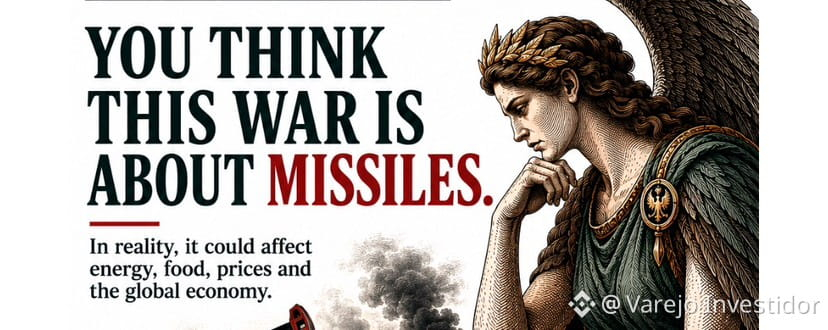
THE REAL BATTLE MAY BE HAPPENING FAR BEYOND THE BATTLEFIELDA conflict around Iran and the Strait of Hormuz is not only a military story. It is also a story about energy, shipping routes, inflation and the global economy.
Hormuz is one of the world’s most strategically important maritime chokepoints. Disruptions or heightened risks in the area can affect how energy moves from producers to consumers, increasing uncertainty across global supply chains.
The market transmission mechanism can be powerful:
GEOPOLITICAL TENSION → ENERGY RISK → SHIPPING COSTS → INFLATION → MARKETS
Higher energy costs can influence transportation, manufacturing and consumer prices. Companies exposed to fuel and logistics may face changing costs, while investors reassess expectations for inflation, interest rates and economic growth.
This is why geopolitical events can move assets far outside the region where the conflict occurs. Oil prices, energy companies, currencies, bonds, commodities and even digital assets can all become part of the market’s response to a major global shock.
The important question is therefore not simply what happens on the battlefield.
It is what happens to the infrastructure connecting the world.
When energy routes, trade flows or strategic chokepoints come under pressure, a regional event can become an international economic issue.
Understanding those connections is essential for reading the market beyond the headlines.
#market #oil #russia #economy $OILK.ETF
$GLDB.ETF
{etf_us}(GLDB.ETF)
$BNOV.ETF
{etf_us}(BNOV.ETF)
{future}(XAUUSDT)
THE REAL BATTLE MAY BE HAPPENING FAR BEYOND THE BATTLEFIELD
A conflict around Iran and the Strait of Hormuz is not only a military story. It is also a story about energy, shipping routes, inflation and the global economy.
Hormuz is one of the world’s most strategically important maritime chokepoints. Disruptions or heightened risks in the area can affect how energy moves from producers to consumers, increasing uncertainty across global supply chains.
The market transmission mechanism can be powerful:
GEOPOLITICAL TENSION → ENERGY RISK → SHIPPING COSTS → INFLATION → MARKETS
Higher energy costs can influence transportation, manufacturing and consumer prices. Companies exposed to fuel and logistics may face changing costs, while investors reassess expectations for inflation, interest rates and economic growth.
This is why geopolitical events can move assets far outside the region where the conflict occurs. Oil prices, energy companies, currencies, bonds, commodities and even digital assets can all become part of the market’s response to a major global shock.
The important question is therefore not simply what happens on the battlefield.
It is what happens to the infrastructure connecting the world.
When energy routes, trade flows or strategic chokepoints come under pressure, a regional event can become an international economic issue.
Understanding those connections is essential for reading the market beyond the headlines.
#market #oil #russia #economy $OILK.ETF
$GLDB.ETF
$BNOV.ETF
Hormuz is one of the world’s most strategically important maritime chokepoints. Disruptions or heightened risks in the area can affect how energy moves from producers to consumers, increasing uncertainty across global supply chains.
The market transmission mechanism can be powerful:
GEOPOLITICAL TENSION → ENERGY RISK → SHIPPING COSTS → INFLATION → MARKETS
Higher energy costs can influence transportation, manufacturing and consumer prices. Companies exposed to fuel and logistics may face changing costs, while investors reassess expectations for inflation, interest rates and economic growth.
This is why geopolitical events can move assets far outside the region where the conflict occurs. Oil prices, energy companies, currencies, bonds, commodities and even digital assets can all become part of the market’s response to a major global shock.
The important question is therefore not simply what happens on the battlefield.
It is what happens to the infrastructure connecting the world.
When energy routes, trade flows or strategic chokepoints come under pressure, a regional event can become an international economic issue.
Understanding those connections is essential for reading the market beyond the headlines.
#market #oil #russia #economy $OILK.ETF
$GLDB.ETF
$BNOV.ETF
1
64


·
--
Bearish
$BTC $ETH $BNB
Bitcoin Update & Market Analysis
As we know, Bitcoin has experienced an unexpected rise following the breakout over the past few days, triggering a large number of liquidations across the market. Today, I want to share my updated analysis.
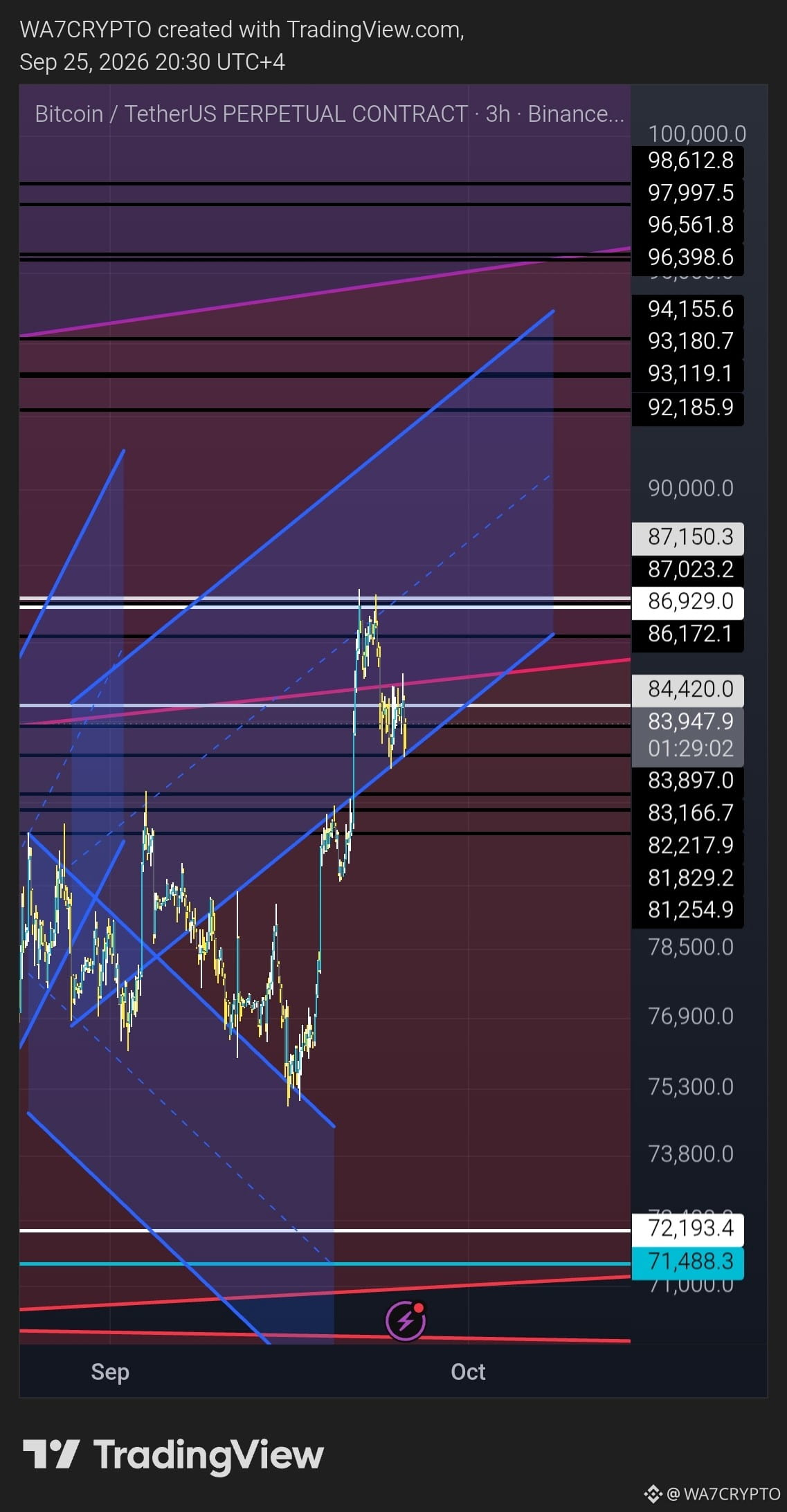
As we can see from the trend structure, Bitcoin broke horizontally above the $81,700 area and entered what I consider a potential false breakout zone. The reason is quite clear: this trend originated from an older price movement and was previously expected to act as resistance.
However, once Bitcoin broke above $81,700, that resistance turned into support. With the current uptrend, the key support area has now moved toward $83,000.
If Bitcoin fails to rebound from this area, we could see a strong price drop and a deeper market correction.
The reason I believe a reversal could develop over the coming weeks is that Bitcoin has remained around these levels after the breakout. However, there is one very important condition: $87,000 must not be decisively broken and held above.
If Bitcoin breaks and holds above $87,000, the bearish scenario would be invalidated, and the sideways-to-bullish continuation could target $92,000 and potentially $94,000.
Interestingly, the first breakout above $81,700 failed, with Bitcoin falling back toward $80,200 before making a strong rebound and continuing higher toward approximately $87,000.
For this reason, I believe the current upside move could still be temporary unless Bitcoin confirms sustained strength above the key levels.
The most important level right now is $83,000.
A breakdown below this area could trigger a strong correction across the market, while a confirmed breakout above $87,000 could completely change the structure and support further upside.
#BTC #Market
$BTC $ETH $BNB
Bitcoin Update & Market Analysis
As we know, Bitcoin has experienced an unexpected rise following the breakout over the past few days, triggering a large number of liquidations across the market. Today, I want to share my updated analysis.
As we can see from the trend structure, Bitcoin broke horizontally above the $81,700 area and entered what I consider a potential false breakout zone. The reason is quite clear: this trend originated from an older price movement and was previously expected to act as resistance.
However, once Bitcoin broke above $81,700, that resistance turned into support. With the current uptrend, the key support area has now moved toward $83,000.
If Bitcoin fails to rebound from this area, we could see a strong price drop and a deeper market correction.
The reason I believe a reversal could develop over the coming weeks is that Bitcoin has remained around these levels after the breakout. However, there is one very important condition: $87,000 must not be decisively broken and held above.
If Bitcoin breaks and holds above $87,000, the bearish scenario would be invalidated, and the sideways-to-bullish continuation could target $92,000 and potentially $94,000.
Interestingly, the first breakout above $81,700 failed, with Bitcoin falling back toward $80,200 before making a strong rebound and continuing higher toward approximately $87,000.
For this reason, I believe the current upside move could still be temporary unless Bitcoin confirms sustained strength above the key levels.
The most important level right now is $83,000.
A breakdown below this area could trigger a strong correction across the market, while a confirmed breakout above $87,000 could completely change the structure and support further upside.
#BTC #Market
Bitcoin Update & Market Analysis
As we know, Bitcoin has experienced an unexpected rise following the breakout over the past few days, triggering a large number of liquidations across the market. Today, I want to share my updated analysis.
As we can see from the trend structure, Bitcoin broke horizontally above the $81,700 area and entered what I consider a potential false breakout zone. The reason is quite clear: this trend originated from an older price movement and was previously expected to act as resistance.
However, once Bitcoin broke above $81,700, that resistance turned into support. With the current uptrend, the key support area has now moved toward $83,000.
If Bitcoin fails to rebound from this area, we could see a strong price drop and a deeper market correction.
The reason I believe a reversal could develop over the coming weeks is that Bitcoin has remained around these levels after the breakout. However, there is one very important condition: $87,000 must not be decisively broken and held above.
If Bitcoin breaks and holds above $87,000, the bearish scenario would be invalidated, and the sideways-to-bullish continuation could target $92,000 and potentially $94,000.
Interestingly, the first breakout above $81,700 failed, with Bitcoin falling back toward $80,200 before making a strong rebound and continuing higher toward approximately $87,000.
For this reason, I believe the current upside move could still be temporary unless Bitcoin confirms sustained strength above the key levels.
The most important level right now is $83,000.
A breakdown below this area could trigger a strong correction across the market, while a confirmed breakout above $87,000 could completely change the structure and support further upside.
#BTC #Market
AngelOfCrypto_-:
nice
6
4
4.4k

·
--
Bullish
#BTC ,#ETH & #BNB MARKET SETUP IS GETTING INTERESTING
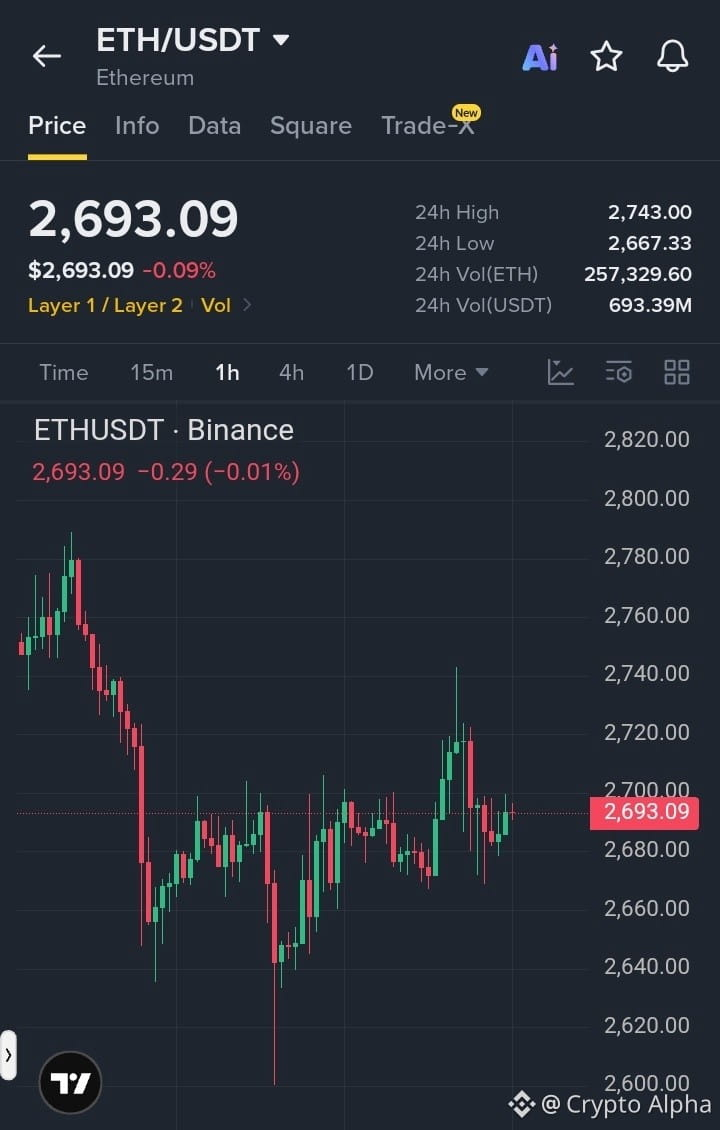
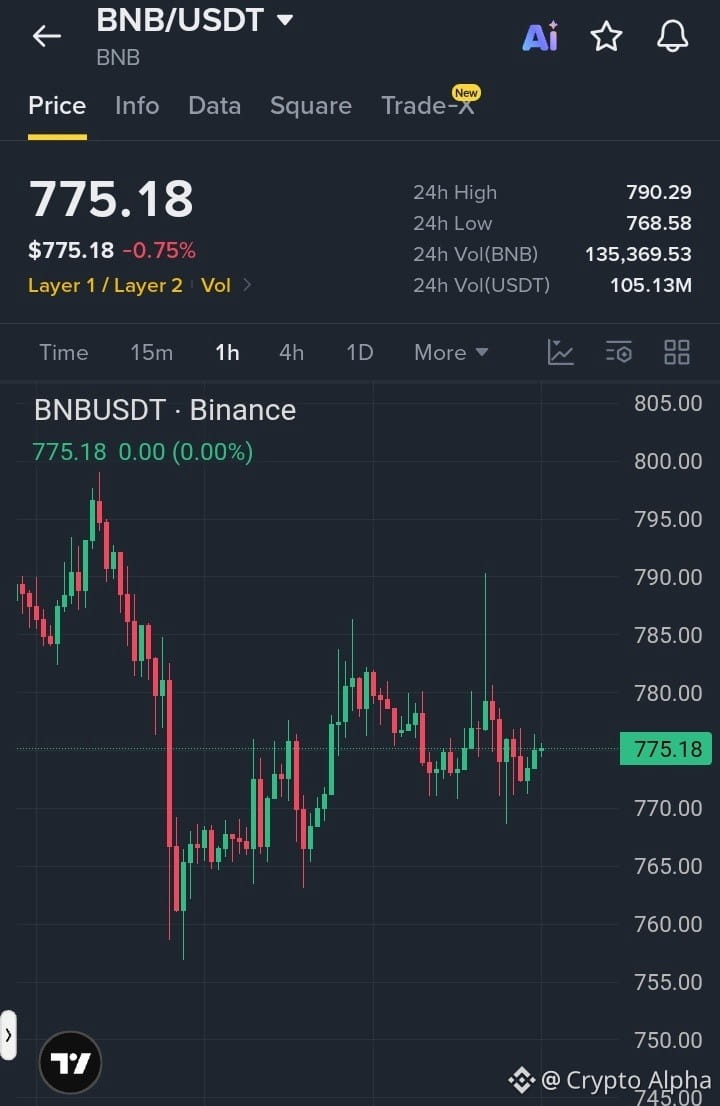
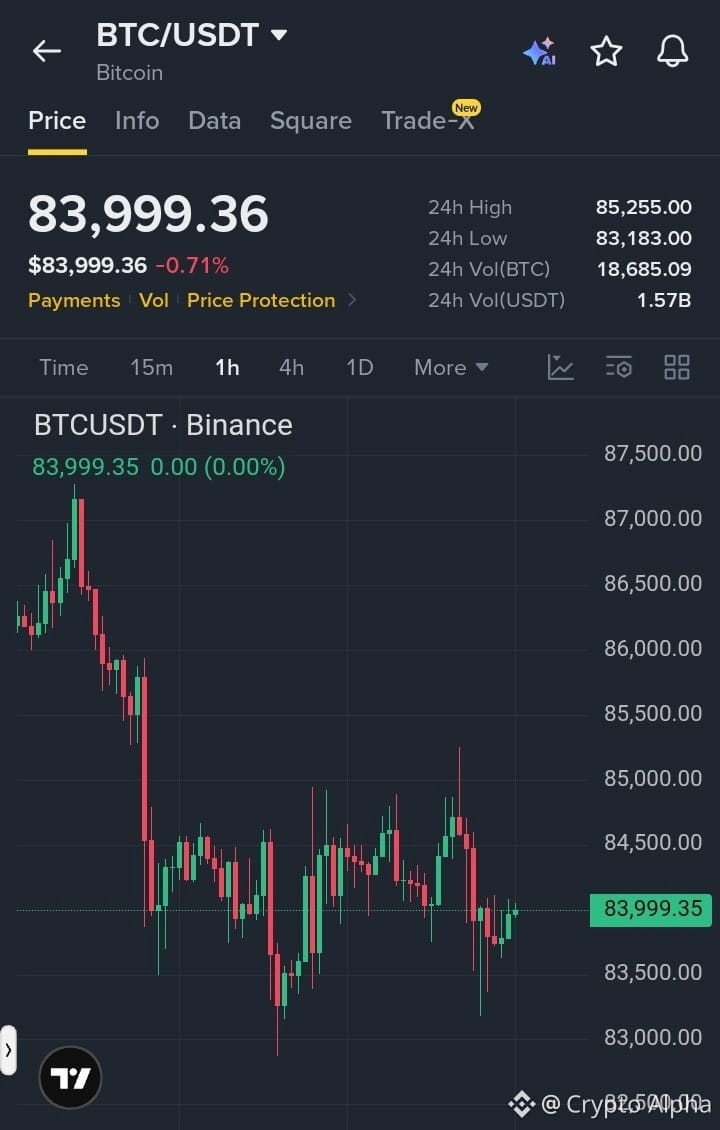
Guys #Market is moving into an important zone. BTC is holding around $84K, while $ETH and BNB are both moving inside tight ranges. I’m watching these levels closely because the next breakout could bring a strong move.
Stay alert guys, the next move could be important.
$BTC
{future}(BTCUSDT)
$BNB
{future}(BNBUSDT)
$ZEC
{future}(ZECUSDT)
#BTC ,#ETH & #BNB MARKET SETUP IS GETTING INTERESTING
Guys #Market is moving into an important zone. BTC is holding around $84K, while $ETH and BNB are both moving inside tight ranges. I’m watching these levels closely because the next breakout could bring a strong move.
Stay alert guys, the next move could be important.
$BTC
$BNB
$ZEC
Guys #Market is moving into an important zone. BTC is holding around $84K, while $ETH and BNB are both moving inside tight ranges. I’m watching these levels closely because the next breakout could bring a strong move.
Stay alert guys, the next move could be important.
$BTC
$BNB
$ZEC
1
140

Article
Market Sentiments1. Fear & Greed Index: Sustained Greed
Overview: The Fear & Greed Index reads 73 ("Greed") as of September 25, unchanged over 24 hours and 7 days. This marks a week of stable, elevated sentiment, though it has cooled from "Extreme Greed" (80) a month ago.
What this means: This is bullish because it reflects consistent investor confidence, but the pause at 73, rather than pushing higher, suggests the market is digesting gains without flipping to fear.
2. Social Media: Bullish Hype vs. Bearish Warnings
Overview: The net social sentiment score is 5.35/10, indicating a mildly bullish bias. However, the conversation is sharply divided. "Now that Crypto is about to have its moment and go on the biggest pump we've ever seen..." — @GodsBurnt (132.8K followers) "I just opened a $300k SHORT position in $SOL. The market is about to fall." — @Crypto__Haris (83.5K followers)
What this means: This is neutral because extreme optimism is being countered by tangible warnings of over-leverage and potential liquidations, creating a balanced but tense atmosphere.
3. Institutional Flows: ETF Demand Persists
Overview: U.S. spot Bitcoin ETFs recorded a net inflow of $190.65M on September 24, led by BlackRock. This extends a multi-day inflow streak, with total ETF AUM for BTC rising to $111.25B from $107.83B yesterday.
What this means: This is bullish because it demonstrates resilient institutional buying pressure, providing a fundamental floor for prices even amid macroeconomic uncertainty.
Conclusion
Market sentiment is currently bullish, underpinned by steady greed and strong institutional inflows. However, this optimism is tempered by clear warnings on social media about over-leverage and a significant hack at another exchange. For the next 24–48 hours, monitor Bitcoin's price action around the $87,000 resistance level; a clean breakout could validate the bullish sentiment, while a rejection may amplify the bearish warnings.
#MarketSentimentToday #market #bullish #bullishmarket
Market Sentiments
1. Fear & Greed Index: Sustained Greed
Overview: The Fear & Greed Index reads 73 ("Greed") as of September 25, unchanged over 24 hours and 7 days. This marks a week of stable, elevated sentiment, though it has cooled from "Extreme Greed" (80) a month ago.
What this means: This is bullish because it reflects consistent investor confidence, but the pause at 73, rather than pushing higher, suggests the market is digesting gains without flipping to fear.
2. Social Media: Bullish Hype vs. Bearish Warnings
Overview: The net social sentiment score is 5.35/10, indicating a mildly bullish bias. However, the conversation is sharply divided. "Now that Crypto is about to have its moment and go on the biggest pump we've ever seen..." — @GodsBurnt (132.8K followers) "I just opened a $300k SHORT position in $SOL. The market is about to fall." — @Crypto__Haris (83.5K followers)
What this means: This is neutral because extreme optimism is being countered by tangible warnings of over-leverage and potential liquidations, creating a balanced but tense atmosphere.
3. Institutional Flows: ETF Demand Persists
Overview: U.S. spot Bitcoin ETFs recorded a net inflow of $190.65M on September 24, led by BlackRock. This extends a multi-day inflow streak, with total ETF AUM for BTC rising to $111.25B from $107.83B yesterday.
What this means: This is bullish because it demonstrates resilient institutional buying pressure, providing a fundamental floor for prices even amid macroeconomic uncertainty.
Conclusion
Market sentiment is currently bullish, underpinned by steady greed and strong institutional inflows. However, this optimism is tempered by clear warnings on social media about over-leverage and a significant hack at another exchange. For the next 24–48 hours, monitor Bitcoin's price action around the $87,000 resistance level; a clean breakout could validate the bullish sentiment, while a rejection may amplify the bearish warnings.
#MarketSentimentToday #market #bullish #bullishmarket
Overview: The Fear & Greed Index reads 73 ("Greed") as of September 25, unchanged over 24 hours and 7 days. This marks a week of stable, elevated sentiment, though it has cooled from "Extreme Greed" (80) a month ago.
What this means: This is bullish because it reflects consistent investor confidence, but the pause at 73, rather than pushing higher, suggests the market is digesting gains without flipping to fear.
2. Social Media: Bullish Hype vs. Bearish Warnings
Overview: The net social sentiment score is 5.35/10, indicating a mildly bullish bias. However, the conversation is sharply divided. "Now that Crypto is about to have its moment and go on the biggest pump we've ever seen..." — @GodsBurnt (132.8K followers) "I just opened a $300k SHORT position in $SOL. The market is about to fall." — @Crypto__Haris (83.5K followers)
What this means: This is neutral because extreme optimism is being countered by tangible warnings of over-leverage and potential liquidations, creating a balanced but tense atmosphere.
3. Institutional Flows: ETF Demand Persists
Overview: U.S. spot Bitcoin ETFs recorded a net inflow of $190.65M on September 24, led by BlackRock. This extends a multi-day inflow streak, with total ETF AUM for BTC rising to $111.25B from $107.83B yesterday.
What this means: This is bullish because it demonstrates resilient institutional buying pressure, providing a fundamental floor for prices even amid macroeconomic uncertainty.
Conclusion
Market sentiment is currently bullish, underpinned by steady greed and strong institutional inflows. However, this optimism is tempered by clear warnings on social media about over-leverage and a significant hack at another exchange. For the next 24–48 hours, monitor Bitcoin's price action around the $87,000 resistance level; a clean breakout could validate the bullish sentiment, while a rejection may amplify the bearish warnings.
#MarketSentimentToday #market #bullish #bullishmarket
1
183

·
--
Within a single day, market expectations for the Federal Reserve’s October rate hike jumped directly from 53% to 77.5%.
With this hawkish repricing, the U.S. 10-year Treasury yield surged to 5.11%, reaching the highest level since 2007.
Put these two numbers together, and it means the macro liquidity-draining machine has been turned to maximum. When the risk-free yield hits its highest level in more than a decade, there’s simply no reason for funds to keep holding on in the crypto market without fundamental support.
As risk-free rates rise, risk-asset valuations fall—asserting that the bottom has already formed based on just a few rebound candlesticks is something I don’t buy. The heavy pressure from liquidity retreat hasn’t been lifted yet, and reaching out to catch a falling knife is far too early.
#MARKET
Within a single day, market expectations for the Federal Reserve’s October rate hike jumped directly from 53% to 77.5%.
With this hawkish repricing, the U.S. 10-year Treasury yield surged to 5.11%, reaching the highest level since 2007.
Put these two numbers together, and it means the macro liquidity-draining machine has been turned to maximum. When the risk-free yield hits its highest level in more than a decade, there’s simply no reason for funds to keep holding on in the crypto market without fundamental support.
As risk-free rates rise, risk-asset valuations fall—asserting that the bottom has already formed based on just a few rebound candlesticks is something I don’t buy. The heavy pressure from liquidity retreat hasn’t been lifted yet, and reaching out to catch a falling knife is far too early.
#MARKET
With this hawkish repricing, the U.S. 10-year Treasury yield surged to 5.11%, reaching the highest level since 2007.
Put these two numbers together, and it means the macro liquidity-draining machine has been turned to maximum. When the risk-free yield hits its highest level in more than a decade, there’s simply no reason for funds to keep holding on in the crypto market without fundamental support.
As risk-free rates rise, risk-asset valuations fall—asserting that the bottom has already formed based on just a few rebound candlesticks is something I don’t buy. The heavy pressure from liquidity retreat hasn’t been lifted yet, and reaching out to catch a falling knife is far too early.
#MARKET
72
·
--
“A Bank of Japan rate hike equals funds pulling out”—this is muscle memory unmoored from the data. It’s time to change.
On September 18, the Bank of Japan announced a 25-basis-point rate hike, yet the real market chart followed a completely opposite script: the yen not only didn’t strengthen, but instead weakened by nearly 3%; the fear index fell rather than rose, and BTC in the same period surged by 3.5%.
Why did the news and price move in opposite directions? Because a split inside the central bank was exposed by the 7-to-2 voting result, and the U.S.-Japan interest-rate spread didn’t narrow in any meaningful way. A lot of people imagined a liquidation stampede of carry-trade funds—but it simply didn’t happen.
Don’t let a single macro headline scare you into giving up your position. After the so-called negative news was “priced in,” the market backed the bullish case with real money: the foundation is far harder than you think.
#MARKET
“A Bank of Japan rate hike equals funds pulling out”—this is muscle memory unmoored from the data. It’s time to change.
On September 18, the Bank of Japan announced a 25-basis-point rate hike, yet the real market chart followed a completely opposite script: the yen not only didn’t strengthen, but instead weakened by nearly 3%; the fear index fell rather than rose, and BTC in the same period surged by 3.5%.
Why did the news and price move in opposite directions? Because a split inside the central bank was exposed by the 7-to-2 voting result, and the U.S.-Japan interest-rate spread didn’t narrow in any meaningful way. A lot of people imagined a liquidation stampede of carry-trade funds—but it simply didn’t happen.
Don’t let a single macro headline scare you into giving up your position. After the so-called negative news was “priced in,” the market backed the bullish case with real money: the foundation is far harder than you think.
#MARKET
On September 18, the Bank of Japan announced a 25-basis-point rate hike, yet the real market chart followed a completely opposite script: the yen not only didn’t strengthen, but instead weakened by nearly 3%; the fear index fell rather than rose, and BTC in the same period surged by 3.5%.
Why did the news and price move in opposite directions? Because a split inside the central bank was exposed by the 7-to-2 voting result, and the U.S.-Japan interest-rate spread didn’t narrow in any meaningful way. A lot of people imagined a liquidation stampede of carry-trade funds—but it simply didn’t happen.
Don’t let a single macro headline scare you into giving up your position. After the so-called negative news was “priced in,” the market backed the bullish case with real money: the foundation is far harder than you think.
#MARKET
184

Article
TEN ASSETS CAN HIDE A SINGLE EXPOSUREHaving several positions in a portfolio does not necessarily mean you are diversified. The number of assets matters less when different companies and sectors respond to the same economic factors.
Oil, banks, retail, construction, mining, energy, technology, telecommunications, steelmaking, and transportation may seem like completely different exposures. However, interest rates, economic growth, inflation, credit, commodities, and industrial activity can affect several of these sectors at the same time.
TEN ASSETS CAN HIDE A SINGLE EXPOSURE
Having several positions in a portfolio does not necessarily mean you are diversified. The number of assets matters less when different companies and sectors respond to the same economic factors.
Oil, banks, retail, construction, mining, energy, technology, telecommunications, steelmaking, and transportation may seem like completely different exposures. However, interest rates, economic growth, inflation, credit, commodities, and industrial activity can affect several of these sectors at the same time.
Oil, banks, retail, construction, mining, energy, technology, telecommunications, steelmaking, and transportation may seem like completely different exposures. However, interest rates, economic growth, inflation, credit, commodities, and industrial activity can affect several of these sectors at the same time.
3
592
Article
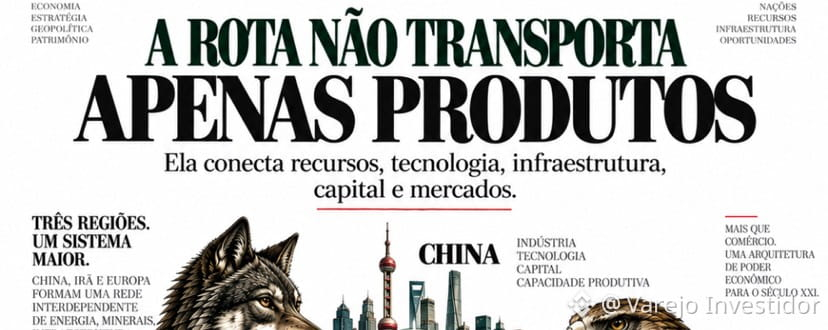
ECONOMIC POWER IS BECOMING MORE AND MORE CONNECTEDNatural resources, energy, infrastructure, and markets do not operate as isolated systems. They form chains in which a disruption at a given point can have far-reaching effects beyond the region where it occurred.
China occupies a central position in many industrial stages. According to the IEA, the country processes more than 70% of lithium, cobalt, graphite, and rare earths, while also concentrating key stages of various energy technology supply chains.
Iran has another strategic characteristic: its location connects the Persian Gulf to the international energy and commercial system. The Strait of Hormuz handled about 20 million barrels of oil per day in 2025, approximately a quarter of the world’s maritime oil trade.
ECONOMIC POWER IS BECOMING MORE AND MORE CONNECTED
Natural resources, energy, infrastructure, and markets do not operate as isolated systems. They form chains in which a disruption at a given point can have far-reaching effects beyond the region where it occurred.
China occupies a central position in many industrial stages. According to the IEA, the country processes more than 70% of lithium, cobalt, graphite, and rare earths, while also concentrating key stages of various energy technology supply chains.
Iran has another strategic characteristic: its location connects the Persian Gulf to the international energy and commercial system. The Strait of Hormuz handled about 20 million barrels of oil per day in 2025, approximately a quarter of the world’s maritime oil trade.
China occupies a central position in many industrial stages. According to the IEA, the country processes more than 70% of lithium, cobalt, graphite, and rare earths, while also concentrating key stages of various energy technology supply chains.
Iran has another strategic characteristic: its location connects the Persian Gulf to the international energy and commercial system. The Strait of Hormuz handled about 20 million barrels of oil per day in 2025, approximately a quarter of the world’s maritime oil trade.
1
56
Article
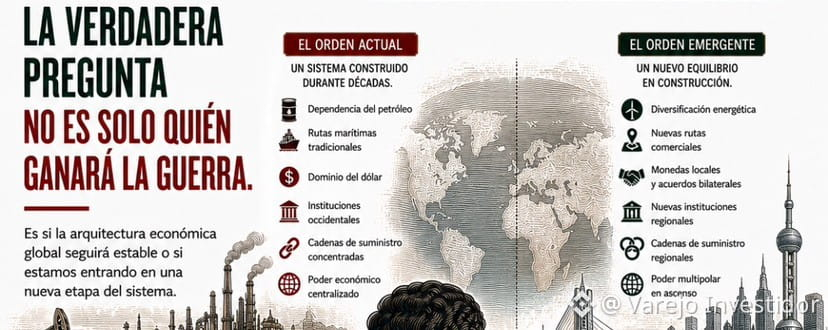
THE NEW GLOBAL BALANCE CAN REWRITE MARKETSFor decades, the world economy was structured around major pillars: energy, sea routes, the dollar, financial institutions, and concentrated supply chains.
This system remains relevant, but the scenario is incorporating new elements. Energy diversification, alternative trade routes, bilateral agreements, the use of local currencies, and the strengthening of regional institutions can change the way trade and capital flow.
THE NEW GLOBAL BALANCE CAN REWRITE MARKETS
For decades, the world economy was structured around major pillars: energy, sea routes, the dollar, financial institutions, and concentrated supply chains.
This system remains relevant, but the scenario is incorporating new elements. Energy diversification, alternative trade routes, bilateral agreements, the use of local currencies, and the strengthening of regional institutions can change the way trade and capital flow.
This system remains relevant, but the scenario is incorporating new elements. Energy diversification, alternative trade routes, bilateral agreements, the use of local currencies, and the strengthening of regional institutions can change the way trade and capital flow.
1
37

Article
THE VALUE LIES IN THE CONNECTIONS THAT MOVE THE ECONOMYThe global economy is not made up only of countries, companies, and isolated resources. It works through connections between energy, minerals, infrastructure, logistics, capital, and consumer markets.
Maritime transport is one of the main examples. According to UNCTAD, more than 80% of the volume of international trade in goods is transported by sea. When routes are changed due to conflicts, congestion, or geopolitical risks, effects can show up in costs, delivery times, and product availability.
THE VALUE LIES IN THE CONNECTIONS THAT MOVE THE ECONOMY
The global economy is not made up only of countries, companies, and isolated resources. It works through connections between energy, minerals, infrastructure, logistics, capital, and consumer markets.
Maritime transport is one of the main examples. According to UNCTAD, more than 80% of the volume of international trade in goods is transported by sea. When routes are changed due to conflicts, congestion, or geopolitical risks, effects can show up in costs, delivery times, and product availability.
Maritime transport is one of the main examples. According to UNCTAD, more than 80% of the volume of international trade in goods is transported by sea. When routes are changed due to conflicts, congestion, or geopolitical risks, effects can show up in costs, delivery times, and product availability.
1
18

Article
THE VALUE OF A POSITION DEPENDS ON THE PLACE IT OCCUPIESA trade can show excellent return potential and, still, not improve a portfolio. The reason lies in the difference between assessing a position in isolation and understanding its role within the overall set.
The first point is the quality of the trade. A thesis may present sound fundamentals, asymmetry, or an interesting relationship between risk and return. But this analysis does not end when the position is chosen.
It is necessary to observe the exposure that the portfolio already has. A new position can increase an existing concentration, repeat a specific risk factor, or broaden the sensitivity of the assets to the same economic scenario.
THE VALUE OF A POSITION DEPENDS ON THE PLACE IT OCCUPIES
A trade can show excellent return potential and, still, not improve a portfolio. The reason lies in the difference between assessing a position in isolation and understanding its role within the overall set.
The first point is the quality of the trade. A thesis may present sound fundamentals, asymmetry, or an interesting relationship between risk and return. But this analysis does not end when the position is chosen.
It is necessary to observe the exposure that the portfolio already has. A new position can increase an existing concentration, repeat a specific risk factor, or broaden the sensitivity of the assets to the same economic scenario.
The first point is the quality of the trade. A thesis may present sound fundamentals, asymmetry, or an interesting relationship between risk and return. But this analysis does not end when the position is chosen.
It is necessary to observe the exposure that the portfolio already has. A new position can increase an existing concentration, repeat a specific risk factor, or broaden the sensitivity of the assets to the same economic scenario.
1
400
Article
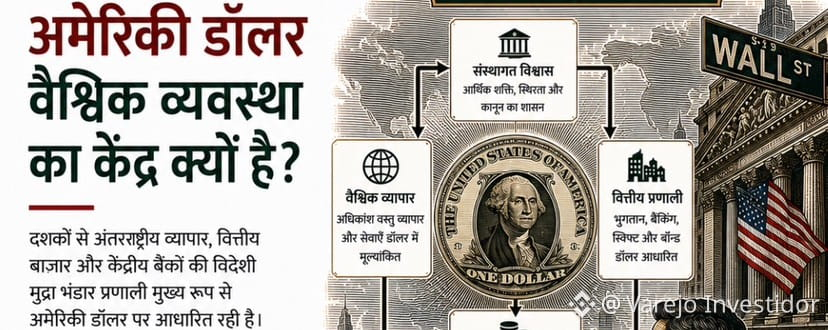
Why is the U.S. dollar at the center of the global system?The U.S. dollar is not just a currency. It is linked to many important layers of the global financial system.
For decades, the dollar has played a crucial role in international trade, financial markets, central banks’ foreign exchange reserves, and international payment systems. For this reason, the impact of shifts in the dollar is often visible even beyond the borders of the United States.
Why is the U.S. dollar at the center of the global system?
The U.S. dollar is not just a currency. It is linked to many important layers of the global financial system.
For decades, the dollar has played a crucial role in international trade, financial markets, central banks’ foreign exchange reserves, and international payment systems. For this reason, the impact of shifts in the dollar is often visible even beyond the borders of the United States.
For decades, the dollar has played a crucial role in international trade, financial markets, central banks’ foreign exchange reserves, and international payment systems. For this reason, the impact of shifts in the dollar is often visible even beyond the borders of the United States.
UUUUUS-1.84%
TLTPETF-0.15%
USDUETF+0.00%
1
19

Article
MANY ASSETS. ONE BET.Holding stocks, real estate, businesses, foreign currency, and fixed income in the same portfolio can create a sense of diversification. But nominal diversification does not necessarily mean risk diversification.
The key is to understand the economic factor behind each exposure.
Different assets can depend simultaneously on interest rates, economic growth, credit, inflation, liquidity, or global market conditions. When the same factor influences multiple positions, a scenario change can affect a large part of the portfolio at the same time.
MANY ASSETS. ONE BET.
Holding stocks, real estate, businesses, foreign currency, and fixed income in the same portfolio can create a sense of diversification. But nominal diversification does not necessarily mean risk diversification.
The key is to understand the economic factor behind each exposure.
Different assets can depend simultaneously on interest rates, economic growth, credit, inflation, liquidity, or global market conditions. When the same factor influences multiple positions, a scenario change can affect a large part of the portfolio at the same time.
The key is to understand the economic factor behind each exposure.
Different assets can depend simultaneously on interest rates, economic growth, credit, inflation, liquidity, or global market conditions. When the same factor influences multiple positions, a scenario change can affect a large part of the portfolio at the same time.
1
153

Article
Will the current economic order be preserved?The world is at a point where its economic structure may be undergoing change. The image places two paths side by side: the current order and the possible formation of a new order.
In the current order, the dollar-based financial system, existing trade routes, international financial institutions, and centralized supply chains play an important role. This structure has been shaped over decades and has connected much of trade and global capital flows to one another.
Will the current economic order be preserved?
The world is at a point where its economic structure may be undergoing change. The image places two paths side by side: the current order and the possible formation of a new order.
In the current order, the dollar-based financial system, existing trade routes, international financial institutions, and centralized supply chains play an important role. This structure has been shaped over decades and has connected much of trade and global capital flows to one another.
In the current order, the dollar-based financial system, existing trade routes, international financial institutions, and centralized supply chains play an important role. This structure has been shaped over decades and has connected much of trade and global capital flows to one another.
1
4

Article
The real question isn’t war, but the stability of the systemGlobal markets do not just react to news of war. They also look at how much the impact of a conflict could affect the stability of the entire economic system.
When geopolitical tensions rise, uncertainty increases first. After that, investors try to gauge what the potential impact could be on trade, energy, supply chains, currencies, interest rates, and capital flows.
The real question isn’t war, but the stability of the system
Global markets do not just react to news of war. They also look at how much the impact of a conflict could affect the stability of the entire economic system.
When geopolitical tensions rise, uncertainty increases first. After that, investors try to gauge what the potential impact could be on trade, energy, supply chains, currencies, interest rates, and capital flows.
When geopolitical tensions rise, uncertainty increases first. After that, investors try to gauge what the potential impact could be on trade, energy, supply chains, currencies, interest rates, and capital flows.
GLDETF-3.03%
SPYDETF-0.02%
EEMETF+0.00%
1
6
Article
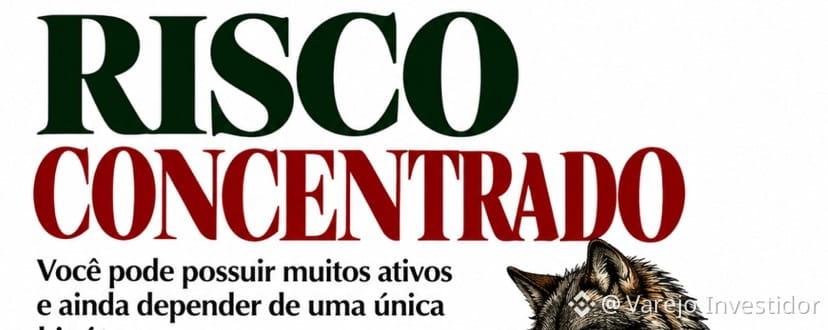
CONCENTRATED RISK: MANY ASSETS, ONE SINGLE ASSUMPTIONHaving many assets in the portfolio does not necessarily mean being diversified.
The core point of the image is simple: a portfolio can bring together stocks, real estate, fixed income, businesses, and currencies and still depend on a single economic assumption.
Imagine, for example, a portfolio exposed to different assets, but that simultaneously depends on low interest rates, abundant credit, and market appreciation. Although there are several investments, they may all react in a similar way when the scenario changes.
CONCENTRATED RISK: MANY ASSETS, ONE SINGLE ASSUMPTION
Having many assets in the portfolio does not necessarily mean being diversified.
The core point of the image is simple: a portfolio can bring together stocks, real estate, fixed income, businesses, and currencies and still depend on a single economic assumption.
Imagine, for example, a portfolio exposed to different assets, but that simultaneously depends on low interest rates, abundant credit, and market appreciation. Although there are several investments, they may all react in a similar way when the scenario changes.
The core point of the image is simple: a portfolio can bring together stocks, real estate, fixed income, businesses, and currencies and still depend on a single economic assumption.
Imagine, for example, a portfolio exposed to different assets, but that simultaneously depends on low interest rates, abundant credit, and market appreciation. Although there are several investments, they may all react in a similar way when the scenario changes.
IYRETF+0.01%
QQHETF-0.10%
AGGETF+0.02%
1
48
·
--
After a slight pullback in the K-line, some people are in a hurry to call the top. But the actual moves backed by real money are far more honest than panic.
Look at what’s happening off-exchange: on-chain stablecoins surged by $1.28 billion in a single day, and total market cap pushed above $312.78 billion. On the other side, U.S. crypto ETFs recorded inflows of over $3 billion, and nearly $800 million clearly went to non-Bitcoin assets.
Capital isn’t withdrawing—it’s actively moving lower. From buying just BTC to spreading across a broader range of assets, this is a clear signal of an institutional long front being laid out. Money is accelerating into buying—at a time like this, trying to guess the top while staying under-invested is very likely to hand your chips over on the eve of a full-scale breakout.
#MARKET
After a slight pullback in the K-line, some people are in a hurry to call the top. But the actual moves backed by real money are far more honest than panic.
Look at what’s happening off-exchange: on-chain stablecoins surged by $1.28 billion in a single day, and total market cap pushed above $312.78 billion. On the other side, U.S. crypto ETFs recorded inflows of over $3 billion, and nearly $800 million clearly went to non-Bitcoin assets.
Capital isn’t withdrawing—it’s actively moving lower. From buying just BTC to spreading across a broader range of assets, this is a clear signal of an institutional long front being laid out. Money is accelerating into buying—at a time like this, trying to guess the top while staying under-invested is very likely to hand your chips over on the eve of a full-scale breakout.
#MARKET
Look at what’s happening off-exchange: on-chain stablecoins surged by $1.28 billion in a single day, and total market cap pushed above $312.78 billion. On the other side, U.S. crypto ETFs recorded inflows of over $3 billion, and nearly $800 million clearly went to non-Bitcoin assets.
Capital isn’t withdrawing—it’s actively moving lower. From buying just BTC to spreading across a broader range of assets, this is a clear signal of an institutional long front being laid out. Money is accelerating into buying—at a time like this, trying to guess the top while staying under-invested is very likely to hand your chips over on the eve of a full-scale breakout.
#MARKET
19
Log in to explore more content
Join global crypto users on Binance Square
⚡️ Get latest and useful information about crypto.
💬 Trusted by the world’s largest crypto exchange.
👍 Discover real insights from verified creators.
Email / Phone number
Trending Topics
1
#BTCFallsBelow$83000
0 views
20 Discussing
2
#FedProposesPaymentStablecoinRules
4,575 views
136 Discussing
3
#ChinaMayLetAlibabaByteDanceBuyNvidiaChips
7,072 views
225 Discussing
4
#USChinaRelease$30BTariffCutProductLists
1,295 views
24 Discussing
5
#SKoreaFSCConsidersVirtualAssetMarketMaker
7,161 views
203 Discussing
6
#ChinaIndustrialProfitGrowthSlowsFourthMonth
8,063 views
212 Discussing
7
#BitwiseFilesFinalNEARSpotETFProspectus
120,951 views
1,757 Discussing
8
#BitgetHackerMoves$83MStolenXRP
40,263 views
177 Discussing
9
#SOLSpotETFWeeklyInflow$188M
25,341 views
141 Discussing
10
#DogecoinETFsPostBiggestWeekSinceLaunch
69,175 views
1,121 Discussing