

minamium
11.6k Posts

minamium
Report
Block User
1 Following
99 Followers
374 Liked
Posts
·
--
Most profitable traders do not buy when charts look pretty; they build positions when fear is at its peak.
We have all felt the sting of panic-selling during a red dip, only to watch smart money step in and ride the reversal straight back up. It hurts even more when you realize you were on the wrong side of the trade simply because emotion took over your risk plan.
Looking at top performer activity today, an experienced trader opened a heavy long position on $APT while the price was down -4.32%. That single perpetual entry is already sitting on over +8,961.14 USDT in unrealized profit, proving once again why patience beats chasing green candles.
I have seen this pattern play out across multiple market cycles with Layer 1 plays like $SOL and $SUI. High-conviction traders rarely wait for confirmation at resistance; they execute when liquidity is quiet and the crowd is hesitating.
How do you usually manage your entries when strong setups take a sudden dip?
#CryptoTrading #Futures #Aptos
Most profitable traders do not buy when charts look pretty; they build positions when fear is at its peak.
We have all felt the sting of panic-selling during a red dip, only to watch smart money step in and ride the reversal straight back up. It hurts even more when you realize you were on the wrong side of the trade simply because emotion took over your risk plan.
Looking at top performer activity today, an experienced trader opened a heavy long position on $APT while the price was down -4.32%. That single perpetual entry is already sitting on over +8,961.14 USDT in unrealized profit, proving once again why patience beats chasing green candles.
I have seen this pattern play out across multiple market cycles with Layer 1 plays like $SOL and $SUI . High-conviction traders rarely wait for confirmation at resistance; they execute when liquidity is quiet and the crowd is hesitating.
How do you usually manage your entries when strong setups take a sudden dip?
#CryptoTrading #Futures #Aptos
We have all felt the sting of panic-selling during a red dip, only to watch smart money step in and ride the reversal straight back up. It hurts even more when you realize you were on the wrong side of the trade simply because emotion took over your risk plan.
Looking at top performer activity today, an experienced trader opened a heavy long position on $APT while the price was down -4.32%. That single perpetual entry is already sitting on over +8,961.14 USDT in unrealized profit, proving once again why patience beats chasing green candles.
I have seen this pattern play out across multiple market cycles with Layer 1 plays like $SOL and $SUI . High-conviction traders rarely wait for confirmation at resistance; they execute when liquidity is quiet and the crowd is hesitating.
How do you usually manage your entries when strong setups take a sudden dip?
#CryptoTrading #Futures #Aptos

·
--
Here's what happened when $NEAR began sliding toward recent lows while the Fear and Greed index sat at 67.
Too many of us have been here before, buying the L1 bounce only to watch the chart keep making lower highs while wondering if we should cut losses or average down.
This drop looks a lot like the quiet bleed we saw in $DOT last cycle, where the narrative was strong but actual usage and unlocks created persistent selling pressure that the market ignored until it was too late. NEAR's ecosystem has some real builders, but the token just hasn't held up against the rotation into $BTC and a few other names.
The difference this time is the greed backdrop. In past events like the 2022 L1 winter, everything crashed together. Now it's more selective. Some chains have held relatively better on their narratives, while NEAR keeps testing support. That's the tell. When an alt falls in a greedy market, it's usually because the story isn't converting to flows.
What we can take from this case is simple. Watch the relative strength against $BTC, not just the absolute price. These selective dumps often last longer than the crowd expects.
Where do you think this goes from here for $NEAR and similar L1s?
#NEARFallsToAround #ZcashFalls21 #BitcoinSurpasses
Here's what happened when $NEAR began sliding toward recent lows while the Fear and Greed index sat at 67.
Too many of us have been here before, buying the L1 bounce only to watch the chart keep making lower highs while wondering if we should cut losses or average down.
This drop looks a lot like the quiet bleed we saw in $DOT last cycle, where the narrative was strong but actual usage and unlocks created persistent selling pressure that the market ignored until it was too late. NEAR's ecosystem has some real builders, but the token just hasn't held up against the rotation into $BTC and a few other names.
The difference this time is the greed backdrop. In past events like the 2022 L1 winter, everything crashed together. Now it's more selective. Some chains have held relatively better on their narratives, while NEAR keeps testing support. That's the tell. When an alt falls in a greedy market, it's usually because the story isn't converting to flows.
What we can take from this case is simple. Watch the relative strength against $BTC , not just the absolute price. These selective dumps often last longer than the crowd expects.
Where do you think this goes from here for $NEAR and similar L1s?
#NEARFallsToAround #ZcashFalls21 #BitcoinSurpasses
Too many of us have been here before, buying the L1 bounce only to watch the chart keep making lower highs while wondering if we should cut losses or average down.
This drop looks a lot like the quiet bleed we saw in $DOT last cycle, where the narrative was strong but actual usage and unlocks created persistent selling pressure that the market ignored until it was too late. NEAR's ecosystem has some real builders, but the token just hasn't held up against the rotation into $BTC and a few other names.
The difference this time is the greed backdrop. In past events like the 2022 L1 winter, everything crashed together. Now it's more selective. Some chains have held relatively better on their narratives, while NEAR keeps testing support. That's the tell. When an alt falls in a greedy market, it's usually because the story isn't converting to flows.
What we can take from this case is simple. Watch the relative strength against $BTC , not just the absolute price. These selective dumps often last longer than the crowd expects.
Where do you think this goes from here for $NEAR and similar L1s?
#NEARFallsToAround #ZcashFalls21 #BitcoinSurpasses

·
--
If you are still dumping your altcoins every time a tech giant drops headline news, stop now.
Most traders end up panic-selling their high-conviction bags at a massive loss only to watch the market absorb the shock and rip right past their re-entry point. We keep letting corporate press releases dictate our crypto portfolios when history shows these headlines rarely break real market momentum.
The chatter around Amazon plans to sell assets reminds me of the classic institutional liquidation scares from previous cycles. Back when Tesla trimmed holdings or traditional tech firms rotated balance sheets, retail dumped tokens like $BTC and fled to $USDT, expecting an endless downward spiral. Instead, institutional capital quietly stepped in to buy the discounted liquidity while everyday investors got left holding stablecoins on the sidelines.
Even ecosystems like $LINK have consistently weathered corporate balance sheet noise because on-chain utility moves on a completely different rhythm than traditional corporate accounting. The market sentiment index sits comfortably in greed territory today, signaling that capital is actively hunting value rather than running away in terror.
Do you see this headline creating real downside pressure, or is it just another textbook retail shakeout?
#AmazonPlansToSell #BitcoinSurpasses
If you are still dumping your altcoins every time a tech giant drops headline news, stop now.
Most traders end up panic-selling their high-conviction bags at a massive loss only to watch the market absorb the shock and rip right past their re-entry point. We keep letting corporate press releases dictate our crypto portfolios when history shows these headlines rarely break real market momentum.
The chatter around Amazon plans to sell assets reminds me of the classic institutional liquidation scares from previous cycles. Back when Tesla trimmed holdings or traditional tech firms rotated balance sheets, retail dumped tokens like $BTC and fled to $USDT, expecting an endless downward spiral. Instead, institutional capital quietly stepped in to buy the discounted liquidity while everyday investors got left holding stablecoins on the sidelines.
Even ecosystems like $LINK have consistently weathered corporate balance sheet noise because on-chain utility moves on a completely different rhythm than traditional corporate accounting. The market sentiment index sits comfortably in greed territory today, signaling that capital is actively hunting value rather than running away in terror.
Do you see this headline creating real downside pressure, or is it just another textbook retail shakeout?
#AmazonPlansToSell #BitcoinSurpasses
Most traders end up panic-selling their high-conviction bags at a massive loss only to watch the market absorb the shock and rip right past their re-entry point. We keep letting corporate press releases dictate our crypto portfolios when history shows these headlines rarely break real market momentum.
The chatter around Amazon plans to sell assets reminds me of the classic institutional liquidation scares from previous cycles. Back when Tesla trimmed holdings or traditional tech firms rotated balance sheets, retail dumped tokens like $BTC and fled to $USDT, expecting an endless downward spiral. Instead, institutional capital quietly stepped in to buy the discounted liquidity while everyday investors got left holding stablecoins on the sidelines.
Even ecosystems like $LINK have consistently weathered corporate balance sheet noise because on-chain utility moves on a completely different rhythm than traditional corporate accounting. The market sentiment index sits comfortably in greed territory today, signaling that capital is actively hunting value rather than running away in terror.
Do you see this headline creating real downside pressure, or is it just another textbook retail shakeout?
#AmazonPlansToSell #BitcoinSurpasses

·
--
Everyone thinks massive corporate headlines mean instant green candles, but actually jumping into the rumor mill blindly is the easiest way to become someone else's exit liquidity.
Most traders see a headline like Amazon making moves and instantly apes in with max leverage, only to watch their portfolio bleed out on the inevitable "sell the news" dump before the market even confirms real on-chain volume.
Look at how the market reacted to earlier institutional rumors. Retail rushed in buying top-tier liquidity pairs like $BTC and rotating out of $USDT, assuming immediate adoption was locked in. In reality, market makers just swept both sides of the book, triggering cascading liquidations while the underlying spot order books barely moved.
When big tech enters the narrative, smart money sits on their hands and watches $LINK or oracle rails to see if real infrastructure volume actually builds up before touching spot. Greed is running high right now ser, and chasing unverified enterprise headlines without waiting for confirmation is just donating your stack to hedge funds.
Are you playing the volatility on this rumor or waiting on the sidelines for confirmation?
#AmazonPlansToSell #BNBChainTokenizedStocksTop #BitcoinFundingRateTriplesTo10
Everyone thinks massive corporate headlines mean instant green candles, but actually jumping into the rumor mill blindly is the easiest way to become someone else's exit liquidity.
Most traders see a headline like Amazon making moves and instantly apes in with max leverage, only to watch their portfolio bleed out on the inevitable "sell the news" dump before the market even confirms real on-chain volume.
Look at how the market reacted to earlier institutional rumors. Retail rushed in buying top-tier liquidity pairs like $BTC and rotating out of $USDT, assuming immediate adoption was locked in. In reality, market makers just swept both sides of the book, triggering cascading liquidations while the underlying spot order books barely moved.
When big tech enters the narrative, smart money sits on their hands and watches $LINK or oracle rails to see if real infrastructure volume actually builds up before touching spot. Greed is running high right now ser, and chasing unverified enterprise headlines without waiting for confirmation is just donating your stack to hedge funds.
Are you playing the volatility on this rumor or waiting on the sidelines for confirmation?
#AmazonPlansToSell #BNBChainTokenizedStocksTop #BitcoinFundingRateTriplesTo10
Most traders see a headline like Amazon making moves and instantly apes in with max leverage, only to watch their portfolio bleed out on the inevitable "sell the news" dump before the market even confirms real on-chain volume.
Look at how the market reacted to earlier institutional rumors. Retail rushed in buying top-tier liquidity pairs like $BTC and rotating out of $USDT, assuming immediate adoption was locked in. In reality, market makers just swept both sides of the book, triggering cascading liquidations while the underlying spot order books barely moved.
When big tech enters the narrative, smart money sits on their hands and watches $LINK or oracle rails to see if real infrastructure volume actually builds up before touching spot. Greed is running high right now ser, and chasing unverified enterprise headlines without waiting for confirmation is just donating your stack to hedge funds.
Are you playing the volatility on this rumor or waiting on the sidelines for confirmation?
#AmazonPlansToSell #BNBChainTokenizedStocksTop #BitcoinFundingRateTriplesTo10

1
·
--
Have you noticed how quickly $BTC can turn a bullish crowd into liquidated accounts?
Traders keep piling into longs expecting the rally to continue, only to watch their positions get wiped when the market dumps without mercy. It's a painful cycle of FOMO followed by regret.
This latest episode is a textbook case study. $BTC dropped $2,200 in just 4 hours, retested $84K and wiped out roughly $250M in leveraged longs. The speed of it all caught people sleeping. When $BTC moves this violently it drags $ETH and $SOL down too, turning one asset's pain into a broader market flush.
The mainstream narrative loves to call these healthy corrections, but they ignore how they destroy overconfident traders. Risk management isn't optional here.
What's your take on whether this sets up a bigger move or just more chop?
#Bitcoin #CryptoTrading #Leverage
Have you noticed how quickly $BTC can turn a bullish crowd into liquidated accounts?
Traders keep piling into longs expecting the rally to continue, only to watch their positions get wiped when the market dumps without mercy. It's a painful cycle of FOMO followed by regret.
This latest episode is a textbook case study. $BTC dropped $2,200 in just 4 hours, retested $84K and wiped out roughly $250M in leveraged longs. The speed of it all caught people sleeping. When $BTC moves this violently it drags $ETH and $SOL down too, turning one asset's pain into a broader market flush.
The mainstream narrative loves to call these healthy corrections, but they ignore how they destroy overconfident traders. Risk management isn't optional here.
What's your take on whether this sets up a bigger move or just more chop?
#Bitcoin #CryptoTrading #Leverage
Traders keep piling into longs expecting the rally to continue, only to watch their positions get wiped when the market dumps without mercy. It's a painful cycle of FOMO followed by regret.
This latest episode is a textbook case study. $BTC dropped $2,200 in just 4 hours, retested $84K and wiped out roughly $250M in leveraged longs. The speed of it all caught people sleeping. When $BTC moves this violently it drags $ETH and $SOL down too, turning one asset's pain into a broader market flush.
The mainstream narrative loves to call these healthy corrections, but they ignore how they destroy overconfident traders. Risk management isn't optional here.
What's your take on whether this sets up a bigger move or just more chop?
#Bitcoin #CryptoTrading #Leverage
1
·
--
Most traders lose money during explosive green candles not because they are wrong on the trend, but because they trade against the momentum during low-liquidity hours.
We have all felt that sudden wave of panic watching $BTC rip upward while sitting on a hedge or waiting for a dip that never comes. The instinct to short an overextended move usually ends with forced liquidations instead of quick profits.
During the recent Asia session, $BTC unleashed a classic short squeeze that drove prices straight toward $87K. I have watched this exact pattern play out across multiple cycles: capital flows quietly while Western desks sleep, thin order books amplify the push, and overleveraged late shorters end up providing the fuel for the breakout. When liquidity is shallow, momentum always overshoots your calculated resistance levels.
Instead of fighting the move or chasing green wicks, the safer play is watching how $ETH and major pairs react once regular volume steps in to confirm the trend.
Are you treating this move toward $87K as real continuation or just another liquidity hunt before a cooldown?
#Bitcoin #CryptoTrading #MarketAnalysis
Most traders lose money during explosive green candles not because they are wrong on the trend, but because they trade against the momentum during low-liquidity hours.
We have all felt that sudden wave of panic watching $BTC rip upward while sitting on a hedge or waiting for a dip that never comes. The instinct to short an overextended move usually ends with forced liquidations instead of quick profits.
During the recent Asia session, $BTC unleashed a classic short squeeze that drove prices straight toward $87K. I have watched this exact pattern play out across multiple cycles: capital flows quietly while Western desks sleep, thin order books amplify the push, and overleveraged late shorters end up providing the fuel for the breakout. When liquidity is shallow, momentum always overshoots your calculated resistance levels.
Instead of fighting the move or chasing green wicks, the safer play is watching how $ETH and major pairs react once regular volume steps in to confirm the trend.
Are you treating this move toward $87K as real continuation or just another liquidity hunt before a cooldown?
#Bitcoin #CryptoTrading #MarketAnalysis
We have all felt that sudden wave of panic watching $BTC rip upward while sitting on a hedge or waiting for a dip that never comes. The instinct to short an overextended move usually ends with forced liquidations instead of quick profits.
During the recent Asia session, $BTC unleashed a classic short squeeze that drove prices straight toward $87K. I have watched this exact pattern play out across multiple cycles: capital flows quietly while Western desks sleep, thin order books amplify the push, and overleveraged late shorters end up providing the fuel for the breakout. When liquidity is shallow, momentum always overshoots your calculated resistance levels.
Instead of fighting the move or chasing green wicks, the safer play is watching how $ETH and major pairs react once regular volume steps in to confirm the trend.
Are you treating this move toward $87K as real continuation or just another liquidity hunt before a cooldown?
#Bitcoin #CryptoTrading #MarketAnalysis

·
--
Picture this: you wake up to green candles pushing $BTC straight toward $87K during the Asia session, so you jump into a breakout trade thinking momentum will carry the market into price discovery.
Within hours, the entire move completely unwinds, leaving your position liquidated before your trailing stop even has time to breathe. It is that exhausting cycle where you feel completely in tune with the macro trend, only to get chopped to pieces by intraday leverage traps.
What just happened was a textbook double-sided liquidity sweep. Bitcoin pushed aggressively to squeeze out late shorts near the highs, only to drop $2,200 in just four hours, retesting $84K and wiping out roughly $250M in leveraged longs. Much like the chop we saw with $ETH during previous consolidation ranges, the market hunted both ends of the order book where retail leverage was piled up the heaviest.
When open interest balloons faster than spot volume can support it, price will almost always take the path of maximum pain before picking a real direction. The traders chasing breakouts got trapped at the top, the panic sellers got flushed at the bottom, and the market cleared the board for a cleaner setup.
Did you get caught in this flush, or are you waiting for price to settle before taking a position?
#Bitcoin #CryptoTrading #LiquidityFlush
Picture this: you wake up to green candles pushing $BTC straight toward $87K during the Asia session, so you jump into a breakout trade thinking momentum will carry the market into price discovery.
Within hours, the entire move completely unwinds, leaving your position liquidated before your trailing stop even has time to breathe. It is that exhausting cycle where you feel completely in tune with the macro trend, only to get chopped to pieces by intraday leverage traps.
What just happened was a textbook double-sided liquidity sweep. Bitcoin pushed aggressively to squeeze out late shorts near the highs, only to drop $2,200 in just four hours, retesting $84K and wiping out roughly $250M in leveraged longs. Much like the chop we saw with $ETH during previous consolidation ranges, the market hunted both ends of the order book where retail leverage was piled up the heaviest.
When open interest balloons faster than spot volume can support it, price will almost always take the path of maximum pain before picking a real direction. The traders chasing breakouts got trapped at the top, the panic sellers got flushed at the bottom, and the market cleared the board for a cleaner setup.
Did you get caught in this flush, or are you waiting for price to settle before taking a position?
#Bitcoin #CryptoTrading #LiquidityFlush
Within hours, the entire move completely unwinds, leaving your position liquidated before your trailing stop even has time to breathe. It is that exhausting cycle where you feel completely in tune with the macro trend, only to get chopped to pieces by intraday leverage traps.
What just happened was a textbook double-sided liquidity sweep. Bitcoin pushed aggressively to squeeze out late shorts near the highs, only to drop $2,200 in just four hours, retesting $84K and wiping out roughly $250M in leveraged longs. Much like the chop we saw with $ETH during previous consolidation ranges, the market hunted both ends of the order book where retail leverage was piled up the heaviest.
When open interest balloons faster than spot volume can support it, price will almost always take the path of maximum pain before picking a real direction. The traders chasing breakouts got trapped at the top, the panic sellers got flushed at the bottom, and the market cleared the board for a cleaner setup.
Did you get caught in this flush, or are you waiting for price to settle before taking a position?
#Bitcoin #CryptoTrading #LiquidityFlush
·
--
Everyone thinks a sudden breakout means a clear trend, but actually high-volatility spikes are often built to trap eager traders on both sides.
Most people see green candles, jump in with high margin, and watch their entire balance evaporate within minutes because they entered right at the exhaustion point.
Think of leverage like overloading a small boat in choppy water. When $BTC pushed toward $87K during the Asia session, it aggressively squeezed late short positions on the way up. But as soon as momentum stalled, the market reversed sharply, dropping $2,200 in just 4 hours to retest the $84K level.
That sudden swing flushed out roughly $250M in leveraged longs across major assets, including $ETH. When open interest gets overcrowded, price action usually sweeps liquidity in both directions to reset the board before choosing a real path.
Where do you think we head next after this leverage flush?
#Bitcoin #CryptoTrading #BinanceSquare
Everyone thinks a sudden breakout means a clear trend, but actually high-volatility spikes are often built to trap eager traders on both sides.
Most people see green candles, jump in with high margin, and watch their entire balance evaporate within minutes because they entered right at the exhaustion point.
Think of leverage like overloading a small boat in choppy water. When $BTC pushed toward $87K during the Asia session, it aggressively squeezed late short positions on the way up. But as soon as momentum stalled, the market reversed sharply, dropping $2,200 in just 4 hours to retest the $84K level.
That sudden swing flushed out roughly $250M in leveraged longs across major assets, including $ETH . When open interest gets overcrowded, price action usually sweeps liquidity in both directions to reset the board before choosing a real path.
Where do you think we head next after this leverage flush?
#Bitcoin #CryptoTrading #BinanceSquare
Most people see green candles, jump in with high margin, and watch their entire balance evaporate within minutes because they entered right at the exhaustion point.
Think of leverage like overloading a small boat in choppy water. When $BTC pushed toward $87K during the Asia session, it aggressively squeezed late short positions on the way up. But as soon as momentum stalled, the market reversed sharply, dropping $2,200 in just 4 hours to retest the $84K level.
That sudden swing flushed out roughly $250M in leveraged longs across major assets, including $ETH . When open interest gets overcrowded, price action usually sweeps liquidity in both directions to reset the board before choosing a real path.
Where do you think we head next after this leverage flush?
#Bitcoin #CryptoTrading #BinanceSquare

·
--
Have you noticed how $BTC keeps trapping both bulls and bears with these sudden reversals?
Most traders lose money chasing the Asia session pumps only to get wrecked on the dump that follows. High leverage turns a $2,200 move into a full liquidation before you can even adjust.
Bitcoin $BTC squeezed shorts during the Asia session as it pushed toward $87K. The reversal arrived quickly with a $2,200 drop in four hours that retested $84K and wiped out roughly $250M in leveraged longs.
This is the market hunting liquidity from both sides when positions pile up too fast. Shorts get trapped on the way up and longs get trapped on the way down. Late entries leave almost no room to react.
Stay out of the squeeze, keep risk small, and wait for the market to choose a direction after the flush. You will see the same pattern play out in $ETH and $SOL more often than not.
How are you navigating these double squeezes without becoming the liquidity?
#Bitcoin #CryptoTrading #Leverage
Have you noticed how $BTC keeps trapping both bulls and bears with these sudden reversals?
Most traders lose money chasing the Asia session pumps only to get wrecked on the dump that follows. High leverage turns a $2,200 move into a full liquidation before you can even adjust.
Bitcoin $BTC squeezed shorts during the Asia session as it pushed toward $87K. The reversal arrived quickly with a $2,200 drop in four hours that retested $84K and wiped out roughly $250M in leveraged longs.
This is the market hunting liquidity from both sides when positions pile up too fast. Shorts get trapped on the way up and longs get trapped on the way down. Late entries leave almost no room to react.
Stay out of the squeeze, keep risk small, and wait for the market to choose a direction after the flush. You will see the same pattern play out in $ETH and $SOL more often than not.
How are you navigating these double squeezes without becoming the liquidity?
#Bitcoin #CryptoTrading #Leverage
Most traders lose money chasing the Asia session pumps only to get wrecked on the dump that follows. High leverage turns a $2,200 move into a full liquidation before you can even adjust.
Bitcoin $BTC squeezed shorts during the Asia session as it pushed toward $87K. The reversal arrived quickly with a $2,200 drop in four hours that retested $84K and wiped out roughly $250M in leveraged longs.
This is the market hunting liquidity from both sides when positions pile up too fast. Shorts get trapped on the way up and longs get trapped on the way down. Late entries leave almost no room to react.
Stay out of the squeeze, keep risk small, and wait for the market to choose a direction after the flush. You will see the same pattern play out in $ETH and $SOL more often than not.
How are you navigating these double squeezes without becoming the liquidity?
#Bitcoin #CryptoTrading #Leverage

·
--
Holding an underwater short on an explosive move is the fastest way to turn a manageable loss into a portfolio-ending disaster.
Most traders get trapped by revenge trading when a coin keeps pumping against them, refusing to cut losses because they believe the market has to pull back eventually.
Just looked at a position where someone is sitting on nearly -$80k in unrealized losses trying to short $ZEC on perps, stubbornly praying for a dump back down while the market keeps grinding higher. Fighting momentum with high leverage usually ends at the liquidation engine, especially when you start treating a trade like a personal battle against the chart.
When you see big privacy plays like $ZEC or $DASH start catching strong bids, shorting without an invalidation level is basically donating liquidity to the order book. Trend continuation can easily stay irrational longer than your margin balance can stay solvent.
What is your strict cutoff rule before a bad trade completely spirals out of hand?
#CryptoTrading #RiskManagement #FuturesTrading
Holding an underwater short on an explosive move is the fastest way to turn a manageable loss into a portfolio-ending disaster.
Most traders get trapped by revenge trading when a coin keeps pumping against them, refusing to cut losses because they believe the market has to pull back eventually.
Just looked at a position where someone is sitting on nearly -$80k in unrealized losses trying to short $ZEC on perps, stubbornly praying for a dump back down while the market keeps grinding higher. Fighting momentum with high leverage usually ends at the liquidation engine, especially when you start treating a trade like a personal battle against the chart.
When you see big privacy plays like $ZEC or $DASH start catching strong bids, shorting without an invalidation level is basically donating liquidity to the order book. Trend continuation can easily stay irrational longer than your margin balance can stay solvent.
What is your strict cutoff rule before a bad trade completely spirals out of hand?
#CryptoTrading #RiskManagement #FuturesTrading
Most traders get trapped by revenge trading when a coin keeps pumping against them, refusing to cut losses because they believe the market has to pull back eventually.
Just looked at a position where someone is sitting on nearly -$80k in unrealized losses trying to short $ZEC on perps, stubbornly praying for a dump back down while the market keeps grinding higher. Fighting momentum with high leverage usually ends at the liquidation engine, especially when you start treating a trade like a personal battle against the chart.
When you see big privacy plays like $ZEC or $DASH start catching strong bids, shorting without an invalidation level is basically donating liquidity to the order book. Trend continuation can easily stay irrational longer than your margin balance can stay solvent.
What is your strict cutoff rule before a bad trade completely spirals out of hand?
#CryptoTrading #RiskManagement #FuturesTrading

·
--
everyone thinks chasing a breakout after a double-digit pump is free money, but actually you are just providing exit liquidity for the profitable accounts. most degens get wiped out because they see green wicks, ape in with zero invalidation plan, and end up holding heavy bags all the way down.
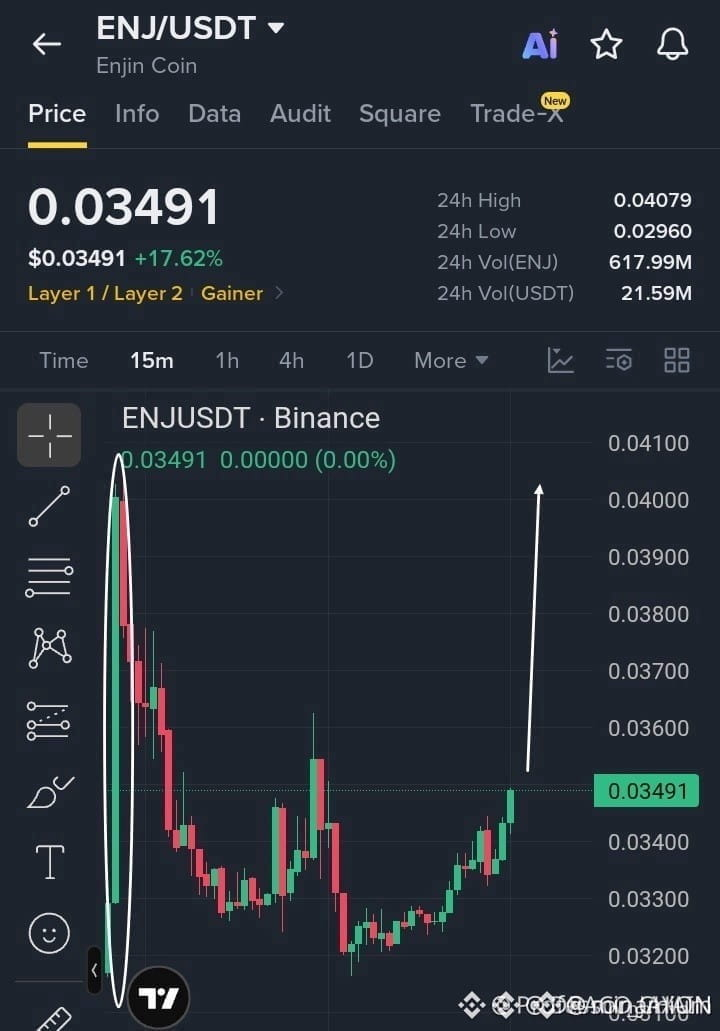
take a look at this recent $ENJ setup from the top 30d volume traders. after a solid +13.58% push, they are stepping in long, but notice the risk management. they aren't just market buying blindly. the trade has a tight stop loss pinned at 0.030 and targets 0.040 and above for the take profit.
while retail is panicking and chasing random gaming rotations across $GALA or $IMX every time the market shifts, the accounts that survive long term just execute clean math. you do not need to catch every single move, ser, but you definitely cannot afford to enter without a hard floor.
where do you think this setup goes from here?
#CryptoTrading #Altcoins #Binance
everyone thinks chasing a breakout after a double-digit pump is free money, but actually you are just providing exit liquidity for the profitable accounts. most degens get wiped out because they see green wicks, ape in with zero invalidation plan, and end up holding heavy bags all the way down.
take a look at this recent $ENJ setup from the top 30d volume traders. after a solid +13.58% push, they are stepping in long, but notice the risk management. they aren't just market buying blindly. the trade has a tight stop loss pinned at 0.030 and targets 0.040 and above for the take profit.
while retail is panicking and chasing random gaming rotations across $GALA or $IMX every time the market shifts, the accounts that survive long term just execute clean math. you do not need to catch every single move, ser, but you definitely cannot afford to enter without a hard floor.
where do you think this setup goes from here?
#CryptoTrading #Altcoins #Binance
take a look at this recent $ENJ setup from the top 30d volume traders. after a solid +13.58% push, they are stepping in long, but notice the risk management. they aren't just market buying blindly. the trade has a tight stop loss pinned at 0.030 and targets 0.040 and above for the take profit.
while retail is panicking and chasing random gaming rotations across $GALA or $IMX every time the market shifts, the accounts that survive long term just execute clean math. you do not need to catch every single move, ser, but you definitely cannot afford to enter without a hard floor.
where do you think this setup goes from here?
#CryptoTrading #Altcoins #Binance
1
·
--
A 245% rally from the $0.11 zone on $STX still doesn't protect you from a full unwind if the higher timeframe structure breaks.
Traders keep FOMO buying after the weekly close above $0.40 thinking they've caught the Bitcoin L2 move then panic when it retests and they have no idea where the invalidation sits.
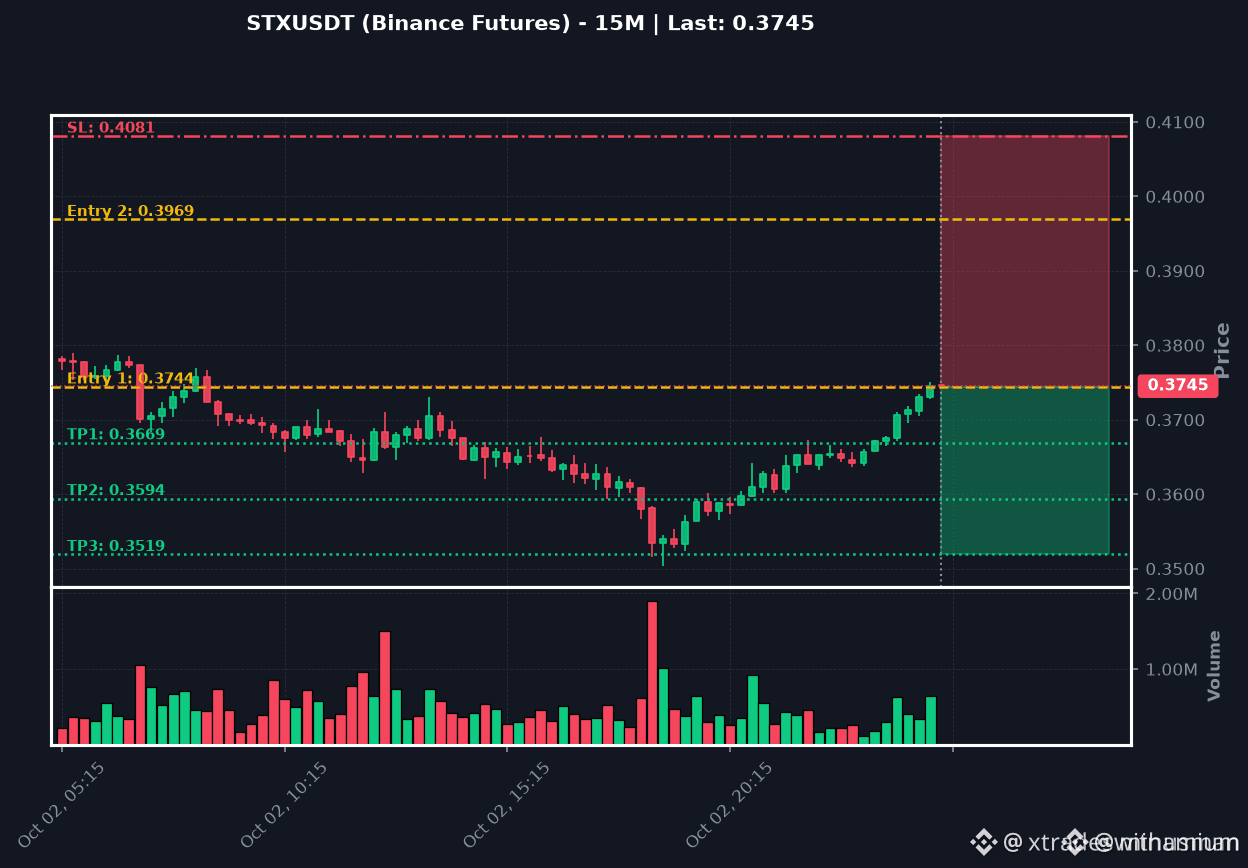
The $0.15 to $0.11 accumulation filled out completely with liquidity getting swept right into that HTF bullish order block. First target at $0.3890 already hit and the multi-year trendline got reclaimed.
Macro levels at $1, $2 and $3.86 look ambitious from here, that's over 3000% from the original entry if it plays out. The problem is the stop. A HTF close below $0.1185 kills the thesis and even breakeven becomes the best case. These $STX moves as a Bitcoin L2 tend to follow $BTC pretty tightly, more than some of the $ETH L2 rotations that can decouple. Ignoring that after a 245% pump is how most people give it all back.
Where do you see the real risk on these charts right now?
#STX #BitcoinL2 #RiskManagement
A 245% rally from the $0.11 zone on $STX still doesn't protect you from a full unwind if the higher timeframe structure breaks.
Traders keep FOMO buying after the weekly close above $0.40 thinking they've caught the Bitcoin L2 move then panic when it retests and they have no idea where the invalidation sits.
The $0.15 to $0.11 accumulation filled out completely with liquidity getting swept right into that HTF bullish order block. First target at $0.3890 already hit and the multi-year trendline got reclaimed.
Macro levels at $1, $2 and $3.86 look ambitious from here, that's over 3000% from the original entry if it plays out. The problem is the stop. A HTF close below $0.1185 kills the thesis and even breakeven becomes the best case. These $STX moves as a Bitcoin L2 tend to follow $BTC pretty tightly, more than some of the $ETH L2 rotations that can decouple. Ignoring that after a 245% pump is how most people give it all back.
Where do you see the real risk on these charts right now?
#STX #BitcoinL2 #RiskManagement
Traders keep FOMO buying after the weekly close above $0.40 thinking they've caught the Bitcoin L2 move then panic when it retests and they have no idea where the invalidation sits.
The $0.15 to $0.11 accumulation filled out completely with liquidity getting swept right into that HTF bullish order block. First target at $0.3890 already hit and the multi-year trendline got reclaimed.
Macro levels at $1, $2 and $3.86 look ambitious from here, that's over 3000% from the original entry if it plays out. The problem is the stop. A HTF close below $0.1185 kills the thesis and even breakeven becomes the best case. These $STX moves as a Bitcoin L2 tend to follow $BTC pretty tightly, more than some of the $ETH L2 rotations that can decouple. Ignoring that after a 245% pump is how most people give it all back.
Where do you see the real risk on these charts right now?
#STX #BitcoinL2 #RiskManagement
28
·
--
If you're still loading up on $BTC expecting this jobs miss to send prices straight higher, stop now.
Traders keep getting chopped buying every Fed-pivot headline only to watch the market dump when recession fears take over. You end up holding the bag and missing the real move.
The numbers were ugly. The US added just 29,000 jobs in September against a 90,000 forecast. Unemployment ticked up to 4.2% from 4.1%. August was revised down to 133,000 from 162,000 and July actually showed a 10,000 job loss. Markets immediately priced in no October hike.
Some will call this bullish for $ETH because the Fed has no reason to tighten further and risk assets should catch a bid. I see the other side more clearly. When revisions turn this negative this fast the slowdown is already here. That usually brings risk-off volatility in $BTC first, not a clean rally.
Do you read this as the start of a crypto move or a warning that harder times are still ahead?
#Bitcoin #NFP #Crypto
If you're still loading up on $BTC expecting this jobs miss to send prices straight higher, stop now.
Traders keep getting chopped buying every Fed-pivot headline only to watch the market dump when recession fears take over. You end up holding the bag and missing the real move.
The numbers were ugly. The US added just 29,000 jobs in September against a 90,000 forecast. Unemployment ticked up to 4.2% from 4.1%. August was revised down to 133,000 from 162,000 and July actually showed a 10,000 job loss. Markets immediately priced in no October hike.
Some will call this bullish for $ETH because the Fed has no reason to tighten further and risk assets should catch a bid. I see the other side more clearly. When revisions turn this negative this fast the slowdown is already here. That usually brings risk-off volatility in $BTC first, not a clean rally.
Do you read this as the start of a crypto move or a warning that harder times are still ahead?
#Bitcoin #NFP #Crypto
Traders keep getting chopped buying every Fed-pivot headline only to watch the market dump when recession fears take over. You end up holding the bag and missing the real move.
The numbers were ugly. The US added just 29,000 jobs in September against a 90,000 forecast. Unemployment ticked up to 4.2% from 4.1%. August was revised down to 133,000 from 162,000 and July actually showed a 10,000 job loss. Markets immediately priced in no October hike.
Some will call this bullish for $ETH because the Fed has no reason to tighten further and risk assets should catch a bid. I see the other side more clearly. When revisions turn this negative this fast the slowdown is already here. That usually brings risk-off volatility in $BTC first, not a clean rally.
Do you read this as the start of a crypto move or a warning that harder times are still ahead?
#Bitcoin #NFP #Crypto

29
·
--
everyone thinks copying top 30-day leaderboard traders is free alpha, but actually most degens get rekt blindly chasing green pnl screenshots. you see a massive unrealized profit on your feed, smash market buy, and end up holding the heavy bags right when the whales decide to cash out.
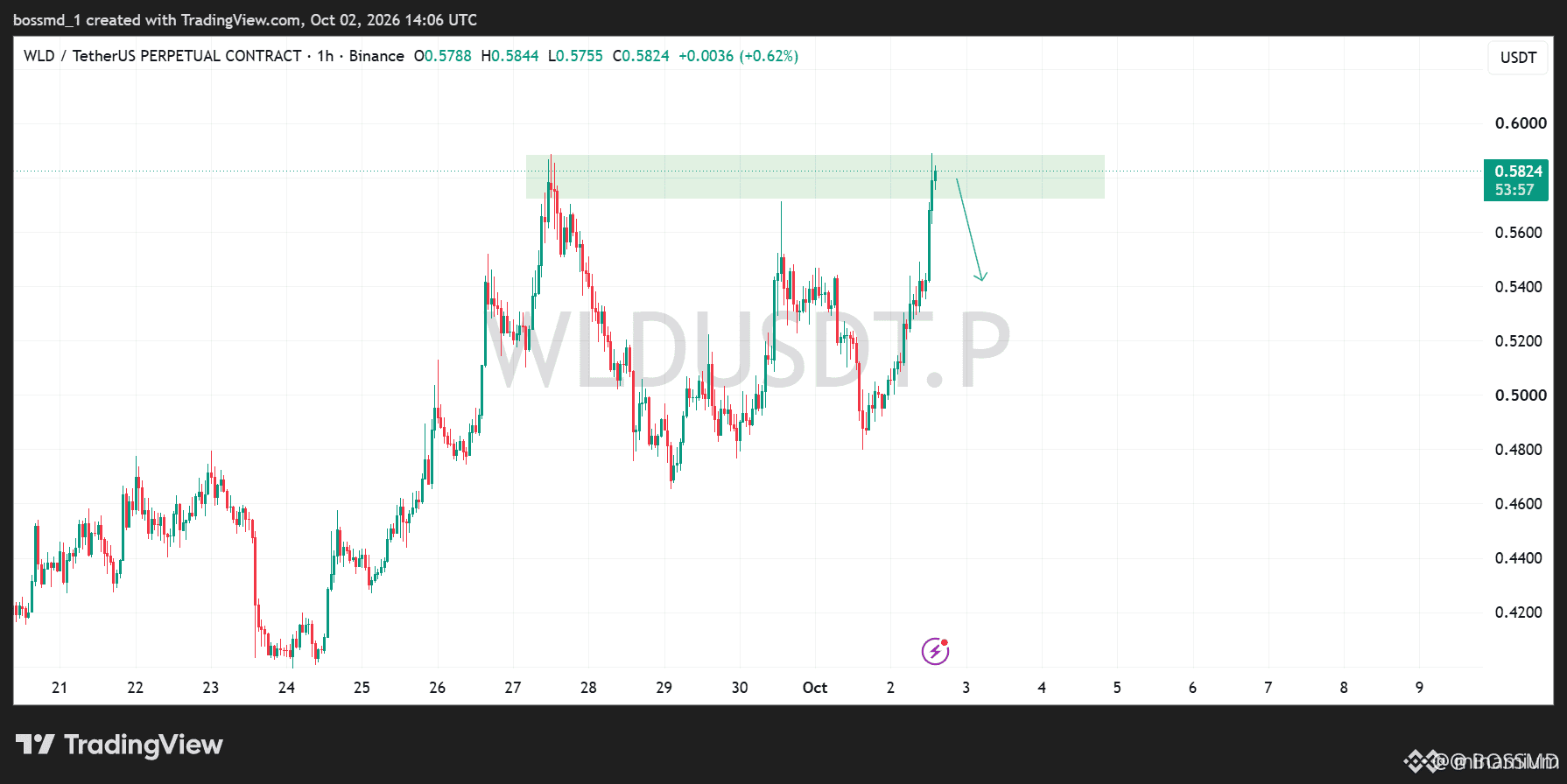
take this recent case on $WLD perps. a top ranked trader is sitting on over +12,500.97 USDT in unrealized pnl with a +10.46% move on their full long position. looks clean on paper, ngl, but holding all-in leverage without banking profits when momentum stalls is how legendary runs turn into painful round-trips.
smart money moves different compared to late retail chasing high beta plays like $WLD alongside broader $BTC swings. real alpha isn't opening the trade when it is already trending on the leaderboard, it is knowing the difference between paper gains on a dashboard and actual realized bags in your wallet.
where do you think this position goes from here?
#CryptoTrading #Binance #Worldcoin
everyone thinks copying top 30-day leaderboard traders is free alpha, but actually most degens get rekt blindly chasing green pnl screenshots. you see a massive unrealized profit on your feed, smash market buy, and end up holding the heavy bags right when the whales decide to cash out.
take this recent case on $WLD perps. a top ranked trader is sitting on over +12,500.97 USDT in unrealized pnl with a +10.46% move on their full long position. looks clean on paper, ngl, but holding all-in leverage without banking profits when momentum stalls is how legendary runs turn into painful round-trips.
smart money moves different compared to late retail chasing high beta plays like $WLD alongside broader $BTC swings. real alpha isn't opening the trade when it is already trending on the leaderboard, it is knowing the difference between paper gains on a dashboard and actual realized bags in your wallet.
where do you think this position goes from here?
#CryptoTrading #Binance #Worldcoin
take this recent case on $WLD perps. a top ranked trader is sitting on over +12,500.97 USDT in unrealized pnl with a +10.46% move on their full long position. looks clean on paper, ngl, but holding all-in leverage without banking profits when momentum stalls is how legendary runs turn into painful round-trips.
smart money moves different compared to late retail chasing high beta plays like $WLD alongside broader $BTC swings. real alpha isn't opening the trade when it is already trending on the leaderboard, it is knowing the difference between paper gains on a dashboard and actual realized bags in your wallet.
where do you think this position goes from here?
#CryptoTrading #Binance #Worldcoin
44
·
--
Have you noticed that tokenized stocks on BNB Chain are shipping a real product while most of crypto is still selling a story?
Traders keep losing money rotating into empty narratives. They FOMO late, dump into $USDT, and then watch the actual infrastructure trade without them.
This is a case study, not a pitch. BNB Chain already has tokenized equities live with volume. Settlement happens on-chain and it is faster than the rails most people still trust.
It is happening while the Fear and Greed Index sits at 69 and almost every search is still $BTC. The mainstream view says tokenized stocks are years away or too regulated to matter. That view is already outdated.
Look at what is actually live instead of what is being promised. People still hunting for the next $ADA moment will miss this because it does not look like a meme.
Anyone else seeing this?
#BNBChainTokenizedStocksTop #BitcoinRisesToward #BitcoinSurpasses
Have you noticed that tokenized stocks on BNB Chain are shipping a real product while most of crypto is still selling a story?
Traders keep losing money rotating into empty narratives. They FOMO late, dump into $USDT, and then watch the actual infrastructure trade without them.
This is a case study, not a pitch. BNB Chain already has tokenized equities live with volume. Settlement happens on-chain and it is faster than the rails most people still trust.
It is happening while the Fear and Greed Index sits at 69 and almost every search is still $BTC . The mainstream view says tokenized stocks are years away or too regulated to matter. That view is already outdated.
Look at what is actually live instead of what is being promised. People still hunting for the next $ADA moment will miss this because it does not look like a meme.
Anyone else seeing this?
#BNBChainTokenizedStocksTop #BitcoinRisesToward #BitcoinSurpasses
Traders keep losing money rotating into empty narratives. They FOMO late, dump into $USDT, and then watch the actual infrastructure trade without them.
This is a case study, not a pitch. BNB Chain already has tokenized equities live with volume. Settlement happens on-chain and it is faster than the rails most people still trust.
It is happening while the Fear and Greed Index sits at 69 and almost every search is still $BTC . The mainstream view says tokenized stocks are years away or too regulated to matter. That view is already outdated.
Look at what is actually live instead of what is being promised. People still hunting for the next $ADA moment will miss this because it does not look like a meme.
Anyone else seeing this?
#BNBChainTokenizedStocksTop #BitcoinRisesToward #BitcoinSurpasses

57
·
--
Most retail traders assume multi-month green streaks signal an immediate top, but historical liquidity shifts tell an entirely different story.
After watching an asset bleed through years of regulatory drag, the psychological urge to dump at break-even or chase impulsive green candles ruins more portfolios than bear markets ever will. You endure months of dead price action, only to exit your position right when structural accumulation finally concludes.
Looking at how $XRP locked in three consecutive green monthly closes through the third quarter reminds me of the classic capital rotations we saw in past market cycles. When liquidity quietly shifts into lagging large caps while $BTC consolidates, the initial breakout is almost always met with heavy disbelief. Traders become so conditioned to chop that they misinterpret early trend reversals as liquidity traps.
Sustained quarterly strength during historically sluggish seasonal windows usually points to patient spot absorption rather than speculative leverage. When an asset like this or $ADA builds higher lows on higher timeframes, it establishes a reliable floor that resists broader macro noise. The real edge in this market is recognizing quiet base-building before retail greed takes over the narrative.
Are you treating this quarterly momentum as an early macro trend shift or just another range-bound rotation?
#XRPPostsFirstThreeGreenMonthsInQ3 #BitcoinRisesToward
Most retail traders assume multi-month green streaks signal an immediate top, but historical liquidity shifts tell an entirely different story.
After watching an asset bleed through years of regulatory drag, the psychological urge to dump at break-even or chase impulsive green candles ruins more portfolios than bear markets ever will. You endure months of dead price action, only to exit your position right when structural accumulation finally concludes.
Looking at how $XRP locked in three consecutive green monthly closes through the third quarter reminds me of the classic capital rotations we saw in past market cycles. When liquidity quietly shifts into lagging large caps while $BTC consolidates, the initial breakout is almost always met with heavy disbelief. Traders become so conditioned to chop that they misinterpret early trend reversals as liquidity traps.
Sustained quarterly strength during historically sluggish seasonal windows usually points to patient spot absorption rather than speculative leverage. When an asset like this or $ADA builds higher lows on higher timeframes, it establishes a reliable floor that resists broader macro noise. The real edge in this market is recognizing quiet base-building before retail greed takes over the narrative.
Are you treating this quarterly momentum as an early macro trend shift or just another range-bound rotation?
#XRPPostsFirstThreeGreenMonthsInQ3 #BitcoinRisesToward
After watching an asset bleed through years of regulatory drag, the psychological urge to dump at break-even or chase impulsive green candles ruins more portfolios than bear markets ever will. You endure months of dead price action, only to exit your position right when structural accumulation finally concludes.
Looking at how $XRP locked in three consecutive green monthly closes through the third quarter reminds me of the classic capital rotations we saw in past market cycles. When liquidity quietly shifts into lagging large caps while $BTC consolidates, the initial breakout is almost always met with heavy disbelief. Traders become so conditioned to chop that they misinterpret early trend reversals as liquidity traps.
Sustained quarterly strength during historically sluggish seasonal windows usually points to patient spot absorption rather than speculative leverage. When an asset like this or $ADA builds higher lows on higher timeframes, it establishes a reliable floor that resists broader macro noise. The real edge in this market is recognizing quiet base-building before retail greed takes over the narrative.
Are you treating this quarterly momentum as an early macro trend shift or just another range-bound rotation?
#XRPPostsFirstThreeGreenMonthsInQ3 #BitcoinRisesToward

90
·
--
Picture this: you have your positions set perfectly for a breakout, and a single macro print wipes out weeks of careful technical analysis in four minutes flat. Most traders still treat US jobs data like background noise until unexpected labor cooling triggers wild liquidity sweeps across $BTC and stable pairs like $USDT. It is the classic trap of managing chart setups while ignoring the macro engine driving market liquidity.
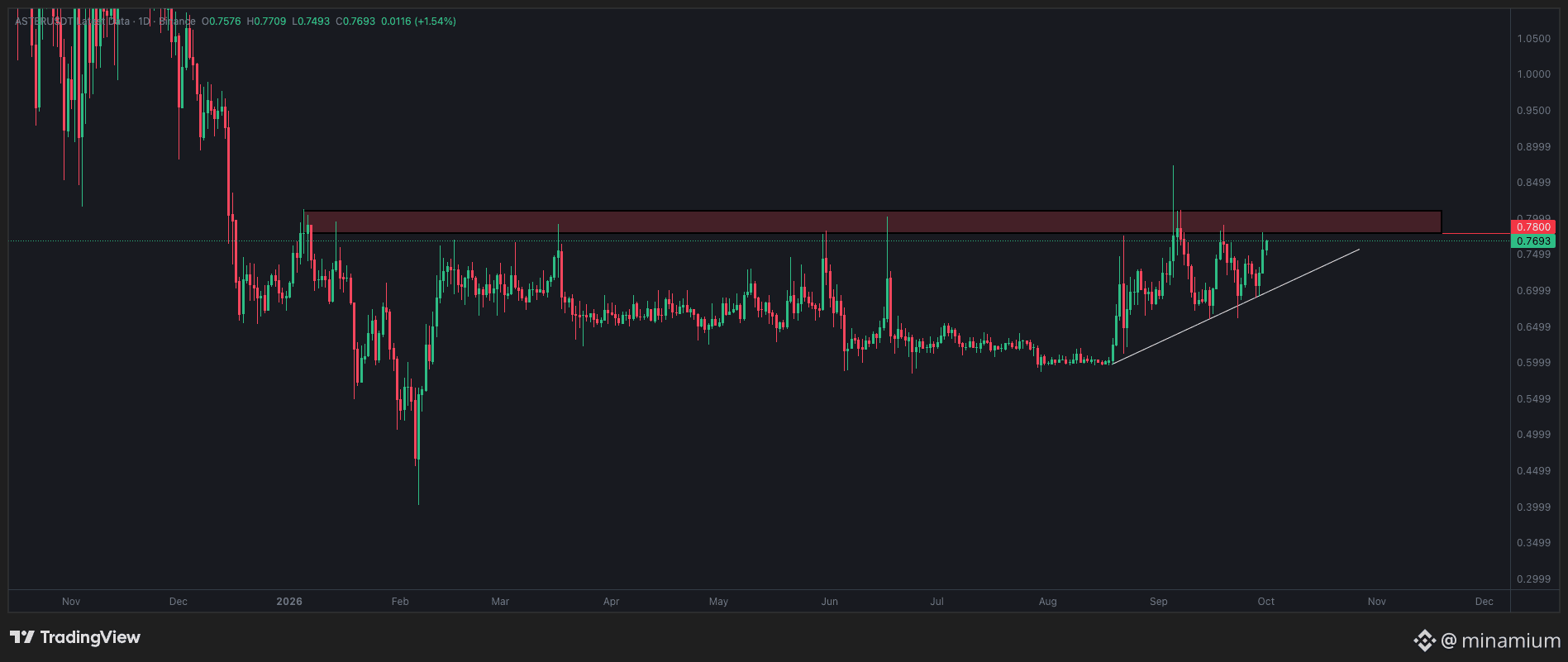
When September non-farm payrolls came in soft at just 29k while unemployment ticked up to 4.1%, the immediate reaction looked eerily similar to the late 2019 macro slowdown. Back then, initial job market weakness triggered short-term panic selling before markets realized rate-cut liquidity was on the way. The difference today is that crypto sits at the center of institutional macro flows rather than existing as an isolated retail playground.
While the Fear and Greed index sits near 69, smart capital is watching how softening labor numbers force central banks to ease monetary policy. Assets like $ADA and majors tend to chop violently on the release before absorbing the broader liquidity shift over subsequent weeks.
Where do you think liquidity flows next as macro easing accelerates?
#USSeptemberPayrollsAdd29KUnemploymentRises4 #NFPWatch #BitcoinRisesToward
Picture this: you have your positions set perfectly for a breakout, and a single macro print wipes out weeks of careful technical analysis in four minutes flat. Most traders still treat US jobs data like background noise until unexpected labor cooling triggers wild liquidity sweeps across $BTC and stable pairs like $USDT. It is the classic trap of managing chart setups while ignoring the macro engine driving market liquidity.
When September non-farm payrolls came in soft at just 29k while unemployment ticked up to 4.1%, the immediate reaction looked eerily similar to the late 2019 macro slowdown. Back then, initial job market weakness triggered short-term panic selling before markets realized rate-cut liquidity was on the way. The difference today is that crypto sits at the center of institutional macro flows rather than existing as an isolated retail playground.
While the Fear and Greed index sits near 69, smart capital is watching how softening labor numbers force central banks to ease monetary policy. Assets like $ADA and majors tend to chop violently on the release before absorbing the broader liquidity shift over subsequent weeks.
Where do you think liquidity flows next as macro easing accelerates?
#USSeptemberPayrollsAdd29KUnemploymentRises4 #NFPWatch #BitcoinRisesToward
When September non-farm payrolls came in soft at just 29k while unemployment ticked up to 4.1%, the immediate reaction looked eerily similar to the late 2019 macro slowdown. Back then, initial job market weakness triggered short-term panic selling before markets realized rate-cut liquidity was on the way. The difference today is that crypto sits at the center of institutional macro flows rather than existing as an isolated retail playground.
While the Fear and Greed index sits near 69, smart capital is watching how softening labor numbers force central banks to ease monetary policy. Assets like $ADA and majors tend to chop violently on the release before absorbing the broader liquidity shift over subsequent weeks.
Where do you think liquidity flows next as macro easing accelerates?
#USSeptemberPayrollsAdd29KUnemploymentRises4 #NFPWatch #BitcoinRisesToward
3
·
--
Everyone thinks a steep dip is always a discount, but actually catching falling knives without confirmation is how most portfolios quietly bleed out.
When a privacy veteran like $ZEC drops over twenty percent in a flash, the instinct is to rush in and average down before checking why liquidity evaporated. Most traders end up trapped because they confuse a sudden price plunge with an automatic bargain, watching their capital get locked while broader market strength in assets like $BTC keeps moving forward without them.
Think of it like buying discounted real estate right next to an active construction zone without checking the foundation first. Three crucial missteps usually unfold in moves like this:
1. Traders assume historical support levels will automatically hold under fresh sell pressure, ignoring that volume profile shifts instantly during aggressive selloffs.
2. Market participants treat isolated drops as buying opportunities while overall market greed sits near 69, forgetting that high sentiment often masks sharp sector rotations into legacy plays like $ETC.
3. Retail positions load up on leverage at the first green hourly candle, only to get wiped out on the secondary retest.
Understanding the mechanics behind sudden distribution saves far more capital than guessing the exact bottom.
Where do you think the real support settles after a move like this?
#ZcashFalls21 #BitcoinSurpasses
Everyone thinks a steep dip is always a discount, but actually catching falling knives without confirmation is how most portfolios quietly bleed out.
When a privacy veteran like $ZEC drops over twenty percent in a flash, the instinct is to rush in and average down before checking why liquidity evaporated. Most traders end up trapped because they confuse a sudden price plunge with an automatic bargain, watching their capital get locked while broader market strength in assets like $BTC keeps moving forward without them.
Think of it like buying discounted real estate right next to an active construction zone without checking the foundation first. Three crucial missteps usually unfold in moves like this:
1. Traders assume historical support levels will automatically hold under fresh sell pressure, ignoring that volume profile shifts instantly during aggressive selloffs.
2. Market participants treat isolated drops as buying opportunities while overall market greed sits near 69, forgetting that high sentiment often masks sharp sector rotations into legacy plays like $ETC .
3. Retail positions load up on leverage at the first green hourly candle, only to get wiped out on the secondary retest.
Understanding the mechanics behind sudden distribution saves far more capital than guessing the exact bottom.
Where do you think the real support settles after a move like this?
#ZcashFalls21 #BitcoinSurpasses
When a privacy veteran like $ZEC drops over twenty percent in a flash, the instinct is to rush in and average down before checking why liquidity evaporated. Most traders end up trapped because they confuse a sudden price plunge with an automatic bargain, watching their capital get locked while broader market strength in assets like $BTC keeps moving forward without them.
Think of it like buying discounted real estate right next to an active construction zone without checking the foundation first. Three crucial missteps usually unfold in moves like this:
1. Traders assume historical support levels will automatically hold under fresh sell pressure, ignoring that volume profile shifts instantly during aggressive selloffs.
2. Market participants treat isolated drops as buying opportunities while overall market greed sits near 69, forgetting that high sentiment often masks sharp sector rotations into legacy plays like $ETC .
3. Retail positions load up on leverage at the first green hourly candle, only to get wiped out on the secondary retest.
Understanding the mechanics behind sudden distribution saves far more capital than guessing the exact bottom.
Where do you think the real support settles after a move like this?
#ZcashFalls21 #BitcoinSurpasses

6
·
--
Bitcoin just surpassed a key resistance that in past greed cycles led to more fakeouts than real breakouts.
That FOMO buy after the breakout is exactly how most people lose money right now. You pile in thinking the move is confirmed then watch it reverse and take your position.
When $BTC breaks out with greed sitting at 69, leveraged traders flood in and funding rates triple overnight. That's overcrowded longs, not real conviction. We've seen this setup before where price wicks just enough to hunt liquidity then dumps hard.
On-chain $USDT is flowing to exchanges as smarter money braces for the volatility. Alts like $ADA usually get hit even worse as capital rotates back.
The lesson is learning these traps instead of chasing every new high. Without an exit plan the cascade can wipe leveraged accounts fast.
Where do you think this goes from here?
#BitcoinSurpasses #BitcoinFundingRateTriplesTo10 #BitcoinRisesToward
Bitcoin just surpassed a key resistance that in past greed cycles led to more fakeouts than real breakouts.
That FOMO buy after the breakout is exactly how most people lose money right now. You pile in thinking the move is confirmed then watch it reverse and take your position.
When $BTC breaks out with greed sitting at 69, leveraged traders flood in and funding rates triple overnight. That's overcrowded longs, not real conviction. We've seen this setup before where price wicks just enough to hunt liquidity then dumps hard.
On-chain $USDT is flowing to exchanges as smarter money braces for the volatility. Alts like $ADA usually get hit even worse as capital rotates back.
The lesson is learning these traps instead of chasing every new high. Without an exit plan the cascade can wipe leveraged accounts fast.
Where do you think this goes from here?
#BitcoinSurpasses #BitcoinFundingRateTriplesTo10 #BitcoinRisesToward
That FOMO buy after the breakout is exactly how most people lose money right now. You pile in thinking the move is confirmed then watch it reverse and take your position.
When $BTC breaks out with greed sitting at 69, leveraged traders flood in and funding rates triple overnight. That's overcrowded longs, not real conviction. We've seen this setup before where price wicks just enough to hunt liquidity then dumps hard.
On-chain $USDT is flowing to exchanges as smarter money braces for the volatility. Alts like $ADA usually get hit even worse as capital rotates back.
The lesson is learning these traps instead of chasing every new high. Without an exit plan the cascade can wipe leveraged accounts fast.
Where do you think this goes from here?
#BitcoinSurpasses #BitcoinFundingRateTriplesTo10 #BitcoinRisesToward

3
·
--
Here is what happened when leverage quietly took over the order books over the past forty-eight hours. Most traders are celebrating the green candles on $BTC, but they are completely overlooking the mounting cost of keeping those leveraged positions alive while open interest keeps swelling.
The real trap in a Greed-driven regime is watching your margin slowly evaporate from aggressive carry fees, only to get flushed out by a single five-minute wick when everyone tries to exit the exact same door at once.
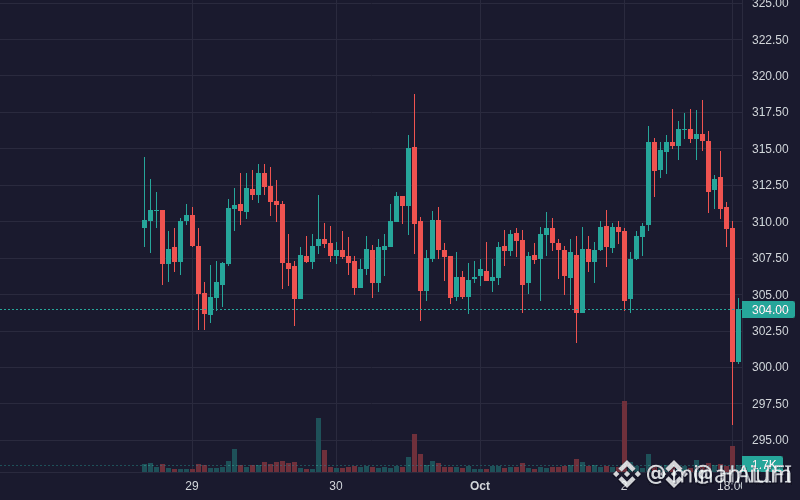
When funding rates spike this rapidly, it creates a severe structural imbalance between derivatives and spot demand. Late longs end up paying excessive premiums directly to short sellers just to stay open. History shows that whenever funding stretches this far from the baseline, market makers love to hunt the liquidity sitting right beneath support, often catching even conservative traders holding $ADA or other majors off guard before any true continuation.
Smart capital usually steps aside or trims exposure when the cost to stay long becomes this lopsided, rather than chasing breakouts into overheated derivative conditions.
Are you de-risking your leverage here, or riding it out into the weekly close?
#BitcoinFundingRateTriplesTo10 #BitcoinSurpasses
Here is what happened when leverage quietly took over the order books over the past forty-eight hours. Most traders are celebrating the green candles on $BTC , but they are completely overlooking the mounting cost of keeping those leveraged positions alive while open interest keeps swelling.
The real trap in a Greed-driven regime is watching your margin slowly evaporate from aggressive carry fees, only to get flushed out by a single five-minute wick when everyone tries to exit the exact same door at once.
When funding rates spike this rapidly, it creates a severe structural imbalance between derivatives and spot demand. Late longs end up paying excessive premiums directly to short sellers just to stay open. History shows that whenever funding stretches this far from the baseline, market makers love to hunt the liquidity sitting right beneath support, often catching even conservative traders holding $ADA or other majors off guard before any true continuation.
Smart capital usually steps aside or trims exposure when the cost to stay long becomes this lopsided, rather than chasing breakouts into overheated derivative conditions.
Are you de-risking your leverage here, or riding it out into the weekly close?
#BitcoinFundingRateTriplesTo10 #BitcoinSurpasses
The real trap in a Greed-driven regime is watching your margin slowly evaporate from aggressive carry fees, only to get flushed out by a single five-minute wick when everyone tries to exit the exact same door at once.
When funding rates spike this rapidly, it creates a severe structural imbalance between derivatives and spot demand. Late longs end up paying excessive premiums directly to short sellers just to stay open. History shows that whenever funding stretches this far from the baseline, market makers love to hunt the liquidity sitting right beneath support, often catching even conservative traders holding $ADA or other majors off guard before any true continuation.
Smart capital usually steps aside or trims exposure when the cost to stay long becomes this lopsided, rather than chasing breakouts into overheated derivative conditions.
Are you de-risking your leverage here, or riding it out into the weekly close?
#BitcoinFundingRateTriplesTo10 #BitcoinSurpasses
3
Log in to explore more content
Join global crypto users on Binance Square
⚡️ Get latest and useful information about crypto.
💬 Trusted by the world’s largest crypto exchange.
👍 Discover real insights from verified creators.
Email / Phone number
Trending Topics
BitcoinParesGainsAfterRallyTo$86.5K
36 views
26 Discussing
$BTC sitting right on the knife edge at $86k. Bulls stacked 1,436 BTC defending that level, bears loaded 1,008 BTC as a wall at $86.5k. This is pure liquidation fuel—whoever loses this fight is getting absolutely nuked.
Short-term scalp territory. If bulls punch through $86.5k with volume, we're probably running to $88k fast. If bears hold and push down, $84k is the next stop and longs get flushed.
Watch the tape closely. One side's about to get destroyed, and the move will be violent either way.
AI Market Brief
·4 Likes
·4k views
CerebrasSinksNearly20%OnReportNvidiaToPowerOpenAI
1,422 views
79 Discussing
SECProposesCryptoCustodyRules
22,953 views
231 Discussing