

#middleeast
middleeast
2M views
4,478 Discussing
Hot
Latest

·
--
🚨 MIDDLE EAST AVIATION SIEGE: TURKEY SEIZES IRANIAN JET AMID SANCTIONS & DEBT CRISIS 🇹🇷🇮🇷🇺🇸
🔥 The court-ordered seizure of a Caspian Airlines Boeing 737 at Istanbul Airport over a $3.4 million (€3M) service debt marks a sharp geopolitical shift. Executed right before takeoff with passengers aboard, this enforcement comes as newly tightened U.S. secondary sanctions apply extreme pressure on foreign hubs handling Iranian aviation assets.
💡 Core Takeaways Behind the Regional Aviation Strain:
👀 Sanctions Enforcement vs. Regional Hubs: Despite ongoing diplomatic ties, Turkey's enforcement highlights how U.S. secondary sanctions are forcing foreign airports and service providers to strictly squeeze non-compliant regional airlines.
🪙 Crypto Market Benchmark Context :
$BNB (BNB Chain): Core exchange utility token; acts as a macro liquidity gauge for global retail volume and regulatory-compliant crypto infrastructure.
$PENGU (Pudgy Penguins): High-beta NFT/IP Web3 ecosystem token; driven by speculative sentiment and retail liquidity cycles.
$ASTER (Astar Network): Multi-chain dApp framework; sensitive to cross-border Web3 enterprise adoption and developer activity.
⚠️ Trader & Risk Warning:
Escalating regional friction and geopolitical headlines trigger rapid volatility across global markets! Always enforce hard Stop-Loss parameters, manage position sizing conservatively, and keep perpetual leverage low (2x–5x max)! 🛡️⚡
💬 Will enforcement actions at key hubs like Istanbul push sanctioned nations entirely toward non-Western trade and financial channels? Share your thoughts below! 👇
📌 Follow & Like for daily geopolitical breakdowns, market analysis, and disciplined crypto risk management setups! 🔥
#Binance #Geopolitics #MiddleEast #CryptoTrading
🚨 MIDDLE EAST AVIATION SIEGE: TURKEY SEIZES IRANIAN JET AMID SANCTIONS & DEBT CRISIS 🇹🇷🇮🇷🇺🇸
🔥 The court-ordered seizure of a Caspian Airlines Boeing 737 at Istanbul Airport over a $3.4 million (€3M) service debt marks a sharp geopolitical shift. Executed right before takeoff with passengers aboard, this enforcement comes as newly tightened U.S. secondary sanctions apply extreme pressure on foreign hubs handling Iranian aviation assets.
💡 Core Takeaways Behind the Regional Aviation Strain:
👀 Sanctions Enforcement vs. Regional Hubs: Despite ongoing diplomatic ties, Turkey's enforcement highlights how U.S. secondary sanctions are forcing foreign airports and service providers to strictly squeeze non-compliant regional airlines.
🪙 Crypto Market Benchmark Context :
$BNB (BNB Chain): Core exchange utility token; acts as a macro liquidity gauge for global retail volume and regulatory-compliant crypto infrastructure.
$PENGU (Pudgy Penguins): High-beta NFT/IP Web3 ecosystem token; driven by speculative sentiment and retail liquidity cycles.
$ASTER (Astar Network): Multi-chain dApp framework; sensitive to cross-border Web3 enterprise adoption and developer activity.
⚠️ Trader & Risk Warning:
Escalating regional friction and geopolitical headlines trigger rapid volatility across global markets! Always enforce hard Stop-Loss parameters, manage position sizing conservatively, and keep perpetual leverage low (2x–5x max)! 🛡️⚡
💬 Will enforcement actions at key hubs like Istanbul push sanctioned nations entirely toward non-Western trade and financial channels? Share your thoughts below! 👇
📌 Follow & Like for daily geopolitical breakdowns, market analysis, and disciplined crypto risk management setups! 🔥
#Binance #Geopolitics #MiddleEast #CryptoTrading
🔥 The court-ordered seizure of a Caspian Airlines Boeing 737 at Istanbul Airport over a $3.4 million (€3M) service debt marks a sharp geopolitical shift. Executed right before takeoff with passengers aboard, this enforcement comes as newly tightened U.S. secondary sanctions apply extreme pressure on foreign hubs handling Iranian aviation assets.
💡 Core Takeaways Behind the Regional Aviation Strain:
👀 Sanctions Enforcement vs. Regional Hubs: Despite ongoing diplomatic ties, Turkey's enforcement highlights how U.S. secondary sanctions are forcing foreign airports and service providers to strictly squeeze non-compliant regional airlines.
🪙 Crypto Market Benchmark Context :
$BNB (BNB Chain): Core exchange utility token; acts as a macro liquidity gauge for global retail volume and regulatory-compliant crypto infrastructure.
$PENGU (Pudgy Penguins): High-beta NFT/IP Web3 ecosystem token; driven by speculative sentiment and retail liquidity cycles.
$ASTER (Astar Network): Multi-chain dApp framework; sensitive to cross-border Web3 enterprise adoption and developer activity.
⚠️ Trader & Risk Warning:
Escalating regional friction and geopolitical headlines trigger rapid volatility across global markets! Always enforce hard Stop-Loss parameters, manage position sizing conservatively, and keep perpetual leverage low (2x–5x max)! 🛡️⚡
💬 Will enforcement actions at key hubs like Istanbul push sanctioned nations entirely toward non-Western trade and financial channels? Share your thoughts below! 👇
📌 Follow & Like for daily geopolitical breakdowns, market analysis, and disciplined crypto risk management setups! 🔥
#Binance #Geopolitics #MiddleEast #CryptoTrading

1
349

·
--
According to the latest report this week by U.S. media outlet AXIOS, Qatar’s officials have recently been actively mediating U.S.-Iran diplomatic talks in Doha. However, because neither side is willing to make concessions, the negotiations have stalled. Insiders say Iran has put forward demands that the U.S. cannot accept, while the U.S. believes it holds the advantage and does not need to give ground. Even some officials worry that there may be a risk of renewed escalation of military conflict in the future.
The negotiations were once expected by the market to ease the highly tense nerves in the Middle East. Yet both sides have adopted extremely hardline stances. This has not only left the mediator frustrated, but has also completely dashed the anticipated geopolitical cooling, with uncertainty once again shrouding the international situation.
As geopolitical risks resurface, they directly affect the performance of commodities and safe-haven assets. Crude oil prices have seen increased volatility amid concerns about supply disruptions. Meanwhile, safe-haven funds have returned to the U.S. dollar and gold, and sentiment across global traditional financial markets overall has leaned toward cautious defense.
For the crypto market, $BTC and major altcoins in the short term will face a dual test from tightened external liquidity and renewed risk-averse sentiment. Before the macro environment becomes clearer, capital may repeatedly swing between risk assets and safe-haven assets. Everyone is advised to stay rational and objective—watch more and act less.
#Geopolitics #MiddleEast #CryptoMarket
According to the latest report this week by U.S. media outlet AXIOS, Qatar’s officials have recently been actively mediating U.S.-Iran diplomatic talks in Doha. However, because neither side is willing to make concessions, the negotiations have stalled. Insiders say Iran has put forward demands that the U.S. cannot accept, while the U.S. believes it holds the advantage and does not need to give ground. Even some officials worry that there may be a risk of renewed escalation of military conflict in the future.
The negotiations were once expected by the market to ease the highly tense nerves in the Middle East. Yet both sides have adopted extremely hardline stances. This has not only left the mediator frustrated, but has also completely dashed the anticipated geopolitical cooling, with uncertainty once again shrouding the international situation.
As geopolitical risks resurface, they directly affect the performance of commodities and safe-haven assets. Crude oil prices have seen increased volatility amid concerns about supply disruptions. Meanwhile, safe-haven funds have returned to the U.S. dollar and gold, and sentiment across global traditional financial markets overall has leaned toward cautious defense.
For the crypto market, $BTC and major altcoins in the short term will face a dual test from tightened external liquidity and renewed risk-averse sentiment. Before the macro environment becomes clearer, capital may repeatedly swing between risk assets and safe-haven assets. Everyone is advised to stay rational and objective—watch more and act less.
#Geopolitics #MiddleEast #CryptoMarket
The negotiations were once expected by the market to ease the highly tense nerves in the Middle East. Yet both sides have adopted extremely hardline stances. This has not only left the mediator frustrated, but has also completely dashed the anticipated geopolitical cooling, with uncertainty once again shrouding the international situation.
As geopolitical risks resurface, they directly affect the performance of commodities and safe-haven assets. Crude oil prices have seen increased volatility amid concerns about supply disruptions. Meanwhile, safe-haven funds have returned to the U.S. dollar and gold, and sentiment across global traditional financial markets overall has leaned toward cautious defense.
For the crypto market, $BTC and major altcoins in the short term will face a dual test from tightened external liquidity and renewed risk-averse sentiment. Before the macro environment becomes clearer, capital may repeatedly swing between risk assets and safe-haven assets. Everyone is advised to stay rational and objective—watch more and act less.
#Geopolitics #MiddleEast #CryptoMarket
384

·
--
Iran’s foreign minister makes a statement, hoping the United States will provide a final response by Tuesday via Qatar “to convey messages.” Renewed tensions between Iran and the U.S. are once again rattling markets; safe-haven assets could see opportunities. #geopolitics #middleeast $BTC $ETH
Iran's foreign minister wants US response via Qatar by Tuesday. Geopolitical tensions are heating up again, could mean opportunities for safe haven assets. #geopolitics #middleeast $BTC $ETH
Iran’s foreign minister makes a statement, hoping the United States will provide a final response by Tuesday via Qatar “to convey messages.” Renewed tensions between Iran and the U.S. are once again rattling markets; safe-haven assets could see opportunities. #geopolitics #middleeast $BTC $ETH
Iran's foreign minister wants US response via Qatar by Tuesday. Geopolitical tensions are heating up again, could mean opportunities for safe haven assets. #geopolitics #middleeast $BTC $ETH
Iran's foreign minister wants US response via Qatar by Tuesday. Geopolitical tensions are heating up again, could mean opportunities for safe haven assets. #geopolitics #middleeast $BTC $ETH
160

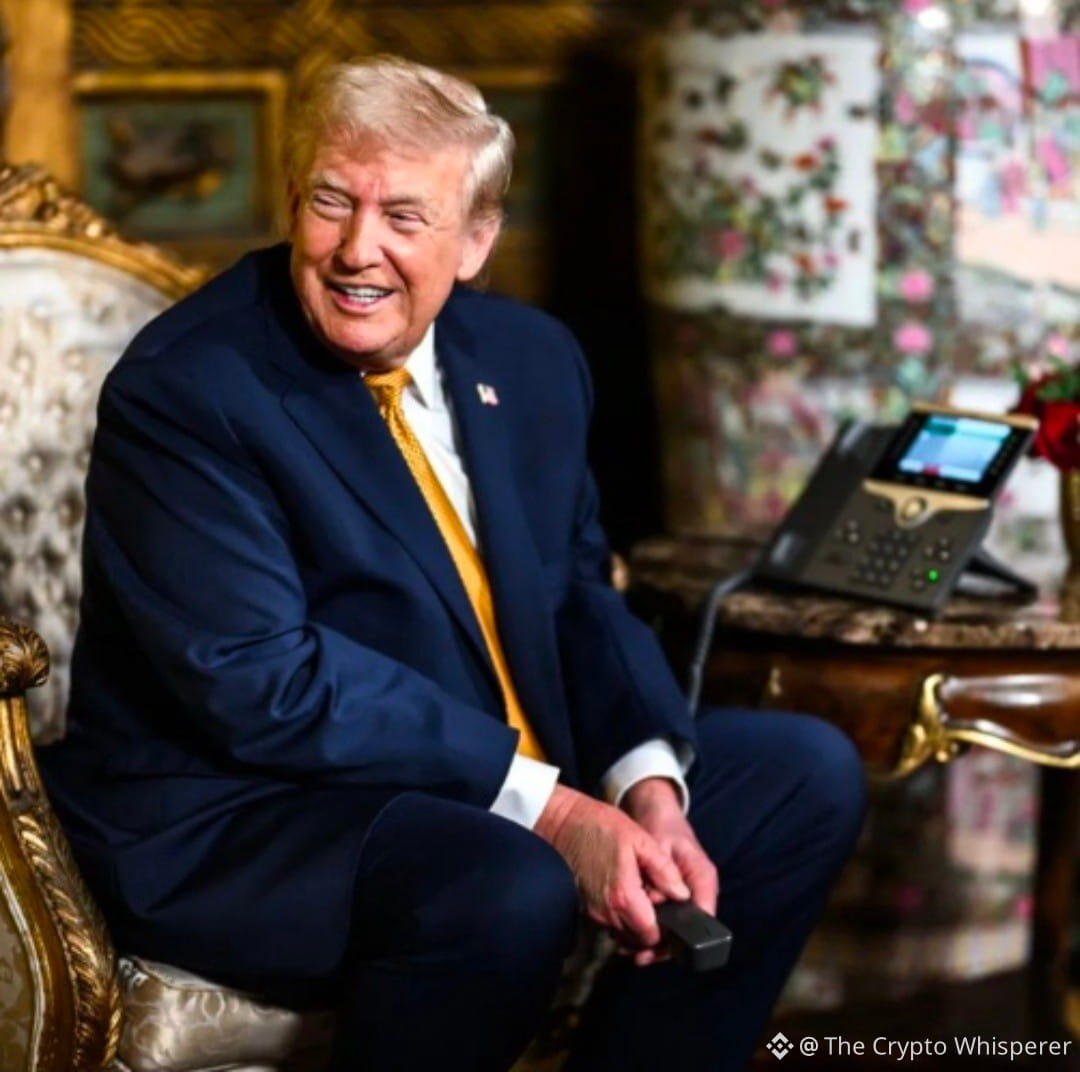
🚨BREAKING:
U.S. President Donald Trump has rejected Iran’s proposal to reopen the Strait of Hormuz and halt regional fighting within seven days.
Iran’s plan reportedly involved lifting the U.S. naval blockade, easing oil sanctions and observing a ceasefire. Trump said he rejected the proposal, while tensions around the critical oil-shipping route remain elevated.
The development could keep pressure on global energy markets as uncertainty over Hormuz continues.
#StraitOfHormuz #Oil #Geopolitics #MiddleEast
$TRUMP
{future}(TRUMPUSDT)
🚨BREAKING:
U.S. President Donald Trump has rejected Iran’s proposal to reopen the Strait of Hormuz and halt regional fighting within seven days.
Iran’s plan reportedly involved lifting the U.S. naval blockade, easing oil sanctions and observing a ceasefire. Trump said he rejected the proposal, while tensions around the critical oil-shipping route remain elevated.
The development could keep pressure on global energy markets as uncertainty over Hormuz continues.
#StraitOfHormuz #Oil #Geopolitics #MiddleEast
$TRUMP
U.S. President Donald Trump has rejected Iran’s proposal to reopen the Strait of Hormuz and halt regional fighting within seven days.
Iran’s plan reportedly involved lifting the U.S. naval blockade, easing oil sanctions and observing a ceasefire. Trump said he rejected the proposal, while tensions around the critical oil-shipping route remain elevated.
The development could keep pressure on global energy markets as uncertainty over Hormuz continues.
#StraitOfHormuz #Oil #Geopolitics #MiddleEast
$TRUMP
28
·
--
U.S. President Donald Trump, the latest former president, has publicly rejected Iran’s proposal to reopen the Strait of Hormuz for seven days. Meanwhile, the situation in the Middle East remains tense. Saudi-led coalition forces reported intercepting drones and missiles targeting Riyadh and southern regions, with alarms sounding around multiple energy facilities. As a result, WTI and Brent crude oil at the open rose more than 1%.
As the world’s most important crude oil transportation route, any disruption risk in the Strait of Hormuz directly shatters market expectations of short-term easing. Although Trump said that the region’s extraction output reached a record level on Saturday night, there are still many uncertainties about whether shipping can resume smoothly. Concerns on the energy supply side have once again come to the forefront.
From the perspective of traditional financial markets, the sharp jump in oil prices has intensified the back-and-forth in inflation expectations. This may keep the U.S. dollar index and major U.S. Treasury yields in a tug-of-war at elevated levels. With risk-aversion sentiment intertwined with inflation fears, volatility in traditional commodities and gold has clearly increased. Traders are closely monitoring the Middle East air-defense posture and the progress of navigation.
For the crypto market, the tug-of-war between macro liquidity and risk-aversion sentiment remains the key focus. Higher oil prices could weigh on expectations for interest-rate cuts and dampen short-term risk appetite, but the safe-haven capital flows brought by the geopolitical situation also leave $BTC facing disagreement between long and short sides. The outlook will still depend on the extent of the actual supply shock and how the market digests the sentiment.⚡
#CrudeOil #Geopolitics #MiddleEast #EnergyCrisis
U.S. President Donald Trump, the latest former president, has publicly rejected Iran’s proposal to reopen the Strait of Hormuz for seven days. Meanwhile, the situation in the Middle East remains tense. Saudi-led coalition forces reported intercepting drones and missiles targeting Riyadh and southern regions, with alarms sounding around multiple energy facilities. As a result, WTI and Brent crude oil at the open rose more than 1%.
As the world’s most important crude oil transportation route, any disruption risk in the Strait of Hormuz directly shatters market expectations of short-term easing. Although Trump said that the region’s extraction output reached a record level on Saturday night, there are still many uncertainties about whether shipping can resume smoothly. Concerns on the energy supply side have once again come to the forefront.
From the perspective of traditional financial markets, the sharp jump in oil prices has intensified the back-and-forth in inflation expectations. This may keep the U.S. dollar index and major U.S. Treasury yields in a tug-of-war at elevated levels. With risk-aversion sentiment intertwined with inflation fears, volatility in traditional commodities and gold has clearly increased. Traders are closely monitoring the Middle East air-defense posture and the progress of navigation.
For the crypto market, the tug-of-war between macro liquidity and risk-aversion sentiment remains the key focus. Higher oil prices could weigh on expectations for interest-rate cuts and dampen short-term risk appetite, but the safe-haven capital flows brought by the geopolitical situation also leave $BTC facing disagreement between long and short sides. The outlook will still depend on the extent of the actual supply shock and how the market digests the sentiment.⚡
#CrudeOil #Geopolitics #MiddleEast #EnergyCrisis
As the world’s most important crude oil transportation route, any disruption risk in the Strait of Hormuz directly shatters market expectations of short-term easing. Although Trump said that the region’s extraction output reached a record level on Saturday night, there are still many uncertainties about whether shipping can resume smoothly. Concerns on the energy supply side have once again come to the forefront.
From the perspective of traditional financial markets, the sharp jump in oil prices has intensified the back-and-forth in inflation expectations. This may keep the U.S. dollar index and major U.S. Treasury yields in a tug-of-war at elevated levels. With risk-aversion sentiment intertwined with inflation fears, volatility in traditional commodities and gold has clearly increased. Traders are closely monitoring the Middle East air-defense posture and the progress of navigation.
For the crypto market, the tug-of-war between macro liquidity and risk-aversion sentiment remains the key focus. Higher oil prices could weigh on expectations for interest-rate cuts and dampen short-term risk appetite, but the safe-haven capital flows brought by the geopolitical situation also leave $BTC facing disagreement between long and short sides. The outlook will still depend on the extent of the actual supply shock and how the market digests the sentiment.⚡
#CrudeOil #Geopolitics #MiddleEast #EnergyCrisis
238
·
--
Hezbollah refuses to disarm! Nasrallah emphasizes that Lebanon must maintain resistance forces, otherwise the country will no longer exist. With tensions in the Middle East flaring up again, market risk-off sentiment is rising, $BTC $ETH or could become a safe haven for funds. #地缘政治 #MiddleEast
Hezbollah refuses to disarm! Nasrallah emphasizes Lebanon must maintain resistance forces or the country won't exist. Middle East tensions rising, market risk-off sentiment growing, $BTC $ETH could be safe havens for funds. #Geopolitics #MiddleEast
Hezbollah refuses to disarm! Nasrallah emphasizes that Lebanon must maintain resistance forces, otherwise the country will no longer exist. With tensions in the Middle East flaring up again, market risk-off sentiment is rising, $BTC $ETH or could become a safe haven for funds. #地缘政治 #MiddleEast
Hezbollah refuses to disarm! Nasrallah emphasizes Lebanon must maintain resistance forces or the country won't exist. Middle East tensions rising, market risk-off sentiment growing, $BTC $ETH could be safe havens for funds. #Geopolitics #MiddleEast
Hezbollah refuses to disarm! Nasrallah emphasizes Lebanon must maintain resistance forces or the country won't exist. Middle East tensions rising, market risk-off sentiment growing, $BTC $ETH could be safe havens for funds. #Geopolitics #MiddleEast
214
·
--
According to Saudi media Al Arabiya citing a report from Iran’s Fars News Agency, Iran’s Islamic Revolutionary Guard Corps fired naval cruise missiles at a vessel entering an “unauthorized route” in the Strait of Hormuz. This once again signals a tangible escalation in military friction in the Middle East.
As the world’s most important chokepoint for seaborne crude oil, the Strait of Hormuz carries nearly one-fifth of global oil trade. Any accidental clash would draw widespread attention. Against the backdrop of the currently fragile macro environment, this sudden incident directly raises market concerns about a potential energy supply disruption and the uptick in inflation.
For traditional financial markets, when a geopolitical crisis escalates, international crude oil and gold prices are often pushed up immediately, with capital tending to flow into safe-haven assets. At the same time, recurring changes in inflation expectations may also create short-term volatility pressure on government bond yields and global stock markets.
In the crypto community, when facing such black swan events—such as with major assets like $BTC —prices often first follow broader market moves as investors de-leverage in a risk-off environment, and then subsequently react depending on how the situation unfolds. With current market sentiment showing significant disagreement between bulls and bears, it may be wise to remain objective and pay closer attention to further developments in the news flow.
#Geopolitics #MiddleEast #OilMarket #CryptoMarket
According to Saudi media Al Arabiya citing a report from Iran’s Fars News Agency, Iran’s Islamic Revolutionary Guard Corps fired naval cruise missiles at a vessel entering an “unauthorized route” in the Strait of Hormuz. This once again signals a tangible escalation in military friction in the Middle East.
As the world’s most important chokepoint for seaborne crude oil, the Strait of Hormuz carries nearly one-fifth of global oil trade. Any accidental clash would draw widespread attention. Against the backdrop of the currently fragile macro environment, this sudden incident directly raises market concerns about a potential energy supply disruption and the uptick in inflation.
For traditional financial markets, when a geopolitical crisis escalates, international crude oil and gold prices are often pushed up immediately, with capital tending to flow into safe-haven assets. At the same time, recurring changes in inflation expectations may also create short-term volatility pressure on government bond yields and global stock markets.
In the crypto community, when facing such black swan events—such as with major assets like $BTC —prices often first follow broader market moves as investors de-leverage in a risk-off environment, and then subsequently react depending on how the situation unfolds. With current market sentiment showing significant disagreement between bulls and bears, it may be wise to remain objective and pay closer attention to further developments in the news flow.
#Geopolitics #MiddleEast #OilMarket #CryptoMarket
As the world’s most important chokepoint for seaborne crude oil, the Strait of Hormuz carries nearly one-fifth of global oil trade. Any accidental clash would draw widespread attention. Against the backdrop of the currently fragile macro environment, this sudden incident directly raises market concerns about a potential energy supply disruption and the uptick in inflation.
For traditional financial markets, when a geopolitical crisis escalates, international crude oil and gold prices are often pushed up immediately, with capital tending to flow into safe-haven assets. At the same time, recurring changes in inflation expectations may also create short-term volatility pressure on government bond yields and global stock markets.
In the crypto community, when facing such black swan events—such as with major assets like $BTC —prices often first follow broader market moves as investors de-leverage in a risk-off environment, and then subsequently react depending on how the situation unfolds. With current market sentiment showing significant disagreement between bulls and bears, it may be wise to remain objective and pay closer attention to further developments in the news flow.
#Geopolitics #MiddleEast #OilMarket #CryptoMarket
31
·
--
Surprise UAE visit by Netanyahu! Middle East geopolitics is heating up again. Both countries are active players in the crypto space. How will $BTC $ETH react? #geopolitics #middleeast
Netanyahu makes surprise visit to UAE! Middle East geopolitics heating up again. Both countries are active players in the crypto space. How will $BTC $ETH react? #geopolitics #middleeast
Surprise UAE visit by Netanyahu! Middle East geopolitics is heating up again. Both countries are active players in the crypto space. How will $BTC $ETH react? #geopolitics #middleeast
Netanyahu makes surprise visit to UAE! Middle East geopolitics heating up again. Both countries are active players in the crypto space. How will $BTC $ETH react? #geopolitics #middleeast
Netanyahu makes surprise visit to UAE! Middle East geopolitics heating up again. Both countries are active players in the crypto space. How will $BTC $ETH react? #geopolitics #middleeast
371
·
--
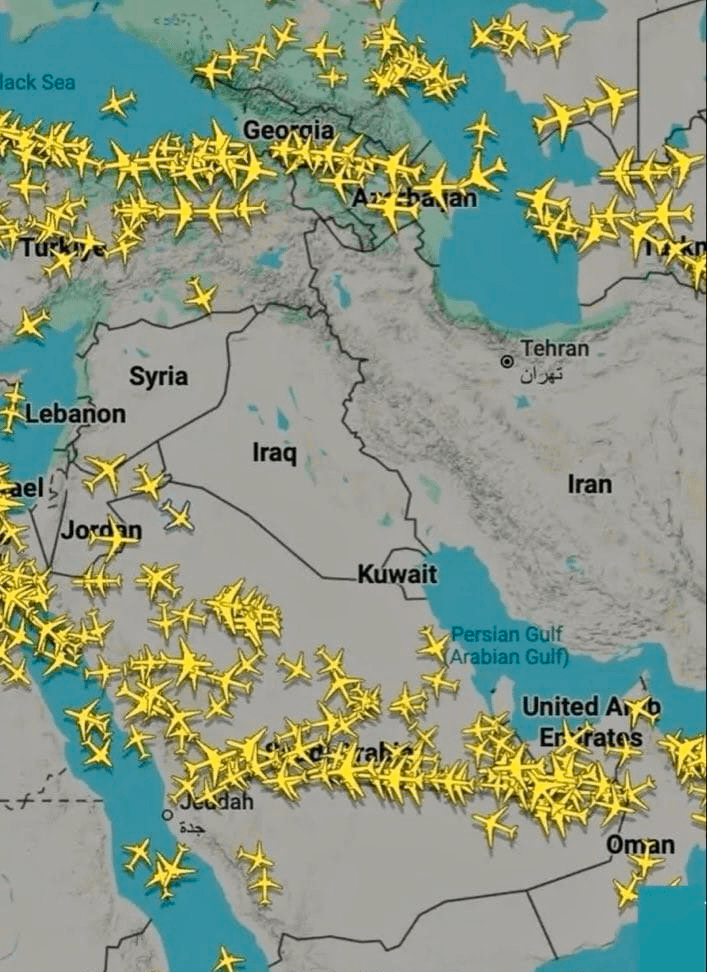
🚨 GEOPOLITICAL: IRAN WARNS GULF AIRPORTS OVER US FLIGHT BANS! 🇮🇷🇺🇸🇪🇺🇦🇪🇧🇭
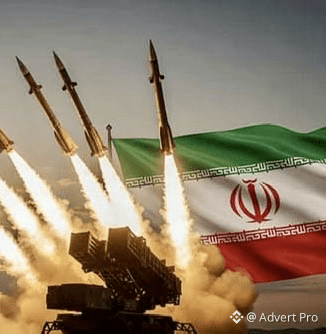
🔥 Senior Iranian leadership—including presidential adviser Mohammad Mokhber and Supreme National Security Council Secretary Mohsen Rezaei—issued explicit threats that "if Iran cannot have flights or airport services, no country in the region will either."
This ultimatum directly targets Gulf nations (UAE, Qatar, Saudi Arabia, Bahrain) following severe US Treasury sanctions on Iranian carriers, which forced regional hubs (like Dubai, Erbil, and Najaf) to deny refueling, landing, and ground services to Iranian airlines.
🪙 Crypto Market Benchmark Reaction :
• $BTC (Bitcoin): Acts as the primary macro liquidity barometer. Escalate-to-deescalate headlines typically trigger immediate lower-wick sweeps as risk capital flees to US Treasuries and gold before bids step in near major support blocks.
• $SOL (Solana): High-beta Layer-1 protocol; highly sensitive to overall market risk sentiment, showing larger percentage swings during sudden geopolitical liquidations.
• $LINK (Chainlink): Decentralized oracle network providing infrastructure for Real-World Assets (RWA) and cross-chain messaging; trades alongside broader Web3 infrastructure capital flows.
⚠️ Trader Risk Warning:
Geopolitical threats targeting major trade corridors create rapid liquidation cascades and sudden volatility wicks! Protect your margin, keep leverage strictly conservative (2x–5x max), and enforce hard Stop-Loss parameters! 🛡️⚡
💬 Do you think regional diplomatic pressure will force a compromise on flight restrictions, or are we heading toward a broader airspace shutdown? Drop your thoughts below! 👇
📌 Follow & Like for daily geopolitical market breakdowns, real-time news alerts, and disciplined crypto risk management setups! 🔥
#Binance #Geopolitics #MiddleEast #CryptoNews
🚨 GEOPOLITICAL: IRAN WARNS GULF AIRPORTS OVER US FLIGHT BANS! 🇮🇷🇺🇸🇪🇺🇦🇪🇧🇭
🔥 Senior Iranian leadership—including presidential adviser Mohammad Mokhber and Supreme National Security Council Secretary Mohsen Rezaei—issued explicit threats that "if Iran cannot have flights or airport services, no country in the region will either."
This ultimatum directly targets Gulf nations (UAE, Qatar, Saudi Arabia, Bahrain) following severe US Treasury sanctions on Iranian carriers, which forced regional hubs (like Dubai, Erbil, and Najaf) to deny refueling, landing, and ground services to Iranian airlines.
🪙 Crypto Market Benchmark Reaction :
• $BTC (Bitcoin): Acts as the primary macro liquidity barometer. Escalate-to-deescalate headlines typically trigger immediate lower-wick sweeps as risk capital flees to US Treasuries and gold before bids step in near major support blocks.
• $SOL (Solana): High-beta Layer-1 protocol; highly sensitive to overall market risk sentiment, showing larger percentage swings during sudden geopolitical liquidations.
• $LINK (Chainlink): Decentralized oracle network providing infrastructure for Real-World Assets (RWA) and cross-chain messaging; trades alongside broader Web3 infrastructure capital flows.
⚠️ Trader Risk Warning:
Geopolitical threats targeting major trade corridors create rapid liquidation cascades and sudden volatility wicks! Protect your margin, keep leverage strictly conservative (2x–5x max), and enforce hard Stop-Loss parameters! 🛡️⚡
💬 Do you think regional diplomatic pressure will force a compromise on flight restrictions, or are we heading toward a broader airspace shutdown? Drop your thoughts below! 👇
📌 Follow & Like for daily geopolitical market breakdowns, real-time news alerts, and disciplined crypto risk management setups! 🔥
#Binance #Geopolitics #MiddleEast #CryptoNews
🔥 Senior Iranian leadership—including presidential adviser Mohammad Mokhber and Supreme National Security Council Secretary Mohsen Rezaei—issued explicit threats that "if Iran cannot have flights or airport services, no country in the region will either."
This ultimatum directly targets Gulf nations (UAE, Qatar, Saudi Arabia, Bahrain) following severe US Treasury sanctions on Iranian carriers, which forced regional hubs (like Dubai, Erbil, and Najaf) to deny refueling, landing, and ground services to Iranian airlines.
🪙 Crypto Market Benchmark Reaction :
• $BTC (Bitcoin): Acts as the primary macro liquidity barometer. Escalate-to-deescalate headlines typically trigger immediate lower-wick sweeps as risk capital flees to US Treasuries and gold before bids step in near major support blocks.
• $SOL (Solana): High-beta Layer-1 protocol; highly sensitive to overall market risk sentiment, showing larger percentage swings during sudden geopolitical liquidations.
• $LINK (Chainlink): Decentralized oracle network providing infrastructure for Real-World Assets (RWA) and cross-chain messaging; trades alongside broader Web3 infrastructure capital flows.
⚠️ Trader Risk Warning:
Geopolitical threats targeting major trade corridors create rapid liquidation cascades and sudden volatility wicks! Protect your margin, keep leverage strictly conservative (2x–5x max), and enforce hard Stop-Loss parameters! 🛡️⚡
💬 Do you think regional diplomatic pressure will force a compromise on flight restrictions, or are we heading toward a broader airspace shutdown? Drop your thoughts below! 👇
📌 Follow & Like for daily geopolitical market breakdowns, real-time news alerts, and disciplined crypto risk management setups! 🔥
#Binance #Geopolitics #MiddleEast #CryptoNews
85

·
--
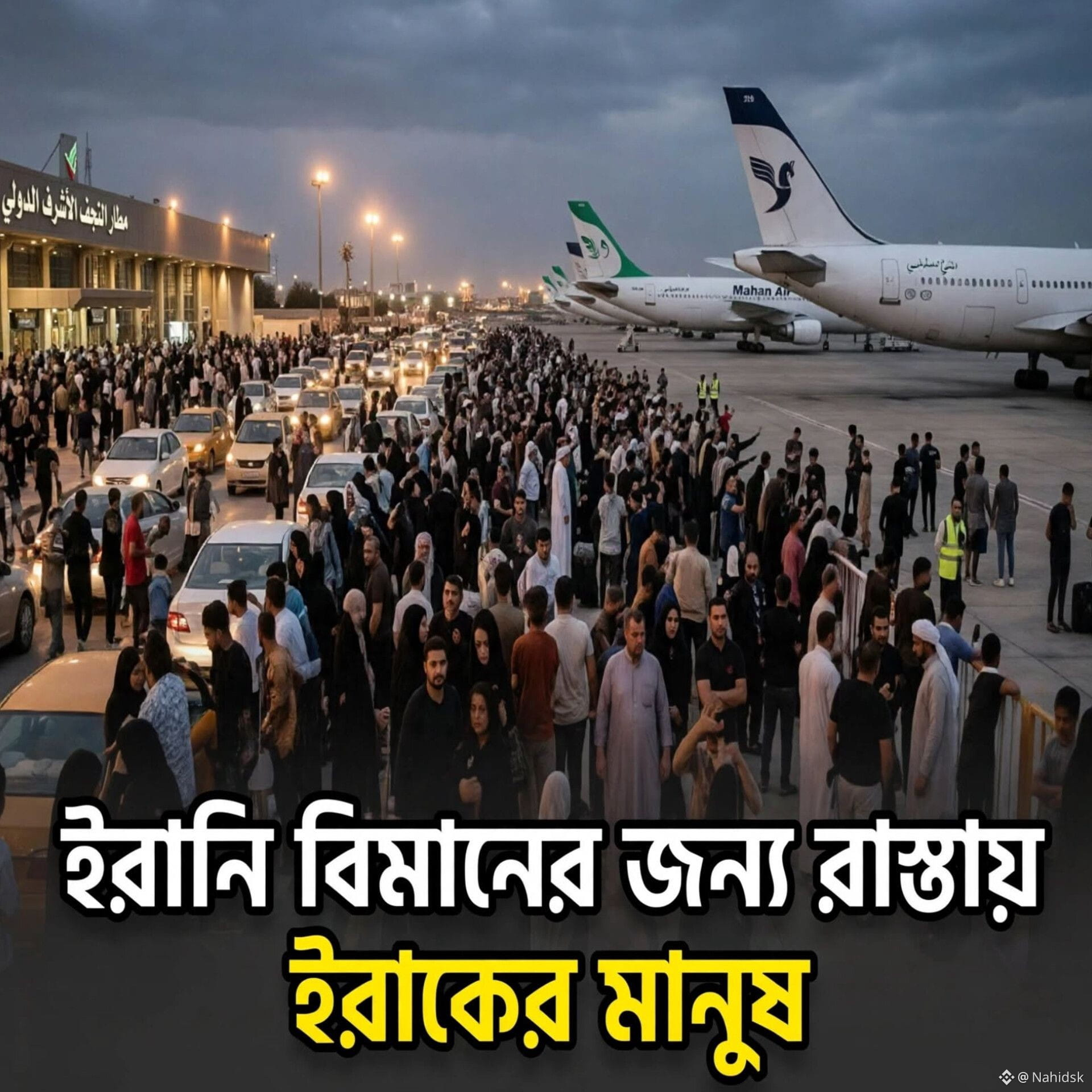
Thousands of people from Iraq have come down onto the streets for an Iranian plane! 😱
An unprecedented scene has been created at Najaf International Airport. Centered around multiple flights coming from Iran, including Mahan Air, intense crowds and traffic jams have formed outside the airport. According to eyewitnesses, ordinary people have been stuck on the road for hours.
Watch in this video:
✅ The latest situation at Najaf airport
✅ Why is there so much crowding around the Iranian plane?
✅ Current status of Iraq–Iran flight operations
If you liked the video, don’t forget to like, comment, and subscribe.
#ইরানি_বিমান #ইরাক #নাজাফ_বিমানবন্দর #IranFlight #IraqNews #NajafAirport #MahanAir #আন্তর্জাতিক_খবর #BreakingNews #MiddleEast
Thousands of people from Iraq have come down onto the streets for an Iranian plane! 😱
An unprecedented scene has been created at Najaf International Airport. Centered around multiple flights coming from Iran, including Mahan Air, intense crowds and traffic jams have formed outside the airport. According to eyewitnesses, ordinary people have been stuck on the road for hours.
Watch in this video:
✅ The latest situation at Najaf airport
✅ Why is there so much crowding around the Iranian plane?
✅ Current status of Iraq–Iran flight operations
If you liked the video, don’t forget to like, comment, and subscribe.
#ইরানি_বিমান #ইরাক #নাজাফ_বিমানবন্দর #IranFlight #IraqNews #NajafAirport #MahanAir #আন্তর্জাতিক_খবর #BreakingNews #MiddleEast
An unprecedented scene has been created at Najaf International Airport. Centered around multiple flights coming from Iran, including Mahan Air, intense crowds and traffic jams have formed outside the airport. According to eyewitnesses, ordinary people have been stuck on the road for hours.
Watch in this video:
✅ The latest situation at Najaf airport
✅ Why is there so much crowding around the Iranian plane?
✅ Current status of Iraq–Iran flight operations
If you liked the video, don’t forget to like, comment, and subscribe.
#ইরানি_বিমান #ইরাক #নাজাফ_বিমানবন্দর #IranFlight #IraqNews #NajafAirport #MahanAir #আন্তর্জাতিক_খবর #BreakingNews #MiddleEast
71

Iranian Foreign Minister Araghchi made a tough statement publicly on September 27, clearly emphasizing that under the established conditions, Iran would never compromise with the United States. He noted that passage through the Strait of Hormuz depends entirely on whether Iran's demands can be met. Although Iran has received initial feedback from the U.S., it still needs to wait for the intermediaries' final clear position.
This statement significantly increases the risk of a blockade of the Middle East's key maritime route and shatters optimistic expectations that diplomatic tensions could be eased in the near term. The Strait of Hormuz carries nearly one-fifth of the world's crude oil seaborne trade. A substantive blockade would directly push an energy supply crisis to a peak, severely undermining the stability of the macro supply chain.
As a result, traditional financial markets saw a rapid surge in safe-haven sentiment. Crude oil prices and broad commodities face intense repricing pressure. The risk of energy-driven inflation flaring up again could directly delay the rate-cut schedules of major central banks such as the U.S. Federal Reserve. U.S. Treasury yields and the U.S. dollar index may receive dual support from safe-haven buying and tightening expectations.
For the crypto market, tighter macro liquidity and rising geopolitical risk premia create a double drag. With risk-off sentiment prevailing, risk assets represented by $BTC may face sell pressure from short-term capital outflows. Investors should be alert to the risk of a pullback triggered by liquidity squeeze.⚠️
#Geopolitics #MiddleEast #CryptoMacro
Iranian Foreign Minister Araghchi made a tough statement publicly on September 27, clearly emphasizing that under the established conditions, Iran would never compromise with the United States. He noted that passage through the Strait of Hormuz depends entirely on whether Iran's demands can be met. Although Iran has received initial feedback from the U.S., it still needs to wait for the intermediaries' final clear position.
This statement significantly increases the risk of a blockade of the Middle East's key maritime route and shatters optimistic expectations that diplomatic tensions could be eased in the near term. The Strait of Hormuz carries nearly one-fifth of the world's crude oil seaborne trade. A substantive blockade would directly push an energy supply crisis to a peak, severely undermining the stability of the macro supply chain.
As a result, traditional financial markets saw a rapid surge in safe-haven sentiment. Crude oil prices and broad commodities face intense repricing pressure. The risk of energy-driven inflation flaring up again could directly delay the rate-cut schedules of major central banks such as the U.S. Federal Reserve. U.S. Treasury yields and the U.S. dollar index may receive dual support from safe-haven buying and tightening expectations.
For the crypto market, tighter macro liquidity and rising geopolitical risk premia create a double drag. With risk-off sentiment prevailing, risk assets represented by $BTC may face sell pressure from short-term capital outflows. Investors should be alert to the risk of a pullback triggered by liquidity squeeze.⚠️
#Geopolitics #MiddleEast #CryptoMacro
This statement significantly increases the risk of a blockade of the Middle East's key maritime route and shatters optimistic expectations that diplomatic tensions could be eased in the near term. The Strait of Hormuz carries nearly one-fifth of the world's crude oil seaborne trade. A substantive blockade would directly push an energy supply crisis to a peak, severely undermining the stability of the macro supply chain.
As a result, traditional financial markets saw a rapid surge in safe-haven sentiment. Crude oil prices and broad commodities face intense repricing pressure. The risk of energy-driven inflation flaring up again could directly delay the rate-cut schedules of major central banks such as the U.S. Federal Reserve. U.S. Treasury yields and the U.S. dollar index may receive dual support from safe-haven buying and tightening expectations.
For the crypto market, tighter macro liquidity and rising geopolitical risk premia create a double drag. With risk-off sentiment prevailing, risk assets represented by $BTC may face sell pressure from short-term capital outflows. Investors should be alert to the risk of a pullback triggered by liquidity squeeze.⚠️
#Geopolitics #MiddleEast #CryptoMacro
86
·
--
Iran FM: We have seen the US’s initial response, but the mediators have not conveyed any message yet. Geopolitical uncertainty continues, and market sentiment remains sensitive.
#地缘政治 #MiddleEast
$BTC $ETH
Iran FM: We've seen US initial response, but mediators haven't delivered any message yet. Geopolitical uncertainty continues, market sentiment remains sensitive.
#Geopolitics #MiddleEast
$BTC $ETH
Iran FM: We have seen the US’s initial response, but the mediators have not conveyed any message yet. Geopolitical uncertainty continues, and market sentiment remains sensitive.
#地缘政治 #MiddleEast
$BTC $ETH
Iran FM: We've seen US initial response, but mediators haven't delivered any message yet. Geopolitical uncertainty continues, market sentiment remains sensitive.
#Geopolitics #MiddleEast
$BTC $ETH
#地缘政治 #MiddleEast
$BTC $ETH
Iran FM: We've seen US initial response, but mediators haven't delivered any message yet. Geopolitical uncertainty continues, market sentiment remains sensitive.
#Geopolitics #MiddleEast
$BTC $ETH
204
Iran’s Foreign Minister Hossein Amir-Abdollahian has recently made a public statement about the latest round of U.S.-Iran wrangling. He said Iran has noted the U.S. president’s initial response to Iran’s proposal, but that the intermediary has not yet conveyed a specific reply. Iran is currently waiting for accurate feedback before making a decision. At the same time, he made clear that Iran’s position is “crystal clear,” and that any action to reopen the Strait of Hormuz depends entirely on whether its conditions are met.
This latest remark once again places the Strait of Hormuz—an essential global energy chokepoint—at the center of the contest. The market had generally expected that the two sides might reach some kind of tactical easing through mediation. However, Iran’s hardline stance directly linking passage through the waterway to its specific demands suggests that tail risks in the Middle East have not been fully cleared. Any misjudgment or stalemate during the negotiations could quickly evolve into a substantive energy-supply crisis.
A substantial escalation in geopolitical friction will pose severe challenges to global financial markets. The potential risk of a blockade of the Strait of Hormuz would drive up the risk premium for crude oil, intensify concerns about stagflation, and directly weaken major central banks’ expectations for rate cuts. Driven by risk-aversion sentiment, the U.S. dollar and gold may receive short-term support, while U.S. Treasury yields and highly valued risk assets would face significant repricing pressure.
For the cryptocurrency market, worsening geopolitical conflict is not a single positive catalyst. Although some funds view BTC as an anti-censorship asset, tighter macro liquidity and risk-aversion sentiment often trigger leveraged liquidations first. Investors should remain vigilant and guard against the risk of a deep pullback caused by liquidity withdrawal before the situation becomes clear. #Geopolitics #MiddleEast #EnergyCrisis
Iran’s Foreign Minister Hossein Amir-Abdollahian has recently made a public statement about the latest round of U.S.-Iran wrangling. He said Iran has noted the U.S. president’s initial response to Iran’s proposal, but that the intermediary has not yet conveyed a specific reply. Iran is currently waiting for accurate feedback before making a decision. At the same time, he made clear that Iran’s position is “crystal clear,” and that any action to reopen the Strait of Hormuz depends entirely on whether its conditions are met.
This latest remark once again places the Strait of Hormuz—an essential global energy chokepoint—at the center of the contest. The market had generally expected that the two sides might reach some kind of tactical easing through mediation. However, Iran’s hardline stance directly linking passage through the waterway to its specific demands suggests that tail risks in the Middle East have not been fully cleared. Any misjudgment or stalemate during the negotiations could quickly evolve into a substantive energy-supply crisis.
A substantial escalation in geopolitical friction will pose severe challenges to global financial markets. The potential risk of a blockade of the Strait of Hormuz would drive up the risk premium for crude oil, intensify concerns about stagflation, and directly weaken major central banks’ expectations for rate cuts. Driven by risk-aversion sentiment, the U.S. dollar and gold may receive short-term support, while U.S. Treasury yields and highly valued risk assets would face significant repricing pressure.
For the cryptocurrency market, worsening geopolitical conflict is not a single positive catalyst. Although some funds view BTC as an anti-censorship asset, tighter macro liquidity and risk-aversion sentiment often trigger leveraged liquidations first. Investors should remain vigilant and guard against the risk of a deep pullback caused by liquidity withdrawal before the situation becomes clear. #Geopolitics #MiddleEast #EnergyCrisis
This latest remark once again places the Strait of Hormuz—an essential global energy chokepoint—at the center of the contest. The market had generally expected that the two sides might reach some kind of tactical easing through mediation. However, Iran’s hardline stance directly linking passage through the waterway to its specific demands suggests that tail risks in the Middle East have not been fully cleared. Any misjudgment or stalemate during the negotiations could quickly evolve into a substantive energy-supply crisis.
A substantial escalation in geopolitical friction will pose severe challenges to global financial markets. The potential risk of a blockade of the Strait of Hormuz would drive up the risk premium for crude oil, intensify concerns about stagflation, and directly weaken major central banks’ expectations for rate cuts. Driven by risk-aversion sentiment, the U.S. dollar and gold may receive short-term support, while U.S. Treasury yields and highly valued risk assets would face significant repricing pressure.
For the cryptocurrency market, worsening geopolitical conflict is not a single positive catalyst. Although some funds view BTC as an anti-censorship asset, tighter macro liquidity and risk-aversion sentiment often trigger leveraged liquidations first. Investors should remain vigilant and guard against the risk of a deep pullback caused by liquidity withdrawal before the situation becomes clear. #Geopolitics #MiddleEast #EnergyCrisis
157

According to a report by The Wall Street Journal, U.S. officials said that President Donald Trump has formally rejected Iran’s seven-day ceasefire proposal and made it clear to his senior advisors that he expects to resume airstrike operations against Iran after the midterm elections in November.
From a macro standpoint, Trump’s statement pushes the decisive point for the situation in the Middle East to after the midterm elections in November. This not only means that before the election, all parties will maintain a certain degree of strategic restraint, but it also eliminates the immediate “black swan” risk of an uncontrollable, full-scale conflict breaking out in the short term. By explicitly postponing the timeline to the end of the year, it provides financial markets with a relatively stable window to catch their breath.
In traditional financial markets, crude oil and gold may experience pulse-like volatility in the near term driven by geopolitical sentiment. However, because the timeline is clearly anchored after November, the extreme pricing impact from a potential disruption in crude supply is expected to fade quickly. U.S. Treasury yields and the U.S. Dollar Index are expected to remain range-bound, and market expectations for liquidity are more inclined to maintain a stable posture before the election. The decline in risk premia for commodities in turn helps ease core inflation expectations.
For the crypto market, geopolitical risks becoming clearer and being delayed in the short term are an excellent technical catalyst. $BTC After it digests the panic selling in the short term, the price holds steady above the key structural support level, and turnover among positions has been sufficient, with downward sell pressure significantly exhausting. As long as there is no sudden liquidity crisis in the near term, risk appetite will gradually return. Bitcoin is expected to form a standard consolidation-and-breakout pattern on its technical charts, kicking off a new round of upside momentum. #Geopolitics #MiddleEast #MacroEconomics
According to a report by The Wall Street Journal, U.S. officials said that President Donald Trump has formally rejected Iran’s seven-day ceasefire proposal and made it clear to his senior advisors that he expects to resume airstrike operations against Iran after the midterm elections in November.
From a macro standpoint, Trump’s statement pushes the decisive point for the situation in the Middle East to after the midterm elections in November. This not only means that before the election, all parties will maintain a certain degree of strategic restraint, but it also eliminates the immediate “black swan” risk of an uncontrollable, full-scale conflict breaking out in the short term. By explicitly postponing the timeline to the end of the year, it provides financial markets with a relatively stable window to catch their breath.
In traditional financial markets, crude oil and gold may experience pulse-like volatility in the near term driven by geopolitical sentiment. However, because the timeline is clearly anchored after November, the extreme pricing impact from a potential disruption in crude supply is expected to fade quickly. U.S. Treasury yields and the U.S. Dollar Index are expected to remain range-bound, and market expectations for liquidity are more inclined to maintain a stable posture before the election. The decline in risk premia for commodities in turn helps ease core inflation expectations.
For the crypto market, geopolitical risks becoming clearer and being delayed in the short term are an excellent technical catalyst. $BTC After it digests the panic selling in the short term, the price holds steady above the key structural support level, and turnover among positions has been sufficient, with downward sell pressure significantly exhausting. As long as there is no sudden liquidity crisis in the near term, risk appetite will gradually return. Bitcoin is expected to form a standard consolidation-and-breakout pattern on its technical charts, kicking off a new round of upside momentum. #Geopolitics #MiddleEast #MacroEconomics
From a macro standpoint, Trump’s statement pushes the decisive point for the situation in the Middle East to after the midterm elections in November. This not only means that before the election, all parties will maintain a certain degree of strategic restraint, but it also eliminates the immediate “black swan” risk of an uncontrollable, full-scale conflict breaking out in the short term. By explicitly postponing the timeline to the end of the year, it provides financial markets with a relatively stable window to catch their breath.
In traditional financial markets, crude oil and gold may experience pulse-like volatility in the near term driven by geopolitical sentiment. However, because the timeline is clearly anchored after November, the extreme pricing impact from a potential disruption in crude supply is expected to fade quickly. U.S. Treasury yields and the U.S. Dollar Index are expected to remain range-bound, and market expectations for liquidity are more inclined to maintain a stable posture before the election. The decline in risk premia for commodities in turn helps ease core inflation expectations.
For the crypto market, geopolitical risks becoming clearer and being delayed in the short term are an excellent technical catalyst. $BTC After it digests the panic selling in the short term, the price holds steady above the key structural support level, and turnover among positions has been sufficient, with downward sell pressure significantly exhausting. As long as there is no sudden liquidity crisis in the near term, risk appetite will gradually return. Bitcoin is expected to form a standard consolidation-and-breakout pattern on its technical charts, kicking off a new round of upside momentum. #Geopolitics #MiddleEast #MacroEconomics
võ ngọc lãm:
từ chối 7 ngày mà hẹn sang sau giữa tháng 11khác gì dừng bắn gần 1 tháng
1
188

·
--
🇸🇦 Saudi Arabia: Gaza Must Remain Part of a Unified Palestinian State
Saudi Foreign Minister Faisal said Gaza must not be separated from the West Bank and East Jerusalem, either politically or territorially.
The remarks came after a high-level international conference in New York focused on implementing the two-state solution.
What impact could this position have on future regional negotiations? 👀
#Gaza #Palestine #SaudiArabia #MiddleEast #Geopolitics
🇸🇦 Saudi Arabia: Gaza Must Remain Part of a Unified Palestinian State
Saudi Foreign Minister Faisal said Gaza must not be separated from the West Bank and East Jerusalem, either politically or territorially.
The remarks came after a high-level international conference in New York focused on implementing the two-state solution.
What impact could this position have on future regional negotiations? 👀
#Gaza #Palestine #SaudiArabia #MiddleEast #Geopolitics
Saudi Foreign Minister Faisal said Gaza must not be separated from the West Bank and East Jerusalem, either politically or territorially.
The remarks came after a high-level international conference in New York focused on implementing the two-state solution.
What impact could this position have on future regional negotiations? 👀
#Gaza #Palestine #SaudiArabia #MiddleEast #Geopolitics
1
3
Iran’s foreign minister recently issued an updated statement on the heightened tensions between the US and Iran, saying that Iran has submitted a specific 7-day plan to the US. He emphasized that the 7-day countdown would begin when the US receives the plan, and he made it clear that if the plan is accepted, the Strait of Hormuz would ultimately be reopened.
This statement has significantly shattered market fears of an unlimited escalation of the conflict in the Middle East. As the Strait of Hormuz is the lifeline for global energy transport, concerns over a blockade had previously caused a sharp surge in risk-premium “safe-haven” pricing. By proactively proposing a concrete timetable and clearly outlining the prerequisites for reopening the shipping lanes, Iran has sent a substantive diplomatic de-escalation signal, greatly reducing the tail-end risk of geopolitical “black swan” events.
From the perspective of commodities and traditional markets, the extreme risk of an oil-supply disruption is being quickly repriced. The panic premium that oil prices had previously priced in is likely to fall sharply; pressure for a renewed rise in inflation will ease accordingly. Safe-haven buying for the US dollar index will also gradually fade, US Treasury yields are expected to stabilize, and the overall macro liquidity environment is shifting toward a channel favorable for the repair of risk assets.
For the crypto market, as safe-haven sentiment cools, liquidity is set to flow back into high-beta assets. $BTC demonstrates strong bottom-fishing and accumulation capacity. Expectations of geopolitical easing will directly boost long-side risk appetite. Prices are likely to stabilize at key support levels and then launch a rebound, allowing the continuation of a structural breakout trend.📈
#Geopolitics #MiddleEast #CryptoMarket
Iran’s foreign minister recently issued an updated statement on the heightened tensions between the US and Iran, saying that Iran has submitted a specific 7-day plan to the US. He emphasized that the 7-day countdown would begin when the US receives the plan, and he made it clear that if the plan is accepted, the Strait of Hormuz would ultimately be reopened.
This statement has significantly shattered market fears of an unlimited escalation of the conflict in the Middle East. As the Strait of Hormuz is the lifeline for global energy transport, concerns over a blockade had previously caused a sharp surge in risk-premium “safe-haven” pricing. By proactively proposing a concrete timetable and clearly outlining the prerequisites for reopening the shipping lanes, Iran has sent a substantive diplomatic de-escalation signal, greatly reducing the tail-end risk of geopolitical “black swan” events.
From the perspective of commodities and traditional markets, the extreme risk of an oil-supply disruption is being quickly repriced. The panic premium that oil prices had previously priced in is likely to fall sharply; pressure for a renewed rise in inflation will ease accordingly. Safe-haven buying for the US dollar index will also gradually fade, US Treasury yields are expected to stabilize, and the overall macro liquidity environment is shifting toward a channel favorable for the repair of risk assets.
For the crypto market, as safe-haven sentiment cools, liquidity is set to flow back into high-beta assets. $BTC demonstrates strong bottom-fishing and accumulation capacity. Expectations of geopolitical easing will directly boost long-side risk appetite. Prices are likely to stabilize at key support levels and then launch a rebound, allowing the continuation of a structural breakout trend.📈
#Geopolitics #MiddleEast #CryptoMarket
This statement has significantly shattered market fears of an unlimited escalation of the conflict in the Middle East. As the Strait of Hormuz is the lifeline for global energy transport, concerns over a blockade had previously caused a sharp surge in risk-premium “safe-haven” pricing. By proactively proposing a concrete timetable and clearly outlining the prerequisites for reopening the shipping lanes, Iran has sent a substantive diplomatic de-escalation signal, greatly reducing the tail-end risk of geopolitical “black swan” events.
From the perspective of commodities and traditional markets, the extreme risk of an oil-supply disruption is being quickly repriced. The panic premium that oil prices had previously priced in is likely to fall sharply; pressure for a renewed rise in inflation will ease accordingly. Safe-haven buying for the US dollar index will also gradually fade, US Treasury yields are expected to stabilize, and the overall macro liquidity environment is shifting toward a channel favorable for the repair of risk assets.
For the crypto market, as safe-haven sentiment cools, liquidity is set to flow back into high-beta assets. $BTC demonstrates strong bottom-fishing and accumulation capacity. Expectations of geopolitical easing will directly boost long-side risk appetite. Prices are likely to stabilize at key support levels and then launch a rebound, allowing the continuation of a structural breakout trend.📈
#Geopolitics #MiddleEast #CryptoMarket
172
·
--
Latest News! Egypt and Iran foreign ministers discussed protocol proposals, potentially signaling new geopolitical shifts in the Middle East. Regional stability could create fresh opportunities for crypto finance! $BTC $ETH #Geopolitics #MiddleEast
Breaking news! Egypt and Iran foreign ministers discussed protocol proposals, potentially signaling new geopolitical shifts in the Middle East. Regional stability could create fresh opportunities for crypto finance! $BTC $ETH #Geopolitics #MiddleEast
Latest News! Egypt and Iran foreign ministers discussed protocol proposals, potentially signaling new geopolitical shifts in the Middle East. Regional stability could create fresh opportunities for crypto finance! $BTC $ETH #Geopolitics #MiddleEast
Breaking news! Egypt and Iran foreign ministers discussed protocol proposals, potentially signaling new geopolitical shifts in the Middle East. Regional stability could create fresh opportunities for crypto finance! $BTC $ETH #Geopolitics #MiddleEast
Breaking news! Egypt and Iran foreign ministers discussed protocol proposals, potentially signaling new geopolitical shifts in the Middle East. Regional stability could create fresh opportunities for crypto finance! $BTC $ETH #Geopolitics #MiddleEast
360
Iran’s president recently stated publicly that the Yemeni Houthi forces must take responsibility for their own actions. He also made it clear that the Houthis are not under Iran’s command and do not accept orders from Iran. Against the backdrop of the current highly sensitive situation in the Middle East, this kind of statement sends an extremely rare signal of a “cut” between sides. In essence, it reflects a pragmatic posture by Iran aimed at cooling the regional conflict and avoiding a direct confrontation with the Western bloc.
From the perspective of broader geopolitical chess moves, this statement carries crucial watershed significance. Previously, the market had long linked the Houthis’ attacks in the Red Sea to Iran’s direct authorization, keeping the geopolitical risk premium elevated for an extended period. By officially and conspicuously drawing a clear line, Iran has substantially reduced the extreme risk of the Middle East situation spiraling into complete loss of control—or escalating into direct confrontation between major powers—effectively breaking the market’s continuously priced-in expectations of further deterioration.
In traditional financial markets, this is expected to translate into a technical unwind of the geopolitical risk premium in the oil market. Safe-haven assets such as gold may see weakened momentum after testing high-level resistance, and demand for the U.S. dollar for risk-off purposes could also face downward pressure. Potential downside risks for commodity prices would further support easing global inflation, reinforce the macro path for major central banks to loosen monetary policy, and directly boost global risk-asset liquidity preferences.
For the crypto market, a substantive cooling of geopolitical conflict risk is an absolute positive catalyst. With extreme “black swan” risks ruled out, market risk appetite can rebound quickly. Core assets such as $BTC are likely to stabilize around key support levels and restart a technical rebound upward. The easing of macro pressure will accelerate off-exchange liquidity flowing back into risk assets, providing strong fundamental support for long positions. 🚀
#Geopolitics #MiddleEast #CryptoMarkets
Iran’s president recently stated publicly that the Yemeni Houthi forces must take responsibility for their own actions. He also made it clear that the Houthis are not under Iran’s command and do not accept orders from Iran. Against the backdrop of the current highly sensitive situation in the Middle East, this kind of statement sends an extremely rare signal of a “cut” between sides. In essence, it reflects a pragmatic posture by Iran aimed at cooling the regional conflict and avoiding a direct confrontation with the Western bloc.
From the perspective of broader geopolitical chess moves, this statement carries crucial watershed significance. Previously, the market had long linked the Houthis’ attacks in the Red Sea to Iran’s direct authorization, keeping the geopolitical risk premium elevated for an extended period. By officially and conspicuously drawing a clear line, Iran has substantially reduced the extreme risk of the Middle East situation spiraling into complete loss of control—or escalating into direct confrontation between major powers—effectively breaking the market’s continuously priced-in expectations of further deterioration.
In traditional financial markets, this is expected to translate into a technical unwind of the geopolitical risk premium in the oil market. Safe-haven assets such as gold may see weakened momentum after testing high-level resistance, and demand for the U.S. dollar for risk-off purposes could also face downward pressure. Potential downside risks for commodity prices would further support easing global inflation, reinforce the macro path for major central banks to loosen monetary policy, and directly boost global risk-asset liquidity preferences.
For the crypto market, a substantive cooling of geopolitical conflict risk is an absolute positive catalyst. With extreme “black swan” risks ruled out, market risk appetite can rebound quickly. Core assets such as $BTC are likely to stabilize around key support levels and restart a technical rebound upward. The easing of macro pressure will accelerate off-exchange liquidity flowing back into risk assets, providing strong fundamental support for long positions. 🚀
#Geopolitics #MiddleEast #CryptoMarkets
From the perspective of broader geopolitical chess moves, this statement carries crucial watershed significance. Previously, the market had long linked the Houthis’ attacks in the Red Sea to Iran’s direct authorization, keeping the geopolitical risk premium elevated for an extended period. By officially and conspicuously drawing a clear line, Iran has substantially reduced the extreme risk of the Middle East situation spiraling into complete loss of control—or escalating into direct confrontation between major powers—effectively breaking the market’s continuously priced-in expectations of further deterioration.
In traditional financial markets, this is expected to translate into a technical unwind of the geopolitical risk premium in the oil market. Safe-haven assets such as gold may see weakened momentum after testing high-level resistance, and demand for the U.S. dollar for risk-off purposes could also face downward pressure. Potential downside risks for commodity prices would further support easing global inflation, reinforce the macro path for major central banks to loosen monetary policy, and directly boost global risk-asset liquidity preferences.
For the crypto market, a substantive cooling of geopolitical conflict risk is an absolute positive catalyst. With extreme “black swan” risks ruled out, market risk appetite can rebound quickly. Core assets such as $BTC are likely to stabilize around key support levels and restart a technical rebound upward. The easing of macro pressure will accelerate off-exchange liquidity flowing back into risk assets, providing strong fundamental support for long positions. 🚀
#Geopolitics #MiddleEast #CryptoMarkets
213
·
--
Yemeni Houthi spokesperson Yahya Saree recently announced that, in response to 1,018 airstrikes and missile attacks launched by Saudi Arabia in recent times, the Yemeni armed forces carried out two rounds of military strikes using ballistic missiles, cruise missiles, and drones against military targets in Riyadh, the Saudi capital, as well as Saudi Aramco oil facilities located in Yanbu. They claimed the operations were successful.
The geopolitical situation in the Middle East has tightened again. Saudi Aramco’s core facilities have long been a crucial node in the global supply of crude oil. In this latest move, the Houthis directly targeted infrastructure in Yanbu and said they will continue to respond with upgrades until Saudi Arabia lifts the blockade. This tit-for-tat posture adds more variables to an already complex regional security environment.
For traditional financial markets, news of attacks on energy facilities typically first boosts crude oil prices and safe-haven assets. Oil price fluctuations often influence inflation expectations, which in turn affects the direction of commodities and the U.S. dollar. However, based on past incidents, the actual impact depends largely on the extent of damage to the facilities and the pace at which subsequent supply chains are repaired.
As for the crypto market, mainstream assets such as $BTC are also likely to be affected by risk-averse sentiment in the short term. Some funds may choose to temporarily stand by, leading to short-term volatility in market prices; but in the long run, liquidity and the broader macro cycle remain the dominant factors. Everyone may want to pay more attention to subsequent statements from all sides and actual supply-chain data.
#Geopolitics #SaudiAramco #MiddleEast
Yemeni Houthi spokesperson Yahya Saree recently announced that, in response to 1,018 airstrikes and missile attacks launched by Saudi Arabia in recent times, the Yemeni armed forces carried out two rounds of military strikes using ballistic missiles, cruise missiles, and drones against military targets in Riyadh, the Saudi capital, as well as Saudi Aramco oil facilities located in Yanbu. They claimed the operations were successful.
The geopolitical situation in the Middle East has tightened again. Saudi Aramco’s core facilities have long been a crucial node in the global supply of crude oil. In this latest move, the Houthis directly targeted infrastructure in Yanbu and said they will continue to respond with upgrades until Saudi Arabia lifts the blockade. This tit-for-tat posture adds more variables to an already complex regional security environment.
For traditional financial markets, news of attacks on energy facilities typically first boosts crude oil prices and safe-haven assets. Oil price fluctuations often influence inflation expectations, which in turn affects the direction of commodities and the U.S. dollar. However, based on past incidents, the actual impact depends largely on the extent of damage to the facilities and the pace at which subsequent supply chains are repaired.
As for the crypto market, mainstream assets such as $BTC are also likely to be affected by risk-averse sentiment in the short term. Some funds may choose to temporarily stand by, leading to short-term volatility in market prices; but in the long run, liquidity and the broader macro cycle remain the dominant factors. Everyone may want to pay more attention to subsequent statements from all sides and actual supply-chain data.
#Geopolitics #SaudiAramco #MiddleEast
The geopolitical situation in the Middle East has tightened again. Saudi Aramco’s core facilities have long been a crucial node in the global supply of crude oil. In this latest move, the Houthis directly targeted infrastructure in Yanbu and said they will continue to respond with upgrades until Saudi Arabia lifts the blockade. This tit-for-tat posture adds more variables to an already complex regional security environment.
For traditional financial markets, news of attacks on energy facilities typically first boosts crude oil prices and safe-haven assets. Oil price fluctuations often influence inflation expectations, which in turn affects the direction of commodities and the U.S. dollar. However, based on past incidents, the actual impact depends largely on the extent of damage to the facilities and the pace at which subsequent supply chains are repaired.
As for the crypto market, mainstream assets such as $BTC are also likely to be affected by risk-averse sentiment in the short term. Some funds may choose to temporarily stand by, leading to short-term volatility in market prices; but in the long run, liquidity and the broader macro cycle remain the dominant factors. Everyone may want to pay more attention to subsequent statements from all sides and actual supply-chain data.
#Geopolitics #SaudiAramco #MiddleEast
5

The Secretary of Iran's Supreme National Security Council announced that Iranian forces have, for the first time, successfully detonated an anti-ship missile within the airspace of the US aircraft carrier USS George Washington. This direct military signaling marks a sharp escalation in confrontation between Tehran and Washington in critical Middle Eastern maritime corridors.
Direct engagement claims involving a premier US carrier strike group dramatically elevate regional conflict risks beyond typical proxy skirmishes. Investors are acutely sensitive to any disruption in the Strait of Hormuz, where a potential blockade or active military exchange directly threatens a massive portion of global energy shipments.
Broader financial markets are bracing for standard risk-off dynamics, with crude oil and gold prices facing immediate upward pressure amid supply shock concerns. Sovereign bond yields may soften as capital rotates into traditional safe-haven assets, while equities face headwinds from rising geopolitical uncertainty.
For crypto markets, such spikes in geopolitical tension typically trigger short-term volatility as leveraged positions de-risk. However, prolonged macroeconomic uncertainty could reinforce the long-term hedge narrative for $BTC as liquidity seeks decentralized stores of value. ⚠️
#Geopolitics #MiddleEast #CryptoMarkets
The Secretary of Iran's Supreme National Security Council announced that Iranian forces have, for the first time, successfully detonated an anti-ship missile within the airspace of the US aircraft carrier USS George Washington. This direct military signaling marks a sharp escalation in confrontation between Tehran and Washington in critical Middle Eastern maritime corridors.
Direct engagement claims involving a premier US carrier strike group dramatically elevate regional conflict risks beyond typical proxy skirmishes. Investors are acutely sensitive to any disruption in the Strait of Hormuz, where a potential blockade or active military exchange directly threatens a massive portion of global energy shipments.
Broader financial markets are bracing for standard risk-off dynamics, with crude oil and gold prices facing immediate upward pressure amid supply shock concerns. Sovereign bond yields may soften as capital rotates into traditional safe-haven assets, while equities face headwinds from rising geopolitical uncertainty.
For crypto markets, such spikes in geopolitical tension typically trigger short-term volatility as leveraged positions de-risk. However, prolonged macroeconomic uncertainty could reinforce the long-term hedge narrative for $BTC as liquidity seeks decentralized stores of value. ⚠️
#Geopolitics #MiddleEast #CryptoMarkets
Direct engagement claims involving a premier US carrier strike group dramatically elevate regional conflict risks beyond typical proxy skirmishes. Investors are acutely sensitive to any disruption in the Strait of Hormuz, where a potential blockade or active military exchange directly threatens a massive portion of global energy shipments.
Broader financial markets are bracing for standard risk-off dynamics, with crude oil and gold prices facing immediate upward pressure amid supply shock concerns. Sovereign bond yields may soften as capital rotates into traditional safe-haven assets, while equities face headwinds from rising geopolitical uncertainty.
For crypto markets, such spikes in geopolitical tension typically trigger short-term volatility as leveraged positions de-risk. However, prolonged macroeconomic uncertainty could reinforce the long-term hedge narrative for $BTC as liquidity seeks decentralized stores of value. ⚠️
#Geopolitics #MiddleEast #CryptoMarkets
202
Log in to explore more content
Join global crypto users on Binance Square
⚡️ Get latest and useful information about crypto.
💬 Trusted by the world’s largest crypto exchange.
👍 Discover real insights from verified creators.
Email / Phone number
Trending Topics
1
#BitcoinClears$85200
1,450 views
83 Discussing
2
#AltcoinSeasonIndexHoldsAbove60For5Days
11,779 views
533 Discussing
3
#USADPAdds90000JobsInSeptember
3,489 views
257 Discussing
4
#USCorePCEEasesTo3%InAugust
3,280 views
217 Discussing
5
#KospiPostsWorstQuarterSince2020
3,550 views
260 Discussing
6
#SECToClarifyOnChainFundraisingRules
10,347 views
426 Discussing
7
#UKFCAOpensCryptoFirmAuthorization
13,869 views
413 Discussing
8
#JapanMOFStudyGroupOnTokenizedGovtBonds
12,022 views
332 Discussing
9
#QNTRises287%
56,391 views
740 Discussing
10
#TrumpRejectsAIRulesForVoluntaryAudits
35,913 views
664 Discussing