

#inflation
inflation
3.4M views
9,210 Discussing
Hot
Latest

Brent crude oil futures closed with a sharp surge today, settling at $106.60 per barrel after jumping $3.52, or 3.41%. This aggressive daily rally marks another volatile chapter for energy markets as tightening physical supplies and heightened geopolitical uncertainty continue to dictate trading dynamics across global commodity desks.
A single-day spike of over 3% in crude is critical because energy costs remain the primary driver of headline inflation metrics. Sustained oil prices above $100 per barrel directly threaten central bank easing timelines, reigniting concerns that disinflation trends may stall or reverse faster than consensus models anticipated.
Across traditional finance, higher oil prices immediately trigger a risk-off rotation. Surging energy input costs push sovereign bond yields higher while supporting the US Dollar, simultaneously squeezing corporate profit margins and dampening risk appetite across global equities.
For crypto markets, this macro setup brings renewed headwinds. Elevated energy-driven inflation reduces the probability of rapid interest rate cuts, restricting global dollar liquidity. In the short term, $BTC and broader digital assets may face tight consolidation as traders price in persistent macro pressure.
#CrudeOil #MacroEconomy #Inflation
Brent crude oil futures closed with a sharp surge today, settling at $106.60 per barrel after jumping $3.52, or 3.41%. This aggressive daily rally marks another volatile chapter for energy markets as tightening physical supplies and heightened geopolitical uncertainty continue to dictate trading dynamics across global commodity desks.
A single-day spike of over 3% in crude is critical because energy costs remain the primary driver of headline inflation metrics. Sustained oil prices above $100 per barrel directly threaten central bank easing timelines, reigniting concerns that disinflation trends may stall or reverse faster than consensus models anticipated.
Across traditional finance, higher oil prices immediately trigger a risk-off rotation. Surging energy input costs push sovereign bond yields higher while supporting the US Dollar, simultaneously squeezing corporate profit margins and dampening risk appetite across global equities.
For crypto markets, this macro setup brings renewed headwinds. Elevated energy-driven inflation reduces the probability of rapid interest rate cuts, restricting global dollar liquidity. In the short term, $BTC and broader digital assets may face tight consolidation as traders price in persistent macro pressure.
#CrudeOil #MacroEconomy #Inflation
A single-day spike of over 3% in crude is critical because energy costs remain the primary driver of headline inflation metrics. Sustained oil prices above $100 per barrel directly threaten central bank easing timelines, reigniting concerns that disinflation trends may stall or reverse faster than consensus models anticipated.
Across traditional finance, higher oil prices immediately trigger a risk-off rotation. Surging energy input costs push sovereign bond yields higher while supporting the US Dollar, simultaneously squeezing corporate profit margins and dampening risk appetite across global equities.
For crypto markets, this macro setup brings renewed headwinds. Elevated energy-driven inflation reduces the probability of rapid interest rate cuts, restricting global dollar liquidity. In the short term, $BTC and broader digital assets may face tight consolidation as traders price in persistent macro pressure.
#CrudeOil #MacroEconomy #Inflation
154

·
--
🔴🔴 HIGH IMPACT — Friday September 26
PCE Price Index August 🔥 biggest of week
📅 8:30 AM ET · Forecast: ~3.5% YoY
The PCE is due on September 26 — the Fed's preferred inflation gauge. First PCE after the rate hike — this tells us if the hike is working. Cool PCE = rate hike doing its job = December pause possible. Hot PCE = second hike December confirmed. Most important number of the week. 🌡️
UoM Consumer Sentiment Final (September)
📅 10:00 AM ET
Followed by the final U-Mich Consumer Sentiment. How do Americans feel one week after the first rate hike since 2023 and the death of the CLARITY Act? 🧭
#PCE #Inflation #dyor
{future}(BTCUSDT)
{future}(LINKUSDT)
{future}(SOLUSDT)
🔴🔴 HIGH IMPACT — Friday September 26
PCE Price Index August 🔥 biggest of week
📅 8:30 AM ET · Forecast: ~3.5% YoY
The PCE is due on September 26 — the Fed's preferred inflation gauge. First PCE after the rate hike — this tells us if the hike is working. Cool PCE = rate hike doing its job = December pause possible. Hot PCE = second hike December confirmed. Most important number of the week. 🌡️
UoM Consumer Sentiment Final (September)
📅 10:00 AM ET
Followed by the final U-Mich Consumer Sentiment. How do Americans feel one week after the first rate hike since 2023 and the death of the CLARITY Act? 🧭
#PCE #Inflation #dyor
PCE Price Index August 🔥 biggest of week
📅 8:30 AM ET · Forecast: ~3.5% YoY
The PCE is due on September 26 — the Fed's preferred inflation gauge. First PCE after the rate hike — this tells us if the hike is working. Cool PCE = rate hike doing its job = December pause possible. Hot PCE = second hike December confirmed. Most important number of the week. 🌡️
UoM Consumer Sentiment Final (September)
📅 10:00 AM ET
Followed by the final U-Mich Consumer Sentiment. How do Americans feel one week after the first rate hike since 2023 and the death of the CLARITY Act? 🧭
#PCE #Inflation #dyor
62

·
--
Bearish
Verified
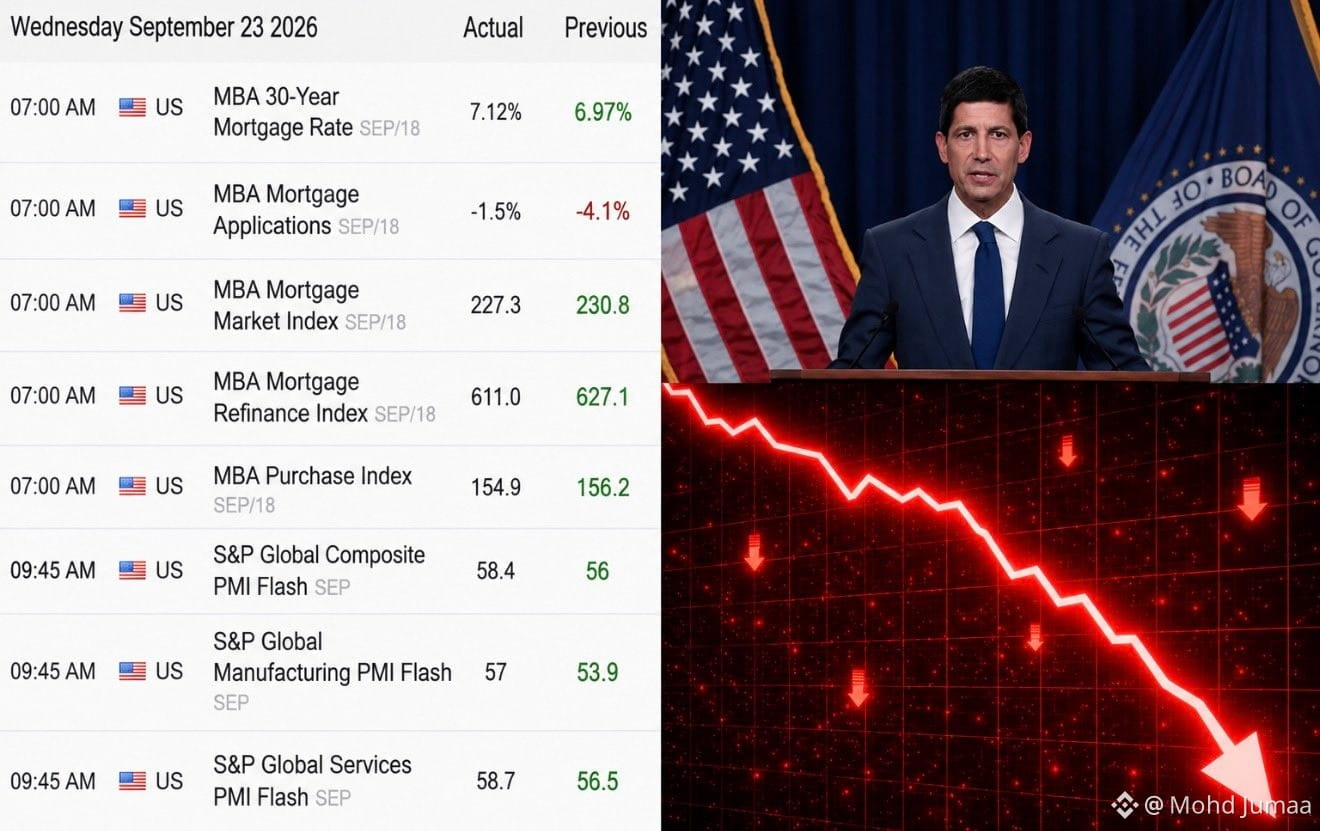
🚨 THE FED JUST GOT ANOTHER REASON TO STAY HAWKISH. 👀
US economic data is sending a message the Fed can’t easily ignore:
📊 S&P Global Composite PMI: 58.4
🔥 Highest level in 5 years
That points to strong economic activity and suggests the US economy is still running hot.
But there’s another problem… 👇
🌡️ Inflation: 3.4%
🛢️ Oil prices: Rising
📈 Inflation expectations: Under pressure
A strong economy + sticky/rising inflation could give the Fed more room to keep rates higher for longer.
And the market is paying attention. 👀
📈 Rate-hike odds have surged toward 90%, reflecting expectations that the Fed could maintain a hawkish stance.
The big question:
Does the Fed stay aggressive or does something finally crack in the economy? 🧐
{future}(BTCUSDT)
$BTC $SPX #bitcoin #cryptobreach #Fed #Inflation
🚨 THE FED JUST GOT ANOTHER REASON TO STAY HAWKISH. 👀
US economic data is sending a message the Fed can’t easily ignore:
📊 S&P Global Composite PMI: 58.4
🔥 Highest level in 5 years
That points to strong economic activity and suggests the US economy is still running hot.
But there’s another problem… 👇
🌡️ Inflation: 3.4%
🛢️ Oil prices: Rising
📈 Inflation expectations: Under pressure
A strong economy + sticky/rising inflation could give the Fed more room to keep rates higher for longer.
And the market is paying attention. 👀
📈 Rate-hike odds have surged toward 90%, reflecting expectations that the Fed could maintain a hawkish stance.
The big question:
Does the Fed stay aggressive or does something finally crack in the economy? 🧐
$BTC $SPX #bitcoin #cryptobreach #Fed #Inflation
US economic data is sending a message the Fed can’t easily ignore:
📊 S&P Global Composite PMI: 58.4
🔥 Highest level in 5 years
That points to strong economic activity and suggests the US economy is still running hot.
But there’s another problem… 👇
🌡️ Inflation: 3.4%
🛢️ Oil prices: Rising
📈 Inflation expectations: Under pressure
A strong economy + sticky/rising inflation could give the Fed more room to keep rates higher for longer.
And the market is paying attention. 👀
📈 Rate-hike odds have surged toward 90%, reflecting expectations that the Fed could maintain a hawkish stance.
The big question:
Does the Fed stay aggressive or does something finally crack in the economy? 🧐
$BTC $SPX #bitcoin #cryptobreach #Fed #Inflation
206 Atlas:
You’re conflating headline PMI with inflation pressure. High growth doesn’t mandate hikes if core metrics are cooling; the market is mispricing this data.
2
3
3.4k
Brent crude surged past the critical $100 per barrel mark today, posting an intraday gain of 1.20% amid persistent geopolitical friction and tight supply conditions. Concurrently, major central bankers are ramping up hawkish rhetoric, with Bank of England Deputy Governor Jon Cunliffe warning that sustained energy price spikes will necessitate further monetary policy tightening unless economic activity weakens sharply.
This resurgence in crude prices poses a severe headache for global central banks fighting inflation. Energy costs directly feed into headline CPI and risk anchoring consumer inflation expectations higher, disrupting the anticipated pivot toward interest rate cuts and pushing real yields upward across major economies.
Across traditional markets, the $100 oil milestone is reigniting stagflation concerns. Bond yields are under renewed upward pressure, while the US dollar index remains resilient as investors prepare for 'higher-for-longer' interest rate regimes, dampening risk appetite across global equities.
For the crypto market, persistent energy-driven inflation tightens macro liquidity. If central banks are forced to maintain restrictive policies longer, capital inflows into risk assets like $BTC could face near-term headwinds, keeping price action volatile and highly reactive to macro data. #CrudeOil #MacroEconomy #Inflation
Brent crude surged past the critical $100 per barrel mark today, posting an intraday gain of 1.20% amid persistent geopolitical friction and tight supply conditions. Concurrently, major central bankers are ramping up hawkish rhetoric, with Bank of England Deputy Governor Jon Cunliffe warning that sustained energy price spikes will necessitate further monetary policy tightening unless economic activity weakens sharply.
This resurgence in crude prices poses a severe headache for global central banks fighting inflation. Energy costs directly feed into headline CPI and risk anchoring consumer inflation expectations higher, disrupting the anticipated pivot toward interest rate cuts and pushing real yields upward across major economies.
Across traditional markets, the $100 oil milestone is reigniting stagflation concerns. Bond yields are under renewed upward pressure, while the US dollar index remains resilient as investors prepare for 'higher-for-longer' interest rate regimes, dampening risk appetite across global equities.
For the crypto market, persistent energy-driven inflation tightens macro liquidity. If central banks are forced to maintain restrictive policies longer, capital inflows into risk assets like $BTC could face near-term headwinds, keeping price action volatile and highly reactive to macro data. #CrudeOil #MacroEconomy #Inflation
This resurgence in crude prices poses a severe headache for global central banks fighting inflation. Energy costs directly feed into headline CPI and risk anchoring consumer inflation expectations higher, disrupting the anticipated pivot toward interest rate cuts and pushing real yields upward across major economies.
Across traditional markets, the $100 oil milestone is reigniting stagflation concerns. Bond yields are under renewed upward pressure, while the US dollar index remains resilient as investors prepare for 'higher-for-longer' interest rate regimes, dampening risk appetite across global equities.
For the crypto market, persistent energy-driven inflation tightens macro liquidity. If central banks are forced to maintain restrictive policies longer, capital inflows into risk assets like $BTC could face near-term headwinds, keeping price action volatile and highly reactive to macro data. #CrudeOil #MacroEconomy #Inflation
390
Global energy markets saw a sharp upward surge on September 23, with benchmark crude futures rallying significantly in New York and international exchanges. November contracts for light crude oil jumped $1.64 to settle at $92.16 per barrel, a 1.81% increase, while Brent crude for November delivery surged $3.83, or 3.86%, to break past the critical $100 psychological threshold at $103.08 per barrel.
This aggressive rebound in oil prices reignites concerns over persistent supply-side inflation just as central banks worldwide attempt to finalize their easing cycles. A sustained move above $100 for Brent directly challenges market assumptions of cooling headline inflation, raising the risk that energy-driven cost pressures could stall further disinflation progress.
Across traditional financial markets, surging crude typically drives bond yields higher and strengthens the US dollar as traders price in prolonged restrictive monetary policy. Equity markets face immediate margin compression from elevated transportation and operational costs.
For the crypto market, higher energy prices pose a headwind to broader liquidity conditions. While $BTC often shows resilient long-term hedge characteristics, short-term risk appetite remains vulnerable if tightening macroeconomic liquidity delays expected capital inflows.
#CrudeOil #MacroEconomics #Inflation
Global energy markets saw a sharp upward surge on September 23, with benchmark crude futures rallying significantly in New York and international exchanges. November contracts for light crude oil jumped $1.64 to settle at $92.16 per barrel, a 1.81% increase, while Brent crude for November delivery surged $3.83, or 3.86%, to break past the critical $100 psychological threshold at $103.08 per barrel.
This aggressive rebound in oil prices reignites concerns over persistent supply-side inflation just as central banks worldwide attempt to finalize their easing cycles. A sustained move above $100 for Brent directly challenges market assumptions of cooling headline inflation, raising the risk that energy-driven cost pressures could stall further disinflation progress.
Across traditional financial markets, surging crude typically drives bond yields higher and strengthens the US dollar as traders price in prolonged restrictive monetary policy. Equity markets face immediate margin compression from elevated transportation and operational costs.
For the crypto market, higher energy prices pose a headwind to broader liquidity conditions. While $BTC often shows resilient long-term hedge characteristics, short-term risk appetite remains vulnerable if tightening macroeconomic liquidity delays expected capital inflows.
#CrudeOil #MacroEconomics #Inflation
This aggressive rebound in oil prices reignites concerns over persistent supply-side inflation just as central banks worldwide attempt to finalize their easing cycles. A sustained move above $100 for Brent directly challenges market assumptions of cooling headline inflation, raising the risk that energy-driven cost pressures could stall further disinflation progress.
Across traditional financial markets, surging crude typically drives bond yields higher and strengthens the US dollar as traders price in prolonged restrictive monetary policy. Equity markets face immediate margin compression from elevated transportation and operational costs.
For the crypto market, higher energy prices pose a headwind to broader liquidity conditions. While $BTC often shows resilient long-term hedge characteristics, short-term risk appetite remains vulnerable if tightening macroeconomic liquidity delays expected capital inflows.
#CrudeOil #MacroEconomics #Inflation
92
Brent crude oil recorded a sharp intraday surge of 3.00% today, pushing the global benchmark to $98.08 per barrel and reigniting serious concerns across global commodities markets.
This rapid spike toward the critical $100 threshold is significant because energy costs remain the primary driver of headline inflation metrics. A sustained rally in crude threatens to undo recent progress on disinflation, complicating the policy trajectory for central banks that were previously expected to ease monetary conditions.
Across traditional finance, higher oil prices are stoking fears of persistent inflation, lifting sovereign bond yields and providing fresh support to the US Dollar Index. Equity markets are feeling the strain as higher input costs squeeze corporate profit margins and increase discount rates.
For the digital asset ecosystem, rising yields and a stronger dollar present short-term liquidity headwinds. As risk appetite compresses, $BTC and altcoins may experience heightened volatility until macroeconomic clarity returns regarding energy supply dynamics and interest rate expectations. #OilSurge #MacroEconomics #Inflation
Brent crude oil recorded a sharp intraday surge of 3.00% today, pushing the global benchmark to $98.08 per barrel and reigniting serious concerns across global commodities markets.
This rapid spike toward the critical $100 threshold is significant because energy costs remain the primary driver of headline inflation metrics. A sustained rally in crude threatens to undo recent progress on disinflation, complicating the policy trajectory for central banks that were previously expected to ease monetary conditions.
Across traditional finance, higher oil prices are stoking fears of persistent inflation, lifting sovereign bond yields and providing fresh support to the US Dollar Index. Equity markets are feeling the strain as higher input costs squeeze corporate profit margins and increase discount rates.
For the digital asset ecosystem, rising yields and a stronger dollar present short-term liquidity headwinds. As risk appetite compresses, $BTC and altcoins may experience heightened volatility until macroeconomic clarity returns regarding energy supply dynamics and interest rate expectations. #OilSurge #MacroEconomics #Inflation
This rapid spike toward the critical $100 threshold is significant because energy costs remain the primary driver of headline inflation metrics. A sustained rally in crude threatens to undo recent progress on disinflation, complicating the policy trajectory for central banks that were previously expected to ease monetary conditions.
Across traditional finance, higher oil prices are stoking fears of persistent inflation, lifting sovereign bond yields and providing fresh support to the US Dollar Index. Equity markets are feeling the strain as higher input costs squeeze corporate profit margins and increase discount rates.
For the digital asset ecosystem, rising yields and a stronger dollar present short-term liquidity headwinds. As risk appetite compresses, $BTC and altcoins may experience heightened volatility until macroeconomic clarity returns regarding energy supply dynamics and interest rate expectations. #OilSurge #MacroEconomics #Inflation
252

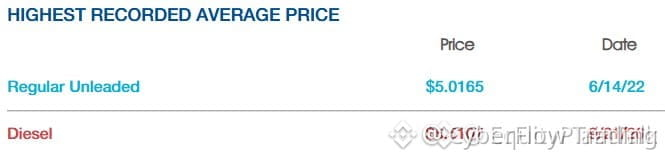
DIESEL HITS RECORD $6.51 AND MACRO INFLATION IS COMING FOR $BTC ! 🚨 📈
Diesel just shattered record highs at $6.51 per gallon, sending a massive shockwave straight through global supply chains and freight logistics. When fuel costs explode, consumer staples squeeze margins and inflation relentlessly creeps into every corner of the market. 📊
Higher fuel prices mean higher cost of living across the board, forcing institutional capital to re-evaluate risk assets and inflation hedges. 💡 Smart money tracks these macro ripples long before they hit the chart order books. 🌊
Do you see this macro fuel spike driving capital into $BTC as an inflation shield or forcing a broader market risk-off drop? 👇
⚠️ Not financial advice. Always manage your risk. 🛡️
🏷️ #BTC #Macro #Inflation #Crypto
⚡ 🛡️
DIESEL HITS RECORD $6.51 AND MACRO INFLATION IS COMING FOR $BTC ! 🚨 📈
Diesel just shattered record highs at $6.51 per gallon, sending a massive shockwave straight through global supply chains and freight logistics. When fuel costs explode, consumer staples squeeze margins and inflation relentlessly creeps into every corner of the market. 📊
Higher fuel prices mean higher cost of living across the board, forcing institutional capital to re-evaluate risk assets and inflation hedges. 💡 Smart money tracks these macro ripples long before they hit the chart order books. 🌊
Do you see this macro fuel spike driving capital into $BTC as an inflation shield or forcing a broader market risk-off drop? 👇
⚠️ Not financial advice. Always manage your risk. 🛡️
🏷️ #BTC #Macro #Inflation #Crypto
⚡ 🛡️
Diesel just shattered record highs at $6.51 per gallon, sending a massive shockwave straight through global supply chains and freight logistics. When fuel costs explode, consumer staples squeeze margins and inflation relentlessly creeps into every corner of the market. 📊
Higher fuel prices mean higher cost of living across the board, forcing institutional capital to re-evaluate risk assets and inflation hedges. 💡 Smart money tracks these macro ripples long before they hit the chart order books. 🌊
Do you see this macro fuel spike driving capital into $BTC as an inflation shield or forcing a broader market risk-off drop? 👇
⚠️ Not financial advice. Always manage your risk. 🛡️
🏷️ #BTC #Macro #Inflation #Crypto
⚡ 🛡️
30
Crude oil benchmarks surged during today's trading session, with WTI and Brent crude climbing 1.00% to reach $92.57 per barrel and $97.71 per barrel, respectively. This upward momentum reinforces persistent supply-side pressures across the global energy complex.
Energy prices maintaining these elevated levels complicates the broader macroeconomic landscape. As crude approaches critical psychological thresholds, headline inflation risks reaccelerating, which directly challenges central banks' timelines for monetary easing and forces markets to price in extended periods of restrictive policy.
Across traditional finance, sustained oil rallies typically drive up sovereign bond yields and strengthen the US dollar, as investors brace for stickier inflation data. Equities and high-multiple assets often face valuation headwinds in this environment due to rising discount rates and squeezed corporate margins.
For the crypto sector, higher energy costs and a stronger dollar can dampen speculative liquidity in the short term. As macro risk aversion rises, institutional capital flows into $BTC and major digital assets may turn cautious until energy markets stabilize and inflation concerns ease.
#OilPrices #MacroEconomics #Inflation
Crude oil benchmarks surged during today's trading session, with WTI and Brent crude climbing 1.00% to reach $92.57 per barrel and $97.71 per barrel, respectively. This upward momentum reinforces persistent supply-side pressures across the global energy complex.
Energy prices maintaining these elevated levels complicates the broader macroeconomic landscape. As crude approaches critical psychological thresholds, headline inflation risks reaccelerating, which directly challenges central banks' timelines for monetary easing and forces markets to price in extended periods of restrictive policy.
Across traditional finance, sustained oil rallies typically drive up sovereign bond yields and strengthen the US dollar, as investors brace for stickier inflation data. Equities and high-multiple assets often face valuation headwinds in this environment due to rising discount rates and squeezed corporate margins.
For the crypto sector, higher energy costs and a stronger dollar can dampen speculative liquidity in the short term. As macro risk aversion rises, institutional capital flows into $BTC and major digital assets may turn cautious until energy markets stabilize and inflation concerns ease.
#OilPrices #MacroEconomics #Inflation
Energy prices maintaining these elevated levels complicates the broader macroeconomic landscape. As crude approaches critical psychological thresholds, headline inflation risks reaccelerating, which directly challenges central banks' timelines for monetary easing and forces markets to price in extended periods of restrictive policy.
Across traditional finance, sustained oil rallies typically drive up sovereign bond yields and strengthen the US dollar, as investors brace for stickier inflation data. Equities and high-multiple assets often face valuation headwinds in this environment due to rising discount rates and squeezed corporate margins.
For the crypto sector, higher energy costs and a stronger dollar can dampen speculative liquidity in the short term. As macro risk aversion rises, institutional capital flows into $BTC and major digital assets may turn cautious until energy markets stabilize and inflation concerns ease.
#OilPrices #MacroEconomics #Inflation
221

·
--
In the latest public remarks, Jerome Powell, the Chairman of the U.S. Federal Reserve, stated clearly that to bring inflation down thoroughly, the Fed may need to raise rates once more. Powell’s stance this time remains quite firm, directly shattering the market’s earlier optimistic expectations that the rate-hiking cycle had already come to a complete end.
This statement has caused a stir because the market has recently been betting on a policy shift, with funds even starting to price in a rate-cut narrative ahead of time. By putting the possibility of another rate hike back on the table at this point, it shows that the Fed’s concerns about a rebound in inflation remain substantial. The Fed would rather take the risk of an economic slowdown than allow prices to fail to return to the target level.
For traditional financial markets, these hawkish expectations have directly lifted U.S. Treasury yields and the U.S. dollar index, putting near-term pressure on risk assets such as U.S. stocks. With the shadow of potentially higher borrowing costs hanging over the market, macro liquidity is expected to remain tight, and funding conditions are likely to become even more cautious.
As for the crypto space, keeping interest rates high for longer—possibly with another rate hike as well—will, in the short term, slow the pace at which additional incremental capital moves in from outside the market. Currently, $BTC and the overall liquidity across altcoins are not particularly abundant. The market will most likely continue to maintain a choppy, tug-of-war state, with both longs and shorts waiting for more economic data to confirm whether this final rate hike will truly be implemented.
#Fed #InterestRates #Inflation
In the latest public remarks, Jerome Powell, the Chairman of the U.S. Federal Reserve, stated clearly that to bring inflation down thoroughly, the Fed may need to raise rates once more. Powell’s stance this time remains quite firm, directly shattering the market’s earlier optimistic expectations that the rate-hiking cycle had already come to a complete end.
This statement has caused a stir because the market has recently been betting on a policy shift, with funds even starting to price in a rate-cut narrative ahead of time. By putting the possibility of another rate hike back on the table at this point, it shows that the Fed’s concerns about a rebound in inflation remain substantial. The Fed would rather take the risk of an economic slowdown than allow prices to fail to return to the target level.
For traditional financial markets, these hawkish expectations have directly lifted U.S. Treasury yields and the U.S. dollar index, putting near-term pressure on risk assets such as U.S. stocks. With the shadow of potentially higher borrowing costs hanging over the market, macro liquidity is expected to remain tight, and funding conditions are likely to become even more cautious.
As for the crypto space, keeping interest rates high for longer—possibly with another rate hike as well—will, in the short term, slow the pace at which additional incremental capital moves in from outside the market. Currently, $BTC and the overall liquidity across altcoins are not particularly abundant. The market will most likely continue to maintain a choppy, tug-of-war state, with both longs and shorts waiting for more economic data to confirm whether this final rate hike will truly be implemented.
#Fed #InterestRates #Inflation
This statement has caused a stir because the market has recently been betting on a policy shift, with funds even starting to price in a rate-cut narrative ahead of time. By putting the possibility of another rate hike back on the table at this point, it shows that the Fed’s concerns about a rebound in inflation remain substantial. The Fed would rather take the risk of an economic slowdown than allow prices to fail to return to the target level.
For traditional financial markets, these hawkish expectations have directly lifted U.S. Treasury yields and the U.S. dollar index, putting near-term pressure on risk assets such as U.S. stocks. With the shadow of potentially higher borrowing costs hanging over the market, macro liquidity is expected to remain tight, and funding conditions are likely to become even more cautious.
As for the crypto space, keeping interest rates high for longer—possibly with another rate hike as well—will, in the short term, slow the pace at which additional incremental capital moves in from outside the market. Currently, $BTC and the overall liquidity across altcoins are not particularly abundant. The market will most likely continue to maintain a choppy, tug-of-war state, with both longs and shorts waiting for more economic data to confirm whether this final rate hike will truly be implemented.
#Fed #InterestRates #Inflation
103
🚨 MACRO INFLATION EXPLODES AS DIESEL HITS ATH AND $BTC BUILDS A SAFE-HAVEN BID! ⚡
Diesel doubling to $6.51 nationwide and over $8 in California is a supply-chain freight train hitting consumer pockets. With transport and logistics squeezed, sticky consumer price pressure is locking in for the long haul. 📊
When energy prices rip higher, smart capital stops chasing froth and starts hunting hard asset protection. Institutional order flow is watching these macro catalysts closely as fiat purchasing power faces another heavy contraction phase. 💡
As energy inflation ripples through global supply lines, are you positioning in $BTC or holding cash liquidity into the next CPI print? 🤔
⚠️ Not financial advice. Always manage your risk. 🛡️
🏷️ #BTC #Inflation #Macro #Crypto
⚡ 💎
🚨 MACRO INFLATION EXPLODES AS DIESEL HITS ATH AND $BTC BUILDS A SAFE-HAVEN BID! ⚡
Diesel doubling to $6.51 nationwide and over $8 in California is a supply-chain freight train hitting consumer pockets. With transport and logistics squeezed, sticky consumer price pressure is locking in for the long haul. 📊
When energy prices rip higher, smart capital stops chasing froth and starts hunting hard asset protection. Institutional order flow is watching these macro catalysts closely as fiat purchasing power faces another heavy contraction phase. 💡
As energy inflation ripples through global supply lines, are you positioning in $BTC or holding cash liquidity into the next CPI print? 🤔
⚠️ Not financial advice. Always manage your risk. 🛡️
🏷️ #BTC #Inflation #Macro #Crypto
⚡ 💎
Diesel doubling to $6.51 nationwide and over $8 in California is a supply-chain freight train hitting consumer pockets. With transport and logistics squeezed, sticky consumer price pressure is locking in for the long haul. 📊
When energy prices rip higher, smart capital stops chasing froth and starts hunting hard asset protection. Institutional order flow is watching these macro catalysts closely as fiat purchasing power faces another heavy contraction phase. 💡
As energy inflation ripples through global supply lines, are you positioning in $BTC or holding cash liquidity into the next CPI print? 🤔
⚠️ Not financial advice. Always manage your risk. 🛡️
🏷️ #BTC #Inflation #Macro #Crypto
⚡ 💎
54

According to Politico, citing five sources with knowledge of the matter, the U.S. government is preparing to impose a 90-day export ban on diesel. Against the backdrop of an already fragile global energy supply chain and intensifying geopolitical rivalry, if the White House were to officially roll out such an aggressive energy-protectionist policy, it would signal that the United States is beginning to use extreme trade administrative measures to prioritize suppressing domestic inflation pressures. However, it also means dropping a major bomb into the global energy trading system.
This move is so crucial because the U.S. is one of the world’s core exporters of refined petroleum products. Cutting off the outflow of diesel for 90 days directly would seriously disrupt regions such as Europe and Latin America, which are highly dependent on fuel supplies from the Americas. It would also trigger a secondary wave of energy inflation worldwide from the supply side. Even if the policy aims to lower diesel prices and reduce logistics and transportation costs within the U.S., the price to pay is pushing the global refining market into a deeper abyss that is more fragmented and imbalanced—sparking new supply-chain conflicts among allies.
For macro financial markets, a policy that artificially distorts supply has a strong “stagflation-catalyzing” effect. The global diesel benchmark crack spread could surge sharply, raising cross-border logistics and manufacturing costs, which in turn makes the path to fighting inflation even more difficult. Rising inflation persistence would force the Federal Reserve and other major central banks to hesitate more in their interest-rate-cutting path. The U.S. dollar index and Treasury yields may remain at elevated levels amid a backlash from long-term inflation expectations, directly suppressing the valuation center across asset classes.
For the cryptocurrency market, renewed tightening of the macro liquidity environment is undoubtedly a clear warning signal. As energy costs spill over and expectations for real interest rates rise, market risk appetite will be significantly squeezed, and under risk-averse sentiment, capital is more likely to flow into lower-risk assets. If the energy crisis returns, cryptocurrencies such as $BTC may face short-term liquidity pullbacks and the pain of valuation reconfiguration. Investors should be highly alert to downside risks brought by macroeconomic black swans.
#EnergyCrisis #MacroEconomy #Inflation
According to Politico, citing five sources with knowledge of the matter, the U.S. government is preparing to impose a 90-day export ban on diesel. Against the backdrop of an already fragile global energy supply chain and intensifying geopolitical rivalry, if the White House were to officially roll out such an aggressive energy-protectionist policy, it would signal that the United States is beginning to use extreme trade administrative measures to prioritize suppressing domestic inflation pressures. However, it also means dropping a major bomb into the global energy trading system.
This move is so crucial because the U.S. is one of the world’s core exporters of refined petroleum products. Cutting off the outflow of diesel for 90 days directly would seriously disrupt regions such as Europe and Latin America, which are highly dependent on fuel supplies from the Americas. It would also trigger a secondary wave of energy inflation worldwide from the supply side. Even if the policy aims to lower diesel prices and reduce logistics and transportation costs within the U.S., the price to pay is pushing the global refining market into a deeper abyss that is more fragmented and imbalanced—sparking new supply-chain conflicts among allies.
For macro financial markets, a policy that artificially distorts supply has a strong “stagflation-catalyzing” effect. The global diesel benchmark crack spread could surge sharply, raising cross-border logistics and manufacturing costs, which in turn makes the path to fighting inflation even more difficult. Rising inflation persistence would force the Federal Reserve and other major central banks to hesitate more in their interest-rate-cutting path. The U.S. dollar index and Treasury yields may remain at elevated levels amid a backlash from long-term inflation expectations, directly suppressing the valuation center across asset classes.
For the cryptocurrency market, renewed tightening of the macro liquidity environment is undoubtedly a clear warning signal. As energy costs spill over and expectations for real interest rates rise, market risk appetite will be significantly squeezed, and under risk-averse sentiment, capital is more likely to flow into lower-risk assets. If the energy crisis returns, cryptocurrencies such as $BTC may face short-term liquidity pullbacks and the pain of valuation reconfiguration. Investors should be highly alert to downside risks brought by macroeconomic black swans.
#EnergyCrisis #MacroEconomy #Inflation
This move is so crucial because the U.S. is one of the world’s core exporters of refined petroleum products. Cutting off the outflow of diesel for 90 days directly would seriously disrupt regions such as Europe and Latin America, which are highly dependent on fuel supplies from the Americas. It would also trigger a secondary wave of energy inflation worldwide from the supply side. Even if the policy aims to lower diesel prices and reduce logistics and transportation costs within the U.S., the price to pay is pushing the global refining market into a deeper abyss that is more fragmented and imbalanced—sparking new supply-chain conflicts among allies.
For macro financial markets, a policy that artificially distorts supply has a strong “stagflation-catalyzing” effect. The global diesel benchmark crack spread could surge sharply, raising cross-border logistics and manufacturing costs, which in turn makes the path to fighting inflation even more difficult. Rising inflation persistence would force the Federal Reserve and other major central banks to hesitate more in their interest-rate-cutting path. The U.S. dollar index and Treasury yields may remain at elevated levels amid a backlash from long-term inflation expectations, directly suppressing the valuation center across asset classes.
For the cryptocurrency market, renewed tightening of the macro liquidity environment is undoubtedly a clear warning signal. As energy costs spill over and expectations for real interest rates rise, market risk appetite will be significantly squeezed, and under risk-averse sentiment, capital is more likely to flow into lower-risk assets. If the energy crisis returns, cryptocurrencies such as $BTC may face short-term liquidity pullbacks and the pain of valuation reconfiguration. Investors should be highly alert to downside risks brought by macroeconomic black swans.
#EnergyCrisis #MacroEconomy #Inflation
4

·
--
The global energy market has just witnessed sharp fluctuations in today’s trading session as Brent crude oil prices surged by 3.00%, officially reaching 98.08 USD per barrel and moving close to the sensitive 100 USD mark.
This sudden jump carries key implications for the macroeconomic picture. Higher energy costs will directly affect the supply chain, fueling concerns that a second wave of inflation could return and derail the disinflation path that central banks are working to sustain.
For traditional financial markets, the risk of energy-driven inflation often triggers fears that the Fed will keep interest rates at elevated levels for longer. This can easily push the USD Index and bond yields back up, putting pressure on equity markets.
For the crypto market, a tighter liquidity environment and risk-averse sentiment may cause institutional capital flows to be temporarily more cautious, posing challenges to the breakout momentum of $BTC in the short term. 🛢️
#CrudeOil #Inflation #MacroEconomics
The global energy market has just witnessed sharp fluctuations in today’s trading session as Brent crude oil prices surged by 3.00%, officially reaching 98.08 USD per barrel and moving close to the sensitive 100 USD mark.
This sudden jump carries key implications for the macroeconomic picture. Higher energy costs will directly affect the supply chain, fueling concerns that a second wave of inflation could return and derail the disinflation path that central banks are working to sustain.
For traditional financial markets, the risk of energy-driven inflation often triggers fears that the Fed will keep interest rates at elevated levels for longer. This can easily push the USD Index and bond yields back up, putting pressure on equity markets.
For the crypto market, a tighter liquidity environment and risk-averse sentiment may cause institutional capital flows to be temporarily more cautious, posing challenges to the breakout momentum of $BTC in the short term. 🛢️
#CrudeOil #Inflation #MacroEconomics
This sudden jump carries key implications for the macroeconomic picture. Higher energy costs will directly affect the supply chain, fueling concerns that a second wave of inflation could return and derail the disinflation path that central banks are working to sustain.
For traditional financial markets, the risk of energy-driven inflation often triggers fears that the Fed will keep interest rates at elevated levels for longer. This can easily push the USD Index and bond yields back up, putting pressure on equity markets.
For the crypto market, a tighter liquidity environment and risk-averse sentiment may cause institutional capital flows to be temporarily more cautious, posing challenges to the breakout momentum of $BTC in the short term. 🛢️
#CrudeOil #Inflation #MacroEconomics
9
S&P Global’s latest data shows that the UK services PMI for September fell from the previous reading of 52.5 to 51.7, the lowest level in nearly three months and below the market expectation of 52.0. As a core pillar of the UK economy, the weakening of services activity has directly dragged on the macro fundamentals. Based on this, S&P Global estimates that the UK’s economic growth rate for this quarter is only 0.1%, a sharp slowdown from 0.4% in the previous quarter. S&P Global’s chief business economist Chris Williamson said that lackluster economic growth and intensifying inflation pressures coexist, and that weak business confidence and high costs are severely suppressing demand for employment and investment.
The key takeaway from this data is that it sends a highly typical “stagflation” signal, substantially hindering market expectations for a policy pivot by the Bank of England. Spillover effects from factors such as energy prices rising due to geopolitical conflict have pushed the services prices index to its fastest increase in four months, with cost pressures surging sharply for businesses. This means that while economic growth has rapidly deteriorated, price stickiness still prevents the Bank of England from quickly shifting to an easing pathway—the cost of maintaining high interest-rate borrowing is being increasingly borne by the real economy.
Looking at broader traditional financial markets, the renewed risk of stagflation directly suppresses risk appetite. Persistently high borrowing costs will continue to erode companies’ profit margins, keeping bond yields elevated, while also exacerbating sharp fluctuations in sterling assets amid weak fundamentals and expectations of higher interest rates. Once the pace of global liquidity easing becomes uneven due to recurring inflation in major economies, macro-level demand for safe havens will overwhelm momentum chasing risk.
For the crypto market, stagflation signals emerging in global major economies are certainly not an optimistic sign. When a global liquidity easing cycle faces delays and uncertainty, the spillover effect of institutional funds into high-beta risk assets will be significantly compressed. In the absence of abundant new fiat liquidity injections, crypto assets led by $BTC are more likely in the short term to suffer negative shocks from liquidity withdrawal and the buildup of risk-averse sentiment. Investors should remain highly cautious about the subsequent outlook.
#UKPMI #Inflation #BankOfEngland
S&P Global’s latest data shows that the UK services PMI for September fell from the previous reading of 52.5 to 51.7, the lowest level in nearly three months and below the market expectation of 52.0. As a core pillar of the UK economy, the weakening of services activity has directly dragged on the macro fundamentals. Based on this, S&P Global estimates that the UK’s economic growth rate for this quarter is only 0.1%, a sharp slowdown from 0.4% in the previous quarter. S&P Global’s chief business economist Chris Williamson said that lackluster economic growth and intensifying inflation pressures coexist, and that weak business confidence and high costs are severely suppressing demand for employment and investment.
The key takeaway from this data is that it sends a highly typical “stagflation” signal, substantially hindering market expectations for a policy pivot by the Bank of England. Spillover effects from factors such as energy prices rising due to geopolitical conflict have pushed the services prices index to its fastest increase in four months, with cost pressures surging sharply for businesses. This means that while economic growth has rapidly deteriorated, price stickiness still prevents the Bank of England from quickly shifting to an easing pathway—the cost of maintaining high interest-rate borrowing is being increasingly borne by the real economy.
Looking at broader traditional financial markets, the renewed risk of stagflation directly suppresses risk appetite. Persistently high borrowing costs will continue to erode companies’ profit margins, keeping bond yields elevated, while also exacerbating sharp fluctuations in sterling assets amid weak fundamentals and expectations of higher interest rates. Once the pace of global liquidity easing becomes uneven due to recurring inflation in major economies, macro-level demand for safe havens will overwhelm momentum chasing risk.
For the crypto market, stagflation signals emerging in global major economies are certainly not an optimistic sign. When a global liquidity easing cycle faces delays and uncertainty, the spillover effect of institutional funds into high-beta risk assets will be significantly compressed. In the absence of abundant new fiat liquidity injections, crypto assets led by $BTC are more likely in the short term to suffer negative shocks from liquidity withdrawal and the buildup of risk-averse sentiment. Investors should remain highly cautious about the subsequent outlook.
#UKPMI #Inflation #BankOfEngland
The key takeaway from this data is that it sends a highly typical “stagflation” signal, substantially hindering market expectations for a policy pivot by the Bank of England. Spillover effects from factors such as energy prices rising due to geopolitical conflict have pushed the services prices index to its fastest increase in four months, with cost pressures surging sharply for businesses. This means that while economic growth has rapidly deteriorated, price stickiness still prevents the Bank of England from quickly shifting to an easing pathway—the cost of maintaining high interest-rate borrowing is being increasingly borne by the real economy.
Looking at broader traditional financial markets, the renewed risk of stagflation directly suppresses risk appetite. Persistently high borrowing costs will continue to erode companies’ profit margins, keeping bond yields elevated, while also exacerbating sharp fluctuations in sterling assets amid weak fundamentals and expectations of higher interest rates. Once the pace of global liquidity easing becomes uneven due to recurring inflation in major economies, macro-level demand for safe havens will overwhelm momentum chasing risk.
For the crypto market, stagflation signals emerging in global major economies are certainly not an optimistic sign. When a global liquidity easing cycle faces delays and uncertainty, the spillover effect of institutional funds into high-beta risk assets will be significantly compressed. In the absence of abundant new fiat liquidity injections, crypto assets led by $BTC are more likely in the short term to suffer negative shocks from liquidity withdrawal and the buildup of risk-averse sentiment. Investors should remain highly cautious about the subsequent outlook.
#UKPMI #Inflation #BankOfEngland
6
Federal Reserve Chair Jerome Powell recently cautioned that bringing inflation back down to the 2% target will be a difficult journey. He stressed that the Fed can no longer ignore repeated, long-lasting supply shocks and must respond even if it strains the broader economy, highlighting the painful trade-off between price stability and employment.
This message delivers a clear reality check to expectations of an aggressive rate-cutting cycle. By acknowledging that structural supply disruptions prevent standard policy leniency, Powell signaled that monetary conditions may need to stay restrictive for longer than optimistic market participants had anticipated.
In traditional finance, such hawkish undertones typically bolster the U.S. Dollar and put upward pressure on Treasury yields. Risk assets and equities could face valuation headwinds as the timeline for substantial liquidity easing gets pushed further out.
For the crypto sector, tighter macroeconomic liquidity suggests cautious capital flows into major digital assets like $BTC. Market participants should prepare for extended chop and range-bound volatility until macroeconomic signals clearly favor a return to monetary easing. ⚖️
#FederalReserve #Inflation #MacroEconomy
Federal Reserve Chair Jerome Powell recently cautioned that bringing inflation back down to the 2% target will be a difficult journey. He stressed that the Fed can no longer ignore repeated, long-lasting supply shocks and must respond even if it strains the broader economy, highlighting the painful trade-off between price stability and employment.
This message delivers a clear reality check to expectations of an aggressive rate-cutting cycle. By acknowledging that structural supply disruptions prevent standard policy leniency, Powell signaled that monetary conditions may need to stay restrictive for longer than optimistic market participants had anticipated.
In traditional finance, such hawkish undertones typically bolster the U.S. Dollar and put upward pressure on Treasury yields. Risk assets and equities could face valuation headwinds as the timeline for substantial liquidity easing gets pushed further out.
For the crypto sector, tighter macroeconomic liquidity suggests cautious capital flows into major digital assets like $BTC . Market participants should prepare for extended chop and range-bound volatility until macroeconomic signals clearly favor a return to monetary easing. ⚖️
#FederalReserve #Inflation #MacroEconomy
This message delivers a clear reality check to expectations of an aggressive rate-cutting cycle. By acknowledging that structural supply disruptions prevent standard policy leniency, Powell signaled that monetary conditions may need to stay restrictive for longer than optimistic market participants had anticipated.
In traditional finance, such hawkish undertones typically bolster the U.S. Dollar and put upward pressure on Treasury yields. Risk assets and equities could face valuation headwinds as the timeline for substantial liquidity easing gets pushed further out.
For the crypto sector, tighter macroeconomic liquidity suggests cautious capital flows into major digital assets like $BTC . Market participants should prepare for extended chop and range-bound volatility until macroeconomic signals clearly favor a return to monetary easing. ⚖️
#FederalReserve #Inflation #MacroEconomy
28
US President Donald Trump has recently expressed serious concerns over surging diesel prices, actively seeking ways to ensure Russian diesel supplies can access global markets to alleviate ongoing price pressures, according to a report by the Financial Times.
This strategic stance marks a notable shift in US energy diplomacy. Diesel serves as the lifeblood of global industrial logistics and agriculture, meaning persistently high refined product costs directly threaten broader disinflation efforts. Reintroducing or easing friction around Russian energy flows represents a pragmatic, supply-side attempt to cool headline energy inflation before it embeds itself deeply into consumer price indices.
For traditional financial markets, downward pressure on diesel prices helps ease near-term inflation expectations, potentially preventing bond yields from spiking further. However, the geopolitical undertone introduces complex dynamics for the US Dollar and commodities, as balancing sanctions policy against domestic economic relief creates uncertainty across energy trading desks.
For crypto markets, cooling energy prices reduce the risk of stagflationary headwinds and aggressive monetary tightening. A more manageable inflation environment stabilizes risk appetite, supporting liquidity rotation back into major digital assets like $BTC as macroeconomic pressure temporarily subsides.
#EnergyMarkets #Inflation #Geopolitics
US President Donald Trump has recently expressed serious concerns over surging diesel prices, actively seeking ways to ensure Russian diesel supplies can access global markets to alleviate ongoing price pressures, according to a report by the Financial Times.
This strategic stance marks a notable shift in US energy diplomacy. Diesel serves as the lifeblood of global industrial logistics and agriculture, meaning persistently high refined product costs directly threaten broader disinflation efforts. Reintroducing or easing friction around Russian energy flows represents a pragmatic, supply-side attempt to cool headline energy inflation before it embeds itself deeply into consumer price indices.
For traditional financial markets, downward pressure on diesel prices helps ease near-term inflation expectations, potentially preventing bond yields from spiking further. However, the geopolitical undertone introduces complex dynamics for the US Dollar and commodities, as balancing sanctions policy against domestic economic relief creates uncertainty across energy trading desks.
For crypto markets, cooling energy prices reduce the risk of stagflationary headwinds and aggressive monetary tightening. A more manageable inflation environment stabilizes risk appetite, supporting liquidity rotation back into major digital assets like $BTC as macroeconomic pressure temporarily subsides.
#EnergyMarkets #Inflation #Geopolitics
This strategic stance marks a notable shift in US energy diplomacy. Diesel serves as the lifeblood of global industrial logistics and agriculture, meaning persistently high refined product costs directly threaten broader disinflation efforts. Reintroducing or easing friction around Russian energy flows represents a pragmatic, supply-side attempt to cool headline energy inflation before it embeds itself deeply into consumer price indices.
For traditional financial markets, downward pressure on diesel prices helps ease near-term inflation expectations, potentially preventing bond yields from spiking further. However, the geopolitical undertone introduces complex dynamics for the US Dollar and commodities, as balancing sanctions policy against domestic economic relief creates uncertainty across energy trading desks.
For crypto markets, cooling energy prices reduce the risk of stagflationary headwinds and aggressive monetary tightening. A more manageable inflation environment stabilizes risk appetite, supporting liquidity rotation back into major digital assets like $BTC as macroeconomic pressure temporarily subsides.
#EnergyMarkets #Inflation #Geopolitics
12
🚨 SECOND INFLATION WAVE LOOMS AS DIESEL SPIKES — WHAT THIS MEANS FOR $BTC ! 💥
Refined product shortages in diesel and Black Sea grain disruptions are building a secondary inflation engine across global supply chains. 📌 Bottlenecks are expanding rapidly into agriculture, freight, and industrial processing costs.
Central banks face a structural nightmare as sticky core inflation collides with explosive public debt projected to hit 100% of GDP. 📊 When fiat debasement accelerates against persistent supply shocks, institutional interest shifts toward hard, non-sovereign assets.
💡 Smart money is monitoring how central bank hawkishness impacts broader market liquidity over the coming quarters. 💬 Do you expect $BTC to decouple as a sovereign hedge, or will high interest rates suppress all risk assets? 👇
⚠️ Not financial advice. Always manage your risk. 🛡️
🏷️ #BTC #Macro #Inflation #Crypto
🔥 💎
🚨 SECOND INFLATION WAVE LOOMS AS DIESEL SPIKES — WHAT THIS MEANS FOR $BTC ! 💥
Refined product shortages in diesel and Black Sea grain disruptions are building a secondary inflation engine across global supply chains. 📌 Bottlenecks are expanding rapidly into agriculture, freight, and industrial processing costs.
Central banks face a structural nightmare as sticky core inflation collides with explosive public debt projected to hit 100% of GDP. 📊 When fiat debasement accelerates against persistent supply shocks, institutional interest shifts toward hard, non-sovereign assets.
💡 Smart money is monitoring how central bank hawkishness impacts broader market liquidity over the coming quarters. 💬 Do you expect $BTC to decouple as a sovereign hedge, or will high interest rates suppress all risk assets? 👇
⚠️ Not financial advice. Always manage your risk. 🛡️
🏷️ #BTC #Macro #Inflation #Crypto
🔥 💎
Refined product shortages in diesel and Black Sea grain disruptions are building a secondary inflation engine across global supply chains. 📌 Bottlenecks are expanding rapidly into agriculture, freight, and industrial processing costs.
Central banks face a structural nightmare as sticky core inflation collides with explosive public debt projected to hit 100% of GDP. 📊 When fiat debasement accelerates against persistent supply shocks, institutional interest shifts toward hard, non-sovereign assets.
💡 Smart money is monitoring how central bank hawkishness impacts broader market liquidity over the coming quarters. 💬 Do you expect $BTC to decouple as a sovereign hedge, or will high interest rates suppress all risk assets? 👇
⚠️ Not financial advice. Always manage your risk. 🛡️
🏷️ #BTC #Macro #Inflation #Crypto
🔥 💎
11
According to data released by the American Automobile Association (AAA) as of this past Saturday, US national average diesel prices surged past $6.50 for the first time in history, touching a record $6.505 per gallon. This aggressive rally comes less than ten days after crossing the $6.00 mark, with prices surging over 87 cents within the current month alone as geopolitical conflicts severely constrain global energy supplies.
Diesel is the lifeblood of global freight and industrial supply chains, making this spike far more damaging than standard gasoline inflation. Breaking past the previous 2022 peaks indicates that underlying logistics and production costs are about to rise sharply, directly threatening to reignite headline inflation just as central banks were preparing for policy easing.
For traditional financial markets, record diesel prices reinforce higher-for-longer interest rate expectations, putting upward pressure on Treasury yields and the US Dollar index while dampening risk appetite across equities.
For crypto markets, renewed energy-driven inflation tightens macro liquidity conditions. In the near term, $BTC may face downward volatility as traders de-risk amid broader macroeconomic uncertainty.
#DieselRecord #Inflation #EnergyCrisis
According to data released by the American Automobile Association (AAA) as of this past Saturday, US national average diesel prices surged past $6.50 for the first time in history, touching a record $6.505 per gallon. This aggressive rally comes less than ten days after crossing the $6.00 mark, with prices surging over 87 cents within the current month alone as geopolitical conflicts severely constrain global energy supplies.
Diesel is the lifeblood of global freight and industrial supply chains, making this spike far more damaging than standard gasoline inflation. Breaking past the previous 2022 peaks indicates that underlying logistics and production costs are about to rise sharply, directly threatening to reignite headline inflation just as central banks were preparing for policy easing.
For traditional financial markets, record diesel prices reinforce higher-for-longer interest rate expectations, putting upward pressure on Treasury yields and the US Dollar index while dampening risk appetite across equities.
For crypto markets, renewed energy-driven inflation tightens macro liquidity conditions. In the near term, $BTC may face downward volatility as traders de-risk amid broader macroeconomic uncertainty.
#DieselRecord #Inflation #EnergyCrisis
Diesel is the lifeblood of global freight and industrial supply chains, making this spike far more damaging than standard gasoline inflation. Breaking past the previous 2022 peaks indicates that underlying logistics and production costs are about to rise sharply, directly threatening to reignite headline inflation just as central banks were preparing for policy easing.
For traditional financial markets, record diesel prices reinforce higher-for-longer interest rate expectations, putting upward pressure on Treasury yields and the US Dollar index while dampening risk appetite across equities.
For crypto markets, renewed energy-driven inflation tightens macro liquidity conditions. In the near term, $BTC may face downward volatility as traders de-risk amid broader macroeconomic uncertainty.
#DieselRecord #Inflation #EnergyCrisis
70
In international bulk commodity markets, crude oil prices have shown a notable upswing again today. Both WTI and Brent crude have risen by 1.00% over the course of the day, with spot and futures quotations climbing to $92.57 and $97.71 per barrel, respectively. Brent crude is now coming extremely close to the key psychological level of $100, indicating that the logic of tight global energy supply-demand and the geopolitical risk premium is being further reinforced.
As crude oil is a core production input for the modern economy, its price surge at current elevated levels continues to climb, posing a substantive threat to the global anti-inflation process. Against the backdrop that core inflation in major economies has been unable to continue easing, increases in energy costs will quickly transmit into transportation, petrochemical, and end-consumption sectors, making it easy to trigger a risk of secondary inflation. This not only shatters the market’s overly optimistic expectations for a loose cycle, but also forces major central banks such as the Federal Reserve to maintain high interest rates for a longer period.
In traditional financial markets, rising oil prices directly push up long-term Treasury yields and inflation expectations in tandem, helping keep the U.S. dollar index strong. Elevated risk-free rates are clearly suppressing valuation headroom for global risk assets such as equities. Meanwhile, the shadow of imported inflation in commodities is dampening market risk appetite, and capital flows are becoming more defensive.
For cryptocurrency markets, the continuation of macro liquidity tightening is the downside risk that warrants the greatest vigilance. In an environment where risk-free returns remain high, digital assets—including $BTC —are unlikely to attract sufficient incremental liquidity inflows. If oil prices further break through the $100 mark and prompt macro policies to shift toward a stricter hawkish stance, risk assets overall may face a new round of valuation reset and liquidity withdrawal. In the near term, extreme prudence is advised.⚠️
#CrudeOil #Inflation #MacroEconomics
In international bulk commodity markets, crude oil prices have shown a notable upswing again today. Both WTI and Brent crude have risen by 1.00% over the course of the day, with spot and futures quotations climbing to $92.57 and $97.71 per barrel, respectively. Brent crude is now coming extremely close to the key psychological level of $100, indicating that the logic of tight global energy supply-demand and the geopolitical risk premium is being further reinforced.
As crude oil is a core production input for the modern economy, its price surge at current elevated levels continues to climb, posing a substantive threat to the global anti-inflation process. Against the backdrop that core inflation in major economies has been unable to continue easing, increases in energy costs will quickly transmit into transportation, petrochemical, and end-consumption sectors, making it easy to trigger a risk of secondary inflation. This not only shatters the market’s overly optimistic expectations for a loose cycle, but also forces major central banks such as the Federal Reserve to maintain high interest rates for a longer period.
In traditional financial markets, rising oil prices directly push up long-term Treasury yields and inflation expectations in tandem, helping keep the U.S. dollar index strong. Elevated risk-free rates are clearly suppressing valuation headroom for global risk assets such as equities. Meanwhile, the shadow of imported inflation in commodities is dampening market risk appetite, and capital flows are becoming more defensive.
For cryptocurrency markets, the continuation of macro liquidity tightening is the downside risk that warrants the greatest vigilance. In an environment where risk-free returns remain high, digital assets—including $BTC —are unlikely to attract sufficient incremental liquidity inflows. If oil prices further break through the $100 mark and prompt macro policies to shift toward a stricter hawkish stance, risk assets overall may face a new round of valuation reset and liquidity withdrawal. In the near term, extreme prudence is advised.⚠️
#CrudeOil #Inflation #MacroEconomics
As crude oil is a core production input for the modern economy, its price surge at current elevated levels continues to climb, posing a substantive threat to the global anti-inflation process. Against the backdrop that core inflation in major economies has been unable to continue easing, increases in energy costs will quickly transmit into transportation, petrochemical, and end-consumption sectors, making it easy to trigger a risk of secondary inflation. This not only shatters the market’s overly optimistic expectations for a loose cycle, but also forces major central banks such as the Federal Reserve to maintain high interest rates for a longer period.
In traditional financial markets, rising oil prices directly push up long-term Treasury yields and inflation expectations in tandem, helping keep the U.S. dollar index strong. Elevated risk-free rates are clearly suppressing valuation headroom for global risk assets such as equities. Meanwhile, the shadow of imported inflation in commodities is dampening market risk appetite, and capital flows are becoming more defensive.
For cryptocurrency markets, the continuation of macro liquidity tightening is the downside risk that warrants the greatest vigilance. In an environment where risk-free returns remain high, digital assets—including $BTC —are unlikely to attract sufficient incremental liquidity inflows. If oil prices further break through the $100 mark and prompt macro policies to shift toward a stricter hawkish stance, risk assets overall may face a new round of valuation reset and liquidity withdrawal. In the near term, extreme prudence is advised.⚠️
#CrudeOil #Inflation #MacroEconomics
312

·
--
The RBNZ chief said that before the October decision they would look at the data to set policy; inflation is still the biggest concern. Every time central bank bigwigs say something, markets tremble. Crypto players, buckle up! #央行决策 #通胀 $BTC
NZ central bank chief checking data before October decision, inflation still the main concern. Every time central bankers talk, markets tremble. Crypto folks, buckle up! #fedpolicy #inflation $BTC
The RBNZ chief said that before the October decision they would look at the data to set policy; inflation is still the biggest concern. Every time central bank bigwigs say something, markets tremble. Crypto players, buckle up! #央行决策 #通胀 $BTC
NZ central bank chief checking data before October decision, inflation still the main concern. Every time central bankers talk, markets tremble. Crypto folks, buckle up! #fedpolicy #inflation $BTC
NZ central bank chief checking data before October decision, inflation still the main concern. Every time central bankers talk, markets tremble. Crypto folks, buckle up! #fedpolicy #inflation $BTC
47


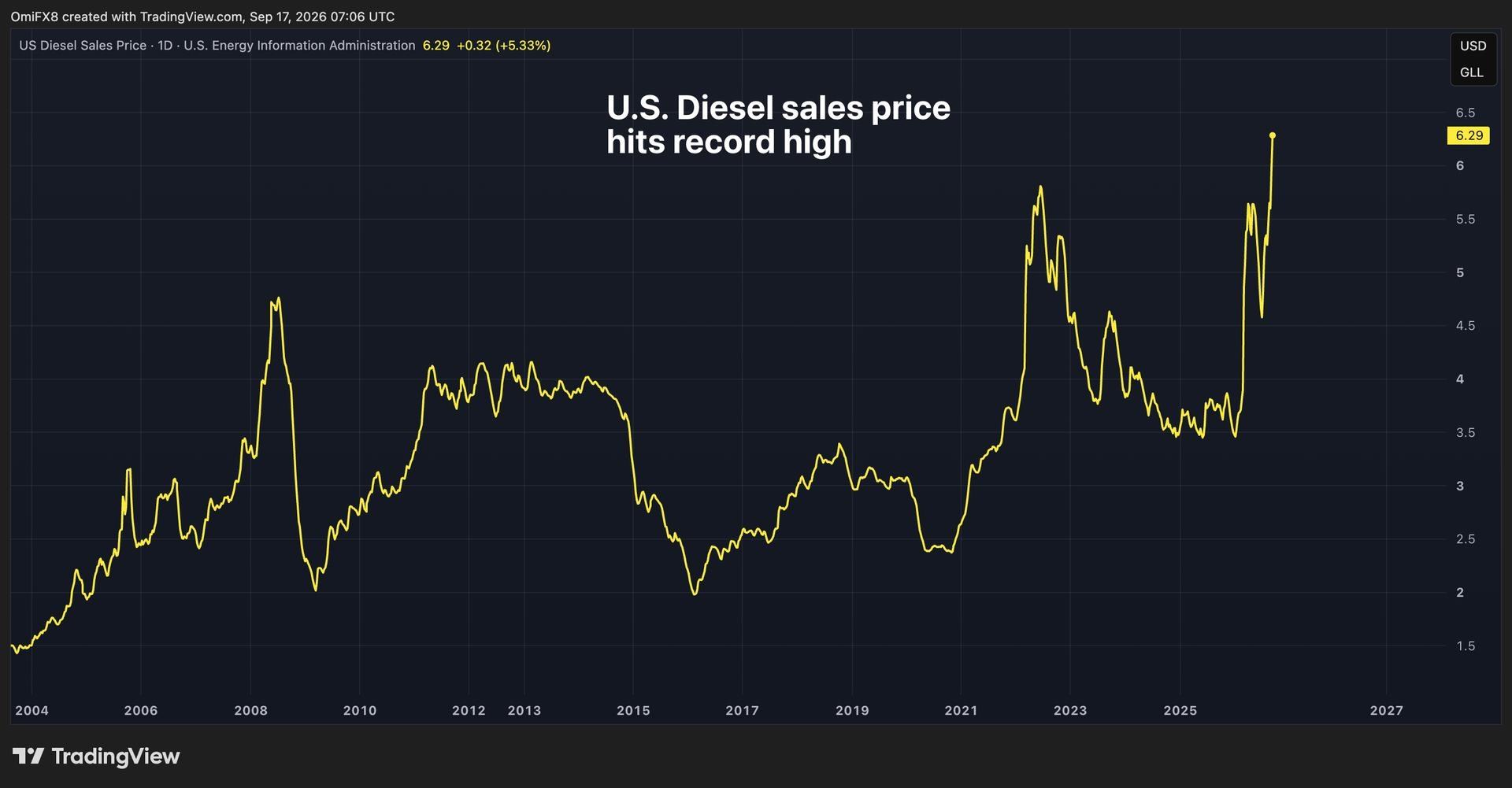
RECORD HIGH US DIESEL PRICES ARE TEARING THROUGH THE MACRO LANDSCAPE
According to reports from CoinDesk, surging fuel costs are threatening to trigger another wave of consumer price inflation. This leaves the Federal Reserve in a tight spot, seemingly determined to push interest rates even higher despite dealing with a major oil supply shock. As a result, safe havens and risk assets alike are feeling the heat, with $BTC and gold struggling to find solid ground.
🚀 Diesel prices hitting historic peaks could directly push CPI inflation higher in the coming months.
🦅 The Fed remains aggressive, signalling rate hikes even as energy markets face supply-side shocks.
📉 Traditional hedges are taking a hit, causing short-term pressure on $BTC price action.
Watching the charts closely because this macro storm is far from over.
#MacroEconomics #Inflation #BTC #Write2Earn
RECORD HIGH US DIESEL PRICES ARE TEARING THROUGH THE MACRO LANDSCAPE
According to reports from CoinDesk, surging fuel costs are threatening to trigger another wave of consumer price inflation. This leaves the Federal Reserve in a tight spot, seemingly determined to push interest rates even higher despite dealing with a major oil supply shock. As a result, safe havens and risk assets alike are feeling the heat, with $BTC and gold struggling to find solid ground.
🚀 Diesel prices hitting historic peaks could directly push CPI inflation higher in the coming months.
🦅 The Fed remains aggressive, signalling rate hikes even as energy markets face supply-side shocks.
📉 Traditional hedges are taking a hit, causing short-term pressure on $BTC price action.
Watching the charts closely because this macro storm is far from over.
#MacroEconomics #Inflation #BTC #Write2Earn
According to reports from CoinDesk, surging fuel costs are threatening to trigger another wave of consumer price inflation. This leaves the Federal Reserve in a tight spot, seemingly determined to push interest rates even higher despite dealing with a major oil supply shock. As a result, safe havens and risk assets alike are feeling the heat, with $BTC and gold struggling to find solid ground.
🚀 Diesel prices hitting historic peaks could directly push CPI inflation higher in the coming months.
🦅 The Fed remains aggressive, signalling rate hikes even as energy markets face supply-side shocks.
📉 Traditional hedges are taking a hit, causing short-term pressure on $BTC price action.
Watching the charts closely because this macro storm is far from over.
#MacroEconomics #Inflation #BTC #Write2Earn
1.4k
Log in to explore more content
Join global crypto users on Binance Square
⚡️ Get latest and useful information about crypto.
💬 Trusted by the world’s largest crypto exchange.
👍 Discover real insights from verified creators.
Email / Phone number
Trending Topics
1
#BinanceWillListHyperliquid(HYPE)
148,059 views
2,546 Discussing
2
#BrazilOrdersReportingOf$10KSelfCustodyTransfers
118 views
10 Discussing
3
#FedProposesRulesForBankIssuedStablecoins
893 views
57 Discussing
4
#OndoFinanceSoughtSaleAfterFoundersDeath
582 views
48 Discussing
5
#FedOctoberRateHikeOddsRiseTo69.7%
49,785 views
1,047 Discussing
6
#BitcoinFallsBelow$83,000
4,182 views
20 Discussing
7
#BitcoinFallsToAround$84,600ThisWeek
0 views
0 Discussing
8
#US30YearYieldHighestSince2004
38,411 views
812 Discussing
9
#ETHBreaksAbove$2,700
1,709 views
19 Discussing
10
#USWeighsPromotingDollarStablecoinsAbroad
75,389 views
1,701 Discussing