
#tradfi
tradfi
2M views
18,150 Discussing
Hot
Latest

📘 TradFi market guide: tokenized stock exposure can make familiar companies accessible alongside crypto, but each ticker reacts to a different set of risks.
Use $AAPL, $NVDA and $TSLA as examples. AAPL is sensitive to device demand and services growth, NVDA reacts strongly to AI spending expectations, while TSLA can move sharply on deliveries, margins and policy headlines. Compare volatility, liquidity and upcoming events before choosing a position.
Keep position sizes modest, avoid using one trade as a substitute for diversification and define an exit level before entering.
$AAPL $NVDA $TSLA
#TradFi #TokenizedStocks #MarketEducation #RiskManagement #Binance
📘 TradFi market guide: tokenized stock exposure can make familiar companies accessible alongside crypto, but each ticker reacts to a different set of risks.
Use $AAPL , $NVDA and $TSLA as examples. AAPL is sensitive to device demand and services growth, NVDA reacts strongly to AI spending expectations, while TSLA can move sharply on deliveries, margins and policy headlines. Compare volatility, liquidity and upcoming events before choosing a position.
Keep position sizes modest, avoid using one trade as a substitute for diversification and define an exit level before entering.
$AAPL $NVDA $TSLA
#TradFi #TokenizedStocks #MarketEducation #RiskManagement #Binance
Use $AAPL , $NVDA and $TSLA as examples. AAPL is sensitive to device demand and services growth, NVDA reacts strongly to AI spending expectations, while TSLA can move sharply on deliveries, margins and policy headlines. Compare volatility, liquidity and upcoming events before choosing a position.
Keep position sizes modest, avoid using one trade as a substitute for diversification and define an exit level before entering.
$AAPL $NVDA $TSLA
#TradFi #TokenizedStocks #MarketEducation #RiskManagement #Binance
95

South Korea's Hana Bank just dropped a major efficiency bomb by leveraging Euroclear's blockchain for a $100M digital bond issuance. Instead of waiting up to five agonizing days for traditional settlement, transactions cleared instantly on the same day. This isn't just about speed; it highlights how institutional finance is quietly re-architecting back-office plumbing using DLT. TradFi tokenization is shifting from pilot hype to actual production scale, proving blockchain's undeniable utility. #Blockchain #Tokenization #TradFi
South Korea's Hana Bank just dropped a major efficiency bomb by leveraging Euroclear's blockchain for a $100M digital bond issuance. Instead of waiting up to five agonizing days for traditional settlement, transactions cleared instantly on the same day. This isn't just about speed; it highlights how institutional finance is quietly re-architecting back-office plumbing using DLT. TradFi tokenization is shifting from pilot hype to actual production scale, proving blockchain's undeniable utility. #Blockchain #Tokenization #TradFi

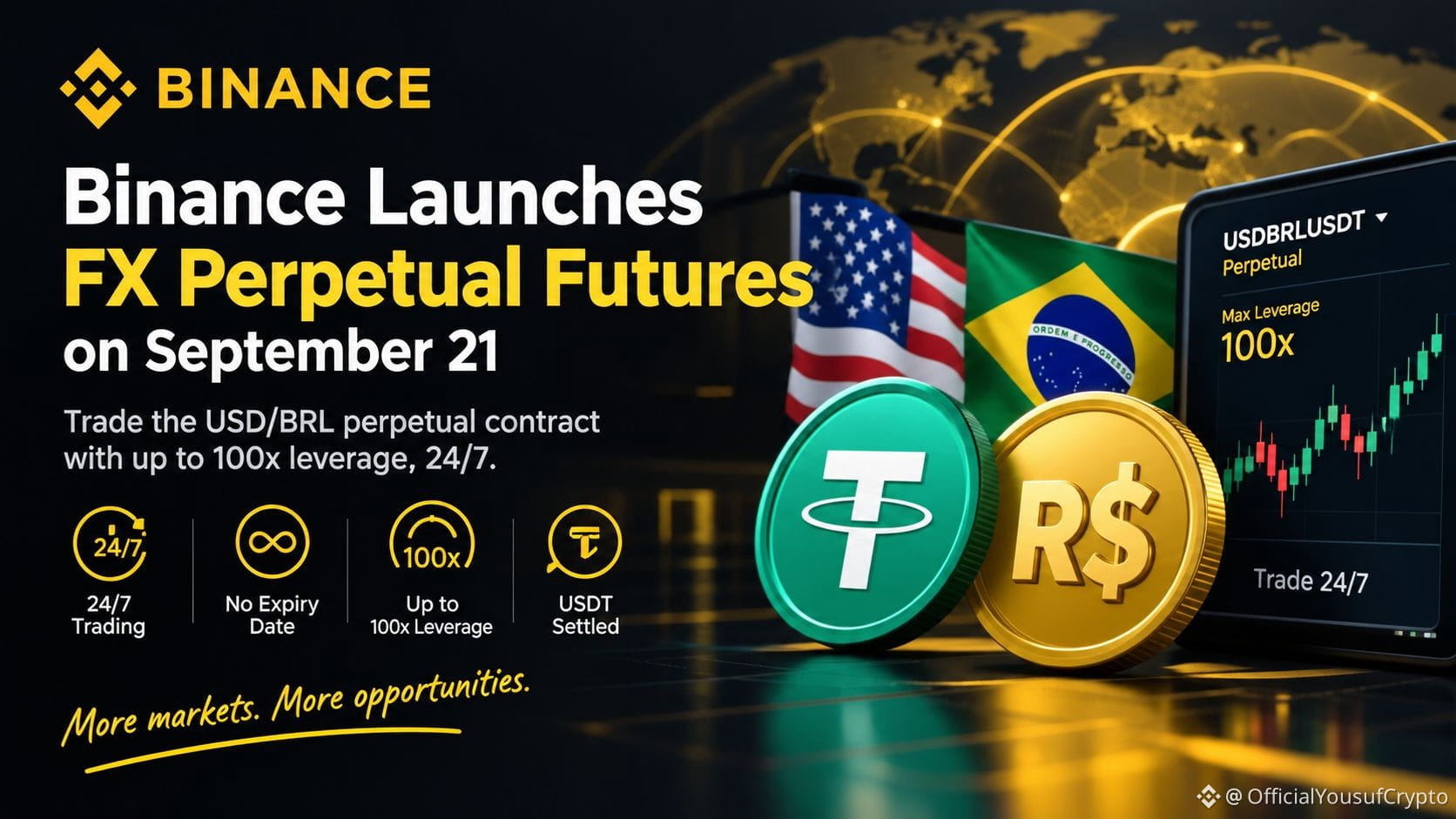
Binance is taking another step beyond crypto with the launch of FX Perpetual Futures.
Starting September 21, Binance Futures is introducing its first foreign-exchange perpetual contract, USDBRLUSDT, tracking the U.S. Dollar against the Brazilian Real.
The contract is USDT-settled, trades 24/7, has no expiry date, and offers leverage of up to 100x. Trading is scheduled to begin at 14:00 UTC.
What makes this launch interesting is the weekend trading structure. During normal FX market hours, Binance will use external market data for its price index. During weekends and public holidays, it will switch to an order-book-based EWMA pricing model.
This means traders can get continuous exposure to USD/BRL even when traditional FX markets are closed.
It also shows how crypto exchanges are increasingly bringing traditional financial markets into a 24/7 trading environment.
One important point: 100x leverage can amplify both gains and losses, so risk management remains critical.
Content verified, no material discrepancies in the post.
#Binance #BinanceFutures #FX #Forex #TradFi
$PUMP
{future}(PUMPUSDT)
$AVAX
{future}(AVAXUSDT)
$BTC
{future}(BTCUSDT)
Binance is taking another step beyond crypto with the launch of FX Perpetual Futures.
Starting September 21, Binance Futures is introducing its first foreign-exchange perpetual contract, USDBRLUSDT, tracking the U.S. Dollar against the Brazilian Real.
The contract is USDT-settled, trades 24/7, has no expiry date, and offers leverage of up to 100x. Trading is scheduled to begin at 14:00 UTC.
What makes this launch interesting is the weekend trading structure. During normal FX market hours, Binance will use external market data for its price index. During weekends and public holidays, it will switch to an order-book-based EWMA pricing model.
This means traders can get continuous exposure to USD/BRL even when traditional FX markets are closed.
It also shows how crypto exchanges are increasingly bringing traditional financial markets into a 24/7 trading environment.
One important point: 100x leverage can amplify both gains and losses, so risk management remains critical.
Content verified, no material discrepancies in the post.
#Binance #BinanceFutures #FX #Forex #TradFi
$PUMP
$AVAX
$BTC
Starting September 21, Binance Futures is introducing its first foreign-exchange perpetual contract, USDBRLUSDT, tracking the U.S. Dollar against the Brazilian Real.
The contract is USDT-settled, trades 24/7, has no expiry date, and offers leverage of up to 100x. Trading is scheduled to begin at 14:00 UTC.
What makes this launch interesting is the weekend trading structure. During normal FX market hours, Binance will use external market data for its price index. During weekends and public holidays, it will switch to an order-book-based EWMA pricing model.
This means traders can get continuous exposure to USD/BRL even when traditional FX markets are closed.
It also shows how crypto exchanges are increasingly bringing traditional financial markets into a 24/7 trading environment.
One important point: 100x leverage can amplify both gains and losses, so risk management remains critical.
Content verified, no material discrepancies in the post.
#Binance #BinanceFutures #FX #Forex #TradFi
$PUMP
$AVAX
$BTC
54


·
--
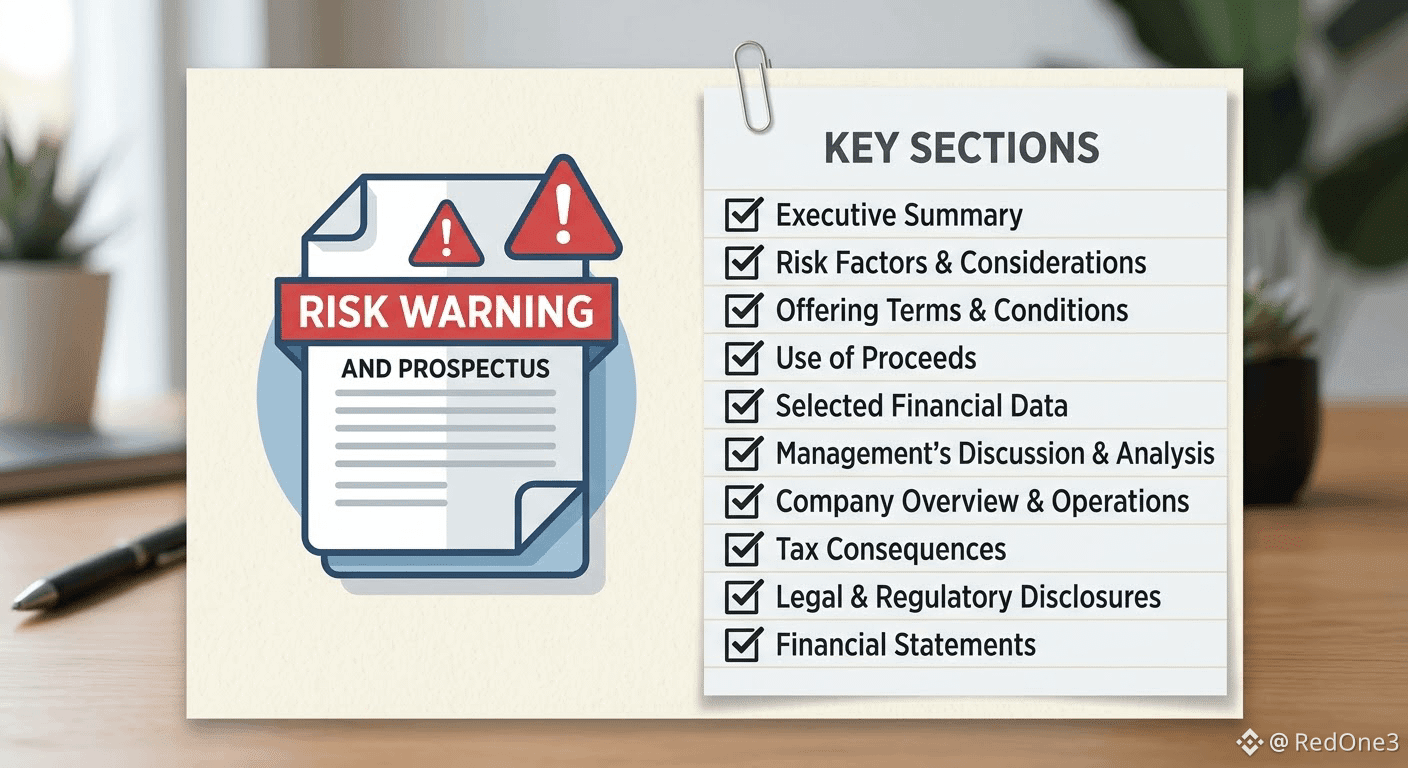
Reading the Risk Warning and Prospectus
Binance provides Risk Warning and product documentation for TradFi products before you trade. Reading through these materials - not just skimming the headline mechanics - surfaces details about contract structure, settlement, and risk factors that a quick product description alone doesn't fully cover.
#DYOR
#TradeFiRevolution #TradFi .
Reading the Risk Warning and Prospectus
Binance provides Risk Warning and product documentation for TradFi products before you trade. Reading through these materials - not just skimming the headline mechanics - surfaces details about contract structure, settlement, and risk factors that a quick product description alone doesn't fully cover.
#DYOR
#TradeFiRevolution #TradFi .
Binance provides Risk Warning and product documentation for TradFi products before you trade. Reading through these materials - not just skimming the headline mechanics - surfaces details about contract structure, settlement, and risk factors that a quick product description alone doesn't fully cover.
#DYOR
#TradeFiRevolution #TradFi .

123

·
--
Most people still treat crypto as the high-risk frontier while treating big banks as the safe default. The FinCEN Files told a different story.
Leaked documents showed major global banks including HSBC, JPMorgan, and Deutsche Bank processed more than $2 trillion in flagged suspicious transactions between 1999 and 2017.
In many cases the red flags were already raised. The system kept moving the money anyway.
That scale of institutional tolerance for risk rarely gets the same scrutiny crypto receives for far smaller volumes. Transparency and accountability shouldn’t depend on which ledger you use.
#FinCENFiles #TradFi $BTC
Most people still treat crypto as the high-risk frontier while treating big banks as the safe default. The FinCEN Files told a different story.
Leaked documents showed major global banks including HSBC, JPMorgan, and Deutsche Bank processed more than $2 trillion in flagged suspicious transactions between 1999 and 2017.
In many cases the red flags were already raised. The system kept moving the money anyway.
That scale of institutional tolerance for risk rarely gets the same scrutiny crypto receives for far smaller volumes. Transparency and accountability shouldn’t depend on which ledger you use.
#FinCENFiles #TradFi $BTC
Leaked documents showed major global banks including HSBC, JPMorgan, and Deutsche Bank processed more than $2 trillion in flagged suspicious transactions between 1999 and 2017.
In many cases the red flags were already raised. The system kept moving the money anyway.
That scale of institutional tolerance for risk rarely gets the same scrutiny crypto receives for far smaller volumes. Transparency and accountability shouldn’t depend on which ledger you use.
#FinCENFiles #TradFi $BTC
1
81

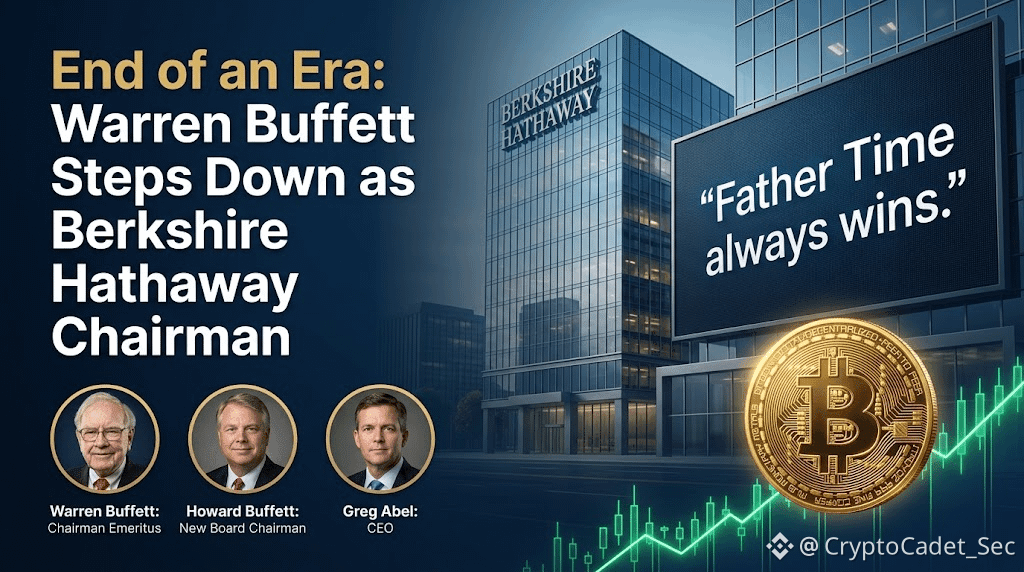
🏛️ END OF AN ERA: WARREN BUFFETT STEPS DOWN! 📉💼
A historic transition is shaking global finance. The 96-year-old "Oracle of Omaha," Warren Buffett, has officially stepped down as Chairman of Berkshire Hathaway, moving into the role of Chairman Emeritus.
As Buffett noted: "Father Time always wins. He has, however, been generous with me." ⏳
The long-planned corporate succession is now fully active:
• New Chairman: His son, Howard G. Buffett, steps up to protect the company's culture.
• Operating CEO: Greg Abel retains full control over day-to-day capital allocation.
📊 The $364.7 Billion Macro Question
Berkshire holds an astronomical $364.7 BILLION cash reserve. While Buffett’s legacy was strictly anti-crypto, this generational leadership shift opens the door for a long-term re-evaluation of alternative asset classes as digital infrastructure matures.
Institutional rebalancing always triggers waves of global market volatility. Smart money is watching closely.
💎 Key Macro Assets to Watch:
🚀 $BTC (Bitcoin): The ultimate algorithmic hedge against fiat and macro uncertainty.
🌐 $ETH (Ethereum): The leading decentralized utility asset for corporate infrastructure.
🔥 $BNB (Binance Coin): The powerhouse token thriving on heightened trading volumes.
"Be fearful when others are greedy, and greedy when others are fearful." The legacy financial guard is changing. Position your portfolio before the next multi-billion dollar capital cycle takes off
#Bitcoin #TradFi #BuffettStepsDownAsBerkshireChairman
🏛️ END OF AN ERA: WARREN BUFFETT STEPS DOWN! 📉💼
A historic transition is shaking global finance. The 96-year-old "Oracle of Omaha," Warren Buffett, has officially stepped down as Chairman of Berkshire Hathaway, moving into the role of Chairman Emeritus.
As Buffett noted: "Father Time always wins. He has, however, been generous with me." ⏳
The long-planned corporate succession is now fully active:
• New Chairman: His son, Howard G. Buffett, steps up to protect the company's culture.
• Operating CEO: Greg Abel retains full control over day-to-day capital allocation.
📊 The $364.7 Billion Macro Question
Berkshire holds an astronomical $364.7 BILLION cash reserve. While Buffett’s legacy was strictly anti-crypto, this generational leadership shift opens the door for a long-term re-evaluation of alternative asset classes as digital infrastructure matures.
Institutional rebalancing always triggers waves of global market volatility. Smart money is watching closely.
💎 Key Macro Assets to Watch:
🚀 $BTC (Bitcoin): The ultimate algorithmic hedge against fiat and macro uncertainty.
🌐 $ETH (Ethereum): The leading decentralized utility asset for corporate infrastructure.
🔥 $BNB (Binance Coin): The powerhouse token thriving on heightened trading volumes.
"Be fearful when others are greedy, and greedy when others are fearful." The legacy financial guard is changing. Position your portfolio before the next multi-billion dollar capital cycle takes off
#Bitcoin #TradFi #BuffettStepsDownAsBerkshireChairman
A historic transition is shaking global finance. The 96-year-old "Oracle of Omaha," Warren Buffett, has officially stepped down as Chairman of Berkshire Hathaway, moving into the role of Chairman Emeritus.
As Buffett noted: "Father Time always wins. He has, however, been generous with me." ⏳
The long-planned corporate succession is now fully active:
• New Chairman: His son, Howard G. Buffett, steps up to protect the company's culture.
• Operating CEO: Greg Abel retains full control over day-to-day capital allocation.
📊 The $364.7 Billion Macro Question
Berkshire holds an astronomical $364.7 BILLION cash reserve. While Buffett’s legacy was strictly anti-crypto, this generational leadership shift opens the door for a long-term re-evaluation of alternative asset classes as digital infrastructure matures.
Institutional rebalancing always triggers waves of global market volatility. Smart money is watching closely.
💎 Key Macro Assets to Watch:
🚀 $BTC (Bitcoin): The ultimate algorithmic hedge against fiat and macro uncertainty.
🌐 $ETH (Ethereum): The leading decentralized utility asset for corporate infrastructure.
🔥 $BNB (Binance Coin): The powerhouse token thriving on heightened trading volumes.
"Be fearful when others are greedy, and greedy when others are fearful." The legacy financial guard is changing. Position your portfolio before the next multi-billion dollar capital cycle takes off
#Bitcoin #TradFi #BuffettStepsDownAsBerkshireChairman
15
Tokenized stocks are shifting from a crypto-native experiment to mainstream financial infrastructure. Analysts at Goldman Sachs and Citizens point to firms like Coinbase, Robinhood, and Circle as prime early beneficiaries. As regulatory walls come down, expect fierce competition in onchain custody and instant stablecoin settlement. Traditional brokerages are waking up to 24/7 markets, and the bridge between TradFi and DeFi is finally getting built in earnest. $COIN $HOOD #Tokenization #DeFi #TradFi
Tokenized stocks are shifting from a crypto-native experiment to mainstream financial infrastructure. Analysts at Goldman Sachs and Citizens point to firms like Coinbase, Robinhood, and Circle as prime early beneficiaries. As regulatory walls come down, expect fierce competition in onchain custody and instant stablecoin settlement. Traditional brokerages are waking up to 24/7 markets, and the bridge between TradFi and DeFi is finally getting built in earnest. $COIN $HOOD #Tokenization #DeFi #TradFi
46

·
--
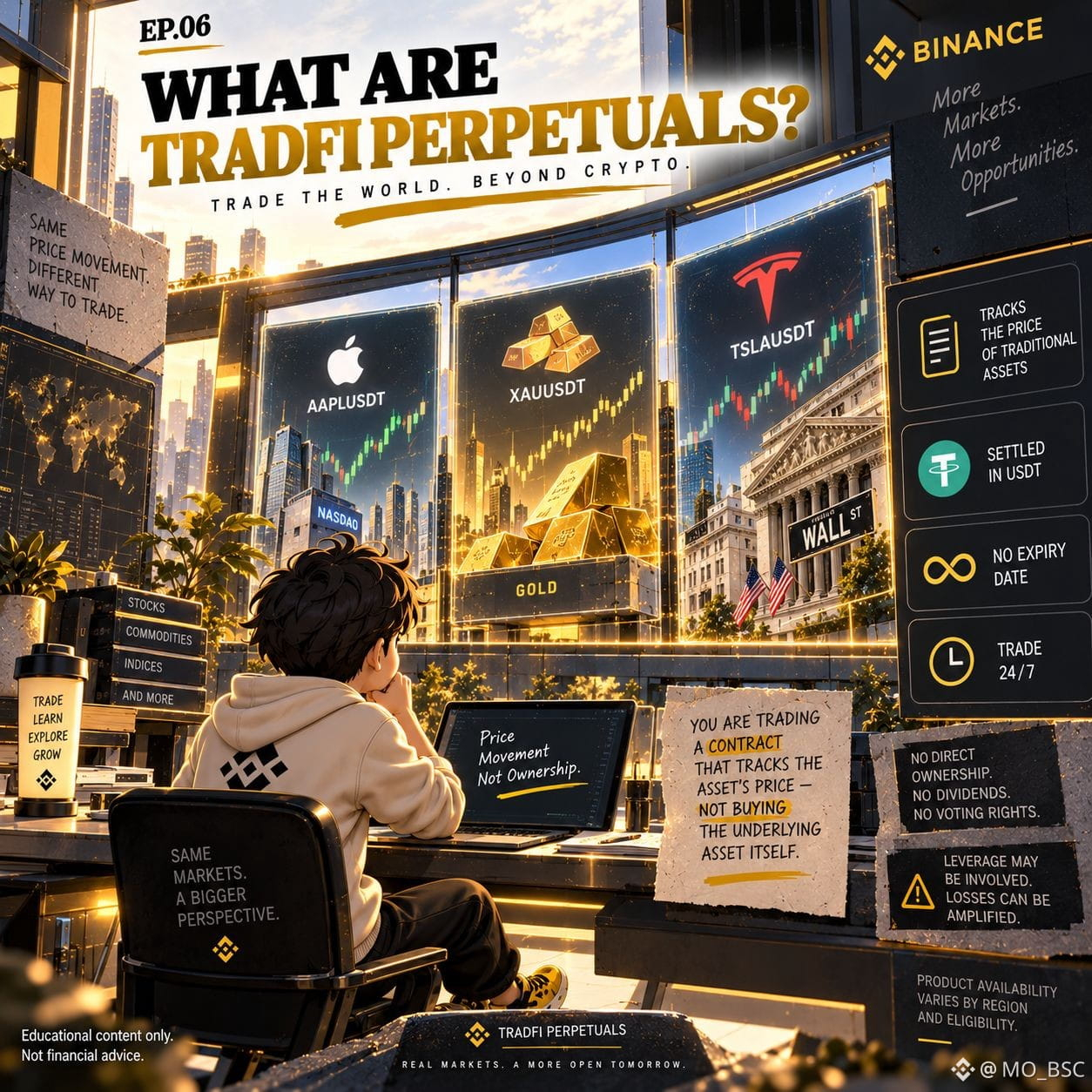
EP.06 — WHAT ARE TRADFI PERPETUALS?
A stock moves.
Gold moves.
Silver moves.
But what if you want exposure to the price movement without buying the underlying asset?
That’s where TradFi Perpetual Contracts come in.
On Binance, TradFi Perps are derivative contracts that track the price of traditional assets.
They are settled in $USDT , have no expiry date, and can trade 24/7.
But there’s an important distinction:
You are trading a contract that tracks the asset’s price — not buying the underlying asset itself.
That means no direct ownership, dividends, or voting rights for the underlying stock.
And because leverage may be involved, losses can be amplified.
Availability varies by region and eligibility.
Educational content only. Not financial advice.
#TradFi
EP.06 — WHAT ARE TRADFI PERPETUALS?
A stock moves.
Gold moves.
Silver moves.
But what if you want exposure to the price movement without buying the underlying asset?
That’s where TradFi Perpetual Contracts come in.
On Binance, TradFi Perps are derivative contracts that track the price of traditional assets.
They are settled in $USDT , have no expiry date, and can trade 24/7.
But there’s an important distinction:
You are trading a contract that tracks the asset’s price — not buying the underlying asset itself.
That means no direct ownership, dividends, or voting rights for the underlying stock.
And because leverage may be involved, losses can be amplified.
Availability varies by region and eligibility.
Educational content only. Not financial advice.
#TradFi
A stock moves.
Gold moves.
Silver moves.
But what if you want exposure to the price movement without buying the underlying asset?
That’s where TradFi Perpetual Contracts come in.
On Binance, TradFi Perps are derivative contracts that track the price of traditional assets.
They are settled in $USDT , have no expiry date, and can trade 24/7.
But there’s an important distinction:
You are trading a contract that tracks the asset’s price — not buying the underlying asset itself.
That means no direct ownership, dividends, or voting rights for the underlying stock.
And because leverage may be involved, losses can be amplified.
Availability varies by region and eligibility.
Educational content only. Not financial advice.
#TradFi
2
131
📘 TradFi practical guide: a watchlist works better when every ticker has a clear role instead of being treated as the same trade.
Use $TSLA to track high-beta momentum, $NVDA to follow the AI and semiconductor cycle, and $MSTR to watch the link between listed equities and Bitcoin sentiment. Compare volatility, liquidity and event risk before entering, then set position size and invalidation in advance.
A simple process—market context, catalyst, entry level and risk limit—helps avoid impulsive trades when traditional and crypto markets move together.
$TSLA $NVDA $MSTR
#TradFi #StockMarket #RiskManagement #TradingTips #Binance
📘 TradFi practical guide: a watchlist works better when every ticker has a clear role instead of being treated as the same trade.
Use $TSLA to track high-beta momentum, $NVDA to follow the AI and semiconductor cycle, and $MSTR to watch the link between listed equities and Bitcoin sentiment. Compare volatility, liquidity and event risk before entering, then set position size and invalidation in advance.
A simple process—market context, catalyst, entry level and risk limit—helps avoid impulsive trades when traditional and crypto markets move together.
$TSLA $NVDA $MSTR
#TradFi #StockMarket #RiskManagement #TradingTips #Binance
Use $TSLA to track high-beta momentum, $NVDA to follow the AI and semiconductor cycle, and $MSTR to watch the link between listed equities and Bitcoin sentiment. Compare volatility, liquidity and event risk before entering, then set position size and invalidation in advance.
A simple process—market context, catalyst, entry level and risk limit—helps avoid impulsive trades when traditional and crypto markets move together.
$TSLA $NVDA $MSTR
#TradFi #StockMarket #RiskManagement #TradingTips #Binance
101
·
--
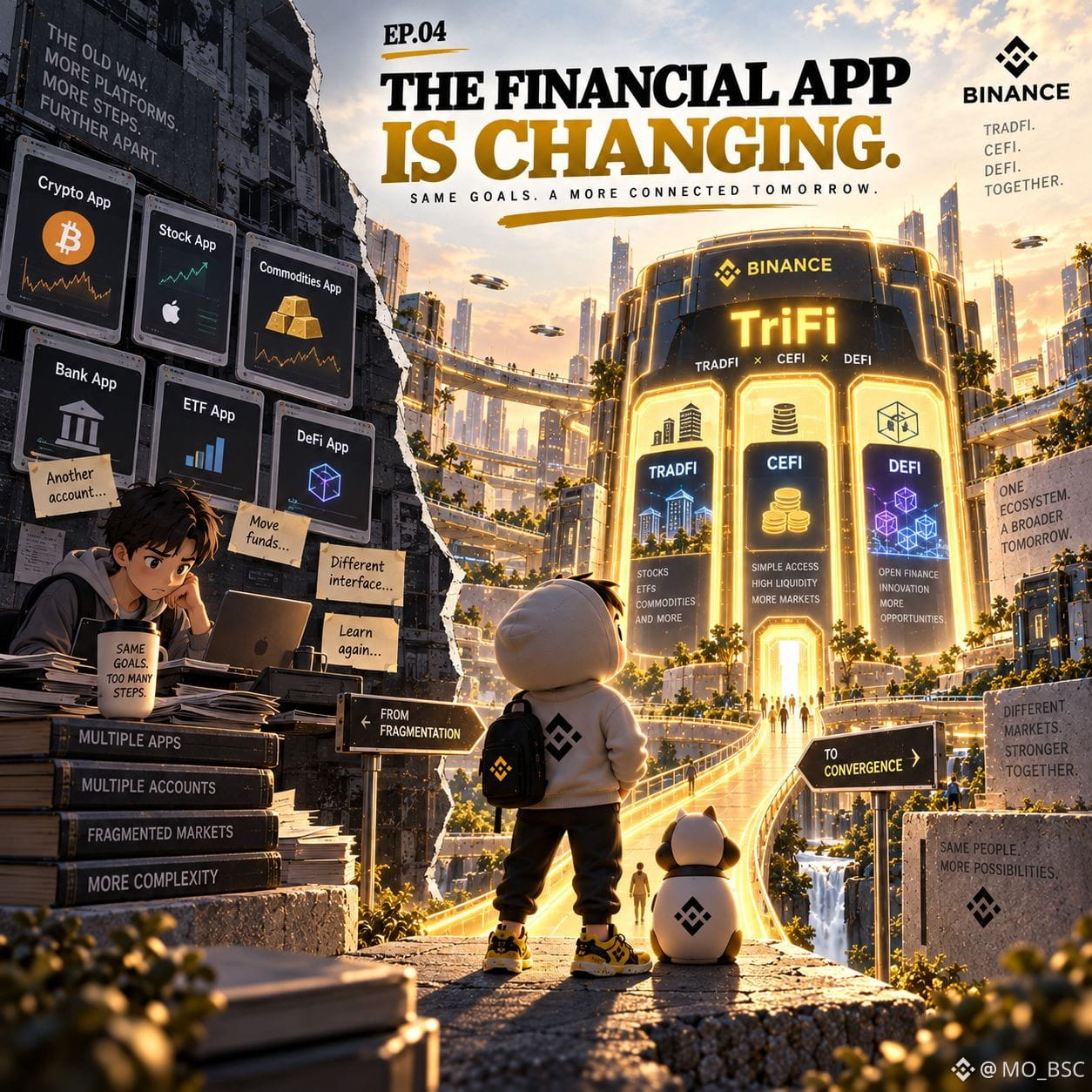
EP.04 — THE FINANCIAL APP IS CHANGING
The old financial experience was often:
Open one platform.
Check another.
Move funds.
Open another account.
Learn another interface.
The emerging model is different.
Crypto, TradFi and DeFi are increasingly being connected through digital financial ecosystems.
Binance describes this convergence as TriFi — bringing together TradFi, CeFi and DeFi into a more integrated financial experience.
The important shift isn't simply “more products.”
It’s more financial infrastructure connected through one digital experience.
Educational content only. Not financial advice.
#TriFi #TradFi
EP.04 — THE FINANCIAL APP IS CHANGING
The old financial experience was often:
Open one platform.
Check another.
Move funds.
Open another account.
Learn another interface.
The emerging model is different.
Crypto, TradFi and DeFi are increasingly being connected through digital financial ecosystems.
Binance describes this convergence as TriFi — bringing together TradFi, CeFi and DeFi into a more integrated financial experience.
The important shift isn't simply “more products.”
It’s more financial infrastructure connected through one digital experience.
Educational content only. Not financial advice.
#TriFi #TradFi
The old financial experience was often:
Open one platform.
Check another.
Move funds.
Open another account.
Learn another interface.
The emerging model is different.
Crypto, TradFi and DeFi are increasingly being connected through digital financial ecosystems.
Binance describes this convergence as TriFi — bringing together TradFi, CeFi and DeFi into a more integrated financial experience.
The important shift isn't simply “more products.”
It’s more financial infrastructure connected through one digital experience.
Educational content only. Not financial advice.
#TriFi #TradFi
2
39
·
--
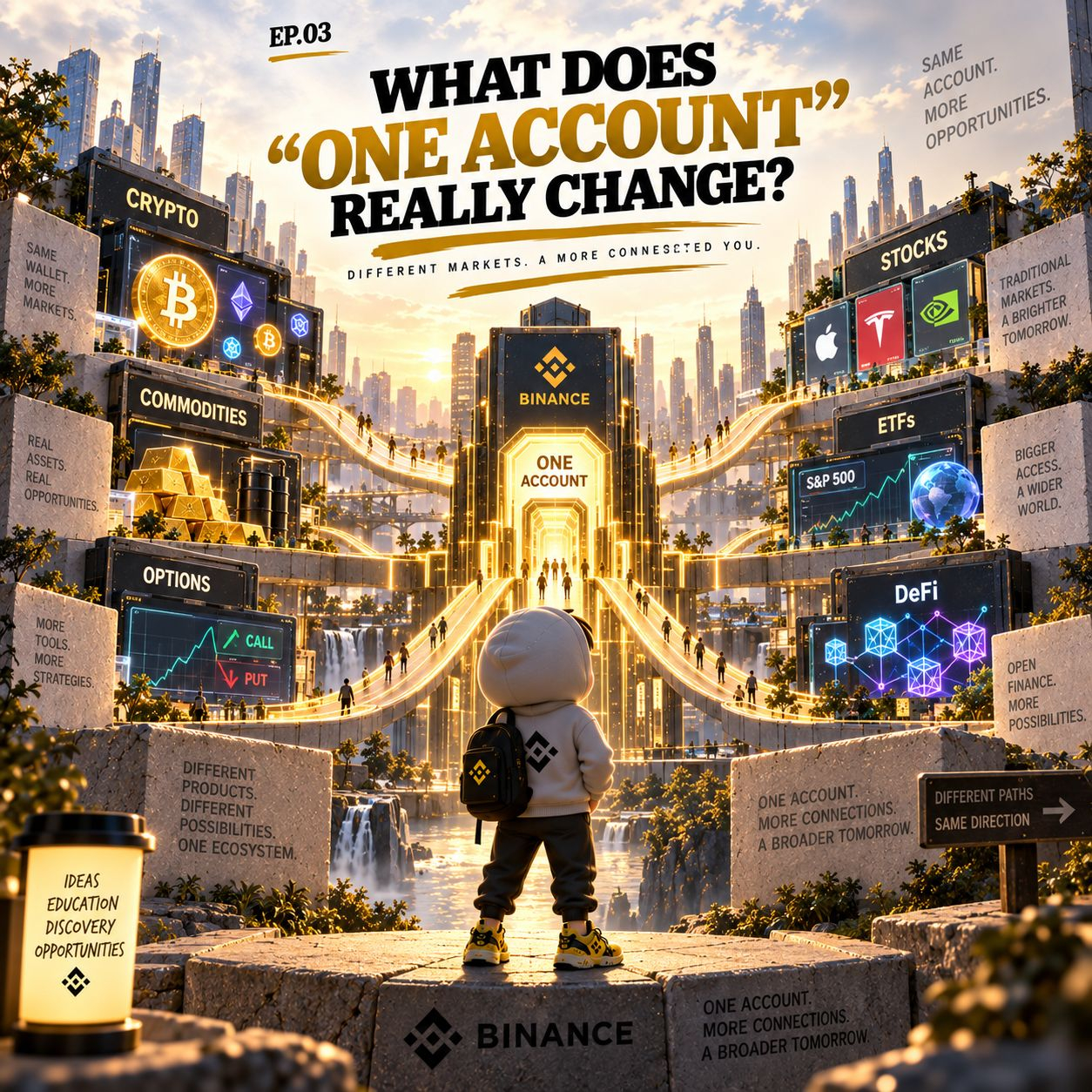
EP.03 — WHAT DOES “ONE ACCOUNT” REALLY CHANGE?
“Everything in one account” sounds like a small convenience.
But there’s a bigger idea behind it.
Instead of treating crypto, traditional markets, and DeFi as completely separate worlds, an integrated ecosystem can make moving between different financial experiences simpler.
Binance is expanding beyond crypto-only products into areas such as TradFi perpetuals, stocks and ETF-related products, commodities, and options, while also connecting users with DeFi through its ecosystem.
The important part:
One ecosystem doesn’t mean one product.
Different products have different mechanics, risks, eligibility requirements, and availability.
The value of integration is the connection between them.
Educational content only. Not financial advice.
#BinanceSquareFamily #TradFi
EP.03 — WHAT DOES “ONE ACCOUNT” REALLY CHANGE?
“Everything in one account” sounds like a small convenience.
But there’s a bigger idea behind it.
Instead of treating crypto, traditional markets, and DeFi as completely separate worlds, an integrated ecosystem can make moving between different financial experiences simpler.
Binance is expanding beyond crypto-only products into areas such as TradFi perpetuals, stocks and ETF-related products, commodities, and options, while also connecting users with DeFi through its ecosystem.
The important part:
One ecosystem doesn’t mean one product.
Different products have different mechanics, risks, eligibility requirements, and availability.
The value of integration is the connection between them.
Educational content only. Not financial advice.
#BinanceSquareFamily #TradFi
“Everything in one account” sounds like a small convenience.
But there’s a bigger idea behind it.
Instead of treating crypto, traditional markets, and DeFi as completely separate worlds, an integrated ecosystem can make moving between different financial experiences simpler.
Binance is expanding beyond crypto-only products into areas such as TradFi perpetuals, stocks and ETF-related products, commodities, and options, while also connecting users with DeFi through its ecosystem.
The important part:
One ecosystem doesn’t mean one product.
Different products have different mechanics, risks, eligibility requirements, and availability.
The value of integration is the connection between them.
Educational content only. Not financial advice.
#BinanceSquareFamily #TradFi
2
43
·
--
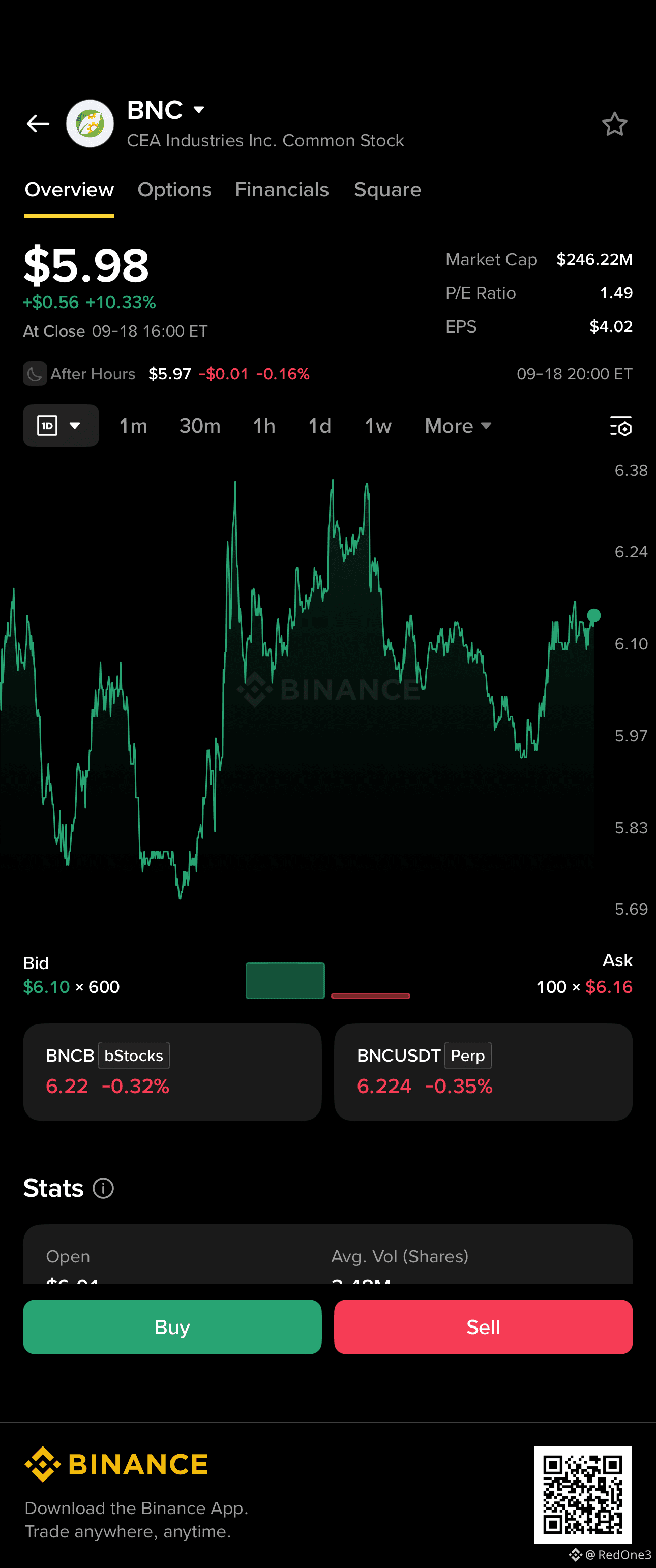
$BNC.US Price Action & TradFi-Crypto Integration Analysis 📈🚀
CEA Industries Inc. $BNCB is showing notable positive momentum across both traditional equities and crypto derivative markets! 📊 Here is a breakdown of the current trading parameters:
Key Equity Metrics 💵
• Current Price: $5.98 (+10.33% / +$0.56)
• Market Cap: $246.22M
• P/E Ratio: 1.49
• EPS: $4.02
• Order Book Depth: Bid $6.10 × 600 | Ask $6.16 × 100
Tokenized & Derivatives Activity 🔄
• BNCB (bStocks): $6.22 (-0.32%)
• BNCUSDT (Perp): $6.224 (-0.35%)
Market Takeaway 🔍
Despite minor pullbacks in after-hours and perpetual contracts (-0.32% to -0.35%), the core stock closed up over 10%. Tight price alignment between spot stock, bStocks, and perpetuals indicates efficient cross-market arbitrage and liquidity across TradFi and crypto ecosystem channels.
#BNC #BNCB
#TradebStocks #bStocks #TradFi .
$BNC.US Price Action & TradFi-Crypto Integration Analysis 📈🚀
CEA Industries Inc. $BNCB is showing notable positive momentum across both traditional equities and crypto derivative markets! 📊 Here is a breakdown of the current trading parameters:
Key Equity Metrics 💵
• Current Price: $5.98 (+10.33% / +$0.56)
• Market Cap: $246.22M
• P/E Ratio: 1.49
• EPS: $4.02
• Order Book Depth: Bid $6.10 × 600 | Ask $6.16 × 100
Tokenized & Derivatives Activity 🔄
• BNCB (bStocks): $6.22 (-0.32%)
• BNCUSDT (Perp): $6.224 (-0.35%)
Market Takeaway 🔍
Despite minor pullbacks in after-hours and perpetual contracts (-0.32% to -0.35%), the core stock closed up over 10%. Tight price alignment between spot stock, bStocks, and perpetuals indicates efficient cross-market arbitrage and liquidity across TradFi and crypto ecosystem channels.
#BNC #BNCB
#TradebStocks #bStocks #TradFi .
CEA Industries Inc. $BNCB is showing notable positive momentum across both traditional equities and crypto derivative markets! 📊 Here is a breakdown of the current trading parameters:
Key Equity Metrics 💵
• Current Price: $5.98 (+10.33% / +$0.56)
• Market Cap: $246.22M
• P/E Ratio: 1.49
• EPS: $4.02
• Order Book Depth: Bid $6.10 × 600 | Ask $6.16 × 100
Tokenized & Derivatives Activity 🔄
• BNCB (bStocks): $6.22 (-0.32%)
• BNCUSDT (Perp): $6.224 (-0.35%)
Market Takeaway 🔍
Despite minor pullbacks in after-hours and perpetual contracts (-0.32% to -0.35%), the core stock closed up over 10%. Tight price alignment between spot stock, bStocks, and perpetuals indicates efficient cross-market arbitrage and liquidity across TradFi and crypto ecosystem channels.
#BNC #BNCB
#TradebStocks #bStocks #TradFi .
1.1k

·
--
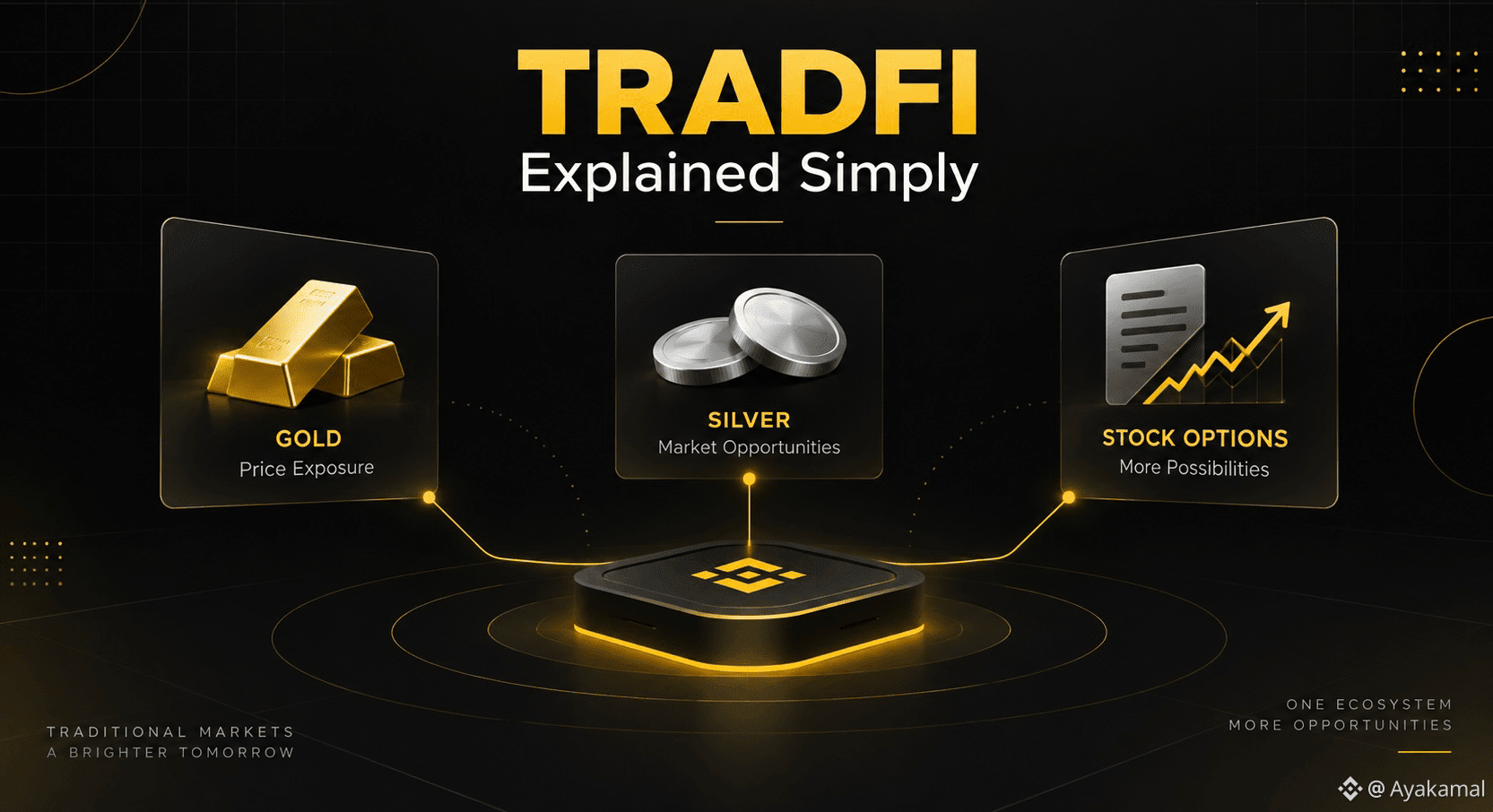
TradFi is entering the crypto-native world — but the products are NOT interchangeable. 👀
Gold & silver products, perpetual contracts, and stock options each give you a different way to access traditional markets.
Here’s what actually changes.
🥇 Gold & Silver
Some products provide exposure to gold or silver price movements without holding the physical metal.
With Commodity Options, buyers can take a Call or Put position with a defined strike price and expiry.
📈 TradFi Perpetuals
Perpetual contracts track the price of selected traditional assets without a fixed expiry.
You’re trading a contract, not owning the underlying asset.
Leverage may also be involved, which can amplify both gains and losses.
📊 Stock Options
A Call gives the buyer the right to buy.
A Put gives the buyer the right to sell.
Both are tied to a specific strike price and expiration date.
Binance’s Stock Options on U.S.-listed stocks and ETFs are physically settled, subject to the product’s terms. (Binance)
So what should you check before using one?
→ What does it track?
→ Do I own the underlying?
→ Does it expire?
→ How is it settled?
→ What are the risks?
Binance is expanding its ecosystem across Crypto, TradFi and DeFi, giving eligible users access to more financial products from one platform.
Availability varies by region and eligibility.
Educational content only. Not financial advice. DYOR.
#crypto #blockchain #Binance #TradFi #GoldTrading
TradFi is entering the crypto-native world — but the products are NOT interchangeable. 👀
Gold & silver products, perpetual contracts, and stock options each give you a different way to access traditional markets.
Here’s what actually changes.
🥇 Gold & Silver
Some products provide exposure to gold or silver price movements without holding the physical metal.
With Commodity Options, buyers can take a Call or Put position with a defined strike price and expiry.
📈 TradFi Perpetuals
Perpetual contracts track the price of selected traditional assets without a fixed expiry.
You’re trading a contract, not owning the underlying asset.
Leverage may also be involved, which can amplify both gains and losses.
📊 Stock Options
A Call gives the buyer the right to buy.
A Put gives the buyer the right to sell.
Both are tied to a specific strike price and expiration date.
Binance’s Stock Options on U.S.-listed stocks and ETFs are physically settled, subject to the product’s terms. (Binance)
So what should you check before using one?
→ What does it track?
→ Do I own the underlying?
→ Does it expire?
→ How is it settled?
→ What are the risks?
Binance is expanding its ecosystem across Crypto, TradFi and DeFi, giving eligible users access to more financial products from one platform.
Availability varies by region and eligibility.
Educational content only. Not financial advice. DYOR.
#crypto #blockchain #Binance #TradFi #GoldTrading
Gold & silver products, perpetual contracts, and stock options each give you a different way to access traditional markets.
Here’s what actually changes.
🥇 Gold & Silver
Some products provide exposure to gold or silver price movements without holding the physical metal.
With Commodity Options, buyers can take a Call or Put position with a defined strike price and expiry.
📈 TradFi Perpetuals
Perpetual contracts track the price of selected traditional assets without a fixed expiry.
You’re trading a contract, not owning the underlying asset.
Leverage may also be involved, which can amplify both gains and losses.
📊 Stock Options
A Call gives the buyer the right to buy.
A Put gives the buyer the right to sell.
Both are tied to a specific strike price and expiration date.
Binance’s Stock Options on U.S.-listed stocks and ETFs are physically settled, subject to the product’s terms. (Binance)
So what should you check before using one?
→ What does it track?
→ Do I own the underlying?
→ Does it expire?
→ How is it settled?
→ What are the risks?
Binance is expanding its ecosystem across Crypto, TradFi and DeFi, giving eligible users access to more financial products from one platform.
Availability varies by region and eligibility.
Educational content only. Not financial advice. DYOR.
#crypto #blockchain #Binance #TradFi #GoldTrading
2
154

Two Binance developments today that connect to a bigger theme.
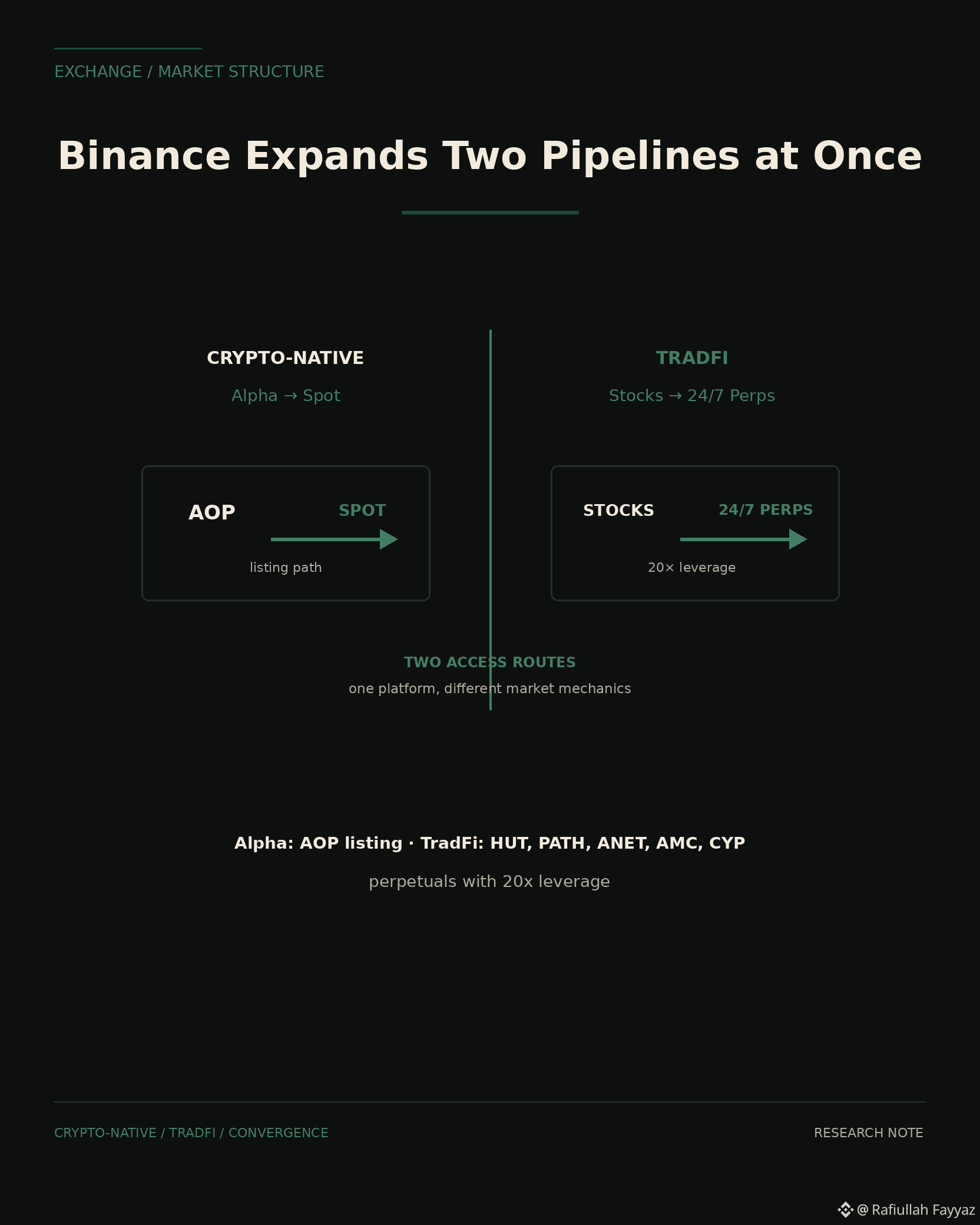
First: Binance added five TradFi perpetual contracts — Hut 8 (HUT), UiPath (PATH), Arista Networks (ANET), AMC Entertainment (AMC), and Cypherpunk Technologies (CYPH). Up to 20x leverage, 24/7 trading.
Second: Binance Alpha listed Ark of Panda (AOP).
AOP is a newer token that hit Alpha today. The Alpha → Spot pipeline continues. Eligible users can claim an airdrop via Alpha Points.
Here's what connects them: Binance is building out two different pipelines at once.
On one side: crypto-native assets moving through Alpha → Spot. On the other: TradFi assets — stocks, ETFs, now perpetual contracts — becoming tradeable 24/7 with leverage.
The TradFi contracts are particularly interesting. AMC and UiPath aren't crypto companies. But they now have perpetual futures on Binance with 20x leverage. That's a product that didn't exist on this scale a year ago.
The question I'm watching: does this bring TradFi traders into crypto, or does it just give crypto traders more things to speculate on?
$AOP
#Binance #BinanceAlpha #TradFi
{alpha}(560xd5df4d260d7a0145f655bcbf3b398076f21016c7)
Two Binance developments today that connect to a bigger theme.
First: Binance added five TradFi perpetual contracts — Hut 8 (HUT), UiPath (PATH), Arista Networks (ANET), AMC Entertainment (AMC), and Cypherpunk Technologies (CYPH). Up to 20x leverage, 24/7 trading.
Second: Binance Alpha listed Ark of Panda (AOP).
AOP is a newer token that hit Alpha today. The Alpha → Spot pipeline continues. Eligible users can claim an airdrop via Alpha Points.
Here's what connects them: Binance is building out two different pipelines at once.
On one side: crypto-native assets moving through Alpha → Spot. On the other: TradFi assets — stocks, ETFs, now perpetual contracts — becoming tradeable 24/7 with leverage.
The TradFi contracts are particularly interesting. AMC and UiPath aren't crypto companies. But they now have perpetual futures on Binance with 20x leverage. That's a product that didn't exist on this scale a year ago.
The question I'm watching: does this bring TradFi traders into crypto, or does it just give crypto traders more things to speculate on?
$AOP
#Binance #BinanceAlpha #TradFi
First: Binance added five TradFi perpetual contracts — Hut 8 (HUT), UiPath (PATH), Arista Networks (ANET), AMC Entertainment (AMC), and Cypherpunk Technologies (CYPH). Up to 20x leverage, 24/7 trading.
Second: Binance Alpha listed Ark of Panda (AOP).
AOP is a newer token that hit Alpha today. The Alpha → Spot pipeline continues. Eligible users can claim an airdrop via Alpha Points.
Here's what connects them: Binance is building out two different pipelines at once.
On one side: crypto-native assets moving through Alpha → Spot. On the other: TradFi assets — stocks, ETFs, now perpetual contracts — becoming tradeable 24/7 with leverage.
The TradFi contracts are particularly interesting. AMC and UiPath aren't crypto companies. But they now have perpetual futures on Binance with 20x leverage. That's a product that didn't exist on this scale a year ago.
The question I'm watching: does this bring TradFi traders into crypto, or does it just give crypto traders more things to speculate on?
$AOP
#Binance #BinanceAlpha #TradFi
412

·
--
🔗 Understanding TriFi: The Convergence of Crypto, TradFi, and DeFi
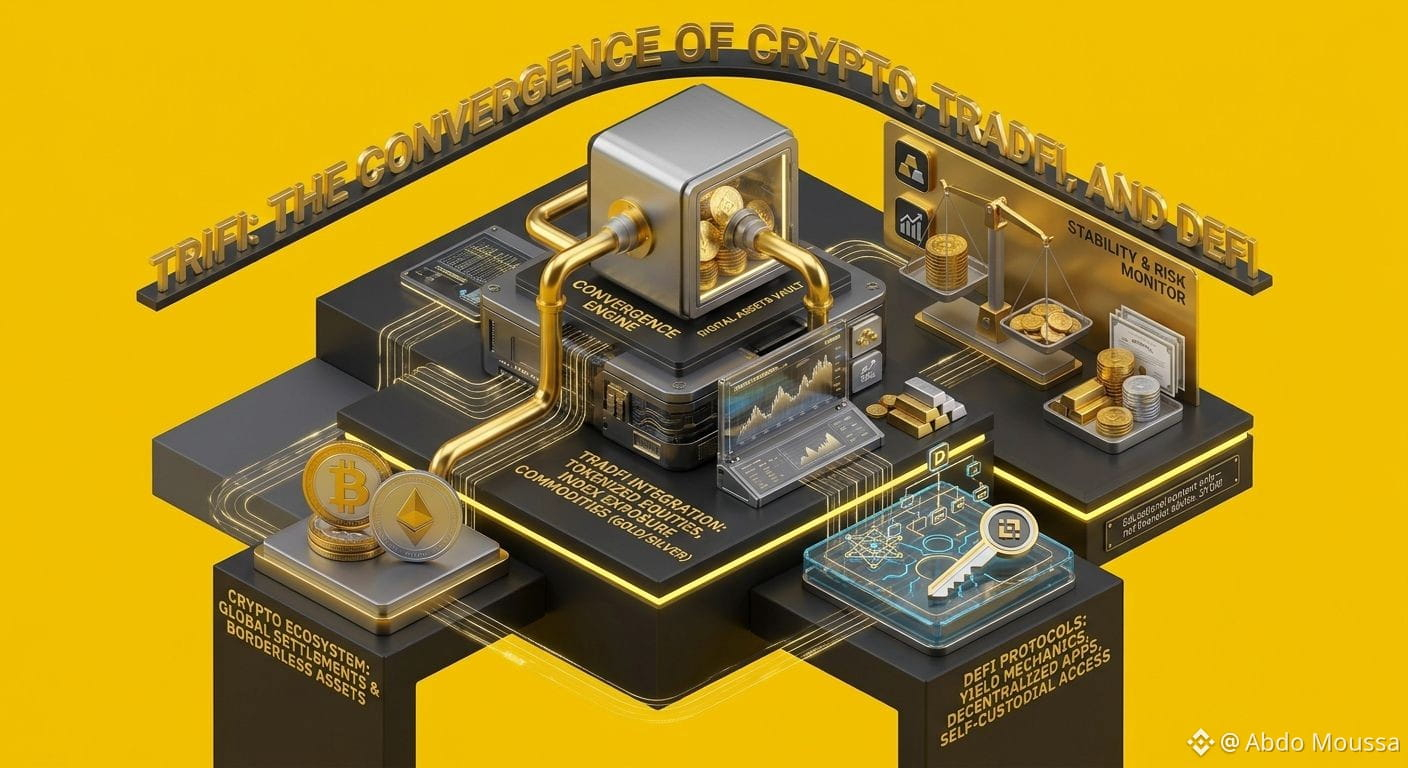
The evolution of modern finance relies on interoperability, TriFi represents the convergence of three distinct financial pillars into a single operational architecture.
💡 The Three Pillars of TriFi
Crypto Ecosystem: Digital liquidity, global settlements, and borderless assets (e.g., BTC, ETH).
TradFi Integration: Structural stability, index exposure, commodities (Gold/Silver), and tokenized equities.
DeFi Protocols: Decentralized yield mechanics, transparency, and self-custodial DApp integration.
🔑 Unified Synergy
By integrating Crypto, TradFi, and DeFi under one ecosystem, users gain seamless mobility to manage capital, execute hedging strategies, and adapt to shifting global market cycles.
⚠️ Educational Disclaimer
Participation across these market segments carries specific risks, including volatility and smart contract execution parameters, Product features vary by region.
Educational content only, not financial advice, Always DYOR (Do Your Own Research)
#Binance #crypto #TradFi #DeFi #dyor
🔗 Understanding TriFi: The Convergence of Crypto, TradFi, and DeFi
The evolution of modern finance relies on interoperability, TriFi represents the convergence of three distinct financial pillars into a single operational architecture.
💡 The Three Pillars of TriFi
Crypto Ecosystem: Digital liquidity, global settlements, and borderless assets (e.g., BTC, ETH).
TradFi Integration: Structural stability, index exposure, commodities (Gold/Silver), and tokenized equities.
DeFi Protocols: Decentralized yield mechanics, transparency, and self-custodial DApp integration.
🔑 Unified Synergy
By integrating Crypto, TradFi, and DeFi under one ecosystem, users gain seamless mobility to manage capital, execute hedging strategies, and adapt to shifting global market cycles.
⚠️ Educational Disclaimer
Participation across these market segments carries specific risks, including volatility and smart contract execution parameters, Product features vary by region.
Educational content only, not financial advice, Always DYOR (Do Your Own Research)
#Binance #crypto #TradFi #DeFi #dyor
The evolution of modern finance relies on interoperability, TriFi represents the convergence of three distinct financial pillars into a single operational architecture.
💡 The Three Pillars of TriFi
Crypto Ecosystem: Digital liquidity, global settlements, and borderless assets (e.g., BTC, ETH).
TradFi Integration: Structural stability, index exposure, commodities (Gold/Silver), and tokenized equities.
DeFi Protocols: Decentralized yield mechanics, transparency, and self-custodial DApp integration.
🔑 Unified Synergy
By integrating Crypto, TradFi, and DeFi under one ecosystem, users gain seamless mobility to manage capital, execute hedging strategies, and adapt to shifting global market cycles.
⚠️ Educational Disclaimer
Participation across these market segments carries specific risks, including volatility and smart contract execution parameters, Product features vary by region.
Educational content only, not financial advice, Always DYOR (Do Your Own Research)
#Binance #crypto #TradFi #DeFi #dyor
5
171

·
--
BINANCE’S PUSH INTO 24/7 TRADITIONAL- Futures Just Added 7 More TradFi PerpetualsBinance Futures launched PATHUSDT, $AMC /USDT, $CYPH USDT, ANETUSDT, HUTUSDT, APLDUSDT and AGPUUSDT on Sept. 18. The contracts reference equities including UiPath, AMC Entertainment, Arista Networks, $HUT 8 and Applied Digital. All settle in USDT, trade 24/7, support up to 20× leverage, and currently use eight-hour funding intervals.
WHY IT MATTERS: Binance is increasingly blending crypto-market infrastructure with traditional-equity exposure, giving traders weekend and around-the-clock access that ordinary stock markets don’t provide.
INTERPRETATION: Strong liquidity could accelerate demand for tokenized/derivative TradFi products. Overnight and weekend price gaps plus 20× leverage create significant liquidation and tracking risk.
Would you trade stock exposure through 24/7 perpetuals?
#BİNANCEFUTURES #TradFi
BINANCE’S PUSH INTO 24/7 TRADITIONAL- Futures Just Added 7 More TradFi Perpetuals
Binance Futures launched PATHUSDT, $AMC /USDT, $CYPH USDT, ANETUSDT, HUTUSDT, APLDUSDT and AGPUUSDT on Sept. 18. The contracts reference equities including UiPath, AMC Entertainment, Arista Networks, $HUT 8 and Applied Digital. All settle in USDT, trade 24/7, support up to 20× leverage, and currently use eight-hour funding intervals.
WHY IT MATTERS: Binance is increasingly blending crypto-market infrastructure with traditional-equity exposure, giving traders weekend and around-the-clock access that ordinary stock markets don’t provide.
INTERPRETATION: Strong liquidity could accelerate demand for tokenized/derivative TradFi products. Overnight and weekend price gaps plus 20× leverage create significant liquidation and tracking risk.
Would you trade stock exposure through 24/7 perpetuals?
#BİNANCEFUTURES #TradFi
WHY IT MATTERS: Binance is increasingly blending crypto-market infrastructure with traditional-equity exposure, giving traders weekend and around-the-clock access that ordinary stock markets don’t provide.
INTERPRETATION: Strong liquidity could accelerate demand for tokenized/derivative TradFi products. Overnight and weekend price gaps plus 20× leverage create significant liquidation and tracking risk.
Would you trade stock exposure through 24/7 perpetuals?
#BİNANCEFUTURES #TradFi
230
🔥 TradFi meets crypto on Binance Futures
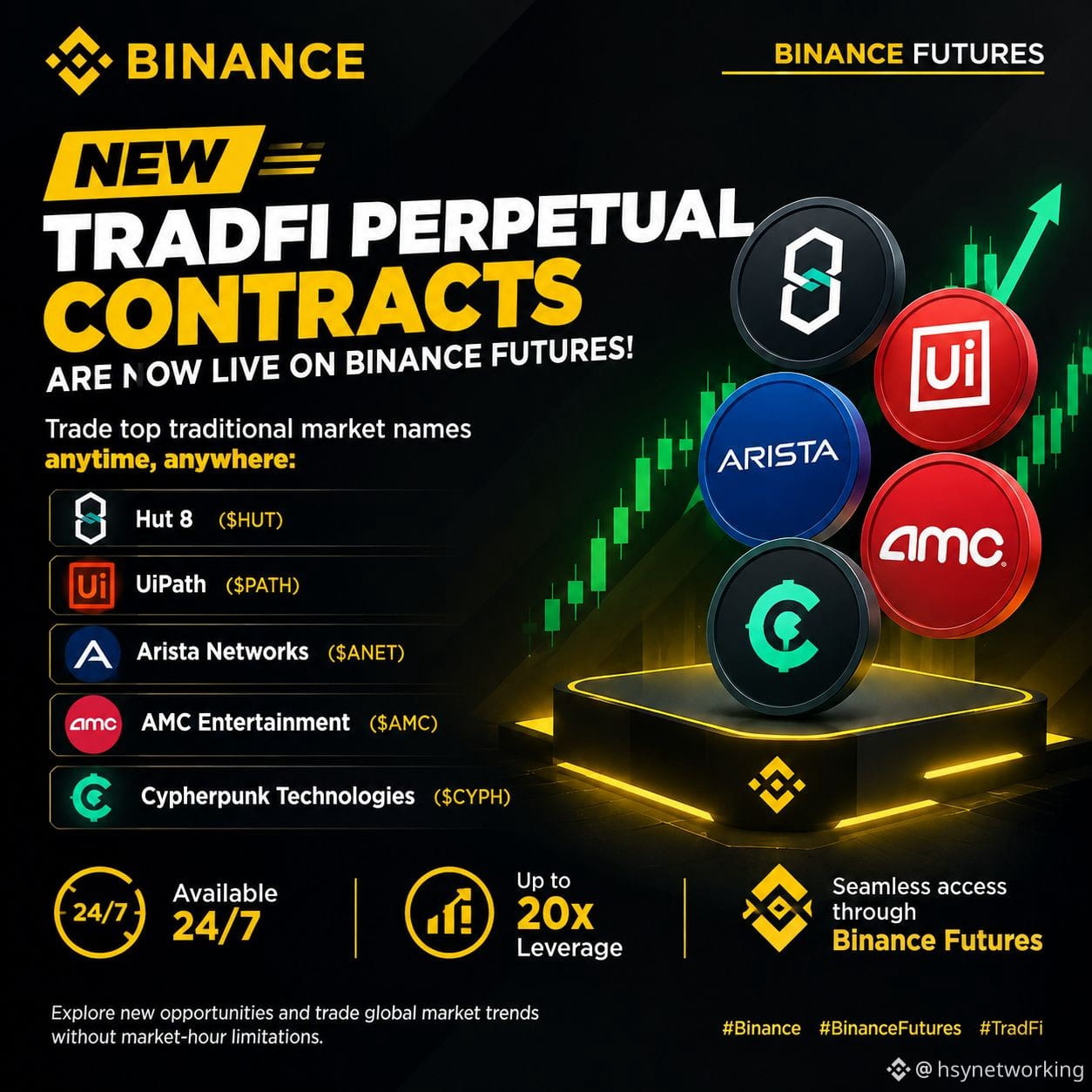
You can now trade perpetual contracts for:
🔸 $HUT
🔸 $PATH
🔸 $ANET
🔸 $AMC
🔸 $CYPH
🌍 Trade 24/7
⚡ Up to 20x leverage
📈 Access traditional market exposure directly from Binance Futures.
Which contract are you watching first? 👀
#BinanceFutures #TradFi #cryptotrading
{future}(HUTUSDT)
{future}(PATHUSDT)
{future}(ANETUSDT)
🔥 TradFi meets crypto on Binance Futures
You can now trade perpetual contracts for:
🔸 $HUT
🔸 $PATH
🔸 $ANET
🔸 $AMC
🔸 $CYPH
🌍 Trade 24/7
⚡ Up to 20x leverage
📈 Access traditional market exposure directly from Binance Futures.
Which contract are you watching first? 👀
#BinanceFutures #TradFi #cryptotrading
You can now trade perpetual contracts for:
🔸 $HUT
🔸 $PATH
🔸 $ANET
🔸 $AMC
🔸 $CYPH
🌍 Trade 24/7
⚡ Up to 20x leverage
📈 Access traditional market exposure directly from Binance Futures.
Which contract are you watching first? 👀
#BinanceFutures #TradFi #cryptotrading
182

🚨 JUST IN: 💰🔥 Binance is expanding its TradFi Perps lineup with FX perpetual futures!
📅 First contract goes live September 21 ⚡ Up to 100x leverage
Forex meets perpetuals.
#BinanceSquareFamily #TradFi #forex #Crypto
🚨 JUST IN: 💰🔥 Binance is expanding its TradFi Perps lineup with FX perpetual futures!
📅 First contract goes live September 21 ⚡ Up to 100x leverage
Forex meets perpetuals.
#BinanceSquareFamily #TradFi #forex #Crypto
📅 First contract goes live September 21 ⚡ Up to 100x leverage
Forex meets perpetuals.
#BinanceSquareFamily #TradFi #forex #Crypto

·
--
⚡ CRYPTO VS TRADFI — ARE THE TWO WORLDS GETTING CLOSER?
This week showed how closely Crypto and TradFi can interact.
The Fed raised rates.
U.S. stocks moved with changing rate expectations.
Bitcoin recovered above $80K.
And the SEC introduced a five-year exemption framework for certain tokenized securities. 1
Crypto and traditional finance are no longer completely separate markets.
We are seeing more connections through:
• ETFs
• Tokenized securities
• Stablecoin payments
• Institutional capital
• Treasury yields
• Monetary policy
But the two markets still have very different structures, risks and market mechanics.
So here's the question for the community:
Do you think Crypto and TradFi will eventually become deeply integrated, or will they remain fundamentally different markets?
Share your view below.
#crypto #TradFi #Finance #markets $NVDAB
{spot}(NVDABUSDT)
$BTC
{future}(BTCUSDT)
⚡ CRYPTO VS TRADFI — ARE THE TWO WORLDS GETTING CLOSER?
This week showed how closely Crypto and TradFi can interact.
The Fed raised rates.
U.S. stocks moved with changing rate expectations.
Bitcoin recovered above $80K.
And the SEC introduced a five-year exemption framework for certain tokenized securities. 1
Crypto and traditional finance are no longer completely separate markets.
We are seeing more connections through:
• ETFs
• Tokenized securities
• Stablecoin payments
• Institutional capital
• Treasury yields
• Monetary policy
But the two markets still have very different structures, risks and market mechanics.
So here's the question for the community:
Do you think Crypto and TradFi will eventually become deeply integrated, or will they remain fundamentally different markets?
Share your view below.
#crypto #TradFi #Finance #markets $NVDAB
$BTC
This week showed how closely Crypto and TradFi can interact.
The Fed raised rates.
U.S. stocks moved with changing rate expectations.
Bitcoin recovered above $80K.
And the SEC introduced a five-year exemption framework for certain tokenized securities. 1
Crypto and traditional finance are no longer completely separate markets.
We are seeing more connections through:
• ETFs
• Tokenized securities
• Stablecoin payments
• Institutional capital
• Treasury yields
• Monetary policy
But the two markets still have very different structures, risks and market mechanics.
So here's the question for the community:
Do you think Crypto and TradFi will eventually become deeply integrated, or will they remain fundamentally different markets?
Share your view below.
#crypto #TradFi #Finance #markets $NVDAB
$BTC
91
Log in to explore more content
Join global crypto users on Binance Square
⚡️ Get latest and useful information about crypto.
💬 Trusted by the world’s largest crypto exchange.
👍 Discover real insights from verified creators.
Email / Phone number
Trending Topics
1
#CircleLaunchesInstitutionalBTCBackedBorrowing
105 views
90 Discussing
2
#BitcoinHits$85K
3,183 views
144 Discussing
3
#ZetaChainVotesToMigrateZETAToSolana
109 views
55 Discussing
4
#ECBStartsBlockchainEuroSettlement
5,308 views
352 Discussing
5
#SouthAfricaProposesCryptoExchangeControls
15,798 views
536 Discussing
6
#SolanaCutsTargetSlotTimeTo250ms
18,447 views
467 Discussing
7
#EthereumSurpasses$2700
16,315 views
200 Discussing
8
#CanaryFilesSecondAmendmentForStakedSEIETF
37,967 views
815 Discussing
9
#SaylorHintsStrategyBitcoinBuy
2.4M views
13,770 Discussing
10
#BOJRaisesRatesTo31YearHigh
354,934 views
4,031 Discussing