
#southafricaproposescryptoexchangecontrols
southafricaproposescryptoexchangecontrols
91,138 views
1,002 Discussing
Hot
Latest

Picture this: you wake up to find your exchange accounts restricted and sudden cross-border capital limits slapped onto every transaction you make. For anyone who has ever watched their portfolio get locked behind bureaucratic red tape or missed profitable exit liquidity during a policy shift, the friction is painfully real.
South Africa just proposed strict new exchange control regulations targeting crypto platforms, aiming to curb illicit capital flight and monitor off-shore wealth transfers. We saw a nearly identical playbook unfold in Nigeria and parts of Southeast Asia over recent years, where heavy-handed oversight initially triggered localized liquidity crunches before trading volume simply migrated to peer-to-peer channels. When centralized on-ramps tighten, market participants typically seek shelter in liquid assets like $USDT or rotate into censorship-resistant networks like $AVAX to maintain transactional agility.
The broader lesson mirrors what traditional finance has wrestled with for decades. Rather than stopping capital movement entirely, aggressive administrative barriers tend to accelerate the adoption of decentralized settlement rails and self-custodial infrastructure. Regulators attempt to build walls, but history shows that market liquidity invariably finds the path of least resistance.
Where do you think this goes from here?
#SouthAfricaProposesCryptoExchangeControls #ECBStartsBlockchainEuroSettlement
Picture this: you wake up to find your exchange accounts restricted and sudden cross-border capital limits slapped onto every transaction you make. For anyone who has ever watched their portfolio get locked behind bureaucratic red tape or missed profitable exit liquidity during a policy shift, the friction is painfully real.
South Africa just proposed strict new exchange control regulations targeting crypto platforms, aiming to curb illicit capital flight and monitor off-shore wealth transfers. We saw a nearly identical playbook unfold in Nigeria and parts of Southeast Asia over recent years, where heavy-handed oversight initially triggered localized liquidity crunches before trading volume simply migrated to peer-to-peer channels. When centralized on-ramps tighten, market participants typically seek shelter in liquid assets like $USDT or rotate into censorship-resistant networks like $AVAX to maintain transactional agility.
The broader lesson mirrors what traditional finance has wrestled with for decades. Rather than stopping capital movement entirely, aggressive administrative barriers tend to accelerate the adoption of decentralized settlement rails and self-custodial infrastructure. Regulators attempt to build walls, but history shows that market liquidity invariably finds the path of least resistance.
Where do you think this goes from here?
#SouthAfricaProposesCryptoExchangeControls #ECBStartsBlockchainEuroSettlement
South Africa just proposed strict new exchange control regulations targeting crypto platforms, aiming to curb illicit capital flight and monitor off-shore wealth transfers. We saw a nearly identical playbook unfold in Nigeria and parts of Southeast Asia over recent years, where heavy-handed oversight initially triggered localized liquidity crunches before trading volume simply migrated to peer-to-peer channels. When centralized on-ramps tighten, market participants typically seek shelter in liquid assets like $USDT or rotate into censorship-resistant networks like $AVAX to maintain transactional agility.
The broader lesson mirrors what traditional finance has wrestled with for decades. Rather than stopping capital movement entirely, aggressive administrative barriers tend to accelerate the adoption of decentralized settlement rails and self-custodial infrastructure. Regulators attempt to build walls, but history shows that market liquidity invariably finds the path of least resistance.
Where do you think this goes from here?
#SouthAfricaProposesCryptoExchangeControls #ECBStartsBlockchainEuroSettlement

48

·
--
Tightening exchange regulations usually triggers panic selling, yet historically, formal regulatory frameworks have marked the exact bottom before major institutional inflows.
Most traders see headlines about compliance and instantly imagine their portfolios frozen or liquidity draining away overnight. That sinking feeling of watching your funds get caught in cross-border red tape is something every veteran in this space has lived through at least once.
Back in 2017 and again in 2020, every time a regional economy pushed for exchange surveillance, retail panicked into fiat while smart capital quietly built on-ramps. South Africa proposing stricter exchange controls is not an isolated clampdown; it is part of a broader global playbook where sovereign borders try to catch up with borderless liquidity. When rails tighten, capital does not disappear. Instead, it seeks stability in assets like $USDT for settlement or migrates toward deeply integrated layer-one infrastructure like $AVAX and $ARB that can handle high-throughput, compliant transfer volume.
The lesson from past cycles is simple: regulations create short-term friction, but they also clear the path for the kind of liquidity that retail alone could never provide. The pain of adaptation is real, but the structural maturity it brings usually outlasts the panic.
How do you usually adjust your exchange custody when local regulations start tightening?
#SouthAfricaProposesCryptoExchangeControls #ECBStartsBlockchainEuroSettlement
Tightening exchange regulations usually triggers panic selling, yet historically, formal regulatory frameworks have marked the exact bottom before major institutional inflows.
Most traders see headlines about compliance and instantly imagine their portfolios frozen or liquidity draining away overnight. That sinking feeling of watching your funds get caught in cross-border red tape is something every veteran in this space has lived through at least once.
Back in 2017 and again in 2020, every time a regional economy pushed for exchange surveillance, retail panicked into fiat while smart capital quietly built on-ramps. South Africa proposing stricter exchange controls is not an isolated clampdown; it is part of a broader global playbook where sovereign borders try to catch up with borderless liquidity. When rails tighten, capital does not disappear. Instead, it seeks stability in assets like $USDT for settlement or migrates toward deeply integrated layer-one infrastructure like $AVAX and $ARB that can handle high-throughput, compliant transfer volume.
The lesson from past cycles is simple: regulations create short-term friction, but they also clear the path for the kind of liquidity that retail alone could never provide. The pain of adaptation is real, but the structural maturity it brings usually outlasts the panic.
How do you usually adjust your exchange custody when local regulations start tightening?
#SouthAfricaProposesCryptoExchangeControls #ECBStartsBlockchainEuroSettlement
Most traders see headlines about compliance and instantly imagine their portfolios frozen or liquidity draining away overnight. That sinking feeling of watching your funds get caught in cross-border red tape is something every veteran in this space has lived through at least once.
Back in 2017 and again in 2020, every time a regional economy pushed for exchange surveillance, retail panicked into fiat while smart capital quietly built on-ramps. South Africa proposing stricter exchange controls is not an isolated clampdown; it is part of a broader global playbook where sovereign borders try to catch up with borderless liquidity. When rails tighten, capital does not disappear. Instead, it seeks stability in assets like $USDT for settlement or migrates toward deeply integrated layer-one infrastructure like $AVAX and $ARB that can handle high-throughput, compliant transfer volume.
The lesson from past cycles is simple: regulations create short-term friction, but they also clear the path for the kind of liquidity that retail alone could never provide. The pain of adaptation is real, but the structural maturity it brings usually outlasts the panic.
How do you usually adjust your exchange custody when local regulations start tightening?
#SouthAfricaProposesCryptoExchangeControls #ECBStartsBlockchainEuroSettlement
120

·
--
Why is nobody talking about how emerging market exchange controls are quietly setting the blueprint for global crypto regulation?
Most traders worry about price volatility, but the real threat to your portfolio is waking up to discover your fiat gateways are suddenly restricted. When regulatory walls tighten overnight, moving capital out of centralized platforms turns into a costly administrative bottleneck.
South Africa's latest move to tighten exchange controls is not an isolated incident. It serves as a textbook case study in how financial authorities intend to manage capital flight as domestic currency pressure drives users toward stable reserves like $USDT. Rather than enforcing outright bans that drive volume into peer-to-peer shadows, regulators are choosing to place heavy monitoring directly on the banking access points.
What many overlook is the structural shift this causes across the market. As fiat on-ramps face tighter surveillance, activity naturally shifts toward scalable layer-1 ecosystems like $AVAX for local utility, while institutional settlement continues consolidating around $BTC backing. The core friction has never been the blockchain itself, but the compliance choke points connecting crypto to traditional banking rails.
Do you think tighter national exchange controls will accelerate decentralized adoption, or will they successfully confine retail capital inside regulated borders?
#SouthAfricaProposesCryptoExchangeControls #ECBStartsBlockchainEuroSettlement
Why is nobody talking about how emerging market exchange controls are quietly setting the blueprint for global crypto regulation?
Most traders worry about price volatility, but the real threat to your portfolio is waking up to discover your fiat gateways are suddenly restricted. When regulatory walls tighten overnight, moving capital out of centralized platforms turns into a costly administrative bottleneck.
South Africa's latest move to tighten exchange controls is not an isolated incident. It serves as a textbook case study in how financial authorities intend to manage capital flight as domestic currency pressure drives users toward stable reserves like $USDT. Rather than enforcing outright bans that drive volume into peer-to-peer shadows, regulators are choosing to place heavy monitoring directly on the banking access points.
What many overlook is the structural shift this causes across the market. As fiat on-ramps face tighter surveillance, activity naturally shifts toward scalable layer-1 ecosystems like $AVAX for local utility, while institutional settlement continues consolidating around $BTC backing. The core friction has never been the blockchain itself, but the compliance choke points connecting crypto to traditional banking rails.
Do you think tighter national exchange controls will accelerate decentralized adoption, or will they successfully confine retail capital inside regulated borders?
#SouthAfricaProposesCryptoExchangeControls #ECBStartsBlockchainEuroSettlement
Most traders worry about price volatility, but the real threat to your portfolio is waking up to discover your fiat gateways are suddenly restricted. When regulatory walls tighten overnight, moving capital out of centralized platforms turns into a costly administrative bottleneck.
South Africa's latest move to tighten exchange controls is not an isolated incident. It serves as a textbook case study in how financial authorities intend to manage capital flight as domestic currency pressure drives users toward stable reserves like $USDT. Rather than enforcing outright bans that drive volume into peer-to-peer shadows, regulators are choosing to place heavy monitoring directly on the banking access points.
What many overlook is the structural shift this causes across the market. As fiat on-ramps face tighter surveillance, activity naturally shifts toward scalable layer-1 ecosystems like $AVAX for local utility, while institutional settlement continues consolidating around $BTC backing. The core friction has never been the blockchain itself, but the compliance choke points connecting crypto to traditional banking rails.
Do you think tighter national exchange controls will accelerate decentralized adoption, or will they successfully confine retail capital inside regulated borders?
#SouthAfricaProposesCryptoExchangeControls #ECBStartsBlockchainEuroSettlement

21

·
--
Bullish
#SouthAfricaProposesCryptoExchangeControls
South Africa crypto flows par tighter controls propose kar raha hai.
National Treasury + South African Reserve Bank ke draft framework mein cross-border crypto transfers ko exchange-control oversight aur reporting requirements ke under lane ki proposal hai. Public comments ki deadline 30 September hai.
🔥 TRADERS — WATCH THIS:
📊 BTC & major alts volatility
💧 Exchange liquidity + stablecoin flows
⚡ BTC Open Interest + funding
🌍 Emerging-market crypto flows
📈 Regulatory headlines + volume reaction
$BCH $FORM $KITE
{future}(KITEUSDT)
{future}(FORMUSDT)
{future}(BCHUSDT)
#SouthAfricaProposesCryptoExchangeControls
South Africa crypto flows par tighter controls propose kar raha hai.
National Treasury + South African Reserve Bank ke draft framework mein cross-border crypto transfers ko exchange-control oversight aur reporting requirements ke under lane ki proposal hai. Public comments ki deadline 30 September hai.
🔥 TRADERS — WATCH THIS:
📊 BTC & major alts volatility
💧 Exchange liquidity + stablecoin flows
⚡ BTC Open Interest + funding
🌍 Emerging-market crypto flows
📈 Regulatory headlines + volume reaction
$BCH $FORM $KITE
South Africa crypto flows par tighter controls propose kar raha hai.
National Treasury + South African Reserve Bank ke draft framework mein cross-border crypto transfers ko exchange-control oversight aur reporting requirements ke under lane ki proposal hai. Public comments ki deadline 30 September hai.
🔥 TRADERS — WATCH THIS:
📊 BTC & major alts volatility
💧 Exchange liquidity + stablecoin flows
⚡ BTC Open Interest + funding
🌍 Emerging-market crypto flows
📈 Regulatory headlines + volume reaction
$BCH $FORM $KITE

235

·
--
everyone thinks crypto exchange controls only hurt local retail, but actually they trigger massive offramp liquidity traps that bleed your portfolio before you even notice.
most traders sit on their $USDT thinking they can exit cleanly whenever they want, only to realize regulatory chokepoints can freeze fiat gateways and kill local order book depth overnight.
look at south africa proposing tighter exchange controls right now. this is a textbook case study on why localized on-and-off ramps are the ultimate single point of failure. when national reporting and flow restrictions kick in, regional liquidity fragments fast, leaving traders paying nasty spreads just to bridge into ecosystems like $ARB or cash out from liquid layers like $AVAX.
we saw this exact playbook unfold across multiple emerging markets last cycle, ser. the moment centralized rails get squeezed, moving capital between onshore accounts and onchain liquidity becomes a slow, expensive headache. ngl if your entire exit plan relies on a single regulated gateway without decentralized backup routes in place, you are basically trading with one hand tied behind your back.
how are you prepping your offramp setups as more jurisdictions clamp down on exchange flows?
#SouthAfricaProposesCryptoExchangeControls #ECBStartsBlockchainEuroSettlement
everyone thinks crypto exchange controls only hurt local retail, but actually they trigger massive offramp liquidity traps that bleed your portfolio before you even notice.
most traders sit on their $USDT thinking they can exit cleanly whenever they want, only to realize regulatory chokepoints can freeze fiat gateways and kill local order book depth overnight.
look at south africa proposing tighter exchange controls right now. this is a textbook case study on why localized on-and-off ramps are the ultimate single point of failure. when national reporting and flow restrictions kick in, regional liquidity fragments fast, leaving traders paying nasty spreads just to bridge into ecosystems like $ARB or cash out from liquid layers like $AVAX .
we saw this exact playbook unfold across multiple emerging markets last cycle, ser. the moment centralized rails get squeezed, moving capital between onshore accounts and onchain liquidity becomes a slow, expensive headache. ngl if your entire exit plan relies on a single regulated gateway without decentralized backup routes in place, you are basically trading with one hand tied behind your back.
how are you prepping your offramp setups as more jurisdictions clamp down on exchange flows?
#SouthAfricaProposesCryptoExchangeControls #ECBStartsBlockchainEuroSettlement
most traders sit on their $USDT thinking they can exit cleanly whenever they want, only to realize regulatory chokepoints can freeze fiat gateways and kill local order book depth overnight.
look at south africa proposing tighter exchange controls right now. this is a textbook case study on why localized on-and-off ramps are the ultimate single point of failure. when national reporting and flow restrictions kick in, regional liquidity fragments fast, leaving traders paying nasty spreads just to bridge into ecosystems like $ARB or cash out from liquid layers like $AVAX .
we saw this exact playbook unfold across multiple emerging markets last cycle, ser. the moment centralized rails get squeezed, moving capital between onshore accounts and onchain liquidity becomes a slow, expensive headache. ngl if your entire exit plan relies on a single regulated gateway without decentralized backup routes in place, you are basically trading with one hand tied behind your back.
how are you prepping your offramp setups as more jurisdictions clamp down on exchange flows?
#SouthAfricaProposesCryptoExchangeControls #ECBStartsBlockchainEuroSettlement

145

If you're still assuming every "crypto-friendly" jurisdiction stays friendly, stop now.
The expensive lesson is always the same. Liquidity looks deep until a regulator decides your exit is a capital flight problem, and then you're the one holding the bag in a local queue.
South Africa proposing exchange controls on crypto is not China 2017. It's closer to India 2022 and Nigeria's bank-rail freeze. They keep the industry. They just put a collar on it.
Meanwhile the institutional side of this market is going the other direction. Circle is launching BTC-backed borrowing for the big desks. Two movies, same asset. Retail in Johannesburg gets forms. Institutions get credit lines against $BTC.
Greed is sitting at 80 and nobody wants the boring jurisdiction talk. Everyone is watching $USDT pairs like 2022 never happened. Countries that already ration hard currency do not become Switzerland because you bought the dip. When the paperwork starts, $ZEC search interest usually tells you what the locals actually believe.
Is this Pretoria professionalizing the market, or just the next chapter of on-ramp until it isn't?
#SouthAfricaProposesCryptoExchangeControls #CircleLaunchesInstitutionalBTCBackedBorrowing #BitcoinHits
If you're still assuming every "crypto-friendly" jurisdiction stays friendly, stop now.
The expensive lesson is always the same. Liquidity looks deep until a regulator decides your exit is a capital flight problem, and then you're the one holding the bag in a local queue.
South Africa proposing exchange controls on crypto is not China 2017. It's closer to India 2022 and Nigeria's bank-rail freeze. They keep the industry. They just put a collar on it.
Meanwhile the institutional side of this market is going the other direction. Circle is launching BTC-backed borrowing for the big desks. Two movies, same asset. Retail in Johannesburg gets forms. Institutions get credit lines against $BTC .
Greed is sitting at 80 and nobody wants the boring jurisdiction talk. Everyone is watching $USDT pairs like 2022 never happened. Countries that already ration hard currency do not become Switzerland because you bought the dip. When the paperwork starts, $ZEC search interest usually tells you what the locals actually believe.
Is this Pretoria professionalizing the market, or just the next chapter of on-ramp until it isn't?
#SouthAfricaProposesCryptoExchangeControls #CircleLaunchesInstitutionalBTCBackedBorrowing #BitcoinHits
The expensive lesson is always the same. Liquidity looks deep until a regulator decides your exit is a capital flight problem, and then you're the one holding the bag in a local queue.
South Africa proposing exchange controls on crypto is not China 2017. It's closer to India 2022 and Nigeria's bank-rail freeze. They keep the industry. They just put a collar on it.
Meanwhile the institutional side of this market is going the other direction. Circle is launching BTC-backed borrowing for the big desks. Two movies, same asset. Retail in Johannesburg gets forms. Institutions get credit lines against $BTC .
Greed is sitting at 80 and nobody wants the boring jurisdiction talk. Everyone is watching $USDT pairs like 2022 never happened. Countries that already ration hard currency do not become Switzerland because you bought the dip. When the paperwork starts, $ZEC search interest usually tells you what the locals actually believe.
Is this Pretoria professionalizing the market, or just the next chapter of on-ramp until it isn't?
#SouthAfricaProposesCryptoExchangeControls #CircleLaunchesInstitutionalBTCBackedBorrowing #BitcoinHits

198

#SouthAfricaProposesCryptoExchangeControls South Africa has proposed new rules for cross-border crypto transactions, including reporting through authorised crypto providers and oversight by the central bank’s Financial Surveillance Department. The draft framework remains open for public comment until Sept. 30.
#Crypto #Bitcoin #SouthAfrica #CryptoRegulation #Blockchain #DigitalAssets #Stablecoins #Web3 #Fintech $BTC
{spot}(BTCUSDT)
#SouthAfricaProposesCryptoExchangeControls South Africa has proposed new rules for cross-border crypto transactions, including reporting through authorised crypto providers and oversight by the central bank’s Financial Surveillance Department. The draft framework remains open for public comment until Sept. 30.
#Crypto #Bitcoin #SouthAfrica #CryptoRegulation #Blockchain #DigitalAssets #Stablecoins #Web3 #Fintech $BTC
#Crypto #Bitcoin #SouthAfrica #CryptoRegulation #Blockchain #DigitalAssets #Stablecoins #Web3 #Fintech $BTC

1
3

·
--
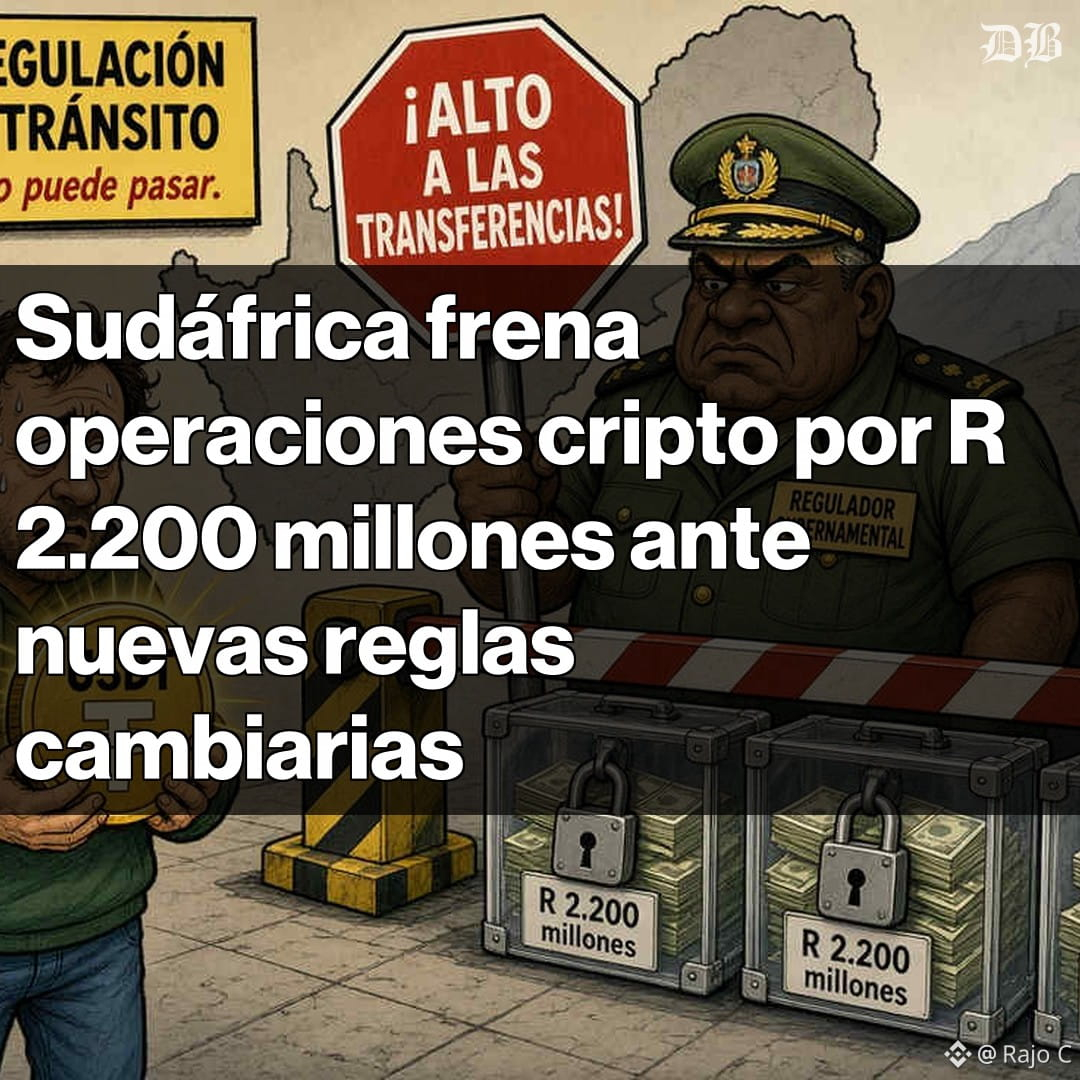
#SouthAfricaProposesCryptoExchangeControls 🚨 South Africa pauses at least R 2.2 billion in crypto operations.
The proposal would impose permits and reporting on cross-border transfers.
At least three businesses were halted due to regulatory uncertainty.
USDT moved nearly R 27 billion on local platforms over a year.$PHA $FORM $MUBARAK
#SouthAfricaProposesCryptoExchangeControls 🚨 South Africa pauses at least R 2.2 billion in crypto operations.
The proposal would impose permits and reporting on cross-border transfers.
At least three businesses were halted due to regulatory uncertainty.
USDT moved nearly R 27 billion on local platforms over a year.$PHA $FORM $MUBARAK
The proposal would impose permits and reporting on cross-border transfers.
At least three businesses were halted due to regulatory uncertainty.
USDT moved nearly R 27 billion on local platforms over a year.$PHA $FORM $MUBARAK
221

·
--
🚨#🇿🇦 SOUTH AFRICA MOVES TO CONTROL CRYPTO FLOWS! 🔥 BITCOIN & EXCHANGES IN FOCUS
🚨🔥 SOUTH AFRICA’S NEW CRYPTO RULES COULD CHANGE THE GAME! 🇿🇦🪙
South Africa is proposing new rules to bring crypto assets under its exchange-control framework, creating fresh uncertainty for crypto exchanges, investors, and cross-border transactions. 📊
📜 WHAT’S HAPPENING?
The National Treasury and South African Reserve Bank have published draft guidance covering cross-border crypto activities. The proposed framework aims to clarify how digital assets are handled within the country's financial regulations. 🇿🇦
⚠️ WHY SHOULD CRYPTO TRADERS CARE?
🔹 Possible changes to cross-border crypto transfers
🔹 Increased compliance requirements for exchanges
🔹 Potential effects on liquidity and investor sentiment
🔹 Greater focus on regulated digital-asset activity
💡 MARKET WATCH: Regulatory developments can create short-term volatility, but the actual impact on BTC, ETH, and altcoins will depend on the final rules and market response.
🔥 THE BIG QUESTION:
Will stronger regulation support crypto adoption—or create new challenges for the industry? 👀📈
Trade smart. Manage risk. Don’t chase candles. DYOR. 🧠
🔥 MFI CRYPTO
Follow for more crypto market updates & educational content.
#CryptoNews #SouthAfrica #Bitcoin $BTC #CryptoRegulation #Binance #CryptoTrading #MIFICrypto
#southafricaproposescryptoexchangecontrols
{spot}(ETHUSDT)
{spot}(SOLUSDT)
{spot}(BTCUSDT)
🚨#🇿🇦 SOUTH AFRICA MOVES TO CONTROL CRYPTO FLOWS! 🔥 BITCOIN & EXCHANGES IN FOCUS
🚨🔥 SOUTH AFRICA’S NEW CRYPTO RULES COULD CHANGE THE GAME! 🇿🇦🪙
South Africa is proposing new rules to bring crypto assets under its exchange-control framework, creating fresh uncertainty for crypto exchanges, investors, and cross-border transactions. 📊
📜 WHAT’S HAPPENING?
The National Treasury and South African Reserve Bank have published draft guidance covering cross-border crypto activities. The proposed framework aims to clarify how digital assets are handled within the country's financial regulations. 🇿🇦
⚠️ WHY SHOULD CRYPTO TRADERS CARE?
🔹 Possible changes to cross-border crypto transfers
🔹 Increased compliance requirements for exchanges
🔹 Potential effects on liquidity and investor sentiment
🔹 Greater focus on regulated digital-asset activity
💡 MARKET WATCH: Regulatory developments can create short-term volatility, but the actual impact on BTC, ETH, and altcoins will depend on the final rules and market response.
🔥 THE BIG QUESTION:
Will stronger regulation support crypto adoption—or create new challenges for the industry? 👀📈
Trade smart. Manage risk. Don’t chase candles. DYOR. 🧠
🔥 MFI CRYPTO
Follow for more crypto market updates & educational content.
#CryptoNews #SouthAfrica #Bitcoin $BTC #CryptoRegulation #Binance #CryptoTrading #MIFICrypto
#southafricaproposescryptoexchangecontrols
🚨🔥 SOUTH AFRICA’S NEW CRYPTO RULES COULD CHANGE THE GAME! 🇿🇦🪙
South Africa is proposing new rules to bring crypto assets under its exchange-control framework, creating fresh uncertainty for crypto exchanges, investors, and cross-border transactions. 📊
📜 WHAT’S HAPPENING?
The National Treasury and South African Reserve Bank have published draft guidance covering cross-border crypto activities. The proposed framework aims to clarify how digital assets are handled within the country's financial regulations. 🇿🇦
⚠️ WHY SHOULD CRYPTO TRADERS CARE?
🔹 Possible changes to cross-border crypto transfers
🔹 Increased compliance requirements for exchanges
🔹 Potential effects on liquidity and investor sentiment
🔹 Greater focus on regulated digital-asset activity
💡 MARKET WATCH: Regulatory developments can create short-term volatility, but the actual impact on BTC, ETH, and altcoins will depend on the final rules and market response.
🔥 THE BIG QUESTION:
Will stronger regulation support crypto adoption—or create new challenges for the industry? 👀📈
Trade smart. Manage risk. Don’t chase candles. DYOR. 🧠
🔥 MFI CRYPTO
Follow for more crypto market updates & educational content.
#CryptoNews #SouthAfrica #Bitcoin $BTC #CryptoRegulation #Binance #CryptoTrading #MIFICrypto
#southafricaproposescryptoexchangecontrols

4
2.9k
The last time a major emerging-market government floated crypto exchange controls, onshore liquidity for $USDT dried up in weeks, not months.
You know that sick feeling. Charts look healthy, greed is sitting at 76, and then a policy draft lands that can trap your coins behind new withdrawal rules before you even finish reading it.
South Africa has been one of the deepest crypto markets on the continent, which is exactly why this proposal matters. Exchange controls here are not a new idea. They sit in a long history of managing rand outflows, and crypto is simply the latest rail they want to watch.
I lived through China's 2017 exchange crackdown and Nigeria's P2P squeeze. The pattern is the same. Bitcoin and the majors eventually find a path. Your stack sitting on a local book does not. When the Bank of Japan is lifting rates to a 31-year high, dollar liquidity gets tighter and emerging-market regulators start worrying about capital flight. That is when names you treat as liquid, $DOT or $NEAR included, can gap on the venues you actually use.
I am not calling for panic. I am calling for the same discipline we learned in past cycles. Do not size a position as if your off-ramp will always be open. Keep a route that does not depend on one country's mood.
Where do you think this goes from here, a real lockup or just another draft that fades?
#SouthAfricaProposesCryptoExchangeControls #BOJRaisesRatesTo31YearHigh #BitcoinHits
The last time a major emerging-market government floated crypto exchange controls, onshore liquidity for $USDT dried up in weeks, not months.
You know that sick feeling. Charts look healthy, greed is sitting at 76, and then a policy draft lands that can trap your coins behind new withdrawal rules before you even finish reading it.
South Africa has been one of the deepest crypto markets on the continent, which is exactly why this proposal matters. Exchange controls here are not a new idea. They sit in a long history of managing rand outflows, and crypto is simply the latest rail they want to watch.
I lived through China's 2017 exchange crackdown and Nigeria's P2P squeeze. The pattern is the same. Bitcoin and the majors eventually find a path. Your stack sitting on a local book does not. When the Bank of Japan is lifting rates to a 31-year high, dollar liquidity gets tighter and emerging-market regulators start worrying about capital flight. That is when names you treat as liquid, $DOT or $NEAR included, can gap on the venues you actually use.
I am not calling for panic. I am calling for the same discipline we learned in past cycles. Do not size a position as if your off-ramp will always be open. Keep a route that does not depend on one country's mood.
Where do you think this goes from here, a real lockup or just another draft that fades?
#SouthAfricaProposesCryptoExchangeControls #BOJRaisesRatesTo31YearHigh #BitcoinHits
You know that sick feeling. Charts look healthy, greed is sitting at 76, and then a policy draft lands that can trap your coins behind new withdrawal rules before you even finish reading it.
South Africa has been one of the deepest crypto markets on the continent, which is exactly why this proposal matters. Exchange controls here are not a new idea. They sit in a long history of managing rand outflows, and crypto is simply the latest rail they want to watch.
I lived through China's 2017 exchange crackdown and Nigeria's P2P squeeze. The pattern is the same. Bitcoin and the majors eventually find a path. Your stack sitting on a local book does not. When the Bank of Japan is lifting rates to a 31-year high, dollar liquidity gets tighter and emerging-market regulators start worrying about capital flight. That is when names you treat as liquid, $DOT or $NEAR included, can gap on the venues you actually use.
I am not calling for panic. I am calling for the same discipline we learned in past cycles. Do not size a position as if your off-ramp will always be open. Keep a route that does not depend on one country's mood.
Where do you think this goes from here, a real lockup or just another draft that fades?
#SouthAfricaProposesCryptoExchangeControls #BOJRaisesRatesTo31YearHigh #BitcoinHits

1
110


#southafricaproposescryptoexchangecontrols
🇿🇦 SOUTH AFRICA JUST PUT CRYPTO UNDER A NEW BORDER CONTROL TEST ⚠️
Borders were built for money to stop and start.
Crypto was built to move differently.
South Africa is proposing rules that would bring crypto assets into its exchange-control framework, creating tighter oversight for certain cross-border crypto transactions. Draft guidance published in August spells out when moving crypto across borders could become regulated and reportable.
The reaction is already tangible. At least R2.2 billion in crypto-related deals have reportedly been placed on hold while businesses wait for greater clarity around the proposed rules.
The underlying issue is bigger than Bitcoin transfers. South Africa wants stronger visibility over capital flows, regulatory arbitrage and illicit financial activity, while crypto companies argue that overly restrictive treatment could push legitimate activity offshore.
My Take: This is a test of whether governments can regulate crypto's cross-border risks without weakening the efficiency that makes blockchain rails attractive in the first place.
The proposals are still being refined, with public submissions open until September 30. So the final framework matters more than today's headline.
Crypto may cross borders in seconds, but regulation still has to decide how those crossings work.
❓Should crypto cross-border transfers face the same controls as traditional foreign exchange?
Disclaimer: Informational content only, not financial advice.
#CryptoRegulation #SouthAfrica #GrowWithSAC $G $ONE $AR
#SouthAfricaProposesCryptoExchangeControls
#southafricaproposescryptoexchangecontrols
🇿🇦 SOUTH AFRICA JUST PUT CRYPTO UNDER A NEW BORDER CONTROL TEST ⚠️
Borders were built for money to stop and start.
Crypto was built to move differently.
South Africa is proposing rules that would bring crypto assets into its exchange-control framework, creating tighter oversight for certain cross-border crypto transactions. Draft guidance published in August spells out when moving crypto across borders could become regulated and reportable.
The reaction is already tangible. At least R2.2 billion in crypto-related deals have reportedly been placed on hold while businesses wait for greater clarity around the proposed rules.
The underlying issue is bigger than Bitcoin transfers. South Africa wants stronger visibility over capital flows, regulatory arbitrage and illicit financial activity, while crypto companies argue that overly restrictive treatment could push legitimate activity offshore.
My Take: This is a test of whether governments can regulate crypto's cross-border risks without weakening the efficiency that makes blockchain rails attractive in the first place.
The proposals are still being refined, with public submissions open until September 30. So the final framework matters more than today's headline.
Crypto may cross borders in seconds, but regulation still has to decide how those crossings work.
❓Should crypto cross-border transfers face the same controls as traditional foreign exchange?
Disclaimer: Informational content only, not financial advice.
#CryptoRegulation #SouthAfrica #GrowWithSAC $G $ONE $AR
#SouthAfricaProposesCryptoExchangeControls
🇿🇦 SOUTH AFRICA JUST PUT CRYPTO UNDER A NEW BORDER CONTROL TEST ⚠️
Borders were built for money to stop and start.
Crypto was built to move differently.
South Africa is proposing rules that would bring crypto assets into its exchange-control framework, creating tighter oversight for certain cross-border crypto transactions. Draft guidance published in August spells out when moving crypto across borders could become regulated and reportable.
The reaction is already tangible. At least R2.2 billion in crypto-related deals have reportedly been placed on hold while businesses wait for greater clarity around the proposed rules.
The underlying issue is bigger than Bitcoin transfers. South Africa wants stronger visibility over capital flows, regulatory arbitrage and illicit financial activity, while crypto companies argue that overly restrictive treatment could push legitimate activity offshore.
My Take: This is a test of whether governments can regulate crypto's cross-border risks without weakening the efficiency that makes blockchain rails attractive in the first place.
The proposals are still being refined, with public submissions open until September 30. So the final framework matters more than today's headline.
Crypto may cross borders in seconds, but regulation still has to decide how those crossings work.
❓Should crypto cross-border transfers face the same controls as traditional foreign exchange?
Disclaimer: Informational content only, not financial advice.
#CryptoRegulation #SouthAfrica #GrowWithSAC $G $ONE $AR
#SouthAfricaProposesCryptoExchangeControls

2.8k

·
--
#SouthAfricaProposesCryptoExchangeControls
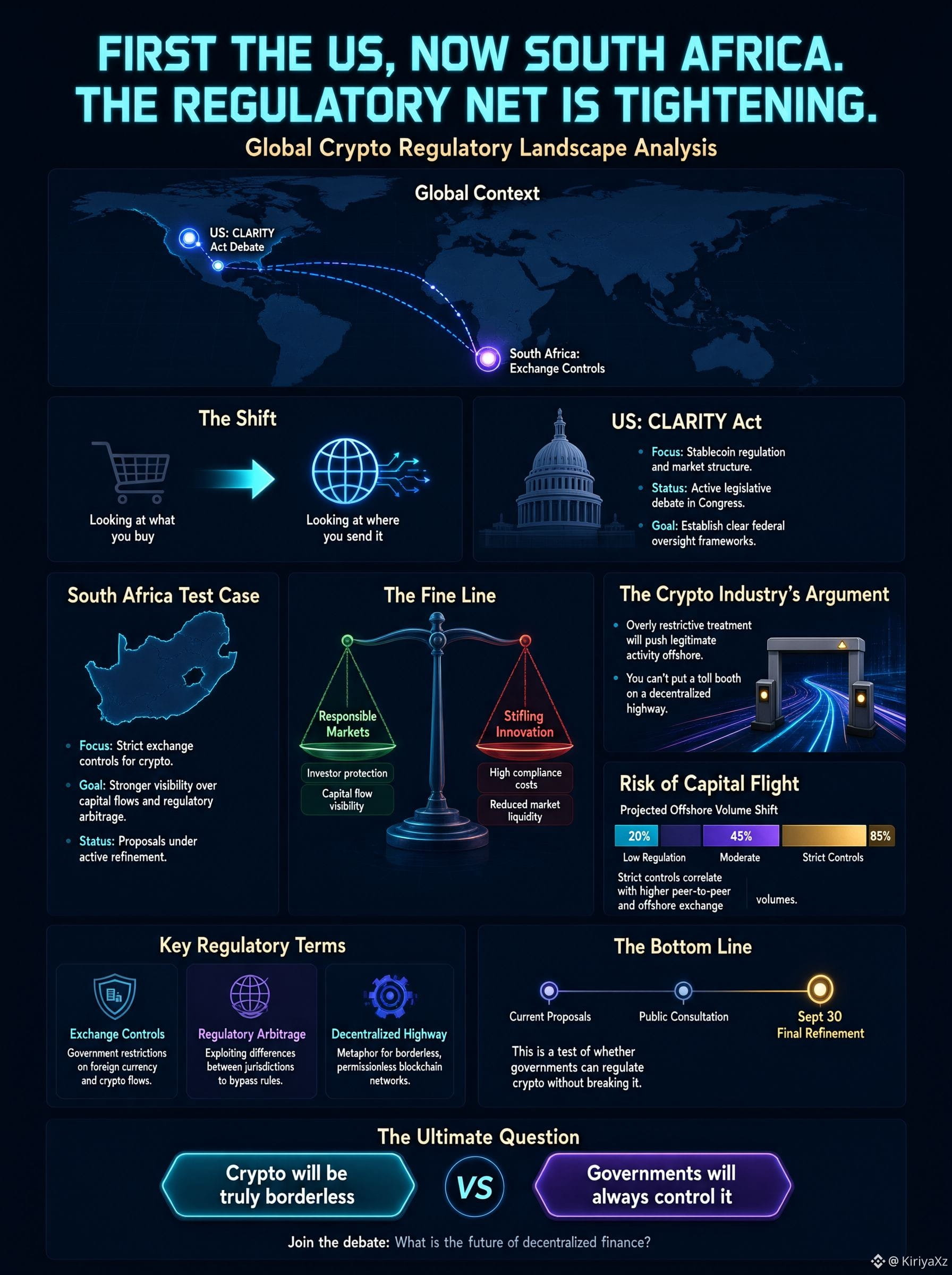
🌍 FIRST THE US, NOW SOUTH AFRICA. THE REGULATORY NET IS TIGHTENING.
We just watched the CLARITY Act debate in the US, and now South Africa is proposing strict exchange controls for crypto.
The Shift:
Regulators are no longer just looking at what you buy. They are looking at where you send it.
The South Africa Test Case:
They want stronger visibility over capital flows and regulatory arbitrage. But there is a fine line between "responsible markets" and "stifling innovation."
The Crypto Industry's Argument:
Overly restrictive treatment will push legitimate activity offshore. You can't put a toll booth on a decentralized highway.
The Bottom Line:
The proposals are still being refined until Sept 30. This is a test of whether governments can regulate crypto without breaking it.
Do you think crypto will ever be truly borderless, or will governments always find a way to control it?
#Macro #CryptoRegulation #GlobalMarkets #BinanceKOL
#SouthAfricaProposesCryptoExchangeControls
🌍 FIRST THE US, NOW SOUTH AFRICA. THE REGULATORY NET IS TIGHTENING.
We just watched the CLARITY Act debate in the US, and now South Africa is proposing strict exchange controls for crypto.
The Shift:
Regulators are no longer just looking at what you buy. They are looking at where you send it.
The South Africa Test Case:
They want stronger visibility over capital flows and regulatory arbitrage. But there is a fine line between "responsible markets" and "stifling innovation."
The Crypto Industry's Argument:
Overly restrictive treatment will push legitimate activity offshore. You can't put a toll booth on a decentralized highway.
The Bottom Line:
The proposals are still being refined until Sept 30. This is a test of whether governments can regulate crypto without breaking it.
Do you think crypto will ever be truly borderless, or will governments always find a way to control it?
#Macro #CryptoRegulation #GlobalMarkets #BinanceKOL
🌍 FIRST THE US, NOW SOUTH AFRICA. THE REGULATORY NET IS TIGHTENING.
We just watched the CLARITY Act debate in the US, and now South Africa is proposing strict exchange controls for crypto.
The Shift:
Regulators are no longer just looking at what you buy. They are looking at where you send it.
The South Africa Test Case:
They want stronger visibility over capital flows and regulatory arbitrage. But there is a fine line between "responsible markets" and "stifling innovation."
The Crypto Industry's Argument:
Overly restrictive treatment will push legitimate activity offshore. You can't put a toll booth on a decentralized highway.
The Bottom Line:
The proposals are still being refined until Sept 30. This is a test of whether governments can regulate crypto without breaking it.
Do you think crypto will ever be truly borderless, or will governments always find a way to control it?
#Macro #CryptoRegulation #GlobalMarkets #BinanceKOL
88
Here's what happened when South Africa put crypto exchange controls on the table: the same movie a dozen emerging markets have already screened, just with a new title card.
If you trade or hold from a country with capital rules, you already know the feeling. One policy leak and you start wondering whether your coins on an exchange are actually reachable, or just a number on a screen you no longer control.
This is a case study, not a headline. South Africa already polices traditional forex tightly. Extending that logic to crypto is an attempt to plug the last obvious leak in the bucket.
We have seen this movie before. When Nigeria squeezed the ramps, $USDT P2P quietly absorbed the volume. China shut the shops and the trade did not disappear, it just went quieter. Argentina's controls never killed demand. They turned crypto into the backup bank. The pattern is boringly consistent. Controls do not freeze capital. They reroute it.
The comparison that matters is not South Africa versus some DeFi dream. It is South Africa versus every government that tried to close the bucket without asking why the water was leaving. People still need to save, send, and get out of local currency risk, and when the official door narrows they reach for stablecoins first, then cheaper chains. That is usually when $SUI and $NEAR stop being narrative tickers and start looking like rails. Meanwhile the Fear and Greed index is sitting at 76, and greed has a habit of ignoring policy risk until the policy is already in the room.
Does this stay a proposal, or is it the template the next few countries copy?
#SouthAfricaProposesCryptoExchangeControls #ECBStartsBlockchainEuroSettlement #BOJRaisesRatesTo31YearHigh
Here's what happened when South Africa put crypto exchange controls on the table: the same movie a dozen emerging markets have already screened, just with a new title card.
If you trade or hold from a country with capital rules, you already know the feeling. One policy leak and you start wondering whether your coins on an exchange are actually reachable, or just a number on a screen you no longer control.
This is a case study, not a headline. South Africa already polices traditional forex tightly. Extending that logic to crypto is an attempt to plug the last obvious leak in the bucket.
We have seen this movie before. When Nigeria squeezed the ramps, $USDT P2P quietly absorbed the volume. China shut the shops and the trade did not disappear, it just went quieter. Argentina's controls never killed demand. They turned crypto into the backup bank. The pattern is boringly consistent. Controls do not freeze capital. They reroute it.
The comparison that matters is not South Africa versus some DeFi dream. It is South Africa versus every government that tried to close the bucket without asking why the water was leaving. People still need to save, send, and get out of local currency risk, and when the official door narrows they reach for stablecoins first, then cheaper chains. That is usually when $SUI and $NEAR stop being narrative tickers and start looking like rails. Meanwhile the Fear and Greed index is sitting at 76, and greed has a habit of ignoring policy risk until the policy is already in the room.
Does this stay a proposal, or is it the template the next few countries copy?
#SouthAfricaProposesCryptoExchangeControls #ECBStartsBlockchainEuroSettlement #BOJRaisesRatesTo31YearHigh
If you trade or hold from a country with capital rules, you already know the feeling. One policy leak and you start wondering whether your coins on an exchange are actually reachable, or just a number on a screen you no longer control.
This is a case study, not a headline. South Africa already polices traditional forex tightly. Extending that logic to crypto is an attempt to plug the last obvious leak in the bucket.
We have seen this movie before. When Nigeria squeezed the ramps, $USDT P2P quietly absorbed the volume. China shut the shops and the trade did not disappear, it just went quieter. Argentina's controls never killed demand. They turned crypto into the backup bank. The pattern is boringly consistent. Controls do not freeze capital. They reroute it.
The comparison that matters is not South Africa versus some DeFi dream. It is South Africa versus every government that tried to close the bucket without asking why the water was leaving. People still need to save, send, and get out of local currency risk, and when the official door narrows they reach for stablecoins first, then cheaper chains. That is usually when $SUI and $NEAR stop being narrative tickers and start looking like rails. Meanwhile the Fear and Greed index is sitting at 76, and greed has a habit of ignoring policy risk until the policy is already in the room.
Does this stay a proposal, or is it the template the next few countries copy?
#SouthAfricaProposesCryptoExchangeControls #ECBStartsBlockchainEuroSettlement #BOJRaisesRatesTo31YearHigh

1
52
·
--
If you're still parking funds on loosely regulated African venues with no real off-ramp, stop now.
Regulatory surprises do not send a calendar invite. They freeze withdrawals, spook banks, and turn a liquid bag into a screenshot you cannot spend.
South Africa proposing crypto exchange controls is not a random headline. This is a country that already runs one of the strictest capital-control regimes in a major economy, now looking at putting the same leash on crypto. We have seen versions of this. China flipped the table in 2021. Nigeria cut the bank rails and $USDT simply moved to P2P. India dropped a 30 percent tax and a 1 percent TDS and the market limped on. Pretoria is more methodical than all of them. Licensed venues, reporting, limits on moving value out. The market will not die. The friction will just land on whoever was treating the loophole like a strategy.
And of course this drops while Fear and Greed sits at 76 and feeds are busy chasing $SUI and $NEAR like governments do not exist. Regulation never kills crypto. It relocates the pain. The people who shrug because it is not their jurisdiction yet are usually the ones asking how to get money out when the gate closes.
Have you sat through a squeeze like this before, or do you still think exchange controls are someone else's problem?
#SouthAfricaProposesCryptoExchangeControls #ECBStartsBlockchainEuroSettlement #BOJRaisesRatesTo31YearHigh
If you're still parking funds on loosely regulated African venues with no real off-ramp, stop now.
Regulatory surprises do not send a calendar invite. They freeze withdrawals, spook banks, and turn a liquid bag into a screenshot you cannot spend.
South Africa proposing crypto exchange controls is not a random headline. This is a country that already runs one of the strictest capital-control regimes in a major economy, now looking at putting the same leash on crypto. We have seen versions of this. China flipped the table in 2021. Nigeria cut the bank rails and $USDT simply moved to P2P. India dropped a 30 percent tax and a 1 percent TDS and the market limped on. Pretoria is more methodical than all of them. Licensed venues, reporting, limits on moving value out. The market will not die. The friction will just land on whoever was treating the loophole like a strategy.
And of course this drops while Fear and Greed sits at 76 and feeds are busy chasing $SUI and $NEAR like governments do not exist. Regulation never kills crypto. It relocates the pain. The people who shrug because it is not their jurisdiction yet are usually the ones asking how to get money out when the gate closes.
Have you sat through a squeeze like this before, or do you still think exchange controls are someone else's problem?
#SouthAfricaProposesCryptoExchangeControls #ECBStartsBlockchainEuroSettlement #BOJRaisesRatesTo31YearHigh
Regulatory surprises do not send a calendar invite. They freeze withdrawals, spook banks, and turn a liquid bag into a screenshot you cannot spend.
South Africa proposing crypto exchange controls is not a random headline. This is a country that already runs one of the strictest capital-control regimes in a major economy, now looking at putting the same leash on crypto. We have seen versions of this. China flipped the table in 2021. Nigeria cut the bank rails and $USDT simply moved to P2P. India dropped a 30 percent tax and a 1 percent TDS and the market limped on. Pretoria is more methodical than all of them. Licensed venues, reporting, limits on moving value out. The market will not die. The friction will just land on whoever was treating the loophole like a strategy.
And of course this drops while Fear and Greed sits at 76 and feeds are busy chasing $SUI and $NEAR like governments do not exist. Regulation never kills crypto. It relocates the pain. The people who shrug because it is not their jurisdiction yet are usually the ones asking how to get money out when the gate closes.
Have you sat through a squeeze like this before, or do you still think exchange controls are someone else's problem?
#SouthAfricaProposesCryptoExchangeControls #ECBStartsBlockchainEuroSettlement #BOJRaisesRatesTo31YearHigh
1
61

·
--
Bullish
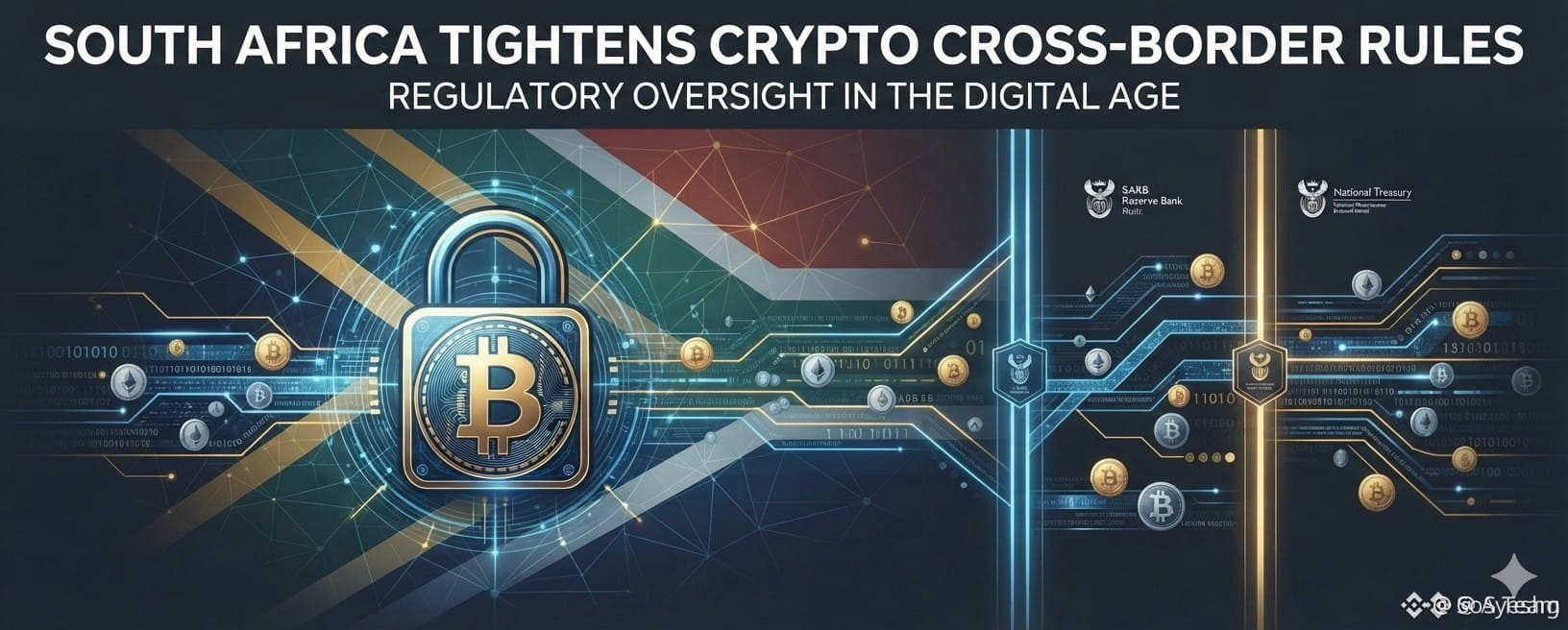
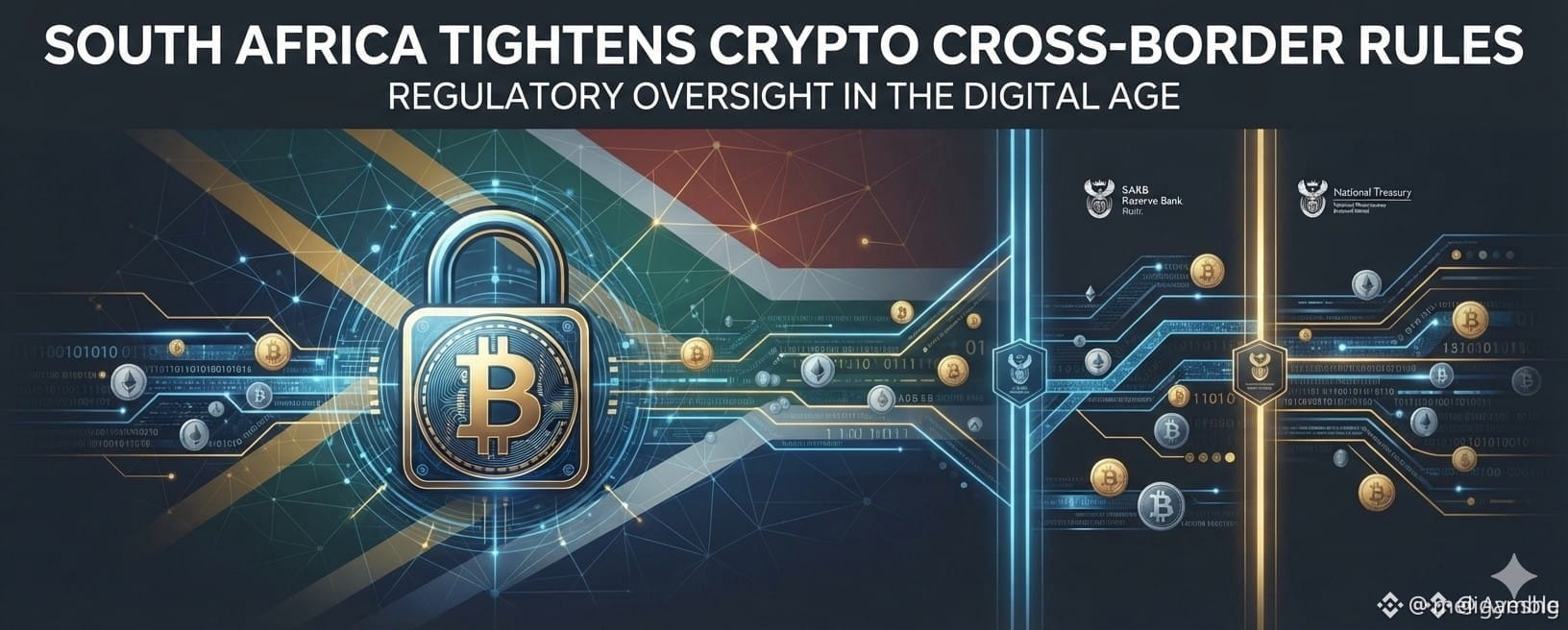
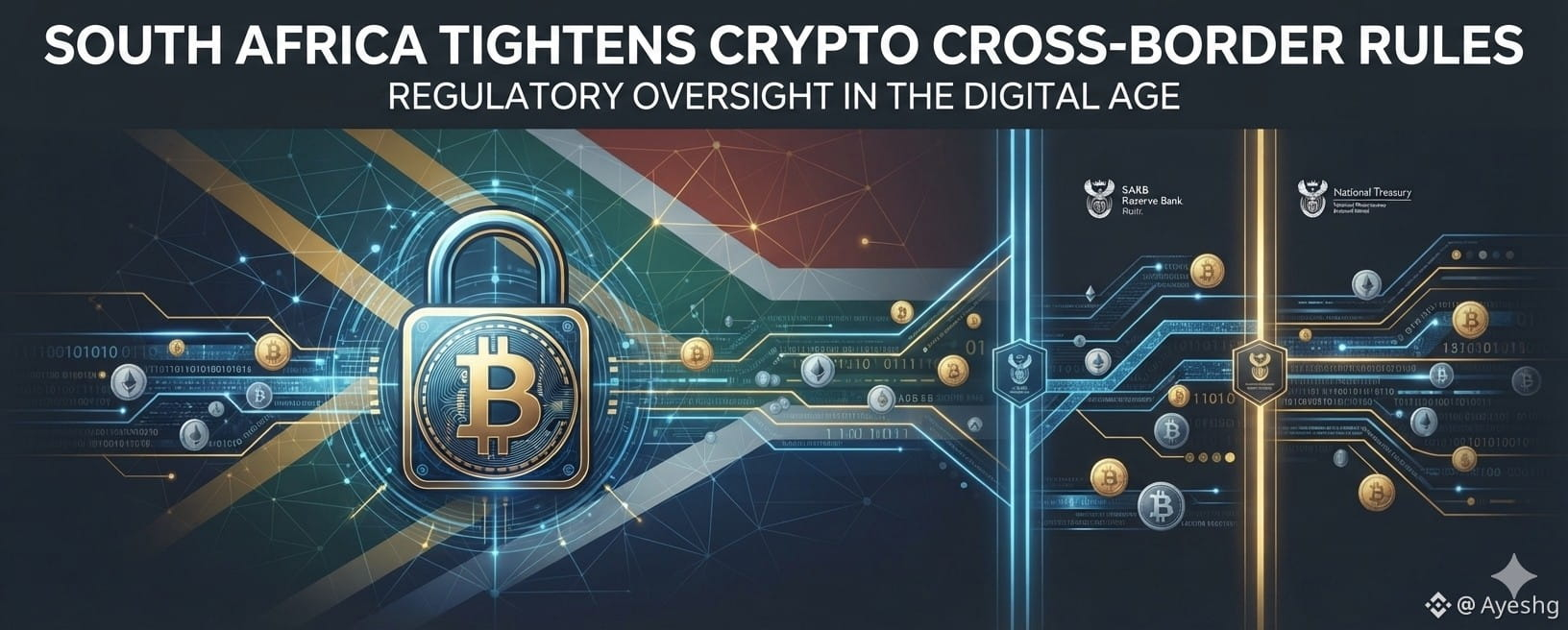
#southafricaproposescryptoexchangecontrols 🚨🇿🇦 South Africa Moves to Tighten Crypto Cross-Border Rules 🔒
South Africa’s National Treasury and South African Reserve Bank have proposed new rules that would bring cross-border crypto transactions under the country’s capital-flow management framework.
The proposal aims to improve reporting, monitoring and oversight of crypto moving across borders.
⚠️ Important: These are still draft rules — they are not final law yet, with public comments open until September 30, 2026.
Industry participants, including VALR, have raised concerns that some proposed restrictions could make cross-border crypto payments and self-custody more difficult.
🌍 The bigger question: Can regulators improve capital-flow oversight without making crypto less usable for legitimate users?
🇺🇸 US Crypto Stock to Watch: $COIN (Coinbase)$BTC
#CryptoRegulation #SouthAfrica #Bitcoin #Crypto #Coinbase #COIN
#southafricaproposescryptoexchangecontrols 🚨🇿🇦 South Africa Moves to Tighten Crypto Cross-Border Rules 🔒
South Africa’s National Treasury and South African Reserve Bank have proposed new rules that would bring cross-border crypto transactions under the country’s capital-flow management framework.
The proposal aims to improve reporting, monitoring and oversight of crypto moving across borders.
⚠️ Important: These are still draft rules — they are not final law yet, with public comments open until September 30, 2026.
Industry participants, including VALR, have raised concerns that some proposed restrictions could make cross-border crypto payments and self-custody more difficult.
🌍 The bigger question: Can regulators improve capital-flow oversight without making crypto less usable for legitimate users?
🇺🇸 US Crypto Stock to Watch: $COIN (Coinbase)$BTC
#CryptoRegulation #SouthAfrica #Bitcoin #Crypto #Coinbase #COIN
South Africa’s National Treasury and South African Reserve Bank have proposed new rules that would bring cross-border crypto transactions under the country’s capital-flow management framework.
The proposal aims to improve reporting, monitoring and oversight of crypto moving across borders.
⚠️ Important: These are still draft rules — they are not final law yet, with public comments open until September 30, 2026.
Industry participants, including VALR, have raised concerns that some proposed restrictions could make cross-border crypto payments and self-custody more difficult.
🌍 The bigger question: Can regulators improve capital-flow oversight without making crypto less usable for legitimate users?
🇺🇸 US Crypto Stock to Watch: $COIN (Coinbase)$BTC
#CryptoRegulation #SouthAfrica #Bitcoin #Crypto #Coinbase #COIN
516

·
--
Bearish
#southafricaproposescryptoexchangecontrols 🇿🇦 South Africa Proposes Stricter Cross-Border Crypto Controls
The regulatory landscape in Africa is rapidly evolving. South Africa’s National Treasury and the Reserve Bank (SARB) have introduced a draft Crypto Asset Manual that could significantly reshape how digital assets move across borders.
📰 Core News:
• New Authorization Crypto Asset Service Providers (CASPs) must obtain separate approval from the Financial Surveillance Dept (FinSurv) to facilitate international transfers, adding to existing FSCA and FIC licensing.
• Self-Custody Scrutiny: Transfers from local regulated platforms to private, self-hosted wallets may be classified as capital exports. Experts warn this creates a "one-way door," making it hard to return assets to the domestic ecosystem.
• Corporate Limits: While individuals retain a discretionary foreign capital allowance (up to ZAR 2M yearly), corporate entities face strict prohibitions on externalizing crypto assets, heavily impacting cross-border payment businesses.
• Industry Pushback: Local coalitions argue these rules could stall institutional deals, spike compliance costs, and hinder efficient blockchain-based stablecoin payment systems.
📊 Market Impact:
• Local Ecosystem: Heavier reporting obligations for SA exchanges may lead to operational consolidation, higher user fees, or paused foreign investments.
• Stablecoin Utility: The framework does not distinguish between volatile tokens and stablecoins, potentially slowing regional adoption of crypto for fast, low-cost trade settlements.
• Global Precedent: This highlights a growing global tension: authorities want to monitor capital flows and prevent illicit activity without stifling blockchain innovation.
Join the Discussion:
How can regulators effectively monitor cross-border capital flows without stifling blockchain innovation and payment efficiency? Share your thoughts below! 👇
#CryptoRegulation #SouthAfrica #CryptoNews #Blockchain
$STRK $SQQQB $BNCB
{spot}(BNCBUSDT)
{spot}(SQQQBUSDT)
{future}(STRKUSDT)
#southafricaproposescryptoexchangecontrols 🇿🇦 South Africa Proposes Stricter Cross-Border Crypto Controls
The regulatory landscape in Africa is rapidly evolving. South Africa’s National Treasury and the Reserve Bank (SARB) have introduced a draft Crypto Asset Manual that could significantly reshape how digital assets move across borders.
📰 Core News:
• New Authorization Crypto Asset Service Providers (CASPs) must obtain separate approval from the Financial Surveillance Dept (FinSurv) to facilitate international transfers, adding to existing FSCA and FIC licensing.
• Self-Custody Scrutiny: Transfers from local regulated platforms to private, self-hosted wallets may be classified as capital exports. Experts warn this creates a "one-way door," making it hard to return assets to the domestic ecosystem.
• Corporate Limits: While individuals retain a discretionary foreign capital allowance (up to ZAR 2M yearly), corporate entities face strict prohibitions on externalizing crypto assets, heavily impacting cross-border payment businesses.
• Industry Pushback: Local coalitions argue these rules could stall institutional deals, spike compliance costs, and hinder efficient blockchain-based stablecoin payment systems.
📊 Market Impact:
• Local Ecosystem: Heavier reporting obligations for SA exchanges may lead to operational consolidation, higher user fees, or paused foreign investments.
• Stablecoin Utility: The framework does not distinguish between volatile tokens and stablecoins, potentially slowing regional adoption of crypto for fast, low-cost trade settlements.
• Global Precedent: This highlights a growing global tension: authorities want to monitor capital flows and prevent illicit activity without stifling blockchain innovation.
Join the Discussion:
How can regulators effectively monitor cross-border capital flows without stifling blockchain innovation and payment efficiency? Share your thoughts below! 👇
#CryptoRegulation #SouthAfrica #CryptoNews #Blockchain
$STRK $SQQQB $BNCB
The regulatory landscape in Africa is rapidly evolving. South Africa’s National Treasury and the Reserve Bank (SARB) have introduced a draft Crypto Asset Manual that could significantly reshape how digital assets move across borders.
📰 Core News:
• New Authorization Crypto Asset Service Providers (CASPs) must obtain separate approval from the Financial Surveillance Dept (FinSurv) to facilitate international transfers, adding to existing FSCA and FIC licensing.
• Self-Custody Scrutiny: Transfers from local regulated platforms to private, self-hosted wallets may be classified as capital exports. Experts warn this creates a "one-way door," making it hard to return assets to the domestic ecosystem.
• Corporate Limits: While individuals retain a discretionary foreign capital allowance (up to ZAR 2M yearly), corporate entities face strict prohibitions on externalizing crypto assets, heavily impacting cross-border payment businesses.
• Industry Pushback: Local coalitions argue these rules could stall institutional deals, spike compliance costs, and hinder efficient blockchain-based stablecoin payment systems.
📊 Market Impact:
• Local Ecosystem: Heavier reporting obligations for SA exchanges may lead to operational consolidation, higher user fees, or paused foreign investments.
• Stablecoin Utility: The framework does not distinguish between volatile tokens and stablecoins, potentially slowing regional adoption of crypto for fast, low-cost trade settlements.
• Global Precedent: This highlights a growing global tension: authorities want to monitor capital flows and prevent illicit activity without stifling blockchain innovation.
Join the Discussion:
How can regulators effectively monitor cross-border capital flows without stifling blockchain innovation and payment efficiency? Share your thoughts below! 👇
#CryptoRegulation #SouthAfrica #CryptoNews #Blockchain
$STRK $SQQQB $BNCB

1.4k

#SouthAfricaProposesCryptoExchangeControls
🚨 South Africa Moves to Control Crypto Exchange Flows: R2.2 Billion in Deals On Hold! 🇿🇦📉
South Africa is officially shaking up its crypto ecosystem! The National Treasury and the South African Reserve Bank (SARB) have proposed strict new exchange control rules targeting cross-border digital asset and stablecoin transactions.
Here’s what you need to know:
• Deals Paused: At least R2.2 billion ($135M) in institutional investments and corporate deals are now frozen due to regulatory uncertainty.
• Exchange Limits: The draft laws treat crypto as foreign capital, enforcing strict annual limits and banning self-hosted wallet transfers from abroad.
• Market Impact: Local web3 firms worry these restrictions could drive liquidity underground or offshore.
Will SARB refine these laws before the September 30 public deadline? 💭
What’s your take on strict exchange controls? 👇
#SouthAfrica #CryptoRegulations2026 #BinanceSquareTalks
#Nadeemgujjar143
@Square-Creator-82298398aad82
@Square-Creator-f3ffb6967ae3
@BugBamboooo
@GTcoke
$BTC
{spot}(BTCUSDT)
$SHIB
{spot}(SHIBUSDT)
$ST
{alpha}(560x70be40667385500c5da7f108a022e21b606045dd)
#SouthAfricaProposesCryptoExchangeControls
🚨 South Africa Moves to Control Crypto Exchange Flows: R2.2 Billion in Deals On Hold! 🇿🇦📉
South Africa is officially shaking up its crypto ecosystem! The National Treasury and the South African Reserve Bank (SARB) have proposed strict new exchange control rules targeting cross-border digital asset and stablecoin transactions.
Here’s what you need to know:
• Deals Paused: At least R2.2 billion ($135M) in institutional investments and corporate deals are now frozen due to regulatory uncertainty.
• Exchange Limits: The draft laws treat crypto as foreign capital, enforcing strict annual limits and banning self-hosted wallet transfers from abroad.
• Market Impact: Local web3 firms worry these restrictions could drive liquidity underground or offshore.
Will SARB refine these laws before the September 30 public deadline? 💭
What’s your take on strict exchange controls? 👇
#SouthAfrica #CryptoRegulations2026 #BinanceSquareTalks
#Nadeemgujjar143
@AYESHA ABID 阿伊莎 阿比德
@aasho
@Bamboo 9
@GT可乐
$BTC
$SHIB
$ST
🚨 South Africa Moves to Control Crypto Exchange Flows: R2.2 Billion in Deals On Hold! 🇿🇦📉
South Africa is officially shaking up its crypto ecosystem! The National Treasury and the South African Reserve Bank (SARB) have proposed strict new exchange control rules targeting cross-border digital asset and stablecoin transactions.
Here’s what you need to know:
• Deals Paused: At least R2.2 billion ($135M) in institutional investments and corporate deals are now frozen due to regulatory uncertainty.
• Exchange Limits: The draft laws treat crypto as foreign capital, enforcing strict annual limits and banning self-hosted wallet transfers from abroad.
• Market Impact: Local web3 firms worry these restrictions could drive liquidity underground or offshore.
Will SARB refine these laws before the September 30 public deadline? 💭
What’s your take on strict exchange controls? 👇
#SouthAfrica #CryptoRegulations2026 #BinanceSquareTalks
#Nadeemgujjar143
@AYESHA ABID 阿伊莎 阿比德
@aasho
@Bamboo 9
@GT可乐
$BTC
$SHIB
$ST

aasho:
Here’s what you need to know:
• Deals Paused: At least R2.2 billion ($135M) in institutional investments and corporate deals are now frozen due to regulatory uncertainty.
$BTC
1
2
342

·
--
Bearish
#SouthAfricaProposesCryptoExchangeControls
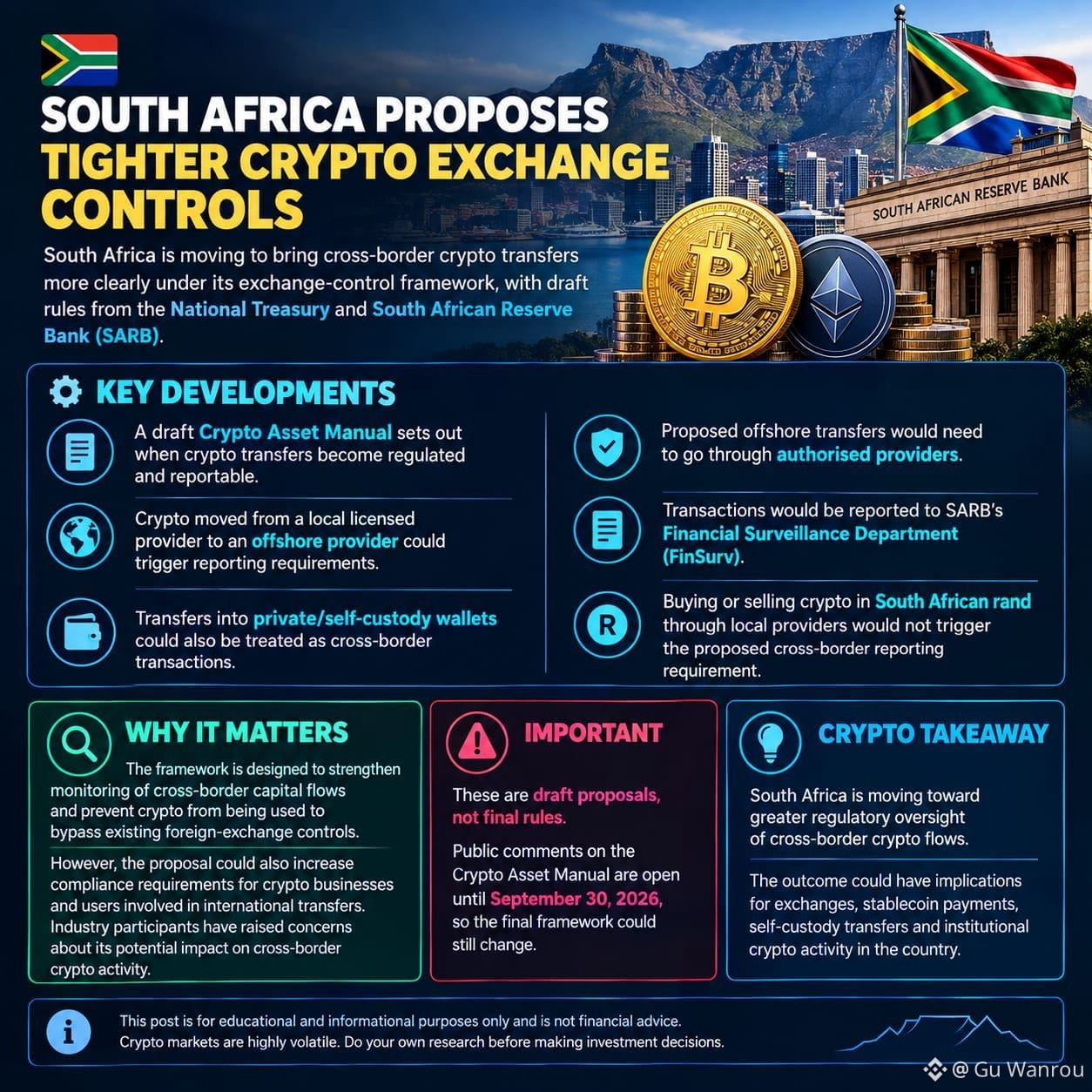
🇿🇦🔐 SOUTH AFRICA PROPOSES TIGHTER CRYPTO EXCHANGE CONTROLS
South Africa is moving to bring cross-border crypto transfers more clearly under its exchange-control framework, with draft rules from the National Treasury and South African Reserve Bank (SARB).
📊 KEY DEVELOPMENTS:
• A draft Crypto Asset Manual sets out when crypto transfers become regulated and reportable
• Crypto moved from a local licensed provider to an offshore provider could trigger reporting requirements
• Transfers into private/self-custody wallets could also be treated as cross-border transactions
• Proposed offshore transfers would need to go through authorised providers
• Transactions would be reported to SARB’s Financial Surveillance Department (FinSurv)
• Buying or selling crypto in South African rand through local providers would not trigger the proposed cross-border reporting requirement
🔍 WHY IT MATTERS:
The framework is designed to strengthen monitoring of cross-border capital flows and prevent crypto from being used to bypass existing foreign-exchange controls.
However, the proposal could also increase compliance requirements for crypto businesses and users involved in international transfers. Industry participants have raised concerns about its potential impact on cross-border crypto activity.
⚠️ IMPORTANT:
These are draft proposals, not final rules. Public comments on the Crypto Asset Manual are open until September 30, 2026, so the final framework could still change.
📌 CRYPTO TAKEAWAY:
South Africa is moving toward greater regulatory oversight of cross-border crypto flows. The outcome could have implications for exchanges, stablecoin payments, self-custody transfers and institutional crypto activity in the country.
⚠️ Disclaimer: This post is for educational and informational purposes only and is not financial advice. Crypto markets are highly volatile. Do your own research before making investment decisions.
$SOMI
{future}(SOMIUSDT)
$INJ
{future}(INJUSDT)
$USTC
{future}(USTCUSDT)
#SouthAfricaProposesCryptoExchangeControls
🇿🇦🔐 SOUTH AFRICA PROPOSES TIGHTER CRYPTO EXCHANGE CONTROLS
South Africa is moving to bring cross-border crypto transfers more clearly under its exchange-control framework, with draft rules from the National Treasury and South African Reserve Bank (SARB).
📊 KEY DEVELOPMENTS:
• A draft Crypto Asset Manual sets out when crypto transfers become regulated and reportable
• Crypto moved from a local licensed provider to an offshore provider could trigger reporting requirements
• Transfers into private/self-custody wallets could also be treated as cross-border transactions
• Proposed offshore transfers would need to go through authorised providers
• Transactions would be reported to SARB’s Financial Surveillance Department (FinSurv)
• Buying or selling crypto in South African rand through local providers would not trigger the proposed cross-border reporting requirement
🔍 WHY IT MATTERS:
The framework is designed to strengthen monitoring of cross-border capital flows and prevent crypto from being used to bypass existing foreign-exchange controls.
However, the proposal could also increase compliance requirements for crypto businesses and users involved in international transfers. Industry participants have raised concerns about its potential impact on cross-border crypto activity.
⚠️ IMPORTANT:
These are draft proposals, not final rules. Public comments on the Crypto Asset Manual are open until September 30, 2026, so the final framework could still change.
📌 CRYPTO TAKEAWAY:
South Africa is moving toward greater regulatory oversight of cross-border crypto flows. The outcome could have implications for exchanges, stablecoin payments, self-custody transfers and institutional crypto activity in the country.
⚠️ Disclaimer: This post is for educational and informational purposes only and is not financial advice. Crypto markets are highly volatile. Do your own research before making investment decisions.
$SOMI
$INJ
$USTC
🇿🇦🔐 SOUTH AFRICA PROPOSES TIGHTER CRYPTO EXCHANGE CONTROLS
South Africa is moving to bring cross-border crypto transfers more clearly under its exchange-control framework, with draft rules from the National Treasury and South African Reserve Bank (SARB).
📊 KEY DEVELOPMENTS:
• A draft Crypto Asset Manual sets out when crypto transfers become regulated and reportable
• Crypto moved from a local licensed provider to an offshore provider could trigger reporting requirements
• Transfers into private/self-custody wallets could also be treated as cross-border transactions
• Proposed offshore transfers would need to go through authorised providers
• Transactions would be reported to SARB’s Financial Surveillance Department (FinSurv)
• Buying or selling crypto in South African rand through local providers would not trigger the proposed cross-border reporting requirement
🔍 WHY IT MATTERS:
The framework is designed to strengthen monitoring of cross-border capital flows and prevent crypto from being used to bypass existing foreign-exchange controls.
However, the proposal could also increase compliance requirements for crypto businesses and users involved in international transfers. Industry participants have raised concerns about its potential impact on cross-border crypto activity.
⚠️ IMPORTANT:
These are draft proposals, not final rules. Public comments on the Crypto Asset Manual are open until September 30, 2026, so the final framework could still change.
📌 CRYPTO TAKEAWAY:
South Africa is moving toward greater regulatory oversight of cross-border crypto flows. The outcome could have implications for exchanges, stablecoin payments, self-custody transfers and institutional crypto activity in the country.
⚠️ Disclaimer: This post is for educational and informational purposes only and is not financial advice. Crypto markets are highly volatile. Do your own research before making investment decisions.
$SOMI
$INJ
$USTC
29

·
--
Bullish
#southafricaproposescryptoexchangecontrols
🔥 September 30 Could Be a Key Date for South African Crypto
South African crypto users, exchanges and industry participants have another important date on the calendar: September 30, 2026.
That is the deadline for public comments on the draft Crypto Assets Manual for cross-border activities, published jointly by National Treasury and the South African Reserve Bank.
The proposed Manual would provide practical guidance for cross-border crypto transactions, including authorization of CASPs, applicable permissions, reporting requirements and responsibilities toward the Financial Surveillance Department.
The authorities say the approach is intended to strengthen oversight while allowing lawful cross-border crypto activity within clearer rules.
After consultation, officials will consider feedback before the framework is finalized.
So the headline isn't “South Africa bans crypto.”
The more accurate headline is:
South Africa is building a formal system for monitoring and managing cross-border crypto flows.
$BTC
{future}(BTCUSDT)
$ETH
{future}(ETHUSDT)
$SOL
{future}(SOLUSDT)
#southafricaproposescryptoexchangecontrols
🔥 September 30 Could Be a Key Date for South African Crypto
South African crypto users, exchanges and industry participants have another important date on the calendar: September 30, 2026.
That is the deadline for public comments on the draft Crypto Assets Manual for cross-border activities, published jointly by National Treasury and the South African Reserve Bank.
The proposed Manual would provide practical guidance for cross-border crypto transactions, including authorization of CASPs, applicable permissions, reporting requirements and responsibilities toward the Financial Surveillance Department.
The authorities say the approach is intended to strengthen oversight while allowing lawful cross-border crypto activity within clearer rules.
After consultation, officials will consider feedback before the framework is finalized.
So the headline isn't “South Africa bans crypto.”
The more accurate headline is:
South Africa is building a formal system for monitoring and managing cross-border crypto flows.
$BTC
$ETH
$SOL
🔥 September 30 Could Be a Key Date for South African Crypto
South African crypto users, exchanges and industry participants have another important date on the calendar: September 30, 2026.
That is the deadline for public comments on the draft Crypto Assets Manual for cross-border activities, published jointly by National Treasury and the South African Reserve Bank.
The proposed Manual would provide practical guidance for cross-border crypto transactions, including authorization of CASPs, applicable permissions, reporting requirements and responsibilities toward the Financial Surveillance Department.
The authorities say the approach is intended to strengthen oversight while allowing lawful cross-border crypto activity within clearer rules.
After consultation, officials will consider feedback before the framework is finalized.
So the headline isn't “South Africa bans crypto.”
The more accurate headline is:
South Africa is building a formal system for monitoring and managing cross-border crypto flows.
$BTC
$ETH
$SOL

578

#southafricaproposescryptoexchangecontrols
🇿🇦 South Africa Proposes Crypto Exchange Controls 🔒
Imagine building a crypto business around the promise of borderless money, only to discover that crossing a national border could become the hardest part.
South Africa has proposed draft rules that would bring cross-border crypto transactions into its exchange-control framework. The draft Crypto Assets Manual, published by the National Treasury and South African Reserve Bank, sets out when moving crypto across borders would become regulated and reportable.
The objective is clear: strengthen oversight of capital flows and reduce regulatory gaps. But the consequences could depend heavily on how the final rules are designed and applied.
Industry participants are already raising concerns. VALR says at least R2.2 billion in potential investment has been put on hold while investors wait for greater clarity.
The biggest tension is between control and usability. Critics argue that restrictions on crypto-based cross-border payments could push legitimate activity offshore, while regulators are trying to prevent capital flight and strengthen financial surveillance.
My take: this is less about banning crypto and more about deciding whether digital assets should operate under the same capital-flow rules as traditional finance.
The consultation window reportedly runs until September 30, making the coming days important for industry feedback and possible changes to the proposal.
When regulation follows innovation, the real test is whether it creates safer rails without making useful technology unnecessarily difficult to use.
❓Should crypto cross-border payments face the same controls as traditional foreign exchange?
Disclaimer: Educational content only, not financial advice.
#CryptoRegulation #SouthAfrica #GrowWithSAC $NEAR $STRK $APT
#SouthAfricaProposesCryptoExchangeControls
#southafricaproposescryptoexchangecontrols
🇿🇦 South Africa Proposes Crypto Exchange Controls 🔒
Imagine building a crypto business around the promise of borderless money, only to discover that crossing a national border could become the hardest part.
South Africa has proposed draft rules that would bring cross-border crypto transactions into its exchange-control framework. The draft Crypto Assets Manual, published by the National Treasury and South African Reserve Bank, sets out when moving crypto across borders would become regulated and reportable.
The objective is clear: strengthen oversight of capital flows and reduce regulatory gaps. But the consequences could depend heavily on how the final rules are designed and applied.
Industry participants are already raising concerns. VALR says at least R2.2 billion in potential investment has been put on hold while investors wait for greater clarity.
The biggest tension is between control and usability. Critics argue that restrictions on crypto-based cross-border payments could push legitimate activity offshore, while regulators are trying to prevent capital flight and strengthen financial surveillance.
My take: this is less about banning crypto and more about deciding whether digital assets should operate under the same capital-flow rules as traditional finance.
The consultation window reportedly runs until September 30, making the coming days important for industry feedback and possible changes to the proposal.
When regulation follows innovation, the real test is whether it creates safer rails without making useful technology unnecessarily difficult to use.
❓Should crypto cross-border payments face the same controls as traditional foreign exchange?
Disclaimer: Educational content only, not financial advice.
#CryptoRegulation #SouthAfrica #GrowWithSAC $NEAR $STRK $APT
#SouthAfricaProposesCryptoExchangeControls
🇿🇦 South Africa Proposes Crypto Exchange Controls 🔒
Imagine building a crypto business around the promise of borderless money, only to discover that crossing a national border could become the hardest part.
South Africa has proposed draft rules that would bring cross-border crypto transactions into its exchange-control framework. The draft Crypto Assets Manual, published by the National Treasury and South African Reserve Bank, sets out when moving crypto across borders would become regulated and reportable.
The objective is clear: strengthen oversight of capital flows and reduce regulatory gaps. But the consequences could depend heavily on how the final rules are designed and applied.
Industry participants are already raising concerns. VALR says at least R2.2 billion in potential investment has been put on hold while investors wait for greater clarity.
The biggest tension is between control and usability. Critics argue that restrictions on crypto-based cross-border payments could push legitimate activity offshore, while regulators are trying to prevent capital flight and strengthen financial surveillance.
My take: this is less about banning crypto and more about deciding whether digital assets should operate under the same capital-flow rules as traditional finance.
The consultation window reportedly runs until September 30, making the coming days important for industry feedback and possible changes to the proposal.
When regulation follows innovation, the real test is whether it creates safer rails without making useful technology unnecessarily difficult to use.
❓Should crypto cross-border payments face the same controls as traditional foreign exchange?
Disclaimer: Educational content only, not financial advice.
#CryptoRegulation #SouthAfrica #GrowWithSAC $NEAR $STRK $APT
#SouthAfricaProposesCryptoExchangeControls

3
4k
Log in to explore more content
Join global crypto users on Binance Square
⚡️ Get latest and useful information about crypto.
💬 Trusted by the world’s largest crypto exchange.
👍 Discover real insights from verified creators.
Email / Phone number
Trending Topics
1
#AIStocksWhatNext
151,067 views
1,825 Discussing
2
#BitcoinBreaksAboveMayHighNears$86K
4,294 views
83 Discussing
3
#DogecoinRises15%
10,723 views
466 Discussing
4
#$14BBitcoinOptionsExpireFriday
556 views
46 Discussing
5
#BNBMarketCapPassesBNYMellon
5,928 views
333 Discussing
6
#CryptoMarketCapReclaims$3Trillion
1,007 views
39 Discussing
7
#MuseOvertakesChatGPTAsTopFreeIOSApp
5,585 views
305 Discussing
8
#TokenizedStockPlatformsCouldLaunchNextQuarter
8,361 views
349 Discussing
9
#StrategyAdds950Bitcoin
13,265 views
440 Discussing
10
#CardanoAddedToX402KitForADAPayments
17,084 views
520 Discussing