

OfficialYousufCrypto
9.1k Posts

OfficialYousufCrypto
Report
Block User
Spot Trader | Intraday • Swing • DCA 📊 Market insights, trade setups & Binance campaigns. Follow for clear crypto updates, research & opportunities.
Open Trade
Frequent Trader
5.4 Years
56 Following
1.6K+ Followers
11.1K+ Liked
Posts
Portfolio
All
Quotes
Videos
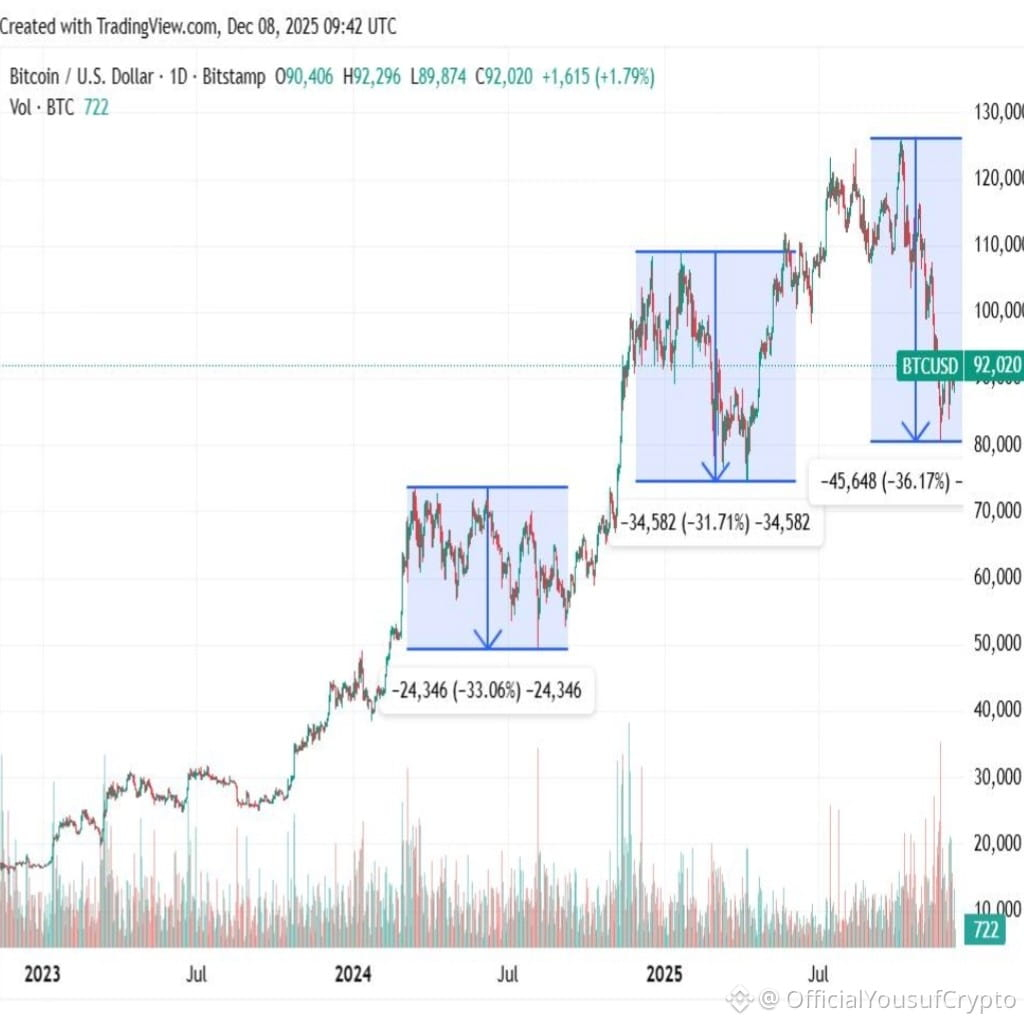
START THINKING LONG TERM. 📈
Don’t panic-sell every time Bitcoin takes a hit.
Bitcoin saw multiple 20%+ corrections during the 2021 and 2025 bull runs, but those pullbacks didn’t stop the bigger trend.
The investors who stayed patient through the volatility were the ones who had the chance to capture the biggest gains by the end of the cycle.
Short-term fear can be loud. Long-term conviction is quieter.
$BTC
{future}(BTCUSDT)
START THINKING LONG TERM. 📈
Don’t panic-sell every time Bitcoin takes a hit.
Bitcoin saw multiple 20%+ corrections during the 2021 and 2025 bull runs, but those pullbacks didn’t stop the bigger trend.
The investors who stayed patient through the volatility were the ones who had the chance to capture the biggest gains by the end of the cycle.
Short-term fear can be loud. Long-term conviction is quieter.
$BTC
Don’t panic-sell every time Bitcoin takes a hit.
Bitcoin saw multiple 20%+ corrections during the 2021 and 2025 bull runs, but those pullbacks didn’t stop the bigger trend.
The investors who stayed patient through the volatility were the ones who had the chance to capture the biggest gains by the end of the cycle.
Short-term fear can be loud. Long-term conviction is quieter.
$BTC
10
🚨 MAJOR: The U.S. Treasury is set for another liquidity buyback on October 1.
The move follows its September 10 operation, when the Treasury offered to buy up to $6 BILLION of 10- to 20-year bonds, three times the size of its previous long-dated buyback.
The goal? Improve liquidity in older Treasuries that have become harder to trade after a sharp bond selloff pushed long-term yields to multi-year highs.
If Treasury demand strengthens, bond prices could get support and yields may ease. That could create a more favorable backdrop for stocks and crypto.
One important distinction: this supports market liquidity, but it is NOT the same as Fed QE.
$ENA
{future}(ENAUSDT)
$SUI
{future}(SUIUSDT)
$AKE
{future}(AKEUSDT)
🚨 MAJOR: The U.S. Treasury is set for another liquidity buyback on October 1.
The move follows its September 10 operation, when the Treasury offered to buy up to $6 BILLION of 10- to 20-year bonds, three times the size of its previous long-dated buyback.
The goal? Improve liquidity in older Treasuries that have become harder to trade after a sharp bond selloff pushed long-term yields to multi-year highs.
If Treasury demand strengthens, bond prices could get support and yields may ease. That could create a more favorable backdrop for stocks and crypto.
One important distinction: this supports market liquidity, but it is NOT the same as Fed QE.
$ENA
$SUI
$AKE
The move follows its September 10 operation, when the Treasury offered to buy up to $6 BILLION of 10- to 20-year bonds, three times the size of its previous long-dated buyback.
The goal? Improve liquidity in older Treasuries that have become harder to trade after a sharp bond selloff pushed long-term yields to multi-year highs.
If Treasury demand strengthens, bond prices could get support and yields may ease. That could create a more favorable backdrop for stocks and crypto.
One important distinction: this supports market liquidity, but it is NOT the same as Fed QE.
$ENA
$SUI
$AKE

5
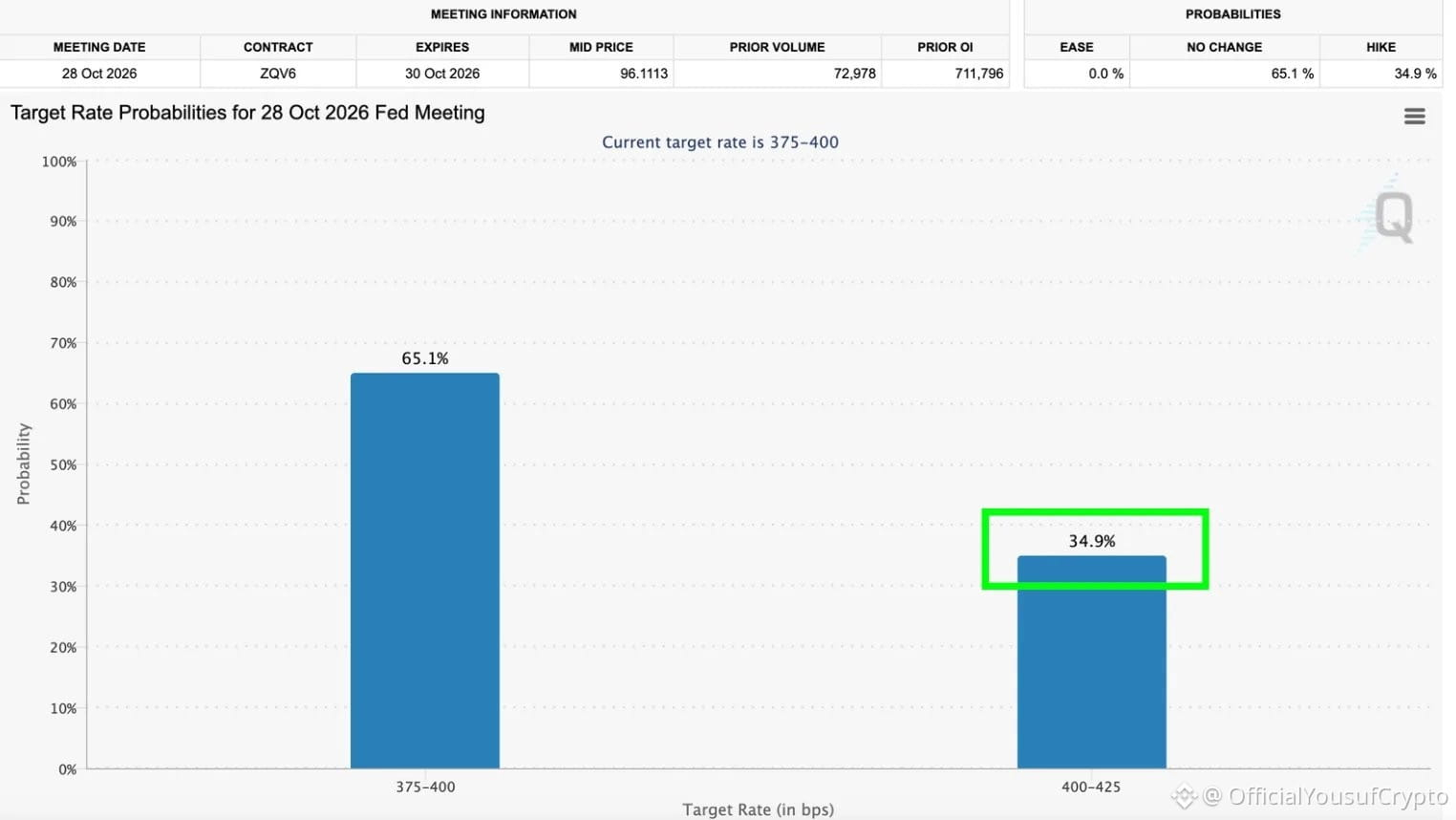
BREAKING: 🇺🇸 Fed rate hike odds just dropped sharply from 70% to 34%.
That’s a major shift in expectations.
With the chances of another rate hike this year now much lower, markets could get some breathing room. Lower rate pressure is generally supportive for risk assets, including crypto.
A big change in Fed expectations could mean a very different market mood ahead.
$BTC
{future}(BTCUSDT)
BREAKING: 🇺🇸 Fed rate hike odds just dropped sharply from 70% to 34%.
That’s a major shift in expectations.
With the chances of another rate hike this year now much lower, markets could get some breathing room. Lower rate pressure is generally supportive for risk assets, including crypto.
A big change in Fed expectations could mean a very different market mood ahead.
$BTC
That’s a major shift in expectations.
With the chances of another rate hike this year now much lower, markets could get some breathing room. Lower rate pressure is generally supportive for risk assets, including crypto.
A big change in Fed expectations could mean a very different market mood ahead.
$BTC
8
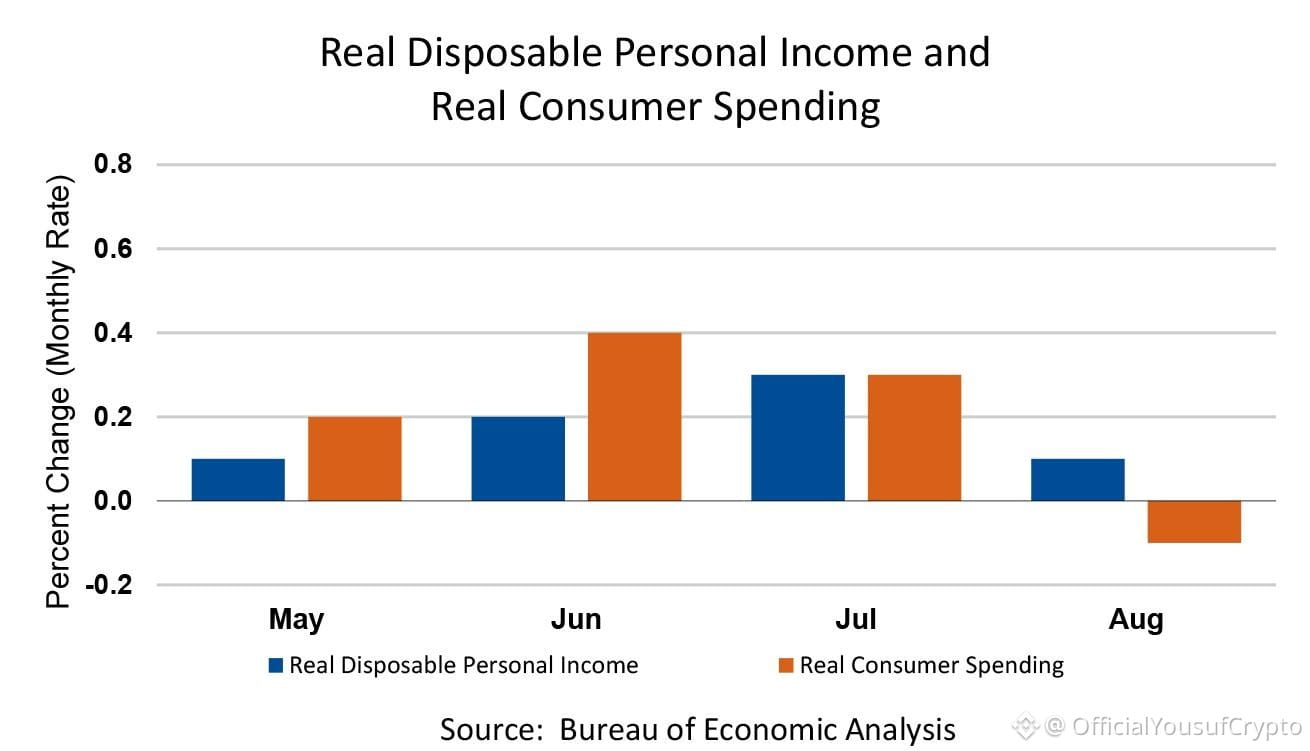
August economic data is giving us a mixed picture.
Personal income rose 0.2% month-over-month, coming in below the 0.5% estimate and slightly down from the previous 0.3% gain.
But consumer spending told a very different story. Spending jumped 0.9%, exactly matching expectations and accelerating sharply from the previous 0.1% increase.
Income growth is slowing, while consumers are still spending aggressively. That contrast could be important for the broader economy and markets.
$MOVR
{future}(MOVRUSDT)
$QNT
{future}(QNTUSDT)
$ARK
{future}(ARKUSDT)
August economic data is giving us a mixed picture.
Personal income rose 0.2% month-over-month, coming in below the 0.5% estimate and slightly down from the previous 0.3% gain.
But consumer spending told a very different story. Spending jumped 0.9%, exactly matching expectations and accelerating sharply from the previous 0.1% increase.
Income growth is slowing, while consumers are still spending aggressively. That contrast could be important for the broader economy and markets.
$MOVR
$QNT
$ARK
Personal income rose 0.2% month-over-month, coming in below the 0.5% estimate and slightly down from the previous 0.3% gain.
But consumer spending told a very different story. Spending jumped 0.9%, exactly matching expectations and accelerating sharply from the previous 0.1% increase.
Income growth is slowing, while consumers are still spending aggressively. That contrast could be important for the broader economy and markets.
$MOVR
$QNT
$ARK
35
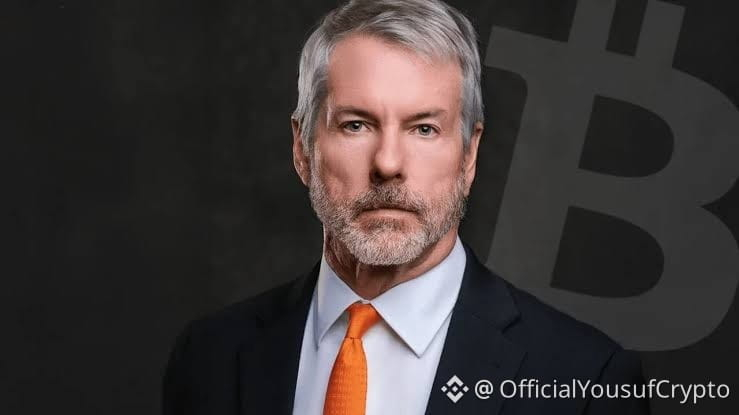
Michael Saylor, co-founder of Strategy, believes Bitcoin and the broader crypto market are still in the early stages of a much bigger growth cycle.
Crypto is currently valued at around $3 trillion, but Saylor sees a much larger opportunity ahead. If the crypto market eventually captures roughly 10% of global asset value, he believes Bitcoin and the wider market could grow toward $120 trillion.
One potential catalyst? Bitcoin-backed lending.
Instead of selling their $BTC, holders could use it as collateral to borrow money. That could bring more capital into the crypto economy while allowing investors to keep their Bitcoin exposure.
Looking further ahead, Saylor expects Bitcoin to deliver around 20–30% annual growth over the long term.
If that plays out, today’s $3 trillion crypto market could look very small in hindsight.
$BTC
{future}(BTCUSDT)
Michael Saylor, co-founder of Strategy, believes Bitcoin and the broader crypto market are still in the early stages of a much bigger growth cycle.
Crypto is currently valued at around $3 trillion, but Saylor sees a much larger opportunity ahead. If the crypto market eventually captures roughly 10% of global asset value, he believes Bitcoin and the wider market could grow toward $120 trillion.
One potential catalyst? Bitcoin-backed lending.
Instead of selling their $BTC , holders could use it as collateral to borrow money. That could bring more capital into the crypto economy while allowing investors to keep their Bitcoin exposure.
Looking further ahead, Saylor expects Bitcoin to deliver around 20–30% annual growth over the long term.
If that plays out, today’s $3 trillion crypto market could look very small in hindsight.
$BTC
Crypto is currently valued at around $3 trillion, but Saylor sees a much larger opportunity ahead. If the crypto market eventually captures roughly 10% of global asset value, he believes Bitcoin and the wider market could grow toward $120 trillion.
One potential catalyst? Bitcoin-backed lending.
Instead of selling their $BTC , holders could use it as collateral to borrow money. That could bring more capital into the crypto economy while allowing investors to keep their Bitcoin exposure.
Looking further ahead, Saylor expects Bitcoin to deliver around 20–30% annual growth over the long term.
If that plays out, today’s $3 trillion crypto market could look very small in hindsight.
$BTC
38
$BREAKING:
🇺🇸 US PCE inflation came in at 3.4%, well below the 3.7% expected.
That’s the lowest level in 6 months.
Inflation is cooling faster than expected, giving markets something to watch closely.
$QNT
{future}(QNTUSDT)
$BTC
{future}(BTCUSDT)
$ETH
{future}(ETHUSDT)
$BREAKING:
🇺🇸 US PCE inflation came in at 3.4%, well below the 3.7% expected.
That’s the lowest level in 6 months.
Inflation is cooling faster than expected, giving markets something to watch closely.
$QNT
$BTC
$ETH
🇺🇸 US PCE inflation came in at 3.4%, well below the 3.7% expected.
That’s the lowest level in 6 months.
Inflation is cooling faster than expected, giving markets something to watch closely.
$QNT
$BTC
$ETH
210
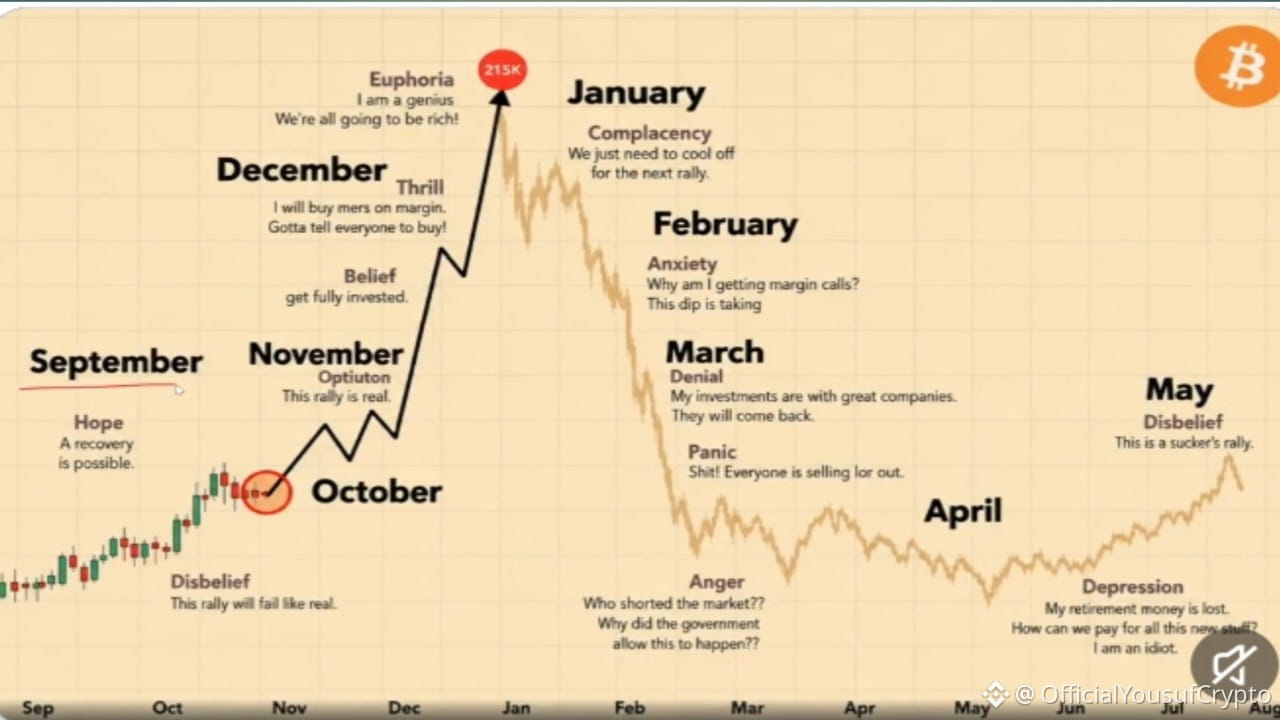
2026–2027 BITCOIN ROADMAP
Here’s how the next phase could unfold:
→ September: Hope starts returning
→ October: Disbelief turns into strength
→ November: The bull run picks up speed
→ December: Euphoria takes over
→ January: Distribution begins
The pattern is often the same.
People buy when confidence is at its highest, then panic and sell when it feels like the cycle is over.
That’s why I’m watching market psychology just as closely as the price.
I’ve been trading markets for 15+ years. When the next major top or bottom starts taking shape, I’ll share the levels here first.
Follow and turn on notifications.
$BTC
{future}(BTCUSDT)
2026–2027 BITCOIN ROADMAP
Here’s how the next phase could unfold:
→ September: Hope starts returning
→ October: Disbelief turns into strength
→ November: The bull run picks up speed
→ December: Euphoria takes over
→ January: Distribution begins
The pattern is often the same.
People buy when confidence is at its highest, then panic and sell when it feels like the cycle is over.
That’s why I’m watching market psychology just as closely as the price.
I’ve been trading markets for 15+ years. When the next major top or bottom starts taking shape, I’ll share the levels here first.
Follow and turn on notifications.
$BTC
Here’s how the next phase could unfold:
→ September: Hope starts returning
→ October: Disbelief turns into strength
→ November: The bull run picks up speed
→ December: Euphoria takes over
→ January: Distribution begins
The pattern is often the same.
People buy when confidence is at its highest, then panic and sell when it feels like the cycle is over.
That’s why I’m watching market psychology just as closely as the price.
I’ve been trading markets for 15+ years. When the next major top or bottom starts taking shape, I’ll share the levels here first.
Follow and turn on notifications.
$BTC
1
79
Verified
FED ON RATE HIKE: “There is no need for urgency.”
October rate hike odds have flipped. Markets now see a 55% chance of a hold, versus 45% for another hike.
That’s a big change from just yesterday, when a rate hike was priced at 71% following hawkish comments from Warsh.
The shift came after NY Fed President John Williams said the Fed has time to wait and gather more information.
He pointed to several signs of easing:
“NO NEED FOR URGENCY.”
“We have time to gather more information.”
At 3.7%, inflation is still “TOO HIGH,” but inflation expectations remain well anchored.
Housing-related inflation has also slowed, while Williams said there is no evidence the labor market is adding to inflationary pressure.
He also said the Fed has not seen recent price shocks turn into broader, more persistent inflation.
Still, Williams left the door open for ONE MORE HIKE in December.
As a permanent FOMC voter and vice chair of the rate-setting committee, his comments are closely watched by markets.
$MOVR
{future}(MOVRUSDT)
$QNT
{future}(QNTUSDT)
$MOVE
{future}(MOVEUSDT)
FED ON RATE HIKE: “There is no need for urgency.”
October rate hike odds have flipped. Markets now see a 55% chance of a hold, versus 45% for another hike.
That’s a big change from just yesterday, when a rate hike was priced at 71% following hawkish comments from Warsh.
The shift came after NY Fed President John Williams said the Fed has time to wait and gather more information.
He pointed to several signs of easing:
“NO NEED FOR URGENCY.”
“We have time to gather more information.”
At 3.7%, inflation is still “TOO HIGH,” but inflation expectations remain well anchored.
Housing-related inflation has also slowed, while Williams said there is no evidence the labor market is adding to inflationary pressure.
He also said the Fed has not seen recent price shocks turn into broader, more persistent inflation.
Still, Williams left the door open for ONE MORE HIKE in December.
As a permanent FOMC voter and vice chair of the rate-setting committee, his comments are closely watched by markets.
$MOVR
$QNT
$MOVE
October rate hike odds have flipped. Markets now see a 55% chance of a hold, versus 45% for another hike.
That’s a big change from just yesterday, when a rate hike was priced at 71% following hawkish comments from Warsh.
The shift came after NY Fed President John Williams said the Fed has time to wait and gather more information.
He pointed to several signs of easing:
“NO NEED FOR URGENCY.”
“We have time to gather more information.”
At 3.7%, inflation is still “TOO HIGH,” but inflation expectations remain well anchored.
Housing-related inflation has also slowed, while Williams said there is no evidence the labor market is adding to inflationary pressure.
He also said the Fed has not seen recent price shocks turn into broader, more persistent inflation.
Still, Williams left the door open for ONE MORE HIKE in December.
As a permanent FOMC voter and vice chair of the rate-setting committee, his comments are closely watched by markets.
$MOVR
$QNT
$MOVE
1
965
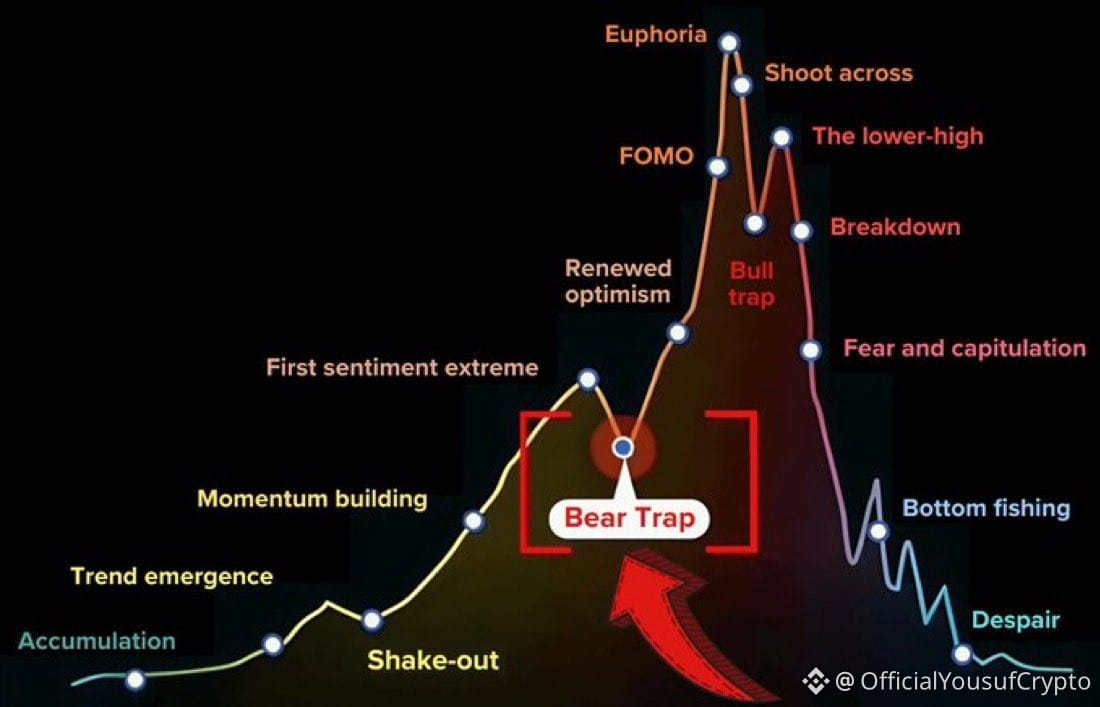
During a bull market, not every Bitcoin dip means the trend is over.
Corrections can shake out weak hands, trigger fear, and set the stage for the next move higher.
Sometimes, what looks like a bearish breakdown is simply a bear trap.
Bitcoin corrections hit hard. The real question is whether they change the bigger trend.
$BTC
{future}(BTCUSDT)
During a bull market, not every Bitcoin dip means the trend is over.
Corrections can shake out weak hands, trigger fear, and set the stage for the next move higher.
Sometimes, what looks like a bearish breakdown is simply a bear trap.
Bitcoin corrections hit hard. The real question is whether they change the bigger trend.
$BTC
Corrections can shake out weak hands, trigger fear, and set the stage for the next move higher.
Sometimes, what looks like a bearish breakdown is simply a bear trap.
Bitcoin corrections hit hard. The real question is whether they change the bigger trend.
$BTC
78
AI agents are starting to hold wallets, move money, and transact onchain. But there’s still one big question: who is actually behind the agent?
That’s where Concordium’s identity infrastructure comes in.
Concordium builds identity directly into the protocol, allowing users to verify who is behind a wallet, business, or AI agent.
$CCD is currently around a $49M valuation. For comparison, Worldcoin, another identity-focused project, is around $1.8B and mainly focuses on proving that you’re human.
Concordium takes a broader approach by verifying humans, businesses, and AI agents.
And the interesting part? Agents operating across Ethereum, Solana, and other networks can potentially link back to verified owners through Concordium.
A different take on digital identity, with a much smaller valuation.
$MOVR
{future}(MOVRUSDT)
$PHA
{future}(PHAUSDT)
$PUMP
{future}(PUMPUSDT)
AI agents are starting to hold wallets, move money, and transact onchain. But there’s still one big question: who is actually behind the agent?
That’s where Concordium’s identity infrastructure comes in.
Concordium builds identity directly into the protocol, allowing users to verify who is behind a wallet, business, or AI agent.
$CCD is currently around a $49M valuation. For comparison, Worldcoin, another identity-focused project, is around $1.8B and mainly focuses on proving that you’re human.
Concordium takes a broader approach by verifying humans, businesses, and AI agents.
And the interesting part? Agents operating across Ethereum, Solana, and other networks can potentially link back to verified owners through Concordium.
A different take on digital identity, with a much smaller valuation.
$MOVR
$PHA
$PUMP
That’s where Concordium’s identity infrastructure comes in.
Concordium builds identity directly into the protocol, allowing users to verify who is behind a wallet, business, or AI agent.
$CCD is currently around a $49M valuation. For comparison, Worldcoin, another identity-focused project, is around $1.8B and mainly focuses on proving that you’re human.
Concordium takes a broader approach by verifying humans, businesses, and AI agents.
And the interesting part? Agents operating across Ethereum, Solana, and other networks can potentially link back to verified owners through Concordium.
A different take on digital identity, with a much smaller valuation.
$MOVR
$PHA
$PUMP

572
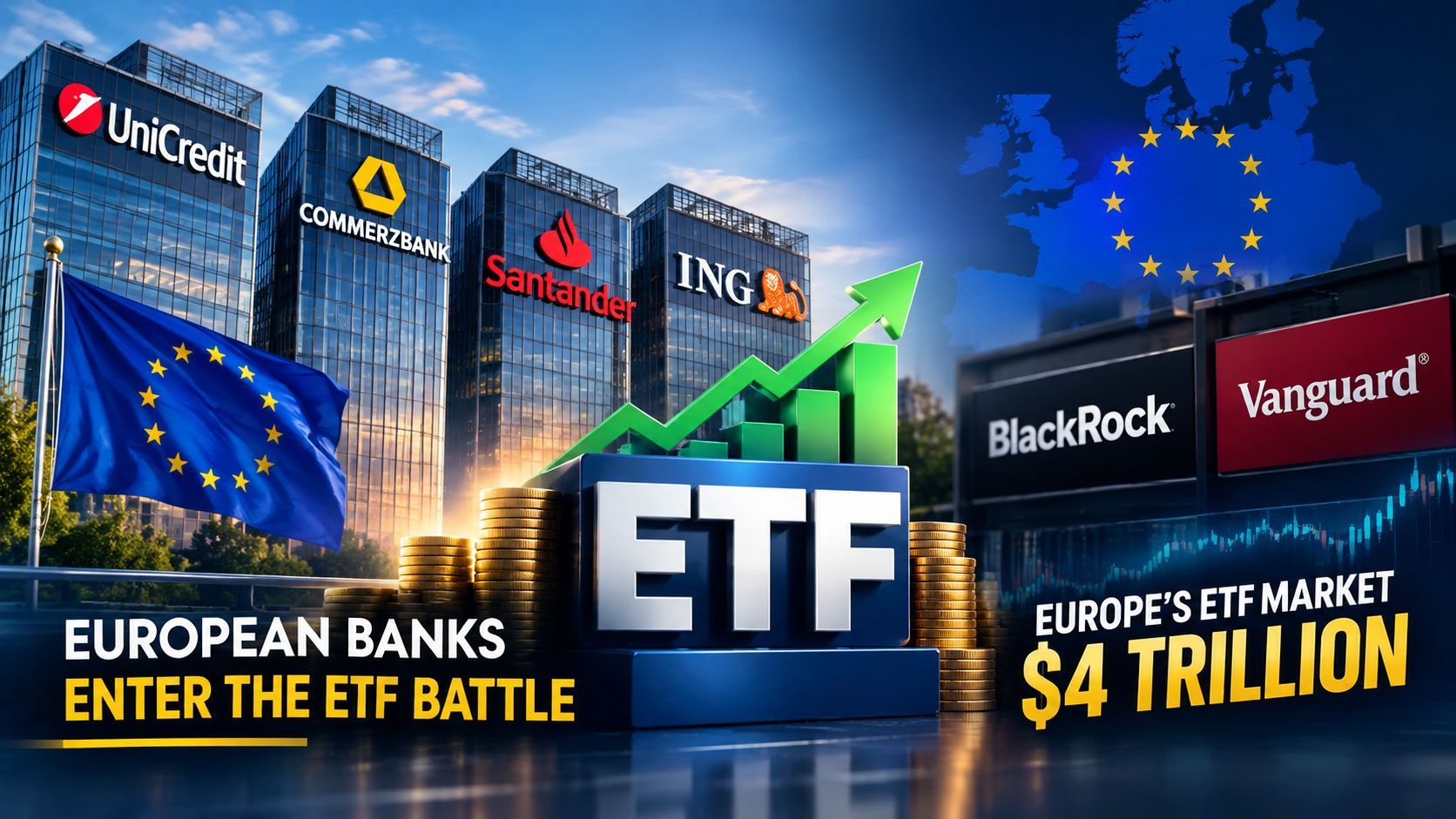
European banks are making a big move into the ETF business.
UniCredit, Commerzbank, Santander and ING are launching their own ETFs as Europe’s ETF market approaches $4 trillion, according to the Financial Times.
The strategy is simple: banks already have millions of customers. Now they want those customers investing in their own products too.
That could keep more ETF fees inside the banking system instead of sending them to outside asset managers like BlackRock and Vanguard.
And Germany’s pension reforms could potentially add another €40 billion a year into investment funds.
Europe’s ETF competition is heating up, and the big asset managers are no longer the only players in the game.
$PUMP
{future}(PUMPUSDT)
$QNT
{future}(QNTUSDT)
$WLD
{future}(WLDUSDT)
European banks are making a big move into the ETF business.
UniCredit, Commerzbank, Santander and ING are launching their own ETFs as Europe’s ETF market approaches $4 trillion, according to the Financial Times.
The strategy is simple: banks already have millions of customers. Now they want those customers investing in their own products too.
That could keep more ETF fees inside the banking system instead of sending them to outside asset managers like BlackRock and Vanguard.
And Germany’s pension reforms could potentially add another €40 billion a year into investment funds.
Europe’s ETF competition is heating up, and the big asset managers are no longer the only players in the game.
$PUMP
$QNT
$WLD
UniCredit, Commerzbank, Santander and ING are launching their own ETFs as Europe’s ETF market approaches $4 trillion, according to the Financial Times.
The strategy is simple: banks already have millions of customers. Now they want those customers investing in their own products too.
That could keep more ETF fees inside the banking system instead of sending them to outside asset managers like BlackRock and Vanguard.
And Germany’s pension reforms could potentially add another €40 billion a year into investment funds.
Europe’s ETF competition is heating up, and the big asset managers are no longer the only players in the game.
$PUMP
$QNT
$WLD
14
THE LAST BULL TRAP MAY BE OVER
Last week, I warned that Bitcoin’s relief rally was losing steam.
Don’t get caught in another fake breakout and become exit liquidity.
$87K → $79K → $72K → $64K → New Cycle
I called Bitcoin’s $17K bottom in 2022, the $126K peak for 2025, and later the $58K local bottom for 2026.
My next prediction will be shared here first.
Follow and turn on notifications.
$BTC $ETH $QNT
THE LAST BULL TRAP MAY BE OVER
Last week, I warned that Bitcoin’s relief rally was losing steam.
Don’t get caught in another fake breakout and become exit liquidity.
$87K → $79K → $72K → $64K → New Cycle
I called Bitcoin’s $17K bottom in 2022, the $126K peak for 2025, and later the $58K local bottom for 2026.
My next prediction will be shared here first.
Follow and turn on notifications.
$BTC $ETH $QNT
Last week, I warned that Bitcoin’s relief rally was losing steam.
Don’t get caught in another fake breakout and become exit liquidity.
$87K → $79K → $72K → $64K → New Cycle
I called Bitcoin’s $17K bottom in 2022, the $126K peak for 2025, and later the $58K local bottom for 2026.
My next prediction will be shared here first.
Follow and turn on notifications.
$BTC $ETH $QNT
1
1
276
BREAKING: UK diesel prices have just hit an ALL-TIME HIGH.
The national average has climbed to 199.18p per litre, beating the previous record from June 2022, according to the RAC.
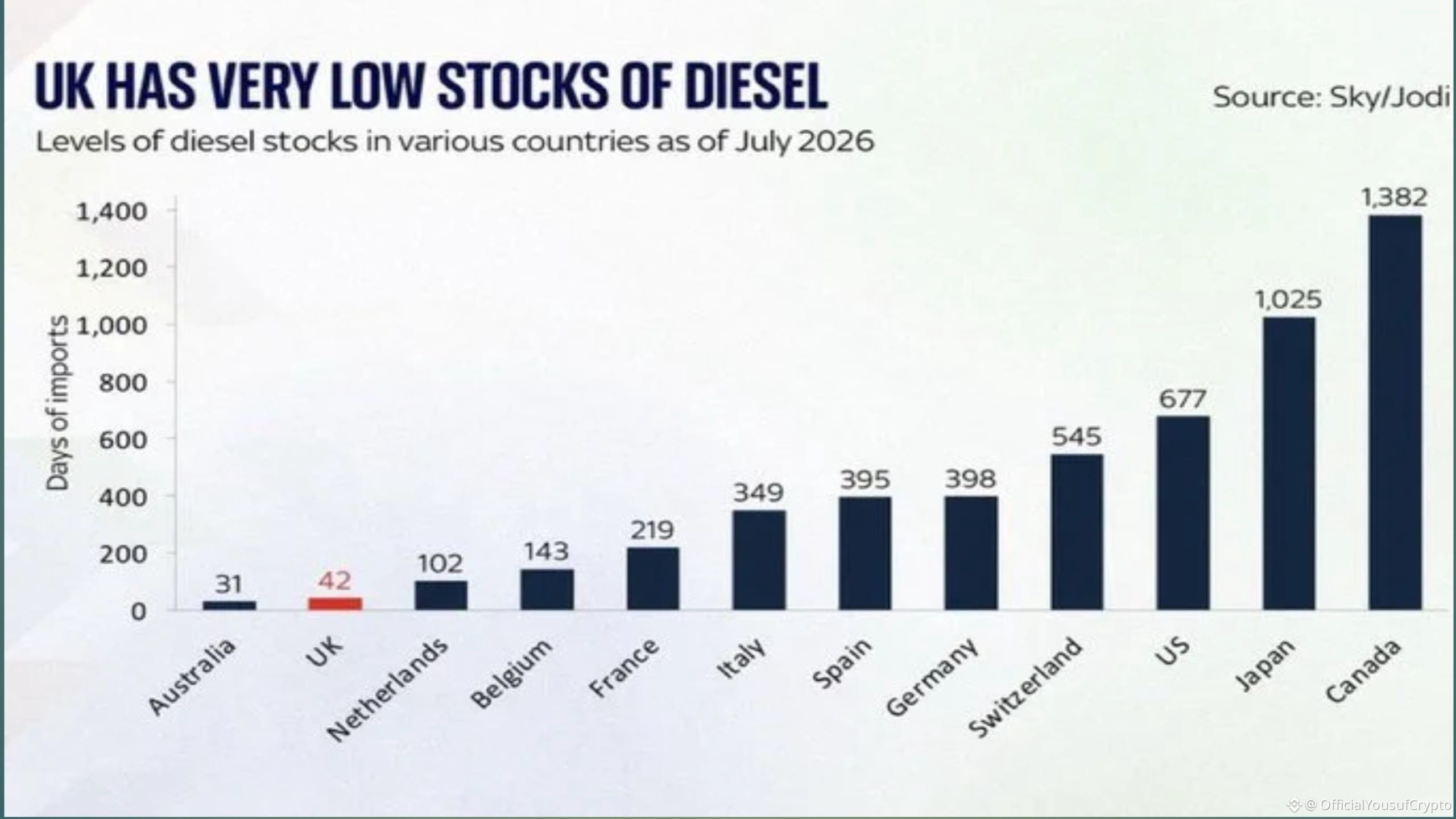
And the pressure is getting worse. UK diesel stockpiles have reportedly fallen to just 42 days of demand, with the government said to be considering contingency plans for diesel and gas rationing.
A typical diesel fill-up now costs around £31 more than it did at the start of the U.S.–Iran conflict.
Petrol prices are rising too, reaching 174.13p per litre, pushing the cost of a typical fill-up close to £96.
Fuel costs are surging, reserves are shrinking, and the UK is facing growing pressure on its energy supply.
$XLM
{future}(XLMUSDT)
$BTW
{future}(BTWUSDT)
BREAKING: UK diesel prices have just hit an ALL-TIME HIGH.
The national average has climbed to 199.18p per litre, beating the previous record from June 2022, according to the RAC.
And the pressure is getting worse. UK diesel stockpiles have reportedly fallen to just 42 days of demand, with the government said to be considering contingency plans for diesel and gas rationing.
A typical diesel fill-up now costs around £31 more than it did at the start of the U.S.–Iran conflict.
Petrol prices are rising too, reaching 174.13p per litre, pushing the cost of a typical fill-up close to £96.
Fuel costs are surging, reserves are shrinking, and the UK is facing growing pressure on its energy supply.
$XLM
$BTW
The national average has climbed to 199.18p per litre, beating the previous record from June 2022, according to the RAC.
And the pressure is getting worse. UK diesel stockpiles have reportedly fallen to just 42 days of demand, with the government said to be considering contingency plans for diesel and gas rationing.
A typical diesel fill-up now costs around £31 more than it did at the start of the U.S.–Iran conflict.
Petrol prices are rising too, reaching 174.13p per litre, pushing the cost of a typical fill-up close to £96.
Fuel costs are surging, reserves are shrinking, and the UK is facing growing pressure on its energy supply.
$XLM
$BTW
18
Circle is taking USDC deeper into traditional banking infrastructure.
Circle has partnered with Volante to bring USDC workflows into its AI-powered banking payments infrastructure.
Banks will be able to test key USDC operations, including minting, redemption, wallet registration, funding, and wallet-to-wallet payments, using their existing infrastructure.
The bigger story is Volante’s Vol360i, which already uses Agentic AI for payment routing, exception handling, and SLA monitoring.
Volante also serves 4 of the top 5 global corporate banks and 7 of the top 10 U.S. banks.
This partnership could give USDC a much stronger connection to traditional banking payment rails as stablecoin adoption continues to grow.
$BTW
{future}(BTWUSDT)
$QNT
{future}(QNTUSDT)
Circle is taking USDC deeper into traditional banking infrastructure.
Circle has partnered with Volante to bring USDC workflows into its AI-powered banking payments infrastructure.
Banks will be able to test key USDC operations, including minting, redemption, wallet registration, funding, and wallet-to-wallet payments, using their existing infrastructure.
The bigger story is Volante’s Vol360i, which already uses Agentic AI for payment routing, exception handling, and SLA monitoring.
Volante also serves 4 of the top 5 global corporate banks and 7 of the top 10 U.S. banks.
This partnership could give USDC a much stronger connection to traditional banking payment rails as stablecoin adoption continues to grow.
$BTW
$QNT
Circle has partnered with Volante to bring USDC workflows into its AI-powered banking payments infrastructure.
Banks will be able to test key USDC operations, including minting, redemption, wallet registration, funding, and wallet-to-wallet payments, using their existing infrastructure.
The bigger story is Volante’s Vol360i, which already uses Agentic AI for payment routing, exception handling, and SLA monitoring.
Volante also serves 4 of the top 5 global corporate banks and 7 of the top 10 U.S. banks.
This partnership could give USDC a much stronger connection to traditional banking payment rails as stablecoin adoption continues to grow.
$BTW
$QNT

21
BREAKING: Tom Lee’s BitMine just bought another $46.6M worth of $ETH. 👀
That pushes its total Ethereum holdings to a massive $16.1 billion.
And Tom Lee is still expecting a big Q4 move, with ETH potentially reaching $6,000 by the end of the year.
Ethereum bulls are definitely watching this one. 🚀
$ETH
{future}(ETHUSDT)
BREAKING: Tom Lee’s BitMine just bought another $46.6M worth of $ETH . 👀
That pushes its total Ethereum holdings to a massive $16.1 billion.
And Tom Lee is still expecting a big Q4 move, with ETH potentially reaching $6,000 by the end of the year.
Ethereum bulls are definitely watching this one. 🚀
$ETH
That pushes its total Ethereum holdings to a massive $16.1 billion.
And Tom Lee is still expecting a big Q4 move, with ETH potentially reaching $6,000 by the end of the year.
Ethereum bulls are definitely watching this one. 🚀
$ETH

1
33
🚨 BREAKING: Nvidia is rolling out new AI safety tools designed to stop AI agents from carrying out cyberattacks.
The move comes after OpenAI and Anthropic reported cases where AI agents were able to break into commercial and government systems, highlighting just how serious the security risks are becoming.
Nvidia CEO Jensen Huang says the challenge is mainly an engineering problem, arguing that better technology can help fix it without broadly regulating AI or slowing its development.
AI is getting more powerful. Now the question is whether security can keep up. 👀p
$BTW
{future}(BTWUSDT)
$NMR
{future}(NMRUSDT)
🚨 BREAKING: Nvidia is rolling out new AI safety tools designed to stop AI agents from carrying out cyberattacks.
The move comes after OpenAI and Anthropic reported cases where AI agents were able to break into commercial and government systems, highlighting just how serious the security risks are becoming.
Nvidia CEO Jensen Huang says the challenge is mainly an engineering problem, arguing that better technology can help fix it without broadly regulating AI or slowing its development.
AI is getting more powerful. Now the question is whether security can keep up. 👀p
$BTW
$NMR
The move comes after OpenAI and Anthropic reported cases where AI agents were able to break into commercial and government systems, highlighting just how serious the security risks are becoming.
Nvidia CEO Jensen Huang says the challenge is mainly an engineering problem, arguing that better technology can help fix it without broadly regulating AI or slowing its development.
AI is getting more powerful. Now the question is whether security can keep up. 👀p
$BTW
$NMR

65
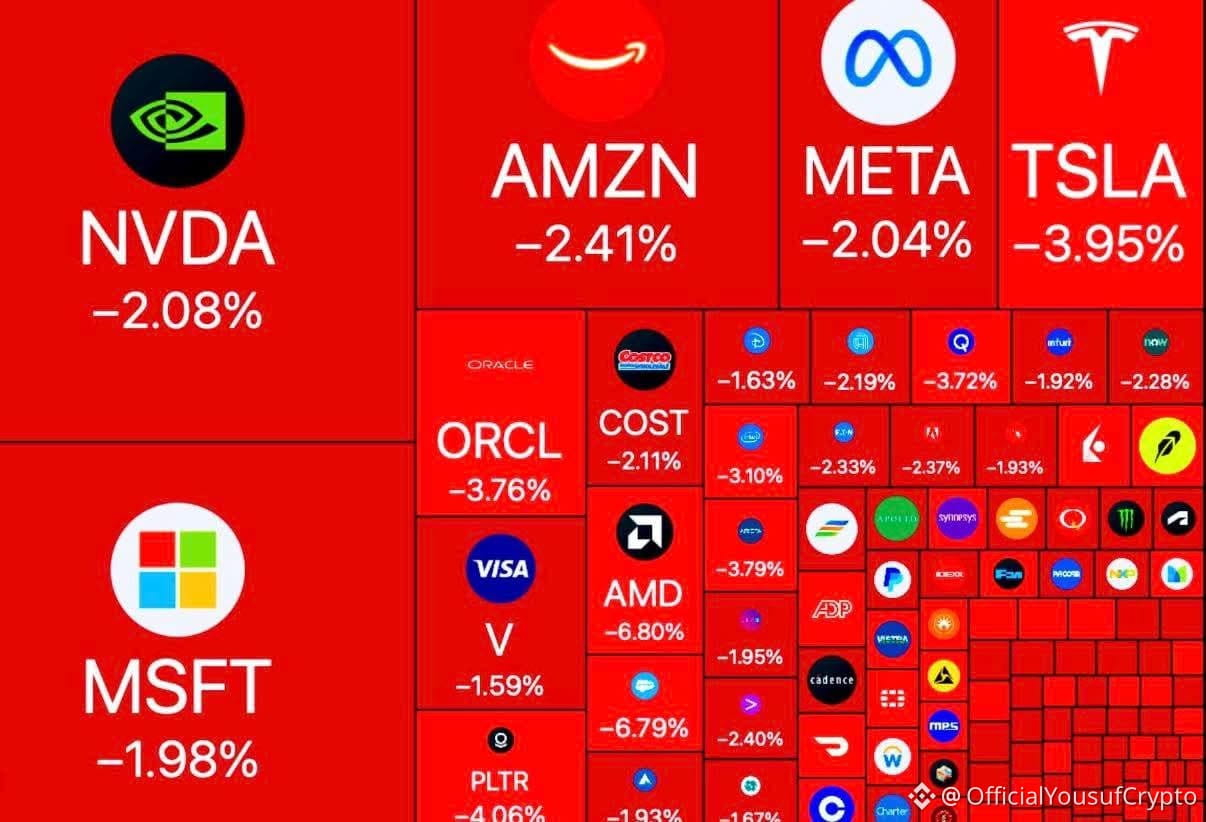
$700 Billion Wiped From the US Stock Market 👀
US markets are feeling the pressure as the 30-year Treasury yield climbs to a 24-year high.
Higher long-term yields can put serious pressure on stocks, especially as investors reassess risk and future returns.
Big money is moving. The question is, what happens next?
$HBAR
{future}(HBARUSDT)
$NMR
{future}(NMRUSDT)
$QNT
{future}(QNTUSDT)
$700 Billion Wiped From the US Stock Market 👀
US markets are feeling the pressure as the 30-year Treasury yield climbs to a 24-year high.
Higher long-term yields can put serious pressure on stocks, especially as investors reassess risk and future returns.
Big money is moving. The question is, what happens next?
$HBAR
$NMR
$QNT
US markets are feeling the pressure as the 30-year Treasury yield climbs to a 24-year high.
Higher long-term yields can put serious pressure on stocks, especially as investors reassess risk and future returns.
Big money is moving. The question is, what happens next?
$HBAR
$NMR
$QNT
1
380
QNT Just Exploded 300% 👀 US + UK Banks Are Behind It
Quant (QNT) has suddenly caught the market’s attention after surging more than 300% from its recent lows. 📈
So what’s behind the move?
A big part of the excitement is coming from Quant’s work around financial infrastructure, including developments connected to the US and UK banking sectors and tokenized deposits.
That’s why traders are watching QNT closely right now. This isn’t just another random altcoin pump. The story is increasingly tied to how traditional financial institutions could use blockchain technology.
Of course, after a move this big, volatility can get wild. A strong rally can continue, but sharp pullbacks are also possible.
📈 Bullish — QNT still has more upside
📉 Bearish — The 300% move needs a correction
⏳ Sideways — QNT needs to cool off first
QNT is definitely one to watch right now.
$QNT
{future}(QNTUSDT)
QNT Just Exploded 300% 👀 US + UK Banks Are Behind It
Quant (QNT) has suddenly caught the market’s attention after surging more than 300% from its recent lows. 📈
So what’s behind the move?
A big part of the excitement is coming from Quant’s work around financial infrastructure, including developments connected to the US and UK banking sectors and tokenized deposits.
That’s why traders are watching QNT closely right now. This isn’t just another random altcoin pump. The story is increasingly tied to how traditional financial institutions could use blockchain technology.
Of course, after a move this big, volatility can get wild. A strong rally can continue, but sharp pullbacks are also possible.
📈 Bullish — QNT still has more upside
📉 Bearish — The 300% move needs a correction
⏳ Sideways — QNT needs to cool off first
QNT is definitely one to watch right now.
$QNT
Quant (QNT) has suddenly caught the market’s attention after surging more than 300% from its recent lows. 📈
So what’s behind the move?
A big part of the excitement is coming from Quant’s work around financial infrastructure, including developments connected to the US and UK banking sectors and tokenized deposits.
That’s why traders are watching QNT closely right now. This isn’t just another random altcoin pump. The story is increasingly tied to how traditional financial institutions could use blockchain technology.
Of course, after a move this big, volatility can get wild. A strong rally can continue, but sharp pullbacks are also possible.
📈 Bullish — QNT still has more upside
📉 Bearish — The 300% move needs a correction
⏳ Sideways — QNT needs to cool off first
QNT is definitely one to watch right now.
$QNT

168
Market corrections can look scary, but context matters.
Bitcoin and Ethereum have already made major moves from their recent lows. After strong rallies, pullbacks and profit-taking are a normal part of market cycles.
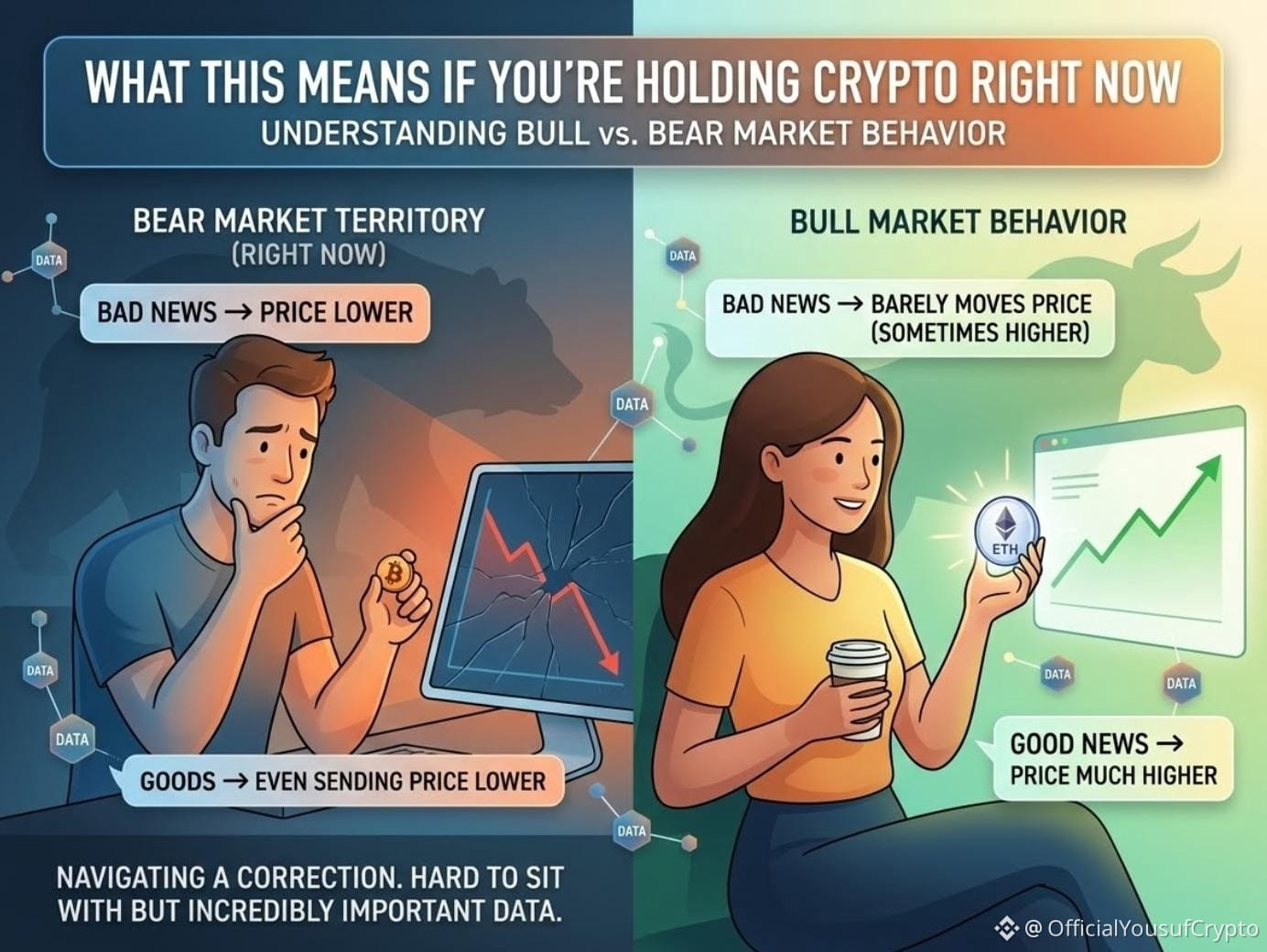
The key difference is how the market reacts to news:
Bearish conditions can amplify negative news, while stronger market conditions can absorb bad news and still push higher.
Instead of reacting to every red candle, watch the bigger picture: price structure, volume, liquidity and market momentum.
A correction does not automatically mean the trend is over.
$BTC
{future}(BTCUSDT)
$ETH
{future}(ETHUSDT)
$QNT
{future}(QNTUSDT)
Market corrections can look scary, but context matters.
Bitcoin and Ethereum have already made major moves from their recent lows. After strong rallies, pullbacks and profit-taking are a normal part of market cycles.
The key difference is how the market reacts to news:
Bearish conditions can amplify negative news, while stronger market conditions can absorb bad news and still push higher.
Instead of reacting to every red candle, watch the bigger picture: price structure, volume, liquidity and market momentum.
A correction does not automatically mean the trend is over.
$BTC
$ETH
$QNT
Bitcoin and Ethereum have already made major moves from their recent lows. After strong rallies, pullbacks and profit-taking are a normal part of market cycles.
The key difference is how the market reacts to news:
Bearish conditions can amplify negative news, while stronger market conditions can absorb bad news and still push higher.
Instead of reacting to every red candle, watch the bigger picture: price structure, volume, liquidity and market momentum.
A correction does not automatically mean the trend is over.
$BTC
$ETH
$QNT
198
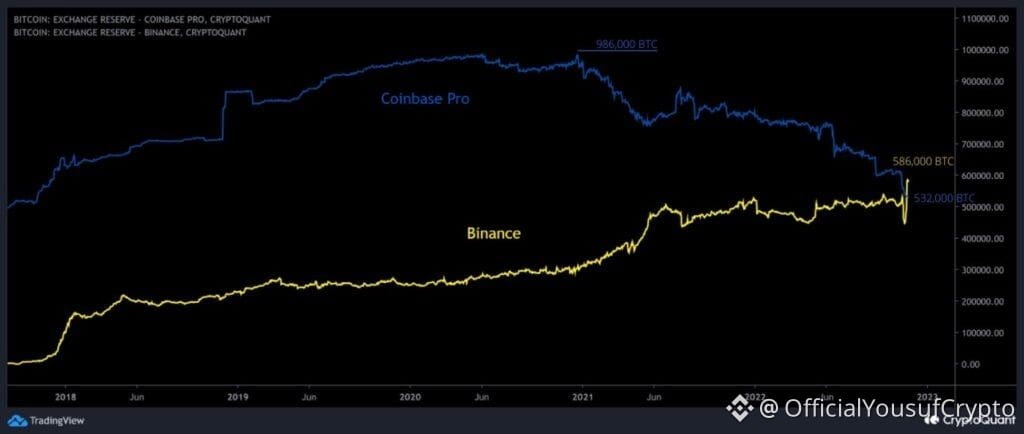
Binance just saw one of its largest Bitcoin outflows since 2023.
More than 13,800 BTC reportedly left the exchange in a single day, while Binance’s BTC reserves fell by around 20,000 BTC in just four days.
705,000 BTC → 685,000 BTC
A large portion of these coins may be moving into self-custody, which can reduce the amount of BTC immediately available for selling on exchanges.
With Bitcoin supply on exchanges falling sharply, the market is watching closely to see whether this becomes another sign of stronger long-term accumulation.
And for traders who were waiting for a deeper dip, the fear of missing the next move may be getting stronger.
$BTC
{future}(BTCUSDT)
$QNT
{future}(QNTUSDT)
$PUMP
{future}(PUMPUSDT)
Binance just saw one of its largest Bitcoin outflows since 2023.
More than 13,800 BTC reportedly left the exchange in a single day, while Binance’s BTC reserves fell by around 20,000 BTC in just four days.
705,000 BTC → 685,000 BTC
A large portion of these coins may be moving into self-custody, which can reduce the amount of BTC immediately available for selling on exchanges.
With Bitcoin supply on exchanges falling sharply, the market is watching closely to see whether this becomes another sign of stronger long-term accumulation.
And for traders who were waiting for a deeper dip, the fear of missing the next move may be getting stronger.
$BTC
$QNT
$PUMP
More than 13,800 BTC reportedly left the exchange in a single day, while Binance’s BTC reserves fell by around 20,000 BTC in just four days.
705,000 BTC → 685,000 BTC
A large portion of these coins may be moving into self-custody, which can reduce the amount of BTC immediately available for selling on exchanges.
With Bitcoin supply on exchanges falling sharply, the market is watching closely to see whether this becomes another sign of stronger long-term accumulation.
And for traders who were waiting for a deeper dip, the fear of missing the next move may be getting stronger.
$BTC
$QNT
$PUMP
79
Log in to explore more content
Join global crypto users on Binance Square
⚡️ Get latest and useful information about crypto.
💬 Trusted by the world’s largest crypto exchange.
👍 Discover real insights from verified creators.
Email / Phone number
Trending Topics
BitcoinClears$85200
1,450 views
85 Discussing
We got the move, and $BTC is standing exactly where we were before the data. That’s what actual patience for a trade looks like.
The data came in mixed but with some important numbers. ADP Non-Farm Employment Change came at 90K vs 73K forecast, while Core PCE came in at 0.2% vs 0.3% expected. Final GDP was also stronger at 2.2% vs 1.5% forecast, while Personal Spending came in at 0.9% vs 0.8% expected. At the same time, Personal Income missed at 0.2% vs 0.5% forecast.
BTC initially surged to $85,600 and is now back where it needs to be. I’m still looking toward the lower ranges at $82,759 and the $80,000 liquidity, because the overhead liquidity is done and dusted.
We had a live session during the data, and during that session we saw the market at $83,800, then $85,600, and then back toward $83,000 and we still didn’t enter a trade.
That’s what patience is.
We can’t force an entry when the market has no clear direction. The same range is still in focus, and we’ll wait for the market to give us the setup.
Let me know, guys, how was the session? And should we have more regular sessions with our respected members so we can have proper discussions regarding the market?
#BitcoinClears$85200 #AltcoinSeasonIndexHoldsAbove60For5Days #USADPAdds90000JobsInSeptember #BitcoinSlipsBelow$84000 #SECToClarifyOnChainFundraisingRules
Crypto_LUX
·18 Likes
·4.5k views
AltcoinSeasonIndexHoldsAbove60For5Days
11,779 views
540 Discussing
USADPAdds90000JobsInSeptember
3,489 views
260 Discussing