
#bondyields
bondyields
12,957 views
210 Discussing
Hot
Latest

In Japan’s government bond spot market, the yield on the Japan 10-year benchmark government bond saw a notable bout of volatility today, jumping sharply by 8 basis points intraday and touching 3.055%, thereby breaking to the highest level since September 1996. Judging by the price action on the chart, this indicator has strongly pushed through a key resistance zone that has held for nearly three decades, indicating that Japan’s long-end yield curve is undergoing an exceptionally deep technical remapping.
The deeper significance of this move lies in a reconfiguration of the global macro liquidity framework. Decades of extremely accommodative monetary conditions have been thoroughly altered. With yields moving above the 3.055% high, the market appears to have fully priced in the normalization of the Bank of Japan’s policy. While the initial rise in nominal interest rates may bring volatility, from a macro health perspective, the shift upward in the interest-rate center signals the end of the deflationary cycle and the recovery of real economic growth momentum, eliminating tail risks that have long weighed on financial markets.
From a cross-asset linkage perspective, the rise in the benchmark rate has further driven the unwinding and rebalancing of global carry-trade positions. From a technical and quantitative standpoint, once key rate levels complete a surge in a pulse-like manner, volatility often reverts to its mean. The clarification of sovereign bond yields worldwide effectively dispels the cloud of uncertainty that had hung over the market for the long term, laying a more solid macro floor for risk appetite to recover and for risk assets to build.
For the crypto market, the phase of adjusting liquidity expectations is often accompanied by healthy turnover of positions—ironically, this is an ideal accumulation structure within a bullish trend. Core assets represented by $BTC have demonstrated very strong ability to absorb sell pressure during the liquidity rebalancing process. The weekly-level uptrend channel has not been broken. As macro headwinds are fully digested on the tape, with capital seeking higher Alpha returns, there is potential for an accelerated inflow back into the crypto space, which could help the broader market kick off a new round of right-side upside pursuit.📈
#BOJ #BondYields #MacroEconomics #Bitcoin
In Japan’s government bond spot market, the yield on the Japan 10-year benchmark government bond saw a notable bout of volatility today, jumping sharply by 8 basis points intraday and touching 3.055%, thereby breaking to the highest level since September 1996. Judging by the price action on the chart, this indicator has strongly pushed through a key resistance zone that has held for nearly three decades, indicating that Japan’s long-end yield curve is undergoing an exceptionally deep technical remapping.
The deeper significance of this move lies in a reconfiguration of the global macro liquidity framework. Decades of extremely accommodative monetary conditions have been thoroughly altered. With yields moving above the 3.055% high, the market appears to have fully priced in the normalization of the Bank of Japan’s policy. While the initial rise in nominal interest rates may bring volatility, from a macro health perspective, the shift upward in the interest-rate center signals the end of the deflationary cycle and the recovery of real economic growth momentum, eliminating tail risks that have long weighed on financial markets.
From a cross-asset linkage perspective, the rise in the benchmark rate has further driven the unwinding and rebalancing of global carry-trade positions. From a technical and quantitative standpoint, once key rate levels complete a surge in a pulse-like manner, volatility often reverts to its mean. The clarification of sovereign bond yields worldwide effectively dispels the cloud of uncertainty that had hung over the market for the long term, laying a more solid macro floor for risk appetite to recover and for risk assets to build.
For the crypto market, the phase of adjusting liquidity expectations is often accompanied by healthy turnover of positions—ironically, this is an ideal accumulation structure within a bullish trend. Core assets represented by $BTC have demonstrated very strong ability to absorb sell pressure during the liquidity rebalancing process. The weekly-level uptrend channel has not been broken. As macro headwinds are fully digested on the tape, with capital seeking higher Alpha returns, there is potential for an accelerated inflow back into the crypto space, which could help the broader market kick off a new round of right-side upside pursuit.📈
#BOJ #BondYields #MacroEconomics #Bitcoin
The deeper significance of this move lies in a reconfiguration of the global macro liquidity framework. Decades of extremely accommodative monetary conditions have been thoroughly altered. With yields moving above the 3.055% high, the market appears to have fully priced in the normalization of the Bank of Japan’s policy. While the initial rise in nominal interest rates may bring volatility, from a macro health perspective, the shift upward in the interest-rate center signals the end of the deflationary cycle and the recovery of real economic growth momentum, eliminating tail risks that have long weighed on financial markets.
From a cross-asset linkage perspective, the rise in the benchmark rate has further driven the unwinding and rebalancing of global carry-trade positions. From a technical and quantitative standpoint, once key rate levels complete a surge in a pulse-like manner, volatility often reverts to its mean. The clarification of sovereign bond yields worldwide effectively dispels the cloud of uncertainty that had hung over the market for the long term, laying a more solid macro floor for risk appetite to recover and for risk assets to build.
For the crypto market, the phase of adjusting liquidity expectations is often accompanied by healthy turnover of positions—ironically, this is an ideal accumulation structure within a bullish trend. Core assets represented by $BTC have demonstrated very strong ability to absorb sell pressure during the liquidity rebalancing process. The weekly-level uptrend channel has not been broken. As macro headwinds are fully digested on the tape, with capital seeking higher Alpha returns, there is potential for an accelerated inflow back into the crypto space, which could help the broader market kick off a new round of right-side upside pursuit.📈
#BOJ #BondYields #MacroEconomics #Bitcoin
68

Japan’s benchmark 10-year JGB yield has surged by 8 basis points in recent trading, hitting a key level of 3.055% and reaching the highest level since September 1996. This historically significant move directly breaks the low-interest-rate norm that has been sustained for nearly three decades by an ultra-easy monetary policy, signaling an irreversible structural shift in the pricing center of Japan’s sovereign debt market.
This phenomenon is crucial because it reflects that the market’s urgent expectations for the Bank of Japan to normalize monetary policy have entered the phase of substantive repricing. For a long time, the global financial system has relied on Japan’s extremely cheap liquidity, fueling a large-scale yen carry trade. When Japanese government bond yields set a new high in nearly three decades, it means the traditional yield-spread advantage is being rapidly eroded, forcing global capital to reassess the safety margin and funding costs of cross-market arbitrage.
From a broader macro-financial-market perspective, the spike in JGB yields is by no means an isolated event; it serves as a trigger for spillover tightening pressure across global fixed-income markets. As overseas Japanese asset managers accelerate their return to the domestic market to seek higher “risk-free” returns, U.S. Treasuries and European core sovereign bonds are likely to face selling pressure, which in turn will push up global long-end risk-free rates. Under the dual constraints of gradually tightening liquidity and persistently high borrowing costs, valuation-rich risk assets will inevitably face a reassessment and heightened volatility.
For cryptocurrency markets, the removal of underlying macro liquidity poses a downside risk that cannot be ignored. Risk assets, represented by $BTC , have benefited deeply from the global loose environment in the past, and the potential unwinding of carry trades alongside a reversal in liquidity flows will directly weaken the ability of speculative capital to be absorbed. Against the backdrop of an upward shift in the overall macro interest-rate pricing center, investors should be alert to the medium-term adjustment driven by valuation pressure and liquidity pullbacks; chasing returns blindly may face significant downside risk.📉
#BankOfJapan #BondYields #MacroEconomics
Japan’s benchmark 10-year JGB yield has surged by 8 basis points in recent trading, hitting a key level of 3.055% and reaching the highest level since September 1996. This historically significant move directly breaks the low-interest-rate norm that has been sustained for nearly three decades by an ultra-easy monetary policy, signaling an irreversible structural shift in the pricing center of Japan’s sovereign debt market.
This phenomenon is crucial because it reflects that the market’s urgent expectations for the Bank of Japan to normalize monetary policy have entered the phase of substantive repricing. For a long time, the global financial system has relied on Japan’s extremely cheap liquidity, fueling a large-scale yen carry trade. When Japanese government bond yields set a new high in nearly three decades, it means the traditional yield-spread advantage is being rapidly eroded, forcing global capital to reassess the safety margin and funding costs of cross-market arbitrage.
From a broader macro-financial-market perspective, the spike in JGB yields is by no means an isolated event; it serves as a trigger for spillover tightening pressure across global fixed-income markets. As overseas Japanese asset managers accelerate their return to the domestic market to seek higher “risk-free” returns, U.S. Treasuries and European core sovereign bonds are likely to face selling pressure, which in turn will push up global long-end risk-free rates. Under the dual constraints of gradually tightening liquidity and persistently high borrowing costs, valuation-rich risk assets will inevitably face a reassessment and heightened volatility.
For cryptocurrency markets, the removal of underlying macro liquidity poses a downside risk that cannot be ignored. Risk assets, represented by $BTC , have benefited deeply from the global loose environment in the past, and the potential unwinding of carry trades alongside a reversal in liquidity flows will directly weaken the ability of speculative capital to be absorbed. Against the backdrop of an upward shift in the overall macro interest-rate pricing center, investors should be alert to the medium-term adjustment driven by valuation pressure and liquidity pullbacks; chasing returns blindly may face significant downside risk.📉
#BankOfJapan #BondYields #MacroEconomics
This phenomenon is crucial because it reflects that the market’s urgent expectations for the Bank of Japan to normalize monetary policy have entered the phase of substantive repricing. For a long time, the global financial system has relied on Japan’s extremely cheap liquidity, fueling a large-scale yen carry trade. When Japanese government bond yields set a new high in nearly three decades, it means the traditional yield-spread advantage is being rapidly eroded, forcing global capital to reassess the safety margin and funding costs of cross-market arbitrage.
From a broader macro-financial-market perspective, the spike in JGB yields is by no means an isolated event; it serves as a trigger for spillover tightening pressure across global fixed-income markets. As overseas Japanese asset managers accelerate their return to the domestic market to seek higher “risk-free” returns, U.S. Treasuries and European core sovereign bonds are likely to face selling pressure, which in turn will push up global long-end risk-free rates. Under the dual constraints of gradually tightening liquidity and persistently high borrowing costs, valuation-rich risk assets will inevitably face a reassessment and heightened volatility.
For cryptocurrency markets, the removal of underlying macro liquidity poses a downside risk that cannot be ignored. Risk assets, represented by $BTC , have benefited deeply from the global loose environment in the past, and the potential unwinding of carry trades alongside a reversal in liquidity flows will directly weaken the ability of speculative capital to be absorbed. Against the backdrop of an upward shift in the overall macro interest-rate pricing center, investors should be alert to the medium-term adjustment driven by valuation pressure and liquidity pullbacks; chasing returns blindly may face significant downside risk.📉
#BankOfJapan #BondYields #MacroEconomics
23

·
--
Right today, the global asset pricing anchor—the U.S. 10-year Treasury yield—surged all the way up to 5.04%, directly setting a new high since 2007. This long-unseen peak instantly drew the attention of not only Wall Street, but traders around the world.
The reason everyone is so sensitive to this indicator is that the 10-year Treasury yield essentially determines the cost of capital and valuation floor for a wide range of global assets. When the yield breaks above 5.04%, it indicates the market is fully digesting expectations that the Federal Reserve will keep interest rates high for longer. Once the risk-free yield climbs above 5%, many traditional valuation models and capital allocation logics have no choice but to be recalibrated.
In traditional financial markets, the pull-and-tug from these changes is very obvious. Soaring U.S. Treasury yields not only push up corporate borrowing costs and weigh on equities, they also provide the U.S. dollar with exceptionally strong support. Global liquidity is continually being siphoned by high-yield assets, drawing funds seeking safety and risk-free returns toward dollar-denominated assets.
As for the crypto space, a high-yield environment is always a double-edged sword. On one hand, excessive risk-free rates do indeed divert some incremental, over-the-counter capital that targets steady returns, leaving risk assets with tighter liquidity in the near term. On the other hand, $BTC ’s demonstrated ability to withstand macro financial pressure independently has also made many investors keep a close watch on how it may be decoupling from or synchronizing with traditional markets. How the next phase of the market will unfold depends on the tug-of-war between liquidity and market sentiment.
#BondYields #MacroEconomics #InterestRates
Right today, the global asset pricing anchor—the U.S. 10-year Treasury yield—surged all the way up to 5.04%, directly setting a new high since 2007. This long-unseen peak instantly drew the attention of not only Wall Street, but traders around the world.
The reason everyone is so sensitive to this indicator is that the 10-year Treasury yield essentially determines the cost of capital and valuation floor for a wide range of global assets. When the yield breaks above 5.04%, it indicates the market is fully digesting expectations that the Federal Reserve will keep interest rates high for longer. Once the risk-free yield climbs above 5%, many traditional valuation models and capital allocation logics have no choice but to be recalibrated.
In traditional financial markets, the pull-and-tug from these changes is very obvious. Soaring U.S. Treasury yields not only push up corporate borrowing costs and weigh on equities, they also provide the U.S. dollar with exceptionally strong support. Global liquidity is continually being siphoned by high-yield assets, drawing funds seeking safety and risk-free returns toward dollar-denominated assets.
As for the crypto space, a high-yield environment is always a double-edged sword. On one hand, excessive risk-free rates do indeed divert some incremental, over-the-counter capital that targets steady returns, leaving risk assets with tighter liquidity in the near term. On the other hand, $BTC ’s demonstrated ability to withstand macro financial pressure independently has also made many investors keep a close watch on how it may be decoupling from or synchronizing with traditional markets. How the next phase of the market will unfold depends on the tug-of-war between liquidity and market sentiment.
#BondYields #MacroEconomics #InterestRates
The reason everyone is so sensitive to this indicator is that the 10-year Treasury yield essentially determines the cost of capital and valuation floor for a wide range of global assets. When the yield breaks above 5.04%, it indicates the market is fully digesting expectations that the Federal Reserve will keep interest rates high for longer. Once the risk-free yield climbs above 5%, many traditional valuation models and capital allocation logics have no choice but to be recalibrated.
In traditional financial markets, the pull-and-tug from these changes is very obvious. Soaring U.S. Treasury yields not only push up corporate borrowing costs and weigh on equities, they also provide the U.S. dollar with exceptionally strong support. Global liquidity is continually being siphoned by high-yield assets, drawing funds seeking safety and risk-free returns toward dollar-denominated assets.
As for the crypto space, a high-yield environment is always a double-edged sword. On one hand, excessive risk-free rates do indeed divert some incremental, over-the-counter capital that targets steady returns, leaving risk assets with tighter liquidity in the near term. On the other hand, $BTC ’s demonstrated ability to withstand macro financial pressure independently has also made many investors keep a close watch on how it may be decoupling from or synchronizing with traditional markets. How the next phase of the market will unfold depends on the tug-of-war between liquidity and market sentiment.
#BondYields #MacroEconomics #InterestRates
91
U.S. benchmark 10-year Treasury yields surged sharply to 5.04% in today’s trading, officially breaking through a key psychological level and hitting the highest level since 2007. The appearance of this landmark milestone not only reflects the ongoing intensification of the bond market selloff, but also signals a fundamental reshaping of macro capital’s expectations for long-term interest rates.
From a deeper logic standpoint, yields returning to the pre–global financial crisis peak has completely dashed the market’s earlier fantasy of the Fed quickly pivoting to rapid easing. Strong economic resilience, persistent inflation stickiness, and the pressure from massive Treasury issuance supply force the market to confront the harsh reality of “higher for longer.” The repricing of the macro risk-free return is now irreversible.
This abnormal move poses extremely severe disruptions to the broader traditional financial markets. A systematic rise in borrowing costs will directly feed through to real-economy mortgage lending and corporate bond yields, while also strengthening the U.S. dollar index and strongly suppressing overvalued equity assets. Capital is accelerating back into low-risk fixed-income products, and the global liquidity environment is tightening further.
For the cryptocurrency market led by $BTC , this is by no means a time for blind optimism. When risk assets face competition from risk-free assets that can offer more than 5% of assured annualized returns, their appeal will be materially drained. Blocked incremental liquidity means short-term market rebounds will rely more on bouts of zero-sum positioning; investors need to be highly vigilant about the risk of a second downside test brought on by macro liquidity depletion.📉
#BondYields #FederalReserve #MacroEconomy
U.S. benchmark 10-year Treasury yields surged sharply to 5.04% in today’s trading, officially breaking through a key psychological level and hitting the highest level since 2007. The appearance of this landmark milestone not only reflects the ongoing intensification of the bond market selloff, but also signals a fundamental reshaping of macro capital’s expectations for long-term interest rates.
From a deeper logic standpoint, yields returning to the pre–global financial crisis peak has completely dashed the market’s earlier fantasy of the Fed quickly pivoting to rapid easing. Strong economic resilience, persistent inflation stickiness, and the pressure from massive Treasury issuance supply force the market to confront the harsh reality of “higher for longer.” The repricing of the macro risk-free return is now irreversible.
This abnormal move poses extremely severe disruptions to the broader traditional financial markets. A systematic rise in borrowing costs will directly feed through to real-economy mortgage lending and corporate bond yields, while also strengthening the U.S. dollar index and strongly suppressing overvalued equity assets. Capital is accelerating back into low-risk fixed-income products, and the global liquidity environment is tightening further.
For the cryptocurrency market led by $BTC , this is by no means a time for blind optimism. When risk assets face competition from risk-free assets that can offer more than 5% of assured annualized returns, their appeal will be materially drained. Blocked incremental liquidity means short-term market rebounds will rely more on bouts of zero-sum positioning; investors need to be highly vigilant about the risk of a second downside test brought on by macro liquidity depletion.📉
#BondYields #FederalReserve #MacroEconomy
From a deeper logic standpoint, yields returning to the pre–global financial crisis peak has completely dashed the market’s earlier fantasy of the Fed quickly pivoting to rapid easing. Strong economic resilience, persistent inflation stickiness, and the pressure from massive Treasury issuance supply force the market to confront the harsh reality of “higher for longer.” The repricing of the macro risk-free return is now irreversible.
This abnormal move poses extremely severe disruptions to the broader traditional financial markets. A systematic rise in borrowing costs will directly feed through to real-economy mortgage lending and corporate bond yields, while also strengthening the U.S. dollar index and strongly suppressing overvalued equity assets. Capital is accelerating back into low-risk fixed-income products, and the global liquidity environment is tightening further.
For the cryptocurrency market led by $BTC , this is by no means a time for blind optimism. When risk assets face competition from risk-free assets that can offer more than 5% of assured annualized returns, their appeal will be materially drained. Blocked incremental liquidity means short-term market rebounds will rely more on bouts of zero-sum positioning; investors need to be highly vigilant about the risk of a second downside test brought on by macro liquidity depletion.📉
#BondYields #FederalReserve #MacroEconomy
BTC-2.83%
IEFETF-1.11%
9
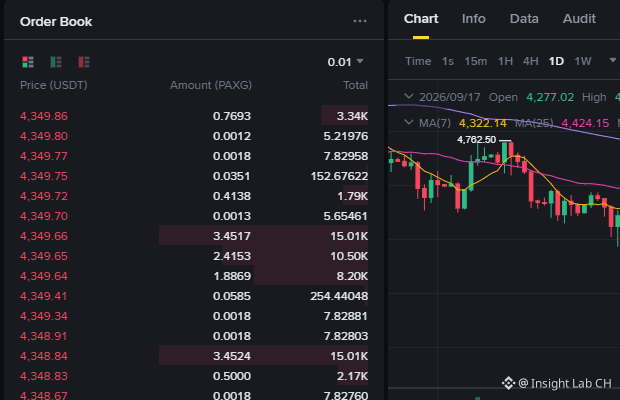
In the latest global financial market trading sessions, both safe-haven assets and the sovereign bond market saw notable fluctuations at the same time. The yield on UK 30-year government bonds plunged by 10 basis points to 5.76% during the day, marking the largest single-day decline since May last year. Meanwhile, the precious metals market saw strong buy-side momentum. Gold jumped by nearly $15 to $4,350 per troy ounce during the day, up 2.07%. Silver also rose in sync by $0.40, with its price climbing to $64.63 per troy ounce. The synchronized moves in these two representative assets clearly reflect that market funds are undergoing aggressive repricing.
The sharp drop in long-end government bond yields alongside the strong rally in precious metals is usually not a signal of healthy liquidity expansion. Instead, it reflects global funds adopting a defensive hedge as macro uncertainty intensifies and tail risks from stagflation increase. The sudden decline in long-term interest rates suggests the market has deep doubts about the growth momentum of the economy in the mid- to long term—potentially even pricing in recession risk ahead of time. At the same time, gold’s breakout rally highlights concerns that sovereign credit and fiat currencies are being eroded by inflation and geopolitical uncertainty. Compared with earlier market optimism about a soft landing, the asset-pricing trend right now more clearly indicates that safe-haven sentiment is rapidly heating up.
For traditional financial markets overall, this pattern of cross-asset linkage implies that risk appetite is contracting materially. Large swings in the bond yield curve often intensify liquidity differentiation across capital markets. Equity assets with rich valuations are likely to face valuation reassessment pressure. When gold and defensive fixed-income assets become the funds’ refuge, volatility in commodities and cyclical sectors will rise significantly, and any “crowding into defensive sectors” could further suppress the upside room for risk assets.
Translated to the cryptocurrency market, investors should remain highly cautious. Although some views attempt to classify crypto assets represented by $BTC as digital safe havens, in extreme liquidity conditions driven by macro risk aversion, crypto markets are often first categorized as high-beta risk assets. If risk-off sentiment leads to tighter external liquidity or triggers broad deleveraging, funds are more likely to withdraw from high-volatility assets and return to cash and hard defensive instruments. Faced with short-term macro headwinds, chasing prices blindly carries substantial pullback risk. Investors should be alert to downside pressure on crypto markets caused by liquidity being diverted away from them.
#Gold #BondYields #CryptoRisk
In the latest global financial market trading sessions, both safe-haven assets and the sovereign bond market saw notable fluctuations at the same time. The yield on UK 30-year government bonds plunged by 10 basis points to 5.76% during the day, marking the largest single-day decline since May last year. Meanwhile, the precious metals market saw strong buy-side momentum. Gold jumped by nearly $15 to $4,350 per troy ounce during the day, up 2.07%. Silver also rose in sync by $0.40, with its price climbing to $64.63 per troy ounce. The synchronized moves in these two representative assets clearly reflect that market funds are undergoing aggressive repricing.
The sharp drop in long-end government bond yields alongside the strong rally in precious metals is usually not a signal of healthy liquidity expansion. Instead, it reflects global funds adopting a defensive hedge as macro uncertainty intensifies and tail risks from stagflation increase. The sudden decline in long-term interest rates suggests the market has deep doubts about the growth momentum of the economy in the mid- to long term—potentially even pricing in recession risk ahead of time. At the same time, gold’s breakout rally highlights concerns that sovereign credit and fiat currencies are being eroded by inflation and geopolitical uncertainty. Compared with earlier market optimism about a soft landing, the asset-pricing trend right now more clearly indicates that safe-haven sentiment is rapidly heating up.
For traditional financial markets overall, this pattern of cross-asset linkage implies that risk appetite is contracting materially. Large swings in the bond yield curve often intensify liquidity differentiation across capital markets. Equity assets with rich valuations are likely to face valuation reassessment pressure. When gold and defensive fixed-income assets become the funds’ refuge, volatility in commodities and cyclical sectors will rise significantly, and any “crowding into defensive sectors” could further suppress the upside room for risk assets.
Translated to the cryptocurrency market, investors should remain highly cautious. Although some views attempt to classify crypto assets represented by $BTC as digital safe havens, in extreme liquidity conditions driven by macro risk aversion, crypto markets are often first categorized as high-beta risk assets. If risk-off sentiment leads to tighter external liquidity or triggers broad deleveraging, funds are more likely to withdraw from high-volatility assets and return to cash and hard defensive instruments. Faced with short-term macro headwinds, chasing prices blindly carries substantial pullback risk. Investors should be alert to downside pressure on crypto markets caused by liquidity being diverted away from them.
#Gold #BondYields #CryptoRisk
The sharp drop in long-end government bond yields alongside the strong rally in precious metals is usually not a signal of healthy liquidity expansion. Instead, it reflects global funds adopting a defensive hedge as macro uncertainty intensifies and tail risks from stagflation increase. The sudden decline in long-term interest rates suggests the market has deep doubts about the growth momentum of the economy in the mid- to long term—potentially even pricing in recession risk ahead of time. At the same time, gold’s breakout rally highlights concerns that sovereign credit and fiat currencies are being eroded by inflation and geopolitical uncertainty. Compared with earlier market optimism about a soft landing, the asset-pricing trend right now more clearly indicates that safe-haven sentiment is rapidly heating up.
For traditional financial markets overall, this pattern of cross-asset linkage implies that risk appetite is contracting materially. Large swings in the bond yield curve often intensify liquidity differentiation across capital markets. Equity assets with rich valuations are likely to face valuation reassessment pressure. When gold and defensive fixed-income assets become the funds’ refuge, volatility in commodities and cyclical sectors will rise significantly, and any “crowding into defensive sectors” could further suppress the upside room for risk assets.
Translated to the cryptocurrency market, investors should remain highly cautious. Although some views attempt to classify crypto assets represented by $BTC as digital safe havens, in extreme liquidity conditions driven by macro risk aversion, crypto markets are often first categorized as high-beta risk assets. If risk-off sentiment leads to tighter external liquidity or triggers broad deleveraging, funds are more likely to withdraw from high-volatility assets and return to cash and hard defensive instruments. Faced with short-term macro headwinds, chasing prices blindly carries substantial pullback risk. Investors should be alert to downside pressure on crypto markets caused by liquidity being diverted away from them.
#Gold #BondYields #CryptoRisk
10
·
--
Thursday’s global bond market saw a brief breathing space. After the U.S. Federal Reserve (Fed) made its latest rate hike announcement, the benchmark 10-year U.S. Treasury yield fell by 3 basis points to 4.99%, ending the prior streak of eight consecutive days of gains. At the same time, Australian government bond yields also dropped by 3 basis points, Japan’s government bond yields edged down by less than 1 basis point, and the broader macro market showed tentative signs of stabilizing after being tightly strained for many days. Traders’ attention is now shifting to the Bank of Japan’s interest-rate decision due on Friday.
This move is drawing attention because U.S. Treasury yields finally paused their advance when approaching a key psychological level. While the rate hike itself aligns with some institutions’ expectations of the Fed’s anti-inflation stance, there remains a very clear divergence in the market’s views on the subsequent policy path. Analysts noted that a single adjustment cannot fully dispel concerns about inflation and the fiscal pressures arising from a large volume of bond issuance. Although yields pulled back in the short term, the macro pressures facing the medium to long term have not been fully resolved.
Judging from feedback in traditional financial markets, the slight decline in U.S. Treasury yields temporarily eased pressure from soaring borrowing costs, and the sharp volatility in the dollar and global commodities also, to some extent, began to converge. However, against the backdrop of policy divergence across major central banks and long-end yields remaining at high levels, asset-pricing logic is still being reshaped. The shifting of capital between fixed-income and risk assets may become the norm going forward.
For the crypto market, changes in the macro liquidity environment directly affect in-market participants’ risk appetite. High-yield-range fluctuations keep major assets such as $BTC in a continued range-trading contest. Investor sentiment overall leans toward waiting and watching—neither overly panicked nor blindly chasing. Going forward, if global liquidity pressure can ease further, off-exchange capital may reassess the value of allocating to crypto assets again; but until the trend becomes clear, maintaining an objective perspective remains the choice of most people.
#Fed #BondYields #MacroEconomy
Thursday’s global bond market saw a brief breathing space. After the U.S. Federal Reserve (Fed) made its latest rate hike announcement, the benchmark 10-year U.S. Treasury yield fell by 3 basis points to 4.99%, ending the prior streak of eight consecutive days of gains. At the same time, Australian government bond yields also dropped by 3 basis points, Japan’s government bond yields edged down by less than 1 basis point, and the broader macro market showed tentative signs of stabilizing after being tightly strained for many days. Traders’ attention is now shifting to the Bank of Japan’s interest-rate decision due on Friday.
This move is drawing attention because U.S. Treasury yields finally paused their advance when approaching a key psychological level. While the rate hike itself aligns with some institutions’ expectations of the Fed’s anti-inflation stance, there remains a very clear divergence in the market’s views on the subsequent policy path. Analysts noted that a single adjustment cannot fully dispel concerns about inflation and the fiscal pressures arising from a large volume of bond issuance. Although yields pulled back in the short term, the macro pressures facing the medium to long term have not been fully resolved.
Judging from feedback in traditional financial markets, the slight decline in U.S. Treasury yields temporarily eased pressure from soaring borrowing costs, and the sharp volatility in the dollar and global commodities also, to some extent, began to converge. However, against the backdrop of policy divergence across major central banks and long-end yields remaining at high levels, asset-pricing logic is still being reshaped. The shifting of capital between fixed-income and risk assets may become the norm going forward.
For the crypto market, changes in the macro liquidity environment directly affect in-market participants’ risk appetite. High-yield-range fluctuations keep major assets such as $BTC in a continued range-trading contest. Investor sentiment overall leans toward waiting and watching—neither overly panicked nor blindly chasing. Going forward, if global liquidity pressure can ease further, off-exchange capital may reassess the value of allocating to crypto assets again; but until the trend becomes clear, maintaining an objective perspective remains the choice of most people.
#Fed #BondYields #MacroEconomy
This move is drawing attention because U.S. Treasury yields finally paused their advance when approaching a key psychological level. While the rate hike itself aligns with some institutions’ expectations of the Fed’s anti-inflation stance, there remains a very clear divergence in the market’s views on the subsequent policy path. Analysts noted that a single adjustment cannot fully dispel concerns about inflation and the fiscal pressures arising from a large volume of bond issuance. Although yields pulled back in the short term, the macro pressures facing the medium to long term have not been fully resolved.
Judging from feedback in traditional financial markets, the slight decline in U.S. Treasury yields temporarily eased pressure from soaring borrowing costs, and the sharp volatility in the dollar and global commodities also, to some extent, began to converge. However, against the backdrop of policy divergence across major central banks and long-end yields remaining at high levels, asset-pricing logic is still being reshaped. The shifting of capital between fixed-income and risk assets may become the norm going forward.
For the crypto market, changes in the macro liquidity environment directly affect in-market participants’ risk appetite. High-yield-range fluctuations keep major assets such as $BTC in a continued range-trading contest. Investor sentiment overall leans toward waiting and watching—neither overly panicked nor blindly chasing. Going forward, if global liquidity pressure can ease further, off-exchange capital may reassess the value of allocating to crypto assets again; but until the trend becomes clear, maintaining an objective perspective remains the choice of most people.
#Fed #BondYields #MacroEconomy
25
Thursday’s global bond market found a stabilizing opportunity after the Federal Reserve completed its latest interest-rate hike. Data showed the benchmark U.S. 10-year Treasury yield fell by 3 basis points to 4.99%. Not only did this successfully end the prior eight-day streak of gains, it also temporarily formed a localized double-top pattern just below the key 5.0% psychological resistance level. Treasury yields in Australia and Japan also edged down in tandem, reflecting signs of mean reversion in market sentiment following extreme panic.
From a technical structure and market positioning perspective, the U.S. 10-year Treasury yield failed to hold firmly above the 5% threshold, signaling a strong exhaustion of short-term bullish momentum. While some institutional analysts believe the still-high yields after the hiking cycle will continue to weigh on the market for a sustained period, for technical traders, a pullback from an extremely overbought zone often indicates that the most aggressive tightening-driven selloff wave has begun to form a temporary bottom. With bad news largely out of the way, buy-side demand is starting to return.
On the macro asset front, the spike-and-fall in Treasury yields directly eased upward pressure on the U.S. dollar index, creating a breathing space for global risk assets. Meanwhile, as investors wait for the Bank of Japan’s rate decision on Friday, cross-asset volatility indicators began to converge. The capital market’s most pessimistic expectations for liquidity conditions are being worked through, and risk appetite is showing signs of a bottoming repair.
For the crypto market, this is a positive technical confirmation signal. As suppression from the risk-free rate has temporarily eased, led by $BTC , risk assets are likely to mount a rebound under expectations of improved liquidity. If yields continue to trade in a range below 5%, off-exchange dip-buy orders are expected to accelerate into the crypto ecosystem, providing strong support for a potential upside breakout of key resistance levels.📈
#Fed #BondYields #MacroEconomics
Thursday’s global bond market found a stabilizing opportunity after the Federal Reserve completed its latest interest-rate hike. Data showed the benchmark U.S. 10-year Treasury yield fell by 3 basis points to 4.99%. Not only did this successfully end the prior eight-day streak of gains, it also temporarily formed a localized double-top pattern just below the key 5.0% psychological resistance level. Treasury yields in Australia and Japan also edged down in tandem, reflecting signs of mean reversion in market sentiment following extreme panic.
From a technical structure and market positioning perspective, the U.S. 10-year Treasury yield failed to hold firmly above the 5% threshold, signaling a strong exhaustion of short-term bullish momentum. While some institutional analysts believe the still-high yields after the hiking cycle will continue to weigh on the market for a sustained period, for technical traders, a pullback from an extremely overbought zone often indicates that the most aggressive tightening-driven selloff wave has begun to form a temporary bottom. With bad news largely out of the way, buy-side demand is starting to return.
On the macro asset front, the spike-and-fall in Treasury yields directly eased upward pressure on the U.S. dollar index, creating a breathing space for global risk assets. Meanwhile, as investors wait for the Bank of Japan’s rate decision on Friday, cross-asset volatility indicators began to converge. The capital market’s most pessimistic expectations for liquidity conditions are being worked through, and risk appetite is showing signs of a bottoming repair.
For the crypto market, this is a positive technical confirmation signal. As suppression from the risk-free rate has temporarily eased, led by $BTC , risk assets are likely to mount a rebound under expectations of improved liquidity. If yields continue to trade in a range below 5%, off-exchange dip-buy orders are expected to accelerate into the crypto ecosystem, providing strong support for a potential upside breakout of key resistance levels.📈
#Fed #BondYields #MacroEconomics
From a technical structure and market positioning perspective, the U.S. 10-year Treasury yield failed to hold firmly above the 5% threshold, signaling a strong exhaustion of short-term bullish momentum. While some institutional analysts believe the still-high yields after the hiking cycle will continue to weigh on the market for a sustained period, for technical traders, a pullback from an extremely overbought zone often indicates that the most aggressive tightening-driven selloff wave has begun to form a temporary bottom. With bad news largely out of the way, buy-side demand is starting to return.
On the macro asset front, the spike-and-fall in Treasury yields directly eased upward pressure on the U.S. dollar index, creating a breathing space for global risk assets. Meanwhile, as investors wait for the Bank of Japan’s rate decision on Friday, cross-asset volatility indicators began to converge. The capital market’s most pessimistic expectations for liquidity conditions are being worked through, and risk appetite is showing signs of a bottoming repair.
For the crypto market, this is a positive technical confirmation signal. As suppression from the risk-free rate has temporarily eased, led by $BTC , risk assets are likely to mount a rebound under expectations of improved liquidity. If yields continue to trade in a range below 5%, off-exchange dip-buy orders are expected to accelerate into the crypto ecosystem, providing strong support for a potential upside breakout of key resistance levels.📈
#Fed #BondYields #MacroEconomics
70
·
--
Recently, Mark Malek, Chief Analyst at financial services firm Siebert Financial, said in his analysis of macro market dynamics that the U.S. 10-year Treasury yield breaking above 5% is not a single isolated event. At the same time, Japan’s 10-year Treasury yield has also broken above 3% for the first time in nearly 30 years. A country that has long maintained a zero-interest-rate policy is now undergoing a shift, signaling a rare, synchronized rise in long-term government bond yields across major global developed economies.
From a macro perspective, the significance of this phenomenon lies in the fact that it reflects a fundamental change in global funding-cost logic. As the analysis notes, when long-term bond yields across major developed countries adjust across the board, the market no longer focuses only on assessing a specific country’s economic fundamentals or credit risk. Instead, it reassesses the risk premium associated with the act of “borrowing and lending long-term funds” on the 10-year horizon. The long-standing norm of cheap capital flooding over the past 15 years is being replaced by global coordinated tightening and repricing.
In traditional financial markets, the broad rise in the global long-end risk-free rate directly lifts the discount benchmarks for all asset classes. Prolonged high-level bond yields not only raise financing costs for global corporates and governments, but also continuously suppress equity market valuation multiples, prompting global capital to seek a new balance among various sovereign assets and the U.S. dollar.
For the cryptocurrency market, global risk-free yields remaining elevated mean liquidity conditions are still stringent. While risk assets such as Bitcoin have unique characteristics under an anti-inflation narrative, higher overall funding costs can still limit the rapid inflow of incremental liquidity. Currently, market sentiment is caught between macro rate pressures and the long-term value of decentralized assets. The subsequent trend still depends on further rebalancing of macro funding flows. $BTC
#BondYields #MacroEconomy #CryptoMarket
Recently, Mark Malek, Chief Analyst at financial services firm Siebert Financial, said in his analysis of macro market dynamics that the U.S. 10-year Treasury yield breaking above 5% is not a single isolated event. At the same time, Japan’s 10-year Treasury yield has also broken above 3% for the first time in nearly 30 years. A country that has long maintained a zero-interest-rate policy is now undergoing a shift, signaling a rare, synchronized rise in long-term government bond yields across major global developed economies.
From a macro perspective, the significance of this phenomenon lies in the fact that it reflects a fundamental change in global funding-cost logic. As the analysis notes, when long-term bond yields across major developed countries adjust across the board, the market no longer focuses only on assessing a specific country’s economic fundamentals or credit risk. Instead, it reassesses the risk premium associated with the act of “borrowing and lending long-term funds” on the 10-year horizon. The long-standing norm of cheap capital flooding over the past 15 years is being replaced by global coordinated tightening and repricing.
In traditional financial markets, the broad rise in the global long-end risk-free rate directly lifts the discount benchmarks for all asset classes. Prolonged high-level bond yields not only raise financing costs for global corporates and governments, but also continuously suppress equity market valuation multiples, prompting global capital to seek a new balance among various sovereign assets and the U.S. dollar.
For the cryptocurrency market, global risk-free yields remaining elevated mean liquidity conditions are still stringent. While risk assets such as Bitcoin have unique characteristics under an anti-inflation narrative, higher overall funding costs can still limit the rapid inflow of incremental liquidity. Currently, market sentiment is caught between macro rate pressures and the long-term value of decentralized assets. The subsequent trend still depends on further rebalancing of macro funding flows. $BTC
#BondYields #MacroEconomy #CryptoMarket
From a macro perspective, the significance of this phenomenon lies in the fact that it reflects a fundamental change in global funding-cost logic. As the analysis notes, when long-term bond yields across major developed countries adjust across the board, the market no longer focuses only on assessing a specific country’s economic fundamentals or credit risk. Instead, it reassesses the risk premium associated with the act of “borrowing and lending long-term funds” on the 10-year horizon. The long-standing norm of cheap capital flooding over the past 15 years is being replaced by global coordinated tightening and repricing.
In traditional financial markets, the broad rise in the global long-end risk-free rate directly lifts the discount benchmarks for all asset classes. Prolonged high-level bond yields not only raise financing costs for global corporates and governments, but also continuously suppress equity market valuation multiples, prompting global capital to seek a new balance among various sovereign assets and the U.S. dollar.
For the cryptocurrency market, global risk-free yields remaining elevated mean liquidity conditions are still stringent. While risk assets such as Bitcoin have unique characteristics under an anti-inflation narrative, higher overall funding costs can still limit the rapid inflow of incremental liquidity. Currently, market sentiment is caught between macro rate pressures and the long-term value of decentralized assets. The subsequent trend still depends on further rebalancing of macro funding flows. $BTC
#BondYields #MacroEconomy #CryptoMarket
12
According to the latest macro analysis by Siebert Financial analyst Mark Malek, the U.S. 10-year Treasury yield breaking through the key 5% resistance level is not an isolated event. At the same time, Japan’s 10-year Treasury yield has also broken above the 3% mark for the first time in nearly 30 years. Malek points out that this trend reflects a collective repricing of global sovereign bond yields: the extremely accommodative borrowing environment over the past 15 years, dominated by zero or even negative interest rates, is now entering a cyclical reversal.
From a macro framework perspective, the overall upward shift of the global risk-free yield curve is not simply a reflection of debt pressures in a single economy, but an inevitable stage in the normalization of long-term funding costs. When countries such as Japan, which have maintained ultra-loose policies for the long run, begin to pivot, it indicates that the global liquidity structure is establishing a new benchmark. Once a clear interest-rate floor is set, it actually removes the discount expectations caused by long-term policy opacity for long-horizon capital.
On the traditional asset side, although high-yield-range consolidation in Treasury markets temporarily lifts discount rates in the short term, when yields approach the technical oversold/overbought extremes, selling pressure in bonds often enters the tail end of bottoming. The U.S. dollar index and U.S. Treasury yields reaching interim peak levels in sync suggests that pricing in the traditional macro “safe-haven” segment has already fully incorporated the negative factors, creating a cushion of available liquidity for subsequent capital to return to risk markets.
For crypto assets, the remaking of liquidity pricing precisely creates an opportunity for bottom accumulation. As the yields on traditional fiat risk-free assets approach their limits, marginal capital starts to seek out instruments with high beta characteristics and decentralized anti-inflation capabilities. The current $BTC ’s downside-resilience in a high-interest-rate environment has already demonstrated very strong chip/positioning resilience. Once the yield indicators show a technical top divergence and pullback, the crypto market could be poised to experience a new round of robust liquidity-driven rebounds.
#BondYields #MacroEconomy #CryptoMarket
According to the latest macro analysis by Siebert Financial analyst Mark Malek, the U.S. 10-year Treasury yield breaking through the key 5% resistance level is not an isolated event. At the same time, Japan’s 10-year Treasury yield has also broken above the 3% mark for the first time in nearly 30 years. Malek points out that this trend reflects a collective repricing of global sovereign bond yields: the extremely accommodative borrowing environment over the past 15 years, dominated by zero or even negative interest rates, is now entering a cyclical reversal.
From a macro framework perspective, the overall upward shift of the global risk-free yield curve is not simply a reflection of debt pressures in a single economy, but an inevitable stage in the normalization of long-term funding costs. When countries such as Japan, which have maintained ultra-loose policies for the long run, begin to pivot, it indicates that the global liquidity structure is establishing a new benchmark. Once a clear interest-rate floor is set, it actually removes the discount expectations caused by long-term policy opacity for long-horizon capital.
On the traditional asset side, although high-yield-range consolidation in Treasury markets temporarily lifts discount rates in the short term, when yields approach the technical oversold/overbought extremes, selling pressure in bonds often enters the tail end of bottoming. The U.S. dollar index and U.S. Treasury yields reaching interim peak levels in sync suggests that pricing in the traditional macro “safe-haven” segment has already fully incorporated the negative factors, creating a cushion of available liquidity for subsequent capital to return to risk markets.
For crypto assets, the remaking of liquidity pricing precisely creates an opportunity for bottom accumulation. As the yields on traditional fiat risk-free assets approach their limits, marginal capital starts to seek out instruments with high beta characteristics and decentralized anti-inflation capabilities. The current $BTC ’s downside-resilience in a high-interest-rate environment has already demonstrated very strong chip/positioning resilience. Once the yield indicators show a technical top divergence and pullback, the crypto market could be poised to experience a new round of robust liquidity-driven rebounds.
#BondYields #MacroEconomy #CryptoMarket
From a macro framework perspective, the overall upward shift of the global risk-free yield curve is not simply a reflection of debt pressures in a single economy, but an inevitable stage in the normalization of long-term funding costs. When countries such as Japan, which have maintained ultra-loose policies for the long run, begin to pivot, it indicates that the global liquidity structure is establishing a new benchmark. Once a clear interest-rate floor is set, it actually removes the discount expectations caused by long-term policy opacity for long-horizon capital.
On the traditional asset side, although high-yield-range consolidation in Treasury markets temporarily lifts discount rates in the short term, when yields approach the technical oversold/overbought extremes, selling pressure in bonds often enters the tail end of bottoming. The U.S. dollar index and U.S. Treasury yields reaching interim peak levels in sync suggests that pricing in the traditional macro “safe-haven” segment has already fully incorporated the negative factors, creating a cushion of available liquidity for subsequent capital to return to risk markets.
For crypto assets, the remaking of liquidity pricing precisely creates an opportunity for bottom accumulation. As the yields on traditional fiat risk-free assets approach their limits, marginal capital starts to seek out instruments with high beta characteristics and decentralized anti-inflation capabilities. The current $BTC ’s downside-resilience in a high-interest-rate environment has already demonstrated very strong chip/positioning resilience. Once the yield indicators show a technical top divergence and pullback, the crypto market could be poised to experience a new round of robust liquidity-driven rebounds.
#BondYields #MacroEconomy #CryptoMarket
5
On Japan’s government bond market, yields across all tenors rose across the board today. Among them, the benchmark 10-year Japanese government bond yield reached 3.035%. The ultra-long end saw the 20-year JGB yield increase by 4 basis points to 3.925%, while the 30-year JGB yield also climbed by 4 basis points, hitting a high of 4.190%.
This yield movement reflects the market’s steadily strengthening expectations for the normalization of the Bank of Japan’s monetary policy. The sharp rise in long-end yields suggests investors are reassessing how urgently Japan needs to move away from its ultra-easy policy. Borrowing costs that had been suppressed previously by negative interest rates and yield curve control (YCC) are now undergoing a structural repricing. This shift could have far-reaching implications for global liquidity.
For traditional financial markets, higher Japanese government bond yields directly undermine the foundation of yen carry trades. As the cost of borrowing in yen rises, pressure for overseas assets to return home increases significantly. This not only could lift benchmark borrowing costs across global fixed-income markets, but also may exert a persistent “drain” effect on U.S. Treasuries and globally overvalued risk assets.
In the cryptocurrency space, a marginal tightening of macro liquidity conditions has historically been a potential negative. As global risk-free rates rise and leveraged arbitrage funds unwind, marginal buying interest in high-volatility assets may come under pressure. If the yen carry spread narrows further and triggers larger-scale asset liquidations, the crypto market in the near term—represented by $BTC —could face more severe liquidity stress and valuation correction risk.
#JapanBonds #BondYields #MacroEconomy
On Japan’s government bond market, yields across all tenors rose across the board today. Among them, the benchmark 10-year Japanese government bond yield reached 3.035%. The ultra-long end saw the 20-year JGB yield increase by 4 basis points to 3.925%, while the 30-year JGB yield also climbed by 4 basis points, hitting a high of 4.190%.
This yield movement reflects the market’s steadily strengthening expectations for the normalization of the Bank of Japan’s monetary policy. The sharp rise in long-end yields suggests investors are reassessing how urgently Japan needs to move away from its ultra-easy policy. Borrowing costs that had been suppressed previously by negative interest rates and yield curve control (YCC) are now undergoing a structural repricing. This shift could have far-reaching implications for global liquidity.
For traditional financial markets, higher Japanese government bond yields directly undermine the foundation of yen carry trades. As the cost of borrowing in yen rises, pressure for overseas assets to return home increases significantly. This not only could lift benchmark borrowing costs across global fixed-income markets, but also may exert a persistent “drain” effect on U.S. Treasuries and globally overvalued risk assets.
In the cryptocurrency space, a marginal tightening of macro liquidity conditions has historically been a potential negative. As global risk-free rates rise and leveraged arbitrage funds unwind, marginal buying interest in high-volatility assets may come under pressure. If the yen carry spread narrows further and triggers larger-scale asset liquidations, the crypto market in the near term—represented by $BTC —could face more severe liquidity stress and valuation correction risk.
#JapanBonds #BondYields #MacroEconomy
This yield movement reflects the market’s steadily strengthening expectations for the normalization of the Bank of Japan’s monetary policy. The sharp rise in long-end yields suggests investors are reassessing how urgently Japan needs to move away from its ultra-easy policy. Borrowing costs that had been suppressed previously by negative interest rates and yield curve control (YCC) are now undergoing a structural repricing. This shift could have far-reaching implications for global liquidity.
For traditional financial markets, higher Japanese government bond yields directly undermine the foundation of yen carry trades. As the cost of borrowing in yen rises, pressure for overseas assets to return home increases significantly. This not only could lift benchmark borrowing costs across global fixed-income markets, but also may exert a persistent “drain” effect on U.S. Treasuries and globally overvalued risk assets.
In the cryptocurrency space, a marginal tightening of macro liquidity conditions has historically been a potential negative. As global risk-free rates rise and leveraged arbitrage funds unwind, marginal buying interest in high-volatility assets may come under pressure. If the yen carry spread narrows further and triggers larger-scale asset liquidations, the crypto market in the near term—represented by $BTC —could face more severe liquidity stress and valuation correction risk.
#JapanBonds #BondYields #MacroEconomy
77

During the Asian trading session, Asian currencies weakened broadly as the benchmark 10-year US Treasury yield surged past the critical 5.0% mark before settling at 4.960%. According to Deutsche Bank analysts, the rally in yields is heavily driven by persistent inflation concerns, elevated oil prices, extensive government financing needs, and massive corporate bond issuance tied to AI investments.
Breaching the 5.0% threshold represents a crucial economic and psychological turning point. Yields holding above this level signal that broader financial conditions are tightening aggressively, challenging market expectations of near-term monetary easing and forcing a repricing of global debt.
Across traditional currency markets, the stronger dollar weighed heavily on regional peers, with USD rising 0.3% against the Japanese yen to 154.82 and gaining 0.45% against the South Korean won to 1353.14, while the AUD slipped 0.15% to 0.7126. This widening rate differential continues to pull capital toward high-yielding US assets, draining liquidity from emerging and risk markets.
For crypto assets, elevated risk-free yields create strong headwinds by raising the opportunity cost of holding non-yielding speculative assets. If $BTC and broader digital assets face sustained liquidity extraction, market volatility is likely to stay elevated until bond yields find stable footing. 📊
#USTreasury #GlobalMacro #BondYields #CurrencyMarkets
During the Asian trading session, Asian currencies weakened broadly as the benchmark 10-year US Treasury yield surged past the critical 5.0% mark before settling at 4.960%. According to Deutsche Bank analysts, the rally in yields is heavily driven by persistent inflation concerns, elevated oil prices, extensive government financing needs, and massive corporate bond issuance tied to AI investments.
Breaching the 5.0% threshold represents a crucial economic and psychological turning point. Yields holding above this level signal that broader financial conditions are tightening aggressively, challenging market expectations of near-term monetary easing and forcing a repricing of global debt.
Across traditional currency markets, the stronger dollar weighed heavily on regional peers, with USD rising 0.3% against the Japanese yen to 154.82 and gaining 0.45% against the South Korean won to 1353.14, while the AUD slipped 0.15% to 0.7126. This widening rate differential continues to pull capital toward high-yielding US assets, draining liquidity from emerging and risk markets.
For crypto assets, elevated risk-free yields create strong headwinds by raising the opportunity cost of holding non-yielding speculative assets. If $BTC and broader digital assets face sustained liquidity extraction, market volatility is likely to stay elevated until bond yields find stable footing. 📊
#USTreasury #GlobalMacro #BondYields #CurrencyMarkets
Breaching the 5.0% threshold represents a crucial economic and psychological turning point. Yields holding above this level signal that broader financial conditions are tightening aggressively, challenging market expectations of near-term monetary easing and forcing a repricing of global debt.
Across traditional currency markets, the stronger dollar weighed heavily on regional peers, with USD rising 0.3% against the Japanese yen to 154.82 and gaining 0.45% against the South Korean won to 1353.14, while the AUD slipped 0.15% to 0.7126. This widening rate differential continues to pull capital toward high-yielding US assets, draining liquidity from emerging and risk markets.
For crypto assets, elevated risk-free yields create strong headwinds by raising the opportunity cost of holding non-yielding speculative assets. If $BTC and broader digital assets face sustained liquidity extraction, market volatility is likely to stay elevated until bond yields find stable footing. 📊
#USTreasury #GlobalMacro #BondYields #CurrencyMarkets
3
·
--
U.S. Treasury Secretary Janet Yellen recently made it clear in a public statement that the recent rise in international oil prices is the core factor pushing up the yield on the United States’ 10-year Treasury notes.
This remark directly points to a key pain point in today’s macro market. Continued increases in oil prices may mean that the process of easing inflation could be hindered, and concerns that high interest rates may persist for longer are growing stronger. Previously, people were speculating about various factors behind the rise in long-end U.S. Treasury yields; this new guidance from the Treasury Secretary puts the logic of energy-driven inflation back in the spotlight.
For traditional financial markets, oil prices and Treasury yields rising at the same time often places some pressure on liquidity. Higher borrowing costs combined with potential support for the U.S. dollar index may lead U.S. equities and other risk assets to remain in a choppy consolidation in the short term, with market participants taking a cautious stance while waiting to see the next inflation data.
In the cryptocurrency market as well, major assets such as $BTC are also weighing the interplay between macro liquidity and their own fundamentals. In a high-yield-rate environment, the cost of capital is not low, but market participants are closely watching whether energy volatility will drive more capital toward an anti-inflation narrative. Overall, bullish and bearish views coexist, and it’s advisable to pay close attention to the subsequent guidance from commodities and macro data.
#JanetYellen #OilPrice #BondYields
U.S. Treasury Secretary Janet Yellen recently made it clear in a public statement that the recent rise in international oil prices is the core factor pushing up the yield on the United States’ 10-year Treasury notes.
This remark directly points to a key pain point in today’s macro market. Continued increases in oil prices may mean that the process of easing inflation could be hindered, and concerns that high interest rates may persist for longer are growing stronger. Previously, people were speculating about various factors behind the rise in long-end U.S. Treasury yields; this new guidance from the Treasury Secretary puts the logic of energy-driven inflation back in the spotlight.
For traditional financial markets, oil prices and Treasury yields rising at the same time often places some pressure on liquidity. Higher borrowing costs combined with potential support for the U.S. dollar index may lead U.S. equities and other risk assets to remain in a choppy consolidation in the short term, with market participants taking a cautious stance while waiting to see the next inflation data.
In the cryptocurrency market as well, major assets such as $BTC are also weighing the interplay between macro liquidity and their own fundamentals. In a high-yield-rate environment, the cost of capital is not low, but market participants are closely watching whether energy volatility will drive more capital toward an anti-inflation narrative. Overall, bullish and bearish views coexist, and it’s advisable to pay close attention to the subsequent guidance from commodities and macro data.
#JanetYellen #OilPrice #BondYields
This remark directly points to a key pain point in today’s macro market. Continued increases in oil prices may mean that the process of easing inflation could be hindered, and concerns that high interest rates may persist for longer are growing stronger. Previously, people were speculating about various factors behind the rise in long-end U.S. Treasury yields; this new guidance from the Treasury Secretary puts the logic of energy-driven inflation back in the spotlight.
For traditional financial markets, oil prices and Treasury yields rising at the same time often places some pressure on liquidity. Higher borrowing costs combined with potential support for the U.S. dollar index may lead U.S. equities and other risk assets to remain in a choppy consolidation in the short term, with market participants taking a cautious stance while waiting to see the next inflation data.
In the cryptocurrency market as well, major assets such as $BTC are also weighing the interplay between macro liquidity and their own fundamentals. In a high-yield-rate environment, the cost of capital is not low, but market participants are closely watching whether energy volatility will drive more capital toward an anti-inflation narrative. Overall, bullish and bearish views coexist, and it’s advisable to pay close attention to the subsequent guidance from commodities and macro data.
#JanetYellen #OilPrice #BondYields
395
U.S. Treasury Secretary Janet Yellen recently said that the sustained rise in international oil prices is the core reason for pushing up yields on 10-year U.S. Treasuries. The head of the Treasury directly blamed the bond market’s sudden fluctuations on energy prices, sending the market a clear latest signal of renewed inflationary pressure.
The significance of this statement lies in confirming the “second-round inflation” transmission chain that the market is most worried about: a surge in crude oil prices directly lifts inflation expectations, forcing the Federal Reserve to keep high interest rates for a longer period (“Higher for Longer”). It also shatters the blind optimism held by some investors that macro policy would quickly pivot toward easing; the macro fundamentals remain under severe strain.
In traditional financial markets, U.S. Treasury yields—once again—rise as the anchor for global asset pricing, which will directly lift the U.S. dollar index and weigh on valuations of risk assets such as equities. High borrowing costs further squeeze liquidity in the real economy, and heightened risk-aversion sentiment may prompt capital to return to traditional fixed-income markets. The tightening trend in financial conditions is intensifying.
As for the crypto market, $BTC and the entire digital-asset sector face dual pressure from liquidity constraints and valuation compression. Against the backdrop of risk-free yields staying elevated, institutional incremental inflow appetite has notably weakened. Investors should stay alert to risks of macro liquidity tightening and guard against further deep pullbacks in risk assets.
#JanetYellen #BondYields #OilPrices
U.S. Treasury Secretary Janet Yellen recently said that the sustained rise in international oil prices is the core reason for pushing up yields on 10-year U.S. Treasuries. The head of the Treasury directly blamed the bond market’s sudden fluctuations on energy prices, sending the market a clear latest signal of renewed inflationary pressure.
The significance of this statement lies in confirming the “second-round inflation” transmission chain that the market is most worried about: a surge in crude oil prices directly lifts inflation expectations, forcing the Federal Reserve to keep high interest rates for a longer period (“Higher for Longer”). It also shatters the blind optimism held by some investors that macro policy would quickly pivot toward easing; the macro fundamentals remain under severe strain.
In traditional financial markets, U.S. Treasury yields—once again—rise as the anchor for global asset pricing, which will directly lift the U.S. dollar index and weigh on valuations of risk assets such as equities. High borrowing costs further squeeze liquidity in the real economy, and heightened risk-aversion sentiment may prompt capital to return to traditional fixed-income markets. The tightening trend in financial conditions is intensifying.
As for the crypto market, $BTC and the entire digital-asset sector face dual pressure from liquidity constraints and valuation compression. Against the backdrop of risk-free yields staying elevated, institutional incremental inflow appetite has notably weakened. Investors should stay alert to risks of macro liquidity tightening and guard against further deep pullbacks in risk assets.
#JanetYellen #BondYields #OilPrices
The significance of this statement lies in confirming the “second-round inflation” transmission chain that the market is most worried about: a surge in crude oil prices directly lifts inflation expectations, forcing the Federal Reserve to keep high interest rates for a longer period (“Higher for Longer”). It also shatters the blind optimism held by some investors that macro policy would quickly pivot toward easing; the macro fundamentals remain under severe strain.
In traditional financial markets, U.S. Treasury yields—once again—rise as the anchor for global asset pricing, which will directly lift the U.S. dollar index and weigh on valuations of risk assets such as equities. High borrowing costs further squeeze liquidity in the real economy, and heightened risk-aversion sentiment may prompt capital to return to traditional fixed-income markets. The tightening trend in financial conditions is intensifying.
As for the crypto market, $BTC and the entire digital-asset sector face dual pressure from liquidity constraints and valuation compression. Against the backdrop of risk-free yields staying elevated, institutional incremental inflow appetite has notably weakened. Investors should stay alert to risks of macro liquidity tightening and guard against further deep pullbacks in risk assets.
#JanetYellen #BondYields #OilPrices
26

·
--
US Treasury Secretary Janet Yellen has just made a noteworthy remark, stating that the sharp surge in crude oil prices is the core factor driving the rise in yields on US government 10-year Treasury bonds in recent times.
Her statement reflects the deep concerns among financial officials about the risk of inflation returning. As energy costs rise, long-term inflation expectations are pushed higher, forcing the bond market to reprice the risk premium rather than simply expecting the Fed to ease monetary policy soon.
A strong jump in long-dated Treasury yields often boosts the US dollar as well, while directly putting pressure on the valuation of risk assets such as global stocks. Higher, more expensive capital costs also significantly tighten liquidity across the board.
For the crypto market, a backdrop of Treasury yields staying elevated makes institutional money more cautious when allocating to highly volatile assets such as $BTC. Investors should closely monitor crude oil price movements, as this is a macro variable guiding short- and medium-term capital flows and sentiment.
#JanetYellen #BondYields #MacroEconomy
US Treasury Secretary Janet Yellen has just made a noteworthy remark, stating that the sharp surge in crude oil prices is the core factor driving the rise in yields on US government 10-year Treasury bonds in recent times.
Her statement reflects the deep concerns among financial officials about the risk of inflation returning. As energy costs rise, long-term inflation expectations are pushed higher, forcing the bond market to reprice the risk premium rather than simply expecting the Fed to ease monetary policy soon.
A strong jump in long-dated Treasury yields often boosts the US dollar as well, while directly putting pressure on the valuation of risk assets such as global stocks. Higher, more expensive capital costs also significantly tighten liquidity across the board.
For the crypto market, a backdrop of Treasury yields staying elevated makes institutional money more cautious when allocating to highly volatile assets such as $BTC . Investors should closely monitor crude oil price movements, as this is a macro variable guiding short- and medium-term capital flows and sentiment.
#JanetYellen #BondYields #MacroEconomy
Her statement reflects the deep concerns among financial officials about the risk of inflation returning. As energy costs rise, long-term inflation expectations are pushed higher, forcing the bond market to reprice the risk premium rather than simply expecting the Fed to ease monetary policy soon.
A strong jump in long-dated Treasury yields often boosts the US dollar as well, while directly putting pressure on the valuation of risk assets such as global stocks. Higher, more expensive capital costs also significantly tighten liquidity across the board.
For the crypto market, a backdrop of Treasury yields staying elevated makes institutional money more cautious when allocating to highly volatile assets such as $BTC . Investors should closely monitor crude oil price movements, as this is a macro variable guiding short- and medium-term capital flows and sentiment.
#JanetYellen #BondYields #MacroEconomy
208
·
--
US Treasury Secretary Janet Yellen will attend a hearing before the House Financial Services Committee at 10:00 PM tonight, focusing on the annual report on the international financial system. This is an event drawing particular attention from investors worldwide as it takes place right when yields on US government 10-year bonds have surpassed the key 5% threshold.
Market attention will center on messages related to the size of bond issuance, debt buyback plans, and views on the budget deficit. With yields staying in the multi-year peak zone, they are exerting enormous pressure on borrowing costs for both the government and businesses. Therefore, any adjustment in the Treasury’s debt issuance strategy is highly directional.
If Ms. Yellen sends signals prioritizing deficit control and easing the supply pressure of long-term bonds, the upward momentum in yields could cool off, giving a measure of relief to the stock market and gold. Conversely, further loosening of fiscal policy or accepting a prolonged high-interest-rate environment would push the USD Index and bond yields higher, creating broad-based selling pressure.
For the crypto market, especially $BTC, macro liquidity is always the decisive factor in medium-term wave movements. Pressure from high bond yields is pulling away cheaper capital from risk assets. A more dovish signal from the US Treasury would be the necessary catalyst to reactivate short-term inflows.
#JanetYellen #BondYields #MacroEconomics #CryptoLiquidity
US Treasury Secretary Janet Yellen will attend a hearing before the House Financial Services Committee at 10:00 PM tonight, focusing on the annual report on the international financial system. This is an event drawing particular attention from investors worldwide as it takes place right when yields on US government 10-year bonds have surpassed the key 5% threshold.
Market attention will center on messages related to the size of bond issuance, debt buyback plans, and views on the budget deficit. With yields staying in the multi-year peak zone, they are exerting enormous pressure on borrowing costs for both the government and businesses. Therefore, any adjustment in the Treasury’s debt issuance strategy is highly directional.
If Ms. Yellen sends signals prioritizing deficit control and easing the supply pressure of long-term bonds, the upward momentum in yields could cool off, giving a measure of relief to the stock market and gold. Conversely, further loosening of fiscal policy or accepting a prolonged high-interest-rate environment would push the USD Index and bond yields higher, creating broad-based selling pressure.
For the crypto market, especially $BTC , macro liquidity is always the decisive factor in medium-term wave movements. Pressure from high bond yields is pulling away cheaper capital from risk assets. A more dovish signal from the US Treasury would be the necessary catalyst to reactivate short-term inflows.
#JanetYellen #BondYields #MacroEconomics #CryptoLiquidity
Market attention will center on messages related to the size of bond issuance, debt buyback plans, and views on the budget deficit. With yields staying in the multi-year peak zone, they are exerting enormous pressure on borrowing costs for both the government and businesses. Therefore, any adjustment in the Treasury’s debt issuance strategy is highly directional.
If Ms. Yellen sends signals prioritizing deficit control and easing the supply pressure of long-term bonds, the upward momentum in yields could cool off, giving a measure of relief to the stock market and gold. Conversely, further loosening of fiscal policy or accepting a prolonged high-interest-rate environment would push the USD Index and bond yields higher, creating broad-based selling pressure.
For the crypto market, especially $BTC , macro liquidity is always the decisive factor in medium-term wave movements. Pressure from high bond yields is pulling away cheaper capital from risk assets. A more dovish signal from the US Treasury would be the necessary catalyst to reactivate short-term inflows.
#JanetYellen #BondYields #MacroEconomics #CryptoLiquidity
137
On Tuesday, European Central Bank policymaker Mulan publicly commented on the current dynamics in the bond market. He made it clear that the recent sustained rise in long-term bond yields is driven primarily by an increase in the supply of government and corporate bonds, along with a renewed uptick in inflation expectations. Although he noted that the French Ministry of Finance has not yet faced any financing difficulties in its recent issuance, he also issued a warning urging governments across countries to take practical and credible measures to reduce fiscal deficits.
These remarks reveal, in a profound way, the structural pressures at the macro level. As sovereign bond supply becomes flooded amid fiscal expansion across major global economies, the bond market is demanding higher term premia. Previously, overly optimistic expectations for central bank rate cuts are now being confronted by two hard realities—sticky inflation and the swelling of sovereign debt. If fiscal deficits cannot be effectively controlled, elevated long-end interest rates may evolve into the new normal of borrowing-cost pressure.
From the perspective of traditional financial markets, the rise in long-end yields directly suppresses the valuation center of risk assets. The firmness of US and Europe sovereign bond yields not only reinforces the appeal of the US dollar and high-yield sovereign assets, but also exerts a continuous drain effect on global liquidity. Against this backdrop, repricing pressure on equities—especially high-valuation growth segments—has increased significantly, and the macro liquidity environment is unlikely to see any substantial easing.
For the crypto market, this trend sends a strong cautionary signal. Persistently high long-end rates mean that the risk-free yield remains at an attractive level, which clearly dampens institutions’ willingness to rotate into high-beta risk assets represented by $BTC . In an environment where inflation expectations have not fully settled and risks related to global sovereign debt continue to accumulate, the crypto market may face a longer cycle of liquidity tightening stress, and the risk of betting blindly on a loosening scenario is rising.
#ECB #BondYields #Inflation
On Tuesday, European Central Bank policymaker Mulan publicly commented on the current dynamics in the bond market. He made it clear that the recent sustained rise in long-term bond yields is driven primarily by an increase in the supply of government and corporate bonds, along with a renewed uptick in inflation expectations. Although he noted that the French Ministry of Finance has not yet faced any financing difficulties in its recent issuance, he also issued a warning urging governments across countries to take practical and credible measures to reduce fiscal deficits.
These remarks reveal, in a profound way, the structural pressures at the macro level. As sovereign bond supply becomes flooded amid fiscal expansion across major global economies, the bond market is demanding higher term premia. Previously, overly optimistic expectations for central bank rate cuts are now being confronted by two hard realities—sticky inflation and the swelling of sovereign debt. If fiscal deficits cannot be effectively controlled, elevated long-end interest rates may evolve into the new normal of borrowing-cost pressure.
From the perspective of traditional financial markets, the rise in long-end yields directly suppresses the valuation center of risk assets. The firmness of US and Europe sovereign bond yields not only reinforces the appeal of the US dollar and high-yield sovereign assets, but also exerts a continuous drain effect on global liquidity. Against this backdrop, repricing pressure on equities—especially high-valuation growth segments—has increased significantly, and the macro liquidity environment is unlikely to see any substantial easing.
For the crypto market, this trend sends a strong cautionary signal. Persistently high long-end rates mean that the risk-free yield remains at an attractive level, which clearly dampens institutions’ willingness to rotate into high-beta risk assets represented by $BTC . In an environment where inflation expectations have not fully settled and risks related to global sovereign debt continue to accumulate, the crypto market may face a longer cycle of liquidity tightening stress, and the risk of betting blindly on a loosening scenario is rising.
#ECB #BondYields #Inflation
These remarks reveal, in a profound way, the structural pressures at the macro level. As sovereign bond supply becomes flooded amid fiscal expansion across major global economies, the bond market is demanding higher term premia. Previously, overly optimistic expectations for central bank rate cuts are now being confronted by two hard realities—sticky inflation and the swelling of sovereign debt. If fiscal deficits cannot be effectively controlled, elevated long-end interest rates may evolve into the new normal of borrowing-cost pressure.
From the perspective of traditional financial markets, the rise in long-end yields directly suppresses the valuation center of risk assets. The firmness of US and Europe sovereign bond yields not only reinforces the appeal of the US dollar and high-yield sovereign assets, but also exerts a continuous drain effect on global liquidity. Against this backdrop, repricing pressure on equities—especially high-valuation growth segments—has increased significantly, and the macro liquidity environment is unlikely to see any substantial easing.
For the crypto market, this trend sends a strong cautionary signal. Persistently high long-end rates mean that the risk-free yield remains at an attractive level, which clearly dampens institutions’ willingness to rotate into high-beta risk assets represented by $BTC . In an environment where inflation expectations have not fully settled and risks related to global sovereign debt continue to accumulate, the crypto market may face a longer cycle of liquidity tightening stress, and the risk of betting blindly on a loosening scenario is rising.
#ECB #BondYields #Inflation
59
·
--
On Tuesday, Mulan, a member of the European Central Bank (ECB), made notable comments about the recent rise in yields on long-term government bonds in the euro area. He pointed out that the core driver pushing yields higher is the increased supply of debt issuance by governments and corporates, along with a rebound in inflation expectations, and called on countries to take measures to substantially reduce budget deficits.
This comes amid heightened pressure in Europe’s financial markets stemming from the public-debt challenge and fiscal discipline. The ECB officials’ confirmation that inflation expectations are returning indicates that monetary policy pressure has not fully cooled, forcing governments to be more cautious in their debt-spending plans.
For financial markets overall, keeping long-term government bond yields elevated will continue to weigh on equity valuations and raise global borrowing costs. The euro and the U.S. dollar could see differentiation in capital flows as investors’ risk appetite shifts toward defensive assets with more attractive fixed yields.
As for the crypto market, an environment of rising sovereign-debt yields often puts pressure on net liquidity outflows from high-risk speculative channels. $BTC and the rest of the market may face periods of accumulation or short-term corrections as institutional cash flow maintains a cautious stance ahead of macro developments.
#ECB #BondYields #MacroEconomy
On Tuesday, Mulan, a member of the European Central Bank (ECB), made notable comments about the recent rise in yields on long-term government bonds in the euro area. He pointed out that the core driver pushing yields higher is the increased supply of debt issuance by governments and corporates, along with a rebound in inflation expectations, and called on countries to take measures to substantially reduce budget deficits.
This comes amid heightened pressure in Europe’s financial markets stemming from the public-debt challenge and fiscal discipline. The ECB officials’ confirmation that inflation expectations are returning indicates that monetary policy pressure has not fully cooled, forcing governments to be more cautious in their debt-spending plans.
For financial markets overall, keeping long-term government bond yields elevated will continue to weigh on equity valuations and raise global borrowing costs. The euro and the U.S. dollar could see differentiation in capital flows as investors’ risk appetite shifts toward defensive assets with more attractive fixed yields.
As for the crypto market, an environment of rising sovereign-debt yields often puts pressure on net liquidity outflows from high-risk speculative channels. $BTC and the rest of the market may face periods of accumulation or short-term corrections as institutional cash flow maintains a cautious stance ahead of macro developments.
#ECB #BondYields #MacroEconomy
This comes amid heightened pressure in Europe’s financial markets stemming from the public-debt challenge and fiscal discipline. The ECB officials’ confirmation that inflation expectations are returning indicates that monetary policy pressure has not fully cooled, forcing governments to be more cautious in their debt-spending plans.
For financial markets overall, keeping long-term government bond yields elevated will continue to weigh on equity valuations and raise global borrowing costs. The euro and the U.S. dollar could see differentiation in capital flows as investors’ risk appetite shifts toward defensive assets with more attractive fixed yields.
As for the crypto market, an environment of rising sovereign-debt yields often puts pressure on net liquidity outflows from high-risk speculative channels. $BTC and the rest of the market may face periods of accumulation or short-term corrections as institutional cash flow maintains a cautious stance ahead of macro developments.
#ECB #BondYields #MacroEconomy
69
European bond yields saw dramatic fluctuations. During the trading day, the German 10-year government bond yield—serving as a benchmark for Europe—rose sharply by 40 basis points to 3.5723%, immediately setting a new record high since June 2009. This key indicator breaking the level reached in the past fifteen years shows that Europe’s core sovereign debt market is under heavy sell-off pressure, with interest-rate expectations undergoing a significant repricing.
The main logic behind this move is that market pricing of the European Central Bank maintaining a prolonged high-interest-rate environment has become increasingly firm. Even though long-term capital expenditures in sectors such as technology are still moving forward, macro factors—persistent inflation resilience and pressure from sovereign debt supply—are forcing the yield center of gravity higher. Earlier expectations for an overly rapid rate cut clearly proved too optimistic. Benchmark yields hitting their highest level in more than a decade indicates that global capital costs will likely remain high for a considerable period.
From the perspective of traditional financial markets, the surge in Germany’s benchmark yield will directly lift borrowing costs across Europe and even globally, further weighing on valuation room for risk assets such as stocks. With the risk-free rate staying elevated, the trend of liquidity shifting out of high-valuation growth segments is accelerating. Meanwhile, widening credit spreads face the risk of further deterioration, and the macro liquidity environment is in a phase of genuine tightening.
For the cryptocurrency market, the strong performance of Europe’s benchmark rates is a macro headwind worth watching closely. When traditional fixed-income assets can deliver a rare, risk-free return seen over the past decade or more, the spillover of institutional capital into high-volatility risk assets such as crypto will be severely suppressed. If global liquidity continues to come under pressure, core assets such as $BTC may face severe tests in the near term, including liquidity depletion and valuation stress.
#BondYields #MacroEconomy #Eurozone
European bond yields saw dramatic fluctuations. During the trading day, the German 10-year government bond yield—serving as a benchmark for Europe—rose sharply by 40 basis points to 3.5723%, immediately setting a new record high since June 2009. This key indicator breaking the level reached in the past fifteen years shows that Europe’s core sovereign debt market is under heavy sell-off pressure, with interest-rate expectations undergoing a significant repricing.
The main logic behind this move is that market pricing of the European Central Bank maintaining a prolonged high-interest-rate environment has become increasingly firm. Even though long-term capital expenditures in sectors such as technology are still moving forward, macro factors—persistent inflation resilience and pressure from sovereign debt supply—are forcing the yield center of gravity higher. Earlier expectations for an overly rapid rate cut clearly proved too optimistic. Benchmark yields hitting their highest level in more than a decade indicates that global capital costs will likely remain high for a considerable period.
From the perspective of traditional financial markets, the surge in Germany’s benchmark yield will directly lift borrowing costs across Europe and even globally, further weighing on valuation room for risk assets such as stocks. With the risk-free rate staying elevated, the trend of liquidity shifting out of high-valuation growth segments is accelerating. Meanwhile, widening credit spreads face the risk of further deterioration, and the macro liquidity environment is in a phase of genuine tightening.
For the cryptocurrency market, the strong performance of Europe’s benchmark rates is a macro headwind worth watching closely. When traditional fixed-income assets can deliver a rare, risk-free return seen over the past decade or more, the spillover of institutional capital into high-volatility risk assets such as crypto will be severely suppressed. If global liquidity continues to come under pressure, core assets such as $BTC may face severe tests in the near term, including liquidity depletion and valuation stress.
#BondYields #MacroEconomy #Eurozone
The main logic behind this move is that market pricing of the European Central Bank maintaining a prolonged high-interest-rate environment has become increasingly firm. Even though long-term capital expenditures in sectors such as technology are still moving forward, macro factors—persistent inflation resilience and pressure from sovereign debt supply—are forcing the yield center of gravity higher. Earlier expectations for an overly rapid rate cut clearly proved too optimistic. Benchmark yields hitting their highest level in more than a decade indicates that global capital costs will likely remain high for a considerable period.
From the perspective of traditional financial markets, the surge in Germany’s benchmark yield will directly lift borrowing costs across Europe and even globally, further weighing on valuation room for risk assets such as stocks. With the risk-free rate staying elevated, the trend of liquidity shifting out of high-valuation growth segments is accelerating. Meanwhile, widening credit spreads face the risk of further deterioration, and the macro liquidity environment is in a phase of genuine tightening.
For the cryptocurrency market, the strong performance of Europe’s benchmark rates is a macro headwind worth watching closely. When traditional fixed-income assets can deliver a rare, risk-free return seen over the past decade or more, the spillover of institutional capital into high-volatility risk assets such as crypto will be severely suppressed. If global liquidity continues to come under pressure, core assets such as $BTC may face severe tests in the near term, including liquidity depletion and valuation stress.
#BondYields #MacroEconomy #Eurozone
6
European bond yields surged sharply, with Germany’s 10-year benchmark government bond yield rising 4 basis points during European trading hours to 3.5723%, marking a new technical high not seen since June 2009. This key risk-free yield has broken through a historical resistance zone that lasted more than a decade, directly reflecting the market’s repricing of the European Central Bank’s continued liquidity tightening and sticky inflation.
From both a technical and macro perspective, the breakout in benchmark yields to a more than ten-year high means that selling pressure in fixed-income assets is accelerating. Although some capital worries that tightening pressure will weigh on economic growth, views from large-scale technology allocation and strategists at AllianceBernstein suggest that long-term capex cycles of more than 10 years in areas such as AI computing power and cloud infrastructure have not been disturbed by short-term noise, and the capital resilience of real-world industries and high-growth sectors remains strong.
Traditional financial markets have reacted sensitively to this breakout. Pressure on bond prices has pushed borrowing costs higher, and foreign exchange and equity markets are digesting the valuation discount brought by this rate re-pricing. However, when long-end bond yields accelerate toward a peak and hit multi-year resistance, it often signals that the rate-hiking cycle is entering its final sprint, and the subsequent liquidity inflection is gradually building momentum, creating a medium- to long-term window for valuation recovery in risk assets.
For the cryptocurrency market, $BTC and mainstream risk assets have shown technical support after a short-term macro liquidity disturbance. Signals that sovereign bond yields are peaking usually push capital seeking safety and excess returns back into the on-chain ecosystem. As the relative attractiveness of traditional bonds marginally declines over a long cycle, the technical pullback in crypto assets instead provides an excellent liquidity reservoir and accumulation opportunity for medium- to long-term bulls. 📊
#BondYields #MacroEconomics #CryptoMarket
European bond yields surged sharply, with Germany’s 10-year benchmark government bond yield rising 4 basis points during European trading hours to 3.5723%, marking a new technical high not seen since June 2009. This key risk-free yield has broken through a historical resistance zone that lasted more than a decade, directly reflecting the market’s repricing of the European Central Bank’s continued liquidity tightening and sticky inflation.
From both a technical and macro perspective, the breakout in benchmark yields to a more than ten-year high means that selling pressure in fixed-income assets is accelerating. Although some capital worries that tightening pressure will weigh on economic growth, views from large-scale technology allocation and strategists at AllianceBernstein suggest that long-term capex cycles of more than 10 years in areas such as AI computing power and cloud infrastructure have not been disturbed by short-term noise, and the capital resilience of real-world industries and high-growth sectors remains strong.
Traditional financial markets have reacted sensitively to this breakout. Pressure on bond prices has pushed borrowing costs higher, and foreign exchange and equity markets are digesting the valuation discount brought by this rate re-pricing. However, when long-end bond yields accelerate toward a peak and hit multi-year resistance, it often signals that the rate-hiking cycle is entering its final sprint, and the subsequent liquidity inflection is gradually building momentum, creating a medium- to long-term window for valuation recovery in risk assets.
For the cryptocurrency market, $BTC and mainstream risk assets have shown technical support after a short-term macro liquidity disturbance. Signals that sovereign bond yields are peaking usually push capital seeking safety and excess returns back into the on-chain ecosystem. As the relative attractiveness of traditional bonds marginally declines over a long cycle, the technical pullback in crypto assets instead provides an excellent liquidity reservoir and accumulation opportunity for medium- to long-term bulls. 📊
#BondYields #MacroEconomics #CryptoMarket
From both a technical and macro perspective, the breakout in benchmark yields to a more than ten-year high means that selling pressure in fixed-income assets is accelerating. Although some capital worries that tightening pressure will weigh on economic growth, views from large-scale technology allocation and strategists at AllianceBernstein suggest that long-term capex cycles of more than 10 years in areas such as AI computing power and cloud infrastructure have not been disturbed by short-term noise, and the capital resilience of real-world industries and high-growth sectors remains strong.
Traditional financial markets have reacted sensitively to this breakout. Pressure on bond prices has pushed borrowing costs higher, and foreign exchange and equity markets are digesting the valuation discount brought by this rate re-pricing. However, when long-end bond yields accelerate toward a peak and hit multi-year resistance, it often signals that the rate-hiking cycle is entering its final sprint, and the subsequent liquidity inflection is gradually building momentum, creating a medium- to long-term window for valuation recovery in risk assets.
For the cryptocurrency market, $BTC and mainstream risk assets have shown technical support after a short-term macro liquidity disturbance. Signals that sovereign bond yields are peaking usually push capital seeking safety and excess returns back into the on-chain ecosystem. As the relative attractiveness of traditional bonds marginally declines over a long cycle, the technical pullback in crypto assets instead provides an excellent liquidity reservoir and accumulation opportunity for medium- to long-term bulls. 📊
#BondYields #MacroEconomics #CryptoMarket
11
·
--
The European bond market has just recorded a sharp fluctuation as the German government bond yield with a 10-year maturity increased by 40 basis points, reaching 3.5723%. This is the highest yield level for the region's debt benchmark (Eurozone) since June 2009.
This development is especially important because German bonds play the role of a risk pricing reference asset for the entire European financial market. The 15-year fixed-income yield reflects expectations for a persistently higher yield environment, lasting longer than what the European Central Bank (ECB) projects, amid the backdrop of inflation pressures that cannot yet be fully cooled to the target level.
The jump in yields puts direct pressure on global stock markets and increases financing costs for businesses. The USD and EUR exchange rates may swing sharply due to interest-rate differentials, while capital seeking “safe-haven” tends to favor the bond market instead of other traditional investment channels.
For crypto, rising interest-rate pressure in major economies continually creates barriers for riskier capital such as Bitcoin and Altcoins ($BTC and Altcoin). Low macro liquidity—meaning new money flowing into the market is more limited—causes crypto prices to face short-term adjustment shocks before new growth momentum is found.
#Eurozone #BondYields #ECB
The European bond market has just recorded a sharp fluctuation as the German government bond yield with a 10-year maturity increased by 40 basis points, reaching 3.5723%. This is the highest yield level for the region's debt benchmark (Eurozone) since June 2009.
This development is especially important because German bonds play the role of a risk pricing reference asset for the entire European financial market. The 15-year fixed-income yield reflects expectations for a persistently higher yield environment, lasting longer than what the European Central Bank (ECB) projects, amid the backdrop of inflation pressures that cannot yet be fully cooled to the target level.
The jump in yields puts direct pressure on global stock markets and increases financing costs for businesses. The USD and EUR exchange rates may swing sharply due to interest-rate differentials, while capital seeking “safe-haven” tends to favor the bond market instead of other traditional investment channels.
For crypto, rising interest-rate pressure in major economies continually creates barriers for riskier capital such as Bitcoin and Altcoins ($BTC and Altcoin). Low macro liquidity—meaning new money flowing into the market is more limited—causes crypto prices to face short-term adjustment shocks before new growth momentum is found.
#Eurozone #BondYields #ECB
This development is especially important because German bonds play the role of a risk pricing reference asset for the entire European financial market. The 15-year fixed-income yield reflects expectations for a persistently higher yield environment, lasting longer than what the European Central Bank (ECB) projects, amid the backdrop of inflation pressures that cannot yet be fully cooled to the target level.
The jump in yields puts direct pressure on global stock markets and increases financing costs for businesses. The USD and EUR exchange rates may swing sharply due to interest-rate differentials, while capital seeking “safe-haven” tends to favor the bond market instead of other traditional investment channels.
For crypto, rising interest-rate pressure in major economies continually creates barriers for riskier capital such as Bitcoin and Altcoins ($BTC and Altcoin). Low macro liquidity—meaning new money flowing into the market is more limited—causes crypto prices to face short-term adjustment shocks before new growth momentum is found.
#Eurozone #BondYields #ECB
1
Log in to explore more content
Join global crypto users on Binance Square
⚡️ Get latest and useful information about crypto.
💬 Trusted by the world’s largest crypto exchange.
👍 Discover real insights from verified creators.
Email / Phone number
Trending Topics
1
#AIStocksWhatNext
1.1M views
7,163 Discussing
2
#BitcoinRejectedAt$87,300Twice
0 views
0 Discussing
3
#BCHJumps28%OnCMEFuturesListing
29,137 views
731 Discussing
4
#WallStreetEarningsRevisionsTurnBearish
20,968 views
529 Discussing
5
#DollarIndexReclaims101
17,669 views
463 Discussing
6
#21SharesLaunchesEuropesFirstZcashETP
59,334 views
1,241 Discussing
7
#CardanoJoinsX402PaymentStandard
36,013 views
878 Discussing
8
#BitcoinTops$87KAtEightMonthHigh
15,148 views
136 Discussing
9
#ZECBreaksAbove$1600AtRecordHigh
10,545 views
110 Discussing
10
#BitwiseNEARStakingETPAssetsTop$100M
54,928 views
123 Discussing