
#lng
lng
31,128 views
177 Discussing
Hot
Latest

Qatar's Minister of State for Energy Affairs, Saad Sherida Al-Kaabi, officially stated that while some LNG operations could resume within weeks once the Strait of Hormuz reopens, significant damage from Iranian strikes will restrict national output for years. The attacks on the Ras Laffan export hub took roughly 17% of its capacity offline, with full repairs not expected until Q1 2027 and two damaged LNG trains requiring up to three years to recover.
This prolonged outage marks a massive structural shock to the global energy supply chain. As one of the top three LNG exporters alongside the US and Australia, Qatar's prolonged capacity constraints mean baseline energy prices will remain elevated far longer than markets previously anticipated, delaying the resolution of global supply deficits.
Sustained high natural gas costs threaten to reignite broader headline inflation across major economies, particularly in Europe and Asia. This sticky inflation environment will likely pressure central banks to maintain restrictive interest rate policies for longer, supporting the US Dollar and elevating bond yields across the curve.
For crypto markets, a prolonged 'higher-for-longer' rate environment driven by energy-fueled inflation diminishes global liquidity. As capital stays defensive in risk-off assets, $BTC and broader altcoins may experience persistent headwinds and choppy price action until clear geopolitical de-escalation materializes. ⚡
#LNG #Geopolitics #EnergyCrisis
Qatar's Minister of State for Energy Affairs, Saad Sherida Al-Kaabi, officially stated that while some LNG operations could resume within weeks once the Strait of Hormuz reopens, significant damage from Iranian strikes will restrict national output for years. The attacks on the Ras Laffan export hub took roughly 17% of its capacity offline, with full repairs not expected until Q1 2027 and two damaged LNG trains requiring up to three years to recover.
This prolonged outage marks a massive structural shock to the global energy supply chain. As one of the top three LNG exporters alongside the US and Australia, Qatar's prolonged capacity constraints mean baseline energy prices will remain elevated far longer than markets previously anticipated, delaying the resolution of global supply deficits.
Sustained high natural gas costs threaten to reignite broader headline inflation across major economies, particularly in Europe and Asia. This sticky inflation environment will likely pressure central banks to maintain restrictive interest rate policies for longer, supporting the US Dollar and elevating bond yields across the curve.
For crypto markets, a prolonged 'higher-for-longer' rate environment driven by energy-fueled inflation diminishes global liquidity. As capital stays defensive in risk-off assets, $BTC and broader altcoins may experience persistent headwinds and choppy price action until clear geopolitical de-escalation materializes. ⚡
#LNG #Geopolitics #EnergyCrisis
This prolonged outage marks a massive structural shock to the global energy supply chain. As one of the top three LNG exporters alongside the US and Australia, Qatar's prolonged capacity constraints mean baseline energy prices will remain elevated far longer than markets previously anticipated, delaying the resolution of global supply deficits.
Sustained high natural gas costs threaten to reignite broader headline inflation across major economies, particularly in Europe and Asia. This sticky inflation environment will likely pressure central banks to maintain restrictive interest rate policies for longer, supporting the US Dollar and elevating bond yields across the curve.
For crypto markets, a prolonged 'higher-for-longer' rate environment driven by energy-fueled inflation diminishes global liquidity. As capital stays defensive in risk-off assets, $BTC and broader altcoins may experience persistent headwinds and choppy price action until clear geopolitical de-escalation materializes. ⚡
#LNG #Geopolitics #EnergyCrisis
9

·
--
Qatar’s Energy Minister Saad Sherida Al-Kaabi recently said that once the Strait of Hormuz is reopened, some of Qatar’s LNG facilities are expected to resume operations within weeks. However, he also acknowledged that because of severe damage from a previous attack, about 17% of the production capacity of Ras Laffan— the world’s largest LNG export hub—has been forced to shut down. The damaged facilities are not expected to be fully repaired until the first quarter of 2027, and the restart of two production lines could even take as long as three years.
As one of the world’s top three LNG exporters alongside the United States and Australia, Qatar’s supply-chain hit this time is clearly going to be much longer than the market had expected. While reopening the Strait of Hormuz would ease some logistical concerns in the short term, the hard damage to key infrastructure means that, in the medium to long term, global clean-energy and natural-gas supply will likely remain in a tight balance. This, in turn, adds new uncertainty to global inflation expectations.
From the perspective of macro financial markets, long-term worries about energy supply may keep commodity prices at relatively high levels, thereby delaying the pace of rate cuts by major central banks. The U.S. dollar index and Treasury yields may remain resilient under sticky inflation expectations. Meanwhile, traditional safe-haven assets and the energy sector may continue to attract risk-averse capital, which could in turn restrain the timing and pace of improvements in overall financial market liquidity.
For the crypto market, swings in macro liquidity expectations often directly affect investors’ risk appetite. Against the backdrop of traditional commodities being disrupted by geopolitical developments, core assets such as $BTC face challenges from high interest rates suppressing risk capital. At the same time, their inflation-hedging narrative and status as non-sovereign assets may be reconsidered by some capital amid market turbulence. Going forward, performance will still depend on the broader contest over overall liquidity. 🌍
#EnergyCrisis #Geopolitics #LNG
Qatar’s Energy Minister Saad Sherida Al-Kaabi recently said that once the Strait of Hormuz is reopened, some of Qatar’s LNG facilities are expected to resume operations within weeks. However, he also acknowledged that because of severe damage from a previous attack, about 17% of the production capacity of Ras Laffan— the world’s largest LNG export hub—has been forced to shut down. The damaged facilities are not expected to be fully repaired until the first quarter of 2027, and the restart of two production lines could even take as long as three years.
As one of the world’s top three LNG exporters alongside the United States and Australia, Qatar’s supply-chain hit this time is clearly going to be much longer than the market had expected. While reopening the Strait of Hormuz would ease some logistical concerns in the short term, the hard damage to key infrastructure means that, in the medium to long term, global clean-energy and natural-gas supply will likely remain in a tight balance. This, in turn, adds new uncertainty to global inflation expectations.
From the perspective of macro financial markets, long-term worries about energy supply may keep commodity prices at relatively high levels, thereby delaying the pace of rate cuts by major central banks. The U.S. dollar index and Treasury yields may remain resilient under sticky inflation expectations. Meanwhile, traditional safe-haven assets and the energy sector may continue to attract risk-averse capital, which could in turn restrain the timing and pace of improvements in overall financial market liquidity.
For the crypto market, swings in macro liquidity expectations often directly affect investors’ risk appetite. Against the backdrop of traditional commodities being disrupted by geopolitical developments, core assets such as $BTC face challenges from high interest rates suppressing risk capital. At the same time, their inflation-hedging narrative and status as non-sovereign assets may be reconsidered by some capital amid market turbulence. Going forward, performance will still depend on the broader contest over overall liquidity. 🌍
#EnergyCrisis #Geopolitics #LNG
As one of the world’s top three LNG exporters alongside the United States and Australia, Qatar’s supply-chain hit this time is clearly going to be much longer than the market had expected. While reopening the Strait of Hormuz would ease some logistical concerns in the short term, the hard damage to key infrastructure means that, in the medium to long term, global clean-energy and natural-gas supply will likely remain in a tight balance. This, in turn, adds new uncertainty to global inflation expectations.
From the perspective of macro financial markets, long-term worries about energy supply may keep commodity prices at relatively high levels, thereby delaying the pace of rate cuts by major central banks. The U.S. dollar index and Treasury yields may remain resilient under sticky inflation expectations. Meanwhile, traditional safe-haven assets and the energy sector may continue to attract risk-averse capital, which could in turn restrain the timing and pace of improvements in overall financial market liquidity.
For the crypto market, swings in macro liquidity expectations often directly affect investors’ risk appetite. Against the backdrop of traditional commodities being disrupted by geopolitical developments, core assets such as $BTC face challenges from high interest rates suppressing risk capital. At the same time, their inflation-hedging narrative and status as non-sovereign assets may be reconsidered by some capital amid market turbulence. Going forward, performance will still depend on the broader contest over overall liquidity. 🌍
#EnergyCrisis #Geopolitics #LNG
158

Qatar’s Minister of State for Energy Affairs, Saad Sherida Al-Kaabi, has recently said that after the Strait of Hormuz reopened, some of Qatar’s liquefied natural gas (LNG) facilities could resume normal operations within weeks. However, due to severe damage caused by a previous Iranian attack, Ras Laffan—the world’s largest LNG export hub—has been forced to shut down about 17% of its capacity. The damaged facilities are not expected to be fully repaired until the first quarter of 2027, and bringing two severely damaged LNG production lines back to full operation is even more likely to take up to three years.
As one of the world’s top three LNG exporters—alongside the United States and Australia—Qatar’s long-standing supply disruptions have shattered market optimism that supply chains would quickly rebound after a geopolitical crisis. The blockade of the Strait of Hormuz, together with structural damage to key infrastructure, means the global energy supply system will face a structural shortfall lasting for years, far beyond what can be explained by short-term geopolitical friction.
From a macro-financial perspective, long-term constraints on energy supply will lift the global inflation baseline and make it harder for central banks in major economies to fight inflation. Elevated energy costs may delay easing measures by central banks such as the U.S. Federal Reserve, keeping long-dated U.S. Treasury yields and the U.S. dollar resilient, which in turn will continue to weigh on global risk-asset valuations.
For the cryptocurrency market, risk assets such as $BTC are currently being squeezed from both sides: tighter liquidity and the risk of stagflation. If geopolitical risk premia continue to drive up energy costs, safe-haven capital is likely to flow more toward traditional hard assets rather than highly volatile digital assets. In the near term, the risks of deleveraging and tighter liquidity cannot be ignored.
#EnergyCrisis #Geopolitics #LNG
Qatar’s Minister of State for Energy Affairs, Saad Sherida Al-Kaabi, has recently said that after the Strait of Hormuz reopened, some of Qatar’s liquefied natural gas (LNG) facilities could resume normal operations within weeks. However, due to severe damage caused by a previous Iranian attack, Ras Laffan—the world’s largest LNG export hub—has been forced to shut down about 17% of its capacity. The damaged facilities are not expected to be fully repaired until the first quarter of 2027, and bringing two severely damaged LNG production lines back to full operation is even more likely to take up to three years.
As one of the world’s top three LNG exporters—alongside the United States and Australia—Qatar’s long-standing supply disruptions have shattered market optimism that supply chains would quickly rebound after a geopolitical crisis. The blockade of the Strait of Hormuz, together with structural damage to key infrastructure, means the global energy supply system will face a structural shortfall lasting for years, far beyond what can be explained by short-term geopolitical friction.
From a macro-financial perspective, long-term constraints on energy supply will lift the global inflation baseline and make it harder for central banks in major economies to fight inflation. Elevated energy costs may delay easing measures by central banks such as the U.S. Federal Reserve, keeping long-dated U.S. Treasury yields and the U.S. dollar resilient, which in turn will continue to weigh on global risk-asset valuations.
For the cryptocurrency market, risk assets such as $BTC are currently being squeezed from both sides: tighter liquidity and the risk of stagflation. If geopolitical risk premia continue to drive up energy costs, safe-haven capital is likely to flow more toward traditional hard assets rather than highly volatile digital assets. In the near term, the risks of deleveraging and tighter liquidity cannot be ignored.
#EnergyCrisis #Geopolitics #LNG
As one of the world’s top three LNG exporters—alongside the United States and Australia—Qatar’s long-standing supply disruptions have shattered market optimism that supply chains would quickly rebound after a geopolitical crisis. The blockade of the Strait of Hormuz, together with structural damage to key infrastructure, means the global energy supply system will face a structural shortfall lasting for years, far beyond what can be explained by short-term geopolitical friction.
From a macro-financial perspective, long-term constraints on energy supply will lift the global inflation baseline and make it harder for central banks in major economies to fight inflation. Elevated energy costs may delay easing measures by central banks such as the U.S. Federal Reserve, keeping long-dated U.S. Treasury yields and the U.S. dollar resilient, which in turn will continue to weigh on global risk-asset valuations.
For the cryptocurrency market, risk assets such as $BTC are currently being squeezed from both sides: tighter liquidity and the risk of stagflation. If geopolitical risk premia continue to drive up energy costs, safe-haven capital is likely to flow more toward traditional hard assets rather than highly volatile digital assets. In the near term, the risks of deleveraging and tighter liquidity cannot be ignored.
#EnergyCrisis #Geopolitics #LNG
92
·
--
According to the latest reports from relevant industries, as conflicts in the Middle East continue to spread and disrupt the shipping of key straits, energy buyers in Asia are accelerating efforts to find alternative LNG supply sources. Irtiza Sayyed, Chief Executive Officer of Jera’s global energy solutions business and one of the world’s major LNG buyers, recently stated clearly that the company is actively expanding into more overseas markets, seeking to increase long-term transshipment trading to absorb excess inventories. At the same time, Asian buyers are also moving faster to secure cargoes with exporters outside the Gulf to hedge against supply disruption risks.
As the core lifeline of global energy flows, the Strait of Hormuz has historically handled nearly one-fifth of the world’s energy freight volume. In the past, the market generally believed that the impact of geopolitical conflicts on shipping was largely confined to local waters. However, as the main shipping routes in the Gulf face substantial transportation obstacles, international buyers have been forced to rethink procurement routes and redesign their supply chain layouts, directly breaking the existing balance between energy trading and transportation.
From the perspective of macro financial markets, disruptions to transport routes and supply chain restructuring often come with higher logistics costs and spot premium prices. If energy prices remain elevated for an extended period due to geopolitical tensions, it could add further resistance to any global easing of inflation, in turn affecting the pace of interest-rate cuts by major central banks in Europe and the United States. This would leave the macro-level strategic positioning of the US dollar and U.S. Treasury yields in a relatively complex standoff.
For the crypto market, energy supply disruptions and geopolitical risks mainly transmit through expectations for macro liquidity. If inflation concerns flare up again and dampen risk appetite, capital may remain on the sidelines in the short term. But if the situation gradually becomes clearer and safe-haven sentiment cools, it would also support liquidity returning overall. The subsequent trajectory of $BTC and the broader market still depends on how geopolitical events unfold and the actual evolution of macro funding conditions.
#EnergyCrisis #Geopolitics #LNG
According to the latest reports from relevant industries, as conflicts in the Middle East continue to spread and disrupt the shipping of key straits, energy buyers in Asia are accelerating efforts to find alternative LNG supply sources. Irtiza Sayyed, Chief Executive Officer of Jera’s global energy solutions business and one of the world’s major LNG buyers, recently stated clearly that the company is actively expanding into more overseas markets, seeking to increase long-term transshipment trading to absorb excess inventories. At the same time, Asian buyers are also moving faster to secure cargoes with exporters outside the Gulf to hedge against supply disruption risks.
As the core lifeline of global energy flows, the Strait of Hormuz has historically handled nearly one-fifth of the world’s energy freight volume. In the past, the market generally believed that the impact of geopolitical conflicts on shipping was largely confined to local waters. However, as the main shipping routes in the Gulf face substantial transportation obstacles, international buyers have been forced to rethink procurement routes and redesign their supply chain layouts, directly breaking the existing balance between energy trading and transportation.
From the perspective of macro financial markets, disruptions to transport routes and supply chain restructuring often come with higher logistics costs and spot premium prices. If energy prices remain elevated for an extended period due to geopolitical tensions, it could add further resistance to any global easing of inflation, in turn affecting the pace of interest-rate cuts by major central banks in Europe and the United States. This would leave the macro-level strategic positioning of the US dollar and U.S. Treasury yields in a relatively complex standoff.
For the crypto market, energy supply disruptions and geopolitical risks mainly transmit through expectations for macro liquidity. If inflation concerns flare up again and dampen risk appetite, capital may remain on the sidelines in the short term. But if the situation gradually becomes clearer and safe-haven sentiment cools, it would also support liquidity returning overall. The subsequent trajectory of $BTC and the broader market still depends on how geopolitical events unfold and the actual evolution of macro funding conditions.
#EnergyCrisis #Geopolitics #LNG
As the core lifeline of global energy flows, the Strait of Hormuz has historically handled nearly one-fifth of the world’s energy freight volume. In the past, the market generally believed that the impact of geopolitical conflicts on shipping was largely confined to local waters. However, as the main shipping routes in the Gulf face substantial transportation obstacles, international buyers have been forced to rethink procurement routes and redesign their supply chain layouts, directly breaking the existing balance between energy trading and transportation.
From the perspective of macro financial markets, disruptions to transport routes and supply chain restructuring often come with higher logistics costs and spot premium prices. If energy prices remain elevated for an extended period due to geopolitical tensions, it could add further resistance to any global easing of inflation, in turn affecting the pace of interest-rate cuts by major central banks in Europe and the United States. This would leave the macro-level strategic positioning of the US dollar and U.S. Treasury yields in a relatively complex standoff.
For the crypto market, energy supply disruptions and geopolitical risks mainly transmit through expectations for macro liquidity. If inflation concerns flare up again and dampen risk appetite, capital may remain on the sidelines in the short term. But if the situation gradually becomes clearer and safe-haven sentiment cools, it would also support liquidity returning overall. The subsequent trajectory of $BTC and the broader market still depends on how geopolitical events unfold and the actual evolution of macro funding conditions.
#EnergyCrisis #Geopolitics #LNG
10

Article
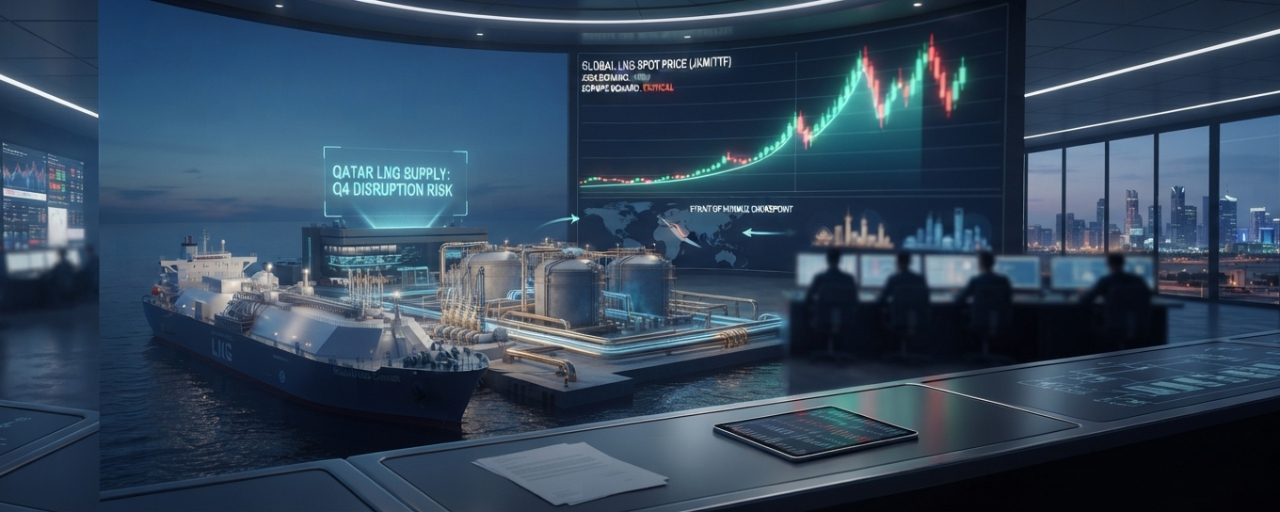
Qatar LNG Disruption Could Energy Prices Surge Again?🚨 Qatar LNG Disruptions Continue
QatarEnergy has reportedly extended force majeure on some LNG deliveries, with disruptions potentially lasting into October.
Tighter supply could keep energy prices high and add pressure to global markets.
Could LNG become the next major market driver? 👀⛽
#LNG
{spot}(EDENUSDT)
{spot}(HEMIUSDT)
{future}(LIGHTUSDT)
#EnergyMarkets #Markets #Geopolitics
Qatar LNG Disruption Could Energy Prices Surge Again?
🚨 Qatar LNG Disruptions Continue
QatarEnergy has reportedly extended force majeure on some LNG deliveries, with disruptions potentially lasting into October.
Tighter supply could keep energy prices high and add pressure to global markets.
Could LNG become the next major market driver? 👀⛽
#LNG
#EnergyMarkets #Markets #Geopolitics
QatarEnergy has reportedly extended force majeure on some LNG deliveries, with disruptions potentially lasting into October.
Tighter supply could keep energy prices high and add pressure to global markets.
Could LNG become the next major market driver? 👀⛽
#LNG
#EnergyMarkets #Markets #Geopolitics
73

·
--
Bullish
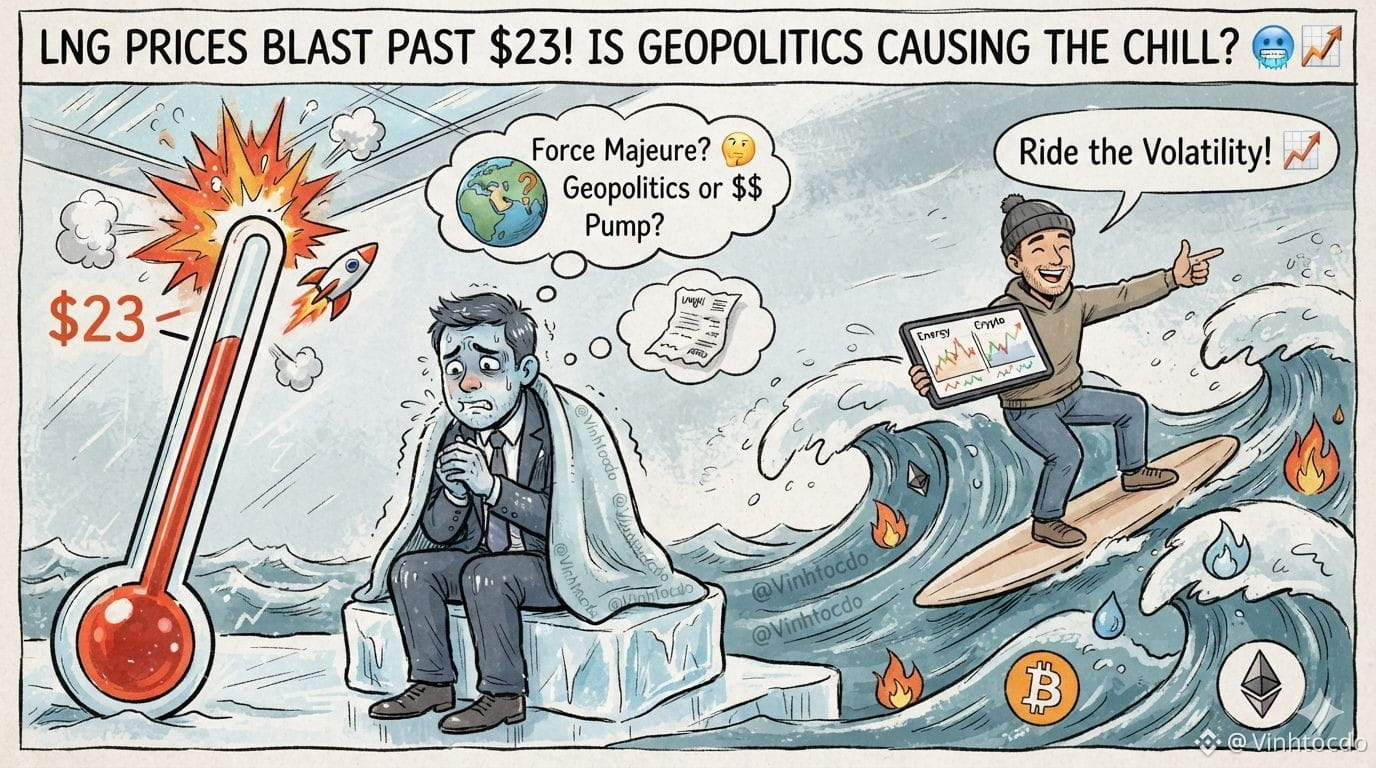
Boom! 🚨 #QatarExtendsLNGForceMajeureByOneMonth ! Asia LNG prices just blasted past $23! 🚀
Qatar blames "force majeure" for delaying gas shipments, but let’s be real—is it just complex geopolitics putting on a show to pump up the prices? 😉 When the Straits of Hormuz get tense, energy markets go wild!
So, what should traders do? While the world argues over gas pipes, smart traders don't panic—they look for the next big wave. Don't sit in the cold waiting for a lower gas bill. Ride the volatility in the energy or crypto markets instead! 📈
Ready to trade the chaos? Sign up on Binance now!
👉 Link: [https://www.binance.com/register?ref=VINHTOCDO](https://www.binance.com/register?ref=VINHTOCDO)
🔥 Referral Code: VINHTOCDO
This is not financial advice.
#LNG #EnergyCrisis #VINHTOCDO #Geopolitics
$NATGAS
{future}(NATGASUSDT)
$CL
{future}(CLUSDT)
$BZ
{future}(BZUSDT)
Boom! 🚨 #QatarExtendsLNGForceMajeureByOneMonth ! Asia LNG prices just blasted past $23! 🚀
Qatar blames "force majeure" for delaying gas shipments, but let’s be real—is it just complex geopolitics putting on a show to pump up the prices? 😉 When the Straits of Hormuz get tense, energy markets go wild!
So, what should traders do? While the world argues over gas pipes, smart traders don't panic—they look for the next big wave. Don't sit in the cold waiting for a lower gas bill. Ride the volatility in the energy or crypto markets instead! 📈
Ready to trade the chaos? Sign up on Binance now!
👉 Link: https://www.binance.com/register?ref=VINHTOCDO
🔥 Referral Code: VINHTOCDO
This is not financial advice.
#LNG #EnergyCrisis #VINHTOCDO #Geopolitics
$NATGAS
$CL
$BZ
Qatar blames "force majeure" for delaying gas shipments, but let’s be real—is it just complex geopolitics putting on a show to pump up the prices? 😉 When the Straits of Hormuz get tense, energy markets go wild!
So, what should traders do? While the world argues over gas pipes, smart traders don't panic—they look for the next big wave. Don't sit in the cold waiting for a lower gas bill. Ride the volatility in the energy or crypto markets instead! 📈
Ready to trade the chaos? Sign up on Binance now!
👉 Link: https://www.binance.com/register?ref=VINHTOCDO
🔥 Referral Code: VINHTOCDO
This is not financial advice.
#LNG #EnergyCrisis #VINHTOCDO #Geopolitics
$NATGAS
$CL
$BZ
1
159

·
--
📢 BREAKING NEWS 🥊
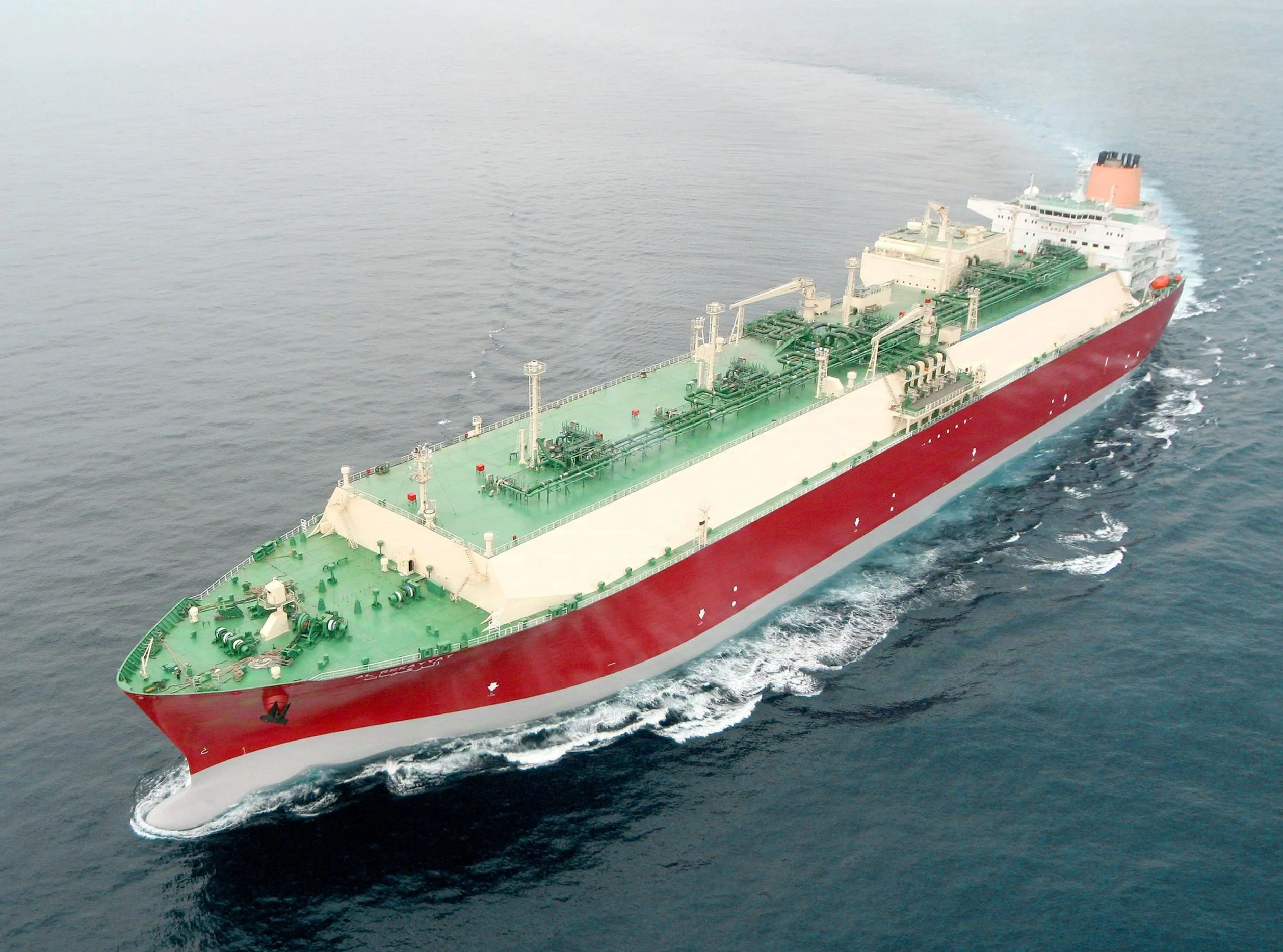
🇶🇦 A Qatari LNG tanker has reportedly been hit in the Strait of Hormuz! 🚢💥
🟢 Energy supply fears are rising fast.
🗾 Oil, gas & crypto markets could see major volatility!
👀 Watch BTC and altcoins closely! 🟠📊
#StraitOfHormuz #Qatar #LNG #oil #Crypto
$BLUR $ALLO $RIF
📢 BREAKING NEWS 🥊
🇶🇦 A Qatari LNG tanker has reportedly been hit in the Strait of Hormuz! 🚢💥
🟢 Energy supply fears are rising fast.
🗾 Oil, gas & crypto markets could see major volatility!
👀 Watch BTC and altcoins closely! 🟠📊
#StraitOfHormuz #Qatar #LNG #oil #Crypto
$BLUR $ALLO $RIF
🇶🇦 A Qatari LNG tanker has reportedly been hit in the Strait of Hormuz! 🚢💥
🟢 Energy supply fears are rising fast.
🗾 Oil, gas & crypto markets could see major volatility!
👀 Watch BTC and altcoins closely! 🟠📊
#StraitOfHormuz #Qatar #LNG #oil #Crypto
$BLUR $ALLO $RIF
1
1
92
·
--
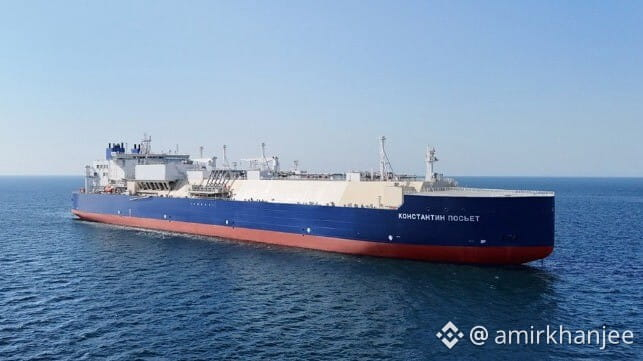
🇷🇺 Russia has officially named its second Arctic LNG carrier, a key vessel intended to support the Arctic LNG 2 project and boost year-round shipping along the Northern Sea Route.
The program originally planned 21 ice-class LNG carriers, but Western sanctions have caused major setbacks. While Samsung Heavy Industries delivered 5 hulls before contracts were canceled, Hanwha Ocean remains unable to deliver 6 additional vessels due to sanctions.
Despite delays, Moscow continues to push forward with its Arctic energy and shipping ambitions. 🚢❄️
#Russia #LNG
👀b$HEI $RE $SYN
🇷🇺 Russia has officially named its second Arctic LNG carrier, a key vessel intended to support the Arctic LNG 2 project and boost year-round shipping along the Northern Sea Route.
The program originally planned 21 ice-class LNG carriers, but Western sanctions have caused major setbacks. While Samsung Heavy Industries delivered 5 hulls before contracts were canceled, Hanwha Ocean remains unable to deliver 6 additional vessels due to sanctions.
Despite delays, Moscow continues to push forward with its Arctic energy and shipping ambitions. 🚢❄️
#Russia #LNG
👀b$HEI $RE $SYN
The program originally planned 21 ice-class LNG carriers, but Western sanctions have caused major setbacks. While Samsung Heavy Industries delivered 5 hulls before contracts were canceled, Hanwha Ocean remains unable to deliver 6 additional vessels due to sanctions.
Despite delays, Moscow continues to push forward with its Arctic energy and shipping ambitions. 🚢❄️
#Russia #LNG
👀b$HEI $RE $SYN
1
357

Qatar's Minister of State for Energy Affairs Saad Sherida Al-Kaabi (Saad Sherida Al-Kaabi) has most recently stated that once the Strait of Hormuz reopens, some of Qatar's liquefied natural gas (LNG) facilities could resume operations within weeks. Despite the prior disruption to about 17% of capacity at the Ras Laffan export hub caused by Iranian attacks, and the expectation that full repairs to the two damaged production lines will take until the first quarter of 2027, signals that short-term supply routes are being reactivated are now coming through.
From a macro fundamentals perspective, with the Strait of Hormuz—one of the world's main energy chokepoints—showing marginal improvement, the market has already fully priced in the most pessimistic scenario for extreme supply shocks. Signs that energy supply bottlenecks previously suppressed by conflict are starting to loosen may help ease global stagflation concerns and reduce the rationale for second-round inflation trades, thereby opening a breathing space for overall risk assets.
In traditional financial markets, the unblocking expectations on the energy supply side are driving a rapid fall in risk premiums for oil and natural gas. Consequently, upward pressure on U.S. Treasury yields and the U.S. dollar index also weakens. This marginal easing in the liquidity environment directly improves global risk appetite, with capital gradually shifting from pure safe-haven assets toward instruments whose valuations have room to re-rate.
For the crypto market, the fading of macro uncertainty provides an excellent opportunity for technical base-building for $BTC and mainstream assets. Once liquidity pressure is relieved, price action has shown stronger downside resilience and rebound momentum. Looking ahead, if prices hold in the key resistance range, a recovery in risk appetite could help drive a new round of liquidity returning to the market.
#EnergyCrisis #Geopolitics #LNG
Qatar's Minister of State for Energy Affairs Saad Sherida Al-Kaabi (Saad Sherida Al-Kaabi) has most recently stated that once the Strait of Hormuz reopens, some of Qatar's liquefied natural gas (LNG) facilities could resume operations within weeks. Despite the prior disruption to about 17% of capacity at the Ras Laffan export hub caused by Iranian attacks, and the expectation that full repairs to the two damaged production lines will take until the first quarter of 2027, signals that short-term supply routes are being reactivated are now coming through.
From a macro fundamentals perspective, with the Strait of Hormuz—one of the world's main energy chokepoints—showing marginal improvement, the market has already fully priced in the most pessimistic scenario for extreme supply shocks. Signs that energy supply bottlenecks previously suppressed by conflict are starting to loosen may help ease global stagflation concerns and reduce the rationale for second-round inflation trades, thereby opening a breathing space for overall risk assets.
In traditional financial markets, the unblocking expectations on the energy supply side are driving a rapid fall in risk premiums for oil and natural gas. Consequently, upward pressure on U.S. Treasury yields and the U.S. dollar index also weakens. This marginal easing in the liquidity environment directly improves global risk appetite, with capital gradually shifting from pure safe-haven assets toward instruments whose valuations have room to re-rate.
For the crypto market, the fading of macro uncertainty provides an excellent opportunity for technical base-building for $BTC and mainstream assets. Once liquidity pressure is relieved, price action has shown stronger downside resilience and rebound momentum. Looking ahead, if prices hold in the key resistance range, a recovery in risk appetite could help drive a new round of liquidity returning to the market.
#EnergyCrisis #Geopolitics #LNG
From a macro fundamentals perspective, with the Strait of Hormuz—one of the world's main energy chokepoints—showing marginal improvement, the market has already fully priced in the most pessimistic scenario for extreme supply shocks. Signs that energy supply bottlenecks previously suppressed by conflict are starting to loosen may help ease global stagflation concerns and reduce the rationale for second-round inflation trades, thereby opening a breathing space for overall risk assets.
In traditional financial markets, the unblocking expectations on the energy supply side are driving a rapid fall in risk premiums for oil and natural gas. Consequently, upward pressure on U.S. Treasury yields and the U.S. dollar index also weakens. This marginal easing in the liquidity environment directly improves global risk appetite, with capital gradually shifting from pure safe-haven assets toward instruments whose valuations have room to re-rate.
For the crypto market, the fading of macro uncertainty provides an excellent opportunity for technical base-building for $BTC and mainstream assets. Once liquidity pressure is relieved, price action has shown stronger downside resilience and rebound momentum. Looking ahead, if prices hold in the key resistance range, a recovery in risk appetite could help drive a new round of liquidity returning to the market.
#EnergyCrisis #Geopolitics #LNG
90
Against the backdrop of the Strait of Hormuz facing sustained blockade risk due to ongoing Middle East conflict along a critical global energy transit route, Jera’s chief executive officer of global energy solutions, Irtiza Sayyed, has recently stated clearly that the company is accelerating its long-term transshipment and supply diversification strategy, actively seeking incremental markets beyond the Gulf to mitigate the risk of shipment disruption. Asian buyers are collectively shifting toward non-Middle East sources, reshaping traditional energy supply chains.
From a macro and supply-demand fundamentals perspective, the Strait of Hormuz accounts for nearly one-fifth of global energy transport. Concerns about supply cutoffs triggered by geopolitical turmoil were originally a catalyst for a rebound in inflation. However, with spot and long-term trading giants represented by Jera proactively releasing excess capacity and reallocating supply, this shows that the resilience of Asia’s spot energy market is far stronger than expected. It has effectively suppressed the secondary inflation spike that could be caused by extreme disruption on the supply side.
For traditional financial markets, after the initial price pulse, oil and natural gas prices did not spiral into an uncontrolled one-way surge. The energy premium has gradually been offset by supply-chain restructuring. U.S. Treasury yields and the U.S. dollar index have been trading in a tight range under pressure near key resistance levels, indicating that commodity prices have not posed a substantive obstacle to major central banks’ interest-rate cut cycle. Expectations of tighter liquidity have been improving at the margin.
This supply-chain resilience provides relatively positive macro support for the crypto market. When the pulse risk for commodities is resolved and priced in through market mechanisms, macro liquidity expectations will shift back toward easing. With $BTC maintaining a structural basing pattern above key weekly-level moving averages, a decline in geopolitical premium is likely to draw some over-the-counter risk-hedging funds back into risk assets. Looking ahead, technical breakouts may be on the cards driven by improving liquidity.
#EnergyCrisis #Geopolitics #LNG
Against the backdrop of the Strait of Hormuz facing sustained blockade risk due to ongoing Middle East conflict along a critical global energy transit route, Jera’s chief executive officer of global energy solutions, Irtiza Sayyed, has recently stated clearly that the company is accelerating its long-term transshipment and supply diversification strategy, actively seeking incremental markets beyond the Gulf to mitigate the risk of shipment disruption. Asian buyers are collectively shifting toward non-Middle East sources, reshaping traditional energy supply chains.
From a macro and supply-demand fundamentals perspective, the Strait of Hormuz accounts for nearly one-fifth of global energy transport. Concerns about supply cutoffs triggered by geopolitical turmoil were originally a catalyst for a rebound in inflation. However, with spot and long-term trading giants represented by Jera proactively releasing excess capacity and reallocating supply, this shows that the resilience of Asia’s spot energy market is far stronger than expected. It has effectively suppressed the secondary inflation spike that could be caused by extreme disruption on the supply side.
For traditional financial markets, after the initial price pulse, oil and natural gas prices did not spiral into an uncontrolled one-way surge. The energy premium has gradually been offset by supply-chain restructuring. U.S. Treasury yields and the U.S. dollar index have been trading in a tight range under pressure near key resistance levels, indicating that commodity prices have not posed a substantive obstacle to major central banks’ interest-rate cut cycle. Expectations of tighter liquidity have been improving at the margin.
This supply-chain resilience provides relatively positive macro support for the crypto market. When the pulse risk for commodities is resolved and priced in through market mechanisms, macro liquidity expectations will shift back toward easing. With $BTC maintaining a structural basing pattern above key weekly-level moving averages, a decline in geopolitical premium is likely to draw some over-the-counter risk-hedging funds back into risk assets. Looking ahead, technical breakouts may be on the cards driven by improving liquidity.
#EnergyCrisis #Geopolitics #LNG
From a macro and supply-demand fundamentals perspective, the Strait of Hormuz accounts for nearly one-fifth of global energy transport. Concerns about supply cutoffs triggered by geopolitical turmoil were originally a catalyst for a rebound in inflation. However, with spot and long-term trading giants represented by Jera proactively releasing excess capacity and reallocating supply, this shows that the resilience of Asia’s spot energy market is far stronger than expected. It has effectively suppressed the secondary inflation spike that could be caused by extreme disruption on the supply side.
For traditional financial markets, after the initial price pulse, oil and natural gas prices did not spiral into an uncontrolled one-way surge. The energy premium has gradually been offset by supply-chain restructuring. U.S. Treasury yields and the U.S. dollar index have been trading in a tight range under pressure near key resistance levels, indicating that commodity prices have not posed a substantive obstacle to major central banks’ interest-rate cut cycle. Expectations of tighter liquidity have been improving at the margin.
This supply-chain resilience provides relatively positive macro support for the crypto market. When the pulse risk for commodities is resolved and priced in through market mechanisms, macro liquidity expectations will shift back toward easing. With $BTC maintaining a structural basing pattern above key weekly-level moving averages, a decline in geopolitical premium is likely to draw some over-the-counter risk-hedging funds back into risk assets. Looking ahead, technical breakouts may be on the cards driven by improving liquidity.
#EnergyCrisis #Geopolitics #LNG
46
Asian spot liquefied natural gas (LNG) prices surged to $25.908 per million BTU on Wednesday evening, marking their highest level since December 2022 and more than doubling since tensions with Iran escalated. At the same time, spot gold climbed 1.00% on the day to reach $4,431.69 per ounce, reflecting acute market stress over potential disruptions along critical energy corridors like the Strait of Hormuz.
This simultaneous spike in energy commodities and precious metals highlights mounting stagflationary concerns. Escalating US-Iran friction is threatening global supply chains, pushing Asian LNG up by more than 5% this week alone. When energy costs double, imported inflation directly strains fiscal budgets and corporate margins across major importing economies.
Across traditional finance, these price shocks are forcing bond yields higher and damping hopes for rapid central bank easing. The flight to safe-haven assets is evident in gold's strong push past $4,430, while equities face headwinds from higher operational input costs and persistent headline risks.
For the digital asset market, higher energy-driven inflation poses a complex backdrop for $BTC. While Bitcoin occasionally benefits from macro safe-haven narratives, broader liquidity tightening usually limits risk appetite. Expect choppy, defensive price action until geopolitical clarity emerges.
#LNG #gold #geopolitics
Asian spot liquefied natural gas (LNG) prices surged to $25.908 per million BTU on Wednesday evening, marking their highest level since December 2022 and more than doubling since tensions with Iran escalated. At the same time, spot gold climbed 1.00% on the day to reach $4,431.69 per ounce, reflecting acute market stress over potential disruptions along critical energy corridors like the Strait of Hormuz.
This simultaneous spike in energy commodities and precious metals highlights mounting stagflationary concerns. Escalating US-Iran friction is threatening global supply chains, pushing Asian LNG up by more than 5% this week alone. When energy costs double, imported inflation directly strains fiscal budgets and corporate margins across major importing economies.
Across traditional finance, these price shocks are forcing bond yields higher and damping hopes for rapid central bank easing. The flight to safe-haven assets is evident in gold's strong push past $4,430, while equities face headwinds from higher operational input costs and persistent headline risks.
For the digital asset market, higher energy-driven inflation poses a complex backdrop for $BTC . While Bitcoin occasionally benefits from macro safe-haven narratives, broader liquidity tightening usually limits risk appetite. Expect choppy, defensive price action until geopolitical clarity emerges.
#LNG #gold #geopolitics
This simultaneous spike in energy commodities and precious metals highlights mounting stagflationary concerns. Escalating US-Iran friction is threatening global supply chains, pushing Asian LNG up by more than 5% this week alone. When energy costs double, imported inflation directly strains fiscal budgets and corporate margins across major importing economies.
Across traditional finance, these price shocks are forcing bond yields higher and damping hopes for rapid central bank easing. The flight to safe-haven assets is evident in gold's strong push past $4,430, while equities face headwinds from higher operational input costs and persistent headline risks.
For the digital asset market, higher energy-driven inflation poses a complex backdrop for $BTC . While Bitcoin occasionally benefits from macro safe-haven narratives, broader liquidity tightening usually limits risk appetite. Expect choppy, defensive price action until geopolitical clarity emerges.
#LNG #gold #geopolitics
40
·
--
On Wednesday evening, amid a further escalation of the U.S.-Iran conflict that once again poses practical threats to energy shipments through the Strait of Hormuz, the spot price of liquefied natural gas (LNG) in Asia surged to $25.908 per million British thermal units (MMBtu), reaching a three-year high since December 2022. It was double what it was before the outbreak of the conflict, and the week-to-date increase has already exceeded 5%. At the same time, gold—another traditional safe-haven asset—also moved sharply. Spot gold rose 1.00% during the day, hitting a high of $4,431.69 per ounce.
At the core of this simultaneous rise in both energy and safe-haven assets is the unexpectedly broad spread of geopolitical power struggles in the Middle East. The market initially expected tensions to cool after a brief flare-up, but the outbreak of a new round of conflict has completely shattered the balance. Potential disruption to Middle Eastern shipping routes directly translates into heavy energy-cost and fiscal pressure for multiple countries across Asia, and concerns about a rebound in inflation have once again come to the fore.
From the perspective of traditional financial markets, soaring commodity prices—especially energy—tend to delay central banks’ rate-cut timelines and may even push up inflation expectations. Safe-haven capital flows into gold immediately, while elevated energy costs also create objective pressure on parts of Asia’s economies that rely on imports, as well as on the liquidity of overall risk assets.
Mapped onto the crypto market, the current period is one of cautious standstill as bulls and bears weigh each other. On one hand, safe-haven sentiment triggered by geopolitical turmoil prompts some capital to re-examine the hedging attributes of $BTC ; on the other hand, recurring inflation driven by energy may suppress overall risk appetite and liquidity preferences. How price action will unfold next depends more on whether geopolitical tensions further spread or gradually de-escalate. Manage position risk and simply observe for now.⚡
#LNG #黄金 #Geopolitics
On Wednesday evening, amid a further escalation of the U.S.-Iran conflict that once again poses practical threats to energy shipments through the Strait of Hormuz, the spot price of liquefied natural gas (LNG) in Asia surged to $25.908 per million British thermal units (MMBtu), reaching a three-year high since December 2022. It was double what it was before the outbreak of the conflict, and the week-to-date increase has already exceeded 5%. At the same time, gold—another traditional safe-haven asset—also moved sharply. Spot gold rose 1.00% during the day, hitting a high of $4,431.69 per ounce.
At the core of this simultaneous rise in both energy and safe-haven assets is the unexpectedly broad spread of geopolitical power struggles in the Middle East. The market initially expected tensions to cool after a brief flare-up, but the outbreak of a new round of conflict has completely shattered the balance. Potential disruption to Middle Eastern shipping routes directly translates into heavy energy-cost and fiscal pressure for multiple countries across Asia, and concerns about a rebound in inflation have once again come to the fore.
From the perspective of traditional financial markets, soaring commodity prices—especially energy—tend to delay central banks’ rate-cut timelines and may even push up inflation expectations. Safe-haven capital flows into gold immediately, while elevated energy costs also create objective pressure on parts of Asia’s economies that rely on imports, as well as on the liquidity of overall risk assets.
Mapped onto the crypto market, the current period is one of cautious standstill as bulls and bears weigh each other. On one hand, safe-haven sentiment triggered by geopolitical turmoil prompts some capital to re-examine the hedging attributes of $BTC ; on the other hand, recurring inflation driven by energy may suppress overall risk appetite and liquidity preferences. How price action will unfold next depends more on whether geopolitical tensions further spread or gradually de-escalate. Manage position risk and simply observe for now.⚡
#LNG #黄金 #Geopolitics
At the core of this simultaneous rise in both energy and safe-haven assets is the unexpectedly broad spread of geopolitical power struggles in the Middle East. The market initially expected tensions to cool after a brief flare-up, but the outbreak of a new round of conflict has completely shattered the balance. Potential disruption to Middle Eastern shipping routes directly translates into heavy energy-cost and fiscal pressure for multiple countries across Asia, and concerns about a rebound in inflation have once again come to the fore.
From the perspective of traditional financial markets, soaring commodity prices—especially energy—tend to delay central banks’ rate-cut timelines and may even push up inflation expectations. Safe-haven capital flows into gold immediately, while elevated energy costs also create objective pressure on parts of Asia’s economies that rely on imports, as well as on the liquidity of overall risk assets.
Mapped onto the crypto market, the current period is one of cautious standstill as bulls and bears weigh each other. On one hand, safe-haven sentiment triggered by geopolitical turmoil prompts some capital to re-examine the hedging attributes of $BTC ; on the other hand, recurring inflation driven by energy may suppress overall risk appetite and liquidity preferences. How price action will unfold next depends more on whether geopolitical tensions further spread or gradually de-escalate. Manage position risk and simply observe for now.⚡
#LNG #黄金 #Geopolitics
35
Wednesday evening spot market data shows that, driven by heightened U.S.-Iran geopolitical tensions and concerns over disruptions to transport through the Strait of Hormuz, Asian LNG spot prices have surged to $25.908 per million BTU, reaching a three-year high since December 2022. This is double from before the outbreak of the conflict, with a weekly increase of more than 5%. Meanwhile, spot gold gained 1.00% during the day, strongly breaking above the historical high zone of $4,431.69 per ounce.
Judging by the market structure, the synchronized upward move in commodities and precious metals reflects that geopolitical risk premium is rapidly spreading across asset classes. Asian LNG prices have broken through a long-term downward channel and completed a key resistance breakout, indicating that precautionary buying for the energy supply chain is extremely strong. However, unlike previous energy crises, this round of commodity gains is accompanied by clear liquidity absorption; the market has not shown panic-driven deleveraging. Instead, it exhibits a healthy rotation pattern as funds actively seek inflation-hedging targets.
In traditional financial markets, both gold and energy have expanded volume to break through the bulls’ defenses. Although it has lifted short-term inflation expectations for some Asian importers, from a technical perspective, rapid commodity blow-off tops often signal that risk pricing has entered an accelerated topping phase. Once the geopolitical risk premium forms a lagging stall around technical resistance levels, safe-haven funds are likely to quickly shift toward risk-on assets with better liquidity and higher elasticity, laying a liquidity foundation for a more widespread rebound afterward.
For the crypto market, the current gold price action, which is refreshing historic highs, is helping to raise the valuation ceiling for digital hard assets such as $BTC . As an asset that combines inflation-hedging characteristics with high upside volatility, Bitcoin—after experiencing short-term suppression from risk-averse sentiment—often is the first to break out strongly during the liquidity overflow phase. As risk-averse sentiment gradually dissipates, incremental funds from outside the market looking to counter dilution of fiat currency purchasing power will provide exceptionally solid technical-bottom support for crypto assets.📈
#LNG #vang #crypto
Wednesday evening spot market data shows that, driven by heightened U.S.-Iran geopolitical tensions and concerns over disruptions to transport through the Strait of Hormuz, Asian LNG spot prices have surged to $25.908 per million BTU, reaching a three-year high since December 2022. This is double from before the outbreak of the conflict, with a weekly increase of more than 5%. Meanwhile, spot gold gained 1.00% during the day, strongly breaking above the historical high zone of $4,431.69 per ounce.
Judging by the market structure, the synchronized upward move in commodities and precious metals reflects that geopolitical risk premium is rapidly spreading across asset classes. Asian LNG prices have broken through a long-term downward channel and completed a key resistance breakout, indicating that precautionary buying for the energy supply chain is extremely strong. However, unlike previous energy crises, this round of commodity gains is accompanied by clear liquidity absorption; the market has not shown panic-driven deleveraging. Instead, it exhibits a healthy rotation pattern as funds actively seek inflation-hedging targets.
In traditional financial markets, both gold and energy have expanded volume to break through the bulls’ defenses. Although it has lifted short-term inflation expectations for some Asian importers, from a technical perspective, rapid commodity blow-off tops often signal that risk pricing has entered an accelerated topping phase. Once the geopolitical risk premium forms a lagging stall around technical resistance levels, safe-haven funds are likely to quickly shift toward risk-on assets with better liquidity and higher elasticity, laying a liquidity foundation for a more widespread rebound afterward.
For the crypto market, the current gold price action, which is refreshing historic highs, is helping to raise the valuation ceiling for digital hard assets such as $BTC . As an asset that combines inflation-hedging characteristics with high upside volatility, Bitcoin—after experiencing short-term suppression from risk-averse sentiment—often is the first to break out strongly during the liquidity overflow phase. As risk-averse sentiment gradually dissipates, incremental funds from outside the market looking to counter dilution of fiat currency purchasing power will provide exceptionally solid technical-bottom support for crypto assets.📈
#LNG #vang #crypto
Judging by the market structure, the synchronized upward move in commodities and precious metals reflects that geopolitical risk premium is rapidly spreading across asset classes. Asian LNG prices have broken through a long-term downward channel and completed a key resistance breakout, indicating that precautionary buying for the energy supply chain is extremely strong. However, unlike previous energy crises, this round of commodity gains is accompanied by clear liquidity absorption; the market has not shown panic-driven deleveraging. Instead, it exhibits a healthy rotation pattern as funds actively seek inflation-hedging targets.
In traditional financial markets, both gold and energy have expanded volume to break through the bulls’ defenses. Although it has lifted short-term inflation expectations for some Asian importers, from a technical perspective, rapid commodity blow-off tops often signal that risk pricing has entered an accelerated topping phase. Once the geopolitical risk premium forms a lagging stall around technical resistance levels, safe-haven funds are likely to quickly shift toward risk-on assets with better liquidity and higher elasticity, laying a liquidity foundation for a more widespread rebound afterward.
For the crypto market, the current gold price action, which is refreshing historic highs, is helping to raise the valuation ceiling for digital hard assets such as $BTC . As an asset that combines inflation-hedging characteristics with high upside volatility, Bitcoin—after experiencing short-term suppression from risk-averse sentiment—often is the first to break out strongly during the liquidity overflow phase. As risk-averse sentiment gradually dissipates, incremental funds from outside the market looking to counter dilution of fiat currency purchasing power will provide exceptionally solid technical-bottom support for crypto assets.📈
#LNG #vang #crypto
137
·
--
Bullish
🛢 Strait of Hormuz:
• Tasnim: traffic reportedly at 0 vessels
• IRGC Navy: full closure declared
• Satellite images: no ships transiting
• Trigger: response to U.S. strikes
Claims remain unverified by independent shipping data.
If confirmed, this is a major supply-risk shock. Bullish for oil and LNG.
$BZ
#Oil #Brent #LNG #Hormuz
🛢 Strait of Hormuz:
• Tasnim: traffic reportedly at 0 vessels
• IRGC Navy: full closure declared
• Satellite images: no ships transiting
• Trigger: response to U.S. strikes
Claims remain unverified by independent shipping data.
If confirmed, this is a major supply-risk shock. Bullish for oil and LNG.
$BZ
#Oil #Brent #LNG #Hormuz
• Tasnim: traffic reportedly at 0 vessels
• IRGC Navy: full closure declared
• Satellite images: no ships transiting
• Trigger: response to U.S. strikes
Claims remain unverified by independent shipping data.
If confirmed, this is a major supply-risk shock. Bullish for oil and LNG.
$BZ
#Oil #Brent #LNG #Hormuz
125

·
--
The top executive overseeing Woodside Energy Group Ltd.’s $17.5 billion liquefied natural gas (LNG) project in Louisiana has departed after just over a year in the role. This leadership change, announced via a company memo, comes at a critical time for the LNG sector, which plays a significant role in global energy markets and the ongoing energy transition.
While this news may seem distant from crypto markets and BNB Chain directly, it reflects broader energy sector dynamics that can influence market sentiment and investment flows, especially in energy-intensive blockchain operations and sustainability-focused projects.
Investors and traders tracking market moves should consider how shifts in major energy projects and leadership might impact energy prices, regulatory outlooks, and related industries. These factors can ripple through financial markets, including those for crypto assets, as energy costs and policies affect operational costs and project viability.
Staying aware of such macroeconomic and industrial developments adds valuable context to the narratives shaping crypto and DeFi ecosystems on BNB Chain and beyond.
#EnergyMarkets #LNG #MarketMovers
The top executive overseeing Woodside Energy Group Ltd.’s $17.5 billion liquefied natural gas (LNG) project in Louisiana has departed after just over a year in the role. This leadership change, announced via a company memo, comes at a critical time for the LNG sector, which plays a significant role in global energy markets and the ongoing energy transition.
While this news may seem distant from crypto markets and BNB Chain directly, it reflects broader energy sector dynamics that can influence market sentiment and investment flows, especially in energy-intensive blockchain operations and sustainability-focused projects.
Investors and traders tracking market moves should consider how shifts in major energy projects and leadership might impact energy prices, regulatory outlooks, and related industries. These factors can ripple through financial markets, including those for crypto assets, as energy costs and policies affect operational costs and project viability.
Staying aware of such macroeconomic and industrial developments adds valuable context to the narratives shaping crypto and DeFi ecosystems on BNB Chain and beyond.
#EnergyMarkets #LNG #MarketMovers
While this news may seem distant from crypto markets and BNB Chain directly, it reflects broader energy sector dynamics that can influence market sentiment and investment flows, especially in energy-intensive blockchain operations and sustainability-focused projects.
Investors and traders tracking market moves should consider how shifts in major energy projects and leadership might impact energy prices, regulatory outlooks, and related industries. These factors can ripple through financial markets, including those for crypto assets, as energy costs and policies affect operational costs and project viability.
Staying aware of such macroeconomic and industrial developments adds valuable context to the narratives shaping crypto and DeFi ecosystems on BNB Chain and beyond.
#EnergyMarkets #LNG #MarketMovers
31
·
--
Bullish
🚨 BREAKING: 🇵🇰🇮🇷 PAKISTAN SECURES SAFE PASSAGE FOR LNG SHIPMENT
Pakistan has reportedly negotiated with Iran to secure safe passage through the Strait of Hormuz for another liquefied natural gas (LNG) shipment, according to Bloomberg.
The arrangement could provide some relief as Pakistan continues to face an energy shortfall. ⚡️
🌍 Energy flows through the Strait of Hormuz remain a key factor for global markets, with potential implications for oil, gas, inflation, and broader risk assets.
#Pakistan #Iran #LNG #Hormuz #Energy
{spot}(TAOUSDT)
🚨 BREAKING: 🇵🇰🇮🇷 PAKISTAN SECURES SAFE PASSAGE FOR LNG SHIPMENT
Pakistan has reportedly negotiated with Iran to secure safe passage through the Strait of Hormuz for another liquefied natural gas (LNG) shipment, according to Bloomberg.
The arrangement could provide some relief as Pakistan continues to face an energy shortfall. ⚡️
🌍 Energy flows through the Strait of Hormuz remain a key factor for global markets, with potential implications for oil, gas, inflation, and broader risk assets.
#Pakistan #Iran #LNG #Hormuz #Energy
Pakistan has reportedly negotiated with Iran to secure safe passage through the Strait of Hormuz for another liquefied natural gas (LNG) shipment, according to Bloomberg.
The arrangement could provide some relief as Pakistan continues to face an energy shortfall. ⚡️
🌍 Energy flows through the Strait of Hormuz remain a key factor for global markets, with potential implications for oil, gas, inflation, and broader risk assets.
#Pakistan #Iran #LNG #Hormuz #Energy
49

Verified
#usnaturalgasfallsover6%
🚨 U.S. Natural Gas Futures Plunge Over 6%, Testing Key $3.00 Support 📉🔥
The energy market saw a sharp shakeout as U.S. natural gas futures tumbled more than 6%, falling to a six-week low of $3.01/MMBtu.
📉 What Triggered the Selloff? $TAG
🔹 Freeport LNG Maintenance – Scheduled maintenance starting July 10 raised concerns about temporarily weaker LNG export demand, leaving more gas in the domestic market.
🔹 Larger-Than-Expected Storage Build – The EIA reported a 61 Bcf inventory increase, above the five-year average of 51 Bcf, expanding the storage surplus to 185 Bcf.
🔹 Algorithmic Selling – Bearish positioning by algorithmic traders accelerated the decline following market updates on pipeline expansions. $EVAA
🐂 What Could Support Prices?
☀️ Strong Summer Demand – Forecasts for above-normal temperatures through late July are expected to boost electricity demand for air conditioning.
⛽ Slightly Lower Production – Lower 48 natural gas output has eased to 109.4 Bcf/d in July from 110.0 Bcf/d in June, providing some support.
📊 Market Focus: The $3.00/MMBtu level has become a critical psychological support as traders weigh ample storage against persistent summer demand.
#NaturalGas #EnergyMarkets #Commodities #LNG
{alpha}(560x208bf3e7da9639f1eaefa2de78c23396b0682025)
{alpha}(560xaa036928c9c0df07d525b55ea8ee690bb5a628c1)
#usnaturalgasfallsover6%
🚨 U.S. Natural Gas Futures Plunge Over 6%, Testing Key $3.00 Support 📉🔥
The energy market saw a sharp shakeout as U.S. natural gas futures tumbled more than 6%, falling to a six-week low of $3.01/MMBtu.
📉 What Triggered the Selloff? $TAG
🔹 Freeport LNG Maintenance – Scheduled maintenance starting July 10 raised concerns about temporarily weaker LNG export demand, leaving more gas in the domestic market.
🔹 Larger-Than-Expected Storage Build – The EIA reported a 61 Bcf inventory increase, above the five-year average of 51 Bcf, expanding the storage surplus to 185 Bcf.
🔹 Algorithmic Selling – Bearish positioning by algorithmic traders accelerated the decline following market updates on pipeline expansions. $EVAA
🐂 What Could Support Prices?
☀️ Strong Summer Demand – Forecasts for above-normal temperatures through late July are expected to boost electricity demand for air conditioning.
⛽ Slightly Lower Production – Lower 48 natural gas output has eased to 109.4 Bcf/d in July from 110.0 Bcf/d in June, providing some support.
📊 Market Focus: The $3.00/MMBtu level has become a critical psychological support as traders weigh ample storage against persistent summer demand.
#NaturalGas #EnergyMarkets #Commodities #LNG
🚨 U.S. Natural Gas Futures Plunge Over 6%, Testing Key $3.00 Support 📉🔥
The energy market saw a sharp shakeout as U.S. natural gas futures tumbled more than 6%, falling to a six-week low of $3.01/MMBtu.
📉 What Triggered the Selloff? $TAG
🔹 Freeport LNG Maintenance – Scheduled maintenance starting July 10 raised concerns about temporarily weaker LNG export demand, leaving more gas in the domestic market.
🔹 Larger-Than-Expected Storage Build – The EIA reported a 61 Bcf inventory increase, above the five-year average of 51 Bcf, expanding the storage surplus to 185 Bcf.
🔹 Algorithmic Selling – Bearish positioning by algorithmic traders accelerated the decline following market updates on pipeline expansions. $EVAA
🐂 What Could Support Prices?
☀️ Strong Summer Demand – Forecasts for above-normal temperatures through late July are expected to boost electricity demand for air conditioning.
⛽ Slightly Lower Production – Lower 48 natural gas output has eased to 109.4 Bcf/d in July from 110.0 Bcf/d in June, providing some support.
📊 Market Focus: The $3.00/MMBtu level has become a critical psychological support as traders weigh ample storage against persistent summer demand.
#NaturalGas #EnergyMarkets #Commodities #LNG
4
3.3k

·
--
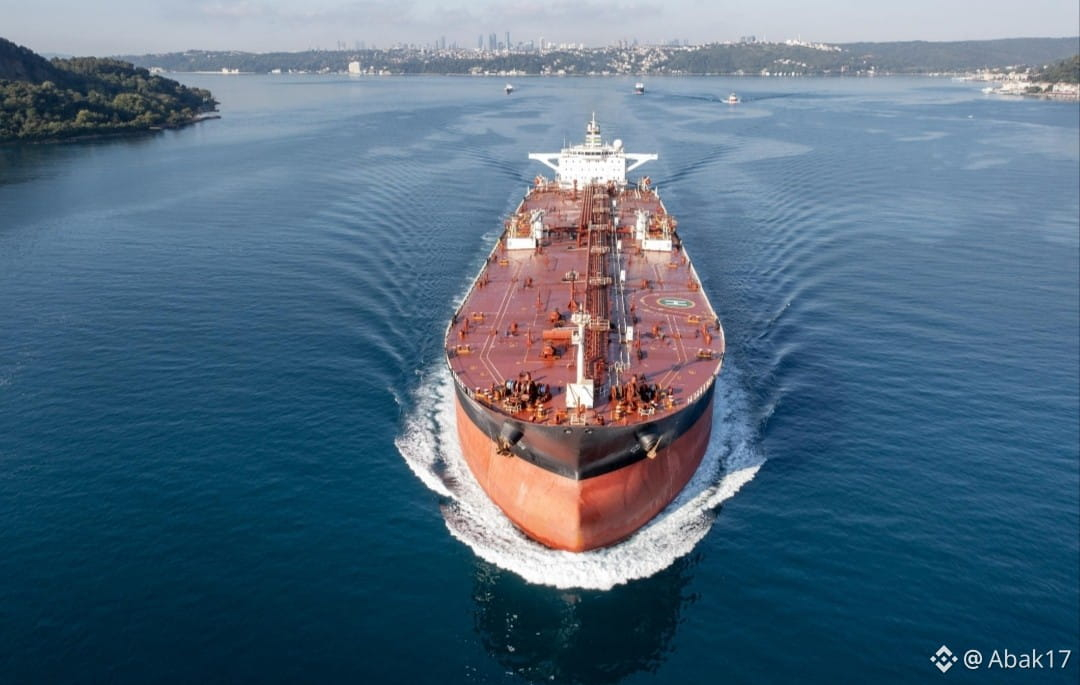
🚨 BREAKING: FIRST LNG TANKER PASSES THROUGH THE STRAIT OF HORMUZ! 🔥🌍
After months of tension, fear, and near-total disruption of traffic — the market just got its first real sign of life ⚡️
According to Iranian sources (April 28), the first LNG tanker since the escalation of the US–Israel–Iran conflict has successfully crossed the Strait of Hormuz 🛳️
💥 This isn’t just news — it’s a potential turning point for the global economy
📍 Hormuz is:
• ~20% of global LNG flows
• a key artery for oil supply
• one of the most critical chokepoints on Earth
📈 When the strait was effectively “frozen,” markets reacted violently:
• WTI > $103
• Brent > $105
• extreme volatility and panic
And now 👇
🔓 First signal of a possible reopening
The tanker (reportedly linked to ADNOC) is already heading toward India 🇮🇳
🤯 WHAT DOES THIS MEAN FOR MARKETS?
• Lower geopolitical tension = reduced risk premium
• Potential downside pressure on oil and gas prices
• Impact on inflation and central bank policy
• Increased movement across risk assets
⚠️ But:
This is just ONE tanker
Yet in situations like this, the first move often becomes the trigger for major trends
🔥 Markets are now at a crossroads:
either the beginning of stabilization
or the calm before another storm
👀 Watch the traffic in Hormuz closely — things are about to get even more intense
Follow to stay ahead of the hottest market updates 🔥
Drop a like ❤️ and support — you’re my strength, my community 💪 Love you all 🚀
#Hormuz #LNG #OilMarket #EnergyCrisis #BreakingNews $ZKJ
{future}(ZKJUSDT)
$ORCA
{spot}(ORCAUSDT)
🚨 BREAKING: FIRST LNG TANKER PASSES THROUGH THE STRAIT OF HORMUZ! 🔥🌍
After months of tension, fear, and near-total disruption of traffic — the market just got its first real sign of life ⚡️
According to Iranian sources (April 28), the first LNG tanker since the escalation of the US–Israel–Iran conflict has successfully crossed the Strait of Hormuz 🛳️
💥 This isn’t just news — it’s a potential turning point for the global economy
📍 Hormuz is:
• ~20% of global LNG flows
• a key artery for oil supply
• one of the most critical chokepoints on Earth
📈 When the strait was effectively “frozen,” markets reacted violently:
• WTI > $103
• Brent > $105
• extreme volatility and panic
And now 👇
🔓 First signal of a possible reopening
The tanker (reportedly linked to ADNOC) is already heading toward India 🇮🇳
🤯 WHAT DOES THIS MEAN FOR MARKETS?
• Lower geopolitical tension = reduced risk premium
• Potential downside pressure on oil and gas prices
• Impact on inflation and central bank policy
• Increased movement across risk assets
⚠️ But:
This is just ONE tanker
Yet in situations like this, the first move often becomes the trigger for major trends
🔥 Markets are now at a crossroads:
either the beginning of stabilization
or the calm before another storm
👀 Watch the traffic in Hormuz closely — things are about to get even more intense
Follow to stay ahead of the hottest market updates 🔥
Drop a like ❤️ and support — you’re my strength, my community 💪 Love you all 🚀
#Hormuz #LNG #OilMarket #EnergyCrisis #BreakingNews $ZKJ
$ORCA
After months of tension, fear, and near-total disruption of traffic — the market just got its first real sign of life ⚡️
According to Iranian sources (April 28), the first LNG tanker since the escalation of the US–Israel–Iran conflict has successfully crossed the Strait of Hormuz 🛳️
💥 This isn’t just news — it’s a potential turning point for the global economy
📍 Hormuz is:
• ~20% of global LNG flows
• a key artery for oil supply
• one of the most critical chokepoints on Earth
📈 When the strait was effectively “frozen,” markets reacted violently:
• WTI > $103
• Brent > $105
• extreme volatility and panic
And now 👇
🔓 First signal of a possible reopening
The tanker (reportedly linked to ADNOC) is already heading toward India 🇮🇳
🤯 WHAT DOES THIS MEAN FOR MARKETS?
• Lower geopolitical tension = reduced risk premium
• Potential downside pressure on oil and gas prices
• Impact on inflation and central bank policy
• Increased movement across risk assets
⚠️ But:
This is just ONE tanker
Yet in situations like this, the first move often becomes the trigger for major trends
🔥 Markets are now at a crossroads:
either the beginning of stabilization
or the calm before another storm
👀 Watch the traffic in Hormuz closely — things are about to get even more intense
Follow to stay ahead of the hottest market updates 🔥
Drop a like ❤️ and support — you’re my strength, my community 💪 Love you all 🚀
#Hormuz #LNG #OilMarket #EnergyCrisis #BreakingNews $ZKJ
$ORCA
2
6
2.8k

WHEATSTONE OUTAGE IS KEEPING $LN TIGHT
Chevron says Wheatstone in Western Australia still needs several more weeks before full production returns after cyclone damage hit both the onshore plant and offshore infrastructure. With 8.9 million tonnes per year still constrained and North West Shelf disruptions also pressuring supply, Asian LNG pricing should stay elevated while repair timelines and safety clearance remain unresolved.
This matters now because LNG is already running lean, and every extra week of outage keeps the squeeze on spot supply. I see this as a real near-term support catalyst for gas-linked sentiment until the restart is visibly confirmed.
Not financial advice. Manage your risk.
#LNG #NaturalGas #EnergyMarkets #CommodityTrading #Macro
⚡
{alpha}(560x6d2ebdf6d551d8408e7d896e9a1ec6f84806e193)
WHEATSTONE OUTAGE IS KEEPING $LN TIGHT
Chevron says Wheatstone in Western Australia still needs several more weeks before full production returns after cyclone damage hit both the onshore plant and offshore infrastructure. With 8.9 million tonnes per year still constrained and North West Shelf disruptions also pressuring supply, Asian LNG pricing should stay elevated while repair timelines and safety clearance remain unresolved.
This matters now because LNG is already running lean, and every extra week of outage keeps the squeeze on spot supply. I see this as a real near-term support catalyst for gas-linked sentiment until the restart is visibly confirmed.
Not financial advice. Manage your risk.
#LNG #NaturalGas #EnergyMarkets #CommodityTrading #Macro
⚡
Chevron says Wheatstone in Western Australia still needs several more weeks before full production returns after cyclone damage hit both the onshore plant and offshore infrastructure. With 8.9 million tonnes per year still constrained and North West Shelf disruptions also pressuring supply, Asian LNG pricing should stay elevated while repair timelines and safety clearance remain unresolved.
This matters now because LNG is already running lean, and every extra week of outage keeps the squeeze on spot supply. I see this as a real near-term support catalyst for gas-linked sentiment until the restart is visibly confirmed.
Not financial advice. Manage your risk.
#LNG #NaturalGas #EnergyMarkets #CommodityTrading #Macro
⚡
1
54
·
--
🚨🔥 BREAKING NEWS FOR THE ENERGY MARKET! 🔥🌍
Pakistan has just REJECTED urgent LNG purchases on the spot market 😳⛽
According to Bloomberg, the country is refusing to overpay for expensive spot gas and is now waiting for the situation around the Strait of Hormuz to stabilize — one of the most critical energy routes in the world 🌊⚠️
📌 What’s happening right now? 👉 Pakistan is putting expensive spot deals on hold
👉 CHEAPER Qatari LNG shipments are expected soon 🇶🇦🔥
👉 Global markets are closely watching the Strait of Hormuz 👀
💥 Why does this matter? ✅ Immediate demand for spot LNG could weaken
✅ Pressure on natural gas prices may ease in the short term 📉
✅ Geopolitics is once again controlling global energy flows 🌍⚡
The Strait of Hormuz, Qatar, and Pakistan are now becoming key pieces of the global energy puzzle 🚨
💸 Traders and investors are already watching gas prices and energy-related assets very closely.
Markets LOVE moments like this — uncertainty creates volatility 😈📊
🔥 Follow for more breaking news from crypto, global markets, and energy!
👍 Drop a like and support the channel — more hot updates and market-moving stories are coming soon 🚀
#LNG #EnergyCrisis #NaturalGas #Geopolitics #EnergyMark $NIL
{future}(NILUSDT)
$JTO
{future}(JTOUSDT)
$TST
{spot}(TSTUSDT)
🚨🔥 BREAKING NEWS FOR THE ENERGY MARKET! 🔥🌍
Pakistan has just REJECTED urgent LNG purchases on the spot market 😳⛽
According to Bloomberg, the country is refusing to overpay for expensive spot gas and is now waiting for the situation around the Strait of Hormuz to stabilize — one of the most critical energy routes in the world 🌊⚠️
📌 What’s happening right now? 👉 Pakistan is putting expensive spot deals on hold
👉 CHEAPER Qatari LNG shipments are expected soon 🇶🇦🔥
👉 Global markets are closely watching the Strait of Hormuz 👀
💥 Why does this matter? ✅ Immediate demand for spot LNG could weaken
✅ Pressure on natural gas prices may ease in the short term 📉
✅ Geopolitics is once again controlling global energy flows 🌍⚡
The Strait of Hormuz, Qatar, and Pakistan are now becoming key pieces of the global energy puzzle 🚨
💸 Traders and investors are already watching gas prices and energy-related assets very closely.
Markets LOVE moments like this — uncertainty creates volatility 😈📊
🔥 Follow for more breaking news from crypto, global markets, and energy!
👍 Drop a like and support the channel — more hot updates and market-moving stories are coming soon 🚀
#LNG #EnergyCrisis #NaturalGas #Geopolitics #EnergyMark $NIL
$JTO
$TST
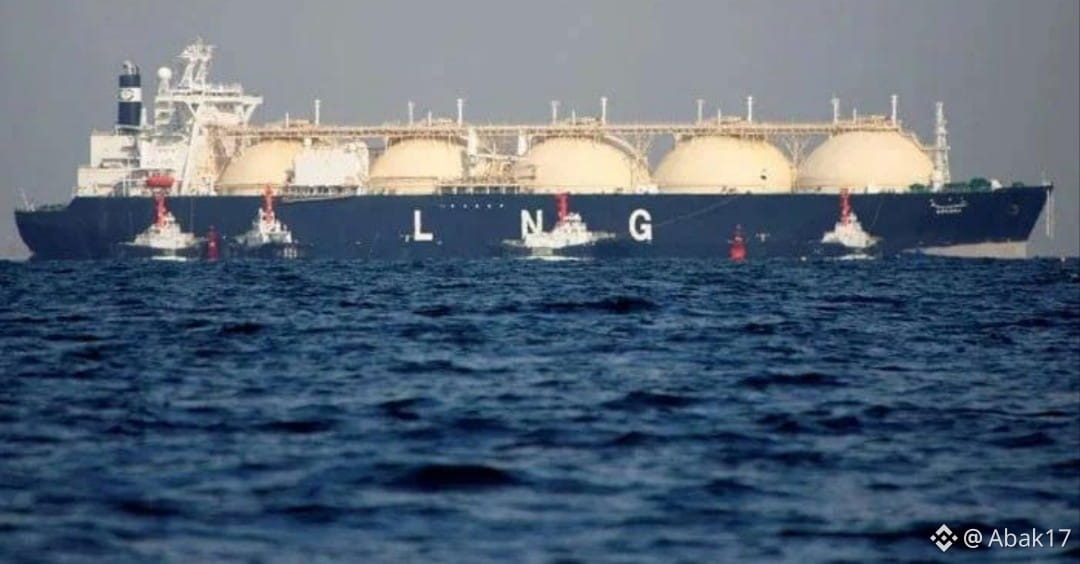
Pakistan has just REJECTED urgent LNG purchases on the spot market 😳⛽
According to Bloomberg, the country is refusing to overpay for expensive spot gas and is now waiting for the situation around the Strait of Hormuz to stabilize — one of the most critical energy routes in the world 🌊⚠️
📌 What’s happening right now? 👉 Pakistan is putting expensive spot deals on hold
👉 CHEAPER Qatari LNG shipments are expected soon 🇶🇦🔥
👉 Global markets are closely watching the Strait of Hormuz 👀
💥 Why does this matter? ✅ Immediate demand for spot LNG could weaken
✅ Pressure on natural gas prices may ease in the short term 📉
✅ Geopolitics is once again controlling global energy flows 🌍⚡
The Strait of Hormuz, Qatar, and Pakistan are now becoming key pieces of the global energy puzzle 🚨
💸 Traders and investors are already watching gas prices and energy-related assets very closely.
Markets LOVE moments like this — uncertainty creates volatility 😈📊
🔥 Follow for more breaking news from crypto, global markets, and energy!
👍 Drop a like and support the channel — more hot updates and market-moving stories are coming soon 🚀
#LNG #EnergyCrisis #NaturalGas #Geopolitics #EnergyMark $NIL
$JTO
$TST
2
411
Log in to explore more content
Join global crypto users on Binance Square
⚡️ Get latest and useful information about crypto.
💬 Trusted by the world’s largest crypto exchange.
👍 Discover real insights from verified creators.
Email / Phone number
Trending Topics
1
#USWeighsPromotingDollarStablecoinsAbroad
3,184 views
297 Discussing
2
#US10YTreasuryYieldHits19YearHigh
3,152 views
245 Discussing
3
#SpotBitcoinETFsInflow$2.31BInFourDays
401 views
25 Discussing
4
#BitcoinRejectedAt$87,300Twice
0 views
0 Discussing
5
#BCHJumps28%OnCMEFuturesListing
44,596 views
957 Discussing
6
#WallStreetEarningsRevisionsTurnBearish
31,082 views
713 Discussing
7
#DollarIndexReclaims101
27,073 views
672 Discussing
8
#21SharesLaunchesEuropesFirstZcashETP
72,547 views
1,449 Discussing
9
#CardanoJoinsX402PaymentStandard
45,486 views
1,042 Discussing
10
#BitcoinTops$87KAtEightMonthHigh
17,144 views
146 Discussing