
#slippage
slippage
15,974 views
81 Discussing
Hot
Latest

💧 Slippage: the small “difference” that creates big losses.
What happens:
1️⃣ You place a market order: “buy at $74,000”
2️⃣ There wasn’t enough liquidity in the order book at that price
3️⃣ Your order filled at $74,080 — that’s $80 of slippage
When it’s worse:
▪️ Illiquid coins (low volume)
▪️ Volatile moments — news candles, liquidation cascades
▪️ Large orders that “walk” the order book
Tools to protect yourself: limit orders (price control, but with a risk of not getting filled), lower leverage, and smaller sizes in thin order books.
What a liquid asset means: there’s always a clear way out. This boring detail is the real edge. 💡
$BTC
#Slippage #CryptoTrading #Liquidity
3
🧾 Market vs Limit vs Stop-Limit — the difference between order types in 60 seconds.
1️⃣ Market: “now, at whatever price” — instant fill, but slippage in thin books
2️⃣ Limit: “at this price or better” — gives you control, but no guaranteed fill
3️⃣ Stop-limit: a limit order is placed after the trigger — it may remain unfilled during gaps
Slippage: small for liquid assets, but on a swing day like today ($76.3K–$77.2K, Yahoo), a market order can be costly.
General practice: use limit orders for entries and market orders for fast exits — understand the difference before using them. 📐
$BTC
#OrderTypes #Slippage #CryptoTrading

📘 Binance Crypto Learning Series — Part 107
Slippage: Why Your Entry Price Changes! 🎯
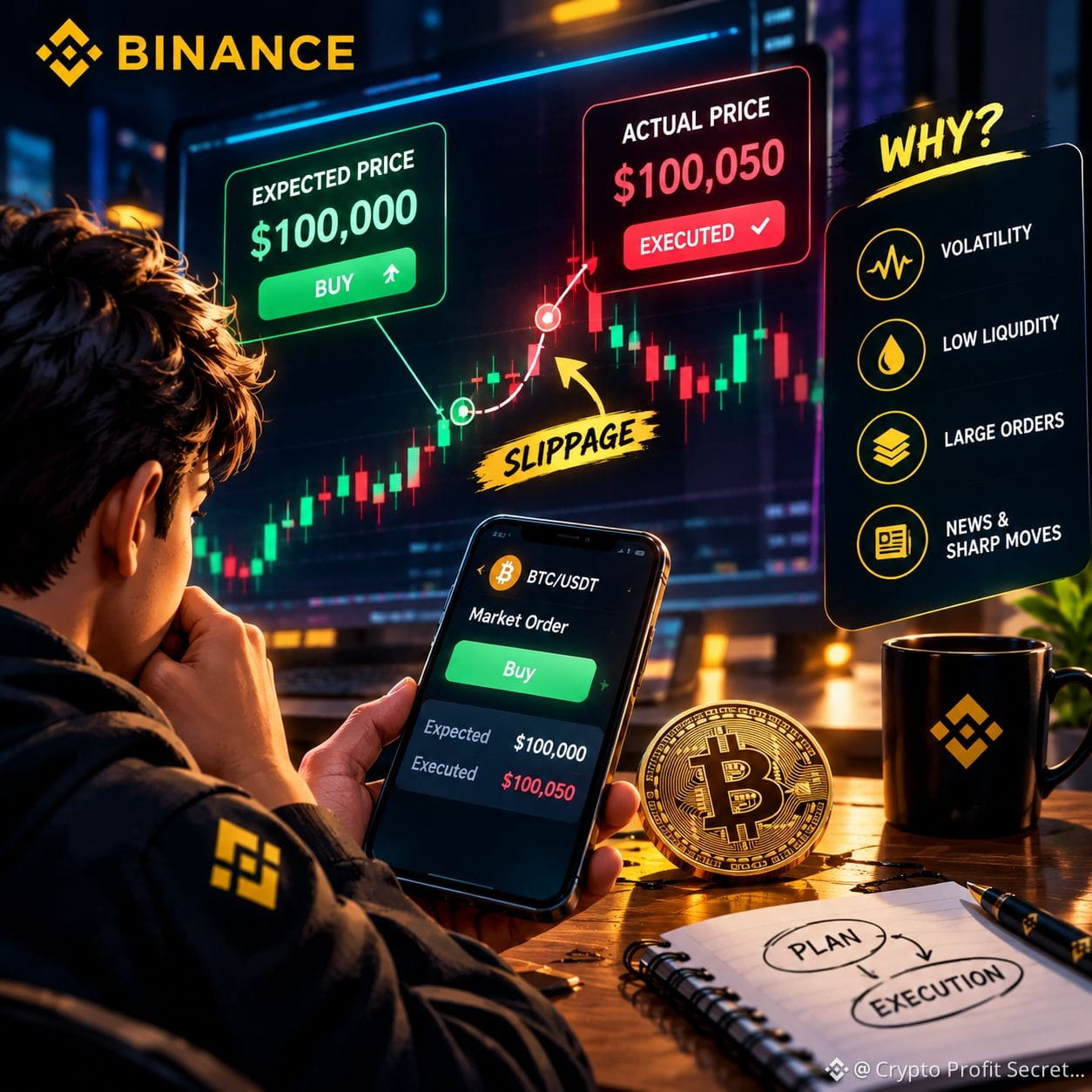
🔥 The price you see on the chart isn’t necessarily the price at which your trade will be executed!
Slippage occurs when your order is executed at a different price than expected.
📉 When is slippage more likely?
High market volatility
Coins with low liquidity
Large market orders
Sudden news and sharp price movements
📊 Example:
You want to buy $BTC at $100,000, but your order is executed at $100,050.
This $50 price difference is an example of slippage.
🧠 Golden Rule:
It’s not just the entry price—the execution price also affects your actual results.
Do you use Market Orders or Limit Orders when trading? 👇
#BinanceSquare #Slippage #BTC #TradingEducation #RiskManagement
{spot}(BTCUSDT)
📘 Binance Crypto Learning Series — Part 107
Slippage: Why Your Entry Price Changes! 🎯
🔥 The price you see on the chart isn’t necessarily the price at which your trade will be executed!
Slippage occurs when your order is executed at a different price than expected.
📉 When is slippage more likely?
High market volatility
Coins with low liquidity
Large market orders
Sudden news and sharp price movements
📊 Example:
You want to buy $BTC at $100,000, but your order is executed at $100,050.
This $50 price difference is an example of slippage.
🧠 Golden Rule:
It’s not just the entry price—the execution price also affects your actual results.
Do you use Market Orders or Limit Orders when trading? 👇
#BinanceSquare #Slippage #BTC #TradingEducation #RiskManagement
5
115

MARKET ORDER TRAP: WHY THE "BUY MARKET" BUTTON CAN DRAIN YOUR DEPOSIT IN SECONDS 🛑💸
You see a sharp upward impulse, fall into serious FOMO, and frantically smash that big yellow "Market Order" button. At that moment, the exchange is popping champagne.
• By hitting "market", you're agreeing to buy the asset at the worst available price in the order book right now (this is called slippage).
• The market maker deliberately widens the spread during the impulse, and you're getting trapped at the peak of the candlestick's wick. Professionals ONLY enter with limit orders in pre-established zones.
👇 Open the SOL widget. How many times have you been wiped out by market orders?
#RiskManagement #Slippage #Solana $SOL #CryptoFREEMEN
{spot}(SOLUSDT)
MARKET ORDER TRAP: WHY THE "BUY MARKET" BUTTON CAN DRAIN YOUR DEPOSIT IN SECONDS 🛑💸
You see a sharp upward impulse, fall into serious FOMO, and frantically smash that big yellow "Market Order" button. At that moment, the exchange is popping champagne.
• By hitting "market", you're agreeing to buy the asset at the worst available price in the order book right now (this is called slippage).
• The market maker deliberately widens the spread during the impulse, and you're getting trapped at the peak of the candlestick's wick. Professionals ONLY enter with limit orders in pre-established zones.
👇 Open the SOL widget. How many times have you been wiped out by market orders?
#RiskManagement #Slippage #Solana $SOL #CryptoFREEMEN
233

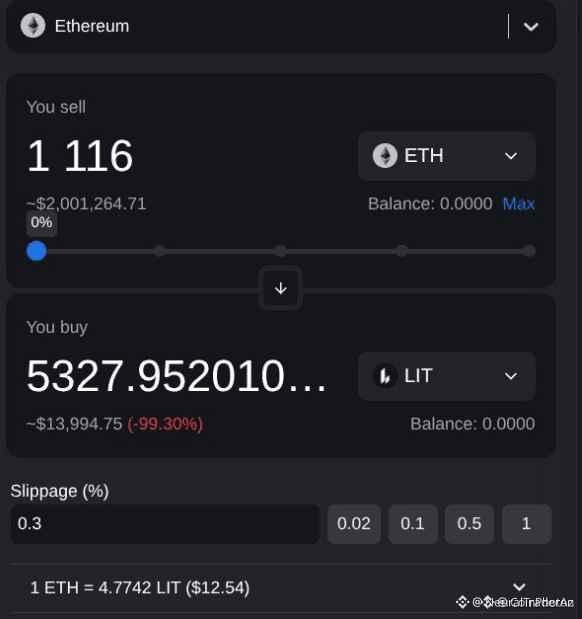
OVER $2M IN ETH VAPORIZED IN A SINGLE SWAP ON $LIT 💀
This isn't a typical trade breakdown — it's a real-world liquidity lesson. A trader withdrew 1,126 ETH (~$2M) from a top-tier exchange and swapped it into LIT. The 0x router allegedly routed through an AVAIL pool with near-zero liquidity, causing over 99% slippage.
The result? Just $14K of actual value. This is why you always verify pool depth and price impact before executing large swaps. One click can erase a portfolio. Have you ever had a trade go sideways due to slippage?
Not financial advice. Always manage your risk.
#LIT #DEX #Slippage #CryptoLessons
🔥
1
186

Yesterday I wrote about market depth. Today I want to talk about something related: slippage.
Slippage is the difference between the price you expect and the price you actually get.
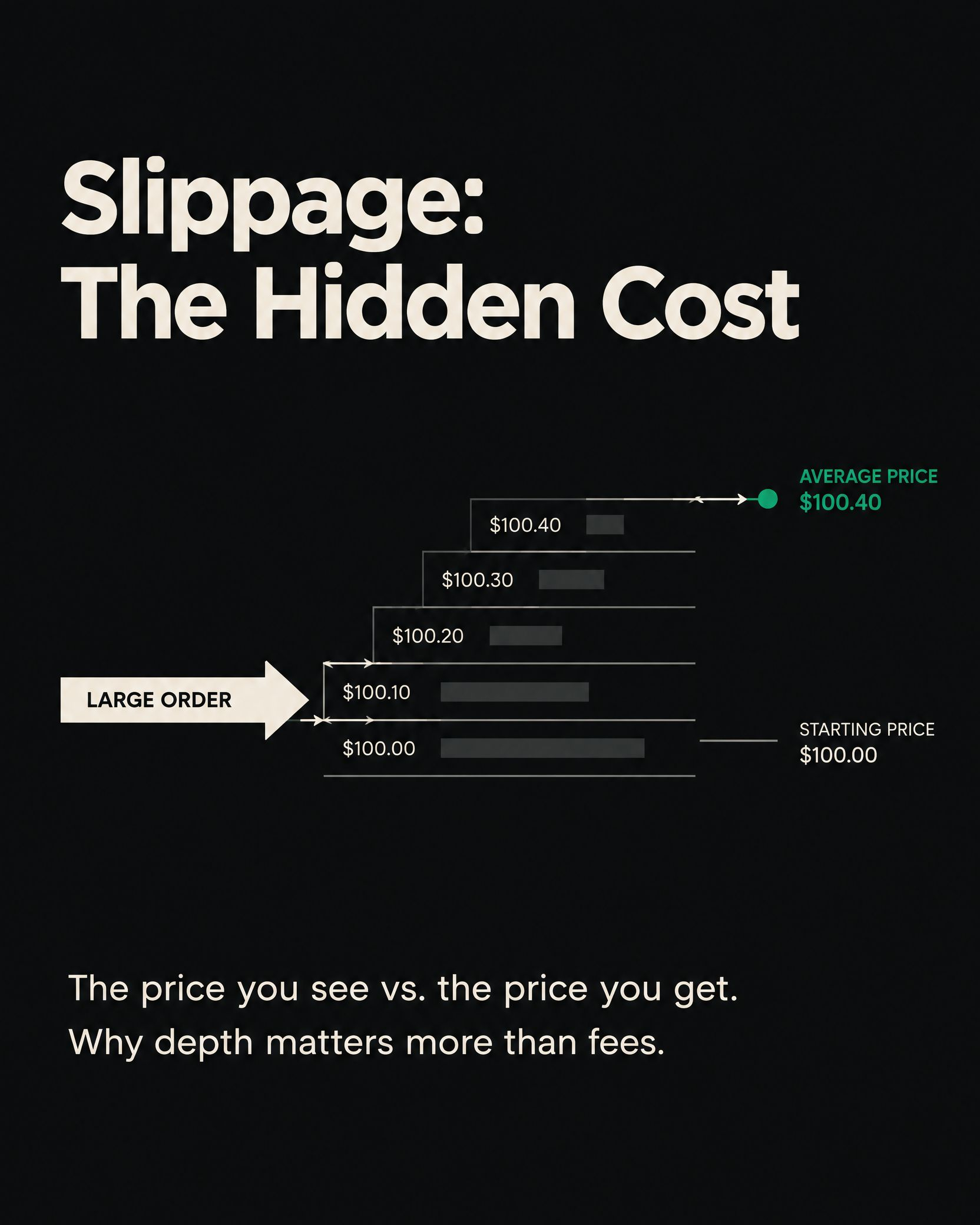
Say you want to buy $10,000 worth of a token. You see the price at $1.00. You place a market order. But by the time your order fills, the average price is $1.02. That 2% difference is slippage.
Why does this happen? Because your order eats through the order book. The first $3,000 might fill at $1.00. The next $3,000 at $1.01. The next $4,000 at $1.02. Your average price ends up higher than the screen price.
This is why depth matters. A token with thin liquidity has more slippage. A token with deep liquidity has less.
Slippage is also a hidden cost. People look at fees — 0.1% here, 0.1% there — but ignore slippage. For small caps or low-liquidity tokens, slippage can be 2% or more. That's twenty times the fee.
The lesson: before you trade, check the depth. If you're moving size, slippage matters more than fees.
#CryptoEducation #Slippage #Liquidity
91

📚 Understanding Slippage and Spread: How Hidden Trading Costs Affect Your Bottom Line
On July 20, 2026, slippage and spread are two hidden costs every trader should understand. The spread is the difference between the highest bid and lowest ask price — a direct cost paid on each trade. Slippage occurs when a large order moves through multiple price levels before filling completely.
Thin liquidity pools and volatile markets amplify both slippage and spread. Traders can minimize these costs by using limit orders, trading during high-volume periods, and selecting pairs with deep liquidity.
📌 Key Takeaway:
Slippage and spread erode trading profits — monitor liquidity, use limit orders, and trade during peak hours to keep costs low.
#CryptoTrading #Slippage #Liquidity #CryptoEducation
#BinanceAlphaAlert
29


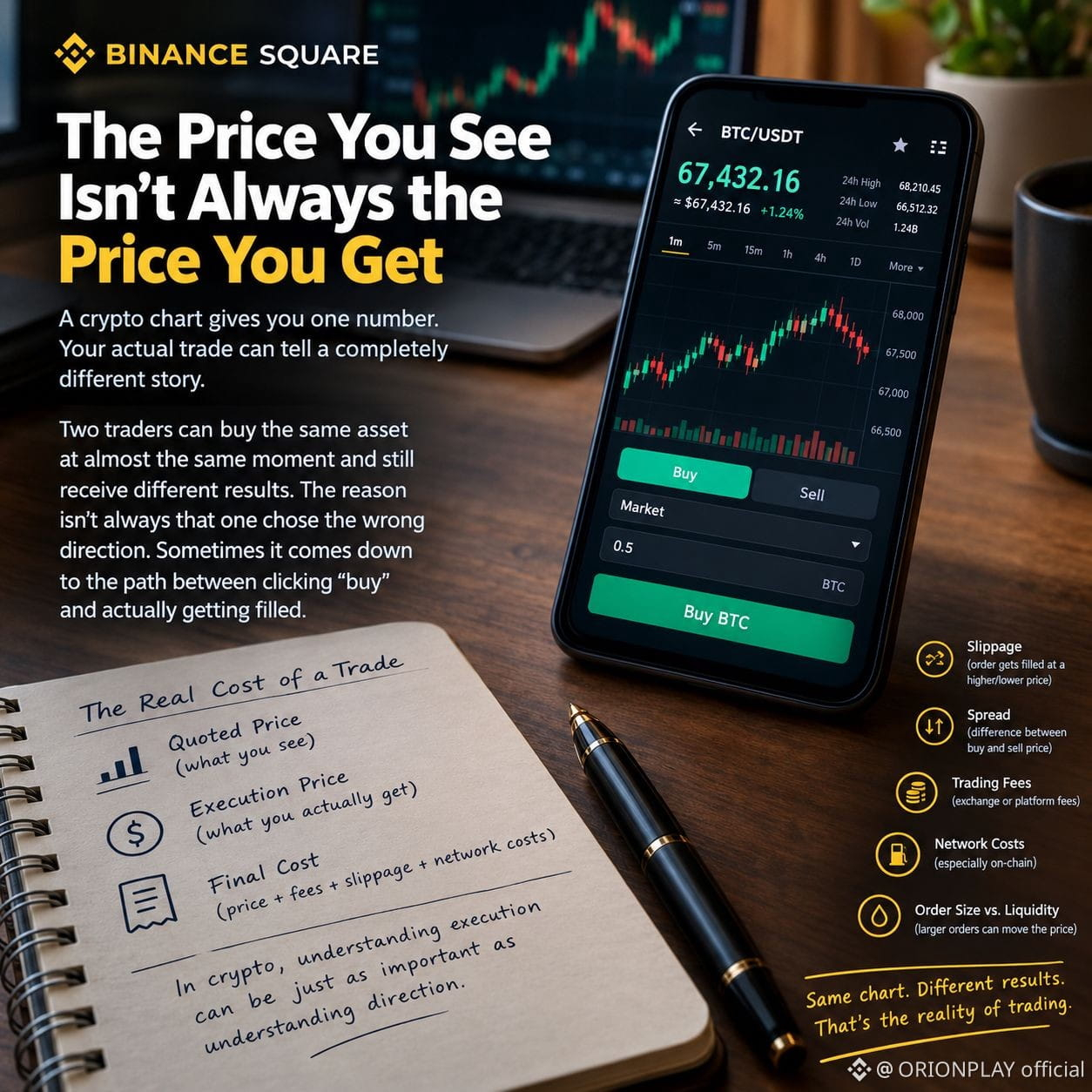
A crypto chart gives you one number.
Your actual trade can tell a completely different story.
Two traders can buy the same asset at almost the same moment and still receive noticeably different results. The reason isn’t always that one chose the wrong direction. Sometimes it comes down to the path between clicking “buy” and actually getting filled.
Consider a simple trade.
You see an asset quoted at $1.00 and place a market order. But the available orders near $1.00 may not be large enough to fill everything at that price. Your remaining order gets matched slightly higher.
That difference is slippage.
Now add the spread between buyers and sellers, trading fees, network costs on-chain, and the size of your order relative to available liquidity. The final execution can look very different from the price displayed on the screen.
This is why a chart alone doesn't describe the complete trading experience.
A useful habit is to separate three questions:
What is the quoted price?
What is the executable price?
What is the final cost?
Those are not necessarily identical.
In crypto, understanding execution can be just as important as understanding direction. A good-looking setup can still produce a poor result if the transaction itself is inefficient.
Sometimes the difference between a good trade and a disappointing one happens after the decision is already made.
#Crypto #Trading #Slippage #MarketMicrostructure #Blockchain #BinanceSquare
508
📚 Slippage and Trading Fees: Understanding the Hidden Costs of Trading
On July 23, 2026, with $65.29B in daily trading volume, understanding trading costs is essential. Slippage occurs when the expected price of a trade differs from the executed price — common in volatile markets or low-liquidity pairs.
Slippage happens because orders fill against available liquidity. Large buys push prices up; large sells push prices down. Traders can set slippage tolerance limits to prevent unfavorable execution. Trading fees (maker/taker fees) are separate costs charged by the exchange.
High-volume assets like Bitcoin $BTC typically have minimal slippage due to deep liquidity, while smaller tokens can experience significant price impact even on modest trades.
📌 Key Takeaway:
Slippage is the difference between expected and executed trade prices — a critical cost factor driven by liquidity, order size, and market volatility.
#TradingBasics #Slippage #Educational
#BinanceAlphaAlert
57

·
--
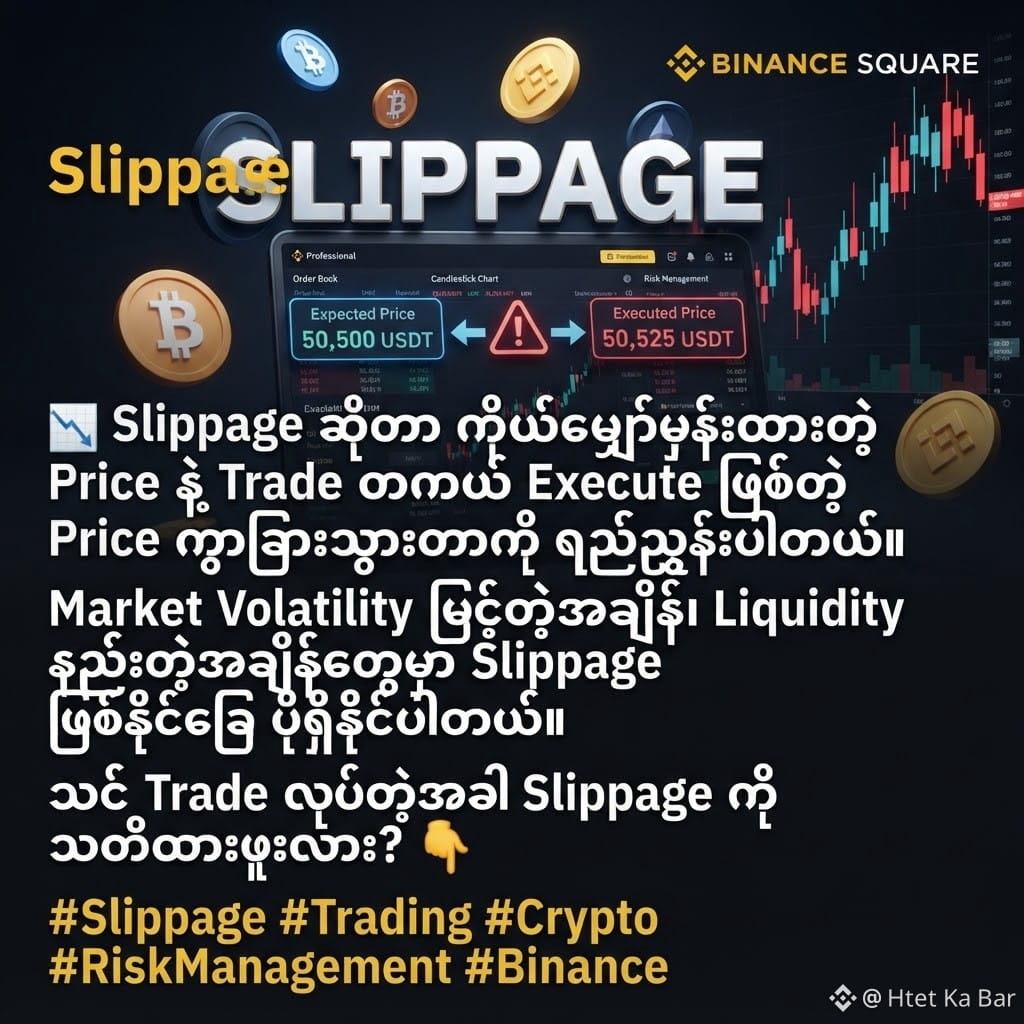
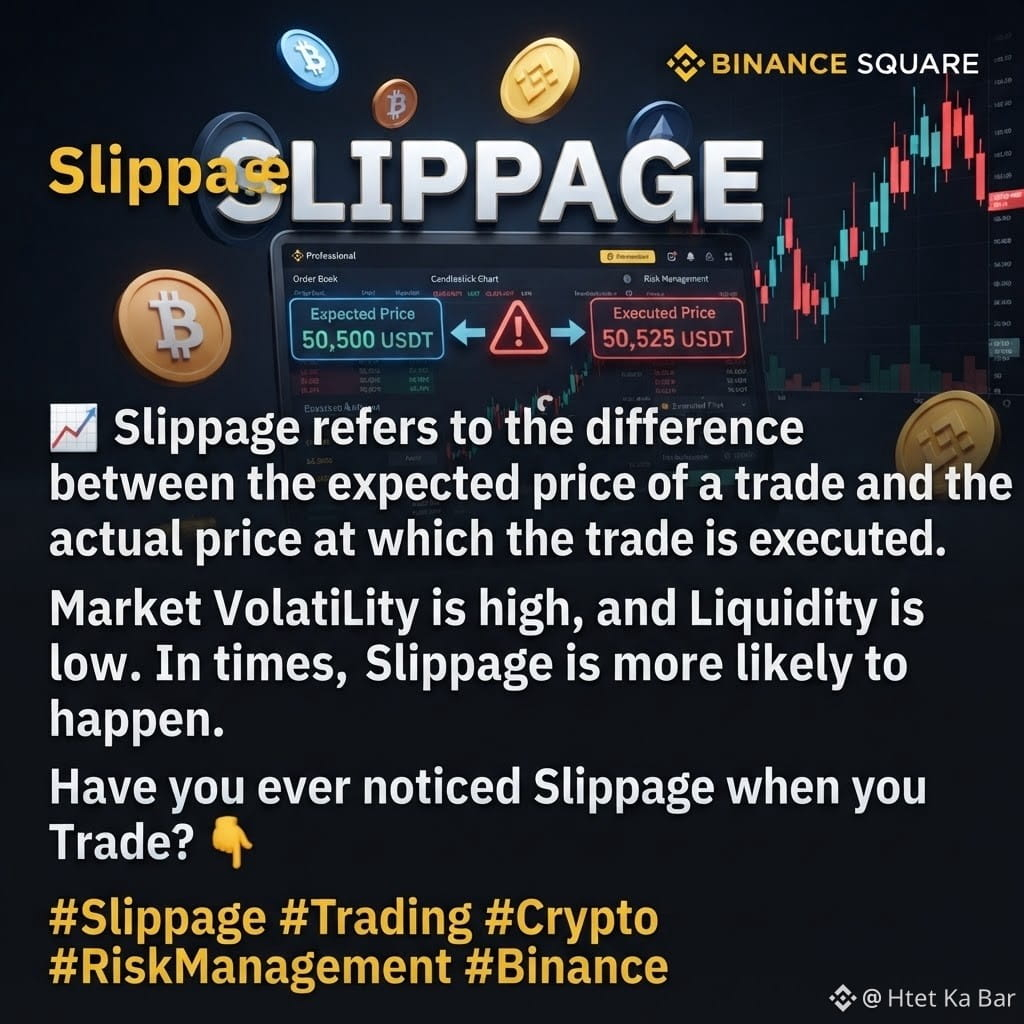
What is Slippage?
📉 Slippage refers to the difference between the price you expect and the actual price at which the trade is executed.
During periods of high market volatility or low liquidity, the likelihood of slippage may be higher.
Have you ever been aware of slippage when trading? 👇
{spot}(DOGEUSDT)
#Slippage #Trading #Crypto #RiskManagement #Binance
$BTC $BNB $DOGE
What is Slippage?
📉 Slippage refers to the difference between the price you expect and the actual price at which the trade is executed.
During periods of high market volatility or low liquidity, the likelihood of slippage may be higher.
Have you ever been aware of slippage when trading? 👇
#Slippage #Trading #Crypto #RiskManagement #Binance
$BTC $BNB $DOGE
112
📚 Understanding Slippage in Trading: Why your trade executes at a different price
On July 16, 2026, slippage remains a key concept for every crypto trader. Slippage is the difference between the expected price of a trade and the price at which it actually executes. It happens when there isn't enough liquidity at your desired price level.
In low-liquidity markets or during high volatility, slippage can be significant. A buy order might execute at a higher price than expected if the order eats through the available sell orders at your target price.
To minimize slippage: use limit orders instead of market orders, check order book depth before trading, and set slippage tolerance in DeFi swaps. Most DEXs allow you to set a maximum slippage percentage.
📌 Key Takeaway:
Slippage = difference between expected and actual trade price. Caused by low liquidity or high volatility. Use limit orders and check order book depth to minimize it.
#CryptoTrading #Slippage
#BinanceAlphaAlert
41

🔍 Are you losing money on every trade and probably don't know why?
It's not the exchange. It's not a hidden fee. It's not bad luck.
It's called slippage. And it works silently.
When you see the price of a token and hit "buy", that price no longer exists.
The market moved in the microsecond it took you to confirm. What you paid was different from what you expected. That difference is called slippage.
In high liquidity tokens like $BTC o or $ETH , it's minimal. Almost imperceptible.
But in low cap tokens, on DEX with low volume, or during high volatility, slippage can eat up between 1% and 15% of your trade without any alerts to warn you.
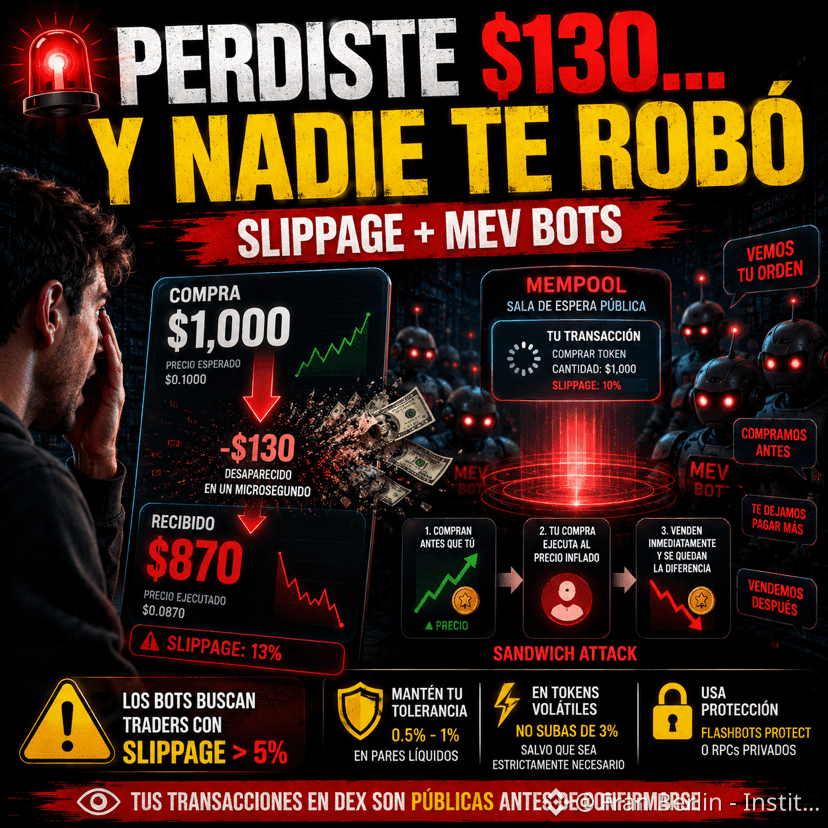
Imagine buying $1,000 worth of a token and receiving the equivalent of $870. Nobody robbed you. Nobody failed. The market moved while your transaction was being processed.
There are two types you should know:
Price slippage — the difference between the expected price and the executed price.
Tolerance slippage — the maximum percentage you authorize before the transaction is automatically canceled.
That second type is your defense. And also your weak point.
MEV bots scan the mempool — the public waiting room of transactions — specifically looking for this. They execute a sandwich attack: they buy before you to jack up the price, let your transaction execute inflated, and sell immediately. You pay more. They pocket the difference.
And the detail that hurts the most: they specifically target traders with slippage above 5%.
Knowing this changes how you trade:
— Keep your tolerance between 0.5% and 1% on liquid pairs
— In volatile tokens, don't go above 3% unless absolutely necessary
— Use Flashbots Protect or private RPCs to stay off the mempool radar
It's not invulnerability. It's reducing the target.
👇 Did you know your transactions on DEX are public before they confirm?
#Slippage #MEV #InstitutoBlockchain #FranBerlin #Crypto
{spot}(ETHUSDT)
{spot}(BTCUSDT)
🔍 Are you losing money on every trade and probably don't know why?
It's not the exchange. It's not a hidden fee. It's not bad luck.
It's called slippage. And it works silently.
When you see the price of a token and hit "buy", that price no longer exists.
The market moved in the microsecond it took you to confirm. What you paid was different from what you expected. That difference is called slippage.
In high liquidity tokens like $BTC o or $ETH , it's minimal. Almost imperceptible.
But in low cap tokens, on DEX with low volume, or during high volatility, slippage can eat up between 1% and 15% of your trade without any alerts to warn you.
Imagine buying $1,000 worth of a token and receiving the equivalent of $870. Nobody robbed you. Nobody failed. The market moved while your transaction was being processed.
There are two types you should know:
Price slippage — the difference between the expected price and the executed price.
Tolerance slippage — the maximum percentage you authorize before the transaction is automatically canceled.
That second type is your defense. And also your weak point.
MEV bots scan the mempool — the public waiting room of transactions — specifically looking for this. They execute a sandwich attack: they buy before you to jack up the price, let your transaction execute inflated, and sell immediately. You pay more. They pocket the difference.
And the detail that hurts the most: they specifically target traders with slippage above 5%.
Knowing this changes how you trade:
— Keep your tolerance between 0.5% and 1% on liquid pairs
— In volatile tokens, don't go above 3% unless absolutely necessary
— Use Flashbots Protect or private RPCs to stay off the mempool radar
It's not invulnerability. It's reducing the target.
👇 Did you know your transactions on DEX are public before they confirm?
#Slippage #MEV #InstitutoBlockchain #FranBerlin #Crypto
1
1
206
📚 What Is Slippage?: Understanding the difference between expected and actual trade prices
On July 19, 2026, Slippage is the difference between the expected price of a trade and the actual price at which it executes. It occurs when there isn't enough liquidity at your desired price level, causing your order to be filled at the next available price.
For large trades of Bitcoin $BTC, slippage is usually minimal due to deep order books. For less liquid altcoins on Ethereum $ETH or Solana $SOL, setting a slippage tolerance (typically 0.5-3%) helps ensure your trade executes without excessive price impact.
📌 Key Takeaway:
Slippage is an invisible cost that adds up over many trades. Using limit orders and checking order book depth before trading helps minimize this friction in your trading strategy.
#Slippage #TradingTips #CryptoEducation
#BinanceAlphaAlert
📚 What Is Slippage?: Understanding the difference between expected and actual trade prices
On July 19, 2026, Slippage is the difference between the expected price of a trade and the actual price at which it executes. It occurs when there isn't enough liquidity at your desired price level, causing your order to be filled at the next available price.
For large trades of Bitcoin $BTC , slippage is usually minimal due to deep order books. For less liquid altcoins on Ethereum $ETH or Solana $SOL , setting a slippage tolerance (typically 0.5-3%) helps ensure your trade executes without excessive price impact.
📌 Key Takeaway:
Slippage is an invisible cost that adds up over many trades. Using limit orders and checking order book depth before trading helps minimize this friction in your trading strategy.
#Slippage #TradingTips #CryptoEducation
#BinanceAlphaAlert
122

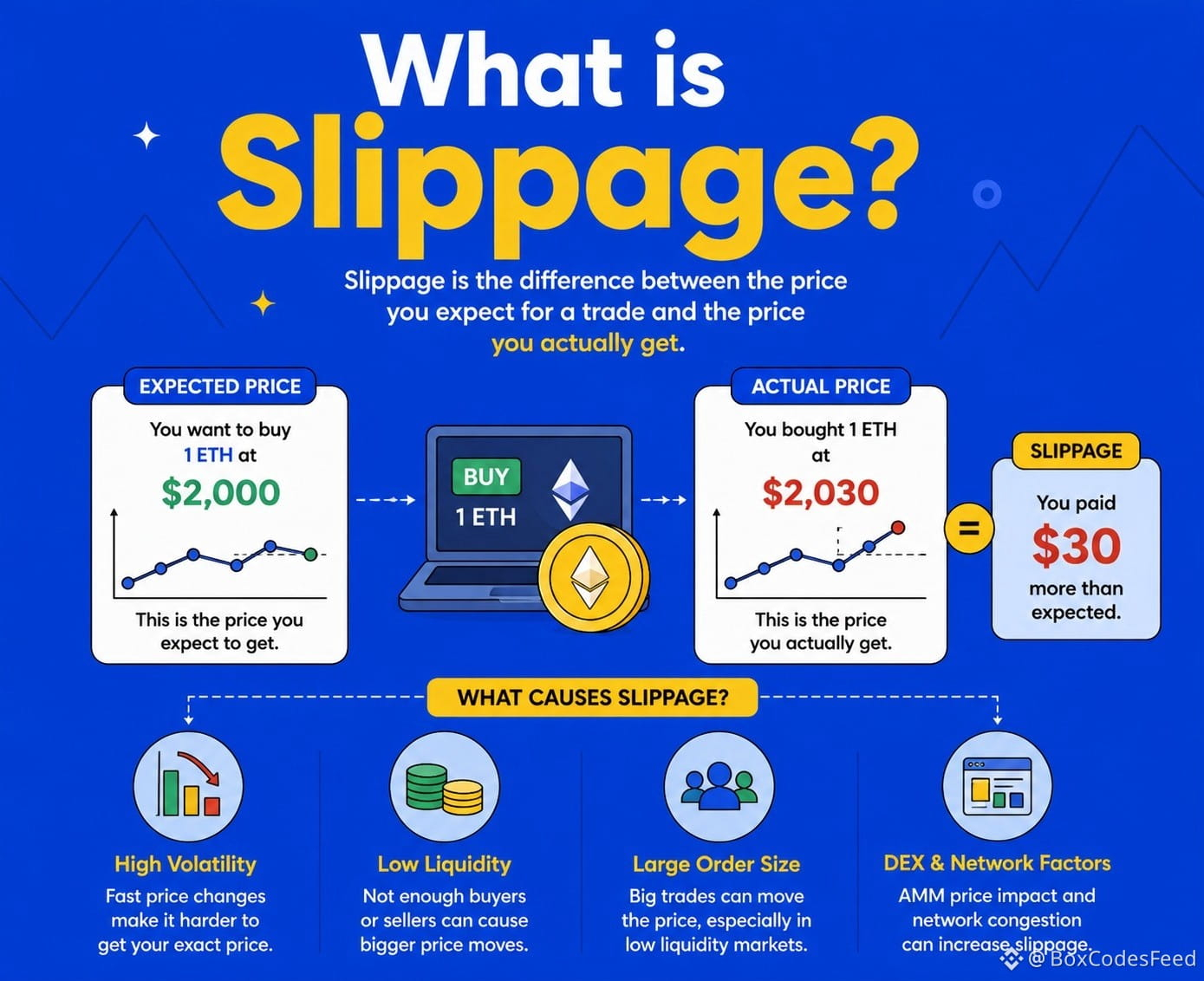
What is slippage in crypto? 👀
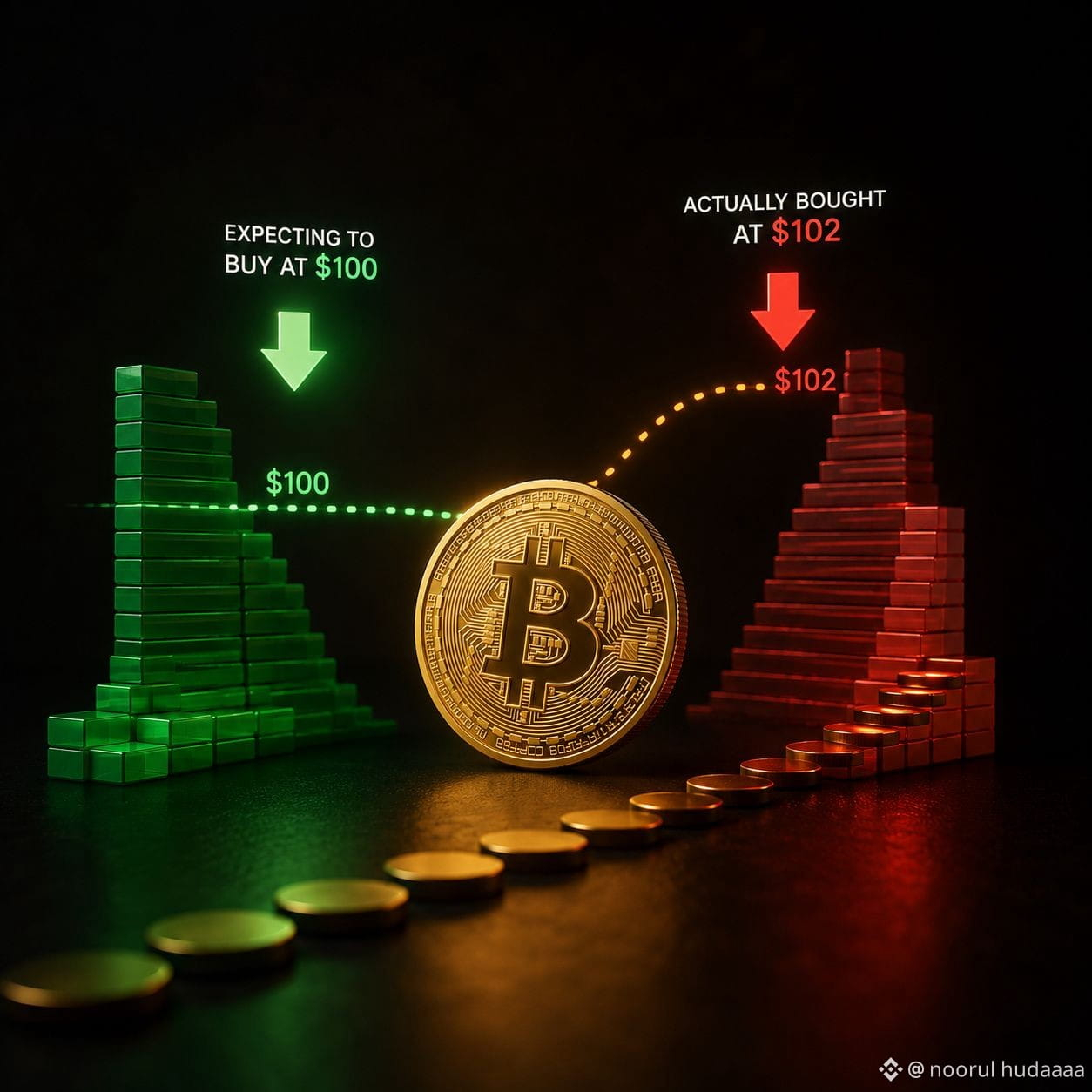
Imagine you want to buy a coin at $100.
You expect to pay $100… but your order actually gets filled at $102.
That difference is called slippage.
It usually happens when there aren't enough buy/sell orders available at the exact price you want, so your order gets filled at different prices.
This is why liquidity matters.
Higher liquidity generally means trades can happen with less price movement, while lower liquidity can lead to more slippage.
So before looking at a coin, don't just look at its price. 👀
Market cap. Volume. Liquidity. Slippage.
Understanding the basics comes first. 📊
#cryptoeducation #CryptoBasics #slippage #BinanceSquare #learncrypto
follow for more 👍
55


·
--
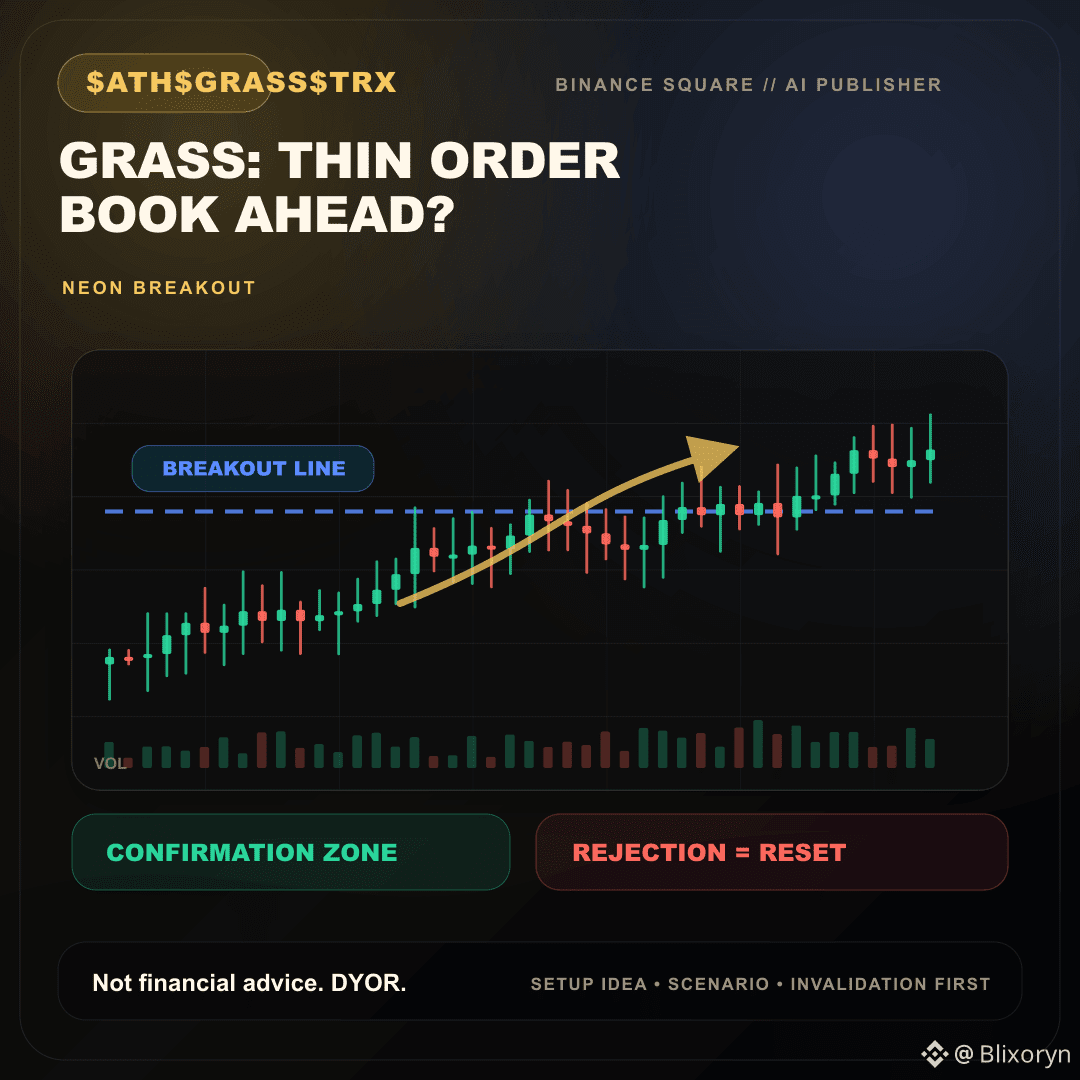
$ATH$GRASS$TRX The order book for $GRASS is looking thin at key levels. What does that mean? Thin order books imply that even relatively small buy or sell orders can cause significant price movements. This can lead to increased volatility and slippage. Be cautious if you're trading larger sizes. Not financial advice. DYOR.
#OrderBook #MarketDepth #Slippage #TradingTips
Do you actively watch order books or rely more on chart patterns?
$ATH $GRASS $TRX The order book for $GRASS is looking thin at key levels. What does that mean? Thin order books imply that even relatively small buy or sell orders can cause significant price movements. This can lead to increased volatility and slippage. Be cautious if you're trading larger sizes. Not financial advice. DYOR.
#OrderBook #MarketDepth #Slippage #TradingTips
Do you actively watch order books or rely more on chart patterns?
#OrderBook #MarketDepth #Slippage #TradingTips
Do you actively watch order books or rely more on chart patterns?
76

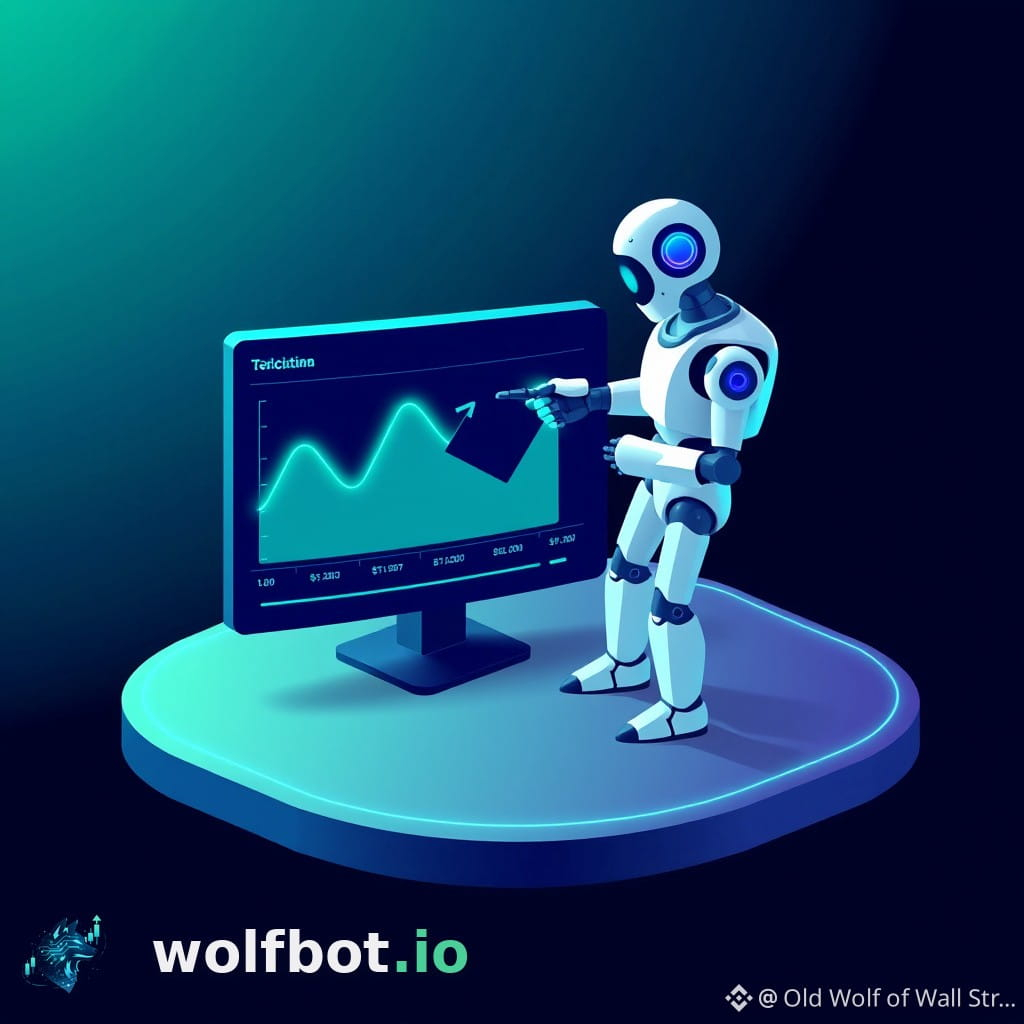
Thin liquidity in fast markets can cause slippage, making backtesting results misleading. 📉
Understanding this execution risk is critical for automated trading systems.
Here is how to systematically manage slippage:
1. Measure slippage by recording both the expected price and the actual fill price. WolfBot automatically exposes this difference for review.
2. Constrain risk by setting a maximum slippage tolerance directly on your market orders.
3. To avoid adverse slippage, consider using limit or maker-first orders, as these require your requested price or better.
4. When setting up a strategy, decide your priority: avoiding slippage (limit/maker-first) or guaranteeing execution (market orders). This choice defines your risk profile. ✅
For a deeper dive into these concepts, check out our academy guide: https://wolfbot.io/en/academy/slippage-in-automated-trading
#AutomatedTrading #Slippage #CryptoExecution #TradingStrategy #AlgorithmicTrading
28

Article
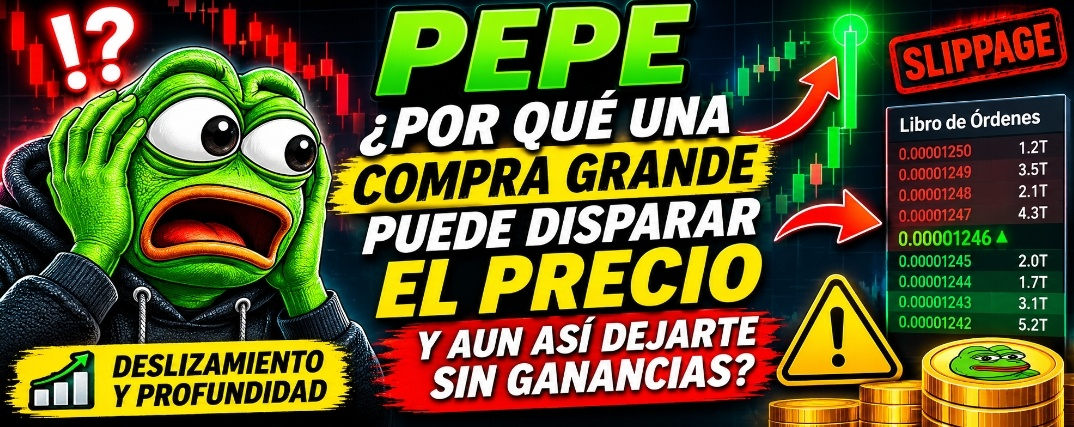
🐸 PEPE: Why can a large purchase drive up the price and still leave you with no profits?Many investors see a sudden rise in the price of a cryptocurrency and think that those who bought earlier are making huge profits.
But there is a problem that often goes unnoticed: the price shown on screen is not necessarily the price at which we can buy or sell large quantities.
To understand this, you need to know three concepts: slippage, market depth, and the order book.
What is slippage?
Slippage is the difference between the expected price of a trade and the average price at which it is ultimately executed.
🐸 PEPE: Why can a large purchase drive up the price and still leave you with no profits?
Many investors see a sudden rise in the price of a cryptocurrency and think that those who bought earlier are making huge profits.
But there is a problem that often goes unnoticed: the price shown on screen is not necessarily the price at which we can buy or sell large quantities.
To understand this, you need to know three concepts: slippage, market depth, and the order book.
What is slippage?
Slippage is the difference between the expected price of a trade and the average price at which it is ultimately executed.
Angel Conde02:
Tienes toda la razón por eso recomiendo hacer eso siempre supervisando el movimiento en tiempo real y no dejandolo actuar sin supervisión.
8
1
19
17.7k

·
--
𝗪𝗵𝗮𝘁 𝗶𝗳 𝘁𝗵𝗲 𝗽𝗿𝗶𝗰𝗲 𝘆𝗼𝘂 𝗰𝗹𝗶𝗰𝗸 𝗶𝘀 𝗻𝗼𝘁 𝘁𝗵𝗲 𝗽𝗿𝗶𝗰𝗲 𝘆𝗼𝘂 𝗮𝗰𝘁𝘂𝗮𝗹𝗹𝘆 𝗴𝗲𝘁? 𝗘𝗻𝘁𝗲𝗿 𝗕𝗶𝗱-𝗔𝘀𝗸 𝗦𝗽𝗿𝗲𝗮𝗱 𝗮𝗻𝗱 𝗦𝗹𝗶𝗽𝗽𝗮𝗴𝗲 📉⚖️
𝘋𝘳𝘢𝘸𝘪𝘯𝘨 𝘧𝘳𝘰𝘮 𝘧𝘰𝘶𝘯𝘥𝘢𝘵𝘪𝘰𝘯𝘢𝘭 𝘭𝘦𝘴𝘴𝘰𝘯𝘴 𝘰𝘯 #BinanceAcademy, 𝘩𝘦𝘳𝘦 𝘪𝘴 𝘺𝘰𝘶𝘳 𝘲𝘶𝘪𝘤𝘬 𝘴𝘱𝘳𝘦𝘢𝘥 𝘢𝘯𝘥 𝘴𝘭𝘪𝘱𝘱𝘢𝘨𝘦 𝘣𝘳𝘦𝘢𝘬𝘥𝘰𝘸𝘯:
1️⃣ 𝗧𝗵𝗲 𝗕𝗶𝗱-𝗔𝘀𝗸 𝗦𝗽𝗿𝗲𝗮𝗱:
• The gap between the highest bid and the lowest ask in the order book, liquid assets like Bitcoin usually show tighter spreads, thinner markets tend to be wider.
2️⃣ 𝗪𝗵𝗲𝗿𝗲 𝗦𝗹𝗶𝗽𝗽𝗮𝗴𝗲 𝗖𝗼𝗺𝗲𝘀 𝗙𝗿𝗼𝗺:
• A large market order can eat through the best price and keep filling at the next levels, so a buy aimed at $100 may end up averaging above $100, with volatile or low-liquidity altcoins on DEXs it can sometimes exceed 10%.
3️⃣ 𝗛𝗼𝘄 𝘁𝗼 𝗞𝗲𝗲𝗽 𝗜𝘁 𝗦𝗺𝗮𝗹𝗹:
• Split big orders into smaller parts, check order book depth, use limit orders when price matters more than speed, on DEXs set a sensible slippage tolerance.
⚠️ 𝗥𝗶𝘀𝗸 𝗡𝗼𝘁𝗲:
A tolerance set too high may expose you to front-running bots, one set too low may leave your order unfilled, and network fees can add to your total cost.
Read the order book before you click, small gaps can add up 💛
📖 Learn more on Binance Academy: https://www.binance.com/en/academy/articles/bid-ask-spread-and-slippage-explained
Crypto involves risk, this is not financial advice, always DYOR 💡
#Slippage #OrderBook #CryptoTrading #CryptoEducation
Follow me for more 💛

4
117

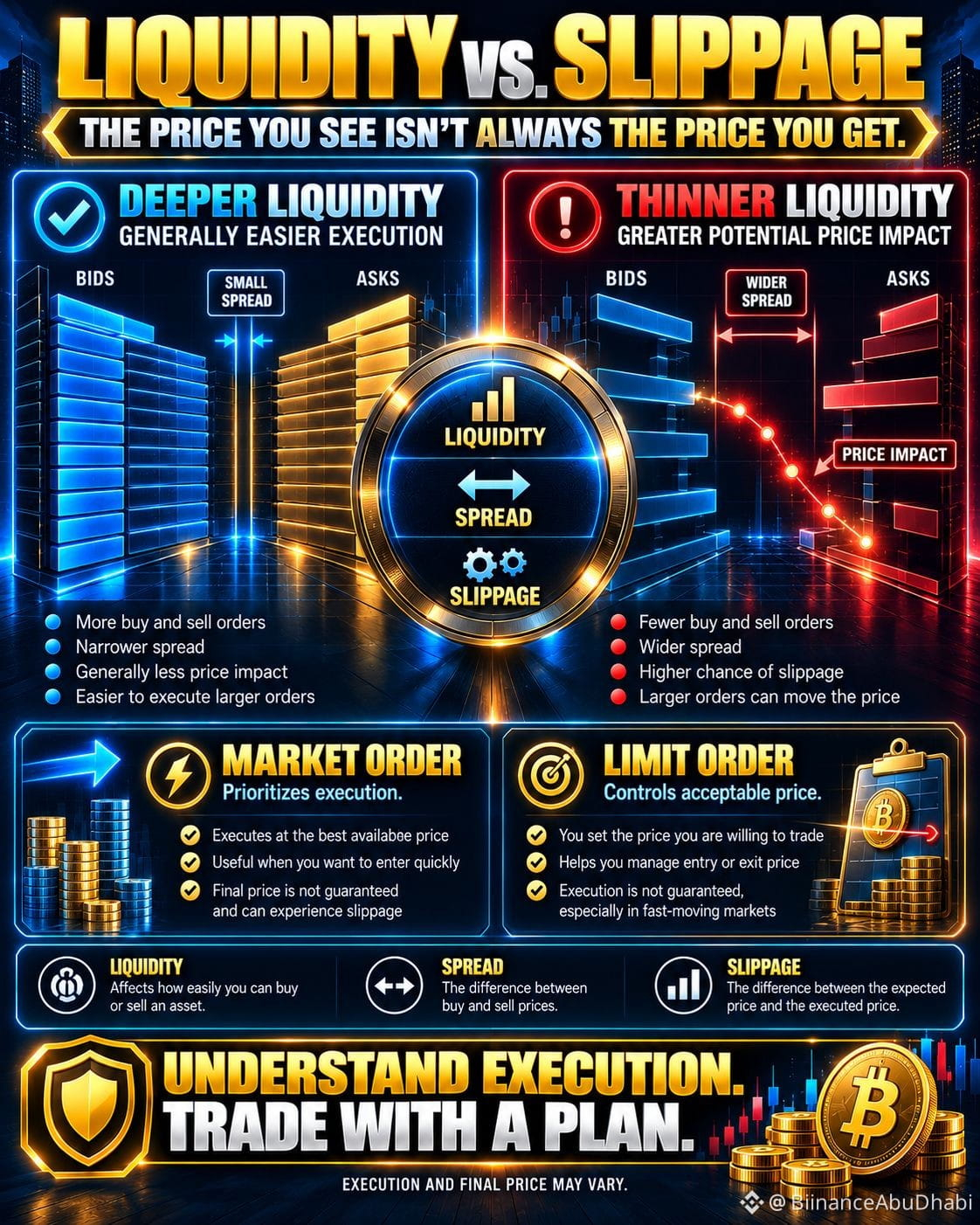
💧 YOU FOUND THE PERFECT TRADE. BUT CAN YOU ENTER AND EXIT AT THE PRICE YOU WANT?
.
In crypto, being right about market direction isn't the whole game. Liquidity and slippage can affect your actual trading results.
.
Let's break down two concepts every trader should understand. 👇
.
🔹 1. WHAT IS LIQUIDITY?
.
Liquidity describes how easily an asset can be bought or sold without significantly affecting its price.
.
Higher liquidity generally makes it easier to execute larger orders near the current market price.
.
Lower liquidity can mean wider spreads and greater price impact.
.
🔹 2. WHAT IS SLIPPAGE?
.
Slippage is the difference between the price you expect for a trade and the price at which it actually executes.
.
It can happen when prices move quickly, liquidity is limited, or an order consumes multiple price levels.
.
🔹 3. MARKET ORDER vs. LIMIT ORDER
.
📈 MARKET ORDER
Prioritizes execution, but the final price isn't guaranteed.
.
🎯 LIMIT ORDER
Specifies the price you're willing to accept, but execution isn't guaranteed.
.
Neither order type is perfect for every situation.
.
🔹 4. WHY TRADERS SHOULD CARE
.
A seemingly attractive setup can become less appealing when you account for:
• Bid-ask spreads
• Slippage
• Trading fees
• Market impact
.
🔹 5. HOW TO TRADE MORE CAREFULLY
.
✅ Check the order book before placing large orders.
✅ Compare the bid and ask prices.
✅ Be cautious when liquidity is thin.
✅ Consider limit orders when price control matters.
✅ Remember that stop-loss orders can also experience slippage.
.
🧠 THE KEY LESSON
.
The displayed price isn't always the price you'll receive.
.
Understanding liquidity and execution can help you make more informed trading decisions—but it cannot eliminate trading risk.
.
💬 DISCUSSION: When entering a crypto trade, do you prioritize execution speed or price control?
.
#BTC $BTC #BinanceSquare #TradingEducation #Slippage #Liquidity
.
In crypto, being right about market direction isn't the whole game. Liquidity and slippage can affect your actual trading results.
.
Let's break down two concepts every trader should understand. 👇
.
🔹 1. WHAT IS LIQUIDITY?
.
Liquidity describes how easily an asset can be bought or sold without significantly affecting its price.
.
Higher liquidity generally makes it easier to execute larger orders near the current market price.
.
Lower liquidity can mean wider spreads and greater price impact.
.
🔹 2. WHAT IS SLIPPAGE?
.
Slippage is the difference between the price you expect for a trade and the price at which it actually executes.
.
It can happen when prices move quickly, liquidity is limited, or an order consumes multiple price levels.
.
🔹 3. MARKET ORDER vs. LIMIT ORDER
.
📈 MARKET ORDER
Prioritizes execution, but the final price isn't guaranteed.
.
🎯 LIMIT ORDER
Specifies the price you're willing to accept, but execution isn't guaranteed.
.
Neither order type is perfect for every situation.
.
🔹 4. WHY TRADERS SHOULD CARE
.
A seemingly attractive setup can become less appealing when you account for:
• Bid-ask spreads
• Slippage
• Trading fees
• Market impact
.
🔹 5. HOW TO TRADE MORE CAREFULLY
.
✅ Check the order book before placing large orders.
✅ Compare the bid and ask prices.
✅ Be cautious when liquidity is thin.
✅ Consider limit orders when price control matters.
✅ Remember that stop-loss orders can also experience slippage.
.
🧠 THE KEY LESSON
.
The displayed price isn't always the price you'll receive.
.
Understanding liquidity and execution can help you make more informed trading decisions—but it cannot eliminate trading risk.
.
💬 DISCUSSION: When entering a crypto trade, do you prioritize execution speed or price control?
.
#BTC $BTC #BinanceSquare #TradingEducation #Slippage #Liquidity
95
Log in to explore more content
Join global crypto users on Binance Square
⚡️ Get latest and useful information about crypto.
💬 Trusted by the world’s largest crypto exchange.
👍 Discover real insights from verified creators.
Email / Phone number
Trending Topics
1
#USPPIMissMayEaseBTCPressure
27,584 views
591 Discussing
2
#BitcoinCoreDisclosesTorTrafficVulnerability
10,001 views
288 Discussing
3
#WhatWillDriveCryptoandStocks’NextRebound?
132,435 views
1,494 Discussing
4
#BitcoinBreaksBelow200WeekMovingAverage
37,680 views
432 Discussing
5
#SpaceXTeslaMergerTalksWouldCombine30220BTC
13,084 views
226 Discussing
6
#Anthropic’s6xIPODemandSignalsPotentialRecordRaise
43,499 views
675 Discussing
7
#USCryptoETFsLose$1.48BInFiveDays
2,158 views
41 Discussing
8
#KoreaDigitalAssetBasicActFinalDraftExpectedEarlyJanuary
3,563 views
20 Discussing
9
#RippleRLUSDMarketCapSurpassesPayPalPYUSD
7,820 views
122 Discussing
10
#JaneStreetNearlyOctuplesFidelityBitcoinETFHoldings
17,754 views
233 Discussing