

#cryptoeducation
cryptoeducation
3.5M views
20,263 Discussing
Hot
Latest
Crypto Beginner Series- Day 4 🚀
👉What is Blockchain?
👉Blockchain is a Digital Records Management System (DRMS) used to store and authenticate transactions.
👉Unlike being controlled by one central authority, blockchain data is maintained and authenticated by a network of computers.
💡Beginner Tip:
Think of blockchain like a digital ledger where transactions are recorded in a clear and organized method.
👉Bitcoin and Ethereum are two well-known examples of cryptocurrencies that work on blockchain technology.
So, what are your thoughts on this post?? let me know your comments
#Blockchain #CryptoEducation
Crypto Beginner Series- Day 4 🚀
👉What is Blockchain?
👉Blockchain is a Digital Records Management System (DRMS) used to store and authenticate transactions.
👉Unlike being controlled by one central authority, blockchain data is maintained and authenticated by a network of computers.
💡Beginner Tip:
Think of blockchain like a digital ledger where transactions are recorded in a clear and organized method.
👉Bitcoin and Ethereum are two well-known examples of cryptocurrencies that work on blockchain technology.
So, what are your thoughts on this post?? let me know your comments
#Blockchain #CryptoEducation
👉What is Blockchain?
👉Blockchain is a Digital Records Management System (DRMS) used to store and authenticate transactions.
👉Unlike being controlled by one central authority, blockchain data is maintained and authenticated by a network of computers.
💡Beginner Tip:
Think of blockchain like a digital ledger where transactions are recorded in a clear and organized method.
👉Bitcoin and Ethereum are two well-known examples of cryptocurrencies that work on blockchain technology.
So, what are your thoughts on this post?? let me know your comments
#Blockchain #CryptoEducation
82
·
--
- No markdown (so plain text, no formatting like bold, italics, code blocks, etc.)
- Must start with "Crypto Term of the Day:"
- Word count 120-160 words (inclusive). Must count words.
- Use one simple analogy from everyday life.
- Explain why a crypto investor needs to understand this.
- End with: "Save this post and share it with your crypto friends!"
- Final line: "#PassiveIncome #YieldFarming #CryptoEducation #Blockchain"
- No extra lines? Probably they want the final line separate. But they said final line: those hashtags. So final line must be exactly that line, presumably with spaces between hashtags.
We must ensure word count is between 120 and 160 words inclusive.
We need to count words.
We'll produce a post text. Let's draft.
First line: "Crypto Term of the Day:" counts as 4 words? Actually "Crypto" (1), "Term" (2), "of" (3), "the" (4), "Day:" (5). "Day:" counts as a word. So 5 words.
We need total words 120-160 inclusive.
We'll write about FOMO: explanation, analogy, why important.
We must end with required sentence: "Save this post and share it with your crypto friends!" That's a sentence. Count words: "Save"(1) "this"(2) "post"(3) "and"(4) "share"(5) "it"(6) "with"(7)
- No markdown (so plain text, no formatting like bold, italics, code blocks, etc.)
- Must start with "Crypto Term of the Day:"
- Word count 120-160 words (inclusive). Must count words.
- Use one simple analogy from everyday life.
- Explain why a crypto investor needs to understand this.
- End with: "Save this post and share it with your crypto friends!"
- Final line: "#PassiveIncome #YieldFarming #CryptoEducation #Blockchain"
- No extra lines? Probably they want the final line separate. But they said final line: those hashtags. So final line must be exactly that line, presumably with spaces between hashtags.
We must ensure word count is between 120 and 160 words inclusive.
We need to count words.
We'll produce a post text. Let's draft.
First line: "Crypto Term of the Day:" counts as 4 words? Actually "Crypto" (1), "Term" (2), "of" (3), "the" (4), "Day:" (5). "Day:" counts as a word. So 5 words.
We need total words 120-160 inclusive.
We'll write about FOMO: explanation, analogy, why important.
We must end with required sentence: "Save this post and share it with your crypto friends!" That's a sentence. Count words: "Save"(1) "this"(2) "post"(3) "and"(4) "share"(5) "it"(6) "with"(7)
- Must start with "Crypto Term of the Day:"
- Word count 120-160 words (inclusive). Must count words.
- Use one simple analogy from everyday life.
- Explain why a crypto investor needs to understand this.
- End with: "Save this post and share it with your crypto friends!"
- Final line: "#PassiveIncome #YieldFarming #CryptoEducation #Blockchain"
- No extra lines? Probably they want the final line separate. But they said final line: those hashtags. So final line must be exactly that line, presumably with spaces between hashtags.
We must ensure word count is between 120 and 160 words inclusive.
We need to count words.
We'll produce a post text. Let's draft.
First line: "Crypto Term of the Day:" counts as 4 words? Actually "Crypto" (1), "Term" (2), "of" (3), "the" (4), "Day:" (5). "Day:" counts as a word. So 5 words.
We need total words 120-160 inclusive.
We'll write about FOMO: explanation, analogy, why important.
We must end with required sentence: "Save this post and share it with your crypto friends!" That's a sentence. Count words: "Save"(1) "this"(2) "post"(3) "and"(4) "share"(5) "it"(6) "with"(7)
·
--
The user wants a post for Binance Square explaining FOMO in crypto. Requirements:
- No markdown
- Start with "Crypto Term of the Day:"
- 120-160 words
- Use one simple analogy from everyday life
- Explain why a crypto investor needs to understand this
- End with "Save this post and share it with your crypto friends!"
- Final line: "#PassiveIncome #YieldFarming #CryptoEducation #Blockchain"
We must output only the final post text, no extra formatting, no markdown, no thinking.
We need to count words. Let's aim for ~140 words.
Structure:
First line: "Crypto Term of the Day:" then explanation.
We need to include analogy: e.g., "like buying a limited-edition sneaker because everyone else is lining up" or "like rushing to a restaurant because the line is long". Use everyday life analogy.
Explain why investor needs to understand: to avoid impulsive buying, protect capital, make rational decisions.
End with required line.
Final line with hashtags.
No markdown, so plain text.
Word count: Let's draft and count.
Draft:
"Crypto Term of the Day: FOMO, or Fear of Missing Out, is the uneasy feeling that pushes you to jump into a trade just because prices are surging and everyone talks about it. Imagine standing in line for a popular food truck — you order the special not because you’re hungry, but because the crowd makes you think it must be amazing. In crypto, that impulse leads to buying at peaks, chasing hype coins, and ignoring risk management. Understanding FOMO helps you pause,
The user wants a post for Binance Square explaining FOMO in crypto. Requirements:
- No markdown
- Start with "Crypto Term of the Day:"
- 120-160 words
- Use one simple analogy from everyday life
- Explain why a crypto investor needs to understand this
- End with "Save this post and share it with your crypto friends!"
- Final line: "#PassiveIncome #YieldFarming #CryptoEducation #Blockchain"
We must output only the final post text, no extra formatting, no markdown, no thinking.
We need to count words. Let's aim for ~140 words.
Structure:
First line: "Crypto Term of the Day:" then explanation.
We need to include analogy: e.g., "like buying a limited-edition sneaker because everyone else is lining up" or "like rushing to a restaurant because the line is long". Use everyday life analogy.
Explain why investor needs to understand: to avoid impulsive buying, protect capital, make rational decisions.
End with required line.
Final line with hashtags.
No markdown, so plain text.
Word count: Let's draft and count.
Draft:
"Crypto Term of the Day: FOMO, or Fear of Missing Out, is the uneasy feeling that pushes you to jump into a trade just because prices are surging and everyone talks about it. Imagine standing in line for a popular food truck — you order the special not because you’re hungry, but because the crowd makes you think it must be amazing. In crypto, that impulse leads to buying at peaks, chasing hype coins, and ignoring risk management. Understanding FOMO helps you pause,
- No markdown
- Start with "Crypto Term of the Day:"
- 120-160 words
- Use one simple analogy from everyday life
- Explain why a crypto investor needs to understand this
- End with "Save this post and share it with your crypto friends!"
- Final line: "#PassiveIncome #YieldFarming #CryptoEducation #Blockchain"
We must output only the final post text, no extra formatting, no markdown, no thinking.
We need to count words. Let's aim for ~140 words.
Structure:
First line: "Crypto Term of the Day:" then explanation.
We need to include analogy: e.g., "like buying a limited-edition sneaker because everyone else is lining up" or "like rushing to a restaurant because the line is long". Use everyday life analogy.
Explain why investor needs to understand: to avoid impulsive buying, protect capital, make rational decisions.
End with required line.
Final line with hashtags.
No markdown, so plain text.
Word count: Let's draft and count.
Draft:
"Crypto Term of the Day: FOMO, or Fear of Missing Out, is the uneasy feeling that pushes you to jump into a trade just because prices are surging and everyone talks about it. Imagine standing in line for a popular food truck — you order the special not because you’re hungry, but because the crowd makes you think it must be amazing. In crypto, that impulse leads to buying at peaks, chasing hype coins, and ignoring risk management. Understanding FOMO helps you pause,

If you're new to crypto, please read this before buying your first altcoin.#ALTCOİNS $BTC
Don't ask only:
“How much can this coin pump?”
Also ask:
• What problem does it solve?
• Who is building it?
• What is the token used for?
• What's the circulating supply?
• Who holds most of the supply?
A good-looking chart doesn't automatically mean a good project.
What else would you add to this checklist?
#cryptoeducation #altcoins #BinanceSquare
If you're new to crypto, please read this before buying your first altcoin.
#ALTCOİNS $BTC
Don't ask only:
“How much can this coin pump?”
Also ask:
• What problem does it solve?
• Who is building it?
• What is the token used for?
• What's the circulating supply?
• Who holds most of the supply?
A good-looking chart doesn't automatically mean a good project.
What else would you add to this checklist?
#cryptoeducation #altcoins #BinanceSquare
Don't ask only:
“How much can this coin pump?”
Also ask:
• What problem does it solve?
• Who is building it?
• What is the token used for?
• What's the circulating supply?
• Who holds most of the supply?
A good-looking chart doesn't automatically mean a good project.
What else would you add to this checklist?
#cryptoeducation #altcoins #BinanceSquare
AngelOfCrypto_-:
nice
1
2
268

🚨 NEW TO CRYPTO? READ THIS BEFORE BUYING ANY COIN
You don't need to chase every “100x” coin to start learning crypto.
Before buying a token, check these 5 things:
🔎 1. What problem does the project solve?
📊 2. What is its market cap?
💰 3. What is the token supply?
👥 4. Who is building the project?
⚠️ 5. What are the biggest risks?
A cheap coin isn't automatically undervalued, and a coin that's trending isn't automatically a good investment.
I'm going to share simple crypto research, opportunities, and lessons for beginners. 🚀
What coin are you researching right now? 👇
#crypto #BinanceSquare #Bitcoin #altcoins #cryptoeducation
🚨 NEW TO CRYPTO? READ THIS BEFORE BUYING ANY COIN
You don't need to chase every “100x” coin to start learning crypto.
Before buying a token, check these 5 things:
🔎 1. What problem does the project solve?
📊 2. What is its market cap?
💰 3. What is the token supply?
👥 4. Who is building the project?
⚠️ 5. What are the biggest risks?
A cheap coin isn't automatically undervalued, and a coin that's trending isn't automatically a good investment.
I'm going to share simple crypto research, opportunities, and lessons for beginners. 🚀
What coin are you researching right now? 👇
#crypto #BinanceSquare #Bitcoin #altcoins #cryptoeducation
You don't need to chase every “100x” coin to start learning crypto.
Before buying a token, check these 5 things:
🔎 1. What problem does the project solve?
📊 2. What is its market cap?
💰 3. What is the token supply?
👥 4. Who is building the project?
⚠️ 5. What are the biggest risks?
A cheap coin isn't automatically undervalued, and a coin that's trending isn't automatically a good investment.
I'm going to share simple crypto research, opportunities, and lessons for beginners. 🚀
What coin are you researching right now? 👇
#crypto #BinanceSquare #Bitcoin #altcoins #cryptoeducation
1
57

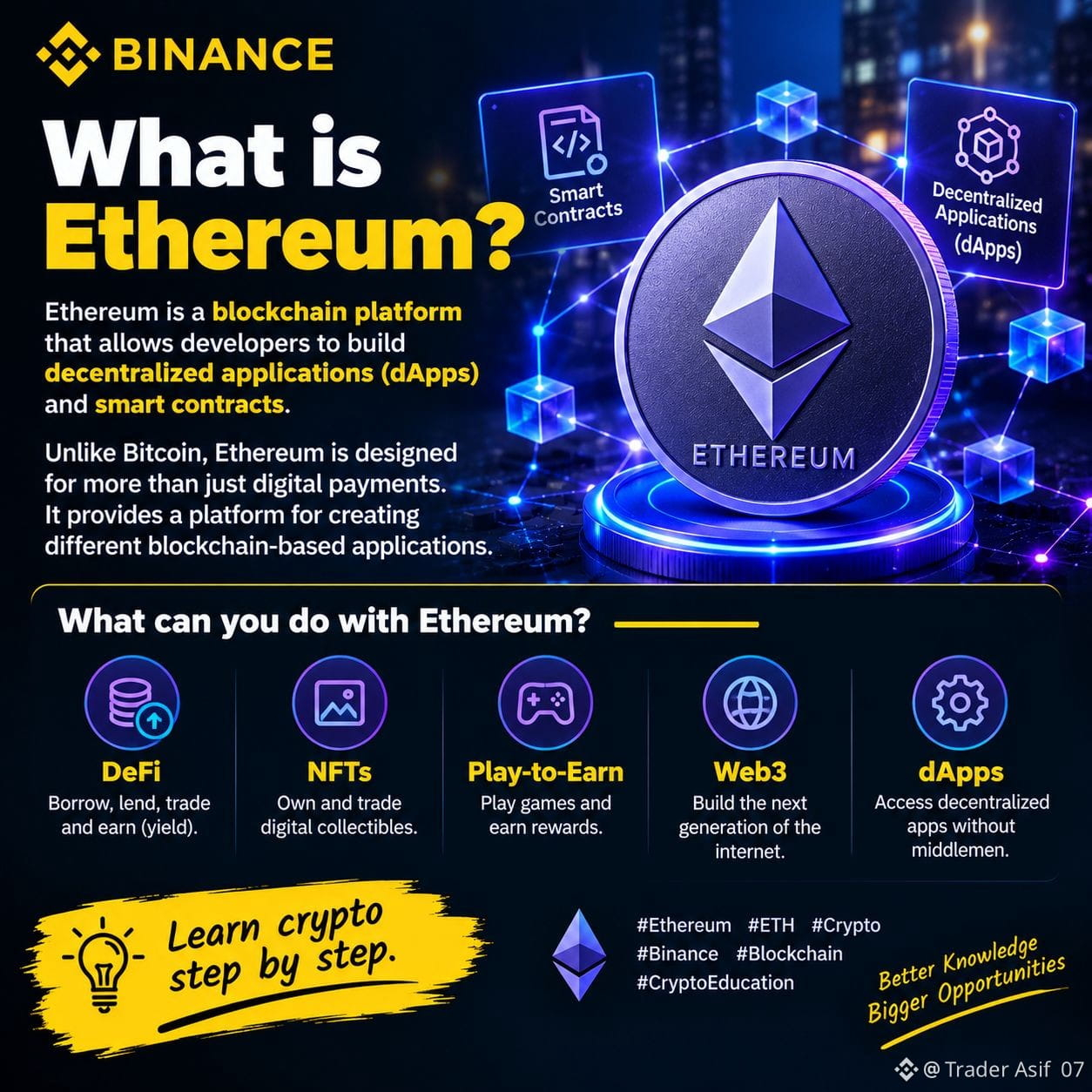
🚀 What is Ethereum?
Ethereum is a blockchain platform that allows developers to build decentralized applications and smart contracts.
Unlike Bitcoin, Ethereum is designed for more than just digital payments. It provides a platform for creating different blockchain-based applications.
📚 Learn crypto step by step.
#Ethereum #ETH #Crypto #Binance #Blockchain #CryptoEducation $AAPL.US
🚀 What is Ethereum?
Ethereum is a blockchain platform that allows developers to build decentralized applications and smart contracts.
Unlike Bitcoin, Ethereum is designed for more than just digital payments. It provides a platform for creating different blockchain-based applications.
📚 Learn crypto step by step.
#Ethereum #ETH #Crypto #Binance #Blockchain #CryptoEducation $AAPL.US
Ethereum is a blockchain platform that allows developers to build decentralized applications and smart contracts.
Unlike Bitcoin, Ethereum is designed for more than just digital payments. It provides a platform for creating different blockchain-based applications.
📚 Learn crypto step by step.
#Ethereum #ETH #Crypto #Binance #Blockchain #CryptoEducation $AAPL.US
61
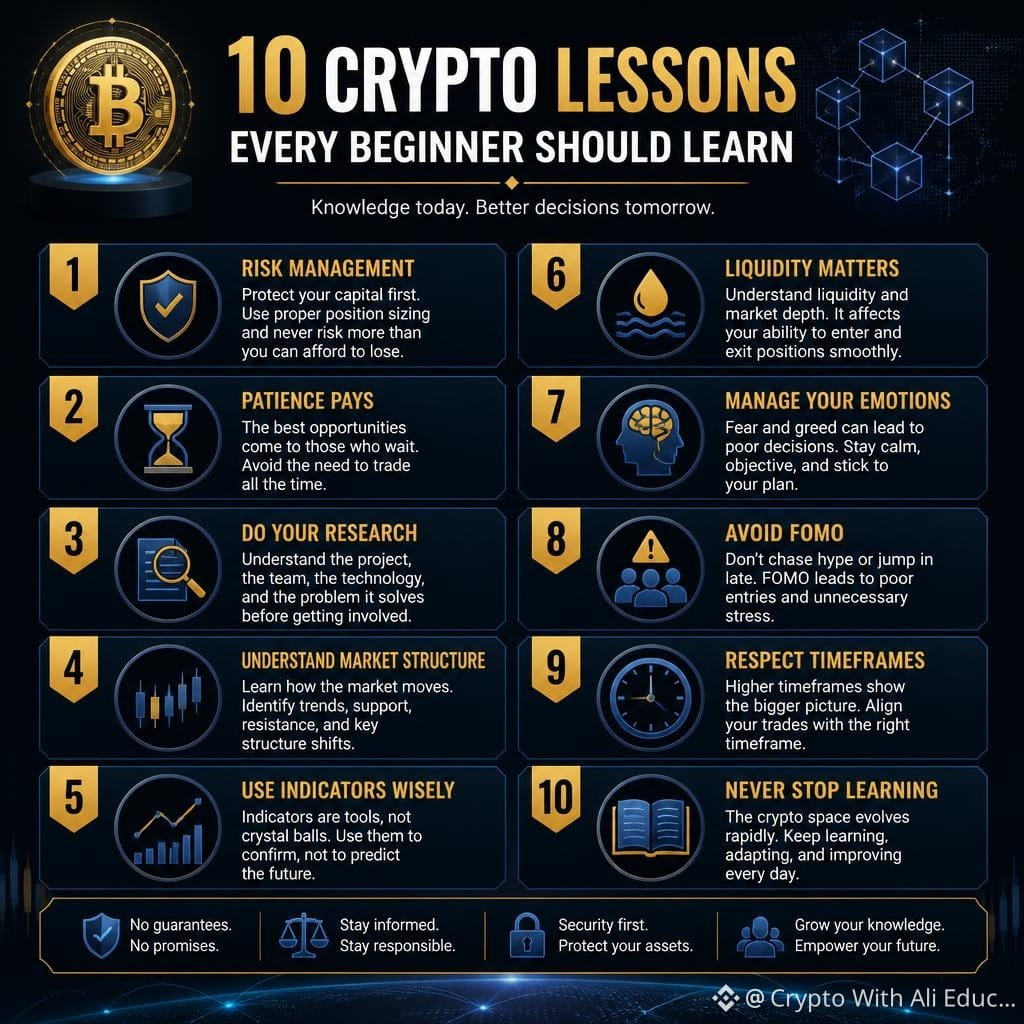
🚨 10 Crypto Lessons Every Beginner Should Learn Before Chasing the Market
Crypto can move fast, but learning should come first.
Before chasing the next coin, candle, or trend, remember these 10 lessons:
1️⃣ Risk comes first — Protecting capital matters more than being right every time.
2️⃣ Patience matters — Not every market move needs a reaction.
3️⃣ Research before action — Understand what you're looking at before forming an opinion.
4️⃣ Learn market structure — Higher highs, lower lows, ranges and breakouts provide useful context.
5️⃣ Don't rely on one indicator — RSI, MACD and volume are tools, not complete strategies.
6️⃣ Understand liquidity — Price can move through areas where many orders are concentrated.
7️⃣ Control emotions — FOMO and fear can turn a plan into an impulsive decision.
8️⃣ Avoid chasing green candles — A strong move doesn't automatically mean it will continue.
9️⃣ Think in timeframes — A short-term move can look very different from the bigger market structure.
🔟 Keep learning — Crypto changes constantly, so education is an ongoing process.
The biggest beginner mistake isn't missing one opportunity.
It's making decisions without understanding the market.
💬 Which lesson would you add to this list?
📌 Save this post and share it with someone learning crypto.
Educational content only — not financial advice.
If this helped you, follow for more 👍
#cryptoeducation #bitcoin #CryptoForBeginners #BinanceSquare #CryptoWithAli
🚨 10 Crypto Lessons Every Beginner Should Learn Before Chasing the Market
Crypto can move fast, but learning should come first.
Before chasing the next coin, candle, or trend, remember these 10 lessons:
1️⃣ Risk comes first — Protecting capital matters more than being right every time.
2️⃣ Patience matters — Not every market move needs a reaction.
3️⃣ Research before action — Understand what you're looking at before forming an opinion.
4️⃣ Learn market structure — Higher highs, lower lows, ranges and breakouts provide useful context.
5️⃣ Don't rely on one indicator — RSI, MACD and volume are tools, not complete strategies.
6️⃣ Understand liquidity — Price can move through areas where many orders are concentrated.
7️⃣ Control emotions — FOMO and fear can turn a plan into an impulsive decision.
8️⃣ Avoid chasing green candles — A strong move doesn't automatically mean it will continue.
9️⃣ Think in timeframes — A short-term move can look very different from the bigger market structure.
🔟 Keep learning — Crypto changes constantly, so education is an ongoing process.
The biggest beginner mistake isn't missing one opportunity.
It's making decisions without understanding the market.
💬 Which lesson would you add to this list?
📌 Save this post and share it with someone learning crypto.
Educational content only — not financial advice.
If this helped you, follow for more 👍
#cryptoeducation #bitcoin #CryptoForBeginners #BinanceSquare #CryptoWithAli
Crypto can move fast, but learning should come first.
Before chasing the next coin, candle, or trend, remember these 10 lessons:
1️⃣ Risk comes first — Protecting capital matters more than being right every time.
2️⃣ Patience matters — Not every market move needs a reaction.
3️⃣ Research before action — Understand what you're looking at before forming an opinion.
4️⃣ Learn market structure — Higher highs, lower lows, ranges and breakouts provide useful context.
5️⃣ Don't rely on one indicator — RSI, MACD and volume are tools, not complete strategies.
6️⃣ Understand liquidity — Price can move through areas where many orders are concentrated.
7️⃣ Control emotions — FOMO and fear can turn a plan into an impulsive decision.
8️⃣ Avoid chasing green candles — A strong move doesn't automatically mean it will continue.
9️⃣ Think in timeframes — A short-term move can look very different from the bigger market structure.
🔟 Keep learning — Crypto changes constantly, so education is an ongoing process.
The biggest beginner mistake isn't missing one opportunity.
It's making decisions without understanding the market.
💬 Which lesson would you add to this list?
📌 Save this post and share it with someone learning crypto.
Educational content only — not financial advice.
If this helped you, follow for more 👍
#cryptoeducation #bitcoin #CryptoForBeginners #BinanceSquare #CryptoWithAli
77

·
--
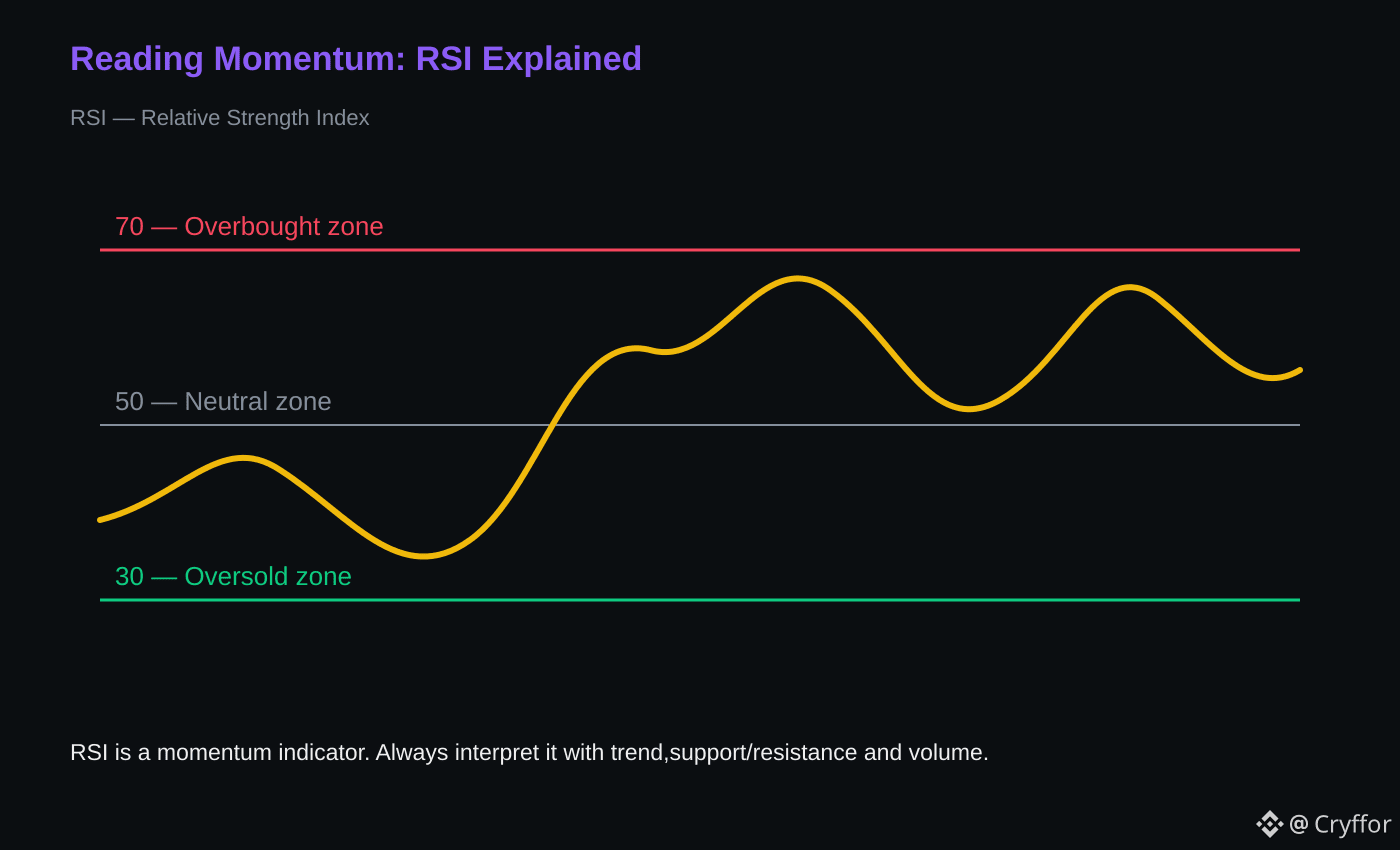
📚 Crypto Education — RSI
⚡ RSI measures momentum.
🟢 Above 70: strong momentum / potentially overextended
🟡 Around 50: balanced momentum
🔴 Below 30: weak momentum / potentially oversold
📊 RSI should not be used alone.
🔎 Price structure, volume and trend can provide confirmation.
👀 Context matters.
🤔 Do you combine RSI with another indicator?
#CryptoEducation #Binance #RSI #TechnicalAnalysis
📚 Crypto Education — RSI
⚡ RSI measures momentum.
🟢 Above 70: strong momentum / potentially overextended
🟡 Around 50: balanced momentum
🔴 Below 30: weak momentum / potentially oversold
📊 RSI should not be used alone.
🔎 Price structure, volume and trend can provide confirmation.
👀 Context matters.
🤔 Do you combine RSI with another indicator?
#CryptoEducation #Binance #RSI #TechnicalAnalysis
⚡ RSI measures momentum.
🟢 Above 70: strong momentum / potentially overextended
🟡 Around 50: balanced momentum
🔴 Below 30: weak momentum / potentially oversold
📊 RSI should not be used alone.
🔎 Price structure, volume and trend can provide confirmation.
👀 Context matters.
🤔 Do you combine RSI with another indicator?
#CryptoEducation #Binance #RSI #TechnicalAnalysis

Article
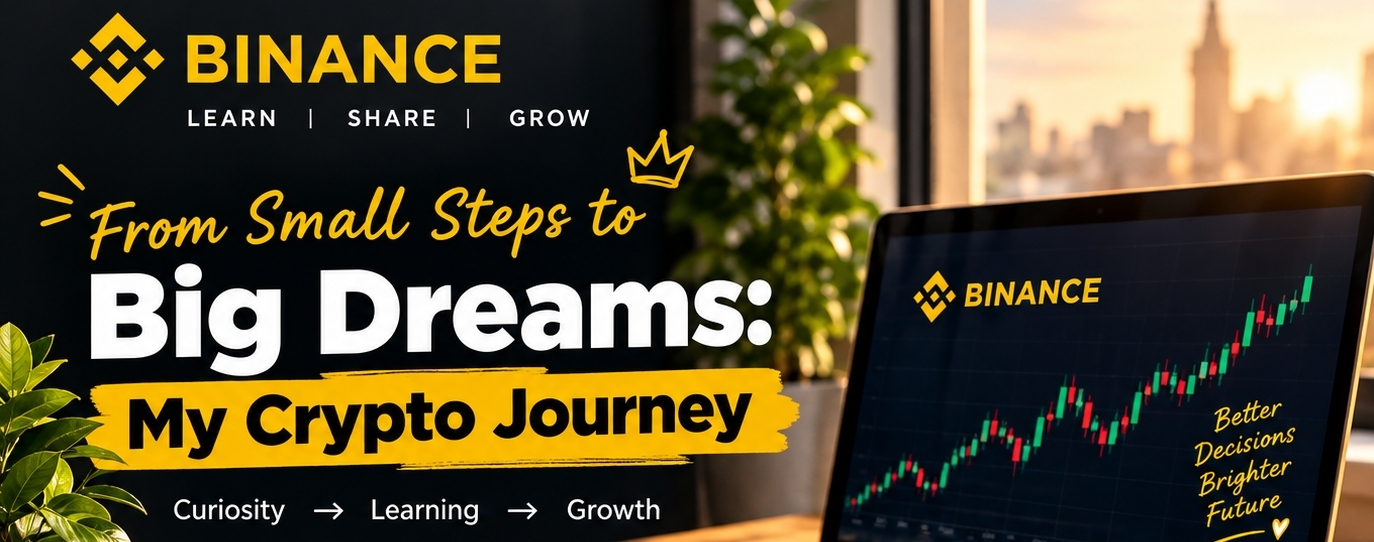
🚀 “From Small Steps to Big Dreams: My Crypto Journey”When I first heard about crypto, I thought it was all about charts, green candles, and complicated trading strategies.
But the more I learned, the more I realized something important:
Crypto is not just about making money. It’s about learning how a new financial technology works — and making smarter decisions along the way.
🌱 It All Starts With Curiosity
You don't need to be an expert to start learning about crypto.
You can begin with the basics:
🔹 What is Bitcoin?
🔹 How does blockchain work?
🔹 What makes a cryptocurrency different from traditional money?
🔹 What are wallets and exchanges?
🔹 Why does the crypto market move so quickly?
Every answer leads to another question — and that's actually one of the most exciting parts of this space.
📚 Learning Before Trading
One lesson I think every beginner should remember is:
Don't rush into trading just because everyone else is doing it.
Before putting money into any asset, understand what you're buying, learn about the risks, and never invest money you cannot afford to lose.
Crypto markets can be highly volatile. A coin going up quickly doesn't mean it will continue going up, and a popular trend isn't automatically a good investment decision.
📈 Small Steps Matter
You don't need to know everything on day one.
Learn one concept today.
Understand one chart tomorrow.
Research one project carefully.
Improve your security habits.
Over time, those small steps can build something much more valuable:
knowledge.
And knowledge can help you make decisions based on research instead of hype.
🔐 Don't Forget Security
As your crypto journey grows, security should grow with it.
Use strong, unique passwords.
Protect your account with available security features.
Be careful with suspicious links and messages.
Never share your passwords or private keys.
In crypto, protecting your assets is just as important as discovering opportunities.
🚀 The Future Belongs to Learners
Whether you're completely new to crypto or you've already been following the market for years, there is always something new to learn.
The goal shouldn't be to chase every pump.
The goal should be to understand the technology, manage risk, keep learning, and make informed decisions.
Your crypto journey doesn't have to begin with a huge investment.
Sometimes, it begins with something much smaller:
curiosity.
💬 What was the first thing that made YOU interested in crypto — Bitcoin, blockchain, trading, or something else?
#BinanceSquare #crypto #bitcoin #Blockchain #cryptoeducation #Web3 #CryptoJourney #Trading
🚀 “From Small Steps to Big Dreams: My Crypto Journey”
When I first heard about crypto, I thought it was all about charts, green candles, and complicated trading strategies.
But the more I learned, the more I realized something important:
Crypto is not just about making money. It’s about learning how a new financial technology works — and making smarter decisions along the way.
🌱 It All Starts With Curiosity
You don't need to be an expert to start learning about crypto.
You can begin with the basics:
🔹 What is Bitcoin?
🔹 How does blockchain work?
🔹 What makes a cryptocurrency different from traditional money?
🔹 What are wallets and exchanges?
🔹 Why does the crypto market move so quickly?
Every answer leads to another question — and that's actually one of the most exciting parts of this space.
📚 Learning Before Trading
One lesson I think every beginner should remember is:
Don't rush into trading just because everyone else is doing it.
Before putting money into any asset, understand what you're buying, learn about the risks, and never invest money you cannot afford to lose.
Crypto markets can be highly volatile. A coin going up quickly doesn't mean it will continue going up, and a popular trend isn't automatically a good investment decision.
📈 Small Steps Matter
You don't need to know everything on day one.
Learn one concept today.
Understand one chart tomorrow.
Research one project carefully.
Improve your security habits.
Over time, those small steps can build something much more valuable:
knowledge.
And knowledge can help you make decisions based on research instead of hype.
🔐 Don't Forget Security
As your crypto journey grows, security should grow with it.
Use strong, unique passwords.
Protect your account with available security features.
Be careful with suspicious links and messages.
Never share your passwords or private keys.
In crypto, protecting your assets is just as important as discovering opportunities.
🚀 The Future Belongs to Learners
Whether you're completely new to crypto or you've already been following the market for years, there is always something new to learn.
The goal shouldn't be to chase every pump.
The goal should be to understand the technology, manage risk, keep learning, and make informed decisions.
Your crypto journey doesn't have to begin with a huge investment.
Sometimes, it begins with something much smaller:
curiosity.
💬 What was the first thing that made YOU interested in crypto — Bitcoin, blockchain, trading, or something else?
#BinanceSquare #crypto #bitcoin #Blockchain #cryptoeducation #Web3 #CryptoJourney #Trading
But the more I learned, the more I realized something important:
Crypto is not just about making money. It’s about learning how a new financial technology works — and making smarter decisions along the way.
🌱 It All Starts With Curiosity
You don't need to be an expert to start learning about crypto.
You can begin with the basics:
🔹 What is Bitcoin?
🔹 How does blockchain work?
🔹 What makes a cryptocurrency different from traditional money?
🔹 What are wallets and exchanges?
🔹 Why does the crypto market move so quickly?
Every answer leads to another question — and that's actually one of the most exciting parts of this space.
📚 Learning Before Trading
One lesson I think every beginner should remember is:
Don't rush into trading just because everyone else is doing it.
Before putting money into any asset, understand what you're buying, learn about the risks, and never invest money you cannot afford to lose.
Crypto markets can be highly volatile. A coin going up quickly doesn't mean it will continue going up, and a popular trend isn't automatically a good investment decision.
📈 Small Steps Matter
You don't need to know everything on day one.
Learn one concept today.
Understand one chart tomorrow.
Research one project carefully.
Improve your security habits.
Over time, those small steps can build something much more valuable:
knowledge.
And knowledge can help you make decisions based on research instead of hype.
🔐 Don't Forget Security
As your crypto journey grows, security should grow with it.
Use strong, unique passwords.
Protect your account with available security features.
Be careful with suspicious links and messages.
Never share your passwords or private keys.
In crypto, protecting your assets is just as important as discovering opportunities.
🚀 The Future Belongs to Learners
Whether you're completely new to crypto or you've already been following the market for years, there is always something new to learn.
The goal shouldn't be to chase every pump.
The goal should be to understand the technology, manage risk, keep learning, and make informed decisions.
Your crypto journey doesn't have to begin with a huge investment.
Sometimes, it begins with something much smaller:
curiosity.
💬 What was the first thing that made YOU interested in crypto — Bitcoin, blockchain, trading, or something else?
#BinanceSquare #crypto #bitcoin #Blockchain #cryptoeducation #Web3 #CryptoJourney #Trading
72

·
--
Bullish
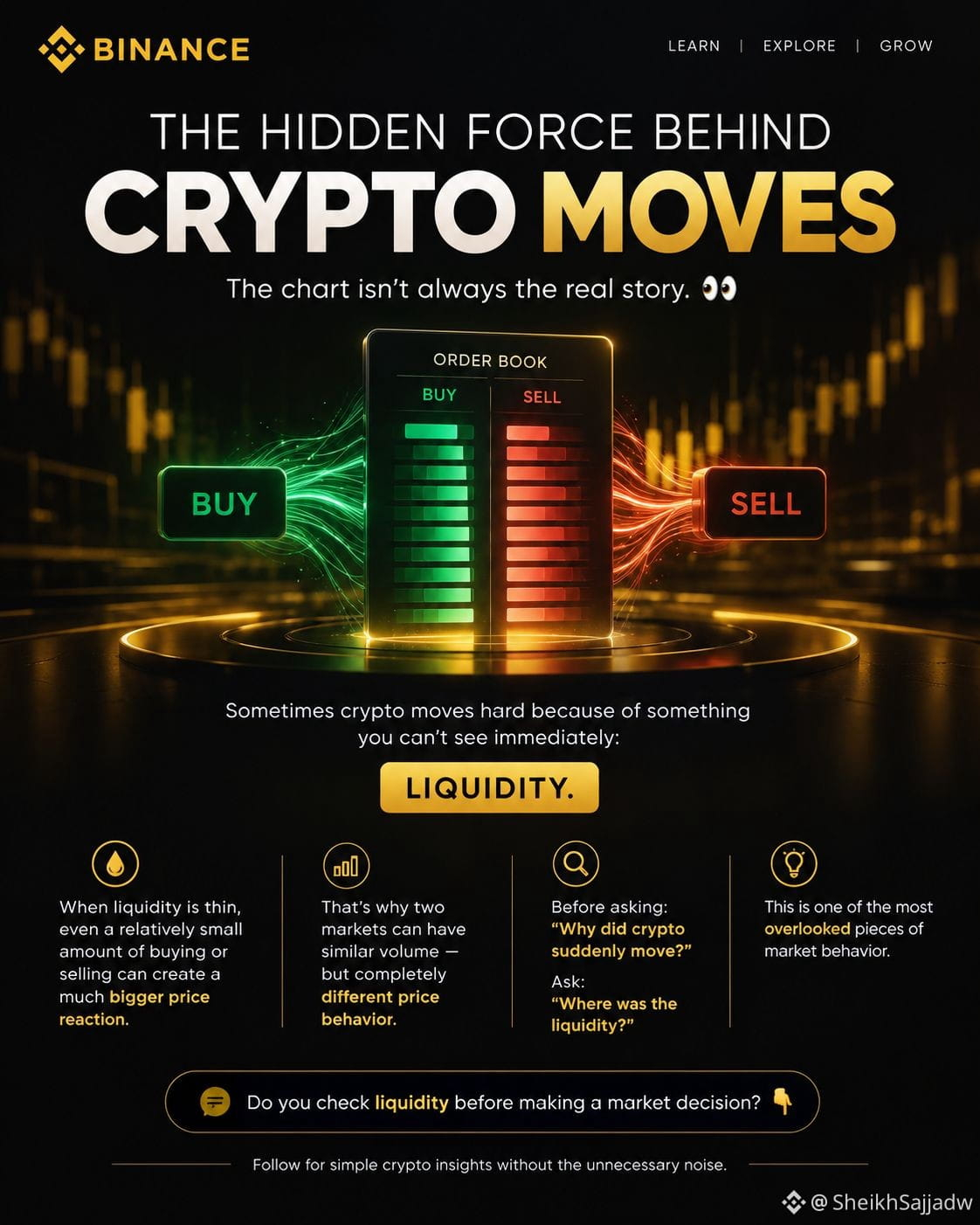
$The chart isn’t always the real story. 👀
Sometimes crypto moves hard because of something you can’t see immediately:
LIQUIDITY.
When liquidity is thin, even a relatively small amount of buying or selling can create a much bigger price reaction.
That’s why two markets can have similar volume — but completely different price behavior.
Before asking:
“Why did crypto suddenly move?”
Ask:
“Where was the liquidity?”
This is one of the most overlooked pieces of market behavior.
Do you check liquidity before making a market decision? 👇
Follow for simple crypto insights without the unnecessary noise.
#Crypto #CryptoEducation #CryptoMarketMoves #liquidity #Trading
$The chart isn’t always the real story. 👀
Sometimes crypto moves hard because of something you can’t see immediately:
LIQUIDITY.
When liquidity is thin, even a relatively small amount of buying or selling can create a much bigger price reaction.
That’s why two markets can have similar volume — but completely different price behavior.
Before asking:
“Why did crypto suddenly move?”
Ask:
“Where was the liquidity?”
This is one of the most overlooked pieces of market behavior.
Do you check liquidity before making a market decision? 👇
Follow for simple crypto insights without the unnecessary noise.
#Crypto #CryptoEducation #CryptoMarketMoves #liquidity #Trading
Sometimes crypto moves hard because of something you can’t see immediately:
LIQUIDITY.
When liquidity is thin, even a relatively small amount of buying or selling can create a much bigger price reaction.
That’s why two markets can have similar volume — but completely different price behavior.
Before asking:
“Why did crypto suddenly move?”
Ask:
“Where was the liquidity?”
This is one of the most overlooked pieces of market behavior.
Do you check liquidity before making a market decision? 👇
Follow for simple crypto insights without the unnecessary noise.
#Crypto #CryptoEducation #CryptoMarketMoves #liquidity #Trading
1
82

·
--

Article
Can You Buy U.S. Stocks Through a Crypto Exchange in Pakistan?It is a question many people in Pakistan ask, and the answer can depend on the platform, the product, and the current rules. Crypto regulation in Pakistan is still developing, so it helps to know what to check before you start. 🔎
Pakistan's Rules Are Evolving 📜
Pakistan's Virtual Assets Act 2026 created a licensing authority, PVARA, for exchanges, custodians and token issuers, with AML and consumer protection requirements. Under this law, virtual asset service providers must obtain a formal license before offering services in Pakistan. CryptoSlatePvara
Because the framework is new, details may change over time. Always check official sources for the latest position.
First, Know the Difference 📌
"Buying U.S. stocks" can mean different things on different platforms:
Traditional brokerage shares: actual ownership of shares through a regulated brokerTokenized stocks: digital tokens designed to track a stock's priceDerivatives: contracts that follow a stock's price movement, without giving you ownership
Each type can differ in rights (like dividends or voting), risks, and rules. Always confirm which type you are looking at.
4 Things to Check as a User in Pakistan ✅
1. Local Regulation
Check whether the platform is permitted to serve users in Pakistan and whether the specific product is available to you. Availability varies by region, and a product offered in one country may not be offered in another. The official PVARA website is a helpful place to start.
2. Product Type
Read the product page carefully. Does the platform offer real shares, tokenized versions, or derivatives? Knowing exactly what you are trading is important.
3. Eligibility and Verification (KYC)
Platforms commonly ask for identity verification, and some products may have extra requirements. Rules can differ by region and may change.
4. Fees, Taxes and Local Rules
Trading fees, spreads, funding rates (for derivatives), and withdrawal fees can affect your total cost. Cross-border investing and taxes may also have local rules, so consider checking official guidance from Pakistani authorities such as the State Bank of Pakistan and FBR.
Risks to Keep in Mind ⚠️
Stock-linked products can be volatile, and prices may move quickly.Trading hours and liquidity may differ from traditional stock markets.Leveraged products can amplify losses as well as gains.Rules and product availability may change, so old posts and screenshots may be out of date.
Where to Find Reliable Information 📚
Use official sources such as Binance Academy and the official Binance product pages, where terms, eligibility, and risk disclosures are explained. For local laws, refer to official Pakistani regulator and government websites.
Final Thoughts
There is no one answer that fits everyone. Understanding your local rules, the product type, eligibility requirements, and costs can help you make more informed decisions on your own terms.
Always DYOR (Do Your Own Research). This content is for educational purposes only and is not financial advice. Product availability and eligibility may vary by region.
💬 What would you like to understand better about crypto rules in Pakistan? Share below!
#Binance #BinanceAcademy #learnwithbinance #cryptoeducation #NFA✅
Can You Buy U.S. Stocks Through a Crypto Exchange in Pakistan?
It is a question many people in Pakistan ask, and the answer can depend on the platform, the product, and the current rules. Crypto regulation in Pakistan is still developing, so it helps to know what to check before you start. 🔎
Pakistan's Rules Are Evolving 📜
Pakistan's Virtual Assets Act 2026 created a licensing authority, PVARA, for exchanges, custodians and token issuers, with AML and consumer protection requirements. Under this law, virtual asset service providers must obtain a formal license before offering services in Pakistan. CryptoSlatePvara
Because the framework is new, details may change over time. Always check official sources for the latest position.
First, Know the Difference 📌
"Buying U.S. stocks" can mean different things on different platforms:
Traditional brokerage shares: actual ownership of shares through a regulated brokerTokenized stocks: digital tokens designed to track a stock's priceDerivatives: contracts that follow a stock's price movement, without giving you ownership
Each type can differ in rights (like dividends or voting), risks, and rules. Always confirm which type you are looking at.
4 Things to Check as a User in Pakistan ✅
1. Local Regulation
Check whether the platform is permitted to serve users in Pakistan and whether the specific product is available to you. Availability varies by region, and a product offered in one country may not be offered in another. The official PVARA website is a helpful place to start.
2. Product Type
Read the product page carefully. Does the platform offer real shares, tokenized versions, or derivatives? Knowing exactly what you are trading is important.
3. Eligibility and Verification (KYC)
Platforms commonly ask for identity verification, and some products may have extra requirements. Rules can differ by region and may change.
4. Fees, Taxes and Local Rules
Trading fees, spreads, funding rates (for derivatives), and withdrawal fees can affect your total cost. Cross-border investing and taxes may also have local rules, so consider checking official guidance from Pakistani authorities such as the State Bank of Pakistan and FBR.
Risks to Keep in Mind ⚠️
Stock-linked products can be volatile, and prices may move quickly.Trading hours and liquidity may differ from traditional stock markets.Leveraged products can amplify losses as well as gains.Rules and product availability may change, so old posts and screenshots may be out of date.
Where to Find Reliable Information 📚
Use official sources such as Binance Academy and the official Binance product pages, where terms, eligibility, and risk disclosures are explained. For local laws, refer to official Pakistani regulator and government websites.
Final Thoughts
There is no one answer that fits everyone. Understanding your local rules, the product type, eligibility requirements, and costs can help you make more informed decisions on your own terms.
Always DYOR (Do Your Own Research). This content is for educational purposes only and is not financial advice. Product availability and eligibility may vary by region.
💬 What would you like to understand better about crypto rules in Pakistan? Share below!
#Binance #BinanceAcademy #learnwithbinance #cryptoeducation #NFA✅
Pakistan's Rules Are Evolving 📜
Pakistan's Virtual Assets Act 2026 created a licensing authority, PVARA, for exchanges, custodians and token issuers, with AML and consumer protection requirements. Under this law, virtual asset service providers must obtain a formal license before offering services in Pakistan. CryptoSlatePvara
Because the framework is new, details may change over time. Always check official sources for the latest position.
First, Know the Difference 📌
"Buying U.S. stocks" can mean different things on different platforms:
Traditional brokerage shares: actual ownership of shares through a regulated brokerTokenized stocks: digital tokens designed to track a stock's priceDerivatives: contracts that follow a stock's price movement, without giving you ownership
Each type can differ in rights (like dividends or voting), risks, and rules. Always confirm which type you are looking at.
4 Things to Check as a User in Pakistan ✅
1. Local Regulation
Check whether the platform is permitted to serve users in Pakistan and whether the specific product is available to you. Availability varies by region, and a product offered in one country may not be offered in another. The official PVARA website is a helpful place to start.
2. Product Type
Read the product page carefully. Does the platform offer real shares, tokenized versions, or derivatives? Knowing exactly what you are trading is important.
3. Eligibility and Verification (KYC)
Platforms commonly ask for identity verification, and some products may have extra requirements. Rules can differ by region and may change.
4. Fees, Taxes and Local Rules
Trading fees, spreads, funding rates (for derivatives), and withdrawal fees can affect your total cost. Cross-border investing and taxes may also have local rules, so consider checking official guidance from Pakistani authorities such as the State Bank of Pakistan and FBR.
Risks to Keep in Mind ⚠️
Stock-linked products can be volatile, and prices may move quickly.Trading hours and liquidity may differ from traditional stock markets.Leveraged products can amplify losses as well as gains.Rules and product availability may change, so old posts and screenshots may be out of date.
Where to Find Reliable Information 📚
Use official sources such as Binance Academy and the official Binance product pages, where terms, eligibility, and risk disclosures are explained. For local laws, refer to official Pakistani regulator and government websites.
Final Thoughts
There is no one answer that fits everyone. Understanding your local rules, the product type, eligibility requirements, and costs can help you make more informed decisions on your own terms.
Always DYOR (Do Your Own Research). This content is for educational purposes only and is not financial advice. Product availability and eligibility may vary by region.
💬 What would you like to understand better about crypto rules in Pakistan? Share below!
#Binance #BinanceAcademy #learnwithbinance #cryptoeducation #NFA✅
2
57
·
--
Article
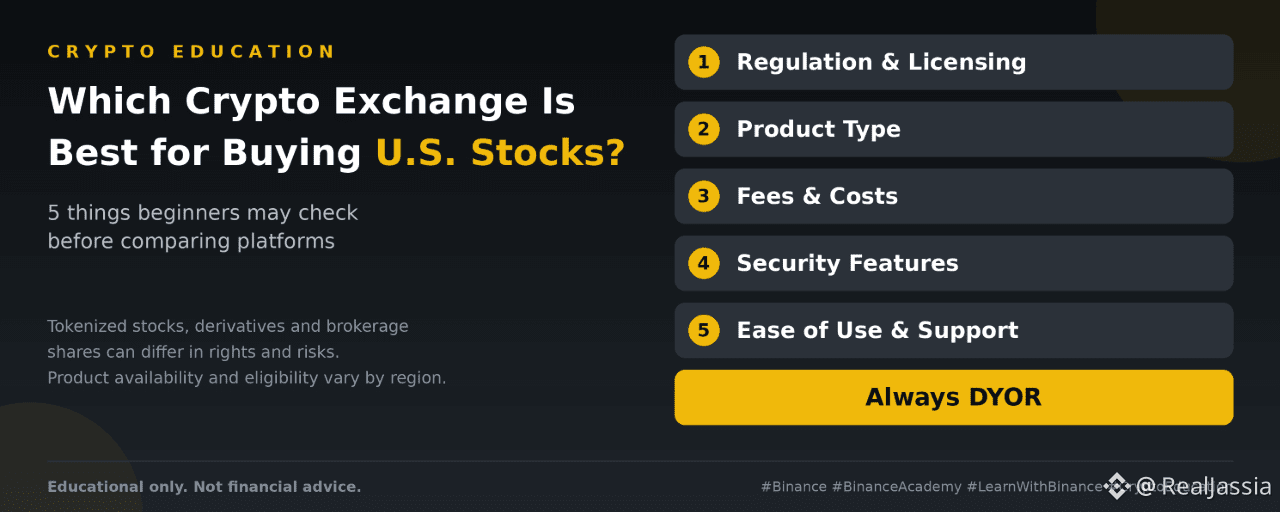
Which Crypto Exchange Is Best for Buying U.S. Stocks? What to Look ForMany people ask this question, but "best" can depend on your needs, your region, and your experience level. Instead of naming a winner, let's look at what may help you evaluate your options.
First, an Important Distinction
Buying a U.S. stock (like owning a share through a licensed broker) is not always the same as trading a crypto product linked to a stock's price.
Some platforms may offer:
Tokenized stocks: digital tokens designed to track a stock's priceDerivatives: contracts that follow the price movement of a stock, without giving you actual ownershipTraditional brokerage services: regulated platforms that offer real share ownership
These products can differ in rights (such as dividends or voting), risks, and rules. Always read the product terms carefully.
5 Things Beginners Commonly Check
1. Regulation and licensing
Availability and eligibility vary by region. Check whether the platform is permitted to offer the product where you live.
2. Product type
Does the platform offer real shares, tokenized versions, or derivatives? Knowing which one you're dealing with is key.
3. Fees and costs
Trading fees, spreads, funding rates (for derivatives), and withdrawal fees can affect your overall cost.
4. Security features
Look for tools like two-factor authentication (2FA), withdrawal whitelists, and clear transparency practices.
5. Ease of use and support
A beginner-friendly interface and accessible learning resources can make the experience smoother.
Risks to Keep in Mind ⚠️
Stock-linked products can be volatile, and prices may move quickly.Trading hours and liquidity may differ from traditional stock markets.Leveraged products can amplify losses as well as gains.Rules and product availability may change over time.
Where to Learn More 📚
Before using any product, consider reading official resources such as Binance Academy and the official Binance product pages, where terms, eligibility, and risk disclosures are explained.
Final Thoughts
There may not be one exchange that fits everyone. Understanding the product type, local regulations, costs, and risks can help you make more informed decisions on your own terms.
Always DYOR (Do Your Own Research). This content is for educational purposes only and is not financial advice. Product availability may vary by region.
💬 What features matter most to you when comparing platforms? Share your thoughts below!
#Binance #BinanceAcademy #learnwithbiananace #cryptoeducation #NFA✅
Which Crypto Exchange Is Best for Buying U.S. Stocks? What to Look For
Many people ask this question, but "best" can depend on your needs, your region, and your experience level. Instead of naming a winner, let's look at what may help you evaluate your options.
First, an Important Distinction
Buying a U.S. stock (like owning a share through a licensed broker) is not always the same as trading a crypto product linked to a stock's price.
Some platforms may offer:
Tokenized stocks: digital tokens designed to track a stock's priceDerivatives: contracts that follow the price movement of a stock, without giving you actual ownershipTraditional brokerage services: regulated platforms that offer real share ownership
These products can differ in rights (such as dividends or voting), risks, and rules. Always read the product terms carefully.
5 Things Beginners Commonly Check
1. Regulation and licensing
Availability and eligibility vary by region. Check whether the platform is permitted to offer the product where you live.
2. Product type
Does the platform offer real shares, tokenized versions, or derivatives? Knowing which one you're dealing with is key.
3. Fees and costs
Trading fees, spreads, funding rates (for derivatives), and withdrawal fees can affect your overall cost.
4. Security features
Look for tools like two-factor authentication (2FA), withdrawal whitelists, and clear transparency practices.
5. Ease of use and support
A beginner-friendly interface and accessible learning resources can make the experience smoother.
Risks to Keep in Mind ⚠️
Stock-linked products can be volatile, and prices may move quickly.Trading hours and liquidity may differ from traditional stock markets.Leveraged products can amplify losses as well as gains.Rules and product availability may change over time.
Where to Learn More 📚
Before using any product, consider reading official resources such as Binance Academy and the official Binance product pages, where terms, eligibility, and risk disclosures are explained.
Final Thoughts
There may not be one exchange that fits everyone. Understanding the product type, local regulations, costs, and risks can help you make more informed decisions on your own terms.
Always DYOR (Do Your Own Research). This content is for educational purposes only and is not financial advice. Product availability may vary by region.
💬 What features matter most to you when comparing platforms? Share your thoughts below!
#Binance #BinanceAcademy #learnwithbiananace #cryptoeducation #NFA✅
First, an Important Distinction
Buying a U.S. stock (like owning a share through a licensed broker) is not always the same as trading a crypto product linked to a stock's price.
Some platforms may offer:
Tokenized stocks: digital tokens designed to track a stock's priceDerivatives: contracts that follow the price movement of a stock, without giving you actual ownershipTraditional brokerage services: regulated platforms that offer real share ownership
These products can differ in rights (such as dividends or voting), risks, and rules. Always read the product terms carefully.
5 Things Beginners Commonly Check
1. Regulation and licensing
Availability and eligibility vary by region. Check whether the platform is permitted to offer the product where you live.
2. Product type
Does the platform offer real shares, tokenized versions, or derivatives? Knowing which one you're dealing with is key.
3. Fees and costs
Trading fees, spreads, funding rates (for derivatives), and withdrawal fees can affect your overall cost.
4. Security features
Look for tools like two-factor authentication (2FA), withdrawal whitelists, and clear transparency practices.
5. Ease of use and support
A beginner-friendly interface and accessible learning resources can make the experience smoother.
Risks to Keep in Mind ⚠️
Stock-linked products can be volatile, and prices may move quickly.Trading hours and liquidity may differ from traditional stock markets.Leveraged products can amplify losses as well as gains.Rules and product availability may change over time.
Where to Learn More 📚
Before using any product, consider reading official resources such as Binance Academy and the official Binance product pages, where terms, eligibility, and risk disclosures are explained.
Final Thoughts
There may not be one exchange that fits everyone. Understanding the product type, local regulations, costs, and risks can help you make more informed decisions on your own terms.
Always DYOR (Do Your Own Research). This content is for educational purposes only and is not financial advice. Product availability may vary by region.
💬 What features matter most to you when comparing platforms? Share your thoughts below!
#Binance #BinanceAcademy #learnwithbiananace #cryptoeducation #NFA✅
1
109
Article
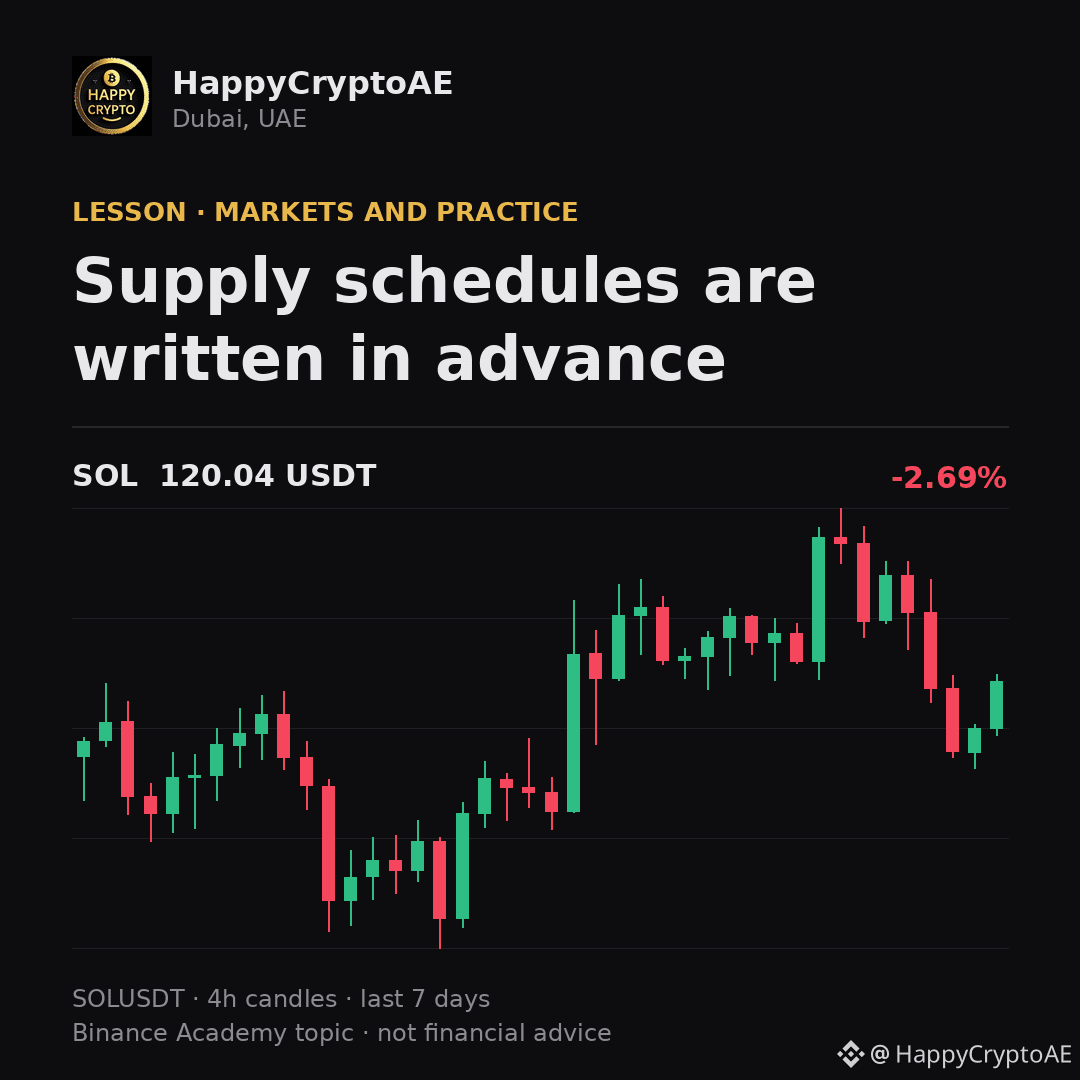
Supply schedules are written in advanceOn some networks the reward for producing a block is cut in half at fixed intervals, which halves the rate at which new units enter circulation. The schedule is public and has been known since the beginning.
That last point is what people skip. A change everyone can see coming years ahead is not new information on the day it happens. What actually varies is demand and how the market has already positioned for it. The interesting question is never what the schedule says - it is who has already acted on it.
Binance Academy covers this in more depth: https://www.binance.com/en/academy/glossary/halving
Trading crypto from Dubai since 2019.
$BTC $ETH $SOL
#Crypto #CryptoEducation #Binance
Supply schedules are written in advance
On some networks the reward for producing a block is cut in half at fixed intervals, which halves the rate at which new units enter circulation. The schedule is public and has been known since the beginning.
That last point is what people skip. A change everyone can see coming years ahead is not new information on the day it happens. What actually varies is demand and how the market has already positioned for it. The interesting question is never what the schedule says - it is who has already acted on it.
Binance Academy covers this in more depth: https://www.binance.com/en/academy/glossary/halving
Trading crypto from Dubai since 2019.
$BTC $ETH $SOL
#Crypto #CryptoEducation #Binance
That last point is what people skip. A change everyone can see coming years ahead is not new information on the day it happens. What actually varies is demand and how the market has already positioned for it. The interesting question is never what the schedule says - it is who has already acted on it.
Binance Academy covers this in more depth: https://www.binance.com/en/academy/glossary/halving
Trading crypto from Dubai since 2019.
$BTC $ETH $SOL
#Crypto #CryptoEducation #Binance
58
·
--
Article
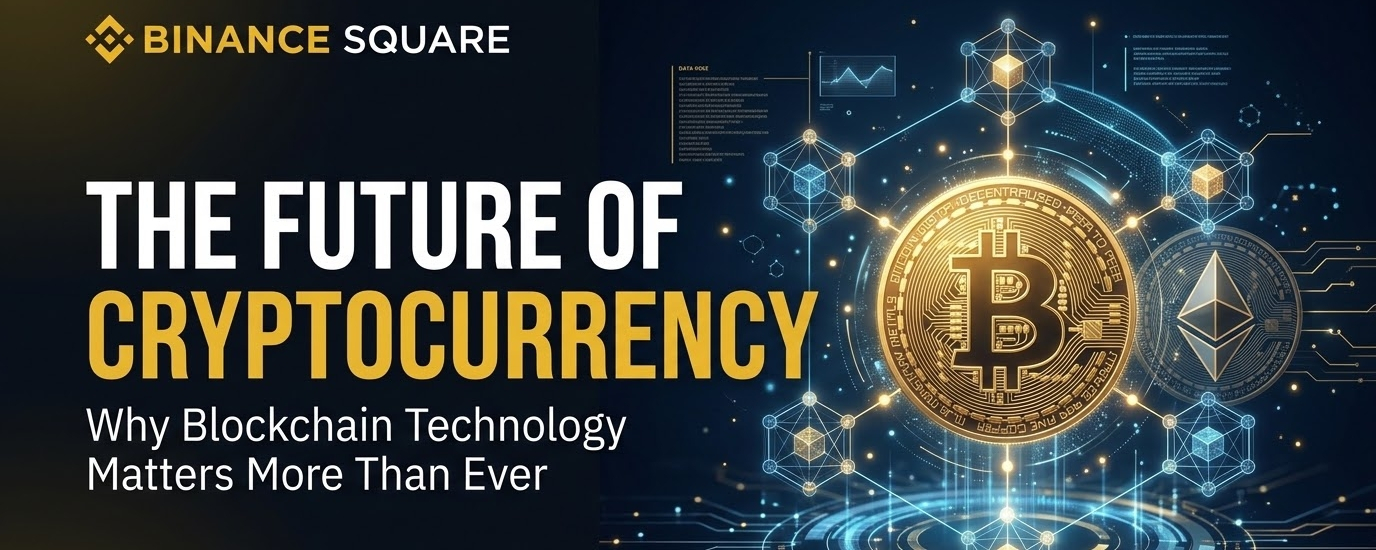
The Future of Cryptocurrency: Why Blockchain Technology Matters More Than EverThe world is changing rapidly, and technology is transforming almost every aspect of our lives. Among the most significant innovations of the digital age is blockchain technology, which has introduced a new way of thinking about money, transparency, and digital ownership.
Cryptocurrency is no longer just a topic discussed by technology enthusiasts. It has become a global conversation involving developers, businesses, investors, and everyday people who are curious about the future of finance.
But what makes this technology so important?
1. Understanding Blockchain Technology
Blockchain is a decentralized digital ledger that records transactions across a network of computers. Unlike traditional systems that rely on a central authority, blockchain networks can operate through distributed participation.
This structure offers several important characteristics:
- Transparency: Transactions on public blockchains can be independently verified.
- Security: Cryptographic techniques help protect transaction records.
- Decentralization: Networks can operate without relying on a single controlling entity.
- Accessibility: Many blockchain networks are available to users around the world.
These features have created opportunities for innovation in finance, digital identity, supply chains, and other industries.
2. Cryptocurrency Is More Than Digital Money
Many people associate cryptocurrency exclusively with price movements. However, the technology behind cryptocurrencies has applications beyond trading.
For example, smart contracts allow developers to create programs that execute predefined actions when specific conditions are met.
This has contributed to the development of decentralized applications, digital marketplaces, and decentralized finance (DeFi).
The broader lesson is that blockchain technology should be understood not only through market prices but also through its real-world applications.
3. The Importance of Learning Before Participating
The cryptocurrency market can be exciting, but it also involves significant risks.
Prices can change rapidly, projects may fail, and scams can target inexperienced users.
Before participating in any crypto-related activity, it is important to understand:
- How blockchain networks work.
- The difference between established projects and unverified tokens.
- The importance of protecting private keys and account credentials.
- The risks associated with volatility.
- The need to verify information using reliable sources.
Knowledge is one of the most valuable tools anyone can develop in the digital economy.
4. What Could the Future Look Like?
Blockchain technology continues to evolve. Developers are working on improving scalability, transaction efficiency, interoperability, and user experience.
Potential areas of development include:
- Tokenization of real-world assets.
- More efficient cross-border payment systems.
- Decentralized digital identity.
- Improved blockchain infrastructure.
- New applications for digital ownership.
However, the future is not guaranteed. Regulation, technical limitations, security challenges, and user adoption will all influence how the industry develops.
Final Thoughts
Cryptocurrency represents an important chapter in the evolution of digital technology. Whether someone is a developer, student, researcher, or simply a curious reader, understanding blockchain can provide valuable insight into the changing digital landscape.
Instead of following every trend, focus on learning, researching, and developing a clear understanding of the technology.
The future belongs to those who are willing to keep learning.
Disclaimer: This article is for educational and informational purposes only. It does not constitute financial or investment advice. Always conduct independent research and understand the risks before making financial decisions.
#Blockchain #Web3 #CryptoEducation $NVDAB
{spot}(NVDABUSDT)
$AAPLB $AAPL.US
{stock_us}(AAPL.US)
The Future of Cryptocurrency: Why Blockchain Technology Matters More Than Ever
The world is changing rapidly, and technology is transforming almost every aspect of our lives. Among the most significant innovations of the digital age is blockchain technology, which has introduced a new way of thinking about money, transparency, and digital ownership.
Cryptocurrency is no longer just a topic discussed by technology enthusiasts. It has become a global conversation involving developers, businesses, investors, and everyday people who are curious about the future of finance.
But what makes this technology so important?
1. Understanding Blockchain Technology
Blockchain is a decentralized digital ledger that records transactions across a network of computers. Unlike traditional systems that rely on a central authority, blockchain networks can operate through distributed participation.
This structure offers several important characteristics:
- Transparency: Transactions on public blockchains can be independently verified.
- Security: Cryptographic techniques help protect transaction records.
- Decentralization: Networks can operate without relying on a single controlling entity.
- Accessibility: Many blockchain networks are available to users around the world.
These features have created opportunities for innovation in finance, digital identity, supply chains, and other industries.
2. Cryptocurrency Is More Than Digital Money
Many people associate cryptocurrency exclusively with price movements. However, the technology behind cryptocurrencies has applications beyond trading.
For example, smart contracts allow developers to create programs that execute predefined actions when specific conditions are met.
This has contributed to the development of decentralized applications, digital marketplaces, and decentralized finance (DeFi).
The broader lesson is that blockchain technology should be understood not only through market prices but also through its real-world applications.
3. The Importance of Learning Before Participating
The cryptocurrency market can be exciting, but it also involves significant risks.
Prices can change rapidly, projects may fail, and scams can target inexperienced users.
Before participating in any crypto-related activity, it is important to understand:
- How blockchain networks work.
- The difference between established projects and unverified tokens.
- The importance of protecting private keys and account credentials.
- The risks associated with volatility.
- The need to verify information using reliable sources.
Knowledge is one of the most valuable tools anyone can develop in the digital economy.
4. What Could the Future Look Like?
Blockchain technology continues to evolve. Developers are working on improving scalability, transaction efficiency, interoperability, and user experience.
Potential areas of development include:
- Tokenization of real-world assets.
- More efficient cross-border payment systems.
- Decentralized digital identity.
- Improved blockchain infrastructure.
- New applications for digital ownership.
However, the future is not guaranteed. Regulation, technical limitations, security challenges, and user adoption will all influence how the industry develops.
Final Thoughts
Cryptocurrency represents an important chapter in the evolution of digital technology. Whether someone is a developer, student, researcher, or simply a curious reader, understanding blockchain can provide valuable insight into the changing digital landscape.
Instead of following every trend, focus on learning, researching, and developing a clear understanding of the technology.
The future belongs to those who are willing to keep learning.
Disclaimer: This article is for educational and informational purposes only. It does not constitute financial or investment advice. Always conduct independent research and understand the risks before making financial decisions.
#Blockchain #Web3 #CryptoEducation $NVDAB
$AAPLB $AAPL.US
Cryptocurrency is no longer just a topic discussed by technology enthusiasts. It has become a global conversation involving developers, businesses, investors, and everyday people who are curious about the future of finance.
But what makes this technology so important?
1. Understanding Blockchain Technology
Blockchain is a decentralized digital ledger that records transactions across a network of computers. Unlike traditional systems that rely on a central authority, blockchain networks can operate through distributed participation.
This structure offers several important characteristics:
- Transparency: Transactions on public blockchains can be independently verified.
- Security: Cryptographic techniques help protect transaction records.
- Decentralization: Networks can operate without relying on a single controlling entity.
- Accessibility: Many blockchain networks are available to users around the world.
These features have created opportunities for innovation in finance, digital identity, supply chains, and other industries.
2. Cryptocurrency Is More Than Digital Money
Many people associate cryptocurrency exclusively with price movements. However, the technology behind cryptocurrencies has applications beyond trading.
For example, smart contracts allow developers to create programs that execute predefined actions when specific conditions are met.
This has contributed to the development of decentralized applications, digital marketplaces, and decentralized finance (DeFi).
The broader lesson is that blockchain technology should be understood not only through market prices but also through its real-world applications.
3. The Importance of Learning Before Participating
The cryptocurrency market can be exciting, but it also involves significant risks.
Prices can change rapidly, projects may fail, and scams can target inexperienced users.
Before participating in any crypto-related activity, it is important to understand:
- How blockchain networks work.
- The difference between established projects and unverified tokens.
- The importance of protecting private keys and account credentials.
- The risks associated with volatility.
- The need to verify information using reliable sources.
Knowledge is one of the most valuable tools anyone can develop in the digital economy.
4. What Could the Future Look Like?
Blockchain technology continues to evolve. Developers are working on improving scalability, transaction efficiency, interoperability, and user experience.
Potential areas of development include:
- Tokenization of real-world assets.
- More efficient cross-border payment systems.
- Decentralized digital identity.
- Improved blockchain infrastructure.
- New applications for digital ownership.
However, the future is not guaranteed. Regulation, technical limitations, security challenges, and user adoption will all influence how the industry develops.
Final Thoughts
Cryptocurrency represents an important chapter in the evolution of digital technology. Whether someone is a developer, student, researcher, or simply a curious reader, understanding blockchain can provide valuable insight into the changing digital landscape.
Instead of following every trend, focus on learning, researching, and developing a clear understanding of the technology.
The future belongs to those who are willing to keep learning.
Disclaimer: This article is for educational and informational purposes only. It does not constitute financial or investment advice. Always conduct independent research and understand the risks before making financial decisions.
#Blockchain #Web3 #CryptoEducation $NVDAB
$AAPLB $AAPL.US
NVDAB+1.95%
AAPLUS-0.35%
78

📚 Crypto Learning: What is DeFi? Decentralized Finance lets people lend, borrow and trade directly from their wallets using smart contracts instead of banks - no paperwork, just code. $ETH $LEO $USDG #CryptoEducation #Blockchain101 #LearnCrypto #Crypto
📚 Crypto Learning: What is DeFi? Decentralized Finance lets people lend, borrow and trade directly from their wallets using smart contracts instead of banks - no paperwork, just code. $ETH $LEO $USDG #CryptoEducation #Blockchain101 #LearnCrypto #Crypto
2
📚 Crypto Learning: Blockchain 101: a distributed ledger where every transaction is recorded across thousands of computers at once, making records nearly impossible to alter without network-wide agreement. $BTC $RAIN $QNT #CryptoEducation #Blockchain101 #LearnCrypto #Crypto
📚 Crypto Learning: Blockchain 101: a distributed ledger where every transaction is recorded across thousands of computers at once, making records nearly impossible to alter without network-wide agreement. $BTC $RAIN $QNT #CryptoEducation #Blockchain101 #LearnCrypto #Crypto
192

Crypto Abbreviations You Should Know Before You Start.. PART 2
If you’re new to crypto, you’ve probably seen terms like DAO, NFT, DeFI and wondered,
What does that even mean ? 🤔
Here’s a quick cheat sheet 👇
🔹1. DAO — Decentralized Autonomous Organization
A blockchain-based organization where governance can be carried out through predefined rules and token-based voting.
🔹2. NFT — Non-Fungible Token
A unique blockchain-based token that can represent ownership or access to digital or physical items.
🔹3. DeFi — Decentralized Finance
Financial applications built using blockchain technology, such as lending, borrowing and decentralized trading.
🔹4. TVL — Total Value Locked
The total value of assets deposited in a DeFi protocol or ecosystem.
🔹5. APY — Annual Percentage Yield
A rate that reflects the potential annual return including the effect of compounding.
🔹6. LFG — Let’s Fing Go*
A phrase used to express excitement or optimism about a crypto project, token, or market move. 🚀
🔹7. MC — Market Cap
The total market value of a cryptocurrency.
💡 Formula: Price × Circulating Supply
🔹8. FDV — Fully Diluted Valuation
The theoretical market value of a crypto project if all tokens that can ever exist were already in circulation.
🔹9. APR — Annual Percentage Rate
The annualized rate of return or interest, generally without including compounding.
🔹10. WBTC — Wrapped Bitcoin
A token representing Bitcoin on another blockchain, most commonly Ethereum, allowing BTC exposure to be used in DeFi applications.
Understanding the language of crypto is just as important as understanding the technology...
#Binance #cryptoeducation #crypto
Crypto Abbreviations You Should Know Before You Start.. PART 2
If you’re new to crypto, you’ve probably seen terms like DAO, NFT, DeFI and wondered,
What does that even mean ? 🤔
Here’s a quick cheat sheet 👇
🔹1. DAO — Decentralized Autonomous Organization
A blockchain-based organization where governance can be carried out through predefined rules and token-based voting.
🔹2. NFT — Non-Fungible Token
A unique blockchain-based token that can represent ownership or access to digital or physical items.
🔹3. DeFi — Decentralized Finance
Financial applications built using blockchain technology, such as lending, borrowing and decentralized trading.
🔹4. TVL — Total Value Locked
The total value of assets deposited in a DeFi protocol or ecosystem.
🔹5. APY — Annual Percentage Yield
A rate that reflects the potential annual return including the effect of compounding.
🔹6. LFG — Let’s Fing Go*
A phrase used to express excitement or optimism about a crypto project, token, or market move. 🚀
🔹7. MC — Market Cap
The total market value of a cryptocurrency.
💡 Formula: Price × Circulating Supply
🔹8. FDV — Fully Diluted Valuation
The theoretical market value of a crypto project if all tokens that can ever exist were already in circulation.
🔹9. APR — Annual Percentage Rate
The annualized rate of return or interest, generally without including compounding.
🔹10. WBTC — Wrapped Bitcoin
A token representing Bitcoin on another blockchain, most commonly Ethereum, allowing BTC exposure to be used in DeFi applications.
Understanding the language of crypto is just as important as understanding the technology...
#Binance #cryptoeducation #crypto
If you’re new to crypto, you’ve probably seen terms like DAO, NFT, DeFI and wondered,
What does that even mean ? 🤔
Here’s a quick cheat sheet 👇
🔹1. DAO — Decentralized Autonomous Organization
A blockchain-based organization where governance can be carried out through predefined rules and token-based voting.
🔹2. NFT — Non-Fungible Token
A unique blockchain-based token that can represent ownership or access to digital or physical items.
🔹3. DeFi — Decentralized Finance
Financial applications built using blockchain technology, such as lending, borrowing and decentralized trading.
🔹4. TVL — Total Value Locked
The total value of assets deposited in a DeFi protocol or ecosystem.
🔹5. APY — Annual Percentage Yield
A rate that reflects the potential annual return including the effect of compounding.
🔹6. LFG — Let’s Fing Go*
A phrase used to express excitement or optimism about a crypto project, token, or market move. 🚀
🔹7. MC — Market Cap
The total market value of a cryptocurrency.
💡 Formula: Price × Circulating Supply
🔹8. FDV — Fully Diluted Valuation
The theoretical market value of a crypto project if all tokens that can ever exist were already in circulation.
🔹9. APR — Annual Percentage Rate
The annualized rate of return or interest, generally without including compounding.
🔹10. WBTC — Wrapped Bitcoin
A token representing Bitcoin on another blockchain, most commonly Ethereum, allowing BTC exposure to be used in DeFi applications.
Understanding the language of crypto is just as important as understanding the technology...
#Binance #cryptoeducation #crypto
1
1.2k

🚀 **Crypto’s Next Big Opportunity Starts With Knowledge! 📈**
The crypto market is constantly evolving, and staying informed is one of the most valuable skills every investor can develop.
💡 **3 things every crypto enthusiast should remember:**
🔹 **Do Your Research:** Understand a project before making any investment decision.
🔹 **Manage Your Risk:** Never invest more than you can afford to lose.
🔹 **Think Long-Term:** Focus on learning, patience, and smart decision-making instead of chasing quick profits.
Bitcoin continues to lead the crypto conversation, while Ethereum, BNB, and other blockchain projects are expanding the possibilities of Web3. 🌐
Remember, successful crypto participation isn't just about making money—it's also about gaining knowledge, understanding technology, and making informed decisions.
🔥 **Learn more. Think smarter. Stay ahead in crypto!**
What do you think will be the biggest trend in crypto: **Bitcoin, Ethereum, BNB, or AI-powered blockchain projects?** 👇
#Binance #BinanceSquare #crypto #BTC走势分析 #CryptoEducation
🚀 **Crypto’s Next Big Opportunity Starts With Knowledge! 📈**
The crypto market is constantly evolving, and staying informed is one of the most valuable skills every investor can develop.
💡 **3 things every crypto enthusiast should remember:**
🔹 **Do Your Research:** Understand a project before making any investment decision.
🔹 **Manage Your Risk:** Never invest more than you can afford to lose.
🔹 **Think Long-Term:** Focus on learning, patience, and smart decision-making instead of chasing quick profits.
Bitcoin continues to lead the crypto conversation, while Ethereum, BNB, and other blockchain projects are expanding the possibilities of Web3. 🌐
Remember, successful crypto participation isn't just about making money—it's also about gaining knowledge, understanding technology, and making informed decisions.
🔥 **Learn more. Think smarter. Stay ahead in crypto!**
What do you think will be the biggest trend in crypto: **Bitcoin, Ethereum, BNB, or AI-powered blockchain projects?** 👇
#Binance #BinanceSquare #crypto #BTC走势分析 #CryptoEducation
The crypto market is constantly evolving, and staying informed is one of the most valuable skills every investor can develop.
💡 **3 things every crypto enthusiast should remember:**
🔹 **Do Your Research:** Understand a project before making any investment decision.
🔹 **Manage Your Risk:** Never invest more than you can afford to lose.
🔹 **Think Long-Term:** Focus on learning, patience, and smart decision-making instead of chasing quick profits.
Bitcoin continues to lead the crypto conversation, while Ethereum, BNB, and other blockchain projects are expanding the possibilities of Web3. 🌐
Remember, successful crypto participation isn't just about making money—it's also about gaining knowledge, understanding technology, and making informed decisions.
🔥 **Learn more. Think smarter. Stay ahead in crypto!**
What do you think will be the biggest trend in crypto: **Bitcoin, Ethereum, BNB, or AI-powered blockchain projects?** 👇
#Binance #BinanceSquare #crypto #BTC走势分析 #CryptoEducation
89

Article
The Biggest Crypto Mistake Beginners Make — And How to Avoid It!💰 Everyone wants to make money in crypto. But how many people actually know how to protect it?
Imagine turning $100 into $200 through trading, only to lose everything because of one emotional decision.
Sounds familiar? This is where many beginners go wrong.
Crypto offers opportunities, but without a proper strategy, even a good market move can become a costly lesson.
🧠 5 Golden Rules Every Crypto Beginner Should Know
1️⃣ Never Invest Money You Cannot Afford to Lose
Crypto markets are volatile. Your rent, education fees, emergency savings, and essential expenses should never be at risk.
2️⃣ Stop Chasing Every Green Candle 🟢
When a coin suddenly pumps, FOMO makes people buy at the top. Instead of blindly following hype, understand the project, market conditions, and potential risks.
3️⃣ Learn Risk Management Before Leverage Trading
Leverage can magnify both profits and losses. A small price movement against your position can trigger liquidation.
Remember: Protecting your capital is part of trading.
4️⃣ Don't Put All Your Eggs in One Basket 🥚
Concentrating your entire portfolio in one cryptocurrency exposes you to asset-specific risk. Diversification can help manage that risk, although it cannot eliminate losses.
5️⃣ Build Knowledge Before Building a Portfolio 📚
Learn about:
✅ Spot vs Futures
✅ Market orders vs Limit orders
✅ Stop-loss and liquidation
✅ Wallet security
✅ DYOR (Do Your Own Research)
Knowledge won't guarantee profits, but it can help you avoid preventable mistakes.
🔥 The Real Crypto Secret?
Successful investing is not about catching every pump.
It's about making informed decisions, managing risk, and staying disciplined when emotions take over.
Your first goal should not be becoming rich overnight. Your first goal should be surviving long enough to learn.
💬 Let's Discuss:
If you had to give ONE piece of advice to someone entering crypto today, what would it be?
👇 Share your experience in the comments. Your lesson might save another beginner from making the same mistake!
#Binance #CryptoEducation #Bitcoin #TradingTips #RiskManagement #CryptoBeginners #DYOR #BinanceSquare #LearnCrypto #Write2Earn
⚠️ Educational content only. Not financial advice. Always research independently and understand the risks before investing or trading.
The Biggest Crypto Mistake Beginners Make — And How to Avoid It!
💰 Everyone wants to make money in crypto. But how many people actually know how to protect it?
Imagine turning $100 into $200 through trading, only to lose everything because of one emotional decision.
Sounds familiar? This is where many beginners go wrong.
Crypto offers opportunities, but without a proper strategy, even a good market move can become a costly lesson.
🧠 5 Golden Rules Every Crypto Beginner Should Know
1️⃣ Never Invest Money You Cannot Afford to Lose
Crypto markets are volatile. Your rent, education fees, emergency savings, and essential expenses should never be at risk.
2️⃣ Stop Chasing Every Green Candle 🟢
When a coin suddenly pumps, FOMO makes people buy at the top. Instead of blindly following hype, understand the project, market conditions, and potential risks.
3️⃣ Learn Risk Management Before Leverage Trading
Leverage can magnify both profits and losses. A small price movement against your position can trigger liquidation.
Remember: Protecting your capital is part of trading.
4️⃣ Don't Put All Your Eggs in One Basket 🥚
Concentrating your entire portfolio in one cryptocurrency exposes you to asset-specific risk. Diversification can help manage that risk, although it cannot eliminate losses.
5️⃣ Build Knowledge Before Building a Portfolio 📚
Learn about:
✅ Spot vs Futures
✅ Market orders vs Limit orders
✅ Stop-loss and liquidation
✅ Wallet security
✅ DYOR (Do Your Own Research)
Knowledge won't guarantee profits, but it can help you avoid preventable mistakes.
🔥 The Real Crypto Secret?
Successful investing is not about catching every pump.
It's about making informed decisions, managing risk, and staying disciplined when emotions take over.
Your first goal should not be becoming rich overnight. Your first goal should be surviving long enough to learn.
💬 Let's Discuss:
If you had to give ONE piece of advice to someone entering crypto today, what would it be?
👇 Share your experience in the comments. Your lesson might save another beginner from making the same mistake!
#Binance #CryptoEducation #Bitcoin #TradingTips #RiskManagement #CryptoBeginners #DYOR #BinanceSquare #LearnCrypto #Write2Earn
⚠️ Educational content only. Not financial advice. Always research independently and understand the risks before investing or trading.
Imagine turning $100 into $200 through trading, only to lose everything because of one emotional decision.
Sounds familiar? This is where many beginners go wrong.
Crypto offers opportunities, but without a proper strategy, even a good market move can become a costly lesson.
🧠 5 Golden Rules Every Crypto Beginner Should Know
1️⃣ Never Invest Money You Cannot Afford to Lose
Crypto markets are volatile. Your rent, education fees, emergency savings, and essential expenses should never be at risk.
2️⃣ Stop Chasing Every Green Candle 🟢
When a coin suddenly pumps, FOMO makes people buy at the top. Instead of blindly following hype, understand the project, market conditions, and potential risks.
3️⃣ Learn Risk Management Before Leverage Trading
Leverage can magnify both profits and losses. A small price movement against your position can trigger liquidation.
Remember: Protecting your capital is part of trading.
4️⃣ Don't Put All Your Eggs in One Basket 🥚
Concentrating your entire portfolio in one cryptocurrency exposes you to asset-specific risk. Diversification can help manage that risk, although it cannot eliminate losses.
5️⃣ Build Knowledge Before Building a Portfolio 📚
Learn about:
✅ Spot vs Futures
✅ Market orders vs Limit orders
✅ Stop-loss and liquidation
✅ Wallet security
✅ DYOR (Do Your Own Research)
Knowledge won't guarantee profits, but it can help you avoid preventable mistakes.
🔥 The Real Crypto Secret?
Successful investing is not about catching every pump.
It's about making informed decisions, managing risk, and staying disciplined when emotions take over.
Your first goal should not be becoming rich overnight. Your first goal should be surviving long enough to learn.
💬 Let's Discuss:
If you had to give ONE piece of advice to someone entering crypto today, what would it be?
👇 Share your experience in the comments. Your lesson might save another beginner from making the same mistake!
#Binance #CryptoEducation #Bitcoin #TradingTips #RiskManagement #CryptoBeginners #DYOR #BinanceSquare #LearnCrypto #Write2Earn
⚠️ Educational content only. Not financial advice. Always research independently and understand the risks before investing or trading.
41
·
--
🚀 YOUR CRYPTO JOURNEY STARTS HERE!
Crypto is more than just buying coins. It's about learning, understanding the market, and making informed decisions.
🟡 BITCOIN ($BTC ) – Digital asset with global market influence.
🟡 BNB ($BNB ) – Powering the Binance ecosystem.
📊 What should beginners focus on?
✅ Learn market fundamentals.
✅ Understand price movements.
✅ Follow trading volume.
✅ Study market trends.
✅ Never invest more than you can afford to lose.
💡 You don't need to rush. Knowledge comes before investment.
💬 Question for the community:
Are you holding BTC, BNB, or exploring crypto for the first time?
Share your thoughts below! 👇
#bitcoin #BTC #BNB #BinanceSquare #CryptoEducation #CryptoJourney #TradingStrategy
🚀 YOUR CRYPTO JOURNEY STARTS HERE!
Crypto is more than just buying coins. It's about learning, understanding the market, and making informed decisions.
🟡 BITCOIN ($BTC ) – Digital asset with global market influence.
🟡 BNB ($BNB ) – Powering the Binance ecosystem.
📊 What should beginners focus on?
✅ Learn market fundamentals.
✅ Understand price movements.
✅ Follow trading volume.
✅ Study market trends.
✅ Never invest more than you can afford to lose.
💡 You don't need to rush. Knowledge comes before investment.
💬 Question for the community:
Are you holding BTC, BNB, or exploring crypto for the first time?
Share your thoughts below! 👇
#bitcoin #BTC #BNB #BinanceSquare #CryptoEducation #CryptoJourney #TradingStrategy
Crypto is more than just buying coins. It's about learning, understanding the market, and making informed decisions.
🟡 BITCOIN ($BTC ) – Digital asset with global market influence.
🟡 BNB ($BNB ) – Powering the Binance ecosystem.
📊 What should beginners focus on?
✅ Learn market fundamentals.
✅ Understand price movements.
✅ Follow trading volume.
✅ Study market trends.
✅ Never invest more than you can afford to lose.
💡 You don't need to rush. Knowledge comes before investment.
💬 Question for the community:
Are you holding BTC, BNB, or exploring crypto for the first time?
Share your thoughts below! 👇
#bitcoin #BTC #BNB #BinanceSquare #CryptoEducation #CryptoJourney #TradingStrategy
55
Log in to explore more content
Join global crypto users on Binance Square
⚡️ Get latest and useful information about crypto.
💬 Trusted by the world’s largest crypto exchange.
👍 Discover real insights from verified creators.
Email / Phone number
Trending Topics
1
#NvidiaApproves$150BBuyback
20 views
6 Discussing
2
#OpenAIDelaysGPT6.1OverSafetyIssues
64 views
15 Discussing
3
#AMDToAcquireWorldLabsFor$8.2B
9 views
11 Discussing
4
#AnthropicIPOProspectusCouldValueItOver$2T
830 views
43 Discussing
5
#HackersDrainOver12.4MXRPFromDCENTWallets
6,668 views
247 Discussing
6
#SECSaysDecentralizedTokenBuybacksNotInvestmentContracts
284 views
16 Discussing
7
#UKFCAWinsCourtOrderToRecover851400Pounds
62,870 views
1,138 Discussing
8
#ChainlinkLaunchesCCIP2WithEnterpriseVerification
71,871 views
1,255 Discussing
9
#GoldFallsTo$4144
23,324 views
183 Discussing
10
#QNTFallsOver40%FromMorningHigh
121,999 views
1,624 Discussing