

Fran Berlin - Instituto Blockchain
262 Posts

Fran Berlin - Instituto Blockchain
Report
Block User
🚀 Bitcoin, IA y Blockchain 📈 Análisis diario del mercado 🎓 Aprende a invertir sin humo ni promesas falsas👇 Sígueme para oportunidades y tendencias
21 Following
133 Followers
296 Liked
Posts
All
Quotes
Videos
PINNED
Last Thursday, thousands of users in Spain 🇪🇸, France 🇫🇷, Italy 🇮🇹 and Poland 🇵🇱 received an email nobody was expecting.
The subject line said, plainly: “Important information about your account.”
What they found inside left them cold.
Their favorite exchange—the largest in the world by volume—told them that starting July 1 it would no longer be able to provide services to them.
Not because it went bankrupt.
Not because they got hacked.
But because it didn’t get the MiCA license in time.
Eighteen months of negotiations with Greece. A request they themselves described as “compliant”. And in the end, a silent withdrawal right before receiving the formal rejection.
The result: more than 400 million Europeans lose legal access to the exchange they were using.
Meanwhile, Coinbase, Kraken, and OKX already have their MiCA license active.
Out of more than 3,000 crypto companies operating in Europe, only 210 managed to get authorization. 7%.
The remaining 93% disappears from the regulated market—or works in the shadows.
MiCA isn’t a future threat.
MiCA is now. Today. Tomorrow.
Do you have crypto on a European platform? Have you already checked whether it has an active MiCA license?
Fran Berlín | Instituto Blockchain
#mica #crypto #BTC☀️ #FranBerlin #InstitutoBlockchain
{spot}(USDCUSDT)
{spot}(USD1USDT)
Last Thursday, thousands of users in Spain 🇪🇸, France 🇫🇷, Italy 🇮🇹 and Poland 🇵🇱 received an email nobody was expecting.
The subject line said, plainly: “Important information about your account.”
What they found inside left them cold.
Their favorite exchange—the largest in the world by volume—told them that starting July 1 it would no longer be able to provide services to them.
Not because it went bankrupt.
Not because they got hacked.
But because it didn’t get the MiCA license in time.
Eighteen months of negotiations with Greece. A request they themselves described as “compliant”. And in the end, a silent withdrawal right before receiving the formal rejection.
The result: more than 400 million Europeans lose legal access to the exchange they were using.
Meanwhile, Coinbase, Kraken, and OKX already have their MiCA license active.
Out of more than 3,000 crypto companies operating in Europe, only 210 managed to get authorization. 7%.
The remaining 93% disappears from the regulated market—or works in the shadows.
MiCA isn’t a future threat.
MiCA is now. Today. Tomorrow.
Do you have crypto on a European platform? Have you already checked whether it has an active MiCA license?
Fran Berlín | Instituto Blockchain
#mica #crypto #BTC☀️ #FranBerlin #InstitutoBlockchain
The subject line said, plainly: “Important information about your account.”
What they found inside left them cold.
Their favorite exchange—the largest in the world by volume—told them that starting July 1 it would no longer be able to provide services to them.
Not because it went bankrupt.
Not because they got hacked.
But because it didn’t get the MiCA license in time.
Eighteen months of negotiations with Greece. A request they themselves described as “compliant”. And in the end, a silent withdrawal right before receiving the formal rejection.
The result: more than 400 million Europeans lose legal access to the exchange they were using.
Meanwhile, Coinbase, Kraken, and OKX already have their MiCA license active.
Out of more than 3,000 crypto companies operating in Europe, only 210 managed to get authorization. 7%.
The remaining 93% disappears from the regulated market—or works in the shadows.
MiCA isn’t a future threat.
MiCA is now. Today. Tomorrow.
Do you have crypto on a European platform? Have you already checked whether it has an active MiCA license?
Fran Berlín | Instituto Blockchain
#mica #crypto #BTC☀️ #FranBerlin #InstitutoBlockchain

45
PINNED
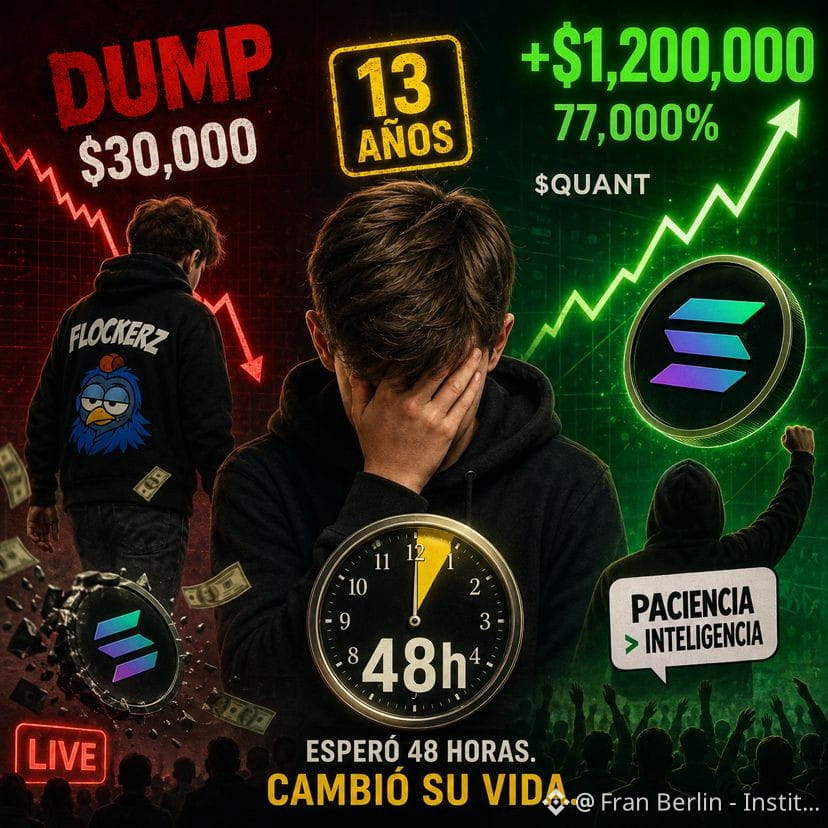
I was 13 years old. And I had just made the biggest mistake of my life.
It was November 2024. A boy named Flockerz was live on Solana $SOL in front of thousands of people.
He had created his own token $QUANT and launched it to the market.
Then, on camera, he dumped everything.
He sold his 51 million tokens. He cleared his position. He pocketed $30,000 $USDT and left.
He thought he was smart.
The community thought otherwise.
Instead of collapsing, $QUANT exploded. Without the creator, without a team, without a roadmap, the token jumped 77,000%.
One single investor, who bought after the rug, walked away with almost a million dollars.
The boy, who was left with $30,000, would have had more than $1,200,000 if he’d waited 48 hours.
He didn’t learn the lesson.
Weeks later he launched another token: “Sorry”.
He dumped it again. This time he only pulled out $20,000.
The community ignored him.
There’s an unwritten rule in crypto that this boy discovered the hard way:
The market rewards patience more than intelligence.
How long do you hold before selling?
#Quant #flockerz #solana
#FranBerlin #InstitutoBlockchain
{spot}(SOLUSDT)
{spot}(USDCUSDT)
I was 13 years old. And I had just made the biggest mistake of my life.
It was November 2024. A boy named Flockerz was live on Solana $SOL in front of thousands of people.
He had created his own token $QUANT and launched it to the market.
Then, on camera, he dumped everything.
He sold his 51 million tokens. He cleared his position. He pocketed $30,000 $USDT and left.
He thought he was smart.
The community thought otherwise.
Instead of collapsing, $QUANT exploded. Without the creator, without a team, without a roadmap, the token jumped 77,000%.
One single investor, who bought after the rug, walked away with almost a million dollars.
The boy, who was left with $30,000, would have had more than $1,200,000 if he’d waited 48 hours.
He didn’t learn the lesson.
Weeks later he launched another token: “Sorry”.
He dumped it again. This time he only pulled out $20,000.
The community ignored him.
There’s an unwritten rule in crypto that this boy discovered the hard way:
The market rewards patience more than intelligence.
How long do you hold before selling?
#Quant #flockerz #solana
#FranBerlin #InstitutoBlockchain
It was November 2024. A boy named Flockerz was live on Solana $SOL in front of thousands of people.
He had created his own token $QUANT and launched it to the market.
Then, on camera, he dumped everything.
He sold his 51 million tokens. He cleared his position. He pocketed $30,000 $USDT and left.
He thought he was smart.
The community thought otherwise.
Instead of collapsing, $QUANT exploded. Without the creator, without a team, without a roadmap, the token jumped 77,000%.
One single investor, who bought after the rug, walked away with almost a million dollars.
The boy, who was left with $30,000, would have had more than $1,200,000 if he’d waited 48 hours.
He didn’t learn the lesson.
Weeks later he launched another token: “Sorry”.
He dumped it again. This time he only pulled out $20,000.
The community ignored him.
There’s an unwritten rule in crypto that this boy discovered the hard way:
The market rewards patience more than intelligence.
How long do you hold before selling?
#Quant #flockerz #solana
#FranBerlin #InstitutoBlockchain
5
8.3k
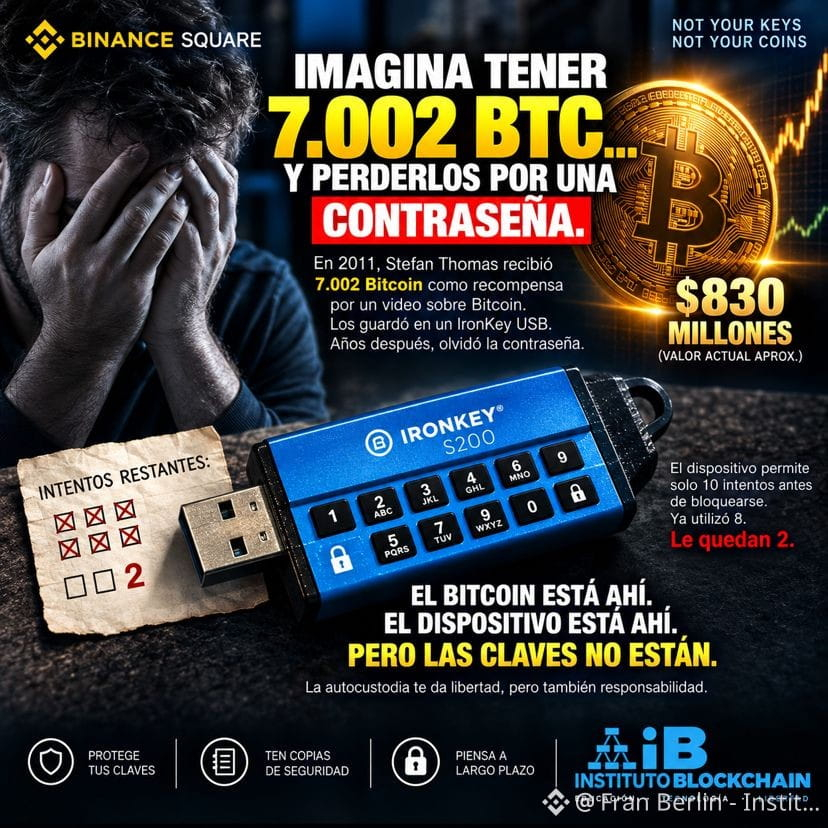
🚨 Imagine having 7.002 BTC… and losing them to a password.
In 2011, Stefan Thomas received 7.002 $BTC as a reward for creating an educational video about Bitcoin.
He stored them on an IronKey USB.
Years later, he forgot the password.
The problem: the device allowed only 10 attempts before locking. Thomas had already used 8.
He had 2 chances left.
Meanwhile, the value of those Bitcoin grew to represent hundreds of millions of dollars.
💀 The Bitcoin was there.
The device was there.
But the keys were not available.
This story illustrates one of Bitcoin’s most important rules:
It’s not just about having Bitcoin. It’s about being able to access it.
Self-custody gives you control over your assets, but it also comes with the responsibility to properly protect your keys and your access.
🔐 Not your keys, not your coins.
The real question isn’t:
“How much Bitcoin do you have?”
But:
“Could you recover your Bitcoin if you lose your device tomorrow?”
#Bitcoin #BTC #Crypto #Cryptocurrencies #SelfCustody #SelfCustody #Blockchain #CryptoSecurity #BitcoinSecurity #Web3 #Tangem #InstitutoBlockchain #NotYourKeysNotYourCoins
{spot}(BTCUSDT)
{spot}(ETHUSDT)
🚨 Imagine having 7.002 BTC… and losing them to a password.
In 2011, Stefan Thomas received 7.002 $BTC as a reward for creating an educational video about Bitcoin.
He stored them on an IronKey USB.
Years later, he forgot the password.
The problem: the device allowed only 10 attempts before locking. Thomas had already used 8.
He had 2 chances left.
Meanwhile, the value of those Bitcoin grew to represent hundreds of millions of dollars.
💀 The Bitcoin was there.
The device was there.
But the keys were not available.
This story illustrates one of Bitcoin’s most important rules:
It’s not just about having Bitcoin. It’s about being able to access it.
Self-custody gives you control over your assets, but it also comes with the responsibility to properly protect your keys and your access.
🔐 Not your keys, not your coins.
The real question isn’t:
“How much Bitcoin do you have?”
But:
“Could you recover your Bitcoin if you lose your device tomorrow?”
#Bitcoin #BTC #Crypto #Cryptocurrencies #SelfCustody #SelfCustody #Blockchain #CryptoSecurity #BitcoinSecurity #Web3 #Tangem #InstitutoBlockchain #NotYourKeysNotYourCoins
In 2011, Stefan Thomas received 7.002 $BTC as a reward for creating an educational video about Bitcoin.
He stored them on an IronKey USB.
Years later, he forgot the password.
The problem: the device allowed only 10 attempts before locking. Thomas had already used 8.
He had 2 chances left.
Meanwhile, the value of those Bitcoin grew to represent hundreds of millions of dollars.
💀 The Bitcoin was there.
The device was there.
But the keys were not available.
This story illustrates one of Bitcoin’s most important rules:
It’s not just about having Bitcoin. It’s about being able to access it.
Self-custody gives you control over your assets, but it also comes with the responsibility to properly protect your keys and your access.
🔐 Not your keys, not your coins.
The real question isn’t:
“How much Bitcoin do you have?”
But:
“Could you recover your Bitcoin if you lose your device tomorrow?”
#Bitcoin #BTC #Crypto #Cryptocurrencies #SelfCustody #SelfCustody #Blockchain #CryptoSecurity #BitcoinSecurity #Web3 #Tangem #InstitutoBlockchain #NotYourKeysNotYourCoins
1
832
Do you really control your crypto? 🔐
Self-custody means taking control of your private keys and your assets.
Tangem makes it simple with a card-sized hardware wallet:
🔐 Self-custody
📱 Tap & go
🔋 No battery
💳 Portable & durable
Use FRANBERLIN for 10% OFF.
Not your keys, not your coins. ₿
#Tangem #Bitcoin #Crypto #SelfCustody #Blockchain
Do you really control your crypto? 🔐
Self-custody means taking control of your private keys and your assets.
Tangem makes it simple with a card-sized hardware wallet:
🔐 Self-custody
📱 Tap & go
🔋 No battery
💳 Portable & durable
Use FRANBERLIN for 10% OFF.
Not your keys, not your coins. ₿
#Tangem #Bitcoin #Crypto #SelfCustody #Blockchain
Self-custody means taking control of your private keys and your assets.
Tangem makes it simple with a card-sized hardware wallet:
🔐 Self-custody
📱 Tap & go
🔋 No battery
💳 Portable & durable
Use FRANBERLIN for 10% OFF.
Not your keys, not your coins. ₿
#Tangem #Bitcoin #Crypto #SelfCustody #Blockchain

63
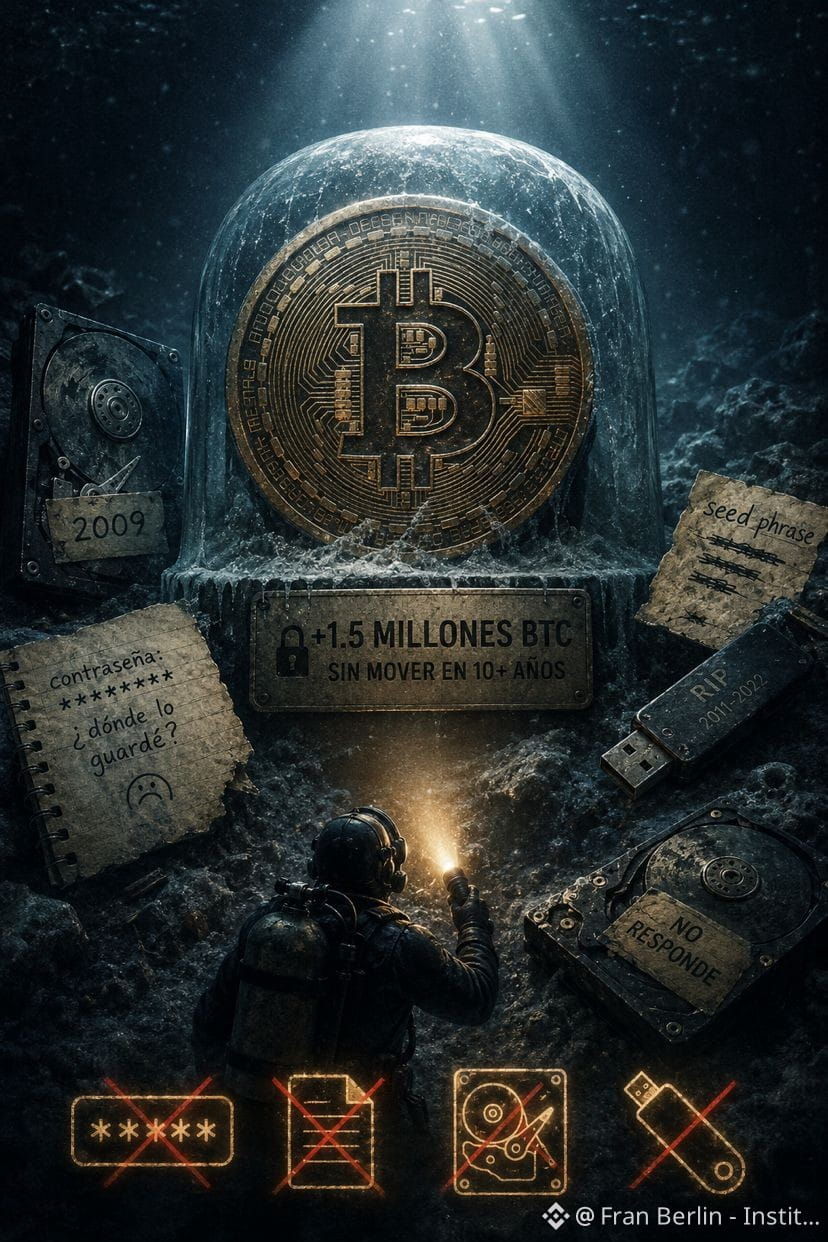
₿ More than 1.5 MILLION of $BTC have been sitting unmoved for over 10 years.
We’re talking tens of billions of dollars.
HODLers with steel conviction?
Not necessarily.
Some of it could be Bitcoin where access was lost: forgotten passwords, damaged hard drives, or missing seed phrases.
And here’s the lesson:
In crypto, your biggest enemy isn’t always the market.
Sometimes it’s you yourself—3 years from now.
Self-custody isn’t only “not your keys, not your coins”.
It’s building a system that lets you recover your funds even when you no longer remember how.
🔐 Would your system survive your future self?
#FranBerlin | Instituto Blockchain
#bitcoin #BTC #crypto #Autocustodia
{spot}(BTCUSDT)
₿ More than 1.5 MILLION of $BTC have been sitting unmoved for over 10 years.
We’re talking tens of billions of dollars.
HODLers with steel conviction?
Not necessarily.
Some of it could be Bitcoin where access was lost: forgotten passwords, damaged hard drives, or missing seed phrases.
And here’s the lesson:
In crypto, your biggest enemy isn’t always the market.
Sometimes it’s you yourself—3 years from now.
Self-custody isn’t only “not your keys, not your coins”.
It’s building a system that lets you recover your funds even when you no longer remember how.
🔐 Would your system survive your future self?
#FranBerlin | Instituto Blockchain
#bitcoin #BTC #crypto #Autocustodia
We’re talking tens of billions of dollars.
HODLers with steel conviction?
Not necessarily.
Some of it could be Bitcoin where access was lost: forgotten passwords, damaged hard drives, or missing seed phrases.
And here’s the lesson:
In crypto, your biggest enemy isn’t always the market.
Sometimes it’s you yourself—3 years from now.
Self-custody isn’t only “not your keys, not your coins”.
It’s building a system that lets you recover your funds even when you no longer remember how.
🔐 Would your system survive your future self?
#FranBerlin | Instituto Blockchain
#bitcoin #BTC #crypto #Autocustodia
1
729
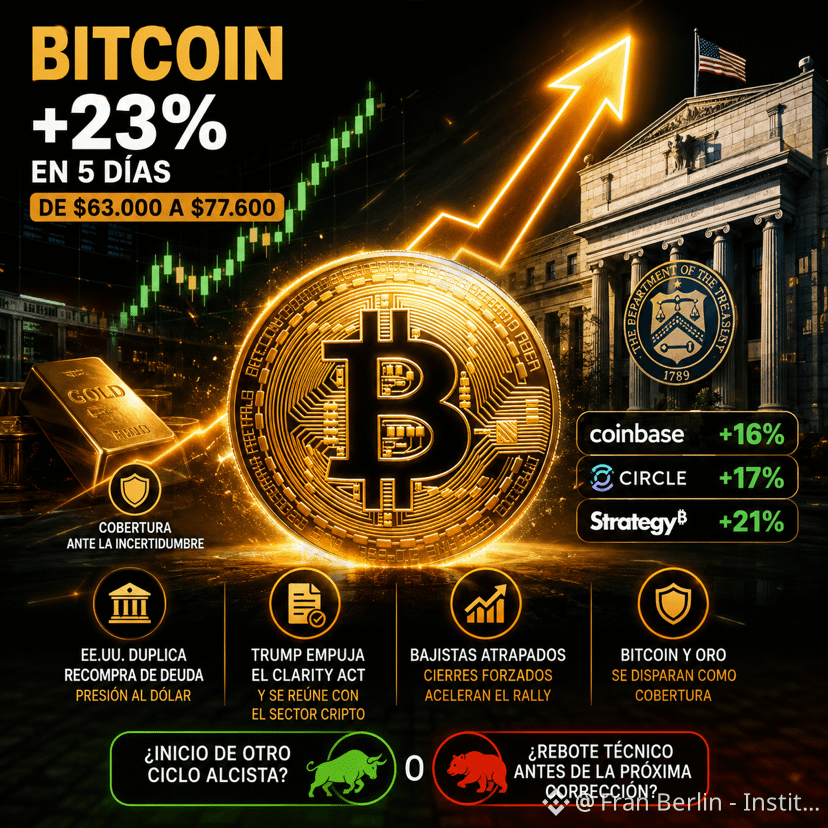
🟡 Bitcoin rose 23% in five days. From $63,000 to $77,600. What normally takes a year in the S&P 500, #BTC it did in a week.
The trigger: the U.S. Treasury announced it will double its long-term debt buyback, putting pressure on the dollar. Bitcoin and gold jumped as a hedge. #TRUMP it pushed the Clarity Act through the Senate and met with regulators and companies #cripto . Bears were trapped and forced to close positions, accelerating the rally.
Coinbase +16%, Circle +17%, Strategy +21% this week.
Is this the start of another bull cycle, or a technical rebound before the next correction? 👇
#FranBerlin | #InstitutoBlockchain
{spot}(BTCUSDT)
$BTC $XRP $ETH
🟡 Bitcoin rose 23% in five days. From $63,000 to $77,600. What normally takes a year in the S&P 500, #BTC it did in a week.
The trigger: the U.S. Treasury announced it will double its long-term debt buyback, putting pressure on the dollar. Bitcoin and gold jumped as a hedge. #TRUMP it pushed the Clarity Act through the Senate and met with regulators and companies #cripto . Bears were trapped and forced to close positions, accelerating the rally.
Coinbase +16%, Circle +17%, Strategy +21% this week.
Is this the start of another bull cycle, or a technical rebound before the next correction? 👇
#FranBerlin | #InstitutoBlockchain
$BTC $XRP $ETH
The trigger: the U.S. Treasury announced it will double its long-term debt buyback, putting pressure on the dollar. Bitcoin and gold jumped as a hedge. #TRUMP it pushed the Clarity Act through the Senate and met with regulators and companies #cripto . Bears were trapped and forced to close positions, accelerating the rally.
Coinbase +16%, Circle +17%, Strategy +21% this week.
Is this the start of another bull cycle, or a technical rebound before the next correction? 👇
#FranBerlin | #InstitutoBlockchain
$BTC $XRP $ETH
1
1.1k
Eating cold chicken “ganchitos” rice and sleeping on a sofa bed, rubbing shoulders with Tom Brady and Stephen Curry and announcing yourself at the Super Bowl. That was the façade. This is the fall.
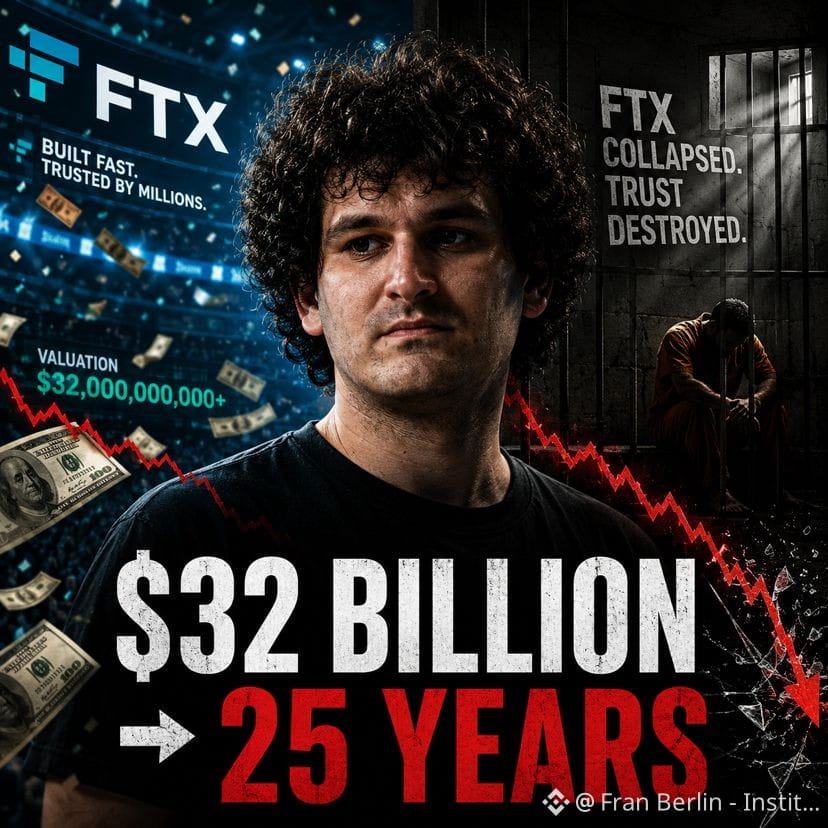
Sam Bankman-Fried, “SBF,” builds FTX in 2019 and, in 3 years, turns it into one of the largest exchanges in the world, valued at more than 30,000 million dollars. He presents himself as the perfect antihero: no suits, just a scruffy kid who claims he wants to save the world with his fortune.
Behind it was another almost invisible company: Alameda Research, the fund he founded himself before FTX. That’s the crack that brings everything down.
According to the U.S. prosecution, he used FTX customers’ money—the one they believed was simply being kept safely—to cover Alameda’s losses, buy properties in the Caribbean, and make political donations. Financial statements and income reported to investors were falsified.
Everything blows up in November 2022, when it leaks that Alameda was dependent on FTX’s token, FTT. Customers try to withdraw their money and find it’s already gone. FTX collapses: customers lose 8,000 million dollars, investors another 1,700 million, and Alameda’s lenders another 1,300 million.
In November 2023, a jury finds him guilty on 7 counts of fraud. In March 2024, he is sentenced to 25 years in prison and ordered to repay more than 11,000 million. The judge was blunt: he knew it was illegal and lost his bet on not getting caught.
Today he remains imprisoned near Los Angeles. In June 2026, he also lost his appeal: a court confirmed that he was the main person responsible for one of the largest frauds ever recorded.
From magazine covers to a prison uniform in less than 2 years. The most dangerous promise in crypto is always, “Trust me, your money is safe here.”
What went wrong first: the regulation, or the people who stopped asking questions because the founder’s face made them feel confident?
With Tangem, the question of whether your money is still there never needs to be asked: https://tangem.com/invite/FRANBERLIN
#FranBerlin
{spot}(BTCUSDT)
Eating cold chicken “ganchitos” rice and sleeping on a sofa bed, rubbing shoulders with Tom Brady and Stephen Curry and announcing yourself at the Super Bowl. That was the façade. This is the fall.
Sam Bankman-Fried, “SBF,” builds FTX in 2019 and, in 3 years, turns it into one of the largest exchanges in the world, valued at more than 30,000 million dollars. He presents himself as the perfect antihero: no suits, just a scruffy kid who claims he wants to save the world with his fortune.
Behind it was another almost invisible company: Alameda Research, the fund he founded himself before FTX. That’s the crack that brings everything down.
According to the U.S. prosecution, he used FTX customers’ money—the one they believed was simply being kept safely—to cover Alameda’s losses, buy properties in the Caribbean, and make political donations. Financial statements and income reported to investors were falsified.
Everything blows up in November 2022, when it leaks that Alameda was dependent on FTX’s token, FTT. Customers try to withdraw their money and find it’s already gone. FTX collapses: customers lose 8,000 million dollars, investors another 1,700 million, and Alameda’s lenders another 1,300 million.
In November 2023, a jury finds him guilty on 7 counts of fraud. In March 2024, he is sentenced to 25 years in prison and ordered to repay more than 11,000 million. The judge was blunt: he knew it was illegal and lost his bet on not getting caught.
Today he remains imprisoned near Los Angeles. In June 2026, he also lost his appeal: a court confirmed that he was the main person responsible for one of the largest frauds ever recorded.
From magazine covers to a prison uniform in less than 2 years. The most dangerous promise in crypto is always, “Trust me, your money is safe here.”
What went wrong first: the regulation, or the people who stopped asking questions because the founder’s face made them feel confident?
With Tangem, the question of whether your money is still there never needs to be asked: https://tangem.com/invite/FRANBERLIN
#FranBerlin
Sam Bankman-Fried, “SBF,” builds FTX in 2019 and, in 3 years, turns it into one of the largest exchanges in the world, valued at more than 30,000 million dollars. He presents himself as the perfect antihero: no suits, just a scruffy kid who claims he wants to save the world with his fortune.
Behind it was another almost invisible company: Alameda Research, the fund he founded himself before FTX. That’s the crack that brings everything down.
According to the U.S. prosecution, he used FTX customers’ money—the one they believed was simply being kept safely—to cover Alameda’s losses, buy properties in the Caribbean, and make political donations. Financial statements and income reported to investors were falsified.
Everything blows up in November 2022, when it leaks that Alameda was dependent on FTX’s token, FTT. Customers try to withdraw their money and find it’s already gone. FTX collapses: customers lose 8,000 million dollars, investors another 1,700 million, and Alameda’s lenders another 1,300 million.
In November 2023, a jury finds him guilty on 7 counts of fraud. In March 2024, he is sentenced to 25 years in prison and ordered to repay more than 11,000 million. The judge was blunt: he knew it was illegal and lost his bet on not getting caught.
Today he remains imprisoned near Los Angeles. In June 2026, he also lost his appeal: a court confirmed that he was the main person responsible for one of the largest frauds ever recorded.
From magazine covers to a prison uniform in less than 2 years. The most dangerous promise in crypto is always, “Trust me, your money is safe here.”
What went wrong first: the regulation, or the people who stopped asking questions because the founder’s face made them feel confident?
With Tangem, the question of whether your money is still there never needs to be asked: https://tangem.com/invite/FRANBERLIN
#FranBerlin
574
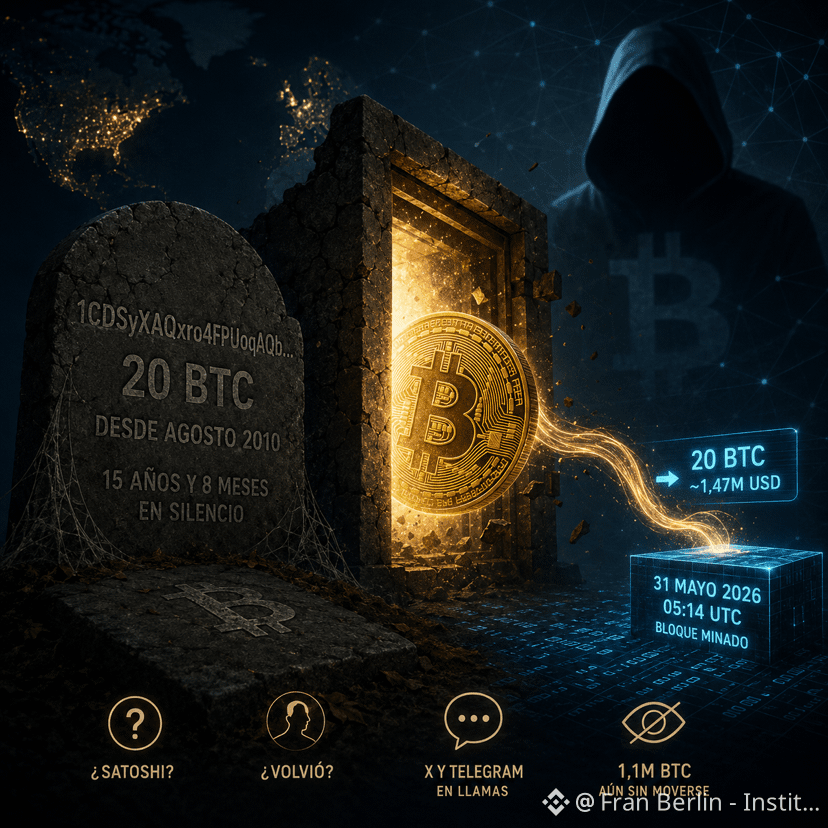
May 31, 2026, 05:14 UTC. An address that begins with 1CDSyXAQxro4FPUoqAQb wakes up after 15 years and 8 months of absolute silence.
That wallet received its last funds in August 2010, when Bitcoin was worth pennies and almost nobody on the planet knew it existed. Since then: nothing. No movement, no signal, no trace. Just 20 BTC sleeping on the blockchain while the world changed decades, through crises and governments.
Until, without warning, that address moves. 20 $BTC , about $1.47 million at the current price, come out of their digital tomb in a block mined that same morning.
Galaxy Research analysts detect it almost instantly. The question sweeping X and Telegram groups within minutes: is it Satoshi? Did he come back?
The answer, almost always, is no. The on-chain patterns of these “Satoshi-era” wallets don’t match the mining cluster that researchers attribute to Bitcoin’s creator. They’re coins from the same time period, but not the same person. Only in 2026, several sleeping fortunes have already been awakened: 80,000 BTC in a single move in July 2025, and another 2,000 BTC in December. Each time, the same question, the same disappointment, the same reminder that Satoshi is still saying nothing since 2010.
Meanwhile, it’s estimated that 1.1 million BTC—mined by Satoshi himself in 2009 and 2010—have never been moved. Not a single satoshi. No one knows whether the keys were lost, whether it was a deliberate decision, or if there’s simply nobody left on the other side.
Lost forever or waiting for the exact moment to move?
#FranBerlin #InstitutoBlockchain #satoshiNakamato #BTC走势分析
{spot}(BTCUSDT)
{spot}(BCHUSDT)
{spot}(ZECUSDT)
May 31, 2026, 05:14 UTC. An address that begins with 1CDSyXAQxro4FPUoqAQb wakes up after 15 years and 8 months of absolute silence.
That wallet received its last funds in August 2010, when Bitcoin was worth pennies and almost nobody on the planet knew it existed. Since then: nothing. No movement, no signal, no trace. Just 20 BTC sleeping on the blockchain while the world changed decades, through crises and governments.
Until, without warning, that address moves. 20 $BTC , about $1.47 million at the current price, come out of their digital tomb in a block mined that same morning.
Galaxy Research analysts detect it almost instantly. The question sweeping X and Telegram groups within minutes: is it Satoshi? Did he come back?
The answer, almost always, is no. The on-chain patterns of these “Satoshi-era” wallets don’t match the mining cluster that researchers attribute to Bitcoin’s creator. They’re coins from the same time period, but not the same person. Only in 2026, several sleeping fortunes have already been awakened: 80,000 BTC in a single move in July 2025, and another 2,000 BTC in December. Each time, the same question, the same disappointment, the same reminder that Satoshi is still saying nothing since 2010.
Meanwhile, it’s estimated that 1.1 million BTC—mined by Satoshi himself in 2009 and 2010—have never been moved. Not a single satoshi. No one knows whether the keys were lost, whether it was a deliberate decision, or if there’s simply nobody left on the other side.
Lost forever or waiting for the exact moment to move?
#FranBerlin #InstitutoBlockchain #satoshiNakamato #BTC走势分析
That wallet received its last funds in August 2010, when Bitcoin was worth pennies and almost nobody on the planet knew it existed. Since then: nothing. No movement, no signal, no trace. Just 20 BTC sleeping on the blockchain while the world changed decades, through crises and governments.
Until, without warning, that address moves. 20 $BTC , about $1.47 million at the current price, come out of their digital tomb in a block mined that same morning.
Galaxy Research analysts detect it almost instantly. The question sweeping X and Telegram groups within minutes: is it Satoshi? Did he come back?
The answer, almost always, is no. The on-chain patterns of these “Satoshi-era” wallets don’t match the mining cluster that researchers attribute to Bitcoin’s creator. They’re coins from the same time period, but not the same person. Only in 2026, several sleeping fortunes have already been awakened: 80,000 BTC in a single move in July 2025, and another 2,000 BTC in December. Each time, the same question, the same disappointment, the same reminder that Satoshi is still saying nothing since 2010.
Meanwhile, it’s estimated that 1.1 million BTC—mined by Satoshi himself in 2009 and 2010—have never been moved. Not a single satoshi. No one knows whether the keys were lost, whether it was a deliberate decision, or if there’s simply nobody left on the other side.
Lost forever or waiting for the exact moment to move?
#FranBerlin #InstitutoBlockchain #satoshiNakamato #BTC走势分析
1
329
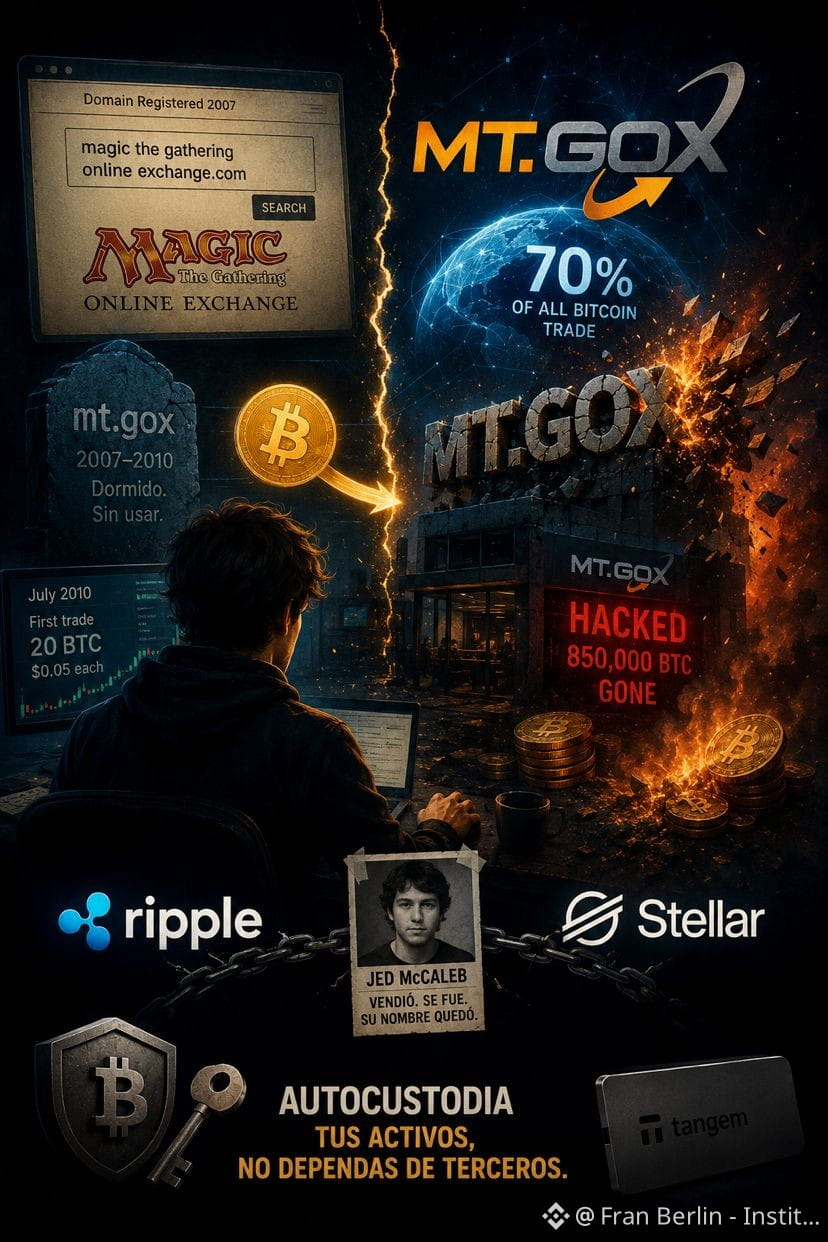
In 2007, a programmer in his twenties registered a domain to trade cards from a fantasy game. He gave it a name that sounded like an inside joke: Magic The Gathering Online eXchange. Mt. Gox.
The project died before it was even born. The idea of the cards never really took off, and the domain sat there, dormant and unused, for nearly three years.
In July 2010, that same programmer—Jed McCaleb—read an article about a strange monetary experiment called Bitcoin. He didn’t hesitate: he reused the dead domain and turned it into a bitcoin exchange. On the first day of operations, 20 BTC were traded. At five cents each.
Nine months later, McCaleb couldn’t keep up anymore. On March 6, 2011, he posted on a Bitcoin forum that he was transferring the project to a user who signed in as “MagicalTux”. That user was Mark Karpelès.
Three years later, that same Mt. Gox—born from a domain for fantasy cards—had come to move 70% of all the bitcoin in the world. And three years after that, it collapsed with 850.000 $BTC missing, in the most remembered hack in crypto history.
Most unsettling of all: McCaleb had nothing to do with the company when everything fell apart. He had left two and a half years earlier. And yet his name was stitched forever into the disaster.
Today, that same man is a cofounder of Ripple and Stellar. He built three of the most influential projects in the entire industry… and almost nobody recognizes his name.
Can you separate technical brilliance from the consequences of what someone builds—even after they’ve sold it?
Self-custody your assets, don’t depend on third parties: https://tangem.com/invite/FRANBERLIN
#FranBerlin #Tangem #InstitutoBlockchain #Mt.Gox
{spot}(BTCUSDT)
{spot}(USDCUSDT)
In 2007, a programmer in his twenties registered a domain to trade cards from a fantasy game. He gave it a name that sounded like an inside joke: Magic The Gathering Online eXchange. Mt. Gox.
The project died before it was even born. The idea of the cards never really took off, and the domain sat there, dormant and unused, for nearly three years.
In July 2010, that same programmer—Jed McCaleb—read an article about a strange monetary experiment called Bitcoin. He didn’t hesitate: he reused the dead domain and turned it into a bitcoin exchange. On the first day of operations, 20 BTC were traded. At five cents each.
Nine months later, McCaleb couldn’t keep up anymore. On March 6, 2011, he posted on a Bitcoin forum that he was transferring the project to a user who signed in as “MagicalTux”. That user was Mark Karpelès.
Three years later, that same Mt. Gox—born from a domain for fantasy cards—had come to move 70% of all the bitcoin in the world. And three years after that, it collapsed with 850.000 $BTC missing, in the most remembered hack in crypto history.
Most unsettling of all: McCaleb had nothing to do with the company when everything fell apart. He had left two and a half years earlier. And yet his name was stitched forever into the disaster.
Today, that same man is a cofounder of Ripple and Stellar. He built three of the most influential projects in the entire industry… and almost nobody recognizes his name.
Can you separate technical brilliance from the consequences of what someone builds—even after they’ve sold it?
Self-custody your assets, don’t depend on third parties: https://tangem.com/invite/FRANBERLIN
#FranBerlin #Tangem #InstitutoBlockchain #Mt.Gox
The project died before it was even born. The idea of the cards never really took off, and the domain sat there, dormant and unused, for nearly three years.
In July 2010, that same programmer—Jed McCaleb—read an article about a strange monetary experiment called Bitcoin. He didn’t hesitate: he reused the dead domain and turned it into a bitcoin exchange. On the first day of operations, 20 BTC were traded. At five cents each.
Nine months later, McCaleb couldn’t keep up anymore. On March 6, 2011, he posted on a Bitcoin forum that he was transferring the project to a user who signed in as “MagicalTux”. That user was Mark Karpelès.
Three years later, that same Mt. Gox—born from a domain for fantasy cards—had come to move 70% of all the bitcoin in the world. And three years after that, it collapsed with 850.000 $BTC missing, in the most remembered hack in crypto history.
Most unsettling of all: McCaleb had nothing to do with the company when everything fell apart. He had left two and a half years earlier. And yet his name was stitched forever into the disaster.
Today, that same man is a cofounder of Ripple and Stellar. He built three of the most influential projects in the entire industry… and almost nobody recognizes his name.
Can you separate technical brilliance from the consequences of what someone builds—even after they’ve sold it?
Self-custody your assets, don’t depend on third parties: https://tangem.com/invite/FRANBERLIN
#FranBerlin #Tangem #InstitutoBlockchain #Mt.Gox
270
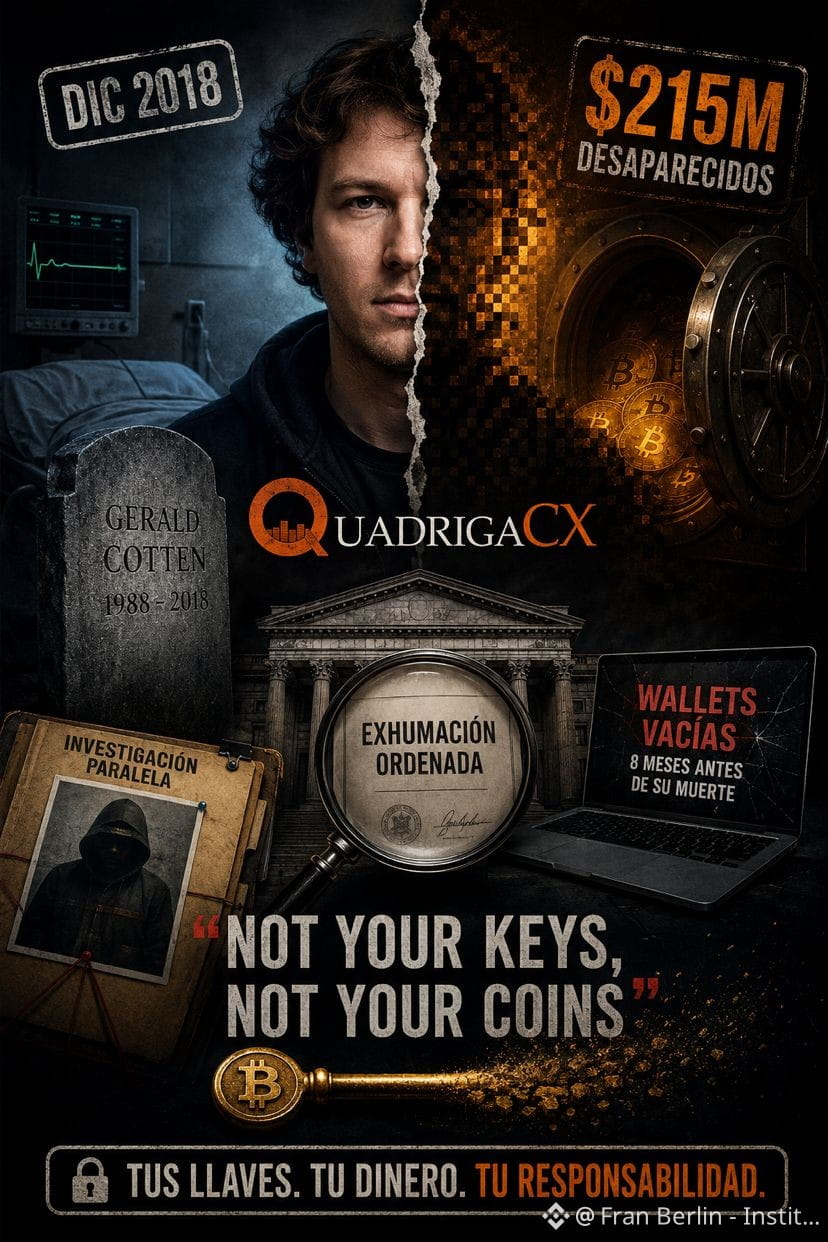
**December 2018. A honeymoon in India. And a secret that went to the grave along with 190 million dollars.**
Gerald Cotten was 30 years old. He founded QuadrigaCX, Canada’s largest cryptocurrency exchange. And he was practically the only one with access to the private keys that held the money of 115,000 investors.
Twelve days before he died, he changed his will.
Days later, in a hospital in India, he suffered three cardiac arrests. In the third one, the doctors could no longer resuscitate him.
With him disappeared, according to company records, about 215 million dollars in customer funds.
No one had the passwords. No one had access to the “cold storage chambers” where those coins were kept. Cotten took them all with him.
What came next seems like thriller material, not financial reporting:
⚰️ A court ordered **exhuming his body** to confirm he was inside the coffin.
🕵️ Investors convinced he had faked his death launched their own parallel investigation.
💻 When forensic auditors entered his laptops, they found something even more disturbing: the wallets had already been empty eight months before Cotten died.
The money didn’t disappear with his death. It was simply no longer there.
Today, as Sberbank builds state crypto infrastructure and central banks debate how to regulate this ecosystem, Cotten’s story remains the most uncomfortable reminder of why that pressure exists: thousands of people entrusted their savings to a single private key, held by a single person, with no oversight.
“Not your keys, not your coins” stopped being a meme the day a man took 215 million to the grave.
That’s why your private keys must never depend on someone else’s life. With real self-custody, you are the only owner of your keys.
👉 Buy your Tangem Wallet at a discount! https://tangem.com/invite/FRANBERLIN
Would you trust your savings to an exchange without asking who else has access to those keys
#FranBerlin #Tangem
{spot}(BTCUSDT)
{spot}(ETHUSDT)
**December 2018. A honeymoon in India. And a secret that went to the grave along with 190 million dollars.**
Gerald Cotten was 30 years old. He founded QuadrigaCX, Canada’s largest cryptocurrency exchange. And he was practically the only one with access to the private keys that held the money of 115,000 investors.
Twelve days before he died, he changed his will.
Days later, in a hospital in India, he suffered three cardiac arrests. In the third one, the doctors could no longer resuscitate him.
With him disappeared, according to company records, about 215 million dollars in customer funds.
No one had the passwords. No one had access to the “cold storage chambers” where those coins were kept. Cotten took them all with him.
What came next seems like thriller material, not financial reporting:
⚰️ A court ordered **exhuming his body** to confirm he was inside the coffin.
🕵️ Investors convinced he had faked his death launched their own parallel investigation.
💻 When forensic auditors entered his laptops, they found something even more disturbing: the wallets had already been empty eight months before Cotten died.
The money didn’t disappear with his death. It was simply no longer there.
Today, as Sberbank builds state crypto infrastructure and central banks debate how to regulate this ecosystem, Cotten’s story remains the most uncomfortable reminder of why that pressure exists: thousands of people entrusted their savings to a single private key, held by a single person, with no oversight.
“Not your keys, not your coins” stopped being a meme the day a man took 215 million to the grave.
That’s why your private keys must never depend on someone else’s life. With real self-custody, you are the only owner of your keys.
👉 Buy your Tangem Wallet at a discount! https://tangem.com/invite/FRANBERLIN
Would you trust your savings to an exchange without asking who else has access to those keys
#FranBerlin #Tangem
Gerald Cotten was 30 years old. He founded QuadrigaCX, Canada’s largest cryptocurrency exchange. And he was practically the only one with access to the private keys that held the money of 115,000 investors.
Twelve days before he died, he changed his will.
Days later, in a hospital in India, he suffered three cardiac arrests. In the third one, the doctors could no longer resuscitate him.
With him disappeared, according to company records, about 215 million dollars in customer funds.
No one had the passwords. No one had access to the “cold storage chambers” where those coins were kept. Cotten took them all with him.
What came next seems like thriller material, not financial reporting:
⚰️ A court ordered **exhuming his body** to confirm he was inside the coffin.
🕵️ Investors convinced he had faked his death launched their own parallel investigation.
💻 When forensic auditors entered his laptops, they found something even more disturbing: the wallets had already been empty eight months before Cotten died.
The money didn’t disappear with his death. It was simply no longer there.
Today, as Sberbank builds state crypto infrastructure and central banks debate how to regulate this ecosystem, Cotten’s story remains the most uncomfortable reminder of why that pressure exists: thousands of people entrusted their savings to a single private key, held by a single person, with no oversight.
“Not your keys, not your coins” stopped being a meme the day a man took 215 million to the grave.
That’s why your private keys must never depend on someone else’s life. With real self-custody, you are the only owner of your keys.
👉 Buy your Tangem Wallet at a discount! https://tangem.com/invite/FRANBERLIN
Would you trust your savings to an exchange without asking who else has access to those keys
#FranBerlin #Tangem
626
⚠️ REAL UPDATE: the CLARITY Act won’t get a complete vote before the August recess. And that matters more than it seems.
This week, the Senate Majority Leader John Thune said it plainly to the press: he doesn’t think they can complete the vote before the recess. His plan now is barely to get the debate going on the floor and "see where the votes are"—nothing like a confirmed date.
The blockade has a name: Republicans control 53 seats but need 60 to overcome the filibuster—about 7 Democratic votes that aren’t guaranteed today. Senators like Murphy, Van Hollen, and Merkley oppose it over ethical provisions related to crypto income of political figures, in a context where nearly $1.4 billion reported figures are linked to Trump. The odds on Polymarket fell from more than 80% in spring to 37% this Friday.
Now the question that really matters: what would change if this gets approved?
As a digital assets attorney, my read: the CLARITY Act isn’t a regulatory whim—it’s the piece the U.S. needs to stop regulating crypto by SEC demand. It would assign oversight to the CFTC, set custody rules and protections for developers, and give institutions what they ask for most: legal certainty to deploy capital without fear that the rules will change with every administration. That’s why more than 200 organizations, along with Coinbase and Ripple, are pushing for its passage.
The risk of missing August isn’t just symbolic. Without a law, the current SEC and CFTC classification of digital assets is supported by administrative guidance that any future administration could revoke with the stroke of a pen. If this drags on until November, the 2026 legislative calendar for crypto is practically shut.
Do you think the Senate prioritizes this vote before the midterm elections, or does election-year politics bury regulatory clarity for another year?
#FranBerlin
#clarityact
{spot}(BTCUSDT)
{spot}(XRPUSDT)
{spot}(ETHUSDT)
⚠️ REAL UPDATE: the CLARITY Act won’t get a complete vote before the August recess. And that matters more than it seems.
This week, the Senate Majority Leader John Thune said it plainly to the press: he doesn’t think they can complete the vote before the recess. His plan now is barely to get the debate going on the floor and "see where the votes are"—nothing like a confirmed date.
The blockade has a name: Republicans control 53 seats but need 60 to overcome the filibuster—about 7 Democratic votes that aren’t guaranteed today. Senators like Murphy, Van Hollen, and Merkley oppose it over ethical provisions related to crypto income of political figures, in a context where nearly $1.4 billion reported figures are linked to Trump. The odds on Polymarket fell from more than 80% in spring to 37% this Friday.
Now the question that really matters: what would change if this gets approved?
As a digital assets attorney, my read: the CLARITY Act isn’t a regulatory whim—it’s the piece the U.S. needs to stop regulating crypto by SEC demand. It would assign oversight to the CFTC, set custody rules and protections for developers, and give institutions what they ask for most: legal certainty to deploy capital without fear that the rules will change with every administration. That’s why more than 200 organizations, along with Coinbase and Ripple, are pushing for its passage.
The risk of missing August isn’t just symbolic. Without a law, the current SEC and CFTC classification of digital assets is supported by administrative guidance that any future administration could revoke with the stroke of a pen. If this drags on until November, the 2026 legislative calendar for crypto is practically shut.
Do you think the Senate prioritizes this vote before the midterm elections, or does election-year politics bury regulatory clarity for another year?
#FranBerlin
#clarityact
This week, the Senate Majority Leader John Thune said it plainly to the press: he doesn’t think they can complete the vote before the recess. His plan now is barely to get the debate going on the floor and "see where the votes are"—nothing like a confirmed date.
The blockade has a name: Republicans control 53 seats but need 60 to overcome the filibuster—about 7 Democratic votes that aren’t guaranteed today. Senators like Murphy, Van Hollen, and Merkley oppose it over ethical provisions related to crypto income of political figures, in a context where nearly $1.4 billion reported figures are linked to Trump. The odds on Polymarket fell from more than 80% in spring to 37% this Friday.
Now the question that really matters: what would change if this gets approved?
As a digital assets attorney, my read: the CLARITY Act isn’t a regulatory whim—it’s the piece the U.S. needs to stop regulating crypto by SEC demand. It would assign oversight to the CFTC, set custody rules and protections for developers, and give institutions what they ask for most: legal certainty to deploy capital without fear that the rules will change with every administration. That’s why more than 200 organizations, along with Coinbase and Ripple, are pushing for its passage.
The risk of missing August isn’t just symbolic. Without a law, the current SEC and CFTC classification of digital assets is supported by administrative guidance that any future administration could revoke with the stroke of a pen. If this drags on until November, the 2026 legislative calendar for crypto is practically shut.
Do you think the Senate prioritizes this vote before the midterm elections, or does election-year politics bury regulatory clarity for another year?
#FranBerlin
#clarityact

2
1
1.1k
Article
Self-custody: the true meaning of owning your cryptocurrenciesI was recently selected as a Tangem Ambassador, an opportunity I embrace with enthusiasm because it aligns with a conviction I have defended for years: education is the key so more people can understand and adopt self-custody of their digital assets.
Beyond this recognition, I want to share a reflection on one of the most important principles of the Bitcoin ecosystem.
Do you really own your cryptocurrencies?
Every day, millions of people buy Bitcoin and other digital assets through exchanges. It’s an excellent entry point to the ecosystem, but there is one fundamental question:
Self-custody: the true meaning of owning your cryptocurrencies
I was recently selected as a Tangem Ambassador, an opportunity I embrace with enthusiasm because it aligns with a conviction I have defended for years: education is the key so more people can understand and adopt self-custody of their digital assets.
Beyond this recognition, I want to share a reflection on one of the most important principles of the Bitcoin ecosystem.
Do you really own your cryptocurrencies?
Every day, millions of people buy Bitcoin and other digital assets through exchanges. It’s an excellent entry point to the ecosystem, but there is one fundamental question:
Beyond this recognition, I want to share a reflection on one of the most important principles of the Bitcoin ecosystem.
Do you really own your cryptocurrencies?
Every day, millions of people buy Bitcoin and other digital assets through exchanges. It’s an excellent entry point to the ecosystem, but there is one fundamental question:
1
1
550
🏠₿ The mortgage Satoshi never imagined
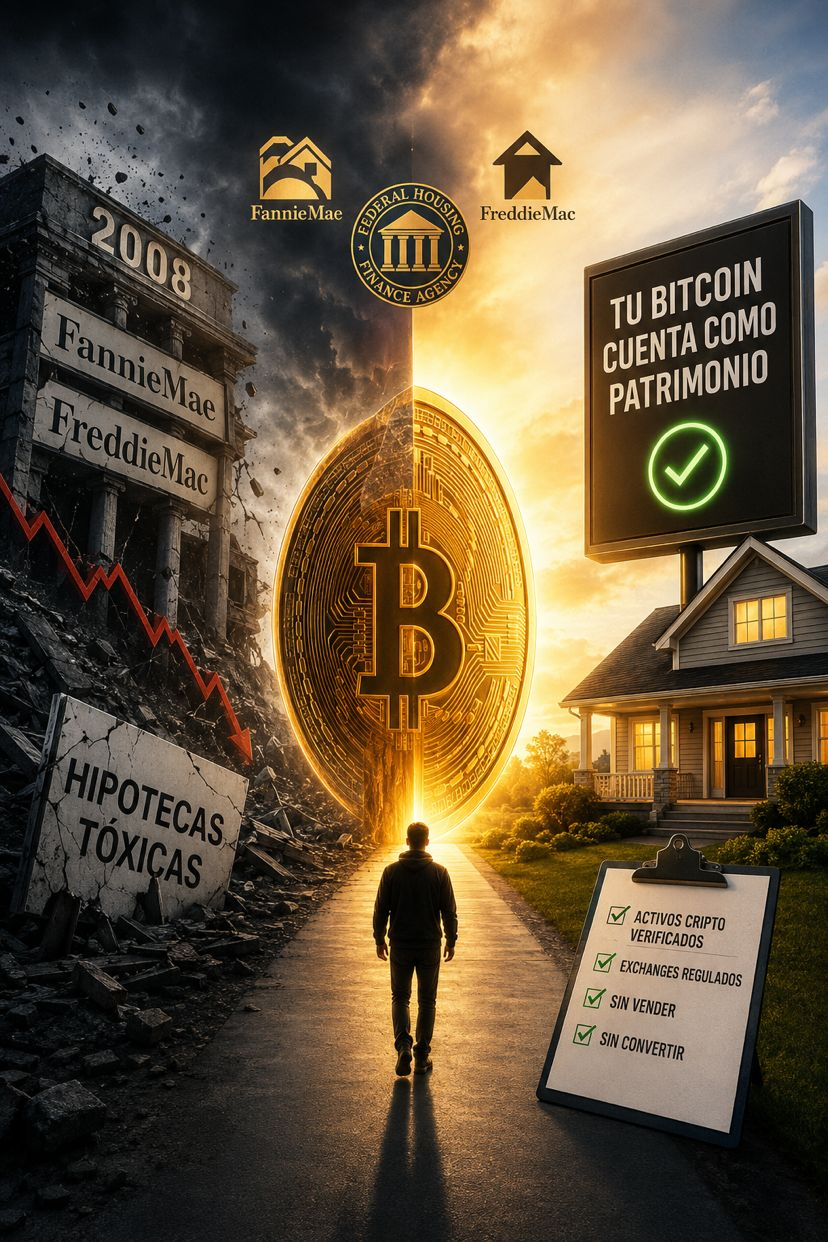
It was 2008. While the U.S. mortgage system collapsed and dragged Fannie Mae and Freddie Mac into a government bailout, an anonymous document circulated on a cryptography forum, proposing a currency that didn’t need banks to work.
17 years later, the circle closes in a way nobody saw coming: the same institutions that failed over toxic assets are now being instructed to accept $BTC Bitcoin as a valid asset to qualify for a mortgage.
The director of the agency overseeing both entities signed the order: Fannie Mae and Freddie Mac must prepare proposals to count verified crypto holdings as reserves, without forcing the applicant to sell them or convert them into dollars.
The surprising fact: these two entities guarantee more than half of all mortgages across the United States. This isn’t some small fintech testing something new. It’s the heart of the world’s largest housing finance system opening the door for your Bitcoin to be considered real wealth—without having to go cash in hand.
The fine print matters: only assets held with regulated exchanges in 🇺🇸 the U.S. are considered, with volatility adjustments and limits on what percentage of your reserves can be crypto. There are still no final rules, and the Senate has already started asking uncomfortable questions about the risks.
Myth or a quiet revolution? For many hodlers, it’s the first time their crypto “counts” without having to betray it by selling.
Would you convert part of your savings into crypto knowing that one day it could help you buy a house without selling?
#FranBerlin #InstitutoBlockchain #Satoshi #FreddieMac
{spot}(BTCUSDT)
{spot}(USDCUSDT)
🏠₿ The mortgage Satoshi never imagined
It was 2008. While the U.S. mortgage system collapsed and dragged Fannie Mae and Freddie Mac into a government bailout, an anonymous document circulated on a cryptography forum, proposing a currency that didn’t need banks to work.
17 years later, the circle closes in a way nobody saw coming: the same institutions that failed over toxic assets are now being instructed to accept $BTC Bitcoin as a valid asset to qualify for a mortgage.
The director of the agency overseeing both entities signed the order: Fannie Mae and Freddie Mac must prepare proposals to count verified crypto holdings as reserves, without forcing the applicant to sell them or convert them into dollars.
The surprising fact: these two entities guarantee more than half of all mortgages across the United States. This isn’t some small fintech testing something new. It’s the heart of the world’s largest housing finance system opening the door for your Bitcoin to be considered real wealth—without having to go cash in hand.
The fine print matters: only assets held with regulated exchanges in 🇺🇸 the U.S. are considered, with volatility adjustments and limits on what percentage of your reserves can be crypto. There are still no final rules, and the Senate has already started asking uncomfortable questions about the risks.
Myth or a quiet revolution? For many hodlers, it’s the first time their crypto “counts” without having to betray it by selling.
Would you convert part of your savings into crypto knowing that one day it could help you buy a house without selling?
#FranBerlin #InstitutoBlockchain #Satoshi #FreddieMac
It was 2008. While the U.S. mortgage system collapsed and dragged Fannie Mae and Freddie Mac into a government bailout, an anonymous document circulated on a cryptography forum, proposing a currency that didn’t need banks to work.
17 years later, the circle closes in a way nobody saw coming: the same institutions that failed over toxic assets are now being instructed to accept $BTC Bitcoin as a valid asset to qualify for a mortgage.
The director of the agency overseeing both entities signed the order: Fannie Mae and Freddie Mac must prepare proposals to count verified crypto holdings as reserves, without forcing the applicant to sell them or convert them into dollars.
The surprising fact: these two entities guarantee more than half of all mortgages across the United States. This isn’t some small fintech testing something new. It’s the heart of the world’s largest housing finance system opening the door for your Bitcoin to be considered real wealth—without having to go cash in hand.
The fine print matters: only assets held with regulated exchanges in 🇺🇸 the U.S. are considered, with volatility adjustments and limits on what percentage of your reserves can be crypto. There are still no final rules, and the Senate has already started asking uncomfortable questions about the risks.
Myth or a quiet revolution? For many hodlers, it’s the first time their crypto “counts” without having to betray it by selling.
Would you convert part of your savings into crypto knowing that one day it could help you buy a house without selling?
#FranBerlin #InstitutoBlockchain #Satoshi #FreddieMac
220
🔥 A Lagarde quote that nobody is talking about (and that changes everything)**
A few days ago, at an almost closed-door event, Christine Lagarde dropped a line that went nearly unnoticed: *"the ownership of financial infrastructure has become a tool of power."*
She wasn’t talking about banks. She was talking about tokenization.
While the world was looking elsewhere, two silent moves have just reconfigured Europe’s crypto map:
📍 July 8: Ripple obtains full MiCA authorization from Luxembourg’s CSSF. One permission, automatic passporting to the 30 EEA countries.
📍 July 9: Flexa activates crypto payments in 37 SEPA countries in one shot.
Two announcements in 24 hours. None of it was a coincidence.
Here’s the real tension: Europe has just built the most comprehensive regulatory framework in the world for crypto (MiCA, in force since July 1). But almost everything that circulates along those tracks is dollar-denominated stablecoins.
Translated: Europe made the rules... but the United States could keep controlling the infrastructure.
It’s the same old paradox: the one who sets the rules isn’t always the one who has the power. Power lies with whoever controls the tracks the money runs on.
That’s why Lagarde wasn’t talking about technology. She was talking about sovereignty.
The question nobody dares to ask out loud:
**Can Europe have its own crypto payments system without depending on the dollar... or is it already too late?** $BTC $ETH $XRP
#FranBerlin #InstitutoBlockchain
#MiCA #geopolitica #Cripto
{spot}(BTCUSDT)
{spot}(ETHUSDT)
{spot}(XRPUSDT)
🔥 A Lagarde quote that nobody is talking about (and that changes everything)**
A few days ago, at an almost closed-door event, Christine Lagarde dropped a line that went nearly unnoticed: *"the ownership of financial infrastructure has become a tool of power."*
She wasn’t talking about banks. She was talking about tokenization.
While the world was looking elsewhere, two silent moves have just reconfigured Europe’s crypto map:
📍 July 8: Ripple obtains full MiCA authorization from Luxembourg’s CSSF. One permission, automatic passporting to the 30 EEA countries.
📍 July 9: Flexa activates crypto payments in 37 SEPA countries in one shot.
Two announcements in 24 hours. None of it was a coincidence.
Here’s the real tension: Europe has just built the most comprehensive regulatory framework in the world for crypto (MiCA, in force since July 1). But almost everything that circulates along those tracks is dollar-denominated stablecoins.
Translated: Europe made the rules... but the United States could keep controlling the infrastructure.
It’s the same old paradox: the one who sets the rules isn’t always the one who has the power. Power lies with whoever controls the tracks the money runs on.
That’s why Lagarde wasn’t talking about technology. She was talking about sovereignty.
The question nobody dares to ask out loud:
**Can Europe have its own crypto payments system without depending on the dollar... or is it already too late?** $BTC $ETH $XRP
#FranBerlin #InstitutoBlockchain
#MiCA #geopolitica #Cripto
A few days ago, at an almost closed-door event, Christine Lagarde dropped a line that went nearly unnoticed: *"the ownership of financial infrastructure has become a tool of power."*
She wasn’t talking about banks. She was talking about tokenization.
While the world was looking elsewhere, two silent moves have just reconfigured Europe’s crypto map:
📍 July 8: Ripple obtains full MiCA authorization from Luxembourg’s CSSF. One permission, automatic passporting to the 30 EEA countries.
📍 July 9: Flexa activates crypto payments in 37 SEPA countries in one shot.
Two announcements in 24 hours. None of it was a coincidence.
Here’s the real tension: Europe has just built the most comprehensive regulatory framework in the world for crypto (MiCA, in force since July 1). But almost everything that circulates along those tracks is dollar-denominated stablecoins.
Translated: Europe made the rules... but the United States could keep controlling the infrastructure.
It’s the same old paradox: the one who sets the rules isn’t always the one who has the power. Power lies with whoever controls the tracks the money runs on.
That’s why Lagarde wasn’t talking about technology. She was talking about sovereignty.
The question nobody dares to ask out loud:
**Can Europe have its own crypto payments system without depending on the dollar... or is it already too late?** $BTC $ETH $XRP
#FranBerlin #InstitutoBlockchain
#MiCA #geopolitica #Cripto

214
The largest exchange in the world began as a fantasy card shop
Before handling 70% of all Bitcoin transactions on the planet, before starring in the biggest hack in the history of cryptocurrencies, Mt. Gox was something completely different.
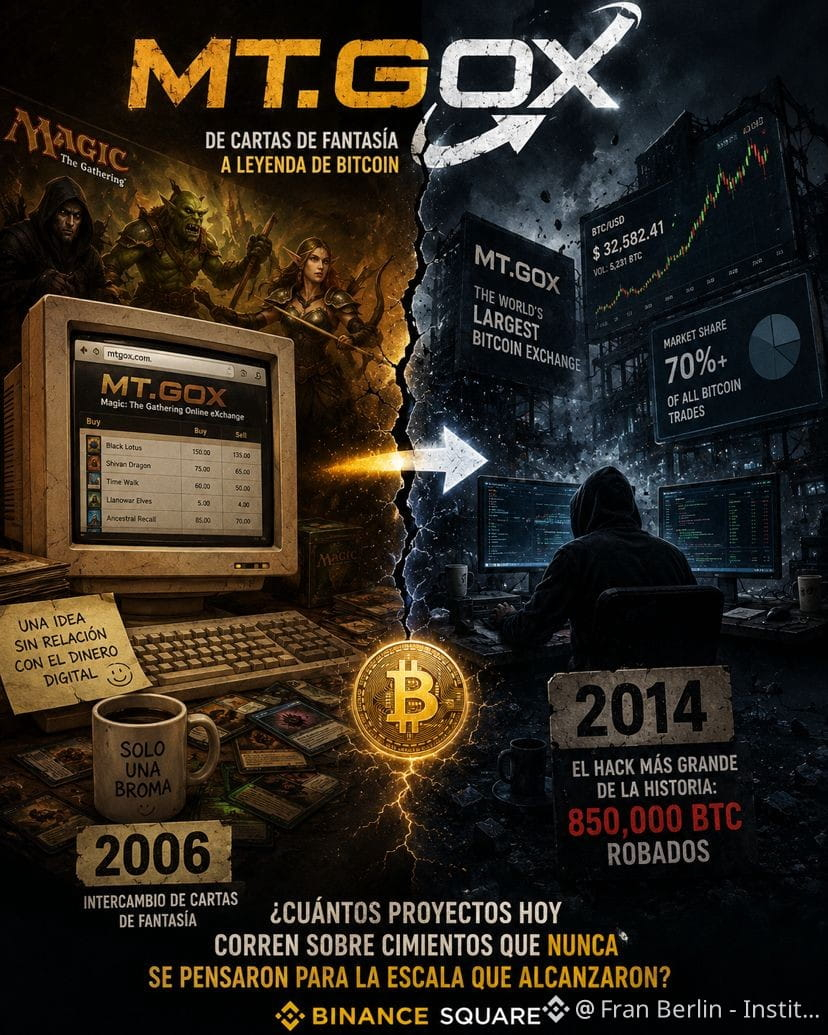
In 2006, an American programmer named Jed McCaleb had an idea with nothing to do with digital money: to create a site where Magic: The Gathering Online players could trade their collectible cards as if they were stocks on a stock exchange. He bought the domain “mtgox.com”, which is actually an acronym for “Magic: The Gathering Online eXchange”. The site worked for a few months, didn’t take off, and McCaleb abandoned it.
Four years later, in 2010, he read about Bitcoin on a forum and thought the community needed a place to trade it. Instead of building something new, he reused the dead domain of the fantasy cards. He himself came to describe the project as “a joke” to learn how Bitcoin worked.
That system, originally meant for trolls, elves, and orcs, ended up processing hundreds of millions of dollars in Bitcoin $BTC real. And here’s the uncomfortable part: it was never designed for that. Security, architecture—everything was still built for a card game, not for safeguarding the fortune of thousands of people.
Years later, that technical legacy was one of the cracks that helped explain its collapse.
How many crypto projects we use today are still running on foundations that were never meant for the scale they reached?
#bitcoin #CriptoHistorias #MtGox #FranBerlin #InstitutoBlockchain
{spot}(BTCUSDT)
The largest exchange in the world began as a fantasy card shop
Before handling 70% of all Bitcoin transactions on the planet, before starring in the biggest hack in the history of cryptocurrencies, Mt. Gox was something completely different.
In 2006, an American programmer named Jed McCaleb had an idea with nothing to do with digital money: to create a site where Magic: The Gathering Online players could trade their collectible cards as if they were stocks on a stock exchange. He bought the domain “mtgox.com”, which is actually an acronym for “Magic: The Gathering Online eXchange”. The site worked for a few months, didn’t take off, and McCaleb abandoned it.
Four years later, in 2010, he read about Bitcoin on a forum and thought the community needed a place to trade it. Instead of building something new, he reused the dead domain of the fantasy cards. He himself came to describe the project as “a joke” to learn how Bitcoin worked.
That system, originally meant for trolls, elves, and orcs, ended up processing hundreds of millions of dollars in Bitcoin $BTC real. And here’s the uncomfortable part: it was never designed for that. Security, architecture—everything was still built for a card game, not for safeguarding the fortune of thousands of people.
Years later, that technical legacy was one of the cracks that helped explain its collapse.
How many crypto projects we use today are still running on foundations that were never meant for the scale they reached?
#bitcoin #CriptoHistorias #MtGox #FranBerlin #InstitutoBlockchain
Before handling 70% of all Bitcoin transactions on the planet, before starring in the biggest hack in the history of cryptocurrencies, Mt. Gox was something completely different.
In 2006, an American programmer named Jed McCaleb had an idea with nothing to do with digital money: to create a site where Magic: The Gathering Online players could trade their collectible cards as if they were stocks on a stock exchange. He bought the domain “mtgox.com”, which is actually an acronym for “Magic: The Gathering Online eXchange”. The site worked for a few months, didn’t take off, and McCaleb abandoned it.
Four years later, in 2010, he read about Bitcoin on a forum and thought the community needed a place to trade it. Instead of building something new, he reused the dead domain of the fantasy cards. He himself came to describe the project as “a joke” to learn how Bitcoin worked.
That system, originally meant for trolls, elves, and orcs, ended up processing hundreds of millions of dollars in Bitcoin $BTC real. And here’s the uncomfortable part: it was never designed for that. Security, architecture—everything was still built for a card game, not for safeguarding the fortune of thousands of people.
Years later, that technical legacy was one of the cracks that helped explain its collapse.
How many crypto projects we use today are still running on foundations that were never meant for the scale they reached?
#bitcoin #CriptoHistorias #MtGox #FranBerlin #InstitutoBlockchain
229
📉 307 days. The market has been trapped between the same two numbers for 307 days — and history says it always ends the same way.
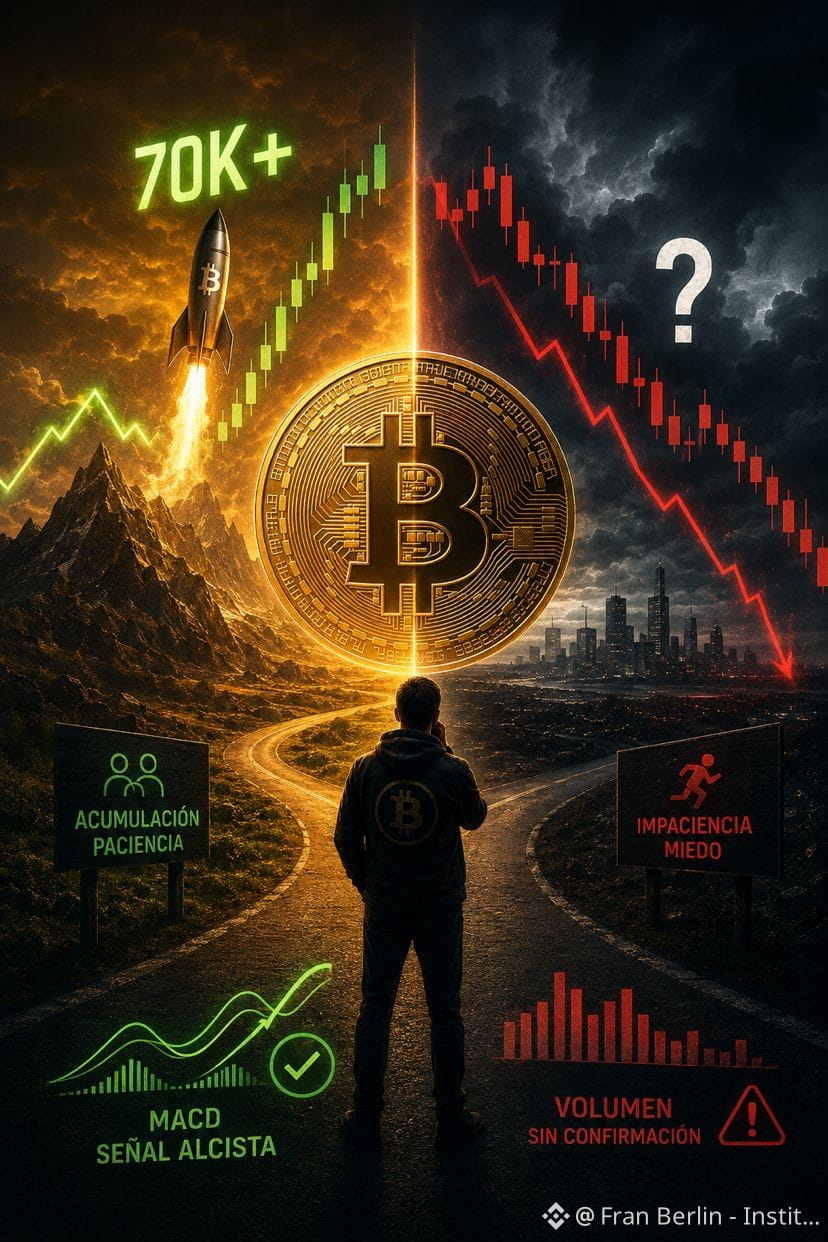
Bitcoin $BTC has been locked in a range between $60,000 and $70,000 since September 2025. Not breaking upward. Not capitulating downward. Just… waiting.
Analysts have already confirmed it: this is the third-longest consolidation in Bitcoin’s history within a $10,000 band. $USDT
And do you know what happened the last time the market got stuck like this for that long?
Between March and October 2024, Bitcoin stayed boxed in between $55,000 and $70,000 for months. Everyone was speculating: a bear trap or quiet accumulation? Impatient traders sold. Those who waited watched the price eventually break out and make its way to a new all-time high of $126,198 in October 2025.
The question nobody can answer yet: are we seeing the same pattern repeat, or this time does the silence end with a breakdown?
A long-term technical indicator (smoothed MACD) has just flashed a bullish signal. But trading volume hasn’t confirmed the move — and without volume, no rally is solid yet.
The market doesn’t lie, but it also doesn’t speak clearly. It just waits.
What do you think: a breakout to 70K+ before the end of the month, or does this break down?
#bitcoin #BullRunAhead #InstitutoBlockchain #FranBerlin
{spot}(BTCUSDT)
📉 307 days. The market has been trapped between the same two numbers for 307 days — and history says it always ends the same way.
Bitcoin $BTC has been locked in a range between $60,000 and $70,000 since September 2025. Not breaking upward. Not capitulating downward. Just… waiting.
Analysts have already confirmed it: this is the third-longest consolidation in Bitcoin’s history within a $10,000 band. $USDT
And do you know what happened the last time the market got stuck like this for that long?
Between March and October 2024, Bitcoin stayed boxed in between $55,000 and $70,000 for months. Everyone was speculating: a bear trap or quiet accumulation? Impatient traders sold. Those who waited watched the price eventually break out and make its way to a new all-time high of $126,198 in October 2025.
The question nobody can answer yet: are we seeing the same pattern repeat, or this time does the silence end with a breakdown?
A long-term technical indicator (smoothed MACD) has just flashed a bullish signal. But trading volume hasn’t confirmed the move — and without volume, no rally is solid yet.
The market doesn’t lie, but it also doesn’t speak clearly. It just waits.
What do you think: a breakout to 70K+ before the end of the month, or does this break down?
#bitcoin #BullRunAhead #InstitutoBlockchain #FranBerlin
Bitcoin $BTC has been locked in a range between $60,000 and $70,000 since September 2025. Not breaking upward. Not capitulating downward. Just… waiting.
Analysts have already confirmed it: this is the third-longest consolidation in Bitcoin’s history within a $10,000 band. $USDT
And do you know what happened the last time the market got stuck like this for that long?
Between March and October 2024, Bitcoin stayed boxed in between $55,000 and $70,000 for months. Everyone was speculating: a bear trap or quiet accumulation? Impatient traders sold. Those who waited watched the price eventually break out and make its way to a new all-time high of $126,198 in October 2025.
The question nobody can answer yet: are we seeing the same pattern repeat, or this time does the silence end with a breakdown?
A long-term technical indicator (smoothed MACD) has just flashed a bullish signal. But trading volume hasn’t confirmed the move — and without volume, no rally is solid yet.
The market doesn’t lie, but it also doesn’t speak clearly. It just waits.
What do you think: a breakout to 70K+ before the end of the month, or does this break down?
#bitcoin #BullRunAhead #InstitutoBlockchain #FranBerlin
1
2
327
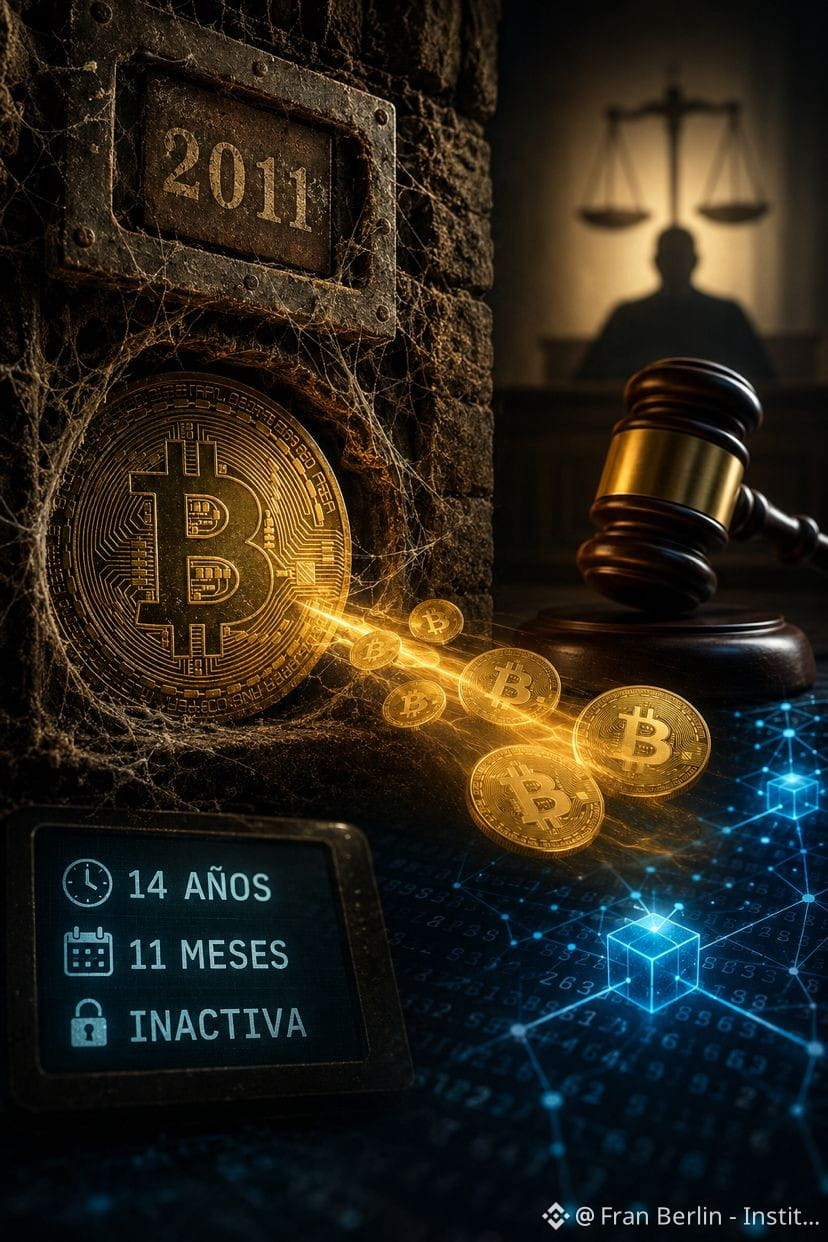
There is a Bitcoin address that had been completely motionless for 14 years and 11 months. No movement. No signal. Only 30 $BTC sleeping since August 2011, when the coin was worth less than $10.
Last Saturday, without warning, that wallet woke up. It moved $1.88 million in a single block. $USDT
It wasn’t an isolated case. Analysts at Galaxy Research have been tracking an odd pattern for months: ancient addresses that start moving right when a New York court names them in a lawsuit.
Because this isn’t just a story about ghost wallets. It’s a legal battle that could redefine what it means to “own” a wallet.
The case targets 39,069 Bitcoin addresses. Together, according to the Timechain Index, they contain about 3.7 million BTC. At the current price, that’s $234 billion sleeping in addresses that nobody has touched in more than a decade.
The lawsuit claims them as “lost property” under a state law originally designed for forgotten bank accounts, not for crypto keys.
But someone fought back. A user who identifies as “John Doe 33”—the alleged controller of one of those addresses—filed a motion to dismiss the case. His argument is as simple as it is unsettling: a Bitcoin address is not a person or a legal entity. It’s just a chain of data. How do you sue a datum?
While the lawyers argue, the wallets keep waking up. Just in June, 31 addresses tied to the case moved 17,527 BTC. In February, they had been barely 4,834.
The question nobody can answer yet: if the original owner of a wallet goes 14 years without a word, who does that fortune really belong to? The code, the court, or whoever has the private key?
#bitcoin #blockchain #CryptoNews #InstitutoBlockchain #FranBerlin
{spot}(BTCUSDT)
There is a Bitcoin address that had been completely motionless for 14 years and 11 months. No movement. No signal. Only 30 $BTC sleeping since August 2011, when the coin was worth less than $10.
Last Saturday, without warning, that wallet woke up. It moved $1.88 million in a single block. $USDT
It wasn’t an isolated case. Analysts at Galaxy Research have been tracking an odd pattern for months: ancient addresses that start moving right when a New York court names them in a lawsuit.
Because this isn’t just a story about ghost wallets. It’s a legal battle that could redefine what it means to “own” a wallet.
The case targets 39,069 Bitcoin addresses. Together, according to the Timechain Index, they contain about 3.7 million BTC. At the current price, that’s $234 billion sleeping in addresses that nobody has touched in more than a decade.
The lawsuit claims them as “lost property” under a state law originally designed for forgotten bank accounts, not for crypto keys.
But someone fought back. A user who identifies as “John Doe 33”—the alleged controller of one of those addresses—filed a motion to dismiss the case. His argument is as simple as it is unsettling: a Bitcoin address is not a person or a legal entity. It’s just a chain of data. How do you sue a datum?
While the lawyers argue, the wallets keep waking up. Just in June, 31 addresses tied to the case moved 17,527 BTC. In February, they had been barely 4,834.
The question nobody can answer yet: if the original owner of a wallet goes 14 years without a word, who does that fortune really belong to? The code, the court, or whoever has the private key?
#bitcoin #blockchain #CryptoNews #InstitutoBlockchain #FranBerlin
Last Saturday, without warning, that wallet woke up. It moved $1.88 million in a single block. $USDT
It wasn’t an isolated case. Analysts at Galaxy Research have been tracking an odd pattern for months: ancient addresses that start moving right when a New York court names them in a lawsuit.
Because this isn’t just a story about ghost wallets. It’s a legal battle that could redefine what it means to “own” a wallet.
The case targets 39,069 Bitcoin addresses. Together, according to the Timechain Index, they contain about 3.7 million BTC. At the current price, that’s $234 billion sleeping in addresses that nobody has touched in more than a decade.
The lawsuit claims them as “lost property” under a state law originally designed for forgotten bank accounts, not for crypto keys.
But someone fought back. A user who identifies as “John Doe 33”—the alleged controller of one of those addresses—filed a motion to dismiss the case. His argument is as simple as it is unsettling: a Bitcoin address is not a person or a legal entity. It’s just a chain of data. How do you sue a datum?
While the lawyers argue, the wallets keep waking up. Just in June, 31 addresses tied to the case moved 17,527 BTC. In February, they had been barely 4,834.
The question nobody can answer yet: if the original owner of a wallet goes 14 years without a word, who does that fortune really belong to? The code, the court, or whoever has the private key?
#bitcoin #blockchain #CryptoNews #InstitutoBlockchain #FranBerlin
1
424
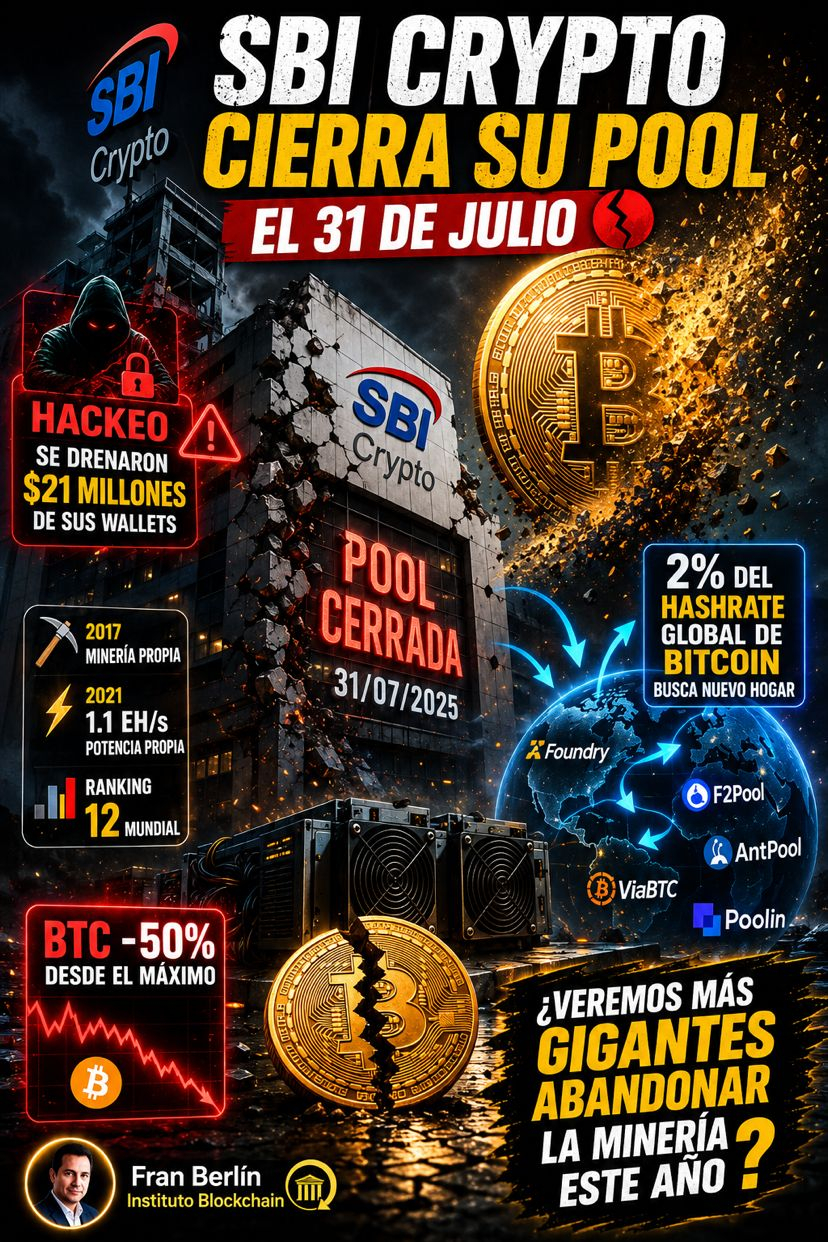
A year ago, mining with SBI #crypto meant being part of a powerhouse. The firm, backed by one of Japan’s largest financial groups 🇯🇵, operated a pool that at one point controlled nearly 2% of all the hashrate of $BTC Bitcoin. It wasn’t just any player: it was born mining in its own facilities since 2017, and in 2021 opened its doors to the public with 1.1 EH/s of its own power.
But something started to go wrong. In September 2025, a hack allegedly linked to North Korean actors drained $21 million from its corporate wallets. Then came subtle signs: adjustments to payments, a silent pause in the mining of $LTC Litecoin and $DOGE Dogecoin. No one said out loud that something was falling apart.
Yesterday, #SBI Crypto confirmed what many had already suspected: it will shut down its pool on July 31, after five years of operation. No official explanation. Just a cold recommendation to its users: keep mining until the very last minute so the final payments line up properly.
The detail that few connect: that pool managed to rank 12 worldwide, above names any miner would recognize. Now that 2% of Bitcoin’s global hashrate has no home, looking for refuge in other pools.
Was it the hack, pressure from shrinking margins as BTC fell 50% from its peak, or simply that SBI decided to put everything into stablecoins and regulated exchanges?
Do you think we’ll see more corporate giants leave mining this year?
#FranBerlin #InstitutoBlockchain #BTC
{spot}(LTCUSDT)
{spot}(DOGEUSDT)
{spot}(BTCUSDT)
A year ago, mining with SBI #crypto meant being part of a powerhouse. The firm, backed by one of Japan’s largest financial groups 🇯🇵, operated a pool that at one point controlled nearly 2% of all the hashrate of $BTC Bitcoin. It wasn’t just any player: it was born mining in its own facilities since 2017, and in 2021 opened its doors to the public with 1.1 EH/s of its own power.
But something started to go wrong. In September 2025, a hack allegedly linked to North Korean actors drained $21 million from its corporate wallets. Then came subtle signs: adjustments to payments, a silent pause in the mining of $LTC Litecoin and $DOGE Dogecoin. No one said out loud that something was falling apart.
Yesterday, #SBI Crypto confirmed what many had already suspected: it will shut down its pool on July 31, after five years of operation. No official explanation. Just a cold recommendation to its users: keep mining until the very last minute so the final payments line up properly.
The detail that few connect: that pool managed to rank 12 worldwide, above names any miner would recognize. Now that 2% of Bitcoin’s global hashrate has no home, looking for refuge in other pools.
Was it the hack, pressure from shrinking margins as BTC fell 50% from its peak, or simply that SBI decided to put everything into stablecoins and regulated exchanges?
Do you think we’ll see more corporate giants leave mining this year?
#FranBerlin #InstitutoBlockchain #BTC
But something started to go wrong. In September 2025, a hack allegedly linked to North Korean actors drained $21 million from its corporate wallets. Then came subtle signs: adjustments to payments, a silent pause in the mining of $LTC Litecoin and $DOGE Dogecoin. No one said out loud that something was falling apart.
Yesterday, #SBI Crypto confirmed what many had already suspected: it will shut down its pool on July 31, after five years of operation. No official explanation. Just a cold recommendation to its users: keep mining until the very last minute so the final payments line up properly.
The detail that few connect: that pool managed to rank 12 worldwide, above names any miner would recognize. Now that 2% of Bitcoin’s global hashrate has no home, looking for refuge in other pools.
Was it the hack, pressure from shrinking margins as BTC fell 50% from its peak, or simply that SBI decided to put everything into stablecoins and regulated exchanges?
Do you think we’ll see more corporate giants leave mining this year?
#FranBerlin #InstitutoBlockchain #BTC
243
It was a routine transfer.
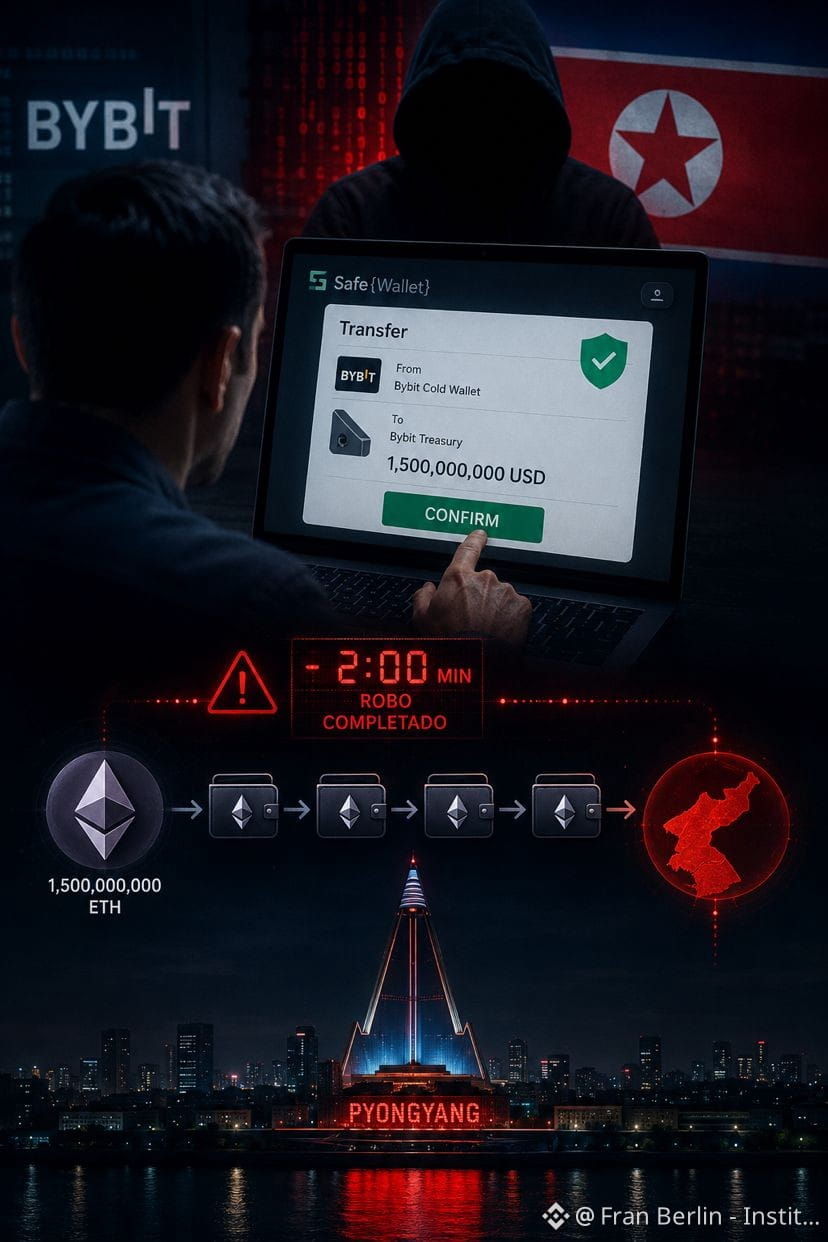
February 20, 2025. A Bybit employee opens his screen, checks the transaction details, and signs.
Everything looks normal.
Minutes later, $1.5 billion $USDT in Ethereum had vanished.
But the most terrifying part isn’t the amount.
The most terrifying part is how they did it.
The elite North Korean government hackers of the Lazarus Group didn’t attack the blockchain. They didn’t break any private keys. They didn’t need any of that.
They simply… falsified what the employee saw on the screen.
Months earlier, they infiltrated the system of a Safe Wallet developer—the platform Bybit used to sign transactions. They injected a malicious code that slept quietly, waiting.
When the employee opened his wallet that day, the code activated. The screen showed a legitimate transfer. In reality, the funds were going to Pyongyang.
The employee signed. His coworkers signed. Nobody saw anything unusual.
Two minutes after the theft, the malicious code deleted itself. No trace.
It took the FBI days to confirm what everyone already suspected: it was North Korea, using stolen Ethereum to fund its nuclear weapons program.
The lesson nobody wants to hear: the weakest link isn’t the code. It’s you.
Do you trust the screen you see when you sign a transaction?
Fran Berlin | Blockchain Institute
#Lazarus #ETH #InstitutoBlockchain #FranBerlin #BTC
{spot}(ETHUSDT)
{spot}(USDCUSDT)
It was a routine transfer.
February 20, 2025. A Bybit employee opens his screen, checks the transaction details, and signs.
Everything looks normal.
Minutes later, $1.5 billion $USDT in Ethereum had vanished.
But the most terrifying part isn’t the amount.
The most terrifying part is how they did it.
The elite North Korean government hackers of the Lazarus Group didn’t attack the blockchain. They didn’t break any private keys. They didn’t need any of that.
They simply… falsified what the employee saw on the screen.
Months earlier, they infiltrated the system of a Safe Wallet developer—the platform Bybit used to sign transactions. They injected a malicious code that slept quietly, waiting.
When the employee opened his wallet that day, the code activated. The screen showed a legitimate transfer. In reality, the funds were going to Pyongyang.
The employee signed. His coworkers signed. Nobody saw anything unusual.
Two minutes after the theft, the malicious code deleted itself. No trace.
It took the FBI days to confirm what everyone already suspected: it was North Korea, using stolen Ethereum to fund its nuclear weapons program.
The lesson nobody wants to hear: the weakest link isn’t the code. It’s you.
Do you trust the screen you see when you sign a transaction?
Fran Berlin | Blockchain Institute
#Lazarus #ETH #InstitutoBlockchain #FranBerlin #BTC
February 20, 2025. A Bybit employee opens his screen, checks the transaction details, and signs.
Everything looks normal.
Minutes later, $1.5 billion $USDT in Ethereum had vanished.
But the most terrifying part isn’t the amount.
The most terrifying part is how they did it.
The elite North Korean government hackers of the Lazarus Group didn’t attack the blockchain. They didn’t break any private keys. They didn’t need any of that.
They simply… falsified what the employee saw on the screen.
Months earlier, they infiltrated the system of a Safe Wallet developer—the platform Bybit used to sign transactions. They injected a malicious code that slept quietly, waiting.
When the employee opened his wallet that day, the code activated. The screen showed a legitimate transfer. In reality, the funds were going to Pyongyang.
The employee signed. His coworkers signed. Nobody saw anything unusual.
Two minutes after the theft, the malicious code deleted itself. No trace.
It took the FBI days to confirm what everyone already suspected: it was North Korea, using stolen Ethereum to fund its nuclear weapons program.
The lesson nobody wants to hear: the weakest link isn’t the code. It’s you.
Do you trust the screen you see when you sign a transaction?
Fran Berlin | Blockchain Institute
#Lazarus #ETH #InstitutoBlockchain #FranBerlin #BTC
654
Back in 2021, everyone was on the hunt for the next big coin.
By 2026, the game's changing.
Big gains aren’t just about finding some unknown token anymore.
They’re about spotting narratives before everyone else does.
$BTC Bitcoin.
ETFs.
Tokenization.
AI.
Every cycle has its dominant story.
The question is:
What narrative is going to move billions of dollars in the next 24 months?
Because by the time it hits the news, it’ll be too late.
The biggest profits rarely come when you buy.
They come when you understand something ahead of the crowd.
What narrative do you think will dominate the next cycle?
👇 Drop your thoughts.
#ETFs #bitcoin #AI #InstitutoBlockchain #FranBerlin
{spot}(BTCUSDT)
Back in 2021, everyone was on the hunt for the next big coin.
By 2026, the game's changing.
Big gains aren’t just about finding some unknown token anymore.
They’re about spotting narratives before everyone else does.
$BTC Bitcoin.
ETFs.
Tokenization.
AI.
Every cycle has its dominant story.
The question is:
What narrative is going to move billions of dollars in the next 24 months?
Because by the time it hits the news, it’ll be too late.
The biggest profits rarely come when you buy.
They come when you understand something ahead of the crowd.
What narrative do you think will dominate the next cycle?
👇 Drop your thoughts.
#ETFs #bitcoin #AI #InstitutoBlockchain #FranBerlin
By 2026, the game's changing.
Big gains aren’t just about finding some unknown token anymore.
They’re about spotting narratives before everyone else does.
$BTC Bitcoin.
ETFs.
Tokenization.
AI.
Every cycle has its dominant story.
The question is:
What narrative is going to move billions of dollars in the next 24 months?
Because by the time it hits the news, it’ll be too late.
The biggest profits rarely come when you buy.
They come when you understand something ahead of the crowd.
What narrative do you think will dominate the next cycle?
👇 Drop your thoughts.
#ETFs #bitcoin #AI #InstitutoBlockchain #FranBerlin
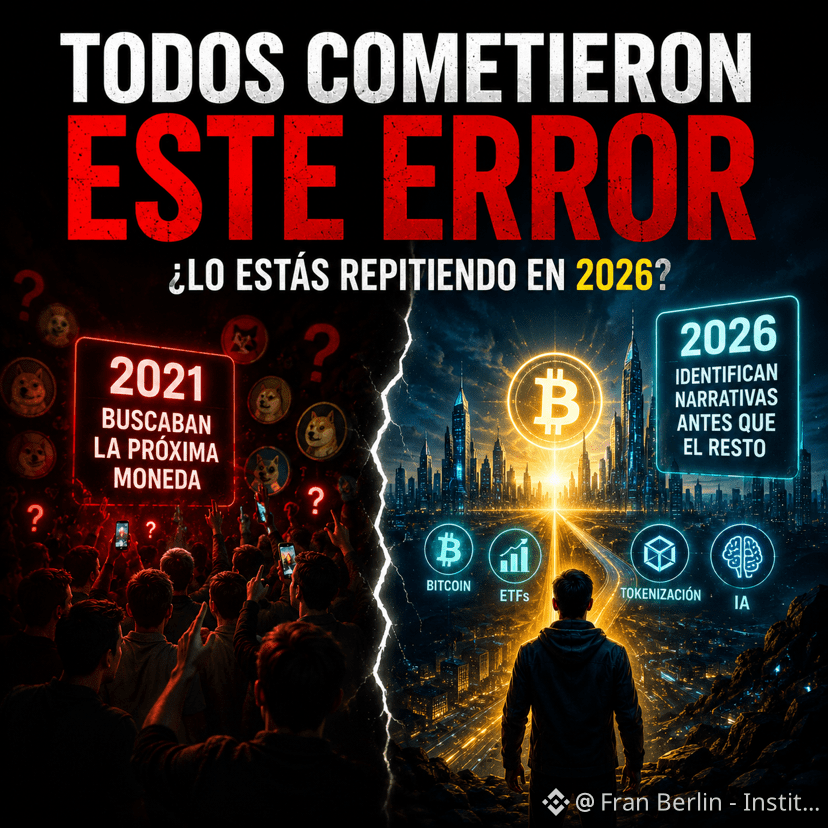
258
Log in to explore more content
Join global crypto users on Binance Square
⚡️ Get latest and useful information about crypto.
💬 Trusted by the world’s largest crypto exchange.
👍 Discover real insights from verified creators.
Email / Phone number
Trending Topics
BitgetHackerMoves$83MStolenXRP
3,732 views
46 Discussing
On September 24, 2026, Bitget suffered a major security breach, with around $387M–$390M in assets reportedly stolen.
A big part of the stolen funds was $XRP .
Around 103M $XRP, worth roughly $157M–$160M at the time, was moved into five wallets controlled by the attacker.
By September 26, about 54M XRP ($83M) had already been moved out of three of those wallets.
Two wallets that each held around 20M XRP were almost completely emptied, while another was reduced to about 5.8M XRP.
That left roughly 49M XRP, worth around $75M at the time, still sitting in the original wallets.
The transfers also picked up overnight, with the funds being split across new wallets. Some reports say part of the XRP was later moved through THORChain toward Bitcoin.
Definitely a situation I’m keeping an eye on as the funds continue to move.
#BitgetHackerMoves$83MStolenXRP
jujucrypt
·6 Likes
·7.3k views
SOLSpotETFWeeklyInflow$188M
1,954 views
45 Discussing
DogecoinETFsPostBiggestWeekSinceLaunch
256 views
33 Discussing