Binance Square
#franberlin

franberlin

42,990 views
83 Discussing
Fran Berlin - Instituto Blockchain
·
--
🏠₿ The mortgage Satoshi never imagined It was 2008. While the U.S. mortgage system collapsed and dragged Fannie Mae and Freddie Mac into a government bailout, an anonymous document circulated on a cryptography forum, proposing a currency that didn’t need banks to work. 17 years later, the circle closes in a way nobody saw coming: the same institutions that failed over toxic assets are now being instructed to accept $BTC Bitcoin as a valid asset to qualify for a mortgage. The director of the agency overseeing both entities signed the order: Fannie Mae and Freddie Mac must prepare proposals to count verified crypto holdings as reserves, without forcing the applicant to sell them or convert them into dollars. The surprising fact: these two entities guarantee more than half of all mortgages across the United States. This isn’t some small fintech testing something new. It’s the heart of the world’s largest housing finance system opening the door for your Bitcoin to be considered real wealth—without having to go cash in hand. The fine print matters: only assets held with regulated exchanges in 🇺🇸 the U.S. are considered, with volatility adjustments and limits on what percentage of your reserves can be crypto. There are still no final rules, and the Senate has already started asking uncomfortable questions about the risks. Myth or a quiet revolution? For many hodlers, it’s the first time their crypto “counts” without having to betray it by selling. Would you convert part of your savings into crypto knowing that one day it could help you buy a house without selling? #FranBerlin #InstitutoBlockchain #Satoshi #FreddieMac {spot}(BTCUSDT) {spot}(USDCUSDT)
🏠₿ The mortgage Satoshi never imagined

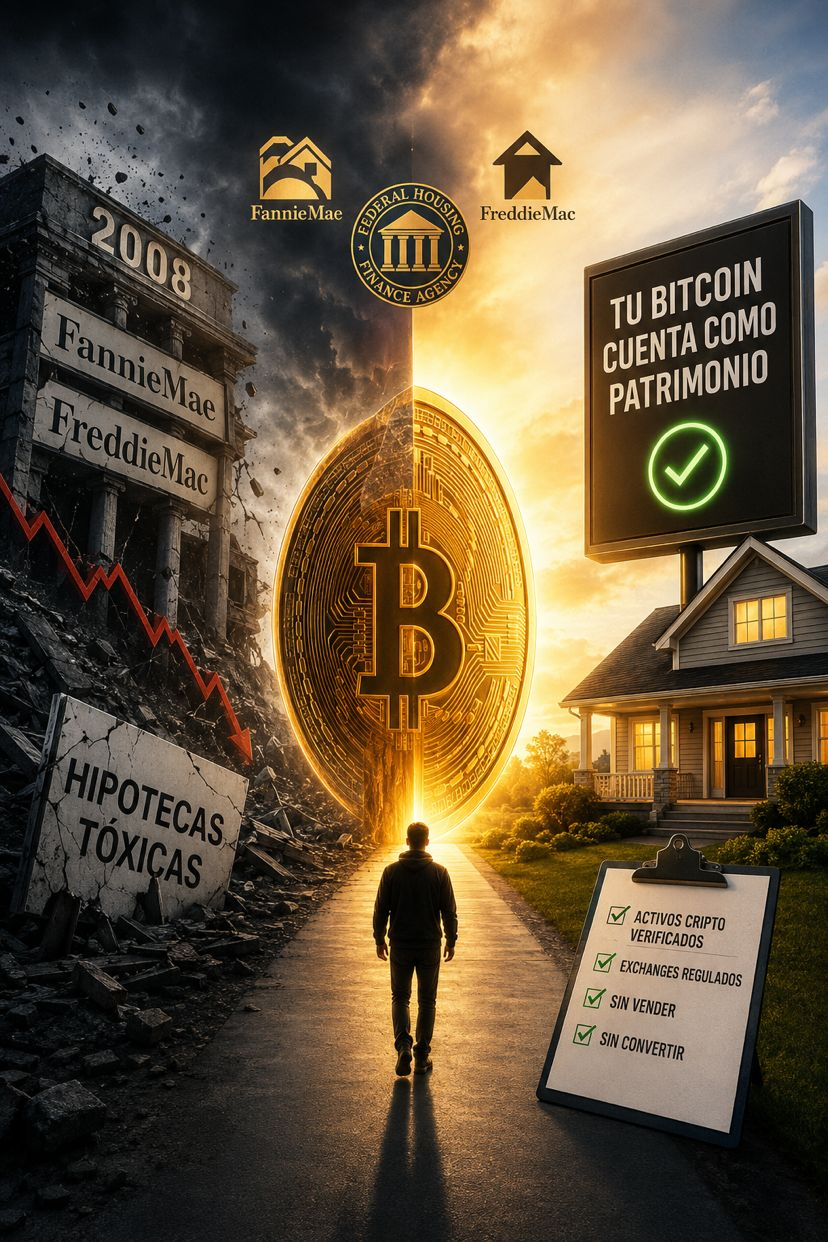
It was 2008. While the U.S. mortgage system collapsed and dragged Fannie Mae and Freddie Mac into a government bailout, an anonymous document circulated on a cryptography forum, proposing a currency that didn’t need banks to work.

17 years later, the circle closes in a way nobody saw coming: the same institutions that failed over toxic assets are now being instructed to accept $BTC Bitcoin as a valid asset to qualify for a mortgage.

The director of the agency overseeing both entities signed the order: Fannie Mae and Freddie Mac must prepare proposals to count verified crypto holdings as reserves, without forcing the applicant to sell them or convert them into dollars.

The surprising fact: these two entities guarantee more than half of all mortgages across the United States. This isn’t some small fintech testing something new. It’s the heart of the world’s largest housing finance system opening the door for your Bitcoin to be considered real wealth—without having to go cash in hand.

The fine print matters: only assets held with regulated exchanges in 🇺🇸 the U.S. are considered, with volatility adjustments and limits on what percentage of your reserves can be crypto. There are still no final rules, and the Senate has already started asking uncomfortable questions about the risks.

Myth or a quiet revolution? For many hodlers, it’s the first time their crypto “counts” without having to betray it by selling.

Would you convert part of your savings into crypto knowing that one day it could help you buy a house without selling?

#FranBerlin #InstitutoBlockchain #Satoshi #FreddieMac
🔥 A Lagarde quote that nobody is talking about (and that changes everything)** A few days ago, at an almost closed-door event, Christine Lagarde dropped a line that went nearly unnoticed: *"the ownership of financial infrastructure has become a tool of power."* She wasn’t talking about banks. She was talking about tokenization. While the world was looking elsewhere, two silent moves have just reconfigured Europe’s crypto map: 📍 July 8: Ripple obtains full MiCA authorization from Luxembourg’s CSSF. One permission, automatic passporting to the 30 EEA countries. 📍 July 9: Flexa activates crypto payments in 37 SEPA countries in one shot. Two announcements in 24 hours. None of it was a coincidence. Here’s the real tension: Europe has just built the most comprehensive regulatory framework in the world for crypto (MiCA, in force since July 1). But almost everything that circulates along those tracks is dollar-denominated stablecoins. Translated: Europe made the rules... but the United States could keep controlling the infrastructure. It’s the same old paradox: the one who sets the rules isn’t always the one who has the power. Power lies with whoever controls the tracks the money runs on. That’s why Lagarde wasn’t talking about technology. She was talking about sovereignty. The question nobody dares to ask out loud: **Can Europe have its own crypto payments system without depending on the dollar... or is it already too late?** $BTC $ETH $XRP #FranBerlin #InstitutoBlockchain #MiCA #geopolitica #Cripto {spot}(BTCUSDT) {spot}(ETHUSDT) {spot}(XRPUSDT)
🔥 A Lagarde quote that nobody is talking about (and that changes everything)**

A few days ago, at an almost closed-door event, Christine Lagarde dropped a line that went nearly unnoticed: *"the ownership of financial infrastructure has become a tool of power."*

She wasn’t talking about banks. She was talking about tokenization.

While the world was looking elsewhere, two silent moves have just reconfigured Europe’s crypto map:

📍 July 8: Ripple obtains full MiCA authorization from Luxembourg’s CSSF. One permission, automatic passporting to the 30 EEA countries.

📍 July 9: Flexa activates crypto payments in 37 SEPA countries in one shot.

Two announcements in 24 hours. None of it was a coincidence.

Here’s the real tension: Europe has just built the most comprehensive regulatory framework in the world for crypto (MiCA, in force since July 1). But almost everything that circulates along those tracks is dollar-denominated stablecoins.

Translated: Europe made the rules... but the United States could keep controlling the infrastructure.

It’s the same old paradox: the one who sets the rules isn’t always the one who has the power. Power lies with whoever controls the tracks the money runs on.

That’s why Lagarde wasn’t talking about technology. She was talking about sovereignty.

The question nobody dares to ask out loud:

**Can Europe have its own crypto payments system without depending on the dollar... or is it already too late?** $BTC $ETH $XRP

#FranBerlin #InstitutoBlockchain
#MiCA #geopolitica #Cripto

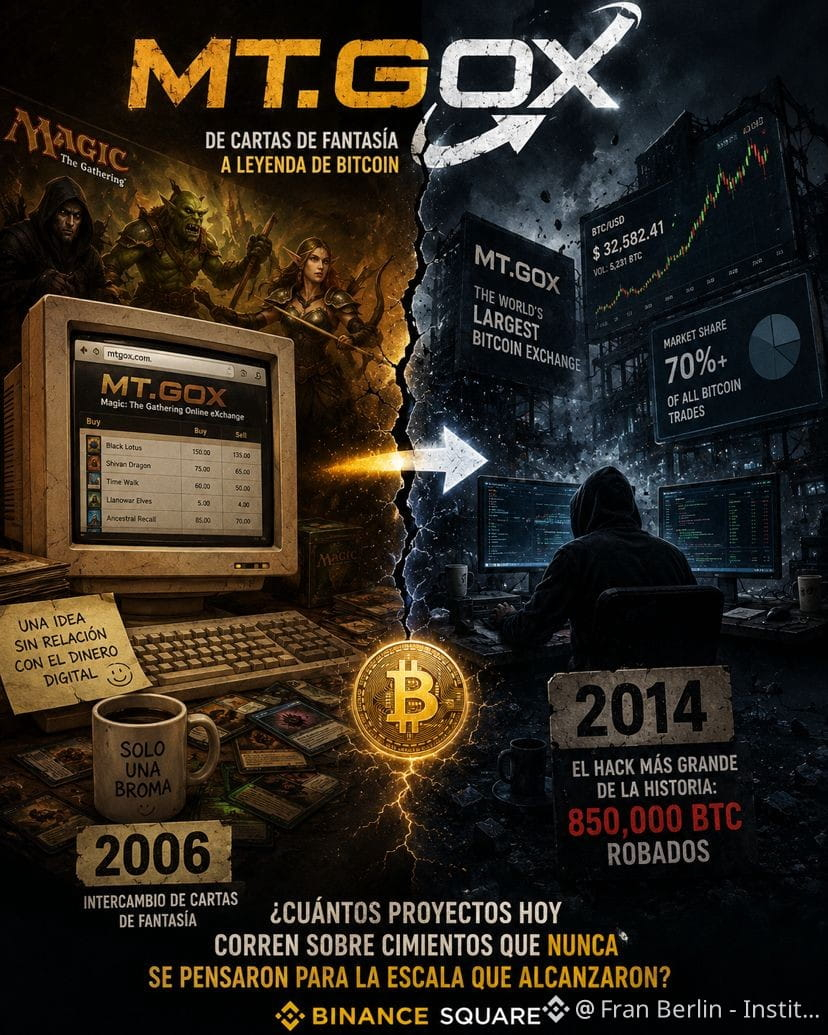
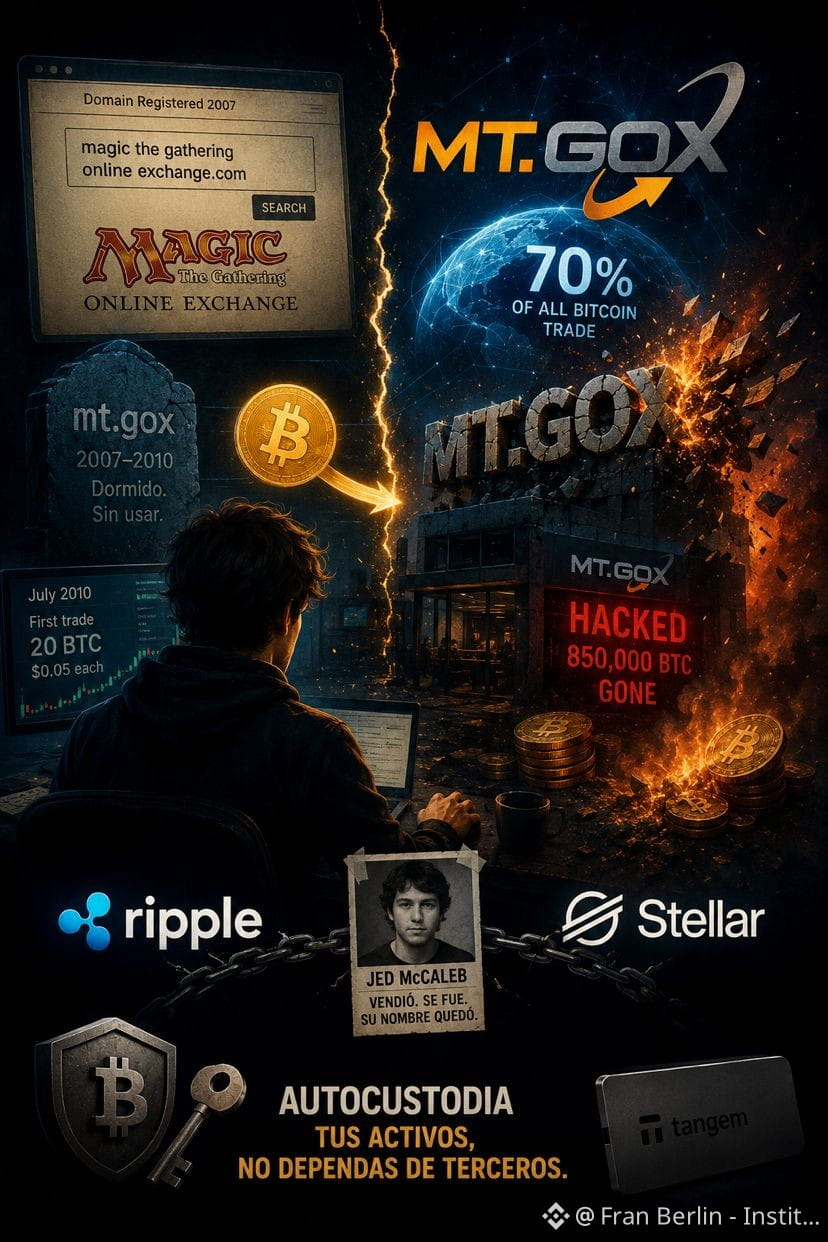
The largest exchange in the world began as a fantasy card shop Before handling 70% of all Bitcoin transactions on the planet, before starring in the biggest hack in the history of cryptocurrencies, Mt. Gox was something completely different. In 2006, an American programmer named Jed McCaleb had an idea with nothing to do with digital money: to create a site where Magic: The Gathering Online players could trade their collectible cards as if they were stocks on a stock exchange. He bought the domain “mtgox.com”, which is actually an acronym for “Magic: The Gathering Online eXchange”. The site worked for a few months, didn’t take off, and McCaleb abandoned it. Four years later, in 2010, he read about Bitcoin on a forum and thought the community needed a place to trade it. Instead of building something new, he reused the dead domain of the fantasy cards. He himself came to describe the project as “a joke” to learn how Bitcoin worked. That system, originally meant for trolls, elves, and orcs, ended up processing hundreds of millions of dollars in Bitcoin $BTC real. And here’s the uncomfortable part: it was never designed for that. Security, architecture—everything was still built for a card game, not for safeguarding the fortune of thousands of people. Years later, that technical legacy was one of the cracks that helped explain its collapse. How many crypto projects we use today are still running on foundations that were never meant for the scale they reached? #bitcoin #CriptoHistorias #MtGox #FranBerlin #InstitutoBlockchain {spot}(BTCUSDT)
The largest exchange in the world began as a fantasy card shop

Before handling 70% of all Bitcoin transactions on the planet, before starring in the biggest hack in the history of cryptocurrencies, Mt. Gox was something completely different.

In 2006, an American programmer named Jed McCaleb had an idea with nothing to do with digital money: to create a site where Magic: The Gathering Online players could trade their collectible cards as if they were stocks on a stock exchange. He bought the domain “mtgox.com”, which is actually an acronym for “Magic: The Gathering Online eXchange”. The site worked for a few months, didn’t take off, and McCaleb abandoned it.

Four years later, in 2010, he read about Bitcoin on a forum and thought the community needed a place to trade it. Instead of building something new, he reused the dead domain of the fantasy cards. He himself came to describe the project as “a joke” to learn how Bitcoin worked.

That system, originally meant for trolls, elves, and orcs, ended up processing hundreds of millions of dollars in Bitcoin $BTC real. And here’s the uncomfortable part: it was never designed for that. Security, architecture—everything was still built for a card game, not for safeguarding the fortune of thousands of people.

Years later, that technical legacy was one of the cracks that helped explain its collapse.

How many crypto projects we use today are still running on foundations that were never meant for the scale they reached?

#bitcoin #CriptoHistorias #MtGox #FranBerlin #InstitutoBlockchain
📉 307 days. The market has been trapped between the same two numbers for 307 days — and history says it always ends the same way. Bitcoin $BTC has been locked in a range between $60,000 and $70,000 since September 2025. Not breaking upward. Not capitulating downward. Just… waiting. Analysts have already confirmed it: this is the third-longest consolidation in Bitcoin’s history within a $10,000 band. $USDT And do you know what happened the last time the market got stuck like this for that long? Between March and October 2024, Bitcoin stayed boxed in between $55,000 and $70,000 for months. Everyone was speculating: a bear trap or quiet accumulation? Impatient traders sold. Those who waited watched the price eventually break out and make its way to a new all-time high of $126,198 in October 2025. The question nobody can answer yet: are we seeing the same pattern repeat, or this time does the silence end with a breakdown? A long-term technical indicator (smoothed MACD) has just flashed a bullish signal. But trading volume hasn’t confirmed the move — and without volume, no rally is solid yet. The market doesn’t lie, but it also doesn’t speak clearly. It just waits. What do you think: a breakout to 70K+ before the end of the month, or does this break down? #bitcoin #BullRunAhead #InstitutoBlockchain #FranBerlin {spot}(BTCUSDT)
📉 307 days. The market has been trapped between the same two numbers for 307 days — and history says it always ends the same way.

Bitcoin $BTC has been locked in a range between $60,000 and $70,000 since September 2025. Not breaking upward. Not capitulating downward. Just… waiting.

Analysts have already confirmed it: this is the third-longest consolidation in Bitcoin’s history within a $10,000 band. $USDT

And do you know what happened the last time the market got stuck like this for that long?

Between March and October 2024, Bitcoin stayed boxed in between $55,000 and $70,000 for months. Everyone was speculating: a bear trap or quiet accumulation? Impatient traders sold. Those who waited watched the price eventually break out and make its way to a new all-time high of $126,198 in October 2025.

The question nobody can answer yet: are we seeing the same pattern repeat, or this time does the silence end with a breakdown?

A long-term technical indicator (smoothed MACD) has just flashed a bullish signal. But trading volume hasn’t confirmed the move — and without volume, no rally is solid yet.

The market doesn’t lie, but it also doesn’t speak clearly. It just waits.

What do you think: a breakout to 70K+ before the end of the month, or does this break down?

#bitcoin #BullRunAhead #InstitutoBlockchain #FranBerlin
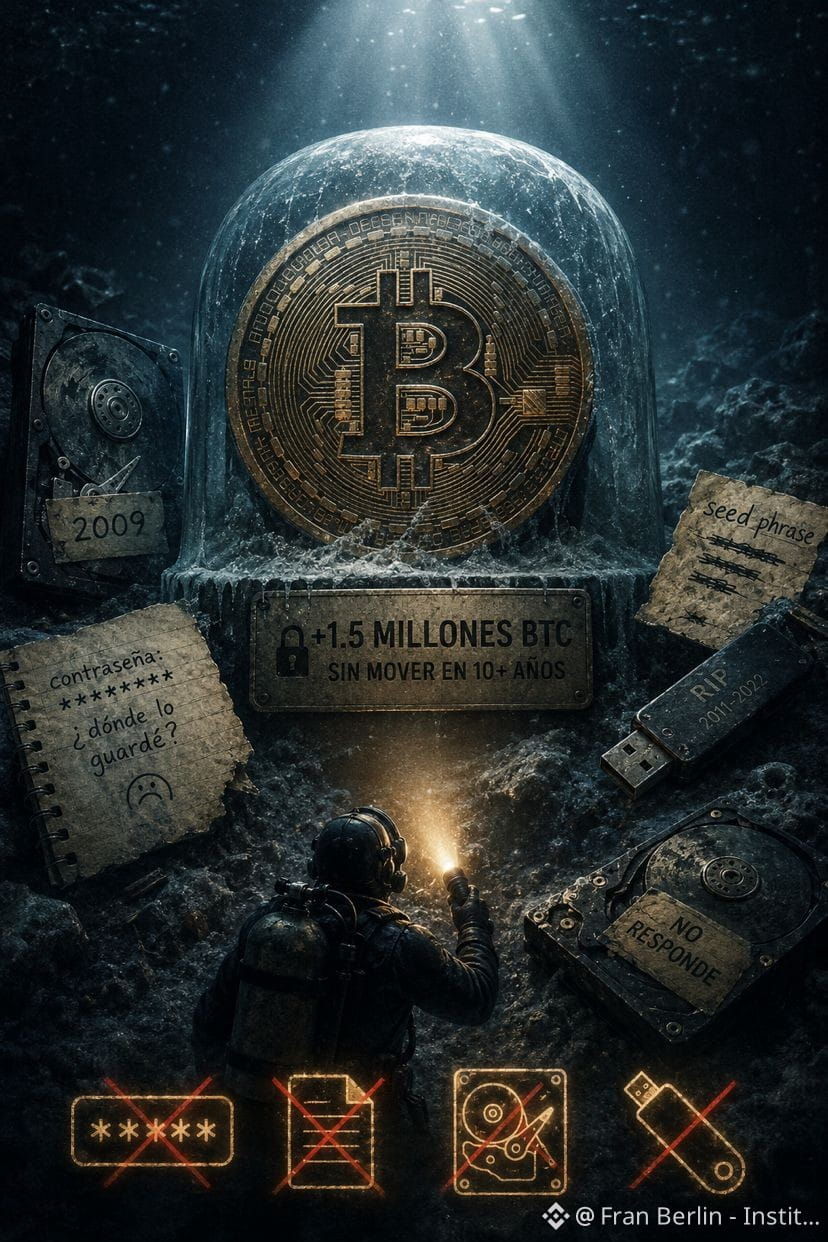
There is a Bitcoin address that had been completely motionless for 14 years and 11 months. No movement. No signal. Only 30 $BTC sleeping since August 2011, when the coin was worth less than $10. Last Saturday, without warning, that wallet woke up. It moved $1.88 million in a single block. $USDT It wasn’t an isolated case. Analysts at Galaxy Research have been tracking an odd pattern for months: ancient addresses that start moving right when a New York court names them in a lawsuit. Because this isn’t just a story about ghost wallets. It’s a legal battle that could redefine what it means to “own” a wallet. The case targets 39,069 Bitcoin addresses. Together, according to the Timechain Index, they contain about 3.7 million BTC. At the current price, that’s $234 billion sleeping in addresses that nobody has touched in more than a decade. The lawsuit claims them as “lost property” under a state law originally designed for forgotten bank accounts, not for crypto keys. But someone fought back. A user who identifies as “John Doe 33”—the alleged controller of one of those addresses—filed a motion to dismiss the case. His argument is as simple as it is unsettling: a Bitcoin address is not a person or a legal entity. It’s just a chain of data. How do you sue a datum? While the lawyers argue, the wallets keep waking up. Just in June, 31 addresses tied to the case moved 17,527 BTC. In February, they had been barely 4,834. The question nobody can answer yet: if the original owner of a wallet goes 14 years without a word, who does that fortune really belong to? The code, the court, or whoever has the private key? #bitcoin #blockchain #CryptoNews #InstitutoBlockchain #FranBerlin {spot}(BTCUSDT)
There is a Bitcoin address that had been completely motionless for 14 years and 11 months. No movement. No signal. Only 30 $BTC sleeping since August 2011, when the coin was worth less than $10.

Last Saturday, without warning, that wallet woke up. It moved $1.88 million in a single block. $USDT

It wasn’t an isolated case. Analysts at Galaxy Research have been tracking an odd pattern for months: ancient addresses that start moving right when a New York court names them in a lawsuit.

Because this isn’t just a story about ghost wallets. It’s a legal battle that could redefine what it means to “own” a wallet.

The case targets 39,069 Bitcoin addresses. Together, according to the Timechain Index, they contain about 3.7 million BTC. At the current price, that’s $234 billion sleeping in addresses that nobody has touched in more than a decade.

The lawsuit claims them as “lost property” under a state law originally designed for forgotten bank accounts, not for crypto keys.

But someone fought back. A user who identifies as “John Doe 33”—the alleged controller of one of those addresses—filed a motion to dismiss the case. His argument is as simple as it is unsettling: a Bitcoin address is not a person or a legal entity. It’s just a chain of data. How do you sue a datum?

While the lawyers argue, the wallets keep waking up. Just in June, 31 addresses tied to the case moved 17,527 BTC. In February, they had been barely 4,834.

The question nobody can answer yet: if the original owner of a wallet goes 14 years without a word, who does that fortune really belong to? The code, the court, or whoever has the private key?

#bitcoin #blockchain #CryptoNews #InstitutoBlockchain #FranBerlin
A year ago, mining with SBI #crypto meant being part of a powerhouse. The firm, backed by one of Japan’s largest financial groups 🇯🇵, operated a pool that at one point controlled nearly 2% of all the hashrate of $BTC Bitcoin. It wasn’t just any player: it was born mining in its own facilities since 2017, and in 2021 opened its doors to the public with 1.1 EH/s of its own power. But something started to go wrong. In September 2025, a hack allegedly linked to North Korean actors drained $21 million from its corporate wallets. Then came subtle signs: adjustments to payments, a silent pause in the mining of $LTC Litecoin and $DOGE Dogecoin. No one said out loud that something was falling apart. Yesterday, #SBI Crypto confirmed what many had already suspected: it will shut down its pool on July 31, after five years of operation. No official explanation. Just a cold recommendation to its users: keep mining until the very last minute so the final payments line up properly. The detail that few connect: that pool managed to rank 12 worldwide, above names any miner would recognize. Now that 2% of Bitcoin’s global hashrate has no home, looking for refuge in other pools. Was it the hack, pressure from shrinking margins as BTC fell 50% from its peak, or simply that SBI decided to put everything into stablecoins and regulated exchanges? Do you think we’ll see more corporate giants leave mining this year? #FranBerlin #InstitutoBlockchain #BTC {spot}(LTCUSDT) {spot}(DOGEUSDT) {spot}(BTCUSDT)
A year ago, mining with SBI #crypto meant being part of a powerhouse. The firm, backed by one of Japan’s largest financial groups 🇯🇵, operated a pool that at one point controlled nearly 2% of all the hashrate of $BTC Bitcoin. It wasn’t just any player: it was born mining in its own facilities since 2017, and in 2021 opened its doors to the public with 1.1 EH/s of its own power.

But something started to go wrong. In September 2025, a hack allegedly linked to North Korean actors drained $21 million from its corporate wallets. Then came subtle signs: adjustments to payments, a silent pause in the mining of $LTC Litecoin and $DOGE Dogecoin. No one said out loud that something was falling apart.

Yesterday, #SBI Crypto confirmed what many had already suspected: it will shut down its pool on July 31, after five years of operation. No official explanation. Just a cold recommendation to its users: keep mining until the very last minute so the final payments line up properly.

The detail that few connect: that pool managed to rank 12 worldwide, above names any miner would recognize. Now that 2% of Bitcoin’s global hashrate has no home, looking for refuge in other pools.

Was it the hack, pressure from shrinking margins as BTC fell 50% from its peak, or simply that SBI decided to put everything into stablecoins and regulated exchanges?

Do you think we’ll see more corporate giants leave mining this year?

#FranBerlin #InstitutoBlockchain #BTC


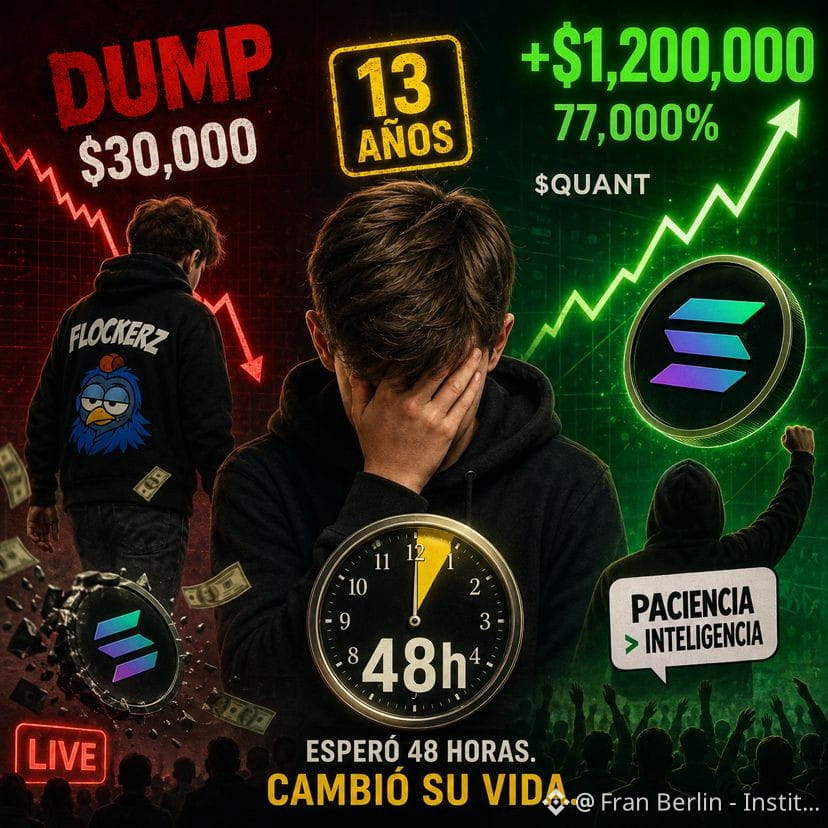
I was 13 years old. And I had just made the biggest mistake of my life. It was November 2024. A boy named Flockerz was live on Solana $SOL in front of thousands of people. He had created his own token $QUANT and launched it to the market. Then, on camera, he dumped everything. He sold his 51 million tokens. He cleared his position. He pocketed $30,000 $USDT and left. He thought he was smart. The community thought otherwise. Instead of collapsing, $QUANT exploded. Without the creator, without a team, without a roadmap, the token jumped 77,000%. One single investor, who bought after the rug, walked away with almost a million dollars. The boy, who was left with $30,000, would have had more than $1,200,000 if he’d waited 48 hours. He didn’t learn the lesson. Weeks later he launched another token: “Sorry”. He dumped it again. This time he only pulled out $20,000. The community ignored him. There’s an unwritten rule in crypto that this boy discovered the hard way: The market rewards patience more than intelligence. How long do you hold before selling? #Quant #flockerz #solana #FranBerlin #InstitutoBlockchain {spot}(SOLUSDT) {spot}(USDCUSDT)
I was 13 years old. And I had just made the biggest mistake of my life.

It was November 2024. A boy named Flockerz was live on Solana $SOL in front of thousands of people.

He had created his own token $QUANT and launched it to the market.

Then, on camera, he dumped everything.

He sold his 51 million tokens. He cleared his position. He pocketed $30,000 $USDT and left.

He thought he was smart.

The community thought otherwise.

Instead of collapsing, $QUANT exploded. Without the creator, without a team, without a roadmap, the token jumped 77,000%.

One single investor, who bought after the rug, walked away with almost a million dollars.

The boy, who was left with $30,000, would have had more than $1,200,000 if he’d waited 48 hours.

He didn’t learn the lesson.

Weeks later he launched another token: “Sorry”.

He dumped it again. This time he only pulled out $20,000.

The community ignored him.

There’s an unwritten rule in crypto that this boy discovered the hard way:

The market rewards patience more than intelligence.

How long do you hold before selling?

#Quant #flockerz #solana
#FranBerlin #InstitutoBlockchain
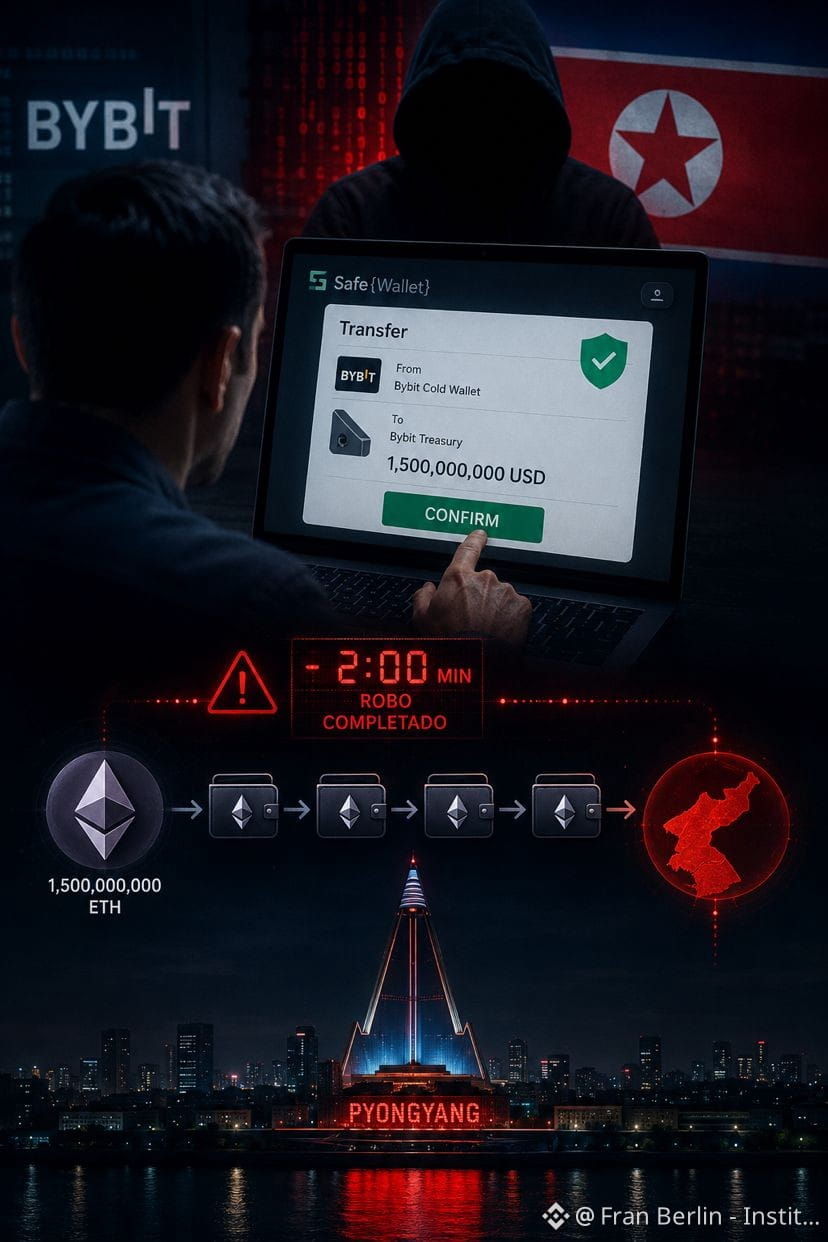
It was a routine transfer. February 20, 2025. A Bybit employee opens his screen, checks the transaction details, and signs. Everything looks normal. Minutes later, $1.5 billion $USDT in Ethereum had vanished. But the most terrifying part isn’t the amount. The most terrifying part is how they did it. The elite North Korean government hackers of the Lazarus Group didn’t attack the blockchain. They didn’t break any private keys. They didn’t need any of that. They simply… falsified what the employee saw on the screen. Months earlier, they infiltrated the system of a Safe Wallet developer—the platform Bybit used to sign transactions. They injected a malicious code that slept quietly, waiting. When the employee opened his wallet that day, the code activated. The screen showed a legitimate transfer. In reality, the funds were going to Pyongyang. The employee signed. His coworkers signed. Nobody saw anything unusual. Two minutes after the theft, the malicious code deleted itself. No trace. It took the FBI days to confirm what everyone already suspected: it was North Korea, using stolen Ethereum to fund its nuclear weapons program. The lesson nobody wants to hear: the weakest link isn’t the code. It’s you. Do you trust the screen you see when you sign a transaction? Fran Berlin | Blockchain Institute #Lazarus #ETH #InstitutoBlockchain #FranBerlin #BTC {spot}(ETHUSDT) {spot}(USDCUSDT)
It was a routine transfer.

February 20, 2025. A Bybit employee opens his screen, checks the transaction details, and signs.

Everything looks normal.

Minutes later, $1.5 billion $USDT in Ethereum had vanished.

But the most terrifying part isn’t the amount.

The most terrifying part is how they did it.

The elite North Korean government hackers of the Lazarus Group didn’t attack the blockchain. They didn’t break any private keys. They didn’t need any of that.

They simply… falsified what the employee saw on the screen.

Months earlier, they infiltrated the system of a Safe Wallet developer—the platform Bybit used to sign transactions. They injected a malicious code that slept quietly, waiting.

When the employee opened his wallet that day, the code activated. The screen showed a legitimate transfer. In reality, the funds were going to Pyongyang.

The employee signed. His coworkers signed. Nobody saw anything unusual.

Two minutes after the theft, the malicious code deleted itself. No trace.

It took the FBI days to confirm what everyone already suspected: it was North Korea, using stolen Ethereum to fund its nuclear weapons program.

The lesson nobody wants to hear: the weakest link isn’t the code. It’s you.

Do you trust the screen you see when you sign a transaction?

Fran Berlin | Blockchain Institute

#Lazarus #ETH #InstitutoBlockchain #FranBerlin #BTC

🪎 Back in 2021, everyone was on the hunt for the next big coin. By 2026, the game's changing. Big gains aren’t just about finding some unknown token anymore. They’re about spotting narratives before everyone else does. $BTC Bitcoin. ETFs. Tokenization. AI. Every cycle has its dominant story. The question is: What narrative is going to move billions of dollars in the next 24 months? Because by the time it hits the news, it’ll be too late. The biggest profits rarely come when you buy. They come when you understand something ahead of the crowd. What narrative do you think will dominate the next cycle? 👇 Drop your thoughts. #ETFs #bitcoin #AI #InstitutoBlockchain #FranBerlin {spot}(BTCUSDT)
🪎 Back in 2021, everyone was on the hunt for the next big coin.

By 2026, the game's changing.

Big gains aren’t just about finding some unknown token anymore.

They’re about spotting narratives before everyone else does.

$BTC Bitcoin.
ETFs.
Tokenization.
AI.

Every cycle has its dominant story.

The question is:

What narrative is going to move billions of dollars in the next 24 months?

Because by the time it hits the news, it’ll be too late.

The biggest profits rarely come when you buy.

They come when you understand something ahead of the crowd.

What narrative do you think will dominate the next cycle?

👇 Drop your thoughts.

#ETFs #bitcoin #AI #InstitutoBlockchain #FranBerlin
💰The first time Strategy sold Bitcoin in 4 years… …and nobody understood what was really happening. The headline dropped like a bomb: Strategy sold 32 $BTC Traders panicked. The networks flooded with conspiracy theories. "Don't they believe in Bitcoin anymore?" "Is the collapse starting?" The Fear & Greed Index hit 24. Extreme fear. But there's something almost nobody mentioned. They sold 32 BTC out of a total of 843,706. Just 0.0038% of their treasury. To pay a preferred dividend. A routine accounting maneuver. And they did it at $77,135 $USDT per coin — above the current market price. They sold high. On purpose. And the market still freaked out. While retail was selling in terror, something else was happening quietly: Bitmine accumulated 5.62 million of $ETH , which is 4.66% of the entire circulating supply. With 4.7 million already in staking, generating $219 million annually in yields. Tom Lee isn't speculating. He's building a digital asset bank. Franklin Templeton filed with the SEC for two ETFs that redirect stock dividends straight into Bitcoin. Launch expected: September 2026. Hundreds of thousands of traditional investors accumulating BTC unknowingly, automatically, each quarter. While you were reading that headline about the 32 BTC and feeling scared, someone with a team of 40 analysts and billions under management was buying exactly what you just sold. This is not a bear market. It's the market filtering who understands the long-term game and who is still making decisions based on 6-word headlines. How many times have you sold because of a headline that turned out to be noise? — Fran Berlín | Blockchain Institute #bitcoin #InstitutoBlockchain #MiCA #CryptoEspanol #FranBerlin {spot}(BTCUSDT) {spot}(ETHUSDT) {spot}(USDCUSDT)
💰The first time Strategy sold Bitcoin in 4 years…
…and nobody understood what was really happening.

The headline dropped like a bomb: Strategy sold 32 $BTC

Traders panicked. The networks flooded with conspiracy theories. "Don't they believe in Bitcoin anymore?" "Is the collapse starting?" The Fear & Greed Index hit 24. Extreme fear.

But there's something almost nobody mentioned.

They sold 32 BTC out of a total of 843,706. Just 0.0038% of their treasury. To pay a preferred dividend. A routine accounting maneuver. And they did it at $77,135 $USDT per coin — above the current market price.

They sold high. On purpose. And the market still freaked out.

While retail was selling in terror, something else was happening quietly:

Bitmine accumulated 5.62 million of $ETH , which is 4.66% of the entire circulating supply. With 4.7 million already in staking, generating $219 million annually in yields. Tom Lee isn't speculating. He's building a digital asset bank.

Franklin Templeton filed with the SEC for two ETFs that redirect stock dividends straight into Bitcoin. Launch expected: September 2026. Hundreds of thousands of traditional investors accumulating BTC unknowingly, automatically, each quarter.

While you were reading that headline about the 32 BTC and feeling scared, someone with a team of 40 analysts and billions under management was buying exactly what you just sold.

This is not a bear market.

It's the market filtering who understands the long-term game and who is still making decisions based on 6-word headlines.

How many times have you sold because of a headline that turned out to be noise?

— Fran Berlín | Blockchain Institute

#bitcoin #InstitutoBlockchain #MiCA #CryptoEspanol #FranBerlin


🔌⚠️ You just plugged in a USB to your computer. You opened what looked like a normal Word document. Correct name, correct icon. Everything seemed fine. But it wasn't a file. It was a gateway. Microsoft just revealed that since February 2026, a malware called CryptoBandits has been siphoning #crypto from Windows users in an almost invisible way: it installs itself from infected USB drives, monitors the clipboard every 500 milliseconds, and the moment you copy a wallet address to make a transfer... it silently swaps it for the attacker's address. You paste. You confirm. The funds land in another wallet. It also captures seed phrases and private keys. It transmits everything over the Tor network to leave no trace. And when it detects a clean USB connected, it infects that too. Even Binance distributed Microsoft's alert to its users. When was the last time you checked, character by character, the destination address before confirming a transaction? $BTC $ETH $BNB #CryptoBandits #BTC #FranBerlin #InstitutoBlockchain
🔌⚠️ You just plugged in a USB to your computer.

You opened what looked like a normal Word document. Correct name, correct icon. Everything seemed fine.

But it wasn't a file. It was a gateway.

Microsoft just revealed that since February 2026, a malware called CryptoBandits has been siphoning #crypto from Windows users in an almost invisible way: it installs itself from infected USB drives, monitors the clipboard every 500 milliseconds, and the moment you copy a wallet address to make a transfer... it silently swaps it for the attacker's address.

You paste. You confirm. The funds land in another wallet.

It also captures seed phrases and private keys. It transmits everything over the Tor network to leave no trace. And when it detects a clean USB connected, it infects that too.

Even Binance distributed Microsoft's alert to its users.

When was the last time you checked, character by character, the destination address before confirming a transaction?

$BTC $ETH $BNB

#CryptoBandits #BTC #FranBerlin #InstitutoBlockchain
💵 Franklin Templeton just registered two ETFs with the SEC. And their setup is unlike anything we've seen before. They don’t ask investors to buy Bitcoin directly. Instead, they take the dividends generated from shares of major U.S. companies… and automatically convert them into BTC exposure. They’re called “Bitcoin DRIP”: starting with 95% in equities and 5% in Bitcoin. That exposure can ramp up to 20%. The dividends do the heavy lifting on their own. No extra decisions needed from the investor. If the SEC gives the green light, they could launch in September 2026. Bitwise is already predicting over 100 crypto ETFs in 2026. The institutional floodgates are wide open. Is the “DRIP” Wall Street's stealthy way to accumulate Bitcoin without anyone noticing? Anchor comment (post 5-6 hours later) Dividends turning into BTC by themselves. Institutional accumulation doesn’t need to make a fuss anymore. 👀 #Bitcoin #FranklinTempleton #SEC #InstitutoBlockchain #FranBerlin {spot}(BTCUSDT)
💵 Franklin Templeton just registered two ETFs with the SEC.

And their setup is unlike anything we've seen before.

They don’t ask investors to buy Bitcoin directly. Instead, they take the dividends generated from shares of major U.S. companies… and automatically convert them into BTC exposure.

They’re called “Bitcoin DRIP”: starting with 95% in equities and 5% in Bitcoin. That exposure can ramp up to 20%. The dividends do the heavy lifting on their own. No extra decisions needed from the investor.

If the SEC gives the green light, they could launch in September 2026. Bitwise is already predicting over 100 crypto ETFs in 2026. The institutional floodgates are wide open.

Is the “DRIP” Wall Street's stealthy way to accumulate Bitcoin without anyone noticing?

Anchor comment (post 5-6 hours later)

Dividends turning into BTC by themselves. Institutional accumulation doesn’t need to make a fuss anymore. 👀 #Bitcoin

#FranklinTempleton #SEC #InstitutoBlockchain #FranBerlin
🏦 Bitcoin is trading today at $62,837. $USDT It dropped for four consecutive days. But it’s not panic driving the market. It’s something colder: the Fed under Kevin Warsh left rates unchanged but made it clear that their priority is inflation, not growth. And the market read that perfectly. Marex analysts described it this way: the positioning in crypto is "defensive and thin." Nobody is running away. They are waiting. The key support remains at $60,000. Bitcoin has already bounced off that level twice in 2026. If it doesn’t hold… $BTC the next floor marked by the techs is between $40,000 and $45,000. $USDC Is this a healthy correction before the next impulse, or the start of something deeper? #btc #bitcoin #FranBerlin #InstitutoBlockchain {spot}(BTCUSDT)
🏦 Bitcoin is trading today at $62,837. $USDT

It dropped for four consecutive days.

But it’s not panic driving the market. It’s something colder: the Fed under Kevin Warsh left rates unchanged but made it clear that their priority is inflation, not growth. And the market read that perfectly.

Marex analysts described it this way: the positioning in crypto is "defensive and thin." Nobody is running away. They are waiting.

The key support remains at $60,000. Bitcoin has already bounced off that level twice in 2026. If it doesn’t hold… $BTC the next floor marked by the techs is between $40,000 and $45,000. $USDC

Is this a healthy correction before the next impulse, or the start of something deeper?

#btc #bitcoin #FranBerlin #InstitutoBlockchain
😱 The Fed spoke. Bitcoin dropped. And 9 officials want to hike rates. Yesterday was a historic day for the markets. Kevin Warsh held his first press conference as the chair of the Federal Reserve, and the outcome was clear: a new era of tougher, more opaque, and unpredictable monetary policy. What happened in numbers: 📌 Rates: unchanged. Range 3.50%-3.75%. Exactly what the market expected. 📌 The dot plot — the projection from each FOMC member — removed any cuts expected for 2026. Back in March, there was at least one. Not anymore. 📌 9 out of 18 officials now project a rate hike before the end of the year. Three months ago, none did. 📌 The probability of a hike for December jumped from 8% to 80% in just hours. 📌 Bitcoin dropped from ~66,500 USD to ~63,851 USD. The entire crypto market pulled back. 📌 The Fear & Greed Index is at 21: Extreme Fear. But there's more that the headlines don't tell. Warsh refused to publish his own rate projections, an unprecedented move. He said the dot plot "is not useful for monetary policy formulation." He released a 130-word statement, compared to the previous 341-word release. He announced 5 working groups to reform the Fed "from the ground up." In other words: the new Fed chair is demolishing the communication manual that markets learned to read over the last 15 years, and building a new one. With no instructions. For Bitcoin, the context is this: $BTC has dropped after 8 of the last 9 FOMC meetings. But in the following 30 days, it has historically bounced back in all cases. On Friday, the U.S.-Iran peace deal is signed in Switzerland. The Strait of Hormuz reopens on June 19. If oil continues to drop, inflation may ease, and the rate hike scenario weakens. The macro is writing the next chapter of BTC in real-time. Do you think the Fed's hawkish signal is temporary, or are we facing a real cycle change? $ETH $XRP #FED #FranBerlin {spot}(BTCUSDT)
😱 The Fed spoke. Bitcoin dropped. And 9 officials want to hike rates.

Yesterday was a historic day for the markets. Kevin Warsh held his first press conference as the chair of the Federal Reserve, and the outcome was clear: a new era of tougher, more opaque, and unpredictable monetary policy.
What happened in numbers:

📌 Rates: unchanged. Range 3.50%-3.75%. Exactly what the market expected.
📌 The dot plot — the projection from each FOMC member — removed any cuts expected for 2026. Back in March, there was at least one. Not anymore.
📌 9 out of 18 officials now project a rate hike before the end of the year. Three months ago, none did.
📌 The probability of a hike for December jumped from 8% to 80% in just hours.
📌 Bitcoin dropped from ~66,500 USD to ~63,851 USD. The entire crypto market pulled back.
📌 The Fear & Greed Index is at 21: Extreme Fear.

But there's more that the headlines don't tell.

Warsh refused to publish his own rate projections, an unprecedented move. He said the dot plot "is not useful for monetary policy formulation." He released a 130-word statement, compared to the previous 341-word release. He announced 5 working groups to reform the Fed "from the ground up."

In other words: the new Fed chair is demolishing the communication manual that markets learned to read over the last 15 years, and building a new one. With no instructions.

For Bitcoin, the context is this: $BTC has dropped after 8 of the last 9 FOMC meetings. But in the following 30 days, it has historically bounced back in all cases.

On Friday, the U.S.-Iran peace deal is signed in Switzerland. The Strait of Hormuz reopens on June 19. If oil continues to drop, inflation may ease, and the rate hike scenario weakens.

The macro is writing the next chapter of BTC in real-time.

Do you think the Fed's hawkish signal is temporary, or are we facing a real cycle change?
$ETH $XRP
#FED #FranBerlin
☎️ What are 'covered calls' and why did BlackRock just change the game for Bitcoin? This week, something happened that many overlooked amidst the market noise. BlackRock launched BITA on Nasdaq this past Tuesday. It's not just another BTC ETF. It's the first financial product in history that turns volatility of $BTC into monthly income. Let me break it down, without unnecessary jargon: 🔑 The base: BITA holds real Bitcoin, through IBIT, BlackRock's spot ETF with over $51 billion in assets. 🔑 The mechanism: The fund sells covered call options on those positions. Basically, it tells other investors: "I’m selling you the right to buy my Bitcoin at a fixed price in the future, and you pay me a premium now." 🔑 The income: Those premiums are distributed monthly to BITA holders. The goal: between 15% and 25% annual yield. 🔑 The cost: If Bitcoin skyrockets above the agreed price, BITA holders don’t capture all that profit. They give up some upside in exchange for constant cash flow. Who does this make sense for? For institutional investors who don’t want to speculate on BTC’s price, but rather receive a predictable monthly check while maintaining exposure to the asset. The fee is 0.65%, lower than competitors (0.95-0.99%). What this means for the market: Bitcoin has stopped being just a 'bullish bet.' Now it’s also an income-generating asset. That semantic shift has huge implications for institutional adoption. Ironically, BITA arrives just as Fed's Warsh pointed out yesterday that there are no rate cuts on the horizon and that they might even hike rates. A product that pays monthly income from Bitcoin becomes more attractive precisely when money gets more expensive. BlackRock has outpaced Goldman Sachs. And the market has just learned a new concept: Bitcoin as an income instrument. Do you get how a covered call works now? #CoveredCalls #BITA #BlackRock⁩ #InstitutoBlockchain #FranBerlin {spot}(BTCUSDT)
☎️ What are 'covered calls' and why did BlackRock just change the game for Bitcoin?

This week, something happened that many overlooked amidst the market noise.

BlackRock launched BITA on Nasdaq this past Tuesday. It's not just another BTC ETF. It's the first financial product in history that turns volatility of $BTC into monthly income.

Let me break it down, without unnecessary jargon:

🔑 The base: BITA holds real Bitcoin, through IBIT, BlackRock's spot ETF with over $51 billion in assets.

🔑 The mechanism: The fund sells covered call options on those positions. Basically, it tells other investors: "I’m selling you the right to buy my Bitcoin at a fixed price in the future, and you pay me a premium now."

🔑 The income: Those premiums are distributed monthly to BITA holders. The goal: between 15% and 25% annual yield.

🔑 The cost: If Bitcoin skyrockets above the agreed price, BITA holders don’t capture all that profit. They give up some upside in exchange for constant cash flow.

Who does this make sense for? For institutional investors who don’t want to speculate on BTC’s price, but rather receive a predictable monthly check while maintaining exposure to the asset. The fee is 0.65%, lower than competitors (0.95-0.99%).

What this means for the market: Bitcoin has stopped being just a 'bullish bet.' Now it’s also an income-generating asset. That semantic shift has huge implications for institutional adoption.

Ironically, BITA arrives just as Fed's Warsh pointed out yesterday that there are no rate cuts on the horizon and that they might even hike rates. A product that pays monthly income from Bitcoin becomes more attractive precisely when money gets more expensive.

BlackRock has outpaced Goldman Sachs. And the market has just learned a new concept: Bitcoin as an income instrument.

Do you get how a covered call works now?

#CoveredCalls #BITA #BlackRock⁩ #InstitutoBlockchain #FranBerlin
🕙 The secret ceremony that nobody could know about, and Edward Snowden was there. In 2016, just as Zcash $ZEC was about to launch, its creators faced an existential dilemma: if anyone knew the "master key" of the system, they could mint infinite coins, invisibly, without leaving a trace. The solution was a unique ceremony in the history of cryptography. Six individuals, in six different countries, each generated a fragment of that key… and then they had to destroy it. If at least one was honest and destroyed their part, the network was secured for good. The protocol was executed on computers that were subsequently incinerated. Some participants live-streamed the process. They used physical dice to generate entropy. One participant connected their computer via a USB radio to avoid any digital tracking. For 6 years, no one knew who the sixth person was. In April 2022, it was revealed: it was Edward Snowden. The same guy who exposed the NSA's mass surveillance. He participated silently, without announcing it, as a public service act. "I did it because I believe in privacy," was all he said. The irony is brutal: the most surveilled man on the planet helped build the world’s most private coin. And the story doesn't end there. This week, Zcash remains at the center of the debate: a 4-year vulnerability was discovered in its privacy protocol, and the network responded with an emergency hard fork. The question that nobody can answer: did someone exploit it before it was found? Did you know the story of the Zcash ceremony? #zec #ZECUSDT #EdwardSnowden #InstitutoBlockchain #FranBerlin {spot}(ZECUSDT) {spot}(BTCUSDT)
🕙 The secret ceremony that nobody could know about, and Edward Snowden was there.

In 2016, just as Zcash $ZEC was about to launch, its creators faced an existential dilemma: if anyone knew the "master key" of the system, they could mint infinite coins, invisibly, without leaving a trace.

The solution was a unique ceremony in the history of cryptography.

Six individuals, in six different countries, each generated a fragment of that key… and then they had to destroy it. If at least one was honest and destroyed their part, the network was secured for good.

The protocol was executed on computers that were subsequently incinerated. Some participants live-streamed the process. They used physical dice to generate entropy. One participant connected their computer via a USB radio to avoid any digital tracking.

For 6 years, no one knew who the sixth person was.

In April 2022, it was revealed: it was Edward Snowden. The same guy who exposed the NSA's mass surveillance. He participated silently, without announcing it, as a public service act.

"I did it because I believe in privacy," was all he said.

The irony is brutal: the most surveilled man on the planet helped build the world’s most private coin.

And the story doesn't end there. This week, Zcash remains at the center of the debate: a 4-year vulnerability was discovered in its privacy protocol, and the network responded with an emergency hard fork.

The question that nobody can answer: did someone exploit it before it was found?

Did you know the story of the Zcash ceremony?
#zec #ZECUSDT #EdwardSnowden #InstitutoBlockchain #FranBerlin

🐂 Imagine the central bank of Wall Street calls you and says: “We want to use your network to tokenize the most important stocks in the United States.” 🇺🇸 That’s literally what just happened to Stellar. The DTCC, the clearinghouse that processes over 2.5 quadrillion dollars in annual transactions, announced it will connect its tokenization platform to the Stellar network. The goal: to tokenize Russell 1000 stocks, ETFs, and U.S. Treasury Bonds, under a no-action letter from the SEC signed in December 2025. The news caused XLM to pump over 30% in 24 hours. Why Stellar and not Ethereum or Solana? $XLM $ETH $SOL The answer lies in its architecture: Stellar was designed from the ground up with regulatory compliance, low-cost transactions, and global payments in mind. It is, technically, the blockchain most aligned with what traditional financial infrastructure requires. The launch on Stellar is set for the first half of 2027. But the signal has already been sent. When the most important infrastructure of global capital markets chooses a public blockchain, something is changing behind the scenes. Did you have XLM on your radar? Would this news alter your perspective on it? #stellar #XLM #Tokenización #InstitutoBlockchain #FranBerlin {spot}(XLMUSDT) {spot}(ETHUSDT) {spot}(SOLUSDT)
🐂 Imagine the central bank of Wall Street calls you and says: “We want to use your network to tokenize the most important stocks in the United States.” 🇺🇸

That’s literally what just happened to Stellar.

The DTCC, the clearinghouse that processes over 2.5 quadrillion dollars in annual transactions, announced it will connect its tokenization platform to the Stellar network. The goal: to tokenize Russell 1000 stocks, ETFs, and U.S. Treasury Bonds, under a no-action letter from the SEC signed in December 2025.

The news caused XLM to pump over 30% in 24 hours.

Why Stellar and not Ethereum or Solana? $XLM $ETH $SOL

The answer lies in its architecture: Stellar was designed from the ground up with regulatory compliance, low-cost transactions, and global payments in mind. It is, technically, the blockchain most aligned with what traditional financial infrastructure requires.

The launch on Stellar is set for the first half of 2027. But the signal has already been sent.

When the most important infrastructure of global capital markets chooses a public blockchain, something is changing behind the scenes.

Did you have XLM on your radar? Would this news alter your perspective on it?

#stellar #XLM #Tokenización #InstitutoBlockchain #FranBerlin


·
--
Bearish
Verified
💥 850,000 BTC DISAPPEARED Twelve years later, much of it is still missing. And nobody knows who has the keys. 👀 In 2014, a man cried in front of the cameras. 📷 He said he had lost 850,000 Bitcoin. $BTC The world 🌏 believed him. No one knew that the heist had been happening for three years without him noticing. Mark Karpelès was a 28-year-old French programmer living in Tokyo. 🇯🇵 Introverted. Brilliant with code. Terrible with people. He had bought Mt. Gox in 2011 for six months of income — nearly nothing. Three years later, that exchange processed 70% of all Bitcoin transactions on the planet. He was the most powerful player in crypto without anyone having elected him. On February 24, 2014, the Mt. Gox site went blank. No warning. No explanation. Hours later, an internal document leaked online. What it said froze the blood of 24,000 users: 850,000 BTC had vanished. 750,000 belonged to real customers. People like you. What no one told in the news: The hackers didn’t break in in 2014. Subsequent investigations revealed they had been stealing Bitcoin since 2011 — quietly, gradually, invisibly. Three years looting the vault while the exchange remained open, operating, raking in fees. Mark was arrested in 2015. Acquitted of fraud. Convicted of falsifying records. The 850,000 BTC: never fully recovered. Only 200,000 surfaced — stored in an old wallet that no one remembered. The rest remains somewhere in the blockchain.⛓️ Still. Unmoving. Waiting. Today those Bitcoins are worth over 80 billion dollars. And nobody knows if the thief has them. If he lost them. Or if he’s waiting for the exact moment to move them. What would you do if you had access to a wallet with billions… and moving it meant the entire world would know instantly? Fran Berlín | Blockchain Institute #MtGox #bitcoin #CryptoHistory #FranBerlin #InstitutoBlockchain {spot}(BNBUSDT)
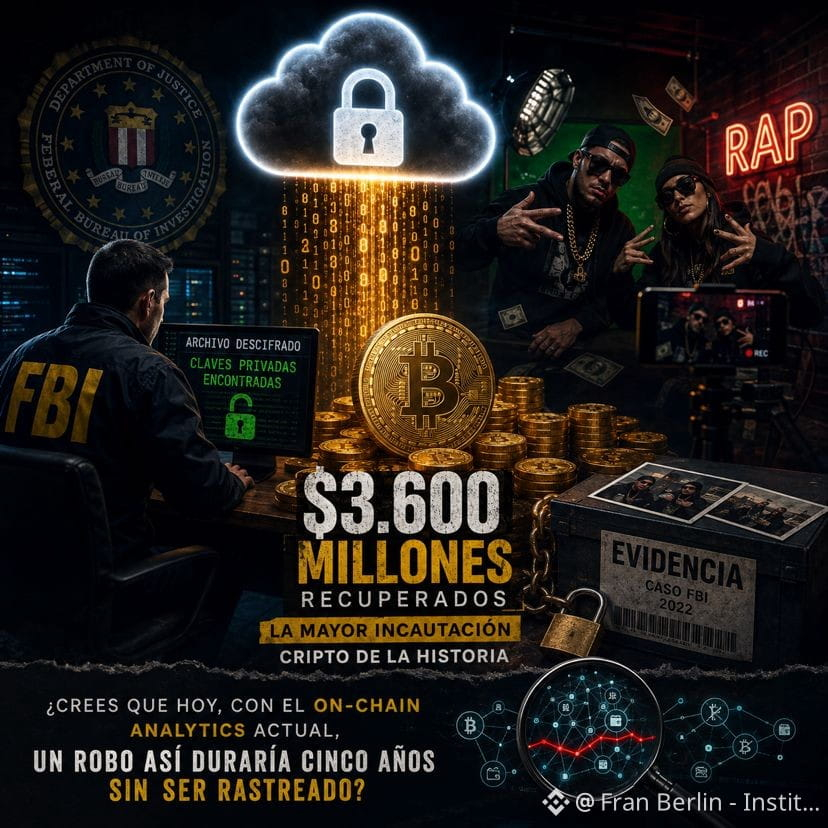
💥 850,000 BTC DISAPPEARED

Twelve years later, much of it is still missing. And nobody knows who has the keys. 👀

In 2014, a man cried in front of the cameras. 📷

He said he had lost 850,000 Bitcoin. $BTC

The world 🌏 believed him.

No one knew that the heist had been happening for three years without him noticing.

Mark Karpelès was a 28-year-old French programmer living in Tokyo. 🇯🇵

Introverted. Brilliant with code. Terrible with people.

He had bought Mt. Gox in 2011 for six months of income — nearly nothing.

Three years later, that exchange processed 70% of all Bitcoin transactions on the planet.

He was the most powerful player in crypto without anyone having elected him.

On February 24, 2014, the Mt. Gox site went blank.

No warning. No explanation.

Hours later, an internal document leaked online.

What it said froze the blood of 24,000 users:

850,000 BTC had vanished.

750,000 belonged to real customers. People like you.

What no one told in the news:

The hackers didn’t break in in 2014.

Subsequent investigations revealed they had been stealing Bitcoin since 2011 — quietly, gradually, invisibly.

Three years looting the vault while the exchange remained open, operating, raking in fees.

Mark was arrested in 2015.

Acquitted of fraud. Convicted of falsifying records.

The 850,000 BTC: never fully recovered.

Only 200,000 surfaced — stored in an old wallet that no one remembered.

The rest remains somewhere in the blockchain.⛓️

Still. Unmoving. Waiting.

Today those Bitcoins are worth over 80 billion dollars.

And nobody knows if the thief has them.

If he lost them.

Or if he’s waiting for the exact moment to move them.

What would you do if you had access to a wallet with billions… and moving it meant the entire world would know instantly?

Fran Berlín | Blockchain Institute
#MtGox #bitcoin #CryptoHistory #FranBerlin #InstitutoBlockchain
Is the market scaring you today? The institutions are rubbing their hands together. Friday, May 29. Bitcoin opens at $73,381 and Ethereum dips below $2,000. The lowest prices of the week. Retail is panicking. Headlines scream "crash." Meanwhile, quietly, VanEck has just launched the first spot BNB ETF on Nasdaq in the U.S. The institutional infrastructure keeps being built, dip or no dip. And what’s the catalyst that no one is watching? A 60-day U.S.-Iran truce agreement is on Trump's desk waiting for a signature. If the Strait of Hormuz reopens, risk appetite returns in a matter of hours. Crypto is always the first to react. Bitcoin's all-time high was $126,198 in October 2025. Today it’s trading 42% below that level. That’s not a wreck. For many funds, that’s a buy-in. Retail sees the price. Institutions see the moment. The question isn’t if it goes up. The question is: are you going to be in when it happens? What are you doing with this correction: buying, waiting, or getting out? 👇$BTC $ETH #bitcoin #Ethereum #FranBerlin #crypto #InstitutoBlockchain $USDC {spot}(BTCUSDT)
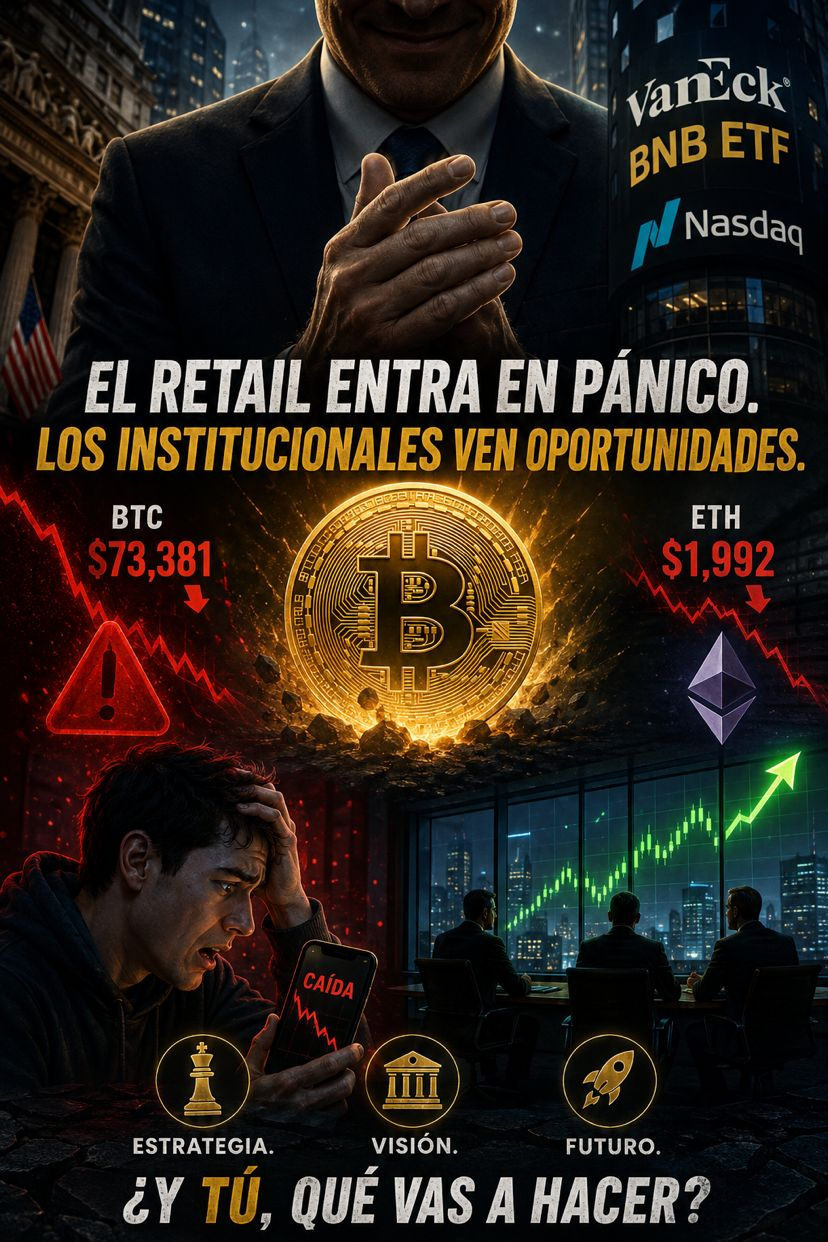
Is the market scaring you today? The institutions are rubbing their hands together.

Friday, May 29. Bitcoin opens at $73,381 and Ethereum dips below $2,000. The lowest prices of the week. Retail is panicking. Headlines scream "crash."

Meanwhile, quietly, VanEck has just launched the first spot BNB ETF on Nasdaq in the U.S. The institutional infrastructure keeps being built, dip or no dip.

And what’s the catalyst that no one is watching? A 60-day U.S.-Iran truce agreement is on Trump's desk waiting for a signature. If the Strait of Hormuz reopens, risk appetite returns in a matter of hours. Crypto is always the first to react.

Bitcoin's all-time high was $126,198 in October 2025. Today it’s trading 42% below that level. That’s not a wreck. For many funds, that’s a buy-in.

Retail sees the price. Institutions see the moment.

The question isn’t if it goes up. The question is: are you going to be in when it happens?

What are you doing with this correction: buying, waiting, or getting out? 👇$BTC $ETH

#bitcoin #Ethereum #FranBerlin #crypto #InstitutoBlockchain
$USDC
🔍 Let me be straight with you. This week was brutal for the market. Bitcoin at $59,100. $ETH below $1,600. $ADA hitting 5-year lows. $SOL touching the floor of 2026. Over 350,000 traders liquidated in 24 hours. The media calls it a crisis. Some call it the end of the cycle. I call it: the price of education that many didn't want to buy during the good months. There's a pattern that repeats in every crypto market correction, and it's almost poetic in its precision: — When BTC brushed against $84,000 in May, everyone wanted to buy. — When it hit $59,000 this week, everyone wanted to short. The Fear & Greed Index dropped to 11. Extreme fear. And here’s the uncomfortable fact: historically, readings below 15 on that index have marked some of the best long-term entry points of the cycle. I’m not saying the bottom is already in. Nobody knows. What I do know, from my perspective as a lawyer specialized in digital assets, is this: People who study the market in times of fear are the ones making smart decisions when euphoria returns. This week was expensive for those trading with leverage. It was free for those watching and learning. Which of the two groups are you in? #bitcoin #crypto #EducaciónFinanciera #InstitutoBlockchain #FranBerlin {spot}(ADAUSDT) {spot}(SOLUSDT) {spot}(ETHUSDT)
🔍 Let me be straight with you.

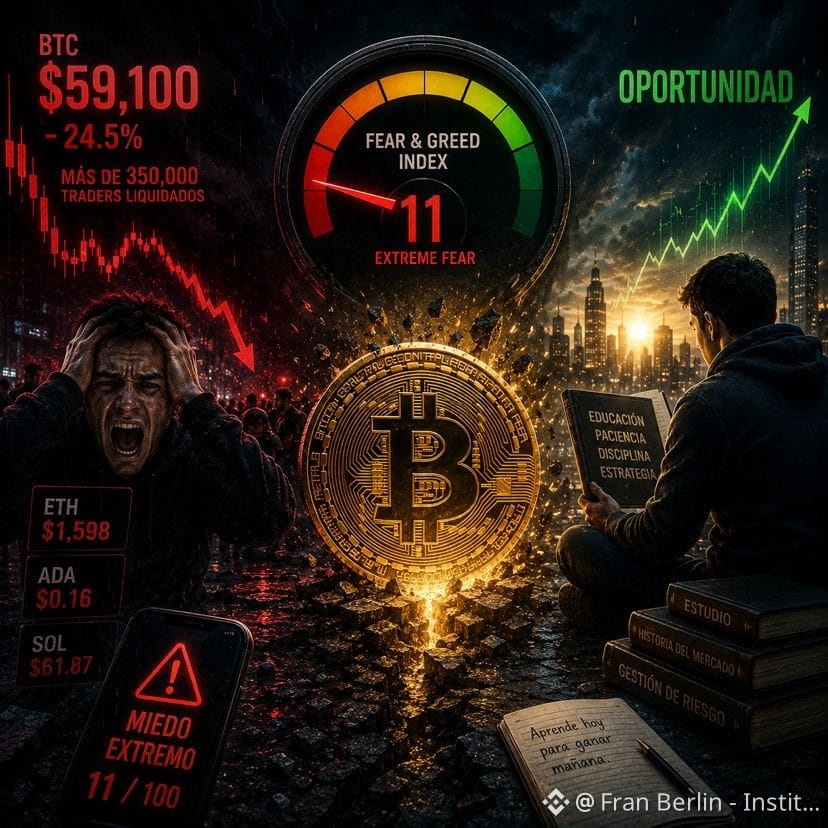
This week was brutal for the market. Bitcoin at $59,100. $ETH below $1,600. $ADA hitting 5-year lows. $SOL touching the floor of 2026. Over 350,000 traders liquidated in 24 hours.

The media calls it a crisis. Some call it the end of the cycle.

I call it: the price of education that many didn't want to buy during the good months.

There's a pattern that repeats in every crypto market correction, and it's almost poetic in its precision:

— When BTC brushed against $84,000 in May, everyone wanted to buy.
— When it hit $59,000 this week, everyone wanted to short.

The Fear & Greed Index dropped to 11. Extreme fear.

And here’s the uncomfortable fact: historically, readings below 15 on that index have marked some of the best long-term entry points of the cycle.

I’m not saying the bottom is already in. Nobody knows.

What I do know, from my perspective as a lawyer specialized in digital assets, is this:

People who study the market in times of fear are the ones making smart decisions when euphoria returns.

This week was expensive for those trading with leverage.

It was free for those watching and learning.

Which of the two groups are you in?

#bitcoin #crypto #EducaciónFinanciera #InstitutoBlockchain #FranBerlin

Log in to explore more content
Join global crypto users on Binance Square
⚡️ Get latest and useful information about crypto.
💬 Trusted by the world’s largest crypto exchange.
👍 Discover real insights from verified creators.
Email / Phone number