
#blockchaineconomy
blockchaineconomy
389,992 views
2,015 Discussing
Hot
Latest


Article
🌍 The Future of Cryptocurrency: Is the World Moving Toward a Digital Economy?The world is changing rapidly. As technology advances, our economic systems are also taking on new forms. One of the most important parts of this change is Cryptocurrency and Blockchain Technology.
Bitcoin is not just a digital currency; it has ushered in a new financial concept in which people can transact money digitally without a central intermediary.
🌍 The Future of Cryptocurrency: Is the World Moving Toward a Digital Economy?
The world is changing rapidly. As technology advances, our economic systems are also taking on new forms. One of the most important parts of this change is Cryptocurrency and Blockchain Technology.
Bitcoin is not just a digital currency; it has ushered in a new financial concept in which people can transact money digitally without a central intermediary.
Bitcoin is not just a digital currency; it has ushered in a new financial concept in which people can transact money digitally without a central intermediary.
44

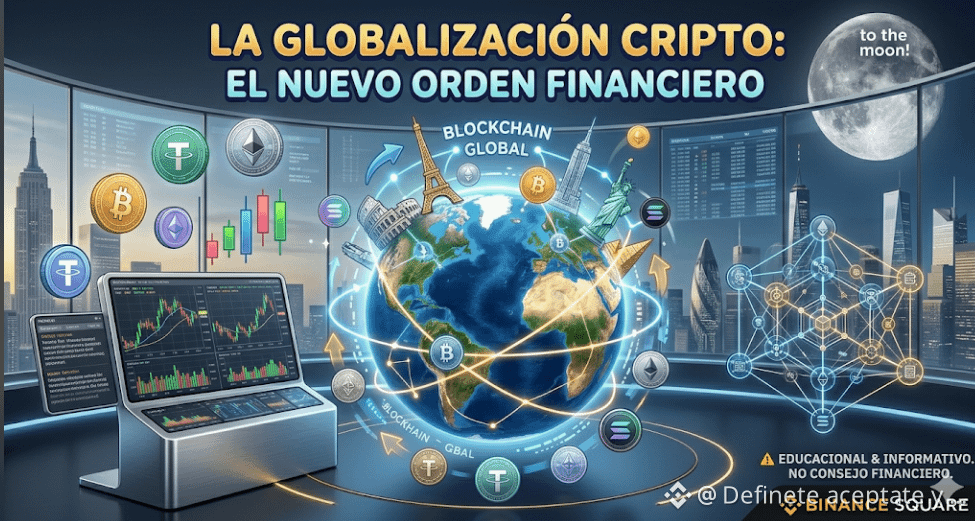
🌍 📊 Crypto Globalization: The New Financial Order 📈
The globalization of cryptocurrencies is reshaping the international economic landscape without relying on traditional borders. Through the infrastructure of blockchain technology 🧱, users find alternative systems for instant remittances and value storage in high inflation environments. This technological transition is gradually solidifying as a tool for global connectivity.
In this environment, stablecoins 💵 are gaining traction against the inherent volatility of other digital assets. By maintaining parity with fiat currencies, they facilitate daily commercial exchanges and the efficient settlement of cross-border services. Meanwhile, advanced regulatory frameworks aim to establish uniform guidelines to balance security with technological development 🤖.
Decentralization is redefining the flows of contemporary trade and access to digital liquidity. Adoption at both corporate and individual levels drives the need to understand these network environments, where operational data and asset control are managed directly within the ecosystem 🎮.
🔍 Analysis Variables
Volatility metrics: The digital market is characterized by constant price fluctuations that require rigorous statistical monitoring.
Asset correlation: Analysts often evaluate the flow distribution between stable tokens and volatile crypto assets to understand market trends.
⚠️ Informative Notice: This content is published exclusively for educational purposes. It does not constitute encouragement, an offer, or a suggestion to acquire any asset. Each analysis and operational decision is at the reader's own risk.
#CryptoGlobalFuture #BinanceSquare #Stablecoins #blockchaineconomy in #Finance
355

·
--
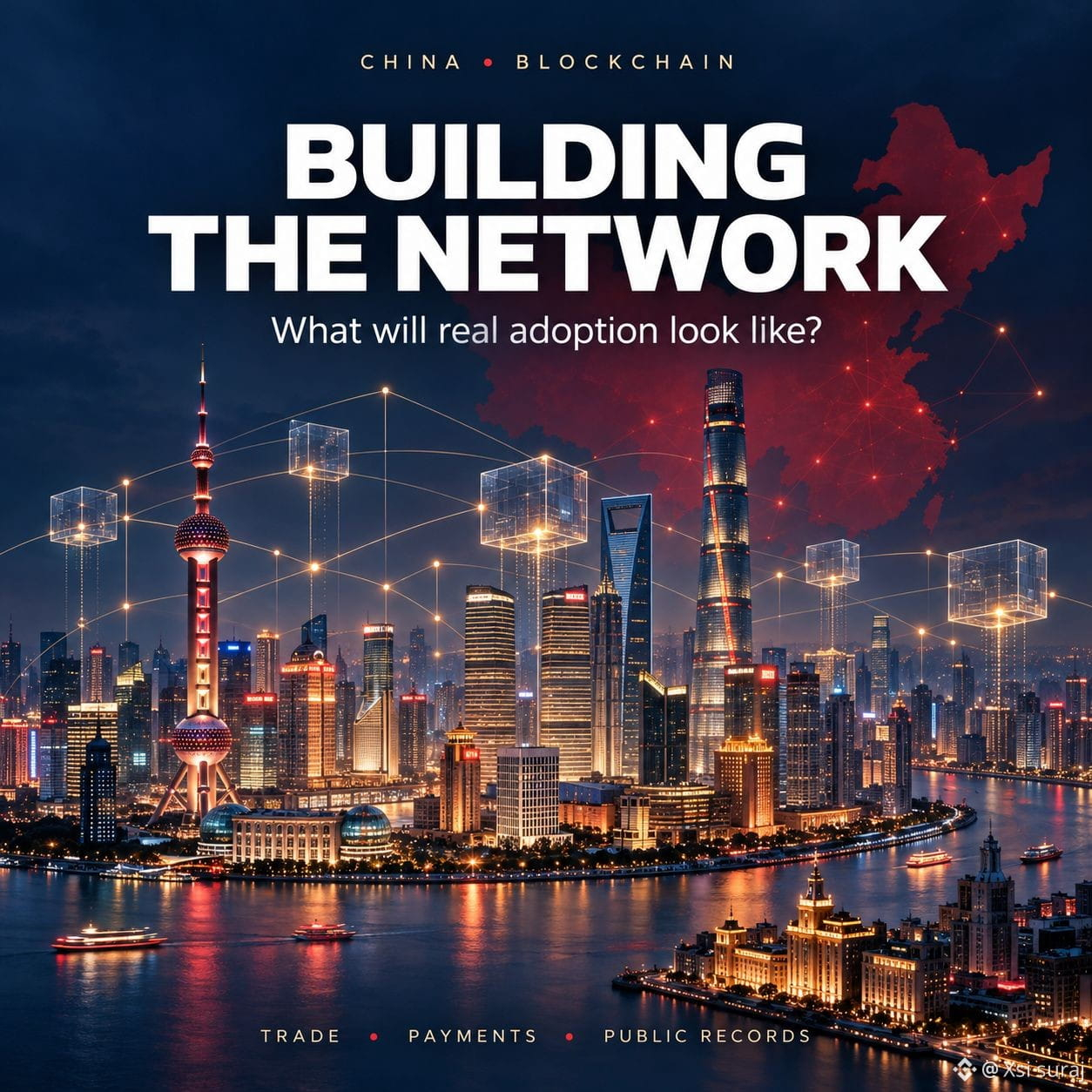
🇨🇳 China’s national blockchain push raises a bigger question: what does real adoption look like?
China’s leadership has called for a nationwide blockchain network as part of its economic development plans.
My takeaway: watch what actually gets built, who uses it, and which problems it solves.
A blockchain infrastructure announcement alone doesn’t tell us which publicly traded tokens—if any—will benefit.
Where could this technology make the biggest difference: trade, payments, or public records? 👇
#blockchaineconomy #China #DigitalEconomy #CryptoNews
31

🚀 Tokenized stock trading volume surged to $3 billion in a single week.
Robinhood Chain, BNB Chain, and Solana now dominate blockchain-based equity trading.
📈 Only 5% of $3 billion in tokenized equities is used in onchain financial apps.
🌐 $ETH and other blockchain networks expand access to tokenized stock markets.
#TokenBurning
#BNB_Market_Update
#blockchaineconomy
Robinhood Chain, BNB Chain, and Solana now dominate blockchain-based equity trading.
📈 Only 5% of $3 billion in tokenized equities is used in onchain financial apps.
🌐 $ETH and other blockchain networks expand access to tokenized stock markets.
#TokenBurning
#BNB_Market_Update
#blockchaineconomy
51


Article
AI + Crypto Projects & Blockchain SupportArtificial intelligence is becoming one of the strongest sectors inside the crypto industry because blockchain adds transparency, automation, and decentralized control to AI systems. Projects like Render Network support decentralized GPU power for AI processing, while Fetch.ai builds autonomous AI agents that can perform blockchain transactions automatically. Bittensor focuses on decentralized machine learning where developers are rewarded for contributing AI models to the network.
Ocean Protocol helps users securely share and monetize data for AI training, creating a decentralized data economy. Near Protocol is building infrastructure optimized for AI-powered applications and smart agents. Internet Computer is also exploring on-chain AI hosting to reduce dependence on centralized cloud systems.
Ethereum remains the leading blockchain for AI-integrated decentralized applications because of its strong developer ecosystem. Solana is growing rapidly due to high transaction speed and low costs, making it attractive for AI agents and tokenized systems. Akash Network is becoming important for decentralized cloud computing that supports AI workloads.
The biggest advantage of AI + blockchain is trustless automation, where systems can work without relying on one central company. Experts believe AI-powered crypto ecosystems could become one of the largest long-term growth sectors in Web3 and digital finance.
#Aİ #blockchaineconomy #BinanceSquareTalks #educational_post
$BTC
{spot}(BTCUSDT)
$TAO
{spot}(TAOUSDT)
AI + Crypto Projects & Blockchain Support
Artificial intelligence is becoming one of the strongest sectors inside the crypto industry because blockchain adds transparency, automation, and decentralized control to AI systems. Projects like Render Network support decentralized GPU power for AI processing, while Fetch.ai builds autonomous AI agents that can perform blockchain transactions automatically. Bittensor focuses on decentralized machine learning where developers are rewarded for contributing AI models to the network.
Ocean Protocol helps users securely share and monetize data for AI training, creating a decentralized data economy. Near Protocol is building infrastructure optimized for AI-powered applications and smart agents. Internet Computer is also exploring on-chain AI hosting to reduce dependence on centralized cloud systems.
Ethereum remains the leading blockchain for AI-integrated decentralized applications because of its strong developer ecosystem. Solana is growing rapidly due to high transaction speed and low costs, making it attractive for AI agents and tokenized systems. Akash Network is becoming important for decentralized cloud computing that supports AI workloads.
The biggest advantage of AI + blockchain is trustless automation, where systems can work without relying on one central company. Experts believe AI-powered crypto ecosystems could become one of the largest long-term growth sectors in Web3 and digital finance.
#Aİ #blockchaineconomy #BinanceSquareTalks #educational_post
$BTC
$TAO
2
269


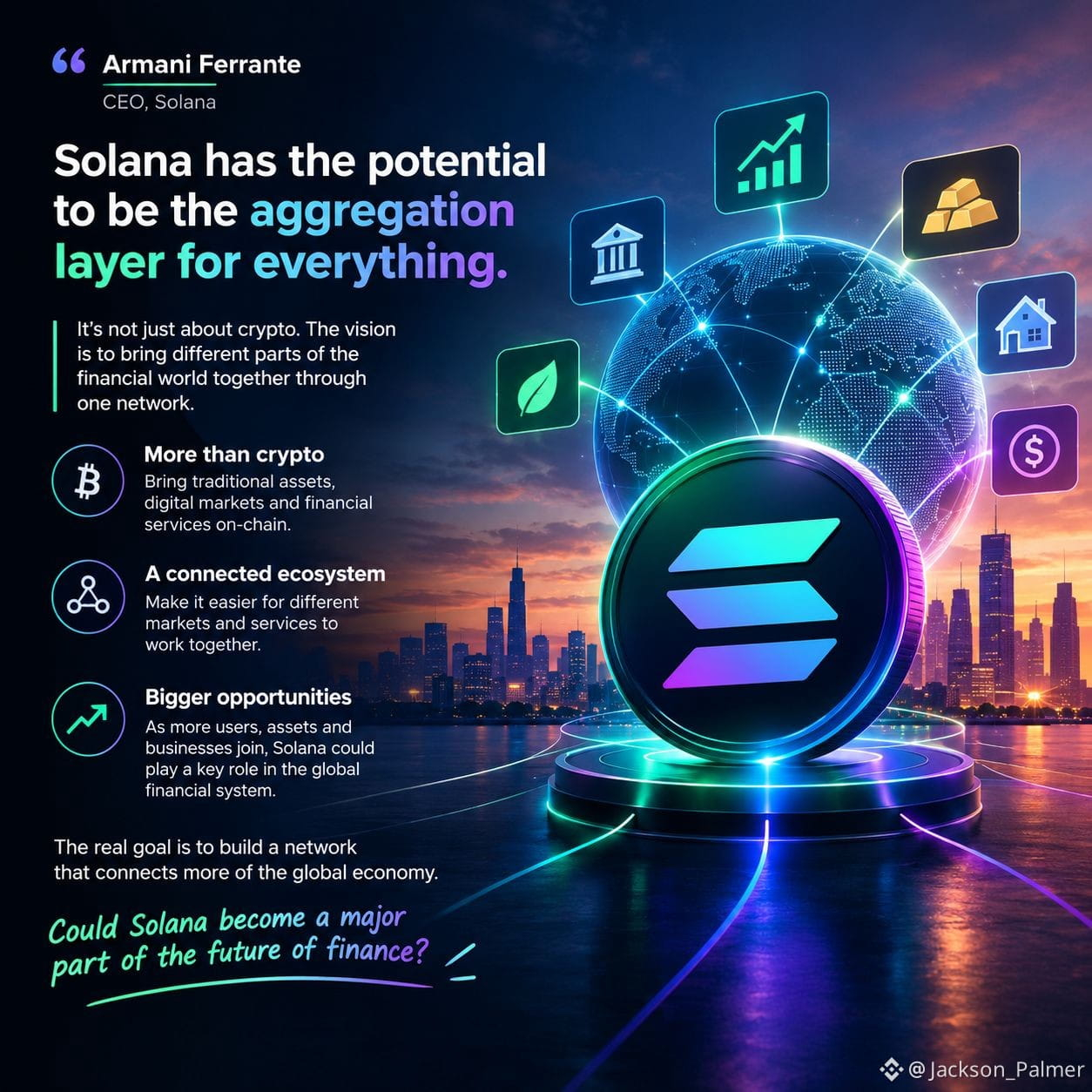
Solana could be aiming for something much bigger than crypto. 🚀
Armani Ferrante believes Solana has the potential to bring different parts of the financial world together through one network.
The vision goes beyond digital currencies. It is about bringing more financial assets and markets on-chain and making it easier for them to work together.
Think about how much could change if more of the financial world became connected through blockchain technology.
As adoption grows, Solana could have a bigger role in how people access digital assets and financial services.
Of course, there is still a long way to go before this vision becomes reality. But it shows that Solana's ambitions extend far beyond fast transactions and low fees.
The real opportunity is to build a network that connects more of the global economy.
Do you think Solana can become a major part of the future of finance? 👀
$SOL
{spot}(SOLUSDT)
$ETH
{spot}(ETHUSDT)
$BTC
{spot}(BTCUSDT)
#SOL #Crypto #DeFi #blockchaineconomy
#LedgerConfirmsUnauthorizedHardwareIm
Solana could be aiming for something much bigger than crypto. 🚀
Armani Ferrante believes Solana has the potential to bring different parts of the financial world together through one network.
The vision goes beyond digital currencies. It is about bringing more financial assets and markets on-chain and making it easier for them to work together.
Think about how much could change if more of the financial world became connected through blockchain technology.
As adoption grows, Solana could have a bigger role in how people access digital assets and financial services.
Of course, there is still a long way to go before this vision becomes reality. But it shows that Solana's ambitions extend far beyond fast transactions and low fees.
The real opportunity is to build a network that connects more of the global economy.
Do you think Solana can become a major part of the future of finance? 👀
$SOL
$ETH
$BTC
#SOL #Crypto #DeFi #blockchaineconomy
#LedgerConfirmsUnauthorizedHardwareIm
1
158

·
--
I built my own blockchain from scratch. 🧵👇
This is VAULTISPhase 1: the engine.
Chained blocks with SHA-256, each mined with Proof of Work. If someone alters even a single block, the entire chain detects it instantly.
The same integrity logic that Bitcoin uses.
3/6
Phase 2: real digital signatures.
Each transaction is signed with ECDSA over the secp256k1 curve — the same cryptographic standard as Bitcoin.
If someone tries to alter a transaction after it’s been signed, the signature automatically breaks. Tested and confirmed.
4/6
Phase 3: distributed network.
Multiple nodes running in parallel, communicating with each other. When a node has a longer and valid chain, the others automatically sync.
I built my own blockchain from scratch. 🧵👇 This is VAULTIS
Phase 1: the engine.
Chained blocks with SHA-256, each mined with Proof of Work. If someone alters even a single block, the entire chain detects it instantly.
The same integrity logic that Bitcoin uses.
3/6
Phase 2: real digital signatures.
Each transaction is signed with ECDSA over the secp256k1 curve — the same cryptographic standard as Bitcoin.
If someone tries to alter a transaction after it’s been signed, the signature automatically breaks. Tested and confirmed.
4/6
Phase 3: distributed network.
Multiple nodes running in parallel, communicating with each other. When a node has a longer and valid chain, the others automatically sync.
146

🌐 WHAT WILL CHANGE THE FUTURE OF CRYPTO?
🔗 Blockchain adoption
🤖 AI + Crypto
💸 Real-world asset tokenization
🌍 Decentralized finance
Which one has the biggest potential in your opinion?
#Web3 #DeFi #blockchaineconomy
🌐 WHAT WILL CHANGE THE FUTURE OF CRYPTO?
🔗 Blockchain adoption
🤖 AI + Crypto
💸 Real-world asset tokenization
🌍 Decentralized finance
Which one has the biggest potential in your opinion?
#Web3 #DeFi #blockchaineconomy
🔗 Blockchain adoption
🤖 AI + Crypto
💸 Real-world asset tokenization
🌍 Decentralized finance
Which one has the biggest potential in your opinion?
#Web3 #DeFi #blockchaineconomy
1
42
Verified
Institutional crypto custody continues to evolve. 🔐
Google will introduce a custody solution based on multiparty computation to protect digital and tokenized assets.
#SeguridadCripto #Web3 #blockchaineconomy
Institutional crypto custody continues to evolve. 🔐
Google will introduce a custody solution based on multiparty computation to protect digital and tokenized assets.
#SeguridadCripto #Web3 #blockchaineconomy
Google will introduce a custody solution based on multiparty computation to protect digital and tokenized assets.
#SeguridadCripto #Web3 #blockchaineconomy
119

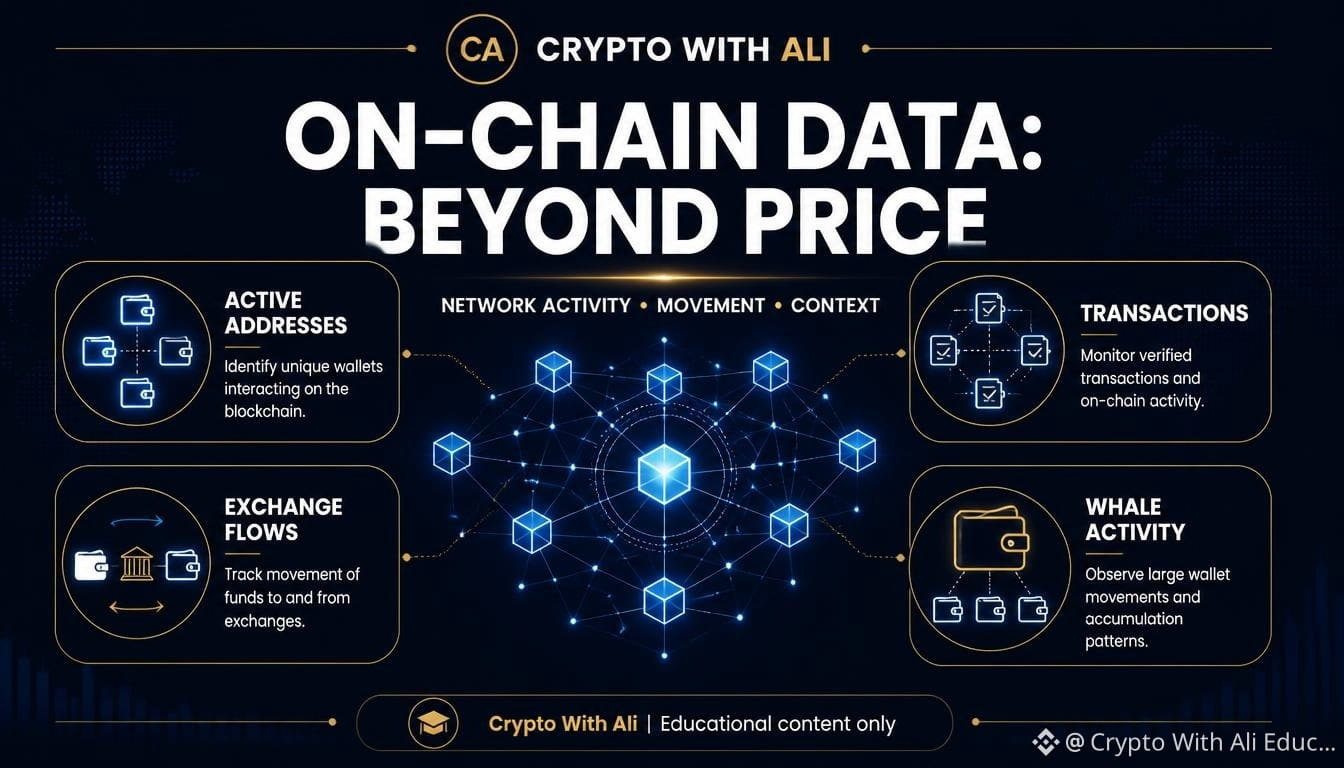
On-Chain What Blockchain Activity Can Tell Us Beyond Price
Price charts show how the market is moving. On-chain data can help us investigate what is happening on the blockchain itself.
Instead of looking at price alone, analysts can study network activity, transaction behavior, & the movement of digital assets.
🔹 1. Active Addresses
Active addresses are addresses that participate in transactions during a selected period. Changes may offer clues about network participation, but one person can control multiple addresses, & activity does not always represent new users.
🔹 2. Transaction Activity
Transaction counts & volumes can help describe how a network is being used. However, automated activity, internal transfers, and differences between networks can affect interpretation.
🔹 3. Exchange Flows
Deposits to & withdrawals from exchanges may help analysts understand how assets are moving between platforms & other wallets. These movements do not automatically reveal whether someone intends to buy or sell.
🔹 4. Whale Activity
Large transfers can attract attention because they involve substantial amounts of crypto. But a large transaction might be an exchange transfer, custody movement, or internal wallet reorganization—not necessarily a market signal.
How should you use on-chain data?
✅ Compare changes over time rather than relying on one reading.
✅ Check the metric's definition & data source.
✅ Compare activity with price, volume, liquidity, & broader market conditions.
✅ Remember that blockchain transparency does not reveal every wallet owner's identity or intention.
Key takeaway: On-chain data adds another layer of context to market analysis. It is most useful when combined with other evidence—not treated as a prediction tool.
💬 Question: Which on-chain metric do you find most interesting:
active addresses, transactions, exchange flows, or whale activity?
Follow Crypto With Ali for clear, practical crypto education.
Educational content only. Not financial advice.
#onchaindata #blockchaineconomy #cryptoeducation
70

·
--
What Gives Bitcoin Its Value? Who Decides What a Cryptocurrency Is Worth? 🪙🤔🪙 Who decides that a cryptocurrency is worth $1,000 instead of just $1? 🤔
Have you ever asked yourself why Bitcoin is worth thousands of dollars? Who decided its price? And why can you buy millions of units of some cryptocurrencies for just a few dollars?
The answer is more interesting than you might think. 👇
💡 Price and value are not the same thing.
Let’s make it simple.
Imagine a cryptocurrency with a limited supply. More people want to buy it than sell it. What happens? Its price may rise because demand exceeds the available supply.
But what if people lose confidence in it and everyone starts selling?
The price can collapse just as quickly.
So, a cryptocurrency isn't necessarily valuable just because its price is rising or because its project claims to be revolutionary.
📌 What actually gives a cryptocurrency value?
🔹 Supply and demand: How many coins exist, and how many people want to buy them.
🔹 Trust: Are people willing to hold it, use it, and accept it?
🔹 Real-world utility: Does it solve a genuine problem, or are people buying it simply because they hope to sell it at a higher price?
🔹 Speculation: Sometimes, prices rise because of hype, expectations, and social media attention, even when the project's fundamentals haven't improved.
⚠️ Here's the important part: A high price doesn't automatically mean an asset is worth that much.
And when you hear that a cryptocurrency has a market capitalization of billions of dollars, it doesn't mean that billions of dollars have actually been invested in it. Market capitalization is generally calculated by multiplying the current price by the circulating supply.
🎯 The takeaway:
In crypto, asking “How much is this coin worth?” isn't enough.
The better question is:
“Why is it worth this price, and are there real reasons to justify it?”
Because the difference between understanding the market and simply following the crowd can begin with one question most people never stop to ask.
💬 What do you think gives Bitcoin its value: scarcity, trust, utility, or speculation?
#Bitcoin #cryptouniverseofficial ypto #Binance #blockchaineconomy ckchain #cryptouniverseofficial currency #Investing
What Gives Bitcoin Its Value? Who Decides What a Cryptocurrency Is Worth? 🪙🤔
🪙 Who decides that a cryptocurrency is worth $1,000 instead of just $1? 🤔
Have you ever asked yourself why Bitcoin is worth thousands of dollars? Who decided its price? And why can you buy millions of units of some cryptocurrencies for just a few dollars?
The answer is more interesting than you might think. 👇
💡 Price and value are not the same thing.
Let’s make it simple.
Imagine a cryptocurrency with a limited supply. More people want to buy it than sell it. What happens? Its price may rise because demand exceeds the available supply.
But what if people lose confidence in it and everyone starts selling?
The price can collapse just as quickly.
So, a cryptocurrency isn't necessarily valuable just because its price is rising or because its project claims to be revolutionary.
📌 What actually gives a cryptocurrency value?
🔹 Supply and demand: How many coins exist, and how many people want to buy them.
🔹 Trust: Are people willing to hold it, use it, and accept it?
🔹 Real-world utility: Does it solve a genuine problem, or are people buying it simply because they hope to sell it at a higher price?
🔹 Speculation: Sometimes, prices rise because of hype, expectations, and social media attention, even when the project's fundamentals haven't improved.
⚠️ Here's the important part: A high price doesn't automatically mean an asset is worth that much.
And when you hear that a cryptocurrency has a market capitalization of billions of dollars, it doesn't mean that billions of dollars have actually been invested in it. Market capitalization is generally calculated by multiplying the current price by the circulating supply.
🎯 The takeaway:
In crypto, asking “How much is this coin worth?” isn't enough.
The better question is:
“Why is it worth this price, and are there real reasons to justify it?”
Because the difference between understanding the market and simply following the crowd can begin with one question most people never stop to ask.
💬 What do you think gives Bitcoin its value: scarcity, trust, utility, or speculation?
#Bitcoin #cryptouniverseofficial ypto #Binance #blockchaineconomy ckchain #cryptouniverseofficial currency #Investing
101

·
--
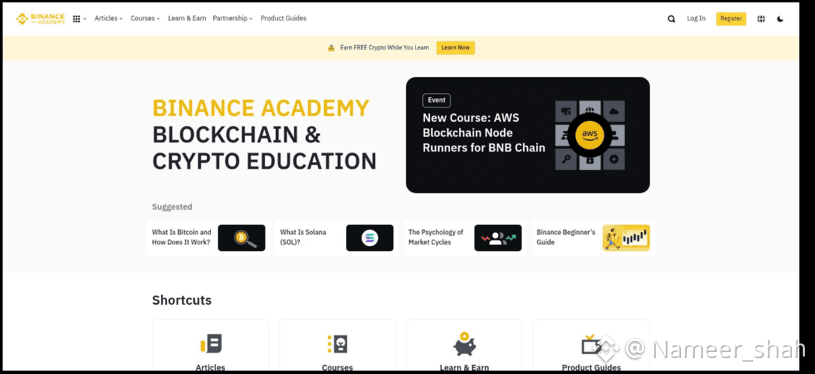
Binance Academy publishes educational material about Bitcoin, blockchain, trading concepts, and cryptocurrency security.
#EarningsSeason #blockchaineconomy #BinanceSquareTalks
Binance Academy publishes educational material about Bitcoin, blockchain, trading concepts, and cryptocurrency security.
#EarningsSeason #blockchaineconomy #BinanceSquareTalks
#EarningsSeason #blockchaineconomy #BinanceSquareTalks
32

·
--
📚 Learn Before You Leap
Crypto offers many ways to participate, but understanding the basics can help you navigate the market more confidently.
Start with the essentials:
• What makes Bitcoin and blockchain different
• How to secure your wallet and account
• The difference between market orders and limit orders
• Why volatility can be higher in crypto
• How to avoid scams and unrealistic profit promises
There is no shortcut to good habits. Take your time, verify information, and only use funds you can afford to risk.
$BTC
{spot}(BTCUSDT)
#blockchaineconomy #CryptoSafety #Bitcoin❗ #BinanceSquare
📚 Learn Before You Leap
Crypto offers many ways to participate, but understanding the basics can help you navigate the market more confidently.
Start with the essentials:
• What makes Bitcoin and blockchain different
• How to secure your wallet and account
• The difference between market orders and limit orders
• Why volatility can be higher in crypto
• How to avoid scams and unrealistic profit promises
There is no shortcut to good habits. Take your time, verify information, and only use funds you can afford to risk.
$BTC
#blockchaineconomy #CryptoSafety #Bitcoin❗ #BinanceSquare
93

·
--

Article
🌐
THE ALCHEMY OF INFRASTRUCTUREINSTITUTIONAL CONVERGENCE AND DERIVATIVES PURGE.
The digital asset ecosystem is evolving through a lens of operational asymmetries. As the foundations of traditional banking blend with decentralized settlement architectures operating at a planetary scale, the derivatives market is undergoing a rigorous process of speculative purging. Technological convergence and the contraction of leverage are not isolated events, but complementary phases in the maturation of institutional capital.
🌐 THE ALCHEMY OF INFRASTRUCTURE
INSTITUTIONAL CONVERGENCE AND DERIVATIVES PURGE.
The digital asset ecosystem is evolving through a lens of operational asymmetries. As the foundations of traditional banking blend with decentralized settlement architectures operating at a planetary scale, the derivatives market is undergoing a rigorous process of speculative purging. Technological convergence and the contraction of leverage are not isolated events, but complementary phases in the maturation of institutional capital.
The digital asset ecosystem is evolving through a lens of operational asymmetries. As the foundations of traditional banking blend with decentralized settlement architectures operating at a planetary scale, the derivatives market is undergoing a rigorous process of speculative purging. Technological convergence and the contraction of leverage are not isolated events, but complementary phases in the maturation of institutional capital.
1
329

Why Real-World Asset (RWA) Projects Are Getting So Much Attention in 2026 🏦🚀Why Real-World Asset (RWA) Projects Are Getting So Much Attention in 2026 🏦🚀
Real-World Assets (RWAs) have become one of the most talked-about sectors in crypto. Instead of focusing only on digital-native assets, RWA projects aim to connect blockchain technology with traditional assets and financial systems.
Many investors are watching this sector because it highlights how blockchain could be used beyond cryptocurrency trading.
Why RWAs are attracting attention
✅ Growing interest from institutions
✅ Real-world use cases
✅ Expanding blockchain adoption
✅ Increased discussion across the crypto industry
Projects in this sector are frequently mentioned by traders looking for long-term trends rather than short-term excitement.
Of course, every investment carries risk, and not every project will succeed. That's why research and diversification remain essential.
The biggest opportunities often come from understanding new trends before they become widely adopted.
💬 Do you think RWA projects will become one of crypto's biggest sectors over the next few years?
#crypto #RWA赛道 #blockchaineconomy #BİNANCESQUARE
$BTC $ETH $ONDO $BNB
{future}(BNBUSDT)
$RWA
{alpha}(560x9c8b5ca345247396bdfac0395638ca9045c6586e)
Why Real-World Asset (RWA) Projects Are Getting So Much Attention in 2026 🏦🚀
Why Real-World Asset (RWA) Projects Are Getting So Much Attention in 2026 🏦🚀
Real-World Assets (RWAs) have become one of the most talked-about sectors in crypto. Instead of focusing only on digital-native assets, RWA projects aim to connect blockchain technology with traditional assets and financial systems.
Many investors are watching this sector because it highlights how blockchain could be used beyond cryptocurrency trading.
Why RWAs are attracting attention
✅ Growing interest from institutions
✅ Real-world use cases
✅ Expanding blockchain adoption
✅ Increased discussion across the crypto industry
Projects in this sector are frequently mentioned by traders looking for long-term trends rather than short-term excitement.
Of course, every investment carries risk, and not every project will succeed. That's why research and diversification remain essential.
The biggest opportunities often come from understanding new trends before they become widely adopted.
💬 Do you think RWA projects will become one of crypto's biggest sectors over the next few years?
#crypto #RWA赛道 #blockchaineconomy #BİNANCESQUARE
$BTC $ETH $ONDO $BNB
$RWA
172

🔥 BREAKING: SEC Opens the Door to Tokenized Stocks 🚀
The U.S. SEC has introduced a temporary “Innovation Exemption” for certain platforms to trade tokenized U.S. stocks under specific conditions. The framework will last 5 years. 🏦⛓️
💡 Why It Matters
Tokenized stocks represent traditional securities on blockchain networks. Eligible tokens must provide rights linked to the underlying shares, including voting and dividends. Synthetic tokens that only track stock prices are excluded. 📊
The move could support faster settlement, greater transparency and wider access to on-chain financial markets. However, it does not mean every stock will immediately become available for 24/7 blockchain trading.
📈 Market Reaction
Securitize shares reportedly jumped around 22% on September 17 following the announcement.
🌐 What’s Next?
The SEC’s move gives tokenization companies a new regulatory testing ground. The big question now is whether tokenized securities can become a mainstream part of global finance.
🚀 Blockchain-based markets just entered a new phase.
$BTC
{future}(BTCUSDT)
$BNB $ETH
#GlobalFinance
#ParadigmDisclosesZECHolding #blockchaineconomy
🔥 BREAKING: SEC Opens the Door to Tokenized Stocks 🚀
The U.S. SEC has introduced a temporary “Innovation Exemption” for certain platforms to trade tokenized U.S. stocks under specific conditions. The framework will last 5 years. 🏦⛓️
💡 Why It Matters
Tokenized stocks represent traditional securities on blockchain networks. Eligible tokens must provide rights linked to the underlying shares, including voting and dividends. Synthetic tokens that only track stock prices are excluded. 📊
The move could support faster settlement, greater transparency and wider access to on-chain financial markets. However, it does not mean every stock will immediately become available for 24/7 blockchain trading.
📈 Market Reaction
Securitize shares reportedly jumped around 22% on September 17 following the announcement.
🌐 What’s Next?
The SEC’s move gives tokenization companies a new regulatory testing ground. The big question now is whether tokenized securities can become a mainstream part of global finance.
🚀 Blockchain-based markets just entered a new phase.
$BTC
$BNB $ETH
#GlobalFinance
#ParadigmDisclosesZECHolding #blockchaineconomy

108

·
--
Bitcoin... Why is interest in it growing day by day?🟠 Bitcoin: Are we facing a new future for money?
Since Bitcoin launched in 2009, the concept of money has never been the same.
Bitcoin didn’t arrive merely as a digital currency; it introduced a different idea: the ability to own and send value over the internet without the need for a traditional financial intermediary.
🔹 Why is Bitcoin attracting so much attention?
Bitcoin... Why is interest in it growing day by day?
🟠 Bitcoin: Are we facing a new future for money?
Since Bitcoin launched in 2009, the concept of money has never been the same.
Bitcoin didn’t arrive merely as a digital currency; it introduced a different idea: the ability to own and send value over the internet without the need for a traditional financial intermediary.
🔹 Why is Bitcoin attracting so much attention?
206


Article
WHAT YOU NEED TO KNOW ABOUT BLOCKCHAIN BEFORE YOU START TRADINGThe next stage of blockchain adoption is taking shape far from trading screens. Across industries, organizations are experimenting with decentralized identity systems that give individuals greater control over how personal information is stored and shared. Rather than relying on a single company to hold sensitive data, users can maintain verifiable credentials in digital wallets and reveal only the details required for a specific interaction.
This shift addresses a growing challenge of the digital age: trust. Data breaches and identity theft have shown the limits of centralized databases. Decentralized identity frameworks offer an alternative in which credentials remain portable, secure, and resistant to tampering. A student, for example, could prove academic qualifications instantly, while a traveler might verify age or citizenship without exposing unrelated personal information.
For businesses, the benefits extend beyond security. Streamlined verification reduces administrative costs and shortens onboarding times. Financial institutions, employers, and online platforms are already exploring pilot programs that replace repetitive paperwork with cryptographic proofs. The result is a smoother experience for users and a more efficient process for organizations.
The transition will not happen overnight. Common standards, user-friendly interfaces, and thoughtful regulation remain essential for widespread adoption. Yet the momentum is clear. As blockchain technology matures, digital identity is emerging as one of its most practical and socially meaningful applications.
The future of Web3 will depend not only on new financial products or faster networks, but also on systems that empower individuals to own and manage their digital presence. In the years ahead, decentralized identity may prove to be one of the most transformative contributions of blockchain technology to everyday life.
#blockchaineconomy
WHAT YOU NEED TO KNOW ABOUT BLOCKCHAIN BEFORE YOU START TRADING
The next stage of blockchain adoption is taking shape far from trading screens. Across industries, organizations are experimenting with decentralized identity systems that give individuals greater control over how personal information is stored and shared. Rather than relying on a single company to hold sensitive data, users can maintain verifiable credentials in digital wallets and reveal only the details required for a specific interaction.
This shift addresses a growing challenge of the digital age: trust. Data breaches and identity theft have shown the limits of centralized databases. Decentralized identity frameworks offer an alternative in which credentials remain portable, secure, and resistant to tampering. A student, for example, could prove academic qualifications instantly, while a traveler might verify age or citizenship without exposing unrelated personal information.
For businesses, the benefits extend beyond security. Streamlined verification reduces administrative costs and shortens onboarding times. Financial institutions, employers, and online platforms are already exploring pilot programs that replace repetitive paperwork with cryptographic proofs. The result is a smoother experience for users and a more efficient process for organizations.
The transition will not happen overnight. Common standards, user-friendly interfaces, and thoughtful regulation remain essential for widespread adoption. Yet the momentum is clear. As blockchain technology matures, digital identity is emerging as one of its most practical and socially meaningful applications.
The future of Web3 will depend not only on new financial products or faster networks, but also on systems that empower individuals to own and manage their digital presence. In the years ahead, decentralized identity may prove to be one of the most transformative contributions of blockchain technology to everyday life.
#blockchaineconomy
1
108

·
--
$METAB 🚀 The future of finance is being built onchain.
bStocks is bringing real-world financial assets into the blockchain ecosystem, unlocking new possibilities for access, liquidity, and decentralized markets.
The next generation of finance is programmable. 🌐
#bStocks #DeFi #RWA #Crypto #blockchaineconomy
bStocks is bringing real-world financial assets into the blockchain ecosystem, unlocking new possibilities for access, liquidity, and decentralized markets.
The next generation of finance is programmable. 🌐
#bStocks #DeFi #RWA #Crypto #blockchaineconomy
91
·
--
Article
AppChains vs. Layer 2: Why Purpose-Built Networks Could Define the Next Era of Web3Blockchain has spent years chasing the same question:
How do we scale without compromising the things that make blockchain valuable?
Layer 2 networks have already changed the game by making transactions faster and cheaper while extending the capabilities of Layer 1 ecosystems.
But Web3 is no longer just about moving tokens.
AI agents, Real-World Assets (RWAs), DePIN, gaming, decentralized finance, enterprise applications, and digital identity are creating workloads with very different requirements.
And that raises a bigger question:
What if the future of blockchain is not about making one network serve everyone, but giving every major application the infrastructure it actually needs?
This is where AppChains enter the conversation.
And it is also where ENI is building its vision.
Layer 2 Solved an Important Problem
Ethereum and other major Layer 1 networks created the foundation for decentralized applications. But as adoption increased, congestion, high fees, and limited throughput became difficult challenges.
Layer 2 networks offered an elegant solution.
Instead of processing everything directly on Layer 1, transactions can be executed on a separate network and later settled or connected back to the underlying Layer 1.
The result?
Lower transaction costs
Higher throughput
Faster user experiences
Greater scalability
Continued connection to an established ecosystem
For DeFi, NFTs, gaming, and consumer applications, this has been transformative.
But there is another side to the story.
Layer 2 networks still operate within a broader shared ecosystem. As Web3 grows, applications continue to compete—directly or indirectly—for liquidity, users, infrastructure, and network resources.
So Layer 2 answers an important question:
How can we scale an existing blockchain ecosystem?
But another question is becoming increasingly important:
Does every application need to share the same infrastructure?
Enter AppChains
Think about it this way.
Imagine a city where every business uses the same building.
A bank, hospital, gaming company, airport, and manufacturing plant all have completely different requirements. Yet they are expected to operate within the same structure.
Eventually, compromises become unavoidable.
Now imagine giving each organization infrastructure designed around its specific needs while keeping all of them connected to the same wider economy.
That is the basic idea behind an AppChain.
An AppChain is a dedicated blockchain designed around a specific application, organization, or ecosystem.
Instead of forcing an application to adapt to a general-purpose network, developers can design the network around the application’s requirements.
That can mean greater control over:
Network parametersTransaction feesGovernanceExecution environmentsPerformance requirementsToken economicsApplication-specific functionality
The blockchain becomes part of the product itself.
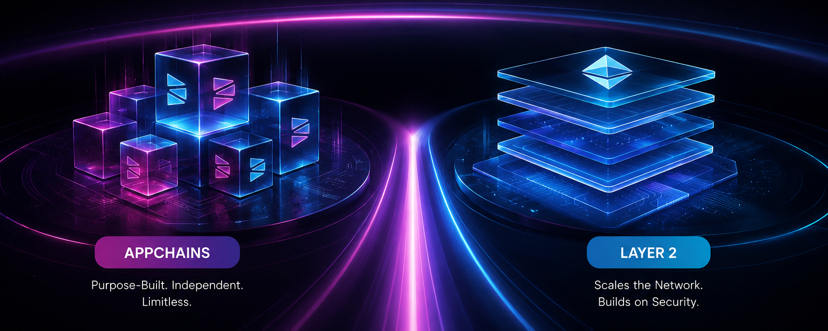
AppChains vs. Layer 2: The Real Difference
It is easy to think of AppChains and Layer 2 networks as competitors.
In reality, they often represent different approaches to infrastructure design.
Layer 2
The primary goal is to scale an existing Layer 1 ecosystem.
It is particularly useful when developers want to benefit from an established network, liquidity, security model, and community.
AppChain
The primary goal is application sovereignty.
The application gets a dedicated environment where infrastructure can be optimized around its specific workload.
That distinction matters.
Layer 2 asks:
How can we make this blockchain handle more activity?
AppChains ask:
What would this blockchain look like if it were designed specifically for this application?
That is a much broader architectural question.
Why Purpose-Built Infrastructure Matters
Not every application behaves the same way.
A DeFi protocol may require high transaction throughput.A blockchain game may prioritize extremely low latency.An AI-powered application could generate a completely different execution workload.An RWA platform may require specialized compliance and asset-management infrastructure.An enterprise financial system may prioritize predictable performance and controlled governance.
Trying to optimize one shared network for all these use cases can create trade-offs.
Purpose-built networks provide another option:
Design the infrastructure around the workload.
That could become increasingly important as blockchain moves from being primarily a financial technology into becoming infrastructure for broader digital economies.
Where ENI Fits In
This is the direction behind ENI’s modular blockchain vision.
Rather than treating every application as another participant competing for the same execution environment, ENI is designed around the idea of enabling developers, enterprises, and institutions to launch dedicated AppChains tailored to their requirements.
The important part is not simply creating another blockchain.
It is creating infrastructure that can adapt.
With ENI’s focus on modular architecture, parallel execution, EVM compatibility, and AppChain infrastructure, developers can build dedicated environments without abandoning the broader ecosystem.
For builders, that can mean more flexibility.
For enterprises, it can mean infrastructure designed around operational requirements.
For users, it can ultimately mean applications that are faster, more predictable, and better suited to their specific use cases.
The bigger idea is simple:
Blockchain infrastructure should adapt to applications, not force every application into the same mold.
From One Blockchain to an Interconnected Economy
The next phase of Web3 may not be dominated by a single chain trying to process everything.
Instead, we could see an ecosystem of specialized networks working together.
One AppChain could power gaming.
Another could focus on RWAs.
Another could support AI agents.
Another could serve enterprise finance.
Another could power DePIN infrastructure.
They may have different rules, different performance requirements, and different economic models.
But interoperability can connect them into a larger digital economy.
That is where the concept becomes particularly interesting.
Specialization does not have to mean isolation.
It can mean creating highly optimized environments that remain connected to a broader network.
The Bigger Picture
Layer 2 will continue to play an important role in blockchain scalability.
It has already proven that scaling existing ecosystems can unlock enormous opportunities.
But Web3 is entering a different stage.
The question is no longer simply:
“How many transactions can a blockchain process?”
The more important question may be:
“What kind of infrastructure does each application actually need?”
As blockchain expands into AI, RWAs, DePIN, gaming, enterprise finance, and other real-world use cases, specialization could become just as important as raw throughput.
This is the opportunity AppChains are addressing.
And ENI is betting on a future where blockchain infrastructure becomes more modular, more specialized, and more adaptable.
The future may not be one blockchain for everything.
It may be many purpose-built networks, connected together as one ecosystem.
And that shift could fundamentally change how we think about blockchain scalability.
The next era of Web3 may not be about building a bigger highway.
It may be about building the right road for every destination.
What do you think will dominate the next phase of blockchain infrastructure: Layer 2s, AppChains, or a combination of both?
Tomorrow Runs on Eli
Explore more here https://t.co/AOEcqAghMS
#blockchaineconomy #Layer2 #appchain
AppChains vs. Layer 2: Why Purpose-Built Networks Could Define the Next Era of Web3
Blockchain has spent years chasing the same question:
How do we scale without compromising the things that make blockchain valuable?
Layer 2 networks have already changed the game by making transactions faster and cheaper while extending the capabilities of Layer 1 ecosystems.
But Web3 is no longer just about moving tokens.
AI agents, Real-World Assets (RWAs), DePIN, gaming, decentralized finance, enterprise applications, and digital identity are creating workloads with very different requirements.
And that raises a bigger question:
What if the future of blockchain is not about making one network serve everyone, but giving every major application the infrastructure it actually needs?
This is where AppChains enter the conversation.
And it is also where ENI is building its vision.
Layer 2 Solved an Important Problem
Ethereum and other major Layer 1 networks created the foundation for decentralized applications. But as adoption increased, congestion, high fees, and limited throughput became difficult challenges.
Layer 2 networks offered an elegant solution.
Instead of processing everything directly on Layer 1, transactions can be executed on a separate network and later settled or connected back to the underlying Layer 1.
The result?
Lower transaction costs
Higher throughput
Faster user experiences
Greater scalability
Continued connection to an established ecosystem
For DeFi, NFTs, gaming, and consumer applications, this has been transformative.
But there is another side to the story.
Layer 2 networks still operate within a broader shared ecosystem. As Web3 grows, applications continue to compete—directly or indirectly—for liquidity, users, infrastructure, and network resources.
So Layer 2 answers an important question:
How can we scale an existing blockchain ecosystem?
But another question is becoming increasingly important:
Does every application need to share the same infrastructure?
Enter AppChains
Think about it this way.
Imagine a city where every business uses the same building.
A bank, hospital, gaming company, airport, and manufacturing plant all have completely different requirements. Yet they are expected to operate within the same structure.
Eventually, compromises become unavoidable.
Now imagine giving each organization infrastructure designed around its specific needs while keeping all of them connected to the same wider economy.
That is the basic idea behind an AppChain.
An AppChain is a dedicated blockchain designed around a specific application, organization, or ecosystem.
Instead of forcing an application to adapt to a general-purpose network, developers can design the network around the application’s requirements.
That can mean greater control over:
Network parametersTransaction feesGovernanceExecution environmentsPerformance requirementsToken economicsApplication-specific functionality
The blockchain becomes part of the product itself.
AppChains vs. Layer 2: The Real Difference
It is easy to think of AppChains and Layer 2 networks as competitors.
In reality, they often represent different approaches to infrastructure design.
Layer 2
The primary goal is to scale an existing Layer 1 ecosystem.
It is particularly useful when developers want to benefit from an established network, liquidity, security model, and community.
AppChain
The primary goal is application sovereignty.
The application gets a dedicated environment where infrastructure can be optimized around its specific workload.
That distinction matters.
Layer 2 asks:
How can we make this blockchain handle more activity?
AppChains ask:
What would this blockchain look like if it were designed specifically for this application?
That is a much broader architectural question.
Why Purpose-Built Infrastructure Matters
Not every application behaves the same way.
A DeFi protocol may require high transaction throughput.A blockchain game may prioritize extremely low latency.An AI-powered application could generate a completely different execution workload.An RWA platform may require specialized compliance and asset-management infrastructure.An enterprise financial system may prioritize predictable performance and controlled governance.
Trying to optimize one shared network for all these use cases can create trade-offs.
Purpose-built networks provide another option:
Design the infrastructure around the workload.
That could become increasingly important as blockchain moves from being primarily a financial technology into becoming infrastructure for broader digital economies.
Where ENI Fits In
This is the direction behind ENI’s modular blockchain vision.
Rather than treating every application as another participant competing for the same execution environment, ENI is designed around the idea of enabling developers, enterprises, and institutions to launch dedicated AppChains tailored to their requirements.
The important part is not simply creating another blockchain.
It is creating infrastructure that can adapt.
With ENI’s focus on modular architecture, parallel execution, EVM compatibility, and AppChain infrastructure, developers can build dedicated environments without abandoning the broader ecosystem.
For builders, that can mean more flexibility.
For enterprises, it can mean infrastructure designed around operational requirements.
For users, it can ultimately mean applications that are faster, more predictable, and better suited to their specific use cases.
The bigger idea is simple:
Blockchain infrastructure should adapt to applications, not force every application into the same mold.
From One Blockchain to an Interconnected Economy
The next phase of Web3 may not be dominated by a single chain trying to process everything.
Instead, we could see an ecosystem of specialized networks working together.
One AppChain could power gaming.
Another could focus on RWAs.
Another could support AI agents.
Another could serve enterprise finance.
Another could power DePIN infrastructure.
They may have different rules, different performance requirements, and different economic models.
But interoperability can connect them into a larger digital economy.
That is where the concept becomes particularly interesting.
Specialization does not have to mean isolation.
It can mean creating highly optimized environments that remain connected to a broader network.
The Bigger Picture
Layer 2 will continue to play an important role in blockchain scalability.
It has already proven that scaling existing ecosystems can unlock enormous opportunities.
But Web3 is entering a different stage.
The question is no longer simply:
“How many transactions can a blockchain process?”
The more important question may be:
“What kind of infrastructure does each application actually need?”
As blockchain expands into AI, RWAs, DePIN, gaming, enterprise finance, and other real-world use cases, specialization could become just as important as raw throughput.
This is the opportunity AppChains are addressing.
And ENI is betting on a future where blockchain infrastructure becomes more modular, more specialized, and more adaptable.
The future may not be one blockchain for everything.
It may be many purpose-built networks, connected together as one ecosystem.
And that shift could fundamentally change how we think about blockchain scalability.
The next era of Web3 may not be about building a bigger highway.
It may be about building the right road for every destination.
What do you think will dominate the next phase of blockchain infrastructure: Layer 2s, AppChains, or a combination of both?
Tomorrow Runs on Eli
Explore more here https://t.co/AOEcqAghMS
#blockchaineconomy #Layer2 #appchain
2
1
111
Log in to explore more content
Join global crypto users on Binance Square
⚡️ Get latest and useful information about crypto.
💬 Trusted by the world’s largest crypto exchange.
👍 Discover real insights from verified creators.
Email / Phone number
Trending Topics
1
#IsAnthropic’s$1.5TMarketCapJustified?
24,776 views
152 Discussing
2
#BTCBelow$62KAmidHikeFearsAndShiftToAnthropic
0 views
2 Discussing
3
#13FInstitutionsBitcoinSpotETPHoldingsHitRecord
1,598 views
58 Discussing
4
#BTCRemainsUnderPressureAfterHawkishFOMCMinutes
304,552 views
2,266 Discussing
5
#NvidiaBoardReportedlySplitOverHuang’sReturn
147,999 views
1,239 Discussing
6
#StrategySTRCPreferredSlips3.65%Below$100Par
10,530 views
93 Discussing
7
#MASToUpgradeSGDTestnetToSGDigitalLedger
32,762 views
340 Discussing
8
#CanGTA6'sLaunchLiftTTWOShares?
112,802 views
904 Discussing
9
#Solana2027RoadmapTargetsDoubleComputeCapacity
14,404 views
183 Discussing
10
#InjectiveTokenizedRealEstateMortgagesTop$1.5B
1,706 views
34 Discussing