
Adrien Insights
616 Posts

Adrien Insights
Report
Block User
Analizo los mercados para identificar oportunidades reales. 📊 Comparto mi perspectiva diaria, análisis técnico y estrategias de gestión de liquidez.
Occasional Trader
4.7 Years
13 Following
53 Followers
186 Liked
Posts
All
Videos
PINNED
Article
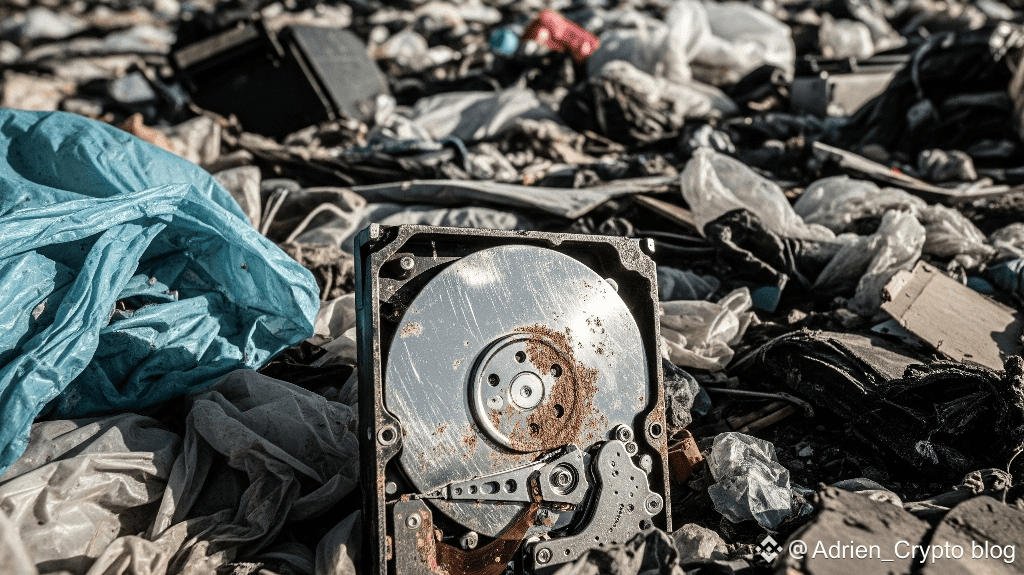
The Boy Who Threw Away Billions: The Fascinating and Tragic Story of James Howells and His BitcoinsImagine this: you have a small fortune in your pocket and, due to a mishap, you throw it in the trash. Now imagine that this "small fortune" is billions of dollars in bitcoins, and that the "mishap" was a forgotten hard drive in a landfill. That is the distressing yet surreal story of James Howells, the British computer scientist who became a modern legend for losing access to one of the largest Bitcoin fortunes in history.
In 2013, Howells, an early pioneer of cryptocurrency, had 8,000 bitcoins stored on a computer hard drive. At that time, the value of a single bitcoin was significantly lower, and for him, it was simply an interesting digital asset. However, during an office cleanup, the hard drive was accidentally discarded along with other old electronic items. A mistake that, over time, would become one of the most expensive anecdotes in history.
The Boy Who Threw Away Billions: The Fascinating and Tragic Story of James Howells and His Bitcoins
Imagine this: you have a small fortune in your pocket and, due to a mishap, you throw it in the trash. Now imagine that this "small fortune" is billions of dollars in bitcoins, and that the "mishap" was a forgotten hard drive in a landfill. That is the distressing yet surreal story of James Howells, the British computer scientist who became a modern legend for losing access to one of the largest Bitcoin fortunes in history.
In 2013, Howells, an early pioneer of cryptocurrency, had 8,000 bitcoins stored on a computer hard drive. At that time, the value of a single bitcoin was significantly lower, and for him, it was simply an interesting digital asset. However, during an office cleanup, the hard drive was accidentally discarded along with other old electronic items. A mistake that, over time, would become one of the most expensive anecdotes in history.
In 2013, Howells, an early pioneer of cryptocurrency, had 8,000 bitcoins stored on a computer hard drive. At that time, the value of a single bitcoin was significantly lower, and for him, it was simply an interesting digital asset. However, during an office cleanup, the hard drive was accidentally discarded along with other old electronic items. A mistake that, over time, would become one of the most expensive anecdotes in history.
2
521
The projection at $HYPE played out with incredible precision! 🎯 ⚡
We tracked the accumulation zone at the bottom, and buying pressure triggered a massive breakout to the upside.
Trade Structure (Long)
Bullet Entry Range: $68.50 – $71.00
Bullet Stop Loss: $64.50
Bullet Target 1: $78.00
Bullet Target 2: $85.50
Bullet Target 3: $94.00+
Liquidity at the support level acted like a spring. Buying volume came in aggressively to defend the price, driving the quote through all our targets with an unstoppable green candle on the chart.
The data confirms the setup's strength: this analysis delivered an excellent return with smart risk management, capturing the entire rally from the base zone to the peak above $85.50+.
For the community that followed the signal: it's time to take partial profits, protect the rest by moving the stop to breakeven, and keep liquidity ready for the next high-probability opportunity. 🔥 🧠
#Hyperliquid #hype #cryptotrading #BinanceSquare #WriteToEarn
12
🐋 While some are selling ETH out of fear, other major players may be looking for opportunities.
The question is: who is making the better decision?
Would you buy Ethereum during this correction?
$ETH #Ethereum
{spot}(ETHUSDT)
🐋 While some are selling ETH out of fear, other major players may be looking for opportunities.
The question is: who is making the better decision?
Would you buy Ethereum during this correction?
$ETH #Ethereum
The question is: who is making the better decision?
Would you buy Ethereum during this correction?
$ETH #Ethereum
7
IS INSTITUTIONAL MONEY LEAVING ETHEREUM? 👀
One of the factors we're tracking is the behavior of Ethereum spot ETFs.
Market reports point to several consecutive sessions of net outflows.
This matters because flows into these products can influence sentiment and institutional demand.
But keep in mind: ETF outflows alone don't determine the price's next move.
Do you think we'll see significant capital inflows into Ethereum again?
$ETH #Ethereum
3
🚨 ETHEREUM UNDER PRESSURE: WHAT'S HAPPENING?
Ethereum has experienced a day of heavy selling.
In the CoinMarketCap screenshot we're analyzing, $ETH is trading at $1,856.95, down 4.55% over 24 hours.
This leaves us with an important question:
Are we seeing a temporary correction, or does the market still need to find a bottom?
I wouldn't buy just because the price has fallen. First, I would watch the volume, support levels, and buyers' reaction.
What do you think? Will Ethereum manage to recover?
$ETH #Ethereum
{spot}(ETHUSDT)
🚨 ETHEREUM UNDER PRESSURE: WHAT'S HAPPENING?
Ethereum has experienced a day of heavy selling.
In the CoinMarketCap screenshot we're analyzing, $ETH is trading at $1,856.95, down 4.55% over 24 hours.
This leaves us with an important question:
Are we seeing a temporary correction, or does the market still need to find a bottom?
I wouldn't buy just because the price has fallen. First, I would watch the volume, support levels, and buyers' reaction.
What do you think? Will Ethereum manage to recover?
$ETH #Ethereum
65
The crypto market never closes, but its eye bags are at an all-time high (ATH). Tomorrow, they’ll keep searching for the next 100x; for today, set a Stop Loss on the screen and a Take Profit on the pillow.
The crypto market never closes, but its eye bags are at an all-time high (ATH). Tomorrow, they’ll keep searching for the next 100x; for today, set a Stop Loss on the screen and a Take Profit on the pillow.
55
Are you spotting opportunities or simply following your emotions? 👀
There’s something we need to understand when trading: not every market move represents a good opportunity.
Sometimes we see a cryptocurrency rising quickly and feel like we need to get in before it’s too late. Other times, we see a drop and want to make back the losses from a previous trade.
But trading that way can lead us to make decisions without analyzing what’s really happening.
Before opening a position, get into the habit of checking three things:
📊 **1. Trend:** Is the price moving up, down, or sideways?
📍 **2. Key levels:** Where are the support and resistance levels?
⚖️ **3. Risk:** How much are you willing to lose if the trade doesn’t go as expected?
Remember: you don’t have to take part in every market move. Learning to wait is also part of trading.
Now I’d love to hear about your experiences:
**What do you find hardest to control when trading: the anxiety to get in, the fear of losing, or the urge to recover from a trade?**
I’m reading your comments. 👇
#Trading #Criptomonedas #bitcoin #EducaciónFinanciera #BinanceSquare
86
Let’s talk about a controversial topic. 😂
Do you think memecoins are a good trading opportunity, or do you think the risk is too high?
I’d love to hear opinions from both sides. 👇
$PEPE $DOGE $MEME
{spot}(MEMEUSDT)
{spot}(DOGEUSDT)
{spot}(PEPEUSDT)
Let’s talk about a controversial topic. 😂
Do you think memecoins are a good trading opportunity, or do you think the risk is too high?
I’d love to hear opinions from both sides. 👇
$PEPE $DOGE $MEME
Do you think memecoins are a good trading opportunity, or do you think the risk is too high?
I’d love to hear opinions from both sides. 👇
$PEPE $DOGE $MEME
161
Let's debate something...
If you had to choose between Bitcoin and Ethereum to hold long-term, which would you choose?
I want to hear your reasons. 👀
$BTC $ETH
{spot}(BTCUSDT)
{spot}(ETHUSDT)
Let's debate something...
If you had to choose between Bitcoin and Ethereum to hold long-term, which would you choose?
I want to hear your reasons. 👀
$BTC $ETH
If you had to choose between Bitcoin and Ethereum to hold long-term, which would you choose?
I want to hear your reasons. 👀
$BTC $ETH
149
🏦 Binance isn’t slowing down: two stories you should know
1. The biggest hack in history
Binance suffered a $6.3 billion cyber theft. Fund outflows have now returned to normal: hourly deposits exceed withdrawals, according to co-CEO Richard Teng. The platform says it has “a very strong financial position.”
2. Binance Blockchain Week Bangkok 2026
The flagship event returns to Asia on November 28–29 under the theme “Evolve.” Confirmed:
• CZ (Changpeng Zhao)
• Arthur Hayes (Maelstrom)
• BlackRock, Franklin Templeton, Visa
• Regulators from Kazakhstan and Bhutan
The message is clear: traditional finance and digital assets are converging. The question is no longer “if” institutions will enter, but “when” and “how.”
Would you attend the event, or would you rather watch from the sidelines? 👇
#BİNANCE #Blockchainweek #crypto #Institutions
21
🍎 Apple doesn't make announcements. It makes moves.
Apple posted an opening for a key role: Head of Financial Product Strategy for Apple Pay, with explicit knowledge of stablecoins, tokenized deposits, and blockchain technology.
This isn't a rumor. It's an official job posting on its website.
What does it mean?
• Apple Pay could integrate stablecoin payments.
• Near-instant settlement and lower costs.
• Access to its massive user base.
Google Cloud is doing the same thing: it's looking for a Web3 architect for stablecoin payments and tokenized asset custody.
Neither company has announced its own currency, but both are hiring talent for the future of payments.
How long until you can pay for your coffee with USDC from your iPhone? 👇
#Apple #Stablecoins #crypto #Adopción $AAPLB
{spot}(AAPLBUSDT)
🍎 Apple doesn't make announcements. It makes moves.
Apple posted an opening for a key role: Head of Financial Product Strategy for Apple Pay, with explicit knowledge of stablecoins, tokenized deposits, and blockchain technology.
This isn't a rumor. It's an official job posting on its website.
What does it mean?
• Apple Pay could integrate stablecoin payments.
• Near-instant settlement and lower costs.
• Access to its massive user base.
Google Cloud is doing the same thing: it's looking for a Web3 architect for stablecoin payments and tokenized asset custody.
Neither company has announced its own currency, but both are hiring talent for the future of payments.
How long until you can pay for your coffee with USDC from your iPhone? 👇
#Apple #Stablecoins #crypto #Adopción $AAPLB
19
🚨 BOMBSHELL RESIGNATION: NVIDIA CEO jumps ship and crypto markets tremble
Jensen Huang resigned today (November 13) as NVIDIA CEO after 33 years in the role. The impact was immediate: NVDA fell 10%, and the sell-off spread to crypto.
• Bitcoin broke below $72,000.
• Ethereum weakened below $1,900.
• NVDA futures on Hyperliquid plunged ~12%.
The crazy thing: NVIDIA and crypto have been intertwined for years. In 2017–2018, miners were among NVIDIA's best customers. In 2025, Bitcoin miners transformed into AI customers, signing more than $70 billion in contracts with NVIDIA and Microsoft.
The irony: Huang once said crypto contributed “nothing useful to society.” Today, his resignation is moving Bitcoin's price.
Is this a temporary shock or the beginning of something bigger? 👇
#NVIDIA #bitcoin #crypto #BinanceSquare $NVDAB
{spot}(NVDABUSDT)
🚨 BOMBSHELL RESIGNATION: NVIDIA CEO jumps ship and crypto markets tremble
Jensen Huang resigned today (November 13) as NVIDIA CEO after 33 years in the role. The impact was immediate: NVDA fell 10%, and the sell-off spread to crypto.
• Bitcoin broke below $72,000.
• Ethereum weakened below $1,900.
• NVDA futures on Hyperliquid plunged ~12%.
The crazy thing: NVIDIA and crypto have been intertwined for years. In 2017–2018, miners were among NVIDIA's best customers. In 2025, Bitcoin miners transformed into AI customers, signing more than $70 billion in contracts with NVIDIA and Microsoft.
The irony: Huang once said crypto contributed “nothing useful to society.” Today, his resignation is moving Bitcoin's price.
Is this a temporary shock or the beginning of something bigger? 👇
#NVIDIA #bitcoin #crypto #BinanceSquare $NVDAB
13
🏦 The narrative institutions are taking seriously: RWA
Tokenized real-world assets surpassed $19.3 billion in the first quarter of 2026, nearly tripling their value from early 2025.
The leading names:
• $ONDO → tokenized Treasury bonds, the most mentioned by institutions.
• $LINK → oracle infrastructure for real-world data.
This isn’t meme speculation. It’s the connection between DeFi and traditional finance.
Do you have exposure to RWA, or are you still only in memecoins?
⚠️ DYOR. This is not financial advice.
#RWA #ONDO #LINK #Crypto
{spot}(LINKUSDT)
{spot}(ONDOUSDT)
🏦 The narrative institutions are taking seriously: RWA
Tokenized real-world assets surpassed $19.3 billion in the first quarter of 2026, nearly tripling their value from early 2025.
The leading names:
• $ONDO → tokenized Treasury bonds, the most mentioned by institutions.
• $LINK → oracle infrastructure for real-world data.
This isn’t meme speculation. It’s the connection between DeFi and traditional finance.
Do you have exposure to RWA, or are you still only in memecoins?
⚠️ DYOR. This is not financial advice.
#RWA #ONDO #LINK #Crypto
1
97
🚨 Grayscale just mapped out the landscape
The asset manager identified 8 assets with the most relevant narratives in the market right now: $BTC, $ETH , $XRP, $SOL, $HYPE, $LINK, $SUI , and $AVAX .
This isn't a list of "shills." It's a read on where real-world usage, developer activity, and institutional interest are.
• BTC/ETH → store of value.
• XRP → global payments.
• SOL → high performance.
• HYPE → on-chain trading.
• LINK → data infrastructure.
The question isn't "which one pumps the most," but: is your portfolio exposed to these narratives?
⚠️ This is not financial advice. Do your own research.
#crypto #altcoins #BinanceSquare #Research
{spot}(SUIUSDT)
{spot}(AVAXUSDT)
{spot}(ETHUSDT)
🚨 Grayscale just mapped out the landscape
The asset manager identified 8 assets with the most relevant narratives in the market right now: $BTC, $ETH , $XRP, $SOL, $HYPE, $LINK, $SUI , and $AVAX .
This isn't a list of "shills." It's a read on where real-world usage, developer activity, and institutional interest are.
• BTC/ETH → store of value.
• XRP → global payments.
• SOL → high performance.
• HYPE → on-chain trading.
• LINK → data infrastructure.
The question isn't "which one pumps the most," but: is your portfolio exposed to these narratives?
⚠️ This is not financial advice. Do your own research.
#crypto #altcoins #BinanceSquare #Research
73
📉 The real cost of “recovering what you lost”
The market doesn’t know how much you paid to get in.
If a coin drops, it doesn’t “have” to bounce back for your sake.
Common mistake: Adding to a losing position just to lower your average, without a new thesis.
That’s not strategy; it’s stubbornness with capital.
Cut the ego, not the thesis.
#RiskManagement #TradingPsychology CryptoSuccess BinanceSquare Bitcoin #Crypto
9
🛡️ Security is not optional
With all the noise about hacks and frozen funds, remember the basics:
• If they’re not your keys, they’re not your coins.
• Enable 2FA with an app, not just SMS.
• Be wary of DMs promising “once-in-a-lifetime opportunities.”
The best trade is one you don’t lose because of an avoidable mistake.
Share this reminder. ♻️
#CryptoSecurity #Binance #StaySafuBinance
4
🚨 Watch out for $CT : The “hype” trap
Discussion volume on Square surged, but the data is clear:
• Liquidation ratio: 75:1 in favor of shorts (longs paid).
• The interest came from late retail traders, not whales.
The lesson: Hype on social media isn’t always confirmation. Sometimes it’s other people’s exit.
Do you follow sentiment or the data? 👇
#CTK #defi #trading #BinanceSquare
85
💬 Serious question for the community:
If you could erase ONE coin from your trading history and get your money back, which one would it be and why? 👀
I'll go first: $SOL . Still hurts.
I'm reading your answers in the comments. ⬇️
#cryptotalk #trading #BinanceSquare
{spot}(SOLUSDT)
💬 Serious question for the community:
If you could erase ONE coin from your trading history and get your money back, which one would it be and why? 👀
I'll go first: $SOL . Still hurts.
I'm reading your answers in the comments. ⬇️
#cryptotalk #trading #BinanceSquare
If you could erase ONE coin from your trading history and get your money back, which one would it be and why? 👀
I'll go first: $SOL . Still hurts.
I'm reading your answers in the comments. ⬇️
#cryptotalk #trading #BinanceSquare
41
💡 The #1 mistake in futures
Not calculating your position size before entering.
Simple formula:
Total risk = capital × 1-2%
Position size = total risk ÷ distance to stop loss
If you don't use a stop, you're not trading: you're gambling.
Do you manage risk or just “wing it”? 🧐
#RiskManagement #tradingtips #Binance
Not calculating your position size before entering.
Simple formula:
Total risk = capital × 1-2%
Position size = total risk ÷ distance to stop loss
If you don't use a stop, you're not trading: you're gambling.
Do you manage risk or just “wing it”? 🧐
#RiskManagement #tradingtips #Binance
48
Log in to explore more content
Join global crypto users on Binance Square
⚡️ Get latest and useful information about crypto.
💬 Trusted by the world’s largest crypto exchange.
👍 Discover real insights from verified creators.
Email / Phone number
Trending Topics
WhoWillSucceedJensenHuangatNvidia?
132,532 views
1,484 Discussing
Nvidia Says No CEO Talks Underway as "Stand With Jensen" Petition Tops 77,900 Signatures
Binance News
·32 Likes
·52.1k views
WhatWillDriveCryptoandStocks’NextRebound?
519,864 views
3,331 Discussing
BitcoinActiveSupplyInProfitDropsBelow45%
55,054 views
607 Discussing