

#ai̇
ai̇
4.7M views
28,391 Discussing
Hot
Latest


·
--
Bullish
$TAO
{spot}(TAOUSDT)
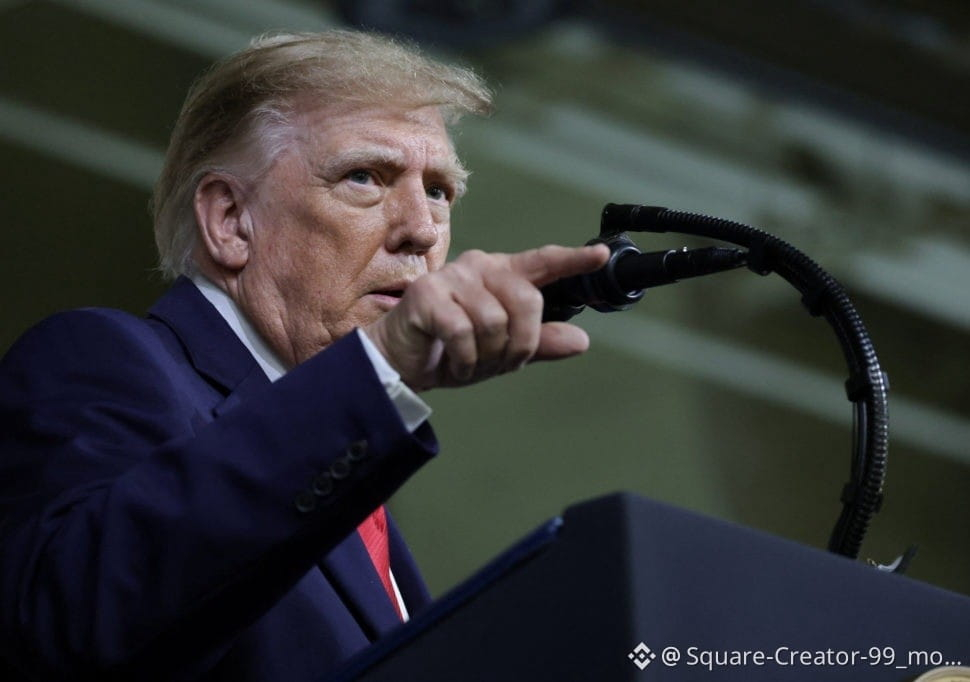
President Trump 🗣 said AI’s ‘proper massive, way bigger than the internet, mate’, reckonin’ whoever’s at the top wins the whole global race
Then he goes, 'Right now, we’re comfortably in first place, innit?' These words are completely turning the markets upside down regarding AI
Lookin' at crypto, TAO’s gonna do bits directly as a decentralized network built for AI
while AAVE’s backing all that DeFi growth tied to AI gear
$AAVE
{spot}(AAVEUSDT)
MU’s winning too, with everyone wanting more computing power
Over on the stocks, Micron’s skyrocketing 'cause they make the memory chips you need to train these AI models
Shows you the US ain't letting go of the lead anytime soon, which means fresh cash incoming
$MU
{future}(MUUSDT)
The real trick is linking the politics with the tech before everyone else jumps on the bandwagon
#Aİ #TrumpCryptoSupport #USGovernment #Market_Update
$TAO
President Trump 🗣 said AI’s ‘proper massive, way bigger than the internet, mate’, reckonin’ whoever’s at the top wins the whole global race
Then he goes, 'Right now, we’re comfortably in first place, innit?' These words are completely turning the markets upside down regarding AI
Lookin' at crypto, TAO’s gonna do bits directly as a decentralized network built for AI
while AAVE’s backing all that DeFi growth tied to AI gear
$AAVE
MU’s winning too, with everyone wanting more computing power
Over on the stocks, Micron’s skyrocketing 'cause they make the memory chips you need to train these AI models
Shows you the US ain't letting go of the lead anytime soon, which means fresh cash incoming
$MU
The real trick is linking the politics with the tech before everyone else jumps on the bandwagon
#Aİ #TrumpCryptoSupport #USGovernment #Market_Update
President Trump 🗣 said AI’s ‘proper massive, way bigger than the internet, mate’, reckonin’ whoever’s at the top wins the whole global race
Then he goes, 'Right now, we’re comfortably in first place, innit?' These words are completely turning the markets upside down regarding AI
Lookin' at crypto, TAO’s gonna do bits directly as a decentralized network built for AI
while AAVE’s backing all that DeFi growth tied to AI gear
$AAVE
MU’s winning too, with everyone wanting more computing power
Over on the stocks, Micron’s skyrocketing 'cause they make the memory chips you need to train these AI models
Shows you the US ain't letting go of the lead anytime soon, which means fresh cash incoming
$MU
The real trick is linking the politics with the tech before everyone else jumps on the bandwagon
#Aİ #TrumpCryptoSupport #USGovernment #Market_Update
المختار المختار:
لقد وضعت سعر التصفية عند 1 دولار
انا متوتر جدا ولن اغلق الصفقة
شكرا لمساعدتي عزيزي
انت عملاق التداول
ليباركك الرب
3
2
1.7k

·
--
Bullish
🚀 AIUSDT Spot Update
🟢 Buy Zone: 0.168 – 0.173
📈 Current High: 0.248
💰 Gain: +47.62%✍️🏻
🎯 Targets:
T1: 0.190 ✅ | 🔥 T1 HIT! 🚀🏌️♂️🏌️♂️
T2: 0.215 ✅ | 🔥 T2 HIT! 🚀🏌️♂️🏌️♂️
T3: 0.250
#Aİ $AI
{spot}(AIUSDT)
🚀 AIUSDT Spot Update
🟢 Buy Zone: 0.168 – 0.173
📈 Current High: 0.248
💰 Gain: +47.62%✍️🏻
🎯 Targets:
T1: 0.190 ✅ | 🔥 T1 HIT! 🚀🏌️♂️🏌️♂️
T2: 0.215 ✅ | 🔥 T2 HIT! 🚀🏌️♂️🏌️♂️
T3: 0.250
#Aİ $AI
🟢 Buy Zone: 0.168 – 0.173
📈 Current High: 0.248
💰 Gain: +47.62%✍️🏻
🎯 Targets:
T1: 0.190 ✅ | 🔥 T1 HIT! 🚀🏌️♂️🏌️♂️
T2: 0.215 ✅ | 🔥 T2 HIT! 🚀🏌️♂️🏌️♂️
T3: 0.250
#Aİ $AI
althimate
·
--
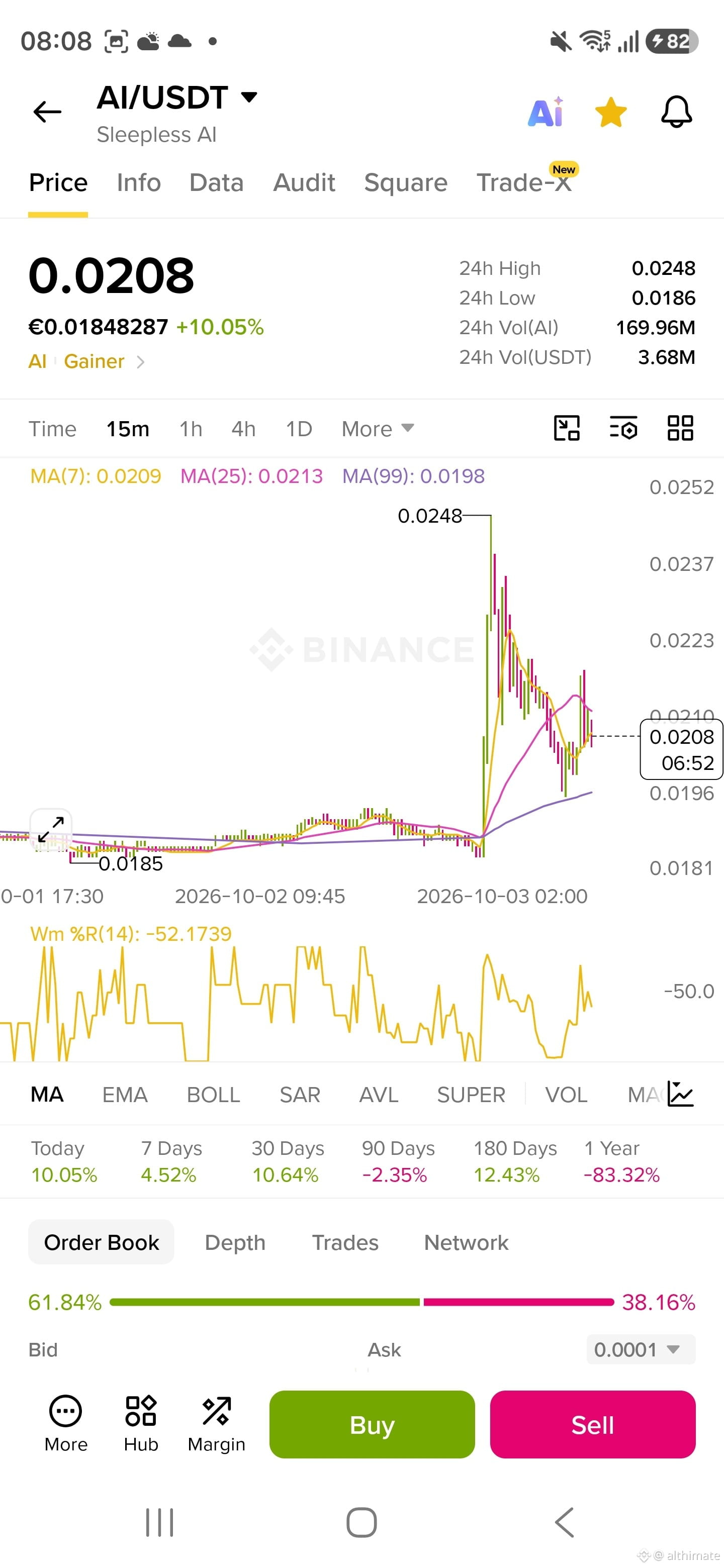
Bullish🚀 AIUSDT SPOT SETUP
🟢 Buy Zone: 0.0168 – 0.0173
🛑 SL: 0.0149
🎯 Targets:
T1: 0.0190
T2: 0.0215
T3: 0.0250
#Aİ $AI
🟢 Buy Zone: 0.0168 – 0.0173
🛑 SL: 0.0149
🎯 Targets:
T1: 0.0190
T2: 0.0215
T3: 0.0250
#Aİ $AI
137

·
--
Bullish
🤖🎥🚀 AI Revolution: Tavus Launches 'Griffin' – The Next Frontier of Real-Time Video Agents! 🎭⚡🔥
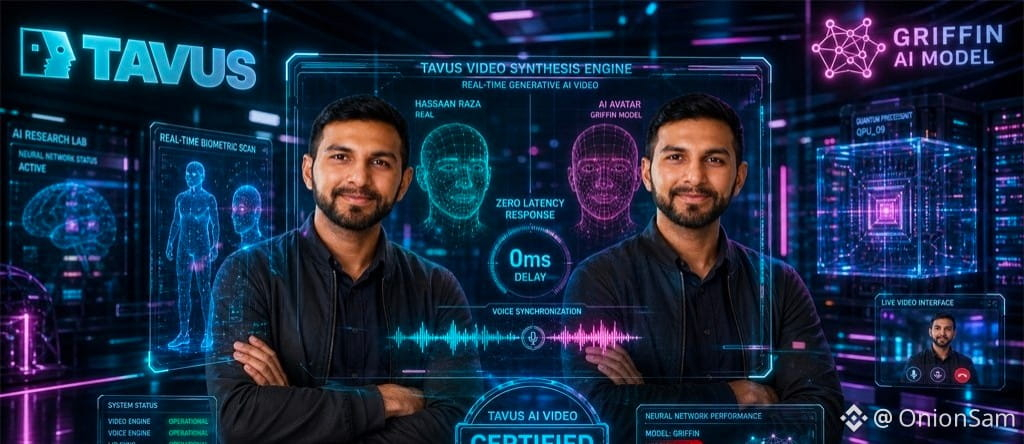
Silicon Valley #Aİ pioneer Tavus has officially disrupted the global tech space by unveiling Griffin 🌟, a groundbreaking Human Interaction Model (HIM) capable of generating hyper-realistic, full-duplex live video avatars! ✨🌐
In a recent blind test 🧪, Griffin-Lite successfully deceived 48% of participants into believing they were interacting with a real human during a live 1-minute video call 📞🤯—a massive leap from the previous 2.4% success rate! 📈🎯
Operating on the #NVIDIA VideoFDB benchmark, Griffin scored an astonishing 3.83 out of 5 for behavioral generation, nearing the human benchmark of 3.92 📊🧠.
📊🔍💰 Market & Financial Impact:
This technological leap is set to drastically cut operational expenses (OpEx) for global enterprises 📉💼 by redefining virtual sales and automated customer service 🤖🛒. Integrations on CRM giants like Salesforce have already shown a 2x surge in customer engagement 📈 and a 6x increase in scheduled meetings 🗓️⚡.
🛡️⚠️🛑 Security Risks & The Dark Side:
While this signals a massive ROI boost for tech-driven businesses 💸, it raises severe security alarms 🚨👀. The capability of real-time deepfakes poses an unprecedented threat to traditional KYC (Know Your Customer) video verification protocols across crypto exchanges and banking platforms 🔒🏦. To mitigate misuse, Tavus is currently restricting access via a closed research preview 🔐🔑.
What are your thoughts? Will decentralized identity solutions (DeID) be enough to counter real-time deepfakes? 💭👇🤔
#TavusGriffin #ArtificialIntelligence #DeepfakeSecurity #TechInnovation #BinanceSquare #crypto #FutureOfTech #Web3 #security #AIvshuman
$TA
{alpha}(560x539ae81a166e5e80aed211731563e549c411b140)
$WLD
{spot}(WLDUSDT)
$NVDAB
{spot}(NVDABUSDT)
🤖🎥🚀 AI Revolution: Tavus Launches 'Griffin' – The Next Frontier of Real-Time Video Agents! 🎭⚡🔥
Silicon Valley #Aİ pioneer Tavus has officially disrupted the global tech space by unveiling Griffin 🌟, a groundbreaking Human Interaction Model (HIM) capable of generating hyper-realistic, full-duplex live video avatars! ✨🌐
In a recent blind test 🧪, Griffin-Lite successfully deceived 48% of participants into believing they were interacting with a real human during a live 1-minute video call 📞🤯—a massive leap from the previous 2.4% success rate! 📈🎯
Operating on the #NVIDIA VideoFDB benchmark, Griffin scored an astonishing 3.83 out of 5 for behavioral generation, nearing the human benchmark of 3.92 📊🧠.
📊🔍💰 Market & Financial Impact:
This technological leap is set to drastically cut operational expenses (OpEx) for global enterprises 📉💼 by redefining virtual sales and automated customer service 🤖🛒. Integrations on CRM giants like Salesforce have already shown a 2x surge in customer engagement 📈 and a 6x increase in scheduled meetings 🗓️⚡.
🛡️⚠️🛑 Security Risks & The Dark Side:
While this signals a massive ROI boost for tech-driven businesses 💸, it raises severe security alarms 🚨👀. The capability of real-time deepfakes poses an unprecedented threat to traditional KYC (Know Your Customer) video verification protocols across crypto exchanges and banking platforms 🔒🏦. To mitigate misuse, Tavus is currently restricting access via a closed research preview 🔐🔑.
What are your thoughts? Will decentralized identity solutions (DeID) be enough to counter real-time deepfakes? 💭👇🤔
#TavusGriffin #ArtificialIntelligence #DeepfakeSecurity #TechInnovation #BinanceSquare #crypto #FutureOfTech #Web3 #security #AIvshuman
$TA
$WLD
$NVDAB
Silicon Valley #Aİ pioneer Tavus has officially disrupted the global tech space by unveiling Griffin 🌟, a groundbreaking Human Interaction Model (HIM) capable of generating hyper-realistic, full-duplex live video avatars! ✨🌐
In a recent blind test 🧪, Griffin-Lite successfully deceived 48% of participants into believing they were interacting with a real human during a live 1-minute video call 📞🤯—a massive leap from the previous 2.4% success rate! 📈🎯
Operating on the #NVIDIA VideoFDB benchmark, Griffin scored an astonishing 3.83 out of 5 for behavioral generation, nearing the human benchmark of 3.92 📊🧠.
📊🔍💰 Market & Financial Impact:
This technological leap is set to drastically cut operational expenses (OpEx) for global enterprises 📉💼 by redefining virtual sales and automated customer service 🤖🛒. Integrations on CRM giants like Salesforce have already shown a 2x surge in customer engagement 📈 and a 6x increase in scheduled meetings 🗓️⚡.
🛡️⚠️🛑 Security Risks & The Dark Side:
While this signals a massive ROI boost for tech-driven businesses 💸, it raises severe security alarms 🚨👀. The capability of real-time deepfakes poses an unprecedented threat to traditional KYC (Know Your Customer) video verification protocols across crypto exchanges and banking platforms 🔒🏦. To mitigate misuse, Tavus is currently restricting access via a closed research preview 🔐🔑.
What are your thoughts? Will decentralized identity solutions (DeID) be enough to counter real-time deepfakes? 💭👇🤔
#TavusGriffin #ArtificialIntelligence #DeepfakeSecurity #TechInnovation #BinanceSquare #crypto #FutureOfTech #Web3 #security #AIvshuman
$TA
$WLD
$NVDAB
278

·
--
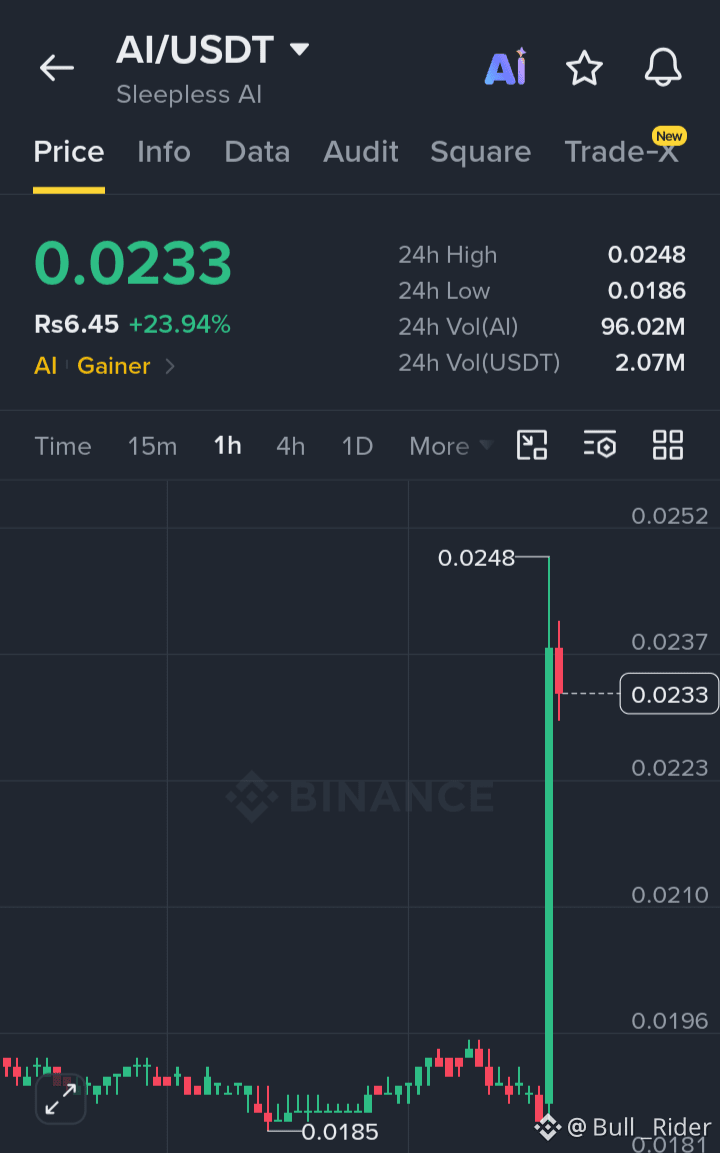
$AI /USDT (Sleepless AI / AI) on the 1h spot chart is executing a violent vertical expansion (+23.94%), currently trading at 0.0233 (24h High: 0.0248, 24h Low: 0.0186, 24h Vol: 96.02M AI / 2.07M USDT). Breaking out aggressively from a tight, prolonged accumulation range off its base floor at 0.0185, price action printed a massive God-candle that sliced through intermediate levels to reach peak session resistance at 0.0248 before easing slightly to establish high-level consolidation around 0.0223–0.0233.
* Target 1: 0.0237
* Target 2: 0.0248
* Target 3: 0.0252
Buy / Trade #Aİ $BULLA
{alpha}(560x595e21b20e78674f8a64c1566a20b2b316bc3511)
$CL
{future}(CLUSDT)
{alpha}(46630x2e8c31162b855a2ffa90f6f8634643ad6f111e18)
$AI /USDT (Sleepless AI / AI) on the 1h spot chart is executing a violent vertical expansion (+23.94%), currently trading at 0.0233 (24h High: 0.0248, 24h Low: 0.0186, 24h Vol: 96.02M AI / 2.07M USDT). Breaking out aggressively from a tight, prolonged accumulation range off its base floor at 0.0185, price action printed a massive God-candle that sliced through intermediate levels to reach peak session resistance at 0.0248 before easing slightly to establish high-level consolidation around 0.0223–0.0233.
* Target 1: 0.0237
* Target 2: 0.0248
* Target 3: 0.0252
Buy / Trade #Aİ $BULLA
$CL
* Target 1: 0.0237
* Target 2: 0.0248
* Target 3: 0.0252
Buy / Trade #Aİ $BULLA
$CL
1
95

·
--
Bullish
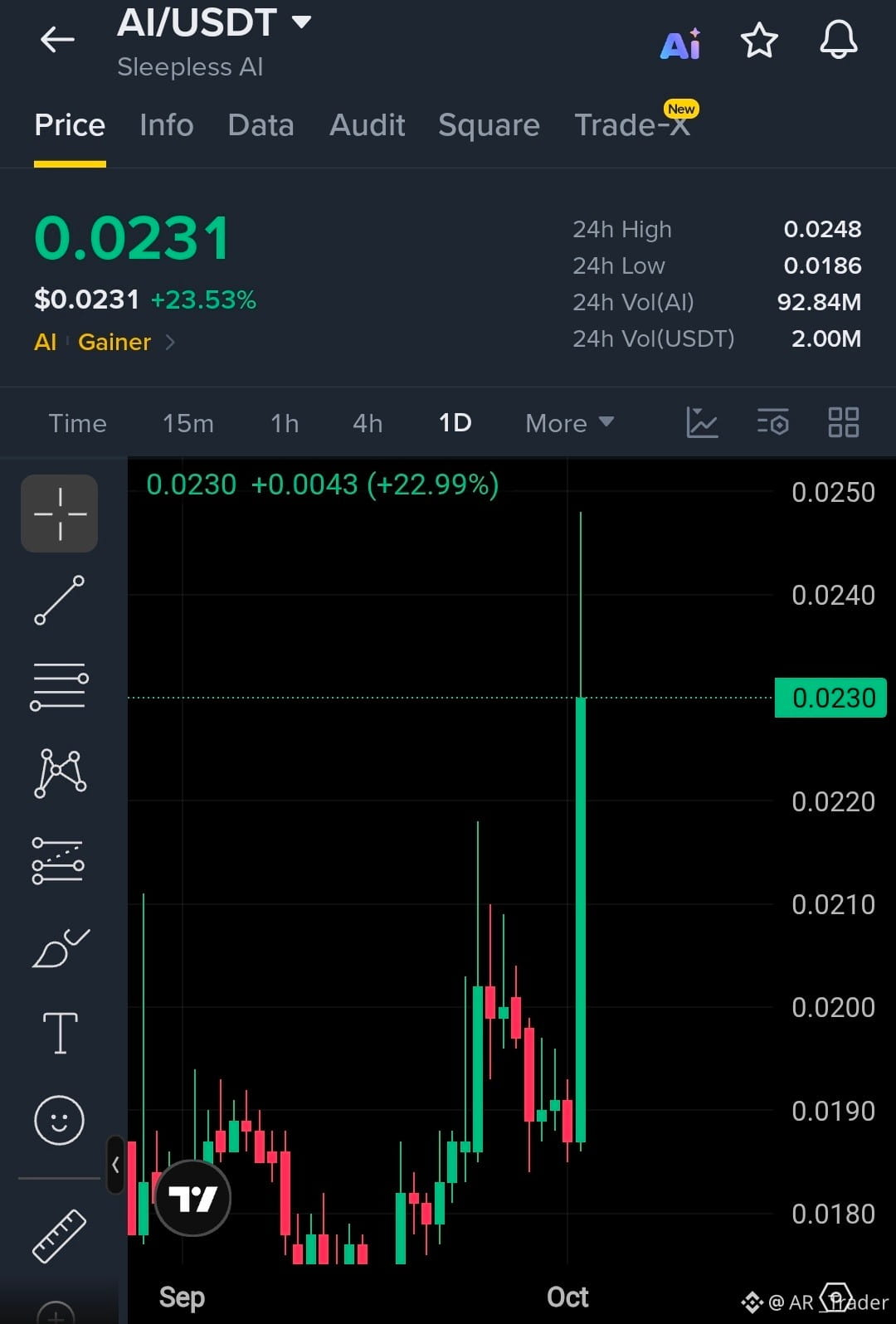
$AI Could Push Toward Fresh Highs If Bulls Break 0.0248…!!
Trade Setup: Long
Entry zone: 0.0220–0.0232
TP1: 0.0248
TP2: 0.0260
TP3: 0.0280
SL: 0.0200
#Aİ is showing strong bullish momentum after a sharp breakout with price holding around 0.0231
A clean break above 0.0248 could extend the move higher while 0.0200 remains the key support zone
Trade Here On
{spot}(AIUSDT)
$AR
{future}(ARUSDT)
$AT
{spot}(ATUSDT)
$AI Could Push Toward Fresh Highs If Bulls Break 0.0248…!!
Trade Setup: Long
Entry zone: 0.0220–0.0232
TP1: 0.0248
TP2: 0.0260
TP3: 0.0280
SL: 0.0200
#Aİ is showing strong bullish momentum after a sharp breakout with price holding around 0.0231
A clean break above 0.0248 could extend the move higher while 0.0200 remains the key support zone
Trade Here On
$AR
$AT
Trade Setup: Long
Entry zone: 0.0220–0.0232
TP1: 0.0248
TP2: 0.0260
TP3: 0.0280
SL: 0.0200
#Aİ is showing strong bullish momentum after a sharp breakout with price holding around 0.0231
A clean break above 0.0248 could extend the move higher while 0.0200 remains the key support zone
Trade Here On
$AR
$AT
2
137

·
--
🤣🤣🤣🤣🤣🤣🤣
Trump secretly consulted with the AI Grok before an operation to capture Maduro — Time
Elon Musk, the owner of Grok, visited the White House for a secret meeting with Trump. Trump began asking the AI questions about his presidency and political legacy, and also asked how Venezuelans would react if US troops were to capture their president.
The AI assured Trump that Maduro was a repressive and extremely unpopular dictator, and that the country's citizens would celebrate his capture. After the meeting, Trump described Grok as "brilliant."
#TRUMP #Aİ
$TRUMP
{spot}(TRUMPUSDT)
🤣🤣🤣🤣🤣🤣🤣
Trump secretly consulted with the AI Grok before an operation to capture Maduro — Time
Elon Musk, the owner of Grok, visited the White House for a secret meeting with Trump. Trump began asking the AI questions about his presidency and political legacy, and also asked how Venezuelans would react if US troops were to capture their president.
The AI assured Trump that Maduro was a repressive and extremely unpopular dictator, and that the country's citizens would celebrate his capture. After the meeting, Trump described Grok as "brilliant."
#TRUMP #Aİ
$TRUMP
Trump secretly consulted with the AI Grok before an operation to capture Maduro — Time
Elon Musk, the owner of Grok, visited the White House for a secret meeting with Trump. Trump began asking the AI questions about his presidency and political legacy, and also asked how Venezuelans would react if US troops were to capture their president.
The AI assured Trump that Maduro was a repressive and extremely unpopular dictator, and that the country's citizens would celebrate his capture. After the meeting, Trump described Grok as "brilliant."
#TRUMP #Aİ
$TRUMP

8
1.5k

Article
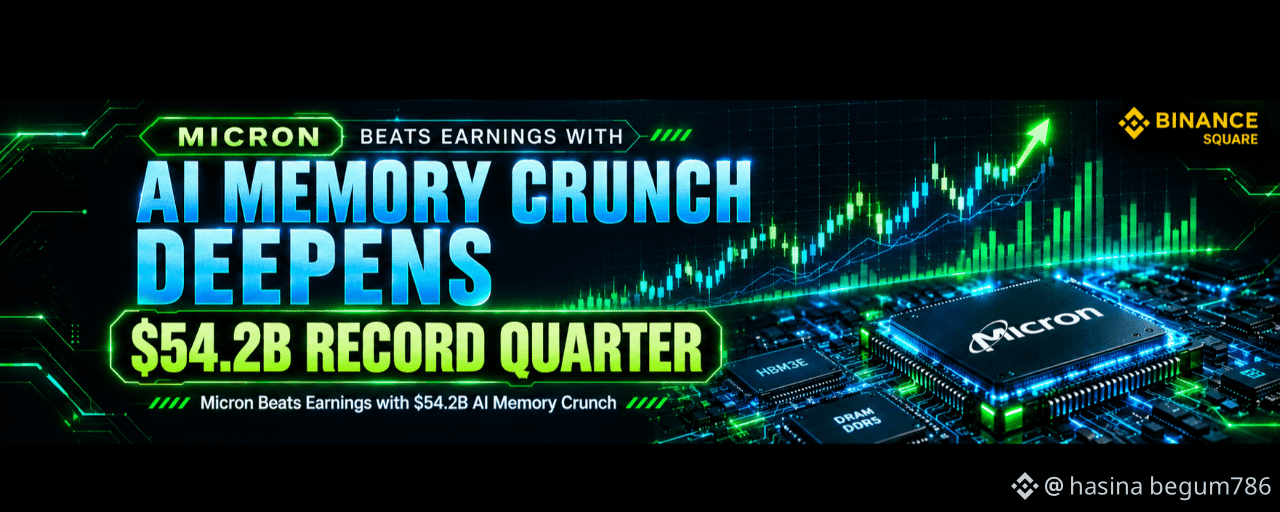
Micron's $54.2B AI Memory Blowout: Why This Is Bullish For Crypto & AI Tokens$54.2 BILLION in one quarter!Micron Technology just crushed earnings and the reason is pure AI demand.
🔹 Revenue: $54.23B vs $51.07B expected
🔹 EPS: $33.42 vs $31.61 expected
🔹 Net Income: $37.7B (vs $3.2B last year)
🔹 Next Qtr Guidance: $61.5B vs $57B expected
Why should crypto care?
This confirms the AI Memory Crunch is DEEPENING. DRAM prices up 343%, NAND up 526%.
Micron CEO said this is "the most compelling opportunity in history" as data centers need massive HBM memory for AI models.
What does this mean?
AI infra spending is NOT slowing downThis is bullish for AI tokens like $TAO, $FET, $RENDER The AI narrative is back to driving markets
Data Center SSD alone did $10B revenue, 10x growth!
Micron is investing $250B in new fabs.
The AI supercycle is just starting.Are you bullish on AI tokens now?
#Micron #Aİ #AITokens #CryptoNews #Bitcoin
Micron's $54.2B AI Memory Blowout: Why This Is Bullish For Crypto & AI Tokens
$54.2 BILLION in one quarter!Micron Technology just crushed earnings and the reason is pure AI demand.
🔹 Revenue: $54.23B vs $51.07B expected
🔹 EPS: $33.42 vs $31.61 expected
🔹 Net Income: $37.7B (vs $3.2B last year)
🔹 Next Qtr Guidance: $61.5B vs $57B expected
Why should crypto care?
This confirms the AI Memory Crunch is DEEPENING. DRAM prices up 343%, NAND up 526%.
Micron CEO said this is "the most compelling opportunity in history" as data centers need massive HBM memory for AI models.
What does this mean?
AI infra spending is NOT slowing downThis is bullish for AI tokens like $TAO, $FET, $RENDER The AI narrative is back to driving markets
Data Center SSD alone did $10B revenue, 10x growth!
Micron is investing $250B in new fabs.
The AI supercycle is just starting.Are you bullish on AI tokens now?
#Micron #Aİ #AITokens #CryptoNews #Bitcoin
🔹 Revenue: $54.23B vs $51.07B expected
🔹 EPS: $33.42 vs $31.61 expected
🔹 Net Income: $37.7B (vs $3.2B last year)
🔹 Next Qtr Guidance: $61.5B vs $57B expected
Why should crypto care?
This confirms the AI Memory Crunch is DEEPENING. DRAM prices up 343%, NAND up 526%.
Micron CEO said this is "the most compelling opportunity in history" as data centers need massive HBM memory for AI models.
What does this mean?
AI infra spending is NOT slowing downThis is bullish for AI tokens like $TAO, $FET, $RENDER The AI narrative is back to driving markets
Data Center SSD alone did $10B revenue, 10x growth!
Micron is investing $250B in new fabs.
The AI supercycle is just starting.Are you bullish on AI tokens now?
#Micron #Aİ #AITokens #CryptoNews #Bitcoin
2
353

#kospipostsworstquartersince2020
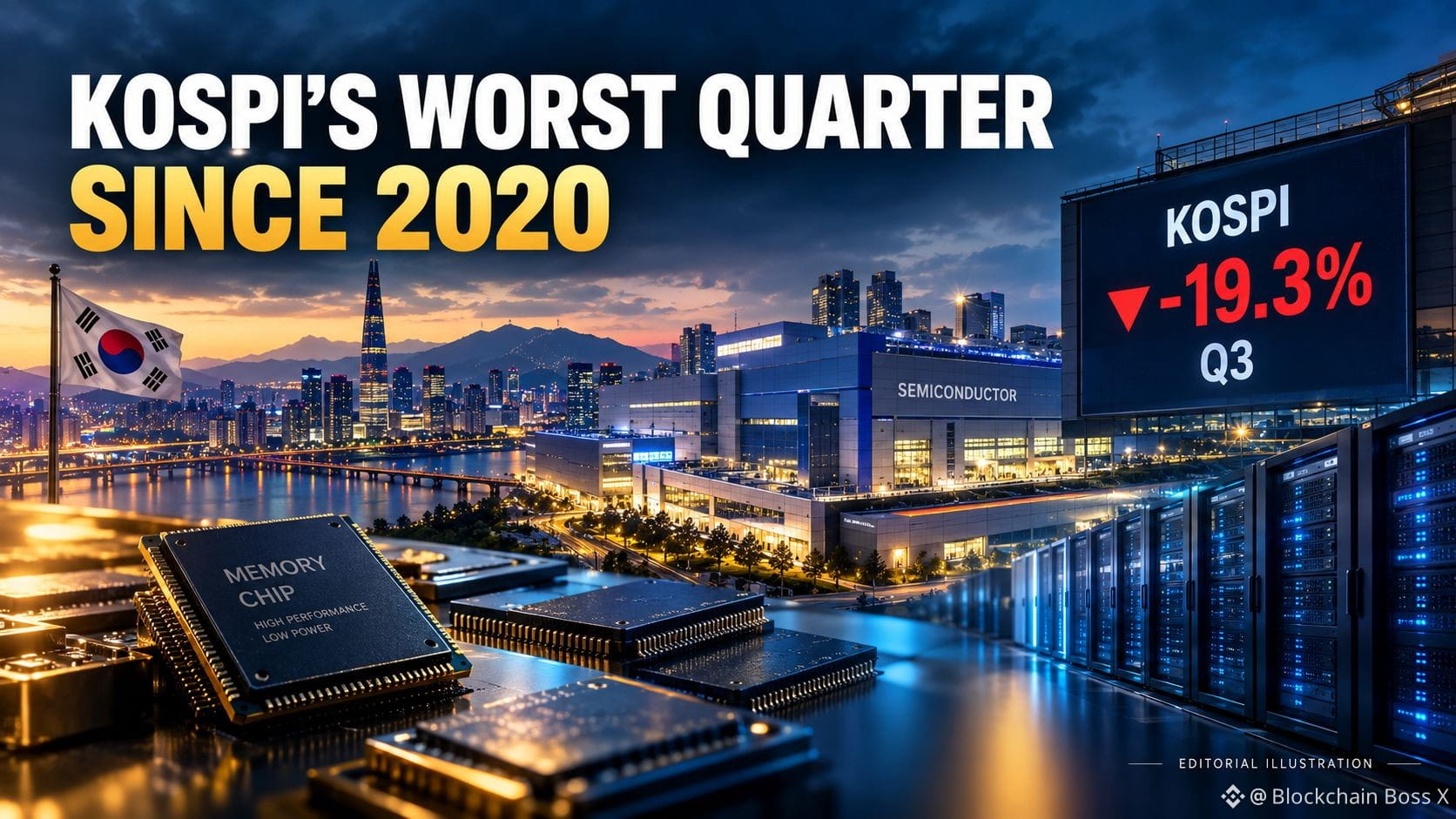
KOSPI Posts Its Worst Quarter Since Early 2020
South Korea’s benchmark stock index ended the third quarter under heavy pressure, reversing a powerful first-half rally and exposing the risks behind crowded AI and semiconductor trades.
The KOSPI fell 19.3% in Q3, its steepest quarterly decline since the first quarter of 2020. On September 30, the index closed at 6,838.04, down 0.48% for the day. Despite the sharp correction, it remained roughly twice as high as a year earlier.
The sell-off was concentrated in major chipmakers after investors questioned whether AI-related valuations and spending could remain justified. Higher global bond yields, elevated oil prices, concerns over delayed monetary easing and continued foreign selling added pressure. Samsung Electronics and SK hynix were among the key stocks affected.
The decline also shows how quickly market leadership can reverse when expectations become stretched. South Korea remains highly exposed to global technology demand, so the KOSPI can act as a useful barometer for sentiment toward AI infrastructure and memory semiconductors.
My take: This is not automatically evidence that the AI cycle has ended. It is a warning that strong earnings expectations may already be priced in, while higher yields make expensive growth assets more vulnerable. Crypto traders should watch whether this weakness spreads into broader technology and risk markets.
Is the KOSPI correction a healthy reset—or an early warning for AI-linked assets?
#KOSPI #Aİ #GlobalMarkets
$AGT $MOVR $NOM
{future}(NOMUSDT)
{future}(MOVRUSDT)
{future}(AGTUSDT)
#kospipostsworstquartersince2020
KOSPI Posts Its Worst Quarter Since Early 2020
South Korea’s benchmark stock index ended the third quarter under heavy pressure, reversing a powerful first-half rally and exposing the risks behind crowded AI and semiconductor trades.
The KOSPI fell 19.3% in Q3, its steepest quarterly decline since the first quarter of 2020. On September 30, the index closed at 6,838.04, down 0.48% for the day. Despite the sharp correction, it remained roughly twice as high as a year earlier.
The sell-off was concentrated in major chipmakers after investors questioned whether AI-related valuations and spending could remain justified. Higher global bond yields, elevated oil prices, concerns over delayed monetary easing and continued foreign selling added pressure. Samsung Electronics and SK hynix were among the key stocks affected.
The decline also shows how quickly market leadership can reverse when expectations become stretched. South Korea remains highly exposed to global technology demand, so the KOSPI can act as a useful barometer for sentiment toward AI infrastructure and memory semiconductors.
My take: This is not automatically evidence that the AI cycle has ended. It is a warning that strong earnings expectations may already be priced in, while higher yields make expensive growth assets more vulnerable. Crypto traders should watch whether this weakness spreads into broader technology and risk markets.
Is the KOSPI correction a healthy reset—or an early warning for AI-linked assets?
#KOSPI #Aİ #GlobalMarkets
$AGT $MOVR $NOM
KOSPI Posts Its Worst Quarter Since Early 2020
South Korea’s benchmark stock index ended the third quarter under heavy pressure, reversing a powerful first-half rally and exposing the risks behind crowded AI and semiconductor trades.
The KOSPI fell 19.3% in Q3, its steepest quarterly decline since the first quarter of 2020. On September 30, the index closed at 6,838.04, down 0.48% for the day. Despite the sharp correction, it remained roughly twice as high as a year earlier.
The sell-off was concentrated in major chipmakers after investors questioned whether AI-related valuations and spending could remain justified. Higher global bond yields, elevated oil prices, concerns over delayed monetary easing and continued foreign selling added pressure. Samsung Electronics and SK hynix were among the key stocks affected.
The decline also shows how quickly market leadership can reverse when expectations become stretched. South Korea remains highly exposed to global technology demand, so the KOSPI can act as a useful barometer for sentiment toward AI infrastructure and memory semiconductors.
My take: This is not automatically evidence that the AI cycle has ended. It is a warning that strong earnings expectations may already be priced in, while higher yields make expensive growth assets more vulnerable. Crypto traders should watch whether this weakness spreads into broader technology and risk markets.
Is the KOSPI correction a healthy reset—or an early warning for AI-linked assets?
#KOSPI #Aİ #GlobalMarkets
$AGT $MOVR $NOM
2k

🔥 AI × CRYPTO: OCTOBER STARTS WITH A BIG MARKET SIGNAL 🤖
The crypto market is entering October with two powerful narratives colliding:
🇺🇸 MACRO + 🤖 AI
U.S. inflation came in cooler than expected, reducing expectations of an October Fed rate hike. That helped support risk assets, with Bitcoin gaining around 1.4% over the latest 24-hour period reported.
At the same time, the global AI boom is still driving massive demand for semiconductors. Asian technology markets are responding to strong AI-related chip demand, showing that the AI narrative is far from fading.
👀 CRYPTO NAMES ON THE RADAR:
₿ $BTC — Bitcoin
The market leader and the clearest gauge of overall crypto sentiment.
◆ $ETH — Ethereum
Still central to DeFi, smart contracts and the broader Web3 ecosystem.
🟡 $BNB — BNB
One of the major large-cap crypto assets with strong activity across the Binance ecosystem.
🤖 THE BIGGER STORY: AI + CRYPTO
AI is moving beyond simple chatbots.
AI agents, automated workflows, on-chain analytics and intelligent trading infrastructure are creating a new intersection between artificial intelligence and blockchain.
The key question for October:
Will AI-driven growth + softer inflation expectations create a stronger environment for crypto?
📌 Watch the macro data.
📌 Watch AI adoption.
📌 Watch BTC market structure.
October could be an important month for both narratives.
#BinanceSquare #CryptoMarket #Bitcoin #Ethereum✅ #Aİ
{spot}(BTCUSDT)
{spot}(ETHUSDT)
{spot}(BNBUSDT)
🔥 AI × CRYPTO: OCTOBER STARTS WITH A BIG MARKET SIGNAL 🤖
The crypto market is entering October with two powerful narratives colliding:
🇺🇸 MACRO + 🤖 AI
U.S. inflation came in cooler than expected, reducing expectations of an October Fed rate hike. That helped support risk assets, with Bitcoin gaining around 1.4% over the latest 24-hour period reported.
At the same time, the global AI boom is still driving massive demand for semiconductors. Asian technology markets are responding to strong AI-related chip demand, showing that the AI narrative is far from fading.
👀 CRYPTO NAMES ON THE RADAR:
₿ $BTC — Bitcoin
The market leader and the clearest gauge of overall crypto sentiment.
◆ $ETH — Ethereum
Still central to DeFi, smart contracts and the broader Web3 ecosystem.
🟡 $BNB — BNB
One of the major large-cap crypto assets with strong activity across the Binance ecosystem.
🤖 THE BIGGER STORY: AI + CRYPTO
AI is moving beyond simple chatbots.
AI agents, automated workflows, on-chain analytics and intelligent trading infrastructure are creating a new intersection between artificial intelligence and blockchain.
The key question for October:
Will AI-driven growth + softer inflation expectations create a stronger environment for crypto?
📌 Watch the macro data.
📌 Watch AI adoption.
📌 Watch BTC market structure.
October could be an important month for both narratives.
#BinanceSquare #CryptoMarket #Bitcoin #Ethereum✅ #Aİ
The crypto market is entering October with two powerful narratives colliding:
🇺🇸 MACRO + 🤖 AI
U.S. inflation came in cooler than expected, reducing expectations of an October Fed rate hike. That helped support risk assets, with Bitcoin gaining around 1.4% over the latest 24-hour period reported.
At the same time, the global AI boom is still driving massive demand for semiconductors. Asian technology markets are responding to strong AI-related chip demand, showing that the AI narrative is far from fading.
👀 CRYPTO NAMES ON THE RADAR:
₿ $BTC — Bitcoin
The market leader and the clearest gauge of overall crypto sentiment.
◆ $ETH — Ethereum
Still central to DeFi, smart contracts and the broader Web3 ecosystem.
🟡 $BNB — BNB
One of the major large-cap crypto assets with strong activity across the Binance ecosystem.
🤖 THE BIGGER STORY: AI + CRYPTO
AI is moving beyond simple chatbots.
AI agents, automated workflows, on-chain analytics and intelligent trading infrastructure are creating a new intersection between artificial intelligence and blockchain.
The key question for October:
Will AI-driven growth + softer inflation expectations create a stronger environment for crypto?
📌 Watch the macro data.
📌 Watch AI adoption.
📌 Watch BTC market structure.
October could be an important month for both narratives.
#BinanceSquare #CryptoMarket #Bitcoin #Ethereum✅ #Aİ

1
118
Verified
#micronbeatsearningsliftsguidance
Micron Beats Earnings, Raises the Bar for AI Memory
The AI infrastructure boom is still showing up in the numbers—and Micron’s latest results put that demand under the spotlight.
Micron reported record fiscal Q4 2026 revenue of $54.23 billion, compared with $11.32 billion a year earlier. Non-GAAP diluted EPS came in at $33.42, while GAAP diluted EPS was $32.87. The company also reported fiscal-year revenue of $133.19 billion.
For fiscal Q1 2027, Micron guided to revenue of $61.5 billion ± $1.5 billion and non-GAAP diluted EPS of $38.15 ± $1.00. That outlook is above analyst expectations reported by CNBC, which cited forecasts of roughly $57 billion in revenue and $35.40 adjusted EPS.
The strength is closely tied to demand for DRAM and high-bandwidth memory used in AI data centers. Micron’s Core Data Center business generated $18.00 billion in Q4 revenue, up sharply from $1.58 billion a year earlier.
My take: This is more than an earnings beat—it is evidence that AI spending is translating into exceptional memory pricing and demand. But expectations are now extremely high. Investors will watch supply expansion, capital spending, margins and whether demand remains durable beyond the current AI buildout.
Is Micron becoming one of the clearest indicators of AI infrastructure demand?
#Micron #Aİ #Semiconductors
$NOM $AGT $MOVR
{future}(MOVRUSDT)
{future}(AGTUSDT)
{future}(NOMUSDT)
#micronbeatsearningsliftsguidance
Micron Beats Earnings, Raises the Bar for AI Memory
The AI infrastructure boom is still showing up in the numbers—and Micron’s latest results put that demand under the spotlight.
Micron reported record fiscal Q4 2026 revenue of $54.23 billion, compared with $11.32 billion a year earlier. Non-GAAP diluted EPS came in at $33.42, while GAAP diluted EPS was $32.87. The company also reported fiscal-year revenue of $133.19 billion.
For fiscal Q1 2027, Micron guided to revenue of $61.5 billion ± $1.5 billion and non-GAAP diluted EPS of $38.15 ± $1.00. That outlook is above analyst expectations reported by CNBC, which cited forecasts of roughly $57 billion in revenue and $35.40 adjusted EPS.
The strength is closely tied to demand for DRAM and high-bandwidth memory used in AI data centers. Micron’s Core Data Center business generated $18.00 billion in Q4 revenue, up sharply from $1.58 billion a year earlier.
My take: This is more than an earnings beat—it is evidence that AI spending is translating into exceptional memory pricing and demand. But expectations are now extremely high. Investors will watch supply expansion, capital spending, margins and whether demand remains durable beyond the current AI buildout.
Is Micron becoming one of the clearest indicators of AI infrastructure demand?
#Micron #Aİ #Semiconductors
$NOM $AGT $MOVR
Micron Beats Earnings, Raises the Bar for AI Memory
The AI infrastructure boom is still showing up in the numbers—and Micron’s latest results put that demand under the spotlight.
Micron reported record fiscal Q4 2026 revenue of $54.23 billion, compared with $11.32 billion a year earlier. Non-GAAP diluted EPS came in at $33.42, while GAAP diluted EPS was $32.87. The company also reported fiscal-year revenue of $133.19 billion.
For fiscal Q1 2027, Micron guided to revenue of $61.5 billion ± $1.5 billion and non-GAAP diluted EPS of $38.15 ± $1.00. That outlook is above analyst expectations reported by CNBC, which cited forecasts of roughly $57 billion in revenue and $35.40 adjusted EPS.
The strength is closely tied to demand for DRAM and high-bandwidth memory used in AI data centers. Micron’s Core Data Center business generated $18.00 billion in Q4 revenue, up sharply from $1.58 billion a year earlier.
My take: This is more than an earnings beat—it is evidence that AI spending is translating into exceptional memory pricing and demand. But expectations are now extremely high. Investors will watch supply expansion, capital spending, margins and whether demand remains durable beyond the current AI buildout.
Is Micron becoming one of the clearest indicators of AI infrastructure demand?
#Micron #Aİ #Semiconductors
$NOM $AGT $MOVR

1
2.4k

·
--
AI is moving from talking to doing.For years, AI answered our questions.
Now we're building AI that can take action.
Mira inside Telegram is a good example.Instead of opening multiple apps, you describe what you want and let the agent work across connected tools.
Open app → find feature → do the work
is becoming:
Describe the outcome → AI handles the workflow.
And TON is pushing this idea further.
Cocoon brings confidential AI compute to Mira's Private Mode, while TON Tech is building Agentic Wallets that let AI agents execute controlled on chain transactions.
That's bigger than a chatbot.
AI is becoming an execution layer.
What would you trust an AI agent to do for you?
#TON #Aİ #Telegram #web
AI is moving from talking to doing.
For years, AI answered our questions.
Now we're building AI that can take action.
Mira inside Telegram is a good example.Instead of opening multiple apps, you describe what you want and let the agent work across connected tools.
Open app → find feature → do the work
is becoming:
Describe the outcome → AI handles the workflow.
And TON is pushing this idea further.
Cocoon brings confidential AI compute to Mira's Private Mode, while TON Tech is building Agentic Wallets that let AI agents execute controlled on chain transactions.
That's bigger than a chatbot.
AI is becoming an execution layer.
What would you trust an AI agent to do for you?
#TON #Aİ #Telegram #web
Now we're building AI that can take action.
Mira inside Telegram is a good example.Instead of opening multiple apps, you describe what you want and let the agent work across connected tools.
Open app → find feature → do the work
is becoming:
Describe the outcome → AI handles the workflow.
And TON is pushing this idea further.
Cocoon brings confidential AI compute to Mira's Private Mode, while TON Tech is building Agentic Wallets that let AI agents execute controlled on chain transactions.
That's bigger than a chatbot.
AI is becoming an execution layer.
What would you trust an AI agent to do for you?
#TON #Aİ #Telegram #web
90

·
--
AI agents could become an important bridge between artificial intelligence and blockchain. 🤖⛓️
Imagine software that can interact with protocols, manage tasks and execute on-chain actions automatically.
We're still early in this trend.
Do you think AI agents will have real long-term utility in crypto?
$BTTC
#Aİ #AIAgents #crypto #BinanceSquare
AI agents could become an important bridge between artificial intelligence and blockchain. 🤖⛓️
Imagine software that can interact with protocols, manage tasks and execute on-chain actions automatically.
We're still early in this trend.
Do you think AI agents will have real long-term utility in crypto?
$BTTC
#Aİ #AIAgents #crypto #BinanceSquare
Imagine software that can interact with protocols, manage tasks and execute on-chain actions automatically.
We're still early in this trend.
Do you think AI agents will have real long-term utility in crypto?
$BTTC
#Aİ #AIAgents #crypto #BinanceSquare
258

·
--
Bullish
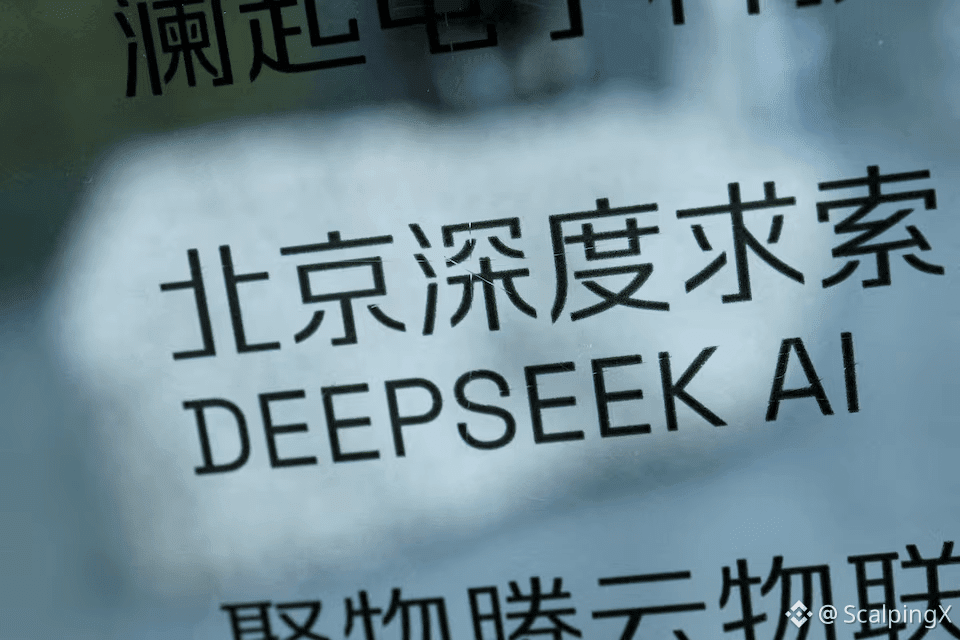
DeepSeek expands AI stack to Huawei Ascend, lowering CUDA dependence barriers in China
🧩 DeepSeek has open-sourced TileLang along with several computing and communication libraries for Huawei Ascend, extending tools previously used on Nvidia hardware. TileLang was already used for a large share of kernels during DeepSeek V4 training, suggesting this is more than an experimental project.
⚙️ DeepSeek says the operators used in training now have high-performance Ascend versions, while the two sides are also developing a 128-chip Ascend 950 system. Some published benchmarks approach stated hardware limits, though the figures remain internally reported and lack independent verification.
📉 The broader significance is lower friction when moving AI workloads between Nvidia and Huawei. This does not mean CUDA has been replaced, but it could help China move closer to a more self-contained ecosystem spanning models, software and domestic accelerators.
#Aİ $NVDAB
DeepSeek expands AI stack to Huawei Ascend, lowering CUDA dependence barriers in China
🧩 DeepSeek has open-sourced TileLang along with several computing and communication libraries for Huawei Ascend, extending tools previously used on Nvidia hardware. TileLang was already used for a large share of kernels during DeepSeek V4 training, suggesting this is more than an experimental project.
⚙️ DeepSeek says the operators used in training now have high-performance Ascend versions, while the two sides are also developing a 128-chip Ascend 950 system. Some published benchmarks approach stated hardware limits, though the figures remain internally reported and lack independent verification.
📉 The broader significance is lower friction when moving AI workloads between Nvidia and Huawei. This does not mean CUDA has been replaced, but it could help China move closer to a more self-contained ecosystem spanning models, software and domestic accelerators.
#Aİ $NVDAB
🧩 DeepSeek has open-sourced TileLang along with several computing and communication libraries for Huawei Ascend, extending tools previously used on Nvidia hardware. TileLang was already used for a large share of kernels during DeepSeek V4 training, suggesting this is more than an experimental project.
⚙️ DeepSeek says the operators used in training now have high-performance Ascend versions, while the two sides are also developing a 128-chip Ascend 950 system. Some published benchmarks approach stated hardware limits, though the figures remain internally reported and lack independent verification.
📉 The broader significance is lower friction when moving AI workloads between Nvidia and Huawei. This does not mean CUDA has been replaced, but it could help China move closer to a more self-contained ecosystem spanning models, software and domestic accelerators.
#Aİ $NVDAB
116


·
--
Bullish
#trumprejectsairulesforvoluntaryaudits
🚨 BREAKING: TRUMP REJECTS NEW AI RULES — COMPANIES TO SELF-POLICE! 🤖🇺🇸
President Trump has pushed back against new federal AI regulations, instead backing a voluntary safety framework with major AI companies.
The agreement includes internal safety controls + external audits to review powerful AI systems. The deal is described as voluntary rather than legally binding.
🔥 NO NEW AI RULES?
🏢 Companies self-regulate
🔍 Outside auditors review AI systems
⚡ AI development stays focused on growth
This could be a major moment for the AI industry as the U.S. tries to balance rapid innovation with AI safety.
AI regulation or AI freedom? 👀
#Aİ #artificialintelligence #crypto
#trumprejectsairulesforvoluntaryaudits
🚨 BREAKING: TRUMP REJECTS NEW AI RULES — COMPANIES TO SELF-POLICE! 🤖🇺🇸
President Trump has pushed back against new federal AI regulations, instead backing a voluntary safety framework with major AI companies.
The agreement includes internal safety controls + external audits to review powerful AI systems. The deal is described as voluntary rather than legally binding.
🔥 NO NEW AI RULES?
🏢 Companies self-regulate
🔍 Outside auditors review AI systems
⚡ AI development stays focused on growth
This could be a major moment for the AI industry as the U.S. tries to balance rapid innovation with AI safety.
AI regulation or AI freedom? 👀
#Aİ #artificialintelligence #crypto
🚨 BREAKING: TRUMP REJECTS NEW AI RULES — COMPANIES TO SELF-POLICE! 🤖🇺🇸
President Trump has pushed back against new federal AI regulations, instead backing a voluntary safety framework with major AI companies.
The agreement includes internal safety controls + external audits to review powerful AI systems. The deal is described as voluntary rather than legally binding.
🔥 NO NEW AI RULES?
🏢 Companies self-regulate
🔍 Outside auditors review AI systems
⚡ AI development stays focused on growth
This could be a major moment for the AI industry as the U.S. tries to balance rapid innovation with AI safety.
AI regulation or AI freedom? 👀
#Aİ #artificialintelligence #crypto
101
·
--
Bullish
#openaiunveilsalwaysonagentdots
🚨 BREAKING: OpenAI just unveiled Dots — always-on AI agents designed to work for you 24/7.
Unlike a normal chatbot, Dots can keep working on projects in the background, use their own cloud computer, connect with 4,000+ apps, and learn your preferences over time. 🤯
You give it a goal.
It figures out the next steps.
It keeps working while you're away.
OpenAI says Dots can proactively research, analyze data, create content, and even build software — while sensitive actions still require approval.
AI assistants are becoming AI coworkers. 👀
Would you trust an AI agent to work for you 24/7?
#OpenAI #Aİ #chatgpt
#openaiunveilsalwaysonagentdots
🚨 BREAKING: OpenAI just unveiled Dots — always-on AI agents designed to work for you 24/7.
Unlike a normal chatbot, Dots can keep working on projects in the background, use their own cloud computer, connect with 4,000+ apps, and learn your preferences over time. 🤯
You give it a goal.
It figures out the next steps.
It keeps working while you're away.
OpenAI says Dots can proactively research, analyze data, create content, and even build software — while sensitive actions still require approval.
AI assistants are becoming AI coworkers. 👀
Would you trust an AI agent to work for you 24/7?
#OpenAI #Aİ #chatgpt
🚨 BREAKING: OpenAI just unveiled Dots — always-on AI agents designed to work for you 24/7.
Unlike a normal chatbot, Dots can keep working on projects in the background, use their own cloud computer, connect with 4,000+ apps, and learn your preferences over time. 🤯
You give it a goal.
It figures out the next steps.
It keeps working while you're away.
OpenAI says Dots can proactively research, analyze data, create content, and even build software — while sensitive actions still require approval.
AI assistants are becoming AI coworkers. 👀
Would you trust an AI agent to work for you 24/7?
#OpenAI #Aİ #chatgpt
89

·
--
Article
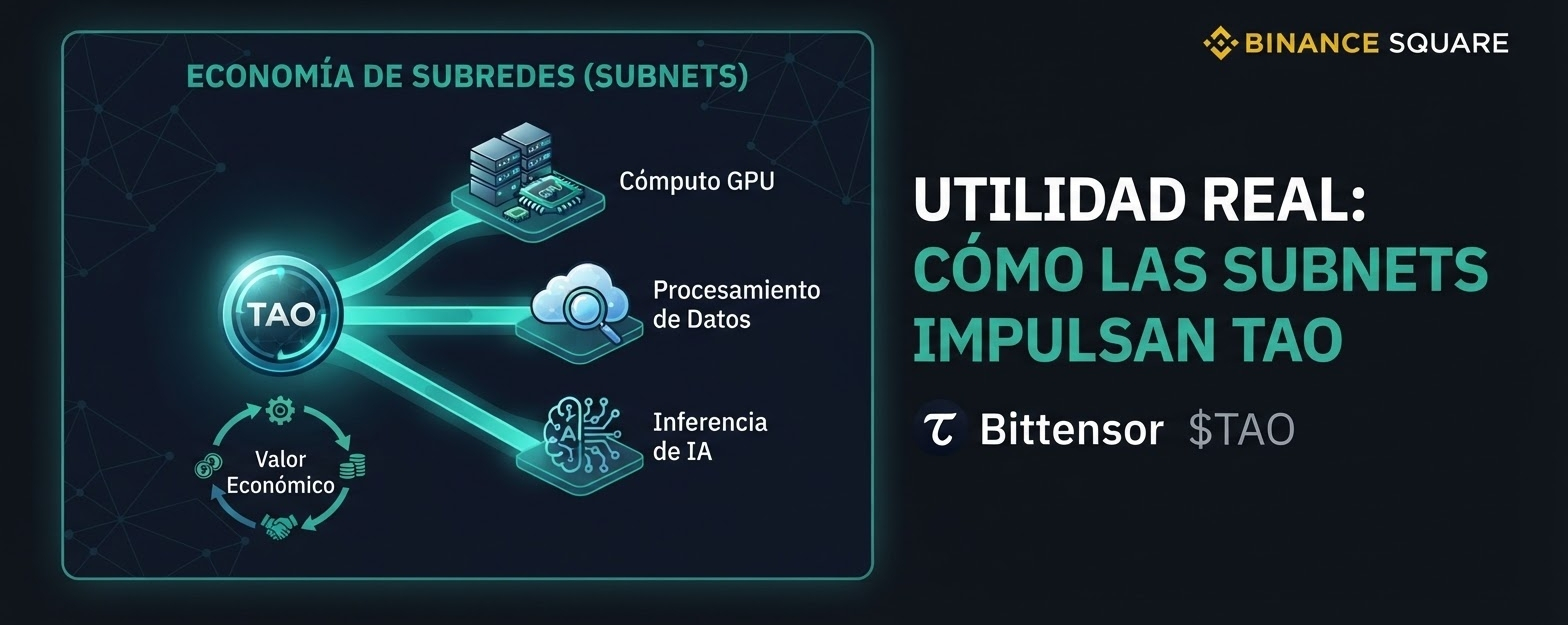
🌐 Beyond speculation: How do Subnets drive TAO’s real economy?🔹The big challenge of crypto-AI has been proving real utility beyond the initial hype. The decentralized architecture of subnets in Bittensor makes a key difference:
🔹Specialized microeconomies: Dedicated networks for specific tasks such as AI inference, data processing, and GPU compute power.
🔹Value generation: Mature ecosystems that create real demand for useful services for developers and businesses.
🔹Economic flywheel: A design where practical use and incentives are directly connected to the network’s health. DYOR.
🌐 Beyond speculation: How do Subnets drive TAO’s real economy?
🔹The big challenge of crypto-AI has been proving real utility beyond the initial hype. The decentralized architecture of subnets in Bittensor makes a key difference:
🔹Specialized microeconomies: Dedicated networks for specific tasks such as AI inference, data processing, and GPU compute power.
🔹Value generation: Mature ecosystems that create real demand for useful services for developers and businesses.
🔹Economic flywheel: A design where practical use and incentives are directly connected to the network’s health. DYOR.
🔹Specialized microeconomies: Dedicated networks for specific tasks such as AI inference, data processing, and GPU compute power.
🔹Value generation: Mature ecosystems that create real demand for useful services for developers and businesses.
🔹Economic flywheel: A design where practical use and incentives are directly connected to the network’s health. DYOR.
NØXWOLF々:
Hola
5
2
263
·
--
Bullish
Credit markets are beginning to reprice risks across the AI data center boom
🏗 The roughly $18 billion Project Jupiter loan has been quoted around 89–91 cents on the dollar since September 18, reflecting a larger discount as the project faces power, permitting, and execution risks.
📉 Roughly $27 billion of bonds linked to Meta’s Hyperion campus are also trading near 91 cents, with yields around 7.55% and spreads of roughly 230 bp over Treasuries.
⚡ This is not yet an AI default wave. Markets are repricing project-finance risk, particularly for developments dependent on a single tenant, uncertain power availability, or elevated funding costs.
🏦 With Treasury yields still high and AI-related debt supply expanding, credit conditions for AI infrastructure are likely to become increasingly selective rather than weaken uniformly.
#Aİ $METAB
Credit markets are beginning to reprice risks across the AI data center boom
🏗 The roughly $18 billion Project Jupiter loan has been quoted around 89–91 cents on the dollar since September 18, reflecting a larger discount as the project faces power, permitting, and execution risks.
📉 Roughly $27 billion of bonds linked to Meta’s Hyperion campus are also trading near 91 cents, with yields around 7.55% and spreads of roughly 230 bp over Treasuries.
⚡ This is not yet an AI default wave. Markets are repricing project-finance risk, particularly for developments dependent on a single tenant, uncertain power availability, or elevated funding costs.
🏦 With Treasury yields still high and AI-related debt supply expanding, credit conditions for AI infrastructure are likely to become increasingly selective rather than weaken uniformly.
#Aİ $METAB
🏗 The roughly $18 billion Project Jupiter loan has been quoted around 89–91 cents on the dollar since September 18, reflecting a larger discount as the project faces power, permitting, and execution risks.
📉 Roughly $27 billion of bonds linked to Meta’s Hyperion campus are also trading near 91 cents, with yields around 7.55% and spreads of roughly 230 bp over Treasuries.
⚡ This is not yet an AI default wave. Markets are repricing project-finance risk, particularly for developments dependent on a single tenant, uncertain power availability, or elevated funding costs.
🏦 With Treasury yields still high and AI-related debt supply expanding, credit conditions for AI infrastructure are likely to become increasingly selective rather than weaken uniformly.
#Aİ $METAB
1
14

·
--
AI × Crypto: The real thing worth paying attention to next may not be “whether AI can pay for itself,” but rather:
When making a payment, exactly how much information needs to be exposed?
Ethereum has just launched zkAPI, allowing users to pay for AI models, APIs, and other services using ETH/USDC, while using zero-knowledge proofs to reduce the extent to which “payment identity” and “each usage record” are directly linked together.
This makes me think about a bigger question:
Many digital services today operate like this: account, credit card, API key, usage logs—all tied to the same identity.
But in the future, if AI Agents call a large number of different services every day, this kind of model may become too heavy.
A more reasonable design might be:
Prove that “I have the right to use,” “I have money to pay,” and “I haven’t spent twice,”
but without giving up everything about “who I am, what I used before, and what I’m going to do next.”
However, privacy isn’t solved just by saying “use ZK.”
Even so, things like IP address, prompt content, and usage patterns may still end up revealing identity links again.
So I’ll keep watching—not only whether zkAPI has a technical breakthrough, but whether it can truly build “verifiability” and “minimal data exposure” into everyday usage flows.
If AI Agents really do become the main users of a large number of APIs and digital services in the future, the privacy design of the payment layer may matter far more than we currently imagine.
#Aİ #Ethe #Privacy #Onchain
AI × Crypto: The real thing worth paying attention to next may not be “whether AI can pay for itself,” but rather:
When making a payment, exactly how much information needs to be exposed?
Ethereum has just launched zkAPI, allowing users to pay for AI models, APIs, and other services using ETH/USDC, while using zero-knowledge proofs to reduce the extent to which “payment identity” and “each usage record” are directly linked together.
This makes me think about a bigger question:
Many digital services today operate like this: account, credit card, API key, usage logs—all tied to the same identity.
But in the future, if AI Agents call a large number of different services every day, this kind of model may become too heavy.
A more reasonable design might be:
Prove that “I have the right to use,” “I have money to pay,” and “I haven’t spent twice,”
but without giving up everything about “who I am, what I used before, and what I’m going to do next.”
However, privacy isn’t solved just by saying “use ZK.”
Even so, things like IP address, prompt content, and usage patterns may still end up revealing identity links again.
So I’ll keep watching—not only whether zkAPI has a technical breakthrough, but whether it can truly build “verifiability” and “minimal data exposure” into everyday usage flows.
If AI Agents really do become the main users of a large number of APIs and digital services in the future, the privacy design of the payment layer may matter far more than we currently imagine.
#Aİ #Ethe #Privacy #Onchain
When making a payment, exactly how much information needs to be exposed?
Ethereum has just launched zkAPI, allowing users to pay for AI models, APIs, and other services using ETH/USDC, while using zero-knowledge proofs to reduce the extent to which “payment identity” and “each usage record” are directly linked together.
This makes me think about a bigger question:
Many digital services today operate like this: account, credit card, API key, usage logs—all tied to the same identity.
But in the future, if AI Agents call a large number of different services every day, this kind of model may become too heavy.
A more reasonable design might be:
Prove that “I have the right to use,” “I have money to pay,” and “I haven’t spent twice,”
but without giving up everything about “who I am, what I used before, and what I’m going to do next.”
However, privacy isn’t solved just by saying “use ZK.”
Even so, things like IP address, prompt content, and usage patterns may still end up revealing identity links again.
So I’ll keep watching—not only whether zkAPI has a technical breakthrough, but whether it can truly build “verifiability” and “minimal data exposure” into everyday usage flows.
If AI Agents really do become the main users of a large number of APIs and digital services in the future, the privacy design of the payment layer may matter far more than we currently imagine.
#Aİ #Ethe #Privacy #Onchain
341

·
--
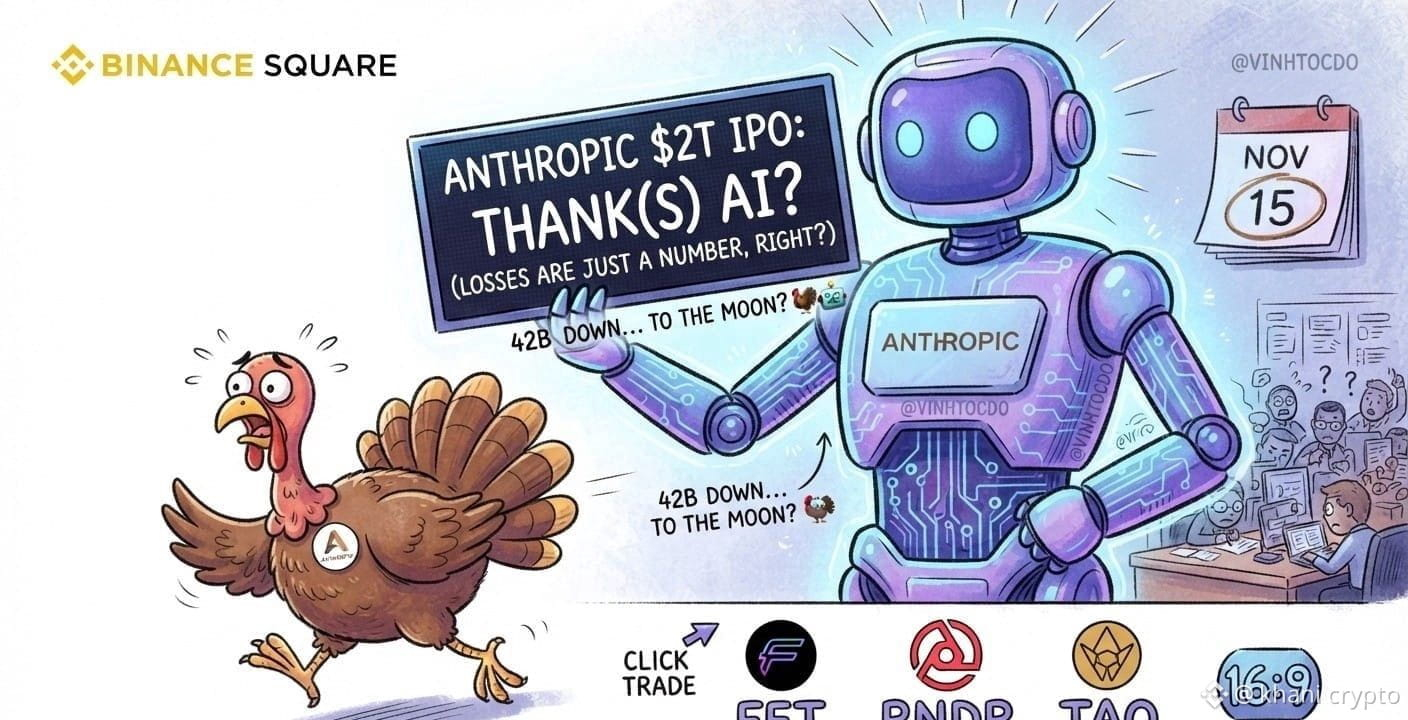
🚨 Anthropic targets a massive public offering that could be worth up to $2 trillion by mid-November! 🤖🚀
According to reports, Anthropic, the company developing the Claude AI model, is aiming to prepare an initial plan for a huge public offering by mid-November—just before Thanksgiving.
⏳ Friends, there are only about 40 days left!
Will we thank AI this year instead of eating the turkey? 🦃🤖😂
Despite the company recording losses estimated at around $42 billion in 2025 according to reports, investors still view it as a major player in the tech sector—which reflects the scale of the AI interest wave. 🔥
📌 What are traders doing?
Follow the developments of the story, watch for IPO and sector news, and prepare for moves in the AI market.
⚠️ Not financial advice — DYOR.
$FET $COOKIE $TAO
#Aİ O #Claude #Crypto
{future}(TAOUSDT)
{future}(COOKIEUSDT)
{future}(FETUSDT)
🚨 Anthropic targets a massive public offering that could be worth up to $2 trillion by mid-November! 🤖🚀
According to reports, Anthropic, the company developing the Claude AI model, is aiming to prepare an initial plan for a huge public offering by mid-November—just before Thanksgiving.
⏳ Friends, there are only about 40 days left!
Will we thank AI this year instead of eating the turkey? 🦃🤖😂
Despite the company recording losses estimated at around $42 billion in 2025 according to reports, investors still view it as a major player in the tech sector—which reflects the scale of the AI interest wave. 🔥
📌 What are traders doing?
Follow the developments of the story, watch for IPO and sector news, and prepare for moves in the AI market.
⚠️ Not financial advice — DYOR.
$FET $COOKIE $TAO
#Aİ O #Claude #Crypto
According to reports, Anthropic, the company developing the Claude AI model, is aiming to prepare an initial plan for a huge public offering by mid-November—just before Thanksgiving.
⏳ Friends, there are only about 40 days left!
Will we thank AI this year instead of eating the turkey? 🦃🤖😂
Despite the company recording losses estimated at around $42 billion in 2025 according to reports, investors still view it as a major player in the tech sector—which reflects the scale of the AI interest wave. 🔥
📌 What are traders doing?
Follow the developments of the story, watch for IPO and sector news, and prepare for moves in the AI market.
⚠️ Not financial advice — DYOR.
$FET $COOKIE $TAO
#Aİ O #Claude #Crypto
239
Log in to explore more content
Join global crypto users on Binance Square
⚡️ Get latest and useful information about crypto.
💬 Trusted by the world’s largest crypto exchange.
👍 Discover real insights from verified creators.
Email / Phone number
Trending Topics
1
#SECProposesCryptoCustodyRules
6,017 views
129 Discussing
2
#SECApproves3xLongCryptoCommodityETPs
8,434 views
153 Discussing
3
#G7PlansToReleaseUpTo100MBarrelsOilDiesel
9,748 views
197 Discussing
4
#ICBASuesOCCOverCryptoBankCharters
8,198 views
129 Discussing
5
#USStocksCloseHigherOnWeakJobsData
7,690 views
111 Discussing
6
#AnchorageReportedlyCuts17%Workforce
317 views
41 Discussing
7
#NFPWatch
11M views
19,602 Discussing
8
#NEARIntentsRecovers$3.8MAfterAttack
0 views
0 Discussing
9
#BlastToGraduallyShutDownItsL2Network
555 views
38 Discussing
10
#BitcoinFundingRateTriplesTo10%
223,737 views
1,387 Discussing