

#web4
web4
44,291 views
162 Discussing
Hot
Latest

·
--
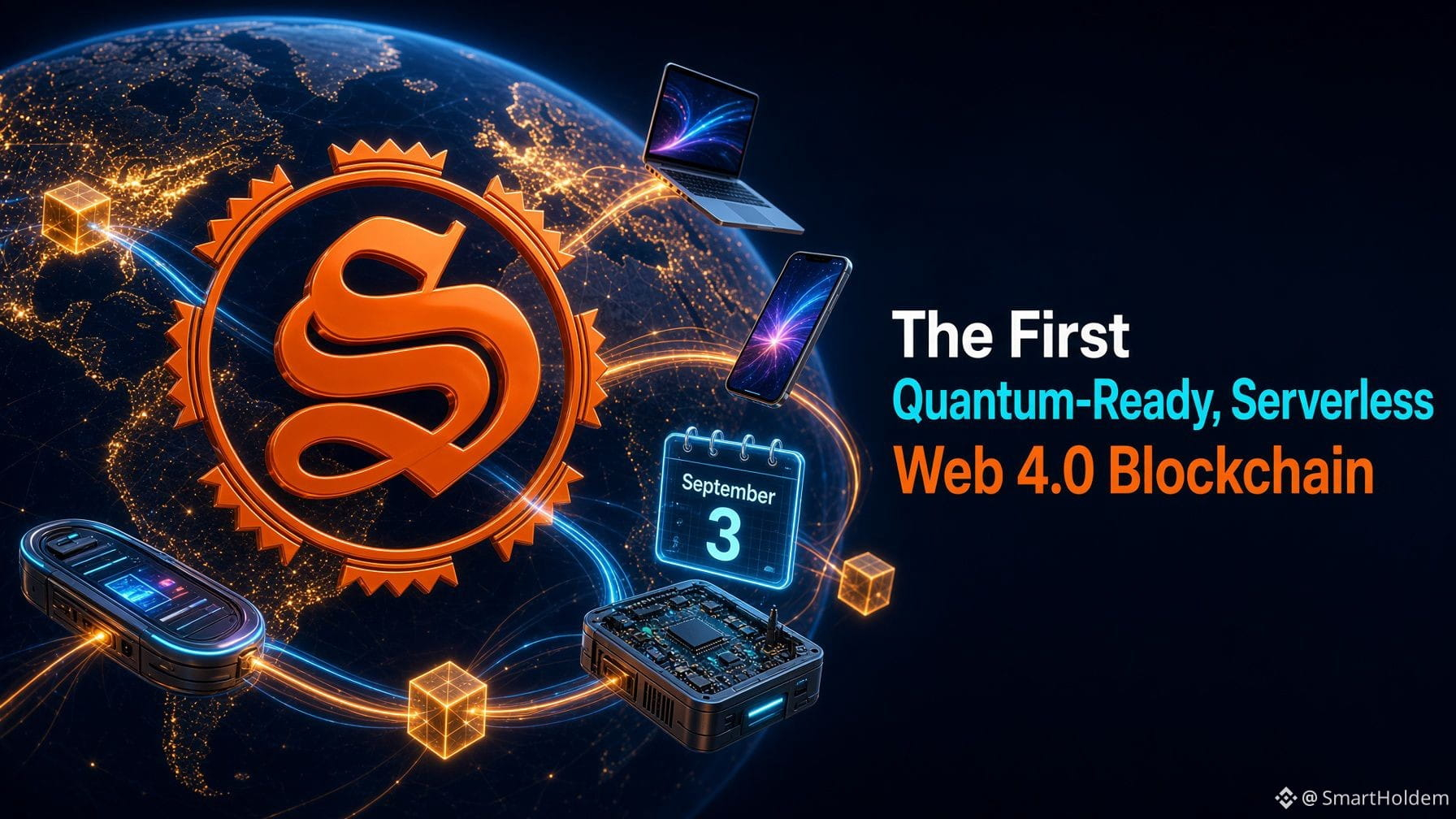
The First Quantum-Ready, Serverless Web 4.0 SmartHoldem Blockchain.
Rust core. No data center.
A live delegate already forged from behind NAT.
~756 MB RAM. No static IP.
Architecture for 27,000+ TPS.
Built for the next 50 years of compute —
before those threats arrive.
Wallets stay. The chain moves.
Read more: https://smartholdem.io/news/smartholdem-2-0-built-for-web-4-0-ready-for-the-quantum-era
#Web4 #cryptonews $BNB $BTC #blockchain #smartholdem
The First Quantum-Ready, Serverless Web 4.0 SmartHoldem Blockchain.
Rust core. No data center.
A live delegate already forged from behind NAT.
~756 MB RAM. No static IP.
Architecture for 27,000+ TPS.
Built for the next 50 years of compute —
before those threats arrive.
Wallets stay. The chain moves.
Read more: https://smartholdem.io/news/smartholdem-2-0-built-for-web-4-0-ready-for-the-quantum-era
#Web4 #cryptonews $BNB $BTC #blockchain #smartholdem
Rust core. No data center.
A live delegate already forged from behind NAT.
~756 MB RAM. No static IP.
Architecture for 27,000+ TPS.
Built for the next 50 years of compute —
before those threats arrive.
Wallets stay. The chain moves.
Read more: https://smartholdem.io/news/smartholdem-2-0-built-for-web-4-0-ready-for-the-quantum-era
#Web4 #cryptonews $BNB $BTC #blockchain #smartholdem
88

·
--

Article
🤖 Retail is still watching candlesticks, but AI Agents have already launched a “machine collusion” on-chain: decoding a new Web4 capital paradigm
On-chain capital flows are showing an extremely strange pattern of structural divergence. Retail trading frequency and community sentiment indicators remain at rock bottom, yet the number of on-chain micro–high-frequency trades—represented by high-performance Layer 2 and Solana—has continued to set new historical highs. The gas consumption curve is displaying a cold, geometric-style blowout. Retail hasn’t returned to the market; instead, thousands upon thousands of autonomous AI Agents deployed beneath smart-contract layers are taking over the on-chain settlement network. Funds are no longer migrating along the old path of “KOL calls → retail follow-through.” Rather, algorithm-driven autonomous intelligent agents reorganize capital across-chain liquidity pools, decentralized compute lending, and prediction markets at millisecond speed. We are standing at a turning point in a massive migration of capital pricing power from humans to autonomous algorithms.
On-chain capital flows are showing an extremely strange pattern of structural divergence. Retail trading frequency and community sentiment indicators remain at rock bottom, yet the number of on-chain micro–high-frequency trades—represented by high-performance Layer 2 and Solana—has continued to set new historical highs. The gas consumption curve is displaying a cold, geometric-style blowout. Retail hasn’t returned to the market; instead, thousands upon thousands of autonomous AI Agents deployed beneath smart-contract layers are taking over the on-chain settlement network. Funds are no longer migrating along the old path of “KOL calls → retail follow-through.” Rather, algorithm-driven autonomous intelligent agents reorganize capital across-chain liquidity pools, decentralized compute lending, and prediction markets at millisecond speed. We are standing at a turning point in a massive migration of capital pricing power from humans to autonomous algorithms.
🤖 Retail is still watching candlesticks, but AI Agents have already launched a “machine collusion” on-chain: decoding a new Web4 capital paradigm
On-chain capital flows are showing an extremely strange pattern of structural divergence. Retail trading frequency and community sentiment indicators remain at rock bottom, yet the number of on-chain micro–high-frequency trades—represented by high-performance Layer 2 and Solana—has continued to set new historical highs. The gas consumption curve is displaying a cold, geometric-style blowout. Retail hasn’t returned to the market; instead, thousands upon thousands of autonomous AI Agents deployed beneath smart-contract layers are taking over the on-chain settlement network. Funds are no longer migrating along the old path of “KOL calls → retail follow-through.” Rather, algorithm-driven autonomous intelligent agents reorganize capital across-chain liquidity pools, decentralized compute lending, and prediction markets at millisecond speed. We are standing at a turning point in a massive migration of capital pricing power from humans to autonomous algorithms.
138
·
--
🔐 Privacy is a human right secured by mathematics.
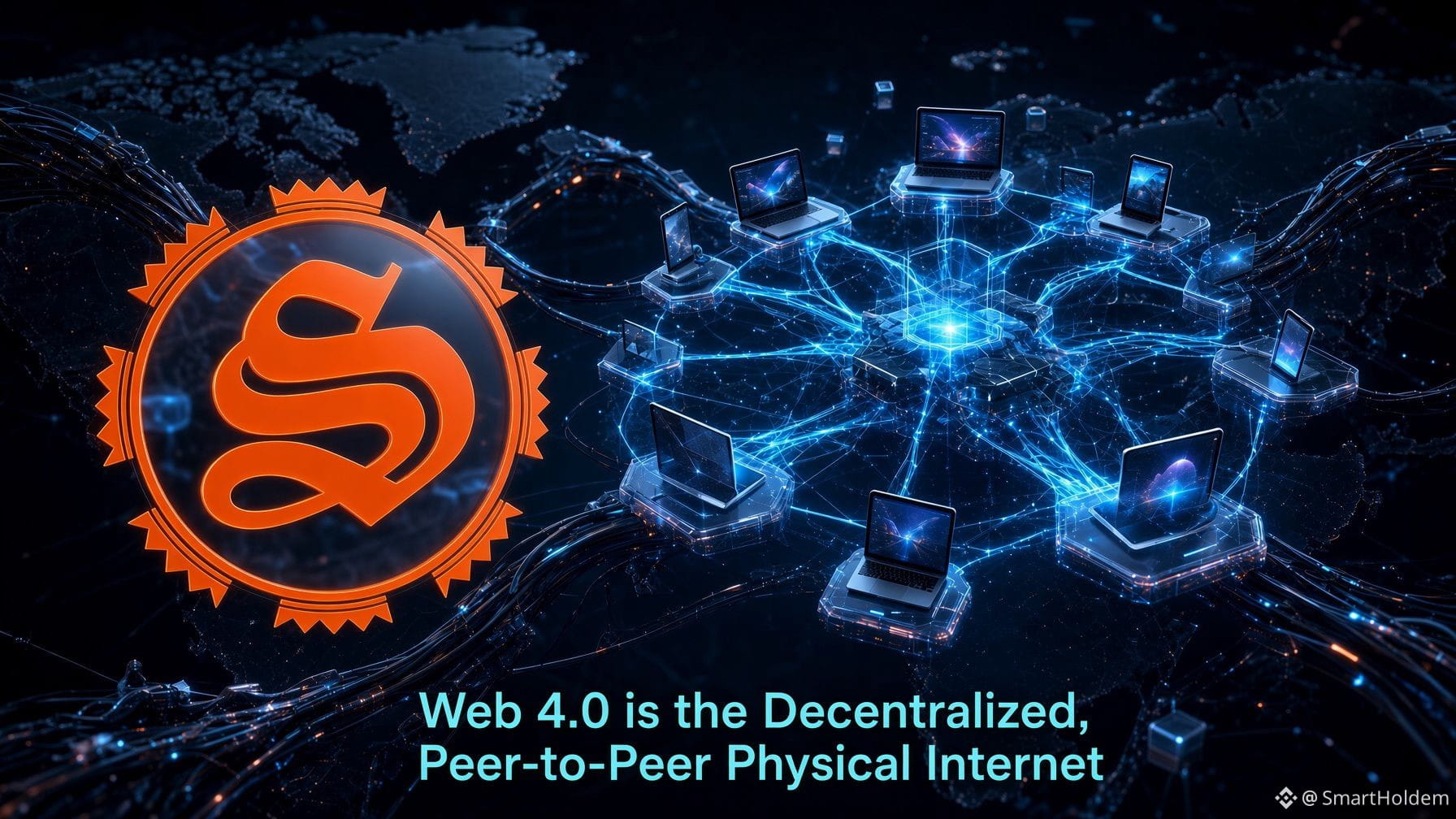
Introducing Netfory Web 4.0 Operating System for the Decentralized Physical Internet.
✓ Zero-knowledge P2P infrastructure
✓ Encrypted messaging E2EE
✓ No central servers. No logs. No VPN required.
Your Data. Your Keys. Your Network.
Explore: https://smartholdem.io
#Web4 #Privacy #DePIN #SmartHoldem #cryptonews
🔐 Privacy is a human right secured by mathematics.
Introducing Netfory Web 4.0 Operating System for the Decentralized Physical Internet.
✓ Zero-knowledge P2P infrastructure
✓ Encrypted messaging E2EE
✓ No central servers. No logs. No VPN required.
Your Data. Your Keys. Your Network.
Explore: https://smartholdem.io
#Web4 #Privacy #DePIN #SmartHoldem #cryptonews
Introducing Netfory Web 4.0 Operating System for the Decentralized Physical Internet.
✓ Zero-knowledge P2P infrastructure
✓ Encrypted messaging E2EE
✓ No central servers. No logs. No VPN required.
Your Data. Your Keys. Your Network.
Explore: https://smartholdem.io
#Web4 #Privacy #DePIN #SmartHoldem #cryptonews
61

·
--
Article
I Kept Asking Who Would Own the Machines Behind AI — Then XBIT and XDGAI Gave Me a Different AnswerI have been watching the AI industry long enough to notice that most people are distracted by the surface of it.
Everyone talks about the models. The apps. The viral tools. The endless stream of AI-generated images, videos, assistants, and agents appearing almost every week. But the more time I spent researching where this industry is actually heading, the less interested I became in the flashy layer people interact with and the more obsessed I became with the invisible layer underneath it.
The compute.
Because the deeper I looked, the stranger the entire system started to feel.
AI is being presented as humanity’s next major technological leap, yet the infrastructure powering that leap still depends heavily on centralized control. A small number of companies own most of the processing power, most of the data pipelines, and most of the hardware needed to train and operate intelligent systems at scale. At first I ignored that reality because it felt too technical to matter. But after weeks of watching how fast AI adoption is accelerating, I started realizing compute may become one of the most valuable resources of the next internet era.
That was the moment my research started shifting in a completely different direction.
Instead of asking which AI model would win, I started asking who would own the infrastructure behind intelligence itself.
And honestly, that question led me into a much bigger rabbit hole than I expected.
I’ve spent a lot of time watching projects try to combine AI and blockchain over the past year. Most of them felt forced to me. Some looked like they were chasing narratives more than solving real problems. Others used decentralization as branding without explaining why decentralization would actually matter once AI systems become deeply integrated into the global economy.
That’s why the partnership between XBIT and XDGAI caught my attention differently.
Not because it sounded futuristic.
Because it sounded inevitable.
The more I researched what decentralized AI compute could actually mean, the more I realized we may be entering a stage where intelligence itself becomes infrastructure. And once that happens, the conversation changes completely.
AI is no longer just software at that point.
It becomes an operating layer for the internet.
I think people still underestimate how large this shift could become. We’re moving toward a world where AI agents may eventually manage digital marketplaces, automate financial systems, coordinate logistics, power virtual environments, personalize education, assist healthcare, and interact across networks continuously in real time. That kind of ecosystem demands enormous computational power. Not occasionally. Constantly.
And I keep coming back to the same thought every time I research this space: what happens if the future of intelligence depends entirely on centralized ownership?
That tension is becoming impossible to ignore.
I’ve been watching how aggressively the demand for GPUs, distributed processing, inference optimization, and AI infrastructure is rising across the market. Compute is quietly turning into the new digital oil. Most people just haven’t noticed yet because the transformation is still happening underneath the surface.
But infrastructure shifts always start quietly.
The internet itself did too.
What makes the XBIT and XDGAI collaboration interesting to me is that it reflects a growing realization inside the industry that AI scaling may eventually require decentralized coordination rather than purely centralized expansion. And the more I think about it, the more logical that idea starts to feel.
Because if AI truly becomes embedded into everything, then relying on a handful of dominant infrastructure providers creates enormous pressure points for the entire ecosystem. Cost pressure. Access pressure. Scalability pressure. Control pressure.
I spent weeks researching how different projects are trying to address those problems, and most solutions still feel early. But the direction itself feels important. It signals that the industry is beginning to recognize compute ownership as a foundational issue rather than a background technical detail.
That’s the part most people miss when they hear phrases like “Web4.”
They assume it’s another marketing term.
Another internet buzzword.
But after spending enough time watching how AI infrastructure is evolving, I think Web4 is less about websites becoming smarter and more about intelligence becoming native to the internet itself. An environment where AI systems interact dynamically with decentralized networks, where compute resources can be distributed globally, and where participation becomes part of the infrastructure economy instead of simply consuming it.
That changes the structure of the internet entirely.
And honestly, I don’t think we’ve emotionally caught up to how massive that transformation could become.
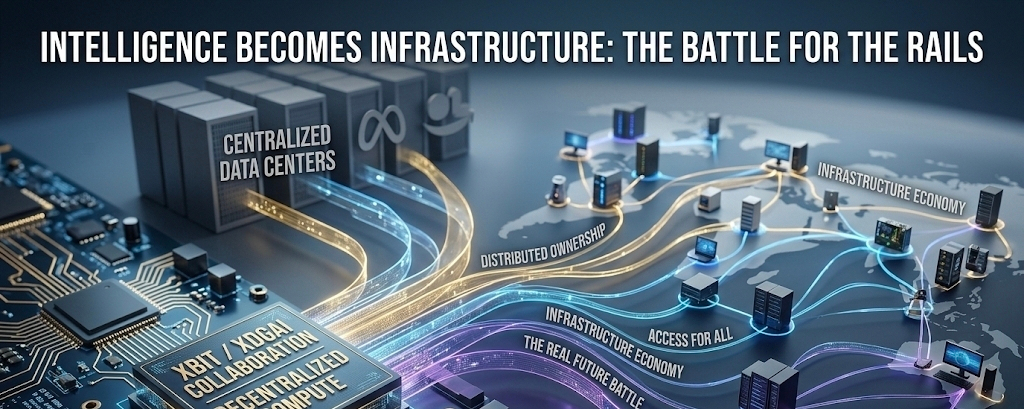
Because once intelligence becomes infrastructure, the battle is no longer only about who creates the smartest AI.
It becomes about who controls the rails powering intelligent systems at scale.
That’s why I keep paying attention to partnerships like this one.
Not because I think any single company has already solved the future.
But because I think the industry is slowly revealing what the real future battle may actually be about.
Ownership.
Access.
Compute.
And the architecture of intelligence itself.
#DecentralizedAI #WEB4 #AIInfrastructure
I Kept Asking Who Would Own the Machines Behind AI — Then XBIT and XDGAI Gave Me a Different Answer
I have been watching the AI industry long enough to notice that most people are distracted by the surface of it.
Everyone talks about the models. The apps. The viral tools. The endless stream of AI-generated images, videos, assistants, and agents appearing almost every week. But the more time I spent researching where this industry is actually heading, the less interested I became in the flashy layer people interact with and the more obsessed I became with the invisible layer underneath it.
The compute.
Because the deeper I looked, the stranger the entire system started to feel.
AI is being presented as humanity’s next major technological leap, yet the infrastructure powering that leap still depends heavily on centralized control. A small number of companies own most of the processing power, most of the data pipelines, and most of the hardware needed to train and operate intelligent systems at scale. At first I ignored that reality because it felt too technical to matter. But after weeks of watching how fast AI adoption is accelerating, I started realizing compute may become one of the most valuable resources of the next internet era.
That was the moment my research started shifting in a completely different direction.
Instead of asking which AI model would win, I started asking who would own the infrastructure behind intelligence itself.
And honestly, that question led me into a much bigger rabbit hole than I expected.
I’ve spent a lot of time watching projects try to combine AI and blockchain over the past year. Most of them felt forced to me. Some looked like they were chasing narratives more than solving real problems. Others used decentralization as branding without explaining why decentralization would actually matter once AI systems become deeply integrated into the global economy.
That’s why the partnership between XBIT and XDGAI caught my attention differently.
Not because it sounded futuristic.
Because it sounded inevitable.
The more I researched what decentralized AI compute could actually mean, the more I realized we may be entering a stage where intelligence itself becomes infrastructure. And once that happens, the conversation changes completely.
AI is no longer just software at that point.
It becomes an operating layer for the internet.
I think people still underestimate how large this shift could become. We’re moving toward a world where AI agents may eventually manage digital marketplaces, automate financial systems, coordinate logistics, power virtual environments, personalize education, assist healthcare, and interact across networks continuously in real time. That kind of ecosystem demands enormous computational power. Not occasionally. Constantly.
And I keep coming back to the same thought every time I research this space: what happens if the future of intelligence depends entirely on centralized ownership?
That tension is becoming impossible to ignore.
I’ve been watching how aggressively the demand for GPUs, distributed processing, inference optimization, and AI infrastructure is rising across the market. Compute is quietly turning into the new digital oil. Most people just haven’t noticed yet because the transformation is still happening underneath the surface.
But infrastructure shifts always start quietly.
The internet itself did too.
What makes the XBIT and XDGAI collaboration interesting to me is that it reflects a growing realization inside the industry that AI scaling may eventually require decentralized coordination rather than purely centralized expansion. And the more I think about it, the more logical that idea starts to feel.
Because if AI truly becomes embedded into everything, then relying on a handful of dominant infrastructure providers creates enormous pressure points for the entire ecosystem. Cost pressure. Access pressure. Scalability pressure. Control pressure.
I spent weeks researching how different projects are trying to address those problems, and most solutions still feel early. But the direction itself feels important. It signals that the industry is beginning to recognize compute ownership as a foundational issue rather than a background technical detail.
That’s the part most people miss when they hear phrases like “Web4.”
They assume it’s another marketing term.
Another internet buzzword.
But after spending enough time watching how AI infrastructure is evolving, I think Web4 is less about websites becoming smarter and more about intelligence becoming native to the internet itself. An environment where AI systems interact dynamically with decentralized networks, where compute resources can be distributed globally, and where participation becomes part of the infrastructure economy instead of simply consuming it.
That changes the structure of the internet entirely.
And honestly, I don’t think we’ve emotionally caught up to how massive that transformation could become.
Because once intelligence becomes infrastructure, the battle is no longer only about who creates the smartest AI.
It becomes about who controls the rails powering intelligent systems at scale.
That’s why I keep paying attention to partnerships like this one.
Not because I think any single company has already solved the future.
But because I think the industry is slowly revealing what the real future battle may actually be about.
Ownership.
Access.
Compute.
And the architecture of intelligence itself.
#DecentralizedAI #WEB4 #AIInfrastructure
Everyone talks about the models. The apps. The viral tools. The endless stream of AI-generated images, videos, assistants, and agents appearing almost every week. But the more time I spent researching where this industry is actually heading, the less interested I became in the flashy layer people interact with and the more obsessed I became with the invisible layer underneath it.
The compute.
Because the deeper I looked, the stranger the entire system started to feel.
AI is being presented as humanity’s next major technological leap, yet the infrastructure powering that leap still depends heavily on centralized control. A small number of companies own most of the processing power, most of the data pipelines, and most of the hardware needed to train and operate intelligent systems at scale. At first I ignored that reality because it felt too technical to matter. But after weeks of watching how fast AI adoption is accelerating, I started realizing compute may become one of the most valuable resources of the next internet era.
That was the moment my research started shifting in a completely different direction.
Instead of asking which AI model would win, I started asking who would own the infrastructure behind intelligence itself.
And honestly, that question led me into a much bigger rabbit hole than I expected.
I’ve spent a lot of time watching projects try to combine AI and blockchain over the past year. Most of them felt forced to me. Some looked like they were chasing narratives more than solving real problems. Others used decentralization as branding without explaining why decentralization would actually matter once AI systems become deeply integrated into the global economy.
That’s why the partnership between XBIT and XDGAI caught my attention differently.
Not because it sounded futuristic.
Because it sounded inevitable.
The more I researched what decentralized AI compute could actually mean, the more I realized we may be entering a stage where intelligence itself becomes infrastructure. And once that happens, the conversation changes completely.
AI is no longer just software at that point.
It becomes an operating layer for the internet.
I think people still underestimate how large this shift could become. We’re moving toward a world where AI agents may eventually manage digital marketplaces, automate financial systems, coordinate logistics, power virtual environments, personalize education, assist healthcare, and interact across networks continuously in real time. That kind of ecosystem demands enormous computational power. Not occasionally. Constantly.
And I keep coming back to the same thought every time I research this space: what happens if the future of intelligence depends entirely on centralized ownership?
That tension is becoming impossible to ignore.
I’ve been watching how aggressively the demand for GPUs, distributed processing, inference optimization, and AI infrastructure is rising across the market. Compute is quietly turning into the new digital oil. Most people just haven’t noticed yet because the transformation is still happening underneath the surface.
But infrastructure shifts always start quietly.
The internet itself did too.
What makes the XBIT and XDGAI collaboration interesting to me is that it reflects a growing realization inside the industry that AI scaling may eventually require decentralized coordination rather than purely centralized expansion. And the more I think about it, the more logical that idea starts to feel.
Because if AI truly becomes embedded into everything, then relying on a handful of dominant infrastructure providers creates enormous pressure points for the entire ecosystem. Cost pressure. Access pressure. Scalability pressure. Control pressure.
I spent weeks researching how different projects are trying to address those problems, and most solutions still feel early. But the direction itself feels important. It signals that the industry is beginning to recognize compute ownership as a foundational issue rather than a background technical detail.
That’s the part most people miss when they hear phrases like “Web4.”
They assume it’s another marketing term.
Another internet buzzword.
But after spending enough time watching how AI infrastructure is evolving, I think Web4 is less about websites becoming smarter and more about intelligence becoming native to the internet itself. An environment where AI systems interact dynamically with decentralized networks, where compute resources can be distributed globally, and where participation becomes part of the infrastructure economy instead of simply consuming it.
That changes the structure of the internet entirely.
And honestly, I don’t think we’ve emotionally caught up to how massive that transformation could become.
Because once intelligence becomes infrastructure, the battle is no longer only about who creates the smartest AI.
It becomes about who controls the rails powering intelligent systems at scale.
That’s why I keep paying attention to partnerships like this one.
Not because I think any single company has already solved the future.
But because I think the industry is slowly revealing what the real future battle may actually be about.
Ownership.
Access.
Compute.
And the architecture of intelligence itself.
#DecentralizedAI #WEB4 #AIInfrastructure
3
202

·
--

Article
5 Mind-Blowing Takeaways From Anndy Lian's Vision of Web4 and the Future of CryptoCrypto isn't just evolving—it's entering an entirely new era.
During his latest AMA, Anndy Lian shared bold perspectives on regulation, Bitcoin, AI, decentralization, and the future of Web4. Here are the biggest lessons every crypto enthusiast should know.
1️⃣ Governments Are Fighting Crypto With Old Rules
"We're fighting a 2026 war with a 1934 playbook."
Regulators are still trying to fit borderless, decentralized finance into outdated financial systems designed nearly a century ago.
Key Takeaways
Current regulations were built for traditional finance—not blockchain.Governments struggle to understand decentralized liquidity.The biggest challenge isn't technology—it's control.Stablecoin licensing and cross-border payments will define the next regulatory battle.
💭 Question: Can governments innovate as fast as crypto?
2️⃣ Nobody Is Truly Protecting Retail Investors
One of the most controversial moments of the AMA.
Anndy argues that many "investor protection" policies sound good in theory but sometimes create even greater risks.
Key Takeaways
Sudden bans and frozen off-ramps can hurt users more than some DeFi exploits.Self-custody remains one of crypto's strongest protections.Industry standards are just as important as regulation.Major exchanges should continue setting security benchmarks.
💭 Question: Is regulation always equal to protection?
3️⃣ Bitcoin Is Becoming a Macro Asset
Institutional adoption has changed Bitcoin.
Instead of moving independently, BTC increasingly reacts to global liquidity, interest rates, and macroeconomic events.
Key Takeaways
ETFs brought institutional capital—and institutional behavior.Bitcoin often moves alongside tech stocks.True "digital gold" may only emerge during a major fiat crisis.Stablecoins are extending dollar dominance into crypto.
💭 Question: Is Bitcoin still an independent asset?
4️⃣ AI Will Replace Jobs—But Also Create New Opportunities
AI is transforming every industry, including crypto.
Developers, marketers, analysts, and even traders will need to adapt.
Key Takeaways
AI can perform many technical tasks in seconds.The winners won't compete against AI—they'll learn to work with it.AI literacy is becoming as important as financial literacy.Continuous learning is the new competitive advantage.
💭 Question: Are you using AI as your assistant—or letting it replace you?
5️⃣ Web4 Means True Decentralization
Anndy believes decentralization must go further than Web3.
Future blockchain systems should minimize centralized decision-making and reduce reliance on human intervention wherever possible.
Key Takeaways
Decentralization should be built into the system—not just marketed.Human bias remains one of the biggest weaknesses.AI-assisted governance may become part of future decentralized networks.Web4 aims to make decentralization more practical and resilient.
💭 Question: Are we really building decentralized systems—or just calling them decentralized?
Final Thoughts
The crypto industry isn't only about price charts anymore.
It's about governance, AI, macroeconomics, regulation, and decentralization.
Whether you agree or disagree with Anndy's views, one thing is certain:
The conversation around Web4 has already begun.
Which insight resonated with you the most?
👇 Share your thoughts below.
#crypto #bitcoin #Aİ #Web3 #WEB4
$NVDA
{future}(NVDAUSDT)
$BNB
{spot}(BNBUSDT)
$BTC
{future}(BTCUSDT)
5 Mind-Blowing Takeaways From Anndy Lian's Vision of Web4 and the Future of Crypto
Crypto isn't just evolving—it's entering an entirely new era.
During his latest AMA, Anndy Lian shared bold perspectives on regulation, Bitcoin, AI, decentralization, and the future of Web4. Here are the biggest lessons every crypto enthusiast should know.
1️⃣ Governments Are Fighting Crypto With Old Rules
"We're fighting a 2026 war with a 1934 playbook."
Regulators are still trying to fit borderless, decentralized finance into outdated financial systems designed nearly a century ago.
Key Takeaways
Current regulations were built for traditional finance—not blockchain.Governments struggle to understand decentralized liquidity.The biggest challenge isn't technology—it's control.Stablecoin licensing and cross-border payments will define the next regulatory battle.
💭 Question: Can governments innovate as fast as crypto?
2️⃣ Nobody Is Truly Protecting Retail Investors
One of the most controversial moments of the AMA.
Anndy argues that many "investor protection" policies sound good in theory but sometimes create even greater risks.
Key Takeaways
Sudden bans and frozen off-ramps can hurt users more than some DeFi exploits.Self-custody remains one of crypto's strongest protections.Industry standards are just as important as regulation.Major exchanges should continue setting security benchmarks.
💭 Question: Is regulation always equal to protection?
3️⃣ Bitcoin Is Becoming a Macro Asset
Institutional adoption has changed Bitcoin.
Instead of moving independently, BTC increasingly reacts to global liquidity, interest rates, and macroeconomic events.
Key Takeaways
ETFs brought institutional capital—and institutional behavior.Bitcoin often moves alongside tech stocks.True "digital gold" may only emerge during a major fiat crisis.Stablecoins are extending dollar dominance into crypto.
💭 Question: Is Bitcoin still an independent asset?
4️⃣ AI Will Replace Jobs—But Also Create New Opportunities
AI is transforming every industry, including crypto.
Developers, marketers, analysts, and even traders will need to adapt.
Key Takeaways
AI can perform many technical tasks in seconds.The winners won't compete against AI—they'll learn to work with it.AI literacy is becoming as important as financial literacy.Continuous learning is the new competitive advantage.
💭 Question: Are you using AI as your assistant—or letting it replace you?
5️⃣ Web4 Means True Decentralization
Anndy believes decentralization must go further than Web3.
Future blockchain systems should minimize centralized decision-making and reduce reliance on human intervention wherever possible.
Key Takeaways
Decentralization should be built into the system—not just marketed.Human bias remains one of the biggest weaknesses.AI-assisted governance may become part of future decentralized networks.Web4 aims to make decentralization more practical and resilient.
💭 Question: Are we really building decentralized systems—or just calling them decentralized?
Final Thoughts
The crypto industry isn't only about price charts anymore.
It's about governance, AI, macroeconomics, regulation, and decentralization.
Whether you agree or disagree with Anndy's views, one thing is certain:
The conversation around Web4 has already begun.
Which insight resonated with you the most?
👇 Share your thoughts below.
#crypto #bitcoin #Aİ #Web3 #WEB4
$NVDA
$BNB
$BTC
During his latest AMA, Anndy Lian shared bold perspectives on regulation, Bitcoin, AI, decentralization, and the future of Web4. Here are the biggest lessons every crypto enthusiast should know.
1️⃣ Governments Are Fighting Crypto With Old Rules
"We're fighting a 2026 war with a 1934 playbook."
Regulators are still trying to fit borderless, decentralized finance into outdated financial systems designed nearly a century ago.
Key Takeaways
Current regulations were built for traditional finance—not blockchain.Governments struggle to understand decentralized liquidity.The biggest challenge isn't technology—it's control.Stablecoin licensing and cross-border payments will define the next regulatory battle.
💭 Question: Can governments innovate as fast as crypto?
2️⃣ Nobody Is Truly Protecting Retail Investors
One of the most controversial moments of the AMA.
Anndy argues that many "investor protection" policies sound good in theory but sometimes create even greater risks.
Key Takeaways
Sudden bans and frozen off-ramps can hurt users more than some DeFi exploits.Self-custody remains one of crypto's strongest protections.Industry standards are just as important as regulation.Major exchanges should continue setting security benchmarks.
💭 Question: Is regulation always equal to protection?
3️⃣ Bitcoin Is Becoming a Macro Asset
Institutional adoption has changed Bitcoin.
Instead of moving independently, BTC increasingly reacts to global liquidity, interest rates, and macroeconomic events.
Key Takeaways
ETFs brought institutional capital—and institutional behavior.Bitcoin often moves alongside tech stocks.True "digital gold" may only emerge during a major fiat crisis.Stablecoins are extending dollar dominance into crypto.
💭 Question: Is Bitcoin still an independent asset?
4️⃣ AI Will Replace Jobs—But Also Create New Opportunities
AI is transforming every industry, including crypto.
Developers, marketers, analysts, and even traders will need to adapt.
Key Takeaways
AI can perform many technical tasks in seconds.The winners won't compete against AI—they'll learn to work with it.AI literacy is becoming as important as financial literacy.Continuous learning is the new competitive advantage.
💭 Question: Are you using AI as your assistant—or letting it replace you?
5️⃣ Web4 Means True Decentralization
Anndy believes decentralization must go further than Web3.
Future blockchain systems should minimize centralized decision-making and reduce reliance on human intervention wherever possible.
Key Takeaways
Decentralization should be built into the system—not just marketed.Human bias remains one of the biggest weaknesses.AI-assisted governance may become part of future decentralized networks.Web4 aims to make decentralization more practical and resilient.
💭 Question: Are we really building decentralized systems—or just calling them decentralized?
Final Thoughts
The crypto industry isn't only about price charts anymore.
It's about governance, AI, macroeconomics, regulation, and decentralization.
Whether you agree or disagree with Anndy's views, one thing is certain:
The conversation around Web4 has already begun.
Which insight resonated with you the most?
👇 Share your thoughts below.
#crypto #bitcoin #Aİ #Web3 #WEB4
$NVDA
$BNB
$BTC
2
4
1.4k

·
--
Bullish
#bedrock $BR
@Bedrock
Hot take 🔥
Web3 decentralized money.
Web4 will decentralize INTELLIGENCE.
Instead of OpenAI/Google controlling all AI...
Imagine AI networks owned by US, the users.
Would you trust a decentralized AI more than a corporate one?
Drop your opinion below 👇
$NEX
#Web4 #DecentralizedAI #BİNANCE
#bedrock $BR
@Bedrock
Hot take 🔥
Web3 decentralized money.
Web4 will decentralize INTELLIGENCE.
Instead of OpenAI/Google controlling all AI...
Imagine AI networks owned by US, the users.
Would you trust a decentralized AI more than a corporate one?
Drop your opinion below 👇
$NEX
#Web4 #DecentralizedAI #BİNANCE
@Bedrock
Hot take 🔥
Web3 decentralized money.
Web4 will decentralize INTELLIGENCE.
Instead of OpenAI/Google controlling all AI...
Imagine AI networks owned by US, the users.
Would you trust a decentralized AI more than a corporate one?
Drop your opinion below 👇
$NEX
#Web4 #DecentralizedAI #BİNANCE
1
435

·
--
📰 Crypto Market Highlights
1. Son Masayoshi says AI infrastructure investment needs may reach $5 trillion per year
Masayoshi Son, founder of SoftBank, said that as AI moves toward “artificial superintelligence,” demand for key infrastructure such as global data centers, power supply, and humanoid robots will keep expanding. In the future, the world may need to invest about $5 trillion per year. He believes that revenue growth and productivity transformation driven by AI will support this round of intense capital expenditures.
2. Liang Wenfeng, founder of DeepSeek, sees his net worth jump to $36 billion
According to market reports, after DeepSeek recently completed a major funding round, the company’s valuation rose significantly. The founder, Liang Wenfeng, saw his net worth adjusted upward to approximately $36 billion, making him one of the wealthiest AI-model-company founders globally. Funding momentum in the AI model track continues, with valuations of leading firms and founders’ wealth rising in tandem.
3. DeepSeek’s funding structure highlights founder control
DeepSeek’s funding round is massive, and the market is paying attention to its special arrangement: some of the funds do not go directly into the company’s equity, but are instead directed to a limited-partnership vehicle managed by Liang Wenfeng. Investors typically face long lockups and limited voting rights. While this structure brings in capital, it also strengthens the founding team’s control over the company’s strategy.
4. Hong Kong Cyberport launches the OPC Hub, focusing on one-person-company and agent-based entrepreneurship
Hong Kong Cyberport officially launched the OPC Hub for “one-person companies,” and simultaneously established a Web4.0 and intelligent agent security alliance. The initiative focuses on Agentic AI, Web4.0, and lightweight entrepreneurship models. Its goal is to lower the barrier to starting a business and to advance the development of intelligent-agent applications, security governance, and the digital economy ecosystem.
5. Ethereum spot ETF sees a single-day net outflow
Latest data shows that Ethereum spot ETFs recorded total net outflows of about $15.4092 million on the previous trading day, mainly from Fidelity’s FETH. However, the total net asset value of Ethereum spot ETFs remains at a relatively high level. The historically accumulated net inflow is still substantial, indicating that institutional capital is experiencing short-term fluctuations alongside long-term allocations.
#AI #ETH #Web4-cmpr
📰 Crypto Market Highlights
1. Son Masayoshi says AI infrastructure investment needs may reach $5 trillion per year
Masayoshi Son, founder of SoftBank, said that as AI moves toward “artificial superintelligence,” demand for key infrastructure such as global data centers, power supply, and humanoid robots will keep expanding. In the future, the world may need to invest about $5 trillion per year. He believes that revenue growth and productivity transformation driven by AI will support this round of intense capital expenditures.
2. Liang Wenfeng, founder of DeepSeek, sees his net worth jump to $36 billion
According to market reports, after DeepSeek recently completed a major funding round, the company’s valuation rose significantly. The founder, Liang Wenfeng, saw his net worth adjusted upward to approximately $36 billion, making him one of the wealthiest AI-model-company founders globally. Funding momentum in the AI model track continues, with valuations of leading firms and founders’ wealth rising in tandem.
3. DeepSeek’s funding structure highlights founder control
DeepSeek’s funding round is massive, and the market is paying attention to its special arrangement: some of the funds do not go directly into the company’s equity, but are instead directed to a limited-partnership vehicle managed by Liang Wenfeng. Investors typically face long lockups and limited voting rights. While this structure brings in capital, it also strengthens the founding team’s control over the company’s strategy.
4. Hong Kong Cyberport launches the OPC Hub, focusing on one-person-company and agent-based entrepreneurship
Hong Kong Cyberport officially launched the OPC Hub for “one-person companies,” and simultaneously established a Web4.0 and intelligent agent security alliance. The initiative focuses on Agentic AI, Web4.0, and lightweight entrepreneurship models. Its goal is to lower the barrier to starting a business and to advance the development of intelligent-agent applications, security governance, and the digital economy ecosystem.
5. Ethereum spot ETF sees a single-day net outflow
Latest data shows that Ethereum spot ETFs recorded total net outflows of about $15.4092 million on the previous trading day, mainly from Fidelity’s FETH. However, the total net asset value of Ethereum spot ETFs remains at a relatively high level. The historically accumulated net inflow is still substantial, indicating that institutional capital is experiencing short-term fluctuations alongside long-term allocations.
#AI #ETH #Web4-cmpr
1. Son Masayoshi says AI infrastructure investment needs may reach $5 trillion per year
Masayoshi Son, founder of SoftBank, said that as AI moves toward “artificial superintelligence,” demand for key infrastructure such as global data centers, power supply, and humanoid robots will keep expanding. In the future, the world may need to invest about $5 trillion per year. He believes that revenue growth and productivity transformation driven by AI will support this round of intense capital expenditures.
2. Liang Wenfeng, founder of DeepSeek, sees his net worth jump to $36 billion
According to market reports, after DeepSeek recently completed a major funding round, the company’s valuation rose significantly. The founder, Liang Wenfeng, saw his net worth adjusted upward to approximately $36 billion, making him one of the wealthiest AI-model-company founders globally. Funding momentum in the AI model track continues, with valuations of leading firms and founders’ wealth rising in tandem.
3. DeepSeek’s funding structure highlights founder control
DeepSeek’s funding round is massive, and the market is paying attention to its special arrangement: some of the funds do not go directly into the company’s equity, but are instead directed to a limited-partnership vehicle managed by Liang Wenfeng. Investors typically face long lockups and limited voting rights. While this structure brings in capital, it also strengthens the founding team’s control over the company’s strategy.
4. Hong Kong Cyberport launches the OPC Hub, focusing on one-person-company and agent-based entrepreneurship
Hong Kong Cyberport officially launched the OPC Hub for “one-person companies,” and simultaneously established a Web4.0 and intelligent agent security alliance. The initiative focuses on Agentic AI, Web4.0, and lightweight entrepreneurship models. Its goal is to lower the barrier to starting a business and to advance the development of intelligent-agent applications, security governance, and the digital economy ecosystem.
5. Ethereum spot ETF sees a single-day net outflow
Latest data shows that Ethereum spot ETFs recorded total net outflows of about $15.4092 million on the previous trading day, mainly from Fidelity’s FETH. However, the total net asset value of Ethereum spot ETFs remains at a relatively high level. The historically accumulated net inflow is still substantial, indicating that institutional capital is experiencing short-term fluctuations alongside long-term allocations.
#AI #ETH #Web4-cmpr
37

AI Infrastructure Software Market: $52.3B in 2026, growing to $147.8B by 2034.
Every dollar of AI software — every model, every agent, every application — needs physical infrastructure beneath it to actually run. Compute to process. Bandwidth to communicate.
The software layer is scaling fast. But most builders are ignoring the physical layer it depends on.
Aethr Protocol is building that foundation: a decentralized dual-resource network that provides compute and bandwidth at scale — the physical backbone the AI economy needs.
That's not a feature request. That's the infrastructure layer Web4.0 runs on.
$AET | https://aethr.one
#DePIN #Web4 #AIInfrastructure #AethrProtocol
AI Infrastructure Software Market: $52.3B in 2026, growing to $147.8B by 2034.
Every dollar of AI software — every model, every agent, every application — needs physical infrastructure beneath it to actually run. Compute to process. Bandwidth to communicate.
The software layer is scaling fast. But most builders are ignoring the physical layer it depends on.
Aethr Protocol is building that foundation: a decentralized dual-resource network that provides compute and bandwidth at scale — the physical backbone the AI economy needs.
That's not a feature request. That's the infrastructure layer Web4.0 runs on.
$AET | https://aethr.one
#DePIN #Web4 #AIInfrastructure #AethrProtocol
Every dollar of AI software — every model, every agent, every application — needs physical infrastructure beneath it to actually run. Compute to process. Bandwidth to communicate.
The software layer is scaling fast. But most builders are ignoring the physical layer it depends on.
Aethr Protocol is building that foundation: a decentralized dual-resource network that provides compute and bandwidth at scale — the physical backbone the AI economy needs.
That's not a feature request. That's the infrastructure layer Web4.0 runs on.
$AET | https://aethr.one
#DePIN #Web4 #AIInfrastructure #AethrProtocol
108

$GM LOCKS THE TRUST LAYER 🔒
$GM just pushed two major infrastructure upgrades: contract permissions fully renounced and over $86M in LP permanently locked via PinkLock. This shifts trust from team promises to mechanism-based security, tightening long-term liquidity confidence for the Web4 AI stack.
Whale radar is on. This is the kind of structural move that serious capital watches closely. No manual backdoor control, liquidity locked, decentralization narrative heating up fast.
Not financial advice. Manage your risk.
#Crypto #Web4 #Aİ #DeFi #BinanceSquare
⚡
$GM LOCKS THE TRUST LAYER 🔒
$GM just pushed two major infrastructure upgrades: contract permissions fully renounced and over $86M in LP permanently locked via PinkLock. This shifts trust from team promises to mechanism-based security, tightening long-term liquidity confidence for the Web4 AI stack.
Whale radar is on. This is the kind of structural move that serious capital watches closely. No manual backdoor control, liquidity locked, decentralization narrative heating up fast.
Not financial advice. Manage your risk.
#Crypto #Web4 #Aİ #DeFi #BinanceSquare
⚡
$GM just pushed two major infrastructure upgrades: contract permissions fully renounced and over $86M in LP permanently locked via PinkLock. This shifts trust from team promises to mechanism-based security, tightening long-term liquidity confidence for the Web4 AI stack.
Whale radar is on. This is the kind of structural move that serious capital watches closely. No manual backdoor control, liquidity locked, decentralization narrative heating up fast.
Not financial advice. Manage your risk.
#Crypto #Web4 #Aİ #DeFi #BinanceSquare
⚡
32

·
--
Bullish
🚀 A Quiet Revolution Has Begun — WEB4 SOLO KING for Good
While the crypto world chases profit, Kotlyar Foundation is building something bigger.
WEB4 SOLO KING for Good is not a product. Not a startup. It is a manifesto of a new generation of technology — where autonomous AI agents work not for the enrichment of the few, but for the good of all:
🌱 Ecology
📚 Access to education
🧠 Mental health support
🤝 Help for those in need
Powered by Web4, our AI agents act autonomously — analyzing markets, predicting liquidity movements, and building cross-chain routes in milliseconds. No manual labor. No human oversight. Just intelligent systems working 24/7 to free people for what truly matters: creativity, care, and kindness.
This project is built for every state, every country, every community ready to use technology for good.
💙 We invite donors, partners, and everyone who believes the future must be fair.
Your support is not just a donation. It is a contribution to a world where technology serves humanity — not against it.
👉 Follow Kotlyar Foundation on Binance Square
👉 Support the project. Share this post. Join the movement.
Together we will build a future where autonomous intelligence serves the good.
#WEB4SOLOKING #KotlyarFoundation #AIforGood #Web4 #CryptoForHumanity
🚀 A Quiet Revolution Has Begun — WEB4 SOLO KING for Good
While the crypto world chases profit, Kotlyar Foundation is building something bigger.
WEB4 SOLO KING for Good is not a product. Not a startup. It is a manifesto of a new generation of technology — where autonomous AI agents work not for the enrichment of the few, but for the good of all:
🌱 Ecology
📚 Access to education
🧠 Mental health support
🤝 Help for those in need
Powered by Web4, our AI agents act autonomously — analyzing markets, predicting liquidity movements, and building cross-chain routes in milliseconds. No manual labor. No human oversight. Just intelligent systems working 24/7 to free people for what truly matters: creativity, care, and kindness.
This project is built for every state, every country, every community ready to use technology for good.
💙 We invite donors, partners, and everyone who believes the future must be fair.
Your support is not just a donation. It is a contribution to a world where technology serves humanity — not against it.
👉 Follow Kotlyar Foundation on Binance Square
👉 Support the project. Share this post. Join the movement.
Together we will build a future where autonomous intelligence serves the good.
#WEB4SOLOKING #KotlyarFoundation #AIforGood #Web4 #CryptoForHumanity
While the crypto world chases profit, Kotlyar Foundation is building something bigger.
WEB4 SOLO KING for Good is not a product. Not a startup. It is a manifesto of a new generation of technology — where autonomous AI agents work not for the enrichment of the few, but for the good of all:
🌱 Ecology
📚 Access to education
🧠 Mental health support
🤝 Help for those in need
Powered by Web4, our AI agents act autonomously — analyzing markets, predicting liquidity movements, and building cross-chain routes in milliseconds. No manual labor. No human oversight. Just intelligent systems working 24/7 to free people for what truly matters: creativity, care, and kindness.
This project is built for every state, every country, every community ready to use technology for good.
💙 We invite donors, partners, and everyone who believes the future must be fair.
Your support is not just a donation. It is a contribution to a world where technology serves humanity — not against it.
👉 Follow Kotlyar Foundation on Binance Square
👉 Support the project. Share this post. Join the movement.
Together we will build a future where autonomous intelligence serves the good.
#WEB4SOLOKING #KotlyarFoundation #AIforGood #Web4 #CryptoForHumanity

1
51
·
--
SmartHoldem
·
--
Internet for Humanity. Secured by Mathematics.
Web 4.0 is a breakthrough for human autonomy.
Netfory Web4 Operating System is building the foundational infrastructure to protect digital rights, ensuring that freedom of speech is secured by math and decentralized governance.
Bloggers, journalists & devs can publish websites & dApps directly to the P2P network via DevHub.
No AWS. No Cloudflare. No domain seizures.
Push Humanity Forward https://smartholdem.io/mission
Web 4.0 is the Decentralized, Peer-to-Peer Physical Internet.
#Web4 #DePIN #HumanRights #SmartHoldem #Privacy
Web 4.0 is a breakthrough for human autonomy.
Netfory Web4 Operating System is building the foundational infrastructure to protect digital rights, ensuring that freedom of speech is secured by math and decentralized governance.
Bloggers, journalists & devs can publish websites & dApps directly to the P2P network via DevHub.
No AWS. No Cloudflare. No domain seizures.
Push Humanity Forward https://smartholdem.io/mission
Web 4.0 is the Decentralized, Peer-to-Peer Physical Internet.
#Web4 #DePIN #HumanRights #SmartHoldem #Privacy
6
76


·
--
Bullish
$X Web2 is too old.
Web3 is too mercenary.
We’re building the world’s first Web4 product as a Real-World Business (RWB).
Launching soon.
#TaleX #Web4 #RWB #RealWorldBusiness
$X Web2 is too old.
Web3 is too mercenary.
We’re building the world’s first Web4 product as a Real-World Business (RWB).
Launching soon.
#TaleX #Web4 #RWB #RealWorldBusiness
Web3 is too mercenary.
We’re building the world’s first Web4 product as a Real-World Business (RWB).
Launching soon.
#TaleX #Web4 #RWB #RealWorldBusiness

2
1
13
4.9k

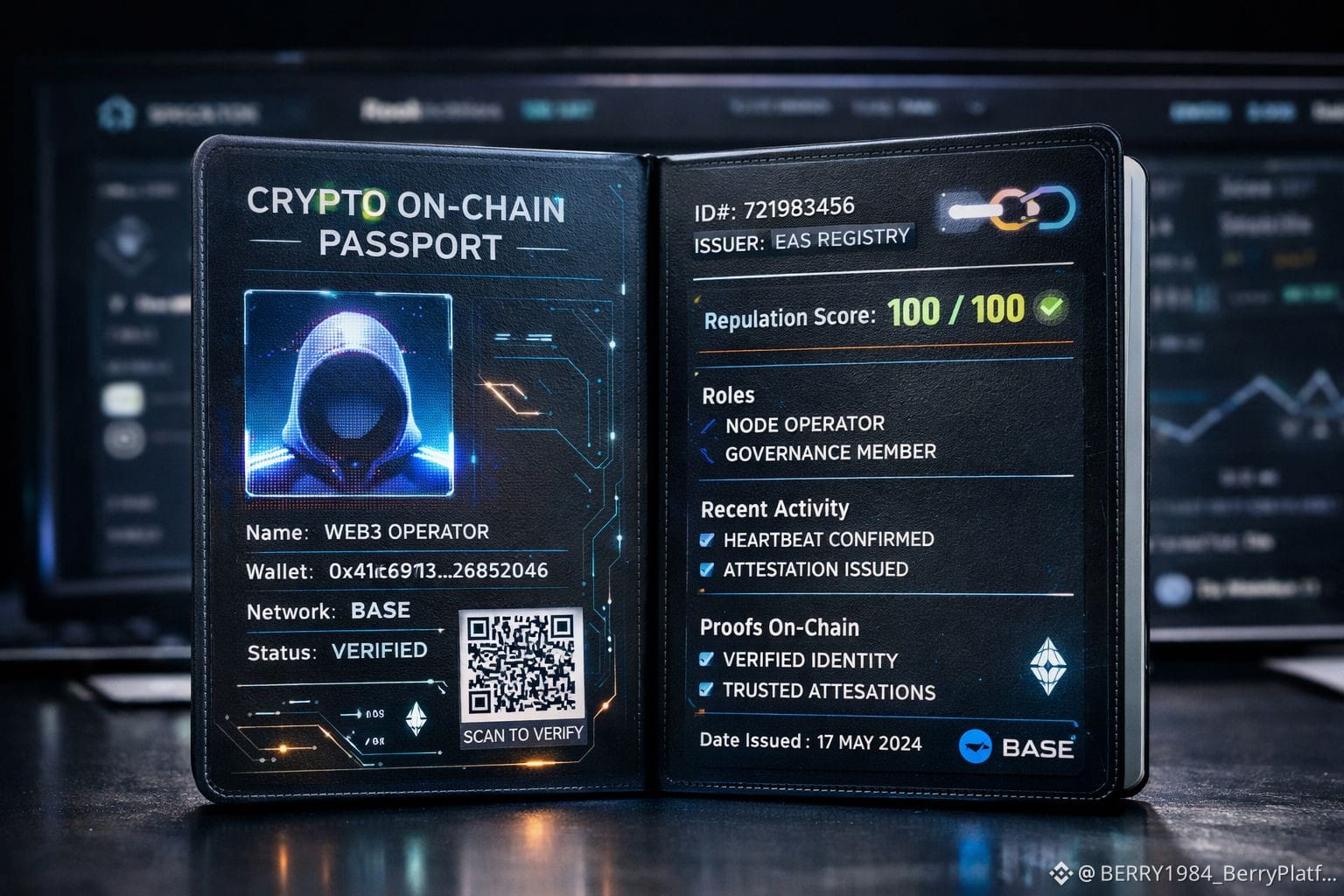
Identity isn’t a feature.
It’s the foundation.
Berry Passport → activated.
Return of the Senior → confirmed.
#Web4 #Identity #BaseNetwork #DigitalSovereignty #CryptoPassport #Governance #OnChainIdentity #ReturnOfTheSenior
Identity isn’t a feature.
It’s the foundation.
Berry Passport → activated.
Return of the Senior → confirmed.
#Web4 #Identity #BaseNetwork #DigitalSovereignty #CryptoPassport #Governance #OnChainIdentity #ReturnOfTheSenior
It’s the foundation.
Berry Passport → activated.
Return of the Senior → confirmed.
#Web4 #Identity #BaseNetwork #DigitalSovereignty #CryptoPassport #Governance #OnChainIdentity #ReturnOfTheSenior
220

·
--
Bullish
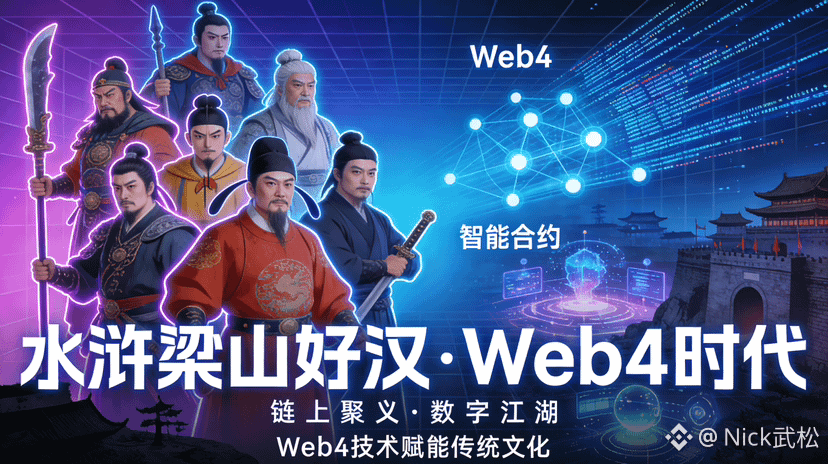
#AI #WEB4 Brothers, Web3 talks about "decentralization" and "ownership";
but Wu Song has recently observed that the prototype of Web4 has already emerged.
Web4 in Wu Song's eyes:
🤖 AI-driven: No longer are you searching for information, but rather AI entities (Agents) make decisions and conduct transactions for you.
🧠 Brain-computer interconnection: The boundary between the physical world and the digital world completely disappears.
⚡ Fully automated finance: Tools like #BinanceAIPro are just the "kindergarten" of Web4.
Wu Song bluntly stated:
Web3 allowed us to take back our data, Web4 may allow us to "free our hands".
💬 Interactive topic:
Do you think Web4 is humanity's ultimate freedom, or will it be completely controlled by AI? Reply in the comments with Web4 for a surprise $BTC
#AI #WEB4 Brothers, Web3 talks about "decentralization" and "ownership";
but Wu Song has recently observed that the prototype of Web4 has already emerged.
Web4 in Wu Song's eyes:
🤖 AI-driven: No longer are you searching for information, but rather AI entities (Agents) make decisions and conduct transactions for you.
🧠 Brain-computer interconnection: The boundary between the physical world and the digital world completely disappears.
⚡ Fully automated finance: Tools like #BinanceAIPro are just the "kindergarten" of Web4.
Wu Song bluntly stated:
Web3 allowed us to take back our data, Web4 may allow us to "free our hands".
💬 Interactive topic:
Do you think Web4 is humanity's ultimate freedom, or will it be completely controlled by AI? Reply in the comments with Web4 for a surprise $BTC
but Wu Song has recently observed that the prototype of Web4 has already emerged.
Web4 in Wu Song's eyes:
🤖 AI-driven: No longer are you searching for information, but rather AI entities (Agents) make decisions and conduct transactions for you.
🧠 Brain-computer interconnection: The boundary between the physical world and the digital world completely disappears.
⚡ Fully automated finance: Tools like #BinanceAIPro are just the "kindergarten" of Web4.
Wu Song bluntly stated:
Web3 allowed us to take back our data, Web4 may allow us to "free our hands".
💬 Interactive topic:
Do you think Web4 is humanity's ultimate freedom, or will it be completely controlled by AI? Reply in the comments with Web4 for a surprise $BTC
5k
105
423
5k

·
--
Article
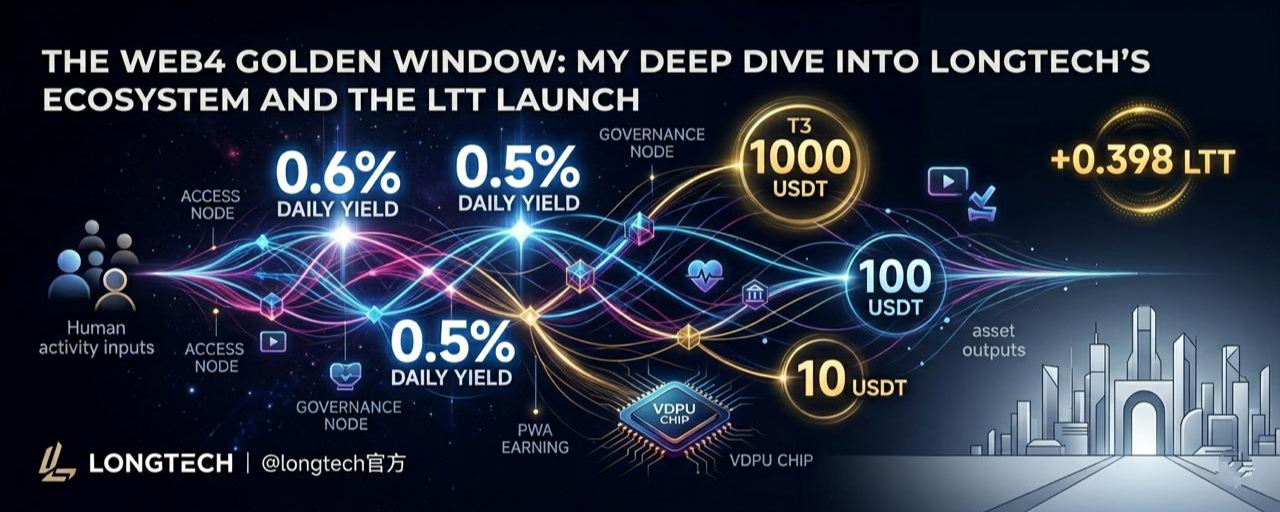
The Web4 Golden Window: My Deep Dive into LongTech’s Ecosystem and the LTT LaunchGuys, we’ve all spent years as "digital tenants"—giving away our steps, our watch time, and our health data to big tech and getting exactly zero back. But the shift to Web4 is finally changing the rules. I’ve been deep-diving into LongTech (@Nancy927-Lo ), and they are actually pulling off something most projects only dream of: Behavioral Assetization.
Here is the breakdown of why I'm watching this one closely. 🧵
1️⃣ Phase 1: The Engine is Already Humming ⚙️
LongTech didn't just launch with a "Coming Soon" page. Their ShortChall platform already has over 1 million users earning points just by interacting with content. This month, the LTT governance token goes live—the core dividend engine for the whole ecosystem.
2️⃣ Phase 2: ShortCon & The Drama Boom 🎬
Next month, the ShortCon platform drops. If you’ve seen the explosion of short dramas in 2026, you know the traffic potential here is nuclear. LongTech is capturing that "fiat-to-crypto" bridge by rewarding viewers for their attention.
3️⃣ The 2026-2027 Roadmap: From Digital to Physical ⌚
This is where the "Web4" label actually makes sense. By Q4, the LongTech Mall will bridge digital assets with real shopping. Even bigger? Their AI Smartwatch (powered by a custom VDPU chip) is coming soon to turn your steps and health data into real-time ecological rights. No manual work—just living and earning.
4️⃣ Why This Hits Different 🛡️
LongTech focuses on External Blood Generation—revenue from hardware sales and drama subs that feeds the LTT deflationary model. With TronBank as a strategic partner and backing from NS-ENM, this has a level of institutional support that’s rare for a new ecosystem.
🌟 Creator Alpha: The "Thousand U Seeking Star" Program
If you're a content creator, don't miss this. LongTech is running a 2,000 USDT Bounty for original posts.
Earn: 5–25 USDT per article.Speed Bonus: The first 50 approved articles share an extra 500 USDT.How: Follow @Nancy927-Lo and share your original take!
Check the details and participate here: [Thousand U Seeking Star](https://app.binance.com/uni-qr/cpos/313820956007058?r=ng99injx&l=en&uco=spd-izyhh4rgfotf85orpw&uc=app_square_share_link&us=copylink)
Are you a tenant or a shareholder? The Web4 windfall has begun. 🚀
#longtech #WEB4 #Aİ #LTT @Nancy927-Lo
$币安人生 $RAVE $EDU
The Web4 Golden Window: My Deep Dive into LongTech’s Ecosystem and the LTT Launch
Guys, we’ve all spent years as "digital tenants"—giving away our steps, our watch time, and our health data to big tech and getting exactly zero back. But the shift to Web4 is finally changing the rules. I’ve been deep-diving into LongTech (@琦先森JS ), and they are actually pulling off something most projects only dream of: Behavioral Assetization.
Here is the breakdown of why I'm watching this one closely. 🧵
1️⃣ Phase 1: The Engine is Already Humming ⚙️
LongTech didn't just launch with a "Coming Soon" page. Their ShortChall platform already has over 1 million users earning points just by interacting with content. This month, the LTT governance token goes live—the core dividend engine for the whole ecosystem.
2️⃣ Phase 2: ShortCon & The Drama Boom 🎬
Next month, the ShortCon platform drops. If you’ve seen the explosion of short dramas in 2026, you know the traffic potential here is nuclear. LongTech is capturing that "fiat-to-crypto" bridge by rewarding viewers for their attention.
3️⃣ The 2026-2027 Roadmap: From Digital to Physical ⌚
This is where the "Web4" label actually makes sense. By Q4, the LongTech Mall will bridge digital assets with real shopping. Even bigger? Their AI Smartwatch (powered by a custom VDPU chip) is coming soon to turn your steps and health data into real-time ecological rights. No manual work—just living and earning.
4️⃣ Why This Hits Different 🛡️
LongTech focuses on External Blood Generation—revenue from hardware sales and drama subs that feeds the LTT deflationary model. With TronBank as a strategic partner and backing from NS-ENM, this has a level of institutional support that’s rare for a new ecosystem.
🌟 Creator Alpha: The "Thousand U Seeking Star" Program
If you're a content creator, don't miss this. LongTech is running a 2,000 USDT Bounty for original posts.
Earn: 5–25 USDT per article.Speed Bonus: The first 50 approved articles share an extra 500 USDT.How: Follow @琦先森JS and share your original take!
Check the details and participate here: Thousand U Seeking Star
Are you a tenant or a shareholder? The Web4 windfall has begun. 🚀
#longtech #WEB4 #Aİ #LTT @琦先森JS
$币安人生 $RAVE $EDU
Here is the breakdown of why I'm watching this one closely. 🧵
1️⃣ Phase 1: The Engine is Already Humming ⚙️
LongTech didn't just launch with a "Coming Soon" page. Their ShortChall platform already has over 1 million users earning points just by interacting with content. This month, the LTT governance token goes live—the core dividend engine for the whole ecosystem.
2️⃣ Phase 2: ShortCon & The Drama Boom 🎬
Next month, the ShortCon platform drops. If you’ve seen the explosion of short dramas in 2026, you know the traffic potential here is nuclear. LongTech is capturing that "fiat-to-crypto" bridge by rewarding viewers for their attention.
3️⃣ The 2026-2027 Roadmap: From Digital to Physical ⌚
This is where the "Web4" label actually makes sense. By Q4, the LongTech Mall will bridge digital assets with real shopping. Even bigger? Their AI Smartwatch (powered by a custom VDPU chip) is coming soon to turn your steps and health data into real-time ecological rights. No manual work—just living and earning.
4️⃣ Why This Hits Different 🛡️
LongTech focuses on External Blood Generation—revenue from hardware sales and drama subs that feeds the LTT deflationary model. With TronBank as a strategic partner and backing from NS-ENM, this has a level of institutional support that’s rare for a new ecosystem.
🌟 Creator Alpha: The "Thousand U Seeking Star" Program
If you're a content creator, don't miss this. LongTech is running a 2,000 USDT Bounty for original posts.
Earn: 5–25 USDT per article.Speed Bonus: The first 50 approved articles share an extra 500 USDT.How: Follow @琦先森JS and share your original take!
Check the details and participate here: Thousand U Seeking Star
Are you a tenant or a shareholder? The Web4 windfall has begun. 🚀
#longtech #WEB4 #Aİ #LTT @琦先森JS
$币安人生 $RAVE $EDU
4
2
3
525

·
--
The buzz around Bank of AI is heating up lately, primarily because it addresses the biggest gap in AI Agents: transforming 'capability' into a tangible execution chain, rather than just being talk. By packaging modules like payment protocols, on-chain identity standards, and tool invocation interfaces into reusable components, developers can assemble capabilities like building blocks: identity verification, fee settlement, on-chain interactions, and result feedback. For the ecosystem, this pushes AI from the content layer into the trading and execution layer; for users, the most immediate experience is a shorter path, fewer actions, and a more natural reuse of components. ([Binance][5])
However, the more 'actionable' it becomes, the more precise we need to define the boundaries. I recommend managing risk using three gates: account isolation (keeping interactions and holdings separate), limit authorization (only granting necessary amounts and durations), and critical action verification (delayed or secondary confirmation). This way, you can enjoy the efficiency of automation without exposing yourself to irreversible risks due to impulsive decisions. Treat AI as a process tool rather than a creative toy, and you'll truly reap its long-term value.
@JustinSun_ #TRONEcoStar #BankOfAI @OfficialAINFT #AIagent #Web4
The buzz around Bank of AI is heating up lately, primarily because it addresses the biggest gap in AI Agents: transforming 'capability' into a tangible execution chain, rather than just being talk. By packaging modules like payment protocols, on-chain identity standards, and tool invocation interfaces into reusable components, developers can assemble capabilities like building blocks: identity verification, fee settlement, on-chain interactions, and result feedback. For the ecosystem, this pushes AI from the content layer into the trading and execution layer; for users, the most immediate experience is a shorter path, fewer actions, and a more natural reuse of components. ([Binance][5])
However, the more 'actionable' it becomes, the more precise we need to define the boundaries. I recommend managing risk using three gates: account isolation (keeping interactions and holdings separate), limit authorization (only granting necessary amounts and durations), and critical action verification (delayed or secondary confirmation). This way, you can enjoy the efficiency of automation without exposing yourself to irreversible risks due to impulsive decisions. Treat AI as a process tool rather than a creative toy, and you'll truly reap its long-term value.
@Justin Sun_孙宇晨 #TRONEcoStar #BankOfAI @OfficialAINFT #AIagent #Web4
However, the more 'actionable' it becomes, the more precise we need to define the boundaries. I recommend managing risk using three gates: account isolation (keeping interactions and holdings separate), limit authorization (only granting necessary amounts and durations), and critical action verification (delayed or secondary confirmation). This way, you can enjoy the efficiency of automation without exposing yourself to irreversible risks due to impulsive decisions. Treat AI as a process tool rather than a creative toy, and you'll truly reap its long-term value.
@Justin Sun_孙宇晨 #TRONEcoStar #BankOfAI @OfficialAINFT #AIagent #Web4
145

TRUST MODEL RESET: $GM LOCKS LIQUIDITY 🔒
GMG.AI has completed two core infrastructure upgrades: contract permissions have been fully renounced, and more than $86 million in LP liquidity has been permanently locked through PinkLock. The move shifts trust from team commitments toward mechanism-based controls, which may improve long-term credibility for institutional and ecosystem participants.
This setup reduces discretionary intervention risk and strengthens liquidity predictability. For traders, the key signal is not short-term volatility, but whether the market reprices $GM around improved infrastructure security and decentralization progress.
Not financial advice. Manage your risk.
#Crypto #DeFi #Aİ #Web4 #BinanceSquar
⚡
TRUST MODEL RESET: $GM LOCKS LIQUIDITY 🔒
GMG.AI has completed two core infrastructure upgrades: contract permissions have been fully renounced, and more than $86 million in LP liquidity has been permanently locked through PinkLock. The move shifts trust from team commitments toward mechanism-based controls, which may improve long-term credibility for institutional and ecosystem participants.
This setup reduces discretionary intervention risk and strengthens liquidity predictability. For traders, the key signal is not short-term volatility, but whether the market reprices $GM around improved infrastructure security and decentralization progress.
Not financial advice. Manage your risk.
#Crypto #DeFi #Aİ #Web4 #BinanceSquar
⚡
GMG.AI has completed two core infrastructure upgrades: contract permissions have been fully renounced, and more than $86 million in LP liquidity has been permanently locked through PinkLock. The move shifts trust from team commitments toward mechanism-based controls, which may improve long-term credibility for institutional and ecosystem participants.
This setup reduces discretionary intervention risk and strengthens liquidity predictability. For traders, the key signal is not short-term volatility, but whether the market reprices $GM around improved infrastructure security and decentralization progress.
Not financial advice. Manage your risk.
#Crypto #DeFi #Aİ #Web4 #BinanceSquar
⚡
33


·
--
Bullish
🌌 #NEAR: ATH 2026 — PATH TO WEB4
Do you remember 2021? ATH $20 on pure hype.
2026 — a different story. NEAR forges AI neural networks on chains: smart contracts evolve by themselves, Web4 is being created before our eyes.
I said that the final discounts of 1.4 have already passed before the sprint $5→$15.
ATH — when NEAR's TVL devours Solana, the price will skyrocket very fiercely.
Are you long or short on NEAR? Share your positions! 💎
#NEAR #Web4
🌌 #NEAR: ATH 2026 — PATH TO WEB4
Do you remember 2021? ATH $20 on pure hype.
2026 — a different story. NEAR forges AI neural networks on chains: smart contracts evolve by themselves, Web4 is being created before our eyes.
I said that the final discounts of 1.4 have already passed before the sprint $5→$15.
ATH — when NEAR's TVL devours Solana, the price will skyrocket very fiercely.
Are you long or short on NEAR? Share your positions! 💎
#NEAR #Web4
Do you remember 2021? ATH $20 on pure hype.
2026 — a different story. NEAR forges AI neural networks on chains: smart contracts evolve by themselves, Web4 is being created before our eyes.
I said that the final discounts of 1.4 have already passed before the sprint $5→$15.
ATH — when NEAR's TVL devours Solana, the price will skyrocket very fiercely.
Are you long or short on NEAR? Share your positions! 💎
#NEAR #Web4
2
1.9k

·
--

Article
The Government Thinks It's Protecting You. It Might Not Be.There's one thing Anndy Lian said in his Binance Square AMA that I genuinely couldn't stop thinking about after.
"Investor protection" — that phrase we hear from regulators all the time — might actually be doing the opposite of what it sounds like.
Think about it. When a government suddenly bans a crypto off-ramp or freezes a stablecoin, the people who get hurt the most aren't institutions. They're retail holders who had no warning, no exit, and no recourse. The damage from that kind of intervention can quietly exceed what most DeFi exploits cause in an entire year. But it doesn't make the same headlines.
Anndy has advised over twenty governments on blockchain policy, so this isn't an outsider's take. He's been in those rooms. And his read is that most regulators aren't operating from a place of understanding — they're operating from frameworks that were built for a completely different financial era. Centralized. Rigid. Pre-digital.
Crypto didn't fit then. It still doesn't fit now. And the gap between what builders understand about decentralized finance and what governments are actually enforcing hasn't closed nearly as fast as most people think.
What stuck with me most is his point about where real protection actually comes from in this space. Not from waiting for regulators to figure it out. Self-custody, decentralization, and industry-led standards — that's the actual safety net.
The stablecoin and cross-border liquidity battle is where the real regulatory fight is playing out right now. Not in the headlines most people are reading.
Worth a listen if you want an unfiltered perspective from someone who's actually sat across the table from the people making these decisions. 🎯
@Binance_Square_Official @Anndy_Lian
🎧 [Watch replay here](https://www.binance.com/en/square/audio/replay?id=42103949889889)
#Binance #BinanceSquare #BinanceAngels #Web4
The Government Thinks It's Protecting You. It Might Not Be.
There's one thing Anndy Lian said in his Binance Square AMA that I genuinely couldn't stop thinking about after.
"Investor protection" — that phrase we hear from regulators all the time — might actually be doing the opposite of what it sounds like.
Think about it. When a government suddenly bans a crypto off-ramp or freezes a stablecoin, the people who get hurt the most aren't institutions. They're retail holders who had no warning, no exit, and no recourse. The damage from that kind of intervention can quietly exceed what most DeFi exploits cause in an entire year. But it doesn't make the same headlines.
Anndy has advised over twenty governments on blockchain policy, so this isn't an outsider's take. He's been in those rooms. And his read is that most regulators aren't operating from a place of understanding — they're operating from frameworks that were built for a completely different financial era. Centralized. Rigid. Pre-digital.
Crypto didn't fit then. It still doesn't fit now. And the gap between what builders understand about decentralized finance and what governments are actually enforcing hasn't closed nearly as fast as most people think.
What stuck with me most is his point about where real protection actually comes from in this space. Not from waiting for regulators to figure it out. Self-custody, decentralization, and industry-led standards — that's the actual safety net.
The stablecoin and cross-border liquidity battle is where the real regulatory fight is playing out right now. Not in the headlines most people are reading.
Worth a listen if you want an unfiltered perspective from someone who's actually sat across the table from the people making these decisions. 🎯
@Binance Square Official @Anndy_Lian
🎧 Watch replay here
#Binance #BinanceSquare #BinanceAngels #Web4
"Investor protection" — that phrase we hear from regulators all the time — might actually be doing the opposite of what it sounds like.
Think about it. When a government suddenly bans a crypto off-ramp or freezes a stablecoin, the people who get hurt the most aren't institutions. They're retail holders who had no warning, no exit, and no recourse. The damage from that kind of intervention can quietly exceed what most DeFi exploits cause in an entire year. But it doesn't make the same headlines.
Anndy has advised over twenty governments on blockchain policy, so this isn't an outsider's take. He's been in those rooms. And his read is that most regulators aren't operating from a place of understanding — they're operating from frameworks that were built for a completely different financial era. Centralized. Rigid. Pre-digital.
Crypto didn't fit then. It still doesn't fit now. And the gap between what builders understand about decentralized finance and what governments are actually enforcing hasn't closed nearly as fast as most people think.
What stuck with me most is his point about where real protection actually comes from in this space. Not from waiting for regulators to figure it out. Self-custody, decentralization, and industry-led standards — that's the actual safety net.
The stablecoin and cross-border liquidity battle is where the real regulatory fight is playing out right now. Not in the headlines most people are reading.
Worth a listen if you want an unfiltered perspective from someone who's actually sat across the table from the people making these decisions. 🎯
@Binance Square Official @Anndy_Lian
🎧 Watch replay here
#Binance #BinanceSquare #BinanceAngels #Web4
3
166
Log in to explore more content
Join global crypto users on Binance Square
⚡️ Get latest and useful information about crypto.
💬 Trusted by the world’s largest crypto exchange.
👍 Discover real insights from verified creators.
Email / Phone number
Trending Topics
1
#BinanceWillListHyperliquid(HYPE)
19,505 views
538 Discussing
2
#BitcoinFallsBelow$83,000
893 views
20 Discussing
3
#BitcoinFallsToAround$84,600ThisWeek
0 views
0 Discussing
4
#US30YearYieldHighestSince2004
1,530 views
72 Discussing
5
#ETHBreaksAbove$2,700
605 views
20 Discussing
6
#USWeighsPromotingDollarStablecoinsAbroad
25,883 views
884 Discussing
7
#US10YTreasuryYieldHits19YearHigh
22,627 views
671 Discussing
8
#SpotBitcoinETFsInflow$2.31BInFourDays
3,530 views
58 Discussing
9
#BitcoinRejectedAt$87,300Twice
0 views
0 Discussing
10
#BCHJumps28%OnCMEFuturesListing
66,377 views
1,371 Discussing