
#governance
governance
132,305 views
1,329 Discussing
Hot
Latest

·
--
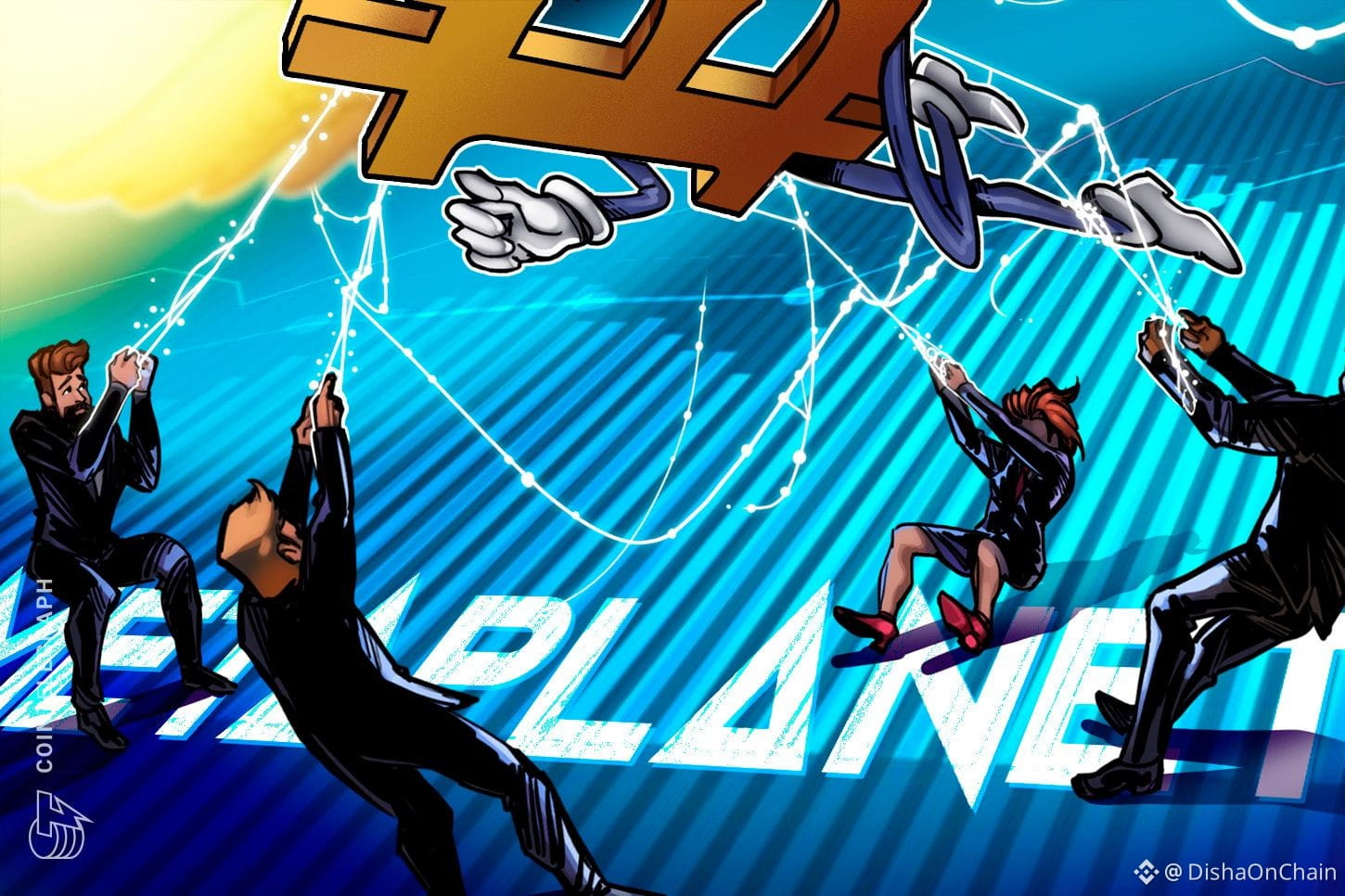
⚡ VanEck Flags Metaplanet’s Executive Dilution Despite 41% Share Pool Cut
📌 Key Highlights:
• Metaplanet trimmed its potential share pool by 41%, yet executive equity exposure remains above peer digital‑asset treasuries.
• VanEck cites executive holdings that still outpace industry averages, raising governance concerns.
• The move underscores the need for tighter equity caps in emerging Web3 platforms to protect investor interests.
📊 Market Takeaway:
Investor sentiment toward Metaplanet has cooled, reflecting heightened scrutiny over executive compensation structures. The broader Web3 sector may see tighter governance standards as a result.
#Web3 #Governance #CryptoTrading $AKE $ONE $AR
⚡ VanEck Flags Metaplanet’s Executive Dilution Despite 41% Share Pool Cut
📌 Key Highlights:
• Metaplanet trimmed its potential share pool by 41%, yet executive equity exposure remains above peer digital‑asset treasuries.
• VanEck cites executive holdings that still outpace industry averages, raising governance concerns.
• The move underscores the need for tighter equity caps in emerging Web3 platforms to protect investor interests.
📊 Market Takeaway:
Investor sentiment toward Metaplanet has cooled, reflecting heightened scrutiny over executive compensation structures. The broader Web3 sector may see tighter governance standards as a result.
#Web3 #Governance #CryptoTrading $AKE $ONE $AR
📌 Key Highlights:
• Metaplanet trimmed its potential share pool by 41%, yet executive equity exposure remains above peer digital‑asset treasuries.
• VanEck cites executive holdings that still outpace industry averages, raising governance concerns.
• The move underscores the need for tighter equity caps in emerging Web3 platforms to protect investor interests.
📊 Market Takeaway:
Investor sentiment toward Metaplanet has cooled, reflecting heightened scrutiny over executive compensation structures. The broader Web3 sector may see tighter governance standards as a result.
#Web3 #Governance #CryptoTrading $AKE $ONE $AR
2
223

🚨 $ZEC SHIELDED HOLDERS UNLOCK GOVERNANCE POWER AS Q3 GRANT VOTING GOES LIVE! 🏦
Institutional players know governance events often signal shifting supply dynamics. 🦈 The Q3 Retroactive Grant voting for shielded $ZEC holders is officially active through September 30th, requiring a high quorum threshold of roughly 420,000 ZEC across 37 individual proposals. 📊
This heavy voting threshold demands active participation from protocol weight, locking up liquidity in shielded pools while wallet upgrades roll out across Zodl, Vizor, and Zkool ecosystems. 🔍 When institutional capital aligns with governance quorum, volatility usually follows structural consensus. 💬 Will this governance lockup drive renewed momentum for shielded privacy assets? 👇
⚠️ Not financial advice. Always manage your risk. 🛡️
🏷️ #ZEC #Zcash #Governance #CryptoNews
🦈 🎯
🚨 $ZEC SHIELDED HOLDERS UNLOCK GOVERNANCE POWER AS Q3 GRANT VOTING GOES LIVE! 🏦
Institutional players know governance events often signal shifting supply dynamics. 🦈 The Q3 Retroactive Grant voting for shielded $ZEC holders is officially active through September 30th, requiring a high quorum threshold of roughly 420,000 ZEC across 37 individual proposals. 📊
This heavy voting threshold demands active participation from protocol weight, locking up liquidity in shielded pools while wallet upgrades roll out across Zodl, Vizor, and Zkool ecosystems. 🔍 When institutional capital aligns with governance quorum, volatility usually follows structural consensus. 💬 Will this governance lockup drive renewed momentum for shielded privacy assets? 👇
⚠️ Not financial advice. Always manage your risk. 🛡️
🏷️ #ZEC #Zcash #Governance #CryptoNews
🦈 🎯
Institutional players know governance events often signal shifting supply dynamics. 🦈 The Q3 Retroactive Grant voting for shielded $ZEC holders is officially active through September 30th, requiring a high quorum threshold of roughly 420,000 ZEC across 37 individual proposals. 📊
This heavy voting threshold demands active participation from protocol weight, locking up liquidity in shielded pools while wallet upgrades roll out across Zodl, Vizor, and Zkool ecosystems. 🔍 When institutional capital aligns with governance quorum, volatility usually follows structural consensus. 💬 Will this governance lockup drive renewed momentum for shielded privacy assets? 👇
⚠️ Not financial advice. Always manage your risk. 🛡️
🏷️ #ZEC #Zcash #Governance #CryptoNews
🦈 🎯
157

·
--
Bullish
#paradigmdiscloseszecholding
Zcash Governance Debate Continues
Paradigm’s ZEC disclosure also highlighted an ongoing question about how Zcash should make important network decisions.
Matt Huang said that relying entirely on token-holder voting could create unpredictability and affect long-term confidence in Zcash as a monetary asset. Binance News reported that he favors combining token voting with other governance mechanisms.
This is a position expressed by Huang, not a statement that Zcash has adopted a new governance system. The discussion reflects a wider challenge for decentralized networks: balancing community participation with predictable and effective decision-making.
#ParadigmDisclosesZECHolding
#zcash #governance
$ZEC
{future}(ZECUSDT)
$BTC
{future}(BTCUSDT)
$COTI
{future}(COTIUSDT)
#paradigmdiscloseszecholding
Zcash Governance Debate Continues
Paradigm’s ZEC disclosure also highlighted an ongoing question about how Zcash should make important network decisions.
Matt Huang said that relying entirely on token-holder voting could create unpredictability and affect long-term confidence in Zcash as a monetary asset. Binance News reported that he favors combining token voting with other governance mechanisms.
This is a position expressed by Huang, not a statement that Zcash has adopted a new governance system. The discussion reflects a wider challenge for decentralized networks: balancing community participation with predictable and effective decision-making.
#ParadigmDisclosesZECHolding
#zcash #governance
$ZEC
$BTC
$COTI
Zcash Governance Debate Continues
Paradigm’s ZEC disclosure also highlighted an ongoing question about how Zcash should make important network decisions.
Matt Huang said that relying entirely on token-holder voting could create unpredictability and affect long-term confidence in Zcash as a monetary asset. Binance News reported that he favors combining token voting with other governance mechanisms.
This is a position expressed by Huang, not a statement that Zcash has adopted a new governance system. The discussion reflects a wider challenge for decentralized networks: balancing community participation with predictable and effective decision-making.
#ParadigmDisclosesZECHolding
#zcash #governance
$ZEC
$BTC
$COTI

234

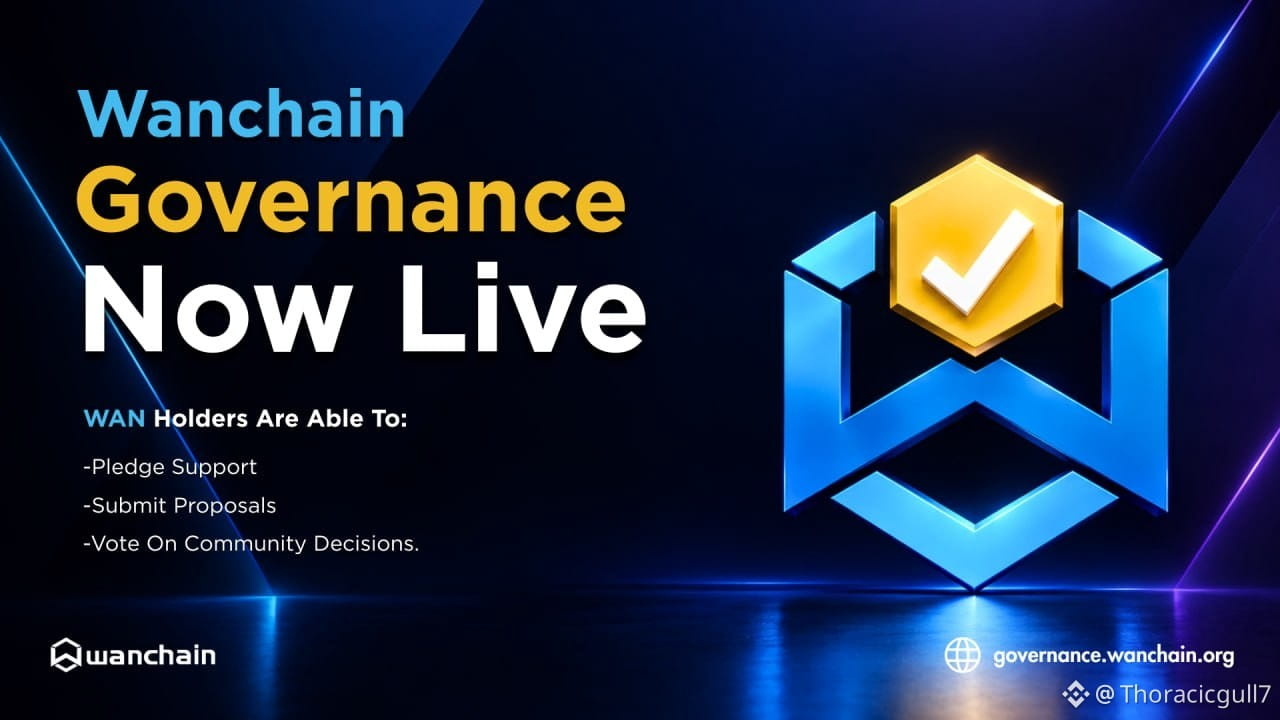
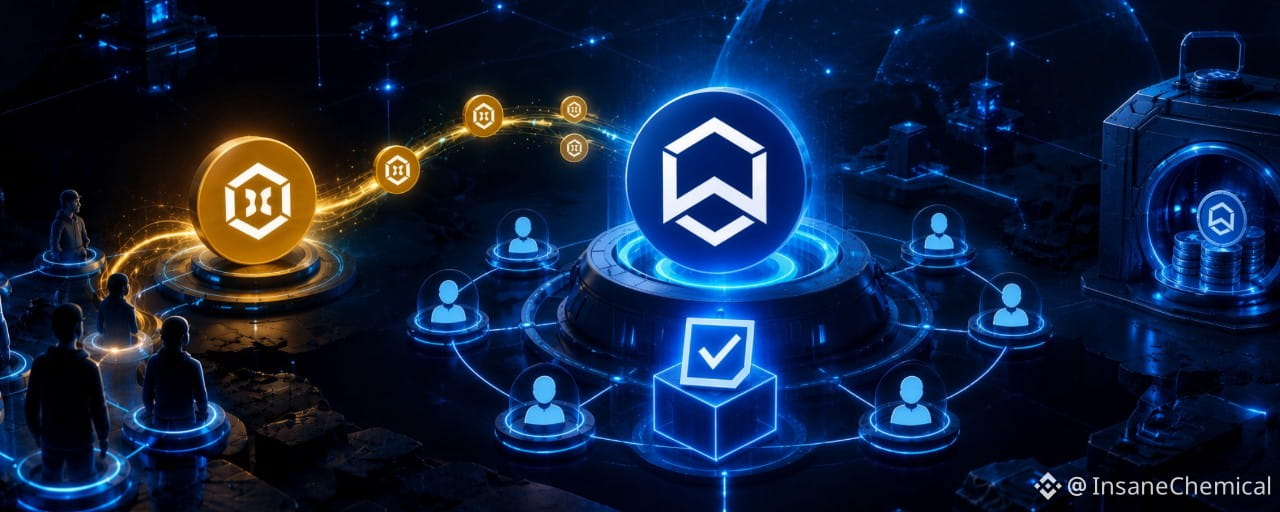
The long awaited Wanchain #governance Platform is here!
Its time for the #CommunityFirst to get involved in decision making that will shape the future of #wanchain
Check out the very first proposal:
Increase Convert n Burn Allocation From 10% to 20%
What will your first vote be?
The long awaited Wanchain #governance Platform is here!
Its time for the #CommunityFirst to get involved in decision making that will shape the future of #wanchain
Check out the very first proposal:
Increase Convert n Burn Allocation From 10% to 20%
What will your first vote be?
Its time for the #CommunityFirst to get involved in decision making that will shape the future of #wanchain
Check out the very first proposal:
Increase Convert n Burn Allocation From 10% to 20%
What will your first vote be?
76

·
--
Bullish
2.4 #MILLION $ZEC JUST SPOKE — 99.9% BACKED 25-SECOND BLOCKS.........................
#Zcash is back on the radar after nearly 2.4M $ZEC participated in the latest NU7 #governance vote.The result strongly supported reducing block times from 75 seconds to just 25 seconds, while keeping Zcash’s existing Bitcoin-style halving schedule.
That means faster transaction confirmations without changing the project’s long-term supply model.For the market, the interesting part is what comes next: NU7 implementation, network activity, trading volume, and whether this renewed attention continues.
$ZEC is definitely one to keep on the radar as the upgrade develops.
{spot}(ZECUSDT)
{etf_us}(ZECP.ETF)
{future}(ZECUSDT)
2.4 #MILLION $ZEC JUST SPOKE — 99.9% BACKED 25-SECOND BLOCKS.........................
#Zcash is back on the radar after nearly 2.4M $ZEC participated in the latest NU7 #governance vote.The result strongly supported reducing block times from 75 seconds to just 25 seconds, while keeping Zcash’s existing Bitcoin-style halving schedule.
That means faster transaction confirmations without changing the project’s long-term supply model.For the market, the interesting part is what comes next: NU7 implementation, network activity, trading volume, and whether this renewed attention continues.
$ZEC is definitely one to keep on the radar as the upgrade develops.
#Zcash is back on the radar after nearly 2.4M $ZEC participated in the latest NU7 #governance vote.The result strongly supported reducing block times from 75 seconds to just 25 seconds, while keeping Zcash’s existing Bitcoin-style halving schedule.
That means faster transaction confirmations without changing the project’s long-term supply model.For the market, the interesting part is what comes next: NU7 implementation, network activity, trading volume, and whether this renewed attention continues.
$ZEC is definitely one to keep on the radar as the upgrade develops.
267

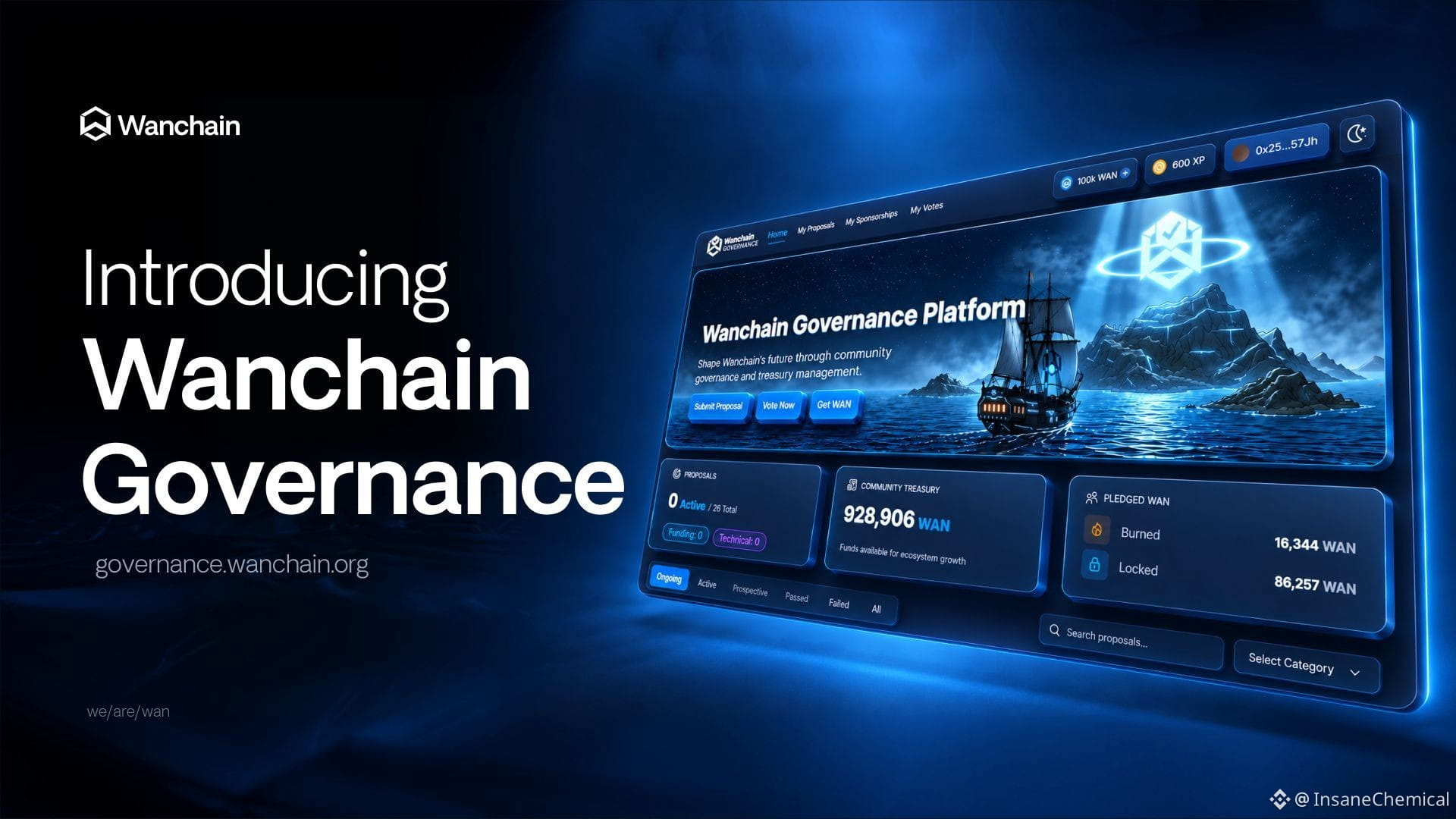
The community now has a direct role in shaping the future of #Wanchain through proposals and voting.
The first proposal is already up for a vote:
Should the share of Convert n’ Burn fees allocated to $WAN burns be increased?This is the first #governance decision for the community, with more proposals set to follow.
The new platform allows WAN holders to:
• Vote on community proposals
• Pledge support for proposals
• Submit proposals
• Help decide how the Community Treasury is used
If you hold $WAN , take some time to understand the governance process and review the first proposal before voting.
Governance is live at governance.wanchain.org.
What do you think about increasing the $WAN burn rate?
The community now has a direct role in shaping the future of #Wanchain through proposals and voting.
The first proposal is already up for a vote:
Should the share of Convert n’ Burn fees allocated to $WAN burns be increased?This is the first #governance decision for the community, with more proposals set to follow.
The new platform allows WAN holders to:
• Vote on community proposals
• Pledge support for proposals
• Submit proposals
• Help decide how the Community Treasury is used
If you hold $WAN , take some time to understand the governance process and review the first proposal before voting.
Governance is live at governance.wanchain.org.
What do you think about increasing the $WAN burn rate?
The first proposal is already up for a vote:
Should the share of Convert n’ Burn fees allocated to $WAN burns be increased?This is the first #governance decision for the community, with more proposals set to follow.
The new platform allows WAN holders to:
• Vote on community proposals
• Pledge support for proposals
• Submit proposals
• Help decide how the Community Treasury is used
If you hold $WAN , take some time to understand the governance process and review the first proposal before voting.
Governance is live at governance.wanchain.org.
What do you think about increasing the $WAN burn rate?
1
106
🚨 PROPOSED $BAL WIND-DOWN PLAN UNVEILS PROTOCOL DISSOLUTION AND TREASURY LIQUIDATION ⚠️
Institutional governance shifts into finality as $BAL evaluates a complete protocol wind-down proposal ahead of the late September Snapshot vote. 📊 If approved, pausable pools transition to withdrawal-only mode by late October, effectively halting active liquidity expansion and zeroing protocol fees.
With treasury reserves estimated around $9 million, the DAO outlines a long-term liquidation framework distributing assets directly to $BAL holders via token burn mechanisms spanning into 2027. ⚖️ Smart money is already assessing whether the current market cap accurately reflects the net redeemable asset value post-exit budget.
💬 Will you hold $BAL for the treasury asset redemption or exit ahead of the governance vote? 👇
⚠️ Not financial advice. Always manage your risk. 🛡️
🏷️ #BAL #DeFi #Governance #Crypto
⚖️ 📌
🚨 PROPOSED $BAL WIND-DOWN PLAN UNVEILS PROTOCOL DISSOLUTION AND TREASURY LIQUIDATION ⚠️
Institutional governance shifts into finality as $BAL evaluates a complete protocol wind-down proposal ahead of the late September Snapshot vote. 📊 If approved, pausable pools transition to withdrawal-only mode by late October, effectively halting active liquidity expansion and zeroing protocol fees.
With treasury reserves estimated around $9 million, the DAO outlines a long-term liquidation framework distributing assets directly to $BAL holders via token burn mechanisms spanning into 2027. ⚖️ Smart money is already assessing whether the current market cap accurately reflects the net redeemable asset value post-exit budget.
💬 Will you hold $BAL for the treasury asset redemption or exit ahead of the governance vote? 👇
⚠️ Not financial advice. Always manage your risk. 🛡️
🏷️ #BAL #DeFi #Governance #Crypto
⚖️ 📌
Institutional governance shifts into finality as $BAL evaluates a complete protocol wind-down proposal ahead of the late September Snapshot vote. 📊 If approved, pausable pools transition to withdrawal-only mode by late October, effectively halting active liquidity expansion and zeroing protocol fees.
With treasury reserves estimated around $9 million, the DAO outlines a long-term liquidation framework distributing assets directly to $BAL holders via token burn mechanisms spanning into 2027. ⚖️ Smart money is already assessing whether the current market cap accurately reflects the net redeemable asset value post-exit budget.
💬 Will you hold $BAL for the treasury asset redemption or exit ahead of the governance vote? 👇
⚠️ Not financial advice. Always manage your risk. 🛡️
🏷️ #BAL #DeFi #Governance #Crypto
⚖️ 📌
10

🚀 $ARAGON UNVEILS CONFIDENTIAL VOTING – WHALES RECLAIMING PRIVACY 🦈
The Aragon OSx upgrade just dropped a Zama‑powered Confidential Voting plugin, sealing each ballot in encryption until the final tally. ⚡ Smart‑money DAO crews are already eyeing the privacy shield as a new liquidity magnet. 🦈
With governance data hidden, whales can swing proposals without market‑noise exposure, turning voting power into a silent weapon. 📊 Expect a subtle uptick in $ARAGON demand as the ecosystem gains institutional credibility. 💡
💬 Will you stake your claim in the next private vote? 👇
⚠️ Not financial advice. Always manage your risk. 🛡️
🏷️ #ARAGON #Governance #ConfidentialVoting #Crypto
🔥 💎
🚀 $ARAGON UNVEILS CONFIDENTIAL VOTING – WHALES RECLAIMING PRIVACY 🦈
The Aragon OSx upgrade just dropped a Zama‑powered Confidential Voting plugin, sealing each ballot in encryption until the final tally. ⚡ Smart‑money DAO crews are already eyeing the privacy shield as a new liquidity magnet. 🦈
With governance data hidden, whales can swing proposals without market‑noise exposure, turning voting power into a silent weapon. 📊 Expect a subtle uptick in $ARAGON demand as the ecosystem gains institutional credibility. 💡
💬 Will you stake your claim in the next private vote? 👇
⚠️ Not financial advice. Always manage your risk. 🛡️
🏷️ #ARAGON #Governance #ConfidentialVoting #Crypto
🔥 💎
The Aragon OSx upgrade just dropped a Zama‑powered Confidential Voting plugin, sealing each ballot in encryption until the final tally. ⚡ Smart‑money DAO crews are already eyeing the privacy shield as a new liquidity magnet. 🦈
With governance data hidden, whales can swing proposals without market‑noise exposure, turning voting power into a silent weapon. 📊 Expect a subtle uptick in $ARAGON demand as the ecosystem gains institutional credibility. 💡
💬 Will you stake your claim in the next private vote? 👇
⚠️ Not financial advice. Always manage your risk. 🛡️
🏷️ #ARAGON #Governance #ConfidentialVoting #Crypto
🔥 💎
14

·
--
🦈 $OSMO GOVERNANCE MOVES TO RECLAIM ATTACKER ASSETS & REBALANCE BTC COLLATERAL ⚡
📊 Osmosis governance is threading a precision strike: the proposal aims to confiscate the frozen attacker’s holdings and funnel BTC from the community fund to plug the alloyed BTC collateral gap. This maneuver mirrors a classic liquidity sweep, where smart money re‑captures lost depth and restores order flow integrity.
🔍 The community vote remains the decisive gate; if approved, the collateral shortfall vanishes, potentially stabilizing $nBTC ’s peg and reinforcing confidence in cross‑chain BTC wrappers. 📈
💬 Will the vote unlock a cleaner market structure or stall the recovery? 👇
⚠️ Not financial advice. Always manage your risk. 🛡️
🏷️ #OSMO #Governance #AssetRecovery #Crypto
🔥 💎
🦈 $OSMO GOVERNANCE MOVES TO RECLAIM ATTACKER ASSETS & REBALANCE BTC COLLATERAL ⚡
📊 Osmosis governance is threading a precision strike: the proposal aims to confiscate the frozen attacker’s holdings and funnel BTC from the community fund to plug the alloyed BTC collateral gap. This maneuver mirrors a classic liquidity sweep, where smart money re‑captures lost depth and restores order flow integrity.
🔍 The community vote remains the decisive gate; if approved, the collateral shortfall vanishes, potentially stabilizing $nBTC ’s peg and reinforcing confidence in cross‑chain BTC wrappers. 📈
💬 Will the vote unlock a cleaner market structure or stall the recovery? 👇
⚠️ Not financial advice. Always manage your risk. 🛡️
🏷️ #OSMO #Governance #AssetRecovery #Crypto
🔥 💎
📊 Osmosis governance is threading a precision strike: the proposal aims to confiscate the frozen attacker’s holdings and funnel BTC from the community fund to plug the alloyed BTC collateral gap. This maneuver mirrors a classic liquidity sweep, where smart money re‑captures lost depth and restores order flow integrity.
🔍 The community vote remains the decisive gate; if approved, the collateral shortfall vanishes, potentially stabilizing $nBTC ’s peg and reinforcing confidence in cross‑chain BTC wrappers. 📈
💬 Will the vote unlock a cleaner market structure or stall the recovery? 👇
⚠️ Not financial advice. Always manage your risk. 🛡️
🏷️ #OSMO #Governance #AssetRecovery #Crypto
🔥 💎
74

·
--
🚨 $OSMO RECLAIMS ATTACKER'S BTC TO REBALANCE COLLATERAL 🦈
📊 Osmosis governance just dropped a bold proposal: seize the frozen attacker assets and funnel community‑fund BTC into the alloyed BTC pool. This move aims to plug the collateral gap left by the Nomic nBTC breach and restore full backing. ⚡ The community vote will decide if the confiscation sails through, a classic smart‑money play to lock down liquidity and protect holders.
💡 If the plan passes, we could see a rapid re‑price of $OSMO as confidence rebounds and the BTC backing solidifies. 👇 Will the vote tilt toward a full confiscation or will dissent stall the recovery? 🤔
⚠️ Not financial advice. Always manage your risk. 🛡️
🏷️ #OSMO #Governance #BTCConfiscation #Crypto
🔥 💎
🚨 $OSMO RECLAIMS ATTACKER'S BTC TO REBALANCE COLLATERAL 🦈
📊 Osmosis governance just dropped a bold proposal: seize the frozen attacker assets and funnel community‑fund BTC into the alloyed BTC pool. This move aims to plug the collateral gap left by the Nomic nBTC breach and restore full backing. ⚡ The community vote will decide if the confiscation sails through, a classic smart‑money play to lock down liquidity and protect holders.
💡 If the plan passes, we could see a rapid re‑price of $OSMO as confidence rebounds and the BTC backing solidifies. 👇 Will the vote tilt toward a full confiscation or will dissent stall the recovery? 🤔
⚠️ Not financial advice. Always manage your risk. 🛡️
🏷️ #OSMO #Governance #BTCConfiscation #Crypto
🔥 💎
📊 Osmosis governance just dropped a bold proposal: seize the frozen attacker assets and funnel community‑fund BTC into the alloyed BTC pool. This move aims to plug the collateral gap left by the Nomic nBTC breach and restore full backing. ⚡ The community vote will decide if the confiscation sails through, a classic smart‑money play to lock down liquidity and protect holders.
💡 If the plan passes, we could see a rapid re‑price of $OSMO as confidence rebounds and the BTC backing solidifies. 👇 Will the vote tilt toward a full confiscation or will dissent stall the recovery? 🤔
⚠️ Not financial advice. Always manage your risk. 🛡️
🏷️ #OSMO #Governance #BTCConfiscation #Crypto
🔥 💎
84
Article
Wanchain Governance: Why Your XP Matters More Than You ThinkIf you’ve been following the Wanchain XP system, you’ve probably seen governance mentioned as one of the ways XP will eventually be used.
Now we know a little more.
There’s still no official release date for governance, so this isn’t a launch announcement. But there are a few details worth knowing.
First, the community treasury has grown to 5,776,161 $WAN , currently worth around $336,883.
That’s a significant amount of capital sitting in the treasury. Eventually, the community will have a say in how those funds are used.
The other important piece is XP.
When introduced XP back in July, it was described as a reputation score based on your activity across the ecosystem.
You earn XP through things like:
• Using Wanchain’s cross-chain services
• Being active in the Telegram community
• Referring new users
• Contributing to the wider ecosystem
Governance was already listed as one of the future uses for XP when the system was introduced.
Now we know that 100,000 XP is required to submit a governance proposal.
That gives XP a whole new level of importance.
It’s not only about climbing the leaderboard or competing for seasonal xWAN rewards. Once you reach 100,000 XP, you’ll have the ability to put forward a proposal for the wider Wanchain community to consider.
And with more than $336K sitting in the community treasury, those proposals have the potential to have a real impact.
How should the treasury be used?
Which projects deserve funding?
What initiatives should the community support?
What would help bring more users and builders into the Wanchain ecosystem?
These are the kinds of decisions governance will eventually put in the hands of the community.
So if you’re already taking part in Season 2, keep stacking XP. Keep contributing. Keep getting involved.
When #governance goes live, you’ll want to have 100,000 XP ready.
For now, that’s all we know.
But it’s definitely something worth keeping an eye on. 👀
Wanchain Governance: Why Your XP Matters More Than You Think
If you’ve been following the Wanchain XP system, you’ve probably seen governance mentioned as one of the ways XP will eventually be used.
Now we know a little more.
There’s still no official release date for governance, so this isn’t a launch announcement. But there are a few details worth knowing.
First, the community treasury has grown to 5,776,161 $WAN , currently worth around $336,883.
That’s a significant amount of capital sitting in the treasury. Eventually, the community will have a say in how those funds are used.
The other important piece is XP.
When introduced XP back in July, it was described as a reputation score based on your activity across the ecosystem.
You earn XP through things like:
• Using Wanchain’s cross-chain services
• Being active in the Telegram community
• Referring new users
• Contributing to the wider ecosystem
Governance was already listed as one of the future uses for XP when the system was introduced.
Now we know that 100,000 XP is required to submit a governance proposal.
That gives XP a whole new level of importance.
It’s not only about climbing the leaderboard or competing for seasonal xWAN rewards. Once you reach 100,000 XP, you’ll have the ability to put forward a proposal for the wider Wanchain community to consider.
And with more than $336K sitting in the community treasury, those proposals have the potential to have a real impact.
How should the treasury be used?
Which projects deserve funding?
What initiatives should the community support?
What would help bring more users and builders into the Wanchain ecosystem?
These are the kinds of decisions governance will eventually put in the hands of the community.
So if you’re already taking part in Season 2, keep stacking XP. Keep contributing. Keep getting involved.
When #governance goes live, you’ll want to have 100,000 XP ready.
For now, that’s all we know.
But it’s definitely something worth keeping an eye on. 👀
Now we know a little more.
There’s still no official release date for governance, so this isn’t a launch announcement. But there are a few details worth knowing.
First, the community treasury has grown to 5,776,161 $WAN , currently worth around $336,883.
That’s a significant amount of capital sitting in the treasury. Eventually, the community will have a say in how those funds are used.
The other important piece is XP.
When introduced XP back in July, it was described as a reputation score based on your activity across the ecosystem.
You earn XP through things like:
• Using Wanchain’s cross-chain services
• Being active in the Telegram community
• Referring new users
• Contributing to the wider ecosystem
Governance was already listed as one of the future uses for XP when the system was introduced.
Now we know that 100,000 XP is required to submit a governance proposal.
That gives XP a whole new level of importance.
It’s not only about climbing the leaderboard or competing for seasonal xWAN rewards. Once you reach 100,000 XP, you’ll have the ability to put forward a proposal for the wider Wanchain community to consider.
And with more than $336K sitting in the community treasury, those proposals have the potential to have a real impact.
How should the treasury be used?
Which projects deserve funding?
What initiatives should the community support?
What would help bring more users and builders into the Wanchain ecosystem?
These are the kinds of decisions governance will eventually put in the hands of the community.
So if you’re already taking part in Season 2, keep stacking XP. Keep contributing. Keep getting involved.
When #governance goes live, you’ll want to have 100,000 XP ready.
For now, that’s all we know.
But it’s definitely something worth keeping an eye on. 👀
68

·
--
DeFi’s biggest risk may not be a smart-contract bug.
I checked the Term Finance incident: an attacker reportedly spent about $951 to gain governance control, then proposals drained an estimated $8.5M from Meta Vaults.
The uncomfortable lesson? A timelock and veto system can exist on paper—but the real question is whether it works during the proposal lifecycle.
What should DeFi protocols prioritize?
1. Wider token distribution
2. Stronger veto design
3. Real-time monitoring
4. Emergency controls
Term’s final accounting and post-mortem are still pending, so the $8.5M figure remains an estimate.
Security research only. Not financial advice.
#DeFi #governance #CryptoSecurity
DeFi’s biggest risk may not be a smart-contract bug.
I checked the Term Finance incident: an attacker reportedly spent about $951 to gain governance control, then proposals drained an estimated $8.5M from Meta Vaults.
The uncomfortable lesson? A timelock and veto system can exist on paper—but the real question is whether it works during the proposal lifecycle.
What should DeFi protocols prioritize?
1. Wider token distribution
2. Stronger veto design
3. Real-time monitoring
4. Emergency controls
Term’s final accounting and post-mortem are still pending, so the $8.5M figure remains an estimate.
Security research only. Not financial advice.
#DeFi #governance #CryptoSecurity
I checked the Term Finance incident: an attacker reportedly spent about $951 to gain governance control, then proposals drained an estimated $8.5M from Meta Vaults.
The uncomfortable lesson? A timelock and veto system can exist on paper—but the real question is whether it works during the proposal lifecycle.
What should DeFi protocols prioritize?
1. Wider token distribution
2. Stronger veto design
3. Real-time monitoring
4. Emergency controls
Term’s final accounting and post-mortem are still pending, so the $8.5M figure remains an estimate.
Security research only. Not financial advice.
#DeFi #governance #CryptoSecurity

73

·
--
Verified
#SolanaGovernanceVoteToDoubleDeflationRate
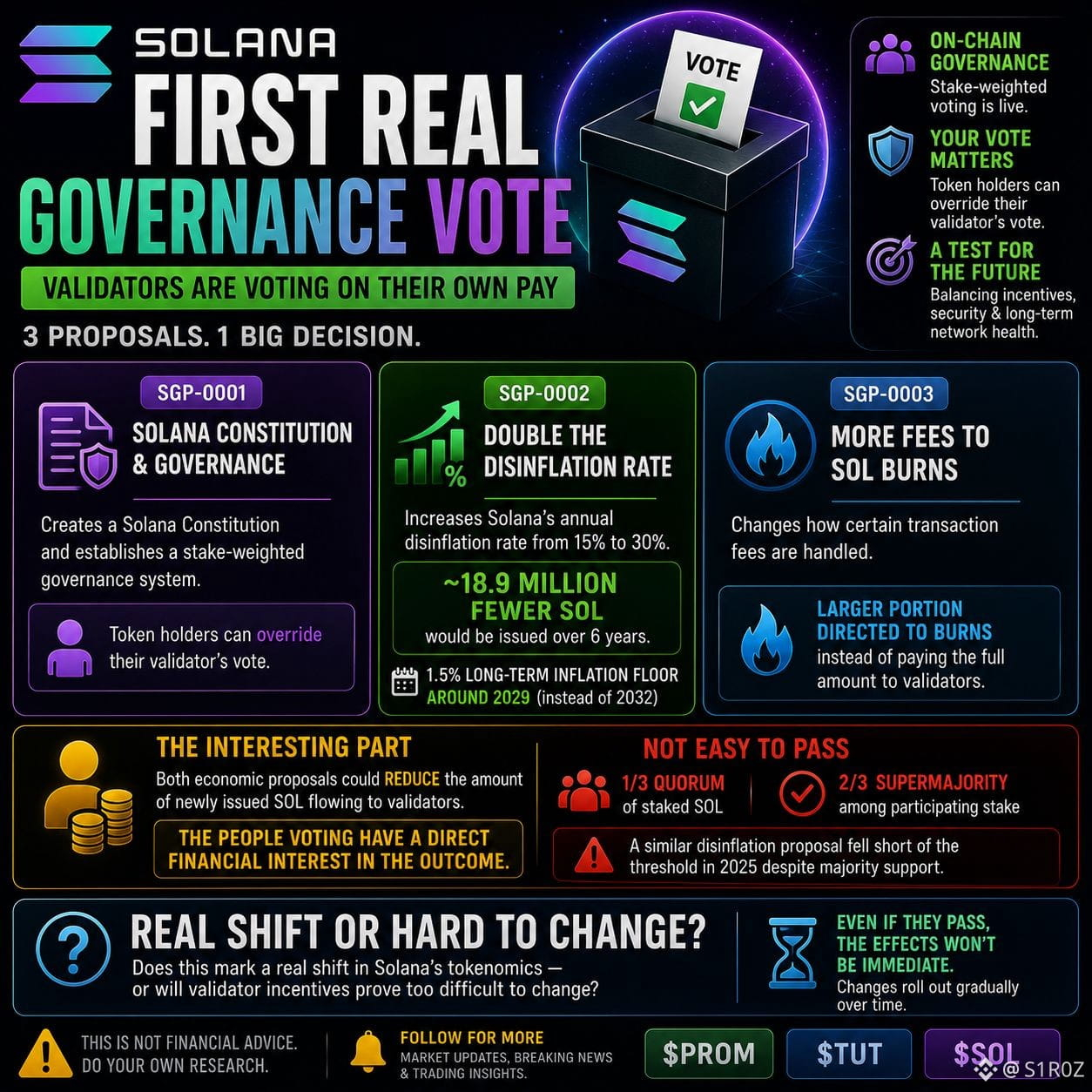
🚨 SOLANA JUST PUT VALIDATORS’ PAY UP FOR A VOTE. 👀
Solana has opened its first formal on-chain governance votes, and this isn't just a procedural update.
Three proposals are on the table:
🗳️ SGP-0001 would establish a Solana Constitution and formalize stake-weighted governance.
📉 SGP-0002 would double the annual disinflation rate from 15% to 30%, potentially reaching Solana's 1.5% long-term inflation floor around 2029 instead of 2032.
🔥 SGP-0003 would redirect more transaction fees toward SOL burns rather than paying the full amount to validators.
Here's the interesting part: the economic proposals could reduce newly issued SOL going to validators — meaning some of the people voting have a direct financial interest in the outcome.
The vote requires one-third quorum and a two-thirds supermajority.
Is Solana entering a new era of governance, or will validator incentives make these changes harder to pass?
$SOL $PROM $TUT
{spot}(SOLUSDT)
{spot}(PROMUSDT)
{spot}(TUTUSDT)
#solana #SOL #Crypto #governance #DeFi
#SolanaGovernanceVoteToDoubleDeflationRate
🚨 SOLANA JUST PUT VALIDATORS’ PAY UP FOR A VOTE. 👀
Solana has opened its first formal on-chain governance votes, and this isn't just a procedural update.
Three proposals are on the table:
🗳️ SGP-0001 would establish a Solana Constitution and formalize stake-weighted governance.
📉 SGP-0002 would double the annual disinflation rate from 15% to 30%, potentially reaching Solana's 1.5% long-term inflation floor around 2029 instead of 2032.
🔥 SGP-0003 would redirect more transaction fees toward SOL burns rather than paying the full amount to validators.
Here's the interesting part: the economic proposals could reduce newly issued SOL going to validators — meaning some of the people voting have a direct financial interest in the outcome.
The vote requires one-third quorum and a two-thirds supermajority.
Is Solana entering a new era of governance, or will validator incentives make these changes harder to pass?
$SOL $PROM $TUT
#solana #SOL #Crypto #governance #DeFi
🚨 SOLANA JUST PUT VALIDATORS’ PAY UP FOR A VOTE. 👀
Solana has opened its first formal on-chain governance votes, and this isn't just a procedural update.
Three proposals are on the table:
🗳️ SGP-0001 would establish a Solana Constitution and formalize stake-weighted governance.
📉 SGP-0002 would double the annual disinflation rate from 15% to 30%, potentially reaching Solana's 1.5% long-term inflation floor around 2029 instead of 2032.
🔥 SGP-0003 would redirect more transaction fees toward SOL burns rather than paying the full amount to validators.
Here's the interesting part: the economic proposals could reduce newly issued SOL going to validators — meaning some of the people voting have a direct financial interest in the outcome.
The vote requires one-third quorum and a two-thirds supermajority.
Is Solana entering a new era of governance, or will validator incentives make these changes harder to pass?
$SOL $PROM $TUT
#solana #SOL #Crypto #governance #DeFi
168

·
--
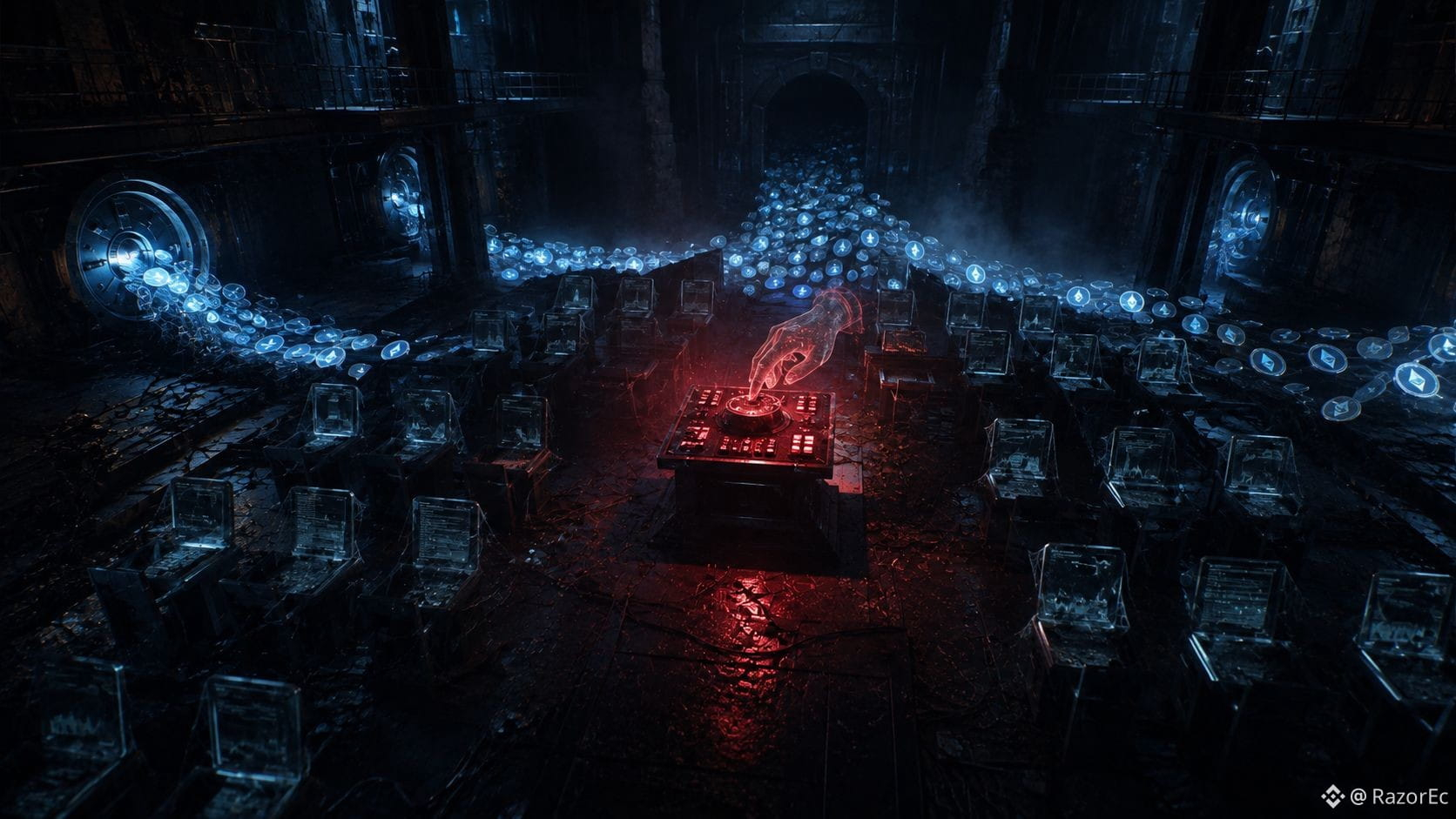
Someone spent around 2 $ETH y and took $8.5 million from the Meta Vaults of Term Finance. They bought enough voting power in a system with almost nonexistent participation and redirected the funds.
It wasn’t a classic smart contract bug. It was cheap governance exploited to the fullest.
How many protocols are still operating with such concentrated voting power and so little usage that an attack costs less than a fancy coffee?
Source: CoinDesk
#governance
{spot}(ETHUSDT)
Someone spent around 2 $ETH y and took $8.5 million from the Meta Vaults of Term Finance. They bought enough voting power in a system with almost nonexistent participation and redirected the funds.
It wasn’t a classic smart contract bug. It was cheap governance exploited to the fullest.
How many protocols are still operating with such concentrated voting power and so little usage that an attack costs less than a fancy coffee?
Source: CoinDesk
#governance
It wasn’t a classic smart contract bug. It was cheap governance exploited to the fullest.
How many protocols are still operating with such concentrated voting power and so little usage that an attack costs less than a fancy coffee?
Source: CoinDesk
#governance
150
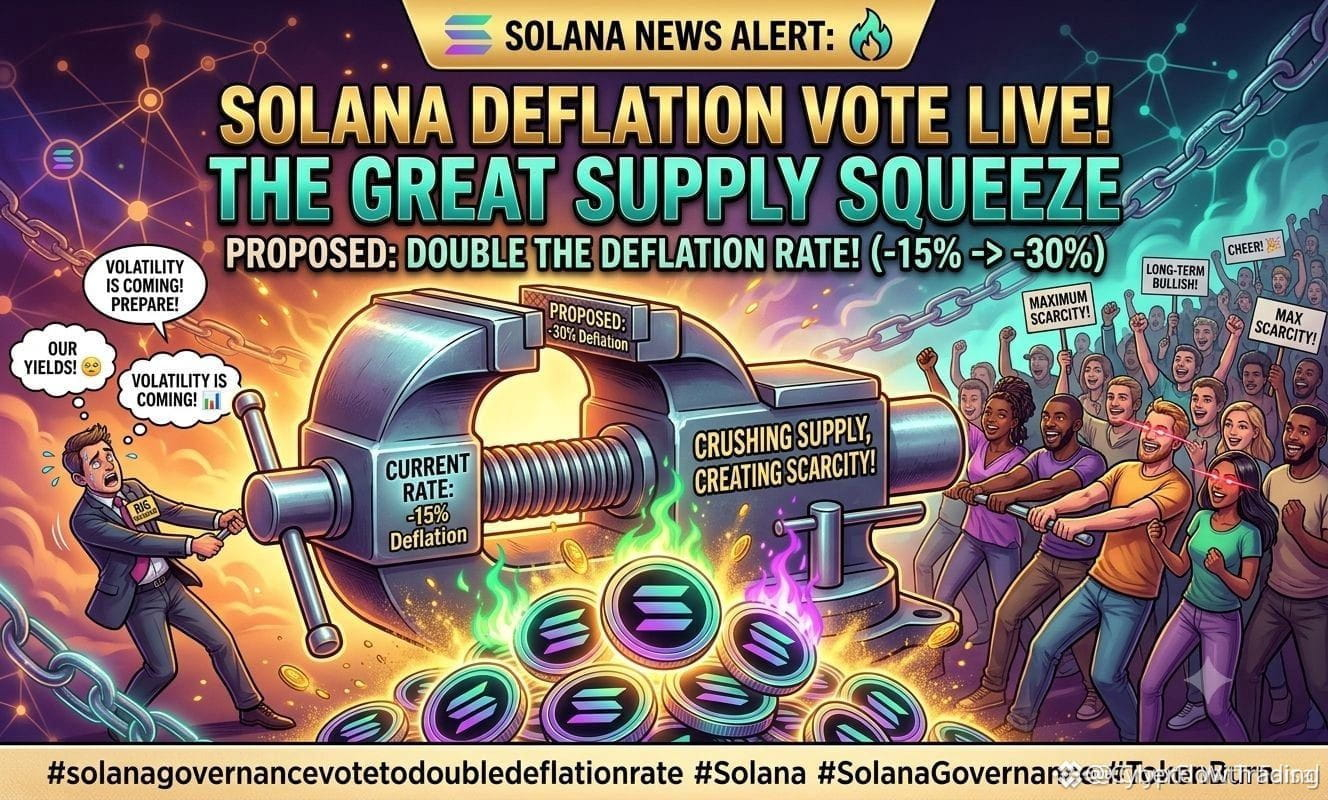
🤔 $SOL GOVERNANCE VOTE THREATENS SUPPLY SQUEEZE AS DEFLATION RATE DOUBLES
Solana validators and retail are closely tracking a governance proposal designed to accelerate disinflation from 15% to 30%. While institutional order flow anticipates a structural supply contraction, validator consensus faces immediate yield compression concerns. Is this a genuine mid-term valuation shift, or just another narrative play setting up exit liquidity?
Expect elevated volatility spikes prior to the final voting tally—the crowd is usually late and loves chasing pre-vote hype. Smart money is already mapping out macro liquidity zones to absorb post-vote order flow while retail scrambles. Are you front-running this disinflation catalyst, or waiting to see if consensus actually holds? Do your own digging.
⚠️ Not financial advice. Always manage your risk.
#SOL #Solana #Crypto #Governance
When everyone agrees, I double-check.
🤔 $SOL GOVERNANCE VOTE THREATENS SUPPLY SQUEEZE AS DEFLATION RATE DOUBLES
Solana validators and retail are closely tracking a governance proposal designed to accelerate disinflation from 15% to 30%. While institutional order flow anticipates a structural supply contraction, validator consensus faces immediate yield compression concerns. Is this a genuine mid-term valuation shift, or just another narrative play setting up exit liquidity?
Expect elevated volatility spikes prior to the final voting tally—the crowd is usually late and loves chasing pre-vote hype. Smart money is already mapping out macro liquidity zones to absorb post-vote order flow while retail scrambles. Are you front-running this disinflation catalyst, or waiting to see if consensus actually holds? Do your own digging.
⚠️ Not financial advice. Always manage your risk.
#SOL #Solana #Crypto #Governance
When everyone agrees, I double-check.
Solana validators and retail are closely tracking a governance proposal designed to accelerate disinflation from 15% to 30%. While institutional order flow anticipates a structural supply contraction, validator consensus faces immediate yield compression concerns. Is this a genuine mid-term valuation shift, or just another narrative play setting up exit liquidity?
Expect elevated volatility spikes prior to the final voting tally—the crowd is usually late and loves chasing pre-vote hype. Smart money is already mapping out macro liquidity zones to absorb post-vote order flow while retail scrambles. Are you front-running this disinflation catalyst, or waiting to see if consensus actually holds? Do your own digging.
⚠️ Not financial advice. Always manage your risk.
#SOL #Solana #Crypto #Governance
When everyone agrees, I double-check.
26

·
--
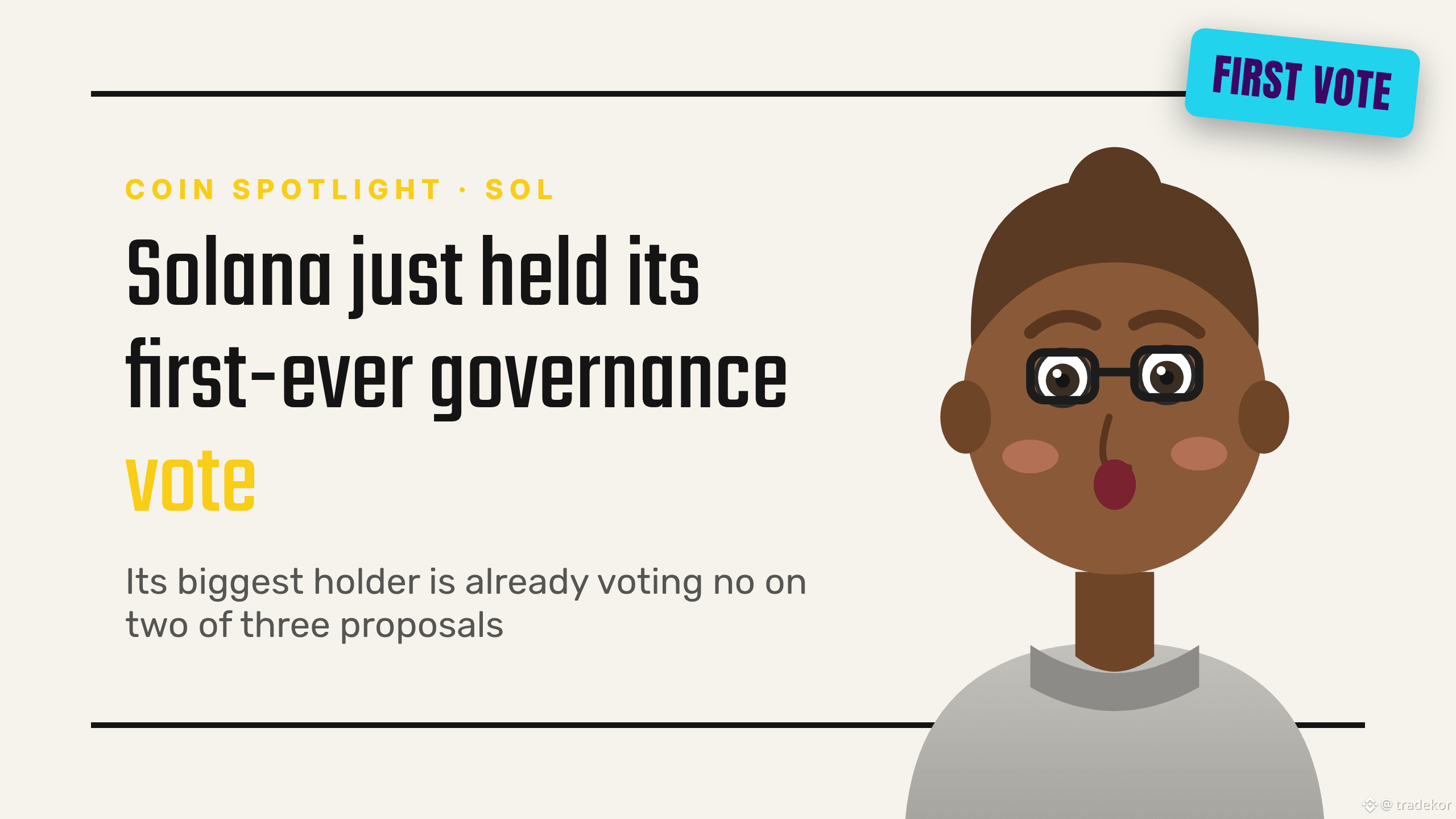
Solana did two firsts in 48 hours: its first-ever slot-time cut, and its first-ever on-chain governance vote -- and its biggest institutional holder is already voting against two of the three proposals.
The news: at epoch 1020 (Aug 21), slot time dropped from 400ms to 350ms, stage one of a plan toward 200ms. A day later, epoch 1021 opened Solana's first live governance vote: SGP-0001 ratifies the Constitution, SGP-0002 would double disinflation from 15% to 30% (hitting the 1.5% floor in ~2.8 years instead of ~5.7), SGP-0003 adds a fee that could raise daily SOL burn up to 14x. Both need 66.67% of stake to pass. Solana Company (Nasdaq: HSDT, 2.2M+ SOL) voted for the Constitution but against both tokenomics proposals -- a timing objection, they say, not a rejection of the goals.
The catch: this is Solana's first-ever on-chain vote and the tooling is unproven -- a live quorum-display bug surfaced during the run-up. A major holder voting no on debut means "landmark governance" could read as an early stalemate if quorum isn't hit. Higher fees also risk the cheap-transaction usage that drives Solana's activity, and each speed cut raises the bar for validators, an incremental centralization pressure. 350ms is only a 12.5% cut -- the real 200ms target isn't due until October.
Our read: real infrastructure progress paired with a governance system being stress-tested live. Does SGP-0002/0003 actually clear 66.67% this week, or does the first vote stall out?
Not financial advice. DYOR.
$SOL #Solana #CryptoNews #Governance
Solana did two firsts in 48 hours: its first-ever slot-time cut, and its first-ever on-chain governance vote -- and its biggest institutional holder is already voting against two of the three proposals.
The news: at epoch 1020 (Aug 21), slot time dropped from 400ms to 350ms, stage one of a plan toward 200ms. A day later, epoch 1021 opened Solana's first live governance vote: SGP-0001 ratifies the Constitution, SGP-0002 would double disinflation from 15% to 30% (hitting the 1.5% floor in ~2.8 years instead of ~5.7), SGP-0003 adds a fee that could raise daily SOL burn up to 14x. Both need 66.67% of stake to pass. Solana Company (Nasdaq: HSDT, 2.2M+ SOL) voted for the Constitution but against both tokenomics proposals -- a timing objection, they say, not a rejection of the goals.
The catch: this is Solana's first-ever on-chain vote and the tooling is unproven -- a live quorum-display bug surfaced during the run-up. A major holder voting no on debut means "landmark governance" could read as an early stalemate if quorum isn't hit. Higher fees also risk the cheap-transaction usage that drives Solana's activity, and each speed cut raises the bar for validators, an incremental centralization pressure. 350ms is only a 12.5% cut -- the real 200ms target isn't due until October.
Our read: real infrastructure progress paired with a governance system being stress-tested live. Does SGP-0002/0003 actually clear 66.67% this week, or does the first vote stall out?
Not financial advice. DYOR.
$SOL #Solana #CryptoNews #Governance
The news: at epoch 1020 (Aug 21), slot time dropped from 400ms to 350ms, stage one of a plan toward 200ms. A day later, epoch 1021 opened Solana's first live governance vote: SGP-0001 ratifies the Constitution, SGP-0002 would double disinflation from 15% to 30% (hitting the 1.5% floor in ~2.8 years instead of ~5.7), SGP-0003 adds a fee that could raise daily SOL burn up to 14x. Both need 66.67% of stake to pass. Solana Company (Nasdaq: HSDT, 2.2M+ SOL) voted for the Constitution but against both tokenomics proposals -- a timing objection, they say, not a rejection of the goals.
The catch: this is Solana's first-ever on-chain vote and the tooling is unproven -- a live quorum-display bug surfaced during the run-up. A major holder voting no on debut means "landmark governance" could read as an early stalemate if quorum isn't hit. Higher fees also risk the cheap-transaction usage that drives Solana's activity, and each speed cut raises the bar for validators, an incremental centralization pressure. 350ms is only a 12.5% cut -- the real 200ms target isn't due until October.
Our read: real infrastructure progress paired with a governance system being stress-tested live. Does SGP-0002/0003 actually clear 66.67% this week, or does the first vote stall out?
Not financial advice. DYOR.
$SOL #Solana #CryptoNews #Governance
58

·
--

Article
Term Finance Exploit: $8.5M Vanishes Despite Governance SafeguardsMost traders watch price. Smart money watches the delay‑to‑veto mechanism.
Term Finance’s seven‑day proposal delay and LP veto power were designed to stop rogue actors, yet a sophisticated exploit siphoned an estimated $8.5 million from the vaults before any safeguard could kick in. #DeFi #Governance #CryptoRisk
The signal is stark: on‑chain analytics show a single transaction draining the vaults in under 30 seconds, while the governance logs reveal that the exploit occurred before the first voting period even began. The delay, intended as a buffer, was bypassed by a flash‑loan attack that manipulated the voting quorum calculation. The vault’s own smart‑contract logic was exploited to re‑enter the protocol and drain funds before the veto could be exercised.
Interpretation: This event underscores that even well‑intentioned governance mechanisms can be gamed by liquidity providers who hold the veto but lack the real‑time monitoring tools. For price, it signals a tightening of risk perception around DeFi protocols that rely on LP‑controlled governance. Expect a short‑term squeeze on $TFX and related liquidity tokens as confidence erodes.
Watch list: Monitor the on‑chain activity of the Term Finance governance contract for any new proposals that bypass the delay window. Pay special attention to any sudden spikes in voting power concentration. #TermFinanceWatch
If a protocol’s governance can be outmaneuvered in seconds, what does that say about the future of decentralized risk management?
Term Finance Exploit: $8.5M Vanishes Despite Governance Safeguards
Most traders watch price. Smart money watches the delay‑to‑veto mechanism.
Term Finance’s seven‑day proposal delay and LP veto power were designed to stop rogue actors, yet a sophisticated exploit siphoned an estimated $8.5 million from the vaults before any safeguard could kick in. #DeFi #Governance #CryptoRisk
The signal is stark: on‑chain analytics show a single transaction draining the vaults in under 30 seconds, while the governance logs reveal that the exploit occurred before the first voting period even began. The delay, intended as a buffer, was bypassed by a flash‑loan attack that manipulated the voting quorum calculation. The vault’s own smart‑contract logic was exploited to re‑enter the protocol and drain funds before the veto could be exercised.
Interpretation: This event underscores that even well‑intentioned governance mechanisms can be gamed by liquidity providers who hold the veto but lack the real‑time monitoring tools. For price, it signals a tightening of risk perception around DeFi protocols that rely on LP‑controlled governance. Expect a short‑term squeeze on $TFX and related liquidity tokens as confidence erodes.
Watch list: Monitor the on‑chain activity of the Term Finance governance contract for any new proposals that bypass the delay window. Pay special attention to any sudden spikes in voting power concentration. #TermFinanceWatch
If a protocol’s governance can be outmaneuvered in seconds, what does that say about the future of decentralized risk management?
Term Finance’s seven‑day proposal delay and LP veto power were designed to stop rogue actors, yet a sophisticated exploit siphoned an estimated $8.5 million from the vaults before any safeguard could kick in. #DeFi #Governance #CryptoRisk
The signal is stark: on‑chain analytics show a single transaction draining the vaults in under 30 seconds, while the governance logs reveal that the exploit occurred before the first voting period even began. The delay, intended as a buffer, was bypassed by a flash‑loan attack that manipulated the voting quorum calculation. The vault’s own smart‑contract logic was exploited to re‑enter the protocol and drain funds before the veto could be exercised.
Interpretation: This event underscores that even well‑intentioned governance mechanisms can be gamed by liquidity providers who hold the veto but lack the real‑time monitoring tools. For price, it signals a tightening of risk perception around DeFi protocols that rely on LP‑controlled governance. Expect a short‑term squeeze on $TFX and related liquidity tokens as confidence erodes.
Watch list: Monitor the on‑chain activity of the Term Finance governance contract for any new proposals that bypass the delay window. Pay special attention to any sudden spikes in voting power concentration. #TermFinanceWatch
If a protocol’s governance can be outmaneuvered in seconds, what does that say about the future of decentralized risk management?
5

🚨 $SOL — MAJOR GOVERNANCE VOTE LIVE
Three major Solana governance proposals are now in focus:
🏛️ SGP-1: Solana Constitution
🔥 SGP-2: Faster disinflation → potentially 18.9M fewer $SOL emissions over 6 years
💰 SGP-3: New resource fee → potentially much higher $SOL burn
📈 Bullish angle: Lower emissions + higher burn could strengthen SOL’s long-term supply dynamics if approved.
⚠️ But governance outcomes are not guaranteed—watch the vote and implementation closely.
#SOL #Solana #Crypto #Governance
{spot}(SOLUSDT)
🚨 $SOL — MAJOR GOVERNANCE VOTE LIVE
Three major Solana governance proposals are now in focus:
🏛️ SGP-1: Solana Constitution
🔥 SGP-2: Faster disinflation → potentially 18.9M fewer $SOL emissions over 6 years
💰 SGP-3: New resource fee → potentially much higher $SOL burn
📈 Bullish angle: Lower emissions + higher burn could strengthen SOL’s long-term supply dynamics if approved.
⚠️ But governance outcomes are not guaranteed—watch the vote and implementation closely.
#SOL #Solana #Crypto #Governance
Three major Solana governance proposals are now in focus:
🏛️ SGP-1: Solana Constitution
🔥 SGP-2: Faster disinflation → potentially 18.9M fewer $SOL emissions over 6 years
💰 SGP-3: New resource fee → potentially much higher $SOL burn
📈 Bullish angle: Lower emissions + higher burn could strengthen SOL’s long-term supply dynamics if approved.
⚠️ But governance outcomes are not guaranteed—watch the vote and implementation closely.
#SOL #Solana #Crypto #Governance
19

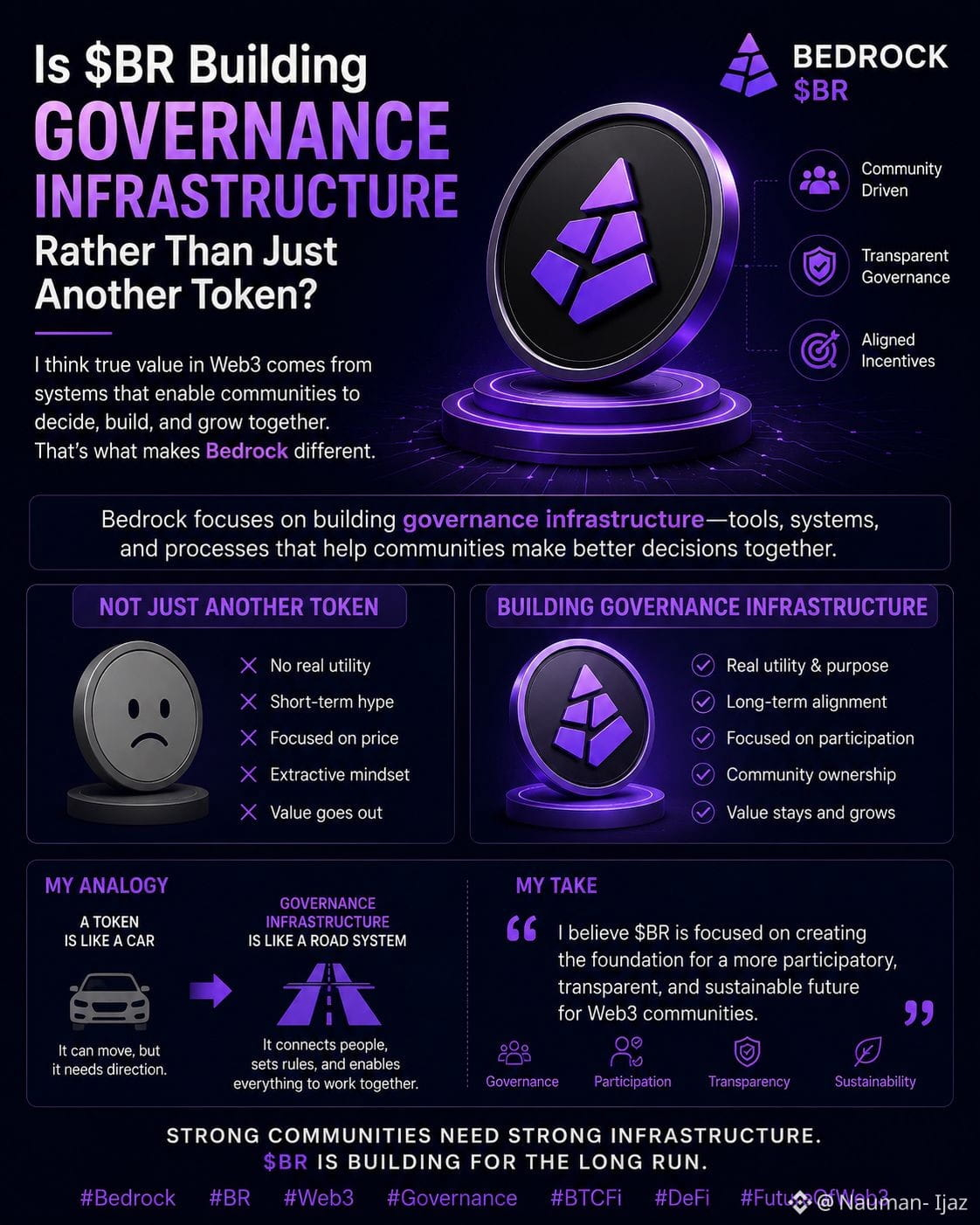
#bedrock I think one of the most important questions in Web3 is whether a token simply exists to be traded or whether it helps coordinate a community.
That’s why $BR interests me.
When I look at Bedrock, I don’t just see a token. I see an attempt to build a governance framework where participation, decision-making, and long-term alignment matter. In many ways, governance infrastructure is like the operating system of a digital economy. Without it, even strong communities can struggle to stay coordinated.
I believe the real value of Web3 comes from giving contributors a meaningful role in shaping the future of an ecosystem.
So the question I keep asking is: Is $BR just another token, or is it helping build the foundations for a more participatory digital economy?
@Bedrock #governance $BR
{future}(BRUSDT)
#bedrock I think one of the most important questions in Web3 is whether a token simply exists to be traded or whether it helps coordinate a community.
That’s why $BR interests me.
When I look at Bedrock, I don’t just see a token. I see an attempt to build a governance framework where participation, decision-making, and long-term alignment matter. In many ways, governance infrastructure is like the operating system of a digital economy. Without it, even strong communities can struggle to stay coordinated.
I believe the real value of Web3 comes from giving contributors a meaningful role in shaping the future of an ecosystem.
So the question I keep asking is: Is $BR just another token, or is it helping build the foundations for a more participatory digital economy?
@Bedrock #governance $BR
That’s why $BR interests me.
When I look at Bedrock, I don’t just see a token. I see an attempt to build a governance framework where participation, decision-making, and long-term alignment matter. In many ways, governance infrastructure is like the operating system of a digital economy. Without it, even strong communities can struggle to stay coordinated.
I believe the real value of Web3 comes from giving contributors a meaningful role in shaping the future of an ecosystem.
So the question I keep asking is: Is $BR just another token, or is it helping build the foundations for a more participatory digital economy?
@Bedrock #governance $BR
2
5
112

💡 Community Governance Challenges: Balancing innovation with stability in crypto networks
On July 20, 2026, the BIP-110 controversy reveals deeper tensions in how cryptocurrency communities govern themselves. When a prominent figure publishes detailed opposition to a proposal, it highlights the challenge of balancing innovation with stability. Bitcoin's strength has always been its conservative approach to change, but the ecosystem is not monolithic.
The path forward may require more structured debate mechanisms that resolve contentious issues without stalling progress. Layer-2 solutions offer a pressure valve, but they cannot fully replace the need for base-layer evolution when needed.
📌 Key Takeaway:
Contentious upgrades are a feature, not a bug — they prove governance is real and participants are engaged, not passive.
#Bitcoin #Governance #Crypto #Layer2
#BinanceAlphaAlert
💡 Community Governance Challenges: Balancing innovation with stability in crypto networks
On July 20, 2026, the BIP-110 controversy reveals deeper tensions in how cryptocurrency communities govern themselves. When a prominent figure publishes detailed opposition to a proposal, it highlights the challenge of balancing innovation with stability. Bitcoin's strength has always been its conservative approach to change, but the ecosystem is not monolithic.
The path forward may require more structured debate mechanisms that resolve contentious issues without stalling progress. Layer-2 solutions offer a pressure valve, but they cannot fully replace the need for base-layer evolution when needed.
📌 Key Takeaway:
Contentious upgrades are a feature, not a bug — they prove governance is real and participants are engaged, not passive.
#Bitcoin #Governance #Crypto #Layer2
#BinanceAlphaAlert
On July 20, 2026, the BIP-110 controversy reveals deeper tensions in how cryptocurrency communities govern themselves. When a prominent figure publishes detailed opposition to a proposal, it highlights the challenge of balancing innovation with stability. Bitcoin's strength has always been its conservative approach to change, but the ecosystem is not monolithic.
The path forward may require more structured debate mechanisms that resolve contentious issues without stalling progress. Layer-2 solutions offer a pressure valve, but they cannot fully replace the need for base-layer evolution when needed.
📌 Key Takeaway:
Contentious upgrades are a feature, not a bug — they prove governance is real and participants are engaged, not passive.
#Bitcoin #Governance #Crypto #Layer2
#BinanceAlphaAlert
29
Log in to explore more content
Join global crypto users on Binance Square
⚡️ Get latest and useful information about crypto.
💬 Trusted by the world’s largest crypto exchange.
👍 Discover real insights from verified creators.
Email / Phone number
Trending Topics
1
#AIStocksWhatNext
389,906 views
3,084 Discussing
2
#BitcoinBreaksAboveMayHighNears$86K
16,156 views
201 Discussing
3
#DogecoinRises15%
51,527 views
1,031 Discussing
4
#$14BBitcoinOptionsExpireFriday
4,181 views
92 Discussing
5
#BNBMarketCapPassesBNYMellon
32,373 views
740 Discussing
6
#CryptoMarketCapReclaims$3Trillion
5,555 views
83 Discussing
7
#MuseOvertakesChatGPTAsTopFreeIOSApp
18,847 views
548 Discussing
8
#TokenizedStockPlatformsCouldLaunchNextQuarter
29,712 views
601 Discussing
9
#StrategyAdds950Bitcoin
37,233 views
693 Discussing
10
#CardanoAddedToX402KitForADAPayments
31,107 views
669 Discussing