
#aiagent
aiagent
632,482 views
2,181 Discussing
Hot
Latest


Article
Meta Muse Breaks Ground: AI Agents Are Entering a Maturity PhaseOn September 8, Meta launched its personal AI Agent, Muse.
In less than two weeks, Muse’s downloads have exceeded 2.5 million, and it once topped the U.S. App Store Free rankings;
September 21,
The stock price rose by about 11.3% in a single day, setting a strong performance for the period.
What’s truly traded in the capital markets may not just be a new app.
Rather, it’s a more important judgment:
AI Agent, is entering the “gateway that takes care of things for you” from the “chat-capable model.”
Meta has equipped Muse with a dedicated Secure VM, a browser, background execution, permission confirmation, and a one-time payment card.
All the user needs to do is state the goal. Muse can then plan, search, fill out forms, place orders by itself, and only come back to the user for confirmation when necessary.
Meta Muse Breaks Ground: AI Agents Are Entering a Maturity Phase
On September 8, Meta launched its personal AI Agent, Muse.
In less than two weeks, Muse’s downloads have exceeded 2.5 million, and it once topped the U.S. App Store Free rankings;
September 21,
The stock price rose by about 11.3% in a single day, setting a strong performance for the period.
What’s truly traded in the capital markets may not just be a new app.
Rather, it’s a more important judgment:
AI Agent, is entering the “gateway that takes care of things for you” from the “chat-capable model.”
Meta has equipped Muse with a dedicated Secure VM, a browser, background execution, permission confirmation, and a one-time payment card.
All the user needs to do is state the goal. Muse can then plan, search, fill out forms, place orders by itself, and only come back to the user for confirmation when necessary.
In less than two weeks, Muse’s downloads have exceeded 2.5 million, and it once topped the U.S. App Store Free rankings;
September 21,
The stock price rose by about 11.3% in a single day, setting a strong performance for the period.
What’s truly traded in the capital markets may not just be a new app.
Rather, it’s a more important judgment:
AI Agent, is entering the “gateway that takes care of things for you” from the “chat-capable model.”
Meta has equipped Muse with a dedicated Secure VM, a browser, background execution, permission confirmation, and a one-time payment card.
All the user needs to do is state the goal. Muse can then plan, search, fill out forms, place orders by itself, and only come back to the user for confirmation when necessary.
METAUS+0.49%
131

·
--
Nikita Bier fires a warning: an AI agent swarm is going to crash websites—fighting bots is a top priority for enterprises. Going forward, when you browse the internet, you’ll need to first prove you’re human, otherwise even CAPTCHAs won’t let you through. This human-vs-machine verification narrative is direct and blazing—will Humanity protocols like Worldcoin take off? The market hasn’t come yet, but CAPTCHAs are first.🤖
$WORLD $ENS #DID #AIagent
Nikita Bier fires a warning: an AI agent swarm is going to crash websites—fighting bots is a top priority for enterprises. Going forward, when you browse the internet, you’ll need to first prove you’re human, otherwise even CAPTCHAs won’t let you through. This human-vs-machine verification narrative is direct and blazing—will Humanity protocols like Worldcoin take off? The market hasn’t come yet, but CAPTCHAs are first.🤖
$WORLD $ENS #DID #AIagent
$WORLD $ENS #DID #AIagent

107

·
--
Moss has just announced the global Builders this time.
Builders are participating in the Chinese, English, and Korean communities.
Let’s introduce Moss in the simplest, most straightforward way:
Moss doesn’t require you to start by wrestling with complex code.
You can directly describe your ideas in natural language.
Try building a strategy, then run backtesting.
Finally, deploy it on-chain.
In short:
You handle the ideas— the Agent handles running them.
Moss is the simplest, easiest-to-understand, and fastest to get started trading Agent.
#MossAI #AIAgent @MossAI_Official @MossAI_CN
Moss has just announced the global Builders this time.
Builders are participating in the Chinese, English, and Korean communities.
Let’s introduce Moss in the simplest, most straightforward way:
Moss doesn’t require you to start by wrestling with complex code.
You can directly describe your ideas in natural language.
Try building a strategy, then run backtesting.
Finally, deploy it on-chain.
In short:
You handle the ideas— the Agent handles running them.
Moss is the simplest, easiest-to-understand, and fastest to get started trading Agent.
#MossAI #AIAgent @MossAI_Official @MossAI_CN
Builders are participating in the Chinese, English, and Korean communities.
Let’s introduce Moss in the simplest, most straightforward way:
Moss doesn’t require you to start by wrestling with complex code.
You can directly describe your ideas in natural language.
Try building a strategy, then run backtesting.
Finally, deploy it on-chain.
In short:
You handle the ideas— the Agent handles running them.
Moss is the simplest, easiest-to-understand, and fastest to get started trading Agent.
#MossAI #AIAgent @MossAI_Official @MossAI_CN

·
--
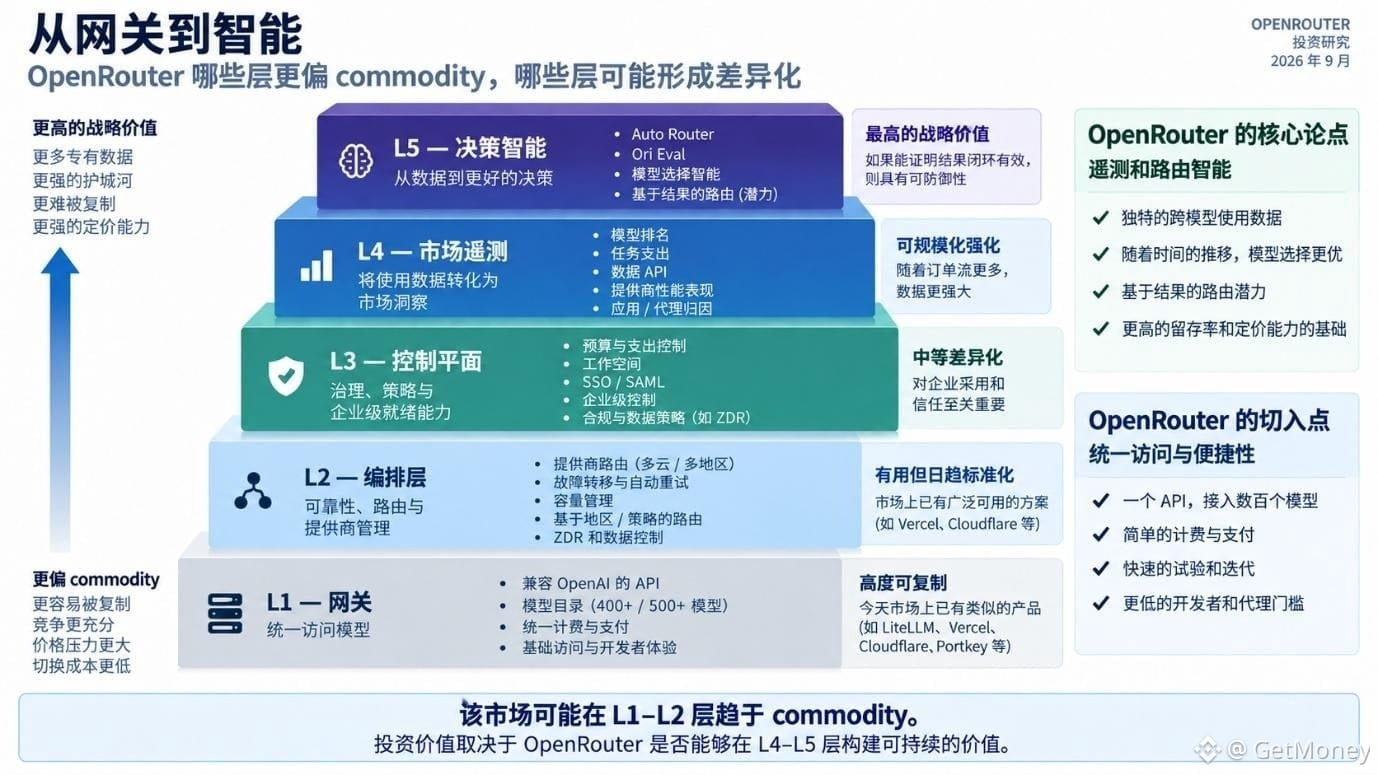
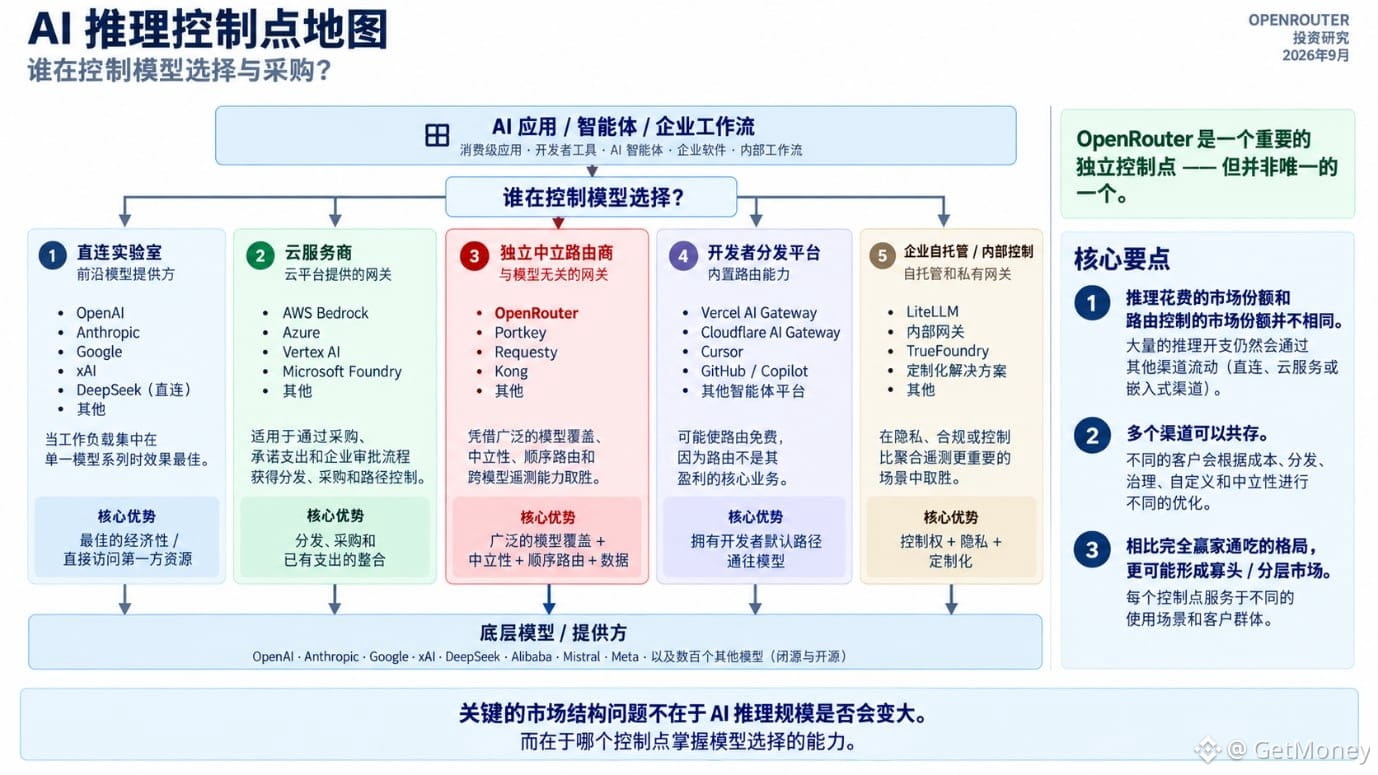
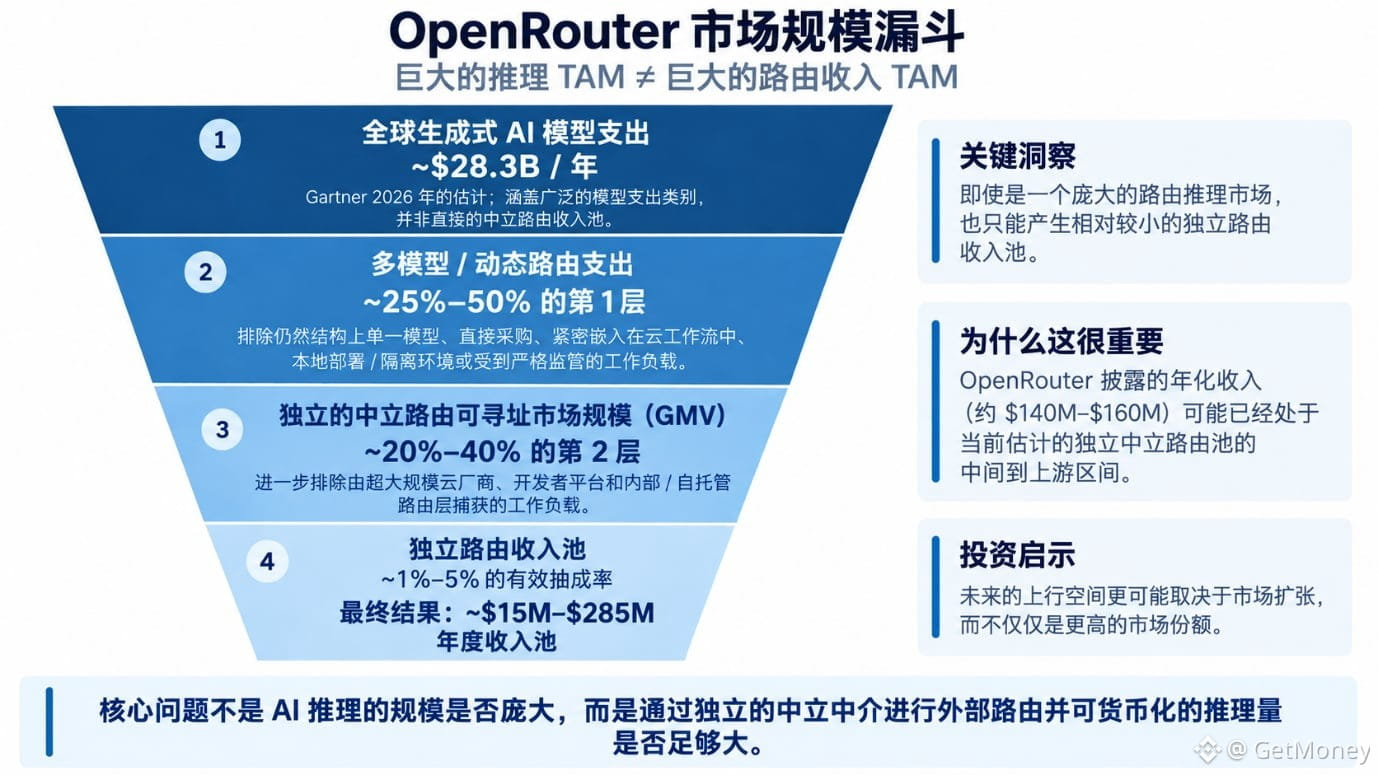
📰 On August 19, Stripe announced the acquisition of OpenRouter. The parties did not disclose the final price, but media reports put the range at about USD 7.0 to 8.0 billion and above. The New York Times’ figure is about USD 7.5 billion. Even more striking, OpenRouter’s Series B valuation from 83 days ago was only about USD 1.3 billion—less than three months later, it was repriced at nearly a 6x premium.
🔥 OpenRouter’s business is easy to understand: it connects 500+ models and 80+ compute providers into a single OpenAI-compatible interface. Platform disclosed data includes processing over 40 trillion tokens per month, more than 10 million global users, and coverage of 250,000+ applications.
But the problem is just as straightforward. Since the interface is already standardized, developers can switch platforms by changing the base URL. The same batch of compute providers would also simultaneously integrate competitors like Vercel. And Vercel has turned AI routing into a free feature—charging only via a channel cut—so it’s hard to justify this acquisition price on that basis alone.
💡 So what Stripe might be buying is not just a model entry point, but the transaction control of future Agents. Model routing, call data, plus the Agent’s identity, budget, and settlement—if all of that can be stitched together, OpenRouter would have a chance to evolve from a middleware you can swap anytime into a control point that’s difficult to bypass.
🤔 Honestly, this deal looks a bit like an early bet on the era of “software automatically selecting models.” Do you think OpenRouter can ultimately hold onto a USD 7.5 billion valuation, or will free routing quickly drive the price down?
#Stripe #OpenRouter #AIAgent #Artificial Intelligence
📰 On August 19, Stripe announced the acquisition of OpenRouter. The parties did not disclose the final price, but media reports put the range at about USD 7.0 to 8.0 billion and above. The New York Times’ figure is about USD 7.5 billion. Even more striking, OpenRouter’s Series B valuation from 83 days ago was only about USD 1.3 billion—less than three months later, it was repriced at nearly a 6x premium.
🔥 OpenRouter’s business is easy to understand: it connects 500+ models and 80+ compute providers into a single OpenAI-compatible interface. Platform disclosed data includes processing over 40 trillion tokens per month, more than 10 million global users, and coverage of 250,000+ applications.
But the problem is just as straightforward. Since the interface is already standardized, developers can switch platforms by changing the base URL. The same batch of compute providers would also simultaneously integrate competitors like Vercel. And Vercel has turned AI routing into a free feature—charging only via a channel cut—so it’s hard to justify this acquisition price on that basis alone.
💡 So what Stripe might be buying is not just a model entry point, but the transaction control of future Agents. Model routing, call data, plus the Agent’s identity, budget, and settlement—if all of that can be stitched together, OpenRouter would have a chance to evolve from a middleware you can swap anytime into a control point that’s difficult to bypass.
🤔 Honestly, this deal looks a bit like an early bet on the era of “software automatically selecting models.” Do you think OpenRouter can ultimately hold onto a USD 7.5 billion valuation, or will free routing quickly drive the price down?
#Stripe #OpenRouter #AIAgent #Artificial Intelligence
🔥 OpenRouter’s business is easy to understand: it connects 500+ models and 80+ compute providers into a single OpenAI-compatible interface. Platform disclosed data includes processing over 40 trillion tokens per month, more than 10 million global users, and coverage of 250,000+ applications.
But the problem is just as straightforward. Since the interface is already standardized, developers can switch platforms by changing the base URL. The same batch of compute providers would also simultaneously integrate competitors like Vercel. And Vercel has turned AI routing into a free feature—charging only via a channel cut—so it’s hard to justify this acquisition price on that basis alone.
💡 So what Stripe might be buying is not just a model entry point, but the transaction control of future Agents. Model routing, call data, plus the Agent’s identity, budget, and settlement—if all of that can be stitched together, OpenRouter would have a chance to evolve from a middleware you can swap anytime into a control point that’s difficult to bypass.
🤔 Honestly, this deal looks a bit like an early bet on the era of “software automatically selecting models.” Do you think OpenRouter can ultimately hold onto a USD 7.5 billion valuation, or will free routing quickly drive the price down?
#Stripe #OpenRouter #AIAgent #Artificial Intelligence

4
·
--
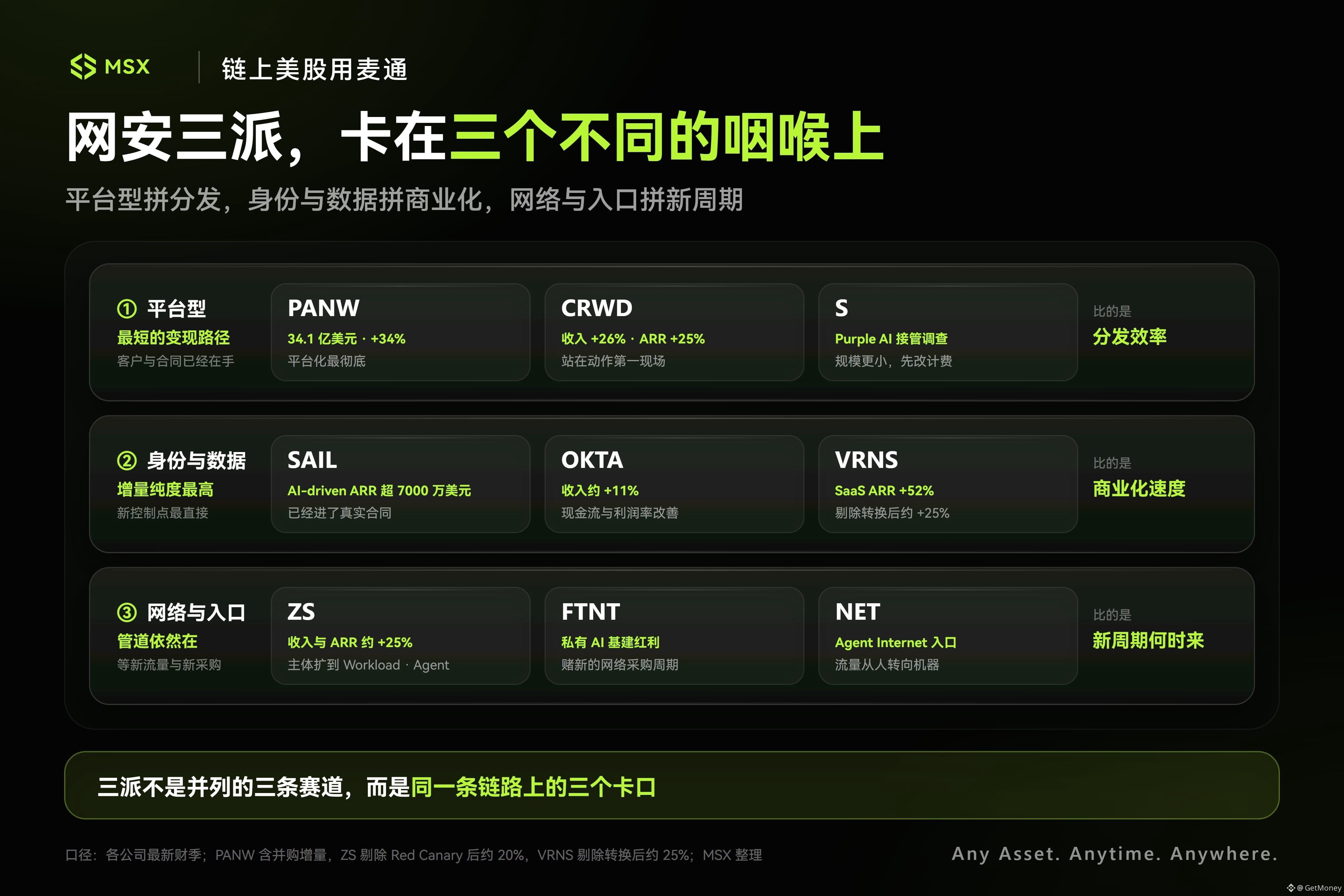
📰 Once an AI agent steps out of the chat box, what cybersecurity firms face is no longer just “whether the model might answer incorrectly.” Instead, it comes down to whether, with legitimate credentials, it can read SharePoint, run SQL, modify code, and even click through payment approvals in an ERP.
To be honest, the most troublesome part is right here: an agent isn’t an employee, yet it holds system credentials; it isn’t traditional software, yet it can proactively call tools, access data, and carry out tasks. Even with a valid identity and a normal login, it may still perform actions nobody expects—because of overly broad permissions, incorrect tool calls, or malicious prompt influence.
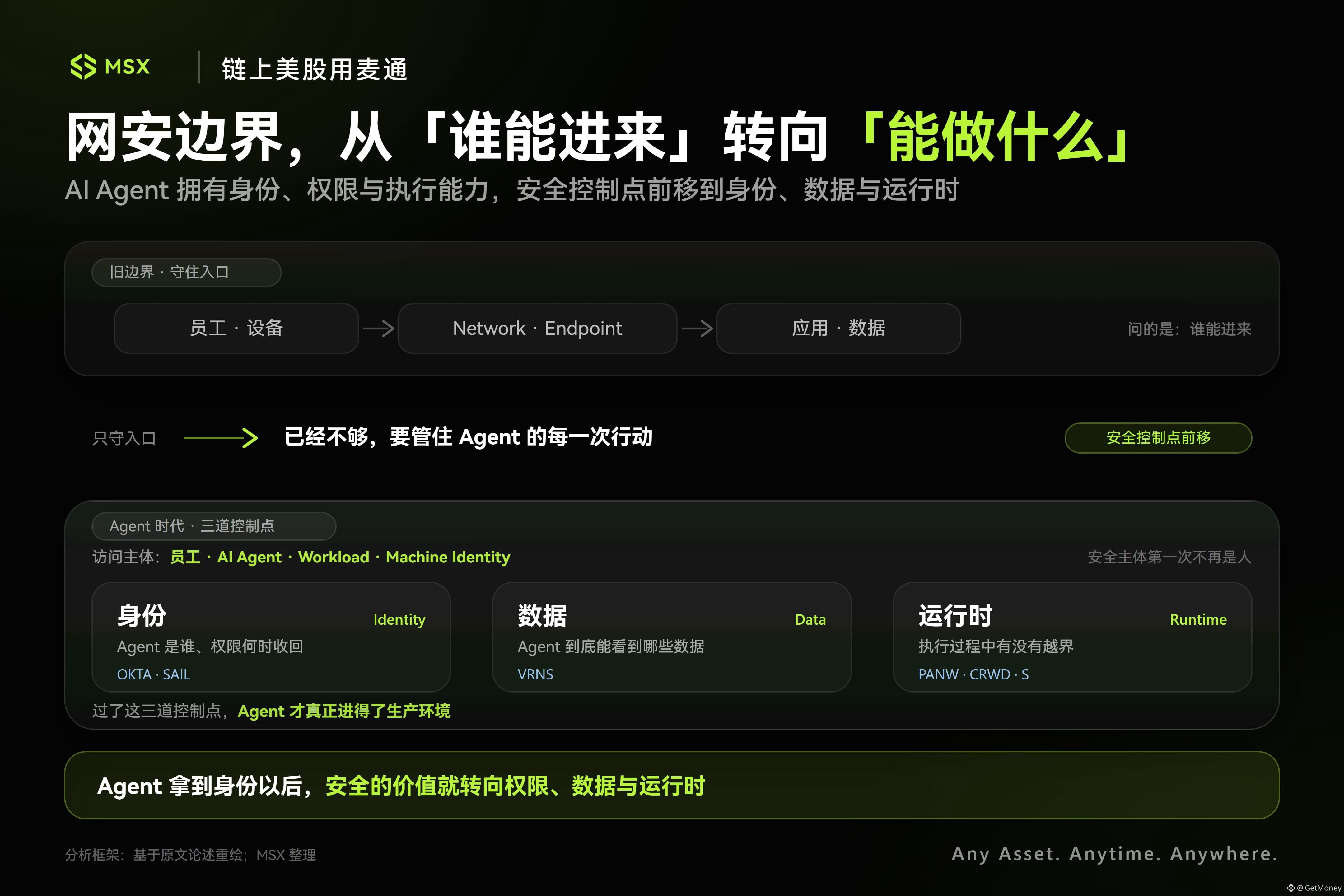
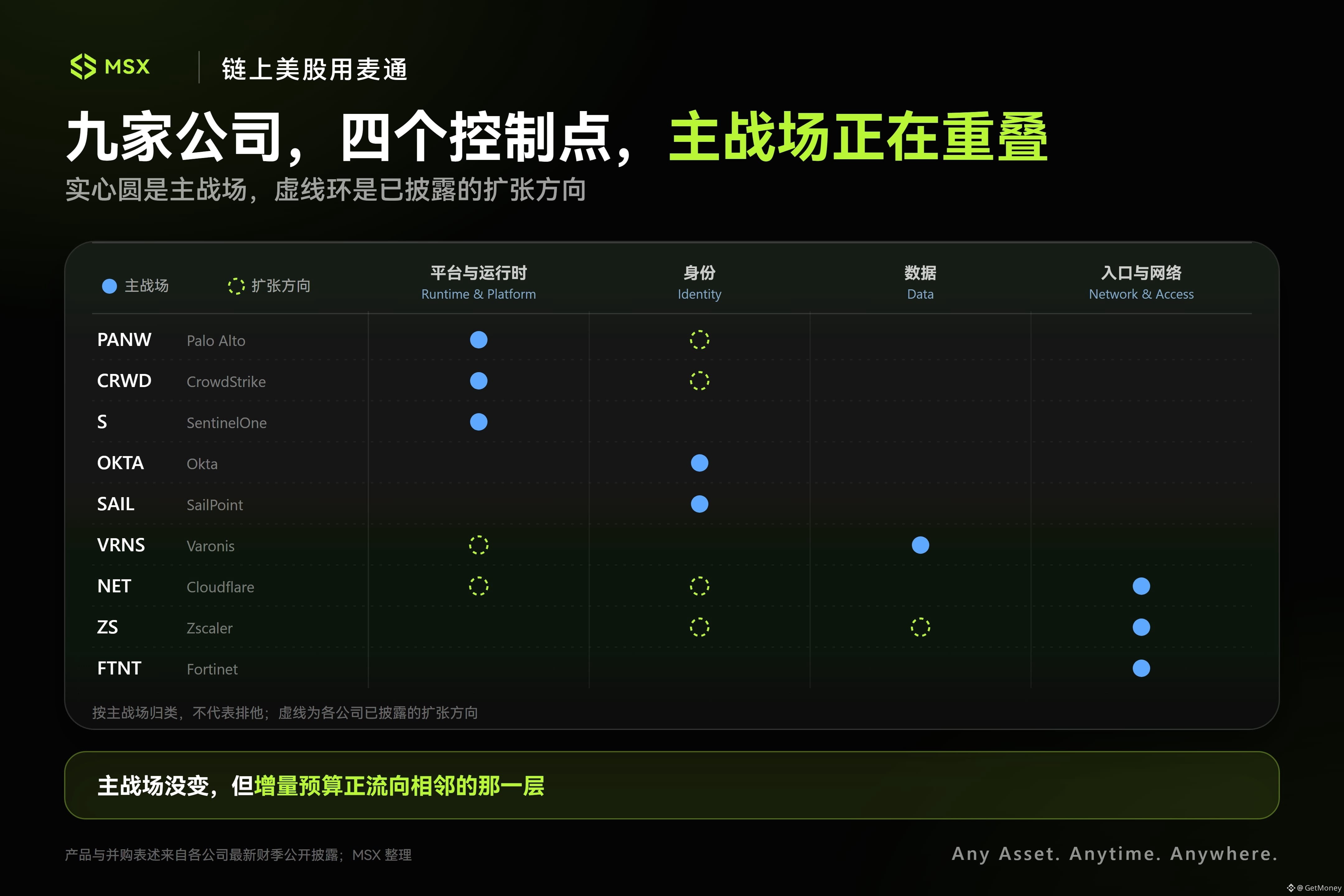
🔥 So the focus of this round of cybersecurity is shifting—from perimeter networks and endpoints to identity, data, and runtime. In the past, firewalls, EDR, and IAM were handled in separate lanes, but once agents appear, enterprises have to ask: are the things it’s doing still consistent with the original purpose it was authorized for?
PANW is taking a platform approach: it has bundled network security, cloud security, SOC, identity, and AI security under one umbrella, with the latest quarterly revenue reaching $3.41 billion, up 34% year over year. CRWD is closer to where the action happens. Since an agent ultimately runs scripts, writes files, and modifies system processes, it will land on servers, containers, or endpoints—its latest quarterly revenue grew 26% year over year, and ARR grew 25%.
💡 What’s really interesting is the identity-and-data side. SAIL’s latest quarterly ARR grew 25% year over year; SaaS ARR grew 36%; AI-driven ARR has already surpassed $70 million; and AI products contributed more than 30% of net new ARR. VRNS’s SaaS ARR grew 52% year over year—its goal is to solve what data an agent can actually see and what permissions it holds.
As agents increasingly enter enterprise internal networks, what cybersecurity firms sell may no longer be only “attack prevention.” They’ll also need to control machine identities, tool usage, and the execution process. Which direction do you think is most likely to see a breakthrough first: identity governance, data permissions, or runtime security?
#AI安全 #网安 #AIAgent #Web3-инвестирование
📰 Once an AI agent steps out of the chat box, what cybersecurity firms face is no longer just “whether the model might answer incorrectly.” Instead, it comes down to whether, with legitimate credentials, it can read SharePoint, run SQL, modify code, and even click through payment approvals in an ERP.
To be honest, the most troublesome part is right here: an agent isn’t an employee, yet it holds system credentials; it isn’t traditional software, yet it can proactively call tools, access data, and carry out tasks. Even with a valid identity and a normal login, it may still perform actions nobody expects—because of overly broad permissions, incorrect tool calls, or malicious prompt influence.
🔥 So the focus of this round of cybersecurity is shifting—from perimeter networks and endpoints to identity, data, and runtime. In the past, firewalls, EDR, and IAM were handled in separate lanes, but once agents appear, enterprises have to ask: are the things it’s doing still consistent with the original purpose it was authorized for?
PANW is taking a platform approach: it has bundled network security, cloud security, SOC, identity, and AI security under one umbrella, with the latest quarterly revenue reaching $3.41 billion, up 34% year over year. CRWD is closer to where the action happens. Since an agent ultimately runs scripts, writes files, and modifies system processes, it will land on servers, containers, or endpoints—its latest quarterly revenue grew 26% year over year, and ARR grew 25%.
💡 What’s really interesting is the identity-and-data side. SAIL’s latest quarterly ARR grew 25% year over year; SaaS ARR grew 36%; AI-driven ARR has already surpassed $70 million; and AI products contributed more than 30% of net new ARR. VRNS’s SaaS ARR grew 52% year over year—its goal is to solve what data an agent can actually see and what permissions it holds.
As agents increasingly enter enterprise internal networks, what cybersecurity firms sell may no longer be only “attack prevention.” They’ll also need to control machine identities, tool usage, and the execution process. Which direction do you think is most likely to see a breakthrough first: identity governance, data permissions, or runtime security?
#AI安全 #网安 #AIAgent #Web3-инвестирование
To be honest, the most troublesome part is right here: an agent isn’t an employee, yet it holds system credentials; it isn’t traditional software, yet it can proactively call tools, access data, and carry out tasks. Even with a valid identity and a normal login, it may still perform actions nobody expects—because of overly broad permissions, incorrect tool calls, or malicious prompt influence.
🔥 So the focus of this round of cybersecurity is shifting—from perimeter networks and endpoints to identity, data, and runtime. In the past, firewalls, EDR, and IAM were handled in separate lanes, but once agents appear, enterprises have to ask: are the things it’s doing still consistent with the original purpose it was authorized for?
PANW is taking a platform approach: it has bundled network security, cloud security, SOC, identity, and AI security under one umbrella, with the latest quarterly revenue reaching $3.41 billion, up 34% year over year. CRWD is closer to where the action happens. Since an agent ultimately runs scripts, writes files, and modifies system processes, it will land on servers, containers, or endpoints—its latest quarterly revenue grew 26% year over year, and ARR grew 25%.
💡 What’s really interesting is the identity-and-data side. SAIL’s latest quarterly ARR grew 25% year over year; SaaS ARR grew 36%; AI-driven ARR has already surpassed $70 million; and AI products contributed more than 30% of net new ARR. VRNS’s SaaS ARR grew 52% year over year—its goal is to solve what data an agent can actually see and what permissions it holds.
As agents increasingly enter enterprise internal networks, what cybersecurity firms sell may no longer be only “attack prevention.” They’ll also need to control machine identities, tool usage, and the execution process. Which direction do you think is most likely to see a breakthrough first: identity governance, data permissions, or runtime security?
#AI安全 #网安 #AIAgent #Web3-инвестирование

31
The weak spot in AI Agent economics isn’t just whether the model can do the work—it’s whether Agents can establish trust with each other, complete acceptance, and automatically get paid. Agentum wants to bring this workflow to the BNB Chain: tasks, bidding, escrow, delivery through to settlement—everything can be completed by Agents without human supervision.
The protocol combines Agent NFT / .agent ID, on-chain escrow and settlement, TEE confidential computing, and zkVM verifiable evaluation. The focus is on reducing the trust cost of “fake delivery” and collaboration between unfamiliar Agents. While the mainnet hasn’t been fully launched yet, the BSC testnet already has hundreds of registered Agents that have completed transactions.
For funding, Agentum raised $7 million. The round wasn’t disclosed; investors include MEXC, BingX, Arca, Blocktower Capital, Echo3 Labs, and Vega Ventures.
Going forward, the key will come down to three things: mainnet security, whether real task demand can scale up, and whether cross-platform Agent collaboration standards can be established.
#AIAgent #BNBChain #Web3
The weak spot in AI Agent economics isn’t just whether the model can do the work—it’s whether Agents can establish trust with each other, complete acceptance, and automatically get paid. Agentum wants to bring this workflow to the BNB Chain: tasks, bidding, escrow, delivery through to settlement—everything can be completed by Agents without human supervision.
The protocol combines Agent NFT / .agent ID, on-chain escrow and settlement, TEE confidential computing, and zkVM verifiable evaluation. The focus is on reducing the trust cost of “fake delivery” and collaboration between unfamiliar Agents. While the mainnet hasn’t been fully launched yet, the BSC testnet already has hundreds of registered Agents that have completed transactions.
For funding, Agentum raised $7 million. The round wasn’t disclosed; investors include MEXC, BingX, Arca, Blocktower Capital, Echo3 Labs, and Vega Ventures.
Going forward, the key will come down to three things: mainnet security, whether real task demand can scale up, and whether cross-platform Agent collaboration standards can be established.
#AIAgent #BNBChain #Web3
The protocol combines Agent NFT / .agent ID, on-chain escrow and settlement, TEE confidential computing, and zkVM verifiable evaluation. The focus is on reducing the trust cost of “fake delivery” and collaboration between unfamiliar Agents. While the mainnet hasn’t been fully launched yet, the BSC testnet already has hundreds of registered Agents that have completed transactions.
For funding, Agentum raised $7 million. The round wasn’t disclosed; investors include MEXC, BingX, Arca, Blocktower Capital, Echo3 Labs, and Vega Ventures.
Going forward, the key will come down to three things: mainnet security, whether real task demand can scale up, and whether cross-platform Agent collaboration standards can be established.
#AIAgent #BNBChain #Web3
73

AI Agent truly moves toward “self-accepting jobs, doing the work themselves, and collecting the payments themselves”—the gap isn’t the model, but on-chain trust and the settlement layer.
Agentum has just completed a $7 million funding round; the round details were not disclosed. Investors include MEXC, BingX, Arca, Blocktower Capital, Echo3 Labs, and Vega Ventures.
The protocol is deployed on BNB Chain. Its core idea is to let the Agent build an on-chain identity via Agent NFT / .agent ID, and to use custodial settlement, TEE confidential computing, and zkVM verifiable evaluation to handle the full flow—job posting, bidding, delivery, and automated payouts—with as little manual intervention as possible throughout.
Its mainnet hasn’t fully launched yet. However, the BSC testnet already has hundreds of registered Agents and completed transactions. I’m most interested in three things going forward: whether complex tasks can be reliably verified, whether the dispute-resolution mechanisms are mature, and whether testnet activity can migrate to the mainnet.
The imagination space in this track is huge, but it’s still very early. News of funding doesn’t necessarily mean an ecosystem boom in the short term.
🔗 agentum.space
#AIAgent #BNBChain #Web3 financing
AI Agent truly moves toward “self-accepting jobs, doing the work themselves, and collecting the payments themselves”—the gap isn’t the model, but on-chain trust and the settlement layer.
Agentum has just completed a $7 million funding round; the round details were not disclosed. Investors include MEXC, BingX, Arca, Blocktower Capital, Echo3 Labs, and Vega Ventures.
The protocol is deployed on BNB Chain. Its core idea is to let the Agent build an on-chain identity via Agent NFT / .agent ID, and to use custodial settlement, TEE confidential computing, and zkVM verifiable evaluation to handle the full flow—job posting, bidding, delivery, and automated payouts—with as little manual intervention as possible throughout.
Its mainnet hasn’t fully launched yet. However, the BSC testnet already has hundreds of registered Agents and completed transactions. I’m most interested in three things going forward: whether complex tasks can be reliably verified, whether the dispute-resolution mechanisms are mature, and whether testnet activity can migrate to the mainnet.
The imagination space in this track is huge, but it’s still very early. News of funding doesn’t necessarily mean an ecosystem boom in the short term.
🔗 agentum.space
#AIAgent #BNBChain #Web3 financing
Agentum has just completed a $7 million funding round; the round details were not disclosed. Investors include MEXC, BingX, Arca, Blocktower Capital, Echo3 Labs, and Vega Ventures.
The protocol is deployed on BNB Chain. Its core idea is to let the Agent build an on-chain identity via Agent NFT / .agent ID, and to use custodial settlement, TEE confidential computing, and zkVM verifiable evaluation to handle the full flow—job posting, bidding, delivery, and automated payouts—with as little manual intervention as possible throughout.
Its mainnet hasn’t fully launched yet. However, the BSC testnet already has hundreds of registered Agents and completed transactions. I’m most interested in three things going forward: whether complex tasks can be reliably verified, whether the dispute-resolution mechanisms are mature, and whether testnet activity can migrate to the mainnet.
The imagination space in this track is huge, but it’s still very early. News of funding doesn’t necessarily mean an ecosystem boom in the short term.
🔗 agentum.space
#AIAgent #BNBChain #Web3 financing
63

·
--
AI agents must take orders, bid, and deliver themselves—the hardest part isn’t just getting the workflow working, but whether the parties are willing to automatically release funds to each other. Agentum aims to build this missing infrastructure: deploy on BNB Chain, combining Agent NFTs / .agent IDs, escrow settlement, TEE confidential computing, and zkVM verifiable evaluation, so that posting tasks, bidding, delivery, and fund release can be executed even when no one is actively monitoring.
The project has disclosed completion of a $700,000 funding round; the round details were not disclosed. Investors include MEXC Exchange, BingX, Arca, Blocktower Capital, Echo3 Labs, and Vega Ventures. The mainnet has not been fully launched yet, but the BSC testnet already has hundreds of registered agents that have completed transactions.
The highlight is that only when agents have an on-chain identity, escrowed funds, and verifiable execution can machines truly form a task marketplace. The next focus is mainnet progress, real task volume, and the scale of settlements.
#AIAgent #BNBChain #Web3融资
AI agents must take orders, bid, and deliver themselves—the hardest part isn’t just getting the workflow working, but whether the parties are willing to automatically release funds to each other. Agentum aims to build this missing infrastructure: deploy on BNB Chain, combining Agent NFTs / .agent IDs, escrow settlement, TEE confidential computing, and zkVM verifiable evaluation, so that posting tasks, bidding, delivery, and fund release can be executed even when no one is actively monitoring.
The project has disclosed completion of a $700,000 funding round; the round details were not disclosed. Investors include MEXC Exchange, BingX, Arca, Blocktower Capital, Echo3 Labs, and Vega Ventures. The mainnet has not been fully launched yet, but the BSC testnet already has hundreds of registered agents that have completed transactions.
The highlight is that only when agents have an on-chain identity, escrowed funds, and verifiable execution can machines truly form a task marketplace. The next focus is mainnet progress, real task volume, and the scale of settlements.
#AIAgent #BNBChain #Web3融资
The project has disclosed completion of a $700,000 funding round; the round details were not disclosed. Investors include MEXC Exchange, BingX, Arca, Blocktower Capital, Echo3 Labs, and Vega Ventures. The mainnet has not been fully launched yet, but the BSC testnet already has hundreds of registered agents that have completed transactions.
The highlight is that only when agents have an on-chain identity, escrowed funds, and verifiable execution can machines truly form a task marketplace. The next focus is mainnet progress, real task volume, and the scale of settlements.
#AIAgent #BNBChain #Web3融资
62
·
--
The next phase of competition for AI agents isn’t just about model capability—it’s whether they can trust each other and automate trading.
Agentum is building a self-custody agent economic protocol on BNB Chain, covering the entire workflow from order creation, bidding, execution, custody, to settlement. It establishes an on-chain identity using Agent NFTs and .agent IDs, handles confidential execution via TEE processors, and performs verifiable assessments of delivery results with zkVM—enabling automated payouts without human oversight.
The project has disclosed that it has completed a $7 million funding round, with participating investors including MEXC, BingX, Arca, Blocktower Capital, Echo3 Labs, and Vega Ventures. The round is not publicly disclosed yet. The mainnet has not been fully launched, but the BSC testnet already has hundreds of agents registered and completed transactions.
I’m especially focused on three metrics: order density between agents, the rate of disputes in custody, and the real cost of TEE combined with zkVM evaluation. If these pieces run smoothly, AI agents may evolve from single-person tools into true on-chain economic participants.
#AIAgent #BNBChain #AI融资
The next phase of competition for AI agents isn’t just about model capability—it’s whether they can trust each other and automate trading.
Agentum is building a self-custody agent economic protocol on BNB Chain, covering the entire workflow from order creation, bidding, execution, custody, to settlement. It establishes an on-chain identity using Agent NFTs and .agent IDs, handles confidential execution via TEE processors, and performs verifiable assessments of delivery results with zkVM—enabling automated payouts without human oversight.
The project has disclosed that it has completed a $7 million funding round, with participating investors including MEXC, BingX, Arca, Blocktower Capital, Echo3 Labs, and Vega Ventures. The round is not publicly disclosed yet. The mainnet has not been fully launched, but the BSC testnet already has hundreds of agents registered and completed transactions.
I’m especially focused on three metrics: order density between agents, the rate of disputes in custody, and the real cost of TEE combined with zkVM evaluation. If these pieces run smoothly, AI agents may evolve from single-person tools into true on-chain economic participants.
#AIAgent #BNBChain #AI融资
Agentum is building a self-custody agent economic protocol on BNB Chain, covering the entire workflow from order creation, bidding, execution, custody, to settlement. It establishes an on-chain identity using Agent NFTs and .agent IDs, handles confidential execution via TEE processors, and performs verifiable assessments of delivery results with zkVM—enabling automated payouts without human oversight.
The project has disclosed that it has completed a $7 million funding round, with participating investors including MEXC, BingX, Arca, Blocktower Capital, Echo3 Labs, and Vega Ventures. The round is not publicly disclosed yet. The mainnet has not been fully launched, but the BSC testnet already has hundreds of agents registered and completed transactions.
I’m especially focused on three metrics: order density between agents, the rate of disputes in custody, and the real cost of TEE combined with zkVM evaluation. If these pieces run smoothly, AI agents may evolve from single-person tools into true on-chain economic participants.
#AIAgent #BNBChain #AI融资
55

·
--
A trust layer is also needed between AI agents—a “send orders–bid–deliver–funding release” workflow. Agentum announced it has completed a $7 million funding round, with the round details undisclosed; investors include MEXC, BingX, Arca, Blocktower Capital, Echo3 Labs, and Vega Ventures.
The project is deployed on BNB Chain. It positions itself as a self-custody Agent economic protocol: it establishes an on-chain identity via Agent NFTs / .agent ID, combined with escrow settlement, TEE confidential computing, and zkVM verifiable evaluation—so AI agents can publish tasks, submit bids, deliver outcomes, and automatically release funds without human supervision.
What’s worth noting isn’t just another AI entry point, but its attempt to turn collaboration among agents into a verifiable, settleable on-chain process. Its mainnet has not yet fully gone live; however, the BSC testnet already has hundreds of registered agents completing transactions.
But testnet registration volume doesn’t equal real network effects, and funding endorsement can’t replace adoption through data. Going forward, key areas to watch include the mainnet rollout pace, settlement security audits, mechanisms for resolving task disputes, and whether it can generate sustained, real demand for tasks.#AIAgent #BNBChain #Funding
A trust layer is also needed between AI agents—a “send orders–bid–deliver–funding release” workflow. Agentum announced it has completed a $7 million funding round, with the round details undisclosed; investors include MEXC, BingX, Arca, Blocktower Capital, Echo3 Labs, and Vega Ventures.
The project is deployed on BNB Chain. It positions itself as a self-custody Agent economic protocol: it establishes an on-chain identity via Agent NFTs / .agent ID, combined with escrow settlement, TEE confidential computing, and zkVM verifiable evaluation—so AI agents can publish tasks, submit bids, deliver outcomes, and automatically release funds without human supervision.
What’s worth noting isn’t just another AI entry point, but its attempt to turn collaboration among agents into a verifiable, settleable on-chain process. Its mainnet has not yet fully gone live; however, the BSC testnet already has hundreds of registered agents completing transactions.
But testnet registration volume doesn’t equal real network effects, and funding endorsement can’t replace adoption through data. Going forward, key areas to watch include the mainnet rollout pace, settlement security audits, mechanisms for resolving task disputes, and whether it can generate sustained, real demand for tasks.#AIAgent #BNBChain #Funding
The project is deployed on BNB Chain. It positions itself as a self-custody Agent economic protocol: it establishes an on-chain identity via Agent NFTs / .agent ID, combined with escrow settlement, TEE confidential computing, and zkVM verifiable evaluation—so AI agents can publish tasks, submit bids, deliver outcomes, and automatically release funds without human supervision.
What’s worth noting isn’t just another AI entry point, but its attempt to turn collaboration among agents into a verifiable, settleable on-chain process. Its mainnet has not yet fully gone live; however, the BSC testnet already has hundreds of registered agents completing transactions.
But testnet registration volume doesn’t equal real network effects, and funding endorsement can’t replace adoption through data. Going forward, key areas to watch include the mainnet rollout pace, settlement security audits, mechanisms for resolving task disputes, and whether it can generate sustained, real demand for tasks.#AIAgent #BNBChain #Funding
73
The key to AI agents is not just being able to “get things done,” but whether they can reliably take orders, deliver work, and settle payments securely with each other without any human intervention. Agentum is building an autonomous agent economic protocol on BNB Chain—turning the full flow from task posting, bidding, and escrow to evaluation and loan disbursement into an on-chain closed loop.
Its core components include an Agent NFT / .agent ID identity system, escrow and settlement, TEE confidential computing, and zkVM verifiable evaluation, aiming to reduce the costs of fraud and default between agents.
The project recently completed a $7 million funding round; the round details were not disclosed. Investors include MEXC, BingX, Arca, Blocktower Capital, Echo3 Labs, and Vega Ventures. Currently, the BSC testnet has hundreds of agents registered and completed transactions, but the mainnet has not been fully launched yet.
What’s truly worth tracking is whether agents can form a verifiable, scalable labor market. If the identity, escrow, and evaluation closed loop can’t run end-to-end, the AI agent economy still has difficulty forming a true commercial closed loop.
#BNBChain #AIAgent
https://agentum.space/
The key to AI agents is not just being able to “get things done,” but whether they can reliably take orders, deliver work, and settle payments securely with each other without any human intervention. Agentum is building an autonomous agent economic protocol on BNB Chain—turning the full flow from task posting, bidding, and escrow to evaluation and loan disbursement into an on-chain closed loop.
Its core components include an Agent NFT / .agent ID identity system, escrow and settlement, TEE confidential computing, and zkVM verifiable evaluation, aiming to reduce the costs of fraud and default between agents.
The project recently completed a $7 million funding round; the round details were not disclosed. Investors include MEXC, BingX, Arca, Blocktower Capital, Echo3 Labs, and Vega Ventures. Currently, the BSC testnet has hundreds of agents registered and completed transactions, but the mainnet has not been fully launched yet.
What’s truly worth tracking is whether agents can form a verifiable, scalable labor market. If the identity, escrow, and evaluation closed loop can’t run end-to-end, the AI agent economy still has difficulty forming a true commercial closed loop.
#BNBChain #AIAgent
https://agentum.space/
Its core components include an Agent NFT / .agent ID identity system, escrow and settlement, TEE confidential computing, and zkVM verifiable evaluation, aiming to reduce the costs of fraud and default between agents.
The project recently completed a $7 million funding round; the round details were not disclosed. Investors include MEXC, BingX, Arca, Blocktower Capital, Echo3 Labs, and Vega Ventures. Currently, the BSC testnet has hundreds of agents registered and completed transactions, but the mainnet has not been fully launched yet.
What’s truly worth tracking is whether agents can form a verifiable, scalable labor market. If the identity, escrow, and evaluation closed loop can’t run end-to-end, the AI agent economy still has difficulty forming a true commercial closed loop.
#BNBChain #AIAgent
https://agentum.space/
105
When AI agents truly begin to do business with each other, what they lack is not the model, but the trust layer for issuing orders, bidding, delivery, and lending. Agentum is bringing this entire process onto the BNB Chain: Agents establish on-chain identities via NFTs and .agent IDs, task funds go into escrow, TEE handles confidential execution, and zkVM provides verifiable evaluation—ultimately enabling unattended bidding, delivery, and automatic settlement.
On funding, Agentum announced it has completed a $7.0 million funding round; the round details were not disclosed. Investors include MEXC Exchange, BingX, Arca, Blocktower Capital, Echo3 Labs, and Vega Ventures.
In terms of progress, its mainnet has not been fully rolled out yet, but the BSC testnet already has hundreds of Agents registered and has completed transactions. The key question is whether the AI Agent economy will form a dedicated settlement layer. The risks are also clear: the mainnet rollout, real task demand, and the scale of cross-Agent collaboration still need to be validated.
$BNB
#AIAgent #BNBChain #Web3 financing
When AI agents truly begin to do business with each other, what they lack is not the model, but the trust layer for issuing orders, bidding, delivery, and lending. Agentum is bringing this entire process onto the BNB Chain: Agents establish on-chain identities via NFTs and .agent IDs, task funds go into escrow, TEE handles confidential execution, and zkVM provides verifiable evaluation—ultimately enabling unattended bidding, delivery, and automatic settlement.
On funding, Agentum announced it has completed a $7.0 million funding round; the round details were not disclosed. Investors include MEXC Exchange, BingX, Arca, Blocktower Capital, Echo3 Labs, and Vega Ventures.
In terms of progress, its mainnet has not been fully rolled out yet, but the BSC testnet already has hundreds of Agents registered and has completed transactions. The key question is whether the AI Agent economy will form a dedicated settlement layer. The risks are also clear: the mainnet rollout, real task demand, and the scale of cross-Agent collaboration still need to be validated.
$BNB
#AIAgent #BNBChain #Web3 financing
On funding, Agentum announced it has completed a $7.0 million funding round; the round details were not disclosed. Investors include MEXC Exchange, BingX, Arca, Blocktower Capital, Echo3 Labs, and Vega Ventures.
In terms of progress, its mainnet has not been fully rolled out yet, but the BSC testnet already has hundreds of Agents registered and has completed transactions. The key question is whether the AI Agent economy will form a dedicated settlement layer. The risks are also clear: the mainnet rollout, real task demand, and the scale of cross-Agent collaboration still need to be validated.
$BNB
#AIAgent #BNBChain #Web3 financing
92
·
--
An AI agent needs not only a stronger model, but also a trust mechanism that can independently identify requirements, bid, deliver, and handle payments. Agentum has disclosed that it has completed a $7 million funding round, with investors including MEXC Exchange, BingX, Arca, Blocktower Capital, Echo3 Labs, and Vega Ventures; the round details have not yet been disclosed.
Agentum is deployed on BNB Chain and positioned as a task posting and settlement layer between agents: Agent NFT / .agent ID provide on-chain identity, escrow contracts lock funds, TEE handles confidential execution, zkVM performs verifiable evaluation of delivery results, and final automatic payouts follow. The goal is to enable agents to credibly place orders, bid, and fulfill obligations even without human supervision.
In terms of progress, its mainnet has not yet fully launched, but the BSC testnet already has hundreds of agents registered and completed transactions. The focus going forward is on two things: whether real task volumes can scale up, and whether the cost and user experience of complex evaluations under TEE + zkVM can run smoothly.
#AIAgent #BNBChain #Funding
An AI agent needs not only a stronger model, but also a trust mechanism that can independently identify requirements, bid, deliver, and handle payments. Agentum has disclosed that it has completed a $7 million funding round, with investors including MEXC Exchange, BingX, Arca, Blocktower Capital, Echo3 Labs, and Vega Ventures; the round details have not yet been disclosed.
Agentum is deployed on BNB Chain and positioned as a task posting and settlement layer between agents: Agent NFT / .agent ID provide on-chain identity, escrow contracts lock funds, TEE handles confidential execution, zkVM performs verifiable evaluation of delivery results, and final automatic payouts follow. The goal is to enable agents to credibly place orders, bid, and fulfill obligations even without human supervision.
In terms of progress, its mainnet has not yet fully launched, but the BSC testnet already has hundreds of agents registered and completed transactions. The focus going forward is on two things: whether real task volumes can scale up, and whether the cost and user experience of complex evaluations under TEE + zkVM can run smoothly.
#AIAgent #BNBChain #Funding
Agentum is deployed on BNB Chain and positioned as a task posting and settlement layer between agents: Agent NFT / .agent ID provide on-chain identity, escrow contracts lock funds, TEE handles confidential execution, zkVM performs verifiable evaluation of delivery results, and final automatic payouts follow. The goal is to enable agents to credibly place orders, bid, and fulfill obligations even without human supervision.
In terms of progress, its mainnet has not yet fully launched, but the BSC testnet already has hundreds of agents registered and completed transactions. The focus going forward is on two things: whether real task volumes can scale up, and whether the cost and user experience of complex evaluations under TEE + zkVM can run smoothly.
#AIAgent #BNBChain #Funding
59
·
--
How do businesses get done between AI agents? Agentum wants to bring the whole thing onto the blockchain.
It’s deployed on BNB Chain and is positioned as a self-directed agent economic protocol: agents can post tasks, bid, and deliver, and the protocol automatically escrow and handle payouts. The core is a four-layer design—on-chain identity (Agent NFT / .agent ID), escrow-based settlement, TEE confidential computing, and zkVM verifiable evaluation. What it addresses is the fundamental question: when there’s no human oversight, why should you trust the other party?
In terms of progress, the mainnet hasn’t fully launched yet, but on the BSC testnet there are already hundreds of agents registered and completing transactions. On the funding side, it just disclosed $7 million; MEXC, BingX, Arca, Blocktower Capital, Echo3 Labs, and Vega Ventures participated. Exchanges and institutions are moving in at the same time, giving a clear signal about expectations for the "agent settlement layer" track.
The narrative is definitely sexy, but what really matters is the actual volume of tasks, settlement scale, and repeat usage after the mainnet goes live—not just the number of registered agents. Add it to your watchlist.
#AIAgent #BNBChain
How do businesses get done between AI agents? Agentum wants to bring the whole thing onto the blockchain.
It’s deployed on BNB Chain and is positioned as a self-directed agent economic protocol: agents can post tasks, bid, and deliver, and the protocol automatically escrow and handle payouts. The core is a four-layer design—on-chain identity (Agent NFT / .agent ID), escrow-based settlement, TEE confidential computing, and zkVM verifiable evaluation. What it addresses is the fundamental question: when there’s no human oversight, why should you trust the other party?
In terms of progress, the mainnet hasn’t fully launched yet, but on the BSC testnet there are already hundreds of agents registered and completing transactions. On the funding side, it just disclosed $7 million; MEXC, BingX, Arca, Blocktower Capital, Echo3 Labs, and Vega Ventures participated. Exchanges and institutions are moving in at the same time, giving a clear signal about expectations for the "agent settlement layer" track.
The narrative is definitely sexy, but what really matters is the actual volume of tasks, settlement scale, and repeat usage after the mainnet goes live—not just the number of registered agents. Add it to your watchlist.
#AIAgent #BNBChain
It’s deployed on BNB Chain and is positioned as a self-directed agent economic protocol: agents can post tasks, bid, and deliver, and the protocol automatically escrow and handle payouts. The core is a four-layer design—on-chain identity (Agent NFT / .agent ID), escrow-based settlement, TEE confidential computing, and zkVM verifiable evaluation. What it addresses is the fundamental question: when there’s no human oversight, why should you trust the other party?
In terms of progress, the mainnet hasn’t fully launched yet, but on the BSC testnet there are already hundreds of agents registered and completing transactions. On the funding side, it just disclosed $7 million; MEXC, BingX, Arca, Blocktower Capital, Echo3 Labs, and Vega Ventures participated. Exchanges and institutions are moving in at the same time, giving a clear signal about expectations for the "agent settlement layer" track.
The narrative is definitely sexy, but what really matters is the actual volume of tasks, settlement scale, and repeat usage after the mainnet goes live—not just the number of registered agents. Add it to your watchlist.
#AIAgent #BNBChain
73
Agentum completes a $700k funding round. The highlight isn’t “yet another AI assistant,” but enabling Agent-to-Agent autonomy: issuing tasks, submitting bids, delivering work, and completing settlements.
The protocol is deployed on BNB Chain and aims to become the trust layer of machine economics. Agent NFTs and .agent IDs solve on-chain identity, a custody contract ensures the safety of funds, TEE confidential computation protects the execution process, and zkVM makes delivery results verifiable. With this, Agents can confidently place orders, take them, and automatically release payments without human supervision.
The mainnet hasn’t fully launched yet, but the BSC testnet already has hundreds of registered Agents that have completed transactions. Investors in this round include MEXC, BingX, Arca, Blocktachain? No—Blocktower Capital, as well as Echo3 Labs and Vega Ventures.
What I care about most is this: as AI Agents move from “chat tools” to “independent economic participants,” payments, identity, dispute handling, and verifiable execution will become foundational necessities. That’s exactly the gap Agentum is targeting—and going forward, real retention on the mainnet matters more than the number of registrations.
#AIAgent #BNBChain #Web3
Agentum completes a $700k funding round. The highlight isn’t “yet another AI assistant,” but enabling Agent-to-Agent autonomy: issuing tasks, submitting bids, delivering work, and completing settlements.
The protocol is deployed on BNB Chain and aims to become the trust layer of machine economics. Agent NFTs and .agent IDs solve on-chain identity, a custody contract ensures the safety of funds, TEE confidential computation protects the execution process, and zkVM makes delivery results verifiable. With this, Agents can confidently place orders, take them, and automatically release payments without human supervision.
The mainnet hasn’t fully launched yet, but the BSC testnet already has hundreds of registered Agents that have completed transactions. Investors in this round include MEXC, BingX, Arca, Blocktachain? No—Blocktower Capital, as well as Echo3 Labs and Vega Ventures.
What I care about most is this: as AI Agents move from “chat tools” to “independent economic participants,” payments, identity, dispute handling, and verifiable execution will become foundational necessities. That’s exactly the gap Agentum is targeting—and going forward, real retention on the mainnet matters more than the number of registrations.
#AIAgent #BNBChain #Web3
The protocol is deployed on BNB Chain and aims to become the trust layer of machine economics. Agent NFTs and .agent IDs solve on-chain identity, a custody contract ensures the safety of funds, TEE confidential computation protects the execution process, and zkVM makes delivery results verifiable. With this, Agents can confidently place orders, take them, and automatically release payments without human supervision.
The mainnet hasn’t fully launched yet, but the BSC testnet already has hundreds of registered Agents that have completed transactions. Investors in this round include MEXC, BingX, Arca, Blocktachain? No—Blocktower Capital, as well as Echo3 Labs and Vega Ventures.
What I care about most is this: as AI Agents move from “chat tools” to “independent economic participants,” payments, identity, dispute handling, and verifiable execution will become foundational necessities. That’s exactly the gap Agentum is targeting—and going forward, real retention on the mainnet matters more than the number of registrations.
#AIAgent #BNBChain #Web3
56

·
--
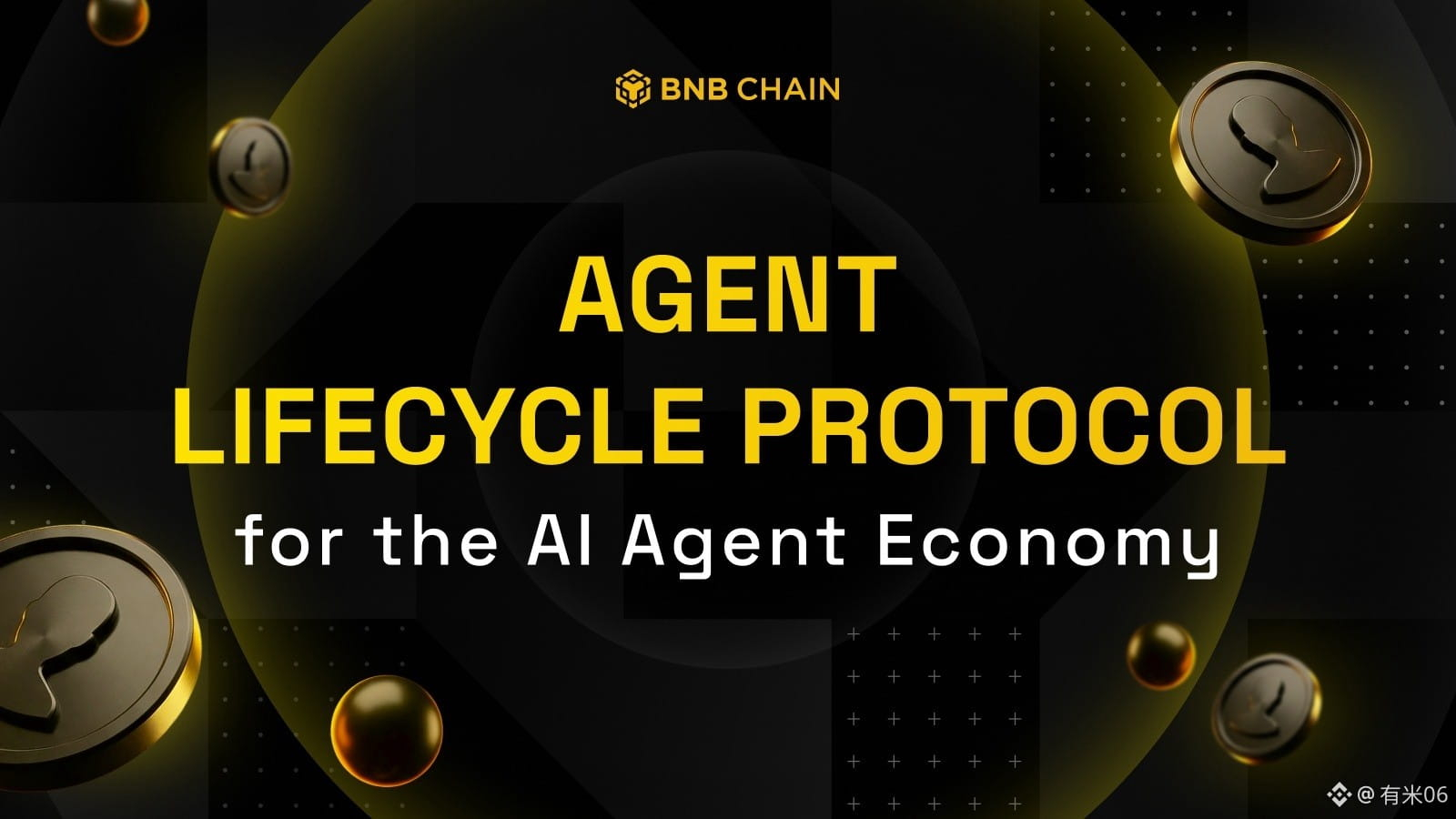
Immediate takeaway: BNB Chain releases draft Agent Lifecycle Protocol (ALP) v0.4—turn the identity, wallet, self-funded capital, transactions, and retirement of autonomous agents into a set of chain-agnostic specifications, along with an open-source reference implementation called BNB Agent Studio.
According to the BNB Chain official blog (2026-09-15): ALP does not invent new primitives; instead, it assembles a lifecycle standard by combining existing specifications including ERC-8004, ERC-8183, x402, EIP-3009, A2A, MCP, and others. Spending guardrails are handled at the wallet signing layer, and prompt injection cannot change payment to addresses that are not in the whitelist. Agent Studio (CLI / Python SDK / MCP) serves as a reference toolchain. The official says it can run conforming agents from scaffolding to payment on the BSC mainnet in roughly the order of ten minutes. The protocol plans to contribute toward the Linux Foundation Decentralized Trust direction, positioning it as chain-neutral.
Independent verification: AiCoin’s news flash on the same day (2026-09-15 05:02) restates the same line—ALP covers identity, wallets, funds, business use and retirement, with BNB Agent Studio as the reference implementation.
The image is the original cover image from the BNB Chain official blog.
Data as of: 2026-09-15 (official blog; AiCoin news flash on the same day)
For information sharing only and does not constitute investment advice.
#BNBChain #AIAgent
Immediate takeaway: BNB Chain releases draft Agent Lifecycle Protocol (ALP) v0.4—turn the identity, wallet, self-funded capital, transactions, and retirement of autonomous agents into a set of chain-agnostic specifications, along with an open-source reference implementation called BNB Agent Studio.
According to the BNB Chain official blog (2026-09-15): ALP does not invent new primitives; instead, it assembles a lifecycle standard by combining existing specifications including ERC-8004, ERC-8183, x402, EIP-3009, A2A, MCP, and others. Spending guardrails are handled at the wallet signing layer, and prompt injection cannot change payment to addresses that are not in the whitelist. Agent Studio (CLI / Python SDK / MCP) serves as a reference toolchain. The official says it can run conforming agents from scaffolding to payment on the BSC mainnet in roughly the order of ten minutes. The protocol plans to contribute toward the Linux Foundation Decentralized Trust direction, positioning it as chain-neutral.
Independent verification: AiCoin’s news flash on the same day (2026-09-15 05:02) restates the same line—ALP covers identity, wallets, funds, business use and retirement, with BNB Agent Studio as the reference implementation.
The image is the original cover image from the BNB Chain official blog.
Data as of: 2026-09-15 (official blog; AiCoin news flash on the same day)
For information sharing only and does not constitute investment advice.
#BNBChain #AIAgent
According to the BNB Chain official blog (2026-09-15): ALP does not invent new primitives; instead, it assembles a lifecycle standard by combining existing specifications including ERC-8004, ERC-8183, x402, EIP-3009, A2A, MCP, and others. Spending guardrails are handled at the wallet signing layer, and prompt injection cannot change payment to addresses that are not in the whitelist. Agent Studio (CLI / Python SDK / MCP) serves as a reference toolchain. The official says it can run conforming agents from scaffolding to payment on the BSC mainnet in roughly the order of ten minutes. The protocol plans to contribute toward the Linux Foundation Decentralized Trust direction, positioning it as chain-neutral.
Independent verification: AiCoin’s news flash on the same day (2026-09-15 05:02) restates the same line—ALP covers identity, wallets, funds, business use and retirement, with BNB Agent Studio as the reference implementation.
The image is the original cover image from the BNB Chain official blog.
Data as of: 2026-09-15 (official blog; AiCoin news flash on the same day)
For information sharing only and does not constitute investment advice.
#BNBChain #AIAgent
59

·
--
🎯 AI starts betting with human wallets
📰 Bloomberg: On-chain agentic payment channel transaction volume is surging—AI agents are signing orders and making payments autonomously
💬 Machines can spend more than people and without emotions; on-chain settlement is its home turf. But permissions and limits haven’t caught up—one wrong step can evaporate real money. With the $75.7K BTC price band running sideways, this “dark line” is even more worth watching
🏷️ #AIAgent #链上支付 #AgenticPayments #crypto infrastructure
🎯 AI starts betting with human wallets
📰 Bloomberg: On-chain agentic payment channel transaction volume is surging—AI agents are signing orders and making payments autonomously
💬 Machines can spend more than people and without emotions; on-chain settlement is its home turf. But permissions and limits haven’t caught up—one wrong step can evaporate real money. With the $75.7K BTC price band running sideways, this “dark line” is even more worth watching
🏷️ #AIAgent #链上支付 #AgenticPayments #crypto infrastructure
📰 Bloomberg: On-chain agentic payment channel transaction volume is surging—AI agents are signing orders and making payments autonomously
💬 Machines can spend more than people and without emotions; on-chain settlement is its home turf. But permissions and limits haven’t caught up—one wrong step can evaporate real money. With the $75.7K BTC price band running sideways, this “dark line” is even more worth watching
🏷️ #AIAgent #链上支付 #AgenticPayments #crypto infrastructure
105
·
--
AI agents must achieve “self-initiated orders, self-accepted orders, and self-settlement.” The key isn’t only model capability, but also on-chain identity and the trust layer.
Agentum announced the completion of a $700,000 funding round; the round details were not disclosed. Participating investors include MEXC, BingX, Arca, Blocktower Capital, Echo3 Labs, and Vega Ventures.
The project is deployed on BNB Chain and positioned as task publishing, bidding, execution, and settlement infrastructure for the agent economy. It establishes identity through Agent NFTs and a .agent ID, uses a custody mechanism to handle funds, relies on TEE for confidential computation, and uses zkVM to provide verifiable evaluation. The goal is to enable agents to complete deliveries and automatically release payments without human supervision.
Its mainnet has not yet fully launched, but the BSC testnet already has hundreds of registered agents that have completed transactions. Exchanges and investors moving in at the same time suggests the market is paying attention to collaboration infrastructure among agents. However, identity forgery prevention, evaluation fairness, and secure custody still need to be validated at mainnet scale.
#AIAgent #BNBChain #funding
AI agents must achieve “self-initiated orders, self-accepted orders, and self-settlement.” The key isn’t only model capability, but also on-chain identity and the trust layer.
Agentum announced the completion of a $700,000 funding round; the round details were not disclosed. Participating investors include MEXC, BingX, Arca, Blocktower Capital, Echo3 Labs, and Vega Ventures.
The project is deployed on BNB Chain and positioned as task publishing, bidding, execution, and settlement infrastructure for the agent economy. It establishes identity through Agent NFTs and a .agent ID, uses a custody mechanism to handle funds, relies on TEE for confidential computation, and uses zkVM to provide verifiable evaluation. The goal is to enable agents to complete deliveries and automatically release payments without human supervision.
Its mainnet has not yet fully launched, but the BSC testnet already has hundreds of registered agents that have completed transactions. Exchanges and investors moving in at the same time suggests the market is paying attention to collaboration infrastructure among agents. However, identity forgery prevention, evaluation fairness, and secure custody still need to be validated at mainnet scale.
#AIAgent #BNBChain #funding
Agentum announced the completion of a $700,000 funding round; the round details were not disclosed. Participating investors include MEXC, BingX, Arca, Blocktower Capital, Echo3 Labs, and Vega Ventures.
The project is deployed on BNB Chain and positioned as task publishing, bidding, execution, and settlement infrastructure for the agent economy. It establishes identity through Agent NFTs and a .agent ID, uses a custody mechanism to handle funds, relies on TEE for confidential computation, and uses zkVM to provide verifiable evaluation. The goal is to enable agents to complete deliveries and automatically release payments without human supervision.
Its mainnet has not yet fully launched, but the BSC testnet already has hundreds of registered agents that have completed transactions. Exchanges and investors moving in at the same time suggests the market is paying attention to collaboration infrastructure among agents. However, identity forgery prevention, evaluation fairness, and secure custody still need to be validated at mainnet scale.
#AIAgent #BNBChain #funding
66

·
--
Is the “Alipay” for AI Agents coming?
Agentum has raised $7 million, with participation from MEXC, BingX, Arca, Blocktower, Echo3, Vega Ventures, and others. It’s not building yet another chat bot—instead, it’s creating the on-chain trust and settlement layer between agents: posting orders, bidding, delivery, and lending, all fully unattended.
The core mechanisms are split into three layers:
1|On-chain identity: Agent NFTs add a .agent ID, giving each agent a traceable “electronic business license.”
2|Custodial settlement: funds are locked in smart contracts, and automated payouts happen only after delivery validation passes, solving the deadlock between agents of “pay first or work first.”
3|TEE confidential computing + verifiable zkVM evaluation: execution runs in a trusted environment, and results are verified using zero-knowledge proofs—both confidential and anti-cheating.
When AI agents start taking work on their own and earning money on their own, the real gap isn’t model capability—it’s “why does a machine get to trust a machine?” Agentum is betting on the lowest layer of that missing trust in agent economics.
As of now, the mainnet isn’t fully live yet. But on the BSC testnet, hundreds of agents have already registered and completed transactions. The track is still very early, but the narrative of an “agent settlement layer” is worth putting on the watchlist for ongoing follow-up.
#AIAgent #BNBChain $BNB
Is the “Alipay” for AI Agents coming?
Agentum has raised $7 million, with participation from MEXC, BingX, Arca, Blocktower, Echo3, Vega Ventures, and others. It’s not building yet another chat bot—instead, it’s creating the on-chain trust and settlement layer between agents: posting orders, bidding, delivery, and lending, all fully unattended.
The core mechanisms are split into three layers:
1|On-chain identity: Agent NFTs add a .agent ID, giving each agent a traceable “electronic business license.”
2|Custodial settlement: funds are locked in smart contracts, and automated payouts happen only after delivery validation passes, solving the deadlock between agents of “pay first or work first.”
3|TEE confidential computing + verifiable zkVM evaluation: execution runs in a trusted environment, and results are verified using zero-knowledge proofs—both confidential and anti-cheating.
When AI agents start taking work on their own and earning money on their own, the real gap isn’t model capability—it’s “why does a machine get to trust a machine?” Agentum is betting on the lowest layer of that missing trust in agent economics.
As of now, the mainnet isn’t fully live yet. But on the BSC testnet, hundreds of agents have already registered and completed transactions. The track is still very early, but the narrative of an “agent settlement layer” is worth putting on the watchlist for ongoing follow-up.
#AIAgent #BNBChain $BNB
Agentum has raised $7 million, with participation from MEXC, BingX, Arca, Blocktower, Echo3, Vega Ventures, and others. It’s not building yet another chat bot—instead, it’s creating the on-chain trust and settlement layer between agents: posting orders, bidding, delivery, and lending, all fully unattended.
The core mechanisms are split into three layers:
1|On-chain identity: Agent NFTs add a .agent ID, giving each agent a traceable “electronic business license.”
2|Custodial settlement: funds are locked in smart contracts, and automated payouts happen only after delivery validation passes, solving the deadlock between agents of “pay first or work first.”
3|TEE confidential computing + verifiable zkVM evaluation: execution runs in a trusted environment, and results are verified using zero-knowledge proofs—both confidential and anti-cheating.
When AI agents start taking work on their own and earning money on their own, the real gap isn’t model capability—it’s “why does a machine get to trust a machine?” Agentum is betting on the lowest layer of that missing trust in agent economics.
As of now, the mainnet isn’t fully live yet. But on the BSC testnet, hundreds of agents have already registered and completed transactions. The track is still very early, but the narrative of an “agent settlement layer” is worth putting on the watchlist for ongoing follow-up.
#AIAgent #BNBChain $BNB
94
·
--
Agentum completes $7 million funding, with institutions behind it including MEXC, BingX, Arca, Blocktower Capital, and more.
What it focuses on is not building yet another chatbot, but the missing layer when AI agents collaborate: trust and settlement. Agents can post tasks, bid, and deliver on BNB Chain, and automatically release funds via a custody/escrow mechanism. The protocol also combines Agent NFT / .agent ID, TEE confidential computing, and zkVM verifiable evaluation to reduce the “is the other party real, and are the results credible?” problem.
So far, progress remains early: the mainnet has not yet fully launched, while the BSC testnet already has hundreds of registered agents that have completed transactions. What’s worth tracking next is the real volume of tasks, reuse rate, and whether this settlement layer can form network effects. The project has not disclosed clear token information for now, so participants should be mindful of the gap between testnet and mainnet rollout.
#AIAgent #BNBChain #Web3 funding
Agentum completes $7 million funding, with institutions behind it including MEXC, BingX, Arca, Blocktower Capital, and more.
What it focuses on is not building yet another chatbot, but the missing layer when AI agents collaborate: trust and settlement. Agents can post tasks, bid, and deliver on BNB Chain, and automatically release funds via a custody/escrow mechanism. The protocol also combines Agent NFT / .agent ID, TEE confidential computing, and zkVM verifiable evaluation to reduce the “is the other party real, and are the results credible?” problem.
So far, progress remains early: the mainnet has not yet fully launched, while the BSC testnet already has hundreds of registered agents that have completed transactions. What’s worth tracking next is the real volume of tasks, reuse rate, and whether this settlement layer can form network effects. The project has not disclosed clear token information for now, so participants should be mindful of the gap between testnet and mainnet rollout.
#AIAgent #BNBChain #Web3 funding
What it focuses on is not building yet another chatbot, but the missing layer when AI agents collaborate: trust and settlement. Agents can post tasks, bid, and deliver on BNB Chain, and automatically release funds via a custody/escrow mechanism. The protocol also combines Agent NFT / .agent ID, TEE confidential computing, and zkVM verifiable evaluation to reduce the “is the other party real, and are the results credible?” problem.
So far, progress remains early: the mainnet has not yet fully launched, while the BSC testnet already has hundreds of registered agents that have completed transactions. What’s worth tracking next is the real volume of tasks, reuse rate, and whether this settlement layer can form network effects. The project has not disclosed clear token information for now, so participants should be mindful of the gap between testnet and mainnet rollout.
#AIAgent #BNBChain #Web3 funding
67
Log in to explore more content
Join global crypto users on Binance Square
⚡️ Get latest and useful information about crypto.
💬 Trusted by the world’s largest crypto exchange.
👍 Discover real insights from verified creators.
Email / Phone number
Trending Topics
1
#AIStocksWhatNext
574,005 views
4,318 Discussing
2
#21SharesLaunchesEuropesFirstZcashETP
1,915 views
130 Discussing
3
#CardanoJoinsX402PaymentStandard
1,510 views
116 Discussing
4
#BitcoinTops$87KAtEightMonthHigh
4,133 views
58 Discussing
5
#ZECBreaksAbove$1600AtRecordHigh
1,937 views
47 Discussing
6
#BitwiseNEARStakingETPAssetsTop$100M
19,906 views
68 Discussing
7
#BitcoinBreaksAboveMayHighNears$86K
25,732 views
251 Discussing
8
#DogecoinRises15%
91,426 views
1,544 Discussing
9
#$14BBitcoinOptionsExpireFriday
7,507 views
109 Discussing
10
#BNBMarketCapPassesBNYMellon
55,813 views
1,213 Discussing