
#tokenized
tokenized
71,030 views
342 Discussing
Hot
Latest

·
--
Everything Is Becoming a Token. Here's Why That Matters.Imagine owning a slice of a skyscraper, a U.S. Treasury bill, or a gold bar, and trading it at 3 a.m. on a Sunday from your phone. No broker. No paperwork. No waiting for markets to open.
That's not a pitch. That's tokenization, and it's already happening.
What is tokenization?
Tokenization turns ownership of an asset into a digital token on a blockchain. Each token represents a claim on something real, like property, bonds, commodities, or art, and can be held, sent, or traded like any other crypto asset.
Why it matters...
Traditional finance runs on intermediaries, cut-off times, and settlement delays. Blockchains offer shared, transparent infrastructure that never sleeps.
- Access: Fractional ownership opens assets once reserved for big institutions.
- Speed: Settlement in minutes, not days.
- Liquidity: Illiquid assets like real estate become easier to trade.
- Transparency: Ownership records are on-chain and auditable.
Where crypto fits?
Crypto built the rails. Stablecoins proved digital dollars can move globally in seconds. Smart contracts showed that code can enforce rules instead of paperwork. Tokenization aims those same tools at the vastly larger world of real-world assets.
The honest caveats.
Tokenization isn't magic. A token is only as trustworthy as the asset behind it and the legal framework around it. Regulation is still evolving, so check who issues a token, how it's backed, and what rights it actually gives you.
The bottom line
The first wave of crypto proved digital scarcity. The next brings everything else on-chain. Whether you're a curious beginner or a seasoned trader, tokenization is worth understanding now, because the line between "crypto" and "finance" gets thinner every year.
*This content is for informational purposes only and isn't financial advice.*
#TOKENIZED #InvestSmart
Everything Is Becoming a Token. Here's Why That Matters.
Imagine owning a slice of a skyscraper, a U.S. Treasury bill, or a gold bar, and trading it at 3 a.m. on a Sunday from your phone. No broker. No paperwork. No waiting for markets to open.
That's not a pitch. That's tokenization, and it's already happening.
What is tokenization?
Tokenization turns ownership of an asset into a digital token on a blockchain. Each token represents a claim on something real, like property, bonds, commodities, or art, and can be held, sent, or traded like any other crypto asset.
Why it matters...
Traditional finance runs on intermediaries, cut-off times, and settlement delays. Blockchains offer shared, transparent infrastructure that never sleeps.
- Access: Fractional ownership opens assets once reserved for big institutions.
- Speed: Settlement in minutes, not days.
- Liquidity: Illiquid assets like real estate become easier to trade.
- Transparency: Ownership records are on-chain and auditable.
Where crypto fits?
Crypto built the rails. Stablecoins proved digital dollars can move globally in seconds. Smart contracts showed that code can enforce rules instead of paperwork. Tokenization aims those same tools at the vastly larger world of real-world assets.
The honest caveats.
Tokenization isn't magic. A token is only as trustworthy as the asset behind it and the legal framework around it. Regulation is still evolving, so check who issues a token, how it's backed, and what rights it actually gives you.
The bottom line
The first wave of crypto proved digital scarcity. The next brings everything else on-chain. Whether you're a curious beginner or a seasoned trader, tokenization is worth understanding now, because the line between "crypto" and "finance" gets thinner every year.
*This content is for informational purposes only and isn't financial advice.*
#TOKENIZED #InvestSmart
That's not a pitch. That's tokenization, and it's already happening.
What is tokenization?
Tokenization turns ownership of an asset into a digital token on a blockchain. Each token represents a claim on something real, like property, bonds, commodities, or art, and can be held, sent, or traded like any other crypto asset.
Why it matters...
Traditional finance runs on intermediaries, cut-off times, and settlement delays. Blockchains offer shared, transparent infrastructure that never sleeps.
- Access: Fractional ownership opens assets once reserved for big institutions.
- Speed: Settlement in minutes, not days.
- Liquidity: Illiquid assets like real estate become easier to trade.
- Transparency: Ownership records are on-chain and auditable.
Where crypto fits?
Crypto built the rails. Stablecoins proved digital dollars can move globally in seconds. Smart contracts showed that code can enforce rules instead of paperwork. Tokenization aims those same tools at the vastly larger world of real-world assets.
The honest caveats.
Tokenization isn't magic. A token is only as trustworthy as the asset behind it and the legal framework around it. Regulation is still evolving, so check who issues a token, how it's backed, and what rights it actually gives you.
The bottom line
The first wave of crypto proved digital scarcity. The next brings everything else on-chain. Whether you're a curious beginner or a seasoned trader, tokenization is worth understanding now, because the line between "crypto" and "finance" gets thinner every year.
*This content is for informational purposes only and isn't financial advice.*
#TOKENIZED #InvestSmart
FEDAT - sport digital assets marketplace:
Отличный и очень четкий разбор! 💎 Токенизация реальных активов (RWA) — это действительно следующий большой нарратив. Крипта построила технологические "рельсы", и теперь по ним готовы поехать традиционные финансы. Круглосуточная ликвидность и дробное владение кардинально меняют правила игры. 🚀🤝👍
1
1
117

*$CRWD
{future}(CRWDUSDT)
– #CrowdStrike #Tokenized Stock – #Binance *
This is NOT crypto coin, it's *bStocks / tokenized NASDAQ* on Binance Futures / Spot.
*Condition*
- Price $212.98 Binance perp Vol $601K, other venues $212.5-213.7 – low crypto vol vs TradFi
- TradFi $237.65 -3.27% today High $247.5 Low $234.9 Prev close $245.7 – 52W $85.68-$250.32
- Token ATH $811.90 June 2026, ATL $175.52 July 2026 – now $212 = -73% from ATH, +21% from ATL
- Performance: 5D +14.95% TradFi +24.86% 1M +132% 6M, YTD +102% 1Y +89% – strong uptrend TradFi, token lagging -70% 1M / -64% 3M
- Trend: TradFi bullish, crypto token bear to neutral – divergence, funding negative -0.05%
*Setup Binance*
Sup $212.5 / $206.7 / $175.5 ATL token / $85.68 TradFi
Res $241.55 / $247.5 / $250.32
Long: Binance perp Entry $210-213 SL $205 TP1 $233 TP2 $241.5 TP3 $247 – follow TradFi momentum, low lev
Break: TradFi close >$250 -> add long token to $270
Short: Reject $241-242 TP $212 SL $248 – arb fade, high risk
*Note:* Don't trade like meme. This tracks US market hours. Low liquidity $1.5M OI. Use 2x max, watch NASDAQ open. Better trade TradFi $CRWD if you can.
#BuffettStepsDownAsBerkshireChairman
*$CRWD
– #CrowdStrike #Tokenized Stock – #Binance *
This is NOT crypto coin, it's *bStocks / tokenized NASDAQ* on Binance Futures / Spot.
*Condition*
- Price $212.98 Binance perp Vol $601K, other venues $212.5-213.7 – low crypto vol vs TradFi
- TradFi $237.65 -3.27% today High $247.5 Low $234.9 Prev close $245.7 – 52W $85.68-$250.32
- Token ATH $811.90 June 2026, ATL $175.52 July 2026 – now $212 = -73% from ATH, +21% from ATL
- Performance: 5D +14.95% TradFi +24.86% 1M +132% 6M, YTD +102% 1Y +89% – strong uptrend TradFi, token lagging -70% 1M / -64% 3M
- Trend: TradFi bullish, crypto token bear to neutral – divergence, funding negative -0.05%
*Setup Binance*
Sup $212.5 / $206.7 / $175.5 ATL token / $85.68 TradFi
Res $241.55 / $247.5 / $250.32
Long: Binance perp Entry $210-213 SL $205 TP1 $233 TP2 $241.5 TP3 $247 – follow TradFi momentum, low lev
Break: TradFi close >$250 -> add long token to $270
Short: Reject $241-242 TP $212 SL $248 – arb fade, high risk
*Note:* Don't trade like meme. This tracks US market hours. Low liquidity $1.5M OI. Use 2x max, watch NASDAQ open. Better trade TradFi $CRWD if you can.
#BuffettStepsDownAsBerkshireChairman
– #CrowdStrike #Tokenized Stock – #Binance *
This is NOT crypto coin, it's *bStocks / tokenized NASDAQ* on Binance Futures / Spot.
*Condition*
- Price $212.98 Binance perp Vol $601K, other venues $212.5-213.7 – low crypto vol vs TradFi
- TradFi $237.65 -3.27% today High $247.5 Low $234.9 Prev close $245.7 – 52W $85.68-$250.32
- Token ATH $811.90 June 2026, ATL $175.52 July 2026 – now $212 = -73% from ATH, +21% from ATL
- Performance: 5D +14.95% TradFi +24.86% 1M +132% 6M, YTD +102% 1Y +89% – strong uptrend TradFi, token lagging -70% 1M / -64% 3M
- Trend: TradFi bullish, crypto token bear to neutral – divergence, funding negative -0.05%
*Setup Binance*
Sup $212.5 / $206.7 / $175.5 ATL token / $85.68 TradFi
Res $241.55 / $247.5 / $250.32
Long: Binance perp Entry $210-213 SL $205 TP1 $233 TP2 $241.5 TP3 $247 – follow TradFi momentum, low lev
Break: TradFi close >$250 -> add long token to $270
Short: Reject $241-242 TP $212 SL $248 – arb fade, high risk
*Note:* Don't trade like meme. This tracks US market hours. Low liquidity $1.5M OI. Use 2x max, watch NASDAQ open. Better trade TradFi $CRWD if you can.
#BuffettStepsDownAsBerkshireChairman
87

·
--
While Congress argues, tokenization doesn't wait: 📈 💰 Real-world assets on-chain: $46.4B (17.4x growth in 3 years) 🔑 No single issuer holds more than 10% of that market Legislation is optional for adoption, apparently. #RWA #TOKENIZED zation #Dogecoin eFi
While Congress argues, tokenization doesn't wait: 📈 💰 Real-world assets on-chain: $46.4B (17.4x growth in 3 years) 🔑 No single issuer holds more than 10% of that market Legislation is optional for adoption, apparently. #RWA #TOKENIZED zation #Dogecoin eFi
22

Binance is expanding its trading ecosystem again. Today,Binance announced new bStocks trading pairs for Salesforce (CRMB) and Him's & Her's Health (HIMSB) on Binance Spot and Convert. Trading is scheduled to open at 12:00 UTC.
Why does this matter?
This is another example of the growing connection between traditional finance and blockchain technology.Binance says eligible users can trade these tokenized securities and use Binance Convert, while the CRMB/USDT and HIMSB/$USDT pairs have a zero-maker-fee promotion through September 30.
bStocks are not the same as directly owning shares of Salesforce or Him's & Her's. Binance describes them as tokenized securities representing certain financial instruments, with availability restricted by jurisdiction and eligibility.The bigger trend is worth watching: crypto platforms are increasingly connecting blockchain-based trading with traditional financial assets.
⚠️ Always check whether a product is available and permitted in your country before trading. This post is for education, not financial advice.
#blockchain #TOKENIZED
Binance is expanding its trading ecosystem again. Today,Binance announced new bStocks trading pairs for Salesforce (CRMB) and Him's & Her's Health (HIMSB) on Binance Spot and Convert. Trading is scheduled to open at 12:00 UTC.
Why does this matter?
This is another example of the growing connection between traditional finance and blockchain technology.Binance says eligible users can trade these tokenized securities and use Binance Convert, while the CRMB/USDT and HIMSB/$USDT pairs have a zero-maker-fee promotion through September 30.
bStocks are not the same as directly owning shares of Salesforce or Him's & Her's. Binance describes them as tokenized securities representing certain financial instruments, with availability restricted by jurisdiction and eligibility.The bigger trend is worth watching: crypto platforms are increasingly connecting blockchain-based trading with traditional financial assets.
⚠️ Always check whether a product is available and permitted in your country before trading. This post is for education, not financial advice.
#blockchain #TOKENIZED
Why does this matter?
This is another example of the growing connection between traditional finance and blockchain technology.Binance says eligible users can trade these tokenized securities and use Binance Convert, while the CRMB/USDT and HIMSB/$USDT pairs have a zero-maker-fee promotion through September 30.
bStocks are not the same as directly owning shares of Salesforce or Him's & Her's. Binance describes them as tokenized securities representing certain financial instruments, with availability restricted by jurisdiction and eligibility.The bigger trend is worth watching: crypto platforms are increasingly connecting blockchain-based trading with traditional financial assets.
⚠️ Always check whether a product is available and permitted in your country before trading. This post is for education, not financial advice.
#blockchain #TOKENIZED
59

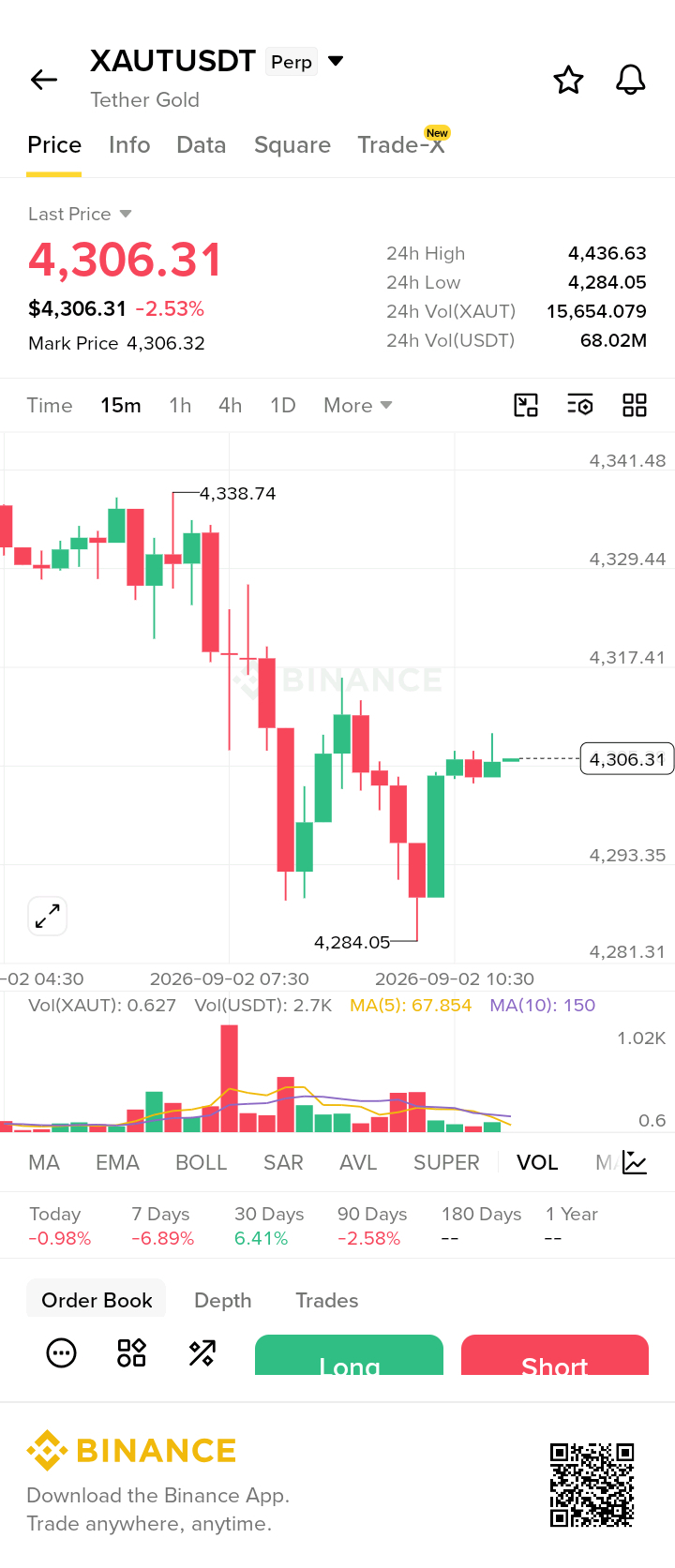
#SECProposesRuleForBlockchainAndTokenizedSecurities
SEC moves to modernize proposes rules for blockchain and Tokenized securities.
Transfer agents manage ownership records and corporate actions where tokenization reaches institutional grade.
The 60-day period is the next catalyst whether final rules clarify blockchain data integrity, security and operating standards. Compliance providers may gain a clear path.
SEC proposal highlights growing focus on tokenized securities.
#SEC
#Tokenized
$XAUT
{future}(XAUTUSDT)
#SECProposesRuleForBlockchainAndTokenizedSecurities
SEC moves to modernize proposes rules for blockchain and Tokenized securities.
Transfer agents manage ownership records and corporate actions where tokenization reaches institutional grade.
The 60-day period is the next catalyst whether final rules clarify blockchain data integrity, security and operating standards. Compliance providers may gain a clear path.
SEC proposal highlights growing focus on tokenized securities.
#SEC
#Tokenized
$XAUT
SEC moves to modernize proposes rules for blockchain and Tokenized securities.
Transfer agents manage ownership records and corporate actions where tokenization reaches institutional grade.
The 60-day period is the next catalyst whether final rules clarify blockchain data integrity, security and operating standards. Compliance providers may gain a clear path.
SEC proposal highlights growing focus on tokenized securities.
#SEC
#Tokenized
$XAUT
117

$COHRB se.
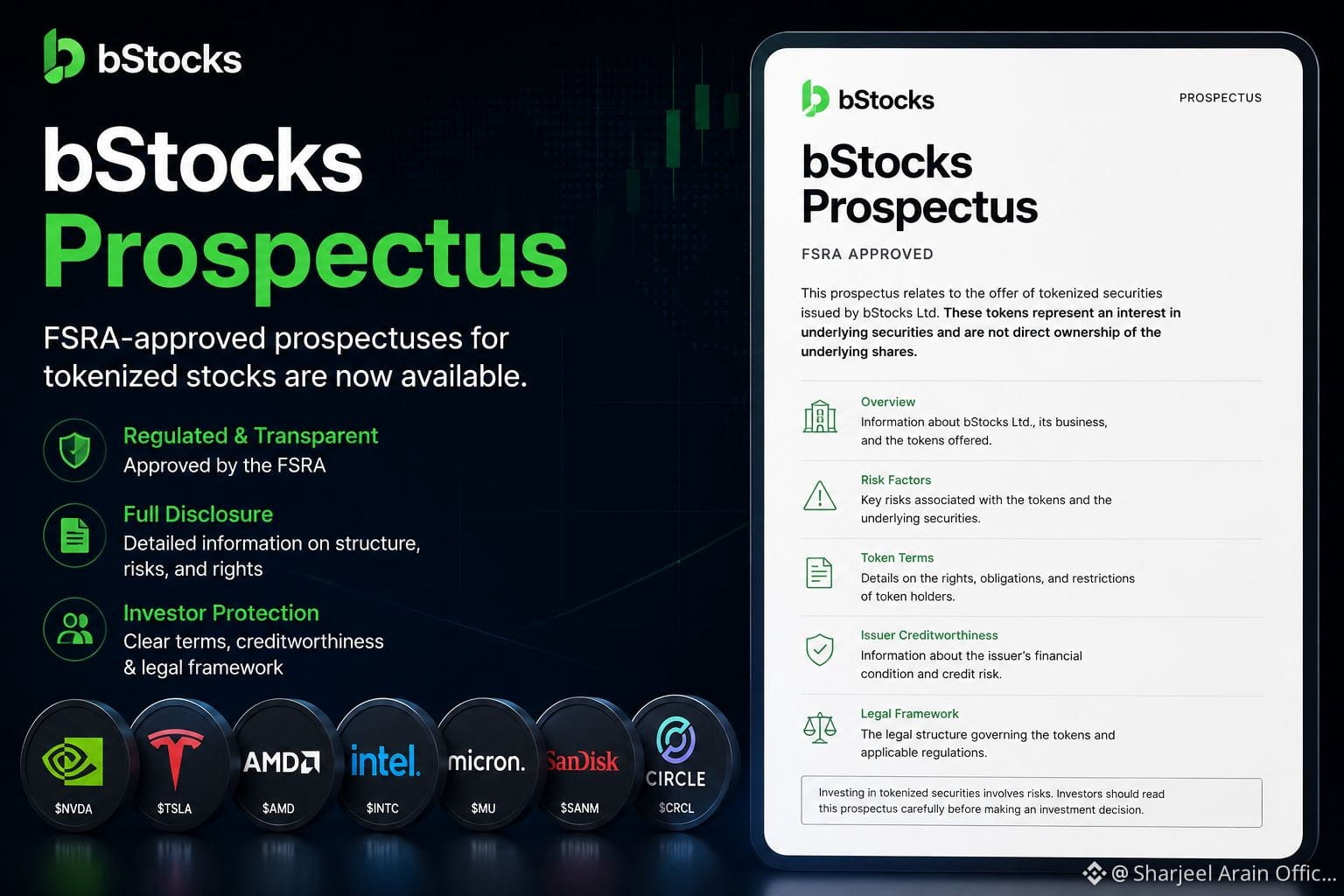
Stocks has published approved prospectuses covering tokenized securities tied to assets including $NVDA, $TSLA, $AMD, $INTC, $MU, $SANM and more.
The prospectus details the structure, risks, issuer creditworthiness, and legal framework behind Stocks.
📄 Read the prospectus: Stocks Prospectus
On-chain. Always On. ⚡
#Stocks #Tokenized Stocks #RWA #Crypto #Blockchain
{spot}(COHRBUSDT)
$COHRB se.
Stocks has published approved prospectuses covering tokenized securities tied to assets including $NVDA, $TSLA, $AMD, $INTC, $MU, $SANM and more.
The prospectus details the structure, risks, issuer creditworthiness, and legal framework behind Stocks.
📄 Read the prospectus: Stocks Prospectus
On-chain. Always On. ⚡
#Stocks #Tokenized Stocks #RWA #Crypto #Blockchain
Stocks has published approved prospectuses covering tokenized securities tied to assets including $NVDA, $TSLA, $AMD, $INTC, $MU, $SANM and more.
The prospectus details the structure, risks, issuer creditworthiness, and legal framework behind Stocks.
📄 Read the prospectus: Stocks Prospectus
On-chain. Always On. ⚡
#Stocks #Tokenized Stocks #RWA #Crypto #Blockchain
166
·
--
Bullish
This week, a tokenized U.S. Treasury fund opened distribution to Asian institutions through a licensed Hong Kong exchange, and two banks settled a cross-border tokenized deposit in real time over a shared network.
At the same time, a Federal Reserve Bank and market analysts began.
#FederalReserve
#TOKENIZED
$BTC
{spot}(BTCUSDT)
$BNB
{spot}(BNBUSDT)
$USDC
{spot}(USDCUSDT)
This week, a tokenized U.S. Treasury fund opened distribution to Asian institutions through a licensed Hong Kong exchange, and two banks settled a cross-border tokenized deposit in real time over a shared network.
At the same time, a Federal Reserve Bank and market analysts began.
#FederalReserve
#TOKENIZED
$BTC
$BNB
$USDC
At the same time, a Federal Reserve Bank and market analysts began.
#FederalReserve
#TOKENIZED
$BTC
$BNB
$USDC
65

Verified
⚡️ JUST IN: McKinsey & Company predicts massive transformation in global finance 🌐💵
What is happening?
• McKinsey sees a potential ~$4T shift toward a new three-layer onchain monetary system $DOGE
• System would reportedly be built around:
• Stablecoins $ASTER
• Tokenized bank deposits
• Central bank money
• Signals growing institutional belief in blockchain-based financial infrastructure
What this suggests:
• Traditional finance increasingly expects money movement to migrate onchain
• Stablecoins may become foundational payment infrastructure globally $WLD
• Tokenization is evolving into a core banking and settlement trend rather than a niche crypto use case
Context:
• Major banks, payment firms, and governments are increasingly exploring tokenized settlement systems
• Stablecoin growth has accelerated rapidly across payments, remittances, and treasury markets
📊 Market takeaway:
Extremely bullish for stablecoins, RWAs, and blockchain settlement infrastructure. Institutional forecasts at this scale reinforce the idea that tokenized finance could become one of the defining transformations of global monetary systems over the next decade.
#McKinsey #TOKENIZED #RWAS
⚡️ JUST IN: McKinsey & Company predicts massive transformation in global finance 🌐💵
What is happening?
• McKinsey sees a potential ~$4T shift toward a new three-layer onchain monetary system $DOGE
• System would reportedly be built around:
• Stablecoins $ASTER
• Tokenized bank deposits
• Central bank money
• Signals growing institutional belief in blockchain-based financial infrastructure
What this suggests:
• Traditional finance increasingly expects money movement to migrate onchain
• Stablecoins may become foundational payment infrastructure globally $WLD
• Tokenization is evolving into a core banking and settlement trend rather than a niche crypto use case
Context:
• Major banks, payment firms, and governments are increasingly exploring tokenized settlement systems
• Stablecoin growth has accelerated rapidly across payments, remittances, and treasury markets
📊 Market takeaway:
Extremely bullish for stablecoins, RWAs, and blockchain settlement infrastructure. Institutional forecasts at this scale reinforce the idea that tokenized finance could become one of the defining transformations of global monetary systems over the next decade.
#McKinsey #TOKENIZED #RWAS
What is happening?
• McKinsey sees a potential ~$4T shift toward a new three-layer onchain monetary system $DOGE
• System would reportedly be built around:
• Stablecoins $ASTER
• Tokenized bank deposits
• Central bank money
• Signals growing institutional belief in blockchain-based financial infrastructure
What this suggests:
• Traditional finance increasingly expects money movement to migrate onchain
• Stablecoins may become foundational payment infrastructure globally $WLD
• Tokenization is evolving into a core banking and settlement trend rather than a niche crypto use case
Context:
• Major banks, payment firms, and governments are increasingly exploring tokenized settlement systems
• Stablecoin growth has accelerated rapidly across payments, remittances, and treasury markets
📊 Market takeaway:
Extremely bullish for stablecoins, RWAs, and blockchain settlement infrastructure. Institutional forecasts at this scale reinforce the idea that tokenized finance could become one of the defining transformations of global monetary systems over the next decade.
#McKinsey #TOKENIZED #RWAS
1
2k

·
--
Verified
A month ago, An Jian disassembled and explained how DTCC, the U.S. securities depository and clearing company, completed its first tokenized-asset trading tests in a production environment. More than 30 traditional financial institutions and digital asset companies participated, and it plans to officially launch the service in October. Over the past month, stock-token products from various CEXs—including Binance—have been moving forward at a doubling pace. That’s why I want to go into more detail about this.
Different from ordinary asset mapping, DTCC’s approach is to keep all ownership rights, investor protection, and entitlement arrangements associated with traditional securities for the tokenized securities—it’s not just issuing a simple “shadow token.” As a core infrastructure institution of the U.S. securities clearing and settlement system, DTCC personally stepped in to conduct production-environment testing rather than stopping at concept validation. The significance of this signal is far greater than that of any crypto-native company launching its own tokenized product.
The underlying clearing infrastructure of traditional finance is truly migrating onto the chain. Earlier, the SEC approved in March that Nasdaq could allow eligible listed securities to be traded in a tokenized form. They even used the same CUSIP codes as traditional stocks, granting the same substantive rights and continuing to trade under existing securities rules.
It’s not hard to see that tokenized securities are being advanced with the mindset of “new bottle, old wine, but with more efficient underlying settlement,” rather than creating an entirely separate parallel system detached from regulation. This is a well-worn playbook of Wall Street—and that’s also why this path is easier for institutions to accept and coordinate for testing than many tokenization attempts that are purely DeFi.
So I believe the official launch of DTCC’s service in October is a concrete milestone worth marking on your calendar. After that, the tokenized securities track will see a meaningful expansion of supply. Starting to understand the basic product forms in this space now will be much more comfortable than scrambling to catch up after it goes live #BStocks #TOKENIZED
A month ago, An Jian disassembled and explained how DTCC, the U.S. securities depository and clearing company, completed its first tokenized-asset trading tests in a production environment. More than 30 traditional financial institutions and digital asset companies participated, and it plans to officially launch the service in October. Over the past month, stock-token products from various CEXs—including Binance—have been moving forward at a doubling pace. That’s why I want to go into more detail about this.
Different from ordinary asset mapping, DTCC’s approach is to keep all ownership rights, investor protection, and entitlement arrangements associated with traditional securities for the tokenized securities—it’s not just issuing a simple “shadow token.” As a core infrastructure institution of the U.S. securities clearing and settlement system, DTCC personally stepped in to conduct production-environment testing rather than stopping at concept validation. The significance of this signal is far greater than that of any crypto-native company launching its own tokenized product.
The underlying clearing infrastructure of traditional finance is truly migrating onto the chain. Earlier, the SEC approved in March that Nasdaq could allow eligible listed securities to be traded in a tokenized form. They even used the same CUSIP codes as traditional stocks, granting the same substantive rights and continuing to trade under existing securities rules.
It’s not hard to see that tokenized securities are being advanced with the mindset of “new bottle, old wine, but with more efficient underlying settlement,” rather than creating an entirely separate parallel system detached from regulation. This is a well-worn playbook of Wall Street—and that’s also why this path is easier for institutions to accept and coordinate for testing than many tokenization attempts that are purely DeFi.
So I believe the official launch of DTCC’s service in October is a concrete milestone worth marking on your calendar. After that, the tokenized securities track will see a meaningful expansion of supply. Starting to understand the basic product forms in this space now will be much more comfortable than scrambling to catch up after it goes live #BStocks #TOKENIZED
Different from ordinary asset mapping, DTCC’s approach is to keep all ownership rights, investor protection, and entitlement arrangements associated with traditional securities for the tokenized securities—it’s not just issuing a simple “shadow token.” As a core infrastructure institution of the U.S. securities clearing and settlement system, DTCC personally stepped in to conduct production-environment testing rather than stopping at concept validation. The significance of this signal is far greater than that of any crypto-native company launching its own tokenized product.
The underlying clearing infrastructure of traditional finance is truly migrating onto the chain. Earlier, the SEC approved in March that Nasdaq could allow eligible listed securities to be traded in a tokenized form. They even used the same CUSIP codes as traditional stocks, granting the same substantive rights and continuing to trade under existing securities rules.
It’s not hard to see that tokenized securities are being advanced with the mindset of “new bottle, old wine, but with more efficient underlying settlement,” rather than creating an entirely separate parallel system detached from regulation. This is a well-worn playbook of Wall Street—and that’s also why this path is easier for institutions to accept and coordinate for testing than many tokenization attempts that are purely DeFi.
So I believe the official launch of DTCC’s service in October is a concrete milestone worth marking on your calendar. After that, the tokenized securities track will see a meaningful expansion of supply. Starting to understand the basic product forms in this space now will be much more comfortable than scrambling to catch up after it goes live #BStocks #TOKENIZED
1
129


·
--
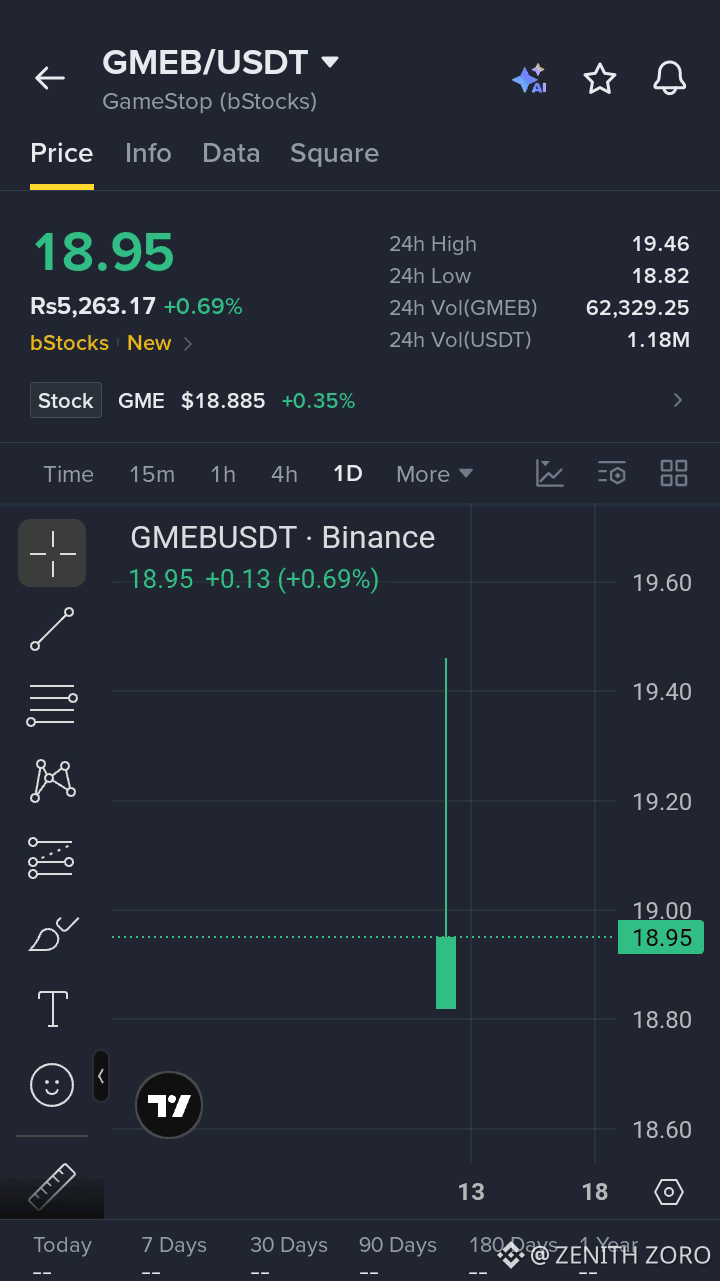
WAIT. GAMESTOP IS NOW TOKENIZED. 🚀
That sentence just changed EVERYTHING.
$GMEB : NEW listing
Price: $18.95
Trading: LIVE
You can now own stock fractions.
Trade 24/7.
No broker needed.
{spot}(GMEBUSDT)
BUT:
84% sellers = Be careful.
This is a NEW market. 👀
#Stocks #Tokenized
WAIT. GAMESTOP IS NOW TOKENIZED. 🚀
That sentence just changed EVERYTHING.
$GMEB : NEW listing
Price: $18.95
Trading: LIVE
You can now own stock fractions.
Trade 24/7.
No broker needed.
BUT:
84% sellers = Be careful.
This is a NEW market. 👀
#Stocks #Tokenized
That sentence just changed EVERYTHING.
$GMEB : NEW listing
Price: $18.95
Trading: LIVE
You can now own stock fractions.
Trade 24/7.
No broker needed.
BUT:
84% sellers = Be careful.
This is a NEW market. 👀
#Stocks #Tokenized
2
249

·
--
Verified
🚨 RECORD SHATTERED: Tokenized Stocks Hit $15B! 🚨
Wall Street is officially moving on-chain.
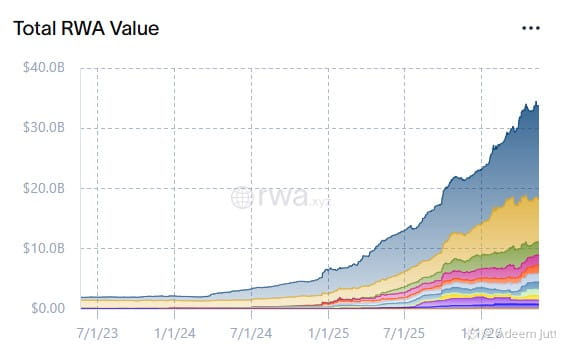
In Q1 2026, tokenized stock trading volume exploded to $15.12 Billion, completely wiping out the entire second half of 2025. The broader RWA (Real-World Asset) market has now skyrocketed to $33.8 Billion—a massive 1,600% pump in just two years.
This isn't retail hype. This is an institutional liquidity sweep.
TradFi giants are aggressively chasing 24/7 global trading and instant smart-contract settlement. With the SEC reportedly leaning toward regulatory approval for tokenized assets, a massive wave of fresh capital is about to flood the crypto ecosystem. The gap between traditional finance and DeFi is closing fast.
Are you positioned for the RWA supercycle, or are you fading the smart money? Drop your top RWA bags below! 👇🔥
$BANANAS31 $ZEC $ZEN
{spot}(ZENUSDT)
{spot}(ZECUSDT)
{spot}(BANANAS31USDT)
#TokenizedStocksRecord #TOKENIZED #stock
🚨 RECORD SHATTERED: Tokenized Stocks Hit $15B! 🚨
Wall Street is officially moving on-chain.
In Q1 2026, tokenized stock trading volume exploded to $15.12 Billion, completely wiping out the entire second half of 2025. The broader RWA (Real-World Asset) market has now skyrocketed to $33.8 Billion—a massive 1,600% pump in just two years.
This isn't retail hype. This is an institutional liquidity sweep.
TradFi giants are aggressively chasing 24/7 global trading and instant smart-contract settlement. With the SEC reportedly leaning toward regulatory approval for tokenized assets, a massive wave of fresh capital is about to flood the crypto ecosystem. The gap between traditional finance and DeFi is closing fast.
Are you positioned for the RWA supercycle, or are you fading the smart money? Drop your top RWA bags below! 👇🔥
$BANANAS31 $ZEC $ZEN
#TokenizedStocksRecord #TOKENIZED #stock
Wall Street is officially moving on-chain.
In Q1 2026, tokenized stock trading volume exploded to $15.12 Billion, completely wiping out the entire second half of 2025. The broader RWA (Real-World Asset) market has now skyrocketed to $33.8 Billion—a massive 1,600% pump in just two years.
This isn't retail hype. This is an institutional liquidity sweep.
TradFi giants are aggressively chasing 24/7 global trading and instant smart-contract settlement. With the SEC reportedly leaning toward regulatory approval for tokenized assets, a massive wave of fresh capital is about to flood the crypto ecosystem. The gap between traditional finance and DeFi is closing fast.
Are you positioned for the RWA supercycle, or are you fading the smart money? Drop your top RWA bags below! 👇🔥
$BANANAS31 $ZEC $ZEN
#TokenizedStocksRecord #TOKENIZED #stock
3
1
3
533
·
--
$ONDO
🚨JUST IN: ONDO FINANCE OPENS A NEW DOOR FOR TOKENIZED ASSETS
TOKENIZED STOCKS CAN NOW BE USED AS COLLATERAL FOR PERP TRADING.
#ONDO #TOKENIZED #crypt #trading
$ONDO
🚨JUST IN: ONDO FINANCE OPENS A NEW DOOR FOR TOKENIZED ASSETS
TOKENIZED STOCKS CAN NOW BE USED AS COLLATERAL FOR PERP TRADING.
#ONDO #TOKENIZED #crypt #trading
🚨JUST IN: ONDO FINANCE OPENS A NEW DOOR FOR TOKENIZED ASSETS
TOKENIZED STOCKS CAN NOW BE USED AS COLLATERAL FOR PERP TRADING.
#ONDO #TOKENIZED #crypt #trading

1
121

·
--
$NVDAon Tokenized is trading at $205.06, easing 0.26% with a market cap of $35.92M. Price action remains stable despite broader market volatility. The token continues reflecting interest in AI-related assets, and sustained strength in the sector could support higher prices over time. Current movement suggests consolidation instead of trend reversal.
#NVDAon #AI #Tokenized #crypto $NVDAon
{alpha}(560xa9ee28c80f960b889dfbd1902055218cba016f75)
$NVDAon Tokenized is trading at $205.06, easing 0.26% with a market cap of $35.92M. Price action remains stable despite broader market volatility. The token continues reflecting interest in AI-related assets, and sustained strength in the sector could support higher prices over time. Current movement suggests consolidation instead of trend reversal.
#NVDAon #AI #Tokenized #crypto $NVDAon
#NVDAon #AI #Tokenized #crypto $NVDAon
33

·
--
Bullish
🚀 Binance & The New Era of #TOKENIZED Assets!
A massive shift is happening in the crypto market! Crypto exchanges are no longer limited to just Bitcoin or altcoins—they are now bringing tokenized versions of Stocks and Precious Metals (Gold/Silver) onto their platforms.
Binance and other top exchanges are leading this race to give users the opportunity to trade everything in one single place.
📊 Key Highlights:
Massive Growth: The market cap of tokenized traditional assets has surged from $1.4 Billion (Jan 2023) to $6.6 Billion (June 2024)—nearly a 5x increase!
Futures Dominance: Most of the trading activity is concentrated in Perpetual Futures (Derivatives), while Spot trading remains relatively limited for now.
Binance's Role: On major exchanges like Binance, users are now gaining exposure to global stocks and commodities right alongside crypto.
🎯 How Does This Affect You?
New Opportunities: You no longer need a separate traditional broker to trade stocks or metals. Everything can be managed directly from a single crypto wallet.
Risk Factor: Since most trading relies on leverage and futures, market volatility and leverage risk could increase.
💡 Pro Tip: If you are trading on Binance, keep an eye on Spot trading volume. Once Spot volume picks up, this asset class will achieve true, long-term stability!
#FOMCWatching #BNBSmartChainToUndergoHardFork #RussiaPlacesDurovOnInternationalWantedList
🚀 Binance & The New Era of #TOKENIZED Assets!
A massive shift is happening in the crypto market! Crypto exchanges are no longer limited to just Bitcoin or altcoins—they are now bringing tokenized versions of Stocks and Precious Metals (Gold/Silver) onto their platforms.
Binance and other top exchanges are leading this race to give users the opportunity to trade everything in one single place.
📊 Key Highlights:
Massive Growth: The market cap of tokenized traditional assets has surged from $1.4 Billion (Jan 2023) to $6.6 Billion (June 2024)—nearly a 5x increase!
Futures Dominance: Most of the trading activity is concentrated in Perpetual Futures (Derivatives), while Spot trading remains relatively limited for now.
Binance's Role: On major exchanges like Binance, users are now gaining exposure to global stocks and commodities right alongside crypto.
🎯 How Does This Affect You?
New Opportunities: You no longer need a separate traditional broker to trade stocks or metals. Everything can be managed directly from a single crypto wallet.
Risk Factor: Since most trading relies on leverage and futures, market volatility and leverage risk could increase.
💡 Pro Tip: If you are trading on Binance, keep an eye on Spot trading volume. Once Spot volume picks up, this asset class will achieve true, long-term stability!
#FOMCWatching #BNBSmartChainToUndergoHardFork #RussiaPlacesDurovOnInternationalWantedList
A massive shift is happening in the crypto market! Crypto exchanges are no longer limited to just Bitcoin or altcoins—they are now bringing tokenized versions of Stocks and Precious Metals (Gold/Silver) onto their platforms.
Binance and other top exchanges are leading this race to give users the opportunity to trade everything in one single place.
📊 Key Highlights:
Massive Growth: The market cap of tokenized traditional assets has surged from $1.4 Billion (Jan 2023) to $6.6 Billion (June 2024)—nearly a 5x increase!
Futures Dominance: Most of the trading activity is concentrated in Perpetual Futures (Derivatives), while Spot trading remains relatively limited for now.
Binance's Role: On major exchanges like Binance, users are now gaining exposure to global stocks and commodities right alongside crypto.
🎯 How Does This Affect You?
New Opportunities: You no longer need a separate traditional broker to trade stocks or metals. Everything can be managed directly from a single crypto wallet.
Risk Factor: Since most trading relies on leverage and futures, market volatility and leverage risk could increase.
💡 Pro Tip: If you are trading on Binance, keep an eye on Spot trading volume. Once Spot volume picks up, this asset class will achieve true, long-term stability!
#FOMCWatching #BNBSmartChainToUndergoHardFork #RussiaPlacesDurovOnInternationalWantedList
1
87

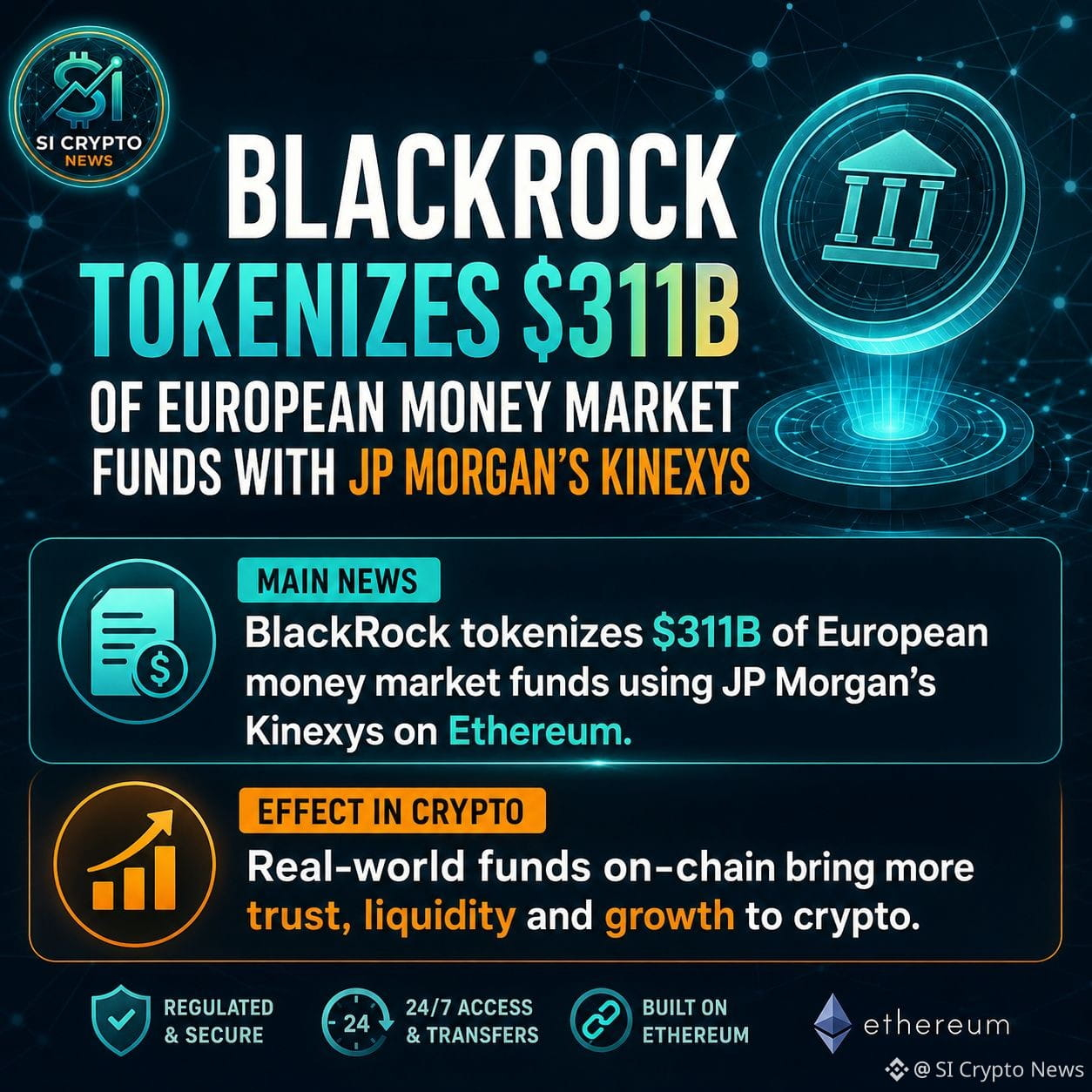
BlackRock Brings $311 Billion in European Funds On-Chain: A Major Step for Blockchain Finance
BlackRock, the world's largest asset manager, has taken another big step toward the future of finance. The company has introduced tokenized share classes for European money market funds with a combined value of $311 billion. The project uses JP Morgan's Kinexys blockchain platform together with the Ethereum network.
In simple terms, the ownership of these fund shares can now be represented by digital tokens on a blockchain. This allows approved investors to transfer holdings more efficiently while benefiting from greater transparency and near real-time visibility.
The important point is that the underlying funds remain the same. Only the ownership record is modernized through blockchain technology. Investors still receive the same level of security, liquidity, and regulatory protection, but with a faster and more efficient infrastructure.
At the moment, these tokenized share classes are available only to institutional and qualified investors. However, many experts believe this could be the beginning of a wider shift that may eventually reach retail investors as regulations continue to evolve.
This move is another strong signal that blockchain technology is becoming part of mainstream finance. Large financial institutions are no longer just exploring tokenization—they are putting it into real-world use.
If more asset managers and banks follow this path, the tokenization of real-world assets could accelerate significantly. That would increase market efficiency, improve liquidity, and strengthen confidence in blockchain-based financial systems.
#SICryptoNews #BitcoinETFs #TOKENIZED $BTC
{future}(BTCUSDT)
$LINK
{future}(LINKUSDT)
$XRP
{future}(XRPUSDT)
BlackRock Brings $311 Billion in European Funds On-Chain: A Major Step for Blockchain Finance
BlackRock, the world's largest asset manager, has taken another big step toward the future of finance. The company has introduced tokenized share classes for European money market funds with a combined value of $311 billion. The project uses JP Morgan's Kinexys blockchain platform together with the Ethereum network.
In simple terms, the ownership of these fund shares can now be represented by digital tokens on a blockchain. This allows approved investors to transfer holdings more efficiently while benefiting from greater transparency and near real-time visibility.
The important point is that the underlying funds remain the same. Only the ownership record is modernized through blockchain technology. Investors still receive the same level of security, liquidity, and regulatory protection, but with a faster and more efficient infrastructure.
At the moment, these tokenized share classes are available only to institutional and qualified investors. However, many experts believe this could be the beginning of a wider shift that may eventually reach retail investors as regulations continue to evolve.
This move is another strong signal that blockchain technology is becoming part of mainstream finance. Large financial institutions are no longer just exploring tokenization—they are putting it into real-world use.
If more asset managers and banks follow this path, the tokenization of real-world assets could accelerate significantly. That would increase market efficiency, improve liquidity, and strengthen confidence in blockchain-based financial systems.
#SICryptoNews #BitcoinETFs #TOKENIZED $BTC
$LINK
$XRP
BlackRock, the world's largest asset manager, has taken another big step toward the future of finance. The company has introduced tokenized share classes for European money market funds with a combined value of $311 billion. The project uses JP Morgan's Kinexys blockchain platform together with the Ethereum network.
In simple terms, the ownership of these fund shares can now be represented by digital tokens on a blockchain. This allows approved investors to transfer holdings more efficiently while benefiting from greater transparency and near real-time visibility.
The important point is that the underlying funds remain the same. Only the ownership record is modernized through blockchain technology. Investors still receive the same level of security, liquidity, and regulatory protection, but with a faster and more efficient infrastructure.
At the moment, these tokenized share classes are available only to institutional and qualified investors. However, many experts believe this could be the beginning of a wider shift that may eventually reach retail investors as regulations continue to evolve.
This move is another strong signal that blockchain technology is becoming part of mainstream finance. Large financial institutions are no longer just exploring tokenization—they are putting it into real-world use.
If more asset managers and banks follow this path, the tokenization of real-world assets could accelerate significantly. That would increase market efficiency, improve liquidity, and strengthen confidence in blockchain-based financial systems.
#SICryptoNews #BitcoinETFs #TOKENIZED $BTC
$LINK
$XRP
74

·
--
Verified
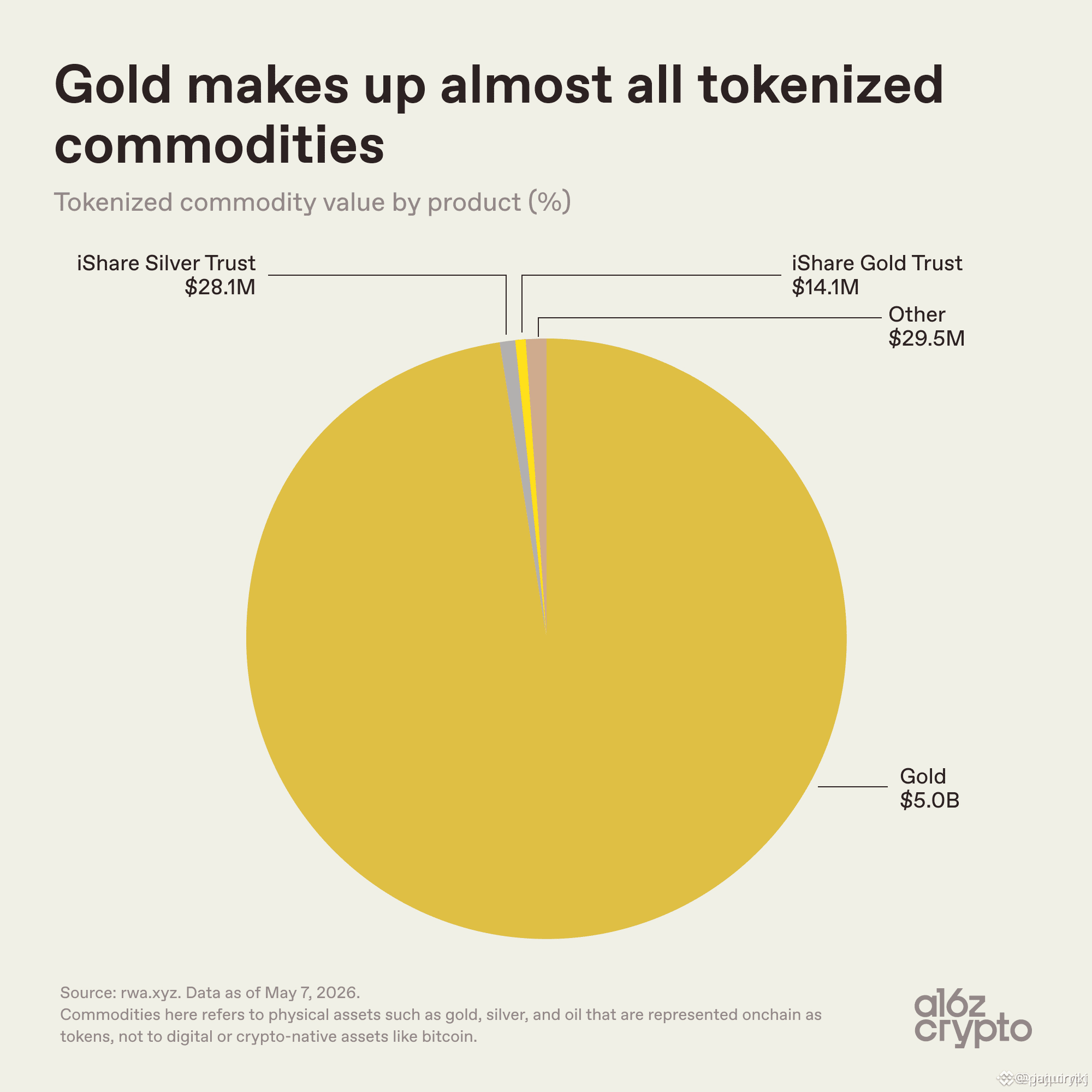
This is why I’m always bullish on $XAU .
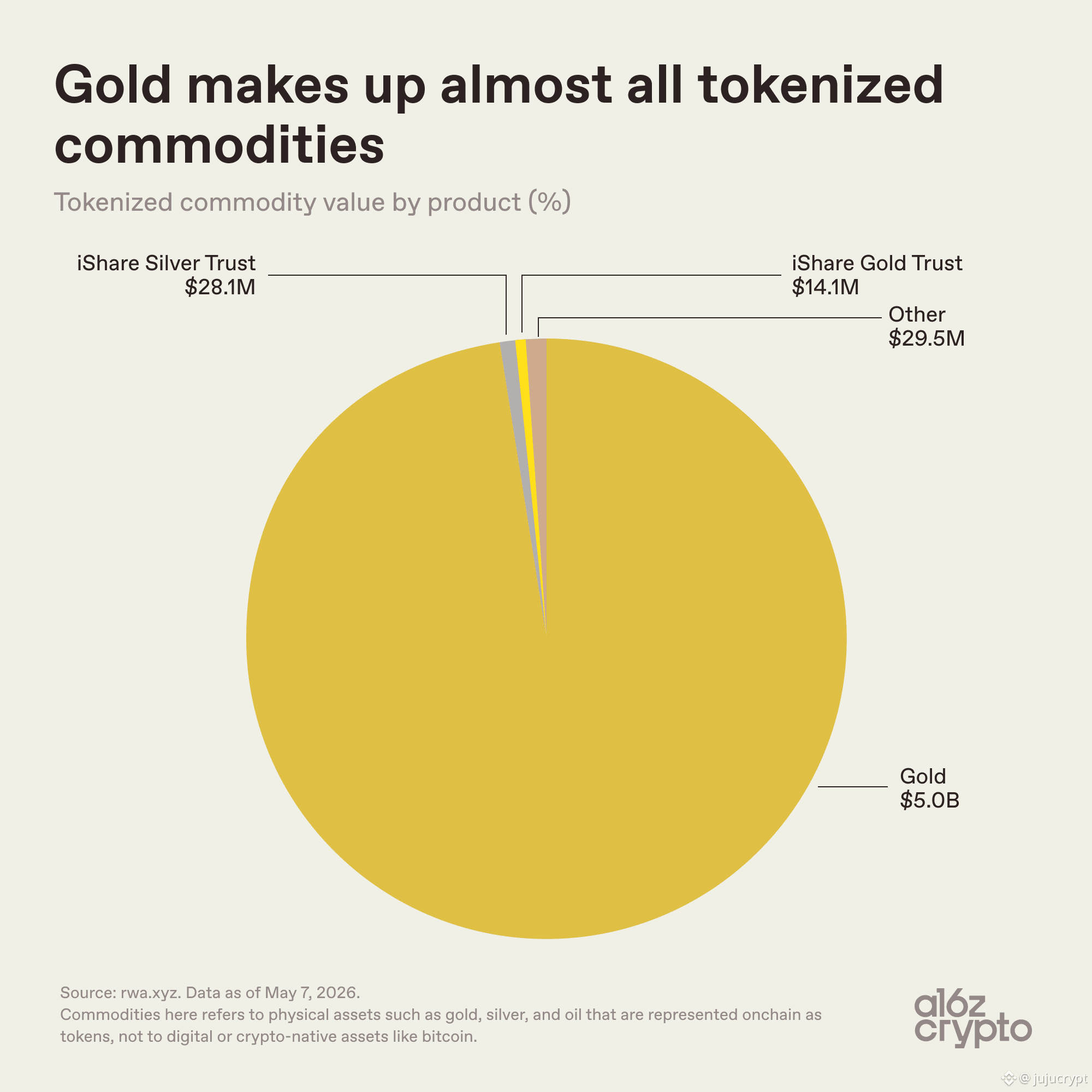
Gold now accounts for nearly all tokenized commodity value onchain, with #TOKENIZED gold alone reaching $5B.
Feels like more investors are starting to see gold not just as a safe haven in TradFi, but also as one of the strongest real-world assets moving into crypto through tokenization.
#PostonTradFi
This is why I’m always bullish on $XAU .
Gold now accounts for nearly all tokenized commodity value onchain, with #TOKENIZED gold alone reaching $5B.
Feels like more investors are starting to see gold not just as a safe haven in TradFi, but also as one of the strongest real-world assets moving into crypto through tokenization.
#PostonTradFi
Gold now accounts for nearly all tokenized commodity value onchain, with #TOKENIZED gold alone reaching $5B.
Feels like more investors are starting to see gold not just as a safe haven in TradFi, but also as one of the strongest real-world assets moving into crypto through tokenization.
#PostonTradFi
4
4
6.9k
·
--
Bullish
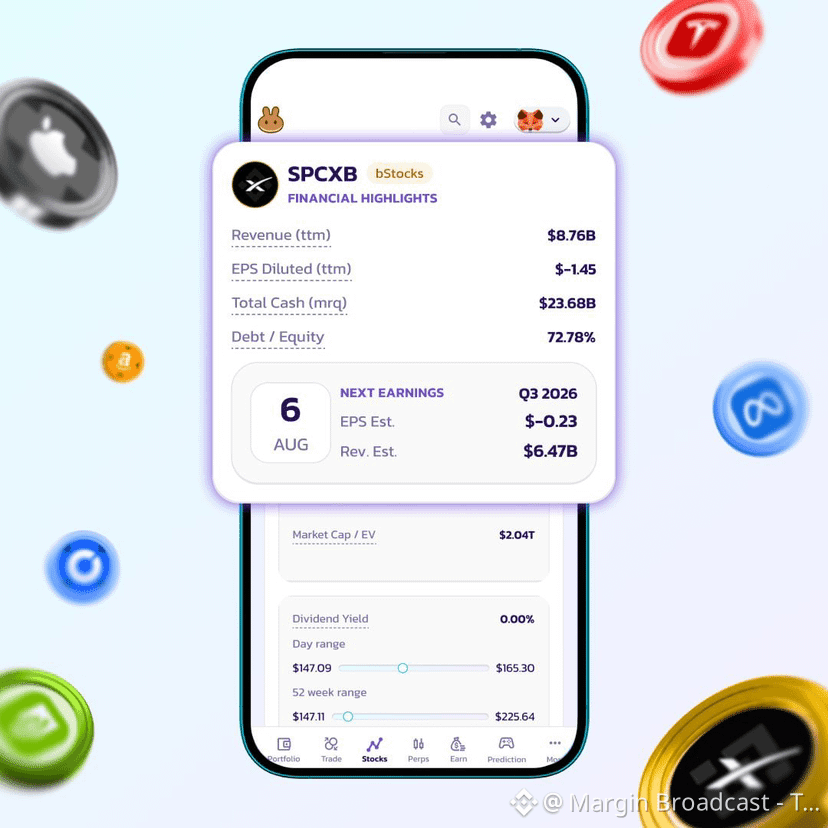
Pancakeswap is now just like a stock trading app.
This is the new trend in the market as every dApp is looking to upgrade its capabilities for trading Tokenized stocks and RWA.
$CAKE #rwa $SPCXB #TOKENIZED $TSLAB
{spot}(TSLABUSDT)
{spot}(SPCXBUSDT)
{future}(CAKEUSDT)
Pancakeswap is now just like a stock trading app.
This is the new trend in the market as every dApp is looking to upgrade its capabilities for trading Tokenized stocks and RWA.
$CAKE #rwa $SPCXB #TOKENIZED $TSLAB
This is the new trend in the market as every dApp is looking to upgrade its capabilities for trading Tokenized stocks and RWA.
$CAKE #rwa $SPCXB #TOKENIZED $TSLAB
220
·
--
$15T and #blackRock is calling tokenization the “next generation for markets.”
Honestly, the more I watch what's happening with tokenized assets, the harder it is to ignore.
xStocks and other #TOKENIZED assets are starting to make the idea of bringing traditional markets on-chain feel less like a concept and more like something that's already happening.
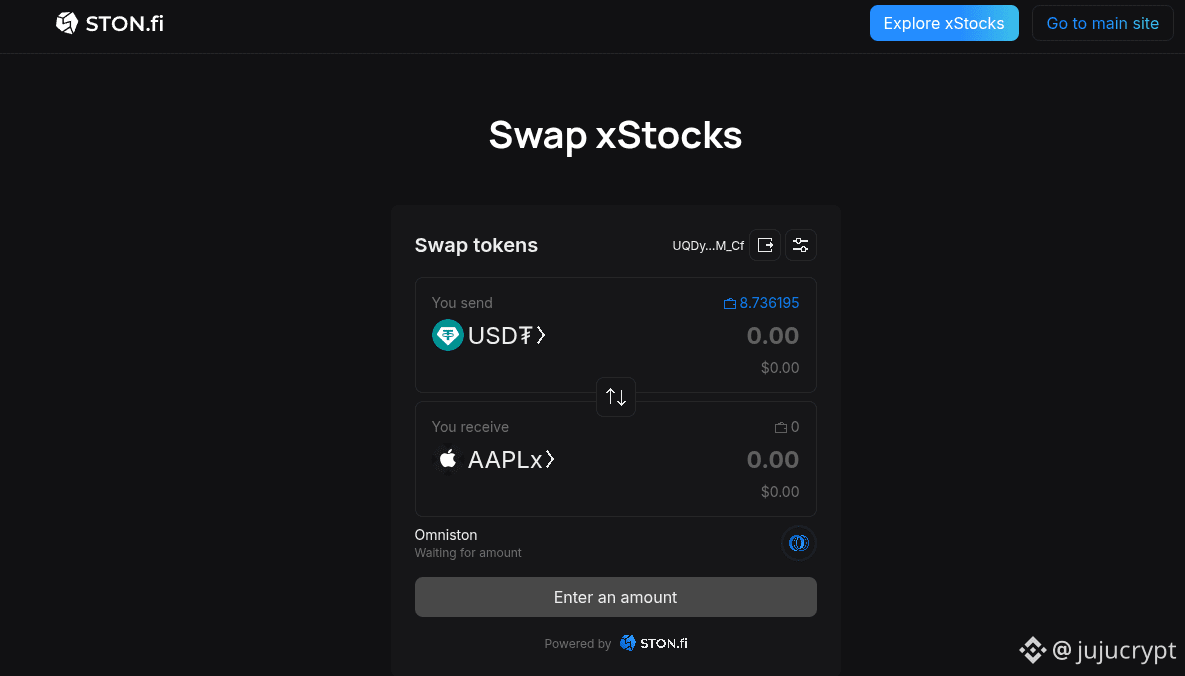
I've been paying more attention to this through STON.fi, especially the xStocks side.
What interests me isn't just being able to get exposure to a tokenized stock.
It's the bigger picture bringing traditional assets into an environment where they can interact with on-chain liquidity, swaps and DeFi infrastructure.
We're still early, but every time more institutions talk about tokenization and more assets move on-chain, the direction becomes a little clearer.
The future of markets might not be TradFi or DeFi.
It could be TradFi assets running on DeFi rails.
$15T and #blackRock is calling tokenization the “next generation for markets.”
Honestly, the more I watch what's happening with tokenized assets, the harder it is to ignore.
xStocks and other #TOKENIZED assets are starting to make the idea of bringing traditional markets on-chain feel less like a concept and more like something that's already happening.
I've been paying more attention to this through STON.fi, especially the xStocks side.
What interests me isn't just being able to get exposure to a tokenized stock.
It's the bigger picture bringing traditional assets into an environment where they can interact with on-chain liquidity, swaps and DeFi infrastructure.
We're still early, but every time more institutions talk about tokenization and more assets move on-chain, the direction becomes a little clearer.
The future of markets might not be TradFi or DeFi.
It could be TradFi assets running on DeFi rails.
Honestly, the more I watch what's happening with tokenized assets, the harder it is to ignore.
xStocks and other #TOKENIZED assets are starting to make the idea of bringing traditional markets on-chain feel less like a concept and more like something that's already happening.
I've been paying more attention to this through STON.fi, especially the xStocks side.
What interests me isn't just being able to get exposure to a tokenized stock.
It's the bigger picture bringing traditional assets into an environment where they can interact with on-chain liquidity, swaps and DeFi infrastructure.
We're still early, but every time more institutions talk about tokenization and more assets move on-chain, the direction becomes a little clearer.
The future of markets might not be TradFi or DeFi.
It could be TradFi assets running on DeFi rails.
1
5
7.9k

·
--
Tokenized Equity Lending Faces a New Risk Test
Edel Finance paused its version-one lending protocol after an exploit involving wrapped tokenized Google stock collateral.
What happened:
According to CoinDesk, an attacker manipulated the conversion between GOOGLx and wGOOGLx, causing the wrapped collateral to be valued at roughly 78 times its intended level. The attacker then borrowed against that inflated collateral, leaving about $403,000 in bad debt.
Why it matters:
This incident is important because it was not simply a standard oracle failure. The reported weakness was in the wrapping and conversion mechanism. That matters for the growing tokenized equity and RWA sector, where assets often pass through extra layers before being used as collateral.
Risks:
The amount is limited, and Edel said it will absorb the bad debt and restore balances. The broader risk is structural: tokenized assets can create new pricing and collateral attack surfaces.
This is security analysis only, not financial advice.
#DEFİ #security #RWA #TOKENIZED
Tokenized Equity Lending Faces a New Risk Test
Edel Finance paused its version-one lending protocol after an exploit involving wrapped tokenized Google stock collateral.
What happened:
According to CoinDesk, an attacker manipulated the conversion between GOOGLx and wGOOGLx, causing the wrapped collateral to be valued at roughly 78 times its intended level. The attacker then borrowed against that inflated collateral, leaving about $403,000 in bad debt.
Why it matters:
This incident is important because it was not simply a standard oracle failure. The reported weakness was in the wrapping and conversion mechanism. That matters for the growing tokenized equity and RWA sector, where assets often pass through extra layers before being used as collateral.
Risks:
The amount is limited, and Edel said it will absorb the bad debt and restore balances. The broader risk is structural: tokenized assets can create new pricing and collateral attack surfaces.
This is security analysis only, not financial advice.
#DEFİ #security #RWA #TOKENIZED
Edel Finance paused its version-one lending protocol after an exploit involving wrapped tokenized Google stock collateral.
What happened:
According to CoinDesk, an attacker manipulated the conversion between GOOGLx and wGOOGLx, causing the wrapped collateral to be valued at roughly 78 times its intended level. The attacker then borrowed against that inflated collateral, leaving about $403,000 in bad debt.
Why it matters:
This incident is important because it was not simply a standard oracle failure. The reported weakness was in the wrapping and conversion mechanism. That matters for the growing tokenized equity and RWA sector, where assets often pass through extra layers before being used as collateral.
Risks:
The amount is limited, and Edel said it will absorb the bad debt and restore balances. The broader risk is structural: tokenized assets can create new pricing and collateral attack surfaces.
This is security analysis only, not financial advice.
#DEFİ #security #RWA #TOKENIZED
GOOGLonAlpha
GOOGLUS+0.62%
98

·
--
Verified
That's why I always maintain a bullish stance on $XAU .
Gold now represents almost the entire value of tokenized commodities on-chain, with #TOKENIZED of gold alone hitting $5B.
It seems like more investors are starting to see gold not just as a safe haven in TradFi, but also as one of the strongest real-world assets entering crypto through tokenization.
That's why I always maintain a bullish stance on $XAU .
Gold now represents almost the entire value of tokenized commodities on-chain, with #TOKENIZED of gold alone hitting $5B.
It seems like more investors are starting to see gold not just as a safe haven in TradFi, but also as one of the strongest real-world assets entering crypto through tokenization.
Gold now represents almost the entire value of tokenized commodities on-chain, with #TOKENIZED of gold alone hitting $5B.
It seems like more investors are starting to see gold not just as a safe haven in TradFi, but also as one of the strongest real-world assets entering crypto through tokenization.
1
3
1k
Log in to explore more content
Join global crypto users on Binance Square
⚡️ Get latest and useful information about crypto.
💬 Trusted by the world’s largest crypto exchange.
👍 Discover real insights from verified creators.
Email / Phone number
Trending Topics
1
#AIStocksWhatNext
5,485 views
22 Discussing
2
#CardanoAddedToX402KitForADAPayments
2,702 views
164 Discussing
3
#XRPRises8%
11,015 views
496 Discussing
4
#AMDHits$1TrillionMarketCap
311 views
24 Discussing
5
#BitcoinSpotETFs$999MNetInflow
808 views
39 Discussing
6
#AppleGoogleSeekStablecoinTokenizedDepositTalent
7,012 views
365 Discussing
7
#NvidiaToBuyAnother$1.5BSBEnergySharesPreIPO
1,338 views
33 Discussing
8
#AgoraGetsPreliminaryOCCApprovalForTrustBank
4,422 views
184 Discussing
9
#NEARRisesNearly80%InAWeek
76,468 views
1,335 Discussing
10
#MultiversXPlansHardForkRecovery
59,510 views
1,012 Discussing