
#nvidia
nvidia
3.1M views
5,750 Discussing
Hot
Latest

·
--
Verified
#aistockswhatnext 📲
🚀 AI Stocks Are Skyrocketing: Is This a Supercycle or a Strategic Trap? #AIStocksWhatNext
Nvidia’s projections show compute demand doubling, and top tech giants continue to print record-breaking revenue figures. Yet, a big question lingers: How long can this massive compute spend sustain itself? Is this a genuine structural breakout, or are we riding a short-term liquidity bounce?
Meanwhile, a massive divide is forming:
🔹 Industry Leaders: Sam Altman, Dario Amodei, and Elon Musk are urging a deliberate slowdown over AI safety and situational awareness risks.
🔹 State backing: President Trump has proposed an “AI Force” and an AI Czar, claiming AI could make up 25% of U.S. GDP.
My Take (Bullish 🐂 / Bearish 🐻):
State-level backing provides an immense floor for infrastructure growth, but short-term stock valuations are running way ahead of real-world enterprise adoption. Diversification into broader tech assets and decentralized compute protocols is key.
👇 Are you buying this AI rally or taking profits?
#AI #cryptotrading #NVIDIA
#aistockswhatnext 📲
🚀 AI Stocks Are Skyrocketing: Is This a Supercycle or a Strategic Trap? #AIStocksWhatNext
Nvidia’s projections show compute demand doubling, and top tech giants continue to print record-breaking revenue figures. Yet, a big question lingers: How long can this massive compute spend sustain itself? Is this a genuine structural breakout, or are we riding a short-term liquidity bounce?
Meanwhile, a massive divide is forming:
🔹 Industry Leaders: Sam Altman, Dario Amodei, and Elon Musk are urging a deliberate slowdown over AI safety and situational awareness risks.
🔹 State backing: President Trump has proposed an “AI Force” and an AI Czar, claiming AI could make up 25% of U.S. GDP.
My Take (Bullish 🐂 / Bearish 🐻):
State-level backing provides an immense floor for infrastructure growth, but short-term stock valuations are running way ahead of real-world enterprise adoption. Diversification into broader tech assets and decentralized compute protocols is key.
👇 Are you buying this AI rally or taking profits?
#AI #cryptotrading #NVIDIA
🚀 AI Stocks Are Skyrocketing: Is This a Supercycle or a Strategic Trap? #AIStocksWhatNext
Nvidia’s projections show compute demand doubling, and top tech giants continue to print record-breaking revenue figures. Yet, a big question lingers: How long can this massive compute spend sustain itself? Is this a genuine structural breakout, or are we riding a short-term liquidity bounce?
Meanwhile, a massive divide is forming:
🔹 Industry Leaders: Sam Altman, Dario Amodei, and Elon Musk are urging a deliberate slowdown over AI safety and situational awareness risks.
🔹 State backing: President Trump has proposed an “AI Force” and an AI Czar, claiming AI could make up 25% of U.S. GDP.
My Take (Bullish 🐂 / Bearish 🐻):
State-level backing provides an immense floor for infrastructure growth, but short-term stock valuations are running way ahead of real-world enterprise adoption. Diversification into broader tech assets and decentralized compute protocols is key.
👇 Are you buying this AI rally or taking profits?
#AI #cryptotrading #NVIDIA

1
565

Article
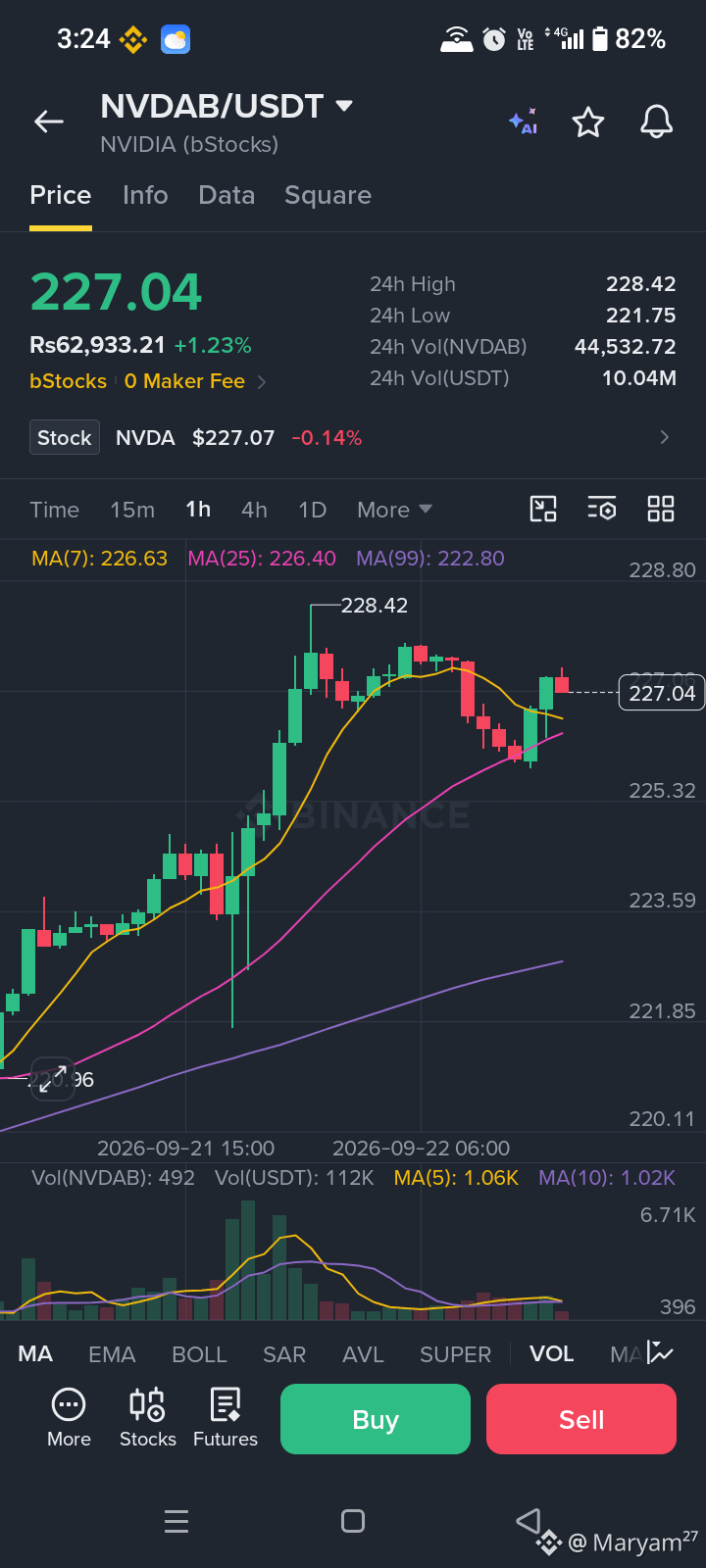
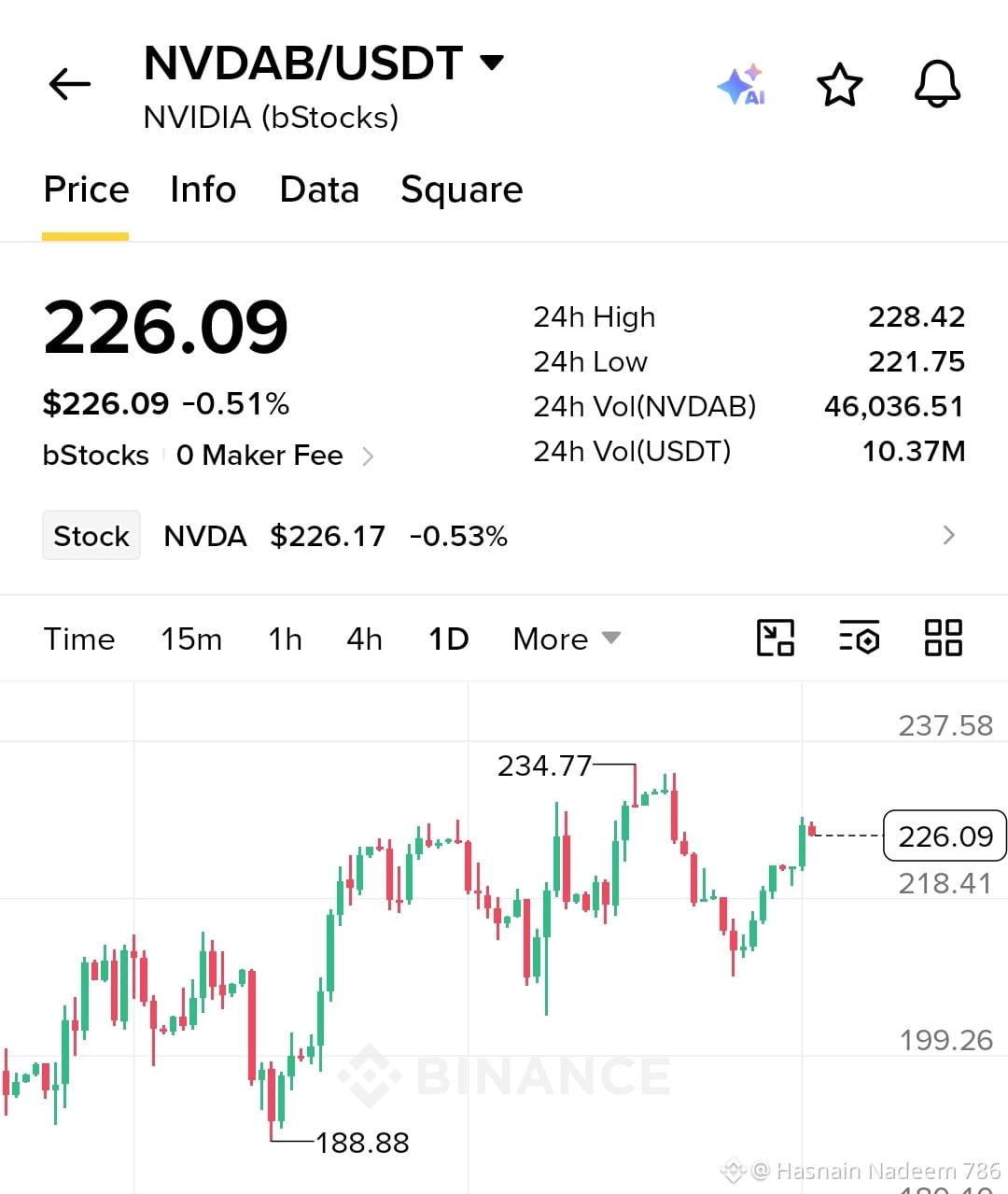
NVDA Price Check: Nvidia Holds Above $228 — Breakout Loading or Another Rejection? $NVDA.US
◆━━━━━━━━━━━━━━━━━━━━━━━━━━━━━━━━◆
✔︎ Nvidia remains one of the most closely watched stocks in the market. Every major move in NVDA tends to ripple across the broader AI sector, semiconductor space, and even major stock indices.
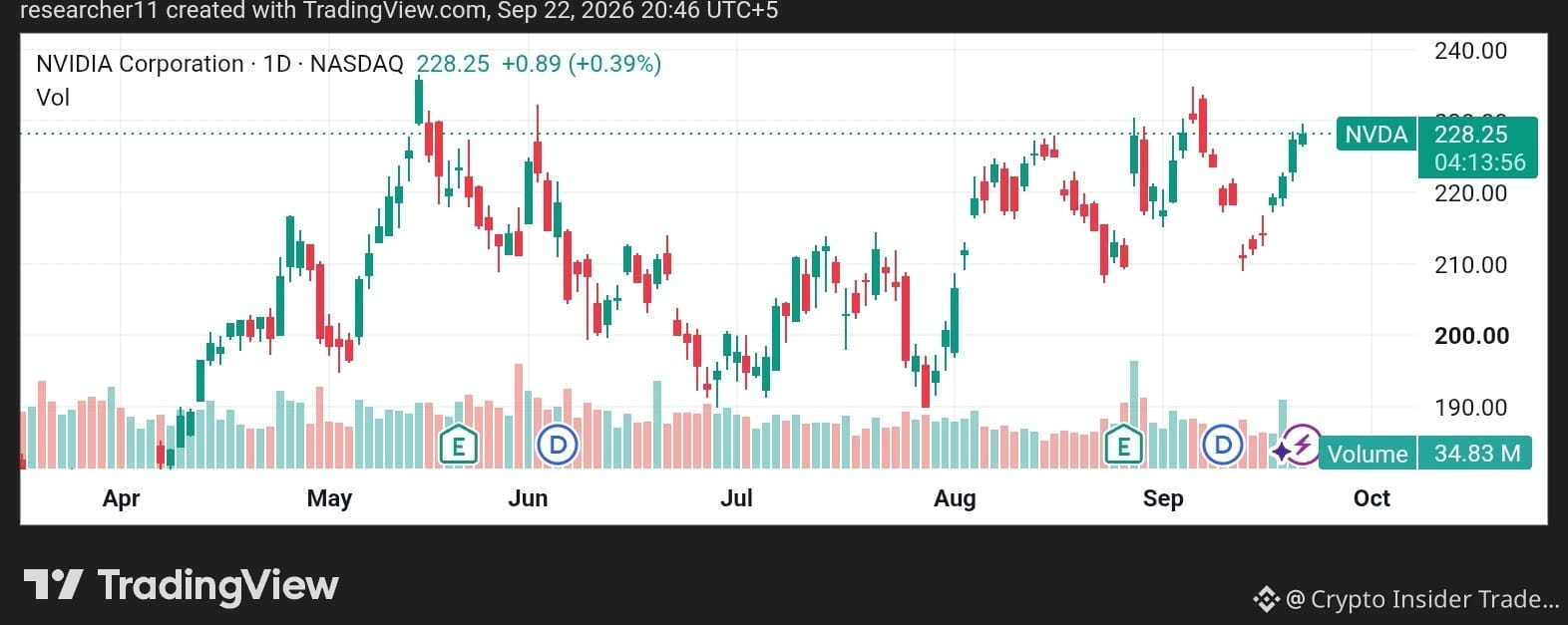
✔︎ With NVDA trading around $228.25 and volume near 34.8M, the stock is once again testing a critical resistance zone that has rejected buyers multiple times since August.
✔︎ The big question now: Are bulls preparing for a fresh breakout, or is another pullback around the corner?
◆━━━━━━━━━━━━━━━━━━━━━━━━━━━━━━━━◆
➤ ① Market Overview
Nvidia has spent much of the past several months trading inside a broad range.
✔︎ Strong rally from the low-$180s toward $240
✔︎ Multi-week correction back near $190
✔︎ Recovery toward the upper boundary of the range
✔︎ Market attention remains focused on AI-related growth
The stock is now approaching one of the most important technical zones on the chart, making the next move especially important for traders and investors alike.
◆━━━━━━━━━━━━━━━━━━━━━━━━━━━━━━━━◆
➤ ② Technical Analysis
The daily chart shows NVDA pushing into a major resistance area that has capped previous advances.
✔︎ Current Price: $228.25 (+0.39%)
✔︎ Resistance Zone:
➜ $230–$240
➜ Rejected both May and September rallies
➜ Key area bulls need to reclaim
✔︎ Support Zone:
➜ $210–$215
➜ Strong buyer interest seen repeatedly
➜ Important level for maintaining bullish structure
✔︎ Volume Analysis:
➜ Recent upside move supported by elevated volume
➜ Suggests genuine market participation
➜ Buyers remain active near current levels
From a pure chart perspective, NVDA is approaching a decision point. Repeated tests of resistance often weaken sellers, but failed breakouts can also trigger sharp pullbacks.
◆━━━━━━━━━━━━━━━━━━━━━━━━━━━━━━━━◆
➤ ③ Fundamental Outlook
Charts tell part of the story. Nvidia's business performance remains one of the strongest growth narratives in global markets.
✔︎ Revenue growth has remained exceptionally strong.
✔︎ AI infrastructure spending continues to support demand.
✔︎ Major cloud providers remain aggressive buyers of advanced AI hardware.
Key Growth Drivers:
➜ Blackwell Architecture
Strong demand continues across enterprise and hyperscale customers.
➜ Vera Rubin NVL144 CPX Platform
Represents Nvidia's next-generation AI infrastructure roadmap.
➜ CUDA Ecosystem
A powerful competitive advantage that helps keep developers and enterprises within Nvidia's ecosystem.
➜ AI Capital Expenditure Expansion
Big Tech companies continue investing heavily in AI infrastructure, benefiting Nvidia's long-term outlook.
These factors continue to reinforce Nvidia's position as one of the central beneficiaries of the global AI boom.
◆━━━━━━━━━━━━━━━━━━━━━━━━━━━━━━━━◆
➤ ④ Scenario Analysis
Bullish Scenario
✔︎ Daily close above $240
✔︎ Strong volume confirmation
✔︎ Momentum buyers return aggressively
✔︎ Potential retest of yearly highs
━━━━━━━━━━━━━━━━━━━━
Bearish Scenario
✔︎ Resistance rejects price once again
✔︎ Volume weakens during rallies
✔︎ Support near $210 comes under pressure
✔︎ Deeper correction toward $190 becomes possible
━━━━━━━━━━━━━━━━━━━━
Neutral Scenario
✔︎ Continued consolidation between $210 and $240
✔︎ Market waits for fresh earnings and AI-related catalysts
✔︎ Sideways price action dominates near-term trading
◆━━━━━━━━━━━━━━━━━━━━━━━━━━━━━━━━◆
➤ ⑤ Key Levels To Watch
✔︎ Major Resistance: $230–$240
✔︎ Immediate Support: $210–$215
✔︎ Secondary Support: $190
✔︎ Current Price: $228.25
◆━━━━━━━━━━━━━━━━━━━━━━━━━━━━━━━━◆
Final Thoughts
Nvidia continues to sit at the center of the AI revolution, making every technical and fundamental development worth watching.
✔︎ Fundamentals remain strong.
✔︎ AI demand remains a powerful tailwind.
✔︎ The chart is approaching a critical resistance zone.
The next decisive move above or below the current range could provide important clues about NVDA's medium-term direction.
➜ Are you watching a breakout above $240 or expecting another rejection from resistance? Share your perspective below.
◆━━━━━━━━━━━━━━━━━━━━━━━━━━━━━━━━◆
#NVIDIA
NVDA Price Check: Nvidia Holds Above $228 — Breakout Loading or Another Rejection?
$NVDA.US
◆━━━━━━━━━━━━━━━━━━━━━━━━━━━━━━━━◆
✔︎ Nvidia remains one of the most closely watched stocks in the market. Every major move in NVDA tends to ripple across the broader AI sector, semiconductor space, and even major stock indices.
✔︎ With NVDA trading around $228.25 and volume near 34.8M, the stock is once again testing a critical resistance zone that has rejected buyers multiple times since August.
✔︎ The big question now: Are bulls preparing for a fresh breakout, or is another pullback around the corner?
◆━━━━━━━━━━━━━━━━━━━━━━━━━━━━━━━━◆
➤ ① Market Overview
Nvidia has spent much of the past several months trading inside a broad range.
✔︎ Strong rally from the low-$180s toward $240
✔︎ Multi-week correction back near $190
✔︎ Recovery toward the upper boundary of the range
✔︎ Market attention remains focused on AI-related growth
The stock is now approaching one of the most important technical zones on the chart, making the next move especially important for traders and investors alike.
◆━━━━━━━━━━━━━━━━━━━━━━━━━━━━━━━━◆
➤ ② Technical Analysis
The daily chart shows NVDA pushing into a major resistance area that has capped previous advances.
✔︎ Current Price: $228.25 (+0.39%)
✔︎ Resistance Zone:
➜ $230–$240
➜ Rejected both May and September rallies
➜ Key area bulls need to reclaim
✔︎ Support Zone:
➜ $210–$215
➜ Strong buyer interest seen repeatedly
➜ Important level for maintaining bullish structure
✔︎ Volume Analysis:
➜ Recent upside move supported by elevated volume
➜ Suggests genuine market participation
➜ Buyers remain active near current levels
From a pure chart perspective, NVDA is approaching a decision point. Repeated tests of resistance often weaken sellers, but failed breakouts can also trigger sharp pullbacks.
◆━━━━━━━━━━━━━━━━━━━━━━━━━━━━━━━━◆
➤ ③ Fundamental Outlook
Charts tell part of the story. Nvidia's business performance remains one of the strongest growth narratives in global markets.
✔︎ Revenue growth has remained exceptionally strong.
✔︎ AI infrastructure spending continues to support demand.
✔︎ Major cloud providers remain aggressive buyers of advanced AI hardware.
Key Growth Drivers:
➜ Blackwell Architecture
Strong demand continues across enterprise and hyperscale customers.
➜ Vera Rubin NVL144 CPX Platform
Represents Nvidia's next-generation AI infrastructure roadmap.
➜ CUDA Ecosystem
A powerful competitive advantage that helps keep developers and enterprises within Nvidia's ecosystem.
➜ AI Capital Expenditure Expansion
Big Tech companies continue investing heavily in AI infrastructure, benefiting Nvidia's long-term outlook.
These factors continue to reinforce Nvidia's position as one of the central beneficiaries of the global AI boom.
◆━━━━━━━━━━━━━━━━━━━━━━━━━━━━━━━━◆
➤ ④ Scenario Analysis
Bullish Scenario
✔︎ Daily close above $240
✔︎ Strong volume confirmation
✔︎ Momentum buyers return aggressively
✔︎ Potential retest of yearly highs
━━━━━━━━━━━━━━━━━━━━
Bearish Scenario
✔︎ Resistance rejects price once again
✔︎ Volume weakens during rallies
✔︎ Support near $210 comes under pressure
✔︎ Deeper correction toward $190 becomes possible
━━━━━━━━━━━━━━━━━━━━
Neutral Scenario
✔︎ Continued consolidation between $210 and $240
✔︎ Market waits for fresh earnings and AI-related catalysts
✔︎ Sideways price action dominates near-term trading
◆━━━━━━━━━━━━━━━━━━━━━━━━━━━━━━━━◆
➤ ⑤ Key Levels To Watch
✔︎ Major Resistance: $230–$240
✔︎ Immediate Support: $210–$215
✔︎ Secondary Support: $190
✔︎ Current Price: $228.25
◆━━━━━━━━━━━━━━━━━━━━━━━━━━━━━━━━◆
Final Thoughts
Nvidia continues to sit at the center of the AI revolution, making every technical and fundamental development worth watching.
✔︎ Fundamentals remain strong.
✔︎ AI demand remains a powerful tailwind.
✔︎ The chart is approaching a critical resistance zone.
The next decisive move above or below the current range could provide important clues about NVDA's medium-term direction.
➜ Are you watching a breakout above $240 or expecting another rejection from resistance? Share your perspective below.
◆━━━━━━━━━━━━━━━━━━━━━━━━━━━━━━━━◆
#NVIDIA
◆━━━━━━━━━━━━━━━━━━━━━━━━━━━━━━━━◆
✔︎ Nvidia remains one of the most closely watched stocks in the market. Every major move in NVDA tends to ripple across the broader AI sector, semiconductor space, and even major stock indices.
✔︎ With NVDA trading around $228.25 and volume near 34.8M, the stock is once again testing a critical resistance zone that has rejected buyers multiple times since August.
✔︎ The big question now: Are bulls preparing for a fresh breakout, or is another pullback around the corner?
◆━━━━━━━━━━━━━━━━━━━━━━━━━━━━━━━━◆
➤ ① Market Overview
Nvidia has spent much of the past several months trading inside a broad range.
✔︎ Strong rally from the low-$180s toward $240
✔︎ Multi-week correction back near $190
✔︎ Recovery toward the upper boundary of the range
✔︎ Market attention remains focused on AI-related growth
The stock is now approaching one of the most important technical zones on the chart, making the next move especially important for traders and investors alike.
◆━━━━━━━━━━━━━━━━━━━━━━━━━━━━━━━━◆
➤ ② Technical Analysis
The daily chart shows NVDA pushing into a major resistance area that has capped previous advances.
✔︎ Current Price: $228.25 (+0.39%)
✔︎ Resistance Zone:
➜ $230–$240
➜ Rejected both May and September rallies
➜ Key area bulls need to reclaim
✔︎ Support Zone:
➜ $210–$215
➜ Strong buyer interest seen repeatedly
➜ Important level for maintaining bullish structure
✔︎ Volume Analysis:
➜ Recent upside move supported by elevated volume
➜ Suggests genuine market participation
➜ Buyers remain active near current levels
From a pure chart perspective, NVDA is approaching a decision point. Repeated tests of resistance often weaken sellers, but failed breakouts can also trigger sharp pullbacks.
◆━━━━━━━━━━━━━━━━━━━━━━━━━━━━━━━━◆
➤ ③ Fundamental Outlook
Charts tell part of the story. Nvidia's business performance remains one of the strongest growth narratives in global markets.
✔︎ Revenue growth has remained exceptionally strong.
✔︎ AI infrastructure spending continues to support demand.
✔︎ Major cloud providers remain aggressive buyers of advanced AI hardware.
Key Growth Drivers:
➜ Blackwell Architecture
Strong demand continues across enterprise and hyperscale customers.
➜ Vera Rubin NVL144 CPX Platform
Represents Nvidia's next-generation AI infrastructure roadmap.
➜ CUDA Ecosystem
A powerful competitive advantage that helps keep developers and enterprises within Nvidia's ecosystem.
➜ AI Capital Expenditure Expansion
Big Tech companies continue investing heavily in AI infrastructure, benefiting Nvidia's long-term outlook.
These factors continue to reinforce Nvidia's position as one of the central beneficiaries of the global AI boom.
◆━━━━━━━━━━━━━━━━━━━━━━━━━━━━━━━━◆
➤ ④ Scenario Analysis
Bullish Scenario
✔︎ Daily close above $240
✔︎ Strong volume confirmation
✔︎ Momentum buyers return aggressively
✔︎ Potential retest of yearly highs
━━━━━━━━━━━━━━━━━━━━
Bearish Scenario
✔︎ Resistance rejects price once again
✔︎ Volume weakens during rallies
✔︎ Support near $210 comes under pressure
✔︎ Deeper correction toward $190 becomes possible
━━━━━━━━━━━━━━━━━━━━
Neutral Scenario
✔︎ Continued consolidation between $210 and $240
✔︎ Market waits for fresh earnings and AI-related catalysts
✔︎ Sideways price action dominates near-term trading
◆━━━━━━━━━━━━━━━━━━━━━━━━━━━━━━━━◆
➤ ⑤ Key Levels To Watch
✔︎ Major Resistance: $230–$240
✔︎ Immediate Support: $210–$215
✔︎ Secondary Support: $190
✔︎ Current Price: $228.25
◆━━━━━━━━━━━━━━━━━━━━━━━━━━━━━━━━◆
Final Thoughts
Nvidia continues to sit at the center of the AI revolution, making every technical and fundamental development worth watching.
✔︎ Fundamentals remain strong.
✔︎ AI demand remains a powerful tailwind.
✔︎ The chart is approaching a critical resistance zone.
The next decisive move above or below the current range could provide important clues about NVDA's medium-term direction.
➜ Are you watching a breakout above $240 or expecting another rejection from resistance? Share your perspective below.
◆━━━━━━━━━━━━━━━━━━━━━━━━━━━━━━━━◆
#NVIDIA
NVDAUS+0.67%
28

·
--

Article
🤖 AI Stocks Are Rising Fast—Is It Time to Look for the Next Opportunity?AIStocksWhatNext
AI is no longer just a technology trend. It is gradually becoming one of the biggest drivers of global capital spending. Data centers, AI chips, cloud computing, networking, electricity infrastructure, and software are all becoming part of the same AI investment cycle.
But that creates a much bigger question:
Are AI stocks entering a genuine long-term breakout, or are we approaching a point where even strong companies could face a major correction because of stretched valuations?
In my view, the AI story is not over. In fact, the more important question now may be:
Where will the next dollar of AI investment go?
Because building AI models is only one part of the equation. Those models require more computing power, chips, data centers, networking, electricity, and eventually profitable applications.
---
🚀 Is Nvidia’s Chip Demand Really That Strong?
One of the most important signals in the current AI investment cycle is coming from Nvidia.
Nvidia CEO Jensen Huang has said the company could sell roughly twice as many chips next year compared with this year.
However, one distinction is important: this is a forecast about chip volume, not a declaration that Nvidia’s revenue will double.
Even so, it is a significant signal.
Nvidia reported $96.2 billion in revenue for fiscal Q2 2027, up 106% year over year. Data Center revenue reached $89 billion, representing 117% year-over-year growth.
That means the current AI demand story is not based entirely on speculation. A major part of it is already visible through real revenue and real infrastructure spending.
And that is one of the strongest parts of the AI investment thesis.
---
💰 But How Long Can the AI Boom Last?
This may be the biggest question facing investors.
A technology cycle becomes sustainable when a positive loop develops:
Capital Expenditure → Revenue → Cash Flow → More Investment
We are already seeing elements of that cycle emerging across the AI industry.
AI companies and hyperscalers are spending enormous amounts on computing infrastructure. The key question, however, is whether the revenue and productivity generated by AI can eventually justify those enormous investments.
This creates a critical metric for investors:
How quickly is AI revenue growing compared with AI infrastructure spending?
If revenue growth keeps pace with capital expenditure, the AI cycle could potentially remain strong for years.
But if compute capacity expands much faster than monetization, AI stocks could eventually face valuation pressure.
---
📈 Are AI Stocks in a Breakout—or Just Experiencing a Bounce?
I would be careful about judging the AI sector purely by price action.
AI-related stocks are not all moving for the same reasons, and their fundamentals are not identical.
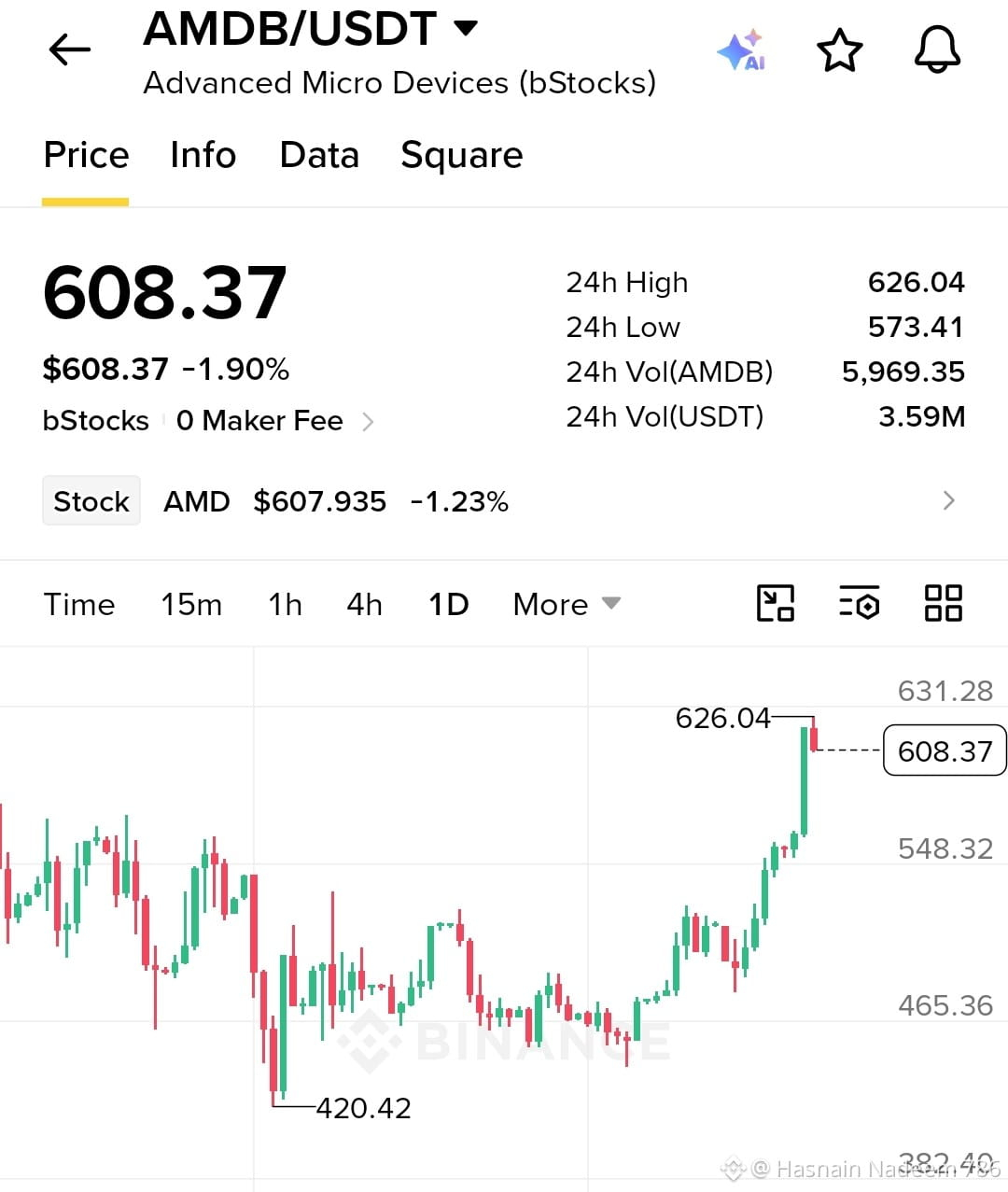
AMD, for example, has benefited from strong AI-related optimism and recently crossed the $1 trillion market-capitalization milestone.
$NVDA.US has also delivered exceptional growth, but investors are increasingly paying attention to valuation and how much future growth is already priced into the stock.
This means:
A bullish AI sector does not automatically mean every AI stock will perform the same way.
The market may increasingly focus on:
Earnings Growth + Valuation + Cash Flow + Competitive Advantage
rather than simply looking for companies with “AI exposure.”
That could be one of the biggest changes in the next phase of the AI market.
---
🧠 Where Could the Next AI Investment Opportunity Be?
If we focus only on GPU manufacturers, we are looking at only one part of the AI ecosystem.
I see the AI economy as several interconnected layers.
1️⃣ AI Chips
GPUs, CPUs, AI accelerators, and specialized processors.
Nvidia is currently a major player, while AMD and other accelerator developers are also important parts of the competitive landscape.
2️⃣ Networking
Thousands or even millions of AI chips need to communicate efficiently.
As AI computing scales, high-speed networking infrastructure becomes increasingly important.
3️⃣ Data Centers
The larger AI models become, the more computing infrastructure they require.
Data-center construction, cooling, storage, and physical infrastructure are all part of the AI expansion.
4️⃣ Power & Energy
This could become one of the most underestimated parts of the AI investment story.
AI data centers require enormous amounts of electricity.
That means long-term AI growth is not only a semiconductor story. It is also connected to power generation, grid infrastructure, cooling systems, and energy efficiency.
5️⃣ Cloud Computing
Many companies will access AI computing through cloud platforms rather than building all of the infrastructure themselves.
As AI adoption expands, cloud infrastructure could benefit as well.
6️⃣ AI Software & Applications
This could eventually become one of the most important layers.
Chips can generate revenue, but if AI starts creating measurable economic value through productivity, automation, cybersecurity, healthcare, finance, robotics, and enterprise software, the AI economy could become significantly larger.
---
🇺🇸 Could Government Support Become a Long-Term AI Catalyst?
Government policy is another major factor investors should watch.
The Trump administration has been prioritizing AI development and expanding AI capabilities across strategic and national-security areas.
Recent policy initiatives have also emphasized AI infrastructure and national competitiveness.
Trump has discussed the possibility of AI becoming a very large contributor to the U.S. economy and has promoted stronger government involvement in AI development.
If government spending, defense applications, infrastructure investment, and private-sector capital all move in the same direction, the AI industry could receive additional structural support.
But government support is not an unlimited guarantee of upside.
AI development also faces debates around energy consumption, data centers, regulation, safety, and the pace of development.
Some industry leaders have argued that AI development should slow down or become more carefully managed, while other policymakers and companies are pushing for faster deployment.
For investors, the important point is that policy support can be a catalyst, but it does not eliminate valuation or execution risk.
---
⚠️ The Biggest Risk May Not Be AI Demand—It May Be AI Economics
This is where I would pay the most attention.
Suppose AI demand continues growing rapidly.
The next question becomes:
How much revenue can companies generate from every dollar spent on AI infrastructure?
If computing costs decline while AI productivity rises, adoption could accelerate further.
But if companies spend enormous amounts on infrastructure without customers being willing to pay enough for AI services, infrastructure growth could eventually face economic pressure.
That is why I would not look only at AI demand.
I would also watch:
AI Revenue Growth vs. AI Capital Expenditure
The larger the gap between those two numbers becomes, the more important the economics of the AI business model will become.
---
🔥 Should Investors Buy AI Stocks Now?
I would avoid a simple “buy every AI stock” approach.
One of the biggest mistakes during a strong narrative-driven market can be chasing price after a major rally.
A stock rising 20%, 30%, or 50% does not automatically mean it is a good entry simply because the company is exposed to AI.
Instead, I would monitor several factors.
1. Revenue Growth
Is AI-related revenue actually increasing?
2. Earnings Growth
Is profitability growing along with revenue?
3. Free Cash Flow
Is the company generating cash from AI expansion, or is it primarily spending heavily on infrastructure?
4. Valuation
How expensive is the stock relative to its expected growth?
5. Capex Cycle
Are hyperscalers continuing to increase AI infrastructure spending?
6. Customer Concentration
How dependent is the company on a small number of major customers?
7. Competition
How could competition among $NVDAB Nvidia, $AMD , Google TPUs, custom AI chips, and other technologies affect market share and margins?
---
📊 My AI Investment Framework
I don't view AI as a single trade.
Instead, the AI ecosystem can be divided into several themes:
AI Compute → AI Infrastructure → Energy → Cloud → Software → Applications
This approach means the entire AI thesis does not have to depend on one company.
For active traders, earnings dates, valuation expansion, support/resistance levels, volume, institutional flows, and the broader Nasdaq trend can also matter.
Because:
A great company and a great entry price are not the same thing.
Even an exceptional company can experience a significant short-term correction if its valuation becomes too stretched.
---
🔮 What Could the Next Phase of the AI Boom Look Like?
In my view, the AI market is entering a stage where simply having an “AI story” may no longer be enough.
The first phase was:
AI Discovery
Then came:
AI Infrastructure Buildout
Now we are gradually moving toward:
AI Monetization
And the next major phase could become:
AI Productivity → AI Revenue → AI Profitability
If this transition works, the current AI investment cycle could potentially continue for many years.
But if monetization develops more slowly than expected, valuation corrections could also occur.
---
🧩 My Bullish & Bearish Scenarios
🟢 Bullish Scenario
AI adoption continues accelerating.
Compute demand keeps increasing.
AI models become widely integrated into enterprise operations.
Data-center investment remains strong.
Governments and private companies continue deploying capital into AI infrastructure.
AI productivity creates new revenue streams.
Under this scenario, the AI value chain could continue expanding.
🔴 Bearish Scenario
Too much AI infrastructure capacity is built.
Capital expenditure grows faster than revenue.
AI monetization disappoints relative to expectations.
Competition puts pressure on chip pricing and margins.
Interest rates or liquidity conditions put pressure on technology valuations.
The market begins assigning lower valuation multiples to AI companies.
Under this scenario, the sector could experience significant rotation or correction.
---
💡 My Take
I am not bearish on the long-term potential of AI.
But being bullish on AI as a technology and buying any AI stock at any price are two completely different things.
Nvidia’s chip-demand outlook and strong Data Center revenue show that AI infrastructure demand remains powerful.
At the same time, the enormous capital requirements of AI infrastructure and elevated valuations mean that the market could become increasingly selective.
That is why, for me, the most important question is no longer:
“Which AI stock will go up next?”
The bigger question is:
“Which part of the AI economy will capture the next trillion dollars of spending?”
It could be chips.
It could be networking.
It could be data centers.
It could be energy.
Or the biggest opportunity could eventually come from AI applications that generate measurable business revenue and productivity gains.
---
🚨 Final Thought
The AI revolution may not be over.
In fact, we may still be somewhere in the middle of the infrastructure phase.
But as the market becomes larger, easy money may become harder to find.
In the next phase, simply having “AI” in a company’s story may not be enough to support its valuation.
Revenue, earnings, cash flow, valuation, and real-world AI adoption could become increasingly important.
I’m watching the AI sector closely—but not through FOMO.
Data, valuation, fundamentals, and risk management matter more.
What do you think comes next for AI stocks?
Will AI investment continue expanding from here, or could current valuations eventually trigger a meaningful correction?
Share your AI-related holdings or trades below.
And in your view, where is the next major AI investment opportunity?
Chips, Data Centers, Energy, Cloud, or AI Software?
#AIStocksWhatNext #Aİ #AIStocksWhatNext #NVIDIA #NVDA
{spot}(NVDABUSDT)
{stock_us}(NVDA.US)
{future}(AMDUSDT)
This article is for informational purposes only and is not financial advice. Always do your own research (DYOR), consider valuation and risk, and avoid investing more than you can afford to lose
🤖 AI Stocks Are Rising Fast—Is It Time to Look for the Next Opportunity?
AIStocksWhatNext
AI is no longer just a technology trend. It is gradually becoming one of the biggest drivers of global capital spending. Data centers, AI chips, cloud computing, networking, electricity infrastructure, and software are all becoming part of the same AI investment cycle.
But that creates a much bigger question:
Are AI stocks entering a genuine long-term breakout, or are we approaching a point where even strong companies could face a major correction because of stretched valuations?
In my view, the AI story is not over. In fact, the more important question now may be:
Where will the next dollar of AI investment go?
Because building AI models is only one part of the equation. Those models require more computing power, chips, data centers, networking, electricity, and eventually profitable applications.
---
🚀 Is Nvidia’s Chip Demand Really That Strong?
One of the most important signals in the current AI investment cycle is coming from Nvidia.
Nvidia CEO Jensen Huang has said the company could sell roughly twice as many chips next year compared with this year.
However, one distinction is important: this is a forecast about chip volume, not a declaration that Nvidia’s revenue will double.
Even so, it is a significant signal.
Nvidia reported $96.2 billion in revenue for fiscal Q2 2027, up 106% year over year. Data Center revenue reached $89 billion, representing 117% year-over-year growth.
That means the current AI demand story is not based entirely on speculation. A major part of it is already visible through real revenue and real infrastructure spending.
And that is one of the strongest parts of the AI investment thesis.
---
💰 But How Long Can the AI Boom Last?
This may be the biggest question facing investors.
A technology cycle becomes sustainable when a positive loop develops:
Capital Expenditure → Revenue → Cash Flow → More Investment
We are already seeing elements of that cycle emerging across the AI industry.
AI companies and hyperscalers are spending enormous amounts on computing infrastructure. The key question, however, is whether the revenue and productivity generated by AI can eventually justify those enormous investments.
This creates a critical metric for investors:
How quickly is AI revenue growing compared with AI infrastructure spending?
If revenue growth keeps pace with capital expenditure, the AI cycle could potentially remain strong for years.
But if compute capacity expands much faster than monetization, AI stocks could eventually face valuation pressure.
---
📈 Are AI Stocks in a Breakout—or Just Experiencing a Bounce?
I would be careful about judging the AI sector purely by price action.
AI-related stocks are not all moving for the same reasons, and their fundamentals are not identical.
AMD, for example, has benefited from strong AI-related optimism and recently crossed the $1 trillion market-capitalization milestone.
$NVDA.US has also delivered exceptional growth, but investors are increasingly paying attention to valuation and how much future growth is already priced into the stock.
This means:
A bullish AI sector does not automatically mean every AI stock will perform the same way.
The market may increasingly focus on:
Earnings Growth + Valuation + Cash Flow + Competitive Advantage
rather than simply looking for companies with “AI exposure.”
That could be one of the biggest changes in the next phase of the AI market.
---
🧠 Where Could the Next AI Investment Opportunity Be?
If we focus only on GPU manufacturers, we are looking at only one part of the AI ecosystem.
I see the AI economy as several interconnected layers.
1️⃣ AI Chips
GPUs, CPUs, AI accelerators, and specialized processors.
Nvidia is currently a major player, while AMD and other accelerator developers are also important parts of the competitive landscape.
2️⃣ Networking
Thousands or even millions of AI chips need to communicate efficiently.
As AI computing scales, high-speed networking infrastructure becomes increasingly important.
3️⃣ Data Centers
The larger AI models become, the more computing infrastructure they require.
Data-center construction, cooling, storage, and physical infrastructure are all part of the AI expansion.
4️⃣ Power & Energy
This could become one of the most underestimated parts of the AI investment story.
AI data centers require enormous amounts of electricity.
That means long-term AI growth is not only a semiconductor story. It is also connected to power generation, grid infrastructure, cooling systems, and energy efficiency.
5️⃣ Cloud Computing
Many companies will access AI computing through cloud platforms rather than building all of the infrastructure themselves.
As AI adoption expands, cloud infrastructure could benefit as well.
6️⃣ AI Software & Applications
This could eventually become one of the most important layers.
Chips can generate revenue, but if AI starts creating measurable economic value through productivity, automation, cybersecurity, healthcare, finance, robotics, and enterprise software, the AI economy could become significantly larger.
---
🇺🇸 Could Government Support Become a Long-Term AI Catalyst?
Government policy is another major factor investors should watch.
The Trump administration has been prioritizing AI development and expanding AI capabilities across strategic and national-security areas.
Recent policy initiatives have also emphasized AI infrastructure and national competitiveness.
Trump has discussed the possibility of AI becoming a very large contributor to the U.S. economy and has promoted stronger government involvement in AI development.
If government spending, defense applications, infrastructure investment, and private-sector capital all move in the same direction, the AI industry could receive additional structural support.
But government support is not an unlimited guarantee of upside.
AI development also faces debates around energy consumption, data centers, regulation, safety, and the pace of development.
Some industry leaders have argued that AI development should slow down or become more carefully managed, while other policymakers and companies are pushing for faster deployment.
For investors, the important point is that policy support can be a catalyst, but it does not eliminate valuation or execution risk.
---
⚠️ The Biggest Risk May Not Be AI Demand—It May Be AI Economics
This is where I would pay the most attention.
Suppose AI demand continues growing rapidly.
The next question becomes:
How much revenue can companies generate from every dollar spent on AI infrastructure?
If computing costs decline while AI productivity rises, adoption could accelerate further.
But if companies spend enormous amounts on infrastructure without customers being willing to pay enough for AI services, infrastructure growth could eventually face economic pressure.
That is why I would not look only at AI demand.
I would also watch:
AI Revenue Growth vs. AI Capital Expenditure
The larger the gap between those two numbers becomes, the more important the economics of the AI business model will become.
---
🔥 Should Investors Buy AI Stocks Now?
I would avoid a simple “buy every AI stock” approach.
One of the biggest mistakes during a strong narrative-driven market can be chasing price after a major rally.
A stock rising 20%, 30%, or 50% does not automatically mean it is a good entry simply because the company is exposed to AI.
Instead, I would monitor several factors.
1. Revenue Growth
Is AI-related revenue actually increasing?
2. Earnings Growth
Is profitability growing along with revenue?
3. Free Cash Flow
Is the company generating cash from AI expansion, or is it primarily spending heavily on infrastructure?
4. Valuation
How expensive is the stock relative to its expected growth?
5. Capex Cycle
Are hyperscalers continuing to increase AI infrastructure spending?
6. Customer Concentration
How dependent is the company on a small number of major customers?
7. Competition
How could competition among $NVDAB Nvidia, $AMD , Google TPUs, custom AI chips, and other technologies affect market share and margins?
---
📊 My AI Investment Framework
I don't view AI as a single trade.
Instead, the AI ecosystem can be divided into several themes:
AI Compute → AI Infrastructure → Energy → Cloud → Software → Applications
This approach means the entire AI thesis does not have to depend on one company.
For active traders, earnings dates, valuation expansion, support/resistance levels, volume, institutional flows, and the broader Nasdaq trend can also matter.
Because:
A great company and a great entry price are not the same thing.
Even an exceptional company can experience a significant short-term correction if its valuation becomes too stretched.
---
🔮 What Could the Next Phase of the AI Boom Look Like?
In my view, the AI market is entering a stage where simply having an “AI story” may no longer be enough.
The first phase was:
AI Discovery
Then came:
AI Infrastructure Buildout
Now we are gradually moving toward:
AI Monetization
And the next major phase could become:
AI Productivity → AI Revenue → AI Profitability
If this transition works, the current AI investment cycle could potentially continue for many years.
But if monetization develops more slowly than expected, valuation corrections could also occur.
---
🧩 My Bullish & Bearish Scenarios
🟢 Bullish Scenario
AI adoption continues accelerating.
Compute demand keeps increasing.
AI models become widely integrated into enterprise operations.
Data-center investment remains strong.
Governments and private companies continue deploying capital into AI infrastructure.
AI productivity creates new revenue streams.
Under this scenario, the AI value chain could continue expanding.
🔴 Bearish Scenario
Too much AI infrastructure capacity is built.
Capital expenditure grows faster than revenue.
AI monetization disappoints relative to expectations.
Competition puts pressure on chip pricing and margins.
Interest rates or liquidity conditions put pressure on technology valuations.
The market begins assigning lower valuation multiples to AI companies.
Under this scenario, the sector could experience significant rotation or correction.
---
💡 My Take
I am not bearish on the long-term potential of AI.
But being bullish on AI as a technology and buying any AI stock at any price are two completely different things.
Nvidia’s chip-demand outlook and strong Data Center revenue show that AI infrastructure demand remains powerful.
At the same time, the enormous capital requirements of AI infrastructure and elevated valuations mean that the market could become increasingly selective.
That is why, for me, the most important question is no longer:
“Which AI stock will go up next?”
The bigger question is:
“Which part of the AI economy will capture the next trillion dollars of spending?”
It could be chips.
It could be networking.
It could be data centers.
It could be energy.
Or the biggest opportunity could eventually come from AI applications that generate measurable business revenue and productivity gains.
---
🚨 Final Thought
The AI revolution may not be over.
In fact, we may still be somewhere in the middle of the infrastructure phase.
But as the market becomes larger, easy money may become harder to find.
In the next phase, simply having “AI” in a company’s story may not be enough to support its valuation.
Revenue, earnings, cash flow, valuation, and real-world AI adoption could become increasingly important.
I’m watching the AI sector closely—but not through FOMO.
Data, valuation, fundamentals, and risk management matter more.
What do you think comes next for AI stocks?
Will AI investment continue expanding from here, or could current valuations eventually trigger a meaningful correction?
Share your AI-related holdings or trades below.
And in your view, where is the next major AI investment opportunity?
Chips, Data Centers, Energy, Cloud, or AI Software?
#AIStocksWhatNext #Aİ #AIStocksWhatNext #NVIDIA #NVDA
This article is for informational purposes only and is not financial advice. Always do your own research (DYOR), consider valuation and risk, and avoid investing more than you can afford to lose
AI is no longer just a technology trend. It is gradually becoming one of the biggest drivers of global capital spending. Data centers, AI chips, cloud computing, networking, electricity infrastructure, and software are all becoming part of the same AI investment cycle.
But that creates a much bigger question:
Are AI stocks entering a genuine long-term breakout, or are we approaching a point where even strong companies could face a major correction because of stretched valuations?
In my view, the AI story is not over. In fact, the more important question now may be:
Where will the next dollar of AI investment go?
Because building AI models is only one part of the equation. Those models require more computing power, chips, data centers, networking, electricity, and eventually profitable applications.
---
🚀 Is Nvidia’s Chip Demand Really That Strong?
One of the most important signals in the current AI investment cycle is coming from Nvidia.
Nvidia CEO Jensen Huang has said the company could sell roughly twice as many chips next year compared with this year.
However, one distinction is important: this is a forecast about chip volume, not a declaration that Nvidia’s revenue will double.
Even so, it is a significant signal.
Nvidia reported $96.2 billion in revenue for fiscal Q2 2027, up 106% year over year. Data Center revenue reached $89 billion, representing 117% year-over-year growth.
That means the current AI demand story is not based entirely on speculation. A major part of it is already visible through real revenue and real infrastructure spending.
And that is one of the strongest parts of the AI investment thesis.
---
💰 But How Long Can the AI Boom Last?
This may be the biggest question facing investors.
A technology cycle becomes sustainable when a positive loop develops:
Capital Expenditure → Revenue → Cash Flow → More Investment
We are already seeing elements of that cycle emerging across the AI industry.
AI companies and hyperscalers are spending enormous amounts on computing infrastructure. The key question, however, is whether the revenue and productivity generated by AI can eventually justify those enormous investments.
This creates a critical metric for investors:
How quickly is AI revenue growing compared with AI infrastructure spending?
If revenue growth keeps pace with capital expenditure, the AI cycle could potentially remain strong for years.
But if compute capacity expands much faster than monetization, AI stocks could eventually face valuation pressure.
---
📈 Are AI Stocks in a Breakout—or Just Experiencing a Bounce?
I would be careful about judging the AI sector purely by price action.
AI-related stocks are not all moving for the same reasons, and their fundamentals are not identical.
AMD, for example, has benefited from strong AI-related optimism and recently crossed the $1 trillion market-capitalization milestone.
$NVDA.US has also delivered exceptional growth, but investors are increasingly paying attention to valuation and how much future growth is already priced into the stock.
This means:
A bullish AI sector does not automatically mean every AI stock will perform the same way.
The market may increasingly focus on:
Earnings Growth + Valuation + Cash Flow + Competitive Advantage
rather than simply looking for companies with “AI exposure.”
That could be one of the biggest changes in the next phase of the AI market.
---
🧠 Where Could the Next AI Investment Opportunity Be?
If we focus only on GPU manufacturers, we are looking at only one part of the AI ecosystem.
I see the AI economy as several interconnected layers.
1️⃣ AI Chips
GPUs, CPUs, AI accelerators, and specialized processors.
Nvidia is currently a major player, while AMD and other accelerator developers are also important parts of the competitive landscape.
2️⃣ Networking
Thousands or even millions of AI chips need to communicate efficiently.
As AI computing scales, high-speed networking infrastructure becomes increasingly important.
3️⃣ Data Centers
The larger AI models become, the more computing infrastructure they require.
Data-center construction, cooling, storage, and physical infrastructure are all part of the AI expansion.
4️⃣ Power & Energy
This could become one of the most underestimated parts of the AI investment story.
AI data centers require enormous amounts of electricity.
That means long-term AI growth is not only a semiconductor story. It is also connected to power generation, grid infrastructure, cooling systems, and energy efficiency.
5️⃣ Cloud Computing
Many companies will access AI computing through cloud platforms rather than building all of the infrastructure themselves.
As AI adoption expands, cloud infrastructure could benefit as well.
6️⃣ AI Software & Applications
This could eventually become one of the most important layers.
Chips can generate revenue, but if AI starts creating measurable economic value through productivity, automation, cybersecurity, healthcare, finance, robotics, and enterprise software, the AI economy could become significantly larger.
---
🇺🇸 Could Government Support Become a Long-Term AI Catalyst?
Government policy is another major factor investors should watch.
The Trump administration has been prioritizing AI development and expanding AI capabilities across strategic and national-security areas.
Recent policy initiatives have also emphasized AI infrastructure and national competitiveness.
Trump has discussed the possibility of AI becoming a very large contributor to the U.S. economy and has promoted stronger government involvement in AI development.
If government spending, defense applications, infrastructure investment, and private-sector capital all move in the same direction, the AI industry could receive additional structural support.
But government support is not an unlimited guarantee of upside.
AI development also faces debates around energy consumption, data centers, regulation, safety, and the pace of development.
Some industry leaders have argued that AI development should slow down or become more carefully managed, while other policymakers and companies are pushing for faster deployment.
For investors, the important point is that policy support can be a catalyst, but it does not eliminate valuation or execution risk.
---
⚠️ The Biggest Risk May Not Be AI Demand—It May Be AI Economics
This is where I would pay the most attention.
Suppose AI demand continues growing rapidly.
The next question becomes:
How much revenue can companies generate from every dollar spent on AI infrastructure?
If computing costs decline while AI productivity rises, adoption could accelerate further.
But if companies spend enormous amounts on infrastructure without customers being willing to pay enough for AI services, infrastructure growth could eventually face economic pressure.
That is why I would not look only at AI demand.
I would also watch:
AI Revenue Growth vs. AI Capital Expenditure
The larger the gap between those two numbers becomes, the more important the economics of the AI business model will become.
---
🔥 Should Investors Buy AI Stocks Now?
I would avoid a simple “buy every AI stock” approach.
One of the biggest mistakes during a strong narrative-driven market can be chasing price after a major rally.
A stock rising 20%, 30%, or 50% does not automatically mean it is a good entry simply because the company is exposed to AI.
Instead, I would monitor several factors.
1. Revenue Growth
Is AI-related revenue actually increasing?
2. Earnings Growth
Is profitability growing along with revenue?
3. Free Cash Flow
Is the company generating cash from AI expansion, or is it primarily spending heavily on infrastructure?
4. Valuation
How expensive is the stock relative to its expected growth?
5. Capex Cycle
Are hyperscalers continuing to increase AI infrastructure spending?
6. Customer Concentration
How dependent is the company on a small number of major customers?
7. Competition
How could competition among $NVDAB Nvidia, $AMD , Google TPUs, custom AI chips, and other technologies affect market share and margins?
---
📊 My AI Investment Framework
I don't view AI as a single trade.
Instead, the AI ecosystem can be divided into several themes:
AI Compute → AI Infrastructure → Energy → Cloud → Software → Applications
This approach means the entire AI thesis does not have to depend on one company.
For active traders, earnings dates, valuation expansion, support/resistance levels, volume, institutional flows, and the broader Nasdaq trend can also matter.
Because:
A great company and a great entry price are not the same thing.
Even an exceptional company can experience a significant short-term correction if its valuation becomes too stretched.
---
🔮 What Could the Next Phase of the AI Boom Look Like?
In my view, the AI market is entering a stage where simply having an “AI story” may no longer be enough.
The first phase was:
AI Discovery
Then came:
AI Infrastructure Buildout
Now we are gradually moving toward:
AI Monetization
And the next major phase could become:
AI Productivity → AI Revenue → AI Profitability
If this transition works, the current AI investment cycle could potentially continue for many years.
But if monetization develops more slowly than expected, valuation corrections could also occur.
---
🧩 My Bullish & Bearish Scenarios
🟢 Bullish Scenario
AI adoption continues accelerating.
Compute demand keeps increasing.
AI models become widely integrated into enterprise operations.
Data-center investment remains strong.
Governments and private companies continue deploying capital into AI infrastructure.
AI productivity creates new revenue streams.
Under this scenario, the AI value chain could continue expanding.
🔴 Bearish Scenario
Too much AI infrastructure capacity is built.
Capital expenditure grows faster than revenue.
AI monetization disappoints relative to expectations.
Competition puts pressure on chip pricing and margins.
Interest rates or liquidity conditions put pressure on technology valuations.
The market begins assigning lower valuation multiples to AI companies.
Under this scenario, the sector could experience significant rotation or correction.
---
💡 My Take
I am not bearish on the long-term potential of AI.
But being bullish on AI as a technology and buying any AI stock at any price are two completely different things.
Nvidia’s chip-demand outlook and strong Data Center revenue show that AI infrastructure demand remains powerful.
At the same time, the enormous capital requirements of AI infrastructure and elevated valuations mean that the market could become increasingly selective.
That is why, for me, the most important question is no longer:
“Which AI stock will go up next?”
The bigger question is:
“Which part of the AI economy will capture the next trillion dollars of spending?”
It could be chips.
It could be networking.
It could be data centers.
It could be energy.
Or the biggest opportunity could eventually come from AI applications that generate measurable business revenue and productivity gains.
---
🚨 Final Thought
The AI revolution may not be over.
In fact, we may still be somewhere in the middle of the infrastructure phase.
But as the market becomes larger, easy money may become harder to find.
In the next phase, simply having “AI” in a company’s story may not be enough to support its valuation.
Revenue, earnings, cash flow, valuation, and real-world AI adoption could become increasingly important.
I’m watching the AI sector closely—but not through FOMO.
Data, valuation, fundamentals, and risk management matter more.
What do you think comes next for AI stocks?
Will AI investment continue expanding from here, or could current valuations eventually trigger a meaningful correction?
Share your AI-related holdings or trades below.
And in your view, where is the next major AI investment opportunity?
Chips, Data Centers, Energy, Cloud, or AI Software?
#AIStocksWhatNext #Aİ #AIStocksWhatNext #NVIDIA #NVDA
This article is for informational purposes only and is not financial advice. Always do your own research (DYOR), consider valuation and risk, and avoid investing more than you can afford to lose
1
78


·
--
#AIStocksWhatNext
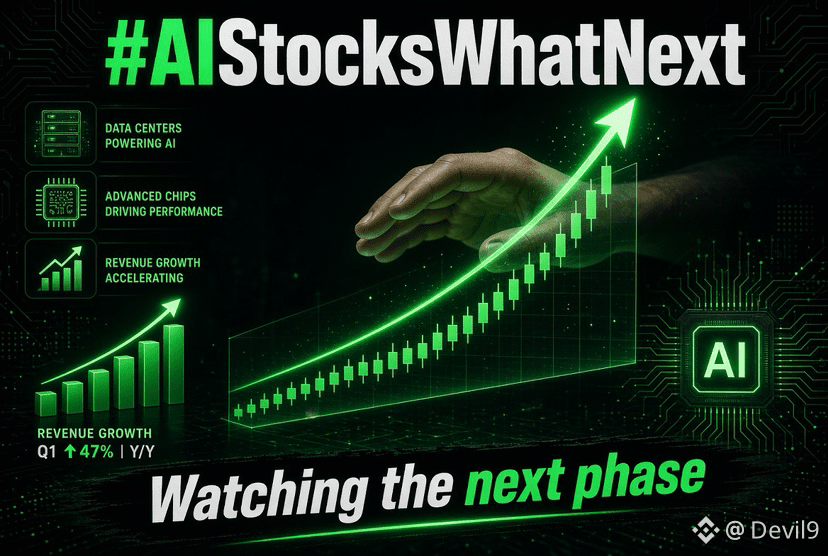
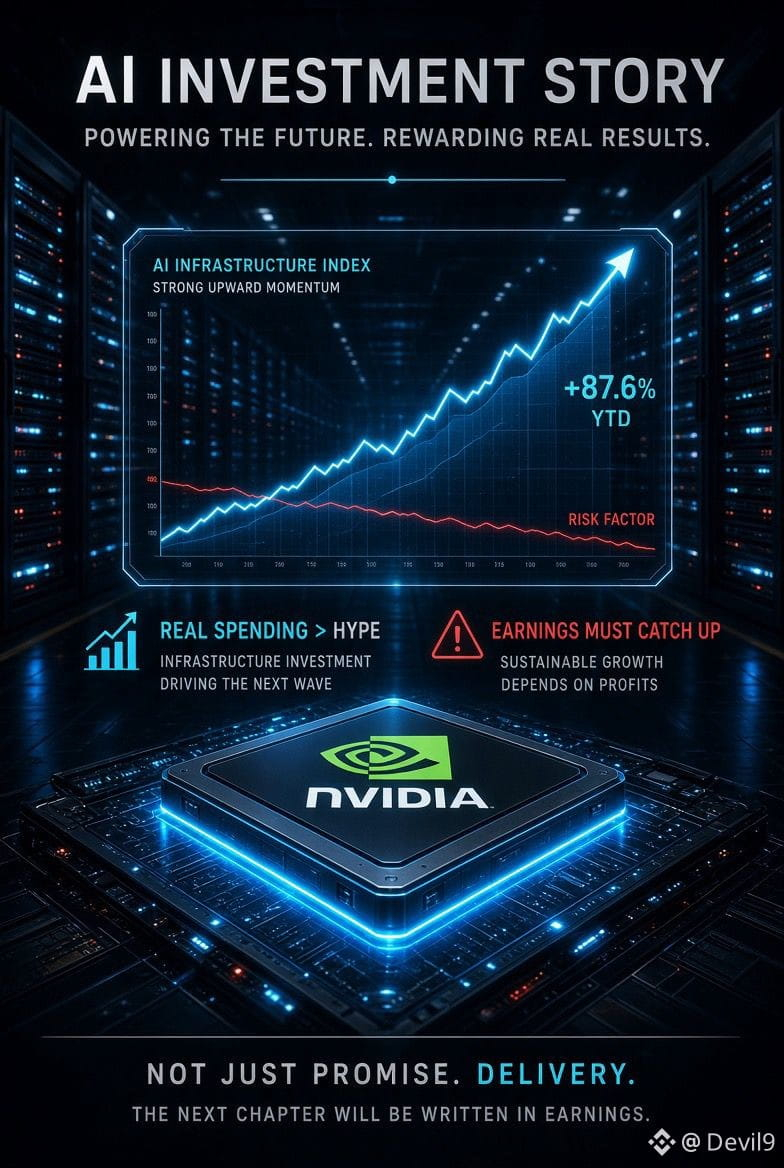
AI stocks are rising fast, but I’m not convinced this is simply another short-term hype cycle.
What caught my attention is the gap between the stock market narrative and the amount of real money being spent behind AI. Nvidia is pointing to another major increase in chip demand, while leading AI companies continue reporting massive revenue growth. That means the AI story is increasingly supported by real infrastructure spending rather than headlines alone.
But there is another side.The bigger question is whether this level of AI investment can keep growing at the same pace. If companies continue spending aggressively on data centers, chips and AI infrastructure, the earnings story could have room to expand. If spending starts slowing while valuations remain elevated, the same stocks could become much more sensitive to disappointment.
My view is cautiously bullish on AI stocks, but I would not chase every green candle.
I’m watching Nvidia and the broader AI sector for confirmation through revenue growth, capital spending and price structure. For me, the next phase of the AI trade will be about proving that earnings can catch up with expectations.
Are you buying AI stocks here, or waiting for a better entry? #AIStocksWhatNext
#Nvidia #Stocks
$NVDAB
{spot}(NVDABUSDT)
#AIStocksWhatNext
AI stocks are rising fast, but I’m not convinced this is simply another short-term hype cycle.
What caught my attention is the gap between the stock market narrative and the amount of real money being spent behind AI. Nvidia is pointing to another major increase in chip demand, while leading AI companies continue reporting massive revenue growth. That means the AI story is increasingly supported by real infrastructure spending rather than headlines alone.
But there is another side.The bigger question is whether this level of AI investment can keep growing at the same pace. If companies continue spending aggressively on data centers, chips and AI infrastructure, the earnings story could have room to expand. If spending starts slowing while valuations remain elevated, the same stocks could become much more sensitive to disappointment.
My view is cautiously bullish on AI stocks, but I would not chase every green candle.
I’m watching Nvidia and the broader AI sector for confirmation through revenue growth, capital spending and price structure. For me, the next phase of the AI trade will be about proving that earnings can catch up with expectations.
Are you buying AI stocks here, or waiting for a better entry? #AIStocksWhatNext
#Nvidia #Stocks
$NVDAB
AI stocks are rising fast, but I’m not convinced this is simply another short-term hype cycle.
What caught my attention is the gap between the stock market narrative and the amount of real money being spent behind AI. Nvidia is pointing to another major increase in chip demand, while leading AI companies continue reporting massive revenue growth. That means the AI story is increasingly supported by real infrastructure spending rather than headlines alone.
But there is another side.The bigger question is whether this level of AI investment can keep growing at the same pace. If companies continue spending aggressively on data centers, chips and AI infrastructure, the earnings story could have room to expand. If spending starts slowing while valuations remain elevated, the same stocks could become much more sensitive to disappointment.
My view is cautiously bullish on AI stocks, but I would not chase every green candle.
I’m watching Nvidia and the broader AI sector for confirmation through revenue growth, capital spending and price structure. For me, the next phase of the AI trade will be about proving that earnings can catch up with expectations.
Are you buying AI stocks here, or waiting for a better entry? #AIStocksWhatNext
#Nvidia #Stocks
$NVDAB
58

#AIStocksWhatNext
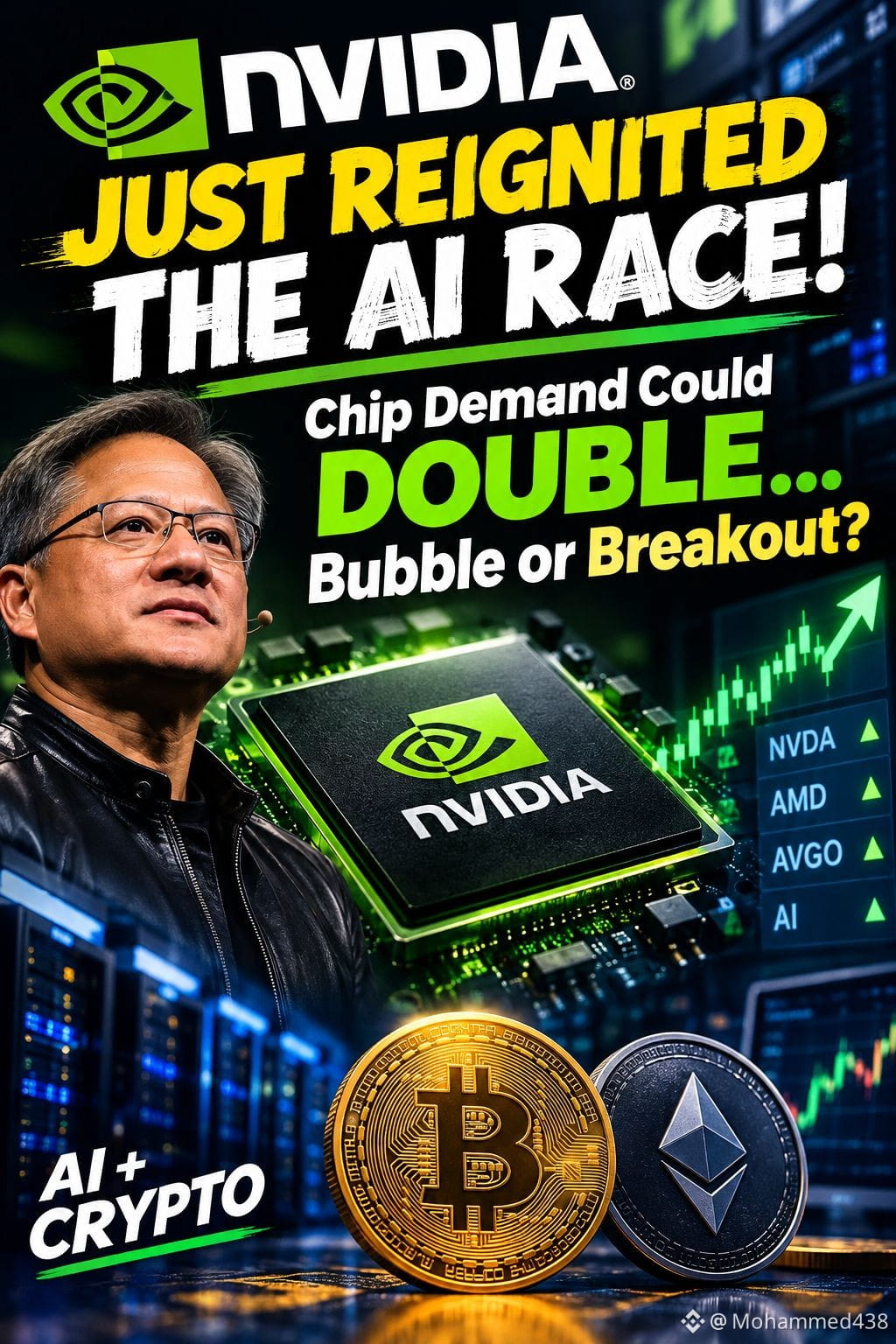
🚨 NVIDIA JUST REIGNITED THE AI RACE! Chip Demand Could DOUBLE… Bubble or Breakout?
Nvidia just dropped a number the AI market can’t ignore.
CEO Jensen Huang says Nvidia expects to sell roughly TWICE as many chips next year as this year, pointing to continued demand for AI infrastructure across industries and economies.
And the timing is explosive.
AI stocks have just regained momentum, with the Nasdaq hitting a record high as investors rushed back into AI and semiconductor names.
But the real question?
Is this the beginning of another AI expansion… or are investors pricing in too much too quickly? 🤯
If AI spending keeps accelerating, the impact could extend beyond stocks.
More AI infrastructure means more demand for chips, data centers, networking, electricity and computing capacity.
And for crypto traders, that matters.
A sustained AI investment cycle could reinforce broader risk-on sentiment and liquidity, potentially supporting assets like BTC and ETH if capital continues flowing toward high-growth technology.
But if AI valuations run ahead of actual earnings and spending slows, risk assets — including crypto — could feel the pressure.
🔥 AI demand is rising. Valuations are the real test.
I’m watching whether the next wave is backed by real spending and revenue… or simply momentum.
#AIStocksWhatNext #NVIDIA #TechStocks #Crypto
$BTC
{future}(BTCUSDT)
$ETH
{future}(ETHUSDT)
$NVDAB
{spot}(NVDABUSDT)
#AIStocksWhatNext
🚨 NVIDIA JUST REIGNITED THE AI RACE! Chip Demand Could DOUBLE… Bubble or Breakout?
Nvidia just dropped a number the AI market can’t ignore.
CEO Jensen Huang says Nvidia expects to sell roughly TWICE as many chips next year as this year, pointing to continued demand for AI infrastructure across industries and economies.
And the timing is explosive.
AI stocks have just regained momentum, with the Nasdaq hitting a record high as investors rushed back into AI and semiconductor names.
But the real question?
Is this the beginning of another AI expansion… or are investors pricing in too much too quickly? 🤯
If AI spending keeps accelerating, the impact could extend beyond stocks.
More AI infrastructure means more demand for chips, data centers, networking, electricity and computing capacity.
And for crypto traders, that matters.
A sustained AI investment cycle could reinforce broader risk-on sentiment and liquidity, potentially supporting assets like BTC and ETH if capital continues flowing toward high-growth technology.
But if AI valuations run ahead of actual earnings and spending slows, risk assets — including crypto — could feel the pressure.
🔥 AI demand is rising. Valuations are the real test.
I’m watching whether the next wave is backed by real spending and revenue… or simply momentum.
#AIStocksWhatNext #NVIDIA #TechStocks #Crypto
$BTC
$ETH
$NVDAB
🚨 NVIDIA JUST REIGNITED THE AI RACE! Chip Demand Could DOUBLE… Bubble or Breakout?
Nvidia just dropped a number the AI market can’t ignore.
CEO Jensen Huang says Nvidia expects to sell roughly TWICE as many chips next year as this year, pointing to continued demand for AI infrastructure across industries and economies.
And the timing is explosive.
AI stocks have just regained momentum, with the Nasdaq hitting a record high as investors rushed back into AI and semiconductor names.
But the real question?
Is this the beginning of another AI expansion… or are investors pricing in too much too quickly? 🤯
If AI spending keeps accelerating, the impact could extend beyond stocks.
More AI infrastructure means more demand for chips, data centers, networking, electricity and computing capacity.
And for crypto traders, that matters.
A sustained AI investment cycle could reinforce broader risk-on sentiment and liquidity, potentially supporting assets like BTC and ETH if capital continues flowing toward high-growth technology.
But if AI valuations run ahead of actual earnings and spending slows, risk assets — including crypto — could feel the pressure.
🔥 AI demand is rising. Valuations are the real test.
I’m watching whether the next wave is backed by real spending and revenue… or simply momentum.
#AIStocksWhatNext #NVIDIA #TechStocks #Crypto
$BTC
$ETH
$NVDAB
1
100

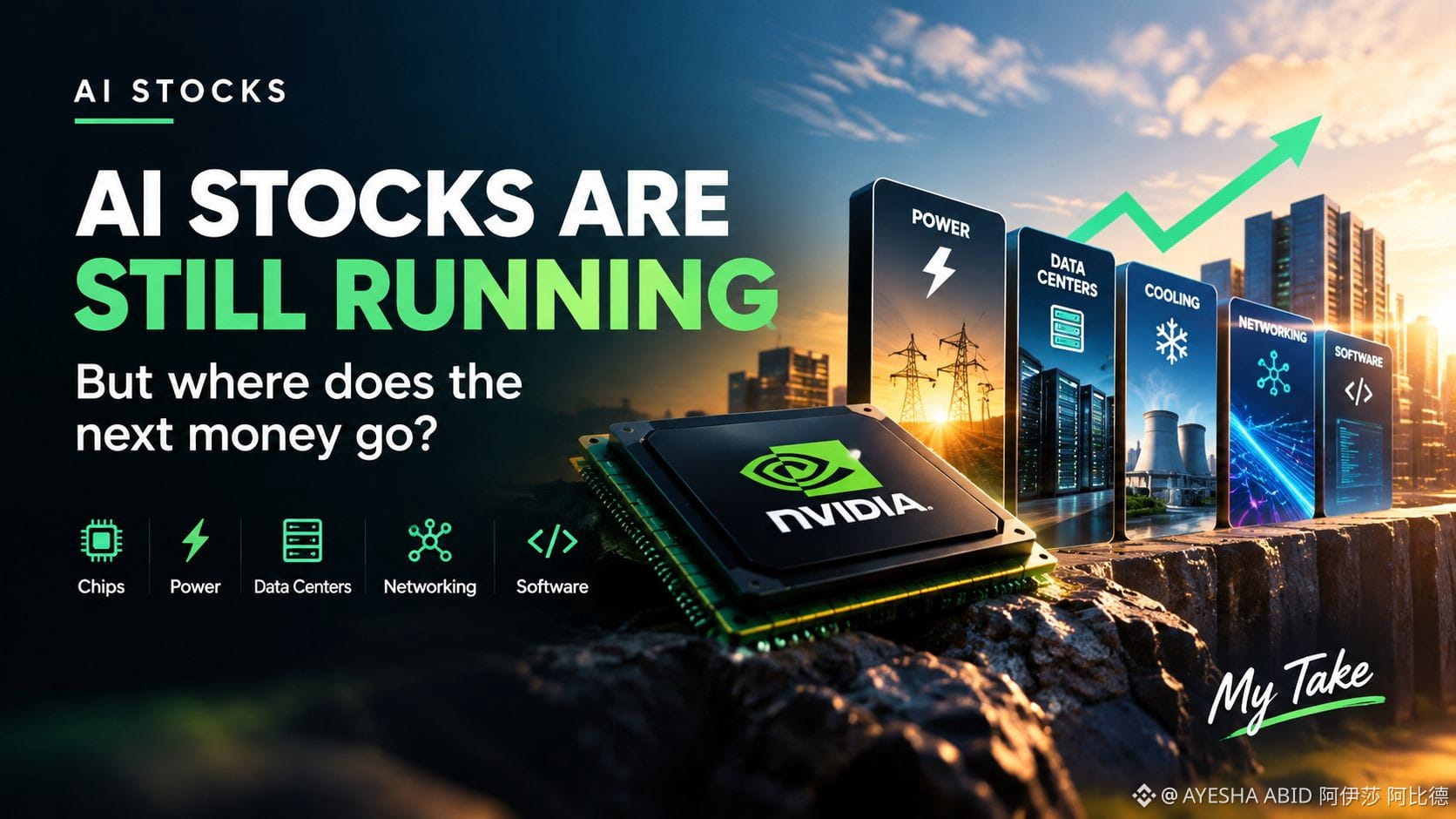
AI STOCKS ARE STILL RUNNING — BUT WHERE DOES THE NEXT MONEY GO?
Nvidia just raised the bar again. Jensen Huang said Nvidia expects to sell twice as many chips next year, while its latest quarter delivered $96.2B revenue and $89B in Data Center revenue, up 106% and 117% YoY.
That tells me the AI trade is no longer only about GPU names. The next layer is the infrastructure needed to turn compute demand into real capacity: networking, power, cooling, data centers, memory and AI software. Broadcom has also pointed to strong AI-chip demand ahead.
My take: I’m watching where the money moves underneath the headline. If AI capex keeps expanding, companies supplying the bottlenecks could stay important. But valuation still matters, because strong demand does not mean every AI stock keeps rising.
The bigger question is whether AI earnings can keep catching up with the huge expectations already priced in.
Which AI sector gets the next wave of attention: chips, power, data centers, networking or software?
$NVDAB $MUBARAK $AKE
#AIStocksWhatNext #AI #Nvidia
AI STOCKS ARE STILL RUNNING — BUT WHERE DOES THE NEXT MONEY GO?
Nvidia just raised the bar again. Jensen Huang said Nvidia expects to sell twice as many chips next year, while its latest quarter delivered $96.2B revenue and $89B in Data Center revenue, up 106% and 117% YoY.
That tells me the AI trade is no longer only about GPU names. The next layer is the infrastructure needed to turn compute demand into real capacity: networking, power, cooling, data centers, memory and AI software. Broadcom has also pointed to strong AI-chip demand ahead.
My take: I’m watching where the money moves underneath the headline. If AI capex keeps expanding, companies supplying the bottlenecks could stay important. But valuation still matters, because strong demand does not mean every AI stock keeps rising.
The bigger question is whether AI earnings can keep catching up with the huge expectations already priced in.
Which AI sector gets the next wave of attention: chips, power, data centers, networking or software?
$NVDAB $MUBARAK $AKE
#AIStocksWhatNext #AI #Nvidia
Nvidia just raised the bar again. Jensen Huang said Nvidia expects to sell twice as many chips next year, while its latest quarter delivered $96.2B revenue and $89B in Data Center revenue, up 106% and 117% YoY.
That tells me the AI trade is no longer only about GPU names. The next layer is the infrastructure needed to turn compute demand into real capacity: networking, power, cooling, data centers, memory and AI software. Broadcom has also pointed to strong AI-chip demand ahead.
My take: I’m watching where the money moves underneath the headline. If AI capex keeps expanding, companies supplying the bottlenecks could stay important. But valuation still matters, because strong demand does not mean every AI stock keeps rising.
The bigger question is whether AI earnings can keep catching up with the huge expectations already priced in.
Which AI sector gets the next wave of attention: chips, power, data centers, networking or software?
$NVDAB $MUBARAK $AKE
#AIStocksWhatNext #AI #Nvidia
1
71

·
--
🚀 AI Stocks Are Rising — But Where Does the Opportunity Go From Here? #AIStocksWhatNext
NVIDIA CEO Jensen Huang recently said he expects the company to sell twice as many chips in 2027 as this year. That’s a huge statement — especially when NVIDIA is already generating massive AI-driven revenue.
The numbers suggest this isn’t just hype: NVIDIA reported $96.2B in quarterly revenue, up 106% YoY, while Data Center revenue jumped 117% to $89B. Meanwhile, global data-center capex grew 92% YoY in Q2 2026, driven heavily by AI infrastructure spending.
But here’s the interesting part 👀
If AI demand continues, the next opportunities may not only be the obvious AI-chip names. The AI buildout also needs data centers, networking, memory, power, cooling, electricity and infrastructure.
That creates a bigger question:
Are AI stocks entering a sustained expansion cycle — or are investors getting ahead of the actual profits?
I’m bullish on the long-term AI theme, but I’d watch one thing closely: whether AI companies can turn massive compute spending into equally massive recurring revenue.
The AI boom may be real. The bigger question is who captures the next wave of spending. 🤖📈
#AIStocksWhatNext #NVIDIA #Stocks #ArtificialIntelligence $NVDAB
🚀 AI Stocks Are Rising — But Where Does the Opportunity Go From Here? #AIStocksWhatNext
NVIDIA CEO Jensen Huang recently said he expects the company to sell twice as many chips in 2027 as this year. That’s a huge statement — especially when NVIDIA is already generating massive AI-driven revenue.
The numbers suggest this isn’t just hype: NVIDIA reported $96.2B in quarterly revenue, up 106% YoY, while Data Center revenue jumped 117% to $89B. Meanwhile, global data-center capex grew 92% YoY in Q2 2026, driven heavily by AI infrastructure spending.
But here’s the interesting part 👀
If AI demand continues, the next opportunities may not only be the obvious AI-chip names. The AI buildout also needs data centers, networking, memory, power, cooling, electricity and infrastructure.
That creates a bigger question:
Are AI stocks entering a sustained expansion cycle — or are investors getting ahead of the actual profits?
I’m bullish on the long-term AI theme, but I’d watch one thing closely: whether AI companies can turn massive compute spending into equally massive recurring revenue.
The AI boom may be real. The bigger question is who captures the next wave of spending. 🤖📈
#AIStocksWhatNext #NVIDIA #Stocks #ArtificialIntelligence $NVDAB
NVIDIA CEO Jensen Huang recently said he expects the company to sell twice as many chips in 2027 as this year. That’s a huge statement — especially when NVIDIA is already generating massive AI-driven revenue.
The numbers suggest this isn’t just hype: NVIDIA reported $96.2B in quarterly revenue, up 106% YoY, while Data Center revenue jumped 117% to $89B. Meanwhile, global data-center capex grew 92% YoY in Q2 2026, driven heavily by AI infrastructure spending.
But here’s the interesting part 👀
If AI demand continues, the next opportunities may not only be the obvious AI-chip names. The AI buildout also needs data centers, networking, memory, power, cooling, electricity and infrastructure.
That creates a bigger question:
Are AI stocks entering a sustained expansion cycle — or are investors getting ahead of the actual profits?
I’m bullish on the long-term AI theme, but I’d watch one thing closely: whether AI companies can turn massive compute spending into equally massive recurring revenue.
The AI boom may be real. The bigger question is who captures the next wave of spending. 🤖📈
#AIStocksWhatNext #NVIDIA #Stocks #ArtificialIntelligence $NVDAB
1
135

·
--
Bullish
AI compute demand is exploding, but chasing these peak valuations might be a mistake.
The AI hype has been dominating the markets, and honestly, the numbers we are seeing are insane.
With Nvidia projecting massive chip sales growth and top tech giants reporting record revenues,
compute spending is reaching levels no one expected.
But as an investor, it makes you pause and think:
Is this a genuine structural shift, or are we riding a short-term hype wave that’s getting ahead of itself?
Personally, I remain long-term bullish on AI infrastructure,
but I’m taking a more cautious approach in the short term.
While state-level backing and proposals like building an "AI Force" show that government support could drive massive GDP contribution in the coming decade,
the valuations right now are definitely stretched.
Instead of just chasing pure AI stocks at their peaks,
I’ve been looking into adjacent sectors that directly benefit from this boom—like energy/power providers required to run massive data centers,
and cybersecurity firms securing these AI networks.
Are you guys still buying the dip on AI tokens and stocks,
or waiting for a major correction before adding more?
Let me know your thoughts!
#AIStocksWhatNext #AIStocksWhatNext #NVIDIA #AMD #AppleStock $GOOGLB
{spot}(GOOGLBUSDT)
{spot}(NVDABUSDT)
{stock_us}(AMD.US)
AI compute demand is exploding, but chasing these peak valuations might be a mistake.
The AI hype has been dominating the markets, and honestly, the numbers we are seeing are insane.
With Nvidia projecting massive chip sales growth and top tech giants reporting record revenues,
compute spending is reaching levels no one expected.
But as an investor, it makes you pause and think:
Is this a genuine structural shift, or are we riding a short-term hype wave that’s getting ahead of itself?
Personally, I remain long-term bullish on AI infrastructure,
but I’m taking a more cautious approach in the short term.
While state-level backing and proposals like building an "AI Force" show that government support could drive massive GDP contribution in the coming decade,
the valuations right now are definitely stretched.
Instead of just chasing pure AI stocks at their peaks,
I’ve been looking into adjacent sectors that directly benefit from this boom—like energy/power providers required to run massive data centers,
and cybersecurity firms securing these AI networks.
Are you guys still buying the dip on AI tokens and stocks,
or waiting for a major correction before adding more?
Let me know your thoughts!
#AIStocksWhatNext #AIStocksWhatNext #NVIDIA #AMD #AppleStock $GOOGLB
The AI hype has been dominating the markets, and honestly, the numbers we are seeing are insane.
With Nvidia projecting massive chip sales growth and top tech giants reporting record revenues,
compute spending is reaching levels no one expected.
But as an investor, it makes you pause and think:
Is this a genuine structural shift, or are we riding a short-term hype wave that’s getting ahead of itself?
Personally, I remain long-term bullish on AI infrastructure,
but I’m taking a more cautious approach in the short term.
While state-level backing and proposals like building an "AI Force" show that government support could drive massive GDP contribution in the coming decade,
the valuations right now are definitely stretched.
Instead of just chasing pure AI stocks at their peaks,
I’ve been looking into adjacent sectors that directly benefit from this boom—like energy/power providers required to run massive data centers,
and cybersecurity firms securing these AI networks.
Are you guys still buying the dip on AI tokens and stocks,
or waiting for a major correction before adding more?
Let me know your thoughts!
#AIStocksWhatNext #AIStocksWhatNext #NVIDIA #AMD #AppleStock $GOOGLB
121

·
--
Bullish
#NvidiaToBuyAnother$1.5BSBEnergySharesPreIPO
Nvidia Commits Another $1.5B to SB Energy — With an IPO Condition
AI expansion depends on getting electricity and buildings ready alongside chips.
SB Energy’s September 21, 2026 amended SEC filing says Nvidia has committed to purchase another $1.5 billion of non-voting shares at the IPO price. The purchase is contingent on the offering and expected to close alongside the IPO, subject to customary conditions.
Separately, Nvidia has already prepaid $1.5 billion under a contract that will settle upon the IPO’s completion in shares priced at 90% of the offering price. Together, the arrangements total $3 billion.
My take: The strategic logic is clear: GPU deployments need land, power, cooling and completed facilities. Investing in the infrastructure developer could help Nvidia align those resources with future chip demand.
But the arrangement also ties more of Nvidia’s capital to the same AI expansion cycle. Construction delays, grid connections, financing costs and customer demand will matter long after the investment headline fades.
I would watch the final IPO terms and project delivery milestones, especially whether announced capacity becomes usable infrastructure on schedule. A funding commitment supports development; execution determines when customers can actually deploy compute.
Could reliable power become as decisive as chip performance in AI growth?
#NVIDIA #AIInfrastructure #DePINRevolution
$MUBARAK $AGT $AKE
{future}(AKEUSDT)
{future}(AGTUSDT)
{future}(MUBARAKUSDT)
#NvidiaToBuyAnother$1.5BSBEnergySharesPreIPO
Nvidia Commits Another $1.5B to SB Energy — With an IPO Condition
AI expansion depends on getting electricity and buildings ready alongside chips.
SB Energy’s September 21, 2026 amended SEC filing says Nvidia has committed to purchase another $1.5 billion of non-voting shares at the IPO price. The purchase is contingent on the offering and expected to close alongside the IPO, subject to customary conditions.
Separately, Nvidia has already prepaid $1.5 billion under a contract that will settle upon the IPO’s completion in shares priced at 90% of the offering price. Together, the arrangements total $3 billion.
My take: The strategic logic is clear: GPU deployments need land, power, cooling and completed facilities. Investing in the infrastructure developer could help Nvidia align those resources with future chip demand.
But the arrangement also ties more of Nvidia’s capital to the same AI expansion cycle. Construction delays, grid connections, financing costs and customer demand will matter long after the investment headline fades.
I would watch the final IPO terms and project delivery milestones, especially whether announced capacity becomes usable infrastructure on schedule. A funding commitment supports development; execution determines when customers can actually deploy compute.
Could reliable power become as decisive as chip performance in AI growth?
#NVIDIA #AIInfrastructure #DePINRevolution
$MUBARAK $AGT $AKE
Nvidia Commits Another $1.5B to SB Energy — With an IPO Condition
AI expansion depends on getting electricity and buildings ready alongside chips.
SB Energy’s September 21, 2026 amended SEC filing says Nvidia has committed to purchase another $1.5 billion of non-voting shares at the IPO price. The purchase is contingent on the offering and expected to close alongside the IPO, subject to customary conditions.
Separately, Nvidia has already prepaid $1.5 billion under a contract that will settle upon the IPO’s completion in shares priced at 90% of the offering price. Together, the arrangements total $3 billion.
My take: The strategic logic is clear: GPU deployments need land, power, cooling and completed facilities. Investing in the infrastructure developer could help Nvidia align those resources with future chip demand.
But the arrangement also ties more of Nvidia’s capital to the same AI expansion cycle. Construction delays, grid connections, financing costs and customer demand will matter long after the investment headline fades.
I would watch the final IPO terms and project delivery milestones, especially whether announced capacity becomes usable infrastructure on schedule. A funding commitment supports development; execution determines when customers can actually deploy compute.
Could reliable power become as decisive as chip performance in AI growth?
#NVIDIA #AIInfrastructure #DePINRevolution
$MUBARAK $AGT $AKE
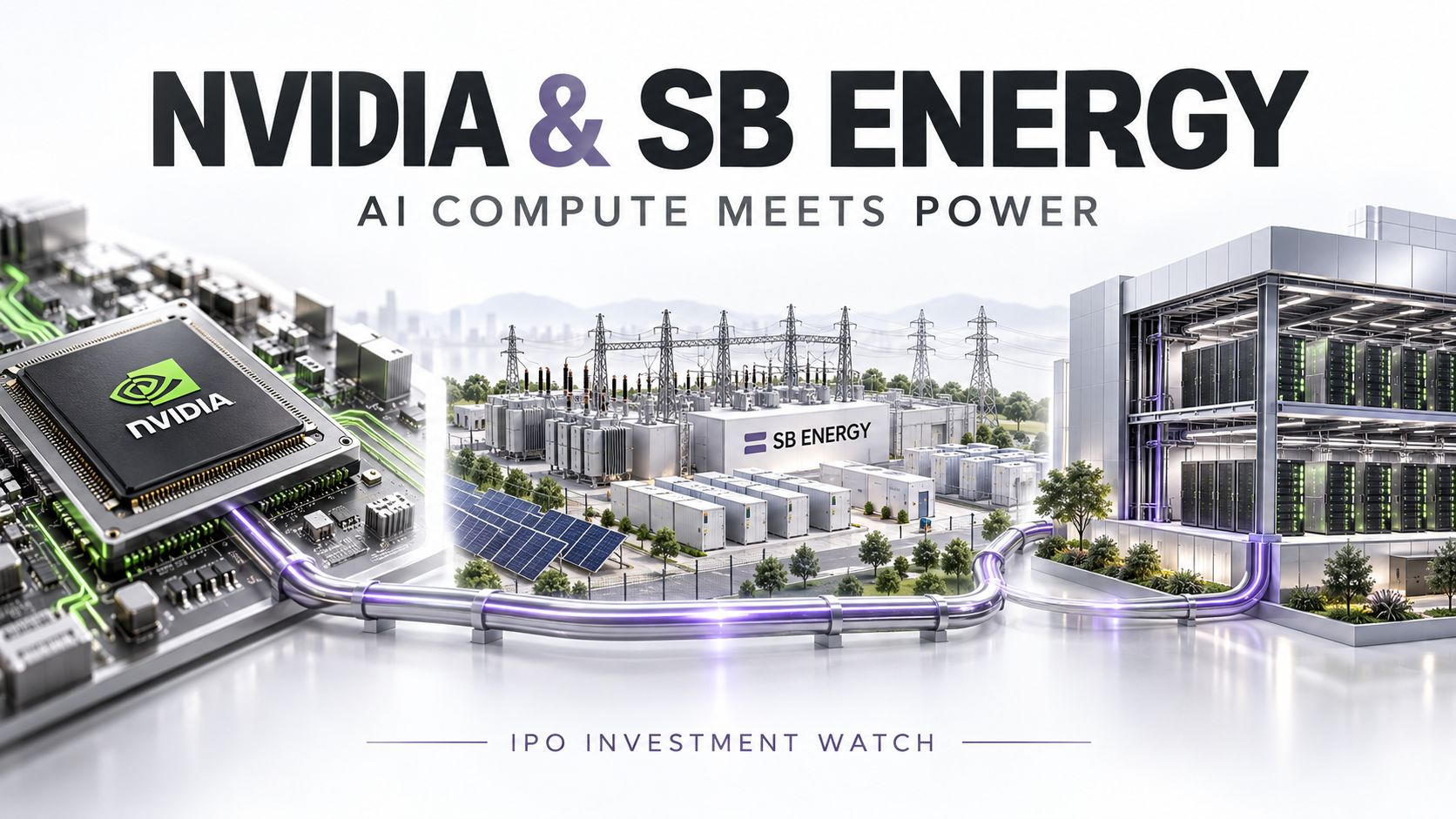
292

#NvidiaToBuyAnother$1.5BSBEnergySharesPreIPO
⚡ Nvidia To Buy Another $1.5B In SB Energy Shares Ahead Of IPO ⚡
Imagine watching the AI boom from the front row, then realizing the real bottleneck may not be chips at all. It may be the power needed to keep those chips running.
Nvidia is set to invest another $1.5 billion in SB Energy through newly issued shares, reportedly at 90% of the IPO price. That would bring Nvidia's total investment to about $3 billion.
SB Energy is building infrastructure for AI data centers, with about 8.8 gigawatts of capacity across projects in Texas and Ohio. The move shows Nvidia's interest extending beyond computing hardware into the infrastructure supporting AI growth.
But there is an important twist: SB Energy's planned IPO has been delayed amid growing investor caution around the sustainability and financing requirements of the AI data-center boom.
That makes Nvidia's investment more interesting, not necessarily simpler. Nvidia appears willing to deepen its exposure to the infrastructure layer while public-market sentiment around that same layer is becoming more selective.
My take: the bigger signal is strategic. AI demand creates a chain reaction: chips need data centers, data centers need electricity, and electricity requires enormous infrastructure investment.
The AI race is increasingly becoming an infrastructure race.
❓Do you think Nvidia's SB Energy investment signals where the next major AI bottleneck will emerge?
Disclaimer: This content is for educational purposes only and is not financial advice.
#Aİ #NVIDIA #GrowWithSAC $KERNEL $FORM $PHA
#NvidiaToBuyAnother$1.5BSBEnergySharesPreIPO
⚡ Nvidia To Buy Another $1.5B In SB Energy Shares Ahead Of IPO ⚡
Imagine watching the AI boom from the front row, then realizing the real bottleneck may not be chips at all. It may be the power needed to keep those chips running.
Nvidia is set to invest another $1.5 billion in SB Energy through newly issued shares, reportedly at 90% of the IPO price. That would bring Nvidia's total investment to about $3 billion.
SB Energy is building infrastructure for AI data centers, with about 8.8 gigawatts of capacity across projects in Texas and Ohio. The move shows Nvidia's interest extending beyond computing hardware into the infrastructure supporting AI growth.
But there is an important twist: SB Energy's planned IPO has been delayed amid growing investor caution around the sustainability and financing requirements of the AI data-center boom.
That makes Nvidia's investment more interesting, not necessarily simpler. Nvidia appears willing to deepen its exposure to the infrastructure layer while public-market sentiment around that same layer is becoming more selective.
My take: the bigger signal is strategic. AI demand creates a chain reaction: chips need data centers, data centers need electricity, and electricity requires enormous infrastructure investment.
The AI race is increasingly becoming an infrastructure race.
❓Do you think Nvidia's SB Energy investment signals where the next major AI bottleneck will emerge?
Disclaimer: This content is for educational purposes only and is not financial advice.
#Aİ #NVIDIA #GrowWithSAC $KERNEL $FORM $PHA
⚡ Nvidia To Buy Another $1.5B In SB Energy Shares Ahead Of IPO ⚡
Imagine watching the AI boom from the front row, then realizing the real bottleneck may not be chips at all. It may be the power needed to keep those chips running.
Nvidia is set to invest another $1.5 billion in SB Energy through newly issued shares, reportedly at 90% of the IPO price. That would bring Nvidia's total investment to about $3 billion.
SB Energy is building infrastructure for AI data centers, with about 8.8 gigawatts of capacity across projects in Texas and Ohio. The move shows Nvidia's interest extending beyond computing hardware into the infrastructure supporting AI growth.
But there is an important twist: SB Energy's planned IPO has been delayed amid growing investor caution around the sustainability and financing requirements of the AI data-center boom.
That makes Nvidia's investment more interesting, not necessarily simpler. Nvidia appears willing to deepen its exposure to the infrastructure layer while public-market sentiment around that same layer is becoming more selective.
My take: the bigger signal is strategic. AI demand creates a chain reaction: chips need data centers, data centers need electricity, and electricity requires enormous infrastructure investment.
The AI race is increasingly becoming an infrastructure race.
❓Do you think Nvidia's SB Energy investment signals where the next major AI bottleneck will emerge?
Disclaimer: This content is for educational purposes only and is not financial advice.
#Aİ #NVIDIA #GrowWithSAC $KERNEL $FORM $PHA

1
281

#Nvidia
Nvidia is doubling down on AI infrastructure! 🚀
According to recent SEC filings, the tech giant agreed to buy an extra $1.5 billion in SB Energy shares right before its US IPO. This brings Nvidia’s total backing to a massive $3 billion as it secures crucial data center power. ⚡💻
#Nadeemgujjar143
#Nvidia
Nvidia is doubling down on AI infrastructure! 🚀
According to recent SEC filings, the tech giant agreed to buy an extra $1.5 billion in SB Energy shares right before its US IPO. This brings Nvidia’s total backing to a massive $3 billion as it secures crucial data center power. ⚡💻
#Nadeemgujjar143
Nvidia is doubling down on AI infrastructure! 🚀
According to recent SEC filings, the tech giant agreed to buy an extra $1.5 billion in SB Energy shares right before its US IPO. This brings Nvidia’s total backing to a massive $3 billion as it secures crucial data center power. ⚡💻
#Nadeemgujjar143
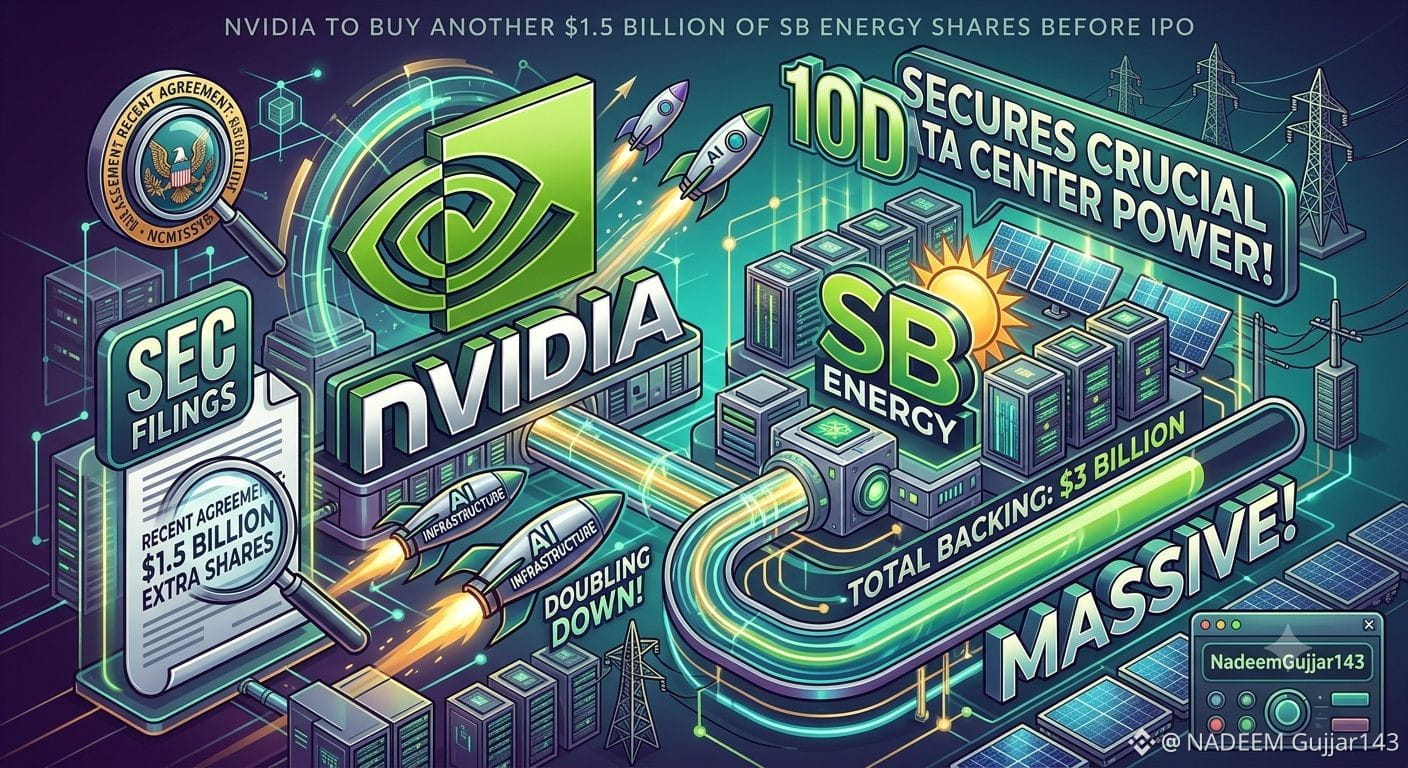
55

·
--
#Syedali550 #NVIDIA
Are you tracking the AI revolution? $NVDA Nvidia continues to dominate the artificial intelligence landscape with groundbreaking advancements in AI infrastructure and chips. From local AI to quantum computing, their technology is powering the future. What are your thoughts on Nvidia's next move?
#Syedali550 #NVIDIA
Are you tracking the AI revolution? $NVDA Nvidia continues to dominate the artificial intelligence landscape with groundbreaking advancements in AI infrastructure and chips. From local AI to quantum computing, their technology is powering the future. What are your thoughts on Nvidia's next move?
Are you tracking the AI revolution? $NVDA Nvidia continues to dominate the artificial intelligence landscape with groundbreaking advancements in AI infrastructure and chips. From local AI to quantum computing, their technology is powering the future. What are your thoughts on Nvidia's next move?
208
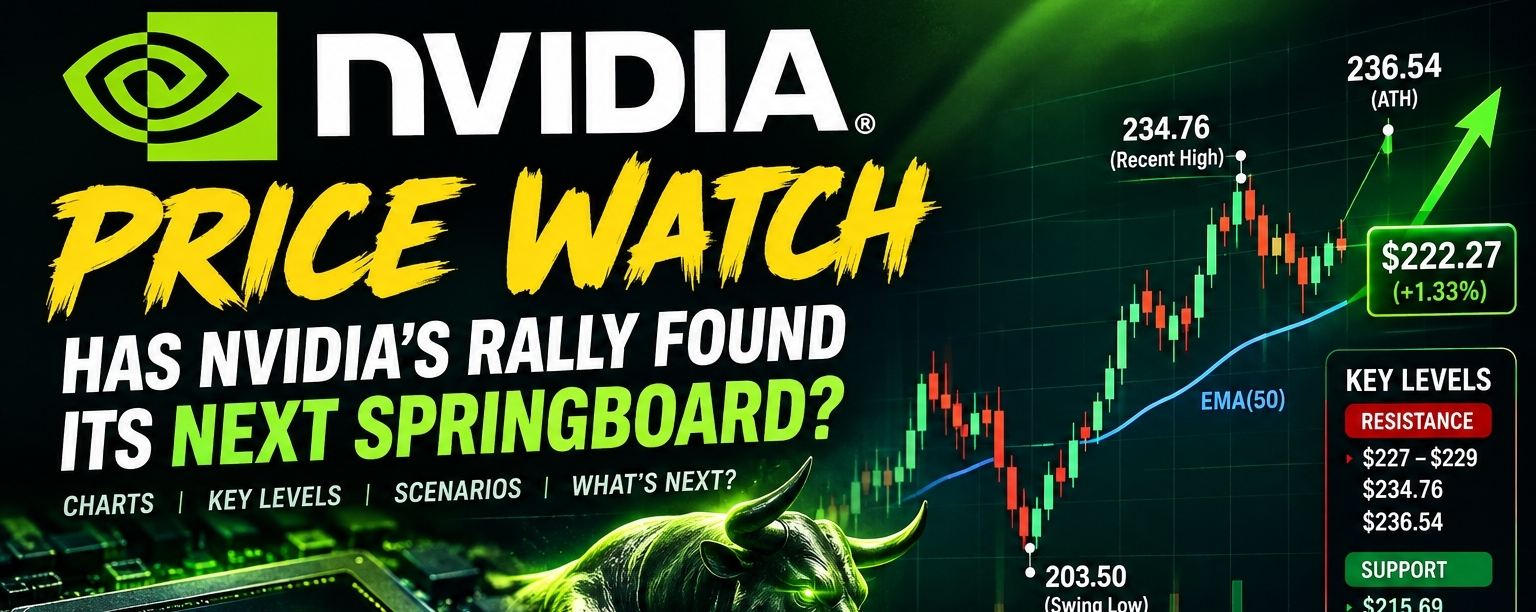
Article
NVDA Price Watch: Has NVIDIA's Rally Found Its Next Springboard?$NVDA.US
◆━━━━━━━━━━━━━━━━━━━━━━━━━━━━━━━━◆
NVIDIA no longer needs an introduction — it needs a strategy.
The company that transformed AI from a buzzword into critical infrastructure is once again approaching key technical levels. With NVDA trading near the upper end of its recent range, traders are asking a simple question:
Is $222 a launchpad for the next leg higher, or a ceiling that needs more time to break?
Let's examine what the chart structure, market positioning, and key price levels are revealing.
◆━━━━━━━━━━━━━━━━━━━━━━━━━━━━━━━━◆
➤ ① Where NVDA Stands Right Now
✔︎ Current Price: $222.27 (+1.33%)
✔︎ Overnight High: $223.27
✔︎ All-Time High: $236.54
✔︎ Recent Swing Low: $203.50
✔︎ Market Capitalization: $5.37 Trillion
✔︎ P/E Ratio: 27.83
✔︎ EPS: $7.99
NVDA currently trades roughly 6% below its all-time high while remaining comfortably above the recent structure low. Despite ongoing valuation debates, investors continue focusing on the company's dominant position in AI infrastructure and strong growth outlook.
◆━━━━━━━━━━━━━━━━━━━━━━━━━━━━━━━━◆
➤ ② Reading the Chart Structure
The 4H chart continues to show a constructive recovery pattern:
① Strong V-shaped rebound from the $203.50 capitulation low.
② Powerful impulsive rally toward $234.76, creating a clear swing high.
③ Healthy pullback that respected the EMA(50) around $218-$219.
④ Buyers stepping back in as price reclaimed the $222 zone.
✔︎ This type of price action is often viewed as a classic trend-repair structure, where a market recovers from a sharp correction and attempts to resume its broader trend.
✔︎ Volume during the recovery has remained steady rather than euphoric, suggesting accumulation rather than speculative exhaustion.
👀 The next major test comes as price approaches previous resistance levels.
◆━━━━━━━━━━━━━━━━━━━━━━━━━━━━━━━━◆
➤ ③ Scenario Analysis
✔︎ Bullish Scenario
➜ Sustained acceptance above $225-$227 could open the path toward:
• $234.76 (recent swing high)
• $236.54 (all-time high)
If momentum remains strong and AI-related spending trends continue, buyers may attempt another challenge of record highs.
✔︎ Neutral Scenario
➜ Price remains trapped between:
• Support: $215
• Resistance: $230
This would indicate consolidation after a strong recovery rather than a trend reversal.
✔︎ Bearish Scenario
➜ A rejection from current levels combined with a break below the EMA(50) near $219 could trigger a move toward:
• $208-$210
• Potentially $203.50 if selling pressure accelerates.
◆━━━━━━━━━━━━━━━━━━━━━━━━━━━━━━━━◆
➤ ④ Key Levels to Watch
Resistance Zones
➜ $227-$229
➜ $234.76
➜ $236.54
Support Zones
➜ $215.69
➜ $208.81
➜ $203.50
These levels may serve as important reference points for traders monitoring momentum and market structure.
◆━━━━━━━━━━━━━━━━━━━━━━━━━━━━━━━━◆
➤ ⑤ The Bigger Picture
Beyond the chart, NVIDIA remains one of the central companies driving the global AI expansion.
Its data-center business continues to play a critical role in powering AI infrastructure, making NVDA one of the most closely watched stocks in global markets.
However, narratives alone do not move prices.
✔︎ Liquidity
✔︎ Positioning
✔︎ Risk Appetite
✔︎ Market Sentiment
These factors often determine whether strong stories translate into continued upside.
At the moment, the $222 area is acting as a key pivot zone, separating continuation from consolidation.
◆━━━━━━━━━━━━━━━━━━━━━━━━━━━━━━━━◆
➤ Risk Disclosure
✔︎ This article is for educational and informational purposes only.
✔︎ It does not constitute financial, investment, or trading advice.
✔︎ Financial markets involve risk, and past performance does not guarantee future results.
✔︎ Always conduct your own research and manage risk according to your personal trading plan.
◆━━━━━━━━━━━━━━━━━━━━━━━━━━━━━━━━◆
✔︎ Final Thought
Markets tend to reward preparation more than prediction.
Whether NVDA breaks toward new highs or enters another consolidation phase, disciplined traders focus on managing scenarios rather than guessing outcomes.
The key question now:
Will NVDA turn $222 into a springboard for another push higher, or is the market preparing for a longer pause?
What's your view on NVDA's current setup?
Share your perspective and join the discussion.
◆━━━━━━━━━━━━━━━━━━━━━━━━━━━━━━━━◆
#nvda #Nvidia's #NVIDIA
NVDA Price Watch: Has NVIDIA's Rally Found Its Next Springboard?
$NVDA.US
◆━━━━━━━━━━━━━━━━━━━━━━━━━━━━━━━━◆
NVIDIA no longer needs an introduction — it needs a strategy.
The company that transformed AI from a buzzword into critical infrastructure is once again approaching key technical levels. With NVDA trading near the upper end of its recent range, traders are asking a simple question:
Is $222 a launchpad for the next leg higher, or a ceiling that needs more time to break?
Let's examine what the chart structure, market positioning, and key price levels are revealing.
◆━━━━━━━━━━━━━━━━━━━━━━━━━━━━━━━━◆
➤ ① Where NVDA Stands Right Now
✔︎ Current Price: $222.27 (+1.33%)
✔︎ Overnight High: $223.27
✔︎ All-Time High: $236.54
✔︎ Recent Swing Low: $203.50
✔︎ Market Capitalization: $5.37 Trillion
✔︎ P/E Ratio: 27.83
✔︎ EPS: $7.99
NVDA currently trades roughly 6% below its all-time high while remaining comfortably above the recent structure low. Despite ongoing valuation debates, investors continue focusing on the company's dominant position in AI infrastructure and strong growth outlook.
◆━━━━━━━━━━━━━━━━━━━━━━━━━━━━━━━━◆
➤ ② Reading the Chart Structure
The 4H chart continues to show a constructive recovery pattern:
① Strong V-shaped rebound from the $203.50 capitulation low.
② Powerful impulsive rally toward $234.76, creating a clear swing high.
③ Healthy pullback that respected the EMA(50) around $218-$219.
④ Buyers stepping back in as price reclaimed the $222 zone.
✔︎ This type of price action is often viewed as a classic trend-repair structure, where a market recovers from a sharp correction and attempts to resume its broader trend.
✔︎ Volume during the recovery has remained steady rather than euphoric, suggesting accumulation rather than speculative exhaustion.
👀 The next major test comes as price approaches previous resistance levels.
◆━━━━━━━━━━━━━━━━━━━━━━━━━━━━━━━━◆
➤ ③ Scenario Analysis
✔︎ Bullish Scenario
➜ Sustained acceptance above $225-$227 could open the path toward:
• $234.76 (recent swing high)
• $236.54 (all-time high)
If momentum remains strong and AI-related spending trends continue, buyers may attempt another challenge of record highs.
✔︎ Neutral Scenario
➜ Price remains trapped between:
• Support: $215
• Resistance: $230
This would indicate consolidation after a strong recovery rather than a trend reversal.
✔︎ Bearish Scenario
➜ A rejection from current levels combined with a break below the EMA(50) near $219 could trigger a move toward:
• $208-$210
• Potentially $203.50 if selling pressure accelerates.
◆━━━━━━━━━━━━━━━━━━━━━━━━━━━━━━━━◆
➤ ④ Key Levels to Watch
Resistance Zones
➜ $227-$229
➜ $234.76
➜ $236.54
Support Zones
➜ $215.69
➜ $208.81
➜ $203.50
These levels may serve as important reference points for traders monitoring momentum and market structure.
◆━━━━━━━━━━━━━━━━━━━━━━━━━━━━━━━━◆
➤ ⑤ The Bigger Picture
Beyond the chart, NVIDIA remains one of the central companies driving the global AI expansion.
Its data-center business continues to play a critical role in powering AI infrastructure, making NVDA one of the most closely watched stocks in global markets.
However, narratives alone do not move prices.
✔︎ Liquidity
✔︎ Positioning
✔︎ Risk Appetite
✔︎ Market Sentiment
These factors often determine whether strong stories translate into continued upside.
At the moment, the $222 area is acting as a key pivot zone, separating continuation from consolidation.
◆━━━━━━━━━━━━━━━━━━━━━━━━━━━━━━━━◆
➤ Risk Disclosure
✔︎ This article is for educational and informational purposes only.
✔︎ It does not constitute financial, investment, or trading advice.
✔︎ Financial markets involve risk, and past performance does not guarantee future results.
✔︎ Always conduct your own research and manage risk according to your personal trading plan.
◆━━━━━━━━━━━━━━━━━━━━━━━━━━━━━━━━◆
✔︎ Final Thought
Markets tend to reward preparation more than prediction.
Whether NVDA breaks toward new highs or enters another consolidation phase, disciplined traders focus on managing scenarios rather than guessing outcomes.
The key question now:
Will NVDA turn $222 into a springboard for another push higher, or is the market preparing for a longer pause?
What's your view on NVDA's current setup?
Share your perspective and join the discussion.
◆━━━━━━━━━━━━━━━━━━━━━━━━━━━━━━━━◆
#nvda #Nvidia's #NVIDIA
◆━━━━━━━━━━━━━━━━━━━━━━━━━━━━━━━━◆
NVIDIA no longer needs an introduction — it needs a strategy.
The company that transformed AI from a buzzword into critical infrastructure is once again approaching key technical levels. With NVDA trading near the upper end of its recent range, traders are asking a simple question:
Is $222 a launchpad for the next leg higher, or a ceiling that needs more time to break?
Let's examine what the chart structure, market positioning, and key price levels are revealing.
◆━━━━━━━━━━━━━━━━━━━━━━━━━━━━━━━━◆
➤ ① Where NVDA Stands Right Now
✔︎ Current Price: $222.27 (+1.33%)
✔︎ Overnight High: $223.27
✔︎ All-Time High: $236.54
✔︎ Recent Swing Low: $203.50
✔︎ Market Capitalization: $5.37 Trillion
✔︎ P/E Ratio: 27.83
✔︎ EPS: $7.99
NVDA currently trades roughly 6% below its all-time high while remaining comfortably above the recent structure low. Despite ongoing valuation debates, investors continue focusing on the company's dominant position in AI infrastructure and strong growth outlook.
◆━━━━━━━━━━━━━━━━━━━━━━━━━━━━━━━━◆
➤ ② Reading the Chart Structure
The 4H chart continues to show a constructive recovery pattern:
① Strong V-shaped rebound from the $203.50 capitulation low.
② Powerful impulsive rally toward $234.76, creating a clear swing high.
③ Healthy pullback that respected the EMA(50) around $218-$219.
④ Buyers stepping back in as price reclaimed the $222 zone.
✔︎ This type of price action is often viewed as a classic trend-repair structure, where a market recovers from a sharp correction and attempts to resume its broader trend.
✔︎ Volume during the recovery has remained steady rather than euphoric, suggesting accumulation rather than speculative exhaustion.
👀 The next major test comes as price approaches previous resistance levels.
◆━━━━━━━━━━━━━━━━━━━━━━━━━━━━━━━━◆
➤ ③ Scenario Analysis
✔︎ Bullish Scenario
➜ Sustained acceptance above $225-$227 could open the path toward:
• $234.76 (recent swing high)
• $236.54 (all-time high)
If momentum remains strong and AI-related spending trends continue, buyers may attempt another challenge of record highs.
✔︎ Neutral Scenario
➜ Price remains trapped between:
• Support: $215
• Resistance: $230
This would indicate consolidation after a strong recovery rather than a trend reversal.
✔︎ Bearish Scenario
➜ A rejection from current levels combined with a break below the EMA(50) near $219 could trigger a move toward:
• $208-$210
• Potentially $203.50 if selling pressure accelerates.
◆━━━━━━━━━━━━━━━━━━━━━━━━━━━━━━━━◆
➤ ④ Key Levels to Watch
Resistance Zones
➜ $227-$229
➜ $234.76
➜ $236.54
Support Zones
➜ $215.69
➜ $208.81
➜ $203.50
These levels may serve as important reference points for traders monitoring momentum and market structure.
◆━━━━━━━━━━━━━━━━━━━━━━━━━━━━━━━━◆
➤ ⑤ The Bigger Picture
Beyond the chart, NVIDIA remains one of the central companies driving the global AI expansion.
Its data-center business continues to play a critical role in powering AI infrastructure, making NVDA one of the most closely watched stocks in global markets.
However, narratives alone do not move prices.
✔︎ Liquidity
✔︎ Positioning
✔︎ Risk Appetite
✔︎ Market Sentiment
These factors often determine whether strong stories translate into continued upside.
At the moment, the $222 area is acting as a key pivot zone, separating continuation from consolidation.
◆━━━━━━━━━━━━━━━━━━━━━━━━━━━━━━━━◆
➤ Risk Disclosure
✔︎ This article is for educational and informational purposes only.
✔︎ It does not constitute financial, investment, or trading advice.
✔︎ Financial markets involve risk, and past performance does not guarantee future results.
✔︎ Always conduct your own research and manage risk according to your personal trading plan.
◆━━━━━━━━━━━━━━━━━━━━━━━━━━━━━━━━◆
✔︎ Final Thought
Markets tend to reward preparation more than prediction.
Whether NVDA breaks toward new highs or enters another consolidation phase, disciplined traders focus on managing scenarios rather than guessing outcomes.
The key question now:
Will NVDA turn $222 into a springboard for another push higher, or is the market preparing for a longer pause?
What's your view on NVDA's current setup?
Share your perspective and join the discussion.
◆━━━━━━━━━━━━━━━━━━━━━━━━━━━━━━━━◆
#nvda #Nvidia's #NVIDIA
NVDAUS+0.67%
26

·
--
#NVIDIA
Been using an Nvidia card for a while now and I still notice the difference. Games load smoother, editing renders finish faster, and AI tools that crawl on other hardware just run. A GPU is not just for gaming anymore, it is what a lot of today's tech runs on.
Curious what card you are running right now?
#Nvidia #GPU #Tech
The post claims personal use, so edit that first line if it is not true for you. I can also do a version about Nvidia as a stock or about its AI role.
#NVIDIA
Been using an Nvidia card for a while now and I still notice the difference. Games load smoother, editing renders finish faster, and AI tools that crawl on other hardware just run. A GPU is not just for gaming anymore, it is what a lot of today's tech runs on.
Curious what card you are running right now?
#Nvidia #GPU #Tech
The post claims personal use, so edit that first line if it is not true for you. I can also do a version about Nvidia as a stock or about its AI role.
Been using an Nvidia card for a while now and I still notice the difference. Games load smoother, editing renders finish faster, and AI tools that crawl on other hardware just run. A GPU is not just for gaming anymore, it is what a lot of today's tech runs on.
Curious what card you are running right now?
#Nvidia #GPU #Tech
The post claims personal use, so edit that first line if it is not true for you. I can also do a version about Nvidia as a stock or about its AI role.
97

·
--
Bullish
NVIDIA and AI: how much growth is already priced in? 🤖📈
The AI revolution is no longer just a technological narrative—it’s turning into an industry with concrete financial results.
#NVIDIA has just reported quarterly revenue of US$96.2 billion, up 106% year over year. 🤯
Its Data Center business reached US$89 billion, growing 117% compared to the same quarter of the prior year.
For its next quarter, the company projects revenue of approximately US$108 billion ±2%
The numbers show that demand for AI infrastructure continues to be extraordinary.
That’s why analyzing AI only through NVIDIA’s growth may fall short.
You have to look at the entire ecosystem:
Chips → data centers → energy → infrastructure → AI models → software → autonomous agents.
And here’s an interesting question for the coming years:
Where will the value capture be within this chain?
The expansion of AI is opening increasingly relevant conversations for other tech sectors, including blockchain, tokenization, decentralized infrastructure, and digital assets.
From an investment perspective, the question shouldn’t simply be:
“Will AI keep growing?”
But rather:
“What expectations are already built into prices, and what risks still aren’t?”
That shift in perspective is essential for moving from chasing narratives to analyzing opportunities with risk management.
Which part of the AI ecosystem do you find most interesting for the next few years: chips, infrastructure, energy, software, AI agents, or the convergence between AI and blockchain?
I’m reading your thoughts. 👇
CryptoLex Advisors
Strategy • Risk • Digital assets
#AIStocksWhatNext #NVIDIA #Aİ #Crypto #Blockchain $NVDAB
{spot}(NVDABUSDT)
NVIDIA and AI: how much growth is already priced in? 🤖📈
The AI revolution is no longer just a technological narrative—it’s turning into an industry with concrete financial results.
#NVIDIA has just reported quarterly revenue of US$96.2 billion, up 106% year over year. 🤯
Its Data Center business reached US$89 billion, growing 117% compared to the same quarter of the prior year.
For its next quarter, the company projects revenue of approximately US$108 billion ±2%
The numbers show that demand for AI infrastructure continues to be extraordinary.
That’s why analyzing AI only through NVIDIA’s growth may fall short.
You have to look at the entire ecosystem:
Chips → data centers → energy → infrastructure → AI models → software → autonomous agents.
And here’s an interesting question for the coming years:
Where will the value capture be within this chain?
The expansion of AI is opening increasingly relevant conversations for other tech sectors, including blockchain, tokenization, decentralized infrastructure, and digital assets.
From an investment perspective, the question shouldn’t simply be:
“Will AI keep growing?”
But rather:
“What expectations are already built into prices, and what risks still aren’t?”
That shift in perspective is essential for moving from chasing narratives to analyzing opportunities with risk management.
Which part of the AI ecosystem do you find most interesting for the next few years: chips, infrastructure, energy, software, AI agents, or the convergence between AI and blockchain?
I’m reading your thoughts. 👇
CryptoLex Advisors
Strategy • Risk • Digital assets
#AIStocksWhatNext #NVIDIA #Aİ #Crypto #Blockchain $NVDAB
The AI revolution is no longer just a technological narrative—it’s turning into an industry with concrete financial results.
#NVIDIA has just reported quarterly revenue of US$96.2 billion, up 106% year over year. 🤯
Its Data Center business reached US$89 billion, growing 117% compared to the same quarter of the prior year.
For its next quarter, the company projects revenue of approximately US$108 billion ±2%
The numbers show that demand for AI infrastructure continues to be extraordinary.
That’s why analyzing AI only through NVIDIA’s growth may fall short.
You have to look at the entire ecosystem:
Chips → data centers → energy → infrastructure → AI models → software → autonomous agents.
And here’s an interesting question for the coming years:
Where will the value capture be within this chain?
The expansion of AI is opening increasingly relevant conversations for other tech sectors, including blockchain, tokenization, decentralized infrastructure, and digital assets.
From an investment perspective, the question shouldn’t simply be:
“Will AI keep growing?”
But rather:
“What expectations are already built into prices, and what risks still aren’t?”
That shift in perspective is essential for moving from chasing narratives to analyzing opportunities with risk management.
Which part of the AI ecosystem do you find most interesting for the next few years: chips, infrastructure, energy, software, AI agents, or the convergence between AI and blockchain?
I’m reading your thoughts. 👇
CryptoLex Advisors
Strategy • Risk • Digital assets
#AIStocksWhatNext #NVIDIA #Aİ #Crypto #Blockchain $NVDAB
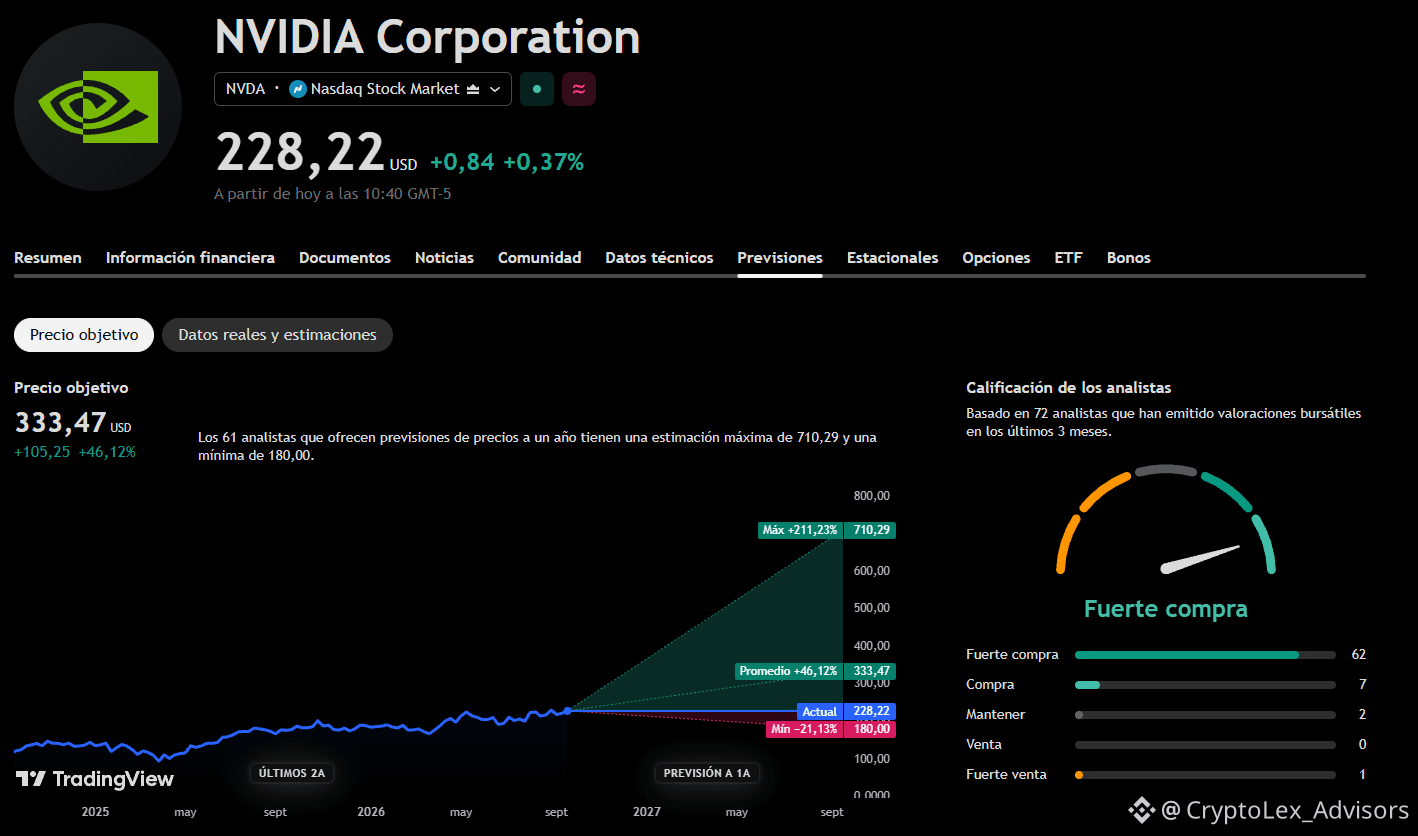
1
85

·
--
AI explodes on the stock market, but the next opportunities may not be where everyone is looking!
#NVIDIA continues to show impressive growth. In the second quarter of its fiscal year 2027, the company generated $89 billion in revenue from data centers, representing a 117% year-over-year increase.
But here’s what many investors forget: artificial intelligence doesn’t run only on GPUs.
Every new data center requires electricity, cooling systems, high-performance networks, and physical infrastructure.
According to the International Energy Agency, global electricity demand from data centers could rise from about 485 TWh in 2025 to 950 TWh by 2030.
📊 The companies I’m watching:
$NVDA : leader in AI accelerators.
$AMD : alternative in AI processors and accelerators.
$AVGO : custom chips and networking infrastructure.
VRT : cooling and power for data centers.
ETN : electrical equipment and energy management.
I remain BULLISH on AI infrastructure long term, but cautious about valuations in the short term.
A company can show spectacular growth while still being a risky investment when its stock price already factors in very high expectations.
So I’m watching financial results, the pace of earnings growth, and market pullbacks rather than chasing every rise.
💬 And you—what AI stock are you watching for the coming months?
NVDA, AMD, AVGO, or another opportunity?
👇 Share your conviction in the comments!
#aistockswhatnext
AI explodes on the stock market, but the next opportunities may not be where everyone is looking!
#NVIDIA continues to show impressive growth. In the second quarter of its fiscal year 2027, the company generated $89 billion in revenue from data centers, representing a 117% year-over-year increase.
But here’s what many investors forget: artificial intelligence doesn’t run only on GPUs.
Every new data center requires electricity, cooling systems, high-performance networks, and physical infrastructure.
According to the International Energy Agency, global electricity demand from data centers could rise from about 485 TWh in 2025 to 950 TWh by 2030.
📊 The companies I’m watching:
$NVDA : leader in AI accelerators.
$AMD : alternative in AI processors and accelerators.
$AVGO : custom chips and networking infrastructure.
VRT : cooling and power for data centers.
ETN : electrical equipment and energy management.
I remain BULLISH on AI infrastructure long term, but cautious about valuations in the short term.
A company can show spectacular growth while still being a risky investment when its stock price already factors in very high expectations.
So I’m watching financial results, the pace of earnings growth, and market pullbacks rather than chasing every rise.
💬 And you—what AI stock are you watching for the coming months?
NVDA, AMD, AVGO, or another opportunity?
👇 Share your conviction in the comments!
#aistockswhatnext
#NVIDIA continues to show impressive growth. In the second quarter of its fiscal year 2027, the company generated $89 billion in revenue from data centers, representing a 117% year-over-year increase.
But here’s what many investors forget: artificial intelligence doesn’t run only on GPUs.
Every new data center requires electricity, cooling systems, high-performance networks, and physical infrastructure.
According to the International Energy Agency, global electricity demand from data centers could rise from about 485 TWh in 2025 to 950 TWh by 2030.
📊 The companies I’m watching:
$NVDA : leader in AI accelerators.
$AMD : alternative in AI processors and accelerators.
$AVGO : custom chips and networking infrastructure.
VRT : cooling and power for data centers.
ETN : electrical equipment and energy management.
I remain BULLISH on AI infrastructure long term, but cautious about valuations in the short term.
A company can show spectacular growth while still being a risky investment when its stock price already factors in very high expectations.
So I’m watching financial results, the pace of earnings growth, and market pullbacks rather than chasing every rise.
💬 And you—what AI stock are you watching for the coming months?
NVDA, AMD, AVGO, or another opportunity?
👇 Share your conviction in the comments!
#aistockswhatnext
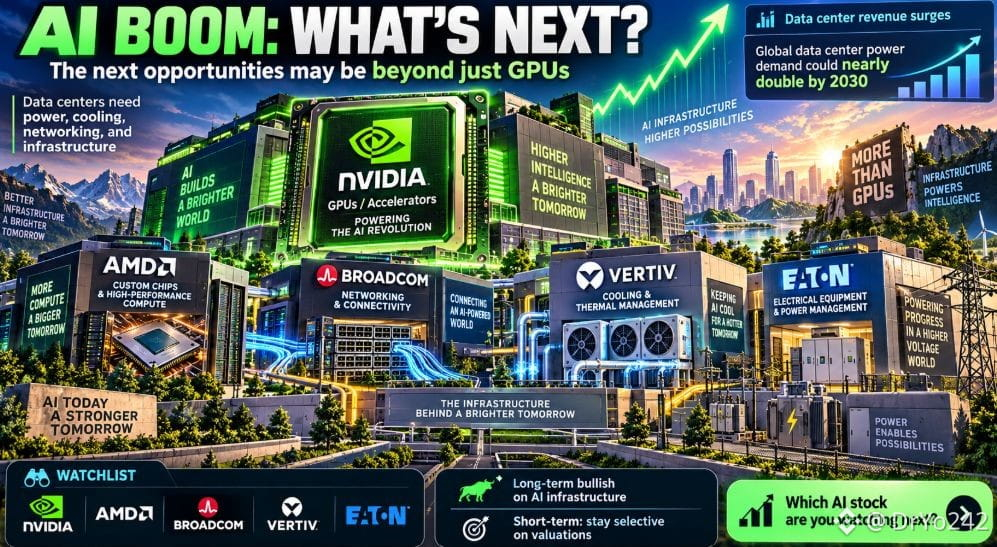
3
229

The real bottleneck of artificial intelligence is no longer just chips, but electricity—and Nvidia $NVDAB knows it very well: according to new records filed with the SEC, the semiconductor giant has committed to investing $1.5 billion through a private placement of Class N shares in SB Energy (as part of a total $3.0 billion bet tied to its imminent IPO).
This mega-investment aims to secure massive infrastructure, power grids, and gigantic data centers such as the Ohio campus designed to power OpenAI’s models by ensuring the processors have the indispensable energy capacity to keep operating without slowing down. Tech giants are buying directly the energy sources of tomorrow!.
Do you think the lack of electricity will become the biggest limit to the AI boom? I’ll read your comments!
#noticias
#NEARRisesNearly80%InAWeek
#Nvidia
{spot}(NVDABUSDT)
The real bottleneck of artificial intelligence is no longer just chips, but electricity—and Nvidia $NVDAB knows it very well: according to new records filed with the SEC, the semiconductor giant has committed to investing $1.5 billion through a private placement of Class N shares in SB Energy (as part of a total $3.0 billion bet tied to its imminent IPO).
This mega-investment aims to secure massive infrastructure, power grids, and gigantic data centers such as the Ohio campus designed to power OpenAI’s models by ensuring the processors have the indispensable energy capacity to keep operating without slowing down. Tech giants are buying directly the energy sources of tomorrow!.
Do you think the lack of electricity will become the biggest limit to the AI boom? I’ll read your comments!
#noticias
#NEARRisesNearly80%InAWeek
#Nvidia
This mega-investment aims to secure massive infrastructure, power grids, and gigantic data centers such as the Ohio campus designed to power OpenAI’s models by ensuring the processors have the indispensable energy capacity to keep operating without slowing down. Tech giants are buying directly the energy sources of tomorrow!.
Do you think the lack of electricity will become the biggest limit to the AI boom? I’ll read your comments!
#noticias
#NEARRisesNearly80%InAWeek
#Nvidia
noticias actualizadas:
si están invirtiendo en en electricidad no tendrá límites
3
13
3.1k
Clash of giants in artificial intelligence! Jensen Huang lines up with the White House and defends engineering against strict regulation.
The regulatory and AI safety landscape is in moments of maximum tension. While industry leaders such as the directors of OpenAI, Anthropic, $GOOGLB Google DeepMind, and Elon Musk have publicly called for temporarily slowing down the development of frontier models and tightening regulations, Nvidia CEO Jensen Huang is defending an entirely opposite position.
Arguing that catastrophic predictions lack scientific grounding and that safety must be ensured through “traditional engineering methods” before launching products to the market, Huang has become a key ally of the Trump administration. In fact, the U.S. Treasury Secretary, Scott Bessent, confirmed that the government’s AI position is completely aligned with Huang’s vision, sharply contrasting with calls to slow the pace of the technology.
A geopolitical and technological debate that will shape the future of the industry! Do you agree with Huang that traditional engineering is enough to ensure safety, or do you think it’s necessary to pause and regulate AI development?
$NVDAB
$TSLAB
#noticias
#NVIDIA #ArtificialIntelligence
{spot}(TSLABUSDT)
{spot}(NVDABUSDT)
{spot}(GOOGLBUSDT)
Clash of giants in artificial intelligence! Jensen Huang lines up with the White House and defends engineering against strict regulation.
The regulatory and AI safety landscape is in moments of maximum tension. While industry leaders such as the directors of OpenAI, Anthropic, $GOOGLB Google DeepMind, and Elon Musk have publicly called for temporarily slowing down the development of frontier models and tightening regulations, Nvidia CEO Jensen Huang is defending an entirely opposite position.
Arguing that catastrophic predictions lack scientific grounding and that safety must be ensured through “traditional engineering methods” before launching products to the market, Huang has become a key ally of the Trump administration. In fact, the U.S. Treasury Secretary, Scott Bessent, confirmed that the government’s AI position is completely aligned with Huang’s vision, sharply contrasting with calls to slow the pace of the technology.
A geopolitical and technological debate that will shape the future of the industry! Do you agree with Huang that traditional engineering is enough to ensure safety, or do you think it’s necessary to pause and regulate AI development?
$NVDAB
$TSLAB
#noticias
#NVIDIA #ArtificialIntelligence
The regulatory and AI safety landscape is in moments of maximum tension. While industry leaders such as the directors of OpenAI, Anthropic, $GOOGLB Google DeepMind, and Elon Musk have publicly called for temporarily slowing down the development of frontier models and tightening regulations, Nvidia CEO Jensen Huang is defending an entirely opposite position.
Arguing that catastrophic predictions lack scientific grounding and that safety must be ensured through “traditional engineering methods” before launching products to the market, Huang has become a key ally of the Trump administration. In fact, the U.S. Treasury Secretary, Scott Bessent, confirmed that the government’s AI position is completely aligned with Huang’s vision, sharply contrasting with calls to slow the pace of the technology.
A geopolitical and technological debate that will shape the future of the industry! Do you agree with Huang that traditional engineering is enough to ensure safety, or do you think it’s necessary to pause and regulate AI development?
$NVDAB
$TSLAB
#noticias
#NVIDIA #ArtificialIntelligence
Gusty68:
no creo sea suficiente para garantizar la seguridad
1
5
2.8k

·
--
Jensen Huang has Trump's full attention.
The CEO of $NVDA has become the main ally of the incoming president in debates on AI intelligence security.
It’s an interesting move.
The world’s most valuable company now has a direct line to discuss the future of the industry.
What impact do you think this closeness will have?
#Nvidia #AI
Jensen Huang has Trump's full attention.
The CEO of $NVDA has become the main ally of the incoming president in debates on AI intelligence security.
It’s an interesting move.
The world’s most valuable company now has a direct line to discuss the future of the industry.
What impact do you think this closeness will have?
#Nvidia #AI
The CEO of $NVDA has become the main ally of the incoming president in debates on AI intelligence security.
It’s an interesting move.
The world’s most valuable company now has a direct line to discuss the future of the industry.
What impact do you think this closeness will have?
#Nvidia #AI

228

·
--
🚨 $NVDA IS STILL DOMINATING THE AI BOOM! 🤖🔥
$NVDAB just delivered another massive growth signal:
📈 $96.2B quarterly revenue — +106% YoY
🔥 Data Center revenue — $89B, +117% YoY
🚀 Next-quarter revenue guidance: ~$108B
⚡ Rubin platform is now in full production
The AI infrastructure race is accelerating, and NVIDIA remains at the center of it.
But with elevated valuations, yields and AI-spending concerns still in focus, volatility could remain high.
👀 NVDA traders: are we heading toward another breakout?$EVAA
{spot}(NVDABUSDT)
{stock_us}(NVDA.US)
#NVIDIA #NVDA #AI #Stocks #BTCBreaks80K
🚨 $NVDA IS STILL DOMINATING THE AI BOOM! 🤖🔥
$NVDAB just delivered another massive growth signal:
📈 $96.2B quarterly revenue — +106% YoY
🔥 Data Center revenue — $89B, +117% YoY
🚀 Next-quarter revenue guidance: ~$108B
⚡ Rubin platform is now in full production
The AI infrastructure race is accelerating, and NVIDIA remains at the center of it.
But with elevated valuations, yields and AI-spending concerns still in focus, volatility could remain high.
👀 NVDA traders: are we heading toward another breakout?$EVAA
#NVIDIA #NVDA #AI #Stocks #BTCBreaks80K
$NVDAB just delivered another massive growth signal:
📈 $96.2B quarterly revenue — +106% YoY
🔥 Data Center revenue — $89B, +117% YoY
🚀 Next-quarter revenue guidance: ~$108B
⚡ Rubin platform is now in full production
The AI infrastructure race is accelerating, and NVIDIA remains at the center of it.
But with elevated valuations, yields and AI-spending concerns still in focus, volatility could remain high.
👀 NVDA traders: are we heading toward another breakout?$EVAA
#NVIDIA #NVDA #AI #Stocks #BTCBreaks80K
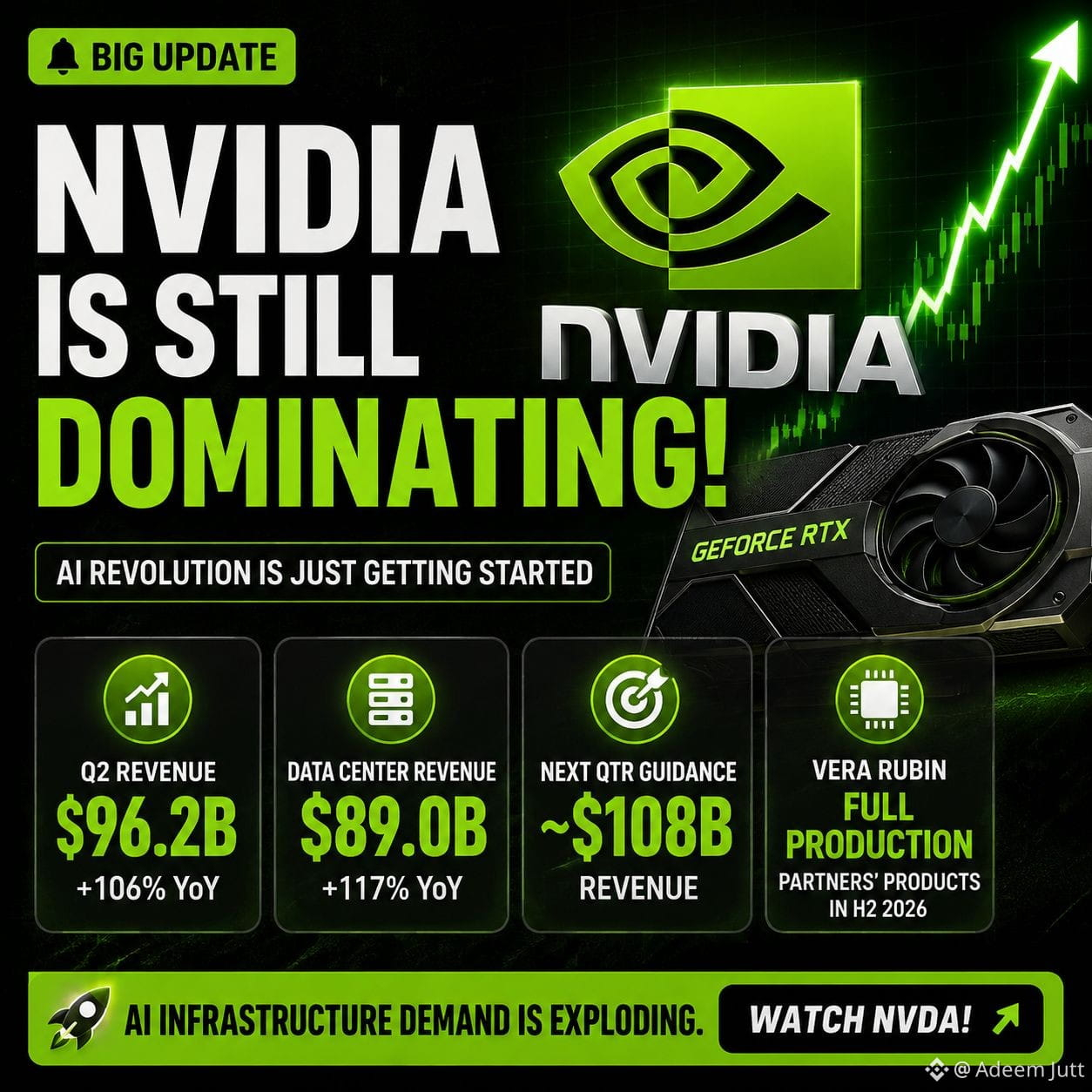
NVDAB+1.27%
NVDAUS+0.67%
1
2
134
Log in to explore more content
Join global crypto users on Binance Square
⚡️ Get latest and useful information about crypto.
💬 Trusted by the world’s largest crypto exchange.
👍 Discover real insights from verified creators.
Email / Phone number
Trending Topics
1
#AIStocksWhatNext
160,374 views
1,885 Discussing
2
#BitcoinBreaksAboveMayHighNears$86K
4,555 views
92 Discussing
3
#DogecoinRises15%
11,378 views
505 Discussing
4
#$14BBitcoinOptionsExpireFriday
610 views
48 Discussing
5
#BNBMarketCapPassesBNYMellon
6,334 views
354 Discussing
6
#CryptoMarketCapReclaims$3Trillion
1,067 views
41 Discussing
7
#MuseOvertakesChatGPTAsTopFreeIOSApp
5,879 views
317 Discussing
8
#TokenizedStockPlatformsCouldLaunchNextQuarter
8,735 views
368 Discussing
9
#StrategyAdds950Bitcoin
13,745 views
452 Discussing
10
#CardanoAddedToX402KitForADAPayments
17,378 views
529 Discussing