

#kavabnbchainsummer
kavabnbchainsummer
6.7M views
53,341 Discussing
Hot
Latest


·
--
When a 'middleman' has no faithIn our circle, what we lack the least is 'faith'.
Some people believe in the narrative of Bitcoin as digital gold, unwavering; some people have faith in Ethereum's vision of a world computer, treating it as a guiding principle; and others believe in Cosmos's interconnected chains, thinking this is the ultimate form of blockchain.
These 'faiths' are not necessarily bad. They are the cohesion of the community and the spiritual totem of project development. But sometimes, faith can also turn into a kind of obsession, a partisanship. Those working on EVM look down on those working on Cosmos, thinking that their circle is just self-indulgent. Those working on Cosmos also look down on those working on EVM, believing that you are technologically backward, centralized, and have to endure Vitalik's occasional 'guidance'.
When a 'middleman' has no faith
In our circle, what we lack the least is 'faith'.
Some people believe in the narrative of Bitcoin as digital gold, unwavering; some people have faith in Ethereum's vision of a world computer, treating it as a guiding principle; and others believe in Cosmos's interconnected chains, thinking this is the ultimate form of blockchain.
These 'faiths' are not necessarily bad. They are the cohesion of the community and the spiritual totem of project development. But sometimes, faith can also turn into a kind of obsession, a partisanship. Those working on EVM look down on those working on Cosmos, thinking that their circle is just self-indulgent. Those working on Cosmos also look down on those working on EVM, believing that you are technologically backward, centralized, and have to endure Vitalik's occasional 'guidance'.
Some people believe in the narrative of Bitcoin as digital gold, unwavering; some people have faith in Ethereum's vision of a world computer, treating it as a guiding principle; and others believe in Cosmos's interconnected chains, thinking this is the ultimate form of blockchain.
These 'faiths' are not necessarily bad. They are the cohesion of the community and the spiritual totem of project development. But sometimes, faith can also turn into a kind of obsession, a partisanship. Those working on EVM look down on those working on Cosmos, thinking that their circle is just self-indulgent. Those working on Cosmos also look down on those working on EVM, believing that you are technologically backward, centralized, and have to endure Vitalik's occasional 'guidance'.
2
800

·
--
How $KAVA Strengthens Financial Inclusion
Breaking Down Barriers in Finance
Billions of people worldwide remain excluded from traditional financial systems due to geographic, economic, or institutional barriers. The @kava Network is helping to close this gap by creating a borderless and accessible financial ecosystem powered by blockchain.
Global Access Through Interoperability
With its co-chain architecture and IBC connectivity, Kava links to more than 35 blockchains and $60B+ in liquidity. This means users from any part of the world can gain access to lending, borrowing, staking, and yield opportunities without relying on banks or intermediaries. All that is needed is an internet connection and a digital wallet.
Incentives That Empower Communities
$KAVA plays a central role in ensuring financial inclusion. Through its incentive model, emissions are allocated to projects that bring real usage and adoption. This not only rewards builders but also ensures that users get access to a wider range of products and services designed to improve financial empowerment.
Driving Social and Economic Change
Financial exclusion has long held back communities, especially in developing markets. By reducing entry barriers and creating decentralized alternatives, Kava allows individuals to participate in global markets, protect their savings, and grow wealth in ways previously unavailable.
In this sense, $KAVA is more than just a token. It is a tool for financial empowerment and inclusion, bringing Web3 opportunities to people who need them most.
#KavaBNBChainSummer #BinanceHerYerde #Binance #Write2Earn #Write2Earn!
How $KAVA Strengthens Financial Inclusion
Breaking Down Barriers in Finance
Billions of people worldwide remain excluded from traditional financial systems due to geographic, economic, or institutional barriers. The @kava Network is helping to close this gap by creating a borderless and accessible financial ecosystem powered by blockchain.
Global Access Through Interoperability
With its co-chain architecture and IBC connectivity, Kava links to more than 35 blockchains and $60B+ in liquidity. This means users from any part of the world can gain access to lending, borrowing, staking, and yield opportunities without relying on banks or intermediaries. All that is needed is an internet connection and a digital wallet.
Incentives That Empower Communities
$KAVA plays a central role in ensuring financial inclusion. Through its incentive model, emissions are allocated to projects that bring real usage and adoption. This not only rewards builders but also ensures that users get access to a wider range of products and services designed to improve financial empowerment.
Driving Social and Economic Change
Financial exclusion has long held back communities, especially in developing markets. By reducing entry barriers and creating decentralized alternatives, Kava allows individuals to participate in global markets, protect their savings, and grow wealth in ways previously unavailable.
In this sense, $KAVA is more than just a token. It is a tool for financial empowerment and inclusion, bringing Web3 opportunities to people who need them most.
#KavaBNBChainSummer #BinanceHerYerde #Binance #Write2Earn #Write2Earn!
Breaking Down Barriers in Finance
Billions of people worldwide remain excluded from traditional financial systems due to geographic, economic, or institutional barriers. The @kava Network is helping to close this gap by creating a borderless and accessible financial ecosystem powered by blockchain.
Global Access Through Interoperability
With its co-chain architecture and IBC connectivity, Kava links to more than 35 blockchains and $60B+ in liquidity. This means users from any part of the world can gain access to lending, borrowing, staking, and yield opportunities without relying on banks or intermediaries. All that is needed is an internet connection and a digital wallet.
Incentives That Empower Communities
$KAVA plays a central role in ensuring financial inclusion. Through its incentive model, emissions are allocated to projects that bring real usage and adoption. This not only rewards builders but also ensures that users get access to a wider range of products and services designed to improve financial empowerment.
Driving Social and Economic Change
Financial exclusion has long held back communities, especially in developing markets. By reducing entry barriers and creating decentralized alternatives, Kava allows individuals to participate in global markets, protect their savings, and grow wealth in ways previously unavailable.
In this sense, $KAVA is more than just a token. It is a tool for financial empowerment and inclusion, bringing Web3 opportunities to people who need them most.
#KavaBNBChainSummer #BinanceHerYerde #Binance #Write2Earn #Write2Earn!
1
2
288

·
--
Kava Strengthens Its DeFi Core with USDX, Cross-Chain Lending & AI Tools
Kava has long been known for its DeFi primitives—lending, borrowing, staking, stablecoins—but its recent developments are accelerating its role as a DeFi hub.
One pillar is USDX, Kava’s stablecoin, which users mint by depositing collateral (WBTC, USDT, etc.). The system of CDPs (Collateralized Debt Positions) enables leverage, liquidity, and use of stable value in DeFi markets.
Also key is Kava Rise, a developer incentive program which rewards protocols building on Kava, helping to increase TVL, liquidity, and ecosystem activity. With this program, multiple DeFi protocols (DEXs, money markets, yield farms) are being drawn in.
Recently, Kava has also introduced or plans to introduce AI-powered DeFi tools: for example, automating risk/liquidity strategies, on-chain AI model calls, and decentralized AI agent layers. These tools aim to bolster efficiency, reduce manual overhead, and offer smarter risk management.
Cross-chain lending markets are growing too: through Cosmos IBC and EVM compatibility, assets from other chains can be brought into Kava’s DeFi markets, improving access, yield, and arbitrage possibilities.
Risks & considerations: DeFi security (liquidations, smart contract risk), governance complexity (since Kava has dual chains / co-chain architecture), ensuring incentives stay sustainable. Overall, for DeFi users looking for cost efficiency, cross-chain options, and increasing AI composability, Kava presents a compelling stack.
@kava #KavaBNBChainSummer $KAVA
Kava Strengthens Its DeFi Core with USDX, Cross-Chain Lending & AI Tools
Kava has long been known for its DeFi primitives—lending, borrowing, staking, stablecoins—but its recent developments are accelerating its role as a DeFi hub.
One pillar is USDX, Kava’s stablecoin, which users mint by depositing collateral (WBTC, USDT, etc.). The system of CDPs (Collateralized Debt Positions) enables leverage, liquidity, and use of stable value in DeFi markets.
Also key is Kava Rise, a developer incentive program which rewards protocols building on Kava, helping to increase TVL, liquidity, and ecosystem activity. With this program, multiple DeFi protocols (DEXs, money markets, yield farms) are being drawn in.
Recently, Kava has also introduced or plans to introduce AI-powered DeFi tools: for example, automating risk/liquidity strategies, on-chain AI model calls, and decentralized AI agent layers. These tools aim to bolster efficiency, reduce manual overhead, and offer smarter risk management.
Cross-chain lending markets are growing too: through Cosmos IBC and EVM compatibility, assets from other chains can be brought into Kava’s DeFi markets, improving access, yield, and arbitrage possibilities.
Risks & considerations: DeFi security (liquidations, smart contract risk), governance complexity (since Kava has dual chains / co-chain architecture), ensuring incentives stay sustainable. Overall, for DeFi users looking for cost efficiency, cross-chain options, and increasing AI composability, Kava presents a compelling stack.
@kava #KavaBNBChainSummer $KAVA
Kava has long been known for its DeFi primitives—lending, borrowing, staking, stablecoins—but its recent developments are accelerating its role as a DeFi hub.
One pillar is USDX, Kava’s stablecoin, which users mint by depositing collateral (WBTC, USDT, etc.). The system of CDPs (Collateralized Debt Positions) enables leverage, liquidity, and use of stable value in DeFi markets.
Also key is Kava Rise, a developer incentive program which rewards protocols building on Kava, helping to increase TVL, liquidity, and ecosystem activity. With this program, multiple DeFi protocols (DEXs, money markets, yield farms) are being drawn in.
Recently, Kava has also introduced or plans to introduce AI-powered DeFi tools: for example, automating risk/liquidity strategies, on-chain AI model calls, and decentralized AI agent layers. These tools aim to bolster efficiency, reduce manual overhead, and offer smarter risk management.
Cross-chain lending markets are growing too: through Cosmos IBC and EVM compatibility, assets from other chains can be brought into Kava’s DeFi markets, improving access, yield, and arbitrage possibilities.
Risks & considerations: DeFi security (liquidations, smart contract risk), governance complexity (since Kava has dual chains / co-chain architecture), ensuring incentives stay sustainable. Overall, for DeFi users looking for cost efficiency, cross-chain options, and increasing AI composability, Kava presents a compelling stack.
@kava #KavaBNBChainSummer $KAVA
27
·
--
Article
Kava: Cosmos-Ethereum Co-Chain HubBlockchain has always had to choose to grow. Developers may build on Ethereum, which offers the best development community but high fees and congestion, or Cosmos for speed, control, and IBC connection. But they'd miss Ethereum's enormous ecosystem. This was a zero-sum option for years.
This model was broken by $KAVA . Kava wanted to be more than a Layer 1 competitor. It created a co-chain architecture to connect the Cosmos SDK to Ethereum. Kava connects developers, liquidity, and next-generation Web3 apps. It does this by operating these two environments next to each other and letting them communicate easily.
Dual Engine Co-Chain Architecture ⚙️
Its two-chain architecture makes @kava special:
1. Ethereum Co-Chain (EVM) → Compatible with all Ethereum versions. You can quickly install Solidity dApps on Kava from Ethereum, Arbitrum, Polygon, or BSC. This connects you to the biggest crypto development community and offers more transactions and cheaper costs than Ethereum.
2. Cosmos Co-Chain SDK → Fast execution, independence, and native IBC support. The "Internet of Blockchains" can get money from Kava since it links directly to over 50 IBC-enabled chains.
The Translator Module securely links the two realities. This lets you utilize Cosmos ATOM directly as collateral in an EVM-based Kava lending protocol without hazardous third-party bridges.
The dual-engine strategy ties everything together and allows numerous systems work. That protects it against rivals using one stack.
Limited supply and long-term survival in tokenomics 💎
The economic layer strengthens Kava's architecture: • No inflation: Kava has 1 billion KAVA, unlike chains with inflation. Validators get incentives from the $300 million Kava Vault, funded by network fees. This means KAVA is one of the few Layer 1 tokens with a restricted quantity. Governance: KAVA holders decide how to spend the treasury, update the protocol, and add features. This maintains the token's value as the protocol grows. • The $750 million Kava Rise Program rewards enterprises that deliver genuine TVL on Kava. Instead of paying yield producers, impact builders get rewards.
Every purchase on Kava increases in value. Half of fees go to validators, half to burning. Adoption reduces supply while funding security and infrastructure.
The Future of AI: Post-DeFi 🤖
Kava was originally a DeFi lending platform, but its design is ideal for decentralized AI markets and high-performance applications. • It can manage thousands of TPS and sub-second finality, making micro-transactions for AI training and inference possible. Why AI jobs are viable due of low, predictable costs. • IBC interoperability simplifies data, model, and computation transfer across chains. • On-chain governance monitors AI ecosystem morality and technology.
Kava may reach a far larger market than financial primitives as a Layer 1 for DeFi and decentralized AI.
Strategic Positioning: BNB Chain Alliance #KavaBNBChainSummer
Kava works with BNB Chain to reach more people. Cooperative marketing and prizes help KAVA move people and money across ecosystems. BNB Chain and Kava are closer with liquidity mirroring. • New users: Kava's AI and DeFi technologies may attract millions of BNB Chain customers. More people using both chains strengthens them.
Kava doesn't compete with other networks; it carefully ties to bigger ones, making it a better trading environment.
Investment Thesis: Infrastructure, Not Apps 📈
To have KAVA is to gamble on the system, not one dApp. Kava gets aid from several sources: • More transactions mean more lost fees, making things harder to discover. Why Rise incentives increase TVL, which increases developer employment. More connections increase network effects and liquidity.
Due to its co-chain construction and long-term tokenomics, Kava is secure. Nothing else offers complete EVM compatibility with native Cosmos interoperability in one network.
Finally, the Multi-Chain Era Hub 🌐
Kava went from DeFi to a multi-chain hub with big aspirations. It creates a platform for DeFi, AI, and other things using Ethereum's developer-friendly environment and Cosmos' speed and IBC. Kava is preparing the next generation of Web3 infrastructure via scarcity, a $750 million incentive package, and smart partnerships.
Kava's co-chain architecture isn't simply another blockchain alternative; it's the connector across ecosystems and may power the multi-chain future.
Kava: Cosmos-Ethereum Co-Chain Hub
Blockchain has always had to choose to grow. Developers may build on Ethereum, which offers the best development community but high fees and congestion, or Cosmos for speed, control, and IBC connection. But they'd miss Ethereum's enormous ecosystem. This was a zero-sum option for years.
This model was broken by $KAVA . Kava wanted to be more than a Layer 1 competitor. It created a co-chain architecture to connect the Cosmos SDK to Ethereum. Kava connects developers, liquidity, and next-generation Web3 apps. It does this by operating these two environments next to each other and letting them communicate easily.
Dual Engine Co-Chain Architecture ⚙️
Its two-chain architecture makes @kava special:
1. Ethereum Co-Chain (EVM) → Compatible with all Ethereum versions. You can quickly install Solidity dApps on Kava from Ethereum, Arbitrum, Polygon, or BSC. This connects you to the biggest crypto development community and offers more transactions and cheaper costs than Ethereum.
2. Cosmos Co-Chain SDK → Fast execution, independence, and native IBC support. The "Internet of Blockchains" can get money from Kava since it links directly to over 50 IBC-enabled chains.
The Translator Module securely links the two realities. This lets you utilize Cosmos ATOM directly as collateral in an EVM-based Kava lending protocol without hazardous third-party bridges.
The dual-engine strategy ties everything together and allows numerous systems work. That protects it against rivals using one stack.
Limited supply and long-term survival in tokenomics 💎
The economic layer strengthens Kava's architecture: • No inflation: Kava has 1 billion KAVA, unlike chains with inflation. Validators get incentives from the $300 million Kava Vault, funded by network fees. This means KAVA is one of the few Layer 1 tokens with a restricted quantity. Governance: KAVA holders decide how to spend the treasury, update the protocol, and add features. This maintains the token's value as the protocol grows. • The $750 million Kava Rise Program rewards enterprises that deliver genuine TVL on Kava. Instead of paying yield producers, impact builders get rewards.
Every purchase on Kava increases in value. Half of fees go to validators, half to burning. Adoption reduces supply while funding security and infrastructure.
The Future of AI: Post-DeFi 🤖
Kava was originally a DeFi lending platform, but its design is ideal for decentralized AI markets and high-performance applications. • It can manage thousands of TPS and sub-second finality, making micro-transactions for AI training and inference possible. Why AI jobs are viable due of low, predictable costs. • IBC interoperability simplifies data, model, and computation transfer across chains. • On-chain governance monitors AI ecosystem morality and technology.
Kava may reach a far larger market than financial primitives as a Layer 1 for DeFi and decentralized AI.
Strategic Positioning: BNB Chain Alliance #KavaBNBChainSummer
Kava works with BNB Chain to reach more people. Cooperative marketing and prizes help KAVA move people and money across ecosystems. BNB Chain and Kava are closer with liquidity mirroring. • New users: Kava's AI and DeFi technologies may attract millions of BNB Chain customers. More people using both chains strengthens them.
Kava doesn't compete with other networks; it carefully ties to bigger ones, making it a better trading environment.
Investment Thesis: Infrastructure, Not Apps 📈
To have KAVA is to gamble on the system, not one dApp. Kava gets aid from several sources: • More transactions mean more lost fees, making things harder to discover. Why Rise incentives increase TVL, which increases developer employment. More connections increase network effects and liquidity.
Due to its co-chain construction and long-term tokenomics, Kava is secure. Nothing else offers complete EVM compatibility with native Cosmos interoperability in one network.
Finally, the Multi-Chain Era Hub 🌐
Kava went from DeFi to a multi-chain hub with big aspirations. It creates a platform for DeFi, AI, and other things using Ethereum's developer-friendly environment and Cosmos' speed and IBC. Kava is preparing the next generation of Web3 infrastructure via scarcity, a $750 million incentive package, and smart partnerships.
Kava's co-chain architecture isn't simply another blockchain alternative; it's the connector across ecosystems and may power the multi-chain future.
This model was broken by $KAVA . Kava wanted to be more than a Layer 1 competitor. It created a co-chain architecture to connect the Cosmos SDK to Ethereum. Kava connects developers, liquidity, and next-generation Web3 apps. It does this by operating these two environments next to each other and letting them communicate easily.
Dual Engine Co-Chain Architecture ⚙️
Its two-chain architecture makes @kava special:
1. Ethereum Co-Chain (EVM) → Compatible with all Ethereum versions. You can quickly install Solidity dApps on Kava from Ethereum, Arbitrum, Polygon, or BSC. This connects you to the biggest crypto development community and offers more transactions and cheaper costs than Ethereum.
2. Cosmos Co-Chain SDK → Fast execution, independence, and native IBC support. The "Internet of Blockchains" can get money from Kava since it links directly to over 50 IBC-enabled chains.
The Translator Module securely links the two realities. This lets you utilize Cosmos ATOM directly as collateral in an EVM-based Kava lending protocol without hazardous third-party bridges.
The dual-engine strategy ties everything together and allows numerous systems work. That protects it against rivals using one stack.
Limited supply and long-term survival in tokenomics 💎
The economic layer strengthens Kava's architecture: • No inflation: Kava has 1 billion KAVA, unlike chains with inflation. Validators get incentives from the $300 million Kava Vault, funded by network fees. This means KAVA is one of the few Layer 1 tokens with a restricted quantity. Governance: KAVA holders decide how to spend the treasury, update the protocol, and add features. This maintains the token's value as the protocol grows. • The $750 million Kava Rise Program rewards enterprises that deliver genuine TVL on Kava. Instead of paying yield producers, impact builders get rewards.
Every purchase on Kava increases in value. Half of fees go to validators, half to burning. Adoption reduces supply while funding security and infrastructure.
The Future of AI: Post-DeFi 🤖
Kava was originally a DeFi lending platform, but its design is ideal for decentralized AI markets and high-performance applications. • It can manage thousands of TPS and sub-second finality, making micro-transactions for AI training and inference possible. Why AI jobs are viable due of low, predictable costs. • IBC interoperability simplifies data, model, and computation transfer across chains. • On-chain governance monitors AI ecosystem morality and technology.
Kava may reach a far larger market than financial primitives as a Layer 1 for DeFi and decentralized AI.
Strategic Positioning: BNB Chain Alliance #KavaBNBChainSummer
Kava works with BNB Chain to reach more people. Cooperative marketing and prizes help KAVA move people and money across ecosystems. BNB Chain and Kava are closer with liquidity mirroring. • New users: Kava's AI and DeFi technologies may attract millions of BNB Chain customers. More people using both chains strengthens them.
Kava doesn't compete with other networks; it carefully ties to bigger ones, making it a better trading environment.
Investment Thesis: Infrastructure, Not Apps 📈
To have KAVA is to gamble on the system, not one dApp. Kava gets aid from several sources: • More transactions mean more lost fees, making things harder to discover. Why Rise incentives increase TVL, which increases developer employment. More connections increase network effects and liquidity.
Due to its co-chain construction and long-term tokenomics, Kava is secure. Nothing else offers complete EVM compatibility with native Cosmos interoperability in one network.
Finally, the Multi-Chain Era Hub 🌐
Kava went from DeFi to a multi-chain hub with big aspirations. It creates a platform for DeFi, AI, and other things using Ethereum's developer-friendly environment and Cosmos' speed and IBC. Kava is preparing the next generation of Web3 infrastructure via scarcity, a $750 million incentive package, and smart partnerships.
Kava's co-chain architecture isn't simply another blockchain alternative; it's the connector across ecosystems and may power the multi-chain future.
16
32.3k

·
--
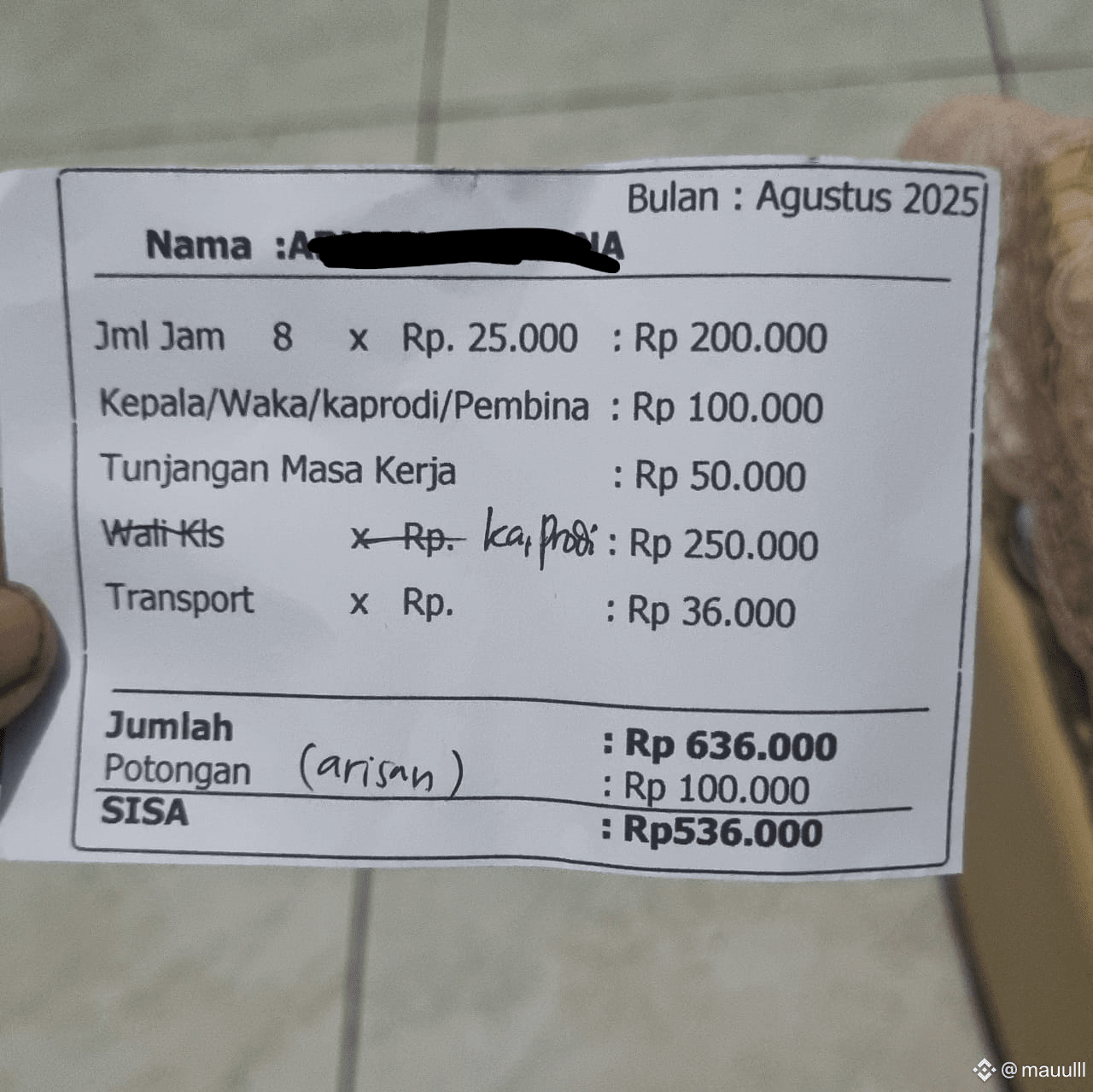
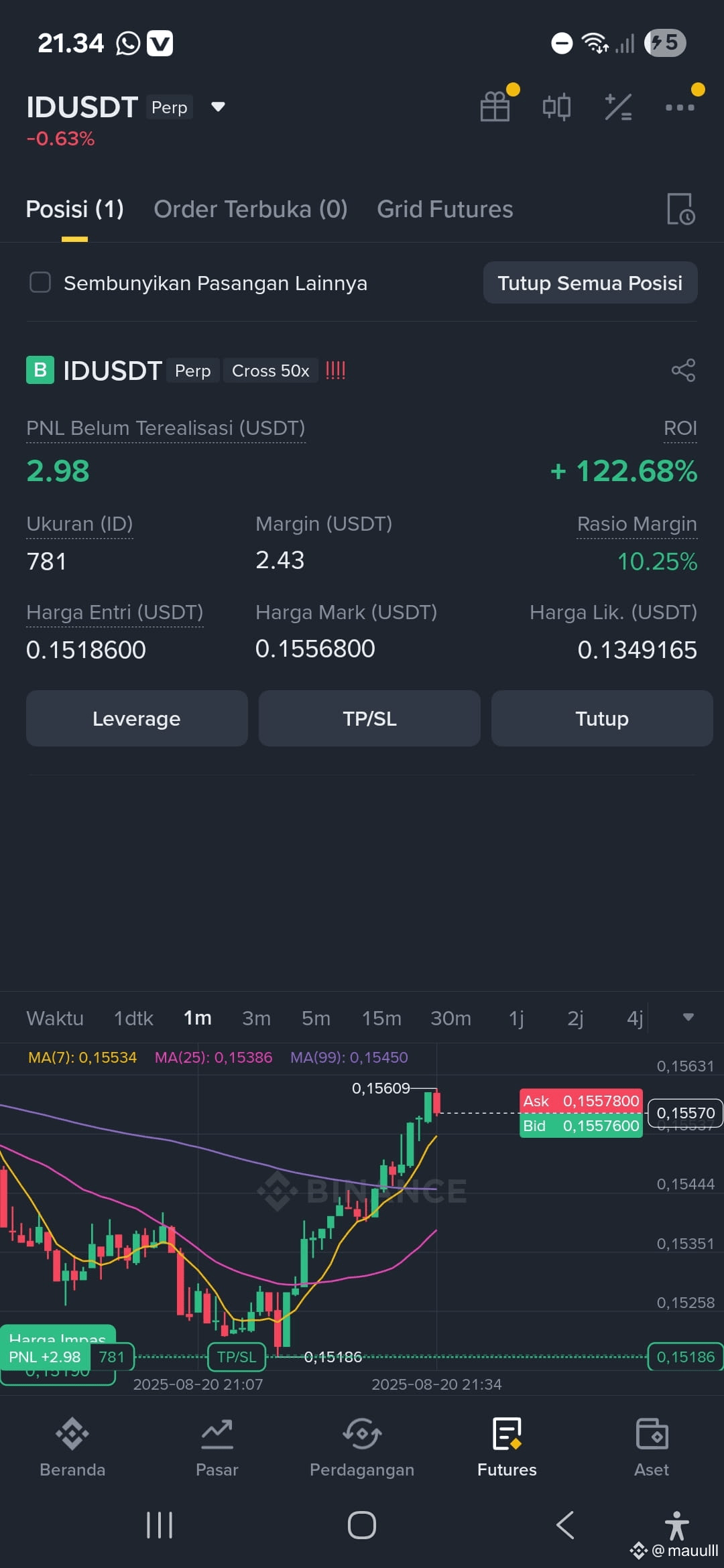
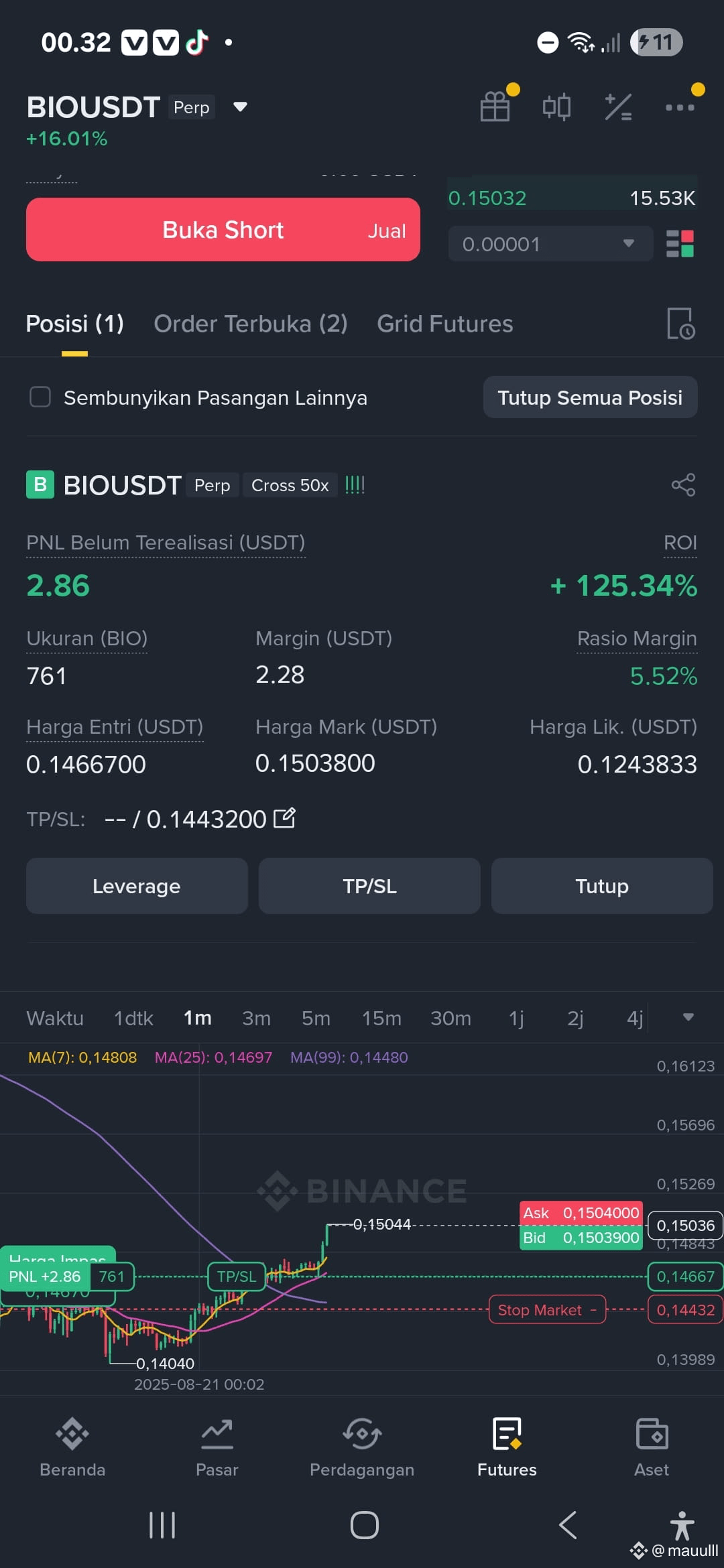
for a contract teacher with a salary of 32.5 USD or around 636,000 rupiah, crypto is my last chance to achieve financial freedom (can anyone help give advice or be a mentor?:(
#KavaBNBChainSummer
@kava
$KAVA
for a contract teacher with a salary of 32.5 USD or around 636,000 rupiah, crypto is my last chance to achieve financial freedom (can anyone help give advice or be a mentor?:(
#KavaBNBChainSummer
@kava
$KAVA
#KavaBNBChainSummer
@kava
$KAVA
80
31
36
26.2k
Article
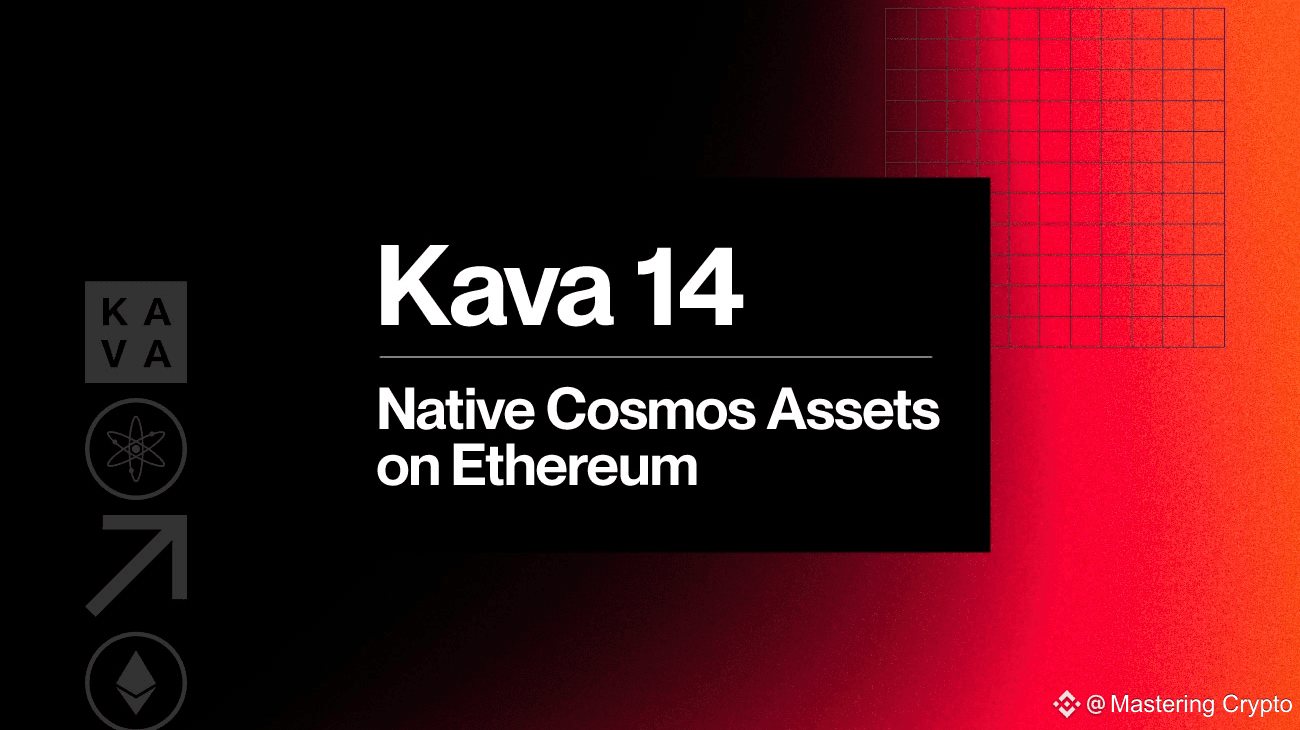
Meet Kava: The Cosmos Game Changer@kava ’s co-chain architecture unites Ethereum and Cosmos in a single Layer-1, creating a developer playground that blends EVM compatibility with IBC scalability. A Translator Module links both sides, ensuring smooth communication and asset flow without forcing builders to choose one ecosystem.
Native Liquidity: USDT & WBTC Go Interchain
With the 14 upgrade, Kava became the official gateway for native USDT on Cosmos. Liquidity surged—more USDT flowed into Cosmos through Kava than on Polkadot and Near combined. Add in WBTC support plus major bridges (Axelar, Stargate, etc.), and Kava is now a powerful liquidity hub for the interchain economy.
Fueling Builders with Incentives & DAO Power
Kava’s on-chain incentive program rewards protocols based on usage and TVL, driving growth across both co-chains. The Kava DAO gives the community direct control of emissions, supply caps, and governance decisions—pushing toward a more sustainable and potentially deflationary model.
Adoption & Institutional Access
Since the Kava EVM launch, over 110 protocols and $250M TVL have gone live. Institutions are joining too, with support from Fireblocks, Coinbase, and Binance—making Kava a trusted bridge between retail and institutional crypto.
Why It Matters
Co-Chain Design = Ethereum + Cosmos synergy
Native USDT/WBTC = Deep interchain liquidity
Incentives + DAO = Sustainable growth, community-led
Adoption + Institutions = Expanding trust and reach
Takeaway
Kava is reshaping the Cosmos landscape into an interoperable, liquidity-rich, and developer-friendly hub. By merging the best of Ethereum and Cosmos, it’s setting the standard for what cross-chain DeFi infrastructure should be.
#KavaBNBChainSummer
Meet Kava: The Cosmos Game Changer
@kava ’s co-chain architecture unites Ethereum and Cosmos in a single Layer-1, creating a developer playground that blends EVM compatibility with IBC scalability. A Translator Module links both sides, ensuring smooth communication and asset flow without forcing builders to choose one ecosystem.
Native Liquidity: USDT & WBTC Go Interchain
With the 14 upgrade, Kava became the official gateway for native USDT on Cosmos. Liquidity surged—more USDT flowed into Cosmos through Kava than on Polkadot and Near combined. Add in WBTC support plus major bridges (Axelar, Stargate, etc.), and Kava is now a powerful liquidity hub for the interchain economy.
Fueling Builders with Incentives & DAO Power
Kava’s on-chain incentive program rewards protocols based on usage and TVL, driving growth across both co-chains. The Kava DAO gives the community direct control of emissions, supply caps, and governance decisions—pushing toward a more sustainable and potentially deflationary model.
Adoption & Institutional Access
Since the Kava EVM launch, over 110 protocols and $250M TVL have gone live. Institutions are joining too, with support from Fireblocks, Coinbase, and Binance—making Kava a trusted bridge between retail and institutional crypto.
Why It Matters
Co-Chain Design = Ethereum + Cosmos synergy
Native USDT/WBTC = Deep interchain liquidity
Incentives + DAO = Sustainable growth, community-led
Adoption + Institutions = Expanding trust and reach
Takeaway
Kava is reshaping the Cosmos landscape into an interoperable, liquidity-rich, and developer-friendly hub. By merging the best of Ethereum and Cosmos, it’s setting the standard for what cross-chain DeFi infrastructure should be.
#KavaBNBChainSummer
Native Liquidity: USDT & WBTC Go Interchain
With the 14 upgrade, Kava became the official gateway for native USDT on Cosmos. Liquidity surged—more USDT flowed into Cosmos through Kava than on Polkadot and Near combined. Add in WBTC support plus major bridges (Axelar, Stargate, etc.), and Kava is now a powerful liquidity hub for the interchain economy.
Fueling Builders with Incentives & DAO Power
Kava’s on-chain incentive program rewards protocols based on usage and TVL, driving growth across both co-chains. The Kava DAO gives the community direct control of emissions, supply caps, and governance decisions—pushing toward a more sustainable and potentially deflationary model.
Adoption & Institutional Access
Since the Kava EVM launch, over 110 protocols and $250M TVL have gone live. Institutions are joining too, with support from Fireblocks, Coinbase, and Binance—making Kava a trusted bridge between retail and institutional crypto.
Why It Matters
Co-Chain Design = Ethereum + Cosmos synergy
Native USDT/WBTC = Deep interchain liquidity
Incentives + DAO = Sustainable growth, community-led
Adoption + Institutions = Expanding trust and reach
Takeaway
Kava is reshaping the Cosmos landscape into an interoperable, liquidity-rich, and developer-friendly hub. By merging the best of Ethereum and Cosmos, it’s setting the standard for what cross-chain DeFi infrastructure should be.
#KavaBNBChainSummer
44
34
38
855
·
--
DeFi isn’t just about trading, it’s about building lasting ecosystems! With @kava and $KAVA , innovation meets speed, giving us a brighter blockchain future. #KavaBNBChainSummer
DeFi isn’t just about trading, it’s about building lasting ecosystems! With @kava and $KAVA , innovation meets speed, giving us a brighter blockchain future. #KavaBNBChainSummer
10
27

·
--
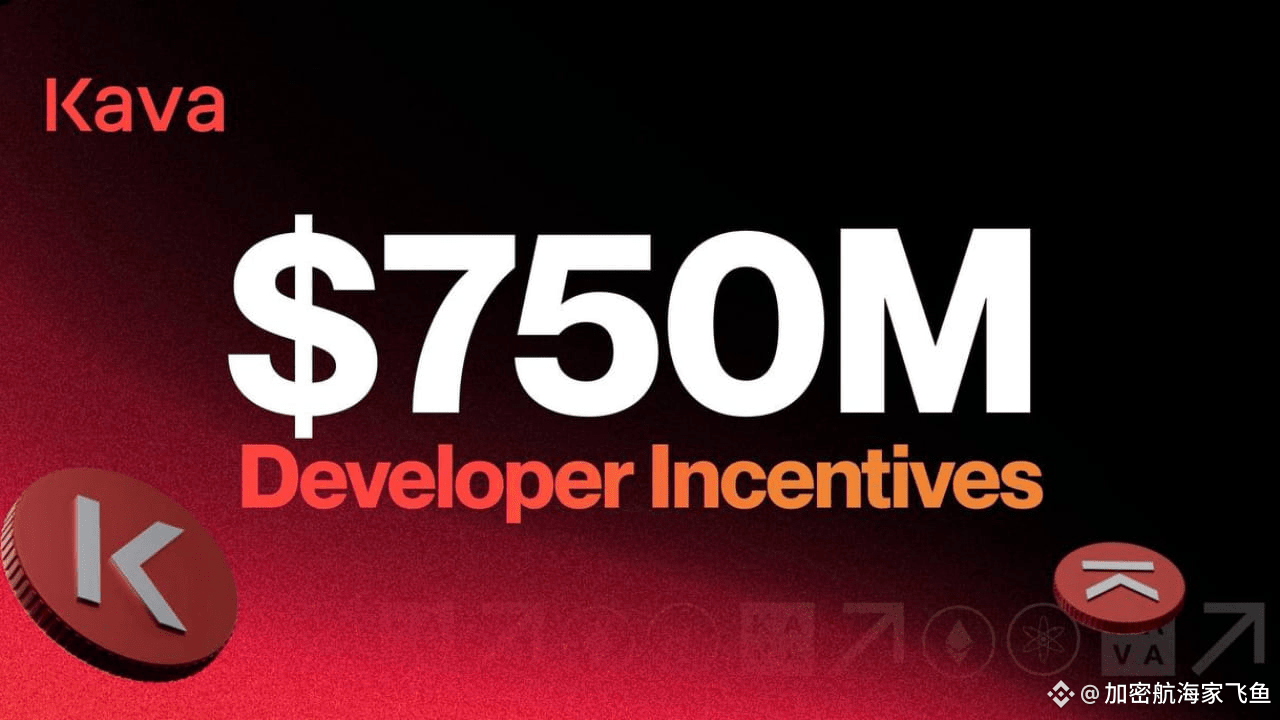
Article
【Kava Eco Mining Guide: One-stop Solution for Lending, Staking, and Diverse Cross-Chain Returns!】In the DeFi ecosystem, Kava, with its unique cross-chain technology and financial innovation, has become a hub connecting multi-chain assets. Its core value lies not only in lending, staking, and cross-chain functionality but also in its ecological sustainability and developer-friendliness.
I. Revenue Model: Diverse Practices of Cross-Chain Finance
1. Lending and Stablecoins
Kava supports users to use over-collateralization mechanisms to mortgage cross-chain assets like BTC and BNB to generate the stablecoin USDX, achieving low-risk returns. Its CDP protocol automatically liquidates through smart contracts, ensuring the safety of funds.
2. Staking and Governance
Users can participate in network governance by staking $KAVA, earning about 8% annualized returns, and participating in community voting. Kava's dual-token model (with USDX) further optimizes the ecological economy.
【Kava Eco Mining Guide: One-stop Solution for Lending, Staking, and Diverse Cross-Chain Returns!】
In the DeFi ecosystem, Kava, with its unique cross-chain technology and financial innovation, has become a hub connecting multi-chain assets. Its core value lies not only in lending, staking, and cross-chain functionality but also in its ecological sustainability and developer-friendliness.
I. Revenue Model: Diverse Practices of Cross-Chain Finance
1. Lending and Stablecoins
Kava supports users to use over-collateralization mechanisms to mortgage cross-chain assets like BTC and BNB to generate the stablecoin USDX, achieving low-risk returns. Its CDP protocol automatically liquidates through smart contracts, ensuring the safety of funds.
2. Staking and Governance
Users can participate in network governance by staking $KAVA , earning about 8% annualized returns, and participating in community voting. Kava's dual-token model (with USDX) further optimizes the ecological economy.
I. Revenue Model: Diverse Practices of Cross-Chain Finance
1. Lending and Stablecoins
Kava supports users to use over-collateralization mechanisms to mortgage cross-chain assets like BTC and BNB to generate the stablecoin USDX, achieving low-risk returns. Its CDP protocol automatically liquidates through smart contracts, ensuring the safety of funds.
2. Staking and Governance
Users can participate in network governance by staking $KAVA , earning about 8% annualized returns, and participating in community voting. Kava's dual-token model (with USDX) further optimizes the ecological economy.
1
14
16.5k

·
--
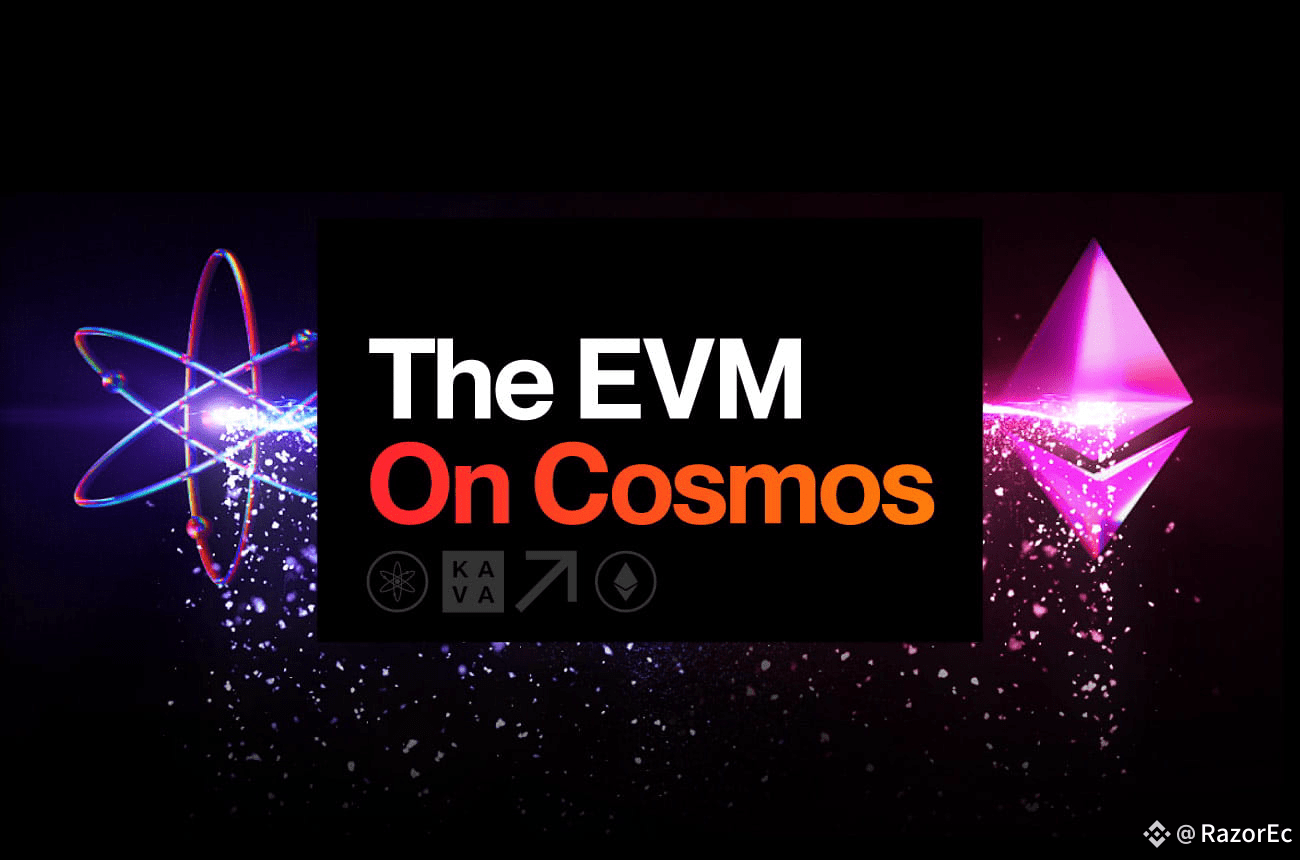
The innovation of @kava : uniting Ethereum and Cosmos in a single network
One of the most disruptive advances of Kava was the launch of its co-chain architecture in 2022. With this update, Kava became the first blockchain to combine:
- A Cosmos co-chain, fast, scalable, and with native connection to over 30 networks via IBC (Inter-Blockchain Communication Protocol).
- An Ethereum co-chain, fully compatible with the EVM and the Solidity ecosystem.
Both operate in parallel and communicate through a “translator module” that synchronizes assets and contracts. This means that developers and users do not have to choose between ecosystems: they can interact with the best of both worlds in a single L1 network.
With this integration, Kava established itself as a living bridge between two previously fragmented universes.
What do you think of a network that unites Ethereum and Cosmos in a single L1?
$KAVA #KavaBNBChainSummer
Image: Kava Blog
⸻
Note: This publication should not be considered financial advice. Always do your own research and make informed decisions when investing in cryptocurrencies.
The innovation of @kava : uniting Ethereum and Cosmos in a single network
One of the most disruptive advances of Kava was the launch of its co-chain architecture in 2022. With this update, Kava became the first blockchain to combine:
- A Cosmos co-chain, fast, scalable, and with native connection to over 30 networks via IBC (Inter-Blockchain Communication Protocol).
- An Ethereum co-chain, fully compatible with the EVM and the Solidity ecosystem.
Both operate in parallel and communicate through a “translator module” that synchronizes assets and contracts. This means that developers and users do not have to choose between ecosystems: they can interact with the best of both worlds in a single L1 network.
With this integration, Kava established itself as a living bridge between two previously fragmented universes.
What do you think of a network that unites Ethereum and Cosmos in a single L1?
$KAVA #KavaBNBChainSummer
Image: Kava Blog
⸻
Note: This publication should not be considered financial advice. Always do your own research and make informed decisions when investing in cryptocurrencies.
One of the most disruptive advances of Kava was the launch of its co-chain architecture in 2022. With this update, Kava became the first blockchain to combine:
- A Cosmos co-chain, fast, scalable, and with native connection to over 30 networks via IBC (Inter-Blockchain Communication Protocol).
- An Ethereum co-chain, fully compatible with the EVM and the Solidity ecosystem.
Both operate in parallel and communicate through a “translator module” that synchronizes assets and contracts. This means that developers and users do not have to choose between ecosystems: they can interact with the best of both worlds in a single L1 network.
With this integration, Kava established itself as a living bridge between two previously fragmented universes.
What do you think of a network that unites Ethereum and Cosmos in a single L1?
$KAVA #KavaBNBChainSummer
Image: Kava Blog
⸻
Note: This publication should not be considered financial advice. Always do your own research and make informed decisions when investing in cryptocurrencies.
5
3.6k

·
--
Kava and the Architecture of Trust: Why Predictability Wins in FinanceIntroduction: The Search for Stability in a Volatile World
Crypto has often been described as the Wild West of finance. There are breathtaking highs, crushing lows, and endless promises of the “next big thing.” But if you step back, what the world of finance really prizes is not volatility. It’s predictability. Institutions, governments, and global markets are built on trust that systems will work the same way tomorrow as they do today. For all its innovation, much of crypto still struggles with this simple requirement. Projects pivot, token supplies balloon, incentives vanish, and once-hyped ecosystems collapse under the weight of their own unsustainable models.
Kava stands apart in this respect. Since its early launch, it has deliberately chosen a design philosophy centered not on hype or fleeting incentives, but on creating predictable, durable economic architecture. While many chains chase the fastest block times or the flashiest partnerships, Kava has been quietly building something harder: a Layer-1 that institutions and serious capital can actually rely on. The story of Kava is not one of chasing headlines. It is the story of a blockchain that banks on discipline — and in doing so, may outlast many of its faster, louder peers.
What Kava Is: The Co-Chain Design
Kava’s biggest differentiator is its architecture. It is not a pure Ethereum chain nor just another Cosmos zone. It combines both through what it calls the co-chain design. On one side, developers get full Ethereum Virtual Machine compatibility, meaning they can deploy Solidity smart contracts and tap into the massive ecosystem of Ethereum-native tools. On the other side, Kava is built on Cosmos SDK, giving it lightning-fast throughput, efficient consensus, and Inter-Blockchain Communication (IBC) that links it to one of the most rapidly expanding multi-chain networks in the industry.
The advantage of this duality cannot be overstated. Ethereum provides liquidity and developer gravity, but suffers from congestion and fees. Cosmos provides modular scalability and interoperability, but has historically struggled to attract large-scale developer adoption. Kava bridges these worlds, offering an execution environment that feels familiar to Ethereum builders while simultaneously plugging them into the cross-chain liquidity of Cosmos. This co-chain advantage is not a gimmick. It is a structural edge that lets Kava sit at the crossroads of two of the most important blockchain ecosystems today.
Tokenomics as a Radical Break from the Past
Most Layer-1s have used inflationary tokenomics as their growth model. They print new tokens to subsidize validators, dApps, or user activity. This works for a while, but it comes with an unavoidable cost: dilution of holders. Investors have been burned again and again watching their stake in promising networks eroded by constant issuance. Kava took a different path. It capped its total supply at 1.08 billion KAVA, with no inflation beyond that hard ceiling.
This single design choice changes the entire dynamic. Instead of relying on an endless faucet of subsidies, Kava is forced to align growth with real demand. Validators must be compensated by transaction fees and ecosystem revenue, not by perpetual dilution. Holders know that their stake in the network is protected by scarcity, not undermined by it. In a space where so many projects chase short-term activity at the expense of long-term trust, Kava’s tokenomics represent a return to discipline — and a vision of blockchain economics that institutions can take seriously.
Kava’s Achievements and Ecosystem Growth
It is easy to dismiss projects in crypto by pointing to daily price swings, but Kava’s trajectory is best measured in achievements. Over the past year, Kava has grown into a significant player in decentralized finance. Its ecosystem now includes more than 125 active dApps, spanning lending, stablecoins, trading platforms, and AI-powered DeFi tools.
Its total value locked (TVL) has consistently ranked in the upper tier of Cosmos chains, even in down markets, a signal of both resilience and utility.
One of Kava’s most important achievements has been its role in stablecoin infrastructure. USDT’s expansion to Kava marked a milestone: it was the first time Tether deployed natively on Cosmos. This brought deep liquidity to the ecosystem and positioned Kava as the canonical stablecoin settlement hub for the Cosmos world. Stablecoins are the beating heart of DeFi, and by anchoring itself as a trusted settlement layer, Kava has carved out a defensible niche with real utility.
Beyond stablecoins, Kava has also positioned itself as a leader in AI-powered DeFi. The team has unveiled experiments in integrating autonomous AI agents into financial applications, enabling everything from automated liquidity strategies to enhanced privacy tools. At Token2049 in Dubai, Kava highlighted its roadmap for AI-optimized DeFi applications — a forward-looking move that aligns with the broader narrative of AI reshaping finance.
Comparing Kava to Its Competitors
To understand Kava’s edge, you need to compare it to its peers. Chains like Avalanche, Cronos, and Injective all offer variations of high-speed settlement and ecosystem plays. But each carries its own weaknesses. Avalanche relies on subnets, which provide flexibility but have led to fragmented liquidity and underutilized capacity. Cronos has benefited from Crypto.com’s retail brand, but struggles to attract serious developers outside that walled garden. Injective has leaned heavily into derivatives trading, but remains narrower in scope than a full-spectrum DeFi hub.
Kava’s co-chain approach solves a problem most of these projects face: how to combine liquidity depth with technical scalability. By anchoring itself in both Ethereum and Cosmos, Kava does not need to choose between ecosystems — it simply unites them. Add to this its hard-capped supply and focus on stablecoin settlement, and you see why it stands out. While competitors chase hype cycles, Kava is building the infrastructure that institutions will quietly need when they move serious capital into blockchain systems.
The Institutional Angle
Institutions have long been hesitant to dive deep into crypto, not because they lack interest, but because they lack predictability. They cannot base their strategies on chains that change monetary policy at will, or on ecosystems that fracture under pressure. What they need is a chain that feels less like a speculative toy and more like financial infrastructure. This is where Kava shines.
The hard cap on supply aligns perfectly with institutional risk frameworks. The co-chain design means developers can onboard without costly re-education, while simultaneously accessing cross-chain liquidity. The presence of USDT and other stablecoin liquidity on Kava makes it an attractive settlement layer for cross-border flows. And the U.S. base of the Kava team positions it closer to regulatory alignment than many of its offshore competitors. For institutions looking to dip their toes into blockchain finance, Kava offers an environment that feels less like an experiment and more like infrastructure.
Risks and Counterarguments
No project is without risks. Kava must continue to prove that its co-chain architecture can scale securely under higher volumes. It must ensure that its stablecoin settlement layer attracts sustained liquidity and does not become overshadowed by larger ecosystems like Ethereum Layer-2s. And it faces the same regulatory uncertainty that clouds the entire industry. However, what sets Kava apart is how its design directly addresses these risks. By aligning tokenomics with scarcity, it avoids the inflation trap that has doomed other chains. By combining Ethereum and Cosmos, it avoids being locked into one ecosystem’s limitations. By leaning into stablecoins and AI-powered tools, it positions itself in categories with obvious long-term demand.
The Road Ahead: Kava’s Predictable Future
The broader market is shifting.
With the Federal Reserve beginning rate cuts in 2025 and liquidity slowly returning to risk assets, crypto is entering a new phase. But unlike in 2021, when speculation ruled, the next wave will be about infrastructure that institutions can actually use. The flashy, inflation-driven Layer-1s of the last cycle may not survive this transition. What will survive are the projects that chose discipline over hype, predictability over quick wins.
Kava is not trying to be the fastest or the loudest. It is trying to be the most reliable. In an industry addicted to volatility, this is its unlikely edge. If the next era of crypto is about predictable finance, Kava’s architecture — co-chain design, hard-capped tokenomics, stablecoin settlement focus, and AI-driven innovation — makes it a serious contender to become one of the last chains standing.
#KavaBNBChainSummer @kava
$KAVA
Kava and the Architecture of Trust: Why Predictability Wins in Finance
Introduction: The Search for Stability in a Volatile World
Crypto has often been described as the Wild West of finance. There are breathtaking highs, crushing lows, and endless promises of the “next big thing.” But if you step back, what the world of finance really prizes is not volatility. It’s predictability. Institutions, governments, and global markets are built on trust that systems will work the same way tomorrow as they do today. For all its innovation, much of crypto still struggles with this simple requirement. Projects pivot, token supplies balloon, incentives vanish, and once-hyped ecosystems collapse under the weight of their own unsustainable models.
Kava stands apart in this respect. Since its early launch, it has deliberately chosen a design philosophy centered not on hype or fleeting incentives, but on creating predictable, durable economic architecture. While many chains chase the fastest block times or the flashiest partnerships, Kava has been quietly building something harder: a Layer-1 that institutions and serious capital can actually rely on. The story of Kava is not one of chasing headlines. It is the story of a blockchain that banks on discipline — and in doing so, may outlast many of its faster, louder peers.
What Kava Is: The Co-Chain Design
Kava’s biggest differentiator is its architecture. It is not a pure Ethereum chain nor just another Cosmos zone. It combines both through what it calls the co-chain design. On one side, developers get full Ethereum Virtual Machine compatibility, meaning they can deploy Solidity smart contracts and tap into the massive ecosystem of Ethereum-native tools. On the other side, Kava is built on Cosmos SDK, giving it lightning-fast throughput, efficient consensus, and Inter-Blockchain Communication (IBC) that links it to one of the most rapidly expanding multi-chain networks in the industry.
The advantage of this duality cannot be overstated. Ethereum provides liquidity and developer gravity, but suffers from congestion and fees. Cosmos provides modular scalability and interoperability, but has historically struggled to attract large-scale developer adoption. Kava bridges these worlds, offering an execution environment that feels familiar to Ethereum builders while simultaneously plugging them into the cross-chain liquidity of Cosmos. This co-chain advantage is not a gimmick. It is a structural edge that lets Kava sit at the crossroads of two of the most important blockchain ecosystems today.
Tokenomics as a Radical Break from the Past
Most Layer-1s have used inflationary tokenomics as their growth model. They print new tokens to subsidize validators, dApps, or user activity. This works for a while, but it comes with an unavoidable cost: dilution of holders. Investors have been burned again and again watching their stake in promising networks eroded by constant issuance. Kava took a different path. It capped its total supply at 1.08 billion KAVA, with no inflation beyond that hard ceiling.
This single design choice changes the entire dynamic. Instead of relying on an endless faucet of subsidies, Kava is forced to align growth with real demand. Validators must be compensated by transaction fees and ecosystem revenue, not by perpetual dilution. Holders know that their stake in the network is protected by scarcity, not undermined by it. In a space where so many projects chase short-term activity at the expense of long-term trust, Kava’s tokenomics represent a return to discipline — and a vision of blockchain economics that institutions can take seriously.
Kava’s Achievements and Ecosystem Growth
It is easy to dismiss projects in crypto by pointing to daily price swings, but Kava’s trajectory is best measured in achievements. Over the past year, Kava has grown into a significant player in decentralized finance. Its ecosystem now includes more than 125 active dApps, spanning lending, stablecoins, trading platforms, and AI-powered DeFi tools.
Its total value locked (TVL) has consistently ranked in the upper tier of Cosmos chains, even in down markets, a signal of both resilience and utility.
One of Kava’s most important achievements has been its role in stablecoin infrastructure. USDT’s expansion to Kava marked a milestone: it was the first time Tether deployed natively on Cosmos. This brought deep liquidity to the ecosystem and positioned Kava as the canonical stablecoin settlement hub for the Cosmos world. Stablecoins are the beating heart of DeFi, and by anchoring itself as a trusted settlement layer, Kava has carved out a defensible niche with real utility.
Beyond stablecoins, Kava has also positioned itself as a leader in AI-powered DeFi. The team has unveiled experiments in integrating autonomous AI agents into financial applications, enabling everything from automated liquidity strategies to enhanced privacy tools. At Token2049 in Dubai, Kava highlighted its roadmap for AI-optimized DeFi applications — a forward-looking move that aligns with the broader narrative of AI reshaping finance.
Comparing Kava to Its Competitors
To understand Kava’s edge, you need to compare it to its peers. Chains like Avalanche, Cronos, and Injective all offer variations of high-speed settlement and ecosystem plays. But each carries its own weaknesses. Avalanche relies on subnets, which provide flexibility but have led to fragmented liquidity and underutilized capacity. Cronos has benefited from Crypto.com’s retail brand, but struggles to attract serious developers outside that walled garden. Injective has leaned heavily into derivatives trading, but remains narrower in scope than a full-spectrum DeFi hub.
Kava’s co-chain approach solves a problem most of these projects face: how to combine liquidity depth with technical scalability. By anchoring itself in both Ethereum and Cosmos, Kava does not need to choose between ecosystems — it simply unites them. Add to this its hard-capped supply and focus on stablecoin settlement, and you see why it stands out. While competitors chase hype cycles, Kava is building the infrastructure that institutions will quietly need when they move serious capital into blockchain systems.
The Institutional Angle
Institutions have long been hesitant to dive deep into crypto, not because they lack interest, but because they lack predictability. They cannot base their strategies on chains that change monetary policy at will, or on ecosystems that fracture under pressure. What they need is a chain that feels less like a speculative toy and more like financial infrastructure. This is where Kava shines.
The hard cap on supply aligns perfectly with institutional risk frameworks. The co-chain design means developers can onboard without costly re-education, while simultaneously accessing cross-chain liquidity. The presence of USDT and other stablecoin liquidity on Kava makes it an attractive settlement layer for cross-border flows. And the U.S. base of the Kava team positions it closer to regulatory alignment than many of its offshore competitors. For institutions looking to dip their toes into blockchain finance, Kava offers an environment that feels less like an experiment and more like infrastructure.
Risks and Counterarguments
No project is without risks. Kava must continue to prove that its co-chain architecture can scale securely under higher volumes. It must ensure that its stablecoin settlement layer attracts sustained liquidity and does not become overshadowed by larger ecosystems like Ethereum Layer-2s. And it faces the same regulatory uncertainty that clouds the entire industry. However, what sets Kava apart is how its design directly addresses these risks. By aligning tokenomics with scarcity, it avoids the inflation trap that has doomed other chains. By combining Ethereum and Cosmos, it avoids being locked into one ecosystem’s limitations. By leaning into stablecoins and AI-powered tools, it positions itself in categories with obvious long-term demand.
The Road Ahead: Kava’s Predictable Future
The broader market is shifting.
With the Federal Reserve beginning rate cuts in 2025 and liquidity slowly returning to risk assets, crypto is entering a new phase. But unlike in 2021, when speculation ruled, the next wave will be about infrastructure that institutions can actually use. The flashy, inflation-driven Layer-1s of the last cycle may not survive this transition. What will survive are the projects that chose discipline over hype, predictability over quick wins.
Kava is not trying to be the fastest or the loudest. It is trying to be the most reliable. In an industry addicted to volatility, this is its unlikely edge. If the next era of crypto is about predictable finance, Kava’s architecture — co-chain design, hard-capped tokenomics, stablecoin settlement focus, and AI-driven innovation — makes it a serious contender to become one of the last chains standing.
#KavaBNBChainSummer @kava
$KAVA
Crypto has often been described as the Wild West of finance. There are breathtaking highs, crushing lows, and endless promises of the “next big thing.” But if you step back, what the world of finance really prizes is not volatility. It’s predictability. Institutions, governments, and global markets are built on trust that systems will work the same way tomorrow as they do today. For all its innovation, much of crypto still struggles with this simple requirement. Projects pivot, token supplies balloon, incentives vanish, and once-hyped ecosystems collapse under the weight of their own unsustainable models.
Kava stands apart in this respect. Since its early launch, it has deliberately chosen a design philosophy centered not on hype or fleeting incentives, but on creating predictable, durable economic architecture. While many chains chase the fastest block times or the flashiest partnerships, Kava has been quietly building something harder: a Layer-1 that institutions and serious capital can actually rely on. The story of Kava is not one of chasing headlines. It is the story of a blockchain that banks on discipline — and in doing so, may outlast many of its faster, louder peers.
What Kava Is: The Co-Chain Design
Kava’s biggest differentiator is its architecture. It is not a pure Ethereum chain nor just another Cosmos zone. It combines both through what it calls the co-chain design. On one side, developers get full Ethereum Virtual Machine compatibility, meaning they can deploy Solidity smart contracts and tap into the massive ecosystem of Ethereum-native tools. On the other side, Kava is built on Cosmos SDK, giving it lightning-fast throughput, efficient consensus, and Inter-Blockchain Communication (IBC) that links it to one of the most rapidly expanding multi-chain networks in the industry.
The advantage of this duality cannot be overstated. Ethereum provides liquidity and developer gravity, but suffers from congestion and fees. Cosmos provides modular scalability and interoperability, but has historically struggled to attract large-scale developer adoption. Kava bridges these worlds, offering an execution environment that feels familiar to Ethereum builders while simultaneously plugging them into the cross-chain liquidity of Cosmos. This co-chain advantage is not a gimmick. It is a structural edge that lets Kava sit at the crossroads of two of the most important blockchain ecosystems today.
Tokenomics as a Radical Break from the Past
Most Layer-1s have used inflationary tokenomics as their growth model. They print new tokens to subsidize validators, dApps, or user activity. This works for a while, but it comes with an unavoidable cost: dilution of holders. Investors have been burned again and again watching their stake in promising networks eroded by constant issuance. Kava took a different path. It capped its total supply at 1.08 billion KAVA, with no inflation beyond that hard ceiling.
This single design choice changes the entire dynamic. Instead of relying on an endless faucet of subsidies, Kava is forced to align growth with real demand. Validators must be compensated by transaction fees and ecosystem revenue, not by perpetual dilution. Holders know that their stake in the network is protected by scarcity, not undermined by it. In a space where so many projects chase short-term activity at the expense of long-term trust, Kava’s tokenomics represent a return to discipline — and a vision of blockchain economics that institutions can take seriously.
Kava’s Achievements and Ecosystem Growth
It is easy to dismiss projects in crypto by pointing to daily price swings, but Kava’s trajectory is best measured in achievements. Over the past year, Kava has grown into a significant player in decentralized finance. Its ecosystem now includes more than 125 active dApps, spanning lending, stablecoins, trading platforms, and AI-powered DeFi tools.
Its total value locked (TVL) has consistently ranked in the upper tier of Cosmos chains, even in down markets, a signal of both resilience and utility.
One of Kava’s most important achievements has been its role in stablecoin infrastructure. USDT’s expansion to Kava marked a milestone: it was the first time Tether deployed natively on Cosmos. This brought deep liquidity to the ecosystem and positioned Kava as the canonical stablecoin settlement hub for the Cosmos world. Stablecoins are the beating heart of DeFi, and by anchoring itself as a trusted settlement layer, Kava has carved out a defensible niche with real utility.
Beyond stablecoins, Kava has also positioned itself as a leader in AI-powered DeFi. The team has unveiled experiments in integrating autonomous AI agents into financial applications, enabling everything from automated liquidity strategies to enhanced privacy tools. At Token2049 in Dubai, Kava highlighted its roadmap for AI-optimized DeFi applications — a forward-looking move that aligns with the broader narrative of AI reshaping finance.
Comparing Kava to Its Competitors
To understand Kava’s edge, you need to compare it to its peers. Chains like Avalanche, Cronos, and Injective all offer variations of high-speed settlement and ecosystem plays. But each carries its own weaknesses. Avalanche relies on subnets, which provide flexibility but have led to fragmented liquidity and underutilized capacity. Cronos has benefited from Crypto.com’s retail brand, but struggles to attract serious developers outside that walled garden. Injective has leaned heavily into derivatives trading, but remains narrower in scope than a full-spectrum DeFi hub.
Kava’s co-chain approach solves a problem most of these projects face: how to combine liquidity depth with technical scalability. By anchoring itself in both Ethereum and Cosmos, Kava does not need to choose between ecosystems — it simply unites them. Add to this its hard-capped supply and focus on stablecoin settlement, and you see why it stands out. While competitors chase hype cycles, Kava is building the infrastructure that institutions will quietly need when they move serious capital into blockchain systems.
The Institutional Angle
Institutions have long been hesitant to dive deep into crypto, not because they lack interest, but because they lack predictability. They cannot base their strategies on chains that change monetary policy at will, or on ecosystems that fracture under pressure. What they need is a chain that feels less like a speculative toy and more like financial infrastructure. This is where Kava shines.
The hard cap on supply aligns perfectly with institutional risk frameworks. The co-chain design means developers can onboard without costly re-education, while simultaneously accessing cross-chain liquidity. The presence of USDT and other stablecoin liquidity on Kava makes it an attractive settlement layer for cross-border flows. And the U.S. base of the Kava team positions it closer to regulatory alignment than many of its offshore competitors. For institutions looking to dip their toes into blockchain finance, Kava offers an environment that feels less like an experiment and more like infrastructure.
Risks and Counterarguments
No project is without risks. Kava must continue to prove that its co-chain architecture can scale securely under higher volumes. It must ensure that its stablecoin settlement layer attracts sustained liquidity and does not become overshadowed by larger ecosystems like Ethereum Layer-2s. And it faces the same regulatory uncertainty that clouds the entire industry. However, what sets Kava apart is how its design directly addresses these risks. By aligning tokenomics with scarcity, it avoids the inflation trap that has doomed other chains. By combining Ethereum and Cosmos, it avoids being locked into one ecosystem’s limitations. By leaning into stablecoins and AI-powered tools, it positions itself in categories with obvious long-term demand.
The Road Ahead: Kava’s Predictable Future
The broader market is shifting.
With the Federal Reserve beginning rate cuts in 2025 and liquidity slowly returning to risk assets, crypto is entering a new phase. But unlike in 2021, when speculation ruled, the next wave will be about infrastructure that institutions can actually use. The flashy, inflation-driven Layer-1s of the last cycle may not survive this transition. What will survive are the projects that chose discipline over hype, predictability over quick wins.
Kava is not trying to be the fastest or the loudest. It is trying to be the most reliable. In an industry addicted to volatility, this is its unlikely edge. If the next era of crypto is about predictable finance, Kava’s architecture — co-chain design, hard-capped tokenomics, stablecoin settlement focus, and AI-driven innovation — makes it a serious contender to become one of the last chains standing.
#KavaBNBChainSummer @kava
$KAVA
11
7k

$KAVA General Information about Kava
What is it? Kava Network is a fast and secure Layer 1 blockchain.
Technology: It uses a unique architecture that combines the speed of Cosmos SDK with the developer compatibility of the Ethereum Virtual Machine (EVM). This allows it to connect two large ecosystems.
DeFi Products: Kava drives a series of native Decentralized Finance (DeFi) products, such as pools for exchanging cryptocurrencies and a system for borrowing and lending using assets as collateral.
2. Token Breakdown and Unlocking
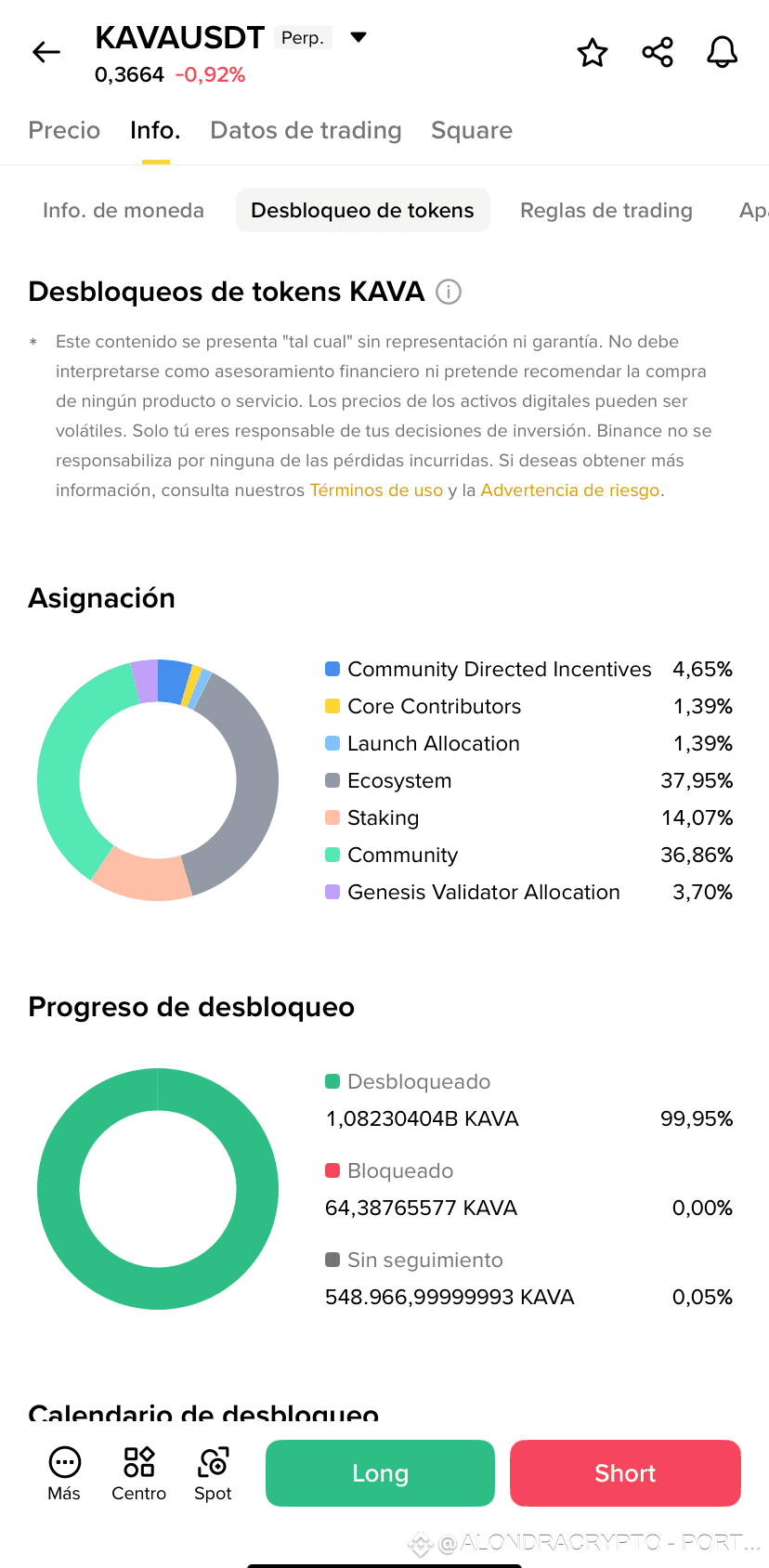
Token Allocation: Most KAVA tokens were allocated to two main groups: the Ecosystem (37.95%) for network growth and the Community (36.86%) for user participation. Smaller percentages were also allocated for staking, validators, and contributors.
Unlock Status: The image shows that 99.95% of the tokens are already unlocked and in circulation. This means that the vast majority of the tokens that were scheduled to be released have already been, reducing the risk of large sell pressures from future unlocking events.
Kava is a blockchain that aims to be a bridge between the ecosystems of Cosmos and Ethereum to provide decentralized finance solutions. Its token distribution focuses on the growth of the ecosystem and the community, and the unlocking process is nearly complete, suggesting greater stability in the token supply.
#KavaBNBChainSummer @kava
{future}(KAVAUSDT)
$KAVA General Information about Kava
What is it? Kava Network is a fast and secure Layer 1 blockchain.
Technology: It uses a unique architecture that combines the speed of Cosmos SDK with the developer compatibility of the Ethereum Virtual Machine (EVM). This allows it to connect two large ecosystems.
DeFi Products: Kava drives a series of native Decentralized Finance (DeFi) products, such as pools for exchanging cryptocurrencies and a system for borrowing and lending using assets as collateral.
2. Token Breakdown and Unlocking
Token Allocation: Most KAVA tokens were allocated to two main groups: the Ecosystem (37.95%) for network growth and the Community (36.86%) for user participation. Smaller percentages were also allocated for staking, validators, and contributors.
Unlock Status: The image shows that 99.95% of the tokens are already unlocked and in circulation. This means that the vast majority of the tokens that were scheduled to be released have already been, reducing the risk of large sell pressures from future unlocking events.
Kava is a blockchain that aims to be a bridge between the ecosystems of Cosmos and Ethereum to provide decentralized finance solutions. Its token distribution focuses on the growth of the ecosystem and the community, and the unlocking process is nearly complete, suggesting greater stability in the token supply.
#KavaBNBChainSummer @kava
What is it? Kava Network is a fast and secure Layer 1 blockchain.
Technology: It uses a unique architecture that combines the speed of Cosmos SDK with the developer compatibility of the Ethereum Virtual Machine (EVM). This allows it to connect two large ecosystems.
DeFi Products: Kava drives a series of native Decentralized Finance (DeFi) products, such as pools for exchanging cryptocurrencies and a system for borrowing and lending using assets as collateral.
2. Token Breakdown and Unlocking
Token Allocation: Most KAVA tokens were allocated to two main groups: the Ecosystem (37.95%) for network growth and the Community (36.86%) for user participation. Smaller percentages were also allocated for staking, validators, and contributors.
Unlock Status: The image shows that 99.95% of the tokens are already unlocked and in circulation. This means that the vast majority of the tokens that were scheduled to be released have already been, reducing the risk of large sell pressures from future unlocking events.
Kava is a blockchain that aims to be a bridge between the ecosystems of Cosmos and Ethereum to provide decentralized finance solutions. Its token distribution focuses on the growth of the ecosystem and the community, and the unlocking process is nearly complete, suggesting greater stability in the token supply.
#KavaBNBChainSummer @kava
2
7
900

Article
Kava: Security, Utility, and Sustainable Growth in DeFiThe universe of decentralized finance is in constant evolution, but not all projects manage to balance innovation with security, scalability, and long-term value. Kava stands out exactly for this: a robust ecosystem designed to support the growth of DeFi efficiently, securely, and inclusively.
Reimagined DeFi Security
While Ethereum continues to be the cradle of most DeFi protocols, it also carries with it a series of vulnerabilities. Frequent congestion, high fees, and smart contracts prone to failures have made the network a target for hackers and explorers.
Kava: Security, Utility, and Sustainable Growth in DeFi
The universe of decentralized finance is in constant evolution, but not all projects manage to balance innovation with security, scalability, and long-term value. Kava stands out exactly for this: a robust ecosystem designed to support the growth of DeFi efficiently, securely, and inclusively.
Reimagined DeFi Security
While Ethereum continues to be the cradle of most DeFi protocols, it also carries with it a series of vulnerabilities. Frequent congestion, high fees, and smart contracts prone to failures have made the network a target for hackers and explorers.
Reimagined DeFi Security
While Ethereum continues to be the cradle of most DeFi protocols, it also carries with it a series of vulnerabilities. Frequent congestion, high fees, and smart contracts prone to failures have made the network a target for hackers and explorers.
6
5
158
2.5k

·
--
Bullish
⚡ $KAVA : The Chain That Blends Power and Speed
@kava isn’t just another blockchain. It’s a secure, lightning-fast Layer 1 that combines the developer strength of Ethereum with the speed and cross-chain freedom of Cosmos.
💡 Build with Solidity on Kava’s EVM.
🚀 Enjoy low fees and fast transactions powered by Cosmos.
🌉 Connect across chains with IBC + bridges.
💰 Explore DeFi with USDX stablecoin, Kava Lend, and Kava Swap.
🗳️ Secure the network and shape the future with the $KAVA token for staking, governance, and rewards.
@kava is building more than a chain. It’s building a connected city for DeFi where developers, users, and assets from everywhere can finally meet.
🔥 Fast. Scalable. Cross-chain. That’s Kava.
#KavaBNBChainSummer
@kava
$KAVA
{spot}(KAVAUSDT)
⚡ $KAVA : The Chain That Blends Power and Speed
@kava isn’t just another blockchain. It’s a secure, lightning-fast Layer 1 that combines the developer strength of Ethereum with the speed and cross-chain freedom of Cosmos.
💡 Build with Solidity on Kava’s EVM.
🚀 Enjoy low fees and fast transactions powered by Cosmos.
🌉 Connect across chains with IBC + bridges.
💰 Explore DeFi with USDX stablecoin, Kava Lend, and Kava Swap.
🗳️ Secure the network and shape the future with the $KAVA token for staking, governance, and rewards.
@kava is building more than a chain. It’s building a connected city for DeFi where developers, users, and assets from everywhere can finally meet.
🔥 Fast. Scalable. Cross-chain. That’s Kava.
#KavaBNBChainSummer
@kava
$KAVA
@kava isn’t just another blockchain. It’s a secure, lightning-fast Layer 1 that combines the developer strength of Ethereum with the speed and cross-chain freedom of Cosmos.
💡 Build with Solidity on Kava’s EVM.
🚀 Enjoy low fees and fast transactions powered by Cosmos.
🌉 Connect across chains with IBC + bridges.
💰 Explore DeFi with USDX stablecoin, Kava Lend, and Kava Swap.
🗳️ Secure the network and shape the future with the $KAVA token for staking, governance, and rewards.
@kava is building more than a chain. It’s building a connected city for DeFi where developers, users, and assets from everywhere can finally meet.
🔥 Fast. Scalable. Cross-chain. That’s Kava.
#KavaBNBChainSummer
@kava
$KAVA
1
362

·
--
Bullish
$KAVA KAVA: Balancing Strong Fundamentals with Technical Weakness
- KAVA is trading around $0.3708, showing mixed technical signals.
- Momentum indicators reflect short-term weakness, despite relatively high trading volumes.
- This divergence suggests cautious sentiment among traders.
Strategic Positioning
- KAVA is pushing to solidify its role as a DeFi + AI infrastructure hub.
- Focus on cross-chain integration and tokenomics improvements aims to strengthen its ecosystem position.
- This strategic direction helps KAVA maintain relevance in the competitive L1/L2 space.
Ecosystem Dynamics
- Partnerships and innovations continue to add long-term value.
- However, risks remain tied to market volatility and adoption pace.
- The project’s sustainability will depend on balancing innovation with stable ecosystem participation.
Outlook
KAVA is currently navigating between short-term bearish technicals and solid long-term fundamentals. For investors, the key lies in whether strategic moves in DeFi + AI can attract enough traction to offset short-term pressures.
📊 @kava is a case of short-term technical weakness vs. long-term strategic strength.
👉 Do you think KAVA’s AI + DeFi positioning is strong enough to drive a breakout, or will technical resistance cap its upside for now?
#KavaBNBChainSummer
{future}(KAVAUSDT)
$KAVA KAVA: Balancing Strong Fundamentals with Technical Weakness
- KAVA is trading around $0.3708, showing mixed technical signals.
- Momentum indicators reflect short-term weakness, despite relatively high trading volumes.
- This divergence suggests cautious sentiment among traders.
Strategic Positioning
- KAVA is pushing to solidify its role as a DeFi + AI infrastructure hub.
- Focus on cross-chain integration and tokenomics improvements aims to strengthen its ecosystem position.
- This strategic direction helps KAVA maintain relevance in the competitive L1/L2 space.
Ecosystem Dynamics
- Partnerships and innovations continue to add long-term value.
- However, risks remain tied to market volatility and adoption pace.
- The project’s sustainability will depend on balancing innovation with stable ecosystem participation.
Outlook
KAVA is currently navigating between short-term bearish technicals and solid long-term fundamentals. For investors, the key lies in whether strategic moves in DeFi + AI can attract enough traction to offset short-term pressures.
📊 @kava is a case of short-term technical weakness vs. long-term strategic strength.
👉 Do you think KAVA’s AI + DeFi positioning is strong enough to drive a breakout, or will technical resistance cap its upside for now?
#KavaBNBChainSummer
- KAVA is trading around $0.3708, showing mixed technical signals.
- Momentum indicators reflect short-term weakness, despite relatively high trading volumes.
- This divergence suggests cautious sentiment among traders.
Strategic Positioning
- KAVA is pushing to solidify its role as a DeFi + AI infrastructure hub.
- Focus on cross-chain integration and tokenomics improvements aims to strengthen its ecosystem position.
- This strategic direction helps KAVA maintain relevance in the competitive L1/L2 space.
Ecosystem Dynamics
- Partnerships and innovations continue to add long-term value.
- However, risks remain tied to market volatility and adoption pace.
- The project’s sustainability will depend on balancing innovation with stable ecosystem participation.
Outlook
KAVA is currently navigating between short-term bearish technicals and solid long-term fundamentals. For investors, the key lies in whether strategic moves in DeFi + AI can attract enough traction to offset short-term pressures.
📊 @kava is a case of short-term technical weakness vs. long-term strategic strength.
👉 Do you think KAVA’s AI + DeFi positioning is strong enough to drive a breakout, or will technical resistance cap its upside for now?
#KavaBNBChainSummer
1
691

Kava: The Chain That Connects Ethereum, Cosmos and the Future of AI
Most blockchains force developers to choose Ethereum’s adoption and tools but with high fees, or Cosmos’ speed and interoperability but with limited reach. Kava ($KAVA) removes that trade-off by combining both into one powerful Layer-1 network.
With Kava, developers get Ethereum compatibility, Cosmos scalability and seamless cross-chain liquidity. Validators stake $KAVA, to secure the network, making it both fast and reliable.
But Kava is not just about DeFi. It is preparing for the AI revolution enabling AI agents to run on a decentralized, transparent and secure network. This opens the door to new possibilities in finance, logistics, climate management and beyond.
$KAVA, is the heart of the ecosystem, powering staking, governance, transactions, and rewarding builders who grow the network.
Kava is more than just another blockchain it is a bridge between ecosystems and a launchpad for the AI-powered future of Web3.
$KAVA
{spot}(KAVAUSDT)
@kava #KavaBNBChainSummer
Kava: The Chain That Connects Ethereum, Cosmos and the Future of AI
Most blockchains force developers to choose Ethereum’s adoption and tools but with high fees, or Cosmos’ speed and interoperability but with limited reach. Kava ($KAVA ) removes that trade-off by combining both into one powerful Layer-1 network.
With Kava, developers get Ethereum compatibility, Cosmos scalability and seamless cross-chain liquidity. Validators stake $KAVA , to secure the network, making it both fast and reliable.
But Kava is not just about DeFi. It is preparing for the AI revolution enabling AI agents to run on a decentralized, transparent and secure network. This opens the door to new possibilities in finance, logistics, climate management and beyond.
$KAVA , is the heart of the ecosystem, powering staking, governance, transactions, and rewarding builders who grow the network.
Kava is more than just another blockchain it is a bridge between ecosystems and a launchpad for the AI-powered future of Web3.
$KAVA
@kava #KavaBNBChainSummer
Most blockchains force developers to choose Ethereum’s adoption and tools but with high fees, or Cosmos’ speed and interoperability but with limited reach. Kava ($KAVA ) removes that trade-off by combining both into one powerful Layer-1 network.
With Kava, developers get Ethereum compatibility, Cosmos scalability and seamless cross-chain liquidity. Validators stake $KAVA , to secure the network, making it both fast and reliable.
But Kava is not just about DeFi. It is preparing for the AI revolution enabling AI agents to run on a decentralized, transparent and secure network. This opens the door to new possibilities in finance, logistics, climate management and beyond.
$KAVA , is the heart of the ecosystem, powering staking, governance, transactions, and rewarding builders who grow the network.
Kava is more than just another blockchain it is a bridge between ecosystems and a launchpad for the AI-powered future of Web3.
$KAVA
@kava #KavaBNBChainSummer
2
457

·
--
Bullish
$KAVA is more than just a chain.
It’s fast, cheap, and connects Ethereum with Cosmos—bringing the best of both worlds.
$KAVA fuels it all: transactions, staking, and governance. With fixed supply, no endless inflation.
And with its deep link to BNB Chain, Kava is shaping into a true DeFi hub where speed, low cost, and cross-chain power finally come together.
@kava
$KAVA
{spot}(KAVAUSDT)
#KavaBNBChainSummer
$KAVA is more than just a chain.
It’s fast, cheap, and connects Ethereum with Cosmos—bringing the best of both worlds.
$KAVA fuels it all: transactions, staking, and governance. With fixed supply, no endless inflation.
And with its deep link to BNB Chain, Kava is shaping into a true DeFi hub where speed, low cost, and cross-chain power finally come together.
@kava
$KAVA
#KavaBNBChainSummer
It’s fast, cheap, and connects Ethereum with Cosmos—bringing the best of both worlds.
$KAVA fuels it all: transactions, staking, and governance. With fixed supply, no endless inflation.
And with its deep link to BNB Chain, Kava is shaping into a true DeFi hub where speed, low cost, and cross-chain power finally come together.
@kava
$KAVA
#KavaBNBChainSummer
17
16
344

·
--
Kava: Pioneering a Fast, Secure, and Community-Driven Blockchain EcosystemKava has emerged as one of the most versatile Layer-1 blockchains, blending Ethereum’s developer capabilities with Cosmos’ speed and interoperability. Beyond its technical design, Kava thrives on a combination of validator security, mobile accessibility, staking strategies, cross-chain innovation, partnerships, and long-term ecosystem planning. This article explores six key aspects that define Kava’s unique position in the blockchain space.
1. Validators and Delegators: The Pillars of Kava’s Security
Security is the foundation of any blockchain, and in Kava, validators and delegators form the first line of defense. Validators are responsible for block production, consensus enforcement, and protocol maintenance. Delegators, meanwhile, entrust their $KAVA tokens to validators, supporting network security while earning staking rewards.
Kava’s system uses Tendermint’s Byzantine Fault Tolerance, ensuring that even if some validators misbehave, the network remains secure. Misbehavior such as downtime or double-signing triggers slashing, incentivizing honest participation.
This dual-layer model creates a robust, community-driven security framework where participants actively contribute to the network’s resilience and growth.
2. Light Clients and Mobile Wallet Accessibility
Kava recognizes that blockchain adoption depends on accessibility. Light clients and mobile wallets allow users to interact with the network without running full nodes. These clients verify transactions with minimal data, enabling a secure, fast, and mobile-friendly experience.
Through integrations with wallets like Keplr, Trust Wallet, and MetaMask (for EVM users), Kava ensures that staking, swapping, and governance participation can all be managed directly from mobile devices. This focus on mobile accessibility expands Kava’s user base and encourages broader community engagement.
3. Staking Strategies for KAVA Holders
Staking on Kava is not just a way to earn rewards—it’s an active strategy to enhance network security and participation. KAVA holders can optimize rewards by:
Diversifying Delegations: Spreading tokens across multiple validators to reduce risk.
Supporting Community Validators: Boosting decentralization and network fairness.
Monitoring Performance: Selecting validators with high uptime and strong governance engagement.
Re-delegating When Needed: Adjusting delegations based on validator performance and network trends.
By implementing these strategies, KAVA holders maximize returns while contributing to a resilient and decentralized ecosystem.
Cross-Chain Innovation and Liquidity
Kava’s interoperability is a major differentiator. By leveraging IBC (Inter-Blockchain Communication) and EVM compatibility, Kava enables seamless interaction with other chains like Cosmos Hub, Osmosis, and Ethereum-based networks.
This cross-chain capability allows users to:
Swap and lend assets across ecosystems.
Participate in multi-chain liquidity pools.
Deploy smart contracts with access to global liquidity.
Kava effectively becomes a bridge in the decentralized finance landscape, connecting multiple blockchains and creating new opportunities for users and developers alike.
5. Strategic Partnerships Fueling Growth
Partnerships are essential for scaling and adoption. Kava collaborates with Binance, Chainlink, and Cosmos-based projects to enhance liquidity, reliability, and interoperability.
Binance provides global exposure and deep liquidity access.
Chainlink delivers secure, real-time oracle data for DeFi protocols.
Cosmos Partners enable frictionless cross-chain transactions.
These alliances position Kava as a connected, globally relevant network, expanding both its reach and functional capabilities.
6. Ecosystem Roadmap and Long-Term Vision
Kava’s roadmap is a testament to its long-term vision: building a scalable, interoperable, and community-driven blockchain ecosystem. Key initiatives include:
Enhancing cross-chain bridges to improve asset flow.
Strengthening EVM tools and developer resources.
Launching incentive programs to attract new users and builders.
Expanding governance mechanisms to empower the community.
This forward-looking approach ensures Kava is not just reacting to current trends but actively shaping the future of decentralized finance.
Conclusion
Kava stands out as a fast, secure, and user-centric Layer-1 blockchain, where validators, delegators, developers, and users all contribute to a growing ecosystem. With mobile accessibility, staking strategies, cross-chain capabilities, strategic partnerships, and a visionary roadmap, Kava is building the infrastructure for the next generation of DeFi and decentralized applications.
It’s more than a blockchain—it’s a living ecosystem designed for scalability, participation, and long-term growth.
@kava #KavaBNBChainSummer $KAVA
{future}(KAVAUSDT)
{spot}(KAVAUSDT)
Kava: Pioneering a Fast, Secure, and Community-Driven Blockchain Ecosystem
Kava has emerged as one of the most versatile Layer-1 blockchains, blending Ethereum’s developer capabilities with Cosmos’ speed and interoperability. Beyond its technical design, Kava thrives on a combination of validator security, mobile accessibility, staking strategies, cross-chain innovation, partnerships, and long-term ecosystem planning. This article explores six key aspects that define Kava’s unique position in the blockchain space.
1. Validators and Delegators: The Pillars of Kava’s Security
Security is the foundation of any blockchain, and in Kava, validators and delegators form the first line of defense. Validators are responsible for block production, consensus enforcement, and protocol maintenance. Delegators, meanwhile, entrust their $KAVA tokens to validators, supporting network security while earning staking rewards.
Kava’s system uses Tendermint’s Byzantine Fault Tolerance, ensuring that even if some validators misbehave, the network remains secure. Misbehavior such as downtime or double-signing triggers slashing, incentivizing honest participation.
This dual-layer model creates a robust, community-driven security framework where participants actively contribute to the network’s resilience and growth.
2. Light Clients and Mobile Wallet Accessibility
Kava recognizes that blockchain adoption depends on accessibility. Light clients and mobile wallets allow users to interact with the network without running full nodes. These clients verify transactions with minimal data, enabling a secure, fast, and mobile-friendly experience.
Through integrations with wallets like Keplr, Trust Wallet, and MetaMask (for EVM users), Kava ensures that staking, swapping, and governance participation can all be managed directly from mobile devices. This focus on mobile accessibility expands Kava’s user base and encourages broader community engagement.
3. Staking Strategies for KAVA Holders
Staking on Kava is not just a way to earn rewards—it’s an active strategy to enhance network security and participation. KAVA holders can optimize rewards by:
Diversifying Delegations: Spreading tokens across multiple validators to reduce risk.
Supporting Community Validators: Boosting decentralization and network fairness.
Monitoring Performance: Selecting validators with high uptime and strong governance engagement.
Re-delegating When Needed: Adjusting delegations based on validator performance and network trends.
By implementing these strategies, KAVA holders maximize returns while contributing to a resilient and decentralized ecosystem.
Cross-Chain Innovation and Liquidity
Kava’s interoperability is a major differentiator. By leveraging IBC (Inter-Blockchain Communication) and EVM compatibility, Kava enables seamless interaction with other chains like Cosmos Hub, Osmosis, and Ethereum-based networks.
This cross-chain capability allows users to:
Swap and lend assets across ecosystems.
Participate in multi-chain liquidity pools.
Deploy smart contracts with access to global liquidity.
Kava effectively becomes a bridge in the decentralized finance landscape, connecting multiple blockchains and creating new opportunities for users and developers alike.
5. Strategic Partnerships Fueling Growth
Partnerships are essential for scaling and adoption. Kava collaborates with Binance, Chainlink, and Cosmos-based projects to enhance liquidity, reliability, and interoperability.
Binance provides global exposure and deep liquidity access.
Chainlink delivers secure, real-time oracle data for DeFi protocols.
Cosmos Partners enable frictionless cross-chain transactions.
These alliances position Kava as a connected, globally relevant network, expanding both its reach and functional capabilities.
6. Ecosystem Roadmap and Long-Term Vision
Kava’s roadmap is a testament to its long-term vision: building a scalable, interoperable, and community-driven blockchain ecosystem. Key initiatives include:
Enhancing cross-chain bridges to improve asset flow.
Strengthening EVM tools and developer resources.
Launching incentive programs to attract new users and builders.
Expanding governance mechanisms to empower the community.
This forward-looking approach ensures Kava is not just reacting to current trends but actively shaping the future of decentralized finance.
Conclusion
Kava stands out as a fast, secure, and user-centric Layer-1 blockchain, where validators, delegators, developers, and users all contribute to a growing ecosystem. With mobile accessibility, staking strategies, cross-chain capabilities, strategic partnerships, and a visionary roadmap, Kava is building the infrastructure for the next generation of DeFi and decentralized applications.
It’s more than a blockchain—it’s a living ecosystem designed for scalability, participation, and long-term growth.
@kava #KavaBNBChainSummer $KAVA
1. Validators and Delegators: The Pillars of Kava’s Security
Security is the foundation of any blockchain, and in Kava, validators and delegators form the first line of defense. Validators are responsible for block production, consensus enforcement, and protocol maintenance. Delegators, meanwhile, entrust their $KAVA tokens to validators, supporting network security while earning staking rewards.
Kava’s system uses Tendermint’s Byzantine Fault Tolerance, ensuring that even if some validators misbehave, the network remains secure. Misbehavior such as downtime or double-signing triggers slashing, incentivizing honest participation.
This dual-layer model creates a robust, community-driven security framework where participants actively contribute to the network’s resilience and growth.
2. Light Clients and Mobile Wallet Accessibility
Kava recognizes that blockchain adoption depends on accessibility. Light clients and mobile wallets allow users to interact with the network without running full nodes. These clients verify transactions with minimal data, enabling a secure, fast, and mobile-friendly experience.
Through integrations with wallets like Keplr, Trust Wallet, and MetaMask (for EVM users), Kava ensures that staking, swapping, and governance participation can all be managed directly from mobile devices. This focus on mobile accessibility expands Kava’s user base and encourages broader community engagement.
3. Staking Strategies for KAVA Holders
Staking on Kava is not just a way to earn rewards—it’s an active strategy to enhance network security and participation. KAVA holders can optimize rewards by:
Diversifying Delegations: Spreading tokens across multiple validators to reduce risk.
Supporting Community Validators: Boosting decentralization and network fairness.
Monitoring Performance: Selecting validators with high uptime and strong governance engagement.
Re-delegating When Needed: Adjusting delegations based on validator performance and network trends.
By implementing these strategies, KAVA holders maximize returns while contributing to a resilient and decentralized ecosystem.
Cross-Chain Innovation and Liquidity
Kava’s interoperability is a major differentiator. By leveraging IBC (Inter-Blockchain Communication) and EVM compatibility, Kava enables seamless interaction with other chains like Cosmos Hub, Osmosis, and Ethereum-based networks.
This cross-chain capability allows users to:
Swap and lend assets across ecosystems.
Participate in multi-chain liquidity pools.
Deploy smart contracts with access to global liquidity.
Kava effectively becomes a bridge in the decentralized finance landscape, connecting multiple blockchains and creating new opportunities for users and developers alike.
5. Strategic Partnerships Fueling Growth
Partnerships are essential for scaling and adoption. Kava collaborates with Binance, Chainlink, and Cosmos-based projects to enhance liquidity, reliability, and interoperability.
Binance provides global exposure and deep liquidity access.
Chainlink delivers secure, real-time oracle data for DeFi protocols.
Cosmos Partners enable frictionless cross-chain transactions.
These alliances position Kava as a connected, globally relevant network, expanding both its reach and functional capabilities.
6. Ecosystem Roadmap and Long-Term Vision
Kava’s roadmap is a testament to its long-term vision: building a scalable, interoperable, and community-driven blockchain ecosystem. Key initiatives include:
Enhancing cross-chain bridges to improve asset flow.
Strengthening EVM tools and developer resources.
Launching incentive programs to attract new users and builders.
Expanding governance mechanisms to empower the community.
This forward-looking approach ensures Kava is not just reacting to current trends but actively shaping the future of decentralized finance.
Conclusion
Kava stands out as a fast, secure, and user-centric Layer-1 blockchain, where validators, delegators, developers, and users all contribute to a growing ecosystem. With mobile accessibility, staking strategies, cross-chain capabilities, strategic partnerships, and a visionary roadmap, Kava is building the infrastructure for the next generation of DeFi and decentralized applications.
It’s more than a blockchain—it’s a living ecosystem designed for scalability, participation, and long-term growth.
@kava #KavaBNBChainSummer $KAVA
423

·
--
Bullish
Kava ( $KAVA ): The Dominant DeFi Center on the BNB Chain
Kava is a leading DeFi ecosystem on BNB Chain, combining Ethereum's flexibility with Cosmos' scalability to create a platform built for:
- Speed: Fast transactions with no waiting
- Affordability: Low fees that keep DeFi open and accessible.
- Cross-Chain Strength: Seamless network bridging Ethereum and Cosmos.
- Ecosystem Growth: Attracting more dApps and projects every day
The $KAVA token is at the core of the ecosystem, powering:
- Transactions: Fast and efficient transactions.
- Governance: Community-driven decision-making.
- Staking: Securing the network and earning rewards.
As Kava continues to grow, it's positioning itself as a financial hub shaping the future of DeFi. With its robust ecosystem and growing adoption, Kava is proving itself as a leader in the DeFi space.
Buy $KAVA
{spot}(KAVAUSDT)
#KavaBNBChainSummer @kava
Kava ( $KAVA ): The Dominant DeFi Center on the BNB Chain
Kava is a leading DeFi ecosystem on BNB Chain, combining Ethereum's flexibility with Cosmos' scalability to create a platform built for:
- Speed: Fast transactions with no waiting
- Affordability: Low fees that keep DeFi open and accessible.
- Cross-Chain Strength: Seamless network bridging Ethereum and Cosmos.
- Ecosystem Growth: Attracting more dApps and projects every day
The $KAVA token is at the core of the ecosystem, powering:
- Transactions: Fast and efficient transactions.
- Governance: Community-driven decision-making.
- Staking: Securing the network and earning rewards.
As Kava continues to grow, it's positioning itself as a financial hub shaping the future of DeFi. With its robust ecosystem and growing adoption, Kava is proving itself as a leader in the DeFi space.
Buy $KAVA
#KavaBNBChainSummer @kava
Kava is a leading DeFi ecosystem on BNB Chain, combining Ethereum's flexibility with Cosmos' scalability to create a platform built for:
- Speed: Fast transactions with no waiting
- Affordability: Low fees that keep DeFi open and accessible.
- Cross-Chain Strength: Seamless network bridging Ethereum and Cosmos.
- Ecosystem Growth: Attracting more dApps and projects every day
The $KAVA token is at the core of the ecosystem, powering:
- Transactions: Fast and efficient transactions.
- Governance: Community-driven decision-making.
- Staking: Securing the network and earning rewards.
As Kava continues to grow, it's positioning itself as a financial hub shaping the future of DeFi. With its robust ecosystem and growing adoption, Kava is proving itself as a leader in the DeFi space.
Buy $KAVA
#KavaBNBChainSummer @kava

2
2
6
6.3k

·
--
Article
Why Kava Could Be the Missing Link in CryptoCrypto can feel confusing. There are many blockchains, many apps, and money flowing in all directions. But one of the biggest problems is this: most blockchains do not talk to each other. Each one keeps its own money and its own apps. That makes it hard for users to move around.
Kava is trying to fix this. It is a special blockchain that connects two very different worlds. One side works like Ethereum, which is the most popular platform for crypto apps. The other side works like Cosmos, which is known for speed and for letting many different blockchains connect together. By bringing these two sides into one chain, Kava makes it easier for people and apps to use both at the same time.
This guide will explain Kava in the easiest way possible. We will talk about what it is, why it matters, how its token works, what deals it made with big names like Tether and Binance, and what the future might look like.
The Simple Idea of Kava
Think of the crypto world like a city with many different neighborhoods. Each neighborhood has its own shops, money, and rules. The problem is, there are no good roads between them. If you want to buy something in another neighborhood, you have to first leave your money behind, change it into another form, and then start over.
Kava is like a city that has two big neighborhoods inside it, connected by a direct road. One neighborhood is Ethereum style, where most apps are already built. The other neighborhood is Cosmos style, where blockchains can talk to each other. Because both sides live inside the same city, people can move between them quickly and safely.
This is why Kava is called a “co-chain.” It is one chain with two connected parts.
How It Works :
Imagine Kava as a house with two big rooms.
Room one is the Ethereum room. Here, developers can use the same tools they already know to build apps.
Room two is the Cosmos room. Here, money and assets can move easily to other blockchains in the Cosmos family.
A hallway connects both rooms. People can walk from one room to the other without leaving the house.
This design is different from most blockchains. Normally, if you want to move money between Ethereum and Cosmos, you need an outside bridge. Bridges are like ferries that take you across a river, but they can be slow and risky. With Kava, both rooms are already part of the same house, so the movement is safer and faster.
Kava’s Token: No More Printing New Coins
Like most blockchains, Kava has its own token, also called KAVA. In the past, Kava created new tokens every year to pay people who helped secure the network. This is called inflation. The problem with inflation is that it makes the total supply of tokens go up, and that can lower the value of each token over time.
At the start of 2024, Kava made a big change. It stopped printing new tokens. Now the supply is fixed at about 1.08 billion tokens. Rewards for stakers and for developers come from a vault of tokens that were set aside earlier.
This change means:
Holders do not have to worry about their tokens losing value because of constant inflation.
The system is forced to spend rewards carefully because the vault is limited.
Long term trust in the token can grow because supply is now capped.
Why Stablecoins Are So Important for Kava
In crypto, stablecoins are like the “dollars” of the system. They are tokens that are tied to the US dollar so they do not change value much. Most people use stablecoins when they want safety.
Kava made history by bringing Tether (USDT), the biggest stablecoin, natively to the Cosmos world. Before this, people in Cosmos had trouble using USDT directly. Now, because Tether chose Kava as its home in Cosmos, every blockchain connected through Cosmos can use it.
This is a huge deal because stablecoins are the backbone of trading, lending, and most DeFi apps. Without stablecoins, liquidity dries up. With them, money flows smoothly.
The Binance and Bitcoin Links
Another big step for Kava was its partnership with Binance, the largest crypto exchange in the world. Binance added support for Kava’s Ethereum side and also for native USDT on Kava. This means Binance users can move money into Kava more directly, without complicated steps.
Kava also partnered with Bitgo to bring wrapped Bitcoin (WBTC) into its system. This means Bitcoin, the biggest crypto asset, can be used inside Kava apps. With both USDT and WBTC available, Kava has two of the most important assets in crypto at its core. This gives it strength and trust in the eyes of traders and institutions.
Why Developers Care About Kava
If you are a developer, the biggest question is simple: can I build my app easily and find users. Kava answers yes to both.
On the Ethereum side, you can use Solidity and all the common tools like Metamask, Remix, and Hardhat. On the Cosmos side, you can reach users and assets from dozens of connected chains. This mix means developers can build familiar apps but still reach a wider market.
Kava has also created reward programs in the past to encourage developers. These programs paid projects that brought in liquidity and users. With its new fixed supply system, Kava is more careful about how it uses its vault, but the goal is still the same: attract apps that make people stay.
How Kava Is Governed
Kava is run by its community through a process called governance. People who hold and stake KAVA can vote on proposals. These can decide things like how much of the vault to spend, which upgrades to adopt, and what policies to follow.
In September 2025, the community agreed on something called the Mature Network Policy. This is a set of values that says Kava is no longer an experimental project but a stable, serious network. It talks about clear ownership, stable development, and transparent spending. This is meant to give more confidence to investors and developers.
Where Kava Fits in the Market
There are many blockchains today. Ethereum dominates in size. Cosmos is strong in connections. Solana is fast. Dozens of others compete for users.
Kava’s position is special because it blends two worlds. It is not just an Ethereum copy, and it is not just another Cosmos chain. It is both at once. That makes it attractive for three groups:
1. Traders who want deep stablecoin markets and fast transactions.
2. Developers who want to use Ethereum tools but also reach Cosmos users.
3. Institutions that value safety, liquidity, and direct exchange support.
Kava’s Strengths
Two in one design: It gives both Ethereum compatibility and Cosmos connectivity in one chain.
Strong liquidity partners: Native USDT and WBTC mean deep and trusted assets are already there.
Fixed supply token: Holders know there will not be endless inflation.
Developer friendly: Anyone can deploy Ethereum apps while reaching Cosmos users.
Binance support: Integration with the largest exchange builds trust and access.
The Challenges Ahead
Adoption: Good design is not enough. Kava needs flagship apps that attract real users.
Security: Any system that connects two worlds must be carefully protected.
Treasury discipline: With a fixed vault, Kava must spend wisely. Bad decisions could hurt growth.
Market cycles: If the overall market goes down, activity may slow even if Kava is strong.
What the Future Could Look Like
The future of crypto will be multi-chain. People will not stay on just one network. They will expect to move freely between many. Kava is well positioned to be one of the bridges that makes this possible.
If adoption of USDT and WBTC grows, if developers keep launching useful apps, and if governance remains disciplined, Kava can become a permanent part of the market. Its mix of Ethereum and Cosmos makes sense in a world that demands both depth and connectivity.
But success depends on execution. Kava must show daily active users, stablecoin volumes, and long term developer retention. These are the real signs of health.
Conclusion
Kava is not just another blockchain. It is an experiment in unity. By combining Ethereum and Cosmos in one chain, it creates a smoother path for users, developers, and institutions. With native USDT and WBTC, a fixed token supply, and strong exchange support, it has a strong base.
The open question is simple. Can Kava turn its smart design into everyday usage. The answer will decide whether it becomes a key part of crypto’s future or just another chain in the crowd.
@kava
#KavaBNBChainSummer
$KAVA
Why Kava Could Be the Missing Link in Crypto
Crypto can feel confusing. There are many blockchains, many apps, and money flowing in all directions. But one of the biggest problems is this: most blockchains do not talk to each other. Each one keeps its own money and its own apps. That makes it hard for users to move around.
Kava is trying to fix this. It is a special blockchain that connects two very different worlds. One side works like Ethereum, which is the most popular platform for crypto apps. The other side works like Cosmos, which is known for speed and for letting many different blockchains connect together. By bringing these two sides into one chain, Kava makes it easier for people and apps to use both at the same time.
This guide will explain Kava in the easiest way possible. We will talk about what it is, why it matters, how its token works, what deals it made with big names like Tether and Binance, and what the future might look like.
The Simple Idea of Kava
Think of the crypto world like a city with many different neighborhoods. Each neighborhood has its own shops, money, and rules. The problem is, there are no good roads between them. If you want to buy something in another neighborhood, you have to first leave your money behind, change it into another form, and then start over.
Kava is like a city that has two big neighborhoods inside it, connected by a direct road. One neighborhood is Ethereum style, where most apps are already built. The other neighborhood is Cosmos style, where blockchains can talk to each other. Because both sides live inside the same city, people can move between them quickly and safely.
This is why Kava is called a “co-chain.” It is one chain with two connected parts.
How It Works :
Imagine Kava as a house with two big rooms.
Room one is the Ethereum room. Here, developers can use the same tools they already know to build apps.
Room two is the Cosmos room. Here, money and assets can move easily to other blockchains in the Cosmos family.
A hallway connects both rooms. People can walk from one room to the other without leaving the house.
This design is different from most blockchains. Normally, if you want to move money between Ethereum and Cosmos, you need an outside bridge. Bridges are like ferries that take you across a river, but they can be slow and risky. With Kava, both rooms are already part of the same house, so the movement is safer and faster.
Kava’s Token: No More Printing New Coins
Like most blockchains, Kava has its own token, also called KAVA. In the past, Kava created new tokens every year to pay people who helped secure the network. This is called inflation. The problem with inflation is that it makes the total supply of tokens go up, and that can lower the value of each token over time.
At the start of 2024, Kava made a big change. It stopped printing new tokens. Now the supply is fixed at about 1.08 billion tokens. Rewards for stakers and for developers come from a vault of tokens that were set aside earlier.
This change means:
Holders do not have to worry about their tokens losing value because of constant inflation.
The system is forced to spend rewards carefully because the vault is limited.
Long term trust in the token can grow because supply is now capped.
Why Stablecoins Are So Important for Kava
In crypto, stablecoins are like the “dollars” of the system. They are tokens that are tied to the US dollar so they do not change value much. Most people use stablecoins when they want safety.
Kava made history by bringing Tether (USDT), the biggest stablecoin, natively to the Cosmos world. Before this, people in Cosmos had trouble using USDT directly. Now, because Tether chose Kava as its home in Cosmos, every blockchain connected through Cosmos can use it.
This is a huge deal because stablecoins are the backbone of trading, lending, and most DeFi apps. Without stablecoins, liquidity dries up. With them, money flows smoothly.
The Binance and Bitcoin Links
Another big step for Kava was its partnership with Binance, the largest crypto exchange in the world. Binance added support for Kava’s Ethereum side and also for native USDT on Kava. This means Binance users can move money into Kava more directly, without complicated steps.
Kava also partnered with Bitgo to bring wrapped Bitcoin (WBTC) into its system. This means Bitcoin, the biggest crypto asset, can be used inside Kava apps. With both USDT and WBTC available, Kava has two of the most important assets in crypto at its core. This gives it strength and trust in the eyes of traders and institutions.
Why Developers Care About Kava
If you are a developer, the biggest question is simple: can I build my app easily and find users. Kava answers yes to both.
On the Ethereum side, you can use Solidity and all the common tools like Metamask, Remix, and Hardhat. On the Cosmos side, you can reach users and assets from dozens of connected chains. This mix means developers can build familiar apps but still reach a wider market.
Kava has also created reward programs in the past to encourage developers. These programs paid projects that brought in liquidity and users. With its new fixed supply system, Kava is more careful about how it uses its vault, but the goal is still the same: attract apps that make people stay.
How Kava Is Governed
Kava is run by its community through a process called governance. People who hold and stake KAVA can vote on proposals. These can decide things like how much of the vault to spend, which upgrades to adopt, and what policies to follow.
In September 2025, the community agreed on something called the Mature Network Policy. This is a set of values that says Kava is no longer an experimental project but a stable, serious network. It talks about clear ownership, stable development, and transparent spending. This is meant to give more confidence to investors and developers.
Where Kava Fits in the Market
There are many blockchains today. Ethereum dominates in size. Cosmos is strong in connections. Solana is fast. Dozens of others compete for users.
Kava’s position is special because it blends two worlds. It is not just an Ethereum copy, and it is not just another Cosmos chain. It is both at once. That makes it attractive for three groups:
1. Traders who want deep stablecoin markets and fast transactions.
2. Developers who want to use Ethereum tools but also reach Cosmos users.
3. Institutions that value safety, liquidity, and direct exchange support.
Kava’s Strengths
Two in one design: It gives both Ethereum compatibility and Cosmos connectivity in one chain.
Strong liquidity partners: Native USDT and WBTC mean deep and trusted assets are already there.
Fixed supply token: Holders know there will not be endless inflation.
Developer friendly: Anyone can deploy Ethereum apps while reaching Cosmos users.
Binance support: Integration with the largest exchange builds trust and access.
The Challenges Ahead
Adoption: Good design is not enough. Kava needs flagship apps that attract real users.
Security: Any system that connects two worlds must be carefully protected.
Treasury discipline: With a fixed vault, Kava must spend wisely. Bad decisions could hurt growth.
Market cycles: If the overall market goes down, activity may slow even if Kava is strong.
What the Future Could Look Like
The future of crypto will be multi-chain. People will not stay on just one network. They will expect to move freely between many. Kava is well positioned to be one of the bridges that makes this possible.
If adoption of USDT and WBTC grows, if developers keep launching useful apps, and if governance remains disciplined, Kava can become a permanent part of the market. Its mix of Ethereum and Cosmos makes sense in a world that demands both depth and connectivity.
But success depends on execution. Kava must show daily active users, stablecoin volumes, and long term developer retention. These are the real signs of health.
Conclusion
Kava is not just another blockchain. It is an experiment in unity. By combining Ethereum and Cosmos in one chain, it creates a smoother path for users, developers, and institutions. With native USDT and WBTC, a fixed token supply, and strong exchange support, it has a strong base.
The open question is simple. Can Kava turn its smart design into everyday usage. The answer will decide whether it becomes a key part of crypto’s future or just another chain in the crowd.
@kava
#KavaBNBChainSummer
$KAVA
Kava is trying to fix this. It is a special blockchain that connects two very different worlds. One side works like Ethereum, which is the most popular platform for crypto apps. The other side works like Cosmos, which is known for speed and for letting many different blockchains connect together. By bringing these two sides into one chain, Kava makes it easier for people and apps to use both at the same time.
This guide will explain Kava in the easiest way possible. We will talk about what it is, why it matters, how its token works, what deals it made with big names like Tether and Binance, and what the future might look like.
The Simple Idea of Kava
Think of the crypto world like a city with many different neighborhoods. Each neighborhood has its own shops, money, and rules. The problem is, there are no good roads between them. If you want to buy something in another neighborhood, you have to first leave your money behind, change it into another form, and then start over.
Kava is like a city that has two big neighborhoods inside it, connected by a direct road. One neighborhood is Ethereum style, where most apps are already built. The other neighborhood is Cosmos style, where blockchains can talk to each other. Because both sides live inside the same city, people can move between them quickly and safely.
This is why Kava is called a “co-chain.” It is one chain with two connected parts.
How It Works :
Imagine Kava as a house with two big rooms.
Room one is the Ethereum room. Here, developers can use the same tools they already know to build apps.
Room two is the Cosmos room. Here, money and assets can move easily to other blockchains in the Cosmos family.
A hallway connects both rooms. People can walk from one room to the other without leaving the house.
This design is different from most blockchains. Normally, if you want to move money between Ethereum and Cosmos, you need an outside bridge. Bridges are like ferries that take you across a river, but they can be slow and risky. With Kava, both rooms are already part of the same house, so the movement is safer and faster.
Kava’s Token: No More Printing New Coins
Like most blockchains, Kava has its own token, also called KAVA. In the past, Kava created new tokens every year to pay people who helped secure the network. This is called inflation. The problem with inflation is that it makes the total supply of tokens go up, and that can lower the value of each token over time.
At the start of 2024, Kava made a big change. It stopped printing new tokens. Now the supply is fixed at about 1.08 billion tokens. Rewards for stakers and for developers come from a vault of tokens that were set aside earlier.
This change means:
Holders do not have to worry about their tokens losing value because of constant inflation.
The system is forced to spend rewards carefully because the vault is limited.
Long term trust in the token can grow because supply is now capped.
Why Stablecoins Are So Important for Kava
In crypto, stablecoins are like the “dollars” of the system. They are tokens that are tied to the US dollar so they do not change value much. Most people use stablecoins when they want safety.
Kava made history by bringing Tether (USDT), the biggest stablecoin, natively to the Cosmos world. Before this, people in Cosmos had trouble using USDT directly. Now, because Tether chose Kava as its home in Cosmos, every blockchain connected through Cosmos can use it.
This is a huge deal because stablecoins are the backbone of trading, lending, and most DeFi apps. Without stablecoins, liquidity dries up. With them, money flows smoothly.
The Binance and Bitcoin Links
Another big step for Kava was its partnership with Binance, the largest crypto exchange in the world. Binance added support for Kava’s Ethereum side and also for native USDT on Kava. This means Binance users can move money into Kava more directly, without complicated steps.
Kava also partnered with Bitgo to bring wrapped Bitcoin (WBTC) into its system. This means Bitcoin, the biggest crypto asset, can be used inside Kava apps. With both USDT and WBTC available, Kava has two of the most important assets in crypto at its core. This gives it strength and trust in the eyes of traders and institutions.
Why Developers Care About Kava
If you are a developer, the biggest question is simple: can I build my app easily and find users. Kava answers yes to both.
On the Ethereum side, you can use Solidity and all the common tools like Metamask, Remix, and Hardhat. On the Cosmos side, you can reach users and assets from dozens of connected chains. This mix means developers can build familiar apps but still reach a wider market.
Kava has also created reward programs in the past to encourage developers. These programs paid projects that brought in liquidity and users. With its new fixed supply system, Kava is more careful about how it uses its vault, but the goal is still the same: attract apps that make people stay.
How Kava Is Governed
Kava is run by its community through a process called governance. People who hold and stake KAVA can vote on proposals. These can decide things like how much of the vault to spend, which upgrades to adopt, and what policies to follow.
In September 2025, the community agreed on something called the Mature Network Policy. This is a set of values that says Kava is no longer an experimental project but a stable, serious network. It talks about clear ownership, stable development, and transparent spending. This is meant to give more confidence to investors and developers.
Where Kava Fits in the Market
There are many blockchains today. Ethereum dominates in size. Cosmos is strong in connections. Solana is fast. Dozens of others compete for users.
Kava’s position is special because it blends two worlds. It is not just an Ethereum copy, and it is not just another Cosmos chain. It is both at once. That makes it attractive for three groups:
1. Traders who want deep stablecoin markets and fast transactions.
2. Developers who want to use Ethereum tools but also reach Cosmos users.
3. Institutions that value safety, liquidity, and direct exchange support.
Kava’s Strengths
Two in one design: It gives both Ethereum compatibility and Cosmos connectivity in one chain.
Strong liquidity partners: Native USDT and WBTC mean deep and trusted assets are already there.
Fixed supply token: Holders know there will not be endless inflation.
Developer friendly: Anyone can deploy Ethereum apps while reaching Cosmos users.
Binance support: Integration with the largest exchange builds trust and access.
The Challenges Ahead
Adoption: Good design is not enough. Kava needs flagship apps that attract real users.
Security: Any system that connects two worlds must be carefully protected.
Treasury discipline: With a fixed vault, Kava must spend wisely. Bad decisions could hurt growth.
Market cycles: If the overall market goes down, activity may slow even if Kava is strong.
What the Future Could Look Like
The future of crypto will be multi-chain. People will not stay on just one network. They will expect to move freely between many. Kava is well positioned to be one of the bridges that makes this possible.
If adoption of USDT and WBTC grows, if developers keep launching useful apps, and if governance remains disciplined, Kava can become a permanent part of the market. Its mix of Ethereum and Cosmos makes sense in a world that demands both depth and connectivity.
But success depends on execution. Kava must show daily active users, stablecoin volumes, and long term developer retention. These are the real signs of health.
Conclusion
Kava is not just another blockchain. It is an experiment in unity. By combining Ethereum and Cosmos in one chain, it creates a smoother path for users, developers, and institutions. With native USDT and WBTC, a fixed token supply, and strong exchange support, it has a strong base.
The open question is simple. Can Kava turn its smart design into everyday usage. The answer will decide whether it becomes a key part of crypto’s future or just another chain in the crowd.
@kava
#KavaBNBChainSummer
$KAVA
63
12
57
375

Article
Kava: Integrating Ethereum and Cosmos to Improve Scalability and InteroperabilityKava stands out in the blockchain world for its innovative dual-chain architecture. This design integrates an EVM-compatible chain (Ethereum Virtual Machine) and a Cosmos-based chain, aiming to combine the best of both ecosystems. The result is a network that seeks to enhance scalability and interoperability.
The Dual Architecture: Ethereum and Cosmos
EVM compatible chain: Kava has a chain that supports EVM, allowing developers to use common tools and languages like Solidity. This facilitates interaction with applications and tokens from the vast Ethereum ecosystem.
Kava: Integrating Ethereum and Cosmos to Improve Scalability and Interoperability
Kava stands out in the blockchain world for its innovative dual-chain architecture. This design integrates an EVM-compatible chain (Ethereum Virtual Machine) and a Cosmos-based chain, aiming to combine the best of both ecosystems. The result is a network that seeks to enhance scalability and interoperability.
The Dual Architecture: Ethereum and Cosmos
EVM compatible chain: Kava has a chain that supports EVM, allowing developers to use common tools and languages like Solidity. This facilitates interaction with applications and tokens from the vast Ethereum ecosystem.
The Dual Architecture: Ethereum and Cosmos
EVM compatible chain: Kava has a chain that supports EVM, allowing developers to use common tools and languages like Solidity. This facilitates interaction with applications and tokens from the vast Ethereum ecosystem.
2.3k
Log in to explore more content
Join global crypto users on Binance Square
⚡️ Get latest and useful information about crypto.
💬 Trusted by the world’s largest crypto exchange.
👍 Discover real insights from verified creators.
Email / Phone number
Trending Topics
1
#BitgetHackerFailsToMoveStolenFunds
0 views
0 Discussing
2
#BitMineETHHoldingsTop6Million
2,573 views
173 Discussing
3
#StrategyAdds1666BTCHoldingsReach847666
1,664 views
127 Discussing
4
#NvidiaApproves$150BBuyback
2,310 views
55 Discussing
5
#OpenAIDelaysGPT6.1OverSafetyIssues
13,103 views
448 Discussing
6
#AMDToAcquireWorldLabsFor$8.2B
1,174 views
45 Discussing
7
#AnthropicIPOProspectusCouldValueItOver$2T
4,092 views
73 Discussing
8
#HackersDrainOver12.4MXRPFromDCENTWallets
27,811 views
570 Discussing
9
#SECSaysDecentralizedTokenBuybacksNotInvestmentContracts
2,461 views
38 Discussing
10
#UKFCAWinsCourtOrderToRecover851400Pounds
84,104 views
1,410 Discussing