Binance Square

Eric Carson

Open Trade
Frequent Trader
3.4 Years
Crypto KOL | Content Creator | Trader | HODLer | Degen | Web3 & Market Insights | X: @xEric_OG
150 Following
21.5K+ Followers
20.0K+ Liked
2.9K+ Shared
All Content
Portfolio
PINNED
--
Riding the Kaia Wave: Unlocking the Potential of Mini DApps on LINEThe evolution of decentralized applications (dApps) is reshaping the way we interact with digital platforms. Powered by blockchain technology, dApps offer unmatched security, transparency, and user autonomy. LINE, the widely popular messaging app, is taking a bold step into this arena by integrating with @KaiaChain . Through a suite of innovative Mini DApps, LINE aims to redefine user experiences while creating a thriving ecosystem for creators and developers alike. Expanding Horizons with Mini DApps Imagine LINE transforming from a messaging platform into a dynamic hub for decentralized interactions. Here are some impactful Mini DApp concepts that could elevate the user experience: Personalized Wellness Companion: More than just a fitness tracker, this Mini DApp could integrate AI and wearables to deliver tailored workout plans, nutrition advice, and mental wellness support. Gamified challenges, reward systems, and community engagement could help users stay motivated and connected.Decentralized Creative Marketplace: A platform where artists, musicians, and writers can directly reach a global audience. With blockchain-powered smart contracts ensuring secure and fair transactions, users can discover unique content, support creators, and curate personal collections.Gamified Learning Platform: Making education more accessible and enjoyable, this Mini DApp could offer interactive courses, collaborative projects, and digital badges for milestone achievements. It would democratize learning, fostering an inclusive and innovative educational environment.Decentralized Travel Planner: Revolutionizing travel planning, this Mini DApp could connect users with global accommodation providers, transportation services, and local experiences. It would enable secure bookings via cryptocurrency and offer personalized travel recommendations, making adventures seamless and social.Community-Driven Governance Platform: This Mini DApp would empower users to shape their communities by proposing initiatives, voting on changes, and contributing ideas. Rewards for participation would encourage engagement and foster a sense of belonging. Transformative Features of Mini DApps Mini DApps integrated into LINE offer unique benefits: Enhanced Personalization: By leveraging AI and blockchain, users can enjoy hyper-personalized experiences, from curated shopping and entertainment recommendations to tailored educational paths.Uncompromised Security and Transparency: Blockchain technology ensures secure transactions and eliminates intermediaries, providing users with a trusted and fraud-free environment.Seamless Integration with LINE: Mini DApps can be accessed directly within the LINE platform, simplifying adoption without requiring additional downloads or complex setups.Empowerment Through Ownership: Users gain control over their data and digital assets, with blockchain solutions enabling secure management of their digital identities and access rights. Building a Thriving Ecosystem LINE has the potential to nurture a vibrant ecosystem for creators and developers by: Facilitating Collaboration: Establishing spaces for collaboration through hackathons, mentorship programs, and idea-sharing channels. These hubs can bring creators and developers together to innovate and grow.Providing Robust Tools and Support: Equipping developers with SDKs, APIs, and comprehensive resources while fostering a supportive community for guidance and troubleshooting.Ensuring Fair Revenue Models: Introducing transparent revenue-sharing mechanisms to incentivize creators and developers, ensuring mutual growth and sustainability.Inspiring Innovation: Hosting contests and events to showcase the possibilities of Mini DApps, attracting fresh talent and encouraging creativity within the ecosystem. By embracing Mini DApps and blockchain technology, LINE can redefine itself as more than just a messaging platform. It has the opportunity to unlock groundbreaking innovation, connect users in new ways, and build a decentralized, user-centric digital future. Together, as we #RideTheKaiaWave , the journey ahead is filled with immense potential and transformative possibilities. {spot}(KAIAUSDT) #RideTheKaiaWave #KaiaWave #KaiaChain #BinanceSquareFamily

Riding the Kaia Wave: Unlocking the Potential of Mini DApps on LINE

The evolution of decentralized applications (dApps) is reshaping the way we interact with digital platforms. Powered by blockchain technology, dApps offer unmatched security, transparency, and user autonomy. LINE, the widely popular messaging app, is taking a bold step into this arena by integrating with @Kaia Chain . Through a suite of innovative Mini DApps, LINE aims to redefine user experiences while creating a thriving ecosystem for creators and developers alike.

Expanding Horizons with Mini DApps
Imagine LINE transforming from a messaging platform into a dynamic hub for decentralized interactions. Here are some impactful Mini DApp concepts that could elevate the user experience:
Personalized Wellness Companion: More than just a fitness tracker, this Mini DApp could integrate AI and wearables to deliver tailored workout plans, nutrition advice, and mental wellness support. Gamified challenges, reward systems, and community engagement could help users stay motivated and connected.Decentralized Creative Marketplace: A platform where artists, musicians, and writers can directly reach a global audience. With blockchain-powered smart contracts ensuring secure and fair transactions, users can discover unique content, support creators, and curate personal collections.Gamified Learning Platform: Making education more accessible and enjoyable, this Mini DApp could offer interactive courses, collaborative projects, and digital badges for milestone achievements. It would democratize learning, fostering an inclusive and innovative educational environment.Decentralized Travel Planner: Revolutionizing travel planning, this Mini DApp could connect users with global accommodation providers, transportation services, and local experiences. It would enable secure bookings via cryptocurrency and offer personalized travel recommendations, making adventures seamless and social.Community-Driven Governance Platform: This Mini DApp would empower users to shape their communities by proposing initiatives, voting on changes, and contributing ideas. Rewards for participation would encourage engagement and foster a sense of belonging.
Transformative Features of Mini DApps
Mini DApps integrated into LINE offer unique benefits:
Enhanced Personalization: By leveraging AI and blockchain, users can enjoy hyper-personalized experiences, from curated shopping and entertainment recommendations to tailored educational paths.Uncompromised Security and Transparency: Blockchain technology ensures secure transactions and eliminates intermediaries, providing users with a trusted and fraud-free environment.Seamless Integration with LINE: Mini DApps can be accessed directly within the LINE platform, simplifying adoption without requiring additional downloads or complex setups.Empowerment Through Ownership: Users gain control over their data and digital assets, with blockchain solutions enabling secure management of their digital identities and access rights.
Building a Thriving Ecosystem
LINE has the potential to nurture a vibrant ecosystem for creators and developers by:
Facilitating Collaboration: Establishing spaces for collaboration through hackathons, mentorship programs, and idea-sharing channels. These hubs can bring creators and developers together to innovate and grow.Providing Robust Tools and Support: Equipping developers with SDKs, APIs, and comprehensive resources while fostering a supportive community for guidance and troubleshooting.Ensuring Fair Revenue Models: Introducing transparent revenue-sharing mechanisms to incentivize creators and developers, ensuring mutual growth and sustainability.Inspiring Innovation: Hosting contests and events to showcase the possibilities of Mini DApps, attracting fresh talent and encouraging creativity within the ecosystem.
By embracing Mini DApps and blockchain technology, LINE can redefine itself as more than just a messaging platform. It has the opportunity to unlock groundbreaking innovation, connect users in new ways, and build a decentralized, user-centric digital future. Together, as we #RideTheKaiaWave , the journey ahead is filled with immense potential and transformative possibilities.


#RideTheKaiaWave #KaiaWave #KaiaChain #BinanceSquareFamily
PINNED
Revolutionizing AI Data with DIN: Introducing the First Modular AI-Native Data Processing LayerIn the fast-paced world of Artificial Intelligence (AI), data is the crucial element that drives progress. The @din_lol (DIN) is a groundbreaking project that aims to transform the AI data landscape by introducing the first modular AI-native data pre-processing layer. Built on the foundation of the Data Intelligence Network, DIN makes it possible for everyone to get involved in the process of “cooking data for AI” and earn rewards for their contributions. Democratizing Data Processing with DIN Traditionally, data processing for AI has been a complex and often inaccessible task. DIN aims to disrupt this process by offering a decentralized and easy-to-use platform. Here’s how it works: Modular Architecture: DIN's modular design allows users to engage with the AI ecosystem in different capacities. Whether you are a Data Collector, Validator, or Vectorizer, each role plays a key part in the data pre-processing pipeline.Incentivized Participation: DIN offers a unique incentive structure through its pre-mining rewards system. By operating Chipper Nodes, users contribute to the continuous data flow needed for AI development and, in return, earn airdrop points. This system ensures a steady supply of high-quality data while rewarding active contributors. Pre-Mining Rewards and Node Advantages: A Peek into DIN's Economic Engine What makes DIN truly stand out is its robust reward system tied to pre-mining and node advantages. Here’s what makes it special: Chipper Nodes: These nodes are essential to the DIN ecosystem as they manage the ongoing flow of data. By running a Chipper Node, users can participate in pre-mining and claim a significant share of the rewards.Reward Distribution: A substantial 25% of the DIN token supply is set aside to reward active node operators. On top of this, 1.3% of the total supply is allocated for airdrops, incentivizing long-term participation and creating a sustainable ecosystem.Early Adopter Benefits: Those who set up Chipper Nodes early enjoy several advantages, such as early access to rewards, exclusive airdrop opportunities, and a larger share of DIN tokens compared to later participants. The Binance Web3 Wallet Airdrop Campaign: A Gateway to the DIN Ecosystem The recent Binance Web3 Wallet Airdrop Campaign marks an exciting milestone for DIN. The campaign gives users the chance to win a share of 375,000 DIN tokens by completing a series of missions and activities. Here’s what makes it exciting: Bridging CeFi and DeFi: The campaign takes advantage of the Binance Web3 Wallet, an innovative tool that connects Centralized Finance (CeFi) and Decentralized Finance (DeFi). This seamless interface makes the platform more accessible to a larger audience, encouraging wider participation.Win-Win Situation: Participating in the airdrop not only gives users the chance to win valuable tokens but also contributes to the growth and expansion of the DIN ecosystem. This incentivizes users to explore new technologies and fosters greater adoption of the Binance Web3 Wallet. How to Earn DIN on Binance Web3 Wallet: A Quick Guide Boost your chances of earning DIN with these easy steps: Open the Binance App: Go to the Binance Web3 Wallet > Discover, and enter. https://bn-airdrop.din.lol/bn-guide.html?ref=0003abe0 New User Bonus: Sign up for Binance and earn 10 points + a bonus of up to $300!Existing Users: Connect your Binance MPC wallet to earn 10 points.Social Boost: Follow DIN on Twitter, Telegram, and Discord to earn 10 points.Daily Boost: Click the “Boost” button daily to accumulate points based on your streak.Invite Friends: Share your referral link to earn 10 points per successful invite. As we step into a new era of AI, DIN is leading the charge. By making data processing more accessible and incentivizing participation, DIN is transforming the AI field and empowering individuals to contribute to its progress. With its pre-mining rewards, node advantages, and the strategic partnership with Binance, DIN is set to become a key player in the AI revolution. #DIN #GODINDataForAI #BinanceWeb3Airdrops #BinanceSquareFamily

Revolutionizing AI Data with DIN: Introducing the First Modular AI-Native Data Processing Layer

In the fast-paced world of Artificial Intelligence (AI), data is the crucial element that drives progress. The @DIN Data Intelligence Network (DIN) is a groundbreaking project that aims to transform the AI data landscape by introducing the first modular AI-native data pre-processing layer. Built on the foundation of the Data Intelligence Network, DIN makes it possible for everyone to get involved in the process of “cooking data for AI” and earn rewards for their contributions.

Democratizing Data Processing with DIN
Traditionally, data processing for AI has been a complex and often inaccessible task. DIN aims to disrupt this process by offering a decentralized and easy-to-use platform. Here’s how it works:
Modular Architecture: DIN's modular design allows users to engage with the AI ecosystem in different capacities. Whether you are a Data Collector, Validator, or Vectorizer, each role plays a key part in the data pre-processing pipeline.Incentivized Participation: DIN offers a unique incentive structure through its pre-mining rewards system. By operating Chipper Nodes, users contribute to the continuous data flow needed for AI development and, in return, earn airdrop points. This system ensures a steady supply of high-quality data while rewarding active contributors.
Pre-Mining Rewards and Node Advantages: A Peek into DIN's Economic Engine
What makes DIN truly stand out is its robust reward system tied to pre-mining and node advantages. Here’s what makes it special:
Chipper Nodes: These nodes are essential to the DIN ecosystem as they manage the ongoing flow of data. By running a Chipper Node, users can participate in pre-mining and claim a significant share of the rewards.Reward Distribution: A substantial 25% of the DIN token supply is set aside to reward active node operators. On top of this, 1.3% of the total supply is allocated for airdrops, incentivizing long-term participation and creating a sustainable ecosystem.Early Adopter Benefits: Those who set up Chipper Nodes early enjoy several advantages, such as early access to rewards, exclusive airdrop opportunities, and a larger share of DIN tokens compared to later participants.
The Binance Web3 Wallet Airdrop Campaign: A Gateway to the DIN Ecosystem
The recent Binance Web3 Wallet Airdrop Campaign marks an exciting milestone for DIN. The campaign gives users the chance to win a share of 375,000 DIN tokens by completing a series of missions and activities. Here’s what makes it exciting:
Bridging CeFi and DeFi: The campaign takes advantage of the Binance Web3 Wallet, an innovative tool that connects Centralized Finance (CeFi) and Decentralized Finance (DeFi). This seamless interface makes the platform more accessible to a larger audience, encouraging wider participation.Win-Win Situation: Participating in the airdrop not only gives users the chance to win valuable tokens but also contributes to the growth and expansion of the DIN ecosystem. This incentivizes users to explore new technologies and fosters greater adoption of the Binance Web3 Wallet.
How to Earn DIN on Binance Web3 Wallet: A Quick Guide
Boost your chances of earning DIN with these easy steps:
Open the Binance App: Go to the Binance Web3 Wallet > Discover, and enter.

https://bn-airdrop.din.lol/bn-guide.html?ref=0003abe0
New User Bonus: Sign up for Binance and earn 10 points + a bonus of up to $300!Existing Users: Connect your Binance MPC wallet to earn 10 points.Social Boost: Follow DIN on Twitter, Telegram, and Discord to earn 10 points.Daily Boost: Click the “Boost” button daily to accumulate points based on your streak.Invite Friends: Share your referral link to earn 10 points per successful invite.

As we step into a new era of AI, DIN is leading the charge. By making data processing more accessible and incentivizing participation, DIN is transforming the AI field and empowering individuals to contribute to its progress. With its pre-mining rewards, node advantages, and the strategic partnership with Binance, DIN is set to become a key player in the AI revolution.
#DIN #GODINDataForAI #BinanceWeb3Airdrops #BinanceSquareFamily
$MLN Tight consolidation near $5.00 support after a steady pullback — volatility compressed, a decisive move is coming soon. Bulls must reclaim short-term MAs to flip the bias. • Entry Zone: $5.05 – $4.95 • TP1: $5.35 • TP2: $5.65 • TP3: $6.10 • Stop-Loss: Below $4.85 Break above $5.45 could spark a momentum shift — keep an eye on volume for confirmation. #WriteToEarnUpgrade #Write2Earn #BinanceSquareFamily
$MLN

Tight consolidation near $5.00 support after a steady pullback — volatility compressed, a decisive move is coming soon.
Bulls must reclaim short-term MAs to flip the bias.

• Entry Zone: $5.05 – $4.95
• TP1: $5.35
• TP2: $5.65
• TP3: $6.10
• Stop-Loss: Below $4.85

Break above $5.45 could spark a momentum shift — keep an eye on volume for confirmation.

#WriteToEarnUpgrade #Write2Earn #BinanceSquareFamily
$UTK Early rebound off $0.0139 shows buyers defending key support — but price still trading below major MA pressure. Needs a clean reclaim of short-term averages to confirm momentum shift. • Entry Zone: $0.01420 – $0.01395 • TP1: $0.01485 • TP2: $0.01530 • TP3: $0.01585 • Stop-Loss: Below $0.01370 Watch volume — continuation requires stronger demand; otherwise recovery may stall near resistance. #WriteToEarnUpgrade #BinanceSquareFamily #Write2Earn!
$UTK

Early rebound off $0.0139 shows buyers defending key support — but price still trading below major MA pressure.
Needs a clean reclaim of short-term averages to confirm momentum shift.

• Entry Zone: $0.01420 – $0.01395
• TP1: $0.01485
• TP2: $0.01530
• TP3: $0.01585
• Stop-Loss: Below $0.01370

Watch volume — continuation requires stronger demand; otherwise recovery may stall near resistance.

#WriteToEarnUpgrade #BinanceSquareFamily #Write2Earn!
$MDT Bounce from $0.0119 low shows buyers stepping back in — but trend still below major MAs, so confirmation is needed. Watching if price can reclaim momentum above short-term resistance. • Entry Zone: $0.01230 – $0.01200 • TP1: $0.01285 • TP2: $0.01330 • TP3: $0.01385 • Stop-Loss: Below $0.01175 A clean break above $0.0133 may shift momentum back in favor of bulls — otherwise expect choppy recovery. #WriteToEarnUpgrade #BinanceSquareFamily #Write2Earn
$MDT

Bounce from $0.0119 low shows buyers stepping back in — but trend still below major MAs, so confirmation is needed.
Watching if price can reclaim momentum above short-term resistance.

• Entry Zone: $0.01230 – $0.01200
• TP1: $0.01285
• TP2: $0.01330
• TP3: $0.01385
• Stop-Loss: Below $0.01175

A clean break above $0.0133 may shift momentum back in favor of bulls — otherwise expect choppy recovery.

#WriteToEarnUpgrade #BinanceSquareFamily #Write2Earn
$KSM Breakdown continued after losing short-term MA support — sellers still in control. Watching for a stabilization zone before any meaningful reversal. • Entry Zone: $8.00 – $7.75 • TP1: $8.35 • TP2: $8.70 • TP3: $9.05 • Stop-Loss: Below $7.60 Reclaim of $8.40 is the first signal of strength — otherwise downside momentum remains active. #WriteToEarnUpgrade #Write2Earn #BinanceSquareFamily
$KSM

Breakdown continued after losing short-term MA support — sellers still in control.
Watching for a stabilization zone before any meaningful reversal.

• Entry Zone: $8.00 – $7.75
• TP1: $8.35
• TP2: $8.70
• TP3: $9.05
• Stop-Loss: Below $7.60

Reclaim of $8.40 is the first signal of strength — otherwise downside momentum remains active.

#WriteToEarnUpgrade #Write2Earn #BinanceSquareFamily
$ONE Price holding near 0.00383 after a sharp fade from the mid-range, with sellers still in control below the MA cluster. A close back above 0.00395 would signal momentum rotation — otherwise lower supports could be retested as liquidity thins. Volume remains the missing ingredient for any convincing reversal. #ONE #WriteToEarnUpgrade #BinanceSquareFamily #Write2Earn
$ONE

Price holding near 0.00383 after a sharp fade from the mid-range, with sellers still in control below the MA cluster.
A close back above 0.00395 would signal momentum rotation — otherwise lower supports could be retested as liquidity thins.
Volume remains the missing ingredient for any convincing reversal.

#ONE #WriteToEarnUpgrade #BinanceSquareFamily #Write2Earn
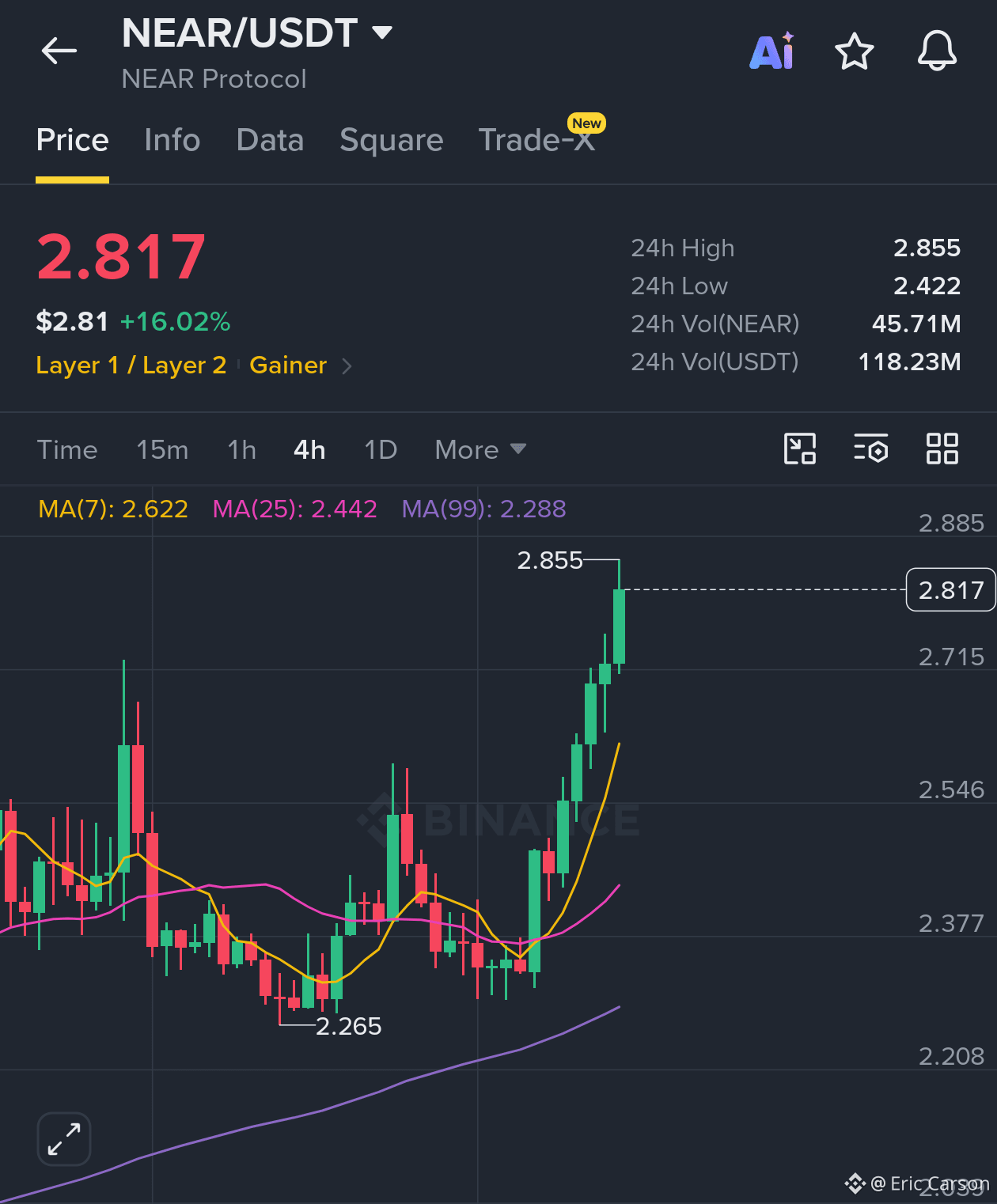
$NEAR Price hovering near 1.68 after a clean rejection from the short-term MAs. Weak volume on the current pause suggests this move could be a corrective stall, not a reversal yet. Reclaiming 1.75–1.79 range is the trigger for buyers — losing 1.66 risks deeper liquidity grabs. Level-to-level until strength returns. #NEAR #WriteToEarnUpgrade #BinanceSquareFamily #Write2Earn
$NEAR

Price hovering near 1.68 after a clean rejection from the short-term MAs.
Weak volume on the current pause suggests this move could be a corrective stall, not a reversal yet.
Reclaiming 1.75–1.79 range is the trigger for buyers — losing 1.66 risks deeper liquidity grabs.

Level-to-level until strength returns.

#NEAR #WriteToEarnUpgrade #BinanceSquareFamily #Write2Earn
$BERA Price sitting near 0.875 support after a steady downtrend, while MA pressure remains overhead. A reclaim of 0.895–0.905 is key to flip momentum — otherwise supply zone at the 99MA keeps upside capped. Break below 0.859 exposes deeper liquidity hunts. Watching for volume confirmation on any bounce. #BERA #WriteToEarnUpgrade #Write2Earn #BinanceSquareFamily
$BERA

Price sitting near 0.875 support after a steady downtrend, while MA pressure remains overhead.
A reclaim of 0.895–0.905 is key to flip momentum — otherwise supply zone at the 99MA keeps upside capped.
Break below 0.859 exposes deeper liquidity hunts.

Watching for volume confirmation on any bounce.

#BERA #WriteToEarnUpgrade #Write2Earn #BinanceSquareFamily
$PUMP Price attempting a short-term rebound after a controlled selloff, holding just above local support at 0.00281. Reclaim of the 7MA could open room back toward the mid-range, but rejection keeps lower liquidity levels in play. Watching for sustained volume to confirm a shift in momentum — otherwise this bounce remains corrective. #PUMP #WriteToEarnUpgrade #Write2Earn #BinanceSquareFamily
$PUMP

Price attempting a short-term rebound after a controlled selloff, holding just above local support at 0.00281.
Reclaim of the 7MA could open room back toward the mid-range, but rejection keeps lower liquidity levels in play.
Watching for sustained volume to confirm a shift in momentum — otherwise this bounce remains corrective.

#PUMP #WriteToEarnUpgrade #Write2Earn #BinanceSquareFamily
APRO: Strengthening Value Through Trusted Oracle InfrastructureAPRO’s recent market activity reflects a token positioned between aggressive growth strategies and ongoing price pressure. The project continues to receive strong visibility through major exchange support, with campaigns that include airdrops, creator incentives, and high-volume trading rewards. These efforts have successfully driven engagement and liquidity, but they also reveal a tension between short-term excitement and long-term value creation. The Alpha airdrop and other reward programs sparked noticeable increases in trading activity, as users rushed to claim tokens and compete for incentives. These mechanics are effective at capturing attention, yet they often encourage rapid selling once tokens are distributed. The result is volume without conviction — a market energized by rewards but hesitant to build sustained positions while broader conditions remain risk-averse. This dynamic is not unique to @APRO-Oracle The current crypto environment favors assets with clear utility and strong organic demand, while speculative distributions frequently lead to downward price pressure. To break the cycle where more incentives are needed just to maintain momentum, APRO must shift the narrative from distribution to adoption. That shift is possible because the heart of the project lies not in promotions, but in infrastructure. @APRO-Oracle is building oracle technology that enables smart contracts to access accurate, verifiable real-world data — a requirement for everything from tokenized assets to compliance-driven applications. As institutions explore regulated DeFi, identity-validated transactions, and tokenized financial instruments, reliable data feeds become mission-critical. A project solving that challenge stands to capture real value, especially if its token is tied to usage through staking, fees, or governance. The market will be watching several indicators closely: whether social engagement translates into genuine holder growth, whether developers adopt APRO’s oracle modules for high-stakes applications, and whether token mechanics evolve to reward long-term participation over rapid distribution. If these elements strengthen, APRO could transition from a promotional token story into a foundational player in trust-based on-chain automation. APRO today is a token fueled by campaigns. APRO tomorrow needs to be a token driven by necessity. The opportunity is clear: earning its place as a core data-verification layer for the next wave of real-world crypto innovation. Success will depend on how quickly attention converts into adoption — and whether users eventually want the token for its utility, not just its rewards. @APRO-Oracle #APRO #apro $AT {spot}(ATUSDT)

APRO: Strengthening Value Through Trusted Oracle Infrastructure

APRO’s recent market activity reflects a token positioned between aggressive growth strategies and ongoing price pressure. The project continues to receive strong visibility through major exchange support, with campaigns that include airdrops, creator incentives, and high-volume trading rewards. These efforts have successfully driven engagement and liquidity, but they also reveal a tension between short-term excitement and long-term value creation.
The Alpha airdrop and other reward programs sparked noticeable increases in trading activity, as users rushed to claim tokens and compete for incentives. These mechanics are effective at capturing attention, yet they often encourage rapid selling once tokens are distributed. The result is volume without conviction — a market energized by rewards but hesitant to build sustained positions while broader conditions remain risk-averse.
This dynamic is not unique to @APRO Oracle The current crypto environment favors assets with clear utility and strong organic demand, while speculative distributions frequently lead to downward price pressure. To break the cycle where more incentives are needed just to maintain momentum, APRO must shift the narrative from distribution to adoption.
That shift is possible because the heart of the project lies not in promotions, but in infrastructure. @APRO Oracle is building oracle technology that enables smart contracts to access accurate, verifiable real-world data — a requirement for everything from tokenized assets to compliance-driven applications. As institutions explore regulated DeFi, identity-validated transactions, and tokenized financial instruments, reliable data feeds become mission-critical. A project solving that challenge stands to capture real value, especially if its token is tied to usage through staking, fees, or governance.
The market will be watching several indicators closely: whether social engagement translates into genuine holder growth, whether developers adopt APRO’s oracle modules for high-stakes applications, and whether token mechanics evolve to reward long-term participation over rapid distribution. If these elements strengthen, APRO could transition from a promotional token story into a foundational player in trust-based on-chain automation.
APRO today is a token fueled by campaigns. APRO tomorrow needs to be a token driven by necessity. The opportunity is clear: earning its place as a core data-verification layer for the next wave of real-world crypto innovation. Success will depend on how quickly attention converts into adoption — and whether users eventually want the token for its utility, not just its rewards.
@APRO Oracle #APRO #apro $AT
Falcon Finance and the Future of Stable Liquidity: A Global RWA Engine for USDf@falcon_finance is emerging as a quiet but powerful force in the evolution of stablecoins, pushing the industry toward an era where liquidity is secured by diverse, globally distributed real-world assets rather than a single country’s debt. The protocol’s vision is clear: USDf should become a programmable, yield-connected dollar that scales beyond borders and beyond the limits of traditional collateral design. While most stablecoins rely overwhelmingly on U.S. Treasuries or opaque banking balances, Falcon is deliberately expanding into sovereign and institutional credit markets worldwide, giving USDf room to grow where traditional finance has placed barriers. The integration of CETES, Mexico’s short-term government securities, marks a turning point for the protocol. It is the first time USDf has been backed by a non-U.S. sovereign instrument, signaling a move away from the single-jurisdiction collateral concentration that has defined stablecoin markets for years. Mexico represents a high-demand corridor for dollar liquidity because of massive remittance flows and structural reliance on cross-border capital. By allowing users to maintain exposure to local yields while minting USDf, Falcon unlocks new financial behavior that traditional banks cannot support: citizens and businesses can borrow in dollars against domestic assets without sacrificing yield or ownership. On-chain settlement, daily NAV updates, and transparent proof of reserves further demonstrate that sovereign credit can function efficiently inside crypto’s open infrastructure. At the institutional end of the spectrum, Falcon has expanded collateral eligibility to include tokenized AAA-rated corporate credit and U.S. Treasuries via platforms like Centrifuge. This is more than a technical upgrade—it is entry into a market worth trillions. Institutional investors need collateral types that match their compliance, diversification, and yield expectations. Corporate credit introduces new forms of risk, but segregated reserves, independent yield mechanisms, and transparent vault management ensure that exposure remains controlled rather than correlated with crypto volatility. Instead of leaning on leverage or emissions to fuel liquidity, Falcon is building a durable flywheel powered by real yield from real economic activity. Visibility and user growth are being bolstered through coordinated exchange campaigns, such as Binance’s content-driven reward initiatives. These programs boost liquidity and reach, but Falcon’s long-term value does not depend on fast-moving trading incentives. Sustainable traction will only come from capital that stays inside the protocol because it is genuinely productive—where institutions route yield through USDf because it makes financial sense, not because rewards temporarily inflate volume metrics. The broader significance of these strategic decisions becomes clear when contrasted with market trends. Tokenized assets are entering a growth cycle where traditional finance seeks programmable access to debt markets, stablecoins are becoming the rails for global settlements, and cross-border remittances continue expanding into digital rails. Falcon sits precisely where these megatrends intersect. USDf provides exposure to diversified yields while behaving like a highly liquid digital dollar, connecting local economies to global liquidity with a level of transparency and accessibility current fintech systems still lack. Challenges remain. Sovereign markets outside the U.S. can introduce higher volatility, and corporate instruments carry default risk that must be consistently monitored. Liquidity must deepen across chains, and redemptions must remain frictionless to ensure price stability. But Falcon’s model accepts these challenges because the reward is transformative: a stablecoin market that no longer depends on a single nation’s economy or regulatory climate to function. @falcon_finance is not trying to replace the dollar. It is trying to globalize the dollar through collateral diversity, turning real-world yield sources into a unified liquidity engine that scales across jurisdictions. The result is a stablecoin with a stronger foundation, a broader footprint, and a more transparent connection to the global economy. As RWA tokenization accelerates and institutional capital flows onto blockchain rails, USDf could become a central instrument in the next wave of financial integration—one that finally breaks the boundaries between emerging markets and global liquidity. @falcon_finance #FalconFinanceIn #FalconFinance #falconfinance $FF {spot}(FFUSDT)

Falcon Finance and the Future of Stable Liquidity: A Global RWA Engine for USDf

@Falcon Finance is emerging as a quiet but powerful force in the evolution of stablecoins, pushing the industry toward an era where liquidity is secured by diverse, globally distributed real-world assets rather than a single country’s debt. The protocol’s vision is clear: USDf should become a programmable, yield-connected dollar that scales beyond borders and beyond the limits of traditional collateral design. While most stablecoins rely overwhelmingly on U.S. Treasuries or opaque banking balances, Falcon is deliberately expanding into sovereign and institutional credit markets worldwide, giving USDf room to grow where traditional finance has placed barriers.
The integration of CETES, Mexico’s short-term government securities, marks a turning point for the protocol. It is the first time USDf has been backed by a non-U.S. sovereign instrument, signaling a move away from the single-jurisdiction collateral concentration that has defined stablecoin markets for years. Mexico represents a high-demand corridor for dollar liquidity because of massive remittance flows and structural reliance on cross-border capital. By allowing users to maintain exposure to local yields while minting USDf, Falcon unlocks new financial behavior that traditional banks cannot support: citizens and businesses can borrow in dollars against domestic assets without sacrificing yield or ownership. On-chain settlement, daily NAV updates, and transparent proof of reserves further demonstrate that sovereign credit can function efficiently inside crypto’s open infrastructure.
At the institutional end of the spectrum, Falcon has expanded collateral eligibility to include tokenized AAA-rated corporate credit and U.S. Treasuries via platforms like Centrifuge. This is more than a technical upgrade—it is entry into a market worth trillions. Institutional investors need collateral types that match their compliance, diversification, and yield expectations. Corporate credit introduces new forms of risk, but segregated reserves, independent yield mechanisms, and transparent vault management ensure that exposure remains controlled rather than correlated with crypto volatility. Instead of leaning on leverage or emissions to fuel liquidity, Falcon is building a durable flywheel powered by real yield from real economic activity.
Visibility and user growth are being bolstered through coordinated exchange campaigns, such as Binance’s content-driven reward initiatives. These programs boost liquidity and reach, but Falcon’s long-term value does not depend on fast-moving trading incentives. Sustainable traction will only come from capital that stays inside the protocol because it is genuinely productive—where institutions route yield through USDf because it makes financial sense, not because rewards temporarily inflate volume metrics.
The broader significance of these strategic decisions becomes clear when contrasted with market trends. Tokenized assets are entering a growth cycle where traditional finance seeks programmable access to debt markets, stablecoins are becoming the rails for global settlements, and cross-border remittances continue expanding into digital rails. Falcon sits precisely where these megatrends intersect. USDf provides exposure to diversified yields while behaving like a highly liquid digital dollar, connecting local economies to global liquidity with a level of transparency and accessibility current fintech systems still lack.
Challenges remain. Sovereign markets outside the U.S. can introduce higher volatility, and corporate instruments carry default risk that must be consistently monitored. Liquidity must deepen across chains, and redemptions must remain frictionless to ensure price stability. But Falcon’s model accepts these challenges because the reward is transformative: a stablecoin market that no longer depends on a single nation’s economy or regulatory climate to function.
@Falcon Finance is not trying to replace the dollar. It is trying to globalize the dollar through collateral diversity, turning real-world yield sources into a unified liquidity engine that scales across jurisdictions. The result is a stablecoin with a stronger foundation, a broader footprint, and a more transparent connection to the global economy. As RWA tokenization accelerates and institutional capital flows onto blockchain rails, USDf could become a central instrument in the next wave of financial integration—one that finally breaks the boundaries between emerging markets and global liquidity.
@Falcon Finance #FalconFinanceIn #FalconFinance #falconfinance $FF
Lorenzo Protocol and the New Standard for Institutional Bitcoin YieldBitcoin has always been the reserve asset of crypto, trusted by institutions and retail alike, yet its capital largely remains inactive. Value worth hundreds of billions sits in custody wallets without generating yield or participating in on-chain economies. @LorenzoProtocol , powered by the BANK token, aims to rewrite this structure by transforming Bitcoin from a passive store of value into productive financial collateral. Instead of building another speculative ecosystem, the protocol focuses on secure and scalable yield strategies that align with how institutions operate. What makes this moment different is that Bitcoin DeFi has finally become technically and economically viable. With regulated custody solutions, proof-based BTC tokenization, and liquid markets for real-world yields, Bitcoin holders now have options that didn’t exist even two years ago. @LorenzoProtocol operates in this new environment by offering transparent yield products, BTC staking integrations, and infrastructure that allows BTC to back tokenized liquidity across multiple chains. In this system, BANK is the coordination asset: it governs the protocol, distributes incentives, and captures value from growing demand for Bitcoin-based liquidity. Recent exchange listings accelerated market attention. BANK’s initial reaction to its Binance debut triggered a 90% breakout before correcting alongside broader market liquidations. Its HTX listing drove a stronger narrative-driven performance, posting a 248% monthly surge as traders rotated into BTC-centric assets. These moves reinforced that BANK behaves like a high-beta asset within the Bitcoin cycle—strong upside when BTC trends, sharper volatility when macro fear rises. Instead of signaling weakness, this high sensitivity reflects that the protocol’s core value flows directly from Bitcoin demand. Where Lorenzo stands out is its alignment with institutional-grade design. Most DeFi yields are powered by temporary emissions or aggressive leverage mechanics that collapse when momentum fades. Lorenzo takes a fundamentally different approach: vaults structured around proven collateral, diversified yield flows, conservative risk frameworks, and security models that large capital providers understand. BTC becomes collateral not for speculative farming, but as an entry point to stable, sustainable on-chain returns that behave more like the products traditional investors already trust. This design positions BANK as a necessary governance layer for a new financial category—Bitcoin-native yield. The competitive landscape is rapidly expanding, with rollups, restaking layers, liquid staking protocols, and RWA platforms all targeting Bitcoin liquidity. But Lorenzo isn’t attempting to replace Bitcoin’s base layer or reinvent its consensus. Instead, it is building the missing financial layer that allows BTC to participate in structured finance without changing its core properties. That positioning gives the protocol a unique advantage: scalability through integration rather than fragmentation. Of course, execution remains critical. Market liquidity, Bitcoin price volatility, regulatory oversight of tokenized yield products, and developer adoption will shape how quickly capital flows into Lorenzo’s strategies. But as more institutions enter the space seeking returns beyond simple spot exposure, the demand for yield from secure reserves will continue to rise. Bitcoin is the deepest and most trusted collateral pool in the industry—turning that pool into productive capital is one of the clearest growth opportunities in crypto. The larger narrative is simple: Bitcoin used to be an asset investors waited on. Now it is becoming an asset that works for them. BANK represents early exposure to this shift. If Bitcoin evolves into a productive reserve asset powering global on-chain finance, the liquidity engines that unlock its yield potential will define the next era of crypto. BANK is positioned at the very front of that transformation, with upside tied not to hype cycles but to Bitcoin’s increasing role as the economic foundation of digital finance. @LorenzoProtocol #lorenzoprotocol $BANK {spot}(BANKUSDT)

Lorenzo Protocol and the New Standard for Institutional Bitcoin Yield

Bitcoin has always been the reserve asset of crypto, trusted by institutions and retail alike, yet its capital largely remains inactive. Value worth hundreds of billions sits in custody wallets without generating yield or participating in on-chain economies. @Lorenzo Protocol , powered by the BANK token, aims to rewrite this structure by transforming Bitcoin from a passive store of value into productive financial collateral. Instead of building another speculative ecosystem, the protocol focuses on secure and scalable yield strategies that align with how institutions operate.
What makes this moment different is that Bitcoin DeFi has finally become technically and economically viable. With regulated custody solutions, proof-based BTC tokenization, and liquid markets for real-world yields, Bitcoin holders now have options that didn’t exist even two years ago. @Lorenzo Protocol operates in this new environment by offering transparent yield products, BTC staking integrations, and infrastructure that allows BTC to back tokenized liquidity across multiple chains. In this system, BANK is the coordination asset: it governs the protocol, distributes incentives, and captures value from growing demand for Bitcoin-based liquidity.
Recent exchange listings accelerated market attention. BANK’s initial reaction to its Binance debut triggered a 90% breakout before correcting alongside broader market liquidations. Its HTX listing drove a stronger narrative-driven performance, posting a 248% monthly surge as traders rotated into BTC-centric assets. These moves reinforced that BANK behaves like a high-beta asset within the Bitcoin cycle—strong upside when BTC trends, sharper volatility when macro fear rises. Instead of signaling weakness, this high sensitivity reflects that the protocol’s core value flows directly from Bitcoin demand.
Where Lorenzo stands out is its alignment with institutional-grade design. Most DeFi yields are powered by temporary emissions or aggressive leverage mechanics that collapse when momentum fades. Lorenzo takes a fundamentally different approach: vaults structured around proven collateral, diversified yield flows, conservative risk frameworks, and security models that large capital providers understand. BTC becomes collateral not for speculative farming, but as an entry point to stable, sustainable on-chain returns that behave more like the products traditional investors already trust. This design positions BANK as a necessary governance layer for a new financial category—Bitcoin-native yield.
The competitive landscape is rapidly expanding, with rollups, restaking layers, liquid staking protocols, and RWA platforms all targeting Bitcoin liquidity. But Lorenzo isn’t attempting to replace Bitcoin’s base layer or reinvent its consensus. Instead, it is building the missing financial layer that allows BTC to participate in structured finance without changing its core properties. That positioning gives the protocol a unique advantage: scalability through integration rather than fragmentation.
Of course, execution remains critical. Market liquidity, Bitcoin price volatility, regulatory oversight of tokenized yield products, and developer adoption will shape how quickly capital flows into Lorenzo’s strategies. But as more institutions enter the space seeking returns beyond simple spot exposure, the demand for yield from secure reserves will continue to rise. Bitcoin is the deepest and most trusted collateral pool in the industry—turning that pool into productive capital is one of the clearest growth opportunities in crypto.
The larger narrative is simple: Bitcoin used to be an asset investors waited on. Now it is becoming an asset that works for them. BANK represents early exposure to this shift. If Bitcoin evolves into a productive reserve asset powering global on-chain finance, the liquidity engines that unlock its yield potential will define the next era of crypto. BANK is positioned at the very front of that transformation, with upside tied not to hype cycles but to Bitcoin’s increasing role as the economic foundation of digital finance.
@Lorenzo Protocol #lorenzoprotocol $BANK
The Quiet Rise of KITE: Powering the Machine-to-Machine Economy@GoKiteAI is positioning itself at the center of one of the most compelling evolutions happening in the crypto sector: the shift from human-operated digital services to autonomous AI agents that can perform tasks, negotiate access, and settle payments without human involvement. The underlying challenge this shift presents is simple to explain but difficult to solve: machines need a way to pay each other, instantly, cheaply, and with reliable identity verification. Legacy rails like credit card subscription billing are built for humans. They are far too slow, too expensive, and too permissioned to support agents engaging in millions of microtransactions worth fractions of a cent. This is where KITE emerges — aiming to become a native monetary system for machine-to-machine commerce. Recent developments highlight how the project is transitioning from narrative to infrastructure. Liquidity rails are expanding through institutional loan services that allow holders to borrow against KITE without selling it. This gives KITE a practical role in treasury management and reduces forced selling during volatile periods. Although institutional participation is still in its early stages, this marks a step toward deeper financial utility rather than speculative cycling. At the same time, @GoKiteAI continues to execute cross-chain deployments to ensure that AI agents are not trapped within a single blockchain ecosystem. Its payment standards — enabling micro-payments, session-based authorization, and identity-linked transactions — are now active across networks like Ethereum, BNB Chain, and Avalanche. This interoperability is important because the emerging agent economy will likely be fragmented across chains, data providers, and compute networks. By being present everywhere, KITE increases the chance that developers treat its payment tooling as the default choice rather than an optional integration. However, token performance tells a story that many new AI tokens are currently facing. After listings on major exchanges, KITE experienced an initial price drawdown driven by retail-dominated trading flows. Most of its supply remains locked, creating a high fully diluted valuation relative to circulating supply. This means that while long-term economics may favor growth, short-term trading remains sensitive to unlock schedules and market rotations. Consolidation within a predictable price range is likely until adoption metrics begin to shift. The core value proposition remains differentiated in a crowded AI token landscape. Many projects focus on compute or data, but few focus on how economic value moves between AI entities themselves. KITE’s identity and payment architecture is built around that exact use case: enabling agents to authenticate who they are, request resources, and settle payments autonomously. If that system gains traction, the result could be a network effect where the more agents that use KITE’s payment standards, the harder it becomes for alternatives to replace them. The investment case, therefore, hinges on whether the machine economy narrative becomes real enough for measurable payment activity to emerge on-chain. Key indicators like developer adoption, agent transaction volume, and increasing participation in liquidity products will determine whether KITE evolves from an idea to an indispensable component of AI commerce. The risks are clear: dilution pressure from unlocks, reliance on early developer momentum, and competition from larger ecosystems entering agentic payments. Yet the upside is equally clear: if AI agents become economic actors, KITE could capture recurring transactional demand that scales with machine activity rather than human speculation. In simpler terms: KITE does not need to win every part of the AI stack. It just needs to own the financial language autonomous agents speak. The coming months will show whether real-world usage starts to validate that vision. For now, KITE stands as one of the few projects not just imagining autonomous AI economies — but actually building the rails those economies will run on. @GoKiteAI #KITE #KİTE #Kite $KITE {spot}(KITEUSDT)

The Quiet Rise of KITE: Powering the Machine-to-Machine Economy

@KITE AI is positioning itself at the center of one of the most compelling evolutions happening in the crypto sector: the shift from human-operated digital services to autonomous AI agents that can perform tasks, negotiate access, and settle payments without human involvement. The underlying challenge this shift presents is simple to explain but difficult to solve: machines need a way to pay each other, instantly, cheaply, and with reliable identity verification. Legacy rails like credit card subscription billing are built for humans. They are far too slow, too expensive, and too permissioned to support agents engaging in millions of microtransactions worth fractions of a cent. This is where KITE emerges — aiming to become a native monetary system for machine-to-machine commerce.
Recent developments highlight how the project is transitioning from narrative to infrastructure. Liquidity rails are expanding through institutional loan services that allow holders to borrow against KITE without selling it. This gives KITE a practical role in treasury management and reduces forced selling during volatile periods. Although institutional participation is still in its early stages, this marks a step toward deeper financial utility rather than speculative cycling.
At the same time, @KITE AI continues to execute cross-chain deployments to ensure that AI agents are not trapped within a single blockchain ecosystem. Its payment standards — enabling micro-payments, session-based authorization, and identity-linked transactions — are now active across networks like Ethereum, BNB Chain, and Avalanche. This interoperability is important because the emerging agent economy will likely be fragmented across chains, data providers, and compute networks. By being present everywhere, KITE increases the chance that developers treat its payment tooling as the default choice rather than an optional integration.
However, token performance tells a story that many new AI tokens are currently facing. After listings on major exchanges, KITE experienced an initial price drawdown driven by retail-dominated trading flows. Most of its supply remains locked, creating a high fully diluted valuation relative to circulating supply. This means that while long-term economics may favor growth, short-term trading remains sensitive to unlock schedules and market rotations. Consolidation within a predictable price range is likely until adoption metrics begin to shift.
The core value proposition remains differentiated in a crowded AI token landscape. Many projects focus on compute or data, but few focus on how economic value moves between AI entities themselves. KITE’s identity and payment architecture is built around that exact use case: enabling agents to authenticate who they are, request resources, and settle payments autonomously. If that system gains traction, the result could be a network effect where the more agents that use KITE’s payment standards, the harder it becomes for alternatives to replace them.
The investment case, therefore, hinges on whether the machine economy narrative becomes real enough for measurable payment activity to emerge on-chain. Key indicators like developer adoption, agent transaction volume, and increasing participation in liquidity products will determine whether KITE evolves from an idea to an indispensable component of AI commerce. The risks are clear: dilution pressure from unlocks, reliance on early developer momentum, and competition from larger ecosystems entering agentic payments. Yet the upside is equally clear: if AI agents become economic actors, KITE could capture recurring transactional demand that scales with machine activity rather than human speculation.
In simpler terms: KITE does not need to win every part of the AI stack. It just needs to own the financial language autonomous agents speak. The coming months will show whether real-world usage starts to validate that vision. For now, KITE stands as one of the few projects not just imagining autonomous AI economies — but actually building the rails those economies will run on.
@KITE AI #KITE #KİTE #Kite $KITE
YGG’s Reinvention: How Yield Guild Games Is Building the Future of Web3 Gaming@YieldGuildGames (YGG) has undergone one of the most important transformations in the Web3 gaming sector. Once defined by the play-to-earn boom and the rapid rise of scholarship models, the project now represents a maturing vision for how communities, creators, and games can thrive sustainably in a blockchain economy. Instead of relying on rental-based yields and inflationary rewards, YGG is developing a modular ecosystem focused on publishing, network-driven incentives, and decentralized coordination. The early success of YGG was built on connecting players to NFT-powered games, where digital assets generated income through gameplay. But as the play-to-earn bubble deflated, it revealed a structural flaw: most games relied on speculative token emissions rather than real entertainment value. YGG recognized that survival required reinvention. The shift began with its Guild Protocol—smart-contract libraries that allow any group to self-organize as a guild with onchain governance, community identity, and automated revenue sharing. YGG is no longer positioning itself as a single dominant guild; it is instead building the backbone for thousands of independent guilds to operate across gaming worlds. It moves YGG from managing players to empowering ecosystems. The economic redesign continues with the formation of the on-chain Ecosystem Pool, seeded with 50 million YGG tokens. Rather than distributing rewards for short-term engagement, the pool focuses on liquidity strengthening, game-integrated incentives, strategic investments, and bringing high-potential titles to market. This marks a transition from emissions-based token circulation to capital allocation intended to generate reflexive value, where increased token utility leads to increased demand and deeper liquidity. The treasury becomes a growth engine instead of a subsidy machine. On the product side, YGG’s strongest momentum today comes from casual Web3 gaming—where friction is low, and reach can be massive. The browser-based game LOL Land demonstrated this shift, generating millions in revenue and integrating YGG into in-game progression systems. The expansion of YGG Play, including partnerships with builders like Proof of Play, aims to publish accessible games designed for viral onboarding. The goal is simple: fun brings users in, blockchain mechanics deepen long-term participation. Community dynamics are equally important to this transformation. Through the YGG Play Creator Program, the project is rewarding user-generated content and helping creators become distribution channels. Web2 gaming proves that creators, not token rewards, are the real growth flywheel. YGG is translating that truth into a crypto-native economy, where storytelling, tutorials, quests, and gameplay videos directly impact adoption. If players come for entertainment instead of “free money,” a sustainable ecosystem becomes achievable. Even with these advancements, the token’s market journey remains challenging. Despite a strong liquidity boost from an Upbit listing, YGG trades far below its 2021 peak. However, token utility is improving as staking models and revenue-share mechanics develop around published games. If guild reputation, performance, and cross-game achievements become tied to token rewards, demand may eventually reflect real participation rather than speculation. The health of the ecosystem will increasingly be measured through player activity and creator engagement, not price alone. Risks remain unavoidable. Casual Web3 gaming is competitive and retention-sensitive. Treasury deployment must outperform market volatility. The “guild” narrative must be reframed for investors who misunderstand YGG as a trend of the past rather than infrastructure for the future. What matters now is execution—consistent gameplay traction, creator growth, and meaningful returns from the Ecosystem Pool. @YieldGuildGames has already proven resilience by surviving a sector-wide collapse that eliminated many gaming DAOs. It is now positioned to lead a new phase where community coordination, content-driven discovery, and cross-game identity replace extractive play-to-earn loops. Instead of repeating history, YGG is writing a different story—one where players aren’t labor, but stakeholders in a digital economy built around fun, creativity, and aligned incentives. If Web3 gaming rebounds in scale and casual titles continue to onboard mainstream users, YGG has a credible path to becoming one of the most durable and influential ecosystems shaping the future of virtual worlds. @YieldGuildGames #YGGPlay $YGG {spot}(YGGUSDT)

YGG’s Reinvention: How Yield Guild Games Is Building the Future of Web3 Gaming

@Yield Guild Games (YGG) has undergone one of the most important transformations in the Web3 gaming sector. Once defined by the play-to-earn boom and the rapid rise of scholarship models, the project now represents a maturing vision for how communities, creators, and games can thrive sustainably in a blockchain economy. Instead of relying on rental-based yields and inflationary rewards, YGG is developing a modular ecosystem focused on publishing, network-driven incentives, and decentralized coordination.
The early success of YGG was built on connecting players to NFT-powered games, where digital assets generated income through gameplay. But as the play-to-earn bubble deflated, it revealed a structural flaw: most games relied on speculative token emissions rather than real entertainment value. YGG recognized that survival required reinvention. The shift began with its Guild Protocol—smart-contract libraries that allow any group to self-organize as a guild with onchain governance, community identity, and automated revenue sharing. YGG is no longer positioning itself as a single dominant guild; it is instead building the backbone for thousands of independent guilds to operate across gaming worlds. It moves YGG from managing players to empowering ecosystems.
The economic redesign continues with the formation of the on-chain Ecosystem Pool, seeded with 50 million YGG tokens. Rather than distributing rewards for short-term engagement, the pool focuses on liquidity strengthening, game-integrated incentives, strategic investments, and bringing high-potential titles to market. This marks a transition from emissions-based token circulation to capital allocation intended to generate reflexive value, where increased token utility leads to increased demand and deeper liquidity. The treasury becomes a growth engine instead of a subsidy machine.
On the product side, YGG’s strongest momentum today comes from casual Web3 gaming—where friction is low, and reach can be massive. The browser-based game LOL Land demonstrated this shift, generating millions in revenue and integrating YGG into in-game progression systems. The expansion of YGG Play, including partnerships with builders like Proof of Play, aims to publish accessible games designed for viral onboarding. The goal is simple: fun brings users in, blockchain mechanics deepen long-term participation.
Community dynamics are equally important to this transformation. Through the YGG Play Creator Program, the project is rewarding user-generated content and helping creators become distribution channels. Web2 gaming proves that creators, not token rewards, are the real growth flywheel. YGG is translating that truth into a crypto-native economy, where storytelling, tutorials, quests, and gameplay videos directly impact adoption. If players come for entertainment instead of “free money,” a sustainable ecosystem becomes achievable.
Even with these advancements, the token’s market journey remains challenging. Despite a strong liquidity boost from an Upbit listing, YGG trades far below its 2021 peak. However, token utility is improving as staking models and revenue-share mechanics develop around published games. If guild reputation, performance, and cross-game achievements become tied to token rewards, demand may eventually reflect real participation rather than speculation. The health of the ecosystem will increasingly be measured through player activity and creator engagement, not price alone.
Risks remain unavoidable. Casual Web3 gaming is competitive and retention-sensitive. Treasury deployment must outperform market volatility. The “guild” narrative must be reframed for investors who misunderstand YGG as a trend of the past rather than infrastructure for the future. What matters now is execution—consistent gameplay traction, creator growth, and meaningful returns from the Ecosystem Pool.
@Yield Guild Games has already proven resilience by surviving a sector-wide collapse that eliminated many gaming DAOs. It is now positioned to lead a new phase where community coordination, content-driven discovery, and cross-game identity replace extractive play-to-earn loops. Instead of repeating history, YGG is writing a different story—one where players aren’t labor, but stakeholders in a digital economy built around fun, creativity, and aligned incentives. If Web3 gaming rebounds in scale and casual titles continue to onboard mainstream users, YGG has a credible path to becoming one of the most durable and influential ecosystems shaping the future of virtual worlds.
@Yield Guild Games #YGGPlay $YGG
The Quiet Rebuild: Why Injective’s Fundamentals Are Outpacing Market Sentiment@Injective is currently navigating one of its most defining phases yet, facing notable short-term pressures while reinforcing long-term growth fundamentals. Recent market events have introduced volatility, but they have also highlighted the project’s evolving role as a core player in decentralized finance and real-world asset infrastructure. The most immediate challenge comes from Binance removing the INJ/FDUSD margin trading pair. With margin lending halted ahead of the delisting, leveraged positions are being forced to close, which can accelerate selling pressure and temporarily disrupt liquidity depth. Historically, similar margin removals have triggered sharp declines in affected tokens due to the combination of liquidations and deteriorating sentiment. While this is a tactical setback, Injective has made deliberate efforts over time to reduce dependency on centralized exchanges by building liquidity around decentralized platforms including its native order-book ecosystem. At the same time, short-term concerns have been raised about development momentum. A recent decline in measured GitHub activity has sparked speculation about shifting priorities inside the Injective ecosystem. This change appears to reflect a transition period rather than abandonment — developers may be executing infrastructure work that doesn’t reflect frequent commit spikes. This is particularly likely given that Injective recently launched its own EVM-compatible mainnet and continues advancing toward a multi-virtual-machine architecture that will support applications from different blockchain environments. Such deeper engineering often yields fewer public commits but sets the foundation for expanded ecosystem growth later. Counterbalancing those short-term concerns, Injective has stepped on the accelerator with respect to long-term token health. Over the past two months, the network has executed major buyback and burn events that collectively removed more than ten million tokens from circulation. These burns directly link protocol revenue to deflation, aligning network usage with upward price pressure over time. Few layer-one ecosystems offer a similar model where value capture is so directly tied to actual on-chain activity. This design strengthens Injective’s narrative as one of the most aggressively deflationary assets in the top tier of crypto networks. Meanwhile, Injective has started to establish itself as a bridge between traditional finance and decentralized markets — particularly through high-growth demand for synthetic trading tied to real-world assets. Trading activity in equity and commodity tracking instruments is proving that there is real appetite for alternatives to legacy brokerage accounts. The ability to access exposure to global markets using self-custodied capital, instant settlement, and leveraged positions opens an entirely new category of users and capital sources for DeFi. If institutional trading desks continue exploring permissionless RWA rails, Injective stands to become one of the earliest sustainable beneficiaries. This moment for @Injective reflects the broader state of crypto in late-stage infrastructure expansion: meaningful progress does not always translate into immediate market support. In the short term, market structure disruptions and cautious developer pacing can create doubt. But beneath that volatility is a network that is quietly optimizing for endurance. Reduction in circulating supply, rising protocol utility, flexible VM support, expanding capital markets, and solid alignment between users and token economics reinforce a resilient foundation. Injective’s path forward will depend heavily on how quickly developers and traders take advantage of the infrastructure now in place. A renewed uptick in integrations, new application deployments, and continued growth in trading volume could rapidly reverse the perception created by centralized-exchange delistings and GitHub rankings. Conversely, any decline in participation may extend the consolidation phase. The defining question now is whether Injective’s pace of real-world adoption can outgrow temporary liquidity and attention challenges. For strategic participants, INJ increasingly resembles more than a speculative altcoin. It is developing into a revenue-linked asset tied to real economics and verifiable usage. The trade-off is patience: the current cycle tests conviction while fundamentals quietly strengthen. Those who approach Injective as a long-term bet on decentralized financial infrastructure — rather than a momentum trade — may find opportunity in the divergence between short-term sentiment and long-term construction. @Injective #Injective #injective $INJ {spot}(INJUSDT)

The Quiet Rebuild: Why Injective’s Fundamentals Are Outpacing Market Sentiment

@Injective is currently navigating one of its most defining phases yet, facing notable short-term pressures while reinforcing long-term growth fundamentals. Recent market events have introduced volatility, but they have also highlighted the project’s evolving role as a core player in decentralized finance and real-world asset infrastructure.
The most immediate challenge comes from Binance removing the INJ/FDUSD margin trading pair. With margin lending halted ahead of the delisting, leveraged positions are being forced to close, which can accelerate selling pressure and temporarily disrupt liquidity depth. Historically, similar margin removals have triggered sharp declines in affected tokens due to the combination of liquidations and deteriorating sentiment. While this is a tactical setback, Injective has made deliberate efforts over time to reduce dependency on centralized exchanges by building liquidity around decentralized platforms including its native order-book ecosystem.
At the same time, short-term concerns have been raised about development momentum. A recent decline in measured GitHub activity has sparked speculation about shifting priorities inside the Injective ecosystem. This change appears to reflect a transition period rather than abandonment — developers may be executing infrastructure work that doesn’t reflect frequent commit spikes. This is particularly likely given that Injective recently launched its own EVM-compatible mainnet and continues advancing toward a multi-virtual-machine architecture that will support applications from different blockchain environments. Such deeper engineering often yields fewer public commits but sets the foundation for expanded ecosystem growth later.
Counterbalancing those short-term concerns, Injective has stepped on the accelerator with respect to long-term token health. Over the past two months, the network has executed major buyback and burn events that collectively removed more than ten million tokens from circulation. These burns directly link protocol revenue to deflation, aligning network usage with upward price pressure over time. Few layer-one ecosystems offer a similar model where value capture is so directly tied to actual on-chain activity. This design strengthens Injective’s narrative as one of the most aggressively deflationary assets in the top tier of crypto networks.
Meanwhile, Injective has started to establish itself as a bridge between traditional finance and decentralized markets — particularly through high-growth demand for synthetic trading tied to real-world assets. Trading activity in equity and commodity tracking instruments is proving that there is real appetite for alternatives to legacy brokerage accounts. The ability to access exposure to global markets using self-custodied capital, instant settlement, and leveraged positions opens an entirely new category of users and capital sources for DeFi. If institutional trading desks continue exploring permissionless RWA rails, Injective stands to become one of the earliest sustainable beneficiaries.
This moment for @Injective reflects the broader state of crypto in late-stage infrastructure expansion: meaningful progress does not always translate into immediate market support. In the short term, market structure disruptions and cautious developer pacing can create doubt. But beneath that volatility is a network that is quietly optimizing for endurance. Reduction in circulating supply, rising protocol utility, flexible VM support, expanding capital markets, and solid alignment between users and token economics reinforce a resilient foundation.
Injective’s path forward will depend heavily on how quickly developers and traders take advantage of the infrastructure now in place. A renewed uptick in integrations, new application deployments, and continued growth in trading volume could rapidly reverse the perception created by centralized-exchange delistings and GitHub rankings. Conversely, any decline in participation may extend the consolidation phase. The defining question now is whether Injective’s pace of real-world adoption can outgrow temporary liquidity and attention challenges.
For strategic participants, INJ increasingly resembles more than a speculative altcoin. It is developing into a revenue-linked asset tied to real economics and verifiable usage. The trade-off is patience: the current cycle tests conviction while fundamentals quietly strengthen. Those who approach Injective as a long-term bet on decentralized financial infrastructure — rather than a momentum trade — may find opportunity in the divergence between short-term sentiment and long-term construction.
@Injective #Injective #injective $INJ
$VIC Price holding above psychological $0.10 with a clean reclaim attempt on short-term MAs. Early signs of controlled buying — but still under the major trend lines. Break + close above $0.1055 = momentum shift confirmation. Losing $0.099 = structure risk returns. • Entry: $0.101 – $0.103 • TP1: $0.106 • TP2: $0.109 • TP3: $0.111 • SL: Below $0.099 Watching for volume follow-through on next 4H close. {spot}(VICUSDT) #VIC #Write2Earn! #WriteToEarnUpgrade #BinanceBlockchainWeek #BinanceSquareFamily
$VIC

Price holding above psychological $0.10 with a clean reclaim attempt on short-term MAs.
Early signs of controlled buying — but still under the major trend lines.

Break + close above $0.1055 = momentum shift confirmation.
Losing $0.099 = structure risk returns.

• Entry: $0.101 – $0.103
• TP1: $0.106
• TP2: $0.109
• TP3: $0.111
• SL: Below $0.099

Watching for volume follow-through on next 4H close.
#VIC #Write2Earn! #WriteToEarnUpgrade #BinanceBlockchainWeek #BinanceSquareFamily
$KAVA Price sitting near local support after a sharp fade — sellers slowing down. Reclaim above 0.1145 could trigger a short-term relief bounce. • Entry: 0.1105 – 0.1135 • TP1: 0.1180 • TP2: 0.1215 • SL: Below 0.1090 Watching for momentum shift before confirmation. {spot}(KAVAUSDT) #KAVA #WriteToEarnUpgrade #Write2Earn
$KAVA

Price sitting near local support after a sharp fade — sellers slowing down.
Reclaim above 0.1145 could trigger a short-term relief bounce.

• Entry: 0.1105 – 0.1135
• TP1: 0.1180
• TP2: 0.1215
• SL: Below 0.1090

Watching for momentum shift before confirmation.
#KAVA #WriteToEarnUpgrade #Write2Earn
$GLM Price hovering near the lows with controlled selling — compression building up. A decisive move above short-term MAs could flip momentum fast. Watching reclaim > 0.2240 for breakout continuation. Losing 0.2175 opens further downside risk. Clean levels 👇 • Entry Zone: 0.2175 – 0.2210 • TP1: 0.2290 • TP2: 0.2380 • TP3: 0.2520 • Stop-Loss: Below 0.2140 Structure remains fragile — momentum shift required for bulls. {spot}(GLMUSDT) #GLM #writetoearn #WriteToEarnUpgrade
$GLM

Price hovering near the lows with controlled selling — compression building up.
A decisive move above short-term MAs could flip momentum fast.
Watching reclaim > 0.2240 for breakout continuation.
Losing 0.2175 opens further downside risk.

Clean levels 👇
• Entry Zone: 0.2175 – 0.2210
• TP1: 0.2290
• TP2: 0.2380
• TP3: 0.2520
• Stop-Loss: Below 0.2140

Structure remains fragile — momentum shift required for bulls.
#GLM #writetoearn #WriteToEarnUpgrade
$ZBT Strong bounce from 0.1039 support with a sharp reclaim above short-term MAs. Momentum shifting, but facing resistance near MA(99). Entry Zone → 0.1090 - 0.1120 TP1 → 0.1165 TP2 → 0.1210 TP3 → 0.1260 Stop-Loss → Below 0.1035 Watching for controlled continuation if price holds above 0.1120 and pushes through MA(99). {spot}(ZBTUSDT) #ZBT #altcoins #crypto #Trading #WriteToEarnUpgrade
$ZBT

Strong bounce from 0.1039 support with a sharp reclaim above short-term MAs. Momentum shifting, but facing resistance near MA(99).

Entry Zone → 0.1090 - 0.1120
TP1 → 0.1165
TP2 → 0.1210
TP3 → 0.1260
Stop-Loss → Below 0.1035

Watching for controlled continuation if price holds above 0.1120 and pushes through MA(99).
#ZBT #altcoins #crypto #Trading #WriteToEarnUpgrade
Login to explore more contents
Explore the latest crypto news
⚡️ Be a part of the latests discussions in crypto
💬 Interact with your favorite creators
👍 Enjoy content that interests you
Email / Phone number

Latest News

--
View More

Trending Articles

Ashal Salman
View More
Sitemap
Cookie Preferences
Platform T&Cs