
#investorprotection
investorprotection
170,660 views
208 Discussing
Hot
Latest

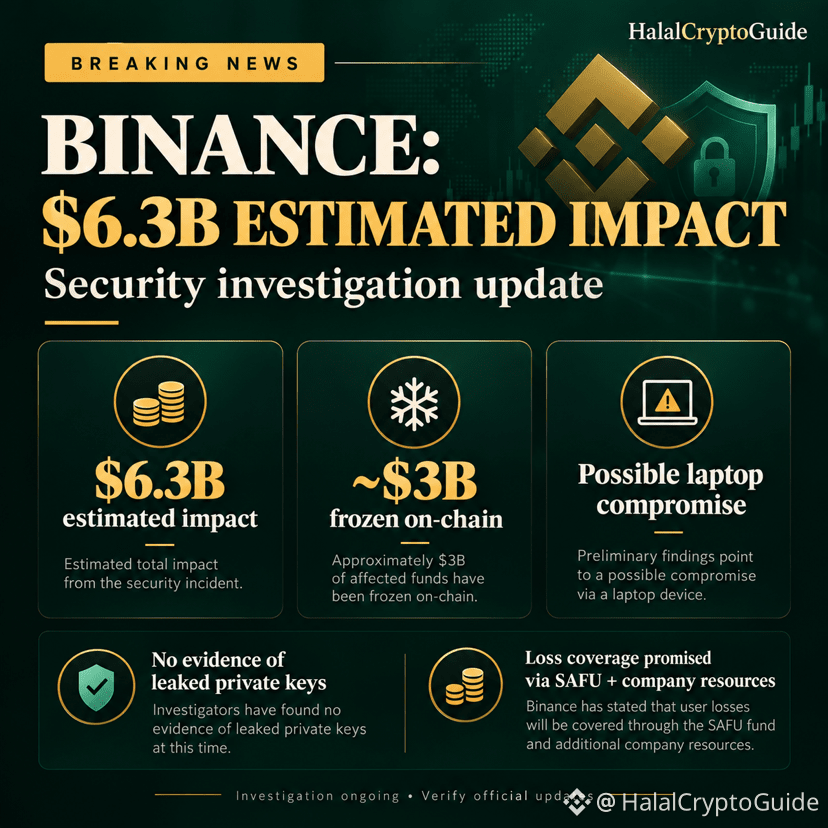
🚨 BINANCE SECURITY UPDATE: $6.3 BILLION ESTIMATED IMPACT
Binance has released new findings about its ongoing security incident.
Here’s what has been officially confirmed:
🔴 $6.3 billion — estimated total financial impact.
🟠 Approximately $3 billion — assets frozen on-chain so far.
🔴 Possible attack method: A compromised DevOps engineer’s laptop may have allowed unauthorized withdrawal transactions.
🟢 Private keys: Binance says it has found no evidence of leaked wallet private keys.
🟢 User protection: Binance says it will cover losses using its SAFU fund and company resources.
⚠️ Important for users:
Binance temporarily suspended deposits and withdrawals while carrying out security checks. Check the official app for the latest service status.
The investigation is ongoing. Frozen funds are not necessarily recovered funds, and the estimated impact should not be confused with confirmed unrecoverable losses.
Three things to remember:
1️⃣ Never trust unofficial recovery links or messages requesting your account credentials.
2️⃣ Follow official announcements for withdrawal restoration and compensation procedures.
3️⃣ Remember that exchange security depends on operational controls—not just private-key protection.
☪️ For Muslim investors, protecting entrusted wealth and understanding custody risks are important considerations alongside Shariah compliance.
A trusted platform still requires careful risk management.
💬 What would restore your confidence most: withdrawal restoration, transparent reserves, or a full security investigation?
#Binance #CryptoSecurity #InvestorProtection #HalalCryptoGuide
73
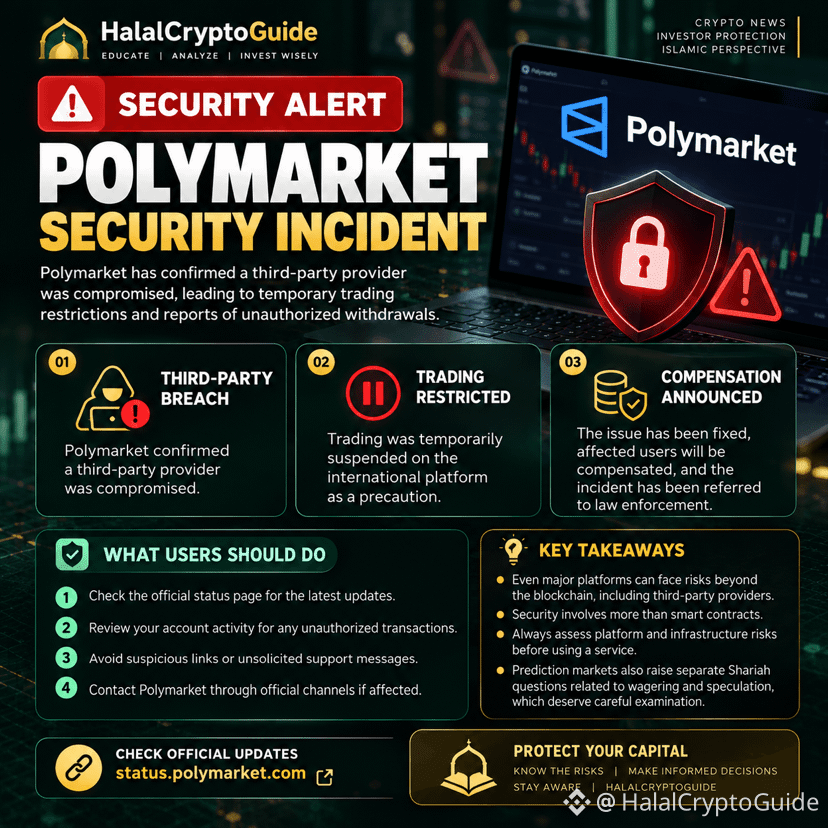
SECURITY ALERT: Polymarket Confirms Third-Party Breach
A reminder that even major crypto platforms can face risks beyond their smart contracts.
On October 29, Polymarket temporarily suspended trading on its international platform following a security incident involving a compromised third-party provider.
Users reported unauthorized withdrawals.
Polymarket has confirmed that:
• The underlying issue has been identified and fixed.
• Trading was temporarily restricted as a precaution.
• Affected users will be compensated.
• The incident has been referred to law enforcement.
What should users do?
1. Check the platform’s official status page before taking action.
2. Review account activity for unauthorized transactions.
3. Avoid suspicious recovery links or unsolicited support messages.
4. Contact official support if your account was affected.
An important lesson: Security depends on more than blockchain technology. Third-party infrastructure, account access and platform integrations also matter.
For Muslim investors, this incident reinforces the importance of safeguarding entrusted assets. Prediction-market participation also raises separate Shariah questions involving wagering and speculation that deserve careful examination.
Protecting capital begins with understanding where the risks actually exist.
Do you consider third-party security when choosing a crypto platform?
#CryptoSecurity #Polymarket #InvestorProtection #HalalCryptoGuide
123

·
--
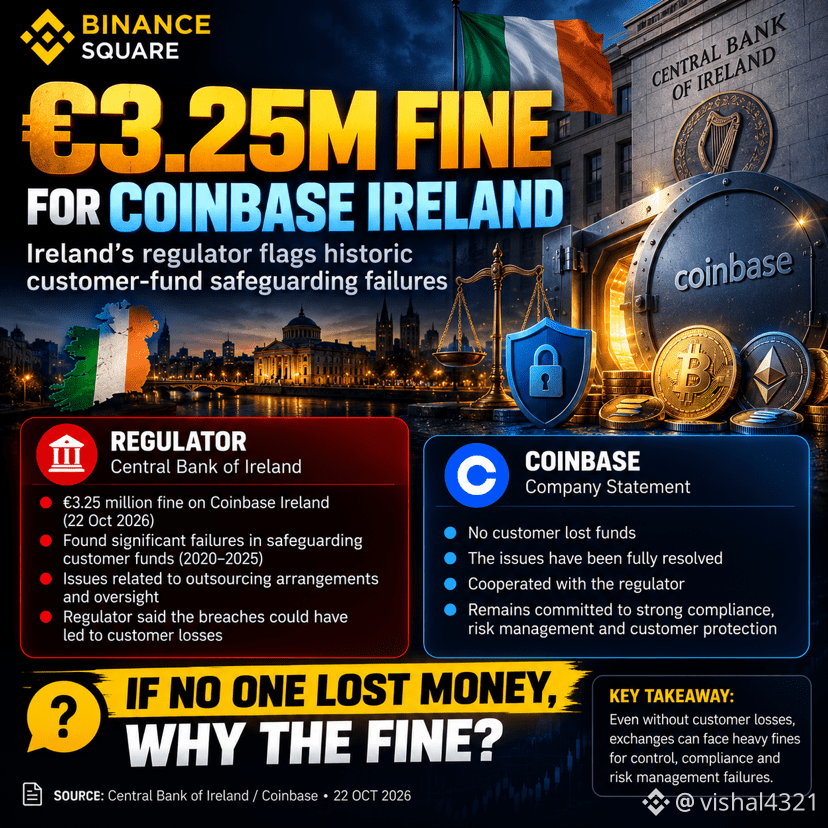
🚨 €3.25 MILLION FINE — BUT NO CUSTOMER LOST MONEY?
On October 22, 2026, Ireland’s central bank announced a €3.25 million penalty against Coinbase Ireland.
Here’s what makes this case interesting. 👇
🔴 What did the regulator find?
The investigation identified historical weaknesses in how customer funds were safeguarded, including outsourcing oversight and internal controls.
🔵 What does Coinbase say?
Coinbase says it cooperated with the regulator, resolved the issues and that no customers lost money or lost access to their funds because of these problems.
⚖️ So why the fine?
Financial regulation isn’t only about compensating people after losses happen.
It’s also about ensuring companies have proper safeguards before something goes wrong.
💡 The bigger lesson for crypto users:
When choosing where to hold or trade assets, don’t look only at fees, coin listings and popularity. Security controls, transparency and regulatory compliance matter too.
Whether you’re following $BTC or $ETH, understanding exchange risk is part of understanding crypto.
💬 What’s your opinion?
A) A fine is justified when safeguards fail, even without losses.
B) Regulators should focus mainly on actual customer harm.
👇 Share A or B — and explain why!
#CryptoNews #Coinbase #CryptoRegulation #Bitcoin #Ethereum #BinanceSquare #InvestorProtection
88
🚨 INDIA'S CRYPTO INVESTORS FACE AN IMPORTANT QUESTION: WHO PROTECTS THEIR ASSETS? 🇮🇳
What happens to your crypto if an exchange collapses? 🤔
A report published by Financial Express on October 20 highlights concerns raised in a research paper by India's Insolvency and Bankruptcy Board of India (IBBI).
The paper points to gaps in the current insolvency framework concerning ownership and recovery of customers' crypto assets if an exchange fails. It recommends clearer rules for recognizing digital assets, separating customer holdings from company assets, and handling recovery claims.
Why does this matter?
🔐 Asset protection: Clearer rules could help establish how customer holdings should be treated during insolvency.
📋 Legal clarity: Investors need greater certainty about ownership and recovery procedures.
🛡️ Risk awareness: Keeping records and understanding an exchange's custody arrangements are important.
⚠️ These are reported recommendations, not a guarantee of new laws or full investor protection.
💬 Question for India's crypto community: Do you think stronger legal protection for crypto holders should be a priority?
Share your thoughts below. 👇
#Bitcoin #CryptoRegulation #InvestorProtection #blockchain #BinanceSquare
74
$BTC market trust stays in focus after $1.8B HyperFund fraud plea ⚖️
A Florida man has pleaded guilty in a federal crypto fraud case tied to HyperFund, a scheme prosecutors say raised $1.8 billion from victims worldwide. The platform allegedly promised daily passive rewards backed by crypto mining operations that did not exist, while withdrawals were blocked from 2021 onward.
This is another reminder that yield promises without transparent revenue, verifiable operations, and clear withdrawal access deserve serious scrutiny. In crypto, market opportunity is real, but trust, custody, and due diligence remain part of the trade.
Not financial advice. Manage your risk.
#BTC #CryptoNews #MarketRisk #InvestorProtection
🟢
56

·
--
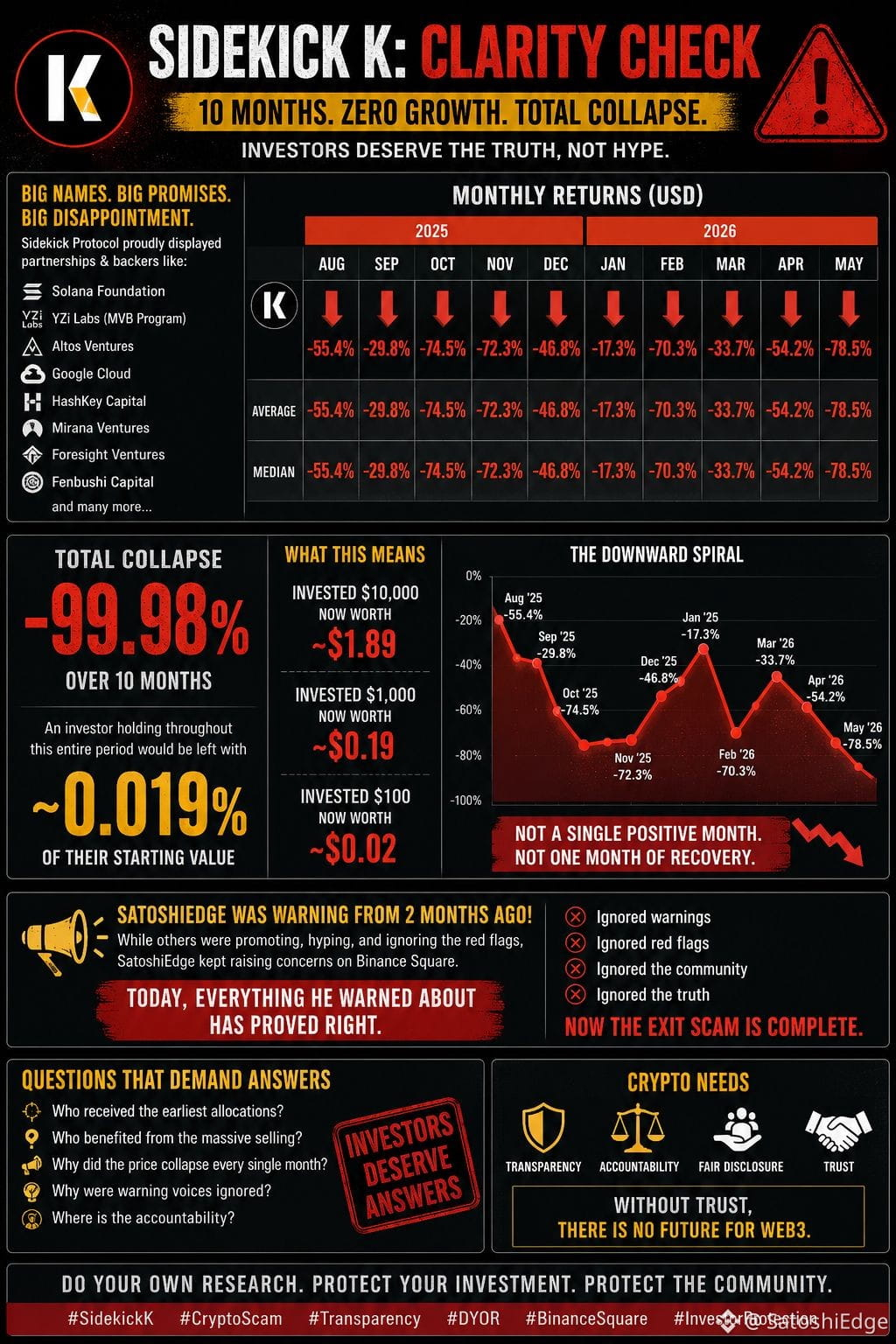
🚨 SIDEKICK K: A CLARITY CHECK FOR THE CRYPTO COMMUNITY 🚨
For months, many investors were told that Sidekick K was backed by big names, prestigious programs, venture capital firms, ecosystem partners, and industry recognition.
Yet the market performance tells a story that cannot be ignored.
📉 Monthly Returns Recorded:
Aug 2025: -55.4% Sep 2025: -29.8% Oct 2025: -74.5% Nov 2025: -72.3% Dec 2025: -46.8%
Jan 2026: -17.3% Feb 2026: -70.3% Mar 2026: -33.7% Apr 2026: -54.2% May 2026: -78.5%
Not a single positive month.
Not one month of sustained recovery.
According to these monthly returns, an investor holding throughout the period would be left with roughly 0.019% of their starting value.
That represents an approximate cumulative collapse of 99.98%.
Think about that.
A $10,000 position would be worth around $1.89.
A $1,000 position would be worth around $0.19.
For over two months, SatoshiEdge continued raising concerns and publishing warnings while many dismissed them as FUD.
Today, investors are asking the same questions that were being asked months ago:
• Who received the earliest allocations? • Who benefited from the selling pressure? • Why did the market continue collapsing month after month? • Why were warning signs ignored? • What protections existed for retail investors?
Crypto needs transparency.
Crypto needs accountability.
Crypto needs fair disclosure.
Most importantly, crypto needs trust.
When projects associated with major names experience a 99.98% collapse, the industry owes investors clear answers.
The numbers speak for themselves.
$BNB $XRP $SOLV
#RiskManagementin2026 #BinanceSquareFamily #Transparencyzero #InvestorProtection
247

Binance: Please Take Responsibility for Your Listings
Dear
I'm writing this as a genuine request on behalf of thousands of retail investors who have been left holding empty bags.
We've watched a troubling pattern repeat itself over and over:
→ A new coin gets listed on Binance
→ Hype builds, retail investors pour in their hard-earned money
→ The project team and early insiders pump the price
→ They sell off at the top and exit with massive profits
→ The price crashes
→ Ordinary investors are left trapped with worthless tokens
This isn't a rare incident. It's happening again and again — and the people who suffer are always the same: small investors who trusted Binance's name as a mark of legitimacy.
Listing on Binance is not just a business decision. It is a signal of trust.
When you list a project, millions of users assume it has passed some level of due diligence. But if teams can launch, dump, and walk away with no consequences, then that trust is being exploited.
What we're asking for:
1. Stricter vetting before listing real audits, locked liquidity, vesting schedules for team tokens
2. Accountability mechanisms if a team dumps and exits, Binance should delist them and blacklist them from future listings
3. Transparency disclose token distribution and insider holdings before listing
4. Investor protection consider compensation funds or safeguards for rug-pull victims
5. Legal action cooperate with authorities to pursue fraudulent project teams
Binance has the power, the resources, and the platform to set a global standard. Instead of enabling the next rug pull, you could be the exchange that protects its users.
We're not asking for guarantees on profits. We're asking for basic protection against being used as exit liquidity.
Binance, will you take action or will you keep looking the other way?
#Binance #crypto #InvestorProtection #Accountability
131


·
--
Bullish
#ukfcawinscourtordertorecover851400pounds
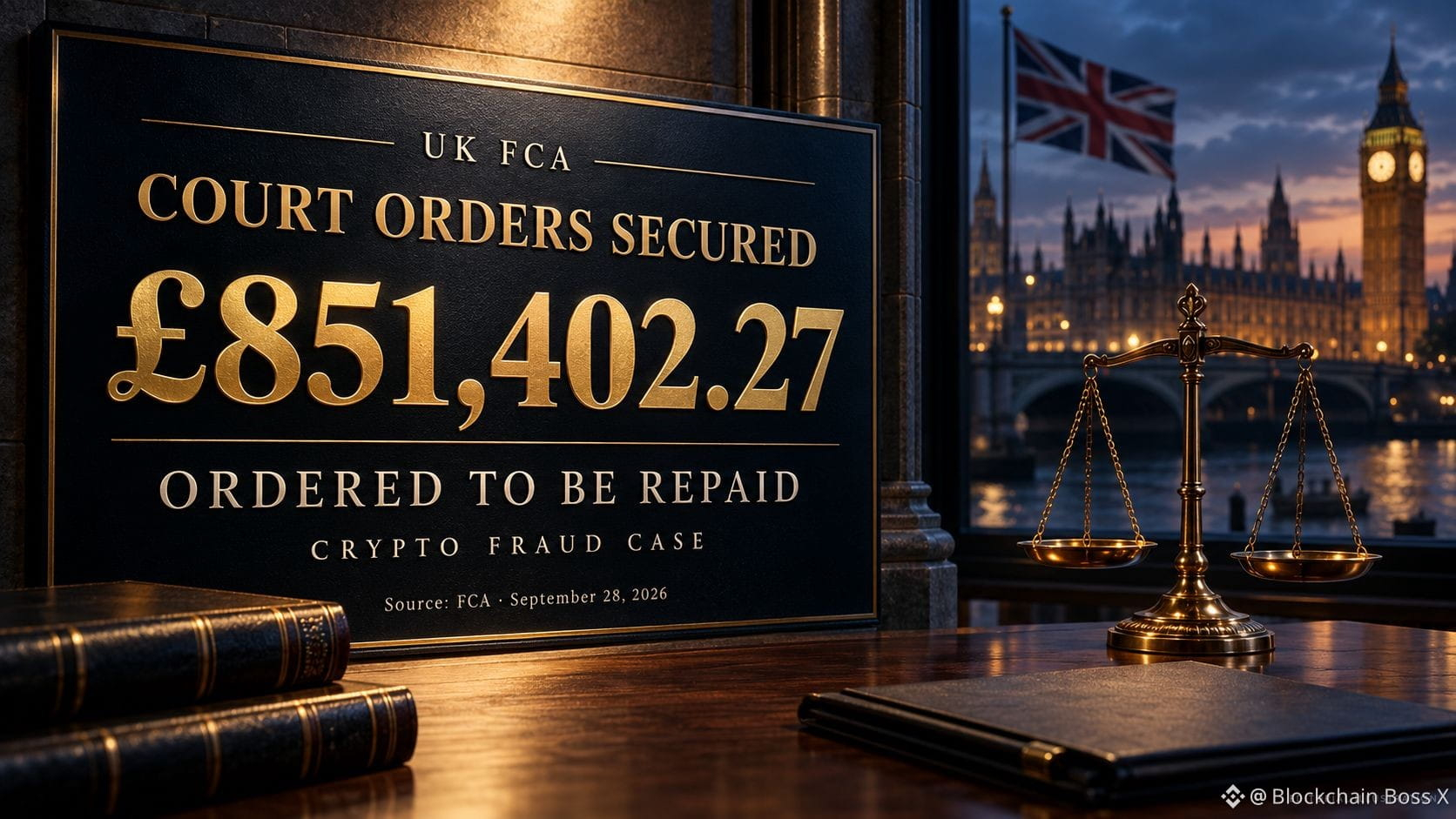
🇬🇧 £851,402 Ordered Back in Crypto Fraud Case: What Happens Next?
The UK’s Financial Conduct Authority has secured confiscation orders totaling £851,402.27 against convicted fraudsters Raymondip Bedi and Patrick Mavanga. The orders were made at Southwark Crown Court on September 28, 2026.
Bedi must pay £603,404.28, and Mavanga £247,997.99. Their scheme used unsolicited calls to promote fake crypto investments between 2017 and 2019. At least 65 investors lost £1,541,799.
The FCA says recovered funds will go to victims. The announcement does not confirm that repayments have already been completed.
My take: This is meaningful progress, but the outcome that matters for victims is how much money reaches them and when. The ordered total remains below the reported losses, so this update alone cannot establish that everyone will receive full compensation.
For the wider crypto industry, confidence also depends on making recovery processes understandable. Clear updates on collection, distribution and outstanding amounts would help people assess the practical outcome of enforcement.
Prevention remains essential too. The FCA advises checking a firm’s permissions and matching its contact details against official records. Unexpected approaches, pressure to invest quickly and unrealistic returns are warning signs.
Which recovery update would be most useful to victims: payment timelines or amounts actually returned?
#UKFCAWinsCourtOrderToRecover851400Pounds #CryptoRegulation #InvestorProtection
$BTC $ETH $XRP
{future}(XRPUSDT)
{future}(ETHUSDT)
{future}(BTCUSDT)
#ukfcawinscourtordertorecover851400pounds
🇬🇧 £851,402 Ordered Back in Crypto Fraud Case: What Happens Next?
The UK’s Financial Conduct Authority has secured confiscation orders totaling £851,402.27 against convicted fraudsters Raymondip Bedi and Patrick Mavanga. The orders were made at Southwark Crown Court on September 28, 2026.
Bedi must pay £603,404.28, and Mavanga £247,997.99. Their scheme used unsolicited calls to promote fake crypto investments between 2017 and 2019. At least 65 investors lost £1,541,799.
The FCA says recovered funds will go to victims. The announcement does not confirm that repayments have already been completed.
My take: This is meaningful progress, but the outcome that matters for victims is how much money reaches them and when. The ordered total remains below the reported losses, so this update alone cannot establish that everyone will receive full compensation.
For the wider crypto industry, confidence also depends on making recovery processes understandable. Clear updates on collection, distribution and outstanding amounts would help people assess the practical outcome of enforcement.
Prevention remains essential too. The FCA advises checking a firm’s permissions and matching its contact details against official records. Unexpected approaches, pressure to invest quickly and unrealistic returns are warning signs.
Which recovery update would be most useful to victims: payment timelines or amounts actually returned?
#UKFCAWinsCourtOrderToRecover851400Pounds #CryptoRegulation #InvestorProtection
$BTC $ETH $XRP
1
2k

·
--
Goliath Ventures CEO Pleads Guilty to $250M Crypto
A federal court in New York has accepted the guilty plea from the CEO of Goliath Ventures, who orchestrated a massive $250 million fraudulent scheme targeting crypto investors. The case represents one of the largest Ponzi arrangements in the digital asset space, with funds reportedly diverted to personal luxury purchases rather than the promised investment returns.
This case highlights the persistent risks in unregulated crypto fundraising, where promises of outsized returns mask fundamental fraud. Investors drawn by tokens and blockchain terminology often overlook basic due diligence, allowing bad actors to operate for years before regulatory intervention. The scale of this particular scheme — $250 million over several years — demonstrates how traditional Ponzi mechanics adapt to the crypto narrative.
What safeguards do investors need when evaluating crypto fundraising pitches? Drop your take below. 👇
#CryptoFraud #PonziScheme #InvestorProtection
55

·
--
Do you know how some scams can make you lose everything, just like how you'd leave your wallet unattended in a crowded mall? Unfortunately, that's exactly what happened to 60 people in North Carolina, swindled out of $14 million by a man allegedly running a commodity pool.
#CryptoSecurity #InvestorProtection
Here's how it works: a commodity pool is a group investment where multiple people pool their money to invest in commodities like cryptocurrencies or futures. But in this case, the man ran a ponzi scheme, using the money from new investors to pay off earlier investors, promising them high returns.
The CFTC, the US derivatives regulator, investigated and found evidence of this alleged scam. The case serves as a reminder to be cautious and do your research when investing in groups or schemes promising unusually high returns.
So, always research and verify the legitimacy of any investment opportunity before putting your hard-earned money in, even if it seems too good to be true. What investment opportunities would you be most cautious about giving your money to?
33
·
--
Singapore warns on Hyperliquid. Indonesia licenses FinFluencers.
Asia's regulatory landscape is shifting fast. Singapore's investor warning targets Hyperliquid, joining an unlicensed exchange list. Meanwhile, Indonesia introduces certification rules for crypto influencers, making financial influence a regulated profession.
Two different approaches, same goal: protecting retail investors. Singapore takes the defensive route—flagging platforms. Indonesia goes preventive—certifying messengers. Both acknowledge the same reality: crypto information spreads faster than oversight.
The timing matters. MiCA deadlines loom in Europe, U.S. clarity legislation stalls. Asian regulators are writing the playbook while others debate. Will certification frameworks become the global standard for crypto communication? Or will platform blacklists dominate?
What's the right balance between investor protection and market freedom? Drop your take below. 👇
#AsiaCryptoRegulation #FinFluencerLicensing #InvestorProtection
112

·
--
Minnesota is cracking down on crypto ATMs, citing $1 million in reported losses primarily impacting seniors.
This isn't just a local regulatory move; it's a canary in the coal mine for broader investor protection discussions shaping the crypto landscape. We've seen similar crackdowns in other jurisdictions, often triggered by specific vulnerabilities exploited by bad actors. The focus on senior citizens highlights a critical vulnerability in user onboarding and education that the industry must address. This regulatory pressure, while aimed at mitigating fraud, could also stifle innovation if not carefully balanced. Watch how other states and even federal bodies react to this precedent.
Smart money is increasingly scrutinizing the regulatory environment alongside technological advancements. Expect to see more sophisticated compliance-focused projects gain traction, while those with opaque operations or weak security protocols face increased headwinds. This signals a maturing market that demands greater accountability. #CryptoRegulation #InvestorProtection #ScamAwareness
The key takeaway is that regulatory friction is a constant, and proactive risk management, both for individuals and projects, is paramount. Any further significant state-level bans could signal increased federal scrutiny and impact liquidity for smaller, less compliant entities.
What's your take on the effectiveness of ATM bans versus education initiatives in combating crypto scams?
40
·
--
The SEC is alleging a crypto operator took $425 million from investors—then spent $51 million on homes, cars and a yacht.
That is the kind of case that cuts straight through the market’s usual noise. Beyond the headline numbers, it reinforces a hard reality: custody, transparency and verifiable use of funds remain essential when users hand capital to any crypto platform or operator.
The allegation also puts renewed focus on the warning signs investors should not ignore—unclear business models, limited disclosures, promises that cannot be independently verified, and no credible separation between customer money and personal spending.
The next development to watch is the SEC’s legal action and whether more details emerge on how the alleged scheme operated and who may have been affected.
What due-diligence check do you think crypto investors overlook most often?
#CryptoNews #CryptoRegulation #InvestorProtection
81

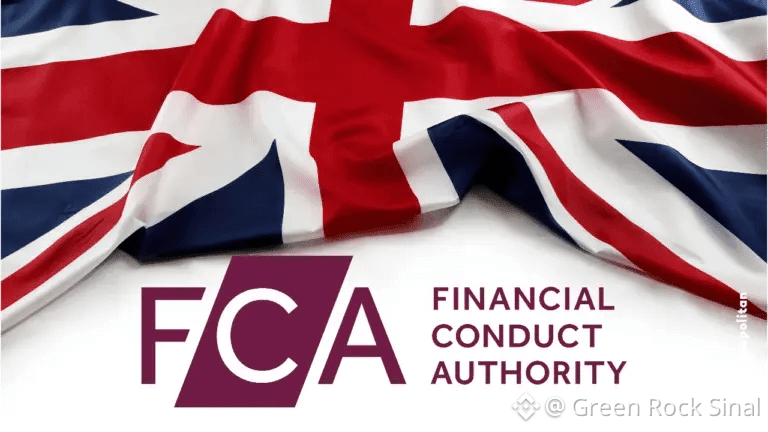
#UKFCAWinsCourtOrderToRecover851400Pounds
FCA recovers £851.402 for victims of a crypto scam in the United Kingdom.
On 28 September 2026, the Southwark Court ordered that Raymondip Bedi pay £603.404 and that Patrick Mavanga pay £247.998.
The scheme: unsolicited calls between 2017 and 2019. Fake websites such as CCX Capital and Astaria Group LLP. Promises of high returns. 65 investors lost £1.541.799.
Both were already convicted in July 2025: 5 years and 4 months and 6 years and 6 months in prison.
What gets repaid is ~55% of what was lost. The FCA says it will return money to the victims. Deadline: 3 months.
Two lessons:
1. Unsolicited call + fancy website + guaranteed return = scam.
2. Regulators track down the money years after the conviction.
$BTC $CRCL $COINB
#CryptoScams #FCA #InvestorProtection
{spot}(BTCUSDT)
{future}(CRCLUSDT)
{spot}(COINBUSDT)
#UKFCAWinsCourtOrderToRecover851400Pounds
FCA recovers £851.402 for victims of a crypto scam in the United Kingdom.
On 28 September 2026, the Southwark Court ordered that Raymondip Bedi pay £603.404 and that Patrick Mavanga pay £247.998.
The scheme: unsolicited calls between 2017 and 2019. Fake websites such as CCX Capital and Astaria Group LLP. Promises of high returns. 65 investors lost £1.541.799.
Both were already convicted in July 2025: 5 years and 4 months and 6 years and 6 months in prison.
What gets repaid is ~55% of what was lost. The FCA says it will return money to the victims. Deadline: 3 months.
Two lessons:
1. Unsolicited call + fancy website + guaranteed return = scam.
2. Regulators track down the money years after the conviction.
$BTC $CRCL $COINB
#CryptoScams #FCA #InvestorProtection
1
394
Verified
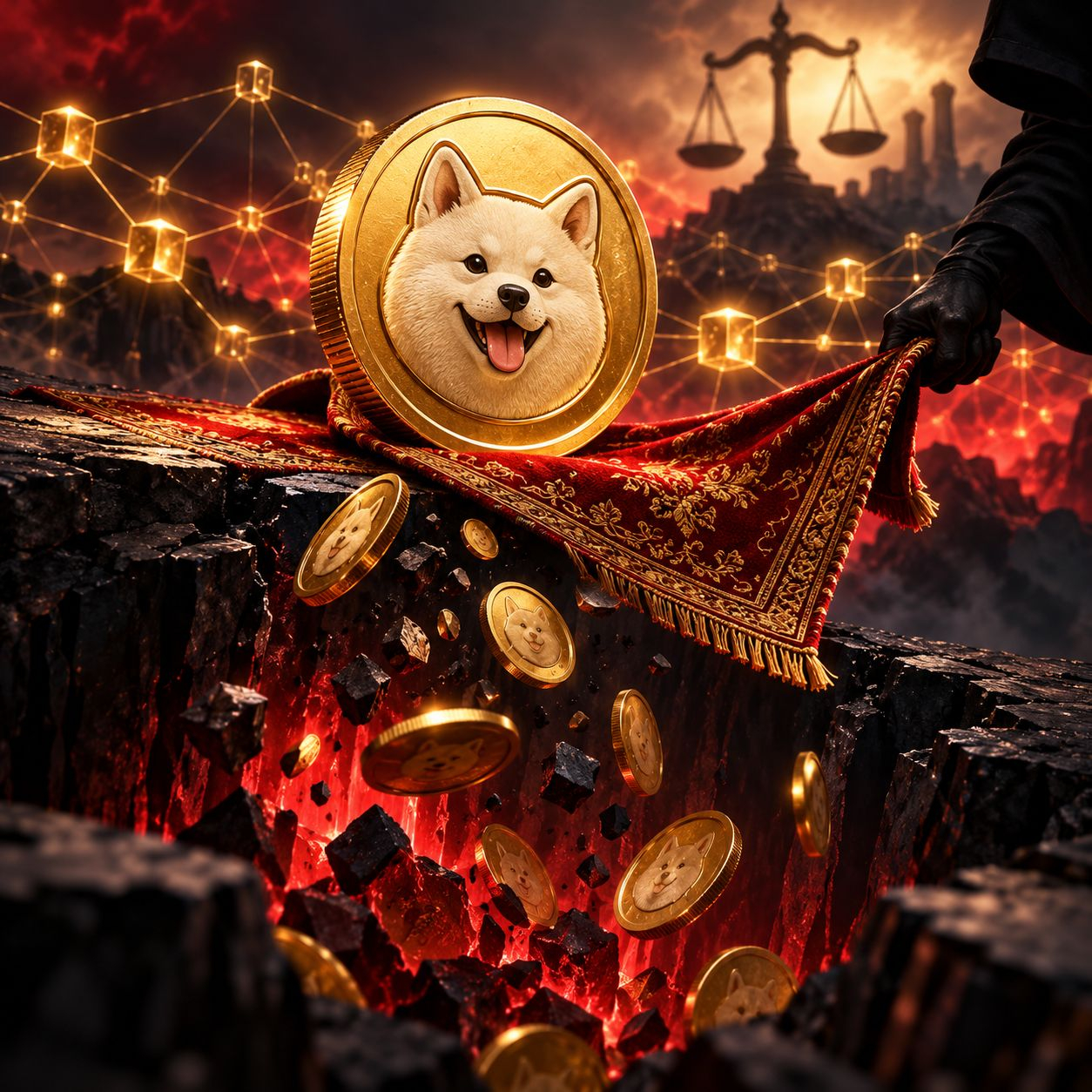
🚨🐕 KISHU INU: A $1.6 BILLION TOKEN—AND AN ALLEGED $9 MILLION RUG PULL 💸
“No tokens reserved for the team.” 🤝
That was the promise. But U.S. prosecutors allege Kishu Inu’s founders secretly allocated themselves 12% of the token supply. 👀
📈 The token surpassed $1.6 billion in market value.
💰 Co-creator Alexander Sisemore allegedly pocketed approximately $9 million through concealed sales.
⚖️ He now faces three counts of wire fraud.
The allegations remain unproven. He is presumed innocent unless convicted.
🚩 The lesson for crypto investors?
🔍 Verify insider holdings.
🧩 Examine token distribution across multiple wallets.
📢 Question promises supported only by marketing.
🔥 Before buying the hype, ask: Who holds the tokens—and who is selling?
💬 What is the biggest red flag you look for in a crypto project? 👇
#CryptoFraud #InvestorProtection
$STRK
{spot}(STRKUSDT)
$MBL
{spot}(MBLUSDT)
$TIA
{spot}(TIAUSDT)
🚨🐕 KISHU INU: A $1.6 BILLION TOKEN—AND AN ALLEGED $9 MILLION RUG PULL 💸
“No tokens reserved for the team.” 🤝
That was the promise. But U.S. prosecutors allege Kishu Inu’s founders secretly allocated themselves 12% of the token supply. 👀
📈 The token surpassed $1.6 billion in market value.
💰 Co-creator Alexander Sisemore allegedly pocketed approximately $9 million through concealed sales.
⚖️ He now faces three counts of wire fraud.
The allegations remain unproven. He is presumed innocent unless convicted.
🚩 The lesson for crypto investors?
🔍 Verify insider holdings.
🧩 Examine token distribution across multiple wallets.
📢 Question promises supported only by marketing.
🔥 Before buying the hype, ask: Who holds the tokens—and who is selling?
💬 What is the biggest red flag you look for in a crypto project? 👇
#CryptoFraud #InvestorProtection
$STRK
$MBL
$TIA
538
·
--
Bullish
Good Morning Family
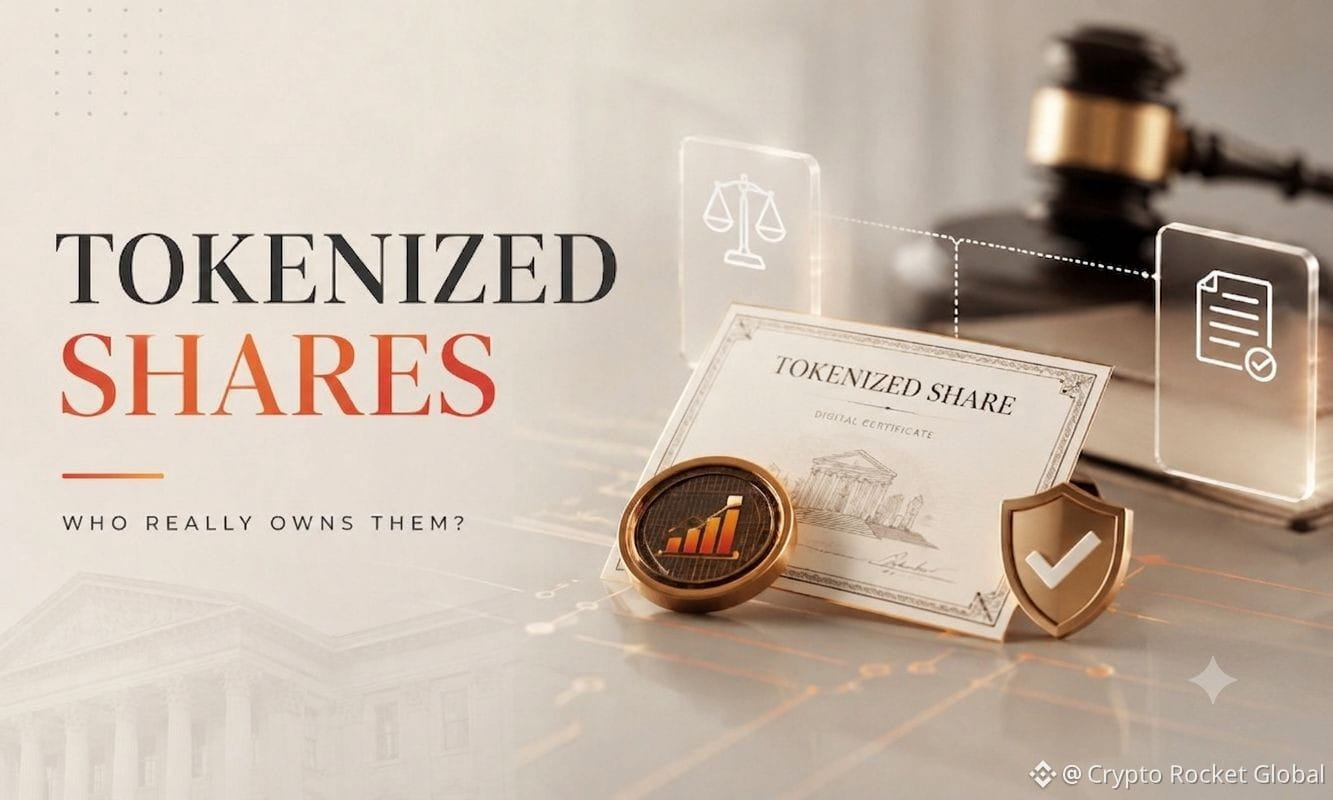
⚖️ The next tokenization debate is not about transaction speed. It is about legal ownership.
Wall Street transfer agents have urged @SECGov to distinguish company-authorized tokenized securities from tokens created by unaffiliated third-party platforms.
Their position is straightforward:
▪️ The issuer should authorize the token
▪️ Ownership should appear in the official shareholder register
▪️ The underlying security should be identifiable
▪️ Dividend, voting and redemption rights should be clearly disclosed
▪️ Custody and bankruptcy risks should not be hidden behind “onchain” branding
A stock-linked token is not automatically the same as legally owning the underlying stock.
That distinction could become one of the most important rules in the tokenized-equity market.
#Tokenization #DigitalAssets #InvestorProtection
⚠️ Educational information only. Not legal, financial or investment advice.
2
100
·
--
Do you know that a US crypto market structure bill could impact millions of investors worldwide, and yet a big part of the debate is about how one person's crypto riches could influence the outcome?
#CryptoRegulation #InvestorProtection
You might have heard about the Clarity Act, a piece of legislation aimed at banning conflicts of interest for US officials, specifically in relation to crypto markets. At the heart of this matter is a question about President Trump's personal gains from the crypto space. Essentially, the bill's ethics provision wants to ensure that financial decisions don't get clouded by personal profits.
Let's take an example: Imagine if someone close to you had invested in a startup that went on to become a successful crypto company, and now they're in a position of power deciding whether that company should be regulated. Wouldn't it be natural to worry about potential biases?
So, what can you do? Stay informed about the latest crypto regulation updates, and make sure to weigh in when changes are being proposed. Your voice matters!
What do you think should be a priority in crypto regulation talks?
31

Article
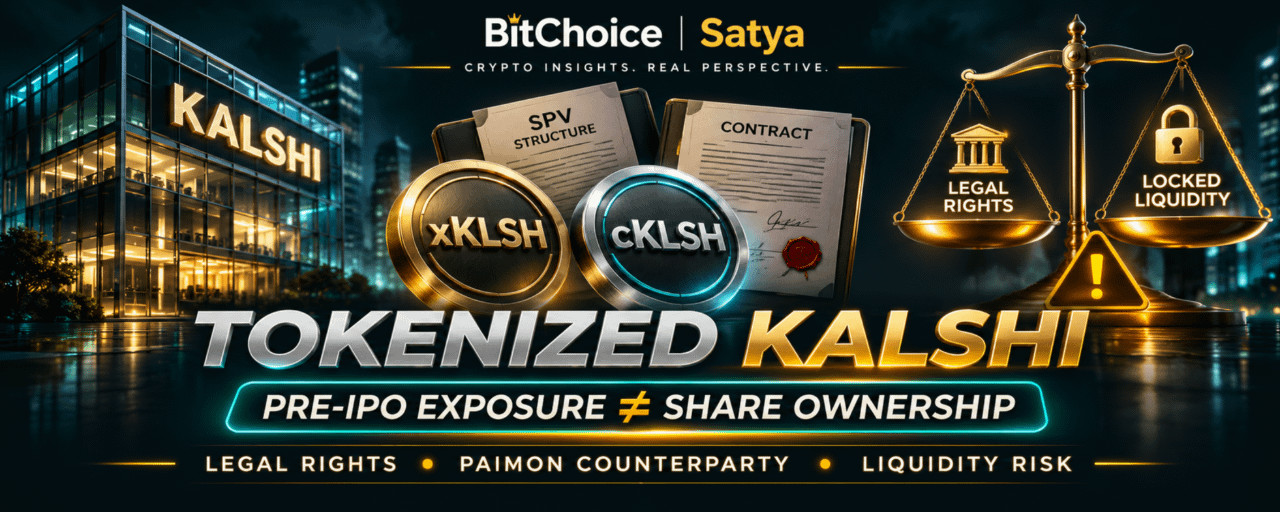
TOKENIZED KALSHI: ARE YOU BUYING PRE-IPO SHARES — OR SOMEONE ELSE'S PROMISE?BitChoice | Satya — RWA & Market Structure Intelligence
November 2, 2026
Private-Market Exposure Is Not the Same as Share Ownership
The race to tokenize traditional financial assets is expanding beyond publicly traded stocks and ETFs.
LBank has introduced a Pre-IPO offering linked to Kalshi, the US prediction-market company, through two instruments:
xKLSH — a product designed for earlier trading access.cKLSH — a locked product with a conditional conversion mechanism.
At first glance, these instruments appear to offer access to the potential future value of a private company.
But the central question is more complicated:
What exactly does a tokenholder legally own?
The answer matters much more than the token's price.
1. What LBank Actually Offers
According to LBank's October 26 announcement, the Kalshi-linked subscription includes two structures.
xKLSH — Unlock Mode
Subscription price: 39 USDTIntended for spot trading on LBankExpected trading launch: November 3, 2026, at 09:00 UTCLiquidity and execution prices are not guaranteed.
cKLSH — Lock Mode
Subscription price: 28 USDTSubject to lock-up conditionsPotential conversion into 1.4 xKLSH per cKLSH, according to the published termsConversion depends on the applicable contractual conditions.
The combined subscription allocation is capped at 500,000 USDT.
The published subscription window runs from October 29 to November 2, 2026.
Importantly, these are subscription terms — not guaranteed future market valuations.
2. The Most Important Detail: These Are Not Kalshi Shares
LBank explicitly states that subscribing to these instruments does not create direct ownership of Kalshi shares or standard shareholder rights.
That means holders should not assume they receive:
Direct voting rights in KalshiOrdinary shareholder statusDirect ownership of company equityGuaranteed access to an eventual IPOGuaranteed conversion into publicly traded shares.
Instead, the structure provides contractual economic exposure through a third-party arrangement.
The named issuing and managing entity is Paimon Limited.
LBank acts as a distribution and platform-services provider.
The distinction is fundamental: exposure to a company's value is not the same as ownership of that company.
3. Who Actually Owes the Investor?
The legal structure introduces additional parties between the investor and the underlying company.
A simplified chain looks like this:
Investor → LBank platform → Paimon product → SPV-linked economic exposure → Kalshi
Each layer has a different role.
LBank provides platform access and associated services.
Paimon is responsible for issuing and managing the product under its contractual documentation.
The SPV arrangement is intended to connect the token's economic exposure with underlying private-market interests.
But the existence of a token does not eliminate contractual, custody or counterparty risk.
If an issuer or intermediary fails to perform its obligations, the tokenholder's recovery depends on the enforceability of the relevant agreements and the status of underlying assets.
This is why understanding the legal issuer matters more than recognizing the company name featured in the marketing.
4. The cKLSH Lock-Up Deserves Special Attention
A longer holding period is often presented as the price of accessing a lower entry valuation.
But investors should examine the precise conditions.
LBank's announcement describes the lock-up as extending until six months after Kalshi's IPO.
The Paimon product website, however, describes a six-month locked tranche.
These descriptions are not obviously equivalent.
The final, binding product documents must determine which condition applies to a specific purchase.
If an IPO is delayed, never occurs or triggers alternative settlement provisions, the exit process may differ significantly from what a simplified promotional description suggests.
A fixed six-month lock-up and an IPO-dependent lock-up can create radically different liquidity risks.
That difference should be resolved before treating the product as a conventional short-term investment.
5. Does the 1.4× Conversion Mean a 40% Profit?
No.
The published conversion ratio concerns token quantities, not guaranteed investment returns.
Imagine a hypothetical position converting into 1.4 times as many tokens.
The economic result still depends on the market price of those tokens when conversion becomes available.
If the value per token falls sufficiently, receiving more tokens does not prevent a loss.
Other factors may include costs, settlement conditions, redemption limitations and the time value of locked capital.
More tokens do not automatically mean more money.
The conversion mechanism must be evaluated together with the expected underlying value and the contractual risks.
6. xKLSH: Tradable Does Not Mean Liquid
The unlocked product is intended to provide earlier access to secondary-market trading.
But there is an important difference between a token being listed and a token having a functional market.
Consider a product with a quoted price of 39 USDT.
A trader might assume that a position worth 3,900 USDT can be sold at that valuation.
In reality, the order book may contain very little buying interest near that price.
A market sell order could execute substantially lower.
Alternatively, there may be insufficient liquidity to close the full position promptly.
Important metrics include:
Bid and ask spreadOrder-book depthTrading volumeAvailable market makersPrice impact for meaningful order sizesConcentration of token holdings.
LBank's announcement also states that deposits and withdrawals are not supported for the event assets.
This creates an additional limitation: users cannot assume that they can transfer the instrument to another exchange or personal wallet through LBank.
A token can be tradable within one platform while remaining difficult to exit economically.
7. What Happens if Kalshi Never Goes Public?
This is one of the most important unresolved investment scenarios.
There is no guaranteed IPO date.
A private company can remain private for longer than investors expect.
Its valuation can change substantially.
Corporate restructurings, financing rounds and regulatory developments can affect the economics of a structured exposure product.
LBank's master agreement describes a potential repurchase opportunity if no IPO or other agreed exit event occurs within twelve months after the relevant Paimon closing date.
However, this is not a guaranteed redemption.
Paimon may offer repurchase only under the applicable conditions, and the proceeds depend on actual realization of the underlying interests.
LBank explicitly disclaims any guarantee of a repurchase, minimum quantity or price.
That means investors should not treat the twelve-month provision as an unconditional maturity date or a guaranteed route back to USDT.
8. The Hidden Valuation Problem
Private-market assets lack the continuous, transparent price discovery associated with highly liquid public shares.
A token can reference an estimated company valuation, while its own secondary-market price reflects a different set of forces.
These may include:
Private-company valuation risk
The reference valuation may be uncertain or change before an eventual liquidity event.
Token liquidity premium or discount
A tradable instrument may trade above or below the value implied by its contractual exposure.
Issuer and settlement risk
The market must assess whether the promised economic relationship can be fulfilled.
Information asymmetry
Public investors may have less access to financial disclosures than investors in conventional public equity markets.
Consequently, a rising token price does not necessarily prove that the underlying company has increased in value.
And a falling token price does not always measure a corresponding change in the company's fundamentals.
9. Can Tokenized Pre-IPO Products Improve Market Access?
Potentially, yes.
Tokenization can simplify distribution, introduce smaller subscription amounts and provide alternative market structures for eligible users.
LBank's published minimum subscription is 10 USDT, subject to allocation and eligibility rules.
That lowers the nominal entry threshold compared with many traditional private-market opportunities.
But reducing the minimum amount does not eliminate structural complexity.
A product can be easier to access while remaining difficult to value, verify or exit.
For these instruments to develop into credible financial infrastructure, several conditions matter:
Transparent legal documentationVerifiable underlying exposureClear investor rightsIndependent custody and valuation controlsReliable secondary-market liquidityPredictable conversion and settlement mechanismsEnforceable investor protections.
Accessibility without clarity is not necessarily financial progress.
10. What Serious Investors Should Verify
Before evaluating any tokenized private-company exposure, the relevant questions are:
Who is the legal issuer?
The issuer is not necessarily the private company named in the product.
What is the underlying claim?
Does it represent shares, an SPV interest or a contractual promise linked to economic performance?
Who holds the underlying assets?
What evidence supports the stated holdings, and who can independently verify it?
What happens if a counterparty fails?
Which entity is responsible for settlement, and what legal remedies are available?
What does "liquid" actually mean?
Is there deep executable demand, or merely an exchange listing?
How does the product terminate?
What happens after an IPO, without an IPO or during an issuer-level failure?
Without clear answers, the token's headline price tells only a small part of the story.
Final Perspective: The Wrapper Is Part of the Investment
The Kalshi-linked offering illustrates both the promise and complexity of tokenized private markets.
Investors may gain new methods of accessing economic exposure associated with private companies.
But these arrangements can introduce multiple layers of counterparty, legal, valuation and liquidity risk.
For xKLSH and cKLSH, the key issue is not simply whether Kalshi's business grows.
It is whether the product's contractual structure can reliably translate that growth into an enforceable economic outcome for the tokenholder.
Tokenized exposure ≠ direct equity ownership.
A quoted price ≠ guaranteed liquidity.
A conversion ratio ≠ guaranteed profit.
The future of RWA tokenization will depend on closing the gap between the financial asset being promoted and the legal rights investors actually receive.
Discussion
Would you prefer direct equity ownership with limited access — or easier tokenized access with additional issuer and liquidity risks?
Sources
LBank — LBank Announces Kalshi Pre-IPO Product Subscriptions, October 26, 2026.
LBank — Pre-IPO Locked Product Subscription & Platform Services Master Agreement, October 28, 2026.
Paimon Finance — Paimon Kalshi SPV Token Product Documentation.
Editorial disclosure: The product is issued and managed by a third party. Its contractual rights, underlying holdings, lock-up conditions and settlement procedures are governed by the applicable binding documents. Inconsistent descriptions of lock-up terms require clarification; neither future liquidity nor an IPO is guaranteed.
Educational and informational content only. Not financial or investment advice.
#Kalshi #PreIPO #RWA #Tokenization #InvestorProtection
TOKENIZED KALSHI: ARE YOU BUYING PRE-IPO SHARES — OR SOMEONE ELSE'S PROMISE?
BitChoice | Satya — RWA & Market Structure Intelligence
November 2, 2026
Private-Market Exposure Is Not the Same as Share Ownership
The race to tokenize traditional financial assets is expanding beyond publicly traded stocks and ETFs.
LBank has introduced a Pre-IPO offering linked to Kalshi, the US prediction-market company, through two instruments:
xKLSH — a product designed for earlier trading access.cKLSH — a locked product with a conditional conversion mechanism.
At first glance, these instruments appear to offer access to the potential future value of a private company.
But the central question is more complicated:
What exactly does a tokenholder legally own?
The answer matters much more than the token's price.
1. What LBank Actually Offers
According to LBank's October 26 announcement, the Kalshi-linked subscription includes two structures.
xKLSH — Unlock Mode
Subscription price: 39 USDTIntended for spot trading on LBankExpected trading launch: November 3, 2026, at 09:00 UTCLiquidity and execution prices are not guaranteed.
cKLSH — Lock Mode
Subscription price: 28 USDTSubject to lock-up conditionsPotential conversion into 1.4 xKLSH per cKLSH, according to the published termsConversion depends on the applicable contractual conditions.
The combined subscription allocation is capped at 500,000 USDT.
The published subscription window runs from October 29 to November 2, 2026.
Importantly, these are subscription terms — not guaranteed future market valuations.
2. The Most Important Detail: These Are Not Kalshi Shares
LBank explicitly states that subscribing to these instruments does not create direct ownership of Kalshi shares or standard shareholder rights.
That means holders should not assume they receive:
Direct voting rights in KalshiOrdinary shareholder statusDirect ownership of company equityGuaranteed access to an eventual IPOGuaranteed conversion into publicly traded shares.
Instead, the structure provides contractual economic exposure through a third-party arrangement.
The named issuing and managing entity is Paimon Limited.
LBank acts as a distribution and platform-services provider.
The distinction is fundamental: exposure to a company's value is not the same as ownership of that company.
3. Who Actually Owes the Investor?
The legal structure introduces additional parties between the investor and the underlying company.
A simplified chain looks like this:
Investor → LBank platform → Paimon product → SPV-linked economic exposure → Kalshi
Each layer has a different role.
LBank provides platform access and associated services.
Paimon is responsible for issuing and managing the product under its contractual documentation.
The SPV arrangement is intended to connect the token's economic exposure with underlying private-market interests.
But the existence of a token does not eliminate contractual, custody or counterparty risk.
If an issuer or intermediary fails to perform its obligations, the tokenholder's recovery depends on the enforceability of the relevant agreements and the status of underlying assets.
This is why understanding the legal issuer matters more than recognizing the company name featured in the marketing.
4. The cKLSH Lock-Up Deserves Special Attention
A longer holding period is often presented as the price of accessing a lower entry valuation.
But investors should examine the precise conditions.
LBank's announcement describes the lock-up as extending until six months after Kalshi's IPO.
The Paimon product website, however, describes a six-month locked tranche.
These descriptions are not obviously equivalent.
The final, binding product documents must determine which condition applies to a specific purchase.
If an IPO is delayed, never occurs or triggers alternative settlement provisions, the exit process may differ significantly from what a simplified promotional description suggests.
A fixed six-month lock-up and an IPO-dependent lock-up can create radically different liquidity risks.
That difference should be resolved before treating the product as a conventional short-term investment.
5. Does the 1.4× Conversion Mean a 40% Profit?
No.
The published conversion ratio concerns token quantities, not guaranteed investment returns.
Imagine a hypothetical position converting into 1.4 times as many tokens.
The economic result still depends on the market price of those tokens when conversion becomes available.
If the value per token falls sufficiently, receiving more tokens does not prevent a loss.
Other factors may include costs, settlement conditions, redemption limitations and the time value of locked capital.
More tokens do not automatically mean more money.
The conversion mechanism must be evaluated together with the expected underlying value and the contractual risks.
6. xKLSH: Tradable Does Not Mean Liquid
The unlocked product is intended to provide earlier access to secondary-market trading.
But there is an important difference between a token being listed and a token having a functional market.
Consider a product with a quoted price of 39 USDT.
A trader might assume that a position worth 3,900 USDT can be sold at that valuation.
In reality, the order book may contain very little buying interest near that price.
A market sell order could execute substantially lower.
Alternatively, there may be insufficient liquidity to close the full position promptly.
Important metrics include:
Bid and ask spreadOrder-book depthTrading volumeAvailable market makersPrice impact for meaningful order sizesConcentration of token holdings.
LBank's announcement also states that deposits and withdrawals are not supported for the event assets.
This creates an additional limitation: users cannot assume that they can transfer the instrument to another exchange or personal wallet through LBank.
A token can be tradable within one platform while remaining difficult to exit economically.
7. What Happens if Kalshi Never Goes Public?
This is one of the most important unresolved investment scenarios.
There is no guaranteed IPO date.
A private company can remain private for longer than investors expect.
Its valuation can change substantially.
Corporate restructurings, financing rounds and regulatory developments can affect the economics of a structured exposure product.
LBank's master agreement describes a potential repurchase opportunity if no IPO or other agreed exit event occurs within twelve months after the relevant Paimon closing date.
However, this is not a guaranteed redemption.
Paimon may offer repurchase only under the applicable conditions, and the proceeds depend on actual realization of the underlying interests.
LBank explicitly disclaims any guarantee of a repurchase, minimum quantity or price.
That means investors should not treat the twelve-month provision as an unconditional maturity date or a guaranteed route back to USDT.
8. The Hidden Valuation Problem
Private-market assets lack the continuous, transparent price discovery associated with highly liquid public shares.
A token can reference an estimated company valuation, while its own secondary-market price reflects a different set of forces.
These may include:
Private-company valuation risk
The reference valuation may be uncertain or change before an eventual liquidity event.
Token liquidity premium or discount
A tradable instrument may trade above or below the value implied by its contractual exposure.
Issuer and settlement risk
The market must assess whether the promised economic relationship can be fulfilled.
Information asymmetry
Public investors may have less access to financial disclosures than investors in conventional public equity markets.
Consequently, a rising token price does not necessarily prove that the underlying company has increased in value.
And a falling token price does not always measure a corresponding change in the company's fundamentals.
9. Can Tokenized Pre-IPO Products Improve Market Access?
Potentially, yes.
Tokenization can simplify distribution, introduce smaller subscription amounts and provide alternative market structures for eligible users.
LBank's published minimum subscription is 10 USDT, subject to allocation and eligibility rules.
That lowers the nominal entry threshold compared with many traditional private-market opportunities.
But reducing the minimum amount does not eliminate structural complexity.
A product can be easier to access while remaining difficult to value, verify or exit.
For these instruments to develop into credible financial infrastructure, several conditions matter:
Transparent legal documentationVerifiable underlying exposureClear investor rightsIndependent custody and valuation controlsReliable secondary-market liquidityPredictable conversion and settlement mechanismsEnforceable investor protections.
Accessibility without clarity is not necessarily financial progress.
10. What Serious Investors Should Verify
Before evaluating any tokenized private-company exposure, the relevant questions are:
Who is the legal issuer?
The issuer is not necessarily the private company named in the product.
What is the underlying claim?
Does it represent shares, an SPV interest or a contractual promise linked to economic performance?
Who holds the underlying assets?
What evidence supports the stated holdings, and who can independently verify it?
What happens if a counterparty fails?
Which entity is responsible for settlement, and what legal remedies are available?
What does "liquid" actually mean?
Is there deep executable demand, or merely an exchange listing?
How does the product terminate?
What happens after an IPO, without an IPO or during an issuer-level failure?
Without clear answers, the token's headline price tells only a small part of the story.
Final Perspective: The Wrapper Is Part of the Investment
The Kalshi-linked offering illustrates both the promise and complexity of tokenized private markets.
Investors may gain new methods of accessing economic exposure associated with private companies.
But these arrangements can introduce multiple layers of counterparty, legal, valuation and liquidity risk.
For xKLSH and cKLSH, the key issue is not simply whether Kalshi's business grows.
It is whether the product's contractual structure can reliably translate that growth into an enforceable economic outcome for the tokenholder.
Tokenized exposure ≠ direct equity ownership.
A quoted price ≠ guaranteed liquidity.
A conversion ratio ≠ guaranteed profit.
The future of RWA tokenization will depend on closing the gap between the financial asset being promoted and the legal rights investors actually receive.
Discussion
Would you prefer direct equity ownership with limited access — or easier tokenized access with additional issuer and liquidity risks?
Sources
LBank — LBank Announces Kalshi Pre-IPO Product Subscriptions, October 26, 2026.
LBank — Pre-IPO Locked Product Subscription & Platform Services Master Agreement, October 28, 2026.
Paimon Finance — Paimon Kalshi SPV Token Product Documentation.
Editorial disclosure: The product is issued and managed by a third party. Its contractual rights, underlying holdings, lock-up conditions and settlement procedures are governed by the applicable binding documents. Inconsistent descriptions of lock-up terms require clarification; neither future liquidity nor an IPO is guaranteed.
Educational and informational content only. Not financial or investment advice.
#Kalshi #PreIPO #RWA #Tokenization #InvestorProtection
1
94

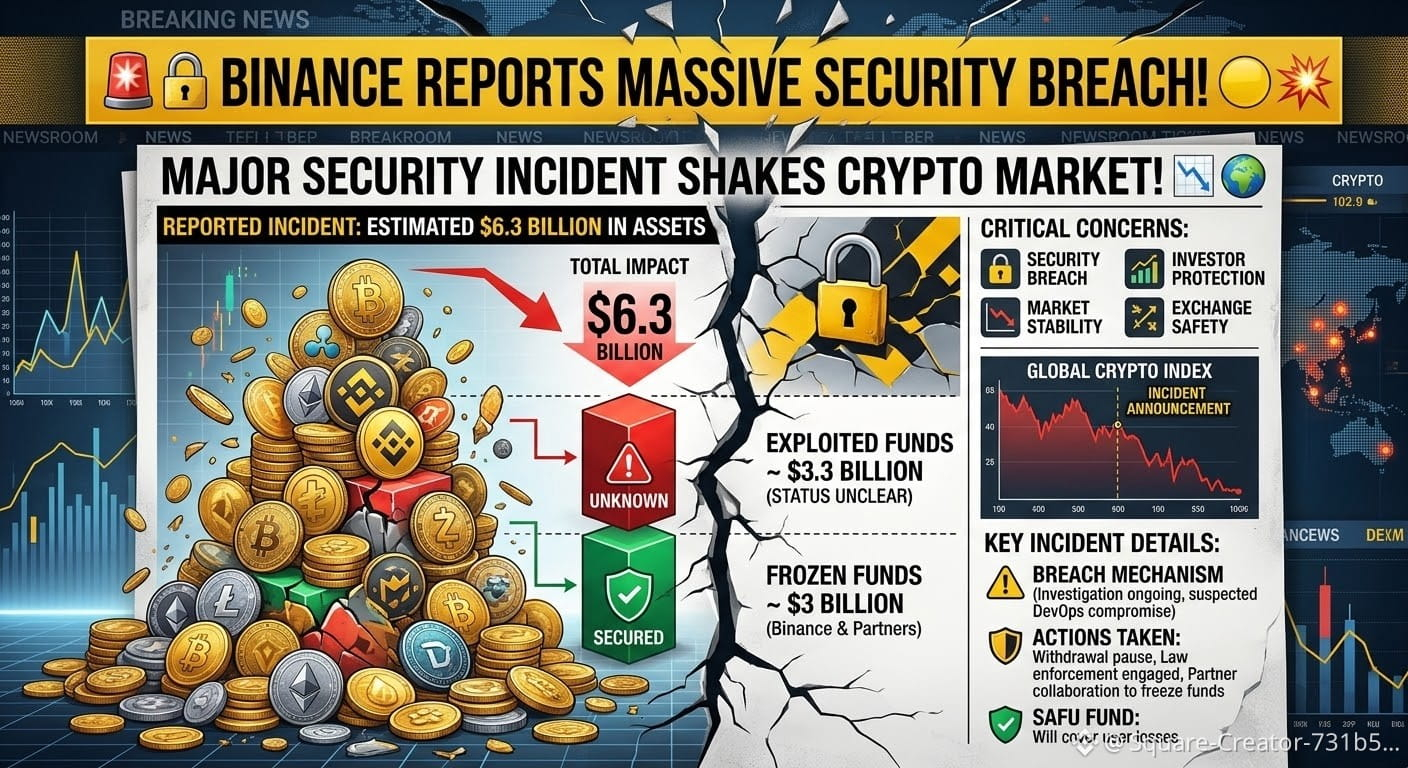
🚨🔐 Binance Reports a Massive $6.3 Billion Security Breach! 🟡💥
⚠️ Major Security Incident Shakes the Crypto Market! 📉🌍
💰 Binance reportedly faced a security incident involving an estimated $6.3 billion in crypto assets.
🛡️ Binance and its partners have reportedly frozen around $3 billion in assets, while the status of the remaining funds remains unclear. 🔍
The incident has raised serious concerns about crypto security, investor protection, and exchange safety. 🔒📊
#BinanceSecurity 🔐 #CryptoSecurity 🛡️ #DigitalAssets 💰 #CryptoMarket 📉 #InvestorProtection ⚠️
$BTC
{spot}(BTCUSDT)
$ETH
{spot}(ETHUSDT)
$XRP
{spot}(XRPUSDT)
🚨🔐 Binance Reports a Massive $6.3 Billion Security Breach! 🟡💥
⚠️ Major Security Incident Shakes the Crypto Market! 📉🌍
💰 Binance reportedly faced a security incident involving an estimated $6.3 billion in crypto assets.
🛡️ Binance and its partners have reportedly frozen around $3 billion in assets, while the status of the remaining funds remains unclear. 🔍
The incident has raised serious concerns about crypto security, investor protection, and exchange safety. 🔒📊
#BinanceSecurity 🔐 #CryptoSecurity 🛡️ #DigitalAssets 💰 #CryptoMarket 📉 #InvestorProtection ⚠️
$BTC
$ETH
$XRP
1
9
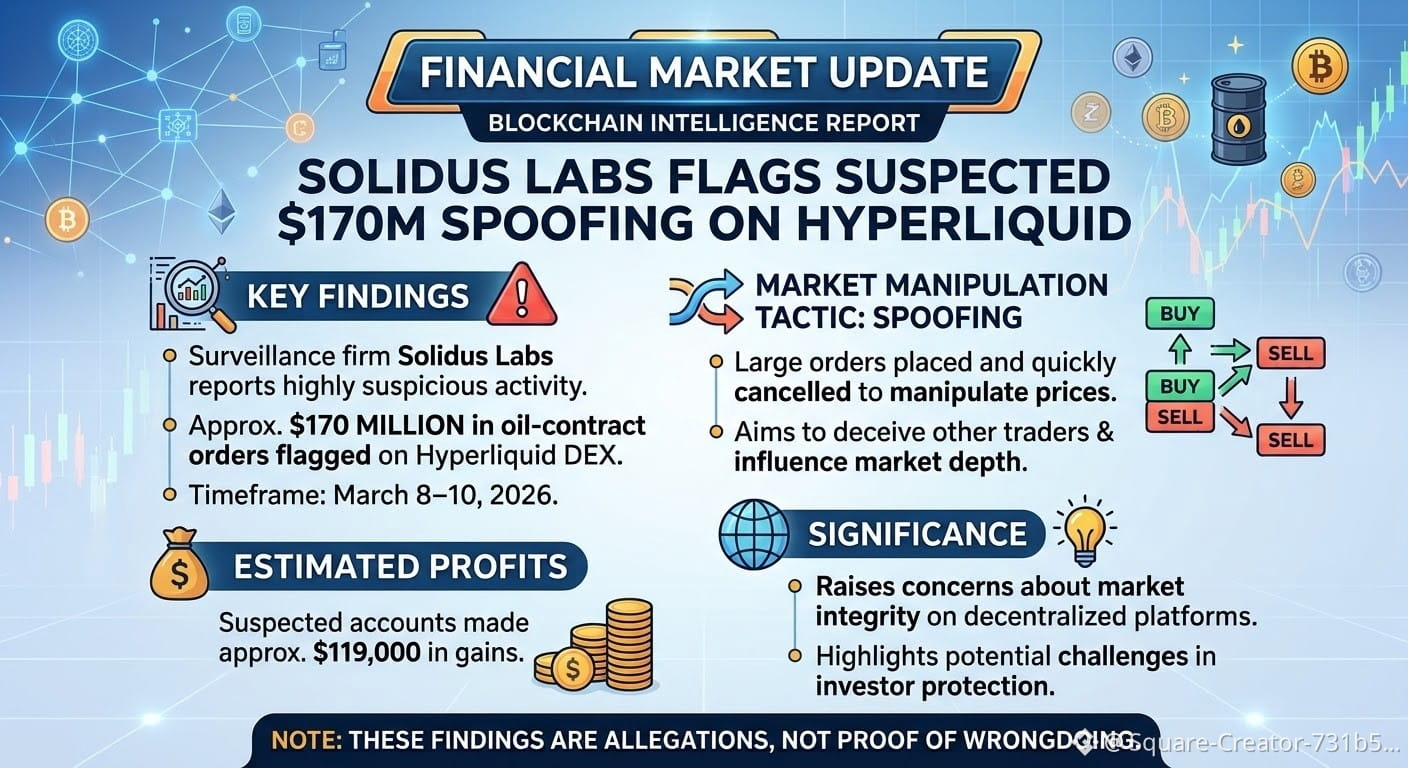
🚨🛢️ Solidus Labs Reports Suspected $170M Spoofing on Hyperliquid! 🔍
📊 Crypto surveillance firm Solidus Labs flagged more than $170 million in suspicious oil-contract orders on Hyperliquid between March 8–10, 2026.
⚠️ The activity allegedly involved large orders being placed and quickly cancelled to influence market prices—a tactic known as spoofing.
💰 Solidus Labs estimated the accounts made approximately $119,000 in profits through the suspected activity.
🌐 Why It Matters: The report raises concerns about market manipulation and investor protection in decentralized trading platforms.
📌 The findings are allegations, not proof of wrongdoing.
#Hyperliquid 🔷 #SolidusLabs 🔍 #Spoofing ⚠️ #CryptoSecurity 🔐 #InvestorProtection 🛡️
$HYPE
{spot}(HYPEUSDT)
$BTC
{spot}(BTCUSDT)
$ETH
{spot}(ETHUSDT)
🚨🛢️ Solidus Labs Reports Suspected $170M Spoofing on Hyperliquid! 🔍
📊 Crypto surveillance firm Solidus Labs flagged more than $170 million in suspicious oil-contract orders on Hyperliquid between March 8–10, 2026.
⚠️ The activity allegedly involved large orders being placed and quickly cancelled to influence market prices—a tactic known as spoofing.
💰 Solidus Labs estimated the accounts made approximately $119,000 in profits through the suspected activity.
🌐 Why It Matters: The report raises concerns about market manipulation and investor protection in decentralized trading platforms.
📌 The findings are allegations, not proof of wrongdoing.
#Hyperliquid 🔷 #SolidusLabs 🔍 #Spoofing ⚠️ #CryptoSecurity 🔐 #InvestorProtection 🛡️
$HYPE
$BTC
$ETH
1
625
Log in to explore more content
Join global crypto users on Binance Square
⚡️ Get latest and useful information about crypto.
💬 Trusted by the world’s largest crypto exchange.
👍 Discover real insights from verified creators.
Email / Phone number
Trending Topics
1
#BTCRebounds80K
41,694 views
601 Discussing
2
#Binance98PercentReplenished
31,982 views
504 Discussing
3
#USMidterms-WhatAreMarketsExpecting?
318,268 views
2,001 Discussing
4
#USOctoberNFP-AreRateCutsStillPossible
384,883 views
2,798 Discussing
5
#AMDBeatsExpectations-AINarrativeContinues
92,722 views
766 Discussing
6
#CircleQ3Revenue865M
25,428 views
426 Discussing
7
#BinanceIncidentReport
531,191 views
2,113 Discussing
8
#USStocksOpenHigherAsDowGains1.9%
4,998 views
70 Discussing
9
#ADPUSPrivateEmployersAdd86000JobsInOctober
3,529 views
47 Discussing
10
#FrenchAssemblyPassesSelfCustodiedCryptoReportingAmendment
936 views
23 Discussing