

BP-F5CA5FBFBD5C
2.4k Posts

BP-F5CA5FBFBD5C
Report
Block User
BP-D97AE23796CD
Frequent Trader
5.3 Years
386 Following
838 Followers
2.3K+ Liked
Posts
All
Quotes
Videos
PINNED

Article
The Future of Dogecoin: A Comprehensive Analysis of Its Potential as a Mainstream Cryptocurrency $DOGE
{spot}(DOGEUSDT)
Introduction
Dogecoin (DOGE), originally created as a meme-inspired cryptocurrency, has seen significant fluctuations in its value and popularity. Recent events, particularly the involvement of high-profile figures like Elon Musk and Donald Trump, have reignited interest in Dogecoin. This article explores how Dogecoin can become a valuable cryptocurrency in the upcoming days and whether it has the potential to become mainstream in the coming years.
Current Market Landscape
Recent Price Movements
Surge in Value: As of November 11, 2024, Dogecoin has surged over 80% in just one week, reaching a market cap of $41 billion and a daily trading volume of $20 billion. This remarkable rally has positioned Dogecoin as the sixth most valuable cryptocurrency.Elon Musk's Influence: Musk's recent tweets and public statements have significantly impacted Dogecoin's price, reflecting his ongoing support for the cryptocurrency. His proposal for a "Department of Government Efficiency" has further fueled speculation and interest among investors.
Market Sentiment
Bullish Predictions: Analysts predict that Dogecoin could reach $2.7 by December 2024, indicating a strong bullish sentiment in the market.Increased Trading Volume: The trading volume for Dogecoin has spiked, with a 220% increase in the last 24 hours, showcasing heightened investor interest.
Factors Contributing to Dogecoin's Potential Growth
1. Celebrity Endorsements
Elon Musk's Role: Musk's influence as a tech mogul and his active engagement with the Dogecoin community have been pivotal. His tweets often lead to immediate price movements, demonstrating the power of celebrity endorsements in the crypto space.Political Connections: With Trump’s recent victory, the potential for Dogecoin to be associated with political movements could attract a new demographic of investors.
2. Market Trends and Technical Analysis
Golden Cross Indicator: The recent "Golden Cross" pattern in Dogecoin's price chart suggests a bullish trend, indicating that the cryptocurrency may continue to rise in value.Technical Indicators: Analysts have noted that Dogecoin's Logarithmic MACD has turned bullish, signaling a potential upward movement.
3. Community and Investor Engagement
Whale Activity: Increased activity from Dogecoin "whales" (large holders) has contributed to price surges, as these investors often drive market trends.Community Support: The Dogecoin community remains active and engaged, which is crucial for the cryptocurrency's longevity and growth.
Challenges Ahead
1. Market Volatility
Overbought Conditions: Current RSI levels indicate that Dogecoin may be overbought, which could lead to short-term corrections.Speculative Nature: As a meme coin, Dogecoin's value is heavily influenced by market sentiment and speculation, making it susceptible to rapid price changes.
2. Regulatory Scrutiny
Potential Regulations: As cryptocurrencies gain popularity, they may face increased scrutiny from regulatory bodies, which could impact their market dynamics.
Will Dogecoin Become Mainstream?
1. Adoption by Businesses
Merchant Acceptance: For Dogecoin to become mainstream, it needs wider acceptance among merchants and businesses. Initiatives to promote its use as a payment method could enhance its utility.
2. Integration with Financial Systems
Partnerships and Collaborations: Collaborations with financial institutions and payment processors could facilitate Dogecoin's integration into existing financial systems, enhancing its legitimacy.
3. Community and Ecosystem Development
Building a Robust Ecosystem: Developing a strong ecosystem around Dogecoin, including decentralized applications (dApps) and services, could increase its utility and adoption.
Conclusion
Dogecoin's recent surge in value, driven by influential endorsements and market trends, positions it as a potentially valuable cryptocurrency in the near future. While challenges such as market volatility and regulatory scrutiny exist, the factors contributing to its growth—celebrity influence, community engagement, and technical indicators—suggest a promising outlook.
As Dogecoin continues to evolve, its ability to become a mainstream cryptocurrency will depend on its adoption by businesses, integration into financial systems, and the development of a robust ecosystem. The coming months will be crucial in determining whether Dogecoin can solidify its place in the cryptocurrency market and attract a broader audience of investors and users. 🌟
This analysis provides a comprehensive overview of Dogecoin's potential trajectory in the cryptocurrency landscape, emphasizing the importance of various factors that could influence its future.
#WeAreAllSatoshi #BinanceSquareFamily #Bitcoin #Doge #Dogecoin
The Future of Dogecoin: A Comprehensive Analysis of Its Potential as a Mainstream Cryptocurrency
$DOGE
Introduction
Dogecoin (DOGE), originally created as a meme-inspired cryptocurrency, has seen significant fluctuations in its value and popularity. Recent events, particularly the involvement of high-profile figures like Elon Musk and Donald Trump, have reignited interest in Dogecoin. This article explores how Dogecoin can become a valuable cryptocurrency in the upcoming days and whether it has the potential to become mainstream in the coming years.
Current Market Landscape
Recent Price Movements
Surge in Value: As of November 11, 2024, Dogecoin has surged over 80% in just one week, reaching a market cap of $41 billion and a daily trading volume of $20 billion. This remarkable rally has positioned Dogecoin as the sixth most valuable cryptocurrency.Elon Musk's Influence: Musk's recent tweets and public statements have significantly impacted Dogecoin's price, reflecting his ongoing support for the cryptocurrency. His proposal for a "Department of Government Efficiency" has further fueled speculation and interest among investors.
Market Sentiment
Bullish Predictions: Analysts predict that Dogecoin could reach $2.7 by December 2024, indicating a strong bullish sentiment in the market.Increased Trading Volume: The trading volume for Dogecoin has spiked, with a 220% increase in the last 24 hours, showcasing heightened investor interest.
Factors Contributing to Dogecoin's Potential Growth
1. Celebrity Endorsements
Elon Musk's Role: Musk's influence as a tech mogul and his active engagement with the Dogecoin community have been pivotal. His tweets often lead to immediate price movements, demonstrating the power of celebrity endorsements in the crypto space.Political Connections: With Trump’s recent victory, the potential for Dogecoin to be associated with political movements could attract a new demographic of investors.
2. Market Trends and Technical Analysis
Golden Cross Indicator: The recent "Golden Cross" pattern in Dogecoin's price chart suggests a bullish trend, indicating that the cryptocurrency may continue to rise in value.Technical Indicators: Analysts have noted that Dogecoin's Logarithmic MACD has turned bullish, signaling a potential upward movement.
3. Community and Investor Engagement
Whale Activity: Increased activity from Dogecoin "whales" (large holders) has contributed to price surges, as these investors often drive market trends.Community Support: The Dogecoin community remains active and engaged, which is crucial for the cryptocurrency's longevity and growth.
Challenges Ahead
1. Market Volatility
Overbought Conditions: Current RSI levels indicate that Dogecoin may be overbought, which could lead to short-term corrections.Speculative Nature: As a meme coin, Dogecoin's value is heavily influenced by market sentiment and speculation, making it susceptible to rapid price changes.
2. Regulatory Scrutiny
Potential Regulations: As cryptocurrencies gain popularity, they may face increased scrutiny from regulatory bodies, which could impact their market dynamics.
Will Dogecoin Become Mainstream?
1. Adoption by Businesses
Merchant Acceptance: For Dogecoin to become mainstream, it needs wider acceptance among merchants and businesses. Initiatives to promote its use as a payment method could enhance its utility.
2. Integration with Financial Systems
Partnerships and Collaborations: Collaborations with financial institutions and payment processors could facilitate Dogecoin's integration into existing financial systems, enhancing its legitimacy.
3. Community and Ecosystem Development
Building a Robust Ecosystem: Developing a strong ecosystem around Dogecoin, including decentralized applications (dApps) and services, could increase its utility and adoption.
Conclusion
Dogecoin's recent surge in value, driven by influential endorsements and market trends, positions it as a potentially valuable cryptocurrency in the near future. While challenges such as market volatility and regulatory scrutiny exist, the factors contributing to its growth—celebrity influence, community engagement, and technical indicators—suggest a promising outlook.
As Dogecoin continues to evolve, its ability to become a mainstream cryptocurrency will depend on its adoption by businesses, integration into financial systems, and the development of a robust ecosystem. The coming months will be crucial in determining whether Dogecoin can solidify its place in the cryptocurrency market and attract a broader audience of investors and users. 🌟
This analysis provides a comprehensive overview of Dogecoin's potential trajectory in the cryptocurrency landscape, emphasizing the importance of various factors that could influence its future.
#WeAreAllSatoshi #BinanceSquareFamily #Bitcoin #Doge #Dogecoin
Introduction
Dogecoin (DOGE), originally created as a meme-inspired cryptocurrency, has seen significant fluctuations in its value and popularity. Recent events, particularly the involvement of high-profile figures like Elon Musk and Donald Trump, have reignited interest in Dogecoin. This article explores how Dogecoin can become a valuable cryptocurrency in the upcoming days and whether it has the potential to become mainstream in the coming years.
Current Market Landscape
Recent Price Movements
Surge in Value: As of November 11, 2024, Dogecoin has surged over 80% in just one week, reaching a market cap of $41 billion and a daily trading volume of $20 billion. This remarkable rally has positioned Dogecoin as the sixth most valuable cryptocurrency.Elon Musk's Influence: Musk's recent tweets and public statements have significantly impacted Dogecoin's price, reflecting his ongoing support for the cryptocurrency. His proposal for a "Department of Government Efficiency" has further fueled speculation and interest among investors.
Market Sentiment
Bullish Predictions: Analysts predict that Dogecoin could reach $2.7 by December 2024, indicating a strong bullish sentiment in the market.Increased Trading Volume: The trading volume for Dogecoin has spiked, with a 220% increase in the last 24 hours, showcasing heightened investor interest.
Factors Contributing to Dogecoin's Potential Growth
1. Celebrity Endorsements
Elon Musk's Role: Musk's influence as a tech mogul and his active engagement with the Dogecoin community have been pivotal. His tweets often lead to immediate price movements, demonstrating the power of celebrity endorsements in the crypto space.Political Connections: With Trump’s recent victory, the potential for Dogecoin to be associated with political movements could attract a new demographic of investors.
2. Market Trends and Technical Analysis
Golden Cross Indicator: The recent "Golden Cross" pattern in Dogecoin's price chart suggests a bullish trend, indicating that the cryptocurrency may continue to rise in value.Technical Indicators: Analysts have noted that Dogecoin's Logarithmic MACD has turned bullish, signaling a potential upward movement.
3. Community and Investor Engagement
Whale Activity: Increased activity from Dogecoin "whales" (large holders) has contributed to price surges, as these investors often drive market trends.Community Support: The Dogecoin community remains active and engaged, which is crucial for the cryptocurrency's longevity and growth.
Challenges Ahead
1. Market Volatility
Overbought Conditions: Current RSI levels indicate that Dogecoin may be overbought, which could lead to short-term corrections.Speculative Nature: As a meme coin, Dogecoin's value is heavily influenced by market sentiment and speculation, making it susceptible to rapid price changes.
2. Regulatory Scrutiny
Potential Regulations: As cryptocurrencies gain popularity, they may face increased scrutiny from regulatory bodies, which could impact their market dynamics.
Will Dogecoin Become Mainstream?
1. Adoption by Businesses
Merchant Acceptance: For Dogecoin to become mainstream, it needs wider acceptance among merchants and businesses. Initiatives to promote its use as a payment method could enhance its utility.
2. Integration with Financial Systems
Partnerships and Collaborations: Collaborations with financial institutions and payment processors could facilitate Dogecoin's integration into existing financial systems, enhancing its legitimacy.
3. Community and Ecosystem Development
Building a Robust Ecosystem: Developing a strong ecosystem around Dogecoin, including decentralized applications (dApps) and services, could increase its utility and adoption.
Conclusion
Dogecoin's recent surge in value, driven by influential endorsements and market trends, positions it as a potentially valuable cryptocurrency in the near future. While challenges such as market volatility and regulatory scrutiny exist, the factors contributing to its growth—celebrity influence, community engagement, and technical indicators—suggest a promising outlook.
As Dogecoin continues to evolve, its ability to become a mainstream cryptocurrency will depend on its adoption by businesses, integration into financial systems, and the development of a robust ecosystem. The coming months will be crucial in determining whether Dogecoin can solidify its place in the cryptocurrency market and attract a broader audience of investors and users. 🌟
This analysis provides a comprehensive overview of Dogecoin's potential trajectory in the cryptocurrency landscape, emphasizing the importance of various factors that could influence its future.
#WeAreAllSatoshi #BinanceSquareFamily #Bitcoin #Doge #Dogecoin
3
3
72
66.1k
Team is Geniune
project is Good
They're Actually Paying To Real Builders .
just go to Bcash.one
after that go To Creator Rewards
After that submit Your Binance Square Username or Link
Copy The CoDe Given to You And Post On binance square with A Post with atleast 100-500 words .
Don't Forget To check Your submiton website after The team reconfirm you're actually A real user or a BOT.
i will update you If received anything .
Main thing is don't forget to in $CASH In your post...
Let's Make BCASH Unforgettable Together .
Like Share this post on binance Square So the people who Still Didn't joined can join asap
Condition - You must Hold atleast 4444 BCASH in your wallet and The CA you can find from Thier website .
seems like a Meaningful Geniune project of $BNB Ecosystem ..
The value of 4444 can grow to 10x to 100X in future so take it as opportunity .
Team is Geniune
project is Good
They're Actually Paying To Real Builders .
just go to Bcash.one
after that go To Creator Rewards
After that submit Your Binance Square Username or Link
Copy The CoDe Given to You And Post On binance square with A Post with atleast 100-500 words .
Don't Forget To check Your submiton website after The team reconfirm you're actually A real user or a BOT.
i will update you If received anything .
Main thing is don't forget to in $CASH In your post...
Let's Make BCASH Unforgettable Together .
Like Share this post on binance Square So the people who Still Didn't joined can join asap
Condition - You must Hold atleast 4444 BCASH in your wallet and The CA you can find from Thier website .
seems like a Meaningful Geniune project of $BNB Ecosystem ..
The value of 4444 can grow to 10x to 100X in future so take it as opportunity .
project is Good
They're Actually Paying To Real Builders .
just go to Bcash.one
after that go To Creator Rewards
After that submit Your Binance Square Username or Link
Copy The CoDe Given to You And Post On binance square with A Post with atleast 100-500 words .
Don't Forget To check Your submiton website after The team reconfirm you're actually A real user or a BOT.
i will update you If received anything .
Main thing is don't forget to in $CASH In your post...
Let's Make BCASH Unforgettable Together .
Like Share this post on binance Square So the people who Still Didn't joined can join asap
Condition - You must Hold atleast 4444 BCASH in your wallet and The CA you can find from Thier website .
seems like a Meaningful Geniune project of $BNB Ecosystem ..
The value of 4444 can grow to 10x to 100X in future so take it as opportunity .
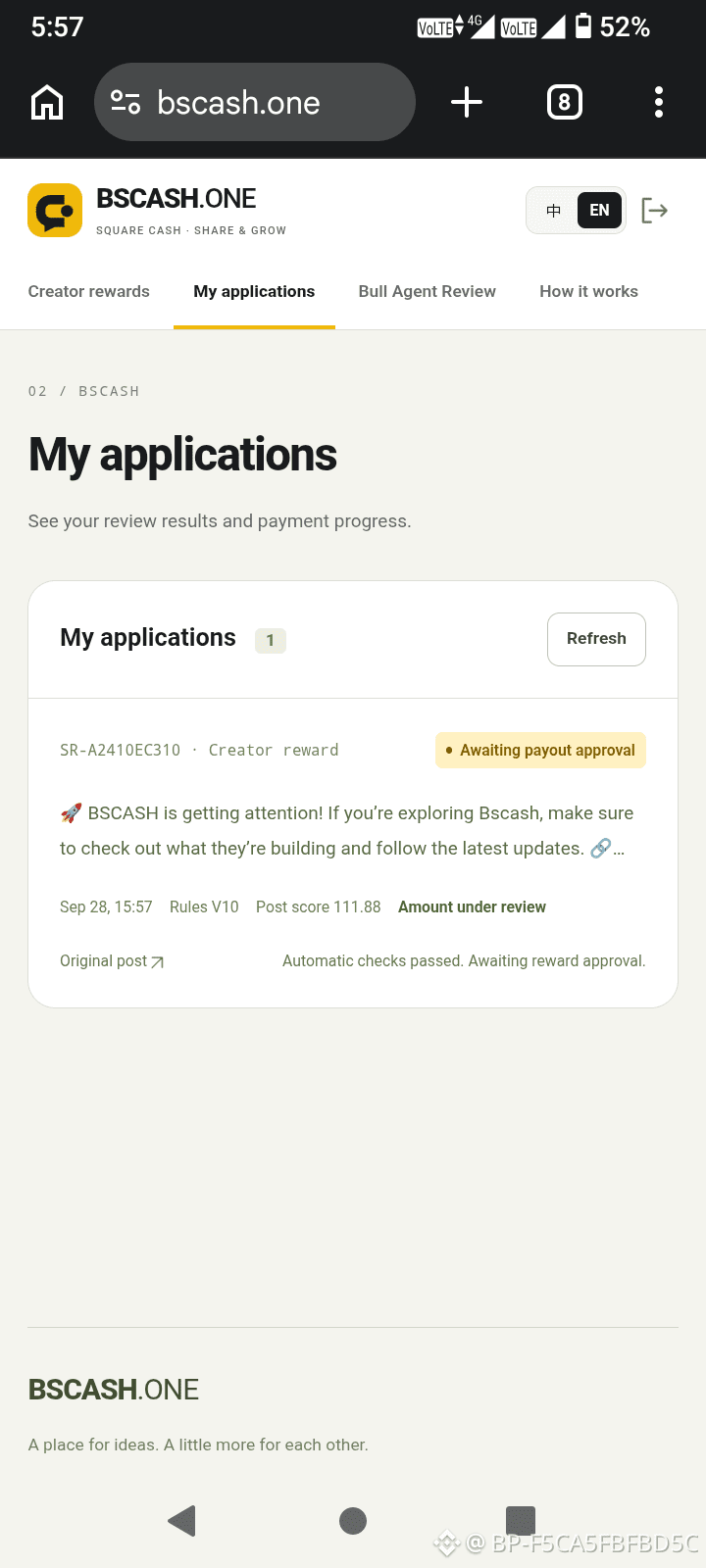
7
🚀 BSCASH is getting attention!
If you’re exploring Bscash, make sure to check out what they’re building and follow the latest updates.
🔗 bscash.one
🧩 Code: "SR-F2A4D19D99EAA3BABCB335AC"
The crypto space moves fast — always DYOR, understand the platform, and make your own decision before participating.
$CASH $Bcash
#BSCASH #Crypto #Web3 #DeFi #Blockchain
🚀 BSCASH is getting attention!
If you’re exploring Bscash, make sure to check out what they’re building and follow the latest updates.
🔗 bscash.one
🧩 Code: "SR-F2A4D19D99EAA3BABCB335AC"
The crypto space moves fast — always DYOR, understand the platform, and make your own decision before participating.
$CASH $Bcash
#BSCASH #Crypto #Web3 #DeFi #Blockchain
If you’re exploring Bscash, make sure to check out what they’re building and follow the latest updates.
🔗 bscash.one
🧩 Code: "SR-F2A4D19D99EAA3BABCB335AC"
The crypto space moves fast — always DYOR, understand the platform, and make your own decision before participating.
$CASH $Bcash
#BSCASH #Crypto #Web3 #DeFi #Blockchain
83
$ICP is going to break 100$ and then 1000$ soon
$ICP is going to break 100$ and then 1000$ soon
136
$ZEC Happiest Person on planet Earth Now
The one who bought ZEC at 20$
$ZEC Happiest Person on planet Earth Now
The one who bought ZEC at 20$
The one who bought ZEC at 20$
128
A legitimate account with 5+ years of history, that has worked hard to become a Creator, is now being flagged by the system and excluded from events & campaigns. Unfortunately, the appeal process is far too complicated.
Creators need clearer eligibility rules, transparent reasons for restrictions, and a simpler appeal process.
@Binance_Customer_Support Please review genuine accounts fairly. 🙏
A legitimate account with 5+ years of history, that has worked hard to become a Creator, is now being flagged by the system and excluded from events & campaigns. Unfortunately, the appeal process is far too complicated.
Creators need clearer eligibility rules, transparent reasons for restrictions, and a simpler appeal process.
@Binance Customer Support Please review genuine accounts fairly. 🙏
Creators need clearer eligibility rules, transparent reasons for restrictions, and a simpler appeal process.
@Binance Customer Support Please review genuine accounts fairly. 🙏
62
$QNT How Many Times i need to warn you Guys That ALTSeason Already started and unfortunately No one is taking about The ALTSeason Anymore
$QNT How Many Times i need to warn you Guys That ALTSeason Already started and unfortunately No one is taking about The ALTSeason Anymore
162
hey Binance please FIX This
3 Different CODE apperead After auto refresh .
now the probelm is you can only Edit Your BIO Once In A week
Now I really don't understand what to do now?
hey Binance please FIX This
3 Different CODE apperead After auto refresh .
now the probelm is you can only Edit Your BIO Once In A week
Now I really don't understand what to do now?
3 Different CODE apperead After auto refresh .
now the probelm is you can only Edit Your BIO Once In A week
Now I really don't understand what to do now?

4
$BNB Do u Beleive Me what If I say
BNB could Overcome ETH in the future Do you Beleive Me ?
No You will call me MAD today but listen Anything could possible if you Deliver and right now Binance is delivering The best No matter They restricted My profile to Participate In event's And campaigns . i am actually not a hater and i never crititise A platform of a person like @CZ who knows the True meaning of being poor . who actually Made binance with Struggle and not A Person whose dad have so much Money who give To his rich child who created binance . not At all he really did hardwork . We may see his success but not 30,40 years of struggle and sacrifices
$BNB Do u Beleive Me what If I say
BNB could Overcome ETH in the future Do you Beleive Me ?
No You will call me MAD today but listen Anything could possible if you Deliver and right now Binance is delivering The best No matter They restricted My profile to Participate In event's And campaigns . i am actually not a hater and i never crititise A platform of a person like @CZ who knows the True meaning of being poor . who actually Made binance with Struggle and not A Person whose dad have so much Money who give To his rich child who created binance . not At all he really did hardwork . We may see his success but not 30,40 years of struggle and sacrifices
BNB could Overcome ETH in the future Do you Beleive Me ?
No You will call me MAD today but listen Anything could possible if you Deliver and right now Binance is delivering The best No matter They restricted My profile to Participate In event's And campaigns . i am actually not a hater and i never crititise A platform of a person like @CZ who knows the True meaning of being poor . who actually Made binance with Struggle and not A Person whose dad have so much Money who give To his rich child who created binance . not At all he really did hardwork . We may see his success but not 30,40 years of struggle and sacrifices
27
$SYN Now remind Who is the first person to give you tip about This gem $SYN
This is the next $HYPE
i m not saying randomly
i did research . spent Months Here
will never give You TIP About something Random .. But if i am saying It's not A Joke.
in The future you will search for my profile to know who was the first person who provided SYN at 0.2$
Never Underestimate Me
$SYN Now remind Who is the first person to give you tip about This gem $SYN
This is the next $HYPE
i m not saying randomly
i did research . spent Months Here
will never give You TIP About something Random .. But if i am saying It's not A Joke.
in The future you will search for my profile to know who was the first person who provided SYN at 0.2$
Never Underestimate Me
This is the next $HYPE
i m not saying randomly
i did research . spent Months Here
will never give You TIP About something Random .. But if i am saying It's not A Joke.
in The future you will search for my profile to know who was the first person who provided SYN at 0.2$
Never Underestimate Me
428
TIP of the day
Alt season Already Started 🏹
Be Early become Millionare
Be Late Watch From sidelines
TIP of the day
Alt season Already Started 🏹
Be Early become Millionare
Be Late Watch From sidelines
Alt season Already Started 🏹
Be Early become Millionare
Be Late Watch From sidelines
5
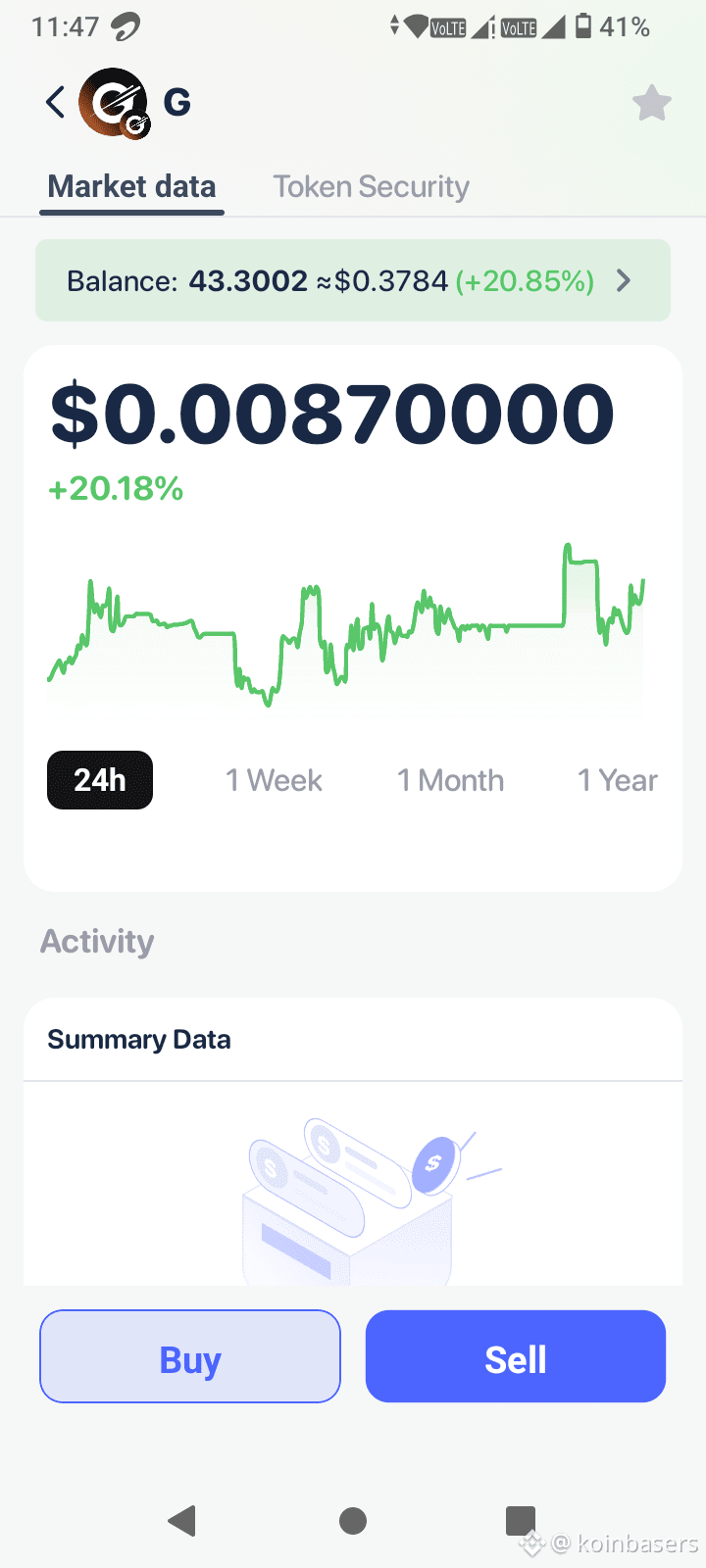
$G I don't Know when will crypto Actually gain some trust
Another Big project is fake pumping because i checked on Gravity chain Tokens In my wallet . Half Then the value of Binance
$G I don't Know when will crypto Actually gain some trust
Another Big project is fake pumping because i checked on Gravity chain Tokens In my wallet . Half Then the value of Binance
Another Big project is fake pumping because i checked on Gravity chain Tokens In my wallet . Half Then the value of Binance
166
$BNB I don’t think BNB is going to give you much time to see a three-digit price again.
The market can move fast, and when sentiment turns, waiting for the “perfect” entry or exit can become expensive.
Watch the levels. Manage your risk. Don’t assume the market will give you unlimited time.
DYOR. 📉
$BNB I don’t think BNB is going to give you much time to see a three-digit price again.
The market can move fast, and when sentiment turns, waiting for the “perfect” entry or exit can become expensive.
Watch the levels. Manage your risk. Don’t assume the market will give you unlimited time.
DYOR. 📉
The market can move fast, and when sentiment turns, waiting for the “perfect” entry or exit can become expensive.
Watch the levels. Manage your risk. Don’t assume the market will give you unlimited time.
DYOR. 📉
107

Article
Everyone is asking whether the Fed will cut, hold, or hike.🧵 #CPIWatch —
I think that is the wrong starting question.
The real question is:**
What kind of economy is the Fed looking at when it makes that decision?
Strong jobs can be bullish.
Strong jobs can also be bearish.
And CPI can completely change the meaning of the same payroll number.
Here’s my framework 👇
1/ THE PAYROLL PARADOX
Nonfarm payrolls beating expectations sounds like an obvious positive.
More jobs.
More income.
More spending.
More economic resilience.
But for the Fed, strong employment can also mean:
➡️ Less urgency to cut rates
➡️ Greater tolerance for restrictive policy
➡️ More concern that demand remains strong enough to keep inflation elevated
So a payroll beat isn't automatically bullish for markets.
It depends on what happens to inflation.
2/ THE CPI NUMBER IS THE MISSING PIECE
Imagine two economies with exactly the same strong payroll report.
Economy A:
Jobs ↑
CPI ↓
Economy B:
Jobs ↑
CPI ↑
Same employment headline.
Completely different Fed reaction.
In Economy A, the Fed can potentially say:
«Growth is resilient and inflation is cooling.»
That is a beautiful combination for risk assets.
In Economy B:
«Growth is resilient and inflation is still sticky.»
Now the Fed has much less reason to become dovish.
That distinction could determine the market's next major move.
3/ WHY ONE CPI PRINT CAN MOVE EVERYTHING
CPI doesn't just affect inflation expectations.
It can move:
💵 The dollar
📈 Treasury yields
📉 Rate-cut expectations
📊 Equity valuations
🥇 Gold
₿ Crypto
🏦 Financial conditions
That's why I don't want to look at CPI in isolation.
I want to see how the entire market reacts to the number.
4/ SCENARIO #1 — COOL CPI + STRONG JOBS
This is potentially the dream scenario.
Employment remains healthy.
Inflation continues cooling.
The economy doesn't look like it needs emergency stimulus.
The Fed gets more room to eventually normalize policy without having to fight an inflation resurgence.
Possible market reaction:
📈 Equities
📈 Growth stocks
📈 Risk assets
📈 Rate-cut expectations
🥇 Gold potentially supported
This is the scenario where “soft landing” becomes the dominant narrative again.
5/ SCENARIO #2 — HOT CPI + STRONG JOBS
Now the story changes completely.
Strong employment means demand remains resilient.
Hot inflation means price pressures aren't disappearing quickly enough.
The Fed suddenly has a much harder problem:
Why cut rates if the economy is still strong and inflation is still sticky?
That could mean:
📈 Yields
📈 Dollar
📉 Rate-cut expectations
📉 High-duration equities
⚠️ Risk assets
And this is where traders who only look at the payroll beat could get trapped.
6/ SCENARIO #3 — COOL CPI + WEAKENING JOBS
This is where things become complicated.
At first glance:
Cool inflation = bullish.
But if employment is deteriorating quickly, the market may start pricing aggressive monetary easing because the economy is losing momentum.
That could produce:
📈 Bonds
📈 Rate-cut expectations
🥇 Gold
⚠️ Mixed equities
Because eventually the question changes from:
“When will the Fed cut?”
to:
“Why does the Fed need to cut?”
That's a very different market.
7/ SCENARIO #4 — HOT CPI + WEAK JOBS
This is arguably the ugliest combination.
The economy is losing employment momentum.
But inflation isn't cooperating.
That creates a potential stagflationary problem.
The Fed can't easily stimulate demand without risking more inflation.
Markets can struggle because neither aggressive easing nor continued tightening looks comfortable.
This is the scenario I'd be most careful with.
8/ SO WILL THE FED HIKE OR HOLD?
My base-case thinking is:
A payroll beat by itself isn't enough to justify a hike.
The inflation trajectory matters enormously.
If CPI is cooling and other inflation measures continue moving in the right direction, strong employment can actually be viewed as evidence that the economy is absorbing restrictive policy reasonably well.
That creates a stronger argument for:
HOLD → WATCH → EVENTUAL EASING
rather than immediately:
HIKE.
But a meaningful upside CPI surprise could change that calculation very quickly.
9/ THE MARKET MAY CARE MORE ABOUT THE DETAILS THAN THE HEADLINE
I won't just look at:
“CPI = X%.”
I'd want to understand:
• Core vs headline CPI
• Month-over-month momentum
• Shelter
• Services inflation
• Goods inflation
• Whether inflation is broadening or narrowing
• How Treasury yields respond
• How rate-cut expectations change
The headline gets attention.
The composition tells the story.
10/ AND THEN THERE'S GOLD
Gold is particularly interesting here.
People sometimes reduce gold to:
“Inflation up = gold up.”
It's not that simple.
Gold also responds to:
💵 Dollar strength
📈 Real yields
🏦 Monetary-policy expectations
🌍 Risk perception
🏛️ Central-bank demand
So a hot CPI print could initially hurt gold if real yields jump.
But if the market interprets the same data as increasing economic stress or future policy instability, the longer-term reaction can become much more complicated.
That's why I wouldn't trade gold purely from the CPI headline.
11/ STOCKS HAVE ANOTHER PROBLEM
The same CPI number can affect different stocks completely differently.
High-growth companies with distant future cash flows are particularly sensitive to changes in discount rates.
So if CPI surprises higher and yields jump:
The market doesn't necessarily say:
“Stocks are bad.”
It can instead say:
“The price we are willing to pay for future earnings needs to change.”
That's a valuation story.
And valuation matters.
12/ THIS IS WHY I'M NOT CHASING THE FIRST CANDLE
CPI releases can create violent first-minute moves.
But the first move isn't always the final move.
The better question is:
Does the market accept the initial move?
For example:
Hot CPI → yields jump → stocks fall.
Okay.
But what happens 30–60 minutes later?
If yields reverse and stocks recover, the market may be telling us the initial interpretation was too extreme.
That's more interesting to me than the first red candle.
13/ MY CPI CHECKLIST
Before calling the market bullish or bearish, I'd watch:
☑️ CPI surprise
☑️ Core CPI
☑️ Monthly inflation momentum
☑️ Treasury yields
☑️ Dollar
☑️ Rate expectations
☑️ S&P 500 reaction
☑️ Nasdaq reaction
☑️ Gold reaction
Then connect the dots.
14/ MY MACRO MAP
🟢 Strong jobs + cooling CPI
Potential soft-landing setup.
🟡 Strong jobs + sticky CPI
Fed stays cautious.
🔴 Strong jobs + accelerating CPI
Hawkish risk rises substantially.
🟡 Weak jobs + cooling CPI
Potential easing — but watch recession risk.
🔴 Weak jobs + hot CPI
Stagflation risk.
The labels are simple.
The positioning isn't.
15/ WHAT WOULD CHANGE MY MIND?
This is the part I think traders often ignore.
If I'm bullish and CPI comes in hot, I don't want to defend my thesis because I already tweeted it.
I'd change my view.
If I'm bearish and CPI comes in soft while yields fall and equities reclaim resistance, I'd change my view.
A thesis without an invalidation point is just a bias.
16/ MY BULLISH CASE
I'm constructive if we get:
✔️ CPI continuing to cool
✔️ No major reacceleration in core/services inflation
✔️ Employment remaining reasonably resilient
✔️ Yields stabilizing
✔️ Dollar not surging
✔️ Equities responding positively to the data
That would strengthen the idea that the economy can slow inflation without a major recession.
That's the setup markets love.
17/ MY BEARISH CASE
I'd become more defensive if we see:
⚠️ CPI upside surprise
⚠️ Core inflation accelerating
⚠️ Services remaining extremely sticky
⚠️ Treasury yields breaking higher
⚠️ Rate-cut expectations being aggressively repriced
⚠️ Dollar strengthening sharply
⚠️ Equities failing to recover after the initial reaction
At that point, the market could start pricing:
“Higher for longer.”
And that narrative can hurt valuations quickly.
18/ THE MOST IMPORTANT QUESTION
Forget:
“Will the Fed cut?”
Ask:
“What would make the Fed change its mind?”
That's where the edge is.
Central banks react to data.
Markets react to expectations.
And sometimes the market moves more because expectations changed than because the actual economic data was good or bad.
19/ MY POSITIONING
I'm not interested in blindly going:
100% bullish or 100% bearish before the number.
I'd rather have a conditional thesis.
If CPI cools → increase risk.
If CPI is in-line → watch yields and price action.
If CPI surprises hot → reduce risk until the market proves otherwise.
The goal isn't to predict every candle.
The goal is to survive the wrong prediction.
20/ WHAT AM I WATCHING?
For stocks:
📊 Growth / technology
📊 Broad-market indexes
📊 Rate-sensitive sectors
For gold:
🥇 Gold price
📈 Real yields
💵 Dollar
And across everything:
Treasury yields.
Because yields can tell us whether the market is actually changing its view of the Fed.
21/ BULLISH OR BEARISH?
My answer:
Conditionally bullish — but only if CPI confirms the disinflation story.
A strong labor market doesn't scare me by itself.
What would concern me is:
strong demand + reaccelerating inflation.
That's the combination that can force the Fed to remain restrictive for longer.
22/ THE BIGGER PICTURE
One CPI report won't determine the entire economic cycle.
But it can change the narrative.
And narratives drive positioning.
Positioning drives flows.
Flows drive price.
That's why I think the real trade isn't:
“Guess CPI.”
It's:
“Understand how the market will reinterpret the Fed after CPI.”
23/ MY RULE FOR THIS CPI
Don't trade the number.
Trade the reaction to the number.
Don't chase the first candle.
Watch confirmation.
Don't blindly follow the Fed narrative.
Watch yields.
Don't confuse a payroll beat with unlimited economic strength.
Watch inflation.
And don't confuse a single CPI print with a trend.
Watch the next several prints.
24/ FINAL TAKE
The market doesn't need perfect data.
It needs predictability.
If inflation continues cooling while employment remains resilient, the Fed can potentially navigate toward easier policy without breaking the economy.
That's the scenario I'm watching.
But if inflation reaccelerates while the labor market stays strong, the market may have to price a very different path.
Higher for longer.
And that is the battle behind this CPI.
🥇 Gold
📈 Stocks
💵 Dollar
📊 Yields
🏦 Fed
One inflation report.
Five markets.
One question:
Is the economy cooling — or is inflation preparing another comeback?
That's my #CPIWatch
Bullish or bearish?
Share your thesis — and if you're positioning in stocks or gold, show the trade/holding that represents your view.
Let's see who is actually positioned for the data, rather than simply predicting it.
#CPIWatch #CPI #FederalReserveFOMC #
Everyone is asking whether the Fed will cut, hold, or hike.
🧵 #CPIWatch —
I think that is the wrong starting question.
The real question is:**
What kind of economy is the Fed looking at when it makes that decision?
Strong jobs can be bullish.
Strong jobs can also be bearish.
And CPI can completely change the meaning of the same payroll number.
Here’s my framework 👇
1/ THE PAYROLL PARADOX
Nonfarm payrolls beating expectations sounds like an obvious positive.
More jobs.
More income.
More spending.
More economic resilience.
But for the Fed, strong employment can also mean:
➡️ Less urgency to cut rates
➡️ Greater tolerance for restrictive policy
➡️ More concern that demand remains strong enough to keep inflation elevated
So a payroll beat isn't automatically bullish for markets.
It depends on what happens to inflation.
2/ THE CPI NUMBER IS THE MISSING PIECE
Imagine two economies with exactly the same strong payroll report.
Economy A:
Jobs ↑
CPI ↓
Economy B:
Jobs ↑
CPI ↑
Same employment headline.
Completely different Fed reaction.
In Economy A, the Fed can potentially say:
«Growth is resilient and inflation is cooling.»
That is a beautiful combination for risk assets.
In Economy B:
«Growth is resilient and inflation is still sticky.»
Now the Fed has much less reason to become dovish.
That distinction could determine the market's next major move.
3/ WHY ONE CPI PRINT CAN MOVE EVERYTHING
CPI doesn't just affect inflation expectations.
It can move:
💵 The dollar
📈 Treasury yields
📉 Rate-cut expectations
📊 Equity valuations
🥇 Gold
₿ Crypto
🏦 Financial conditions
That's why I don't want to look at CPI in isolation.
I want to see how the entire market reacts to the number.
4/ SCENARIO #1 — COOL CPI + STRONG JOBS
This is potentially the dream scenario.
Employment remains healthy.
Inflation continues cooling.
The economy doesn't look like it needs emergency stimulus.
The Fed gets more room to eventually normalize policy without having to fight an inflation resurgence.
Possible market reaction:
📈 Equities
📈 Growth stocks
📈 Risk assets
📈 Rate-cut expectations
🥇 Gold potentially supported
This is the scenario where “soft landing” becomes the dominant narrative again.
5/ SCENARIO #2 — HOT CPI + STRONG JOBS
Now the story changes completely.
Strong employment means demand remains resilient.
Hot inflation means price pressures aren't disappearing quickly enough.
The Fed suddenly has a much harder problem:
Why cut rates if the economy is still strong and inflation is still sticky?
That could mean:
📈 Yields
📈 Dollar
📉 Rate-cut expectations
📉 High-duration equities
⚠️ Risk assets
And this is where traders who only look at the payroll beat could get trapped.
6/ SCENARIO #3 — COOL CPI + WEAKENING JOBS
This is where things become complicated.
At first glance:
Cool inflation = bullish.
But if employment is deteriorating quickly, the market may start pricing aggressive monetary easing because the economy is losing momentum.
That could produce:
📈 Bonds
📈 Rate-cut expectations
🥇 Gold
⚠️ Mixed equities
Because eventually the question changes from:
“When will the Fed cut?”
to:
“Why does the Fed need to cut?”
That's a very different market.
7/ SCENARIO #4 — HOT CPI + WEAK JOBS
This is arguably the ugliest combination.
The economy is losing employment momentum.
But inflation isn't cooperating.
That creates a potential stagflationary problem.
The Fed can't easily stimulate demand without risking more inflation.
Markets can struggle because neither aggressive easing nor continued tightening looks comfortable.
This is the scenario I'd be most careful with.
8/ SO WILL THE FED HIKE OR HOLD?
My base-case thinking is:
A payroll beat by itself isn't enough to justify a hike.
The inflation trajectory matters enormously.
If CPI is cooling and other inflation measures continue moving in the right direction, strong employment can actually be viewed as evidence that the economy is absorbing restrictive policy reasonably well.
That creates a stronger argument for:
HOLD → WATCH → EVENTUAL EASING
rather than immediately:
HIKE.
But a meaningful upside CPI surprise could change that calculation very quickly.
9/ THE MARKET MAY CARE MORE ABOUT THE DETAILS THAN THE HEADLINE
I won't just look at:
“CPI = X%.”
I'd want to understand:
• Core vs headline CPI
• Month-over-month momentum
• Shelter
• Services inflation
• Goods inflation
• Whether inflation is broadening or narrowing
• How Treasury yields respond
• How rate-cut expectations change
The headline gets attention.
The composition tells the story.
10/ AND THEN THERE'S GOLD
Gold is particularly interesting here.
People sometimes reduce gold to:
“Inflation up = gold up.”
It's not that simple.
Gold also responds to:
💵 Dollar strength
📈 Real yields
🏦 Monetary-policy expectations
🌍 Risk perception
🏛️ Central-bank demand
So a hot CPI print could initially hurt gold if real yields jump.
But if the market interprets the same data as increasing economic stress or future policy instability, the longer-term reaction can become much more complicated.
That's why I wouldn't trade gold purely from the CPI headline.
11/ STOCKS HAVE ANOTHER PROBLEM
The same CPI number can affect different stocks completely differently.
High-growth companies with distant future cash flows are particularly sensitive to changes in discount rates.
So if CPI surprises higher and yields jump:
The market doesn't necessarily say:
“Stocks are bad.”
It can instead say:
“The price we are willing to pay for future earnings needs to change.”
That's a valuation story.
And valuation matters.
12/ THIS IS WHY I'M NOT CHASING THE FIRST CANDLE
CPI releases can create violent first-minute moves.
But the first move isn't always the final move.
The better question is:
Does the market accept the initial move?
For example:
Hot CPI → yields jump → stocks fall.
Okay.
But what happens 30–60 minutes later?
If yields reverse and stocks recover, the market may be telling us the initial interpretation was too extreme.
That's more interesting to me than the first red candle.
13/ MY CPI CHECKLIST
Before calling the market bullish or bearish, I'd watch:
☑️ CPI surprise
☑️ Core CPI
☑️ Monthly inflation momentum
☑️ Treasury yields
☑️ Dollar
☑️ Rate expectations
☑️ S&P 500 reaction
☑️ Nasdaq reaction
☑️ Gold reaction
Then connect the dots.
14/ MY MACRO MAP
🟢 Strong jobs + cooling CPI
Potential soft-landing setup.
🟡 Strong jobs + sticky CPI
Fed stays cautious.
🔴 Strong jobs + accelerating CPI
Hawkish risk rises substantially.
🟡 Weak jobs + cooling CPI
Potential easing — but watch recession risk.
🔴 Weak jobs + hot CPI
Stagflation risk.
The labels are simple.
The positioning isn't.
15/ WHAT WOULD CHANGE MY MIND?
This is the part I think traders often ignore.
If I'm bullish and CPI comes in hot, I don't want to defend my thesis because I already tweeted it.
I'd change my view.
If I'm bearish and CPI comes in soft while yields fall and equities reclaim resistance, I'd change my view.
A thesis without an invalidation point is just a bias.
16/ MY BULLISH CASE
I'm constructive if we get:
✔️ CPI continuing to cool
✔️ No major reacceleration in core/services inflation
✔️ Employment remaining reasonably resilient
✔️ Yields stabilizing
✔️ Dollar not surging
✔️ Equities responding positively to the data
That would strengthen the idea that the economy can slow inflation without a major recession.
That's the setup markets love.
17/ MY BEARISH CASE
I'd become more defensive if we see:
⚠️ CPI upside surprise
⚠️ Core inflation accelerating
⚠️ Services remaining extremely sticky
⚠️ Treasury yields breaking higher
⚠️ Rate-cut expectations being aggressively repriced
⚠️ Dollar strengthening sharply
⚠️ Equities failing to recover after the initial reaction
At that point, the market could start pricing:
“Higher for longer.”
And that narrative can hurt valuations quickly.
18/ THE MOST IMPORTANT QUESTION
Forget:
“Will the Fed cut?”
Ask:
“What would make the Fed change its mind?”
That's where the edge is.
Central banks react to data.
Markets react to expectations.
And sometimes the market moves more because expectations changed than because the actual economic data was good or bad.
19/ MY POSITIONING
I'm not interested in blindly going:
100% bullish or 100% bearish before the number.
I'd rather have a conditional thesis.
If CPI cools → increase risk.
If CPI is in-line → watch yields and price action.
If CPI surprises hot → reduce risk until the market proves otherwise.
The goal isn't to predict every candle.
The goal is to survive the wrong prediction.
20/ WHAT AM I WATCHING?
For stocks:
📊 Growth / technology
📊 Broad-market indexes
📊 Rate-sensitive sectors
For gold:
🥇 Gold price
📈 Real yields
💵 Dollar
And across everything:
Treasury yields.
Because yields can tell us whether the market is actually changing its view of the Fed.
21/ BULLISH OR BEARISH?
My answer:
Conditionally bullish — but only if CPI confirms the disinflation story.
A strong labor market doesn't scare me by itself.
What would concern me is:
strong demand + reaccelerating inflation.
That's the combination that can force the Fed to remain restrictive for longer.
22/ THE BIGGER PICTURE
One CPI report won't determine the entire economic cycle.
But it can change the narrative.
And narratives drive positioning.
Positioning drives flows.
Flows drive price.
That's why I think the real trade isn't:
“Guess CPI.”
It's:
“Understand how the market will reinterpret the Fed after CPI.”
23/ MY RULE FOR THIS CPI
Don't trade the number.
Trade the reaction to the number.
Don't chase the first candle.
Watch confirmation.
Don't blindly follow the Fed narrative.
Watch yields.
Don't confuse a payroll beat with unlimited economic strength.
Watch inflation.
And don't confuse a single CPI print with a trend.
Watch the next several prints.
24/ FINAL TAKE
The market doesn't need perfect data.
It needs predictability.
If inflation continues cooling while employment remains resilient, the Fed can potentially navigate toward easier policy without breaking the economy.
That's the scenario I'm watching.
But if inflation reaccelerates while the labor market stays strong, the market may have to price a very different path.
Higher for longer.
And that is the battle behind this CPI.
🥇 Gold
📈 Stocks
💵 Dollar
📊 Yields
🏦 Fed
One inflation report.
Five markets.
One question:
Is the economy cooling — or is inflation preparing another comeback?
That's my #CPIWatch
Bullish or bearish?
Share your thesis — and if you're positioning in stocks or gold, show the trade/holding that represents your view.
Let's see who is actually positioned for the data, rather than simply predicting it.
#CPIWatch #CPI #FederalReserveFOMC #
I think that is the wrong starting question.
The real question is:**
What kind of economy is the Fed looking at when it makes that decision?
Strong jobs can be bullish.
Strong jobs can also be bearish.
And CPI can completely change the meaning of the same payroll number.
Here’s my framework 👇
1/ THE PAYROLL PARADOX
Nonfarm payrolls beating expectations sounds like an obvious positive.
More jobs.
More income.
More spending.
More economic resilience.
But for the Fed, strong employment can also mean:
➡️ Less urgency to cut rates
➡️ Greater tolerance for restrictive policy
➡️ More concern that demand remains strong enough to keep inflation elevated
So a payroll beat isn't automatically bullish for markets.
It depends on what happens to inflation.
2/ THE CPI NUMBER IS THE MISSING PIECE
Imagine two economies with exactly the same strong payroll report.
Economy A:
Jobs ↑
CPI ↓
Economy B:
Jobs ↑
CPI ↑
Same employment headline.
Completely different Fed reaction.
In Economy A, the Fed can potentially say:
«Growth is resilient and inflation is cooling.»
That is a beautiful combination for risk assets.
In Economy B:
«Growth is resilient and inflation is still sticky.»
Now the Fed has much less reason to become dovish.
That distinction could determine the market's next major move.
3/ WHY ONE CPI PRINT CAN MOVE EVERYTHING
CPI doesn't just affect inflation expectations.
It can move:
💵 The dollar
📈 Treasury yields
📉 Rate-cut expectations
📊 Equity valuations
🥇 Gold
₿ Crypto
🏦 Financial conditions
That's why I don't want to look at CPI in isolation.
I want to see how the entire market reacts to the number.
4/ SCENARIO #1 — COOL CPI + STRONG JOBS
This is potentially the dream scenario.
Employment remains healthy.
Inflation continues cooling.
The economy doesn't look like it needs emergency stimulus.
The Fed gets more room to eventually normalize policy without having to fight an inflation resurgence.
Possible market reaction:
📈 Equities
📈 Growth stocks
📈 Risk assets
📈 Rate-cut expectations
🥇 Gold potentially supported
This is the scenario where “soft landing” becomes the dominant narrative again.
5/ SCENARIO #2 — HOT CPI + STRONG JOBS
Now the story changes completely.
Strong employment means demand remains resilient.
Hot inflation means price pressures aren't disappearing quickly enough.
The Fed suddenly has a much harder problem:
Why cut rates if the economy is still strong and inflation is still sticky?
That could mean:
📈 Yields
📈 Dollar
📉 Rate-cut expectations
📉 High-duration equities
⚠️ Risk assets
And this is where traders who only look at the payroll beat could get trapped.
6/ SCENARIO #3 — COOL CPI + WEAKENING JOBS
This is where things become complicated.
At first glance:
Cool inflation = bullish.
But if employment is deteriorating quickly, the market may start pricing aggressive monetary easing because the economy is losing momentum.
That could produce:
📈 Bonds
📈 Rate-cut expectations
🥇 Gold
⚠️ Mixed equities
Because eventually the question changes from:
“When will the Fed cut?”
to:
“Why does the Fed need to cut?”
That's a very different market.
7/ SCENARIO #4 — HOT CPI + WEAK JOBS
This is arguably the ugliest combination.
The economy is losing employment momentum.
But inflation isn't cooperating.
That creates a potential stagflationary problem.
The Fed can't easily stimulate demand without risking more inflation.
Markets can struggle because neither aggressive easing nor continued tightening looks comfortable.
This is the scenario I'd be most careful with.
8/ SO WILL THE FED HIKE OR HOLD?
My base-case thinking is:
A payroll beat by itself isn't enough to justify a hike.
The inflation trajectory matters enormously.
If CPI is cooling and other inflation measures continue moving in the right direction, strong employment can actually be viewed as evidence that the economy is absorbing restrictive policy reasonably well.
That creates a stronger argument for:
HOLD → WATCH → EVENTUAL EASING
rather than immediately:
HIKE.
But a meaningful upside CPI surprise could change that calculation very quickly.
9/ THE MARKET MAY CARE MORE ABOUT THE DETAILS THAN THE HEADLINE
I won't just look at:
“CPI = X%.”
I'd want to understand:
• Core vs headline CPI
• Month-over-month momentum
• Shelter
• Services inflation
• Goods inflation
• Whether inflation is broadening or narrowing
• How Treasury yields respond
• How rate-cut expectations change
The headline gets attention.
The composition tells the story.
10/ AND THEN THERE'S GOLD
Gold is particularly interesting here.
People sometimes reduce gold to:
“Inflation up = gold up.”
It's not that simple.
Gold also responds to:
💵 Dollar strength
📈 Real yields
🏦 Monetary-policy expectations
🌍 Risk perception
🏛️ Central-bank demand
So a hot CPI print could initially hurt gold if real yields jump.
But if the market interprets the same data as increasing economic stress or future policy instability, the longer-term reaction can become much more complicated.
That's why I wouldn't trade gold purely from the CPI headline.
11/ STOCKS HAVE ANOTHER PROBLEM
The same CPI number can affect different stocks completely differently.
High-growth companies with distant future cash flows are particularly sensitive to changes in discount rates.
So if CPI surprises higher and yields jump:
The market doesn't necessarily say:
“Stocks are bad.”
It can instead say:
“The price we are willing to pay for future earnings needs to change.”
That's a valuation story.
And valuation matters.
12/ THIS IS WHY I'M NOT CHASING THE FIRST CANDLE
CPI releases can create violent first-minute moves.
But the first move isn't always the final move.
The better question is:
Does the market accept the initial move?
For example:
Hot CPI → yields jump → stocks fall.
Okay.
But what happens 30–60 minutes later?
If yields reverse and stocks recover, the market may be telling us the initial interpretation was too extreme.
That's more interesting to me than the first red candle.
13/ MY CPI CHECKLIST
Before calling the market bullish or bearish, I'd watch:
☑️ CPI surprise
☑️ Core CPI
☑️ Monthly inflation momentum
☑️ Treasury yields
☑️ Dollar
☑️ Rate expectations
☑️ S&P 500 reaction
☑️ Nasdaq reaction
☑️ Gold reaction
Then connect the dots.
14/ MY MACRO MAP
🟢 Strong jobs + cooling CPI
Potential soft-landing setup.
🟡 Strong jobs + sticky CPI
Fed stays cautious.
🔴 Strong jobs + accelerating CPI
Hawkish risk rises substantially.
🟡 Weak jobs + cooling CPI
Potential easing — but watch recession risk.
🔴 Weak jobs + hot CPI
Stagflation risk.
The labels are simple.
The positioning isn't.
15/ WHAT WOULD CHANGE MY MIND?
This is the part I think traders often ignore.
If I'm bullish and CPI comes in hot, I don't want to defend my thesis because I already tweeted it.
I'd change my view.
If I'm bearish and CPI comes in soft while yields fall and equities reclaim resistance, I'd change my view.
A thesis without an invalidation point is just a bias.
16/ MY BULLISH CASE
I'm constructive if we get:
✔️ CPI continuing to cool
✔️ No major reacceleration in core/services inflation
✔️ Employment remaining reasonably resilient
✔️ Yields stabilizing
✔️ Dollar not surging
✔️ Equities responding positively to the data
That would strengthen the idea that the economy can slow inflation without a major recession.
That's the setup markets love.
17/ MY BEARISH CASE
I'd become more defensive if we see:
⚠️ CPI upside surprise
⚠️ Core inflation accelerating
⚠️ Services remaining extremely sticky
⚠️ Treasury yields breaking higher
⚠️ Rate-cut expectations being aggressively repriced
⚠️ Dollar strengthening sharply
⚠️ Equities failing to recover after the initial reaction
At that point, the market could start pricing:
“Higher for longer.”
And that narrative can hurt valuations quickly.
18/ THE MOST IMPORTANT QUESTION
Forget:
“Will the Fed cut?”
Ask:
“What would make the Fed change its mind?”
That's where the edge is.
Central banks react to data.
Markets react to expectations.
And sometimes the market moves more because expectations changed than because the actual economic data was good or bad.
19/ MY POSITIONING
I'm not interested in blindly going:
100% bullish or 100% bearish before the number.
I'd rather have a conditional thesis.
If CPI cools → increase risk.
If CPI is in-line → watch yields and price action.
If CPI surprises hot → reduce risk until the market proves otherwise.
The goal isn't to predict every candle.
The goal is to survive the wrong prediction.
20/ WHAT AM I WATCHING?
For stocks:
📊 Growth / technology
📊 Broad-market indexes
📊 Rate-sensitive sectors
For gold:
🥇 Gold price
📈 Real yields
💵 Dollar
And across everything:
Treasury yields.
Because yields can tell us whether the market is actually changing its view of the Fed.
21/ BULLISH OR BEARISH?
My answer:
Conditionally bullish — but only if CPI confirms the disinflation story.
A strong labor market doesn't scare me by itself.
What would concern me is:
strong demand + reaccelerating inflation.
That's the combination that can force the Fed to remain restrictive for longer.
22/ THE BIGGER PICTURE
One CPI report won't determine the entire economic cycle.
But it can change the narrative.
And narratives drive positioning.
Positioning drives flows.
Flows drive price.
That's why I think the real trade isn't:
“Guess CPI.”
It's:
“Understand how the market will reinterpret the Fed after CPI.”
23/ MY RULE FOR THIS CPI
Don't trade the number.
Trade the reaction to the number.
Don't chase the first candle.
Watch confirmation.
Don't blindly follow the Fed narrative.
Watch yields.
Don't confuse a payroll beat with unlimited economic strength.
Watch inflation.
And don't confuse a single CPI print with a trend.
Watch the next several prints.
24/ FINAL TAKE
The market doesn't need perfect data.
It needs predictability.
If inflation continues cooling while employment remains resilient, the Fed can potentially navigate toward easier policy without breaking the economy.
That's the scenario I'm watching.
But if inflation reaccelerates while the labor market stays strong, the market may have to price a very different path.
Higher for longer.
And that is the battle behind this CPI.
🥇 Gold
📈 Stocks
💵 Dollar
📊 Yields
🏦 Fed
One inflation report.
Five markets.
One question:
Is the economy cooling — or is inflation preparing another comeback?
That's my #CPIWatch
Bullish or bearish?
Share your thesis — and if you're positioning in stocks or gold, show the trade/holding that represents your view.
Let's see who is actually positioned for the data, rather than simply predicting it.
#CPIWatch #CPI #FederalReserveFOMC #
116
$PONS Proud of My DYOR
I Gave people PONS at 0.0001$ Before A Month
now see 2.1 ATH and Trading at 0.8041$
Also i gave people OTC at 70k Market Cap Which is now 10+ Millions
i also warned people about some Ruggs i sold earlier which Collapsed Hard and Became Zero after My Call
DYOR is My weapon
$PONS Proud of My DYOR
I Gave people PONS at 0.0001$ Before A Month
now see 2.1 ATH and Trading at 0.8041$
Also i gave people OTC at 70k Market Cap Which is now 10+ Millions
i also warned people about some Ruggs i sold earlier which Collapsed Hard and Became Zero after My Call
DYOR is My weapon
I Gave people PONS at 0.0001$ Before A Month
now see 2.1 ATH and Trading at 0.8041$
Also i gave people OTC at 70k Market Cap Which is now 10+ Millions
i also warned people about some Ruggs i sold earlier which Collapsed Hard and Became Zero after My Call
DYOR is My weapon
143
$TRUMP Today i am going to give you a advise
Very before it May happen
$TRUMP is The Token of September 2026
$TRUMP Today i am going to give you a advise
Very before it May happen
$TRUMP is The Token of September 2026
Very before it May happen
$TRUMP is The Token of September 2026
139
$BTC I was learning Trading from last Fourteen years ..
i spend unlimited Day n night to learn
I already told You never go against the trend or you will loose everything .
now i m going to give another statement dat $BTC will Break 100k alone in August Month And The September And October is to create new Time High .
Now My username alone Is a golden chance to follow whose Fan i am and What i learned From @CZ till Today .
$BTC I was learning Trading from last Fourteen years ..
i spend unlimited Day n night to learn
I already told You never go against the trend or you will loose everything .
now i m going to give another statement dat $BTC will Break 100k alone in August Month And The September And October is to create new Time High .
Now My username alone Is a golden chance to follow whose Fan i am and What i learned From @CZ till Today .
i spend unlimited Day n night to learn
I already told You never go against the trend or you will loose everything .
now i m going to give another statement dat $BTC will Break 100k alone in August Month And The September And October is to create new Time High .
Now My username alone Is a golden chance to follow whose Fan i am and What i learned From @CZ till Today .
24
$BTC will Do correction at the range from 78600$ to 71-69k And Then A Parabolic Move from 74-75k range to 83-84k
$BTC will Do correction at the range from 78600$ to 71-69k And Then A Parabolic Move from 74-75k range to 83-84k
85
Log in to explore more content
Join global crypto users on Binance Square
⚡️ Get latest and useful information about crypto.
💬 Trusted by the world’s largest crypto exchange.
👍 Discover real insights from verified creators.
Email / Phone number
Trending Topics
UKFCAWinsCourtOrderToRecover851400Pounds
11,557 views
537 Discussing
🚨 CRYPTO REGULATION JUST ENTERED A NEW PHASE: THEY’RE NOT ONLY WRITING RULES — THEY’RE TAKING MONEY BACK.
The UK’s FCA has secured another court-backed asset recovery, reinforcing a broader enforcement push against unauthorized financial and crypto-related activity.
And look at what’s happening simultaneously:
🇬🇧 FCA → enforcement + asset recovery
🇺🇸 SEC → clearer rules for functional crypto assets
🇺🇸 Fed → formal stablecoin supervision under the GENIUS Act
That combination matters.
Regulators are no longer debating whether crypto belongs inside the financial system.
They’re increasingly deciding who gets access, what rules they follow, and what happens when those rules are broken.
The next crypto cycle may not be “regulation vs innovation.”
It may be regulated crypto vs everyone who can’t meet the standard. 👀
$COIN $CRCL $BTC
#ukfcawinscourtordertorecover851400pounds #ChainlinkLaunchesCCIP2WithEnterpriseVerification #GoldFallsTo$4144 #QNTFallsOver40%FromMorningHigh #USDTAdds845900HoldersInPast7Days
KimHotbae
·2 Likes
·4.1k views
ChainlinkLaunchesCCIP2WithEnterpriseVerification
25,333 views
755 Discussing
GoldFallsTo$4144
9,908 views
125 Discussing