
#spoofing
spoofing
50,830 views
31 Discussing
Hot
Latest

·
--
Bearish
Market Update: The Truth Behind Recent Fake Walls and Spoofing in Bitcoin
If you have been watching the Bitcoin order book over the past couple of days, you have likely noticed massive buy or sell walls flashing suddenly and disappearing just as quickly. These are not real orders or genuine market liquidity—this is textbook Spoofing (Market Manipulation).
What Is Spoofing?
Spoofing is a deceptive practice where high-frequency trading (HFT) bots and large whale accounts place massive, non-bona fide orders. Their goal is to create an optical illusion of heavy demand or a solid resistance wall, tricking retail traders into panic-buying or panic-selling. The second the market moves toward those walls, the orders are instantly canceled before they can ever be executed.
How to Protect Yourself from This Trap
Never Trust Order Book Depth Blindly: Flashing walls are designed to deceive. Treat large resting walls as phantom liquidity until proven otherwise.
Focus on Real Traded Volume: Look at actual executed volume rather than resting orders to see if genuine buying or selling pressure is backing the move.
Wait for Candle Closes: Do not enter trades based purely on a wall breaking. Wait for confirmation through closed candles and verified price action structures.
Navigating volatile markets requires looking past the optical illusions on the order book. Stick to confirmed data, manage your risk properly, and avoid chasing phantom liquidity traps.
$BTC $XAU DYOR GUYS!!!!
{spot}(BTCUSDT)
#bitcoin #cryptotrading #Spoofing #MarketManipulation #malizupdate
Market Update: The Truth Behind Recent Fake Walls and Spoofing in Bitcoin
If you have been watching the Bitcoin order book over the past couple of days, you have likely noticed massive buy or sell walls flashing suddenly and disappearing just as quickly. These are not real orders or genuine market liquidity—this is textbook Spoofing (Market Manipulation).
What Is Spoofing?
Spoofing is a deceptive practice where high-frequency trading (HFT) bots and large whale accounts place massive, non-bona fide orders. Their goal is to create an optical illusion of heavy demand or a solid resistance wall, tricking retail traders into panic-buying or panic-selling. The second the market moves toward those walls, the orders are instantly canceled before they can ever be executed.
How to Protect Yourself from This Trap
Never Trust Order Book Depth Blindly: Flashing walls are designed to deceive. Treat large resting walls as phantom liquidity until proven otherwise.
Focus on Real Traded Volume: Look at actual executed volume rather than resting orders to see if genuine buying or selling pressure is backing the move.
Wait for Candle Closes: Do not enter trades based purely on a wall breaking. Wait for confirmation through closed candles and verified price action structures.
Navigating volatile markets requires looking past the optical illusions on the order book. Stick to confirmed data, manage your risk properly, and avoid chasing phantom liquidity traps.
$BTC $XAU DYOR GUYS!!!!
#bitcoin #cryptotrading #Spoofing #MarketManipulation #malizupdate
If you have been watching the Bitcoin order book over the past couple of days, you have likely noticed massive buy or sell walls flashing suddenly and disappearing just as quickly. These are not real orders or genuine market liquidity—this is textbook Spoofing (Market Manipulation).
What Is Spoofing?
Spoofing is a deceptive practice where high-frequency trading (HFT) bots and large whale accounts place massive, non-bona fide orders. Their goal is to create an optical illusion of heavy demand or a solid resistance wall, tricking retail traders into panic-buying or panic-selling. The second the market moves toward those walls, the orders are instantly canceled before they can ever be executed.
How to Protect Yourself from This Trap
Never Trust Order Book Depth Blindly: Flashing walls are designed to deceive. Treat large resting walls as phantom liquidity until proven otherwise.
Focus on Real Traded Volume: Look at actual executed volume rather than resting orders to see if genuine buying or selling pressure is backing the move.
Wait for Candle Closes: Do not enter trades based purely on a wall breaking. Wait for confirmation through closed candles and verified price action structures.
Navigating volatile markets requires looking past the optical illusions on the order book. Stick to confirmed data, manage your risk properly, and avoid chasing phantom liquidity traps.
$BTC $XAU DYOR GUYS!!!!
#bitcoin #cryptotrading #Spoofing #MarketManipulation #malizupdate
4
160
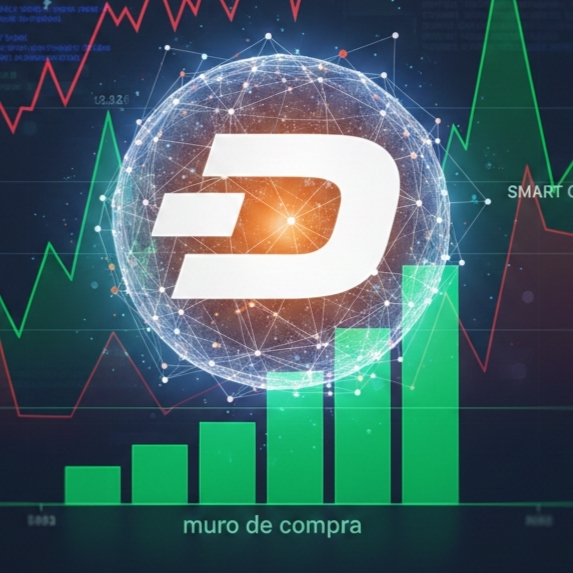
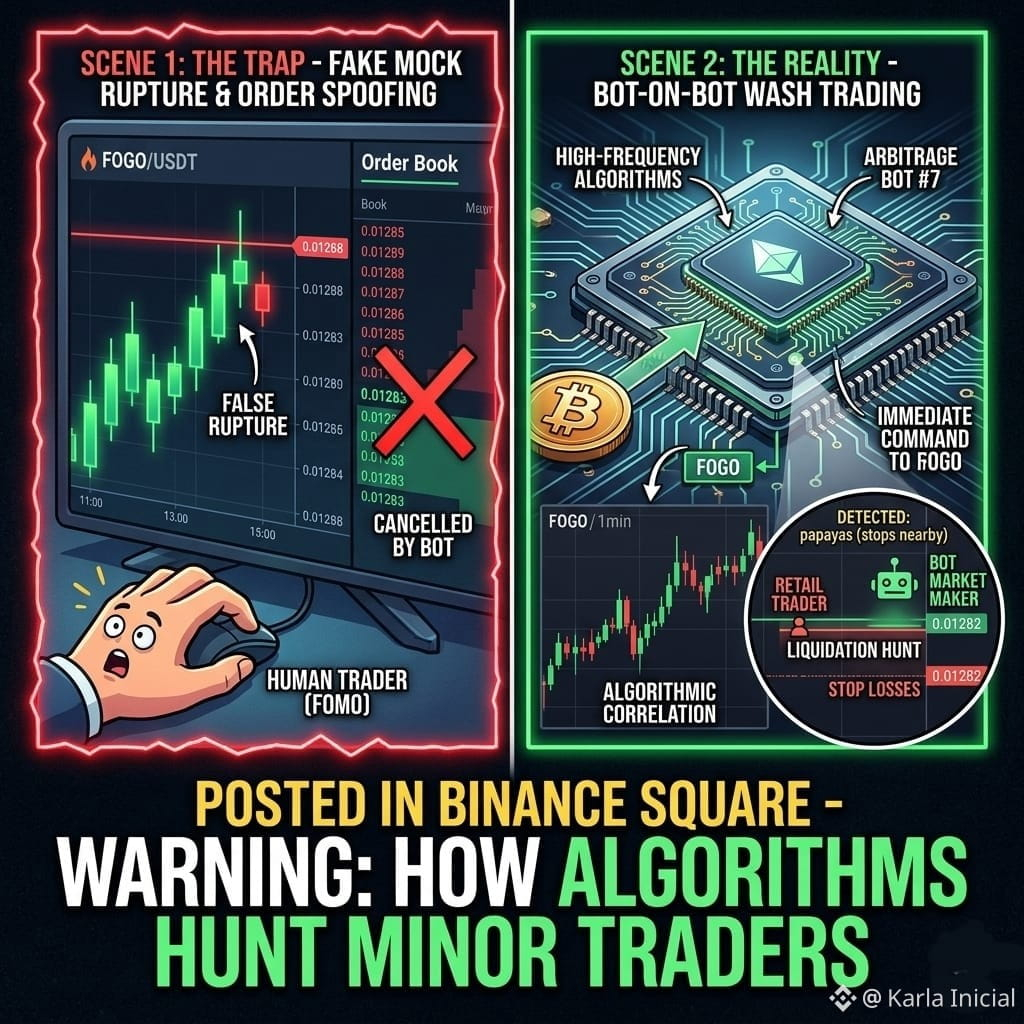
$FOGO 📢 WARNING RETAIL TRADERS! Don’t give your money to the Bots
Do you see a candlestick explode, get hit by FOMO, and put a Stop Loss way too close to 'protect' yourself? Boom! The price drops, you get liquidated, and it keeps going like nothing happened. You fell into the algorithmic trap.
In plain English, here’s what they’re doing to you:
Ghost Volume (Wash Trading): Millions of coins traded and the price doesn’t budge? That’s bots buying and selling to each other in milliseconds to inflate the volume, make it onto the 'most active' list, and grab your attention.
Fake Walls (Spoofing): You see a huge order on the book and think it's strong support. False! A millisecond before the price hits it, the bot cancels it. It was just a bait to drag the price.
The 'Papaya' of tight Stop Loss: The algorithm tracks liquidity. If you panic and leave your Stop Loss super close, you’re giving away a huge papaya. The bot makes a quick move to hunt you down, takes your money, and returns to the same annoying range.
Golden Rule: When the market is boring, ranging, and copying Bitcoin exactly, the best order is to do nothing. Stay put in USDT. The one who panics in trading buys lunch for the bots.
HOW MANY TIMES HAS THIS HAPPENED TO YOU?
{future}(FOGOUSDT)
{future}(BTCUSDT)
#fogo #Binance #Spoofing #bitcoin
$FOGO 📢 WARNING RETAIL TRADERS! Don’t give your money to the Bots
Do you see a candlestick explode, get hit by FOMO, and put a Stop Loss way too close to 'protect' yourself? Boom! The price drops, you get liquidated, and it keeps going like nothing happened. You fell into the algorithmic trap.
In plain English, here’s what they’re doing to you:
Ghost Volume (Wash Trading): Millions of coins traded and the price doesn’t budge? That’s bots buying and selling to each other in milliseconds to inflate the volume, make it onto the 'most active' list, and grab your attention.
Fake Walls (Spoofing): You see a huge order on the book and think it's strong support. False! A millisecond before the price hits it, the bot cancels it. It was just a bait to drag the price.
The 'Papaya' of tight Stop Loss: The algorithm tracks liquidity. If you panic and leave your Stop Loss super close, you’re giving away a huge papaya. The bot makes a quick move to hunt you down, takes your money, and returns to the same annoying range.
Golden Rule: When the market is boring, ranging, and copying Bitcoin exactly, the best order is to do nothing. Stay put in USDT. The one who panics in trading buys lunch for the bots.
HOW MANY TIMES HAS THIS HAPPENED TO YOU?
#fogo #Binance #Spoofing #bitcoin
Do you see a candlestick explode, get hit by FOMO, and put a Stop Loss way too close to 'protect' yourself? Boom! The price drops, you get liquidated, and it keeps going like nothing happened. You fell into the algorithmic trap.
In plain English, here’s what they’re doing to you:
Ghost Volume (Wash Trading): Millions of coins traded and the price doesn’t budge? That’s bots buying and selling to each other in milliseconds to inflate the volume, make it onto the 'most active' list, and grab your attention.
Fake Walls (Spoofing): You see a huge order on the book and think it's strong support. False! A millisecond before the price hits it, the bot cancels it. It was just a bait to drag the price.
The 'Papaya' of tight Stop Loss: The algorithm tracks liquidity. If you panic and leave your Stop Loss super close, you’re giving away a huge papaya. The bot makes a quick move to hunt you down, takes your money, and returns to the same annoying range.
Golden Rule: When the market is boring, ranging, and copying Bitcoin exactly, the best order is to do nothing. Stay put in USDT. The one who panics in trading buys lunch for the bots.
HOW MANY TIMES HAS THIS HAPPENED TO YOU?
#fogo #Binance #Spoofing #bitcoin
105

·
--
Article
Unmasking the Phantoms of the Order Book: A Guide to Cryptocurrency SpoofingThe cryptocurrency market is famous for its sudden price swings, but not all volatility is organic. Behind the charts, big players often use smoke-and-mirror tactics to pull the strings. One of the most common tricks used to mess with prices is spoofing.
If you trade or invest, understanding how spoofing works—and how to spot the traps—is a must if you want to keep your portfolio intact.
What is Cryptocurrency Spoofing?
Spoofing is a type of market manipulation where a trader (usually a "whale" or a high-frequency trading bot) places massive buy or sell orders with no intention of actually letting them fill.
The goal here is pure deception: create a fake illusion of supply or demand to trick regular traders into buying or selling a token at an artificial price. Because crypto exchanges show order books in real-time, these giant, sudden orders can easily trigger panic or FOMO in retail traders.
How it breaks down in practice:
The Bait: Let's say a spoofer wants to buy Bitcoin at a discount. They place a massive sell order just above the current price. To everyone else, it looks like a massive wave of supply is about to dump on the market.
The Panic: Everyday traders see this massive "sell wall" and freak out, thinking the price is about to crater. They quickly dump their bags to cut losses, which naturally drives the price down.
The Switch: Right before the price actually touches the spoofer's fake sell order, the spoofer cancels it completely. At the exact same time, they scoop up the crypto at the cheaper price they just engineered.
How to Stay Out of the Spoofing Trap
Since spoofing happens inside exchange order books, you can't stop people from trying it. But you can change how you trade so you don't get caught in the crossfire. Here is what you should do:
1. Stick to High-Liquidity Exchanges
Spoofing works incredibly well on small, low-volume exchanges because a single large order can completely warp the order book. On massive, high-volume platforms, it takes way too much capital to fake a market-moving order, making spoofing a lot harder to pull off.
2. Take "Order Walls" with a Grain of Salt
A lot of new traders look at the depth chart, see a giant buy wall, and think, "Awesome, there's a floor there, the price can't drop past that." That's exactly what the spoofer wants you to think. Treat sudden, massive walls close to the market price with heavy skepticism.
3. Watch out for "Flickering"
Before you jump into a trade, pull up the order book and watch it for a couple of minutes. If you notice giant orders repeatedly flashing on and off near the current price, a bot is likely trying to bait people. If the book looks chaotic, just walk away until things settle down.
4. Zoom Out the Chart
Spoofing is a short-term game designed to mess with 1-minute or 5-minute candles. It rarely holds up against macroscopic trends. Look at 1-hour or 4-hour charts and rely on broader indicators like Moving Averages or actual trading volume rather than focusing on secondary-by-second order book action.
5. Use Dollar-Cost Averaging (DCA)
The easiest way to make market manipulation a non-issue is to stop trying to time your entries perfectly. By investing a set amount of money at regular intervals, you end up buying both the fake dips and the organic tops, completely neutralizing the stress of short-term spoofing games.
The bottom line: If the order book suddenly looks like it's forcing the price in one direction, don't react out of emotion. In crypto, sometimes the most profitable move you can make is sitting on your hands.
#Spoofing #Write2Earn
$BTC $ETH $VELVET
Unmasking the Phantoms of the Order Book: A Guide to Cryptocurrency Spoofing
The cryptocurrency market is famous for its sudden price swings, but not all volatility is organic. Behind the charts, big players often use smoke-and-mirror tactics to pull the strings. One of the most common tricks used to mess with prices is spoofing.
If you trade or invest, understanding how spoofing works—and how to spot the traps—is a must if you want to keep your portfolio intact.
What is Cryptocurrency Spoofing?
Spoofing is a type of market manipulation where a trader (usually a "whale" or a high-frequency trading bot) places massive buy or sell orders with no intention of actually letting them fill.
The goal here is pure deception: create a fake illusion of supply or demand to trick regular traders into buying or selling a token at an artificial price. Because crypto exchanges show order books in real-time, these giant, sudden orders can easily trigger panic or FOMO in retail traders.
How it breaks down in practice:
The Bait: Let's say a spoofer wants to buy Bitcoin at a discount. They place a massive sell order just above the current price. To everyone else, it looks like a massive wave of supply is about to dump on the market.
The Panic: Everyday traders see this massive "sell wall" and freak out, thinking the price is about to crater. They quickly dump their bags to cut losses, which naturally drives the price down.
The Switch: Right before the price actually touches the spoofer's fake sell order, the spoofer cancels it completely. At the exact same time, they scoop up the crypto at the cheaper price they just engineered.
How to Stay Out of the Spoofing Trap
Since spoofing happens inside exchange order books, you can't stop people from trying it. But you can change how you trade so you don't get caught in the crossfire. Here is what you should do:
1. Stick to High-Liquidity Exchanges
Spoofing works incredibly well on small, low-volume exchanges because a single large order can completely warp the order book. On massive, high-volume platforms, it takes way too much capital to fake a market-moving order, making spoofing a lot harder to pull off.
2. Take "Order Walls" with a Grain of Salt
A lot of new traders look at the depth chart, see a giant buy wall, and think, "Awesome, there's a floor there, the price can't drop past that." That's exactly what the spoofer wants you to think. Treat sudden, massive walls close to the market price with heavy skepticism.
3. Watch out for "Flickering"
Before you jump into a trade, pull up the order book and watch it for a couple of minutes. If you notice giant orders repeatedly flashing on and off near the current price, a bot is likely trying to bait people. If the book looks chaotic, just walk away until things settle down.
4. Zoom Out the Chart
Spoofing is a short-term game designed to mess with 1-minute or 5-minute candles. It rarely holds up against macroscopic trends. Look at 1-hour or 4-hour charts and rely on broader indicators like Moving Averages or actual trading volume rather than focusing on secondary-by-second order book action.
5. Use Dollar-Cost Averaging (DCA)
The easiest way to make market manipulation a non-issue is to stop trying to time your entries perfectly. By investing a set amount of money at regular intervals, you end up buying both the fake dips and the organic tops, completely neutralizing the stress of short-term spoofing games.
The bottom line: If the order book suddenly looks like it's forcing the price in one direction, don't react out of emotion. In crypto, sometimes the most profitable move you can make is sitting on your hands.
#Spoofing #Write2Earn
$BTC $ETH $VELVET
If you trade or invest, understanding how spoofing works—and how to spot the traps—is a must if you want to keep your portfolio intact.
What is Cryptocurrency Spoofing?
Spoofing is a type of market manipulation where a trader (usually a "whale" or a high-frequency trading bot) places massive buy or sell orders with no intention of actually letting them fill.
The goal here is pure deception: create a fake illusion of supply or demand to trick regular traders into buying or selling a token at an artificial price. Because crypto exchanges show order books in real-time, these giant, sudden orders can easily trigger panic or FOMO in retail traders.
How it breaks down in practice:
The Bait: Let's say a spoofer wants to buy Bitcoin at a discount. They place a massive sell order just above the current price. To everyone else, it looks like a massive wave of supply is about to dump on the market.
The Panic: Everyday traders see this massive "sell wall" and freak out, thinking the price is about to crater. They quickly dump their bags to cut losses, which naturally drives the price down.
The Switch: Right before the price actually touches the spoofer's fake sell order, the spoofer cancels it completely. At the exact same time, they scoop up the crypto at the cheaper price they just engineered.
How to Stay Out of the Spoofing Trap
Since spoofing happens inside exchange order books, you can't stop people from trying it. But you can change how you trade so you don't get caught in the crossfire. Here is what you should do:
1. Stick to High-Liquidity Exchanges
Spoofing works incredibly well on small, low-volume exchanges because a single large order can completely warp the order book. On massive, high-volume platforms, it takes way too much capital to fake a market-moving order, making spoofing a lot harder to pull off.
2. Take "Order Walls" with a Grain of Salt
A lot of new traders look at the depth chart, see a giant buy wall, and think, "Awesome, there's a floor there, the price can't drop past that." That's exactly what the spoofer wants you to think. Treat sudden, massive walls close to the market price with heavy skepticism.
3. Watch out for "Flickering"
Before you jump into a trade, pull up the order book and watch it for a couple of minutes. If you notice giant orders repeatedly flashing on and off near the current price, a bot is likely trying to bait people. If the book looks chaotic, just walk away until things settle down.
4. Zoom Out the Chart
Spoofing is a short-term game designed to mess with 1-minute or 5-minute candles. It rarely holds up against macroscopic trends. Look at 1-hour or 4-hour charts and rely on broader indicators like Moving Averages or actual trading volume rather than focusing on secondary-by-second order book action.
5. Use Dollar-Cost Averaging (DCA)
The easiest way to make market manipulation a non-issue is to stop trying to time your entries perfectly. By investing a set amount of money at regular intervals, you end up buying both the fake dips and the organic tops, completely neutralizing the stress of short-term spoofing games.
The bottom line: If the order book suddenly looks like it's forcing the price in one direction, don't react out of emotion. In crypto, sometimes the most profitable move you can make is sitting on your hands.
#Spoofing #Write2Earn
$BTC $ETH $VELVET
171

·
--
Article
❌🤡 ATTENTION ❌🤡$BTC $ETH $USDT
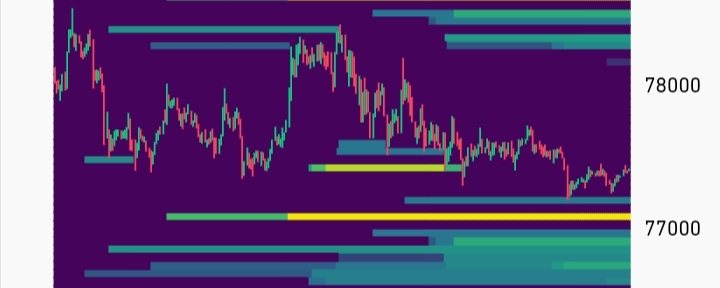
🚨 BTC SPOOF ALERT: 86% Buy Wall But Price Dumping to 77,279*
Order book: 86.06% buyers. Price: -0.41%. Coinglass: $44.7M long liquidations at 77k.
*This is classic distribution. Here's why:*
1. *Fake 77k buy wall*: 170 BTC = $13.1M spoof order sitting at 77,000. Bots place massive bids to fake confidence, then pull before price hits. The "support" isn't real.
2. *Hidden institutional selling*: Only 133 BTC visible asks at 78k. Yet BTC bleeds. OTC + Iceberg orders dumping millions without hitting the book. Retail buys the spoof, whales distribute.
❌🤡 ATTENTION ❌🤡
$BTC $ETH $USDT
🚨 BTC SPOOF ALERT: 86% Buy Wall But Price Dumping to 77,279*
Order book: 86.06% buyers. Price: -0.41%. Coinglass: $44.7M long liquidations at 77k.
*This is classic distribution. Here's why:*
1. *Fake 77k buy wall*: 170 BTC = $13.1M spoof order sitting at 77,000. Bots place massive bids to fake confidence, then pull before price hits. The "support" isn't real.
2. *Hidden institutional selling*: Only 133 BTC visible asks at 78k. Yet BTC bleeds. OTC + Iceberg orders dumping millions without hitting the book. Retail buys the spoof, whales distribute.
🚨 BTC SPOOF ALERT: 86% Buy Wall But Price Dumping to 77,279*
Order book: 86.06% buyers. Price: -0.41%. Coinglass: $44.7M long liquidations at 77k.
*This is classic distribution. Here's why:*
1. *Fake 77k buy wall*: 170 BTC = $13.1M spoof order sitting at 77,000. Bots place massive bids to fake confidence, then pull before price hits. The "support" isn't real.
2. *Hidden institutional selling*: Only 133 BTC visible asks at 78k. Yet BTC bleeds. OTC + Iceberg orders dumping millions without hitting the book. Retail buys the spoof, whales distribute.
1
108

·
--
Bullish
#HIGHLY IMPORTANT INFORMATION
In trading, spoofing, or identity impersonation, is an illegal practice that involves placing orders with the intention of canceling them before they are executed, with the goal of manipulating the market price. This practice, also known as "phantom offer" or "spoofing overlay", is used to generate artificial movement in prices and deceive other traders.
The spoofing process works like this:
Placement of false orders:
The trader enters buy or sell orders at a price they do not intend to execute.
Generation of illusion:
These false orders, being visible in the order book, create the illusion of greater interest or demand in the market.
Price movement:
The manipulation induces other traders to make buying or selling decisions based on this misleading information, which pushes prices in the direction desired by the trader.
Cancellation of orders:
Once the price has moved in the desired direction, the trader cancels the false orders they had no intention of executing.
Trader's profit:
The trader takes advantage of the artificial price movement to conduct trades with true market interest, obtaining an illegal profit.
Consequences of spoofing:
Market manipulation:
Spoofing alters the actual market price, creating an unfair situation for traders who are not involved in the manipulation.
Losses for other traders:
Other traders who rely on the artificial market price may suffer significant losses by making decisions based on false information.
Prison time and fines:
Spoofing is an illegal activity with possible legal consequences, such as prison sentences and fines.
In summary, spoofing is an illegal practice used to manipulate financial markets and deceive other traders, creating artificial movements in prices to gain illegal profits. #BinanceAlphaAlert #Spoofing #TraderEducation $BTC $ETH $BNB
#HIGHLY IMPORTANT INFORMATION
In trading, spoofing, or identity impersonation, is an illegal practice that involves placing orders with the intention of canceling them before they are executed, with the goal of manipulating the market price. This practice, also known as "phantom offer" or "spoofing overlay", is used to generate artificial movement in prices and deceive other traders.
The spoofing process works like this:
Placement of false orders:
The trader enters buy or sell orders at a price they do not intend to execute.
Generation of illusion:
These false orders, being visible in the order book, create the illusion of greater interest or demand in the market.
Price movement:
The manipulation induces other traders to make buying or selling decisions based on this misleading information, which pushes prices in the direction desired by the trader.
Cancellation of orders:
Once the price has moved in the desired direction, the trader cancels the false orders they had no intention of executing.
Trader's profit:
The trader takes advantage of the artificial price movement to conduct trades with true market interest, obtaining an illegal profit.
Consequences of spoofing:
Market manipulation:
Spoofing alters the actual market price, creating an unfair situation for traders who are not involved in the manipulation.
Losses for other traders:
Other traders who rely on the artificial market price may suffer significant losses by making decisions based on false information.
Prison time and fines:
Spoofing is an illegal activity with possible legal consequences, such as prison sentences and fines.
In summary, spoofing is an illegal practice used to manipulate financial markets and deceive other traders, creating artificial movements in prices to gain illegal profits. #BinanceAlphaAlert #Spoofing #TraderEducation $BTC $ETH $BNB
In trading, spoofing, or identity impersonation, is an illegal practice that involves placing orders with the intention of canceling them before they are executed, with the goal of manipulating the market price. This practice, also known as "phantom offer" or "spoofing overlay", is used to generate artificial movement in prices and deceive other traders.
The spoofing process works like this:
Placement of false orders:
The trader enters buy or sell orders at a price they do not intend to execute.
Generation of illusion:
These false orders, being visible in the order book, create the illusion of greater interest or demand in the market.
Price movement:
The manipulation induces other traders to make buying or selling decisions based on this misleading information, which pushes prices in the direction desired by the trader.
Cancellation of orders:
Once the price has moved in the desired direction, the trader cancels the false orders they had no intention of executing.
Trader's profit:
The trader takes advantage of the artificial price movement to conduct trades with true market interest, obtaining an illegal profit.
Consequences of spoofing:
Market manipulation:
Spoofing alters the actual market price, creating an unfair situation for traders who are not involved in the manipulation.
Losses for other traders:
Other traders who rely on the artificial market price may suffer significant losses by making decisions based on false information.
Prison time and fines:
Spoofing is an illegal activity with possible legal consequences, such as prison sentences and fines.
In summary, spoofing is an illegal practice used to manipulate financial markets and deceive other traders, creating artificial movements in prices to gain illegal profits. #BinanceAlphaAlert #Spoofing #TraderEducation $BTC $ETH $BNB

1
310
Log in to explore more content
Join global crypto users on Binance Square
⚡️ Get latest and useful information about crypto.
💬 Trusted by the world’s largest crypto exchange.
👍 Discover real insights from verified creators.
Email / Phone number
Trending Topics
1
#HYPEJumpsOver11%
0 views
0 Discussing
2
#BitcoinSpotETFsNetInflow$159M
106 views
22 Discussing
3
#HKMAPlansWholesaleCBDCByYearEnd
5,167 views
256 Discussing
4
#NEARSurges26%Past$3.45
8,494 views
96 Discussing
5
#BOJHikesRatesTo31YearHigh
21,628 views
605 Discussing
6
#EvernorthRaises$30MToBuyXRP
192 views
15 Discussing
7
#ChainlinkPowersBottomlinePaymentPlatform
24,498 views
569 Discussing
8
#DtcpayCompletes$25MSeriesA
756 views
25 Discussing
9
#InjectiveLaunchesINJOnSolana
4,782 views
130 Discussing
10
#StellarActivatesProtocol28At211TPS
31,207 views
670 Discussing