

#institutionaladoption
institutionaladoption
1.3M views
7,604 Discussing
Hot
Latest

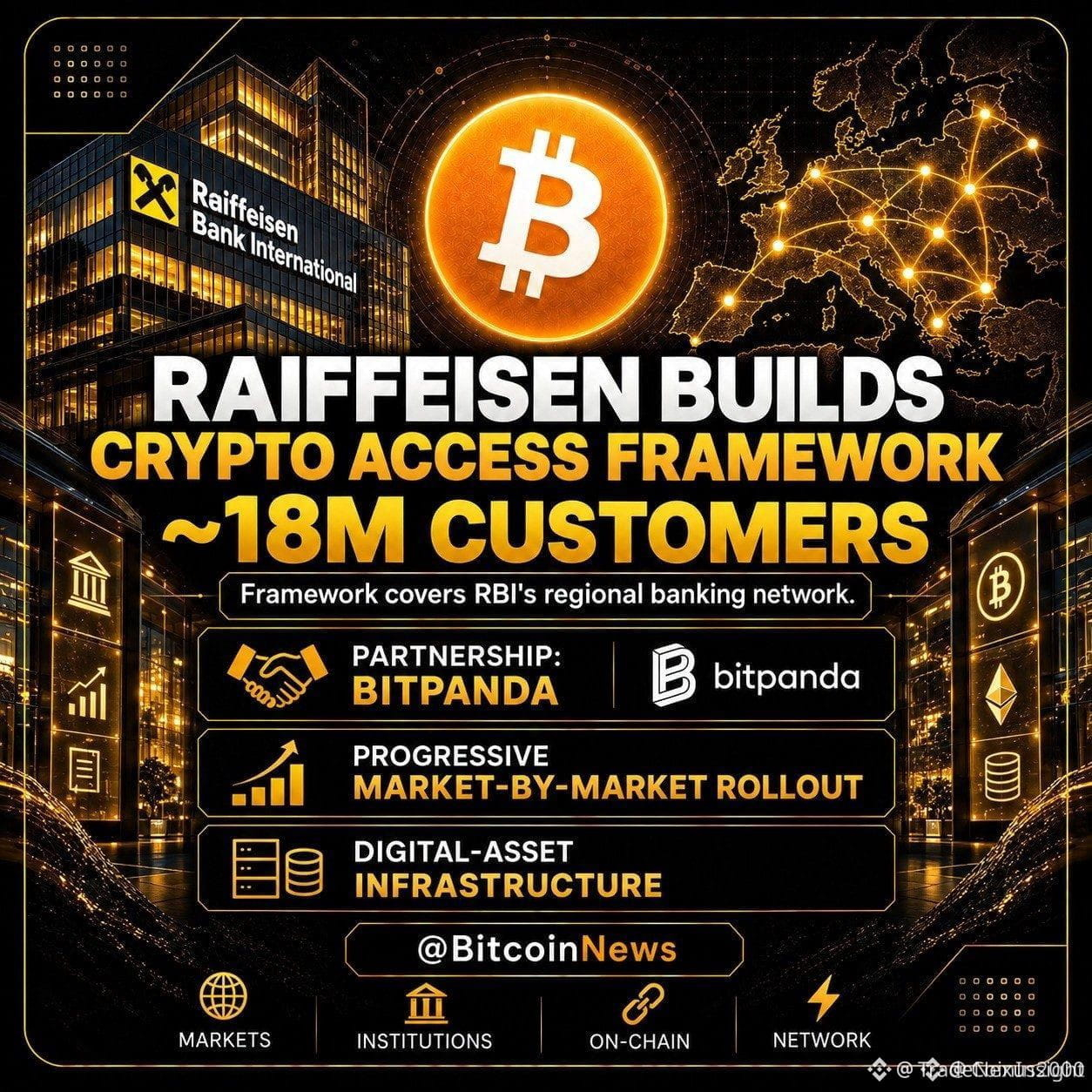
🏦 RAIFFEISEN EXPANDS DIGITAL ASSET RAILS TO 18M USERS ACROSS EUROPE VIA $BTC INFRASTRUCTURE ⚡
Institutional distribution infrastructure just logged another major structural upgrade across Central and Eastern Europe. Raiffeisen Bank International is embedding crypto access directly into its traditional banking framework for up to 18 million regional clients through Bitpanda Enterprise. 🏦
Rather than driving capital through external exchange ramps, this phased rollout embeds $BTC exposure straight into core banking rails. Lowering friction at the distribution layer historically precedes structural demand shifts as traditional liquidity channels open up. 📊
While deployment remains subject to localized regulatory frameworks, the architectural foundation for mainstream capital integration is officially live. 💬 Will bank-native integration become the dominant gateway for the next cycle of institutional adoption? 👇
⚠️ Not financial advice. Always manage your risk. 🛡️
🏷️ #BTC #Bitcoin #InstitutionalAdoption #Crypto
🦈 🎯
🏦 RAIFFEISEN EXPANDS DIGITAL ASSET RAILS TO 18M USERS ACROSS EUROPE VIA $BTC INFRASTRUCTURE ⚡
Institutional distribution infrastructure just logged another major structural upgrade across Central and Eastern Europe. Raiffeisen Bank International is embedding crypto access directly into its traditional banking framework for up to 18 million regional clients through Bitpanda Enterprise. 🏦
Rather than driving capital through external exchange ramps, this phased rollout embeds $BTC exposure straight into core banking rails. Lowering friction at the distribution layer historically precedes structural demand shifts as traditional liquidity channels open up. 📊
While deployment remains subject to localized regulatory frameworks, the architectural foundation for mainstream capital integration is officially live. 💬 Will bank-native integration become the dominant gateway for the next cycle of institutional adoption? 👇
⚠️ Not financial advice. Always manage your risk. 🛡️
🏷️ #BTC #Bitcoin #InstitutionalAdoption #Crypto
🦈 🎯
Institutional distribution infrastructure just logged another major structural upgrade across Central and Eastern Europe. Raiffeisen Bank International is embedding crypto access directly into its traditional banking framework for up to 18 million regional clients through Bitpanda Enterprise. 🏦
Rather than driving capital through external exchange ramps, this phased rollout embeds $BTC exposure straight into core banking rails. Lowering friction at the distribution layer historically precedes structural demand shifts as traditional liquidity channels open up. 📊
While deployment remains subject to localized regulatory frameworks, the architectural foundation for mainstream capital integration is officially live. 💬 Will bank-native integration become the dominant gateway for the next cycle of institutional adoption? 👇
⚠️ Not financial advice. Always manage your risk. 🛡️
🏷️ #BTC #Bitcoin #InstitutionalAdoption #Crypto
🦈 🎯
14

Article
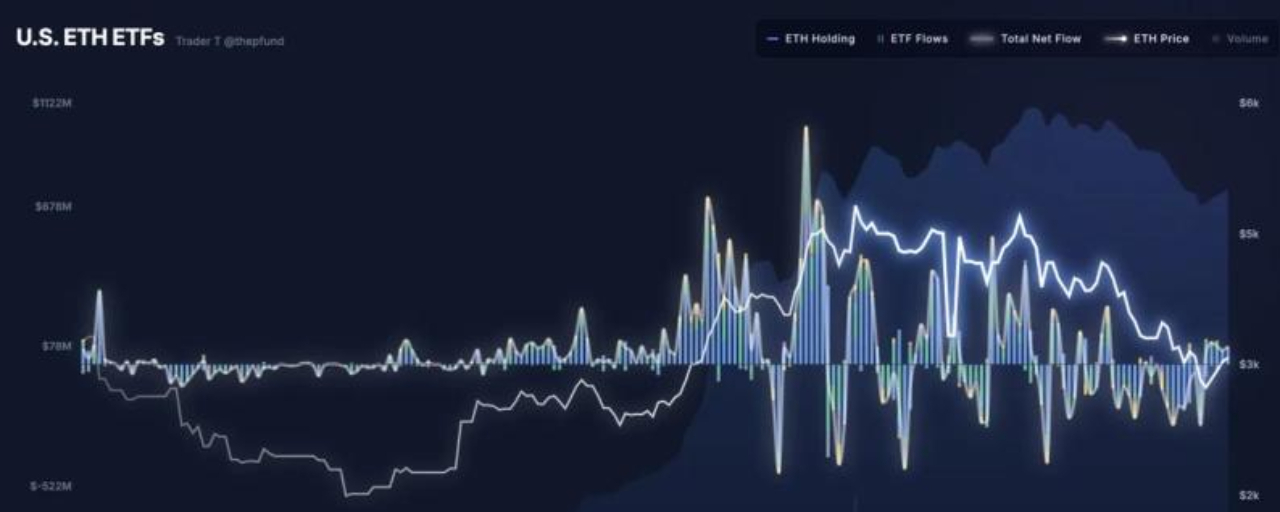
$Ethereum ETF Demand Accelerates — ETH Gets Fresh Institutional Attention$ETH Ethereum spot ETFs recorded $105M in net inflows for the fourth consecutive day, bringing total ETF assets to about $17.5B. BlackRock’s ETHA and Fidelity’s FETH accounted for major portions of the latest inflows.Meanwhile, $ETH recently broke above the $2,661 resistance area after consolidating, with Reuters noting the breakout from a bull-flag pattern.Key story: institutional ETF demand is becoming an increasingly important factor for Ethereum’s market structure. $ETH #Ethereum #InstitutionalAdoption #CryptoNews #AishCryptoTraders $
{etf_us}(ETFT.ETF)
{spot}(ETHUSDT)
$Ethereum ETF Demand Accelerates — ETH Gets Fresh Institutional Attention
$ETH Ethereum spot ETFs recorded $105M in net inflows for the fourth consecutive day, bringing total ETF assets to about $17.5B. BlackRock’s ETHA and Fidelity’s FETH accounted for major portions of the latest inflows.Meanwhile, $ETH recently broke above the $2,661 resistance area after consolidating, with Reuters noting the breakout from a bull-flag pattern.Key story: institutional ETF demand is becoming an increasingly important factor for Ethereum’s market structure. $ETH #Ethereum #InstitutionalAdoption #CryptoNews #AishCryptoTraders $
1
64

Bitwise reports institutions are maintaining 1% to 2% crypto allocations, showing zero reduction in exposure even during a massive 50% market drawdown.
#InstitutionalAdoption #BitwiseInsights
Bitwise reports institutions are maintaining 1% to 2% crypto allocations, showing zero reduction in exposure even during a massive 50% market drawdown.
#InstitutionalAdoption #BitwiseInsights
#InstitutionalAdoption #BitwiseInsights
26

·
--
🔥 XRP — Institutional Attention Is Growing
$XRP is getting increasing attention from major financial players. 👀🐋
Reported institutional positions include Goldman Sachs, Jane Street Group, Millennium Management and Marex Group.
Public companies are also building XRP treasury exposure, with Evernorth Holdings currently reporting a large XRP position.
With institutional interest + growing XRP adoption, $XRP is definitely a coin worth keeping on the watchlist. 📈⚡
Watch the levels. Manage risk. DYOR.
#InstitutionalCrypto #XRPArmy #bitcoin #InstitutionalAdoption
{future}(XRPUSDT)
🔥 XRP — Institutional Attention Is Growing
$XRP is getting increasing attention from major financial players. 👀🐋
Reported institutional positions include Goldman Sachs, Jane Street Group, Millennium Management and Marex Group.
Public companies are also building XRP treasury exposure, with Evernorth Holdings currently reporting a large XRP position.
With institutional interest + growing XRP adoption, $XRP is definitely a coin worth keeping on the watchlist. 📈⚡
Watch the levels. Manage risk. DYOR.
#InstitutionalCrypto #XRPArmy #bitcoin #InstitutionalAdoption
$XRP is getting increasing attention from major financial players. 👀🐋
Reported institutional positions include Goldman Sachs, Jane Street Group, Millennium Management and Marex Group.
Public companies are also building XRP treasury exposure, with Evernorth Holdings currently reporting a large XRP position.
With institutional interest + growing XRP adoption, $XRP is definitely a coin worth keeping on the watchlist. 📈⚡
Watch the levels. Manage risk. DYOR.
#InstitutionalCrypto #XRPArmy #bitcoin #InstitutionalAdoption

1
288

·
--
🚨 $BTC SET TO BENEFIT FROM RAFFEISEN'S EU BANKING PUSH 🦈
Raiffeisen International, wielding $234 bn in assets, is rolling out crypto trading services through Bitpanda to banks across 11 European markets. This move injects smart‑money liquidity into the continent’s banking corridors, creating a fresh conduit for institutional flow. 🦈
For $BTC , broader retail access translates into heightened order‑book depth and a measurable uptick in volume on top‑tier exchanges, tightening spreads and sharpening price discovery. 📊
The expanded network may subtly rebalance supply‑demand dynamics, nudging BTC into a modest bullish bias as new capital streams in. 🌊
💬 How will this institutional bridge reshape BTC’s price dynamics in the coming weeks?
⚠️ Not financial advice. Always manage your risk. 🛡️
🏷️ #BTC #InstitutionalAdoption #CryptoBanking #EU
🚀 🔥
🚨 $BTC SET TO BENEFIT FROM RAFFEISEN'S EU BANKING PUSH 🦈
Raiffeisen International, wielding $234 bn in assets, is rolling out crypto trading services through Bitpanda to banks across 11 European markets. This move injects smart‑money liquidity into the continent’s banking corridors, creating a fresh conduit for institutional flow. 🦈
For $BTC , broader retail access translates into heightened order‑book depth and a measurable uptick in volume on top‑tier exchanges, tightening spreads and sharpening price discovery. 📊
The expanded network may subtly rebalance supply‑demand dynamics, nudging BTC into a modest bullish bias as new capital streams in. 🌊
💬 How will this institutional bridge reshape BTC’s price dynamics in the coming weeks?
⚠️ Not financial advice. Always manage your risk. 🛡️
🏷️ #BTC #InstitutionalAdoption #CryptoBanking #EU
🚀 🔥
Raiffeisen International, wielding $234 bn in assets, is rolling out crypto trading services through Bitpanda to banks across 11 European markets. This move injects smart‑money liquidity into the continent’s banking corridors, creating a fresh conduit for institutional flow. 🦈
For $BTC , broader retail access translates into heightened order‑book depth and a measurable uptick in volume on top‑tier exchanges, tightening spreads and sharpening price discovery. 📊
The expanded network may subtly rebalance supply‑demand dynamics, nudging BTC into a modest bullish bias as new capital streams in. 🌊
💬 How will this institutional bridge reshape BTC’s price dynamics in the coming weeks?
⚠️ Not financial advice. Always manage your risk. 🛡️
🏷️ #BTC #InstitutionalAdoption #CryptoBanking #EU
🚀 🔥

10

Bitcoin's market cap is now routinely compared to giants like Apple rather than just other cryptocurrencies, a reality check most retail traders still ignore.
You've watched $BTC grind higher while you FOMO'd into the latest narrative coin that later rugged you, all because you never stopped seeing it as just internet money. That pain of selling too soon or missing the macro shift hits different after a few cycles.
I've been through enough of these to know the pattern. In previous bull runs Bitcoin competed with $ETH and a thousand pretenders for attention.
Now it's sitting on corporate balance sheets next to cash and gold, treated as a serious store of value by players who don't care about the next 100x. $MSTR didn't accumulate hundreds of thousands of coins for a trade. They did it because Bitcoin has become a global balance-sheet asset.
The greed of chasing every pump starts to look small once you see institutions treating it like a core holding. Hope that this cycle is different comes from watching the shift happen in real time.
Where do you think this evolution takes Bitcoin from here?
#Bitcoin #InstitutionalAdoption #CryptoWisdom
Bitcoin's market cap is now routinely compared to giants like Apple rather than just other cryptocurrencies, a reality check most retail traders still ignore.
You've watched $BTC grind higher while you FOMO'd into the latest narrative coin that later rugged you, all because you never stopped seeing it as just internet money. That pain of selling too soon or missing the macro shift hits different after a few cycles.
I've been through enough of these to know the pattern. In previous bull runs Bitcoin competed with $ETH and a thousand pretenders for attention.
Now it's sitting on corporate balance sheets next to cash and gold, treated as a serious store of value by players who don't care about the next 100x. $MSTR didn't accumulate hundreds of thousands of coins for a trade. They did it because Bitcoin has become a global balance-sheet asset.
The greed of chasing every pump starts to look small once you see institutions treating it like a core holding. Hope that this cycle is different comes from watching the shift happen in real time.
Where do you think this evolution takes Bitcoin from here?
#Bitcoin #InstitutionalAdoption #CryptoWisdom
You've watched $BTC grind higher while you FOMO'd into the latest narrative coin that later rugged you, all because you never stopped seeing it as just internet money. That pain of selling too soon or missing the macro shift hits different after a few cycles.
I've been through enough of these to know the pattern. In previous bull runs Bitcoin competed with $ETH and a thousand pretenders for attention.
Now it's sitting on corporate balance sheets next to cash and gold, treated as a serious store of value by players who don't care about the next 100x. $MSTR didn't accumulate hundreds of thousands of coins for a trade. They did it because Bitcoin has become a global balance-sheet asset.
The greed of chasing every pump starts to look small once you see institutions treating it like a core holding. Hope that this cycle is different comes from watching the shift happen in real time.
Where do you think this evolution takes Bitcoin from here?
#Bitcoin #InstitutionalAdoption #CryptoWisdom

82

·
--
🚀 $BTC GETS A BOOST FROM RAFFEISEN'S EUROPEAN CRYPTO LAUNCH! 🟢
Raiffeisen International, a €235 bn powerhouse, is rolling out crypto desks across 11 European hubs. 🦈 This move plants a deep‑water liquidity source right in the heart of the EU, giving smart money a fresh runway to flip into $BTC and $ETH on a top‑tier exchange.
Expect a surge in order flow as banks channel client capital into digital assets, feeding the buy‑side and potentially nudging the 4‑hour chart into a higher‑high breakout. 📊 Volume spikes and tighter spreads could ⚡ ignite a short‑term rally, especially if the market respects the new institutional demand. 💬 Are you ready to ride the institutional wave or waiting on the sidelines? 👇
⚠️ Not financial advice. Always manage your risk. 🛡️
🏷️ #BTC #InstitutionalAdoption #CryptoNews #Europe
🦈 🔥
🚀 $BTC GETS A BOOST FROM RAFFEISEN'S EUROPEAN CRYPTO LAUNCH! 🟢
Raiffeisen International, a €235 bn powerhouse, is rolling out crypto desks across 11 European hubs. 🦈 This move plants a deep‑water liquidity source right in the heart of the EU, giving smart money a fresh runway to flip into $BTC and $ETH on a top‑tier exchange.
Expect a surge in order flow as banks channel client capital into digital assets, feeding the buy‑side and potentially nudging the 4‑hour chart into a higher‑high breakout. 📊 Volume spikes and tighter spreads could ⚡ ignite a short‑term rally, especially if the market respects the new institutional demand. 💬 Are you ready to ride the institutional wave or waiting on the sidelines? 👇
⚠️ Not financial advice. Always manage your risk. 🛡️
🏷️ #BTC #InstitutionalAdoption #CryptoNews #Europe
🦈 🔥
Raiffeisen International, a €235 bn powerhouse, is rolling out crypto desks across 11 European hubs. 🦈 This move plants a deep‑water liquidity source right in the heart of the EU, giving smart money a fresh runway to flip into $BTC and $ETH on a top‑tier exchange.
Expect a surge in order flow as banks channel client capital into digital assets, feeding the buy‑side and potentially nudging the 4‑hour chart into a higher‑high breakout. 📊 Volume spikes and tighter spreads could ⚡ ignite a short‑term rally, especially if the market respects the new institutional demand. 💬 Are you ready to ride the institutional wave or waiting on the sidelines? 👇
⚠️ Not financial advice. Always manage your risk. 🛡️
🏷️ #BTC #InstitutionalAdoption #CryptoNews #Europe
🦈 🔥
28

·
--
Bullish
🚨 BITCOIN ($BTC) — LATEST NEWS (Ready to Post)
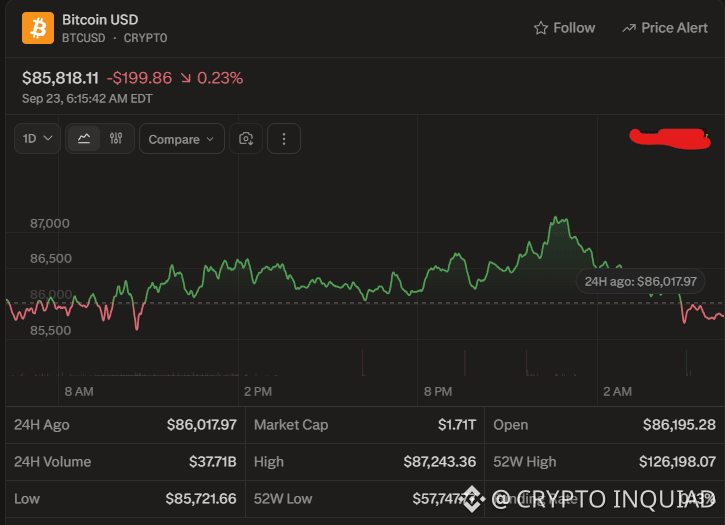
$BTC isn’t making every headline today—but it’s quietly holding above $85K after a 42% rally from its yearly low.
Price just tagged an 8-month high near $87,250, with 24h volume exceeding $37.7B.
Key catalysts:
50-week MA breakout: BTC closed above its 50-week moving average for the first time in 45 weeks—a historically bullish signal
Institutional inflows: Over 2,000 institutions now hold spot Bitcoin ETFs, with RIAs up 20% YoY
Regulatory tailwinds: SEC’s new tokenized securities framework boosted confidence despite Fed rate hikes
Kevin O’Leary thesis: Predicts Bitcoin will capture 1–3% of institutional alt-asset allocations, targeting $1M/BTC long-term
Analysts eye $90K next if BTC clears the $87.3K–$88K resistance zone.
Sometimes the biggest moves happen while the market chases noise.
$BTC
{future}(BTCUSDT)
👀
#Bitcoin #Crypto #InstitutionalAdoption #ETF #write2earn
🚨 BITCOIN ($BTC ) — LATEST NEWS (Ready to Post)
$BTC isn’t making every headline today—but it’s quietly holding above $85K after a 42% rally from its yearly low.
Price just tagged an 8-month high near $87,250, with 24h volume exceeding $37.7B.
Key catalysts:
50-week MA breakout: BTC closed above its 50-week moving average for the first time in 45 weeks—a historically bullish signal
Institutional inflows: Over 2,000 institutions now hold spot Bitcoin ETFs, with RIAs up 20% YoY
Regulatory tailwinds: SEC’s new tokenized securities framework boosted confidence despite Fed rate hikes
Kevin O’Leary thesis: Predicts Bitcoin will capture 1–3% of institutional alt-asset allocations, targeting $1M/BTC long-term
Analysts eye $90K next if BTC clears the $87.3K–$88K resistance zone.
Sometimes the biggest moves happen while the market chases noise.
$BTC
👀
#Bitcoin #Crypto #InstitutionalAdoption #ETF #write2earn
$BTC isn’t making every headline today—but it’s quietly holding above $85K after a 42% rally from its yearly low.
Price just tagged an 8-month high near $87,250, with 24h volume exceeding $37.7B.
Key catalysts:
50-week MA breakout: BTC closed above its 50-week moving average for the first time in 45 weeks—a historically bullish signal
Institutional inflows: Over 2,000 institutions now hold spot Bitcoin ETFs, with RIAs up 20% YoY
Regulatory tailwinds: SEC’s new tokenized securities framework boosted confidence despite Fed rate hikes
Kevin O’Leary thesis: Predicts Bitcoin will capture 1–3% of institutional alt-asset allocations, targeting $1M/BTC long-term
Analysts eye $90K next if BTC clears the $87.3K–$88K resistance zone.
Sometimes the biggest moves happen while the market chases noise.
$BTC
👀
#Bitcoin #Crypto #InstitutionalAdoption #ETF #write2earn
64

·
--
Institutions aren't buying crypto the way the headlines suggest. The quiet entry point is collateral.
Look past ETF flow charts and you find something more structural: BTC and ETH are increasingly used as balance-sheet collateral — borrowed against, lent out, pledged in repo-style arrangements. That is a different adoption curve than buying.
When an asset becomes collateral, three things change:
1. It stops being a trade and becomes infrastructure. Positions built on top of it don't get closed in a panic — they get rolled.
2. Holders become borrowers. A treasury that pledges BTC keeps the upside while unlocking working capital. Structural sell pressure drops.
3. Lenders become the marginal price setters. Haircuts, collateral quality standards, and financing rates quietly become the real market microstructure.
So watch financing rates and collateral utilization, not just spot volume. When lending spreads tighten and basis trades normalize, balance-sheet adoption is compounding under the surface.
This is how assets graduate from speculative instruments to financial primitives — not through sentiment, but through balance sheets.
Flow adoption is loud. Collateral adoption is permanent.
$BTC $ETH $SOL
#InstitutionalAdoption #Bitcoin #CryptoFinance #Collateral #OnChain
Institutions aren't buying crypto the way the headlines suggest. The quiet entry point is collateral.
Look past ETF flow charts and you find something more structural: BTC and ETH are increasingly used as balance-sheet collateral — borrowed against, lent out, pledged in repo-style arrangements. That is a different adoption curve than buying.
When an asset becomes collateral, three things change:
1. It stops being a trade and becomes infrastructure. Positions built on top of it don't get closed in a panic — they get rolled.
2. Holders become borrowers. A treasury that pledges BTC keeps the upside while unlocking working capital. Structural sell pressure drops.
3. Lenders become the marginal price setters. Haircuts, collateral quality standards, and financing rates quietly become the real market microstructure.
So watch financing rates and collateral utilization, not just spot volume. When lending spreads tighten and basis trades normalize, balance-sheet adoption is compounding under the surface.
This is how assets graduate from speculative instruments to financial primitives — not through sentiment, but through balance sheets.
Flow adoption is loud. Collateral adoption is permanent.
$BTC $ETH $SOL
#InstitutionalAdoption #Bitcoin #CryptoFinance #Collateral #OnChain
Look past ETF flow charts and you find something more structural: BTC and ETH are increasingly used as balance-sheet collateral — borrowed against, lent out, pledged in repo-style arrangements. That is a different adoption curve than buying.
When an asset becomes collateral, three things change:
1. It stops being a trade and becomes infrastructure. Positions built on top of it don't get closed in a panic — they get rolled.
2. Holders become borrowers. A treasury that pledges BTC keeps the upside while unlocking working capital. Structural sell pressure drops.
3. Lenders become the marginal price setters. Haircuts, collateral quality standards, and financing rates quietly become the real market microstructure.
So watch financing rates and collateral utilization, not just spot volume. When lending spreads tighten and basis trades normalize, balance-sheet adoption is compounding under the surface.
This is how assets graduate from speculative instruments to financial primitives — not through sentiment, but through balance sheets.
Flow adoption is loud. Collateral adoption is permanent.
$BTC $ETH $SOL
#InstitutionalAdoption #Bitcoin #CryptoFinance #Collateral #OnChain
46

·
--
everyone thinks tradfi custody is bullish for retail bags, but actually you might be setting yourself up to get exit liquified by the real smart money.
most traders keep blindly longing news like this, only to end up holding heavy bags when institutions frontrun them and dump on the euphoria.
look at deutsche bank rolling out their institutional custody setup across europe this year. they are preparing to hold and manage private keys for massive clients across $BTC, $ETH, and stablecoins like usdc, eurc, and eurau. ngl ser, while everyone is celebrating mainstream adoption, the reality is that institutions aren't buying to hold hands with retail. they want complete infrastructure control to execute massive OTC flows and hedge against market swings without touching public order books.
when trillion-dollar banking giants step in to manage institutional wallets, the retail advantage shrinks fast.
where do you think this institutional shift leaves retail traders in the long run?
#CryptoCustody #Bitcoin #InstitutionalAdoption
everyone thinks tradfi custody is bullish for retail bags, but actually you might be setting yourself up to get exit liquified by the real smart money.
most traders keep blindly longing news like this, only to end up holding heavy bags when institutions frontrun them and dump on the euphoria.
look at deutsche bank rolling out their institutional custody setup across europe this year. they are preparing to hold and manage private keys for massive clients across $BTC , $ETH , and stablecoins like usdc, eurc, and eurau. ngl ser, while everyone is celebrating mainstream adoption, the reality is that institutions aren't buying to hold hands with retail. they want complete infrastructure control to execute massive OTC flows and hedge against market swings without touching public order books.
when trillion-dollar banking giants step in to manage institutional wallets, the retail advantage shrinks fast.
where do you think this institutional shift leaves retail traders in the long run?
#CryptoCustody #Bitcoin #InstitutionalAdoption
most traders keep blindly longing news like this, only to end up holding heavy bags when institutions frontrun them and dump on the euphoria.
look at deutsche bank rolling out their institutional custody setup across europe this year. they are preparing to hold and manage private keys for massive clients across $BTC , $ETH , and stablecoins like usdc, eurc, and eurau. ngl ser, while everyone is celebrating mainstream adoption, the reality is that institutions aren't buying to hold hands with retail. they want complete infrastructure control to execute massive OTC flows and hedge against market swings without touching public order books.
when trillion-dollar banking giants step in to manage institutional wallets, the retail advantage shrinks fast.
where do you think this institutional shift leaves retail traders in the long run?
#CryptoCustody #Bitcoin #InstitutionalAdoption

42
·
--
The Layer 1 conversation keeps circling throughput, fees, and developer count. But the metric institutions actually care about is the one nobody benchmarks: censorship resistance.
Here's why it matters more than TPS.
A chain that can process 100,000 transactions per second but can be halted by a single validator coordination call is not infrastructure. It's a database with extra steps. Institutional capital doesn't need speed first. It needs assurance that no single party can freeze, reorder, or censor its settlement.
The chains that will capture the next wave of institutional flow are the ones where the word "unstoppable" is a technical property, not a marketing slogan.
$BTC proved this. Its value proposition isn't smart contracts or yield. It's the demonstrated inability of any government, corporation, or coalition to alter its rules or stop its settlement. That censorship resistance is why it sits on treasury balance sheets.
$ETH extended the thesis with a validator set large enough that no single entity can dictate state transitions. $SOL is learning the hard way that validator client diversity matters as much as transaction speed.
The next L1 winner won't be the fastest. It'll be the one where the answer to "can this be stopped?" is provably no.
Censorship resistance is the only moat that compounds. Everything else can be copied.
#Layer1 #Crypto #Blockchain #InstitutionalAdoption
The Layer 1 conversation keeps circling throughput, fees, and developer count. But the metric institutions actually care about is the one nobody benchmarks: censorship resistance.
Here's why it matters more than TPS.
A chain that can process 100,000 transactions per second but can be halted by a single validator coordination call is not infrastructure. It's a database with extra steps. Institutional capital doesn't need speed first. It needs assurance that no single party can freeze, reorder, or censor its settlement.
The chains that will capture the next wave of institutional flow are the ones where the word "unstoppable" is a technical property, not a marketing slogan.
$BTC proved this. Its value proposition isn't smart contracts or yield. It's the demonstrated inability of any government, corporation, or coalition to alter its rules or stop its settlement. That censorship resistance is why it sits on treasury balance sheets.
$ETH extended the thesis with a validator set large enough that no single entity can dictate state transitions. $SOL is learning the hard way that validator client diversity matters as much as transaction speed.
The next L1 winner won't be the fastest. It'll be the one where the answer to "can this be stopped?" is provably no.
Censorship resistance is the only moat that compounds. Everything else can be copied.
#Layer1 #Crypto #Blockchain #InstitutionalAdoption
Here's why it matters more than TPS.
A chain that can process 100,000 transactions per second but can be halted by a single validator coordination call is not infrastructure. It's a database with extra steps. Institutional capital doesn't need speed first. It needs assurance that no single party can freeze, reorder, or censor its settlement.
The chains that will capture the next wave of institutional flow are the ones where the word "unstoppable" is a technical property, not a marketing slogan.
$BTC proved this. Its value proposition isn't smart contracts or yield. It's the demonstrated inability of any government, corporation, or coalition to alter its rules or stop its settlement. That censorship resistance is why it sits on treasury balance sheets.
$ETH extended the thesis with a validator set large enough that no single entity can dictate state transitions. $SOL is learning the hard way that validator client diversity matters as much as transaction speed.
The next L1 winner won't be the fastest. It'll be the one where the answer to "can this be stopped?" is provably no.
Censorship resistance is the only moat that compounds. Everything else can be copied.
#Layer1 #Crypto #Blockchain #InstitutionalAdoption
52

Article
Massive ETF Inflows Signal Bullish Institutional MomentumThe Bitcoin spot ETF market just hit another massive milestone. Seeing nearly $1 billion flood into these products in a single day is not just a number on a screen. It represents a fundamental shift in how much institutional capital is ready to play in this arena. This Monday was the 9th largest inflow we have ever seen, and it signals that the demand for direct exposure is far from being exhausted.
For many traders, this level of liquidity is the ultimate green flag. When we see this much capital moving through regulated channels, it creates a massive floor for price action. These are not retail FOMO plays. These are institutional bags being filled by professional money managers and corporate treasuries. The steady absorption of supply by these ETFs is the exact mechanism needed to drive sustained price discovery.
We have seen periods of consolidation before, but these massive inflow days tend to break the boredom and lead to significant volatility. The key takeaway for anyone watching the charts is that the supply shock from ETFs is real and growing. As more funds enter, the liquid supply on exchanges continues to dwindle. This setup is looking incredibly bullish for the medium term as long as the macro environment stays relatively stable.
#BitcoinETFs #InstitutionalAdoption
Massive ETF Inflows Signal Bullish Institutional Momentum
The Bitcoin spot ETF market just hit another massive milestone. Seeing nearly $1 billion flood into these products in a single day is not just a number on a screen. It represents a fundamental shift in how much institutional capital is ready to play in this arena. This Monday was the 9th largest inflow we have ever seen, and it signals that the demand for direct exposure is far from being exhausted.
For many traders, this level of liquidity is the ultimate green flag. When we see this much capital moving through regulated channels, it creates a massive floor for price action. These are not retail FOMO plays. These are institutional bags being filled by professional money managers and corporate treasuries. The steady absorption of supply by these ETFs is the exact mechanism needed to drive sustained price discovery.
We have seen periods of consolidation before, but these massive inflow days tend to break the boredom and lead to significant volatility. The key takeaway for anyone watching the charts is that the supply shock from ETFs is real and growing. As more funds enter, the liquid supply on exchanges continues to dwindle. This setup is looking incredibly bullish for the medium term as long as the macro environment stays relatively stable.
#BitcoinETFs #InstitutionalAdoption
For many traders, this level of liquidity is the ultimate green flag. When we see this much capital moving through regulated channels, it creates a massive floor for price action. These are not retail FOMO plays. These are institutional bags being filled by professional money managers and corporate treasuries. The steady absorption of supply by these ETFs is the exact mechanism needed to drive sustained price discovery.
We have seen periods of consolidation before, but these massive inflow days tend to break the boredom and lead to significant volatility. The key takeaway for anyone watching the charts is that the supply shock from ETFs is real and growing. As more funds enter, the liquid supply on exchanges continues to dwindle. This setup is looking incredibly bullish for the medium term as long as the macro environment stays relatively stable.
#BitcoinETFs #InstitutionalAdoption
8
Strategy added 950 BTC to its treasury for $76 million. Total holdings now reach 846,000 BTC, representing roughly 4 percent of the total Bitcoin supply.
#BitcoinTreasury #InstitutionalAdoption
Strategy added 950 BTC to its treasury for $76 million. Total holdings now reach 846,000 BTC, representing roughly 4 percent of the total Bitcoin supply.
#BitcoinTreasury #InstitutionalAdoption
#BitcoinTreasury #InstitutionalAdoption
22
·
--
For years, the crypto market treated regulation as an existential threat. Every headline about enforcement actions or new frameworks triggered selloffs. But something has shifted — and it might be the most bullish structural change nobody is pricing.
The fear was always about what regulation would take away: anonymity, access, outsized returns. What it is actually delivering is something nobody expected: a floor of trust.
Clear rules do three things the market desperately needs. First, they convert institutional risk committees from blockers into approvers — a CFO cannot allocate to an asset class with undefined legal status. Second, they eliminate the regulatory arbitrage premium — the discount $BTC and $ETH traded at versus their risk-adjusted fundamentals was mostly legal uncertainty, not technology risk. Third, they create exit liquidity for builders, which creates entry liquidity for capital.
The irony is that the crowd that spent a decade demanding zero regulation is now benefiting from its arrival. Stablecoin legislation means $XRP settlement narratives have legal grounding. ETF frameworks mean TradFi capital can flow into crypto without bespoke legal opinions.
Regulation was never the ceiling. Ambiguity was. And ambiguity is what is slowly being removed.
The next leg of adoption will not come from better technology alone. It will come from the moment when a pension fund trustee can approve a crypto allocation without personal legal exposure. That moment is being built right now — clause by clause, framework by framework.
#CryptoRegulation #InstitutionalAdoption #MarketStructure #RegulatoryClarity
For years, the crypto market treated regulation as an existential threat. Every headline about enforcement actions or new frameworks triggered selloffs. But something has shifted — and it might be the most bullish structural change nobody is pricing.
The fear was always about what regulation would take away: anonymity, access, outsized returns. What it is actually delivering is something nobody expected: a floor of trust.
Clear rules do three things the market desperately needs. First, they convert institutional risk committees from blockers into approvers — a CFO cannot allocate to an asset class with undefined legal status. Second, they eliminate the regulatory arbitrage premium — the discount $BTC and $ETH traded at versus their risk-adjusted fundamentals was mostly legal uncertainty, not technology risk. Third, they create exit liquidity for builders, which creates entry liquidity for capital.
The irony is that the crowd that spent a decade demanding zero regulation is now benefiting from its arrival. Stablecoin legislation means $XRP settlement narratives have legal grounding. ETF frameworks mean TradFi capital can flow into crypto without bespoke legal opinions.
Regulation was never the ceiling. Ambiguity was. And ambiguity is what is slowly being removed.
The next leg of adoption will not come from better technology alone. It will come from the moment when a pension fund trustee can approve a crypto allocation without personal legal exposure. That moment is being built right now — clause by clause, framework by framework.
#CryptoRegulation #InstitutionalAdoption #MarketStructure #RegulatoryClarity
The fear was always about what regulation would take away: anonymity, access, outsized returns. What it is actually delivering is something nobody expected: a floor of trust.
Clear rules do three things the market desperately needs. First, they convert institutional risk committees from blockers into approvers — a CFO cannot allocate to an asset class with undefined legal status. Second, they eliminate the regulatory arbitrage premium — the discount $BTC and $ETH traded at versus their risk-adjusted fundamentals was mostly legal uncertainty, not technology risk. Third, they create exit liquidity for builders, which creates entry liquidity for capital.
The irony is that the crowd that spent a decade demanding zero regulation is now benefiting from its arrival. Stablecoin legislation means $XRP settlement narratives have legal grounding. ETF frameworks mean TradFi capital can flow into crypto without bespoke legal opinions.
Regulation was never the ceiling. Ambiguity was. And ambiguity is what is slowly being removed.
The next leg of adoption will not come from better technology alone. It will come from the moment when a pension fund trustee can approve a crypto allocation without personal legal exposure. That moment is being built right now — clause by clause, framework by framework.
#CryptoRegulation #InstitutionalAdoption #MarketStructure #RegulatoryClarity
514

·
--
The crypto market’s rollercoaster ride might become a thing of the past! Solstice CEO says that as liquidity deepens and institutional capital flows in, future bull runs could become less volatile. No more wild swings—maybe a healthier, steadier growth. If institutional players enter, can retail investors benefit too? #加密货币 #牛市 $BTC $ETH
Crypto's rollercoaster rides might become history. Solstice CEO says deeper liquidity & institutional participation could make future bull runs less volatile. No more wild swings, maybe healthier steady growth. Institutional money coming in, retail investors can benefit too? #CryptoBullRun #InstitutionalAdoption $BTC $ETH
The crypto market’s rollercoaster ride might become a thing of the past! Solstice CEO says that as liquidity deepens and institutional capital flows in, future bull runs could become less volatile. No more wild swings—maybe a healthier, steadier growth. If institutional players enter, can retail investors benefit too? #加密货币 #牛市 $BTC $ETH
Crypto's rollercoaster rides might become history. Solstice CEO says deeper liquidity & institutional participation could make future bull runs less volatile. No more wild swings, maybe healthier steady growth. Institutional money coming in, retail investors can benefit too? #CryptoBullRun #InstitutionalAdoption $BTC $ETH
Crypto's rollercoaster rides might become history. Solstice CEO says deeper liquidity & institutional participation could make future bull runs less volatile. No more wild swings, maybe healthier steady growth. Institutional money coming in, retail investors can benefit too? #CryptoBullRun #InstitutionalAdoption $BTC $ETH
148
·
--
The Structural Bid Nobody Talks About
Every day, passive flows from ETFs and corporate treasury programs quietly absorb a meaningful chunk of BTC's available float. Not headlines. Not announcements. Just steady, programmatic buying that doesn't react to fear or greed.
This is the structural bid — and it changes how price discovery works.
When daily DCA inflows exceed miner sell pressure, the marginal seller runs out of inventory before the marginal buyer runs out of conviction. That's not a bull case. It's plumbing. The same dynamic that made housing "always go up" in the 2000s — except crypto's float is smaller and the inflows are global.
The implication: volatility compresses not because markets are calm, but because passive flows smooth the order book. Sharp sellovers get absorbed faster. Rallies face less supply. The market reprices in steps, not spikes.
$ETH is catching the same dynamic through staking yield + institutional treasury adoption. $SOL benefits from venture and dev ecosystem gravity. $BNB rides exchange-mediated treasury flows.
The risk? Passive flows are price-insensitive, not infinite. A macro shock that breaks the DCA mandate — redemptions, regulation, mandate revision — removes the floor. Structural bids are floors, not ceilings.
The real edge isn't predicting price. It's understanding who's buying every day and whether they'll keep doing it.
#Crypto #Bitcoin #Ethereum #InstitutionalAdoption #MarketStructure
The Structural Bid Nobody Talks About
Every day, passive flows from ETFs and corporate treasury programs quietly absorb a meaningful chunk of BTC's available float. Not headlines. Not announcements. Just steady, programmatic buying that doesn't react to fear or greed.
This is the structural bid — and it changes how price discovery works.
When daily DCA inflows exceed miner sell pressure, the marginal seller runs out of inventory before the marginal buyer runs out of conviction. That's not a bull case. It's plumbing. The same dynamic that made housing "always go up" in the 2000s — except crypto's float is smaller and the inflows are global.
The implication: volatility compresses not because markets are calm, but because passive flows smooth the order book. Sharp sellovers get absorbed faster. Rallies face less supply. The market reprices in steps, not spikes.
$ETH is catching the same dynamic through staking yield + institutional treasury adoption. $SOL benefits from venture and dev ecosystem gravity. $BNB rides exchange-mediated treasury flows.
The risk? Passive flows are price-insensitive, not infinite. A macro shock that breaks the DCA mandate — redemptions, regulation, mandate revision — removes the floor. Structural bids are floors, not ceilings.
The real edge isn't predicting price. It's understanding who's buying every day and whether they'll keep doing it.
#Crypto #Bitcoin #Ethereum #InstitutionalAdoption #MarketStructure
Every day, passive flows from ETFs and corporate treasury programs quietly absorb a meaningful chunk of BTC's available float. Not headlines. Not announcements. Just steady, programmatic buying that doesn't react to fear or greed.
This is the structural bid — and it changes how price discovery works.
When daily DCA inflows exceed miner sell pressure, the marginal seller runs out of inventory before the marginal buyer runs out of conviction. That's not a bull case. It's plumbing. The same dynamic that made housing "always go up" in the 2000s — except crypto's float is smaller and the inflows are global.
The implication: volatility compresses not because markets are calm, but because passive flows smooth the order book. Sharp sellovers get absorbed faster. Rallies face less supply. The market reprices in steps, not spikes.
$ETH is catching the same dynamic through staking yield + institutional treasury adoption. $SOL benefits from venture and dev ecosystem gravity. $BNB rides exchange-mediated treasury flows.
The risk? Passive flows are price-insensitive, not infinite. A macro shock that breaks the DCA mandate — redemptions, regulation, mandate revision — removes the floor. Structural bids are floors, not ceilings.
The real edge isn't predicting price. It's understanding who's buying every day and whether they'll keep doing it.
#Crypto #Bitcoin #Ethereum #InstitutionalAdoption #MarketStructure
145

·
--
everyone thinks a bank custody announcement means institutions are about to ape in, but actually custody is just plumbing , a vault doesn't fill itself.
how many times have you chased a fat green candle on an adoption headline just to watch it bleed for weeks while you hold the bag? been there, got rekt ngl. this exact type of news is how impatient traders get cooked.
the case study: deutsche bank just announced regulated digital-asset custody for institutional and corporate clients in europe, targeted for this year, pending the regulatory process. initial scope covers $BTC, $ETH and select stablecoins (read: $USDC and friends). sounds bullish until you hit the fine print , "subject to regulation" means no guaranteed launch and no date you can actually trade around. the headline candle is already priced before your order fills.
here's what most people miss though. custody is infrastructure, not demand. a bank building a vault doesn't mean institutions are lining up to buy your bags, it means they want fees for holding assets clients already own. every mega bank that launched similar custody over the past few years did it quietly and none of it printed a bull run overnight. the real signal is what flows through those wallets once they go live, not the press release.
boring take but the patient play wins here. let the rails get built, stop trading headlines, and watch for actual flows showing up on chain. wagmi, just slower than your liquidation timer thinks.
anyone else ever get burned buying an adoption headline before ser, or was that just me being degen?
#Bitcoin #Ethereum #InstitutionalAdoption
everyone thinks a bank custody announcement means institutions are about to ape in, but actually custody is just plumbing , a vault doesn't fill itself.
how many times have you chased a fat green candle on an adoption headline just to watch it bleed for weeks while you hold the bag? been there, got rekt ngl. this exact type of news is how impatient traders get cooked.
the case study: deutsche bank just announced regulated digital-asset custody for institutional and corporate clients in europe, targeted for this year, pending the regulatory process. initial scope covers $BTC , $ETH and select stablecoins (read: $USDC and friends). sounds bullish until you hit the fine print , "subject to regulation" means no guaranteed launch and no date you can actually trade around. the headline candle is already priced before your order fills.
here's what most people miss though. custody is infrastructure, not demand. a bank building a vault doesn't mean institutions are lining up to buy your bags, it means they want fees for holding assets clients already own. every mega bank that launched similar custody over the past few years did it quietly and none of it printed a bull run overnight. the real signal is what flows through those wallets once they go live, not the press release.
boring take but the patient play wins here. let the rails get built, stop trading headlines, and watch for actual flows showing up on chain. wagmi, just slower than your liquidation timer thinks.
anyone else ever get burned buying an adoption headline before ser, or was that just me being degen?
#Bitcoin #Ethereum #InstitutionalAdoption
how many times have you chased a fat green candle on an adoption headline just to watch it bleed for weeks while you hold the bag? been there, got rekt ngl. this exact type of news is how impatient traders get cooked.
the case study: deutsche bank just announced regulated digital-asset custody for institutional and corporate clients in europe, targeted for this year, pending the regulatory process. initial scope covers $BTC , $ETH and select stablecoins (read: $USDC and friends). sounds bullish until you hit the fine print , "subject to regulation" means no guaranteed launch and no date you can actually trade around. the headline candle is already priced before your order fills.
here's what most people miss though. custody is infrastructure, not demand. a bank building a vault doesn't mean institutions are lining up to buy your bags, it means they want fees for holding assets clients already own. every mega bank that launched similar custody over the past few years did it quietly and none of it printed a bull run overnight. the real signal is what flows through those wallets once they go live, not the press release.
boring take but the patient play wins here. let the rails get built, stop trading headlines, and watch for actual flows showing up on chain. wagmi, just slower than your liquidation timer thinks.
anyone else ever get burned buying an adoption headline before ser, or was that just me being degen?
#Bitcoin #Ethereum #InstitutionalAdoption
54
·
--
If you're still dismissing institutional adoption as "boring TradFi noise," stop right now. That exact mindset is why so many traders bleed out on leverage plays while completely missing the structural moves that actually matter.
The headline: Deutsche Bank plans to launch regulated digital-asset custody for institutional and corporate clients in Europe this year, pending regulatory approval. Initial scope reportedly covers $BTC, $ETH and selected stablecoins , think regulated names like $USDC. A global systemically important bank is building the exact rails that corporate treasuries and funds need before they can touch this asset class at scale.
Here's where it gets interesting. The purists argue bank custody betrays the whole thesis , not your keys, not your coins, and Satoshi didn't write the whitepaper so a German bank could hold the bags. On principle, they have a point. But I think they're fighting the last war. Look at 2020's corporate treasury wave and the 2024 ETF launches , serious money only arrived after regulated rails existed, never before. Institutions were never going to run their own cold wallets anyway, and self-custody isn't going anywhere for the rest of us.
So which side wins in the end , is bank custody the adoption bridge crypto always needed, or the slow capture we'll one day regret? #Bitcoin #InstitutionalAdoption #Crypto
If you're still dismissing institutional adoption as "boring TradFi noise," stop right now. That exact mindset is why so many traders bleed out on leverage plays while completely missing the structural moves that actually matter.
The headline: Deutsche Bank plans to launch regulated digital-asset custody for institutional and corporate clients in Europe this year, pending regulatory approval. Initial scope reportedly covers $BTC , $ETH and selected stablecoins , think regulated names like $USDC . A global systemically important bank is building the exact rails that corporate treasuries and funds need before they can touch this asset class at scale.
Here's where it gets interesting. The purists argue bank custody betrays the whole thesis , not your keys, not your coins, and Satoshi didn't write the whitepaper so a German bank could hold the bags. On principle, they have a point. But I think they're fighting the last war. Look at 2020's corporate treasury wave and the 2024 ETF launches , serious money only arrived after regulated rails existed, never before. Institutions were never going to run their own cold wallets anyway, and self-custody isn't going anywhere for the rest of us.
So which side wins in the end , is bank custody the adoption bridge crypto always needed, or the slow capture we'll one day regret? #Bitcoin #InstitutionalAdoption #Crypto
The headline: Deutsche Bank plans to launch regulated digital-asset custody for institutional and corporate clients in Europe this year, pending regulatory approval. Initial scope reportedly covers $BTC , $ETH and selected stablecoins , think regulated names like $USDC . A global systemically important bank is building the exact rails that corporate treasuries and funds need before they can touch this asset class at scale.
Here's where it gets interesting. The purists argue bank custody betrays the whole thesis , not your keys, not your coins, and Satoshi didn't write the whitepaper so a German bank could hold the bags. On principle, they have a point. But I think they're fighting the last war. Look at 2020's corporate treasury wave and the 2024 ETF launches , serious money only arrived after regulated rails existed, never before. Institutions were never going to run their own cold wallets anyway, and self-custody isn't going anywhere for the rest of us.
So which side wins in the end , is bank custody the adoption bridge crypto always needed, or the slow capture we'll one day regret? #Bitcoin #InstitutionalAdoption #Crypto
57

·
--
Last week, Deutsche Bank announced plans for regulated crypto custody in Europe, and half my feed treated it as confirmation of the next leg up.
If you've ever bought a bank-crypto headline and then watched the trade bleed for months while nothing actually shipped, this pattern should feel familiar.
Here's what actually happened. Deutsche Bank says it plans to offer digital-asset custody to institutional and corporate clients in Europe this year, subject to the regulatory process. Initial scope: $BTC, $ETH and selected stablecoins. Notice the wording , plans, subject to, this year. None of those words mean launched. Custody is plumbing, not demand. A bank holding coins for clients is not the bank buying coins, and it's not institutions rushing in. This is also the same bank that's been circling crypto custody since the last cycle.
Meanwhile, the detail most people scrolled past is the stablecoin line. "Selected stablecoins" almost certainly points to MiCA-compliant names like $USDC, which quietly tells you the real institutional story is tokenized settlement rails, not spot buying. The lesson from every announcement like this: trade the launch and the flows, not the press release. Regulatory approval has no deadline, and "this year" has a history of becoming "next cycle."
What would actually convince you institutional money is moving , a custody headline, or something you can verify on-chain?
#Bitcoin #InstitutionalAdoption #MiCA
Last week, Deutsche Bank announced plans for regulated crypto custody in Europe, and half my feed treated it as confirmation of the next leg up.
If you've ever bought a bank-crypto headline and then watched the trade bleed for months while nothing actually shipped, this pattern should feel familiar.
Here's what actually happened. Deutsche Bank says it plans to offer digital-asset custody to institutional and corporate clients in Europe this year, subject to the regulatory process. Initial scope: $BTC , $ETH and selected stablecoins. Notice the wording , plans, subject to, this year. None of those words mean launched. Custody is plumbing, not demand. A bank holding coins for clients is not the bank buying coins, and it's not institutions rushing in. This is also the same bank that's been circling crypto custody since the last cycle.
Meanwhile, the detail most people scrolled past is the stablecoin line. "Selected stablecoins" almost certainly points to MiCA-compliant names like $USDC , which quietly tells you the real institutional story is tokenized settlement rails, not spot buying. The lesson from every announcement like this: trade the launch and the flows, not the press release. Regulatory approval has no deadline, and "this year" has a history of becoming "next cycle."
What would actually convince you institutional money is moving , a custody headline, or something you can verify on-chain?
#Bitcoin #InstitutionalAdoption #MiCA
If you've ever bought a bank-crypto headline and then watched the trade bleed for months while nothing actually shipped, this pattern should feel familiar.
Here's what actually happened. Deutsche Bank says it plans to offer digital-asset custody to institutional and corporate clients in Europe this year, subject to the regulatory process. Initial scope: $BTC , $ETH and selected stablecoins. Notice the wording , plans, subject to, this year. None of those words mean launched. Custody is plumbing, not demand. A bank holding coins for clients is not the bank buying coins, and it's not institutions rushing in. This is also the same bank that's been circling crypto custody since the last cycle.
Meanwhile, the detail most people scrolled past is the stablecoin line. "Selected stablecoins" almost certainly points to MiCA-compliant names like $USDC , which quietly tells you the real institutional story is tokenized settlement rails, not spot buying. The lesson from every announcement like this: trade the launch and the flows, not the press release. Regulatory approval has no deadline, and "this year" has a history of becoming "next cycle."
What would actually convince you institutional money is moving , a custody headline, or something you can verify on-chain?
#Bitcoin #InstitutionalAdoption #MiCA

64

Deutsche Bank just announced crypto custody for institutions, and here's the twist: not a single coin has to be bought because of it.
This is exactly the kind of headline that makes people FOMO in at the local top. Then the pump bleeds out and they're stuck holding bags waiting for "institutional money" that never arrives on their schedule.
Here's what custody actually means: the bank holds keys for clients who already own the assets. It's safekeeping, not demand. No bank treasury is suddenly allocating to Bitcoin because of this press release. And read the fine print , the launch is "subject to the regulatory process," which is finance-speak for approvals, delays, and revised timelines. The initial scope only covers $BTC, $ETH and selected stablecoins, so when they say "selected," expect names like $USDT to clear the vetting while everything else stays locked out for now.
The pattern I keep seeing play out: headline drops, price pumps on the news, then bleeds over the following weeks because real flows arrive in quarters, not hours. If you bought the announcement, you're often just exit liquidity for people who read past the headline. Trade the actual flows when the service goes live, not the press release promising it.
How do you handle institutional news like this , fade the pump, or wait for the real flows?
#CryptoCustody #InstitutionalAdoption #Bitcoin
Deutsche Bank just announced crypto custody for institutions, and here's the twist: not a single coin has to be bought because of it.
This is exactly the kind of headline that makes people FOMO in at the local top. Then the pump bleeds out and they're stuck holding bags waiting for "institutional money" that never arrives on their schedule.
Here's what custody actually means: the bank holds keys for clients who already own the assets. It's safekeeping, not demand. No bank treasury is suddenly allocating to Bitcoin because of this press release. And read the fine print , the launch is "subject to the regulatory process," which is finance-speak for approvals, delays, and revised timelines. The initial scope only covers $BTC , $ETH and selected stablecoins, so when they say "selected," expect names like $USDT to clear the vetting while everything else stays locked out for now.
The pattern I keep seeing play out: headline drops, price pumps on the news, then bleeds over the following weeks because real flows arrive in quarters, not hours. If you bought the announcement, you're often just exit liquidity for people who read past the headline. Trade the actual flows when the service goes live, not the press release promising it.
How do you handle institutional news like this , fade the pump, or wait for the real flows?
#CryptoCustody #InstitutionalAdoption #Bitcoin
This is exactly the kind of headline that makes people FOMO in at the local top. Then the pump bleeds out and they're stuck holding bags waiting for "institutional money" that never arrives on their schedule.
Here's what custody actually means: the bank holds keys for clients who already own the assets. It's safekeeping, not demand. No bank treasury is suddenly allocating to Bitcoin because of this press release. And read the fine print , the launch is "subject to the regulatory process," which is finance-speak for approvals, delays, and revised timelines. The initial scope only covers $BTC , $ETH and selected stablecoins, so when they say "selected," expect names like $USDT to clear the vetting while everything else stays locked out for now.
The pattern I keep seeing play out: headline drops, price pumps on the news, then bleeds over the following weeks because real flows arrive in quarters, not hours. If you bought the announcement, you're often just exit liquidity for people who read past the headline. Trade the actual flows when the service goes live, not the press release promising it.
How do you handle institutional news like this , fade the pump, or wait for the real flows?
#CryptoCustody #InstitutionalAdoption #Bitcoin

58
Log in to explore more content
Join global crypto users on Binance Square
⚡️ Get latest and useful information about crypto.
💬 Trusted by the world’s largest crypto exchange.
👍 Discover real insights from verified creators.
Email / Phone number
Trending Topics
1
#BinanceWillListHyperliquid(HYPE)
99,710 views
2,144 Discussing
2
#FedOctoberRateHikeOddsRiseTo69.7%
25,362 views
837 Discussing
3
#BitcoinFallsBelow$83,000
3,099 views
20 Discussing
4
#BitcoinFallsToAround$84,600ThisWeek
0 views
0 Discussing
5
#US30YearYieldHighestSince2004
24,842 views
676 Discussing
6
#ETHBreaksAbove$2,700
1,389 views
19 Discussing
7
#USWeighsPromotingDollarStablecoinsAbroad
56,589 views
1,564 Discussing
8
#US10YTreasuryYieldHits19YearHigh
58,822 views
1,262 Discussing
9
#SpotBitcoinETFsInflow$2.31BInFourDays
6,774 views
73 Discussing
10
#BitcoinRejectedAt$87,300Twice
0 views
0 Discussing